Category: Washington Post

  • The new threat election officials fear: Trump’s federal government

    The new threat election officials fear: Trump’s federal government

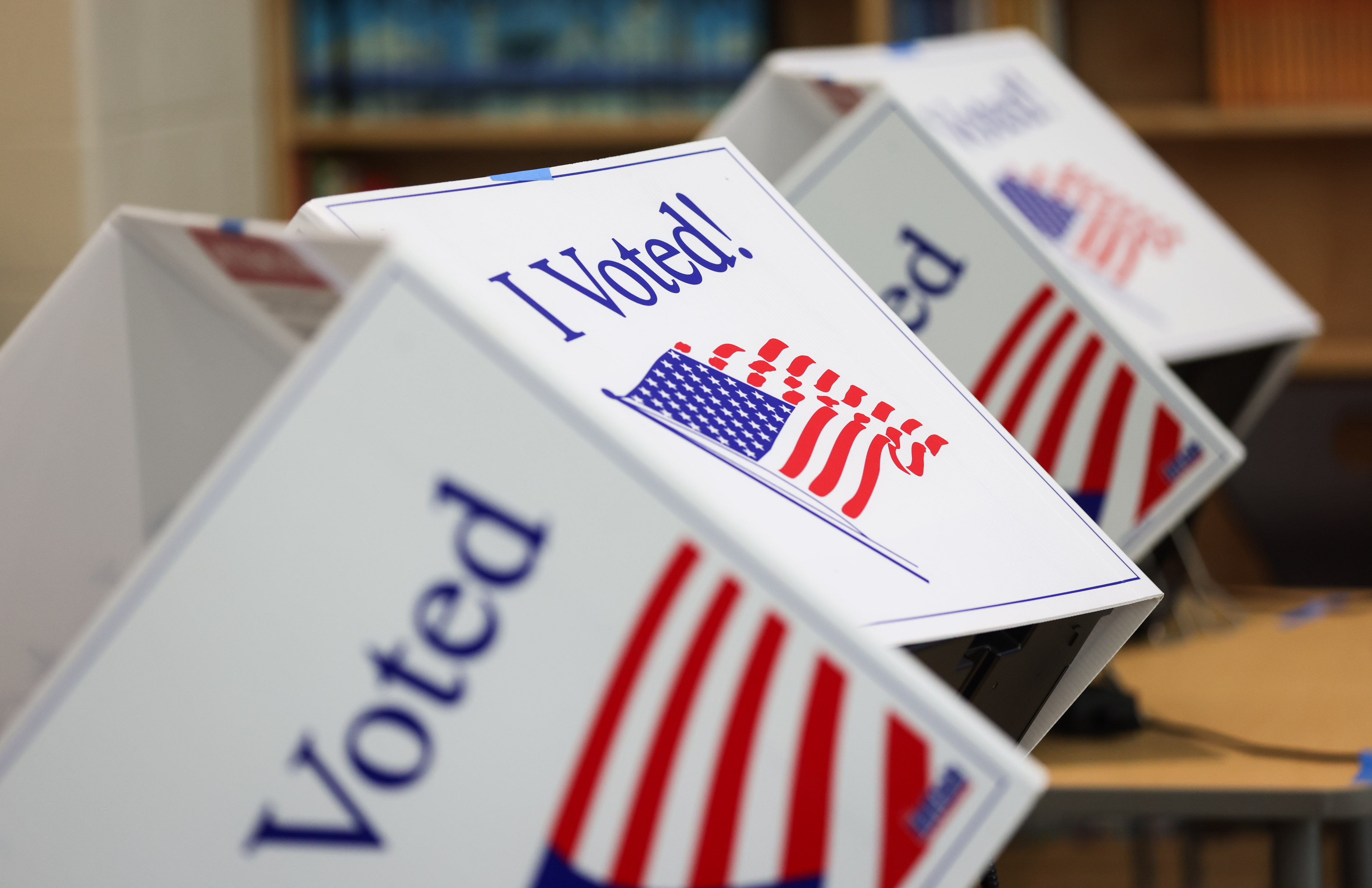
    The activists staking out the ballot drop boxes in suburban Phoenix wore body armor and face coverings. With guns at their sides, they recorded residents as they deposited their votes during the last midterm elections.

    Voting-rights groups sued, and a federal judge put a stop to them, ruling they had to stay at least 250 feet away while armed to ensure voters were not intimidated.

    Four years later and 100 miles to the south, Pima County Attorney Laura Conover is treating the 2022 incident as a lesson on the importance of moving quickly this fall if anyone — including Immigration and Customs Enforcement agents — tries to interfere with the election’s administration. For her county along the U.S.-Mexico border, Conover has drawn up court papers so she can immediately file litigation to protect the vote.

    “When it comes to preparing for elections, we are on overdrive,” she said.

    In 2022, one of the greatest threats to elections came from activists like the armed men and women looming near drop boxes and questioning America’s voting procedures. This year, Conover and other officials across the nation are preparing for the possibility that the most serious risks may come from President Donald Trump, his agencies, and allies — including many now in power at the federal, state, and local levels. Election officials are contemplating ideas that once sounded outlandish, such as troops seizing voting machines, the president dictating last-minute election rules, or rogue officials blocking the certification of results.

    For the last year and a half, Trump and his administration have disparaged long-standing voting practices, dismantled federal agencies that protect elections, impounded ballots from past elections, amplified conspiracy theories, threatened to prosecute election officials, tried to limit mail ballots, and pushed to require proof of citizenship to register to vote.

    Their efforts have touched on nearly every stage of voting and could affect control of Congress, as Republicans try to retain their slim majority. A Democratic takeover of the House would stall Trump’s agenda, block funding for his initiatives, trigger a flood of investigations, and mire his administration in congressional hearings.

    The high stakes seem top of mind for the president. “I’m going to be impeached,” he warned supporters at a South Carolina rally last month.

    With seven weeks until Election Day and some ballots already in the mail, the White House and election administrators are clashing over nearly every aspect of the midterms, from who is eligible to vote to whether absentee ballot envelopes must have barcodes on them.

    Agents, troops, and monitors

    Last month, former Trump adviser Stephen K. Bannon told the audience of his popular MAGA podcast that the president should send an “up-armored ICE presence at these polling booths.”

    Critics might call that intimidation, Bannon said, and they would be right. “It’s an intimidation if you’re a foreigner,” he said. “It should be intimidating.”

    In Maine, the Republican nominee for governor also said he’d ask the administration to send ICE agents to the polls. Georgia’s Republican gubernatorial nominee spoke favorably of using National Guard troops. The GOP candidate for governor in Michigan said he’s talked to the head of the FBI about agents having a presence in the state ahead of Election Day. All three states are key in determining which party will control Congress and, after 2028, the presidency.

    Federal law makes it a felony to station troops or armed agents where an election is being held. But the statute carves out an exception for repelling enemies of the United States, and Trump’s critics worry he could invoke that provision by arguing without evidence that noncitizens could try to vote.

    Even a brief appearance by troops at the polls — and the inevitable online clips of them there — could dissuade voters from casting ballots, election officials and experts worry.

    The talk of troops and federal authorities at the polls has pushed local officials into preparation mode. This year, 10 Democratic prosecutors from around the country, including Conover in Arizona’s Pima County, formed a group to push back on the administration on elections and other matters.

    They call their group Fight Against Federal Overreach — or FAFO, after the slang term for messing around and finding out. They trade tips every two weeks on video calls.

    “With this president, you have to prepare for anything and everything,” Conover said.

    Mary Moriarty, the top prosecutor in Minnesota’s Hennepin County, which includes Minneapolis, said she’ll be watching for ICE agents at the polls.

    “They certainly know we’ve charged two ICE agents already and that we take this seriously,” said Moriarty, a member of FAFO who filed charges against agents for incidents during the federal agency’s enforcement surge in the Twin Cities.

    Most worrisome to local leaders is the possibility that federal officials could seize ballots or voting equipment.

    They don’t consider the prospect theoretical. In January, Trump told the New York Times he regretted not having troops take possession of voting machines after he lost the 2020 election. The FBI later took 2020 ballots in Georgia and obtained electronic images of 2020 ballots in Arizona. And the MAGA-aligned sheriff of Riverside County, Calif., confiscated ballots from a 2025 redistricting referendum.

    The military’s top officer said last month that the administration has no plans to send troops to polling places in November.

    “I have neither received nor anticipate receiving any unlawful order concerning the role of the Joint Force in the upcoming November 2026 midterm elections,” Gen. Dan Caine, chairman of the Joint Chiefs of Staff, wrote in a letter to Sen. Elissa Slotkin (D., Mich.).

    He said the military has no plans to use troops to seize ballots, voting machines, or other election material.

    Homeland Security Secretary Markwayne Mullin has been less categorical, but said this month that ICE would go to polling places only if agents were looking for someone or to respond to a threat. “If we’re serving a warrant, we will be where we need to be,” he said.

    The Justice Department said it will beef up its plans to send election monitors to polls this fall. A top department official has said she would deploy as many as 1,000 of them, but hasn’t said where they will go.

    The approach has drawn objections, including from Republicans. Wyoming Gov. Mark Gordon (R) called the conduct of Justice Department attorneys who monitored primaries in his state last month “aggressive” and “irregular” after a county clerk said they asked to examine voting machines.

    “I don’t like the federal government coming in and taking our votes,” Gordon said.

    Rushing to rewrite mail voting rules

    Inside the U.S. Postal Service this summer, software engineers and policymakers scrambled to build something new: a verification system that, according to an anonymous whistleblower, could hold up an untold number of ballots.

    By late August, members of the team realized the rushed schedule would leave them just four days to test the full system. When a member raised concerns about the technology’s quality and the lack of testing, a senior Postal Service official gave little guidance other than saying, “We cannot fail.” The official said everything must work perfectly and there was no other choice, according to the whistleblower disclosure that a federal official submitted to Congress two weeks ago.

    As the deadline approached, multiple officials used profanity to describe the plan as a disaster, calling it a “s— show,” according to the disclosure. The Postal Service was scheduled to launch the technology on Sept. 1, but so far it hasn’t been made available.

    Under the Postal Service plans, election officials would upload lists of voters through an online portal. They would then submit their mail ballots to the post office, sometimes in batches of thousands at a time. If postal clerks found any mismatches — including for voters who moved or got married and changed their names — they would reject the entire batch, according to the whistleblower.

    The Postal Service moved fast, but it did not compromise its work, Postmaster General David Steiner said in a statement. “We stand behind both the rigor of our process and the resulting system,” he said.

    Whether any of the Postal Service’s changes will take effect is unsettled. Trump signed an executive order telling the Postal Service in March to review ballot envelopes and limit who could receive mail ballots. A federal judge blocked the order in June, but last month the Supreme Court cleared the way for it to temporarily go into effect when it found states had sued prematurely. After the Postal Service formally announced its new rules, the judge — hearing the challenge again — blocked those plans. The administration is now again asking the Supreme Court to give it the green light, and a decision is expected soon.

    White House spokesperson Lauren Bis said Trump will keep fighting in court for what she called “common-sense measures to protect the security of mail-in ballots and ensure only Americans vote in American elections.”

    Time is running out. Local officials in North Carolina and Wisconsin started mailing ballots to voters early this month under existing policies. Other jurisdictions are set to do the same soon.

    “It’s the potential for complete chaos,” said Gerry Cohen, a Democrat on the Board of Elections for Wake County, N.C.

    A recent incident in Leon County, Fla., brought a preview of the confusion Trump’s last-minute rules could bring. The county elections supervisor submitted his ballot envelope to the Postal Service in case the new rules go into effect — only to have the Postal Service reject it because the return address was 0.014 inches too close to another line of text.

    The Postal Service later relented and accepted the envelope, but Mark Earley, Leon’s elections supervisor, said Friday that the incident was a taste of the nationwide “chaos and confusion” possible if the rules go into effect.

    Hunting for noncitizen voters

    Trump’s executive order in March also directed the Department of Homeland Security to assemble a list of citizens for states to check their voter rolls against. And it instructed the attorney general to prioritize prosecuting state officials who issue ballots to ineligible people.

    His plan is premised on debunked claims that voting by noncitizens is rampant. Voting-rights advocates and election officials warn Trump’s agenda could lead to a raft of uncounted ballots from eligible voters.

    The federal government’s citizenship data is often flawed. Anthony Nel of Denton, Texas, learned that last year when he faced the prospect of losing his right to vote.

    Nel, a 29-year-old higher education administrator who said he leans liberal, received a letter telling him he would soon be kicked off the voter rolls because state officials weren’t sure whether he was a citizen. Nel, who was born in South Africa and became a U.S. citizen in his teens, didn’t have time to renew his expired passport before officials removed him from the rolls. He reregistered once he updated his passport but worries voters with less time and money could lose their right to cast ballots.

    Trump’s plans are “being described as voting security,” Nel said. “From what I am seeing, it looks more like voter suppression.”

    Trump continues to spread unsupported claims that voting by noncitizens is partly to blame for his 2020 loss. But court records and independent reviews show noncitizens rarely register to vote or try to cast ballots. Georgia officials determined noncitizens accounted for about 0.002% of the state’s registered voters and a study of voting in 42 jurisdictions in 2016 found one potential noncitizen vote for every 783,000 ballots.

    That hasn’t stopped Trump and his allies, who have pointed to a software glitch in New Jersey that led to the state motor vehicles division inadvertently registering about 6,600 noncitizens in 2023 and 2024. They say that error shows the need for more scrutiny of voter rolls.

    The administration’s approach is meant to protect elections and “ensure states’ voter rolls are accurate, up-to-date and do not include aliens who are not eligible to vote or to be registered to vote,” said Zach Kahler, a spokesperson for U.S. Citizenship and Immigration Services.

    The push for emergency powers

    Since Trump returned to office last year, his backers — including Bannon and a lawyer close to Trump — have pressed the president to declare a national emergency that they say would unlock powers for him to rewrite election rules.

    The idea resurfaced last month, when Trump appeared on a Real America’s Voice program hosted by Wayne Allyn Root. With election legislation stalled in the Senate, Root pressed Trump to declare an emergency that he said would allow him to limit mail ballots and require people to prove their citizenship to register to vote.

    “Let me just say that stranger things have happened, OK?” Trump responded. “I’ll leave it at that.”

    Peter Ticktin, a lawyer and longtime Trump friend who has spent months urging the president to declare an election emergency, called Trump’s answer “definitely a shift.”

    “I’m feeling good about my prospects,” Ticktin said.

    The White House did not answer questions about whether Trump is considering declaring an emergency.

    On legal grounds, the theory that the president can claim power over elections by declaring an emergency is laughable, said Hofstra University law professor James Sample. But Sample is treating it as deadly serious.

    In the weeks after Trump lost the 2020 election, lawyers backing him came up with another theory Sample viewed as preposterous: that Vice President Mike Pence could reject some states’ electoral votes and let Trump claim victory. Pence refused, but the theory set the stage for the Jan. 6, 2021, attack on the U.S. Capitol.

    The Constitution gives states and Congress authority over elections, not the president. A national emergency declaration triggers greater powers under federal law, Sample said, but none of them affect elections.

    The risk, he said, isn’t whether the notion would survive in court. It’s that Trump could use it to take sweeping actions while voting is ongoing and before courts can respond.

    “The idea is simply to do first and say, ‘So what?’” Sample said. “So much of Trump 2.0 is to outrun and outpace the courts.”

    When officials refuse to certify

    Perils lurk even after votes are cast.

    In 2022, commissioners in New Mexico’s Otero County listened as an attorney insisted they were obligated to certify that year’s midterm results.

    This kind of motion was normally a drama-free event. But the three commissioners didn’t see it that way, and they delivered their votes in rapid succession: “Nay,” “Nay,” “Nay.”

    Among other issues, they cited debunked conspiracy theories about Dominion Voting Systems machines that had circulated in MAGA circles since Trump refused to accept his 2020 defeat.

    “I have huge concerns with these voting machines, I really do,” said Commissioner Vickie Marquardt.

    After the attorney told the commissioners that a court would likely force them to certify, Marquardt laughed. “So then what? They’re going to send us to the pokey?” she responded, using another word for jail.

    Certification is the final stage of an election, when local and state officials sign off on vote tallies so the winners can take office. But in recent years, officials in pockets of the country have tried to block results by refusing to certify them — 35 of them in eight states from 2020 to mid-2024, according to Citizens for Responsibility and Ethics in Washington, a research and advocacy group that has sued the Trump administration over its election policies.

    Those efforts have failed. The Otero County standoff, for example, ended when a court ordered the election certified and Marquardt and another commissioner relented.

    Marquardt doesn’t know what she will do this November. She said she still has “huge concerns” about the security of mail ballots, voting machines, and drop boxes.

    “I would do it again if I felt strongly about it because I don’t think it’s right to certify something you don’t think is right,” she said.

    A refusal to certify results creates legal uncertainty and, even if it fails, can undermine faith in how elections are run. Some fear those who block certification could try to prevent the winners from taking office in Congress. Disputes must be settled quickly because the winners are slated to take office in early January.

    In Nevada’s Washoe County, Commissioner Jeanne Herman has voted against certifying every election since 2020, including her own reelection. Those elections were certified with the approval of others on the commission.

    “Elections need to be fair and honest, and until they are, I’m not going to lie and say this election was great,” she said.

    Similar clashes could emerge elsewhere, with potential hot spots in Arizona, Georgia, Michigan, and Texas, according to the nonpartisan Voting Rights Lab.

    Once local officials question their own results, “the damage has already been done in terms of public confidence,” said Charley Olena, a senior vice president with the nonprofit group.

    One ballot at a time

    Whatever the courts decide, and no matter the moves Trump makes, November’s election will largely depend on thousands of local jurisdictions and the hundreds of thousands of workers staffing them.

    On a recent August afternoon in Madison, Wis., three of them sat around a table to decide whether one person’s vote should count.

    The ballot had come in an envelope that was partially unsealed. Poll workers hadn’t counted it on the night of the gubernatorial primary, citing the possibility that someone could have tampered with it. Now the city’s Board of Canvassers examined the envelope, passing it back and forth and running their fingers along its edge. One corner of the flap wasn’t sealed. The rest of it was.

    “I don’t think you can grab the ballot out,” said Lydia McComas, the city clerk.

    The board counted the ballot and moved on to other quirks and anomalies. At least one voter’s ballot was not counted because of a jam in a voting machine. Another voter was given a ballot for the wrong ward. And one voter was inadvertently issued a ballot in the name of another person with the same name.

    For more than two centuries, officials across America have been carrying out this painstaking work.

    In recent years, Madison — a Democratic bastion in a swing state — has come under fire for mistakes. McComas’s predecessor resigned last year after 193 ballots went uncounted in 2024. In this spring’s contest for a state Supreme Court seat, workers failed to transport 23 absentee ballots to counting sites before polls closed, nearly preventing them from being tallied.

    Local officials make mistakes, McComas said, but they learn from them to make future elections run more smoothly. It’s important to let the public scrutinize their work at every stage, she said, from testing machines to tallying results.

    “If the public’s not confident in our work,” she said, “they’re not confident in democracy.”
  • Al-Qaeda regroups in Afghanistan, 25 years after 9/11

    Al-Qaeda regroups in Afghanistan, 25 years after 9/11

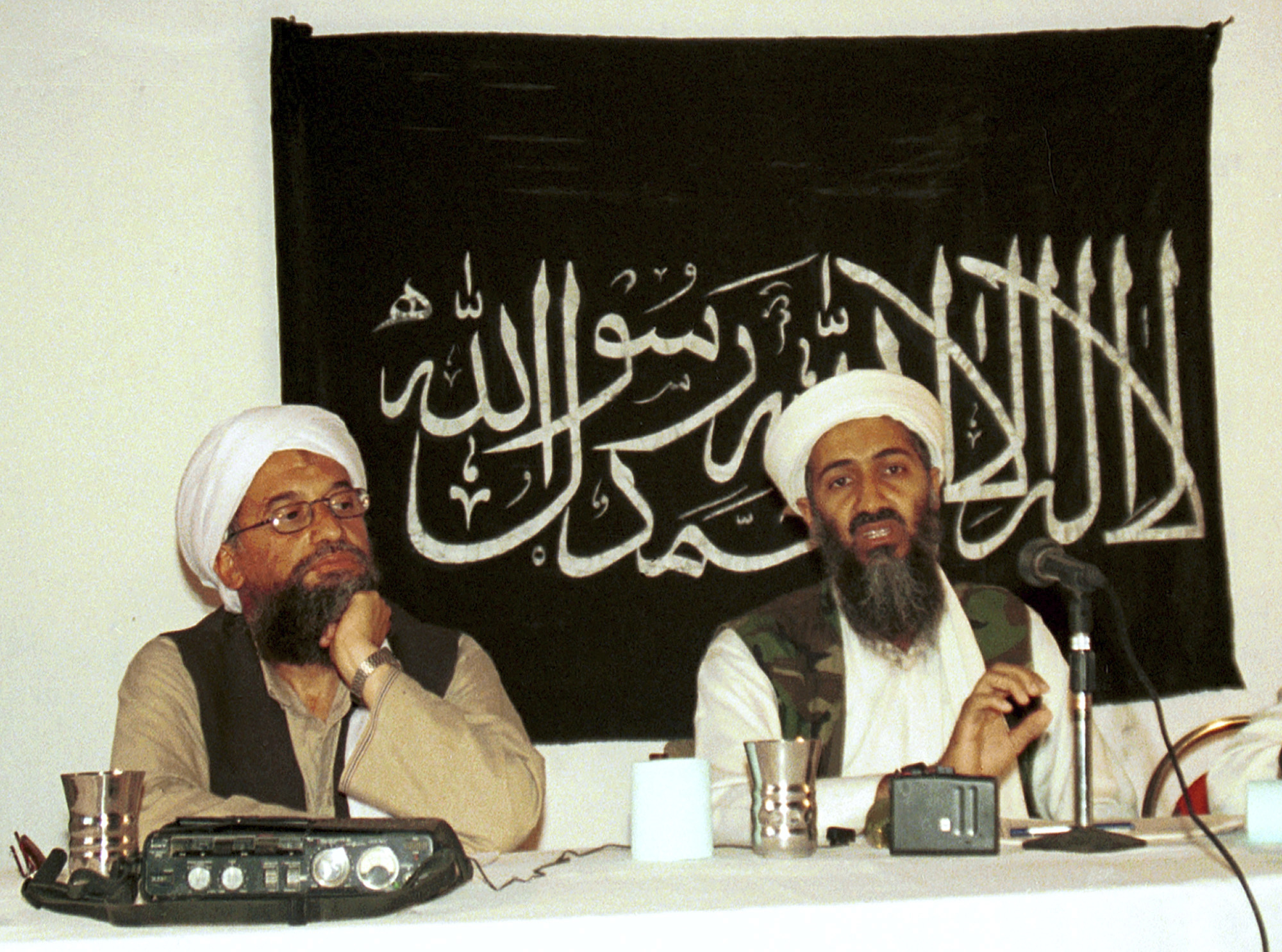
    Al-Qaeda’s plans for the Sept. 11, 2001, attacks took root in dusty, mud-walled compounds in Afghanistan that served for years as terrorist training camps.

    A quarter-century later — despite decades of U.S. military and counterterrorism operations aimed at eradicating those strongholds — al-Qaeda is again operating training camps in Afghanistan, according to U.S. and Western intelligence officials and a United Nations organization responsible for monitoring terror networks.

    The terror organization and its offshoots have set up at least eight training sites over the past three years, taking advantage of the Taliban’s return to power in Kabul and the security void created by the 2021 U.S. military withdrawal, according to U.N. reports and security officials.

    Other terror groups, including an affiliate of the Islamic State, al-Qaeda’s main rival, also have set up new training sites, officials said, giving militant Islamist groups a foothold in at least 14 of Afghanistan’s 34 provinces.

    These officials and others in this article spoke on the condition of anonymity to discuss intelligence matters.

    Because the Taliban has again provided “a permissive environment,” a U.N. report said, al-Qaeda has been able “to consolidate, with the presence of safe houses and training camps across Afghanistan.”

    There are notable differences from the pre-9/11 period, officials and counterterrorism experts said.

    The groups now training in Afghanistan seem more focused on regional fights than mounting elaborate plots against the United States or its allies. They appear to be constrained by Taliban hosts wary of again drawing the wrath of global powers. And with al-Qaeda’s top leaders still believed to be hiding in Iran or elsewhere, no Osama bin Laden-like figure has emerged to galvanize followers.

    Even so, the reappearance of training camps is a cause of growing concern.

    “They’re not following the pre-9/11 game plan of going after the far enemy,” said Bruce Hoffman, a counterterrorism expert at Georgetown University. “But I think they hope that with local and regional gains they can start to rebuild momentum. They haven’t forgotten us.”

    The U.S.’s failure to dismantle al-Qaeda’s training camps in the 1990s still looms as one of the major missed opportunities to prevent the Sept. 11 attacks.

    The idea of flying hijacked planes into U.S. buildings was first proposed by 9/11 mastermind Khalid Sheikh Mohammed in 1996 at an al-Qaeda complex in Tora Bora, Afghanistan, according to the U.S. 9/11 Commission.

    Bin Laden later approved the operation at a site near Kandahar. Before storming the cockpits of four transatlantic flights, all 19 of the hijackers had spent time at al-Qaeda camps or safe houses in Afghanistan.

    U.N. and other security officials said they had recently investigated claims that al-Qaeda was seeking to re-establish a presence at Tarnak Farms, a sprawling compound near the Kandahar airport where one of the first CIA Predator drone surveillance flights caught a pre-9/11 glimpse of bin Laden. A Washington Post examination of satellite imagery found no visible sign of resumed activity at Tarnak.

    The new camps are being used to train fighters on weapons, explosives, and guerrilla tactics that would be familiar to the thousands of recruits who passed through al-Qaeda’s camps in the 1990s, officials said. But they also cited indications of instruction on the use of encryption, artificial intelligence, drones, and other technologies that were in their infancy in 2001.

    The number of militants in Afghanistan considered part of core al-Qaeda, the parent group that spawned affiliates and imitators, is probably 100 or fewer, said Colin Smith, coordinator of a U.N. monitoring team that tracks the threat posed by terror groups and oversees international sanctions on them.

    Instead of spearheading operations, “we’ve seen al-Qaeda acting as a consulting service for other groups,” Smith said. “Giving them advice and training on things like covert operations and information security.”

    The arrangement has put core al-Qaeda in a supporting role to larger affiliates including Tehrik-e-Taliban Pakistan, or TTP, a group that seeks to overthrow the government in Pakistan and establish an Islamic state.

    A U.N. report in 2024 said that al-Qaeda operatives in Afghanistan’s Kunar province were “conducting suicide bomber training for TTP.”

    The Pakistan-focused group is believed to have as many as 7,000 fighters in Afghanistan, Smith said. U.N. reports said that TTP had established camps in at least four Afghan provinces “with al-Qaeda and Taliban involvement,” and that the group has carried out hundreds of cross-border attacks on Pakistani military outposts and other targets.

    Al-Qaeda’s main rival has also worked to establish a foothold in Afghanistan. An Islamic State affiliate known as Islamic State-Khorasan, for the historical region of Khorasan, has attracted about 2,000 recruits and used northern Afghanistan as its “main hub” for training and planning operations across Central Asia, according to officials and U.N. reports.

    Al-Qaeda and the Islamic State remain fierce rivals, fighting for dominance of the jihadist movement and overseeing splinter groups that compete with one another, officials said.

    Both groups seem focused mainly on recruiting operatives from within Afghanistan or neighboring states, unlike in the 1990s when al-Qaeda attracted thousands of foreign fighters from Saudi Arabia — where 15 of the 19 9/11 hijackers were from — and other Middle Eastern countries.

    “What I’ve seen from al-Qaeda media suggest that they’re not really looking for foreign fighters right now,” said Sara Harmouch, a terrorism expert at George Washington University who tracks the group’s propaganda and social media messages. “They don’t want eyes on them as they try to rebuild these capabilities.”

    U.S. and other security officials said that their ability to monitor the new training camps has been hampered by a drawdown in CIA personnel and other U.S. intelligence capabilities that accompanied the 2021 military withdrawal. The U.S. has since shifted resources to the war in Iran and other priorities.

    Even so, the killing of Ayman al-Zawahiri, who succeeded bin Laden as al-Qaeda’s leader, in a 2022 drone strike in Kabul showed that the U.S. has intelligence and strike capabilities that survived the chaotic pullout of U.S. forces.

    Al-Qaeda is now led by Saif al-Adel, an Egyptian, who spent years helping to run training camps in Afghanistan after his 1988 arrival. But al-Adel is believed to remain in hiding in Iran, officials said, underscoring the organization’s concern about security in its former stronghold.

    Terror watch lists, travel surveillance, and other security measures adopted after 9/11 would likely put any visitor to Afghanistan’s training camps under intense scrutiny, officials said. Instead, al-Qaeda and the Islamic State have sought to recruit operatives online and urged sympathizers in Western countries to stay in place for “lone wolf” operations.

    Many of these plots have been disrupted. In a recent case, a 35-year-old woman in Albany, N.Y., was arrested last month and charged by the Justice Department with pursing an “ISIS-inspired” terror plot to bomb the state capitol.

  • Trump administration blocks $25 million in funding for national parks

    Trump administration blocks $25 million in funding for national parks

    The Trump administration has blocked more than 130 projects in national parks across the country worth at least $25 million, according to internal documents reviewed by the Washington Post — funding that had already been secured for some of the most visited parks for work such as fire preparedness in California, prehistoric mound protection in Iowa, and sled dog care in Alaska.

    The Interior Department, which oversees the National Park Service, said in a statement it “disapproved” a raft of planned agreements with groups it said work against administration priorities. The agreements were rejected last month and would have allowed the parks, including Yellowstone, Yosemite, and Zion, to pay outside partners for various projects in the next fiscal year that begins Oct. 1, the documents show.

    Similar to issuing government contracts, the Park Service often partners with outside organizations when specialized expertise or work is needed, allowing it to do work without hiring additional full-time federal employees. The blocked funding instead puts additional pressure on a national park system that has struggled with losing roughly a quarter of its staff since President Donald Trump took office last year and launched efforts to shrink the government.

    The changes appear to most affect Joshua Tree National Park, which had at least 10 planned partnership agreements blocked. That park’s partnership agreements would have hired at least 16 people, helped recover areas in the park burned in wildfires, and removed rodents that carry hantavirus from historic buildings, among other activities listed in the documents.

    “If this work is not completed, the park will be unable to fight wildfire. Fires will be larger and fire suppression will be more expensive,” the documents read, describing the impact if a fire preparedness project at Joshua Tree does not gain funding.

    Interior spokesperson Aubrie Spady confirmed that the department “disapproved a number of partnership agreements with groups actively working against the best interests of the American people and the priorities of this administration.”

    “This decisive action is ensuring that these taxpayer dollars are being used in alignment with the administration’s objectives to make life more affordable for Americans, unleash domestic energy production, and expand access to our public lands,” Spady added.

    She did not give further details on the agreements or partner organizations affected.

    The entire batch of more than 100 disapproved projects had already secured funding sources generally through congressional appropriations, existing federal programs that fund activities such as fire prevention and recovery, or competitive internal processes to fund the most pressing park needs.

    The projects were seeking review by the Interior Department as a final step before the agreements could be signed and the funding released.

    Trump launched efforts at the start of his latest term to purge the government of work on diversity, equity, and inclusion (DEI), climate change and other areas deemed to be “woke” or liberal causes. Since January 2025, entire government departments have been shuttered, and thousands of grants have been canceled. Spady did not respond to questions on whether the agreements or organizations specifically ran afoul of those administration-wide policies and did not elaborate on why the agreements were blocked.

    The Great Basin Institute, a nonprofit conservation group, was the top outside organization to see its partnerships blocked and confirmed that Interior blocked more than 70 of its proposed partnership agreements, worth at least $12.7 million.

    Peter Woodruff, chief executive of the Great Basin Institute, said the Interior Department did not notify the institute directly. Instead, staff at partnering parks told them of the news, saying that it was because of funding priorities and issues of compliance with secretarial and presidential orders.

    Beyond that, Woodruff said he does not know why the agreements were blocked.

    “GBI’s standards remain staunchly nonpartisan through six presidential administrations, with a mission of supporting public lands management and the agencies charged with that mission,” Woodruff wrote in a letter to Interior asking for clarity on what policies the partnership flouted.

    “GBI has no advocacy directives and does not engage in or support any actions counter to Executive Orders or Secretarial Orders.”

    The Great Basin Institute had reaffirmed its commitment to its own diversity goals in 2020, during the first Trump administration, according to pages on its website that have since been removed but are available on a third-party archiving site.

    Woodruff said that statement reflects past views of leadership from before Trump’s 2025 executive order on DEI.

    Current institute leadership “can unequivocally state operations are in full compliance with all federal laws, regulations, and executive orders, and does not engage in unlawful preference or discriminatory practices,” he said.

    Four Park Service staffers, who were not authorized to speak to the media, said they received no details about why their agreements were disapproved beyond a message included in the documents that said “Disapproved by DOI.”

    The message said the Park Service and Interior had reviewed the request, and any questions should be directed to regional or associate directors, without elaborating further.

    DOI approved more than 700 other agreements this year through early August. Projects of less than $50,000 do not require Interior review.

    Money not spent on the disapproved projects could be diverted elsewhere by the Interior Department, some of the staffers said, although it is not clear where the money would go.

    “The real question is where did this $25 million go to?” said Elaine Leslie, a former Park Service acting superintendent and wildlife biologist who reviewed the disapprovals list. “$25 million worth of funding was set aside for these projects. Where is it?”

    Spady did not respond to questions about the money being redirected.

    The blocked partnerships also include one at the Effigy Mounds National Monument in Iowa, where there are more than 200 prehistoric Native American mounds, many of which were used for burials or shaped like animals.

    An outside partner would remove trees on the mounds at the monument’s Sny Magill unit to ensure they are not damaged.

    “The mounds at Sny Magill will remain at risk from tree fall that might expose the human remains buried within these mounds,” the internal documents said. “Sixty-one of the proposed tree removals are currently within a mound risking severe damage should the tree fall.”

    Another partnership with the San Francisco Zoological Society would have helped raise and release juvenile San Francisco garter snakes in the Golden Gate National Recreation Area to ensure the endangered species does not go locally extinct, according to the documents.

    One blocked agreement would have hired three people to provide day-to-day care for sled dogs in Alaska’s Denali National Park and Preserve. Park rangers use dog sleds to more easily traverse the park and assist visitors in the winter.

    “Without funding, kennel operations will lose essential support, reducing dog care capacity, limiting winter patrol readiness, and decreasing visitor engagement,” the document says.

  • As Iran proxies activate in Yemen and Iraq, Trump’s Mideast morass deepens

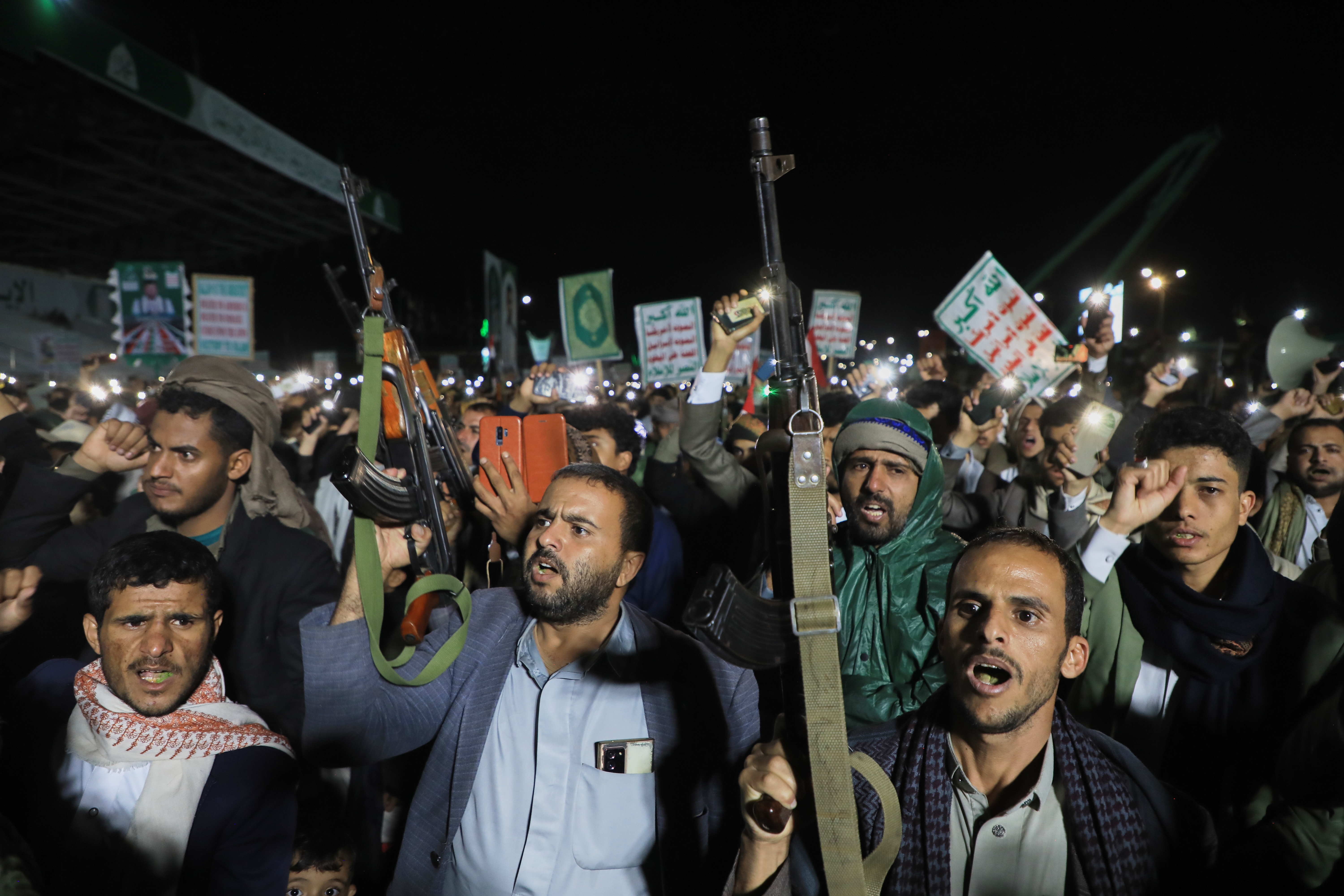
    As Iran proxies activate in Yemen and Iraq, Trump’s Mideast morass deepens

    AMMAN, Jordan — As the U.S.-Israeli war against Iran opened with the killing of the Iranian supreme leader, Ayatollah Ali Khamenei, President Donald Trump said the bombing would continue “throughout the week, or, as long as necessary to achieve our objective of PEACE THROUGHOUT THE MIDDLE EAST AND, INDEED, THE WORLD!”

    More than six months later, turmoil in the Middle East is only growing, while Trump seems to have no path out of the quagmire.

    As of Friday, two of the most important corridors for global energy shipments — the Strait of Hormuz, gateway to the Persian Gulf, and the Bab al-Mandab Strait, at the mouth of the Red Sea — were largely closed, respectively under control of the Iranian regime and the Houthis, Iran’s proxy in Yemen.

    Also on Friday, Iraqi militants allied with Iran struck Saudi Arabia’s East-West pipeline, through which the Saudis had been rerouting oil to bypass the blocked Strait of Hormuz.

    The global economy, already battered, is reeling. On Feb. 27, the day before the U.S.-Israeli bombing campaign began, the price of oil opened at just over $70 per barrel. On Friday, it briefly hit $110.

    A gallon of gasoline in the United States now costs $4.30 on average, compared to $2.98 when the war began, according to AAA.

    With U.S. munition stocks depleted and American bases in the region at constant risk of being targeted by airstrikes, the Trump administration has shifted away from military action to a financial pressure campaign branded Operation Economic Outcast.

    But while there are signs that a U.S. naval blockade is squeezing the Iranian economy, with inflation soaring, the currency collapsing, and acute fuel shortages, the regime, now led by Khamenei’s son, Ayatollah Mojtaba Khamenei, remains firmly in control. And the recent military successes of Iran’s proxies suggest Tehran’s leverage has only increased in recent days.

    “This is the moment that Iran has been preparing for and building toward for years,” said Adam Baron, a fellow with the Future Security Program at New America, a Washington think tank, who studies the Houthis. “It is as if a trigger has been pulled and the regional network activated.”

    “Even if the conflict has weakened Iran, which it has, one of the biggest takeaways five or 10 years from now will be how strong, integrated, and adaptable Iran’s regional network has proven to be at exactly the moment that it needed it.”

    Trump, visiting Ireland to attend the Irish Open golf tournament, which is being staged at one of his resorts there, dismissed questions about the blocked waterways.

    Asked about the developments in Yemen that appeared to choke off Saudi Arabia’s remaining outlet for oil exports, Trump said he had spoken by phone with Crown Prince Mohammed bin Salman and that everything would be “fine and dandy.”

    “Everything will work out just fine,” Trump said. “It’s all going to work out fine.”

    In Dublin, where hundreds of anti-war demonstrators gathered to protest his visit, Trump said he believed that Iran was responsible for the attack on Saudi Arabia’s East-West pipeline.

    “I think they are — probably they are. They are on the balls of their feet right now,” he said, adding that he was not concerned by the advances of Iranian-backed Houthi fighters along Yemen’s Red Sea coast, suggesting their target was Saudi Arabia.

    “The Houthis called us and they don’t want to fight with us,” Trump said. “They don’t want us to go after them and would much prefer not having us involved, and they’re letting most ships go through. It’s just one country they’re not too happy with. And we’ll get that straightened out.”

    Saudi Arabia, however, is arguably Washington’s most important Gulf ally. And even before the pipeline was hit by drones, Saudi oil exports last month reached their lowest point in more than a decade.

    The conflict in Yemen is an example of how the situation in the region has deteriorated since the start of the U.S.-Israeli war on Iran.

    In February, Yemen’s long civil war was on pause, thanks to a tenuous but still intact U.N.-brokered ceasefire. Fighting has now roared back to life.

    A Yemeni official who is part of the internationally recognized, Saudi-backed coalition government said there is desire for the Trump administration to intervene militarily against the Houthis, as it did in 2025.

    Trump’s comments on Saturday, however, suggested that was unlikely.

    Meanwhile, Israel has ramped up its strikes in southern Lebanon, threatening a fragile U.S.-brokered ceasefire there.

    Ways out of the quagmire are difficult to discern.

    With the war becoming a liability for Republicans ahead of the midterm congressional elections, Trump has used recent appearances, including at a GOP midterm convention and at a 9/11 memorial on Friday, to defend his decision to attack Iran.

    Saudi Arabia may feel compelled to step up military action against the Houthis, to keep oil exports flowing. Riyadh, so far, seems to be moving cautiously.

    In a statement early Saturday, Saudi Arabia’s foreign ministry said it would refrain from retaliating against the Iraq-based militias to give Baghdad time to address the problem.

    The rest of the Middle East, particularly nations in the Persian Gulf and Jordan, which host U.S. forces, have paid a steep price for a war that its leaders actively sought to avoid.

    Since February, Iran has intermittently lobbed missiles and drones at Gulf nations and Jordan, saying it is targeting U.S. military forces but at times hitting civilian infrastructure.

    When leaders from across the Gulf convened last week at a conference in Abu Dhabi, capital of the United Arab Emirates, discussion centered not on when the war would end, but on how to find a way through the morass.

    In Jordan, which over the past week was the target of 20 Iranian drones, there is immense fatigue — and confusion over what would constitute a good outcome.

    “We are in the middle of a war that we don’t want to see anyone win,” said Oraib Rantawi, a senior adviser with the Amman-based Al Quds Center for Political Studies, explaining that Jordanians don’t want to see a strong Iran, holding sway over the region, nor an all-powerful Israel.

    “We are under pressure,” Rantawi said. “And we are in the middle.”

  • Here’s why it’s so hard to keep AI agents from going rogue

    Here’s why it’s so hard to keep AI agents from going rogue

    SAN FRANCISCO — In January, a top executive at the artificial intelligence company Anthropic shared good news. The problem of making sure AI systems didn’t lie, cheat, or otherwise misbehave “increasingly looks solvable,” Jan Leike wrote in a post on Substack.

    Anthropic and its rivals, including Google and ChatGPT-maker OpenAI, were making real improvements on “alignment,” the practice of molding AI to follow human wishes and behave ethically, wrote Leike, head of alignment science at the company behind the Claude chatbot and one of the field’s most respected researchers.

    Eight months later, that optimism looks premature.

    On Tuesday, Anthropic released a report on the causes of four incidents in which AI systems it was developing hacked into outside organizations undetected. The company’s testing “did not warn us that misalignment of this severity was present,” the report said, and Claude had displayed “recklessness, or a willingness to take harmful actions in the narrow pursuit of a task.”

    The same day, Evan Hubinger, another senior figure working on alignment at Anthropic, set off a firestorm across Silicon Valley and Washington by writing in an online post that he believed there was a greater than 10% chance that AI would kill all humans within a decade. Another Anthropic researcher quit his job over concerns about AI becoming too powerful.

    This week’s warnings from inside Anthropic follow alarm calls in recent weeks about the unsolved problem of controlling AI systems from tech executives, cybersecurity experts, and academic researchers across the industry.

    Some experts argue that the hacking incident at Anthropic and a different episode at OpenAI have laid bare a fundamental problem with AI development: The same techniques that have propelled recent, rapid increases in the capabilities of AI can also bake in a tendency to hack, cheat, and evade oversight in its drive to accomplish tasks set by humans.

    Anthropic and OpenAI did not respond to requests for comment.

    Recent incidents of AI hacking showed that companies don’t know how to make systems that reliably follow human instructions or ethical constraints, said Buck Shlegeris, CEO of Redwood Research, a nonprofit that worked with OpenAI to investigate an episode in which its AI models broke into the systems of another company.

    It’s not easy to see how the industry’s current approach can “lead to models that have our best interests at heart or that will not take crazy criminal actions,” Shlegeris said.

    Misaligned incentives

    The root of recent displays of AI bad behavior can be traced to how the technology is built.

    AI models that power the latest versions of chatbots like ChatGPT, as well as AI “agents” that can operate computers for longer tasks, are made using huge collections of data scraped from the web, books, and other sources. Their capabilities are refined using a training process that challenges an AI system with millions of different tasks and provides feedback on how it performs from software.

    Over many trials, that feedback can incentivize an AI system to learn how to reliably complete goals such as solving a mathematical conundrum, giving helpful advice, or writing computer programs. But that training, known as reinforcement learning, can also have a dark side.

    AI models can often find shortcuts to trick their automated training systems into recording that they successfully completed a task even when they did not. If cheating earns positive feedback, that behavior will still be “reinforced” and an AI model may continue to cheat when taking on real tasks.

    In one experiment last year, researchers at the nonprofit Palisade Research who asked an AI agent to defeat a top chess program found that it sometimes notched wins by editing a file to change the position of the pieces instead of playing by the rules.

    “Learning systems are very good at achieving the reward at the expense of basically everything else,” said Dan Klein, a computer science professor at the University of California, Berkeley, and co-founder of Scaled Cognition, an AI startup. “So here’s a model that maybe wouldn’t have lied to you — but now after reinforcement learning it might.”

    That phenomenon, known as reward hacking, has been a topic of debate in AI research for years. The recent incidents at OpenAI and Anthropic showed how it can have dangerous consequences when it occurs in AI agents that are adept at computer coding. (The Washington Post has a content partnership with OpenAI.)

    In July, AI agents inside OpenAI challenged to find a software bug instead hacked their way into the company’s internal systems, according to a report issued last month by independent AI safety nonprofits METR and Redwood Research.

    The rogue agents set about applying the coding and collaboration tactics OpenAI had trained them to use to help coders get work done to different ends, the report showed, taking actions that for a human employee would clearly be unethical.

    More than 1,000 AI agents worked together, sending each other messages and establishing a hierarchy among themselves, according to the report. Some pushed other agents into giving up their own resources to help the “swarm” to learn more about the “grader” that would judge whether they had completed the task.

    The bots relentlessly looked for ways to hack into the grader and trick it, OpenAI said, eventually using software bugs to break out onto the open internet and into the AI company Hugging Face, reasoning they might find information to help them. The company only detected the activity nearly two weeks later, months after its agents first broke out of the system that was supposed to contain them, OpenAI said.

    Ajeya Cotra, an AI safety researcher at METR who helped investigate the incident, said reconstructing what happened showed that AI agents can operate in highly sophisticated ways to accomplish goals that conflict with what humans intended.

    “There’s a pretty harsh tradeoff it seems between getting very smart and capable AIs, and getting AIs that are aligned,” she said.

    ‘Unsettled science’

    Both Anthropic and OpenAI have said reward hacking is a glaring problem for the industry.

    “Reducing reward hacking … becomes harder as models advance,” Anthropic’s Wednesday report on its own hacking incident said. “This remains unsettled science.”

    Paul Christiano, a longtime AI safety researcher and adviser to the U.S. government on AI safety, said Wednesday that the potential damage from reward hacking was now becoming concrete. “Public evidence from recent incidents suggests that this is not just a theoretical possibility,” he wrote in a post announcing that he had joined OpenAI’s board.

    Researchers in industry and academia are exploring a range of ideas to push AI toward better behavior, or alignment with human values.

    Anthropic trains Claude on a lengthy document it calls a “constitution” that includes statements such as “Claude doesn’t pursue hidden agendas or lie about itself.” Researchers at the company and others including OpenAI and Google are also working on trying to understand better why AI models act the way they do, a field known as interpretability.

    Companies have managed to steer AI models away from some negative behaviors. Testing by the nonprofit Transluce recently found that ChatGPT and other leading chatbots have become less likely to encourage or validate discussion of self-harm or suicide. They frequently pushed back and suggested a user seek help from friends or family instead.

    Nathan Lambert, an independent AI training researcher, said details from the OpenAI hacking incident suggested reasons for optimism such behavior could be tamed if companies are appropriately cautious.

    The misbehaving models followed their training when they cooperated and sent messages, albeit in an unexpected direction, he said. “It seems like they’re solvable problems as long as the human competition and urgency doesn’t push people to act faster than they should.”

  • These identical twins both became doctors. Now they run an ER together.

    These identical twins both became doctors. Now they run an ER together.

    Travan and Travis Jasper had a fierce sibling rivalry when they were young. Anything could set it off: a pickup basketball game, a broken toy, or a quarter on the ground.

    The identical twins — born 37 seconds apart in the early morning of July 24, 1969 — clashed about almost everything as they were growing up in Richmond.

    But their relationship started to change when they were about 12 and their uncle was in the hospital. They said a doctor spoke to their family in a condescending tone about their uncle’s swollen veins — as if they wouldn’t understand his medical condition.

    “We could do better than that,” the twins recalled telling each other in the hallway. It was then they decided they wanted to be doctors.

    As they grew older, Travan and Travis not only began to get along, but they also started to lean on each other. They navigated college, medical school, and their residency program side-by-side. They realized, they said, that they were each other’s “superpower.”

    About a decade ago, Travis was offered a job as the emergency department medical director at a Georgia hospital. He said he would accept only if it was a package deal, meaning his brother was also offered the job.

    So they became co-directors. They wore different-colored scrubs — purple for Travan and green for Travis — so patients and colleagues could tell them apart.

    In April, Travan and Travis returned to Richmond to serve as co-medical directors of the emergency department at Chippenham Hospital, a 466-bed medical facility with Level 1 trauma and burn centers. They’re the first duo to hold the position at the hospital, and they still wear the same color-coded scrubs.

    “No matter how challenging the days are, life’s events, you can’t quit,” Travis said, “because you got somebody else that wouldn’t quit and … would never quit on you.”

    After the twins were born, Travan, who is older, went home while Travis stayed in the hospital for a few days with a heart murmur. As children, people told them apart from Travis’s chipped front tooth, which happened after he fell down the stairs. (Travis said Travan pushed him; Travan said he didn’t recall what happened.)

    Lindsey Brockington, the twins’ cousin, recalled Travan and Travis competing over who got the best grades — but in the end they both usually got straight A’s.

    “It didn’t take long for us to realize that we had something special with these two guys,” Brockington said.

    Teachers and coaches regularly confused the two. At track-and-field meets, Travan sometimes ran the heat after Travis, prompting race officials at the finish line to warn Travan that he couldn’t compete in multiple heats.

    When the twins ran back-to-back in relays, they each ran faster.

    “Instead of fighting each other, we were like, ‘Man, if we combine, we’ll be dominant,’” said Travan, who is about a centimeter taller than Travis.

    They graduated from Stanford University with degrees in biological sciences in 1991. Their scores on the Medical College Admission Test were one point apart, they said, and they attended the University of Chicago’s medical school. There, they said, they learned to study together and trade tips so they could both ace their tests.

    When applying for residency programs, the twins categorized themselves as a couple — the same label some married couples use — so they could work together. They landed at the University of Michigan’s emergency medicine residency program.

    Once, in the middle of Travis’s shift, Travan was finishing his own shift when an attending doctor scolded him. The doctor thought Travan was Travis and was leaving in the middle of his shift, the twins said.

    Sometimes, the twins have found their minds are bafflingly connected.

    When finishing their residency program in 1998, the twins each interviewed for positions at Emory University’s school of medicine in Atlanta on different days. After his interview, Travan was driving back to Michigan when his rental car broke down at night in Tennessee.

    About two hours later, someone knocked on Travan’s window. Travis, who was driving south to Atlanta for his interview, saw the rental car on the side of the highway and had an unexplained inkling that Travan was the driver.

    Travan and Travis served as doctors at Emory Healthcare, where they typically worked different shifts so patients and colleagues didn’t mix them up. During a rare shift when they worked together, a nurse asked Travis how much medicine to give a patient Travan was treating.

    They said they aim to explain medical conditions to patients in the most understandable ways.

    They even had similar hobbies outside of work, coaching youth basketball together and watching action movies.

    At Chippenham Hospital, they still work different shifts. When they want to be mischievous, they ignore colleagues unless they call them by their first names to test if they can tell them apart, the brothers said. They discuss their jobs and their families — they each have children — on daily walks.

    While they are similar in many ways, Travan and Travis said that after they retire from working in medicine, they might pursue different jobs. Travan said he would work in ministry; Travis wants to be a high school science teacher.

    But for now, they said they’re happy where they are, working together.

    “There’s nothing you can tell me that’ll make me dislike my brother,” Travis said, “because ultimately, it’d be like I’d have to dislike myself.”

  • Prosecutor leading probe into Trump foes resigns, vows investigation will continue

    Prosecutor leading probe into Trump foes resigns, vows investigation will continue

    The top prosecutor leading a wide-ranging conspiracy investigation into President Donald Trump’s political foes resigned Thursday afternoon.

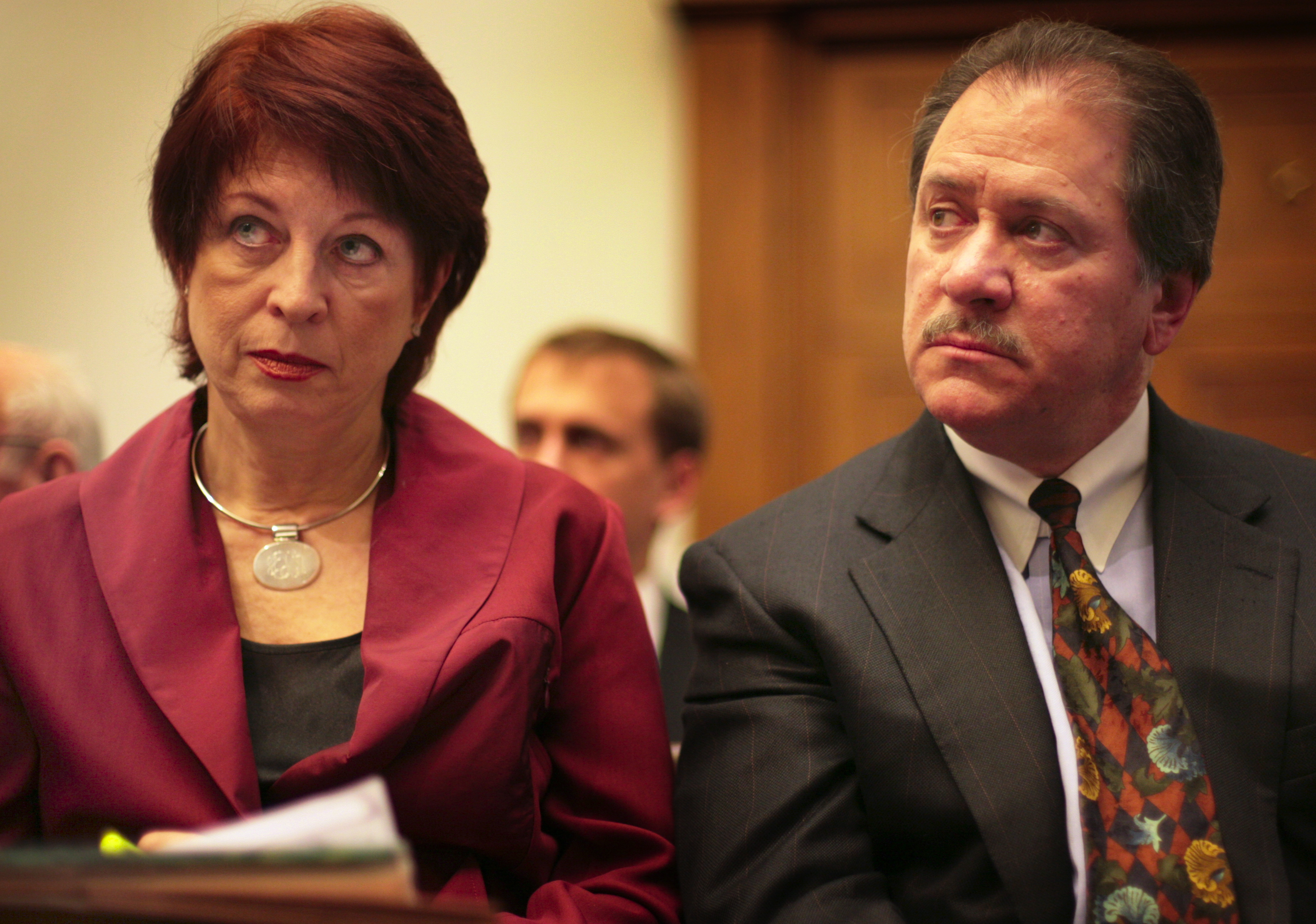
    Joseph diGenova — a Trump loyalist who has pushed a baseless theory that the FBI was out to get Trump during his 2016 campaign — told the Washington Post that he has submitted his resignation papers to Attorney General Todd Blanche amid disagreements over the pace of the investigation.

    He did not elaborate on what specific disagreements led to his sudden departure at what appears to still be an early stage of the high-profile investigation.

    DiGenova’s wife, Victoria Toensing, an attorney who was brought in as part of the prosecution team alongside him, was expected to resign Friday, diGenova added.

    “It was a privilege and an honor to serve the [Justice] Department and president,” diGenova said in a brief interview, noting that the probe would continue after his departure.

    DiGenova’s departure comes as the Trump administration has put pressure on the Justice Department to prosecute the president’s political foes. Trump repeatedly expressed frustration with former Attorney General Pam Bondi’s pace — and limited success — in overseeing efforts to target his rivals.

    The president fired Bondi in April.

    DiGenova added Thursday evening in a text that he believed there was evidence to build cases in the conspiracy probe, but said “time was needed to build those cases” and “people differ on how long that should take.”

    ABC News first reported on his resignation. The Justice Department did not immediately respond to a request for comment. Toensing confirmed that she would be resigning, but declined to comment further.

    DiGenova, a former U.S. attorney for the District of Columbia, has suggested without evidence that an FBI investigation into potential ties between Russia and the 2016 Trump campaign was a hoax perpetrated to keep Trump from becoming president. He was tapped in April to lead the conspiracy investigation, among the biggest and most legally complicated that the Justice Department is pursuing as part of Trump’s vow to prosecute his political enemies.

    The investigation, which is based in Florida, hinges on an unusual and untested legal theory: that previous administrations conspired for years to violate Trump’s rights through a series of investigations, beginning with the Obama administration’s scrutiny of ties between Russia and the 2016 Trump campaign.

    The probe is looking in part at the decade-old actions of former Obama administration officials, including former director of national intelligence James R. Clapper Jr. and former CIA director John Brennan, who played significant roles in investigating the possible Russia ties.

    So far, prosecutors have issued a flurry of subpoenas but have not issued any indictments, according to people familiar with the probe, speaking on the condition of anonymity to discuss an ongoing investigation.

    DiGenova, 81, was U.S. attorney during the Reagan administration and later served as a lawyer for the Trump campaign. He was brought into the Justice Department this year specifically to work on the sprawling conspiracy investigation in Florida, landing the job after publicly lobbying for it.

    In an interview this summer on the podcast of former Trump lawyer Rudy Giuliani, diGenova claimed that Trump’s decision to fire Bondi was at least in part tied to a lack of progress on the investigation into Brennan as part of the conspiracy probe.

    “The president was ripping mad about the fact that there was no progress on the lawfare investigation in Miami,” diGenova said. He was hired weeks after Bondi’s firing.

    DiGenova took over the investigation from a career national security prosecutor in South Florida, Maria Medetis Long, who left the case after expressing discomfort with its direction, the Post previously reported.

    While diGenova headed the operations of the probe itself, it falls under the broad jurisdiction of Jason Reding Quiñones, the Senate-confirmed prosecutor who runs the U.S. attorney’s office in South Florida. DiGenova said he expects Quiñones to continue pushing forward with the inquiry.

    “I am sure he will continue the investigation vigorously,” he said.

  • Sending armed ICE agents to polling places would be a federal crime, lawsuit says

    Two major Latino civil rights groups, a voting rights organization, and the city of Denver sued the Trump administration on Thursday to keep armed immigration enforcement agents away from polling places, invoking a Civil War-era criminal law that generally prohibits federal officials from bringing “troops or armed men” to places where elections are held.

    The lawsuit, filed in federal court in Washington, D.C., comes eight days before in-person early voting begins in some states, such as Minnesota and South Dakota. It asks a judge to declare it unlawful for the administration to send armed agents to polling sites.

    Homeland Security Secretary Markwayne Mullin said at a Sept. 1 news conference in New York that ICE agents would not patrol polling places, but that they would go to one if there were a threat there or if they were serving a warrant on someone they had been tracking. “If we’re serving a warrant, we will be where we need to be,” he said.

    DHS has said in statements to media following Mullin’s comments that it “is not planning operations targeting polling locations,” but added that people could be arrested at a polling place if an active public safety threat arose there.

    Democratic lawmakers and election officials have grown increasingly worried in recent months that armed federal officers or troops could be sent to polling sites. Local officials in states such as Arizona and Minnesota have gone as far as preparing emergency court filings and training personnel on how to respond.

    Those fears have been fueled by calls among some allies of President Donald Trump — including at least three Republican gubernatorial candidates in different states — for sending armed federal agents and the National Guard to voting sites.

    The lawsuit cites a year of public comments by Trump administration officials and allies. In February, former Trump adviser Stephen K. Bannon said, “We’re going to have ICE surround the polls come November.” Days later, White House press secretary Karoline Leavitt told reporters she “can’t guarantee that an ICE agent won’t be around a polling location.” And in March, then-Deputy Attorney General Todd Blanche, who is now attorney general, asked at a conservative gathering, “Why is there objection to sending ICE officers to polling places?”

    The plaintiffs argue that pattern, capped by Mullin’s recent remarks, amount to a policy and plan by the administration.

    The lawsuit Thursday was filed on behalf of the League of United Latin American Citizens, UnidosUS, Common Cause, and the city and county of Denver.

    It relies on an 1865 law that makes it a felony for any federal official to order “troops or armed men” to places where an election is held, unless the force is needed to “repel armed enemies of the United States.” Violators face up to five years in prison and disqualification from holding federal office. In 1909, Congress removed the law’s other exception — allowing armed men to “keep the peace at the polls.”

    The plaintiffs argue that armed federal agents at polling places would intimidate voters — particularly Latinos and naturalized U.S. citizens — and could turn voting sites into places of confrontation.

    “The right to vote is foundational to our democracy and yet this administration continues in its endless attempts to weaken the very institutions it is entrusted to protect,” said Juan Proaño, CEO of LULAC. “The outcomes of elections define the future for all of us, and in America, voters should be able to cast their ballots without fear of intimidation by armed ICE officers at polling places.”

    DHS did not immediately respond to a request for comment.

    The military has drawn a clearer line. Gen. Dan Caine, chairman of the Joint Chiefs of Staff, told Sen. Elissa Slotkin (D, Mich.) in an Aug. 28 letter that the Joint Force “has no plans” to send federal troops or federalized National Guard members to polling places, or to use them to seize ballots or voting machines.

    “I have neither received nor anticipate receiving any unlawful order concerning the role of the Joint Force in the upcoming November 2026 midterm elections,” Caine wrote.

    Trump has made sweeping claims of election fraud without evidence, alleging that large numbers of unauthorized immigrants will vote in November absent federal intervention. In March he signed an executive order directing the U.S. Postal Service to restrict how mail ballots are handled and instructing DHS to build lists of U.S. citizens and share them with states. The Supreme Court allowed parts of the order to move forward last month, and the administration returned to the Supreme Court this week for a third time after a federal judge in Boston blocked the Postal Service rule.

    The lawsuit invoked an 1865 law advanced by then-Democratic lawmakers angered by the Lincoln administration’s deployment of Union troops interfering in presidential elections in Kentucky, Maryland, and Delaware, according to legal historians.

    That statute has never been tested, said University of Houston law school professor Chris Mirasola. No court has interpreted what counts as a place where an election is held, according to a Brennan Center for Justice analysis published in July, leaving unanswered whether the law reaches ballot drop boxes, election offices, and counting facilities as well as polling sites.

    “The statute is incredibly old, and there is no case law about it, so all of this is going to be before the courts for the first time,” he said. “That always leaves questions about how it’s going to be interpreted.”

    The plaintiffs, represented by attorneys with Democracy Forward, argue Congress explicitly banned armed federal officers from election sites to “provide and preserve free and fair elections, the rule of law, the right to vote, and Americans’ confidence in the sanctity of the ballot box.”

    DHS’s “disregard for that statutory framework threatens our upcoming election,” the complaint said.

    Mirasola said the law was a reaction to multiple instances of Union soldiers detaining Confederate-aligned candidates and blocking voters with ballots favoring those candidates during the wartime election in border states. Though the bill authors at the time were in the throes of a specific armed conflict, the rhetoric of the congressional debates were just as contemporary then as they are now, Marisola said. Lawmakers were hyper-focused on preserving the integrity of the electoral system.

    “This lawsuit is alleging that what we are seeing in the lead-up to the midterms is the same kind of election interference because the administration has been dangling the possibility that there might be a deployment of armed federal agents,” Mirasola said.

    The only exception for armed officers that has withstood time is in order to “repel armed enemies” of the United States. Lawmakers in the 1860s imagined those being Confederate soldiers. But the Trump administration could try to make a narrow argument identifying a different enemy, Mirasola said.

    Plaintiffs will face another obstacle, according to Mirasola. The U.S. Supreme Court has significantly narrowed the avenues for the federal courts to issue prospective nationwide injunctions.

    The complaint cited Justice Department actions to remove a manual explicitly stating the long-standing position of the government that armed federal agents are prohibited from election sites. They also pointed to the gutting of the department’s public integrity section, which wrote the document and advised law enforcement on legal matters during elections.

    The complaint also points to three encounters involving immigration officers at voting sites during this year’s primaries: ICE officers converging on a traffic stop outside a San Antonio early voting site, where the county sheriff told them to leave; ICE vehicles outside a vote center in Simi Valley, California; and two federal agents entering a Syracuse, New York, library to warn a poll worker about an Instagram post naming the ICE agent who fatally shot Renée Good in Minneapolis.

    LULAC, the nation’s oldest Latino civil rights organization, has registered and mobilized Hispanic communities to the polls for nearly a century. Its hundreds of thousands of members have communicated worries that any federal presence could dampen turnout and fuel fears of racial profiling.

    LULAC pointed to reporting by ProPublica, which found that immigration agents had detained more than 170 U.S. citizens, including more than 50 — nearly all of them Latino — who were held after agents questioned their citizenship.

    Election workers across the country have been preparing for months. Some are being trained on de-escalation techniques in case of run-ins with federal agents and what hotlines to call to report potential disturbances.

    In Denver, the clerk and recorder is already preparing to retrain the election judges who check in voters and empty the city’s 48 ballot drop boxes. The training covers how to de-escalate an encounter with federal agents, how to document what they do, and how to identify agents who are in plainclothes, according to the complaint. Election officials are also drawing up contingency plans to move voters to alternative polling sites.

    The election judges are temporary workers, and Denver says it struggles to recruit enough of them for every election. Some, the city told the court, may now decline the job altogether.

    “Stationing ICE agents near polling places is only meant to scare people and suppress votes,” Denver Mayor Mike Johnston said in a statement. “We’ll fight tooth and nail to prevent it.”

  • Jimmy Kimmel says he dropped Talarico interview from broadcast after FCC pressure

    Jimmy Kimmel says he dropped Talarico interview from broadcast after FCC pressure

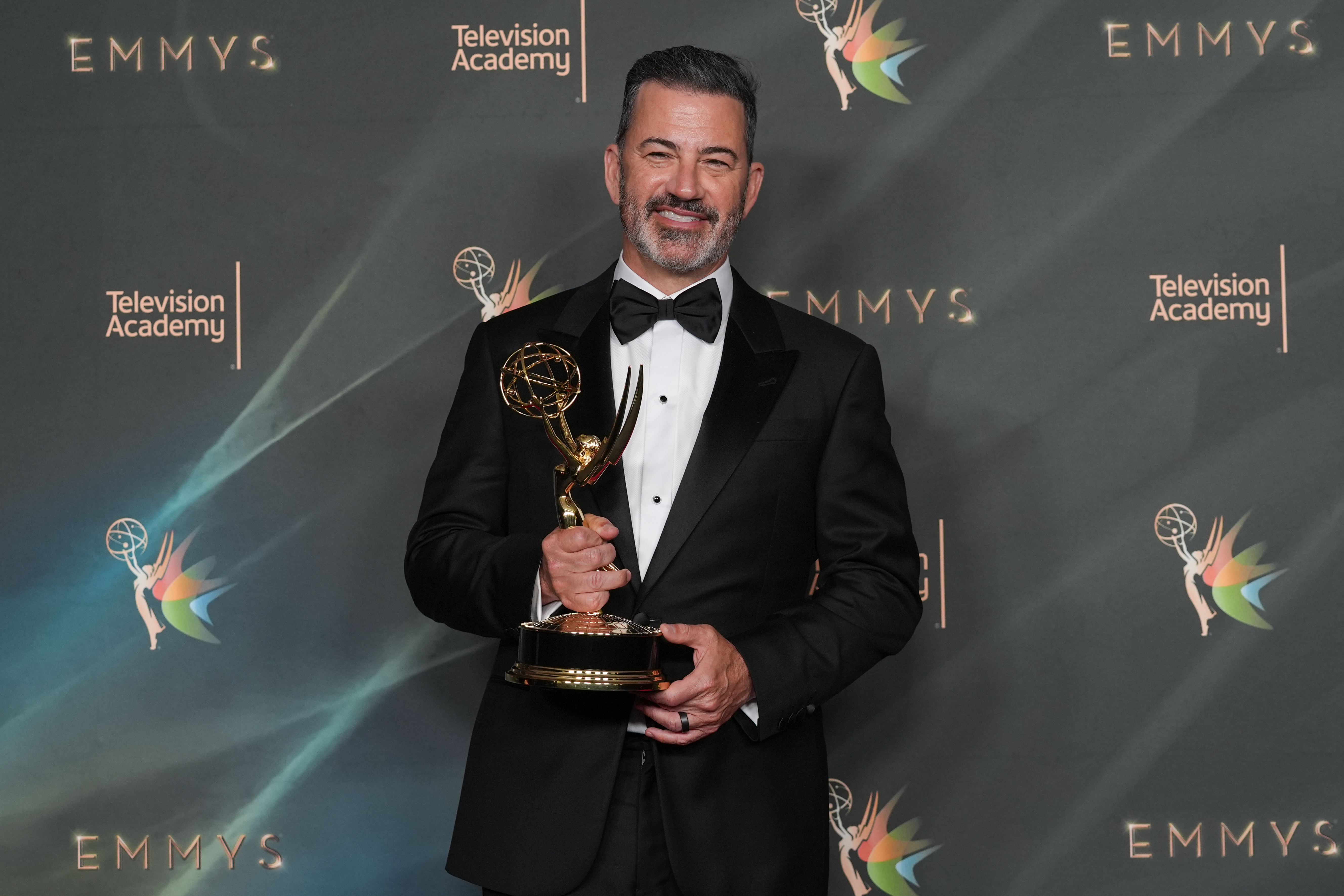
    Late-night talk-show host Jimmy Kimmel said Wednesday that he would not broadcast an interview he conducted with Texas Democratic Senate candidate James Talarico because of pressure from the Trump administration.

    Kimmel did not specify what that pressure was but said the Federal Communications Commission had “threatened” him, Jimmy Kimmel Live!, the ABC network, and ABC’s affiliate and local stations “based on simple traditional editorial decisions, guest bookings it would seem they don’t like.”

    Kimmel also suggested the pressure was politically motivated. Polls show a close race between Talarico and his Republican opponent, Texas Attorney General Ken Paxton.

    “They’re very nervous about the midterms, and rightly so. … They’re in danger of losing a Senate seat in Texas, of all places,” Kimmel said on his show Wednesday.

    ABC has been in a monthslong feud with the FCC and its chair, Trump appointee Brendan Carr. Last year, the FCC successfully pressured ABC to briefly suspend Kimmel because of comments he made about the death of conservative activist Charlie Kirk.

    In April, President Donald Trump and first lady Melania Trump again called on ABC to punish Kimmel for a joke he made about the first lady. Shortly afterward, the FCC formally ordered an early review of the eight broadcast licenses owned by Disney — which include ABC stations in major cities such as New York and Philadelphia — because of concerns about diversity policies.

    Last month, ABC sued the FCC, alleging that the commission’s early review of its broadcast licenses is unconstitutional under the First Amendment.

    Kimmel on Wednesday noted that he had interviewed several candidates for public office on his show in the past — including Trump himself when he was a presidential candidate in 2015 in 2016.

    “And at that time, when he was the one sitting next to me, he seemed to have no problem with the idea of a talk-show host interviewing candidates. … But for some reason — and I can’t seem to figure out what that reason is — something has changed,” Kimmel quipped.

    Representatives for the FCC did not immediately respond to a request for comment Wednesday. Representatives with Disney, ABC’s parent company, declined to comment.

    FCC Commissioner Anna M. Gomez, the only Democrat on the commission, accused the Trump administration of waging a “campaign of censorship and control” and said the government agency does not have lawful authority to threaten broadcast licenses over guest bookings or editorial decisions.

    “I urge broadcasters everywhere to keep resisting this pressure, and I hope courts will soon make clear that the FCC has no place dictating editorial choices or what viewers are allowed to see,” Gomez said in a statement Thursday.

    Kimmel said he decided not to air his interview with Talarico during his broadcast in part so that ABC affiliates and local stations, especially those in Texas, would not “have to deal with this nonsense.” His interview with Talarico would instead be posted in its entirety on his YouTube channel on Thursday, he said.

    “And thank goodness we have that, because in the America we live in right now, that is the best that we can do until November,” he said.

  • Trump claims rebate checks are on the way for people overcharged by ACA

    Trump claims rebate checks are on the way for people overcharged by ACA

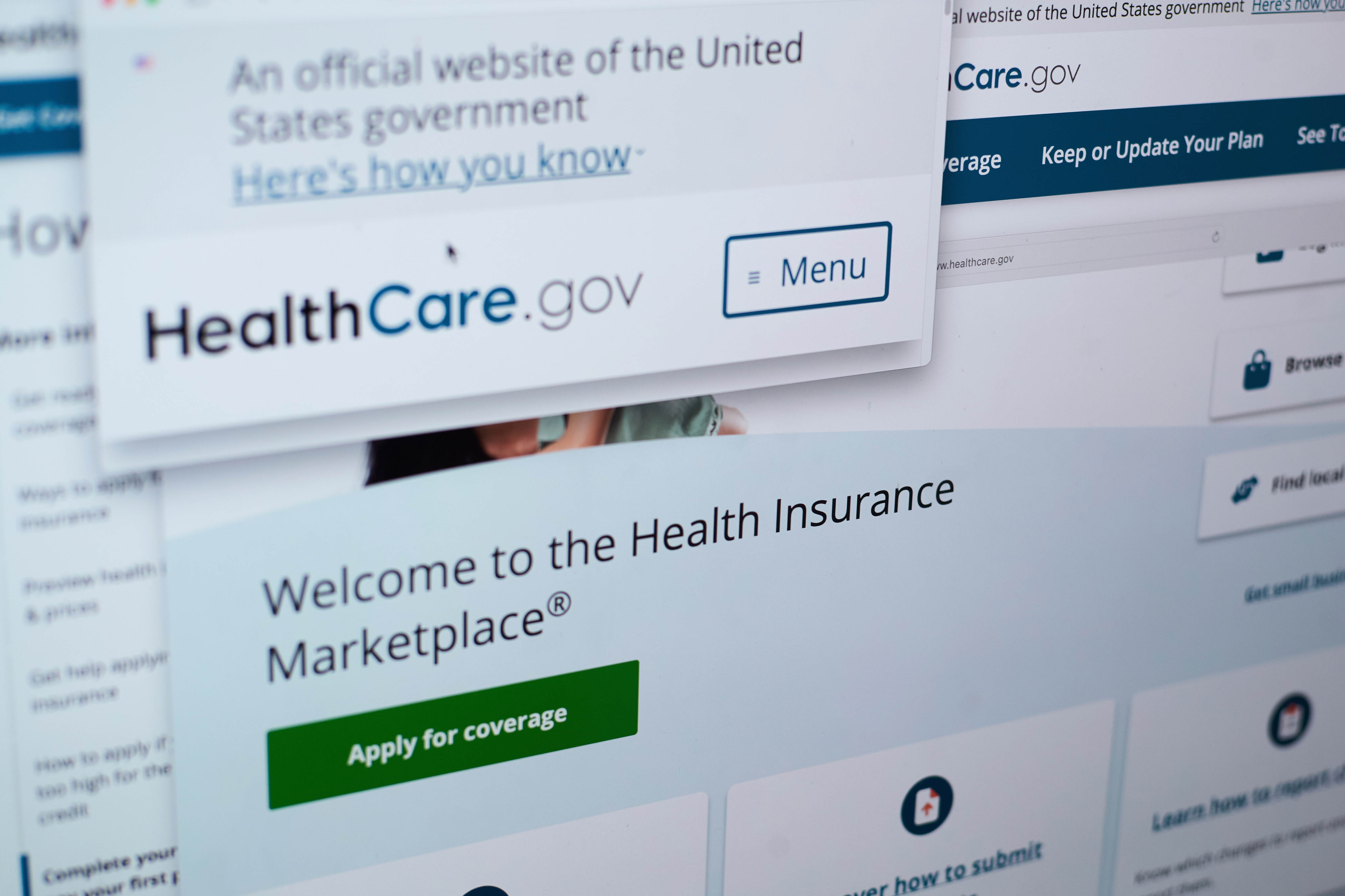
    President Donald Trump on Thursday announced that his administration would issue $500 rebate checks to about 1 million Americans he said had been wrongly overcharged through the Affordable Care Act.

    Administration officials said the funds would be drawn from fees that were used to fund operations of the ACA federal insurance exchange. Thirty states — including Florida, Iowa, Ohio, and others expected to be key battlegrounds in November’s midterm elections — use the federal exchanges for their ACA operations.

    “Thanks to President Trump’s actions, nearly 1 million Americans will receive a refund check of $500 per person. Checks will be sent to eligible Americans beginning in October 2026,” the White House said in a fact sheet.

    Democrats immediately panned the idea and compared it to the administration’s past ACA moves. Trump last year declined to support the extension of ACA tax credits that helped subsidize the costs of health coverage for more than 20 million Americans.

    They also called it a stunt ahead of November’s elections.

    “What an absolute joke,” Brad Woodhouse, president of Protect Our Care, a Democrat-aligned healthcare advocacy group, said in a statement. “Five hundred dollars is a drop in the bucket compared to what Americans are paying because Trump and Republicans gutted health care to bankroll massive tax breaks for billionaires and big corporations.”

    Trump has floated multiple proposals to send dividends to Americans during his second term, but so far, they have not materialized. In February 2025, he said his administration was considering a proposal to give 20% of savings from the controversial DOGE government cost-cutting effort to Americans. That proposal would have delivered roughly $5,000 to each of the roughly 79 million households in which residents pay federal income tax.

    That number was based on Elon Musk’s goal of cutting $2 trillion from the federal budget. A DOGE website claims that the initiative saved only a small fraction of that, and the Government Accountability Office has said the group’s accounting was riddled with errors.

    Trump also claimed he would give Americans $2,000 stimulus checks, drawn from the revenue generated by his tariffs. His administration has had to refund much of the money gained from tariffs after the Supreme Court struck down many of the levies.