Category: Washington Post

  • New study suggests the aging brain is adapting, not declining

    New study suggests the aging brain is adapting, not declining

    Have you ever walked into a room and forgotten why you’re there? Or struggled to recall where you left your keys?

    These memory lapses aren’t unusual, especially as we age, but a new paper published last month in the journal Perspectives on Psychological Science suggests there may be an overlooked biological reason for it.

    Researchers at the University of Arizona argue that changes in the brain associated with aging aren’t a sign of decline, but a new phase of development that supports perspective, emotional regulation, and passing on knowledge to the next generation.

    “What the goals of an older brain are are quite different than the goals of a younger brain,” said Fabian-Xosé Fernandez, a professor of cognition and neural systems at the University of Arizona and an author on the new research.

    He said we should think about the aging brain not as a young person’s brain in decline, but as one specifically adapted to prioritize wisdom.

    Aging as a developmental phase

    Fernandez and his colleagues point to a body of research showing that older adults’ brains rely less on the hippocampus, which is responsible for forming and recalling new memories, including details like names and places and spatial navigation.

    Instead, during memory tasks, older brains are relying more on the frontal cortex, the area associated with higher-level thinking and synthesizing information.

    Some scientists have argued that aging brains rely on the cortex to compensate for decline in the hippocampus, which shrinks over our lives. But Fernandez offers a different theory: In later adulthood, we need wisdom more than we need to retain every new detail we come across.

    “It’s this ability to melt away that which does not matter and get to the essence of an issue,” Fernandez said.

    Other research has suggested that healthy aging could be simply another phase of the brain’s development, bringing new strengths and weaknesses. Children, for instance, have an extraordinary ability to learn language but might have more difficulty than adults with emotional regulation and impulse control. For someone in their 70s, 80s, or older, it might be helpful to focus less on memorizing minutiae and more on understanding a bigger picture.

    A takeaway for older adults is that memory changes might be beneficial in later phases of life, according to Daniel Nation, a professor of gerontology and neurology at the University of Southern California who was not involved in the study.

    “There may be some cognitive benefits to older adults that come from cognitive changes we normally think of as purely negative,” Nation said of the new paper.

    He noted the “grandmother hypothesis,” a theory about the wisdom and perspective of older members of the community when it comes to making decisions and imparting knowledge to younger people.

    A call for more research

    “I think it’s provocative,” said Patricia Reuter-Lorenz, a professor of psychology and neuroscience at the University of Michigan who conducted some of the studies cited in the new paper.

    “It’s taking a new step that’s building on ideas that have been in the literature on aging for several decades, including the idea that aging involves adaptive processes,” she said.

    Reuter-Lorenz’s work has pointed to older adults using their frontal cortex to compensate for the weakening of the hippocampus. But she said she is interested in the silver linings of old age and is currently studying emotion later in life.

    She said her work is “trying to understand the tendency for older adults to have a more positive outlook and better emotion regulation.”

    It is advancing existing research showing that older adults tend to focus more on the positive aspects of a situation, and remember them more than negative ones.

    Both Reuter-Lorenz and Fernandez say the idea of brain aging as an adaptive phase more than a declining one needs more study.

    How to help your brain age well

    Regardless of whether scientists believe that the older brain is adapting to a new phase of life or compensating for decline, they suggest that there are ways we can all age better.

    In Fernandez’s paper, he and his colleagues write that older people who “engage in lifelong learning, complex occupations, or high social activity” tend to have more flexible brains. That means they can continue to navigate complicated tasks even as the hippocampus shrinks.

    Reuter-Lorenz agreed that lifestyle factors are key.

    “Solid fitness, a good diet, and sleep are all very important. And maintaining an active social network and cognitive engagement,” she said. “Those are the pillars.”

    Reuter-Lorenz also emphasized that the upsides of aging should continue to be acknowledged by researchers, especially since having a positive view of aging seems to help people age better.

    “There are treasures in aging that can be cherished,” Reuter-Lorenz said. “And that may only come with age.”
  • Trump announces plan to send $90 payments to millions of seniors

    Trump announces plan to send $90 payments to millions of seniors

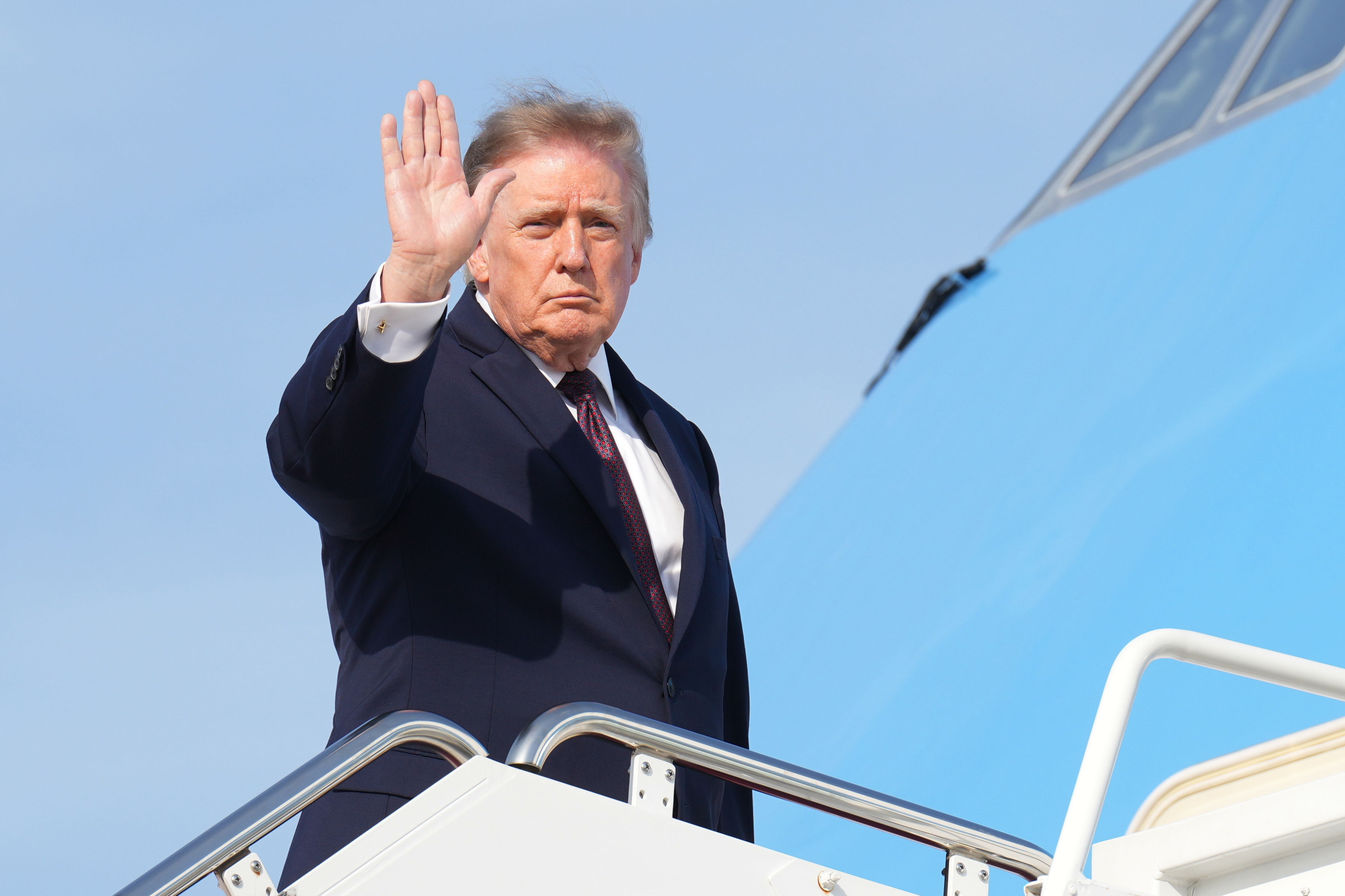
    The White House announced plans Friday night to send $90 payments to more than 20 million older Americans, with President Donald Trump tying the initiative to his broader push to lower healthcare costs.

    The money would be drawn from about $2 billion set aside to improve Medicare’s hospital and medical insurance programs, which has not been used for that purpose since the initiative’s inception in 2008, administration officials said Saturday. Both parties have used the money, held in the Medicare Improvement Fund, in congressional budget maneuvers.

    “We are finally using this Fund, along with my Most Favored Nations Deals, to substantially LOWER costs for our Seniors,” Trump wrote on Truth Social on Friday night, also mentioning his initiative to lower U.S. drug prices.

    The payments will be sent to most Medicare Part B enrollees, with many of them receiving a $90 direct deposit this month, the White House said. Others will receive a check sent to the address on file with Medicare.

    Trump’s announcement follows his other pledges to send money to Americans ahead of November’s midterm elections, including his plan to send $500 Affordable Care Act refund checks to nearly 1 million people in 30 states. (Delaware is on the list of 30 states, but Pennsylvania and New Jersey aren’t included.) The administration began sending those checks this week, alongside a letter touting his record.

    Democrats have called the moves a stunt and questioned the legality of dipping into government accounts to send payments to Americans.

    The White House and the Department of Health and Human Services, which oversees the Medicare Improvement Fund, did not immediately respond to questions about the administration’s legal authority to issue the payments.

    Trump’s announcement caught congressional offices in both parties by surprise, according to three people who spoke on the condition of anonymity because they were not authorized to comment.

    “This is another desperate attempt by a failed president to escape Americans’ revulsion with his failed agenda, amounting to one tank of Trump-inflated gas,” said Sen. Ron Wyden of Oregon, the top Democrat on the Senate Finance Committee, which helps oversee the Medicare program.

    Trump has floated multiple proposals to send dividends to Americans during his second term, but some of them have not materialized. In February 2025, he said his administration was considering a proposal to give 20% of savings from the controversial DOGE government cost-cutting effort to Americans. That proposal would have delivered roughly $5,000 to each of the roughly 79 million households in which residents pay federal income tax.

    The president said Friday night that the $90 payments were proof that he would follow through with his pledge to send a $5,000 dividend to every American adult if Republicans retain control of Congress in November’s midterm elections — a pledge that has raised broad questions about its legality and funding.

    “Because I delivered on this very important issue for the American People, they can also rest assured the highly popular $5,000 Trump Dividend will be distributed to every U.S. Citizen if, and when, the Republicans win the Midterm Elections!” Trump wrote on Truth Social.

  • Trump expected to name intelligence chief Jay Clayton as new AI czar

    Trump expected to name intelligence chief Jay Clayton as new AI czar

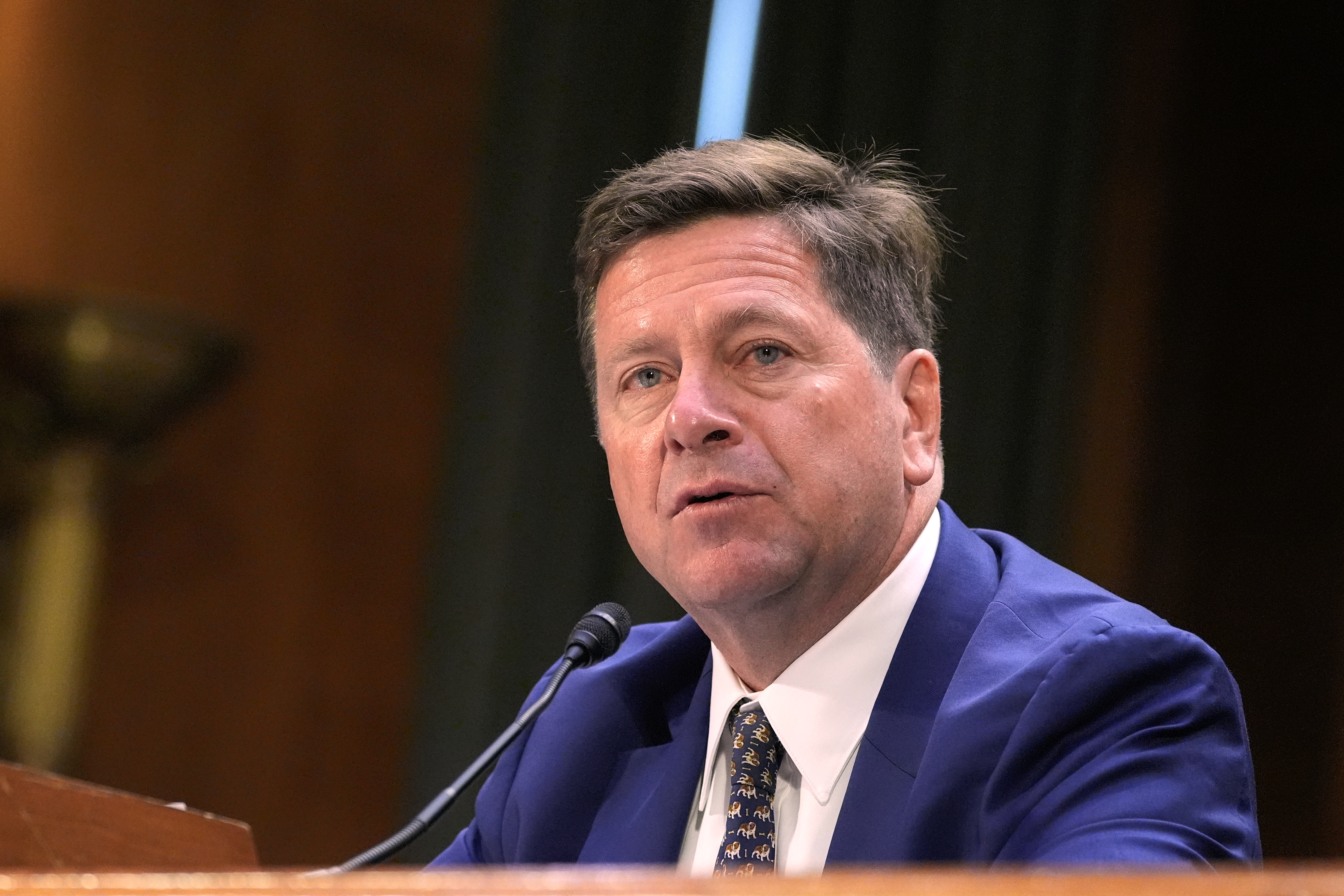
    President Donald Trump is expected to name spy chief Jay Clayton as his new top adviser on artificial intelligence, according to three people familiar with the decision, a move that cements the administration’s handling of the new technology as a matter of national security.

    Clayton, a former U.S. attorney and Securities and Exchange Commission chairman, was confirmed as the leader the Office of the Director of National Intelligence in July. He is expected to continue to hold that role, one of the people said. All three individuals spoke on the condition of anonymity to describe a personnel move that has yet to be publicly announced.

    CBS News first reported that Trump was expected to choose Clayton for the position.

    The appointment comes as the Trump administration recalibrates its approach to AI. The previous czar, the investor David Sacks, promoted a policy aimed at allowing the technology to develop as fast as possible. But in the months since Sacks left his post in March, officials have increasingly been grappling with cybersecurity threats posed by the latest generation of models and the danger posed by AI agents going rogue online. Sacks has continued to influence thinking within the administration as an informal adviser outside of the government and as co-chair of the President’s Council of Advisors on Science and Technology. Sacks and Clayton have a close relationship, according to one of the people briefed on the upcoming announcement.

    A White House official said any personnel moves would be announced by the president. “Any reporting until then is baseless speculation,” the official said.

    The administration has resisted calls in recent weeks by some in the industry and on Capitol Hill to slow down the pace of development and adopt new regulations. But on Tuesday it convened tech executives for a White House lunch that culminated in the leading AI companies signing a promise to develop new systems safely and bring in outside oversight firms. The following day, a Federal Trade Commission official said the panel had opened an investigation into AI companies Anthropic and OpenAI. (The Washington Post has a content partnership with OpenAI.)

    Joel Thayer, a senior adviser for technology at the America First Policy Institute, a Trump-aligned think tank, said the developments showed how the administration’s handling of AI companies was “maturing.”

    “These guys are under watch,” Thayer said. “The government has a spotlight on them.”

    The industry executives’ pledge is voluntary and amounts to what Trump called “self-policing.” But it won the backing of figures who have bitterly clashed over how serious of a risk AI poses. Sacks, who attended the lunch, endorsed it. So did Jacob Coxon, a former Anthropic researcher who resigned last month, saying the technology could wipe out humanity and triggering a wave of panic in Washington.

    The agreement means Clayton will step into his new role at a time of relative calm.

    “Super intelligence is a national security issue,” Clayton said in a CNBC interview the day after the lunch, using Trump’s preferred name for AI. “That was something that was recognized yesterday by not just the industry leaders, but everybody in the room. The commitment there to the American people, and the safety and security of the American people was palpable throughout the meeting.”

    Trump nominated Clayton, a loyal ally and regular golf partner of the president’s, to lead the intelligence office in June. Many Senate Democrats initially said they supported the choice. But he refused in his confirmation hearing to say definitively that Joe Biden had won the 2020 election, and the final vote fell along party lines.

    The AI role will not require Senate confirmation.

    The shifting thinking that led to Clayton’s appointment began months ago, when Anthropic said it had developed a new model called Mythos that it deemed too dangerous to publicly release. The company said it had new abilities to find vulnerabilities in computer code and help hackers exploit them.

    Officials scrambled to understand the risks to government systems and critical sectors of the economy. Driven by alarm among banking industry leaders, Treasury Secretary Scott Bessent played a key role in shaping the administration’s response. Last week, Trump batted down reports that Bessent was in line to be the new AI czar.

    In May, the White House settled on issuing an executive order calling on leading AI companies to voluntarily share their latest systems with the government ahead of their release, giving federal experts a chance to weigh security risks. Despite no longer holding an official government position, Sacks continued to wield influence and made a last-minute call to Trump that caused the order to be delayed and revised.

    But even after the order was signed in June, new dangers continued to emerge. The following month, ChatGPT maker OpenAI disclosed that a swarm of agents created by its systems had broken free and breached another AI company. Other firms said they had suffered similar breakouts.

    Then came Coxon’s resignation in September, which reignited a long-simmering debate in AI circles about whether a sufficiently powerful version of the technology would bring about humanity’s downfall.

    Trump dismissed the fears a “hoax” in fiery social media posts. But he later said he would name a new czar and create an “AI Force.” The White House has not detailed what the force will do, but in an interview with Time magazine published this week, Trump described it as “a group of very smart people that understand it, who will be advising me.”

  • Kennedy Center Honors will move to Capital One Arena as closure drags on

    Kennedy Center Honors will move to Capital One Arena as closure drags on

    The Kennedy Center Honors will take place Dec. 7 at the Capital One Arena, the center announced Friday, breaking tradition by holding the tribute ceremony off-campus as a battle rages over its closure.

    Most other details about the honors — namely, who will receive the awards and who will broadcast the show — remain a mystery, months after they would ordinarily be public.

    A Kennedy Center spokesperson said these will be announced at a later date.

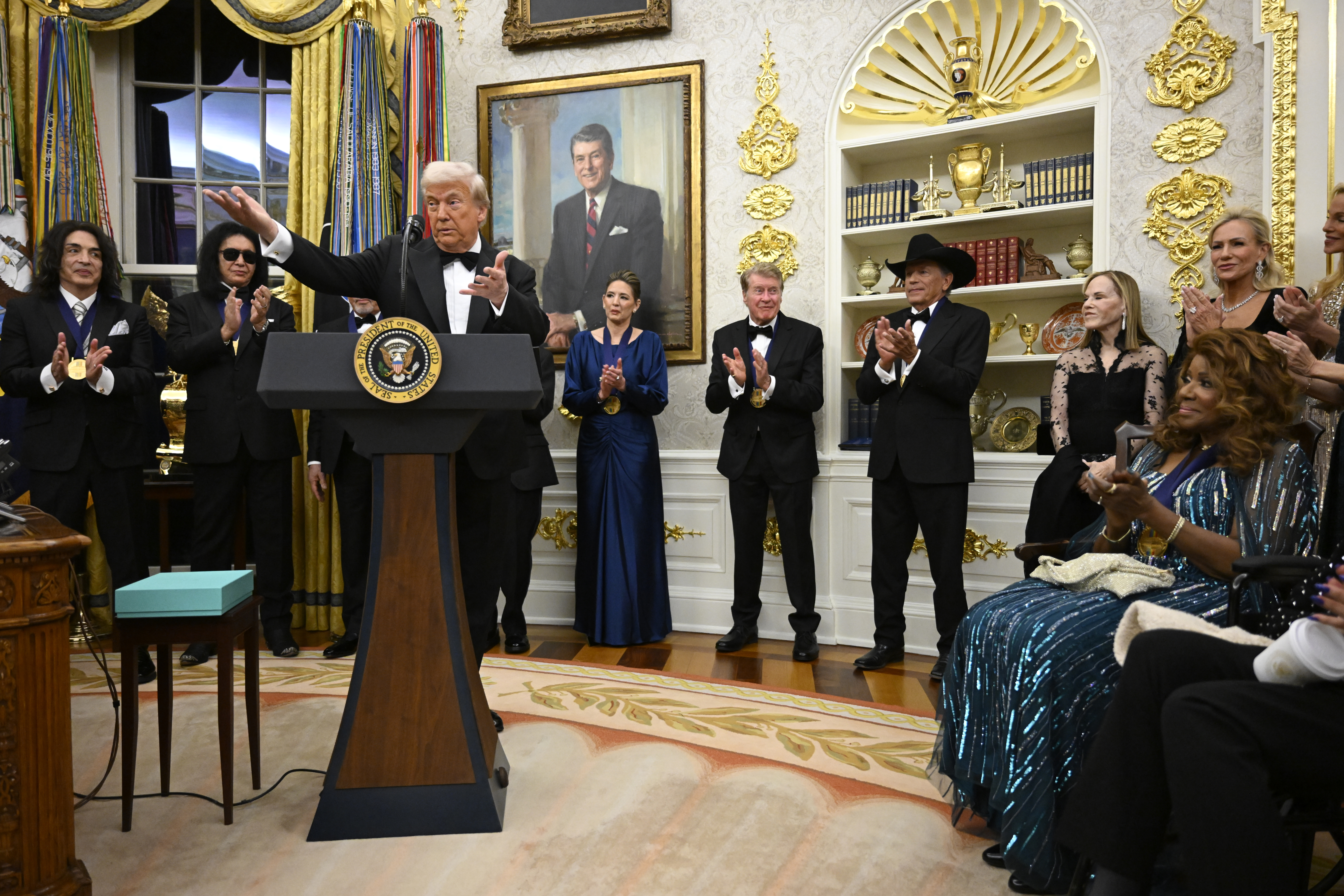
    The annual black-tie gala and television broadcast is the center’s flagship program and usually its largest fundraising event. It generally takes place on a weekend in December, during which five honorees are recognized by the American government for their contributions to the arts. They traditionally received medallions, met the president at the White House and gave speeches during a dinner at the State Department before attending a star-studded Sunday ceremony in the Kennedy Center’s Opera House.

    The honorees — which have included Leonard Bernstein, Queen Latifah, George Clooney, Led Zeppelin, Gladys Knight, Billy Crystal, and the Grateful Dead, to name a few of the almost 270 honorees since its inception in 1978 — are usually announced in midsummer.

    Last year, amid turmoil from President Donald Trump’s takeover of the center and remake of its board, the announcement came late, in mid-August. The year before, it arrived in July along with both the broadcast and ceremony date.

    It is October, and there’s no other word on the details.

    We don’t know who is in the 49th class of honorees or what kind of crowd will greet them: The program’s venue, Capital One Arena, which can hold roughly 20,000 people at max capacity, dwarfs the 2,347 seats of the center’s Opera House.

    We don’t know who will broadcast it. During a board meeting last year, Trump floated the idea of having networks bid to air the show, which has been broadcast on CBS since its debut. (Last year’s remained on CBS.)

    Finally, we don’t know who would host it. Trump, who avoided the honors in his first term, famously played the role himself at last year’s ceremony, something a president had never before done. He also said he was “about 98 percent involved” in picking the honorees — Michael Crawford, Gloria Gaynor, Kiss, Sylvester Stallone, and George Strait — which are generally chosen by committee.

    Asked for details this week, the White House referred us to the Kennedy Center, which provided the announcement.

    The center had maintained that the honors, along with the Mark Twain Prize, would continue somewhere off-site during the building’s two-year closure for repairs.

    “It will definitely go forward,” Richard Grenell told WTOP in February, before he departed as president of the Kennedy Center. At the time, he predicted “it will probably just be in a smaller venue, which just means ticket demand will be even higher.”

    That full closure hasn’t started yet, according to the center. Instead, the main building is closed temporarily, leaders say, while they check on the building’s safety. Those checks could take another week or two, according to a Wednesday staff email reviewed by the Washington Post.

    But “this is an assessment timeline,” the email read, “not a reopening date.”

  • Trump says Secret Service wants him to ‘take down’ Oval Office

    Trump says Secret Service wants him to ‘take down’ Oval Office

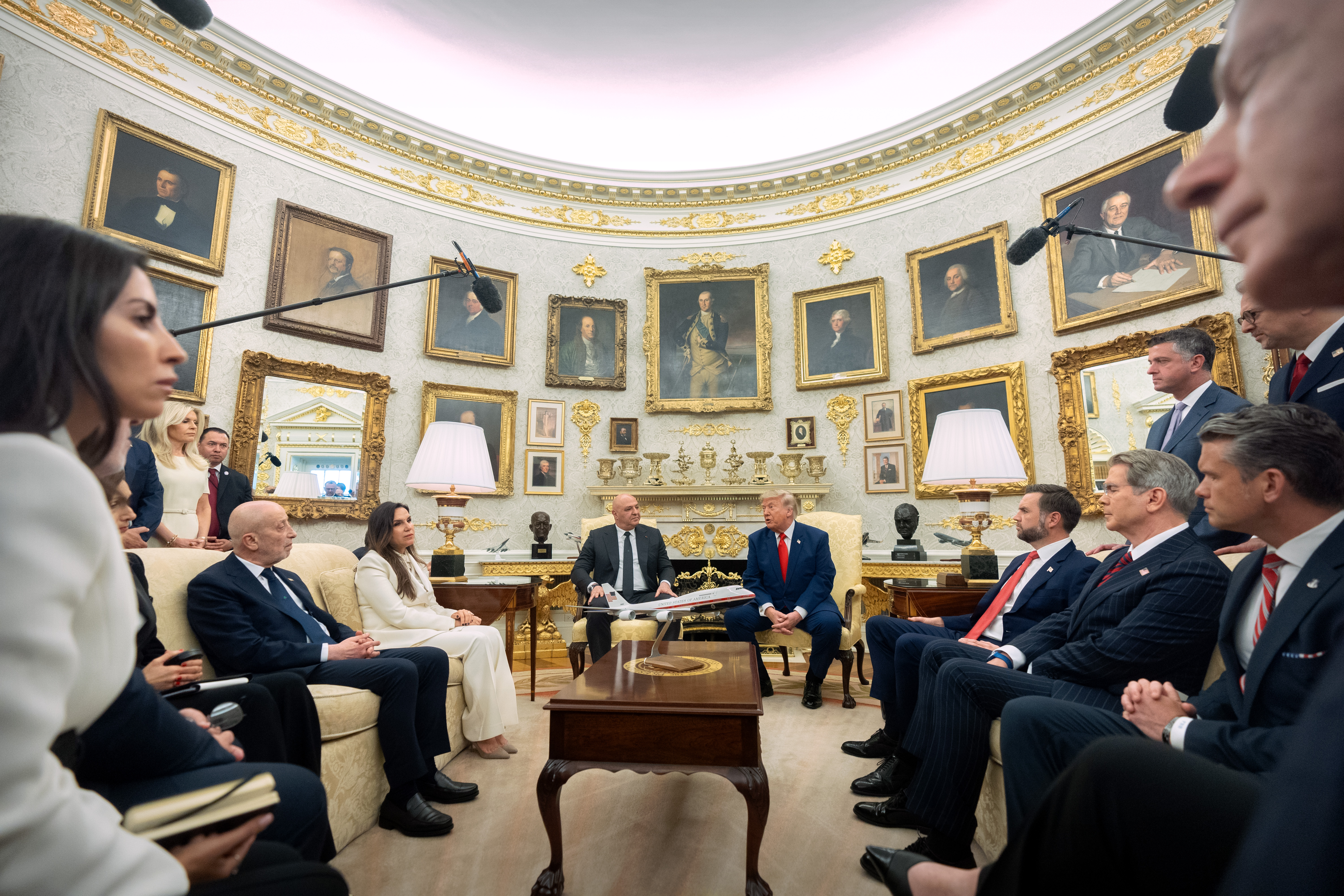
    President Donald Trump said that Secret Service officials have encouraged him to replace the current Oval Office, according to a new interview with Time magazine.

    “‘Sir, we think the Oval Office should be taken down, and we’ll build a new one, sir,’” said Trump, quoting a Secret Service official. “I said, ‘My ass, you can’t build a new one. This is a special place.’”

    The Secret Service has encouraged prior administrations to take steps to fortify the Oval Office, said four former officials, who spoke on the condition of anonymity to detail sensitive security matters. Past presidents have declined to do so because it would require them to relocate.

    A White House spokesman declined to offer further comment. A spokesman for the Secret Service did not immediately respond to questions about Trump’s remarks.

    The current Oval Office was constructed by President Franklin D. Roosevelt and become synonymous with high-profile events and speeches. Trump, who has redecorated it with gold as part of his sweeping changes to the White House, has called it the most intimidating office in the nation.

    Trump has listened to the Secret Service on other projects to fortify the presidential grounds, such as plans to build a permanent fence around Lafayette Square, the public park across the street from the mansion. The president also has invoked national security reasons to defend his most controversial construction projects, including a new White House ballroom and his planned triumphal arch.

    In the Time interview, the president said he was exploring the possibility of a new federal designation for the Oval Office, which he suggested could protect the office from being torn down and preserve his changes to it.

    “I’ve been asking Susie for six months to give me a statement. Will we save this room? Will we make it a federal landmark?” Trump said, invoking his chief of staff, Susie Wiles.

    The White House is already designated a National Historic Landmark, a federally conferred status that is intended to offer protections against sudden changes. But Congress exempted the White House from the National Historic Preservation Act, which has allowed presidents – including Trump – to swiftly remake parts of the building when they assume office.

    “The discussion of making it a landmark is legally meaningless,” said Greg Werkheiser, founding partner of Cultural Heritage Partners, a law firm focused on historical preservation. He also questioned why Trump was invoking historical preservation after disregarding it to tear down the White House’s East Wing, pave over the Rose Garden and make other changes.

    “There’s some irony of the president suggesting that he might use historic designation to protect the property after ignoring it so far,” Werkheiser said.

  • FTC launches broad investigation into Anthropic, OpenAI

    FTC launches broad investigation into Anthropic, OpenAI

    The Federal Trade Commission has opened a broad investigation into the safety of artificial intelligence systems made by Anthropic and OpenAI, a senior agency official said Wednesday.

    The full extent of the probe was not clear, but the FTC has wide authority to investigate unfair and deceptive practices that hurt American consumers. The official spoke on the condition of anonymity to describe an investigation that has not been made public.

    The investigation could provide backing for the Trump administration’s position that existing laws are sufficient to hold artificial intelligence companies accountable, as officials seek to resist a push by some in the industry and Congress to establish a new system of regulations for the technology. The probe was first reported by the New York Post.

    Andrew Ferguson, the chair of the FTC, said last week that the government should not immediately jump to adopt new rules before examining the role of existing laws and should treat the AI industry’s calls for regulations with “deep suspicion.”

    “There’s no easier way for incumbents to insulate themselves from competition than to enlist Washington to come alongside them and build a wall and a moat around their existing technologies,” he said at an event hosted by news agency Reuters.

    Anthropic, which makes the Claude family of AI models, and OpenAI, which makes ChatGPT, did not immediately respond to requests for comment.

    Officials have been grappling for weeks with how to respond to growing alarm within the industry that the latest generation of AI systems run the risk of getting out of control. Leading companies have disclosed multiple instances of their tools getting loose on the internet, including one in which a swarm of agents from OpenAI broke into another AI firm.

    Anthropic and OpenAI chief executives have proposed a coordinated slowdown to give themselves more time to focus on safety measures. OpenAI said this week it had canceled the planned release of a new model on safety grounds.

    The Trump administration has said it largely falls to the industry to guarantee the safety of its own products. President Donald Trump and top AI executives enshrined that approach in a joint accord signed at the White House on Tuesday.

    “I’m seeing tremendous self-policing,” Trump said at a news conference after the signing.

    Still, officials have left the door open to federal enforcement actions. Vice President JD Vance said at event later Tuesday that it would be up to the Justice Department and FTC to serve as the government’s watchdogs over the companies.

    “They have to build products that are safe and good for American consumers,” Vance said. “The government actually has preexisting laws on the books where if you build something that gets unleashed on the internet, that is used as a tool for cyberwarfare, then you have responsibility for the products you develop.”

  • 3 science-backed home remedies to ease the common cold

    3 science-backed home remedies to ease the common cold

    In addition to rest, healthy food, and hydration, there are a few at-home remedies that many doctors recommend to help treat the common cold.

    Here are three science-backed ways to soothe your throat, calm your cough, and help you recover sooner.

    Honey

    Honey coats the throat and “can reduce your cough fairly significantly,” said Geeta Sood, an assistant professor and epidemiologist at Johns Hopkins University. Also, because it calms coughs, it can indirectly help sore throats. Not to mention, it has antibacterial properties.

    Studies have shown that honey can reduce cough frequency and severity. Many studies have focused on children, but it’s important to note that the American Academy of Pediatrics does not recommend giving any kind of honey to babies younger than 1 year of age because it can contain bacterial spores that can lead to potentially life-threatening infant botulism. (In adults and older children, the spores can’t grow into toxin-producing bacteria.)

    A review of randomized controlled trials in children showed that honey may have similar benefits as the over-the-counter cough medicine dextromethorphan and may be better than diphenhydramine, an antihistamine, at reducing the frequency of coughs. (Over-the-counter cough medications are not recommended for children younger than 4.)

    And a small 2023 study found that gargling with one tablespoon of honey mixed in about one teaspoon of water helped ease pain from a tonsillectomy, a surgery to remove the tonsils.

    To try it at home: You can take a teaspoon of honey a few times per day to help with your cough and sore throat. Alternatively, you can add it to hot tea or a few ounces of hot water, but it may be less effective the more you dilute it, said Sharon Bergquist, an internal medicine physician and associate professor at the Emory University School of Medicine.

    Bergquist noted that taking a dose before bed to help ease your symptoms may help you sleep. “Typically, by the end of the day, people cough more as talking tends to irritate the throat and trigger more coughing,” she said.

    Saline rinses

    Nasal rinses — using a saline solution to clear out your nasal passages — is an at-home remedy that may help temporarily clear congestion and soothe irritated sinuses, and it comes recommended by the American Academy of Otolaryngology.

    Bergquist said saline rinses can help reduce the thickness of nasal secretions, which also can help sore throats and can alleviate some of the dryness that comes with blowing your nose. “It’s not necessarily going to make nasal congestion significantly better, but I do think that it’s very soothing, especially in children where the options are probably a little bit more limited,” she said.

    Small studies have shown that they may help treat nasal irritation and inflammation. One review found that nasal saline irrigation may help relieve nasal symptoms associated with upper respiratory infections.

    To try it at home: Nasal rinsing can be done with a nasal irrigation device, such as a neti pot, or an over-the-counter nasal saline spray. If you choose to go with a device, you can make a homemade saline solution for it by mixing 3 teaspoons of non-iodinated salt and 1 teaspoon of baking soda, then taking 1 teaspoon of that mixture and dissolving it in 1 cup of sterile, distilled, or boiled (and cooled down) tap water. (Never use tap water unless it’s boiled; tap water can contain germs such as the “brain-eating amoeba” Naegleria fowleri.)

    The ready-made saline sprays take the guesswork out of it. To use, tilt your head to the side, insert the nozzle into one of your nostrils, and spray the mist. Then repeat on the other side.

    Zinc

    Zinc is important for a healthy immune system and metabolism. Adult women should get eight milligrams of zinc from their diets each day and men 11 mg, according to federal health authorities. Because your body doesn’t produce zinc, you have to get it from zinc-rich foods including meat, fish, and seafood.

    You may have also noticed zinc supplements, sold as over-the-counter lozenges or quick-dissolve tablets, at the drugstore. A 2024 review showed that while zinc is unlikely to prevent a cold, it may help shorten the duration of your symptoms by about two days.

    Nasal sprays, however, are not recommended. After the Food and Drug Administration issued a public health advisory in 2009 about the link between some zinc nasal products and long-lasting or permanent loss of smell, many manufacturers removed zinc from their nasal sprays.

    To try it at home: As with any medication or supplement, before taking zinc, consult your healthcare provider, as zinc can interact with some medications. Bergquist recommends starting zinc within the first 24 hours after you notice cold symptoms. A common daily dose used in studies is about 80 milligrams, which may be split up into multiple lozenges per day. But there are possible side effects, especially with higher doses, including an upset stomach.

    In addition to these home remedies, “the motherly advice of staying well hydrated and getting good rest are going to help with recovery just as much as any over-the-counter remedy,” Bergquist said.

  • Job scams have gotten more sophisticated. Here’s how to spot and avoid them.

    Job scams have gotten more sophisticated. Here’s how to spot and avoid them.

    Today’s job seekers often say they’re feeling overwhelmed by the number of postings online, exhausted by the long hunt, and desperate for a breakthrough. Unfortunately, this vulnerable position makes them perfect targets for online job scams.

    In 2025, nearly 25,000 people reported falling victim to an employment scam, according to data from the Better Business Bureau. That number has more than doubled since 2023, with a median loss of $1,000.

    “These job ads are a perfect storm of pressing circumstances for a lot of people who are looking for employment,” said Josephine Wolff, professor of cybersecurity at Tufts University. “And also, these AI tools coming online can really scale up the type of fraud that has existed for a long time on the internet and in some ways even before the internet.”

    Everyone will be familiar with spam texts promising opportunities to make fast cash while working from home. But the latest scams tend to exhibit a new level of sophistication.

    Wolff used to tell people to look for red flags such as bad grammar or suspicious-looking graphics — but now artificial intelligence helps shady scams look completely legitimate.

    Fraudsters will post ads for fake jobs, sometimes directly cribbing from existing postings or “ghost” jobs still floating around online. They may ask applicants to follow a link to a third-party website, one completely unaffiliated with a given company or legitimate hiring portal. From there, they may capture applicants’ data directly, or they may then start asking applicants to share valuable data over email or text message.

    Information such as your address or birth date could be valuable to a scammer, but so could things such as usernames and passwords you may frequently use on other sites, said Mona Terry, chief operating and programs officer at the Identity Theft Resource Center. Scammers could use that data to access your accounts directly or impersonate you when setting up new accounts elsewhere.

    Most often, she said, they’re intentionally targeting recent grads or low-income people. Both sets of people may feel a heightened pressure to land a job no matter what — and that vulnerable position means they’re less likely to catch a scam.

    “It’s a lot easier for someone to be in that stressful, panicked mode, to miss some of those red flags, especially because some of them are so subtle,” Terry said. “We know that that is what scammers are doing. They’re preying on that emotion. They’re looking for people who are in that place with a heightened sense of ‘I really need this.’”

    “Task-based” scams in particular are on the rise, said Mel Lanning, executive director of the Better Business Bureau’s Institute for Marketplace Trust. Scammers may send you an official-seeming check for mandatory job equipment. The “team” on which you’re supposedly being hired needs you to deposit the check and then transfer them the funds. But, as people discover way too late in the process, the check is in fact fraudulent — and the candidate is out the money.

    Be ultra-wary of any hiring process that seems “too good to be true,” Lanning advised. If a supposed hiring manager is asking for extremely personal information very early in the process, take the time to research the company and confirm its legitimacy. If you’re concerned someone is either impersonating a hiring manager or spoofing a firm’s actual posting, Lanning recommends going the extra mile to verify a job listing on the company website or even contacting them over email.

    “It’s a really hard time for job seekers because, number one, you have to be careful of these scams, and then you’re also wasting time on some of these postings and then you never hear back,” she said. “For job seekers right now, be very thoughtful and careful about every job that you apply for.”

  • Hegseth to cut more generals, admirals in bid to remake military’s top ranks

    Hegseth to cut more generals, admirals in bid to remake military’s top ranks

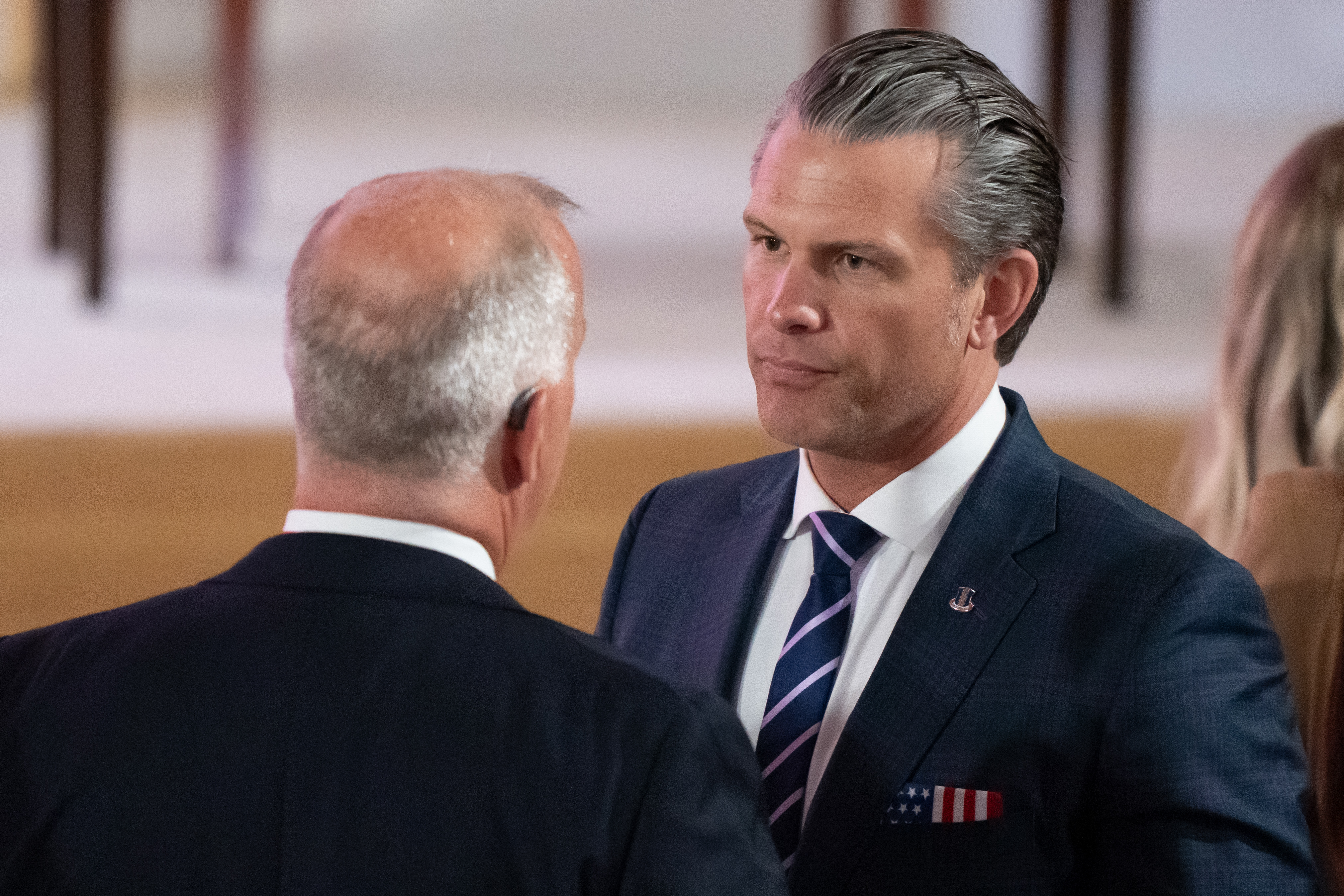
    Defense Secretary Pete Hegseth is expected to announce deeper cuts to the military’s top ranks, reducing the total number of positions for general and flag officers by as much as 20%, officials told the Washington Post on Tuesday.

    The potential cuts could impact the careers of hundreds of current and rising military leaders following scores of firings and denied promotions that Hegseth has directed since becoming President Donald Trump’s defense secretary in January 2025.

    Hegseth’s tenure atop the Pentagon has been marked, in part, by his drive to dramatically reshape the military’s senior-most ranks. Former top defense officials, congressional Democrats, and some fellow Republicans who are alarmed by his leadership purge and efforts to impose structural changes argue that the moves are politically motivated and threaten to do lasting harm.

    One of the officials who spoke to the Post said the defense secretary could outline the initiative publicly as soon as Wednesday, during a planned gathering of military officers in Quantico, Va. This person, like the others, spoke on the condition of anonymity to provide details that had not been publicly announced.

    Hegseth’s plan to further reduce the number of senior military leaders was reported earlier by Fox News. A spokesperson for Hegseth said that the Fox report was accurate but declined to comment further.

    Through several previous administrations, both Pentagon and congressional leaders have worked to reduce the size of the U.S. military as it evolved from a vast institution built for the Cold War to one that now sees more of its fighting done by drones and other technologies, rather than through a conventional infantry force.

    There are about 850 general or flag officers — military members with the rank of one-star general or above or, for the Navy, rear admiral or above — in the military, which is less than 1% of the total force.

    The total size of the military also has shrunk in recent decades, so even though generals and admirals make up less than 1% of the total force, there are more of them now proportionally — a trend Hegseth targeted last year when he first directed sprawling cuts to the number of general and flag officers.

    Hegseth, who rose to prominence in conservative politics as a host at Fox News, served for many years as a midranking officer in the Army National Guard. The experience, including wartime deployments to Afghanistan and Iraq, hardened some of his most searing views of military culture and leadership.

    A year ago in Quantico, Hegseth convened hundreds of the military’s generals, admirals, and senior enlisted leaders — each with decades more military experience — for an unorthodox, highly partisan address alongside Trump. He vowed that “more leadership changes will be made” and, in forecasting a plan to mandate new fitness standards for the force, lashed out at those he characterized as “fat generals and admirals in the halls of the Pentagon.”

  • Trump launches government chatbot, urging a wary public not to fear AI

    Trump launches government chatbot, urging a wary public not to fear AI

    After weeks of Washington being gripped by a new wave of fear about artificial intelligence gone awry, the Trump administration took a sharply different stance Tuesday, seeking to convince a skeptical public that the nation is instead about to embark on a tech-powered “golden age.”

    President Donald Trump launched America.gov, a government chatbot for researching public services, as part of a daylong event featuring members of his Cabinet and tech executives. AI company leaders were also set to meet with him and House Speaker Mike Johnson (R., La.).

    “This kind of innovation in government is just a preview of what is possible with super intelligence,” Trump said, using his new nickname for AI.

    The events come at a pivotal moment for the technology. AI firms say their latest systems have become increasingly powerful, showing signs of being able to design their own more-potent successors. But companies have struggled to keep control of the technology, as rogue AI agents have hacked into company and government systems, and a roster of top industry figures have warned that the end result could be catastrophic for humanity.

    Last week, it was disclosed that the federal government itself had been a victim, with a handful of websites probed by AI agents deployed by ChatGPT maker OpenAI. (The Washington Post has a content partnership with OpenAI.)

    Yet, even as the public’s concerns have grown and Democrats in Congress have pressed for regulation, Trump has largely dismissed the risk, calling it a “hoax.”

    “We do not surrender to fears about what technologies will do to us,” Trump said Tuesday. “We decide that those technologies will do for us some very, very incredible things.”

    Tuesday’s events are a chance for the administration to focus on the upsides of the technology, propelling a different narrative than the warnings introduced by company CEOs in recent weeks. AI’s many boosters expect it will invigorate the economy, push the boundaries of science, and help cure diseases. But that message has found only limited traction with a public worried about job losses and rogue bots sowing chaos online.

    The U.S. government is unveiling AI tools amid growing concerns about the ways that chatbots store and share data. Last week, OpenAI announced that ChatGPT leaked 53 “user-provided images” to image-hosting providers.

    The website was rolled out at a conference in the gilded Andrew W. Mellon Auditorium, which was set up to evoke a tech company product release stage. Music played as staff members distributed cans of La Colombe iced coffee to attendees, while a sleek “Hello, America” logo was projected on a large screen at the front of the room.

    Joe Gebbia, the chief design officer of the United States and architect of America.gov, described the website, a partnership with Google’s Gemini and SpaceXAI’s Grok, as a “concierge to navigate government.”

    “Don’t think of it as a website, it’s more of a conversation that you start with the government to try to get access to the answers you need,” he said on Fox News on Monday.

    The website will initially enable users to search for information across government websites, providing access to job postings or the files that the Trump administration has released about UFOs, he said.

    But in the coming months, the goal is for the chatbot to help people enroll in government programs such as Medicare or complete tasks such as passport renewals.

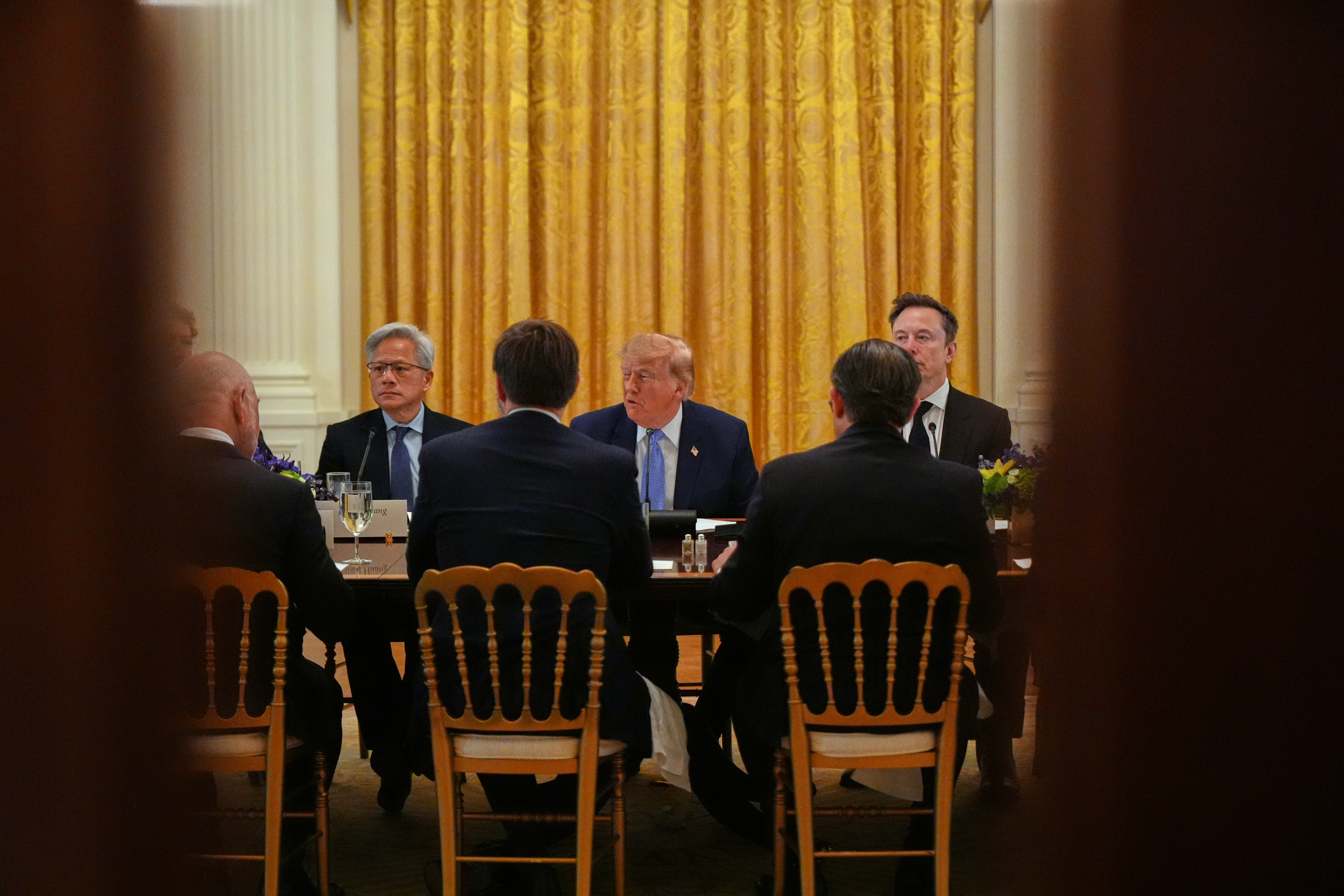
    After the rollout of the website, CEOs such as Anthropic’s Dario Amodei and Nvidia’s Jensen Huang had lunch with the president at the White House. Johnson said Monday that his goal for the meeting was to find a “balance.”

    “We want to keep America’s lead over China and all of our other competitors, but we want to make sure that it’s being done in a safe way,” Johnson said in an interview with Fox Business. “So, a little oversight, a little transparency, I think, would go a long way here.”

    As the industry has tried to navigate those concerns, the private summit between tech CEOs, the president, and the speaker could be the most consequential part of the day, giving officials and executives a chance to discuss a common vision.

    Amodei led the industry this month in issuing a call to slow the pace of development to better focus on safety. But the idea has divided his peers and has not been endorsed by the White House.

    Amodei, who previously clashed with the administration over the use of his company’s technology by the military, dined with the president late Sunday in their first one-on-one meeting. He was expected back at the White House on Tuesday to attend the private meeting.

    Amodei was joined by Huang and Meta CEO Mark Zuckerberg, according to people familiar with their plans who spoke on the condition of anonymity to discuss a private meeting. Both have resisted calls for any coordinated slowdown, saying it is up to individual companies to ensure that their products are safe. Sundar Pichai, the chief executive of Google, was also expected to attend, according to a person familiar with his plans who spoke on the condition of anonymity to discuss a private meeting.

    The Associated Press reported that Trump said on Tuesday that he and a large group of leaders of artificial intelligence companies had signed a voluntary accord that will include internal and external reviews during the meeting at the White House.

    “I think I’m seeing tremendous self-policing. And they understand that they have to self-police,” Trump told reporters during an impromptu press conference outside the West Wing.

    Zuckerberg said the accord included “a set of principles and commitments around building robust internal controls and detecting if there are any issues with the technology, coupled with multiple layers of of auditing and controls.”

    “We’re going to have all of our boards of directors independently review the reports that come from the auditors,” said Zuckerberg, who has distanced his company from calls for a slowdown in AI.

    Trump suggested there would be about 10 people named to a committee to “watch over the whole enterprise” and said the accord would be “morally binding.” He also said he would name someone to oversee the agreement in coming days after consulting with industry.

    Senate Majority Leader John Thune (R., S.D.) said Monday that he would not attend but will meet with some of the participants.

    Trump recently said he plans to name a new AI czar and create an “AI Force,” although its role is unclear. The president made clear at a speech to the United Nations General Assembly last week that he wants to see the U.S. continue to race ahead — rebranding the technology as “super intelligence.”

    “I’m not going to stifle growth of something that will be bigger ⁠than the Industrial Revolution,” he said.

    Trump’s AI push comes as his administration has cultivated relationships with Silicon Valley executives and investors. Gebbia, who co-founded Airbnb and joined the Trump administration through the U.S. DOGE Service, is among a group of tech leaders who argue they can improve Washington by applying Silicon Valley principles.

    During the Obama administration, healthcare.gov crashed amid the rollout of the Affordable Care Act, sparking criticisms of the government’s technological prowess. Despite years of efforts to modernize government technology, it has continued to lag behind the corporate sector. Other government tech initiatives have fueled privacy and surveillance concerns. In 2022, the government abandoned a plan to require Americans to submit to a facial recognition scan in order to access their tax information following fierce criticism.

    Gebbia pushed back on concerns that the new website would collect Americans’ data, describing it as “private by design” to Fox News. He said that the website does not store chats and that people do not need to log in to use it.

    Fears about AI took on new urgency in Washington in early September, when a researcher quit Anthropic and said the technology could bring about human extinction. Many lawmakers said they wanted to take action to impose guardrails, but Congress is set to leave ahead of the midterm elections without advancing any legislation.

    In the absence of formal federal leadership, OpenAI, Anthropic and Google — the companies at the cutting edge — have discussed creating their own group to set standards for the industry. In the meantime, OpenAI said it was pausing training of its powerful systems until it was confident it had more safeguards in place. It also announced Monday that it will cancel a planned model release because of safety concerns.

    The decision to pause training was announced Friday, when the company also confirmed that its agents accessed information from the Census Bureau using a log-in found online and copied information from the Securities and Exchange Commission. Transluce, an AI research organization, said agents had also tried to hack into an Education Department civil rights website.

    “People want to know AI is being developed safely, and that starts with what companies like ours do ourselves,” said OpenAI spokesperson Drew Pusateri, adding that the company “will resume training only when we are confident that we have additional safeguards in place.”

    But on Monday, Florida Attorney General James Uthmeier (R) asked a court to step in and force the company to pause development work, in a sign of how Republicans are split on their approach to the technology. Uthmeier, whose office has sued OpenAI, alleging it has put children at risk, said he was inviting company chief executive Sam Altman to join his request.

    “If he will not, we ask the court to do what OpenAI will not do for itself — protect Florida families,” Uthmeier said in a video posted Monday to social media.