Category: Washington Post

  • String of daring Russian plots is testing Washington’s restraint

    String of daring Russian plots is testing Washington’s restraint

    An airstrike on a train line that endangered the lives of former European leaders and CIA officers.

    Armed drones in Moldova suspected of stalking the plane of Ukrainian President Volodymyr Zelensky.

    A clandestine effort to assemble an international network of assassins, including plans to “eliminate” a Kremlin critic in Washington.

    In a matter of weeks, Russia has been linked to a stunning series of attacks and plots that — had any one of them turned deadly — carried the potential to trigger a dangerous escalation in the war in Ukraine and the West’s broader conflict with Moscow, according to security officials and experts.

    The spate of attacks — at a moment when the Trump administration is pushing to revive peace negotiations — has put security agencies on edge, officials said, threatened travel routes that are critical to Ukraine’s ability to maintain ties with its supporters, and raised concerns that Russia once again is probing how far it can go in widening the war as it seeks to break the will of Kyiv’s backers.

    Russia’s drone strike on a train near the Ukraine-Poland border early Sunday seemed to mark a worrisome new development in Moscow’s calculations, officials said.

    The attack destroyed a locomotive on a section of track where a delegation of diplomats and former top European officials — including former British Prime Minister Boris Johnson — had passed a short while earlier after attending an annual Yalta European Strategy conference in Kyiv.

    Former CIA director David Petraeus and two other former agency officials were on a separate train that was evacuated minutes before the explosion, officials said.

    Former officials and experts said Moscow probably intended to send a signal of intimidation but that a minor mistake in timing or coordinates could have left dozens dead and put pressure on the United States and its allies to retaliate.

    “My assessment was that it wasn’t intended to kill Boris Johnson or David Petraeus,” said Glenn Corn, a former senior CIA official with responsibilities for operations in Russia and Eurasia who was also aboard the evacuated train. “But it was definitely premeditated and intended to send a strong message: We don’t want you coming to Ukraine. This is our sphere of influence. This is a warning.”

    An errant strike on trains carrying Johnson or Petraeus risked unleashing a “snowball effect,” Corn said, an “escalatory chain” that could test the restraint of Moscow and Washington.

    French President Emmanuel Macron warned Friday that “the Russian hybrid threat has been intensifying” in recent weeks.

    “The nature of Russian aggression, and its threats in Europe, are changing,” he told reporters after a meeting with leaders of France’s political parties, along with military and security chiefs. He cited the train strike and repeated drone incursions into European airspace, among other incidents. He said he has instructed French authorities to increase vigilance.

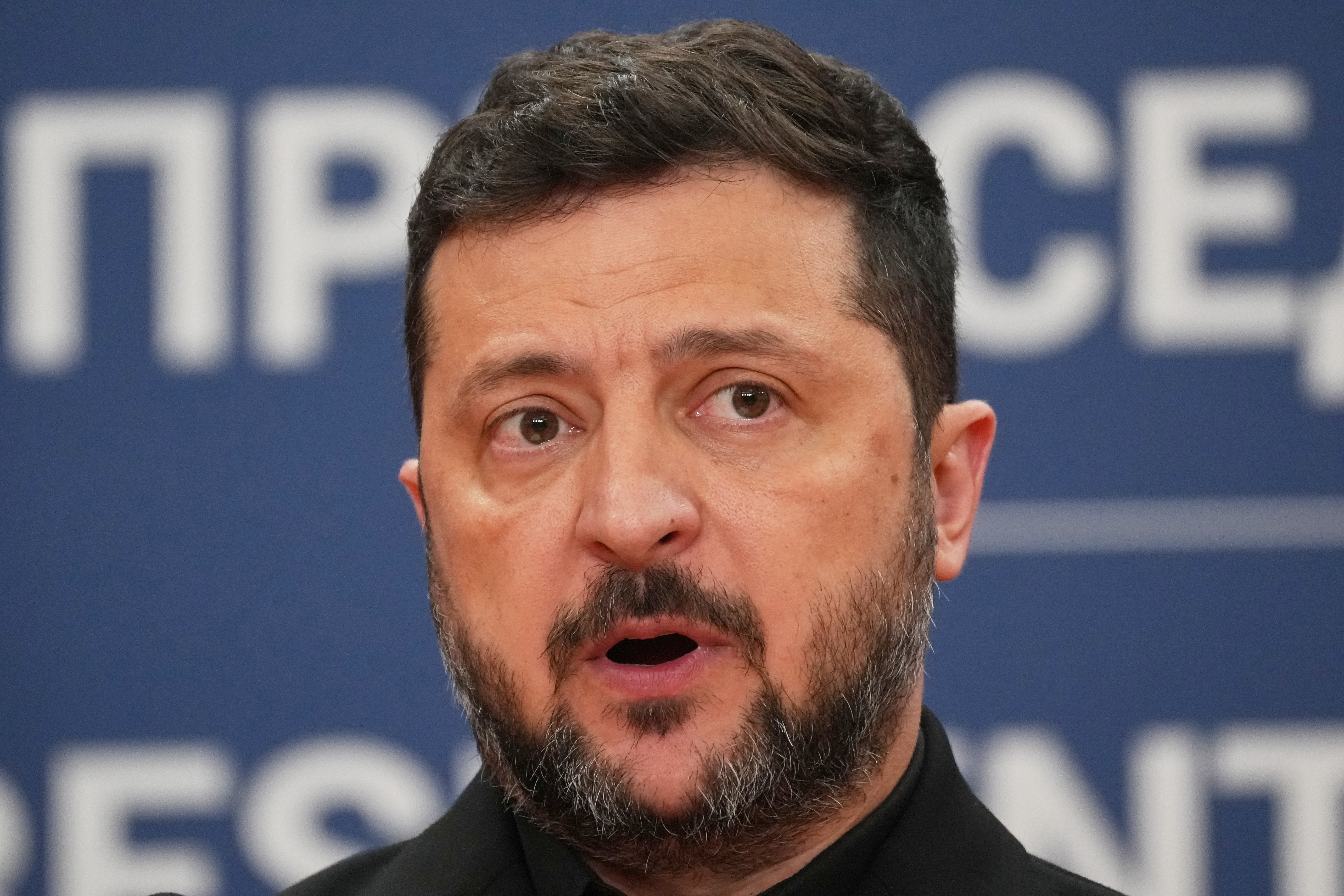
    The strike came just days after Zelensky said his government plane was targeted by Russian drones at an airstrip in Moldova as he was traveling to the Sept. 9 funeral of the king of Norway, a country that has been a staunch supporter of Ukraine since Russia’s 2022 invasion.

    “In Moldova, my presidential jet was there, and that’s why they attacked Moldova,” Zelensky said in an interview with CBS. “When we went back home, again through Chisinau, they did the same.”

    Ukrainian and Moldovan officials confirmed that Russian drones had crossed into Moldovan airspace while Zelensky’s jet prepared to depart Chisinau International Airport, though officials said that one of the drones was destroyed near the border about 100 miles from the airport and that Zelensky’s plane was never in danger.

    On Tuesday, the U.S. government exposed another alleged front in Russia’s campaign against perceived external adversaries. A criminal indictment unsealed by the Justice Department accused operatives in Russian intelligence services of using encrypted communications apps to recruit assassins to kill dissidents or critics of Moscow.

    The indictment, filed in the Southern District of New York, describes communications in late August between alleged agents in Russia and an unidentified U.S. resident as part of a plot to “eliminate” or “disappear” a Russian dissident in Washington.

    The network also sought an assassin to kill a Russian dissident in Lithuania, according to the indictment, as well as other recruits to carry out terrorism attacks in the Czech Republic. At one point, according to the indictment, a Russian intelligence officer identified as Yuri Khrameev suggested killing an alleged Kremlin critic by “throwing a bottle of gasoline” or “sticking a knife” in him.

    Kremlin spokesperson Dmitry Peskov dismissed the allegations this week, saying Russia had not seen “any coherent evidence or arguments based on anything tangible.”

    Officials emphasized that Russia has been linked to assassinations, and to plots targeting alleged dissidents, in Europe for decades, and that in recent years Moscow has pursued other plots that similarly alarmed security services.

    In 2024, Russia’s GRU spy agency used operatives recruited online in a plot to place incendiary devices aboard cargo aircraft, causing parcels to catch fire in Britain, Poland, and Germany.

    The Biden administration was so alarmed by the prospect of explosions on trans-Atlantic cargo planes that CIA Director William J. Burns and national security adviser Jake Sullivan were enlisted to issue warnings to their counterparts in the Kremlin.

    It is not clear if President Donald Trump, who recently scolded Ukraine for carrying out attacks on energy targets in Russia, has taken similar steps to caution Moscow about the train strike or the potential targeting of Zelensky’s aircraft.

    European officials have repeatedly denounced Russia in recent months for drone incursions, arson attacks, and other plots attributed to Kremlin security services. German authorities last month found a drone carrying explosives near a Ukrainian cargo plane at an airport in Leipzig.

    Polish Prime Minister Donald Tusk warned on Thursday that Russia could launch “hybrid drone and missile strikes” against NATO countries while depicting them as accidental.

    “Don’t underestimate it,” Macron said of the Leipzig incident, in remarks to the press Friday. He added, “The consequences would have been tragic. … What happened in Leipzig could happen in any European city.”

    Russia’s ability to strike trains near the Polish border or violate Moldova’s airspace has been driven by new military capabilities, including the development of powerful jet-powered drones whose speed and high-altitude trajectories overwhelm Ukraine’s air defenses and have altered the war’s dynamic, according to officials and experts.

    Russia rarely succeeded in striking moving targets including trains early in its invasion because of the technical limitations of its air force and the inexperience of its targeters, experts said. Advanced drones, combined with experience, have reduced these shortcomings. As a result, a war in which the front lines have been effectively frozen is now characterized by penetrating strikes by both sides meant to disrupt and exhaust the enemy.

    Ukraine has “been doing well at the front and it’s their best year since 2023 in terms of combat performance,” said Michael Kofman, a military analyst at the Carnegie Endowment for International Peace. But now “it is the rear, the infrastructure in cities, that looks increasingly precarious heading into winter.”

    With Ukraine running extremely low on interceptors and other air defenses, Russia has been bombing civilian targets including shopping centers and distribution warehouses used for food and medicine, leading to some shortages. In a diplomatic gesture, Putin agreed to halt attacks on Kyiv for 72 hours while U.S. envoys Steve Witkoff and Jared Kushner made their first visit to Kyiv since Trump’s return to the presidency.

    Ukraine’s airspace has been closed since the start of the invasion, so visiting dignitaries almost universally arrive by railroad.

    The number of attacks on trains, however, has “grown exponentially” over the past year as part of a Russian drone campaign aimed at crippling Ukraine’s economy and infrastructure, Ukrainian Railways boss Oleksandr Pertsovsky said this week. He said about 40 trains were hit in August alone, among 400 targeted since the invasion’s outset.

    In an interview, Petraeus, who was a four-star U.S. Army general before becoming CIA director under President Barack Obama, said that his recent train trip to and from Kyiv was the 11th he has made since the invasion of February 2022. Petraeus, who attended the YES conference, said he had never before been forced to evacuate a train on the overnight journey, but that his train was evacuated three times this week because of the drone threat.

    Asked whether he believed that Russia intended to kill him or other dignitaries who had attended the conference, Petraeus said, “I think that would have been unwise.”

    Doing so would be likely to bolster Western resolve in its support for Ukraine, a response that “would undermine what it is [that Russia] is trying to achieve, and they would recognize that.”


  • Hundreds arrested in Indiana during recent five-day ICE crackdown

    Hundreds arrested in Indiana during recent five-day ICE crackdown

    U.S. Immigration and Customs Enforcement arrested more than 400 undocumented immigrants in Indiana during a five-day operation in late August and early September, the agency announced this week.

    Most of the arrests occurred in Indianapolis, the state’s capital city and population center.

    The agency didn’t specify how many of the 426 immigrants detained in Operation Safe Community-Indiana have a criminal history. But it said some had records including sex crimes, assault, domestic violence, and drug trafficking.

    The arrests were part of a summer surge of ICE enforcement that has drawn less public attention than the mass deployments of agents to Minneapolis and other cities early this year. ICE arrests nationwide totaled more than 49,000 in July, the highest single-month tally during the second term of President Donald Trump. More than half of the people arrested did not have a criminal record.

    ICE applauded unnamed local police partners in the Hoosier State for cooperating with the recent crackdown. Gov. Mike Braun, a Republican, last year signed an executive order encouraging local law enforcement agencies to partner with ICE and assist in immigration arrests and requiring state law enforcement agencies to do so. As of early September, 39 Indiana departments had signed on to ICE cooperation agreements, according to the Indianapolis Star.

    “This is what it looks like when ICE has a blank check to do enforcement,” said Lisa Koop, the Indiana-based director of legal services at the National Immigrant Justice Center. “It’s just devastating for communities.”

    Also in 2025, the state agreed to a Department of Homeland Security request to add about 1,000 beds for immigrant detainees at the Miami Correctional Facility, a state prison about 60 miles north of Indianapolis. In a statement, then-DHS Secretary Kristi L. Noem dubbed the facility the “Speedway Slammer.”

    Indianapolis Mayor Joe Hogsett, a Democrat, denounced the recent ICE arrests, saying in a statement that his office got no advance notice of increased enforcement activity and pledging support for immigrant communities.

    “Our city prides itself on being a welcoming community and firmly recognizes the invaluable contributions of all our neighbors,” he said.

    Many undocumented immigrants who are arrested face detention and eventual deportation, although some are able to fight it in U.S. immigration courts.

    A report published this week by Minnesota Public Radio showed that a large majority of the undocumented immigrants arrested in that state earlier this year ended up removed from the country.

    That crackdown, known as Operation Metro Surge, sparked a huge public backlash, along with widespread outrage at the deaths of two U.S. citizens who were protesting ICE actions.

    More than 3,700 immigrants were arrested, and at least 2,300 ended up deported or out of the country, according to an analysis of data from the Deportation Data Project, a group of academics and lawyers that obtained the material though a Freedom of Information Act lawsuit.

  • Why Karl Rove, a father of the modern Texas GOP, is voting for a Democrat

    Why Karl Rove, a father of the modern Texas GOP, is voting for a Democrat

    Legendary Republican operative Karl Rove has said that he plans to do something in November that, for him, is radical: For the first time since 1994, he will vote for a Democrat.

    His reason, as Rove explained in his Wall Street Journal column Wednesday, is the unsubtle racism and nativism regularly expressed by Bo French, the GOP’s nominee for a seat on the powerful Texas Railroad Commission, which regulates the oil and gas industry.

    The final straw for Rove was when, after the University of Texas at Austin’s stunning win Saturday night over top-ranked Ohio State, French posted a photo of jubilant brown-skinned students celebrating and wrote: “I heard UT graduation this year looked like this. I didn’t believe it. The problem is now obviously far worse than anyone imagined.”

    Rove wrote: “These people are diminishing the Republican Party, not building it. I’ll have no part of it.” So he will vote for Democrat Jon Rosenthal.

    French’s comment brought denunciations from many Texas Republicans, including the state’s lame-duck U.S. senator John Cornyn. But two powerful and influential party leaders, both of whom are on the ballot this year, were notable for their refusal to condemn French.

    Gov. Greg Abbott, without addressing French’s comment directly, issued a statement saying it was “not my message,” but also boasted that Texas leads the country in having “the toughest immigration laws of any state in America and freezing H1B visas at our universities.”

    Attorney General Ken Paxton, who trounced Cornyn in the U.S. Senate primary, responded by accusing his Democratic opponent, state Rep. James Talarico, of racism.

    Rove would understand better than most that the modern Republican Party in Texas did not start out this way. Nor did it reach this point overnight.

    He is best known as George W. Bush’s bare-knuckled chief political strategist, whom Bush credited in his presidential reelection victory speech as “the architect.” But starting decades before that, Rove was instrumental in making Texas the Republican stronghold it is today.

    When Rove arrived in the Lone Star State from Virginia as a direct-mail consultant in late 1970s, the GOP held exactly one statewide office. By the time he left for Washington with Bush in 2001, Republicans were sitting in all 29 of those positions. Most of those officials — including the governor, lieutenant governor and both senators — had at one time or another employed Rove.

    But where Bush and Rove espoused “compassionate conservatism” as their brand of politics, the party they left behind in Texas has since taken hard turns to the right — nowhere more drastically than on immigration.

    Texans traditionally took a live-and-let-live attitude toward peaceful residents who were living without documentation in their midst. Illegal immigration helped shape the state’s culture and drive its economy.

    In 2001, for instance, Texas had passed a first-in-the-nation law allowing qualified undocumented residents who had lived and attended high school in Texas to pay lower in-state tuition rates at state colleges. The law’s passage had the support of virtually the entire legislature, including all but two Republicans in the House and three in the Senate.

    “We must say to every Texas child learning in a Texas classroom, ‘We don’t care where you come from, but where you are going, and we are going to do everything we can to help you get there.’ And that vision must include the children of undocumented workers,” then-Gov. Rick Perry said several months later.

    When Perry was running for the 2012 Republican presidential nomination, he touted the in-state tuition law and said of his opponents, led by eventual nominee Mitt Romney, who criticized it: “I don’t think you have a heart.”

    However, that law went by the wayside in 2025, when President Donald Trump’s Justice Department filed a lawsuit against it, which was quickly and enthusiastically joined by the state.

    “Today, I entered a joint motion along with the Trump Administration opposing a law that unconstitutionally and unlawfully gave benefits to illegal aliens that were not available to American citizens,” Paxton said in a statement at the time. “Ending this discriminatory and un-American provision is a major victory for Texas.”

    Nor was that the only question on which Texas Republicans took a U-turn with regard to immigration. In 2012, for instance, the state party adopted as part of its platform a business-backed “Texas solution” calling for a national guest-worker program. At its convention two years later, the party voted to remove that plank.

    Alarm over illegal immigration grew in Texas with the rise of the tea party movement a decade and a half ago, and increased drug-gang violence on the border. It was fanned by Trump and by the Biden administration’s inaction regarding the massive influx of migrants that sparked chaos on the border during its watch.

    But as the issue moved to the forefront, so did toleration of what would earlier have been denounced as bigotry and xenophobia. “The GOP has a growing number of Bo Frenches — and not only in Texas,” Rove wrote.

    Ironically, the University of Texas at Austin has moved toward becoming more of a meritocracy. Under its current policy, students who graduate in the top 5% of Texas high school classes are automatically admitted.

    So the celebrating Longhorn fans to whom French pointed are among the state’s best and brightest. They are also part of the hope for its future.

  • Jon Kyl, a former top Republican in the Senate, dies at 84

    Jon Kyl, a former top Republican in the Senate, dies at 84

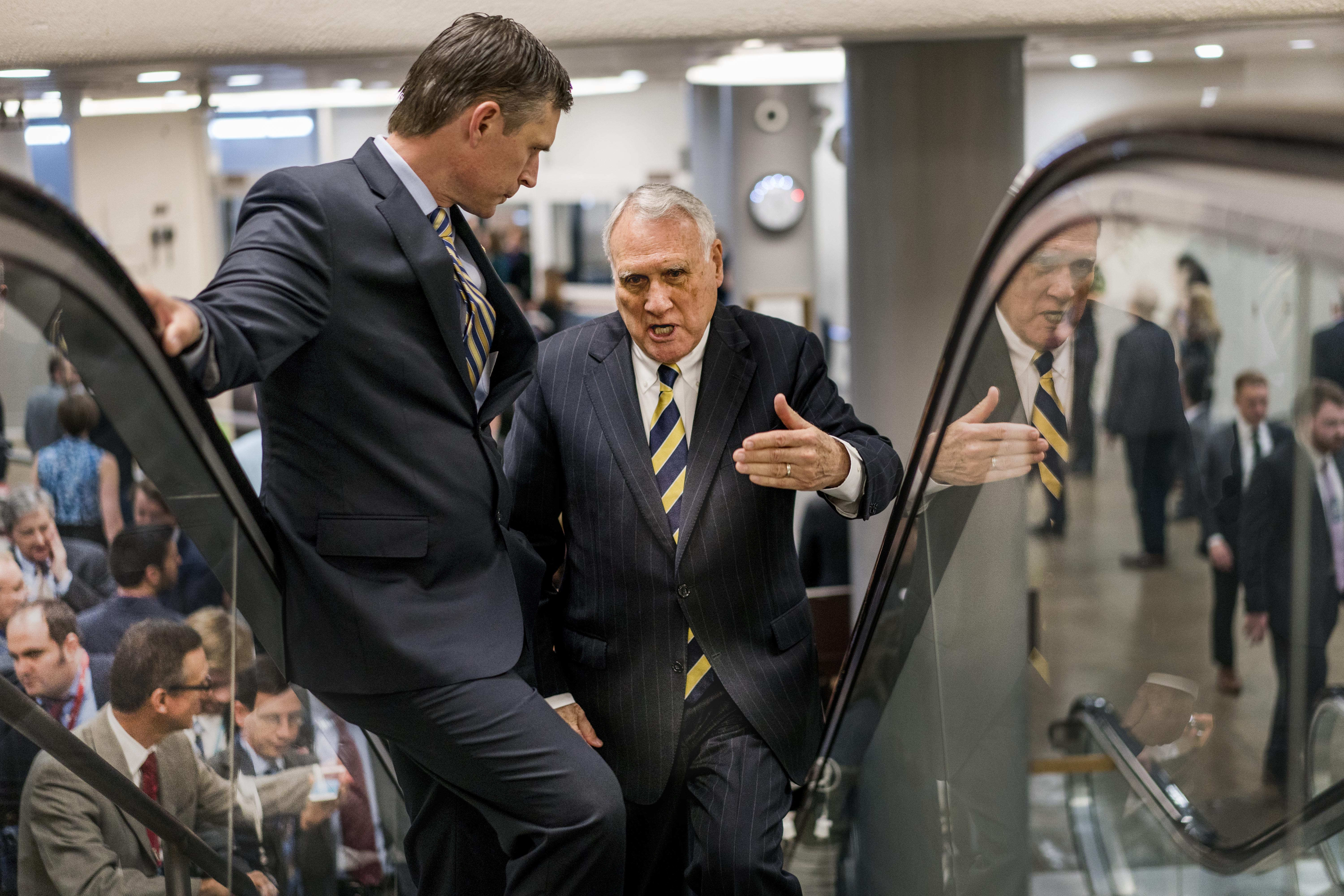
    Former senator Jon Kyl, who served in Congress for nearly 30 years and rose through the ranks of GOP leadership to become the Senate’s No. 2 Republican, has died at the age of 84, his family said Thursday.

    Mr. Kyl’s passing comes nearly nine months after he announced he had been diagnosed with dementia and would be withdrawing from public life. In a statement to local news outlets, his family said Mr. Kyl had passed due to “complications from a neurological disease.”

    “We know that Jon belonged to all of Arizona, a state he loved and explored with vigor, curiosity, and wonder,” his family said. “Serving his state and nation in Congress was a privilege and responsibility he honored and respected.”

    Mr. Kyl served in the House from 1987 to 1995 and in the Senate from 1995 to 2013. He served as the Senate minority whip before he left public office in 2013 and became a lobbyist.

    After the death of former Arizona senator John McCain in 2018, then-governor Doug Ducey appointed Mr. Kyl to serve out the rest of McCain’s term. Mr. Kyl returned somewhat reluctantly, out of a sense of duty, and was instrumental in guiding Supreme Court nominee Brett M. Kavanaugh through the confirmation process.

    This is a developing story and will be updated.

  • 5 subtle dental symptoms you should never ignore

    5 subtle dental symptoms you should never ignore

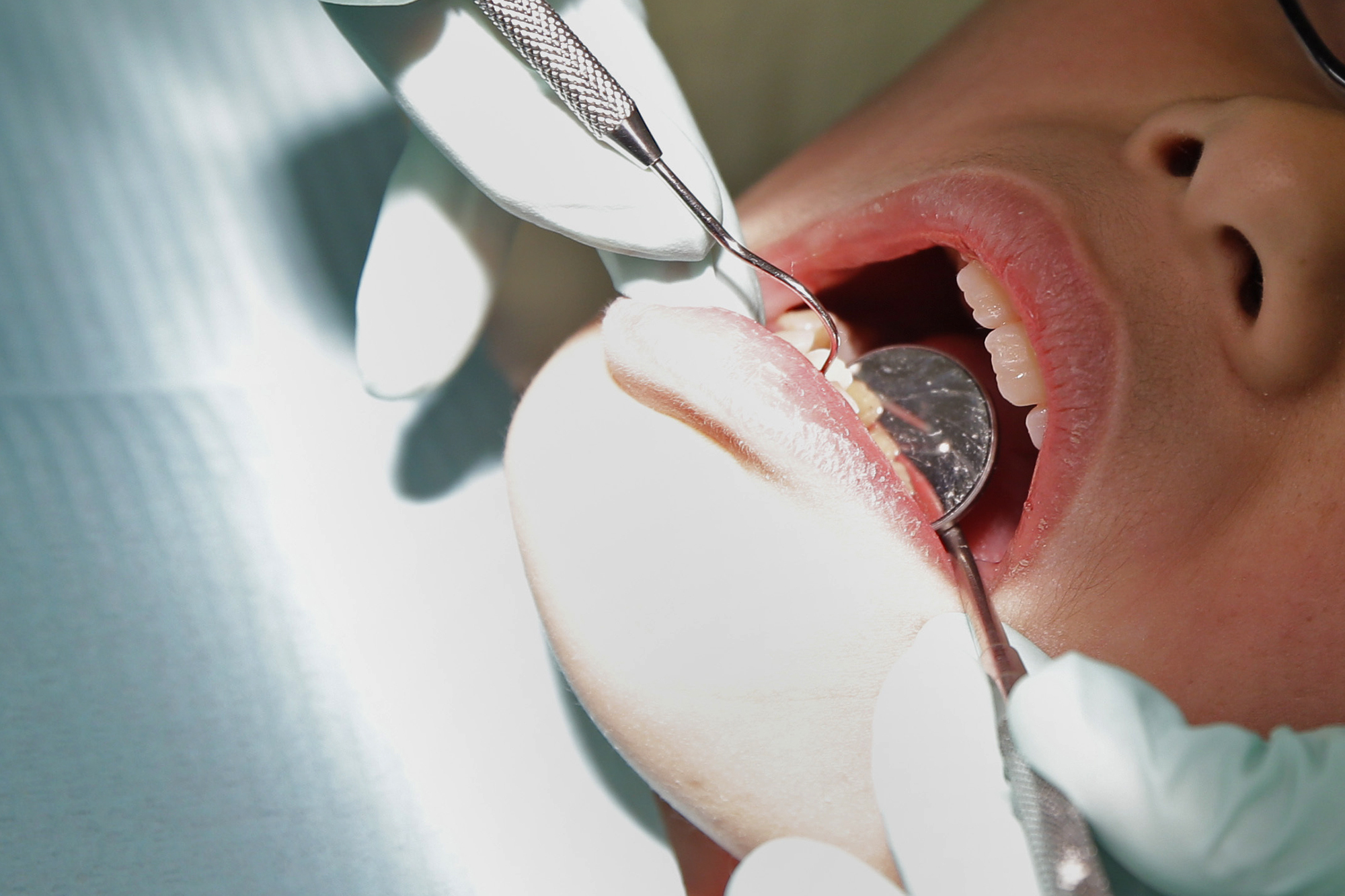
    Plenty of dental issues can feel like no big deal, at least at first. The symptoms don’t always hurt and may not even catch your attention. “A lot of times patients don’t realize they have a problem in their mouth because they don’t look so closely,” said Steven Katz, immediate past president of the American Association of Endodontists.

    Even a toothache might come and go, Katz said, leading some people to put off dealing with it. And making a dentist appointment for a painless problem — for instance, gums that bleed when you floss — can feel like more of a hassle than it’s worth.

    But seemingly minor dental symptoms often signal infections that, if left untreated, can progress into more complex problems, Richard M. Lipari, a cosmetic dentist in New York, said in an email. These issues can also require more costly treatment and additional visits to repair. Some changes in your mouth can even be early warning signs of disease elsewhere in the body, Lipari added.

    Below are five tooth and gum symptoms you may be tempted to ignore — but shouldn’t, for the sake of your oral and overall health.

    Tooth pain of any kind

    “There’s no amount of pain in your teeth that should be considered normal,” Katz said. The most common cause of a toothache is tooth decay.

    It starts when bacteria combine with saliva and food particles to form a sticky film of plaque on a tooth’s surface. The bacteria feed on sugars and starches and produce acids that erode enamel. This decay can eventually lead to a cavity — a hole that can cause pain or irritation if it reaches the sensitive inner layers of the tooth.

    More than 1 in 5 people ages 20 to 64 in the United States have at least one untreated cavity, according to the Centers for Disease Control and Prevention. The concern is what can happen next: As bacteria move deeper into the tooth, an infection can develop at the root, causing sharp or throbbing pain. Over time, it may even spread to the face, neck, and underlying bone.

    Katz cautioned that even if your tooth stops hurting, you shouldn’t ignore it. “A lot of patients think, ‘OK, well, I aggravated something, and it’s gone now,’” he said. But usually, pain that suddenly lets up is a sign that decay has killed the tooth’s nerve. So, the pain can disappear even as the infection gets worse. “That’s when [bacteria] can start to eat away at the bone,” he said.

    While a cavity can be fixed with a simple filling (which generally costs a couple hundred dollars without insurance), a dental infection typically requires a root canal (which can cost $1,000 or more, depending on the tooth). During the procedure, a dentist drills into the tooth to clear out the infected pulp and then reseals it and stabilizes it with a crown. But if an infection destroys enough bone, the tooth will ultimately have to be removed.

    There’s also evidence that untreated dental infections are associated with a higher risk of several conditions beyond the mouth, including Type 2 diabetes, cardiovascular disease and dementia. Bacteria and inflammation around the root of an infected tooth may spill into the bloodstream and reach other parts of the body.

    Swollen or bleeding gums

    Puffy gums that bleed easily are often a sign of gingivitis, a mild form of gum disease, Lipari said, even if they’re not painful. Like cavities, gingivitis is generally caused by plaque buildup. The immune system triggers inflammation in the gums in an attempt to ward off an infection.

    While regular brushing and flossing can remove plaque and reverse gingivitis, if the swelling persists for longer than a couple of weeks, it’s important to see a dentist. They can use special tools to remove plaque and its hardened form, called tartar, at and below the gumline. This helps keep gingivitis from progressing to periodontitis, a more severe form of gum disease. At that stage, inflamed gums can pull away from a tooth, creating a pocket where bacteria can accumulate. The gums may become even more swollen or tender, and tooth pain and sensitivity can develop.

    Like dental infections, untreated gum disease has also been associated with other serious health issues. “The same systemic inflammatory mediators involved in gum disease are linked to conditions like cardiovascular disease and neurodegenerative disorders,” Lipari said.

    Though gingivitis is the usual culprit, persistently swollen or bleeding gums can sometimes have other causes, which a dentist can help rule out. For example, bleeding gums are also “strongly associated with diabetes,” said Lipari. Having high blood sugar can increase the amount of glucose in your saliva, which feeds bacteria in the mouth and increases the risk of plaque buildup.

    In very rare cases, gums that frequently bleed could also point to a blood disorder or cancer such as leukemia that interferes with blood clotting, Katz said. (If a dentist sees bleeding that doesn’t appear typical for gingivitis or suspects a different underlying trigger, they can refer you to the right doctor for a workup.)

    Loose teeth

    A loose tooth, particularly one that’s accompanied by tender or swollen gums, may signify advanced gum disease, Lipari said. Left untreated, the infection can damage the bone holding the tooth in place, leaving it mobile or wobbly.

    In rare cases, a loose tooth could also indicate a tumor in the mouth or jaw, Katz said. “Most of the time they grow silently until all of a sudden they don’t,” he said. “We might see loose teeth because tumors typically will destroy bone.”

    A slow-growing tumor could also push teeth out of alignment, Katz added. Outside of orthodontic treatment, you shouldn’t notice your teeth moving, he said: “Our teeth are always moving microscopically, but to move significantly such that your bite would be off, for example, that’s something that should ring a bell.”

    Bad breath or a bad taste that doesn’t go away

    A garlicky pasta or tuna salad sandwich can certainly give you bad breath that lingers for a few hours. But a foul odor or taste that persists day after day could signal an infection — and you might not always have pain or swelling along with it.

    In some cases, a small drainage track can form near an infected tooth or gum, allowing pus to escape. Sometimes it looks like a bubble or pimple on the gumline, though people often don’t notice it, Katz said. The release of fluid keeps bacteria and inflammation from building up, so the infection might not hurt much, he explained.

    Alternatively, off-smelling breath could be a result of dry mouth. Saliva helps wash away food debris and bacteria. Dry mouth is a common side effect of certain medications, including blood pressure drugs, antidepressants, and GLP-1s, Katz pointed out.

    If dryness and bad breath persist, it’s worth bringing it up to your dentist or primary care doctor. A dry mouth can also be associated with autoimmune diseases such as Sjögren’s syndrome (in which the immune system mistakenly damages the body’s moisture-producing glands) as well as diabetes, Lipari said, and can raise your cavity risk. In certain cases, a bitter or sour taste in the mouth could also be a byproduct of acid reflux, or the backflow of stomach acid and contents into the esophagus, he added.

    Persistent mouth sores

    Canker sores — small ulcers that form inside the mouth, such as on the inner cheek, tongue or gums — generally heal within a couple of weeks. (It isn’t known exactly what causes canker sores, but stress, minor trauma to the mouth, certain kinds of toothpaste, and spicy or acidic foods may trigger or aggravate them.) But if you have a sore that sticks around for longer than two weeks, or turns into a lump or bleeds, it’s important to see your dentist or primary care doctor. Certain autoimmune conditions, such as lupus, can cause mouth sores, and in rare cases, a persistent sore can be a sign of oral cancer, Lipari said.

    The bottom line

    If you notice any of the above symptoms, it’s better to get them checked sooner rather than later. That way, you’re more likely to catch an infection or other underlying issue before it becomes more serious. (It’s also wise to keep seeing your dentist regularly, even if you don’t have symptoms. They can spot problems early, when they’re easier to treat.)

    The typical resolution for gum and tooth disease is a root canal, Katz said. Getting one done when you need it may not only spare your tooth and stop the symptoms — research shows it can improve markers tied to heart health such as cholesterol and chronic inflammation.

    And these days, a root canal isn’t as bad as you may fear. Better local anesthesia can keep pain to a minimum. Improved technology means the procedure can often be completed quickly, Katz said, typically within an hour and in a single appointment. As he put it, “This is not your grandmother’s root canal.”

  • Annie Dillard, Pulitzer-winning author of ‘Pilgrim at Tinker Creek,’ dies at 81

    Annie Dillard, Pulitzer-winning author of ‘Pilgrim at Tinker Creek,’ dies at 81

    Still in her 20s and possessed of a curious eye and sensitive spirit, Annie Dillard set out beneath the trees along Tinker Creek in southwestern Virginia and emerged with a best-selling book that made her one of the most honored and beloved writers of her time.

    Pilgrim at Tinker Creek, published in 1974, won the Pulitzer Prize and made Ms. Dillard something more than a literary celebrity: She was viewed as a bard of the environment, a 20th century Henry David Thoreau, a youthful sibyl of the wildwoods, a visionary whose shimmering prose offered glimpses of the eternal.

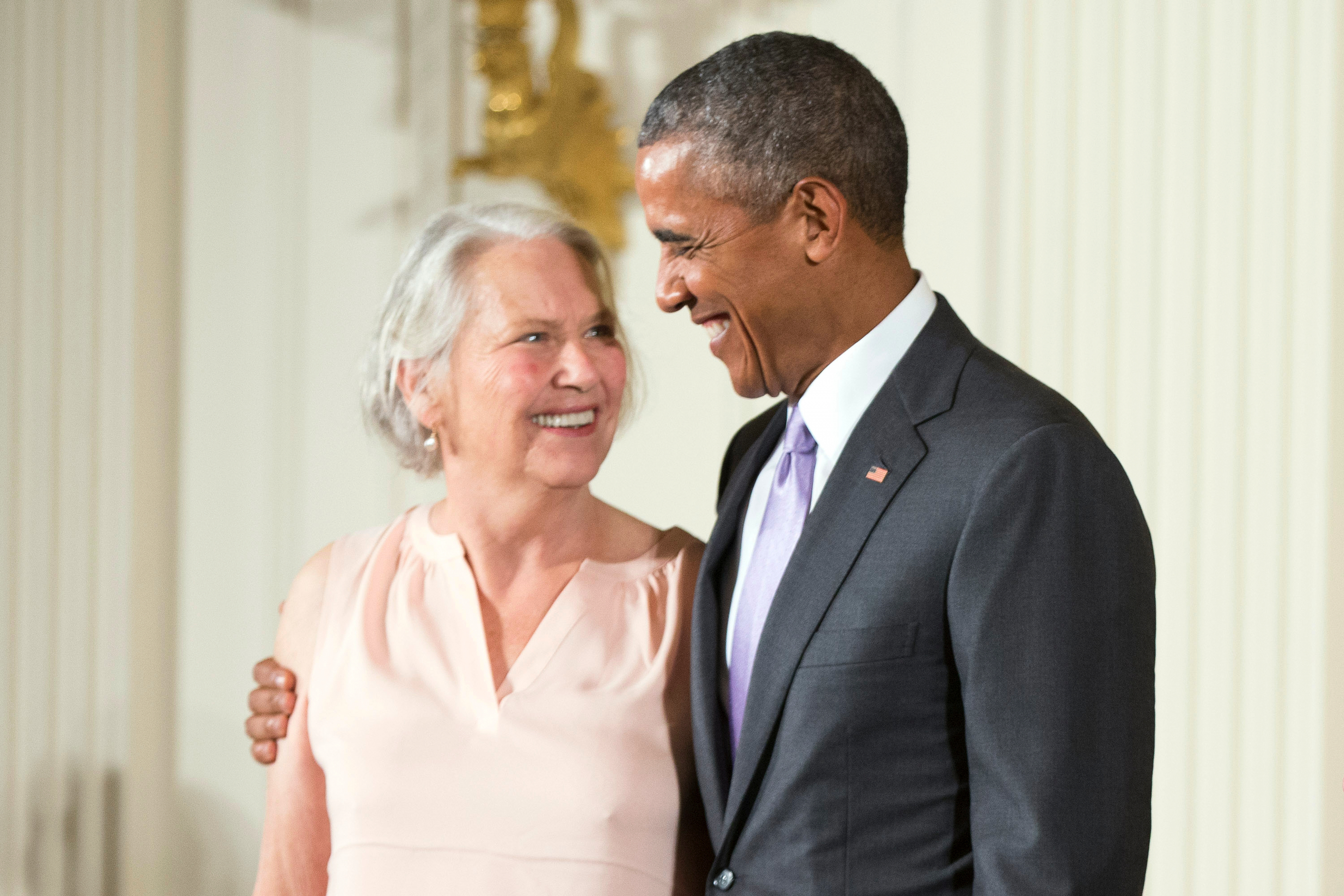
    Ms. Dillard, who went on to write well-received novels, memoirs, essays, and poems, and was awarded the National Humanities Medal in 2015, died Tuesday at her home in Wellfleet, Mass. She was 81. Her death was confirmed by writer Maggie Nelson, her literary executor.

    Pilgrim at Tinker Creek seemed to be an almost perfect embodiment of its times: an eager embrace of the natural world, a work of mystical, even sensuous prose, and the spiritual autobiography of a questing soul.

    “I am no scientist but a poet and a walker with a background in theology and a penchant for quirky facts,” Ms. Dillard wrote. “I walk out; I see some event that would otherwise be utterly missed and lost, or something sees me, some enormous power that brushes me with its clean wing, and I resound like a beaten bell.”

    Her model was Thoreau, who chronicled a year spent in a cabin in his 19th century literary classic Walden, which became a lodestar for students and nature lovers of the 1960s. Ms. Dillard similarly wrote about a single year — winter to winter — at Tinker Creek, giving the impression that she was isolated deep in the Blue Ridge Mountains of southwestern Virginia.

    In reality, Tinker Creek flowed through the suburbs of Roanoke, where Ms. Dillard lived at the time with her first husband. When she recorded her musings on nature, she was seldom out of range of houses, highways, and other fixtures of modern life.

    “I didn’t say, ‘I walked by the suburban brick houses,’” she told the Atlantic in 2015. “I didn’t obscure anything, I just left it out.”

    Yet her descriptions of the stones, trees, insects, and slippery creatures she found there — and her responses to them — suggested a pristine state leading to meditation, even prayer.

    “A reader’s heart must go out to a young writer with a sense of wonder so fearless and unbridled,” novelist Eudora Welty wrote in the New York Times. “There is an ambition about her book that I like, one that is deeper than the ambition to declare wonder aloud. It is the ambition to feel.”

    Ms. Dillard openly invoked a sense of the divine as she explored the world above her head and beneath her feet, but her depiction of nature went far deeper than sunshine and birdsong.

    “Evolution loves death more than it loves you or me,” she wrote in Pilgrim.

    In one of the book’s most celebrated passages, Ms. Dillard described the death of a Tinker Creek frog, attacked by a giant water bug:

    “As I looked at him, he slowly crumpled and began to sag. The spirit vanished from his eyes as if snuffed. His skin emptied and drooped; his very skull seemed to collapse and settle like a kicked tent … I gaped bewildered, appalled. An oval shadow hung in the water behind the drained frog; then the shadow glided away. The frog skin bag started to sink.”

    Earlier writers, including Aldo Leopold, Rachel Carson, and Henry Beston, had described the workings of nature with perception and skill, but Ms. Dillard brought a new sensibility to the art.

    She evoked the ecstasy of saints as she described her search “through the peach orchards of summer, in the forests of fall” for a tree burning with light. When she found such a tree, she described it almost as a moment of seduction: “It was less like seeing than like being for the first time seen, knocked breathless by a powerful glance.”

    Soon after winning the Pulitzer for nonfiction in 1975, Ms. Dillard moved from Virginia to an island in Puget Sound in Washington state. She published another slender meditation on nature and faith, Holy the Firm, in 1977. Two years later, she settled in Middletown, Conn., where she lived for many years while teaching at Wesleyan University.

    In the 1980s, she published Teaching a Stone to Talk, a collection of essays built around travel and science; Living by Fiction, a work of literary criticism; and Encounters With Chinese Writers, based in part on a visit to China with a cultural exchange program.

    Her acclaimed 1987 memoir, An American Childhood, described her Pittsburgh childhood, her intellectual and spiritual growth, her curiosity about the natural world, and her sometimes-strained relations with her socially prominent but idiosyncratic parents. Her father once quit his job to pilot a boat downriver to New Orleans to visit Dixieland jazz clubs. Her mother had a wicked gift for practical jokes, sometimes answering wrong numbers by handing the telephone to another person and giving the instruction, “Here, take this, your name is Cecile.”

    “Our family was on the lunatic fringe,” Ms. Dillard once said.

    From the time Pilgrim was published, her books were never out of print and were often collected in omnibus volumes. Other nonfiction writers of the 1970s and 1980s, including Tom Wolfe, Joan Didion, and Hunter S. Thompson, became renowned for their extravagant prose or personal styles, but their work relied primarily on the outward-looking conventions of journalism.

    Ms. Dillard’s vision, by contrast, was more internal. Like Wolfe and other writers first known for their nonfiction, she began to experiment with fiction and in 1992 published her first novel, The Living, a multigenerational saga about the 19th century settlement of the Northwest.

    She published a collection of essays, For the Time Being, in 1999. Another novel, The Maytrees, about the marital struggles of a couple on Cape Cod, appeared in 2007. Ms. Dillard then turned to painting and, except for a 2016 book of reprinted essays, fell silent as a writer.

    “One of the few things I know about writing,” she wrote in her 1989 book The Writing Life, “is this: spend it all, shoot it, play it, lose it, all, right away, every time. Do not hoard what seems good for a later place in the book, or for another book; give it, give it all, give it now. The impulse to save something good for a better place is the signal to spend it now.”

    Affluent upbringing

    The oldest of three daughters, she was born Meta Ann Doak in Pittsburgh on April 30, 1945. A great-great-grandfather had founded the bathroom-products company American Standard, and she grew up in affluent circumstances.

    She attended private schools, played baseball, and developed an early fascination with natural history. She also became a dedicated reader, documenting the thousands of books she read since 1964.

    An admitted rebel as a teenager, she was suspended from school for smoking. (She was a heavy smoker throughout her life, even when communing with nature.)

    Partly to “smooth off her rough edges,” her parents sent her to what is now Hollins University, a women’s college in southwestern Virginia. After her second year, she married her creative writing professor, poet Richard Dillard.

    After graduating in 1967, she received a master’s degree in English from Hollins in 1968, then stayed for several years in Roanoke, reading about nature and theology and exploring the nearby mountains and streams. She composed much of Pilgrim at Tinker Creek in the Hollins library.

    At first, Ms. Dillard wrote poetry, publishing her first collection, Tickets for a Prayer Wheel, in 1974, just before Pilgrim.

    “My poetry, unfortunately, is no good,” she told the Washington Post in 1987. “There’s nothing in the language that poetry can do that prose can’t do much better — discursive writing, reasoning, information as symbol, narrative — all those things that poetry has forbidden itself.”

    Her first marriage ended in divorce, as did her second, to anthropologist Gary Clevidence. In 1988, she married Robert D. Richardson, the author of biographies of Thoreau and Ralph Waldo Emerson. He died in 2020.

    Survivors include a child from her second marriage, Cody-Rose Clevidence; four stepdaughters, Carin and Shelly Clevidence, and Anne and Lissa Richardson; and two sisters.

    In later years, Ms. Dillard told interviewers she could not write any better than she had when she was younger. She spent her time painting and reading at her homes in Massachusetts and Key West, Fla.

    “Why are we reading,” she observed in The Writing Life, “if not in hope that the writer will magnify and dramatize our days, will illuminate and inspire us with wisdom, courage and the possibility of meaningfulness, and will press upon our minds the deepest mysteries, so we may feel again their majesty and power?”

  • Lawmaker requests emergency hearing as Kennedy Center remains closed

    Lawmaker requests emergency hearing as Kennedy Center remains closed

    The Kennedy Center’s decision to immediately close its doors for roughly two years of repairs is facing a new legal challenge Wednesday, escalating the fight over President Donald Trump’s transformation of the national cultural institution.

    Rep. Joyce Beatty (D., Ohio), a Kennedy Center trustee who has repeatedly challenged Trump’s transformation of the institution in court, filed a motion requesting an emergency hearing so center officials can explain the closure despite a federal judge’s instructions hours earlier that he needed to approve it.

    “It seems Defendants may be violating the ‘clear and unambiguous order of the Court,’” lawyers Nathaniel Zelinsky and Norm Eisen wrote in the emergency motion.

    The challenge puts the question of the Kennedy Center’s physical future back before U.S. District Judge Christopher Cooper barely 24 hours after he blocked another attempt to put Trump’s name on the building. It also escalates a legal battle that has come to encompass nearly every element of Trump’s transformation of the national cultural institution: its name, its finances, the condition of its aging building, and now whether its doors can remain closed while its Trump-appointed leadership pursues a roughly $250 million renovation.

    The center remained closed Wednesday after trustees voted Tuesday afternoon to shutter its main building “forthwith.” At about 4:30 p.m. Tuesday, a message played over the center’s speakers announcing the closure and security guards escorted visitors out through the Hall of Nations. By about 6 p.m., all of the doors were locked.

    On Wednesday, fencing went up around the main building and security guards continued to turn away visitors.

    The Kennedy Center did not immediately respond to a request for comment on the motion.

    The closure came hours after Cooper addressed the issue in court Tuesday morning. Although the proceeding was largely intended to deal with scheduling in Beatty’s lawsuit, the judge confronted a rapidly changing situation: Center management had recommended an immediate shutdown after a section of ceiling plaster fell about 60 feet into the Grand Foyer during a Sept. 4 storm, and trustees were preparing to vote on the proposal later Tuesday.

    The proposed closure carried particular significance because Cooper had already blocked an earlier version of it.

    In May, Cooper overturned a March board resolution to close the building, finding that trustees had acted on insufficient information and failed to adequately consider the consequences. But he did not prohibit the center from ever closing. Instead, while his order remains in place, he left trustees free to reconsider the issue after conducting a more thorough review.

    Trustees returned to the question in August and approved a roughly two-year shutdown. On Tuesday, they went further, voting to make the closure immediate.

    Center officials say new evidence made the acceleration necessary. During the Sept. 4 storm, according to the center, a roughly 4-by-5-foot section of plaster broke loose from the Grand Foyer ceiling. No one was injured. Inspectors subsequently found at least seven other areas with visible water-related deterioration.

    Management has cited those findings, along with water intrusion into electrical areas, deteriorating parking-garage steel, and aging mechanical and theatrical systems, in arguing that the building cannot safely remain occupied during construction. Center spokesperson Roma Daravi said Tuesday that the board had demonstrated “a clear prioritization of safety above all else.”

    Beatty’s lawyers have challenged that characterization. In a filing Monday, they said Delta Consulting Group, which reviewed the center’s renovation plans, had expressly disclaimed concluding that the building was “unsafe for continued occupancy.” They have accused center leaders of using long-standing maintenance problems to justify a closure the Trump-led board already wanted.

    Tuesday’s court hearing also produced a decisive ruling in a separate part of Beatty’s case. Cooper barred trustees from carrying out their Aug. 13 plan to add an inscription reading “Restored and Renovated by President Donald J. Trump” to the facade and rename the grounds “President Donald J. Trump Plaza.”

    “Simply put, Defendants cannot install memorials for President Trump or anyone or anything else at the Kennedy Center without Congress’s blessing,” Cooper wrote, reiterating his May conclusion that Congress reserved the national memorial for honoring President John F. Kennedy.

    Hours later, Trump tied the renovation directly to that legal fight. He said the building would close immediately but that construction “cannot begin until such time as the D.C. Circuit rules on the Board’s approved name.” If the center ultimately loses the naming dispute, including at the Supreme Court, Trump said, “the Reconstruction and the Renovation of The Kennedy Center will not take place.”

    That leaves the Kennedy Center in an unusual position: Its main building is closed because trustees say an immediate shutdown is necessary for safety and renovation work, while the board chairperson says that renovation may never proceed if the center loses the name dispute.

  • Trump’s arch will harm historic sites but must proceed, federal officials say

    Trump’s arch will harm historic sites but must proceed, federal officials say

    Federal officials acknowledge that President Donald Trump’s planned triumphal arch will unavoidably harm historic sites if built as planned, but they say the project must move forward, according to a National Park Service document and emails obtained by the Washington Post.

    Trump’s 250-foot-tall proposed arch would be built in Memorial Circle, a traffic roundabout tucked inside Washington’s boundaries near Arlington National Cemetery. Historic preservationists, veterans groups, and others have called on the administration to shrink the monument’s planned size or build it elsewhere, warning that the towering structure would overshadow the cemetery, interrupt the solemn corridor that was intended between the cemetery and the Lincoln Memorial, and create other disruptions.

    National Park Service officials agree that the arch would adversely affect the cemetery, the Lincoln Memorial, and several dozen other historic sites.

    The “adverse effects cannot be fully avoided,” Park Service officials wrote in a document circulated Tuesday and obtained by the Washington Post. But, they said, the project cannot be constructed somewhere else because “the proposed location at Memorial Circle is central to the undertaking,” according to the NPS document.

    The document is a proposed agreement that the administration wants local historic-preservation officers to sign on to as part of a federally required process to offer feedback on the project.

    The NPS proposal says that since the harms cannot be avoided, federal officials would pursue efforts that they contend would mitigate the arch’s impact, such as creating new signs and webpages to explain the project to the public.

    Officials also said they would manage construction to reduce interference with burials at the cemetery and document the current landscape before construction begins.

    “NPS recognizes that Memorial Circle is located within a highly sensitive historic and commemorative landscape and that the Undertaking’s location contributes to adverse effects to historic properties whose significance is associated with setting, design, feeling, association, spatial organization, circulation, and contributing views and vistas,” the proposed agreement says.

    Tammy Stidham, a senior NPS official, asked the preservationists, local historic preservation officers, and other groups to review and sign the agreement by 12 p.m. on Monday, according to an email obtained by the Post. Their assent would help conclude the administration’s required consultations under the National Historic Preservation Act and expedite the process of securing final approval for the arch.

    Stidham said last week that the administration hopes to submit the project for approval from the National Capital Planning Commission, a review panel that oversees federal construction projects, as soon as November.

    Stidham and spokespeople for the Interior Department, which oversees NPS, did not immediately respond to questions about the proposed agreement.

    Trump has said that the arch should be the tallest in the world and be specifically 250 feet high to mark the nation’s 250th anniversary, which was celebrated this year. The president and his deputies have also asserted that the arch must be built in Memorial Circle because lawmakers a century ago authorized a somewhat similar project that was never built there.

    “The Triumphal Arch in Memorial Circle is going to be one of the most iconic landmarks not only in Washington, D.C., but throughout the world,” White House spokesperson Davis Ingle said in a statement. “It will enhance the visitor experience at Arlington National Cemetery for veterans, the families of the fallen, and all Americans alike, serving as a visual reminder of the noble sacrifices borne by so many American heroes throughout our 250 year history so we can enjoy our freedoms today.”

    Local historic preservationists have said that the administration’s timeline to wind down public input and begin building the arch is overly aggressive. They also criticized the proposed agreement, saying it falls short under federal requirements that the administration must avoid or minimize the harms of a project, rather than just mitigate those harms.

    “This is not consistent with NPS practice, NPS regulations, or the intent of the National Historic Preservation Act,” Rebecca Miller, executive director of the DC Preservation League, wrote Tuesday to Stidham, other federal officials, and colleagues at preservation organizations. Miller also called for the administration to continue its efforts to consult with local preservationists about alternative approaches to building the arch. The email was shared with The Post.

    NPS officials previously said that they have explored changes to the arch proposal.

    “We looked at a smaller arch height. We considered a relocation of the project altogether,” Stidham said at a meeting with preservationists last week, according to audio posted online by NPS. “It was determined that the options would either create a greater impact on historic properties or would not meet the undertaking’s location-dependent purpose need.”

    Federal officials also say they would create several webpages, including one devoted to triumphal arches, to help explain the significance of Trump’s project.

    “The webpage would address the origins and use of triumphal arches in different historical and cultural contexts, their association with military victory, civic identity, national celebration, and public memory, and how the proposed Arch relates to or differs from those traditions,” according to the NPS document obtained by the Post.

    Historic preservationists say that the proposed mitigations are insufficient and that officials should slow their process.

    “The administration is being very transparent in their overt hostility to public input and the regulatory process and the result will be to permanently disfigure one of the nation’s most revered and richly symbolic cultural landscapes,” Charles Birnbaum, founder of the Cultural Landscape Foundation, a local advocacy and education organization, said in a statement.

    If the local preservation officers refuse to sign the agreement, it could trigger a process overseen by the Advisory Council on Historic Preservation, a federal agency led by Trump officials, to address disputes under federal preservation law. The administration does not need the preservationists’ consent to move forward.

    The Advisory Council on Historic Preservation declined to comment Wednesday.

  • United, American say fuel cost surge may mean capacity cuts

    United, American say fuel cost surge may mean capacity cuts

    United Airlines Holdings Inc. and American Airlines Group Inc. said they may need to cut more capacity in the fourth quarter as the aviation industry continues to contend with high fuel prices.

    “If fuel prices remain as high as they are right now, I think that that’s going to require some adjustments in terms of our capacity planning as we take a look out into the future,” American chief executive officer Robert Isom said at a Morgan Stanley conference in California on Wednesday.

    Speaking after Isom at the same event, United chief financial officer Mike Leskinen said that if fuel remains high, the company will “make some adjustments into the first quarter and beyond into 2027.”

    “We are not flying to maximize market share, we’re flying to maximize profitability and free cash generation, so we’ll make those adjustments,” Leskinen said.

    American stock briefly jumped as much as 4%, and was trading 0.3% higher at 12:24 p.m. in New York. United also rose as much as 2.7%, before paring gains and was down 0.9% at 12:21 p.m. United’s shares have declined 5% this year, while American is down 16%.

    American estimates fuel will add $1 billion in extra costs in the last three months of the year. At the same time, the airline is seeing benefits of its focus on premium products, with more revenue coming from the front of the aircraft. At this point, the company continues to feel “really good” about its guidance, he said. American is the largest carrier out of Philadelphia International Airport by passenger volume.

    United earlier this year forecast adjusted third-quarter earnings of $2.50 to $3.50 a share and sees about $6 billion in added fuel costs for 2026, which it plans to offset by the end of the year.

    The Chicago-based airline, which has been able to stay nimble amid high costs alongside Delta Air Lines Inc. with its industry-leading premium strategy, moved quickly and aggressively on capacity. The carrier earlier this year announced a 5% reduction in scheduled flights for the second and third quarters, targeting weaker off-peak routes — midweek and overnight flights — and trimming operations at Chicago O’Hare.

    “As you look into the fourth quarter, there’ll be some flights in December that we won’t fly, that we thought we were going to fly,” Leskinen said.

    With the U.S.-Iran war showing no signs of abating, analysts expect energy prices to remain elevated. President Donald Trump has said the fighting would only end after the November midterm elections. Brent is up almost 70% this year, and refined products such as diesel have posted even steeper gains, reflecting supply risks from the conflicts in Ukraine and the Middle East.

    The surging costs are significantly squeezing airline margins. New York-based JetBlue Airways Corp. last week cut its capacity outlook, expecting it to rise between 1.5% and 3.5% from a year earlier, down from its previous forecast for growth between 3% and 6%.

    American Airlines has faced the most acute pressure among its major rivals, having cut guidance twice so far this year. In April, it guided to a full-year range of a $0.40 loss to $1.10 profit — down from its original $1.10–$2.70 profit target — after absorbing an estimated $4 billion in incremental fuel costs from the Iran war.

    In July, it cut guidance again to a range of a $0.65 loss to $0.65 profit, as fuel expense surged over $2.2 billion or 83% year-over-year in the second quarter alone. American was able to offset only roughly 50% of that fuel headwind through higher fares.

    One penny of extra fuel cost equals about $10 million, chief financial officer Devon May said at the conference, adding that the airline will guide to the fourth quarter when reporting earnings next month.

    “That’s $1 billion dollar run up we’re seeing in the fourth quarter,” May said. “The great thing is we’re coming in with a stronger balance sheet or a less debt than we’ve had in more than a decade. The company is sitting on a lot of liquidity, so we feel really good about the positioning we have right now.”

  • Battle with Trump is sending Canada into the arms of the EU

    Battle with Trump is sending Canada into the arms of the EU

    BRUSSELS — Locked in a trade war with President Donald Trump and pivoting away from the United States, Canada is seeking stronger ties in Europe and Asia as a shield against Washington’s volatility.

    On Wednesday, sitting as a guest of honor inside the European Parliament, Canadian Prime Minister Mark Carney received an unprecedented offer: European Commission President Ursula von der Leyen said she wants to make Canada the first “associate member” of the 27-nation bloc.

    “We want to bring the relationship with Canada to the highest level possible,” she said in her annual State of the Union address.

    The declaration at the Parliament in Strasbourg, France, received a standing ovation from European lawmakers and from Carney.

    The offer, which would see two longtime U.S. partners expand their alliance from trade to security, highlights the extent to which Trump is redefining alliances.

    The president’s foreign policy gyrations, including threats to take Greenland from NATO ally Denmark, have triggered a reckoning among Washington’s traditional friends about their relationship with the United States.

    Amid the standoff with Trump on tariffs, Canada has pursued a thaw in ties with China including new trade deals. Beijing has praised Ottawa for walking away from talks rather than caving to Trump’s demands, and this month, China and Canada revived a dialogue on military issues after an eight-year break.

    Ahead of his trip to Europe this week, Carney said he wanted a “unique alliance” with the EU, including on energy and critical minerals, to help safeguard Canada against economic coercion. “The world’s more dangerous and divided, and friends need to stick together in these times,” he said.

    European leaders have echoed Canada’s bid to strengthen ties.

    “Dear Mark, I said we must urgently reimagine our partnerships,” von der Leyen said in her speech. “So, I would like to work with you on opening the door for Canada to be the first associate member of the European Union.”

    Von der Leyen described the move as “not against anyone else, but for our common strength.”

    Yet America’s jilted allies are having once-unthinkable conversations about whether Washington could abandon or even turn against them, and are working to limit their dependence.

    European leaders have vowed to take responsibility for their defenses as the U.S. shifts resources away and have rushed to close ranks with allies including Britain and Canada.

    A new arrangement with Canada could involve visa-free work for Canadians in the 27 nations of the EU, said two European diplomats, speaking on the condition of anonymity to discuss sensitive diplomacy. Talks could include further reducing trade barriers and boosting joint arms production, they said.

    Carney said Tuesday that visa-free opportunities are “one aspect of the discussion.”

    In facing Trump’s tariffs and rhetoric about annexing Canada, Carney has cast himself as a leader who can rally together “middle powers” to protect their interests.

    Trump has leveled personal attacks against Carney since trade talks between the North American neighbors collapsed last month. Carney retaliated against U.S. tariffs after rejecting U.S. demands that he said would undermine Canada’s sovereignty.

    “What Carney has been saying to Europe, to Latin America, to Asia, is that now’s the time to stand up to Donald Trump,” said Fen Hampson, a professor of international affairs at Carleton University in Ottawa. “That’s his message: We’re going to stand up, and if you guys have any guts, you’ll do the same thing.”

    Carney, who has described Canada as “the most European non-European country,” has found a receptive audience in Europe. He is scheduled to give a speech at the European Parliament today.

    But while European nations similarly stared down the barrel of Trump’s threats, EU leaders ultimately tabled retaliatory measures and agreed to a trade deal with higher tariffs to prevent a spiraling confrontation.

    Valérie Hayer, a French lawmaker who leads a centrist faction in the European Parliament, told Carney on Wednesday that he has “shown what to do in the face of Trump: Refuse to compromise … speak the language of power.”

    “Canada is welcome in the European Union because we share the same values and our interests align,” Hayer added. “So let’s go further.”

    Von der Leyen, who heads the EU executive branch, did not offer details on how associate membership for Canada would work or when it might occur.

    Instead, she used her speech to tout plans for a deeper partnership on economic security, energy, and technology, as well as in the Arctic. “We see the world with the same eyes,” von der Leyen said.

    She said the two would build on their existing free trade agreement and “integrate” their defense industries.

    Canada last year sent some 70% of its exports to the United States, which is also the E.U.’s largest export market for goods. Canada and Europe have sought access to new markets via deals with other trade partners, including in Latin America and Asia, amid Chinese competition and U.S. pressure.

    Trade between the EU and Canada stood around $150 billion last year, while the U.S. and Canada traded more than $850 billion.

    The EU and Canada, which have long sheltered under U.S. military guarantees, have pledged to ramp up their defenses and collaborate on upgrading their weapons industries. Like Canada, most EU countries are also members of the U.S.-led NATO alliance.

    Canada this year became the first non-European country to join the E.U.’s 150-billion-euro loan program for joint weapons procurement, giving Canadian arms manufacturers access.

    In a separate announcement this week, the European Parliament also said it plans to open a satellite office in Ottawa.

    The status of associate member, proposed by von der Leyen, does not exist in the European Union, which oversees trade policy for its 27 member states and operates a single economic market based on the free movement of goods and people.

    Creating such a category could complicate the EU setup with other nations such as Britain or Norway, and also potentially the membership bids of countries eager to join, such as Ukraine.

    Joining the EU can be a yearslong ordeal that requires thorny negotiations and legislative changes. Several nations on the continent have long been waiting in line, and the EU typically has not been flexible about membership rules.

    Earlier this week, commenting on a Wall Street Journal report about EU associate membership, Carney said that Canada was “not looking to become a member” of the EU but was seeking an enhanced alliance.

    “We share the same values,” Carney told ​reporters in Toronto. “We have the same priorities and we have very ⁠complementary strengths.”

    Hampson said the key question is how the new relationship “is actually defined” and whether “it is just a new bow tied around existing agreements.”

    “But if it does involve a much deeper and broader relationship than what we have now,” he added, “it will be significant.”