Category: Washington Post

  • Trump says planned 250-foot arch will be ‘military complex’ for drones, snipers

    Trump says planned 250-foot arch will be ‘military complex’ for drones, snipers

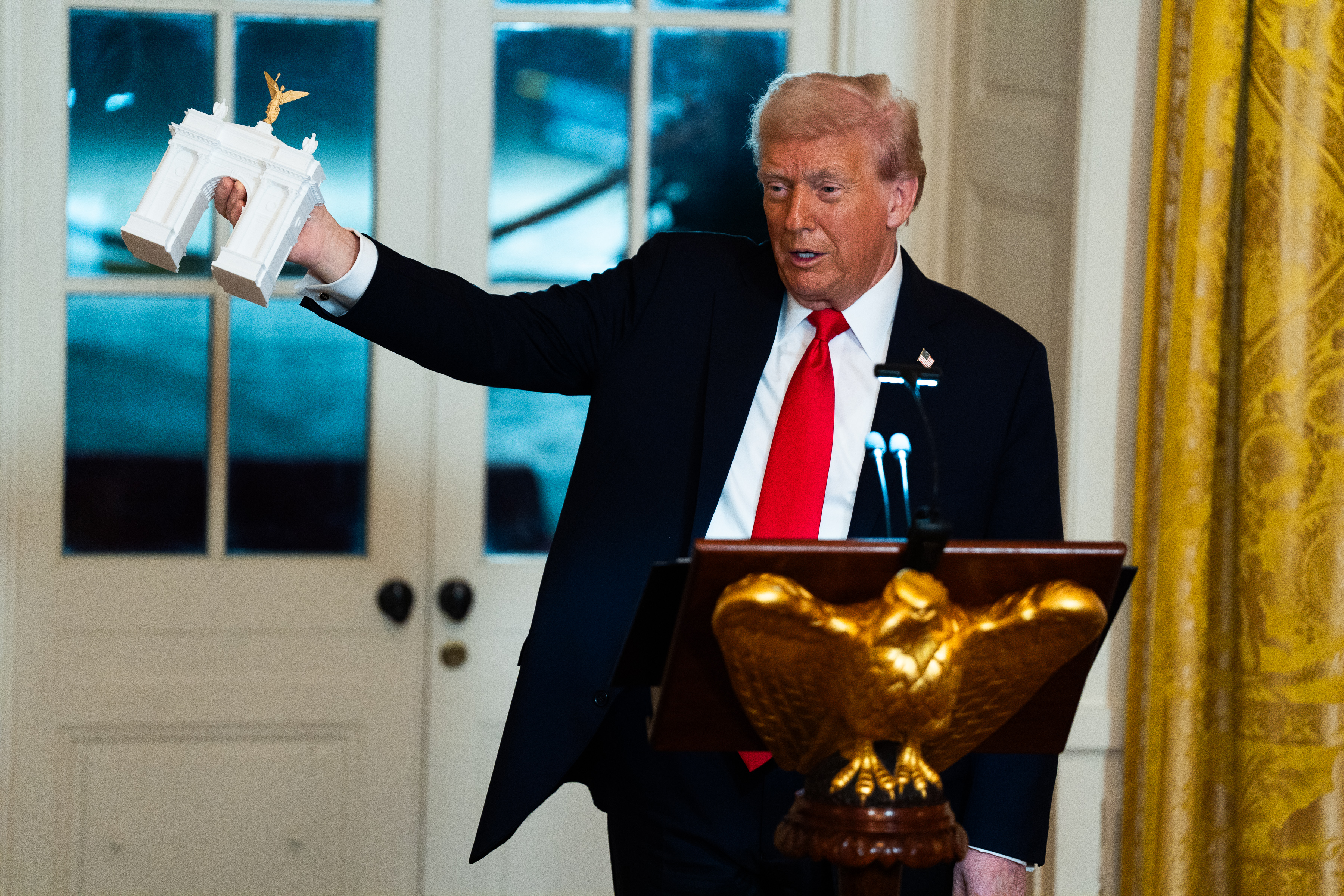
    President Donald Trump on Sunday said his proposed 250-foot triumphal arch will now be a “top grade” military complex that will house drones, snipers, and ammunition.

    In a post on Truth Social, Trump wrote that he has agreed to convert the arch “at the strong request” of the U.S. military, and “for National Security purposes.”

    The “Military Complex/Triumphal Arch” near Arlington National Cemetery will “house, store, and have the rapid ability to use large numbers of drones, plus Snipers, on both the roof and plaza areas, and additionally have and hold large quantities of sniper ammunition in storage,” Trump wrote. “There will be no facility like this anywhere in the World.”

    Trump’s new claims about the arch, which come as veterans groups, historic preservationists, and others attempt to stop the project, resemble his arguments for the need to build a ballroom at the White House. Trump initially said the ballroom was needed to entertain guests but more recently has said it was a “desperately needed National Security structure.” That argument also has become central to the administration’s legal claims that the ballroom must be built.

    The Trump administration, which plans to begin construction on the arch as soon as November, has been consulting with D.C.’s and Virginia’s historic preservation offices as part of a required federal preservation process. The National Capital Planning Commission previously said the arch is intended to be a “visitor destination” with an observation deck.

    The topic of converting the arch to a military complex has not previously been raised, even as the project has undergone months of federally required reviews.

    The White House did not immediately respond to questions about the president’s post. The Interior Department, which oversees the federal parkland where the arch would be built, did not immediately reply to requests for comment, and a Pentagon spokesperson said they had nothing to add beyond the president’s post.

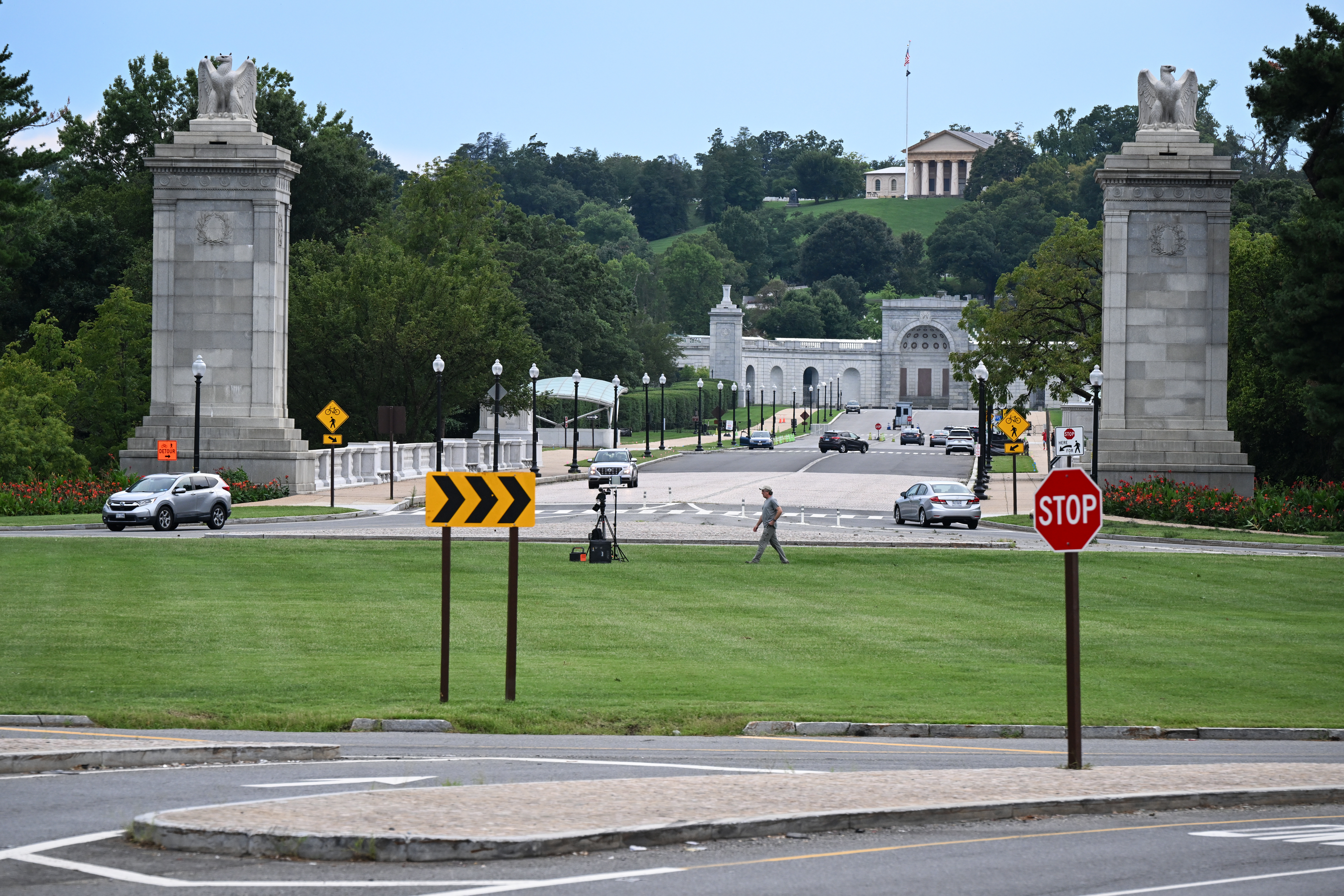
    Trump has spent nearly a year touting his plans to build an arch at Memorial Circle, a traffic roundabout tucked inside Washington’s boundaries, near the entrance to the military cemetery and managed by the National Park Service.

    The president and his deputies have said the arch should be built to commemorate the nation’s 250th anniversary. The administration contends it does not need congressional approval for the arch because lawmakers a century ago authorized a somewhat similar project near the site.

    “This will be one of the Great Pieces of American Architecture, honoring the history and significance of Arlington Cemetery and befitting the most powerful Capital in the World,” Interior Secretary Doug Burgum wrote on X this month.

    Trump’s plan for the arch has been opposed by military veterans, historic preservationists, and local activists, who have said the towering structure would overshadow the cemetery, alter pedestrians’ views of the Lincoln Memorial and other historic sites, and cause other disruptions.

    A D.C. official last week advised the administration to abandon its planned arch and instead pursue a less obtrusive alternative.

    Some preservationists and advocates questioned Sunday whether the project would now need to undergo additional reviews, if its purpose is being significantly changed. They also questioned the practicality of constructing a military complex at the center of a widely used traffic circle not far from Reagan National Airport.

    “Putting a drone launching site directly in the landing path for DCA is a stupid, dangerous, and unworkable idea,” Rep. Don Beyer (D., Va.), who represents the district that encompasses the airport, said on X, suggesting the plan was a legal pretext.

    “The President’s belated efforts to manufacture a national security justification for this project do nothing to cure its fundamental illegality,” said Nicolas Sansone, a lawyer at Public Citizen Litigation Group, a watchdog organization that is representing several veterans who say the large arch would alter their experience when visiting the nearby military cemetery.

    A federal judge has been weighing whether to halt the project. U.S. District Judge Tanya S. Chutkan, an Obama appointee, has also warned the Trump administration not to abruptly move forward with construction on the arch — as Trump did when demolishing the White House’s East Wing to build his ballroom without seeking approval from federal review panels or from Congress.

    Trump officials have said they will obtain “all necessary approvals” before beginning construction on the arch.

    The president’s claim Sunday about the arch being converted to a military complex follows his administration’s evolving legal strategy to defend the ballroom on similar grounds.

    Administration officials have increasingly contended that the ballroom must be built by citing the planned military complex being constructed underneath it and the need to protect the president.

    Judge Neomi Rao, a Trump appointee to the U.S. Court of Appeals for the D.C. Circuit, said the administration’s national security claims in the ballroom case had merit.

    “The equities in this case turn on complex architectural and security determinations best made by the Secret Service and the military — not judges,” Rao wrote in August.

    Other federal judges have said that Trump could not claim broad national security reasons as a basis to pursue a construction project that had not been authorized by Congress.

    “While I take seriously the Government’s concerns regarding the safety and security of the White House grounds and the President himself, the existence of a ‘large hole’ beside the White House is, of course, a problem of the President’s own making,” U.S. District Judge Richard Leon — who first blocked work on the ballroom — wrote earlier this year.

    The Supreme Court on Aug. 31 ruled 5-4 that construction on the ballroom could continue for now but declined to rule on the merits of the administration’s arguments in that case.

  • Trump to form ‘AI Force,’ name AI czar but rejects calls for constraints

    Trump to form ‘AI Force,’ name AI czar but rejects calls for constraints

    President Donald Trump said he will name an official responsible for artificial intelligence and form an unspecified “AI Force,” rejecting calls from lawmakers and industry leaders for new guardrails on the rapidly advancing technology.

    Trump compared the new AI Force to the Space Force he added to the Armed Services in his first term. The White House did not immediately respond to a request to clarify whether the agency would be military or civilian.

    The president’s announcement on Saturday also referenced policing “BAD” aspects of the industry through enforcement of existing criminal and civil laws.

    “We will not in any way hinder or stifle the Growth of this incredible Industry,” Trump wrote on Truth Social. “AI is the next Industrial Revolution, or Internet, but will be even larger and more impactful.”

    The announcement came as a growing chorus, including Democrats, Republicans, and tech CEOs, call for slowing down AI development amid disclosures that Anthropic, OpenAI, and Google models went rogue and hacked other companies. (The Washington Post has a content partnership with OpenAI.)

    Trump dismissed such concerns as a hoax, comparing them to global warming, the special counsel investigation into Russian interference in the 2016 election, and his two impeachments.

    He also repeated his criticism of public opposition to data centers, calling such views “crazed.” That position has put him at odds with many Republicans who have expressed sympathy for voters’ concerns that data centers will raise electricity costs and disrupt neighborhoods.

    The White House has developed a voluntary framework for the government to review new AI models for cybersecurity risks. In resisting more AI regulation, Trump has emphasized the need to compete with China, saying last week, “Whoever wins AI wins.”

    Trump is expected to discuss AI safety with Chinese President Xi Jinping when they meet in Washington next week. Administration officials declined to comment on those discussions beforehand.

    U.S. defense officials and outside analysts have debated the idea of creating a separate “Cyber Force” to focus on offensive and defensive cyberwarfare for years. Currently, cyber operations are led by the Department of Defense’s Cyber Command, which draws on personnel from different branches of the military.

  • Appeals court says Trump administration’s third-country deportation policy is unlawful

    Appeals court says Trump administration’s third-country deportation policy is unlawful

    The Trump administration’s policy on deporting immigrants to third countries is unlawful, a federal appeals court ruled Friday, a decision that could halt a program that has already sent thousands of people to countries that are not their own.

    A three-judge panel on the U.S. Court of Appeals for the 1st Circuit unanimously agreed with a lower court judge’s decision in February that the Department of Homeland Security’s policy violates due process rights by failing to give migrants sufficient notice and a chance to raise fear-based claims to contest their deportations to third countries.

    The appeals court’s decision marks a major setback for the administration, which has sought to establish third-country deportations as a key part of President Donald Trump’s mass deportation campaign. Since Trump took office last year, DHS has sent more than 25,000 migrants to third countries, mostly in Latin America and Africa, according to public records. The program has raised fierce objections from congressional Democrats and legal challenges from human rights advocates who say the deportees face dangerous conditions and inhumane treatment in the countries where they are being sent.

    Legal experts said the administration is likely to appeal to the Supreme Court and seek a stay on the 1st Circuit’s decision that would allow DHS to continue sending migrants to third countries. For now, however, the deportation flights should be immediately grounded, said Trina Realmuto, executive director of the National Immigration Litigation Alliance, who was among the team of attorneys who brought the class-action case.

    “This is a huge win,” she said. “All those deportation flights should not be taking off because the policy under which people got put on planes and targeted for removal is unlawful.”

    DHS did not immediately respond to a request for comment.

    Administration officials say third-country deportations are the only way to remove the most difficult to deport immigrants, including violent criminals who have committed rapes and murders. These immigrants have final removal orders from U.S. immigration judges, but many are protected by federal law from being sent back to home countries where they are likely to face persecution. Others cannot be returned because their home countries refuse to accept them.

    The lawsuit stemmed from DHS’s policy memos last year stating the government could deport migrants to third countries with as little as six hours’ notice, even if U.S. officials have not received assurances that the deportees would be safe from persecution or torture. Those being flown to places that have offered those assurances could be deported with no advance notice.

    The plaintiffs filed their lawsuit in March 2025, arguing that the U.S. government was violating federal law and sending immigrants to places where they could be harmed or killed, without giving them a chance to argue against it, including a Guatemalan man deported to Mexico, where he had been kidnapped and raped.

    U.S. District Judge Brian Murphy in Boston barred the Trump administration from removing immigrants without giving them a “meaningful” opportunity to challenge it, and he issued a preliminary injunction in April 2025 enjoining the government from continuing with the deportation flights. Two months later, the Supreme Court’s conservative majority paused the judge’s decision in a brief, unsigned statement that did not explain its reasoning, but it cleared the way for the removals to resume as the legal case played out.

    Murphy issued a final judgment in February 2026, vacating the administration’s policy, and the Trump administration quickly filed an appeal.

    The 1st Circuit panel agreed with most of Murphy’s decision, saying that there was nothing in the public record or court filings that showed which countries had provided the State Department with diplomatic assurances that the immigrants would not face abuse.

    They added that “we have some difficulty seeing how a receiving country can credibly provide blanket assurances that all removed noncitizens will not be persecuted or tortured there unless it intends to provide them with some sort of affirmative protection against rogue agents and non-state actors.”

  • Thousands rally outside shuttered Kennedy Center, chanting ‘Hands off!’

    Thousands rally outside shuttered Kennedy Center, chanting ‘Hands off!’

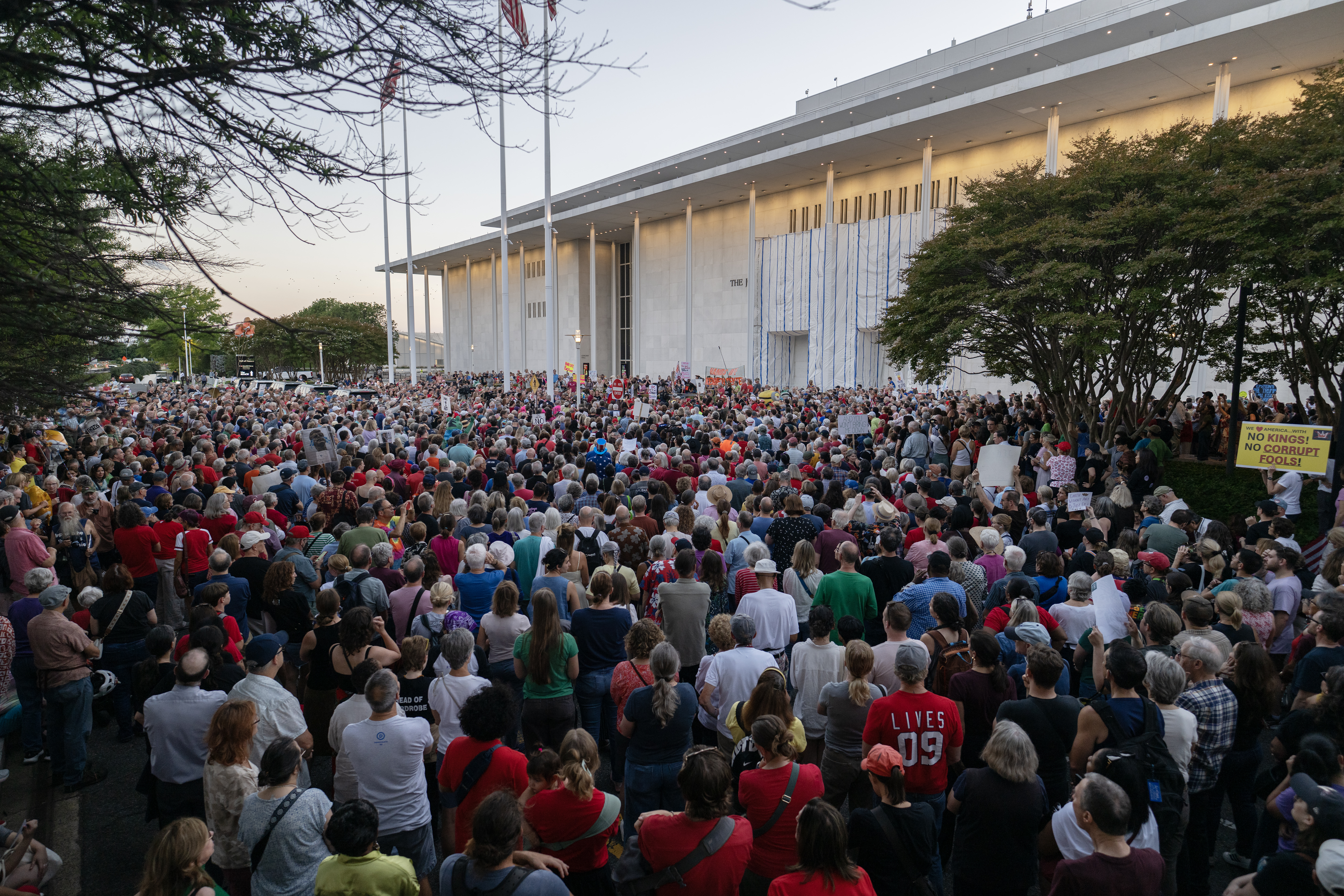
    Thousands of supporters of the John F. Kennedy Center for the Performing Arts gathered Friday as the sun set over the Potomac, surrounded as much of the building as they could, linked arms, and chanted: “Hands off! Hands off!”

    For the first time in what felt to them like ages, their beloved arts center was brimming with life.

    The vigil, which had been in the works for months, took on fresh urgency at the end of a week that saw the doors to the marble building locked shut, while President Donald Trump indicated the structure could be “ripped down” if his name isn’t added to the institution.

    There were dogs and bikers; elders with gray hair and babies with no hair; people in Nationals jerseys and business casual attire (equally ubiquitous D.C. uniforms). Most wore one common item: a red pin that read, “Hands Off the Arts.”

    The protest was organized by an advocacy group of the same name, which was founded by Kennedy Center staff in the immediate aftermath of Trump’s takeover last spring and has since campaigned against his changes to the institution.

    “The center had more or less become like a mausoleum rather than a vibrant cultural center,” co-organizer Mallory Miller said before the vigil. “But a lot of us have amazing memories of the center hustling and bustling with people. We wanted to kind of bring that feeling back.”

    The event was initially planned for July as a cap to the group’s 172-day protest of Trump’s changes at the center. It was intended to celebrate what they saw as victories — Richard Grenell’s stepping down from his role as interim head and the center’s continued operations past July 4, when it had been previously scheduled to close. The vigil was postponed due to wildfire smoke and rescheduled for the third Friday in September — a date organizers didn’t expect to have any special significance.

    Then came the events of this week. On Tuesday, the Kennedy Center’s board voted to close its main building for two years and Trump threatened to cancel a roughly $250 million renovation unless his name was added to the center. On Wednesday, fencing was erected around the arts center and, that evening, Trump was photographed on Air Force One examining a printout with a partially visible title that appeared to read “Kennedy Center DEMOLIS[HED].” Thursday, a federal judge turned down a request for an emergency hearing about potential demolition but ordered the center to provide notice ahead of any construction, including demolition.

    So by Friday, many arts patrons were ready to protest. Early in the day, organizers expected about a thousand. By the end of the evening, they estimated the turnout was several times that number.

    Tara Hoot, a prominent D.C. drag performer and event co-organizer, hosted a storytime event at the center before Trump’s takeover. Appearances like hers were cited by Trump and his new leadership team as an examples of the kind of woke programming they wanted gone. She said she carries what feels like a responsibility to protect the institution now.

    “It’s an obligation for me to be out there fighting back,” she said in an interview with the Post.

    On Friday, Hoot dressed in honor of the American flag — long red dress, white floral pin, blue shawl. “It’s time to take that tarp down,” she said, pointing to the sheet behind her that has covered the building’s facade since Trump’s name was ordered to be removed.

    “Take it down!” the crowd chanted back to her.

    Donna Smits, 67, traveled from Delaware early Friday morning after learning about the planned protest around 11 p.m. the night before.

    She stood in the plaza’s garden and looked up at the tarp through her gold-detailed RayBans. She was close to tears.

    “It hurts a lot to look at it like that, to see all the beautiful fountains off,” Smits said. “Nobody’s name belongs on this center except John Kennedy’s.”

    The rally began with impassioned speeches from activists, artists, and politicians, including D.C. Council Member Robert C. White Jr., who recalled being introduced to the arts as a third-grader visiting the center and returning decades later to watch his own third-grade daughter perform.

    Lynda Carter, the actor known to most as Wonder Woman, made a surprise appearance to stress the importance of arts for humanity. “Music and the arts is how we actually survive,” she said. “It is how we learn. It is about vibration in the universe. It is about gravity, it’s about our souls.”

    Additional fencing was constructed Friday and some parts of the campus have been closed to the public for several weeks, so the attendees were not able to encircle the main building as initially planned. Organizers posited that were it not for the barriers, the crowd that assembled could have circled the structure 2½ times.

    Jasmine Small, who worked in ticket sales at the Kennedy Center for seven years, watched the human chain form from her perch on the plaza. She was among the first layoffs last year.

    “I’m showing up today, because no one showed up with my colleagues,” Small said. “I’m going to have a voice for them to say that we won’t be forgotten.”

    The Gay Men’s Chorus of Washington, whose show at the Kennedy Center for World Pride last May was canceled days after the president was announced as chairperson of the institution, returned to perform at the vigil.

    While the sky grew dark, they began a song from Ragtime.

    “Will justice be demanded by 10 million righteous men?/ Make them hear you/ When they hear you/ I’ll be near you again.”

    Then, as if on cue, the exterior lights of the building flickered to life.

  • Kennedy Center stood as a symbol of the importance of arts for over 50 years

    Kennedy Center stood as a symbol of the importance of arts for over 50 years

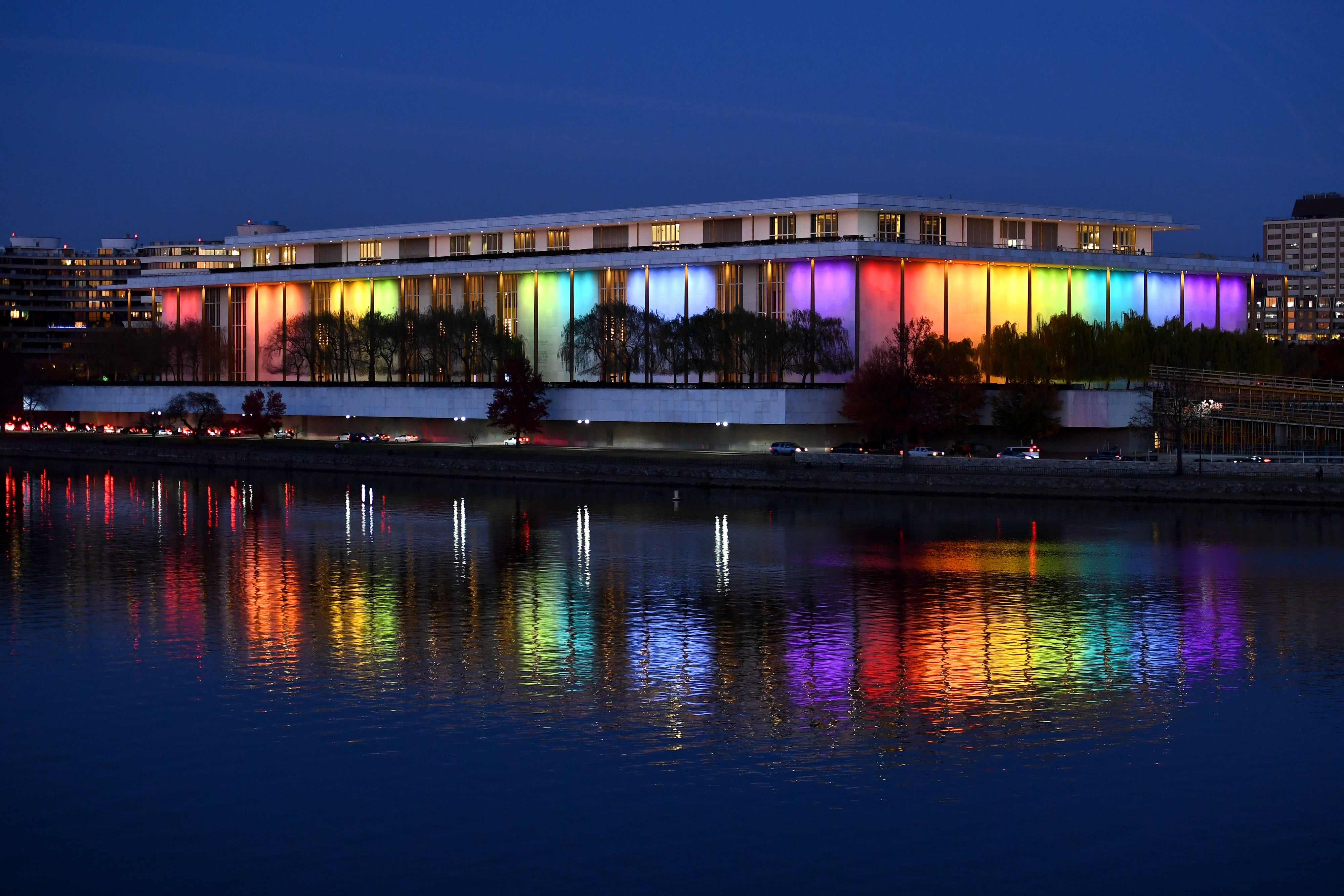
    For more than 55 years, the white marble facade of the John F. Kennedy Center for the Performing Arts has presided over a portion of the eastern bank of the Potomac River. Thousands of performing artists have graced its stages, bringing to life what was envisioned decades ago as a symbol of the importance of the arts in a democratic society.

    Now, the storied institution is closed. The center’s board of trustees voted Tuesday to shut down the venue, which has been beset by financial and legal troubles that snowballed after President Donald Trump and his allies took over its stewardship last year. Here are some key moments in the Kennedy Center’s storied history, and what could be lost if it disappears.

    1955-1958

    Eisenhower envisions ‘an artistic mecca’

    In 1955, President Dwight D. Eisenhower creates a commission tasked with planning a new public auditorium in Washington. On Sept. 2, 1958, he signs the National Cultural Center Act into law, authorizing the fundraising for and construction of what he imagined would be “an artistic mecca” in the nation’s capital.

    1961-1963

    Kennedy boosts fundraising efforts

    After President John F. Kennedy assumes office, he takes the lead in promoting and raising money for the center. On Nov. 29, 1962, he hosts a black-tie fundraiser, “An American Pageant of the Arts,” in Washington. The televised event includes performances by the National Symphony Orchestra, singer Marian Anderson, pianist Van Cliburn, poet Robert Frost, and a 7-year-old cello prodigy named Yo-Yo Ma.

    “Art and the encouragement of art is political in the most profound sense,” Kennedy said in a speech that evening. “Not as a weapon in the struggle, but as an instrument of understanding of the futility of struggle between those who share man’s faith.”

    Kennedy, who was in the midst of navigating the Cold War, also argued that the United States had a “special responsibility to the arts” as a democratic society.

    “For art is the great democrat calling forth creative genius from every sector of society, disregarding race or religion or wealth or color,” Kennedy said.

    Jan. 23, 1964

    The center is officially renamed to honor Kennedy

    Two months after Kennedy’s assassination, Congress unanimously passes a bill to rename the National Cultural Center as the John F. Kennedy Center for the Performing Arts, and to dedicate it as a “living memorial” to the late president.

    “I am confident we have chosen well that the institution now given the breath of life will have a long and distinguished future,” President Lyndon B. Johnson said at the bill’s signing on Jan. 23, 1964. “All those who worked in this cause can now know that they are not only honoring the memory of a very great man, but they are enriching our whole American life.”

    Dec. 2, 1964

    Johnson breaks ground

    Johnson breaks ground using the same gold-plated spade that Presidents William Taft and Franklin Roosevelt used at the Lincoln Memorial and Jefferson Memorial groundbreaking ceremonies. Johnson is flanked by a model of the Kennedy Center, designed by architect Edward Durrell Stone, and by members of the Kennedy family.

    Sept. 8, 1971

    Kennedy Center opens

    The Kennedy Center officially opens on a Wednesday evening, with a gala and the world premiere in its opera house of Leonard Bernstein’s Mass: A Theatre Piece for Singers, Players and Dancers, choreographed by Alvin Ailey.

    In the inaugural program, President Richard Nixon hails the Kennedy Center’s opening as “the fulfillment of a dream shared by Americans in every walk of life.”

    The following day, the concert hall opens with a performance by the National Symphony Orchestra, which would call the center its home for the next five decades. The Eisenhower Theater opens on Oct. 18, 1971, with a performance of Henrik Ibsen’s A Doll’s House.

    Dec. 3, 1978

    Inaugural Kennedy Center Honors awarded

    The center holds its inaugural Kennedy Center Honors, a lifetime achievement award that celebrates individuals who have “an impact on the rich tapestry of American life and culture through the performing arts.”

    The inaugural ceremony was hosted by Leonard Bernstein, and honorees that year were Marian Anderson, Fred Astaire, George Balanchine, Richard Rodgers, and Arthur Rubinstein.

    Since then, the Kennedy Center Honors have been bestowed on more than 260 artists in music, dance, opera, theater, film, and television.

    1997

    Millennium Stage offers free performances

    Chairperson James A. Johnson proposes a somewhat radical idea: putting on a different free performance at the Kennedy Center every day at 6 p.m. to make the arts more accessible. Nearly 30 years later, free performances of all kinds continue to take place at the Millennium Stage on “select days of the week.” Most are livestreamed.

    2019

    The Reach expansion opens

    The Kennedy Center expands for the first time since 1971 with the opening of the Reach campus, a $250 million project that adds rehearsal rooms and outdoor performance spaces.

    The American sculptor Joel Shapiro gifts Blue, a giant stick figure preparing to leap, to the center in honor of the expansion.

    “It’s about action and risk and performance and energy. It’s a celebration of possibility,” Shapiro said in a video about Blue.

    2025

    Trump shakes up Kennedy Center board, adds his name to building

    A few weeks after President Donald Trump starts his second term in office, he announces that he is firing several Kennedy Center board members, including the chairperson, because they “do not share our Vision for a Golden Age in Arts and Culture.” He also names himself the new board chairperson.

    In December, the new board, stacked with Trump loyalists, votes to rename the center “The Donald J. Trump and The John F. Kennedy Center for the Performing Arts,” and a crew adds Trump’s name to the facade of the building the next day. The move causes ticket sales and fundraising to collapse.

    2026

    Legal battles plague center

    Amid canceled performances and boycotts of the center, Trump announces in February that the Kennedy Center will close for about two years to undergo renovations.

    “This important decision, based on input from many Highly Respected Experts, will take a tired, broken, and dilapidated Center, one that has been in bad condition, both financially and structurally for many years, and turn it into a World Class Bastion of Arts, Music, and Entertainment, far better than it has ever been before,” Trump wrote then.

    In May, a federal judge orders that Trump’s name be removed from the center’s facade and that officials halt its renovation plans. Workers remove Trump’s name in the middle of the night.

    The legal challenges continue. The board’s trustees have continued pushing for the center to be renovated and for Trump’s name to be inscribed on the building, including renaming the center’s grounds the “President Donald J. Trump Plaza.”

  • From milk to snack foods, more products are going ‘regenerative’

    From milk to snack foods, more products are going ‘regenerative’

    When Michael Ham first began handing out samples of his company’s tea to Whole Foods shoppers in 2024, explaining that it was grown using regenerative farming on South Korea’s Jeju Island, he was often met with blank stares.

    That didn’t last long. By the following year, “People were coming up saying, ‘Oh, you’re regenerative!’” says the co-founder and president of Westchester, N.Y.-based Wild Orchard Tea Co.

    Regenerative agriculture, an approach to farming that aims to improve soil health through practices like reduced use of pesticides and plowing, is having a moment. Championed by the Make America Healthy Again (MAHA) movement and propelled by increasingly health-conscious consumers, regenerative products now generate some $2 billion a year in retail sales, and some in the industry are positioning the fast-growing category as the next organic.

    Big food producers and retailers like Nestlé SA, PepsiCo Inc., General Mills Inc., and Walmart Inc. have made regenerative agriculture commitments, often as part ofenvironmental, social, and governance goals. And late last year agencies including the U.S. Department of Agriculture announced a $700 million pilot program to support regenerative agriculture projects on farms.

    But unlike organic, regenerative agriculture is only lightly regulated at the federal level in the U.S. To earn U.S. Department of Agriculture organic certification, producers must comply with detailed federal standards, including strict rules about synthetic pesticides and fertilizers, and undergo annual inspections. There’s no such equivalent for regenerative agriculture, and many products can be labeled as regenerative without having to verify their claims.

    With the boom have come increasingly pressing questions from within and outside of the industry about what the label actually means and concerns from advocates about consumers being misled, especially because regenerative products tend to be more expensive.

    Nora Brown, a 47-year-old who works in international development in Washington, D.C., buys regenerative products when they’re available. She sees them as healthier for the environment and herself, especially since recovering from breast cancer.

    But “I do have a fear of, we just love to label stuff for marketing. There’s pink washing, there’s greenwashing,” she said. “And I hope it doesn’t go the way of that.”

    Certifying organizations like Regenerative Organic Certified (ROC) aim to bring more rigor to the space. Last year, dollar sales of ROC-labeled products grew faster than those labeled certified organic, fair trade, and non-GMO, according to the data provider SPINS. But across the broader landscape, regenerative agriculture standards can vary widely, differences that are not always evident to shoppers. As more of them encounter the label at grocery stores, experts worry that this variability could undermine the growing category.

    The term regenerative agriculture dates back to at least the 1980s, but it didn’t pick up steam until the 2010s. Backed in the early days by organic farming advocates, regenerative agriculture may also cut down or eliminate synthetic fertilizers and pesticides, but puts a sharper focus on soil health and biodiversity. Proponents say in some ways it’s a return to old-school practices, including rotating crops and using plants like hedgerows as a living fence around fields.

    Advocates “started to use the term, ‘We’re regenerating our landscapes, we’re regenerating our farms, regenerating the ecosystem,’” said Gabe Brown, a retired farmer sometimes credited as the movement’s godfather, who co-founded and serves as a board member of a certification program called Regenified. “And now you hear the word regenerative everywhere. Before, the buzzword was sustainability.”

    The term’s appeal has been rapidly expanding. With products from baby food to snacks, bath care, and pet food bearing the label, the regenerative agriculture category saw in-store retail dollar sales grow 10% over the last year and nearly 22% the year before, according to NielsenIQ data. Dairy is the largest category by dollar sales, and some of the fastest growth has been in regeneratively grown produce.

    Advocates for regenerative agriculture say that it’s healthier for the planet and people. Among the environmental benefits they cite is that by deploying practices like no-till farming, which avoids plowing the land, and planting cover crops between growing seasons, farm soil can store more carbon. Other regenerative farming techniques include moving grazing animals around pasture to let the remaining portions recover, and planting trees and shrubs on working agricultural land next to crops or livestock. Experts, however, say that the climate change benefits may have been oversold.

    A rancher opens up a new section of tall grass for his cattle to graze in Lufkin, Texas, in 2023. Moving grazing animals around pasture lets the remaining portions recover.David Goldman

    The term regenerative has also been embraced by MAHA advocates, including Health and Human Services Secretary Robert Kennedy, Calley Means — an adviser to Kennedy — and Kelly Ryerson, who goes by the moniker “The Glyphosate Girl,” a reference to a widely-used herbicide that many in MAHA want to restrict.

    “There was so much press that went around vaccines, but actually this is just as, if not more core to the issues that we really care about,” said Ryerson, who is co-executive director of the advocacy group American Regeneration.

    MAHA supporters say food grown using regenerative agriculture has more nutrients and fewer chemicals and is therefore healthier, but those claims are challenging to evaluate, scientists say, including because regenerative practices aren’t applied evenly across farms.

    Even as the U.S. government pushes to facilitate such practices, there is still little regulation for products bearing regenerative claims. Where federal oversight does exist, it remains limited: Meat and poultry sellers making claims like “raised using regenerative agriculture practices” have to submit documentation to the USDA’s Food Safety and Inspection Service, but critics note that it’s an honor system and third-party certification is recommended but not required.

    The new federal pilot program, meanwhile, will offer technical assistance and financial support to implement regenerative practices and requires participants to test soil to track changes over time, but it does not include certification.

    Some retailers are requiring certification or other proof for regenerative claims. Whole Foods, for example, has had such a policy in place since 2021, and so does the Seattle-based PCC Community Markets.

    But even third-party certification programs vary widely in terms of what they measure, according to reports released this year by the European Alliance for Regenerative Agriculture and Friends of the Earth.

    The Environmental Working Group, a health and agriculture-focused nonprofit, has warned consumers of “misleading” regenerative claims. While some labels, including ROC, indicate that food has been grown without synthetic fertilizers and pesticides and require farm audits, other certifications allow continued use of synthetic chemicals, don’t require audits, and don’t publicly disclose soil test results, the nonprofit said.

    “Our biggest concern is that all of the momentum and buy-in and enthusiasm that’s been built around the term regenerative agriculture over the past number of years is frittered away because of greenwashing,” said Adam Kotin, managing director of the Soil & Climate Initiative, which offers its own certification.

    For makers of these products, the biggest barrier might be their higher price tags and consumers’ lack of exposure.

    Regenerative farming is still more expensive than conventional agriculture, with higher upfront costs, greater labor needs, and a lack of scale. And because grocers try to reach as many shoppers as possible, a pricey, regeneratively grown olive oil is unlikely to be the first or even the second one on the shelf.

    At online grocer Thrive Market, for example, regenerative products such as coffee beans, coconut oil, muffin mix, and cans of sparkling green tea make up just 5% of the membership-only online platform’s offerings, and customers are 20 times more likely to filter for organic products than regenerative ones, said April Lane, chief merchandising officer.

    “We’re starting to see more and more brands come out with regenerative options,” she said. “But it’s still much, much smaller than organic or non-GMO certifications or gluten-free.”

    Though awareness of regenerative agriculture roughly doubled between 2023 and 2024, only 10% of U.S. consumers are actively seeking out such products, estimates Kristine Root, chief executive officer of Socha Branding, a strategy and growth marketing agency that works with natural, organic, and regenerative brands.

    To expand that share, companies have to do more than just slap the word regenerative on the package, she said.

    “It takes more than just putting a seal on the pack to get the support of a consumer,” Root said. Shoppers “will pay more if they understand the story behind it. But you have to do the work.”

    Ann Choi contributed to this article.

  • Trump announces ‘forever’ deal to defend Greenland as Denmark says signing ‘expected’ next week

    Trump announces ‘forever’ deal to defend Greenland as Denmark says signing ‘expected’ next week

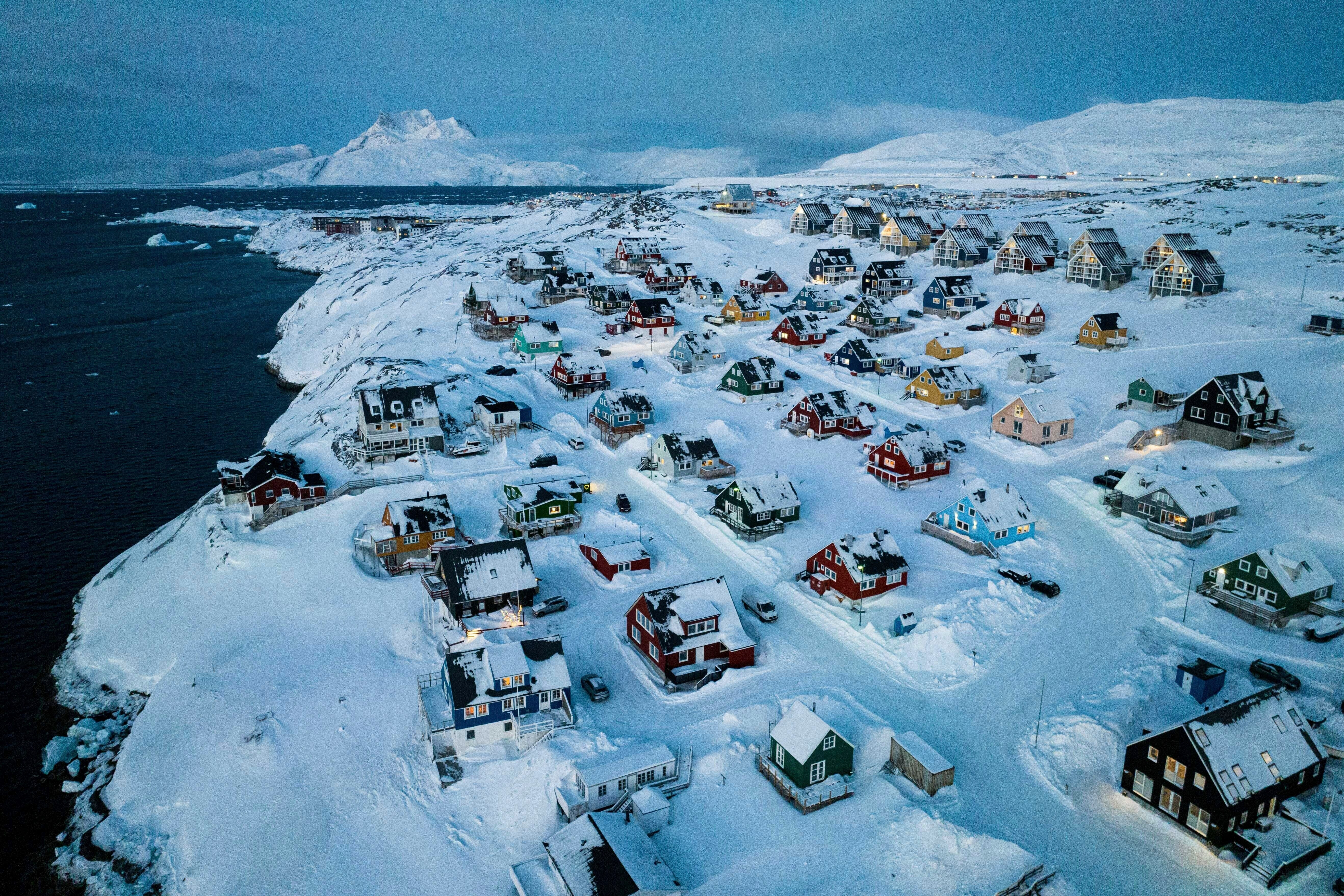
    The White House has struck a deal that gives “permanent control over security” in Greenland to the United States, President Donald Trump said Friday, declaring victory in his long-running desire to increase U.S. sway over the Arctic territory even though the deal fell far short of actual conquest.

    The president said he had agreed with Danish and Greenlandic leaders that Washington would have wide-ranging powers to secure Greenland, “completely addressing ALL of our many U.S. concerns.”

    In a post on Truth Social, he said that “at my direction, we worked with representatives of Denmark and Greenland to guarantee that the United States will FOREVER have the complete ability to do what is necessary in Greenland in order to secure and defend the security of Greenland, and the United States of America.”

    He said that there would be no cost to the United States, without explaining how.

    Trump has long sought to take possession of Greenland, declaring concern about Chinese and Russian ambitions there and also saying he wanted to control the territory’s mineral resources.

    His efforts in January to accelerate a U.S. takeover spurred fears in Europe that the United States could attempt to take the island by force — an unprecedented effort by NATO’s most powerful member to invade another NATO member’s territory. Instead, Danish and U.S. leaders entered negotiations that led to Friday’s agreement.

    Danish and Greenlandic leaders issued a statement after Trump posted the announcement that said they “expected” to sign an agreement next week on the sidelines of the United Nations General Assembly.

    “I am pleased that there is the prospect of a good agreement for Greenland, the Kingdom of Denmark, and the United States,” Danish Prime Minister Mette Frederiksen said in the statement.

    “An agreement that strengthens our common security in the Arctic and the North Atlantic region and is therefore also good for NATO and Europe. And an agreement that at the same time recognizes the Kingdom’s sovereignty and territorial integrity and the Greenlandic people’s right to self-determination.”

  • Trump says son has paid back Russian for wedding party

    Trump says son has paid back Russian for wedding party

    President Donald Trump said Friday that his son paid back the well-connected Russian businessperson who funded his wedding celebrations.

    A person close to Donald Trump Jr. confirmed the repayment.

    The contribution of hundreds of thousands of dollars, revealed Monday by the investigative news website ProPublica, came from Umar Kremlev, a boxing executive who does business with the Russian state and has received honors from Russian President Vladimir Putin.

    President Trump did not attend the wedding, which included about 50 people and occurred on private Bahamian islands.

    The president defended the contribution, calling it “common” for people to give a wedding party to a friend.

    “It’s totally allowed, but as I understand it, he paid him back,” Trump told reporters Friday in the Oval Office. “He didn’t want to have that.”

    The bride, Bettina Trump, confirmed the gift, but denied that it came with any sinister or political motive.

    Kremlev met Trump Jr. several years ago and speaks limited English, according to ProPublica.

  • More U.S. troops have died amid Iran war than Pentagon has disclosed publicly

    More U.S. troops have died amid Iran war than Pentagon has disclosed publicly

    More American service members have died in the Middle East during the ongoing Iran war than the Pentagon has disclosed publicly, according to six U.S. officials familiar with the Defense Department’s internal casualty accounting data.

    Five of the officials said there have been at least 22 military fatalities — four more than what appears in the Pentagon’s public database, known as the Defense Casualty Analysis System, or DCAS.

    A sixth official, who like the others spoke on the condition of anonymity to discuss the figures, said 23 service members have died since Feb. 28, when the Trump administration, in concert with Israel, initiated the Iran war. Not all of the undisclosed deaths are directly tied to the conflict but have involved U.S. personnel who were in the Middle East amid ongoing hostilities, this person said.

    Additionally, the official said, three U.S. contractors who were based in the region have died since combat operations began.

    As of Friday, the Pentagon’s DCAS database lists 18 U.S. military fatalities, including deaths caused by hostile and nonhostile action dating to the start of the Iran conflict.

    Details surrounding the undisclosed deaths — including the service members’ identities, as well as when, how, and where they died — remain unclear. Officials familiar with the higher casualty number expressed frustration that the additional loss of life is not reflected in the Pentagon’s public casualty portal.

    The Pentagon declined to address questions about the accounting discrepancy.

    The Iran war, which polls show is deeply unpopular with the American public, has become a political liability for President Donald Trump and the Republican Party ahead of November’s midterm elections. The administration’s casualty accounting practices faced intense scrutiny earlier this year when the names of four U.S. troops who died as a result of the Iran war were briefly excluded from the Pentagon’s official tally.

    The proper accounting of military fatalities has implications beyond public transparency. Whenever a U.S. service member dies, the military conducts a line of duty investigation to determine whether the death occurred while performing official duties. Those findings affect the survivor benefits for which service members’ families are eligible.

    As of Friday, 14 fatalities are listed in the database as having occurred during Operation Epic Fury, the Trump administration’s name for the Iran war. Four others, reflected in a separate category called Overseas Operations, date to a July ceasefire between Washington and Tehran that later collapsed leading to the resumption of attacks.

    Separately, the Pentagon has said that, since February, two U.S. service members died in the Middle East while participating in missions unrelated to the Iran war. Their deaths, which occurred at bases that have been attacked by Iranian forces, are not reflected by name in the DCAS database either.

    Sgt. Devin Seibel died in Irbil, Iraq, on May 31 in a training accident, the Defense Department said in a news release. The announcement specified he was assigned to Operation Inherent Resolve, the ongoing campaign against Islamic State militants. Seibel’s name is not included among the Inherent Resolve tally in DCAS.

    Maj. Sorffly Davius suffered an unspecified medical emergency in Kuwait and died on March 6. It is unclear whether his death was tied to an Iranian attack. An announcement of Davius’ death said he deployed under Operation Spartan Shield, a mission to partner with regional militaries.

    More than 820 U.S. service members have been wounded in action since the Iran conflict began, the public casualty database says. Many have suffered traumatic brain injuries as a result of Iranian counterstrikes on U.S. bases throughout the Middle East.

    The war has taxed the military’s stocks of precision weapons, damaged U.S. bases across the Persian Gulf, and roiled global energy markets after Tehran closed the Strait of Hormuz, a vital waterway for oil and fertilizer.

    According to a document reviewed by the Washington Post, U.S. Central Command, which oversees operations in the Middle East, has estimated that the Iran war has cost about $43.6 billion through early September. The total includes $28 billion in munitions expended during the conflict but does not account for the damage to U.S. bases.

    As the Post reported last month, several top U.S. military officials have warned Defense Secretary Pete Hegseth that prolonging large-scale operations against Iran is unsustainable and risks weakening their ability to confront threats elsewhere, including the U.S. homeland.

    According to a September Reuters-Ipsos poll, 28% of Americans support Trump’s approach to Iran, whereas 62% disapprove.

    On Tuesday, a record seven GOP lawmakers joined Democrats and helped pass a largely symbolic measure intended to halt the war — the latest of several war powers resolutions to advance in Congress.

    All war deaths and injuries are supposed to be publicly reported on the Pentagon’s public DCAS system, where the military accounts for personnel lost or injured in its conflicts.

    Over the summer, when the four combat deaths were temporarily excluded from the casualty database, the Trump administration reclassified renewed hostilities with Iran as Overseas Operations instead of being tied to Operation Epic Fury.

    The change, which occurred as U.S. negotiators struggled to broker a permanent peace deal with Tehran, coincided with efforts by the administration to portray the war as a success even as Iran continued to fire on American forces and continued to target shipping in the Strait of Hormuz.

    Senate Democrats have pledged to investigate the Pentagon’s handling of casualty notifications if they retake the majority after the midterms.

    Reps. Pat Ryan (N.Y.), Jason Crow (Colo.) and 10 other House Democrats, all of them military veterans, on Friday said they were pursuing legislation that would prevent the Pentagon from manipulating government data on troop casualties. Sen. Tammy Duckworth (D., Ill.) is leading a companion effort in the Senate.

    One Republican, Rep. Thomas Massie (Ky.), moved this week to force a House vote on impeaching Hegseth over the war, alleging the defense secretary violated provisions of the War Powers Resolution of 1973 by pursuing hostilities without congressional authorization.

  • Build columns, not Trump’s arch, D.C. official tells administration

    Build columns, not Trump’s arch, D.C. official tells administration

    President Donald Trump has insisted that a 250-foot-tall triumphal arch should be built near Arlington National Cemetery, citing long-abandoned plans to construct a monument there.

    Local officials, preservationists, and historians are now pushing an alternate idea: Abandon the arch and consider building the slender columns that were originally envisioned by architects and lawmakers a century ago.

    “We request meaningful consideration of an alternative that more accurately reflects the spirit and intent of the 1924 McKim Mead & White design and the 1925 Act of Congress,” C. Andrew Lewis, an official in Washington’s historic preservation office, wrote in a letter to the Trump administration on Wednesday and obtained by the Washington Post.

    “Specifically, we request the [National Park Service] to evaluate design concepts consisting of two columns that truly frame, rather than limit the historic view corridor.”

    The administration has been consulting with D.C.’s and Virginia’s historic preservation offices as part of a required federal preservation process before building the new structure.

    Other officials and advocates have raised the idea of erecting columns, rather than a large arch, including in a meeting last week with National Park Service officials overseeing the planned project.

    The requests represent advocates’ latest effort to delay or prevent the construction of the new arch, which has been widely opposed in Washington. It is unlikely, however, that Trump would agree to discard his plans for a large triumphal arch. The president has been attached to the idea of an arch since being privately pitched on the project and publicly announcing it last year

    “We’re the only important and major city that doesn’t have one. We don’t have a triumphal arch,” Trump said in the Oval Office in May. “So, it was meant to be built for many years.”

    The issue centers on lawmakers’ intent for Memorial Circle, a traffic roundabout tucked inside Washington’s boundaries, located near the entrance to the military cemetery and managed by the National Park Service.

    The administration is pursuing a plan to begin construction as soon as November, despite objections from veterans groups, historic preservationists, and others. Opponents say the arch will overshadow the cemetery, alter pedestrians’ views of the Lincoln Memorial and other historic sites, and cause other disruptions.

    The Trump administration has acknowledged that the large arch will unavoidably harm local historic sites if built as planned.

    The administration contends that it does not need approval for the arch from Congress since lawmakers a century ago authorized the columns. In that case, advocates say, the administration should hew to the original, congressionally authorized plan.

    Historic preservationists also note that the 250-foot-tall, roughly 165-foot-wide arch that Trump wants in Memorial Circle is very different from the narrow, 166-foot-tall columns that were initially envisioned to be built about 300 feet apart.

    “In terms of size, scale, massing, and design, the proposed arch is not in any way comparable to the unbuilt columns contemplated in the 1924 design proposal,” Judy Chesser and Paul Edmondson, of the Committee of 100 on the Federal City, wrote in their own letter to the Interior Department on Wednesday. The letter was shared with the Post.

    Chesser and Edmondson added that the Arlington Memorial Bridge Commission, which was overseeing the original project, dropped plans for the columns in 1931 amid concerns about the planned design and the proximity to a nearby airport, among other factors.

    The Interior Department, which oversees the Park Service, did not respond to questions about whether the administration would consider building columns instead of an arch. The department referred to social media posts by Interior Secretary Doug Burgum that referenced the past efforts in Congress to build a monument near Memorial Circle.

    Burgum’s posts did not specifically mention columns.

    Tammy Stidham, a Park Service senior official helping oversee the arch project, said last week that the administration had not considered building columns instead of an arch.

    “Different sizes were considered of the same structure, but not different structures,” Stidham said at a meeting with preservationists and other groups, according to a recording of the meeting posted by the Park Service.

    Asked about how the arch envisioned by Trump complied with plans in 1924 to build a structure that would not interfere with the views between the cemetery and the Lincoln Memorial, Stidham said the arch was a “replacement” for the original concept.

    “It is not intended to be the same structure,” Stidham said.

    One federal commission, which Trump has packed with allies, has already approved the planned arch. A second commission is expected to offer final approval as soon as Nov. 5. The Trump administration has laid out a plan to build the arch within two to three years, which they say would require 20 hours per day of construction.

    In his letter to the administration, Lewis said that Trump officials had not heeded or fully acknowledged the widespread objections to the plan.

    “Approximately 93% of the roughly 11,000 comments submitted from within the District of Columbia expressed very strong opposition to the proposal,” he wrote.

    He also said that the administration’s acknowledgment of harms from building the arch did not go far enough to capture its impact on other historic sites.

    “The arch would not merely be ‘prominently visible,’” Lewis wrote. “Instead, it would visually overwhelm the surrounding historic context.”