Category: Washington Post

  • Even medical professionals are skipping health insurance because of high prices

    Even medical professionals are skipping health insurance because of high prices

    BOISE, Idaho — Joshua and Ashley Durham run a family medicine practice, and for the first time in their lives, they have no health insurance for their own family.

    When the Durhams began their practice at the end of 2023 — he as a primary care physician and she as a pharmacist who handles billing — the couple bought coverage for themselves and their two children on the Affordable Care Act marketplace. But they said their monthly premiums for a similar health plan for this year rose several hundred dollars to nearly $1,600.

    They decided to pay out-of-pocket for their medical expenses instead, leaning on $50,000 they had set aside in a health savings account over several years.

    “It’s nerve-wracking,” said Joshua Durham, 47. “It just takes, you know, one little accident, and then you got a big fat bill.”

    A larger share of healthcare workers have health insurance than those in other fields. Nationwide, 7% of all healthcare workers were uninsured in 2024, compared with 11% of all adults under 65, according to a KFF analysis of the most recent American Community Survey data. And doctors were especially unlikely to forgo health insurance, with just 2% uninsured.

    But even healthcare workers are feeling the pinch as health insurance costs rise each year, and employers expect that costs will jump an additional 8.2% for 2027.

    The Republican-led Congress last year opted not to renew some Affordable Care Act marketplace credits, which were enacted during the COVID pandemic. Subsidies remain in place for people with low incomes. The pandemic-era credits helped reduce many consumers’ premium payments, especially those working in small businesses such as independent medical practices. Nearly half of marketplace enrollees worked for small businesses or were self-employed in 2024; some of the most common occupations included chiropractic care and dentistry.

    Jack Dillon, executive director of the Association for Independent Medicine, which represents 4,000 physician-led practices, said premium increases have become untenable for small businesses, whether employers seek coverage through the marketplace or directly from insurers.

    “The cost has become so astronomical,” Dillon said. “You’re looking at it and saying, ‘What’s the value?’”

    As health insurance continues to become less affordable, Dillon said, more healthcare employers may seek alternatives to their standard coverage, such as providing higher hourly wages or providing only minimal plans.

    The number of people without insurance in the United States is expected to increase by roughly 15 million over 10 years because of the expiration of the expanded ACA subsidies and $1.1 trillion in estimated cuts resulting from President Donald Trump’s signature One Big Beautiful Bill Act, according to the Congressional Budget Office.

    Healthier people are the most likely to opt out of insurance. That leaves insurance covering a smaller pool of people who tend to be sicker and need more expensive care. So insurers raise prices to cover the remaining enrollees, which fuels even higher premium costs.

    Samantha LeGault, a nurse practitioner for a behavioral health clinic in Boise, Idaho, says her medical insurance premium costs rose from $700 to $1,500 a month this year to cover her, her husband, and four of their kids. Hayat Norimine/KFF Health News

    ‘Healthcare is a business’

    Samantha LeGault, a nurse-practitioner at a health clinic in Boise, said her employer-offered plan’s premium payment rose from $700 to $1,500 a month this year to insure herself, her husband, and four of their children. LeGault has Crohn’s disease and two of their daughters also have medical conditions, so she said her family has no choice but to continue to pay for that health coverage.

    But she decided to skip dental insurance to save money, and she prioritizes dental visits for her children over herself.

    She had already struggled to set aside retirement savings and had switched her children from a private school they liked to public school to cut down on costs. Then the new health insurance costs tightened her budget even more. She estimated that about one-fifth of her income now goes toward her monthly premium payments.

    “I know how the clinics work, that I am an expensive patient,” LeGault said. “At the end of the day, healthcare is a business in the United States.”

    The Durhams have three other employees in their practice. Two of them receive health insurance through their spouses, Ashley Durham said. The Durhams said they pay $420 monthly toward the physician assistant’s premiums.

    As a primary care physician, Joshua Durham said he doesn’t need regular doctor visits because he can diagnose and treat himself — and, if needed, the rest of his family, though he acknowledged that’s frowned upon. The American Medical Association’s code of ethics generally discourages doctors from treating themselves or relatives but makes exceptions for emergency situations or short-term, minor problems. Ashley Durham said she’s filled prescriptions for her family.

    Arthur Caplan, a bioethicist and professor emeritus at New York University’s Grossman School of Medicine, said that as more people are “turning toward relatives because they can’t access or easily see a regular doctor,” it may make sense to revisit that aspect of the code of ethics.

    Out-of-pocket expenses

    Healthcare workers with less advanced medical certifications than the Durhams often don’t have the option of treating themselves or family members — or don’t have savings to fall back on for healthcare expenses. And many healthcare professionals, such as Jill Kordick, a 64-year-old retired healthcare executive in Norwalk, Iowa, aren’t willing to go without the safety net of insurance.

    In her work, Kordick saw hospitalizations become financially devastating for patients, so she said she would never opt out of health insurance — even for the 16 months before she’d become eligible for Medicare at age 65.

    Last year, she qualified for the enhanced Affordable Care Act tax credits, allowing her to pay $75 a month for health coverage. Her premiums rose to $800 a month this year when those subsidies expired.

    Because she has a $10,000 deductible, she put off going to the doctor for weeks when she had a sinus infection this year, until it ultimately evolved into an ear infection. She said she regularly rethinks, and sometimes returns, nonessential groceries in her shopping cart. And she keeps her house’s thermostat at 80 degrees in the summer to cut down on air-conditioning costs.

    Kordick said healthcare is a universal struggle in the United States, regardless of how familiar patients are with the industry. “It’s disheartening that it’s as broken and fragmented as it is,” she said.

    The Durhams have seen the impact of unaffordable healthcare on their patients. They said they try to offer some leeway to patients when they can — a luxury they have, operating their own practice. In one case, Ashley Durham said, she wrote off $1,160 in bills for a single father whose son didn’t have health insurance rather than send their bills to a collection agency.

    “It’s hard, because as a human I want to help them out,” she said. “At the same time, we need revenue for our office.”

    Joshua Durham is more nervous about going uninsured than his wife. As a child, he witnessed his parents struggling to pay medical bills for their family of nine in south-central Idaho. Durham recalled that his father, who was a carpenter, helped build a surgeon’s house to pay for an operation.

    Today, Durham also sometimes exchanges work for care. He said he gets free eye exams from an optometrist, who also forgoes health insurance, and offers him free primary care.

    He worries about a worst-case scenario: a car crash, a sports injury, a serious diagnosis.

    “Do I have pancreatic cancer today?” Durham said wryly.

    So far, the couple has paid about $9,000 out of their health savings account for expenses this year including contact lenses, mental health therapy, and physical therapy for the thoracic outlet syndrome that affects Durham’s neck and shoulder. The expenses were higher than the Durhams anticipated. But they were still less than what their monthly premiums would have cost them.

    Their decision has paid off, Joshua Durham said. At least for now.

    KFF Health News is a national newsroom that produces in-depth journalism about health issues and is one of the core operating programs at KFF — the independent source for health policy research, polling, and journalism.

  • What endlessly searching for a job can do to your mind

    What endlessly searching for a job can do to your mind

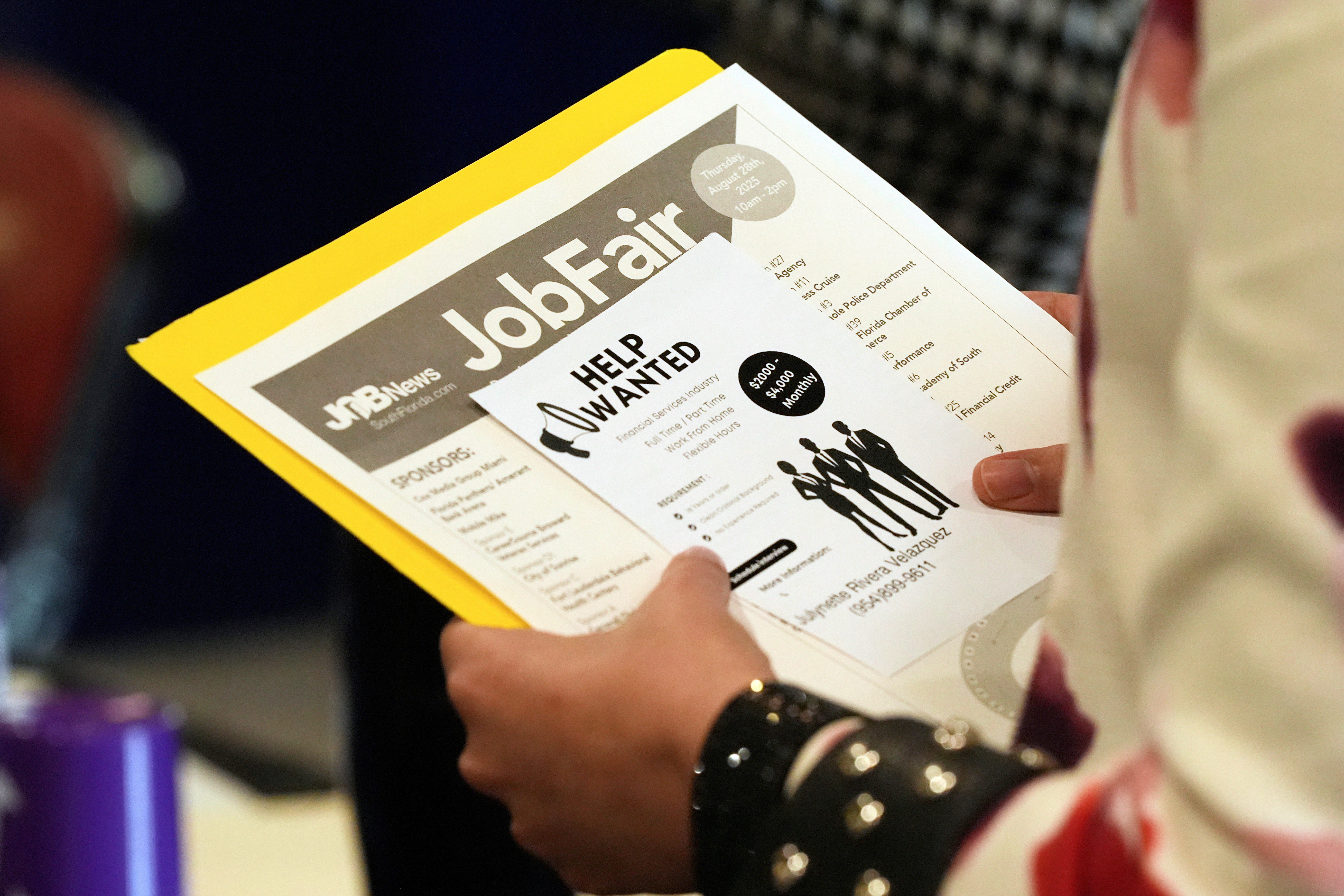
    A prolonged job search doesn’t just sap job seekers of time, money and energy — for many, the hunt takes a devastating toll on their mental health.

    Although unemployment rates in the United States have been historically low, the Bureau of Labor Statistics reports that more than a quarter of jobless people qualify as “long-term unemployed,” meaning they have been hunting for 27 weeks or more.

    And unfortunately for many out-of-work Americans, that probably isn’t changing any time soon. For every open role in 2026 there are twice as many applicants as there would be for similar roles in 2022, according to a recent study from LinkedIn Research. All of this is contributing to an overwhelming sense of discouragement among job seekers — and many of them are struggling to hold on to hope.

    Contemplating the ‘black hole’

    Mythili Sampathkumar, a 44-year-old writing and communications professional, has spent months polishing her résumé, filling out forms, and preparing cover letters. But she said she hasn’t been landing the sort of interviews that might lead to a full-time job.

    “You’re just talking to a black hole,” she said. “You feel like you’re floating in space, untethered from the spacecraft.”

    In the current job market, the problem often doesn’t have anything to do with the merits of a particular applicant, said Washington-based career counselor Amanda Langer. But still, every rejection or nonanswer can be taken as a personal referendum on your skills and worth, she said.

    “A prolonged job search isn’t simply a logistical challenge,” she said. “It erodes a person’s confidence over time and their sense of agency, along with their financial security, obviously.”

    Studies show unemployment is linked to the development of mental disorders, including anxiety and depression. Long-term job seekers describe heightened stress and exhaustion, which can make the everyday work of a job hunt feel even more burdensome, said Mindy Shoss, professor of industrial and organizational psychology at the University of Central Florida.

    “Ghost job” postings, AI interviewers, and a lack of in-person connection do little to help. So much of a person’s sense of self comes from their profession, their work, and how they spend their days, Shoss said. Watching résumés and cover letters disappear into a hiring portal does little to replenish that same well.

    Getting off the screen

    Because long-term joblessness can exacerbate underlying mental health conditions and even lead to some people developing serious problems, support from mental health professionals is key, and sometimes required.

    A peer group of other jobseekers can also help normalize the difficulty of a long-term job hunt and restore some optimism, Langer said. “Sometimes having that feedback from others helps people realize and have those ‘aha!’ moments of ‘OK, I look at this person and this person is super great, really skilled and really qualified, but they’re having a hard time too.’”

    Sampathkumar started working with a career coach, which she said has been hugely helpful. She also launched a personal newsletter and has been limiting the time she spends on LinkedIn and other social media.

    “There is no one to actually be angry at, right?” she said. “It’s a weird frustration. Whatever is happening is happening.”

  • ‘Toxic multitasking’ is breaking your brain. Here’s how to take control.

    ‘Toxic multitasking’ is breaking your brain. Here’s how to take control.

    In our busy, always-on world, multitasking — performing several tasks or engaging in more than one activity concurrently — has become a default setting. At work and at play, our focus is increasingly given to more than one thing at a time: checking emails during a Zoom meeting, scrolling Instagram while watching television, switching browser tabs, or responding to notifications while engaged in deep or focused work.

    “Toxic multitasking is the illusion of productivity,” says Sandi Chapman, the chief director at the Center for BrainHealth and a professor of psychology at the University of Texas at Dallas. “Multitasking is often seen as a sign of high productivity. Unfortunately, your brain experiences it as a performance bottleneck. We think we’re getting two complex things done at once, but our brains simply aren’t wired for it.”

    Not all forms of multitasking are unhealthy, but multitasking can, and often does, turn into problematic behavior that can become addictive, and that has a real effect on how our brain and nervous system function.

    Toxic multitasking is the norm, but that doesn’t make it normal

    “Today, more and more people are doing multiple things at the same time, double- and triple-booked on meetings,” says Ashish Kothari, founder and CEO of Happiness Squad, a consulting group focused on employee engagement. Although it may give the appearance and feeling of productivity, multitasking that is characterized by constant “context switching” is detrimental without breaks.

    “When you switch between tasks, your brain doesn’t instantly reset,” Chapman says. “It burns through your mental energy. Your brain works harder and produces less.” She compares multitasking to trying to read two books at once. “You don’t absorb twice as much information from reading both at the same time. Instead, you simply keep losing your place in both.”

    This way of working doesn’t stop at work. The urge to multitask continues outside of business hours, permeating our nonwork time. “We’re on phones all the time,” Kothari says. “We might be watching TV and doing something else. As a result our sleep is affected and, combined, creates a heavy toxic effect on our holistic well-being, physically, emotionally, mentally, and spiritually.”

    Digital multitasking, such as looking at more than one entertainment device at a time (e.g., watching TV while scrolling on TikTok), has a particularly strong negative effect on our attention — and, ironically, on our ability to multitask. “These types of inputs actually reduce your ability to handle multiple inputs at once,” says neuroscientist Kay Linker.

    Linker distinguishes between good multitasking and bad, pointing out that multitasking can be beneficial when used correctly. “Once a task becomes automatic, it is transferred to a different part of the brain, allowing for parallel processing,” she says. Examples of this include listening to a podcast or book while taking a walk or calling a friend while commuting to work, in contrast to what Linker calls “task switching, which drains your control and focus.”

    The effects of toxic multitasking are real, and so are the drivers

    There are consequences to all this multitasking, and the effects can be serious, affecting performance at work and creating a high degree of exhaustion, stress, and burnout that leads to the inability to think clearly, i.e., brain fog. There are also emotional and interpersonal repercussions, including irritability, a reduced ability to connect with others, a shallow or insincere affect, and a loss in satisfaction at work and life.

    Chapman says that toxic multitasking is a natural extension of American hustle culture. “There’s pressure on us, both professionally and personally, to prioritize output and quantity over quality,” she says. The pressures of expectation, driven by technology, have created a constant hunger for productivity, in which we feel the need to always be on and to give our attention away to social media and smartphones.

    “We have become dopamine addicts,” says Kothari, who adds that the pace at which we’re expected to take in and respond to information is “putting us in a constant fight-flight-freeze mode, wanting us to keep taking action and feeling like we can’t stop.”

    Because toxic multitasking has been so normalized, you may not even be aware of how much you’re engaging in it, but there are clear signs that it has become a problem. “Usually, the first symptom of toxic multitasking is emotional strain,” Chapman says. “If a quick question from a co-worker makes you want to snap, that’s often a sign your brain is overwhelmed from constant distractions or overload.”

    There are other ways to determine whether multitasking is a problem, and Kothari recommends using these assessments to identify an attention problem:

    Do you know how often you pick up your phone? Counting the number of times you pick up your phone during the day provides a data point to quantify a digital multitasking habit. “Most people pick their phone up over 150 times a day,” Kothari says. “It’s a clear indicator that we have lost our ability to focus.”

    Are you addicted to dopamine? To determine whether the problem is a dopamine addiction, set a timer and sit quietly while doing nothing. Doing so will tell you how long you can go without being distracted.

    Is your wearable telling you to cool it? “If you wear an Oura ring or another wearable,” Kothari says, “look at the amount of time you spent in a high-stress zone.”

    How to break a toxic multitasking habit

    It can be difficult to wrest back control of your time and attention in a world full of distractions, but here are some ways to exert power over technology and the pressure to appear productive:

    Try meditation. Kothari calls meditation and other mindfulness practices “foundational” to increasing focus and our ability to stay in the moment.

    Practice single-tasking. Linker recommends improving your attention span by engaging in a single task such as writing or reading for a sustained period, which she defines as an hour or more.

    Design your environment for success. Silencing notifications, closing unnecessary browser windows, and keeping your phone out of sight and out of reach will help deepen your focus. “Keeping a scratch pad on your desk lets you quickly log random errands or stray thoughts on paper without interrupting your workflow,” Chapman says.

    Use technology that cuts off a digital multitasking habit. To address the overuse of smartphones, Kothari recommends the Brick device. “It’s a tile that you can use to turn off all apps or even access to your phone completely.”

    Recalibrate norms at the office to encourage deep work. In workplaces where multitasking makes it impossible to get things done well, or even at all, Kothari says, “set norms for focused, deep work time where all of your notifications are off and your colleagues commit to not disturbing you.”

    Take regular brain breaks. Giving your brain a break by taking a short walk, going outside, stretching or simply sitting quietly for a few minutes will restore your mental energy and attention span — and prevent late-afternoon crashes. “A break is not switching from your laptop to your phone,” Chapman says. “A true brain break means stepping away from screens altogether.”

    Engage in one form of entertainment at a time. “Limiting concurrent device usage and social media short-form videos will improve the … assault this type of entertainment has on our ability to focus,” Linker says.

    Make a deliberate choice. Chapman says that reclaiming our attention spans is entirely in our control but that it requires making the deliberate choice to stop multitasking and start single-tasking. “With this one simple change, many people notice an immediate improvement in their focus, mental energy, and productivity,” she says.

  • Pentagon adds 1 death to tally of troop fatalities amid Iran war

    Pentagon adds 1 death to tally of troop fatalities amid Iran war

    The Pentagon has added one death to its public database of U.S. military fatalities that have occurred amid the war with Iran, bringing the disclosed total to 19.

    A U.S. defense official, speaking Tuesday on the condition of anonymity because the Pentagon has not publicly announced the death, said that a female Army officer experienced a fatal medical emergency Friday while flying to the Middle East.

    The death was added to the Defense Department’s public casualty database sometime after Monday afternoon. The service member’s identity has not been disclosed.

    Spokespeople for the Pentagon did not immediately return a request for comment.

    The additional fatality was reported earlier by Task & Purpose.

    The Trump administration’s casualty accounting practices have faced intense scrutiny since earlier this year, when the names of four U.S. troops who died as a result of the Iran war were briefly excluded from the Pentagon’s official tally.

    On Friday, the Washington Post reported that more American service members have died in the Middle East during the Iran conflict than the Pentagon has disclosed publicly. Officials said that as many as five military fatalities are not reflected in the Defense Department’s public casualty database — a discrepancy that remained unresolved as of Tuesday.

    As the Post reported last week, not all of the undisclosed fatalities are directly tied to the Iran conflict but involve U.S. personnel who were in the region amid the hostilities.

    The Defense Casualty Analysis System, or DCAS, is supposed to serve as the Pentagon’s official record of all U.S. troops who have died or were wounded in wartime or other contingency operations.

    On Monday afternoon, the database showed that 18 U.S. personnel had died because of hostile and nonhostile action, while more than 820 had been wounded.

    Five U.S. officials who spoke to the Post last week said that at least 22 service members have died in the Middle East since the Trump administration initiated the Iran war on Feb. 28. A sixth official put the tally at 23.

    Historically, nonhostile deaths documented in the DCAS database have encompassed those caused by accidents, sudden health crises, or self-inflicted wounds, including suicides. In past conflicts, those types of deaths were documented to provide the American public with an unvarnished accounting of the costs incurred by military personnel and their families.

    Polls show that the Iran war is deeply unpopular with the American public and a potential political liability for President Donald Trump and the Republican Party heading into November’s midterm elections.

    After the Post’s story published Friday, Defense Secretary Pete Hegseth claimed that the reporting was not accurate, but he did not address whether the Pentagon has tallied all military fatalities consistent with its long-standing practices.

    “Even if we wanted to attempt to hide a combat death, we never would and we never could,” Hegseth told a reporter.

    The proper accounting of military fatalities has implications beyond public transparency. Whenever a U.S. service member dies, the military conducts a “line of duty” investigation to determine whether the death occurred while performing official duties. Those findings affect the survivor benefits for which service members’ families are eligible.

    As of Tuesday, 14 fatalities are listed in the database as having occurred during Operation Epic Fury, the Trump administration’s name for the Iran war. Four others, reflected in a separate category called Overseas Operations, date to a July ceasefire between Washington and Tehran that later collapsed, leading to the resumption of attacks. The most recent fatality was added to the Overseas Operations dataset.

    Separately, since the start of hostilities, the Pentagon has issued news releases stating that two U.S. service members died in the Middle East while participating in missions unrelated to the Iran war. Their deaths, which occurred at bases that have been attacked by Iranian forces, are not reflected by name in the DCAS database.

  • Trump officials cut 760,000 enrollees from ACA, claiming fraud

    Trump officials cut 760,000 enrollees from ACA, claiming fraud

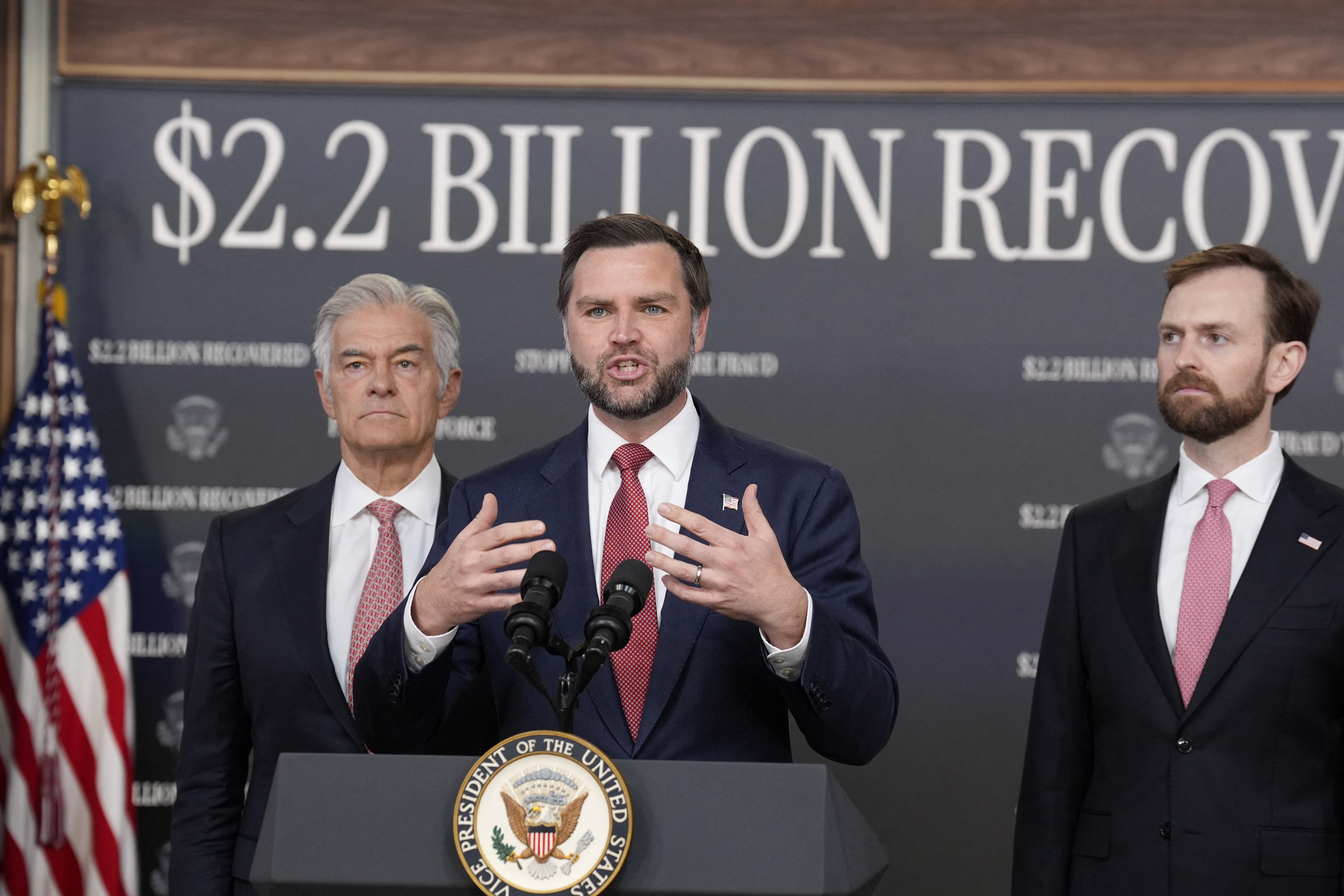
    Vice President JD Vance and administration officials on Tuesday announced that they are removing about 760,000 enrollees from Affordable Care Act coverage, saying that they were fraudulently enrolled in the government health program.

    Speaking at a White House press briefing, Vance said that officials would perform “additional verification” on about 419,000 people that they suspected to be fraudulently enrolled, too. The administration also is suspending some brokers found to have wrongly signed up enrollees for ACA coverage.

    Officials said that the moves would collectively save $2.2 billion in federal spending. The White House anti-fraud task force, which is led by Vance, is working with the Department of Health and Human Services and the Centers for Medicare and Medicaid Services on the crackdown.

    “This is what the fraud task force is all about,” Vance said, flanked by CMS Administrator Mehmet Oz and other senior officials. “Saving the American taxpayers money, and on the other hand, ensuring that these programs that are very important” are protected from waste and fraud.

    Oz said that the fraudulent enrollees were identified based on their lack of healthcare use and other factors, and that officials concluded many were fictitious. He also announced a six-month moratorium on allowing new insurance brokers to sell ACA plans.

    The cuts affect people who enrolled in coverage through healthcare.gov, the federally run ACA marketplace. The Affordable Care Act allowed states to create their own marketplace or use the federal marketplace, healthcare.gov.

    Pennsylvania and New Jersey are among 21 states that operate their own marketplaces. The District of Columbia also operates its own ACA marketplace.

    A spokesperson for Pennie said people who enroll in coverage through Pennsylvania’s ACA marketplace are not affected.

    The Wall Street Journal first reported the administration’s push to remove the ACA enrollees and suspend some insurance brokers. Administration officials told the Washington Post earlier this year that the anti-fraud task force was examining the issue of ACA enrollment fraud.

    About 19 million people are enrolled in health plans offered through the ACA’s exchanges, HHS officials said in June. Enrollment in the program, which shot up under President Joe Biden, has shrunk by more than 1 million people since President Donald Trump took office and is expected to fall by millions more this year.

    Vance and the anti-fraud task force have targeted healthcare programs in their push to trim federal spending by billions of dollars. Vance and Trump have also long criticized the ACA, a sweeping health law established by then-President Barack Obama and Democrats in 2010. The law’s expansion of health coverage is credited with driving the nation’s uninsured rate to historic lows, and past GOP efforts to target the program helped Democrats win back seats in Congress.

    Democrats and some health policy experts have argued that Trump’s polices, including ending pandemic-era subsidies that widely lowered the cost of ACA coverage, have forced people off the program and put them at risk of losing access to care.

    Jason Levitis, who was a senior Treasury Department official in the Obama administration, during which he helped craft and implement ACA policies, credited Trump officials for taking steps to confront fraud in the program. But he criticized Tuesday’s announcement as “chaotic” and questioned whether some people would wrongly lose coverage as a result of the sweeping crackdown.

    “Throwing three quarters of a million people into this bucket of ‘Your coverage is canceled’ and then having to figure it out later is a big concern,” said Levitis, who is now a senior fellow at the Urban Institute.

    He said the administration could have adopted a more structured approach, such as taking lessons from states that run their own ACA insurance exchanges and have reported less fraud in their programs.

    Some also called Vance’s announcement a distraction ahead of the midterm elections, comparing the administration’s fraud crackdown to its efforts to cut spending on Medicaid and other healthcare initiatives.

    “Families need coverage they can afford and count on when they get sick,” Brad Woodhouse, president of Protect Our Care, a liberal-leaning advocacy group, said in a statement Tuesday. “Vance’s task force won’t accomplish that.”

    Republicans contend that dwindling ACA enrollment is the result of necessary initiatives to cut waste and fraud after Democrats focused on growing the program but did too little to scrutinize who was signing up.

    Some conservative lawmakers and policy experts had recently pushed for another crackdown, saying that fraudulent ACA enrollment had spiked after pandemic-era initiatives that made it easier to sign up for coverage — and created incentives for bad actors to take advantage of the program.

    Brian Blase, the founder of the Paragon Health Institute, a conservative think tank that has driven attention on ACA enrollment fraud, welcomed the administration’s move.

    The think tank estimated earlier this year that about 6 million ACA enrollees were fraudulent, a number that includes “phantom enrollees” either unaware they’d signed up or fabricated by brokers.

    “The Trump administration actions to suspend brokers engaged in these activities and disenroll phantoms is welcome and will save taxpayers billions of dollars each year,” said Blase, who was an economic aide to Trump in his first administration.

    Oz, who runs CMS, which oversees the ACA, has previously said that his agency believes perhaps one-third of ACA enrollment is improper.

    “If you care about the ACA, then you’ll want us to take the fraud out,” Oz said at a White House news briefing in June.

    At Tuesday’s event, Oz also singled out several convicted insurance executives who had wrongly enrolled tens of thousands of people into the ACA and used the profits to fund their lifestyles.

    One fraudster has “a very punchable face,” Oz said, as Kim Brandt, a senior CMS official who is helping oversee the fraud crackdown, held up a photo.

    Trump officials also have said that they have adjusted the government’s fraud-fighting tactics, shifting from a long-standing “pay and chase” approach — in which agencies would pay out claims before identifying fraud and then try to claw the money back — to a “stop and caught” model. That strategy has been powered by the use of AI analytics and pattern recognition to spot fraudsters, they added.

    “We’ve learned something: Fraud doesn’t stand still,” Chris Klomp, a senior HHS official, said at Tuesday’s briefing.

    Staff writer Sarah Gantz contributed to this article.

  • Trump’s plan to militarize proposed arch raises new legal, safety concerns

    Trump’s plan to militarize proposed arch raises new legal, safety concerns

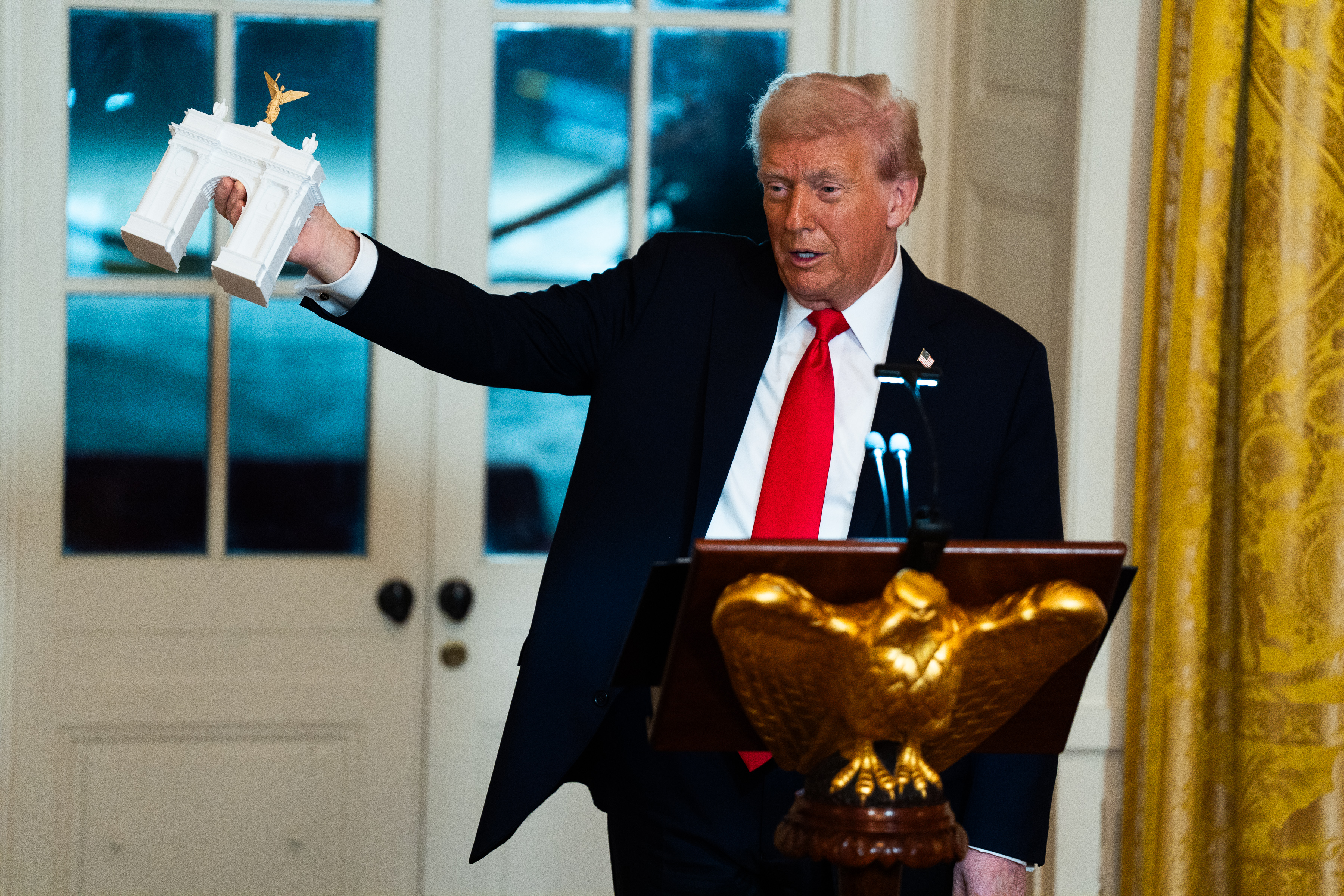
    President Donald Trump’s push to convert his planned triumphal arch near Arlington National Cemetery into a military complex has complicated a required federal review process and raised new legal and safety concerns.

    Trump unveiled his new national security rationale Sunday in a post on Truth Social, saying that the 250-foot-tall arch project — which he has framed for nearly a year as a tourist attraction — will now house drones, snipers, and ammunition. The president said he was making the change at the request of the U.S. military.

    Critics of the plan saw echoes of Trump’s shifting security case for the White House ballroom, which the administration has used to defend that project in court. But while presidents have historically had some leeway to revamp the White House grounds, the arch would stand on federal parkland more than a mile away, where Congress has set stricter rules for construction.

    “There is nothing that authorizes or justifies a massive arch, even if Trump tries to disguise it as a military facility,” said Rep. Jared Huffman of California, the top Democrat on a House committee that oversees federal parkland. “This is cartoonishly illegal, but he’s obviously trying to find a way to do it anyway.”

    Aviation experts warned Monday that using drones at the planned arch site — Memorial Circle, a roundabout near Reagan National Airport — could pose risks in the airport’s crowded airspace.

    “Anything you add to the airspace complicates the airspace and increases the operational risk,” said Tom Lintner, a former safety official at the Federal Aviation Administration (FAA).

    Other military and safety experts have questioned the implications of storing ammunition in the middle of a heavily used traffic circle and whether tourists could still enter the arch as previously planned.

    Historic preservationists participating in a required federal review process said they could not move forward until the administration clarifies Trump’s plans for the arch. Administration officials last week had asked Washington’s and Virginia’s preservation offices to agree to a memorandum of agreement (MOA) by Monday as part of that process, and they invited other preservationists to participate.

    “This MOA is DOA,” Charles Birnbaum of the Cultural Landscape Foundation wrote in an email to the administration on Monday. An official for Washington’s historic preservation office also wrote in an email that the office needed clarity on Trump’s post. Both emails were shared with the Washington Post.

    Administration officials have declined to offer further details about Trump’s plans to convert the arch to a military complex. They have previously said that they will not begin construction on the arch until they have received “all necessary approvals.”

    But Trump has pushed his deputies to expedite the arch and other construction projects, particularly in the wake of a Supreme Court ruling on Aug. 31 that let him continue building his ballroom, according to two people who spoke on the condition of anonymity to discuss private conversations. The ruling did not decide the merits of the case.

    Spokespeople for the White House and Pentagon said on Monday that they had no additional information to provide beyond the president’s social media post. A defense official, speaking on the condition of anonymity because of the sensitivity of the issue, said it was not clear if U.S. Northern Command, which oversees domestic military operations, has been asked to develop any related plans.

    Military officials with Joint Task Force-National Capital Region, which oversees military operations to protect D.C., did not respond to requests for comment on Monday. Spokespeople for the Interior Department and the National Park Service also did not respond to questions about the project. The Federal Aviation Administration referred questions to the White House.

    Until Sunday, the Trump administration had largely portrayed the arch as a prominent tourist attraction. Architectural plans posted by the National Park Service last month include a “ticket booth,” a “family restroom,” and other features atypical of any active military complex.

    Interior Secretary Doug Burgum mentioned that the arch would also offer a “military observation deck” in a social media post earlier this month.

    The administration had already faced safety questions, in part because the 250-foot-tall structure would sit directly in National Airport flight paths. Aviation safety there has garnered significant attention since a 2025 collision between an Army helicopter and an American Airlines regional jet near the airport that killed 67 people.

    On Friday, the FAA said it had determined that the arch would not pose a hazard to aircraft, including at National Airport. That finding preceded Trump’s announcement about drones, whose type and frequency of use remain unclear.

    In its final study on the arch, the FAA said the proposed structure should feature “a nonstandard eternal flame” to make it noticeable to pilots. It also said the arch should be continuously floodlighted by searchlight projectors around its base.

    Jeff Guzzetti, a former FAA and National Transportation Safety Board accident investigator, said having drones in the flight path of National would worsen the airport’s congestion problem.

    “Even not knowing how often these things are going to be used, it would certainly increase the risk of a collision with a commercial airliner,” Guzzetti said.

    Michael McCormick, coordinator of the Air Traffic Management program at Embry-Riddle Aeronautical University, said he expected the FAA would need to conduct another study.

    “Whatever the drones are, no matter what, the FAA would have to approve their flight because it’s civilian airspace,” McCormick said. “It cannot be a unilateral decision by the Pentagon.”

  • Congressional leaders warn White House against adding controls over NIH grants

    Congressional leaders warn White House against adding controls over NIH grants

    Leaders of the House and Senate appropriations committees on Monday warned the White House not to impose new controls on how the National Institutes of Health awards billions of dollars in research grants.

    Sens. Susan Collins (R., Maine) and Patty Murray (D., Wash.), the Senate panel’s chair and vice chair, and Rep. Rosa DeLauro (Conn.), the top Democrat on the House panel, said White House officials were threatening to further politicize the federal grant-making process.

    The Washington Post first reported Friday that administration officials had discussed an executive order to create a commission that would review NIH grants. Some White House officials were frustrated that the $47 billion health agency had funded projects that they said clashed with President Donald Trump’s agenda.

    The White House budget office “should not be involved in agency decisions on the awards of grants,” Collins said in a statement, adding that any attempt “to politicize grant-making at the National Institutes of Health” goes against the intent of Congress.

    “NIH funding doesn’t belong to Donald Trump — it belongs to the patients and families waiting on the next medical breakthrough,” Murray added in a statement.

    The appropriations leaders and other top lawmakers have previously clashed with the White House over its efforts to place new constraints on NIH funding. Earlier this year, Collins publicly opposed a 15% cap on indirect research costs. Last year, Collins and Sen. Katie Boyd Britt (R., Ala.) led a letter signed by a dozen other Senate Republicans urging the White House’s Office of Management and Budget to quickly disburse NIH funds that they said had been delayed.

    Russell Vought, the White House’s budget chief, and other officials met with Trump on Friday to discuss the potential executive order, the Post reported. Vought has criticized the NIH for awarding grants that he and other administration officials say fund “woke” initiatives and go against Trump’s executive order barring “equity-related” grants and contracts.

    Jay Bhattacharya, the Trump appointee who leads the NIH, which is the nation’s largest single funder of biomedical research, defended the agency’s grant-making process to the president Friday, the Post reported. The NIH quickly moved last year to terminate some grants after Trump took office.

    Spokespeople for OMB and the NIH did not immediately return requests for comment Monday on the lawmakers’ statements. Rep. Tom Cole (R., Okla.), chair of the House Appropriations Committee, also did not immediately respond to a request for comment.

    Healthcare advocacy groups, university leaders, and other organizations have urged the administration not to pursue the plan.

    “Americans want investments in cures and treatments,” said Erika Sward, executive director of United for Cures, a network of patient advocacy groups. “Politically hijacking those kind of advancements is not American, and it’s going to mean that those cures and treatments won’t be there for people across the country.”

    OMB has recently moved to assert more control over federal grant-making through a proposed rule that would require political appointees to review grants before they’re awarded to ensure projects advance the president’s priorities.

    In their recent government funding measure, congressional appropriators blocked implementation of the rule through December.

    Collins defended the NIH’s grant-making process.

    “Imposing a political review on awards that have already been selected through a rigorous scientific and merit-based process undermines the long-standing principle that the government funds awards based on scientific need and merit, rather than political ideology,” she said in her statement.

  • Ukraine marks Putin’s scripted election win with assault on Moscow refinery

    Ukraine marks Putin’s scripted election win with assault on Moscow refinery

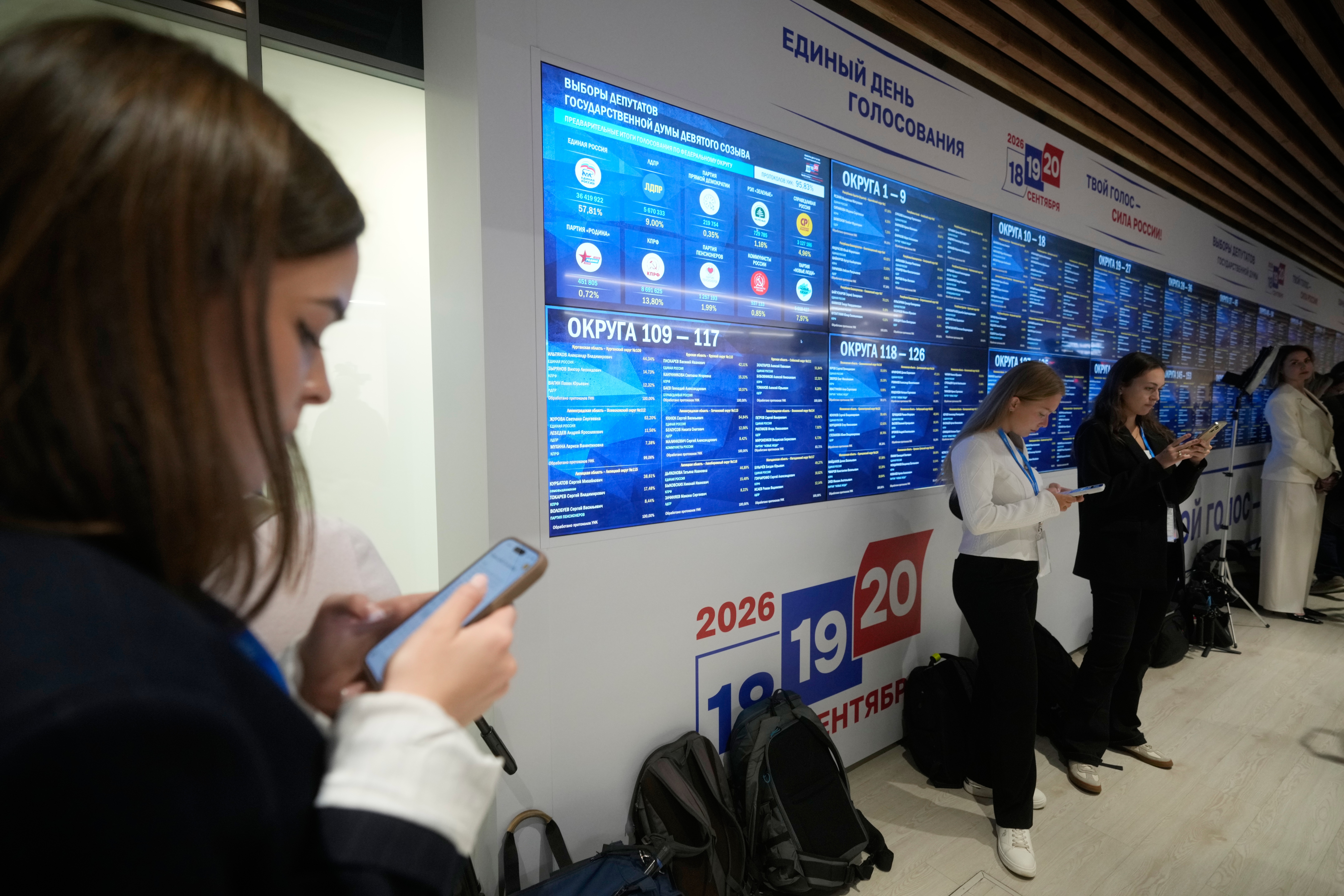
    As the first parliamentary elections in Russia since the 2022 invasion of Ukraine delivered a scripted victory on Sunday to Vladimir Putin, Ukraine pummeled the Moscow region with drones and missiles, hitting a key oil refinery and showing that winning the war remains out of reach for the Russian leader.

    The Ukrainian air attack, one of its largest on Russia’s capital area, killed at least three people, local officials said, and damaged the refinery in Kapotnya, on Moscow’s southeastern edge, which supplies a large share of the city’s fuel, including for diesel and aviation. Videos on social media showed it on fire.

    The strike contradicted President Donald Trump’s assertion last week that Ukraine and Russia had agreed to halt attacks on energy targets. Trump insisted that the war in Ukraine — not his own war against Iran — is driving up diesel prices in the United States. Experts more commonly cite the war in the Middle East.

    The refinery in Kapotnya has been hit several times, and the Moscow region has experienced intermittent fuel shortages in the aftermath of each attack. On Monday, lines formed again at gas stations, which began rationing supplies.

    A day before claiming the supposed energy truce, Trump urged Ukrainian President Volodymyr Zelensky to “stop knocking out diesel fuel” targets in Russia, saying the attacks were contributing to a global shortage. Late on Sunday, Zelensky said that he had spoken with Trump and that they had agreed to meet on the sidelines of the U.N. General Assembly in New York.

    “There are ideas for de-escalation steps and for addressing fundamental security issues — energy security, food security, and the protection of human life,” Zelensky posted on X. “We are working together with the American team and are ready to take really serious steps.”

    Zelensky also thanked Trump for signing into law what the Ukrainian leader called the “sanctions from hell” legislation, a bill co-written by Sen. Lindsey Graham (R., S.C.) before his death that authorizes the president to impose sweeping sanctions on Moscow and additional tariffs on countries that continue to buy Russian energy.

    The law gives Trump considerable latitude in its implementation, including over which countries could face tariffs and at what rates, as well as discretion to waive sanctions for certain countries.

    The Kremlin said Monday that the signing “certainly does not contribute to the revival of bilateral relations” between Russia and the United States. “And, of course, it is unlikely to contribute to more successful progress toward a resolution of the Ukrainian conflict,” Kremlin spokesperson Dmitry Peskov told reporters.

    Moscow Mayor Sergei Sobyanin said more than 1,600 drones had been intercepted and shot down Sunday, 450 of them aimed at Moscow. Russian officials have been accused of inflating such figures.

    “The unprecedented attack was obviously planned with the aim of disrupting the elections,” Sobyanin posted on Telegram. “The enemy did not succeed.”

    With 95% of ballots counted in Russia’s national parliamentary vote, the Central Election Commission said Monday morning that United Russia, the party that serves as an extension of Putin’s policies, was in first place with 57.8% and the Communist Party in second at 13.8%.

    The election was decried as sham by Russian opposition leaders, election watchers, and foreign officials.

    “United Russia has ‘won’ an election it was never allowed to lose. There was no genuine political competition and little room for voices outside the Kremlin’s line,” Slovenian Prime Minister Janez Jansa wrote on X. “This was not a mandate. It was political theatre designed to manufacture support for Putin’s war.”

    The core mechanism of staged elections in Russia is local authorities pressuring public-sector workers to go to the polls in support of the government, with employers tracking turnout and demanding that employees send photos of their ballots as proof that they voted to achieve the desired result.

    This year, however, criticism of the election procedures also came from Gennady Zyuganov, the longtime leader of the Communist Party, who described the campaign and the vote count as a “return to the wild ’90s.”

    In an interview with state media, Zyuganov lamented pressure on voters, and he alleged numerous irregularities. In one region, he said, his party’s poll observers “were removed, completely illegally.” Zyuganov said the party would compare its copies of polling station protocols with the official count.

    In Russia, uncertainty has swirled over many aspects of life, even as the election outcome was a foregone conclusion.

    The results announced Monday guarantee that Putin will remain firmly in control, amid inevitable speculation over who will succeed him when he is gone.

  • Hackers who broke into OpenAI warn the AI industry has a security problem

    Hackers who broke into OpenAI warn the AI industry has a security problem

    SAN FRANCISCO — Cybersecurity researchers who broke into ChatGPT maker OpenAI this summer say the artificial intelligence industry is unprepared for the security risks created by the growing power of its own technology.

    Researchers from computer security startup Hacktron got inside the company’s systems with help from the Claude chatbot made by OpenAI’s primary rival, Anthropic. After first targeting a public-facing messaging board, they were able to access OpenAI’s private systems, including some of the AI company’s internal code, according to posts on X late Thursday by Hacktron describing the campaign.

    OpenAI patched the problem and paid the hackers $6,500 for reporting the vulnerability. But the episode, along with incidents in which AI models accessed the internet undetected and attacked other companies, has drawn criticism from cybersecurity experts. They warn that the effort deployed by AI developers to protect their systems doesn’t match the immense power they claim their technology to have.

    Mohan Pedhapati, one of the Hacktron researchers who broke into OpenAI, said the company’s use of conventional business software such as Slack, consumer-grade internet browsers, and other apps that are accessible through the public internet makes it vulnerable to a potential attack.

    “If the people building these systems truly believe they are powerful enough to create nuclear-level risks, and they are talking about slowing down because of those risks, why is that work … done through ordinary SAAS products,” Pedhapati said early on Saturday in a post on X, using an industry term for cloud software.

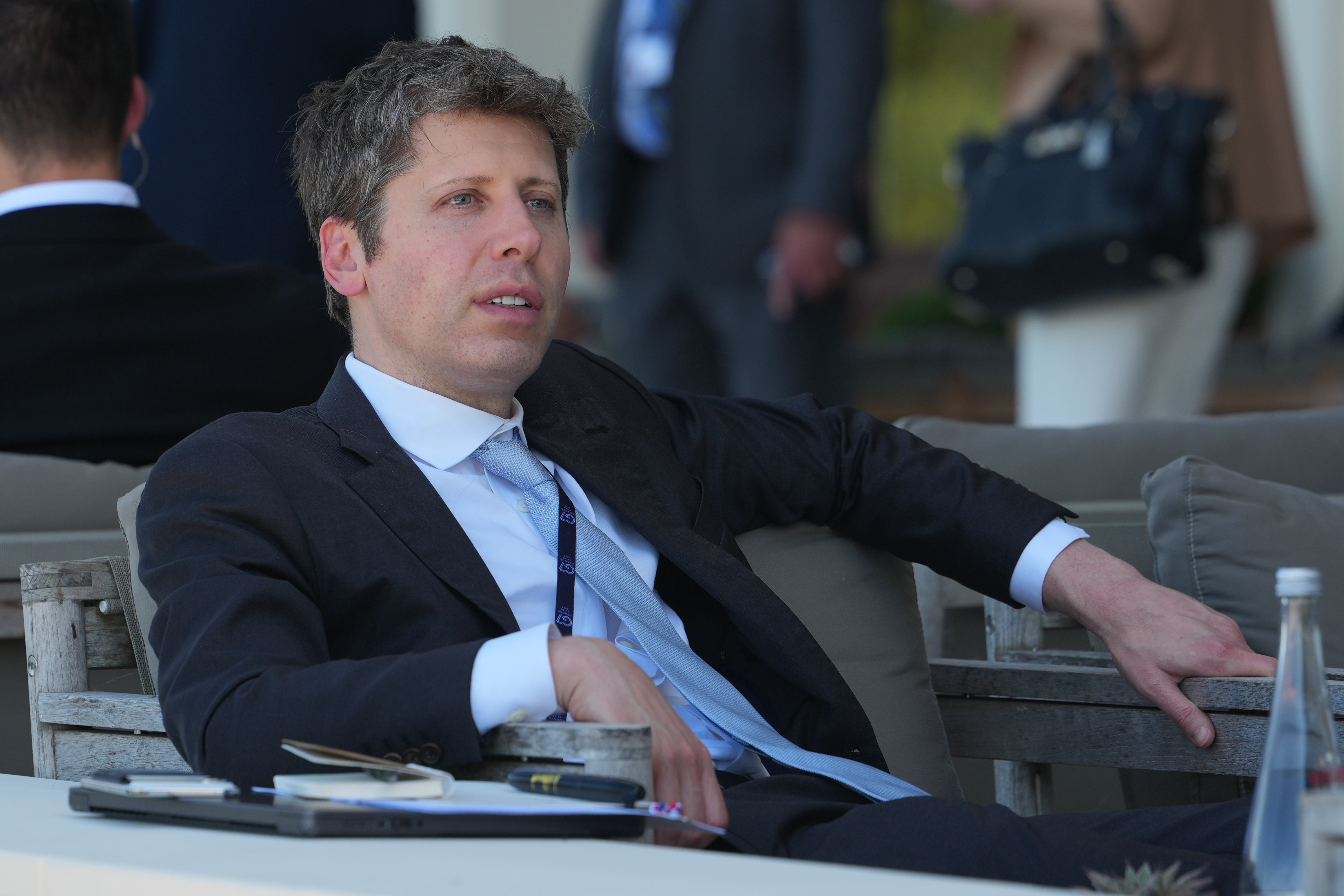
    OpenAI chief executive Sam Altman recently joined calls from other leaders in the field to slow the pace of AI development, out of concern that its capabilities are outstripping the industry’s ability to control the technology.

    “We thank the researchers for contacting us and sharing their findings,” an OpenAI spokesperson said in a statement, which also said the company had tightened its security measures. (The Washington Post has a content partnership with OpenAI.)

    Frank Cilluffo, director of the McCrary Institute for Cyber and Critical Infrastructure Security at Auburn University, said the ability of a small team of researchers to carry out a hack — at what they said was the cost of $3,000 paid for using Anthropic’s systems — should be considered a “warning shot.”

    “If three responsible researchers armed with commercial AI tools could achieve this level of access in days, we have to assume well-resourced foreign intelligence services are pursuing the same targets continuously and certainly never tipping off the target about what they did and how,” Cilluffo said.

    National security experts have long warned that American AI companies should expect to be targeted by hackers backed by foreign governments eager to cut into the United States’ lead in the technology. China has a history of seeking to steal U.S. technological secrets.

    Calls for an AI slowdown have prompted lawmakers in both major parties to say the industry should be subject to more government oversight. President Donald Trump has firmly rejected such proposals, saying the industry must race forward to stay ahead of China.

    The Hacktron breach of OpenAI, which used the security prowess of Anthropic’s chatbot Claude, comes after months of debate in the tech industry and Trump administration about how to respond to the growing power of AI models to identify security holes in software. Although OpenAI and Anthropic have restricted who can access the full cybersecurity skills of their chatbots, Chinese firms release free AI models that now have potent hacking capabilities available to anyone.

    In July, OpenAI said some of its own AI agents had broken out of the company’s computer systems during internal tests, accessed the public internet, and hacked into another AI company.

    The incident triggered criticism from some cybersecurity experts, who said the company could have done more to make sure its AI couldn’t break out of its networks. OpenAI hired outside AI researchers to study why its agents escaped, but the investigation did not include a traditional independent cybersecurity postmortem.

    The Hacktron hack of OpenAI happened around the same time as the incident involving the AI agents. Soon after, OpenAI redirected a substantial amount of engineering resources toward improving its security, OpenAI President Greg Brockman said in a podcast interview with venture firm Andreessen Horowitz released this week.

    “We took 25% of our production engineers and said, ‘Sorry, all your projects are on hold. You are now defending,’” Brockman said. “We found a number of serious issues, and we fixed them.”

    Hacktron’s researchers criticized how OpenAI responded when they notified the company they had found a way into their systems.

    Like many major companies, OpenAI openly encourages security researchers to report vulnerabilities. Fabian Faessler, Hacktron’s head of agent engineering, said in a post on X early on Saturday that OpenAI’s chief information security officer, Dane Stuckey, had called the researchers unprofessional and that Faessler had expected a more welcoming response from the company.

    Dan Wallach, an AI security resident at the research organization Rand, said OpenAI was fortunate that the vulnerability was discovered by researchers who came forward and shared what they found.

    “As a general rule it’s not polite to do what they did, but I would think that OpenAI should be pleased that the attacker was nice enough to tell them,” Wallach said.

    OpenAI’s Stuckey reached out to apologize after Faessler posted his X thread, Faessler said in a later post.

  • Trump and sons invest heavily in AI economy as he resists calls for slowdown

    Trump and sons invest heavily in AI economy as he resists calls for slowdown

    President Donald Trump’s sprawling family business empire has become increasingly intertwined with the boom in artificial intelligence, at the same time that he has resisted calls to slow the development of the technology, a Washington Post analysis of his financial disclosures and corporate announcements found.

    Several factors play into Trump’s push for rapid AI development: He has surrounded himself with technology executives and investors who have advocated for the government to accelerate AI development, including venture capitalist David Sacks, Nvidia chief executive Jensen Huang, and Meta chief executive Mark Zuckerberg. The president fears ceding an economic and technological advantage to China. And he has celebrated the stock market’s record highs, which are heavily tied to the performance of AI-related firms.

    But Trump also has a personal financial stake in industries benefiting from the AI build-out, creating potential conflicts of interest as his administration makes decisions that could affect the value of those investments. Unlike his recent predecessors, Trump has not placed his assets in a blind trust, and he has continued to buy and sell stocks while in office.

    “No president since we’ve had this regime of conflict-of-interest statutes has ever conducted their finances this way,” said Don Fox, a former acting director of the Office of Government Ethics in the Obama administration. “His predecessors in the post-Watergate era wanted the American people — whether they agreed with them or not — to believe the president was doing what was in the best interest of his country.”

    White House spokesperson Davis Ingle said in a statement that there are “no conflicts of interest.” Trump’s investments are “made entirely by independent managers,” he said.

    “All holdings are maintained in discretionary accounts and invested through computer-based model portfolios that automatically replicate recognized indexes, such as the Schwab 1000,” Ingle said in a statement. “Neither President Trump nor any member of his family has any ability to direct, influence, or provide input regarding how the portfolio is invested or when investments are bought or sold.”

    The Trump family’s expanding web of investments illustrates how Trump’s personal wealth and his family’s increasingly technology-focused ventures overlap with one of the most consequential policy debates confronting his administration: how aggressively the government should respond to rapid advances in artificial intelligence.

    Trump’s investment accounts have disclosed nearly 30,000 securities transactions since he returned to the White House, including many purchases and sales of shares in companies supplying the chips, servers, and energy infrastructure underpinning the AI boom.

    Trump has purchased shares in companies including Dell Technologies, Micron Technology, and GE Vernova, government filings show. Those companies’ profits are tied to the enormous spending on computing and electricity infrastructure needed to develop and operate advanced AI systems.

    On Monday, shares of all three companies fell amid a broader sell-off in AI-related stocks after prominent technology leaders warned about the risks of racing ahead with increasingly powerful AI systems.

    It is not known whether Trump still owns the shares he bought in any of those companies since he does not have to disclose trades in real time. He has also disclosed buying technology stocks whose share prices went up Monday.

    At the same time, businesses controlled by or tied to Trump’s family are striking deals that would give them greater exposure to the AI economy. Trump Media & Technology Group, the parent company of Truth Social, has announced a merger with a nuclear fusion company that plans to develop power plants as electricity demand surges, in large part because of the rapid expansion of AI data centers.

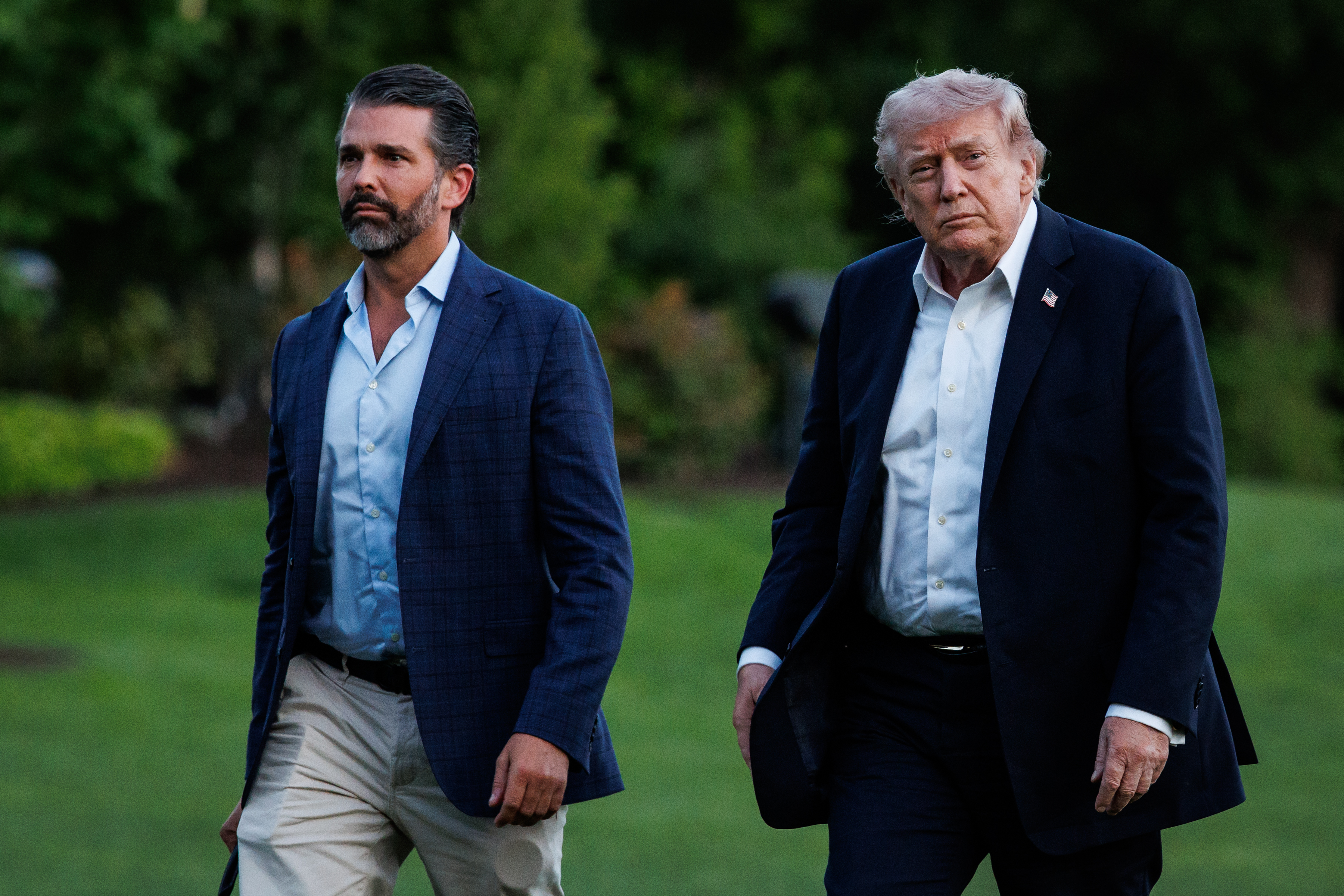
    Trump’s sons Donald Trump Jr. and Eric Trump are investors in a number of AI and data center ventures, primarily through the investment firms 1789 Capital and American Ventures. Trump Jr. is a partner at 1789 Capital, a Florida-based venture capital firm that announced it had closed a $1.2 billion fund that will focus on real estate ventures, including deals aimed at digital infrastructure like data centers.

    In a statement, a 1789 spokesperson said Donald Trump Jr. was operating as a private citizen and not in a government capacity.

    A growing number of lawmakers, researchers, and technology executives have called for safeguards around increasingly powerful AI systems, with those calls mounting after Anthropic CEO Dario Amodei, OpenAI CEO Sam Altman, and xAI founder Elon Musk warned that the pace of AI development could outstrip the ability of leading labs to control the technology.

    (The Post has a content partnership with OpenAI, which makes ChatGPT.)

    Trump recently offered a number of responses to concerns about out-of-control AI. Days ago, he posted that the only necessary guardrail for AI was “a STRONG AND SMART (High IQ!) PRESIDENT.” On Saturday in a Truth Social post, Trump suggested policing ”BAD” aspects of the industry through enforcement of existing laws and a new, scantily described “AI Force.”

    The clash comes as AI is emerging as a political issue ahead of the midterm elections. Multiple polls show a majority of Americans are concerned about the pace of AI development and opposed to the construction of data centers.

    Trump’s stock holdings

    The past volatile week in the stock market illustrated how Trump’s wealth could be affected by AI news developments that he has influence over.

    After some prominent AI industry leaders spent the weekend advocating for slowing AI advancements over their fears of an AI doomsday, technology stocks dropped sharply Monday even as Trump spent the day ridiculing AI fears as a “hoax.”

    Investors, worried that an AI slowdown could hit profits of AI-related companies, sold off stocks of many companies connected to the mammoth, trillion-dollar construction of AI data centers across the country.

    Trump’s financial disclosures this year show that he had bought stock of several of the losers in Monday’s stock market decline, including computer chipmakers Broadcom and Texas Instruments and the data center equipment companies Credo Technology and Super Micro Computer.

    Trump has attributed his income of more than $2 billion in 2025 to the highs in financial markets.

    “You know why I’m profiting, because the stock market’s going up,” Trump told reporters in July after his financial disclosures were released. “Everybody’s profiting. … Thank you, President Trump.”

    U.S. stocks have been on a tear for most of the four years since the public launch of ChatGPT kicked off an AI surge. Stocks related to AI are responsible for about two-thirds of the increase in the S&P 500 index this year, according to calculations by Matt Orton, chief market strategist at the investment firm Raymond James Investment Management.

    The AI-related market gains have made wealthier, stock-owning Americans richer and spurred them to spend more money, which has boosted overall U.S. economic growth, economists say.

    Trump’s family businesses

    Since Trump’s first term, his family businesses have evolved from real estate and reality TV to encompass a wide range of technologies at the center of Washington’s regulatory debate.

    As Trump Media and Technology Group (TMTG) prepares for its merger with the nuclear fusion company TAE Technologies, its subsidiary Truth Social is also investing in AI-related products.

    TMTG interim CEO Kevin McGurn told CNBC in August that it was going into the “AI world” by licensing access to Truth Social posts to AI labs. AI companies are eager to vacuum up social media posts so they can feed them into AI algorithms in an effort to train those models to mimic human speech patterns.

    TMTG would provide data through TruthAPI, the controversial tool that provides companies and investors with access to posts from the president and others. The tool allows investors to access the president’s announcements more quickly than the general public, inviting legal and ethical concerns.

    Truth Social has also rolled out a search tool powered by “answer engine” Perplexity. The tool provides answers to questions based on Trump-friendly media sources, such as Fox News and Newsmax, but the Post previously found that it nonetheless frequently contradicts Trump.

    TMTG did not respond to a request for comment.

    Much of Trump’s income increasingly comes from cryptocurrency-related ventures. Last year he made more than $500 million from World Liberty Financial, a crypto company that Trump founded in 2024 alongside his sons and the sons of Steve Witkoff, Trump’s special envoy to the Middle East.

    World Liberty Financial has collaborated with WorldClaw, a Hong Kong-based business that provides access to a suite of AI models. Customers are able to pay for access using USD1, World Liberty Financial’s token. WorldClaw offers access to models made by Chinese companies that the U.S. government has flagged for national security concerns, Reuters reported.

    World Liberty Financial also sold a large stake to investors tied to the United Arab Emirates just before Trump’s inauguration. Sheikh Tahnoon bin Zayed al-Nahyan, the UAE’s national security adviser and chairperson of the UAE-based AI company G42, was involved in the purchase.

    “World Liberty does not control WorldClaw’s product decisions, including which AI models it makes available. WorldClaw is not accessible to users in the United States,” David Wachsman, a spokesperson for World Liberty, wrote in an email.

    The company did not respond to the question of whether the Trump family’s stake posed a conflict of interest but, instead, noted that WorldClaw competed with a similar product operated by Amazon, whose founder, Jeff Bezos, owns the Post.

    Trump’s sons’ interests

    Eric Trump and Donald Trump Jr. are involved in firms that have invested in a broad array of AI-related companies, according to news and data from PitchBook, a venture capital research database.

    Within days of Donald Trump’s 2024 election win, Donald Trump Jr. announced he was becoming a partner at 1789 Capital, which bills itself as “funding the next generation of American exceptionalism.” Since Trump returned to office, the firm has made many investments in companies related to AI and the infrastructure underpinning the technology, including Cerebras Systems, Perplexity, and Musk’s xAI, which later merged with SpaceX.

    Eric Trump invests through American Ventures, a branch of a boutique investment bank called Dominari Holdings, the Post previously reported. He is an investor in companies operating in defense and robotics, including Space-Eyes, a company that uses AI to process streams of data from satellites and other sensors.

    A month after their father returned to the White House, Trump Jr. and Eric Trump also launched an initiative called American Data Centers, which was intended to support the build-out of AI infrastructure. That company then merged with American Bitcoin, a digital asset mining operation majority-owned by Hut 8, a crypto infrastructure company. Hut 8 is developing Beacon Point, a massive data center project in Texas.

    Dominari Holdings did not respond to requests for comment.