Category: Washington Post

  • Trump administration considers building baseball park in Grand Teton National Park

    Trump administration considers building baseball park in Grand Teton National Park

    Major League Baseball has approached the Trump administration about hosting a game at a national park, officials from the White House and MLB confirmed Saturday.

    The administration has scouted locations in Grand Teton National Park to build a baseball park to host an MLB game, according to two other people familiar with the matter, who spoke on the condition of anonymity because they were not authorized to speak to the media.

    Grand Teton is the country’s eighth-most-visited national park and is famous for its breathtaking views of the Teton Range of the Rocky Mountains. National parks are among the country’s most protected federal lands, and constructing a sports facility at Grand Teton could set a new precedent for the use of vast national park land in the Western United States.

    An MLB official, who spoke on the condition of anonymity because he was not authorized to speak publicly, said the league approached the administration after the success of MLB’s other stand-alone events, such as the recurring Field of Dreams game in Iowa. The idea of playing a game in a national park is one of several that MLB is exploring.

    The White House said in a statement that MLB asked the administration “if it was possible to host a game at a national park, similar to the Field of Dreams game.”

    “This is not a Presidential directive, nor is it being directed by the White House. It’s also not being driven by the Department of Interior,” the statement said. “Therefore, this is not a White House or Administration priority.”

    The White House said MLB has not made any decisions and the Park Service has not granted any permits. “If the MLB wants to go on site visits of national parks, that is their prerogative,” the statement said.

    It referred additional questions to MLB.

    National Park Service Deputy Director Frank Lands visited Grand Teton National Park in recent days and looked at three potential locations for a baseball park within the park’s boundaries, the two people familiar with the matter said.

    One of the sites that Lands visited is already disturbed land that is not pristine park property, these individuals said. Many parks have “bone yards” or storage areas for materials or equipment not being used.

    Lands, reached by phone Saturday evening, declined to comment.

    After publication of this piece, the White House said in a statement that Lands “has not been actively scouting sites” and was on an official trip to several national parks including Grand Teton, Yellowstone, and Grand Canyon.

    “The MLB happened to schedule their trip to Grand Teton at the same time that Frank was there,” it said. “It is incorrect to say that Frank is actively scouting sites. It is also incorrect to say that the administration is sending officials to scout sites.”

    A prized national park like Grand Teton is not an appropriate place for a baseball park, said Betsy Buffington, Northern Rockies regional director for the National Parks Conservation Association, an advocacy group.

    “It is irreplaceable. There is no other Grand Teton that is home to bears and wolves and bison, elk and pronghorn,” Buffington said in an interview. “So the idea that we would put a baseball stadium in Grand Teton National Park is just — what would the word be? — ludicrous. Crazy. Ridiculous. I mean, I just can’t fathom.”

    Luther Propst, a county commissioner for Teton County, Wyo., who met Lands this week on his visit there, said in an interview that the federal government had not sought county input and that Lands did not mention the issue.

    “Grand Teton National Park is about wild America, wildlife, opportunity for solitude, not for more amusement,” Propst said, calling the proposal for a ballpark “a radical departure from the tradition of national parks.”

    Since assuming office in January 2025, President Donald Trump has taken actions to drastically reshape the National Park Service. His efforts to shrink the government resulted in the Park Service losing a quarter of its staff, which has at times led to closures of some park facilities, fewer tours at national parks, and other disruptions. The president has sought to scrub the Park Service of signs and information related to historic racism, gender discrimination, and Indigenous persecution.

    The administration is also weighing whether to give a sliver of Yosemite National Park to a private developer to build road access to a resort in exchange for land of equal value. Park advocates say that giving up park land for goals other than conservation sets a new and dangerous precedent.

    Starting in 2016, MLB has staged single games at various locations across the country: once at Fort Bragg, in North Carolina; once in Omaha, tied to the College World Series; once at the historic Negro League ballpark, Rickwood Field, in Birmingham, Ala.; once at Bristol Motor Speedway, a NASCAR racetrack in Bristol, Tenn.; three times in Dyersville, Iowa, in the cornfield made famous by the movie Field of Dreams; and annually at Williamsport, Pa., tied to the Little League World Series.

    Most of those were played at permanent facilities, but after the Bristol game, racetrack officials disassembled the stadium and donated some of the materials.

    The Field of Dreams stadium was initially temporary, but the site was eventually expanded to make it permanent.

    The 2027 MLB schedule is set and includes a Field of Dreams game and a Little League Classic game, so no new specialty game can take place before 2028.

  • Trump now says the Kennedy Center could be deadly. Months ago, it was ‘great.’

    Trump now says the Kennedy Center could be deadly. Months ago, it was ‘great.’

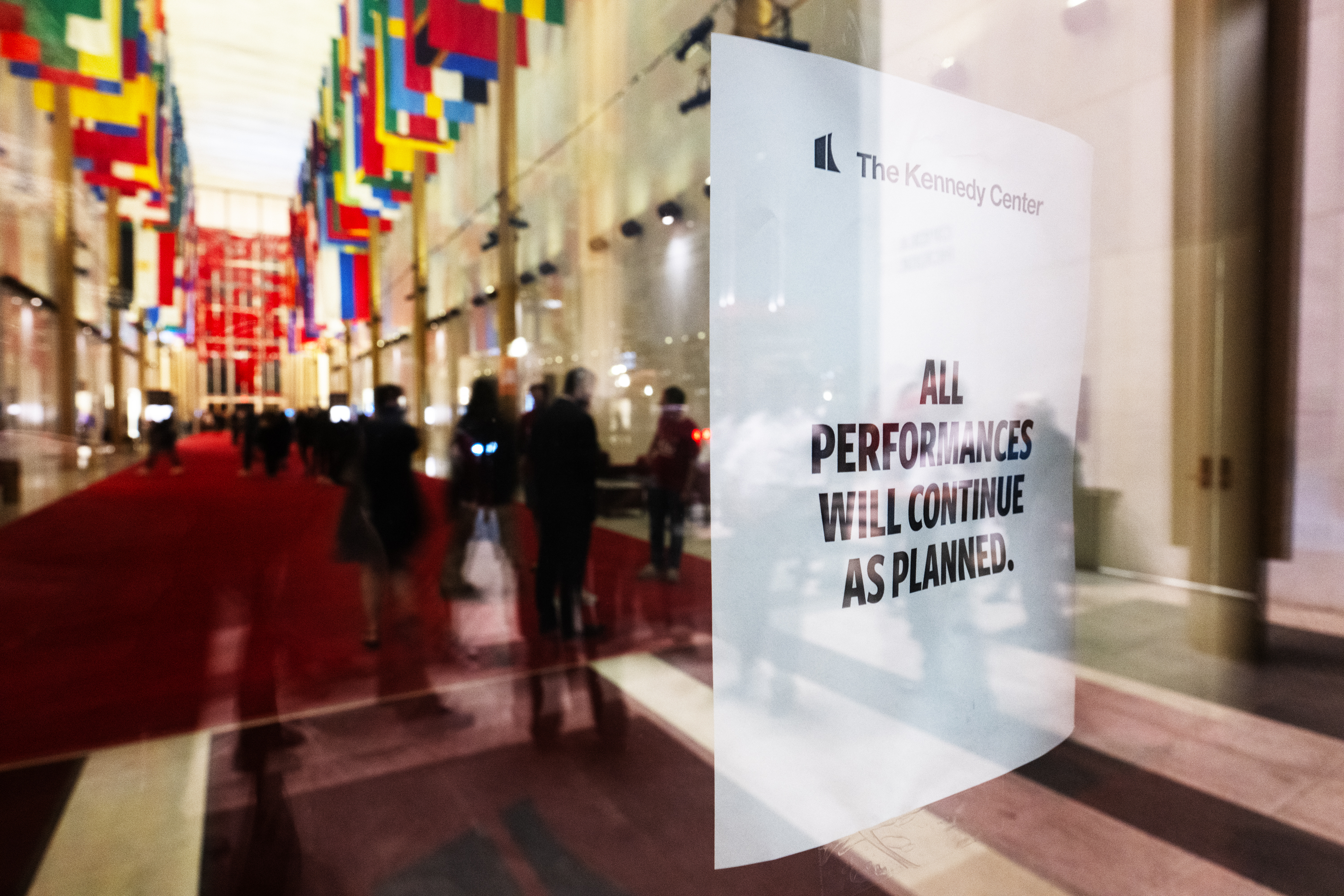
    President Donald Trump stood on the red carpet at the John F. Kennedy Center for the Performing Arts in December and declared his mission to fix the building, to “make it beautiful,” all but accomplished.

    “It was falling apart, and now it’s pretty much back,” Trump told reporters as he stood beside FIFA President Gianni Infantino ahead of the World Cup draw. “We’ve done a really great renovation job on it,” he added, predicting that remaining work would be complete within three or four months.

    By Trump’s telling, it was the culmination of a transformation he had set in motion shortly after returning to office when, vowing to end “woke” programming, he purged the Kennedy Center’s board of trustees and became its new chairperson.

    But less than two months after Trump’s victory declaration — after his name was added to the building, artists balked at performing there and income dropped further — his assessment of the center’s condition soured.

    In late January he hosted a starry red carpet premiere for the documentary Melania but days later announced that the center was so “tired, broken, and dilapidated” that its main building would need to close for two years. The building was “sort of dangerous,” he added that week, though it was deemed safe enough for Trump and the first lady to catch a performance of Chicago about two months later. By the end of April, executive director Matt Floca was testifying about dangerous roofing conditions and electrical equipment that he said posed a risk of fire or, in the worst case, explosion.

    Over the following months, the descriptions grew more dire. Trump said people entering the building were in “serious danger.” The center’s lawyers called it “structurally unsound” and “fundamentally unsafe.” This month, after a section of ceiling plaster fell in the Grand Foyer, Trump described the building as being in a “virtual state of collapse” and said the incident could have “killed” people.

    Yet many of the underlying physical problems cited by management were documented years before Trump took control — when Kennedy Center officials and their engineering consultants were planning to repair the aging building while continuing to stage performances.

    A dozen current and former Kennedy Center staff members interviewed by the Washington Post described a building that needed substantial repairs and routine maintenance but said they had not experienced conditions that led them to believe the building as a whole was unsafe. Some described elevators and escalators that frequently broke down, mice, and aging equipment. But the current and former employees, all of whom spoke on the condition of anonymity because they fear retribution, also recalled repairs being made around performances, often overnight, and said employees were regularly briefed on plans for larger projects.

    Some of those projects stalled out under the new leadership, former staffers said. Before Trump’s takeover, Floca had been hired to oversee improvements including a renovation of the building’s Eisenhower offices. Employees working there were told they would temporarily relocate to office space at the Watergate during construction, according to three former staff members.

    An executive had given the employees potted plants in anticipation of the move because, unlike their Kennedy Center offices, the temporary space had windows. But the renovation was paused after new leadership took control, and the move never happened, the employees said.

    “We all named our plants,” one former staffer said, “and then they slowly died on our desks.”

    On Thursday, a lawyer for whistleblowers told lawmakers about another project they say was cut short under Floca: The center planned $9 million roofing repairs, as part of the $257 million approved for renovations by Congress last year. But Floca canceled a contract that would have moved the project forward, according to the disclosure, which was reported Friday by the New York Times. Other money set aside for waterproofing was instead diverted to painting the center’s columns, the whistleblowers said.

    A Post review of engineering assessments, building plans, congressional budget requests, and court records found that many of the conditions now cited by management — including water intrusion, deteriorating steel and concrete, aging mechanical equipment, and failing plumbing — were identified before Trump’s takeover and incorporated into plans to keep the center open during construction.

    It was as the center’s financial and programming problems mounted, an employee at the Kennedy Center familiar with the renovation planning said, that discussions increasingly turned toward a complete shutdown. The employee said they came to believe an argument seized on by some staff, patrons, and Trump’s critics.

    “The whole reason to close the building is not because it needs to close for renovations,” the employee said. “The whole reason to close it is because we’re not going to be able to secure the artists or the audiences needed to make the economics work.”

    Kennedy Center leaders have since made new reviews that they say show immediate dangers to the public. An engineering assessment this month found widespread corrosion in the building’s heavy soffit panels, which form the underside of the exterior overhang, Floca said Wednesday in a sworn declaration. Separately, after severe storms Sept. 4, plaster fell 60 feet from the Grand Foyer ceiling into a public area below. The center did not rush to fix the damage. A consultant reported seeing the resultant “debris field” more than a week and a half later.

    In a statement, a Kennedy Center spokesperson did not comment on halted repairs but avoided blaming past leaders and said “it is completely understandable that staff felt comfortable” in the building because of their past experience and because they had not seen the most recent assessments or the danger firsthand. “Employees’ firsthand experience matters,” the spokesperson added, “and their work maintaining the building and supporting performances deserves recognition.”

    “The Center believes leadership teams, past and present, share a fundamental commitment to the Kennedy Center’s success and the continuation of its programming,” the spokesperson said. “There may be differences on priorities, timing, or the best way to deliver necessary improvements, but those differences should not be mistaken for differences in a commitment to the institution.”

    The dispute has made the state of the building a high-profile concern — escalated, in a recent fight to restore his name to the building, by Trump’s threats that it could be torn down. On Thursday, House Democrats asked the Government Accountability Office to start its own review of the center’s financial and physical health.

    The Kennedy Center, which opened in 1971, has never been an easy building to maintain.

    Within a few years, its flat roof was plagued with leaks. A parade of thunderstorms in July 1977 sent water through the roof, weakening plaster that fell from the Grand Foyer’s 60-foot-high ceiling. The center, the Post reported at the time, “went on with the show,” moving the Champagne bar and rerouting opera and theater patrons into adjoining halls.

    Officials at the time set up plywood walkways for visitors inside, then closed the roof terrace, restaurants, and, for about five weeks the following summer, the Concert Hall while crews undertook extensive waterproofing and other repairs. Contemporary Post coverage described water seeping into storage rooms, dressing rooms, and the Concert Hall and corroding or damaging parts of the building.

    Leaks remained a persistent problem for decades. The center kept renovating its spaces and systems while continuing to operate, periodically closing individual venues or sections of the building.

    The cycle became a routine headache for center leaders and lawmakers. In 1994, Congress sought to address more than 20 years of “severe deterioration,” passing a law that required the center to develop and annually update a comprehensive building plan that lays out future repairs and renovations.

    The center last comprehensively updated that plan in 2022, identifying extensive needs across the sprawling complex: structural repairs, waterproofing, fire-safety and evacuation improvements, replacement of aging chillers, upgrades to water and electrical systems, elevator repairs, and improvements to technical stage systems.

    But the plan called for work to be done in phases, scheduled around an operating performing arts center, accepting the higher costs and complexity involved.

    “Projects have been scheduled in such a way as to keep the facility operating to the maximum extent,” the plan said.

    A former senior Kennedy Center official who was directly familiar with the center’s capital planning said the current plans reflected how the center had long approached its physical needs.

    “Every single thing that I have seen,” aside from some of the new decorative changes, was included in the center’s comprehensive building planning, the former official said. The plans laid out not only what needed to be repaired but also when the work could occur and how it could be scheduled around performances.

    “The building remained open at all times,” according to the official.

    That didn’t mean every part of the building was always available.

    In November 2024, the official recalled, a small fire triggered the sprinkler system above the Opera House, sending large amounts of water into the theater below. The center relocated that night’s performance while workers dealt with the flooding. Such incidents, she said, were part of operating an aging and complicated building.

    Other longtime workers described a similar reality.

    David Berkowitz, a stagehand who has worked regularly at the center since 2002, said much of the equipment management wants to replace genuinely needs work. Freight elevators have repeatedly broken down, he said, and an enormous motorized lighting bridge in the Opera House is as old as the building and needs to be replaced.

    The dispute is not whether the Kennedy Center needs repairs, but whether its condition had deteriorated enough to require abandoning plans to repair it in stages while it remained open.

    That question became more pressing after Trump took over.

    In August 2025, Trump declared the center a “great gem” that needed “a little fix up and a little work.” In an October post he said the center would stay “fully open during construction, renovation, and beautification.”

    By Dec. 5, after inspecting work at the center, Trump said it was “pretty much back.”

    Then, 58 days later, Trump announced the center would close for two years.

    Trump said he had conducted a yearlong review with contractors, musical experts, arts institutions, and other advisers and concluded that closing the building would produce a faster, higher-quality renovation. In announcing the decision, Trump emphasized speed, construction quality, and the disruption of working around audiences and performances rather than saying the building was unsafe to occupy.

    Asked about the shift, White House spokesperson Liz Huston said in a statement, “For years, Democrats let the Kennedy Center rot, allowing water damage and crumbling infrastructure to turn a national treasure into a building in decay. As President Trump said, without his intervention, The Kennedy Center will inevitably continue to decline.”

    But in court-ordered disclosures, Floca identified four reports he relied on in recommending the shutdown: the center’s 2021 and 2022 building plans, a 2022 soffit report, and a 2024 leak investigation — all prepared before Trump’s second administration.

    Put together, the records left the judge skeptical. Floca said he had concluded by the fall of 2025 that closing the center was necessary, but U.S. District Judge Christopher Cooper noted that the possibility of a shutdown did not come up at board meetings that September or December.

    “No evidence in the record substantiates that timing,” he wrote of Floca’s account. And the evidence for an involved yearlong review of the kind Trump described “is nil,” Cooper wrote.

    Cooper also noted that the center’s former president, Richard Grenell, had been promoting the center as a major venue for America’s 250th anniversary — “quite a concerning idea if the Center is as dangerous as the Defendants now represent.”

    Craig Williams, an architect with decades of experience renovating performing-arts facilities who reviewed those reports for Rep. Joyce Beatty (D., Ohio), an ex officio Kennedy Center trustee challenging the closure in court, reached a different conclusion from Floca: A complete closure was not required for the deferred maintenance described in the reports, he said in a sworn declaration.

    When Cooper blocked the planned July shutdown, the center remained open but had already stopped booking new performances while the board reconsidered whether to close all or part of the building. Meanwhile, the lost bookings were helping propel a drop in ticket sales and fundraising: By late May, management projected about $124 million in revenue against a $220 million budget, leaving a roughly $23 million deficit despite substantial spending cuts.

    Floca has said a full closure is necessary because performing the extensive work around audiences would be unsafe and impractical. And by August, Delta Consulting Group had concluded that a two-year closure would be safer, faster, and substantially less expensive than rolling closures.

    The center spokesperson on Friday pointed to the recent engineering reports and said “the building exists to support the mission. Success should be measured by whether the Center can sustain excellent programming in a safe, reliable, and financially sustainable environment.”

    On Sept. 3, management received preliminary findings from engineering firm Walter P Moore’s inspection of the soffit system, according to a sworn declaration Floca filed Wednesday in federal court.

    Walter P Moore estimated that about one-third of the 278 panels — each of which weighs about 2,500 pounds and hangs roughly 60 feet above the plaza outside — were severely corroded and required immediate replacement, while nearly all the rest had some degree of corrosion. The firm said continued wear could mean the panels fall and endanger people below.

    Floca has pointed mainly to the soffits as his reason for closing the building. The second reason came Sept. 4, the day after the firm’s report, when plaster fell from the Grand Foyer ceiling after severe storms passed through the area. No one was injured.

    Center officials have described the incident in increasingly stark terms, as Trump and allies spread footage of the collapse on social media.

    Floca in a court filing Wednesday said the fallen material weighed about 150 pounds, and that more testing was needed. He also noted “ceiling irregularities” elsewhere in the Grand Foyer, reports of falling objects in the Hall of States, and continued leaks in the Hall of Nations.

    Floca has extended the emergency closure through Sept. 30 while engineers continue their work and said he will reassess it weekly. Portions of the building could reopen if engineers determine it’s safe, he said. The latest findings “should not be generalized into a claim that every interior space is structurally unsafe,” the center spokesperson said.

    Although leaders say this closure is not a full shutdown, layoffs have begun.

    That longer-term plan remains tied up in federal court. The judge has not blocked repairs, but a full closure can’t happen without his permission.

    Earlier this month, Cooper ruled in an increasingly intertwined dispute, blocking the board of trustees’ latest attempt to put Trump’s name back on the front of the building.

    Trump reacted by explicitly tying the fate of the building to getting his name displayed on the front of it. Hours after Cooper’s ruling, Trump said renovations won’t proceed until his administration gets appropriate recognition for rescuing the institution.

    “Frankly, if we don’t do that, it’s going to close,” he said later. “It’ll end up being ripped down.”

    Hours later, he was photographed aboard Air Force One studying a large printout whose partially visible headline appeared to read “Kennedy Center DEMOLIS[HED].”

  • How the U.S. and Russia weakened a global effort to regulate killer AI

    How the U.S. and Russia weakened a global effort to regulate killer AI

    UNITED NATIONS — Early this month, hundreds of diplomats huddled in a cavernous U.N. conference room in Switzerland, working toward a muscular treaty to regulate the use of lethal autonomous weapons — the first agreement governing the use of killer artificial intelligence arms. On the last day of negotiations, the talks turned aggressive.

    Over the next roughly 15 hours, U.S. and Russian diplomats hammered away at the document, removing a range of provisions designed to safeguard the use of artificial intelligence in weapons, according to three people familiar with the negotiations, who spoke on the condition of anonymity to discuss sensitive closed-door proceedings, and documents reviewed by the Washington Post.

    They stripped language requiring the systems to operate in a “predictable” and “reliable” manner, the people said, and removed a clause mandating that ethical considerations be taken into account when using AI weaponry. The U.S. and Russian teams also removed a provision requiring that humans review military targets developed by AI before a strike, they added.

    In a closed-door session, with U.N. cameras turned off and civil society observers removed, Washington and Moscow deployed their army of about 10 lawyers each — nearly twice the diplomatic presence of other delegations — to make changes that moved so quickly that the smaller delegations were left dizzied, the three people said.

    “It was death by a thousand paper cuts,” said one of the people.

    The U.S. State Department, the Russian Foreign Ministry, and the United Nations did not return requests for comment.

    The erosion of the agreement, the details of which are previously unreported, shows how the United States and Russia have worked to weaken global rules to regulate lethal AI weaponry, as the Pentagon moves to rapidly infuse the burgeoning technology into its battlefield strategy.

    The talks are happening amid a fierce public debate over the existential risks of advanced AI, as tech executives urge world leaders to collaborate to impose limits on the technology. The U.N. has for years tried to regulate AI weaponry with limited progress, and the latest directive is the furthest the effort has advanced.

    Washington’s attempts to neutralize global rules on AI weaponry also provide insight into how it may approach regulating the U.S. military’s use of the technology. U.S. officials are currently revising the military’s own lethal autonomous weapons directive, released in 2023.

    Verity Coyle, the deputy director for arms in the crisis, conflict, and arms division at Human Rights Watch, said weak rules governing lethal AI weaponry could have significant consequences.

    “It could mean machines can make life‑and‑death decisions without human control,” she said. “The practical impact is stark: more civilian harm, less accountability, and a faster slide into riskier, automated warfare.”

    Across the world, the use of artificial intelligence in war has moved from scenarios that are largely theoretical to actual battlefield use. The U.S. military used Anthropic’s chatbot to identify nearly 1,000 targets to strike in the first 24 hours of the war with Iran, according to the Post. Israel has heavily relied on AI for its military operations in Gaza, the Post reported.

    Over the past few months, AI companies have disclosed that their bots have autonomously hacked the servers of other organizations — including U.S. government websites — and that nefarious actors in places such as Yemen and Iran have used chatbots to try to make weapons or target the U.S. military, sparking fears that the technology could become uncontrollable.

    This month, an Anthropic researcher quit the company and warned the public that AI could end the human race, setting off a furious debate in Washington over how to regulate it before it poses an existential threat to humanity.

    Amid this flurry of consternation, tech executives and global leaders have urgently called for AI regulation. At a meeting of the U.N. Security Council this week, OpenAI chief executive Sam Altman and Anthropic leader Dario Amodei called for nations to collaborate to create a model of global AI governance.

    Regulation “must be shaped through democratic processes, by governments accountable to the people they serve,” Altman said. “At the international level, that means cooperation.”

    But domestic attempts to regulate have reached a roadblock, with the Trump administration arguing that any rules on AI will stymie innovation.

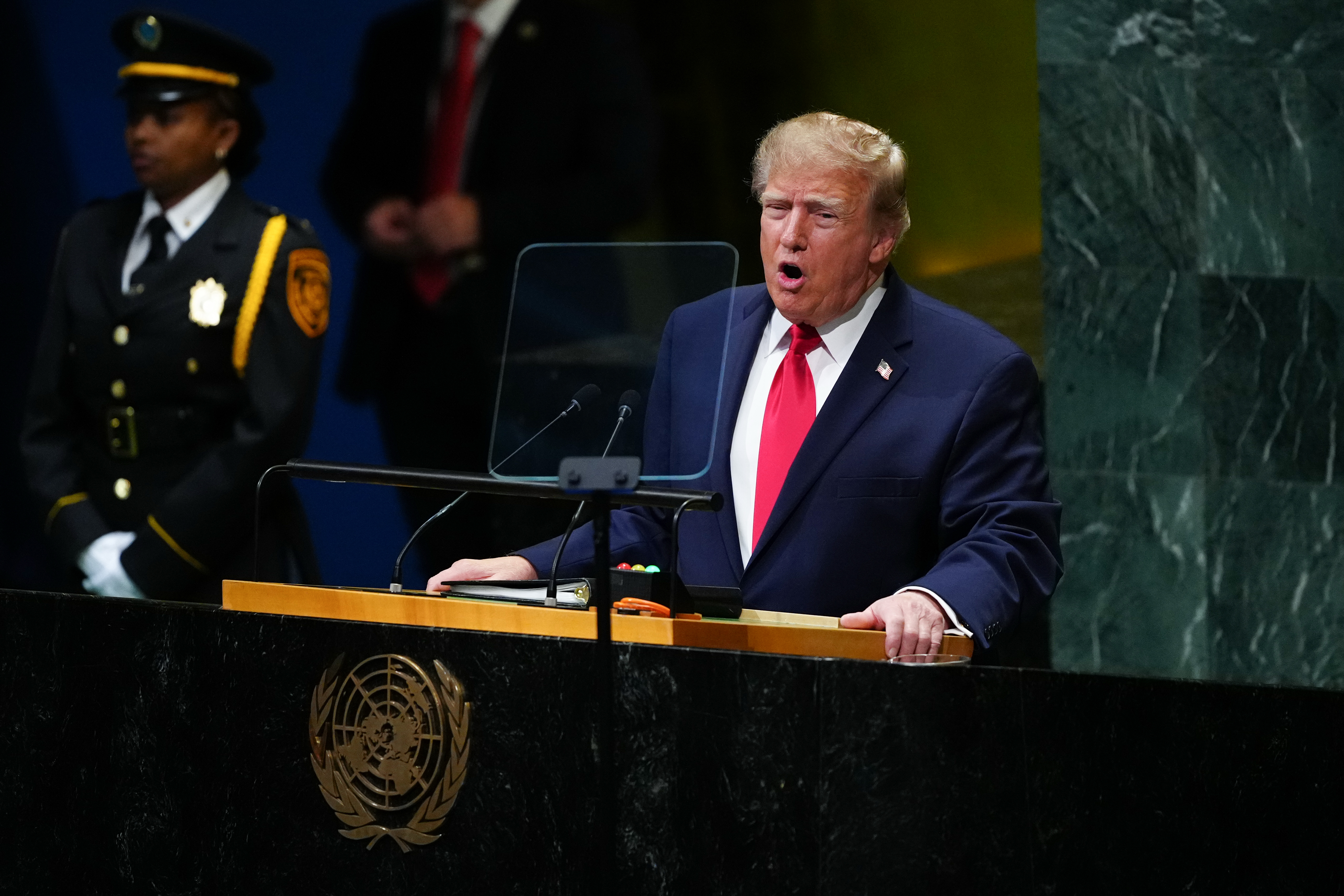
    “The United States also totally rejects any attempt to construct a globalist scheme to control for the artificial intelligence being spoken of so much now — hereinafter officially called ‘super intelligence,’” President Donald Trump said at the United Nations on Tuesday.

    The lethal autonomous weapons negotiations in the U.N. are currently nonbinding, though the talks could open the door to a landmark treaty that is legally binding if member nations agree. It presents the most advanced global effort to regulate how AI weapons are used in the battlefield.

    But at the talks in Geneva in early September, it was apparent that the U.S. and Russia were going to be a major roadblock to progress, the three people said.

    The U.S. team is led by State Department diplomats, Pentagon officials, and legal experts, Coyle of Human Rights Watch said. “It’s a well‑resourced team, and they come prepared to defend U.S. military autonomy,” she said.

    Nicole van Rooijen, the executive director of the global nongovernmental coalition Stop Killer Robots, said Washington and Moscow aren’t in favor of legally binding rules on autonomous weapons and have outsize influence on how negotiations will end.

    The autonomous weapons talks require dozens of nations to reach consensus on what rules will be enacted, she added. The U.S. and Russia do not champion multilateralism — which requires countries to work together to reach agreements — and can use “political capital to exert pressure on other states,” she said.

    “They have the power to block any significant progress that is made by the vast majority of states who do want to move forward on a binding treaty,” she added.

    In November, nations will come together in Geneva to discuss whether talks can turn into an official mandate or potentially a legally binding treaty.

    In the U.S., a parallel discussion is happening as the Pentagon works to rewrite its own directive on the use of autonomous weapons. In June, Trump issued a national security memorandum requiring that the directive be updated within 90 days. As of late September, the U.S. government has not released a new version.

    Established in 2023 during the Biden administration, the directive contained several clauses that echo those eliminated from the U.N. document, including requiring that human judgment be deployed to check autonomous and semiautonomous weapons systems. It also mandated that those who operate AI weapons systems abide by the laws of war and applicable treaties.

    Richard Lennane, the disarmament adviser for the legal team for the International Committee for the Red Cross, said global treaties can be impactful in controlling the use of harmful weapons, citing the effect that directives on chemical and biological weapons, antipersonnel land mines, and cluster munitions have had on limiting use.

    “It’s not about punishment, it’s about setting norms and influencing behavior,” Lennane said. “We believe that a treaty regulating autonomous weapons could be similarly effective.”

    Coyle, however, noted that the U.S. and Russia have the diplomatic muscle, legal teams, and political incentives to keep any global rules on autonomous weapons weak, and she said the actions to water down regulation on AI arms follow a well-trodden playbook.

    “When the U.S. wants to preserve military or technological advantage, it pushes voluntary guidelines instead of binding rules,” Cole said. “We’ve seen the same playbook in cyber, space, and other arms‑control debates. Autonomous weapons are no exception.”

  • Lawmakers slam Trump’s move to cancel $810M in funding approved by Congress

    Lawmakers slam Trump’s move to cancel $810M in funding approved by Congress

    Lawmakers blasted a plan by President Donald Trump to claw back more than $800 million in congressionally approved spending across the government, saying the president had no right to defy Congress in how he directs federal funding.

    The White House late Friday said it was taking a legally contested move to cut funding at federal agencies for a range of programs that direct government services toward immigrants, minority groups, climate change programs, and other issues. It was the latest bid by the Trump administration to assert sweeping control over the government and to trim congressional powers.

    Trump is using his authority under the Impoundment Control Act to do a “pocket rescission” of the funds, the White House said in a statement, a move it also used last year to cut nearly $5 billion in funding for foreign aid, the first time the maneuver had been used in nearly 50 years.

    The Supreme Court allowed the 2025 effort to proceed, though it did so by issuing a stay of a lower court’s ruling that the move was illegal and rested part of its justification on the president’s wide-ranging authority to act on foreign affairs. It held back from declaring that Trump was on solid legal ground. This year’s action is mostly focused on domestic spending.

    The largest slice of funding, $567 million, was clawed back from the Department of Health and Human Services, the White House said, saying that it was cutting money for programs that directed services toward refugees and asylum seekers that it said encouraged a flow of migrants to the United States.

    “These funds previously went to pro-illegal immigration programs and Non-Governmental Organizations that provided services to refugees, asylees, and other non-citizens and put unaccompanied children in harm’s way,” the White House said in its statement.

    Other cuts included an Education Department program for migrant students, a Justice Department program intended to reduce racial tensions in policing, and a Department of Housing and Urban Development program that funded housing counseling for minorities and immigrants.

    Congress typically needs to approve White House rescissions. The White House argues that submitting a rescission request near the Sept. 30 end of the fiscal year allows it to withhold the money until it expires, bypassing Congress.

    The House is out of session until November, while the Senate plans to adjourn in early October to allow lawmakers to campaign for the Nov. 3 midterm elections.

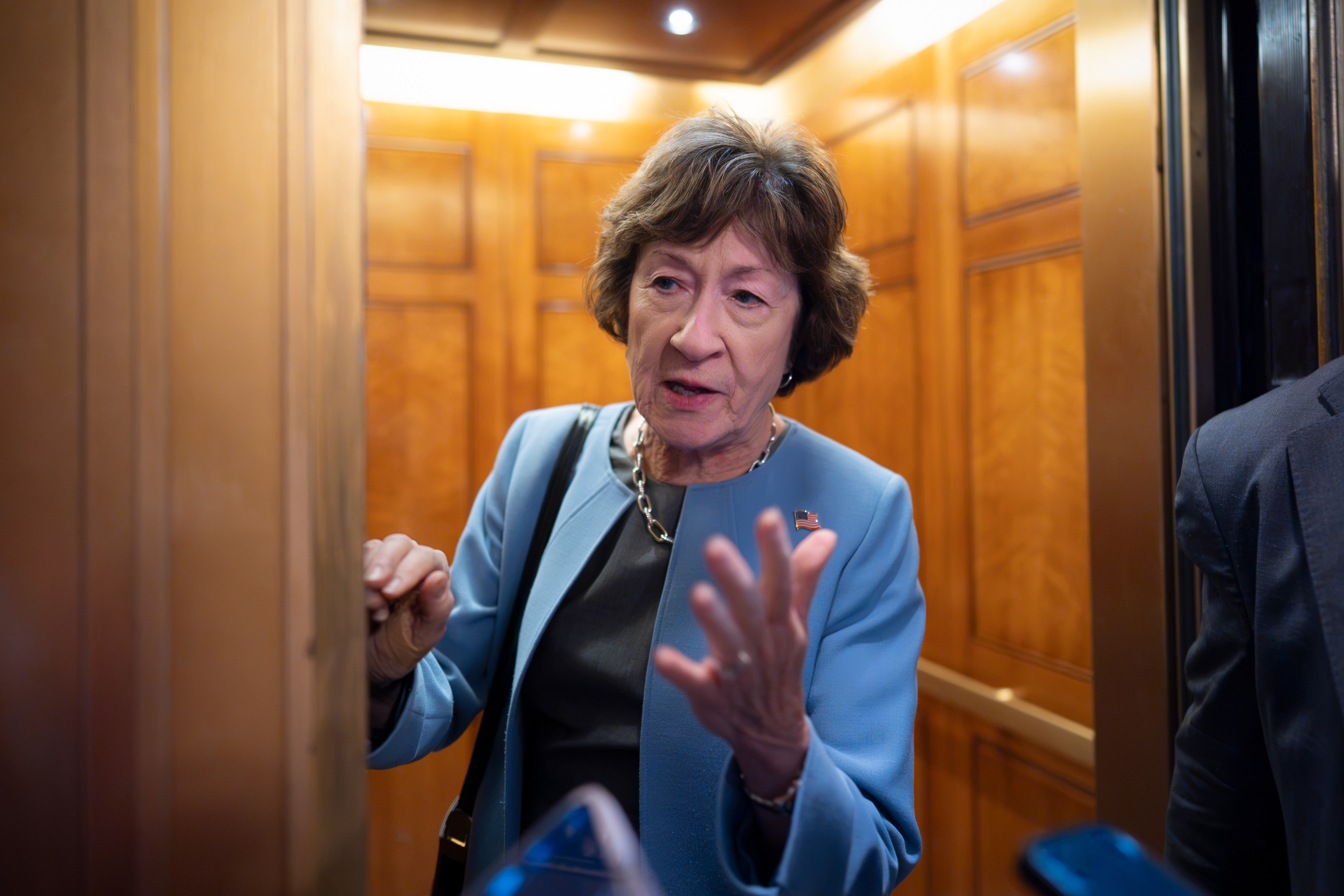
    Sen. Susan Collins (R., Maine), the chairperson of the Senate Appropriations Committee, and top Democratic appropriators have argued that the pocket rescission strategy is illegal. Russell Vought, director of the Office of Management and Budget, has pointed to a Government Accountability Office letter from the 1970s to argue that the strategy has precedent.

    Lawmakers of both parties condemned the move.

    “Without warning or consultation, Congress just received an $810 million package of pocket rescissions from the Administration. This is the most recent attempt by this Office of Management and Budget (OMB) to undermine Congress’s Constitutional power of the purse,” Collins said in a statement.

    Collins is running a tight race for reelection in November for one of the seats that will help determine which party controls the Senate.

    “The independent Government Accountability Office has concluded that pocket rescissions are unlawful and not permitted by the Impoundment Control Act,” she said. “I will work with my colleagues to address these illegal actions.”

    Collins’s Democratic counterpart also blasted the spending decision.

    “This is theft from the American people, plain and simple,” Sen. Patty Murray (D., Wash.), the top Democrat on the Appropriations Committee, said in a statement. “These are funds Congress has delivered on a bipartisan basis and should be helping people — not cut off by a president more focused on building a ballroom than investing in families.”

    Democratic appropriators unsuccessfully fought to bar the Trump administration from using pocket rescissions in their latest funding extension, Murray said. “Republicans refused to take common-sense action and prevent this from happening,” she said.

  • Taking care of grandchildren may help slow cognitive decline

    Taking care of grandchildren may help slow cognitive decline

    Being a grandparent may mean many things: making the best cookies, giving the warmest hugs, passing along hard-won wisdom, and sharing family stories.

    But beyond giving you a sense of joy and meaning, there’s emerging evidence that being a grandparent has other benefits: It may help protect your brain during aging.

    Recent research has found grandparenthood may be linked to not only slower cognitive decline, but also a lower risk of dementia and even a younger-looking brain.

    There are still relatively few studies looking at how grandparenthood changes cognition and the brain, but more research is underway. “This is kind of a new frontier, and we’re just kind of at the beginning of it,” said James Rilling, a professor of psychology at Emory University.

    But the benefits of caregiving as a grandparent make sense, considering scientists have also identified long-term benefits in mothers and fathers, in which parents with more children had increased functional connectivity in brain networks that tend to thin with age.

    “By taking care of others, it might help us to support healthy brain aging,” Rilling said.

    The cognitive benefits of caregiving

    In one of the first population studies of American grandparents and dementia, researchers looked at over 10,000 grandparents and found that caring for grandchildren was linked to a lower risk of dementia over 16 years of longitudinal data, said Seung-won Emily Choi, an associate professor of sociology at Texas State University who researches cognitive health in aging and conducted the study.

    A study published in 2025 of over 10,000 older adults in China found that caregiving for less than 40 hours a week was associated with a 24% reduced risk of dementia compared with grandparents not providing care for grandchildren. The researchers’ analyses concluded this could be in part because of reduced loneliness and increased digital technology access.

    Also, the act of caregiving itself may be linked to the cognitive benefits. Compared with grandparents not involved in caregiving, those who were involved had higher verbal fluency and episodic memory, according to a 2026 study conducted by Flavia Chereches, a graduate student of developmental psychology at Tilburg University in the Netherlands.

    Grandmothers vs. grandfathers

    Intriguingly, the research suggests there may be differences in the effects for grandmothers and grandfathers. In Choi’s study on the link to dementia risk, for example, grandmothers had the most benefits when they were engaged in lower-intensity caregiving (less than 500 hours over two years), while grandfathers benefited from higher intensity (over 500 hours). And in Chereches’s research, only caregiving grandmothers had less cognitive decline.

    This may be, in part, due to cultural gender differences. Grandmothers tend to be more involved in the more physically demanding labor of feeding, cleaning, and managing care, which may be more beneficial in lower amounts.

    The differences may also relate to the “grandmother hypothesis” for the evolutionary reasons adult female humans live long past their reproductive age, a trait shared by few other mammals, including some whales and chimpanzees. Evidence suggests that grandmothers have a consistently positive impact on their grandchildren’s health, Rilling said.

    However, for cognitive benefits, it might not “necessarily matter if you’re a grandma or grandpa, but more like how you experience caregiving,” Chereches said.

    Bonding across generations

    There are many known ingredients that go into healthy aging, such as being embedded in a social network, staying physically active, and stimulating your mind.

    “Caregiving is one meaningful social role that might provide access to all of this,” Chereches said.

    When grandparents are with their grandkids, they report more instances of feeling sadness or worry — perhaps due to concern over the children’s well-being, as well as bittersweet feelings about the transience of life — compared with when they spend time with others.

    But more often, they report more feelings of pride and love, Chereches and her colleagues found in a 2026 study.

    “There seems to be something special about this connection,” she said.

    Time connecting with grandchildren can connect grandparents with others, too. While “interacting with the grandchildren, they have more chances of getting along with their other children or the other family members and even well in the community,” Choi said.

    At the same time, the kinds of interactions nanas and pawpaws have with their grandkids can be very mentally stimulating, with storytelling, playing make-believe, and reading books.

    And you don’t necessarily need to be an actual grandparent to benefit.

    Research on older adults volunteering with Experience Corps, a program run by AARP that trains teams to volunteer in elementary schools, also found that the experience helped improve memory and executive function, as well as decreased brain volume loss in areas associated with dementia.

    A younger brain

    More recent research suggests that the act of caregiving as a grandparent may also be linked to a younger brain. In a 2025 study, Rilling and his colleagues scanned the brains of 50 grandmothers and compared them to those of 25 women of similar ages who were not grandparents. On average, the grandmothers’ brains looked 5½ years younger according to age estimates calculated by a computer model.

    However, these studies are associational and can’t show causation. It’s very possible that people who are healthier are more likely to provide active grandparent caregiving, for example.

    The grandmothers in the imaging study are “almost like super-grandmothers” because they signed up for a study about grandmothers, Rilling said. “They were very mentally, physically healthy, financially stable. They’re not overextended, and they’re really highly engaged with their grandchildren.”

    The research also points to the importance of balance: Caregiving can be physically and mentally exhausting — perhaps an obvious statement to anyone who has engaged in it — which can detract from the benefits. Research shows that grandparents who are the sole caretakers of their grandchildren are less likely to have cognitive benefits, for example.

    “We should not expect that grandparenthood or grandchild care is the right thing for everyone,” Chereches said. “If grandparents want to provide grandchild care, if the role is important to them, and there’s something they want to do, then it’s definitely a great way to maintain oneself active, engaged with a meaningful social role, but then we also need to acknowledge that there are people that maybe would like to do something else.”

    The key is to take care of your own physical well-being with proper sleep, diet, and exercise and to maintain other social connections, Choi said, and at the same time, enjoy the more stimulating parts of taking care of grandchildren.

  • For Trump and Xi, a warm farewell and unfinished business

    For Trump and Xi, a warm farewell and unfinished business

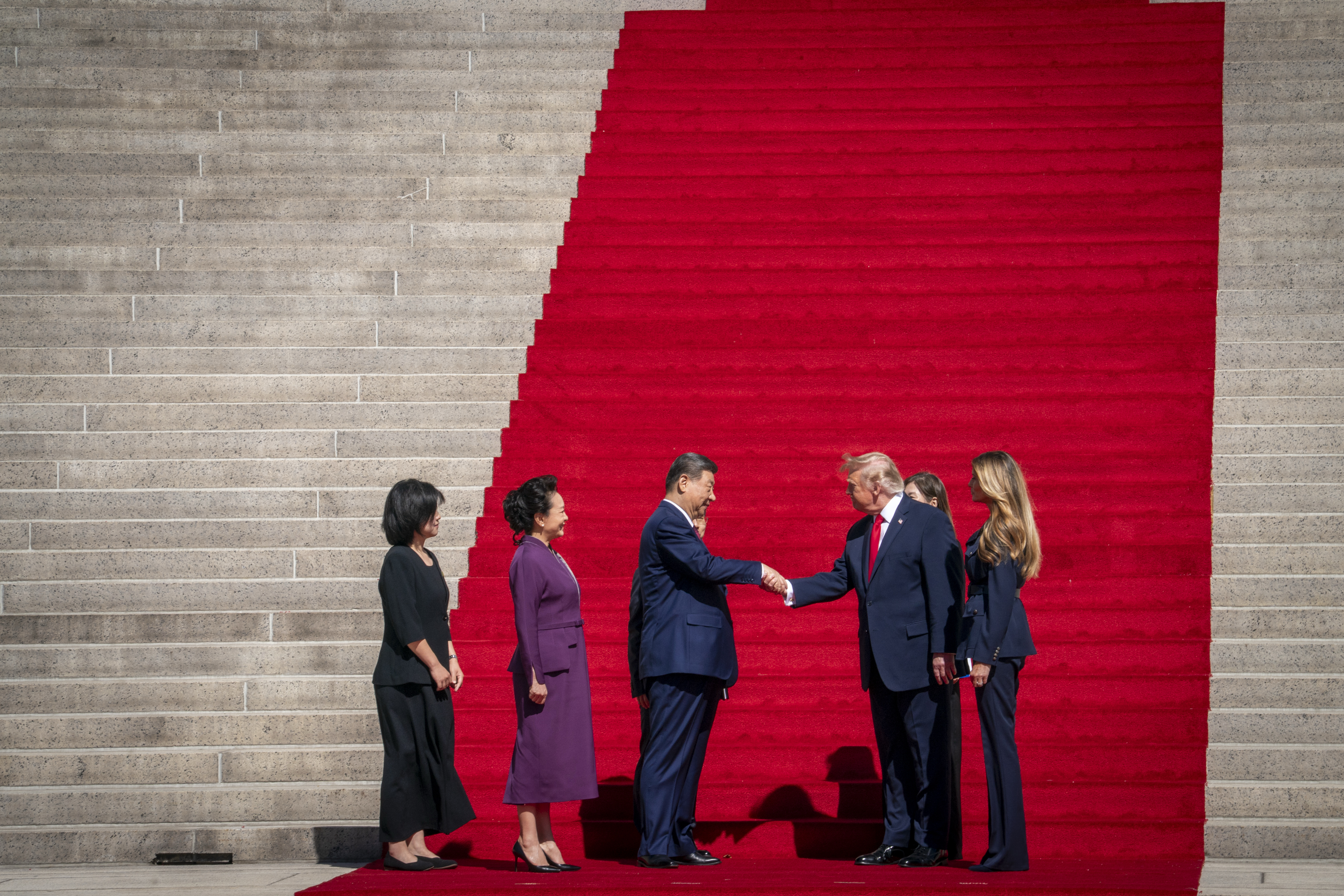
    President Donald Trump showed off the Constitution, the Bill of Rights, and the Declaration of Independence to Chinese President Xi Jinping on Friday, as the two leaders wrapped up a state visit to Washington with friendly gestures but few apparent breakthroughs other than a promise to see each other twice more this year.

    “We’ve made great strides, very positive for both countries,” Trump said over tea Friday before setting out for the National Archives, embracing what he said was a warm personal relationship with Xi.

    He later said that “everything” had been discussed, including the war in Iran, and that the outcome of the summit would be “great for the farmers.”

    Xi focused more on the relationship between the two countries than on his personal chemistry with Trump, continuing a difference that was evident on the meeting’s first day.

    “The president and I are like two people that are charting the course for the great ship of China-U. S. relations,” Xi said. He said that Trump and he had agreed to build a relationship of “strategic stability on the basis of respect, fairness, and reciprocity. So, from this, one can see that the prospects for this relationship will get brighter.”

    He praised his host in terms that were sure to appeal to the U.S. leader, who gained fame early in his career by running hotels and whose family remains invested in the resort business.

    “Everything is done to the highest order of perfection, and there is thought in every little detail, and it’s greatly appreciated,” Xi said.

    After tea, the leaders and their wives toured the National Archives to see the foundational documents of the United States to commemorate America’s 250th birthday year.

    Under a different president, the gesture — parading the authoritarian leader of a communist country in front of the key artifacts that guarantee U.S. democracy — might have been seen as aggressive. Trump, however, offered a genial tour to his guest, and if he commented about democracy, it wasn’t audible to the cameras, which were back in operation after a court order ended Trump’s effort to ban three news organizations from covering him.

    “We’re just comparing. Ours goes 250 years. Which is great, and we’re proud of it. But theirs goes 6,000 years. So there’s a little difference between 6,000 and 250. But we’re very proud of our 250,” Trump said.

    Xi and other Chinese leaders often have focused on their country’s thousands of years of history as a way of emphasizing that they can outlast pressure from Washington — although modern China’s communist government dates to 1949.

    Trump, who Thursday praised Xi’s knowledge of stone and particularly granite, declared his admiration for the rotunda of the National Archives building, which was completed in 1935.

    “This is a great building. Great building,” Trump said. “This is when they built it properly.”

    Trump fought with the news media during the course of the summit after his effort to bar CNN, MS NOW, and Politico from the White House. On Thursday, the White House video pool, which television networks share, remained out of commission as the networks awaited assurances that CNN would be allowed access. That drew complaints from Trump that the press was missing “made for television” moments of the summit.

    By Friday, however, the TV pool was back, and in the end Trump said that he was happy with how the trip had played in the media.

    “We appreciate the fair coverage. It’s been very fair. We appreciate it,” he said.

    The two leaders confirmed plans to meet again in November in China and in December in Miami, making for four face-to-face encounters over the course of 2026.

    The rapid pace of meetings may ease the pressure off any one summit to produce a breakthrough, even as both sides continue to discuss Taiwan, whether to regulate artificial intelligence, and the complex and thorny economic relationship between the two superpowers.

  • Ukraine weighs legalizing pornography to raise tax revenue and buy drones

    Ukraine weighs legalizing pornography to raise tax revenue and buy drones

    KYIV — For years, Ukraine’s huge but illegal porn industry has operated in the shadows. Law enforcement generally looked the other way, while some officials abused their power to extort bribes from people found to be skirting the law.

    Then, two years into Russia’s full-scale invasion, the federal tax authorities discovered that nearly 8,000 Ukrainian OnlyFans creators had made more than $131 million during 2023 alone.

    Now, with Ukraine facing giant military expenses and a $27 billion budget gap, lawmakers are moving to decriminalize pornography — a momentous step for a country long stained by a reputation for exploiting and exporting women as sex workers.

    The legalization of porn is expected to generate roughly $25 million in tax revenue that Yaroslav Zhelezniak, a co-author of the bill in the Ukrainian parliament, said would be enough to purchase 30,000 drones for the war effort.

    “Ask yourself … who benefits,” Zhelezniak said in a speech during the first reading of the bill in July. “Unfortunately, it’s not the Ukrainian state budget. And we can’t use that money to increase funding or raise salaries for our defenders; all that money remains in the shadow economy.”

    He added, “I believe we are already mature enough as a nation to acknowledge that sex exists.”

    Raising money on the backs of adult-content creators, however, is a fraught proposal in Ukraine, where the women’s protest group Femen rose to worldwide fame by demonstrating topless to decry sexual exploitation and patriarchal authoritarianism.

    Critics of the bill fear that it could undermine public morality, as well as increase the risk of human trafficking and child sexual abuse.

    Former Ukrainian prime minister Yulia Tymoshenko has criticized the bill in parliament, raising concerns about child abuse and arguing that the law could turn Ukraine into a “pornographic hub.”

    The All-Ukrainian Council of Churches and Religious Organizations, meanwhile, has called for the bill to be withdrawn and has issued a statement saying it poses significant harm to the morals and health of Ukrainian society.

    A push by the Ukrainian government to lay claim to tax revenue instigated the legalization campaign after creators suddenly found themselves under pressure to pay back taxes, though doing so could be an admission that they broke the law by making porn.

    Svitlana Dvornikova, who has 1 million subscribers on OnlyFans, said she received a letter from tax authorities demanding that she pay up — which she did, by filing about $900,000 in taxes retroactively even as she suspected a trap.

    Sure enough, last year the police raided her home, as well as the home of her elderly parents, looking for phones, laptops, video equipment — anything that could prove that she was involved in the illicit production of pornography.

    Dvornikova is now facing a criminal case.

    “We paid these taxes with one eye open, suspecting it might end badly,” she said in a phone interview. “I wanted to support my country, give more money to the war, to our soldiers — we really thought this would contribute something.”

    Dvornikova estimates that the taxes she filed alone could finance 100 new military pickup trucks or 2,000 drones.

    Following her encounter with the police, Dvornikova launched a petition to legalize pornography, which has since garnered more than 25,000 signatures. Her petition triggered the formulation of the bill, which passed its first reading by a vote of 231-8 with three abstentions, and is now awaiting its second reading.

    Oksana, the head of management at OFM Models, an agency that manages adult-content creators in Ukraine and abroad, told the Washington Post that since the bill’s first reading, the number of women contacting her agency to apply for work had doubled.

    Oksana, who spoke on the condition that she be identified only by first name because of the risk of criminal prosecution, said decriminalization would empower, not exploit, women in the industry.

    “Women were waiting for a signal from the state; this is the moment when the state finally saw these women as taxpayers rather than criminals,” she said. “Adoption would mean one simple thing: The fear would disappear. Women would be able to work openly with lawyers and banks and defend their rights.”

    Meanwhile, however, more women are under legal pressure.

    The number of criminal cases under Article 301, the law that bans pornography, has increased in recent years, according to Ukrainian media reports.

    In the first six months of 2025 alone, 2,368 criminal proceedings related to pornography were opened in Ukraine.

    In May, police chiefs in three regions were exposed in a massive corruption scandal and arrested on suspicion of accepting bribes to provide “protection” to two dozen webcam and adult-content studios. According to investigators, the police chiefs demanded $20,000 per month in bribes from each studio.

    The threat of arrest and coercion hangs over every woman, Oksana said.

    “Anyone who finds out about her work gains leverage over her,” she said. “Their biggest fear isn’t even about money. It’s that their families will find out about their work. … As long as it remains in the code, most women simply stay in the shadows.”

    For years, Dvornikova said, she traveled from her frontline town to luxury villas in Europe so she could work, operating in disguise, under a pseudonym. She said she lived in constant fear of police harassment and blackmail.

    “If we end up legalizing this, it means we can work calmly, make money properly and pay taxes to the state — that’s what it means to us,” she said. “We want to do our duty, like a gentleman, as they say.”

    But if legalization doesn’t happen, Dvornikova says, she will probably have to leave the country for good. Her criminal case has been paused as the bill proceeds.

    Another creator, Anastasia, 29, also received a letter from the tax authorities. Anastasia said she has been working in the industry for three years, has a young son, and wants to stay out of the limelight. So far, by keeping her earnings modest, she said, she has managed to avoid any harassment from the authorities.

    “The tax authorities are primarily interested in those who are making serious money: The more you earn, the more attention you attract,” she said. “What matters most to me is that a model is treated with respect and seen as a person, rather than simply as a tool for making money.”

    “This all genuinely made me angry because it’s simply unfair,” she said. “They don’t want to legalize it, but they want you to pay taxes.”

    Supporters of legalization say that it will protect women, not encourage abuse.

    “Human trafficking is based on coercion: A person is deceived; their documents are taken away,” Oksana said. “The modern creator economy is completely different. An adult woman verifies her identity and age on the platform and determines her own boundaries.”

  • Iced coffee, tattoos, thank-you notes: The shifting do’s and don’ts of job interviews

    Iced coffee, tattoos, thank-you notes: The shifting do’s and don’ts of job interviews

    When I was a fresh college graduate, interviewing for my first full-time job, I thought about my mother’s interview do’s and don’ts. Don’t wear anything that could reveal tattoos. Don’t start with asking questions about salary. And always — she stressed this above all else — mail a physical thank-you note the next day.

    In the years since I entered the job market, interview etiquette norms have changed dramatically. While each sector, field, and company may have its own rules, former no-nos like tattoos and dyed hair often aren’t deal-breakers. And many interviews take place over Zoom, which introduces a whole new slate of do’s and don’ts.

    But not everyone agrees on which rules to keep and which to toss out.

    In a video posted on TikTok last week, recruiter Caitlin Wehniainen introduced a new one: Don’t carry an iced coffee into an interview. Walking in to shake hands while juggling a drink can make a big moment seem like just “another stop on your list of errands for the day,” she said.

    The comments section under her original video exploded. One recruiter agreed that bringing an iced coffee into a meeting can be distracting; one poster asked, “Are you expecting my whole day to revolve around a 30 min meeting?” Satires and skits have spoofed both Gen Z jobseekers and corporate overlords.

    Wehniainen has since posted a follow-up video, saying she wasn’t trying to stoke the flames for the sake of likes and reposts.

    “When you really want a job offer, you need to know certain ways of going about the process and that helps you build confidence, when you know what to expect going in the door,” she said.

    The video and the ensuing debate have exposed a greater challenge: How do you navigate ever-changing interview etiquette when the job hunt can already be so confusing, discouraging, and exhausting?

    “Norms are constantly changing to the ways we do business and technology,” said Keva Dine, a recruiter and founder of the Keva Dine Agency. “There’s a desperation, and everyone is applying to everything. They’re throwing darts in the dark.”

    In Dine’s view, anything you can do to stick out in a good way is a plus. Wearing business attire to an interview or sending a thank-you note the next day may not be the standard in every workplace, but often they can help. When people rely on AI-generated cover letters or apply to jobs without researching the company, they’re much more likely to get lost in the shuffle.

    If you’re interviewing on a video call, keeping the camera on during a video and tidying up the Zoom background are non-negotiables, said Juliet Murphy, an executive career coach based in Irvine, Calif.

    “Put in a bit of extra effort,” she said. “You need to let the other person know how seriously you’re taking the role.”

    In her 15 years working in corporate human resources and recruitment, Vicki Salemi never clocked the beverage in a candidate’s hand. But Salemi, now a career expert at the job site Monster, said she did notice seemingly small things, like how they greeted the reception desk and how they behaved in the lobby waiting area. Those things matter when you’re bringing someone into a workplace, she said.

    “Your behavior and your etiquette are part of the package,” she said.

    And if a candidate doesn’t like a company’s stance on these norms — the iced coffee included — the in-person interview is an opportunity to evaluate that up close.

    “The interview has always been a place to assess fit, both for the applicant and for the company,” said Sara McCord, a former career columnist and founder and CEO of Sara McCord Communications. “If there’s an immediate, visceral reaction on either end — a company doesn’t want a candidate who brings an iced latte, a candidate doesn’t want somewhere where the company cares — that’s actually specifically, exactly how the interview is supposed to work.”

  • Trump ad airing with government funding despite law against ‘propaganda’

    Trump ad airing with government funding despite law against ‘propaganda’

    A television ad promoting President Donald Trump began airing on cable Wednesday saying it was paid for by the U.S. government, despite a federal prohibition on using taxpayer dollars for “publicity or propaganda.”

    The ad is similar to spots released earlier by the nonprofit arm of Trump’s political operation to promote his record in the midterms campaign. But this one includes a tag reading, “Paid for by the U.S. Government.”

    Since the 1950s, annual appropriations legislation — including the funding bill Trump signed in February — has routinely included a ban on using federal funds for “publicity or propaganda purposes.” The Government Accountability Office has said the prohibition applies to communications that are “purely partisan” and “designed to aid a political party or candidates.”

    The ad consists of a supercut of Trump photos and videos interspersed with text of campaign slogans. The soundtrack features snippets of Trump speeches and a chorus of women singing, “I’ll make them love me.” It ends with Ultimate Fighting Championship CEO Dana White praising Trump over footage of the June match on the White House lawn and military flyovers.

    It has aired so far on Newsmax in Chicago and Fox News in Los Angeles, according to ad-tracking firm AdImpact. More details about who bought the airtime were not available.

    The White House and representatives of Trump’s political team did not immediately respond to questions about the ad.

    Rep. Jamie Raskin (D, Md.), the top Democrat on the House Judiciary Committee, said on social media that the ad could amount to “felony criminal theft and conversion of government property for political campaign purposes.” He also cited the Hatch Act, which prohibits government employees from using their positions or official resources for political activities.

    There is no immediate precedent for a government-sponsored political ad during a campaign.

    In 2004, the administration of President George W. Bush was criticized for releasing ready-to-air video segments showing Bush signing a Medicare prescription drug law, complete with hired contractors posing as reporters. The GAO said the materials violated the propaganda prohibition.

    In the first Trump administration, the Department of Health and Human Services commissioned a $250 million coronavirus ad campaign that congressional Democratic investigators found included partisan interests. The agency backed off using pro-Trump celebrities in the ads.

    Last year, the Department of Homeland Security under then-Secretary Kristi L. Noem spent more than $200 million on ads promoting her and Trump’s immigration policies. In March, Noem testified that Trump approved the campaign, prompting him to fire her.

  • Even medical professionals are skipping health insurance because of high prices

    Even medical professionals are skipping health insurance because of high prices

    BOISE, Idaho — Joshua and Ashley Durham run a family medicine practice, and for the first time in their lives, they have no health insurance for their own family.

    When the Durhams began their practice at the end of 2023 — he as a primary care physician and she as a pharmacist who handles billing — the couple bought coverage for themselves and their two children on the Affordable Care Act marketplace. But they said their monthly premiums for a similar health plan for this year rose several hundred dollars to nearly $1,600.

    They decided to pay out-of-pocket for their medical expenses instead, leaning on $50,000 they had set aside in a health savings account over several years.

    “It’s nerve-wracking,” said Joshua Durham, 47. “It just takes, you know, one little accident, and then you got a big fat bill.”

    A larger share of healthcare workers have health insurance than those in other fields. Nationwide, 7% of all healthcare workers were uninsured in 2024, compared with 11% of all adults under 65, according to a KFF analysis of the most recent American Community Survey data. And doctors were especially unlikely to forgo health insurance, with just 2% uninsured.

    But even healthcare workers are feeling the pinch as health insurance costs rise each year, and employers expect that costs will jump an additional 8.2% for 2027.

    The Republican-led Congress last year opted not to renew some Affordable Care Act marketplace credits, which were enacted during the COVID pandemic. Subsidies remain in place for people with low incomes. The pandemic-era credits helped reduce many consumers’ premium payments, especially those working in small businesses such as independent medical practices. Nearly half of marketplace enrollees worked for small businesses or were self-employed in 2024; some of the most common occupations included chiropractic care and dentistry.

    Jack Dillon, executive director of the Association for Independent Medicine, which represents 4,000 physician-led practices, said premium increases have become untenable for small businesses, whether employers seek coverage through the marketplace or directly from insurers.

    “The cost has become so astronomical,” Dillon said. “You’re looking at it and saying, ‘What’s the value?’”

    As health insurance continues to become less affordable, Dillon said, more healthcare employers may seek alternatives to their standard coverage, such as providing higher hourly wages or providing only minimal plans.

    The number of people without insurance in the United States is expected to increase by roughly 15 million over 10 years because of the expiration of the expanded ACA subsidies and $1.1 trillion in estimated cuts resulting from President Donald Trump’s signature One Big Beautiful Bill Act, according to the Congressional Budget Office.

    Healthier people are the most likely to opt out of insurance. That leaves insurance covering a smaller pool of people who tend to be sicker and need more expensive care. So insurers raise prices to cover the remaining enrollees, which fuels even higher premium costs.

    Samantha LeGault, a nurse practitioner for a behavioral health clinic in Boise, Idaho, says her medical insurance premium costs rose from $700 to $1,500 a month this year to cover her, her husband, and four of their kids. Hayat Norimine/KFF Health News

    ‘Healthcare is a business’

    Samantha LeGault, a nurse-practitioner at a health clinic in Boise, said her employer-offered plan’s premium payment rose from $700 to $1,500 a month this year to insure herself, her husband, and four of their children. LeGault has Crohn’s disease and two of their daughters also have medical conditions, so she said her family has no choice but to continue to pay for that health coverage.

    But she decided to skip dental insurance to save money, and she prioritizes dental visits for her children over herself.

    She had already struggled to set aside retirement savings and had switched her children from a private school they liked to public school to cut down on costs. Then the new health insurance costs tightened her budget even more. She estimated that about one-fifth of her income now goes toward her monthly premium payments.

    “I know how the clinics work, that I am an expensive patient,” LeGault said. “At the end of the day, healthcare is a business in the United States.”

    The Durhams have three other employees in their practice. Two of them receive health insurance through their spouses, Ashley Durham said. The Durhams said they pay $420 monthly toward the physician assistant’s premiums.

    As a primary care physician, Joshua Durham said he doesn’t need regular doctor visits because he can diagnose and treat himself — and, if needed, the rest of his family, though he acknowledged that’s frowned upon. The American Medical Association’s code of ethics generally discourages doctors from treating themselves or relatives but makes exceptions for emergency situations or short-term, minor problems. Ashley Durham said she’s filled prescriptions for her family.

    Arthur Caplan, a bioethicist and professor emeritus at New York University’s Grossman School of Medicine, said that as more people are “turning toward relatives because they can’t access or easily see a regular doctor,” it may make sense to revisit that aspect of the code of ethics.

    Out-of-pocket expenses

    Healthcare workers with less advanced medical certifications than the Durhams often don’t have the option of treating themselves or family members — or don’t have savings to fall back on for healthcare expenses. And many healthcare professionals, such as Jill Kordick, a 64-year-old retired healthcare executive in Norwalk, Iowa, aren’t willing to go without the safety net of insurance.

    In her work, Kordick saw hospitalizations become financially devastating for patients, so she said she would never opt out of health insurance — even for the 16 months before she’d become eligible for Medicare at age 65.

    Last year, she qualified for the enhanced Affordable Care Act tax credits, allowing her to pay $75 a month for health coverage. Her premiums rose to $800 a month this year when those subsidies expired.

    Because she has a $10,000 deductible, she put off going to the doctor for weeks when she had a sinus infection this year, until it ultimately evolved into an ear infection. She said she regularly rethinks, and sometimes returns, nonessential groceries in her shopping cart. And she keeps her house’s thermostat at 80 degrees in the summer to cut down on air-conditioning costs.

    Kordick said healthcare is a universal struggle in the United States, regardless of how familiar patients are with the industry. “It’s disheartening that it’s as broken and fragmented as it is,” she said.

    The Durhams have seen the impact of unaffordable healthcare on their patients. They said they try to offer some leeway to patients when they can — a luxury they have, operating their own practice. In one case, Ashley Durham said, she wrote off $1,160 in bills for a single father whose son didn’t have health insurance rather than send their bills to a collection agency.

    “It’s hard, because as a human I want to help them out,” she said. “At the same time, we need revenue for our office.”

    Joshua Durham is more nervous about going uninsured than his wife. As a child, he witnessed his parents struggling to pay medical bills for their family of nine in south-central Idaho. Durham recalled that his father, who was a carpenter, helped build a surgeon’s house to pay for an operation.

    Today, Durham also sometimes exchanges work for care. He said he gets free eye exams from an optometrist, who also forgoes health insurance, and offers him free primary care.

    He worries about a worst-case scenario: a car crash, a sports injury, a serious diagnosis.

    “Do I have pancreatic cancer today?” Durham said wryly.

    So far, the couple has paid about $9,000 out of their health savings account for expenses this year including contact lenses, mental health therapy, and physical therapy for the thoracic outlet syndrome that affects Durham’s neck and shoulder. The expenses were higher than the Durhams anticipated. But they were still less than what their monthly premiums would have cost them.

    Their decision has paid off, Joshua Durham said. At least for now.

    KFF Health News is a national newsroom that produces in-depth journalism about health issues and is one of the core operating programs at KFF — the independent source for health policy research, polling, and journalism.