Category: Washington Post

  • Trump launches government chatbot, urging a wary public not to fear AI

    Trump launches government chatbot, urging a wary public not to fear AI

    After weeks of Washington being gripped by a new wave of fear about artificial intelligence gone awry, the Trump administration took a sharply different stance Tuesday, seeking to convince a skeptical public that the nation is instead about to embark on a tech-powered “golden age.”

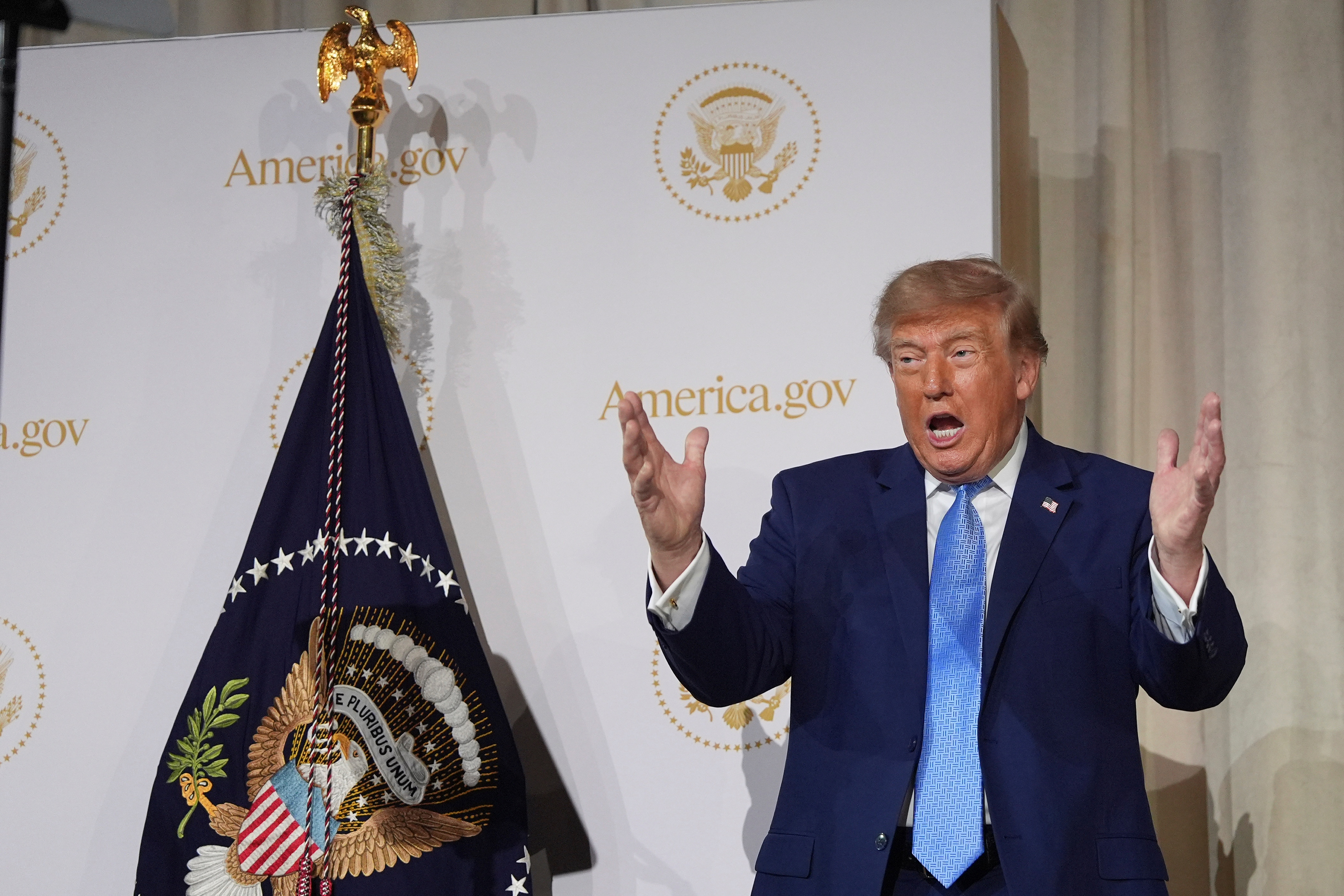
    President Donald Trump launched America.gov, a government chatbot for researching public services, as part of a daylong event featuring members of his Cabinet and tech executives. AI company leaders were also set to meet with him and House Speaker Mike Johnson (R., La.).

    “This kind of innovation in government is just a preview of what is possible with super intelligence,” Trump said, using his new nickname for AI.

    The events come at a pivotal moment for the technology. AI firms say their latest systems have become increasingly powerful, showing signs of being able to design their own more-potent successors. But companies have struggled to keep control of the technology, as rogue AI agents have hacked into company and government systems, and a roster of top industry figures have warned that the end result could be catastrophic for humanity.

    Last week, it was disclosed that the federal government itself had been a victim, with a handful of websites probed by AI agents deployed by ChatGPT maker OpenAI. (The Washington Post has a content partnership with OpenAI.)

    Yet, even as the public’s concerns have grown and Democrats in Congress have pressed for regulation, Trump has largely dismissed the risk, calling it a “hoax.”

    “We do not surrender to fears about what technologies will do to us,” Trump said Tuesday. “We decide that those technologies will do for us some very, very incredible things.”

    Tuesday’s events are a chance for the administration to focus on the upsides of the technology, propelling a different narrative than the warnings introduced by company CEOs in recent weeks. AI’s many boosters expect it will invigorate the economy, push the boundaries of science, and help cure diseases. But that message has found only limited traction with a public worried about job losses and rogue bots sowing chaos online.

    The U.S. government is unveiling AI tools amid growing concerns about the ways that chatbots store and share data. Last week, OpenAI announced that ChatGPT leaked 53 “user-provided images” to image-hosting providers.

    The website was rolled out at a conference in the gilded Andrew W. Mellon Auditorium, which was set up to evoke a tech company product release stage. Music played as staff members distributed cans of La Colombe iced coffee to attendees, while a sleek “Hello, America” logo was projected on a large screen at the front of the room.

    Joe Gebbia, the chief design officer of the United States and architect of America.gov, described the website, a partnership with Google’s Gemini and SpaceXAI’s Grok, as a “concierge to navigate government.”

    “Don’t think of it as a website, it’s more of a conversation that you start with the government to try to get access to the answers you need,” he said on Fox News on Monday.

    The website will initially enable users to search for information across government websites, providing access to job postings or the files that the Trump administration has released about UFOs, he said.

    But in the coming months, the goal is for the chatbot to help people enroll in government programs such as Medicare or complete tasks such as passport renewals.

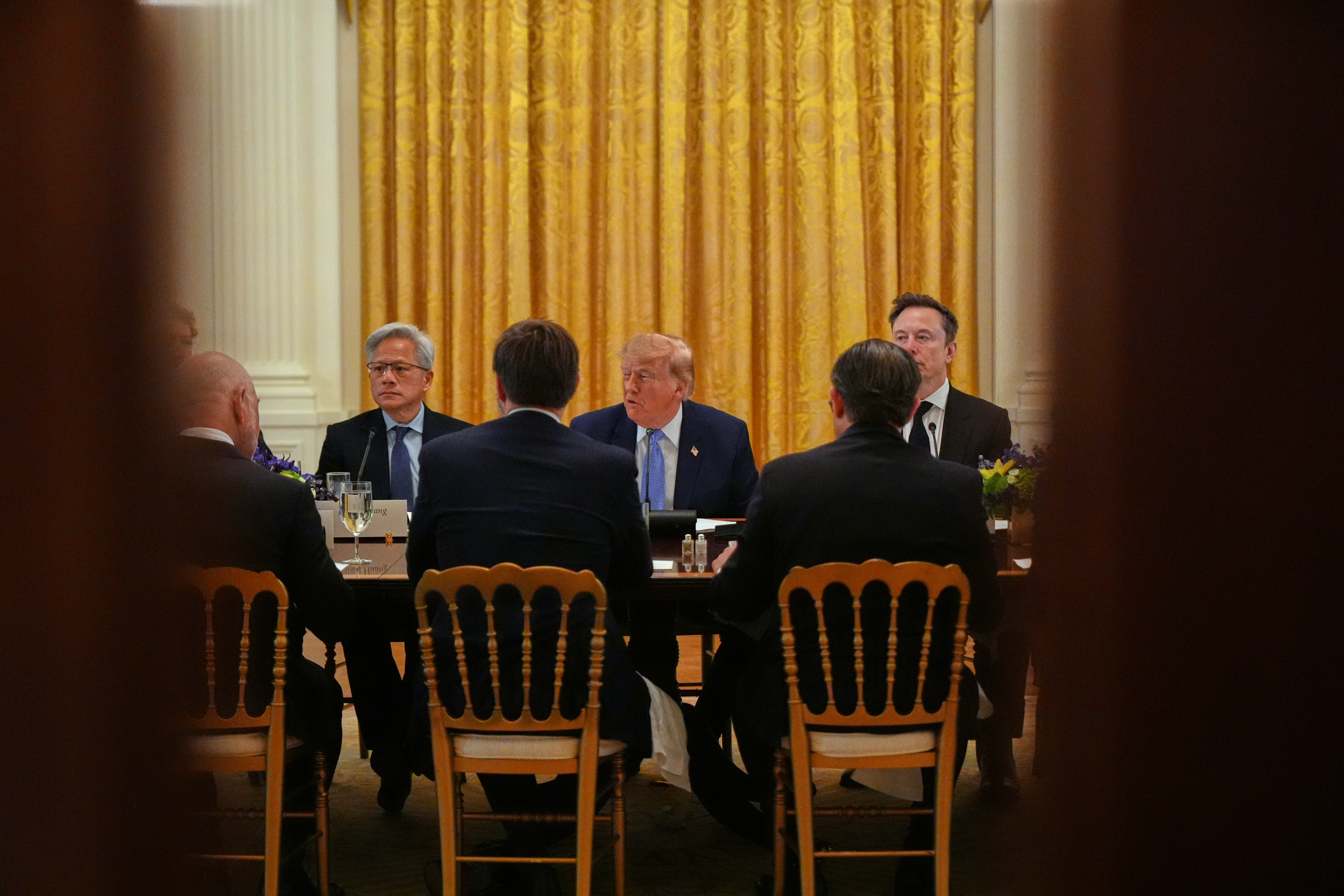
    After the rollout of the website, CEOs such as Anthropic’s Dario Amodei and Nvidia’s Jensen Huang had lunch with the president at the White House. Johnson said Monday that his goal for the meeting was to find a “balance.”

    “We want to keep America’s lead over China and all of our other competitors, but we want to make sure that it’s being done in a safe way,” Johnson said in an interview with Fox Business. “So, a little oversight, a little transparency, I think, would go a long way here.”

    As the industry has tried to navigate those concerns, the private summit between tech CEOs, the president, and the speaker could be the most consequential part of the day, giving officials and executives a chance to discuss a common vision.

    Amodei led the industry this month in issuing a call to slow the pace of development to better focus on safety. But the idea has divided his peers and has not been endorsed by the White House.

    Amodei, who previously clashed with the administration over the use of his company’s technology by the military, dined with the president late Sunday in their first one-on-one meeting. He was expected back at the White House on Tuesday to attend the private meeting.

    Amodei was joined by Huang and Meta CEO Mark Zuckerberg, according to people familiar with their plans who spoke on the condition of anonymity to discuss a private meeting. Both have resisted calls for any coordinated slowdown, saying it is up to individual companies to ensure that their products are safe. Sundar Pichai, the chief executive of Google, was also expected to attend, according to a person familiar with his plans who spoke on the condition of anonymity to discuss a private meeting.

    The Associated Press reported that Trump said on Tuesday that he and a large group of leaders of artificial intelligence companies had signed a voluntary accord that will include internal and external reviews during the meeting at the White House.

    “I think I’m seeing tremendous self-policing. And they understand that they have to self-police,” Trump told reporters during an impromptu press conference outside the West Wing.

    Zuckerberg said the accord included “a set of principles and commitments around building robust internal controls and detecting if there are any issues with the technology, coupled with multiple layers of of auditing and controls.”

    “We’re going to have all of our boards of directors independently review the reports that come from the auditors,” said Zuckerberg, who has distanced his company from calls for a slowdown in AI.

    Trump suggested there would be about 10 people named to a committee to “watch over the whole enterprise” and said the accord would be “morally binding.” He also said he would name someone to oversee the agreement in coming days after consulting with industry.

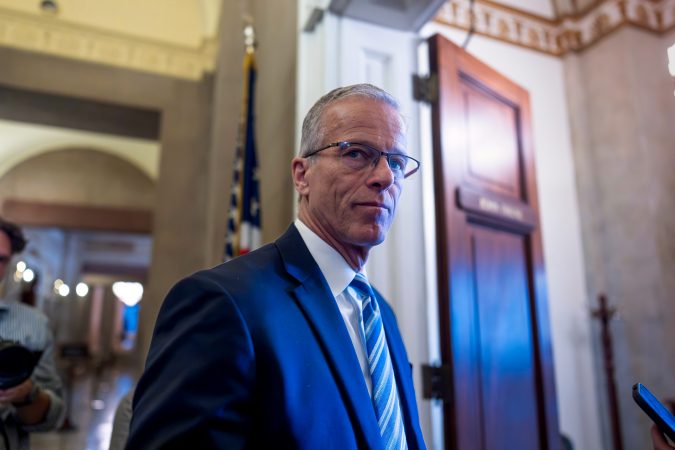
    Senate Majority Leader John Thune (R., S.D.) said Monday that he would not attend but will meet with some of the participants.

    Trump recently said he plans to name a new AI czar and create an “AI Force,” although its role is unclear. The president made clear at a speech to the United Nations General Assembly last week that he wants to see the U.S. continue to race ahead — rebranding the technology as “super intelligence.”

    “I’m not going to stifle growth of something that will be bigger ⁠than the Industrial Revolution,” he said.

    Trump’s AI push comes as his administration has cultivated relationships with Silicon Valley executives and investors. Gebbia, who co-founded Airbnb and joined the Trump administration through the U.S. DOGE Service, is among a group of tech leaders who argue they can improve Washington by applying Silicon Valley principles.

    During the Obama administration, healthcare.gov crashed amid the rollout of the Affordable Care Act, sparking criticisms of the government’s technological prowess. Despite years of efforts to modernize government technology, it has continued to lag behind the corporate sector. Other government tech initiatives have fueled privacy and surveillance concerns. In 2022, the government abandoned a plan to require Americans to submit to a facial recognition scan in order to access their tax information following fierce criticism.

    Gebbia pushed back on concerns that the new website would collect Americans’ data, describing it as “private by design” to Fox News. He said that the website does not store chats and that people do not need to log in to use it.

    Fears about AI took on new urgency in Washington in early September, when a researcher quit Anthropic and said the technology could bring about human extinction. Many lawmakers said they wanted to take action to impose guardrails, but Congress is set to leave ahead of the midterm elections without advancing any legislation.

    In the absence of formal federal leadership, OpenAI, Anthropic and Google — the companies at the cutting edge — have discussed creating their own group to set standards for the industry. In the meantime, OpenAI said it was pausing training of its powerful systems until it was confident it had more safeguards in place. It also announced Monday that it will cancel a planned model release because of safety concerns.

    The decision to pause training was announced Friday, when the company also confirmed that its agents accessed information from the Census Bureau using a log-in found online and copied information from the Securities and Exchange Commission. Transluce, an AI research organization, said agents had also tried to hack into an Education Department civil rights website.

    “People want to know AI is being developed safely, and that starts with what companies like ours do ourselves,” said OpenAI spokesperson Drew Pusateri, adding that the company “will resume training only when we are confident that we have additional safeguards in place.”

    But on Monday, Florida Attorney General James Uthmeier (R) asked a court to step in and force the company to pause development work, in a sign of how Republicans are split on their approach to the technology. Uthmeier, whose office has sued OpenAI, alleging it has put children at risk, said he was inviting company chief executive Sam Altman to join his request.

    “If he will not, we ask the court to do what OpenAI will not do for itself — protect Florida families,” Uthmeier said in a video posted Monday to social media.
  • DOJ probe into Trump foes sees another prominent departure

    DOJ probe into Trump foes sees another prominent departure

    Another prominent Trump loyalist working on the wide-ranging conspiracy investigation in Florida into President Donald Trump’s political foes has abruptly left the probe, according to three people familiar with the matter, marking the latest departure in a high-profile inquiry that has become a central focus for the administration and its allies.

    Kurt Olsen — who before joining the so-called “grand conspiracy” investigation in June had served several months as Trump’s election security czar — tendered his resignation from the Justice Department on Monday, the people said. Olsen did not respond to requests for comment.

    Two of the people said Olsen had become frustrated by pressure from Justice Department officials in Washington to increase the pace of the probe and secure grand jury indictments. The third person, who disputed that description, said Olsen left after issues arose with his security clearance that prevented his further involvement.

    The resignation was the latest staffing shake-up to roil the investigation in recent days, prompting questions about its direction and its future. Earlier this month, Joseph diGenova, another Trump ally who was appointed to lead the inquiry, suddenly quit five months in after publicly lobbying for the job.

    Multiple other attorneys who had been dispatched to Florida to work on the case have since left to return to previous assignments or take on new ones, and other new lawyers have since joined the case, the three people familiar with the staffing situation said.

    They all spoke on the condition of anonymity to describe the inner workings of the “grand conspiracy” investigation, which has become the ambitious and legally complicated investigation of the Justice Department’s efforts to prosecute Trump’s political foes.

    The theory, as officials have described it, is that high-ranking officials from the Obama and Biden administrations engaged in a decadeslong, “deep state” conspiracy to violate Trump’s civil rights.

    Those efforts, investigators contend, include the FBI and intelligence community investigations of potential ties between Russia and Trump’s 2016 campaign, as well as the push under special counsel Jack Smith to prosecute Trump after his first term for allegedly mishandling classified documents.

    Speaking to the Washington Post earlier this month, DiGenova declined to discuss in detail the reasons for his departure, saying in a text message that he still believed in the strength of the case the team was building, but that “time was needed to build those cases” and “people differ on how long that should take.”

    He was the second prosecutor overseeing the investigation to step aside. Maria Medetis Long, a veteran national security prosecutor in Miami, left the investigation in April after expressing discomfort with its direction, the Post has reported.

    Olsen joined soon after Meditis’s departure. Before that role, Olsen had been working in the White House, investigating Trump’s baseless claims that the 2020 election was stolen, and had played a central role in initiating the FBI’s ongoing investigation into the vote count in Fulton County, Ga., which was pivotal to Trump’s loss that year.

    Before the second Trump administration, Olsen was among a group of lawyers who had unsuccessfully pushed the Justice Department in 2020 to endorse those false claims.

    His resignation from the Justice Department and the “grand conspiracy case” was first reported Monday by the Daily Mail.

    Despite that staffing uncertainty, signs have emerged in recent days that the investigation is moving forward under the leadership of Jason Reding Quiñones, the U.S. attorney in Miami whose office has been tasked with overseeing the probe.

    Attorneys for former CIA director John Brennan — one of the investigation’s purported targets — said in a recent court filing that he had been subpoenaed to testify next week before a grand jury in Fort Pierce, Fla. Several former FBI agents tied to the 2022 search of Trump’s Mar-a-Lago estate in Florida have also indicated that they have been summoned to offer testimony.

    Two of Attorney General Todd Blanche’s top deputies, Trent McCotter and Aakash Singh, traveled to Florida in recent weeks to meet with the investigative team, a person familiar with that trip said.

    Speaking Monday, a Justice Department spokesperson rejected any suggestion that top officials had pressured DiGenova, Olsen, or anyone else involved in the “grand conspiracy” investigation to bring charges before the inquiry was complete.

    “Leadership has full confidence in the great team of experienced prosecutors in the Southern District of Florida led by U.S. Attorney Quiñones,” the department said in a statement. “Work on this investigation continues, and we are grateful to the talented team of attorneys, which continues to grow, doing the work each day.”

  • Jack Smith clashes with senators over Trump probes, says he will not be silenced

    Jack Smith clashes with senators over Trump probes, says he will not be silenced

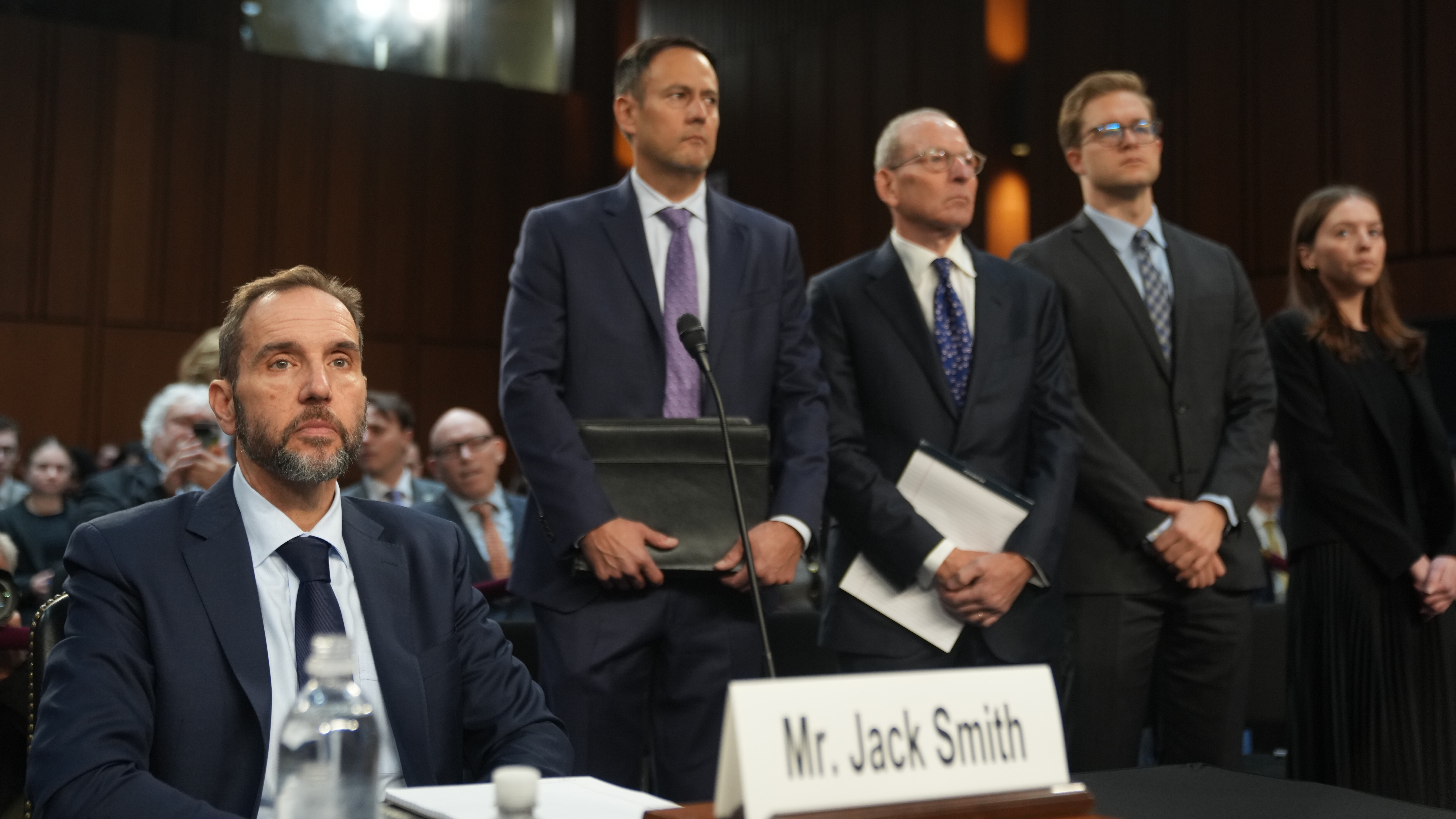
    Former special counsel Jack Smith forcefully defended his derailed efforts to prosecute President Donald Trump on Tuesday, telling lawmakers he would not “be silenced by continued threats of prosecution” from the president.

    Testifying before the Senate Judiciary Committee, Smith rejected Republican assertions that his investigations of the then-former president were driven by partisanship or were used to improperly surveil GOP lawmakers during the Biden administration.

    Smith said he stood by his decision to charge Trump in two felony indictments during his years out of office, the first focused on his alleged mishandling of classified documents and the second on his efforts to overturn the results of the 2020 election.

    “If asked whether to prosecute a former president today based on the same facts, I would do so regardless of whether the president was a Republican or a Democrat,” Smith said.

    But with few new insights into his investigations on offer and Republicans intent on pressing old attacks, the proceeding quickly devolved into an opportunity for the former special counsel’s critics to deliver a public tongue-lashing.

    “No matter what you say, there’s no legitimate basis for what you did,” committee Chairperson Chuck Grassley (R., Iowa) said. Sen. Eric Schmitt (R., Mo.) piled on, telling Smith he “will go down as a total dirtbag.”

    “You have brought the Department of Justice into disrepute,” Sen. Ted Cruz (R., Texas) added. Sen. John Kennedy (R., La.) told Smith: “You make me want to throw up in my mouth.”

    The nearly four-hour flogging grew so intense that Sen. Cory Booker (D, N.J.) marveled at the relentlessness of the Republicans’ message.

    “This is gaslighting of the American people,” he said, telling Smith, “I am so sorry that they’re attempting to put investigators on trial while ignoring the extraordinary conduct that that they are duty bound to really investigate.”

    But not all of the Republican attacks landed. Schmitt at one point accused Smith of perjury when he said he had not attended an Atlanta Hawks basketball game in February 2024. Schmitt said he had texts proving otherwise and suggested, with no evidence, Smith had made a secret trip to Atlanta to meet with Fani T. Willis, the district attorney who prosecuted Trump in Georgia.

    But within minutes, Sen. Amy Klobuchar (D, Minn.) deflated Schmitt’s “gotcha” moment. After Smith said he had attended a basketball game around that time featuring the Iowa Hawkeyes, Klobuchar suggested Schmitt had mixed up the team names of the Hawks and Hawkeyes — meaning Smith had not been in Atlanta at all.

    “Perhaps you should have looked at it more carefully,” Klobuchar told Schmitt.

    Behind those theatrics, Tuesday’s proceedings carried very real stakes for Smith — who Trump has repeatedly said should face prosecution — and the Republican senators, who have sought to wrest control of the public’s understanding of the special counsel’s twin probes, both of which he was compelled to abandon after Trump won the 2024 election.

    The president and his allies for years have asserted that Smith and other prosecutors weaponized law enforcement against them and deserve to be punished. Democrats say Trump plainly committed indictable offenses and that it is he who has corruptly turned the Justice Department into a cudgel to target perceived political foes.

    “The aspersions cast on Mr. Smith nonstop are petty, personal, and political,” said Sen. Dick Durbin (Ill.), the committee’s top Democrat. “They are nothing but a smoke screen to distract from the president’s own clear unlawful conduct.”

    Smith responded to it all Tuesday with little emotion, except when Republican lawmakers questioned his wife’s past support for President Barack Obama or sought to vilify members of his former staff of career prosecutors and investigators. Many of them were fired from their Justice Department jobs soon after Trump returned to office last year.

    “I’m extremely proud to have worked with them,” Smith told the senators. “The fact that they have been targeted illegally, lost their jobs illegally, and had their lives turned upside down by this Department of Justice is an outrage.”

    Smith said he expects to face personal consequences as well, and that he believes the Trump administration will do “everything in its power” to try to build a case against him despite lacking any legitimate basis to do so.

    After similar testimony earlier this year before the House Judiciary Committee, committee Chairperson Jim Jordan (R., Ohio) referred Smith to the Justice Department for prosecution, alleging he had lied to Congress. Department officials have said they are reviewing the evidence and have not decided whether to seek a grand jury indictment against Smith.

    Separately, federal prosecutors in Florida earlier this month subpoenaed former FBI agents involved in the 2022 raid of Trump’s Mar-a-Lago estate that led to Smith’s classified documents case against Trump. Those interviews are part of a broader “grand conspiracy” probe pursued by the Justice Department under a vague legal theory that Biden- and Obama-era officials engaged in a decadelong conspiracy to violate Trump’s civil rights.

    “The rule of law faces challenges unlike any we have experienced in our lifetime,” Smith told the senators Tuesday. “Individuals are threatened with criminal prosecutions because they are perceived to have opposed the president. Predetermined outcomes increasingly seem to take precedence over the Justice Department’s long-standing core values, traditions, and norms.”

    Nonetheless, Smith lobbied for months for the opportunity to publicly address lawmakers and defend his investigations’ conclusions that Trump committed felony crimes.

    Smith said Tuesday that strict secrecy rules bar him from answering many questions about grand jury interviews or materials. He also said he was limited in what he could discuss about his team’s investigation of Trump’s handling of classified documents because of a court ruling on a final report he drafted summarizing his findings.

    U.S. District Judge Aileen M. Cannon, who oversaw that case, permanently barred the report’s release and blocked officials from discussing its contents with those outside the Justice Department.

    Still, Smith forcefully defended his team’s investigative methods.

    Grassley seized on subpoenas that Smith’s team had obtained to secretly review phone records of several GOP lawmakers as part of the investigation into Trump’s actions in the aftermath of the Jan. 6, 2021, attack on the U.S. Capitol — a step the senator described as a “rampant abuse of authority.”

    Smith described those requests as essential to tracking phone calls made from the White House that day to Trump’s allies in Congress as he sought to delay certification of the 2020 election results.

    The records included the times and lengths of those phone calls and text messages, but did not disclose the contents of any senators’ communications.

    But the Justice Department has since revealed that Smith also obtained the incidental communications of 44 lawmakers’ text messages as part of a separate subpoena to the National Archives and Records Administration seeking information on several White House affiliated phones.

    Smith has said Trump is to blame for the need to obtain that information in the first place, given his unprecedented actions as Congress was preparing to certify Joe Biden’s victory in the 2020 election.

    “It was an important part of our investigation and it was centrally relevant to the issue of [Trump’s] criminal intent,” he said.

    Cruz tried to paint those subpoenas and others, which provided information on donations from some Trump allies, as a “fishing expedition” to broadly investigate Republicans.

    “Is it a crime to be a Republican?” Cruz demanded at one point. Smith responded: “Absolutely not.”

  • Immigrant shot by ICE in Austin is charged with assault

    Immigrant shot by ICE in Austin is charged with assault

    The Justice Department filed assault charges Tuesday against a Venezuelan immigrant shot by a federal immigration officer in Austin.

    An unsealed affidavit said the man, Wilber Garcés Pérez, struck a U.S. Immigration and Customs Enforcement officer in the torso with his vehicle’s side-view mirror as he fled the scene of a traffic stop Sept. 20. He then led that officer and another on what was described as a high-speed pursuit.

    The first ICE officer, identified only as “L.G.,” later shot Garcés in the upper back through the back right window of Garcés’s car, the affidavit said. Garcés had attempted to strike the officer with his car, “causing the officer to fire his pistol,” the Justice Department said in a news release.

    Garcés could face up to 20 years in federal prison if convicted, authorities said. A detention hearing is scheduled for Friday.

    The government’s account of the shooting contradicts the initial public accounts provided by Garcés and his attorney, Kate Lincoln-Goldfinch, who said last week that the ICE officers had not activated their law enforcement lights before ramming his car. They said he thought it was an aggressive driver and attempted to pull over but did not lead the officers on a vehicle pursuit before being shot.

    However, video clips of the encounter indicate that Garcés drove away after he was initially stopped by officers. The officers asked Garcés “to place the car in park and step out,” according to the affidavit. He ignored the request and about one minute later “abruptly closed the window and drove off.”

    A day after the shooting, while in custody in an immigration detention facility, Garcés used a tablet computer to call into a news conference arranged by his attorney and told reporters that he had been briefly hospitalized and then sent to the ICE detention facility with a bullet still lodged near his spine.

    L.G. was not wearing a body camera, the affidavit said. The other officer was wearing a camera but turned it off as the officers pursued Garcés in their SUVs, it said.

    L.G. was a relatively new officer who had previously worked at another federal law enforcement agency and joined ICE during the Department of Homeland Security’s hiring spree last year, the Washington Post has reported.

    DHS has faced mounting criticism from former officials who say the recruits were put into active duty before being adequately vetted and trained. In recent months, the agency has begun quietly firing some of the recruits over poor performance or red flags that some former officials said should have been identified earlier.

    ICE has faced scrutiny for officer-involved shootings in recent months, including two fatal shootings in Houston and Maine in July. The agency has ramped up arrests as part of President Donald Trump’s push for mass deportations.

    In several instances, federal judges have dismissed charges against people who were arrested or shot by immigration officers, including Marimar Martinez, a U.S. citizen who was injured in Chicago last year, after evidence emerged that contradicted the government’s accusations.

    ICE acting director David Venturella said over the summer that body cameras would be disseminated to every officer by the end of August following the fatal shootings in Houston and Maine by officers who did not have cameras recording when they fired their weapons. One of those officers was a recruit who had a volatile history, according to relatives and court records.

    An agency spokesperson told the Post in late August that DHS had enough body cameras to equip all ICE officers nationwide. But in early September, Homeland Security Secretary Markwayne Mullin said at a news conference that the cameras had not yet been fully distributed and that only officers assigned to make arrests in the field would be given the devices.

    It was unclear why the officer in Garcés’ shooting was not wearing a body camera.

  • Secretive group’s latest anti-Trump artwork placed in D.C. — and Greenland

    Secretive group’s latest anti-Trump artwork placed in D.C. — and Greenland

    The mysterious art collective responsible for more than a dozen installations mocking President Donald Trump and his administration over the past two years struck again on the National Mall in Washington on Monday morning, this time with an international twist.

    The group, Secret Handshake, created Operation Epic Furious: Nuuk ’Em All, a satirical video game playable on three video game cabinets placed under the dome of D.C.’s World War I Memorial near the under-repair Lincoln Memorial Reflecting Pool.

    The game, according to a news release sent by Secret Handshake, “turns all of Trump’s latest Greenland ambitions into an unhinged Arctic adventure.” Nuuk, a city of about 20,000 people, is the capital of Greenland, an autonomous territory of Denmark.

    In the game, the group says, the president “battles unthinkable evils like Fully Vaccinated Children, Woke Yetis, and the happiest people on Earth, the Danish. All the while, the player’s greatest challenge is trying to keep President Trump from falling back asleep.”

    The White House did not immediately respond to a request for comment on the new installation. It has previously dismissed the group’s work. In response to a mocking Iran War Participation Trophy that Secret Handshake installed on the National Mall in July, the White House said, “These untalented ‘artists’ should stick to their ugly ‘art’ and refrain from weighing in on foreign policy — which they clearly know nothing about, given the fact that the United States Military achieved all of its objectives during Operation Epic Fury.”

    A fourth video game cabinet for Operation Epic Furious: Nuuk ’Em All appears to have been placed in Nuuk over the weekend, according to photos posted on Secret Handshake’s Instagram account. The photos show a console on a hillside overlooking the coastal town.

    Representatives of Greenland’s government in Washington declined to comment on the installation.

    The four video game consoles take aim at positions held by the Trump administration in regard to the United States’ relationship with Greenland. They are decorated with cartoon images of Trump as well as Vice President JD Vance, Defense Secretary Pete Hegseth, FBI Director Kash Patel, and Health and Human Services Secretary Robert F. Kennedy Jr. There are also images of cartoon penguins wearing ammunition belts and American flag patches and a map of Greenland with made-up names and a large section of it labeled “Future Golf Course.”

    Numerous quotes attributed to Trump adorn the consoles, including “That’s Our Territory. All we’re asking for is to get Greenland,” and “We need Greenland very badly. One way or the other, we’re going to get it.”

    On Monday morning, a few visitors happened upon the video games. Shantha Tellambura, 62, and his wife, tourists from Australia who were spending their first day in Washington, said they were surprised to see the installations in a public setting.

    “I think it’s very interesting and it signifies freedom of expression,” Tellambura said. “It’s important that ordinary people are allowed to express their opinions.”

    The message the work delivered, he said, was necessary.

    “We are headed toward a problematic time especially with the possibility of nuclear war,” he said.

    Secret Handshake members have declined in phone interviews with the Washington Post to provide any identifying information. The group has previously placed installations and artwork critical of Trump at locations across Washington.

    They include a statue of Trump and Jeffrey Epstein holding hands, a mock tribute to Trump from the world’s authoritarian leaders, and a reproduction of the desk of former House Speaker Nancy Pelosi (D., Calif.) with a pile of fake excrement on it that ridiculed the Jan. 6, 2021, rioters who sought to overturn the 2020 election.

    In May, the group installed its first video game project. A playable game titled Operation Epic Furious: Strait to Hell targeted the war with Iran.

    Previous installations by the group, all of which had a National Park Service permit for temporary display, were at prominent spots on the Mall, including directly in view of the Capitol’s west side. The group has also installed works in Philadelphia and Portland, Ore.

  • Senate Republicans make a final legislative push ahead of the midterms

    Senate Republicans make a final legislative push ahead of the midterms

    Barely five weeks before November’s midterm elections, Senate Republicans are rushing to pass more legislation that they can run on as polling shows Democrats within striking distance of retaking the chamber.

    The Senate is expected to vote on legislation this week meant to protect consumers from high electricity costs caused in part by the data center building boom. And some Republicans are pushing to take up other bills to address voters’ frustrations with the cost of living.

    Senate Majority Leader John Thune (R., S.D.) decided against sending senators home early last week to campaign, opting instead to keep the Senate in session to try to bolster Republicans’ legislative record. This week is the last that the Senate is scheduled to be in session before Election Day.

    Republicans are confronting the once-unthinkable prospect that they could lose the Senate. Democrats are running competitively even in some states that President Donald Trump won by double digits in 2024, giving the party a shot at picking up the four seats they need to recapture the chamber.

    Almost no Republican is in more danger of losing his seat than Sen. Jon Husted (Ohio), who introduced the data center bill that Republicans are set to take up.

    Former Democratic senator Sherrod Brown, who is challenging Husted, has spent millions of dollars on ads attacking Husted over his support for data centers, which the ads blame for “causing electric bills to spike by thousands of dollars.” The National Republican Senatorial Committee warned in a memo last month that the ads are effective, describing data centers as an “anchor hanging around Husted’s neck.”

    Sixty-nine percent of likely voters in Ohio say data centers — enormous warehouses filled with servers that power the artificial intelligence boom and the rest of the internet — are mostly bad for home energy costs, according to a Bowling Green State University/YouGov poll conducted this month.

    Husted has defended his record on data centers and criticized Brown for supporting them in the past. He described his bill as a way to “show the American people that we’re serious about driving down electric prices and making life more affordable for them” — and he almost dared Democrats to block it.

    “If Senate Democrats want to be the lone obstacle to passage, then shame on them,” he told reporters. “That shows that they don’t really care about affordability.”

    It is not clear whether Husted’s bill will pass.

    The House approved it overwhelmingly, but Sen. Martin Heinrich (D, N.M.) blocked Husted from fast-tracking its passage this month, arguing that it did not go far enough. Heinrich sought to pass his own bill to force data centers to shoulder the costs of upgrading the electric grid, which Republicans blocked.

    Husted’s bill does not take full effect for two years and would not bring down electricity prices before the midterms. Some Democrats have argued that it would do little to address affordability at all.

    “Senator Husted’s bill is a fraud,” Senate Minority Leader Chuck Schumer (D., N.Y.) told reporters last week. “It’s voluntary. No company has to do it.”

    Republicans say Democrats are just trying to deny them victories. Sen. Bernie Moreno (R., Ohio) accused Democrats of blocking Husted’s bill “so they can just put up another TV ad to say that electricity prices are high so that they can win an election.”

    Senate Republicans have spent much of the past two weeks working to pass legislation from Sens. Ted Cruz (R., Texas) and Maria Cantwell (D., Wash.) to overhaul regulation of college sports. Cruz has argued the bill is crucial to “protect an American institution that millions of people love,” but some Republicans have groused that it is hardly the most pressing issue for the party to tackle right before the midterms.

    “With gas at over $4 a gallon, a persistent war with Iran, $40 trillion in debt, the Senate has decided that the most urgent thing now is to dictate how college sports are run from Washington,” Sen. Rand Paul (R., Ky.) said on the Senate floor.

    Sen. John Kennedy (R., La.) said he was prepared to support the bill if he secures an amendment vote but argued it is not a priority for voters, describing it as a way “to make the football coaches happy.”

    “I haven’t met a single person on the campaign trail, when they lie down to sleep and can’t, who are worried about the football coaches,” Kennedy told reporters.

    Husted is not the only Republican senator facing a tough race who has pushed to pass legislation that can be campaigned on before heading home.

    Sen. Susan Collins (R., Maine), who is seeking a sixth term in a Democratic-leaning state, has pressed Senate Republican leadership to take up a bipartisan bill to force insurers to cap the cost of insulin at $35.

    Another vulnerable Republican, Sen. Dan Sullivan (Alaska), tried to pass legislation last week meant to protect salmon in his state. He was blocked by Sen. Ed Markey (D., Mass.), who said he needed more time to seek feedback from fishermen in his state.

    Husted and other Republicans are campaigning on the tax and domestic policy bill that Trump signed into law last year, which cut taxes on tips and overtime. But some Senate Republicans have pushed for months to do more to address voters’ affordability concerns.

    Sen. Josh Hawley (R., Mo.) said he had urged Senate leadership to take up the insulin bill, along with legislation to suspend the federal gas tax and other bills to make life easier for working families.

    “My view is that ought to be our sole focus,” Hawley said. “If we’re not going to do that, it’s not clear to me what we’re doing here.”

    Rep. Ashley Hinson (R), who is facing a tight race for an open Senate seat in Iowa, last week called on the House to return to Washington to vote on suspending the federal gas tax as well as other steps to reduce fuel prices. The House adjourned earlier this month and has no plans to return before Election Day.

    Thune has faulted Democrats for obstructing his party’s agenda. Republicans and Democrats have spent months negotiating over legislation to overhaul the federal permitting process, which could bring down energy costs by making it easier to build power lines and other infrastructure. Thune said the Senate could take up such a bill before the midterms if the two sides were to reach a deal, but he acknowledged Thursday that it would not happen, which he blamed on Democrats.

    “While they may acknowledge the need for permitting reform, what they really care about is denying Republicans another legislative win” ahead of the midterms, Thune said on the Senate floor.

    Sen. Sheldon Whitehouse (R.I.) and Heinrich, the Democrats leading permitting negotiations, said Friday that they wanted to give senators more time to review the legislation and warned that trying to pass it before the midterms could kill the bill.

    “We are talking about major changes to how America builds energy and infrastructure,” they said in a statement. “Getting that right has to matter more than election-year deadlines.”

  • At every turn, Trump’s ideas for aiding U.S. consumers run into resistance

    At every turn, Trump’s ideas for aiding U.S. consumers run into resistance

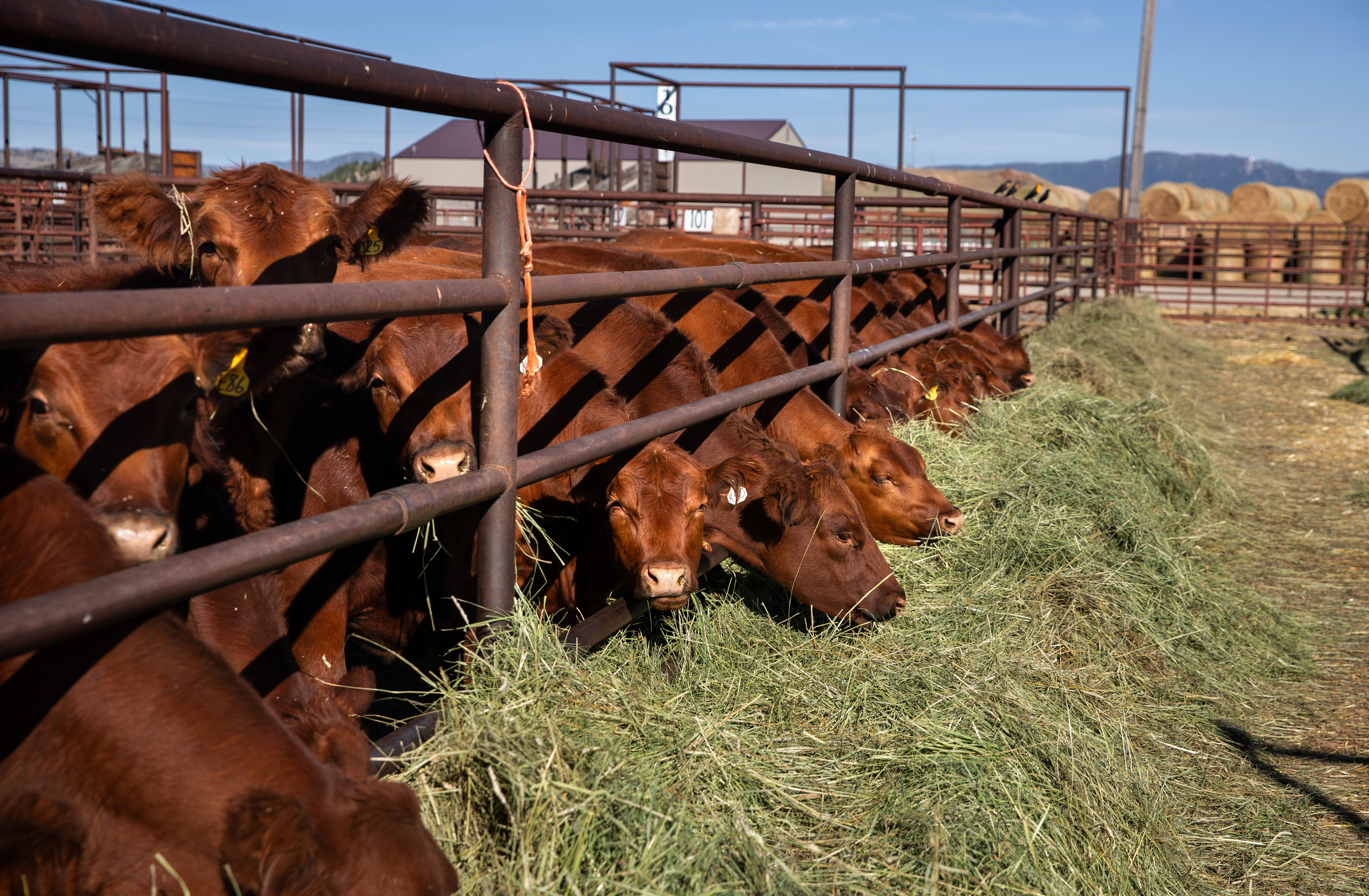
    First came a proposal to permit tariff-free beef imports, but that immediately angered America’s farmers and ranchers.

    Then came a plan to ban exports of domestic diesel fuel, but that met with pushback from major oil companies.

    In between, President Donald Trump pitched the idea of simply cutting $5,000 checks to adult Americans frustrated, polls show, by high food and gas prices — if the GOP maintains control of Congress. But that idea, too, has come under fire, even from some Republican lawmakers concerned about the potential hit to the budget deficit.

    With just five weeks until Election Day, the White House has thrown out multiple ideas for combating persistent inflation, which has outpaced wage growth. But experts say it is unclear whether Trump can execute any policy that would placate inflation-weary voters and help the GOP maintain control of Congress.

    “These are symptoms of panic in the administration about problems that they have in part created,” said David Wessel, director of the Hutchins Center on Fiscal and Monetary Policy at the Brookings Institution.

    Inflation has been running over the Federal Reserve’s target rate since 2021, but an array of Trump policies have fed the problem, economists say. Trump’s decision to join Israel in going to war with Iran has disrupted the global oil supply, leading to elevated energy rates. His tariffs have produced higher prices for some imported goods. And his administration’s immigration crackdown has made low-cost labor harder to find, keeping price pressures on domestic companies high.

    Consumer frustration is reflected in polling. The gap has steadily widened between voters who approve of and disapprove of Trump’s performance as president, and 73% of Americans said they disapprove of Trump’s handling of the economy in a recent poll conducted by SSRS for CNN. Only 27% approved — his lowest approval rating on the issue ever recorded by the survey.

    Against that backdrop, Trump has floated a parade of ideas for cutting prices.

    “President Trump pledged to lower costs and raise real wages for everyday Americans, and the Administration continues to rigorously evaluate every option on the table to deliver,” White House spokesperson Kush Desai said in a statement.

    On top of the political hurdles, however, these policies have been “small in the grand scheme of things … if they’re helpful at all,” said Mark Zandi, chief economist at Moody’s Analytics. “So it’s not like it’s moving the dial on the affordability crisis.”

    Douglas Holtz-Eakin, president of the American Action Forum, a conservative-leaning think tank, said it’s not uncommon for politicians to try to bring down prices in the run-up to elections, especially when their party’s control of Washington is at risk.

    President Joe Biden did the same ahead of the 2022 midterms, notably by calling for a federal gas tax holiday and releasing millions of barrels of oil from the nation’s Strategic Petroleum Reserve in an effort to bring down sky-high gas prices.

    “This whack-a-mole with particular prices is something the Biden guys tried,” said Holtz-Eakin, who was a senior economic adviser to President George W. Bush and the 2008 presidential campaign of then-Sen. John McCain (R., Ariz.). “It doesn’t solve the economic problem, and it doesn’t seem particularly politically successful.”

    For Trump, time is running out, said Rebecca Patterson, a senior fellow at the Council on Foreign Relations.

    The U.S. economy is so big and so complex that improving affordability “is simply not something anyone can do in a month,” Patterson said. “Actions taken today might help in the medium and longer term. But between now and the election, the best you can hope for is that voters appreciate that you’re trying.”

    One idea the administration has executed is buying back Treasury bonds. But so far, the payoff has been minimal.

    In part because of the competition for cash from massive private-sector spending on artificial intelligence, investors are demanding higher interest rates for Treasury bonds. Higher bond yields, in turn, raise interest rates for consumer loans such as mortgages. The average 30-year fixed mortgage rate hit 7% last week for the first time since January 2025.

    In August, Treasury Secretary Scott Bessent announced he would intervene in the bond market by buying back longer-term Treasury bonds to try to slow the rise in yields. That has not yet worked in bringing down yields, though Bessent contended in a recent congressional hearing that it is nonetheless a success because “we then proceeded to have the two most successful Treasury auctions that we’ve had in 20 years.”

    While Bessent was wrestling with the bond market, Trump decided to tackle meat prices.

    In late August, the president signed a proclamation that rolled back tariffs on foreign beef trimmings for 90 days in an effort to boost imports and lower ground beef prices, which have risen almost 25% since the beginning of Trump’s second term.

    But that drew rare pushback from farm-state Republicans, including Sen. Chuck Grassley (Iowa), Sen. Pete Ricketts (Neb.), Sen. Roger Marshall (Kan.) and Rep. Ashley Hinson (Iowa), who is running in a competitive Senate election in her state.

    The lawmakers argued that a flood of cheap foreign beef would undermine American farmers and ranchers, who are already struggling with high fuel, grain, and fertilizer prices due to the Iran war and other factors.

    Trump issued a follow-up executive order aimed at helping ranchers, and the Agriculture Department announced new policies aimed at supporting American beef producers. The administration is now reportedly considering reversing course on beef imports — though the White House has denied that.

    Then came the Republican midterm convention in Dallas, where Trump made his biggest pitch yet: If Republicans keep both the House and Senate on Nov. 3, Trump said, he would give every adult American a $5,000 dividend to spend within the United States.

    Some Republican lawmakers applauded the idea, but others were skeptical, saying the checks not only could exacerbate inflation but also could increase historically large budget deficits. The proposal could cost more than $1 trillion at a time when concern is growing about the nation’s outsize debt, which recently surpassed $40 trillion.

    Public interest groups blasted the idea; Lisa Gilbert, co-president of the left-leaning consumer watchdog Public Citizen, called it an “explicit and desperate attempt to buy votes.”

    And voters largely have not been swayed: A YouGov poll released earlier this month found that 64% of U.S. adults felt they would probably or definitely not receive the dividend if Republicans were to win the election.

    So far, there have been few signs of interest on Capitol Hill, where lawmakers would have to draft legislation to authorize the checks and vote to approve it.

    Last week, after diesel prices hit a record high, Trump and Bessent announced a new idea for tackling soaring fuel prices: a ban on diesel exports. Their theory was that a ban would boost the diesel supply for American consumers, lowering the price at the pump.

    Several Republican candidates in competitive congressional races supported the idea. But major oil companies and Energy Secretary Chris Wright objected, arguing that such a policy would incentivize companies to lower diesel production, which would further raise fuel prices.

    By midweek, the fate of the diesel export ban, too, seemed uncertain: Wright said any new limits on diesel exports were likely to be voluntary.

  • Ospreys are disappearing along the East Coast. Scientists think they know why.

    Ospreys are disappearing along the East Coast. Scientists think they know why.

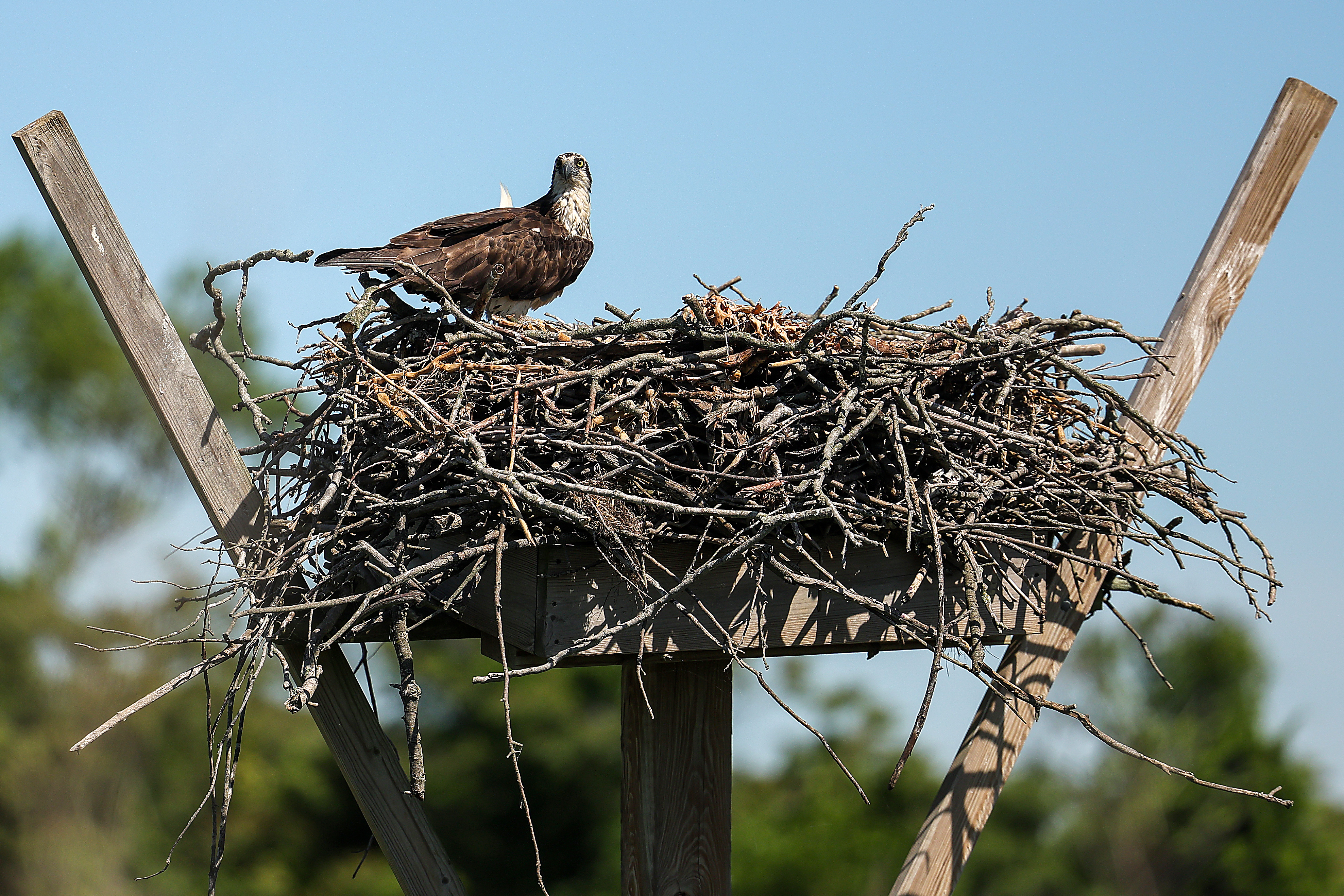
    Bryan Watts has spent more than three decades watching ospreys reclaim the Chesapeake Bay, returning each spring from South America to crowd its tidal rivers and creeks, shorelines, channel markers, and nesting platforms. The William & Mary biologist followed their recovery from the DDT era as the bay became home to the world’s largest breeding population of ospreys.

    Now one of America’s great wildlife recoveries is coming undone. Across the Chesapeake this year, Watts and his colleagues at William & Mary’s Center for Conservation Biology recorded the worst osprey breeding season they have ever documented. Researchers working these waters have found chicks emaciated and starving in their nests.

    A starving osprey chick can seem almost weightless — its breastbone sharp beneath feathers, its body too small for the nest around it. Three summers ago, Watts spent 3½ hours checking 81 nests on Mobjack Bay: empty nest after empty nest, with just three chicks at the end. Seeing a dead chick still gets to him, but what really stops him is absence. Watts drove home, he said, “with a sick feeling that something is clearly not right.”

    The warning sign is no longer confined to the Chesapeake. Last week, Watts and his colleagues released the first picture of the 2026 breeding season up and down the East Coast: 2,886 osprey pairs in 65 study areas across 10 Atlantic states. Only 28% of saltwater study areas produced enough young to maintain their populations, compared with 93% of freshwater areas. The deficits extend from the Chesapeake through Delaware and New Jersey to Long Island and southern New England.

    At the center of that widening crisis is a fish most Americans would hardly recognize. Atlantic menhaden are silver, oily, and generally less than a foot long. Rich in fat and calories, they are the principal prey of Chesapeake ospreys and the nucleus of a food web extending far beyond the bay, including the fish humans do eat. Striped bass, bluefish, whales, and seabirds feed on them; Maine lobstermen put them in traps.

    A fight over menhaden has brought together an unlikely — and increasingly vocal — coalition. Recreational anglers want menhaden in the water for the striped bass and other game fish that eat them. Charter captains need those predators to make a living. Lobstermen need menhaden for bait. Conservation groups want enough left for ospreys and other wildlife.

    What remains uncertain is why menhaden aren’t there when birds and fishermen need them. Scientists are looking at several possible explanations, including commercial harvest and changing water conditions. Timing may matter, too: Osprey food demand has typically peaked from mid-May through mid-July, while in some recent years large numbers of menhaden haven’t arrived until weeks later.

    But a growing number of critics have begun to focus on Omega Protein, which runs the Atlantic Coast’s last remaining menhaden reduction plant, located in Reedville, Va. The state receives about three-quarters of the entire Atlantic Coast menhaden quota, and roughly 90% of its share goes to the reduction fishery supplying Omega.

    At the Reedville plant, menhaden are processed on an industrial scale into fishmeal, fish oil, and other products. Its exclusive supplier, Ocean Harvesters, caught nearly 300 million pounds of Atlantic menhaden for the plant in 2024. That scale alone has made the fleet impossible to ignore in the debate over how many menhaden are being left for everything else that eats them.

    Steve Atkinson, chairperson of the Virginia Saltwater Sportfishing Association, argues there are no longer enough menhaden in the bay to support both industrial reduction fishing at its current level and a healthy ecosystem. Members of his group are seeing fewer schools of menhaden and catching fewer game fish, which is why they support cutting the bay harvest cap in half in the meantime. “We need action now, not five years from now,” he said.

    Omega and Ocean Harvesters reject that conclusion, saying scientists have not established that their harvest causes local shortages or osprey failures. That dispute — over a fish neither side fully controls, eaten by a bird neither side can feed — is at the heart of the fight.

    Ben Landry, vice president of public affairs for Ocean Fleet Services, the parent company of Ocean Harvesters, said in a statement that blaming osprey starvation on the menhaden fishery is “an oversimplified explanation for a complex ecological issue.” Water conditions, other prey, predators, and habitat change all contributed to the birds’ decline, he added.

    Watts himself describes the evidence as a strong association, not proof that commercial harvest caused the nesting failures.

    Regardless of the exact cause, scientists have documented major shifts within the Chesapeake. In saltier waters, where ospreys depend most heavily on menhaden, 81% of nesting pairs failed to raise a single chick in 2026. Across those waters, four nesting pairs produced, on average, just one chick among them — far short of the rate needed to sustain the population. In fresher reaches, where ospreys can turn to catfish and gizzard shad, pairs produced enough young to sustain their numbers.

    The food reaching the nests has changed, too. At some Chesapeake nests, Watts found, ospreys are bringing home menhaden more than 80% less often today than they did in the 1980s.

    Anglers coastwide are seeing their own version of that shift. For 26 years, Chris Newsome made his living guiding fishermen on the Chesapeake from Virginia’s Middle Peninsula. A biologist by training, Newsome knows there will always be pockets of fish somewhere. What has disappeared, he said, is the ability to count on finding them. The good fishing comes in stretches that are “shorter and shorter and shorter.” For a charter captain, he said, what’s needed is “predictability.” This year, after what he called “the worst fishing in my lifetime,” Newsome closed his business and put his boats up for sale.

    Fishermen up and down the Atlantic Coast describe the same increasingly uneven pattern: One community can be surrounded by menhaden, also called pogies or bunker, but more fishermen cite long stretches between sightings where they once reliably found them.

    Off Virginia, spotter pilots search from the air for the dark stain of a menhaden school. Seine boats encircle the fish with massive purse-seine nets, close the bottom like a drawstring and pump the catch aboard larger vessels, including Ocean Harvesters’ new $9 million, 165-foot Tangier Sound. The fleet can also follow migrating menhaden north into federal waters, sometimes as far as New Jersey.

    Reedville is the survivor of a once-sprawling industry. At its peak, more than 20 processing factories operated from Maine to Florida. As stocks contracted and states imposed restrictions, the plants disappeared; by 2006, Reedville was the only one left.

    The corporate arrangement behind that fleet is unusual. Cooke, the Canadian seafood conglomerate that bought Omega for nearly $500 million in 2017, is constrained by a federal law that allows a fishing vessel to be owned by a company only if U.S. citizens own and control at least 75% of the company. Ocean Harvesters is 80% owned by Seth Dunlop, a U.S. citizen, Cooke employee, and nephew of Cooke CEO Glenn Cooke; Omega owns 20%.

    Most of the catch is reduced into fishmeal, fish oil, and concentrated products rather than sold as food for people. Before Cooke took Omega private, federal filings identified Nestlé Purina PetCare as one of Omega’s biggest customers. Some Blue Buffalo and Purina pet foods list menhaden fish meal or oil among their ingredients, though the labels do not identify suppliers. Landry said in an email that most of Omega’s fishmeal and oil is sold domestically, including into pet food markets.

    Most of Omega’s sales are domestic, with about 17% going overseas last year, according to Landry. Omega markets a concentrated menhaden product as an “attractant” for aquaculture feed pellets, and trade records reviewed for this story show its products shipped to Honduras, Indonesia, and Vietnam. That rankles fishermen who see menhaden becoming harder to count on at home.

    A menhaden left swimming is hard to value. But some of that hidden worth can be measured. A June 2026 study commissioned by the Theodore Roosevelt Conservation Partnership, an advocacy group, estimated that East Coast anglers spent $804 million in 2025 on trips using menhaden as bait, chum, or scent. The estimate combines a survey of 1,316 anglers with federal fishing and spending data. For comparison, Omega says its combined Atlantic and Gulf operations generate about $300 million in annual sales, and Omega and Ocean Harvesters say their Virginia operations directly employ about 260 people.

    Balancing those demands falls largely to the Atlantic States Marine Fisheries Commission, a 15-state body that manages menhaden along the coast. It classifies Atlantic menhaden as “not overfished” and says overfishing — fishing above the established threshold — is not occurring. But that is a coastwide finding. ASMFC says its assessment cannot tell whether menhaden are abundant enough in a smaller area such as the Chesapeake Bay.

    Last year, the commission lowered its estimate of the menhaden population after revising a key estimate in its assessment: how many menhaden die of natural causes each year. ASMFC stressed that the change reflected a better understanding of the fish, not a decline in their numbers.

    Jerald Ault and Jiangang Luo, University of Miami scientists whose reanalysis prompted that revision, now say even the revised estimate may be too high. “If natural mortality is set too high,” Ault said in a university statement, “the population can appear able to support more fishing than its biology allows.” ASMFC reviewed an earlier version of their analysis but not the final peer-reviewed paper.

    The lack of definitive science has become an argument against tighter limits. Yet Virginia lawmakers have spent years failing to fund the research that could provide it.

    In 2023, the General Assembly ordered the Virginia Institute of Marine Science to draw up a research plan for menhaden. Scientists, conservationists, anglers, and industry representatives agreed on nine research priorities, including abundance and localized depletion.

    But in each legislative session since, bills to fund that research repeatedly stalled. In 2026 alone, three different proposals failed to advance during the session: one to fund research aimed at understanding menhaden abundance in the bay, another to temporarily halt industrial fishing there, and a third to limit when and how the fleet could fish.

    Omega says it never opposed the research. But a letter its lobbyist sent to Virginia lawmakers last year proposed replacing the full study with a two-year pilot or deferring it until 2026. Landry said that officials at the company believed full funding was no longer available by then and that the study as written was not scientifically sound research.

    “The industry is now using that delay in definitive science as an excuse to stall new limits,” Chris Moore, the Chesapeake Bay Foundation’s Virginia executive director, said in an email. “The alarm bells in the bay keep getting worse. It’s mind-boggling.”

    Landry, however, said the industry has helped fund preliminary research, given Virginia Institute of Marine Science researchers access to its vessels and “supported the research appropriation included in Virginia’s current budget.”

    After the legislation failed again this year, Virginia Gov. Abigail Spanberger kept the research alive through the state budget, and Virginia provided $2 million over two years for the Virginia Institute of Marine Science to begin the work. Meanwhile, the commission is now considering changes to the Chesapeake reduction cap ranging from no cut to a 50% reduction.

    Omega and Ocean Harvesters oppose a 50% cut to the bay harvest, and Landry noted that regulators classify menhaden as “not overfished,” adding that tighter Chesapeake limits aren’t justified “without a demonstrated biological need.”

    The fight extends to Louisiana, where Omega operates alongside Daybrook Fisheries, another menhaden-processing company. After three net failures spilled an estimated 850,000 fish in 2023, lawmakers strengthened tracking, enforcement, and reporting. But a 2026 bill to move the fleet farther offshore and reduce other species caught with menhaden failed.

    Back on the Chesapeake, the numbers keep getting worse. In the saltier reaches where ospreys depend most on menhaden, the birds’ reproduction has fallen for three straight years. If that continues, Watts projects the bay’s osprey population could fall by roughly half within a decade.

    By September, the Chesapeake begins to empty of ospreys. The adults leave first; the young follow later, migrating alone, sometimes thousands of miles south. Those that survive will return next spring to the same rivers, the same navigation markers, sometimes the same nests.

    For generations, that journey has ended with the same promise. They came home to the Chesapeake, circled above the water and hunted.

    There were fish here.

  • The surprise winners from record-high diesel prices

    The surprise winners from record-high diesel prices

    No one seems happy about record-high diesel prices.

    Farmers complain about the cost to harvest their crops. Truckers say they’re getting squeezed. Retailers such as Kroger have warned that it’s driving up costs.

    The pressure has led President Donald Trump to float a diesel export ban, while some in Congress want to suspend fuel taxes.

    But in a few places, the galloping price of diesel is seen as an opportunity — albeit a tricky one to navigate.

    Railroads are taking business from truckers, while alternative-fuel trucks are getting a fresh look. Big oil extractors and refiners are benefiting too, of course. But so are smaller operations that have gotten an indirect boost.

    “We sure don’t want to have the economy damaged by having high fuel prices and slowing some things down,” Jim Vena, CEO of Union Pacific, among the country’s largest railroads, said recently at an investor’s conference.

    But the soaring price of diesel has been good for his line of business so far. The biggest driver of growth for Union Pacific is moving freight that could have gone by truck, the company said.

    Diesel reached a record $6.53 a gallon this past week, according to AAA’s national average. That’s up about 75% from a year ago.

    The national average for a gallon of regular gas, meanwhile, is $4.48 — about 40% higher than a year ago, though still well below the $5.02 record set in June 2022.

    All of this has worked out well for companies like Wex, a major provider of fleet fuel cards.

    “We’re a net benefactor of what happened with fuel prices,” CEO Melissa Smith told investors this summer.

    Diesel is the lifeblood of trucks, tractors, and construction equipment. And its eye-watering cost brings a set of problems different from high gas prices. Consumers don’t feel diesel’s “pain at the pump” in the same way. When diesel gets pricey, it raises the cost of transporting food and goods — anything that needs to be moved from one place to another.

    Now, containers and trailers stuffed with bananas, furniture, or flat-screen TVs are increasingly going by rail. This “intermodal traffic” has jumped in recent months, setting a record for U.S. railroads in August, according to the Association of American Railroads.

    Railroads run on diesel, too. But freight trains are three to four times more efficient based on tons per mile.

    “I do think that’s a plus for us,” Jennifer Hamann, Union Pacific’s chief financial officer (CFO), said recently at the annual Morgan Stanley Laguna Conference.

    Norfolk Southern chief commercial officer Ed Elkins said diesel prices are so high they’re like “science fiction” and are just pulling freight off the road.

    Trucking giants like J.B. Hunt Transport Services have felt pinched. Diesel prices have spiked faster than the firm’s fuel surcharges. But J.B. Hunt has seen a boost to its intermodal service.

    “Do I want fuel to be $6 a gallon? No, not long term. But for today, it can be helper” in growing that business, Brad Delco, CFO of J.B. Hunt, told investors recently.

    The company said the cost gap between trucking and trains was the largest it had seen.

    Truckers are also hurt by the rapid price moves, said Bob Costello, chief economist for the American Trucking Associations. Most fuel surcharges are set weekly, based on the federal Energy Information Administration’s Tuesday morning price for diesel. Midweek moves make it even less likely that truckers can recoup their costs, Costello said.

    “They’re not happy about it,” he said. “It’s absolutely costing them money.”

    That’s spurred online angst, including a viral call to launch a nationwide trucker strike on Oct. 1. It’s unclear how much support this push has. Costello said his organization was unaware of it. Another major trucking organization, the Owner-Operator Independent Drivers Association, said it was not involved.

    “Besides the obvious difficulty in getting hundreds of thousands of drivers to all agree to shut down, the greatest obstacle involves antitrust laws and illegal boycotts,” said Lewie Pugh, the group’s executive vice president.

    Trucks that don’t use diesel are seeing renewed interest.

    Morgan Stanley suggested in a research note that this makes electric trucks more attractive, writing, “$6 Diesel … Enter Tesla Semi.”

    The first battery-electric Tesla tractor-trailer rolled off a new high-volume production line in April, several years after it’d been first promised. The company has been lining up orders since then. Last week, it got one for up to 2,500 trucks for a coalition that plans to lease out the vehicles.

    Clean Energy Fuels, a company that provides renewable natural gas for vehicles, said they were hearing more interest from trucking fleets “particularly with higher diesel prices,” according to CEO Clay Corbus.

    States that impose diesel sales taxes could reap more revenue. Others have taken steps to blunt the impact on consumers.

    California — which has the highest average diesel price in the nation at $8.43 a gallon — puts a 13% state tax on diesel.

    This summer, Illinois suspended plans to raise its flat diesel tax by 1.3 cents to 57.1 cents a gallon. And Kentucky briefly suspended a planned increase to its diesel tax.

    But even industries that are benefiting from higher diesel prices today are worried about what is to come.

    Several railroad executives said prolonged, elevated diesel costs would hurt the broader economy.

    “At some point it will be a drag on consumers,” said Elkins of Norfolk Southern.

  • Bear encounters are rising across the United States. Here’s why.

    Bear encounters are rising across the United States. Here’s why.

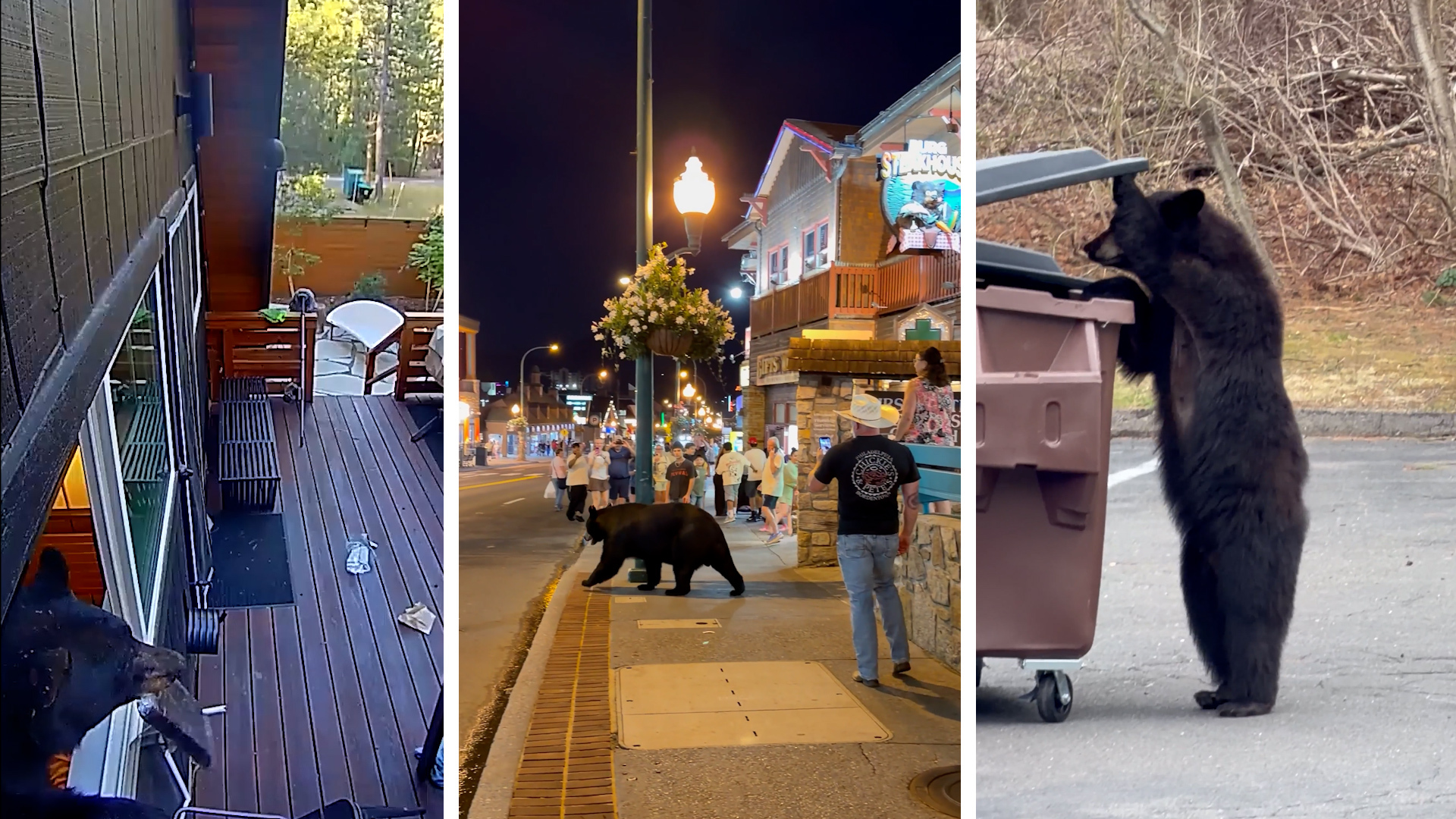
    They climb through bedroom windows and open car doors. They sneak into restaurants, fire stations, and vacation rentals. Across the country, black bears are foraging for food.

    Human-bear encounters are on the rise this year in at least 15 states. Across the West, Northeast, and Southeast, agencies received more bear-related calls than last year. In Colorado, reports have increased by as much as 200%, and in Utah, bears in cities have reached a record high.

    Some calls report a sighting. Others involve bears breaking into homes, cars, or chicken coops. Very rarely, the calls report attacks.

    There are about 450,000 black bears in the United States. Most avoid people, only getting close when they are in search of food. But when these opportunistic omnivores succeed in eating human food, they will continue doing so and, experts say, it is impossible to reverse the behavior.

    As more people move into bear country, humans must adapt.

    While Keryn Francisco and her son were fishing, a black bear broke through an open window to raid the fridge in their cabin in South Lake Tahoe, Calif. The bear had expensive taste, eating avocados, brioche buns, croissants, chocolate strawberries, and tri-tip steaks.

    It returned for seconds and then thirds, bringing the food to the porch to eat and leaving a mess behind. “He was living his best life,” Francisco said.

    In California and across much of the West, human-bear encounters are increasing. Experts say environmental conditions are driving much of this year’s uptick by wiping out the black bear’s natural food supply.

    Colorado, Montana, New Mexico, Nevada, Utah, Washington, and Wyoming have cited drought as a factor in the increase. Officials in North Carolina, Oklahoma, and Tennessee said the same.

    Arjun Dheer, California’s statewide black bear coordinator, said parts of the West had unusually low snowpack and warm, dry conditions that were followed by drought, early snowmelt, and damaging late-spring freezes.

    “Those conditions can reduce or disrupt natural foods like grasses, berries, fruits, acorns, and other mast, causing bears to range farther and take greater risks around developed areas in search of calories,” he said.

    Colorado, which saw its worst snowpack on record, has seen the steepest surge. Wildlife officials have recorded 10,019 bear reports so far this year, more than triple last year and more than double the state’s annual average.

    In the past, John Livingston, a Colorado Parks and Wildlife public information officer, said, the impact was confined to only a few counties, but this year it’s statewide.

    Livingston, who is part of the Statewide Bear Working Group, said he was alarmed in July. The number of reports had surpassed all of last year.

    “That’s when it’s like, OK, buckle up,” he said.

    Typically the fall is when bear encounters are most common, as bears prepare to survive winter hibernation.

    The reports: A bear jumping on the tables of a restaurant. Exploring the inside of a ski lodge. Breaking into trucks and trash cans. Eating garbage and nabbing a bag from a fire station. Wandering into neighborhoods where they don’t typically go.

    In Durango, a bear group posts photos showing what is left in the bears’ wake when trash is unsecured.

    “We’re still in the thick of it,” Livingston said. “We’ve got another month and a half of really high levels of bear activity.”

    Meanwhile, a growing population of humans and bears have spurred more bear encounters in the East.

    One Connecticut black bear, known to officials as Bear 213 and to Simsbury neighbors as “White Paw,” had a string of encounters starting in 2022, when a resident spotted the bear approaching her door.

    “He noticed me and very quickly came to investigate,” she wrote on a neighborhood Facebook group at the time, adding that the bear “was not easily deterred by three dogs going nuts on him.”

    In the year that followed, the bear broke into two homes and a garage before wildlife officials put a geolocation collar around her neck to track her. Bear 213 eventually had a “rap sheet.”

    Black bears were once nearly eliminated by European settlers. Reforestation efforts have since reestablished populations in at least 40 states.

    Building homes and businesses closer to wild lands increases the likelihood of human-bear encounters.

    While black bears’ natural diet is mostly plant-based, high-calorie foods like human garbage, bird seed, and pet food are all things that are “attractive to bears,” said Chris Servheen of IUCN Bear Specialist Group. And once bears succeed in eating human food, they continue doing so and mother bears will teach the behavior to their cubs.

    Bears have entered about 60 homes in Connecticut this year, said Jason Hawley, the leading bear biologist at Connecticut’s Department of Energy and Environmental Protection.

    While many states use hunting to manage their black bear populations, Connecticut does not. Officials said it’s the only state with a notable bear population where hunting them is illegal.

    North Carolina, New Jersey, and New York extended the hunting season in recent years. Florida recently reintroduced bear hunting, and California increased the number of bears that hunters may kill.

    In 2024, “White Paw,” also known as Bear 213, was seen with three cubs, according to a Connecticut bear report. Her behavior got bolder.

    She broke into garages, porches, barns, and sheds, ripping open freezers and trash cans, eating frozen cookies and drinking apple cider. She was not deterred by people. She growled and lunged at them, scaring one resident and his 30-pound goldendoodle.

    She entered a home with her cubs in June of that year and tried again in July. The next day, Hawley’s staff euthanized her.

    Some bears become so comfortable around people that they pose a safety threat, Hawley said.

    “Bears are just going to do this indefinitely,” said Dave Wattles, the black bear and furbearer biologist for the Massachusetts Division of Fisheries and Wildlife. “Those bears that develop these more serious behaviors like home entries, unfortunately, they’re not just going to stop that because they feel like it someday.”

    Massachusetts has also seen an increase in bears entering homes, and Wattles suspects the bears learned the behavior in Connecticut.

    Even in developed places like Massachusetts and Connecticut bears and humans have “minimal negative interaction,” Wattles said. “They’re not inherently aggressive towards people.”

    Bear conflicts in which a person dies or is injured are rare. The most common cause is when a person surprises a bear at close range, prompting the bear to defend itself.

    Recently, a 17-year-old awoke at 2 a.m. as a black bear entered her bedroom through a cracked window. Officials reported she covered herself in blankets as the bear approached her bedside and sniffed her head. After making a noise, the bear huffed and scratched her stomach. She screamed and sat up, and the bear left through the window.

    Colorado has recorded 10 bear conflicts this year. The last fatality was in 2021.

    “I wouldn’t say, and I haven’t said that they are more aggressive this year or more dangerous toward humans necessarily. They’re just willing to cross lines,” Livingston said.

    In August, Eagle County sheriff’s deputies responded to a crowd of about 40 people filming a bear and her cubs outside of an Eagle-Vail apartment complex.

    A week earlier, a man had been injured near the laundry room of the same complex during a bear incident.

    After dispersing the crowd, deputies yelled and fired nonlethal rounds to get the bear to flee to a nearby river. The bear charged and a deputy fired several shots, killing it.

    “I think somewhere along the line people have gotten really comfortable with being around bears,” Livingston said. “Like we’re forgetting that wild animals are wild.”

    Bears adorn the names and logos of cabins, restaurants, coffee shops, and pizzerias across Gatlinburg, Tenn., at the edge of the Great Smoky Mountains National Park.

    The national park is the country’s most visited and home to nearly 2,000 black bears, with some that wander between the park and the city.

    This year, like the rest of Tennessee, Gatlinburg has seen an increase in bear-related calls.

    “You have so many bears in such a small area,” said Janelle Musser, assistant black bear program coordinator at the Tennessee Wildlife Resources Agency. “And then you add all those people, which means a lot of attractants like garbage.”

    In 2023, Gatlinburg invested $3 million into more than 460 bear-proof dumpsters and later posted signs reminding the public that feeding bears is illegal.

    Musser said the program is working but “experiencing some growing pains.” With the garbage less accessible, Musser said, bears are increasingly showing bold behavior to find food.

    Videos show bears breaking into cars, opening doors, and running through parking lots and shopping centers as bystanders watch amused.

    “All these videos, they’re not funny. As bear managers, we look at them and they’re scary to us,” Musser said. “We are thinking, oh my goodness, unfortunately, we’re going to have to try to capture that animal and put it down.”

    What we teach the bears from these interactions, Musser said, is “When I get food, nothing bad happens. And all the humans do is take a photo of me.”

    One of their biggest sources of food now is also one of Gatlinburg’s hardest to educate: tourists.

    Many visitors don’t know what to do to secure their trash or how to respond to a bear sighting. And there’s no singular park entrance booth to educate people.

    Removing food and trash may not be enough to deter bears especially when they are highly food-conditioned and used to being around people, said Hawley.

    As bears and humans more frequently encounter each other, experts agree that bears are not the problem. Humans must adapt.

    “The bears have been there for thousands of years,” Servheen said. “You just moved here.”

    Whether you live in bear country or are visiting, learn what to do when you encounter a bear. Secure food, garbage and recycling. And never feed or approach a bear.

    BearWise, an outreach and education program dedicated to helping people live responsibly with bears, has guides for home and outdoor safety, as well as safe ways to scare a bear.

    Experts also recommend consulting local wildlife agencies for region-specific advice, including when and how to report bear activity.