Category: Washington Post

  • Trump allies wanted to ‘delete’ this consumer watchdog. Now it’s a political weapon.

    Trump allies wanted to ‘delete’ this consumer watchdog. Now it’s a political weapon.

    The Trump administration came to Washington last year seeking to shutter the Consumer Financial Protection Bureau, the watchdog agency that had survived industry anger, Republican opposition, and years of legal challenges.

    A year in, a much smaller bureau is still standing and has been remade to advance the president’s political goals.

    The bureau has begun to probe a class of smaller, mostly nonprofit lenders that Russell Vought, the acting director of the bureau, has characterized as unduly “woke.”

    On Friday, the bureau issued guidance that could make it harder for immigrants in the country illegally to obtain mortgages and credit cards. Meanwhile, the bureau’s public website invites consumers to complain if they have been refused service — or “de-banked” — for political or religious reasons, reflecting a priority of the administration and its allies in the conservative movement and the crypto industry.

    The moves represent a reorientation of an agency that had previously focused on aggressively policing larger financial institutions on behalf of ordinary consumers. Republicans and much of the financial services industry had long accused the bureau of its own brand of politicization under Democratic leadership, charging that it targeted industries and practices liberals hated.

    The Trump administration says it is correcting overreach during the Biden administration. They say the CFPB, under former director Rohit Chopra, bullied businesses and individuals it viewed as political enemies, pursued questionable legal theories, and imposed costs that ultimately fell on ordinary Americans.

    “We are fixing that, bringing the agency back to operating within statute and away from breaking the law, and making cases right to help small businesses and Americans who were victims of this thuggery,” a spokesperson for Vought said in a statement.

    Critics say the result is a bureau that has gone easy on the powerful while training its firepower on smaller targets.

    “Their first attempt was to kill the agency,” said Aaron Klein, a senior fellow at the Brookings Institution, a centrist think tank. But courts blocked the administration’s attempts to lay off almost all of its staff. Now, Klein and other critics say, Vought has found a different use for the agency.

    “Rather than hold themselves to a higher standard, they seem to be committing the same political persecutions they allege happened to them,” said Klein, who served in the Obama Treasury Department.

    The pivot is visible in the bureau’s recent scrutiny of community lenders — smaller banks and firms that operate in low-income rural and urban communities that are typically underserved by large Wall Street banks. In late April, the bureau’s chief legal officer, Mark Paoletta, sent questionnaires to at least four such lenders, according to people familiar with the probe. One of the questionnaires, reviewed by the Washington Post, demanded a broad swath of financial records, compliance documents, and business details.

    The bureau has legal authority to send such requests for market-monitoring purposes, but the lenders are typically far too small to be subject to CFPB supervision, falling beneath a $10 billion asset threshold.

    Among those targeted was Self-Help Ventures Fund, an arm of a Durham, N.C., lender with roughly $5 billion in assets. Self-Help, which traces its origins to a $77 bake sale in the early 1980s, is affiliated with the Center for Responsible Lending, a consumer advocacy group that has been a vocal opponent of the administration’s efforts to dismantle the CFPB.

    Self-Help and CRL declined to comment for this article. The bureau’s interest in Self-Help has not been previously reported.

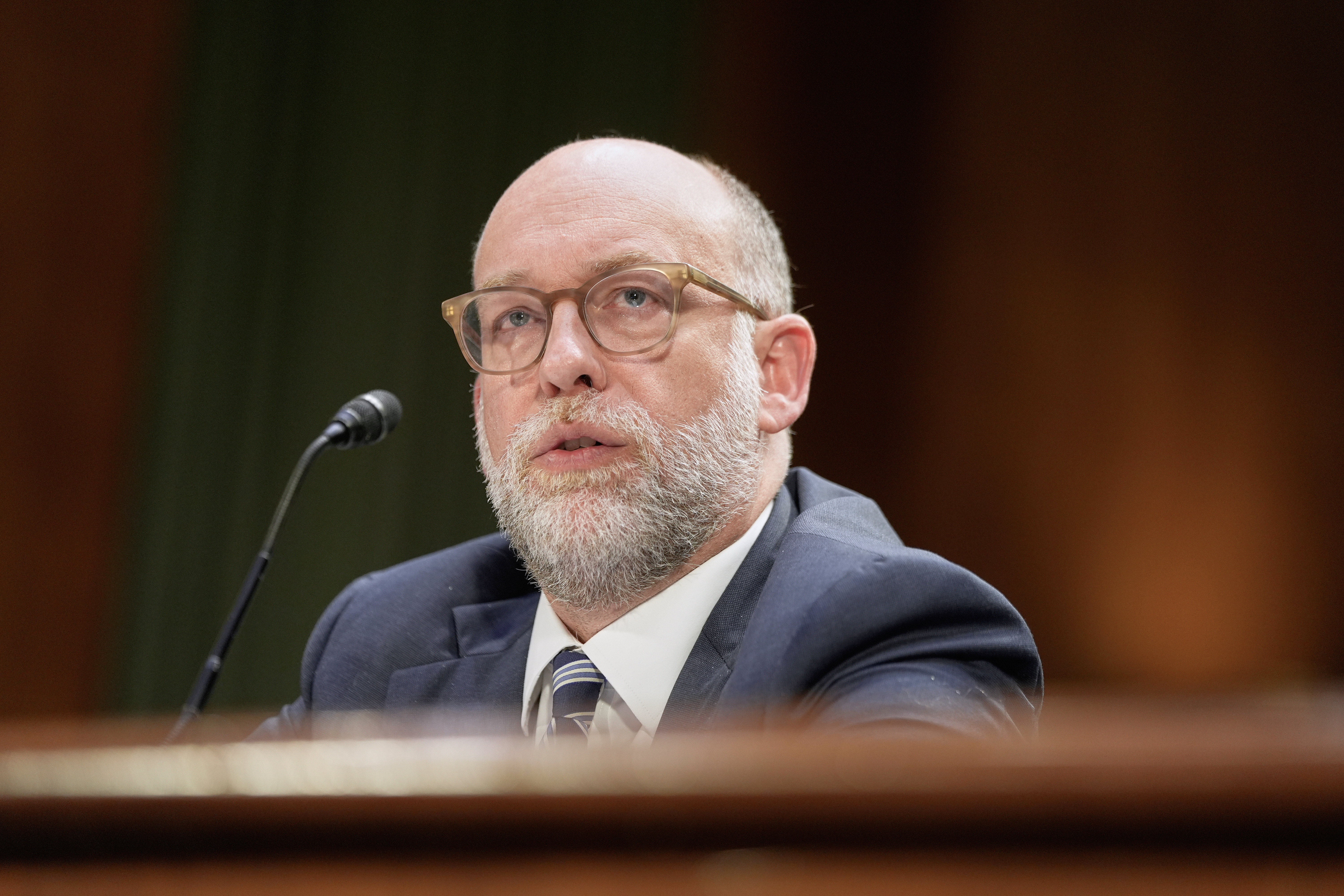
    Vought — who simultaneously runs the CFPB and the White House budget office — has made no secret that he holds negative views of the community lenders in question. At a House Budget Committee hearing in April, he said they “continue to be pushing an ideology that is very harmful.”

    The Trump administration has repeatedly sought to eliminate or drastically cut a federal program that funds and certifies community lenders. Bipartisan congressional majorities have rejected those efforts, but Vought has nevertheless withheld hundreds of millions of dollars Congress directed toward the program.

    When asked about the community lenders probe, administration officials sought to minimize the review, saying it represents only a tiny fraction of the bureau’s overall work, and declined to discuss any of the individual targets. A spokesperson for Vought attacked the lenders, saying they had directed money to LGBTQ health clinics, a transgender-themed fashion show, and a group that, she said, had threatened violence against federal immigration officials.

    The scrutiny of smaller community lenders contrasts with what the bureau has done, or stopped doing, elsewhere. Since taking office, the administration has dropped litigation and unwound settlements against some of the largest financial institutions in the country. In some cases, it halted checks that were set to go out to consumers. In other cases, it permanently gave up the right to reopen the claims against some companies in the future.

    In one such case, the watchdog dropped a lawsuit, filed in the waning days of the Biden administration, against the operator of the Zelle payment-transfer network and three of its owner banks — Wells Fargo, Bank of America, and JPMorgan Chase — over allegations that customers lost nearly $1 billion to fraud on the platform.

    The banks called the suit politically motivated, arguing the CFPB was stretching existing law to hold them responsible for payments customers had authorized themselves.

    The Consumer Bankers Association, which represents large retail banks, said it is encouraged by the bureau’s new direction, praising its focus on “identifiable victims, measurable harm, and clear legal standards” over what it called novel legal theories.

    Even if the community lenders currently under investigation had engaged in misconduct, the scale of the wrongdoing would look like a rounding error in comparison with potential misconduct by the largest financial institutions that are currently getting a pass, said Mike Pierce, who worked at the CFPB from 2011 to 2018 and is now the executive director of Protect Borrowers, a nonprofit advocacy group.

    “Some of the biggest corporate bad actors in America have gotten a pass from this agency,” Pierce said. “And now it’s focused on little guys that are doing things the Trump administration finds politically unpalatable.”

    Sen. Elizabeth Warren of Massachusetts, who conceived of the bureau, called the bureau’s pivot a betrayal of Trump’s own promises. “Donald Trump promised to lower costs ‘on day one,’” she said in a statement. “Instead, he’s co-opting the financial cop on the beat to rip away billions in relief for Americans scammed by giant banks and corporations and execute his extreme agenda.”

    Solveig Singleton, a policy analyst at the Cato Institute, a libertarian think tank, said the administration appeared to have discovered that the bureau could be “retargeted against its political opponents,” with broad discretion that makes it easy to frame such targeting as legitimate “policy spin.”

    She also warned that cutting staff could backfire because career employees facing performance pressure might well gravitate toward investigating smaller, easier targets that lack the resources to fight back.

    The longer-term solution, she said, requires Congress to curb the bureau’s unchecked discretion and ensure greater accountability over federal programs.
  • Trump’s $100,000 fee on H-1B visas for highly skilled workers is struck down

    Trump’s $100,000 fee on H-1B visas for highly skilled workers is struck down

    A federal judge threw out the Trump administration’s $100,000 fee on H-1B visas for highly skilled workers Monday, which had been challenged by California Attorney General Rob Bonta with 19 other states.

    In the ruling, U.S. District Judge Leo T. Sorokin of Massachusetts declared President Donald Trump’s fee unlawful and said it basically amounted to an illegal tax, essentially agreeing with the states that the $100,000 fee usurps Congress’ constitutional authority to set immigration policy and raise revenue, according to the decision.

    The fee narrowed a major pathway for legal immigration that is used by Silicon Valley tech companies, as well as hospitals and universities. The U.S. Chamber of Commerce also had challenged the fees in a separate lawsuit, but the court sided with the Trump administration late last year.

    Before Trump’s decree, H-1B visa applications fees rarely exceeded $5,000 a worker in total, excluding lawyers’ expenses. Universities and nonprofits paid a lower fee than private employers.

    The Trump administration is expected to appeal the ruling.

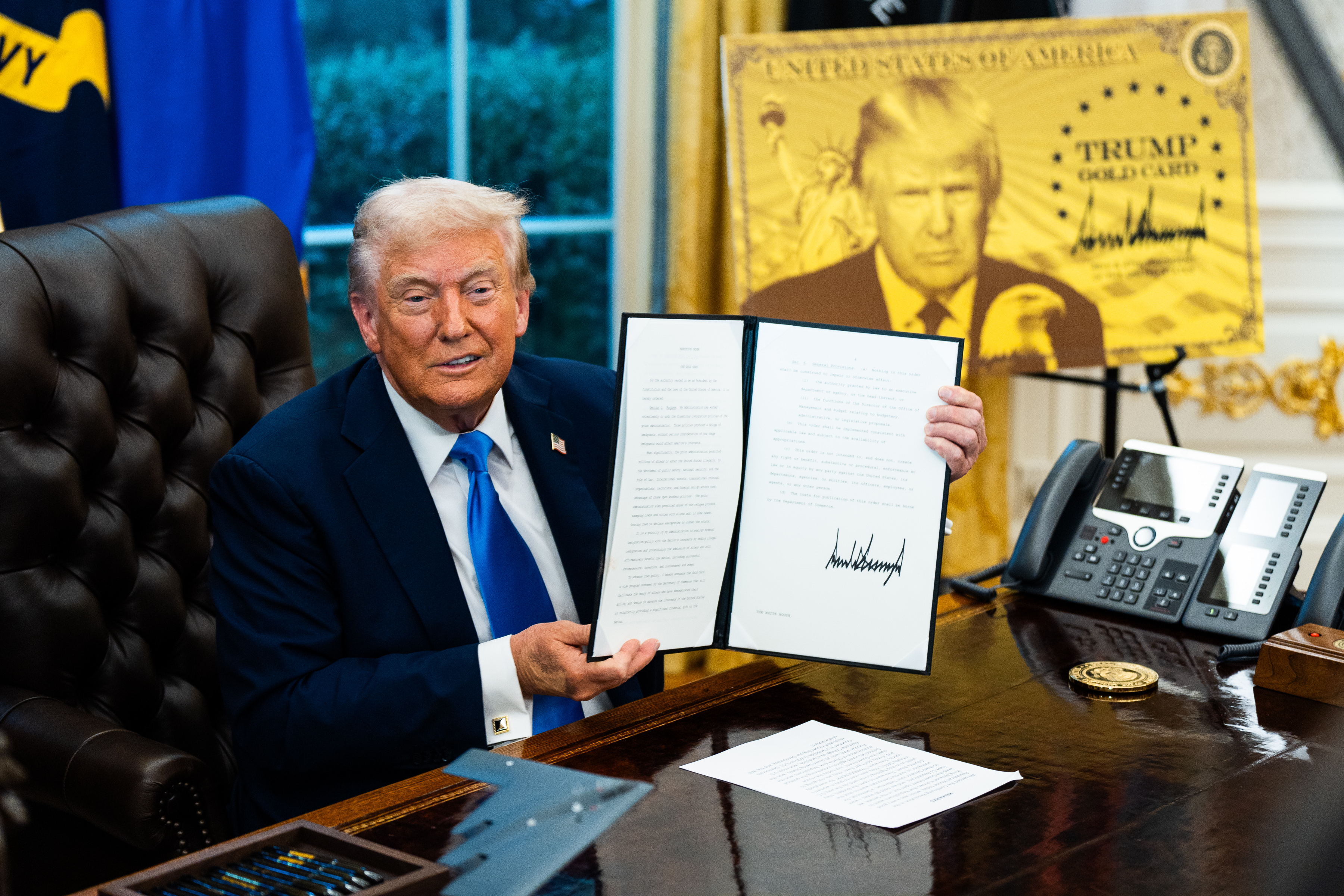
    “President Trump has clear legal authority to restrict entry of any class of aliens he determines is not in America’s best interests, and that is exactly what he did,” said Taylor Rogers, a White House spokesperson. “The H-1B program has been abused for decades, and President Trump finally took action to fix it.”

  • After Mormon lawmakers object, Pentagon revises Christian religious categories

    After Mormon lawmakers object, Pentagon revises Christian religious categories

    The Defense Department on Monday edited its new list of religious “codes” for service members so that no group is labeled “Christian” — drawing praise from Mormon lawmakers who were angered last week when their faith was categorized as outside of Christianity.

    On Friday, the Pentagon released a new, dramatically pared-down list of religious groups. It classified groups including Catholic, evangelical, and Methodist, among others, with the tag: “Christian.” The Church of Jesus Christ of Latter-day Saints was listed without the tag.

    After the outcry from several leaders who are members of the Mormon Church, the revised list simply states religious groups, without adding the tag “Christian” to any.

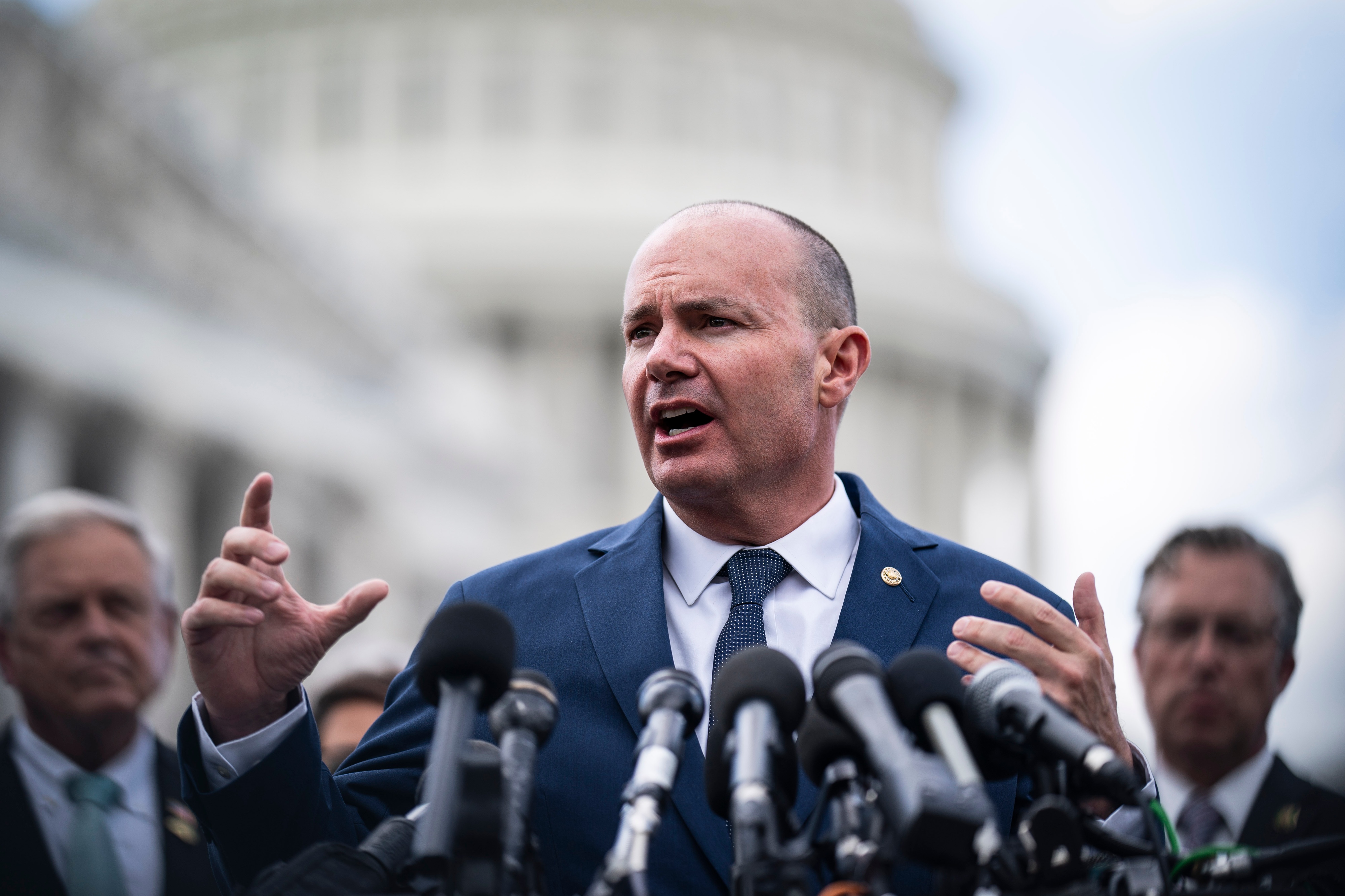
    U.S. Sen. Mike Lee (R., Utah), who is Mormon and had spoken out multiple times over the weekend on social media against the list, posted on X on Monday that he was “grateful” to Defense Secretary Pete Hegseth for the change.

    A spokesperson for Lee said he had spoken to President Donald Trump and Hegseth about the issue “and they assured him that the classification will be fixed.”

    The Defense Department on Monday declined to comment on whether it changed the list because of Lee’s campaign. The White House did not respond immediately to a request for comment.

    The Defense Department said last week that it removed 180 faith groups from its coding list — going from 211 to 31 — because the list was too large and “unmanageable.”

    “This decrease in religious affiliation codes is not designed to make any claims on the legitimacy of any faith or religious belief, nor is it intended to provide a list of ‘officially approved’ religions,” the statement said. “Rather, it is designed to allow chaplains to quickly look at the religious composition of their units and determine how they structure resources to best provide for warfighters of all faith groups.”

    In speaking earlier this year about his plan to trim down the code list, and to scrap the Army’s spiritual fitness guide, Hegseth has talked about his own view of faith, saying military religious services should be more focused on “truth” and less on self-care.

    The former Fox News host‘s handling of religion within the Defense Department has repeatedly been questioned. He has urged chaplains to speak more about scripture than psychology, and hosts monthly evangelical worship services that legal experts say are unprecedented. His social media profile and public comments routinely espouse his understanding of Christianity, which says that the faith is a defining aspect of American life, and casts those who disagree with him as God’s enemies. Hegseth has brought clergy from his small Christian denomination to preach at the Pentagon, including a prominent pastor who says women shouldn’t have the right to vote.

    The military has made many changes over time in how it recognizes different faiths, but experts say it had shifted in a more inclusive direction in recent decades. When the list of religious codes was expanded under the first Trump Administration, in 2017, the Defense Department said the broader list was needed to understand the military’s religious demographics and to “enable better planning for religious support.”

    The Defense Department press office Monday declined to comment on who was consulted as the department built its latest coding list.

    Among the dozens of faith groups no longer named in the codes are Wicca, atheists, and humanists. Also removed were Unitarian Universalists, the faith group with which multiple Founding Fathers were associated, including John Adams and Thomas Jefferson.

    Retired Maj. Gen William D. Razz Waff, the executive director of the Military Chaplains Association, predicted that the removal of religious and spiritual specifics will significantly complicate chaplains’ ability to do their job.

    Within the broad groupings of, for example, “Baptist” or “Jewish,” he said, are major differences — for the enlisted and for the chaplains themselves. For example, he wondered how marriage retreats that chaplains organize will work if it’s not clear how the participating soldiers or the chaplains themselves feel about topics like same-sex marriage.

    “As we used to say, ‘this breathes well,’ it looks good on paper, but wow, is the execution is going to be a mess,” Waff said.

    Lee, in his social media posts, mostly focused on arguing that his own denomination should be recognized as Christian, but also addressed the role of the government in making such decisions.

    “I’m not talking about what individual Christians might think. I’m talking about the U.S. government,” he wrote on X on Sunday. “I can say confidently that the U.S. government has no business recognizing the Christianity of literally every other religious sect that worships Jesus Christ — with one exception.”

    Whether Mormons are considered Christian has come up often in recent years, especially with the high-profile presidential campaigns of church member Mitt Romney. Concern about the issue prompted the group a few years ago to formally change all its marketing material to remove the word “Mormon” and replace it with the full name, which includes the words “Jesus Christ.”

    In a 2022 Pew Research poll, Mormons received the lowest favorability rate among Americans of the seven religious groups included. Among Christian denominations, evangelicals — a group that includes Hegseth and a large part of Trump’s base — are particularly skeptical of the Church of Jesus Christ of Latter-day Saints.

    Sen, John Curtis (R., Utah), who also is a member of the church, on Monday on X thanked the Pentagon for “engaging thoughtfully” with his office and “delivering a swift correction.”

    He had previously written in a Saturday post that it is “unacceptable for a government entity to characterize a faith in a manner that contradicts the religion’s own foundational tenets.”

    “Latter-day Saints are among the most patriotic, service-oriented individuals in our country. They are also unequivocally Christian — just look at who is in the name of the Church,” he wrote.

    In a statement, the Unitarian Universalist Association said that it is working on a “strategic response” to the pared-down list.

    “This may make it more difficult for our uniformed UUs to access the spiritual care that they need,” the statement said. “No government action can erase our faith nor lessen the powerful and necessary grounding it provides for those who serve.”

  • Americans’ spending is fueling the economy, but it might not last

    Americans’ spending is fueling the economy, but it might not last

    Americans are still spending money so strongly it’s steering the economy through surging inflation, but rising prices are starting to take a toll on savings accounts and summer vacation plans.

    While gas prices have surged since the Iran war began, raising costs for groceries and transportation, tax refunds and stock market gains have been helping buffer the pain for some Americans who are still spending. Although, many Americans are reducing how much money they are saving, data shows.

    Overall, consumer spending, which fuels two-thirds of the economy, rose half a percent in April, down slightly from March but a resilient showing, experts say. The strong spending helped the labor market pick up 70,000 jobs in May in leisure and hospitality, much higher than at any point over the past year.

    Other signs of strong spending appeared this past week with Macy’s and discount stores Dollar General and Five Below all reporting stronger than expected sales for their most recent quarters. That accelerated a trend of decent sales already reported weeks ago by retail behemoths like Walmart and Home Depot.

    However, the spending data obscures a growing list of concerns, and economists expect things could get rockier for spending in the coming months, especially if energy prices remain elevated. On Friday, gas cost $4.22 a gallon on average, much higher than $3 a gallon in December.

    Generally, people feel pretty terrible about the economy — consumer sentiment dropped 10% in May, according to a gauge measured by the University of Michigan, falling to a record low.

    One significant warning sign is flashing: Consumers are dipping into their savings and setting less aside to keep up with their spending. The personal savings rate fell to 2.6% in April, the lowest level in nearly four years, and the second poorest showing since the height of the Great Recession.

    Inflation, which has remained persistently high and hit 3.8% in April, is the likely culprit of the lower savings rate.

    “The economy has been somewhat insulated, and everyone has been willing to draw down savings to keep spending going,” said Mark Zandi, chief economist at Moody’s Analytics. “But if things keep going up, increasingly consumers are going to have to pull back.”

    Greg Tresley, 54, said he generally aims to save $700 to $800 each month. But with rising prices on gas and groceries, plus a couple unexpected larger expenses, he’s only been able to break even the past few months.

    “Basically the air has been coming out of my checking account little by little over the past year,” said Tresley, an IT manager in Langhorne, Bucks County.

    The toll of rising prices and global uncertainty is weighing on his family. His wife decided against a trip to Arizona to see family, and they’ve stopped driving their 2011 Mustang to avoid any unexpected repairs.

    “It’s all home cooking these days,” he said. “We have changed our grocery habits; we look at sale items first.”

    Consumer wariness is also starting to show up in other parts of the economy. When Dollar General reported earnings, officials said that they’re seeing more shoppers making more than $100,000 a year, as higher-income families seek out discounts.

    “Many of our core customers reported cutting back on other household expenses, including food purchases, due to rising gas prices,” Dollar General CEO Todd Vasos said on the company’s quarterly call, adding that the company was stocking more $1 items to appeal to customers. Dollar General increased net sales by more than 3% from the same period last year.

    Inflation also continues to hit lower-income families especially hard. A May report from the Federal Reserve’s Board of Governors reported that lower-income households showed greater financial strain, while higher-income households remained more resilient. Middle-income families are “squeezing more life out of every dollar before deciding to spend it.”

    Higher-income earners are being bolstered by a strong stock market — the S&P 500 is up more than 10% for the year — and might not feel the need to save as much each month.

    The increase in spending early this year was helped by higher-than-normal tax refunds doled out to taxpayers in the wake of President Donald Trump’s massive spending bill passed last year. Data from banking giant Chase shows that people are spending significantly more at gas stations this month, compared with last year, but that they haven’t really cut back on discretionary spending. Savings levels are also remaining largely stable, Chase said.

    But those tax refunds have peaked and are now slowing, said Bank of America economist Aditya Bhave. He has learned not to bet against the U.S. consumer, he said, noting that people find a way to keep spending. But, he said, the risks are now massive.

    “I think the true test of consumer resilience is still ahead of us,” he said.

    Karen Jenkins, a 54-year-old project manager in Houston, said she deliberately moved close to her office when she recently relocated to the city to avoid putting excess wear and tear on her car. She and her husband generally take a trip to Europe each December, but this year they are on the fence if they’ll make it. They’re watching flights and overall prices and will make a game-time decision this year, she said.

    Americans are also increasingly relying on credit cards to buy essentials. Since the pandemic, the National Foundation for Credit Counseling has seen an increasing reliance on credit cards as a “gap filler” for budgets.

    “This isn’t a story of people taking exotic vacations or buying nice vehicles,” said Bruce McClary, senior vice president for media relations and membership for the organization.

    The payments are piling up for many. Credit card delinquencies for those who are more than 90 days late making a payment hit a 15-year high in the first quarter of the year, according to the Federal Reserve Bank of New York. However, newer delinquencies, for those who are more than 30 days late, held about steady.

    As prices rise, Americans are increasingly hunting out deals and sales to save money. In Bay Shore, N.Y., Sofia Delta, 50, often visits multiple stores to search for deals as she grocery shops for herself and her four children. Delta, who works in banking, said she is cooking at home more and putting groceries on her credit card before paying it off and repeating the cycle.