Category: Washington Post

  • Betye Saar, artist who shattered stereotypes of Black women, dies at 99

    Betye Saar, artist who shattered stereotypes of Black women, dies at 99

    Betye Saar, who scoured flea markets for ordinary items – clocks and window frames, plastic dolls, miniature ships and masks — from which she crafted works of art that explored and exploded images of Black women in America, died Sunday in Los Angeles. She was 99 and would have celebrated her 100th birthday on Thursday.

    Her death was announced by Roberts Projects, the Los Angeles gallery that represented her.

    Ms. Saar, a lifelong Californian, was 93 when she became an art world star in 2019. That year, the Museum of Modern Art in New York and the Los Angeles County Museum of Art mounted simultaneous exhibitions of her work. Reviewing the Los Angeles show in The Washington Post, art critic Sebastian Smee wrote that her “modestly scaled assemblages address racism and female labor with excoriating intensity and moody finesse. But they also vibrate with spiritual yearning.”

    By then, she had been an artist for more than 50 years. In interviews, Ms. Saar described the assassination of the Rev. Martin Luther King Jr. in 1968 as the event that politicized her and gave her work purpose. “I was a mother with young children,” she told the New York Times. “I couldn’t walk in protest, but I did have a weapon, and that was art.”

    She began collecting likenesses of Aunt Jemima, Uncle Tom, Little Black Sambo and other caricatures that she described as “Black derogatory images.” She incorporated them into collages and assemblages, transforming the scavenged items into statements of political and social protest.

    The most famous of those works was “The Liberation of Aunt Jemima” (1972), in which she depicted the apron-wearing “mammy” with one hand holding a broom and the other a gun.

    “It’s like they abolished slavery but they kept Black people in the kitchen as Mammy jars,” Ms. Saar told the Los Angeles Times. “I had this Aunt Jemima, and I wanted to put a rifle and a grenade under her skirts. I wanted to empower her. I wanted to make her a warrior.”

    Ms. Saar worked in a variety of media, but her assemblages — collections of objects she found on the street or at swap meets — attracted the most notice. She was inspired by a 1967 visit to the Pasadena Art Museum (now the Norton Simon Museum), where she saw assembled works by a master of the form, Joseph Cornell. Ms. Saar said she recalled thinking: “Hey, I can do that. I’ve got all this fantastic stuff.”

    Some of her pieces told stories, and some didn’t. “I prefer it when they don’t tell a story so the viewer can invent their own,” she told the New York Times. Some assemblages displayed materials that belonged to Ms. Saar’s female ancestors, who were African American, Irish, and American Indian. Others referenced events in her life. In “Black Girl’s Window” (1969), a Halloween skeleton, alluding to her father’s death when she was 5, accompanies Ms. Saar’s self-portrait, among other images.

    Still others were overtly political. In his review of the Los Angeles exhibition, Smee focused on an assemblage called “The Edge of Ethics,” from 2010.

    A dark green birdcage contains an armless black figurine chained to a glass bottle and standing on outsize bird’s feet. Smee called the work “a masterpiece,” and he observed that “it makes a bald statement about slavery and incarceration.” He added, “It is more succinct, more poignant and more pressingly urgent than a roomful of research papers, a month of Sunday sermons, a year of news reports.”

    Ms. Saar’s work often referred to such religious traditions as shamanism and voodoo, as well as astrology, palmistry, phrenology and tarot. In a 1977 documentary about Ms. Saar, Los Angeles-based artist John Outterbridge, remarking on her interest in ancient beliefs, said, “She could be a daughter to one of the pharaohs.”

    Betye Irene Brown was born in Los Angeles on July 30, 1926. Around the time of her father’s death, her family moved in with relatives in Pasadena. She spent summers with her paternal grandparents in the Watts neighborhood of Los Angeles, where she watched the construction of Simon Rodia’s Watts Towers, a major work of architectural sculpture.

    Ms. Saar said Rodia, an Italian immigrant, influenced her by his use of broken dishes, seashells, rusty tools, even corn cobs that he pressed into cement, creating an art of assemblage and presaging her own eclecticism.

    At the University of California at Los Angeles, she majored in interior design. “Being from a minority family,” she told the Los Angeles Times, “I never thought about being an artist. But I could tell people how to buy curtains.”

    After graduating in 1949, she created a greeting card line and founded an enamelware business. She started graduate school in graphic design, but an encounter with printmaking changed her trajectory. The form was “liberating,” she told the Los Angeles Times. “It gave me the freedom to experiment.” She began creating color etchings, ink drawings, and intaglio prints.

    In 1952, while in graduate school, she married Richard Saar, a ceramicist. They soon had three daughters: Tracye Saar-Cavanaugh, now a writer, and Alison and Lezley Saar, both artists. In 1962, the family moved to L.A.’s bohemian Laurel Canyon, where Ms. Saar continued to live after she and her husband divorced.

    In addition to her daughters, survivors include six grandchildren.

    During a 1970 trip to Chicago, Ms. Saar studied the African artifacts in the basement of the Field Museum. From then on, many of her works incorporated objects and artworks from Africa.

    In 1974, she received a grant from the National Endowment for the Arts. It made her feel “like an artist for the first time,” she said. “Before I was just making stuff.” A year later, she was the subject of a small exhibition at the Whitney Museum of American Art in New York.

    Although she mostly avoided art world disputes, Ms. Saar led a letter-writing campaign in 1997 to protest the awarding of a MacArthur “genius grant” to Kara Walker, an African American artist whose silhouetted images included depictions of enslaved people as participants in debauchery with their masters.

    In an interview for the PBS series “I’ll Make Me a World,” Ms. Saar called Walker’s work “sort of revolting and negative and a form of betrayal to the slaves, particularly women and children, and that it was basically for the amusement and the investment of the White art establishment.”

    She subsequently explained to the International Review of African American Art: “Here we are at the end of the millennium seeing work that is very sexist and derogatory. … The trend today is to be as nasty as you want to be: TV, Rodman, rap. … There is no personal integrity. … Aunt Jemima is back with a vengeance.”

    But mostly, when she had something to say, Ms. Saar did so through her art. In her later years, her assemblages sometimes grew into room-size installations. “I’m basically a recycler,” she told the New York Times. “I’m a person who walks looking down, because you can find lots of great things on the ground.”


  • A desert town may run out of water. Others could face the same fate.

    A desert town may run out of water. Others could face the same fate.

    KEARNY, Ariz. — Mayor Curtis Stacy starts every morning checking two websites that tell him how much he needs to worry about water.

    One site tells him about the reservoir that supplies his tiny desert town — it’s effectively empty. The other site tells him if the town gets additional water that other communities with more senior rights aren’t using; right now, the answer is yes.

    But Stacy tries to remind Kearny’s roughly 2,000 residents that they could easily tip back into crisis mode, just like this spring. In newsletters, he underscores that fragility with no fewer than 20 exclamation points. If other communities call for more water, they will have to cut back again.

    “!!!!!!!!!!THIS SITUATION IS ALMOST CERTAINLY TEMPORARY!!!!!!!!!!” he wrote in one bulletin posted on the Kearny Facebook page and taped up and down the glass doors of the town office.

    Kearny is an extreme example of the water crunch facing communities across the West as states and cities stare down a future of “megadrought” and fight over scarce resources. An unusually dry winter this year left the Southwest parched, with not enough water for everyone laying claim to it. In the complex web of water rights that govern how that short supply is distributed, the tiny town of Kearny comes last.

    Other cities around the West could face similar challenges and cutbacks. The federal government is set to release a plan for the shrinking supply of Colorado River water this summer that could force dramatic cuts.

    The plan, part of which the Bureau of Reclamation described in an Environmental Impact Statement early on Friday morning, comes at a time of escalating crisis for the Colorado River, a crucial water source for seven states, 30 Native tribes and a swath of northwestern Mexico.

    Arizona, California, and Nevada will be required to curb their use of the water from the Colorado River by a combined 20% over the next two years — and could ultimately face even larger cuts, according to three officials familiar with negotiations over a long-awaited federal plan to rescue the depleted waterway.

    Kearny is not directly affected by the Colorado River negotiations, officials say, but its dilemma shows how dwindling resources — and water-rights rules that can feel arbitrary to those most affected — can upend daily life.

    Kearny usually uses about 280 acre-feet of water a year; this year, it was allocated 77 acre-feet (one acre-foot supplies about three homes annually). Town officials realized they were on track to run out of water in July.

    The crisis forced steep reductions in water use and now hangs over the town’s future, testing residents’ ability to adapt to shortage. It has also consumed much of Stacy’s final year in charge, giving him new gray hairs and new worries about his hometown, a community where everyone knows everyone and where you can get ahold of the mayor by walking into his office.

    Stacy thought he had seen Kearny’s worst crisis in 2024, when a wildfire blazed toward the edge of town. He ran from house to house getting people out while embers blew above their heads. But the water shortage has been, in many ways, worse.

    “It’s like a slow death,” Stacy said, “instead of an actual emergency happening right in front of your eyes where you can actually help.”

    The town tried to prepare residents late last year for what was coming. In a Dec. 29 letter, officials warned that the reservoir fed by their primary water source, the Gila River, was running low.

    The first question in the FAQ section was, “What happens if our allotment is zero?”

    Answer: “Severe restrictions will be imposed.”

    Light snowfall had left the reservoir, San Carlos Lake, at about 1% of its capacity, and Kearny’s rights to that small supply were “junior” to other communities under the complicated water-rights system laid out by a court in 1935, before the town was founded.

    Soon, Kearny was on track to run out of water by midsummer.

    “For years, they’ve been telling us that cutbacks were coming,” said Eric Armenta, Kearny’s public works director. “But it never did come until now. And it came drastically.”

    In late March, Kearny imposed “Level 5″ restrictions on water — the most stringent possible. A declaration of emergency told residents they could use water only for the essentials; the mayor went door to door to convey the situation’s gravity. There would be no washing of cars, no kiddie pools, and no watering of grass. Even the Little League field would go dry.

    “Laundry — wear it a second or even third day,” the mayor advised in another bulletin days later. “Bathing/Showers — no better time to connect with your significant other.”

    “What is the Town doing about this?” he wrote in the next note. “This emergency is our entire focus.”

    By the end of April, the message was sinking in and the town was using 30% less water. But when relief came later in the spring, town leaders were torn.

    The authority that oversaw river rights had given Kearny extra water, but only because those with higher priority were not requesting water. The moment that changed, Kearny would need to cut back again.

    The town council voted to go back to “Level 1” restrictions, which meant cutbacks were optional. “Flush, shower, keep the trees alive, launder your clothes, live a normal life again,” the mayor wrote.

    Not everyone thought the reprieve was a good idea. “We knew exactly what was going to happen — people were just going to use it freely,” said Armenta, the public works director.

    Kearny was not yet in the clear.

    Bits of grass around town were starting to turn green again in early July, but mostly the yards were still parched. Public works supervisor Jake Acton looked away when he drove by the Little League field — still dead and brown.

    Kearny officials were no longer worried about running out of water in the short term, but their broader challenge lingered.

    Fourth of July fireworks were canceled due to “dry conditions and limited water”; fire damage aside, Kearny could not afford the thousands of gallons it might take to put out a wildfire. And some officials worried news of their water woes would scare away businesses, scare away homeowners, and make it even harder to recruit teachers.

    Armenta stopped by an old rehabilitated well set to start pumping in a matter of weeks. No one knew how much it would produce until it started functioning, and they were trying not to get their hopes up.

    “We want above 50 gallons per minute,” Armenta said over the roar of a machine clearing sand and debris. “Below that, it’s a waste of time.”

    Armenta was spending some 90 hours a week, he said, on the public works job — a position he took early this year because he knew the city was headed for trouble. He did it because his family is here, and he doesn’t want to leave.

    “My mom still lives here. My sister lives here. I want to live here,” he said. “My kids, I want them to be able to always come back to Kearny.”

    At the bar across the street from the Little League field, people wondered when the monsoon season would bring some real rain. But everyone thought the town would get through the water crisis. When Kathy Taft asked her friend Dave Olsen if the town was “really going to run out of water,” Olsen answered without hesitation.

    “No,” he said. “I just don’t see that happening.”

    The well, when it began operating in mid-July, was a letdown. At 40 gallons a minute, it would cover only a fraction of the town’s need.

    San Carlos Lake, meanwhile, remains close to empty. The lake closed to the public in June after it grew so dry that -— in the words of the local recreation department — “approximately 100% of the fish population” died.

    Now the mayor was worrying about 2027. If the lake didn’t recover, Kearny’s apportionment of river water next year could be zero.

    “We got 77 [acre-feet] this year and we were able to stretch that,” Stacy said. “You can’t stretch zero.”

    What then? There were still other avenues to try. Hydrologists were looking for well sites farther out; a local mining company could give Kearny some of its water. Wastewater could be put back into the ground and reused.

    And the monsoon rains were picking up. Away on a trip to Minnesota, Stacy watched with interest as a flood watch went into effect for much of the Gila River Basin, which includes Kearny.

    With some strong storms, the town’s fortunes could change again.

  • Musk’s SpaceX tumbles back to Earth, dragging Tesla stock down with it

    Musk’s SpaceX tumbles back to Earth, dragging Tesla stock down with it

    It seemed to be only good news for Elon Musk and investors in companies he oversees.

    SpaceX had marked a record-setting IPO, Musk was the first trillionaire in history, and the rocket company vaulted to an all-time high of more than $225 per share.

    That was last month. Since then, their fortunes have shifted.

    Musk has shed hundreds of billions in wealth, demoting him from trillionaire status, and SpaceX’s stock price has been cut practically in half. The stock closed at $116.41 a share Tuesday in trading on Nasdaq. On top of that, electric vehicle maker Tesla has lost about 18% of its value over the past week, in part after falling short of its quarterly earnings expectations, as investor patience for its artificial intelligence and robotics bets has worn thin.

    Musk cheekily nodded at the situation in a post on X on Friday.

    “(Former) Trillionaire,” he wrote.

    But while the world’s richest person could become a trillionaire again with a few big up days in the market, the challenges for SpaceX are deeper. It’s a new era for a company that was once on a glide path, that seemingly could do no wrong on its way to a historic $75 billion initial public offering.

    For SpaceX, “one of the benefits of being private is that there wasn’t a market to weigh in on and evaluate business decisions,” said David Meier, senior investment analyst at the Motley Fool. “Being publicly traded means everything will be evaluated and information transmitted through market prices. So every SpaceX launch, every Starlink decision and every xAI decision will be scrutinized by the market,” he added, referring to the company’s satellite internet service and artificial intelligence arm.

    Case in point: After SpaceX aborted a launch because of engine issues this month, the company faced another problem — a plummeting stock. SpaceX’s IPO documents had touted its plans to establish a colony on Mars and put data centers in space.

    Then SpaceX was dealt its latest setback in propelling Starship off the ground. The company is trying to power its data center and exploration bets by using a roughly 400-foot rocket to carry out missions including taking humans back to the moon.

    But the program has been marred by reliability concerns and repeated explosions. While SpaceX has proved its ability to put satellites and even people into orbit, much of its success has been built off of earlier and less capable launch vehicles. The company ultimately conducted a successful flight test on Friday, after what it said were issues with four of the rocket’s engines during the aborted launch the prior week, but the questions about Starship’s overall viability remain.

    “The future of the company is riding on the ability to make Starship work. … They essentially have a very successful pickup truck that can move things across town,” said Clayton Swope, deputy director of the Aerospace Security Project and senior fellow at the Center for Strategic and International Studies, a nonprofit focused on policy research in areas including defense and geopolitics. “What they’re trying to do is switch to a freight train and get the economies of scale [of] something of that magnitude.”

    Meier, the Motley Fool analyst, said the “sharp sell-off” has been surprising to him.

    “One possible explanation is that investors had the time to digest the financials and believe the valuation is too risky,” he said. In the lead-up to its stock debut, SpaceX disclosed it had a record of significant losses, including at least $13 billion since the beginning of 2023.

    Things have hardly been rosier on the other side of the Musk empire, at Tesla. Battling what he said was an illness on the company’s earnings call, Musk tempered expectations about Tesla’s performance, saying the electric vehicle company would be spending heavily to fuel its ambitions. Tesla reported a decline in profits compared with the same quarter a year earlier, despite 26% higher revenue than during the same period last year.

    As Tesla has shifted away from the auto business that propelled its meteoric growth — making it the world’s most valuable car company — investors have clamored to see results from its new direction: a pivot toward robotics and what the industry calls “physical AI,” driven by products such as its forthcoming Optimus humanoid robot. Musk delivered little news of significance on those bets, sending that company’s stock sinking as well.

    “We’re investing a lot in growing the core business and really preparing for the future,” Musk said. “This is a massive [capital expenditure] year, but I’m confident that all the things that we’re investing in will yield incredible returns.”

    “I’m a little under the weather here, a bit ill, so if I sound a little off … I’m a little bit ill today,” Musk said later on the call.

    Tesla’s declines and the larger consolidation of Musk’s empire have fueled speculation that it could be absorbed into SpaceX. Musk did little to quell that speculation on the call.

    “Obviously we can’t talk about combining companies and that kind of thing on an earnings call, it’s got to be done with the appropriate process,” Musk said after citing increasing overlap between the two companies, before turning a question about a theoretical merger to the company’s general counsel.

    For SpaceX, meanwhile, there is little relief on the horizon, analysts said. Gene Munster, managing partner at Deepwater Asset Management, said the company is feeling the strain of looming lockup expirations, where people who acquired shares at low prices are suddenly able to sell their stakes. Until that is resolved, he said, SpaceX is likely to continue facing challenges.

    “It’s like a crushing unknown,” he said. “Typically what happens is the stock keeps going down, down, down until the lockup [resolves].”

    Swope, the senior fellow at the Center for Strategic and International Studies, said the public scrutiny on SpaceX could, however, have benefits. He said a publicly traded SpaceX could be even more attentive to risks.

    “I think we all know there is a bit of showmanship to how SpaceX and Elon Musk do business,” he said. “If anything, I guess I could see maybe this will attenuate some of that showmanship a bit and it will be more cautious.”

  • Police vetted dubious allegation only after Buttigieg was separated from children

    Police vetted dubious allegation only after Buttigieg was separated from children

    Officials who separated former Transportation Secretary Pete Buttigieg from his young twins last month relied on a vague and unsubstantiated allegation from an accuser authorities later deemed possibly “mentally unstable,” according to previously unreported police records.

    The records, obtained by The Washington Post, and an interview with the apparent complainant offer the most detailed account yet of how a false tip led investigators to the home of one of the country’s most prominent Democrats, drawing bipartisan outrage.

    Child welfare experts who reviewed the documents at The Post’s request said they illuminate a flawed process that was made worse by poor judgment by agencies and a lack of communication among investigators from two states.

    Michigan State Police reports detail the chain of events from the allegation to its eventual determination it was unfounded and potentially politically motivated. Indiana child welfare authorities who received a tip on a hotline with “very limited information” about Buttigieg did not pass along the caller’s name or contact information when notifying officials in Michigan, where Buttigieg now lives, which the Indiana child welfare agency says is their policy.

    Michigan police waited six days after approaching Buttigieg to attempt to identify the caller.

    By then, Buttigieg, a former mayor of South Bend, Indiana, and 2020 presidential candidate, had gone public with the ordeal in a June Substack post, describing it as “the ugliest thing that has happened to me since my career in service began.”

    Michigan authorities had told Buttigieg he could not be alone with his 4-year-old children until they could be interviewed away from their parents the next day, Buttigieg recounted. The children stayed with their grandparents who lived nearby. Buttigieg, who is widely expected to run for president again, called that 24-hour separation “among the darkest hours of my life.”

    Buttigieg said the authorities initially would not tell him what he was accused of. Vivek Sankaran, a professor at the University of Michigan Law School and child advocacy law expert, said he was troubled that Michigan State Police went to Buttigieg’s door with such a vague allegation that didn’t present any indication that children were imminently at risk.

    “At the very least, it’s incredibly poor investigative work. I would even say reckless, in light of how harmful this is for the family,” Sankaran said.

    “It should scare all of us,” he added.

    Michigan State Police spokesperson Lauren Thompson-Phillips said the investigation was “conducted promptly, and the allegations were determined to be unfounded,” adding that the department’s “responsibility was to assess and ensure the safety of the children involved.”

    The first openly gay Cabinet member confirmed by the Senate, Buttigieg, 44, has faced attacks from some corners over his sexual orientation and his decision to adopt two children with his husband, Chasten. He told authorities of the “many threats” his family receives, including death threats, according to the report.

    “This has been a painful and infuriating situation for the family,” Buttigieg spokesman Sean Manning said in a statement to The Post. “They are in touch with Michigan authorities, seeking answers and accountability for what happened.”

    The Michigan attorney general’s office has opened an investigation of the allegation against Buttigieg and how it was handled, spokeswoman Kimberly Bush told The Post.

    “Common sense would have shown that this targeted report plainly lacked credibility on its face,” Bush said. “Before children are separated from their families, due diligence should be exercised to ensure some nexus exists between the source and the family, or that the complaint comes from a reputable, reliable, or verifiable source. We have requested the Michigan State Police turn over all evidence at the completion of their investigation and will zealously investigate all leads, policies and procedures that allowed for such a flagrant violation of the Buttigiegs’ privacy.”

    Officials at Michigan and Indiana state police departments and child welfare authorities declined to answer questions about what, if any, steps they took to verify the allegations before contacting Buttigieg.

    Thompson-Phillips did not respond to a specific question about why state police waited six days to request information from Indiana authorities about the complainant.

    Ron Green, a spokesperson for the Indiana Department of Child Services, said the agency followed “established procedures,” including not sharing information about callers. He and Michigan child welfare authorities declined to comment specifically about the Buttigieg case.

    After receiving a partially redacted copy of the Michigan State Police report that referenced a Facebook post by the caller, The Post was able to identify and contact the woman, who said she lived in Alabama. Public records show she has also lived in Indiana.

    In a phone call, she was unable to answer basic questions about her accusations. She acknowledged that she made reports about Buttigieg to authorities but declined to say to whom.

    The Post is not naming the woman because it was unclear whether she was fully aware that she was speaking to a media outlet on the record. When asked to corroborate her claims — with dates, documents and other specifics — she did not and accused the reporter of working with Buttigieg on a cover-up.

    The Michigan State Police report redacts the complainant’s name and details of the allegation, but the woman’s comments to The Post align with what Buttigieg has recounted being told by authorities and nonpublic details in the police report, including that she met him in the small city of Florence, Alabama.

    Michigan authorities had asked Buttigieg during their investigation if he had traveled to Florence at any time between 2021 and 2023, and his attorney confirmed to them that he had not after reviewing travel records.

    The woman said a sergeant from the Indiana State Police had since called her and was “harassing” her. Indiana State Police spokesperson Ron Galaviz confirmed an ongoing investigation of an allegation of false reporting but said he was unable to comment further.

    Thompson-Phillips, the Michigan State Police spokeswoman, said the agency is deferring to Indiana to identify the accuser and will then “evaluate whether any charges are appropriate.”

    How the Buttigieg investigation unfolded

    Authorities must balance taking child abuse allegations seriously with preventing misuse of the reporting system, the spokesperson for the Michigan attorney general’s office said. The office’s investigation into Buttigieg’s case also aims to reduce the risk of false allegations of child abuse “against other well-known residents and elected officials as the newest form of threat or intimidation,” the spokesperson said.

    Under Indiana law, anyone who suspects a child has been abused is required to make a report, and the Department of Child Services must initiate an assessment within 24 hours. In Michigan, a Children’s Protective Services investigation “must begin within 24 hours” of a report, and usually includes face-to-face interviews with the alleged victims and perpetrators, plus a viewing of the child’s home.

    Buttigieg’s case involved extra complications with multiple agencies across two states. Their interactions and information sharing are partially detailed in the Michigan State Police report.

    Indiana police officials learned about the woman’s call on June 22. They notified Michigan authorities on June 23, prompting a Michigan State Police trooper and child welfare official to visit Buttigieg later that day.

    In his Substack post, Buttigieg said that he was not told the details of the allegations against him, and that he was told to stay at a hotel or send his children to stay with relatives until they could be interviewed the next day. Buttigieg and his husband, who was not accused of wrongdoing, made the decision to send the 4-year-old twins to their grandparents. The children sat alone for separate, hourlong interviews with investigators on June 24 and told investigators they felt safe, according to police records.

    An Indiana child welfare worker contacted the caller again before referring the case to Michigan, reports show, but gained no new information. Those reports do not detail any further attempts by Indiana or Michigan police officials to vet the tip before the visit to Buttigieg.

    When Michigan investigators interviewed Buttigieg, they told him they did not have the name of the person who made allegations against him, according to Buttigieg and the police records.

    On June 26, Buttigieg went public, and Michigan State Police publicly said the allegation against him was false.

    On June 29, a week after the initial tip, a Michigan child welfare worker told a Michigan State Police official that Indiana police informed her that the possible person who reported the allegation was a “mentally unstable woman in Indiana.”

    That’s when the reports show that Michigan State Police contacted their Indiana counterparts to get the caller’s identity, and an Indiana investigator said they would try to interview her to verify the allegations and determine if she made a false report.

    Indiana State Police did not answer The Post’s questions about the claim the accuser was mentally unstable. The woman did not respond to a question about this description of her.

    “This case highlights everything that is wrong with a system of reporting and investigating where no one has accountability,” said Dale Margolin Cecka, professor of law and director of Albany Law’s Family Violence Litigation Clinic. “And a family is traumatized because of it.”

    Under an ideal system, Cecka said, Indiana authorities would have better vetted the caller and shared the identity of the tipster with Michigan, who should have done their own vetting and declined to act on an anonymous allegation.

    An Indiana state investigator looked into the caller and reported finding a Facebook post in which the caller urged people not to vote for Buttigieg and referenced her accusation weeks before she contacted authorities, according to the Michigan report, which does not say when the post was found. In other social media posts viewed by The Post, the woman praised other Democrats.

    The woman told The Post that she decided to contact authorities about Buttigieg because she was worried about his children and his presidential ambitions. She declined to say why she waited years to report her allegations. The police report said she told the Indiana child welfare worker she did not know why she waited.

    Meanwhile, Buttigieg said in his Substack post that he is grappling with what the ordeal means for his family and his country.

    “Even though the accusation was absurdly and obviously false, and was promptly rejected by law enforcement, I still worry about the harm it has done,” he wrote. “And at the most basic level, I worry about how anyone, even in today’s world, could fail to respect the absolutely fundamental principle that whatever you think about someone in politics, you leave people’s kids out of it.”

  • McConnell not medically cleared to leave rehab yet, Capitol physician says

    McConnell not medically cleared to leave rehab yet, Capitol physician says

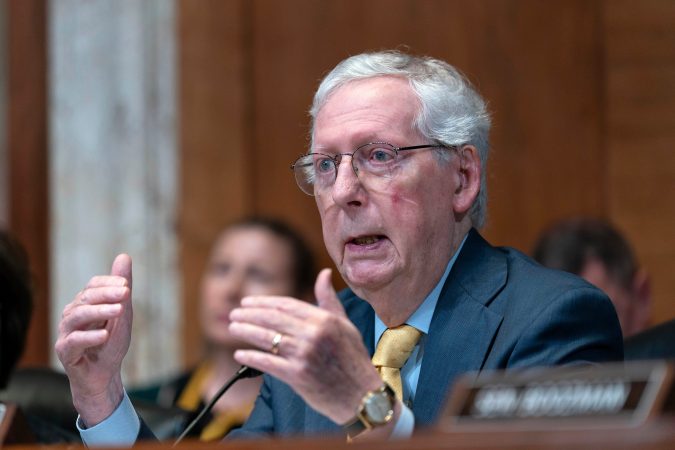
    Sen. Mitch McConnell (R., Ky.) has not been medically cleared to leave a rehabilitation facility, the Capitol physician’s office said Monday, and will miss Kentucky’s Fancy Farm Picnic on Saturday as he continues recovering from a June fall.

    McConnell, 84, was hospitalized June 14 after suffering a fall at home and has not returned to the Senate. He said earlier this month that he had moved to a rehabilitation facility but has not provided a timetable for his return.

    “I’m still working hard to get back to my full schedule of work in the Senate and in Kentucky, keeping up with intense physical therapy per my doctors’ orders,” McConnell said Monday in a statement. “Unfortunately, that means I won’t be able to make it to Fancy Farm, Kentucky this Saturday.”

    In an accompanying statement, Congress’ Office of the Attending Physician said McConnell was “not yet medically cleared to leave the rehab facility and return to the office.” Its physicians visit him daily, the office said, and he is undergoing multiple physical therapy sessions each day to rebuild his strength and reduce the risk of future falls. The office said childhood polio “continues to be a significant factor in his mobility.”

    McConnell has been a regular speaker in the past at Fancy Farm, a picnic in rural western Kentucky that draws politicians from across the state every August.

    McConnell shared a photo of him with his wife, Elaine Chao, which his office said was taken on Sunday.

    McConnell has faced growing questions about his health and when he will return to the office over the past six weeks, which occasional updates from his office have not silenced. Scott Jennings, a former McConnell campaign aide, urged McConnell last week to “routinely update his constituents on how he’s doing.”

    “When you’ve been in a hospital for a month and you’ve missed all the votes … you owe your boss, like anybody else out there who works, an explanation of what’s been going on and when you’ll get back,” Kentucky Gov. Andy Beshear, a Democrat, said earlier this month.

    McConnell’s office has said that he continues to work as he recovers. David Popp, a McConnell spokesperson, said Friday that McConnell “continues to meet with staff regarding Senate and Kentucky business, including discussions on defense appropriations, foreign policy, the farm bill, constituent services, and constituent federal grant requests.”

  • Trump’s Board of Peace lowers ambitions as peace plan lags

    Trump’s Board of Peace lowers ambitions as peace plan lags

    Israel’s right-wing government and the Board of Peace created by President Donald Trump to implement his Gaza peace plan appear on a collision course over the future of the enclave.

    “We are coming home. Gaza is ours,” National Security Minister Itamar Ben Gvir said as he led a demonstration of hundreds of supporters, along with other Israeli government ministers and lawmakers, to the northern Gaza border July 19.

    A number of Israeli officials, without contradiction by Prime Minister Benjamin Netanyahu, have said that Israel is not leaving Gaza and vowed to reestablish settlements that were dismantled when it agreed to “disengage” from the enclave more than a decade ago.

    A White House official confirmed that Trump will meet Tuesday with Netanyahu, who is traveling to Washington to attend a memorial service for Sen. Lindsey Graham. The meeting is likely to center on Iran and Trump’s peace efforts in Lebanon.

    Trump’s Board of Peace has struggled to make progress moving beyond the first phase of his plan, which included the release of all remaining Hamas-held hostages and a ceasefire that left what is now more than 60% of Gaza cleared of Palestinians and occupied by the Israel Defense Forces, and the rest controlled by Hamas.

    Phase Two outlines a sequenced disarmament of Hamas, Israeli withdrawal, and installation of an interim Palestinian government and police force with security provided by an International Stabilization force while internationally financed reconstruction of Gaza takes place.

    Earlier this month, Board of Peace officials briefed Congress on a new element of the plan that would precede those stalemated steps with construction of a pilot “humanitarian and governance zone” for about 50,000 Gazans who agree to live there.

    The briefing was intended to demonstrate progress and transparency to skeptical lawmakers and others who have questioned what the board has achieved thus far.

    While international humanitarian agencies last week noted improvement in food access, the World Food Program said that “the overall humanitarian situation remains brutal” for the up to 2 million Gazans who remain in the truncated, Hamas-controlled part of the enclave, surrounded by the IDF. “Families lack water, sanitation, and medicine,” the WFP said, citing continued problems of international funding and Israeli-restricted humanitarian access.

    The pilot community is to be located in an IDF-controlled area near the now-razed city of Rafah in southern Gaza, according to Board of Peace officials. The officials said it will be separated from the Israelis by a still-to-be formed international force composed of foreign troops and commanded by U.S. Army Maj. Gen. Jasper Jeffers.

    Gazans who have strayed, intentionally or not, across the current dividing line between Israeli and Hamas control — marked by the IDF with widely spaced, yellow concrete blocks that have gradually been moved inward to consume more of Gaza — have been shot at regularly by Israeli troops; some have been killed.

    The current position of the so-called “yellow line,” which Netanyahu said in May he had ordered extended to 70% of Gaza, is far beyond the 53% allotted under the peace deal. IDF Gen. Eyal Zamir has described the line as Israel’s “new border,” where the military exercises “operational control.” The IDF has said it gives warnings before using lethal force against anyone crossing the line.

    On the eve of Netanyahu’s visit to Washington, Israel’s security cabinet on Sunday said that, in principle, it would allow the international force to enter the Israeli-controlled area in support of the planned pilot community.

    According to Israeli news accounts of the cabinet meeting, any Palestinian moving to the pilot community would have to be individually screened for ties to Hamas, and the entry of any foreign troops would have to be directly approved by Netanyahu and his foreign and defense ministers.

    But “it’s unclear whether Palestinian civilians would find that to be a sufficiently secure arrangement and would feel comfortable doing it,” said former U.S. ambassador to Israel Dan Shapiro, now at the Atlantic Council think tank.

    “The model is a little bit bizarre in the idea that it says to Palestinians who are not currently under Israeli control, come live under Israeli control. It’s better for you,” Shapiro said.

    According to a senior Board of Peace official, who spoke in an interview on the condition they not be identified by name, Palestinians who agreed to move into the pilot area would be free to come and go into Hamas-controlled Gaza at any time.

    The official described the pilot project as “serious temporary housing.” They estimated that it will cost $150 million — including humanitarian and medical needs and — and completed before the end of this year.

    The planned humanitarian zone, called “New Rafah,” would be a far cry from the ambitious redevelopment of Gaza into a high-tech industrial center and waterfront resort, with high-rise residential communities, high-speed transportation and parks, outlined by Trump negotiator and son-in-law Jared Kushner.

    When he introduced what he called “New Gaza” in January at the World Economic Forum in Davos, where world leaders first signed up for the Board of Peace, Kushner said demolition and removal of unexploded ordnance, at least in the Israeli-occupied portion of Gaza, had already commenced. Construction of New Gaza, he said, would begin under the second phase of Trump’s peace plan.

    “We’re looking to cultivate a very deep relationship with both chambers and across the aisle” in Congress, the Board of Peace official said, adding that they planned to appoint a permanent congressional liaison. A second official said that in the briefings, the board was “signaling its readiness to receive $200 million” from a State Department peacekeeping account to add to what is now about $300 million that other countries have donated for overall Gaza renewal.

    The State Department did not respond to specific questions about peacekeeping funds but said that it “continues to evaluate how existing authorities, programs, and interagency coordination can best support” the peace and stability objectives laid out in Trump’s plan.

    So far, Bahrain and Morocco have publicly acknowledged contributing funds to the endeavor, plus what the senior official said were “other folks who I don’t think are out there yet.” This month, the European Commission and 15 European countries agreed to provide around $1 billion “to support the implementation of ongoing and planned early recovery projects” for Gaza.

    Asked whether that money would go into private Board of Peace accounts at J.P. Morgan or a World Bank account that is part of Trump’s peace plan, and thus available for the pilot project, a European Commission spokesperson said each donor nation would decide where and through what channels it wanted its specific contribution to go.

    Spokespeople for staff of the House Foreign Affairs Committee and Senate Foreign Relations and Appropriations Committees declined to comment on the briefings by Jeffers, Board of Peace adviser Joshua Gruenbaum and retired Lt. Gen. Mark Schwartz, who is organizing a civilian Palestinian police force.

    While refinements in the Trump plan made by Board of Peace High Representative Nickolay Mladenov spell out in detail partial Hamas disarmament and IDF withdrawals in reciprocal sequence, neither side trusts the other and each has adopted a “you first” stance.

    The pilot project “makes sense in that while disarmament [of Hamas] is not moving forward,” the Board of Peace is “looking for some way to show other elements of the plan can advance,” Shapiro said. “None of this is easy. The Israelis are very resistant to it because they want to prioritize disarmament. … And there may be political factors” in the run-up to Israel’s October elections.

    Last week, Hamas announced selection of a new leader, Khalil al-Hayya, to replace Yahya Sinwar, killed by the IDF in Gaza in 2024. One of his priorities, al-Hayya said in a televised address, was “to accelerate and carry out reconstruction … not a gift or favor from anyone” and not tied to any “trade-offs, concessions, or political positions.”

    He offered no explanation of how that would be accomplished.

    The senior Board of Peace official said that some progress was being made in negotiations with Hamas over turning over their weapons in sequence with Israeli withdrawal, and expressed little concern about any intransigence by Israel.

    “A lot of times what politicians in the Middle East tell you is not exactly what is happening in reality,” the official said. “We have really good relationships with Prime Minister Netanyahu and his team. I think when we are ready to go deploy that first pilot program, they’re going to be committed to making sure it’s a success.”

  • 67 boat strikes. 221 dead. The cocaine hasn’t slowed, officials report.

    67 boat strikes. 221 dead. The cocaine hasn’t slowed, officials report.

    The Trump administration’s deadly military strikes on alleged drug trafficking boats have not reduced the amount of cocaine entering the United States, but they’re prompting criminal organizations to develop new strategies and tactics and undermining traditional investigative methods, according to a previously unreported assessment by the Drug Enforcement Administration, a closed-door congressional briefing, and interviews with current and former U.S. and foreign officials.

    In a recent assessment reviewed by the Washington Post, DEA analysts found the strikes had failed to affect the supply or price of cocaine in the United States and had led traffickers to diversify beyond go-fast boats and to avoid international waters, opting instead for larger boats and hemming close to coastlines, where U.S. forces are less likely to open fire. In a closed-door briefing last month, Pentagon officials told lawmakers the strikes in international waters off South and Central America had not reduced the drug’s purity.

    Traffickers are also relying more on aircraft, which take off from clandestine airstrips along the Colombian-Venezuelan border and head east to Guyana and Suriname to avoid U.S. forces, according to the DEA assessment.

    “When you squeeze the balloon on one side, it always expands on the other side,” one DEA official told the Post. “They always find the weak spots and exploit them.” The official spoke on the condition of anonymity because they were not authorized to discuss the matter publicly.

    Chief Pentagon spokesperson Sean Parnell said Operation Southern Spear was accomplishing “exactly what it was designed to do: detect, disrupt, and dismantle designated terrorist organizations and the networks they rely on to traffic narcotics, generate illicit revenue, and threaten the security of the United States and the Western Hemisphere.”

    “Transnational criminal organizations have continually adapted their tactics for decades,” Parnell told the Post. “That does not indicate the pressure is ineffective. It demonstrates that we are imposing systemic friction on their operations.”

    The DEA did not comment. A spokesperson for Senate Armed Services Committee Chairperson Sen. Roger Wicker (R., Miss.) did not respond to a request for comment.

    Preliminary findings two months after the strikes began last September showed that they had disrupted smuggling routes, the DEA analysts reported, causing increases in cocaine prices and drug-related violence. But prices have since reverted to previous levels. “Smugglers have adapted to the intensified pressure,” they wrote. “Price and availability have not been noticeably affected.”

    In one example, they allege, traffickers on Colombia’s La Guajira peninsula pay officials to disclose the locations of U.S. ships, then launch their vessels “once U.S. military assets have departed the area.”

    The Colombia Defense Ministry didn’t return a request for comment.

    Pentagon officials told members of the Senate Armed Services Committee last month that DEA analysis of confiscated cocaine showed high levels of purity, according to a congressional aide familiar with the briefing. High purity suggests supply remains consistent, the DEA official said; dealers do not need to dilute the drug to stretch inventory.

    The reports contradict public claims by President Donald Trump. Trump has said at least 15 times, including as recently as last month, that the strikes have reduced maritime drug trafficking into the country by 97% or 98%. “98.2% of Drugs coming into the U.S. by Ocean or Sea have STOPPED!” he wrote on Truth Social in April.

    Trump has transformed traditional U.S. drug enforcement into a military campaign that fuses the legal and strategic approaches of the war on drugs and the war on terror. In the past year, U.S. forces have attacked at least 67 boats, captured Venezuelan President Nicolás Maduro, killed Tren de Aragua leader Héctor “El Niño” Guerrero, and attacked an alleged camp of FARC dissidents in Ecuador.

    The boat strikes have killed at least 221 people since September. Legal analysts have denounced them as executions without trials. Administration officials say they’re aimed at reducing the flow of “deadly poison” into the country.

    The White House defended the approach.

    “These measures have not only eliminated narcoterrorists themselves, but also discouraged bad actors from trying to smuggle drugs into our country should they meet the same deadly fate,” spokesperson Anna Kelly said in a statement to the Washington Post. “President Trump is using every tool at his disposal to save lives from the scourge of illicit narcotics, and any suggestion that these efforts have not been effective are laughable.”

    The U.S. militarization of the decades-long war on drugs has begun to influence Europe, where a lead enforcement agency is urging nations to adopt more aggressive tactics.

    But a senior Colombian security official said the boat strikes have had a minimal impact.

    “There was a dissuasive effect in one type of transportation,” the official said. “So it has forced them to seek out other methods. Taking the drugs out through ports has increased, stockpiling it on large ships.” The official, like others interviewed for this article, spoke on the condition of anonymity because they were not authorized to discuss the subject publicly.

    Trump and other officials initially described the attacks as part of a broader war against fentanyl, the leading cause of illicit drug deaths in the United States, an issue on which Trump campaigned. But the majority of fentanyl enters the United States by land, not sea. On the shipping routes targeted by Operation Southern Spear, the principal illicit cargo is cocaine.

    When the military began blowing up boats, Monroe County, Florida, Sheriff Rick Ramsay was thrilled. His jurisdiction includes the Florida Keys, for centuries a smuggler’s playground.

    “This is war, and they are bringing death to the U.S. every time they get a boat here,” he said. “Every boat that doesn’t arrive will save U.S. lives.”

    The “kinetic strikes” haven’t stopped the flow of cocaine there, he said. “We see drugs floating up on a weekly basis,” he said. “Floating up on beaches, behind houses. … It’s continuing on strong.”

    Still, he said, they’re a “necessary evil.”

    “You don’t give up just because you’re losing the battle.”

    Marine Gen. Francis L. Donovan, the commander of U.S. Southern Command and senior officer overseeing Operation Southern Spear, told the Senate Armed Forces Committee in March that the strikes are “probably not the most effective tool” and “aren’t the answer.”

    “But putting total systemic friction from point of production to point of delivery,” he said, “I believe that actually kinetic strikes will be one of the many tools.”

    But the strikes have made investigating drug trafficking more challenging, according to the DEA official. Investigators typically rely on low-level informants to provide intelligence on routes and meeting points to build cases against higher-ranking managers and bosses. Now those sources are being pulled back from the field, the current official said, to protect them from being killed in U.S. attacks.

    Based on pricing, there might, in fact, now be more cocaine circulating in the United States. In Florida, cocaine is selling for $13,000 to $15,000 per kilogram, a senior DEA official said, a drop of roughly 50% over the last five years.

    Global cocaine production, centered in Peru, Bolivia, and particularly Colombia, has reached an all-time high, the U.N. Office on Drugs and Crime reported last month. From 2014 to 2024, the office reported in its 2026 World Drug Report, the area under coca cultivation tripled to more than 1,480 square miles and illicit cocaine manufacture quadrupled to 4,100 tons.

    “The business is so extraordinarily profitable that the cartels do not mind paying freight costs that are five or even 10 times higher,” an Ecuadorian naval intelligence official said. “They know that while the United States may destroy one speedboat, they will successfully get 10 semisubmersibles — or other speedboats that evade detection — through.”

    Xinming Du, an economist at the National University of Singapore, reported in March that Colombia’s cocaine boom was linked to 1,000 to 1,500 overdose deaths in the United States annually.

    The boat strikes, she said, are unlikely to diminish cocaine supply in the United States.

    “Coca cultivation at the source in Colombia is the supply factor most directly linked to U.S. [cocaine] overdose deaths,” she said. “With source production at record levels, total flow is driven mainly by what is grown rather than by what is intercepted in transit.”

    Derek Maltz, the DEA’s acting administrator during the first four months of Trump’s second term, has called for greater military involvement to fight trafficking. He said the strikes send a necessary message to the world.

    “America is now actually in a real drug war,” Maltz, who retired from the DEA in May 2025, told the Post. “Over the years we talked about a drug war, but we didn’t fight them as if they were enemies.”

    He acknowledged that the strikes hadn’t succeeded at “disrupting the flow of cocaine.”

    “We are seeing very significant cocaine seizures inside the U.S.,” he said. “We’re back to seeing hundreds of pounds of cocaine being seized.”

    The U.S. Coast Guard continues to stop and board vessels it suspects of carrying drugs.

    As commander of Coast Guard Station Miami Beach, Lt. Matthew Ross is responsible for operations over more than 4,000 square miles of ocean. On one boat in December, station personnel found 3,715 pounds of cocaine, the largest bust by a small-boat Coast Guard station in 30 years, Ross said. They found 1,535 pounds on another, in May, and 900 pounds on a third later that month.

    “Smugglers have been bringing contraband into South Florida for 400 years,” Ross said. “They aren’t going to stop.”

  • Republicans see ‘scary’ lack of enthusiasm among core voters ahead of midterms

    Republicans see ‘scary’ lack of enthusiasm among core voters ahead of midterms

    Republican pollsters and political groups are raising the alarm that their party faces a listless and demotivated base ahead of November’s midterm elections.

    A raft of discouraging data from polling, door knocking, and focus groups is unsettling Republicans as their party heads into a midterm election season that would be challenging no matter what, given President Donald Trump’s low standing in polls and the fact that the party in control in Washington almost always loses seats.

    The lack of enthusiasm is reaching deep into Republicans’ loyal base, spreading to the party’s most consistent voters — who have shown up to vote in all of the past four primaries and general elections, according to an analysis done by Americans for Prosperity Action, a conservative super PAC that was founded by billionaire Charles Koch. This new issue with the base adds to the party’s more enduring problem of turning out less-frequent voters who support Trump but often skip midterm elections.

    About 1 in 5 reliable Republican base voters are at risk this November, according to Nathan Nascimento, executive director at AFP Action. Those voters in Iowa, Ohio, North Carolina, Montana, New Hampshire, and Michigan are either saying they may stay home or are weighing voting for Democrats, according to their data, which is based on polling and extensive efforts to engage targeted Republican voters by knocking on their doors. The voters are primarily worried about inflation and the economy.

    “This is a big chunk,” Nascimento said. “This is a scary number.”

    The group has found that reaching these voters at the door usually moves them toward Republican candidates — or at least away from Democratic ones and toward undecided, he said.

    The 20% of Republican base voters the group sees this issue with does not take into account low-propensity conservative voters who tend to turn out in general election years to support Trump but skip other elections. Motivating those Trump voters is a separate issue Republicans face in November.

    “We have a high-propensity base problem,” Nascimento said.

    Washington Post and Ipsos polling shows that Democrats have a 10-percentage-point advantage over Republicans among voters who say they are absolutely certain to vote in November. If that number doesn’t narrow, it could lead to a decisive advantage for Democrats, even though overall they lead by just three percentage points over Republicans on a generic ballot.

    Mitchell Brown, a Republican pollster at the firm Cygnal, said Democrats are as enthusiastic about voting as they were at the same time ahead of the 2018 midterm elections, when they swept back into power in the House. But Republicans are far less excited to vote at this point than they were then, posing an issue for the party.

    “It’s not that the Democrats are outperforming a topline number that we’d expect, it’s that Republicans are underperforming,” Brown said.

    He pinpointed men under 40 as the group that is most at risk among Republican voters, saying they have concerns about the economy and prices. This group proved pivotal to Trump’s 2024 electoral victory, which included a sweep of some of the same battleground states holding critical elections this year.

    The decline in support among those voters may change closer to the elections, once more people tune in, Republican strategists stressed. And Trump’s unprecedented redistricting efforts have also sought to give the party a structural advantage that could mitigate GOP losses.

    “Republicans are united, on offense, and armed with our largest war chest in party history because voters are energized and understand what’s at stake in November’s election,” said Natalie Baldassarre, a spokesperson for the Republican National Committee, in a statement.

    This dynamic is playing out in the red state of Iowa, where Republicans face open races for governor and a Senate seat that polling shows are surprisingly competitive. A recent door-knocking session in the Des Moines suburb of Urbandale with AFP Action turned up voters critical of the war in Iran and high inflation, with a handful saying they planned to support Democrats in the fall.

    In western Iowa, three-time Trump voter Lance Sulentic, a resident of Iowa’s rural Harrison County, described the past three presidential elections as “the worst three mistakes I’ve ever made in my life,” saying that the president has failed to fulfill his campaign promises. Higher gas prices have been costing him an extra $300 to $500 every month to ride his motorcycle, he said.

    “We voted for Trump, and he did the opposite of what he said he was going to do,” said Sulentic, a 56-year-old retired insurance agent. “Gas prices were going to be two dollars, food was going to be cheaper, energy prices was going to be in half, we were going to get two rebate checks to the American people, and we weren’t going to have any new wars, and we were going to build a wall and deport 30 million illegal aliens, and he did none of it.”

    He said he would either sit out this year’s election or vote for Democrats.

    Republican lawmakers are worried about such comments as their party remains mired in internal disagreements in Washington that have hampered them from passing signature agenda items that could motivate core supporters.

    “We need to do something to re-energize our base,” said Sen. Ron Johnson (R., Wis.). Johnson, who does not face reelection until 2028, has triumphed in tough races in his closely divided state.

    Johnson said GOP base voters may think the lawmakers “haven’t been … trying hard enough.” The party has been unable to pass a law to require ID to vote and proof of citizenship to register to vote called the Save America Act, which Trump has lambasted them for. They also have done little to tackle cost-of-living issues since the bill extending tax cuts in 2025.

    A spokesperson for Trump, Abigail Jackson, called the voting legislation a top priority but added that the administration “continues to deliver on the President’s affordability agenda by lowering drug prices, reshoring American jobs, lowering gas prices, and more.”

    Other senators have pressed Trump to use his large platform and $400 million MAGA Inc. war chest to activate lower-propensity voters. Trump has had far more success motivating supporters when he is on the ballot.

    Sen. Kevin Cramer (R., N.D.) said he told the president in the Oval Office last week that Trump is the key to turning out his voters.

    “Well, they will [turn out] if you pass the Save America Act,” Trump retorted, according to Cramer.

    The White House is hopeful the Republican Party’s planned midterm convention in September in Texas will help juice enthusiasm among the base as well.

    Sen. Thom Tillis (R., N.C.), who declined to run for reelection in his purple state, said he believes the traditional Republican base will ultimately turn out in November. But he fears the party’s brand has been damaged among moderates by the economy and inflation, and that the Iran war is becoming an additional political drag. Low-propensity Trump voters need to turn out to close that gap, he said.

    “The question is whether the coalition he has that’s unique to the president, if he can mobilize them to come out and vote for others,” Tillis said.

  • The shrinking world of former President Joe Biden

    The shrinking world of former President Joe Biden

    Joe Biden’s world has grown smaller.

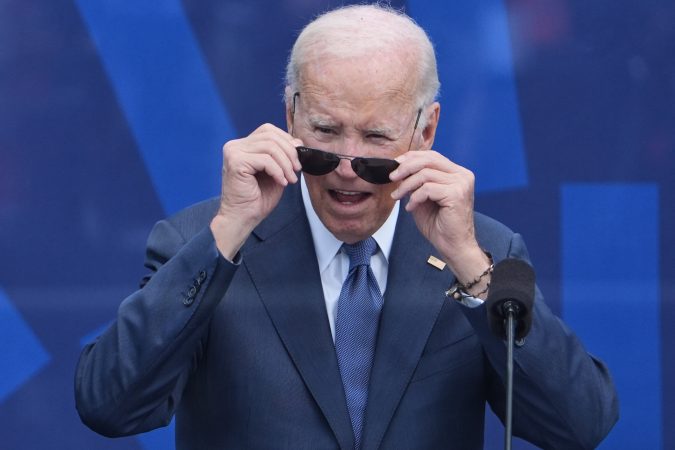
    Eighteen months after leaving the White House, the 83-year-old former president moves within a narrowed circle of relatives, old friends, and longtime aides as he undergoes treatment for metastatic cancer.

    The treatment appears to be working, according to five former aides and others close to Biden, many of whom spoke on the condition of anonymity to candidly discuss his health and private life. But the disease — and the toll of treating it — has left him visibly frail.

    Those around Biden describe a post-presidency constrained by illness with his days increasingly organized around treatment, family, and efforts to shape his legacy.

    Unlike some recent predecessors, Biden has maintained a limited public schedule, has yet to build a sprawling philanthropic or policy operation, and has struggled to raise money for a presidential library, leaving him with fewer avenues to influence how his presidency is remembered.

    That frailty is likely to become harder to keep private this fall, when Biden begins promoting a memoir scheduled for publication on Nov. 17, two weeks after the midterm elections. The timing has unsettled some friends and former advisers, who worry not only about Biden’s well-being, but also about how much his visible health struggle could revive the bitter arguments of 2024 just as Democrats are trying to make the election a referendum on President Donald Trump.

    Trump has repeatedly mocked Biden’s age and acuity and replaced his portrait along a White House colonnade with an image of an autopen, a visual taunt built on the unsupported allegation that aides used the device to exercise presidential authority for a debilitated commander in chief.

    Those close to Biden bristle at the way his illness and physical decline have become part of his critics’ case against him and his party.

    Hunter Biden gave voice to the family’s frustration last month after a critic attacked his father’s cancer diagnosis on social media.

    “Listen man — I understand if you don’t like my Dad’s politics and you hate me because you believe everything Fox News has told you,” he wrote. “I’m fine with that, but my Dad has cancer. How is that an issue you want to attack. What sickness is in you that makes that fair game?”

    The Biden health debate may soon be reignited. On Tuesday, a federal appeals court cleared the way for the Heritage Foundation, a conservative think tank, to obtain redacted transcripts and audio recordings that were among the evidence a special prosecutor used to portray Biden as an “elderly man with a poor memory.”

    Questions about Biden’s age, stamina, and mental acuity shadowed much of his presidency and eventually overwhelmed his campaign for a second term.

    The health concerns became an acute political crisis after Biden’s June 27, 2024, debate against Donald Trump. Speaking in a weak, hoarse voice, Biden repeatedly lost his train of thought, struggled to complete answers and at times appeared unable to press a forceful case against his opponent.

    Biden’s performance intensified doubts among Democratic lawmakers, donors, and voters about both his ability to campaign and his capacity to serve through January 2029. Biden initially rejected calls to withdraw, attributing the performance to a cold, exhaustion, and a bad night. But after more than three weeks of mounting pressure, he ended his reelection bid on July 21.

    Biden’s planned return to the spotlight presents an awkward political challenge for Democrats. Many remain personally fond of Biden, grateful for the accomplishments of his presidency, and sympathetic to a man battling a serious illness. But they are also trying to distance themselves from a 2024 campaign in which questions about his age, health, and decision to seek reelection damaged public trust and divided the party.

    “President Biden has every right to tell his story. But Democratic candidates are already working their tails off to overcome the political damage he left behind,” said Sawyer Hackett, a Democratic strategist who worked on presidential campaigns for Barack Obama and Hillary Clinton. “The best thing Biden could do to help that effort is to get as far away from the spotlight as possible.”

    In May 2025, four months after leaving the White House, Biden was diagnosed with an aggressive form of prostate cancer that had spread to his bones. He is undergoing treatment for the disease, which can be managed but is not considered curable.

    In media interviews, former first lady Jill Biden has described her husband’s diagnosis as deeply unexpected, saying the family was shocked to learn that the cancer had already reached Stage 4 and metastasized to his bones. Since then she has offered a cautiously optimistic assessment of her husband’s health, saying his treatment is working and that he is maintaining a regimented schedule.

    Since leaving office, Biden has addressed the issue intermittently, generally offering upbeat but limited public accounts of his condition. He has made a handful of appearances, at Democratic Party events in South Carolina and South Dakota, and at the dedication of Obama’s presidential library, where he beamed alongside several other former occupants of 1600 Pennsylvania Ave.

    “Given all the health diagnoses, he was energetic, in good spirits,” former Democratic National Committee chair Jaime Harrison said of Biden at the South Carolina Democratic Party convention in May. Like many Democrats, Harrison knew the seriousness of Biden’s prognosis and wondered whether he would seem like his old self. Instead, the former president — also the convention’s keynote speaker — moved through a full slate of events, many of them organized to honor him.

    “He was fired up,” Harrison said. “You sure as hell couldn’t tell he was an 83-year-old man battling cancer.”

    Biden’s post-presidential office declined to answer questions about his day-to-day activities, medical treatment, or ongoing prognosis. Through a spokesperson, the former president declined an interview. His office disclosed in fall 2025 that he was receiving radiation and hormone therapy and that he had undergone Mohs surgery to remove cancerous skin cells. When he announced his forthcoming memoir earlier this month, Biden offered another brief update, saying that he was undergoing treatment and that it was going “really well.”

    The fallout from Biden’s 2024 campaign also sharpened scrutiny of how his aides — and even his successor, Vice President Kamala Harris — had managed his public exposure. Subsequent reporting described a presidency increasingly structured around shorter meetings, tightly controlled appearances, and greater reliance on senior advisers to serve as intermediaries.

    The public, jarring image of his shaky debate presentation made some voters feel that they had been misled — not only by the White House, but by a broader Democratic establishment that had defended his reelection bid and discouraged a competitive primary.

    Republicans have seized on those lingering questions, portraying Biden’s decline as evidence not only of the former president’s failings but of a coordinated effort by Democratic leaders they accuse of concealing his condition.

    In speeches, posts, anecdotes, and asides, Trump has repeatedly mentioned Biden’s health — often using the nickname “Sleepy Joe,” according to a Washington Post analysis.

    Last month, he referenced it nearly every other day, compared with about 1 in 5 days during the previous June, according to the Post’s review of Trump’s speeches, interviews, social media posts, and other public remarks.

    Biden’s aides and other Democrats reject the idea that a book tour by a former president who has not shaped policy in more than a year — and is now undergoing cancer treatment from his Delaware home — will meaningfully influence the midterm elections.

    “No one is going to be thinking about Joe Biden in November,” said one former aide, who requested anonymity to speak candidly about a former boss. “They’re going to be thinking about filling up their tank and putting food on their table, and Joe Biden has nothing to do with that.”

    Harrison, the former DNC chair, argued that voters have more immediate questions about the health of the man now occupying the Oval Office, who turned 80 in June.

    “It was amplified, it was even caricaturized when Biden was president, but Trump falls asleep during meetings. He is literally sleeping,” Harrison said. “But yet it’s like a blip. The man has more blemishes and marks on his skin — that says something is going on.”

    The White House has consistently pushed back on such criticism, insisting Trump remains in strong health and dismissing questions about his physical condition.

    Trump has made three trips to Walter Reed National Military Medical Center since April 2025 as persistent bruising on his hands and swelling in his lower legs have drawn scrutiny. His most recent examination involved 22 medical specialists — an unusually large team — though his physician pronounced him in “excellent health,” attributing the swelling to chronic venous insufficiency and the bruising to frequent handshaking combined with aspirin use.

    Health inevitably shapes what presidents can do after leaving office.

    Before age and illness restricted his public life, Jimmy Carter devoted decades to election monitoring, diplomacy, public health, and Habitat for Humanity — work that transformed his reputation and earned him the Nobel Peace Prize.

    Bill Clinton, who will turn 80 next month, remained highly visible, building a global foundation, writing books, delivering paid speeches, and campaigning for Democrats, including his wife. George W. Bush largely stepped away from partisan politics, focusing on veterans, the Bush Institute, and painting. Obama has been more selective, emerging for major political moments while devoting much of his time to books, media projects, his foundation, and, most recently, the Obama Presidential Center.

    Biden’s allies are raising money for a presidential library in Delaware, imagined as a center for public service and civic life. But his library effort has so far attracted only a fraction of the money raised for the legacy projects of recent presidents: His foundation expected to collect about $11 million by the end of 2027, compared with the hundreds of millions raised by Bush and Obama in the first years after they left office.

  • Trump officials vote to rewrite historic preservation rules, in boon for arch

    Trump officials vote to rewrite historic preservation rules, in boon for arch

    Trump officials on Friday voted to rewrite federal rules intended to protect historic sites, sending the plan to the White House for further review.

    The Advisory Council on Historic Preservation, a federal agency that oversees preservation reviews and advises the president and Congress, said it was moving forward with changes to a federally required process that governs changes to landmarks such as the National Mall, sites that are significant to Indigenous tribes, and other properties eligible for listing on the National Register of Historic Places. The process currently applies to any construction projects that are on federal land or receive federal funding, as well as private projects that require any type of federal approval.

    If codified into law, the new rules would make it easier for President Donald Trump to pursue his controversial construction projects — such as building his planned triumphal arch — and could eliminate the need for public input on other major federal projects.

    The ACHP is dominated by Trump appointees, leaving little doubt the proposal would pass.

    The proposed rules “will now move to the interagency review process” overseen by the White House’s Office of Management and Budget, Ashley Fry, an ACHP official, wrote in an email. Once it clears that review, the proposal will be opened for public comment before being finalized.

    Under the current rules, federal agencies must undertake a multistep Section 106 review assessing the potential effects of construction projects and soliciting public input, among other requirements.

    The changes would allow federal agencies to approve construction projects that would impact historical sites without the previous requirement to seek the agreement of affected states, tribes, and other interested parties. The proposal also would allow an agency to unilaterally decide whether or not it’s in the public interest to allow public participation in the review process.

    The proposed rules could make it easier to change or destroy sites like Native American burial grounds or historic downtowns, or to build projects that change the view from historic sites such as power lines near Thomas Jefferson’s Monticello estate.

    The current process has created speed bumps for some of Trump’s projects, which he has sought to rush through federal reviews and complete before his term ends in January 2029.

    Under the existing Section 106 rules, outside groups are currently weighing in on Trump’s plan to build a 250-foot-tall arch on federal parkland near Arlington National Cemetery.

    Trump officials complained last month that the current process was overly burdensome.

    “Consulting parties also often request mitigation that is beyond the agency’s authority, unacceptable to a project proponent or the agency, or unduly burdensome, which can lead to disagreements that delay the completion of the process,” said Kevin Lilly, acting assistant secretary for fish, wildlife, and parks at the time, adding that the agencies could be forced into “endless consultation” under the current rules.

    Historic preservationists and advocacy groups have decried the administration’s plan to overhaul the existing rules and vowed to mobilize resistance.

    “The proposed changes threaten the history of our nation and the fabric of our society — this is an attack on our civic and cultural inheritance,” Brent Leggs, the CEO of the National Trust for Historic Preservation, said in a statement on Friday night.

    The National Association of Tribal Historic Preservation Officers, a nonprofit that focuses on protecting culturally important places for Native Americans, said in a statement that the proposed changes are “an affront to Tribal sovereignty.” Other groups warned about the potential lack of protections.

    Rep. Chellie Pingree (D., Maine), the top Democrat on a House subcommittee that oversees funding for the Interior Department, said that the administration’s plan would allow rushed construction projects that could “permanently damage” historical sites.

    “They have shown time and again that they’re not interested in respecting the full scope of America’s history — only in fast-tracking the president’s vanity projects and giving sweetheart deals to donors and supporters,” Pingree said in a statement.

    Sara Bronin, who led the ACHP under the Biden administration, told the Washington Post that she was not surprised the council voted to advance the proposed rule. Twenty of the 24 seats on the council are either directly appointed by the president or are reserved for the heads of federal agencies, such as the Interior Department, which are controlled by Trump.

    “I expect the ACHP to ignore public comment and finalize the rule in the next month or so,” Bronin said. “Once they do, the preservation community and its allies will be ready both to challenge their action in court and to ask Congress to intervene.”