Category: Washington Post

  • Coyotes take over abandoned housing development, vexing neighbors

    Coyotes take over abandoned housing development, vexing neighbors

    WEST HOLLYWOOD, Calif. — In a region where the demand for housing outpaces its supply, a pack of coyotes have made a vacant construction site their home.

    For months, residents in the dense West Hollywood neighborhood say they have complained about the coyotes. At night, the coyote howls echo through the development keeping residents awake. During the day, some dog owners say they worry about the safety of their furry companions.

    In late July, the neighborly dispute became a local spectacle after news outlets reported on the coyotes’ home, dubbed by a neighbor as the “coyote condos.”

    Over the next week, the block was flooded with onlookers and reporters and even a helicopter trying to capture an image of the coyotes from above. With all the attention, the pack was coming out as early. The howls came later and later into the night.

    “It’s kind of like a cacophony of howls,” neighbor Collin Newman said, describing how the structure amplifies the coyotes’ cries in every direction. Newman, who has lived in the neighborhood for ten years, captured the howls from across the street. “If you’ve ever seen The Lion King, imagine a pack of hyenas in the middle of the wilderness. And there’s no escape.”

    Neighbors say the site has been vacant for years. Already under construction in 2018, the development faced opposition from neighbors and the West Hollywood Planning Commission, according to an article from WEHOonline.

    The city of West Hollywood said construction on the unfinished 22-unit condominium building was halted in 2024. It sits in a densely populated block of shoulder-to-shoulder apartment buildings, over a mile from any open wild space.

    Across Los Angeles, coyote sightings are common. While some generally avoid human contact, others can lose their fear of humans and pose a risk, especially to dogs and cats.

    “The scary part is when we walk the dogs.” Jesus Zavala, a neighbor, said while walking his Chihuahua, Zoe. “They can just come out and grab dogs, especially the small ones.”

    But after four or five months the coyotes are now commonplace, Zavala said, and he is no longer nervous to take Zoe out at night. Many that walk their dogs in the neighborhood look unbothered. The fire hydrants and street signs are all fully utilized.

    Under a full moon late Thursday night, the only howls came from curious onlookers hoping to get a glimpse of the pack.

    “Look!” a family walking their dog said and pointed to a room on the third floor, where all they could see was the outline of a coyote. Soon it retreated into the shadows.

    One car of people waited over an hour to hear the coyotes.

    The city of West Hollywood follows a coexistence plan that favors nonlethal practices to reduce harm to humans. The city said they are requiring the property owners to swiftly retain a wildlife control expert and take next steps. The owners did not return a request for comment.

    Newman said he hopes there will be a resolution that makes people feel safe but also points out that there are a handful of other vacant structures in the area. First there were unhoused people squatting, now there are coyotes.

    “As far as I’m concerned, it’s theirs,” Newman said of the coyotes, “They’re the ones occupying it, living in it. They might have been paying rent. They probably got a good deal on it because it’s been just sitting there.”

  • U.S. general warns Pentagon he lacks sufficient forces to protect Israel

    The top U.S. general in Europe privately warned the Pentagon this week that he lacks sufficient naval forces to continue protecting Israel from incoming ballistic missiles, officials said, illustrating how the ongoing Iran war has imposed constraints on the military.

    Gen. Alexus Grynkewich, the head of U.S. European Command, sent written notification to senior Pentagon officials saying that without another Navy destroyer he will be forced to choose defense of the United States “homeland” over that of Israel, said the officials, who like some others spoke on the condition of anonymity to discuss the correspondence.

    A U.S. defense official said Grynkewich’s notification appears consistent with past outreach to the Pentagon from the military’s top generals when they see certain risks that require Washington’s consideration. This can occur, the official said, as commanders compete for finite resources and weapons.

    The Pentagon declined to comment. U.S. European Command did not respond to requests for comment. A spokesperson for the Israeli Embassy in Washington could not be reached for comment.

    The general’s warning comes at a tenuous moment in the five-month conflict, as near-daily attacks have resumed following the collapse of peace talks between Washington and Tehran and the operation’s intensity has drained U.S. supplies of key defensive weapons.

    The Navy has been particularly taxed, as the Trump administration has directed a blockade of Iranian ports in response to Tehran’s closure of the Strait of Hormuz. The standoff has stymied the movement of Middle Eastern oil and other commodities through the narrow waterway, upending the global economy.

    U.S. naval destroyers in the eastern Mediterranean Sea have been employed as a part of Israel’s defense for many years. The vessels, equipped with powerful radar and armed with an array of missiles, have downed missiles aimed at Israel not only by Iran, but by Houthi militants in Yemen that are equipped by Tehran.

    European Command is central to this mission, as it coordinates military operations in the Mediterranean. At the same time, its forces must remain ready for any Russian incursion into territory protected by the NATO military alliance. Russia also poses a ballistic missile threat to the United States, with missiles capable of reaching the U.S. mainland.

    The Navy has five destroyers that deploy from a U.S. port in Rota, Spain, with a sixth expected to arrive there later this year, Pentagon officials have said. But maintenance issues have piled up due to the Iran war’s tempo, complicating matters for Grynkewich, officials said. The Washington Post withheld specific details about the ships’ availability at the request of military officials, who cited security concerns.

    As the Post reported in May, Pentagon assessments conducted earlier in the war showed that U.S. forces have shouldered the brunt of defending Israel from Iranian ballistic missiles. The assessments found that American weapons, including the Terminal High Altitude Area Defense and naval interceptors launched from the eastern Mediterranean, were used far more frequently than Israeli air defense weapons.

    Two destroyers, the USS Paul Ignatius and the USS Roosevelt, were in the Mediterranean Sea on Friday, a U.S. official said. Three destroyers were in Rota: the USS Arleigh Burke, the USS Bulkeley and the USS Oscar Austin.

    Closer to Iran, an armada of additional vessels was in the Arabian Sea, including two aircraft carriers, the USS George H.W. Bush and USS Abraham Lincoln, and at least 15 other warships, this official said. Eleven are destroyers.

    The fleet has been central to the Trump administration’s blockade of Iranian ports. It also has been involved in an effort called Project Freedom, in which the U.S. military has helped protect vessels in the contested Strait of Hormuz.

    Another destroyer, the USS Gonzalez, is in the Red Sea, where Yemen’s Houthis have attempted to enforce their own blockade of commercial shipping in a bid to further the economic pressure facing the U.S. and its allies in the region. Saudi Arabia, a key U.S. partner, has sought to thwart the Houthis, a longtime adversary, by developing a military coalition to ensure freedom of navigation.

    The Iran war is increasingly unpopular among the U.S. public, and members of Congress — from both political parties — have grown frustrated with the administration as top officials struggle to articulate a plan for ending the conflict on terms deemed favorable to the United States. There is a deepening worry among many Republicans, particularly, that the war’s impact on the price of gas, food, and other goods will cost the party in November’s midterm elections.

    Tom Karako, director of the Missile Defense Project at the Center for Strategic and International Studies, a think tank, said the warning issued by Grynkewich highlights the scope of the Pentagon’s challenges.

    “Being on a wartime footing is going to take a toll in terms of readiness and munitions inventory levels,” he said. “Now the question is: What’s the strategy here?”

  • In Trump Gaza deal, Hamas disarms, Israel withdraws. Neither wants to go first.

    In Trump Gaza deal, Hamas disarms, Israel withdraws. Neither wants to go first.

    TEL AVIV — President Donald Trump this week touted “a HISTORIC agreement for the COMPLETE DISARMAMENT” of Hamas. But after his Board of Peace released the text of the 15-point plan Friday, analysts cautioned that there seemed to be a substantial gap between Israel and Hamas on a path forward.

    Under the agreement, the sides have 14 days to agree on the “timetable and implementation mechanisms” for the disarmament of Hamas and the withdrawal of Israeli forces from Gaza. But there was already disagreement on the order in which each should happen.

    Israeli Prime Minister Benjamin Netanyahu, who met with Trump on Tuesday, has been silent on the deal. In a statement to the Post, an Israeli official reiterated Israel’s long-standing position: “Israel demands the complete disarmament of Hamas, including the removal of weapons from Gaza and the full demilitarization of the Strip, as a prerequisite for any process.” The official spoke on the condition of anonymity to discuss the highly sensitive subject.

    Hamas, meanwhile, said Israel must end its military campaign in Gaza as a “first step.” The Israel Defense Forces on Friday announced the killing of men it described as a Hamas commander and a Hamas arms smuggler. Hamas also said that its agreement to surrender heavy weapons was contingent on Israel’s “cessation of all forms of hostility,” among other variables.

    Jonathan Rynhold, a senior researcher at the Begin-Sadat Center for Strategic Studies at Bar-Ilan University, said the effort to move toward disarmament and demilitarization in phases represented “some kind of progress,” but obstacles remained.

    “On a practical level, what Israel wants is for Hamas to disarm, and then for Israel to withdraw. Hamas wants the opposite,” he said. “Israel does not believe that Hamas will voluntarily disarm in a material sense.”

    Under the agreement, the weapons Hamas surrenders are to be held by the National Committee for the Administration of Gaza, run by Palestinian technocrats. The fear in Israel, Rynhold said, is that the militants, who led the surprise attack that killed about 1,200 people in Israel on Oct. 7, 2023, will retain the ability to intimidate whoever is in the government in Gaza.

    Israel responded to the Hamas attack with a military campaign that has killed more than 73,000 people, according to the Gaza health ministry.

    “The bottom line,” Rynhold said, “is that Israel doesn’t think that Hamas has changed its DNA.”

    There will be “no Israeli withdrawal from the Yellow Line before Hamas is disarmed and the Gaza Strip is demilitarized,” the Israeli official said. The line marks territory controlled by Israel since the sides agreed to a ceasefire in October. The territory amounts to about half the enclave.

    Ibrahim Al-Madhoun, a Gazan political analyst seen as close to Hamas, said the plan “represents significant political progress” toward an end to the war.

    “But optimism must remain cautious,” he said in a statement. “Israel has not finalized its position, and Netanyahu is evading and trying to evade the deal’s entitlements.”

    A month ago, Hebrew University political scientist Gayil Talshir noted, Netanyahu was boasting that Israel controlled 70% of the Gaza Strip — implying that the IDF had gone beyond the yellow line.

    Talshir predicted the IDF would first withdraw to the yellow line. Later, “if Hamas is indeed disarmed,” she said, “the IDF will gradually withdraw to the perimeter.”

    With elections in October, Talshir said, Netanyahu doesn’t want to give opponents the opportunity to say he has approved the withdrawal of military forces in either Gaza or Lebanon, where Israel is fighting Hezbollah. Israel has in fact withdrawn from several villages in southern Lebanon, ceding control back to the Lebanese army, and Trump’s announcement suggested more to come.

    There appears to be “a gap between the facts and how Netanyahu is presenting them,” Talshir said. Netanyahu, she said, is trying to portray himself as close to Trump but also able to stand up to him.

    “This is the narrative he sells in Israel — that only Netanyahu can say ‘no’ to an American president. This is both contradictory and makes Trump’s blood boil.”

    Right-wing National Security Minister Itamar Ben Gvir said Friday the agreement will allow “Hamas to organize for the next massacre.”

    Madhoun, the Gazan analyst, said the Israeli elections will complicate implementation of any agreement. “The Gaza war has turned into political and electoral material,” he said.

    Gadi Eisenkot, a leading challenger to Netanyahu, said, “The infuriating gap between [his] promises and reality has been exposed.” The deal stems from his “political weakness,” the former IDF chief of staff said, and will leave Hamas in power in Gaza.

    Michael Milstein, a former adviser on Palestinian affairs to the Israeli military, said there appeared to be a gap between Netanyahu’s claim of an “excellent” meeting with Trump and the details of the agreement. But he said he doubts Trump is “set on the details” of the deal.

    “I say this cautiously, but it seems that what is happening aligns with Hamas’ interests, which is mainly the growing pressure on Israel to begin the withdrawal,” said Milstein, who is now at the Moshe Dayan Center at Tel Aviv University. “No one is conditioning every single bit of progress [in the agreement] on complete disarmament.”

    The government’s mistake, he said, was refusing to “engage with a political track.”

    “The deal ends up being forced on you from the outside.”

    For Netanyahu, he said, the timing is a “nightmare scenario.”

    “If Trump is determined to push this forward — realizing he isn’t securing achievements in Iran, Lebanon, and Ukraine — and Netanyahu remains extremely stubborn about not complying with anything, this opens the door to friction.”

    The question, Madhoun said, is whether the Trump administration can “oblige Israel to implement what is agreed upon.”

    Hussam Al Hwaiti hoped so.

    “After three years of war, killing, destruction and siege, I say ‘enough,’” the Gaza merchant said Friday.

    “We don’t want to resist,” he said. “Hamas is weak now. They are not in a position to continue the fight. … It’s time to return back to our normal life, travel, and send our children to school.”

  • America’s biggest companies are burning cash on AI. It’s risky for everyone.

    America’s biggest companies are burning cash on AI. It’s risky for everyone.

    Over the past decade, the giants of Silicon Valley became reliable engines of the American economy and the nation’s retirement accounts.

    Must-have digital products like Google and Facebook hooked people and businesses, spewing geysers of cash that made tech giants the new blue chip stocks and fattened investment portfolios as markets soared.

    The finances of America’s technology stalwarts now look very different. To develop and deliver what the companies say is revolutionary artificial intelligence, they’re feeding every available dollar into the cash-incinerating maw of AI machines. Tech superstars that once had oodles of cash left over at the end of each year are now flipping into the red, with enormous stakes for every American and the wider economy.

    To optimists in Silicon Valley, the White House, and beyond, the big AI bet promises an even bigger payoff: huge corporate profits and a societywide boost to wealth and well-being when AI delivers the promised transformation of life, work, and the economy.

    But questions about that AI vision are now growing more urgent: When, if ever, will this payoff arrive? And what will the fallout be for Americans if the titanic investment doesn’t quickly deliver?

    “This AI thing better work out because if it doesn’t … we’re going to have a problem,” said Torsten Slok, chief economist at investment firm Apollo Global Management.

    AI costs and doubts are spreading. The U.S. stock market has swooned this summer over fear of the AI bubble going bust. The AI boom is pushing up inflation, adding to President Donald Trump’s challenges in tackling Americans’ affordability concerns. And there are signs that AI may be widening the economic divide between the country’s haves and have-nots by directing more wealth toward places and people that are already economically ahead.

    The AI gamble sweeping up American fortunes is led by tech companies splurging on hulking data centers packed with computer chips and equipment needed to develop sophisticated AI models and deliver them to customers.

    In investor calls in the past week, Google, Microsoft, Meta, and Amazon pointed to soaring AI-related sales and business deals. Advertisers are using the technology to tailor marketing pitches and corporations and startups are buying access to chatbots and other AI software to boost productivity. The wider U.S. economy, including construction workers and electricians, are getting a lift from the build-out of AI computer hubs.

    But this spending can only continue if AI generates an even larger avalanche of new revenue to pay for it all. Financial results released over the past week show that the AI titans’ mammoth costs are largely swamping the sales boost from the technology.

    At Google, for every dollar of cash its business generated in the past three months, $1.15 went out the door to pay for AI computer chips and equipment, land for AI data centers, and other big-ticket purchases. The company is covering the difference partly by borrowing money and selling more of its stock.

    Next year, five leading AI companies — Google, Amazon, Microsoft, Meta and Oracle — are projected to have negative free cash flow, which measures the cash left over after paying expenses and AI infrastructure costs. The figures, based on investment analyst projections compiled by S&P Global Market Intelligence, show a stunning reversal for what have been some of the world’s most cash-generating corporations.

    On Thursday, Amazon CEO Andy Jassy gave an impassioned defense of the company’s huge spending to capitalize on what he said was sustained zeal from businesses to buy AI. “We have clear line of sight to strong financial returns,” he told investors. (Amazon Executive Chairman Jeff Bezos owns The Washington Post.)

    The companies remain profitable by standard financial accounting measures that spread out the costs of their AI infrastructure spending over many years.

    Silicon Valley’s AI spending spree has become a high-stakes Rorschach test. AI boosters see the mammoth costs of building out computing facilities for AI as a rational, once-in-a-lifetime opportunity to cash in on insatiable demand for history’s most transformative technology. Pessimists see a bet so gargantuan that it cannot possibly pay off.

    The pessimists are growing louder. The Bank for International Settlements, a typically measured institution in Switzerland that advises government bankers around the world, recently warned there was risk of “economywide recessions” if the AI boom falters. That could mean pain for workers and communities across the United States.

    “I’m not saying AI is going to go away, it’s just not clear to me these guys are going to make money on it,” said Christopher Wood, global head of equity strategy at investment bank Jefferies who has correctly predicted past financial bubbles.

    As recently as June 2, exuberance about AI helped lift the S&P 500 stock index to an all-time high. But fear is now winning in what’s become an AI freak-out summer. People who own stock in the biggest losers of recent months, including Elon Musk’s Tesla and SpaceX, business software firm Oracle and computer chip titans Nvidia and SK Hynix, have collectively lost trillions of dollars.

    Matt Orton, chief market strategist of investment firm Raymond James, says the panic is out of control because AI has huge potential. “A lot of investors have lost their minds,” he said.

    At the same time AI is eviscerating Americans’ stock wealth, it’s further straining their cost of living.

    Many executives are lamenting that the companies developing AI are buying so many computer chips for AI calculations that it’s gobbling all the available supplies and driving up their costs. As a result, companies including Apple and Microsoft have raised prices for smartphones, laptops, video game consoles, and other consumer and business products.

    In some parts of the country including the mid-Atlantic, energy demand from data centers is pushing up household electric bills. Some economists and government officials have pointed to those AI-related price increases as one culprit for persistently stubborn inflation.

    NCTA, a trade association representing large internet service providers and cable TV companies, is among the American business groups pleading with the Trump administration to do something about AI-related computer chip price increases.

    Without action, executives say that AI will hold back new products and features or spark even higher prices for home internet equipment, cars, and medical devices. “Consumers are really going to suffer both from costs and from lack of innovation,” said Cory Gardner, CEO of NCTA.

    White House spokesman Kush Desai said that the Trump administration is supporting U.S. computer chip manufacturing to “ensure Americans have access to a ready supply of critical inputs for everyday electronics.”

    Evidence is also emerging that undermines the idea that AI can become a great equalizer that empowers people and businesses of all backgrounds to better their financial circumstances.

    Research by Barbara Denham, lead economist at research and consulting firm Oxford Economics, found that large U.S. metropolitan areas that are already economic winners are benefiting the most from the AI boom.

    Denham said that’s because many of the tech companies developing AI, and the white-collar industries that have been the most avid users of AI, are concentrated in wealthy regions including the Bay Area, New York, Seattle, and Washington, D.C.

    The economic gains of the AI boom are “self-reinforcing,” she said.

    Dan Gallagher contributed to this report.

  • DOJ drops Reflecting Pool charge, citing ‘botched’ work and angering Trump

    DOJ drops Reflecting Pool charge, citing ‘botched’ work and angering Trump

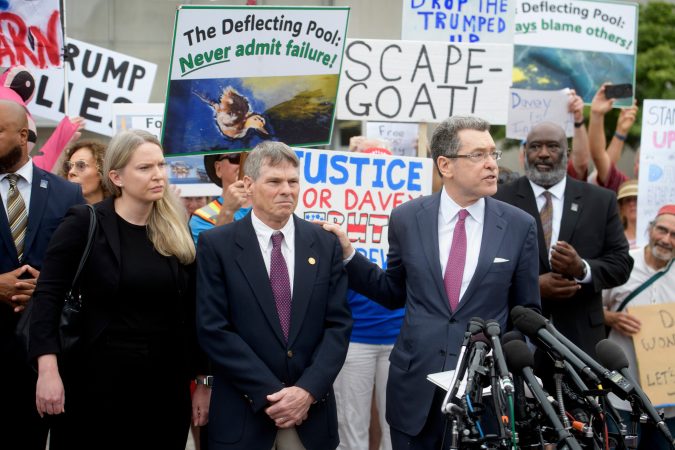
    Federal prosecutors on Friday moved to drop a criminal charge filed against a former Olympian who had been accused of vandalizing the Lincoln Memorial’s Reflecting Pool, suggesting that the damage was instead due to a “botched” and rushed installation.

    Prosecutors said they would dismiss an indictment against David Hearn, an Olympic canoeist, whose arrest last month drew national attention amid questions about why the pool’s new blue liner was peeling. President Donald Trump — who had ordered that officials install the new liner and make other changes to the pool — repeatedly blamed vandals after pieces of the refurbished liner started drifting to the surface.

    A Washington Post analysis earlier this month found that the basin’s peeling was likely due to application errors by workers, a conclusion challenged by Trump administration officials at the time but supported by experts in waterproofing materials.

    According to Friday’s filing in D.C. Superior Court, internal Interior Department documents also chalked up the peeling of the pool liner to contractor errors made during the hurried effort to overhaul the pool ahead of celebrations to mark the nation’s 250th anniversary in July. Justice Department lawyers said the information they received showed that “the damage was the result of a botched installation and not vandalism as initially represented” by the Interior Department.

    “Given all of this newly discovered information, it is difficult to attribute the widespread damage to the Reflecting Pool to vandalism, let alone to establish that fact beyond a reasonable doubt,” according to the Justice Department’s filing.

    The Justice Department also said that officials at the Interior Department initially did not provide sufficient information about contractor errors and turned it over only after “dozens and dozens” of requests from the office of the U.S. attorney for the nation’s capital.

    “Had [the Interior Department] been forthcoming with the information clearly in its possession, the government would not have sought a grand jury indictment,” the filing reads.

    The Associated Press reported Saturday that Trump sharply criticized U.S. Attorney Jeanine Pirro’s assessment that damage to the pool was the result of shoddy construction and not the work of vandals.

    Trump, in a posting on social media, acknowledged that there “may have been some contractor difficulty” in the installation of a new pool liner. But he continues to insist “the major damage was caused by VANDALS!”

    “I disagree 100% with Jeanine Pirro, the U.S. Attorney for the District of Columbia, on the Reflecting Pool,” Trump added in his post.

    Trump on Saturday also posted a nearly four-minute video that appears to have been taken from a security camera, in which three individuals can be seen with their hands in the pool, including one for an extended period.

    The president claimed the video shows “material is being cut with a knife or a box cutter, for all to see!”

    It’s not clear from the video, which appears to be shot from some distance, that any vandalism occurred. Workers can also be seen standing nearby and don’t appear to notice the people sticking their hands in the water.

    The Interior Department did not immediately respond Friday night to questions about the administration’s past accusations against Hearn and others arrested for allegedly damaging the pool, or questions about the Justice Department’s decision to drop the case.

    The contractor, Atlantic Industrial Coatings, also did not immediately respond to a request for comment.

    In a statement on its website dated June 21, the company defended its work, saying that while the U.S. Park Service had identified areas of the pool that required repairs, the areas “are a very small part of the massive 7 acre project, and do not indicate a failure of the liner.”

    Hearn and three others charged with misdemeanors related to Reflecting Pool damage had a status hearing set for next Thursday. Court records show that at least one of those misdemeanor cases, against Justin Carreno, was dismissed Friday.

    “While we are pleased with this result,” Carreno’s attorneys, David Benowitz and Rammy Barbari, said in a statement, “Mr. Carreno is innocent of the charge and should never have been prosecuted in the first place.”

    Hearn’s lawyers and outside watchdog groups said Friday’s move to drop charges was insufficient, and accused the administration of seeking to punish innocent Americans rather than admit its own errors.

    “The Trump administration’s case against Davey Hearn should have never been brought,” Hearn’s lawyers, Norm Eisen, Mary Dohrmann and Steve Levin, said in a statement. “Its dismissal today does not erase the abuse of government power in arresting and charging a patriotic American who did nothing wrong. The government’s approach was ready, fire, aim. The administration owes Mr. Hearn an apology.”

    Hearn told the Post last month that he was cycling past the pool and put his hand in the water only to touch a piece of liner that was already dislodged. Reached by phone on Friday night, he declined to comment.

    The fight over the century-old Reflecting Pool — which sits at the foot of the Lincoln Memorial and has played host to famous speeches and events — has unexpectedly emerged as a major flash point in Trump’s second term.

    Trump announced plans in April to abruptly overhaul the pool, saying that he had personally picked out a new color for the basin, “American Flag Blue,” and had recommended contractors based on his experience managing pools at his various resorts.

    At the time, Trump said the pool renovations would cost less than $2 million and be completed within two weeks. The cost later swelled to more than $14 million, and historic preservationists and other experts repeatedly warned that the rapid renovations could backfire.

    The job was completed within six weeks, with the president and his allies saying it was a symbol of his efforts to remake Washington.

    “I’m very proud of it,” Trump said in the Oval Office as the pool prepared to reopen. “I’m very good at building things and constructing things.”

    The celebrations were short-lived. Within days, the pool was beset by major algae outbreaks and the liner’s peeling. The president responded by alleging that vandals were to blame, accusing them of cutting parts of the pool but providing no evidence.

    “Many additional people have been arrested having to do with the disgraceful Vandalism of our beautiful Reflecting Pool,” the president wrote on Truth Social in June.

    “It was slashed with a knife, or box cutter, high grade colored waterproofing liner — it was VANDALISM!,” Trump wrote in another post this month, criticizing an ABC News report that suggested the liner was peeling.

    A recent visual inspection found damage in the middle of the pool — “where a vandal would not likely attempt to peel the lining” — further indicating that the damage stemmed from mistakes during installation, DOJ lawyers wrote in their filing.

    The administration drained the pool after the July Fourth celebrations on the Mall, with officials saying further renovations would be necessary. In a Justice Department filing Thursday, the administration said the pool would be closed through Aug. 10.

    The Cultural Landscape Foundation, an education and advocacy organization, is suing to block the administration’s continued work on the pool, saying Trump has disregarded long-established processes and federal requirements intended to protect historic sites.

    “Today, the iconic pool sits empty, covered in peeling epoxy after a botched job,” the organization’s lawyers wrote in a court filing Friday, asking a federal judge to halt further changes to the pool until they can go through a formal review process.

  • Thousands of immigrant children losing legal representation

    Thousands of immigrant children losing legal representation

    SAN ANTONIO — Tens of thousands of immigrant children who arrived in the United States as unaccompanied minors in recent years may be forced to face a judge alone after a federal contract providing them legal representation expired on Friday.

    The leaders of several nonprofit organizations that provide legal services to immigrant children say they will need to scale back or shutter their operations altogether starting next week. Collectively they represent about 24,000 children who crossed the nation’s southern border without a parent. The groups have spent much of the last year providing legal counsel even though the federal government has not reimbursed them.

    Without a renewed contract, the legal aid organizations say many children with pending cases before an immigration judge will have to defend themselves without a lawyer. Most do not have a legal status in the country but can potentially qualify for asylum or a special visa. Many do not speak English as their primary language, and attorneys say they are more likely to be ordered deported if they do not have a lawyer.

    Michael Lukens, executive director of the Amica Center for Immigrant Rights, which provides children legal representation in the Washington, D.C., area, said the contract’s expiration comes as immigration judges and enforcement officers are pressuring unaccompanied minors to return home by signing voluntary departure forms.

    “The best chance that a child has for a fair day in court and due process is to have an attorney at their side,” Lukens said. “It’s very clear the government is trying to take away that one piece of the puzzle.”

    The Office of Refugee Resettlement, which falls under the Department of Health and Human Services and oversees the shelters that house unaccompanied minors, said in a statement Thursday that the agency remains “fully compliant with its legal and regulatory obligations and does not act in any way that could dissuade a child from seeking appropriate legal relief.”

    ORR officials said they offered to extend the existing contract so long as the providers share information about their clients. Several nonprofit leaders said the federal government was asking for confidential information about the children they serve and their sponsors — who are usually parents or relatives seeking family reunification. The organizations said they are legally and ethically unable to disclose such data and fear authorities could use it to target families during enforcement operations.

    The Trump administration tried to halt some funding for attorneys to represent unaccompanied minors shortly after taking office last year. In February 2025, officials notified the Acacia Center for Justice that the organization needed to stop all work related to a $200 million contract that funds various groups providing the children with attorneys. But a few days later, officials reversed course and restored it without explanation.

    Nevertheless, the Trump administration stopped reimbursing legal aid organizations who operate under the contract last November. The groups estimate they are owed $65 million in payments, and some have had to dip into their reserves in order to keep working.

    Congress passed bipartisan legislation nearly two decades ago that mandates the funding to protect children from exploitation. The federal government, providers argue, is obligated to pay these organizations with the money lawmakers appropriated.

    “They are clearly trying to destroy the program by grinding down the financial health of nonprofits,” Lukens said. “We have seen layoffs and furloughs and we will see a lot more of that if these invoices are not paid.”

    The legal services program also allows attorneys to monitor conditions inside federally funded shelters that house unaccompanied minors, some of which are not regulated by state officials. Many of the children in shelters are waiting to be reunited with parents or relatives, who can claim them by providing identification and financial and biometric information to the government to prove their relation.

    Fewer than 2,500 children are currently in federal custody, and on average they are staying there for 117 days — four times longer than they did a year ago, federal data shows.

    Melissa Lopez, the executive director of Estrella del Paso, a legal services provider, said the complexity of the nation’s immigration laws make it necessary for children to have legal representation. She recounted the case of a 7-year-old boy who went before an immigration judge in Texas. He told the judge he wanted to return to his home country, where his father had been deported.

    His lawyer helped him navigate the best way to do that. Immigrants can file for a voluntary departure to leave the country and avoid a deportation order with more severe consequences, but a young child, she said, would not know the difference or how to do that.

    “We cannot expect a child to have the level of understanding of these legal differences,” Lopez said. “It’s absurd.”

    Lopez said her organization will likely have to scale back its services in far west Texas and southern New Mexico. A year ago, Estrella had a team of 30 staff employees and attorneys. She expects just three staff members to continue serving 243 children in the weeks ahead. The organization is still waiting on $1.2 million in federal reimbursements for legal services provided through July, Lopez said.

    “It’s not a question of can philanthropy fill the gap,” Lopez said. “The issue is the federal government is not meeting its obligations under the law.”

  • Trump claims breakthrough on Hamas disarmament, Gaza transition

    Trump claims breakthrough on Hamas disarmament, Gaza transition

    The United States has brokered a pathway to a deal between Hamas and the Israeli government for the Palestinian militant group to lay down its arms in Gaza in exchange for an eventual Israeli withdrawal from the territory, U.S. officials said Thursday, a potential breakthrough to end nearly three years of conflict there.

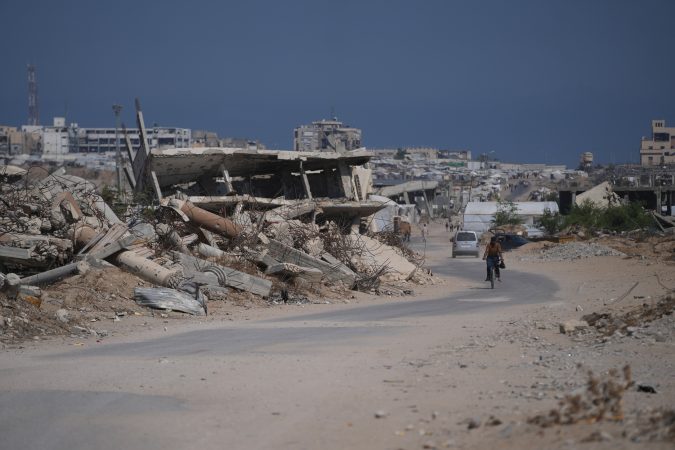
    The framework was a potential step toward an Israeli pullout from Gaza and the eventual rebuilding of the territory, much of which has been reduced to rubble. But on Friday morning, Israel remained conspicuously silent on the deal, and after years of fighting, there was little trust between the sides.

    President Donald Trump portrayed it as “a HISTORIC agreement for the COMPLETE DISARMAMENT of Hamas and all other armed groups in Gaza. This is a monumental step toward lasting PEACE and SECURITY,” in a post on social media.

    He said that the agreement envisioned Hamas disarming in stages, with the Israeli military pulling out of the territory gradually and being replaced by an international stabilization force that would work in partnership with a revamped Palestinian police force to provide security.

    As of Friday, Israeli Prime Minister Benjamin Netanyahu’s office had not commented officially on Trump’s announcement, raising questions about where Israel stands on the latest development.

    Hamas said in a statement Friday that Israel’s “commitment to halting the killing and ending its aggression is the fundamental prerequisite and the first step towards implementation” and that a “framework and timetable for what has been agreed upon” must be established.

    A U.S. official said Hamas had agreed to the framework through Egyptian mediators. The official suggested that the plan didn’t diverge from what Israel agreed to nearly a year ago as part of a deal to free hostages — but acknowledged the possibility that the Israeli position has changed in the meantime.

    “We’re not asking Israel to do anything other than agree to the 20-point plan that they agreed to initially, and so we’re very confident they will adhere to it. If they don’t, obviously, President Trump will be very, very disappointed,” a U.S. official said, speaking on the condition of anonymity to discuss the sensitive negotiations. Israel agreed to the plan in September 2025.

    But the official acknowledged the challenges: “We’re going to try to do something very, very impossible,” the person said.

    The road map leaves major implementation questions unanswered. U.S. officials characterized it as a step-by-step plan to hand power in Gaza to Palestinian authorities that are not Hamas, which launched an attack on Israel on Oct. 7, 2023, that was met by an intense Israeli response. The composition of the new Palestinian administration was not fully clear, for instance, nor which countries would contribute to the international forces, or when they would deploy.

    “This agreement is a critical step towards Gaza finally being governed by a new Palestinian government that will work closely with the Board of Peace to help the Palestinian people. At the same time, Israel will have the security it deserves, with Gaza no longer used as a base for terror attacks,” Trump wrote.

    Israel has long insisted that Hamas disarm first. Hamas had called for Israeli forces to withdraw first. The White House on Thursday did not clarify how that deadlock will be overcome.

    On Friday, an Israeli official, speaking on the condition of anonymity to discuss sensitive diplomatic issues, reiterated Israel’s long-standing position. “Israel demands the complete disarmament of Hamas, including the removal of weapons from Gaza and the full demilitarization of the Strip, as a prerequisite for any process,” the official said.

    That would be a rejection of the step-by-step plan envisioned by Nickolay Mladenov, the director general of the Board of Peace, the Trump-backed group that was set up in the aftermath of the 2025 deal to release the remaining hostages that Hamas seized during the October 2023 attack.

    Hamas said in its statement that any decision to give up heavy weapons was contingent upon a variety of factors, including “a complete cessation of all forms of aggression” and Israel’s “withdrawal from the Gaza Strip.”

    Throughout the week, the Israel Defense Forces have continued to conduct strikes in Gaza, on Friday announcing that the IDF had killed a Hamas supply officer and Hamas supply commander.

    The political calendar in Israel may create a challenge in the short term. Netanyahu faces elections in October and is likely to face political pressure not to take actions that look like concessions to Hamas before then. One U.S. official said that the plan may take “200 to 350 days” to implement, saying that the emphasis was more on the concrete steps required to push the deal forward rather than the calendar.

    Egypt, Qatar, and Turkey have all served as mediators during the extensive negotiations, with Egypt hosting senior Hamas officials in recent weeks for the final drive toward an agreement, U.S. officials said.

    Netanyahu met with Trump on Tuesday while he was in Washington for the funeral of Sen. Lindsey Graham (R., S.C.).

    The mediation efforts have taken place against the backdrop of the war in Iran, which historically was Hamas’ biggest backer. Its ability to support the Palestinian group has suffered over three years of escalating attacks by Israel and the U.S. that culminated in the February joint attack on Tehran and its leadership.

    The humanitarian situation for the up to 2 million Gazans who remain packed in the Hamas-controlled part of the enclave “remains brutal,” according to the World Food Program. Residents in the territory are surrounded by the Israel Defense Forces, and “families lack water, sanitation and medicine,” the group said.

    The question of which side moves first has posed a challenge to disarming Hamas and securing the withdrawal of Israeli forces from Gaza. Some of the elements in the proposal unveiled Thursday echoed ideas that were floated by the Biden administration but never successfully implemented.

    “This potential announcement by Hamas on disarmament could be meaningful,” Ilan Goldenberg, who worked on Gaza issues in the Biden White House, wrote on X. “The million dollar question will be how Israel responds. And I would put good money on Bibi … doing absolutely nothing to reciprocate.”

    The Israeli military has cleared more than 60% of Gaza’s territory of Palestinians, and Netanyahu in May said that he had ordered Israeli forces to extend their control to 70% of the land. Gaza’s Palestinian residents are packed into the remainder of the territory, which is under Hamas control.

    Hamas has previously stated that the group is open to “freezing or storing” its weaponry, but has said that such a move would only be taken once a clear path to a Palestinian state is established. The group has also said even if it disarms it will never forgo the “right to resist.”

    Under the framework, the group would also disclose the extensive underground tunnel network that runs under much of Gaza so that the tunnels could be destroyed.

    The Trump administration has also struggled to stand up a military force that it has said will take over control from Hamas for the management of the territory. The international stabilization force was announced in February, but since then countries that previously committed troops to the force put their commitments on hold indefinitely, including Indonesia, Morocco, Kazakhstan, Kosovo, and Albania.

    The international force would be commanded by U.S. Army Maj. Gen. Jasper Jeffers.

    On the call Thursday, the administration did not provide updates on these specific commitments, but one official stated that the U.S. has “commitments for over 5,000 troops now from different countries that are participating and looking to continue to build it.”

    In a statement on Friday, the National Committee for the Administration of Gaza — which is a technocratic team of Palestinians meant to organize governance of the strip — said that it “welcomes the progress announced yesterday regarding the road map, and the opening of a path toward beginning its implementation.”

  • U.S. spy agencies suspect Iran launched cyberattack on Minnesota water facilities

    U.S. spy agencies suspect Iran launched cyberattack on Minnesota water facilities

    U.S. intelligence agencies have assessed that Iran was likely behind a coordinated cyberattack on more than 30 municipal water systems in Minnesota this week, according to several U.S. officials.

    The FBI is investigating the attack, which comes as a five-month-old military conflict between the United States and Iran threatens to escalate.

    Though intelligence agencies have not definitively concluded that Tehran is responsible, the hack follows urgent warnings by federal cybersecurity officials that Iran for months has been targeting internet-exposed devices that control operations at water, wastewater, and energy facilities in the U.S. and, in some cases, causing disruptions.

    Intrusions have been noted at several water and energy systems across the country since shortly after the war began on Feb. 28, said Joe Slowik, director of threat research for Dataminr, a real-time commercial intelligence platform.

    “It is not a secret that these things have been taking place since the spring,” he said. “There have been disruptions in multiple critical infrastructure sectors. It’s a big deal.”

    The New York Times earlier reported that federal and state investigators believe Iran was likely responsible for the Minnesota attacks.

    At least one system was briefly offline and another saw its remote sensors disrupted, but the state’s information technology agency notes that there are no active requests for Minnesotans to modify their drinking water usage.

    The attacks took place on Sunday and Monday, according to a statement by Minnesota IT Services, the information technology agency.

    The agency, as well as the affected municipalities, are working with state and federal authorities to share threat intelligence and remediate the attack.

    Nate George, the mayor of Braham, Minn., said in an online statement that his city’s public works department discovered the attack early Monday morning. After learning at least four other Minnesota communities were affected, they determined the plant had been hacked.

    “Public works isolated the affected system, restored a backup, and restarted the plant within approximately 90 minutes,” George said of the city’s response, noting that Braham’s residents received water from the city’s water tower while the plant was offline.

    In the city of Plymouth, several devices that control the water and sewer systems’ operations were hacked and taken offline but have now been restored, said Michael Thompson, the city’s public works director. The water supply was not affected, he added. But devices known as programmable logic controllers, or PLCs, which operate on the city’s cellular network and track water level, pressure, pump operations, and equipment alarms, were impacted.

    Iran has been actively targeting the U.S. with cyberattacks since the war started on Feb. 28, but most have not drawn headlines.

    Kurt Gaudette, head of intelligence for Dragos, a cybersecurity firm that specializes in protecting critical infrastructure, noted a pattern with attacks in March and in Minnesota: the targeting of small utilities that use internet-exposed controllers with default passwords. “It’s very low-hanging fruit,” Gaudette said.

    He said he has seen such attacks in the past, notably in late 2023, when a PLC at a municipal water pumping station in Aliquippa, Pa., was hacked. The attack, which caused no major disruption, was claimed by a group affiliated with Iran’s hard-line Islamic Revolutionary Guard Corps and known as CyberAv3ngers.

    The Aliquippa station used PLCs made by an Israeli firm, Unitronics, which were targeted by the hacking group across the U.S., Britain, Israel, and Ireland. Israel had just begun its invasion of Gaza in response to the attack by the Palestinian militant group Hamas that killed about 1,200.

    In general, Iran’s goal with cyberattacks seems to be less outright destruction than to deliver psychological effects to two audiences, said Alex Orleans, head of threat intelligence at Sublime Security, an email security company.

    “The first is the American people, to make us freak out and to turn sentiment against the war by making it look like it’s not worth the costs, when in reality our systems are pretty resilient,” Orleans said.

    The second is the Iranian regime itself, he said. “They want to show their bosses that they’re contributing to the war effort.’’

    Slowik, who tracks foreign cyber threat actors, said that the events in Minnesota and other states, including in the Eastern U.S., are the work of Iran’s Islamic Revolutionary Guard Corps’ Cyber Electronic Command.

    Iran’s actions “reflect a desire or need to say, ‘Hey, we can hit you too, even if it’s not New York City or Los Angeles,” Slowik said.

    The Department of Homeland Security’s Cybersecurity and Infrastructure Agency issued advisories in April and July noted that the IRGC was exploiting PLCs.

    On Thursday, the agency issued a new advisory saying that it is seeing “a significant increase” in cyber threat actors targeting programmable logic controllers in the water and wastewater system sectors. CISA urged they be disconnected from the internet as soon as possible and that default passwords be changed.

    In March, the IT systems of a major medical equipment maker, Stryker, were disrupted for two to three weeks by a hacktivist front group known as Handala, which the Justice Department said is operated by Iran’s Ministry of Intelligence and Security.

    Handala also claimed earlier this year to have hacked the personal email account of FBI Director Kash Patel.

  • Colorado residents are ratting out neighbors over water use during drought

    Colorado residents are ratting out neighbors over water use during drought

    In Denver these days, it’s the brown lawns vs. the green.

    As Colorado dries up in a historic drought, scofflaws violating water restrictions have sparked tension throughout the state’s largest metropolitan area, turning residential streets into checkerboards of virtue and vice. The emerald green lawns of cheaters now abut the crispy brown grass of the rule-followers — defiance that’s visible for all to see.

    With record hot temperatures following a winter of little snow, the city’s utility had asked that residents cut usage levels by 20% this summer, and mandated that customers only water their lawns twice a week.

    Denverites have so far failed to meet the moment — with only about a 5% reduction by mid-July. And there’s little relief in the forecast, with the furnacelike heat dome that descended on the central United States expected to last through the week.

    More than 4,000 people have reported their neighbors for cheating on the restrictions this summer, the utility said, leading to one story in the Denver Post with thousands of comments, most along the lines of “Snitches get stitches.”

    “Our yard would look so much better if everyone else’s grass was also dead,” said Keifer Hunniford, a tech executive who lives in a quiet neighborhood of mid-century homes on the east side of the city.

    Hunniford, 58, has spent the summer averting his eyes from the big burnt patch in the middle of his yard — it’s too depressing. Meanwhile, his neighbors’ sprinklers whirl on and off many days.

    At a briefing for the state’s drought task force, Russ Schumacher last week outlined the grim circumstances, and said that the time period from October through June was the hottest and fourth driest on record.

    More than 90% of the state remains in a drought condition, according to Schumacher, the state climatologist and director of the Colorado Climate Center. Reservoirs are drying up and the Colorado River, which supplies water to states throughout the Southwest, is at an all-time low at some measuring locations, he said.

    The precipitation numbers “continued to go further and further into a deficit,” Schumacher said.

    Todd Hartman, a spokesperson for Denver Water, said the utility is “quite a way off from our goal” of a 20% reduction in water use. By this point in the season, he said, they had hoped for customers to have used 12,400 acre-feet less of water than normal. Instead, they’ve used 2,900 acre-feet less, which he described as only a “slight improvement.”

    The utility has contacted 3,400 customers to “educate” them on watering restrictions after the more than 4,000 complaints on the new tip line. The first offense results in a warning, the second a $250 fine, and the third a $500 fine, with fines escalating to $1,000 for repeated violations.

    So far, they’ve issued three formal citations that could result in fines.

    Hartman said while they’ve seen “strong conservation efforts” from schools, parks, and multifamily housing units, single-family homeowners remain the worst offenders. The utility hopes to avoid cutting watering restrictions further to just one day a week, which would have a “devastating impact” on landscapes.

    On social media, residents have complained about golf courses that still seem to have pristine greens, and have blamed rapid residential growth and new data centers for straining the water supply. Homeowners associations around the area have added to the confusion by dinging residents for having unsightly lawns, even as the drought has worsened, Schumacher said.

    In Superior, a town about 20 miles from Denver that does not have water restrictions, James Shima, 57, an electrical engineer, said he received a warning email and then a certified letter from his homeowners association in June when he held off on watering due to the statewide drought declaration.

    He was given 30 days to address the problem or face escalation of the violation process, he said.

    “I am now forced to water my lawn two times a day, seven days a week, for two hours during the peak of summer,” he said. His most recent water bill was $300, Shima said.

    Rachel Stanton, the president of the Rock Creek homeowners association, responded in an email that the HOA had “moderated expectations for lawn maintenance in light of conservation concerns” beginning in May.

    “No one is expected to have a lush green lawn right now, but they are expected to do enough maintenance to keep their lawns alive,” Stanton said. She dismissed Shima’s concerns as “a nonstory in which the ‘HOA as villain’ trope does not apply.”

    When Hunniford and his family moved into the neighborhood 12 years ago, it was easy to keep the grass surrounding his two-story mid-century home looking good. Now, it’s almost impossible.

    “Over time we’ve got sick of the stupidity on putting water on this green stuff we don’t really use, and we’ve let ours die,” he said.

    The grass has withered away to bare dirt in some spots. He considered spray painting the remaining brown spears green with turf paint, but his wife said no.

    From his house, Hunniford can look down his street and see some lawns that are dead, some lawns that are green, some that have been replanted with drought-sensitive plants, and his neighbor Pam’s new bright green synthetic turf across the street.

    The brown lawn folks believe the green lawn folks are cheating.

    “There are the known offenders,” Hunniford said. “One of them was watering this morning, and it’s an off day.”

    The brown lawn vs. green lawn debate is one more example of how divided American society has become, he said, and the drought has only added to his malaise and sense of the country in decline. He and his wife, a personal coach, are considering retiring in Mexico.

    Across the street, Pamela Keith, 61, a retired Department of Veterans Affairs counselor, has ripped up her sod and installed $13,000 in synthetic turf, a project that she embraced as a way to preserve the legacy of her mother, Eleanor, who died in 2006 and was an avid gardener.

    Her roses and tulips are long gone, and Keith didn’t even plant any annuals this year as the drought worsened. But she’s managed to save the vegetable garden, including tomatoes, peppers, watermelon, and her mother’s collard greens that still come back every year.

    “We’ve got to keep up with the neighborhood name: Park Forest,” she said, adding that she does worry about her neighbors’ automatic sprinklers frequently running.

    On the days they are allowed to water, she and her husband, Sean, try to beat the other outside “because it’s so enjoyable.”

    But Keith is harboring a secret. For weeks now, she’s been watering her back lawn over the restriction limit, hoping to keep a little grass alive until July 25, when she threw a celebration in honor of her husband, who recently returned after two years on the road as a travel nurse. There was R&B music, and barbecue, and a big-screen TV playing summer movies. She called it “An Evening Under the Stars.”

    She’ll cut back, she said, now that the party’s over.

  • ‘Iran War Participation Trophy’ mocking Trump arrives in New York

    ‘Iran War Participation Trophy’ mocking Trump arrives in New York

    NEW YORK — First D.C., then Manhattan.

    The satirical art group responsible for about a dozen public pieces mocking President Donald Trump in the nation’s capital over the past 20 months has now landed in New York.

    The anonymous artists who call themselves the Secret Handshake left their mark in Lower Manhattan on Wednesday morning, placing a 10-foot-tall trophy, spray-painted gold and emblazoned with a #1 on its side, in Foley Square.

    A large plaque below the “Iran War Participation Trophy” reads: “We hereby award President Donald J. Trump this participation trophy for his enthusiastic involvement in the Iran War. While some concern themselves with military strategy, diplomacy, or measurable outcomes, President Trump demonstrated the courage to participate regardless of the final score.”

    The war in Iran, which began Feb. 28, has resulted in the deaths of 18 U.S. service members and wounded more than 600.

    Walking to catch the subway, Maren Stange, 79, stopped and chuckled as she bent to read the rest of the trophy inscription: “President Trump joins the ranks of children everywhere who received recognition for simply showing up.”

    Stange, who said she had never heard of the Secret Handshake, wasn’t sure the statue would change anything. “It’s funny and it’s smart,” she said. “But what’s it going to do?”

    The installation, which was first displayed in Washington this month, invites anyone to contribute their own participation trophies to the project.

    Arranged around the plinth were more than three dozen mock trophies and awards. One seemed to mock Trump’s electoral history: “Lost Arizona,” read a baby blue Honorable Mention ribbon, dangling from the neck of a tennis trophy.

    A trophy of a martial arts figure, leg raised in a kick, bore the printed message “Most Swollen Cankles” attached to its white base. One small gold chess award was labeled “Smallest Hands Award.”

    “It’s just kind of trolling Donald Trump,” said DJ Hairston, 37, an attorney headed to the nearby criminal court. “It’s definitely funny. Because that’s what this is — this is a participation war. It’s all stupid. It’s all a farce. And this is what Donald Trump wants. He wants a big gold trophy in the middle of Manhattan.”

    Michael Chrzynowski, 46, and his mother, Candace Goudey, 69, stopped to examine the trophy and the trophy spawn.

    “It’s cathartic. They’re mocking him,” Goudey said. “And then you turn around and read, ‘The true administration of justice is the firmest pillar of good government,’” a message engraved in stone across the street, above the entranceway of the New York County Supreme Court building.

    It felt, she said, like that sense of justice was lacking from the Trump administration.

    “These untalented ‘artists’ should stick to their ugly ‘art’ and refrain from weighing in on foreign policy — which they clearly know nothing about, given the fact that the United States Military achieved all of its objectives during Operation Epic Fury,” White House spokesperson Anna Kelly said in an email when the trophy first appeared in Washington on July 13.

    The Secret Handshake, whose members have declined in phone interviews with the Washington Post to provide any identifying information, has previously placed installations at locations across D.C.

    Earlier works by the group include a statue of Trump and Jeffrey Epstein holding hands, a mock tribute to Trump from the world’s authoritarian leaders, and a reproduction of the desk of former House Speaker Nancy Pelosi (D., Calif.) with a pile of fake excrement on it that ridiculed the Jan. 6, 2021, rioters who sought to overturn the 2020 election.

    Many of the previous installations were at prominent spots on the National Mall, including directly in view of the Capitol’s west side. Those received a National Park Service permit for temporary display.

    In Foley Square, some lawyers with briefcases, heading to one of the courthouses nearby, did a double take when they spotted the trophy, then kept walking.

    “That’s a first,” said a New York court officer, who declined to give his name. “Who put that there? The Secret Handshake? I’ve never heard of them.” He shook his head and began walking to work. “Listen, he’s no worse than any other president, I tell you that much.”

    A man in a red T-shirt bearing the message “Peace of Mind” squinted at the trophy, read the plaque, raised his hands and flipped the bird — two of them — which he said was directed at the president.

    Welcome to New York.