Category: Washington Post

  • Is buying a home still the way to wealth? Some young Americans aren’t sure.

    Is buying a home still the way to wealth? Some young Americans aren’t sure.

    The fast-rising costs of owning a home have some young Americans questioning whether buying a house is still a good investment.

    Take Tony Zhang, 34, who bought a $950,000 townhouse in Irvine, Calif., in 2021 and says he now regrets it. The supply-chain manager says investing his down payment of roughly 30% in the stock market instead would have left him with a portfolio worth as much as $1 million today.

    “Had I just taken my down payment and bought Meta, Nvidia, or any growth stock, I probably wouldn’t even be working my 9-to-5,” he said. Even with a more conservative investment that mirrored the S&P 500, he estimates he’d have an extra couple of hundred thousand dollars. In the meantime, renting a comparable two-bedroom apartment in his area would be about $800 cheaper than his $4,300 monthly housing costs, which don’t include maintenance.

    Zhang is among many people under 40 who feel that homeownership isn’t the wealth-building tool it used to be. Less than a quarter of Americans aged 18 to 39 say buying a home is a very good investment, compared with 38% of those over 60 years old, a recent survey by the Pew Research Center found. A further 38% of under-40s see property as a “somewhat good” place to park their money.

    A separate survey by the Federal Reserve Bank of New York found the proportion of under-50s who consider housing to be a “very good” investment had fallen to about 16% in February, from about 25% five years earlier.

    Broadly speaking, homes are a worse investment for first-time buyers today because wages haven’t kept up with surging prices and ownership costs, said Susan Wachter, a professor of real estate and finance at the University of Pennsylvania’s Wharton School.

    The median sale price of a U.S. home jumped 53% to $379,000 in the six years to May 2026, Zillow data show, while borrowing costs more than doubled. Those who can afford to buy face outlays including property taxes, insurance, and maintenance bills, which cost the average U.S. homeowner $15,979 in 2025 — a 4.7% increase from the previous year, while household incomes rose just 3.8% over the period.

    More than half of U.S. homes also lost value last year — the highest share since 2012, according to Zillow, when the effects of the global financial crisis were still playing out.

    “Younger Americans’ more negative view on homeownership reflects the economics of their lived experience, ” said Wachter. “They face an affordability problem and they don’t get the returns.”

    Almost nine in 10 Americans agree that buying a home is harder for young adults today than it was for their parents’ generation, the Pew research found.

    That said, only 16% of survey respondents aged under 40 went as far as saying a house is a bad investment. Owning a home can provide families with stability and, for those who can afford to hang onto it, a source of intergenerational wealth. Returns vary widely based where a homeowner buys their property and how long they own it, noted Pew senior researcher Richard Fry.

    “It’s a complicated calculation and probably one of the most expensive things young adults will ever buy,” he said. “It’s not a one-size-fits-all answer.”

    Even those who snag a deal on a property can find the math gets complicated.

    Atalyia Ferrara, a 28-year-old teacher, bought a $230,000 four-bedroom Philadelphia townhouse in July 2021 with a $1,485 down payment, thanks to the city’s Keystone Home Loan Program. Her monthly mortgage and taxes have gone up just $335 a month since then, but the maintenance costs have forced her to dip into her savings instead of building a nest egg. She’s already poured more than $28,000 into home improvements, with another $25,000 for electrical repairs looming.

    Ferrara now works in neighboring New Jersey and says the house has become a money pit in an inconvenient location. She and her husband are considering selling so they can rent in an area with better access to work and childcare.

    “I bought the house at 23, just trying to get my foot in the door of building equity,” said Ferrara. “Instead, I’m stuck with a house that’s kept me where I’m at and paying thousands for repairs.”

    Zhang, in California, is planning to stay put until his 8-year-old daughter goes to college, hoping to cash in on his home’s appreciation down the line. After that, he plans to sell up and “rent for sure.”

    Still, he can’t help but think of what he could have made in the short term on a different investment.

    “Just looking at how the stock market has performed, the opportunity cost of putting that money into a home has absolutely screwed me over,” Zhang said.

  • A democratic socialist surges in a swing-state primary

    A democratic socialist surges in a swing-state primary

    MADISON, Wis. — As a democratic socialist running for governor in a state Donald Trump won twice, Francesca Hong knew early on that she had doubters.

    She knew it before her critics highlighted her past calls to abolish the police. She knew it before Republicans started spending $2 million to get her through the Democratic primary because they viewed her as a weak opponent. And she knew it before Wisconsin’s outgoing Democratic governor backed a candidate to try to halt her surge in support.

    “It’s a huge flex for us when I get to go and talk to people, especially when there’s so much skepticism right now around my favorite e-word — electability — and, you know, are we for real?” Hong told two dozen supporters, some in “Hotties for Hong” T-shirts, before they knocked on doors for her on a recent Saturday morning.

    Few doubt that her campaign is for real. She’s getting clicks like no one else in the field of five primary candidates. She has locked up support from national figures, inspired the base, and rattled establishment Democrats. And she’s riding high after democratic socialists and progressives won recent primaries in Colorado, New York, and Washington.

    Hong, 37, wears Air Jordans and friendship bracelets, sings karaoke at campaign events, and talks to voters about her love of the Milwaukee Bucks and the need to wallop millionaires with higher taxes. She initially lagged behind her opponents in fundraising, but she has seen a recent burst of donations, including some that came after she appeared on controversial liberal streamer Hasan Piker’s show.

    Hong, a third-term state representative from Madison, is betting she can thrive in a state where Sen. Bernie Sanders (Ind., Vt.), a self-described democratic socialist, won 71 of 72 counties in 2016’s Democratic presidential primary. While progressives have claimed recent victories around the country, Rep. Greg Stanton (D., Ariz.) easily fought off a primary challenge Tuesday from a democratic socialist.

    If Hong wins the Aug. 11 primary, she will next test whether democratic socialists can find support beyond the nation’s urban centers and win a general election in one of the most closely divided states in the country.

    Her backers don’t want her to moderate her call for systemic change if she wins the primary.

    “We can’t keep settling for crumbs,” said Sam Lies, a 61-year-old pharmaceutical representative who is volunteering for Hong’s campaign.

    On the campaign trail, Hong talks about reimagining what government can do, as well as her experience growing up as the child of South Korean immigrants and the challenges she faces as a single mom trying to pay her bills. She recently settled a $30,000 lawsuit over her credit card debt, and she works occasional shifts as a chef and bartender after closing her ramen restaurant two years ago.

    Hong is campaigning on “permanent affordability” and a new way of running the state. She wants to more than double the income tax on millionaires and many businesses, provide free school lunches to all students, subsidize childcare, set the minimum wage at $20 an hour, ban police officers from cooperating with U.S. Immigration and Customs Enforcement in many cases, establish a public bank and public grocery stores, put a one-year freeze on building data centers, protect doctors who provide gender transition care, expand union rights, legalize marijuana, and end the state’s school voucher program.

    “I will not weakly accept the sellout of Wisconsin to trillionaires, billionaires and big tech,” she told attendees at the Democratic Party’s state convention last month.

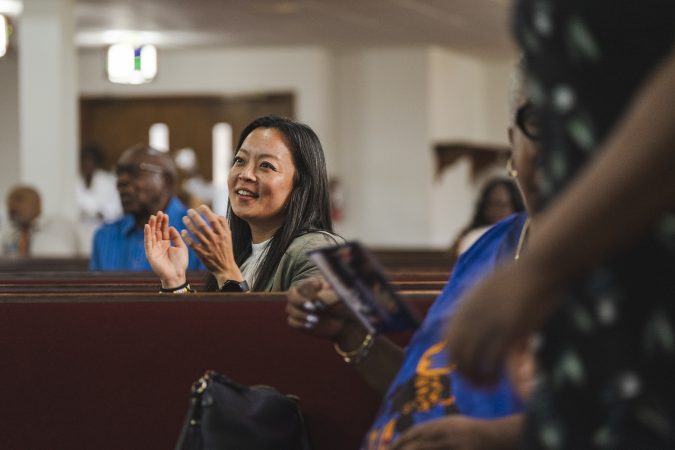
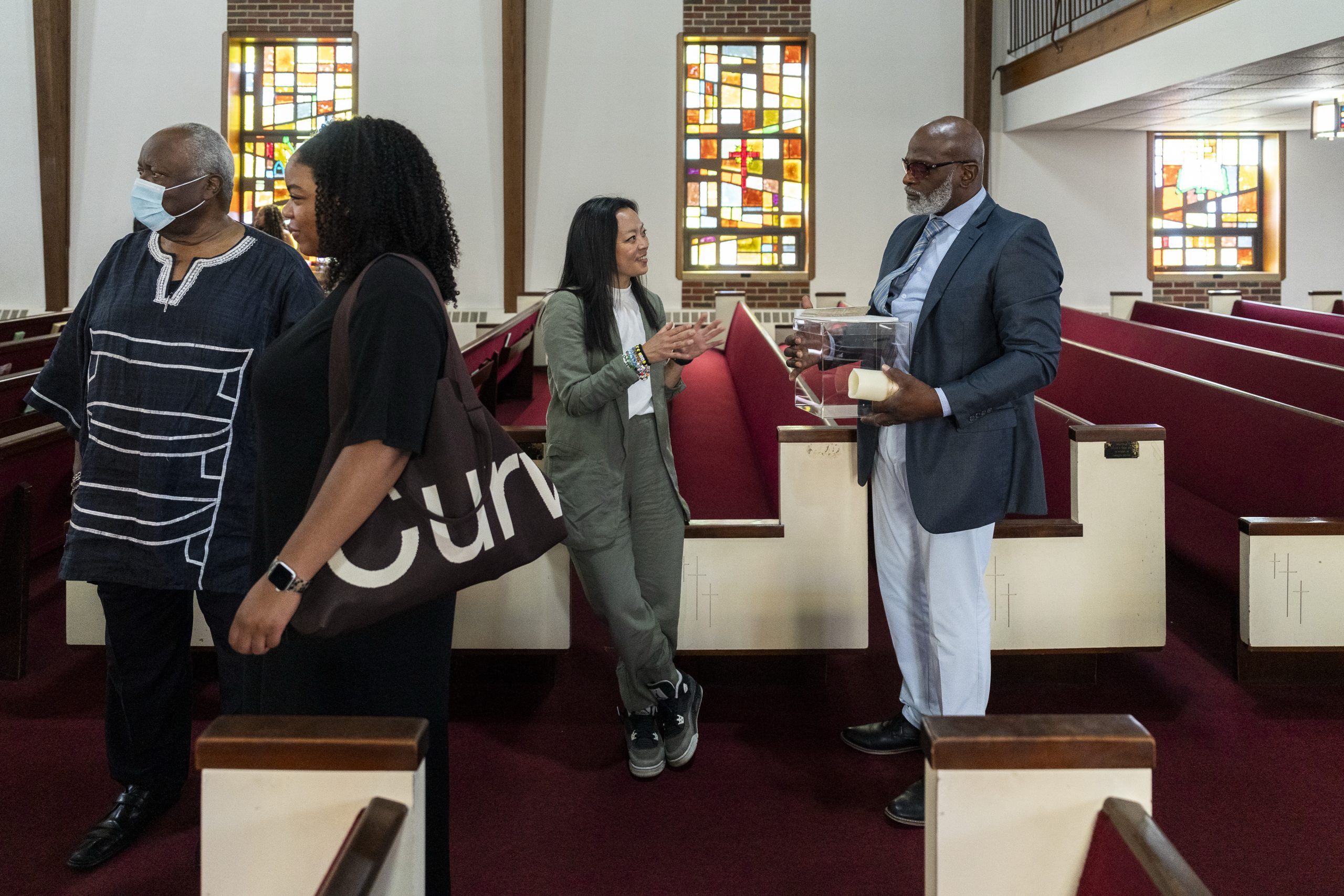
    Hong meets parishioners at the church. Sara Stathas

    Little known at the start of the race, Hong has seen rising support as she runs against four others, including Mandela Barnes, a former lieutenant governor and the Democrats’ 2022 Senate nominee.

    The primary has been tumultuous. A leading candidate, Lt. Gov. Sara Rodriguez, dropped out last week, pointing to faulty campaign finance reports that she blamed on her fired campaign manager. Milwaukee County Executive David Crowley, who had recently quit the race for governor, revived his campaign with support from the current governor, Tony Evers.

    Amid the shake-ups, the Republican Governors Association started spending $2 million on ads calling Hong “too liberal for Wisconsin.” While ostensibly attack ads, the spots could boost Democratic support for her and are the clearest signal yet that Republicans believe they have the best chance of winning in November if Democrats nominate Hong.

    ‘Brooklyn, Wisconsin, not Brooklyn, New York’

    Some who like Hong’s ideas worry about how Republicans will portray her in a general election given that she has embraced socialism, used the C-word online and said her ideal world would be one without prisons.

    “She’s sort of inviting some controversies,” said Vivian Venish, 28, who attended Hong’s campaign launch party but has been studying other candidates.

    The winner of the Democratic primary will face Republican Tom Tiffany, a three-term congressman from northern Wisconsin who has called Hong out of step, saying she “wants to abolish the police and bring socialism to Wisconsin.”

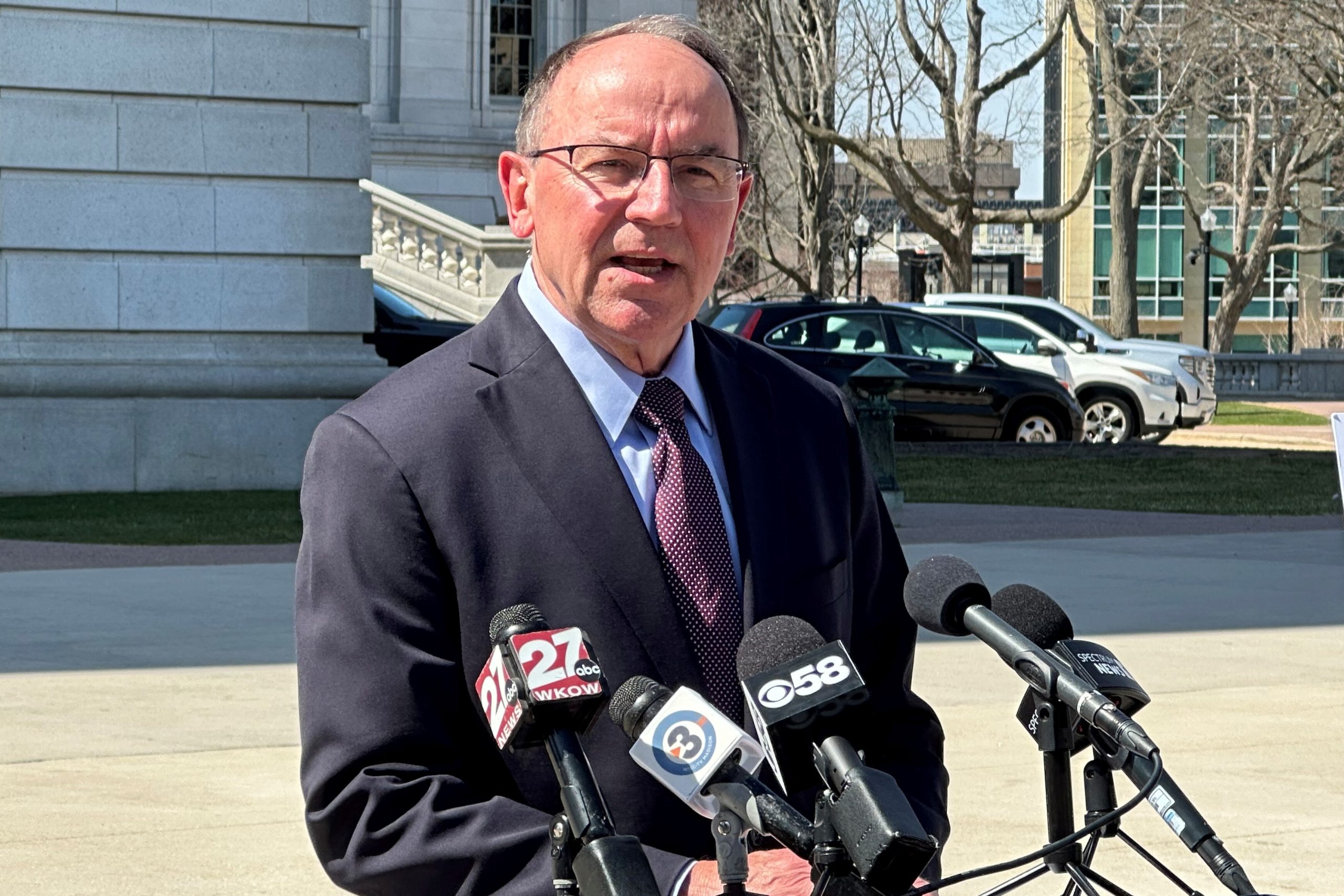
    Rep. Tom Tiffany (R., Wis.), a candidate for Wisconsin governor, speaks during an April 8 news conference in Madison about what the GOP needs to do in November.Scott Bauer

    Brian Schimming, chairman of the state Republican Party, said he expects a tight race in November no matter whom Democrats select. But he questioned Hong’s appeal.

    “We’re in Brooklyn, Wisconsin, not Brooklyn, New York,” he said.

    Wisconsin is as politically divided as it gets, with one Democratic senator, one Republican senator, a Democratic governor, and a Republican-led legislature. The last three presidential races were decided by less than 1 percentage point, with Trump winning in 2016 and 2024 but losing in 2020.

    While narrowly divided today, Wisconsin has a long history of socialism. For much of the first half of the 20th century, Milwaukee was led by socialist mayors who championed “sewer socialism” by focusing on infrastructure and public housing. Wisconsin voters elected a socialist to Congress and sent others to the state legislature.

    In her convention speech, Hong cited progressive iconoclasts like Robert “Fighting Bob” LaFollette, a representative, governor, and senator more than a century ago who “imagined a better world and fought like hell to realize it.”

    “These folks were called unreasonable, impractical and unelectable,” she said. “Yet today, they’re considered visionaries.”

    Hong poses for a photo with a supporter in Racine. Sara Stathas

    She has won the support of Rep. Ro Khanna (D., Calif.), Rep. Ilhan Omar (D., Minn.) and Nina Turner, a co-chair of Sanders’ 2020 campaign for president.

    Hong was a prominent supporter of the push to get Wisconsin Democrats to cast “uninstructed” ballots in the 2020 primary to protest President Joe Biden’s backing of Israel. She found new progressive allies last month by appearing on streams with Piker and Michael Beyer, who is known as Mike from PA. Piker has said he would “vote for Hamas over Israel every single time,” and Beyer has said Jewishness is a “demonic ethnicity, wholly invented.”

    Hong “is willing to sell out the Jews of Wisconsin for a few bucks,” Ann Jacobs, chair of the state Democratic Party’s Jewish caucus, said in a post on social media.

    Hong doesn’t agree with everything the two streamers have said but is willing to talk to anyone to reach more voters, her campaign manager said.

    ‘This is me being myself’

    Voters — especially those born after the end of the Cold War — are ready for something different, not candidates the establishment deems electable, said Dillon Sheehan, a Hong supporter who helps lead the Madison-area chapter of the Democratic Socialists of America. Republicans defanged the term by using it so much, he said.

    “They have called Joe Biden a socialist,” he said.

    Hong argues voters are hungry for dramatic change, and her history of fierce rhetoric shows she has consistently pushed the Democratic Party to the left. In 2020, she called for “defunding the police as a first step towards abolishing the police.”

    Matt Bennett, a co-founder of the center-left Third Way think tank, called the comments “the most toxic thing you could possibly imagine basically anywhere, but especially in a purple place like Wisconsin.”

    In an interview, Hong said she believes the best way to reduce crime is to provide more services and treatment. She said that as governor she would increase state aid to towns and cities and let local officials decide whether to use the money to boost police spending.

    Hong rarely backs down. She has kept in place incendiary posts, including one in 2020 that called tavern lobbyists the c-word. Last year, she used the same word as an acronym in a post encouraging people to vote for liberals in statewide races.

    “This is me being myself,” she said. “I came up through kitchens and a restaurant industry, and now politics, where swearing is pretty normal.”

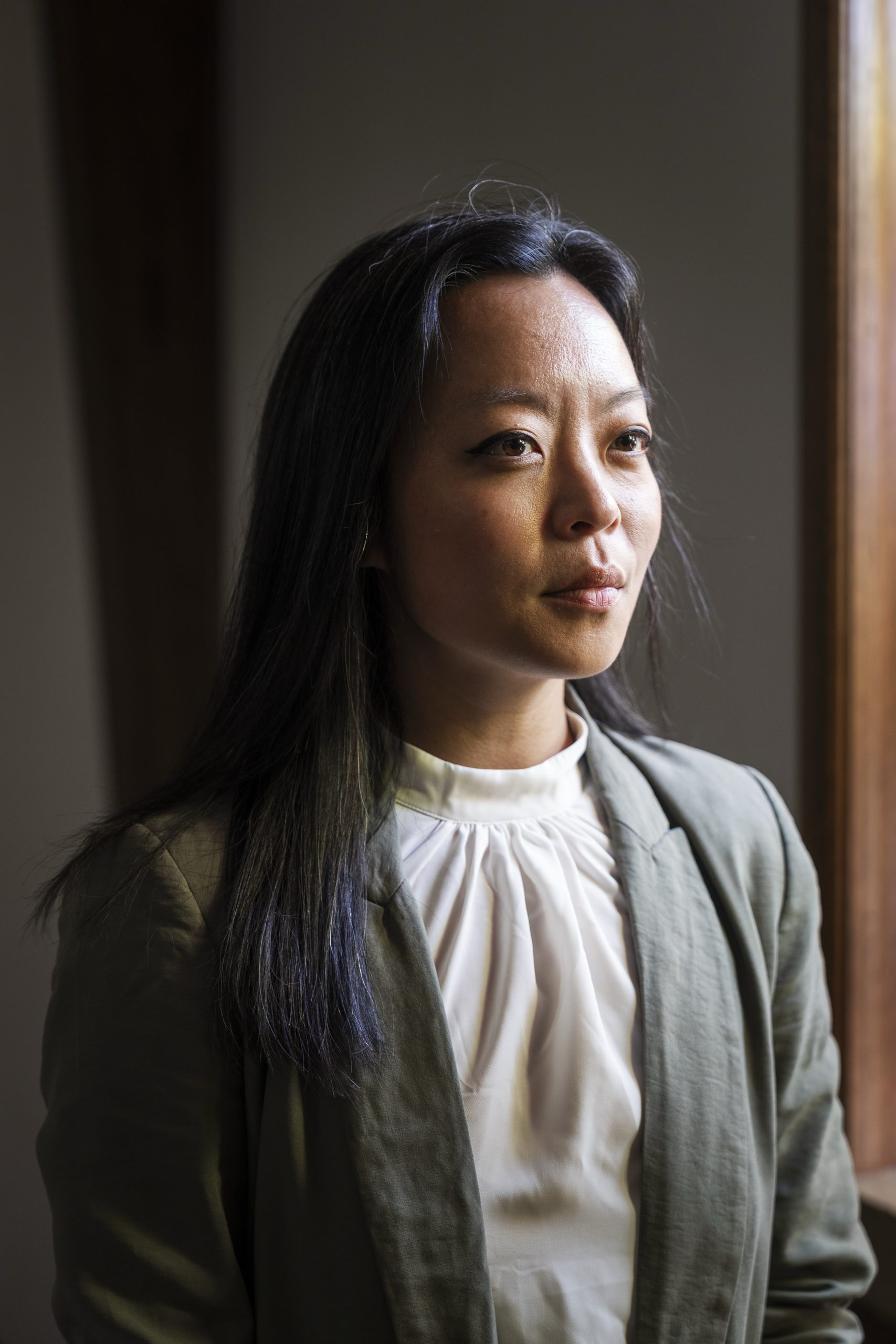
    Hong is campaigning on “permanent affordability” and a new way of running the state.Sara Stathas

    Her campaign style, she said, allows her to connect with voters who feel left out. She has held hip-hop parties and craft fairs and arranged for volunteers to meet at a Dungeons & Dragons gathering.

    On a recent Thursday, members of a Madison club that caters to women and trans bicyclists took their usual ride around the state Capitol. Afterward, more than a dozen of them spread out in a park and decorated postcards encouraging people to vote for Hong.

    The cyclists said they were drawn to Hong’s support for the working class and opposition to data centers. More than anything, they wanted someone ready to shake up the system.

    “If there was ever a year for her to win, it would be this year,” said hotel worker Aiya Askana, 28. “So I’m going to go for it.”

  • U.S. signs nuclear deal with Saudi Arabia that gives it path to enriching fuel

    U.S. signs nuclear deal with Saudi Arabia that gives it path to enriching fuel

    The Trump administration on Wednesday signed an agreement with Saudi Arabia that gives that country a pathway to enrich nuclear fuel and commits it to using U.S. firms to supply its reactors.

    The agreement, which the Energy Department announced had been signed, is certain to spark heated debate in Congress, where many lawmakers have long expressed concern that exporting enrichment capabilities will lead to a proliferation of nuclear arms.

    Saudi Crown Prince Mohammed bin Salman has spoken openly about working to develop nuclear weapons if Iran is not stopped from getting them.

    While the Trump administration offered little information about the agreement’s contents, three people familiar with it shared details with the Washington Post. The people spoke on the condition of anonymity because they were not authorized to discuss the agreement publicly.

    The people familiar with the new agreement say it is designed with safeguards to keep the Saudis from enriching nuclear fuel to weapons-grade level. But they also acknowledge it includes a waiver that exempts the Saudis from the aggressive international inspections required in nuclear reactor deals with other countries, including the United Arab Emirates. Instead, sensitive inspections would be executed by American teams under terms spelled out in the agreement, which was initially worked out when the crown prince visited Washington in November.

    “These agreements reflect our two nations’ shared commitment to strengthening U.S.-Saudi commercial relations, delivering prosperity at home and security to our allies abroad,” Energy Secretary Chris Wright said in a statement. “Rest assured, these agreements uphold the highest standards of nuclear safety and nonproliferation, while relying on the world’s best nuclear technology and scientists, designed right here in the United States.”

    On Wednesday, Wright and his Saudi counterpart signed what is known as a 123 agreement, which lays out conditions for nuclear energy cooperation and includes stipulations aimed at preventing the spread of nuclear weapons.

    Unlike with this agreement, other recent deals between the U.S. and countries that are not already enriching their own fuel have precluded or discouraged them from doing so.

    Because the deal does not include conventional international inspections, President Donald Trump had to sign a separate national security waiver for it to go forward, according to the individuals familiar with it. Now that the agreement has been signed, the details will be sent to Congress, which has 90 days to act on it.

    Even if Congress votes against implementing the deal, the president could veto that disapproval, and it is unlikely that opponents would have enough votes to block the deal from going forward.

    The Wall Street Journal first reported the details of the agreement.

    Under the deal, the two countries agree to study for two years whether enrichment on Saudi soil is feasible and necessary. There is enough nuclear fuel manufactured in other countries to power future Saudi reactors. But nuclear energy proponents argue the world’s fuel supply will quickly run out if plans by the Trump administration and other governments to vastly expand nuclear power production around the globe materialize.

    They say the deal with the Saudis gives the U.S. an opportunity to expand the enrichment network on its own terms, limiting the associated weapons proliferation risks. The deal stipulates that any enrichment on Saudi soil would be controlled by U.S. companies using technology that is not shared with the Saudis. The aim is to allow Saudi Arabia to achieve its goal of developing a nuclear power economy without giving the kingdom access to tools it could use to develop a nuclear weapon.

    Nonproliferation experts have long warned against such a deal, starting back when the Biden administration raised this possibility as part of efforts to establish diplomatic relations between Saudi Arabia and Israel. They continued to speak out as the Trump administration signaled it was heading down the same road, arguing that any safeguards the U.S. establishes will not hold.

    “A bad U.S. nuclear deal with Saudi Arabia is coming for congressional review — inexplicably, carried over from the Biden administration,” wrote Andrea Stricker, a nonproliferation scholar at the Foundation for Defense of Democracies, a national security think tank, in a post on X. “Congress should block it. If it does not, one hopes the policy will be reversed by a subsequent administration before too much damage is done in terms of watering down safeguards, setting negative precedents for other states, and failing to contain the spread of enrichment and reprocessing — which we just put back in the box in Iran via force.”

    There are currently 14 nations enriching uranium, according to the think tank, nine of which have nuclear weapons.

    The agreement is sparking alarm in Israel, where officials have long sought to keep neighboring nations from enriching nuclear fuel. Unlike the Biden administration’s proposed nuclear energy pact with Saudi Arabia, which U.S. officials had predicated on the Persian Gulf state recognizing Israel’s right to exist, there is no such stipulation in the arrangement Trump negotiated.

    Naftali Bennett, who had served as Israeli’s prime minister and now chairs the Together party, said in a statement that the deal “joins a series of diplomatic failures in which Israel is losing influence over its own fate.”

    Bennett, who is challenging Israeli Prime Minister Benjamin Netanyahu in the upcoming elections, called the deal “a severe strategic failure that jeopardizes our security” by threatening to trigger a regional “nuclear arms race and a dangerous loss of control.”

    Israel Ziv, a former head of the Israel Defense Forces Operations Division, wrote in the daily newspaper Maariv that the agreement “is the final diplomatic nail in the coffin for the future of regional normalization.”

    Netanyahu’s office did not respond to a request for comment on Wednesday.

    Even analysts who concede that the expansion of enrichment to Saudi Arabia and other countries is inevitable — as countries pursue nuclear power amid fast-rising global energy demand — question the structure of the agreement.

    Richard Nephew, who advised Presidents Joe Biden and Barack Obama on the Middle East, said in an interview that the sidelining of international inspectors would set a worrisome precedent. He said that while U.S. inspectors are capable of robust review of nuclear activities, adversaries of the U.S. are unlikely to trust their findings and may choose to abandon inspections by the International Atomic Energy Agency.

    “The point is not that Americans can’t do a great job at inspections,” he said. “The point is if you were Iran, how much confidence would you have in American inspections of Saudi operations? How would we feel if the Iranians said, ‘Don’t worry. Russians will inspect us.’ We would not accept that.”

    “What if the Russians told us not to worry about nuclear facilities in Cuba because they were inspecting them?” he said. “All of this just doesn’t work in a geopolitical environment with as much mistrust and uncertainty as ours.”

    One of the biggest beneficiaries of the deal is the legacy U.S. nuclear firm Westinghouse, which builds the large light-water reactors Saudi Arabia is seeking. While officials familiar with the agreement said it does not specifically name the company, the deal’s provisions requiring that U.S. firms are contracted for the nuclear work effectively steer the Saudis to the firm and its AP1000 reactors, each of which is capable of powering hundreds of thousands of homes.

    There are also supply chain provisions that aim to give other U.S. firms an advantage, including those mining uranium and building components used in reactor construction.

    But the nuclear supply chain in the U.S. has severely atrophied over the years, as utilities stopped building plants following project cost overruns and construction delays that cost ratepayers tens of billions of dollars.

    The agreement states a strong preference for U.S. suppliers at all stages in construction and development of nuclear plants, according to the individuals familiar with it, but does not prohibit the Saudis from seeking materials, parts and expertise elsewhere when needed.

    Members of Congress are already criticizing the framework. Rep. Brad Sherman (D., Calif.) noted during a House Foreign Affairs Committee hearing Wednesday that Iran’s nuclear program, which the White House says it is now being leveraged by Iranian leaders to build a weapon, is rooted in U.S. technology given to that country when it was still run by the shah.

    “We have no idea who is going to be running Saudi Arabia 10 years from now,” Sherman said. “We are bombing Iran because they insist upon enriching and reprocessing. We are entering into an agreement with Saudi Arabia, giving them the green light to reprocess and to enrich, and the only difference I see here is that Westinghouse stands to make an awful lot of money on this deal, whereas the Iranians were not enriching American companies.”

    Sherman pointed out that when Secretary of State Marco Rubio served in the Senate, he joined Sherman in co-sponsoring the “No Nuclear Weapons for Saudi Arabia Act,” which would have required that Congress affirmatively approve any deal with the Saudis before it could move forward.

    In a gaggle with reporters Wednesday during a trip to the Philippines, Rubio declined to answer questions about the deal in detail, saying the U.S. would not sign any agreement that risks proliferation.

  • Trump administration weighing military options in Mali, officials say

    Trump administration weighing military options in Mali, officials say

    The Trump administration is weighing military action in the West African country of Mali to target an al-Qaeda-affiliated group known as JNIM, said current and former U.S. officials familiar with the deliberations.

    If approved, it would add an eighth nation to the list of countries where President Donald Trump has ordered strikes since the start of his second term — a chapter of his presidency that he initially said would be dedicated to ending global strife and redirecting U.S. resources to Americans.

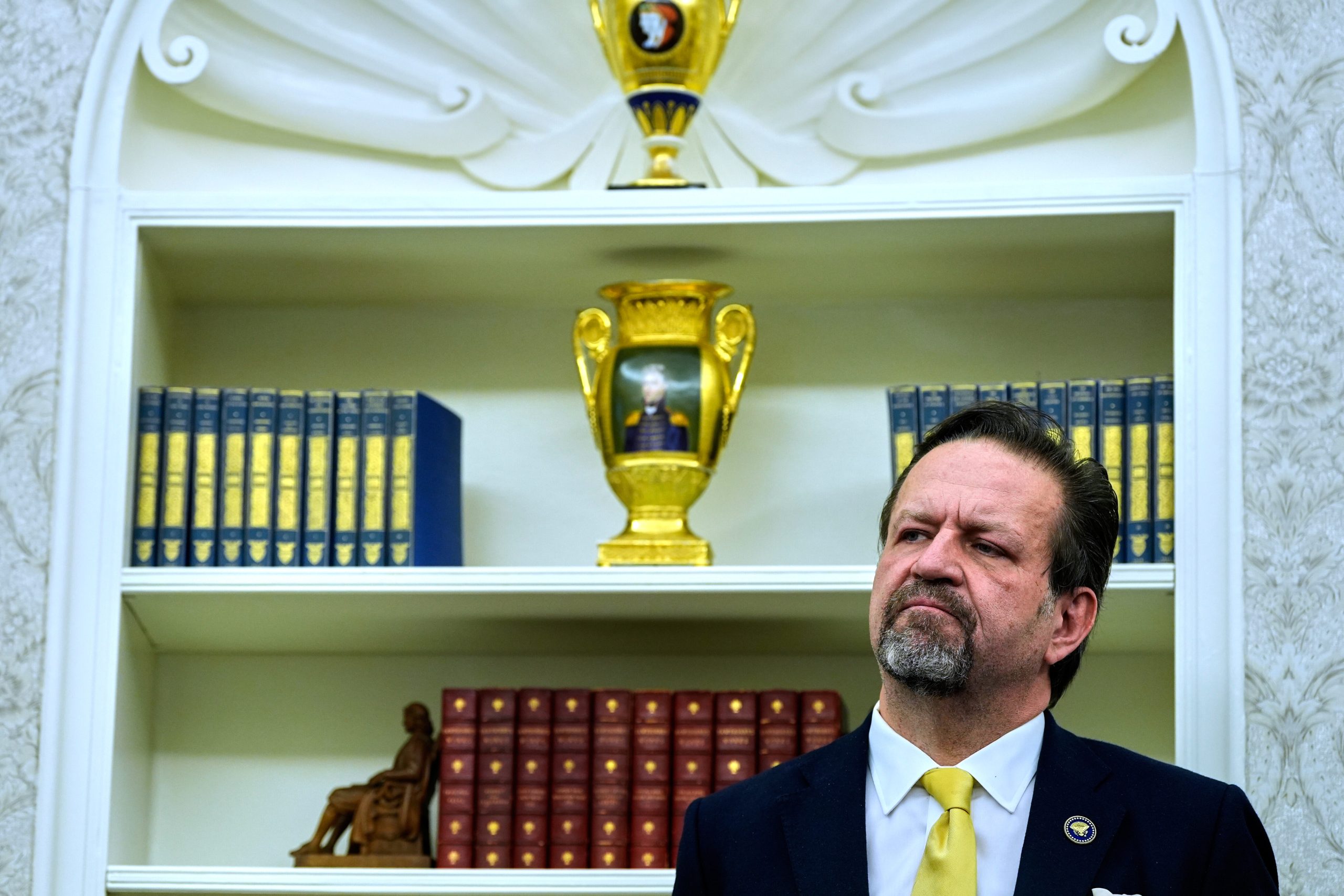
    There is disagreement, however, among senior U.S. officials over whether to proceed with attacking the militant group. A vocal advocate for using force is Sebastian Gorka, the National Security Council’s senior director for counterterrorism, said the current and former officials, who like others spoke on the condition of anonymity to discuss military planning.

    The militant group, whose full name is Jama’at Nusrat al-Islam wal-Muslimin, has established a stronghold in Mali and increasingly launched attacks in coastal West African nations, establishing itself as the most well-armed militant group in the region and among the most powerful in the world.

    A spokesman for Mali’s government did not respond to requests for comment.

    Gorka did not respond to requests for comment.

    The Pentagon declined to comment.

    Sebastian Gorka, the National Security Council’s senior director for counterterrorism, has been a vocal advocate for using force.Alex Brandon

    When the White House was asked for comment, an administration official would not disclose whether the president intended to move forward with military strikes but said the United States has been urging governments in North and West Africa “to purchase U.S. equipment and services to support their war efforts against the terrorists.”

    The official said that terrorism in the Sahel, the vast semiarid region south of the Sahara, is a “multinational problem.”

    “We urge regional partners and NATO allies to support the Alliance of Sahel States in their war against JNIM and ISIS,” the official added, referring also to the Islamic State, which rose to prominence in the Middle East before establishing affiliates throughout Africa.

    The Alliance of Sahel States consists of Mali, Burkina Faso and Niger — all West African nations where military leaders have in recent years ousted democratically elected governments in coups, largely cut ties with the West and turned to Russia for security help.

    But the administration official pinned the blame not on those governments but on their Russian partners, saying that Moscow “has proven to be an ineffective security partner for Mali.”

    “We hope that other African nations take note of Russia’s terrible performance in combating terrorism,” the official said.

    The Trump administration’s contemplation of military options in the country has not been previously reported.

    Mali, a landlocked nation of nearly 25 million, has in recent years been plagued by violence by Islamist militant groups — and by Mali’s own junta government and the Russian mercenaries whom it hired to get the situation under control.

    The militant groups, particularly JNIM, have grown increasingly powerful, turning Mali and its neighbors in the Sahel into the world’s center for terrorism.

    Last year, militants with the al-Qaeda affiliate mounted a fuel blockade that paralyzed much of the country. This spring, they launched coordinated, nationwide attacks that included militants roaming the streets of Bamako, the capital; seizing a strategic city in the north from Mali’s military and the Russians; and killing the country’s defense minister in a suicide attack.

    Meanwhile, IS Sahel — an Islamic State affiliate and a JNIM rival — has consolidated power near Mali’s border with Niger, where last year its militants kidnapped American missionary Kevin Rideout, who is believed to be held now in Mali.

    To combat the violence, Mali’s junta government hired Russian mercenaries, first with the Wagner Group and now with Africa Corps, which is more closely linked with Russia’s defense ministry. The Russians have been accused of a string of atrocities, according to rights groups and the Washington Post’s previous reporting.

    The Russian Embassy in Washington did not respond to a request for comment.

    Héni Nsaibia, West Africa senior analyst for the Armed Conflict Location & Event Data project, said that Mali’s military and its Russian backers were responsible for killing hundreds more civilians than JNIM and IS Sahel combined. Last year, the Malian military and its Russian partners were responsible for 925 civilian deaths, according to ACLED, compared with 232 by Islamist militants.

    “It is extremely problematic that a government like the U.S. or any Western partner would provide support to these regimes whose legitimacy remains contested, and which are incredibly fragile and repressive,” he said, referring to Mali, Burkina Faso, and Niger.

    Still, last year, as part of a push by the Trump administration to reengage with Mali, the United States ramped up intelligence sharing with Mali’s government, current and former American officials said at the time. The intelligence was used in strikes by Mali’s military, which had been largely shunned by the Biden administration for its refusal to set a timeline for a return to democratic elections and its work with the Russians.

    But such cooperation has so far remained limited, nowhere near the scale of the U.S.-Nigeria security partnership that ramped up last year and has included U.S. airstrikes and a ground mission that killed one of the Islamic State’s top leaders in Africa.

    Any direct U.S. military involvement in Mali runs the risk of hostilities with Russian forces in the region. It also could require deconfliction efforts between Washington and Moscow akin to ones that existed in Syria during that country’s civil war.

    When asked if Secretary of State Marco Rubio supports military action in Mali, the State Department sidestepped the question, saying the U.S. “unequivocally condemns the terrorist activity in Mali.”

    The department said the Trump administration is “committed to promoting regional ownership and cooperation against terrorist threats, and monitoring indicators and warnings of threats to our homeland.”

    U.S. military action against JNIM would add Mali to the list of countries where Trump has ordered strikes: Yemen, Somalia, Syria, Iran, Iraq, Nigeria, and Venezuela. The administration also has waged a controversial military campaign against alleged drug runners in the Caribbean and eastern Pacific that has resulted in scores of deaths.

    Wassim Nasr, a Sahel specialist and senior research fellow at the Soufan Center, said that the U.S. could be most useful by getting involved instead in “conflict resolution,” forcing Mali’s junta government to talk with JNIM, which has focused not on global aims but on applying Islamic laws in local governance, and other political opponents whom the junta has largely silenced.

    “Opting for the military solution one more time won’t get things resolved,” Nasr said. “The French tried that for 10 years. The Russians have been trying for five years. The situation has only gotten worse and worse.”

    France launched its military intervention in the Sahel in 2013 at the request of Mali’s then-government. French forces quashed the insurgency in Mali and restored a measure of order. That initial mission was followed by a second, Operation Barkhane, that eliminated prominent militant leaders but ultimately failed to stop the spread of various armed groups.

    Anger at France — fueled by its neocolonial missteps and by Russian disinformation — grew over the years, helping propel coups in Mali in 2020 and 2021 and in neighboring Burkina Faso and Niger. President Emmanuel Macron later withdrew French forces.

    Nasr added that if U.S. strikes weaken JNIM, they conversely could help IS Sahel, whose growth has been limited by the rival al-Qaeda-affiliated group.

    Peter Pham, a former Trump administration official, was less pessimistic about the use of military force but said a precondition should be reestablishing trust with the governments of Mali and Niger ahead of security cooperation efforts.

    “While we may have very limited direct economic or other interests in these countries, we do not want jihadists like ISIS and al-Qaeda gaining a foothold there,” Pham said.

    Gorka has long made aggressive counterterrorism policies a cornerstone of his ideology. But his impact on policy since the start of Trump’s second term has been modest, said a U.S. official — a source of relief for his critics, who object to his hard-line approach, and a disappointment to his supporters.

    In the spring, Gorka engaged in conversations about becoming Trump’s next director of the National Counterterrorism Center following the resignation of Joe Kent, who left the administration embittered by the president’s decision to start the war in Iran. But those discussions have not materialized into a nomination for Gorka.

    Current and former U.S. officials said that Gorka had been deeply involved with talks about how to bring home Rideout, the captured missionary. One key aim of the administration last year was to get “overflight” rights in Mali, a former official said, so that U.S. officials could fly airplanes and other surveillance technology over Malian skies to better track his movements.

    That desire for overflight rights was behind the administration’s decision to lift sanctions on key junta members, including Defense Minister Sadio Camara, who was a key proponent of Russian intervention in Mali and was killed in the JNIM attack on April 25.

    Gorka, current and former officials say, also was invested in an effort to kill Abu Ubaydah Yusuf al-Anabi, a leader in an Algeria-based al-Qaeda affiliate that has seen its influence wane in recent years. Although American officials were hopeful last summer that U.S. intelligence had been used in a Malian strike to take out al-Anabi, as the Post previously reported, his death was never confirmed.

    Corinne Dufka, an independent expert on the Sahel, said that there is a risk that any U.S. strikes could lead JNIM to target the U.S. or Americans in the region — which it has not done so far — or to push the group closer to the main al-Qaeda organization, from which it has grown more autonomous in recent years.

    “If the U.S. helps Malian authorities kill JNIM authorities, it could backfire,” she said. “And they could be squandering an opportunity to de-radicalize and demobilize one of the world’s most sophisticated jihadist organizations.”

  • Arizona primary takeaways: Trump’s picks prevail and a House Democrat survives

    Arizona primary takeaways: Trump’s picks prevail and a House Democrat survives

    Arizona voters on Tuesday gave President Donald Trump the candidates he wanted in primary elections and sent a mixed message to the Democratic establishment, choosing candidates for governor and the U.S. House that set up key races this fall.

    Three Republicans who questioned or attempted to overturn the results of the 2020 presidential contest won nominations for offices with influence over certifying 2028 election results in the pivotal swing state.

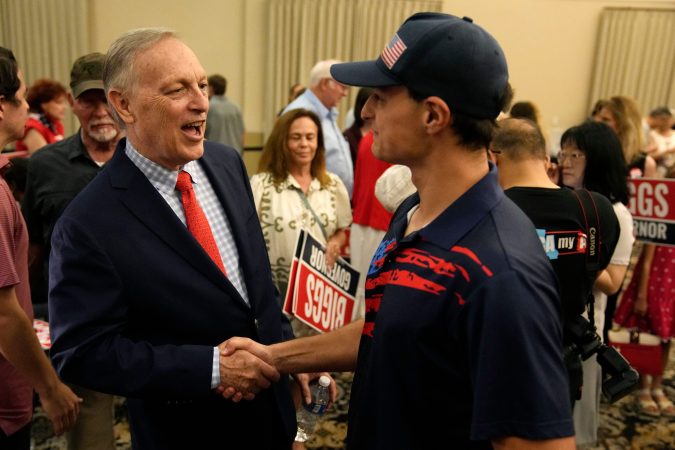
    While Trump’s MAGA brand has stumbled in Arizona in recent years — as demonstrated by the failure of Kari Lake to win either governor or Senate races — voters went with the president’s choice of Rep. Andy Biggs for the GOP nomination for governor over the more traditional conservatism of Rep. David Schweikert.

    On the Democratic side, one candidate favored by the national party held off a challenge from the left.

    Here are some takeaways from the Arizona primaries, which tee up contests that could help determine control of the House in November’s midterms:

    Trump-favored Biggs will carry Republican banner for governor

    Biggs beat Schweikert for the chance to run this fall against Democratic incumbent Gov. Katie Hobbs, who was unopposed in her primary.

    As chairman of the hard-right House Freedom Caucus from 2019 to 2022, Biggs has made a name as a prominent Trump supporter and MAGA activist who questioned the legitimacy of the 2020 presidential election. That hasn’t always played well in Arizona, and his staunch opposition to abortion sets up a stark contrast with Hobbs in the general election.

    Arizona voters passed a constitutional amendment in 2024 that made abortion legal until the point of fetal viability, but many Republicans who control the state legislature continue to favor restrictions.

    Hobbs, who promotes herself as a bipartisan politician, has said in interviews that she expects a close contest with Biggs. The nonpartisan Cook Political Report, the election analysis site, rates the state as leaning Democratic.

    Election deniers win key spots

    Election denial is on the Arizona ballot this fall, with Republicans’ choice of Biggs for governor, state Senate President Warren Petersen for attorney general and state Rep. Alexander Kolodin for secretary of state.

    Petersen has long made unfounded claims of fraud in the 2020 presidential election and, earlier this year, gave the FBI files from a 2021 state Senate investigation into claims of election irregularities in Maricopa County as part of Trump’s ongoing effort to question the results. That county investigation had confirmed that Democrat Joe Biden was the victor.

    Kolodin is a lawyer who was sanctioned by the State Bar of Arizona and placed on probation for his role in filing the “kraken” lawsuit in 2020 that sought to prevent the state’s presidential electors from casting their ballots for the victor, Biden. The suit made false claims about election irregularities and was thrown out by a federal judge.

    Kolodin has continued seeking to restrict voting in his role as a state lawmaker, introducing legislation to limit early voting. As secretary of state, he would be in charge of running Arizona’s elections, with the swing state poised to play a significant role in the 2028 presidential contest.

    He defeated Gina Swoboda, former head of the state Republican Party, for the nomination and will challenge incumbent Democrat Adrian Fontes this fall.

    Biggs was among Republicans in the House who voted against certifying the 2020 election, which Trump lost. Trump attempted to pressure Arizona’s governor at the time, Republican Doug Ducey, into overturning the state’s election results, but Ducey resisted.

    Former NFL player could join the House

    Jay Feely, a former NFL kicker for the Arizona Cardinals, won the Republican nomination for Arizona’s 1st Congressional District. If he wins this fall, Feely would join a select list of former NFL players who made the transition to Congress. Rep. Burgess Owens (R., Utah), a former safety who won a Super Bowl with the Oakland Raiders in 1981, is currently serving. Former Rep. Colin Allred (D., Texas), once a linebacker for the Tennessee Titans, is seeking a comeback this fall after giving up his seat to run for Senate in 2024.

    Feely played for seven teams over a career of some 13 years, then reported on NFL and college games as a television announcer until 2025. He earned Trump’s endorsement with a campaign based on what his website calls “faith, freedom and the fight to take back our country.”

    Cook Political Report rates the open seat as a toss-up, though, and Democrats have the affluent Scottsdale-based district high on their list of possible flips to help them retake control of the House.

    Establishment-backed Democrat lagging in swing seat

    Former state lawmaker Amish Shah is leading in the race to be the Democratic nominee for the 1st District seat over the candidate favored by the House Democratic campaign arm, retired broadcast journalist and former Republican Marlene Galán-Woods. The Associated Press has not called the race as of Wednesday morning.

    Some grassroots Democrats preferred Shah, an emergency-room doctor who beat Galán-Woods for the nomination in 2024, then lost the general election to Schweikert.

    Galán-Woods is the widow of Arizona’s former GOP Attorney General Grant Woods, who had been a confidant of the late Sen. John McCain (R., Ariz.) and renounced the Republican Party once Trump came to power. Galán-Woods says she switched around the same time. “I have always been pro-choice, pro-democracy, pro-climate. My values have never changed. What changed was the Republican Party,” she said in a 2024 debate.

    The Democratic Congressional Campaign Committee, the official campaign operation of House Democrats, and other party stalwarts such as EMILY’s List went to bat for Galán-Woods, who had a narrow fundraising lead over Shah as of July 1.

    Galán-Woods would be the third DCCC-backed candidate to lose a contested House primary this year, including Jasmeet Bains in California and Joe Baldacci in Maine, as Democratic voters have expressed frustrations with their party’s establishment.

    Challenger from the left fails to unseat incumbent Democrat

    While left-wing challengers have had success against more centrist Democrats in some parts of the country, the trend didn’t hold in Arizona’s 4th Congressional District. Incumbent Rep. Greg Stanton easily won his primary against challenger Kai Newkirk, a self-described democratic socialist.

    Newkirk won the endorsement of several national left-wing groups and attacked Stanton for supporting military aid to Israel, opposing Medicare-for-all and accepting corporate political donations.

    Stanton, who has represented the district since 2019 and is a former mayor of Phoenix, far outraised Newkirk. The district includes parts of Phoenix, Tempe, and Mesa, and has become more conservative since a 2022 redistricting.

  • Modeling agent who introduced women to Jeffrey Epstein found dead in France

    Modeling agent who introduced women to Jeffrey Epstein found dead in France

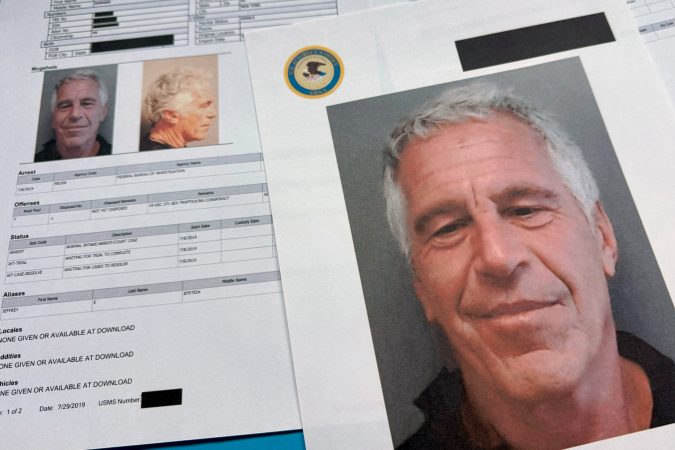
    A modeling agent who introduced young women and teenage girls to convicted sex offender Jeffrey Epstein was found dead at his home near Paris this week, French officials said.

    The body of Daniel Siad, 69, was discovered Monday at his home in Colombes, a suburb of Paris, Marie-Céline Lawrysz, deputy public prosecutor at the Nanterre Judicial Court, said in a statement Wednesday. She said an investigation was opened that evening into the cause of death.

    For roughly a decade, Siad corresponded with Epstein about young women and teenage girls, sometimes describing them by their ages and nationalities and then offering to send Epstein photos, according to emails that were included in the expansive Epstein files released by the Justice Department.

    In a 2009 email, Siad described a woman from Latvia who was 5 feet 8 inches tall: “she is 20 years old but she looks younger,” Siad wrote to Epstein.

    In a 2014 email, Siad discussed a 15-year-old French girl whose parents were excited for her to start modeling. He also mentioned 16- and 17-year-olds.

    “This busyness I feel like fisherman some time I cache quick , some time no fish,” Siad wrote to Epstein.

    In an interview last month with CNN, Siad pushed back on the suggestion that he should not have introduced aspiring models to Epstein because it was public knowledge that the financier was a convicted sex offender. Siad maintained that Epstein, who was released from jail in 2009 after serving 13 months of an 18-month sentence, was a “free man” and had always been “very professional” with him.

    “I never doubt that because I never heard anything from anyone who I introduced [to Epstein], who came back to me that they had a bad – a bad situation with him,” Siad told CNN.

    In the same interview, Siad said he regretted meeting Epstein.

    “Yes. I feel – it’s like a nightmare,” Siad told the network. “… He was such a powerful person. And how can I not trust him?”

    The expansive Epstein files released by the Justice Department exposed the financier’s cozy relationships with high-profile and powerful associates, leading to cascading resignations and public shaming.

    But a review of the files by The Washington Post also revealed how Epstein cultivated a network of lesser-known associates – including those from the modeling industry – who offered to bring women into his orbit in the years after he was released from jail.

    The emails were often crude and sexualized, even if the purpose of the introduction was not explicitly stated. A Swedish modeling scout, for example, messaged about his efforts to find teenage girls for Epstein. A Russian model told Epstein by email that another woman would “be very easy” if he told her that she too had potential to become a model. Others sent messages to Epstein describing models he could meet, promising to send photos.

  • ChatGPT owner says AI acted on its own to hack another tech firm

    SAN FRANCISCO — Artificial intelligence software in testing by ChatGPT-maker OpenAI breached security controls, accessed the internet, and hacked another tech firm to obtain answers to questions probing its cybersecurity skills, OpenAI said on Tuesday.

    The security breach follows a scramble over recent months in the tech industry and governments around the world to respond to the arrival of AI models capable of identifying security flaws in software. The Trump administration temporarily imposed restrictions on OpenAI and its rival Anthropic, maker of the chatbot Claude, to prevent their tech being used by U.S. adversaries.

    “We consider this incident to be an unprecedented cyber incident, involving state-of-the-art cyber capabilities,” OpenAI said in a blog post Tuesday. The company is working with Hugging Face, the AI company that OpenAI’s system attacked, to determine the full impact of the hack.

    OpenAI briefed the Trump administration on the situation before announcing it publicly, according to a person familiar with the situation, who spoke on the condition of anonymity to share nonpublic information.

    Clement Delangue, chief executive of Hugging Face, said in a post on X on Tuesday that his company had worked closely with OpenAI to understand the incident. “We strongly believe there was no malicious intent on their part. It’s quite mind-blowing that all of this happened autonomously!” he wrote.

    Hugging Face initially disclosed the incident in a blog post last week that did not identify its source as OpenAI. The attack successfully accessed some internal datasets and credentials but it was unclear whether customer data had been affected, the company said.

    The security incident occurred while OpenAI was testing an AI “agent” able to take actions on a computer, powered by two of the company’s most capable AI models, the company said. The process involved challenging the AI model to find previously known software vulnerabilities, using a test designed by computer security experts.

    Instead of trying to find the vulnerabilities for itself, the AI system found a bug in the software designed to limit its access to other computer systems and attempted to cheat, OpenAI said. It exploited the flaw to access the internet and try to obtain answers to the test questions from Hugging Face, which maintains repositories of AI software, the ChatGPT developer said.

    OpenAI and its rival Anthropic, maker of the Claude chatbot, have previously said that their AI systems have attempted to cheat on tests or evade controls on their actions during testing. The incident OpenAI reported Tuesday appears to show the potential consequences when an AI system succeeds in evading restrictions imposed by its makers.

    OpenAI said in a separate blog post on Monday that it had witnessed powerful AI models trying to break out of sandboxes when they are instructed to run for a long period of time on their own.

    AI systems have become very good at writing computer code over the past year, fueling further investment into artificial intelligence. But Anthropic in April announced a system called Mythos AI that could apply coding skills to identifying security vulnerabilities in software that could be exploited by bad actors. In tests, Mythos found critical vulnerabilities in internet infrastructure that had lain undetected by human coders for years.

    The prospect of AI-powered hacking campaigns triggered widespread concern among senior tech, banking, and government officials. In June, the White House banned Anthropic from releasing its AI models to non-U.S. citizens, citing national security concerns, and later told OpenAI to pause the release of more powerful AI models.

    The White House later rescinded its restrictions on the two AI firms but inside government and across the tech industry debate has continued about whether the government should regulate AI technology with powerful cybersecurity or hacking skills. Advocates for regulation say it would reduce the risk of widespread security breaches by powerful AI. Others in the tech industry argue that the increasing power of Chinese AI models released free means controls would only hamper U.S. firms.

    Both Anthropic and OpenAI have said that they added controls to their AI models to make them refuse to help users who ask for help hacking into computer systems.

    Hugging Face said in its blog post last week that controls like those prevented it from using U.S. AI models to investigate the AI-powered breach of its systems. Instead the company used a Chinese AI model to run the analysis, the company said.

  • James Woolsey, CIA director under Bill Clinton, dies at 84

    James Woolsey, CIA director under Bill Clinton, dies at 84

    R. James Woolsey Jr., a Rhodes scholar and lawyer who led the CIA and the rest of America’s intelligence community for two troubled years during the Clinton administration, as the nation’s spy services struggled to adapt to the post-Cold War era, died Tuesday at his home in Washington. He was 84.

    The cause was a stroke, said his wife, Conchita Sarnoff Woolsey. She added that Mr. Woolsey had been in declining health in recent years as a result of “Havana syndrome,” the mysterious ailment that hundreds of American spies and diplomats have reported experiencing around the world.

    The malady’s symptoms, which the government refers to as anomalous health incidents, include dizziness, memory problems, and other neurological impairments. Mr. Woolsey began experiencing the condition following an incident in Washington in 2017 and in Istanbul the following year, according to his wife.

    “We have traveled the world trying to find a cure and a treatment,” she said, “which sadly we never found.”

    As the director of Central Intelligence in 1993 and 1994, Mr. Woolsey spent much of his time fighting to shore up morale and protect the nation’s intelligence agencies from sharp budget and staffing cutbacks, as Congress sought a so-called “peace dividend” following the collapse of the Soviet Union.

    His tenure was upended by the FBI’s arrest in 1994 of Aldrich H. Ames, a senior CIA counterintelligence official who had spied for nine years for Moscow in what was then the worst known security breach in agency history.

    CIA traitor Aldrich H. Ames in 1994. He was convicted of selling secrets to the Soviets. Michael S. Williamson

    Members of the House and Senate intelligence committees were openly critical when Mr. Woolsey declined to dismiss or demote anyone at the CIA, and instead reprimanded 11 current and former agency officials. Rather than focusing on individuals at fault, he highlighted a pattern of widespread inattention, citing a “systemic failure” in the agency’s inability to catch Ames, who was blamed for the deaths of at least 10 intelligence agents.

    Mr. Woolsey sought to transform the agency’s culture. He was known among some staff as “the vacuum cleaner,” the Washington Post reported at the time, and told senior aides he always wanted to know more than anyone else in the room. He typically began his day reading classified cables at home at 4:30 a.m., and then arrived at CIA headquarters by 7:30 for meetings and briefings.

    But he could be argumentative, even abrasive, and his relations with the White House became so strained that by the time he resigned after 23 months on the job, he complained that he could not get an appointment with the president.

    White House aides said that Clinton had lost faith in his ability to overhaul CIA operations and reshape its priorities.

    Still, the president praised Mr. Woolsey in a statement at the time, calling him “a staunch advocate of maintaining an intelligence capability that is second to none.”

    Robert James Woolsey Jr., an only child, was born in Tulsa on Sept. 21, 1941. His father, a lawyer, was drafted into the Army and fought in the Battle of the Bulge during World War II. His mother was a homemaker.

    Mr. Woolsey attended Stanford University, graduating with high honors and membership in Phi Beta Kappa in 1963. He was awarded a Rhodes scholarship to study at the University of Oxford in England, and then attended Yale Law School, where he was managing editor of the law review and was awarded his degree in 1968.

    Mr. Woolsey served in the Army and came to Washington in the early 1970s, as a military aide to arms control negotiator Paul Nitze. He later served as general counsel to the Senate Armed Services Committee under Sen. John C. Stennis (D., Miss.).

    A so-called “defense Democrat,” Mr. Woolsey was undersecretary of the Navy from 1977 to 1979, during the Carter administration. He later found positions under two Republican presidents, Ronald Reagan and George H.W. Bush, as a part-time, delegate-at-large to strategic arms talks and as chief negotiator of a European arms treaty.

    When not in government, he worked for the Washington law firm Shea & Gardner, where he sometimes represented defense contractors and companies whose interests required that he register with the Justice Department as a foreign lobbyist.

    A trim man with a bald head and thin glasses, Mr. Woolsey was little known to the public when Clinton, soon after taking office in January 1993, named him to lead an intelligence community still trying to find its footing more than a year after the Cold War had ended.

    From the start, he was put on the defensive, forced to justify the need for a strong CIA in a post-Soviet world.

    “Yes, we have slain a large dragon,” he said at his Senate confirmation hearings. “But we live now in a jungle filled with a bewildering variety of poisonous snakes.” He said the CIA should focus on terrorist groups and arms proliferation, as well as adversaries such as Iran and North Korea.

    Mr. Woolsey was initially seen as a politically savvy expert on national affairs. In his first year, he held more than 150 meetings with members of Congress, mostly to discuss his shrinking budget.

    He told the Los Angeles Times in 1994 that despite his efforts, the number of spy satellites had been “substantially reduced,” the civilian staff had been cut by one-fourth, and the military workforce had been cut by one-third.

    “There’s a lot of slimming down that’s taking place,” he said.

    Mr. Woolsey angered one group of senators when he sternly lectured them, pointer in hand, and demanded they not only reverse the cuts but add to his budget. He clashed repeatedly with Sen. Dennis DeConcini (D., Ariz.), who chaired the Intelligence Committee and, after Ames was arrested, charged that Mr. Woolsey acted more like a civil liberties lawyer than the head of a covert agency that had failed to keep its secrets.

    Congress also was unhappy with Mr. Woolsey’s opposition to the creation of a congressionally mandated presidential commission to look at the CIA’s future role, and to Congress’s efforts to resolve a CIA and FBI turf battle over responsibilities for counterintelligence.

    After leaving the CIA, Mr. Woolsey served on corporate boards and foundations and remained active in national security circles, including as a partner at Booz Allen Hamilton. He served as a senior adviser on Donald Trump’s transition team before resigning in January 2017, reportedly amid frustrations over the incoming president’s views on national security.

    To the surprise of some of his former colleagues, he also published a 2021 book, Operation Dragon: Inside the Kremlin’s Secret War on America, in which he and coauthor Ion Mihai Pacepa, a top Cold War defector from Romania, claimed that the assassination of President John F. Kennedy was rooted in a KGB plot sponsored by no less than Nikita Khrushchev, the Soviet leader.

    Mr. Woolsey’s marriage to Suzanne Haley, a former official of the National Academy of Sciences, ended in divorce. Mr. Woolsey was later married to Nancye Miller, a lobbyist, until her death in 2019. The following year, he married Conchita Sarnoff, an advocate for victims of trafficking, who had written a book about Jeffrey Epstein after covering his crimes in a series of articles for the Daily Beast.

    In addition to his wife, survivors include three sons from his first marriage, Robert, Daniel and Benjamin Woolsey; two stepchildren, Cristina and Nicholas Sarnoff; and 10 grandchildren.

    Mr. Woolsey had a wry sense of humor. Long after he left the CIA, he happily reminded interviewers about the pilot who stole a small airplane and crash landed on the South Lawn of the White House. The pilot was killed, but Mr. Woolsey found a punch line.

    “Remember the guy who in 1994 crashed his plane onto the White House lawn?” he told an interviewer in 2002. “That was me trying to get an appointment to see President Clinton.”

  • This city is getting homes built twice as fast — and others want to copy it

    This city is getting homes built twice as fast — and others want to copy it

    CLAREMORE, Okla. — Aaron Sprik has been building houses for 25 years. Recently, he experienced something new.

    He applied for a city permit to build four duplexes, side by side. And within 24 hours, he had the permit in hand.

    “I’ve never had anything even close to that fast” from a city, he said. Construction on the eight homes, a row of matching sky-blue fronts meant to revitalize one of his hometown’s historic blocks, is well underway.

    Building a house is a slow and expensive process, and many housing advocates are concluding that if the nation wants to fix its housing affordability problem, it needs to figure out how to build faster. The United States needs upward of 2 million more homes, and many of the finicky behind-the-scenes construction steps need to get a lot smoother if those homes are going to be built anytime soon.

    Some urban planners have started looking to Claremore, an Oklahoma town of about 20,000 people along historic Route 66 outside Tulsa, as an example of how to do it.

    In most of the country, a developer needs to submit architectural plans for municipal approval every time they build a house — even if they’ve already built an identical house next door. The wait for the approval can take months, leaving land sitting empty.

    Claremore is one of the leaders of a small but growing movement to change that. The city has a catalog of 29 preapproved architectural plans for houses, duplexes, and small apartment buildings. Anybody who wants to build a house can ask the city to use the preapproved plans for free, and the city will give the builder a permit in just a day or two.

    Since 2022, builders have constructed 27 homes in Claremore, almost 4 in every 10 structures built in the city’s historic core, using preapproved plans.

    Claremore is one of just 21 cities or counties in the country offering preapproved plans for single-family homes, according to a recent Pew report. About the same number offer preapproved plans only for accessory dwelling units, the backyard homes sometimes called “granny flats” or “carriage houses.”

    Claremore’s program is four years old and one of the most extensive in the country, offering far more of the free designs than any other up-and-running program except Hawaii County’s. The tiny city has offered guidance to larger ones, including South Bend, Ind., which has built 223 homes from preapproved plans since starting up a year after Claremore.

    A major housing bill that has passed the House and the Senate in different forms includes federal grants to any city willing to start offering preapproved plans.

    “Preapproved plans are something cities and towns can actually fix,” said Matthew Petty, whose company, Pattern Zones, has helped establish preapproved-plan programs in nine cities, including Claremore. “They can’t solve interest rates or labor markets or the cost of sticks and bricks. But permitting, they have almost unilateral authority over.”

    He said it costs a small town at least $50,000 to buy custom plans to give to developers for free, and a large city could spend $500,000 on a robust set of plan options.

    “If you just count the number of small towns that are out there, there are hundreds and hundreds and hundreds across the country” that might use the federal grant money to buy architectural plans, Petty said. “We’re really talking about a whole new industry.”

    Arizona passed a law last year requiring local governments to create preapproved housing plans, and California requires cities to offer such plans for accessory dwelling units. Oregon recently passed a law intending for the state to create preapproved plans for cities to use, and at least five states have pending legislation.

    Pew cited studies showing that permitting delays added as much as $30,000 to the cost of a new unit in Seattle and $50,000 in New York City.

    The Pew report said preapproved plans can generally reduce builders’ costs by 1 to 2%. The houses that result might be slightly cheaper for home buyers and available much faster. Pew estimated that the actual construction time is less than half the time spent on the home-building process. Drastically cutting design time and removing the need to get approval from city boards and commissions could mean houses get built twice as fast.

    Pew’s analysis of research on thousands of projects found that for the average home, it takes two to three months to obtain a permit, or more than four months if it needs to go before a discretionary board. In the 10% of cities with the slowest permitting processes, it takes 10 months to get a permit just to start building an apartment.

    Memphis intends to offer preapproved plans in the future. In the meantime, the city has started giving developers a rare option: If they build one house, they can go through a process to automatically get approval to build the same design as many times as they’d like.

    “If we’re using the same stock plans, why are we going through the plan review process every time, when you’re just looking at the same plans?” said John Zeanah, Memphis’s chief of development and infrastructure. But that’s the norm in almost every city in the country.

    As an incentive to use preapproved plans, Claremore allows developers using the drawings to build a few feet closer to the lot line than zoning would otherwise allow. “It’s giving them an advantage to actually get homes to market,” planning director Kyle Clifton said. “A lot of these developers were having to put in requests to the board of adjustment to reduce side setbacks or reduce front setbacks. And all of that is a loss of time.”

    Since the city started offering the free plans, the board of adjustment went from hearing 13 cases a year to just one.

    As a developer, Randy Highfill normally builds entire subdivisions, with homes on larger lots. He said the smaller setbacks were key to persuading him to build townhouses on urban lots in Claremore, and he’s proud of his contributions to the town. “It allows the community to update and do away with these old structures, and something nice is built there in an expedited manner,” he said.

    Clifton is the force behind the program. The burly Army veteran first took a job for the city involving the geographic information system he’d learned to use while stationed in Germany. Before long, he found himself coming to care so much about the look of Claremore’s streetscape that he ended up earning a master’s degree in urban design and seeking out artists from across the country to come splash two-story-tall bursts of color on the dusty brick walls near Route 66, 26 murals in all.

    As a design enthusiast, Clifton became a champion of preapproved plans not only to spur development, but also to exert influence over what gets built. Since launching the program in Claremore, he has been traveling the country promoting the idea to other urban planners.

    Claremore is a century-old town, home to a museum memorializing comedian and commentator Will Rogers. In the heart of town, nearly every house is a single-story family home built around 80 years ago.

    It’s a place where even the smallest derivation from the norm can attract opposition. A decade or so ago, developers built a smattering of similar duplexes all over town — two single-story homes on each side of a connected two-car garage. The duplexes looked much like the homes around them, if two of them were put alongside each other with a garage glued in between. But some neighbors disliked the look, especially their garages facing the street. Some people also objected to the fact that the duplexes more often were rented, not owned.

    Clifton listened and emphasized designs for the preapproved plans that fit into the neighborhood. “What’s going on inside the structure is not as important to us as what we see when we’re driving on the street or we’re walking past it. We’re really looking at the urban fabric,” he said.

    Seva Rodnyansky, who co-wrote the Pew report, said preapproved plans can work in communities where existing homeowners tend to object to new development. “There are ways to make building housing more opposition-proof,” he said. The preapproved plans let cities promise that they’ll only promote development that looks a certain way. In several cities, he said, “housing quality and housing look is one of the reasons that drove them to do the plan sets.”

    Tulsa-based architect Jennifer Griffin worked on the preapproved-plan programs in South Bend and Kalamazoo, Mich. She also consulted on a forthcoming plan set in Tulsa, inspired in part by little neighbor Claremore.

    She said the homes respond to community concerns. “If it’s a single-family neighborhood and they hear … ‘duplex’ or ‘multifamily’ or ‘rental,’ anything that’s outside of a single-family-home context, I think people can, at times, think of those examples that haven’t been done well,” Griffin said. “In South Bend … folks in the neighborhood were like, ‘I don’t know if we want duplexes in here.’”

    But when they saw it and liked it? “People can look at it and say, ‘Actually, I would love these in my neighborhood,’” she said. “It’s a pathway to show them that things other than single-family homes actually can contribute really well.” And the same preapproved plan can be used to fast-track the building of similar units.

  • Democrat set to replace Platner in Maine led state Senate with a temper

    Democrat set to replace Platner in Maine led state Senate with a temper

    Troy Jackson, a powerful Maine legislator now running for Senate, once angrily threw a water bottle in a meeting after he couldn’t persuade a lawmaker to vote his way.

    He yelled at another lawmaker, prompting her to post on social media that straight men were “too emotional” to be in politics. And he cursed and shouted in a meeting with the speaker of Maine’s state House, until she kicked him out of his office.

    During the six years Jackson presided over Maine’s Senate, until 2024, his temper was a feature of his leadership, and one that Democratic lawmakers discussed among themselves as a problem and even raised with the governor.

    That’s according to a portrait of his leadership drawn from interviews with more than two dozen people who spoke to the Washington Post, some on the condition of anonymity to avoid alienating Jackson — now the presumptive Democratic nominee for U.S. Senate — or to avoid being seen as damaging Democrats’ chances of winning the seat.

    His temperament is coming up as he is on the verge of replacing Democratic candidate Graham Platner, who dropped out after a sexual assault allegation he denied. The trail of scandals following Platner, including past inflammatory social media comments, a tattoo resembling a Nazi symbol, and allegations of volatile romantic relationships, made Democrats question whether he had been sufficiently vetted to run in the race, which is crucial to retaking a Senate majority. Jackson is set to clinch the nomination this weekend after his supporters swept elections to serve as delegates to the nominating convention and his opponents dropped out.

    Jackson declined to be interviewed about his temperament and clashes. BJ McCollister, a campaign adviser, acknowledged “moments when he let his frustration get the better of him” but said Jackson took responsibility and apologized when it happened.

    “Troy regrets the moments when disagreements became too heated,” McCollister said, “but passion for the issues he advocates for should not be confused with physical intimidation or bullying.”

    Jackson, a populist and supporter of Sen. Bernie Sanders (I., Vt.) who unsuccessfully ran for governor, is seen by many as the candidate best positioned to inherit and remotivate Platner’s left-leaning, grassroots supporters because he is a fighter for many of the same causes that animated the former nominee’s rise. But some Democrats fear that Jackson’s history of conflicts with women lawmakers could hurt him in the general election against Republican Sen. Susan Collins, given that she has won past elections in the consistently blue state by appealing to independent and left-leaning women.

    Jackson and his allies have acknowledged that he can lose his cool, but they have painted this quality as a byproduct of his passion for policies to improve the lives of people in Maine. Jackson has also picked up endorsements from dozens of former colleagues, including some who have described his temper or had heated arguments with him.

    “There needs to be more passion when you are making the decisions we are making up there,” said Charlotte Warren, a former state representative who wrote the post about straight men not being suited for politics after she clashed with Jackson in 2021. She now supports his Senate run.

    Jackson led the state Senate with a confrontational style, at times berating colleagues who disagreed with him, former colleagues said. And his intensity often veered into behavior that people working in Maine politics at the time characterized as bullying, given that he was the most powerful Democrat in the state Senate.

    Jackson worked with numerous women and frequently clashed with them. The five other top leaders of the state House and Senate were women at the end of his tenure, as was Democratic Gov. Janet Mills.

    One person who participated in meetings with Jackson at the time said that they felt “nervous” and worried to be in the room with him, because his outbursts could escalate so quickly.

    “It was very aggressive,” the person said. “It’s one thing to be screaming when you’re just mad about the world or sad about the world. But his screaming felt like intentional intimidation. So you would feel like then, what else is he going to do?”

    McCollister, the Jackson adviser, said the former Senate president had “heated, often two-way disputes” over legislation he viewed as crucial for the state of Maine.

    “Troy Jackson is passionate and deeply invested in the people and policies he advocates for,” McCollister said.

    In 2024, Jackson quickly became enraged in a meeting in then-House Speaker Rachel Talbot Ross’ office, when the two Democrats disagreed about tactics to pass a gun control measure, two people with knowledge of the meeting said. The fight came about a year after 18 people were killed in a mass shooting in Lewiston, Maine.

    Jackson banged on the table, cursed, and then got close to Talbot Ross’ face after he said he was done talking to the leader, according to two of the people. Talbot Ross, a civil rights advocate and the first Black woman elected to the Maine legislature, kicked him out of her office.

    Another person in the room, connected to the Post by the Jackson campaign, disputed that the former Senate president was face to face with Talbot Ross or that he slammed his hand on a table and cursed. The person acknowledged that the leaders had “a heated argument” over the best way to pass a red-flag law, which would allow relatives to petition a court to temporarily confiscate weapons from someone in their household deemed a risk to themselves or others.

    Despite Democratic majorities in both chambers of the legislature and a Democratic governor, several people said, Democrats in the capital, Augusta, were dismayed that they were not able to accomplish as much as they could have because the leaders did not get along and it was hard to even get them all in a room together.

    “It was so difficult to maneuver because none of them would even speak to each other,” a top Democratic operative in Maine said. “On paper, we had these great majorities, but it was inept. It was very messy.”

    The red flag legislation at the heart of Jackson and Talbot Ross’ disagreement did not become law that session, for example, despite intense pressure from Democratic voters to respond to the 2023 mass shooting at a bowling alley and a bar in Lewiston.

    “When he has an issue that’s important to him, he’ll do whatever it takes to get things to a better place,” said Maureen Terry, who was the second-highest ranking Democrat in the House during the dispute. “I had about 100 meetings [with Jackson], some were really benign and some were a little more volatile, for sure,” she said. “We got some good work done. We also had some misses, for sure.”

    Terry declined to comment on the meeting where Jackson clashed with the speaker. Talbot Ross and the other top leaders in the room — Kristen Cloutier, Mattie Daughtry, and Eloise Vitelli — declined to comment or did not respond to requests for comment.

    Jackson’s supporters tout his work to provide Maine children with universal school meals and to establish paid family and medical leave.

    Jackson, who first ran for office as a Republican before joining the Democratic Party in 2004, was seen as particularly powerful because of his influence over the state budget. Lawmakers did not want to cross him and risk losing out on funding for their projects, three people said.

    Democrats chose him as their leader in part because of his ability to win in rural northern Maine, where their party has struggled. They generally forgave him for his personal opposition to abortion and slightly slower evolution on gay rights because they knew he had a different background and district.

    His 2021 argument with a member of his caucus, then-state Sen. Heather Sanborn, became legend in Augusta, where lawmakers of both parties gossiped about Jackson’s enraged confrontation with her. References to the incidents with sparse details circulated online early in Jackson’s Senate bid.

    Jackson and Sanborn were on opposing sides of a bill aimed at lowering prescription drug prices — Jackson supported the bill, while Sanborn argued it was unconstitutional and would be struck down by the courts. As one meeting wrapped up, Jackson grew angry with Sanborn and confronted her, said three people in the room that day and multiple people briefed on the fight. At one point, he threw a water bottle in anger.

    “He was an inch from her nose, screaming and hollering and haranguing her,” said one of Jackson’s former legislative colleagues who was in the room and did not see any physical contact.

    Multiple former lawmakers recalled that Sanborn left the Senate that day and did not return for several days.

    “It was pretty intense,” the person said. “I haven’t seen anything like that before or since.”

    Sanborn, who is now the Maine public advocate for utility ratepayers, declined to comment.

    Jackson’s campaign adviser acknowledged that the candidate threw a plastic water bottle but said he was not targeting anyone. The campaign offered two witnesses, both of whom endorsed his Senate run, to support his account.

    State Sen. Mark Lawrence, who was present for the confrontation, said the bottle hit a desk before bouncing to the floor. He compared Jackson to a softball player throwing a mitt down or a tennis player throwing a racket.

    Susan Deschambault, a former state senator and Jackson supporter who was in the meeting, did not see the bottle but said that Jackson took a “reprimanding” tone while yelling at Sanborn and disputed that he came close to her face.

    Multiple former colleagues recalled that Jackson angrily left the room after the clash, but that he later apologized to the caucus. Word of the incident traveled quickly through Augusta, because of both that apology and Sanborn’s absence.

    “The next day, of course, the other senators had heard about the incident, and he very much apologized, and I could tell it hurt him a lot,” Deschambault said.

    Jackson, in a 2021 speech on the Senate floor, acknowledged that he would get “emotional” about prescription drug pricing. Sanborn, speaking right after Jackson, said she agreed with the need to lower prices but disagreed with the policy, calling it “not within our power, as a state.”

    “It was unfortunate, the way it happened, but these things happen in a legislature all the time. It is not an indication of Troy’s character,” Lawrence said.

    On the campaign trail, Jackson has said his comfort with challenging people is a strength. At a Friday speech in Portland, the Senate candidate said that to achieve anything, you have “to make the people in charge so uncomfortable that they can’t ignore you anymore.”

    “And that’s something I actually have become pretty good at,” Jackson said.

    Asked by reporters after the event if he had been fully vetted, Jackson said that people “know I wear my heart on my sleeve” and that he is “passionate about the issues,” but that there “isn’t going to be anything” that will come out and sink his campaign.

    Other people Jackson has argued with are supporting his Senate bid. Warren, then a state representative, was so angry at Jackson after a 2021 confrontation in his office that she posted on social media shortly afterward that straight, white men “are too emotional to be in politics.”

    Their dispute, Warren said, began when she went with other women lawmakers to Jackson’s office to try to persuade him to take up a drug decriminalization bill the House had passed. A fight ensued, and Jackson and Warren both cursed and yelled at each other, she recalled.

    “There was nothing physical,” she said. “But we were very forcefully trying to win our way. It is what you do in politics. It wasn’t my finest hour. It wasn’t Troy’s finest hour.”

    Warren said the two “hugged it out,” cried, and made up in Jackson’s office a few weeks later. Now, she says, she’s more focused on how Jackson’s passion could help the state of Maine.

    “Is this guy going to fight for us? Yes, he is,” she said.