Category: Washington Post

  • Trump’s support for Graham’s sister stirs GOP backlash in South Carolina

    Trump’s support for Graham’s sister stirs GOP backlash in South Carolina

    President Donald Trump has put his weight behind Sen. Darline Graham in her bid to succeed her late brother, Lindsey Graham, for a full term. But rather than embracing the president’s endorsed candidate in a whirlwind election less than two weeks away, influential conservative activists in South Carolina say they’re not swayed.

    Trump’s conservative base could again reject one of his chosen candidates this year — as they did in South Carolina’s GOP gubernatorial primary in June — as his supporters question whether the president is acting with their top priorities in mind.

    “People are going to be independently minded in this, and I don’t think that Trump is the end all, be all that he used to be,” said CJ Westfall, chairperson of the Dorchester County Republican Party.

    Many conservative activists say they aren’t sold on Graham because of her lack of a political record, besides her public support for her brother.

    Trump initially called for Graham to be appointed to serve the remaining six months of her brother’s term, then quickly backed her after she unexpectedly decided to seek a full term. A dozen GOP candidates filed to run in the Aug. 11 primary election before this week’s deadline. They include Reps. Ralph Norman and Russell Fry, who have conservative voting records in Congress, and former governor Mark Sanford.

    The crowded special election is expected to go to an Aug. 25 runoff. And runoff elections, Westfall said, “typically bring out the hard core of the hard core.”

    Even national Republican operatives sympathetic to Darline Graham, and who were aligned with her brother, are privately conceding that her odds of success in the primary race appear slim.

    In interviews, more than a dozen South Carolina Republican operatives and activists described three issues working against Graham: She had never held office and is little-known across the state, despite her brother’s high profile. Her association with her brother could have downsides in a primary; Lindsey Graham had struggled to please many in Trump’s MAGA-aligned base in recent years because of his hawkishness and willingness to work with Democrats, and he had spent $20 million to fend off a primary challenge this year from the right. And some are simply irked that Trump wants to hand off a coveted six-year term to someone based on family ties, rather than a proven conservative record.

    Chad Walldorf, a longtime Republican donor and activist in South Carolina, said he respects Darline Graham’s long career as an advocate in the state for people with disabilities.

    “But it’s just hard for that to suddenly translate into a six-year Senate term in a month,” Walldorf said. “And that’s the leap voters are being asked to make.”

    Graham, who previously led South Carolina’s Commission for the Blind, has taken steps to demonstrate her conservative bona fides since she was sworn in two weeks ago. She has worked to pass legislation that her brother championed to sanction Russia, and she has announced support for bills to defend gun rights, oppose abortion, support law enforcement, and limit birthright citizenship.

    In an interview with Sean Hannity on Fox News, she suggested she would focus more on domestic policy than the national security issues her brother emphasized. Darline Graham also endorsed Trump’s demand on Monday that Senate Majority Leader John Thune (R., S.D.) keep senators in Washington until they approve the Save America Act, a voting bill that Trump has pressured Thune for months to pass.

    Following Lindsey Graham’s funerals this week, Darline Graham planned to resume campaigning Thursday, seeking to portray herself as more conservative than her brother, according to a person familiar with her campaign, who spoke on the condition of anonymity to discuss strategy.

    “Darline is really in for a dogfight,” said one Republican official working on Senate races, who spoke on the condition of anonymity because they were not authorized to discuss the matter publicly. The person said private polling has not shown Graham pulling significantly ahead in the crowded field. The national official — like many in South Carolina conservative political circles — said they do not expect Graham to win the runoff election, given her limited time to introduce herself to voters.

    Randy Page, executive vice president of the socially conservative Palmetto Family Council, cited the low 10% turnout in the party’s June runoff election as he predicted lower participation in the special Senate primary and even lower turnout for a special runoff. Page said that such small electorates tend to favor someone who, “frankly, is known as a movement conservative.”

    Norman, who has name recognition and a statewide campaign operation after finishing third in the GOP primary for governor, is widely considered to be the favorite for the nomination. Trump intended to endorse Fry for the six-year term, until Graham decided she wanted to run, according to two people with knowledge of Trump’s decision who spoke on the condition of anonymity to discuss private deliberations.

    Norman has secured the endorsements of conservative Republican Sens. Rick Scott (Fla.) and Mike Lee (Utah), along with upstate sheriffs, while Fry has the backing of 40 Republican state legislators. Rep. William Timmons (R., S.C.) has endorsed Graham.

    While Graham has received endorsements from several Republican Senate colleagues, she has yet to secure the public backing of two key Senate leaders — Sen. Tim Scott (R., S.C.), who chairs the National Republican Senatorial Committee, the Senate GOP’s campaign operation, and Thune. Much of Lindsey Graham’s remaining campaign cash will be transferred to the NRSC to be spent on behalf of his sister, according to a person with knowledge of the arrangement who spoke on the condition of anonymity because they were not authorized to discuss it publicly. But the person said those funds will be limited and probably well under $1 million.

    Some grassroots conservative activists in the state have noted that Darline Graham, according to election records, did not cast a vote in the 2024 presidential primary. South Carolina is a key early state in the process of determining a party’s presidential nominee, and Trump defeated a former governor, Nikki Haley, in that primary election.

    The White House did not respond to a request for comment, including on whether Trump intends to travel to South Carolina to campaign for Graham.

    Trump was forced to issue a co-endorsement in the state’s June gubernatorial primary runoff to avoid a political loss after his first pick, Lt. Gov. Pam Evette, failed to gain the support of the majority of his base. Her opponent, state Attorney General Alan Wilson, who came in second behind Evette in the primary, ultimately consolidated supporters of the other Republican candidates in the race and won the runoff by 37 percentage points.

    Evette’s loss followed similar rejections of Trump-endorsed primary candidates by Republican voters in the Georgia and Iowa governor’s races, as well as outrage from Trump’s base this spring after he was reported to be considering endorsing the reelection of Sen. John Cornyn (R., Texas). Trump ultimately abandoned the plan to endorse Cornyn — whom he had once labeled a “RINO,” or a Republican in name only — instead putting his 11th-hour support behind MAGA candidate Ken Paxton, the state’s attorney general.

    “Trump’s endorsements haven’t always been correct in the voters’ eyes,” said Mark Lynch, Graham’s main primary challenger this spring, who is again running to succeed him. “We’re not going to have a coronation in this state and elect Darline as the queen, underneath the king, Lindsey.”

  • Economic growth falls short of experts’ expectations, but inflation improves

    Economic growth falls short of experts’ expectations, but inflation improves

    The U.S. economy slowed to a 1.5% pace from April through June, as increases in consumer and business spending were partially offset by a drop in government outlays, the Commerce Department said Thursday.

    Larger-than-usual income tax refunds helped Americans keep spending in the second quarter, while soccer’s quadrennial World Cup tournament gave them — and visitors from abroad — a good reason to do so, economists said.

    Growth overall came in below economists’ expectations, which were at roughly 2%.

    “It’s an economy that’s doing OK. It’s not overheating. It’s not underheating,” said Brian Bethune, an economics professor at Boston College.

    Other indicators suggest the economy remains solid. Real final sales to private domestic purchasers — a combined measure of consumer spending and business investment — rose by 3.9% in the period. That was up from 1.7% in the first three months of the year.

    “The second-quarter GDP figure seriously undersells a healthy economy,” economist Bradley Saunders of Capital Economics wrote in a client note.

    The net effects of trade subtracted from growth, as a surge in imports swamped an increase in exports. Many of the shipping containers arriving at U.S. ports in recent months were filled with foreign capital goods, such as machinery, computers, and telecommunications gear, needed for the build-out of artificial intelligence facilities, according to Oliver Allen, senior U.S. economist for Pantheon Macroeconomics.

    “Much of the recent strength in AI-related [capital expenditures] is bleeding out into spending on tech imports, rather than supporting the domestic economy,” he told investors.

    A separate government report provided good news on the inflation front, though economists say the respite may prove short-lived. Prices rose in June at an annual rate of 3.7%, an improvement from the previous month. Excluding volatile food and energy costs, the inflation rate was 3.3%, according to the Federal Reserve’s preferred gauge.

    A ceasefire between the United States and Iran helped reduce gasoline prices, which averaged $4.30 on June 1, by nearly 50 cents a gallon. But the resumption of fighting caused prices to bounce off those recent lows, reaching $4.10 per gallon on July 27, according to the U.S. Energy Information Administration.

    “The renewed rise in energy prices means households must again deal with higher prices at the gas pump,” said Kathy Bostjancic, chief economist for Nationwide, who expects the Fed to face pressure to raise interest rates in the coming months.

    The new data does not reflect the impact of President Donald Trump’s decision earlier this month to resume bombing Iran or his imposition last week of tariffs on more than 80 U.S. trading partners.

    Persistent inflation, meanwhile, led to a split Wednesday among members of the Federal Reserve’s policymaking board. By a vote of 9-3, the Fed’s Open Market Committee opted to hold short-term interest rates steady between 3.5% and 3.75%.

    Inflation has now been higher than the Fed’s 2% price-stability target for more than five years. U.S. stocks slid Wednesday, while Treasury yields soared, a sign that investors are growing anxious about the Fed’s willingness to combat inflation.

    Voter unhappiness with the economy looms as a major threat to Republican hopes of retaining control of Congress in November’s midterm elections. In a Quinnipiac University poll released Wednesday, just 34% of voters said they approved of Trump’s handling of the economy while 62% disapproved. And 59% of those surveyed said the economy is getting worse; 19% said it was improving.

    Some of the forces that buttressed growth in recent months are almost tapped out, meaning the economy may slow, Bethune said.

    Thanks to the president’s signature tax bill, individual refunds were more than 11% larger this year than in previous years, according to the IRS. But most refunds have now been dispatched.

    Plus, the World Cup ended on July 19, meaning that international soccer fans have returned home, and Americans who splurged on the special event may tighten their belts.

  • A shrinking weapons stockpile is testing the Pentagon’s sweeping new strategy

    A shrinking weapons stockpile is testing the Pentagon’s sweeping new strategy

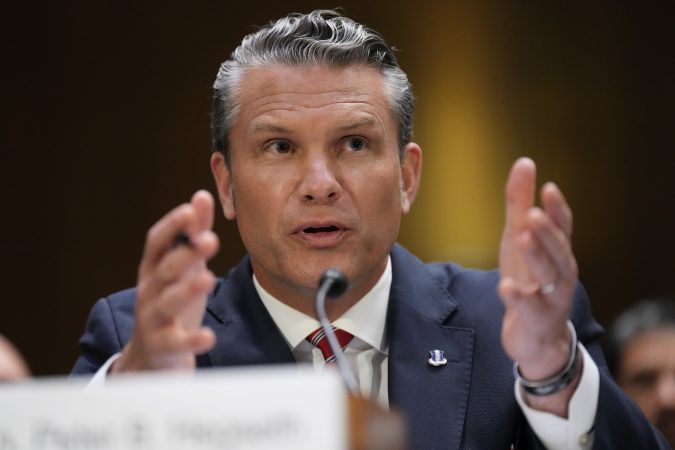
    In a late-June meeting with more than a dozen of the nation’s top defense technology firms, Defense Secretary Pete Hegseth had an urgent message: The Pentagon needed their help to rapidly replenish America’s weapons arsenal.

    Outside the room, the United States was mired in a conflict with Iran that was rapidly depleting U.S. stocks of missiles and interceptors. According to three people familiar with the meeting, some of whom spoke on the condition of anonymity to discuss sensitive information, Hegseth told executives that their companies would be critical to restocking the nation’s supplies.

    The meeting, several details of which were previously unreported, underscores a pivotal shift in the U.S. defense industry. With the Iran war consuming vast quantities of precision munitions and relying less on ground troops or drone warfare, the Pentagon is leaning on venture-backed startups to solve one of its most pressing problems: rebuilding America’s weapons stockpiles at speed.

    The meeting was filled with the Pentagon’s top brass, including Steve Feinberg, the deputy defense secretary; Emil Michael, the undersecretary of defense for research and engineering; and Michael Duffey, the Pentagon’s top acquisitions official.

    Leading defense tech firms were summoned, including AI-aircraft software company Shield AI, the autonomous weapons firm Anduril, cruise missile startup CoAspire, and low-cost munitions maker Castelion. Some details of the meeting were previously reported by Breaking Defense.

    In many ways, this is the moment Silicon Valley’s defense entrepreneurs have said they were made for — to be cheaper, quicker, and more nimble to the needs of the U.S. fighting force than legacy multibillion-dollar defense contractors.

    They represent a sharp departure from established firms, which have far more experience managing clunky government acquisition processes and billions of dollars in capital to spend producing weapons en masse and lobbying lawmakers, but can move more slowly, especially in creating new supplies featuring cutting-edge technology, including artificial intelligence.

    The urgent need for new weapons is a major test for the Trump administration, which has turbocharged its relationship with Silicon Valley and made collaboration with startups a core part of its weapons acquisition process. The conflict, according to industry experts, may reveal whether newcomers can deal with the challenging realities of providing weapons at scale, overcoming antiquated contracting processes and congressional gridlock.

    Hegseth focused on these hurdles at the gathering, asking each executive what obstacles stood in the way of producing more weapons, according to the people. Several pointed to slow Pentagon contracting processes and the difficulty startups face securing enough up-front financing to fund large production runs and expensive research and development.

    It’s unclear, however, whether the industry’s newest entrants can scale quickly enough to meet the Pentagon’s demands.

    “It’s one thing to build … it’s another thing to then mass produce,” said Jerry McGinn, the director of the Center for the Industrial Base at the Center for Strategic and International Studies. “Can they deliver?”

    Acting Pentagon press secretary Joel Valdez said in a statement to the Washington Post that the Defense Department is “transforming how the Department fights, buys, and builds” its weapons “to ensure we rapidly deliver critical technology to the warfighter at scale.” He added that the department “will harness the creativity and drive of American innovators, clear bureaucratic blockers, and put our acquisition system on a wartime footing to deliver tangible solutions to the Joint Force.”

    Anduril and Shield AI did not reply to a request for comment.

    ‘Begging to be unleashed’

    In the second Trump administration, the Pentagon has made it increasingly clear that Silicon Valley will be essential in creating cheaper, smarter, and smaller weapons to reshape how the U.S. fights war.

    The Defense Department’s top leadership has become stuffed with former Silicon Valley executives, bringing their startup ethos to the Pentagon to transform the military.

    Speaking in November at the National War College in Washington, Hegseth outlined his vision to overhaul the Pentagon’s acquisition process in partnership with U.S. industry to ensure it can operate on a wartime footing.

    “American industry and its innovative spirit are begging to be unleashed to solve our most complex and dangerous warfighting problems,” he said. “We need to get out of our own way, out of your way and enter into real partnership with you rather than overprescribe and decelerate your natural progress.”

    Approximately 10,000 new defense tech companies have entered the market since 2024, according to a July report by CSIS. Nontraditional companies outside of legacy defense contractors received more than $120 billion in contract obligations in the 2025 fiscal year.

    But one of the Pentagon’s most urgent needs is munitions. The war with Iran has sharply depleted U.S. stockpiles, with CSIS estimating Monday that inventory of Patriot interceptors has fallen from 2,200 before the war to fewer than 827, and THAAD missiles from 452 to fewer than 278.

    It could take three or more years to replenish the supply of THAAD and Patriot missile defense systems to what it was before the Iran war, according to a CSIS analysis in May, putting the U.S. at increased risk of service members dying and military assets abroad becoming damaged due to weakened defenses. Precision strike and joint air-to-surface missiles may take several months to a year to replace, according to the analysis.

    The Defense Department is aiming to fill this gap by turning to tech companies that make low-cost munitions. The Pentagon’s fiscal 2027 budget calls for nearly half of all of its munitions to be low-cost, with that share rising to 70% by fiscal 2031, CSIS analyzed.

    This mindset has filtered into current agreements. In May, the Pentagon announced several multiyear arrangements with defense tech companies, including Anduril, Castelion, CoAspire, Leidos, and Zone 5, to “aggressively expand” the U.S. military’s strike capabilities and purchase their low-cost missiles.

    The goal, according to the announcement, is to procure 10,000 low-cost cruise missiles in three years, starting in 2027. The Defense Department has also said it will issue a contract to Castelion to purchase a minimum of 500 of its low-cost hypersonic missiles — called Blackbeard — annually with a desire to buy up to 12,000 over five years if the technology receives proper testing accreditations.

    McGinn of CSIS said the demand will expose the industry to the realities of making weapons in real time. The startups have shown they can build the technology at low cost, he said, but now they have to prove their products are up to Pentagon standards, while navigating the whims of Congress, which appropriates defense spending.

    Doug Denneny, the founder and chief executive of cruise missile startup CoAspire, said startups face a challenge beyond mastering technological advancements.

    “That is the direct messaging that we receive from the Department of War,” he said, using the Trump administration’s preferred name for the Defense Department. “‘Great that you’ve got this great technology. … We get it. We believe it. You’ve demonstrated it. You’ve proven your capability. Now you have to manage your supply chain, and now you have to produce at scale. Otherwise, it’s not worth the investment.’”

    “The importance of that has been emphasized to me personally by senior leadership in the Pentagon,” he added.

    The rush to expand weapons production could also overwhelm the subcontractors that supply critical components, creating bottlenecks across the defense supply chain, Denneny said.

    Bryon Hargis, co-founder and chief executive of Castelion, said the Pentagon’s reliance on startups carries enormous pressure. His company’s Blackbeard hypersonic missile could cost about $500,000 each — far below the roughly $5 million price tag of comparable weapons v but scaling production to meet military demand remains the challenge.

    “I feel the weight of … everything that we still have yet to do and to build out,” he said, adding that making good on supply promises is “going to be just tremendous amounts of pain over the next years.”

    He noted that the partnership is “an honor, but it’s a great responsibility. Like I feel we have to deliver.”

  • The EPA halted a study on gas stoves and asthma. But even partial results were striking.

    The EPA halted a study on gas stoves and asthma. But even partial results were striking.

    Paul Moore’s house is old. It was built around 1900 as a hunting lodge near where Cleveland would develop, and his grandparents bought the home around 50 years later, converting it over the years into a three-bedroom ranch that included what Moore called an “old school” gas stove.

    When he moved into the house in 2020 with his wife and six children, Moore already had debilitating asthma. He got winded walking up hills and couldn’t play basketball with his children. He slept poorly and couldn’t hold steady employment, instead doing odd jobs like fixing neighbors’ cars and houses. He was hospitalized multiple times with severe asthma attacks and almost died from being unable to breathe.

    “My asthma was a real hindrance at the time. And I couldn’t figure out why, you know?” Moore said. “Just couldn’t pinpoint one thing or another. Was it me? Is it something going on with my body? Is it something else?”

    It turned out that researchers at Case Western Reserve University in Cleveland and a local hospital network were studying asthma sufferers like Moore. He signed up to have his gas stove swapped out for an electric one in June 2025. That research would end up providing vital evidence on gas stoves’ health impacts, amid fierce debate between fossil fuel advocates and climate change activists.

    Moore said without the study, he has no clue how long it would have taken him to save the money to change it himself. The researchers spent an average of about $10,000 per household, as many old homes needed to be completely rewired to handle the larger electrical load of an induction stove.

    What Moore didn’t know is that he would be one of the last people to get a new stove as part of that work.

    Ash Sehgal, a Case Western medical professor who led the study, had received an $18 million grant from the Environmental Protection Agency in December 2024 to replace the stoves in 1,200 homes of asthma sufferers in the Cleveland and Akron, Ohio, areas. A month before Moore’s stove was replaced, Sehgal received a letter stating that the grant had been terminated.

    It was one of thousands cut short after President Donald Trump took office and launched aggressive efforts to reduce government spending.

    But unlike many others forced to halt their research, Sehgal and his co-authors released their study anyway, publishing it in the Journal of Allergy and Clinical Immunology in Practice this month with a fraction of the intended sample size. Still, removing the gas stoves relieved the participants’ asthma so much that the results were clear even with only 85 of them, according to two scientists who reviewed the methodology but were not involved in the study.

    “What really surprised me is that the improvement in the asthma symptoms was similar to or even larger than the improvement in asthma symptoms that’s reported in clinical trials of commonly used asthma medications,” Sehgal said.

    Participants recorded far fewer asthma attacks, emergency room visits and missed days of work after the stove was removed, and levels of nitrogen dioxide in their kitchens plummeted by 70 percent.

    “They were able to see some important results, even with the grant getting canceled, even with the sample size being less than a tenth of what they’d intended,” said Julian Marshall, an environmental engineering professor at the University of Washington.

    “It’s also an actionable finding. People who have asthma would want to know, ‘What can I do about this?’” he added. “This is a major problem facing thousands and thousands of people across the U.S.”

    Sehgal said that while it can help to replace gas stoves that exacerbate symptoms, it is not a cure for asthma. Asthma sufferers still need to work with a doctor, take their medications and avoid triggers like pollen and cigarette smoke.

    Rob Jackson, an environmental scientist at Stanford University who was not involved in the research, said many studies on indoor air pollution from gas stoves rely on models to estimate the impact on people’s health, whereas this study makes real-life observations.

    “It’s important because the extent to which indoor air pollution from stoves harms people’s health is still debated in state houses, federally, in courtrooms, and so every piece of the puzzle, even if it’s only 85 individuals, strengthens that story,” he said.

    In recent years, conservatives have championed gas stoves and fought Biden-era policies that sought to reduce the use of fossil fuels driving climate change. Trump has championed fossil fuel development, seeking to boost the oil and gas industry by rolling back environmental protections and opening new areas to exploration.

    Politicizing science

    Scientists have lamented the loss of federal funding following the Trump administration’s dramatic cuts last year to grants across the government, including those awarded by the National Institutes for Health and Centers for Disease Control and Prevention.

    The EPA has terminated $28.5 billion in grants, according to Grant Witness, a tracking project, with much of that money intended to focus on helping communities respond to climate change or reduce pollution. That included funding projects that installed rooftop solar or sealed up houses against wildfire smoke, as well as scientific studies that had real-life applications, like evaluating the replacement of gas stoves.

    The agency closed the Office of Environmental Justice and External Civil Rights, which awarded Sehgal’s grant, amid its broader purge of programs related to climate change, environmental justice and diversity, equity and inclusion.

    Despite court challenges, including a district judge ruling earlier this month that the cancellations were illegal, many researchers were forced to end their studies early.

    EPA spokesperson Brigit Hirsch said in an email that the agency’s internal scientists continue to conduct vital research.

    “EPA’s core mission is protecting human health and the environment, and at the Trump EPA, gold-standard science supported by our excellent career scientists is happening like never before to ensure clean air, land, and water for all Americans,” she said.

    The cancellation of the gas stoves research grant “seems to be a political decision, not necessarily based on science-based or public health priorities,” said Darya Minovi, a public health researcher at the Union of Concerned Scientists, an advocacy group.

    The administration is looking to expand its ability to shape scientific funding, she said. The White House’s Office of Management and Budget proposed a new regulation in late May that would demand grants across the federal government align with the president’s policy priorities or face cancellation.

    While presidents often set the general direction of agencies by appointing their leadership, Minovi said this new policy would give the president more control over decisions typically made by staffers at institutions such as the NIH.

    “This is really making it government-wide policy to politicize grant-making that should not be subject to the whims of a president, but really should be decided on scientific merit,” she said.

    What was lost

    Based on the results that were published, Sehgal can estimate how much damage halting the study caused. If 1,100 more households had participated as originally planned, it would have resulted in 900 people with better-controlled asthma and 84 fewer people who would go to the emergency room or be hospitalized.

    Many of those people probably don’t even realize the connection between their asthma and their gas stove, said Angela Bland, a 38-year-old stay-at-home mom in Akron who also participated in the study. She said the impact of replacing her stove was almost immediate, and she didn’t feel her throat closing up as much while cooking.

    “It was kind of heartbreaking because I was like here’s something that can really help people and get information out there to help people, and they cut it so quick,” she said.

    Similar to Bland, Moore said he quickly felt the impact of removing his gas stove.

    “It was just like, ‘Huh, I feel a little bit better. It’s not like how it used to be.’ It was a slow realization over the first week,” he said.

    He remembers waking up to his daughter cooking, smelling the food and feeling good for once, so much so that his family noticed.

    “They felt the difference. It was a magical moment,” Moore said.

    After his health improved, Moore found a new job locating gas lines so that major construction projects don’t rupture them.

    “There’s a whole lot of people out there probably feeling just like how I felt,” he said. “A lot more people deserve to feel good when they cook or when they eat or when they are able to sit down with their families.”

  • Trump administration seeks $10 million more for Freedom 250 events

    Trump administration seeks $10 million more for Freedom 250 events

    The Trump administration is asking Congress for an additional $10 million to cover costs related to Freedom 250 events recently held on the National Mall, including a prayer event, a fair and a fireworks show.

    Sen. Jeff Merkley (D, Ore.), the top Democrat on the Senate Appropriations subcommittee that oversees funding for the Mall, said an earlier request from the administration was presented to Congress last week as part of a broader request for short-term funding across the government. That request, which asked for an unspecified amount of funding “to recoup costs associated with support of events celebrating America’s Semiquincentennial,” prompted questions about why the additional funds were needed, Merkley said.

    In a briefing with Merkley’s office, Interior Department staff said that the money was needed to cover routine National Park Service costs incurred during the Rededicate 250 prayer event, the Great American State Fair, and the July Fourth Salute to America, according to Merkley.

    Those events were organized by Freedom 250, a public-private partnership launched by the White House in December to mark the nation’s 250th anniversary. The group — which has partly supplanted a bipartisan group created by Congress a decade ago to help coordinate anniversary events – has organized initiatives and projects shaped by President Donald Trump, such as the July Fourth fireworks show that Trump pledged would be the largest in history. The Great American State Fair, a 16-day event extolled by the president, was beset by poor weather and saw periods of strikingly low attendance.

    Asked about the funding request, the Interior Department told The Washington Post on Wednesday that the extra funding was needed to help address security needs, citing recent threats against high-profile events such as the UFC event held outside the White House and the attempted shooting at the White House correspondents’ dinner.

    “Given the elevated security threats against high-profile events in Washington, D.C. …an elevated security posture was needed to ensure the safety of the public at these events. This funding would help address the expenditures associated with the elevated security posture,” the department wrote in an email.

    Merkley on Wednesday wrote to Interior Secretary Doug Burgum, asking how past funds set aside for Freedom 250 had been spent, in a letter shared with The Post. The One Big Beautiful Bill, which Republicans passed last summer without Democratic votes, set aside $150 million for the Interior Department for events and activities related to the semiquincentennial.

    Much of that funding has been redirected to Freedom 250, which has also solicited donors and received financial support from major corporations.

    “It is unacceptable to ask the American people to bail out Freedom 250,” Merkley wrote, asking for more details on why the administration was requesting the funds and how past money had been spent. “Congress already appropriated $150 million — without bipartisan input — with the administration promising that private donors would help finance the rest.”

  • Senate confirms Jay Clayton as new intelligence czar

    The Senate confirmed Jay Clayton as the director of national intelligence Tuesday, ending the tenure of Bill Pulte, a housing official and Trump loyalist, who held the role for more than a month.

    The 51-to-47 vote was more partisan than expected after Trump nominated Clayton in June. Many Democrats initially welcomed the pick and signaled they would support him.

    But their attitude changed after Clayton’s July confirmation hearing, where multiple Democrats pressed him to acknowledge that Joe Biden won the 2020 presidential election. Clayton repeatedly said that Biden had been “certified” as the victor but declined to answer the question directly.

    The question became a flash point for Democrats concerned about President Donald Trump’s use of the intelligence community to further his baseless claims that the 2020 election was rigged.

    Clayton previously served as the U.S. attorney for the Southern District of New York and chaired the Securities and Exchange Commission during the first Trump administration.

    His background has been less controversial than that of Pulte, who used his time leading the Federal Housing Finance Agency to further allegations of mortgage fraud against Trump’s perceived political enemies. But some Democrats have still argued that Clayton, like Pulte, lacks the national security experience required by law for the position.

    The director of national intelligence oversees the 18 agencies that span the U.S. intelligence community. Lawmakers established the role after the 9/11 terrorist attacks to try to prevent future lapses in intelligence sharing and interagency coordination.

    Pulte used his five weeks as acting intelligence chief to cut positions in the Office of the Director of National Intelligence, fulfilling Trump’s desire to vastly reduce its size. Since June 1, The Washington Post has reported, he has eliminated about 200 jobs within the ODNI.

    Pulte said in a posting on X on Tuesday that he had conducted “a 5th and Near Final Round of TERMINATIONS, an approximately 30% Staff Reduction from Weeks Ago.” ODNI has shrunk from around 2,000 people at the start of Trump’s second term to less than 1,300. The workforce’s precise size is classified.

    Clayton will take over an organization that has endured near nonstop upheaval in recent weeks, since the departure of former DNI Tulsi Gabbard in mid-June. Morale is low, former senior intelligence officials have said, noting they fear that ODNI’s recent politicized leadership and the firing of veteran analysts have discouraged independent analysis that clashes with White House narratives.

    Clayton’s confirmation could unlock a deal to renew Section 702 of the Foreign Intelligence Surveillance Act, a warrantless spy program that lapsed for the first time in June after Democrats protested Pulte’s temporary appointment and voted down the legislation. Civil libertarians and privacy advocates have long opposed the tool, arguing it needs firmer guardrails to protect American citizens from government surveillance.

    Lawmakers from both parties had sought to accelerate Clayton’s confirmation hearing in June to avoid having Pulte ever step into the acting director role. Trump abruptly canceled the previously scheduled session only hours before it was set to begin, instructing Clayton not to appear.

    The president instead called on the Senate to pass a voting restrictions bill and threatened to blockade future legislation without it. The Senate has not yet done so.

  • Schools are adding pepper-spraying drones to help combat active shooters

    Schools are adding pepper-spraying drones to help combat active shooters

    Schools in at least three states will be equipped with drones this year that can zoom through halls, smash windows, and pepper-spray active shooters if teachers report a threat.

    At least nine schools — three in Florida, five in Georgia, and one in Colorado — will have storage boxes that house the plastic, nonlethal aircraft made by Austin-based Mithril Defense. The drones, which can be activated by teachers, are capable of reaching a shooter within 15 seconds.

    The aircraft are designed to distract their targets by flashing strobes, blaring sirens, spraying them with pepper gel, or ramming into them at 60 mph.

    “Once I get the drones on you, you just can’t escape them,” said Bill King, a retired Navy SEAL and Mithril Defense co-founder.

    The programs continue a wave of spending on high-tech security on campuses — a multibillion dollar industry fueled by threat of school shootings. Nearly 400,000 students have experienced gun violence at school since the 1999 attack at Columbine High School in Colorado, according to a Washington Post tracker, which has recorded 435 shootings over that period.

    Deltona High School, a public school just north of Orlando, with about 1,700 students, became the first campus to install the system at the end of last school year. Two more Florida schools — Boyd H. Anderson High School near Fort Lauderdale and Godby High School in Tallahassee — were also tapped by the state to complete the $557,000 pilot spearheaded by state legislators.

    Five schools in Georgia will also test the drone systems after state legislators there approved a roughly $500,000 pilot program with Mithril Defense. The state has not finalized the schools that will participate, but Mithril said the systems will come online during the upcoming school year.

    Georgia state Rep. Matt Dubnik (R), chairperson of the House appropriations education subcommittee, said the technology could protect schools that don’t have resource officers on campus. The pilot will be tested in schools with and without the officers, he said.

    “I’m a believer in the technology,” Dubnik said, adding that hundreds of other state legislators agreed when they voted to pass the budget, which included the funding for the program.

    And in Colorado, John Adams Academy — a public charter school in Sterling Ranch for students in kindergarten through grade 12 — will self-fund a drone program for its inaugural year.

    Teachers will have an app or classroom panic buttons to summon the drones. Mithril Defense’s professional drone pilots can then fly them remotely.

    The drones have been tested in simulations but never by a shooting.

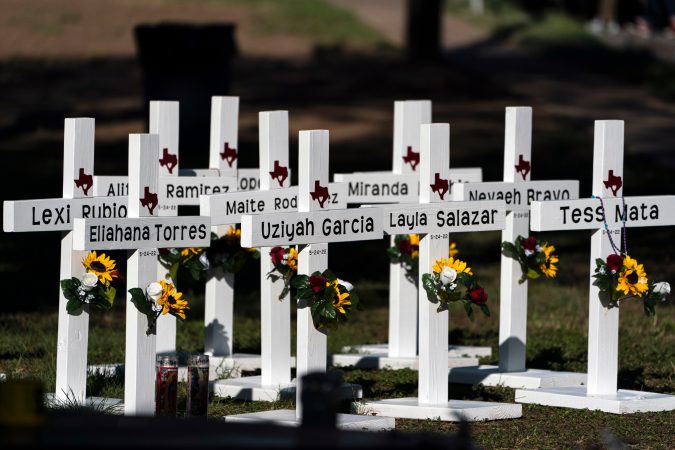
    Justin Marston, Mithril’s founder and CEO, said the massacre at an elementary school in Uvalde, Texas, where 19 students and two teachers were killed in 2022 as law enforcement waited over an hour to enter the classroom, inspired the project.

    When he learned of the Russian and Ukrainian military forces using cheap drones to attack each other, Marston said he figured a nonlethal version might have saved lives in Uvalde.

    “The first 120 seconds are incredibly critical, because that’s when most of the shooting happens,” Marston said.

    While the drones could be activated any time, they’re meant specifically for potentially lethal situations. The drones wouldn’t break up a schoolyard fight, Marston said. But if one of the students pulled a knife, they could.

    Schools across the country have embraced a range of defense technologies from artificial intelligence-powered cameras to weapons detectors amid the threat of campus shootings. But some say military-grade equipment, like Mithril’s drones, don’t belong on campuses packed with children.

    School security consultants have, for years, cast doubt on high-tech solutions to school shootings, arguing that low-tech measures, like simply locking external doors, are just as effective.

    Curtis Lavarello, who leads the School Safety Advocacy Council, a security consultancy firm, said he worried that Mithril’s drones might accidentally target a fleeing student instead of a shooter. Or that remote pilots, in a split-second decision, might mistake a law enforcement officer for a shooter, especially if teachers initiate a false alarm.

    “It’s almost like where gaming and school safety collide,” Lavarello said. “I have some really serious reservations about the deployment of drones in schools.”

    Mithril isn’t the first company to attempt to place anti-shooter drones in school. In 2022, Axon Enterprise halted development of taser-equipped drones after a mass resignation of its ethics board, which worried that the devices would stun innocent students or be abused by hackers.

    Jaclyn Corin, who survived the 2018 Marjory Stoneman Douglas High School shooting in Parkland, Florida, that killed 17, said she’d prefer to see officials prioritize policies that help prevent gun violence instead of responding to it.

    “School districts have finite budgets and limited attention,” said Corin, executive director and co-founder of March for Our Lives, a youth-led organization advocating for strict gun control. “If we spend significant resources on technologies designed to respond after shooting begins, we have to ask what we’re not investing in instead.”

    Nicole Lawrence said she found out from a local TV news story that her child’s Atlanta-area high school was solicited by Georgia to host Mithril’s drones this year. (District officials said they do not yet have specific plans for installing the devices.) Lawrence said she’s unsure whether the drones will be effective but is willing to give them a chance.

    “I’ve put $100,000 toward worse things,” Lawrence said.

    Florida plans to review the number of violent incidents at the schools and measure response times to threats. The state will also survey parents, students, and staff about whether they feel safer under the pepper-spraying, window-smashing devices.

    As the drones sat in Deltona High School this summer awaiting their first action, the state approved another $564,000 for the following school year.

  • Russia closes window for dissent as Ukraine’s attacks stir public dismay

    Russia closes window for dissent as Ukraine’s attacks stir public dismay

    The Kremlin has initiated a new crackdown on anti-war voices ahead of Russia’s parliamentary elections in September, barring candidates from running if they show any sign of opposing the bloody, expensive, and increasingly unpopular military operation in Ukraine.

    While repression of political opposition forces is nothing new in President Vladimir Putin’s Russia, the new clampdown is jarring because for a moment this spring, it seemed like a rare window had opened for dissent, as the authorities appeared to create a pressure-release valve for growing dissatisfaction over the war.

    But with the government coming under increasing pressure over Ukraine’s relentless drone strikes and the growing toll on the economy, including an acute fuel crisis, hard-liners in the Kremlin and the security services are gaining the upper hand and have pushed successfully for more repressive measures.

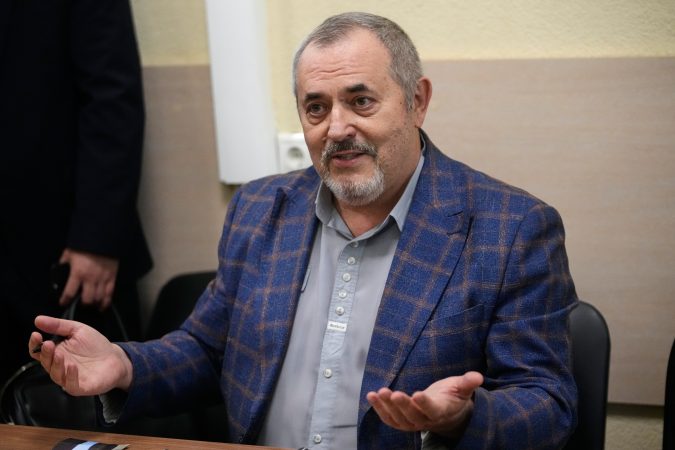
    In recent weeks, the liberal-leaning Yabloko Party, which is attempting to campaign under the slogan “For Peace and Freedom” — a pointed counter to Putin’s unyielding push for conquest — has come under increasing pressure across the country. Meanwhile, Russia’s most prominent anti-war politician, Boris Nadezhdin, who sought to run as an independent, has been barred from the campaign.

    Authorities in St. Petersburg last week refused to register Yabloko for the local parliamentary elections, and more than a dozen of its candidates have been barred from federal and regional elections over accusations they displayed alleged “extremist symbols” such as posting photos online of the late opposition leader Alexei Navalny.

    The Russian authorities “are not going to give any platform to people with anti-war views in the election,” said Andrei Kolesnikov, an independent political analyst in Moscow. “There is now not one noticeable voice against the war.”

    Recent challenges to Yabloko’s registration in several regions over claims of incorrect paperwork could lead to Yabloko being barred overall from the federal election, analysts say — a move that could strengthen United Russia, the ruling party that controls the parliament and has long backed Putin.

    Kremlin spokesman Dmitry Peskov denied the government was targeting anti-war voices, and said individuals were being punished for “violations of the law.”

    “Those who break the law are under pressure and those who don’t break it freely speak their opinion,” Peskov told The Washington Post. “I wouldn’t even call Yabloko a party. It’s no more than a cell,” he added.

    In spring, however, the atmosphere seemed very different. A video posted by social media influencer Viktoriya Bonya lambasting the government’s botched handling of internet restrictions and other problems went viral, forcing the Kremlin to respond.

    A former Kremlin lawyer, Ilya Remeslo, openly branded Putin a war criminal and a thief — but after a brief incarceration in a psychiatric hospital was somehow released and allowed to continue his tirade. More recently in June, German Gref, the head of Russia’s biggest state bank, broke ranks by publicly saying everyone wanted the war to end as soon as possible.

    Remeslo, whose open stance against the war had been seen as representing a divide in the upper reaches of the Kremlin, has since been quietly arrested, accused of spreading allegedly false information about the Russian military — a charge that carries a prison sentence of up to 10 years. He is now being held in a Moscow psychiatric facility, the Serbsky Institute, notorious for its incarceration of political prisoners, according to Remeslo’s lawyer, Sergei Badamshin.

    Forces in the Kremlin decided to put an end to the public dissent, Nadezhdin, the independent anti-war candidate, told The Post in an interview after he was briefly detained and fined for displaying alleged “extremist symbols” — for sharing a link to a video containing an image of Navalny, who died in prison in 2024.

    On July 10, the Justice Ministry declared Nadezhdin a foreign agent, a move that barred him from public office, and he was prohibited from leaving the country.

    “People trust Putin and United Russia less and less because the war has come to them,” Nadezhdin said. “Every day, warehouses and oil bases are exploding. People are dying. And in this situation they are trying to get rid of the most visible political actors like me and Yabloko, who speak against the war and for peace and freedom.”

    Nadezhdin, who won popularity on an anti-war platform in the 2024 presidential elections until the authorities refused to register him as a candidate, said he was now withdrawing completely from opposition politics because it had become impossible.

    In the weeks since public dissatisfaction spilled into the open, Putin’s popularity ratings continued to fall.

    On July 17, a state pollster, the Public Opinion Foundation, recorded the biggest one-week drop in Putin’s approval rating since Russia’s full-scale invasion began in February 2022, a decline of five percentage points to 66%.

    Putin’s falling ratings have been exacerbated by Ukraine’s campaign of long-range drone strikes on Russian oil facilities that have caused widespread fuel shortages and price hikes across the country and potentially pose a threat to this year’s harvest. His declining popularity has raised the stakes in the parliamentary elections, analysts and opposition politicians said.

    “More and more people don’t understand if the authorities at least have a plan about how to exit the situation with the war, and whether all these sacrifices and losses being wrought on Russian society and the economy are justified,” said Tatiana Stanovaya, a senior fellow at the Carnegie Russia Eurasia Center.

    “2026 is a turning point,” she added. “In the first four years of the war people lived in the understanding that the authorities know what they’re doing. Now they don’t know what to expect from tomorrow and there is the feeling that the situation is getting out of control while the authorities don’t have a plan.”

    “Everyone is living from day to day,” Stanovaya said, “while Putin seems far removed from reality.”

    The Kremlin can remove perceived opposition voices at will, and is widely expected to retain a tight grip on the election.

    Still, the gloomy backdrop appears to have forced the Kremlin to reassess what would constitute a win, especially amid persistent public anxiety that the government is planning a new military conscription effort after the election.

    Officials now forecast United Russia could win with 45% of the vote, Russian independent news outlet Meduza reported, down from a previous official prediction of 55%.

    In the Kremlin, officials are still divided over how to handle the increasingly thorny situation, according to Nadezhdin and Mikhail Khodorkovsky, a former Russian oil tycoon who is now a leading opposition figure living in exile in London.

    The recent arrest of Remeslo is a sign that Russia’s Federal Security Service is strengthening its hand against more progressive forces in the Kremlin who had supported figures like Remeslo, Khodorkovsky said.

    “In Putin’s circle a discussion is going on about what to do,” Nadezhdin said. “The [security services] are just trying to repress everyone … And the other part of the administration is trying to somehow work … and get some kind of acceptable result at the election. But it is becoming more and more difficult.”

    In recent weeks, at least 14 members of Yabloko have been barred from running over accusations that they displayed alleged “extremist symbols,” and the party’s registration is being challenged in several regions over claims of incorrect paperwork. The Federal Election Commission has yet to register Yabloko’s list of candidates.

    In addition, at least four members of the Communist Party have been barred from running over charges they posted “extremist symbols.”

    With little sign of renewed peace negotiations, some Russian officials appear to hope that the political situation in Kyiv will deteriorate first, Khodorkovsky said.

    Ukrainian President Volodymyr Zelensky last week ordered a far-reaching government shake-up, including the dismissal of the defense minister, the prime minister and the commander in chief of the armed forces.

    “They are counting on political destabilization in Kyiv,” Khodorkovsky said of hawks in the Kremlin.

    As Russia ramps up ballistic missile strikes on Ukrainian infrastructure in response to Ukraine’s drone campaign, the impact on Ukraine is becoming ever more worrying, one senior Ukrainian official said, speaking on the condition of anonymity to discuss sensitive matters.

    “Of course the Russians suffer a lot,” this official said. “But we suffer the same and on an even bigger scale and what will happen in the winter, no one can say.”

  • Lawmakers seek ban on using campaign funds to fight sexual harassment claims

    Lawmakers seek ban on using campaign funds to fight sexual harassment claims

    Federal politicians would be barred from using campaign contributions to fight or settle sexual misconduct allegations under a bill announced Tuesday by two House members from opposite sides of the political spectrum.

    The proposal, from Reps. Ro Khanna (D-California) and Anna Paulina Luna (R-Florida), aims to further shape the debate over how Congress should move forward from a spate of sexual misconduct scandals this spring, which prompted the creation of a bipartisan working group to revise the policies protecting Capitol Hill staffers. Both Khanna and Luna have been active on the issue.

    Khanna said politicians would behave better if they had to rely on their own financial resources when they get into trouble rather than being able to dip into campaign accounts or legal-defense funds.

    “That creates this culture of impunity where people think they’re untouchable,” Khanna said in an interview.

    “There’s such a power asymmetry,” he said, because of “the extraordinary legal advantage that elected officials have.”

    The progressive Khanna came into national prominence last fall as he helped force the release of federal investigative files related to financier and sex offender Jeffrey Epstein, over the objections of President Donald Trump.

    Khanna is collaborating on the bill with the conservative Luna, one of several Republican women lawmakers who have begun demanding more consequences for alleged sexual misconduct by their colleagues. She led the charge in April against Sen. Ruben Gallego (D-Arizona), filing a complaint with the Senate that was dismissed last month with no findings that he violated federal law or broke Senate rules.

    The bill would prohibit elected officials and candidates for federal office from using campaign donations or a legal-defense fund to cover legal fees related to claims of sexual assault, sexual abuse or sexual harassment. If they are not held liable, they could be reimbursed for expenses.

    Luna said the proposed change is overdue and would serve as a “massive deterrent” amid a culture of sexual misconduct on Capitol Hill that has gotten out of hand.

    “It is not what the Founding Fathers intended for members of Congress,” she said. “It’s a perversion of the system.”

    The proposal would also make campaign contributions off-limits for paying settlements or court-ordered judgments for sexual misconduct claims, as well as for private investigators and other research into the accusers.

    Khanna said that politicians would still be able to tap into their savings to defend themselves like most other Americans but that they should not be allowed to fundraise for what frequently amounts to public relations activities more than actual legal work.

    “In most of the cases, they’re being used to smear survivors,” he said.

    The bill emerged from conversations with activists supporting women who have come forward in recent months with accusations of sexual misconduct by politicians, including former congressman Eric Swalwell (D-California).

    In April, the San Francisco Chronicle spoke to a former Swalwell staffer who said he sexually assaulted her. CNN reported more allegations of inappropriate behavior, and a second woman accused Swalwell of raping her. He has categorically denied the allegations of sexual misconduct, calling them a political hit job, though he acknowledged some “mistakes in judgment.”

    Swalwell dropped out of the race for California governor and then resigned from office within days. But he has since spent $50,000 from an old congressional campaign account, as well as hundreds of thousands from contributions to his gubernatorial bid, on prominent defense attorney Sara Azari. Her firm hired a private investigator to look into the allegations, according to NOTUS.

    “Many of those women were forced back into hiding, and this ordeal is still not over for them,” said Cheyenne Hunt, an influencer who worked with some of the accusers and subsequently launched the advocacy group Reckoning Action.

    That’s retaliation, Hunt said, and a “bad-faith use” of campaign funds.

    “No donor gives to a campaign thinking, ‘Yes, I want my money to go toward harassing a survivor,’” she said. “This truly feels like such a no-brainer.”

    Despite bipartisan support for the bill, its prospects are uncertain. Congress has struggled to pass major legislative priorities this year, and only two months of floor time remain for the rest of the session.

    Other ideas for improving how Capitol Hill handles sexual misconduct complaints are also circulating. A group that says it represents more than 1,500 congressional staffers released a letter this month calling to expand legal representation for employees, make independent investigations easier to trigger, and provide more time to file workplace claims.

    With the blessing of congressional leadership, the Republican and Democratic women’s caucuses united in the spring to develop recommendations for making Congress a safer work environment. Their proposed solutions are forthcoming.

    House Speaker Mike Johnson (R-Louisiana) recently said he would support banning lawmakers from having sexual relationships with any congressional staffers, not just their own subordinates.

  • Asylum seekers could be sent directly to deportation under new federal rule

    Asylum seekers could be sent directly to deportation under new federal rule

    The Trump administration launched a plan Tuesday to channel hundreds of thousands of asylum seekers directly into deportation proceedings, a change that some attorneys said could lead to people being removed from the United States without a hearing.

    Trump officials introduced a rule designed to reduce the 1.4 million asylum cases pending in U.S. Citizenship and Immigration Services, the Department of Homeland Security agency that processes immigration applications, by nearly a third. The rule took effect immediately, before the public could weigh in.

    In the past, asylum seekers who entered the U.S. legally or were never charged with an immigration violation had the opportunity to apply for refuge in an office before a trained asylum officer. The officer could refer them to immigration court for removal proceedings if they were rejected, or allow them to continue proceedings and potentially get on a path to obtaining U.S. citizenship.

    Under the new rule, officials say as many as 444,724 cases could be transferred directly to one of the Justice Department’s immigration judges. Trump officials have empowered judges to dismiss certain cases without a hearing, so attorneys say it is possible that many asylum seekers will be deported without a chance to be heard.

    Trump officials said in a statement that the rule is necessary because the asylum system is facing a “crisis.”

    “For far too long the asylum system has been exploited for purposes of delay and work authorization, not legitimate claims of protection,” USCIS Director Joseph B. Edlow said in a statement. “America’s asylum system exists to protect individuals who genuinely fear persecution and this rule will help ensure that resources are directed to the timely adjudication of those claims instead of to those seeking to use the system as a loophole.”

    The measure is the latest means through which the Trump administration has sought to transform the asylum system. President Donald Trump, in one of his first acts in office, barred asylum seekers’ entry into the United States by declaring an “invasion” at the U.S.-Mexico border.

    He has also targeted those who are already living inside the U.S., including hundreds of thousands of people who probably arrived legally and followed the rules to apply for asylum.

    Trump officials are preparing to terminate work permits for Haitians and Syrians in the coming days after the Supreme Court enabled officials to allow their temporary protected status to expire. If those immigrants also applied for asylum and their cases are referred to the courts, lawyers say, the threat of deportation could be imminent.

    “It’s all part of a plan to take legal people and make them illegal,” said Ira Kurzban, one of the attorneys who represented Haitians in the case that went to the Supreme Court. “That’s what they’ve essentially done.”

    The United States is a signatory to the 1967 United Nations protocol on refugees, which prohibits member countries from expelling immigrants to nations where they face serious threats to their lives.

    Trump officials, Kurzban said, are betraying that principle and turning the asylum system into “a joke.”

    “At a 30,000-foot level it sure looks like a deportation machine,” he said.

    Trump officials argue that smugglers have exploited the U.S. asylum system, flooding it with weak applications so that immigrants may live and work legally in the United States as their cases drag through the system.

    Asylum creates a path to U.S. permanent residency and, eventually, citizenship. To be eligible, applicants must show that they face persecution in their homeland based on their race, religion, nationality, political opinion, or another trait that makes them a specific target. They also must pass background checks and apply within one year of arrival.

    The more than 400,000 pending asylum cases before USCIS that could be sent to deportation proceedings largely involve individuals who filed for refuge after being in the United States for more than a year, officials said in announcing the rule.

    Federal law says asylum seekers must apply within a year of arriving, and officials contend that most late applicants referred to immigration judges in the past few years have been ineligible for an exception to that requirement.

    Advocates for immigrants have long argued that people fleeing for their lives are not well versed in the intricacies and deadlines of U.S. immigration laws, and note that the immigration courts do not assign them public defenders. Sometimes bona fide applications are filed late, they say, and federal law allows judges to overlook that in extraordinary cases.

    Though the new rule took effect immediately Tuesday, USCIS said it will accept public comments and later issue a final rule with its responses.