Category: Washington Post

  • Here’s what happens to your brain when you stop drinking alcohol

    Here’s what happens to your brain when you stop drinking alcohol

    Alcohol is one of the most popular drugs in the world, with millions enjoying the buzz produced by a cocktail of pharmacology and social ingredients.

    The 2024 National Survey on Drug Use and Health found that almost 80% of Americans older than 12 years of age reported that they had had at least some alcohol at some point in their lives.

    But there is “no free ride in the brain,” said George Koob, the director of the National Institute on Alcohol Abuse and Alcoholism at the National Institutes of Health.

    Research shows that over time, alcohol can change the brain, leading to decreases in gray matter volume. And even relatively low levels of alcohol may worsen feelings of anxiety and depression, disrupt sleep, and, over time, increase dementia risk, in addition to upping other health problems, such as breast and colorectal cancer risk.

    But there is now increasing evidence that the brain can recover to an extent when drinking is reduced or stopped.

    “The remarkable thing about the brain is that it is an incredibly plastic organ, and that we see neuroplasticity in the development of addiction and neuroplasticity in the ability to achieve recovery,” said James MacKillop, a clinical psychologist and the Peter Boris chair in addiction research at McMaster University. “And that’s a really important and powerful story that I think isn’t always communicated as widely as it should be.”

    Here’s what alcohol does to the brain, its health effects, and what happens when we reduce and abstain.

    What alcohol does to the brain

    Alcohol causes a “stew of pharmacological effects” that can be first stimulating and then sedating, MacKillop said.

    With the first drinks, alcohol can produce “a euphoric intoxication,” Koob said. Alcohol causes the release of endorphins, which are our brain’s natural opioid molecules, which in turn activate the dopamine neurons in our reward circuitry.

    At the same time, alcohol cranks up neurons that inhibit activity while dampening neurons that activate — which, in the short term, reduces stress and anxiety. But “when the alcohol wears off, those stress systems come back with a vengeance,” Koob said.

    The “brain adapts to the persistent presence of alcohol,” leading to changes in brain chemistry and structure, said MacKillop, who wrote a 2022 review on hazardous drinking and alcohol use disorders.

    As people consume more alcohol over time, they need more of it to get the same level of pleasure as the reward systems become less sensitive to the alcohol. And worse, the stress systems in our brain, including the amygdala, get recruited and become persistently activated, and people experience a chronic negative emotional state, MacKillop said.

    As a result, “people stop drinking as much to feel good and start drinking more to feel less bad,” he said.

    With repeated consumption, temporary changes go from being short-term to long-term to potentially permanent.

    Studies show that people with alcohol use disorder, the preferred clinical term for alcoholism, have reduced gray matter volume in frontal cortical regions important for perception, emotion, and executive functioning. The most severe cases of the disorder, with years or decades of heavy drinking, can cause alcohol-related dementia and an inability to form new memories.

    With prolonged excessive drinking, “you can actually destroy neurons in the frontal cortex,” which is important for higher-order executive functioning, including inhibiting cravings for alcohol, said Koob, who wrote a 2024 review about treatments for alcohol use disorder.

    Even relatively low levels of alcohol consumption had an effect on the brain. One 2022 study of over 25,000 participants found smaller total gray matter volumes for people who had seven or more drinks a week compared with those who consumed fewer drinks. A 2024 systematic review of 27 neuroimaging studies found that low-to-moderate drinking was linked to smaller brain volume and cortical thickness, though to a lesser extent compared with heavy drinking.

    “A fair rule of thumb is that there’s a dose-dependent relationship between the amount of drinking and the amount of brain change,” MacKillop said.

    How reducing alcohol changes the brain

    The good news is “there is increasing evidence that there is restoration of brain function and improvements in each of these domains too,” said MacKillop, whose lab is researching the neuroscience of recovery, a relatively new area of the field.

    Just as alcohol can change the brain, reducing or abstaining from it can as well.

    A 2024 systematic review of 16 studies found that people with alcohol use disorder who abstained from alcohol experienced a recovery in many of their cognitive functions, including attention, memory, and executive function, generally after 6 to 12 months.

    In people with alcohol use disorder who stopped drinking, there was a general recovery in frontal brain regions with increases in gray matter, according to a 2022 review of neuroimaging studies. Greater changes occurred relatively early in abstinence, within the first month.

    Even reducing alcohol consumption to low levels without full abstinence increased cortical brain volume, research shows.

    Whether there can be full recovery from alcohol use disorder is not clear, but there is also evidence that the brain may “develop compensatory strategies and functioning,” MacKillop said. The same brain areas that become dysregulated or dysfunctional because of alcohol appear to be where there is recovery.

    “That’s the good news: The brain is changed by alcohol, but it also can recover,” MacKillop said.

    There is less research on how the brain recovers from light drinking since the harms are not as great, if drinking is done responsibly.

    But people who participate in alcohol abstinence or reduction challenges, such as Dry January or Sober October, report that they feel better after reducing their alcohol consumption. Researchers found that participants reported increases in their overall well-being, including losing weight, sleeping better, saving money, and having heightened energy and concentration.

    How to self-assess and manage alcohol consumption

    Understanding the brain and health consequences of drinking alcohol doesn’t necessarily mean cutting it out completely — both Koob and MacKillop still enjoy a drink on occasion.

    “There are lots of reasons to enjoy the pleasure from drinking alcohol,” including as a social lubricant or a complement to a meal, MacKillop said. “It’s not a vitamin, but that doesn’t mean that people are crazy for drinking.”

    But experts say to check in with yourself on how alcohol is affecting your life — is it getting in the way of school, work, relationships, or your health?

    It can also be valuable to step further back and think about your values and how your drinking relates to them, MacKillop said. “Is it highly compatible with your highest-held values, or is drinking getting in the way of realizing the person that you want to be?”

    If you are wondering about your drinking, “that’s actually a sign that it may be that you’re drinking at a problematic level,” and you should speak with a healthcare provider, MacKillop said.

    The good news is that there are many evidence-based strategies for managing alcohol use across the spectrum of use, including psychological therapies and medications.

    Signing up for Dry January or Sober October, or other manifestations of the “sober curious” movement, can be a way to reduce alcohol consumption and reap health benefits even beyond the challenge month, studies show.

    Alcohol reduction apps like Sunnyside or Reframe can help send daily reminders and connect you with a larger community of people trying to cut back on drinking.

    The National Institute on Alcohol Abuse and Alcoholism has additional resources on its Rethinking Drinking website, and its Alcohol Treatment Navigator can help people find treatment facilities near them.

    “If you stop drinking and you feel better, what I always say is listen to your body, because it’s trying to tell you something,” Koob said.
  • Trump keeps making threats. Washington and the world have stopped flinching.

    Trump keeps making threats. Washington and the world have stopped flinching.

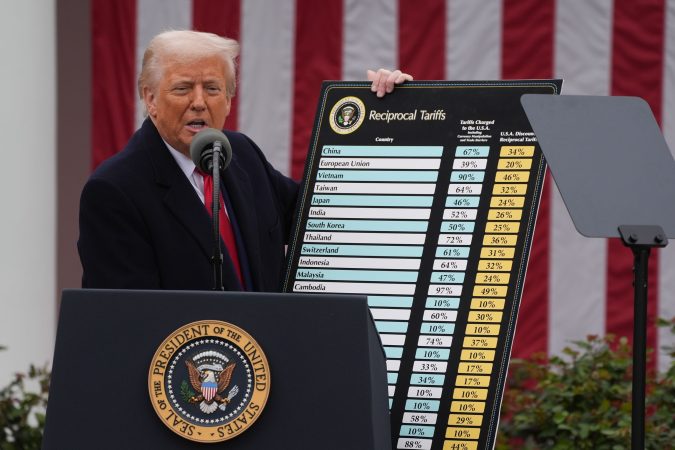
    LONDON — When President Donald Trump strode into the Rose Garden in April 2025 brandishing a poster board of tariff hikes, the world leaped as if a fire alarm had gone off. Markets shed trillions of dollars, envoys rushed to Washington, and more than 75 governments scrambled to negotiate, some scrapping carefully prepped countermeasures in a rush to cut deals.

    Sixteen months later, the flabbergasting threats keep piling up — to weaponize trade, annex Canada, seize Greenland, abandon NATO, annihilate Iran — but the alarm bells have gone quiet. World leaders are slower to rattle as they’ve seen the president increasingly fenced in by courts, rebuffed by Congress, and strung along by Tehran — his ultimatums evaporating and poll numbers sinking.

    When Trump announced a fresh barrage of tariffs last month, this time based on accusations of child labor violations to skirt limits imposed by the Supreme Court, the world didn’t shriek — it shrugged. France’s central bank governor predicted little impact. Britain proclaimed its exporters largely unaffected. Mexico’s economy minister waved it off as one tariff simply replacing another.

    The financial markets, inured to the bluster, hardly moved.

    As Trump nears the midpoint of his second term, officials and analysts say, one of his signature powers — to bluster on social media, shock, spark panic, and convert that panic (“thank you for your attention to this matter”) into the outcomes that he wants, has begun to fade. The bully pulpit of the presidency remains, but the audience is no longer quaking in the pews.

    “We are getting used to these daily announcements,” said Brando Benifei, an Italian member of the European Parliament who chairs its delegation for relations with the United States. “We don’t take them so seriously anymore.”

    At home, Trump continues to dominate the national conversation and drive the policy agenda. Still, the president was unable to muscle the Republican-controlled Senate into leaving the Epstein files under seal or passing his signature Save America Act. This week, he had to make concessions to get his nomination of Todd Blanche as attorney general back on track.

    Abroad, most consequently, Iran refuses to bend under American bombs and reopen the Strait of Hormuz, and Russian President Vladimir Putin persists in his war in Ukraine. Europe met Trump’s recently renewed demands for Greenland with a collective sigh, and trading partners have shrugged off the latest tariffs.

    For a world weary of the United States’ capacity to disrupt, the bombast is baked in, the threats are frequently bluffs, and the president who relishes shock and awe, in the end, often backs down.

    The stock trader’s refrain of “TACO” — Trump Always Chickens Out — has begun to take hold in more world capitals, said Jeremy Shapiro, director of the U.S. program at the European Council on Foreign Relations think tank.

    “I’ve been a little surprised at how much his bluster has worked until now,” Shapiro said of the bravado that rattled the world at the start of Trump’s second term. It was effective, he said, because it drew on the “awesome power and deep, long-stored-up diplomatic capital of the United States” — reserves, he said, that Trump has “finally started to blow through.”

    Officials “are starting to notice that he’s kind of a bully, and is quite easy to scare,” Shapiro said.

    Last year’s “Liberation Day” tariffs were hollowed out within days by carve-outs and delays. The steep levies he threatened against European allies over Greenland were withdrawn in Davos, Switzerland, in January for a vague “framework” that Denmark never accepted and has yielded no major change.

    China met his threat of 100% tariffs by refusing to blink, then used its chokehold on rare-earth minerals and a halt on U.S. soybean purchases to force Washington into a climbdown — a lesson in how standing tough often causes Trump to bend that other governments have also learned.

    Brazil’s president, Luiz Inácio Lula da Silva, ignored a 50% tariff designed to derail the prosecution of former president Jair Bolsonaro, who was convicted of charges related to fomenting an armed coup and sentenced to 27 years anyway.

    Nowhere is the erosion of Trump’s bluster-power starker than in Iran, where the United States and Israeli initiated a bombing campaign that killed the country’s supreme leader and other top officials but left the Islamic regime intact and with a stranglehold on the Strait of Hormuz, a vital conduit for global energy supplies and other cargo.

    Trump issued a cascade of ultimatums demanding that Tehran reopen the strait, notably threatening to annihilate Iranian “civilization” if it refused. The strait stayed shut. Iran did not fold, even under existential threat, and Trump quietly shifted his stated goals on regime change and on Iran’s stockpile of enriched uranium.

    “Between threats, then bombing, then backing off, what he’s radiating to the Iranians is that he’s desperate,” said Ronald E. Neumann, a career Foreign Service officer and U.S. ambassador to Afghanistan, Bahrain, and Algeria under Presidents Bill Clinton and George W. Bush. “As experienced bargainers, that means you don’t have to lower the price.” Neumann also put it less diplomatically: “The way Trump bargains,” he said, “I wouldn’t give him money to go to the carpet bazaar.”

    Trump’s browbeating also failed to pull European countries into his Iran campaign. He threatened Spain with a total trade embargo after it refused assistance, leaned on Britain, France, and Germany to reimpose U.N. sanctions, and hinted he might not honor America’s NATO obligations. But those allies refused to get more deeply involved the war — and some countries, namely Spain and Italy, have closed their bases or airspace to it.

    When Trump threatened to cut off trade with Spain, said one EU diplomat, officials seemed more inclined to dismiss the comments as rhetorical bluster, with many having learned from experience that his outburst would fizzle if ignored. But this diplomat, who spoke on the condition of anonymity to discuss delicate relations, conceded that Trump’s unpredictability made such calculations difficult.

    “It can be tricky,” the diplomat said, citing Trump’s military operations against Iran. “He doesn’t always chicken out.”

    To be sure, Trump has shown he is willing pull the trigger.

    To the surprise of his America First base that expected retrenchment, not adventurism, he has deployed the U.S. military more aggressively abroad than any recent president — seizing Venezuela’s Nicolás Maduro in a January raid by Special Operations forces, bombing Tehran a month later, and ordering dozens of lethal strikes on alleged drug boats across the Caribbean and Pacific.

    At home, he sent National Guard troops on patrol in Washington, D.C., and his immigration crackdown has thrown American cities into turmoil, with masked federal agents sweeping workplaces and courthouses — raids that sometimes turned deadly and ignited protests.

    But even the willingness to use force has not bought the deference it once did. Increasingly, officials and politicians at home and abroad are willing to challenge Trump’s threats — or ignore them.

    “Europe is noticeably less prone to panic,” said Mujtaba Rahman, managing director for Europe at the Eurasia Group consultancy. “European governments are increasingly distinguishing between Trump’s rhetoric … and the policies that ultimately emerge.”

    The pattern reaches into the Gulf, where officials have grown inured to Trump’s style of deal making, analysts said.

    Last month, Washington and Riyadh announced an agreement on Saudi Arabia’s civilian nuclear program only for Trump to post later on Truth Social that the deal was contingent on Saudi Arabia joining the Abraham Accords.

    Saudi officials found the claim surprising and annoying given that they had already trumpeted the agreement across their own channels, said Andrew Leber, a Middle East scholar at the Carnegie Endowment for International Peace, the Washington-based policy institute.

    “At this point, they have dealt enough with Trump deals to know that such exasperating and inconsistent moves have become the norm,” Leber said.

    For much of Trump’s first year back, European capitals ran the same strategy of flattery and appeasement they believed had contained him before. European Commission President Ursula von der Leyen flew to Trump’s Scottish golf resort to settle a trade fight on his terms. Britain invited him for an unprecedented second state visit.

    Leaders now are still willing to flatter Trump, especially in private, but they are less willing to offer the concessions he wants, according to a European diplomat who has been involved directly in talks with the administration.

    “Behind closed doors they are still putting it on thick because they know it works,” said the diplomat, who spoke on the condition of anonymity to discuss sensitive interactions. “This is a president who can significantly soften his position in the course of a single meeting. But that doesn’t mean you give in. That is true more than ever.”

    Greenland was a turning point, the diplomat said, because Trump’s threats evaporated against united European opposition. China, too, showed that pushing back could bend the president, as did Brazil, whereas Europe’s surrender to Trump’s initial trade barrage merely led to further demands from him.

    “I think people are saying, well, we don’t want to provoke him unnecessarily, but we can’t really make him happy,” said Neumann, the former ambassador.

    Learning to mute Trump’s threats won’t necessarily make the rest of his term easier to navigate, analysts said. Doing so could even make things less predictable if Republicans lose one or both of their majorities in Congress in the midterm elections and Trump turns to more unilateral executive actions.

    “It could be super dangerous,” Shapiro said. “Trump is not somebody who will go quietly into the night. He will rage about his loss of capacity and he will look for other ways to take risks with American power.”

  • Two cyclospora-related deaths reported in Michigan

    Two cyclospora-related deaths reported in Michigan

    Two people have died in connection with the cyclospora outbreak in Michigan, state health authorities announced Monday, the first deaths reported in the multistate outbreak.

    The people who died had “significant underlying health conditions” that may have been affected by the intestinal illness and dehydration, the state health department said, adding that no more information would be provided on the cases.

    Deaths from the illness caused by the microscopic parasite are uncommon in the United States, and it is generally not life-threatening, according to Michigan’s health department. The state has reported more than 11,200 cases and nearly 200 hospitalizations.

    Public health officials are investigating an outbreak of cyclospora infections linked to iceberg lettuce in nine states, and Taylor Farms has recalled iceberg lettuce sourced from central Mexico. Federal officials are also investigating outbreaks and illness in 36 other states that are not related to this specific outbreak.

    The shredded iceberg lettuce was served at Taco Bell restaurants in nine states and was sourced to a single supplier in Mexico, Taylor Farms de Mexico. The fast-food chain has said that as of July 17, it completed removing all of the affected lettuce from restaurants and its supply chain. At least 1,947 cases and 98 hospitalizations have been linked to this specific outbreak.

    At least 6,707 people have been infected with the parasite in outbreaks across the country, according to the Centers for Disease Control and Prevention.

    Taylor Farms has said it has voluntarily recalled all iceberg lettuce grown in central Mexico that was identified as the potential source of one of the recent cyclospora outbreaks. Anything currently on shelves is not the affected product, the company said in a July 17 notice.

    The company also has said it has commissioned independent experts to conduct a top-to-bottom review of food safety processes and protocols in its central-Mexico facility, where as of July 18 the company said it has temporarily suspended production of all products.

    Cyclospora is generally transmitted when infected feces contaminate food or water, and it’s unlikely to be transmitted person-to-person. It usually takes roughly a week before a person gets sick after they are infected, though this period can range from two days to two weeks or more. The parasite typically causes watery diarrhea with frequent bowel movements. The illness is treatable, and doctors can prescribe antibiotics to help.

    It’s difficult to trace the source of the parasite because of the lag before symptoms appear. The CDC is aware of more than 11,500 additional cases that haven’t been confirmed by a lab and need more investigation, such as ruling out international travel.

  • Senate Republicans join in rebuking White House over science funding

    Senate Republicans join in rebuking White House over science funding

    Senate Republican leaders unveiled a spending bill Sunday that would temporarily block President Donald Trump from implementing a rule change that would give political appointees sweeping power over hundreds of billions of dollars in federal grants.

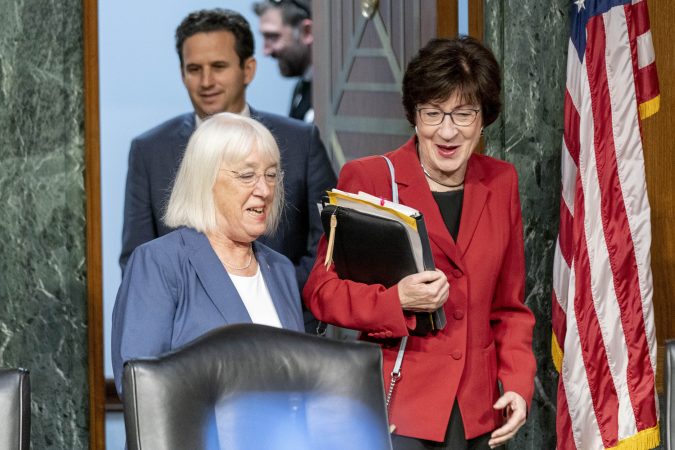
    The provision was tucked into a bipartisan measure to fund the government through Dec. 11 that was negotiated by Senate Appropriations Committee Chair Susan Collins (R., Maine) and Vice Chair Patty Murray (D., Wash.) and reviewed by Senate GOP leaders. It marks another notable rebuke of the president by senators from his own party.

    In a statement, Collins said she is “pleased” the provision was included in the spending agreement. She also said the White House rule change has the “potential to politicize grants and harm small, rural communities, families, and biomedical research.”

    The rule change, released in May by the White House Office of Management and Budget, would give political appointees more power over discretionary grant funding, diminishing a system created after World War II that calls on independent peer reviewers — experts in the field — to determine whether scientific proposals are worthy of federal funding.

    It would require political appointees to review grants before they’re awarded to ensure they advance the president’s priorities and do not support projects the administration opposes, including those that “fund, promote, encourage, subsidize, or facilitate” diversity, equity, and inclusion principles or “deny the biological reality of … the sex binary.”

    It also would give agencies the power to end grants at any time, to further restrict collaboration with researchers in China, Russia and certain other foreign countries, and to add new requirements for foreign researchers working in the United States. The rule would not apply to disaster recovery grants or some grants awarded by Congress through law, including block grants.

    Trump administration officials say the rule would add needed oversight to federal grant-making, ensuring federal funds aren’t wasted or misused. OMB officials did not immediately respond to a request for comment late Sunday, but have said that the Biden administration used federal grants to promote a “far-left” agenda.

    OMB said it planned to finalize the rule by Oct. 1. If the Senate’s funding extension were approved by both chambers, it would block OMB from implementing the rule, at least until the measure expires on Dec. 11.

    Collins urged OMB to withdraw portions of the rule in early July. Dozens of Democratic lawmakers — along with GOP Sen. Lisa Murkowski (Alaska) — have raised similar concerns. Murray and Rep. Rosa DeLauro (D., Conn.), the top Democrats on the Senate and House Appropriations Committees respectively, celebrated the provision in statements Sunday.

    The new OMB rule would “only give Trump the greenlight to take even more federal funding hostage,” said Murray, who worked with Collins to craft the Senate spending measure. Murray said she pushed for a provision that would have permanently killed the OMB rule but was rebuffed by her Republican colleagues.

    When OMB announced it this spring, the proposed rule change drew widespread outrage from scientific researchers, who say it could end U.S. scientific dominance by subjecting research institutions to political meddling, introducing new instability to federal funding, limiting foreign collaboration, and pushing away talented researchers.

    Trump administration officials have said they wouldn’t use the rule to blindly slash scientific funding. OMB Director Russell Vought said during a congressional hearing last month that the administration doesn’t intend to cancel grants “in a heartbeat.”

    But “when we find something that’s problematic that our policy officials would not have caught, we need to be able to turn it off,” Vought added, citing as an example an NIH subgrant given from a U.S.-based nonprofit to the Wuhan Institute of Virology, the Chinese laboratory at the center of suspicions about the origins of COVID-19.

    Last year, the Trump administration canceled hundreds and froze thousands of federal grants to projects they argued did not align with administration priorities. It unleashed chaos within research institutions, scientists said, prompting layoffs and upending projects.

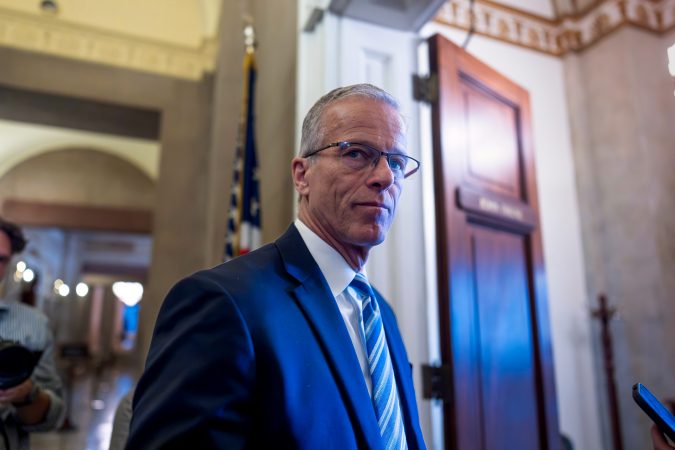
    Senate Majority Leader John Thune (R., S.D.) has said he aims to pass the spending bill before the Senate leaves town Friday for a monthlong recess. The government would shut down at the end of September if the measure — or one like it — is not approved.

    It was unclear Sunday whether the GOP-controlled House would support the measure as written. The House returns from its own monthlong recess on Aug. 31. Spokespeople for Speaker Mike Johnson (R., La.) and Republican House appropriators did not immediately respond to requests for comment.

  • Senate GOP rushes to pass budget bill, avoid shutdown ahead of midterms

    Senate GOP rushes to pass budget bill, avoid shutdown ahead of midterms

    Senate Republicans are racing to complete a lengthy to-do list before leaving town Friday, including approving a stopgap spending bill aimed at averting a government shutdown before the Nov. 3 elections.

    In addition to the stopgap budget bill, Senate Majority Leader John Thune (S.D.) is working to confirm 74 of President Donald Trump’s nominees and faces pressure to advance a $95 billion package that would provide fresh cash for the Iran war and inflation-battered farmers.

    Whatever senators don’t accomplish this week is likely to be pushed to September, when Congress is scheduled to be in Washington only briefly before hitting the campaign trail.

    The stopgap budget bill is up first, with a procedural vote that was expected late Monday. Appropriations Committee Chair Susan Collins (R., Maine) and Sen. Patty Murray (Wash.), the lead Democratic appropriator, worked jointly on the bill, which would extend government funding through Dec. 11.

    The measure differs in important ways from a version of the bill passed by the House: It incorporates White House requests to maintain funding for housing and nutrition programs through the fall, and it would extend an expiring authorization for veterans’ healthcare.

    Additionally, it would temporarily block the White House Office of Management and Budget from adopting a rule that would give political appointees sweeping powers to cancel hundreds of billions of dollars in federal grants.

    Rep. Rosa DeLauro (Conn.), the lead Democrat on the House Appropriations Committee, said in a statement Sunday that the Senate bill marks “a clear improvement” over the House bill, which she and most House Democrats opposed.

    If the Senate approves it, the House could take the measure up when lawmakers return at the end of August. Unless Congress acts, the government is set to run out of funds on Oct. 1.

    Senate Republicans are also facing a long list of presidential nominees at an array of agencies, including the Departments of State, Energy, Treasury, and Justice. The Senate could also confirm Todd Blanche as attorney general if the two Republican senators who have blocked his confirmation vote to advance it Tuesday.

    Late Sunday, Blanche issued a written order formally rescinding the Trump administration’s proposal for a $1.8 billion fund for people who claim they were victims of political prosecutions — a step toward breaking the impasse.

    Blanche said the revision came as part of an agreement with Senate Judiciary members including Sens. John Cornyn (Texas) and Thom Tillis (N.C.), who had threatened to vote against his nomination over concerns about the fund. The order came one day after Trump threatened in a Truth Social post to revive his push for the payout fund if Blanche is not confirmed.

    The Judiciary Committee has scheduled a critical vote Tuesday on Blanche’s nomination.

    Elsewhere, the Senate is expected to easily approve legislation to impose new sanctions on Russia, which would allow the Trump administration to levy up to 100% tariffs on the top five purchasers of Russian oil and natural gas. The measure, which was championed by Sen. Lindsey Graham (R., S.C.) before his sudden death last month, advanced last week on a strong bipartisan vote.

    And Thune has said the chamber would vote on an industry-backed cryptocurrency bill that would establish federal authority over digital assets. But the measure faces opposition on a variety of fronts, including from Democrats, who are demanding tougher ethics provisions to limit Trump’s ability to profit from his family’s crypto businesses.

    Possibly the tallest order for Republicans this week is finalizing a framework for a budget package to speed cash to farmers and the Pentagon. Using a complex process known as reconciliation, GOP lawmakers could sidestep a Democratic filibuster and pass the package with Republican votes.

    For the strategy to work, Senate Republicans would need near-unanimous support in their caucus. But several GOP senators have expressed opposition.

    “We’re taking a hard look at it,” Thune told reporters last week. “And at the moment, as I’ve said before, we’re probably not there.”

    Last month, the House passed a $95 billion budget framework that includes $73 billion for defense, $12 billion in aid for farmers and $10 billion for election-related measures, which House Republicans hope to use to impose elements of the Save America Act — a top Trump priority. That bill would require voters to prove their citizenship when registering to vote and to show a photo ID at the polls.

    Trump has demanded that the Senate stay in session until the election provisions pass, but Thune has said repeatedly that the bill cannot pass the Senate, even under reconciliation. Tillis, for one, has said he would not support it.

    Meanwhile, multiple GOP senators have expressed other concerns with the House framework for reconciliation, including Sens. Lisa Murkowski (Alaska), Bill Cassidy (La.), and Collins.

    Senate Armed Services Committee Chairperson Roger Wicker (R., Miss.), who has argued for closer to $300 billion for defense, told the Washington Post on Thursday that he is pushing for the higher amount. But a bigger package risks the support of fiscally conservative Republicans, who are already balking at adding $95 billion to the nation’s $39.8 trillion debt.

    Senate Budget Committee Chair Ron Johnson (R., Wis.) said the White House would need to directly request the additional funds for defense. Still, Johnson said he was “pretty optimistic” that the Senate would advance a budget framework before leaving town.

  • In letter to cousin RFK Jr., health advocate warns of threats to disability care

    In letter to cousin RFK Jr., health advocate warns of threats to disability care

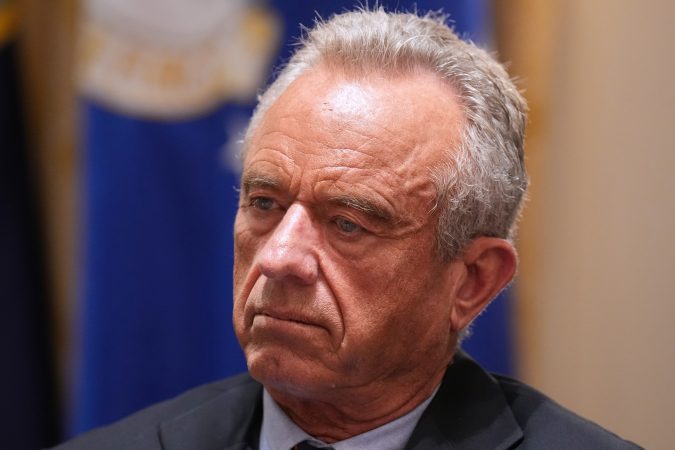
    In a letter to Health Secretary Robert F. Kennedy Jr. and acting attorney general Todd Blanche, the chairperson of the Special Olympics — who is also Kennedy’s cousin — called on the administration to reverse course on a Justice Department memorandum that could narrow federal protections for disability care.

    The letter by Tim Shriver joins a recent outcry from lawmakers and disability advocates who have warned that the June memo, which called for reinterpreting a key Supreme Court ruling on disability rights, could shrink access to home- and community-based care services that hundreds of thousands of Americans with disabilities rely on to receive care without being placed in institutions — a cause that members of the Kennedy family have supported throughout their political careers.

    “This is something that is in some ways the central passion of our family,” Shriver told the Washington Post. “And I hope and believe that Secretary Kennedy understands that.”

    The Health and Human Services Department and Justice Department did not provide a comment by the time of this article’s publication.

    The memo comes as patients and caregivers brace for Medicaid cuts from President Donald Trump’s tax bill, which are also expected to hamper disability services.

    “Many people with intellectual and developmental disabilities are already worried about whether the Medicaid-funded supports and services they rely on will be there in the future,” Shriver wrote in the letter sent to Kennedy and Blanche last week and shared with the Post.

    Shriver, a longtime disability rights activist, said he sent the letter in his personal capacity. He has led the Special Olympics, which organizes sporting competitions for children and adults with intellectual disabilities, since 1996.

    The Justice Department memo, issued in mid-June by its Office of Legal Counsel, argued for a looser reading of the Supreme Court’s 1999 decision in Olmstead v. L.C., viewed as a landmark case for disability rights. The Supreme Court ruled that it was discriminatory to institutionalize people with disabilities when they can and want to receive community-based services instead.

    “Olmstead is what created the tools to require states to provide community-based services,” said Alison Barkoff, a professor of health law and policy at George Washington University and a former HHS administrator during the Biden Administration.

    Advocates argue that those services can be more cost-effective than institutional care and better enable people with disabilities to work and remain connected with their families and communities. Around 4.5 million Medicaid enrollees receive home- and community-based care, and hundreds of thousands more are on waitlists for the services each year, health policy research organization KFF estimated in 2024.

    “These programs are the difference between a full life and … tragic mental illness, loneliness, depression, isolation, humiliation,” Shriver told the Post.

    The Kennedy family has been closely involved in efforts to promote disability rights. President John F. Kennedy signed a major mental health bill in 1963 while in office and alongside Sen. Robert F. Kennedy — the health secretary’s father — pushed to shift disability care away from institutionalization and toward community-based services. Eunice Kennedy Shriver, a sister of President Kennedy and Tim Shriver’s mother, founded the Special Olympics.

    The Trump administration has scrutinized home- and community-based services for fraud and argued that some states poorly oversee their home-based care programs. Advocates are also concerned that states newly strained by cuts to Medicaid could slash support for home- and community-based services.

    The Justice Department memo would make it easier for states to do that, opponents have said. It argued that Olmstead does not require states to provide home- and community-based care for people with disabilities and that the federal government is not authorized to enforce such a mandate. It conceded that such an opinion is “out of step with the common understanding of that decision within the federal courts.”

    Groups including the American Civil Liberties Union, American Association of People with Disabilities, and Center for Public Representation denounced the Justice Department’s position. Democrats in Congress urged the department to rescind the memo.

    While the Justice Department’s opinion doesn’t change the law, it could indicate that the department will step back from enforcing Olmstead, advocates said.

    “It provides a signal that the Department of Justice and the U.S. Department of Health and Human Services are stepping back from that commitment to community integration,” said Lydia Dawson, the vice president of government relations for ANCOR, a national association of private community providers.

    Shriver said the Trump administration’s stance threatened decades of hard-fought progress for disability care.

    “I am hopeful that you will help ensure that our country continues moving forward rather than backward on the promise of inclusion,” he wrote to Kennedy and Blanche.

  • A democratic socialist in the White House? Activists are thinking big.

    A democratic socialist in the White House? Activists are thinking big.

    CHICAGO — Officially, the summit for democratic socialists across the country here over the weekend was taking place in a hotel conference facility.

    But on Friday night, the real action was at a corner bar two miles away, where dozens of members of the Democratic Socialists of America crammed into a patio in the middle of a summer storm.

    As the rain poured down, two DSA leaders put it bluntly: If they wanted Rep. Alexandria Ocasio-Cortez (D) to run for president — and if they wanted the DSA to endorse her — it was time to start now.

    “We’re in the moment of the presidential question,” Katie Sims, an electoral organizer in Ithaca, N.Y., said at the “DSA for AOC” gathering. “Doesn’t it just make sense now?”

    That was, for many, the question looming over the Democratic Socialists of America’s summit, right in the middle of the group’s most consequential summer ever.

    A self-dubbed big-tent group that was essentially dormant a decade ago, the DSA has ballooned into one of the largest and most disciplined operations on the U.S. left.

    The Chicago summit hosted about 600 dues-paying members who flew in from across the country to attend workshops and swap organizing strategies as their group faces greater momentum — and greater scrutiny — than ever before.

    After its members helped elect Zohran Mamdani mayor of New York, DSA-backed candidates won a string of Democratic primaries this summer in deep-blue cities. The victories intensified a broader fight with centrist Democrats, some of whom signed on to a pledge declaring themselves “capitalist, not socialist.”

    If upcoming primaries in Michigan and Missouri go their way, some speculated, the democratic socialists might be able to start their own small caucus on Capitol Hill.

    “Before, we were putting our shoes on, or lacing our shoelaces,” said John Lewis, an engineer in New Orleans who serves as a member of the DSA’s National Political Committee, the group’s top decision-making body. “Now we’re getting ready to run.”

    What’s not totally clear is for what — or, with whom at the helm.

    The DSA’s 120,000 members are supposed to make decisions democratically, and there is still broad disagreement about whether and how the group might make an endorsement for the White House.

    Divisions often arise over key questions: Should the DSA work within the Democratic Party or break from it? Should they back only the most committed socialists or also support those who might stray from their platform sometimes?

    In the case of Ocasio-Cortez and the 2028 Democratic primary, a potential endorsement is a test of how flexible it might be to take its message on a national stage.

    Ocasio-Cortez, who was not at the Chicago summit, became one of the DSA’s first two members elected to federal office when she won her initial race for Congress in 2018. But her failure to adhere to the group’s red lines on the war in Gaza prompted the national DSA to withdraw its endorsement two years ago.

    She has also publicly declined to support abolishing the Senate, a moon-shot goal for the DSA, in favor of more targeted moves like ending the filibuster.

    Lewis, a member of the Marxist-Leninist “Red Star” caucus within the DSA that has repudiated Ocasio-Cortez, said he expected her to run. She is active in the DSA’s New York chapter and has since shifted again on some Israeli-Palestinian issues, he pointed out.

    But his former chapter was split apart by a similar endorsement question in 2020, and he cautioned against a “paper endorsement” that might fall flat with the DSA’s base.

    “It has to be something that people can deeply believe in,” he said, “and someone that people deeply trust to do this.”

    Palestinian poetry and engineered conflict

    In the halls of the hotel conference center in Chicago, an independent bookstore sold titles on mass incarceration, Palestinian poetry and theories of engineered conflict. Chapters set up tables offering T-shirts to “Melt ICE” and stickers to “stop arming Israel.”

    Similar messages appeared on DSA members themselves. Some wore green “Groundwork” hats, for the environmentally minded group within the DSA that advocates for working within the Democratic Party. Others had coffee mug tattoos to rep their allegiance to the Marxist Unity Group — MUG for short.

    At one workshop on Friday morning, the standing-room-only crowd was instructed to break out into small groups with a prompt: what they didn’t think was possible beforehand that feels attainable now.

    In the back corner, a group of three from New York, California, and Kentucky went around introducing themselves — the name tag for each “comrade,” as some call themselves, lists only first names and last initials.

    The woman from New York answered the prompt by mentioning Ocasio-Cortez. (DSA members, aside from those in elected office or on the NPC, were instructed not to talk to reporters at the conference, and that member declined to share their last name for privacy reasons.)

    “We’ve all known Alex. We’ve all organized with her over the years,” she said. “This is the first time in 10 years I feel like she has a real shot at the presidency.”

    Like many other DSA members at this summit, Ocasio-Cortez worked on Bernie Sanders’s 2016 presidential campaign. The future New York congresswoman was, of course, still years away from making it to Congress and nearly a decade away from the minimum age to run for the White House.

    If the DSA had previously functioned as a home for some politically frustrated millennials, it grew into much more than that. A series of galvanizing events over the last few years — Trump’s reelection, the war in Gaza, Mamdani’s victory — have ballooned the DSA in size, with more than 140 chapters around the country.

    Some have been wrapped into each chapter’s social events. Others were drawn in by local causes or campaigns.

    The ability to put all those people to work — out knocking doors and phone-banking voters — is what has made the DSA an electoral force in some cities.

    Sims, who leads the DSA’s national electoral strategy, said chapters carefully decide if they have the capacity to boost a candidate before endorsing them — or sometimes recruiting them. Only those candidates endorsed by local chapters go to national leaders for a possible endorsement later on.

    To beat campaigns with more money, Sims said, “we really got to put our feet where our mouth is.”

    Still, debates over how exactly to put that electoral strategy into practice have roiled the DSA in recent years.

    Some of the more staunchly Marxist factions hold a harder line against candidates who don’t always talk about being a socialist or adhere to all parts of the group’s platform. Other caucuses, like Groundwork and Socialist Majority Caucuses, which dominate the New York chapter, may be more open to putting resources behind such DSA members.

    There’s an added challenge with congressional candidates like Will Lawrence and Abdul El-Sayed in Michigan, who have not formally adopted the DSA label or received the group’s backing — perhaps intentionally — but back platforms that resemble those of democratic socialists.

    A presidential endorsement would amplify that debate — and do so across every DSA chapter.

    The DSA’s 2020 endorsement of Sanders followed intense internal discussion, though participating members ultimately approved it.

    “Everybody is well aware that everything we’re doing right now as DSA is either setting us up or not setting us up to be serious political players in the 2028 election,” said Frances Gill, a Los Angeles psychiatrist and NPC member.

    Summit participants were slated to hold a closed-door discussion on whether and how to endorse later in the weekend.

    Alex Pellitteri, a union organizer in New York City who is leading the DSA’s “presidential exploratory group,” compared the upsides to Mamdani’s citywide race in his hometown.

    Before the campaign, the DSA’s New York chapter — by far its largest, making up about 1 in 8 of the group’s members — had largely only supported campaigns in its strongest bases of support in Brooklyn and Queens.

    Part of the argument for endorsing Mamdani’s mayoral campaign was to get its muscular canvassing operation into parts of the city where they had never knocked a door. Backing a presidential candidate, he said, could enable the group to do the same across the country.

    But there are still questions over what that might look like — and risks.

    Some people who want to sketch out a “model of co-governance” for SIOs — socialists-in-office — at the presidential level before endorsing. Others want to reconcile an endorsement with the group’s platform, formally dubbed the “national program,” which advocates for replacing the presidency with a parliamentary system.

    And then there’s the reality that Ocasio-Cortez could very well choose not to seek out the White House.

    At the “DSA for AOC” event at an off-site bar on Friday night, a fellow comrade came up to Sims to ask the second question on everyone’s mind: Is there anyone else they’d want to encourage?

    Sims paused and thought for a second.

    “Well,” they said, “no one.”

  • How a ‘perfect storm’ spread fire, heat, and smoke across the Northern Hemisphere

    How a ‘perfect storm’ spread fire, heat, and smoke across the Northern Hemisphere

    Chicago and New York choked under orange and white skies. Madrid and Bordeaux had flames licking at their doorsteps. Vast forests, rural communities, and ranchlands full of livestock in Canada and Oregon have burned — and all in the month of July alone.

    Major wildfires and their massive, suffocating plumes of smoke blanketed vast swaths of North America and Europe, in some cases combining with intense heat waves that exacerbated flammable conditions and contributed to human misery.

    According to a wildfire smoke analysis by the Washington Post, about 20% of Northern Hemisphere land area — covering around 7.5 million square miles — experienced moderate or greater concentrations of black carbon, the soot particles released by wildfires, at some point during July.

    That included large swaths of North America — stretching into the Arctic Circle — as well as Western and Southern Europe and parts of Russia.

    Against the backdrop of a changing climate, July has illuminated what it can look like when severe weather, at heightened frequency and intensity, combines to form a hellish landscape. Like 2023 and 2024, this summer is the latest chapter in the Northern Hemisphere’s fiery era, as wildfires become more frequent and intense and oppressive heat and smoke harming the health of millions become increasingly normal.

    “It was like the perfect storm of very hot conditions with strong winds that fanned these fires,” said Dmitri Kalashnikov, a climate postdoctoral researcher at the University of California at Merced, referring to the flames he saw explode in Minnesota and Ontario in mid-July. Heavy smoke from those fires made its way through the Midwest and the East Coast in subsequent weeks, temporarily making cities there among the most polluted in the world.

    “That direct clear linkage of big heat wave, lots of fire, then lots of smoke impacts was kind of a wow moment for me,” Kalashnikov said.

    In some cases, this sprawling smoke lingered over densely populated cities for days, causing poor air quality that spread toxins and increased the risks of asthma attacks, heart disease and strokes.

    “There is no safe level of exposure to wildfire smoke,” said Ze’ev Gedalof, a forest ecology expert at the University of Guelph in Ontario. “We just need to expect that this is the new normal.”

    Cities such as Cleveland, Denver, Detroit, Milwaukee, New York, and Philadelphia all experienced at least four days with moderate or higher smoke concentrations during July. In Baltimore, Minneapolis, and Portland, Ore., the tally was three moderately smoky days, while D.C. and Boston had two each.

    In Canada, Calgary, Edmonton, Montreal, Ottawa, Toronto, and Winnipeg all experienced three to five smoky days, while Spain’s Madrid had three and France’s Bordeaux had four.

    And across many of these cities, fire and smoke were not the only summer scourge.

    Many of the fires occurred in areas that have recently experienced record-breaking temperatures from towering heat domes. The heat and dryness that spike as a result of these powerful areas of high pressure can drive wildfire risks. A recent study by Kalashnikov and other researchers at UC Merced found that from 2001 to 2024 more than 40% of the area torched by fires in the western United States had burned during or in the immediate aftermath of a heat wave.

    “The conspicuous overlap between record-breaking warmth, dryness, and/or low snowpack and these fires is simply not a coincidence. The scientific evidence linking increasingly extreme fire weather, as well as increasingly extreme wildfires themselves, to climate warming is clear,” wrote climate scientist Daniel Swain in a series of posts on social media about the conditions across the hemisphere.

    Several factors could be behind this summer’s many heat domes.

    Changing jet stream wind patterns, partly linked to El Niño and a marine heat wave in the Pacific, may be playing a role, as could an unusual cold blob of water in the North Atlantic. The jet stream has been arcing up and over both the United States and Western Europe, with heat domes bubbling underneath.

    But a heat dome doesn’t make a wildfire.

    “There will not always be extreme wildfire outbreaks when exceptional heat and dryness occur, that is true,” Swain added in one of his posts. “But such conditions greatly raise the ceiling on what is possible in a warming world — and sometimes, as is happening now, that increased potential will be realized.”

    In recent days, firefighters have made progress in containing blazes across the two countries; in the region around Bordeaux, authorities have now allowed nearly 150,000 people back to their homes, Reuters reported, to begin a recovery.

    “Considering the damage to the ecosystems and the livelihoods, communities affected are going to need support from authorities for a very long time,” said Maria Alcazar Castilla, the deputy regional director for the Red Cross in Europe. “There’s people that need to build their homes, to recover livelihoods, etc. All that, in economic terms, is extremely expensive.”

    Some parts of the world have always been vulnerable to fire. Canada has enormous ranges of dense boreal forest — roughly the size of the United States west of the Rocky Mountains — with few roads and scant human population. That kind of forest has evolved to burn in order to rejuvenate, said Jen Beverly, a wildfire researcher at the University of Alberta — but now has grown susceptible to more extreme fires.

    “The forest don’t change quick enough to be able to reflect in the data like that. That means it’s climate change,” Beverly said.

    Around 14,500 square miles of Canada have burned through July 31 this season — already above the 10-year average, although not on pace to match the extreme fire seasons of 2023 and 2025.

    The intense conditions generated by July’s wildfires include the fire in Bordeaux that created its own thunderstorm. The phenomenon, known as a pyrocumulonimbus cloud, occurs when the intense heat of a wildfire sends a column of hot air and smoke high up into the atmosphere, where it cools and condenses into a cloud. The resulting thunderstorm, with high winds and lightning strikes, can further fan the flames.

    “It might last for one to three to four hours, and all the while it’s connected to that fire source. And at the same time, the fire is being altered and energized by that storm that it generated,” said Mike Fromm, a meteorologist at the U.S. Naval Research Laboratory. “So it’s a feedback loop.”

    Now, the American West is bracing for more of the same.

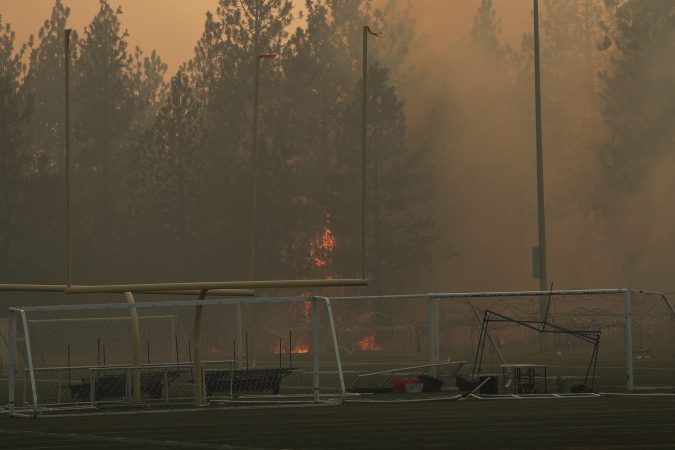
    A fast-moving wildfire driven by strong winds and high temperatures swept across northwest Spokane on Saturday before jumping the Spokane River and prompting the evacuation of thousands of people.

    In California, Arizona, and Nevada, a new heat dome that settled over the region this weekend was expected to send temperatures up to 115 degrees Fahrenheit in cities like Phoenix, and another bout of extreme heat could expand across the country in the days to come.

  • Several states report cyberattacks as spy agencies suspect Iran is targeting water

    Several states report cyberattacks as spy agencies suspect Iran is targeting water

    Federal authorities are warning that critical infrastructure systems in the United States could be at risk after at least seven states reported cyberattacks that interrupted their water or wastewater operations last week.

    According to a joint alert from the FBI and the Environmental Protection Agency, “malicious cyber actors” have been remotely tampering with some water systems’ internet-connected programmable logic controllers, or PLCs, causing loss of water pressure and flooding.

    The warning, issued Thursday, comes after U.S. intelligence officials said Iran was likely behind a coordinated cyberattack on more than 30 municipal water systems in Minnesota. Experts have also warned for years that the U.S. water industry, which has resisted regulation efforts, has been vulnerable to cyberattacks.

    Intelligence agencies have not definitively concluded that Tehran was responsible for the disruptions in Minnesota, but the hack follows urgent warnings by federal cybersecurity officials that Iran for months has been targeting internet-exposed devices that control operations at water, wastewater, and energy facilities in the U.S. In July, federal cybersecurity authorities specifically warned that Iranian hackers were exploiting vulnerable PLCs.

    President Donald Trump has blamed Minnesota’s government, not Iran, for that attack. The FBI did not respond to a request for comment Friday about whether it believed Iran was responsible, saying the agency and others were “fully engaged to protect critical infrastructure.”

    The Post reported Thursday that intrusions have been noted at several water and energy systems across the country since shortly after the war began on Feb. 28.

    Federal authorities have not identified which states were affected in recent hacks. Outside of Minnesota, Michigan and South Dakota have also reported attacks. However, experts said it is likely many more states are affected, given that the brand of PLCs targeted — Rockwell Automation/Allen-Bradley — is widely used.

    “We only have one internet and it’s the same equipment for all these victims. … Theoretically, you should see these [vulnerabilities] in all 50 states,” said Joshua Corman, a public safety and resilience expert at the Institute for Security and Technology.

    To date, the cyber attackers have employed “low sophisticated tactics” to hack into internet-connected PLCs, often ones with weak or nonexistent credentials, according to Alec Davison, an analyst with WaterISAC, an information sharing program with the government intended to strengthen security. The hackers have subsequently modified passwords to lock out operators and disconnect controllers, he said in an email.

    “This has led to boil water notices and forced utilities into sustained manual operations,” Davison wrote.

    The risk is that cyberattackers tampering with PLCs could change the “logic” or software of a system so that an operator might not detect an issue with, say, dangerous levels of chemicals.

    A July 22 advisory issued by the Homeland Security Department’s Cybersecurity and Infrastructure Security Agency noted that the FBI and CISA have observed Iranian hackers tampering with the PLC’s logic software, “allowing systems to enter unsafe conditions without notifying operators of the anomalies.”

    “Operators see normal displays. No alerts fire and the process can enter an unsafe condition without anyone knowing,” said Kurt Gaudette, head of intelligence for Dragos, a cybersecurity firm that specializes in protecting critical infrastructure.

    Experts widely agreed that water infrastructure in the United States has been uniquely vulnerable for more than a decade. Of the roughly 151,000 water plants in the United States, about one-third service residential communities year-round. But only about 420 water plants participate in WaterISAC to try to improve cybersecurity across the water sector.

    “We have under half a percent paying attention to cybersecurity,” Corman said. “U.S. water is incredibly prone. We’ve been prey, we just didn’t have predators with an appetite for water, but that’s over.”

    Another issue is that many small- and medium-size utilities are using third-party integrators or contractors to configure the security settings on their systems, and these contractors are using default credentials and weak passwords.

    Compounding the problem, the water industry has also resisted efforts to be regulated for cybersecurity. After the Biden administration tried to impose cybersecurity audits of water utilities in 2023, some water industry groups and three states — Missouri, Arkansas, and Iowa — sued, causing the EPA to roll back its standards.

    Nate George, the mayor of Braham, Minn., which experienced a hack last week that caused the town’s plant to briefly go offline, said in a statement on Saturday to the Washington Post that cities such as his need more resources to comply with mandates to ensure their utility systems and infrastructure are safe.

    “I would actually argue it falls mostly on states that mandate local governments make certain upgrades to their utility systems or other infrastructure but fail to provide the funding to pay for it or maintain it,” said George, a Republican running for state auditor in Minnesota.

    Cybersecurity threats to the water sector, however, are only expanding.

    Trump, at a meeting with cabinet officials at Camp David on Friday, waved off the suggestion that Iran was involved in the Minnesota attack — and in turn blamed its officials, a frequent political target.

    “I blame it on Minnesota because they’re grossly incompetent,” Trump said at the cabinet meeting. “I would blame it on Minnesota and the governor, the corrupt governor of Minnesota. Iran’s got bigger problems than worrying about Minnesota.”

    Gov. Tim Walz (D) pointed the finger at Iran as well as at Trump.

    “Trump knows exactly who is responsible for this attack, and knows that other states were hit too,” Walz wrote on X. “This is what modern warfare looks like, and it further illustrates there’s no plan to win a war with Iran.”

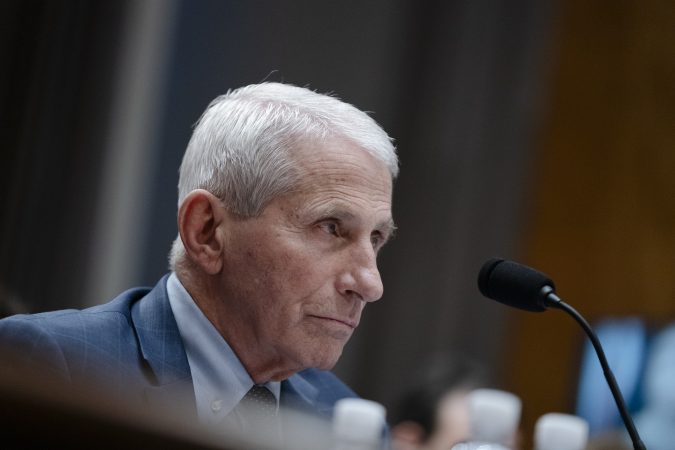
  • Inside the week that tested Anthony Fauci, as GOP lawmakers push for his jailing

    Inside the week that tested Anthony Fauci, as GOP lawmakers push for his jailing

    Anthony Fauci didn’t know Rand Paul had his diary, let alone that the GOP senator was going to release it, his friends said.

    So last Saturday — after the Kentucky lawmaker had publicly shared years of Fauci’s private reflections, on everything from fighting COVID-19 to attending “A-list” events — Fauci went to another party.

    There, at a birthday celebration for former White House chief of staff Ron Klain, Fauci mingled with friends and former Biden administration colleagues. They cheered and toasted him, apparently unaware that his critics were combing through documents that would kick off one of the most fraught weeks of his decades-long career.

    For a few hours, Fauci was back inside a familiar Washington.

    Then reality intruded. His longtime critics now control congressional committees, the health agencies where he spent his career, and the Justice Department that could ultimately decide whether to prosecute him. After years of promising to hold Fauci accountable for the government’s pandemic response, they are flexing their power to try.

    The past week offered the clearest glimpse yet of what that reckoning could look like.

    On Monday, Health Secretary Robert F. Kennedy Jr., a longtime Fauci foe, bragged about his department’s monthslong efforts to scour 11 government servers to reassemble Fauci’s diary and turn it over to Paul. On Wednesday, Fauci faced hours of questions from Paul and fellow Republican senators at a congressional hearing Fauci and his allies believe was designed to entrap him. He invoked his Fifth Amendment right not to testify more than 100 times.

    President Donald Trump, who said he watched the “whole thing,” criticized Fauci after the hearing but sidestepped questions about whether he should be prosecuted.

    The effort has exposed the difficulty of settling, six years later, the bitter disputes that made Fauci one of the pandemic’s most polarizing figures. Paul and other Republicans say newly obtained records have raised fresh questions about Fauci’s conduct. Several senators accused him of misleading Americans during the coronavirus pandemic and pressed him on whether he engaged in a cover-up of the virus’ potential origins.

    But some of the central allegations have been investigated before, and even some Republicans involved in those inquiries question how much the new material adds. Fauci denies claims of a cover-up, and his allies say he is stuck in a Kafkaesque nightmare. Their fears were accentuated after a former Fauci aide was arrested in April after he privately bragged about concealing emails.

    The pressure on Fauci, 85, is intensifying. More lawmakers are preparing to challenge him. Paparazzi lurk outside his door, and death threats persist. Clips of Fauci refusing to answer questions have become memes, sparking jokes on ESPN and mockery in conservative media. The scrutiny recalls the darkest days of the pandemic — except now, rather than the government marshaling its resources to defend Fauci, he is paying for his own security.

    Paul’s committee is set to vote Wednesday on whether to hold Fauci in contempt of Congress, a measure expected to pass with Republican support. Paul has said they will immediately refer the matter to the Justice Department for prosecution.

    “I think he’ll be remembered more like a mafia don than a great scientist,” Paul, the chairperson of the Senate’s government oversight committee, told podcaster Benny Johnson after last week’s hearing.

    Peter Staley, a former adversary turned longtime friend, said Fauci is trying to stick to his routine, taking power walks with his wife and seeing patients at Georgetown University’s hospital.

    “He’s not crumbling,” Staley said, invoking “Brooklyn tough,” an expression he said Fauci often uses. “I’m worried for his safety. I’m not worried for his mental state.”

    This story is drawn from interviews with 17 friends, critics, and former colleagues of Fauci, as well as current administration officials, lawmakers, and congressional aides. Through a spokesperson, Fauci declined to comment.

    Fauci, who led the National Institutes of Health’s infectious-disease work, emerged from the COVID-19 pandemic as the face of the government’s response. That perch gave him access to elite social circles, won him accolades, and made him a worldwide celebrity — fame that has carried a bitter aftertaste.

    He has since been blamed for myriad pandemic-related policies, including decisions that others made but he amplified, such as the CDC’s recommendation to stay 6 feet apart to minimize virus risks. Activists and lawmakers have said they want to hold Fauci accountable for students’ learning loss, workers’ lost jobs, and other harms resulting from COVID-related shutdowns.

    Some past colleagues have been happy to see Fauci face difficult questions. Several said that his diary shows that Fauci — who details his interactions with reporters and celebrities — was too seduced by his media coverage. They also criticized his efforts to work with NIH grantees to be nominated for prizes, which were detailed in another batch of documents released by Paul.

    “This is the Fauci I knew being exposed to the world,” said Chris Meekins, who served as a senior health official in the first Trump administration, and battled with Fauci about vaccine and funding priorities before the pandemic.

    Others say Paul and his allies are only seeking to embarrass and damage Fauci after years of battling with him, often in contentious showdowns in the Senate. Paul has contended that last week’s hearing was part of his investigation into the pandemic’s origins, including whether Fauci tried to conceal a possible laboratory leak that may have sparked the outbreak.

    “We learned nothing from that hearing,” said Ashish Jha, who led the nation’s COVID response under Biden and worked closely with Fauci. “Nothing about the important issues. Nothing about how to prevent the next pandemic. And this kind of vilification will scare people away from public service.”

    Paul has also said that Fauci’s diary has produced new revelations about his shifting thoughts on the virus’ origins and risks. But the diary generally hews closely to Fauci’s 2024 memoir, On Call, and his other past interviews and testimony.

    Fauci also sat for 21 hours of interviews with a GOP-led subcommittee in 2024, where he discussed the possible origins of the coronavirus, his private conversations about whether a laboratory leak sparked the outbreak, and other controversial matters. The subcommittee pressed Fauci on whether his agency had inadvertently sparked the pandemic by funding risky coronavirus research in China, a claim he has persistently denied.

    “The journal should have been produced back in 2023 but sitting here in 2026 I am not sure what the entries add to the debate,” Mitch Benzine, who was the GOP subcommittee’s staff director and led the questioning of Fauci, wrote in an email. “Some of the information is new and does add color to Dr. Fauci’s thoughts through the pandemic, but the findings are no different than what we found years ago.”

    The subcommittee’s investigation led to one of Fauci’s former aides being arrested earlier this year, an event referenced by Paul and seen as a potential harbinger for Fauci. Justice Department officials say David M. Morens skirted public records laws and hid his communications to thwart inquiries into the origins of the coronavirus pandemic. Fauci has distanced himself from Morens, saying he knew nothing about his actions.

    Marc Short, who served as Vice President Mike Pence’s chief of staff, clashed with Fauci over COVID restrictions in 2020 and felt the doctor’s advice was frequently wrong. But Short said Fauci’s role in the early coronavirus response is now being distorted, noting that local leaders had significant leeway over how and when to reopen schools and businesses under the Trump administration’s “federalist” approach.

    “He’s been made a scapegoat for public health officials who made the wrong decisions,” Short said, recalling a 2020 conversation in which the doctor laid out their different responsibilities.

    “‘My job is to tell people how not to get infected. It’s your job to consider all the other factors,’” Short recalled Fauci saying.

    Fauci was a prominent Washington figure, if not a household name, during his nearly four decades leading NIH’s infectious-disease institute. He was repeatedly summoned to the White House to advise presidents about how to handle virus outbreaks and held up as a model for generations of scientists.

    Fauci attracted national attention in the 1980s for his work on HIV/AIDS, which initially drew fire from activists such as Staley, who protested outside his office — with mock coffins and an effigy of Fauci — castigating him as a bureaucrat who was doing too little to save lives.

    But Fauci won over those critics, convincing them of his sincerity. He also rose in esteem, with scientists and politicians — including many prominent Republicans — touting him as an example of what government could accomplish.

    Asked in a 1988 presidential debate to name an inspiring hero, Vice President George H.W. Bush singled out Fauci for his work fighting AIDS. Twenty years later, Bush’s son, President George W. Bush, awarded Fauci the Medal of Freedom for his work as an architect of PEPFAR, a worldwide AIDS relief program credited with saving tens of millions of lives.

    Entering 2020, Fauci had kept a diary on his work computer for years — a nightly ritual in which he tracked his day, his dealings, and his media appearances as material for a planned memoir, allies said.

    Then came the coronavirus, which would kill millions around the world, and transform Fauci’s life. He emerged as the government’s spokesperson across two administrations, initially hailed by Republicans as well as Democrats and seen as a reassuring figure. Trump bestowed one of his highest compliments: Fauci was good on TV.

    But as the pandemic stretched on, Fauci’s pessimism and encouragement of strict measures rankled Trump and other administration officials. Parents grew frustrated with school shutdowns. Conservative media increasingly turned on the doctor, and by late 2020, Trump was entertaining chants of “Fire Fauci” at campaign rallies.

    “I didn’t mind him, I didn’t find him to be bad personally, as a person,” Trump told Fox & Friends last week. “But I didn’t agree with what he was saying or what he was doing.”

    Still, Trump awarded Fauci a commendation for his work on Operation Warp Speed, the president’s successful initiative to accelerate development of coronavirus vaccines, before leaving office in January 2021.

    The incoming Biden administration, meanwhile, elevated Fauci as President Joe Biden’s chief medical adviser — a political job for the longtime civil servant. Fauci had significant sway over that administration’s coronavirus policies and personnel.

    He left government at the end of 2022, wary of looming GOP investigations, and with dwindling popularity.

    “It is clear that even with Pro bono considerations that this is going to cost me a lot of money since the GOP has promised that they would make my life miserable and blame me for virtually everything that happened bad to the country during the pandemic,” Fauci wrote in his diary in November 2022.

    A few months later, Biden issued Fauci a preemptive pardon on his final day in office. That afternoon, Trump returned to the presidency and swiftly elevated some of Fauci’s critics to key government positions.

    Kennedy, who wrote a book about Fauci that the doctor considered slanderous, runs the health department. Jay Bhattacharya, whom Fauci dismissed as a stooge in his diary, now runs NIH. Some of Fauci’s adversaries, such as Trump’s economic adviser Peter Navarro, also rejoined the White House and other agencies.

    Trump has said he will not challenge Biden’s pardon of Fauci, but the doctor still faces legal peril. The pardon does not cover events after it was issued on Jan. 20, 2025, and Fauci and his allies worried that if he misspoke at any point to Paul’s panel, he would face perjury charges — a concern that triggered his invocations of the Fifth Amendment. And while Biden’s pardon protects Fauci from federal criminal investigations into his time involved in the nation’s coronavirus response, it did not rule out state prosecution. Florida’s attorney general last week announced a new investigation into Fauci.

    Benzine, the former House GOP staffer, said he expects Paul’s committee to find Fauci in contempt this week.

    “What comes next is unclear,” Benzine wrote in an email. “What is clear, is that this is not over for Dr. Fauci.”

    Many Americans have moved on from the depths of the pandemic. Fauci’s neighborhood was once dotted with signs reading, “Thank you Dr. Fauci.” They have long been taken down, and none were newly visible the day after last week’s hearing.