Category: Washington Post

  • National Gallery studied whether Freedom 250 IndyCar vibrations will affect art

    National Gallery studied whether Freedom 250 IndyCar vibrations will affect art

    When the Freedom 250 Grand Prix kicks off this month as part of President Donald Trump’s summer celebrations, IndyCar racers will weave at speeds up to 185 mph among federal buildings, the National Gallery of Art, the National Archives, and the Smithsonian Institution’s Hirshhorn, Air and Space, and American Indian museums.

    One of those institutions, the National Gallery of Art, has studied vibrations ahead of the race as it prepares for possible effects on its art — but it’s declining to say what it found.

    “In preparation for the Freedom 250 Grand Prix, the National Gallery conducted an extensive vibration study and based on the results we have implemented a set of measures to ensure the safety of our staff, visitors, collection, and facilities during the race,” gallery spokesperson Chris Abanavas said in a statement. “While we are not releasing the specifics, I can share that any such measures are only being taken out of a great abundance of caution.”

    The study didn’t raise concerns about structural risk to the buildings, Abanavas added. The race will also limit attendance at the free museum to ticket holders to the event’s secured area.

    The Smithsonian determined the race, which will take place Aug. 22-23, will not threaten any objects in its collections and has taken no special precautions as a result, a Smithsonian official said. But the institution will monitor the situation before and during the race, so it can protect exhibits if that changes.

    While the event is a first for D.C., it is not the first such race to pass through city streets and near museums, which commonly face vibrations from construction, musical events, and large crowds. But some historic preservationists worry the risk to delicate art pieces, historic documents, and priceless murals near the circuit has been underexamined.

    In March, the National Park Service consulted with the D.C. State Historic Preservation Office about the IndyCar event, noting that it saw “no adverse effects.” The letter did not mention the museums along the route. (The National Park Service and the National Archives did not respond to a request for comment.)

    Some preservationists who spoke with the Washington Post called the analysis insufficient and said a more comprehensive review of potential damage to historic properties or artifacts would have taken years, not months.

    “I can’t think of any place in that whole area that goes where the speed limit is higher than 25 miles an hour,” said Michelle Arcari Rose, a former associate general counsel at the National Trust for Historic Preservation, which has sued to stop Trump’s White House ballroom project. “So whereas people think these grand prix races aren’t a problem, we certainly don’t know, right? It’s a huge risk to then unleash cars at 185 miles per hour in a place where we’ve never had cars really going more than 25 miles an hour.”

    Mary Okin, assistant director of the nonprofit Living New Deal, sent a letter last week to the National Park Service and other agencies expressing concern that the event was permitted “without meaningful” consultation with “known preservation stakeholders.” The letter and the National Gallery of Art’s vibration study were first reported by the New Republic.

    “Such vibrations are well above normal street traffic and even go beyond those of jackhammers, pile drivers, and even freight trains,” she wrote.

    Okin is calling for safeguards including temporary sound barriers and damage assessments to help protect buildings such as the Wilbur J. Cohen Building, which sits on the circuit’s south edge and houses fragile New Deal-era murals.

    “They’re vulnerable,” said Okin, whose organization has worked on the building’s preservation. “Excess vibrations and sound, as well as the construction of the racetrack itself, could very well cause damage.”

    The General Services Administration, the body that manages real estate for the federal government, reviewed the proposed route for potential impacts on its assets and identified no areas of concern, a spokesperson said in a statement.

    “The White House and [IndyCar owner] Penske have followed all appropriate protocols and been in close coordination with all relevant agencies to ensure this is also the safest and most secure race for all visitors to enjoy,” said Davis Ingle, a White House spokesperson.

    While many major motorsport races are held on permanent road courses or oval tracks, temporary street circuits are a familiar part of international racing.

    IndyCar stages several events on public roads in cities such as St. Petersburg, Fla.; Long Beach, Calif.; Detroit; and Toronto, while Formula One also races on street courses in places including Monaco, Singapore, and Las Vegas. The roads are closed, lined with concrete barriers, and transformed into racecourses for the events before reopening to traffic.

    One of the closest comparisons with D.C.’s race is the Firestone Grand Prix of St. Petersburg, in which the street circuit runs next to the Dalí Museum. A museum spokesperson said the collection has remained safe and secure throughout the event’s history. The museum has not conducted race-specific vibration studies, but its galleries were built to museum standards and the collection is continuously monitored.

    Green Savoree Racing Promotions, which organizes the St. Petersburg race, said the museum closes to visitors while racing is underway and reopens after the event concludes. The promoter also noted that the museum is housed in a hurricane-rated building constructed to Florida standards, allowing the artwork to remain in place during extreme weather, and said it was not aware of any additional precautions being necessary during the race.

    In a statement, a Freedom 250 Grand Prix spokesperson said race organizers have “tremendous respect for the history and the structures surrounding the racing circuit in Washington, D.C.”

    “IndyCar has successfully hosted races on downtown street circuits in urban areas for decades,” the spokesperson said. “With this excellent track record and the thorough preparation we have done for this event working closely with all the appropriate local and federal agencies, we do not anticipate any impact on the structures surrounding the circuit” as a result of the race.

    Researchers have started paying closer attention to how vibrations from construction, live music, and major events may affect the art and artifacts inside museums.

    One 2023 report studied the effects of vibrations from music and a NASCAR street race on museums in Chicago. In that case, racecars passed a south wall of the Art Institute of Chicago, near galleries holding a Van Gogh exhibition.

    Advisers who reviewed data and consulted with NASCAR beforehand told the museum vibrations from the cars shouldn’t pose a major risk, according to the report. Afterward, they found museumgoers’ foot traffic caused greater vibrations in gallery floors than the race outside. (An author of the report declined to be interviewed, and the Art Institute says it works with specialists before any major activity that might cause vibrations.)

    On Tuesday, there were few apparent changes at the National Gallery of Art except for enclosures set up around some artworks outside.

    The I.M. Pei-designed triangular skylights, which abut a cascading sunken fountain and illuminate the underground cafe, have been boarded up. Between the West Building and the Sculpture Garden, a massive Alexander Calder sculpture made of sheet metal, Tom’s, has been enclosed in a protective barrier.

    Some sculptures and installations were boarded up “out of an abundance of caution,” said Abanavas, citing “the increased visitor traffic around the National Mall this summer for events including the Grand Prix.”

    As of publication, the Post did not identify significant changes to public collections inside the National Gallery of Art’s East Building, which closely faces the racetrack on Pennsylvania Avenue.

  • TPS for Haitians officially ends, putting thousands out of work and in limbo

    TPS for Haitians officially ends, putting thousands out of work and in limbo

    A federal judge on Wednesday took the final step in allowing the Trump administration to terminate temporary protected status for 350,000 Haitians, meaning many are likely to lose their jobs and be at risk of deportation back to a country the United States says remains dangerous.

    U.S. District Judge Ana C. Reyes of the District of Columbia had enjoined the administration in February from ending TPS for Haitians, and a federal appeals court had refused to lift the ban. Reyes reversed her decision after the U.S. Supreme Court ruled 6-3 in June that federal law bars judicial review of TPS determinations.

    The high court’s ruling means TPS “is no longer in effect,” Reyes wrote in her new order Wednesday. However, the judge said she would allow attorneys to continue seeking discovery and litigating their underlying claims that the Trump administration terminated TPS because of their clients’ race.

    The Supreme Court’s ruling left open a narrow path for TPS holders to challenge the loss of their status on constitutional grounds. An attorney representing the immigrants involved in the Supreme Court case said the team is considering filing a new lawsuit.

    Immigration experts said that even before Reyes’s amended ruling, companies had begun large-scale layoffs of Haitian TPS holders, who now face the possibility of detention and deportation. Another federal judge in New York is expected to soon allow the Trump administration to formally end TPS for an estimated 6,000 Syrians to comply with the Supreme Court.

    About 200,000 Haitians with TPS hold jobs, with large concentrations of workers in healthcare, food service, warehousing, retail, and long-term caregiving, according to an analysis of government data by the immigration advocacy group FWD.us. Business owners have been preparing for weeks by raising sign-on bonuses, cutting shifts and making inroads at community colleges and high schools to hire new staff, industry leaders said.

    In Philadelphia, Haitians and their allies plan to march through Center City on Thursday, to demand that the federal government provide some form of relief.

    The end of TPS threatens to exert dramatic impact on the city’s 11,000-strong Haitian community, including deportations to a homeland in chaos — beset by natural disasters, governmental collapse, and gang violence that has displaced more than a million people.

    Some local Haitians have become desperate to see if they can gain legal status in this country, such as asylum, or find somewhere else in the world to go that’s safe.

    In Philadelphia and elsewhere, many TPS-holders work in critical jobs and industries — the people who build homes, keep restaurants running, fix plumbing and wiring, and, particularly in the case of Haitians, care for the ill and elderly.

    “If you access our healthcare system in any way, shape, or form, particularly elderly care or senior care, you’re going to feel it,” Anuj Gupta, president and CEO of the Welcoming Center in Philadelphia, told The Inquirer.

    Industries and employers here will be hit as the Trump administration moves to end TPS for a series of countries through the fall.

    The Economy League of Greater Philadelphia, a regional policy and research organization, examined four countries where designations are ending or at risk ― El Salvador, Ukraine, Syria, and Haiti.

    It estimated that in the local area, between 4,100 and 6,100 workers from those countries depend on TPS. In the city, those TPS workers bring home $36 million to $76 million in annual salaries and pay $1.5 million to $3 million in wage tax.

    The local sectors predicted to be most affected by job losses are construction, building cleaning and landscaping, trucking and warehousing, manufacturing, restaurants, and retail.

    In Ohio, the Department of Homeland Security has recently begun summoning Haitian immigrants to check-in appointments and requiring them to wear ankle monitors, in what appears to be a new enforcement effort after the Supreme Court’s decision.

    In Springfield, Ohio, which has more than 10,000 Haitians, residents awoke Wednesday to group messages relaying worry and a sense of dread. Though Reyes’ order was expected, the reality of its implications is only starting to feel real, community members said.

    Haitian parents of U.S. citizens are now asking for help with power-of-attorney forms to ensure their children will be cared for if they are detained or deported. Some Americans have been preparing their own children in case they have to say goodbye to Haitian friends.

    Not all Haitians are immediately vulnerable to arrest, said Katie Kersh, senior attorney with Advocates for Basic Legal Equality, a legal nonprofit, because some have pending immigration cases. But the possibility of immediate detention at mandatory check-ins with U.S. Immigration and Customs Enforcement this week is now greater, she said.

    “The way this group has been specifically targeted is symbolic of the administration’s efforts to criminalize immigrants of color,” Kersh said. “In targeting people who had TPS, they are targeting people who followed the law.”

    The termination is expected to weigh most heavily on certain major metropolises, such as Miami and Boston, as well particular midsize cities, such as Columbus, Ohio, and Allentown, Pa. Those local economies will see a reduction in consumer spending and tax revenue, experts say.

    DHS has called TPS a “de fact amnesty program” and said Congress never intended for it to offer permanent protections for foreigners.

    Most TPS holders have lived in the U.S. for years, some for more than a decade. The Obama administration first granted TPS to Haitians in 2010, after a major earthquake destabilized the country, and to Syrians in 2012, amid a violent civil war in their country.

    The prospect of migrants being sent back home is particularly worrisome, experts said, because those countries remain dangerous and politically unstable. The U.S. State Department maintains a “do not travel” warning for U.S. citizens to both countries, citing the threat of kidnappings, violent crime, and terrorism.

    The Haitian Legal Defense and Education Fund, in a court filing last week, asked Reyes to implement a 90-day ban on the federal government from deporting Haitians who lose TPS status, citing systematic violence in Haiti that “demonstrates a pattern of crimes against humanity.” The judge did not grant that request.

    “This is an embarrassment for the United States of America,” Sen. Chris Murphy (D., Conn.) said in a conference call with reporters Monday. “There is no safe place to return for TPS holders from places like Haiti and Yemen and Venezuela and Syria. In fact, in those places I just mentioned, the situation is not stabilizing, getting better, it is getting worse.”

    Some Haitian TPS holders may have other pending immigration claims, including applications for asylum, that allow them to remain in the U.S. Others will be left without any legal status, putting them at risk of being detained, whether through a targeted ICE operation or a traffic stop that leads to questions about their status in the U.S.

    Immigration attorney Ira Kurzban, who helped represent the Haitians in the Supreme Court case, said he is bracing for a rush of arrests by the Trump administration. But he is urging his Haitian clients to continue pursuing applications for asylum or another form of legal status, even if they are detained. The alternative, he said, is returning to a country where they could be harmed or killed.

    “I tell my clients to fight, fight, and fight,” Kurzban said. “Nobody is telling a client to make up anything, but if there is a claim, I think the worst thing they can do is just give up.”

    The high court’s decision, which was issued along ideological lines, is expected to eventually affect all of the estimated 1.7 million people from 17 countries who had been granted TPS. President Donald Trump’s administration has sought to eliminate the humanitarian protections for people from 13 of the 17 countries in the TPS program, though litigation in lower courts had slowed the government’s effort.

    TPS is reserved for people from designated countries that are in the midst of armed conflict, natural disaster, or other crises. The protections allow immigrants in the U.S. to work legally for up to 18 months and seek to renew their status after that. Applicants are required to pay fees and pass a background check and cannot have serious criminal records.

    Many Haitians and business owners have been making plans to prepare for the sudden loss of thousands of workers. Nursing home leaders warned they would have fewer beds to offer if health aides were forced to leave the country. Business owners started calculating how many days they could continue to employ TPS holders. Immigrants began making plans to sell or rent their homes and secure bank accounts.

    It is up to employers to verify who has a valid work authorization, and some companies do so only once a year. So how quickly someone might lose their job will vary.

    A plurality of Americans oppose ending TPS and deporting those who have been protected by it, according to a Washington Post-Ipsos poll conducted last month. The poll found 44% oppose terminating the program, compared with 32% who support doing so.

    Trump has long signaled that he wants to deport many of the immigrants previously protected through TPS. He falsely claimed during his presidential campaign that Haitian residents in Springfield, Ohio, were killing and eating their neighbors’ pets — and said that immigrants were “poisoning the blood” of the country.

    After the Supreme Court ruling in June, Stephen Miller, White House deputy chief of staff and the architect of much of Trump’s immigration policy, said that he expected people who lose TPS status to be deported.

    Those who lose TPS can seek asylum if they apply within what the law calls a “reasonable period” of time after losing their status, which is evaluated at the discretion of the immigration judge.

    The Trump administration recently announced a new rule that could make it more difficult for asylum seekers to remain in the country. The provision allows asylum officers to send applicants directly into deportation proceedings in immigration court without granting them an interview to determine whether they are eligible for protection and permission to stay permanently.

    U.S. Citizenship and Immigration Services, which announced the new rule, said it aims to wipe out 31% of an asylum application backlog totaling 1.4 million cases.

    The Trump administration already has deported some former TPS holders after revoking their status, including Venezuelans, said Emi MacLean, a senior staff attorney at the ACLU of Northern California. Her organization represents Haitian and Venezuelan TPS holders in a separate legal case that remains active as the ACLU and its partners seek to amend their complaint to be in line with the Supreme Court’s ruling.

    MacLean said that the large number of Haitians who stand to lose TPS could have deep impacts in some labor industries, including healthcare, where many of them worked.

    “It will be a huge loss to many people and communities,” she said.

    Staff writer Jeff Gammage contributed to this article.

  • Lawmakers call for Pentagon probe of Trump family-backed companies

    Lawmakers call for Pentagon probe of Trump family-backed companies

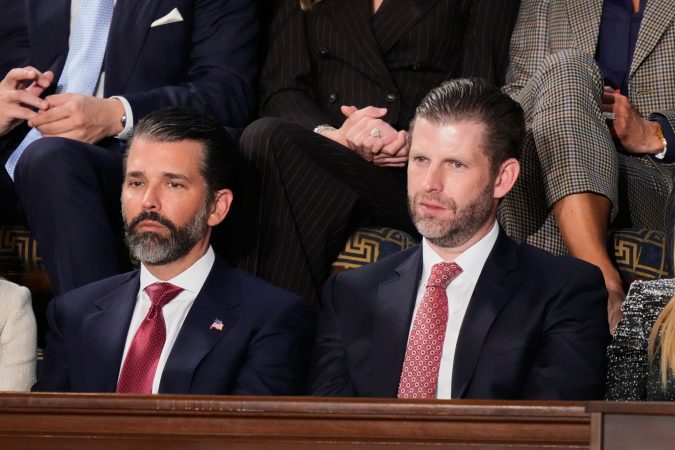
    A group of Democratic lawmakers have asked the Pentagon’s official watchdog to open an investigation after the Washington Post revealed that 15 companies with investment from President Donald Trump’s sons have garnered $3.2 billion in federal contracts, investments, and loans — most coming after Trump took office for the second time.

    The letter from Sens. Elizabeth Warren (Mass.), Richard Blumenthal (Conn.), Tammy Duckworth (Ill.), and Rep. Robert Garcia (Calif.) asks for an inquiry into Defense Department contracts awarded to companies affiliated with Eric and Donald Trump Jr., according to a copy of the request provided to the Post.

    Excluding giants SpaceX and Anduril from the tally, companies with investment from funds associated with Trump’s sons have gained more than three times the number of government contracts and other funding than they had before the president’s second term, the Post reported.

    “We are concerned about a growing cloud of corruption amid questions about whether the President’s family and administration officials may be abusing their positions to influence DoD awards, and the extent to which this is undermining the competitive, apolitical contracting process used to ensure that service members have the best equipment and most effective technologies and weapons systems on the market,” the lawmakers wrote in the letter to the Pentagon’s inspector general, Platte B. Moring III.

    Trump’s sons have amassed a sizable portfolio of defense technology startups as the Pentagon shifts its strategic focus to new warfighting tools, putting large amounts of money into developing smaller, nimbler weaponry. While the new direction has broad bipartisan support, ethics experts and Democrats have raised transparency concerns about how companies are selected for opportunities. Republicans have largely avoided the issue.

    The Trump brothers have said that their investments in companies seeking defense contracts are aligned with patriotic goals of creating new U.S. manufacturing jobs and defeating China’s edge in drones, artificial intelligence, and other critical components of the supply chain. Trump Jr. previously told the Post, through a spokesperson, that he does not “interface with the Federal Government as part of his role with any company he invests in or advises.” The spokesperson, Andy Surabian, stressed that Trump Jr. is a private citizen and a businessperson who has never served in government.

    A spokesperson for the Trump organization, Kimberly Benza, told the Post that “Eric Trump and Donald Trump Jr. are passive, minority investors with absolutely no involvement in the day-to-day operations, strategic decisions, management, or any activities of these companies. They have no role whatsoever in the awarding, oversight, or management of any government contracts and remain proud to invest in American companies and American technology.”

    White House spokesperson Anna Kelly referred the Post to an earlier statement that said there were “no conflicts of interest” and that “This is the same, tired narrative that Democrats have pushed against President Trump, his family, and his administration for a decade.”

    The Pentagon also referred to the department’s earlier statement from acting Pentagon press secretary Joel Valdez in response to the Post’s original story. The statement said that “No company receives preferential treatment.”

    One company that Trump Jr. is invested in, Vulcan Elements, received a $620 million direct federal loan from the Pentagon’s Office of Strategic Capital. The Post previously reported that the company was fast-tracked ahead of other firms waiting in line for a loan from the unit, which focuses on innovative technology. ProPublica reported that a senior White House official, Peter Navarro, intervened on behalf of the company to help it garner a loan.

    While no evidence has surfaced that either brother has used political connections inappropriately to advocate for their companies — and doing so is not against the law — ethics experts have said the brothers should not be involved in companies whose primary business is seeking government contracts because of the potential for abuse. Many of the companies that the brothers are invested in are not primarily defense companies, but sell to the Pentagon as a part of their business.

    The congressional letter requests that the inspector general probe Pentagon awards to Trump family-tied companies, and review the decision-making process to determine whether protocols to prohibit conflicts of interest are being followed. The lawmakers noted in their letter that they have “repeatedly sought, and failed to obtain” an explanation from the Pentagon and White House about the decision-making criteria and the ethics obligations associated with recent awards to the companies.

    According to the letter, the Pentagon responded to a previous request with assurance that the Office of Strategic Capital is “committed to upholding the highest ethical standards” and ensuring that the process is free of conflicts of interests. The lawmakers described that response as unsatisfactory, saying it “left us with more concerns that OSC is unaware of or willfully ignoring the potential for corruption in the awards process at the expense of U.S. national security.”

    Trump Jr.’s investment portfolio largely runs through a venture firm called 1789 Capital. The firm has garnered billions in new investment since Trump Jr. joined as a partner in November 2024, just days after his father was reelected president, according to the Post’s previous reporting. Trump Jr. does not sit on the firm’s investment committee, the Post reported, meaning he doesn’t make direct investment decisions, even though he shares in the profit as a partner in the firm. 1789 Capital declined to comment.

    Eric Trump’s defense tech investments run through American Ventures, the venture capital arm of the investment bank Dominari Holdings. Dominari is located in Trump Tower and its leaders are friendly with the Trump brothers, according to people familiar with the relationship, who spoke on the condition of anonymity in order to describe it.

  • Ukraine fails to halt Russian barrage as Zelensky blames partners for ‘horrific casualties’

    Ukraine fails to halt Russian barrage as Zelensky blames partners for ‘horrific casualties’

    KYIV — Ukrainian forces failed to shoot down a single Russian missile early Wednesday during Moscow’s latest aerial bombardment of Kyiv and the surrounding region — a consequence that President Volodymyr Zelensky blamed on a plunge in anti-ballistic systems supplied by its partners, including the United States.

    Zelensky wrote on X that 17 people were killed and 44 injured, adding: “Ballistic missile interceptors could have saved the lives of those killed today. It is very important that our partners understand that delays in supplying them, or an unwillingness to provide anti-ballistic systems, lead directly to such horrific casualties and destruction.” In a separate post Wednesday, he said that the number of air defense missiles supplied by partners “has dropped threefold compared with 2025.”

    “Our partners do have the missiles,” Zelensky wrote. “It is important that the necessary political decisions on supplies and the acceleration of production processes are ultimately made.”

    It was the third major ballistic attack on Kyiv in a week, and came only days after Zelensky warned that his country had run out of air defense interceptors. Russia launched 24 ballistic and four hypersonic cruise missiles overnight, along with 115 attack drones, most of which targeted the area outside of Kyiv, Ukraine’s Air Force said on social media. All of the missiles and 17 drones struck targets.

    Russian forces also appear to be expanding their list of civilian targets to include Ukraine’s major supermarket chains.

    In a statement posted on social media, Russia’s Defense Ministry said it carried out a “massive strike” that resulted “in the destruction of transportation, logistics, and distribution centers in the city of Kyiv and the Kyiv region.”

    Ukraine relies on the U.S.-designed Patriot air defense systems as its only means to shoot down Russian ballistic missiles, and until recently, a large number were intercepted. However, the system’s interceptor missiles are in short supply, in part because of the large number used during the Iran war.

    European governments, Ukraine’s chief military backers, have been reluctant to hand over more of their Patriots out of worry this could hobble their own defenses. Earlier this year, the Trump administration prodded several European countries to send Kyiv their Patriot missiles, but some declined out of such concern, people familiar with the private discussions said.

    NATO officials say production of the U.S.-made batteries and other air defenses is lagging behind the pace of global conflict and impacting countries including the United States.

    On Friday, President Donald Trump also appeared to reverse an agreement reached with Zelensky earlier to provide Ukraine with licenses to produce interceptor missiles itself.

    On social media on Wednesday, Zelensky also called for Ukraine’s allies to impose additional sanctions on Russia since he said “a significant share” of the components that Moscow obtains abroad for its ballistic missile production were not under sanctions.

    Russia’s latest attack destroyed warehouses and logistics centers of some of Ukraine’s largest retail companies.

    Iryna Chechotkina, a co-founder of Rozetka — Ukraine’s largest online marketplace, similar to Amazon — said that a distribution warehouse in the Kyiv suburb of Brovary, where more than 100,000 orders were processed daily, was destroyed completely and could not be restored. No one was injured in the attack, to her “great relief,” she said.

    “Today I was supposed to post about Rozetka turning 21. To thank our customers, partners, and team for this long journey we have traveled together,” Chechotkina wrote on Facebook.

    “Instead, at night I watched as my life’s work burned down after three ballistic missiles hit,” she said.

    For its part, Ukrainian drones in recent weeks have been bombarding warehouses run by Russia’s largest e-commerce marketplace, Wildberries. On Wednesday, Ukrainian drones attacked a facility in Russia’s central Tula region, Telegram channels and local officials said.

  • Scrolling endlessly to unwind? It could be making you feel worse.

    Scrolling endlessly to unwind? It could be making you feel worse.

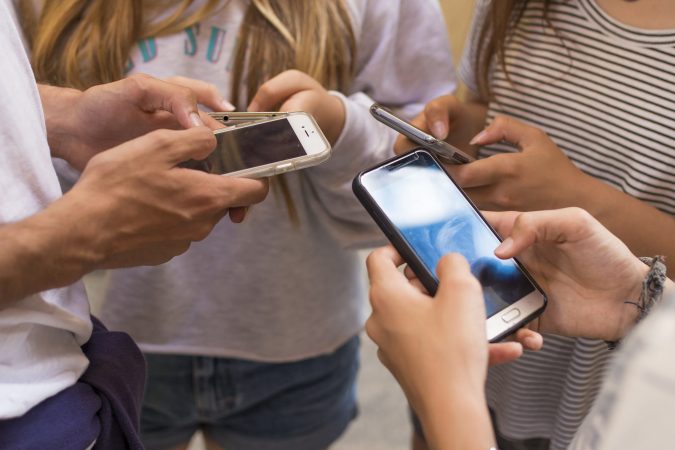
    If you want to tune out and relax after a long day, you might turn to social media, online shopping, or playing games on your phone. But a new study suggests that these activities might actually stress you out more.

    Research published recently in the journal PLOS One finds that “problematic” internet users are more stressed, have lower moods, and are tempted to use the internet more than others. Researchers define problematic internet usage as causing significant distress or leading to “neglecting important areas of life like relationships or work.”

    But are people using the internet more because they’re grumpier, or are they grumpier because they’re online more?

    “It seems like we have a vicious circle,” said Andreas Oelker, a PhD student in psychology at the University of Duisburg-Essen and one of the authors of the study, which was conducted in Germany. “If you’re in a bad mood, you try to lift your mood by using the internet, but it doesn’t help very much. So you use it more and more and more.”

    Why we turn to the internet for stress relief

    The internet is full of temptations, and apps are designed to keep our attention. A Washington Post analysis showed how TikTok hooks its users by delivering an endless stream of personalized video clips. Some of those videos may be entertaining or informative, but users often spend many more hours a day on the app than they would like. And it’s hard to stop because there’s always more content.

    “You might have the expectation that you get a better mood if you watch funny videos or whatever. And that actually helps in the short run,” said Silke Müller, a postdoctoral researcher at the University of Duisburg-Essen and co-author of the study.

    The problem, she said, is there are many other things on social media besides funny videos. You’re likely to also encounter stressful news or posts from acquaintances that lead to painful social comparison.

    Sometimes you might feel relief after looking at your phone, and other times you might feel worse. Researchers also noted that the more time you spend online, the more opportunities you miss for activities like sleep, hobbies, socializing, or work.

    In the study, the researchers interviewed 900 people about their online habits when it came to gaming, watching pornography, shopping, and looking at social media. Their internet use was classified as “nonproblematic,” “risky,” or “pathological.” Those who spent so much time online that they neglected their relationships or other activities had trouble controlling their behavior or kept doing it despite negative consequences were considered to be problematic users.

    Then, over the next 14 days, participants answered surveys every evening about their day, their mood, stress levels, and time online. Nonproblematic users might spend an hour on a social media app or an online gaming site, while problem users could spend two to four hours or even more. But the researchers emphasized that the time spent online wasn’t necessarily a problem if the person felt in control of their behavior and it wasn’t causing them to neglect other activities.

    The researchers found that problematic users had lower moods and that their internet use led to neglecting other activities like work, studies, or even hygiene.

    One limitation of the study is that it relied on self-reported data, which required people to accurately remember how they felt throughout the day and how they used the internet.

    Another notable takeaway is that researchers found the temptation to look at the internet was more powerful than the pleasure gained from time spent online. Sometimes it made people feel better and at other times worse.

    “I wouldn’t recommend that this is the best activity to do to lift the mood,” Oelker said.

    Why it’s hard to stay offline

    Part of what makes online games and social media compelling is that the rewards are inconsistent. Sometimes you win (you see a funny video maybe). Sometimes you don’t (you end up doomscrolling, or seeing images that make you feel worse).

    “Uncertainty is exciting,” said Ayelet Fishbach, a behavioral science professor at the University of Chicago Booth School of Business. In her research, she and her colleagues have found that people find uncertain rewards more motivating. Even though we generally don’t like uncertainty, we want to see the resolution.

    In games, uncertainty is part of the appeal. Social media has uncertainty built in, too, and it capitalizes on our human need to be social.

    “There’s fear of missing out. And there are no cues to stop,” Fishbach said. “Social media is just designed to get us addicted with every feature that is on the screen.”

    If you want to cut back on your internet use

    Fishbach and the researchers on the new study noted that there are effective strategies to try if you want to spend less time online.

    Think about what you’d like to do instead. If you’re spending three or four hours a day on social media or playing online games, decide what you’d rather do with that time. Make a plan to have dinner with a friend or take an exercise class or watch a movie you’ve been meaning to see. Moving toward something you want will be more motivating than just trying not to be on your phone.

    Put distance between you and your device. Literally. Fishbach said we underestimate how much our environment affects our behavior.

    “Checking the phone that’s already on your desk is much more likely than checking the phone that’s in your purse,” Fishbach said. “If the phone is in another room, the cost of going there just increases dramatically than if it’s in my pocket.”

    Try deleting apps or using an app blocker. There are more tools than ever to help people who want to be online less. Some apps require you to input a reason you need to open a locked app. Any excuse will work, but the point is to slow down the automatic temptation to check social media when you’re bored and force yourself to consciously decide whether you want to use it. Other devices, like the Brick, can be used to block yourself from accessing certain apps on your phone.

    “If you don’t have a problem, it’s just a recreational activity you can do like any other hobby and you might enjoy it,” Oelker said. “But if you have problematic use and neglect other activities, you might reconsider.”

  • The antiaging industry has a new target: Your hands

    The antiaging industry has a new target: Your hands

    When Sharlene Velazquez bought a new car, her hands sat a little higher on the wheel than they usually did. Every day while driving to work or running errands, this new view of her hands upset her.

    Velazquez saw volume loss in her hands. Her skin was starting to thin and wrinkles appeared slowly; she wanted to do something about it.

    “My hands weren’t looking the same. My hands were not matching my face,” she said.

    She was one of many women seeking hand rejuvenation treatments to make them look fuller and younger.

    Velazquez, a registered nurse who owns a medical aesthetic practice in California, says hands can be a touchy topic of conversation. Hands can show age quickly because they are exposed to so much, including sunshine, water, and everything people touch throughout the day. As people age, their skin gets thinner, revealing bone structure and wrinkles; they can even develop sunspots or hyperpigmentation around the knuckles.

    But her clients don’t usually come in asking for hand treatments. Instead, it’s almost a ripple effect caused by the new standard of beauty for aging women.

    It starts with Botox and filler on the face, something that is completely normalized today. Studies have shown a 4% increase in neuromodulator injections (like Botox) within one year, according to a 2024 report from the American Society of Plastic Surgeons.

    Many women notice their face no longer matches their neck and chest, and once they fix that inconsistency, they look to other places to close the gaps created by aging. That’s where hand treatments come in.

    “It’s per person, per goal because everybody is so different. It’s typically like a combination [of treatments]. Mostly women come in because of volume loss,” Velazquez said.

    Skin boosters, calcium-based filler, and microneedling are just a few treatments people seek.

    Ewoma Ukeleghe, a cosmetic and medical doctor, says skin boosters, such as hyaluronic acid, give instant results by restoring volume lost in the skin.

    “Skin boosters are a real metaphorical gateway drug to hand rejuvenation. You’re piercing the skin, which is intense. However, you get that instant payback of plump, soft, hydrated-looking skin,” Ukeleghe said.

    Ukeleghe says the conversation surrounding hands has increased over the last year. On TikTok, one of her most popular videos is about topical treatments for “dry, old looking hand girlies.”

    She agreed it’s about looking the same age across areas of the body but also part of a larger trend.

    Psychiatrist David Puder said the antiaging craze was present long before social media. What people are newly using to their advantage is these highly technical procedures, which leave them satisfied on the outside but not always on the inside.

    “You could spend a lot of money on this stuff, and our technologies are only going to get more astounding, but does it lead to lasting happiness or meaning or purpose? That’s where the question mark is,” Puder said.

    The harmful side of these antiaging trends is how it shifts the beauty industry. Some messaging on social media triggers people to think cosmetic surgery gives them value as a human, Puder explains, making treatments less of an individual choice and more a societal pressure.

    Kristin Leite, a master esthetician, said her TikTok audience expresses interest in hand care in the comments section, and the topic comes up more frequently after she posts a video about it.

    “My older gals ask about hands all the time. But once I do a video on it, people think about it, like, ‘Oh wait, let me do that to my hands,’” Leite said.

    Her golden rule for taking care of her hands is treating them like her face. This includes her daily skin care routine and rotating intensive treatment once a week, such as a chemical peel or microneedling, which has been very effective for her.

    For Leite, it’s not about promoting treatments that are specifically about antiaging but expanding awareness of skin care for areas like the arms and legs.

    “Everyone wants to look as good as they possibly can, especially for their age. Some people want to look way younger than [they are], but it’s about looking the best because then you feel your best.”

    To Puder, a social media algorithm of antiaging could be “normal.”

    “Guys will study bodybuilding for hours and watch people squat and dead lift. Some other people might study aesthetics for hours,” he said.

    Some may reach a level of obsession, causing an issue with their body image.

    Gemma Sharp, psychological science professor, sees antiaging swinging on a pendulum of principle. Some utilize antiaging treatments for self-care while others have a more excessive focus on appearance.

    “[This] can become distressing or interfere with quality of life, particularly if it is driven by unrealistic expectations or underlying body image concerns,” Sharp said.

    She said as beauty standards are ever-changing, the cosmetic industry capitalizes on features that were once ignored.

    “Rather than assuming this reflects increased vanity, it’s more accurate to say it illustrates how ideas about appearance continue to broaden and change,” Sharp said.

    So what’s next? Leite and Velazquez predict knee care will be the next trend.

    “With weight fluctuation, especially with GLP-1s, we’re losing volume and muscle, right? So a lot of people are walking around with creepy knees, and there are really no surgeries for knees,” Velazquez said.

    Maybe knees will be the new focus of antiaging cosmetic treatments. Or maybe, at least according to reality mega star Kim Kardashian’s Instagram, it’s feet.

    Kardashian recently posted an Instagram story in honor of her late grandmother, which got the internet talking. She wrote, “And for anyone that knows my grandma knows she had the most young beautiful feet in the world and she would want everyone to know lol,” with a photo of her grandmother’s perfectly pedicured feet side by side with her other famous sisters’ feet.

  • Trump’s National Guard deployment in D.C. set to cost additional $1.4 billion

    Trump’s National Guard deployment in D.C. set to cost additional $1.4 billion

    The Pentagon’s deployment of National Guard troops to Washington, D.C., is set to cost an additional $1.4 billion through the end of the Trump administration, according to information provided to Congress and reviewed by the Washington Post.

    The estimate, which encompasses October 2026 through January 2029, adds to the hundreds of millions of dollars spent on the mission to date. While the administration has not disclosed the full cost of the mission so far, the new figure represents the most comprehensive accounting yet of President Donald Trump’s unprecedented use of the military to patrol the nation’s capital — an operation fiercely criticized by many Democrats and civil liberty advocates.

    The information was provided to Sen. Elizabeth Warren (D., Mass.), a member of the Senate Armed Services Committee, by Jules Hurst III, Trump’s nominee to become the Pentagon’s comptroller, as part of his confirmation process. Hurst is set to be confirmed in a bloc of Trump administration nominees as soon as this week.

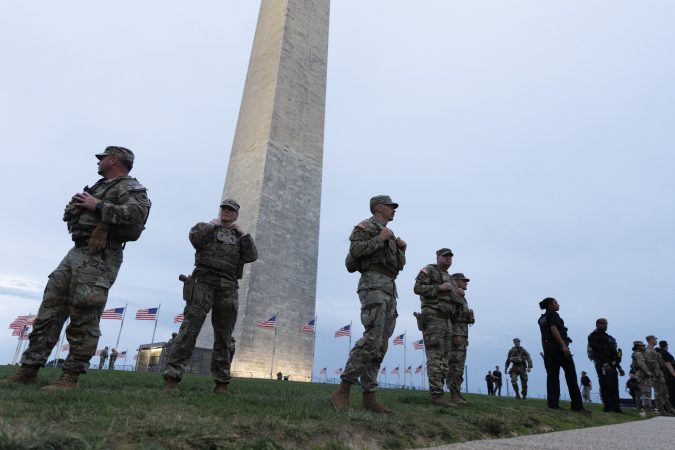
    The administration deployed National Guard personnel to Washington in August 2025, after Edward Coristine, a former staffer in Elon Musk’s U.S. DOGE Service initiative to slash the federal government, was assaulted in an attempted carjacking. The National Guard will maintain a presence in D.C. until January 2029 or “until the president says the mission is over,” Brig. Gen. Leland Blanchard II, the interim commanding general of the D.C. National Guard, told reporters in a news briefing Monday.

    The cost estimate provided to Warren assumes a deployment of about 2,500 National Guard personnel. There are approximately 4,600 service members in the city now, Blanchard said, part of a temporary surge coinciding with summer events to commemorate the 250th anniversary of the signing of the Declaration of Independence.

    Democrats have called the deployment a wasteful use of military resources and an infringement on Americans’ civil liberties, and they have pressed Defense Secretary Pete Hegseth to justify the mission as the Pentagon faces urgent budget shortfalls because of the Iran war and other military operations.

    “The National Guard are not pawns and taxpayer dollars are not a piggy bank for Trump’s political stunts,” Warren said in a statement.

    In testimony to the Senate Appropriations Committee last month, Hegseth acknowledged the Defense Department is facing financial pressure but repeatedly blamed the situation on the Biden administration’s management of the military.

    The Pentagon did not immediately respond to a request for comment.

    Since returning to office, Trump has deployed active-duty and National Guard units to American cities on controversial missions to stop crime or protect federal immigration agents. Academics and researchers who specialize in politicization and the military, along with local officials in some of the targeted communities, have argued that the operations violate laws barring the military from engaging in domestic law enforcement.

    Some state and local governments, including Washington, have challenged the deployments in court.

    The Congressional Budget Office estimated in January that the administration’s National Guard deployment in Washington cost $223 million through the end of 2025. It said deployments in Los Angeles, Memphis, Chicago, and Portland, Ore., together cost an additional $273 million in 2025.

    CBO has estimated that each additional month of deployment in Washington would cost about $55 million.

    Trump’s record $1.5 trillion defense budget request for fiscal 2027 includes $2.3 billion in funding for domestic use of the military, including $605 million for the National Guard mission in Washington.

    In a separate request to Congress for $67 billion in additional funding to help cover the costs of the Iran war, the Trump administration also requested $800 million for the National Guard. Sen. Patty Murray (Wash.), the Appropriations Committee’s top Democrat, said during last month’s hearing with Hegseth that those funds would go toward extending the D.C. deployment.

    Blanchard, the National Guard general, defended the mission, noting that last month the Trump administration signed a $292 million contract to move National Guard members into local apartments from hotels in and around Washington. The move, Blanchard said, will save $90 million on lodging and transportation costs over the course of the contract.

    He said, too, that service members have responded to about 800 medical emergencies — performing CPR and applying tourniquets on gunshot victims, and administering 325 doses of Narcan, a drug used to treat overdoses.

    While Trump officials have repeatedly asserted the National Guard was necessary to help address a crime emergency in the city, D.C. police data shows violent crimes this year have remained about the same from this time in 2025. Property crimes, including burglary from cars and motor vehicle theft, have decreased by about a quarter. When the National Guard was deployed last year, crime rates were near a six-year low, according to federal data.

    National Guard personnel in Washington are supposed to yield to local police for law enforcement activities, such as arrests, said Michael Perloff, the senior staff attorney for the American Civil Liberties Union’s D.C. chapter. But their orders leave open gray areas, including how personnel should respond in an emergency or when under threat, he said.

    “National Guard members aren’t trained to handle those situations,” said Perloff, whose organization is challenging the mission’s legality in court.

    The service members deployed in D.C. have been tasked with a variety of missions, such as guarding the Reflecting Pool in front of the Lincoln Memorial and cleaning up garbage on city streets.

    In November, two National Guard personnel were shot while patrolling the city blocks away from the White House. One died from her injuries.

    Rahmanullah Lakanwal, an Afghan national charged in the shooting, pleaded not guilty in June. He is facing a possible death sentence if convicted.

  • ICE begins outfitting Haitian immigrants with ankle monitors, attorneys say

    ICE begins outfitting Haitian immigrants with ankle monitors, attorneys say

    The Department of Homeland Security has begun summoning Haitian immigrants in Ohio to check-in appointments with federal officers who are outfitting them with ankle monitors, in what appears to be a new enforcement effort after the Supreme Court allowed the Trump administration to end their humanitarian protections.

    Guerline Jozef, executive director of the Haitian Bridge Alliance, said about 50 Haitians with temporary protected status in Springfield, Ohio, were called into Immigration and Customs Enforcement offices on Friday. Local attorneys said the immigrants were arrested and then conditionally released with electronic monitoring devices. They were instructed not to travel anywhere outside a 75-mile radius from their homes.

    A Trump administration official confirmed the effort to call Haitians with temporary protected status into ICE offices, give them ankle monitors, and release them. The official, who spoke on the condition of anonymity to discuss internal ICE operations, expected the check-ins to be scheduled in waves.

    The U.S. Supreme Court ruled in June that the Trump administration could end temporary protections for about 350,000 Haitians, despite ongoing political instability and gang violence in the Caribbean nation. DHS alerted employers last week that it had officially ended temporary protected status for Haitians, triggering mass layoffs and confusion because a lower court that had blocked the administration’s attempts to terminate the program has not yet lifted the order keeping TPS benefits in effect.

    Congress created temporary protected status in 1990 to shield immigrants in the United States from being deported to countries engulfed in armed conflict, a natural disaster, or another extraordinary crisis, allowing them to work legally in the U.S. for up to 18 months. Applicants to the program cannot have serious criminal records, and they must pay fees and pass a background check. DHS can renew the protections — and it has, multiple times, for several countries.

    Advocates and immigration attorneys said the new arrests in Ohio reflect ICE’s attempts to more quietly carry out President Donald Trump’s deportation campaign. Rather than large-scale operations like the ones DHS conducted in Minneapolis and Chicago, the agency has been focusing on arrests that take place after traffic stops and ICE check-ins. Arrests rose significantly in July.

    “Rather than showing up with a militarized force in a particular neighborhood in Springfield and having communities be able to organize around that, this is calling people into a very secure facility,” said Erik Crew, a senior attorney at the Haitian Bridge Alliance, a California-based advocacy organization. “Yes, people can protest outside, but sometimes people can go in and never come out and be sent to a detention center somewhere remote, likely in the South, and be sent out of the country from there.”

    A DHS spokesperson said the agency does not discuss “ongoing or future” operations but conducts enforcement daily.

    “Temporary Protected Status is exactly that — temporary. For too long, TPS has been allowed to function as a de facto amnesty program despite Congress never intending it to be permanent,” DHS said in a statement. “What we would say now is it’s closing time which means you don’t have to go home, but you can’t stay here.”

    Many of the Haitians outfitted with ankle monitors in recent days have ongoing asylum claims and no final order of deportation, their attorneys said. Historically, the agency has deployed the worn devices on a case-by-case basis, but immigration attorney Carolyn Marks, who accompanied two Haitian clients to appointments with ICE on Sunday, said they are now being used more broadly.

    “In the past, they have been used with people who have criminal records or had missed court hearings or an order of deportation,” Marks said. “But all these people had been and are complying with the law.”

    Trump has long stated that he intended to target Haitian immigrants as part of his mass deportation drive. During his campaign, he falsely claimed that Haitian residents in Springfield were killing and eating their neighbors’ pets. After the Supreme Court ruling was announced, Stephen Miller, the White House deputy chief of staff, told reporters that Haitians and others with temporary protected status should be detained and deported once they lose the benefit.

    Sens. Chris Murphy (D., Conn.) and Chris Van Hollen (D., Md.) criticized the Trump administration’s efforts to terminate TPS in a call with reporters on Monday. Both senators said the cancellations were not only putting families in danger but pulling thousands of needed workers out of the labor force.

    “This is an embarrassment for the United States of America,” Murphy said. “There is no safe place to return for TPS holders from places like Haiti and Yemen and Venezuela and Syria. In fact, in those places I just mentioned, the situation is not stabilizing, getting better. It is getting worse.”

    Katie Kersh, managing attorney with Advocates for Basic Legal Equality, a nonprofit based in Ohio that is providing legal representation to Haitian immigrants in the area, said ICE officers asked people who went to the check-ins over the weekend for biographical information and collected their fingerprints. She and other attorneys said the officers encouraged the immigrants to leave voluntarily and noted the $2,600 financial incentive DHS is offering those who choose to self-deport.

    Kersh said one of her clients is a woman in her 60s who may miss the birth of her grandchild in Indiana as a result of the travel restrictions. She is a diabetic and worried that having the device strapped tightly to her ankle would cause pain. She inquired about an alternative, which ICE does sometimes provide, but was not offered one.

    “ICE is setting up circumstances that makes it easier to detain them,” Kersh said.

    Vilés Dorsainvil, who runs the Haitian Support Center in Springfield, stood outside an ICE office near Cincinnati as people reported for appointments. He said he asked ICE officers if the devices were necessary and was told that the “the order came from the top,” referring to DHS Secretary Markwayne Mullin.

    DHS stated online last week that temporary protected status for Haitians was “terminated, effective July 27, 2026.” But lawyers say that TPS cannot officially end until lower courts execute a Supreme Court ruling and officially allow the Trump administration to terminate the program, which was first established for Haiti in response to the catastrophic 2010 earthquake in that country.

    A DHS spokesperson disagreed, saying, “These activist lower court judges are openly defying the Supreme Court on this, but the end result will be the same. Haitians with TPS cannot and will not be able to stay.”

    Jessica Bansal, an attorney focused on TPS litigation with the National Day Laborer Organizing Network, said that “for all practical intents and purposes, there is no longer any protection.”

    Ruby Powers, a Houston immigration attorney who represented clients from Venezuela who lost TPS after the administration canceled it for those immigrants, said ankle monitors and more frequent ICE check-ins are a means of pressuring people to leave.

    “It’s the government’s way of signaling, ‘We know where you are, we are monitoring you closely, and we have the ability to detain you at any time,’” she said.

    Marks, the immigration attorney, said that whatever might happen next will change her community.

    “It’s going to be a very destabilizing event for Springfield,” she said.

  • CDC expands largest known cyclospora outbreak to 15 states

    CDC expands largest known cyclospora outbreak to 15 states

    The Centers for Disease Control and Prevention is expanding the largest known cyclospora outbreak to 15 states, adding six states where illnesses have been traced to shredded iceberg lettuce sourced from central Mexico, according to three individuals familiar with the investigation.

    Missouri, which is reporting 1,095 cases, is one of the states being added, according to a state health department spokesperson. The number of state cases jumped dramatically in the past week. Patients who were interviewed at length by state and local investigators said they consumed Taco Bell before getting sick, spokesperson Lisa Cox said.

    Information was not immediately available about the five other states. The individuals spoke on the condition of anonymity to discuss an ongoing investigation.

    The expansion marks a significant widening of the outbreak. On Monday, Michigan health officials announced that two people have died in the cyclospora outbreak there, the first deaths confirmed in the United States related to the microscopic parasite. Both people had underlying health conditions that may have been affected by the intestinal illness and dehydration.

    On July 24, federal officials had linked illnesses in nine states to the outbreak. The CDC has said epidemiological and trace-back data continues to show that iceberg lettuce from Taylor Farms de Mexico was contaminated with the parasite that has made people sick.

    The newly linked states join Illinois, Indiana, Kansas, Kentucky, Michigan, Ohio, Oklahoma, Pennsylvania, and West Virginia.

    Taylor Farms recalled shredded iceberg lettuce sourced from central Mexico on July 17 after investigators linked the product to illnesses among people who had eaten at Taco Bell. The company said the lettuce was distributed from June 29 through July 16 through food-service channels and retail stores in 27 states.

    Federal investigators so far have publicly linked illnesses to only a portion of the states where the company said the recalled lettuce was distributed. Federal officials are also investigating outbreaks and illness in more than two dozen states that have not been linked to the 15-state outbreak. The sources of other outbreaks have not been identified or tied to Taylor Farms.

    Taylor Farms has declined to provide additional details, including how many pounds of product were covered by the recall and where shredded lettuce was distributed before June 29. A Taylor Farms spokesperson did not immediately respond to a request for comment.

    During foodborne-illness outbreaks, the CDC is charged with trying to identify the food sickening Americans, relying on labor-intensive disease detective work that includes detailed interviews with people about what they ate, where they ate it, and when. The Food and Drug Administration works to determine who produced the contaminated food and works with food companies to stop it from being sold. The FDA also tries to identify how the food may have become contaminated.

    The new cases being reported don’t necessarily mean the risk is still ongoing, experts have said. The true number of sick people in the multistate outbreak is probably higher than the number reported, and the outbreak may not be limited to the states with known illnesses, the CDC has said.

    The incubation period is long, and some people recover without medical care and are not tested for cyclospora. Recent illnesses may not yet be reported because it can take as long as six weeks to determine if a sick person is part of an outbreak.

    “We’re always trying to figure out what is the risk today of going and eating a salad, for example,” said Craig Hedberg, a professor at the University of Minnesota’s division of environmental health sciences.

  • Trump orders changes to new helipad after weeks of around-the-clock work

    Trump orders changes to new helipad after weeks of around-the-clock work

    President Donald Trump has directed contractors to redo weeks of work on his planned White House helipad, frustrated with its appearance and questioning whether the slope of the White House lawn needs to be changed, according to two people who spoke on the condition of anonymity to discuss his private comments.

    Trump has made the helipad a priority, ordering that work begun in June be completed by a state visit in September, but was dissatisfied with the results, the people said. The White House’s South Lawn, where the helipad is being built, slants downward. Trump has expressed a desire for a landing pad that sits level with the horizon, prompting contractors to disassemble their work and consider whether to start by changing the lawn itself, the people said.

    Photographs obtained by the Washington Post on Tuesday show how contractors have taken apart their work, including a 100-foot-wide granite presidential seal that was beginning to take shape last week.

    Construction crews having been working around the clock on the project, which Trump hopes will wrap up before Chinese President Xi Jinping visits in late September, the Post reported last month.

    It was unclear how much additional cost or time the latest changes would add to the $5 million-plus project, which is being paid for by Lockheed Martin. It owns the company that manufactures the helicopters.

    Lockheed Martin did not immediately respond to a question on Tuesday about whether it had been asked to cover any additional costs. Clark Construction, the firm that is working on the project, referred questions to the White House, which did not comment on the president’s specific changes.

    “For years, the White House has desperately needed a proper Helipad on White House grounds that will allow the President to land safely and also protect the beautiful South Lawn grass from the fierce exhaust fumes of the incredible Marine One,” spokesperson Davis Ingle said in a statement. “Thanks to President Trump, the White House has never looked better, and it will only continue to get better under his leadership.”

    Helipads should be flat for safety but do not need to be perfectly horizontal, to ensure water runoff, according to federal recommendations. The South Lawn, used for decades by helicopters that transport the president, slopes downward about 20 degrees in some places, the White House has previously said. That exceeds the recommended slant for helipads. The area chosen for the new helipad is flatter than other places.

    The helipad will be near the South Portico, the traditional landing site for Marine One, the call sign for whichever helicopter is being used for the president. The project is intended to address a long-running problem: The new generation of Marine One helicopters runs the risk of burning the lawn.

    The VH-92A Patriot, manufactured by Sikorsky Aircraft, has exhaust vents that aim heat down, making grass-scorching likely. Sikorsky, which is owned by Lockheed Martin, spent years working with administration officials to find a solution before Trump approved the planned helipad.

    In the meantime, Trump is using the Ellipse — a park south of the White House — as a temporary landing zone for Marine One.