Until now, the mom in Pennsylvania had never heard of Rep. Max Miller or the “little blue bunny.” But she knew all about Buddy.
Her 10-year-old daughter would not sleep without that pink blanket attached to a teddy bear’s head. Long missing an eyebrow, the plushie looked forever quizzical.
“He’s the most precious thing in the world to her,” said Beth Tyson, a 47-year-old family therapist.
Though she rarely had time to stay on top of politics, let alone a House race in Ohio, Tyson kept reading about what she suspected was another little girl’s most precious thing in the world. All over the country, parents on social media seemed equally invested in the saga of a stuffed animal that turned a MAGA firebrand’s reelection campaign into a national news frenzy.
Miller, 37, has faced domestic violence and physical abuse allegations for years, most recently from his ex-wife, the mother of his 2-year-old daughter. But no detail has broken through quite like the “little blue bunny.” Conservative colleagues who previously had avoided commenting on Miller’s personal life called this week for his resignation after his former father-in-law, another powerful Ohio Republican, accused the second-term congressman of holding his granddaughter’s stuffy “hostage” for 48 hours.
“This girl is crying at night because she can’t sleep without her little blue bunny, and his answer is, ‘I’m just not going to give it to you,’” Sen. Bernie Moreno told reporters Tuesday.
Miller, who has denied all claims of abuse, posted screenshots on X the next day that he said exonerated him. His ex-wife’s team had sent the wrong “conduit” to fetch the bunny, he said, according to the text messages between the two, which delayed the handoff by 14 hours — not 48.
She asked him to please just leave it in the mailbox, according to the exchange, which racked up 2.3 million views. CNN’s Jake Tapper asked the question on so many minds, “Did you hold this doll hostage?”
“No, Mr. Tapper,” Miller replied, asserting that doing so would be “incredibly disturbing.”
On this, the internet agreed.
“What kind of father wouldn’t deliver the bunny himself, knowing that it helps his little girl sleep at night?” one commenter asked.
“This does not make you look better,” added a reporter for Gateway Pundit, a far-right news site.
“There are literally thousands of fathers reading those tweets and thinking: ‘When my daughter lost her favorite toy, I led a search party as if for a downed NATO nuclear warhead. And when that failed, I paid $300 for a replica on eBay,” posted David Frum, a former speechwriter for President George W. Bush.
Suddenly, the standoff over a toy in Ohio had sparked passionate chatter nationwide.
“Everybody gets it, no matter which side of the aisle they are on,” said Jon Krosnick, director of the Political Psychology Research Group at Stanford University. The little blue bunny, he added, “communicates so powerfully to all of us.”
Perhaps everyone has loved their own snuggle buddy or knows someone who does. Parents posted about the little blue bunnies in their homes (and the secret replacements in their closets). Tales of lost comfort items read like horror stories.
“We have six backup monkeys,” said Danielle Baumann, a 35-year-old mother of twin toddlers following the Ohio tale from Los Angeles.
Her daughter is especially attached to what she believes is the sole Punch, always trying to feed him dinner.
“I can’t even imagine her losing him for one night,” Baumann said.
The image of a child separated from a beloved pal cuts to our emotional cores, said Eve Ng, an Ohio University professor who studies mass communication. It also resonates in a world that consumes information in snippets.
“This visual is particularly powerful,” she said, “because it manages to sum everything up in one symbol.”
Tyson, the family therapist, didn’t want to pass judgment or wade into politics. She doesn’t have much of a stomach for America’s us-versus-them clashes, anyway. But she often speaks to the power of stuffies. Adults, she believes, should handle them carefully.
Buddy has been her daughter’s companion since she was a baby. The girl still grasps it in her fingers at night. Him — not it. They used human pronouns for Buddy. Kids tend to be magical thinkers, Tyson said, so that thing is real.
From her work, she knew a stuffy can soothe a young nervous system. Getting super attached to one, she added, is a healthy sign that a child can form a secure bond.
“It can be something to tell secrets to,” she said, “or something that helps you cope, or something that makes you feel safe.”
Randi Jaffe, 39, wondered if anyone had posted a picture of the little blue bunny. As the founder of the Lost Stuffy Project, she has replaced synthetic critters lost in the California wildfires or Texas floods.
Now she wanted to source a duplicate for an embattled congressman’s kid. “She could keep one at Mom’s and one at Dad’s,” Jaffe said, working through a possible solution to the impasse.
Of course, those parents might have to make sure the second bunny had the same degree of wear and tear as the first. A pristine replacement can register to a tiny person as a stranger. But not always. She thought of one survivor of the Los Angeles blaze, a girl who had lost her purple rabbit named Bubbles.
“WANTED,” Jaffe had posted to her Instagram followers with a photo of the out-of-production Squishmallow.
Someone in Canada replied that she had a Bubbles to spare, and where could she ship it?
Later, Jaffe received a tender email.
“Since the fire there have been so many things that felt impossible to replace,” the girl’s mother wrote, expressing her gratitude. Her daughter had lost so much, she added, “and Bubbles somehow became the symbol of it all.”
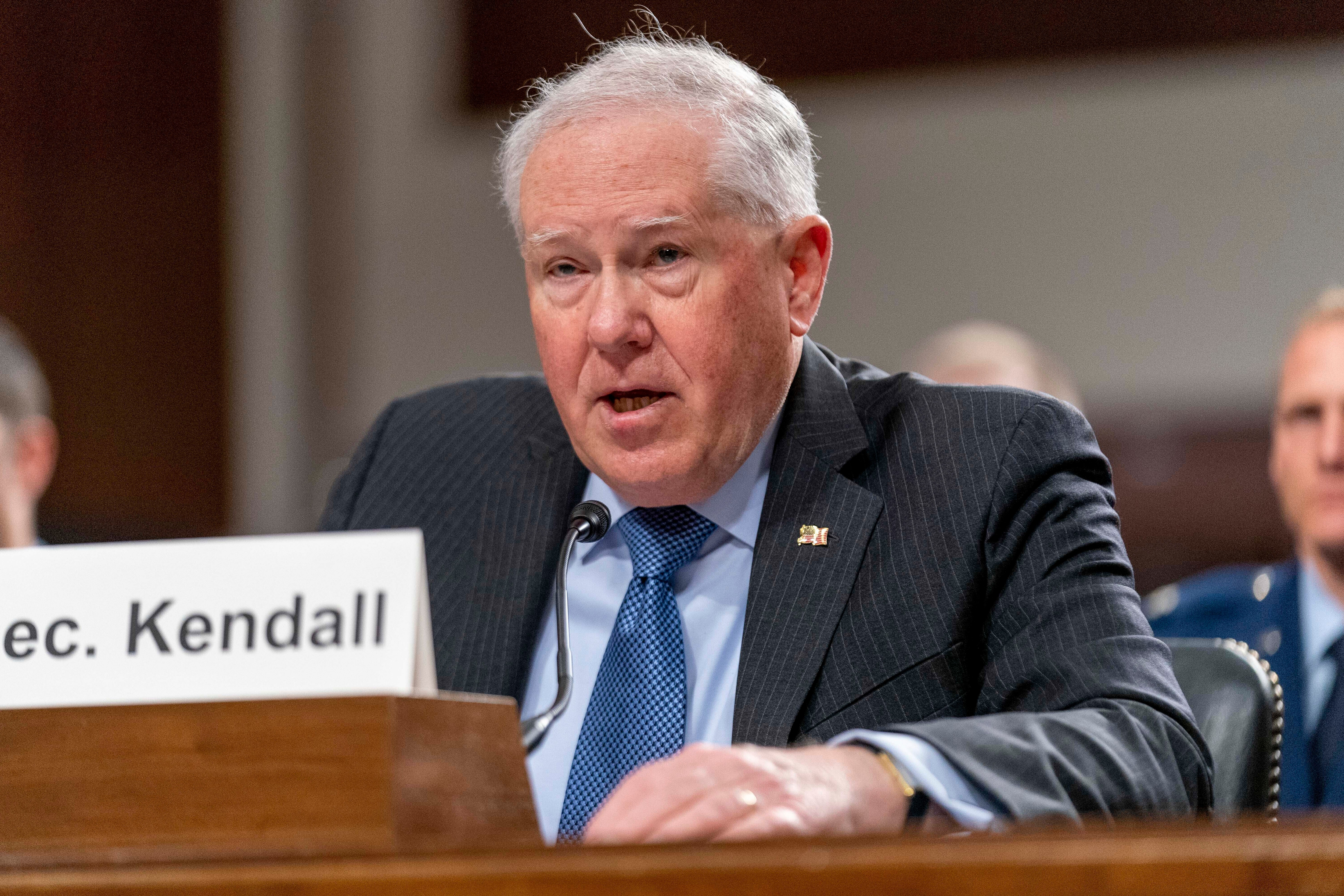
The Trump administration has revoked the security clearance of Frank Kendall, who served as Air Force secretary under President Joe Biden, accusing him of disclosing classified information about Air Force One to the media.
Kendall has recently been quoted in the New York Times and the Wall Street Journal, in stories scrutinizing the security features of the Boeing 747 gifted by Qatar, the plane President Donald Trump is using as his official presidential aircraft.
Kendall told the Times that he was “surprised to see this plane used outside the U.S.,” given how speedily it was modified after the Qatari royal family gave it to the United States. To the Journal, Kendall expressed skepticism that the plane had been “maxed out” with security features, as Trump has said it would be.
In an X post Friday night, Pentagon spokesperson Sean Parnell said Kendall was being stripped of access to classified information and his ability to hold any sensitive position following “unauthorized disclosure of classified information regarding Air Force One’s capabilities.”
“Safeguarding classified information is a non-negotiable duty. Those who violate that trust forfeit the privilege of access and any role requiring it,” Parnell wrote.
Kendall could not immediately be reached for comment Saturday. The former Air Force chief, who also served in the Defense Department during the Obama administration, told the Journal he was “mystified” by the revocation of his security clearance.
“I’ve been extremely careful to not say anything that could be classified, and as far as I know I have not said anything classified,” Kendall said, adding that so far he had not been told what classified information he had supposedly revealed.
The luxury airplane gifted by Qatar has raised ethical, legal, and security concerns since Trump announced the unusual arrangement last year. Fresh questions about the new Air Force One’s security arose last month after Trump switched jets at the last minute for part of his travel back from the NATO summit in Turkey.
Trump denied that security concerns were behind the switch of planes for the first leg of his trip — but also suggested that Iran could have tried to attack his plane, saying he was “number one on their list” of people to assassinate.
The White House said last month that Trump would tentatively return to flying on an older Air Force One while the Qatari-gifted jet received unspecified “additional upgrades and enhancements” that would take about a month to complete.
The Senate narrowly voted to confirm Todd Blanche as attorney general early Saturday morning, cementing President Donald Trump’s former criminal defense lawyer as the head of the Justice Department despite rare pushback from Republicans that had left his nomination in doubt.
Sen. Bill Cassidy (R., La.) provided the crucial vote for Blanche as two other Republicans — Sens. Lisa Murkowski of Alaska and Susan Collins of Maine — sided with Democrats against the nominee. Sen. Mitch McConnell (R., Ky.), who has been absent from the Senate since he suffered a fall in June, missed the vote.
The 50-49 vote at 4:31 a.m. — right before the Senate left for a five-week recess — gives Blanche the imprimatur of Senate confirmation in a job he has held on an acting basis since Trump fired former attorney general Pam Bondi in April.
But it hardly amounted to a full-throated endorsement.
Cassidy, despite voting in Blanche’s favor, joined Murkowski and Collins in publicly raising questions about the politicization of the Justice Department under Trump. The three also voiced concerns about Blanche’s role in a controversial deal struck this spring to resolve the president’s legal claims against the IRS — an agreement that included a now-scuttled proposal for a $1.8 billion fund to compensate people who claimed they were victims of political prosecutions.
Two other Republican senators — John Cornyn of Texas and Thom Tillis of North Carolina — expressed similar reservations and threatened earlier in the process to vote against the nomination, although both ultimately backed Blanche.
Explaining his decision, Cassidy described it as a choice between Blanche — who before his time as Trump’s personal lawyer had spent years as a federal prosecutor and a partner at a prestigious Manhattan law firm — and the possibility that Trump might pick someone worse.
“Mr. Blanche is not perfect, and he will tell you this, but the choice is not between perfection and Mr. Blanche,” Cassidy said on the Senate floor Friday. “It is between Mr. Blanche and another acting attorney general who may not run the department as effectively under President Trump and who, indeed, may not be as good as Mr. Blanche.”
For his part, Blanche said after the vote that he was “deeply honored by the trust and confidence President Trump has placed in me” and thanked the Senate for staying late for the vote.
“To the dedicated public servants of the Department of Justice,” he said in a post to social media, “thank you for your work each day to uphold the law and keep our country safe.”
With the confirmation fight now behind him, Blanche sheds the “acting” part of his title and, with it, any doubt about his authority as the head of a cabinet agency that Trump has made central to his second-term agenda.
Since returning to the White House last year, the president has eroded the Justice Department’s long tradition of independence, demanding it pursue prosecutions of his political enemies and directing resources toward rewarding his allies.
Meanwhile, the department has been ravaged by vacancies, low morale among career staff, and increasing credibility problems with federal judges.
Blanche, first as Bondi’s No. 2 and then as the department’s acting leader, has played a central role in that transformation, although his boosters in Congress have praised his efforts to step up fraud enforcement, prosecute illegal immigration and combat violent crime.
“America is safer with Todd Blanche at the helm of the Justice Department,” said Sen. Chuck Grassley of Iowa, the Republican chair of the Senate Judiciary Committee.
Cassidy called aspects of Blanche’s track record troubling, but he cited the bond Blanche built with Trump as he defended him in four criminal cases during his years out of office. The senator said he hoped that trust would strengthen Blanche’s ability to talk the president out of decisions that run contrary to the rule of law.
But Democrats insist that, at every turn, Blanche has proven unable — or unwilling — to do just that.
Since becoming acting attorney general, Blanche has defended the president’s “right” to intervene in criminal investigations and his controversial pardons of those who attacked the U.S. Capitol on Jan. 6, 2021. He has breathed new life into probes of Trump critics, including investigations of former FBI Director James B. Comey, former CIA Director John Brennan and Cassidy Hutchinson, a former White House aide from the president’s first term who testified against him in Congress.
“This nation deserves an Attorney General who loves the Constitution more than he loves the President. Sadly, for our nation, Todd Blanche, is not that person,” Sen. Dick Durbin of Illinois, the top Democrat on the Senate Judiciary Committee said in a statement Saturday.
But it is the out-of-court deal Blanche announced this spring to resolve a lawsuit the president filed against the IRS earlier this year, over the leak of his tax returns to the media, that has drawn the most unified criticism from lawmakers.
In addition to the taxpayer-backed nearly $1.8 billion payout fund, the deal also extended unusual tax protections to Trump, two of his sons and their businesses, shielding them from any preexisting tax audits.
Lawmakers from both parties decried the agreement, describing the proposed payouts as a “slush fund” designed to reward Trump’s allies, and denouncing the tax provisions as a corrupt exercise in self-dealing from a president who has often complained of burdensome audits.
Facing bipartisan pressure, Blanche walked back plans for the fund. But Cornyn and Tillis, both of whom are not running for reelection after Trump declined to support them, demanded written assurances from Blanche that the president would not later reverse that decision before they agreed to support his nomination.
Blanche ultimately relented, issuing statements late last Sunday declaring the fund officially dead and clarifying that the deal’s tax provisions protected the Trumps only from past tax audits and would not prevent the IRS from reviewing their finances in the future.
But critics have questioned whether Blanche’s written pledges hold any legal weight, given that they were not signed by Trump and his legal team, and could be ignored by the president at any point.
Murkowski raised that possibility in a statement Friday announcing her decision to vote against Blanche’s nomination. The only reason the payout fund was now off the table, she said, was because Blanche needed Senate support for his nomination.
“Once we vote, that will end, and there is no telling what the future holds,” she said.
“The country needs an attorney general who will check the worst impulses of this administration,” Murkowski added. “I hope Mr. Blanche is able to achieve that if confirmed, but I simply do not have confidence that will be the case.”
A boom in state policies legalizing backyard housing construction is allowing some families to build multigenerational compounds for grandparents, parents, and grandchildren to all live together on the same property.
Twenty-four states have passed laws meant to enable construction of “accessory dwelling units,” or ADUs: separate housing units attached to or located nearby existing homes. The ADUs might be converted basements, over-the-garage apartments or, frequently, small homes built in backyards. In the past two years alone, 11 states have passed laws allowing ADUs at any single-family home, according to New York University’s Furman Center, plus many more state and local laws are meant to reduce barriers to ADU construction.
Pennsylvania lawmakers are currently considering legislation that would allow homeowners to create ADUs in places that are zoned for single-family houses without having to get special permission. The bill passed the state House in June and is now before a state Senate committee.
While many ADUs are used as rental housing, it’s nearly as common to use ADUs for multigenerational living — often elderly parents moving into their own small home on their adult children’s property, or adult children living in their parents’ yard or above a parents’ garage instead of moving away.
California has led the charge on legalizing ADUs, passing a string of laws over the past decade. Several surveys in the state consistently show that about 3 in 10 ADU owners have a family member living in the unit, while about 4 in 10 rent them to strangers.
As soon as Massachusetts moved to prevent cities from restricting ADUs in 2024, Joel and Oreon Mode — who live on the outskirts of Boston — pitched the idea of building one to their son Carter and his wife, Zoe. What if the Modes built a 900-square-foot house in their backyard and moved into the new home, then sold the big house where Carter had grown up to Carter and Zoe at a steep discount?
The Modes would have a single-story place as they got older, instead of their current home where they have to go upstairs to their bedroom. Their 33-year-old son, who had just had a baby, would get to move out of his nearby apartment into a single-family home at a price he could afford. And the Modes would have more time with their granddaughter.
“Our home … would have gone on the market for about $1 million, which is stupid. It’s just idiotic,” Joel, 67, a special-education teacher, said in an interview. “Selfishly, we’ve got this lovely little granddaughter who we’re gaga over, and we’re very close with Carter and Zoe, and we didn’t like the idea that they would be two hours away,” where they would need to go far from Boston to find a home they could afford.
Carter and Zoe eagerly agreed. The family all share a property now in Sudbury, Mass. Oreon, 67, recently retired from her job as a project manager and has time to care for her granddaughter, which means Carter and Zoe don’t pay for daycare either. “I’ve had my friends go: ‘Aren’t you going to get on each other’s nerves?’” Oreon said. “Yeah, probably, but that’s family. That’s what family does.”
Christopher Lee, the lead designer at the company that built the Modes’ new backyard home, said his firm’s homes cost between $200,000 and $600,000 to build, with most running about $300,000 for a two-bedroom house.
“When we started, it was almost all aging parents moving into people’s backyards,” he said. Lately, he’s started seeing more instances where the younger generation is living in the ADU, often people who were priced out of buying a house when prices surged during the pandemic.
“We’re starting to see people using ADUs as starter homes,” Lee said. “We’ve done a handful now where it’s adult children moving into their parents’ backyard and they’re building a house for them and maybe a spouse and firstborn child. … There’s been some level of acceptance that high prices are here to stay. People are moving on.”
Dohyung Kim, an urban planning professor at Cal Poly Pomona, pointed out that ADUs have been marketed as multigenerational housing long before the recent boom in policies aimed at using these small homes to ease the nationwide housing crunch. After all, the additions have long been called “granny flats” or “mother-in-law suites,” implying relatives moving in. (The homebuilder Lennar, which declined to comment for this piece, calls theirs “next gen,” in a nod toward adult children living at their parents’ homes.)
Zoning rules that only permit one house on a lot made it illegal to build ADUs in much of America for decades, Kim said, and still exist. Often, he said, the towns that passed those rules object to the idea of the ADUs being used as rental housing as opposed to for family members.
“Many people build ADUs and use it as a granny flat. But at the same time, many people built ADUs and rented it out,” Kim said. “The tenants used to be more likely to be low-income people of color. Historically, many cities did not want to see that happen.”
Lindsey Fitzgerald, a sales representative for Coca-Cola, moved into an ADU on her mother’s property in Billerica, Mass., with her boyfriend and child. “When I got pregnant, my mom told us that she would be our childcare while we worked. This made all the sense to build this ADU,” she said. “It’s the cheapest way to build or buy a house right now. The market is so crazy that this is what made sense for our family.”
Fitzgerald said that she can look right through her window into her mom’s house; her toddler son delights in going between the two homes. “As my mom gets older, then I’m also here for her to help her,” she added.
Fitzgerald’s mother, Linda Dahl, was already used to having something of a family compound: Dahl’s sister lives in the other half of her split-level home, and her adult son lives with her in the main house.
Dahl said, with a laugh, that her son wants her to put another ADU in her yard so that he can live there instead. “I probably could.”
Contractor David Giacomin, who works in Maryland, said that nine times out of 10, when he builds ADUs the owner is planning for family to live in them — usually elderly parents, or sometimes adult children. Giacomin used to own a Maryland yoga studio, but he started casting about at age 50 for a new business idea when it shut down during the pandemic.
His business has boomed thanks to a state law requiring all localities to permit ADUs by this fall, including in Rockville and Gaithersburg, cities that formerly banned most ADUs. But other requirements, like mandates to install fire-suppression sprinklers, make it much more costly to build them than he thinks it has to be — and most homeowners struggle to get a mortgage to build one.
“If you put a pencil to it, you’d have to charge so much to get your money back in a reasonable time, that it just doesn’t make sense to have it as a rental,” Giacomin said. He thinks that’s why he’s mostly building for families.
One of his clients, Anne Lao, plans to move into one on her daughter’s property in Silver Spring, Md., next month. Lao and her husband moved from California to live just 10 minutes away from their daughter, but since the death of Lao’s husband, Lao’s daughter encouraged her to be even closer. Lao, 70, wasn’t thrilled at the idea of living in an addition, but she agreed to live in a unit at the end of the driveway, where a detached garage used to be.
“When I’m getting older, and if I need help, it’s just very convenient to be right next to them,” Lao said. “It just gives you a little bit more privacy and independence. They have their privacy also.”
She looks forward to seeing her 9- and 10-year-old grandchildren nonstop. “I’m sure I’m going to have visitors every day.”
The rise in ADUs has opened some people up to the idea who might not have considered intergenerational living before, said Wayne State University urban planning professor Kami Pothukuchi.
“For immigrant groups that have a tradition of living in intergenerational households, where older parents will live with their adult married daughters or sons and their families, that has been common and is still common and really has nothing to do with ADUs,” Pothukuchi said. “But where ADUs are legal — that is certainly something that you’re seeing a lot more, within American families that don’t have this as their immediate tradition of living intergenerationally.”
It’s hard to quantify just how common these family compounds are, she said, because so many ADUs, such as basements and garages, are converted into separate living spaces without permits. “If it’s unpermitted, it’s not counted.”
Because some ADUs are counted as part of the main house and some are counted as their own household in the U.S. Census, it’s hard to parse out a trend in multigenerational households in federal data.
David Garcia, who works on housing policy at Berkeley’s Terner Center for Housing Innovation, said he hopes future research will provide greater clarity.
“Part of the challenge with ADUs is we want them to do a lot of things,“ he said. ”We want them to stabilize families. We want them to create more housing stock. But it’s hard for us to know exactly how much of those goals ADUs are fulfilling without better data.”
Inquirer staff writer Michaelle Bond contributed to this article.
White House officials are drafting an executive order focused on the childhood vaccine schedule and autism, according to four people familiar with the matter. The order would continue to spotlight a divisive issue that Republican pollsters have warned carries political risk ahead of November’s midterm elections and would follow the confirmation of a new CDC director who has promised to uphold the scientific integrity of the agency.
The aim is to focus on the vaccine schedule, research around autism, and parental choice, according to three people familiar with the matter, who like others spoke on the condition of anonymity to share internal deliberations. Further details and timing of the order remain unclear, and it is subject to change.
The effort underscores President Donald Trump’s determination to elevate vaccine policy within the administration even as a federal judge has halted Health Secretary Robert F. Kennedy Jr.’s sweeping overhaul on this front, including changes to the childhood immunization schedule.
The development also comes after a federal advisory committee on autism last month released a draft update to a federal strategic plan that sets priorities for autism research and serves as a blueprint for federal research funding.
In a statement Thursday, White House spokesperson Kush Desai said, “President Trump has been clear: America must have the best childhood vaccine schedule in the world.”
He added: “The Administration remains steadfastly committed to delivering on this presidential priority with Gold Standard Science for the countless parents whose questions and concerns about vaccinations have been ignored or mocked.”
Trump has questioned whether the number of childhood vaccines can cause autism, despite decades of research finding no link. At a Cabinet meeting last week, Trump asked Kennedy for an update on autism research.
“We will have an answer for you,” Kennedy replied.
Kennedy, the founder of a prominent anti-vaccine group, has long disparaged vaccines and argued they have not been properly studied, including during an appearance on CNN last weekend. The comments have alarmed medical experts who say commonly administered shots are safe and effective.
In recent months, Kennedy has publicly leaned into his health department’s quest to improve food and drug pricing instead of vaccines. But behind the scenes, Kennedy’s allies are continuing work to reshape the federal apparatus guiding vaccines, including crafting studies to research a wide range of vaccine-related questions, including whether routine immunizations are linked to autism, autoimmune disorders, and other medical conditions.
After a federal judge halted the Department of Health and Human Services’ reduction of immunizations in the childhood schedule, the Trump administration released an executive order in late May directing the health department to realign the schedule with those of other developed countries that recommend fewer shots. It was not immediately clear how the new executive order would differ from the earlier directive.
‘It’s a personal issue for him’
Trump last year announced moves that he said would combat the rise of autism in the United States. The president in September warned pregnant mothers against taking Tylenol and touted the potential of leucovorin as an autism treatment.
“I told them … we have to find out” the causes of the condition, Trump said, flanked by Kennedy and other administration officials at the White House.
The warnings from Trump and U.S. health officials on acetaminophen, the active ingredient in Tylenol and hundreds of other medications, represented a major shift in public health guidance. Research has yet to bear out the president’s claims on Tylenol and leucovorin.
Trump has privately questioned why his administration has yet to release new recommendations on vaccines and urged his deputies to move faster, according to two people who spoke on the condition of anonymity to describe internal discussions. The Wall Street Journal first reported that Trump was pushing to prioritize the study of vaccines and autism.
“It’s a personal issue for him,” said one of the people, an administration official with knowledge of Trump’s comments. Trump has repeatedly invoked his own theories on the rise in autism, shaped by conversations with friends and advocates. Trump has previously said that he and his wife, first lady Melania Trump, deliberately spaced out childhood vaccines for their 20-year-old son, Barron.
Trump has repeatedly pressed Kennedy on his agency’s autism efforts in public cabinet meetings, including five minutes of back-and-forth during an October meeting.
“I’m addressing it the best I can as a nondoctor, but I’m a man of common sense,” Trump said then.
‘Never betray the science’
On Wednesday, the Senate confirmed Erica Schwartz to helm the Centers for Disease Control and Prevention, which makes recommendations on vaccines.
The CDC has been without a permanent leader for most of Trump’s second term. Susan Monarez, who served in the role for less than a month, told senators she was fired last year after Kennedy pressured her to support changes to the childhood vaccine schedule.
During her confirmation hearing, Schwartz was repeatedly pressed by senators on whether she would defend the CDC’s scientific integrity if political directives conflicted with the evidence. She pledged that she would “never betray the science” but stopped short of saying she would publicly oppose Kennedy if he directed the agency to take actions she believed were unsupported by scientific evidence.
Schwartz said she had not reviewed a CDC webpage that suggests a connection between childhood vaccines and autism, and declined to say whether it should be removed. She said, however, that the existing medical evidence does not support a link.
In July, the Interagency Autism Coordinating Committee released a 336-page draft strategic plan. Some advocates say the draft from the federal autism advisory committee shifts the field toward investigating autism as a result of medical injury, despite decades of research showing that autism is primarily rooted in genetics and early brain development. Although the plan does not explicitly identify vaccines as a cause of autism, critics say references to a potential “exposure or biological event” that might lead to autism echoes the framework long advanced by Kennedy and others who have promoted the debunked claim that vaccines cause autism.
The autism advisory committee was reconstituted earlier this year by Kennedy, who appointed members who have echoed his controversial views and advocated for unproven treatments.
The draft strategic plan “doesn’t mention or describe the cause of medical injury, but we can read between the lines,” said Alison Singer, president of the Autism Science Foundation. “The President and the HHS Secretary have been very vocal in the past about their belief that vaccines cause autism, as have several public members of the new federal IACC in their past statements, despite overwhelming scientific evidence to the contrary.”
Singer said the concern is less about what the draft says than the research agenda it establishes.
Current research suggests that autism is largely written into our biology. Scientists have identified hundreds of genetic variants that collectively shape the developing brain. The evidence now points more clearly in one direction: Autism begins before birth and is not caused by vaccines or any single environmental factor. Vaccines are the one environmental factor that have been studied most extensively, she said, and large studies across multiple countries have found no evidence that they cause autism.
But an executive order linking childhood vaccines to autism could be viewed as providing “backup ammunition and another legal document,” one administration official said on background, to revisit vaccine-related research in a final version of the strategic plan.
Kennedy was slated to visit the Atlanta-based CDC on Friday, where he was to participate in a ceremony marking the first anniversary of a gunman spraying hundreds of bullets at the agency’s headquarters. Investigators said the gunman appeared motivated by distrust of coronavirus vaccines.
SAN DIEGO — At Blue Star Learning, a vocational school that defrauded taxpayers of $29 million in GI Bill funds, learning was not the point.
Over four years, more than 1,100 military veterans packed Blue Star Learning’s classrooms next to a Jack in the Box fast-food joint here, ostensibly to learn basic computer skills. In reality, most enrolled just to collect a GI Bill housing allowance of about $3,000 per month, according to court documents and law enforcement records obtained by the Washington Post as part of a Freedom of Information Act lawsuit.
Veterans logged 18 hours in class a week to conjure the illusion that they were full-time students entitled to housing subsidies. Most spent the time snoozing, scrolling through YouTube or “just hanging out,” Justin Foose, Blue Star Learning’s former admissions director, told federal agents.
Meanwhile, Blue Star’s instructors pretended to teach while the school received millions of dollars in GI Bill tuition from the federal government, according to investigators’ files.
Foose said the hoax revealed itself when a government regulator showed up unexpectedly and poked his head in a classroom. “Clear as day, everybody’s on videos, and there’s one instructor up there, picking his nose,” Foose told the agents in a recorded interview. “You don’t even have to run a school or even be in education to walk into this place and realize that it’s a joke.”
Blue Star Learning was what federal agents call a “ghost” or “shell” school. Before its owner was convicted of fraud and sent to prison in 2020, Blue Star was in the vanguard of a GI Bill racket that has since been mimicked across the country, according to agents.
Unlike fraudulent GI Bill trade schools that exploit veterans by charging the government sky-high tuition to teach simple skills like grass-growing or rock-making, ghost schools rely on vets to be complicit in their schemes.
Since the first Trump administration, the Justice Department has won criminal convictions or imposed civil penalties against the operators of least 12 ghost schools for defrauding the Department of Veterans Affairs (VA) under the GI Bill, according to federal court records and law enforcement files. All were for-profit vocational programs in which large numbers of students habitually skipped class or showed up while doing little to no work, the documents show.
Investigators told the Post that they suspect they’ve uncovered only a fraction of the ghost schools that are cheating the federal government. They noted that ghost operations can be surprisingly difficult to detect, in part because GI Bill students who profit from such scams are unlikely to file complaints.
Besides defrauding taxpayers, such rackets undermine the legitimacy of the GI Bill and make it harder for other veterans to trust that they can get a quality education from any school bearing the government’s stamp of approval.
Since the GI Bill’s passage toward the end of World War II, its purpose has been to help former service members gain skills to join the civilian workforce. The $11 billion-a-year program run by VA funds 36 months of tuition for veterans at a college or trade school.
VA also pays a housing subsidy directly to student veterans based largely on the cost of living in their area. Last year, the median subsidy nationwide was $2,161 per month, according to VA data. In some parts of the country, the monthly allowance can exceed $4,000.
For veterans who are eligible for the GI Bill but don’t want to further their education, ghost schools have provided a benefits shortcut.
“Some veterans maybe aren’t that interested in getting their education,” Michelle Wasserman, then a federal prosecutor who oversaw the investigation into Blue Star Learning, said during a court hearing. “They go to a school like this, where they don’t have to do very much or not very much is asked of them. It’s kind of a fakey education and everyone is happy. The school owner gets a bunch of money and the veterans get to keep their benefits.”
Lax oversight has contributed to the problem. Under federal law, VA auditors are required to visit schools funded by the GI Bill every two years to examine financial records and student files. But a July report by VA’s Office of Inspector General found that of roughly 7,600 schools nationwide, 479 had not received a routine compliance visit in more than three years — and 153 others had never had one.
In addition, few standards exist to ensure that trade schools are delivering a quality education. Most colleges that grant degrees must obtain academic accreditation to qualify for GI Bill money, but trade or vocational schools are not required to do so.
Ten of the 12 schools that the government took action against were unaccredited, according to federal court records and law enforcement files.
While some ghost-school owners and operators have gone to prison, veterans have almost never been prosecuted for participating in such ruses. The Post could identify only one case in the past decade in which veterans faced criminal charges for swindling VA out of housing money by enrolling at a ghost school.
In that instance, the Justice Department won a fraud conviction in 2019 against the owner of a California truck-driving school — an Army veteran — who pleaded guilty to running a $4.2 million phantom-class racket. Two school employees also pleaded guilty to fraud.
More than 100 veterans enrolled in courses at the trucking school that never took place, according to the Justice Department. Federal authorities left it to the California attorney general’s office to determine whether to file state criminal charges against veterans who allegedly collected housing stipends under false pretenses.
Ultimately, California prosecutors charged 35 of the veterans with conspiracy to commit grand theft, forgery and other fraud-related counts. The rest were not charged.
To charge veterans who enrolled in such programs, authorities must prove intent to defraud, not just that students were lazy or failed to complete coursework.
VA Inspector General Cheryl Mason, whose office acts as an independent watchdog that investigates cases of suspected fraud, said it can be difficult to distinguish between veterans who con VA for housing money and those who enroll in unchallenging schools just so they can pad their resumes.
“While veterans can be colluding in these cases,” she told the Post in an interview, “oftentimes the veteran is a target. And they’re sold on it as, you know, this easy thing. ‘Oh, it’s easy. You can do this. And let’s go tell all your friends.’”
To better understand the ghost-school schemes, the Post sought GI Bill enrollment and complaint databases from VA under the Freedom of Information Act (FOIA), as well as records from law enforcement investigations conducted by the inspector general’s office.
The government denied the requests, citing privacy exemptions. But the Post sued to compel the release of the material, arguing that it was in the public interest. After a year-long legal battle, VA and its inspector general’s office released some of the databases and thousands of pages of law enforcement files. The Post also reviewed court records from ghost-school prosecutions across the country.
The Post made multiple requests with VA to interview Kenneth Smith, the executive director of its Education Service. The department declined. VA officials also declined to respond directly to written questions about the problem of ghost schools and the abuse of GI Bill housing benefits by some veterans.
In a statement, VA Press Secretary Quinn Slaven said a White House anti-fraud task force led by Vice President JD Vance “is moving at unprecedented speed and ferocity to root out the waste, abuse and criminal exploitation of government programs in these areas and others.” Earlier this year, he added, VA created a tool that assigns a fraud risk score to schools and started a compliance and enforcement division to refer cases to the inspector general’s office.
At the same time, he blamed state governments for enabling fraud within the GI Bill program in general. “The problem is that many state-level bureaucrats have looked the other way for years as fraudsters robbed government programs blind,” he said.
VA has contractual arrangements with state governments to help approve and monitor GI Bill schools. Some states, in turn, have blamed VA and federal lawmakers for not doing more to deter fraud and for not giving them more resources to conduct oversight.
In the case of Blue Star Learning, a staffer working for the California Department of Veterans Affairs, or CalVet, in 2016 became the first regulator to report signs that the school might be a sham, according to law enforcement records. But it took three more years until federal and state officials jointly forced Blue Star to close.
CalVet declined to respond directly to written questions from the Post about ghost schools in the state. A spokeswoman, Kate Hoit, released a statement saying that California veterans “deserve programs that deliver real training and opportunity.”
“CalVet takes any allegation of fraud involving GI Bill benefits seriously and is committed to protecting both veterans and taxpayers through rigorous oversight, accountability, and close coordination with state and federal law enforcement, and oversight partners,” she added.
A 230-mile commute
During the first Trump administration, the VA inspector general’s office formed a specialized unit to ferret out education fraud with sophisticated data-analysis tools.
Under GI Bill rules, colleges and universities can teach classes online, but veterans enrolled at trade schools must attend in person. Federal agents had grown suspicious that many vets were abusing the rule so they could collect housing benefits.
Using public records and other databases, analysts examined vocational school rosters to pinpoint where students lived. At some schools, they discovered that large numbers of students lived unusually long distances from campus — often in another state, according to Michael Missal, who served as VA inspector general from 2016 to 2025.
“They’re supposed to be in class, but how could somebody in Hawaii be showing up for a class in Kansas, you know, every Tuesday?” Missal told the Post in an interview. “That doesn’t make any sense.”
One of the most blatant examples was California Technical Academy, a computer-training school that taught hundreds of veterans at three hubs near Los Angeles and San Diego. In 2020, analysts determined that about 40 percent of its GI Bill students lived more than 75 miles away from the school’s campuses, a clue that they were probably not meeting VA’s requirement that students attend 18 hours of class in person each week, according to investigators’ files.
Agents knocked on the door of one veteran’s residence in Las Vegas — about a 230-mile drive from the campus in Riverside where he purportedly attended classes. When they questioned whether he was really driving all that way to go to school, he replied unconvincingly that he was, according to the agents’ notes.
The veteran ended the interview by stating, “I hope I am not going to prison for this.” (He did not.)
Investigators theorized that California Technical Academy became a magnet for ghost students because of its location, according to law enforcement files. At the time, veterans attending school in Southern California typically received GI Bill housing subsidies exceeding $3,000 per month.
Analysts cross-checked another set of databases and discovered that 56 veterans who were registered as full-time students at California Technical Academy also held full-time jobs working for the Department of Veterans Affairs, according to law enforcement files.
While it was conceivable that people were putting in a combined 60 to 80 hours a week at school and the office, agents concluded it was more likely that the VA employees were skipping class and double-dipping to get their full-time paychecks and housing money.
Undercover agents placed the school’s campuses under surveillance and conducted surreptitious interviews. Staffers acknowledged that few veterans showed up for class. They also told agents that the academy falsified transcripts and enrollment records before submitting them to VA, according to law enforcement files.
In 2022, federal agents raided the three campuses and seized the academy’s financial assets. The next year, the school’s chief executive and two other administrators pleaded guilty in federal court to defrauding VA in a scheme that involved nearly 1,800 veterans and lasted a decade.
The federal government said its losses from California Technical Academy totaled about $105 million, two-thirds of it on housing subsidies and the rest on tuition. The Justice Department said it was the costliest GI Bill scam of any kind since lawmakers expanded the program in 2008.
During sentencing, defense attorneys for the two other administrators sought leniency from the judge on the grounds that their clients were uneducated or unsophisticated, court records show.
One, Philip Abod, a longtime instructor, had dropped out of ninth grade with a 0.25 grade point average; the other, Eric Bostock, a former janitor who served as director of student services, had “cognitive limitations” and an IQ of 82, according to court filings and statements by their lawyers. Each was sentenced to a year and a day in prison. Neither responded to requests for comment.
Michael Bostock, the school’s chief executive and founder, and brother of Eric Bostock, pleaded guilty in 2022 to conspiracy to commit fraud. He admitted falsifying transcripts and attendance records to deceive VA and received a five-year sentence. A judge ordered him to pay $105 million in restitution.
In an interview last year with the Post while serving part of his sentence in home detention in Idaho, Bostock said California Technical Academy provided a legitimate education to those who wanted it. “We knew that there was cheating going on and things like that and we just, I made my instructors focus on the students that really wanted to be successful,” he said.
But he acknowledged that many veterans signed up just to receive housing allowances. He said he told the staff to let those veterans skip class under the guise that they were conducting “independent study,” an arrangement that violates GI Bill rules. Veterans who did little or no academic work still received passing grades so they could sign up for more courses, he added.
Typically, Bostock said, those students were in their late 50s or 60s and had no motivation to learn because they were already settled in their careers or retired.
“They were very open about it. They’d say, ‘We want, I want the easiest program. What’s the least amount I can do?’ And several of them would enroll in that program,” he recalled. “And then they would stay there as long as they could.”
Bostock received a five-year sentence in the case, and a judge ordered him to pay $105 million in restitution. Kyle Green
‘We’re here to earn, not to learn’
At other ghost schools across the country over the past decade, operators did little to conceal the bogus nature of their classes. In some cases, they offered kickbacks to recruiters who signed up veterans, according to court records and law enforcement files obtained under FOIA.
In Hawaii, a massage school owner pleaded guilty last year in federal court to defrauding VA of more than $9 million. Brian Matsudo, who ran the Elite Massage Academy in Honolulu, admitted arranging kickbacks for recruiters who enrolled no-show vets in courses that cost VA as much as $21,455 in tuition per student.
In Virginia, the owner of a small welding school paid a recruiter to induce veterans to register for fake courses in “fine arts welding” and “exotic welding,” then charged VA as much as $34,200 per course, according to court records and investigators’ files. In comparison, welding classes at a nearby community college cost between $500 and $1,000, the files show.
Undercover federal agents staked out the school — the Hampton Roads Skills Center in Newport News — and spied students clocking in and then, a few minutes later, clocking out, the files show. Other times, agents found the school doors locked during the day and the parking lot empty.
One veteran who purportedly received 600 hours of instruction told agents that he didn’t put on a welding mask even once. “I never had no interest in no welding,” he admitted, law enforcement files show.
The owner, Wilbert J. McNair Jr., a church pastor, pleaded guilty in 2017 to defrauding VA of $1.4 million in tuition for 83 students. He was sentenced to more than three years in prison and ordered to repay the money.
In court filings, prosecutors called Hampton Roads Skills Center “a sham school.” They calculated that veterans enrolled there received a combined $1.2 million in housing subsidies. Yet none of those veterans faced charges for accepting that money.
One veteran signed up for nine welding classes so he could collect $46,000 from VA for housing and books — even though he already had worked as a professional welder for nearly a decade and as a welding instructor at another school, according to McNair’s plea agreement.
Six of the ghost schools that the federal government has investigated over the past decade were barber or cosmetology programs.
In Mississippi, a hairstyling school called April’s Mane Attraction certified to VA that veterans received 1,500 hours of instruction to prepare for the state barbering exam. Federal agents, however, discovered that classes were rarely taught, that some registered students lived hundreds of miles away from the school, and that the coursework included word puzzles designed for children learning their colors, according to investigators’ files.
The GI Bill requires schools to charge veterans and civilians the same tuition. Yet the hairstyling academy billed VA $22,400 per student — about 10 times more than what it charged nonveterans, investigators’ files show.
In 2024, a judge ordered the school and its owner, April Tucker Beard, to pay more than $900,000 in civil damages and penalties after the Justice Department sued, alleging violations of the False Claims Act. Beard did not respond to messages seeking comment.
In Chesapeake, Va., the College of Beauty and Barber Culture served veterans who, on paper, were looking to launch careers as hairstylists. Most collected about $1,500 from VA for housing each month and up to $1,000 annually for books and supplies, according to court records and investigators’ files.
But of the more than 350 veterans who enrolled in the college, only seven were able to pass a state exam to obtain a barber or cosmetology license, the files show.
Veterans later admitted to federal agents that the school was full of “ghosts” and that their unofficial motto was, “We’re here to earn, not to learn.” They said students were instructed to sign attendance logs each day so VA auditors would think that classes were taking place, according to investigators’ files.
The school’s husband-and-wife owners, William and Katherine Grobes, pleaded guilty to defrauding VA of $4.5 million in tuition. Each was sentenced in 2017 to five years in prison and ordered to repay that amount of money. They did not respond to requests for comment.
Prosecutors said veterans who attended the school received a total of $10.5 million in GI Bill money for housing, books and supplies.
None of the students faced charges.
‘We were desperate’
Before veterans flocked to it, Blue Star Learning was a tiny IT service business that taught basic hardware and software courses in a strip mall north of downtown San Diego. Most of Blue Star’s clients were private companies or state agencies with entry-level personnel looking to improve their computer skills.
The San Diego building at right was home to Blue Star Learning, a vocational school that defrauded taxpayers of $29 million in GI Bill funds.Craig Whitlock
The owner, Nimesh Shah, told the Post in an interview that he bought the school in 2010 for $50,000 but struggled to make ends meet. After two years, Blue Star was generating just $3,500 a month in revenue, he said. Some weeks, Shah couldn’t find enough students to hold a class. “We were just sitting there,” he recalled.
Around 2012, a consultant suggested that Shah seek VA approval to offer computer training for veterans under the GI Bill. Shah said he knew “nothing” about the GI Bill then but was aware San Diego was a military town with lots of veterans. He paid the consultant about $4,000 to prepare Blue Star’s application.
“I was like, doesn’t hurt,” he said. “We were desperate.”
In 2013, VA cleared the school to accept GI Bill students. A handful of veterans signed up for three-month courses that cost between $2,000 and $5,000, and the school’s finances stabilized, Shah said. “We were able to pay the rent,” he added.
Then, in 2015, Blue Star’s fortunes transformed almost overnight. One evening, a Navy veteran walked in and offered to triple Blue Star’s business by rustling up scores of his old Navy buddies.
“He’s like, ‘Look, I have 80 to 100 folks and we are happy to bring them over to you,’” Shah recalled. There was just one catch. Instead of attending classes Monday through Friday, these veterans could come only twice a week because most had full-time jobs.
Shah said he knew that arrangement might conflict with VA rules, which required veterans enrolled in trade schools full-time to attend in person 18 hours each week.
He said he didn’t think it was feasible to teach nine hours at a clip. He also wondered how these veterans could juggle a heavy class load while staying employed full-time. So he proposed a compromise: classes three days a week, for six hours each. The Navy veteran agreed, Shah said, adding: “Right there and then, he’s like, ‘You’re on!’”
Privately, Shah figured it was too good to be true. But the following Monday, he said, Navy veterans swamped Blue Star with phone calls and emails, wanting to register for class. The school immediately had to scramble to find more classroom space.
Things snowballed, and within a year, the number of veterans enrolled at Blue Star nearly quadrupled. In 2016, VA paid the school $7.4 million to cover their tuition, investigators’ files show.
“Word of mouth got out really quick, and five guys brought five guys, and they each brought five guys. It was just insane,” Foose, the school’s former admissions director, told federal agents. “It was like 800-something people. They didn’t even fit in the school because they would just line up out the door.”
What soon became apparent, however, was that these GI Bill students were not there to learn, according to Shah and Foose. They said most were men in their 50s and 60s who had good-paying government jobs: at the post office, at the VA medical center in La Jolla, or at nearby military bases as defense contractors. Others were retired and collecting military pensions, as well as disability compensation from VA.
“When you start teaching them, they were nonchalant about it,” Shah recalled. “They’re like, ‘OK, fine. You know, teach me, don’t teach me. I don’t care.’” They didn’t explicitly say they just wanted their GI Bill housing money. But Shah and his staff caught on. “We got the point,” he said.
As he became more savvy about the GI Bill, Shah said he realized the school could charge much higher prices for undemanding classes as long as he didn’t exceed VA’s annual tuition cap. He increased tuition fourfold, to more than $20,000 per course — about three times what San Diego State University charged in tuition for a full year of classes, court records show.
To obtain VA’s approval for the tuition increase, Blue Star had to certify that it was obeying two federal regulations: that it was charging veterans and nonveterans the same amount, and that at least 15 percent of the students in every course were civilians. Those requirements for GI Bill schools are based on the logic that if at least a small number of civilians were willing to pay full tuition, then the class must be legitimate.
In his interview with the Post and in court records, Shah admitted that he and Blue Star repeatedly lied to VA about following the rules because it couldn’t find enough civilians to pay the higher tuition. It took regulators years to uncover the extent of his deceit, despite obvious warning signs that Blue Star had become a fraudulent operation.
Fake companies and burner phones
In 2016, while Shah was vacationing in Mexico, a senior education specialist with the California Department of Veterans Affairs named Shane Ferrebee arrived at Blue Star for an unannounced visit.
Under an arrangement with VA, California officials were responsible for monitoring GI Bill schools in the state and ensuring they adhered to regulations.
Blue Star had recently submitted an enrollment form stating that it had 700 GI Bill students, according to an account Ferrebee later gave to investigators. He said he thought that was fishy because Blue Star only had a few classrooms, according to an account he later gave to investigators.
His suspicions were already heightened because he had warned Shah the year before that the ratio of veterans to civilians at Blue Star was out of balance. “I never trusted the guy,” Ferrebee recalled in an interview with federal agents. “He was just too nice, and just too friendly and just [had] too many veterans.”
He decided he had grounds to conduct a surprise inspection.
Ferrebee looked in a classroom and found 50 students watching videos and “just hanging out,” with no instruction taking place, investigators’ files show. He also determined that Blue Star was still violating the 15 percent rule because it had too few civilians. Soon after, he notified the school in writing that it was being removed from the GI Bill program.
Shah knew he had been breaking the rules, he told the Post. He said he was forced to lay off most of his staff.
But Blue Star had become dependent on GI Bill money, so Shah hatched a risky and complex plan to get back in, court records show.
To persuade VA and California officials that the school now had enough civilian students, Shah submitted falsified enrollment data, according to court records and investigators’ files. He included a spreadsheet with the names of recent graduates and their employers — but most of the names and companies were fake, the records and files show.
Shah also paid someone to create individual websites for 30 phony companies. He had a Blue Star staffer buy 30 cell phones so that if regulators called the contact numbers listed on the websites, his staff could answer, court records show.
The gambit initially worked. In 2017, one year after removing Blue Star, California and VA officials readmitted the school to the GI Bill program. Veterans eager to cash in their housing allowances returned in droves, according to investigators’ files.
But the following year, Blue Star caught the attention of investigators working for VA’s inspector general.
As they did with California Technical Academy, analysts cross-checked names of Blue Star students with a database of VA employees. They found 50 people who were claiming to be studying full time at Blue Star while collecting full-time paychecks from VA.
Over several months, agents secretly interviewed former students and employees. Many described the computer classes as a farce and said that it was an open secret that veterans enrolled just to get their housing benefits, according to investigators’ files.
One former administrator told them about the list of fake names and companies that Shah maintained, the files show.
In June 2019, agents working for VA’s inspector general and the FBI raided Blue Star’s offices. Other agents arrived at Shah’s home to question him. He promptly confessed to falsifying records, according to investigators’ files and court records.
“I admitted it because, see, once you have the feds kicking in your door, there’s no point in lying,” Shah told the Post.
He also acknowledged that he was driven by greed. “It was lucrative,” he said. “I mean, there’s no ifs, ands or buts.”
In November 2019, Shah pleaded guilty in federal court to wire fraud and making false statements. Prosecutors calculated that VA lost $29 million in the Blue Star scam. Of that, $11 million was tuition paid to the school and $18 million was housing money paid to veterans.
At Shah’s sentencing the next year, his attorney, Michael Lipman, said Blue Star was “not a total sham” because some courses were actually taught, even if veterans were not paying attention. But he acknowledged that Shah “chose to do something really stupid” and that he “lied repeatedly,” including by inventing “totally fictitious students” to increase the number of civilians enrolled.
At the same time, Lipman argued, veterans who attended Blue Star just for housing allowances were culpable, too — and he criticized prosecutors for not going after them.
“The government doesn’t appear to be interested in making any attempts to get back any of the money from these people,” he said.
Wasserman, the lead prosecutor, acknowledged in court that “some of the veterans are complicit here.”
That prompted U.S. District Judge John A. Houston to ask why the Justice Department hadn’t charged any veterans as co-conspirators.
“They are taking money from the government, knowing that they didn’t earn it,” he said, adding later: “There have been veterans who caused Americans and taxpayers to lose as well, and there has been no look-see into that.”
“It’s a difficult case to bring,” Wasserman responded. She said it was part of a pattern that federal authorities were seeing around the country but suggested that it was easier to hold ghost school owners accountable than veterans.
“The scheme is, in part, scammy schools and veterans who are willing to go there” for the housing benefits, she said. “And that’s unfortunate.”
The judge sentenced Shah to 45 months and ordered him to pay $29 million in restitution.
Nate Jones and Caitlin Gilbert contributed to this report.
Methodology
The Washington Post obtained comprehensive records spanning 2018 to 2024 from the Department of Veterans Affairs’ GI Bill Comparison Tool via the Freedom of Information Act (FOIA) and merged them with VA’s 2025 Comparison Tool data pulled from the Internet Archive. Data is current as of May 2025.
The Post grouped non-degree-granting schools into categories — such as unaccredited trade specialization or flight schools — based on their accreditation status, facility codes and specific course offerings. VA tracks two separate enrollment statuses, counting all GI Bill participants and those who served after 9/11. Unless specified, enrollment figures were based on whichever figure was higher in the data. Tuition rates were based on post-9/11 enrollment because tuition figures were available only in post-9/11 data. Information on unaccredited and vocational programs is often incomplete, so reporters used school addresses found in the FOIA data to query the Google Places API and gather missing business statuses and classification types.
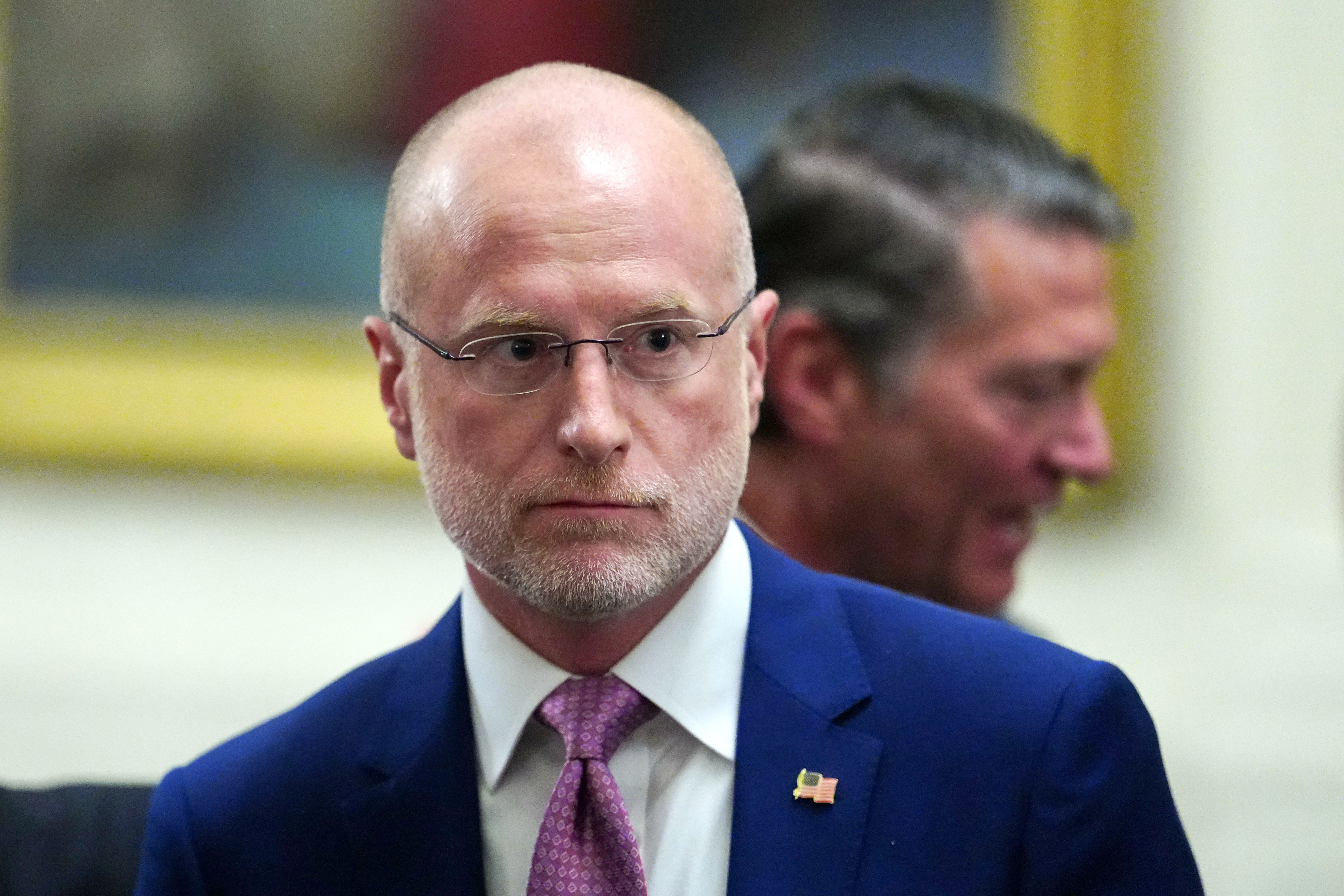
The Federal Communications Commission on Thursday voted to eliminate a long-standing regulation constraining the size of large television broadcasting companies, a major deregulatory move pushed by FCC Chairman Brendan Carr.
The FCC’s commissioners voted 2-1 to replace the cap, which prevents a company from owning broadcasting stations that collectively reach more than 39% of U.S. households, with a case-by-case review. The agency has said that the new process would “empower the FCC to approve deals that promote the public interest while allowing the agency to reject any deals that do not meet that standard.”
Carr already sidestepped the ownership cap earlier this year when the FCC approved Nexstar’s $6.2 billion merger with rival Tegna, which would give the country’s largest TV owner an 80% reach into American homes. That deal was subsequently blocked by a federal judge after DirecTV and several state attorneys general sued, alleging antitrust violations. The case is ongoing.
In a July op-ed on the right-wing website Breitbart, Carr lamented that “New York and Hollywood interests” have become too powerful and have “steamrolled” local TV station owners. He added that the commission needs to remove the ownership cap so broadcasters can better compete with cable TV companies and large tech platforms.
“The cap no longer constrains the power of national programmers,” he wrote. “Instead, it prevents local broadcasters from competing on a level playing field.”
Anna M. Gomez, the lone Democratic FCC commissioner, said during the Thursday meeting that Congress has the authority to lift the ownership cap. She added that the change won’t solve competition problems for local stations.
“Eliminating the cap does not free local broadcasters from economic pressure, it just changes who is doing the squeezing,” she said. “Trading a squeeze from Big Tech for a squeeze from Big Media does nothing to protect the communities this cap was designed to serve.”
Former House majority leader Tom DeLay (R., Texas), who helped institute the 39% cap in 2004, made a similar point in a Monday op-ed for the conservative website the Daily Wire, writing that it’s up to Congress to change it — and not the FCC.
“I am a Republican. I support deregulation and the Trump administration. But my ultimate loyalty rests with the Constitution, which gives certain prerogatives to Congress,” Delay wrote. “Regulatory agencies cannot defy or modify laws enacted by Congress. If Chairman Carr wants to raise the statutory cap, he should ask Congress to pass a law giving him authority to do that.”
Since taking the helm of the FCC at the outset of President Donald Trump’s second term, Carr has initiated a bevy of investigations into media companies. His actions have garnered some criticism from fellow Republicans concerned about the government pressuring private companies over issues of speech. When Carr threatened Disney-owned ABC stations’ licenses in September over comments made by late-night host Jimmy Kimmel in the aftermath of conservative activist Charlie Kirk’s murder, Sen. Ted Cruz (R., Texas) called Carr’s comments “dangerous as hell.”
That long-simmering fight between Carr and Disney has boiled over in recent weeks. Disney has alleged that the FCC’s early review of its eight ABC station licenses, probe of The View, and review of Disney’s diversity practices violate the media company’s free press protections under the First Amendment.
The Republican discomfort with Carr, meanwhile, hasn’t abated. During a Senate Judiciary hearing on Wednesday, Sen. John Kennedy (R., Louisiana) expressed frustration about the commission’s actions. “Sometimes the FCC scares me right now,” he told FCC general counsel Adam Candeub. “I don’t like some of the stuff that is said on television, but what business is it of the FCC?”
“All I’m saying is, y’all be careful,” Kennedy added. “You’re getting into the foothills of violating the First Amendment.”
The nonprofit Free Press said Thursday that it plans to sue the FCC and challenge its authority to remove the cap.
“Changing this limit requires congressional action, but Carr doesn’t care,” Matt Wood, the group’s vice president of policy and general counsel, said in a statement. “He’ll do whatever it takes to clear the way for Trump-aligned billionaires to swallow up stations wherever and whenever they please.”
Phyllis Hammond knew she needed to act the moment she emerged from her walk through the woods. She climbed into her car, tears streaming, and said a prayer.
God use me, in whatever and however way possible, to bring justice.
A week earlier, Hammond, 69, had received a letter from a genealogist with an unsettling revelation.
Her uncle, Amos Hammond, had died in 1921 at the age of 18 at the House of Reformation and Instruction for Colored Children, a segregated juvenile jail in Maryland with a documented history of abuse and neglect. He was among hundreds of Black boys and teens the state buried across the road from the facility in a forest in Prince George’s County.
Hammond had never heard of an uncle named Amos. But the more she learned, the more she realized Amos was family. This spring she visited the graves, marked by crumbling cinder blocks with no names, and left resolved: “I’m going to be that voice those boys didn’t have.”
Hammond began that work this week, when she was recognized by Maryland Attorney General Anthony G. Brown as a voting member of the state’s newly formed Commission on the House of Reformation and Instruction for Colored Children — an investigative body created by lawmakers earlier this year to unearth buried truths the state ignored for more than a century.
“We are determined to be the voice and to take a role in major decision-making throughout this entire process,” Hammond said Tuesday at the first commission meeting. “We are firm and committed in our belief that no decision should be made about our children without full engagement and participation with the families.”
Hammond articulated her priorities: to ensure the commission is independent, unflinching and centered on the wishes of the boys’ living relatives as they weigh whether to exhume the remains, identify them, and determine the children’s true manner of death.
The commission will be chaired by Brown, the first Black attorney general in state history, and is composed of two dozen voting members and another 10 nonvoting advisory members, all with interest or expertise in forensic anthropology, archaeology, state history, juvenile justice policy and civil rights law. Members include Sen. Will Smith (D-Montgomery) and Del. Jeffrie E. Long Jr. (D-Calvert), who sponsored the commission legislation, and Prince George’s County Executive Aisha Braveboy.
In addition to Hammond, two other living relatives will serve on the commission: Dorothy Givens, 83, representing her uncle Fred Ames Jr., and Linda F. Gorham, on behalf of her cousin Richard Saunders.
The Washington Post first reported on the abandoned and overgrown graves a year ago, after former leaders of the Maryland Department of Juvenile Services (DJS) made their existence public. A Post investigation found that at least 230 children died at the House of Reformation between 1870 and 1939, the most comprehensive public accounting to date based on state records, newspaper archives and death certificates.
Black Caucus lawmakers visited the site last August, and its members later championed a law signed by Gov. Wes Moore (D) that allocates $1 million for the commission’s initial budget. The African American Heritage Preservation Program awarded another $200,000 in grant funding.
“This is the state of Maryland, all of us, finally doing what should have been done long ago,” Brown said at the meeting, explaining that the body is expected to submit a preliminary report on its work by the end of 2027 and a final report in December 2029. He told members that the House of Reformation commission may be the most significant investigative body that Maryland has created in the past decade, especially as the Trump administration works to strip recognition of the legacy of racism from the nation’s history.
“We’re meeting at a time when many in our federal leadership are turning away from acknowledging the history that made this country what it is,” Brown said. “That makes what we’re doing here more important, not less. The state of Maryland is choosing to look clearly at a painful chapter of its own history, not to perform accountability, but to actually pursue it.”
The year since the House of Reformation gravesite’s public rediscovery has been both revelatory and fraught, a navigation of tensions over institutional racism, state power and the people impacted by both. Those tensions were made clear at the Tuesday afternoon meeting, where the families reminded commission members that for them, this process is personal.
“We are mourning,” said Gorham, a licensed psychologist. “I know we talked about remains and records, but just know that … we have souls that need to be tended to.”
Running parallel to the commission’s efforts is the Forgotten Children Initiative at Georgetown University — a first-of-its-kind research effort founded by youth justice advocate and former DJS deputy secretary Marc Schindler that is working to identify similar abandoned cemeteries nationwide. He and former DJS secretary Vincent Schiraldi oversaw the state’s earliest efforts in 2024 to uncover the House of Reformation’s history, and Schindler wanted to continue the work after he left the government.
To date, the Forgotten Children Initiative’s lead genealogist, Malissa Ruffner, has contacted 73 potential living relatives for 24 of the boys. Family members for about a dozen of the boys have responded.
Ruffner’s previous genealogical work includes helping to identify the living descendants of the 272 enslaved people who were sold in 1838 by Georgetown’s Jesuit founders. She said that she has been able to find some family members for the House of Reformation children within a few hours and others have taken days — a process that includes sifting through decades of birth and death certificates, state records, newspaper archives, census information and obituaries.
The families identified so far have already developed an intense bond, forged by shared grief and righteous rage. In June, they visited the abandoned cemetery in the woods to hold a funeral — the kind of dignified ceremony the boys did not receive a century ago.
So far, the families have met privately with Brown. They were not in attendance at a May ceremony at the Cheltenham juvenile detention facility where the House of Reformation once stood. That gathering, held by current DJS leaders, state lawmakers and the governor, served as a history lesson for the broader community and ended with the unveiling of a road marker that acknowledges the institution’s segregated past.
“Loving your country does not mean lying about its history,” Moore said that day. “Loving your country does not mean pretending like the awful and dark and bad spots did not happen. It means being able to embrace everything, flaws and all, and say that every day is an opportunity for us to be better.”
Moore said he was “committed” to honoring the boys, including locating the grave of each one in the woods.
That work will likely take years and a great deal more money than the $1.2 million currently allocated, the attorney general said at Tuesday’s meeting. The commission will rely on the expertise of forensic anthropologists and archaeologists who have overseen similar investigations, including Erin Kimmerle, who led a years-long excavation project at the Dozier School for Boys in Florida, a reform facility where officials buried dozens of children who died in state custody.
Kimmerle, an advisory commission member, told the group that they should approach this process with the sensitivity of a homicide investigation.
“For them, the past is the present,” she said of the families. “Historic justice and modern justice are interwoven.”
Gorham emphasized that point.
“It doesn’t matter that Richard, my cousin, died when he was 15 in 1935. I still feel it,” she said. “There’s a really deep thing that’s happening here. If you’re serving, I want you to feel it.”
For Hammond, among the commission’s most important missions is using their power to ensure no child detained in state custody is ever treated the way her uncle Amos was. To crystalize that conviction, she read the room a poem she wrote after visiting the abandoned cemetery for the first time.
“If these woods could talk, I wonder what they would say?” she read. “If these woods could talk, do you think they could share each of these boys’ tragic lives and deaths while entrusted in the hands of the juvenile system? If these woods could talk, could they share the pain and the scars that they endured across their fragile bodies?”
“If these woods could talk,” she continued, “I wonder if these woods would have raised their voices loud and clear against the lawlessness of what they’d seen, heard and became a part of.”
“If only these woods could talk,” she said, “maybe many lives could have been saved.”
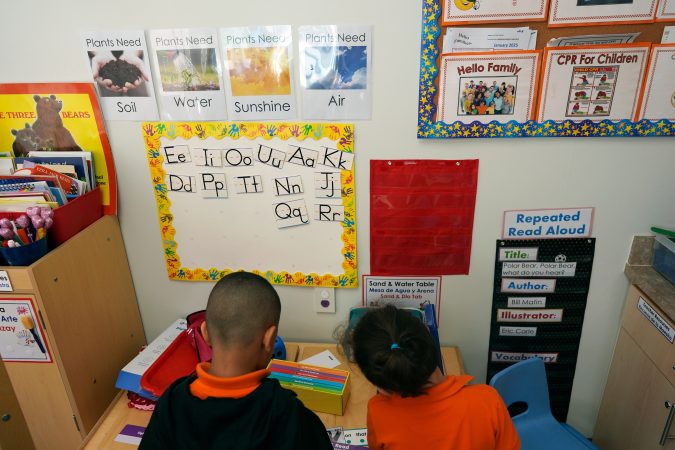
The Trump administration unveiled a proposal Thursday to overhaul the regulations for Head Start, the early-education program that serves roughly 700,000 children across the country.
The proposal would eliminate many existing federal rules, shifting some authority to states and local authorities; add new dietary and physical fitness requirements for students; and cap administrative overhead payments. The changes could free up $2.2 billion to serve as many as 268,000 more children, administration officials said.
“It’s a program that works for the most vulnerable, of course, kids in our society,” Health and Human Services Secretary Robert F. Kennedy Jr. told reporters. “And it’s really important we protect it.”
Over the past few weeks, reports that the administration planned to eliminate many federal regulations have alarmed some Head Start advocates about the future of the program. In June, a report from the conservative Heritage Foundation called on the administration to deregulate the program and eventually eliminate it altogether. And an early draft of a White House budget last year reportedly proposed zeroing out the budget for Head Start, though the final version maintained funding for the program after widespread pushback.
Also last year, the Government Accountability Office found President Donald Trump’s administration improperly withheld about $825 million from Head Start for months.
The Trump administration, however, said the latest proposal is intended to eliminate red tape, cut administrative costs, and create more flexibility for programs.
“We built this rule around trusting local leaders to make the decisions that are best for their local communities,” said HHS Assistant Secretary Alex Adams, who leads the Administration for Children and Families.
Administration officials said the proposal would also strengthen dietary regulations to “provide nutrient-dense, whole foods” for children and require sites to give students at least 30 minutes of physical activity for every 3.5 hours in the classroom.
They also said they hope to free up enough money to serve more children by eliminating other regulations and reducing the cap on administrative costs from 15% to 5%.
“If we get this proposed rule right, we will grow the number of Head Start spots,” Adams said. Officials said the proposal would preserve requirements that programs involve families in children’s learning and recognize parents as children’s primary teachers.
Sen. Patty Murray (D-Washington), a longtime advocate for Head Start, immediately blasted the proposal to remove many federal regulations.
“After Congress and the nation forcefully rejected Trump’s efforts to destroy Head Start, this administration now wants to quietly gut Head Start by eliminating the basic health and safety standards our kids rely on,” she said in a statement.
Khari Garvin, who oversaw the Head Start program during the Biden administration, said he was deeply concerned by the Trump administration’s plans to eliminate many regulations, including those governing class size and teacher compensation.
“It’s the health, safety and quality benchmarks that the federal standards bring,” Garvin said. He said the HHS proposal would “take the program backwards significantly.”
The American Civil Liberties Union said in a statement that doing away with the regulations would violate the laws governing Head Start.
“This proposed rule is an illegal attempt to dismantle the Head Start program by removing the very standards that Congress required to be in place to ensure children receive high-quality early education and comprehensive services,” said Ming-Qi Chu, deputy director of the ACLU Women’s Rights Project. “The administration cannot defy the laws that Congress wrote simply because it disagrees.”
The administration said it plans to formally publish the proposal in the Federal Register on Friday, kicking off a 60-day public comment period. Administration officials would then need to review the comments and issue a final rule, a process that can take months. Any changes could be delayed even further if the ACLU or another organization challenges the move in court.
“This will take a lot of time to implement,” said Tommy Sheridan, deputy director of the National Head Start Association, a nonprofit that advocates for Head Start.
The Head Start program was started more than 60 years ago as part of President Lyndon B. Johnson’s War on Poverty. Local sites typically provide free early education, child care, health screenings, and other services for children up to 5 years old from low-income families. Though it has an educational component, Head Start is overseen by HHS, not the Education Department.
Research on the program has found mixed results. A federal study of the modern Head Start program, released in 2010, found most of the benefits faded by the end of first grade. But another study in 2022 found the children of former Head Start participants saw meaningful increases in wages and graduation rates as adults, suggesting the program may have a positive impact across generations.
Some conservatives have long sought to eliminate the program, saying it hasn’t produced enough tangible results to justify the annual $12 billion cost.
“While the program should sunset, it is reasonable at this point to deregulate the program and provide more autonomy to local operators,” said Jonathan Butcher, acting director for the Center for Education Policy at the Heritage Foundation, the conservative group behind Project 2025, the policy blueprint that called for the government to “eliminate the Head Start program.”
Trump administration officials also noted that Head Start has gradually shrunk over the years, including a reduction of roughly 100,000 slots for children during the Biden administration.
Sheridan of the National Head Start Association said many sites have been forced to shrink over time because they haven’t received enough money to keep up with inflation. Garvin, the former director of the Office of Head Start, also noted that the Biden administration allowed some Head Start programs to add more infants and very young children, who require smaller class sizes. And some programs needed to spend more on compensation to help attract and retain instructors.
Both the National Head Start Association and the First Five Years Fund, an advocacy group for early-childhood education, said they plan to review the Trump administration’s proposal closely and submit formal comments.
President Donald Trump’s frustration over the Iran war boiled over at Camp David last week, where he demanded answers from Defense Secretary Pete Hegseth on why he had apparently been misled on extreme munitions shortages that now threaten to limit military options with Iran, two people familiar with the exchange told The Washington Post.
The encounter took place on the sidelines of his Cabinet meeting at Camp David on Friday where Trump vented at Hegseth that he thought the munitions issue “had been fixed,” according to both people familiar with the conversation, who, like others, spoke on the condition of anonymity due to fear of retaliation.
The shortages, particularly in long-range guided missiles and air-defense interceptors, have been part of the reason Trump has pulled back from launching additional massive strikes against Iran in recent days, one of the sources said.
Trump said Monday that he had ordered and subsequently called off “the biggest attack since World War II,” pending claims of new negotiations over the Strait of Hormuz.
The president asserted overnight that the United States has “massive amounts” of munitions, saying in a post on Truth Social that “large amounts are being manufactured and shipped to the U.S. as needed.” The “‘leakers’ of these treasonous statements are being hunted down,” he added.
While the United States has announced new production agreements for some of the most critical munitions, such as Patriot air defense missiles, the munitions themselves can take as long as two years to produce, and there’s no immediate relief in sight for the shortages.
In the first month of fighting alone, the U.S. fired off more than 850 Tomahawk cruise missiles and more than 1,000 Patriot and Terminal High Altitude Area Defense (THAAD) systems, The Post previously reported.
The U.S. also used more than 1,300 of the Army’s tactical ballistic missiles in the initial weeks of fighting, one U.S. official told The Post. The ATACMs stockpile — a short-range missile also in demand by Ukraine — is drained to the extent that there’s basically none left, said one of the people familiar, an assessment also reported earlier this week by Reuters.
The scarcity of defensive munitions has had an impact beyond the Middle East. Ukraine is running out of air defenses, and there are few options with which to replenish from Western stockpiles, leaving them exposed to Russia’s long-range attacks.
The lack of interceptor missiles is also altering how the U.S. decides whether to employ munitions against an incoming threat, based on where it’s assessed to be heading and whether or not it’s “a factor,” the U.S. official told The Post, a change in tactics that was first reported by NBC News.
Back at Camp David, as he was confronted by Trump over the bare weapons stockpile, Hegseth defended himself and blamed his deputy, Stephen Feinberg, for the shortages and for not ensuring Trump was fully apprised of the issue, both people familiar said.
The exchange underscored Trump’s increasing frustration with his defense secretary, who was one of the biggest early advocates for taking military action against Iran, convincing Trump it would be a quick and relatively easy win, according to multiple officials.
“This is 100% fake news. Literally never happened. And President Trump has the utmost confidence in Secretary Hegseth,” said White House press secretary Karoline Leavitt in response to questions from The Post.
More than five months after the start of the conflict, and with 18 U.S. service members killed and hundreds injured, Iran and the U.S. remain at a stalemate, with increasing concern from Arab neighbors about the long-term economic effects of the war and the impact of the closure of the Strait of Hormuz.
“Secretary Hegseth did not mislead anyone about our munitions posture, and he did not blame Deputy Secretary Feinberg. These claims about depleted stockpiles, internal disagreements, the Secretary’s position on Iran … are equally fictional,” Pentagon chief spokesman Sean Parnell said.
In a July Senate hearing, Hegseth sparred with Democrats over whether he had provided Trump with honest assessments of the Iran war, including the risks an extended campaign would pose for U.S. military inventories.
During the hearing, Hegseth declined to discuss his advice to the president and repeatedly blamed any shortages on the Biden administration’s handling of the military, not on the operations that have occurred under Trump’s watch.
Hegseth, Feinberg and Joint Chiefs Chairman Gen. Dan Caine have asked lawmakers to provide them $67 billion in additional military funding to help cover the costs of the Iran war, with Hegseth telling lawmakers in testimony last month the request filled an “urgent, necessary” need to refill the military’s stockpiles.
Senate Republicans have yet to agree on a strategy to take up the package.
The administration’s overall defense budget request for the coming fiscal year is a record $1.5 trillion and includes tens of billions of dollars to build missiles. But the proposal has stalled as Democrats object to the massive increase, leaving the Pentagon without a clear path to replenishing critical weaponry.
Ever since Signalgate, where Hegseth sent classified information to a chat group that included a reporter just months after being confirmed to the role, rumors have swirled about how long the defense secretary would remain in Trump’s good graces. The president has consistently praised Hegseth, saying he looks straight out of “central casting” and that “he loves war.”
Since taking office, Trump has launched military operations in seven countries: Yemen, Somalia, Syria, Iran, Iraq, Nigeria and Venezuela.
The successful operation to capture former Venezuelan strongman Nicolás Maduro appeared to further secure Hegseth’s position. But the stalemate over the Strait of Hormuz and the massive cost and length of the Iran war has eroded Trump’s confidence in him, one of the people familiar with the Camp David conversation said.
“Secretary Hegseth isn’t going anywhere, and he’s going to continue to work side by side with Deputy Secretary Feinberg to execute President Trump’s agenda,” Parnell said in response to questions about that exchange and the munitions depletion.
Stockpile pressures are not a new challenge. Before the war even started, Caine warned Trump that the U.S. did not have the stockpiles necessary to sustain a prolonged conflict.
But the pace and sheer volume of munitions expended by both sides has rapidly accelerated the depletion of key U.S. offensive and defensive munitions.
From Feb. 28 to April 7, which marked the first day of the ceasefire, the U.S. struck more than 13,000 targets in Iran. It has also defended against more than 8,500 incoming Iranian munitions or drones.
The U.S. launched Operation Epic Fury already facing shortfalls in critical munitions.
In the summer of 2025, it expended more than a quarter of its total inventory of THAAD interceptors during Israel’s 12-Day war and Operation Midnight Hammer, where U.S. forces struck Iran’s nuclear sites. The current conflict “has made those inadequacies even worse,” said Brad Bowman, an Army veteran and senior director at the Foundation for Defense of Democracies.
While Hegseth and the Pentagon have announced numerous new industry framework agreements to rebuild the arsenal, defense firms “aren’t going to start bending metal until you have a contract and congressional appropriations,” Bowman said.
As a result, it could be years before the inventories are rebuilt. “We’re often talking years between spending what we need to spend, getting the contracts signed, and delivery,” he said. “You don’t just flip the switch and suddenly the munition appears in the hands of the warfighter.”