Category: Washington Post

  • CIA staff exodus leaves new retirees waiting months for benefits

    CIA staff exodus leaves new retirees waiting months for benefits

    A historic wave of departures at the CIA and deep cutbacks at the Office of Personnel Management are swamping the spy agency’s retirement system, leaving former spies with monthslong waits to get their first pension check, according to former intelligence officials and internal agency messages.

    While precise numbers are classified, current and former officials say the pace of retirements and resignations from the CIA outstrips anything in recent memory. They are being fueled in part by President Donald Trump’s push to shrink the federal government, including deferred resignations offered to workers last year.

    The CIA, in a recent note to alumni, acknowledged the problem and pleaded for patience.

    “The Retirement Branch is currently processing an unprecedented number of retirement cases, and is working diligently around the clock to expedite these cases,” the note said. “We appreciate your understanding and patience as we navigate this challenging period. Rest assured that our team is committed to processing your annuity payments as efficiently as possible.”

    It gave retirees two toll-free numbers to call if more than six months had passed since they’d received their final paycheck.

    One former official said she recently spoke to a colleague who retired in March and had just received their first, partial retirement check.

    “The question is how do you pay for your mortgage, and how do you pay for your kids’ college,” the former official said.

    As CIA workers prepare to retire, they are eligible to take a one-week, in-house seminar called “Horizons” that is meant to help them navigate life outside the spy agency’s cloistered halls — like how to prepare a job-hunting resumé that doesn’t disclose classified information.

    Lately, those in the seminar are being told they may not see their first full retirement check for up to nine months, or longer, after they depart the CIA’s headquarters in Langley, Va.

    The retirement crush mirrors trends across the federal government, where, data show, there are unprecedented numbers of people leaving, creating lengthy delays in retirees receiving their benefits. Last year, there were more than 330,000 departures, most of which were voluntary.

    The situation is particularly poignant at the CIA, where officers often serve in danger zones, rarely receive public recognition and share a culture of not complaining publicly outside the spy agency’s walls.

    CIA officers who until recently recruited agents, prepared classified reports on world crises or developed high-tech espionage tools are feeling the squeeze, said the former officials, who spoke on the condition of anonymity to discuss internal CIA dynamics.

    “If military retirees were told they had to wait a year or more for earned pension benefits, Washington would be apoplectic. Intelligence officers serve in the shadows, and their discretion should not become a shield for institutional failure,” said a former senior U.S. intelligence official familiar with the issue.

    “If agency and congressional leaders were not aware of this problem before, they are now,” he said.

    In response to the crunch, the CIA has surged personnel to the Retirement Branch, including people with experience with that work.

    “CIA is committed to ensuring that retired officers who dedicated their careers to our mission receive their hard-earned benefits as quickly as possible,” a CIA spokesperson said in response to questions from the Post.

    “Under Director [John] Ratcliffe, CIA is focused on returning the Agency to its mission of recruiting spies, and recently hired our largest class of operations officers in two decades,” the spokesperson said in a statement.

    President Donald Trump and CIA Director John Ratcliffe at Camp David last month.Nathan Howard

    The size of the CIA’s workforce and the number of employees who have left since the start of Trump’s second term are classified. Overall, the CIA workforce was believed to be about 22,000 in early 2025, U.S. officials said. Many hundreds of people — perhaps more than 1,000 — have since left, one of the former officials estimated.

    Some former officials describe the agency’s downsizing as the largest since the CIA was significantly cut back in the early 1990s, following the collapse of the Soviet Union and the end of the Cold War.

    In May 2025, the Trump administration told Congress it planned to reduce the CIA workforce by 1,200 over several years, mostly through attrition and reduced hiring. Agency workers were among the tens of thousands of federal employees who took a deferred resignation package the Trump administration offered to shrink the government’s ranks. Others simply decided it was time to leave.

    Administrators responsible for processing retirement requests are among those who have left, worsening the crunch, said two former intelligence officials.
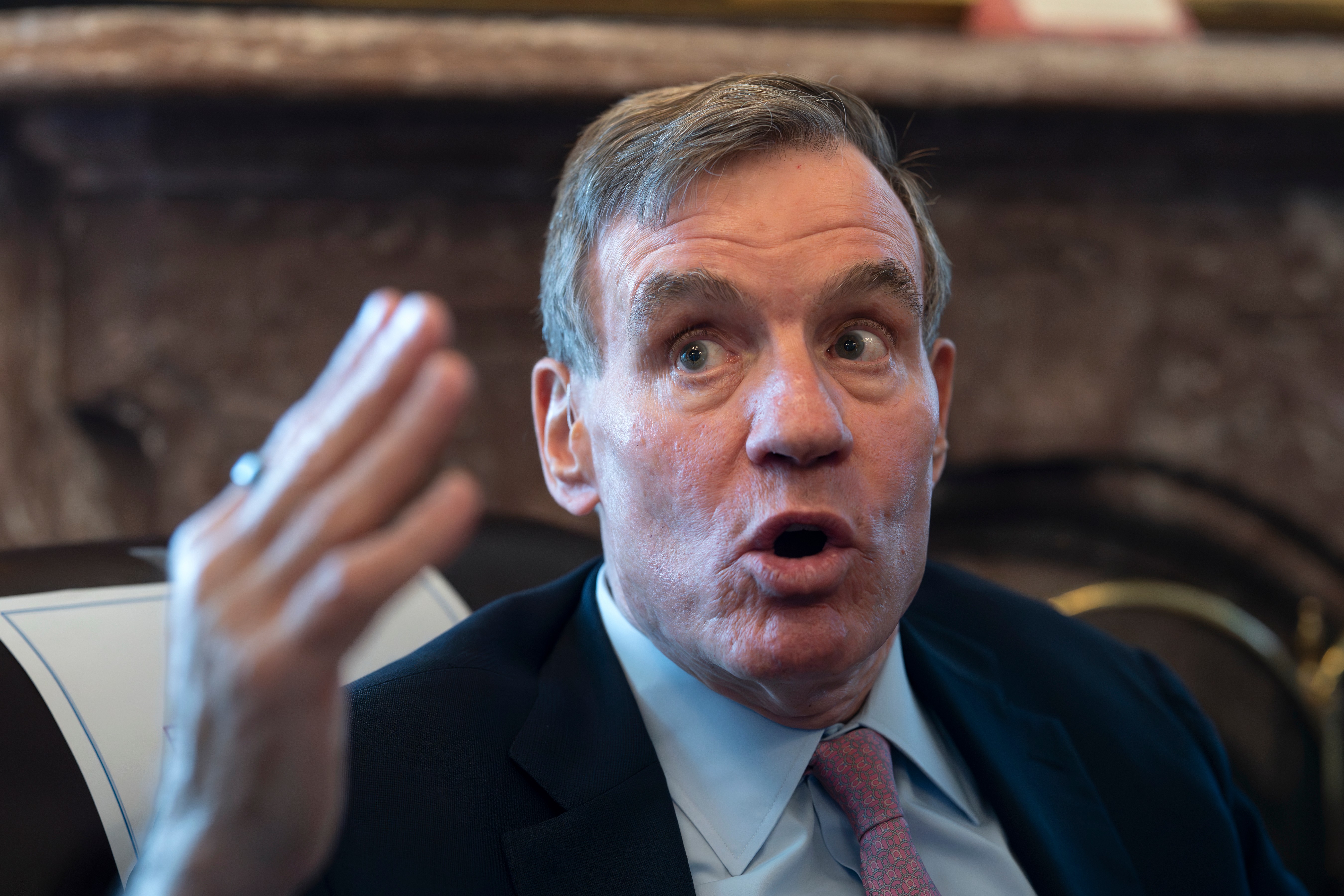
    Sen. Mark Warner (D., Va.), the vice chair of the Senate Intelligence Committee, speaks to reporters on June 11.J. Scott Applewhite

    “The men and women of the CIA protect our country and make Americans safer every day, often without any acknowledgment or recognition,” said Sen. Mark Warner of Virginia, the top Democrat on the Senate Intelligence Committee. “The least our government can do is ensure they receive the benefits they deserve when they decide to leave.”

    “Again and again, this administration has mistreated our public servants, including those in the CIA. And whether it’s incompetence or disrespect that is creating the delay, the administration needs to figure out how to fix it,” Warner said.

    Some CIA officers have pulled back their retirement requests because they can’t afford to go long periods without being paid, one of the former officials said. Others are falling back on savings or taking out second mortgages to cover the gap.

    “Start looking now, hoard cash, plan for a longer period of time” before receiving retirement pay, said a retired CIA official who left last fall. “More thoughtfully and aggressively pursue jobs before you leave.”

    The official said it took four to five months before he was paid for unused annual leave — a sum that can be substantial for some retirees — and another month after that before he saw his first retirement check.

    The CIA has a tradition of treating its retirees well, former officials said. Among the reasons: Angry ex-employees with heads full of secrets are a target for adversary intelligence services. “We are creating a massive [counterintelligence] risk,” said the official who left last fall.

    Like other federal officials, former CIA officers are banned from taking certain jobs for a set period after retirement, such as lobbying on issues they handled while in government or working for foreign governments.

    CIA retirement packages are initially handled within the agency, which can take several months. Retirees are given an estimate of what their benefits will be.

    Many factors can complicate the process. Departing officials may have served undercover, using a different identity; spent time in the U.S. military or at another intelligence agency; or have a spouse who also worked at the CIA.

    Once completed, the packages are transmitted to the Office of Personnel Management, the government’s human resources agency. Before the cases are finalized, OPM issues interim payments to retirees that are typically 60 to 80% of their eventual checks. The government eventually makes up the difference.

    John Hatton, staff vice president of policy and programs at the National Active and Retired Federal Employees Association, said there is no legal recourse for retirees who want to get their benefits sooner, and the government will not owe interest for delayed payments.

    “It’s a tough situation,” he said.

    The OPM’s workforce declined by a third, from just over 3,000 in fiscal year 2024 to 1,980 in fiscal 2026, according to the agency’s data. Though the OPM expanded the main office responsible for retirement services to handle the wave of departures, the team still shrank by 16%, according to the U.S. Government Accountability Office.

    OPM data show it is taking longer on average for the agency to process retirement claims, from 79 days in October 2025 to 109 days in July.


  • Anthropic expects to match SpaceX’s record IPO size or top it

    Anthropic expects to match SpaceX’s record IPO size or top it

    Anthropic PBC expects to match or beat the size of SpaceX’s record-setting initial public offering, according to people familiar with the matter, as preparations for the artificial-intelligence firm’s debut pick up speed.

    The Claude developer is running the numbers as it prepares to file publicly for its potential mega-IPO as soon as the end of this month, the people said. Recent investor briefings led by chief financial officer Krishna Rao skirted the question of valuation, they said.

    Elon Musk’s rocket and satellite firm raised $75 billion at the outset, making it the biggest first-time share sale ever, data compiled by Bloomberg show. The final figure increased to $86.2 billion with the so-called overallotment option, which is typically exercised if shares rise in early trading.

    Discussions are ongoing and details of Anthropic’s IPO including the size could change, the people said, asking not to be identified as the information isn’t public. A representative for Anthropic couldn’t immediately respond to requests for comment.

    Anthropic’s target reflects how the AI industry’s leaders are transforming the tech investment landscape. The five-year-old company raised $65 billion in May at a $965 billion valuation, surpassing rival OpenAI’s valuation of $852 billion in March when the ChatGPT maker raised $122 billion.

    Though Anthropic saw positive adjusted operating income for the second quarter, it had a net loss of almost $42 billion in 2025, a roughly fivefold increase from about $8.3 billion the year before, according to documents seen by Bloomberg News.

    Demand for AI has been growing at speed, as a sharp increase in Anthropic’s revenue shows. The company saw preliminary second quarter revenue of more than $11.5 billion, compared to $787 million in the corresponding period in 2025, and its run rate, a metric that projects full-year revenue from a shorter period, hit $65 billion by the end of July, Bloomberg News reported.

    Very High Cost

    Anthropic and its rivals are grappling with the very high cost of building more advanced AI systems, some of the people said. Training so-called frontier models requires huge amounts of computing power — in just one of its agreements with data center owners, Anthropic agreed to a deal with SpaceX for computing resources that could be worth tens of billions of dollars over the next three years.

    Anthropic is on track to make its public debut ahead of OpenAI, which is now looking at a listing in 2027, Bloomberg News reported. Both companies have filed confidentially for their respective listings.

    Ahead of its public filing, Anthropic is set to finalize a revolving credit facility that will raise more than its roughly $10 billion target, people familiar with the matter have said.

    Anthropic is working with Morgan Stanley, Goldman Sachs Group Inc., and JPMorgan Chase & Co. on the IPO, and other banks could be added, Bloomberg News has reported.

    Anthropic is considering adopting so-called super-voting shares that would give chief executive officer Dario Amodei, who owns about a 2% stake, and his fellow cofounders greater control over the company, a person familiar with the matter said. The Information was first to report the super-voting stock.

    A first-time share sale topping SpaceX would easily power 2026 to become the best year on record for U.S. IPO volume, data compiled by Bloomberg show. Newly listed companies have already raised $160.6 billion through Aug. 19, trailing 2021’s high watermark of $195.2 billion, the data show.

    Anthropic’s debut would add to a year that’s already delivered two of the largest-ever listings, with South Korean chipmaker SK Hynix Inc. raising $26.5 billion in its first-time sale of American depositary receipts.

  • Texas Gov. Greg Abbott takes aim at Muslim washing stations in airports

    Texas Gov. Greg Abbott takes aim at Muslim washing stations in airports

    HOUSTON — For years, travelers passing through Texas’ two biggest airports have had access to small washing stations for a ritual called wudu, in which Muslims clean their hands, arms, head and feet before the five daily prayers.

    Such facilities have become more common in states with the largest Muslim populations, including Texas, where on Wednesday travelers and others popped in and out of washing stations at Houston’s George Bush Intercontinental Airport. The tiled wudu room sits along an airport hall just past a vending machine, with a small sign showing a draped person kneeling.

    Public wudu stations are also open at places including the University of Minnesota, the University of Michigan, LaGuardia Airport in New York, and O’Hare International Airport in Chicago.

    Now, amid rising attacks on Muslims by Republican elected officials, Texas Gov. Greg Abbott is making the stations a target. He sent a letter Friday to the heads of the Houston airport and Dallas-Fort Worth International Airport that said facilities aimed at serving one religious group are discriminatory against everyone else.

    Abbott said he has asked the U.S. Department of Transportation to investigate both airports and warned that his office is “reviewing all grants to any local governmental entities involved in these schemes.”

    Later that day, DFW announced it had scrapped plans to add additional washing stations in men’s and women’s restrooms that are available to passersby outside the security perimeter.

    Airport spokesman Heath Montgomery wrote in an email that officials “determined the originally anticipated benefit may not be achieved” if the stations were built.

    Asked if the decision was a response to Abbott’s letter, Montgomery said it was made before the letter was issued, but that airport officials “were aware of his and other public officials’ emerging concerns.”

    Muslim leaders and experts in religious liberties rejected Abbott’s claim that the facilities would discriminate against non-Muslims. Several said opposition to the washing stations is the latest example of GOP leaders, perhaps most visibly in Texas, railing against Islam.

    “If there is one thing all religious liberty scholars and advocates across the ideological spectrum have agreed on, it is that the Free Exercise Clause forbids government discrimination because of religion,” Steven T. Collis, a University of Texas at Austin law professor, said in an email. “Although Gov. Abbott’s letter characterized what the airports were providing as discriminating in favor of Muslims, this newest saga is actually part of a much broader pattern of state officials targeting Muslims and trying to make Texas an inhospitable place for them.”

    Asma Uddin, a constitutional law scholar who writes about Islam in America, said the Supreme Court has long ruled that neutrality “does not mean that every religion gets treated exactly equally; it means the government cannot coerce, endorse, or exclude based on religious identity.”

    The experts noted a range of public services targeted to specific groups, from kosher food served at airports to special low-sensory hours at museums or parks for autistic people. The public-private Texas waterpark chain Hawaiian Falls has hosted events for Christians including “Modesty Matters” and mass baptisms. President Donald Trump this summer hosted a massive evangelical Christian worship event on the National Mall in D.C.

    “We can choose to be coy about it and pretend like there are actually sophisticated ideas or sincere concerns here about discrimination, religious encroachment, public safety or spending,” said Imam Omar Suleiman, who leads the think tank Yaqeen Institute outside Dallas. “Or we can embrace the fact that bigotry toward Muslims is alive and well and being fanned, funded and fueled to increase, in Texas and across the country. And people like Governor Abbott are at the center of that phenomenon.”

    Abbott’s office declined to comment Wednesday, referring The Washington Post to social media posts in which he repeated his claim that the washing stations were religious discrimination.

    The office also noted a Sunday interview on Fox News in which Abbott was asked why he opposes the stations but supports a new state law mandating the posting of a Protestant version of the Ten Commandments in every classroom.

    Abbott called the two things “apples and oranges.” The biblical commandments, he said, were part of Texas history all the way up until “who we are today,” while “other faiths” don’t have “the same applications over the course of history of the state of Texas and hence don’t need to be recognized.”

    Suleiman, who uses airport wudu stations when he’s traveling, called the washing facilities an important part of making Muslims comfortable and described Abbott’s letter as part of a movement looking to curtail that group’s religious freedoms.

    “Putting one’s foot in the nasty sink of a public restroom — often trying to carefully ensure that no part of the body touches some yucky bathroom surface while balancing on one leg — isn’t really something Muslims are thrilled to be doing,” he said.

    There are about 4.6 million Muslims in the United States and about 313,000 in Texas, according to the World Population Review. Muslims have become more visible in American public life in recent years, with milestones including the election of Mayor Zohran Mamdani (D) in New York and the Michigan Democratic primary win of Abdul El-Sayed, who would become the nation’s first Muslim U.S. senator if he defeats his Republican opponent this fall.

    At the same time, anti-Muslim sentiment has become more public and more pointed.

    “The blatant and mainstreaming of Islamophobia is worse than after [the Sept. 11, 2001, attacks],” said Haris Tarin, vice president of the Muslim Public Affairs Council, an advocacy group that focuses on policies of interest to U.S. Muslims.

    Trump, who has declined to condemn anti-Islam comments from members of his party, last week described Democratic candidates in the midterm elections as “jihadists.” Earlier this month, Rep. Nancy Mace (R, South Carolina) said “every single Muslim holding public office in America is a Trojan horse.”

    The growth of Muslim communities in Texas is impossible to miss.

    The Houston area is now home to Texas’s largest Muslim community, with more than 200 mosques and Islamic centers. The Muslim population in the Dallas-Fort Worth area doubled in a decade, and Muslim state lawmakers represent suburban districts in both the Dallas and Houston metro areas.

    Houston Mayor John Whitmire released a statement in response to Abbott’s letter saying 22 percent of all international travelers departing from Terminal D — where the wudu station is — are flying on airlines based in Muslim-majority countries. “IAH is a global gateway,” Whitmire wrote. “The ablution room was created in response to passenger requests and serves a practical need.”

    Abbott, who is running for reelection, and Attorney General Ken Paxton — a Trump ally who is waging a competitive race for the Senate — have both embraced Islamophobic rhetoric on the campaign trail.

    Last year, Abbott designated the Council on American-Islamic Relations, a Muslim civil rights and advocacy organization, as a foreign terrorist group. He and Paxton fought to revoke the group’s nonprofit status, a move that CAIR has challenged in court.

    Abbott has also led GOP efforts to block a residential development planned around a large mosque complex in the Dallas area.

    Texas officials denied Islamic schools access to the state voucher program until a judge ordered them not to. At the Texas GOP convention in Houston in June, Republicans added to their platform a provision banning “sharia,” or Islamic law, even though sharia law does not apply under U.S. civil law.

    At the airport in Houston on Wednesday, people came in and out of the wudu rooms ahead of Dhuhr, the midday prayers. A man and woman wearing airport employee tags — she also wore a blue head scarf — slipped into their respective rooms shortly before 1:30 p.m. A mother and her teenage son, traveling home to Toronto after visiting family, said ablution stations are common in Canada.

    Ubaid Mian, who manages several airport restaurants, said he uses the prayer and wudu rooms multiple times each day.

    “The airport is a place where everybody travels. Diversity should be appreciated,” he said, shaking his head at the controversy. Texas “has so many people here who have so many different beliefs. There’s no harm in it. It should be respected.”

    Mian said he would be back at the wudu room to prepare for evening prayer before heading home.

  • Why one highway exploded this summer — and why many more are at risk

    Why one highway exploded this summer — and why many more are at risk

    It was another sizzling summer day in late July, with temperatures nearing 100 degrees, when one of the main roads cutting through Greenville, Texas, finally just gave up.

    The stretch of U.S. Highway 69 kept expanding in the extreme heat until it exploded, creating a sharp, two-foot-tall ramp where it broke at the pavement joint. Most of the traffic in this Dallas exurb drove around it.

    But then a black pickup hit the ramp going about 30 mph, sending the truck airborne, Dukes of Hazzard-style, flying several feet in the air and slamming down on its front tires.

    “Oh, my God!” an onlooker said, as the scene was being recorded. “That’s crazy!”

    It was a dramatic example of what has been playing out repeatedly this summer along the nation’s roadways, railroad tracks and bridges: Intense heat is causing surfaces to expand to the point that they break.

    The failures illustrate how the nation’s transportation networks, built for a different era, increasingly struggle to handle hotter modern-day summers. And this summer has been brutal. July, federal scientists have said, was the single hottest month on record in the contiguous United States.

    Heat waves melt asphalt into goo. Train tracks twist. Overhead power lines sag. Concrete snaps into pieces in what are known as “blowups” — the technical term for what the Pennsylvania Department of Transportation defines as “a heave in a concrete or brick pavement caused by pavement expansion from excessive heat.”

    The entire state of Wisconsin was cautioned earlier this summer to “watch for pavement buckles.” A blowup last month closed part of Interstate 97 near Severna Park, Maryland, clogging traffic for a quick repair and then for three straight nights. Interstate 49 in Shreveport, Louisiana, was also shut for hours while crews raced to deal with a blowup. After a bike path next to U.S. 36 buckled, officials in Boulder County, Colorado, warned residents to prepare for more.

    “You start seeing them in early summer, and then they surge as the heat builds,” said David North, a district engineer with Louisiana’s transportation department.

    Blowups, he said, are “unpredictable and instant.”

    In New Jersey, a vertical-lift bridge over the Point Pleasant Canal has been forced to close to boat traffic four different times this summer — on June 11, June 30, July 14 and Aug. 7 — because unrelenting heat kept cooking bridge components and preventing the span from moving.

    The bridge, which opened in 1972, was built for a different climate.

    State officials now “are working with our consultants to see if there can be any modifications made to mitigate these issues,” Steve Schapiro of the New Jersey Department of Transportation said in a statement.

    In Wisconsin, the rate of pavement buckling had been increasing over the last decade, with higher temperatures partly to blame, according to a 2022 state report.

    The Federal Highway Administration in 2023 warned against relying on historical climate records when designing new roads and suggested looking instead to predictive climate models.

    “I do think there is a recognition that [road] specifications and standards are static, but weather patterns are changing,” said Shane Underwood, an engineering professor at North Carolina State University and president of the Academy of Pavement Science and Engineering.

    He was the lead author on a 2017 paper that warned that failing to change methods “significantly threatens” the nation’s roads.

    Underwood said he’s seen some progress. He pointed to an online tool developed by federal officials that uses site-specific climate data to help engineers select the correct blend of binders for asphalt pavement. Roads in Arizona, for example, need to be stiffer than those in Minnesota to survive the high temperatures.

    The regional recipes for new roads have changed over the years, like how the U.S. Agriculture Department updated its plant hardiness zone map to account for warm-weather plants surviving farther north these days.

    Road engineers also are experimenting with other ways to protect the nation’s infrastructure.

    “It’s really taken off in the last 10 to 20 years,” said Kim Roddis, professor emerita of civil and environmental engineering at George Washington University.

    Some asphalt roads — which can soften like chocolate chip cookies — are now dusted with plastic polymers for better rigidity, Roddis said.

    Several cities have tested out what is essentially white asphalt, to reflect more heat. San Antonio, Phoenix and Los Angeles have launched “cool pavement” pilot programs.

    New Jersey has stopped building concrete roads with asphalt on top due to hotter temperatures, calling it an outdated design, Schapiro said. Next year, it plans to repair concrete pavement slabs along 11 miles of Interstate 287, in part to get ahead of potential future blowups caused by the heat.

    Railroads are struggling with hotter days, too.

    Metal tracks can bend in extreme summer heat, creating what’s known as a “sun kink” as rails exert force against the ties. That can cause trains to derail.

    Train operators have responded by stepping up rail inspections and going slower during heat waves.

    Washington’s Metro uses “heat ride” inspections to look for rails reaching 135 degrees, the trigger for speed restrictions. Amtrak runs into the problem so often that it offers an explainer page on its website so customers understand why trains might run slower during heat waves.

    In February, a trade group for public transit agencies issued new guidelines “to improve its resilience to climate hazards,” with ideas such as replacing wood ties with concrete ones.

    Union Pacific, one of the nation’s largest freight railroads, said this summer it was spraying white paint on its rail network in some places to cool the metal, borrowing a page from European railroads.

    In Greenville, that flying pickup truck was not the first time extreme summer heat caused problems on U.S. Highway 69.

    Just three weeks earlier and 10 miles away, a different section of the highway also succumbed to the heat when the asphalt pavement softened and vehicles pulled up the roadway in chunks.

    It was a mess. But it was no match for what was to come.

    The viral video of the pavement blowup was the talk of the town, said Greenville spokesman Daniel Starks.

    “I was shocked,” he said. “You don’t ever want your road buckling — and definitely not like that.”

  • Trump wants a ballroom in Ireland. One man is having a ball fighting it.

    Trump wants a ballroom in Ireland. One man is having a ball fighting it.

    Everything seemed primed for President Donald Trump to get his ballroom.

    No, not that ballroom. His other ballroom.

    Across the Atlantic, in the tiny village of Doonbeg, where the Trump International Golf Links & Hotel rises above the dunes of a wind-swept beach, the president and his family had promised to build “the nicest ballroom in Ireland” — a grand edifice that would extend across 12,000 square feet and seat 320 guests at 42 tables.

    And unlike in Washington, where Trump’s push to fast-track a grandiose White House ballroom set off a political and legal fight that has now reached the Supreme Court, the population of Doonbeg, which hovers around 300, had lined up behind the project.

    In a letter to the local planning commission, a local pub owner said it would halt the village’s decline. Another resident said it would create jobs and bring in offseason tourism. A statement by the Doonbeg Football Club called the golf resort “not just a business … but an integral part of our community.”

    Even the snail lobby had been appeased.

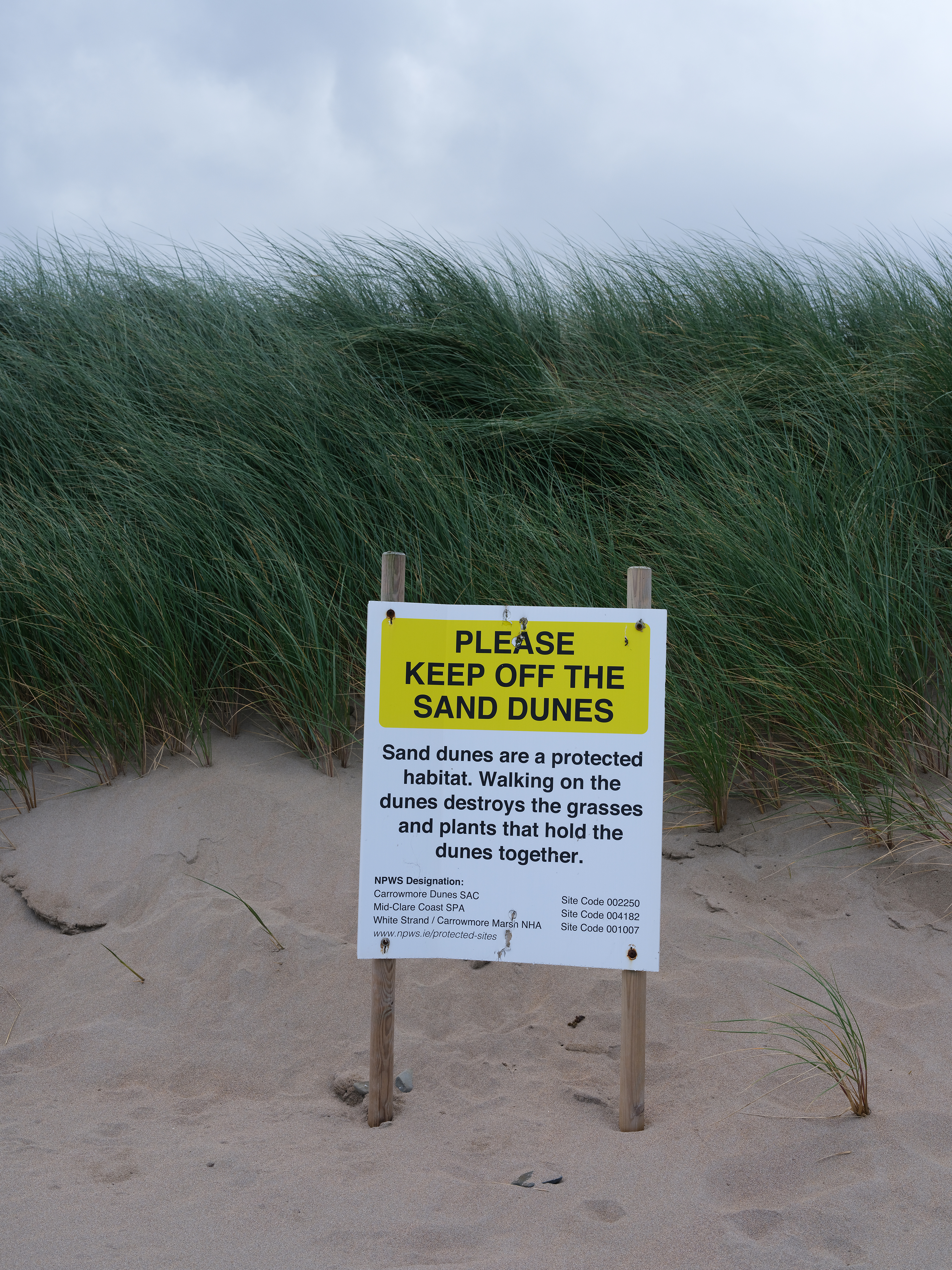
    Questions over the fate of the threatened Vertigo angustior snail — a microscopic mollusk nestled in Doonbeg’s sandy dunes — had bedeviled the golf property even before the Trump Organization owned it. But in February, the commission approved the ballroom provided the Trumps offer a snail restoration plan.

    “The ballroom,” said Rita McInerney, a Doonbeg resident and member of the Clare County council, had become “part of the community’s vision.”

    The jubilation, however, was quickly cut short.

    Days after the February approval, a lone appeal was lodged by Liam Madden, a hermetic figure notorious for blocking hundreds if not thousands of development projects across Ireland, including a previous expansion plan in Doonbeg. Impervious to shaming or calls for decency, he once stirred such rage that a foe attacked him with a blowtorch.

    “Please,” Madden urged the appellate board, “refuse this nonsense.”

    Trump’s other ballroom was stalled.

    Guests ride horses at Trump International Golf Links Ireland.Anastasia Taylor-Lind

    How to torpedo a project

    Madden is a tall man with white hair who lives in a historic house behind a thick stone wall in the Irish village of Longford. He owns no cell phone. He has no website. No social media accounts. The only way to find him is either through his malfunctional landline or an email address that identifies him, in Latin, as the “Irish Vitruvius.”

    And yet, people across this country know the name Liam Madden.

    When confronted by bothersome development projects, the Irish over the years have turned to this quarrelsome and punctilious man for his ability to torpedo plans. He is what many in Ireland call a “serial objector” — someone who makes a living by appealing planning commission decisions. Madden, however, bristles at that classification.

    Instead, when he’s feeling reticent, he describes himself as “the most successful appellant in the history of the Irish state.” At other times, including in interviews with the Washington Post, he referred to himself as a “god,” a “hero,” a “celebrity.”

    “There simply isn’t anyone better,” he said. “It’s a scientific fact.”

    “I’m modest as well,” Madden, 76, added. “That’s one of my failings.”

    His profession is an unintended outgrowth of Ireland’s wildly permissive planning appellate system. In most of Europe and the Americas, a person typically needs to legally demonstrate some stake — financial, geographic or otherwise — to gum up a project with an objection. Ireland has taken a different tack.

    All anyone has to do to file an appeal — and trigger a monthslong review by An Coimisiún Pleanála, the national appellate planning board — is submit a preliminary “observation” and pay a nominal fee. Appellants don’t have to be Irish. Or even in Ireland.

    “There’s no such thing as too much democracy,” reasoned Lorcan Sirr, a housing analyst at Technological University Dublin.

    A house in Doonbeg is painted in preparation of the Irish Open Golf Tournament.Anastasia Taylor-Lind

    The system increasingly has become a matter of national controversy. Developers complain that it’s an impediment to progress, vulnerable to abuse and fueling a cottage industry of serial objectors, some of whom have used appeals to extract payments from developers. In 2024, lawmakers proposed reforms.

    Madden, who’s never been accused of such improprieties, looks at other serial objectors as a lesser form of the species. He said he would never profane his craft with profit-seeking. What motivates him is the pleasure of winning — identifying even the smallest legal violations to bedevil his adversaries.

    That, and bald-faced publicity. “I’m perpetually seeking notoriety,” he said.

    So in January, while flipping through the papers, he saw what he recalled as a “golden opportunity.” In Doonbeg, roughly three hours from Madden’s house by car, Eric Trump had proclaimed his intent to build the “nicest ballroom in Ireland.”

    Madden knew then what he must do.

    “If there is a God in heaven,” he declared one July evening, “I will win the planning appeals and capitalize on it for notoriety.”

    Volunteers for Doonbeg Tidy Towns water flowers along Main Street.Anastasia Taylor-Lind

    A village praying for a golf course

    Doonbeg was in trouble. As the 1990s drew to a close, the shoreline village, whose history dated to at least the 1500s, was fading.

    “We weren’t poor in community,” said Tommy Comerford, a fifth-generation Doonbeg resident. “But we were poor in jobs and opportunities to keep our young people.”

    The community pitched the European Regional Development Fund on a golf course — and won financing for it. Designed by famed golfer Greg Norman, the Doonbeg Golf Club opened in 2002, just as the local population fell to 206.

    Busloads of golf tourists from the United States and Canada were soon rolling in. Seasonal employment at the club — which quickly added a luxury hotel and events space — grew to 300 people. Residents who’d left were coming back.

    “The golf resort is so important to us,” said Seoirse Comerford, 52, who returned to take over the family pub.

    But the resort could not turn a profit. By 2011, it had lost a reported $70 million. In January 2014, it was put up for sale, and worry spread through Doonbeg.

    “It was like, ‘Oh my God, 300 jobs — gone,’” said Caroline O’Brien, a resident.

    A savior, however, quickly arrived: an American buyer named Donald Trump. He touched down at Shannon Airport in May 2014 and immediately declared his plans for the resort.

    “One of the main reasons I’m here is siting the ballroom,” Trump said. “A truly great ballroom. I believe people from all over the world will be using this ballroom.”

    The sand dunes of Trump International Golf Links, as seen from Doughmore Bay Beach. Anastasia Taylor-Lind

    ‘I’ll be a friend to the snail’

    Shortly after the sale’s announcement, an Irish environmentalist named Tony Lowes got a call from Trump.

    “I’ll be a friend to the snail,” Lowes recalled Trump declaring.

    Questions over the threatened Vertigo angustior, a fickle creature with exacting ecological needs, had long troubled the golf course. Even before it was built, Lowes’s Friends of the Irish Environment had filed a lawsuit to protect the snail. A judge ordered that the snail’s lot be “maintained or improved” and a settlement agreement even allowed for the appointment of a snail expert as a sort of steward.

    For years, the snail thrived, and Trump promised to sustain its roll.

    But Lowes said the Trumps haven’t kept their word, and the snail’s population has plunged. Shortly after they bought the resort, the snail expert was dismissed. (The expert didn’t respond to requests for comment.) Then, in 2016, the Trumps proposed building a 1.7-mile rock barrier wall along Doughmore Bay Beach to forestall shoreline erosion and protect the links from storm damage.

    Environmentalists said the plan, even after it was scaled down, would alter the dunes’ delicate alchemy and doom the snail. To block construction, Friends of the Irish Environment filed an appeal with the national planning board. At its side, with his own appeal, was Liam Madden.

    The board decided against the Trumps. Madden basked in glory.

    Comparing himself to Saint Patrick, Madden at the time said he’d drive Trump “out of Ireland” like a “snake.”

    Trump International Golf Links Hotel, seen from Doughmore Bay Beach. Anastasia Taylor-Lind

    The making of a serial objector

    When he graduated from architecture school in 1973, Madden said he wanted only an architect’s life. But the planning system was so integral to his work that he immersed himself in planning law and, upon submitting his first appeals, realized, “I was very good at it.”

    During the mid-1990s, as Ireland experienced a building boom, people began seeking out Madden for his unusual acumen. Some wanted him to clear a project’s way. Others wanted the opposite. He became friend and foe to developers.

    “He had a nickname among developers: the ‘Condom Man,’” said Irish federal senator Joe Flaherty. “You’d use him once, and then throw him out.”

    Most of Madden’s work was done in obscurity. But his name nonetheless often rose to public notice.

    First came a political campaign in 2004 against a candidate also named Liam Madden, for nothing more than what Madden called “devilment.” Then he stalled a project by the Gaelic Athletic Association, which is Ireland’s largest sporting organization, until it apologized to him over a decades-old grievance.

    In 2013, Madden delayed the reopening of St. Mel’s Cathedral, a massive church that suffered a devastating fire, by objecting to a glass elevator that he alleged would offend the “modesty” of “Scotsmen visiting in their kilts.”

    The town was furious.

    “It was hugely emotional for the town,” Flaherty said. “It was two middle fingers to the local community.”

    The attention only spurred Madden on. He objected to a fast food development. He objected to converting an abandoned factory into a car auction site. He objected to Trump’s barrier wall. And he objected to UFC legend Conor McGregor’s bid to build a boutique hotel, challenging him to a “bare-knuckle fight.”

    Louis Herterich, a longtime client, said most people simply didn’t get Madden. “He’s just different,” Herterich said. “His god is being right and getting it right and winning.”

    Flaherty added: “Nobody in their right mind would want to be Liam Madden — the criticism, the open contempt — but he relishes it.”

    In a way, the two men said, they almost felt sorry for Trump.

    “Even if he loses,” Flaherty said, “he’ll just find something else and keep going at it.”

    Newly built houses in Doonbeg. Anastasia Taylor-Lind

    A fatal error?

    To Madden, there is no way he’ll lose — not this one.

    “I’ve caught them with their pants down,” he said while beaming one July evening.

    He returned to the snail — this time focused on helicopters. The Trump Organization, a promotional video indicated, allows guests to be ferried in and out by helicopter. In materials published online, an aviation company, Executive Helicopters, said it has two “heli landings” at the resort, one by the hotel and one on the golf course.

    To Madden, this was a “fatal error”: The Trump Organization neither mentioned the helicopters nor sought to measure their ecological impact. The ballroom proposal thus was “tainted at law and beyond remedy,” he wrote.

    Plus, Madden wrote, “Would our poor little Vertigo Angustior survive?”

    The Trump organization didn’t respond to a request for comment. Golf course manager Joe Russel declined to comment. Executive Helicopters didn’t respond to a request for comment.

    Geraint Ellis, an expert on Irish planning law who reviewed the appeal at The Post’s request, said Madden’s objection wasn’t frivolous. “Mr. Madden seems to have found some issues that are worthy of further scrutiny,” Ellis said.

    As word spread of the objection, Doonbeg residents reacted with outrage. The golf resort had nothing to do with Trump, resident Rita McInerney said. Doonbeg started the resort, and will rise or fall with its fortune. How could a single outsider with nothing at stake kick up such trouble?

    “Ludicrous,” she said.

    “Disgraceful,” agreed Seoirse Comerford.

    “Totally unfair,” added Tommy Comerford.

    Doonbeg resident Rita McInerney said the ballrom became “part of the community’s vision.” Anastasia Taylor-Lind

    In Washington, the White House ballroom is well underway. Foundational construction has started. The $900 million, 90,000-square-foot structure is coming into focus, including new details like gold-colored presidential seals. The Supreme Court is expected to rule this week, potentially giving it a green light.

    But in Ireland, where the national appellate board is expected to rule by year’s end, Liam Madden insists the other ballroom will never be approved.

    “Joe Biden beat Donald Trump once,” he said. “I’ve beaten him twice.”

  • Many treatments promise relief from tinnitus. Here’s what actually helps.

    Many treatments promise relief from tinnitus. Here’s what actually helps.

    It can sound like a fire alarm, a kettle whistle, a hiss of air escaping from a balloon, a chorus of tree frogs, or a roaring jet engine. For me, tinnitus is a blaring sound in my right ear, similar to the high-pitched whine that follows an explosion in a war movie, except it never fades away. The screeching sound is with me from the moment I wake up until I fall asleep.

    More than 740 million adults worldwide experience tinnitus and some studies suggest 1 in 10 people have it. Some barely notice it. Others can’t function because of the phantom noise. It steals their sleep, fractures their relationships, and triggers depression and anxiety. Severe tinnitus affects about 2% of adults overall.

    While there is no treatment proven to silence chronic tinnitus, there are a handful of strategies you can try to reduce symptoms and the discomfort they bring. Here’s what experts suggest.

    What causes tinnitus

    Tinnitus is a sound without an external source, heard in one or both ears, or elsewhere in the head. Commonly called ringing in the ears, it can be temporary and resolve on its own, or persist and become chronic. The noise can vary from a faint hum to a shrieking wail.

    Bruce Hubbard, a psychologist who also has tinnitus, likens his to a smoke alarm. “A smoke alarm is designed to get people’s attention and drive them away. And that’s what [some of us] have in our heads, basically a smoke alarm 24/7,” Hubbard said.

    Most people with tinnitus have some level of hearing loss. Mine began with sudden sensorineural hearing loss, a medical emergency that causes abrupt hearing changes and requires early treatment for the best chance of recovery, but tinnitus is also associated with age- or noise-related hearing loss — though it might not always be apparent on hearing tests.

    The Tinnitus Handicap Inventory measures how tinnitus affects your daily life, from slight to catastrophic. Two years after my tinnitus began, my score is severe. I miss silence.

    The leading theory for why tinnitus occurs is that when the brain receives less auditory information, the central nervous system adapts by increasing neural activity, said Stéphane Maison, director of the Tinnitus Clinic at Mass Eye and Ear, who also has tinnitus. “Tinnitus is not a sound in your ears. Tinnitus is the result of your brain trying to adapt to a lack of information that is no longer coming from your ears,” he said, comparing it to phantom limb pain.

    Medical evaluation can identify treatable or less common causes, including earwax, ear infections, head injury, vascular problems, an inner ear disorder, tumor, and jaw-joint problems. Some medications, such as powerful antibiotics called aminoglycosides and certain chemotherapy drugs, can cause hearing loss, tinnitus, or both.

    Strategies to make tinnitus less disruptive to everyday life

    There’s no cure for tinnitus, “but we’re working on it,” Maison said. (For some people with hearing loss, hearing aids or cochlear implants — surgically implanted devices that directly stimulate the auditory nerve — can improve hearing and may reduce tinnitus.)

    Tinnitus treatment is often focused on changing your perception of and reaction to the noise. “The idea is not so much to make the sound go away, although that’d be great, but to help that person coexist with this thing they don’t like by improving their understanding and their ability to rationally think about it,” said Marc Fagelson, an audiologist and professor who has tinnitus and works with veterans.

    Treatment options include the following:

    • Cognitive behavioral therapy (CBT), a type of talk therapy that focuses on recognizing and changing unhelpful thought patterns and resulting behaviors, has the clearest evidence for reducing tinnitus-related distress.
    • Acceptance and commitment therapy (ACT), another type of psychotherapy that focuses more on accepting thoughts and changing how you relate to them, may also be effective, though it can feel initially counterintuitive to people searching for a cure. “Acceptance is a practical choice,” Hubbard said.
    • Tinnitus retraining therapy (TRT) aims to promote habituation, the process of paying less attention and reacting less strongly to the sound, through education, counseling, and sound therapy. (The propensity to closely monitor and try to control tinnitus can keep your attention focused on the noise, making it harder to tune out.)
    • Tinnitus activities treatment (TAT) focuses on addressing four problem areas: thoughts and emotions, hearing and communication, sleep, and concentration. Individualized treatment may include counseling, communication and hearing strategies, exercises to redirect attention, and sound therapy.

    Mindfulness practices may help some people cope. Acupuncture, yoga, and meditation have not been shown to treat tinnitus directly, but Maison said people who find these activities relaxing can use them to reduce overall stress.

    James Henry, a retired tinnitus researcher who has tinnitus, suggested listening to an audiobook or podcast to help fall asleep at night. White noise, nature sounds, or calming music may help mask tinnitus or make it less noticeable. Tinnitus can feel more intrusive in some situations, such as when you’re in a quiet room, because there are no external sounds to mask the ringing, or after exposure to a very loud environment. (Some people with tinnitus also experience hyperacusis, a hypersensitivity to everyday sounds.)

    Having a strong support system can help reduce isolation, which people with tinnitus may feel if they avoid social situations because of difficulty following conversations, low tolerance of noisy environments, or fear that their tinnitus will worsen. But staying socially engaged is important, Fagelson said.

    Anxiety and depression may worsen tinnitus distress, and tinnitus may also contribute to anxiety and depression. While antidepressants or antianxiety medications can’t resolve tinnitus itself, they may be helpful for addressing any mental health concerns related to the condition.

    Tinnitus related to a traumatic incident can be associated with PTSD, Fagelson said. Tinnitus is the most common disability for U.S. veterans. Military service can involve repeated exposure to damaging noise, including gunfire and explosions, which can trigger lasting tinnitus. “The potential is there for the tinnitus to serve as a trauma reminder and be extremely burdensome in that regard,” Fagelson said.

    Although the sound may persist when trying the above tactics, many people may adapt over time and find it bothers them less or they eventually notice it less. “The brain is highly capable of adapting to it and even screening it out,” Hubbard said.

    What doesn’t the evidence support? Supplements such as zinc, Ginkgo biloba, magnesium, and Lipo-Flavonoid are touted online as offering relief, but studies have not shown they reliably improve tinnitus and guidelines from the American Academy of Otolaryngology-Head and Neck Surgery Foundation specifically recommend against using supplements to treat tinnitus. And while some people say that certain triggers fluctuate the volume of their tinnitus, including caffeine, salt, and alcohol, research doesn’t back up any specific dietary changes.

    Emerging technologies

    Bimodal neuromodulation, which stimulates two sensory systems at once to prompt changes in the brain, has emerged in recent years as a potential treatment for some people with tinnitus. Lenire, a prescription device that pairs sound delivered through headphones with mild electrical stimulation of the tongue, was authorized by the Food and Drug Administration in 2023 to temporarily relieve tinnitus symptoms in adults with at least moderate tinnitus. (That authorization does not establish that the device cures tinnitus or works for everyone.)

    Susan Shore, an auditory neuroscientist and researcher at the University of Michigan, developed another bimodal neuromodulation device that works a little differently. It pairs sounds tailored to a person’s tinnitus with precisely timed stimulation on the face or neck, with the aim of altering abnormal neural activity associated with tinnitus.

    Studies on these devices have been relatively small and largely conducted by the companies and researchers behind the devices so more independent research is needed. (Also of note: Lenire is offered only through audiologists, and according to the company’s website, is not broadly covered by major commercial insurance plans or Medicare.)

    The ultimate goals: Habituation and acceptance

    Without a proven way to silence chronic tinnitus, the most realistic long-term goal is habituation, Henry said. “Habituation means not paying attention to your tinnitus most of the time. And when you do pay attention to it, you don’t react to it.”

    Henry said he’s fully habituated and comfortable with his tinnitus, despite it being loud. “I hate it. I wish it would go away,” he said. “I wish there was a cure, but otherwise, I can live with it.”

    Hubbard compared tinnitus to losing a loved one and processing grief and loss. “I’ve got to somehow make peace with that in order to move on,” he said. He suggested focusing on your values and the life you want to live, while acknowledging that tinnitus can be extremely difficult to deal with.

    When my tinnitus first started, I couldn’t imagine spending one waking minute without noticing it. While I still make daily adjustments, avoid noisy restaurants, and listen to white noise, I can now spend hours without consciously noticing my tinnitus or letting it rule my life.

    For now, that’s success.

  • Amazon’s new order confirmation emails seen boosting phishing risk

    Amazon’s new order confirmation emails seen boosting phishing risk

    When Dan Landau ordered a portable photo printer from Amazon, he expected the confirmation email to tell him what was on its way. Instead, he was notified that his “luggage” was coming. In another instance, the 38-year-old head of marketing for a venture capital firm ordered items to maintain his pool and was confused when the company labeled them three different ways: Decor, Outdoors, and Garden.

    “The categories are very vague, and they seem to have little to do with what is actually being ordered,” he said.

    Landau isn’t the only one expressing bafflement. In recent weeks, Amazon customers on TikTok and Reddit have also wondered why product names and images were replaced with labels such as Household item or Essentials item in order confirmation emails.

    An Amazon spokesperson said the company simplified the information to direct customers back to its app and website in an effort “to further improve” their privacy by reducing “customer information shared outside” of Amazon.

    But critics say the emails can be so vague, and sometimes so far removed from the actual product, that they become less useful for telling customers what’s being shipped, and more useful to scammers looking for a template to launch phishing attacks.

    Arun Vishwanath, founder of the Cyber Hygiene Academy, says the change is essentially asking shoppers to trade privacy for security and could spur impersonation attempts.

    “It’s definitely not in the best interest of customers,” said Vishwanath, who also advises the National Security Agency’s research-focused Science of Security & Privacy directorate. “If anything, it increases risk.”

    Phishing attacks often mirror official emails and trick people into clicking on a bogus link that might contain malware or request login credentials. Vishwanath says Amazon’s new confirmation emails could encourage users to click on links without verifying who sent them.

    Last year, Americans reported $3.5 billion in losses from so-called imposter scams, according to the Federal Trade Commission. The agency said that in 2023 it received about 34,000 reports of scammers pretending to be Amazon, the second-most impersonated company after Best Buy/Geek Squad.

    Without directly addressing cybersecurity concerns, the Amazon spokesperson said the new email format was designed to make authentic messages from the company easily identifiable.

    But Erich Kron, an adviser to Knowbe4, a firm that trains people to avoid phishing and other attacks, said the change itself could attract scammers.

    “Anytime some change like this happens, bad actors are going to jump on it and they’re going to use that change and things that people aren’t used to, to help us make mistakes,” he said.

    In cases where consumers don’t receive Amazon app notifications to corroborate their purchases, an email may be the only immediate indication that an order has shipped. But when the message no longer details what they ordered, they may be more inclined to follow email links — including ones sent by scammers, Kron said.

    “It’s never been safe to just click on random links in emails, even if it does look kind of like it comes from Amazon,” he said. Kron said it’s typical for phishers to practice “credential stuffing,” a method often used by Amazon scammers who feed purloined usernames and passwords in a tool that automatically searches banks, credit card companies, and other large retailers for a match.

    Standard security practices can help spot phishing attempts, such as hovering over a link with a computer mouse if browsing from a desktop. But that safeguard is harder to use on a cell phone, where Amazon notifications are most likely to appear. On a phone, it is less likely that when clicking a link, a preview will pop up allowing users to confirm the link leads directly to Amazon’s platform.

    Abnormal AI, a security company that uses artificial intelligence to help companies prevent phishing attacks, said it has not yet seen conclusive data showing a spike in scams since Amazon stopped providing specific product information in its order confirmation emails. But, echoing other cybersecurity experts, the firm said the new format could make it easier to carry out such attacks.

  • This secular congressman is urging Democrats to fight Christian nationalism

    This secular congressman is urging Democrats to fight Christian nationalism

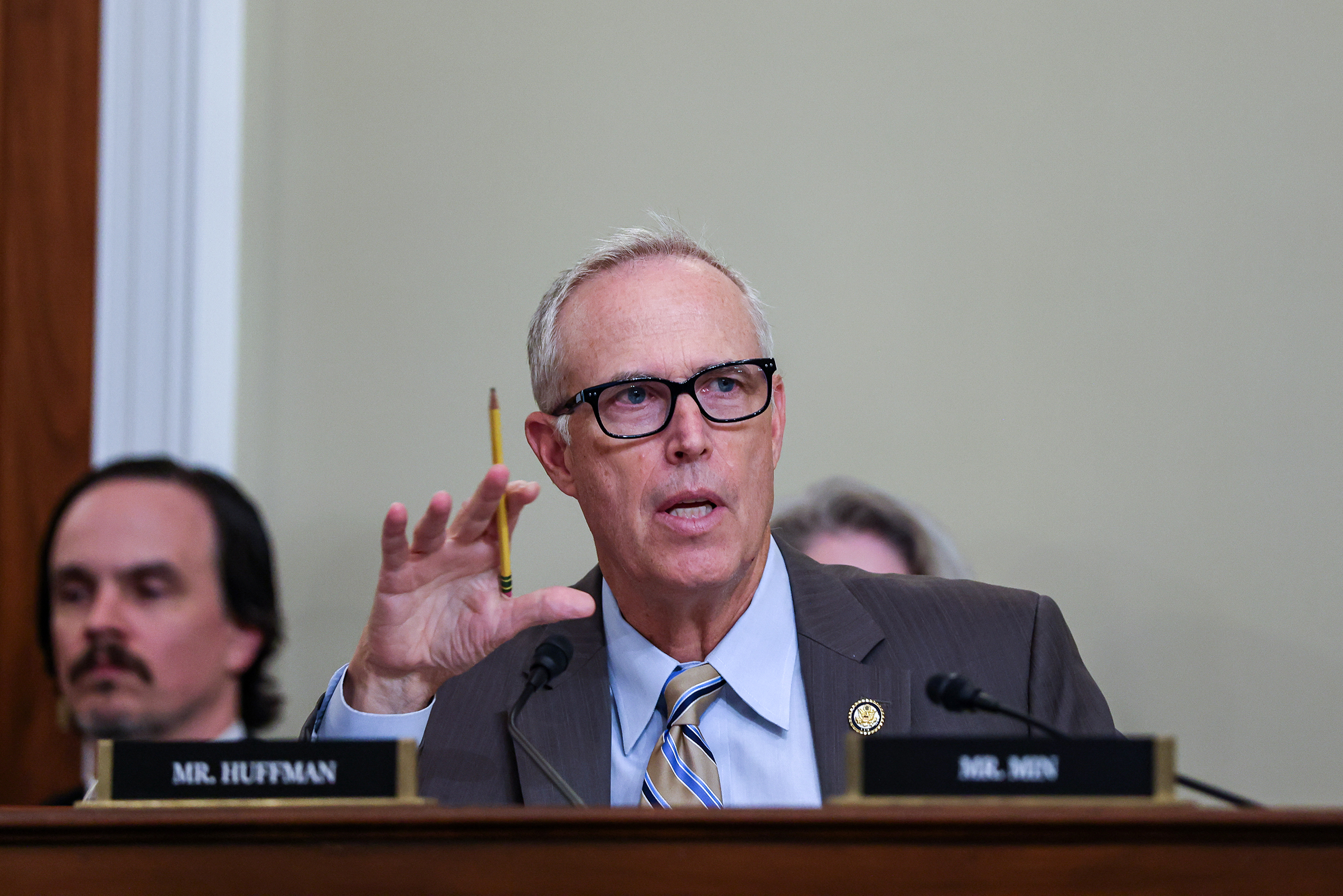
    When Rep. Jared Huffman came out publicly in 2017 as a “nonbeliever,” he was only the second member of Congress in modern times to do so — even though a quarter of U.S. residents identified as nonreligious.

    Things have changed since for the secular cause on Capitol Hill.

    The Freethought Caucus, which Huffman launched in 2018 to promote church-state separation, has grown to 37 members — more House lawmakers than the uber-conservative Freedom Caucus (32) or the Congressional Prayer Caucus (34), according to the platform LegiStorm.

    And the percent of lawmakers who choose not to give a religious affiliation or say the unspecific “other” has more than doubled in the past decade, from 16 to 40.

    Along the way Huffman, a Northern California Democrat who is a Humanist, has become a kind of national spokesperson for promoting a secular government. And as some data shows many Americans increasingly displeased with the way religion and politics are mixing, he sees an opportunity for his cause, and for his party.

    “I think the game has changed,” Huffman said. “Republicans have made a losing bet. Democrats need to understand that and be ready to connect.”

    The data is somewhat more complex. Chip Rotolo, senior researcher at Pew Research, said growing majorities of Americans want congregations and pastors to stay out of partisan politics but also approve of some unspecific religiosity having influence in public life.

    “It does seem people are more reluctant to see [organized religion] engaging with politics.” Rotolo said. “But at a national level they’d like to see ‘religious values,’ broadly spoken, incorporated.”

    President Donald Trump’s administration has vigorously pressed the idea that the United States is a Christian nation, sponsoring a massive evangelical jubilee on the National Mall in May and a June report that described church-state separation as a legal error.

    Those efforts have thrilled many Christian conservatives but also prompted concern from others, Huffman among them. He is taking aim at Christian nationalists on his biggest-ever stage, with a book “No Prophets” published this week.

    The book argues that extreme Christian nationalism, which fuses Christian and national identities, is the country’s most dangerous political movement. Huffman, 62, accuses his congressional colleagues — including Democrats — of being far too timid on confronting the issue. At the same time, he argues that religious nationalists are “sailing headlong into a failing wind.”

    Lance Wallnau, a MAGA influencer who has described himself as a Christian nationalist, rebuffed the idea that his worldview is dangerous.

    “I’m looking for a leader whose values align with the transcendent values of when we were founded as a nation,” he said, noting that multiple early U.S. states officially aligned with various Protestant denominations. “They weren’t concerned about a Christian government. What I’m advocating isn’t some oddball thing. We shouldn’t shift the foundation of the house.”

    As far as whether secularism is rising, Wallnau said: “Is it possible for America to get more un-Godly? Sure. The Bible talks about gross darkness covering the people.”

    Majorities of Americans say houses of worship should not endorse candidates (79%, according to Pew Research) and should “keep out of political matters” (66%). And those numbers have grown. A decade ago, 66% opposed endorsing candidates and 49% said congregations should keep out of politics.

    Just 10% of Americans say their views of Christian nationalism are favorable, while 31% are unfavorable (most Americans say they aren’t very familiar with the term). Sixty percent of Americans in 2024 told Gallup they would vote for an atheist, up from 49% in 1999.

    University of Notre Dame political scientist David Campbell said Huffman is probably right that secularism’s impact in the U.S. is growing. He called the change “one of the most significant developments in American society in the last generation.”

    However, Americans’ attitudes are complex and don’t point in only one direction.

    Pew recently found that 37% of Americans say religion’s influence in the U.S. is growing — the highest percentage in 24 years. And 55% of Americans see that as a positive thing, compared with 22% who see it as negative.

    Even as Huffman’s caucus is growing, Congress still significantly overrepresents Christians (87% versus 62% of American adults) and significantly underrepresents those who say they have no religion (28% of the U.S., 0.6% of Congress).

    Experts who measure Christian nationalism say about a third of Americans embrace or sympathize with the movement. According to a PRRI survey last year, that one-third number has been stable since 2022.

    Robert George, who teaches law, religion and philosophy at Princeton University, wrote in an email that Huffman and the Freethought Caucus are actually advocating for socially liberal causes — on abortion, gender and others — and dressing that up as neutrality.

    The caucus, and Huffman’s political allies in general, want to further their own “doctrine” or worldview — just like those on the religiously conservative side, George wrote in an email.

    “Neither side is violating the ‘separation of church and state’ when they do that, irrespective of whether their advocacy relies on secular or religious rhetoric,” he said.

    In “No Prophets,’” Huffman argues that the Religious Right movement of the 1970s was focused on engaging the democratic system to attain culture war wins. Now, he writes, religious nationalists have morphed into a “scorched earth insurgency,” with crowds carrying crosses during the Jan. 6, 2021, assault on the U.S. Capitol, states passing laws mandating the Ten Commandments on display in public schools and Trump administration officials launching and taking part in Christian prayer services inside federal agencies. Huffman sees this movement as actively seeking “to destroy” democracy.

    His book aims to be a call to action for fellow Democrats, whom he calls his “greatest frustration” on this topic. In his view, Democratic lawmakers and public officials have done far too little to push back against Christian nationalist ideas.

    The Humanism that Huffman affiliates with is a loose philosophy based on the idea that humans should work to improve society and live ethically, guided by reason, not necessarily by anything supernatural.

    He doesn’t reject the label “atheist” but says he prefers “leaving room” for new discoveries.

    “We all want to understand our place in the universe and what all this means. You can see that — especially the younger generation — some are really struggling,” he said.

    But to Huffman, who was raised in a very religious home in an offshoot of the Church of Jesus Christ of Latter-day Saints, personal questions of faith are very different from what he sees as government overreach.

    “Reckoning with Christian nationalism is unavoidable,” he writes in his book. “This movement is forcing us to make urgent choices.”

    Scott Clement contributed to this report.

  • There’s less wildfire smoke for now, but the fire season is far from over

    There’s less wildfire smoke for now, but the fire season is far from over

    Amid a summer marked by hazy skies in parts of the country, there is currently less wildfire smoke blowing across the United States and Canada compared to recent weeks.

    In Oregon and Washington state, where much of the smoke has originated, 51 active fires had burned through 2.52 million acres as of Tuesday – down from a peak of 2.83 million acres on Aug. 12. Although skies are still smoky across portions of the Pacific Northwest and northern Rockies, not much is blowing east of there.

    But this lull in smoke coverage and slight decrease in fire activity could be short-lived.

    “We already have the most active fire season in recorded history for the Pacific Northwest,” climate scientist Daniel Swain said in a live stream broadcast Tuesday.

    From Thursday into the weekend, a disturbance from the Pacific Ocean is forecast to track toward and across Oregon and Washington state as well as British Columbia and Alberta in Canada, leading to stronger winds and the potential for dry lightning.

    “We’re expecting an increase in fire risk in the Pacific Northwest as we get another heat wave followed by yet more dry lightning. So, unfortunately that isn’t the most favorable pattern for the Pacific Northwest,” Swain said.

    In the United States and Canada, national wildland fire-preparedness levels remained at 5 — the highest on the scale — which indicates national firefighting resources are in high use and emergency measures may be needed to sustain operations.

    How bad this fire season has been

    So far this year, nearly 7.3 million acres of land have burned across the United States. That’s about 36 percent higher than the annual average between 1983 and 2025.

    In Canada, about 10.2 million acres have now burned, roughly 46 percent higher than the 25-year average.

    And since July, about 26 percent of the Northern Hemisphere land area — covering around 10.3 million square miles — has at some point experienced moderate or greater concentrations of black carbon, the soot particles released by wildfires.

    Across the Pacific Northwest, weather from late August into September looks drier than normal and occasionally windy.

    The Post’s El Niño tracker shows that this region may experience extremely dry conditions into the fall, suggesting that the period of heightened wildfire risk — and the potential for widespread smoke blowing across the U.S. — is far from over.

  • 8 takeaways and surprises from Florida, Wyoming, and Alaska primaries

    8 takeaways and surprises from Florida, Wyoming, and Alaska primaries

    Many of the highest-profile elections on Tuesday night went just as expected. But across the country and down the ballot in four states, there were some surprises.

    In a onetime battleground state that has shifted firmly to the right, Florida Democrats took dueling approaches as they attempt to win statewide for the first time since 2018. They picked a democratic socialist to run for Senate and a former Republican to run for governor.

    GOP voters picked one House incumbent to succeed Gov. Ron DeSantis, a Republican, and ousted another mired in scandal whom DeSantis declined to support.

    A Democrat is locked in a tight race for a special election for a heavily Republican Pennsylvania state House district, and President Donald Trump’s pick for Wyoming governor lost to a state lawmaker.

    Here’s a rundown from Tuesday’s elections.

    Scandal in Washington topples a GOP incumbent in Florida

    Of eight Florida House incumbents who faced primary challenges, only one lost: Republican Cory Mills.

    Mills, a two-term lawmaker from the Daytona Beach area, faces mounting allegations of sexual misconduct, domestic abuse, and campaign finance violations. The House Ethics Committee said it authorized more than 20 subpoenas as it investigates him.

    As DeSantis stayed out of the race, Trump stopped publicly backing Mills, and some of Mills’ House GOP colleagues endorsed a challenger. Primary voters in his district followed suit: They picked former news anchor Ryan Elijah by a margin of 13 percentage points, signaling voter distaste for incumbents’ scandals.

    In a Truth Social post Wednesday morning, Trump endorsed Elijah.

    “I told Congressman Cory Mills of Florida, a friend of mine, to get out of the Race, but he wouldn’t listen,” Trump wrote. “He thought he could win, so who can blame him? We now have a great candidate, Ryan Elijah, running in his place! Ryan stands for EVERYTHING MAGA, and is respected by ALL.”

    Democrats pick a former Republican and a new DSA member

    Democrats haven’t won statewide in Florida since 2018, and they face long odds this year. A pair of wild cards who won over primary voters will try to reverse the party’s losing streak.

    David Jolly, a Republican turned independent Trump critic turned Democrat, beat challengers from the left to take on Rep. Byron Donalds (R) in the governor’s race.

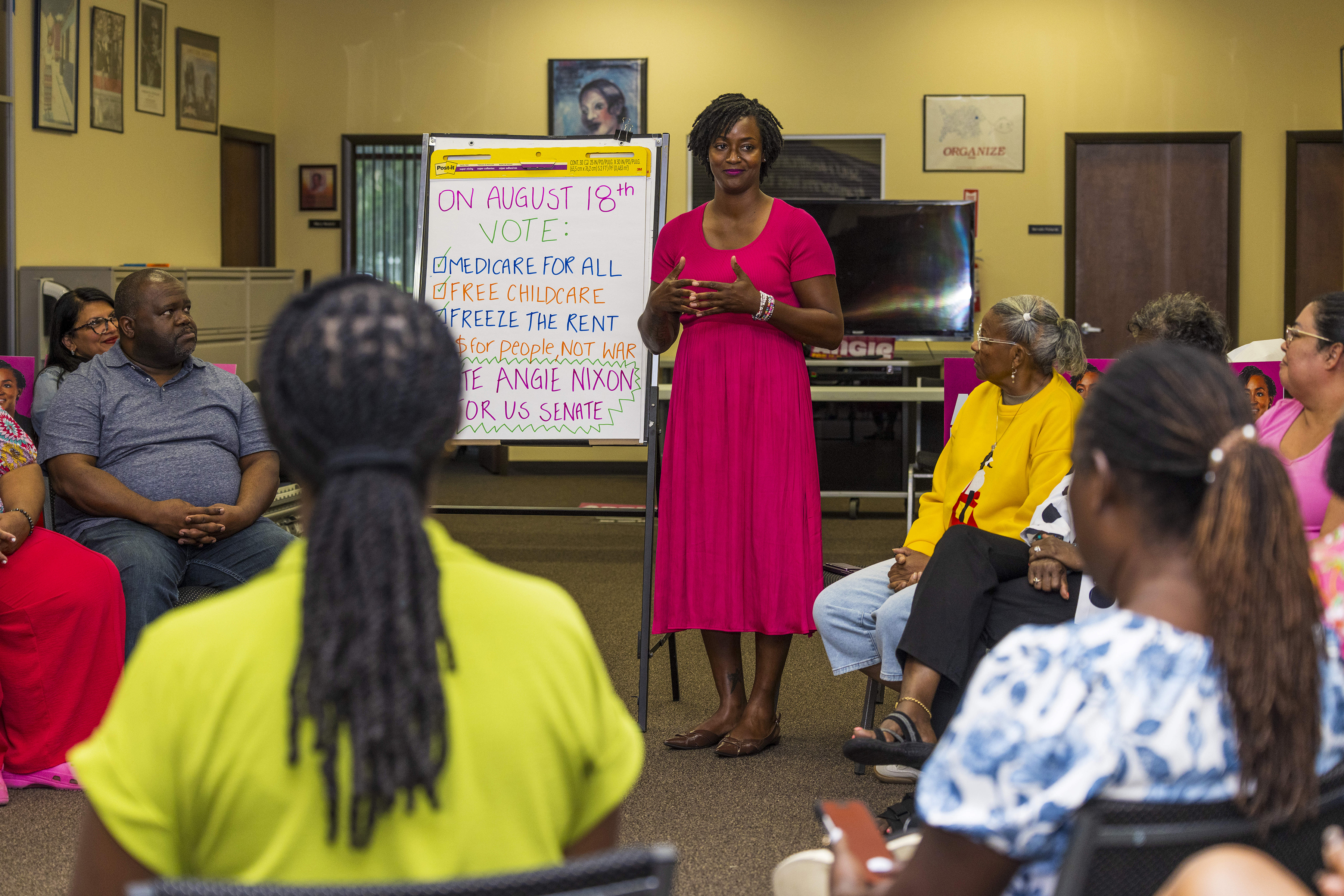
    He’ll be on the ballot alongside Angie Nixon, a progressive state lawmaker from Jacksonville who recently joined the Democratic Socialists of America but had not been endorsed by the group or any of its chapters. Facing Alexander Vindman, a key witness in Trump’s first impeachment trial, she overcame a massive disadvantage in fundraising and spending. She will face Sen. Ashley Moody (R), who is in her second year in Congress after being appointed to fill the seat left open when Marco Rubio became secretary of state.

    Donalds and Moody will be heavily favored. Although this election will herald the end of DeSantis’ ironfisted leadership in Florida, he has managed to turn the former swing state into a conservative bastion.

    Florida House Democrats hold on for now

    DeSantis’s move to redraw the state’s congressional map and give the GOP a boost scrambled the field for many House races.

    But some of the incumbents whose districts were splintered managed to hang on: Rep. Debbie Wasserman Schultz (D), who faced criticism for shifting to run in a predominantly Black seat, beat four Black candidates.

    Rep. Jared Moskowitz (D), a moderate, ran in a new district, a battleground where he defeated a democratic socialist. He will now face a self-described “America First” mayor.

    As in that race, Democrats are expected to fight for other seats that were redrawn to favor Republicans: In Tampa, Rep. Kathy Castor (D) is facing former state lawmaker Mike Beltran, while an empty seat in southern Florida pits restaurant franchisee Casey Askar (R) against Pia Dandiya (D), a tech executive and former teacher.

    The GOP’s best flip opportunity is likely to come in the Orlando area, where the Republican primary to take on Rep. Darren Soto (D) was too close to call early Wednesday.

    Another loss for Trump in a governor’s race

    The power of Trump’s endorsement took another blow after his preferred candidate in Wyoming’s gubernatorial primary, Megan Degenfelder, lost to state Sen. Eric Barlow.

    Degenfelder, the state’s superintendent of public instruction, secured Trump’s endorsement before she even announced her campaign. But Barlow had years of experience in party leadership in the state legislature, as well as the cash advantage.

    Gubernatorial candidates in Iowa, Minnesota, South Carolina, and Georgia also lost GOP primaries despite Trump’s backing.

    Mixed results for Wyoming’s right wing

    In a deep red state like Wyoming, political fights are usually about how far right Republicans should go.

    State Rep. Rachel Rodriguez-Williams, chair of the ultraconservative Wyoming Freedom Caucus, accused Barlow of being insufficiently conservative during his time as House speaker and opposed his gubernatorial run. Others in Wyoming’s right flank did well on Tuesday.

    Rep. Harriet Hageman, Trump’s pick for the open Senate seat vacated by the retiring Sen. Cynthia Lummis, won her race handily. Secretary of State Chuck Gray, aligned with the Freedom Caucus, won the crowded primary for the state’s sole House seat, vacated by Hageman, a conservative who unseated the fierce Republican Trump critic Liz Cheney in 2022.

    A surprising showing for Democrats in Pennsylvania

    In a Pennsylvania special election, Democrat Brandon Dukes held a narrow lead over Republican Scott Timko in a state House district that Trump carried by 18 percentage points in 2024. The race remained uncalled early Wednesday morning.

    The district includes parts of Butler County close to the site where Trump was shot at during a campaign rally two years ago. Tuesday’s winner will complete the months left in the term of a lawmaker who stepped down. Dukes and Timko are also competing in November for a full term.

    While special elections generally have low turnout, Tuesday’s contest could be an early sign of shifting political sentiments in the swing state. Pennsylvania is home to several battleground congressional districts in the fight for control of the U.S. House.

    Democrats have won or overperformed expectations in special elections in the past year, including an upset in a Florida state legislative district that includes the president’s Mar-a-Lago estate.

    AIPAC makes a difference

    The force of the American Israel Public Affairs Committee was on display in a California special election where the pro-Israel lobby’s last-minute intervention may have thinned the margin between two Democrats competing for the seat vacated by Eric Swalwell (D).

    AIPAC’s super PAC, the United Democracy Project, swooped in and spent millions of dollars on advertising in the final two weeks of the race. The election was too close to call Tuesday despite state Sen. Aisha Wahab, a critic of Israel, finishing with a double-digit lead over her opponent, Melissa Hernandez, in the primary.

    AIPAC’s involvement in races has become controversial, including in Michigan, where Democratic Senate nominee Abdul El-Sayed turned its super PAC’s massive spending against him into a rallying cry for his supporters. Tuesday’s outcome showed that despite its polarizing brand, AIPAC still wields power in congressional races.

    Alaska sets up competitive Senate showdown

    Sen. Dan Sullivan (R) and former representative Mary Peltola (D) advanced to the general election in Alaska’s Senate race.

    The state’s unusual ranked-choice system means two additional candidates who finished lower in the primary will also make the general election ballot. But it remained unclear Wednesday morning who the final two candidates will be.

    Sullivan is one of Democrats’ biggest targets this year in their bid to retake control of the Senate. Peltola, who was previously the state’s sole House member, was recruited by Senate Minority Leader Chuck Schumer (New York) and has been an adept fundraiser.