Category: Washington Post

  • U.S.-Canada breakdown shows limits of Trump’s aggressive trade strategy

    U.S.-Canada breakdown shows limits of Trump’s aggressive trade strategy

    The shocking collapse of U.S.-Canada trade talks is the latest sign that President Donald Trump’s bulldozer approach to remaking the nation’s trade relationships may be reaching its limits.

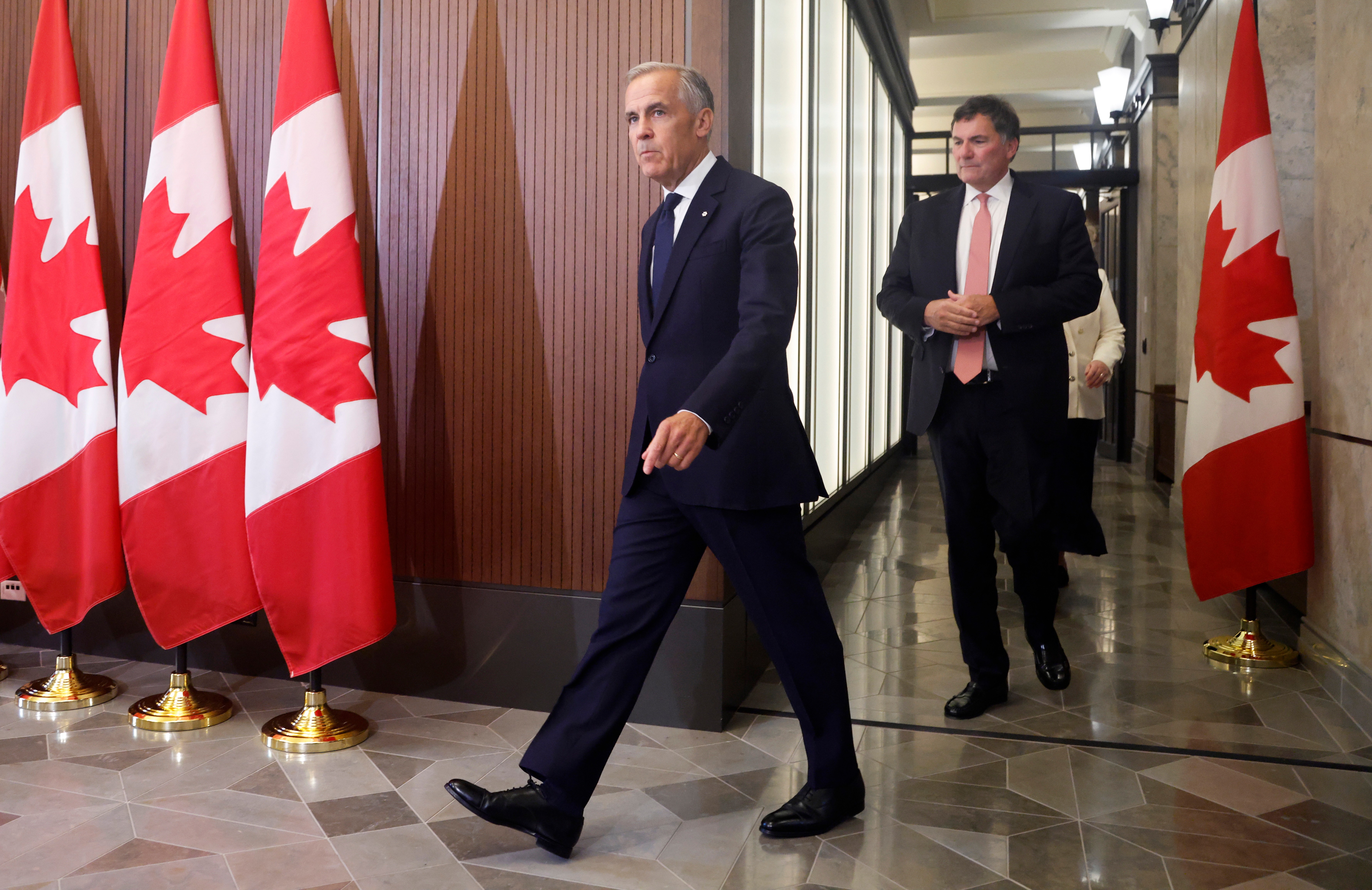
    The president tried in recent days to use an untested legal power to force Canada to swallow trade concessions. Instead, Canadian Prime Minister Mark Carney quit the negotiations rather than accept a lengthening list of U.S. demands.

    As a result, 50% U.S. tariffs took effect early Saturday on an array of Canadian products, including hockey sticks and Crown Royal whisky.

    As Carney prepared to walk away — a rare example of a foreign leader telling the president “enough” — Trump was retreating on another trade front. On Friday, after insisting for more than a year that tariffs do not affect consumer prices, he lifted tariffs on beef imports, saying the move would lead to lower grocery prices.

    The two developments, coupled with legal challenges to Trump’s tariffs, leave the president’s signature economic policy in a state of flux.

    “It’s a big setback for Trump’s trade policy. We’re at a juncture where other countries may be very closely watching how this plays out as they also are becoming increasingly frustrated with the demands the U.S. is placing on them in these largely one-sided trade agreements,” said Wendy Cutler, a former U.S. trade negotiator who is now senior vice president at the Asia Society Policy Institute.

    Indeed, the United States has negotiated 10 reciprocal trade agreements over the past year with nations such as Malaysia, Cambodia, and Argentina, along with other trade frameworks with the European Union, the United Kingdom, and Japan.

    Hearing of the concessions that the U.S. offered Canada, including reductions in tariffs on industrial metals, some trading partners may demand revisions to their deals, Cutler said.

    Administration officials have approached each bargaining round convinced of two things: Decades of U.S. trade policy hollowed out the nation’s manufacturing communities. And a muscular new approach, leveraging the appeal of the $32 trillion U.S. economy, can force other nations to give way and encourage the reindustrialization of the U.S.

    For the administration, trade negotiations are not a contest of equals. The talks start from the premise that U.S. negotiating partners must make concessions, opening their markets and in some cases promising to invest in the United States, simply to win a reprieve from unilateral U.S. trade barriers.

    Both Jamieson Greer, the president’s chief trade negotiator, and Treasury Secretary Scott Bessent have publicly complained that Canada and China are the only nations that retaliated for the tariffs that Trump imposed last year.

    The administration sees its actions as restoring fairness to an imbalanced global trade system, making such retaliation unjustified. But China’s tough stance last year, which included a temporary interruption of essential rare earth minerals, paid off. The president lowered his triple-digit tax on imports from China and reached a trade truce in an October meeting with Chinese leader Xi Jinping, who is due in Washington on Sept. 24 for more talks.

    The Canada negotiations were aimed at averting the new 50% tariffs, which Trump had threatened in July unless Carney dropped retaliatory measures imposed in response to earlier U.S. tariffs.

    On Tuesday, Trump delayed his initial deadline, posting on Truth Social that the two sides had reached “a DEAL” and needed three days to finalize the documents.

    The subsequent breakdown spotlighted tensions in the president’s strategy, including questions over the durability of any deal reached with the U.S. administration.

    After all, the U.S. and Canada, along with Mexico, already have a trade deal: the United States-Mexico-Canada Agreement (USMCA) of 2020, which Trump hailed at the time as “the largest, fairest, most balanced, and modern trade agreement ever achieved.”

    But this year, the president threatened to quit the deal and demanded sweeping changes to it, aimed at promoting more U.S. manufacturing. He also imposed tariffs on Canadian goods starting last year, a breach of the accord.

    On Saturday, speaking in Ottawa, Carney alluded to the difficulty of negotiating with a mercurial president.

    “We’ve recognized from the start that America has changed,” Carney said. “We recognize that sometimes, its signature is written in pencil.”

    Negotiating with the U.S. is also complicated by divisions within the administration. All top officials share Trump’s goal of spurring domestic manufacturing. But as Greer haggled with the Canadians this week, a split emerged over the U.S. trade representative’s willingness to reduce an existing 50% tariff on aluminum derivatives to 25% in return for Canadian concessions.

    At a White House meeting, White House trade adviser Peter Navarro and Commerce Secretary Howard Lutnick, whose department administers the national security tariffs, clashed with Greer, representing industry views that the higher aluminum tariffs were needed to encourage domestic manufacturing.

    “Navarro and Lutnick were both yelling at Greer saying: ‘What are you doing? This is stupid. You know, we’re not giving these things away,’” said one industry representative, who spoke on the condition of anonymity to describe the confidential talks.

    Late in the talks, the U.S. sought to exclude from tariff reductions heavy trucks produced in Ontario, such as the Ford F-350 and F-450, and the GM Silverado. Over time, that would have made it “more uneconomic” for the automakers to keep making the vehicles in Canada, Carney said. The administration also sought to restrict Canada’s right to sign trade deals with other countries, a key part of Carney’s strategy to reduce dependence on its increasingly unreliable southern neighbor.

    Trump’s undiplomatic style — including saying that Canada should surrender its sovereignty to become the 51st U.S. state — made it harder politically for the Canadian leader to accept a deal. Public opinion in Canada has turned fiercely anti-American.

    “A 160-year trading relationship has found its red line,” said Flavio Volpe, president of the Automotive Parts Manufacturers’ Association in Toronto. “Demanding that your closest trading partner mirror your trade policy with third countries is akin to asking them to surrender agency over foreign policy. This episode shows that doesn’t work, no matter the disproportionate market leverage of the USA.”

    Trump also has a general disregard for the $3.4 trillion worth of merchandise that the U.S. imports annually. Speaking in June about his North American neighbors, the president told reporters in the Oval Office: “We don’t need anything that Canada has, we don’t need anything that Mexico has, but they need everything that we have. … We don’t need their cars, we don’t need their lumber, we don’t need their energy, we don’t need anything that they have.”

    In fact, U.S. farmers rely on Canadian sources for nearly 80% of the potash fertilizer they use each year, according to the U.S. Geological Survey. Northern border states, including New York, Michigan, Vermont, Minnesota, and Maine, run on electricity produced by Canadian hydropower. And Midwestern refineries are optimized to process heavy sour crude oil from Canada, helping keep gas prices lower than they otherwise would be, according to the Federal Reserve Bank of Kansas City.

    Total U.S.-Canada trade each year exceeds $700 billion.

    The talks’ failure leaves businesses on both sides of the border burdened by a sudden jump in costs. Small businesses in the U.S. will face an especially sharp cash crunch, as they must pay tariffs before their customers pay them 30 or 60 days later, said Jason Miller, a professor of supply chain management at Michigan State University.

    “I expect a significant drop in a lot of these different import categories because importers simply can’t afford to bring them in. That may mean certain products not on the store shelves,” said Miller.

    In other cases, companies will struggle to find a domestic alternative to Canadian goods, especially for intermediate products such as packaging materials. So they will continue importing and pass along some of the 50% cost shock to their customers.

    On Saturday, Carney said Canada will retaliate on Sept. 8 for the new tariffs with its own trade measures. By delaying his response, he is leaving time for cooler heads to prevail, analysts said.

    “Then the parties come back to the table. North America is too integrated for it to unravel on the basis of a deal that was put together over 14 days,” said Dan Ujczo, a trade lawyer in Columbus, Ohio.

    If a deal had been reached this weekend, it would have paved the way for the official start of negotiations between the two nations over the proposed USMCA changes.

    Instead, the administration now must manage a cycle of retaliation and counterretaliation while perhaps facing a new courtroom fight over the legality of Trump’s 50% tariffs, which were imposed under a never-before-used 1930 trade law.

    Meanwhile, Trump’s 50% tariffs on goods ranging from hockey sticks to alcohol are expected to raise prices for American consumers less than three months before the Nov. 3 midterm elections, which have the potential to give Democrats control of Congress.

    Those elections, polls show, are expected to turn on voters’ frustration with the rising cost of living.


  • A mother has spent years caring for her special-needs child. The toll quietly grew.

    A mother has spent years caring for her special-needs child. The toll quietly grew.

    RANCHO CORDOVA, Calif. — Annie Morgan wrapped her arms around her eldest daughter’s waist and guided her toward the minivan, the two of them moving in a slow, sideways shuffle.

    At 13, Ava was nearly as big as Annie, who stands just 5 feet flat, 110 pounds.

    The morning in May had started well. Ava was cooperative and calm, and Annie, 34, smiled as her two other children bolted past them and into the car. Then something shifted. As Annie helped Ava into the vehicle, Ava wailed and slammed her body against the seat. The car rocked.

    “Gentle hands,” Annie said evenly. “We’re OK. We are still going to school.”

    The struggle lasted six minutes: long enough for Annie to tighten one belt, then another. Long enough to block a blow to the head, catch Ava’s hands and dodge them when she couldn’t. Long enough for sweat to gather across Annie’s forehead and beneath her shirt.

    When she finally settled into the driver’s seat, the clock read 7:49 a.m. Still on time for school (basically).

    In one form or another, scenes like this unfold every morning in millions of American homes. Sons and daughters lifting aging parents out of bed. Spouses managing medications. Parents helping adult children get dressed.

    Family caregivers — who provide ongoing support for children or adults with chronic, disabling, or serious health conditions — now number roughly 63 million Americans, up from 43.5 million a decade earlier. That’s based on a nationally representative survey conducted in 2025 by AARP and the National Alliance for Caregiving, and represents about 1 in 4 adults. Just over 60% are women. The Centers for Disease Control and Prevention has documented a similar burden through its own surveillance programs. Together they provide countless hours of unpaid or modestly reimbursed care each year, work that would cost hundreds of billions of dollars if replaced by paid labor.

    Health Secretary Robert F. Kennedy Jr. has called caregivers “the foundation of America’s healthcare system,” warning that without them hospitals and nursing homes would buckle under the demand.

    But decades of shifting norms around caregiving have given rise to millions of new caregivers who are suffering elevated rates of depression, anxiety, burnout, and suicidal ideation, as well as a range of physical conditions.

    Only recently has the toll of caregiving begun to register as a public health problem in its own right. The National Institute on Aging has backed new technologies aimed at easing caregiver burden, including AI tools, and in February a Department of Health and Human Services’s Administration for Community Living document framed the strain as a national infrastructure issue.

    That enormous, largely invisible workforce is in part due to an aging population, rising rates of chronic disease, and one of the most consequential shifts in U.S. social policy of the past half-century.

    The United States has steadily moved away from housing people with disabilities in large institutions and toward a model centered on families and community life. The shift, which accelerated in the 1980s and 1990s, represented a profound change that allowed people who once would have spent much of their lives segregated from society to be part of their communities.

    There was the promise of government support: respite care, behavioral services, trained aides, accessible schools, and robust community programs that would make family-based care sustainable. But today many of those systems remain fragmented, understaffed, or difficult to access. Families became the foundation of the new model, and things haven’t turned out well for many of them.

    Teenagers

    Ava is 14 now. With her long, light-brown hair braided in the latest styles and a wardrobe of T-shirts and lightly ripped jeans, Ava, who is starting ninth grade this fall, blends easily into a crowd of teens. She loves Costco muffins, squeeze yogurt, slime, and any music with a strong beat, from Aretha Franklin to Bollywood soundtracks and beyond. She loves Disney’s Zombies, the Gen Z/Alpha version of High School Musical.

    It’s only when she speaks — or rather, doesn’t — that the difference becomes clear.

    Ava communicates through points and sounds, due to a rare, genetic nervous system disorder that affects roughly 1 in 15,000 people.

    Angelman syndrome is caused by the loss of function of a gene known as UBE3A on Chromosome 15. Most cases occur randomly and are not inherited.

    The condition is often mistaken for autism, and from the outside the two can look similar. They are not. Autism encompasses a broad spectrum: Some people require lifelong support, while others build careers, marry, and live independently. Angelman syndrome follows a more predictable pattern, marked by severe developmental delays, intellectual disability, and lifelong difficulties with balance and movement.

    In the early years, Annie held on to the possibility that science might somehow alter Ava’s course. She followed promising research, sought out specialists across the country, and enrolled her daughter in a clinical trial involving gene therapy. Nothing changed.

    As Ava grew older, the distance between the life Annie once had imagined for her and the life they were living became harder to ignore.

    When puberty hit in Ava’s preteens, her sweetness was increasingly punctuated by moodiness, and she became more physical. Other girls her age were experimenting with makeup, talking about crushes, navigating the awkward rituals of adolescence. Ava had chew toys, cloth books, and diapers.

    Annie found herself looking back at those same years in her own life — a time defined, above all, by movement.

    Dance had been the organizing force of Annie’s childhood. Raised by her grandmother because illness had left her mother unable to care for her, she spent her afternoons moving from ballet to jazz to tap. By high school, she had made the dance team. Then, during her senior year, she showed up at an open audition for the Oakland Raiders cheerleading squad.

    She remembers stopping at a Safeway for false eyelashes and finding a dress at Forever 21, then walking into an audition room filled with women who seemed impossibly polished. Somehow, she made the team.

    Annie cheered for two seasons. Then she became pregnant with Ava, bringing her time with the Raiders to an abrupt end. Not long after, she and Ava’s father separated.

    One day, on the drive home from visiting a friend in the Bay Area, Annie glanced in the rearview mirror. Ava, who was about 18 months old at the time, was slumped in her car seat, frighteningly still. Annie pulled off the freeway and rushed her to an emergency room.

    Ava had had a seizure, the doctors told her. The harder news was why.

    Love

    Not long before Ava was diagnosed, Annie had ventured back into dating. At the urging of her co-workers at the restaurant where she was working as a waitress, she was scrolling through Tinder one day when a message popped up from a guy she thought was cute.

    His name was Daniel, he was working as a personal trainer, and like her he came from a mixed ethnic background. She was a mix of Italian, Puerto Rican, Mexican, and Native American; he, Spanish, Irish, Scottish, German, and Native American. Like Annie, he considered himself nondenominational but took his Christian faith seriously: Their second date was at church. What stood out most, though, was his kindness. He was patient with Ava. Thoughtful toward strangers.

    Four months later, Daniel proposed. Annie wanted to say yes but hesitated.

    She worried about future children. Angelman syndrome is almost always not inherited, but Annie wondered if something in her had led to Ava’s condition. Daniel told her it didn’t matter.

    Annie Trujillo and Daniel Morgan, then 24 and 25, were married on a sunny day in October 2016 at a winery to Celine Dion’s “The Power of Love.” Ava was 4 at the time, and the couple went on to have two more children, a son, Brody, now 7, and a daughter, Naomi, now 4.

    What no one saw

    When Ava was young, Annie and Daniel tried to keep a semblance of an ordinary life. There were playdates and birthday parties, afternoons at the pool, Sundays at church. They packed the walker and whatever else Ava needed and went.

    Daniel shared the work when he was home. But as his career working for the state of California’s housing department took off, he was increasingly on the road, sometimes for a week at a time. And taking Ava out was becoming more complicated. Leaving the house became a logistical operation, necessitating contingency upon contingency in case Ava swept food and plates off a restaurant table, bolted, or began screaming. Annie learned to keep one eye on her daughter and another on the room, gauging the expressions of strangers and deciding when an explanation — or an apology — was necessary.

    Gradually, it became easier to stay home.

    There, Annie’s days acquired their own relentless rhythm.

    She was often up before 5 a.m., preparing food and medications, dealing with paperwork, getting Ava ready for school. After drop-off came the calls: a prescription that needed filling, a therapy that needed scheduling, a specialist to chase down. When Ava got a new version of her communication device, Annie had to learn that, too. A broken wheelchair could mean an afternoon fighting with the insurance company. A problem at school could erase whatever Annie had planned to do that day.

    By 9 p.m., sometimes later, she would fall into bed.

    At night, practical worries would give way to larger ones.

    Annie worried about whether Ava was safe at school and whether she could keep her safe at home. She worried about the future. Ava was becoming a striking young woman without acquiring the ability to recognize all the dangers that came with being one. Annie had read stories about the sexual abuse of disabled women in institutions. Sometimes they kept her awake. What would happen to Ava when she and Daniel were gone?

    She would wake up a few hours later and start again.

    The family receives some caregiving support through Medi-Cal, California’s Medicaid program, and other state programs, including a few hours of weekend care and financial support for caregiving. But it hasn’t been enough, and recently Trump administration officials, including Mehmet Oz, who oversees the Centers for Medicare and Medicaid Services, have questioned Medicaid programs that pay relatives to provide care and have subjected in-home services to increased scrutiny over alleged fraud.

    Annie spent less time wondering what might become of her own life. Every so often, though, she tried.

    She trained to sell tiny homes as the market expanded across California, considered starting a consulting business, launched a podcast called “Blessed for This Mess,” enrolled in nursing classes, and brainstormed furniture designed for children with disabilities. Each new venture offered, briefly, a glimpse of a life that belonged to her as well as to everyone who depended on her. Then something would happen: a medical emergency like a seizure, a crisis at school, a bureaucratic fight that could not wait. Annie would turn her attention back to Ava.

    ‘Who takes care of the caretakers?’

    In the summer and fall of 2023, Annie’s already crowded world of caregiving had expanded again. Her mother was in the hospital with an infection; her uncle had suffered a heart attack. Alongside caring for her three children, Annie began running errands and tending to the small necessities that accumulate when someone else can no longer manage them alone.

    Daniel was accustomed to finding ways to make things work. But this was a time when even he ran out of answers. At Ava’s medical appointments, Daniel began asking what he could do to help Annie. The advice rarely went beyond the familiar: Make sure she rests, takes care of herself. He asked about classes, training, anything more concrete. “Who takes care of the caregivers?” he remembers asking. “There’s no one. How does that make sense?”

    When people ask how they are doing, Daniel, now 35, said, “We always say we are doing awesome, but it’s such a lie.”

    On the hardest nights, after their children were asleep, he and Annie would retreat to the bathroom at the far end of the house. They would slide onto the floor, hold each other and cry.

    Driving alone sometimes, Annie found herself having thoughts that frightened her.

    “I thought, what if I just hit the accelerator and turned the wheel a little …” she recalled.

    The thoughts were less about death than escape. She wanted to live but could no longer imagine how to keep living this way.

    One night in November of that year, she walked into the bathroom, grabbed Daniel’s clippers and shaved off her long brown locks. Looking back, she said she can see the panic on his face at that moment. But at the time he just offered to help, and she politely declined, saying it was something she needed to do on her own because it was “on my bucket list.” The gesture solved nothing. But for a few moments it gave her something she had not felt in a long time: control.

    That Christmas, she downed too much wine, which was very unlike her, and broke down in front of her extended family: “I can’t do this anymore.”

    Not long afterward, a cousin, who is a nurse, called to check on her. “Do you have hope for the future?” she asked, a question medical professionals often use to screen for thoughts of depression or worse.

    Annie didn’t answer.

    Instead, she began to sob.

    Dance parties

    Annie’s cousin helped her find a therapist. She went for about a month. She wasn’t opposed to therapy but left each session frustrated by explaining a world the therapist couldn’t quite see.

    She couldn’t change anything related to Ava’s care, but she could change other things.

    The way back was less a breakthrough than an accumulation of small decisions.

    Annie began dancing again. She signed up for poms, jazz, and funk classes in Sacramento and danced at home with the children, telling Alexa to play Meghan Trainor or Taylor Swift and spinning down the hallway.

    “It felt poetic,” she said. “When I dance even a little bit, I’m showing up for the younger version of me.”

    Other changes were almost comically small: She warmed her pillow with a heating pad before bed, made time for a skin care routine. She learned to let things go, pulling her younger children out of afternoon jujitsu classes and finding that they delighted in their unprogrammed ’90s-style afternoons even better.

    Because Ava’s condition made travel impossible, Daniel helped Annie build a life that asked less of the outside world. Their weekends filled with tending blueberry bushes and olive trees and decorating projects.

    Annie had also begun posting pieces of her life on Instagram and TikTok. Most attracted little notice.

    In April, one of them, about their school-morning routines, took off.

    The video begins with Annie braiding Ava’s hair. Without warning, Ava throws her head backward and strikes her mother in the face. Annie recoils, then keeps going.

    “You’re giving your best,” she tells the camera. “But some days it just gets you. And today was one of those days.”

    The video eventually drew 7.7 million views and more than 228,000 likes.

    Soon, Annie was hearing from parents, caregivers, and people with disabilities she had never met. “Feeling seen,” one person wrote. Another commented, “I’ve never seen another family actually show this side of it.”

    Some others criticized and judged. She tried not to be upset about those, she said, “For the communities that don’t live this life or have access to it … those communities were seeing a reality that they’ve never seen.”

    The platform did not solve Annie’s problems, but it eased her isolation.

    Annie kept posting.

    ‘Going to war’

    On a recent weekday morning, Annie set up her phone in the living room and hoisted a 25-pound bag of Costco’s Kirkland jasmine rice onto her back.

    She began squatting. The bag lurched slightly with each movement.

    “It’s better than weights,” she said, turning toward her phone, which was on a tripod. She explained that unlike a dumbbell, the rice shifted unpredictably, more like a squirmy teen.

    The clip would later end up on TikTok, where Annie now posts several times a week.

    “I look at it as I’m going to war with the syndrome that is trying to burn me out,” she said.

    Annie knows there are decades of caregiving ahead. Increasingly, she finds herself wondering where Ava’s siblings will fit into that future — whether Brody and Naomi will one day help care for their sister. For now, they are only beginning to understand that Ava’s life is different from theirs.

    Brody, a lighter-haired version of his father, is the chill, protective one.

    Naomi takes after Annie. Headstrong and constantly in motion, she is always asking questions. One recent weekend, Brody and Naomi were going to spend a few hours with Daniel’s parents. Ava wouldn’t be joining them. As Annie and Daniel explained the plans, Naomi asked, “Why does Ava have to go to daycare?”

    The evening routine is difficult with Ava even on good days.

    First comes the bath. Then clean clothes. Eventually, Ava is zipped into a specialized safety bed, an essential hand-me-down from another family because Ava tends to wander at night and is unsteady. In October, she sprained both ankles after sliding out of the bed.

    On a recent evening, the trouble started after the bath.

    As Annie tried to help Ava into her back brace — she has scoliosis — and pajamas, Ava became agitated. She screamed, pulled Annie’s hair, tried to bite. Daniel came running over. The two of them wrestled with Ava to keep her from injuring herself while they finished getting her dressed.

    When it was over, Ava began to cry. Annie did, too.

    She pulled her daughter close and closed her eyes. When she opened them again, Ava’s face was still wet with tears, but she was also smiling.

  • What’s behind the bond market roller coaster?

    What’s behind the bond market roller coaster?

    On Thursday, the bond market shrugged off Treasury Secretary Scott Bessent’s unusual effort to head off rising government borrowing costs. In early trading, the 30-year bond yield rose to 5.27% before settling back down to 5.24%, erasing more than half the drop in costs that had greeted Bessent’s market intervention.

    Bessent on Wednesday said that Treasury would at least double a planned buyback of long-term Treasury securities from $2 billion to $4 billion or more, a move that quickly lowered yields and eased pressure on borrowing costs for governments, businesses. and consumers. By repurchasing government debt from private investors, Treasury aims to reduce the supply of such securities and bring yields down.

    But yields rose again on Thursday, even as Bessent appeared on CNBC in a bid to further reassure bondholders, and on Friday.

    Why is the bond market so skittish? Part of the problem is the size of the national debt, which last week hit a new high of $40 trillion. The Trump administration not only has not put forward a plan for reducing borrowing, it has pushed through major economic policies that have helped make the situation worse.

    Here’s how the bond market got so trigger-happy.

    Why is the bond market important?

    Of the $40 trillion national debt, about $32 trillion is held by investors and the public in the form of Treasury securities. When yields go up, it means investors are demanding a greater return on their money and that borrowing will cost Washington more. In the worst-case scenario, it could also signal that investors are losing confidence in the United States and its ability to make good on its promises to pay off its debt, though recent demand for Treasurys suggests we are nowhere near that crisis point.

    Meanwhile, higher Treasury yields ripple into mortgage rates, corporate debt, and other borrowing, worsening affordability problems throughout the economy.

    What happened last week?

    Tuesday, the returns that investors demanded on 30-year U.S. Treasury bonds spiked to their highest level in nearly two decades — about 5.3%. In response, Bessent doubled the size of a planned buyback of public debt, hoping to head off a potentially destabilizing rise in government borrowing costs. His intervention sent bond yields down to 5.18% and boosted stock prices, but analysts warned those effects were likely to be short-lived.

    Lawrence Gillum, chief fixed income strategist for LPL Financial, called Bessent’s announcement “more about a strategic symboling than an actual fix.” The size of the buyback wasn’t meaningful in the $32 trillion Treasurys market, Gillum said in emailed commentary. “But it is a reminder that the Treasury Department is paying attention and will do whatever it can to keep yields from getting too high too quickly.”

    Has the Trump administration reduced borrowing?

    No. As a candidate, Donald Trump promised to eliminate the federal budget deficit — the annual gap between revenue and spending that necessitates borrowing — and even pay off the nation’s accumulated debt. In fact, the debt has doubled since he first took office. And his most recent policies have produced a deficit that is expected to exceed $2 trillion this year — more than 6% of the nation’s gross domestic product — according to the nonpartisan Congressional Budget Office.

    In the past, Washington has run such enormous deficits only during wartime or a financial crisis. Today, the economy is at or near full employment and growing.

    Recently, Bessent blamed the Biden administration for the government’s budget woes, but he acknowledged in an interview with Newsmax that Trump’s tariff policy — and his signature tax cut — had contributed to the problem. In fact, Trump’s tax-cut measure, the One Big Beautiful Bill, will add an estimated $4.7 trillion to the debt over the next decade, according to the CBO.

    Bessent told Newsmax that a provision of the law allowing companies to immediately deduct the expense of new factories is contributing to this year’s swollen deficit. “That is a hit now to the deficit, but we are creating productive assets for future growth, which will be paying taxes all the way down the line. So I think of that more as like pulling back a slingshot and creating a lot of potential energy that becomes kinetic,” he told the conservative cable channel.

    The CBO projects that the bill will add hundreds of billions of dollars to deficits every year over the next decade, though the negative impact does get somewhat smaller over time.

    Why is the bond market so nervous?

    The sell-off last week in U.S. Treasury securities — at $32 trillion the world’s largest financial market — came amid surging public debt in the United States, Europe, Japan, and Canada; renewed conflict in the Middle East; and uncertainty about the Federal Reserve’s intentions on interest rates.

    Much of the bond market’s unsettling tumult results from basic supply and demand. As governments and corporations jostle for the pool of available investment capital, they are driving the cost of borrowed money higher. Political leaders in the U.S., Europe, and Japan must fund ambitious public spending plans, while hyperscalers such as Alphabet and Microsoft need money to build their artificial intelligence networks.

    At the same time, the collapse of the fragile U.S.-Iran ceasefire has reignited fears that an interruption in Persian Gulf oil supplies will keep energy costs and inflation high. On Friday, Brent crude, the global oil benchmark, topped $92 per barrel, up from around $72 during the recent pause in hostilities.

    In this atmosphere of economic uncertainty, economists say it would be wise for the Trump administration to come up with a plan to restrain borrowing. Trump has never offered such a plan, however, and is pressing Congress to increase borrowing to pump hundreds of billions of additional dollars into the Pentagon and his war with Iran.

  • 3 things about the brain that actually get better with age

    3 things about the brain that actually get better with age

    When people think about getting older, many picture an inevitable decline in health.

    But that isn’t always the case. You can improve with age, both mentally and physically. This mindset may even be beneficial; having negative ideas about aging is linked to worse health outcomes, almost like a self-fulfilling prophecy.

    While the aging process, like life as a whole, varies from person to person, research shows that there are aspects of brain health that can actually continue improving well past your midlife. Here are three examples of the silver linings to going gray.

    Fewer regrets

    Living without regrets is a common maxim but an uncommon reality. About 90% of people say they have at least one major life regret, research shows.

    “Many of us might worry that we will reach the end of life and have these really big regrets that we can never resolve, and they may take some solace in knowing that that is a very, very common experience,” said Julia Nolte, an assistant professor of economic psychology at Tilburg University in the Netherlands.

    But getting older seems to lessen both the sting and the frequency of regrets.

    In a recent study published in the journal Emotion, Nolte and her colleagues analyzed how age affected feelings of major regret in 90 adults ranging in age from 21 to 89. Older adults reported they had fewer major regrets within the past year than younger adults. In fact, older adults were more likely to say they didn’t have any recent regrets. And when older adults did have a major recent regret, they were less likely to be about relationships or their dealings with other people.

    In older adults, major regrets both recent and lifelong were more likely to be about missed opportunities or the road not taken. Also, older adults had fewer “hot” emotions such as anger or frustration in response to thoughts of what might have been.

    “Older adults tend to be more likely to say, ‘I don’t have recent big regrets,’” and when they do, the negative emotions are less impactful, said Nolte, who conducted the study when she was a psychology graduate student at Cornell University. “I think that that’s something to look forward to and to help decrease these age-related negative stereotypes a lot of us carry.”

    More knowledge

    As you age, you might be more forgetful and slower at mental processing. But on average, older adults actually perform better on tests requiring knowledge or language.

    For example, adults in their 70s and 80s scored higher on vocabulary knowledge than those in the 20s, 30s, and 40s, according to a large 2019 study.

    Your ability to quickly reason through and adapt to new situations — called fluid intelligence — tends to peak in early to middle adulthood, around your 20s by some measures. But your ability to apply all your accumulated experiences, facts, and skills — known as crystallized intelligence — remains stable or continues to improve through the seventh decade of life, research finds.

    A 2022 study, which followed almost 9,000 adults for up to 18 years, found normal age-related decline of fluid abilities was still largely linked with increased crystallized abilities.

    As you get older, your hard-won knowledge and experience may still be growing.

    More wisdom

    Older people may not only continue to grow in knowledge, but also in wisdom.

    Wisdom is a complex personality trait that includes having empathy and compassion, as well as the ability to self-reflect, self-regulate, and accept different perspectives, said Dilip Jeste, a geriatric neuropsychiatrist and president of the World Federation for Psychotherapy, who has researched wisdom since 2008.

    Having higher wisdom is linked to better overall health and emotional well-being throughout the lifespan, research shows.

    There’s evidence that older adults on average measure higher than younger adults on different components of wisdom, including empathy, emotional regulation, and self-reflection, Jeste said.

    Not everyone who gets old is necessarily wise — there are many ready examples to the contrary. But by and large, “people who have these components of wisdom, as they get older, they tend to become wiser,” said Jeste, who wrote a 2025 review on wisdom and aging.

    For example, during the isolation and uncertainty of the COVID-19 pandemic, everyone felt lonelier. But unexpectedly, older people generally fared better with their mental health than younger people.

    When researchers asked why the older people had better resilience despite being at higher risk, “they said, we have been through problems like this before when we were growing up,” said Jeste, who wrote about this finding.

    And they had made it through.

  • Target bets shoppers want to buy trendy snacks and drinks in grocery revamp

    Target bets shoppers want to buy trendy snacks and drinks in grocery revamp

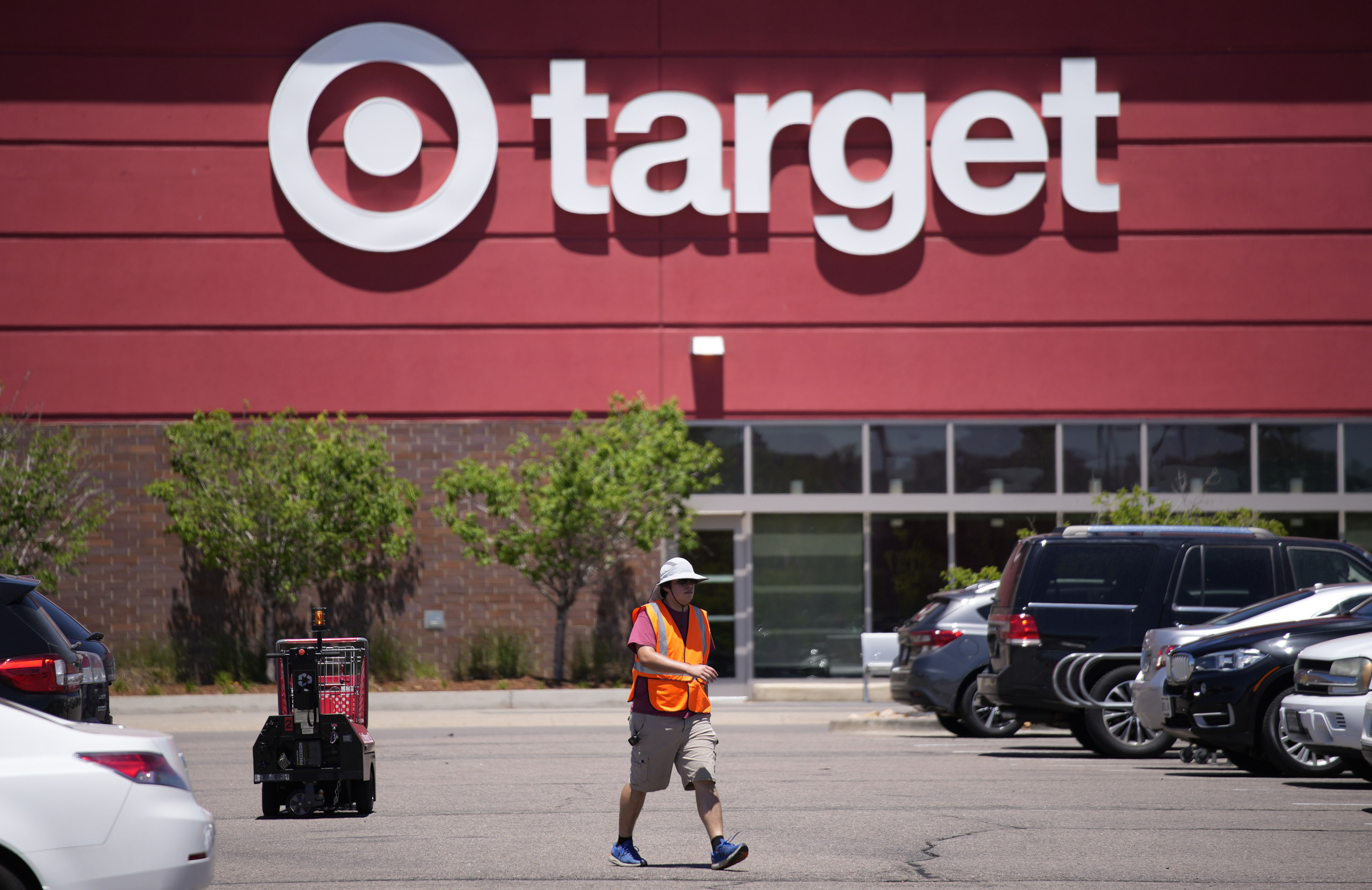
    Target Corp. has long struggled with its grocery identity: whether it wants to be a discounts-driven everyday chain or a cool, zeitgeisty retailer. Its latest big bet indicates it’s chosen the latter.

    The company has been overhauling its grocery aisles since the spring, hoping the upscale Tarzhay success it once had with stylish apparel and home goods in the early 2000s can be revived in food. It’s expanding the size of the section by more than 20% in nearly 150 remodeled stores and more than 50% in 300 new locations, carving out additional space for fresh produce and trendy items while cutting back on some pantry staples that shoppers aren’t buying or can get elsewhere.

    The strategy, intended to help reverse three years of weak sales, contrasts with what rivals in the $1 trillion U.S. grocery industry are doing. As competition intensifies, Walmart and Kroger are lowering prices across the board to appeal to inflation-weary, cost-conscious consumers. Target’s share is tiny in comparison, and the pressure is on to sell the right products at the right price or risk falling further behind.

    At a Target store in West Hollywood, Calif., the coffee aisle is stocked with pink and green packages of collagen-infused strawberry matcha latte powder and mushroom-coffee brands Ryze and Everyday Dose. Nearby, healthier packaged food additions include gluten-free pumpkin spice cereal, sour melon candy made with less sugar, and Khloé Kardashian’s protein-dusted popcorn. Target is also broadening its Asian food selection, giving prime shelf space to sesame miso noodles, jars of chili crisp, and peach-flavored soju.

    Several shoppers said they’d noticed new brands and layout improvements, but the changes hadn’t yet made a difference in how they shop at the chain.

    “I’m just buying groceries out of the convenience of already being here,” said Emma Woods, 29, as she grabbed a few items, including Frosted Flakes and Yoplait, for an upcoming girls weekend. She said she still prefers to do the bulk of her food shopping at Whole Foods Market, Ralphs, and Trader Joe’s.

    “The selection just isn’t as large as a larger grocery store that I could go to, and I think the prices aren’t as competitive,” the dancer from Los Angeles said. “For me, it might be a lost cause.”

    Dwarfed by grocery rivals

    The grocery makeover is a crucial piece of Target’s attempt to rejuvenate its operations and boost traffic. The retailer estimates the move will generate more than $2 billion in growth over the next few years.

    Since 2023, revenue has been shrinking as shoppers spend at a slow pace because some of the merchandise hasn’t been resonating the way it did in the past. New chief executive officer Michael Fiddelke has pledged to improve Target’s product assortment, store experience, and technology, identifying food among the primary areas of focus along with baby, home, apparel, toys, gadgets, and sports.

    Target for years has debated how much food to sell and how to pitch itself against competitors. It’s sold many packaged goods, which have a simpler supply chain, rather than a full-fledged offering. As a result, food has been an afterthought for many shoppers, tacked on to the end of their Target runs or a holdover in between their main grocery trips.

    “I don’t think people wake up and say, ‘I need groceries, I’m going to go to Target,’” said Joe Feldman, an analyst at Telsey Advisory Group.

    Target wants that to change and sees significant opportunity: More than half of its customers buy groceries when they shop at the chain. And food, which makes up less than 25% of its revenue, has been growing faster than most divisions.

    So far this year, Target has added roughly 4,600 new food items — including probiotic coconut yogurt, mini rice cakes drizzled with chocolate, and frozen sour candy mixes — and more than 60 new brands during the second quarter. The retailer expanded the space allotted for Asian food products by about 75% and beefed up offerings of noodles and snacks in the category after sales rose more than 25% in the last year.

    “Food and beverage is a powerful opportunity to make life easier for busy families and drive our business forward,” John Conlin, senior vice president of food and beverage merchandising at Target, said in a statement. Its grocery offerings, which have had strong sales momentum, are deepening customer loyalty and driving more frequent trips, he said.

    But Target has substantial ground to make up. The retailer is dwarfed by Walmart, Costco, and Kroger, whose food businesses are roughly 12 times, six times, and five times bigger, respectively. Like Target, the three giants are increasingly selling trendier items — but they’re also using their scale to lower prices and emphasize value at a time when budget-conscious consumers are searching for bargains. U.S. food prices are expected to rise further in the back half of the year.

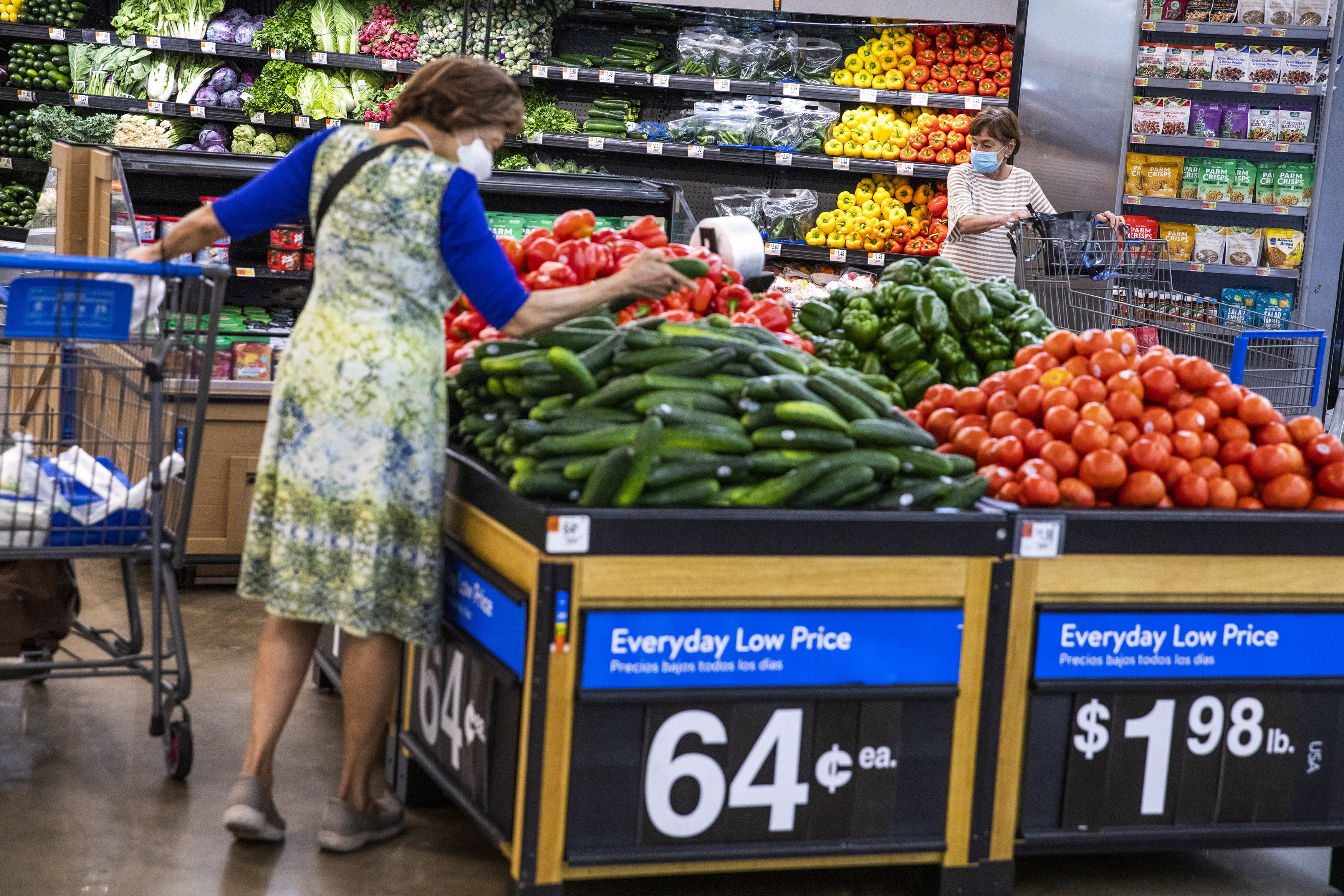
    Shoppers buy groceries at a Walmart Superstore in Secaucus, N.J., in 2024. Walmart’s food business is roughly 12 times that of Target.Eduardo Munoz Alvarez

    Walmart, known for offering affordable everyday goods, has said it will continue to lower prices. After announcing summertime deals in July, Walmart U.S. chief merchandising officer Julie Barber told staff that when the company leans on value, customers respond. “From beef and fresh produce to beverages, grilling essentials, toys and more, these investments reinforce what customers expect from Walmart: incredible value when it matters most,” she wrote in a memo viewed by Bloomberg News.

    Kroger has pledged to make the biggest price cuts in years to compete more effectively. New CEO Greg Foran, a former Walmart executive, told Bloomberg that prices have to come down across thousands of items and that the company would save costs by importing merchandise and using technology more effectively. Costco, meanwhile, is lowering prices of eggs, beef, and other items.

    Target lags many rivals when it comes to price. Identical national-brand food items cost about 5% more at the chain than they do at Walmart, according to data firm Attain, and one of the widest price gaps between the two is found in the snack section. It found that meat prices are relatively similar. Target said it’s priced competitively in food staples.

    Curating a treasure hunt

    Target is carving its own path. Instead of doing it all, the company is focusing on curation, a spokesperson said. It’s doubling down in areas where consumers are showing stronger interest, carrying an assortment of national, emerging, and store brands that reflects “evolving tastes, interests, and wellness needs.”

    The hope is that refreshed food aisles filled with coveted, unique products will become the reason people visit. With some new items, Target said, shoppers are willing to spend more to try them.

    Shoppers check out the food selection at a Target store at the Springfield Mall in Delaware County in 2009.CHARLES FOX / Staff Photographer

    “It has never been able to crack it in food,” said Jackie Lewis, a market intelligence lead at consultancy Harvest Group. “They are finally embracing the mantra that works for them in the rest of the store: exclusivity, buzziness.”

    The changes are helping attract more shoppers and creating a treasure hunt experience, with Target’s food sales growing in dollars and outpacing total company growth, according to Harvest Group’s analysis.

    “I buy more here now than I did previously,” said Sean Wesslund, a 40-year-old human resources consultant, while shopping at a Target in Highland Park, Ill. The store recently began offering more sustainable, healthier options such as regenerative organic certified coffee, which he likes to purchase along with basics like cereal, granola bars, and cheese. He said he sees Target becoming a cross between Whole Foods and Albertsons.

    At a Target in Falls Church, Va., Sam Fowler and his fiancée, Lindsay Nesmith, were perusing the display of noodles, including Buldak spicy ramen.

    “Things we would go to H Mart for, they now have here,” said Fowler, a 26-year-old TV producer. The couple does most of their shopping for bulk goods at Costco, but will supplement at Target for meals they are cooking that evening.

    Grocery is among a number of areas that Target is reworking. The company is adding new, exclusive items across its baby department and expanding concierge services where shoppers can get one-on-one guidance from experts. It’s launching beauty studios in hundreds of stores, and offering more trading cards and cell phone accessories across its entertainment, toys, and tech section.

    In March, Fiddelke unveiled a $6 billion plan to reverse Target’s sales slump and to reclaim the retailer’s reputation as a place to go for affordable yet stylish apparel and home goods.

    Target recruited fashion designer and TV personality Isaac Mizrahi this summer to fill the newly created role of creative director at large. Mizrahi has been brought in to mentor Target designers, advise on product design and innovation, and forge new partnerships.

    Fiddelke is also remodeling Target stores and improving staffing. The company has more than 100 full-scale remodels underway, with a goal of reaching 130 this year, Fiddelke said Tuesday.

    Second-quarter sales results released Wednesday suggest the changes are having an impact. The CEO said the latest quarter was “an important step forward in the plan we laid out earlier this year to open a new chapter of growth for Target.”

    Target also reported an increase in the number of customers going to its stores and shopping on its website from May through July.

    “We’re encouraged by the progress made so far, and we’re also clear-eyed about the important work still ahead,” Fiddelke said.

    Executives at several upstart food brands said they’re encouraged by the revamp. Many have inked exclusive deals with Target, ensuring their products are sold only at the chain.

    Snackish, a new clean-label potato chip brand, launched nationwide in June only at Target. The Snackish customer “wants to be the first one of her friend group to find the new thing that’s trendy” and is Instagramming her finds, founder Tara Bosch said. “We wanted to show up where she is and Target is where she shops.”

    Scoot, a brand of frozen lemonade pouches, highlights on its packaging that it’s only available at Target, complete with the retailer’s bullseye logo. This summer, refrigerated dough brand Sweet Loren’s rolled out its first exclusive-to-Target item: a snickerdoodle cookie dough. The company was confident it would draw new customers into Target, founder and CEO Loren Castle said.

    “These emerging brands, these better-for-you brands are actually what the Target guest is looking for,” she said. “It’s the reason they’re able to compete in grocery. It’s what they’re relying on to build the future.”

    Shopper Joy Shaw isn’t so sure. She went to the West Hollywood Target for school supplies this month and figured she’d also grab “lunch box stuff” including string cheese, cheddar squares, Sun Chips, and Activia yogurt drinks. The 51-year-old nurse said she’d like to see a wider selection of produce and meat, noting she wasn’t able to find ground chicken.

    “If they’re trying to be the go-to place for groceries, then they need to have the foundation of what we really need first,” she said. “Cool snacks, you can pretty much get anywhere else.”

    The Associated Press contributed to this article.

  • ICE begins deporting Haitians who lost TPS back to homeland

    ICE begins deporting Haitians who lost TPS back to homeland

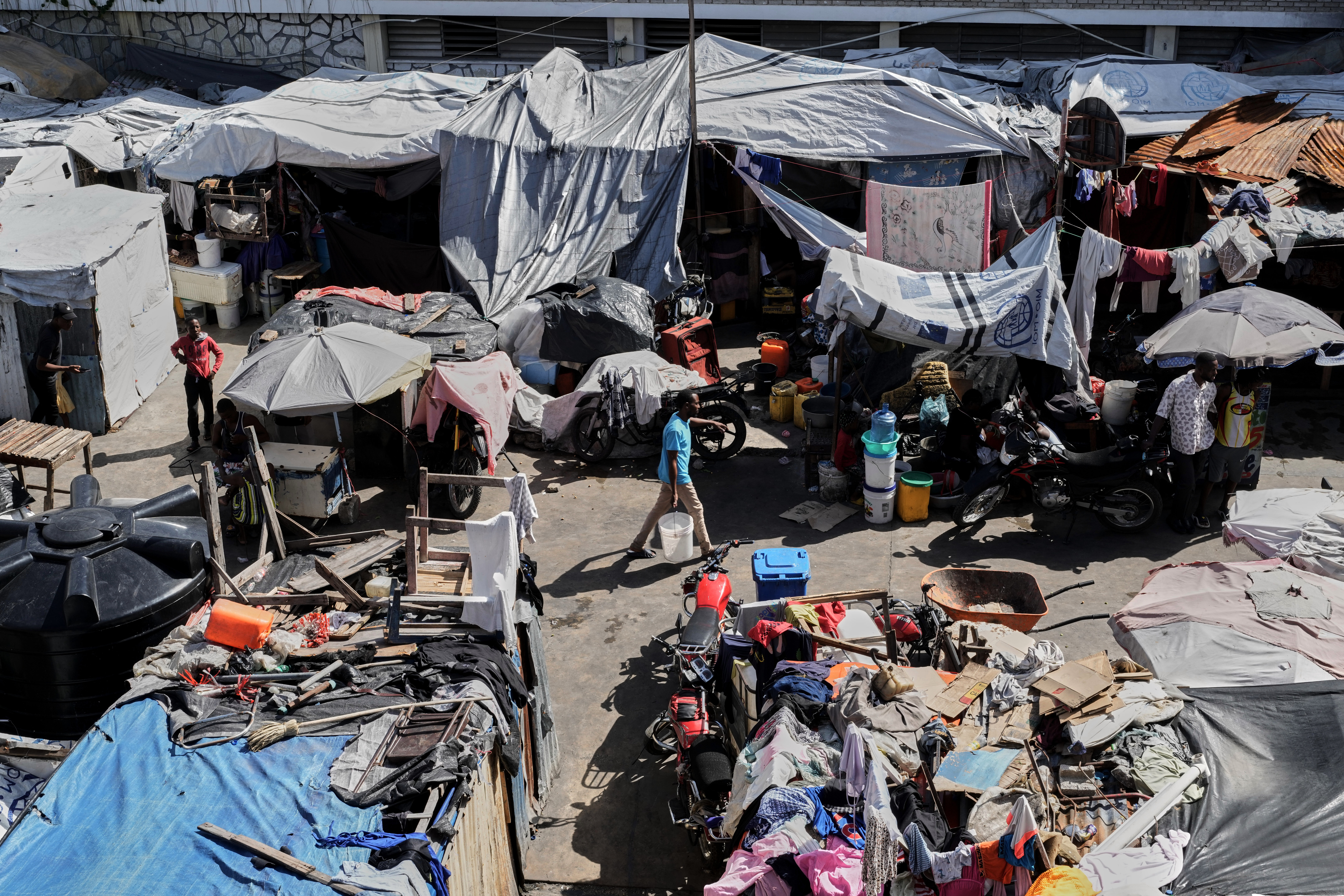
    The first deportation flight to Haiti since the Trump administration ended humanitarian protections for 350,000 people living in the United States landed Thursday in the Caribbean nation, and activists say immigration arrests are beginning to ramp up.

    The flight carrying 170 people, ranging in age from 19 to 71, landed in Cap-Haitien, on the northern coast of Haiti. Commercial flights from the U.S. have been blocked from landing in the Caribbean nation’s primary airport in the capital of Port-au-Prince due to gang activity and reports of aircraft being struck by gunfire.

    The federal government has been sending deportees back to Haiti on monthly flights, but Thursday’s removal was among the largest that community leaders said they had seen during the second Trump administration.

    Many of the passengers had been detained by U.S. Immigration and Customs Enforcement in the last three weeks, and at least one had recently lost temporary protected status, according to Guerline Jozef of the Haitian Bridge Alliance.

    “People are losing TPS status and losing their asylum cases,” she said. “It’s become easier and easier to be taken and deported.”

    The Department of Homeland Security did not respond to questions about the deportation flight.

    For months, Haitians have been bracing for ICE to begin making arrests en masse, although the new enforcement push has unfolded slowly and quietly so far.

    DHS has placed ankle monitors on Haitians who have lost their protected status. Arrests have also been made in communities home to large numbers of people from the violence-ridden Caribbean nation.

    The U.S. Supreme Court cleared the way for the Trump administration to end humanitarian protections for Haitians in June, and in early August a federal judge took the final step in allowing the Trump administration to terminate the benefit for Haitians.

    On Thursday, community leaders in Springfield, Ohio, said ICE arrested a well-known Christian pastor, Joubert Adrien. He was driving home when officers boxed in his vehicle at a gas station, the activists said. He had recently lost TPS, according to Vilés Dorsainvil of the Haitian Support Center.

    The arrest has sent chills through Adrien’s congregation and the larger Haitian community, Dorsainvil added.

    ICE officers have also been spotted making arrests over the last week in Springfield outside grocery stores and after traffic stops. Local residents and clergy members have been protesting the arrests, and a legal advocacy organization has been trying to help those detained.

    Many Haitians in Springfield are now wondering if they will be the next to get arrested, community leaders said.

    Springfield became a focal point during President Donald Trump’s 2024 campaign after he falsely claimed that Haitian residents there were killing and eating their neighbors’ pets.

    The city includes a large number of the country’s middle class who worked as physicians, judges, and in other professions in Haiti, Dorsainvil said. They moved to Ohio after the country was plunged into chaos following the 2021 assassination of the country’s then-president, he said.

    “That’s why they left Haiti,” said Dorsainvil, himself a former TPS holder. “They were not looking for work. They left because they were at risk.”

    But in Springfield they have worked factory jobs, filled healthcare vacancies, continued their university studies, and started businesses. Now, instead of using their skills to benefit U.S. communities, Dorsainvil said, they face the possibility of being sent back to a place where they recently had urgent reasons to flee.

    Dorsainvil said he is fielding dozens of calls each day from terrified neighbors who tell of ICE visits to their homes. He heard from a woman on Thursday who couldn’t find her husband on ICE’s detainee locator website and was panicking, believing that he could be on the deportation flight.

    Deportees from the U.S. are especially vulnerable to kidnapping, extortion, and murder once they land in Haiti, Jozef said. Criminals think they have been given money by the Trump administration to self-deport or have savings from their time stateside, he said.

    U.S. military personnel who served in Haiti recently testified in Congress on the country’s gang crisis and characterized the nation as a conflict zone.

    Top Haitian government security officials have been kidnapped by armed groups. More than 1.4 million Haitians have been internally displaced and much of the population is going hungry.

    “This isn’t a country where anyone should be deported right now,” said Savi Arvey of Human Rights First, an advocacy group tracking deportation flights. “We are gravely concerned this administration seems poised to intentionally take legal status from people in service of its mass deportation campaign and intentionally and knowingly deporting people to danger.”

  • Pentagon fires Stars and Stripes leaders who criticized DOD’s interference

    Pentagon fires Stars and Stripes leaders who criticized DOD’s interference

    The Pentagon on Friday fired the publisher and the editor in chief of Stars and Stripes, the military newspaper funded by the Department of Defense that has long enjoyed editorial independence from the government, according to the publication’s outgoing editor in chief.

    The Defense Department sent a separation notice to publisher Max Lederer, who announced his retirement this week, telling staff in a parting note he had disagreed with decisions from Pentagon top brass.

    Under Defense Secretary Pete Hegseth, the publication’s independence has come under threat during the second Trump administration as top Pentagon leaders have derided the newspaper as “woke.”

    Erik Slavin, the editor in chief, said he and reporter Lara Korte also received separation notices Friday.

    Slavin said he and Korte were fired for participating in a CBS News interview, during which he said any hypothetical censorship of the military newspaper would cross a red line.

    “I stand by the principle that Stars and Stripes should remain independent for service members,” Slavin said in a Friday interview with the Washington Post.

    In the interview with CBS’ Sunday Morning, Korte discussed the increasingly tense relationship between the publication and the DOD. “I am working for Stars and Stripes. Not for the Pentagon,” she said. “Not for any administration. Not for any policymaker. I am here to cover the military community.”

    “I consider it a great privilege to live alongside members of the military and share their stories,” Korte wrote in a Friday statement. “These firings are a shame for the institution and service members, who swore to defend the Constitution and deserve the right to a free and independent press.”

    Lederer did not immediately respond to a request for comment.

    The Pentagon confirmed the firings and said the three employees have a five-day period to appeal. They declined to offer further comment.

    In April, the Pentagon fired the Stars and Stripes ombudsman, a role charged by Congress with safeguarding the paper’s editorial independence.

  • Trump administration moves to strip bar association’s power to accredit law schools

    Trump administration moves to strip bar association’s power to accredit law schools

    The Trump administration’s ongoing feud with the American Bar Association has come to a head, as the Education Department threatens to strip the organization of its power to oversee law school programs across the country.

    Career staffers at the department recently recommended the ABA lose the federal recognition needed to operate as an accreditor. In a report made public Friday, staffers at the department said the ABA, which accredits nearly 200 law schools, had failed to keep both sides of its house “separate and independent,” undermining its effectiveness as an accreditor.

    The association is both an accreditor for law schools and a trade group for legal professionals. As an accreditor, ABA oversees the quality of law school education and determines whether law schools not affiliated with a university can accept federal student aid.

    President Donald Trump and other Republican lawmakers have accused the ABA of having a liberal bias and promoting diversity, equity, and inclusion, pushing a political agenda in law schools. Conservatives have also criticized the ABA, which has accredited law schools since 1952, for having a monopoly on oversight of law school education.

    The Education Department declined to comment.

    David Barker, assistant secretary for postsecondary education, told the Wall Street Journal, which first reported the recommendation, “We have said many times that accreditation, in general, operates like a cartel. When there’s no competition, accreditors feel free to inject their own political preferences, their own ideologies into the work that they do.”

    The ABA’s accreditation council chairperson, Melissa Hart, told the Washington Post the council is confident it complies with the Education Department’s requirements for accreditors and federal laws.

    “The outcomes produced by Council-accredited law schools are unmatched, and we continue the important work of accrediting law schools as our recognition process proceeds,” she said in a statement.

    The Education Department last approved the association to accredit law schools in 2021, a five-year designation that is up for review next month.

    The federal government relies on accreditors, little-known but powerful organizations, to deem colleges worthy to participate in the federal student aid program and to review educational quality.

    The report comes as the Trump administration seeks to reshape college accreditation, a system it has accused of being captured by liberal politics. The Education Department has proposed regulations to encourage intellectual diversity and increase competition among accreditors. The proposed rule also calls on accreditors and trade associations to be separate to prevent conflicts of interest.

    Tensions have simmered between the ABA and the Trump administration on multiple fronts, including in court. Top Justice Department officials have repeatedly taken aim at the legal group.

    Then-Attorney General Pam Bondi wrote to the ABA last year that the group was biased in favor of Democrats and said the administration would not allow it to help vet judicial nominees.

    Also last year, Todd Blanche — then the Justice Department’s No. 2 official, who has since replaced Bondi as attorney general — said that the agency would no longer pay for its employees to travel to the ABA’s events or allow them to even attend such functions.

    The ABA has also sued the administration, including in a case challenging Trump’s campaign to crack down on prominent law firms.

    Trump issued executive orders last year taking aim at several firms that had hired his perceived enemies or took on cases he disliked. Four of the firms that were targeted sued to fight those orders, and all of them won court orders blocking Trump’s sanctions.

    The ABA filed its own lawsuit challenging Trump’s actions, saying it had to act to protect its members “and the rule of law itself.” The case is ongoing, and a judge earlier this year rejected the Trump administration’s effort to have the lawsuit thrown out.

    An independent advisory board will meet next month to consider the Education Department’s recommendation and decide the ABA’s fate as an accreditor. A senior Education Department official will then weigh in.

    “We look forward to the opportunity to address any misconceptions and clarify the record at our upcoming hearing,” Hart said. “We’re confident the Council will address any concerns the Department may have at that hearing.”

    If the advisory board votes that the government should withdraw its recognition of the ABA as an accreditor and that decision is upheld by a senior department official, the ABA can then appeal to Education Secretary Linda McMahon.

    If McMahon denies the appeal, law schools affiliated with a university could use their school’s accreditor, while unaffiliated schools will have to find a new accreditor.

  • Tesla recalls 3 million EVs in China over door handle safety

    Tesla recalls 3 million EVs in China over door handle safety

    Tesla Inc. and at least eight other carmakers are recalling millions of cars in China over safety concerns with their door handles, a major step to address flaws that have led to vehicle entrapment and multiple fatalities.

    More than 4 million vehicles are affected as part of the broad crackdown, one of the most sweeping recalls ever in the world’s biggest auto market. Tesla accounts for the largest share, with just under 3 million vehicles included in the action announced Friday.

    The Tesla vehicles have electrically controlled handles that can stop working in some crashes, which “could hinder occupants from quickly opening the doors to escape and impede rescue efforts by those outside the vehicle, posing a safety hazard,” according to a statement from China’s State Administration for Market Regulation. As part of the recall, the carmaker will update software to automatically lower the windows after an accident and will affix warning labels showing where the emergency door releases are located.

    Vehicles designed with flush, electric handles have been involved in a series of incidents in which occupants have been trapped inside their cars after the vehicles lost power, including after a crash. In several instances, occupants of Tesla vehicles survived the initial impact of a high-speed crash only to die or sustain serious injury from subsequent fires after being unable to exit.

    Bloomberg News has reported extensively on the modern door systems, uncovering at least 15 deaths in a dozen incidents in which occupants or rescuers were unable to open the doors of a Tesla that had crashed and caught fire. Bloomberg also reported late last year that chief executive officer Elon Musk insisted on electric doors even after potential safety concerns were raised internally.

    China has taken a particular interest in the topic following fiery crashes involving Xiaomi Corp. vehicles, becoming the first country in the world to outlaw the design when it banned concealed door handles on electric vehicles earlier this year. The country has also been introducing regulations for driver-assistance technology, batteries, and other standards to try to improve the safety of cars at a time when Chinese automakers have been developing cars in roughly half of the time as legacy carmakers.

    This marks one of the largest vehicle recalls for the same kind of quality issue in China, according to Li Yanwei, an adviser to the China Automobile Dealers Association.

    After Tesla, Xiaomi accounted for the next highest number of vehicles recalled in Friday’s action, with 390,435 of its SU7 electric sedans. Zhejiang Leapmotor Technology Co. Ltd. is recalling 371,200 vehicles, according to statements from the market regulator. The total number of EVs being recalled for door handle related safety risks from the nine carmakers reached about 4.27 million affected.

    Tesla on Friday also recalled about 2.7 million vehicles to shore up its means for monitoring drivers using its driver-assistance technology and ensuring they pay attention to traffic and avoid collisions.

    In the U.S., auto safety regulators said last month that they would begin the process to impose a new federal rule addressing concerns over unsafe door handles. The National Highway Traffic Safety Administration is also probing certain Tesla Model Y vehicles over complaints of door-related entrapment, and a U.S. lawmaker has introduced legislation to require manual door releases in new cars and means for first responders to gain access to vehicles when power is lost.

    Craig Trudell contributed to this article.

  • Some school supplies got costlier after tariffs. Parents are feeling the pinch.

    Some school supplies got costlier after tariffs. Parents are feeling the pinch.

    It’s back-to-school shopping season, which means parents are spending money on new crayons and notebooks. Parents are calculating just how much they can afford to spend on school supplies, what children can reuse from the year before, and what on teachers’ lists will have to be abandoned.

    The cost of school supplies has risen nearly 8% since last year, according to a report from the left-leaning groups the Century Foundation and Groundwork Collaborative, which pointed out that the makers of such school staples as Elmer’s glue and Sharpies and Expo markers, Mead and Five Star notebooks, and Logitech headphones have all spoken publicly about raising their prices because of the Trump administration’s tariffs on imported goods.

    The days of students making an annual trip to the office supply store with their back-to-school shopping lists in hand have gotten an internet-age makeover. Today, more than a million classroom teachers have posted the items they want their students to buy to the website TeacherLists.com. The average total spending to buy the whole list? $91.55, for an average of 15 items, for those who shop at Target and Walmart, the website’s vice president, Elizabeth Lamport, said. With one click, parents can add all the items on the list to their online shopping carts at stores such as Amazon, Staples, or Office Depot, and buy the whole kit with another click.

    Princess Heard, a single mom of two in Roswell, Ga., starts putting away money for fall back-to-school supplies as soon as her kids come home from their last day of school each spring. Heard, who works for a health insurance company, budgeted that she would need $200 this year to outfit her kids with new backpacks and the items from their teachers’ lists. She took online surveys for cash to make the money.

    When she took her kids to Target the day before school started, she kept a calculator open on her phone, tallying as they put what they needed into the cart. She hit her $200 maximum before they finished their lists. “The deals weren’t as good as they normally were, in previous years,” she said. “We didn’t get as many supplies as I normally do. … Usually I’m able to get everything.”

    Heard ended up deciding not to buy any of the classroom supplies the teachers requested, like wipes and tissues. She’ll bring some in later in the school year, she said.

    In a Good Morning America-Ipsos poll conducted late July, two-thirds of parents said back-to-school shopping is more expensive this year, and nearly nobody said it’s cheaper. They said they’d spend an average of $118 per child on school supplies, and a total of more than $800 on sports gear, clothes, books, technology, and other back-to-school shopping.

    Some of the items most commonly on teachers’ lists are relatively cheap. Target, which said in a news release that 95% of its school supplies are at or below last year’s retail prices, is selling 24-packs of Crayola crayons, double packs of Elmer’s glue, two big pink erasers, or pocket folders with prongs for 50 cents each right now.

    Annie Redlin, a nurse in Rochester, Minn., who shares parenting ideas on her website, asked her three sons to gather up all their leftover supplies and dump them out on the floor ahead of their first day of school next week. She called out each item on their teachers’ shopping lists, asking if they already had it in the pile.

    “We do not need all new markers. … Some of those notebooks have two pages used; we rip out the pages,” Redlin said. “Seventy-five percent of the things I’m sending back to school this year are reused, which is really helpful for the budget. … They’ve never once said, ‘Mom, I don’t have new crayons like my friends.’”

    Her husband, a physical education teacher at the boys’ school, took them shopping for what was left on their list: crayons for the first-grader, new binders and folders, a pencil holder for the sixth-grader. He walked out having spent about $35 for the three kids.

    “Truthfully, I feel a little bit of a sense of relief,” Redlin said. “Life feels really expensive right now, with groceries and clothes for three growing kids. It was really nice to not feel stressed about how much money I spent on school supplies.”

    In Alexandria, Va., 14 public elementary schools have posted their supply lists on TeacherLists.com. The average second-grader is asked to bring 13 items at an average cost of $61.87 at Target.

    But many families end up spending more. Several of the Alexandria schools’ lists, for example, include the same clear plastic pencil case, selling for $4. If your kid wants the one with a Minion or Pokémon or a Star Wars figure on it, it’s $7. Upgrade from clear to pink or blue, and it’s $10. Add a wavy fidget design, it’s $14.

    Zoie Hoffman, a math tutor in Las Vegas, had to buy school supplies for her first-grade twins for the first time this year. It cost about $200 to buy everything on the school list: scissors, crayons, markers, colored paper, cardstock, paper towels, baby wipes.

    She tries to save money, including by looking for high-quality backpacks and water bottles that she won’t need to replace for years. But she also bears in mind that most of her children’s education is free.

    “My mindset is, we’re going to public school, and you know, this is just part of it.”