Category: Washington Post

  • FEMA crew broke law by skipping homes with Trump signs, federal watchdog says

    FEMA crew broke law by skipping homes with Trump signs, federal watchdog says

    A crew of Federal Emergency Management Agency staffers working on the response to Hurricane Milton in 2024 violated the law and agency policy by skipping nearly a dozen homes displaying signs supporting then-presidential candidate Donald Trump, a federal watchdog said Tuesday.

    The new report by the Department of Homeland Security’s Office of Inspector General found that the decision by a crew with the agency’s Disaster Survivor Assistance program “eroded public trust in FEMA’s ability to treat everyone impartially, offer unbiased and consistent assistance, and ensure equal access to resources and tools.”

    Back-to-back hurricanes hit Florida within two weeks of each other in late September and early October 2024, prompting emergency declarations and federal assistance. FEMA Disaster Survivor Assistance crews canvassed 744,288 homes and other sites in response, according the report, and did not contact “555,374 locations for reasons such as private property signs or safety concerns.”

    During FEMA’s hurricane response, which was unfolding during the last few weeks of the pivotal election, a FEMA crew lead instructed team members to avoid homes with Trump signs due to safety concerns. The same crew bypassed those 11 homes in Florida, according to survey notes obtained by the inspector general’s office.

    At the time, the crew leader did not feel safe given the heightened tension and “was looking for ways to define safety. People were not getting good guidance, so she made her own way,” said a former senior FEMA official with direct knowledge of the situation.

    After several FEMA workers filed a complaint, the agency started its own investigation and officials referred the complaint to the Office of Special Counsel and DHS’ inspector general office. Gov. Ron DeSantis (R) blamed the Biden administration, writing online that it represented a “blatant weaponization of government by partisan activists in the federal bureaucracy.” FEMA quickly fired the crew leader and several other staffers involved in the incident.

    The watchdog found that the incident highlighted weaknesses in “FEMA’s training, documentation, and oversight.” Those Disaster Survivor Assistance crews did “not receive ethics and Hatch Act training before deploying to disasters,” the report said, nor was there a policy that required “crews to explain why they skipped homes.”

    Deanne Criswell, who headed FEMA during the Hurricane Milton response, said in a Signal message Tuesday that the report “validates the actions we took at FEMA when this incident was brought to our attention. Politics should never play a role in disaster response, and even one home skipped is unacceptable.”

    Criswell said that after they learned that the crew had bypassed those homes, officials ensured the “neighborhoods were recanvassed.”

    The agency did not have a formal system for reporting potential safety threats at the time, said the senior official, who spoke on the condition of anonymity because they were not authorized to speak publicly about the internal investigation. The inspector general report also identified this as a hole in the agency’s operations.

    Criswell and the other former official noted that FEMA’s internal review found that the Hurricane Milton incident was isolated to that crew.

    “FEMA personnel conducted more than 744,000 canvassing visits following Hurricanes Helene and Milton, and the Inspector General identified 11 homes skipped for political reasons by the same crew — findings that reinforce my confidence this was an isolated incident and not a systemic practice within FEMA,” Criswell said.

    However, safety concerns during disaster response are common, the former senior official said, with most of the encounters that FEMA canvassers faced involving guns.

    The inspector general report said that after FEMA learned of the crew skipping homes, it provided mandatory training to all disaster survivor teams, including those deployed in the field.

    FEMA concurred with all of the inspector general recommendations. In a letter from July, the agency said that “when concerns were raised regarding adherence to law and policy in performance of this work — FEMA leadership acted swiftly to investigate, remediate, and strengthen training and oversight. As a result, FEMA increased mission readiness training and no longer conducts FEMA-led door-to-door outreach efforts. Staff now provide support to survivors from fixed locations determined by state and local officials through a data-informed approach.”

  • Secret Service says it is aware of Iranian state media video threatening Barron Trump

    Secret Service says it is aware of Iranian state media video threatening Barron Trump

    The Secret Service has said it is aware of a video broadcast by Iranian state media appearing to threaten Barron Trump, President Donald Trump’s son.

    The footage, which was reportedly released by media linked to Iran’s Islamic Revolutionary Guard Corps, claimed a $10 million bounty had been placed on him.

    The video opens with the title: “Where to kill Barron Trump?” It depicts a man resembling him and suggests general locations where he might be found.

    “The U.S. Secret Service is aware of the video and investigates anything that can be perceived as a threat toward our protectees,” Nate Herring, a Secret Service spokesperson, said in an emailed statement. “Out of concern for operational security, we do not discuss matters of protective intelligence.”

    The White House did not immediately respond to a request for comment Tuesday morning.

    Trump, who was 10 years old when his father was first elected president and is now 20, has kept a much lower profile than others in his family.

    He has occasionally appeared at high-profile events with his father, such as at his Inauguration Day ceremony in January 2025.

    Concerns about Iranian plots against U.S. officials, including the president, have existed for decades. Those fears have escalated in recent years because of the U.S. role in the killing of Iranian military and political leaders, including the U.S. airstrike that killed Gen. Qasem Soleimani in January 2020.

    The president has cited Iran’s efforts in 2024 to assassinate him as a factor in ordering the joint U.S.-Israeli operation that killed Ayatollah Ali Khamenei.

    In July, an Iranian assassination threat against the president prompted a clandestine operation in which he flew secretly from Turkey on an alternate military aircraft while the White House said he was aboard Air Force One. The operation was first reported by the Washington Post a month later.

    The threat was relayed by the Israeli government to the CIA. U.S. intelligence officials were skeptical and conveyed that view to the Trump administration.

    One official described it as “Israeli-derived, not U.S.-generated, and viewed as low confidence.”

  • China rebukes Trump’s economic pressure campaign seeking to isolate Iran

    China rebukes Trump’s economic pressure campaign seeking to isolate Iran

    China sharply condemned the sweeping new sanctions campaign against Iran and its trading partners announced by the United States, vowing retaliation against measures that would target countries doing business with Tehran.

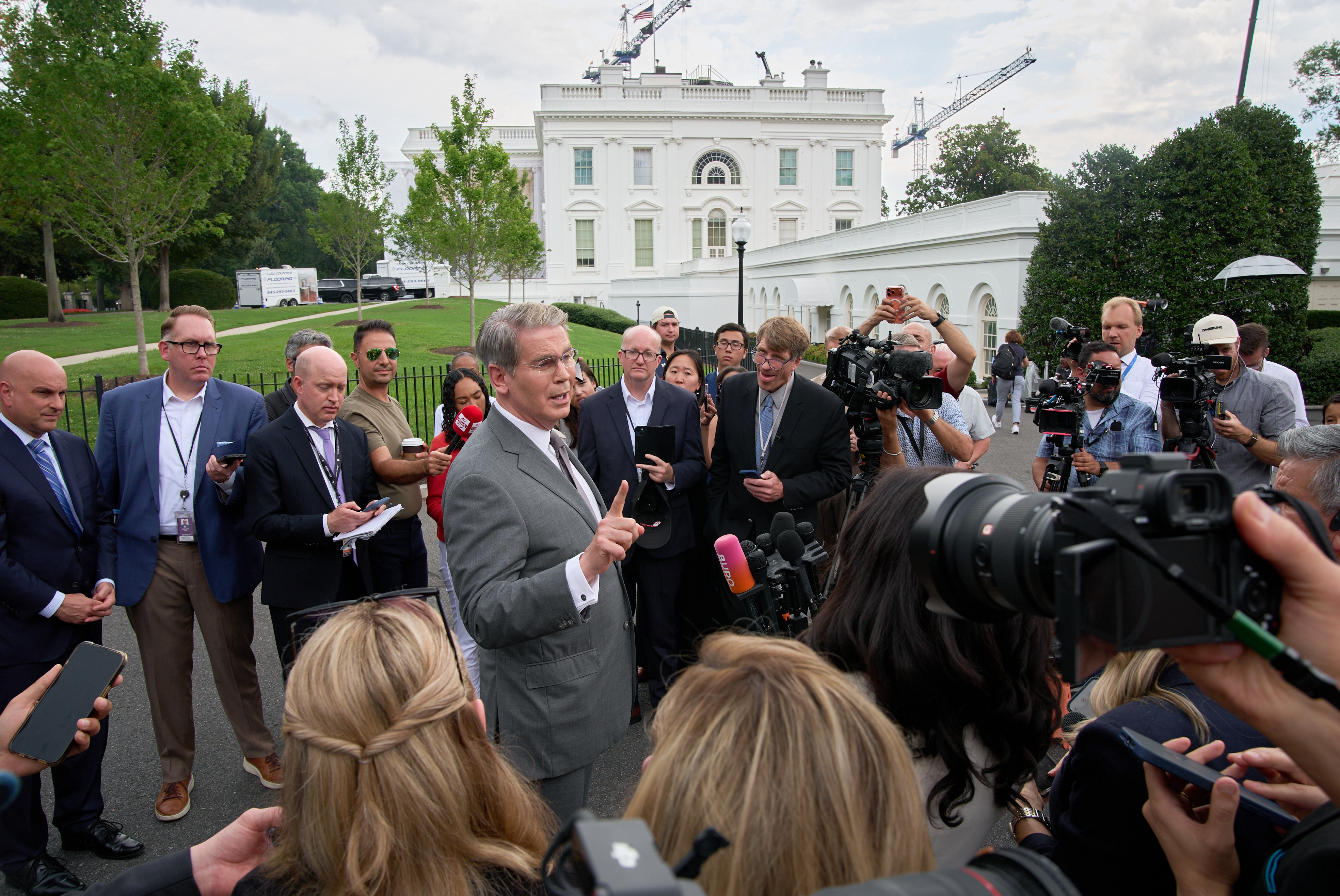
    Treasury Secretary Scott Bessent said Monday he is contacting unspecified world leaders as part of an effort to “economically asphyxiate” Iran’s economy and force an “endgame” to the drawn-out conflict in the Middle East.

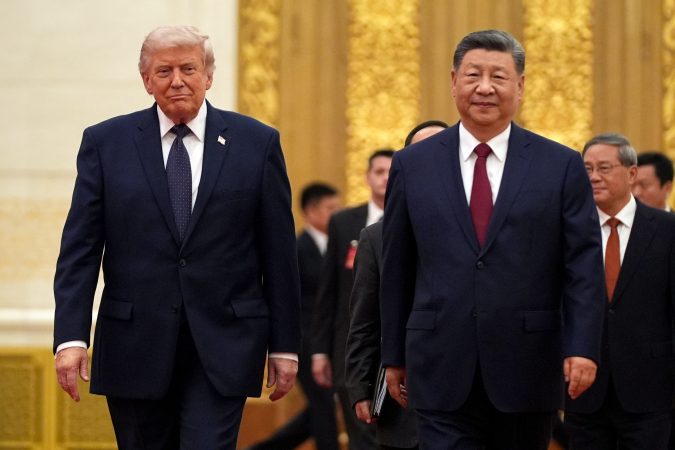
    China is Iran’s top trading partner and the newly announced U.S. economic pressure campaign risks a flare-up in relations just as President Donald Trump has sought to ease tensions and secure a broader economic deal with Beijing.

    A Treasury list released Monday includes more than a dozen small Chinese and Hong Kong firms, most linked to shipping and supply chains, suggesting Washington’s opening salvo includes targeting illicit shipments to Iran without directly hitting major Chinese refineries or banks.

    Still, the move rankled Beijing, which in recent months has sent envoys to Washington to lay the groundwork for a meeting between Trump and Chinese leader Xi Jinping at the White House in late September.

    “China will do everything necessary to firmly safeguard its rights and interests,” said Chinese Foreign Ministry spokesperson Lin Jian on Tuesday, criticizing what he described as “illicit unilateral sanctions that have no basis in international law.”

    Analysts say the rebuke is a warning sign that further actions could derail the fragile truce built between Washington and Beijing.

    “Washington has a difficult needle to thread: isolating Iran economically while trying to keep U.S.-China relations stable,” said Wendy Cutler, a former U.S. trade negotiator and now senior vice president at the Asia Society Policy Institute.

    “Depending on how far the U.S. goes, it’s not out of the question that Beijing would threaten to cancel or postpone Xi’s planned U.S. visit next month,” she said.

    China is the primary buyer of Iran’s oil, importing an estimated 1.4 million barrels a day before the war, largely through an unreported shadow network of hundreds of tankers operating outside normal legal channels.

    Economically isolating Iran from that support would be difficult, requiring far-reaching sanctions on Chinese banks and refineries, and perhaps including military and investigative resources to disrupt an ever-shifting network of hundreds of Chinese-linked shipping firms and shell companies spread across Asia and the Middle East.

    Bessent on Monday said the “economic D-Day”sanctions will be “the single greatest financial offensive ever” against Iran and will target countries that support Iran’s economy to sever the “economic lifeline that sustains Tehran.”

    He suggested China would not be exempt from the penalties.

    “If they facilitate transactions and are part of the ecosystem that turns Iranian oil into money, into repression, they will be targeted. … We want to make clear here today that no one is above the reach of U.S. sanctions.”

    Without naming Beijing, Bessent said the U.S. Treasury is prepared to engage in “frank discussions” with relevant countries to shut down Iran’s oil sector.

    Foreign Ministry spokesperson Lin defended China’s cooperation with Tehran on Tuesday, saying it is “conducted within the framework of international law” and “should not be disrupted.”

    Washington has already attempted this year to crack down on the shadow trade in oil and chemicals between China and Iran, imposing sanctions on hundreds of vessels and entities, and seizing sanctioned ships carrying Iranian oil. But analysts say those efforts represent a game of maritime whack-a-mole, as targeted networks adapt quickly.

    In one such raid in April, when U.S. forces commandeered the Tehran-bound ship Touska, which had docked at a Chinese port known as a loading point for chemicals used as rocket-fuel precursors, Trump said U.S. authorities found “a gift from China” on the ship, “which wasn’t very nice.”

    That seizure temporarily spiked oil prices but did little to upset relations between Beijing and Washington, as the two leaders met with friendly fanfare the following month.

    But Bessent’s new maximum pressure sanctions campaign could have deeper impacts, analysts say, beyond just a canceled summit.

    “In light of the retaliatory toolbox Beijing has been building in recent years, it has many levers to pull to harm U.S. interests, including export restrictions, sanctions on U.S. companies, and slowing down or even halting U.S. agricultural purchases,” Cutler said.

  • Kennedy Center finances deteriorated sharply after Trump name change

    Kennedy Center finances deteriorated sharply after Trump name change

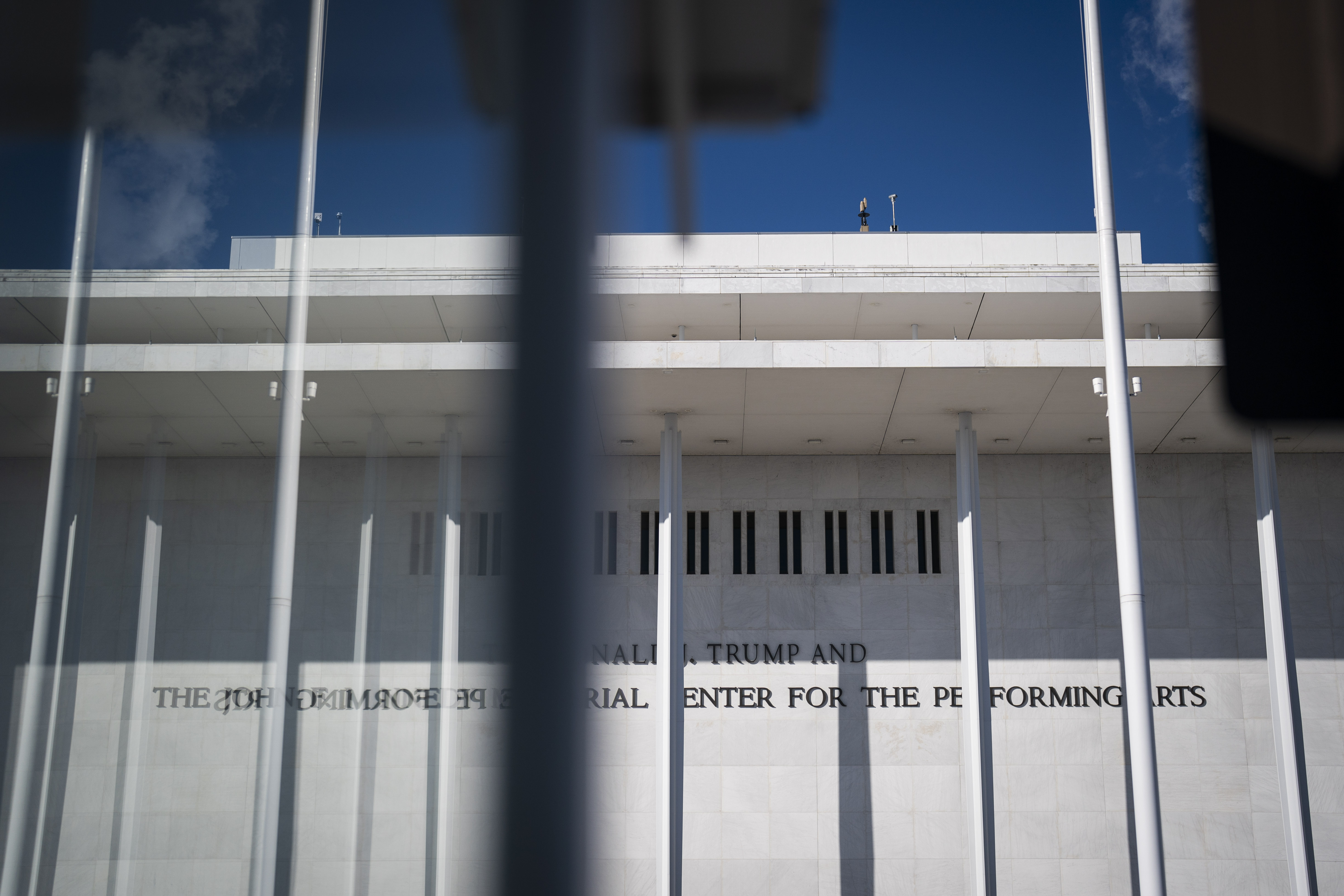
    Ticket sales and fundraising collapsed after President Donald Trump’s name was added to the John F. Kennedy Center for the Performing Arts, even as the center’s leaders publicly touted a financial turnaround, according to confidential documents obtained by the Washington Post.

    Ticket sales had already dropped in the 10 months following Trump’s takeover, but both ticket sales and donations plunged after the Trump-led board of trustees voted in December to rename the center after him and put his name on the front of the building, according to the records.

    The documents show that leaders knew both were cratering even as they publicly portrayed Trump’s takeover as a financial rescue. In a failed June request to keep Trump’s name on the building, for instance, a Justice Department lawyer wrote that renaming the center after Trump “represented a saving of The Kennedy Center which, if this doesn’t happen, would go into financial and structural collapse” — even suggesting in a new filing Monday that without Trump’s name and renovation plan, the building “will be required to be taken down.”

    Just the week before the June filing, the center’s own financial projections showed ticket revenue and fundraising had plummeted after the name change, putting it on track to fall nearly $100 million short of its revenue target.

    The records — internal budgets, management forecasts, board minutes, and financial presentations — provide the first comprehensive accounting of the center’s financial deterioration in the year and a half since Trump replaced dozens of board members with allies and installed himself as chairperson. Even after slashing expenses, center officials projected earned revenue this fiscal year to miss its budget target by 70% and contributed revenue to fall 25% short. The revenue miss was projected to leave the center with a $23 million deficit.

    “The center took a huge hit when the takeover happened,” and then appeared to stabilize, according to an official familiar with the center’s financial situation. But after the name change, “it was just an absolute fiscal cliff. Donors disappeared, ticket sales disappeared, artists disappeared — like it was doomsday.”

    Andrew Taylor, director of American University’s arts management program, who reviewed the documents at the Post’s request, described the declines as “a nosedive.”

    Trump’s takeover “had a consequence,” Taylor said, “and the consequence was a catastrophic drop in revenue.”

    In response to detailed questions from the Post, a Kennedy Center spokesperson blamed the center’s financial problems on its previous leadership, saying it inherited years of financial mismanagement. Putting Trump’s name on the building attracted new donors and helped raise money for renovations, the spokesperson said, adding that a proposed fiscal 2027 budget is balanced. The center did not dispute the Post’s account of its internal fiscal 2026 projections.

    The center is months late to releasing its independently audited financial statements for its first fiscal year under Trump’s leadership, which should include definitive data about its financial condition through the first months of the takeover.

    Promising a turnaround

    Upon taking control of the Kennedy Center, Trump and his allies said they had inherited a troubled institution.

    They accused the previous leadership of spending too much on unpopular programming, running persistent deficits, and obscuring its financial condition, which past leaders denied. Trump promised to remake the institution, while Richard Grenell, the ally he installed to lead the center, repeatedly argued that the new administration was imposing fiscal discipline.

    Grenell defended deep staff cuts as prudent and said the center had raised $117 million from donors. He told the Washington Examiner in November that every department had been instructed that its shows needed to break even: “If you can’t sell enough seats, you find a donor.” Corporations, he said, were “writing checks because they trust us not to turn every show into a political statement.”

    The White House on Monday defended Trump’s stewardship of the center by citing his renovation plans but did not directly address questions about this year’s drop in revenue.

    “President Trump did what Democrats wouldn’t by finally committing the resources and the leadership needed to restore the Kennedy Center and make it the finest performing arts facility in the world,” spokesperson Liz Huston said in an email.

    Leaders also credited Trump with securing $257 million from Congress for repairs last year, an enormous amount relative to the center’s usual federal appropriation.

    The center’s board has gone further. In a resolution this month supporting another effort to install Trump’s name on the building, trustees argued that the Kennedy Center “would be in financial ruin” without the president’s “unique stature as both an unparalleled fundraiser and world-class developer.”

    But the internal projections told a different story.

    The center had budgeted about $220 million in revenue for fiscal 2026, which began in October and ends Sept. 30. By late May, officials projected it would bring in only about $124 million.

    Officials cut projected expenses by roughly a third, but even that was not enough: The center still projected a $23 million deficit.

    The cuts involved slashing staff and programs, which the center has described in court filings as a logical part of the board’s decision to close for repairs.

    Industry experts described a chicken-or-the-egg dynamic, saying cuts can be a reasonable response to falling revenue but can also hollow out the staff and programming an organization depends on to generate future income.

    Karen Gahl-Mills, director of the Indiana University arts administration program who reviewed the financial records for the Post, said the documents showed that some of the decline in spending simply reflected a smaller institution.

    “They’re smaller than they were,” she said.

    Taylor said the financial problems were striking in light of what the center’s board appeared to be focused on. During their March board meeting, Trump and the other trustees talked almost entirely about the building, renovations, and aesthetic details without addressing the artistic performances that happen inside before voting to close the center for two years, according to minutes of the meeting.

    “The conversation is really about real estate development,” Taylor said, adding: “It’s almost nothing about programming in that meeting, except for how we’re going to wind down programming when we shut down.”

    The center defended the planned renovation as a way to improve its finances, saying it would produce a projected $3.4 million surplus. An alternative, involving rolling closures throughout the building over four years, would produce a projected deficit of about $78 million, the spokesperson said.

    Rep. Joyce Beatty (D., Ohio), one of the few trustees not appointed by Trump, has challenged the board’s actions in federal court, arguing that in voting to close for two years, its majority has put the president’s interests ahead of its responsibility to the center’s duty to bring performing arts programming to the public.

    Ticket buyers and donors retreat

    Audiences began retreating soon after Trump took control of the center, but the confidential documents show revenue troubles became far more severe in fiscal 2026, which covers the bulk of the first programming season under new leadership, the name change, and the attempted closure.

    The Post previously reported that ticket sales dropped by half in the week after Trump announced his takeover in February 2025. By that fall, ticket buyers were spending less at the center than during any comparable period since 2018 except the pandemic, and subscriptions were down sharply. At the time, current and former employees attributed the decline to an audience boycott over the politicization of the center.

    By June, officials were reviewing an annotated line chart that showed quarterly ticket sales over several years: a recovery from the pandemic, a drop after the board overhaul, and a precipitous fall after the name change.

    At the same time, the center had downsized its fundraising operation as donations faltered. One internal report said fundraising at the beginning of this year contrasted sharply with the months before the name change. Pledges fell by more than 100% because of “adjustments and write-offs,” according to the report — an unusual figure that Taylor said may reflect older pledges that donors withdrew or that the center determined it was unlikely to collect.

    The simultaneous decline in audiences and philanthropy can be particularly damaging for performing arts organizations because the two sources of revenue are closely connected: Many ticket buyers are also donors.

    Together, the losses in audiences and donors helped leave the center projecting nearly $100 million less in total revenue than it had anticipated — a decline experts said went far beyond the broader financial pressures facing cultural institutions.

    An outlier

    Preliminary fiscal 2025 data compiled by SMU DataArts, an arts research center at Southern Methodist University, shows a far different picture across the cultural sector. Large cultural organizations generally remained financially stable, ending the year with modest surpluses even as some experienced declines in ticket sales and philanthropy.

    Jennifer Benoit-Bryan, executive director of SMU DataArts, said the Kennedy Center’s trajectory was “remarkably different” from the broader pattern, with severe reductions in both earned and contributed income and a sizable deficit.

    “That’s a huge hole for an organization to recover from, even one as significant and sizable as the Kennedy Center,” Benoit-Bryan said.

    The center has traditionally been unusual among cultural institutions because it makes more money selling tickets than collecting donations, Benoit-Bryan said. Most arts nonprofits lean more heavily on philanthropy, which makes up about 60% of revenue on average.

    That reliance on ticket sales and other earned income makes the board’s vote to close for two years of renovations particularly consequential, she said, calling it “a questionable choice.”

    Beatty argued in her lawsuit that the decision was worse than misguided. Her lawyers characterized the closure as a betrayal of the center’s mission to bring the performing arts to the public — and an attempt to hide the “embarrassing fact” that renaming the center after Trump had sparked a financial collapse.

    “Such a self-interested gambit, sacrificing the Kennedy Center to save face, represents a quintessential breach of fiduciary duty,” they wrote.

  • Trump administration proposes $103,000 fee for H-1B visas after legal setback

    Trump administration proposes $103,000 fee for H-1B visas after legal setback

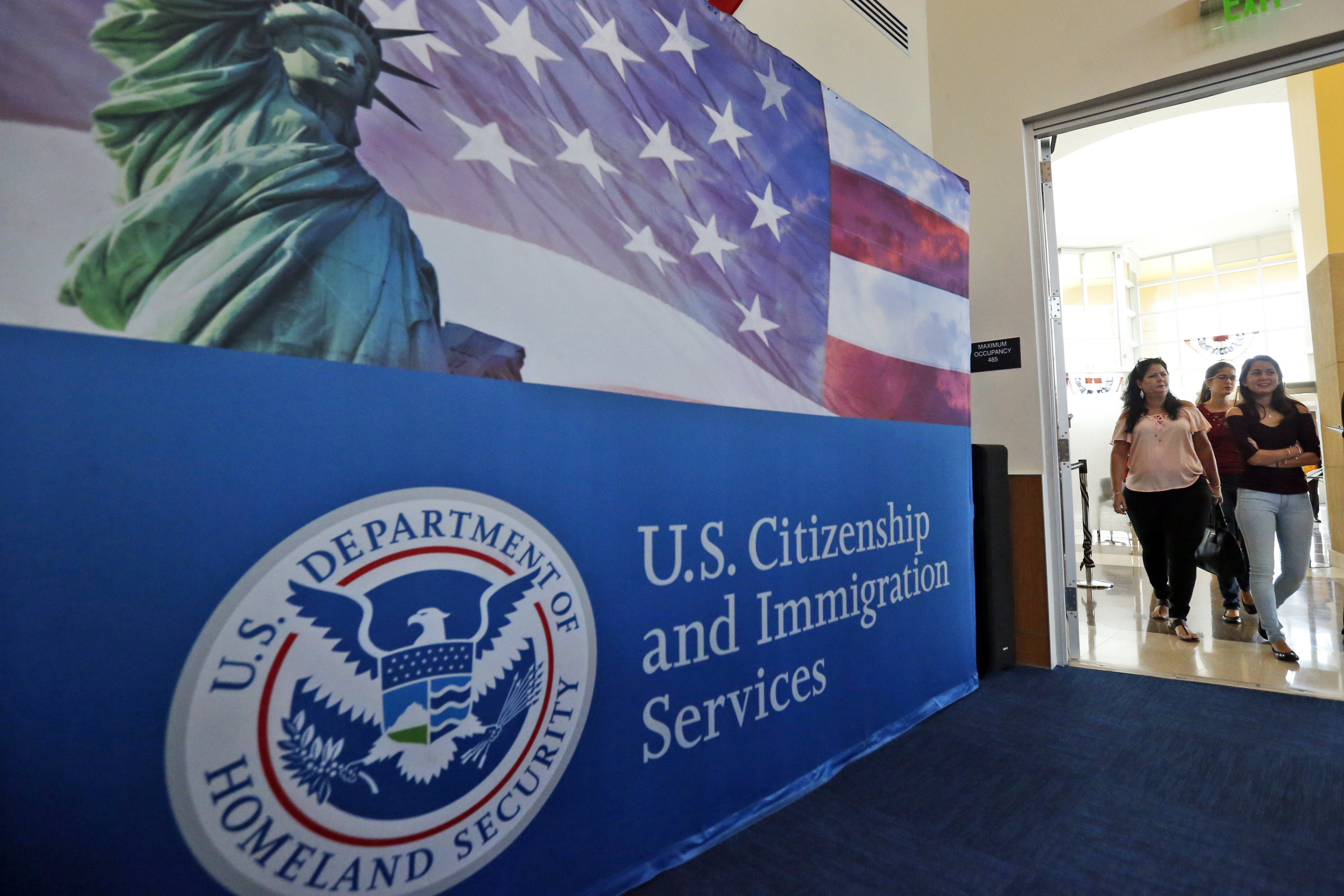
    The Trump administration plans to charge employers seeking skilled foreign workers through the H-1B visa program a $103,265 fee, a proposed regulation posted on Monday says.

    Revenue from the fee would be used to run the legal immigration system, the document says, including funding for federal immigration courts and U.S. Immigration and Customs Enforcement.

    President Donald Trump’s administration argues that the H-1B program has been used to take jobs away from Americans and that the current system fails to prioritize the most exceptional foreign workers. Trump tried to implement a similar $100,000 fee last year through a presidential proclamation, but it was invalidated by a federal judge in June.

    The H-1B program, created by Congress in 1990, provides employers with visas for 65,000 skilled foreign workers annually, with another 20,000 visas available for workers with advanced degrees from U.S. universities.

    The proposed regulation contends the new fee would make employers “less likely to hire an H-1B worker over a qualified and highly-skilled American.” The regulation cites a working paper in the National Bureau of Economic Research that found H-1B workers made, on average, about 15% less than American counterparts.

    In the June ruling against the fee, U.S. District Judge Leo T. Sorokin of Massachusetts said the president unilaterally imposed an illegal tax, bypassing Congress, and failed to consider the impact of his actions on sectors experiencing labor shortages that rely on the H-1B program to hire physicians, nurses, and teachers.

    The Trump administration appealed the ruling to the U.S. Court of Appeals for the 1st Circuit and requested it be paused pending the appeal, but the request was denied in late July.

    The new proposed regulation, which was set to formally publish in the Federal Register on Tuesday, seeks to carve a different legal path by proposing to use the fees to offset the cost of running the immigration system. It exempts some groups, such as most U.S. colleges, universities, and nonprofit hospitals affiliated with academic institutions. But unlike last year’s proposal, it would apply to many people who already reside in the United States, not just those submitting petitions from abroad.

    “This makes it much broader,” said Jeremy Neufeld, director of immigration policy at the Institute for Progress, a nonpartisan think tank.

    The proposed rule would restrict a major pathway for foreign guest workers that is widely used by Silicon Valley tech companies, among other businesses. Industry critics say that the fee would diminish the United States’ competitive edge against China, India, and other countries in a variety of research and tech industries, as well as harm a number of industries that depend on foreign professionals.

    “This is again an illegal tax,” said Charles Kuck, who practices immigration law in Atlanta.

    Amazon has received the most H-1B visas in recent years, with more than 9,300 approved petitions in fiscal year 2026 through June 30, according to U.S. Citizenship and Immigration Services data.

    Other top users of the H-1B program in 2026 have been India-based IT and outsourcing companies Tata Consultancy Services and Infosys, followed by American tech companies Apple and Microsoft.

    Neufeld said expanding the fee requirement to applicants already in the United States could lead to a significant reduction in the number of H-1B petitions that companies request.

    “I would be very surprised if even large companies pay this fee for many of their H-1Bs,” he said.

    Sorokin’s decision to strike down Trump’s original $100,000 H-1B visa fee came in response to a lawsuit from 20 states, led by California and Massachusetts.

    The U.S. Chamber of Commerce and an association of top research universities in a separate lawsuit last year criticized Trump’s earlier fee, saying H-1B workers fill critical jobs in the medical, manufacturing, and technology fields.

    The federal judge in that case sided with the Trump administration in December, leading the Chamber of Commerce and university association to appeal.

    The administration estimates the new proposed regulation would generate an estimated $8.8 billion annually.

    Nearly $3 billion would go to the federal immigration courts and be used to support more than 8,400 hires, including immigration court judges.

    ICE, already funded to historic levels, would receive roughly $1 billion to pay for vetting of immigration applications and the administration of the student visa program, the proposed regulation says.

    It says U.S. Citizenship and Immigration Services would use the money to offset $3 billion in existing costs, and several other agencies involved in immigration processing would also receive funds.

    The public will have 30 days to comment on the new proposed regulation following its publication to the Federal Register on Tuesday, the proposal says. It can take months or even years to finalize regulations.

    U.S. Citizenship and Immigration Services generally does not refund filing fees, including when a visa petition is denied. The proposed regulation does not address whether the new $103,265 fee would be refundable, and the agency did not respond to a request for comment.

  • Leaked memo shows how U.S. aims to weaken global limits on plastic pollution

    Leaked memo shows how U.S. aims to weaken global limits on plastic pollution

    The United States has doubled down on its opposition to plastic production limits in global treaty talks, according to a diplomatic memo reviewed by the Washington Post, pushing to create a broad loophole to disregard the treaty on national security grounds.

    A year after the Trump administration worked with other major oil-producing nations to block strict plastic pollution limits, leading to a failed U.N. conference in Geneva, environmentalists and other observers argue this same group is helping steer negotiations toward a weaker agreement.

    Involving delegates from nearly 180 countries, the talks have reached a critical point after four years. Global plastic pollution has ballooned to more than 57 million tons per year, and a coalition of dozens of countries — including most members of the European Union and many from Africa and Latin America — say this waste will become overwhelming unless the world imposes meaningful restrictions soon.

    The leaked document, which a foreign diplomat confirmed was circulated this summer to governments involved in negotiations, calls for a “pragmatic” treaty that includes a provision allowing for countries to take any measures they consider necessary to protect national security.

    The memo, which emphasizes the need for waste management and private sector investment, argues any agreement must not undermine national security, critical infrastructure, or supply chains. It warns restricting plastics and chemicals could limit access to defense-related products such as weapons materials and protective gear.

    The overwhelming majority of plastic is made from chemicals derived from petroleum or other fossil fuels, and the Trump administration has pushed to expand oil and gas drilling and domestic production. Negotiators under Trump have become far more vocal in opposing binding limits on plastic production, compared with a more conciliatory tone under President Joe Biden.

    The negotiating position also reflects a broader administration strategy of citing national security concerns to promote fossil fuels, such as when it declared a national energy emergency last year, blocked the development of wind farms, and exempted oil and gas firms from Endangered Species Act requirements in the Gulf of Mexico.

    The State Department said in an email that it generally does not comment on “purported” U.S. diplomatic communications.

    “The United States seeks to negotiate an agreement that all countries can join and implement as an outcome that will be most effective in reducing plastic pollution,” the department said, adding the treaty should not interfere with military readiness or critical national-security applications.

    It said the administration backed “common-sense” measures to reduce plastic pollution while rejecting proposals that would “damage the American economy, drive inflation, and restrict consumer choice.”

    Andreas Bjelland Eriksen, Norway’s minister of climate and the environment, said the memo was “in line with what the US has communicated” during recent negotiations.

    “We do not share the view that restricting specific plastic items that contribute to plastic pollution would pose a threat to economic growth,” Eriksen said, adding that in countries that have imposed limits on plastic pollution, “new and improved business solutions emerge.”

    “The treaty must lead to real changes to tackle plastic pollution; if not, there is no point having it,” Eriksen added.

    Barirega Akankwasah, executive director of Uganda’s National Environment Management Authority, defended the U.S.’s right to advance its views: “International law must reflect the needs and aspirations of negotiating countries and international law can only succeed based on national implementation, which in turn is a reflection of national capabilities and circumstances.”

    The dispute comes after what experts described as a sharp shift in the U.S. position under the Trump administration. Youngman, a legal and policy specialist at advocacy group Environmental Investigation Agency, said the U.S. under the Biden administration was open to provisions reducing plastic production, even though it did not support a global cap.

    But the U.S. has since vocally opposed limits on production and sought to narrow the treaty’s scope, including through new language invoking national security.

    Alexandra Harrington, an international legal expert, said the U.S. was not acting alone and had “come back in as a disrupter” in the talks.

    Harrington, also the chairperson of the International Union for Conservation of Nature’s plastic pollution task force, added the U.S. proposal went far beyond the narrow military exemptions sometimes found in environmental treaties, and appeared aimed more at shielding economic and petrochemical interests than addressing a specific plastics-related defense risk.

    “I think for them the national security argument is convenient, it’s useful,” she said.

    The memo was circulated in the months before treaty chairperson Julio Cordano published a new “Aid to Negotiations” document earlier this month. The text, intended to steer governments toward a final agreement, has also been criticized by environmental groups and some legal experts for creating a system based on national pledges rather than binding global controls.

    Cordano did not respond to a request for comment.

    Harrington said the chairperson’s new text was “very clearly” bending toward the agenda of countries seeking a less ambitious treaty, like the U.S.

    She pointed to the removal of trade provisions that would have regulated the cross-border movement of plastics, from polymers and products sold abroad to plastic waste shipped for disposal or recycling. Harrington said trade rules are a standard feature of major pollution treaties.

    Stewart Harris, managing director for global affairs at the American Chemistry Council, said the administration’s position is largely aligned with the plastic industry’s.

    Harris, whose trade group represents plastics manufacturers, said hard limits on plastic production will raise product costs for lower income people globally without significantly reducing plastic waste. Roughly 2.7 billion people globally do not have access to proper collection for their plastic waste and addressing that and recycling would go further to reducing pollution, he said.

    ACC is lobbying for individual countries to set their own action plans for tackling plastic pollution, such as setting national rather than global targets for how much recycled content plastic should contain.

    Harris said ACC has not taken a position on the national security exemption, but that such provisions were common in global environmental agreements.

    “That tells me that the United States is very serious about negotiating an agreement it can join,” he said. “They wouldn’t be even considering those details if it was not serious about joining.”

    Even if negotiators reach a deal, the United States would only join the treaty if the Senate ratifies it by a two-thirds majority vote, a difficult bar to clear in an extremely polarized Congress.

    While formal talks will resume next spring, informal negotiations resumed in late June, nearly a year after governments failed to produce a final agreement amid disputes over whether the treaty should include limits on plastic production and binding restrictions on chemicals. Many countries rejected the then-chairperson’s draft as too weak to serve as the basis for a deal.

    Youngman said the new document weakens last year’s text further by removing proposed reporting requirements on how much plastic countries produce and consume, and by replacing stronger legal terms such as “shall” with weaker language such as “should.” Even its most ambitious options, she said, would fall short of the mandate to end plastic pollution.

    “We didn’t think it was possible,” she said, “but we keep on digging ourselves even lower.”

    Heads of delegations are due to meet in Bangkok at the end of September, where governments are expected to discuss “bridging proposals,” compromise language intended to address the treaty’s most contentious issues.

  • Trump’s school voucher program could become a public school cash machine

    Trump’s school voucher program could become a public school cash machine

    Forget student fun runs, PTA bake sales, and Saturday morning car washes.

    The future of public-school fundraising may soon look more like a payroll deduction. Or perhaps door-to-door campaigns each tax season asking filers to earmark donations to support nearby public schools.

    When President Donald Trump’s tax overhaul known as the One Big Beautiful Bill last year created the first national school-voucher-style program to help families pay for private schools or homeschool costs, it allowed public schools to benefit as well. According to U.S. Treasury guidelines released in June, the program allows specific nonprofits to collect donations that people direct from their federal taxes for a vast array of public school costs, such as transportation or tutoring.

    Sara Hazel, president of the Denver Public Schools Foundation, the fundraising arm for Colorado’s largest school district, is among a small but growing number of district leaders who have said they plan to take advantage of the financial opportunity. She said she plans to tell potential donors, “Do you want that money going to the IRS or going to local kids?”

    The program doesn’t officially start until the new year, but its resemblance to private-school vouchers has inspired opponents of school choice to line up against it. Still, supporters and even cautious critics say the Republican-backed initiative could mean a financial boon for public schools.

    The program works like this: Taxpayers can contribute up to $1,700 to what’s known as a scholarship-granting organization and receive a credit on their federal income taxes. It’s a dollar-for-dollar credit, meaning every pledged dollar reduces what an individual owes to the Internal Revenue Service by the same amount.

    These new intermediaries could be formed by an array of nonprofits, including public-school foundations, with approval from their state. The scholarship-granting organization would then pass on the money to private school and homeschool applicants in the form of scholarships — or to school districts so they could cover certain services for student applicants.

    Marguerite Roza, a school finance expert, has advised school districts — many of which have bandaged their slashed budgets by shuttering campuses or issuing pink slips — that they can’t afford to ignore this new source of funding. “Any time there’s an available revenue source, generally we don’t see districts saying, ‘No thank you,’” said Roza, director of the Edunomics Lab at Georgetown University.

    States must opt into the program, and so far, 30 states have done so. Now it’s up to individual school district leaders in those states to decide if they want to try to tap into the money.

    School finance experts suggest the scholarships could help districts access funding comparable to 3% of their entire budget. But tapping into this unexpected revenue risks political backlash and logistical headaches. Governors and superintendents may face fierce resistance from teachers unions, which in many states have portrayed the new program as a Trojan horse for the expansion of vouchers in education because it also allows money to be funneled to families to pay for private school.

    Some opponents also raise concerns about creating a new funding system that could favor school districts with a ready pool of wealthy donors over those in low-income communities where few residents may owe enough in federal taxes to contribute to the scholarships.

    “In low-income areas, you’re going to find it’s not easy for school districts to raise this money,” said Thomas Toch, director of the think tank FutureEd at Georgetown University.

    He said he worried that the inclusion of public school districts in the legislation was little more than a ploy, a shrewd political strategy to further school choice in states otherwise unlikely to support it.

    “It was designed to make the case that this program can support the public sector in order to win support in blue states,” Toch said.

    The mechanics of the tax credit scholarships represent a dramatic departure from how the federal government supports schools.

    The money for the scholarships never flows through federal Department of Education coffers, entirely bypassing Congress and its spending decisions.

    Treasury regulators will soon issue formal rules to set additional guardrails for the program. But the law suggests the scholarships could be used to cover an expansive list of expenses that public schools often struggle to fund including costs such as field trips, textbooks, or support services.

    The inclusion of public schools now places some governors, superintendents, and school boards in a new dilemma: Do they choose to tap into a Trump-backed program that could boost their bottom line, or leave the tax-credit cash on the table for others to claim?

    “The reality is this program exists, and if there are dollars on the table that can go to our children and families, I don’t understand the purpose of not trying to do everything we possibly can,” said Justin Dayhoff, chief financial officer for Nevada’s Clark County School District, which includes Las Vegas.

    His district, like many around the country, is strapped for cash as health insurance and other costs increase and fewer students enroll in public school due to population decline. Enrollment in Clark County — the nation’s fifth-largest district — has dwindled by more than 35,000 students, or 11%, since before the pandemic, and it laid off five dozen staff ahead of this new school year.

    How big a financial difference the voucher-style program would make for school districts remains to be seen.

    Some school finance experts expect soliciting donations could be as simple as districts partnering with employers to enroll their workers in the tax credit program, perhaps as another form in their regular HR paperwork. (Many employers already partner with nonprofits like United Way to collect pretax donations from paychecks.)

    Roza, of Georgetown, estimated a district could bring in about $200 per student by enrolling its own employees into the program. Convincing major companies to do the same — directing proceeds to nonprofits supporting students who attend local public schools — could push that figure higher. City and county governments might participate as well.

    “Local employers are an absolutely critical piece of this puzzle,” said Hazel, with the Denver Public Schools Foundation.

    Her organization hasn’t officially approached any of its corporate partners yet about enrolling their employees in the tax credit program. (Past donors to the foundation have included Chevron, the Colorado Rockies, and United Airlines.) But Hazel’s already thinking about whether Denver Public Schools will have to compete with other Colorado districts attempting to woo the same business leaders.

    “We’re the largest school district in Colorado, so we already have an advantage,” Hazel said. “But how can we go to a company and say, ‘Your employees must choose between all these great school districts?’”

    But her new fundraising plans will come with steep operational hurdles.

    Under the new law, at least 90% of all donations to scholarship-granting organizations like Hazel’s must go directly to student scholarships, leaving relatively little to cover marketing, staff, annual independent audits, and payment processing. Fees already take 4% of each credit card transaction, Hazel said.

    Yet even as she awaits further clarity from Treasury on how organizations can collect donations, she’s imagining what the money could mean for Denver schools.

    “My dream is I can give every second grader a tutor and we get everyone to grade-level reading and math,” Hazel said. “There are things like that are so scalable and would support every student.”

  • Secret White House bunker undercuts Trump’s ballroom lawsuit, ex-officials say

    Secret White House bunker undercuts Trump’s ballroom lawsuit, ex-officials say

    President Donald Trump has claimed that the White House needs a massive new ballroom because it would provide him and future presidents with a secure, hardened facility. But former officials say the argument fails to acknowledge that the presidential complex already has one.

    More than a decade ago, federal officials built a highly protected bunker, embedded deep underground, that can shelter the president and his top aides in a national security emergency, according to three former officials.

    The facility, which was secretly completed during the Obama administration, can house dozens of people for up to multiple weeks, two former officials said. It’s buried more than 60 feet underneath the White House complex and built to withstand a nuclear blast, two of the officials said, ensuring the president and his team have a secure command center to run the country in times of extreme duress.

    The bunker’s existence, the former officials said, undercuts the Trump administration’s emerging legal argument in the ongoing lawsuit over the $600 million ballroom complex’s construction: that the facility must be completed due to its significance for U.S. national security.

    The people spoke on the condition of anonymity to discuss elements of the secretive facility, some of which have not been previously reported.

    The Washington Post is withholding some details of the bunker and its construction in order to not compromise sensitive White House security protocols.

    Asked about Trump’s assertions about the need for a new military complex, the White House defended the project and criticized past officials for discussing existing security structures.

    “The East Wing Modernization Project is inextricably tied to the security of the President, the White House grounds and the certain security infrastructure assets,” said White House spokesperson Davis Ingle in a statement.

    “Recent events such as the foiled attack on the historic UFC Freedom 250 event at the White House proves exactly why the East Wing Modernization Project is severely needed for large scale events, which include drone proof structures and drone ports among other critical security enhancements,” Ingle added.

    Chief Justice John G. Roberts Jr. issued an order Friday allowing the Trump administration to continue ballroom work in the short term as the Supreme Court weighs an emergency appeal in a lawsuit challenging whether the construction requires the approval of Congress.

    A U.S. district judge and a federal appeals panel have both ordered the administration to stop building the ballroom until lawmakers authorize the project. But the judges carved out an exception: Construction on national security needs, such as a planned military complex underneath the ballroom, can continue.

    In August court filings supporting the White House’s case, Trump’s top national security team urged the Supreme Court to allow the project to proceed. The construction, they said, comes as the president faces rising threats from foreign adversaries and terrorists, alongside advances in commercial drone technology that could more effectively target White House grounds.

    Trump officials argued the ballroom complex would provide essential security upgrades to the president’s residence and help guarantee the U.S. government could continue functioning during a crisis.

    White House Deputy Chief of Staff Stephen Miller wrote in his filing that the facility “serves continuity-of-government interests by ensuring that the President and senior national security staff are able to operate from a protected facility during any attack on the nation’s capital.”

    Army Secretary Dan Driscoll has repeatedly asserted the ballroom’s construction would help resolve an “emergency” in the White House’s “defensive posture” posed by the spread of military-grade drones.

    Driscoll told the Supreme Court in an Aug. 13 filing that completing the ballroom complex was necessary so Trump could run the country in a crisis.

    “Securing this reinforced subterranean node guarantees uninterrupted command and control in place,” Driscoll wrote, calling the project “a nondiscretionary prerequisite to ensure the President can maintain continuity of government, uninterrupted operations, and effectively exercise National Command Authority during an attack or global crisis.”

    The arguments echoed the Trump administration’s increasing effort to rely on national security as a way to justify the ballroom’s completion.

    Trump has taken to calling the project a “military complex” in his public comments and social media posts, and has repeatedly posted AI renderings of drones, troops, and even fuel tanker trucks stationed on the future East Wing roof to press his case.

    “The ballroom is so much a military component with the drones and the bomb shelters,” Trump told reporters on the South Lawn on Wednesday.

    The White House has been racing to complete the project before any court-ordered halt takes effect. Officials told the Supreme Court earlier this month that construction was about “65% complete” and that about 250 workers are working 20 hours per day, seven days a week to quickly finish it.

    The structure goes five stories deep into the ground, and much of the underground work has been completed, the administration said. The project is already 70 feet above ground in some places, officials told the Supreme Court.

    After asserting in court last year that the secure portion of the project could be carried out independently of the ballroom, the administration has reversed its argument.

    Maj. Gen. Garrett R. Hoffman, director of the White House Military Office, told the Supreme Court that the aboveground ballroom and belowground military facility are “inextricably intertwined elements” and that the new construction “provides extraordinary protection to these spaces that has not been available in the past.”

    Officials have also stressed that the concrete, steel, and other materials used for both parts of the project are being chosen for national security reasons. In court filings, they detailed how the ballroom’s construction materials are intended to stop bombs, rockets, missiles, and even nuclear blasts.

    “It is, in a very large way, a ‘safe room’ for the Presidency and the continuity of government,” wrote Joshua Fisher, a senior White House official who is managing the project, in his Supreme Court filing.

    The two former officials noted this same argument had been invoked two decades ago to construct the White House’s existing subterranean bunker that is hardened against nuclear blasts and other threats. They questioned why the administration has suggested that the White House lacks such a secure location, including one that could help ensure a functioning government in national security crises.

    They also contrasted secretive efforts to build the existing bunker to the current project. Details about the secure White House facility are among the most closely guarded secrets in the U.S. government, the former officials said, and its construction was concealed from many lawmakers, administration officials, and the public.

    During the new ballroom’s construction, Trump has repeatedly revealed private aspects of the planned East Wing military complex, such as its medical capabilities and “drone port.” And the renovation has occurred in public view, potentially allowing foreign adversaries to spy once-hidden elements of the White House complex — a threat Trump officials invoked in their court filings to urge that construction continue.

    Trump has separately accused the National Trust for Historic Preservation, the organization that sued to halt the ballroom’s construction, of being “treasonists.” He has claimed that the nonprofit group, which Congress charged with helping preserve historic buildings, was asked not to file a lawsuit for national security reasons.

    “I said the problem with the suit — I told them this — is that we have many military things in this ballroom, and ideally, they shouldn’t be revealed,” Trump said in the Oval Office on Aug. 17. “But now they are revealed, so the world knows about it.”

    The National Trust’s filings have not revealed any new information about the ballroom project that Trump or the administration did not previously disclose.

    National Trust officials also told the Post that they were never briefed on the bunker, that they were not asked by Trump or the White House to not file a lawsuit, and that they sued to halt the ballroom because they believe the president does not have the authority to unilaterally make wholesale changes to the historic White House grounds.

    Trump officials did share classified information directly with U.S. District Judge Richard J. Leon as he weighed the National Trust’s arguments, beginning last year. Leon ultimately ordered a halt to ballroom construction but said the administration could keep working on the underground military complex.

    The White House’s protections for presidents have evolved as threats have increased.

    For decades, the White House bunker was limited to a small facility located in the basement of the East Wing, built during World War II to help protect President Franklin D. Roosevelt in case of an emergency. That site — known as the Presidential Emergency Operations Center, or PEOC — is where the Secret Service hurried Vice President Dick Cheney and first lady Laura Bush during the 9/11 terrorist attacks.

    The attacks of Sept. 11 prompted the White House to begin work on a much more secure facility, said journalist Ronald Kessler, who referenced construction of the bunker in his 2018 book, The Trump White House: Changing the Rules of the Game. The upgraded facility, he wrote, was completed during the Obama administration, had a monthslong food supply, and was equipped with its own self-contained airflow system.

    “It’s a serious issue. What could be more important than maintaining continuity of government?” said Kessler, who supports the Trump administration’s efforts to expand the White House’s secure facilities through the ballroom project.

    Kessler and the former officials who spoke with the Post acknowledged the necessity of providing the president with a secure facility amid ongoing serious threats. Trump has faced multiple assassination attempts, the latest of which — from Iran earlier in the summer — prompted the Secret Service to stage an elaborate ruse that ended with the president flying back from the NATO summit in Ankara on a separate aircraft, apart from Air Force One.

    Still, the two former officials questioned the White House’s public case that the existing architecture is insufficiently hardened. The existing site, the two people said, is buried deep into the Washington bedrock, accessible by a private elevator and built specifically to protect the president from a vast array of threats, including an attack from a weapon of mass destruction.

    Its specifications, the former officials said, include many of the safety protocols the White House is describing in an attempt to justify the new ballroom complex.

    The former officials also warned that the administration’s abrupt decision to demolish the East Wing, and expose what sat underneath it, could have itself created national security risks. The PEOC, two former officials said, sat only about 20 feet under the East Wing and may have been destroyed or damaged in the construction process.

    Fisher, the White House official managing the project, said that he was worried that halting construction now could unwind nearly a year of work.

    “Pausing work now, as the district court has ordered, will jeopardize everything we have done so far,” Fisher told the Supreme Court. “Depending on how long that freeze persists, it might force us to tear down everything we have done as a degraded mass, to allow for whatever comes next — something that would be disruptive and extremely dangerous.”

    Similar arguments have not swayed lower-court judges.

    Leon, the district judge who first ordered the administration in March to halt its ballroom construction, chastised Trump officials for arguing that they needed to complete the project for safety and security reasons.

    “Here is the bottom line,” Leon wrote in a follow-up ruling in April. “Defendants themselves forged ahead and created this ‘coordinated and managed safety hazard’ on White House grounds.”
  • Londoners find ‘horrendous’ cracks in their homes after successive heat waves

    Londoners find ‘horrendous’ cracks in their homes after successive heat waves

    Londoners are facing historic levels of subsidence risk after five successive heat waves dried out the clay soil on which much of the city is built.

    Insurance claims tied to subsidence — a phenomenon associated with bouts of hot, dry weather that shrink the soil and destabilize the foundations on which buildings stand — hit a record last quarter, according to data provided by the Association of British Insurers. On average, households claimed £20,000 ($27,200) for the risk, more than in any previous quarter and a 15% jump from the same period in 2025, the ABI said.

    Laura Hughes, head of general insurance at the ABI, says the upward trend is likely to continue. “We expect to see more subsidence cases because of the hot weather,” she said in an interview.

    Londoners have taken to social media to express their dismay. On Reddit, people offered personal accounts telling of “horrendous cracking” in their homes, and “doors sticking” due to subsidence. One said it was “genuinely scary” to discover that their kitchen had moved as the foundations of the home shifted.

    Another Reddit user described the response of a structural engineer they contacted for help. “Before I could finish explaining he laughed and said, ‘You and 20,000 other people in southeast London’,” the person wrote.

    “It’s crazy, what’s happening now,” said Otso Lahtinen, chief executive of Geobear, an engineering firm that’s regularly called in to repair damage caused by subsidence. “It’s the new norm, and it seems it will happen more often in the next 20-30 years.”

    Data provided by Aviva Plc show that the areas of London that are most at risk are some of the U.K. capital’s most sought after, namely the boroughs of Westminster, as well as Kensington and Chelsea. While subsidence has been affecting homes in the British capital for decades, climate change is making it worse. London clay is especially sensitive to fluctuations in moisture, expanding when wet and contracting when dry.

    The threat of subsidence in the U.K. is concentrated in and around London as well as in parts of the southeast. In the four years through 2025, insurance payouts for subsidence damage soared roughly 90% to reach a record £297 million, according to data provided by the ABI.

    The most vulnerable properties are Victorian or Edwardian homes that were built directly onto the upper layers of London clay. By contrast, modern office buildings in the City of London and Canary Wharf have much deeper foundations and are therefore less exposed to such risks.

    Subsidence is part of a long list of heat-related challenges to which the U.K. is now struggling to adapt. Over the past months, extreme heat has forced schools to close, led bus drivers to go on strike, and seen banks relax in-office work requirements to protect staff from unbearably hot commutes. Most of England has been gripped by drought and the country’s hospitals have shown signs of buckling under the strain.

    London Mayor Sadiq Khan has warned that the city will need to turn to private investors to help fund the cost of dealing with the impact of rising temperatures. His office estimates that London now faces an annual bill as high as £36 billion into the 2050s in order to prepare the city for what climate change has in store.

    “The impact that climate change is having is undeniable,” said Hughes of the ABI.

    Subsidence can devalue a property by an average of 20%-25%, according to the Federation of Master Builders. In some cases, homeowners prefer to cover the cost themselves rather than wade through complicated claims processes. The traditional engineering fix for subsidence damage, known as underpinning, can cost anywhere from £20,000 to more than £100,000.

    The development represents a particular risk to insurers, with subsidence claims making up an ever larger chunk of the payouts they need to make to customers.

    The phenomenon poses “a significant challenge for U.K. home insurers,” says Cherry Chan, a partner at Deloitte. The consultancy has warned that UK home insurers risk losses in 2026 due in part to the trend.

    Along with flash floods and wildfires, subsidence is becoming “an increasingly material climate-related risk,” Chan said. It requires that insurers display “careful consideration in long-term exposure and risk management strategies.”

    Extreme weather patterns in 2026 “will not only impact more new claims in this year, but could cause claims deteriorations for unsettled subsidence claims reported in the past,” she added. That includes 2025, which was a so-called surge year for subsidence impacts.

    Fresh estimates from the British Geological Survey indicate that under what is known as the RCP 4.5 emissions scenario — reflecting a trajectory that closely aligns with current climate policies — 1.8 million properties, or about 5% of the U.K. total, are “highly likely or extremely likely” to be susceptible to shrink-swell subsidence by 2070. Under a higher emissions scenario, the figure rises to 4.2 million, or 11%, of British properties. Areas most at risk are densely-populated parts of London, Kent, and southeast of England.

    The development has the potential to lead to “increased insurance premiums, depressed house prices and, in some cases, engineering works to stabilize land or property, replacement of utility pipeworks and unstable transport infrastructure,” according to the BGS.

    Geobear, which tackles subsidence by injecting resin under buildings, says it’s received more homeowner inquiries this summer than ever before. It says insurance clients have confirmed a similar trend, with one telling Geobear it had received 180 claims on a single day, which is significantly more than normal.

    “It’s a pretty severe situation,” said Lahtinen, the CEO. “If you’re looking to trade, sell, or buy property, this is a trend you can’t ignore.”

  • After decades of free spending, Washington is facing some unpalatable choices

    After decades of free spending, Washington is facing some unpalatable choices

    Year after year, the federal government has spent more than it collected in taxes. Each annual shortfall increased the national debt, slowly at first and then by leaps, defying warnings of an inevitable reckoning.

    Now, the reckoning may be at hand.

    This week’s bond market sell-off brought government borrowing costs to their highest level in almost two decades and prompted an extraordinary Treasury Department intervention.

    On Friday, the yield on the 30-year Treasury bond topped 5.27%, up slightly from one day earlier, a sign that Treasury Secretary Scott Bessent’s plan to calm markets is not working. After decades of free spending, Washington may soon be compelled to make some long-deferred, and politically unpalatable, choices that will leave few Americans unscathed.

    “This is what the bond market is trying to signal: We’re going to have to make choices that hurt growth,” said Adam Abbas, who manages $4 billion in bonds for the Oakmark Funds. “We have two levers to do that: raise taxes or cut spending. Either option is not politically popular, and it will never be popular, but at some point we have to address the problem.”

    The problem is a $40 trillion national debt, along with crisis-level annual budget deficits that require significant new borrowing.

    When the Treasury Department woos investors for its bonds, it competes with other governments and corporations — notably the hyperscalers building the nation’s artificial intelligence infrastructure. All that competition for capital means investors can demand higher returns, or yields, from those that want their money.

    Fiscal watchdogs have warned for decades that rising U.S. debt will eventually trigger a crisis. As borrowing costs rise, debt becomes more expensive in what can become a vicious cycle, said Marc Goldwein, senior policy director for the nonpartisan Committee for a Responsible Federal Budget.

    “What I worry about is we’re on the verge of sort of a real debt spiral, which happens when your interest [bill] is growing faster than your economy,” Goldwein said.

    Fast-rising bond yields or interest rates often reverberate through the financial system in unexpected ways, exposing costly vulnerabilities. In 2023, for example, Silicon Valley Bank failed after rising bond yields blew a hole in its balance sheet.

    Today, potential weak spots in the financial system include some of the nation’s largest hedge funds, where borrowed money used for investments, or leverage, is “near all-time highs,” according to the minutes of the Fed’s July 28-29 meeting. Likewise, traditionally staid life insurers are holding riskier assets that would be difficult to unload quickly if they needed to raise cash during a crisis.

    Financial setbacks also could occur overseas in places like France or Japan, said Rebecca Patterson, former chief investment strategist for Bridgewater Associates and now a senior fellow at the Council on Foreign Relations.

    “When we’re thinking about what could cause a crisis in the U.S., don’t just think about what’s happening in the U.S. Think about other markets that could be vulnerable,” she said.

    Today’s fiscal pressures began building a quarter century ago after former President Bill Clinton and a Republican-controlled Congress balanced the budget four years in a row. The federal government actually began paying off its debt.

    That prompted Federal Reserve Chairman Alan Greenspan to give a speech in 2001 warning that eliminating the debt, and thus Treasury securities themselves, could disrupt financial markets. Even so, he expected it to happen.

    “Current forecasts suggest that under a reasonably wide variety of possible tax and spending policies, the resulting surpluses will allow the Treasury debt held by the public to be paid off,” Greenspan said.

    Instead, a series of policy choices and unforeseen crises swamped the nation’s fiscal progress beneath a tide of red ink.

    The problem has grown especially acute over the past decade. Between 1789 and 2016, the U.S. government borrowed a bit more than $19 trillion. Over the past 10 years, President Donald Trump and former president Joe Biden added an additional $20 trillion, doubling the national debt, and making debt service payments one of taxpayers’ largest annual burdens.

    The U.S. now spends more than $1 trillion each year paying interest on the national credit card, more than it devotes to Medicare, according to the nonpartisan Congressional Budget Office. As recently as 2010, the interest bill was less than one-fifth that amount.

    The rising U.S. debt load is part of a broader phenomenon. Global debt of all types hit a record $353 trillion earlier this year, more than three times the size of global output.

    Unlike the risky mortgage borrowing that triggered the 2008 financial crisis, recent years have featured governments as the biggest borrowers. Here and abroad, governments borrowed to repair their economies after the 2008 meltdown and borrowed again to get through the 2020 pandemic. Poorer nations in Africa and Asia have gone deeper into debt to finance higher energy and food bills following the wars in Ukraine and Iran.

    “The debt has transferred to governments. I don’t think this is only a U.S. story, by any means,” said Patterson.

    This week’s bond market drama returned long-term yields to the level they occupied for most of the 1990s. But there are important differences between that period and today. Debt was lower and growth was faster.

    In 1997, for example, when the yield on the 30-year bond was around 6%, the economy still managed to post growth that topped out at 6.8%, more than four times faster than the most recent quarter. Relative to the size of the economy, the national debt that year was less than half as big as today.

    “Demographics. Labor force growth is down because of aging, the recent departure of older workers, and diminished immigration. And Trump keeps throwing in supply-side shocks — tariffs, Iran wars. The supply-side is completely different now,” Douglas Holtz-Eakin, president of the conservative American Action Forum and a former director of the CBO, said via email.

    The only surefire way to restore order to bond markets would be credible action to reduce the nation’s yawning budget deficit, which the CBO estimates will hit a record $2.1 trillion this year.

    In a Thursday interview with CNBC, Bessent promised the Trump administration would soon announce “an increased” focus on the government’s finances, including an examination of potential changes on “both the revenue and the cost side.”

    But there is ample reason for skepticism. The administration’s initial attempt at overhauling government spending produced Elon Musk’s Department of Government Efficiency, which upended large swaths of the civil service while failing to back up exaggerated claims of savings.

    Despite that experience, Bessent said he expected “several hundred billion dollars” in savings from an anti-fraud task force led by Vice President JD Vance.

    The administration’s economic assumptions are also more optimistic than those of outside forecasters. Before the president’s signature tax legislation passed last year, the White House Council of Economic Advisers projected that this year’s deficit would be about $1.7 trillion.

    The CEA also assumes that the U.S. economy will grow at an average annual rate of 2.8%, notably faster than the CBO’s 2% forecast.

    Independent experts say some combination of higher taxes and cuts in popular entitlements such as Social Security and Medicare are unavoidable. But less than three months before November’s congressional elections, the administration’s promised fiscal consolidation “seems unlikely to be realized,” economists at Barclays told clients this week.

    Indeed, on Capitol Hill the debt issue so far has spurred little more than dutiful public statements.

    “Our reckless spending problem in Washington is immoral — it unfairly leaves our children and grandchildren to foot the bill — but it also is making our economic stability extremely fragile,” Sen. John Curtis (R., Utah) wrote Thursday on X. “The more we add to our debt, the greater the threat of disaster in the event of an economic shock.”

    Curtis is lead sponsor of a bipartisan bill to create a commission to propose ways to shrink the national debt to less than 100% of GDP by 2039. He also voted last year for the president’s tax legislation, which the CBO estimates will add $4.7 trillion to deficits over the next decade.

    Curtis’s office did not immediately respond to messages on Friday.

    Other lawmakers have proposed creating a commission to rescue Social Security, which is expected to run short of money to pay full benefits in 2032. If that happens, benefits are legally mandated to be slashed by 22%.

    Few expect early action. And Sen. Bill Cassidy (R., La.), a lead sponsor of one of the commission bills, said no one should expect such a commission to tackle problems beyond Social Security.

    “It’s easy to say, ‘fix everything at once,’ but we know that is not possible,” Cassidy said in an email. “Once we do this, it will prove that other areas of the debt can be addressed, but we should crawl before we walk.”

    As Congress tries to crawl and the Social Security trust fund’s depletion approaches, the bond market’s anxiety will grow, said Jason Fichtner, executive director of the LIMRA Retirement Income Institute and a former chief economist of the Social Security Administration.

    “I don’t see that meaning that the government defaults or goes bankrupt,” he said. “But I do think it means higher costs of living for everybody.”