Category: Washington Post

  • U.S., Canada race for deal to avert Trump’s threat of 50% tariffs

    U.S., Canada race for deal to avert Trump’s threat of 50% tariffs

    The United States and Canada are moving closer to a deal to avert the imposition of punitive 50% tariffs on such Canadian products as hockey sticks, wine, and cement, according to industry executives and trade specialists following the talks.

    Details remain fluid, and recent talks were contentious as both sides race to make a deal ahead of an early-Wednesday deadline. But the emerging accord could pair Canadian tariff concessions along with commitments on energy, defense, and critical minerals in return for the U.S. agreeing to shelve President Donald Trump’s new Section 338 tariffs and relax levies on steel and aluminum, according to those following the talks, who spoke on the condition of anonymity to discuss confidential deliberations.

    If a deal is reached, it is expected to provide momentum for the ongoing renegotiation of the North American trade deal reached in the president’s first term. An accord would also spare the administration one more legal battle over the president’s tariff powers.

    “I’m optimistic that there’ll be a resolution in full or in part that will stave off the Section 338 tariffs. That’s the trajectory we’re on,” said Dan Ujczo, a veteran trade attorney in Columbus, Ohio. “Both sides want a deal.”

    Trump’s Section 338 tariffs would apply to just 5% of the $382 billion worth of Canadian goods that the U.S. imported last year. But if they take effect as scheduled at 12:01 a.m. Wednesday, they could scupper hopes for preserving a unified North American trade bloc, industry executives said.

    The imposition of new tariffs, especially at a trade-chilling 50%, would exacerbate anti-U.S. sentiment in Canada, which is already raw after Trump’s repeated gibes about turning Canada into the 51st U.S. state. Prime Minister Mark Carney has said “all options are on the table” in terms of retaliation for any new U.S. actions.

    “You’ve now put the Canadian government, with these 338s, in a position where if we don’t do a comprehensive deal, we may just end up having to politically retaliate and we will be years away from having trade peace,” said Flavio Volpe, president of the Automotive Parts Manufacturers’ Association in Toronto.

    The once harmonious — and nearly tariff-free — relationship between the U.S. and its northern neighbor has witnessed a dizzying exchange of trade blows over the past year.

    Last month, the president invoked an untested provision of a 1930 law known as “Section 338” to threaten the new levies, saying Canada’s retaliation for his 2025 tariffs amounted to unwarranted “discrimination” against U.S. merchandise. U.S. officials also wanted to spur Canada to engage with the president’s demand to amend the 2020 U.S.-Mexico-Canada Agreement governing North American trade.

    Administration officials including Treasury Secretary Scott Bessent and Jamieson Greer, the president’s chief trade negotiator, took offense at Carney’s decision to retaliate last year, noting that only Canada and China responded to Trump’s “Liberation Day” tariffs.

    The Canadian government says it had every right to hit back after Trump raised barriers against its exports. Administration officials say the Canadian retaliation unjustly penalized three American industries — alcohol, autos, and dairy.

    Officials in most Canadian provinces including Ontario, the most populous, removed U.S. wines and spirits from government-run stores in March 2025 after Trump imposed tariffs on Canadian goods for what he said was a failure to prevent illicit fentanyl from entering the United States.

    Canada also imposed a 25% tariff on some U.S. autos in response to a similar move by Trump, fracturing an industry that routinely ships half-finished vehicles among the three North American nations before completing production.

    The president also complains that European cheeses enjoy preferential access to the Canadian market compared with similar American products shipped north.

    The current talks are aimed at averting what could prove to be a costly breakdown in trade and paving the way for the start of formal U.S.-Canada talks about refreshing USMCA.

    The U.S. began talking to Mexico months ago over possible changes to the North American trade deal that Trump negotiated during his first term. But no formal negotiations occurred with Ottawa. A deadline deal could change that.

    “Depending on the outcome, it’s either a confidence-building exercise that sets the stage for more progress on USMCA, or it’s another friction in the relationship that could spiral quickly,” said Jake Colvin, president of the National Foreign Trade Council, which represents companies such as Caterpillar, Coca-Cola, and Oracle.

    Carney has said that he wants a full settlement, not just a limited deal. Negotiators are trying to strike a balance between what Trump wants and what Canada’s domestic politics will swallow, the industry executives said.

    Along with tariffs, the two sides are discussing cooperation on energy and defense issues, including Canadian participation in Trump’s “Golden Dome” missile shield and purchases of F-35 fighter aircraft. The U.S. also wants to secure access to Canadian supplies of critical minerals, which could help reduce its dependence on China.

    A key goal for Canada is getting the U.S. to reduce its 25% national security tariffs on steel and aluminum. These Section 232 measures, named for a provision in a 1962 trade law, could become a mix of tariffs and import quotas.

    Canada could pocket a politically salient win in the form of lower tariffs on its lumber exports to the U.S. Under a routine annual Commerce Department review of antidumping duties, those long-standing taxes could drop by around 10 percentage points, executives said.

    Though Canada and the United States have long been close friends and allies, the cross-border friction has become a staple of the Trump era. Earlier this month, Trump lambasted Canadian leaders as “nasty” in a Las Vegas speech. Carney responded by applying the adjective to the two nations’ trade relationship.

    Permanently higher tariffs resulting from the collapse of USMCA would cost the U.S. economy $1 trillion over 10 years, according to an Oxford Economics study.

    “There’s a lot at stake. This isn’t theoretical. This has real-life ramifications for Americans and Canadians,” said Beth Burke, the head of the Canadian American Business Council, which sponsored the study.

  • Senate hopeful Talarico touts his faith but some Texas Republicans call it blasphemy

    Senate hopeful Talarico touts his faith but some Texas Republicans call it blasphemy

    PLANO, Texas — Talking about Jesus is pretty routine for Texans running for office. But usually not Democrats.

    State Rep. James Talarico is changing the script, leaning into his background in a progressive Presbyterian seminary.

    It’s a playbook that has helped propel his political career. Before he was the Democrats’ hope to flip a Republican Senate seat in Texas, the state lawmaker often invoked the Bible to justify progressive policy positions in the Texas Capitol. Past floor speeches and sermons on abortion, gender equity, and religious pluralism helped give him the online platform that launched his Senate run.

    He is now making his faith a central part of his Senate campaign, telling voters “it’s time to start flipping tables” and take back faith from the religious right — a reference to the biblical story of Jesus flipping over tables in the Temple of Jerusalem to purge merchants profiting off a house of worship. Talarico boils down his core message to two commandments from the Bible: Love God and love your neighbor.

    His allies say Talarico’s approach could help win over faith-based voters in the Bible Belt’s largest state. But Talarico’s past remarks regarding the Bible have infuriated some evangelical voters, and attacking Talarico’s comments is now a regular part of his Republican opponent’s stump speech.

    “First of all, he said God is nonbinary. He also said, ‘I’m a Christian, but I hate Christianity.’ How many Christians do you know have said that?” Texas Attorney General Ken Paxton (R) recently told an audience of supporters in North Texas. “I’ve never met one.”

    Talarico, 37, and Paxton, a 63-year-old staunch evangelical Trump ally, are engaged in a competitive general election race that could be pivotal in Democrats’ attempt to retake control of the Senate.

    Texas has not elected a Democratic senator in nearly four decades, but Democrats are optimistic, given Talarico’s prodigious fundraising and novel campaign message, as well as Paxton’s past of personal and legal scandals. Public polling has had the two candidates neck and neck for weeks.

    Rep. Christian Menefee (D., Texas), a Talarico supporter who grew up in Baptist and nondenominational churches, said an appeal to faith could be a key ingredient to break the Democrats’ drought. Talarico’s openness about faith could attract Christian voters who have voted Republican in the past because they never saw Democrats address their faith publicly before, Menefee said.

    “When James came onto the scene, and this was before this race, when he worked in the teachings of the Bible into some of his opposition to bills while he’s at the state legislature, people immediately took notice,” Menefee said. “Anybody who thinks that it won’t play a role in this election has not spent much time in Texas.”

    Brooke Kemp, a schoolteacher from Arlington, Texas, said she resonated with Talarico’s emphasis on biblical teachings of caring for others rather than some of the cultural issues that have motivated the state’s religious right.

    “He has it right,” Kemp said. “I’m just practicing what Jesus told us is the tenets of my faith as a Methodist: Loving my neighbor, caring for others.”

    But conservative evangelicals have expressed dismay at Talarico’s use of biblical text to justify positions they view as morally reprehensible.

    Talarico has previously invoked the Annunciation, the biblical event when the archangel Gabriel told Mary that she would carry the baby Jesus, to justify abortion. Speaking on the Joe Rogan Experience podcast, Talarico claimed that God asked for Mary’s consent before she became pregnant with Jesus.

    He has also said during a 2021 legislative floor debate that “God is nonbinary” while opposing a bill barring trans children from participating in sports aligned with their self-identified gender. And Talarico said in 2021 that he was a Christian who hates Christianity in an expression of frustration with some elements of organized religion that peddle Christian nationalism apart from teachings of Jesus.

    “It is blasphemous,” said Republican state Rep. Matt Shaheen, a deacon at the influential Prestonwood Baptist Church. Shaheen dismissed the idea that Talarico could convert evangelicals to voting Democratic as “naive,” saying “if anything, it probably frustrates evangelicals” to see their faith misrepresented.

    Talarico acknowledges that his progressive positions, particularly his stance on abortion, put him at odds with many voters of faith. But he asserts those disagreements shouldn’t block Democrats from building coalitions with voters who are driven by the same Biblical tenets that drive his campaign.

    “People of good faith can arrive at different moral conclusions,” Talarico said on a podcast appearance last spring. Talarico noted that even though Pope Francis and Pope Leo XIV hold opposite views from him on abortion he still holds them as spiritual heroes.

    He has also walked back some of his most provocative remarks, saying he regrets some of his comments that he said could be “cringy.” He told CBS News that he called God nonbinary to emphasize that God can’t be categorized in human terms and cited Galatians 3:28, which teaches that all are equal before God, regardless of nationality, gender, or class.

    The divergent takes on Talarico can be explained in part by differences between the mainline Protestantism he espouses and the evangelical Christianity that makes up a plurality of Christian voters in Texas.

    Mainline Protestants tend to view faith as part of a pluralistic religious and social landscape that can adapt to the needs of the people it serves. Evangelicals recognize only one form of salvation — through Jesus — and the infallibility of the literal text of the Bible.

    Roughly 67% of Texas adults identify as Christian, with roughly 27% identifying as evangelical, compared to only 10% identifying as mainline Protestant, according to Pew Research Center. Catholics make up about 22% of Texas adults, making them the second largest denomination in the state.

    Evangelical voters have been some of the Republican coalition’s most reliable supporters. Nearly 70% of white evangelicals nationally approve of President Donald Trump’s performance, according to Pew.

    Paxton identifies as an evangelical and has invoked his faith throughout his time in office as a major motivator for his conservative beliefs.

    He and his wife were longtime members of the influential Prestonwood Baptist Church, and he worked at its pregnancy and family care center, which ministers to women while discouraging them from having abortions. He has also questioned the constitutionality of separating church and state and called for encouraging public school students to pray and read the Bible in school.

    “Faith is the driver of my life, and so it animates everything that I do. It animates, hopefully, how I treat people,” Paxton said. “I hope that when I’m in office, I’m thinking about what’s best for my constituents and that in the end, I’m here to represent my neighbors and do the best thing I can for my neighbors because that’s what my faith would ask me to do.”

    But Paxton has also had personal scandals that are at odds with church doctrine. Those include a spate of legal controversies, including alleged corruption involving an extramarital affair that led to his impeachment by the Texas House. (He was later acquitted by the Senate.) Paxton and his wife, state Sen. Angela Paxton, divorced in July of last year over alleged adultery.

    Angela Paxton cited “biblical grounds” for the separation, writing in a social media: “I believe marriage is a sacred covenant and I have earnestly pursued reconciliation. But in light of recent discoveries, I do not believe that it honors God or is loving to myself, my children, or Ken to remain in the marriage.”

    Ken Paxton no longer attends Prestonwood Baptist Church, the sprawling North Texas megachurch he and his wife attended together for years. When asked where Paxton now goes to church, his campaign said in a written response: “The Attorney General has been worshipping at churches in communities all across the state. Right now, our focus is on meeting Texans where they are and visiting churches throughout Texas as he continues to travel across the state.”

    Some of Paxton’s evangelical supporters say forgiving lapses in judgment is easier than looking past fundamental disagreements on doctrine.

    “I say, Here for the grace of God go I. There is nobody without a past,” said Jennie Evans, a nondenominational Christian and Paxton supporter from Dallas, reflecting the core evangelical belief that humans are all equally sinners and in need of redemption. Evans said all elected leaders have fallen short personally, but she felt Paxton’s core values still aligned with hers. Talarico’s did not, she said.

    When asked about Paxton’s past conduct, Shannon Markle, another evangelical Paxton supporter from Dallas, quoted from Romans and II Corinthians and said: “No one runs for office that is a saint. No one. Every one of us is just jars of clay. Every one of us has sinned and fallen short of the glory of God.”

    But when asked about Talarico’s interpretation of the Bible, she was much less receptive.

    “I think it is blasphemous. I think he is ignorant. But I do think that he will be judged,” Markle said. “We all will.”

  • Angry at the Supreme Court, liberals push a slew of plans for overhauling it

    Angry at the Supreme Court, liberals push a slew of plans for overhauling it

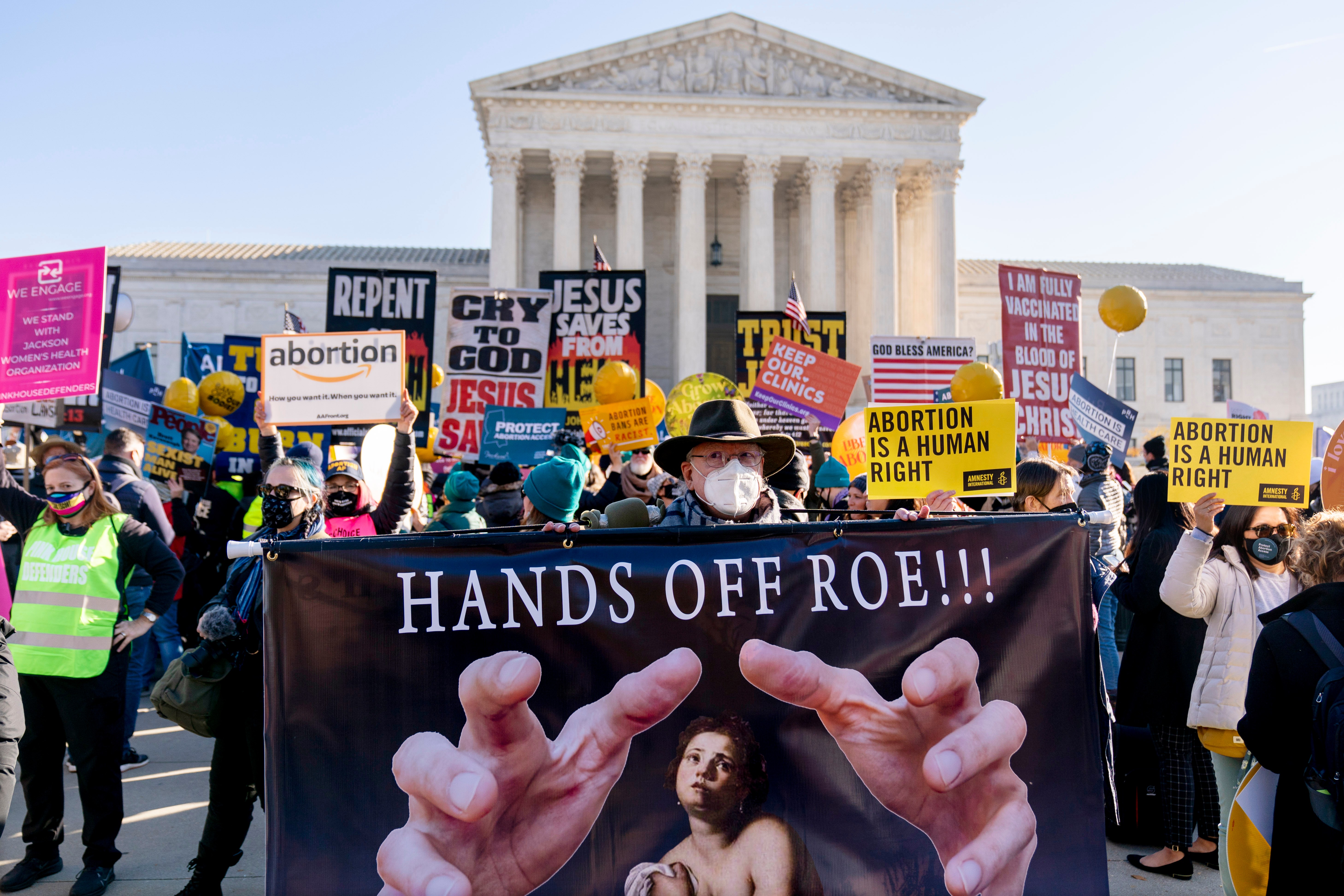
    One bill proposes increasing the number of Supreme Court justices from nine to 13. Another would cut their lifetime terms to 18 years. Others would create an enforceable ethics code and place standards on how the court rules from its relatively opaque “shadow docket.”

    The latest wave of proposals to overhaul the Supreme Court have reached something of a fever pitch over the past few months, as Democrats grow increasingly frustrated with the court’s rightward turn. While the court blocked several of President Donald Trump’s key initiatives this past term, it also delivered significant conservative victories that pared back the 1965 Voting Rights Act, loosened campaign finance rules, and increased presidential power.

    Democrats’ anger is fueled by a conviction that many of these rulings are more about politics than the law.

    “There’s constant and building dismay about the increasingly appalling record of the court,” Sen. Sheldon Whitehouse (D., R.I.), who recently introduced a term limits bill, said in an interview. “And I think the continuing interest in reform springs from continued dismay and concern about the court’s misbehavior.”

    The pitches coincide with record levels of disapproval of how the Supreme Court is doing its job, as well as perceptions that the justices are ruling based on their ideology — a viewpoint largely embraced by liberals, according to a July Washington Post-Ipsos poll.

    Those perceptions have only magnified as the justices have weighed in on issues that could directly affect the upcoming midterm elections. House Minority Leader Hakeem Jeffries (D., N.Y.) said Thursday that there are a “variety of different options that are on the table, and I think we can’t foreclose on any single one of them.”

    Conservatives dismiss the proposals as efforts by liberals to intimidate and undermine a court that is not ruling the way they want.

    “All of these ‘reforms’ are because the left doesn’t like the decisions coming out of the Court,” Mike Fragoso, a former chief counsel to Sen. Mitch McConnell (R., Ky.), said in an email. “The goal is to intimidate the Court into changing the course of decisions. It’s reprehensible.”

    Liberals concede that the measures cannot succeed without Democrats solidly in control of Congress, and even then, only if the filibuster is eliminated — otherwise any proposal would require 60 votes in the Senate, which is highly unlikely.

    Last month, Whitehouse and other Senate Democrats proposed a law that would limit justices’ terms to 18 years. Under that system, a president would nominate a justice every other year — a design intended to maintain a measure of ideological balance on the bench.

    Some advocates say specified terms also would lower the stakes of Supreme Court confirmation battles, since they would not be for lifetime appointments. These battles in recent years have become all-out, nasty, and often personal.

    “Even in a Congress like this one, where these bills have no chance of passage, it’s really important to file them and to stand by them, because they reassure people that there is in fact a mechanism by which the court could be restored to some degree of better order,” Whitehouse said.

    Democrats in 2020 also offered a flurry of plans to overhaul the Supreme Court, angered that Trump was able to name three justices thanks to maneuvering by McConnell, who at that time was the Senate majority leader.

    But President Joe Biden did not pursue those proposals. And the court’s solidified conservative majority has since overturned a string of precedents — including those guaranteeing the right to an abortion and upholding key parts of the Voting Rights Act — prompting fresh fury among liberals.

    Congressional Democrats have introduced about a dozen proposals in recent months for revamping the court.

    They call for expanding its size, requiring the justices to place certain assets into blind trusts, and creating standards for the court’s emergency docket, critically referred to as the “shadow docket.” In emergency docket cases, the justices have been criticized for ruling on consequential matters based on a limited record while offering relatively brief explanations for their decisions.

    Democrats outside the Beltway are also pitching court reform. Former Vice President Kamala Harris, whom some Democrats expect to run again for president in 2028, said at a recent event at that “we need to revisit” the notion of expanding the court to 13 justices.

    James Talarico, a Democrat running for U.S. Senate against Republican Ken Paxton, has called for an “overhaul” of the Supreme Court, including term limits and a binding code of conduct. In an interview with TheGrio, Talarico described the court’s recent rulings on civil rights, including a recent decision that weakened the Voting Rights Act, as a “five-alarm fire.”

    “Black Texans, Black Americans, have been ringing the alarm about the Supreme Court,” Talarico said. “And I think it’s time for all of us to realize the crisis that we face on the highest court in this country.”

    Tom Jipping, a senior fellow at Advancing American Freedom, an advocacy organization founded by former Vice President Mike Pence, argued that such criticisms only highlight Democrats’ fixation with results rather than the law, exposing their calls for reform as superficial.

    “They never say how the Supreme Court got it wrong on the law,” Jipping said. “The only the thing they do is mention the result and tack on a few bombastic pejoratives.”

    The court has regularly undergone periods of fierce scrutiny. Under Chief Justice Earl Warren in the 1950s and 1960s, conservatives complained bitterly that it was making up new liberal doctrines. Most notably, President Franklin D. Roosevelt, frustrated by the justices’ rejection of many elements of the New Deal, in 1937 proposed expanding the court, leading to pushback from Republicans as well as many fellow Democrats.

    Still, some academics say the current Supreme Court faces real problems unrelated to its ideological composition.

    The high court has turned into a political football in which justices on both sides are expected to vote along ideological lines on the most controversial issues, said Daniel Epps, a law professor at Washington University who has advocated for efforts to “depoliticize” the court.

    Gone are the days of the “swing” justices like Anthony M. Kennedy, Sandra Day O’Connor, and Lewis F. Powell Jr., all Republican-appointed justices whose votes were less predictable when it came to hot-button issues such as affirmative action, abortion, and LGBTQ+ rights, Epps noted.

    “This is the first time where you have a court where the ideology really maps onto partisan affiliation,” Epps said.

    Epps and Vanderbilt Law School professor Ganesh Sitaraman argued in a 2019 paper against popular proposals such as term limits and expanding the court’s size. They say both risk further politicizing the court.

    Instead, Epps and Sitaraman have suggested a “lottery” model, in which cases would be decided by panels of justices selected randomly from a pool — similar to the way federal appeals courts decide cases.

    They have also recommended a “balanced bench” structure, in which the court would be composed of an equal number of justices selected by Democrats and Republicans, with an additional judge selected from a lower court to break ties.

    Chief Justice John G. Roberts Jr. and his colleagues have repeatedly said they issue rulings based on the law, not their political biases. But critics argue that the growing perception, among liberals at least, that the court is politically driven risks hurting its credibility in a way that could be damaging for the long term.

    “The court only works as an institution if it is capable of deciding the hard cases in ways that seem credible to the country,” Epps said. “And if you have half the country that just sees the court as a partisan institution — and the court behaves in a way that seems largely consistent with that — half the country just can be like, ‘Screw these guys.’”

  • I treat brain fog. Here are 6 surprising causes many people overlook. | Expert Opinion

    I treat brain fog. Here are 6 surprising causes many people overlook. | Expert Opinion

    Q: A lot of people are talking about brain fog, and the symptoms sound exactly like me. How do I know if I have it, and is there a treatment?

    A: You walk decisively into the living room and pause just past the doorway. Why are you here? What was it you came to look for again?

    Maybe you’re chatting with a friend and there’s a phrase at the tip of your tongue — you were about to say something clever, but now you can’t find the right words. You feel embarrassed and annoyed with yourself.

    Or perhaps it’s not just one precise moment in your day — maybe the entire world feels enveloped in a haze you’re struggling to make sense of.

    That’s how a lot of my patients describe brain fog, a term that’s not an official diagnosis but is showing up in the medical literature more and more. Much of the recent discourse has focused on long COVID, but brain fog has become an important part of the conversation in many conditions, including perimenopause and hypothyroidism. It’s become enough of a buzzword that I’ve also heard from people wondering whether it’s even “a thing.”

    “Brain fog is real,” said Adam Hampshire, a brain fog researcher and a professor of cognitive and computational neuroscience at King’s College London. “It’s affecting people’s decisions, and it’s affecting their life. It’s really important not to be dismissive where that’s the case.”

    For me and most clinicians treating it, brain fog becomes a condition to investigate when it starts to interfere with your daily activities. On the extreme end, it can hinder the ability to hold down a job or care for family.

    But brain fog itself isn’t the diagnosis — it’s a symptom, Hampshire said. It should be viewed as a starting point to investigate the underlying cause. In some cases, people perform just fine on cognitive tests, but the tests feel harder to do. That’s part of why brain fog research is complicated, and people can feel dismissed if their cognitive tests come back “normal.” Brain fog probably isn’t one cohesive condition but a shared pattern of symptoms with many roots.

    Brain fog is an underappreciated symptom associated with common conditions like depression, anxiety, low thyroid function, and even early dementia. These are often the first diagnoses I consider — they can be assessed, and, if present, treated accordingly.

    Here are six other surprising conditions associated with brain fog — and what the data shows may help.

    Gut inflammation

    It turns out brain fog, in many cases, traces back to the gut. At least half of people with common GI disorders experience it. That’s why neurogastroenterologists like myself who study the gut-brain connection have come to focus so closely on what I call “gut fog.”

    In those with celiac disease, the overwhelming majority — upward of 80% — experience brain fog in addition to such classic GI symptoms as bloating and diarrhea. For about one-quarter, brain fog is the only symptom. Gluten triggers small bowel inflammation that’s thought to spill over into the rest of the body, including the brain. In a small study of newly diagnosed patients with celiac disease, cognitive testing improved over a year on a gluten-free diet, and this correlated closely with how well the small bowel had healed.

    That close relationship between food and brain function isn’t limited to celiac disease: Ultra-processed foods are linked to lower attention scores and higher dementia risk even in the general population, probably through inflammatory pathways.

    This is why I advise most of my patients to eat an anti-inflammatory, Mediterranean-style diet that focuses on whole foods and fiber.

    Long COVID

    In 2024, a group of researchers from Ireland published a study of long COVID patients in Nature Neuroscience involving persistent changes to the blood-brain barrier, the rugged membrane that regulates what can pass from bloodstream to the brain.

    The clue had come from an unexpected place: a study that found rugby players and martial arts fighters with memory problems that lingered for months after a concussion, even with normal head CTs, who turned out to have disrupted blood-brain barriers. So, in 2020, when patients who had recovered from COVID started describing lingering “brain fog,” it sounded familiar.

    Using a special contrast dye injected into the bloodstream, the scientists compared a group of long COVID patients who reported brain fog with a group of long COVID patients who didn’t. In those without brain fog, the dye stayed where it should — outside the brain. But in the patients with brain fog? It leaked through, and their brain scans lit up.

    Other studies on brain fog in long COVID patients have shown changes to the electrical waves in the brain and signs of poor blood flow in certain areas.

    So what actually helps here? The honest answer: We’re still figuring that out, but there have been some promising studies. A randomized trial published in 2026 found that 10 weeks of cognitive rehabilitation, one-on-one video sessions that help patients build concrete strategies to meet their own goals, led to improvement in brain fog symptoms that lasted at least six months.

    Perimenopause and menopause

    Brain fog is one of the most common complaints of the menopause transition. Up to 60% of women experience some form of it — often trouble with finding words or remembering names or numbers. Data from the Study of Women’s Health Across the Nation suggests that for most women, these changes are mild and do not persist after perimenopause.

    The leading theory is related to the role of estrogen in the brain, specifically the regions governing memory and executive function. Women who experience hot flashes tend to perform worse on memory testing.

    Most high-quality randomized trials have not found a cognitive benefit from hormone replacement therapy for people going through natural menopause — even when hot flashes and overall quality of life improve.

    In general, the same important principles to protect the aging brain still apply: regular exercise, with resistance training being especially important for women during menopause; a Mediterranean-style diet; staying socially engaged; and minimizing alcohol intake.

    Sleep apnea

    People often equate sleep apnea with snoring, but that’s not necessarily the case: Up to 40% of women with sleep apnea don’t snore, don’t have nighttime choking episodes, and don’t have witnessed episodes during which they stop breathing.

    Brain fog, however, is a common complaint, and objective cognitive impairment affects over a third of people with sleep apnea. A four-year study of over 1,100 adults found that people with new or existing sleep apnea showed faster declines in attention, visual processing, and memory, with measurable changes in the brain’s white matter, compared with adults without sleep apnea.

    It’s estimated that 75% of women with sleep apnea remain undiagnosed. Early recognition is key because treatment with CPAP therapy can make a big difference.

    Vitamin B12 deficiency

    People who are at risk of vitamin B12 deficiency, such as adults older than 65, those who have had certain gastrointestinal surgeries, and vegans, may benefit from an evaluation if they experience brain fog.

    It’s worth noting: A study from 1988 in the New England Journal of Medicine found that 28% of patients with neuropsychiatric symptoms from a B12 deficiency had normal blood levels.

    But if you have risk factors for a deficiency, a different set of blood tests can help get to the bottom of it.

    This absolutely doesn’t mean we should all be rushing to get extra B12. If you don’t have a deficiency on a blood test and have no specific risk factors, further testing may not be warranted, and vitamin B12 supplementation can be a waste of money.

    Chronic pain

    Cognitive difficulties are so prevalent in fibromyalgia, a chronic pain condition, that patients have their own name for it: “fibro fog.”

    The prevailing hypothesis is that managing constant pain consumes brain bandwidth and resources that would otherwise go toward memory and attention. And because many people with chronic pain sleep poorly, their symptoms compound.

    Besides addressing sleep issues and other pain management strategies, moderate aerobic exercise has been shown to improve both cognitive performance and overall fibromyalgia symptoms.

    What I want my patients to know

    There are many other conditions linked to brain fog, including multiple sclerosis and fatigue.

    It’s important to discuss brain fog early with a physician in part because there are so many potential underlying causes — several of which we can treat effectively.

    Trisha Pasricha is a physician and scientist at Beth Israel Deaconess Medical Center and an assistant professor of medicine at Harvard Medical School. She is the author of “You’ve Been Pooping All Wrong.”

  • The U.S. homeownership rate may not be as high as you think

    The U.S. homeownership rate may not be as high as you think

    Americans often think of homeownership as both a goal and a norm — after all, the U.S. homeownership rate is 65%, and as high as 75% in some states.

    But one Federal Reserve economist says that we’ve been measuring homeownership the wrong way and that U.S. adults are about as likely to rent or live in someone else’s home as they are to own their own.

    Erik Hembre says his work “should reframe the basic number we have in our head. I went from a baseline of about two-thirds of people own their homes and that’s just the way it’s always been, to: Well, it’s closer to half.”

    The difference in the standard numbers vs. Hembre’s numbers basically comes down to whether to count houses or people.

    The homeownership rate is generally given as the percentage of homes that are occupied by their owners. If there are 10 homes on a street and seven of them are owner-occupied while three are rented, that’s a 70% homeownership rate.

    Hembre, instead, came up with what he calls HPOP: the homeowners-to-population ratio. He counted up all Americans over 18 years of age, then looked at how many of them live in a home they own. The number is 53%.

    The reason Hembre’s homeownership rate is so much lower than the standard 65% national owner-occupancy rate is that many adults live in a home where the owner lives, but they aren’t the owners of the unit. If you’re living with a relative in the relative’s house or renting a room from a friend who owns the house, you don’t count as a homeowner in Hembre’s metric.

    Hembre attributed the difference to several causes. A small amount comes from roommates and from elderly parents who reside in their adult children’s homes; a bit more comes from other relatives such as siblings. The largest share by far is due to the high rate of adult children who live in their parents’ homes.

    “Younger households are becoming less likely to be homeowners. HPOP really makes that point more clear,” Hembre said.

    Overall, both HPOP and the owner-occupancy rate have fallen about 2% nationwide since 2006, but the patterns of who owns homes have changed. While adults in their 20s and 30s struggle to buy homes, the HPOP for people over 70 has risen five points since 2006, as elderly people remain in their own homes longer. “Those are kind of balancing each other out,” Hembre said.

    He also analyzed the HPOP of different groups, such as ethnic groups and married-vs.-single people. The differences indicate who is most likely to live in owner-occupied homes without being owners themselves. Married people have a 76.9% HPOP, not much lower than their 80.8% owner-occupancy rate. People who have never been married have a 17% HPOP, far below their 36.4% rate of living in owner-occupied homes. (Widowed, divorced, and separated people all fall somewhere in between.)

    For calculation purposes, Hembre treated both partners as the owners of a home if one partner owns it, for both married and unmarried couples.

    Michael Neal, a housing analyst at the Urban Institute, said Hembre’s measure avoids one of the pitfalls of standard metrics, which tend to lump everyone under the demographics of the person considered the head of household.

    “There are interracial couples where the head of household is not Black; we might be missing some families where there’s homeownership by a Black person. … Maybe there are two people who are two different age groups who are married,” Neal said. “In some cases, this can really matter for being accurate and providing accurate measures for policymaking.”

    States with expensive housing, such as Hawaii and California, tended to have the biggest differences between their owner-occupancy rates and their HPOPs.

    Dennis Shea, who leads the Bipartisan Policy Center’s housing program, found Hembre’s metric interesting but cautioned against discounting the standard measure of U.S. homeownership too much. Many of the non-homeowners tallied in HPOP, he noted, are people such as college students and nursing home patients who wouldn’t be expected to be homeowners.

    “I think it’s a useful new analytical approach that might provide insights about where people truly are in their economic journey,” Shea said. “I wouldn’t draw some drastic conclusion that somehow the true picture of homeownership in the United States has been radically changed by this new approach.”

    Hembre noted that the idea that only half of adults are homeowners doesn’t mean half will always be renters or guests in someone else’s home. “Between the ages of 18 and 70 or 80, most people do become homeowners at some point. This is about if they are at any given time.”

  • Navy weighs major warship redesign to match Trump’s preferences

    Navy weighs major warship redesign to match Trump’s preferences

    The U.S. Navy is considering a major redesign of its new aircraft carriers to better match President Donald Trump’s preferred aesthetic for the warships, according to seven current and former U.S. officials familiar with the matter.

    The service is evaluating the feasibility of moving the multistory tower that acts as the carrier’s command center farther forward, toward the middle of the ship, to resemble older vessels, the officials said. The review, which has not been previously reported, is in response to Trump’s concerns about the “look” of the new Ford-class ships, where the tower is near the rear, these people said.

    The timing and extent of the Navy’s evaluation is unclear, with current and former officials cautioning that the service was concerned that such a change would require significant time and money. Like others, they spoke on the condition of anonymity to discuss a sensitive situation.

    Moving that command center, known as the “island,” would be the second major design change prompted by the president, who on Thursday issued a national security memorandum directing the Navy to develop a plan to revert to older steam-powered catapults on future carriers. The systems help launch jets off the ships’ flight decks.

    Trump’s preference, current and former officials said, is for the new aircraft carriers to look more like those that were in service during World War II.

    The Navy also examined the issue during his first term as president, said a former senior U.S. official. A study found that moving the island could cost billions of dollars in redesign costs and significantly delay the program, this person said.

    “It came back that the cost and time to do so would just be extraordinary,” the former official said.

    There are three Ford-class carriers in various stages of development. The USS John F. Kennedy is undergoing sea trials and getting closer to joining the fleet while the USS Enterprise and USS Doris Miller are under construction. The first carrier in the class, USS Gerald R. Ford, is already in service and recently finished a lengthy combat tour in the Middle East.

    Plans call for building up to 10 Ford-class carriers over the next four decades, at a projected future cost of $22 billion each, according to the nonpartisan Congressional Budget Office and the Navy’s most recent shipbuilding plan.

    Relocating the island would be “a major redesign,” said Bryan Clark, a former Navy officer who studies the service at the Hudson Institute, a right-leaning think tank in Washington. Such an alteration to the carrier’s layout, he said, would affect the ship’s buoyancy and weight and come at a significant cost.

    “You could change it,” he added, “but it’s very disruptive.”

    The Pentagon and the Navy referred requests for comment to the White House, which pointed to the new national security memorandum when asked about Trump’s desire to relocate the island on future Ford-class aircraft carriers. The memorandum does not address the issue.

    Another U.S. official familiar with both the potential changes to the catapult and the island said that the Navy is taking both matters seriously because of the delays and severe cost overruns they could create.

    Trump’s interest in the redesign modification marks the White House’s growing influence over the complex mechanics of naval shipbuilding.

    Since returning to office, Trump has promised to “resurrect” the lagging industry, and he has already issued multiple executive orders addressing the matter.

    Thursday’s national security memorandum would, among other changes, revert the Ford class’ advanced electromagnetic catapult system to steam power. The document emphasizes the administration’s preference for “proven, reliable,, and affordable technologies and ship designs.”

    Such a change, multiple officials said, also could run into the billions of dollars and exacerbate chronic delays in the U.S. shipbuilding industry.

    The lead Ford-class carrier, the USS Gerald R. Ford, required 17 years to construct. Its design incorporated new technology that led to delays — including the electromagnetic catapult, a feature the Navy has since credited as being highly effective.

    The Ford class of carriers will phase out its predecessor, the Nimitz class, which dates back to the late 1960s.

    Relocating the island to the back of the newer vessels was done for efficiency and safety, three U.S. current and former officials familiar with the program told the Post. It not only creates more parking space for aircraft close to the carriers’ catapults, allowing crews to reduce the amount of time it takes to launch jets, it also improves landing safety by reducing the chance for turbulence when planes come back to land, the officials said.

    The Navy’s surface fleet has been plagued by years of delayed maintenance and low readiness rates, in part because of how often past U.S. administrations have deployed carriers to confront global crises.

    Amid the ongoing Iran war, the Pentagon under Trump has further stretched the readiness of its carrier fleet while surging naval assets to the Middle East to conduct strikes and enforce a blockade of Iranian ports.

    The USS Ford itself faced an extended deployment that ended earlier this year after a fire rendered many crew members’ sleeping quarters uninhabitable. Officials also acknowledged that the Navy’s newest carrier experienced problems with the “vacuum collection, holding, and transfer” system that supports hundreds of toilets on board.

    Democratic lawmakers this week called on Defense Secretary Pete Hegseth to investigate new reports of rapidly worsening conditions aboard the USS Abraham Lincoln, which has been deployed to the Middle East since November. Families of sailors aboard the Lincoln have been outspoken about the situation, and the Navy is investigating a man-overboard incident it says may be connected to mental health issues.

    While speaking to reporters on a trip to Panama on Thursday, Hegseth called the reports “completely misrepresented.”

    On Friday, as questions continued to swirl around conditions on the ship and its lengthy deployment, Trump told reporters at Joint Base Andrews that the Lincoln’s time at sea had been “not nearly long enough.”

    The Lincoln is on an extended combat deployment that has seen its sailors at sea for 200 days without a port call to provide the crew some rest. It is scheduled to be relieved by the USS George Washington in the coming weeks.

    Trump has repeatedly shown interest in the design of Navy warships. Last year he unveiled plans for a new class of battleships to lead his vision for a Golden Fleet, prompting criticism from many naval analysts and lawmakers who argued the ships would waste scarce American shipbuilding power on a design the service does not need.

    The Congressional Budget Office has since estimated that the Trump Class battleships would cost about $275 billion over 30 years, coming at a cost of $18 billion per ship after finishing the first one.

  • Killings and other violent crimes dropped sharply in 2025

    Killings and other violent crimes dropped sharply in 2025

    Violent crime and murder rates across the United States fell sharply between 2024 and 2025, according to FBI data, the largest year-to-year decrease since the federal government began tracking nationwide crime rates in 1936.

    The 2025 murder rate of 4.1 killings per 100,000 residents is the lowest the country has seen since the mid-1950s, the agency said.

    The FBI released those figures Friday as part of its annual national crime statistics analysis, known as the Uniform Crime Report, which amasses data from more than 17,000 law enforcement agencies across the country to paint a holistic picture of public safety trends in the U.S.

    Those trends were reflected in Philadelphia, which recorded 222 homicides in 2025, the city’s lowest annual total since 1966. There were 935 shooting victims in Philadelphia in 2025 — marking the first time the city’s annual total dropped below 1,000 since at least 2007, and a 61% decline in shootings from 2021.

    The unveiling of this year’s FBI report, though, was unconventional. Instead of the announcement originating from the FBI or the Justice Department, it came from President Donald Trump, who broke the news during a visit to the New York police academy on Long Island on Friday.

    “Today, I’m thrilled to announce that the FBI has just released the new Uniform Crime Report, showing that in 2025 we achieved the single largest reduction in violent crime in American history,” Trump said to applause. “Together, we’re showing what is possible when you finally have a president in the White House who supports our police, who lets you do your jobs, and who always backs the blue.”

    Many criminal justice experts take issue with that analysis, at least in part, since violent crime began falling well before Trump took office.

    FBI Director Kash Patel and newly confirmed Attorney General Todd Blanche joined Trump, who was visiting Long Island to campaign for Bruce Blakeman, New York’s Republican gubernatorial candidate and the current Nassau county executive.

    The arrival of the FBI’s annual crime report came about a year after the Trump administration began ramping up his tough-on-crime messaging and deploying troops to some of America’s streets — sending the National Guard, dispatching federal task forces, increasing immigration enforcement, and taking temporary control of the D.C. police department.

    The president has credited those decisions for the crime declines in 2025, which include an 18.1% drop in murder and nonnegligent manslaughter, an 18.5% drop in robberies, and a 12.4% drop on property crimes, according to the FBI report. The White House has touted it as the “Trump effect.”

    But the FBI’s data shows that, after a spike during the coronavirus pandemic, nationwide violent crime began plummeting in 2023 when President Joe Biden was still in office. By January 2025, when Trump returned to the White House for his second term, homicides had already fallen significantly.

    That trend continued throughout 2025, according to the FBI figures and other independent analysis by various policing and criminal justice policy organizations. Criminologists and law enforcement experts broadly agree that it is difficult to assign credit — or blame — for the ebbs and flows of national crime rates.

    “Lots of places are having historic decreases right now,” said crime data analyst Jeff Asher. “And the feds aren’t everywhere.”

    An accurate understanding of the numbers is critical, experts said, so that police and policymakers can operate from a shared set of facts when making choices about public safety.

    “There’s a saying: ‘There’s lies, there’s damn lies, and there’s statistics,’” said Matthew Cavedon, director of the Cato Institute’s Project on Criminal Justice. “The numbers don’t tell you the human story. They can tell you correlation all day long, but they aren’t going to tell you causation. It’s a tricky one.”

    Those who study crime trends tend to avoid drawing conclusions based on a one- or two-year change in the data, Cavedon said, because the fuller story plays out over decades.

    “As with every edition with these kind of reports, the feeding frenzy begins to take credit,” Cavedon said. “Everybody wants to be able to go to the public and the voters and say, ‘This is exactly what did it.’ It’s a bit of a fool’s errand to even try.”

    The White House public safety narrative, he said, deserves skepticism, especially the claim that U.S. cities were out of control until Trump deployed the National Guard and began deporting undocumented immigrants.

    “That’s too simple of a story,” Cavedon said, pointing to Canada, where crime rates have also been dropping but where U.S. law enforcement policy is irrelevant.

    After the Council on Criminal Justice, a nonpartisan think tank, released its semiannual crime report last month, Executive Director Adam Gelb said the consistency of the downward trend nationwide means that “macro-level forces are playing a major role.”

    In Philadelphia, experts and city officials have pointed to a number of possible causes for the drop in crime: expanded violence prevention programs, improved law enforcement technology, better coordination between city leaders, and a return to day-to-day life after the disruptions of the pandemic.

    “We are seeing changes in criminal justice policy and strategy, advances in technology and surveillance, and broad shifts in society and culture, all happening at the same time,” Gelb said last month. “Crime is falling across too many different kinds of cities to credit any one policy, party, or program.”

    That analysis has not deterred Trump in recent weeks from claiming credit — especially for declines in D.C., where he declared a crime emergency last August.

    “I’ll tell you, because D.C. is very personal for me … it was so bad when I got there a year and a half ago,” Trump said in Long Island. “Can you imagine our nation’s capital? One of the most dangerous cities in the country. We’ve taken it to one of the safest cities of the country.”

    Trump said that crime in the District had dropped by 81%, but in recent appearances with reporters he has also referred to drops of 88% or 92%. When asked to clarify Trump’s remarks about D.C. crime drops, White House officials pointed to arson incidents, which dropped from four in 2025 to one in 2026.

    The White House also cited the District’s homicide rate, which has fallen significantly in recent years, but not by the rates cited by Trump.

    At Friday’s rally in Long Island, the law enforcement facility had been transformed into a MAGA rally filled with hundreds of his supporters. A pair of police cars were parked inside the building under a “thin blue line” flag. Trump spoke from beneath a “Making America Safe Again” banner, flanked by law enforcement officials in uniform who stood behind him on risers.

    He praised the work of Patel and Blanche and pledged to continue pumping federal tax dollars into police departments and law enforcement efforts nationwide.

    “Is there anybody that’s in favor of defunding the police in this particular room?” Trump said.

    “No!” the crowd yelled in unison.

    Staff writer Denali Sagner contributed to this article.

  • Gen X and millennials are set to inherit trillions. If they’re already rich.

    Gen X and millennials are set to inherit trillions. If they’re already rich.

    Baby boomers are set to pass trillions of dollars on to their heirs in the next two decades, but the huge transfer of riches will mostly benefit Gen X and millennial heirs who are already wealthy.

    An analysis from Visa Business & Economic Insights finds that boomers, born between 1946 to 1964, will pass on $36 trillion in wealth to their younger heirs over the next 20 years.

    Nearly three-quarters of households receiving an inheritance will be in the top echelon of wealth in the country when they receive the money, Visa estimates. Gen X and millennials were born between 1965 and 1996.

    Often called the Great Wealth Transfer, the inheritances are expected to be the largest passage of generational wealth in history, given the massive size of the baby boomer population and their wealth.

    Baby boomers are sitting on about $93 trillion worth of assets, according to Visa’s analysis. Only about 8.6% of that, or roughly $8 trillion, is expected to be spent into the economy, after it is inherited.

    “Eight trillion dollars is nothing to sneeze at,” Visa chief economist Wayne Best said. But that spending number has been whittled down quite a bit from the starting wealth.

    Visa calculated that about $36 trillion would be passed from boomers to their heirs, after subtracting liabilities such as mortgages, as well as retirement spending and taxes. That works out to about $515,000 per inheriting household, but the inheritances will be uneven.

    The richest boomers have the most to give away. Visa found that those in the 90th to the 99th percentile of boomers held some $44 trillion in wealth. Meanwhile, the bottom 90% of boomer households hold just $16 trillion in wealth.

    Since most inheritances are coming from wealthy boomers, their heirs are more likely to be wealthy as well. Lower-wealth boomers will need to use more of their savings to pay for housing, healthcare, and other needs, while wealthier households can save more to pass on.

    The bulk of that money will flow to people who are worth far more than the average. And that means much of it will be saved or invested, rather than spent.

    “Wealthier Americans are going to be putting that money into the stock market or real estate,” said Jeremy Ney, a professor at Columbia University’s business school and writer of the “American Inequality” newsletter. “It doesn’t buy groceries or cars, it just changes your accountant’s week.”

    It could also widen gaps between lower-wealth and higher-wealth Americans, Ney said, which have already been accelerating.

    The $8 trillion in spending is still expected to boost the economy — Visa estimates it will bump annual consumer spending growth over the next 20 years from 2% to 2.1%. Much of that money will be spent on housing, or buying new cars, as well as on travel and retail.

    One reason that the transferred wealth will flow to the already wealthy might be because people are living longer, and therefore passing their money down to heirs who are already in their 50s or 60s, noted Jonathan Parker, a professor of financial economics and co-director of the MIT Sloan Consumer Finance Initiative. Those heirs have had more time to accumulate wealth than they would have if they had inherited in their 20s or 30s.

    “There are tax incentive reasons to wait until you pass away to pass along those bequests,” he said.

    Still, some people in older generations have already started passing along their wealth, wanting to see its effects while they’re alive. Visa found that more boomers are soaking up the benefits of their wealth, including by taking their grandchildren on vacation without their parents and by helping heirs with down payments on homes.

    Visa’s analysis to get to the $36 trillion removed the wealth held by the top 1% richest of boomers, because their money is likely to go to charitable foundations and other private pursuits and doesn’t represent typical spending.

    “They don’t really spend like the rest of us,” Best said.

  • DOJ files charges against woman accused of vandalizing World War II Memorial

    DOJ files charges against woman accused of vandalizing World War II Memorial

    The Justice Department filed two felony charges against the woman accused of vandalizing the World War II Memorial in Washington, according to court records.

    “Vandalizing our World War II Memorial is a despicable attack on a sacred monument honoring the Americans who fought and died for our freedom,” U.S. Attorney for D.C. Jeanine Pirro said in a statement announcing the charges on social media. “Those Americans include my father and grandfather.”

    On Thursday afternoon, part of the memorial on the National Mall was tagged with graffiti, and soapy bubbles overtook a fountain. Red graffiti spelled out “Clean hands dirty $” beneath the Atlantic Arch, and red and green paint was splattered on some of the granite stonework.

    Pirro said the woman suspected of vandalizing the memorial, Melissa L. Farris, was in custody. Two felony charges — depredation against U.S. property and destruction of veterans’ memorials — were filed against her, according to court records. Both charges carry a prison sentence of up to 10 years.

    Around 2 p.m. on Thursday, members of the U.S. Park Police and U.S. Park Rangers responded to a call about a disorderly person at the memorial, according to court records.

    On her Facebook account, Farris livestreamed herself at the memorial. In the video, she alternated between narrating her actions and getting emotional about the state of her life and of the country. She said she has autism and ADHD but that she was not suffering from psychosis.

    Farris also said that Thursday was her 41st birthday. Her current address is listed in Kentucky, according to public records.

    Later, Farris filmed herself dropping an item into the fountain near the Atlantic Arch. “Oops,” she said. Then, she shook spray-paint cans and livestreamed herself adding graffiti to the granite.

    “It was me. I’m doing it. I’m on camera,” she said.

    She said she was willing to be arrested because she wanted her day in court. The court filing said that as a ranger approached her at the Atlantic Pavilion, she fled.

    After spraying the graffiti, she said, “It’s time for a tea party, kids.”

    “This is democracy sometimes, guys,” she said as the livestream showed the fountain filling with bubbles. “And I didn’t have to shoot somebody. I didn’t have to go to war. I didn’t have to make choices that harmed another human being.”

    Shortly before 4 p.m., according to the court filing, Farris posted another video to Facebook, in which she said: “I was just allowed to deface Federal f—ing property, and nobody batted an eye, and that is very strange.”

    The Interior Department condemned the incident Thursday as an “utter disgrace” that “will not be tolerated.”

    The incident comes weeks after the White House blamed vandals for disturbing the nearby Reflecting Pool after President Donald Trump’s renovations quickly degraded, causing algae blooms and a peeling liner.

    Pirro eventually dropped the vandalism charges against four people and blamed the damage on flawed installation.

    In response, Trump said Pirro “folded like an umbrella.”

    “I just think she was totally wrong,” Trump told reporters earlier this month, noting that National Park Service employees had told authorities they saw vandals in action. He described problems with the contractor as “a couple of little things.”

    It’s unclear what material was used to create the bubbles in the fountain. Ryan Compton, owner of Domain Aquascapes in Northern Virginia, said adding standard bubbles to a fountain generally doesn’t cause system damage but is a “maintenance nightmare.” It requires draining, cleaning out, and rinsing the fountain and pump system.

    “That’s going to be a lot of man hours and work involved,” he said.

    Trump denounced the World War II Memorial vandalism in a Friday morning post on Truth Social.

    “THERE CAN BE NO GREATER INSULT TO THOSE AMERICAN HEROES WHO DIED IN WORLD WAR II,” Trump wrote. “First the Reflecting Pool, now this. We are on their trail! Where do these animals come from???”

    A preliminary estimate of the costs to clean and restore the memorial already exceeds $1,000, according to court records.

    The Washington Post was unable to immediately reach a representative of Farris for comment. Her sister declined to comment.

  • Trump signs memo authorizing private sector to launch cyberattacks

    Trump signs memo authorizing private sector to launch cyberattacks

    President Donald Trump signed an order Wednesday authorizing select private companies to carry out government-sponsored cyberattacks against foreign criminal hacking groups — actions that have until now been the domain of U.S. national security agencies.

    The memorandum enables the government to contract with U.S. firms to hack into and disrupt overseas digital networks belonging to “cyber-enabled transnational criminal organizations.”

    The memo stipulates that the companies, under the supervision of the federal government, may breach computer systems to conduct surveillance and manipulate or destroy digital or physical infrastructure “controlled by information systems” but are barred from targeting foreign governments or taking actions that result in the “loss of life” or “serious injury.”

    The move marks a significant shift from the more restrained approach of previous administrations, which prohibited companies that suffered intrusions from “hacking back” into their attackers’ systems for fear of geopolitical blowback. Now the Trump administration wants to enlist the private sector to help take the fight to criminal hackers.

    “President Trump is unleashing every available tool to stop foreign-based organized criminal organizations that exploit Americans in cyberspace,” the White House said in a fact sheet accompanying the memo.

    Some analysts and industry executives hailed the move, saying it should help the government degrade foreign criminals’ abilities to hack Americans. “Cyberattacks are cheap to launch and expensive to defend against,” said Joe Lin, co-founder and CEO of a Northern Virginia startup that builds large-scale cyber offense platforms for the U.S. government. “The more we can disrupt adversaries at scale using vetted commercial partners, the less our adversaries will be able to attack the United States.”

    Other experts say it could pose legal and geopolitical risks for the federal government and the companies themselves.

    “What if a company carries out an operation against what it thinks is an Iranian or Russian criminal group, but that group is actually controlled, influenced, or protected by Tehran or Moscow?” said Matt Curtis, who served as White House senior director for cyber policy in the Biden administration.

    “Suddenly, what was intended as an operation against criminals could be viewed as a U.S.-authorized cyber operation against a nation-state actor … and potentially trigger retaliation or escalation,” he said.

    The memo establishes a national coordination center to be run jointly by the Justice Department and the Department of Homeland Security, which will vet participating companies. The firms could be fined up to $1 million for contract violations.

    The order raises questions about potential liability for companies under the Computer Fraud and Abuse Act, which makes it a federal crime to gain unauthorized access to internet-connected computers. If the company is acting as an agent of the U.S. government, it probably would not be bound by this law, some analysts say, but would still have to comply with Fourth Amendment protections requiring a warrant to hack into a domestic system. The order does not directly address this issue.

    The FBI’s top cyber official says the memo is an effort to normalize what is currently “ad hoc” collaboration between industry and government.

    Just last month, for instance, the FBI and Google disrupted a botnet used by hundreds of criminal and nation-state hackers who didn’t want their attacks traced back to Beijing, Tehran, and Moscow, and so routed them through at least 2 million proxy IP addresses to TV streaming boxes and home routers, FBI Assistant Director for Cyber Brett Leatherman said in an interview with the Washington Post.

    Armed with a court order, the FBI seized hundreds of proxy domains and Google disabled accounts on its own networks that the botnet was using to control the malware.

    The presidential memo, he said, is about “providing additional authority and capability” to “empower” U.S. industry in helping the government battle foreign cybercriminals.

    Leatherman pointed to the Chinese state-sponsored Salt Typhoon espionage hack, discovered in late 2024, which compromised several of the largest American telecommunications firms and targeted the cellphones of U.S. political figures, including then-presidential candidate Donald Trump and his running mate JD Vance. At least one Chinese company assisted the campaign and was punished by the Treasury Department last year, Leatherman said.

    China and Russia often leverage private companies to carry off hacks that provide a measure of state deniability.

    “They are industry people [in China] that are doing this,” Leatherman said, referring to Salt Typhoon. “If we don’t close the gaps … we’re going to continue to fall behind.”

    U.S. agencies such as the FBI, the military’s U.S. Cyber Command, and the National Security Agency may legally hack systems overseas. But private-sector companies do not have such independent authority.

    Jason Kikta, a former U.S. Cyber Command operator, said using contractors to perform government work “makes us no better than China and Iran,” where, he noted, industry has conducted ransomware operations, attacked U.S. banks, and carried out indiscriminate cyberspying operations.

    “The U.S. has fought against such abuses for years, and this now makes us look hypocritical,” said Kikta, now chief technology officer at Automox, a cybersecurity firm.

    Former military cyber lawyer Gary Corn noted that Cyber Command’s primary focus is on countering foreign nation-state threats — not criminals. The command lacks the numbers and resources to take on the criminal threat. So the administration’s move could help fill that “big gap,” said Corn, who was formerly the command’s top lawyer and now directs American University’s Technology, Law & Security Program.

    Former White House aide Curtis, now CEO of the cybersecurity firm 190 Intel, said private companies have tremendous technical capability, data, and speed. With the right guardrails, he said, “this could be a very effective way to disrupt criminal networks that are otherwise hard to reach.”

    Charlie “Tuna” Moore, a former deputy commander of U.S. Cyber Command, has long called for the government to team with the private sector in conducting cyber offense. “It’s the only way to scale quality and quantity to defend the nation,” said Moore, now a visiting professor at Vanderbilt.

    The memo contains a classified annex, which describes how the companies and law enforcement agencies will coordinate their actions with the military and intelligence agencies, a process known as “deconfliction.”

    Moore noted that the military and spy agencies have extensive deconfliction rules, and it will be “critical” to see how well thought-out the new process is, he said.

    “The overarching approach is very good,” he said. “The devil’s in the details.”