Category: Washington Post

  • How ICE is arresting soaring numbers of immigrants with no criminal record

    How ICE is arresting soaring numbers of immigrants with no criminal record

    U.S. Immigration and Customs Enforcement is detaining more immigrants who do not have a criminal record than at any other point since President Donald Trump returned to the White House last year, according to newly released government data.

    Trump officials have consistently stated that their goal is to keep Americans safe by targeting enforcement against “the worst of the worst” — undocumented immigrants who have committed violent crimes or repeated offenses. The new data, however, shows that more than half of all the people ICE arrested in July did not have a criminal record, the highest single-month total since January 2025.

    The shift toward targeting more people with civil immigration violations but no criminal charges has helped ICE achieve record numbers of overall arrests. In all, federal authorities detained more than 49,000 migrants in July, the highest total during Trump’s second administration, according to a Washington Post analysis of government data. The ICE arrest data was made public by the Deportation Data Project, an outside group that obtained the material though a Freedom of Information Act lawsuit.

    Immigration lawyers and analysts said the numbers reflect the Department of Homeland Security’s evolving approach as officials rush to fulfill Trump’s goals for the mass deportation campaign and more people lose protections shielding them from removal. The administration has canceled temporary protected status for hundreds of thousands of immigrants who fled dangerous countries and also arrested people with pending asylum claims and green-card applications who were not previously a target for enforcement.

    “There is pressure on ICE to arrest more people and that leads them to stop trying to go after the worst of the worst and arrest the person who is easiest to locate on any given day,” said Julia Gelatt, an analyst at the Migration Policy Institute. “When Americans think of who they’d like to see ICE focus on, they think bad guys — murders and others serious criminals. They do not think about people who broke immigration laws and are otherwise law-abiding.”

    In an email response to questions from the Post, a DHS spokesperson said the information used for this story has “not been reviewed, audited, or given context” and said it is being used to “peddle a false narrative.” The spokesperson claimed that nearly 70% of the people ICE has arrested have criminal convictions or pending criminal charges, a figure the agency has cited repeatedly since last year.

    “Every single one of these individuals committed a crime when they came into this country illegally,” the spokesperson said.

    In fact, many of those detained entered the country legally, for example, on a visa that has since expired. Those individuals are generally facing civil immigration violations, not criminal charges, and they have increasingly become a focus of enforcement operations.

    ICE has steadily ramped up detentions since arrests dropped below 30,000 in February amid public outrage over the killings the previous month of two American citizens, Renée Good and Alex Pretti, by immigration officers in Minneapolis.

    Since then, the number of people being detained has risen each month, climbing to more than 42,500 in June and increasing again in July, the federal data shows.

    The jump coincides with a major expansion of DHS’ enforcement capabilities made possible after Congress last year approved more than $170 billion in additional funding. The administration has hired thousands of additional ICE and Border Patrol officers, purchased new surveillance technology, and added more immigrant detention facilities.

    The administration has also been expanding where and how it makes arrests. New partnerships with scores of local law enforcement agencies, many in conservative areas of the country, have allowed ICE to deputize officers and assist them in making immigration arrests.

    “The spikes are happening at airports and everywhere they can,” said Margy O’Herron, an expert on national security and immigration law at the Brennan Center for Justice. “They are canceling visas for people who apply for asylum, folks who had some protection from deportation before — people who the government knows who they are and knows where they live.”

    ICE has arrested more than half a million people since Trump returned to office, and nearly 40% do not have a criminal record. As of Aug. 6, ICE had detained more people without a criminal record this year than in all of 2025. The administration has also already exceeded the number of people ICE detained during all of President Joe Biden’s presidency, as well as Trump’s first term and President Barack Obama’s last.

    Art Arthur, a fellow at the Center for Immigration Studies, which advocates for stricter immigration controls, said the added resources at DHS have led to more arrests. He noted that Homeland Security Secretary Markwayne Mullin has increased efforts to persuade undocumented immigrants to voluntarily leave the country, including through cash stipends of $2,600.

    Immigrants would not be willing to take that offer if there was no legitimate threat of being arrested and deported, Arthur said.

    “You’re not going to get noncriminal aliens who have been here three years to leave unless there is a threat of enforcement,” he said.

    The killings of Good and Pretti in Minneapolis led to a sharp drop in public support for Trump’s deportation agenda. The backlash contributed to the president’s decision to install Mullin as Homeland Security secretary. He replaced Kristi L. Noem, whose leadership was marked by a spate of officer-involved shootings and large-scale ICE and Border Patrol raids in U.S. cities.

    Mullin has pursued what he characterized as a quieter approach that is focused less on showy displays of force.

    The White House has pressed DHS to arrest at least 2,000 migrants a day, a target ICE achieved on four days over the summer. On July 13, an ICE officer fatally shot Johan Sebastián Durán Guerrero, a 25-year-old Colombian immigrant, during a traffic stop in Biddeford, Maine.

    ICE has maintained a high pace of arrests since then, averaging nearly 1,500 detentions a day, the data shows.

    Democrats have assailed the administration’s approach, saying federal officers have terrorized immigrant communities, including children and the elderly. Maryland Gov. Wes Moore (D) said Tuesday that “a mere fraction” of more than 1,300 people detained by ICE in the past two weeks have criminal records.

    Moore said his state would work with the federal government to apprehend violent offenders. But he said the broad targeting of immigrants has undermined the economy and frayed trust between immigrant communities and law enforcement.

    “It does not make us safer,” Moore said in a statement.

    In six states, arrests of immigrants without criminal records have more than doubled thus far in 2026 compared to all of last year. The largest jump has come in Maine, where ICE arrested 125 people in 2025 and already has detained about 330 this year. Arrests in Alabama, Wyoming, Idaho, Mississippi, and Missouri also more than doubled.

    Arrests decreased in more than 20 states, with the largest decline coming in the District of Columbia. ICE surged operations in the nation’s capital last year and, all told, arrested 1,200 people without criminal records in 2025. This year, ICE has thus far arrested 72 such immigrants in the city.
  • Judge issues new block on Trump’s sweeping restrictions on mail-in voting

    Judge issues new block on Trump’s sweeping restrictions on mail-in voting


    A federal judge in Massachusetts on Thursday once again blocked major pieces of the Trump administration’s plan to impose sweeping restrictions on mail-in voting for November’s elections, but the legal fight will continue.

    U.S. District Judge Indira Talwani issued a temporary restraining order halting parts of the effort that would bar the U.S. Postal Service from delivering mail-in ballots to voters not on a list of citizens created by federal agencies. It also requires mail-in ballot envelopes to have bar codes to thwart fraud.

    The judge’s move continues a week of intense legal action over the controversial executive order on mail-in voting issued by President Donald Trump. It is the subject of multiple legal challenges.

    Trump has claimed voting by noncitizens is rampant, while court records and independent studies have found it to be rare.

    Talwani said it would be impossible for many states to issue new envelopes for voting by mail, since some are supposed to send out ballots as early as next week. She also said the Trump administration had presented no evidence that noncitizen voting is a major issue.

    The League of Women Voters and other voting rights groups are challenging the administration’s initiative, saying the measure could inject chaos into pivotal races that will decide control of the House and Senate.

    Talwani echoed those concerns.

    “The USPS’s interest in correcting an unsubstantiated problem through likely unconstitutional means is dwarfed by the overwhelming risk of pervasive disenfranchisement of citizens who need access to mail ballots in order to vote,” Talwani wrote.

    The Associated Press reported that the White House plans to appeal the order.

    Spokesperson Lauren Bis said in statement Friday that the Trump administration will immediately appeal the order handed down late Thursday.

    In a separate challenge to the executive order brought by 23 states and the District of Columbia, the Supreme Court on Monday found the plaintiffs’ lawsuit was premature because the U.S. Postal Service had yet to issue final rules for how the order would be carried out.

    After those rules were finalized Wednesday, the states and D.C. filed a new lawsuit challenging the executive order.

    The injunction Talwani issued Thursday marked the second time she has blocked the executive order in the case brought by the voting rights groups. She lifted the earlier injunction after finding the Supreme Court’s logic applied to that case as well, but allowed the plaintiffs to ask for a new block.

    Ultimately, the issue could end up before the Supreme Court again, but even if the administration prevails it’s unclear whether there is enough time to implement the changes before November.

    Many states will begin sending out mail-in ballots by mid-September, and election administrators have said it would be exceedingly difficult to comply with the executive order in time for the fall contests since preparations have been going on for months.

  • Norway’s King Harald V, who fled Nazis as a child and modernized monarchy, dies at 89

    Norway’s King Harald V, who fled Nazis as a child and modernized monarchy, dies at 89

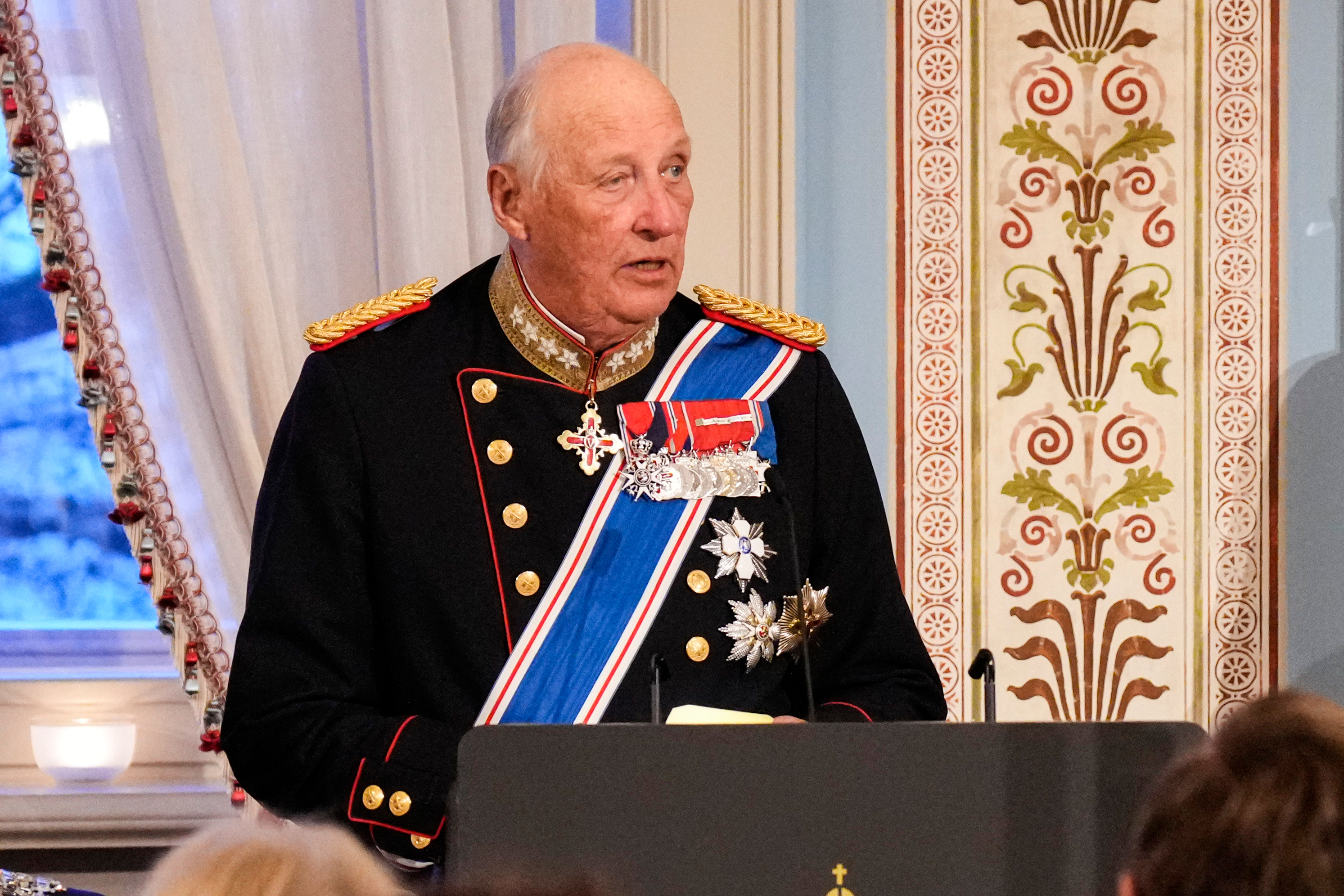
    Norway’s King Harald V, who fled Adolf Hitler’s invasion with his family to take refuge in the White House as a boy, and who later helped modernize the country’s monarchy during his popular 35-year reign, died Friday at a hospital in Oslo. He was 89.

    His death was announced by Norway’s royal family, which did not cite a cause.

    Norway’s Prime Minister Jonas Gahr Store said the “whole nation is in mourning” in a statement Friday, adding that King Harald had “helped us to see the best in ourselves — and in one another.”

    “King Harald had a profound love for Norway. And Norway had a profound love for King Harald,” he said. Other ruling families from across Europe including the United Kingdom, Denmark, Sweden, and the Netherlands shared tributes, alongside political leaders.

    The Norwegian ruler was spirited to safety as a child while war gripped Europe. He spent his formative years in the United States before returning home at age 8, furnished with an American accent and a memory of standing behind President Franklin D. Roosevelt at his inauguration.

    As an adult, King Harald defied tradition by marrying commoner Sonja Haraldsen in 1968. Their marriage shocked the establishment and sparked warnings of the monarchy’s downfall but proved to be one of several ways he charted his own course as ruler. The couple were married more than five decades.

    The avid sportsman and nature lover represented his country in sailing at three Olympic Games — Tokyo in 1964, Mexico City in 1968, and in Munich 1972 — before finally declaring an end to his competitive days in 2022, at age 85. He led the Norwegian chapter of the World Wide Fund for Nature (WWF) for 20 years and is the first king to have a portion of the Arctic named after him.

    As leader of Norway’s constitutional monarchy, King Harald had a largely ceremonial role. But he endeared himself to the country of 5.6 million with his emotional openness and support of diversity and religious tolerance. He sought to modernize the monarchy and make it more transparent, engaging in media interviews and publishing annual financial reports.

    In 1997, King Harald publicly apologized to the Arctic Sami people for government efforts to eradicate their culture over more than two centuries. In the aftermath of the 2011 massacre in which far-right extremist Anders Behring Breivik killed 77 people in a bombing and shooting rampage, he drew praise for a speech in which he struggled to contain his emotions while trying to console the nation. During the speech, he reiterated his belief in a strong, multicultural society.

    In 2016, he went viral for his passionate speech at a royal palace garden party in support of diversity, religious tolerance, and LGBTQ rights.

    “Norwegians are enthusiastic young people — and wise old people. Norwegians are single, divorced, families with children, and old married couples. Norwegians are girls who love girls, boys who love boys, and girls and boys who love each other. Norwegians believe in God, Allah, the Universe, and nothing,” he said at the time.

    “In other words,” he added, “Norway is you.”

    King Harald V was born Feb. 21, 1937, at Skaugum, outside Oslo, the first Norwegian-born prince in 567 years, after the country’s earlier union with Denmark and Sweden. His grandfather, King Haakon VII, became Norway’s sovereign in 1905, establishing a new independent monarchy. The family are relatives of Britain’s royals, and King Harald and Queen Elizabeth II were second cousins.

    He was the third child of Crown Prince Olav and Crown Princess Märtha, who already had two daughters. But at the time, only male heirs could inherit the throne, ensuring his place in the line of succession. (This was amended in 1990 so that the eldest child takes precedence, regardless of gender.)

    His peaceful early childhood was shattered when German troops invaded the country in April 1940. As members of the government and royal family sought to escape the capital by train, Princess Märtha fled to Sweden with her three children and sailed on to the United States at Roosevelt’s invitation.

    In the U.S., they stayed at the White House and at Roosevelt’s home in Hyde Park, N.Y., while King Harald’s father and grandfather escaped to London to set up a government in exile. Princess Märtha and the children eventually settled in a Tudor-style mansion north of Bethesda, Md.

    King Harald would speak of his time in the U.S. fondly, saying in a 1999 speech to President Bill Clinton that he clearly remembered “standing right behind President Roosevelt when he was sworn in.” Images show the Norwegian royal children standing on the White House steps at the time.

    In 2015, King Harald said in a speech in Seattle that he was “deeply grateful for the generosity and hospitality we felt throughout those five years in the United States.”

    “Your country has had a special place in my heart ever since,” he added.

    Upon returning home in 1945, King Harald attended school in Oslo before training at a military academy and studying at the University of Oxford in Britain.

    When Haakon died in September 1957, he became Crown Prince, working alongside his father, King Olav V, before ascending to the throne after his father’s death in 1991.

    Survivors include Queen Sonja; two children, Princess Märtha Louise and Crown Prince Haakon, who will succeed him as king; an elder sister, Princess Astrid; and two grandchildren.

    While initially controversial, King Harald and Sonja’s love story endeared them to the Norwegian public. In 2016, the couple shared unseen photos of their courtship with Norway’s national broadcaster, NRK, describing how they met in 1959, when Crown Prince Harald was 22, and quickly fell in love.

    Though filled with guilt over expectations he would marry a member of European nobility, King Harald said attempts to end their romance amid disapproval from the establishment and Norwegian press were not “entirely successful.” He ended up delivering his father an ultimatum: If he could not marry Sonja, he would remain unmarried. Olav relented, and the couple married at Oslo Cathedral.

    Crown Prince Haakon’s decision to marry a former server and single mother in 2001 would also draw controversy. King Harald supported their relationship, and the fairy-tale wedding drew thousands of flag-waving well-wishers.

    The royal family has faced controversy this year, with Crown Princess Mette-Marit under scrutiny for her friendship with the late sex offender Jeffrey Epstein. Files released as part of a U.S. Justice Department investigation revealed more than 100 messages between Mette-Marit and the disgraced financier. Mette-Marit also came under the spotlight this summer after her eldest son, Marius, was convicted of rape and sentenced to four years in prison. King Harald said he had sympathy for “all those affected” by the trial, and declined to comment on his daughter-in-law’s ties to Epstein.

    Being a sovereign, he once said, was a “lifelong learning period.” But he said he believed the monarchy is in good hands with his son. In 2024, he announced a permanent reduction in duties, citing health issues, but ruled out abdicating as monarch, saying the oath he swore “lasts for life.

    “It’s that simple for me. We’re going to keep going until the bitter end.”

  • Fed chair Warsh, concerned about inflation, says bank ‘has work to do’

    Fed chair Warsh, concerned about inflation, says bank ‘has work to do’

    JACKSON HOLE, Wyo. — Federal Reserve Chair Kevin Warsh said he was “impressed” with the economy’s overall strength but is concerned by signs that “underlying trends” in inflation have not improved.

    Making his first appearance here as Fed chair, Warsh stopped well short of clearly signaling an interest-rate increase at the Fed’s next meeting. He also defended his controversial decision to provide only limited public comments about Fed thinking, which critics say has left markets confused about the central bank’s intentions.

    But many investors viewed Warsh’s remarks as hawkish. Nearly 60% of traders now anticipate a Fed rate hike in mid-September, up from just over a third on Thursday, according to CME FedWatch, which tracks futures market activity.

    Speaking in a rustic lodge beneath elk antler chandeliers, Warsh hailed developments in artificial intelligence as a “hinge point in history” that offered the “potential for substantially higher growth.” But that long-term promise is eclipsed for now by the need to vanquish inflation, he said.

    “The Fed’s predominant focus right now should be on prices,” Warsh said. “We must be confident that underlying inflation is moving to our objective, clearly and at sufficient speed. Otherwise, we have work to do.”

    Warsh endorsed the Fed’s traditional inflation goal of an annual 2% rise in prices, according to the personal consumption expenditures index (PCE), calling it “a firm fixed target.”

    Over the past six months, almost half of the individual product prices that the Fed tracks have increased at an annual rate of more than 3%. That share is down from the pandemic high point but “is still quite elevated,” Warsh said.

    The central bank chief also responded to critics who questioned his inflation-fighting plan by saying the Fed’s control over short-term interest rates remained “the predominant tool” to achieve its goals. His embrace of rate-setting and the PCE index appeared aimed at clarifying remarks he made at his news conference in July, which suggested alternatives deserved consideration.

    But Warsh doubled down on his controversial strategy of providing investors less explicit “forward guidance” about future Fed moves. “A quieter Fed,” he said, will be better able to steer the economy to stable prices and full employment.

    “Transparency in communications about future policy decisions is not a virtue unto itself. Communications must be in service to the Fed’s paramount responsibility: getting monetary policy right,” Warsh said.

    In the run-up to Friday’s speech, investors were eager for any hint of Warsh’s thinking on when and if the Fed might raise short-term interest rates. His continued haziness on that point seemed to frustrate some in the audience.

    Michael Strain, a former Fed economist, said Warsh had made similar comments in July while opposing an interest-rate increase. While his remarks Friday suggested that the Fed would eventually raise rates if inflation did not subside, Warsh offered no hint of the likely timing or what additional evidence he required before acting, said Strain, who is now with the American Enterprise Institute, a center-right think tank.

    “Markets are looking for clarity,” Strain said. “You don’t know the timing that he has in mind about when the Fed should respond to the combination of a full employment economy with inflation stuck above target.”

    Adam Posen, president of the Peterson Institute for International Economics, said Warsh was suggesting that “the best thing to do is to make up your mind at the last minute in a nontransparent way which has no consistent record” of success.

    The yield on the two-year Treasury note, which is most sensitive to Fed rate increases, rose to 4.35% Friday, compared to 4.22% before he began. Stock markets closed lower.

    Warsh’s remarks were among the most highly anticipated by any Fed chair at the central bank’s annual late-summer conference, which is hosted by the Federal Reserve Bank of Kansas City and draws global central bankers, economists, and journalists to Wyoming’s spectacular Grand Tetons.

    Since taking over from his predecessor, Jerome H. Powell, Warsh has been unsparing in his criticism of the Fed for failing to control inflation, which has been elevated for more than five years, since the COVID pandemic. In a nod perhaps to the populist president who appointed him to his job, Warsh said “hardworking Americans,” not “financial highfliers,” are suffering the most from the Fed’s failure to bring inflation under control.

    The chair faces a daunting landscape. He leads a divided Fed with at least three members of its rate-setting committee on record supporting an increase in interest rates to slow rising prices. Long-term bond yields have ticked higher this month amid concerns over the nation’s $40 trillion gross public debt. And Treasury Secretary Scott Bessent has intervened in financial markets in a way that some analysts say could conflict with Warsh’s goals.

    While managing those immediate concerns, Warsh seeks to pilot the economy through an era of epic change. The rules-based global order constructed at the end of World War II is breaking down as the United States and other nations seek greater self-sufficiency. And a disruptive new technology, artificial intelligence, is reshaping markets and economies at a rapid clip.

    Since taking command of the Fed in late May, Warsh has disappointed some investors by refusing to provide the routine guidance that his predecessors offered for nearly two decades about the Fed’s next moves.

    After his tight-lipped news conference late last month, analysts at investment banks including JPMorgan said Warsh’s refusal to elaborate on how he planned to fight inflation raised doubts about whether he was willing to raise short-term borrowing costs to do so. Those concerns were amplified by President Donald Trump’s vocal insistence that rates should move down, not up, under the new Fed chair.

    But Warsh said he is determined to force investors to make their own decisions independent of expectations about moves by the nation’s central bank. Although forward guidance was “essential” during the 2008 financial crisis, he said Friday, “I believe the practice has outstayed its welcome.”

    Financial markets have shown little concern about Warsh’s public reticence. Inflation expectations are little changed since the day he was sworn in as Fed chair. Volatility in stock and bond trading also has remained within normal ranges, according to standard market measures.

    Recent economic data suggesting an improved outlook for the economy may explain part of the recent uptick in bond yields. While the economy grew at an unremarkable annual rate of 1.5% in the second quarter, underlying measures of activity were far stronger, according to a Commerce Department update this week.

    Final sales to private domestic purchasers, which some economists consider a better gauge of the economy’s condition, rose by an updated 4.2% compared with an initial estimate of 3.9%, the Commerce Department said. Both consumer spending and business investment are keeping the economy aloft.

    A separate report showed that inflation remained elevated in July, with the Fed’s preferred gauge up 3.7% from the same month one year ago. That pace was unchanged from June, but it remained well above the Fed’s 2% target.

    At its last meeting in July, the Fed policymaking committee left short-term interest rates unchanged. But three voting members of the Federal Open Market Committee dissented from the 9-person majority that favored keeping rates in the current 3.5% to 3.75% range.

  • More states pilot 3-year college degrees, seeking to address rising tuition

    More states pilot 3-year college degrees, seeking to address rising tuition

    A growing number of colleges are offering three-year bachelor’s degree programs, providing students a faster and less expensive path toward graduation, but worrying critics who say the trend could devalue college education.

    Instead of the typical 120 credits earned in four years, some programs now require students to complete around 90 credits. Proponents say that helps students get into — or back into — the workforce more quickly and with less debt. But some question whether the shortened degrees will be fully accepted by graduate schools, employers, and accreditors.

    At least 70 U.S. schools are either already offering three-year degrees or are actively considering them, according to a report this year by the American Association of Collegiate Registrars and Admissions Officers, and multiple states have required or encouraged public universities to add them.

    On Wednesday, Texas Gov. Greg Abbott (R.) took steps to join that group, directing the Texas Higher Education Coordinating Board to create a statewide framework for three-year-degree pathways.

    “Every semester adds tuition, fees, housing, food, transportation, and other living expenses and delays students’ ability to begin their careers,” Abbott said in a news release. “Texas students deserve the option to receive a degree in a high-demand, high-wage field in less time.”

    The trend is spreading in both red and blue states, as well as across many types of institutions, public and private, large and small. This summer, the Massachusetts Board of Higher Education approved applications from two schools to pilot three-year-degree programs.

    In June, Grambling State University and Southern University Law Center, historically Black schools in Louisiana, announced a partnership that would allow students to accelerate their way to a law degree, with three years of undergraduate work and three years of law school.

    Todd Wolfson, president of the American Association of University Professors, said the three-year degree is the wrong answer to a real crisis. He said decades of public disinvestment have shifted the cost of higher education onto students and families, and schools should not respond by shrinking the degree and asking students to make do with less.

    “We need to address the problem at its root,” he said. “Reinvest massively in higher education and build a free public higher-education system that gives every student access to a full, high-quality college education without taking on crushing debt.”

    Robert Zemsky, professor emeritus at the University of Pennsylvania’s Graduate School of Education who has been advocating for three-year degrees for more than 15 years, said many state agencies have now encouraged their public universities to explore the idea. Zemsky said he supports that approach.

    “Don’t bet the whole bundle on an instant change from three-year degrees. Start a few experimental programs,” he said, and “see what happens.”

  • OpenAI, Anthropic, others urge cyber defense action as AI models improve

    OpenAI, Anthropic, others urge cyber defense action as AI models improve

    Artificial-intelligence companies OpenAI and Anthropic, along with more than 100 other tech and financial services organizations, warned that businesses and governments must do more to prepare for and defend against AI-enabled hacks.

    In an open letter Thursday, the AI start-ups, along with Alphabet Inc.’s Google, Microsoft Corp., and others, called for organizations, governments, and technology and AI companies to focus on making cyber defense “an immediate leadership priority” and to fix existing weaknesses in their own software.

    The letter also asks cybersecurity companies to help defend against “AI-enabled attacks” and says governments should coordinate communication between themselves and industry channels to respond to potential threats. It also urges leading AI companies to give AI access, as well as financial support and training, to those that defend critical infrastructure.

    The letter comes after several recent cybersecurity breaches involving advanced AI models, including an incident in July in which models from OpenAI inadvertently hacked Hugging Face Inc. The breaches have ignited concerns about AI agents running amok, and prompted some technology and government leaders to renew calls for curbs on the technology. On Wednesday, OpenAI said in a report that it could have reacted sooner to prevent the hack on Hugging Face.

    The letter’s signatories predicted that AI models will be used to carry out a growing number of increasingly complicated cyberattacks in the months ahead, as companies continue to build AI models that are capable at both defending against and carrying out such acts.

    “Today’s AI advances are already giving defenders new ways to fix weaknesses that have accumulated for years,” the letter states. “If we act decisively, we can use the defenders’ window to make our digital world much more secure.”

  • 7 science-backed things to do on your phone for better brain health

    7 science-backed things to do on your phone for better brain health

    Your smartphone can make your life better — if you’re smart about it.

    The technology — and the time we spend on it — isn’t inherently good or bad. But “it can certainly worsen your mood, even among healthy people, depending on what you’re using it for,” said Jon Elhai, a distinguished university professor at the University of Toledo in Ohio who studies cyberpsychology.

    Most adults under 45 say they want to spend less time looking at screens, according to a 2025 YouGov poll. And many popular apps, such as TikTok, are designed to hold your attention longer than you would like. A lot of that time spent might not be all that pleasurable in the end.

    If you want to create a healthier smartphone habit, “you have to know yourself,” said Joseph Bayer, an associate professor in the School of Communication at Ohio State University who studies smartphone and social media habits. “You have to know what are your goals as a person and in terms of using your phone,” and whether they align.

    There are many approaches to reduce the time you spend on your phone, but another strategy is to change how you use it. Here are some ways to spend time on your phone that may give you more positive experiences.

    Play an online game

    Cognitive engagement is good for your brain, and fast-paced action video games — such as “Call of Duty” and “Fortnite” — have been found to boost cognition. Research has also linked games such as crosswords and board games to cognitive benefits. Smartphone apps have made these games easy to pick up anywhere you have your phone and service.

    “I like board games, and some board games also have mobile versions,” said Bayer, who enjoys playing the bird-themed game Wingspan on his phone. The app allows you to take turns asynchronously, meaning you can play during spare moments; Bayer’s friend, who is a therapist, likes to take her turns between patients.

    “Playing an online board game for a minute makes you feel a little boost of energy in between work tasks,” Bayer said.

    Other popular board games converted from tabletop to phone include Catan, Codenames, Ticket to Ride, Ark Nova, and Terraforming Mars.

    Get the Libby app

    Curling up with a good book — or magazine or newspaper — is good for your brain, and it has been linked to increased longevity and slower rates of cognitive decline.

    The Libby or Hoopla apps — both of which are free — give you ready access to read or listen to all the e-books, audiobooks, and magazines from your local library. You can also try different e-reading apps to make it easy for you to bring your latest novel with you on your commute.

    Find a subreddit about your favorite hobby

    Smartphones can link you to all the knowledge and community about your hobbies outside of work. Research has found that hobbies are linked to better mental health and that pursuing creative hobbies, including music, dance, and art, is linked to delayed brain aging.

    Reddit can be a great resource because “you can find a subreddit [community] for any hobby you have,” said Elhai, who finds Reddit “helpful in terms of gaining more information about different hobbies.”

    Try a mindfulness app

    Research has found that mindfulness exercises can be as effective as anxiety medication in reducing anxious feelings and that even short bouts of meditation can help people achieve “relaxed alertness.” Popular apps include Headspace and Calm.

    Plus, mindfulness can help you reach other health goals, potentially including a better relationship with your smartphone. Research finds that having more mindful awareness is linked to healthier uses of the smartphone.

    People who are more in tune with how they use their smartphone — and when to put it down — are more protected from problematic use “than people who just mindlessly, instead of mindfully, keep scrolling on their phone,” Elhai said.

    Learn a new language

    Learning another language is a great way to stimulate your brain; research has found that being multilingual is linked to delayed dementia diagnoses and that the brains of people who spoke two or three languages looked six years younger compared with those who spoke only one.

    Smartphones allow you to take your language lessons on the go.

    “It’s not like you can spend all the time in person talking to people in that target language,” but if you have time on your phone, that can be beneficial, said Elhai, who uses Pimsleur for language learning and Italki to practice with native speakers.

    Jot down what you’re grateful for

    Giving thanks for the good in your life is good for you, and research shows that having more gratitude is linked to less loneliness.

    Instead of scrolling through your social media feed, you can consider “apps that have been designed for you to journal and to indicate what you’re grateful for every day to try to help keep an optimistic mood,” Elhai said.

    Some example apps include Three Good Things and Gratitude. But even just opening up your default note-taking app can be a place to jot down your thoughts, feelings, and remembrances about your day.

    Text, call, or send a funny meme

    We tend to be happiest when we’re with other people in person, and research finds that doing almost anything is better with friends.

    But socializing with another person through our phone — through texting, social media, or even good old-fashioned calling — may be the next best thing. Connecting with others — the original goal of phones — may be the most rewarding use of smartphones.

    “When people are just using their phones in nonsocial ways, like they’re just listening to music, they’re watching movies, maybe in the short term, it’s pleasurable,” Elhai said. “But it’s not as pleasurable as engaging in social use.”

    Research shows people tend to underestimate how rewarding reaching out to others can be, for both parties, even out of the blue. Being on your phone is an opportunity to reconnect with someone. A few minutes might be enough to send a “thinking of you” or start setting up plans to meet up or share a funny meme.

  • Before Hegseth fired him, top general was advised to drop Kid Rock probe

    Before Hegseth fired him, top general was advised to drop Kid Rock probe

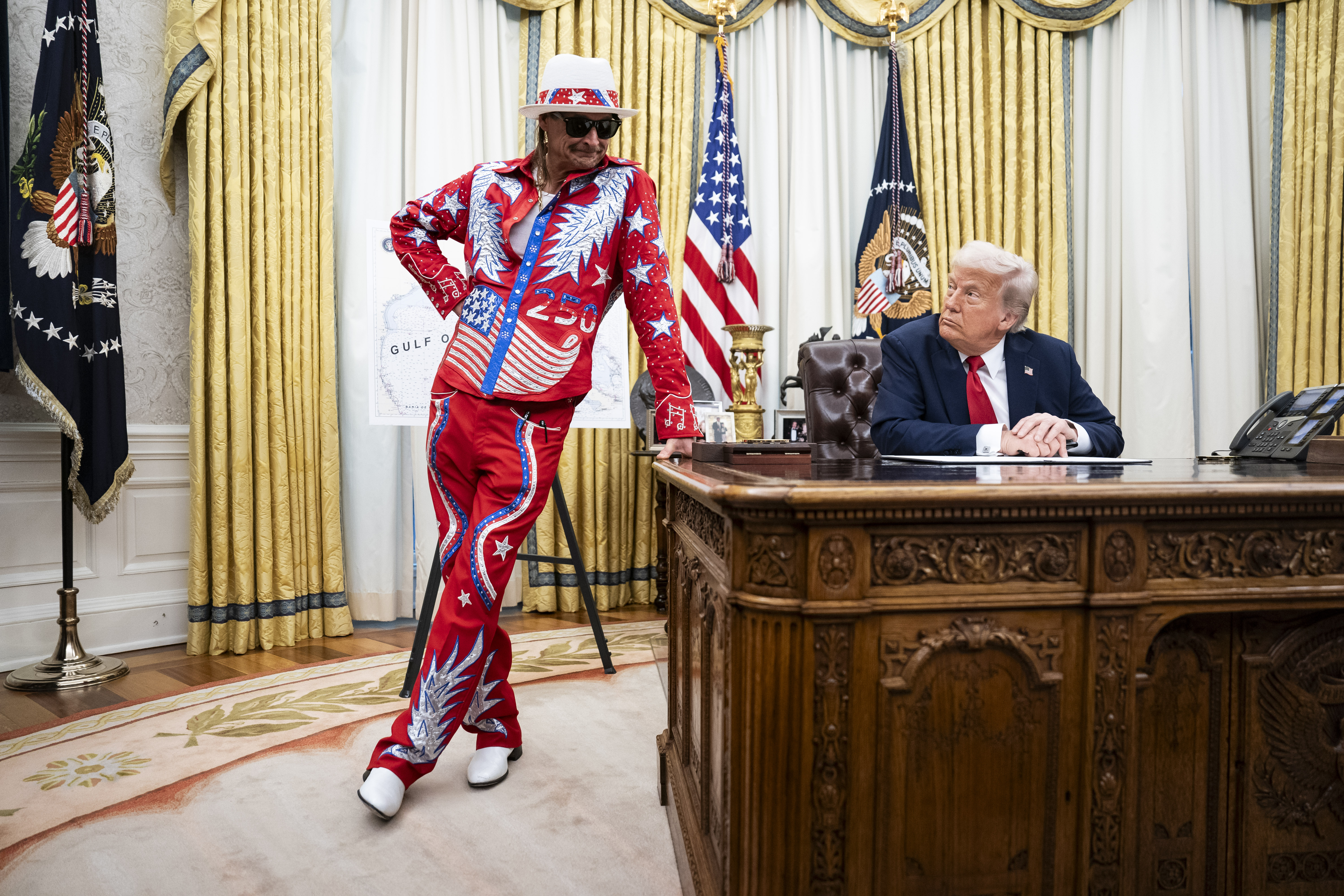
    Days before the Army’s top officer was abruptly fired earlier this year, he was advised by a fellow general now vying to replace him to stop the military’s investigation into an unauthorized helicopter flyby of musician Kid Rock’s Tennessee estate, three people familiar with the matter said.

    Gen. Randy George, whom Defense Secretary Pete Hegseth removed as the Army chief of staff without explanation, felt it was important to follow typical protocol and determine whether any safety regulations had been violated during the March 28 flyby, these people said. Like some others, they spoke on the condition of anonymity to discuss the episode.

    Gen. Chris LaNeve, the Army’s No. 2 officer, told George that Hegseth did not want the investigation to proceed, one person said. The two others said that George later confided in colleagues about the encounter with LaNeve and seemed troubled by it. George told them that LaNeve suggested it would be best if the review was scuttled, those people said.

    The revelation, which has not previously been reported, adds a new layer of understanding to Hegseth’s potential motivations for firing George on April 2. Kid Rock, whose legal name is Robert Ritchie, is a vocal supporter of President Donald Trump and avowed critic of many Democratic politicians and causes.

    Through a spokesman, George, who is now retired, declined to comment. Army officials did not respond to questions about LaNeve, whose candidacy for the chief of staff job faces resistance in Congress.

    Hegseth, in a statement provided to The Washington Post, did not directly address the discussion between the two generals and described LaNeve as “precisely the kind of leader the U.S. Army needs right now,” interested in strengthening the Army, and “not interested in playing politics in Washington.”

    “He is a back-to-basics, no politics, no-nonsense General — exactly what President Trump expects,” Hegseth’s statement said. “The critics coming after him are the same out-of-touch so-called insiders who’ve spent years undermining our military with woke policies and endless wars. They hold deep grudges against any commander willing to put America and our troops first, but their days of influence are over.”

    Sean Parnell, a spokesman for Hegseth, said that the new reporting about George’s departure amounted to a “regurgitating” of a “tired, old story simply to manufacture drama.”

    Hegseth and his advisers have for months declined to say what precipitated George’s ouster, even when asked directly by Republican and Democratic lawmakers who objected to the firing. He has long been at odds with the service’s senior leadership — including Army Secretary Dan Driscoll, a fellow Trump appointee who at one time was viewed as a potential replacement for Hegseth. Driscoll is now expected to leave the administration soon, perhaps within weeks, officials said.

    Others familiar with George’s firing have said that multiple factors were probably at play, including his close working relationship with Driscoll.

    Since taking charge of the Pentagon in January 2025, Hegseth, a former Fox News personality who spent years in the Army National Guard, has overseen the dismissal of more than two dozen top officers. The firings typically occur without cause, though he has complained broadly that the military’s upper ranks are insufficiently loyal to the president or caught in old ways of thinking. Many of those removed have been women and minorities.

    LaNeve’s actions in the Kid Rock investigation could further complicate his ascension to the Army’s top post. While he has filled the role on an acting basis since George’s ouster nearly five months ago, Trump administration officials have not yet formally nominated him to become the chief of staff amid concerns that he lacks support within the Republican-led Senate Armed Services Committee, said three separate people familiar with the views on Capitol Hill.

    Sen. Joni Ernst, an Iowa Republican and retired Army National Guard officer initially skeptical of Hegseth’s nomination to lead the Pentagon, opposes LaNeve, these people said. Both George and Gen. James Mingus, another top Army officer forced out by Hegseth, are from Iowa.

    Without votes from Democrats, nominees require unanimous Republican support on the committee to advance.

    Ernst’s office did not respond to a request for comment.

    The Wall Street Journal first reported her opposition to LaNeve.

    Parnell, Hegseth’s spokesman, downplayed the situation, saying in his statement that Pentagon officials are “actively coordinating with our Senate partners to lock in the optimal moment to formally submit his nomination, and we intend to do so.”

    On March 31, three days after two AH-64 Apache helicopters flying outside Nashville buzzed the home of Kid Rock, Army officials with the 101st Airborne Division at nearby Fort Campbell announced they were grounding the pilots and launching an administrative investigation.

    Video shared on social media by the musician showed the aircraft at low altitudes. In his post, he also criticized California Gov. Gavin Newsom, a Democrat who is a frequent critic of the Trump administration. “This is a level of respect,” Kid Rock wrote, that Newsom “will never know.”

    At the time, the Army said it also was reviewing the flight path of a helicopter that flew the same day over a “No Kings” protest against Trump in nearby Clarksville, Tennessee. Flight tracker data showed that the aircraft dipped to as low as 625 feet, at one point circling over where protesters were gathered.

    When the incidents attracted unflattering news coverage, Hegseth promptly intervened. He terminated the Army’s investigation and exonerated the aircrews involved — encouraging them to “Carry on, Patriots.”

    A few weeks later, Hegseth and Kid Rock flew in Apache helicopters from Fort Belvoir in Virginia, located in suburban D.C. Parnell said then that it was part of a broader community relations event.

    LaNeve, 59, was not viewed by his Army peers as a likely future chief of staff before the Trump administration came into office, but he caught the president’s attention with a congratulatory call during the Commander-in-Chief Inaugural Ball, people familiar with the matter said. At the time, LaNeve was commanding U.S. soldiers in South Korea and called the president from there.

    LaNeve was moved into a more influential position as Hegseth’s senior military aide after the defense secretary’s team ousted Lt. Gen. Jennifer Short from the role the following month.

    This past fall, Hegseth elevated LaNeve again, nominating him to become the Army’s vice chief of staff while forcing Mingus into retirement early.

    In a May hearing before the House Armed Services Committee, LaNeve faced sharp questions from Republicans over the Pentagon’s decision to cancel the deployment of an Army brigade to Poland, a NATO ally that borders Ukraine.

    When Rep. Don Bacon (R-Nebraska) asked him about the Poland decision, LaNeve declined to say why the deployment was canceled, arguing he was not part of the military’s “policy side.”

    “But you’re the chief of staff of the Army,” Bacon responded, noting his acting role.

    George had been expected to serve as the Army’s chief of staff until fall 2027, completing a typical four-year assignment in the role. Hegseth asked him to retire early during a phone call, news of which was leaked minutes later to CBS News, officials have said previously. The move thwarted any effort by Driscoll, the Army secretary, to save the general’s career before the decision was publicized.

    Hegseth’s campaign of firings and forced retirements has removed a number of other candidates who may otherwise have been considered for elevation to Army chief of staff, officials said. They include Mingus, who retired early this year; Gen. David Hodne, who was fired without explanation in April; and Gen. Christopher Donahue, who is expected to retire soon after Hegseth stonewalled efforts within the Army and on Capitol Hill to extend his career.

    Amid the purge, Driscoll has begun to consider his own departure, officials familiar with the matter said. The Wall Street Journal reported Friday that he could leave the Trump administration by the end of the year. That appears likely, officials said, but no firm plan has emerged yet.

    As The Post and others reported in the immediate aftermath of George’s firing, aides to Hegseth have touted Parnell, the Pentagon spokesman, becoming Army secretary. Parnell has told colleagues privately that he is interested in the job should it become open.

  • State Dept. pauses immigrant visa appointments worldwide, says staff need training

    State Dept. pauses immigrant visa appointments worldwide, says staff need training

    The Trump administration has temporarily paused immigrant visa appointments worldwide, saying it needs time to train all consular staff on screening applicants who might become dependent on public benefits.

    Appointments for visa services at U.S. embassies were being “adjusted” because of the “global training initiative” launched this month, the State Department said in a statement. It did not say when the appointments would resume.

    “A more prosperous America means ensuring that visa applicants are not likely to become a public charge, as defined under U.S. law and regulation, and not likely to become dependent on U.S. public benefits reserved for qualified Americans in need,” the statement said, adding the training would ensure consular officers “are fully equipped to evaluate every visa applicant comprehensively and consistently.”

    A former State Department official said immigrant visa appointments worldwide had been paused Monday through the end of the month. The training materials were being rolled out after a federal judge struck down the administration’s 75-country visa ban, which was framed as a way to prevent immigrants from entering who might use public benefits, on Friday.

    As of Tuesday, the training materials still had not been disseminated, said the former official, who spoke on the condition of anonymity to share information on internal operations.

    President Donald Trump has made several moves to tighten legal immigration pathways to the United States since his return to office last year. Many of those efforts have faced legal challenges.

    In Friday’s ruling, the judge said that the visa ban violated antidiscrimination protections in federal immigration law, and was “a direct abrogation” of consular officers’ exclusive, congressionally granted authority to determine if someone is eligible for a visa.

    The Trump administration has also taken other steps to curb migration. On Tuesday, the State Department said it planned to revoke the business and tourism visas of people who have claimed asylum after arriving in the country.

    It is expected to affect those granted B1 and B2 visas — typically issued for tourism and business travel — between 2016 and 2026, who have sought asylum or are now seeking asylum. The department did not confirm the number of visas that could be revoked, but said it would be done on a “rolling basis.”

    The department has also proposed charging employers seeking skilled foreign workers through the H-1B visa program a $103,265 fee, according to a regulation posted Monday.

    The administration argues that the H-1B program, created by Congress in 1990, has been used to take jobs away from Americans.

    Trump attempted to introduce a $100,000 fee last year through a presidential proclamation, but it was invalidated by a federal judge in June.

  • How these people used exercise to cope with unbearable grief

    How these people used exercise to cope with unbearable grief

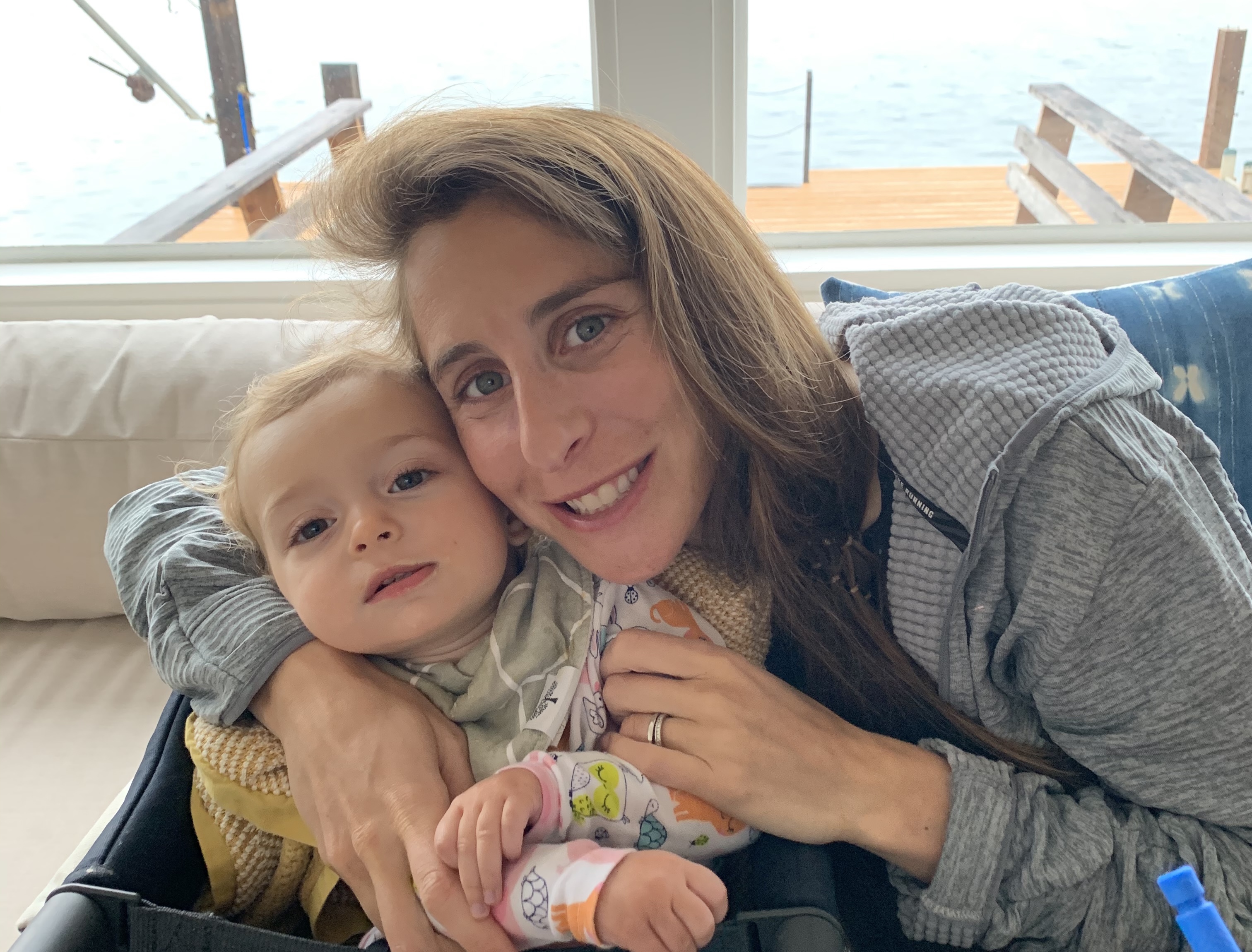
    Myra Sack has always been an athlete. She was picked first for neighborhood basketball games when she was growing up outside of Philadelphia.

    Sack, 38, went on regular jogs throughout most of her pregnancy. After Sack’s daughter Havi was born, the little girl loved the movement of the running stroller.

    Havi was 15 months old when she was diagnosed with Tay-Sachs, a rare and fatal genetic disease. Sack and her husband had done screening before conceiving, but they said they were given results that turned out to be incorrect.

    Havi died in 2021 when she was 2 years, 4 months old.

    “I remember someone saying to me, ‘You’re going to meet these incredible people who have also lost children,’” Sack said. “And at the time, I was like, ‘I don’t want to be a part of this community at all. I hate this.’”

    Over time, Sack said her grief made her feel like “an alien.” She wanted to talk about Havi but not in the windowless room she imagined when she pictured a grief circle.

    A little more than a year after Havi died, Sack reached out to friends, hospitals, and the local running community, and she found 18 people who, like her, had suffered a life-altering loss. The group gathered at mile 21 of the Boston Marathon route with a plan to meet weekly for a couple months to talk and train for a half-marathon.

    One of the acquaintances Sack reached out to was Maria Rodrigues, whose 17-year-old son, Jairom, had died in a rock climbing accident while the family was on vacation in her home country of Brazil.

    “Of course I said yes,” said Rodrigues, even though she hadn’t been running in years. “And immediately I opened the computer, and I Googled, ‘How does a 60-year-old woman train for a half-marathon?’”

    Before their first run, the group members gathered in a circle and introduced themselves with their name and the name of the person they had lost. The group repeated their loved one’s name back to them.

    Each week, two or three people would share a brief story about their loved one with the group. Then they went for a run.

    The training was difficult, but Rodrigues stuck with it and completed the half-marathon in Newport, R.I.

    Rodrigues was surprised she made it across the finish line and said it helped her see she was stronger than she realized.

    “There’s a little bit of a parallel,” Rodrigues said. “As hard as this is, grief and the half-marathon, I can do it.”

    The loose curriculum of this first running grief group was based on Sack’s research and conversations with grief and trauma experts Joanne Cacciatore and Bruce Perry. It became the blueprint for her nonprofit E-Motion, which trains facilitators to run groups across the country and outside of the United States.

    ‘This is grief’

    When people are grieving, there are physiological changes as well as emotional ones: Heart rate, blood pressure, and the stress hormone cortisol all rise. There’s more inflammation, the immune system is suppressed, and many people experience exhaustion and brain fog.

    “You think about grief and you think about sadness, maybe you think about anger, but you don’t ever hear about the physical aspects of grief,” said Sarah McCarthy, a psychologist at Boston Children’s Hospital who helps support families after the sudden loss of a child.

    McCarthy was already working in this field when her daughter was diagnosed with leukemia. Even with everything she knew about grief, McCarthy was stunned by the way her body seemed to fall apart after her daughter’s death.

    “I was exhausted all the time,” McCarthy said. “I went to my PCP, and I was like, ‘What is wrong with my body?’ Nobody really sat down and said, ‘This is grief.’”

    Why exercise helps

    McCarthy moved to Boston after her daughter died, and she ended up meeting Sack through her work. Sack encouraged McCarthy to join a running group.

    “I actually hate running,” McCarthy said. Sack told her it didn’t matter and that the groups were for people at all levels. McCarthy bought a pair of running shoes and started training for a 10-kilometer race with an E-Motion group. It was as hard as she feared.

    “There was one day that I was like, ‘I’m going to quit,’” McCarthy said. “Another mom must have sensed that, and she just ran with me.”

    The pair took regular walk breaks. McCarthy stuck with the training and finished the 10K.

    “Afterward I told Myra, ‘This is amazing, and we need to study it,’” McCarthy said.

    While studies of E-Motion are still in early phases, research for years has shown that exercise is effective at improving mental health. Grief is different from anxiety and depression, but many of the symptoms can look similar, and scientists are beginning to turn their attention to whether exercise could help bereaved people, too.

    In research done in the United Kingdom in 2021, psychologists found that physical activity “allowed a sense of freedom” and gave people the opportunity to express emotions while finding more social support.

    In 2023, a longitudinal study showed that physical activity can promote resilience and help protect people against some of the most devastating consequences of traumatic loss. The bereaved people in the study who exercised more were less likely to develop chronic depression than those who exercised less.

    “I think that a lot of what is happening in grieving is actually not about verbal processing,” said Mary-Frances O’Connor, a grief expert and author of The Grieving Body: How the Stress of Loss Can Be an Opportunity for Healing.

    Though O’Connor wasn’t involved in these studies, she has spent much of her career looking at how our bodies and minds respond to grief. In her research, she found that muscle relaxation exercises, in which people tense and release muscles one at a time, are surprisingly effective at helping bereaved people feel better.

    She said that in addition to the physiological and mental health benefits of exercise, physical activity gives people a sense of agency at a time when the world feels out of control. Being part of a running or walking group means people are supporting each other and holding each other accountable.

    “Those are the things that I think help return us to community life, which is a vital and really difficult and under-discussed aspect of grieving,” O’Connor said.

    Connection

    Grief can be isolating, often because people don’t know what to say to someone who has been through a terrible loss.

    “They’re scared of saying the wrong thing or they’re just too scared of this topic in general, and they just pull away,” McCarthy said.

    Sack and McCarthy said groups like E-Motion help people connect with others who have been there.

    Rodrigues described how, walking or running side by side, participants fall in and out of conversation. Sometimes they talk about their loved ones but often they don’t.

    “You just simply, very fluidly pick up, slow down,” she said.

    Most of the E-Motion groups meet weekly for two months or so, but people form deep bonds in that short time. Many see each other between meetings and stay in touch for years, often finding close friends.

    “I think the beauty of death is that it cracks you open,” Rodrigues said. “We make connections because we’re vulnerable.”