Category: Washington Post

  • Poll shows nearly 90% of Americans believe government corruption is widespread

    A record number of Americans believe there is widespread corruption in the U.S. government, reaching the highest level of distrust in two decades, according to a Gallup poll released Wednesday.

    The survey of 1,000 people conducted in May and June reflects the surging bipartisan frustration with the country’s political institutions and the people who run them.

    Nearly 90% of U.S. adults said corruption was widespread in the government, a 10 percentage point jump from last year, according to Gallup’s poll. The United States also has the highest level of perceived government corruption compared with other countries with advanced economies as of 2025, the year of the latest available data.

    Since 2006, the percentage of Americans perceiving widespread corruption stayed mostly in the 70s, Gallup’s data shows. It began to sharply rise in 2024.

    In 2024, when Joe Biden was president, 57% of Democrats said government corruption was widespread. In 2025, after President Donald Trump returned to the White House, that percentage rose to 76 and climbed to 91 this year, according to Gallup’s data.

    As November has grown nearer, Democratic leaders have homed in on anti-corruption messages in their quest to retake Congress. Democrats repeatedly accused the president of breaking his promise to get rid of waste, fraud, and abuse in Washington, instead enriching himself, his family and his allies through the federal government.

    During an event to mark the final 100 days before the midterm elections, House Minority Leader Hakeem Jeffries,(D, N.Y.) debuted a new line in his stump speech: “We are going to hold the crooks accountable.”

    On the other side of the aisle, Republicans’ view of corruption has stayed relatively steady since 2024, suggesting that their perception of the issue does not hinge on the party in power as much as it does for Democrats. This year, 83% of Republicans and 90% of independents said corruption was widespread.

    That finding suggests that Americans are accessing political news and information — and that corruption is breaking through as an issue, said David Szakonyi, a political science professor at George Washington University.

    “There is a broad base consensus for the fact that something is broken in Washington,” Szakonyi said.

    The new poll does not shed light on where exactly Americans believe the corruption is. It posed a very broad question — “Is corruption widespread throughout the government in this country, or not?” — without identifying specific people, agencies or administrations.

    But over the last year, Democratic voters and lawmakers have criticized the Trump administration for what they have called “self-dealing” initiatives — including a $1.8 billion payout fund to compensate administration allies who felt they were unfairly investigated that was later abandoned and no-bid contracts given to Trump allies.

    During his presidency, Trump has made historic financial gains, charged by ventures including cryptocurrency that his administration is tasked with regulating. White House officials have said the president and his relatives have not nor would they engage in conflicts of interests.

    No formal federal public corruption charges have been brought against Trump administration officials since the president retook the office in 2025.

    Democrats have dealt with high-profile corruption investigations within their party in recent years. Among them was the case of former senator Bob Menendez of New Jersey, who was sentenced to 11 years in prison for a corruption case involving bribes that totaled nearly $1 million in cash and other items. More recently, Rep. Henry Cuellar (D, Texas) was facing bribery, money laundering and conspiracy charges before Trump pardoned him.

    In June, another poll had similar findings about government corruption views among American political groups. The Brennan Center for Justice survey, which polled 2,000 registered voters, found that majorities of Republicans, Democrats, and independents viewed corruption as “a very big problem” facing the federal government.

  • Smithsonian changes course, will put Latino museum in existing building

    Smithsonian changes course, will put Latino museum in existing building

    The Smithsonian Institution announced Monday that it will put its National Museum of the American Latino in a 145-year-old building on the National Mall instead of constructing a new one.

    The Smithsonian’s Board of Regents voted Monday to house the American Latino museum, which Congress created in 2020 but which has lacked a permanent home, in the Arts and Industries Building, a 258,000-square-foot redbrick Victorian structure next to the institution’s headquarters.

    Jorge Zamanillo, the museum’s director, called the decision “a major milestone in a dream and effort of decades in the making.”

    “Designating the Smithsonian’s Arts & Industries Building as the home of the National Museum of the American Latino places the U.S. Latino story at the heart of the National Mall and the American story,” Zamanillo said in a statement. “We could not be more excited to build on the rich legacy of this historic building and transform it into a next generation museum that celebrates the history, culture, and contributions of Latinos in the United States.”

    The decision revives a plan the Smithsonian considered but discarded years ago, a major shift for a project whose supporters have spent decades pushing for a new building on the National Mall designed specifically for the museum. It also gives the Smithsonian a path forward that does not depend on Congress approving construction on one of the undeveloped sites the institution previously selected.

    The Smithsonian had chosen two sites near the Washington Monument for its two new museums — one across from the National Museum of African American History and Culture and another between the U.S. Holocaust Memorial Museum and the Tidal Basin. Both are controlled by the National Park Service and sit within the Reserve, an area of the Mall where Congress has restricted new construction.

    Because the Smithsonian owns the Arts and Industries Building, the institution can decide how to use it without additional legislation.

    That distinction could prove important. Building a Smithsonian museum from scratch can take a decade or longer, even after Congress authorizes it. The National Museum of African American History and Culture took more than a decade to build after its 5-acre site was chosen.

    In a statement Monday, the regents noted that Congress directed them to consider the Arts and Industries Building when it authorized the Latino museum in 2020 and said their selection of a site is now complete.

    The decision also separates the Latino museum’s path from that of its counterpart, the Smithsonian American Women’s History Museum. The two museums were created together in 2020 and had been pursuing potential sites in lockstep, but legislation needed to move the women’s museum forward ran into a congressional roadblock this spring.

    The House rejected that legislation after Republicans added provisions restricting how the museum could present transgender women and giving President Donald Trump greater control over its site. The Smithsonian has said a new building for the women’s museum would still be roughly a decade or more away.

    The regents’ decision Monday returns to an idea almost as old as the campaign for the Latino museum itself.

    Latino advocates began pressing for a national museum after a Smithsonian-commissioned report in 1994, titled “Willful Neglect,” sharply criticized the institution’s treatment and representation of Latino Americans. The Smithsonian created what became the Smithsonian Latino Center in 1997, but supporters continued pushing for a full-fledged museum.

    Then-Rep. Xavier Becerra (D., Calif.) began sponsoring legislation in 2003 to create a commission to study the idea. Congress approved the commission five years later, and in 2011 it recommended creating a Smithsonian museum devoted to Latino history and culture, estimating that the project would cost $600 million. Among the locations under consideration was the Arts and Industries Building.

    The building resurfaced as a proposed home in 2016, when Becerra and then-Sen. Bob Menendez (D., N.J.) introduced legislation that would have placed the museum there and added an underground annex. The historic building presented challenges for a modern museum: Its soaring ceilings and skylights were not designed for conventional exhibitions.

    Congress finally authorized the museum in December 2020, during the final weeks of Trump’s first term, as part of a massive spending and pandemic-relief package that also created the women’s history museum. Arts and Industries was among four finalist locations for the two museums in 2022, but the regents ultimately chose the two undeveloped sites on the Mall instead.

    That same year, the Latino museum opened its first physical exhibition space, the 4,500-square-foot Molina Family Latino Gallery inside the National Museum of American History.

    The project has also become entangled in the second Trump administration’s broader campaign to reshape the Smithsonian.

    Trump’s proposed 2026 budget sought to eliminate separate funding for the stand-alone museum and instead integrate Latino programming across the Smithsonian. The proposal drew objections from Democrats as well as Republican members of the Congressional Hispanic Conference, who called eliminating the museum’s funding a “disservice to the American public.” A White House official said at the time there was no reason to provide construction funding because Congress had not approved a site.

    The museum’s programming has also drawn criticism from conservatives. It’s first exhibition, “¡Presente! A Latino History of the United States,” addressed immigration, LGBTQ rights, and criminal justice reform alongside figures including Celia Cruz and Roberto Clemente. Republican lawmakers criticized the exhibition’s portrayal of Latinos, and a planned follow-up exhibition on Latino youth movements was later scrapped.

    Mike Gonzalez, a senior fellow at the conservative Heritage Foundation and a longtime critic of the Latino museum, has argued that the problem goes deeper than individual exhibitions. He contends that the museum was conceived to portray Latinos primarily as victims of discrimination rather than as part of a shared American story.

    The Smithsonian ”could never win a vote in Congress to house the Latino Museum anywhere else,” Gonzalez wrote Monday on X. He first wrote about the Smithsonian’s change in plans in the Washington Examiner this month.

    The building the regents selected Monday carries its own unusually rich Smithsonian history.

    Arts and Industries opened in 1881 as the institution’s second building and the first Smithsonian facility designed as a public museum. Over the decades, it served as an incubator for collections that eventually moved into the National Museum of Natural History, the National Museum of American History, and the National Air and Space Museum.

    The building closed in 2004 because of structural problems. A renovation that took nearly 12 years and cost $55 million stabilized the structure, although it has been used only intermittently since. The Smithsonian temporarily reopened it in mid-June to celebrate America’s 250th anniversary but plans to close it again at the start of next week.

  • College student steps into traffic, is killed after losing immigration status

    College student steps into traffic, is killed after losing immigration status

    A Haitian immigrant who had grown increasingly distraught after losing his protection from deportation and being outfitted with an ankle monitor was run over and killed Monday in what his family believes was a suicide.

    Pierre Damas Bel, 20, parked on the shoulder of Interstate 70 in Springfield, Ohio, some time before 8:45 a.m., got out of his vehicle and walked into westbound traffic, the Ohio State Highway Patrol said. He was hit by a tractor-trailer and pronounced dead at the scene.

    Like an estimated 350,000 Haitian immigrants, Bel had recently lost temporary protected status, which is given to people fleeing nations experiencing disaster. He had a pending asylum claim but had been summoned to an Immigration and Customs Enforcement office after the Supreme Court allowed the Trump administration to proceed with canceling the status for Haitian recipients. Federal immigration agents placed an electronic monitoring device on his ankle, which is one way the agency tracks immigrants it is seeking to remove from the country.

    “He felt like he was treated like an animal,” his father, Pierres Ronal Bel, 40, recounted in a handwritten statement.

    Ohio authorities said they are investigating the crash.

    The Department of Homeland Security declined to comment on the circumstances of Bel’s death while the investigation is ongoing. The Trump administration has been calling Haitian immigrants into ICE offices to be equipped with ankle monitors and has sent two deportation flights to Haiti since temporary protected status was canceled for people from the troubled Caribbean nation. Advocates for the immigrants say the U.S. government is sending people back to a country where criminal gangs are responsible for massacres, kidnappings, and extortion.

    Haitian leaders in Springfield and beyond said Bel’s death is symptomatic of the extreme stress many immigrants are under as they fear being detained and sent back.

    “These policies are what caused his untimely death,” said Guerline Jozef of the Haitian Bridge Alliance, a nonprofit that provides legal and humanitarian aid to migrants.

    Bel came to the U.S. in 2024 to reunite with his parents, who had fled Haiti three years before. ICE said its records show he entered through CBP One, the mobile app the Biden administration established for immigrants to enter the country at a port of entry and request asylum.

    The family was granted temporary protected status, purchased a home in Springfield and settled into life in the U.S. Bel dreamed of studying medicine and graduated from high school in May with honors and as a proud member of the Junior Reserve Officer Training Corps (JROTC), his father said. He was the eldest of three siblings, and his family described him as smart and responsible.

    The young man’s Instagram account is full of photos of himself smiling in his JROTC uniform and displaying his diploma and various academic awards.

    Bel wanted to continue life as a cadet in the program but was distressed by what transpired after temporary protected status was canceled for Haitians. His father said he couldn’t play soccer as he had for years because of the weight of the tracker. Classmates bullied him and made cruel remarks. He begged federal immigration officers to remove the bracelet, his father said, but they refused.

    “I came to this country to pursue my education. I didn’t come here to commit a crime or hurt anyone,” he wrote on Instagram in late July. “Yet now I’m walking through the streets of the United States with a GPS monitor on my leg, carrying a feeling of shame and humiliation that I never imagined I would experience.”

    Then on Friday, his JROTC class instructor handed students their uniforms, which resemble those of the U.S. armed forces, but did not give one to Bel. His father said the college student concluded it was because of the device strapped around his ankle.

    “He came home that day feeling very bad,” Pierres Ronal Bel said through an interpreter.

    The younger Bel’s next asylum court hearing was scheduled for October. He did not want to return to his home country because he was afraid of the rampant violence, according to Vilés Dorsainvil, executive director of the Haitian Support Center in Springfield, which is supporting the family.

    On Monday morning, he left his family’s home and placed a video call to his father at 8:03 a.m.

    “‘I’m not feeling OK,’” Pierres Ronal Bel recalled his son stating. “I told him to come so that we can talk.”

    Hours later, he said police officers arrived at his door to report that his son “threw himself under a truck.”

    Community leaders consoled Bel’s parents at their home Monday evening. His solemn father gave interviews with reporters, and his mother wailed from an upstairs room. Residents have been banding together to support Haitian neighbors and call for an end to ICE’s enforcement campaign against them.

    Carl Ruby, a pastor who leads a Springfield congregation and advocates for Haitian immigrants, said he was struggling to make sense of the younger Bel’s untimely death.

    “I know that I’m a pastor and I’m supposed to be forgiving,” he said. “But right now as I sit with a broken family, I’m crying out to God for righteous judgment in those who made this happen.”

    If you or someone you know needs help, visit 988lifeline.org or call or text the Suicide & Crisis Lifeline at 988.

  • Russian finance minister, invited by Trump, draws objections at G20 meeting

    Russian finance minister, invited by Trump, draws objections at G20 meeting

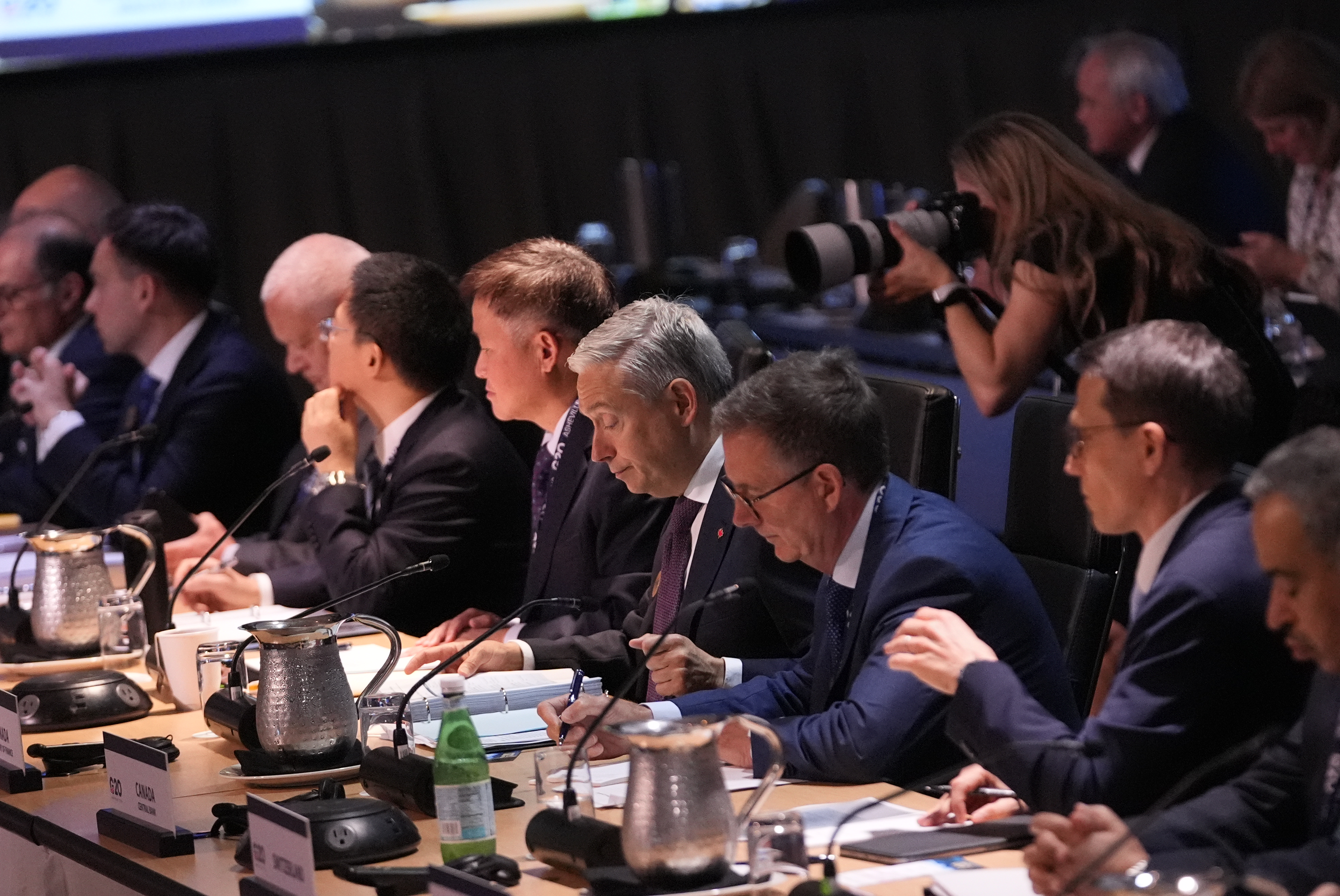
    ASHEVILLE, N.C. — The appearance of Russia’s finance minister at a G20 meeting, his first in person since Moscow’s full-scale invasion of Ukraine, sparked protests Monday from European participants.

    Anton Siluanov and leaders of the Russian central bank were invited to the meeting of the G20 finance ministers and central bankers by the Trump administration.

    Moscow targeted civilian infrastructure in Ukrainian cities with ballistic missiles and drones on Monday for the fifth day in a row. European governments, opposed to Russia’s attempt to redraw the continent’s borders by force, have given Kyiv more than $250 billion in financial and military support since the February 2022 invasion.

    “I find the signal sent ​by ​receiving the ⁠Russian finance minister here quite troubling,” German Finance Minister Lars Klingbeil ​told reporters in Asheville. “I ​would ⁠have wanted greater clarity from the American side that he ⁠should ​not be received ​here as a normal guest.”

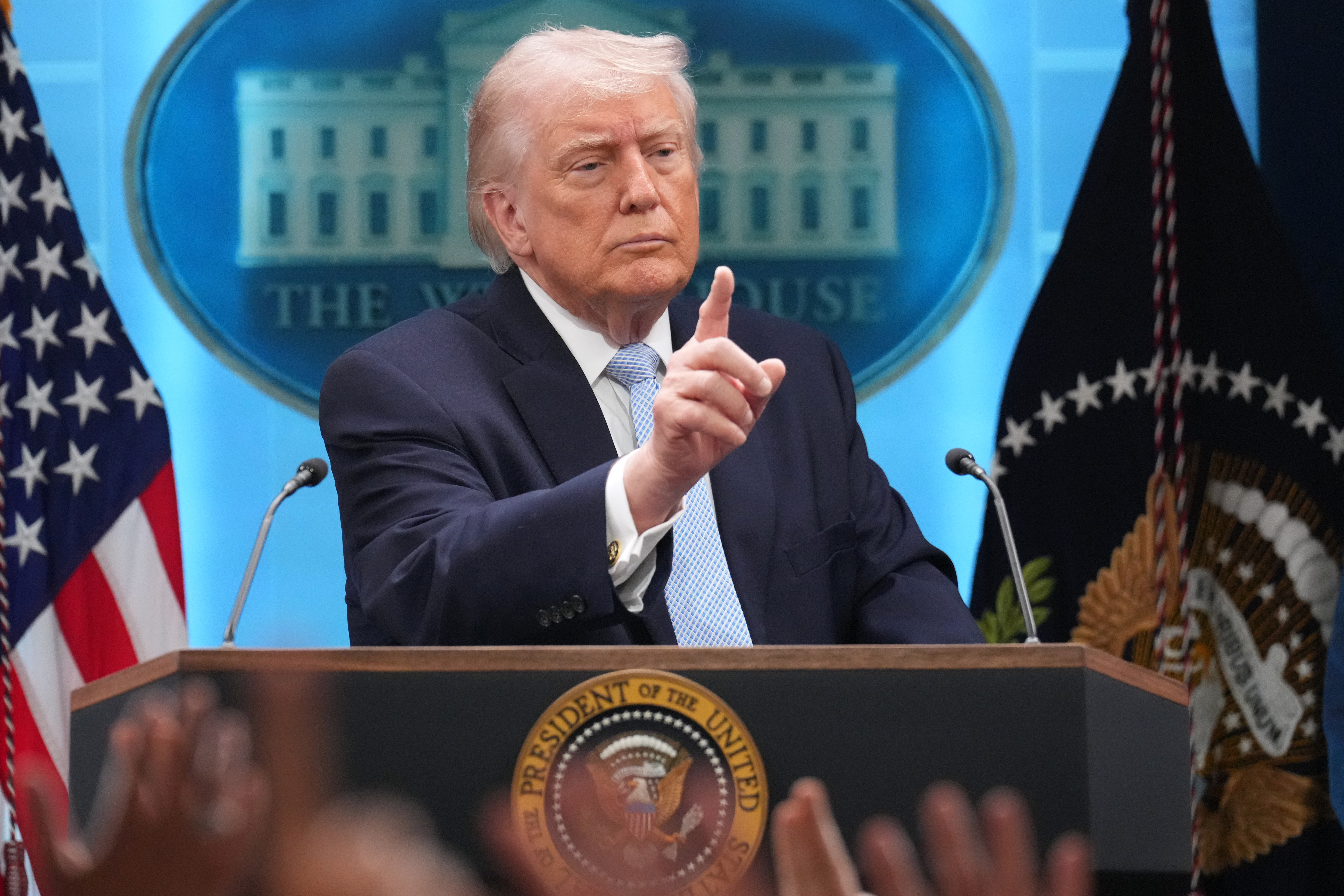
    President Donald Trump defended the invitation Monday.

    “We’re going to see what happens, but we like getting along with everybody,” Trump said told reporters in the Oval Office. “One of the reasons that I’m so successful, I get along with everybody.”

    Erin Browne, the Treasury undersecretary for international affairs, said the delegation was invited because Russia is a member of the G20.

    “It’s important to have dialogue even during times of conflict,” she told the Washington Post. Asked about the Europeans’ concerns, she said: “We’ve had constructive dialogue around the table in the plenary session.”

    Treasury Secretary Scott Bessent said he would reemphasize Trump’s peace plan for Ukraine during his meeting with Siluanov.

    Siluanov’s most recent previous appearance at a G20 meeting, by video link in April 2022, prompted several Western finance ministers to walk out in protest.

    Russia was expelled from the Group of Eight of most industrialized nations — subsequently, the G7 — after it illegally annexed Ukraine’s Crimean Peninsula in 2014, but it remains a member of the G20.

    European officials demanded Monday that Siluanov be excluded from the family photo, the traditional group picture of the leaders. It was taken without him.

    Siluanov’s appearance comes less than a week after CIA Director John Ratcliffe made a rare unannounced trip to Moscow. He warned Russia against ramping up its war against Ukraine, according to a person familiar with the matter.

    A Russian drone attack on a munitions depot in the Bucha district of Ukraine on Friday, three days after Ratcliffe’s visit to Moscow, triggered an explosion that killed 38 people.

    “People are dying every ​day,” Klingbeil said. “We have just seen another ​escalation in the attacks. … You cannot simply return to normality.”

    Russian drone incursions into neighboring European Union and NATO countries and sabotage attacks have rattled security on the continent. German Chancellor Friedrich Merz said Sunday his government was preparing a response to an attempted armed drone attack on Leipzig/Halle Airport this month that analysts and some governments say appears to have been the work of Russia.

    Former senior German security officials say the attack appeared to be part of a significant uptick in hybrid warfare by Moscow that has targeted weapons plants and other facilities in Europe supplying Ukraine as it seeks to sap Western support.

    Bessent planned to rally his foreign counterparts to focus on economic growth to beat back rising global debt and to encourage countries to sever economic ties with Iran as part of the administration’s Operation Economic Outcast.

    In sessions on Monday, participants discussed the global economic landscape, trade imbalances, and opportunities for growth, Browne told reporters. Several noted the risks to the global economy posed by Iran’s closure of the Strait of Hormuz, a major chokepoint for the world’s oil supply, in response to U.S.-Israeli attacks.

    “It remains our ultimate objective to ensure that Iran never acquires a nuclear weapon,” she said. “Doing so will reduce long-term economic and market volatility.”

    The administration also invited several American CEOs, including Goldman Sachs CEO David Solomon and JPMorgan CEO Jamie Dimon, to the meeting to connect public officials with private sector leaders.

  • Vance wades into caustic Michigan Senate race, calling candidate ‘evil’

    Vance wades into caustic Michigan Senate race, calling candidate ‘evil’

    Vice President JD Vance on Monday amplified the already caustic tone of Michigan’s close Senate race, calling Democratic Senate nominee Abdul El-Sayed “a very, very evil” person who should “keep my wife’s name the hell out of your mouth.”

    Vance used a Republican rally in the suburbs of Detroit on Monday to respond to recent and months-old comments from El-Sayed about second lady Usha Vance, using El-Sayed’s biting jokes about the second couple as evidence the Democrat is “weird.”

    Standing before a “Protecting Americans” banner, Vance also painted the U.S.-born El-Sayed as more sympathetic to foreigners than Americans. And he described El-Sayed in dark terms that echoed anti-Islamic rhetoric conservatives have deployed against El-Sayed, who is Muslim.

    Michigan’s Senate race could determine which party holds power in the chamber, stakes that have drawn attention and huge amounts of campaign cash. And the swing state’s new status as an early presidential nominating state for Democrats intensified the partisan fervor.

    Against that heightened backdrop, the close race between El-Sayed and Republican nominee Mike Rogers has spawned unrepentant bipartisan vitriol.

    El-Sayed responded to Vance with a statement that said, “Michigan is better than being lectured to by sock puppets from Ohio.”

    “Evil is ripping healthcare away from working people in exchange for tax breaks for billionaires. Evil is making people pay more for groceries and gas while pushing for trade wars and actual war. Evil is dividing people for your own gain. Evil is selling out your morals for a little bit of power,” El-Sayed said.

    El-Sayed’s statement did not address anything he’s said about Usha Vance, who gave birth to the Vances’ fourth child in July. But earlier in the day, Rogers put out a campaign video calling El-Sayed “a conman” without further explanation, and resurfacing footage of El-Sayed discussing the awkward viral moment between Vance and his wife, when Vance greeted his spouse of 12 years with a pat on the knee.

    “What do you think is going through Usha’s head when he talks? She’s like, ‘Damn, I have to sleep with him,’” El-Sayed said in the clip from April.

    El-Sayed also brought up Usha Vance in a social media post last month, a response to Vance inaccurately saying El-Sayed advocated for sharia law. Vance said that if he went back in time his grandfather, an Appalachian Democrat whom he called Papaw, wouldn’t recognize the Democratic Party shaped by El-Sayed.

    El-Sayed shot back, “So do we think JD is taking Usha with him back in time to meet Papaw, or no …”

    Critics viewed the remark as bashing Usha Vance’s Indian heritage and insinuating she’d be rejected by Vance’s White ancestors, while El-Sayed said he was bashing Vance’s insinuation that you’re more American if you can trace your roots back generations.

    Rep. Lisa McClain (R., Mich.) told Republicans at the rally hosted by President Donald Trump’s $400 million super PAC, MAGA, Inc., that the Senate race has outsize importance: “I tell everybody this is a battle for the soul of this country.”

    Vance told the crowd he came with a message from Trump, Mike Rogers, and all Republicans: “We are running people who love and fight for and defend all Americans. We don’t care who you are, so long as you belong in this country, we’re going to fight for you.”

    The race’s tenor has often devolved into pettiness.

    Earlier this week, Rogers and El-Sayed traded barbs on X over which was voted football captain or seemed to peak in high school.

    El-Sayed on Monday continued to throw punches in his blistering critique of Republicans and Trump, who has put himself at the center of the midterm fight even as his approval ratings have sunk this year.

    At an event earlier in the day, El-Sayed characterized the Trump administration’s tariffs on Canada as an unnecessary war on affordability, pointing to data that shows Michigan is one of the states hit hardest by the president’s trade policy.

    “Canadians are like the only people in the world who are going to preemptively apologize for something they didn’t even do,” El-Sayed said. “So if you’re starting a trade war with Canada, it’s because you’re the a—.”

    And he took another off-color jab at Rogers campaigning with Vance, referencing the lewd and false internet story about the vice president being intimate with a couch cushion.

    “We don’t have more couches here than they have in Ohio, so I’m just trying to figure out why he would come and why you would bring him,” El-Sayed said.

    Republicans have framed El-Sayed’s populist Democratic policies as socialism, and placed a magnifying glass on both his views toward Israel and his political connection to provocative online streamer Hasan Piker, which has also drawn criticism from Democrats. El-Sayed calls the war in Gaza a genocide and called for an end to providing arms to foreign militaries, explicitly signaling out Israel and Egypt, the country from which his parents immigrated before he was born.

    Over the weekend, El-Sayed apologized to Jewish Democrats for comments he made earlier this year after an attack on Michigan synagogue. He condemned the attack, but many Jewish people saw his earlier comments as also explaining it away when he said “hurt people hurt people,” referring to the attacker.

    Republicans have used El-Sayed’s Muslim identity as a line of attack, and the Democrat has objected to Trump posting pictures of his wife, Sarah, in a hijab, calling it a dig to suggest the couple is un-American.

    Rogers, a former congressman who narrowly lost a Senate bid two years ago, cast the race as an imperative to “defend freedom” from progressive politics, saying, “Listen, Michigan, we have a state to save.”

    State Sen. Mallory McMorrow (D) — a former El-Sayed political rival who is working to unite Democrats behind him — also cast the contest as a high-stakes opportunity to hold Republicans and the Trump administration accountable for their policies.

    “So welcome to Michigan, JD Vance,” she said. “Don’t let the door hit you on the way out.”

  • Postal Service plans may keep voters from getting ballots, whistleblower says

    Postal Service plans may keep voters from getting ballots, whistleblower says

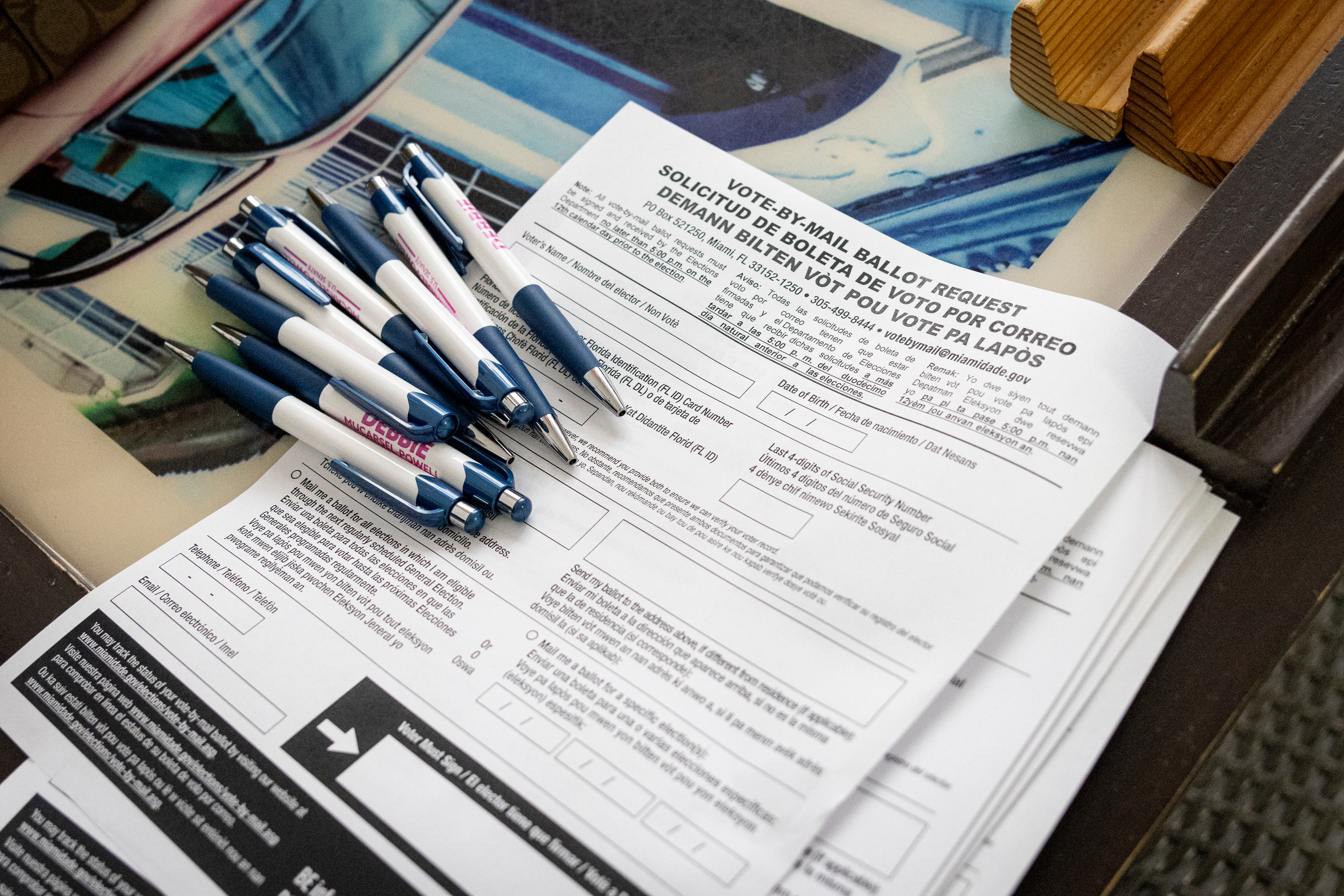
    An anonymous federal official warned in a disclosure to Congress that a rushed and insufficiently tested U.S. Postal Service system could prevent large numbers of Americans from receiving mail ballots this fall if courts approve President Donald Trump’s plans for the midterm elections.

    The disclosure, made public Tuesday morning by Sen. Richard Blumenthal (D., Conn.), says the Postal Service has adopted an internal “zero-percent failure policy” under which an entire batch of ballots would be rejected if a single barcode sampled by a postal employee could not be scanned or matched with information submitted through a new online portal. A batch could contain tens of thousands of ballots, according to the disclosure.

    “The Postal Service has designed a system to disenfranchise millions of Americans,” Blumenthal said in a call with reporters.

    Postal officials and the White House did not immediately provide comment.

    In public statements, the Postal Service has previously said information submitted through the portal will be updated immediately. It has said postal employees will not determine voter eligibility or check names and addresses for accuracy. The rule does not disclose the sampling formula or zero-failure policy described in the whistleblower disclosure.

    The fight over the Postal Service’s plans is rooted in an executive order from Trump that seeks to overhaul mail voting. A judge has blocked those plans for now, but the administration is seeking to reinstate them ahead of this fall’s midterm elections.

    If the administration gets its way, state and local election officials would have to upload lists of voters to an online portal the Postal Service is designing. Postal employees would refuse to deliver to anyone who is not on those lists.

    The unnamed official alleged that the portal was assembled under constantly changing requirements and with as few as four working days available for customer testing before a planned launch.

    If the Postal Service’s plans go into effect, election officials will confront new challenges when they mail ballots in large batches. Postal workers plan to scan barcodes on a sample of envelopes to ensure the voters appear on the state’s list, according to the whistleblower. If they find even one mismatch, they will refuse to accept the entire batch, the whistleblower said. That means a single mismatch in a batch of 10,000 ballots would prevent the 9,999 other ballots from being mailed until discrepancies were resolved.

    “As designed, the process is entirely unforgiving,” the disclosure said. “It could delay ballots by the thousands in repeated verification cycles — and thus prevent states from mailing enormous numbers of ballots.”

    State and local officials often mail ballots in large batches to manage them as effectively as possible. Some states send ballots to all registered voters, and they must place millions of ballots in the mail in a short period.

    Many election officials have expressed alarm about the Postal Service’s overall plans under Trump’s executive order because they don’t believe they have been adequately thought through for a fast-approaching election.

    Among the issues they worry about are potential mismatches for mundane reasons. States constantly update their voter rolls, and the lists they send to the Postal Service could be out of date within minutes as new voters register and existing ones update their registrations because they’ve moved.

    The Postal Service has said states can update their voter lists, but election officials have expressed concerns that the new online portal won’t be able to handle a steady stream of updates.

    The whistleblower disclosure could add to those concerns and bolster legal challenges to the executive order and postal rules.

    The disclosure, dated Sunday, was submitted to Blumenthal by Whistleblower Aid on behalf of an anonymous federal official it represents.

    The organization described the unnamed whistleblower as a “federal official with direct knowledge of potentially catastrophic problems in the development” of the Postal Service’s plans and said the official feared reprisal by administration officials if identified.

    Blumenthal sent the disclosure late Monday to Postmaster General David Steiner and asked him to provide documents about the Postal Service’s plans.

    Blumenthal is the ranking Democrat on the Permanent Subcommittee on Investigations for the Senate Committee on Homeland Security and Governmental Affairs.

    States and voting rights groups sued over the executive order soon after Trump signed it in March. The Supreme Court last week allowed work on the executive order to proceed for the moment, but days later a lower court blocked it.

    The administration is seeking to get it reinstated but faces timing challenges. Officials in North Carolina are preparing to start mailing ballots on Friday under a state law requiring them to send them to those who ask for them starting 60 days before an election. Other states are set to start mailing their ballots in the following days and weeks.

    The whistleblower said the Postal Service stopped working on the portal around June 25 after a federal judge blocked implementation of Trump’s directive, then resumed work around July 29 while that order remained in effect.

    The disclosure said work continued after the judge issued a new order on Thursday barring the Postal Service for 14 days from taking further preparatory steps that would apply to all states for the November election. In a brief ruling Monday, the judge said the Postal Service could work on the portal for states that want to voluntarily use it.

    Postal officials planned to launch the portal on Tuesday, according to the whistleblower. One of the whistleblower’s attorneys, David Kligerman, said work on the portal had continued in recent days but didn’t know whether the Postal Service was sticking with its plan to make it available on Tuesday.

  • Supreme Court clears way for White House ballroom construction to continue

    Supreme Court clears way for White House ballroom construction to continue

    The Supreme Court on Monday allowed construction to continue on the White House ballroom, handing President Donald Trump a victory as he races to complete the largest expansion to the executive mansion in decades.

    The justices found that the historical preservationists who challenged the controversial project had not suffered the direct personal harm required to bring a lawsuit. The ruling means their legal action appears to be dead.

    The National Trust for Historic Preservation had argued that work on the ballroom, which Trump has said is part of a larger complex necessary for national security, must stop until approved by Congress.

    That argument prevailed in lower courts, which twice ordered the White House to pause work on the ballroom. But amid legal machinations, those orders were put on hold, allowing construction to move forward without interruption.

    The high court ruled the National Trust had not shown that it suffered a real-world injury from the ballroom project, meaning it did not have what is known as standing to bring its case.

    The ballroom, which is expected to be able to hold about 1,000 guests, is being built in conjunction with a five-story underground military complex that will include a hospital and shelters to protect the president and senior officials.

    Trump has said that the total cost of the ballroom may be $400 million and will be paid for with private donations, but contractors’ invoices obtained by the Washington Post show that the cost of the project will be $600 million and that taxpayers will foot about half the bill.

    Lower courts have not blocked work on the underground complex, and the justices’ decision pertained only to the aboveground portion.

    The majority in the unsigned ruling said the Trust had not met the required legal standard to bring its case.

    “Today, we do not pass upon the legality of the government’s East Wing project,” the majority wrote. “We conclude only that, based on the submissions before us, the government is likely to prevail in showing that the Trust lacks … standing to challenge the project in federal court.”

    The ruling came over the objections of an unusual coalition of justices, who often are on different sides. Chief Justice John G. Roberts Jr., a conservative, joined with the court’s three liberals in dissent.

    Writing for the group, Roberts said the decision “is no victory for the separation of powers.” He referenced Alison Hoagland, a Trust board member.

    “The White House is not just any building, and — when it comes to historic preservation — Hoagland is not just any person,” Roberts wrote. “In failing to appreciate as much, the Court misconceives the plaintiff’s injury, allowing the Executive’s likely infringement of the Legislature’s power of the purse and authority to regulate federal property in the District of Columbia to continue.”

    The White House and the National Trust did not immediately respond to questions about the ruling.

    Before the Supreme Court order, the U.S. Court of Appeals for the D.C. Circuit upheld a federal judge’s April ruling that work on the 90,000-square-foot addition to the executive mansion probably requires congressional approval to continue.

    Shortly after U.S. District Judge Richard Leon ordered work to stop, the appeals court stepped in and paused that ruling while it decided whether to issue its own injunction.

    The appeals court blocked aboveground construction anew on Aug. 7, finding that Trump had exceeded his power in authorizing the destruction of the East Wing of the White House and the building of the ballroom.

    That decision was stayed for two weeks to give the Trump administration time to appeal to the Supreme Court.

    “We are aware of no instance in American history in which a President unilaterally and using privately collected funds demolished substantial portions of the White House that Congress authorized to be built and American taxpayers paid for. Until now,” the appeals panel wrote.

    In its filings with the high court, the Trump administration argued that it was too late to stop ballroom work because the project was 65% complete, and that the injunction put the lives of Trump and others at risk.

    The filing cited a number of alleged attempts on Trump’s life, including a 2024 incident at a Pennsylvania rally when a would-be assassin’s bullet grazed his ear.

    “The injunction would wrongfully install a single district judge as sole arbiter of what further construction is ‘strictly necessary’ to protect the safety of the President, his family, staff members, and visitors to the White House, including foreign dignitaries, and presidents and prime ministers of other countries,” Solicitor General D. John Sauer wrote.

    Trump initially characterized the ballroom as necessary for presidents to entertain VIP guests, but in recent months he has shifted to arguing it was crucial on security grounds.

    The Trump administration has said the ballroom, which will be built with missile-resistant columns, a drone-proof roof and blastproof windows, will shield the military complex below and the White House more generally.

    To bolster the claim, the administration shared affidavits from Secretary of State Marco Rubio, FBI Director Kash Patel, and others who claimed that completing the ballroom was necessary to protect the president.

    Trump recently posted on Truth Social that the ballroom was a “desperately needed National Security structure” and derided the preservationists as “treasonists.”

    The White House announced the project in July 2025, saying at the time that the privately funded addition would hold 650 guests and cost $200 million. But both the capacity and the price have spiraled upward.

    The National Trust sued to block construction of the ballroom in December, saying that the Trump administration had not gone through the legally mandated review process and that Congress has sole authority to authorize major White House construction.

    The group was skeptical of the claims that pausing the project would create a security risk. In recent court documents, the National Trust argued that the Trump administration was racing to complete the ballroom to thwart oversight.

    “Rather than obtain permission from Congress, Petitioners have instead decided to try to outrun judicial review,” the National Trust wrote in its filing.

    The group also cited a National Park Service environmental assessment that found the ballroom would interfere with sight lines and disrupt the historical continuity of the White House grounds.

    About 30 congressional Democrats filed an amicus brief supporting the National Trust in the case.

    “Questions about how best to protect current and future White House residents, staff, and visitors fall well within the ambit of Congress’s powers over federal property and federal spending,” the Democrats wrote.

    The Post reported in June that an internal contractor’s estimate put the final cost of the project at about $600 million and that roughly half the money would come from taxpayers. The administration has approved a $500 million no-bid contract to construct the ballroom.

  • Pentagon secretly installs military influencers in civilian roles

    Pentagon secretly installs military influencers in civilian roles

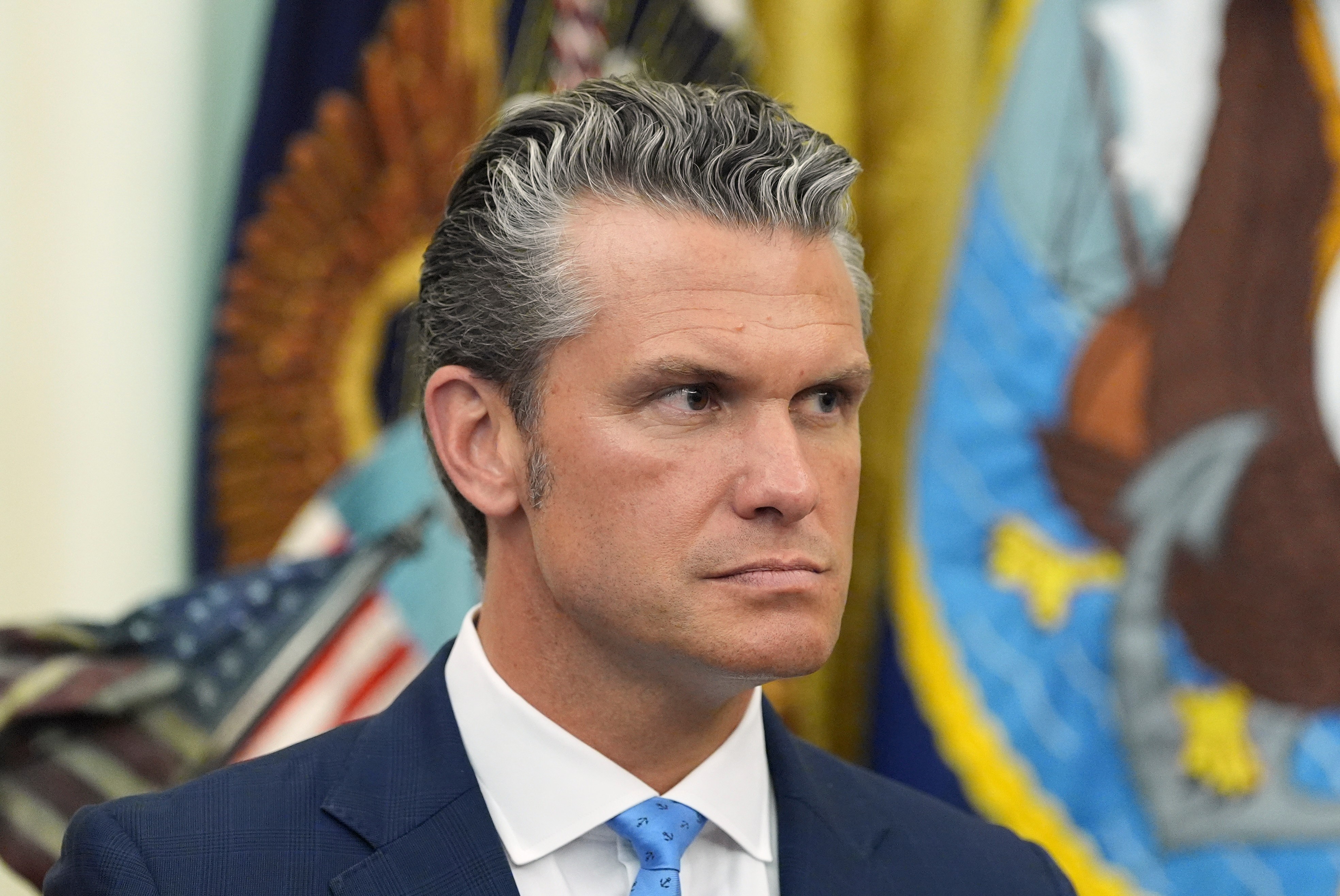
    The Pentagon has secretly installed several conservative military veterans with large online followings in government roles, declining to disclose their assignments as they amplify Defense Secretary Pete Hegseth’s viewpoints and attack those who scrutinize the Trump administration, according to people familiar with the matter and corroborating material.

    At least some of the influencers have been assigned to civilian roles that could lead to changes in policy, the people familiar with the matter said. Like others, they spoke on the condition of anonymity because of the sensitivity of the issue.

    Neither the Pentagon nor those involved have disclosed the government roles despite the Trump administration’s claims that they are running the most transparent Defense Department ever.

    Those involved include Rob Maness, a retired Air Force colonel, and Kurt Schlichter, a retired Army colonel, people familiar with the matter said. Pentagon records reviewed by the Washington Post show that both have active official government email addresses as of this past week and are assigned to the office of Anthony Tata, the undersecretary of defense for personnel and readiness. The email addresses include a “.civ” suffix, meaning they are labeled as civilian employees, rather than as military personnel or contractors.

    Both served for decades in uniform and, since retiring, have turned from the military to conservative commentary. Maness has more than 135,000 followers on X, while Schlichter has nearly 620,000.

    Another retired Army colonel and influencer, Thomas Anderson, was listed in Pentagon records earlier this year with a “.civ” email address and assigned to Tata’s office, according to people familiar with the matter and records reviewed by the Post. An attorney, he writes online under the pen name Cynical Publius and has more than 323,000 followers on X. He was no longer listed in Pentagon records late this past week, the people familiar with the issue said.

    The assignments for all three have not previously been reported. Questions have been raised online about influencers’ connections with the Pentagon, including in an article last week by the Bulwark.

    Pentagon spokesperson Joel Valdez declined to comment to the Post about whether any of the three are drawing a taxpayer-funded salary, what roles they have, or how long those jobs are expected to last. Tata did not respond to a request for comment.

    Maness and Schlichter did not respond to emails or other messages requesting comment. Anderson declined to comment in a short phone call.

    The individuals are assigned as either “special government employees” or “highly qualified experts,” people familiar with the issue said. Schlichter appears in a government database with an “HQE” designation after his name, according to material reviewed by the Post.

    SGEs are limited by law to working no more than 130 days in any 365-day period. Those with HQE status can work full or part time, with or without compensation, according to government guidance on the issue released in 2023. It was not clear what financial agreements were reached with Maness, Schlichter, and Anderson, and when each of their assignments began.

    Tata’s team has taken on a number of culture-war issues, including scrutinizing war colleges for “woke” ideology and reviewing how the Biden administration adopted COVID vaccine mandates for U.S. troops.

    Hegseth, a former Fox News personality and Army National Guard officer, has attempted to reshape the public discourse about Pentagon affairs. Last year, he imposed new restrictions on Pentagon press corps members that forced dozens of journalists out of the building and later introduced a new, primarily right-wing press corps to replace them.

    The increased attention on the Pentagon’s influence efforts comes after another conservative influencer, Jennica Pounds, accused a State Department official this month on social media of attempting to entrap her into publishing government secrets. Pounds, writing under the pen name DataRepublican, posted text messages online that showed the official approached Pounds with documents to publish and tout as a journalistic scoop.

    Sarah Rogers, the undersecretary of state for public diplomacy, later disclosed on social media that she was the official who had reached out to Pounds. Rogers posted the documents herself, saying it was not a “trap,” and Pounds later said that she regretted “making a public spectacle” and “pulling people I respect into the swirl.” Rogers has been nominated by President Donald Trump to lead the U.S. Agency for Global Media, which oversees Voice of America and other government-funded media.

    The dustup was followed by the Pentagon and Pounds disclosing that she works as a special government employee for the Defense Department. She posted on social media that she became an employee in July, after holding a credential as a journalist in Hegseth’s new Pentagon press corps until June. Pounds has said on social media that she applied for a Pentagon press pass and received it in April.

    Pounds did not respond to a request for comment.

    The disclosure has roiled social media, where some fellow influencers have defended Pounds’ work amid criticism that she should have disclosed she was working for the government.

    Adam Kinzinger, a former Republican congressman and Air Force veteran, posted that it appears the Pentagon “is using your tax dollars to hire influencers on X to put out partisan talking points.”

    “How many more people that are blue checkmarks on X that are putting out information on behalf of the federal government, and Donald Trump, and the Republican Party … are actually special government employees?” said Kinzinger.

    Maness, Schlichter, and Anderson appeared on behalf of the Pentagon’s Senior Service College Task Force at the Army War College in Carlisle, Pa., in May, two people familiar with the visit said. The task force was organized in the spring with the goal of rooting out ideology deemed “toxic” or “woke,” Hegseth said in March.

    The task force has completed its research and prepared a report that has not yet been released, one of the people familiar with the visit said.

    After initial publication of this story, Anderson said on social media on Sunday night that he was asked to join the task force after he published an article in February recommending changes to the war colleges. Anderson said he was a special government employee through July 26 with work “exclusively limited” to the task force.

    “At no time have I ever received any compensation of any kind from any government source of any kind for anything I write or have ever written on X or in any magazine or other source,” Anderson wrote.

    While in Carlisle task force members met with students and professors over a number of days and asked questions about the performance of leaders like Hegseth and Gen. Dan Caine, chairman of the Joint Chiefs of Staff, one of the people familiar with the visit said. Some students were uncertain how candid they should be and whether there would be negative consequences if administration officials did not like the answers, this person said.

    The other person familiar with the visit said the task force members had concerns about the syllabus for a class focused on how military officers communicate with Congress.

    Maness retired from the Air Force in 2011 and has run unsuccessfully for a U.S. Senate seat in Louisiana. He is listed as the chairperson of GatorPAC, a political action committee that says on its website that it wants to “drain the swamp” in Washington and find more military veterans to run for office. The PAC’s website also includes videos of an online political commentary show starring Maness.

    In an article published last month by the conservative Daily Caller, Maness argues that Hegseth’s team needs to root out “disloyal” career employees in the department and laments “careerists who treat the Pentagon as their permanent fiefdom.” That article cites his decades of military experience, but does not say whether he is a current Pentagon employee.

    In an article published Wednesday on the website Campus Reform, Maness attacked a decision made by Army leaders to pull back efforts to toughen academic requirements for college students in Reserve Officers’ Training Corps programs. “Secretary Hegseth’s outrage is justified,” Maness wrote. The article likewise does not mention any government assignment.

    Maness also had a letter to the editor published in the Post in July in which he defended Hegseth’s efforts to reduce the number of military officers who attend elite universities for fellowships. He describes himself there as a retired Air Force officer, but no government role is mentioned. A Post spokesperson said that Maness did not disclose any connection to the Pentagon before publication.

    Schlichter is a columnist with the conservative site Townhall, writing and podcasting on politics, immigration, and military affairs. On Aug. 6, he published a column calling Trump a “hero for finally fighting back against Iran.”

    “He could have waltzed into the midterms, dragging Republicans behind him toward success,” Schlichter wrote. “But he had the courage to do what was necessary to stop these bastards before they made it impossible to prevent them from getting a [nuclear] bomb.”

    On social media, Schlichter posted a video earlier this month of Hegseth praising sailors aboard the USS Abraham Lincoln, an aircraft carrier that has faced morale problems during a long deployment.

    “We are,lucky to have @PeteHegseth,” Schlichter wrote on X on Aug. 14. He describes himself on X as a retired Army colonel, lawyer, and columnist, but does not disclose current Pentagon employment.

    On social media, Anderson has been a frequent critic of journalists, fellow veterans, and others opposing the Trump administration and has defended Hegseth’s efforts to overhaul military affairs. Writing for the Federalist in April, he assessed that there is “a cancer in America’s military ranks, and it must be expunged before it’s too late.”

    This past week, he repeatedly defended Pounds on X for serving as a special government employee as he also declined to answer questions from several people about whether he was an SGE employee, too.

    “The law does not view such people the same as civil servants, and they are legally allowed to continue whatever other private endeavors they were undertaking,” Anderson wrote. “In many cases, they are prohibited from revealing their status because of the sensitive nature of their work.”

    Another military influencer, John Konrad, also defended Pounds while noting he had discussions with the administration this spring about becoming a special government employee at the Pentagon. Konrad, a former member of the U.S. Merchant Marine and founder of the maritime website gCaptain, said that the Pentagon sought him out for a role and he later felt “ghosted.”

    The Pentagon also brought on Jerry Dunleavy, a journalist with the conservative Just the News, to assist Hegseth’s team with an ongoing review of the fall of Afghanistan. The Pentagon disclosed Dunleavy’s involvement in May.

    Dunleavy previously worked as an investigator for the GOP-led House Foreign Affairs Committee during an earlier investigation of the collapse in Kabul and quit in protest, saying the committee had not gone far enough.


  • Democrats want the midterms to be about Trump. He does, too.

    Democrats want the midterms to be about Trump. He does, too.

    For vulnerable politicians, the safest place to be in a difficult midterm year is usually far from an unpopular president.

    Donald Trump has other plans.

    Next week, as primaries give way to a perilous general election campaign for vulnerable Republicans, Trump will headline two nights of a GOP political convention in Dallas. Over the next two months, his super PAC plans to run advertisements that feature his name and play up his political record. And although he will not appear on any ballot in the midterms, he has told voters they should behave as if he is. Even the party’s program for prized congressional recruits, previously known as “Young Guns,” has been renamed the “MAGA Majority.”

    It is a risky strategy two months before Election Day. Vulnerable Republicans cannot afford to antagonize Trump because they need his help to turn out his base and tap into the $400 million war chest he controls. And he is not extending the leeway past presidents have for candidates to run their own races, even if that means keeping their distance.

    Trump has told aides he wants ads paid for by his super PAC, MAGA Inc., to tout his second-term record, according to two people familiar with the conversations. Advisers already prepared some ads for the Texas Senate race and showed them to Trump, who provided detailed feedback, said the people, who spoke on the condition of anonymity because they were not authorized to discuss internal strategy.

    Some donors, skeptical of the strategy, have become resistant to giving more money to Trump’s super PAC while it sits on hundreds of millions of dollars without sharing any plans about how it will use the money, said a Republican strategist involved in Senate races, speaking on the condition of anonymity to discuss unfinished plans.

    The Trump-centric approach marks a reversal from 2022, when the super PAC ran ads in competitive Senate races that did not mention Trump — a sign that his own advisers accepted his liabilities. A MAGA Inc. spokesperson declined to comment, saying the PAC doesn’t reveal its plans through the media.

    As his poll numbers have fallen to record lows, Trump has repeatedly insisted that his record deserves to win in November. He has argued that voters are overlooking his economic achievements and defended the Iran war and its economic costs as the price of preventing Tehran from obtaining a nuclear weapon.

    At a Las Vegas rally in early August, Trump touted rising manufacturing investment, record stock market gains, and falling prices, despite a more complicated economic picture with rising inflation. “We had the greatest economy in the history of our country in my first term,” he said. “But this is blowing it away.”

    “Trump doesn’t want people distancing themselves from him. He sees it as a personal insult,” said Tevi Troy, a presidential historian and former White House domestic policy adviser under President George W. Bush. “His greatest power is his ability to destroy a Republican who goes against him.”

    Trump’s posture differs from that of his recent predecessors — and even from his own first-term approach. But Troy said Trump’s political calculation is rooted in a simpler reality: In an era of heavily gerrymandered districts, many races are increasingly decided by which side can turn out its own voters.

    “What we’ve seen over the course of the past decade is, when Trump is on the ballot, you get better turnout if you’re a Republican,” Troy said.

    Trump has not been able to deliver every candidate he supports to victory. His picks recently lost gubernatorial primaries in Iowa, Georgia, Wyoming, and Minnesota, as well as House races in Tennessee and Michigan. He snapped that losing streak Tuesday when Darline Graham, his choice to succeed her late brother, Sen. Lindsey Graham, won South Carolina’s GOP Senate runoff, and Mike Mazzei narrowly won a runoff to be the Republican nominee for Oklahoma governor.

    General-election polling underscores the risk for vulnerable Republicans. Trump’s approval ratings remain historically low, and national polls show Republican House candidates running six points ahead of him among registered voters: 44% support the GOP for Congress, while 38% approve of Trump. Republican Senate candidates are also outperforming the president by about two points on average, though some of that gap reflects large numbers of undecided voters in several races.

    That gives Republicans in the most competitive districts an incentive to calibrate their proximity to Trump — embracing him where he remains an asset while trying to keep their contests from becoming referendum on his presidency.

    “The president’s going to look right in the camera and say, ‘I am on the ballot,’” House Speaker Mike Johnson (R., La.) said of the Dallas convention on Thursday at an event with vulnerable Rep. Monica De La Cruz of Texas. “Because even though his name isn’t, right, his administration, his legacy, the America-first agenda is.”

    The Dallas convention forces Republicans to decide between angering swing voters by appearing with Trump or angering Trump by staying away. None of the Republicans in competitive Senate races responded to questions from the Washington Post on whether they will attend.

    “It’s going to be a Trumpapalooza you’re not going to want to miss!” RNC Chairperson Joe Gruters said in a social media video.

    Aides to one Republican who has announced his plans to skip Dallas, Rep. Tom Barrett of Michigan, rejected the suggestion that he is distancing himself from Trump. They noted that Barrett has appeared with the president several times, including at a General Motors proving ground in Milford last month.

    “Attending a convention two months before an election in a top target seat was never a consideration,” Barrett spokesperson Jason Roe said. “It has nothing to do with the optics and everything to do with where the voters are.”

    Roe said voters already understand the basic political alignment between Barrett and Trump. “I think it’s pretty baked in with voters that Republican members of Congress support the Republican president, and vice versa,” he said, adding that Barrett is “running on his record of accomplishment for the 7th District.”

    Natalie Baldassarre, a spokesperson for the Republican National Committee, said Republicans cannot escape being associated with Trump’s policies and that Democrats will make the link regardless.

    “The Democrats are going to brand our candidates with the president no matter what, so it’s not beneficial for Republicans to run against his agenda and bleed from both sides of the political spectrum,” she said. “The president has cut taxes, lowered drug costs, secured our border — Republicans should be touting that in battleground races across the country.”

    Rep. Jamie Raskin (D., Md.) has argued that Democrats should make Trump’s record inseparable from the Republicans running alongside him, portraying GOP candidates as enablers of what he calls the administration’s “illegal war” and “disastrous economic policies.” In a recent fundraising appeal, Raskin said Democrats could build a “Blue Wave” by tying Trump and “MAGA Republicans” together and making the election a judgment on their shared record.

    So far Republicans have tiptoed around putting space between themselves and Trump. The campaign website for Ralph Alvarado, running with Trump’s endorsement for a Kentucky congressional seat in a district Trump won by 15 points, removed references to Trump from its website, replacing “America First Fighter” with “Independent Leadership.”

    The political calculus varies by race, said Republican strategist Alex Conant. Some House Republicans, particularly those representing suburban swing districts, may be better able to court independent voters with distance from the president. But many of the Senate contests likely to determine control of the chamber are unfolding in Republican-leaning states, where Trump remains a potentially powerful turnout engine.

    “So distancing yourself from Trump isn’t going to help you win a Republican state like Texas or Ohio,” Conant said.

    Trump also may have little use for Republicans who seek to separate themselves from his actions. He has long prized loyalty, and said he expects his administration to face extreme pressure from Democrats if they retake either chamber.

    “I think he views a disloyal Republican as just as useless as a Democrat,” Conant said. “And if he’s looking at what the next two years hold, it’s probably going to be impeachment fights and a lot of other big fights. He’s probably not looking to have anybody there who’s not loyal.”

    In a polarized, heavily gerrymandered country, Trump is betting that turning out voters already inclined toward Republicans matters more than persuading those in the middle — and that he can summon voters who might otherwise stay home when his name is absent from the ballot, Troy said.

    That distinguishes him from recent presidents who, when their popularity sagged, generally gave endangered members of their own party room to run away from them.

    In 2006, Bush largely confined his late campaigning to places where Republicans believed he could still help, while vulnerable GOP candidates advertised their independence from him and avoided appearances with him. Eight years later, Barack Obama watched endangered Democrats criticize his policies, skip his visits, and keep him out of some of the states where they faced the toughest races.

    President Joe Biden made that accommodation almost a running joke. During the 2022 midterms, as some vulnerable Democrats kept their distance from an unpopular White House, Biden frequently told candidates: “I’ll come campaign for you or against you — whichever will help the most.”

  • Trump’s deals in Africa could cut U.S. health aid by more than half, analysis shows

    Trump’s deals in Africa could cut U.S. health aid by more than half, analysis shows

    The Trump administration is working to cut global health funding to developing nations by tens of billions of dollars by 2030, according to a new analysis of the secretive agreements U.S. officials have pursued with more than a dozen governments to date.

    The planned cuts — targeting programs that combat the spread of HIV/AIDS, Ebola, and tuberculosis, among other deadly diseases — appear to reduce U.S. spending on global health initiatives to less than half of Washington’s output in 2024, the analysis found.

    The research was conducted by two nonprofits, Public Citizen and Partners in Health, organizations that have taken a deeply skeptical view of President Donald Trump’s “America First” approach to global health policy.

    Their analysis offers the most detailed reading yet of the bilateral health agreements drawn up by the State Department with 34 countries after the Trump administration, upon taking office last year, paused all U.S. foreign assistance and dismantled the U.S. Agency for International Development.

    Public scrutiny of the agreements has been limited, as the administration, citing a desire to protect what it says are “sensitive” negotiations, has refused to disclose the text outlining their terms. The State Department said earlier this year that it would release them only after all were signed, though it has not disclosed a timeline for that to happen.

    The analysis by Public Citizen and Partners in Health relies on documents that the nonprofits recently obtained from the U.S. government after suing the Trump administration and other previously disclosed material detailing what is contained in many — though not all — of the agreements.

    It questions, among other things, how the Trump administration’s plan to reduce global health spending in developing countries over the next several years accounts for billions of dollars in related funds already appropriated by U.S. lawmakers. Since Trump’s return to office, the Republican-led Congress has voted to keep the amount of U.S. global health funding relatively constant despite the administration’s push for greater self-sufficiency among recipient countries.

    There’s a “big, yawning gap” between how much money lawmakers have apportioned and how much the United States intends to spend via the deals it is reaching with developing countries, said Vincent Lin of Partners in Health, noting that the administration, according to its own accounting, is far behind on spending money related to HIV/AIDS prevention.

    The State Department said in response to questions about the analysis that it does intend to spend the money apportioned by Congress and that more global health money could go to religious aid organizations and what has been dubbed an “innovation fund” to support the use of new U.S. technology in fighting disease. The department did not address the slow pace of HIV/AIDS funding, which Congress approved separately under the President’s Emergency Plan for AIDS Relief (PEPFAR), a long-running global health effort.

    A State Department spokesperson, Tommy Pigott, said in a statement that the Trump administration is defining the “next phase of U.S. global health foreign assistance in a way that prioritizes greater efficiency, transparency, country self-reliance, and American innovation.”

    In most cases, the agreements specify that countries receiving diminished U.S. health funding must at the same time increase their own spending.

    The State Department said that the deals reached so far amounted to $14.5 billion in new U.S. assistance, alongside more than $10.1 billion in “co-investment” from recipient countries.

    The analysis by Public Citizen and Partners in Health shows that across 17 countries whose full agreements were reviewed, and an 18th where just the top-line figures have been revealed, the Trump administration is seeking to reduce global health funding by 59% from 2024 levels by 2030.

    For decades, global health funding has enjoyed bipartisan support in the U.S., with lawmakers arguing that it is both morally correct and in the self-interest of wealthier nations to combat disease globally.

    The Trump administration has sought to reshape this consensus, emphasizing “trade over aid” and criticizing global aid structures, but it has encountered resistance from Congress, which rejected a budget that sought to cut global health spending by $6.2 billion. (Lawmakers later approved a $615 million reduction compared with the previous year.)

    The funding reductions pursued by the Trump administration are most pronounced in poorer African nations that have relied on tens of millions of dollars annually in U.S. foreign assistance to support their fight against HIV, the analysis by Public Citizen and Partners in Health shows.

    Burundi, for example, among the poorest countries in Africa, will see its U.S. health funding fall to 22% of baseline levels, according to the nonprofits’ analysis. Rwanda sees the sharpest drop among the documents examined, with U.S. funding falling to just 3% of what it received before Trump reentered office, the analysis shows.

    While recipient countries are expected to ramp up their own health spending to fill the gap, Public Citizen and Partners in Health have raised doubts about how feasible some of those targets are. They note, too, that the agreements include language detailing penalties for noncompliance, including further cutting U.S. funding.

    “Sierra Leone is supposed to make up a 71% U.S. funding drop in less than five years,” said Peter Maybarduk of Public Citizen, referring to another poorer nation being asked to step up its health funding. “It’s going to be very difficult, and if a country like that falls behind, and then is punished for that, then of course the health problems compound.”

    The State Department said in response to questions that the differing rates were based on a model that evaluated a range of factors, including the wealth of a country and its vulnerability to diseases, and analyses that looked at “the level of instability and conflict in a country.”

    Beyond its planned cuts to bilateral health funding, the Trump administration is behind on spending money appropriated by Congress under PEPFAR, according to tracking by Lin and other analysts. It’s an enormous concern to advocates for disease prevention in developing countries.

    PEPFAR funding must be spent within five years, Lin noted, meaning the administration has not breached the law by underspending it. Still, it could lead to a situation in which programs break down before the funds can be spent, he said.

    “Right now, it looks like a dramatic underspend by billions of dollars … leading to preventable suffering and death,” said Maybarduk. “If that’s not the case, the burden is on the State Department to tell us how.”