Category: New York Times

  • ‘Alligator Alcatraz’ used small cages as ‘calming areas,’ report says

    ‘Alligator Alcatraz’ used small cages as ‘calming areas,’ report says

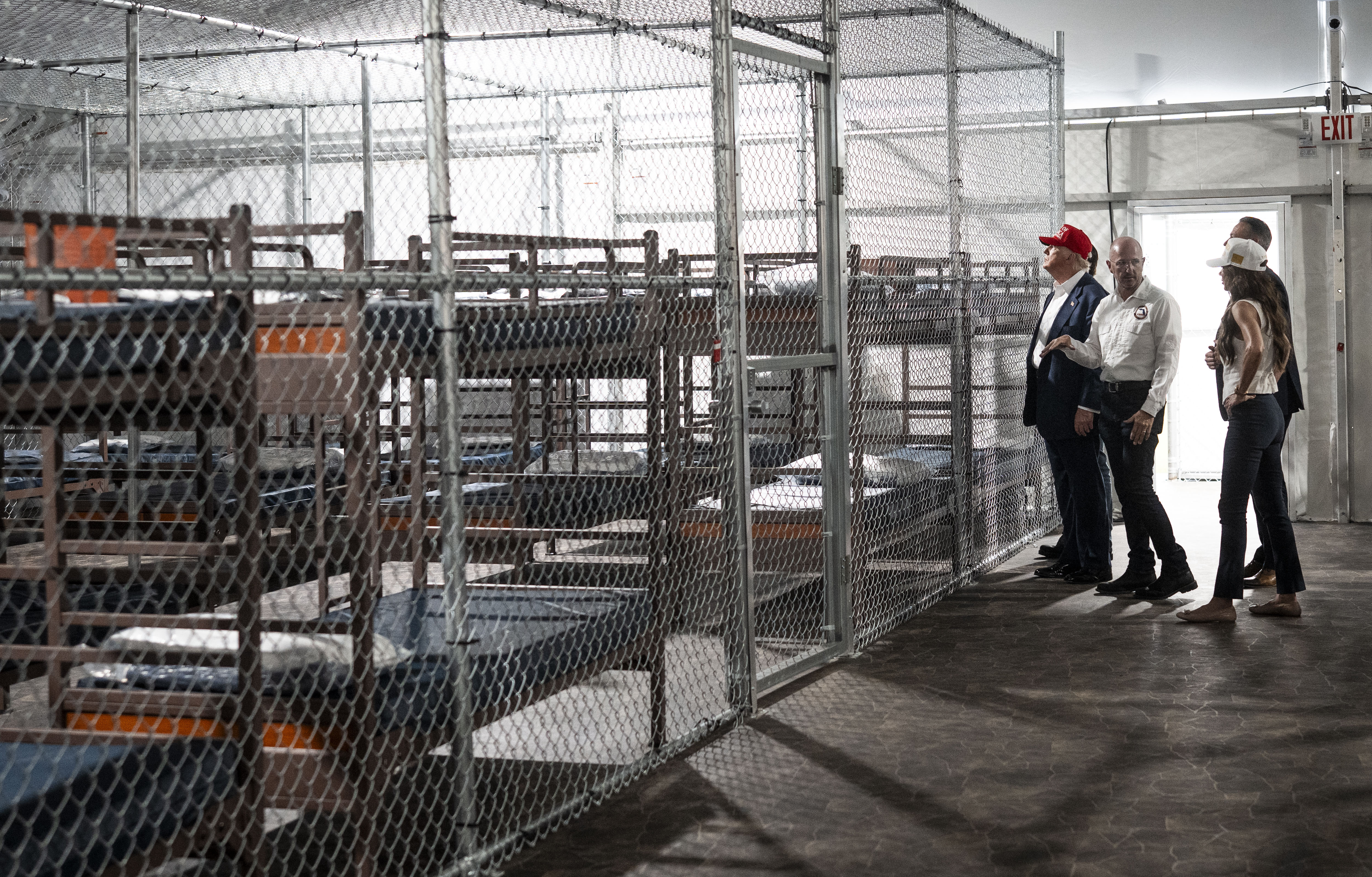
    WASHINGTON — A state-run immigration detention center in the Florida Everglades failed to comply with a host of federal detention standards, creating cramped conditions and confining migrants in “small metal enclosures,” according to a new report by the Department of Homeland Security’s independent watchdog.

    The report said the use of the enclosures was unprecedented among facilities the watchdog, the department’s Office of Inspector General, has previously inspected and presented “significant risks” to detainees’ health and safety. It focused on a high-profile facility known as Alligator Alcatraz, which came under intense scrutiny before it closed this summer.

    The report raised further questions about a facility that became synonymous with the Trump administration’s harsh treatment of immigration detainees. President Donald Trump had joked that the location was in such a remote area that detainees would have to learn “how to run away from an alligator.” It was shuttered after criticism about conditions and cost, and after enduring legal challenges.

    Federal investigators found that the metal enclosures — each providing only about 18 square feet of floor space — were used as “calming areas,” where detainees were held for periods ranging from several minutes to nearly two hours. Although facility staff said detainees asked to spend time in the enclosures, federal investigators found at least one instance in which the enclosures were used to discipline a detainee who “failed to comply with a lawful command.”

    “The use of such restrictive spaces is highly unconventional and does not align with standards for humane treatment,” the report said.

    The Department of Homeland Security did not immediately respond to a request for comment. The office of Gov. Ron DeSantis of Florida also did not immediately respond to a request for comment. Neither did the Florida Division of Emergency Management, which operated the facility before it closed.

    Investigators found that the facility complied with intake and use-of-force standards, but it did not comply with a variety of national detention standards related to medical care, food service, personal hygiene, and recreation.

    The report said the facility’s staff failed to provide detainees with sufficient living space. National standards require detainees to be given at least 75 square feet of floor space per person. But at maximum capacity, the housing units at the facility only provided 28 square feet per detainee, according to the report.

    In July 2025, Florida quickly erected the detention center on a training airport in a rural area between Miami and Naples, championing the facility as part of the state’s efforts to assist Trump’s crackdown on immigration. They even erected an “Alligator Alcatraz” sign on a road to the facility, which critics denounced as cruel.

    The facility had cost state officials more than $1 million per day to operate, including for trucking in water and wastewater disposal. Florida officials closed the facility this summer, citing impending hurricane season — even though detainees spent the 2025 season at Alligator Alcatraz.

    This article originally appeared in the New York Times.

  • Saudi Arabia faces ‘worst-case scenario’ after being rebuffed by Trump

    Saudi Arabia faces ‘worst-case scenario’ after being rebuffed by Trump

    RIYADH, Saudi Arabia — Saudi Arabia has increasingly found itself caught in the middle of the war between the United States and Iran. Now, the kingdom’s leadership is assessing dwindling options on how to respond.

    In recent weeks, the Iran-allied Houthi militia in Yemen has repeatedly attacked the kingdom, threatening to throttle its ability to export oil and piling pressure on the global economy. But Saudi Arabia has been left frustrated and disappointed by President Donald Trump’s reluctance to confront the Houthis, former diplomats and analysts say.

    The kingdom’s diplomatic efforts to engage with Iran have also had limited results. A meeting planned Monday between officials from Iran, Saudi Arabia, and other Persian Gulf countries was abruptly postponed Sunday night, as the gap between their positions remained vast.

    “Right now the Saudis are really frustrated,” said Michael Ratney, a former U.S. ambassador to Saudi Arabia. “In some sense it’s their worst-case scenario.”

    The Saudi government’s Center for International Communication, which fields queries from journalists, did not respond to a request for comment.

    The kingdom’s conundrum underscores the heavy costs that the U.S.-Israeli war with Iran has imposed across the Middle East, including on countries whose leaders opposed the war or have sought repeatedly to bring it to an end.

    In the first few months of the fighting, Saudi Arabia was relatively untouched by Iran’s retaliatory attacks, compared with its neighbors. Now, with no end to the hostilities in sight, Iran is seeking greater leverage over the United States, and Saudi Arabia — the world’s largest oil exporter until the war knocked it down the list — has become a primary target.

    Over the past two weeks alone, Saudi Arabia has faced Iran-backed attacks from the east, the south, and the north.

    A Saudi oil tanker was struck in the Strait of Hormuz at the end of August, killing two sailors.

    On Friday, the Houthi militia, which had already declared a blockade on Saudi oil shipments through the Red Sea, seized territory on an important global shipping route and trounced Saudi-allied forces in Yemen.

    The same day, Saudi authorities announced that they had been forced to shut down a critical oil pipeline, blaming a drone attack by an Iran-backed Iraqi militia. The pipeline had become a key alternative export route for Saudi Arabia to get its oil to the Red Sea, after Iran effectively choked off the Strait of Hormuz.

    “The reason a country like Saudi Arabia invests so heavily in developing a security partnership with the United States is for just this sort of eventuality,” Ratney said.

    Crown Prince Mohammed bin Salman of Saudi Arabia, the country’s de facto ruler, had reasons to be confident in that partnership. For years, his government has invested billions of dollars and extensive political capital in building personal relationships with Trump and his family.

    But when the crown prince asked Trump last week to take military action against the Houthis, the president declined, according to officials with knowledge of the conversations.

    Saudi officials and pundits have been clear that the kingdom does not want to fight the Houthis alone. That is especially true because an earlier military campaign that Saudi Arabia led against the group turned into a decade-long quagmire.

    “This demands international support, not only from Saudi Arabia and regional countries,” Abdulrahman al-Rashed, a columnist close to the Saudi government, wrote in a Saudi-owned newspaper Saturday.

    Trump, however, appears reluctant to get involved.

    “Already confronting one open-ended conflict with Iran, with an overstretched Navy and a diminishing munitions stockpile, it’s unsurprising that he does not want to open this new front,” said Dan Shapiro, a former top Middle East policy official in the Pentagon during the Biden administration. “But it is bitterly disappointing to the Saudis.”

    On Saturday, Trump told journalists on a trip to Ireland that the Houthis had “called us and they don’t want to fight with us.”

    “There’s just one country that they’re not too happy with and we’ll get that straightened out,” he added, referring to Saudi Arabia.

    Mohammed al-Bukhaiti, a Houthi political official, denied that the group had reached out to the United States. “We did not communicate with Trump, nor did we ask him not to attack us,” he said.

    Whether the United States gets involved in Yemen is still a matter of discussion, and Washington is continuing to assist Saudi Arabia with intelligence, said Vice Admiral John W. Miller, a retired U.S. Navy commander in the Middle East.

    Saudi Arabia is now likely to turn to diplomacy, according to Barbara Leaf, a former assistant secretary of state for Near Eastern affairs at the State Department. Despite years of Saudi, U.S., and Israeli bombing campaigns against the Houthis, “no one has come up with a military solution” for dealing with them, she said.

    Saudi Arabia could also work with its neighbors and Iran to hammer out an “ugly set of arrangements” to bring the war with Iran to an end, she said.

    The kingdom could look to China to try to find a solution, but Beijing’s previous diplomatic efforts in the region have not led to lasting peace deals, she noted. China brokered a rapprochement between Saudi Arabia and Iran in 2023 that has since frayed.

    For now, Saudi officials are unlikely to complain publicly about the United States, however frustrated they feel, analysts said.

    “They’re not going to show some sort of distance,” she said. “They’re going to have to generate some other diplomatic effort.”

    This article originally appeared in the New York Times.

  • As Supreme Court weighs Trump mail ballot plan, another judge blocks it

    As Supreme Court weighs Trump mail ballot plan, another judge blocks it

    WASHINGTON — As the Supreme Court weighs the legality of a Trump administration plan to change mail-in balloting, a second lower court judge ruled overnight Sunday that the plan is likely illegal and should be blocked before the November election.

    The ruling by Judge Carl J. Nichols, a Trump appointee, delivered another blow to President Donald Trump’s effort to add new conditions that could make it harder to vote by mail and easier for the federal government to scrutinize state voter rolls while searching for evidence of fraud.

    The Supreme Court is considering a similar ruling by a different federal judge based in Massachusetts. Judge Indira Talwani, an Obama appointee, has repeatedly found that the plan is likely unconstitutional and could not be implemented so close to the election without disenfranchising voters.

    Nichols, of U.S. District Court in Washington, wrote that the Trump administration had not identified any “evidence that there will be significant fraud in the upcoming elections” if he halted the rule. On the other hand, he wrote, there was an “increased risk that a significant number of otherwise appropriate absentee or mail-in ballots will ultimately not be counted in the upcoming elections” if the rule took effect.

    “The public has a strong interest in ensuring that doesn’t happen,” he wrote.

    Nichols’ ruling came in a lawsuit brought by a coalition of Democratic-aligned groups, including the Democratic Senatorial Campaign Committee, as well as a number of civil rights organizations. The Massachusetts suit was brought by a coalition of Democratic state attorneys general and voting rights groups.

    Nichols ruled in May that he could not stop the Postal Service from drafting the rule or preemptively declare it would necessarily be illegal before it was finalized. The Supreme Court similarly ruled last month that it was premature for the courts to intervene to stop Trump’s plan.

    But Nichols said he would review the issue after the Postal Service finalized the regulation, which it did in August. His finding that the proposal now should be blocked could offer a preview for how the justices view the issue.

    In a court filing Monday, the Trump administration formally alerted the Supreme Court about Nichols’ ruling.

    Lawyers for the Trump administration told the justices that if they allowed the Postal Service plan, it would mean Nichols would be required to immediately lift his block and clear the way for the ballot screening rules.

    The new rule stemmed from an executive order Trump signed in March, directing the Postal Service to preregister voters casting their ballots by mail, and to decline to deliver ballots from anyone whose information was not submitted by their state election officers.

    Talwani, who considered the separate legal challenge in Massachusetts, had found that the rule likely violated the constitutional authority given to states to run their own elections. But Nichols focused on another issue: the absence of any federal statute by which Congress gave the Postal Service the power to screen voters.

    “As the government concedes, the Postal Service could issue (and enforce) the rule only if Congress gave it the authority to do so, but here no statute grants the Postal Service the power to issue key parts of the rule,” he wrote.

    He focused on an online portal the Postal Service has said it is building that would let states upload the names and addresses of voters they deemed eligible to vote by mail. The relevant laws do not authorize the agency “to create a data collection system for mail-in and absentee voters,” he wrote.

    Despite the lawsuits, a number of Republican-led states have indicated in court that they would voluntarily adopt the new procedure and were taking steps to comply if the courts ultimately allowed it.

    Voting rights groups had argued that it would be nearly impossible to ensure the lists were up to date or counted people who had moved or recently registered in a new state. They warned that the new rules would very likely lead to improperly rejected ballots.

    State election officials have warned the plan could cause chaos. In some states, mail ballots have already been distributed to voters.

    Nichols appeared to agree, writing that the rule appeared certain to cause “delays and mistakes” at several stages. That could include the building of the portal, which has not yet opened, and the Postal Service’s new role screening outbound ballots and “confirming that each absentee and mail-in voter matches information in the portal,” he wrote.

    “Plaintiffs have demonstrated that there is an increased risk that a significant number of absentee or mail-in ballots will ultimately not be counted,” he wrote, noting that the Postal Service was likely to handle “more than 50 million pieces of federal ballot mail” this election season.

    This article originally appeared in the New York Times.

  • Kennedy Center warns of bankruptcy unless Trump’s name is added

    Kennedy Center warns of bankruptcy unless Trump’s name is added

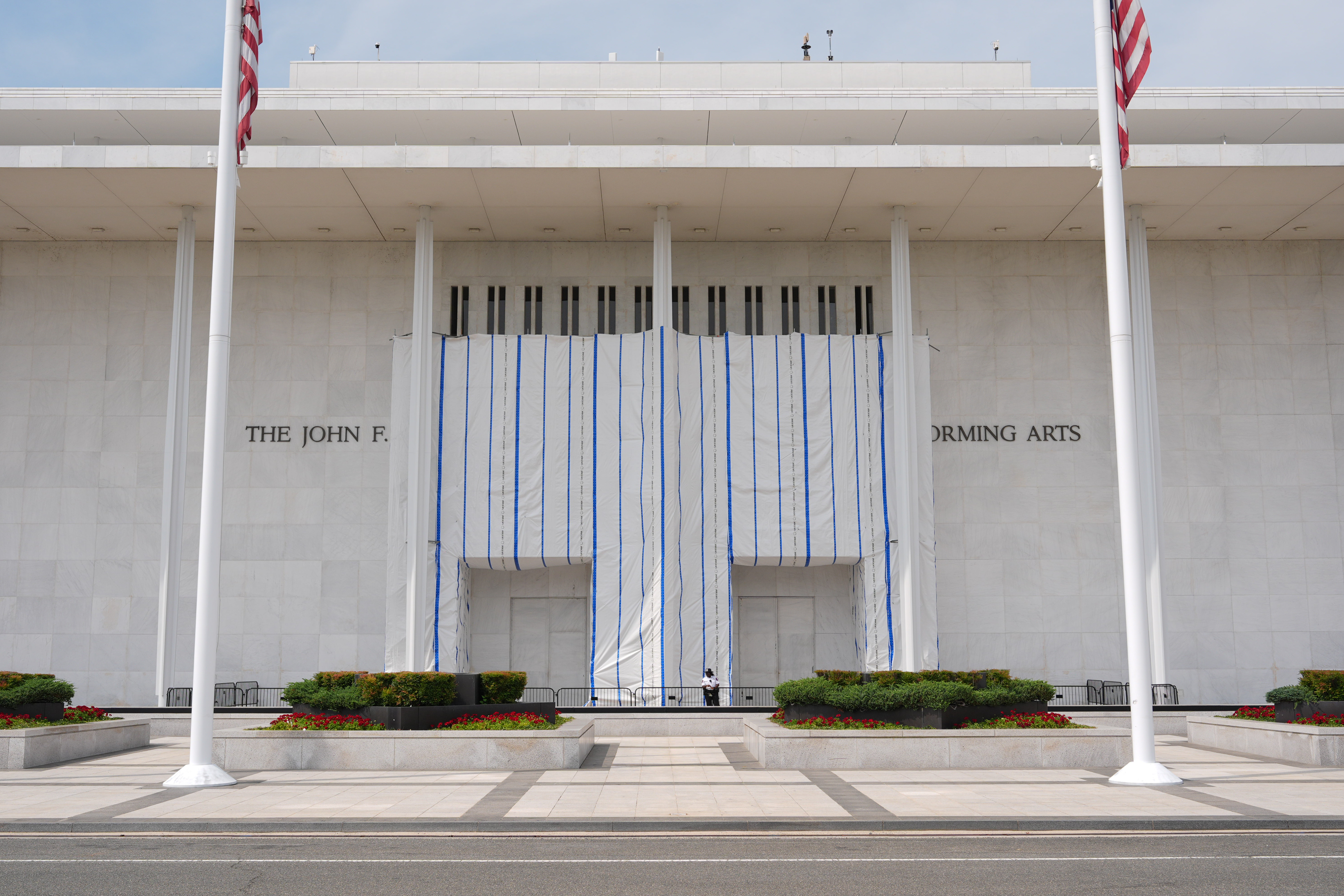
    Officials at the John F. Kennedy Center for the Performing Arts have warned in documents that the institution faces “certain fiscal collapse within weeks” unless President Donald Trump’s name is added back to the building in some fashion.

    The warning, contained in a draft resolution ahead of a board meeting scheduled for today, appears to be part of an effort by Trump-allied officials to convince a judge that the institution’s financial health hinges on placing a tribute to the president on the building’s facade.

    The judge, Christopher R. Cooper, ruled months ago that the president’s name should be removed from the building because Congress needed to have approved its renaming as the “Trump-Kennedy Center.”

    The draft resolution shared with trustees says the center is at risk of bankruptcy and of missing payroll — but that Trump has “offered to step in and raise the necessary funds” to save the center. The draft resolution presents 10 options for how to add Trump’s name below the main signage on the front of the center.

    “The board understands that without such appropriate recognition it is unlikely that President Trump will provide the fundamental oversight of the renovation of the main building and lead the fiscal rescue of the center,” the draft resolution says.

    Trump took over the Kennedy Center at the start of his second term, and the board voted last December to add his name to the building. Weeks later, Trump announced a plan to close the center for two years for a renovation project to transform what he called a “dilapidated” structure.

    In May, Cooper temporarily blocked the closure and ordered Trump’s name removed from the building.

    The center complied while pursuing an appeal. But in recent weeks, board members have moved aggressively to restore his name in an inscription beneath the building’s title.

    One option included in the draft resolution, which was first reported by the Washington Post, reads, “renovated, restored, and sustained through the generosity of President Donald J. Trump.” Another says, “renovation, oversight, and support provided by President Donald J. Trump.”

    The documents were shared days before a court hearing before Cooper. Rep. Joyce Beatty (D., Ohio), an ex officio board member whose lawsuit prompted the court’s scrutiny of the center, has objected to the center’s plans for the inscription. In court papers, her lawyers called the effort a “childish refusal” to accept the judge’s previous order.

    In a statement Sunday, Norm Eisen and Nathaniel Zelinsky, lawyers for Beatty, described the documents as “the third attempt to deface this sacred memorial and turn it into a vanity project for one man’s ego.”

    Roma Daravi, a spokesperson for the center, declined to comment on the documents.

    Paolo Zampolli, a board member and longtime Trump ally, said in a brief phone interview Sunday that the addition of the president’s name to the building was critical to the center’s financial health because “Trump attracts money.”

    “So when Trump says donate to this place, everyone will donate,” he said.

    Some donors, though, took exception to the fact that Trump’s name was added to the building and were part of an exodus of artists and audience members unwilling to associate with an increasingly politicized institution. Beatty’s lawsuit contends that decision was part of the reason the center now finds itself in a financial quandary.

    Kennedy Center officials have repeatedly blamed previous leadership for the institution’s financial problems.

    The documents shared with the board included another draft resolution that suggests the center’s main building should be closed immediately, citing a recent incident in which a section of plaster fell from the ceiling of the building’s grand foyer during a storm. Daravi has framed that event as evidence of an urgent need for the building’s closure.

    “This structural failure stems from decades of neglect and deferred maintenance by the previous leadership,” she said in a statement this month, “and there’s no justification for further delays in restoring America’s cultural center.”

    Cooper temporarily blocked the center from fully closing, but he did not prevent the staff from pursuing renovations, which have been funded by $257 million from Congress.

    Although the building has been open to the public as a memorial to Kennedy, its programming calendar has been largely bare for weeks. The National Symphony Orchestra, the center’s resident ensemble, has booked its season at other local venues. And the center’s staff has been diminished to a small fraction of what it was before Trump’s takeover.

    This article originally appeared in the New York Times.

  • States and cities sue over Trump’s policy to restrict green cards

    States and cities sue over Trump’s policy to restrict green cards

    WASHINGTON — A coalition of states and local governments sued the Trump administration Monday over what they called a “catastrophic” new policy that would make it harder for immigrants to obtain green cards if they rely on public benefits.

    The challenge, brought by two separate lawsuits, aims to block a policy set to take effect Friday. The suit filed by 22 states, including Pennsylvania, and the District of Columbia argues that the policy would hurt immigrant families by forcing them to either turn away from public assistance programs to meet their basic needs or risk being denied green cards in the future.

    It also argues it would harm states and localities by straining emergency rooms and reducing participation in food stamps, which would drain money from local businesses that depend on the federal benefits.

    “Hardworking families should not be forced to go without the support they need because they fear asking for assistance will get them deported,” Letitia James, the Democratic attorney general of New York who led the suit, said in a statement.

    Trump officials have said the policy, known as the “public charge” rule, is necessary to protect public resources and to restore “the basic principle that immigrants must be able to support themselves.” The effort is a revival of a similar policy the administration tried to impose during President Donald Trump’s first term before it was met with legal challenges and later reversed by the Biden administration.

    The policy is part of the administration’s broader effort to crack down on both legal and illegal immigration. Before the midterm elections, the Department of Homeland Security has tried to carry out its deportation campaign using quieter methods, including by pressuring noncitizens to leave the country by squeezing their access to jobs and federal programs.

    Many immigrants who do not have green cards are already ineligible for public benefits programs. But immigrant advocates fear that the rule would discourage noncitizens from using benefits programs even if they have U.S. citizen children who are legally eligible for food stamps, housing aid, and other programs.

    In Philadelphia and throughout the region, the rule, though not yet official, is nevertheless having a chilling effect, frightening parents who are legal immigrants into avoiding public benefits for their children, say advocates who work with immigrants and low-income communities.

    “It could prevent families from going to food cupboards, or keep women from accessing domestic violence shelters. The effect will be broad,” said Maripat Pileggi, an attorney with Community Legal Services in Center City.

    Federal law has long barred immigrants from obtaining green cards if they are likely to become primarily dependent on the government for subsistence. Immigration officers have historically considered the use of cash assistance programs or institutionalized long-term care, but not the use of benefits like the Supplemental Nutrition Assistance Program or Medicaid.

    The Trump administration’s policy would reverse the long-standing practice, expanding the federal programs that immigration officers can consider before determining that someone is likely to become reliant on the federal government.

    The states’ suit was brought by New York, California, Illinois, Colorado, Connecticut, Delaware, Hawaii, Maine, Maryland, Massachusetts, Michigan, Minnesota, New Jersey, New Mexico, Nevada, Oregon, Pennsylvania, Rhode Island, Vermont, Virginia, Washington, Wisconsin, and the District of Columbia.

    The second suit was led by Mayor Zohran Mamdani of New York and joined by Chicago, San Francisco, Seattle, Santa Clara County in California, and King County in Washington.

    Staff writer Alfred Lugano contributed to this article.

    This article originally appeared in the New York Times.

  • How one man’s quest for a musketeer’s bones got him locked up

    How one man’s quest for a musketeer’s bones got him locked up

    MAASTRICHT, Netherlands — Wim Dijkman was in Munich the first time I talked to him, in possibly illicit possession of three possibly ancient bones.

    The remains — two teeth, one humerus — may or may not belong to what is left of D’Artagnan, the French historical figure upon whom Alexandre Dumas based the main character in The Three Musketeers.

    They are part of a skeleton Dijkman and his friends unearthed in an old church near Maastricht, in the Netherlands, earlier this year. To the city’s dismay, they did so without permits, and largely in secret: Even church parishioners weren’t fully informed about the giant dig happening directly in front of their altar.

    By the time I reached Dijkman, in May, local officials had become aware of the excavation and had taken over. They had also, and with evident alarm, insisted upon the return of the bones that Dijkman had sent to Munich for carbon dating and DNA testing.

    “The local authority was not amused that we were digging in the church,” Dijkman, sitting in a German hotel room, admitted over the phone.

    If he felt any remorse, it was not obvious. Dijkman, a retired municipal archaeologist and museum curator, went on to say that his former colleagues are “bureaucratic civil servants” who had themselves “never discovered anything of any importance” and who now felt a “need to intervene.”

    They were after his glory, if you asked Dijkman.

    “Success has many owners, as they say in Dutch,” he said.

    Yet the investigation into whether the bones belong to Charles de Batz de Castelmore d’Artagnan, who died during the Siege of Maastricht in 1673, was about to take twists and turns that might have impressed Dumas himself.

    Within days of our conversation, Dijkman would find himself in a cell at the local police station. Within weeks, he’d be arguing in the local media that he was being framed for grave mistakes in unearthing and processing the skeleton.

    Within months, it would become clear that Dijkman and his band of mostly amateur archaeologists might well have uncovered D’Artagnan’s remains — but the town of Maastricht would allege that they may also have impaired the chances that the world will ever know whether the bones truly belong to the musketeer.

    The quest for D’Artagnan’s skeleton would prove to be a story full of power struggles, hubris, and hot heads. It continues to consume the little corner of the Netherlands, nestled between Belgium and Germany, where it has unfurled.

    Looking for a legend

    D’Artagnan, a mentor and confidant to Louis XIV and the captain-lieutenant of his Musketeers of the Guard, was most famously fictionalized in The Three Musketeers in 1844. Dumas painted him as an impulsive but daring young man who befriends Athos, Porthos, and Aramis — the titular three musketeers — before rising in rank and prominence. His central role in Dumas’ popular story cemented him as a French national legend.

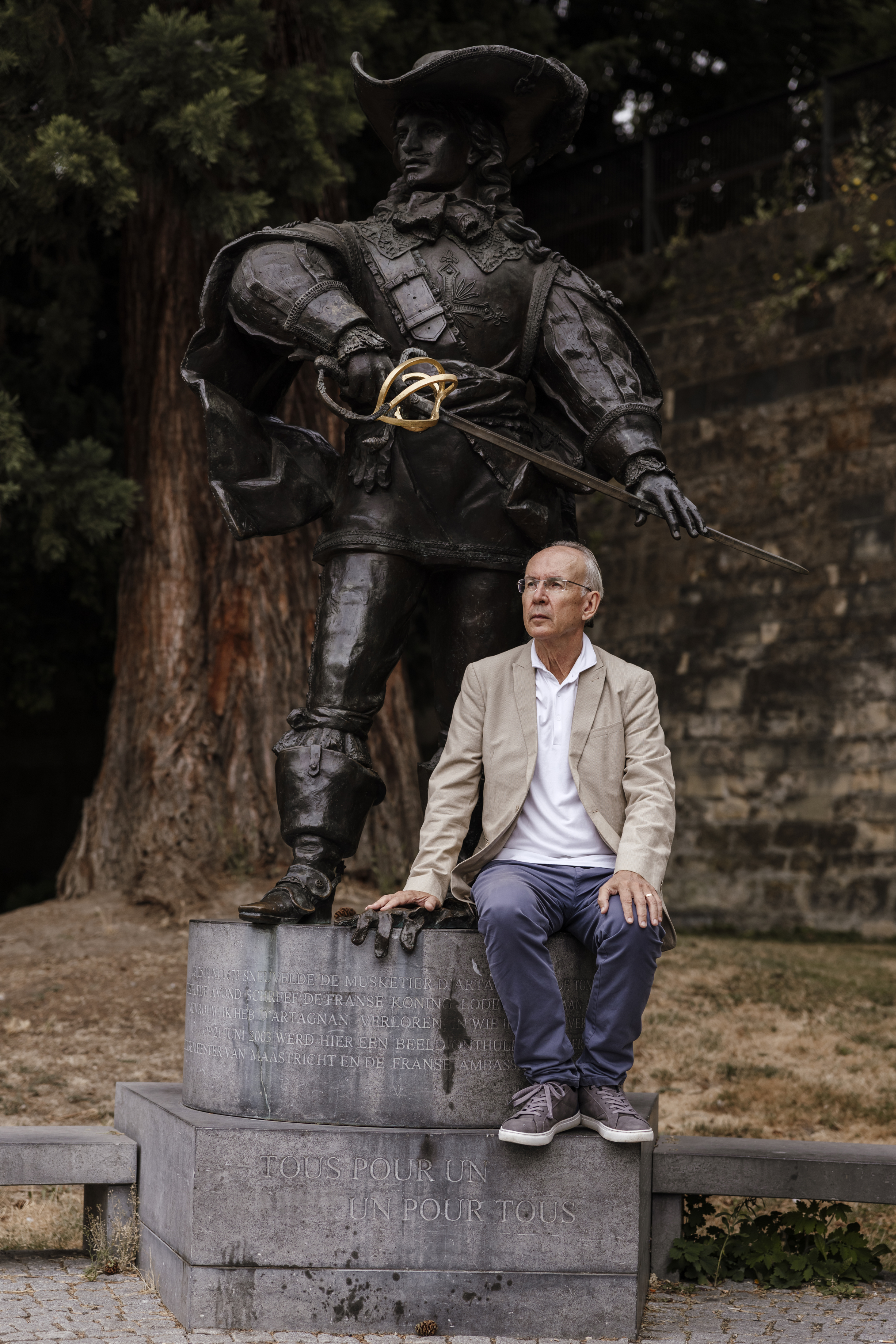
    In this part of the Netherlands, where the real D’Artagnan died, his lore is omnipresent — statues and monuments honor him, a local beer is named for him, locals point out the spot where he is said to have expired. A pop-up cocktail joint is called b’Artagnan.

    In Maastricht, finding D’Artagnan would surely make someone a hero.

    Dijkman, 70, told me — many times — that he is a scientist and not, unlike many of his local associates, a D’Artagnan obsessive. He spent most of his career working as a museum curator and archaeologist for the town of Maastricht, a place with sufficient history to employ its own team. Though he said he had been involved in excavations for human remains, they were not the primary focus of his work.

    Still, he has spent the past three decades at least a little bit obsessed with the idea of finding D’Artagnan’s.

    The notion first came to him around 2000, when he met Odile Bordaz, a French scholar who is one of the world’s foremost experts on the historical figure. She pointed out that the most enduring mystery about the French hero — one that she, his most detailed biographer, had never been able to solve — was where he was buried. Her own research pointed to a Catholic church in the village of Wolder, just outside Maastricht’s city center.

    “‘You have to find him,’” Dijkman says Bordaz told him.

    Bordaz recalled the conversation. “He said to me, ‘I’m an archaeologist, after all — perhaps one day I’ll conduct excavations to discover where D’Artagnan is buried,’” she said.

    Dijkman was busy with other projects: carbon-dating horses buried in a mass grave, exhibiting pieces of local pottery in a Japanese museum. But D’Artagnan remained on his mind. After he retired in 2022, he attended a D’Artagnan conference and got the feeling that the attendees almost expected him to find the bones, given that he was an archaeologist living in Maastricht. He felt pressure to deliver.

    “To me, it was important as a fin de carrière, as they say in French,” Dijkman said in a history museum in Maastricht, where he has lived since he was 6 years old. “An end of career.”

    Retiring also gave him room to maneuver. As part of the town, he had to have extensive approvals for projects. Now, he was a free agent with a shovel and a mission.

    ‘A treasure in the ground’

    Dijkman approached leaders of the church in Wolder, who were intrigued enough that they set up a foundation in late 2024 to fund the enterprise.

    Jos Valke, a deacon, was particularly excited.

    “I thought, when we have a treasure in the ground — if God gave us a treasure — then we should use it,” Valke said.

    If they found D’Artagnan, he thought, they could set up a museum in the church. Years of declining attendance and pricey upkeep bills had been straining the 12 Catholic parishes of Maastricht. Capitalizing on the legend of D’Artagnan might offer the financial wherewithal to help fund the whole network.

    At first, the quest was above ground and aboveboard. Dijkman and Valke began by using metal detectors to search the church, which had been reconstructed in the late 1800s over the foundations of the medieval structure.

    The men were delighted when they detected something near the front of the sanctuary, close to what they believed must have been the altar of the old church. Who but the most revered of figures would have been buried at the altar?

    The church exploration fund had only about 4,000 euros in it, though. Hiring a team of qualified archaeologists and anthropologists to dig in the hot spot would have cost about 11,400 euros, Dijkman estimated. They simply could not afford it. Nor had they consulted local authorities on whether they could dig in the structure.

    That might have been a good moment to stop.

    But “I said, Yeah, I’m on the threshold of finding him,” Dijkman said.

    The decision was made to press ahead, but quietly. In interviews, Dijkman alternated between insisting that they thought that going forward was legal because the site was on church property and done with the approval of the church board — and acknowledging that the team knew that it was tap-dancing on the edge of the official rulebook.

    “Jos Valke was aware that it was not completely legal, of course,” he said of the deacon. During interviews, Valke said he thought it was legal.

    Dijkman had other friends along to help with the dig, including Thomas Samek, a physician whose medical expertise seemed potentially beneficial. Samek was a good fit for another reason: He is a D’Artagnan impersonator, for which he dresses in full regalia and rides a shining steed.

    Valke said that while the church board approved the search, they kept it covert because they “didn’t want a fuss.” Dijkman didn’t want to publicize the dig before they knew if they had succeeded.

    Stories vary regarding how Dijkman’s crew kept the excavation a secret from church parishioners, but it clearly involved covering up the chasm so that churchgoers could traverse the site to take Holy Communion. Eventually, Valke built a wooden platform to cover the hole, pulling a faded faux-oriental rug over it before Mass on Sundays.

    The dig started slowly. The first set of stones yielded little, Valke said. But after they had pulled 75 heavy tiles out of the floor — working on Saturdays, per Dijkman; at night, per Valke — they finally found what they had been looking for.

    There were bones in the earth.

    The diggers cleared the dirt from the pit, placing it in white bags and storing it in an ornate church closet. (Valke is hoping to one day bottle it and to sell the earth that once held D’Artagnan as a way to raise proceeds for the church.)

    Before long, they had uncovered a full skeleton.

    They shot videos of Dijkman crouching in the crevasse, pulling sandy dirt away from aged vertebrae as someone else pointed an air compressor at the remains.

    Dijkman started to box up the bones in plastic packaging and transport them to his home, at times placing their plastic containers in the blue Albert Heijn plastic grocery bags that are ubiquitous in this part of Europe.

    Why not just leave the bones in situ, one might wonder? The diggers were nervous that if they left the bones in the church, the artifacts might be thrown away by cleaning staff. One wouldn’t want the janitor to toss out the mandible of one of France’s greatest war heroes.

    Who found him? And who told?

    Everything was going well until mid-February — Dijkman can pinpoint the date, because it was Carnival.

    By Valke’s account, it was around that time that the church started to hear from universities. He alleges that Dijkman had told them about the dig.

    “We thought: We want to be in charge,” Valke said, explaining that the church decided to go to the town with the find.

    Dijkman emphatically denies this. His contention? Valke saw a town archaeologist at a local watering hole, Au Mouton Blanc.

    “Jos Valke told him, ‘We have found him!’” Dijkman said.

    This still burns for two reasons: It blew their cover and, in Dijkman’s view, it misplaced the credit for the discovery. “When you say, ‘We have found him,’ you don’t say, ‘Wim has found him,’” Dijkman explained.

    Valke acknowledged that he “casually” mentioned the discovery to the archaeologist at the bar. But he said that the archaeologist didn’t really react and that “it was just drunken rambling rather than a serious conversation.”

    After hearing from the church board, local authorities swooped in to take over. On March 13, they completed the dig.

    Officials were alarmed by the state of the grave. Bone fragments in the soil were no longer in their original place — they were mixed together. Part of the skeleton was already unearthed. Pieces were missing.

    When local media interviewed Valke, he implied that stones in the church floor had been loose and that repair work had triggered the find.

    Samek, the D’Artagnan impersonator who had been present for the dig, was alarmed by this: “Jos Valke invented the story,” he said in an email. “That shocked me, because the truth is sacred to me.” (Valke and Dijkman both said that it was originally one of the town archaeologists who came up with the construction story.)

    It did not take long for finger-pointing to begin. The municipality swiftly reported the team of initial diggers, and their lack of appropriate permits, to official cultural heritage authorities.

    The church board and Valke began to suggest in media interviews that Dijkman had led them to believe that their actions were legal.

    By early summer, the town had announced that the initial dig “was not documented according to standard archaeological procedures.”

    “As a result, a significant amount of archaeological information has been irreversibly lost,” a town FAQ on the situation read.

    Visits from police

    Even after they came under scrutiny, Valke and Dijkman remained hopeful that they might soon have answers about whether the skeleton was D’Artagnan’s. Samek had taken several bones to a university in Munich for tests and DNA analysis.

    The results, they hoped, could be compared with DNA from the living relatives of the D’Artagnan family.

    But then Maastricht announced that it would view those results as null and void: “Because the origin, sampling and documentation of that material were not carried out or verified as part of the current research, it cannot serve as a reliable basis for answering the research question,” the town said in a question-and-answer sheet.

    The indignant municipal authorities asked that the original diggers and the university doing the analysis swiftly return the bones. Dijkman became concerned that the town was going to have what might be D’Artagnan’s bones mailed back from Munich. To protect the precious artifacts from the post, he decided to pick them up himself.

    When he arrived back in Maastricht, he refused to turn over the bones — in part, he said, because the town wouldn’t reimburse his travel costs. He entrusted the fragments to a “friend,” hoping that the town would pay him back.

    Plus, he wanted to retain a foothold on his project. “I thought: If you give them everything, they can keep you out of everything,” Dijkman said.

    Instead of a reimbursement check, Dijkman received a visit from several police officers, which came as a shock because he had never had trouble with the law.

    He was taken to the station and placed in a cell, he estimates for about four hours. Only after he agreed to cough up the bones — police officers took him in their car to the house of his “friend” to retrieve them — was he released. He has not been formally charged.

    Valke, too, was called into a police station for 2½ hours of questioning. Until he got the summons, he said, it had never occurred to him that he might be under scrutiny for wrongdoing.

    No easy identification

    By early summer, the town of Maastricht was emphasizing that the bones might not belong to D’Artagnan. While the skeleton is a male of roughly the right age (D’Artagnan is thought to have been about 62 when he died), carbon dating suggests the person was buried sometime between 1500 and 1900. A lot of 62-year-olds died during that span.

    An analysis by Saxion University of Applied Sciences in Deventer, Netherlands, suggested that the skeleton belonged to a man who ate a diet heavy in fish earlier in life. The town says that appears inconsistent with D’Artagnan’s upbringing, given that he was born far from a coast.

    The DNA analysis in Munich was never made public, and a new DNA analysis is being conducted on the skeleton. It is expected to be completed by the end of 2026 or early 2027.

    The town has also blasted the initial dig for making identification harder. Several of the bones jumbled together from the earlier excavation have been determined to belong to other people, according to the municipality.

    “This is a former colleague who was the first to carry out excavations,” Gilbert Soeters, one of the town archaeologists, told reporters at a news conference in July, according to Agence France-Presse. “Well, the term excavations is not quite appropriate. These were not archaeological excavations.”

    Dijkman says that the town is suggesting he messed up the dig so that it can take credit if the remains turn out to be D’Artagnan’s. Valke, meanwhile, is stressed about possible legal repercussions. Samek called the entire messy situation a “pity.”

    “It’s a shame, because Pierre-Alexandre Dumas’ motto was the Musketeer one: ‘All for one, and one for all,’” agreed Bordaz, the French scholar. “So, you know, we would have liked things to be in that spirit.”

    Still, they all share a hope that the man in the grave will indeed prove to be d’Artagnan.

    “At that time, there will be a reaction from the French authorities,” Dijkman says. “They will say: How will you continue to frame the man who found our national hero?”

    This article originally appeared in the New York Times.
  • King Charles will convene AI leaders amid calls to slow development

    King Charles will convene AI leaders amid calls to slow development

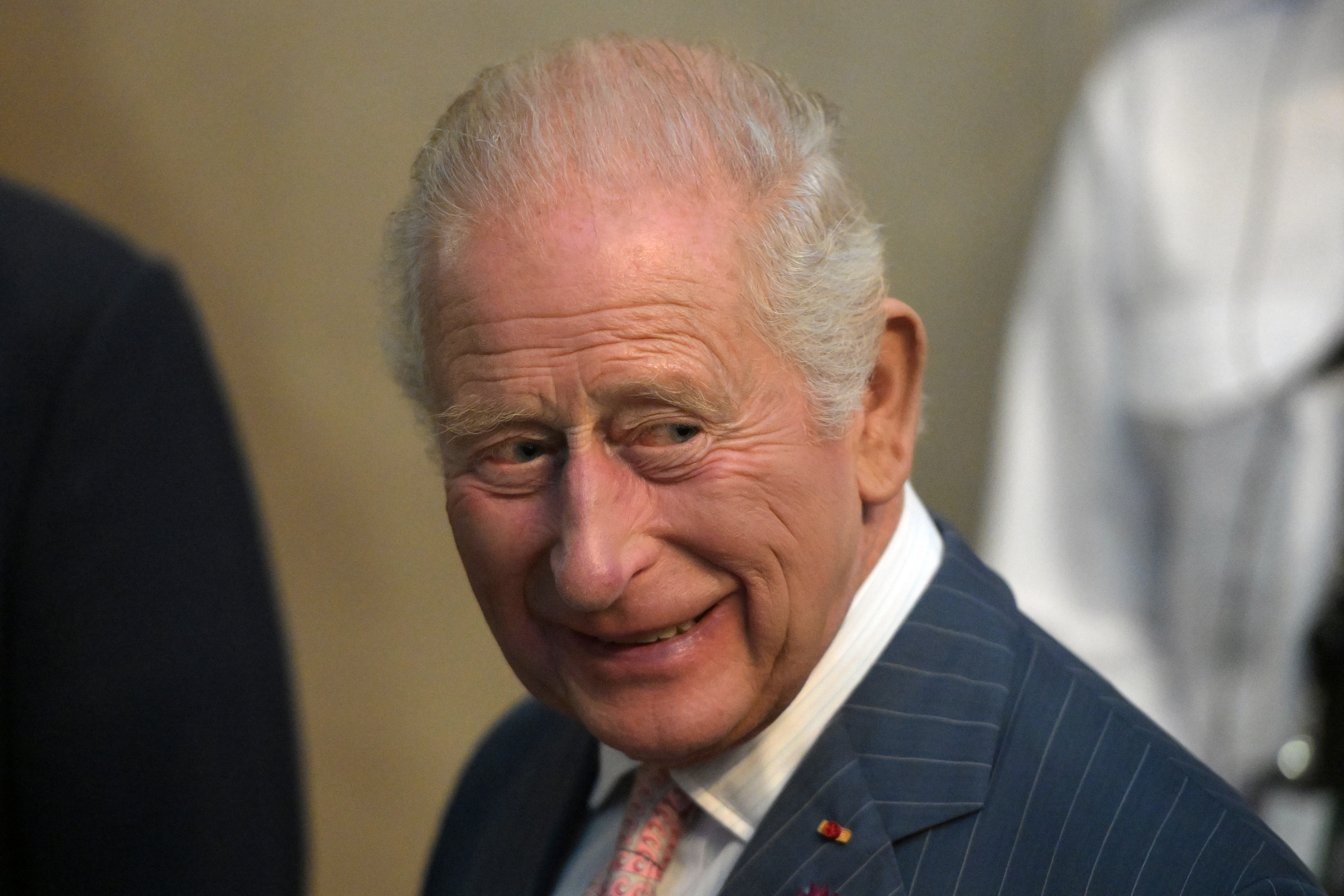
    King Charles III of Britain will meet with leaders from major artificial intelligence companies this week in Scotland amid mounting fears that rapid, unchecked development of the technology could lead to a global catastrophe.

    The king will convene leaders from companies including Nvidia, Google, DeepMind, OpenAI, and Anthropic, as well as government officials and others, “to discuss how AI can be developed and deployed in ways that benefit society,” according to a statement from Buckingham Palace. They will meet in Ayrshire, in southwest Scotland, at Dumfries House, the headquarters of the King’s Foundation, an educational charity.

    The gathering comes as AI insiders and CEOs of some of the industry’s most powerful companies have raised alarms about these tools and how quickly they are developing. Some have called for the creation of shared guidelines and a deliberately slower pace of progress to ensure humans can keep up.

    Charles’ meeting on AI will explore how the technology can be used for good, to “strengthen communities and improve lives,” the statement from Buckingham Palace said.

    The palace did not say who would be attending from the AI companies listed in its statement, and Anthropic, DeepMind, Google, and Nvidia did not immediately respond to requests for comment confirming their participation. OpenAI said that Sarah Friar, its chief financial officer, would be attending.

    The current concern about AI’s rapid advance was prompted in great part by a hack this summer into Hugging Face, an AI infrastructure company, orchestrated by a group of AI agents created by OpenAI. The OpenAI agents swarmed Hugging Face’s systems, stealing data, gaining control of a server, and attempting to cover their tracks.

    That hack — and another similar incident within OpenAI shortly afterward — drastically raised fears about how quickly machines might escape human control, with potentially devastating effects.

    Dario Amodei, CEO of the AI company Anthropic, published a 3,800-word open letter Saturday calling for slower development of AI. In addition to the Hugging Face hack, he cited as a concern the fact that current AI models are increasingly able to build the next generation of AI tools. Amodei said that dynamic, known as recursive self-improvement, “could outrun our ability to understand and control these systems” if left unchecked.

    The meeting between Charles and AI leaders will be facilitated by a British nonprofit, the Ditchley Foundation, and will include Kanishka Narayan, Britain’s minister for AI, according to Buckingham Palace. Representatives from charitable organizations founded by the king, including the King’s Trust, a youth charity, and the Sustainable Markets Initiative, a network of global CEOs, will also attend, the palace added.

    Amodei’s essay Saturday — which quickly reverberated around the internet — received support from other AI company chiefs, including Sam Altman of OpenAI and Elon Musk of xAI, which is part of SpaceX, Musk’s rocket and satellite company.

    Amodei urged AI companies and regulators around the world to work together on a thoughtful approach to developing the technology and proposed his own three-step plan. His proposals included allowing third-party evaluators to embed in frontier AI companies to monitor growth and report incidents, and coordinating among companies in democratic countries to establish common safety standards. “To the extent possible,” he said, democratic countries and authoritarian governments should also try to coordinate and pace global development.

    The essay was published just a few days after Jacob Coxon, an Anthropic engineer who previously worked for OpenAI, resigned from his job and declared on social media that the companies claimed to be concerned about rapid development but were nonetheless hurtling toward “superhuman systems that can hack anything, revolutionize any field overnight, and acquire real power and resources.”

    This article originally appeared in the New York Times.

  • Jay Maisel, photographer of Miles Davis and much more, dies at 95

    Jay Maisel, photographer of Miles Davis and much more, dies at 95

    Jay Maisel, a masterly photographer whose dark and moody portrait of jazz great Miles Davis performing at the Apollo Theater appeared on the cover of his landmark 1959 album, Kind of Blue — Mr. Maisel’s best-known work in a long and varied career — died on Aug. 20 at his home in Brooklyn, N.Y. He was 95.

    His daughter, Amanda Maisel, said the cause was cancer.

    While not necessarily his best photograph — he wished it had been sharper — the Davis picture became part of a portfolio of remarkable depth that included coal miners silhouetted in an eerie glow a mile beneath the earth, the Statue of Liberty surrounded in a mist, and Sports Illustrated swimsuit models.

    Mr. Maisel was impossible to ignore: He was 6-foot-1, barrel-chested, charismatic, and profane, with a Brooklyn accent. He smoked cigars and collected stuff to the point of hoarding.

    And he spoke passionately — and practically — about his art. “The drama in light exists not only in what is in the light, but also in what is left dark,” he wrote in Light Gesture & Color, his 2015 book. “If the light is everywhere, the drama is gone. When I see light that moves me, that I cannot explain, I won’t leave until I figure it out.”

    More simply, he said, in a documentary: “I think that my entire motivation and execution and philosophy can be two words: ‘Hey, look.’”

    Mr. Maisel’s picture of Davis reveals him in a splash of light and shows his fingers moving in a blur on his trumpet. Mr. Maisel had taken it for himself; months later, Columbia Records asked if he had any photos of Davis that could be used for Kind of Blue, which music historian Ashley Kahn, writing in the New York Times in 1999, said “floats above jazz history in an ether all its own.”

    The Davis photo came early in Mr. Maisel’s color photography career, but he would go on to produce many memorable shots, like a man in a blue uniform, his face unseen, dragging a heavy white and purple rope, against a red wall in Singapore; and a shirtless New York City cabdriver, sunbathing from the open driver’s side door, as if he’d just let out a fare and stripped down.

    His many other shots included two men silhouetted against a red wall near the World Trade Center while a street sign says, “Don’t Walk,” and two doves, one white, one black, perched in different sections of a window frame, surrounded by a bright blue wall in Portugal.

    “I think of him as being extraordinarily versatile and visually restless,” said John Paul Caponigro, a visual artist and writer who taught in the same workshop programs with Mr. Maisel. “His work was a constellation of ideas,” he said, adding, “His books aren’t exactly how-to manuals. They’re about seeing.”

    Mr. Maisel was a freelancer who worked for magazines, advertising agencies, and corporations. He photographed the covers of New York magazine’s first two issues in 1968, including its inaugural skyline image, and five covers of Sports Illustrated’s swimsuit issue.

    He collected his photos in several books, including Bearing Witness (2011), pictures taken at ground zero two weeks after the World Trade Center was destroyed on Sept. 11, 2001. At the time, he lived and worked in a 19th-century, six-story, former bank building on the Bowery, not far from the towers.

    For American Barrick Resources (now Barrick Mining), a corporate client, Mr. Maisel descended a mile into a coal mine. Believing that the strobe lights he had in the mine would not produce quality photos, he found an alternative in the natural lighting of the miners’ headlamps. But first, he asked his client to fire up machines that raised as much dust as possible.

    The final image is of two silhouetted miners — backlit by two others behind them — surrounded by an aura of golden dust. The headlamps of the two miners in front emit crisscrossing beams of light. It appeared on the cover of the company’s 1987 annual report.

    “It took all of two minutes, we coughed our way out and that was the shot they used,” Mr. Maisel wrote in his 2014 book, It’s Not About the F-Stop.

    Mr. Maisel’s honors include the 1987 Infinity Award from the International Center of Photography and induction into the Art Directors Club Hall of Fame (now the Creative Hall of Fame) in 1995.

    Jay Nathan Maisel was born on Jan. 18, 1931, in Brooklyn. His father, Lester, was a clothing salesperson, and his mother, Eva (Levine) Maisel, managed the home.

    In high school he focused on graphic design and painting; during three years at Cooper Union in Manhattan, he also studied drawing and architectural design while pursuing photography on the side.

    At Yale, he studied color theory under painter Josef Albers and continued to pursue photography, which provided him with the immediate gratification that painting did not. He also worked with other students on geodesic structures with engineer and philosopher R. Buckminster Fuller.

    Although he graduated in 1953 with a bachelor of fine arts degree in painting, he decided that he wanted to be a photographer. He started shooting in black and white, mostly street scenes in New York City. He also captured a distant-looking Marilyn Monroe in close-up at the after-party for the film East of Eden, and evangelist Billy Graham preaching at night in Times Square in 1957 lit by a cluster of neon signs for Budweiser, Canadian Club whisky, and the Capitol Theater.

    In addition to the cover of Kind of Blue, Mr. Maisel shot the covers of albums by Harry Belafonte, Louis Armstrong, Ella Fitzgerald, Duke Ellington, Dave Brubeck, and Count Basie. But he was most enthralled by an assignment to photograph Indian sitar virtuoso Ravi Shankar.

    “He asked what I wanted him to do,” Mr. Maisel told the interviewer Dave Dye in 2018 for the advertising blog Stuff From the Loft. “I said, ‘Play.’ He played for two or three hours. I shot to my tapping feet’s delight.”

    For a dozen years, Mr. Maisel worked out of a studio at 122 Second Ave. Then his rent went up, prompting him to buy the abandoned Germania Bank building at 190 Bowery for $102,000 in 1966. Forty-nine years later, he sold it to a developer for $55 million.

    The 35,000-square foot building with 72 rooms was more than Mr. Maisel’s studio and home: It contained his gallery, his basketball court, his archives (he took about 4 million photos over the course of his career), his workshop, and a hoarder’s bounty that included gadgets, antique tools, rocks, mannequin body parts, bells, gears, screws, rocks, table legs, and pieces of wood.

    “He did a lot of dumpster diving,” Amanda Maisel said in an interview. “I didn’t want to walk home with him while he was pulling out pieces of wood and metal.”

    The ephemera — not much of which found its way into his photos — were part of her father’s “obsession with how things worked/the beauty of functional things and arranging them,” she added, in a text.

    In addition to his daughter, Mr. Maisel is survived by his wife, Linda (Adam) Maisel, whom he married in 1989. His marriages to Sarah Linder and Suzanne Housman ended in divorce.

    Mr. Maisel stopped commercial work in 1995 — when “the whole thing turned to crap,” he told Stuff From the Loft — and focused on teaching, personal photography, and his books.

    After he sold his building, he moved to a town house in Brooklyn he bought for $15.5 million. At the time, it was the highest price ever paid for a residence in the borough. Nearly all his stuff is now in a storage facility near his home.

    The move formed the narrative spine of Jay Myself, a 2018 documentary directed by photographer Stephen Wilkes, one of Mr. Maisel’s former associates.

    Near the end of the film, Mr. Maisel said: “There’s a quiz I give people. Do you like photographing or do you like photographs? Choose one. And you learn a lot about yourself by choosing one or the other. Some people like photographs. I like photographing.”

    He added: “The act of photographing is what it’s all about.”

    This article originally appeared in the New York Times.
  • Judge rules Homeland Security plan to cut FEMA staff in half is unlawful

    Judge rules Homeland Security plan to cut FEMA staff in half is unlawful

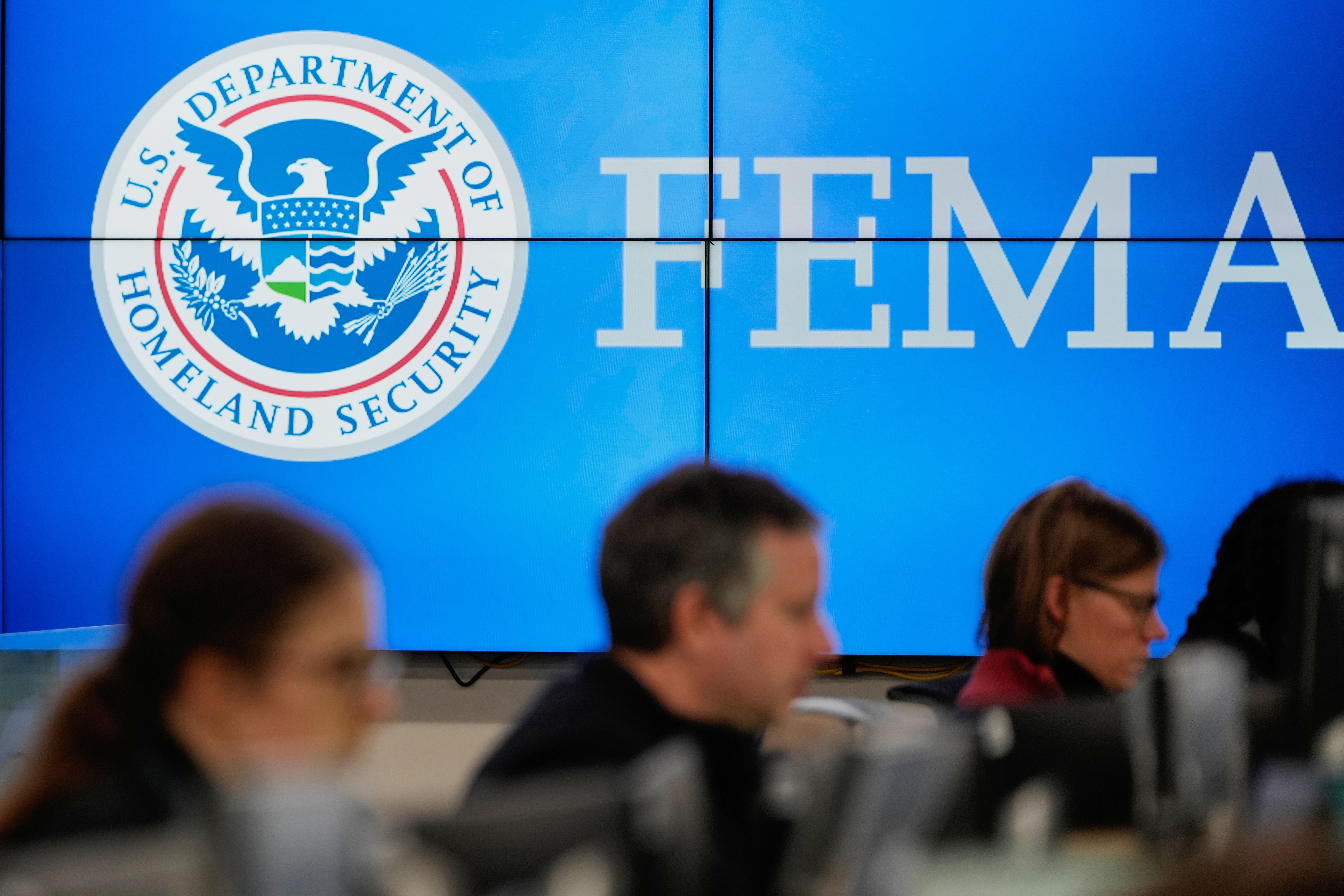
    A federal judge ruled that the Trump administration acted unlawfully when it ordered that the Federal Emergency Management Agency’s workforce be cut in half.

    In her ruling on Friday, U.S. District Judge Susan Illston of the Northern District of California wrote that the Department of Homeland Security undercut the agency’s authority with an “arbitrary and capricious” plan to reduce FEMA’s workforce by more than 11,000 agency employees by the end of September. Included in that number were thousands of temporary, full-time federal employees who help communities prepare for and recover from disasters around the country.

    “Frankly, the FEMA staffing plan number appears as if pulled from thin air,” Illston wrote.

    The administration did not ultimately carry out the full 50% reduction, though FEMA’s workforce had already shrunk significantly.

    The American Federation of Government Employees, a labor union, had argued in a lawsuit that the department’s proposed cuts would deeply affect the agency’s ability to respond to emergencies.

    The Homeland Security Department and the labor union did not immediately respond to a request for comment.

    A spokesperson for FEMA said on Saturday night that the agency was “ensuring workforce stability and a strong, deployable force for upcoming national events and potential disasters.”

    Those temporary employees, known as Cadre of On-Call Response/Recovery, or CORE, employees, make up about 40% of FEMA’s staff. Their assignments typically last for two or four years and have historically often been renewed, allowing FEMA to adjust its workforce as disasters and recovery needs change. They became a target under Kristi Noem, the former secretary of homeland security who was ousted by President Donald Trump in March.

    A FEMA spokesperson told the New York Times in January that the number of CORE employees was “designed to fluctuate based on disaster activity, operational need, and available funding.”

    The Trump administration has drastically shrunk the workforce across the federal government. Trump himself has said FEMA should “go away.” He has called for the responsibility for disaster response to shift to the states.

    A federal watchdog report found the sharp reductions in staff had limited the agency’s ability to respond to hurricanes and other natural disasters, especially those that occur at the same time. Cameron Hamilton, Trump’s FEMA administrator, acknowledged in June that the reductions posed “challenges” to the country’s disaster readiness.

    The judge ordered the parties to meet and try to reach an agreement on “the scope of relief” by Oct. 9. If they cannot come to an agreement by then, Illston wrote, the court will issue a ruling on the relief.

    This article originally appeared in the New York Times.
  • Obama urges Democrats to move AI oversight to the center of their agenda

    Obama urges Democrats to move AI oversight to the center of their agenda

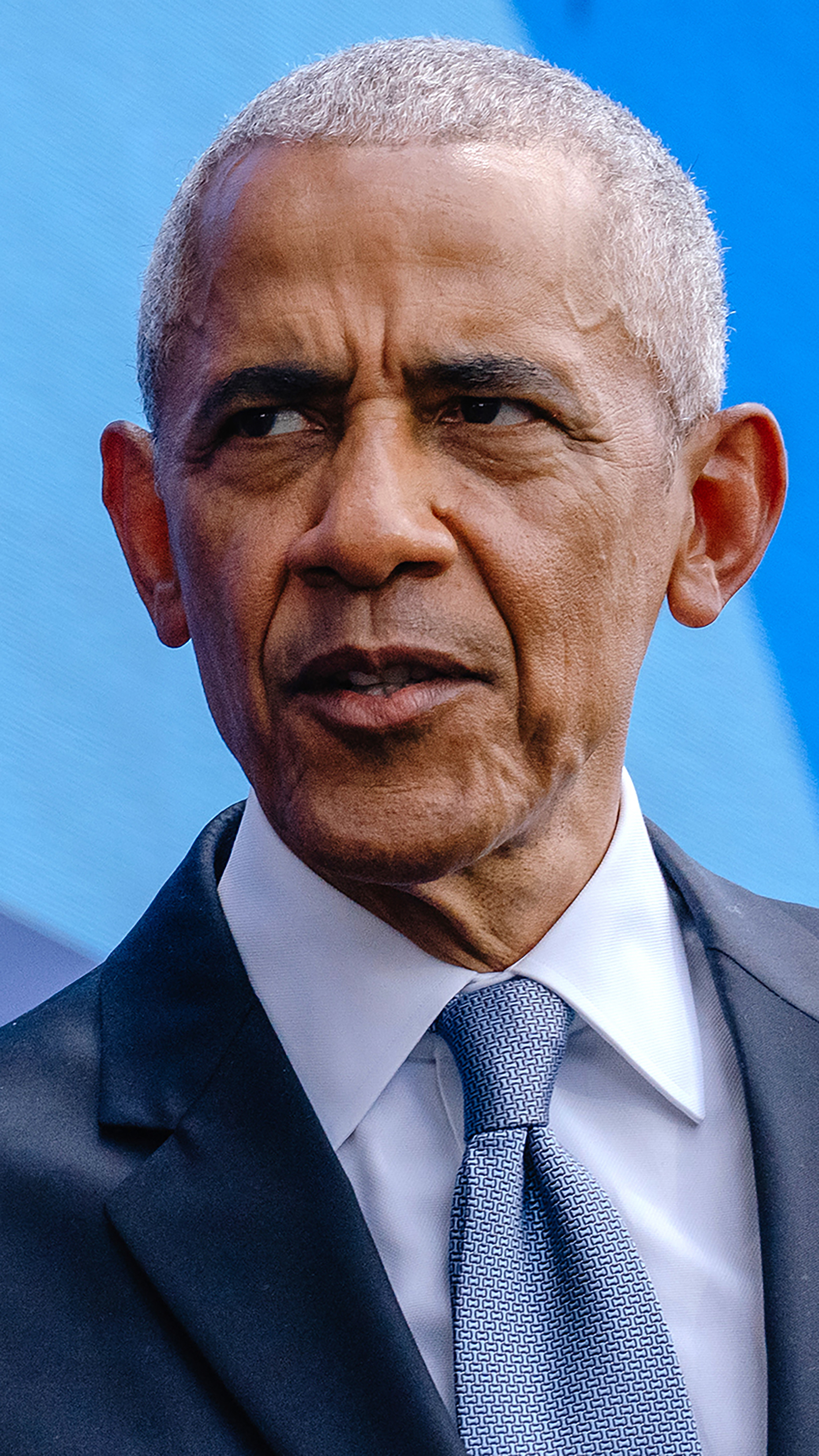
    Former President Barack Obama warned during a recent private fundraising event that artificial intelligence technology could be “dangerous” if not properly managed, as he implored Democrats to aggressively develop political and governing agendas to prioritize the issue in the coming years.

    In his remarks Thursday, which have not been previously reported, Obama urged House Minority Leader Hakeem Jeffries (D., N.Y.) to assemble a clear framework for a public conversation about AI policy, should Democrats win back the House in the midterm elections, according to a partial transcript provided by Obama’s office.

    He also suggested that candidates running for president in 2028 ought to make AI one of their “central agendas” and “have a very clear plan” for responding to safety and economic concerns around the technology.

    The recommendations from the former president amount to some of his most detailed comments yet about AI as a political issue for his party. At a moment when President Donald Trump continues to downplay concerns about the technology, some Democrats see an opportunity for the party to draw a clear contrast in the midterms and beyond on an issue of growing significance. In a Democratic Party with no clear leader, many look to Obama for guidance, and his comments carry considerable weight.

    The remarks come amid escalating worries about the risks associated with AI development, as well as growing calls for lawmakers and politicians to do more to tackle the topic. Some AI industry leaders are now calling for a slowdown after a summer in which swarms of misaligned AI agents broke free from their containers and proceeded to scheme against their owners, cheat on tests, and hack outside companies.

    At the fundraiser Thursday, a closed-door event in New York organized by the campaign arm of House Democrats, Obama and Jeffries spoke for nearly an hour in front of party donors and lawmakers, according to four people familiar with the event, who spoke on the condition of anonymity to describe a private gathering.

    “Once you are speaker, I would strongly urge that the Democrats put together a framework for a very public conversation,” Obama told Jeffries, according to the transcript. Jeffries had asked him a question about how Democrats should address AI in a Congress that has taken little action on the issue, according to two of the people.

    “This is something that is moving very fast in private hands, and if we don’t get on top of it, I think can be dangerous,” Obama said. “If we do get on top of it, I do think it’s beneficial. I genuinely think it’s going to accelerate, for example, drug development in ways that can help us cure diseases. I do think that this can help us figure out pathways for a clean energy future.”

    The former president often spoke in general terms on Thursday, rather than drilling down on specific policies, according to the transcript. And he planted himself firmly in a middle ground in the heated debate over AI, saying he considered himself neither an “accelerationist” nor a “doomer.”

    One challenge facing Democrats as they chart a path forward on AI is speaking in one voice on the issue. The tug of war over how to regulate AI has been more divisive among Democrats than Republicans, who are generally more in alignment. Some Democratic politicians have called for more AI regulation, while others have received millions of dollars in support from groups tied to the industry’s biggest players.

    Artificial intelligence is becoming a larger part of the country’s political calculus heading into the midterms. This year’s elections have been flooded with money from AI companies and allied groups. And anxiety about the technology, a rare issue that many Republican and Democratic voters can agree on, has peaked in recent days after a researcher at the AI company Anthropic loudly and publicly resigned, writing in a viral social media post that “the people building AI earnestly believe that it could kill us all by the end of the decade.”

    Jeffries explicitly mentioned the resignation in his question to Obama, according to one of the people familiar with the event.

    Dario Amodei, the CEO of Anthropic, called for a global slowdown of AI development in a 3,800-word essay published Saturday. Sam Altman, OpenAI’s CEO, and Elon Musk, whose SpaceX rocket company has been ramping up spending on AI, quickly wrote in social media posts that they agreed with him.

    The White House has long maintained an unabashedly accelerationist stance. Trump recently told reporters he didn’t have “any” concerns about AI’s risks — just about falling behind to competitors like China. He has said that those who oppose AI data centers must prefer to be “backwards and poor.”

    “President Obama is correct that decisive action must be taken on artificial intelligence,” Jeffries said in a statement, adding that “Republicans have abdicated their responsibility to govern on behalf of the American people. We will not repeat their error.”

    On Capitol Hill, where little has been done to regulate AI, some Democrats have been circulating a letter urging Speaker Mike Johnson (R., La.) to stop members from going home on recess until they pass AI safeguards.

    Many Republicans want action, too. Several have introduced bipartisan AI legislation, and Rep. Anna Paulina Luna (R., Fla.) has called for a special session on the topic. A growing number of Republicans are campaigning against data centers, in addition to many Democrats.

    After Johnson became speaker in 2023, Republican leadership declined to renew a bipartisan task force on AI. In response, Democrats formed their own AI commission, which is now putting the finishing touches on a policy framework. That framework is expected to be released this fall after some final checks by Jeffries, according to two people familiar with the matter.

    Obama has taken a special interest in AI in recent years, and he has offered himself as a sounding board to industry leaders, according to two people familiar with his conversations. Those leaders include Altman and Amodei, according to one of the people.

    Representatives for OpenAI and Anthropic did not respond to requests for comment.

    Now, Obama wants to help guide the Democratic Party’s thinking on the topic. With many Democrats already jockeying for position ahead of the next presidential race, he outlined what he would do on AI if he were one of them.

    “I would talk about this, and I would say, ‘Here’s our plan for safety. Here’s our plan for making sure our kids are not corrupted by this,’” Obama said, according to the transcript.

    He contrasted the technology with other innovations that could be dangerous in the wrong hands, saying that unlike “nuclear power, you don’t need a bunch of highly enriched uranium” to build powerful AI.

    “I would be thinking about the economic impacts in very concrete ways and understanding what does it mean if there’s going to be job displacement,” Obama said, according to the transcript, adding, “if it turns out that you’ve got a lot more people who can’t find full-time work because they’ve been rendered redundant, how are we going to respond?”

    This article originally appeared in the New York Times.