Category: New York Times

  • Trump previews fall strategy with baseless claims of California vote fraud

    Trump previews fall strategy with baseless claims of California vote fraud

    WASHINGTON — For President Donald Trump, any Democratic election victory is suspicious on its face. Even, apparently, in one of the most liberal cities in America.

    “Not possible for Spencer Pratt to have lost the L.A. runoffs after the big lead he had,” Trump wrote on social media on Monday. “3rd World Nation.”

    On election night last Tuesday, Pratt — the reality-television personality and Trump-endorsed Republican — led progressive City Council member Nithya Raman for second place to advance to November’s mayoral runoff, behind the incumbent, Mayor Karen Bass, who is also a Democrat.

    But as election officials spent the following week counting late-arriving mail ballots, which were disproportionately from Democrats, Raman edged ahead of Pratt. On Monday evening, the Associated Press said she had indeed prevailed.

    Such fleeting Republican leads are common enough to have a name — the “red mirage” — yet Trump, as he did in his own 2020 loss, cast the slow count as proof of theft. By baselessly framing Raman’s rise as a Democratic scam, Trump extended his long-running project to erode public faith in elections — and gave an unusually clear preview of how he could greet any disappointing results for his party in November, when control of Congress is at stake.

    He has been anything but subtle about his desire to limit the ability of Democrats to vote by mail, implying, with no evidence, that simply choosing that widely used means of casting a ballot is inherently suspect. Addressing a gathering of Republican lawmakers in March, he said the way to hold their majority was to pass a strict voter identification law cracking down on mail ballots.

    “It’ll guarantee the midterms,” he told them, warning that failure would bring “big trouble.”

    Privately, according to one senior adviser, he has pressed aides to find ways to “stop them stealing it from us.”

    What is striking so far is how little of this has survived contact with reality. Voting legislation he has championed, the SAVE Act, cleared the House but stalled in the Senate, where Republicans lack the votes to break a Democratic filibuster. Among other things, the bill would require proof of U.S. citizenship to register to vote and would compel states to share voter rolls with the federal government.

    An executive order he signed in March directing the Department of Homeland Security to assemble a federal list of eligible voters and barring the Postal Service from delivering mail ballots to anyone left off it was condemned by election experts as illegal and drew multiple lawsuits.

    Still, even if Trump fails to change election laws or processes, he can sow substantial chaos simply by trying to convince voters that the results were fraudulent.

    More than five years after his supporters, fueled by lies about a stolen election, stormed the Capitol to stop the transfer of power, Trump has tried to recast Jan. 6, 2021, as a day of “peace,” claiming his supporters were led astray by FBI officers in a false-flag operation. He has produced no credible evidence, yet he has pardoned rioters who breached the Capitol and has entertained paying restitution to some of them, over the objections of even some in his own party.

    His fraud claims about California could matter especially in November. The House majority rests on a thin margin, with Republicans holding 218 seats to Democrats’ 213. After California voters approved Proposition 50 in November — a constitutional amendment pushed by Gov. Gavin Newsom to permit a redrawing of the state’s congressional map — Democrats have a chance to flip as many as five Republican-held seats, potentially enough to take the chamber.

    Many of those seats lie in the same Central Valley and Orange County districts whose ballots take days or weeks to tally. In other words, the races that may decide control of Congress could be counted in precisely the slow way Trump reflexively calls fraud. Elon Musk has amplified the message, arguing that the combination of no voter ID and mail-in ballots amounts to legalized fraud.

    Trump has leveled the same accusation at California’s governor’s race, in which Republican Steve Hilton is fighting for the second spot that would set up a November runoff against Democrat Xavier Becerra.

    After complaining about “rigged elections” in his Monday social media post, the president added: “Now they’ll be working on great guy Steve Hilton. Won’t have results for, possibly, TWO WEEKS, according to officials.”

    This year, California had an unusually competitive primary election for governor, driving up turnout and raising the stakes of the statewide count. To add to the issue, many Democrats waited to return their mail ballots as the field shifted and as some were concerned that Democrats could get locked out of the top two spots.

    Asked whether Trump had any evidence to support his claims that the California elections were being rigged, Abigail Jackson, a White House spokesperson, said he was “committed to ensuring that Americans have full confidence in the administration of our elections.” That pledge, she added, is “why millions of Americans sent him back to the White House,” adding that Trump would implement measures to “secure our elections for generations to come.”

    During his losing 2020 campaign, Trump repeatedly made baseless claims that mail-in voting was rife with fraud. In that election, Democrats, many of whom were strictly adhering to pandemic protocols, were much more likely to vote by mail than Republicans, who tended to prefer to vote in person on Election Day — a partisan divide that persists today. Yet Trump’s crusade against mail-in votes that year alarmed Republican legislative leaders, who privately tried explaining to him that many of the party’s own voters were older and cast ballots that way.

    Several states took days to finish counting mail-in ballots in 2020. In Pennsylvania, Joe Biden’s share of the vote grew each day, eventually allowing him to overtake Trump in the state and win the election.

    Since 2020, many states have made significant investments to speed up their abilities to count mail-in votes quickly. In California, however, it is still common for it to take days or even weeks before enough votes have been counted for news organizations to declare a winner.

    This year’s election in California was primed to create even more of a red mirage effect than normal. Facing late upheaval in the governor’s contest after the departure from the race of Eric Swalwell, a member of Congress at the time, many Democrats waited until the last minute to return their ballots. That meant that the first ballots to be counted and reported were more Republican than normal, and the ballots reported after Election Day have been even more Democratic than is typical.

    Paul Mitchell, vice president of Political Data Inc. in Sacramento and an expert in California voter turnout, said his firm’s data showed that the share of Democratic voters’ ballots being processed has far outpaced the share of Republican ballots in recent days, and that the distance had widened.

    California sends every regular voter a mail ballot that can be returned at their convenience. It gives a weeklong grace period for ballots to arrive as long as they are postmarked by Election Day. The state allows voters registered at old addresses or those not registered at all to fill out provisional ballots that become valid if election officials verify their information and deem them eligible. And it allows voters with mismatched signatures on file to resolve discrepancies once they are detected.

    All of those provisions make voting easier for residents in California than in many other states, but they add various checkpoints in the system to ensure security, each of which costs time.

    “In California and Los Angeles, we have our election laws written in a way that maximizes participation,” said Mike Sanchez, a spokesperson for the Los Angeles County registrar of voters.

    Mitchell, who is a Democratic consultant, said that, paradoxically, the most effective way to speed up California’s count would be to eliminate security protocols, like cutting ballot signature verification or checks on voter registration for provisional voters.

    “I don’t think Republicans would want that,” he said.

    Other election experts said California suffered from logistical problems. Each of California’s 58 counties is responsible for running its own election, and many lack sufficient resources to verify mail ballots and count votes quickly. They may not have enough workers, space, or machines to process ballots in quick order.

    State lawmakers passed at least three bills last year designed to speed up the count, but the changes seemed to have marginal effect, given where things stood on Monday, with only about three-quarters of the ballots counted six days after the election.

    The bills shortened the deadline to finish counting most ballots, to 13 days from 30 days. They also allowed election officials to begin processing ballots earlier than before and required slightly more frequent updates of results.

    But elections are largely county-funded, and most of California’s counties lack the resources to keep staff on constant rotation, said Kim Alexander, who runs the nonpartisan California Voter Foundation.

    “We expect our counties to provide all these services to facilitate elections, and the state and federal governments aren’t paying their fair share of the cost,” she said.

    This article originally appeared in the New York Times.
  • Trump nominates Todd Blanche for attorney general

    Trump nominates Todd Blanche for attorney general

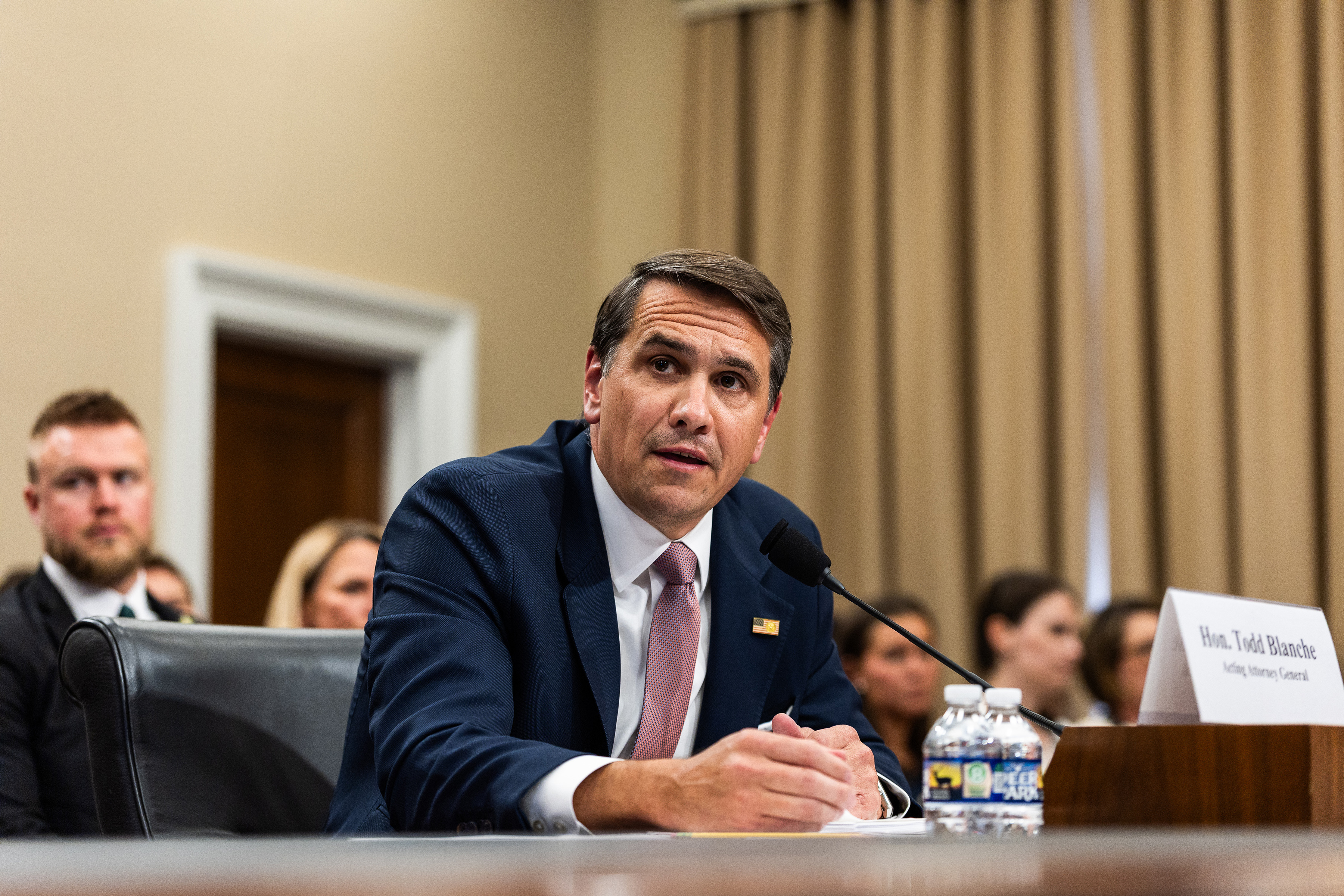
    WASHINGTON — President Donald Trump on Monday nominated his former personal lawyer Todd Blanche to serve as attorney general, elevating a loyal and trusted ally who as acting attorney general has shown a willingness to execute Trump’s maximalist demands.

    The announcement, teased by White House officials last week, comes as public scrutiny of Blanche intensifies over his role in an administration push for a $1.8 billion fund with taxpayer money to pay those claiming they were victims of government mistreatment, most likely including rioters who attacked the Capitol on Jan. 6, 2021.

    The nomination was disclosed in a notice Monday on the White House’s website, saying that Trump had sent Blanche’s name to the Senate.

    It remains unclear if Blanche, who promoted an expansive view of executive power at the expense of the legislative branch both as Trump’s defense lawyer and as the Justice Department’s second in command, will have sufficient support in the Senate to be confirmed as tensions grow between the White House and congressional Republicans.

    A confirmation hearing for Blanche could pose a tricky political test for Republicans as the party prepares for midterm elections this year. A recent closed-door meeting between Blanche and Senate Republicans was described as blistering, with dozens of lawmakers sharply criticizing Blanche over the $1.8 billion fund.

    Senators, however, failed to pass restrictions on any such payouts, suggesting their unhappiness with the White House may have ebbed.

    His path to the permanent appointment he has long coveted will also be complicated by lingering anger — and unanswered questions — related to his handling of the release of millions of pages of investigative files related to convicted sex offender Jeffrey Epstein.

    In recent weeks, his predecessor, Pam Bondi, who was fired in April after Trump privately vented over her failed efforts to prosecute his political enemies, placed primary responsibility for the release of the Epstein files on Blanche during an interview with a House committee.

    Blanche, a former federal prosecutor in Manhattan, has shed his reputation as a mildly moderating voice within the department as he has energetically pursued a job whose main prerequisite, in the view of current and former officials, is never saying no to the boss.

    A wide range of former law enforcement officials have sharply criticized Blanche’s brand of justice, saying he has deployed prosecutorial power to punish Trump’s perceived foes, and in the process badly damaged the department’s reputation with the courts and the public.

    As acting attorney general, Blanche has taken a series of actions against Trump targets, including green-lighting the indictment of former FBI Director James Comey for posting to social media an image of seashells arrayed to read “86-47,” which Blanche has described as a credible threat of violence against a sitting president. (The phrase “86” is a slang term evolved from restaurant parlance for throwing something out, and “47” refers to Trump, the nation’s 47th president.)

    Blanche expressed internal reservations about the highly unusual plan to establish the fund, which also included a broad shelter from tax investigations for Trump, his family, and his businesses that could be worth more than $100 million.

    But Blanche and one of his top aides, Stanley Woodward Jr., signed off on the plan, unlike some first-term Trump appointees who resigned or offered fierce resistance when confronted with demands they considered questionable. It was immediately assailed as a political slush fund by Democrats and Republicans alike.

    Testifying before lawmakers last week, Blanche said the Justice Department was giving up the plan for the fund but would keep Trump’s shelter from tax investigations in place. Trump later cast doubt on the abandoning of the fund, saying, “I love it.”

    “Todd Blanche has never stopped acting as Donald Trump’s personal lawyer,” said Stacey Young, the founder of Justice Connection, an organization of former department employees that includes many career prosecutors forced out by Blanche as he has sought to reshape the department to Trump’s liking.

    “He has used his high position at the department to enter into a corrupt deal with the president and his family, advance vindictive prosecutions, illegally fire career employees, smear whistleblowers, and attack the judiciary,” she added.

    The fund was the result of secret talks between Trump’s private lawyers and officials working for Blanche, as a means of settling a $10 billion lawsuit Trump had filed against the government over the leak of his tax returns, and unrelated claims for about $230 million that Trump had filed against the Justice Department and the FBI over past investigations and prosecutions.

    Blanche and his team sought to create a settlement that would prevent the government from paying taxpayer money to Trump, which they saw as a potential ethical, legal, and political catastrophe.

    In his testimony to lawmakers last Tuesday, Blanche insisted the protection of Trump and his family from tax audits or investigations would not be affected by the withdrawal of the fund proposal, and would remain in place.

    “So the blanket immunity is not something that you’re going to move back on?” asked Rep. Rosa DeLauro (D., Conn.), who accused Blanche of prioritizing the president’s financial interests over the public good.

    “You do not belong in this job,” she added.

    But Trump, who has said he owes his freedom to Blanche’s hard-nosed legal efforts on his behalf in the criminal cases against him, appears to believe otherwise.

    Blanche first gained the confidence of Trump while he was out of office, battling multiple investigations and indictments. Blanche became Trump’s defense lawyer in 2023, and represented him when he went on trial a year later in New York City; Trump was convicted on charges of falsifying business records.

    Since becoming the deputy attorney general in early 2025, Blanche has executed sweeping changes at the Justice Department, where he has proudly described firing more than 200 agents and prosecutors who worked on cases involving Trump or his allies. He has also talked of being at war with federal judges.

    This article originally appeared in the New York Times.
  • Robert Coles, Pulitzer-winning child psychiatrist, is dead at 97

    Robert Coles, a child psychiatrist by training and a storyteller by inclination whose scores of books and articles transported readers into the minds of children, opening new vistas on issues as varied as race relations and moral reasoning, died Thursday in Lincoln, Mass. He was 97.

    The death, at a hospice facility, was confirmed by his son Robert.

    A longtime professor at Harvard University, Dr. Coles eschewed ideologies and psychiatric orthodoxies, visiting the homes of children — first in the American South and then around the world — to listen intently to what they, their parents, and others had to say. He returned again and again, sometimes for months or even years, building the trust that underpinned his work.

    He told searing accounts illustrating illusive truths of a fast-changing society, beginning with the tale of Ruby Bridges, who as a 6-year-old walked through a screaming mob in 1960 as part of an effort to integrate a public school in New Orleans. From the households of poor Black families to those of rich white ones, from Appalachia to the Arctic, Dr. Coles visited children whose voices were not often heard. He once rode a bus for a whole year with Black youngsters being transported to schools in white neighborhoods.

    Dr. Coles then wrote it all down, distilling the tape recordings of conversations, the children’s crayon drawings ,and his voluminous notes into compelling verbal snapshots of how children grapple with challenge. His five-volume book series Children of Crisis was published between 1967 and 1977; Volumes 2 and 3 won him a Pulitzer Prize in 1973.

    Some criticized his approach as scattershot and unscientific, and Dr. Coles readily admitted he veered from exact transcriptions to tell what he considered greater truths.

    But eminent sociologist David Riesman said in an interview with Time magazine in 1972 that the effect of Dr. Cole’s work was to obliterate stereotypes, to demonstrate that “policemen are not pigs, white Southerners are not rednecks, and Blacks are not all suffering in exotic misery.”

    “What he is saying is ‘People are more complicated, more varied, more interesting, have more resiliency and more survivability than you might think,’” Reisman said. “‘I listen to them! You listen to them! Please listen! Again and again!’”

    Dr. Coles offered proof “that hope is alive,” Kenneth Clark, a psychologist whose insights contributed to the Supreme Court outlawing the racial segregation of schools in 1954, said in an interview with the New York Times Magazine in 1978. “I don’t know if he’s one of the 10 just men required to keep this world spinning around,” Clark said, adding: “You can’t judge him by normal standards any more than you could Martin Luther King; they are men possessed.”

    Dr. Coles acknowledged a sense of “moral anxiety” as a white man writing about those with a less privileged existence.

    “I work with very vulnerable people, and yet I’m not very vulnerable myself,” he said in an interview with the New York Times in 1997. “It makes me uncomfortable, seeing the disparities between the world I document and the world I inhabit.”

    Dr. Coles was an exceedingly popular professor at Harvard, using great literature to stimulate debate in courses in its undergraduate college, as well as its schools of medicine, law, business, and government. He wrote books on personalities as diverse as Bruce Springsteen and the novelist Walker Percy, and also found time to write novels, children’s books, and poetry.

    He was awarded a MacArthur Fellowship in 1981, the Presidential Medal of Freedom in 1998, and the National Humanities Medal in 2001.

    So what was he? Dr. Coles variously described himself as a doctor, child psychiatrist, wanderer, oral historian, social anthropologist, teacher, friend, storyteller, busybody, nuisance, and “idiosyncratic oddball.”

    His friend Percy, himself a physician, once judged that the doctor designation, if broadly applied, might be most apt.

    “He treads a narrow path between theorizing and novelizing and emerges as what in fact he is: physician, and a wise and gentle one,” Percy said. “He is doctor to the worst of our life.”

    Robert Martin Coles was born Oct. 12, 1928, in Boston, to Philip Coles, an engineer who immigrated from England, and Sandra (Young) Coles, the daughter of an Iowa Episcopal minister. A deeply affecting memory of his youth in the suburb of Milton was how his parents read Charles Dickens, George Eliot, and other novelists aloud to each other.

    He went to Boston Latin School and graduated from Harvard in 1950. An essay he wrote on William Carlos Williams, the poet and pediatrician, led to him meeting Williams. After reading the essay, Williams replied on a prescription slip: “Not bad — for a Harvard student.”

    Dr. Coles was inspired to become a doctor himself, and earned a medical degree from Columbia University and interned at University of Chicago clinics.

    He said in an interview with the journal Christianity and Literature in 2005 that he worked with polio patients as a resident at Massachusetts General Hospital, and became interested in addressing the psychological impacts of the disease. This, as well as a reluctance to inflict pain on children by giving them shots, persuaded him to switch his specialty from pediatrics to child psychiatry.

    In 1958, he was drafted into the Air Force, given the rank of captain and sent to a psychiatric hospital in Biloxi, Miss. He became angered over the treatment of Black Southerners after he saw a “vicious” fight erupt when Black people tried to integrate a beach.

    He began his study of children with Bridges, whose poise in the face of racism moved him deeply. The girl was threatened daily on her way to class. She was told her food was poisoned and was kept isolated in a classroom without other students for a year.

    Dr. Coles noticed that she seemed to be talking to the hostile white people, and asked her why. She said she was praying for them.

    But why? “They need praying for,” the little girl said.

    Bridges would be a central theme running through Dr. Coles’ career. She inspired him to write about children’s moral and spiritual lives, and the two wrote a children’s book together.

    And when Bridges grew up, she told him that it was time for him to write Women of Crisis to accompany his earlier series.

    Dr. Coles teamed up with his wife, Jane, to write that two-volume women’s study, which was published in 1978 and 1980. But that was hardly the greatest of her contributions to his work: It was she who had urged him to stop asking questions during an interview with children in New Orleans when they were responding with a long series of monosyllabic replies.

    “Why don’t you just shut up and watch television with them?” she said, according to an oral history interview with Dr. Coles by the Southern Oral History Program in 1974.

    In Volume 4 of Children of Crisis, Dr. Cole described the approach he finally developed. No questions — or at least, not many.

    “I would tell the children I wasn’t interested in finding out anything in particular,” he said, “merely knowing, to a degree, how they lived and what they thought about — insofar as it was their inclination to tell me.”

    One thing Dr. Coles learned about children was that they were absorbed in their daily environment, not focused on concerns like nuclear war. Even when they did talk about such issues, they grounded them in their daily lives. A Black child in Mississippi once told him that, “If the Ku Klux Klan ever get that bomb, it would be real bad for us.”

    He noted that children of migrant workers saw everything as temporary. Or, rather, he let a migrant child make the point for himself: “I love the yo-yo, because it keeps going, up and down, and that’s what I do.”

    Pictures often told more than words. A deprived child of a migrant worker depicted himself without arms and gave the boss an ogre’s ugly teeth.

    As Dr. Coles moved around the country to study groups as diverse as Alaska Natives, wealthy suburbanites, and Hopi Indians, his wife and three sons moved with him.

    Jane Hallowell, whom Dr. Coles married in 1960, died in 1993. In addition to Robert, he is survived by two more sons, Daniel and Michael, and four grandsons. He lived in Concord, Massachusetts.

  • Progressive challenger overtakes Spencer Pratt in race for LA mayor

    Progressive challenger overtakes Spencer Pratt in race for LA mayor

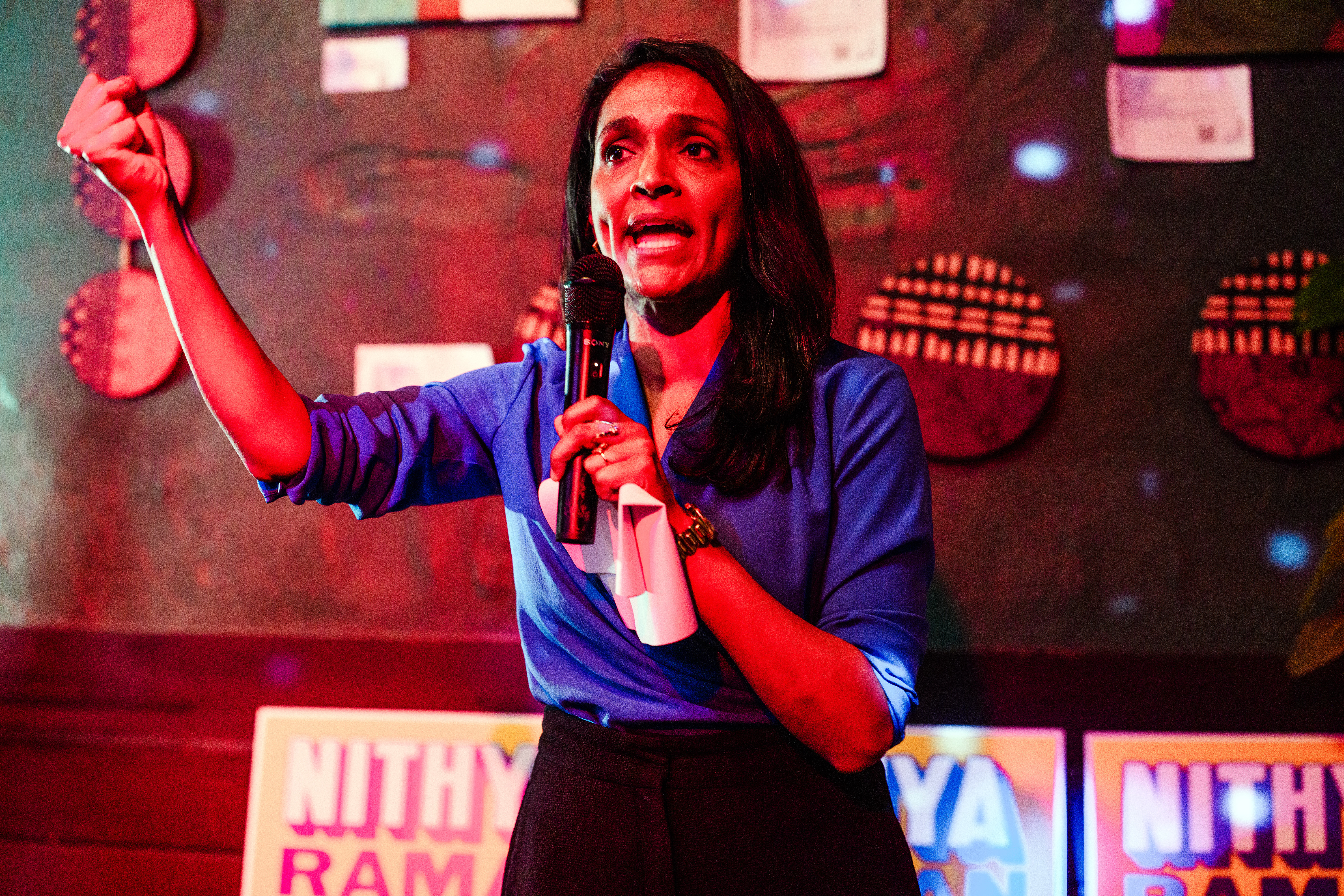
    Nithya Raman, a progressive member of the Los Angeles City Council, pulled ahead of reality TV star Spencer Pratt in the Los Angeles mayoral primary Sunday, as a surge in the vote count signaled a potential shift in the race for second place.

    Five days after the election deadline, it remained officially undetermined who will face Mayor Karen Bass, the incumbent, in the November contest to decide who will lead the nation’s second most populous city. The primary race has yet to be called by the Associated Press, which estimates that about 80% of the vote has been counted.

    But late returns have trended heavily in favor of the liberals who make up an overwhelming majority of the city’s electorate.

    Bass, 72, a former Democratic member of Congress who has already advanced to the November runoff, remained in the lead with 34.68% of the vote, according to the updated tally released by the Los Angeles County Registrar-Recorder/County Clerk’s office.

    Raman, 44, who has steadily gained ground as the count has progressed, had 27.12%, enough to overtake Pratt by a little more than 3,000 votes. He had been running in second place since election night.

    A resident of Pacific Palisades who lost his home in the fire and channeled the fury of his neighbors, Pratt, 42, a Republican, dropped to third place with 26.69% of the vote.

    A Los Angeles mayoral candidate can win outright by receiving a majority of votes in the primary. Otherwise, the top two finishers regardless of party advance to the general election. But Los Angeles residents vote by mail in large numbers, and ballot counting is a slow process, with leads often shifting as the tally drags on for days or even weeks. Mail-in ballots with an Election Day postmark are accepted by county election officials through Tuesday.

    On Sunday, Raman said in a statement that “we are encouraged by the latest vote count and remain grateful to the thousands of Angelenos who have powered this campaign.”

    Pratt did not immediately respond to a request for comment.

    Alex Stack, a campaign spokesperson for Bass, signaled the likely points of contention between the two if Raman ultimately takes the second slot on the ballot. Though her support has been eroded by the wildfires and general voter angst in the city, Bass has largely maintained the support of the center-left establishment in the city while Raman has been backed by a younger and more progressive base.

    “We look forward to winning a contest against an opponent who allows encampments near schools and fights against hiring more cops,” Stack said in a statement, “yet is MIA on saving Hollywood jobs and fighting back when ICE invades LA.”

    This article originally appeared in the New York Times.

  • Why are birthrates down? You might be looking at the answer

    Why are birthrates down? You might be looking at the answer

    The enduring mystery of the fertility decline has a new culprit: the smartphone.

    Experts have long wondered if phones played a role in the birthrate decline — which began in 2007, the same year that Apple introduced the iPhone — but until now there had not been hard evidence to prove it.

    Two new papers, one published Monday and the other in May, are the first academic endeavors that test whether the smartphone was a cause.

    They are the most recent efforts to explain the sweeping fertility rate decline in the United States and other countries over the past 20 years. Researchers have already looked at contraception use, abortion rates, rising levels of female education, and even the popular television show 16 and Pregnant.

    Proving phones caused the decline is a tricky endeavor. There were a number of major events in those years, including the Great Recession, and isolating smartphone use is difficult.

    The gold standard for scientific evidence is known as random assignment. It compares outcomes for people randomly chosen to receive a treatment (like getting a smartphone) with people who are not.

    But that is not possible when it comes to ferreting out reasons for declining fertility.

    So researchers sought out data about smartphones that introduced randomness.

    Caitlin Myers, an economist at Middlebury College, and Ezekiel Hooper, her student, used the spotty early rollout of the iPhone as a way to isolate the effects of the phone on fertility. The first iPhone was released in June 2007, they wrote, and was available only on the AT&T network until February 2011. The study compared fertility rates in U.S. counties that had near-universal AT&T coverage with counties that had little or none.

    Their paper, published in the National Bureau of Economic Research, found that the iPhone caused as much as half of the fertility decline between 2007 and 2011. The most pronounced effects were among young people aged 15 to 24.

    What happened in the counties with iPhones? One theory, Myers said, is that young people began to socialize more on their phones and less in person, and consequently were less likely to have sex and become pregnant.

    Myers said iPhones may also have made pornography more accessible, which led young people to substitute it for sex, or young people may have used them to obtain better information on avoiding pregnancy, including contraception and abortion.

    Researchers not involved in the study said the results were persuasive.

    Phillip B. Levine, an economist at Wellesley College, said he was “a little jealous” of the Middlebury data, which he said provided a real insight into a potential driver of a major social change.

    He said some variation in the AT&T data could throw off the final finding. For example, the company may have set up in counties that were wealthier, or more densely populated, introducing a pattern “that’s not likely to be random anymore,” he said.

    He said Myers tried to account for those variations, and that her findings made sense.

    But, he cautioned: “You shouldn’t take the result so literally and say: Oh, it’s the iPhone’s fault. It’s an example of the kinds of social influences that have led to the decline in birth rate.”

    Dropping birthrates, once a feature of rich societies, are now a near-global phenomenon. The sweep of the decline has researchers looking for common drivers. The authors of the second study also decided to look at smartphones.

    “Countries with very different healthcare systems, welfare regimes, abortion laws, religious traditions, recessions and demographic trends all saw similar breaks in the same window,” wrote the authors, Hernan Moscoso Boedo, an economics professor at the University of Cincinnati, and Nathan Hudson, a doctoral student.

    “Whatever caused it was something global — something that arrived in roughly the same form in all of these places at roughly the same time,” they wrote.

    They analyzed World Bank data measuring smartphone penetration and teenage fertility rates in 128 countries. In countries as varied as Iran, Costa Rica, Guatemala, Chile, Mexico, and Turkey, they found that teenage fertility declines accelerated once smartphones became a mass phenomenon.

    They tested their technology theory in the United States using data on wired broadband and 4G high-speed mobile networks. They looked at where access was better and worse and found a substantial effect: that fertility rates for teenagers declined fastest in counties with more high-speed access.

    Theodore Joyce, an economist at Baruch College, said he was skeptical of both studies. Teenage births have been falling since the 1990s, he said, long before smartphone technology came on the scene. Myers’ paper, he said, examined a short period before smartphones had fully penetrated.

    The hypothesis, he said, could be correct but “remains speculative.”

    This article originally appeared in the New York Times.

  • China reasserts itself, to contain North Korea’s tilt toward Russia

    China’s top leader, Xi Jinping, arrived in North Korea on Monday and delivered what analysts said was a subtle reminder to the country’s newly emboldened dictator, Kim Jong Un, that China is his most important benefactor, economic partner, and bulwark against the United States.

    According to an official summary of the leaders’ talks released by Chinese state media, Xi called for “close strategic communication” with Kim and for strengthening exchanges “at all levels and in all fields.” He said he was willing to deepen relations with Kim in “the new era,” a phrase Xi has used to project China’s growing strength on the world stage.

    In many ways, Xi’s two-day trip to Pyongyang, North Korea’s capital, is an effort to balance influence from Russia, which signed a mutual defense pact with North Korea two years ago. That deal has helped revive North Korea’s economy, by allowing Kim to trade weapons and troops with Russia for badly needed oil, food, and weapons technology, and given him a stronger hand in talks with Xi.

    Xi was received by Kim and his wife, Ri Sol Ju, when he landed in Pyongyang, his first trip there in seven years. His motorcade was greeted by a military honor guard and throngs of citizens waving both national flags, with children dancing and clutching bright balloons. North Korea gave Xi a similar welcome the last time he visited Pyongyang.

    At a meeting at the Kumsusan Guest House, Xi pledged to cooperate with Kim in trade, agriculture, science, tourism, and healthcare.

    North Korea had not released a statement about the meeting by late Monday. Kim was expected to press Xi for more economic support and possibly a greater acceptance of North Korea’s nuclear weapons program.

    China’s summary made no mention of the nuclear program, instead stressing that the two countries should “jointly safeguard regional peace and development.”

    China’s long held position is that it opposes a nuclear North Korean state, largely over concerns about driving U.S. allies like South Korea to seek nuclear weapons. Statements about working toward ending the program used to be standard for the two sides during diplomatic engagements, but they have been omitted since last September, when Kim visited Beijing to attend a military parade.

    “China’s approach to North Korea has shifted markedly over the past seven years, from the role of a mediator for North Korea—U. S. denuclearization talks to that of a strong strategic partner in countering the United States,” said Hong Min, an expert on North Korea at the Korea Institute for National Unification, a research institute based in Seoul, South Korea.

    The change may reflect China’s desire to placate North Korea. But it could also suggest that the Chinese government believes that a nuclear-armed North Korea would provide leverage over the United States and South Korea, analysts said.

    Xi evoked the two countries’ history fighting the United States together in the Korean War, reminding Kim that their “traditional friendship” had been “forged in blood.”

    “The overall message that Beijing wants to project through this summit is the unity and the unbreakable bonds between the two countries,” said William Yang, a senior analyst for the International Crisis Group.

    In a letter published Monday in North Korea’s main state-run newspaper, Rodong Sinmun, Xi declared that relations between China and North Korea were at a “new historical starting point.”

    He called on the two countries to “oppose hegemonism and power politics,” an oblique reference to the United States. In a veiled swipe at Japan, with whom China has been in a monthslong feud, Xi wrote that they should also oppose “any scheme or action aimed at reviving militarism and undermining regional security and stability.”

    As with Russia and Iran, Xi has cast North Korea as a close partner in a new world order free of what China sees as U.S. dominance and meddling.

    Kim has said North Korea should boost trade with China to further stimulate its economy and generate hard currency. Yet all its top exports — coal, iron ore, fish, and textiles — remain prohibited under United Nations sanctions, creating a huge trade deficit with China that has threatened to drain its foreign currency reserves.

    Xi’s offers on trade and tourism could change that, but it is not clear whether it is possible to do so without violating U.N. sanctions.

    Both China and Russia have grown increasingly reluctant to enforce those sanctions in recent years, as tensions with the United States have worsened. In a joint statement issued last month, Xi and President Vladimir Putin of Russia declared their opposition to “the use of diplomatic isolation, economic sanctions, force, and pressure” against North Korea.

    Such backing has emboldened Kim to hold on to his nuclear arsenal and insist on being​ treated as a nuclear-armed state. In the days preceding Xi’s arrival, he visited a missile factory and a newly operational weapons-grade uranium enrichment facility, vowing to “beef up our state’s nuclear forces at an exponential rate.”

    This article originally appeared in the New York Times.
  • Houthis threaten to widen Iran war by blocking Israeli shipping in Red Sea

    Houthis threaten to widen Iran war by blocking Israeli shipping in Red Sea

    SANAA, Yemen — The Iran-backed Houthi militia in Yemen said Monday that it would stop Israeli ships from operating in the Red Sea and had fired missiles at Israel, threatening to widen the Iran war and impede navigation through a crucial global trade route.

    The Houthis have largely sat out the U.S.-Israeli war with Iran, despite frequently warning that they could join the fighting. But the group’s threat Monday appeared to signal a shift that could further disrupt shipping and energy markets roiled by Iran’s effective blockade of the Strait of Hormuz, a waterway through which much of the world’s oil and gas is shipped.

    Yahya Saree, a Houthi military spokesperson, said in a statement on social media that the partial naval blockade would take effect immediately. Iran and Israel traded waves of attacks Monday as a two-month truce between the countries broke down.

    Saree also said that the Houthis had launched a “salvo of missiles” against Israel in response to “aggression” against Iran, Lebanon, the Palestinians, and other targets.

    “We will meet escalation with escalation,” he said.

    It was unclear what the Houthi threat to Israeli ships would mean in practice. The territory controlled by the Houthis in Yemen sits alongside Bab al-Mandab, a narrow waterway that enters the southern end of the Red Sea. Cargo ships that cannot pass through the area must sail around the southern tip of Africa to transit between Asia and markets in Europe and the Americas, significantly lengthening travel times. Many shipping groups had already been avoiding the area.

    During Israel’s war in the Gaza Strip, the Houthis regularly attacked ships in the Red Sea in what they described as an effort to try to force Israel to end its bombardment of the Palestinian enclave.

    Since the United States and Israel attacked Iran in late February, the Red Sea has become a key outlet for Saudi Arabia, the world’s largest oil exporter, to reach international markets by avoiding the Strait of Hormuz.

    Mohammed al-Bukhaiti, a senior Houthi political official, said that the group would target only vessels linked to Israel, but he cautioned other states, such as Saudi Arabia, not to intervene.

    “Any state that becomes involved will be targeted,” he said in a phone interview.

    It would not take much for the Houthis to hinder shipping by increasing the risks for vessels transiting the Red Sea, a move that would also raise insurance premiums for shipping companies, said Farea Al-Muslimi, a research fellow focused on Yemen at Chatham House, a London-based think tank.

    “They can just send a signal and only one attack has to happen — and that will send a shock across insurance companies,” Al-Muslimi said. “I won’t be surprised now if you have a joint lockdown of Hormuz and Bab al-Mandab.”

    Rashid al-Haddad, an economic analyst based in Yemen, said that if the U.S. military or other countries’ armed forces were deployed to the Red Sea to counter the Houthis, it could turn the entire waterway “into a theater of military confrontation.”

    “This would also drive up maritime insurance costs and divert a significant portion of global trade,” he said. “If hostilities escalate, the Houthis will resort to a complete closure of the Bab al-Mandab strait.”

    This article originally appeared in the New York Times.

  • How the drive to find a conspiracy against Trump rocked the Justice Department

    WASHINGTON — It was an investigation long sought by Kash Patel, the FBI director, and it was announced not in court papers, but through a haze of cigar smoke on Joe Rogan’s podcast in early June 2025.

    Patel’s prized criminal inquiry, known as “the grand conspiracy case,” sought to tie together actions by a group of people that President Donald Trump blamed for various investigations into him, going back to the examination of possible ties between his 2016 campaign and Russia, and extending into events surrounding the 2020 election and the criminal prosecutions of Trump in 2023 and 2024. In the view of Trump and his supporters, there was a “deep state” cabal that had sought across multiple administrations and agencies to bring him down.

    Patel told Rogan he had found a secret room of evidence inside FBI headquarters confirming his long-held suspicions.

    “You know how I caught these guys?” Patel asked. “Because these guys were so arrogant, they would write everything down, and I found the documents.”

    To Patel, those documents, found in government burn bags — large brown paper bags with red and white stripes used to store papers designated for destruction — justified a sweeping investigation of former officials. To the former officials and the career investigators who looked at the evidence, the papers in the burn bags were nothing like a smoking gun. The administration’s efforts to find prosecutors willing to pursue such theories became a defining feature of the Trump administration’s politicization of the Justice Department — and the internal resistance to it.

    New details of how that period unfolded show how Patel’s drive to target critics of the president set off cascading crises with U.S. attorneys’ offices, derailed distinguished careers, and undercut the Justice Department’s credibility with judges. This account is based on interviews with multiple people with knowledge of the effort, all of whom requested anonymity because they were not authorized to speak publicly.

    Asked for comment on this account and the roles of Patel and other officials, a Justice Department spokesperson, Emily Covington, said the department “enforces federal law fairly, consistently, and without regard to politics,” adding that all investigative and prosecutorial decisions “are grounded in evidence and the law.”

    On July 14, barely a month after Patel told millions of podcast listeners about a supposed vault of dirty secrets, Todd Gilbert became the interim U.S. attorney for the Western District of Virginia.

    Hours after he was sworn in, Gilbert got a phone call from Patel that would wreck his new job. On his first day, when most employees are still getting their work email set up, the new U.S. attorney was told by Patel to pursue the grand conspiracy.

    Patel instructed him to investigate how classified documents had been placed inside the burn bags found inside Room 9582 of FBI headquarters.

    Some of the documents related to events from 2016 and 2017 that Patel wanted examined, specifically the actions of James Comey, who was the FBI director at the time, and John Brennan, who had been the CIA director. Patel wanted both men investigated for lying to Congress and suggested that the documents supported charging them.

    His call to Gilbert was unusual. FBI directors do not typically assign U.S. attorneys to open cases. Such a directive, particularly for high-profile investigations, would normally come from Justice Department headquarters. And investigations that involved purported lies to Congress were assigned to prosecutors in Washington, not in Roanoke, Va. It was also strange to give such a weighty assignment to a U.S. attorney with little authority to question orders because he was still awaiting confirmation by the Senate.

    But the administration had good reason to think of Gilbert as a loyal and willing hunter. A lifelong Republican with strong ties to Virginia’s GOP leaders, he had given up a powerful position in the state legislature to become the U.S. attorney.

    The premise of the “grand conspiracy” was that Comey and his allies had concocted the FBI’s investigation of Russian interference in the 2016 presidential contest to damage Trump, and that conspiracy extended into the 2020 election and the 2022 appointment of Jack Smith as special counsel to investigate him.

    To Patel, the case consolidated years of his complaints and accusations about Democrats and national security officials.

    To many career Justice Department veterans, the case looked more like Frankenstein’s monster — a motley assortment of long-dead investigations that were now supposed to be stitched together and brought to life.

    From the start, FBI leadership wanted near-daily updates on the case — a level of attention usually reserved for national crises. The Virginia prosecutors were confused why the case received so much interest from Patel and so little from their actual boss, Deputy Attorney General Todd Blanche, who had been Trump’s personal lawyer.

    Gilbert tried repeatedly to get advice and instruction from Blanche, even driving to Washington unannounced to try to speak to him. Instead, one of Blanche’s deputies, Aakash Singh, urged Gilbert to pursue the case aggressively. But Singh did not address many of Gilbert’s legal and factual questions. One senior Justice Department official said Gilbert and Blanche eventually did speak about the case.

    Gilbert’s team decided that the law gave his office jurisdiction over only one of the issues Patel had directed him to investigate — whether the documents in the burn bags had been mishandled as part of a criminal scheme to hide them.

    The other two prongs he was assigned — whether Comey had lied in congressional testimony in 2020 about leaks and Russia-related intelligence, and whether Brennan had lied to Congress about a 2017 intelligence assessment of Russian election interference that referenced a dossier compiled by a former British spy — had no legitimate venue in western Virginia, they concluded.

    Gilbert angered the administration by resisting pressure to impanel a grand jury to investigate the burn bag case, since he and his team did not believe there was yet a sufficient factual basis for that step.

    A related disagreement over personnel assignments in his office also hurt his standing. In mid-August, Sergio Gor, a powerful White House official, called Glenn Youngkin, then Virginia’s Republican governor, and told him that Gilbert was going to be fired and that the governor should not try to stop it.

    Gilbert lasted just 37 days as a U.S. attorney. After his departure, prosecutors in his office wrote a lengthy legal analysis, called a declination memo, detailing why no criminal charges were warranted in the burn bag case. The senior FBI agent on the investigation endorsed the memo’s conclusions.

    At that point, a number of current and former law enforcement officials concluded that the administration had embarked on a new kind of fishing expedition — not for dirt on the people they did not like, but to find a prosecutor willing to file charges based on the threadbare evidence they already had.

    Resistance by officials in western Virginia did not stop the pressure campaign from senior administration officials. Instead, that pressure simply migrated across the state, to the federal prosecutor’s office in Alexandria, Va.

    Trump’s pick to lead that office, Erik Siebert, was an experienced lawman, and unlike Gilbert, he had allies among the Justice Department’s leaders. Siebert’s law enforcement career began as a D.C. police officer, and he heartily embraced Trump’s agenda.

    But in the summer of 2025, Siebert suddenly found himself on thin ice, having inherited not just the Comey case but a separate investigation of Letitia James, the New York attorney general who successfully sued Trump over his business accounting. Bill Pulte, the head of the Federal Housing Finance Agency, had made a criminal referral to the Justice Department against James in April 2025, accusing her of having falsified information in mortgage paperwork to get a more favorable interest rate.

    Pulte leveled a similar allegation against Sen. Adam Schiff (D., Calif.), who while in the House had led impeachment proceedings against Trump. Pulte suggested that Schiff had claimed two different places as his primary residence.

    In July, Blanche summoned FBI agents, Virginia prosecutors, and senior FHFA officials to a meeting at the Justice Department to talk about the James investigation. The meeting began with a detailed presentation from FBI agents, emphasizing the lack of evidence of criminality surrounding James’ mortgages.

    Then Blanche declared that the evidence simply did not support a criminal case against James for either property. When Pulte’s aides tried to argue or interject, Blanche shot them down.

    The agents and prosecutors on the case were encouraged to see the deputy attorney general back them up. Their optimism, however, was short-lived. Within days of the meeting, law enforcement officials were told that the White House still wanted to see James charged. (One senior Justice Department official who was not authorized to speak publicly disputed that characterization of the meeting as “inaccurate and oversimplified,” saying that investigators still wanted to pursue the case against James.)

    The administration was not giving up on the Comey investigation either. Siebert had been handed the case in mid-August, after the federal prosecutors in western Virginia successfully argued that they did not have jurisdiction. It was the second time in months that Siebert and his team were pressured by superiors to investigate Comey.

    In May, deputies to Blanche had pushed Virginia prosecutors to open a criminal investigation of the former FBI director for posting a photo on Instagram of seashells arranged on a beach to read “86 47,” the slang reference “86” meaning “get rid of” — in this case the 47th president.

    Trump and his supporters called the message a criminal threat of violence. Comey denied that was his intent, saying he knew it as a restaurant term for nixing items on a menu, or removing an unruly patron.

    The morning after Comey’s post, Blanche’s deputies told prosecutors in Siebert’s office to investigate the seashells. Secret Service agents tracked Comey and his wife as they traveled from the North Carolina seashore to their home in Virginia — a level of surveillance that some agents said they felt was overkill.

    Comey quickly agreed to sit down with Secret Service agents for an interview, and he insisted again that he had no intention whatsoever of threatening Trump. Given Comey’s cooperation and statements, Secret Service investigators concluded there was no point in opening a full investigation.

    Blanche’s deputies disagreed and pressed both the Secret Service and the FBI to pursue the case. The Secret Service is part of the Department of Homeland Security and therefore did not report to Blanche. Their agents refused to pursue the case, a decision that made it easier for the FBI and prosecutors in Virginia also to say no.

    The seashell case revealed just how badly administration officials wanted to arrest Comey. That June, Trump had declared himself “the hunter,” and federal law enforcement officials came to believe that Comey was the president’s most sought-after prey.

    Just two months later, Siebert was again pressed to go after him — this time over his statements to Congress on Sept. 30, 2020, the investigation initially given to Gilbert. Siebert was under the gun, since the five-year statute of limitations gave him less than two months to investigate and indict a former FBI director.

    Through deputies, Blanche pressured the Virginia prosecutors to be “tough” and see the Comey case through. Personally, though, Blanche kept a certain distance from the conversations, relying on aides to relay his wishes. Three Blanche deputies, Singh, Christopher-James DeLorenz, and Diego Pestana, were most involved in the discussions about the Comey case. (The senior Justice Department official insisted the case against Comey was strong, and denied that Blanche’s office pressured career prosecutors to file criminal charges.)

    When Virginia prosecutors outlined the ways in which the evidence was weak, Pestana suggested the prosecutors were weak — a particularly galling critique to the prosecutors given that Pestana had never worked as a prosecutor. Inside the Justice Department, experienced lawyers chafed at being hectored by the deputy attorney general’s younger, greener aides, who often came across as cocky and uninformed. Behind their backs, some career lawyers referred to them as “Blanche’s bros.”

    The pressure from Blanche’s office to indict Comey intensified in early September. FBI officials were told to draft a criminal complaint against Comey, while prosecutors were told to draft an indictment. One senior department official denied prosecutors were pressured to bring charges, and also insisted the case against Comey was strong.

    On the weekend of Sept. 13, 2025, Patel told officials that Comey would be charged in three days. When no charges were produced in that window, it seemed that his big talk had served only to ratchet up the pressure on Siebert to deliver.

    Siebert would happily have charged Comey with crimes if he thought the evidence warranted it, but he felt it was not even a close call, according to colleagues.

    On Thursday, Sept. 18, Singh called Siebert to warn him that the president planned to fire him, and the hammer fell one day later.

    In a social media post that was written as if it was a private message to Attorney General Pam Bondi, the president expressed outrage that Comey, James, and Schiff hadn’t been charged with any crimes.

    “We can’t delay any longer, it’s killing our reputation and credibility,” he wrote, adding, “JUSTICE MUST BE SERVED, NOW!!!”

    Trump then picked Lindsey Halligan, a White House aide with no prosecutorial experience, to replace Siebert. She quickly secured indictments of Comey and James, though those cases were dismissed by a judge who found Halligan’s appointment was unlawful.

    The spree of firings and indictments showed just how much control Trump had over basic Justice Department functions long considered off-limits to the White House. Blanche had pushed for the Comey indictment, and fought against the James indictment, but in the end it did not much matter because prosecutorial discretion was superseded by presidential directive.

    The president’s fishing expedition for his kind of prosecutor continued. The “grand conspiracy” case was transferred to the U.S. attorney in Miami, Jason Reding Quiñones.

    In April, prosecutors in North Carolina indicted Comey over the “86 47” photo. Blanche, by then the acting attorney general, declared the seashell charges were the product of work by career agents and prosecutors. He never mentioned that other career prosecutors and agents had previously rejected the case.

    This article originally appeared in the New York Times.

  • Kennedy shows minimal engagement with vast health portfolio

    Kennedy shows minimal engagement with vast health portfolio

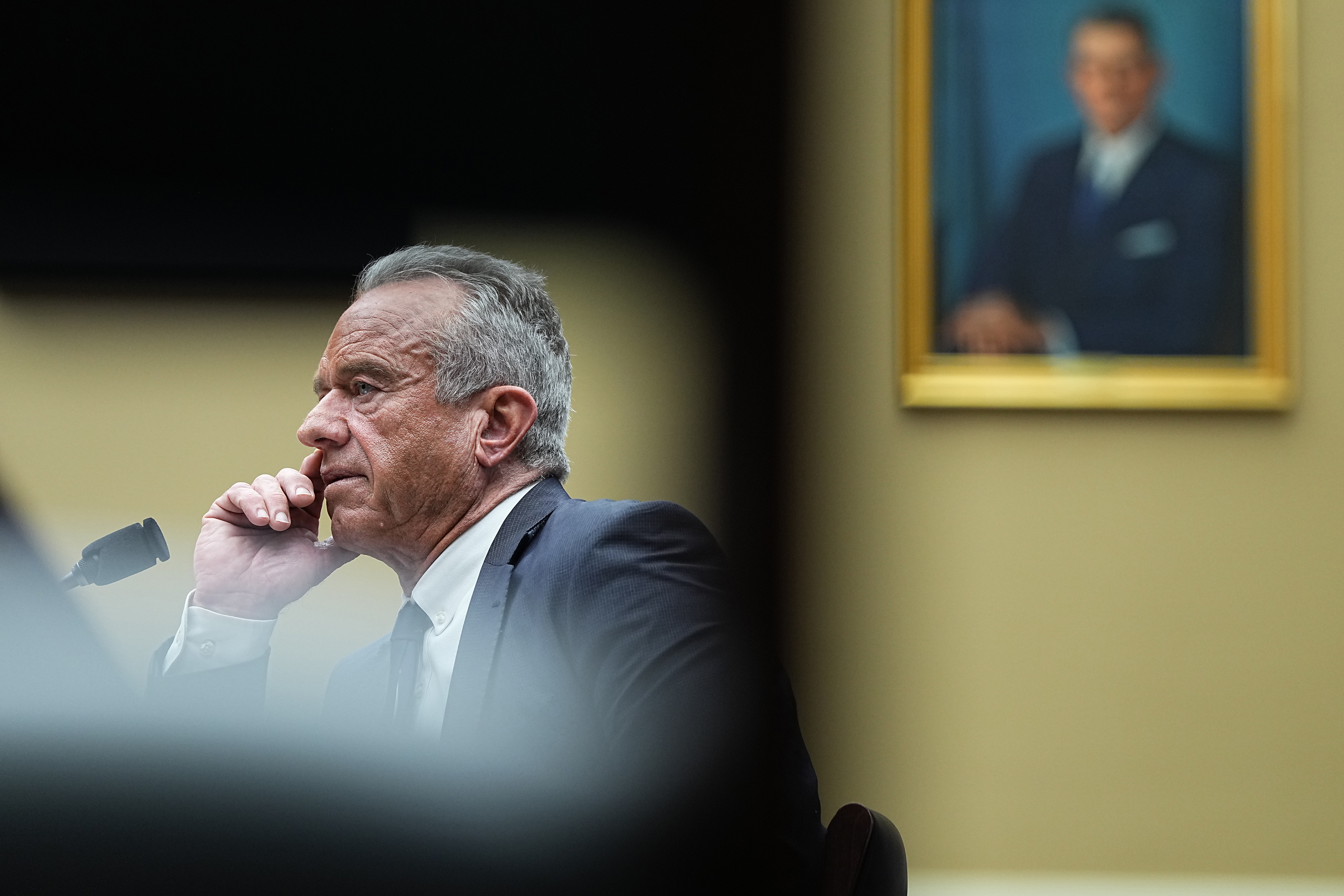
    WASHINGTON — Shortly after the World Health Organization declared the Ebola outbreak in Africa a public health emergency, a reporter asked Health Secretary Robert F. Kennedy Jr. if he was worried about the virus. Six Americans had already been exposed. His response was brief: “Yeah, we’re working on it.”

    In the nearly three weeks since, as the Centers for Disease Control and Prevention imposed travel restrictions to keep the virus from coming to the United States, Kennedy has made no public comments about the spreading outbreak. He has received few briefings about the virus from CDC scientists, although he speaks daily to the acting director, according to people familiar with his response.

    Kennedy’s approach to the crisis reflects his broader management of the Department of Health and Human Services, which affects the health of 340 million Americans and provides healthcare to 40% of the population through Medicare and Medicaid.

    Kennedy has shown little interest in managing the details of work in his department, according to multiple colleagues. Instead, they say, he is single-mindedly focused on his top priorities, including food recommendations and pesticide exposures, and hunting for evidence to support his long-held beliefs that vaccines are harmful.

    Deeply mistrustful of career civil officials, the secretary has surrounded himself with a close circle of handpicked advisers and stacked agencies with political appointees aligned with his views. While major posts have sat vacant and a wave of veteran health experts and scientists have departed, Kennedy has remained isolated from much of the department’s top staff.

    He rarely engages with members of Congress, colleagues said, unless he is asked to testify. He has made just one known visit to the CDC, after a gunman opened fire on its headquarters and killed a police officer last August.

    This examination of Kennedy’s leadership style is based on the accounts of a dozen people who have had direct contact with him as secretary, as well as other health department employees, all of whom spoke on the condition of anonymity to avoid retribution.

    Kennedy and the department did not directly address questions about his leadership style.

    The secretary’s detachment from much of the work of the agency, along with the administration’s deep staff cuts and his attacks on career staff, have driven down morale, they say. It’s a dynamic that could threaten the department’s ability to protect Americans in a crisis, according to public health experts and former secretaries.

    Critics say one of the most urgent problems is Kennedy’s failure to act more swiftly to address a leadership vacuum. There is no surgeon general. About half of the 27 institutes and centers at the National Institutes of Health are run by acting directors. The acting chief of the National Institute for Allergy and Infectious Diseases was recently fired, as was the nation’s top drug regulator.

    The leader of the Food and Drug Administration quit last month under pressure over tobacco policy. Kennedy fired the CDC director last August; it is now run on an acting basis by Jay Bhattacharya, who has another huge job as director of the NIH.

    “You would never accept a major corporation operating this way,” said Michael T. Osterholm, director of the University of Minnesota Center for Infectious Disease Research and Policy, who has advised health secretaries of both parties.

    “If the CEO lacked deep expertise in the company’s business and the leaders of its most important divisions were missing, investors would revolt,” Osterholm said. “Here, the stakes are much higher. The mission is protecting the health and safety of the American people, and we’re confronting serious disease threats without permanent leadership in some of our most important public health agencies.”

    To address the management gaps, the White House and Kennedy initiated a shake-up in February, elevating Christopher Klomp, a department official and former healthcare executive, to serve as the secretary’s chief counselor and smooth out operations. In a statement, Courtney Spencer, who left the Labor Department two weeks ago to become Kennedy’s top spokesperson, said the health department was “aggressively recruiting top talent to fill every remaining vacancy,” adding, “Nothing has slowed our ability to execute.”

    Kennedy’s allies say that while his management style may be different from that of his predecessors, he is leading in other ways by taking stands on matters of importance to Americans, including healthy eating and tackling chronic disease.

    “You do not come to Washington to challenge powerful interests, disrupt decades of business as usual, and demand accountability to make friends,” Mehmet Oz, director of the Centers for Medicare and Medicaid Services and a close ally of Kennedy’s, said in a statement provided by the health department. “You do it to deliver results.”

    Other advisers say Kennedy is also running into the realities of Washington, including a Congress that has refused to confirm some of President Donald Trump’s nominees.

    “Very predictably, you get into governing, you get into a toxic political environment, and a situation where there’s trillions of dollars of interest and you have the burden of having to do policy,” Calley Means, a close adviser to Kennedy, said at a recent forum hosted by Harvard University. “Nobody executes perfectly.”

    A remote presence

    Kennedy keeps a low profile at the health department’s headquarters, a hulking building that faces the National Mall near the U.S. Capitol.

    When he is in town, he exercises at his gym before work, then usually arrives at about 10 a.m. and leaves by 4 p.m., his colleagues say. He spends much of his day in closed-door meetings, according to those who work with him, and has little direct engagement with his staff.

    Every Tuesday at 10:30 a.m., the chiefs of the department’s 13 operating divisions gather in the secretary’s suite to update leadership on their activities. At the outset of his tenure, Kennedy was rarely there, either virtually or in person, according to three people familiar with his schedule. Since Klomp’s elevation, he now shows up once a month. But when he does attend, he often appears disengaged and spends the time scrolling on his phone, according to people in attendance. Several described him as “checked out.”

    Once, when he arrived to the meeting 15 minutes late, Kennedy offered a self-deprecating apology, according to one person in the room: “Thank you for putting up with my dysfunctional self.”

    Health department officials did not respond to a request for comment about the meeting or Kennedy’s remark.

    His lack of interest in matters that are not high on his priority list has meant that he has not engaged at critical moments, colleagues said.

    When measles killed two children in Texas early last year, Demetre Daskalakis, who led the response but has since left the agency, asked repeatedly to brief Kennedy but was rebuffed, he said.

    Susan Monarez, who briefly served as Kennedy’s CDC director before she was fired, had little direct interaction with the health secretary until she ran afoul of him on vaccine policy. She later told senators that during a series of tense meetings with the secretary, she was “directed to only work with the political appointees that he had put in place at CDC, and not to speak or work with the career scientists.”

    In the current Ebola crisis, Kennedy has left the department’s response to Bhattacharya, a health economist with no prior experience in public health even though he is leading the CDC. Bhattacharya, who also led the response to a recent outbreak of hantavirus, wrote an opinion essay published in the Wall Street Journal on Wednesday saying that while the “risk to the American public remains low, Ebola is dangerous.”

    A White House spokesperson, Kush Desai, said the agency’s “rapid and comprehensive response” to the Ebola outbreak proved that “under Secretary Kennedy’s leadership, HHS continues to safeguard the health and wellness of the American people.”

    Spencer, the HHS spokesperson, said the health department had “executed an immediate and coordinated response” under Kennedy’s leadership.

    But key vacancies inside the health department have made the response more challenging, people familiar with the situation said.

    The Administration for Strategic Preparedness and Response, responsible for pandemic preparedness and for standing up field hospitals and quarantine facilities in Kenya, is currently run on an acting basis by John Knox, a former Los Angeles firefighter who founded the group Firefighters4Freedom during the pandemic to fight vaccine mandates.

    As the Ebola outbreak has spread, Secretary of State Marco Rubio offered a tacit rebuke of Kennedy’s move last year to withhold funding from an international vaccine alliance, suggesting the State Department was taking back management of the U.S. relationship with the alliance.

    “We are going to reengage,” Rubio told lawmakers last week. “We need to drive this to an outcome.”

    A daunting portfolio

    Under any circumstances, the Department of Health and Human Services is difficult to run. It has 13 operating divisions covering a vast array of issues, such as child welfare and pandemic preparedness. Past secretaries from both political parties say there are three main ingredients for success: understanding the work of the divisions, strong crisis communication, and muscular coordination with state, local, and international health leaders.

    Tommy G. Thompson, who as health secretary to President George W. Bush faced complaints about his management of the 2001 anthrax crisis, spent a week at each one of the operating divisions at the outset of his tenure, and made frequent trips to Capitol Hill to advocate for the department. In an interview last year, he said he “would strongly suggest” Kennedy do the same.

    “The department is so vast and so complex,” Thompson said, “and you have to be prepared.”

    Kathleen Sebelius, a former Kansas governor who resigned as President Barack Obama’s health secretary after the flawed rollout of the healthcare.gov website, said she met with the division chiefs regularly, likening them to her cabinet.

    “My goal was to really be informed by the scientists, to make sure that NIH was at the table, that FDA was at the table, that our global health people were at the table,” Sebelius said in an interview. “I was really schooled by the people who had been there before and who knew what the hell they were doing.”

    Kennedy, by contrast, has delegated broad authority to Stefanie Spear, a longtime adviser who has been with him since his days as an environmental lawyer and functions as his protector and defender, according to people who know them.

    Spear runs meetings for the secretary, accompanies him on official trips, and keeps a list of his policy projects on a private spreadsheet to which his policy team has no access. There are more than 50 items on the list, one person who has seen it said.

    All requests for the secretary’s decisions and meetings go through Spear. When Kennedy is asked a question, his frequent response is “just run that by Stefanie.”

    Colleagues say that her tight control has slowed department operations.

    After Kennedy promised Congress that the FDA would investigate the safety of the abortion pill mifepristone, the agency proposed updating a set of sophisticated databases of electronic records it needed for the research. But the project was delayed for months by Kennedy’s office, according to two people with detailed knowledge.

    When a gunman opened fire on the CDC last August, Kennedy was fishing with Native American leaders in Alaska. Health department officials wanted to get a statement out to the news media. But it was held up for hours, several said, while Spear sought approval from the White House.

    Frustration with Spear, who served as Kennedy’s communications director during his campaign and oversees his public comments, has fueled some key departures.

    Kennedy is on his third top spokesperson; the first two quit in frustration, according to people familiar with their decisions. The secretary has also run through two chiefs of staff; he fired the first one, and the second was pushed aside in favor of Klomp.

    In a statement, Kennedy praised Klomp and Spear as “two of the most effective leaders in government.” He said Klomp had ”been instrumental in driving operational excellence, strengthening accountability, and ensuring HHS delivers results for the American people,” and that Spear “keeps our team focused on results and ensures the president’s and my priorities get across the finish line.”

    Klomp has moved quickly in the search for a new CDC director, with a nominee now awaiting Senate confirmation, as well as for other top leaders for the agency. He also brought in a new team of policy advisers to the secretary and instituted daily meetings between Kennedy and the leaders of the “Big Four” agencies: FDA, CDC, NIH, and the Centers for Medicare and Medicaid Services, according to three people familiar with the department’s operations.

    He has also sought to address low morale by starting a regular newsletter in which Kennedy addresses employees as “the dedicated professionals of HHS.”

    The secretary, however, has been out of the loop on some key decisions. When Tracy Beth Hoeg, the FDA’s top drug regulator, was fired by FDA leaders in May, the secretary did not learn of it until after it happened, according to three people familiar with the events.

    There is no question that Kennedy is changing the national conversation around health in America, especially healthy eating. While his vaccine agenda has so far been stymied by court decisions, he has scored “wins,” as he likes to call them, notably by flipping the food pyramid, persuading medical schools to revamp nutrition education, and convincing some food makers to abandon artificial dyes.

    He travels often and makes aggressive use of his platform to promote his priorities, including on social media and The Secretary Kennedy Podcast, which began in April. Last week, he made stops in Wisconsin to spotlight the work of dairy farmers and faith-based groups working in addiction recovery, and New Hampshire to announce an effort to combat Lyme disease.

    Colleagues say he also makes visits to Scottsdale, Ariz., where his son and daughter-in-law live, and Florida, where he stays at the Palm Beach mansion owned by Oz.

    After Memorial Day, the public got a glimpse of him there. Kennedy posted video of himself, in a suit and tie, capturing two black racer snakes on Oz’s patio. One of them bit him.

    This article originally appeared in the New York Times.