Category: New York Times

  • MIT report warns AI is causing ‘cognitive surrender.’ Universities are in a bind.

    MIT report warns AI is causing ‘cognitive surrender.’ Universities are in a bind.

    The worries that artificial intelligence is degrading education have been building for months. Students are using it for everything, including cheating, and a recent report out of the Massachusetts Institute of Technology said it is triggering “cognitive surrender.”

    Many university leaders are embracing AI with enthusiasm anyway.

    As AI leaders warn about the dangers of their own technology, the dissonance between the optimism of university leaders and the fears of many students and professors may increase. Professors and students are often in a bind about what they should do: Use more AI to stay relevant, or dial back to preserve learning and thinking?

    While some politicians and AI leaders are warning about possible doomsday scenarios for humanity as AI models advance, many campus leaders are focused on the existential threat the technology poses to universities.

    The committee at MIT studying AI use released a number of alarming findings, including that the technology has caused “major shifts in campus culture,” isolating students who are skipping office hours and ditching communal studying. Getting answers from a bot can create “the illusion of learning” for students who reach for AI “at the first hint of struggle,” the MIT committee wrote in its August report.

    At the same time, “the potential of these technologies to augment work across campus is immense,” the committee wrote.

    The MIT report crystallized some of the thinking in higher education about AI, but top administrators have been embroiled in debates for several years. Administrators have often been the most eager to champion AI efforts, while many faculty and students remain more skeptical.

    “I think you have to lean in, but you have to do so in a way that’s thoughtful and ethical and asks the right questions,” said Wendy Hensel, the president of the University of Hawaii, where she presented an AI strategy to regents in July. “The right answer to AI is not just ‘no.’ It can’t be. It has to be approached with curiosity and understanding of the implications.”

    The hodgepodge of policies universities have created to respond to AI often reflect the confusion about how to proceed — with some clear do’s and don’ts, but often a lot of wiggle room for faculty and students to figure it out on their own.

    Experts warn that AI harms learning

    For a motivated student, an AI chatbot can function as a sort of tutor. Chatbots can break down the steps in a math problem, surface unexpected sources for research papers, and offer feedback on writing.

    Still, a growing body of research suggests that AI use can also harm learning.

    A recent study of 26,000 Chinese secondary-school students found that AI adoption led to an 18% increase in homework scores, but a 20% decline in scores on secure exams. The implication was that rushing through homework with help from chatbots degraded the deeper learning needed to perform well when the technology was not available.

    One 2025 study out of MIT found that people who used chatbots as writing assistants struggled to remember what they had written only minutes after finishing their essay. “You basically didn’t engage any of the memory networks that would actually help you remember,” said Nataliya Kos’myna, an MIT researcher who worked on the study.

    Other research has shown that people who have greater trust in AI and rely on it more are more likely to have lower cognitive engagement.

    But AI can be hard to avoid. Chatbots are embedded within the Google Classroom suite, which is nearly ubiquitous in schools, and within many online learning systems used by universities.

    Some tools block outright cheating or plagiarism and allow professors to toggle specific AI capabilities on and off. But the most popular chatbots among students will instantly complete entire assignments, including research papers, on a student’s behalf.

    Many universities are embracing AI anyway

    Sian Leah Beilock, the president of Dartmouth College, has argued that preparing graduates to use AI is an existential requirement of institutions of higher education.

    “In a world that promises to be defined by AI, universities that fail to produce graduates who can use it productively will consign themselves to irrelevance,” she wrote recently.

    Harvard University President Alan Garber said in public remarks this month that AI-backed research is on the cusp of a boom that may drive the pace of knowledge faster than at any other time in human history. Garber has said that researchers in many fields are now unlikely to be at the leading edge of their disciplines without AI.

    Ohio State is integrating AI into every major, with the expectation that every student will be fluent in their field of study by graduation. The university has directed every department and major — from business and engineering, to English and veterinary medicine — to train students on how to use AI in their respective fields, and when not to.

    “What is OK to off-load to AI, and what is not?” Ohio State University President Ravi V. Bellamkonda said in an interview in July. “The answer to that depends on the field and depends on your stage of learning.”

    Elizabeth Kiss, the president of Union College, said universities have to educate students on both the thoughtful use of AI and on the things AI doesn’t do, such as “lead teams, push the boundaries of knowledge.”

    Still, some schools are creating boundaries

    The University of Chicago has banned AI in certain required social sciences courses, while the university’s law school banned phones, tablets, and laptops in first-year classrooms. The university is one of a handful that recently adopted new academic integrity rules.

    The law school at the University of California, Berkeley, adopted a policy forbidding the use of AI “to conceptualize, outline, draft, revise, and edit” work submitted for credit.

    Cornell University has created a disciplinary process meant to correct AI cheating while avoiding black marks on students’ records. Now, students accused of minor misuse will be allowed to accept responsibility and complete a workshop and some reflective work.

    Steve Jackson, the vice provost for academic innovation, said the program would not be used for plainly egregious misconduct. “This is a chance to sanction something, catch it, not let it go unnoted or to let it pass,” he added.

    Like many institutions, Harvard does not have a central set of AI rules. David Deming, dean of Harvard College, wrote in a note to students arriving for the fall semester that he favors more AI where “it can deepen learning,” but that the school was also looking to AI-proof some assignments.

    That would mean more in-class tests, Deming said, and fewer take-home assignments, where the temptation to cheat is powerful. He said he intends to produce a set of guidelines for AI use at the college by the end of the academic year.

    For younger students, some school districts are proceeding cautiously. This month, the nation’s largest school district, in New York City, vastly limited student AI use in grades K-8, while the second-largest district, in Los Angeles, essentially banned student use of chatbots at every grade level.

    Policing ai use is hit or miss

    Students are often navigating this landscape without clear guidance from their colleges.

    Most institutions leave it up to individual instructors — who may have little experience with AI — to set rules on how the technology is used in each class.

    It may seem clear that submitting chatbot-generated text is cheating, while using a chatbot to revise one’s own writing is allowed. But the line between those two capabilities is thin, and much AI use lies in an ethical gray zone.

    Many educators “don’t even know where to start,” said Annie Chechitelli, chief product officer at TurnItIn, a company that makes software that can detect plagiarism and track and guide AI use. “What is OK? What’s not OK?”

    Many instructors have already moved to on-paper assignments in the classroom, or locked-down computer browsers that limit AI misuse. Others report success in using AI detection software, which has recently improved in its ability to flag chatbot-written text while avoiding false positives.

    Some see AI as a crucial partner for thinking and writing and put few limits on how students use the technology. Others subscribe to the notion of “AI literacy,” assigning students to use chatbots to produce an essay or poem, for example, and then critique and try to improve the output.

    In Australia, the University of Sydney has adopted the “two-lane approach,” seen as a global model. Across disciplines, students must complete some assessments in person, under secure conditions meant to restrict AI. But other assignments must use AI, to help familiarize students with the technology that is reshaping the economy.

    “It’s almost like sex ed,” said Anita Sarma, a professor of computer science at Oregon State who has studied the impact of AI on student cognition. “They will do it anyway,” she said. “How do we teach them responsible use?”

    This article originally appeared in the New York Times.
  • Crashing a plane for clicks: Influencers push shock content to get views

    Crashing a plane for clicks: Influencers push shock content to get views

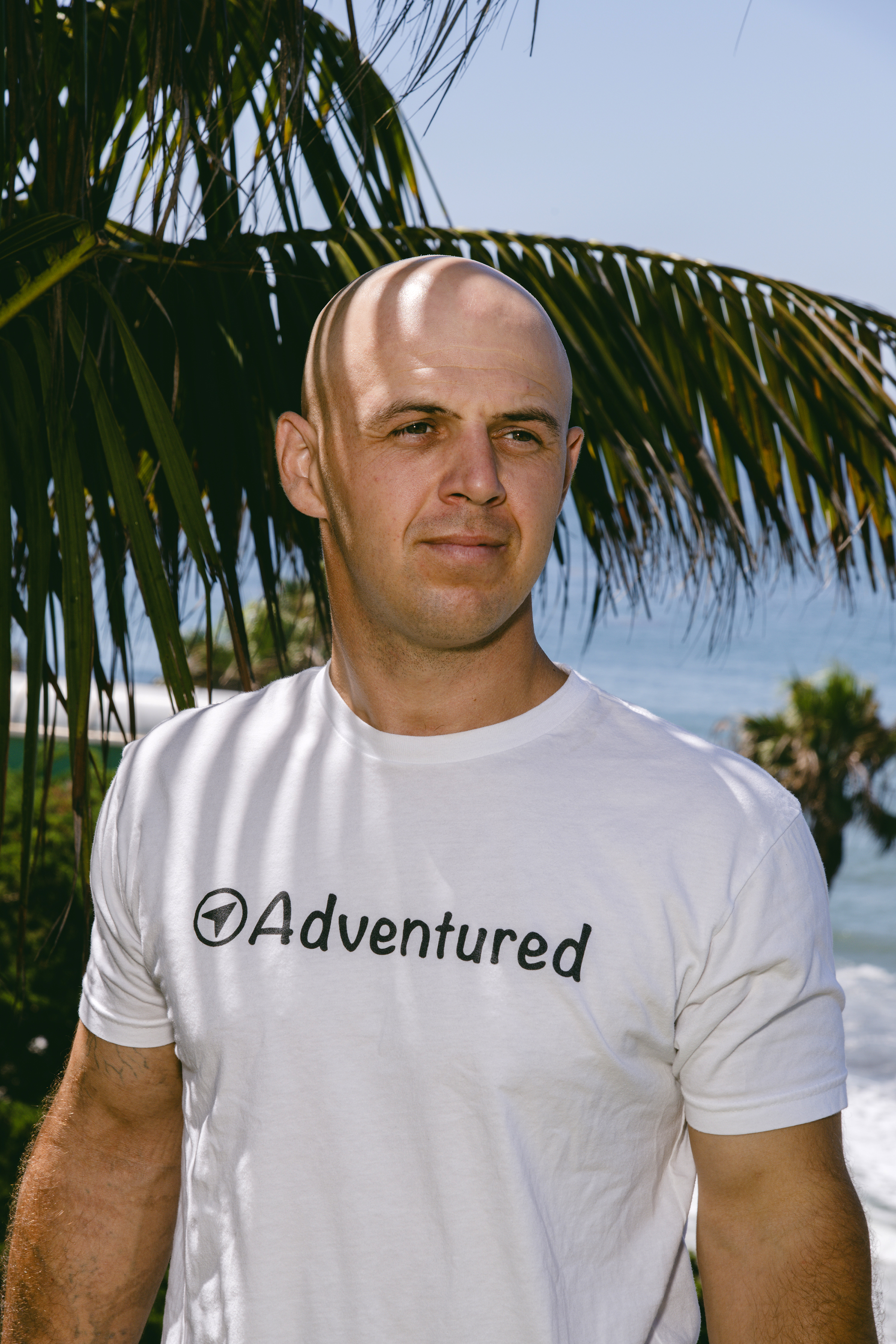
    In 2021, Trevor Jacob, a former U.S. Olympic snowboarder, flew a 1940 Taylorcraft plane far above the hills of Los Padres National Forest in Southern California and made a decision he would spend years wishing he could undo.

    Cameras he had mounted to record his flight for an online audience captured him announcing that the plane had engine trouble before he bailed out.

    A camera attached to a selfie stick he held recorded him parachuting safely to the ground, while cameras fixed to the plane captured it slamming into a hillside.

    He posted a 13-minute video on YouTube titled I Crashed My Plane, which amassed some 5 million views. As it turned out, it was a confession.

    Federal investigators later determined that the plane had never malfunctioned: Jacob had staged the crash, hoping for online fame.

    The attention was fleeting.

    The stunt eroded his life and led to a federal prison sentence.

    Jacob is among a growing number of social media influencers who push the boundaries of safety and good taste in the quest for views, experts said.

    Influencers, sensing that the algorithms reward extreme content over routine videos, are navigating this landscape, one where outrage, fear, and awe hold viewers’ attention a little longer than tamer fare.

    Gone are the years when internet fame was within reach for a teenager filming dance routines in a bedroom, or a parent teaching recipes from a kitchen.

    Attention is currency, and sometimes it’s costly.

    Around the world, aspiring influencers trespass on skyscraper roofs. They block highway traffic. They provoke strangers in grocery stores, airports, and malls. They dangle from helicopters, cranes, trains, and cliffs for clips lasting only seconds.

    Some are arrested. Others are hospitalized. And, in tragic cases, some have died.

    Psychologists who study this field are not surprised.

    “As the tech has evolved and influencers stand to earn fame and wealth, it is probably not surprising that some people are willing to risk prison or even death,” said Kaveri Subrahmanyam, a psychologist at California State University.

    That bet — fame and wealth weighed against the risk of prison or worse — is one that Dalton Eatherly appears to have made.

    To his thousands of followers he’s known as Chud the Builder. A self-described “America-first” influencer, he has garnered views by livestreaming confrontations with Black people, which often included racial slurs and harassment.

    In May, one of Eatherly’s confrontational pursuits for clicks almost proved fatal.

    A dispute with a man outside the Montgomery County Courthouse in Clarksville, Tenn., ended with gunfire as both men wielded firearms.

    A video later surfaced of Eatherly on a stretcher with a microphone attached to his lapel.

    Eatherly claimed self-defense but was later charged with several counts, including attempted murder. The case remains pending.

    He and his lawyer could not be immediately reached for comment.

    Social media platforms TikTok, Kick, and YouTube (which is owned by Google’s parent company, Alphabet) and Facebook and Instagram (which are owned by Meta) said that they enforce community guidelines meant to restrict objectionable and dangerous content and that they ban users who violate their policies.

    “To prevent copycat behavior, we prohibit people from facilitating, organizing, or promoting harmful activities,” a Meta representative said in a statement.

    Experts who have studied digital behavior and online incentives said boundary-pushing stunts are unlikely to ease as long as social media platforms reward such content.

    “In many cases, that means escalating toward ever more extreme claims and risky behaviors that can endanger not only creators themselves but also their audiences, for whom it’s increasingly difficult to distinguish between what’s truly beneficial and what may be outright harmful,” said Jasmina Tacheva, an assistant professor at the School of Information Studies at Syracuse University.

    Eatherly is not the only influencer to have courted danger.

    In Loudoun County, Va., Sheriff Mike Chapman’s department responded to a call involving Tanner Cook, a YouTuber behind a channel called Classified Goons.

    Cook, who is known for harassing unsuspecting strangers, repeatedly confronted a DoorDash driver in the Dulles Town Center in Sterling, Va.

    Cook shoved a phone into the driver’s face while a vulgar phrase played in a loop in what was an escalation of confrontational stunts he has filmed in other places.

    The driver, Alan Colie, shot Cook, who survived.

    A jury acquitted Colie of aggravated malicious wounding, finding that he acted in self-defense, but convicted him of discharging a firearm in an occupied building.

    After the verdict, Cook said the shooting would not change his approach.

    “We are going to continue the videos and keep it pushing,” said Cook, whose YouTube channel has 66,000 subscribers. “It is what it is.”

    Recent uploads show him streaming in stores, falsely accusing a stranger of stealing and of him being thrown out of businesses. A video posted in early 2026 is titled “I almost got shot again!”

    Cook and Colie did not respond to multiple requests for comment.

    Chapman’s office regularly warns residents about viral challenges and online trends. The pursuit of a laugh, he said, can carry real-world consequences.

    “You may think this is funny,” Chapman warned, “but this could end up as a disaster.”

    The trend stretches beyond the United States.

    The British government recently called on social media companies to remove more dangerous content, including videos of users filming themselves driving dangerously, after a string of deadly crashes that were linked to online stunts.

    A press officer for Ofcom, the government’s regulator of communications services, said it opened an investigation into TikTok’s compliance with its child-safety responsibilities in July.

    “Online content which encourages dangerous behavior and treats it as entertainment is totally unacceptable, and can have tragic and heartbreaking consequences,” the official said in a statement.

    A TikTok representative said content that promotes dangerous behavior or could lead to serious injury violates its community guidelines, which prohibit criminal behavior, hate speech, and physical or sexual abuse, among other categories.

    The platform has been redirecting videos of dangerous challenges to a safety center page. Violators can also be permanently banned, the representative said.

    In France, Raphaël Graven, an internet personality who routinely subjected himself to acts of violence and verbal humiliation for an audience, died last year during a live broadcast on the platform Kick.

    Some bruises on Graven’s body were found during an autopsy but none that could explain his death, French officials said.

    The two men who ran the livestream channel, Owen Cenazandotti and Safine Hamadi, were not accused of causing the death but were convicted in August of aggravated violence, incitement to hatred, and violence online. Both received suspended prison terms and were fined.

    In a statement, Kick cited its community guidelines and terms of service, saying that users “must comply with all laws and regulations in their country” and that violators could have their content removed, be suspended, or banned.

    The company’s rules prohibit extreme violence, depictions of self-harm, and graphic gore as well as content that puts personal safety at risk.

    Kick said it moderates livestreams while considering “the full context” to evaluate potential violations.

    Today, Jacob reflects on the lessons he learned from his plane crash stunt.

    “I don’t regret what I did because it’s taught me a massive life lesson, and I’ve become somebody that I never otherwise would have become,” he said. “But that doesn’t mean that it was OK, and that I didn’t make a terrible decision.”

    Looking back, he said there were other motivations, including money, curiosity, and a desire to make a spectacular feat a reality. But attention was always part of the calculation.

    He decided then that the risk was worth taking. Federal authorities and YouTube concluded otherwise.

    “We have clear policies prohibiting extremely dangerous challenges, dangerous or threatening pranks, and other harmful or dangerous acts,” a YouTube representative said in a statement. “For example, the plane crash video was removed and the creator was suspended from the YouTube Partner Program after the incident.”

    Prosecutors later said that Jacob intentionally destroyed evidence by removing the wreckage and lying to investigators about its location.

    Jacob, who pleaded guilty to one federal count of destruction and concealment and served a little over four months of a six-month prison sentence, said that the legal case consumed roughly five years.

    The consequences stretched far beyond the courtroom.

    “It completely decimated my entire life,” he said. “I was homeless. I lost all my money. It’s been a hell of a climb out of hell.”

    (STORY CAN END HERE. OPTIONAL MATERIAL FOLLOWS.)

    For younger viewers, the rewards from creating a spectacle — which come in the form of comments and views — may leave a strong impression, tempting them to perform their own dangerous acts.

    Often, experts said, younger viewers give little thought to the consequences.

    “When you’re younger, you’re thinking less about the possible outcomes,” said Anton Ivanov, an assistant professor of information systems at the Gies College of Business at the University of Illinois. “You’re more interested in the immediate results.”

    This article originally appeared in the New York Times.
  • Sweden swings back left, bucking a trend in Europe

    Sweden swings back left, bucking a trend in Europe

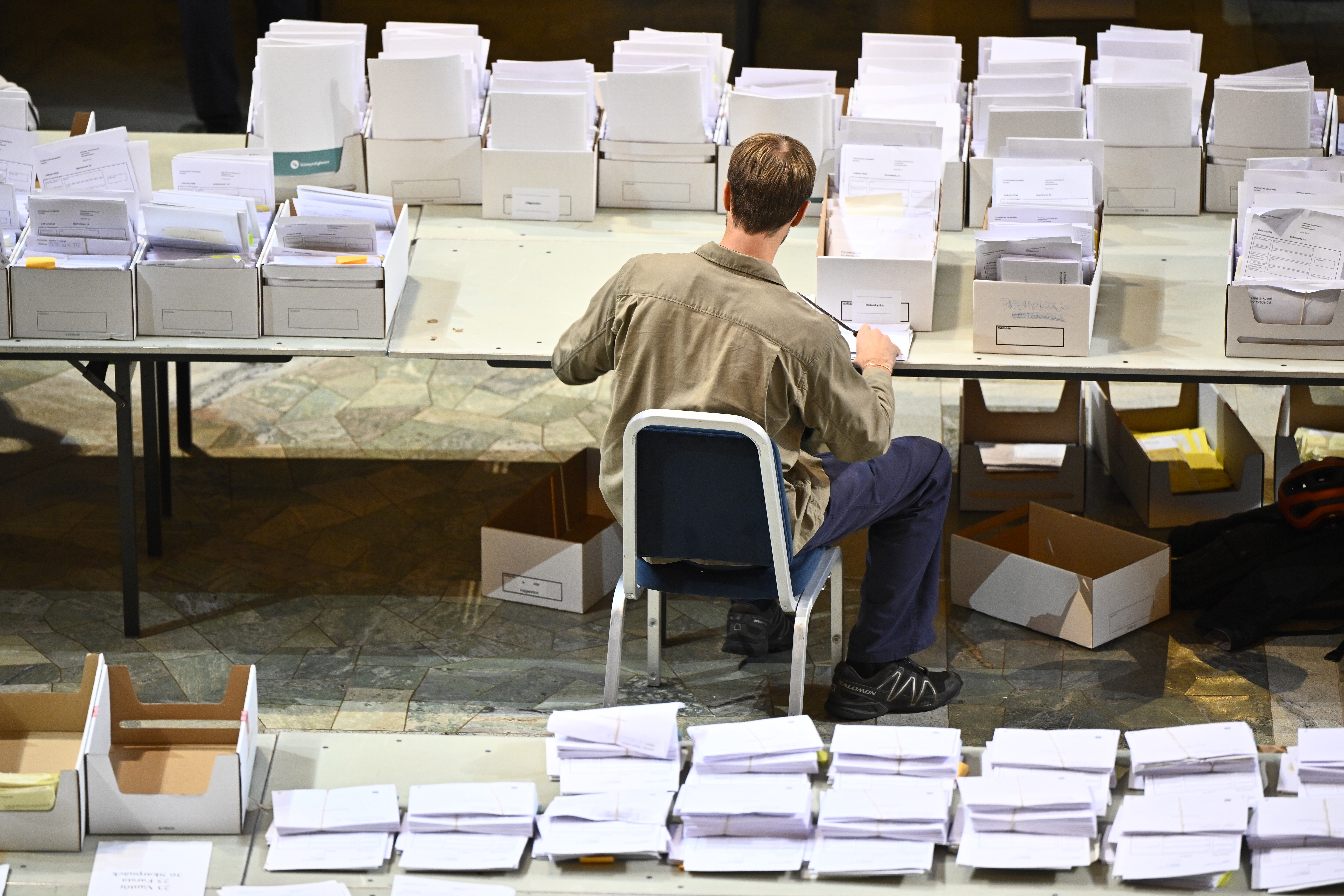
    Sweden’s center-left political parties squeaked to victory in elections this week, according to results released Thursday, making the country one of the first in Europe to tap the brakes on the far right’s seemingly steady march toward power.

    Voters cast their ballots Sunday, but the contest was so tight that it took days to count the last stray votes before a conclusion could be reached.

    The next prime minister is likely to be Magdalena Andersson, leader of Sweden’s stalwart center-left party, the Social Democrats, though experts predicted that there could be weeks of sticky negotiations before the next government is announced.

    As in other parts of Europe, Swedish nationalists had made big gains in recent elections by railing against migration and blaming migrants for crime.

    This election showed that in Sweden at least, the far right, which was essential to the outgoing center-right coalition’s hold on power, had become a victim of its own success. Experts said the country had cracked down so decisively on crime and migration that it essentially took those issues off the table.

    “The general sense is crime is now under control; migration is now under control,” said Lisa Pelling, the director of a progressive research group in Stockholm.

    The consequence, she said, is that “people want something else from the government.”

    Polls before the election showed that voters were prioritizing healthcare and education, issues that tend to favor the left.

    According to the election results, the center-left won 49.5% of the vote, compared with 48.8% for the center-right. That gives them a slight edge in parliament: 176 seats to 173. The turnout was characteristically high, at 85%.

    Andersson, a familiar face, was chosen as Sweden’s first female prime minister a few years ago and served as finance minister before that, when her Social Democratic Party dominated Swedish politics.

    If she can hash out a government in the coming weeks, it is likely to embrace many of the positions the party had pushed before, including what it called a “feminist foreign policy” that prioritized reproductive freedom and got into tangles with Saudi Arabia over its treatment of women.

    But forming a government won’t be easy. Sweden’s center-left is a real mishmash. It includes a formerly communist party and a pro-business one influenced by farmers. Parts of the coalition have already voiced doubts about working with each other.

    And Andersson’s Social Democrats are coming into this as a weakened force, having earned just 28% of the vote, one of their worst performances ever.

    Social democratic parties across Europe have lost ground to right-wing parties that present themselves as the new protectors of the working class, said Ann-Cathrine Jungar, a political scientist at Sodertorn University in Sweden.

    “What is noteworthy about this election is that socioeconomic issues were their home turf, and yet they were unable even to maintain their support,” she said of the Social Democrats.

    Part of the explanation, Jungar said, may be that center-left politicians have themselves moved toward tougher positions on immigration and crime, driven by the far-right Sweden Democrats, the biggest loser in this election.

    The Sweden Democrats have tried hard to distance themselves from their neo-Nazi roots. But in this election, they went from being the second-most popular party to the third, going from 20.5% of the vote in the last election to 17.5% this time. It was the party’s first significant erosion of support since it roared onto the scene in the late 1980s, which could raise questions about its future.

    Jonas Hinnfors, a political scientist at Gothenburg University, said Swedish society was growing uncomfortable with the extreme positions the far right has been advocating on migration, such as deporting large groups of lawful migrants, including teenagers. That is too extreme for most Swedes, Hinnfors said, and many people in Sweden have come to appreciate how important migration is for their labor market.

    “There is a kind of developing consensus that immigrants are needed,” he said. “And that is not where the Sweden Democrats are.”

    He doesn’t expect the far right to evaporate. But he said this election was “a big blow to them.”

    This article originally appeared in The New York Times.

  • Carney calls for EU-Canada pact amid ‘ferocious storm’

    Carney calls for EU-Canada pact amid ‘ferocious storm’

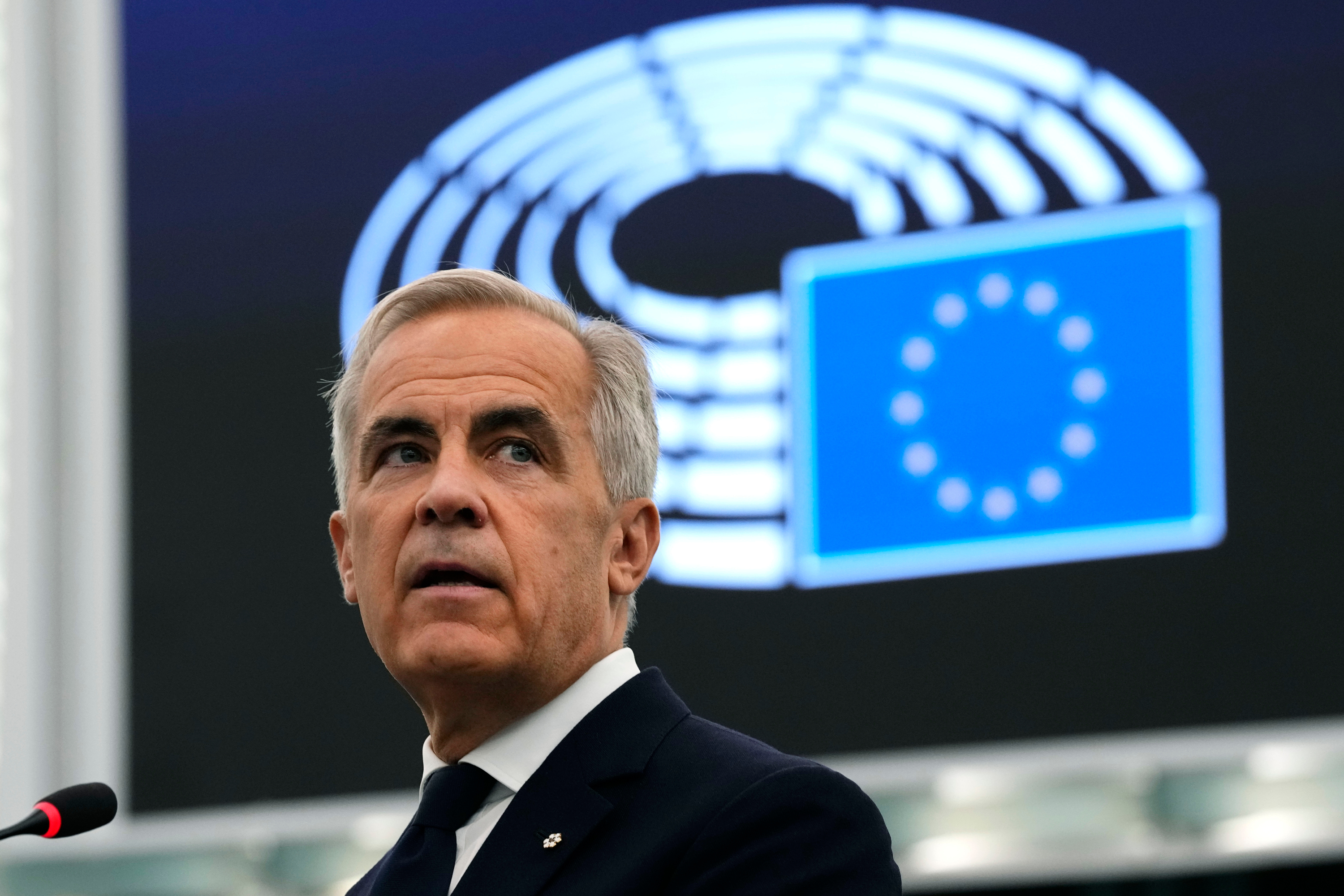
    STRASBOURG, France — Canada’s newly proposed associate membership in the European Union will help to secure sovereignty and freedom for the country amid a “ferocious storm,” Prime Minister Mark Carney told the European Parliament on Thursday, adding that the move would also make his nation a better partner for the United States.

    President Donald Trump, reacting Wednesday to the potential alliance between Ottawa and Brussels, said the move could be perceived as “a hostile act.”

    “If it’s a bad intention, we’ll put very heavy tariffs on Europe,” he added.

    Carney countered on Thursday. “This alliance is a positive process. That’s my response to the American president. It’s a positive thing,” he told reporters after his European Parliament speech.

    “A stronger, more resilient Canada will be a more effective partner with the United States — same with the European Union,” he added.

    Carney said the associate membership outlined by European Commission President Ursula von der Leyen on Wednesday would strengthen core areas of life on both sides of the Atlantic.

    The push for closer links comes amid a historic low for U.S. ties with Canada and turbulence in the relationship between Washington and the European Union as Trump has upended traditional American alliances.

    Carney said Canada and the European Union were not looking to become another superpower.

    “I am not proposing a third bloc in order to become a great-power rival only with better manners,” he said during his speech to European lawmakers in Strasbourg, France. “We do not seek power to dominate others,” he added.

    Associate membership for Canada in the European Union could be the closest linkup the bloc of 27 nations has with a nonmember state. The move highlighted a deep desire of traditional American allies to seek stability by banding together as Trump remakes the U.S. role in the world.

    Carney suggested that Europe and Canada were seeking to band together “so that no one can control our open markets, impair our sovereignty, threaten our territorial integrity or undermine our freedoms, our democracies, our rule of law.”

    Trump has instigated a trade war against Canada, the United States’ closest ally and second-largest trading partner, and routinely said he wanted the northern neighbor to become the 51st state. He has also pulled the United States away from the traditional close alliance with the European Union, imposing tariffs and barriers to trade, and he has weakened the NATO defense pact by threatening to drastically cut the U.S. contribution.

    Carney did not mention the United States or Trump by name during his speech in Strasbourg, but he made clear allusions.

    “Economic integration is now being used as a weapon, and tariffs as a means of leverage,” he said. “Financial mechanisms are employed for coercion. Supply chains represent vulnerabilities to be exploited.”

    Carney said youth from both Canada and the European Union should be able to travel and study in each other’s territories through participation in the bloc’s student mobility program, Erasmus. That program is credited with building generations of young Europeans with joint identities and shared experiences.

    Canada would most likely need to contribute financially to participate in Erasmus, as well as in any other EU programs the country might join, though the fine print of how the alliance would work has not yet been discussed.

    Carney’s vision for how the European Union and Canada could work together also extended to major, foundational parts of their economies and society. He said the two should launch a “deep cooperation in the full range of strategic capabilities,” including industries involving critical minerals, defense, artificial intelligence and computing, and energy security. He also suggested that the bloc and Canada could work on managing payment systems.

    Control over services such as payment mechanisms has been worrying policymakers in the European Union and Canada because many of those services are controlled by the United States or by American companies. That concern is front and center as the debate grows about the future of AI.

    “Technology is transforming the nature of warfare, the structure of economies and the capacity of states to govern,” Carney said.

    He also took aim at online platforms, of which the largest are American.

    “Tech platforms aspire to sovereignty,” he said. “They seek to set the terms of access. They want to dictate regulatory rules — or even bypass them.”

    “They want to control our data, spread disinformation and steal our children’s childhood,” he added.

    Carney noted that Canada was endowed with major critical mineral and energy resources, which the country wanted to export to markets in the European Union. The two already have agreements in place for such collaboration. This year, Canada secured a major contract to sell liquefied natural gas to Germany.

    The exact shape of the alliance between Canada and the European Union has been unclear because there is no formal or legal framework for an “associate member” of the bloc.

    In Canada, the conservative opposition has raised concerns that an alliance might encroach on the country’s sovereignty. In Europe, officials from EU member states worry that the label could antagonize other countries with deep ties to the bloc, such as Britain and Norway, as well as those that are in the arduous process of becoming full members, such as Albania.

    In his address, Carney touched on those issues, saying, “Canada is not in a position or seeking to become a full member of the European Union.”

    “The precise nomenclature is a question for Europe,” he added.

    Carney noted that the Canadian Parliament, which reconvenes next week after the summer recess, would get a chance to debate the future EU-Canada relationship and put the proposal to a vote.

    During his speech, Carney made extensive references to the deep historical bonds between Europe and Canada, framing the new cooperation as existential. He was frequently interrupted by applause from members of the European Parliament as he harked back to past battles they had fought together.

    “Freedom and life must be earned every single day,” Carney said. “Every day. Not once in 1945 or 1956 or 1989. Every day, including this one.”

    The lawmakers, with the exception of many from far-right parties, gave him a lengthy standing ovation.

  • Is there anything a fruit fly brain can’t do?

    Is there anything a fruit fly brain can’t do?

    What can a fruit fly do? Buzz around ripe bananas, sure. But maybe, a whole lot more. Like parallel park. Or play Minecraft.

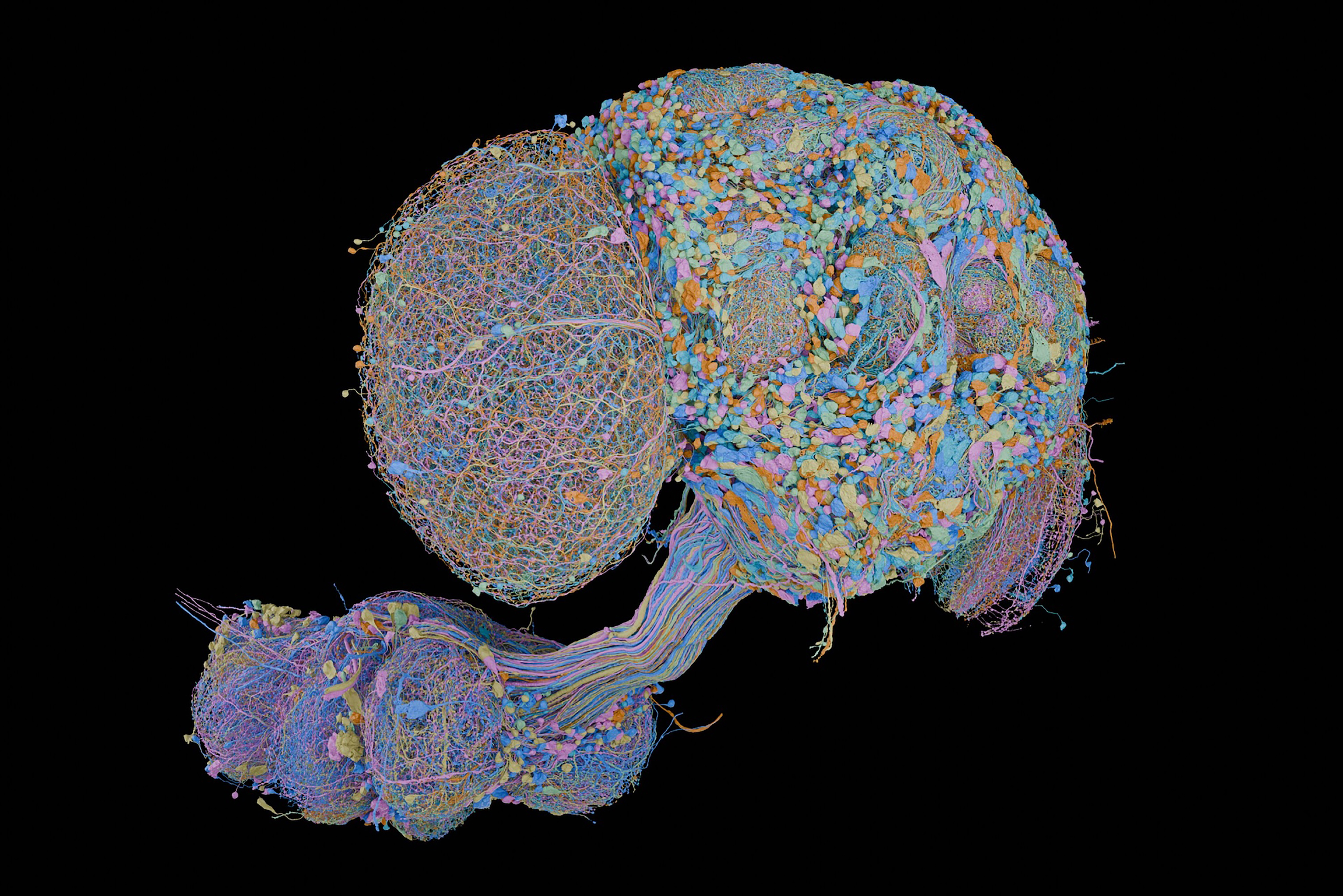
    Creative internet users have in recent days taken a complete map of a fruit fly’s 166,000 neurons, published by Google, and made simulated flies do some things that are pretty impressive, given that these insects have a brain the size of a poppy seed. One has been trained to solve a Rubik’s Cube. Another dances to the Village People’s “Y.M.C.A.” in response to four tones. Others have envisioned fruit flies playing poker and blackjack and slicing a doner kebab.

    In general, the goal of these engineers and artists is not to show what a fly can do, but “what’s the dumbest thing we can make it do,” said Mark Unthank, a software developer who got a fly to parallel park a car after hundreds of failed attempts. Unthank, who lives in Italy, also programmed a fly to use a car’s blinkers when turning because he was frustrated that so few human drivers seem to use them.

    “That’s how easy it is,” he said. “Even a fly could do it.”

    Producing the map of the fly’s brain, on the other hand, was anything but easy. It was serious research meant to advance the study of neuroscience.

    For years, researchers worked to develop sophisticated imaging techniques to map the connections within the nervous systems of various organisms. Some have focused on fruit flies because of the insect’s relative lack of complexity; while the fly has just 166,000 neurons, a human being has about 86 billion.

    Scientists call the neural maps connectomes, similar to the genomes that help map the genes that determine an organism’s traits.

    Researchers at the Janelia Research Campus at the Howard Hughes Medical Institute in Virginia completed the new map of the adult male fruit fly’s brain in partnership with Google. The effort involved hundreds of scholars.

    Scientists hope the map will help them understand how animals perceive the world, store memories, and react to stimuli.

    “Our goal is not simply to demonstrate that a fly brain is capable of generating movement in a fly — which we obviously know — but how,” said Nelson Spruston, a neuroscientist who is vice president and executive director at the Janelia campus.

    The institute is working to develop maps of the brain in two fish — a larval zebrafish and an adult Danionella. The research, it said, could one day reveal how humans develop Alzheimer’s or depression.

    For now, the Janelia researchers have been pleasantly surprised to see fruit flies driving cars and playing video games.

    “I certainly did not imagine this kind of application of our work, but I think it’s exciting and it’s fun, and it sort of demonstrates the power of open science,” Spruston said.

    Arie Matsliah, a research scientist at Princeton University, said the release of the maps has coincided with a spike in the capability of artificial intelligence-powered coding tools that allow people to create simulations with just a few simple prompts. Matsliah helped develop FlyWire Codex, an online portal for the maps that has seen thousands of downloads a day, he said.

    “It’s almost becoming a meme now,” he said. “Everyone is trying different things.”

    Alex Wormuth, a software engineer in Tulsa, Okla., said he used an OpenAI tool to make the fly play the 1990s first-person shooter video game Doom, which he named Doomfly. If the fly shoots and kills an enemy, it triggers the insect’s dopamine receptor, encouraging it to kill again to survive, he said.

    So far, the fly is not very good at Doom, he concedes.

    “It has been able to kill an enemy,” he said, “but I don’t think it’s learned that’s what it needs to do to beat the game.”

    Wormuth has also given a simulated fruit fly $100 in real bitcoin, with the option to buy, sell, or hold. For a brief period on Friday, he said, the fly made about $1 before the cryptocurrency’s price dropped.

    The simulations, although based on a fruit fly brain, do not actually account for the complex interactions between neurons, muscles, and other systems in a real fruit fly, Matsliah said.

    “They assume things, or they substitute the missing components with things that are not biological,” he said.

    That includes modifying the strength of the connections between neurons, which makes the simulations “substantially different from a real fly,” Spruston said.

    “It’s not like a fly brain in real life can play Doom, obviously,” he added.

    “Nevertheless, there is some reality there,” Matsliah said.

    Parallel to the existential anxieties brought up by recent rapid advancements in AI, some people have wondered whether the flies might have some form of consciousness as they twist and turn the faces of a Rubik’s Cube or try to win at poker.

    Wormuth, the Doomfly creator, has his doubts.

    “I don’t believe that’s happening,” he said. “But I think it’s an interesting thought experiment because, someday, we may have something like this for the human brain.”

    This article originally appeared in the New York Times.
  • Trump bars some South Africans over claims of anti-white discrimination

    Trump bars some South Africans over claims of anti-white discrimination

    JOHANNESBURG — The Trump administration imposed visa restrictions on selected South Africans on Tuesday and warned that it could take further punitive actions if South African leaders did not address President Donald Trump’s concerns over what he sees as discrimination against white people.

    The visa policy expands the administration’s efforts to punish South Africa since Trump last year accused the government of seizing land from Afrikaners, a white South African minority, and allowing them to be killed in what he has labeled genocide. Claims of genocide against white South Africans are widely acknowledged as false, and President Cyril Ramaphosa has said Trump’s policies toward South Africa are racist.

    The visa restrictions will prevent selected individuals from entering the United States. Under law, the government is not allowed to publicly disclose who is affected.

    In a statement, Secretary of State Marco Rubio said the United States remained “gravely concerned about racially motivated crime and government-sponsored discrimination occurring against the Afrikaners and other minority populations in South Africa.”

    He said the restrictions would target South Africans involved in race-based discrimination, those responsible for a law that enables the government to seize land without compensation, and those who incite violence against racial minorities.

    In a statement, South Africa’s foreign minister, Ronald Lamola, said Washington’s unilateral action “once again aligns with the misrepresentation of South Africa’s domestic policy by fringe groups.” He called on the United States to respect South Africa’s sovereignty on handling domestic issues.

    The policy was announced less than three weeks after Ramaphosa met with the U.S. ambassador, Leo Brent Bozell III. The South African government described the engagement as “an opportunity to strengthen and recalibrate” the relationship between the countries.

    In a social media post Wednesday, Bozell said he had “attempted time and again to express” that South Africa could face severe consequences if it did not take action on the administration’s demands, which include exempting American companies from Black ownership requirements and rolling back a land expropriation law.

    “This visa restriction policy is only the first step in a series of escalatory measures that will show America’s firm resolve in this matter,” Bozell wrote.

    The U.S. move was the latest sign of the deteriorating relationship between the United States and South Africa.

    This article originally appeared in the New York Times.
  • Charlie Kirk’s family accuses university of ‘stunning’ security failures

    Charlie Kirk’s family accuses university of ‘stunning’ security failures

    The family of slain conservative activist Charlie Kirk has accused the Utah university where he was killed last year of “stunning” security failures that made him an easy target for a rooftop assassin.

    In a legal notice filed this month, lawyers for Kirk’s wife, parents, and children said Utah Valley University did not have a written security plan or hold a security briefing before Kirk arrived for an open-air debate last September that drew a crowd of thousands.

    They also said the university’s police chief had failed to address concerns raised by Turning Point USA, the conservative activist group founded by Kirk, about how easily people could climb onto the rooftops that overlook the sunken plaza where he was shot.

    The accusations came in a “notice of claim” that lawyers for the Kirk family sent to the state of Utah earlier this month and made public Wednesday. Kirk’s family has not yet sued, but the notice is a potential precursor to a wrongful-death lawsuit against the public university or the state.

    “His murder was entirely preventable,” Brett Parkinson, a lawyer for the Kirk family, said in a statement.

    In a statement Tuesday, Utah Valley University said its “focus remains on supporting our campus community” but declined to comment further on the notice. It is conducting its own review of security surrounding the shooting.

    Kirk, one of the country’s most influential and visible conservative activists, made Utah Valley University in Orem the first stop of his “American Comeback” tour of college campuses. About 3,000 people showed up on Sept. 10, 2025, to see him debate political opponents on a sunny afternoon.

    He was just minutes into the event and answering an audience member’s question when he was shot in the neck by a gunman perched on a rooftop about 400 feet away.

    In the legal notice, lawyers for Kirk’s family said the university’s security decisions “ultimately rendered Mr. Kirk helpless to the rooftop shooter in an assassination that could have been avoided.”

    According to the notice, a Turning Point USA official texted Jeff Long, the university police chief, before the event to relay concerns from a Turning Point campus chapter about students’ ability to take staircases to building rooftops.

    “It would be nice to either have it controlled access or allow one of my guys to be there as well. If possible,” a Turning Point official texted Long, according to the legal notice.

    Kirk’s lawyers say Long responded, “I got you covered.”

    Lawyers for the Kirk family argued in the legal notice that the university should have been on alert for a rooftop sniper after a would-be assassin fired at President Donald Trump in 2024 from a roof outside a rally in Butler, Pa.

    Surveillance videos and testimony from investigators suggest that Tyler J. Robinson, the 23-year-old man charged with aggravated murder in Kirk’s killing, encountered virtually no obstacles or resistance on his way to the roof. Robinson, who could face the death penalty, has pleaded not guilty.

    Surveillance videos from the morning of the shooting captured the gunman as he walked to a railing on the roof of a campus building and then left. When he returned later, he “crawled to a sniper perch” along the edge of the roof, took aim at Kirk, and fired, according to a legal filing by prosecutors.

    The legal claim filed by Kirk’s family said the university did not fly drones or monitor its surveillance cameras in real time during the event — actions that might have spotted the gunman.

    It also says that despite Kirk’s fame and the size of the crowd, the university only had six officers on duty that day and did not ask police in Orem or nearby Provo for help until after the fatal shot was fired.

    This article originally appeared in the New York Times.

  • Trump administration outlines plan for signs outside Smithsonian museum

    Trump administration outlines plan for signs outside Smithsonian museum

    President Donald Trump remains determined to install warning signs outside the Smithsonian’s National Museum of American History to alert the public that the institution, in his view, does not accurately present U.S. history.

    In letters to two senators, the Interior Department outlined a plan for 12 temporary signs to be installed at a total cost of $84,000. The letters did not specify the dimensions or language of the signs, which were originally ordered in July, but it went into considerable detail about the kind of information they plan to convey.

    In the letter to Sen. Lisa Murkowski (R., Alaska), dated Sept. 3, Doug Burgum, the interior secretary, said he was responding to questions about Trump’s March 2025 executive order, “Restoring Truth and Sanity to American History.” The order described a “revisionist movement” across the country that it said “seeks to undermine the remarkable achievements of the United States by casting its founding principles and historical milestones in a negative light.”

    Americans should enter the National Museum of American History “with relevant information about the curators’ interpretation of history and their stated goal of changing the viewpoints of visitors,” said the letter, which was earlier reported in the Atlantic on Tuesday. Instead, the letter argued, the museum and Smithsonian’s leaders “have altered the museum’s role from accurately and coherently telling America’s story to using the museum as a tool to advance personal, radical ideologies.”

    “We believe the public should enter the museum fully equipped with the information needed,” the letter said, “to evaluate whether to invest their time viewing these exhibits and programming.”

    The museum’s director, Anthea M. Hartig, has contested the thrust of a July 4 White House report that accused her of “radical activist ideology” and the museum of undermining “faith in American institutions.”

    Although the letter said the language of the signs had not been finalized and gave no installation timeline, it described some of the topics they were intended to address, all of which had been outlined in the White House report.

    For example, the letter said the signs should “ensure parents bringing young children to the museum are equipped to protect the well-being of their children” regarding exhibits that “present ideological viewpoints inconsistent with biology, including ideologies that sex is not binary, that biological men can be women, and that biological men should be permitted to compete in women’s sports.”

    Burgum’s letter said a copy had also been sent to Sen. Jeff Merkley (D., Ore.).

    In laying out a case for the signs, the letter was particularly critical of the Smithsonian’s secretary, Lonnie Bunch III, who announced his resignation last week.

    “Visitors should be aware of Smithsonian Secretary Lonnie Bunch’s history of invidious discrimination and anti-white animus,” the letter said, citing a 2000 essay in which Bunch “described the museum profession as ‘awash in whiteness’; wrote that ‘the real issue is not money but the monochromatic nature of our institutions’; and stated, ‘until we change the tint and tone of our workforce, we are just dancing around the edges of our greatest failure.’”

    Bunch and the Smithsonian did not immediately respond to requests for comment.

    Mike Gonzalez, a senior fellow at the conservative Heritage Foundation who has written critically about the Smithsonian, welcomed progress on the signage in an interview. “It is in the interest of transparency that museum visitors be warned in advance of the ideological baggage that the Smithsonian leadership has heaved on these exhibits,” he said.

    The letter also took aim at Hartig. “It is disheartening,” the letter said, that “Hartig has stated that history is ‘a prime tool of social justice’; that she views one of her roles as connecting ‘research and scholarship to activism and advocacy.’”

    Trump originally ordered the signs just days after Republican legislators grilled Hartig in two congressional hearings, where she was accused of teaching “national self-loathing.”

    Hartig, in those hearings, insisted that the report “does not fairly or accurately characterize the full body of work at the museum” while acknowledging that “there is always room for improvement.”

    “When historians talk about reframing a traditional narrative, we don’t mean erasing it,” she continued. “We mean adding the evidence, the voices, the objects that earlier tellings left out so that more Americans can see themselves reflected in the national story.”

    This article originally appeared in the New York Times.

  • At least 21 dead in Gaza after building collapse, officials say

    At least 21 dead in Gaza after building collapse, officials say

    A war-damaged building in the Gaza Strip collapsed Wednesday, killing at least 21 people, including children, and trapping many more beneath the wreckage, according to local officials.

    The incident shines a light on the perilous conditions in Gaza after the devastating war that followed the Hamas-led attacks on Israel on Oct. 7, 2023. Officials have warned that many more damaged buildings are at risk of collapse. The lack of progress on reconstruction has forced residents to choose between living in seriously compromised buildings or in tents.

    Dozens of people were living in the Saada residential building in Gaza City when it caved in around 2 a.m. local time, according to the Civil Defense rescue service, which is part of the Hamas-run Interior Ministry in Gaza.

    The officials added that the building had previously been hit by an Israeli strike, though it was unclear when. The Israeli military did not respond to a request for comment.

    Search-and-rescue teams pulled survivors from the wreckage Wednesday morning as they searched for missing residents.

    “We can see people still trapped under the rubble,” said Raed al-Dahshan, director of Civil Defense in the Gaza City area. “We’re doing everything we can to extract them.”

    Al-Dahshan said authorities in Gaza had warned residents that the building was unstable, but that many did not leave because they did not want to be displaced and potentially end up in worse conditions. He added that there were roughly 70 buildings in the Gaza City area at risk of collapse.

    Humanitarian groups warned that there could be more such deaths in the coming months.

    “With the heavy rains and winds of winter approaching, the risk of damaged buildings collapsing will only increase, putting more lives in danger,” Pat Griffiths, a spokesperson for the International Committee of the Red Cross, said by telephone from Gaza.

    “Choosing between life in a tent — with little privacy or space and exposed to harsh weather — or a building that is damaged and at risk of collapse, just to have a roof over one’s head, is not a choice any family should have to make.”

    The deadly collapse underscores the devastation across Gaza after years of war, which has left entire neighborhoods in ruins. Much of Gaza’s population was displaced by the conflict, and many are now living in damaged buildings.

    After a U.S.-brokered ceasefire agreement was reached in October 2025, Palestinians had hoped that Israel would allow a significant amount of heavy machinery and construction materials into Gaza to begin the long process of removing rubble and rebuilding the territory. Thousands of bodies from the war are still beneath the rubble across Gaza, according to local officials. On Tuesday, the United Nations human rights chief called for international investigators to be allowed into the enclave to recover the remains of Palestinians from beneath damaged buildings.

    Efforts by President Donald Trump’s Board of Peace and regional mediators to advance the ceasefire and pave the way for reconstruction have stalled. Israel has continued to target the territory, despite international pressure to halt its attacks there.

    On Tuesday, an Israeli strike killed a Civil Defense worker and a teenager, according to an official in the rescue service. The Israeli military said it had been targeting Hamas militants, and that the attack was under review.

    The International Committee of the Red Cross and Egyptian-backed rescue teams assisted local emergency crews Wednesday in their search for survivors of the building collapse.

    In a statement, Ramiz Alakbarov, the U.N. humanitarian coordinator for the occupied Palestinian territory, urged international authorities to allow heavy equipment into Gaza to assist in search-and-rescue operations, along with humanitarian aid.

    “Every possible effort must be made to save lives, protect people from further harm and provide families with safer places to live,” he said. “Every minute counts.”

    This article originally appeared in the New York Times.
  • A new drug lifts the fog of sleepiness for those with narcolepsy

    A new drug lifts the fog of sleepiness for those with narcolepsy

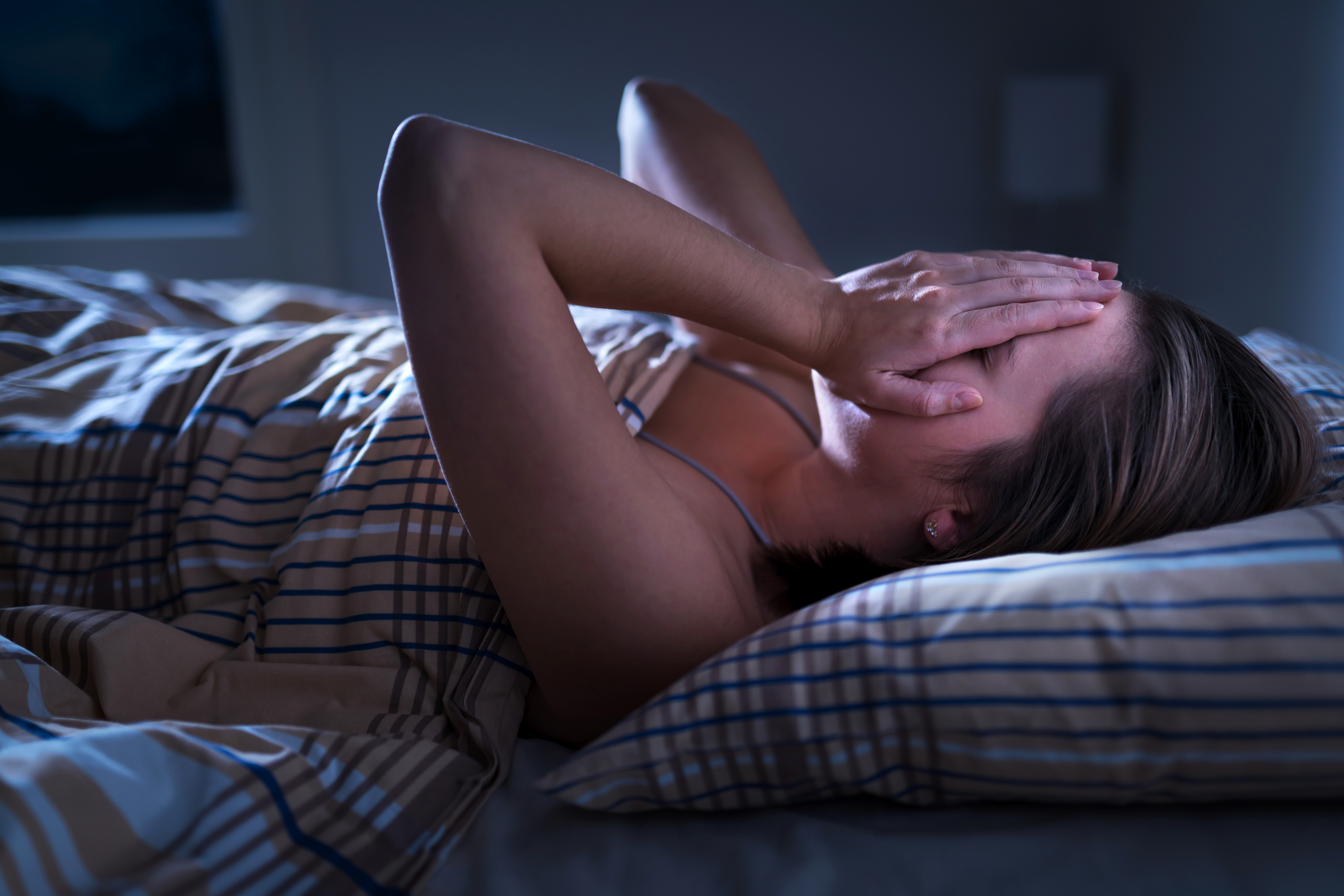
    Many people have a cartoonish idea of narcolepsy, perhaps picturing someone falling asleep standing up.

    What people don’t understand is that sleepiness can infiltrate every aspect of daily life, said Julie Flygare, 42, who was diagnosed with the sleep disorder in 2007, during her second year of law school. It interferes with memory, attention, and weighs down everyday existence like a “heaviness on the skull,” she said.

    While taking her current medications, Flygare has four to six precious hours of wakefulness a day, and still needs a nap. Positive feelings, like, say, the joy of hitting a volley in tennis, trigger episodes of cataplexy; her muscles go slack and her grip on the racket loosens. She, like many other patients, struggled for years to be correctly diagnosed and to find the right combination of stimulants or other drugs to ease her symptoms.

    Since then, Flygare has been waiting, and pushing for, a drug aimed not just at alleviating sleepiness, but at replacing a crucial missing brain chemical. Last month, she saw it happen. A first-of-its-kind drug for the sleep disorder narcolepsy was approved by the Food and Drug Administration, offering a new treatment for people who live with the debilitating fog of sleepiness.

    The new drug developed by Takeda Pharmaceutical Co., called Orzeyful, marks a long-sought success in the quest to mimic an essential brain peptide called orexin, which is missing in people with type 1 narcolepsy. About 120,000 people in the United States suffer from this type of narcolepsy, which causes pervasive sleepiness and episodes of cataplexy. Other companies, including Alkermes and Eli Lilly, are chasing close behind.

    To test narcolepsy treatments, doctors use a “maintenance of wakefulness test” in which a person sits in a dim room for 40 minutes.

    “You have to stay awake. You cannot read, you cannot watch TV, you cannot talk,” said Emmanuel Mignot, a sleep researcher at Stanford University and one of the leaders of the trial testing Orzeyful. “For a normal person, it’s already tough; for a person with narcolepsy, it’s impossible.”

    Before treatment, patients fell asleep within four to five minutes, according to a study published Wednesday in the New England Journal of Medicine. In two late-stage trials, nearly 300 patients between the ages of 16 and 70 received either Orzeyful or a placebo for 12 weeks. On Orzeyful, they could stay awake for more than 20 minutes — about twice as long as currently available medications, according to Thomas Scammell, a sleep researcher at Beth Israel Deaconess Medical Center in Boston.

    Scammell, who was not involved in the study, said he thought that the drug could be “transformative.” Patients taking the drug have reported developing hobbies for the first time; dancing, playing ice hockey or spontaneously socializing.

    Flygare participated in one of the trials testing Orzeyful and recalled that when she was dropped off at the site for her first visit, she had been unable to think clearly and could barely walk because she was off her medications. (It is necessary to have a “blank slate” to test the effects of a new drug.)

    Later, when the same driver picked her up after she’d started the medication, she remembers making a joke. It’s the kind of casual, offhand human interaction that would typically have triggered her cataplexy and made her knees buckle.

    “The wakefulness had a different tone to it; it felt sunnier” compared to her experience with stimulants, said Flygare, who founded a nonprofit called Project Sleep that raises awareness of sleep disorders. The nonprofit receives funding from drug companies, including Takeda, and last year, Flygare served as a consultant to the company on patient perspectives in clinical trials.

    Orzeyful is a pill taken twice a day. It will not be available until the Drug Enforcement Administration determines its classification as a controlled substance, which is expected to occur by November.

    Physicians are thrilled to have a new tool, but there remain many unknowns: How well will it work long-term? Will a drug that activates orexin receptors alter people’s risk for other neurological diseases?

    The long road to the new drug began more than two decades ago, when scientists first discovered that people with narcolepsy lacked orexin.

    Orexins are produced by brain cells and work like a key fitting into a lock, by binding to two different receptors on the surface of cells in a region of the brain called the hypothalamus. Blocking the lock, like sticking a piece of tape over it, was a straightforward drug development problem and several insomnia treatments based on this idea have been approved. But designing a key that opened the lock required more finesse.

    “It’s hard,” said Andrew Plump, president of research and development at Takeda. The drug is an “agonist” that must activate the receptor by binding to it, imitating what naturally occurring orexin does.

    The second problem was that narcolepsy is rare.

    “They said our science is very interesting and exciting, but narcolepsy, after all, is one in several thousands — not very rare, but not very common,” said Masashi Yanagisawa, a molecular biologist at University of Tsukuba in Japan who led one of the teams that discovered orexin in 1998.

    A Takeda scientist who had a friend with narcolepsy initiated the project by screening a vast library of molecules for promising hits. “We got one,” Plump said. “And nobody in their right mind would ever start a drug discovery program with a single hit.”

    The scientist was so passionate that the work began, but it wasn’t a slam dunk. An early version needed to be administered by IV. Another candidate caused liver injury.

    Other companies are following close behind. Beyond sleep, the approval sets off a race to develop a new class of medicines that show early hints of promise in a host of ailments, from ADHD to neurodegenerative diseases.

    Alkermes has a similar drug in late-stage testing against narcolepsy. Blair Jackson, CEO of the Dublin-based company, said it has identified 19 areas within neuroscience where such drugs could have potential. Eli Lilly recently agreed to pay up to $7.8 billion for Centessa Pharmaceuticals, a biotech company with similar drugs in the pipeline.

    “Sleep is the low-hanging fruit,” said Luis de Lecea, a molecular biologist at Stanford and part of the team that also discovered orexin — though they called it hypocretin — in 1998. Narcolepsy patients lack orexin, but it also declines with Alzheimer’s disease, Parkinson’s disease, PTSD, and even normal aging.

    Wall Street analysts have drawn hopeful comparisons to the GLP-1 drugs, which started out as diabetes treatments, then expanded into weight loss and are now being tested against a slew of diseases.

    Flygare is hopeful, too. She began organizing sleep awareness walks with just a few friends, at a time when drug companies had little interest in the field.

    “This has been feeling like such a full circle moment for me,” she said.

    This article originally appeared in The New York Times.