Category: New York Times

  • ‘You know what happens if you don’t vote’: 7 takeaways from the GOP convention

    ‘You know what happens if you don’t vote’: 7 takeaways from the GOP convention

    Vice President JD Vance was billed as the headliner of the second night of the Republican convention, but President Donald Trump stole the show.

    With a hug and a handshake, Vance exited stage right after his speech as Trump returned to the place he likes most — center stage — to make his final pitch of the convention to keep Republicans in power.

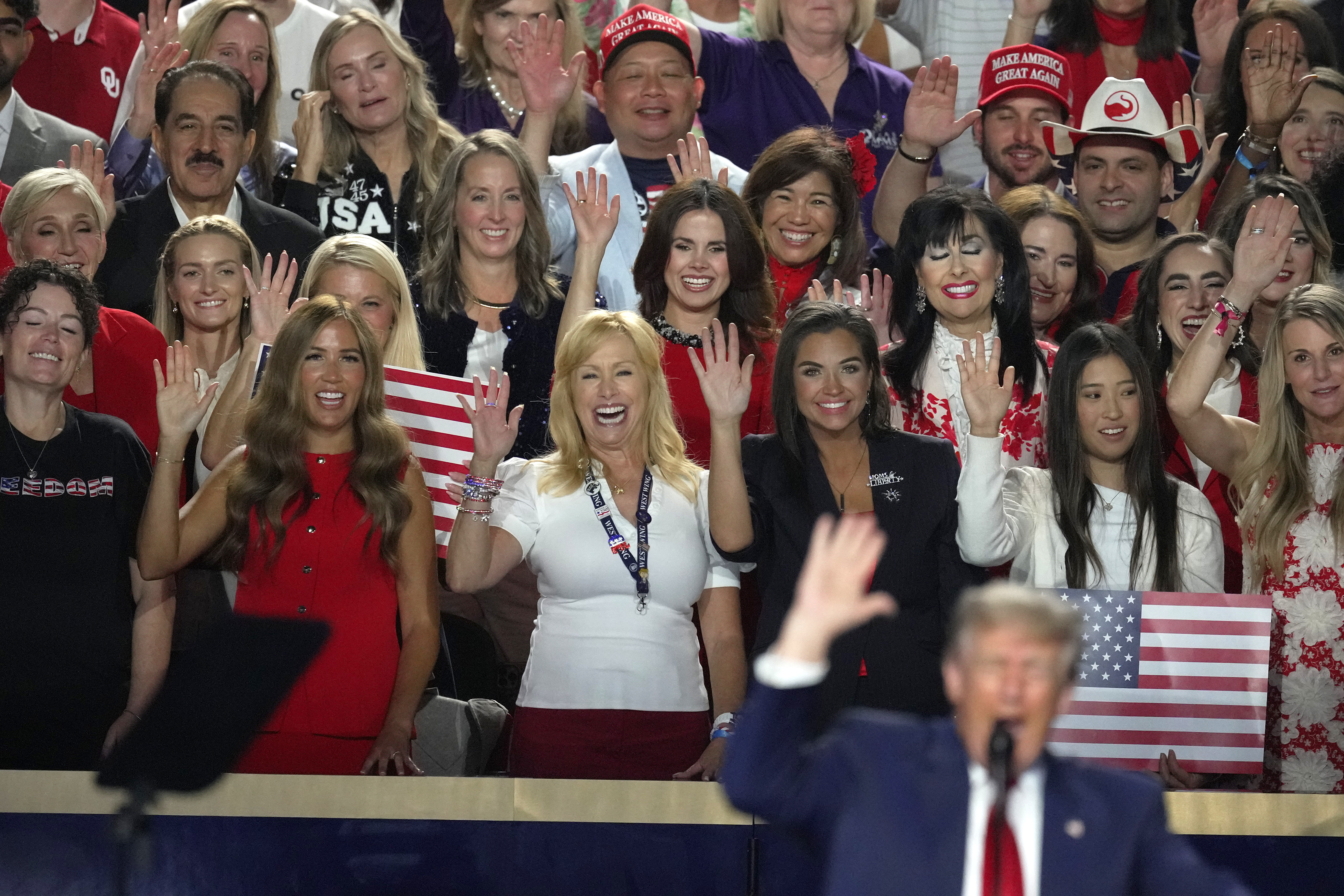
    At one point Trump asked attendees to raise their right hands and pledge to him that he would vote with their family and friends. Dutifully, they did.

    “You know what happens if you don’t vote?” Trump said. “You go to hell.”

    The two-day rally in Dallas came as Trump’s approval has sagged below 40% and Republicans fear losing control of both the House and Senate. Republicans hoped the gathering would help energize a base beleaguered by high prices and the Iran war to turn out in droves. But the two days of red meat tossed from the stage seemed unlikely to satiate independent voters whose support has flagged.

    Here are seven takeaways from the convention:

    Vance makes his 2026 (and 2028) pitch

    Vance arrived in Dallas widely considered the front-runner in the 2028 Republican presidential primary. His speech offered some early clues about how he might approach a campaign.

    Vance focused on restoring the primacy of the traditional nuclear American family, a theme he has championed in the administration. He did not mention the war in Iran, an operation he has defended publicly but raised concerns about privately. But he issued a plea for conservatives not to abandon the White House over policy.

    “Do not throw the baby out with the bathwater,” he urged.

    Vance speaks in a far more scripted political style than Trump. He caught fire with the crowd when he snapped back at a protester who interrupted his remarks by waving Palestinian and Mexican flags. “My friend, if you love Mexico so much, get your a— over there,” he said.

    But he failed to sustain the kind of enthusiasm that Trump commanded either night. Nor did he win anything beyond perfunctory praise from the president, who quickly ushered him off the stage.

    As the balloons fell, it was the president alone, along with a tenor singing. Trump is not giving up his crown quite yet.

    Trump throws an affordability Hail Mary

    Trump has called affordability — a top buzzword for Democrats this year — a “hoax.” In his speech Wednesday night, the president claimed that prices are on their way down. At the same time, he rolled out an audacious plan to address people’s concerns about costs: a massive cash giveaway.

    He branded his dubious and detail-free plan to send $5,000 to every American adult a “Trump Dividend.”

    But Trump was virtually the only one talking about it.

    A day later, the splashy $1 trillion-plus plan barely made a ripple on the convention stage.

    The president’s own son, Donald Trump Jr., didn’t so much as mention it.

    Neither did the speaker of the House.

    Neither did the vice president.

    Only Trump did.

    If the president wants the dangled cash to be a major factor in the midterms, the rest of the Republican Party didn’t use the rest of the convention to sell it.

    Republicans have a new rogues’ gallery of liberal villains

    Forget about Nancy Pelosi.

    In Dallas, Republicans made clear that the former House speaker has been dethroned from her decades-long position as the party’s favorite political villain.

    Speaker after speaker assailed Hasan Piker, a leftist online streamer, and Abdul El-Sayed, the Democratic Senate nominee in Michigan, for pushing what they described as an extreme and anti-American agenda. Their images, including Piker’s naked torso, were broadcast on the jumbotron over the stadium. Even Rep. Alexandria Ocasio-Cortez of New York, who is a frequent target of the right, got less airtime.

    At one point, Speaker Mike Johnson outlined the new rogues’ gallery of liberals — “Hasan Piker and Bernie Sanders and AOC and Abdul El-Sayed and Zohran Mamdani” — while casting the rest of the Democratic Party as squishes who would succumb to them.

    In their attacks on Piker and El-Sayed, several convention speakers embraced anti-Muslim rhetoric, including a promise popular among conservative activists to “ban Shariah law.”

    “We must stand and defeat the Islamists,” Sen. Ted Cruz of Texas said in his speech.

    GOP frames the election as common sense versus crazy

    Republicans know that Trump is unpopular. They are banking on making Democrats unpopular, too — or at least unappealing and unelectable.

    Over and over, speakers cast Democrats as out of the mainstream, frequently calling them socialists, communists, and even worse. At times they stretched the truth. Democratic socialists might have won a number of Democratic primary victories since 2024, but no serious figure in the party is promoting communism.

    “You guys are going to trigger the commies,” Donald Trump Jr., the president’s son, said at one point as the crowd chanted “USA! USA! USA!”

    Vance, in the closing of his speech, summed up the message so many had delivered before him over two days: “It’s about the party of common sense beating the party of the crazies.”

    Texas is a 2026 battleground

    Six months ago, when it first emerged that Republicans were likely to pick Dallas for this convention, it was unclear whether Texas would wind up as a top midterm battleground.

    It’s clear now.

    A parade of speakers — from the president on down — used their precious time onstage to talk about Texas’ razor-close Senate race. They sought to boost Ken Paxton, the Texas attorney general (even as Trump mocked his sartorial choices on back-to-back nights), and tear down James Talarico, the Democratic nominee. On the eve of the convention, Trump’s super political action committee had reserved $10 million in ads to help Paxton.

    “Tala-freako maybe tops the list,” Vance said of Trump’s nickname for Talarico.

    But it wasn’t just the Senate race. Republicans gerrymandered the state in 2025 to create as many as five new safely Republican House seats. But Republicans running in several of those seats appeared at the convention, seeking a boost in regions that Trump won handily.

    Was it must-see TV? Early signs suggest no

    Trump has long been known as a master of the television audience. Not this time. An average of 2.5 million people tuned in to watch his Wednesday night speech on Fox News, one of the few major TV networks that aired the remarks in full, according to preliminary figures from Nielsen. That was an average primetime audience for the network, based on the most recent quarterly statistics, and below the usual viewership for programs at that time.

    In other words, no Trump bump.

    To be fair, the president’s programming faced some steep competition. The first game of the National Football League season was on at the same time as his speech. The season’s second game was on Thursday during Vance’s and Trump’s speeches.

    Republicans make their bid to buck history

    Parties in power traditionally attempt to expand their appeal in midterm elections through targeted outreach to independent voters. That was not the strategy charted by Trump and his allies in Dallas.

    Only a handful of speakers offered any kind of outreach to moderate voters. (One of those exceptions was Rep. Mike Lawler of New York.) Far more focused their remarks on stoking fears of Shariah, transgender athletes, and Democratic candidates who were repeatedly described as communists. Again and again, Trump begged his supporters to “pretend” that he would be on the ballot — an attempt to get enough of them out to prevent the usual losses for the party in power.

    Trump and his allies are staking their chances on their ability to drive their own voters to the polls. At the top of the list are Trump loyalists who typically skip midterm elections.

    This article originally appeared in the New York Times.
  • Diesel jumps above $6 a gallon, adding to inflation pressure

    Mounting fears that widening clashes in the Middle East could further disrupt energy supplies briefly pushed the price of oil to about $110 a barrel Friday, while U.S. diesel prices rose above $6 a gallon.

    The jump in fuel prices has stoked fears of broader inflation. On Friday, a report showed overall inflation in the United States remained elevated at an annual pace of 3.4%.

    Concerns over oil supplies, already heightened by the U.S. war against Iran, broadened this week with reports that the Houthi militia had seized a critical port on the Red Sea, presenting a new threat to shipping in the area.

    The price of Brent crude oil, the international benchmark, surged before easing to about $103 a barrel, after the International Energy Agency lowered its forecast for global oil demand by 2.5 million barrels a day this year, from a drop of 1.6 million barrels a day it predicted last month.

    “The continuing impasse in negotiations between the United States and Iran delays the prospect of a normalization of flows into next year,” it said, adding that demand for oil is expected to rebound in 2027, “narrowly offsetting this year’s losses.”

    West Texas Intermediate crude, the U.S. standard, traded as high as $104 a barrel before falling to about $99.

    But the rise in oil prices “pales in comparison with those for refined products, where market tightness is now most acute,” the IEA wrote in its report.

    The average price of a gallon of diesel fuel jumped to $6.06, according to the AAA motor club, a 60% rise since the United States and Israel attacked Iran on Feb. 28.

    Iran has effectively blocked most ships from passing through the Strait of Hormuz, the narrow waterway between the Persian Gulf and the Gulf of Oman. During normal times, about a fifth of the world’s crude oil flows through the strait.

    With assistance from the U.S. Navy, a few tankers have been able to get through, but Iran has signaled in recent days that it was willing to be more aggressive in exerting control over the strait.

    U.S., European, African, and Asian oil refineries have increased production of diesel, gasoline, and other fuels to make up for the loss of supplies from the Middle East and Russia, where refineries have come under attack by Ukraine.

    But demand for energy is still outstripping supply. As a result, governments, businesses, and farmers are having to pay more for the diesel they need to run trucks, farm machinery, and other heavy equipment. And homeowners who use heating oil, which is similar to diesel, are growing concerned about their monthly bills as winter nears.

    Fuel accounts for as much as 30% of food costs in the United States, said Kate Gordon, a former senior adviser in the Department of Energy and now the chief executive of California Forward, a nonprofit business group.

    “So far, farmers and trucking companies have been absorbing a lot of this cost increase,” she said, “but with the war continuing on with no end in sight, they are going to pass through more and more of the price jump to consumers.”

    Oil remains elevated

    The price of Brent crude, which has been edging higher all week, was trading at about $104 a barrel.

    West Texas Intermediate crude, the U.S. benchmark, was around $99 a barrel.

    Gasoline prices rise

    The national average for gas prices rose to $4.30 a gallon, according to AAA. The price has risen 44% since the war began.

    Gas prices don’t move in lock step with crude, usually trailing increases or drops by a few days.

    This article originally appeared in The New York Times.

  • 25 years after 9/11, al-Qaeda still has a home in Afghanistan

    25 years after 9/11, al-Qaeda still has a home in Afghanistan

    Twenty five years ago, Osama bin Laden led the planning of al-Qaeda’s attacks on Sept. 11, 2001, from a Taliban stronghold in Afghanistan, where he lived as their guest.

    Now, the Taliban rule over Afghanistan once again, trying to present a more modern face to the world.

    But despite the veneer, the Taliban have not changed their ideology, and armed groups, including dozens of al-Qaeda members, remain in Afghanistan. Many of the conditions that made the Sept. 11 attacks possible remain.

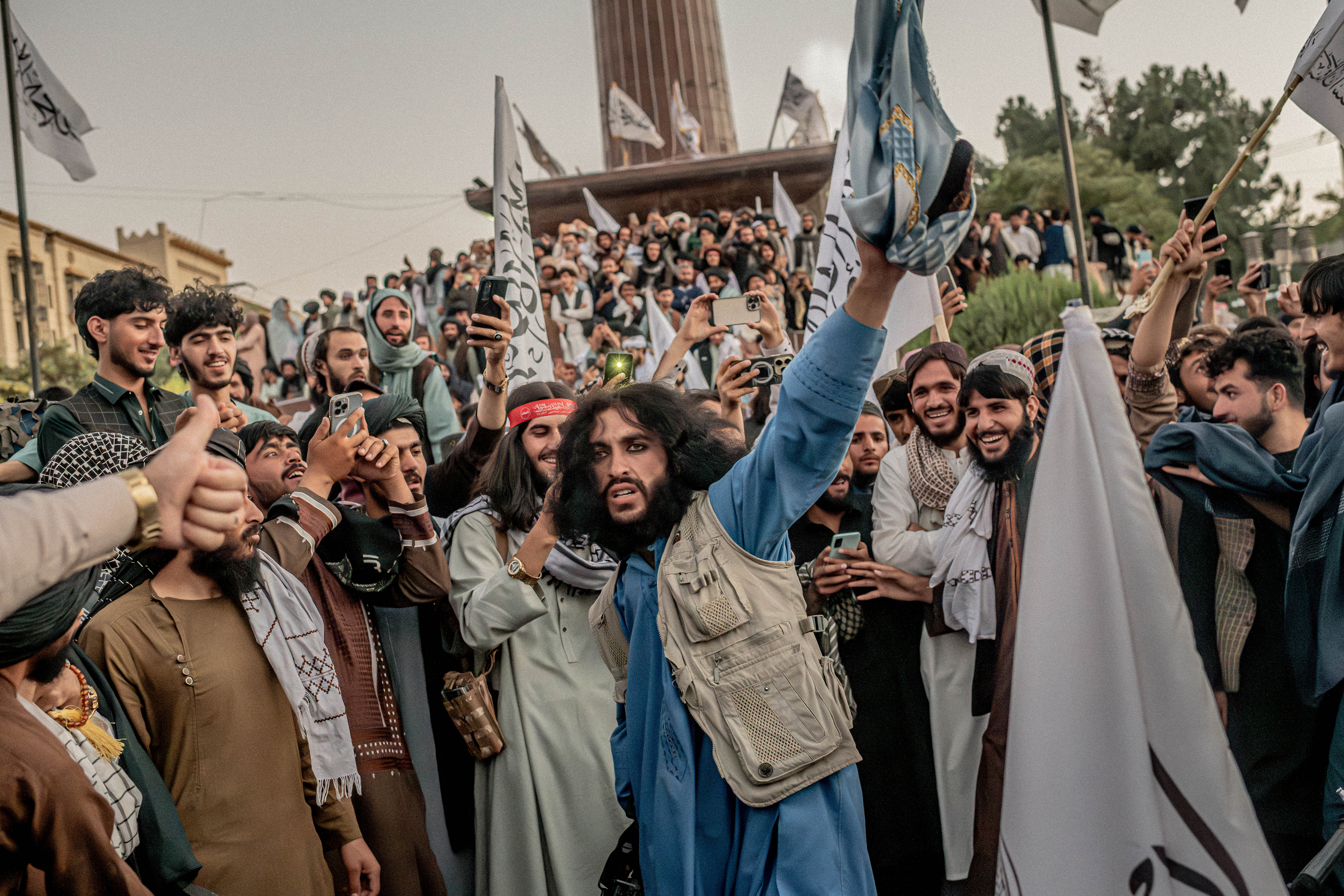
    The Taliban outlasted the U.S. war to oust them and are now ruling over 45 million Afghans. They use the latest iPhones to contact European and U.S. diplomats. They travel to the Persian Gulf and Turkey, and promote trade with Uzbekistan and India. Their fighters now patrol Afghanistan’s cities, some using abandoned U.S. military gear.

    And when Taliban officials receive foreign visitors in their gilded offices in Kabul, the capital, they insist that they want peaceful relations with the world. They repeat the commitments they made in 2020 during peace talks with the United States, not to allow another major attack to take root on Afghan soil.

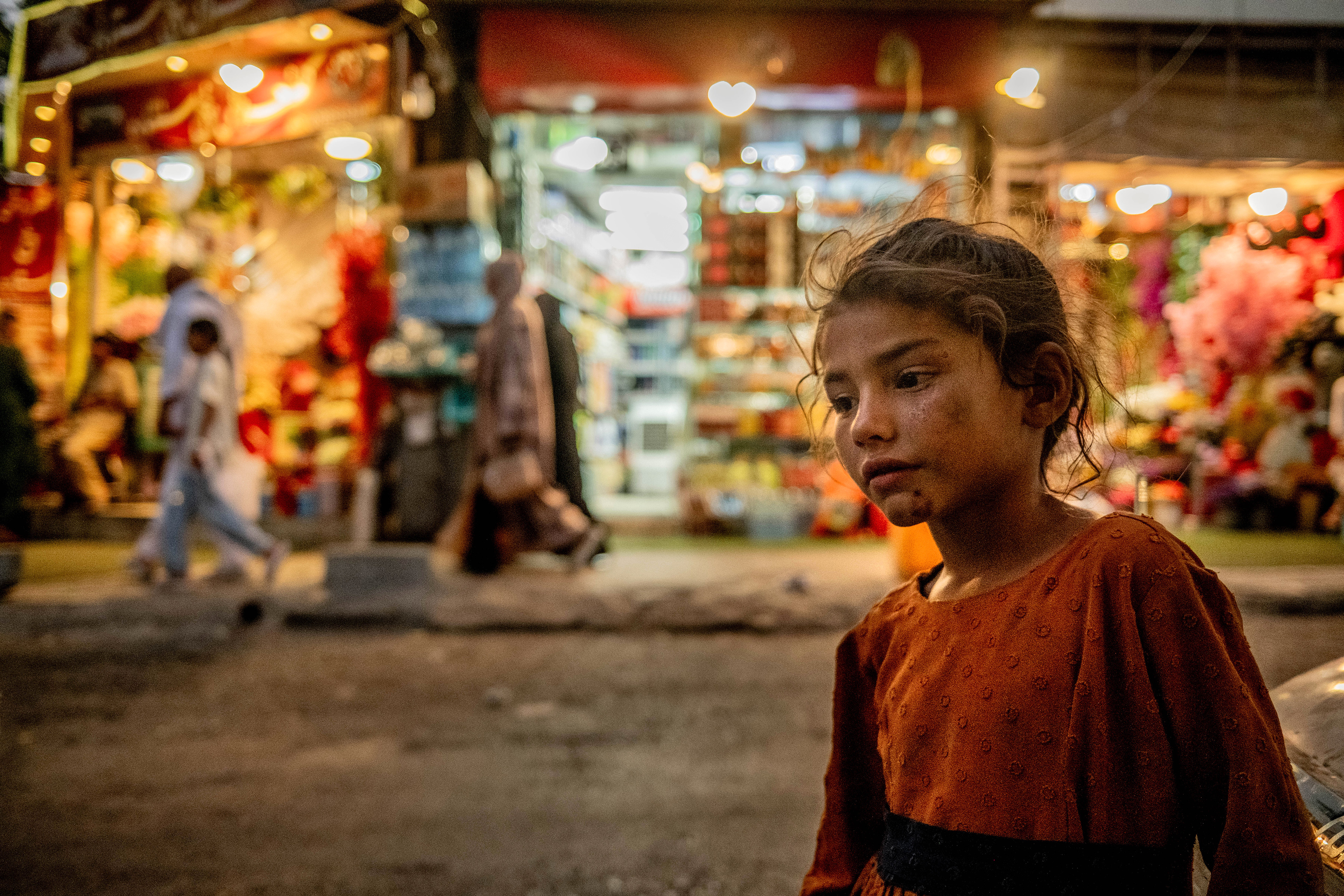
    Marwa, an Afghan girl, begging on a recent evening in an area near Ziyafat. Half of Afghanistan’s population needs humanitarian aid.TOMAS MUNITA

    “We consider the chapter of war to have come to an end,” Afghanistan’s foreign minister, Amir Khan Muttaqi, said in a recent interview in Kabul.

    But the United States, the European Union and most other governments are not ready to trust them.

    Their promises about security are similar to the ones Mullah Mohammad Omar, then the Taliban’s leader, made months before 9/11, when he told a journalist that bin Laden “does not operate against anyone from the soil of Afghanistan.”

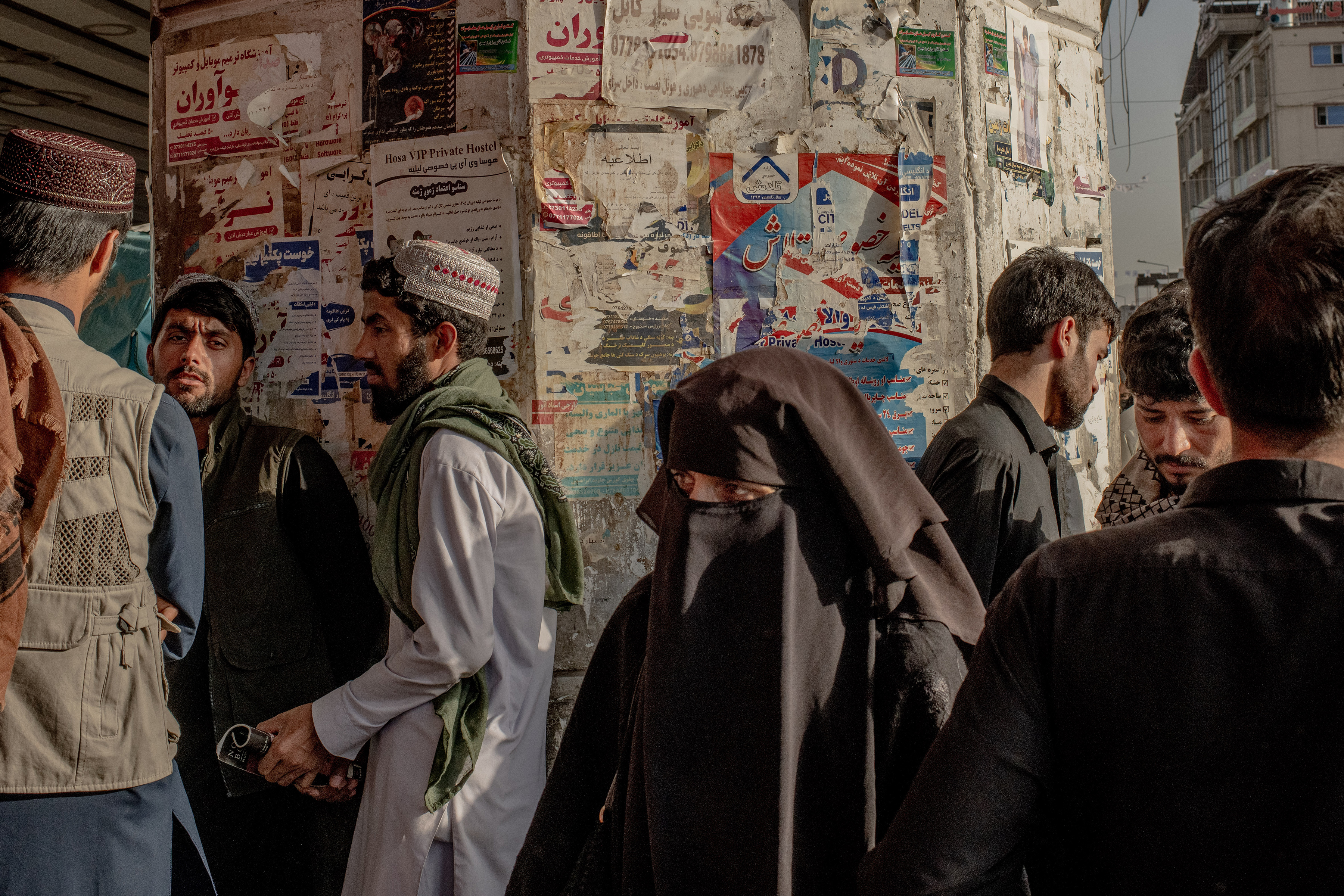
    The Taliban have imposed increasingly severe orders on how women should dress in Afghanistan. They remain excluded from most public spaces and can’t work most jobs.TOMAS MUNITA

    Al-Qaeda and other militant groups remain in Afghanistan, although without a leader as powerful as bin Laden and without their past influence over the Taliban.

    And there is a troubling intelligence vacuum. Security officials and diplomats acknowledge that they lack the full picture of what is happening inside Afghanistan. It has again become a dark room where, they warn, new threats could emerge unnoticed.

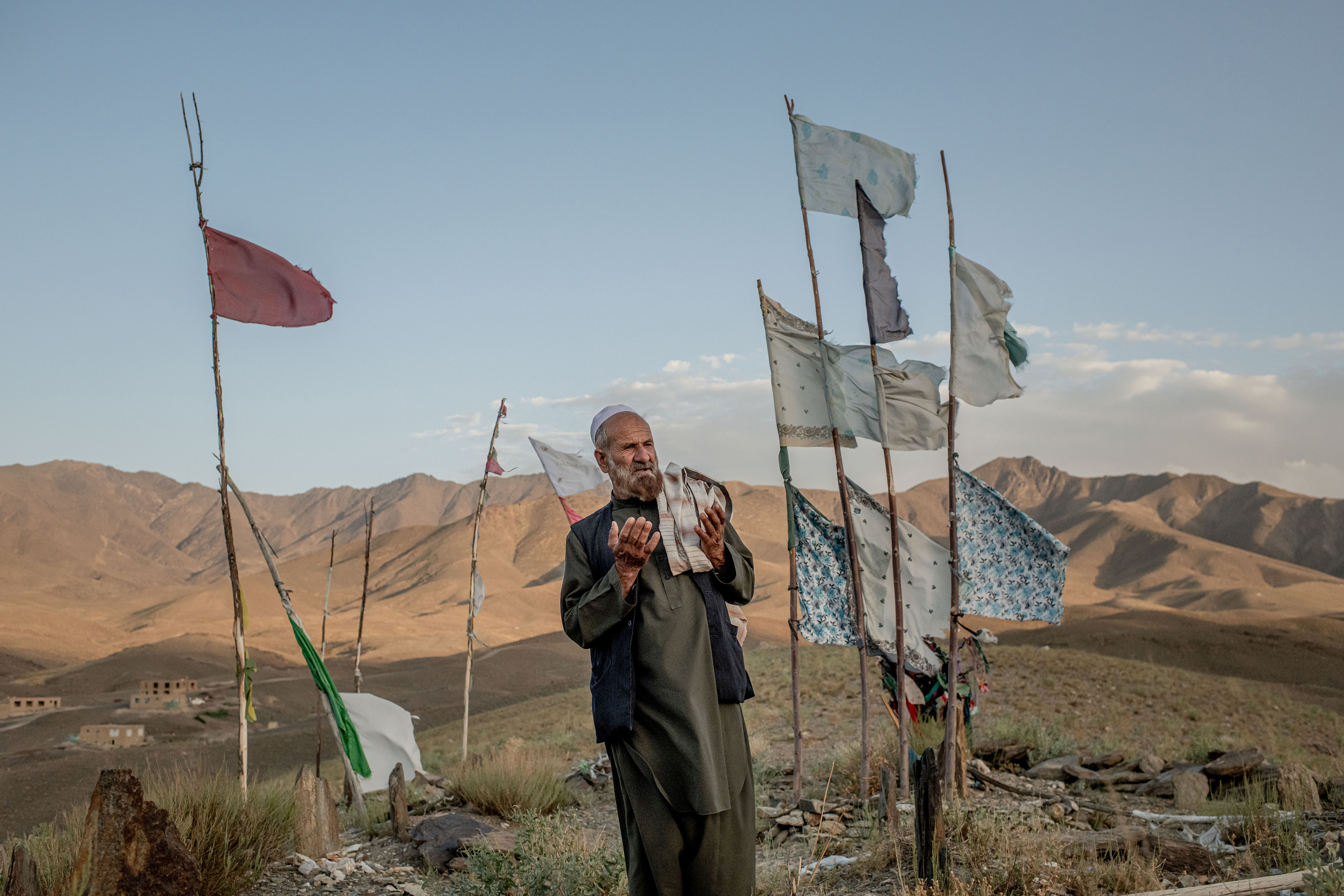
    Sherin Jan Haidari, 55, praying in Wardak Province, west of Kabul, at the grave of his two nephews and niece killed by Afghan soldiers during the U.S.-led war.TOMAS MUNITA

    What security means now

    In conversation, Afghans often describe life in their country by what it is no longer: at war. Roads are safe. Mining deals are welcome. The sound of gunfire is less common. Civilians are no longer in constant danger of being killed by drones or crossfire, though the threat from unexploded devices remains. Kabul has seen an influx of new money and new restaurants that mimic the glitter of Dubai in the United Arab Emirates.

    That is the Taliban’s message: Calm, not chaos, permeates Afghanistan.

    But that is only one part of the story. Extremist armed groups still have a home in Afghanistan, according to the United States, China, Russia, and the United Nations.

    The militant threat in Afghanistan is much less significant and visible than in the years leading up to 9/11, experts and security officials say, when up to 30,000 militants and fighters were in the country.

    Still, United Nations experts estimate that 15,000 to 20,000 militants are scattered among about 20 groups in Afghanistan. Russia says they could number up to 23,000.

    Al-Qaeda has only a few dozen members, according to estimates from the United Nations and security experts, but some of them live freely in Kabul. The Afghan authorities have issued national identity cards to the leadership of al-Qaeda’s South Asian branch, according to the United Nations’ group of experts monitoring terrorist networks.

    Thousands of Islamic State group militants also roam the rugged borderlands between Afghanistan and Pakistan.

    Most numerous are the thousands of militants from Tehrik-e-Taliban Pakistan, known as the Pakistani Taliban, or TTP, who navigate the porous border to stage attacks on Pakistani security forces. Security experts and officials attribute a sharp increase in attacks on Pakistan to the permissive environment provided by the Afghan Taliban since 2021.

    Though in far lower numbers than in the 1990s, foreign fighters have also recently traveled to Afghanistan from Syria and Somalia.

    The Taliban in Afghanistan deny backing the Pakistani Taliban but privately say that they could not rein in the group even if they wanted to.

    Pakistan has been a close ally of the United States under President Donald Trump, and the United States has accused the Taliban of breaking their counterterrorism promises. Even China, long a staunch supporter of pragmatic engagement with the Taliban, has urged the group to “resolutely eliminate all terrorist forces.” The European Union wants it “to do more to convince the world that Afghanistan is not a potential threat.”

    Intelligence diplomacy

    The continued presence of thousands of militants is one of the main reasons for the Taliban’s continued isolation from the rest of the world. Most security analysts believe that they pose a threat mainly to the region, not the West, but al-Qaeda and the Islamic State group still promote a global ideology.

    The Taliban claim they work closely with foreign intelligence services to fend off the Islamic State’s group’s Afghanistan affiliate. A senior Afghan intelligence official, speaking on the condition of anonymity to discuss national security matters, called this “intelligence diplomacy.”

    The two groups are enemies because the affiliate adheres to an extremist jihadi ideology that views the Taliban as apostates for accommodating religious minorities and seeking international engagement. The affiliate claimed responsibility for the attack near the Kabul airport during the U.S. withdrawal in August 2021 that killed 13 U.S. troops and more than 170 Afghan civilians. It has repeatedly targeted Shiite communities in Afghanistan and has claimed deadly attacks in Kabul and Islamabad, Pakistan’s capital, this year.

    The Taliban have deployed special forces teams to infiltrate areas controlled by the Islamic State group, according to Antonio Giustozzi, a senior research fellow at the Royal United Services Institute in London who follows militant groups in the region.

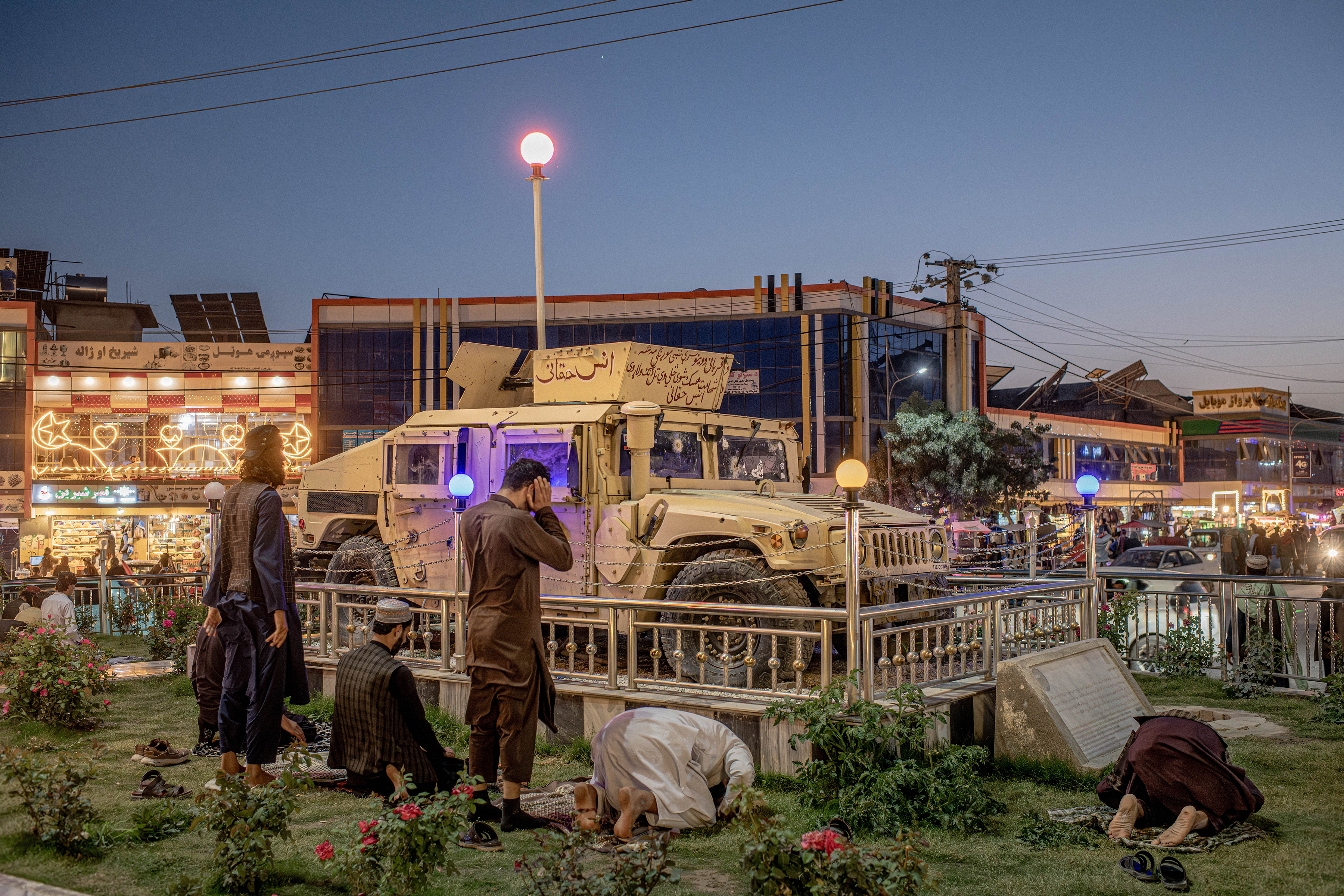
    Afghans praying in the central square of Gardez, eastern Afghanistan, near an American Humvee from the war. The writing on the vehicle reads in part, “I hope the tower of martyrdom will stay high and shining in the sky.”TOMAS MUNITA

    Experts and security officials say the affiliate no longer has the capacity to mount a large-scale assault. They attribute this to the work of the Taliban and Pakistan, as well as a broader loss of momentum by the group.

    “Kabul, to its credit, is waging a fierce armed struggle against Islamic State,” Sergei K. Shoigu, Russia’s former defense minister and now the secretary of its Security Council, said this year.

    The Taliban’s relationship with al-Qaeda is of another nature.

    U.S. counterterrorism officials have in recent years called Afghanistan a “nursing home” for al-Qaeda’s senior members and defined the group’s threat from the country as being at its “lowest point” in decades.

    But its influence persists.

    Al-Qaeda never abandoned the Taliban during their 20-year insurgency, and the Taliban have not abandoned al-Qaeda in power.

    A few dozen Qaeda members remain in Kabul and along the Pakistani border, training the Pakistani Taliban, according to the United Nations’ monitoring group on terrorist networks.

    (Bin Laden’s successor, Ayman al-Zawahri, was killed in a U.S. drone strike on his balcony in Kabul in 2022.)

    “The exact role of al-Qaeda Afghanistan? It’s very hard to say,” said Colin Smith, the coordinator of the U.N. group, which collects information from more than 40 intelligence agencies for its biannual reports.

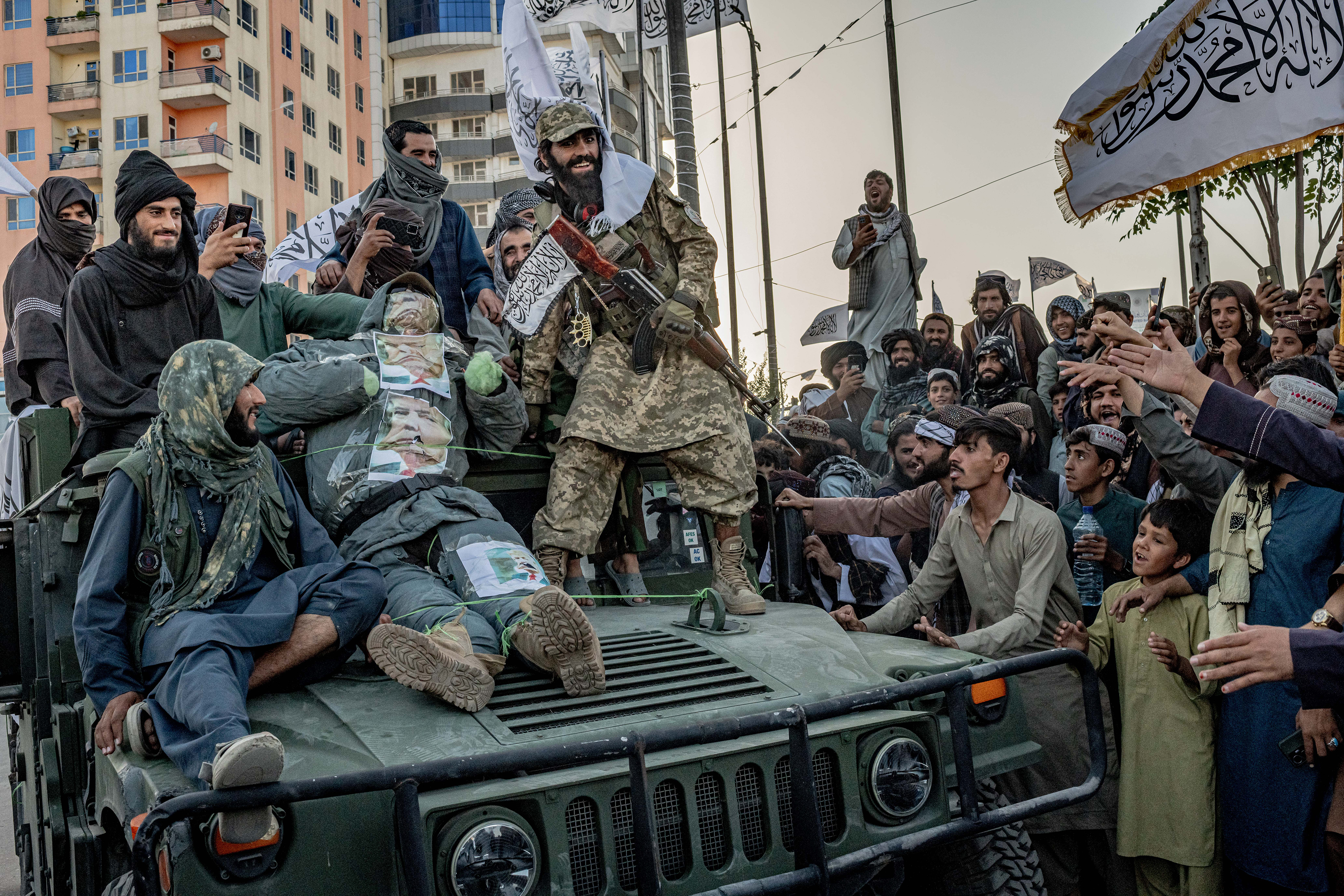
    Taliban soldiers paraded in Kabul with an effigy of President Donald Trump on Aug. 15, in celebration of their return to power five years earlier. The soldiers later stabbed the effigy.TOMAS MUNITA

    In April, al-Qaeda declared support for the Pakistani Taliban and renewed its endorsement of the Taliban government in Kabul, hailing the group as “a modern role model.” By backing the Taliban, al-Qaeda is buying time and space in Afghanistan, Giustozzi said.

    Cumbersome allies

    The Taliban’s relationship with militant groups keeps alive a long-running debate: Are the Taliban an insurgent group engaged in statecraft; a state-ruling entity that hasn’t shed its insurgent past; or a mix of both?

    That uncertainty reflects the balancing act at the heart of the Taliban’s survival. Allowing Afghanistan to serve as a launchpad for international terrorism is not in the Taliban’s interest — as they learned after 9/11. But out of hospitality, ideological zeal and a lack of resources, they have so far been unable, and in part unwilling, to expel them.

    The Pakistani Taliban are forcing the Taliban to face the consequences. The two fought side by side during the U.S.-led war, and the Pakistani Taliban now expect a return on investment: support to establish a similar stronghold in Pakistan.

    If the Taliban withdraw support to their Pakistani counterparts, they risk seeing more of their disgruntled fighters join the Pakistani Taliban. Most of the Taliban’s rank and file now control checkpoints and patrol cities. The Pakistani Taliban are offering a new jihad, right next door.

    “We sacrificed our generation to bring peace,” said Farhad Sangari, the Taliban commander of a special forces unit in Kabul, on a recent evening as he led a traffic patrol. He added, “I miss the memories of jihad and the front line.”

    Many experts and security officials also fear that the vast network of religious schools that has expanded across Afghanistan since the Taliban takeover is teaching a violent, expansionist agenda.

    “How many hundreds of thousands of men have been exposed to the Taliban ideology glorifying jihad?” said Michael Semple, a longtime Afghanistan expert at Queen’s University Belfast in Northern Ireland.

    Afghans are now living with a situation they haven’t faced in decades. They are somewhat safe at home, but Afghanistan is once again exporting insecurity.

    The return of gunfire

    Whatever its exact nature, the relationship between the Taliban and militant groups now threatens to destabilize Afghanistan.

    Fed up with relentless attacks from the Pakistani Taliban, the Pakistani military has retaliated with dozens of airstrikes on Afghan security and civilian infrastructure this year, including in Kabul.

    A senior Pakistani intelligence official, speaking on the condition of anonymity to discuss national security matters, said his country’s leadership had concluded Pakistan’s domestic security would not improve until it “sorted out” the Taliban. Over the past few months, Taliban officials have grown increasingly concerned about the possibility of a Pakistani-backed attempt at regime change in Afghanistan.

    Anti-Taliban resistance groups waiting in the wings now see an opportunity. Three groups, led by former members of the U.S.-backed Afghan military, have claimed responsibility for more than 50 attacks on Taliban officials, checkpoints and buildings across Afghanistan since July.

    The leader of one of them, speaking on the condition of anonymity to discuss the attacks, described them in an interview as targets of opportunity, aimed at cracking the veneer of security that the Taliban have so far maintained.

    The scattered attacks do not yet pose a regime-ending threat, but at least two local officials have been killed by anti-Taliban forces in recent weeks.

    They are another reminder that in Afghanistan, war is not yet a distant memory.

    This article originally appeared in The New York Times.

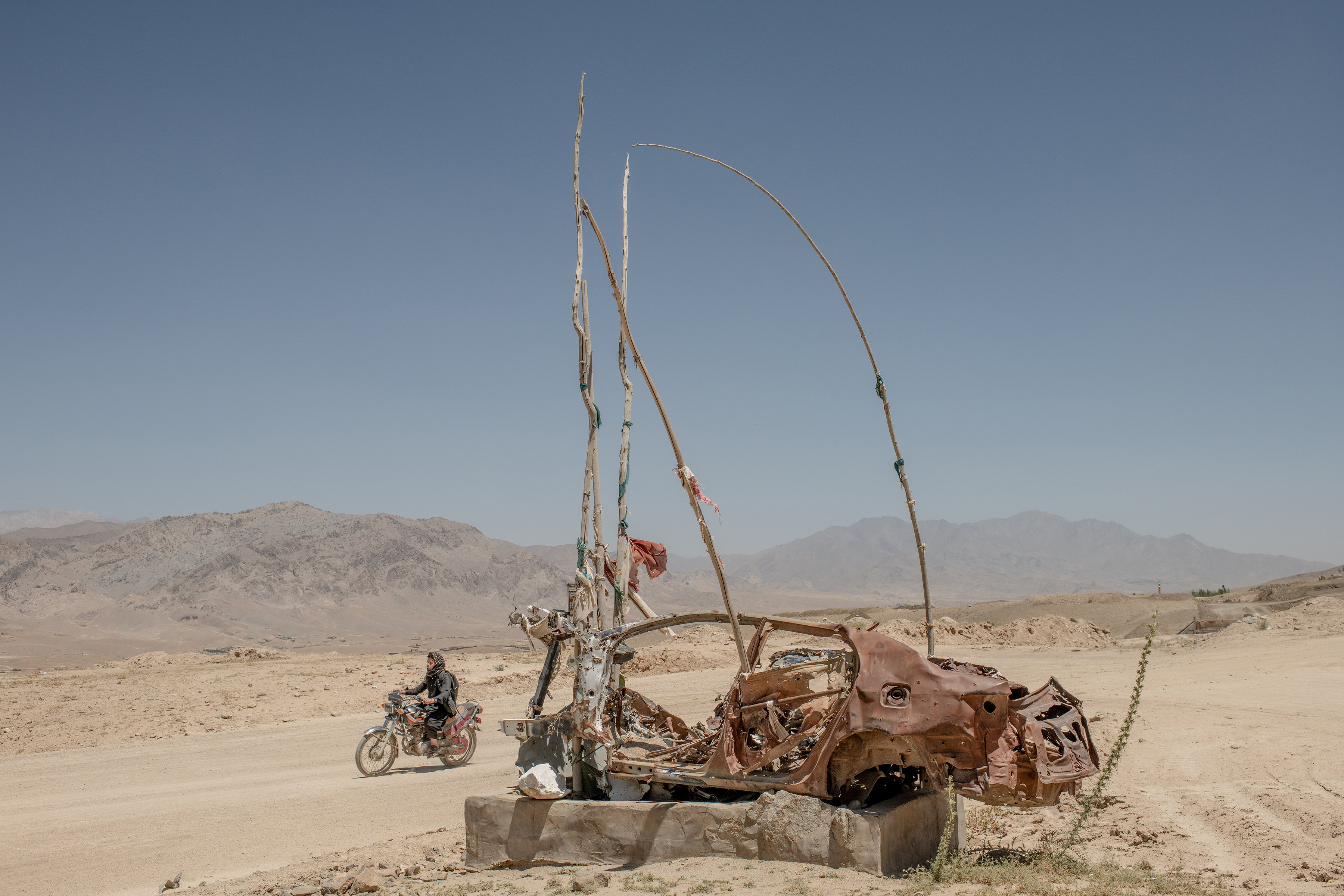
    In July in Wardak Province, the remains of a car that was hit by an airstrike, killing five Taliban fighters.TOMAS MUNITA
  • Brothers seeking pardons for sex trafficking hire a former Trump lawyer

    Brothers seeking pardons for sex trafficking hire a former Trump lawyer

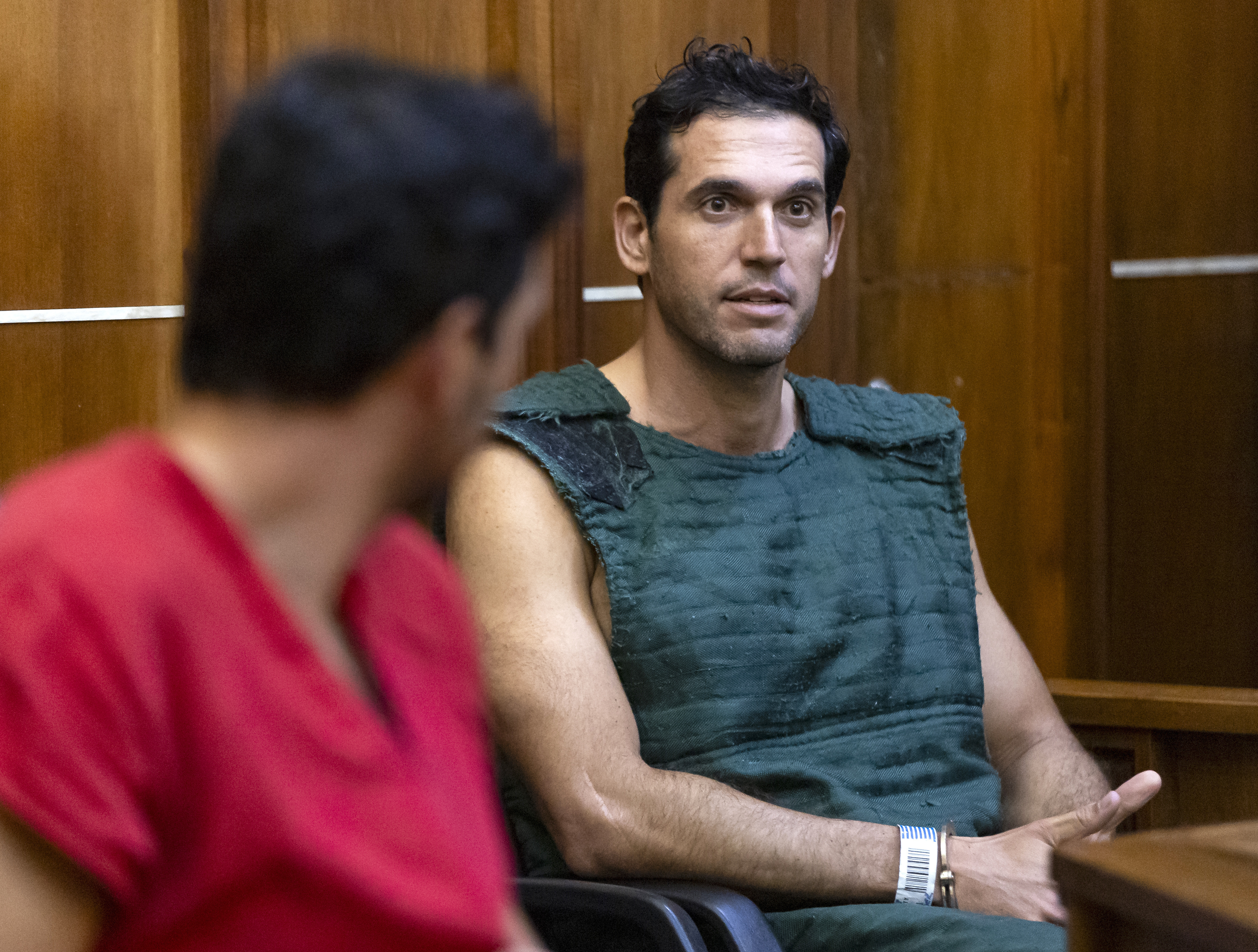
    Tal, Oren, and Alon Alexander, three prominent brothers convicted of running a decadeslong sex-trafficking scheme in New York earlier this year, have enlisted lawyer Alan Dershowitz in their apparent pursuit of a pardon from President Donald Trump.

    They retained him in March 2025, nearly 11 months before their trial began in New York federal court, and since then have paid him hundreds of thousands of dollars, according to financial documents obtained by The New York Times.

    Those documents include a copy of a check for $250,000, as well as a wire transfer receipt and an invoice from Dershowitz requesting an additional $250,000.

    Dershowitz confirmed to the Times that he was working for the Alexander family, but said he had not yet discussed options for a pardon with them, describing his role as a consultant on “legal, constitutional, and sentencing issues.” According to a letter reviewed by the Times, written by Dershowitz to the mother of the men, his work also includes pursuing options of “executive clemency and judicial reversal.”

    He had not discussed their case with President Donald Trump, Dershowitz said, and although he had visited the brothers in prison and held regular conversations with their criminal defense lawyers, he had not yet explored avenues for a pardon with them. The brothers each face a minimum of 15 years and a potential life sentence. Their sentencing is scheduled for Oct. 6.

    “My work has been purely on legal issues completely,” Dershowitz said in a phone interview, but added, “I would be happy to provide consultation services on any aspect.” Dershowitz said he took on the case because he knew Shlomi and Orly Alexander, the brothers’ parents. He confirmed that he was working on behalf of all three brothers.

    “I saw that they were facing very serious consequences,” he said. “I don’t ever turn down a case based on the government’s allegations.”

    Lawyers for the Alexander brothers, in a joint statement, said they were not aware of any efforts to contact the White House on behalf of their clients. “Our sole focus has been on preparing for sentencing,” they wrote.

    Dershowitz, 88, a high-profile lawyer, has ties to Trump, having helped to defend him during his first impeachment trial, where he was acquitted, and advising him at times on foreign policy.

    In Trump’s first term, Dershowitz was credited with shaping more of the president’s clemency decisions than almost any other advocate. He played a role in at least 12 clemency grants, including two pardons, which wipe away most consequences of convictions, and 10 commutations, which reduce prison sentences.

    He was sought after by other clemency seekers looking for an edge in a system in which connections to the president are seen as a way to skip to the front of the line. Lawyers and lobbyists with ties to the president have charged steep rates to people seeking to avoid or shorten prison sentences.

    Dershowitz, who once described himself as a “liberal Democrat” but announced this year that he was joining the Republican Party, has also provided advice to others seeking clemency this year. He counseled OneTaste, a wellness company described by critics as a sex cult. The company’s founder and director of sales were convicted of forced labor conspiracy last year, and they are in federal prison in Brooklyn.

    It is not clear if Dershowitz — whose decadeslong career has included representing Jeffrey Epstein — has had as much success in helping to secure clemency grants in the second Trump administration.

    The brothers — Tal Alexander, 40, and the twins Oren and Alon Alexander, 39, who were raised in Florida — have their own connections in Trump’s orbit. Oren Alexander and Tal Alexander, who had been among the highest-earning real estate brokers in the country before their arrest, represented Jared Kushner and Ivanka Trump in their purchase of a $24 million Florida mansion in 2021.

    The Alexanders began exploring avenues for seeking pardons before they were found guilty of sex trafficking and assault against both women and girls.

    Last year, a person close to the brothers made inquiries with the Tzedek Association, a Jewish group that has been influential in shaping Trump’s clemency grants and criminal justice policies. The Tzedek Association, which was involved in at least one commutation granted this year, worked with Dershowitz on clemency issues during the first Trump administration.

    Less than three months after their arrest, the documents show, the Alexander family paid Dershowitz’s retainer of $250,000. The Times reviewed a photograph of a check dated March 5, 2025, made out to Dershowitz and signed by Orly Alexander. The Times also reviewed a receipt from a wire transfer showing a transaction on that same day of $500,000, with a handwritten note scrawled below noting the funds had been wired after selling stocks belonging to Alon Alexander. “Send 250k to Dershowitz,” it noted.

    More than a year later, Dershowitz sent a letter to Alexander, the mother, and to Inbal Rosenthal, who is the family’s accountant, according to a person with knowledge of the matter who agreed to speak under condition of anonymity to protect their privacy. He was owed more money, he wrote.

    “Between March 1, 2025, and June 11, 2026, I have devoted 142 ¾ hours” on behalf of the Alexander brothers, Dershowitz noted. His work included visiting them personally, meeting with their lawyers and reviewing options for clemency and pardons, he wrote. He noted that his hourly fee had increased to $2,750, but he was billing at his previous rate of $2,500 and was now owed an additional $106,857 on top of the retainer.

    “Please wire an additional retainer of $250,000,” he wrote.

  • U.S. airstrikes targeting Houthis killed scores of civilians in Yemen

    U.S. airstrikes targeting Houthis killed scores of civilians in Yemen

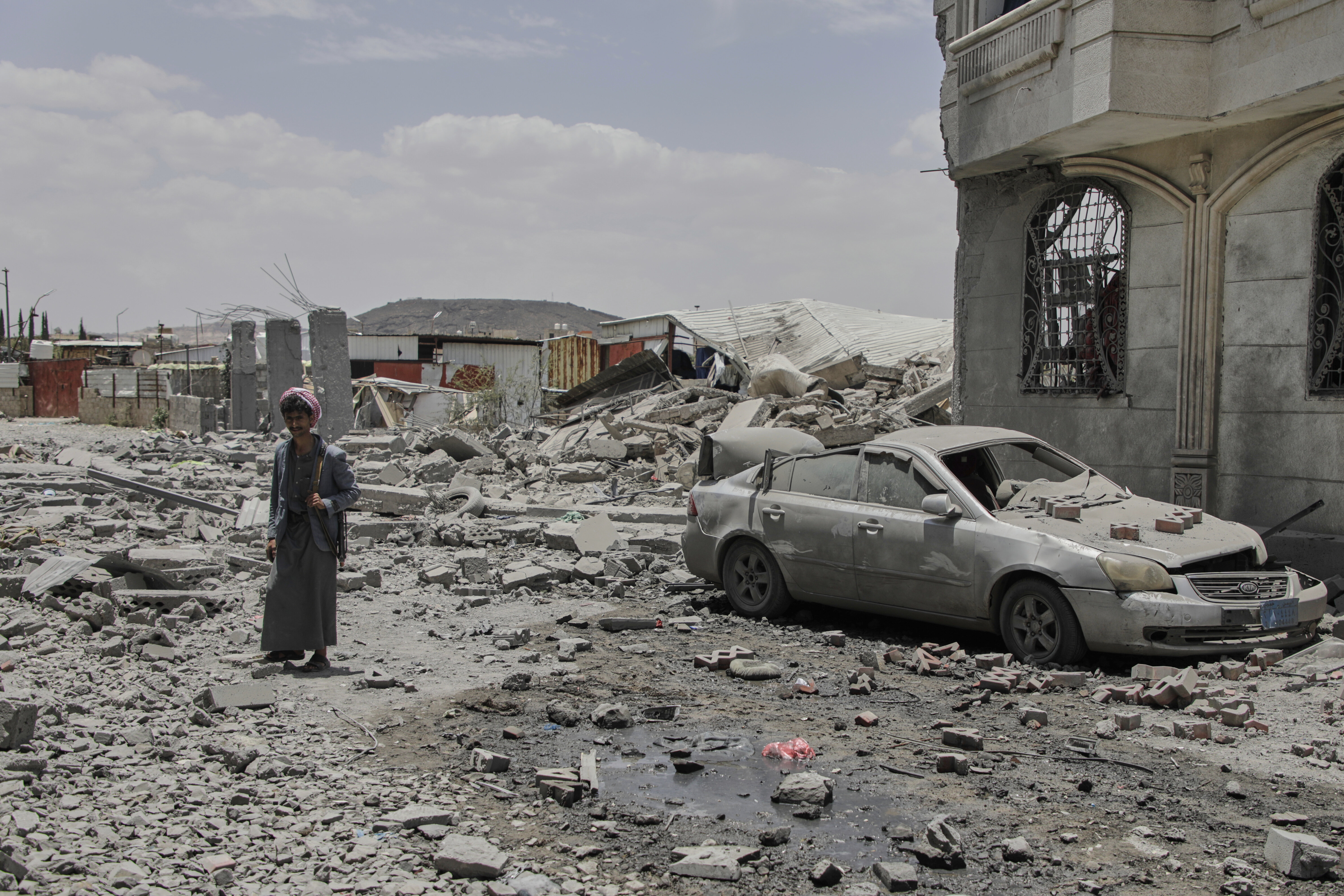
    WASHINGTON — U.S. airstrikes against Yemen’s Houthi militants from late 2023 to mid-2025 killed 213 civilians, according to a report released Thursday by the Costs of War Project at Brown University.

    Most of the casualties — 208 deaths and 341 wounded — occurred during President Donald Trump’s second term as his administration pursued the Iran-backed group.

    The Pentagon has not publicly acknowledged civilian deaths in the 2024 attacks but has reported that it killed 153 civilians and wounded 243 in Yemen in 2025.

    In October 2023, President Joe Biden ordered retaliatory airstrikes in Yemen after Houthi fighters attacked a Navy destroyer in the Red Sea, and again in January 2024 after Houthi missiles and drones targeted civilian vessels in the region.

    The latter series of strikes continued until just weeks before Biden left office.

    Trump ordered strikes on Houthi fighters in March 2025 in response to attacks on commercial shipping vessels in the Red Sea launched from Yemen.

    Beyond the loss of life, the report said hundreds of Yemenis lost farms, shops, factories, and small businesses in the attacks, leading to increased homelessness and worsening poverty among people who were already desperately poor.

    “There’s a myth that an airstrike is going to strike a military target and kill a militant and it’s over,” said Stephanie Savell, an anthropologist and director of the Costs of War Project. “But what this report highlights are the reverberating, indirect, human costs of war. The report looks precisely at civilian infrastructure that’s targeted, not military infrastructure or outposts.”

    Two U.S. attacks were particularly devastating, according to the researchers.

    On April 17, 2025, the researchers said, U.S. forces killed 80 civilians in an attack on a port facility in the Houthi-controlled province of Hodeida.

    Less than two weeks later, a U.S. attack on three warehouses used to detain African migrants killed 68 civilians.

    Most of the workers killed at the port were the main breadwinners for their families, who have since slid deeper into poverty and hunger, according to Savell.

    The Pentagon did not immediately respond to a request for comment.

    The Costs of War Project is a collective of scholars who research the consequences of U.S. wars launched after the terrorist attacks in the United States on Sept. 11, 2001. The project published the report with Mwatana for Human Rights, which did research inside Yemen and coproduced the report.

    Investigators collected evidence by conducting interviews, analyzing weapon remnants and collecting documents including death certificates.

    While the Pentagon has carried out many airstrikes in Yemen targeting al-Qaida fighters since the Sept. 11 attacks, the most recent U.S. strikes in the country have targeted the Houthis, who are part of the so-called Axis of Resistance led by Iran, along with the armed groups Hamas in the Gaza Strip and Hezbollah in Lebanon.

    According to the report, the Pentagon launched 930 airstrikes in Yemen from Dec. 18, 2023, to January 2025.

    Then in March 2025, Defense Secretary Pete Hegseth launched Operation Rough Rider against the Houthis. By the end of April, the cost of Hegseth’s campaign was more than $1 billion.

    Trump, frustrated with the lack of progress, halted the operation on May 5.

    Brian Finucane, a former State Department attorney who advised on the law of war, said, “There are more significant civilian casualty incidents over the Rough Rider campaign than all the previous attacks during the Biden administration.”

    He added that the Trump administration “launched two to three times the number of strikes Biden did.”

    “Trump was also willing to bomb targets in more densely populated areas than Biden was,” he said. “Additionally, the migrant detention facility that was bombed in April 2025 had routinely been visited by officials from the Red Cross and should have been understood by Central Command as off-limits for attack.”

    A Defense Department report on military operations for 2025 acknowledged the civilian death toll from the attacks on the port and the migrant detention facility, along with a strike in Sanaa, the capital, on April 6 that killed five civilians and wounded 25.

    Condolence payments to survivors and the families of those who were killed, the report noted, were “determined to not be appropriate” in all three cases.

    Just days after Hegseth took office in January 2025, the Army announced that it planned to close an office dedicated to reducing and mitigating civilian harm during combat operations. The office was reduced in March of that year from roughly 200 people to 11. At the time, Hegseth’s office declined to answer questions about the reductions.

  • How ‘hypermilers’ are trying to beat high gas prices

    How ‘hypermilers’ are trying to beat high gas prices

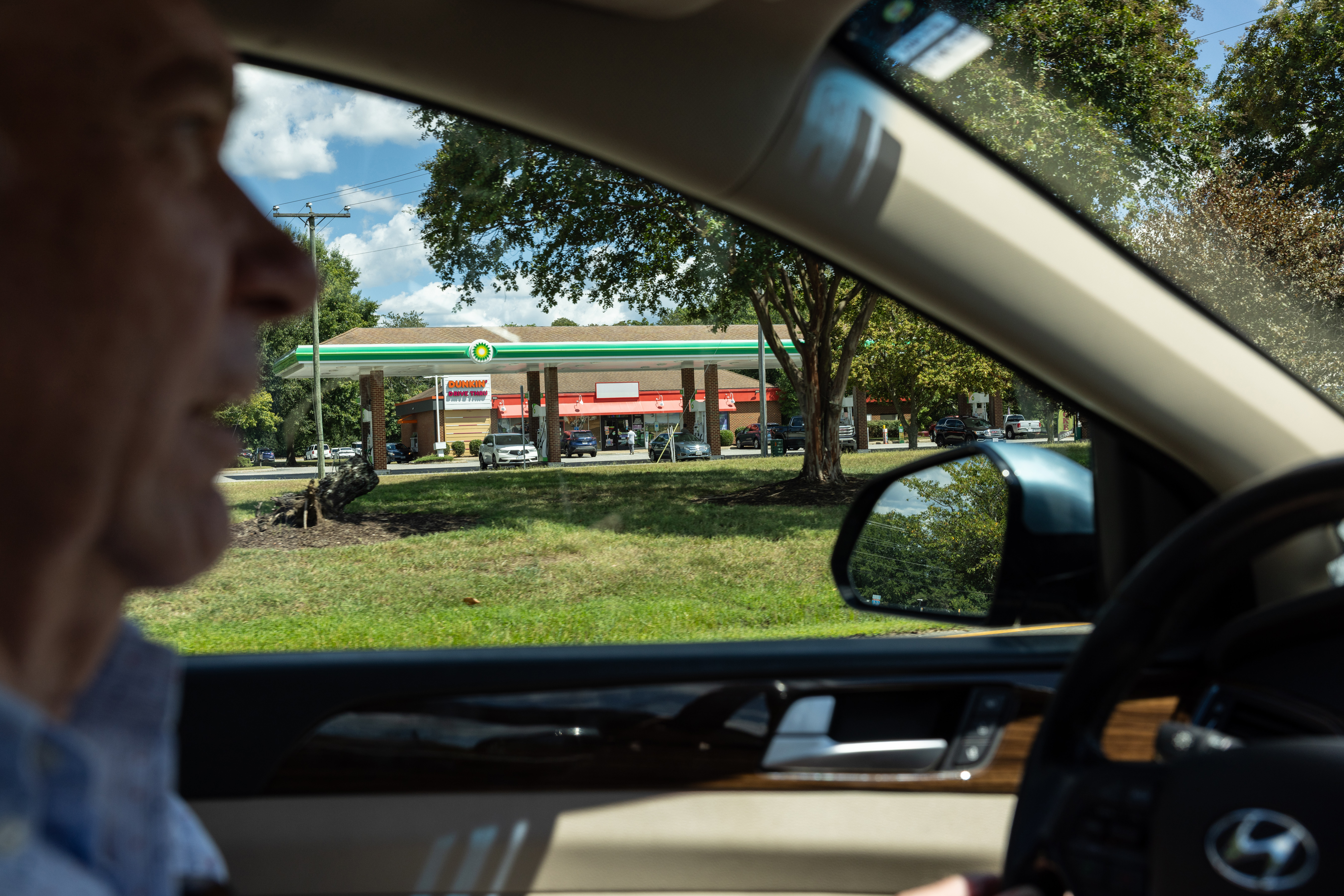
    When a traffic light turns green, Dan Kroushl is unlikely to be the first driver out of the gate. He won’t floor the gas pedal, and he never drives over the speed limit.

    Instead, he eases forward by lightly pressing the accelerator, and the moment he sees a yellow light, he gently taps the brakes.

    These techniques and others make Kroushl, 61, a so-called hypermiler, a driver who squeezes as many miles as possible out of each gallon of gas. And after a summer of soaring gas prices driven by the war in Iran, hypermilers like Kroushl say their strategies can help drivers who are feeling pinched at the pump make the most of every gallon.

    “People think when they are pumping gas: I can’t do anything about it,” Bradlee Fons, 74, a fellow hypermiler, said of the increased gas prices. “I tell them, ‘You’re in total control.’ People can control their fuel costs.”

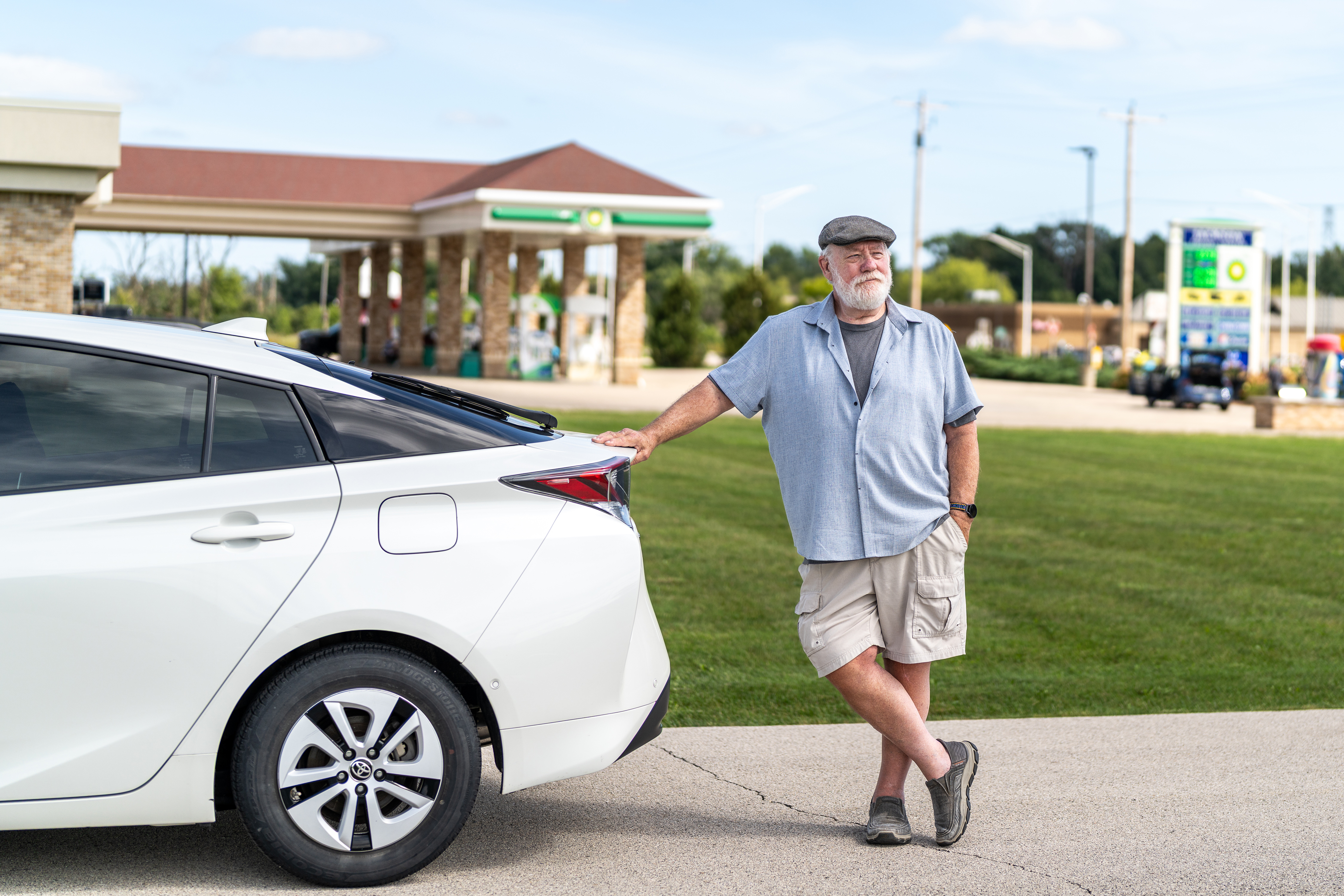
    Bradlee Fons, 74, a self-proclaimed hypermiler, stands next to his 2017 Toyota Prius parked near a gas station in Jackson, Wis., on Sept. 6.Sara Stathas

    Hypermilers mostly aim to maximize fuel efficiency by driving smoothly, without hard stops or starts. But sometimes they employ more extreme measures, like not using air-conditioning or removing a vehicle’s interior door panels to reduce its weight.

    It’s both a lifestyle choice and a way to reduce greenhouse gas emissions, the hypermilers say, but they think some of their strategies could be useful to regular, everyday drivers looking to save on fill-ups.

    Gas prices have risen sharply since the United States and Israel attacked Iran on Feb. 28, freezing the flow of energy from the Persian Gulf. As fighting in Iran intensified last week, diesel fuel prices hit a record high in the United States, with gas prices up nearly 34%, according to AAA.

    As of Thursday, regular gas costs an average of $4.27 per gallon, though prices vary in different states. The average in Pennsylvania was $4.45 a gallon for regular gas and $4.36 in New Jersey, according to AAA.

    With a few tweaks, Fons said, drivers can easily save 30% or more on their gas bill.

    “Drivers do not have to be at the mercy of the government, the high gas prices or anything else,” he said. “They have options.”

    The 2017 Toyota Prius that Fons drives in his home in Jackson, Wis., just north of Milwaukee, is estimated to achieve 52 mpg, according to its official EPA rating. But, Fons said, he gets 83.2 mpg by driving with fuel economy in mind.

    Fons, who started a nonprofit organization called Drive Smart Wisconsin, keeps a list of simple techniques that he said any driver can use to save money on gas. At the top of the list is “nonaggressive driving,” which he defined as moving smoothly and purposefully. Other strategies include completing multiple errands in one trip so the car does not use extra fuel to warm up, and keeping up with vehicle maintenance.

    Most cars are at peak fuel efficiency between 45 and 65 mph. Hypermilers recommend staying in that range and not going over the speed limit on the highway. Driving faster causes the vehicle’s drag to increase, reducing fuel mileage at an exponential rate.

    Hypermilers also avoid unnecessary braking, which eats up fuel, and they accelerate slowly when starting from a complete stop. They anticipate slowdowns ahead.

    “You work the gas so you’re barely holding the speed you want to hold,” explained Bruce Gregersen, 79, a hypermiler who lives in St. Cloud, Minn. “It takes a little more concentration, but once you get used to it, you’ll do it automatically.”

    Hybrid cars, which combine a traditional gasoline-powered engine with one or more electric motors and a battery pack, offer greater fuel efficiency and are the vehicle of choice for many hypermilers.

    Bob Winger, 71, of Williamsburg, Va., is part of a group of hypermile enthusiasts who have set multiple world records for fuel efficiency, including one for the lowest consumption of fuel in a non-hybrid vehicle driving through all 48 contiguous states. Winger said they had set that record by using techniques such as “ridge riding,” in which the passenger-side wheel moves along the white paint stripe on a highway because the friction is lower there than on the asphalt.

    Such extremes are not necessary unless one is trying to set a world record, Winger said. Instead, he said, drivers can achieve greater mileage by doing simple things like making sure their tires are properly inflated, which helps decrease resistance. Using full synthetic oil reduces friction within the engine, he added.

    “You don’t have to do crazy stuff,” he said. “Just driving conservatively, you can save without really pulling out all the tools in the toolbox.”

    This article originally appeared in The New York Times.

  • Foldable phones are unpopular. Why is Apple selling one?

    Foldable phones are unpopular. Why is Apple selling one?

    Apple this week unveiled an iPhone that unfolds like a book to expand its screen size and closes up to fit in your pocket. It’s the biggest physical change to the iPhone’s design in nearly two decades.

    But even though they’ve been around for years, foldable phones aren’t particularly popular. They’re expensive, awkward and not as durable as regular smartphones. So why did Apple build one?

    The simple answer is that the novel design of today’s foldable phones could help reestablish the high end of the phone market. They are meant to stand out in a sea of standard-issue, if-you’ve-seen-one-you’ve-seen-them-all smartphones.

    The quintessential rectangular smartphones have gotten so good over the years that the most expensive models priced upward of $1,000 have become nearly indistinguishable from their cheaper counterparts. (Carrying a phone with three camera lenses vs. two probably won’t impress people at parties.)

    Foldable phones, on the other hand, are attention-getters. And for their price, they’d better be: Apple’s iPhone Duo will cost $1,999 when it arrives in October to compete with Samsung’s $1,900 Galaxy foldable.

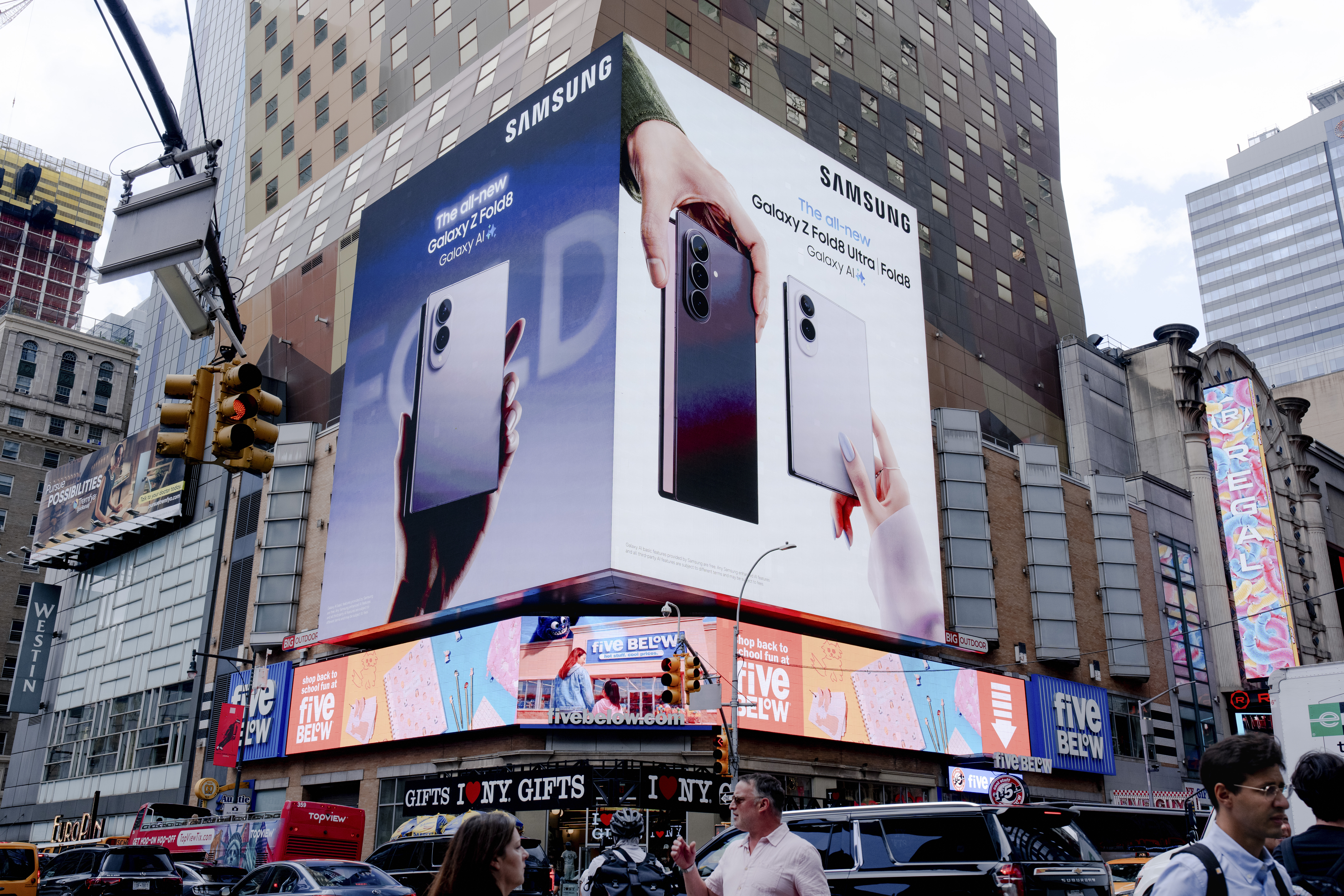
    Samsung billboards in Midtown Manhattan.Lexi Parra

    “Whenever something is exclusive, limited and luxurious, automatically consumer psychology wants it,” said Nabila Popal, a director at IDC, a market research firm. “It’s like handbags. Why is someone buying a Chanel versus that? It’s not because of the leathers. It’s to show that they have a Chanel and they can afford it.”

    Apple and its competitors are following a path that television makers took about a decade ago. When high-definition TVs became commoditized, anyone could buy a bright TV with a large, sharp screen for as little as $500. To find more ways to increase profits, companies like Panasonic, LG, and Sony experimented with quirky new designs, like TVs with curved displays and the ability to play movies in 3D, and charged $3,000 for them.

    Those TV concepts turned out to be flops. But in later years, TV makers found success with a different type of high-end television featuring OLED technology, or organic LED, which had more accurate colors for making movies look better and cost upward of $1,000.

    Apple’s foldable handset is arriving at a moment when people will need extra persuading to upgrade to a new phone. The costs of most consumer goods, and especially electronics, have skyrocketed.

    In response to an industrywide memory chip shortage driven by the artificial intelligence boom, Apple increased prices this year for many of its popular products, including Macs and iPads, by as much as 29%. Apple’s new iPhone 18 Pro phones will cost $1,199, a $100 increase from last year’s model. The chip shortage has also forced companies to raise the prices of video game consoles and phones.

    Foldable phones, which account for less than 2% of the handset market, may be the only part of the phone industry that will grow this year. IDC said it expected the chip-shortage-induced price increases to contribute to a 17% drop in worldwide smartphone sales this year — the steepest annual decline in history. However, sales of foldable phones could grow 12% to 22.9 million because of the iPhone Duo’s arrival, the research firm said.

    Still, a foldable phone could be a tough sell even for a company as influential as Apple. Consumers have generally avoided buying foldable phones not only because of their cost but also because of their trade-offs. Their bendable screens are less durable than normal phone displays, which are protected with hard glass. Folded up, they can feel bulkier and heavier in a pocket.

    Dan Frommer, a writer for the New Consumer, a tech research publication, said he had long been skeptical about the usefulness of foldable phones because so much online content, including the vertical videos on TikTok and Instagram, was produced for the small rectangular screens of normal smartphones.

    “They’ve been used that way for 19 years now,” Frommer said. “What would you actually want a square, big screen for?”

    Apple’s iPhone Duo appears to be addressing some of the shortcomings of previous foldable phones. The device’s name refers to two screens. Closed up, it has a 5.4-inch outer screen that people use as a normal rectangular phone; it opens up to reveal a 7.6-inch inner screen. The larger inner display shows pictures in the same aspect ratio as traditional phone screens. Apple also said the phone’s foldable inner screen was composed of a tougher material than competitors’.

    The iPhone Duo appears to be addressing some of the shortcomings of previous foldable phones.Jason Henry

    In my tests, when opened, the iPhone Duo was extremely thin, measuring two-tenths of an inch. I liked that a Netflix video took up the full screen instead of showing black bars on the sides, which has been the case with other foldables. Closed up, the phone felt dainty and was about the size of a passport. It also felt less chunky in my pocket than other foldables I’ve tested, such as the $1,900 Google Pixel 11 Pro Fold. The more compact and lightweight, the better.

    The inner screen has a matte texture to reduce glare. Still, I occasionally noticed the crease in the center where the screen folds. I didn’t mind it, but that might bother nit-pickers.

    Apple also had to leave out some components to make a phone this thin; the iPhone Duo lacks the advanced camera system featured in the $1,199 iPhone 18 Pro phones. It also doesn’t have a face scanner for unlocking the device, relying instead on a fingerprint sensor on the side of the phone.

    Although Frommer predicted that the Apple foldable wouldn’t be the right fit for him, he admitted he couldn’t resist trying one out in a store.

    “When Apple makes something, there’s an allure to it to encourage people to at least check it out,” he said.

    This article originally appeared in The New York Times.

  • A bad year for bees gets worse as Trump’s tariffs hit Canada’s honey belt

    A bad year for bees gets worse as Trump’s tariffs hit Canada’s honey belt

    EDMONTON, Alberta — In central Alberta, where the heaviest rains in more than a century kept worker bees inactive for much of the summer, Mike deJong, a beekeeper, was already facing a bleak honey harvest.

    Then President Donald Trump imposed 50% tariffs on honey and hundreds of other Canadian products.

    The tariffs took effect after trade negotiations between the two countries collapsed Aug. 21. Trump said the move punishes Canada for discriminating against U.S. exports.

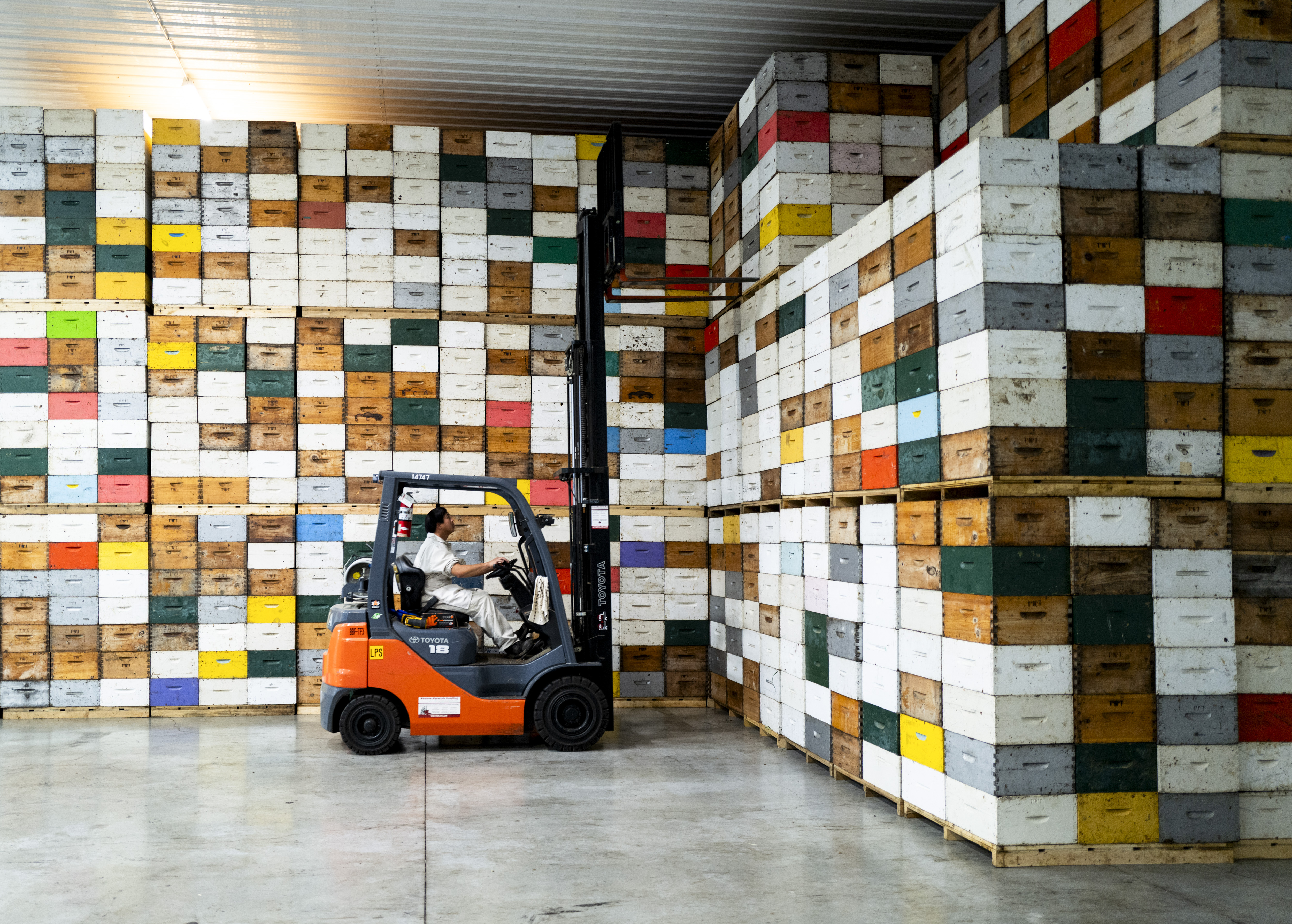
    “This year humbled me,” said deJong, the owner of Busy Bee Farm Ltd., which, at 20,000 hives, is one of the largest operations in central Alberta. The province produces 40% of Canadian honey.

    Walking briskly around his sprawling honey house, deJong gestures to machinery, steel drums, wooden boxes, and other supplies that, ordinarily purchased from U.S. suppliers, now cost farmers more at checkout — because Canada retaliated with tariffs of up to 50% on hundreds of U.S. exports.

    While far from Canada’s most significant agricultural commodity — it represented roughly $175 million in production value last year — the honey industry and its 16,300 beekeepers are foundational to farming. Beehives are contracted out to pollinate fields of alfalfa, clover, and the multibillion-dollar canola crop. The sector also illustrates how the trade war is playing out on the ground, far from Canada’s capital of Ottawa and Washington.

    About 70% of the honey Canada has exported this year went to the United States. Yet of all the honey that the United States imports, only 2% comes from Canada, making it a puzzling target, beekeepers say, by the Trump administration.

    The trade upheaval has left beekeepers scrambling at the end of a difficult harvest, when they would normally be selling honey and hauling barrels of it across the border. Rural communities are enduring pain acute enough that some farmers are questioning Prime Minister Mark Carney’s handling of the negotiations.

    “At the last minute, they blew the whole deal up,” said Ron Greidanus, the owner of Greidanus Honeybee Farm in Stettler, Alberta. “And we are the sacrificial pawn.”

    Greidanus pulled his white flatbed truck into his farm Thursday evening after an eight-hour drive from Polson, Mont. He had crossed the border with $32,500 worth of pine for hive frames, which would soon be subject to a 25% Canadian tariff and would have cost him about $8,100 more.

    Rain fell outside as Greidanus’ teenage son and another worker offloaded the wood, enough to keep his staff building frames for about two months over the winter. The weather inspired a metaphor: that each small farming business is a raindrop that, when collected together, has an amplified effect.

    “My business, it’s just a raindrop. But it matters to Pablo, it matters to Tanya, it matters to Tony,” said Greidanus, listing his staff, most of whom are seasonal foreign workers, and the local businesses that depend on his patronage. He plans to visit the United Arab Emirates this fall to explore new markets, though he has accepted that no one can replace the United States as a prime customer given its proximity.

    The economic pain from tariffs is especially personal in small Canadian towns like Warburg, a village of about 700 people southwest of Edmonton surrounded by endless canola fields and cattle ranches — the kind of place where Wild Hive, a local beeswax candle maker, has its name etched in the ice at the curling rink and on a sign at the hockey arena.

    “When you live in a small town, that’s all you got,” said Candice Prins, Wild Hive’s owner, surrounded in her garage studio by fragrant tapered candles, each hand-dipped, the traditional way, 16 times in hot beeswax.

    Prins quit her job last year as an agricultural inspector specializing in honeybees as her wholesale business took off, with American buyers accounting for 40% of sales and allowing her to hire three women from town. Since the most recent tariffs began, she has had only one sale from the United States.

    “We can’t give back or do as much for our community, which was kind of the goal when I started,” she said.

    Prins buys most of her beeswax from Good Morning Honey, a short drive north in Parkland County, Alberta. Its owner, Richard Ozero, has been diversifying his farm to offer retail products such as honeycomb and bee pollen, while exporting about 20% of his honey south.

    “We’re not eating their lunch, we’re not affecting their bottom line, so I don’t know how beekeeping got thrown into the cage here in this trade dispute,” Ozero said from behind the wheel of his pickup, on the way to visit his hives in a nearby hay field. “It kind of came out of nowhere.”

    Margins to absorb a 50% price increase are not built into the system, said Ozero, who likened the tariffs to closing the border. It has made preparing for the winter a challenge farmers cannot simply postpone.

    “The bees aren’t going to say, ‘OK, just call us when you’re ready,’” Ozero said.

    Consumers can also bear consequences of the trade spat beyond price fluctuations, industry experts warn, because honey is one of the most adulterated food products in the world.

    Fake honey, made with rice syrups, made up about 22% of imported samples tested in Canada last year, according to the national food inspection agency, while domestic honey tested 100% authentic.

    Canada exports more honey than it imports, but one byproduct of the trade war is that the two countries, which normally cooperate to protect the integrity of their honey supply, are now at odds. The clash could open the door to more fake honey entering the market, said Rod Scarlett, the executive director of the Canadian Honey Council.

    Canada also relies on states such as California and Hawaii, which, because of their warmer climate, are leading producers of the queen bees necessary for laying thousands of eggs and keeping colonies populated.

    Canada imports about 300,000 queen bees annually, 85% of them from the United States, according to federal data. The bees themselves are not subject to tariffs, but reliance on U.S. suppliers is another source of unease as beekeepers plan for winter and beyond.

    “Canadian and American farmers have spent generations building a continental food system,” Ozero said. “You can disrupt that system with a tariff overnight, but rebuilding those relationships could take years.”

    This article originally appeared in the New York Times.
  • Iceland summons U.S. ambassador over provocative Trump map

    Iceland summons U.S. ambassador over provocative Trump map

    A day after summoning the U.S. ambassador for a formal rebuke, Iceland’s leaders on Tuesday publicly condemned a social media post from President Donald Trump showing the American flag covering their nation along with Greenland, Canada, Mexico, and Caribbean states.

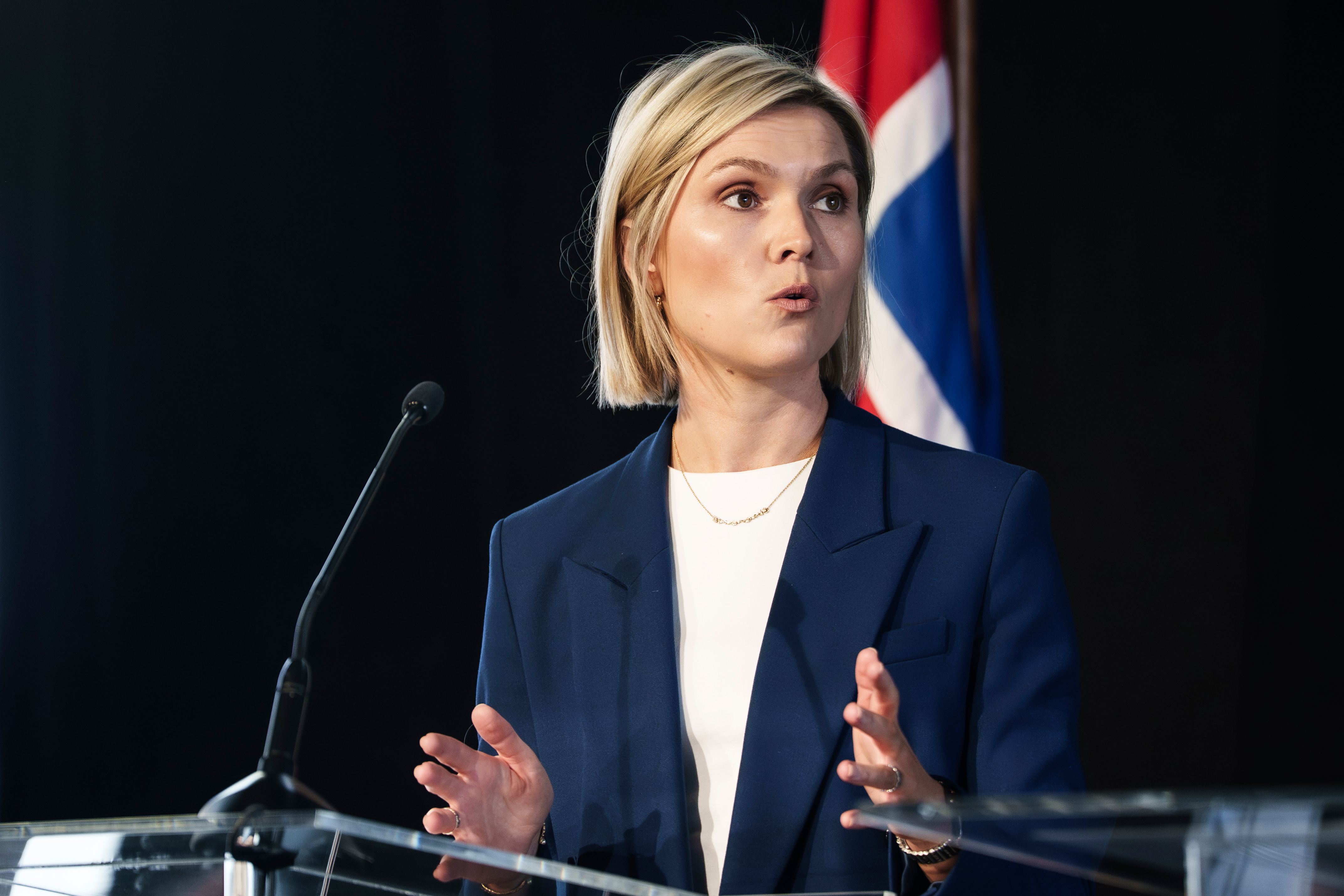
    “It is an insult to Icelanders, Canadians, Greenlanders,” Prime Minister Kristrun Frostadottir of Iceland told reporters Tuesday, referring to Trump’s Monday post, which did not include any written commentary.

    “There is nothing funny or normal about making fun of the sovereignty of states,” she added.

    Icelanders have been wary of Trump since he threatened Greenland, their closest neighbor. Now, this social media post feels like a marked escalation in rhetoric, said Eirikur Bergmann, a politics professor at Bifrost University in Iceland.

    “Icelanders are used to looking toward the U.S. as Iceland’s defender,” he said. “Now, our protector has become our intimidator.”

    The U.S. embassy in Reykjavik declined to comment on Trump’s post or Iceland’s response, and the White House did not immediately respond to a request for comment.

    Trump’s post tests Iceland’s resolve just over a week after the Nordic country voted against exploring European Union membership.

    That vote sharply divided public opinion, as many of the 400,000 people living in Iceland felt like they were at a turning point. Many said that the vote came down to questions of how to protect their stability and sovereignty.

    Some Icelanders, who wanted to explore membership, saw the bloc as a potential protector in a world where superpowers are circling the Arctic and Trump is shaking international alliances. Iceland, the only NATO member without its own military, relies on the alliance for protection. And Trump’s aggressive remarks about Greenland have alarmed many Icelanders.

    Icelandic voters who wanted to explore EU talks said in interviews that they were shocked when Trump repeatedly confused Iceland with Greenland in a major speech in January. Many, too, were offended by reports that Billy Long, Trump’s pick to be the new U.S. ambassador, joked in private that Iceland could become the 52nd state. (Long apologized.)

    But late last month, those voters lost out to Icelanders who thought it would be better for Iceland to stay out of the bloc.

    Now, Bergmann said, Iceland’s choice to go it alone is heightening the national anxiety.

    “Iceland doesn’t have the same options as before of fleeing into the arms of Brussels as a response to an intimidation like this,” he said.

    In a show of sovereignty and outrage, Iceland’s government is reacting forcefully to Trump.

    Foreign Minister Thorgerdur Katrin Gunnarsdottir summoned Long to express what her ministry called a “clear message that the image was wholly inappropriate.”

    The ministry did not make Gunnarsdottir available for an interview.

    Gunnarsdottir told reporters that Trump administration officials had repeatedly offered her advice about their boss: “We should perhaps not take the current U.S. president literally, but we should take him seriously,” she said she was told.

    This post, she said, crossed a line. “This is not a joke in my opinion,” she said.

    “And if this is supposed to be a joke,” she continued, “it’s a bad joke.”

    This article originally appeared in the New York Times.
  • Documents suggest New Yorkers were misled about air quality after 9/11

    Documents suggest New Yorkers were misled about air quality after 9/11

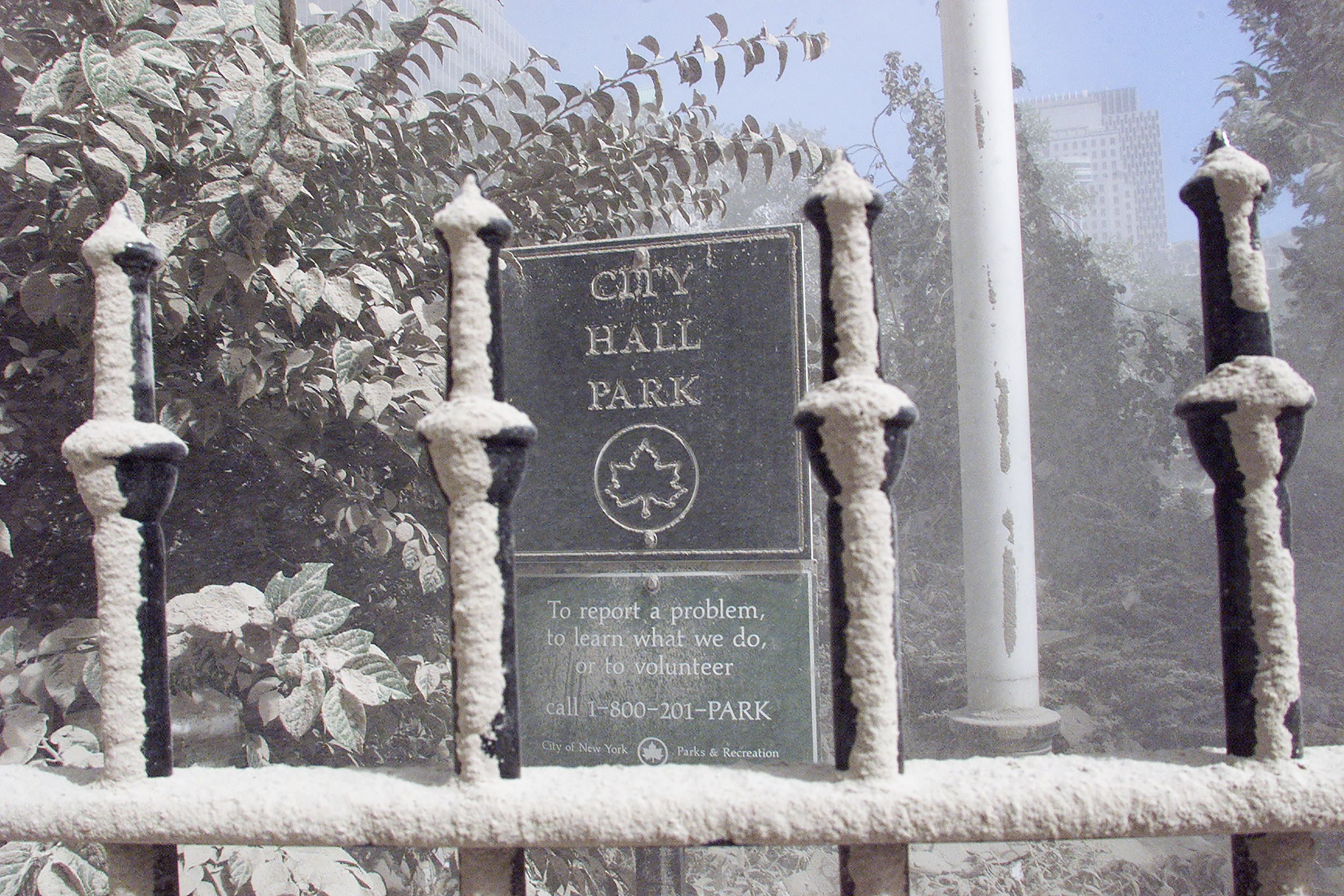
    NEW YORK — In the harrowing months that followed the attacks on the World Trade Center, New Yorkers were repeatedly assured that the air around the fallen towers was safe to breathe.

    But 10 months later, health officials were still finding evidence of asbestos as much as half a mile away, according to a sample of air quality records being released Tuesday.

    The documents, reviewed by the New York Times in advance of their release, include more than 170,000 pages of air quality reports, contamination records, and correspondence among city officials that were stored in 68 boxes in a city office, shielded from public view for more than two decades, and, according to city officials, discovered only last year.

    Mayor Zohran Mamdani has directed his administration to release the records to the public through an online portal, timing it to the commemoration of the 25th anniversary of the attacks in lower Manhattan.

    Over the course of the next year, his administration intends to review, redact, and publicize many more papers, found in municipal and insurance offices, that relate to the environmental toxins brought about by Sept. 11.

    The records being released Tuesday provide a snapshot of the frenzied months following the attacks, when New York City and its leaders were struggling to balance the city’s recovery with fears of terrorism and lingering toxins.

    The documents are limited in scope, offering only a fraction of the air quality reports taken around ground zero. And while they also include a smattering of internal memos — including the so-called Harding memo, in which the city discussed its potential liability stemming from the Sept. 11 air quality — many more are presumably absent.

    But even in a scattershot way, the records seem to strengthen the notion that New Yorkers were instructed to return to the ground zero area before it was safe to do so, potentially exposing workers and residents to dangerous toxins.

    “The very least our city owes the families, survivors, and first responders whose lives were forever changed by the horrific terror attack of Sept. 11 is transparency and accountability,” Mamdani said in a statement.

    Releasing the documents was both a massive logistical hurdle, for which the mayor budgeted $34 million, and an acknowledgment that, even after so many years, as fewer Americans remember the attacks, the health effects persist. More people are believed to have died from illnesses related to the attacks than the nearly 3,000 people who were killed Sept. 11. They are succumbing to lung and blood cancers and heart and respiratory diseases.

    Records related to 15 John St., a building less than a mile from the World Trade Center, offer a glimpse into the prolonged, frenzied, and often confusing cleanup work that took place around ground zero.

    On July 13, 2002, with New Yorkers still reeling from the attacks on the World Trade Center that blanketed lower Manhattan in debris, inspectors were busy collecting dust samples from the building.

    Each report echoed the last: Asbestos present on the facade ledge. Asbestos present on the west side roof. Asbestos present on the top electrical cable.

    Some reports show that asbestos levels appeared to stay under limits set by environmental and worker protection agencies; others indicate they may have been too high, though many of the papers are not accompanied by written analysis.

    The documents show that the asbestos found at 15 John St. was not an outlier: Lists of environmental quality measurements taken by city agencies, the Environmental Protection Agency, and privately contracted laboratories demonstrate the presence of asbestos and other contaminants, sometimes at levels exceeding acceptable limits, in dust and air in other parts of lower Manhattan after Sept. 11.

    They include records preserved by the Giuliani administration, as well as documents related to 7 World Trade Center, which collapsed on the afternoon of Sept. 11.

    A letter to the city’s Department of Environmental Protection from a New Yorker in February 2002 underscores how isolated and frightened people felt at that time.

    A resident of 333 Rector Place detailed what she viewed as extensive missteps by city officials and her building’s property manager in attempting to remove asbestos and other contaminants from the premises.

    “Sept. 11, 2001. Felt I had to do something,” the resident, Marisa Ramírez de Arellano, wrote, describing how she had “scooped up dust from coffee table into a paper bag. Also started to clean the floor with wet paper towels,” an effort she acknowledged was “mostly futile.”

    Reached Monday, Ramírez de Arellano, 80, said she had spent several years after the attacks under the care of an allergist and a pulmonologist. She was prescribed steroids and other medications because respiratory tests led doctors to fear she had suffered lung damage, she said.

    She said she spent several hours in her apartment Sept. 11 because she “didn’t realize that very lightweight dust that was coming in was as bad for human beings as it turned out to be.” She left the apartment when firefighters came to evacuate her.

    By the time she returned several weeks later, officials said the air was safe to breathe, but she had doubts, especially one night when a hazmat team came to dig up the grass from a small roundabout in the neighborhood.

    “They dug several inches down and took it all away and replaced it with new dirt, new sod, new grass,” Ramírez de Arellano said. “And I thought, if they were thinking the grass is contaminated, then what are we all breathing?”

    A draft document of data collected by the city’s DEP listed locations throughout lower Manhattan where asbestos levels in some dust samples exceeded hazardous limits in the days immediately after the attacks. Another undated document lists ambient samples that were also above acceptable asbestos limits.

    An audit from November 2001, prepared by a private firm and submitted to the federal EPA based on data collected by New York City and state agencies, showed other troubling findings. That audit demonstrated that air concentration of the carcinogen benzene was still spiking near the towers’ footprint, and that the concentration of asbestos in the air at the Fresh Kills landfill on Staten Island had increased after the attacks.

    But the uncertainty about the air quality in residential and commercial buildings in lower Manhattan was already raising concern among public officials including Rep. Jerrold Nadler, a Manhattan Democrat whose district included ground zero at the time.

    “Congressman Nadler believes that the EPA has neglected its responsibility for monitoring indoor air quality around ground zero,” according to a memo from a city official, Ester Fuchs, sent to six others including the city’s top lawyer, Michael Cardozo, on Feb. 28, 2002, two months after Michael Bloomberg took office as mayor, replacing Rudy Giuliani.

    She noted that Nadler said that the federal Environmental Protection Agency “handed over responsibility for measuring indoor air quality to the city without putting in place proper oversight measures,” a responsibility the city passed on to property owners.

    (BEGIN OPTIONAL TRIM.)

    The city’s health department instructed citizens to “clean their buildings with wet mops and rags,” Fuchs said, and summarized the agency’s position that air quality testing, while painting an incomplete picture, had not shown results “that would indicate long-term health impacts.”

    In an interview this week, Nadler recalled trying to persuade the administrations of Giuliani and Bloomberg to release whatever information they had collected on air quality around the site of the attacks.

    “They knew about the air quality and they essentially did nothing about it,” Nadler said. “I suspect that all they cared about was getting Wall Street reopened, and they didn’t give a damn about the health of the people down there.”

    Indeed, city and federal officials, most memorably Christine Todd Whitman, the administrator of the EPA at the time, reassured Americans that the air around ground zero was safe to breathe. Whitman has since apologized.

    A review of news articles and interview transcripts in the days and weeks following Sept. 11 show that Giuliani continued to vouch for the safety of the air quality.

    “I come down here in the morning and sometimes the odor is terrible,” he said in late October 2001, according to an article in the New York Daily News, which had reported on toxic chemicals and metals that had been released into the environment around ground zero. “You smell it and you feel there must be something wrong with it. But what I’m told is that it is not dangerous to your health.”

    In February 2002, Bloomberg said, “Every test that has been done says the air quality was in acceptable limits. I think some people are just never going to want to believe that.”

    A spokesperson for Bloomberg declined to comment. A spokesperson for Giuliani did not respond to a request for comment.

    Correspondence between Deutsche Bank, at 130 Liberty St., and the city DEP discusses testing from September 2001 through April 2002 that found asbestos in dust samples exceeding the 1% threshold for harm throughout the building, as well as the presence of carcinogenic organic contaminants, heavy metals, fungi, and bacteria.

    The bank’s experts “have recommended a systematic testing program” to quantify the hazard and identify appropriate methods for handling and disposing of the materials, the company’s managing director for corporate real estate wrote in a June 2002 letter to the DEP commissioner. The building would eventually be demolished.

    Asbestos exposure can cause lung tissue scarring, mesothelioma, and lung cancer. Dust, smoke, and other pollutants from the site have also been associated with lymphoma, leukemia, and other cancers.

    The release of the documents resolves litigation brought by 9/11 Health Watch, an advocacy organization that sued to force the publication of the documents.

    “For 25 years, four different mayoral administrations kept from the public, the U.S. Congress, and the City Council documents showing what the city actually knew about the danger of the toxic chemicals in Lower Manhattan and Western Brooklyn after the World Trade Center collapse, even as city officials continued messaging to the public that the air was ‘safe and acceptable,’” Ben Chevat, the executive director of the 9/11 Health Watch, said in a statement.

    But the documents’ release may expose the city to new or amended lawsuits. The information could also help those sickened in the years after Sept. 11 with their applications for federal victim compensation funds. The mayor and the city’s chief lawyer, Steven Banks, agreed that it was important to make the documents public, Banks recalled in a recent interview.

    “For years, families, city workers, and survivors have been crying out for more transparency from their government,” Banks wrote in an introductory letter contained in the document release.

    In a recent interview, Denise Verzi discussed losing her husband, Michael Verzi, a New York City firefighter, to lymphoma that was linked to his time working at ground zero.

    “He truly loved being a firefighter. That was his calling,” Verzi said of her husband, who died in 2022. “All that being said, now years later we’re finding out that there’s all these files.”

    She said her husband and his colleagues had been assured that “the air quality is fine, you can be down there.” And while they would have gone to the site regardless, she said, “maybe different precautions would have been taken.”

    “I don’t understand hiding it to begin with,” Verzi said. “That was horrific. But 25 years in, there’s people that are still getting sick.”

    This article originally appeared in the New York Times.