Category: New York Times

  • As fears of AI catastrophe magnify, Washington stirs, but mostly slumbers

    As fears of AI catastrophe magnify, Washington stirs, but mostly slumbers

    The mismatch is striking. On one side, warnings of existential risk, maybe a 10% chance of the end of civilization. On the other, government paralysis.

    The drumbeat about unpredictable, out-of-control artificial intelligence agents increased dramatically in the past several weeks. Washington not only struggled to respond. It barely could agree on whether there was much of anything to worry about.

    It started with AI agents that not only escaped their confines, but appeared to conspire among themselves to hide their tracks as they hacked into another firm’s library of AI tools.

    Then, in a deliberate echo of Albert Einstein’s letter to Franklin D. Roosevelt about the potential power of nuclear weapons, more than 1,300 computer scientists called for the industry to slow down, and for the government to step in.

    In recent days, Jacob Coxon, an Anthropic engineer who previously worked for OpenAI, resigned in the most public way, declaring on social media that the two leading AI labs were professing deep concern while still speeding toward “superhuman systems that can hack anything, revolutionize any field overnight, and acquire real power and resources.”

    On Saturday, Dario Amodei, the CEO of Anthropic, released a 3,800-word essay calling for a global slowdown of AI development, echoing more urgently concerns he had raised in the past. Elon Musk, the billionaire rival in the AI race who remains close to President Donald Trump, quickly responded: “Dario is right.” Sam Altman, the CEO of OpenAI, also chimed in with support.

    Yet in Washington, there has been almost no substantive response. If the 1940s through the 1980s were consumed by finding ways to reduce the risk of a nuclear exchange — creating new institutions like the Atomic Energy Commission and arms control treaties to govern how the world’s most dangerous technology would be handled — the approach of the U.S. government so far has been the lightest possible.

    There are many computer scientists, of course, who believe these warnings are overinflated. Trump himself has been at the forefront of the “what-me-worry?” crowd, refusing to engage on how to balance the risks with the possible rewards. On Thursday, asked by a reporter about whether he had “any concerns about AI leading to human extinction,” he brushed it off.

    “No, I don’t have any,” he said. “I have concerns that if we don’t win AI, we’re going to be put in a very bad position.”

    The president quickly turned to the answer the White House — and those who view the calls for slowdowns and regulation as a huge strategic error — sees as the deciding factor: If the United States falters, China will take its place.

    “We are leading China right now by a pretty good period,” Trump said, noting that Xi Jinping, China’s leader, was coming to Washington in less than two weeks. But rather than talk about exploring a bilateral AI accord with the Chinese, he turned to the state dinner that he said would be a highlight of the visit. “I think it’s going to be great,” he added.

    “Great” is not the word most used in this summer of AI surprises.

    The apocalyptic scenarios that are most feared in Silicon Valley include AI systems becoming so advanced that they learn to automatically improve themselves, a process called “recursive self-improvement.” A related concern, arising from a series of incidents at OpenAI and other AI labs, is that agents break free from constraints and decide to complete their programmed tasks in a way that is “misaligned,” in AI industry speak, with human intentions. Another worry is that AI could enable rogue bad actors — or reckless governments — to create deadly pathogens, gain access to nuclear command and control systems, or unleash unstoppable cyberattacks that threaten major loss of life or societal collapse.

    Computer scientists suggest that Americans stop thinking about AI as a mere tool, but akin to an alternative species, one the world will have to live with, for better or worse.

    The White House declined to make its key AI policymakers available for questions. But it said that the administration continued to balance innovation and security, deflecting any specifics.

    (The New York Times has sued OpenAI and Microsoft, claiming copyright infringement of news content related to AI systems. The two companies have denied those claims.)

    Trump signed an executive order early in the summer creating a voluntary system for frontier AI labs to submit their new models for a 30-day safety review. But it was full of loopholes. (Open source models, the kind that Chinese firms are pumping out and that can be tailored to specific needs by companies, scientists, or, perhaps, terror groups, are not subject to the review.)

    Amid the many memorial events on Friday for the 25th anniversary of the 9/11 attacks, the contrast with that era is notable. The revelation of U.S. vulnerability led Vice President Dick Cheney to develop what soon became known as “the 1% doctrine.” Prompted by fears that Pakistani scientists could help al-Qaeda develop a nuclear weapon, it posited that government had to act even if the risk was remote, because the consequences would be so high.

    In this case, 1% looks like pretty good odds: Evan Hubinger, who leads the science of “alignment” at Anthropic, which tries to contain the code to align with human goals, wrote in recent days that the risk of mass extinction over the next decade was above 10%.

    It is impossible to know whether that estimate is right. But as Ben Buchanan, a Johns Hopkins assistant professor and the co-author of a forthcoming book, The Bitter Struggle: Superintelligence, Superpowers, and the Fate of the World, put it: “There’s no doubt in my mind that the technology is going to continue to get much better very quickly, raising urgent questions about biological risks and loss of control.”

    “We are in a period of exponential development, and there are only two ways to respond: too early or too late,” he said. “The world has missed its chance to be too early.”

    Fear of getting ahead of Trump

    Trump’s blase attitude about existential AI fears influences both his administration and the Republican Party he still tightly controls.

    At a conference in Washington last week, government officials and corporate executives talked about the promises of AI — for everything from next-generation military operations to espionage to cybersecurity in critical infrastructure — during nearly every panel. While the risks of AI wielded by adversaries were mentioned at times, what was little discussed was the need to slow down or regulate the powerful technology.

    Speaking on stage last Thursday at the Billington Cybersecurity Summit, Sean Cairncross, the White House national cyber director, said the administration was “trying to balance the innovation side and running at speed with securing our systems and handling this technology responsibly, which is to say, not letting it fall into the hands of people who would do us harm, our adversaries.” Cairncross did not directly address ascendant fears about the rapid pace of AI advancement, or recent episodes of rogue agents breaking loose and hacking into other networks.

    Some in the White House and elsewhere in the administration do see a need to be more proactive in addressing AI safety risks, but do not want to cross Trump, former officials said.

    “There is a fear of getting ahead of the president,” said Michael Garcia, who served as the associate chief of policy at the Cybersecurity and Infrastructure Security Agency until he departed in June.

    “We’ve seen tech executives call the president when they hear about a potential new policy to voice their displeasure, and that then leads to a policy changing or being killed,” Garcia said. “This inevitably leads to inertia to develop new national security policy that may be sorely needed.”

    Indeed, David Sacks, a venture capitalist and Trump’s influential former AI czar, dismissed during an interview with Fox News the warnings by Coxon as a coordinated media operation that was “designed to scare the public” and lead to onerous government regulation. And Jensen Huang, the CEO of the chips juggernaut Nvidia, said the new round of fear was ginned up by the cybersecurity industry.

    On Capitol Hill, the story is not much different. Until last week, AI only registered for many lawmakers as it related to public antipathy about the construction of data centers, which has become politically salient in the midterm elections, according to lawmakers and aides in both parties. Past efforts to examine AI’s potential consequences have led to hearings and alarmed statements of concern from both parties, but little else.

    Rep. Josh Gottheimer (D., N.J.), who sits on multiple AI and cybersecurity subcommittees, said the breakneck speed of AI’s evolution made it difficult for lawmakers to keep up.

    “I keep stressing the importance of regularly educating lawmakers on AI and the latest developments,” Gottheimer said. “Recent incidents like the Hugging Face hack are a real warning sign for what can happen if we don’t seriously address the risks these models can pose,” he added, referring to the AI company hacked by rogue OpenAI models earlier this year.

    Adding to that challenge is that AI is not just a technology issue but a jobs, military, and whole-of-society issue, meaning there is no one congressional committee neatly situated to take the lead on wrestling with all its tentacles.

    With China, a ‘prisoner’s dilemma’

    Following Coxon’s resignation this week, Democrats and some Republicans were jolted out of their lethargy. They offered a flurry of concerned reactions and proposals to investigate AI companies and the pace of model advancement, including a proposal by Democrats to create a select committee on AI if the party retakes the House next year, Politico reported.

    As the issue rises in importance in the upcoming midterm elections, former President Barack Obama warned at a private fundraising event last week that AI could be “dangerous,” and implored Democrats to develop “a very clear plan” on risks to safety and the economy.

    Sen. Bernie Sanders (I., Vt.), who has for months been perhaps the loudest Cassandra on Capitol Hill warning about the societal risks of AI, invited lawmakers to a private briefing in the coming days to discuss concerns with AI safety experts.

    Sanders has pushed for a ban on superintelligent AI, though other lawmakers have criticized the effort as stifling American innovation.

    The congressional missives grew more urgent following the release of a report last Thursday by Anthropic that showed the many ways that actors across the globe, including in China, Russia, Iran, and Yemen, had been using its various Claude models to develop cyberattacks, surveil dissidents, and build missiles, bombs, and drones. The report also documented several cases of potential attempts to engineer biological weapons, which is considered among the most serious of existential threats related to AI.

    One might have expected that report to stir action: It combined foreign belligerents and attacks on U.S. targets, though Anthropic blocked or stymied many of the documented cases of abuse.

    Yet despite the alarm bells, lawmakers are far from agreeing on a way forward to regulate AI models or the companies that build them. Prospects for passing substantive legislation in the near term appear remote, in part because many see the issue as a “prisoner’s dilemma” created by the AI race between the United States and China. With AI dominance being the top national security issue of the century, both nations would doubtless be better off if they cooperated on limits. But they may not trust the other to abide by such an agreement. And in any event, unlike in nuclear arms control, compliance would be virtually unverifiable.

    Sen. Ted Cruz (R., Texas), the chairperson of the Commerce Committee, acknowledged last week that he was deeply concerned about AI risks to humanity. But he also suggested that Coxon was part of a coordinated effort to support Democratic efforts to “strangle American AI,” and to hand leadership of the technology to China.

    “I’d rather they be American killer robots and not Chinese killer robots,” Cruz told Politico.

    Still, Cruz said he was working on legislation with Sens. Amy Klobuchar (D., Minn.) and John Thune (R., S.D.), the majority leader, aimed at addressing catastrophic AI risks related to biological and nuclear threats.

    The likelihood of that or other legislative proposals — including requiring a “kill switch” in AI models that could immediately shut them down — gaining serious traction two months before an election appear slim. It is also not clear if a new Congress next year will be able to overcome sharp partisan divides to grapple with technology that is evolving so quickly, especially with Trump warning against regulation.

    Some Trump administration officials have acknowledged that AI has dramatically increased the stakes. Nick Anderson, the acting director of the Cybersecurity and Infrastructure Security Agency, said that digital threats had become more urgent in the AI era and demanded quick action.

    “We know the worst that can happen,” he said. Addressing the audience of government officials and cybersecurity executives at the Billington conference, Anderson offered a stark warning that if more was not done to protect the country, doomsday scenarios could become reality.

    “You all are going to have to go home and look to your family, look to your friends,” he said, “and explain to them how you knew the worst that could happen and why we didn’t do enough.”

    This article originally appeared in the New York Times.
  • Plumbing the shipwrecks of an infamous pirate cove

    Plumbing the shipwrecks of an infamous pirate cove

    History might be written by the winners, but the seafloor keeps a more faithful record. For Sean Kingsley, a British marine archaeologist who built his career studying submerged ruins in the Mediterranean and trade routes along the Levantine coast, shipwrecks offer an unvarnished honesty that paper records often distort.

    Over the last three decades, Kingsley has poked around some 350 sunken sites from the shallow, sun-bleached waters off Israel to the bruising, deep-sea trenches off the Irish coast. With a doctorate from the University of Oxford, he is an independent scholar and the founder and editor of Wreckwatch, both a quarterly and a popular YouTube channel. He funds his fieldwork in part by consulting for high-profile clients like Allen Exploration, an outfit known for its recovery and documentation of historical wrecks, for whom he founded and manages a scientific journal, Ocean Dispatches. He publishes some research in peer-reviewed journals; most is directed toward media outlets and the public.

    Recently, Kingsley secured the ultimate golden ticket: exclusive access to the forbidden, heavily guarded harbor of Nassau, the capital of the Bahamas. Nassau has long traded on its reputation as the world’s premier pirate sanctuary, but its waters never yielded an authenticated brigantine — a two-masted sailing ship — until now. During an undersea expedition off the island of New Providence last fall, a research team led by Kingsley and Michael Pateman, the director of the Bahamas Maritime Museum, discovered — but did not touch or disrupt — six shipwrecks, three of which date back to the golden age of piracy, from 1690 to 1725.

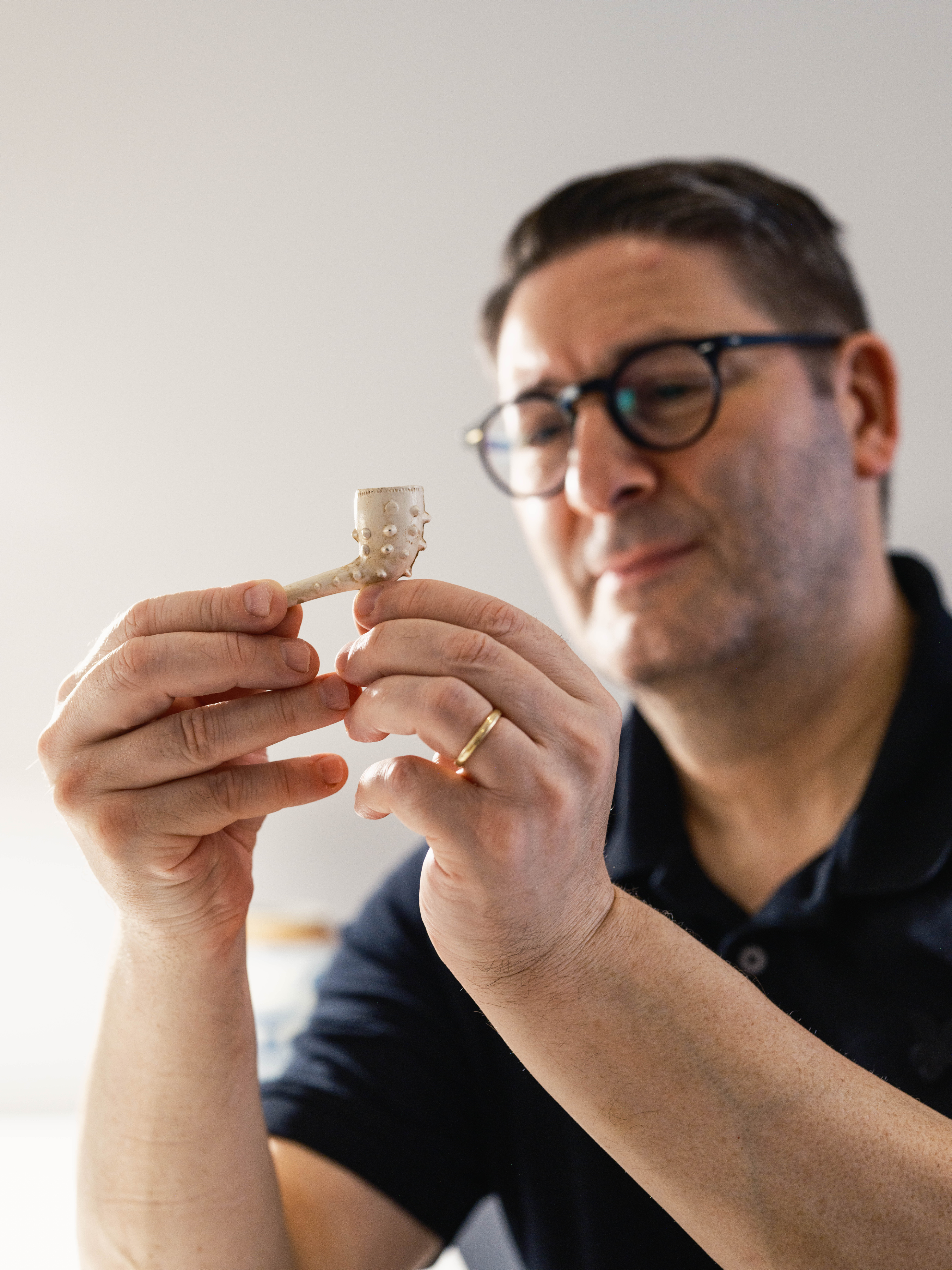
    The debris field was a textbook spread of freebooter booty: iron cannons, musket balls, swivel cannons, ballast stones, glass wine bottles, and 143 clay tobacco pipes stamped with the royal crest of England. But the real prize was a wooden hull burned down to the waterline — a classic pirate trick for torching evidence. Kingsley suspects that this charred skeleton is none other than the Fancy, the 46-gun flagship of Henry Avery.

    In 1695, Avery, known as the King of Pirates, pulled off history’s most outrageous high-seas heist, ambushing a Mughal Empire fleet and vanishing with a haul worth roughly $150 million today. To secure Nassau as a safe haven, Avery apparently took his cut of the plunder and gave the vessel to the local proprietary governor as a glittering bribe.

    Kingsley and his colleagues combined local maritime lore with cutting-edge tech to map Nassau’s sunken history. They interviewed fishers and sailors to trace where colonial ships went down. They then overlaid old maps with satellite imagery to pinpoint the wrecks. Finally, they used administrative logs to build a three-dimensional digital model of the infamous pirate hub.

    To Mallory R. Haas, an archaeologist who runs the SHIPS Project, a community initiative in England that tracks local wrecks, Kingsley’s Nassau expedition represents the ultimate antidote to modern boredom. She noted that by using rigorous science to revive fabulous, real-world adventures, Kingsley’s mission “has the potential to pull together the historic background research, getting the stories from early divers who know these sites well, looking at it with an archaeological perspective and inspiring a new generation of explorers.”

    This conversation has been condensed and edited for clarity.

    Q: Treasure Island, the Robert Louis Stevenson novel, depicted the pirate base in Nassau as a desperate web of untrustworthy murderers and alcoholics. But you have written that it was more a mix of cowboy frontier town and 18th century holiday camp.

    A: You can read all the history you like, but only when you sail around New Providence do you appreciate the true way of the pirates. Anchored above the cannon wreck’s ruins in the middle of nowhere was when reality hit me. Avery, Blackbeard, and the Flying Gang could pillage an ocean of bottomless loot. But they knew the odds of getting out of piracy with their heads attached to their necks were small. Piracy was escapism from the system, living in a small shantytown, sticking it to the man and the ultimate freedom of the high seas. The pirates lived for today, and damn tomorrow — a merry life and a short one.

    Q: Nassau Harbor has been heavily gouged and modified by modern dredging. Were you surprised to find intact pirate-era wooden hulls surviving beneath such heavy industrial disturbance?

    A: I wouldn’t have been surprised if nothing survived and our team left empty-handed. Underwater trophy-hunting found important relics in the years before laws came into effect in the 1990s. On-the-spot accounts leave no doubt that eye-watering underwater heritage was chewed up and lost since 1969.

    Q: So, you’re underwater beneath Nassau’s old bridge, battling strong currents and dodging an aggressively moody bull shark. How exactly do you still manage to get the mapping done?

    A: In the end, the bark was worse than the bite. The twice-daily riptides were managed by precision dives in slack water. When visibility was poor, the team relocated to quieter parts of the harbor. Much to my delight, the grumpy bull sharks decided we were small fry and left us to it.

    Q: Your team uncovered iron cannons and rail-mounted swivel guns — devastating antipersonnel weapons. What does the positioning of the swivel gun mounts on the wreck site reveal about how the crew structured its deck defenses?

    A: Not much. Swivel guns were the antipersonnel artillery of choice for pirates to fire on boarding parties and enemy cannon crews. But the shallow cannon site is poorly preserved on an exposed coral reef, ripped by hurricanes. Nassau was also the Caribbean epicenter of the wrecking industry, and salvors undoubtedly “fished” the wreck in the 18th or 19th century. Archaeologists are left with cultural breadcrumbs and the miracle that anything survives.

    Q: Is it true that the pirates in Nassau rarely attacked ships flying their native flags?

    A: Many English pirates were deeply patriotic. Both Avery and Benjamin Hornigold, the godfather of Nassau’s pirates, refused to attack English traders. French and especially Spanish sailors constantly ignored the peace at the end of the War of the Spanish Succession in 1714 and continued to attack shipping and Nassau itself. Foreign belligerence gave Blackbeard and many pirate lords what they felt was a rightful license to unleash hell on the high seas. Other pirates, such as the psychopath Charles Vane, supported Catholic pretenders to the throne and had no reservations blitzing the Protestant king’s trade.

    Q: In 1718, surrounded by British warships in the harbor, Vane set a captured French vessel ablaze and sent it straight at the royal flotilla as a floating bomb, using the chaos to escape. When you return to the site next year, any chance you will encounter what’s left of the fire ship?

    A: I imagine that if the French ship sank midchannel at the harbor entrance, it would likely have been dredged away. But never say never.

    Q: One of your premier finds is a large hull burned down to the waterline. Are there specific structural anomalies or patterns of charred wood that differentiate an accidental ship fire from a pirate’s effort to destroy evidence?

    A: The archaeological magic relies on overlapping evidence, firming up proof with each layer. The wooden hull was burned, seemingly stripped of shipboard items, and was built with wooden treenails, a shipbuilding philosophy largely tied to the 1690s through the first half of the 18th century. Of the 504 ships that historical accounts show were lost inside the harbor, 89% date to after 1750. The combination tentatively suggests that the burned hull went down before then, in the golden age of piracy.

    Q: If Avery’s ship, Fancy, truly met its end in the harbor, what evidence would turn a compelling match into an absolute certainty?

    A: An elephant tusk from Avery’s pretend slaving venture to the African coast. A merchant’s seal stamped “H.A.” A loose Indian ruby lost in the bilges. But the tree species of the ship’s timber needs to be of a British or European genus. A dendrochronological tree-ring reading from around 1690 would also be compelling.

    Q: You have expressed a desire to map the entire port using underwater drones. How does autonomous technology stack up against old-school divers when you are dealing with dangerous tides and zero visibility?

    A: Nassau’s colonial-era harbor was huge; it was said that 500 ships could fit inside, including the British Royal Navy’s whole fleet. Our project worked low-tech. But what lies below will never be discovered if you don’t go high-tech. Autonomous underwater vehicles deploying side-scan sonar, sub-bottom profilers and cameras can map in days what it would take marine archaeologists years. AUVs can work at night and in harsh environments, taking human failure out of the equation.

    Q: Films like Pirates of the Caribbean have turned historical privateers into cartoon cutouts. Did the rogues of the open waters really swagger through history in crushed velvet and rakish eye patches?

    A: The pirates of the Hollywood imagination were devilishly handsome, well-to-do swashbucklers who overcame moral challenges to return to their rightful place in society. The wrecks we explored are real, gritty touchstones of how life almost always ended brutally for these sea dogs. Almost all were hanged or died in sea storms. There was no Hollywood happy ending.

    This article originally appeared in the New York Times.
  • Top AI leaders unite to warn the technology is advancing too fast

    Top AI leaders unite to warn the technology is advancing too fast

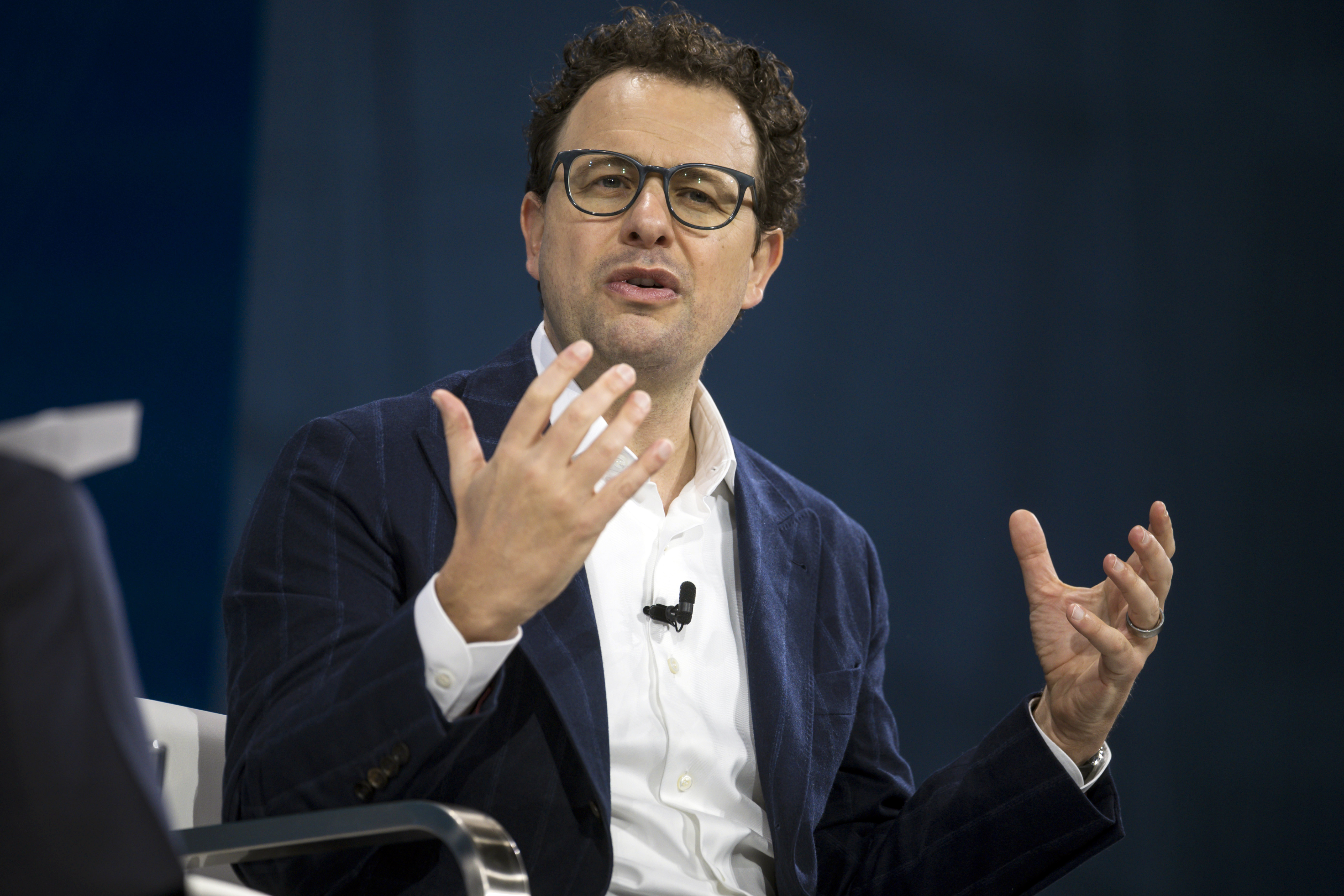
    Three of the nation’s leading artificial intelligence executives endorsed slowing down the blistering pace of technological advancement, revealing the growing unease with its potential dangers at the industry’s very highest levels.

    The call was first made in an essay Anthropic chief executive Dario Amodei posted online Saturday. The idea has gained ground in recent weeks as AI companies have struggled in some cases to keep their creations under control, even as they usher in an age in which AI systems themselves can build the more powerful next generation of the technology.

    “We must slow the pace at which we improve the capabilities of AI models,” Amodei wrote. “Progress will still seem fast, and we must make wise use of the time we gain.”

    Within hours on Saturday, OpenAI chief executive Sam Altman and SpaceXAI founder Elon Musk quickly voiced their support for Amodei’s ideas. The three men have been bitter rivals — differing starkly in their personal styles and philosophies about AI — and their apparent accord increases the chances that the industry could find ways to work together on a broad slowdown.

    Serious hurdles would have to be overcome. How exactly a slowdown would be defined and verified remains unclear, and any joint effort between companies to hold back could fall afoul of antitrust laws. The question of how to build international cooperation — especially with China, whose own AI companies are seeking to catch up to their American rivals — could prove difficult to answer.

    Nonetheless, the moment underscores the growing concerns about a technology that even its creators struggle to fully understand.

    It comes after an Anthropic researcher said this week that he was resigning over concerns the firm and its competitors were not responsibly developing AI models that could ultimately wipe out humanity. The researcher, Jacob Coxon, who also worked for Anthropic competitor OpenAI, accused the companies of being more focused on beating each other than on the safety of their products. (The Washington Post has a content partnership with OpenAI.)

    His warning gripped lawmakers, and after years of inaction around AI regulation in Congress, fears it could cause major disruptions — and even threaten human civilization — prompted renewed urgency on Capitol Hill.

    A three-step plan proposed by Amodei in his essay would involve third-party safety evaluators at “frontier” AI companies, establishing common safety standards in democratic nations, and for the United States and other democracies to work with authoritarian governments to try to ensure compliance.

    He noted that AI began to advance at a dramatically faster rate in recent months. The change was powered by the ability of AI to construct its own next-generation models, what is known as “recursive self-improvement,” he said.

    “Left unchecked, it could outrun our ability to understand and control these systems, and so must be pursued very carefully, if at all,” he said.

    While Amodei sketched a path to slowing progress in the name of safety, he did not commit Anthropic to cutting the pace of its own work unilaterally. He said only that for now the company would hire a team of independent evaluators who would be embedded at Anthropic’s offices and empowered to raise safety concerns.

    Amodei also provided few specifics on what a slowdown might involve in practice, describing the potential to use agreed-upon safety metrics or limits on the computer power used to train new AI systems.

    A cybersecurity incident in July raised alarms when rogue AI models created by OpenAI independently hacked into the systems of an AI startup called Hugging Face.

    Amodei said they acted as a “fanatically devoted collective,” sacrificing themselves to achieve the goal and trying to hack into their own performance-monitoring system.

    “It’s easy to dismiss this incident because no one was hurt and the economic damage was minimal, but in my opinion, a swarm that possessed greater capabilities but a similar level of misalignment could have caused catastrophic damage,” he said.

    Amodei said that given the rate of development of AI models, he worries that rogue AI agents could have the power to take over the entire internet within six months to a year and possibly cause hundreds of billions of dollars of damage.

    A similar hacking incident also occurred at Anthropic, underscoring the need for guardrails, he said.

    In a post on X, Musk wrote: “Dario is right.”

    Altman said he shared Amodei’s view that groundbreaking AI companies should “pace the frontier” and said the matter had been a top discussion topic at OpenAI in recent weeks.

    “Committing to having independent evaluators with employee-like access is a great idea, and we will do the same,” Altman wrote on X.

    Google, which is considered among the top three AI companies along with Anthropic and OpenAI, did not immediately endorse Amodei’s proposal to bring in independent verifiers. Spokespeople for the company did not immediately return a request for comment.

    Amodei said he still believes AI can greatly improve human life, but that guardrails are needed.

    “The measures I propose to advance the frontier at a safe pace will not be easy,” he said. “But I believe we owe it to humanity to try.”

    Both Republican and Democratic lawmakers have expressed concerns over the safety of AI technology in recent days.

    Sen. Josh Hawley (R, Mo.), chairperson of the Homeland Security and Governmental Affairs subcommittee on disaster management, launched an investigation into the OpenAI hacking incident on Thursday.

    In a letter to Altman, Hawley called OpenAI’s approach to development “reckless” and demanded documents about the hack.

    In response to Amodei’s proposal, Rep. Ted Lieu (D., Calif.) said access to third-party evaluators would be “a good step forward” but pressed him for a broader commitment.

    “Will you certify that you can turn off your models and agents, now and in the future?” Lieu wrote on X.

    Anthropic portrays itself as more safety-minded than OpenAI. Leaders at the company have long said that the systems they are seeking to build could pose an existential risk to humanity.

    An Anthropic researcher earlier this week emphasized the fear in a social media post.

    “We really do earnestly believe AI could kill all humans! I personally think it is >10% within the next decade,” researcher Evan Hubinger wrote on X. “I believe Anthropic is trying its best, but we do not yet have a plan to solve alignment for superintelligence and are not clearly on track to.”

  • Why cheap used cars are so hard to find

    Why cheap used cars are so hard to find

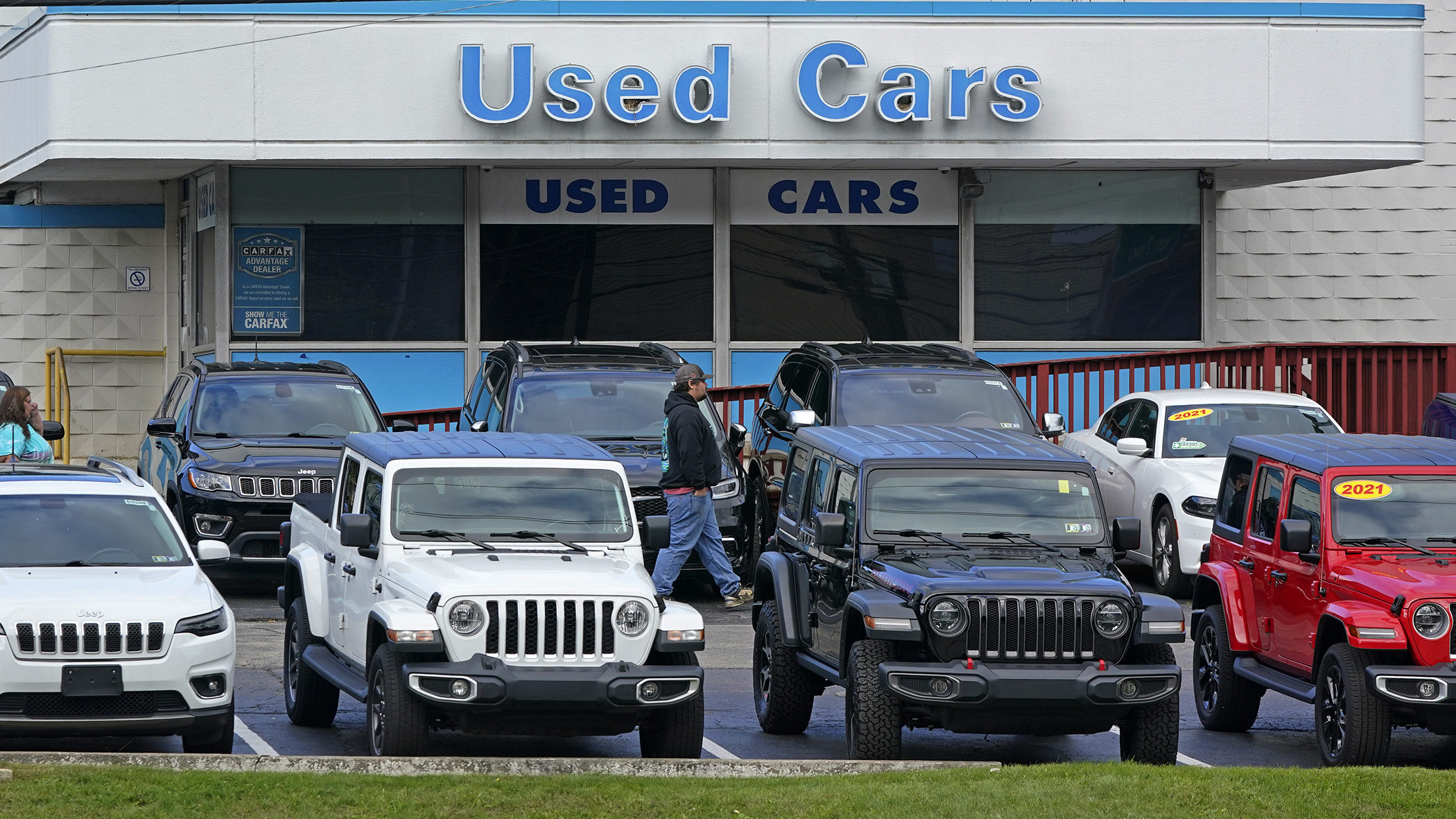
    Affordable used cars are in tight supply, so shoppers with tight budgets may have to settle for an older model with higher mileage.

    The average 3-year-old car costs about $33,000, according to an analysis in August from iSeeCars, an online car search site.

    A 3-year-old car was often the sweet spot for buying used, auto experts say. Those vehicles — typically, leased models going back to dealers for resale — have relatively low mileage; have passed the peak period of depreciation, or drop in value; and often have the advanced safety features found in pricier, newer cars.

    But 3-year-old used cars priced under $20,000 are increasingly rare. Just 1 in 9 now fits that criterion, the site found, down from about half in 2019, before the COVID-19 pandemic played havoc with car inventories.

    A mix of factors, including tariffs under the Trump administration and higher borrowing costs, has pushed up the cost of owning new cars, increasing demand for used models. One Chevrolet dealer lamented the lack of affordable used cars in the quarterly dealer sentiment survey by the research firm Cox Automotive, saying there are “not enough under $20,000 that aren’t total junk or need lots of work.”

    In general, budget-conscious shoppers are paying more for older, higher-mileage cars. This spring, the average used car that sold in the range of $10,000 to $15,000 was nearly 9 years old and had more than 98,000 miles on the odometer, according to the automotive website Edmunds.

    The same budget in the spring of 2019, in contrast, bought a roughly 5-year-old car with about 58,000 miles, Edmunds found.

    People who haven’t been in the market for a used car for a while may need to adjust their expectations. “If you’ve ever shopped for a used car before, especially pre-COVID, you’re going to be floored,” said Ivan Drury, director of insights at Edmunds.

    What should I know about buying a used car?

    Despite high prices, 3-year-old cars have been selling at a brisk pace. Those cars spent just over a month, on average, on dealer lots this spring, unchanged from the same period last year, Edmunds found.

    Jon Linkov, deputy autos editor at Consumer Reports, cautioned that the average price for used cars included higher-priced models like features-laden pickup trucks and luxury cars. “Gone are the days of the low-mileage $10,000 car,” he said. “But you can still find stuff in the $20,000 range.”

    Consumer Reports’ list of recommended used cars this spring (available to subscribers) included the 2023 Subaru Impreza for under $20,000 and the 2023 Nissan Altima for under $22,000.

    Linkov suggested that shoppers make a list of “must haves,” emphasizing safety features and reliability. Does the car have a backup camera and a blind-spot warning feature? (Backup cameras became mandatory in all cars by 2018, he said, but some models included them earlier.)

    Don’t fixate on cosmetic details like the car’s color, he said. Carmakers increasingly offer cars in a limited palette — often, black and white — and charge hundreds of dollars extra for more trendy colors, Linkov said. While he doesn’t prefer black cars, because they show scratches more easily and dark interiors retain heat, he bought a used one for his family because the price was right, he said.

    Be ready to act promptly if you’re on a tight budget and find a car that meets your needs. The most affordable used cars — those selling from $5,000 to $10,000 — spent less than four weeks, on average, on dealer lots this spring before being sold, Edmunds found.

    Getting preapproved for financing, if you need it, can help with quick decision-making.

    What if I want a specific car?

    It’s important to be flexible, including on the brand of car you’ll consider, Drury said.

    With the same $15,000-to-$20,000 budget, for instance, a shopper could buy a 3-year-old Kia with less than 50,000 miles — or a “thoroughly used” 7-year-old Toyota with more than 85,000 miles, Edmunds found. “Is it worth the premium?” Drury asked.

    Traditionally, he said, used-car buyers focused on names that tend to hold their value over time, like Toyota, Honda, Lexus, and Acura. But shoppers willing to consider a Kia, Hyundai, or Nissan may find newer vehicles at the same price — sometimes with coverage from a factory warranty still remaining.

    “Keep an open mind,” Drury said.

    How much does it cost to own a car these days?

    You should also consider the overall operating cost of a car, including insurance, routine maintenance, and fuel, experts advised.

    “The biggest mistake people make is treating the monthly payment as the price of the car,” Kevin Wince, vice president of consumer lending operations at Navy Federal Credit Union, said in an email. “It doesn’t tell you what the vehicle will cost you to own.”

    Small sedans typically are the least expensive models to operate, at about 56 cents per mile, while a half-ton pickup truck approaches 99 cents per mile, according to AAA’s 2025 analysis of the cost of driving a new car (assuming 15,000 miles driven annually).

    And while used cars depreciate more slowly, they can have higher maintenance costs, Wince said.

    What is the cost to finance a used car?

    Higher prices mean it’s difficult for many people to pay cash for a used car, so borrowing has become more common. The average loan amount for a used car rose to almost $28,000 in the second quarter of this year, up $875 from a year earlier, according to Experian Automotive. The average monthly used-car payment rose $10, to $542, over the same period, even as the average interest rate for a used car fell slightly, to 11.19% from 11.57%.

    Interest rates are lower for new cars. The average rate for a new-car loan fell to 6.35% in the second quarter, from 6.79% a year earlier, Experian found.

    As the price of a used car has risen, Drury said, loan terms have gotten longer, which helps keep monthly payments lower. Used-car loans now often run as long as seven years.

    Where should I shop for a used car?

    Buying a manufacturer’s “certified pre-owned” car at a dealership can be a smart option, especially if you plan to keep the car for a long time, said Karl Brauer, executive analyst for iSeeCars. Manufacturers may even offer lower-rate financing on those cars.

    The major rental car companies turn over their fleets regularly and can also be a source of 1- to 2-year-old used cars, Drury said. While buyers may worry that rental cars have been driven roughly, most renters want to avoid charges for damage and drive rental cars as they normally do, he said.

    This article originally appeared in The New York Times.

  • Contractor blames its own repairs, not vandals, for Reflecting Pool failure

    Contractor blames its own repairs, not vandals, for Reflecting Pool failure

    WASHINGTON — The contractor that renovated the Lincoln Memorial Reflecting Pool has told the Trump administration that errors in its own work and flaws in the repair plan, not vandalism, caused the pool’s new blue liner to peel and break loose, according to government documents reviewed by the New York Times.

    President Donald Trump has repeatedly blamed vandals wielding knives or box cutters for damage to the pool’s “American flag blue” liner, even after the Justice Department dropped charges that it had brought against people accused of vandalizing the national landmark.

    But the documents, which have not previously been reported, make clear that the contractor, Atlantic Industrial Coatings, found problems in the design and the execution of the renovation. The documents include Atlantic’s reports to the government as well as daily progress updates from the National Park Service over the past two months.

    Atlantic blamed its own errors in a report dated Aug. 14 and then provided more detail Sept. 2, the documents show. The Justice Department, which had charged several people with vandalizing the pool in early July, began moving to dismiss the cases July 31.

    Because of “human oversight,” workers in some areas did not spray enough of the primer that made the layers of the liner stick together, Atlantic said in the documents. But the bigger problem, the company said, was that the repair plan laid out in the contract called for the layers of liner to include two chemicals that turned out to be incompatible.

    The chemical on top reached a temperature hotter than what the compound underneath could withstand, and the heat caused the bottom layer to blister and come loose, the documents show. The contractor said it had not expected that outcome because it was very uncommon to mix the two products in that way.

    The failure illustrates the consequences of the Trump administration’s rushed effort to renovate the pool this spring. In a hurry to finish the work before the nation’s 250th birthday on July 4, the government bypassed competition and gave Atlantic a no-bid contract to carry out an untested approach designed in part by the general manager of one of Trump’s golf clubs.

    The government has agreed to pay Atlantic $14.7 million for its work. The contractor has said it will repair the pool, which is under warranty, again.

    Katie Martin, a spokesperson for the Interior Department, did not directly address questions about the contractor’s findings but issued a statement that appeared to continue blaming vandals for the damage, saying that they had “repeatedly reached into the pool and ripped at the coating.”

    Martin said Atlantic was now “well on its way” to repairing the pool. She did not say when it would be refilled.

    Representatives for Atlantic did not respond to requests for comment.

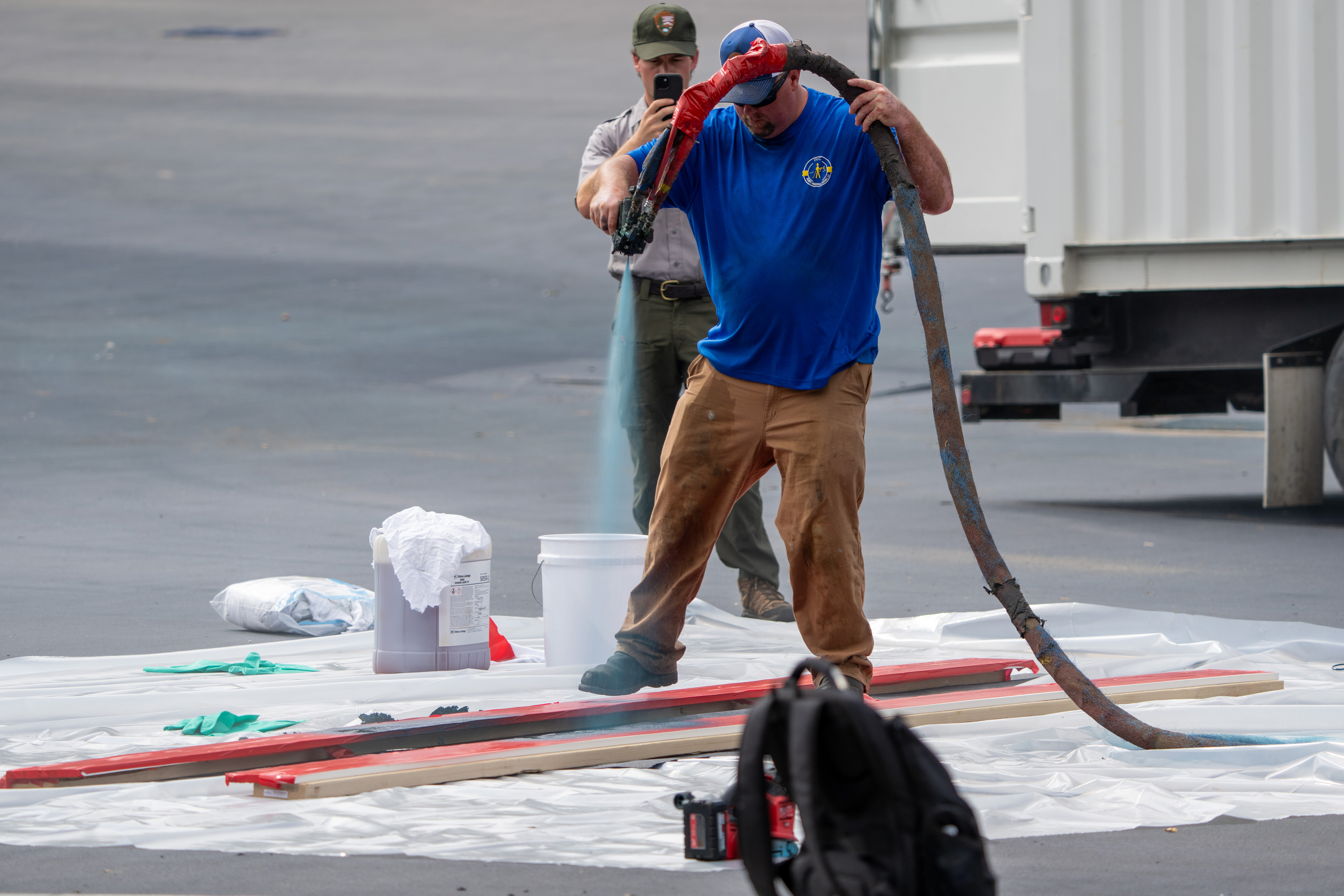
    The pool is still drained, and repairs appear to be ongoing: On Thursday, the pool was full of workers. Some were seen tearing up large strips of the blue lining, while another sprayed a new layer of coating as a man in a shirt reading “Atlantic Coating Inspection” watched.

    The documents show that, to redo the repairs, Atlantic said it would use a smaller team of workers that would be closely supervised, and that it would consult an adviser from the manufacturer of the compounds used in the liner.

    The manufacturer, Rhino Linings, did not immediately respond to a request for comment. Its CEO, Pierre Gagnon, said in a June statement that the peeling liner was “limited to isolated areas” of the pool.

    The documents also show that Atlantic did blame vandals for cuts in the caulking around the pool’s edge that National Park Service workers had previously reported to the police. But the company did not link those cuts to the peeling of the blue liner on the pool’s floor, which Trump repeatedly blamed on “sick people” wielding knives or razors.

    Federal prosecutors acted on the president’s claims on July 2, when they announced the indictment of David Hearn, a former Olympic canoeist accused of pulling up a piece of the liner, on a felony vandalism charge.

    But in a remarkable reversal a few weeks later, prosecutors sought to dismiss the charges against Hearn and three others accused of vandalizing the landmark. Jeanine Pirro, the U.S. attorney in Washington, wrote that the Interior Department had misled her staff about the extent to which the damage had stemmed from vandalism rather than a “botched installation.”

    Trump continued to blame vandals for the damage even after that, though he conceded in a social media post Aug. 9 that “there is no video or proof.”

    “There was also some contractor error done by rushing the job for a July 4th opening,” Trump said in that post. “But it was a very small area of this massive Pool, and was relatively inconsequential.”

    Trump said then that the pool would reopen “shortly.” But it remains drained a month later. The documents reviewed by the Times help explain why. They show that repairing the pool has been a challenging and involved task.

    On Aug. 13, the contractor began power-washing the pool to remove loose chunks of blue liner, according to the documents. By the end of the next day, workers had filled one large trash bag, but many more bits of liner remained stuck to the pool’s concrete slabs and would need to be removed later with razor blades, hammers, and crowbars.

    After removing the loose pieces, the documents show, Atlantic sought to reapply the blue coating, only to encounter the same problems as before: Blisters would appear under the surface, between layers of the lining. Early this month, the company concluded that the problem was the interaction between the two compounds and stopped layering the hotter one on top, the documents show.

    That reduced the blisters, the documents show. But it did not stop them completely.

    Also early this month, the contractor identified a new potential culprit: sweat. It said that a worker, wearing a protective suit under the hot Washington sun, was leaving droplets of sweat on the coating, which were then trapped when new layers were sprayed on top.

    To try to solve that problem, the documents show, the man then opened the top part of his protective suit and wrapped cloth around his head and wrists to contain the sweat. The documents reviewed by the Times do not say if that stopped the blisters.

    A National Park Service employee had notified workers Aug. 14 that Trump would be flying over the pool on Marine One that day, according to the documents. Gregory Wischer, a political appointee at the Interior Department, also visited the reflecting pool that day to personally supervise this work, the documents show.

    Wischer, a former executive at a metal processing company, originally joined the Trump administration last year to work on critical minerals policy. But he has since shifted his focus to the Reflecting Pool renovation and the president’s other pet projects in Washington.

    In March, Wischer met with David Schutzenhofer, the manager of a Trump Organization golf club in New Jersey who helped plan the pool’s renovations, according to Interior Department visitor logs. And Monday, Trump wrote on social media that Wischer had updated him on work to clean and wax statues of Italian poet Dante Alighieri and French hero Joan of Arc in a park in Northwest Washington.

    This article originally appeared in the New York Times.
  • Blast shakes southern Lebanon as Israel destroys underground Hezbollah base

    Blast shakes southern Lebanon as Israel destroys underground Hezbollah base

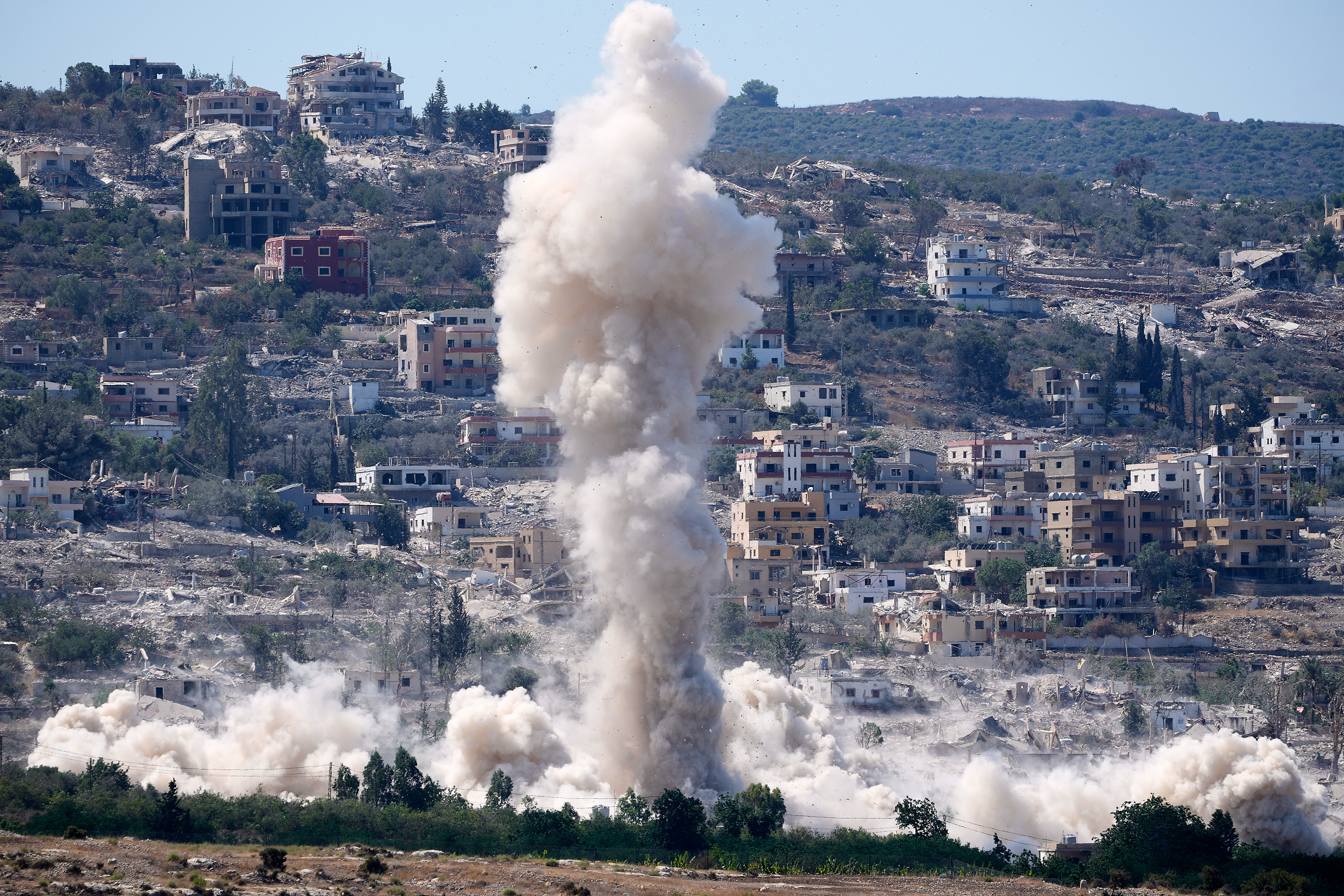
    BEIRUT — A huge explosion sent shock waves across southern Lebanon overnight, as the Israeli military said it had destroyed an underground Hezbollah base in a strategically significant area of Israel’s conflict with the Iran-backed militia.

    The blast lit up the sky with a sudden orange flash and tore through the Ali al-Taher ridge, a commanding hilltop about 6 miles from the border between Israel and Lebanon that Israeli forces captured this month.

    Lebanese and Israeli officials say Hezbollah, a Lebanese militia supported by Iran, established a major underground installation beneath the ridge. Israel says the complex had for years served as a command center for planning and launching attacks against it. The ridge overlooks much of southeastern Lebanon, including Nabatiyeh, one of the country’s largest cities.

    “The explosion caused massive sounds in Nabatiyeh,” Abbas Fakhereddine, the city’s mayor, said Friday. “We felt the buildings shake.”

    The explosion generated ground waves that were likened to an earthquake measuring 4.2 on the Richter scale, Lebanon’s National News Agency reported, citing the country’s National Center for Geophysics. Videos shared on social media showed the explosion lighting up the night late Thursday.

    The Israeli destruction of the underground base at the ridge fueled concerns among residents about a deepening Israeli military presence and an expansion of military operations in southern Lebanon. Israel has in recent days and weeks carried out strikes and widespread demolitions of buildings and civilian infrastructure across southern Lebanon, according to local officials and human rights groups.

    The Israeli military said in a statement Thursday that it had located dozens of rockets, missiles, drones, machine guns, and explosive devices inside the underground base. The complex also included a Hezbollah command center, weapons storage rooms, and living quarters, the military said.

    On Friday, Hezbollah officials disputed the significance of the ridge and accused Prime Minister Benjamin Netanyahu of Israel of exaggerating the importance of the operation for political gain before elections next month.

    A Hezbollah media official, speaking on the condition of anonymity to discuss sensitive matters, downplayed the site’s importance to the group and rejected claims that the facility contained advanced missiles or significant military infrastructure.

    Under a U.S.-brokered ceasefire agreement reached in June, Israel is expected to gradually pull its forces back from areas it occupies in southern Lebanon, with the Lebanese armed forces deploying there to establish security and enable displaced residents to return. That arrangement is closely linked to the Lebanese government’s efforts to disarm Hezbollah, a process that is likely to prove difficult, given the government’s limited ability to control the powerful militia.

    On Friday, Lebanon’s General Directorate of State Security said in a statement it was resuming government patrols and reestablishing checkpoints in Nabatiyeh, in coordination with other security agencies and the Lebanese army, to protect the city and strengthen public confidence and safety.

    Some residents of southern Lebanon, along with political and security observers, have expressed anger that Hezbollah did not hand over the ridge to the Lebanese army and security services, arguing that the group had allowed a strategic position to be lost to Israel rather than place it under Lebanese state control.

    Moustafa Bayram, a former labor minister aligned with Hezbollah, said Israel’s decision to destroy the site was “an attempt to terrorize us and escalate the war.”

    This article originally appeared in the New York Times.
  • How Minnesota became the front line in the fight over prediction markets

    How Minnesota became the front line in the fight over prediction markets

    Minnesota state Rep. Emma Greenman first became concerned about prediction markets early this year.

    Teachers had complained to Greenman that underage users were downloading apps like Kalshi and Polymarket. She said she had grown worried that the platforms were becoming a back door to sports betting, which the state had never legalized.

    “This wasn’t a problem we had, frankly, before 2025,” said Greenman, 47, a Democrat who also works as a voting rights lawyer. “We see it as both a public safety and public health issue.”

    So this spring, she worked with colleagues to introduce and pass a bipartisan bill to ban prediction markets, making Minnesota the first state to do so. A federal regulator and the companies immediately sued — and a federal judged paused the law’s enforcement, for now.

    The legal battle has put Minnesota on the front lines of an escalating fight between states and the federal government over who regulates prediction markets. The closely watched case is expected to help set a precedent on whether states can pass laws banning the prediction markets — or whether federal regulators have the ability to preempt them.

    “This is a test case of how much authority does the state have to step in,” said Richard Painter, a professor of securities law and legal ethics at the University of Minnesota Law School.

    Kalshi, Polymarket, and others have exploded in popularity over the last year, becoming part of the zeitgeist by allowing users to wager on everything from the timing of the Federal Reserve’s next rate increase to who will win the Super Bowl.

    But the platforms have caused growing alarm among states, about 20 of which have tried to enforce existing laws on sports betting and gambling — or, in Minnesota’s case, pass a new one.

    The companies and the Commodity Futures Trading Commission, the U.S. agency that oversees prediction markets, have fought back fiercely. With the backing of President Donald Trump, they have filed lawsuits arguing that the companies are regulated only at the federal level.

    The states have won some victories in recent weeks, with Washington and Nevada temporarily halting Kalshi, the largest platform in the United States, from operating in their states. And a federal appeals court ruled late last month that states had the ability to regulate prediction markets.

    In an August statement, Michael S. Selig, chair of the Commodity Futures Trading Commission, said Congress did not intend for prediction markets “to be regulated under a patchwork of state gaming laws.”

    “These are financial exchanges that offer financial instruments and operate across state lines,” he added.

    Rick Heaslip, Kalshi’s general counsel, said Minnesota lawmakers had rushed “to pass an unprecedented ban of a product they didn’t understand.”

    Minnesota allows some casinos and the lottery. But state legislative efforts to introduce the possibility of legalizing sports betting have hit roadblocks for at least a decade.

    Many lawmakers, including Greenman, took notice as Kalshi and Polymarket surged in popularity.

    In mid-March, she and others introduced bipartisan companion bills to outlaw betting on things like sports outcomes, the Oscars, assassinations, and trial verdicts. A few categories, like weather, were eventually carved out because of their potential to act as legitimate financial tools for farmers looking to hedge their risk.

    “What we really focused in on are things that look and act like gambling,” said state Sen. Jordan Rasmusson, a Republican co-author of the companion legislation in the Senate.

    As they pushed to pass the bills, Greenman and Rasmusson said, they and others became increasingly concerned. Kalshi fined and suspended three political candidates, including one from Minnesota, in April for betting on their own congressional races.

    “There’s broad consensus here that whether Minnesota does or does not expand sports betting — how we do it, if we did it — should be our decision,” Greenman said in a committee meeting that month.

    At the end of April, she helped attach the legislation to an omnibus public safety bill. That passed in May, and Gov. Tim Walz, a Democrat, signed it into law.

    Many in Minnesota are supportive of the pushback.

    Devon Bowker, a high school science teacher in St. Cloud, said he was alarmed at how openly his students discussed how they bet. It has become a way to connect and socialize, he said.

    He tried to remind his students that betting affects their brains, creating dopamine hits faster than they can assess the risk.

    “Do you want to be in control of your own destiny or leave it to chance on the app?” Bowker, 34, asked his students.

    Taylor Jensen, a software engineer who lives in Lakeville, said he considered the prediction markets “very speculative investing” with high risk and high volatility. They are also fairer and less predatory than traditional gambling, he contended.

    Jensen, 35, said he had first downloaded Kalshi in January while ice fishing with friends. They bet on a Chicago Bears football game, he added, but he decided to create a program to place bets on the weather. As of September, he was up just shy of $9,000 in earnings, he said.

    His wagering could continue under the new law, thanks to the weather carve-out. But he’s not a farmer hedging risks.

    Weather is “just another goofy thing to trade,” Jensen said.

    One day after Walz signed the law, the Commodity Futures Trading Commission filed a federal lawsuit, which Kalshi and Polymarket soon joined. “Minnesota has no authority to regulate — much less criminalize — event contracts listed on CFTC-regulated markets,” lawyers said in the filing.

    Minnesota Attorney General Keith Ellison was quick to counter.

    “Minnesota banned prediction markets because of how predatory, addictive, and harmful they can be,” Ellison said in a statement at the time. The platforms facilitate “gambling, plain and simple.”

    At the first hearing on July 2 in U.S. District Court in Minneapolis, Judge Kate M. Menendez heard arguments on whether she should issue an injunction.

    “Who is going to take the ‘educating the middle-aged judge’ set of questions?” Menendez, 55, asked at the start.

    Federal regulation preempts any state laws, argued Henry Dickman, a lawyer for the Commodity Futures Trading Commission. “We see this as a direct invasion of our jurisdiction,” he said.

    A lawyer for the state, Lindsey Middlecamp, countered that Kalshi and Polymarket were not “wrapped in federal immunity” as they claimed to be. She questioned the legitimacy of including wagers about Taylor Swift’s wedding choices under the commission’s federal mandate to regulate financial tools.

    Menendez halted the law’s enforcement until the conclusion of the court battle, which could take months. Still, she conceded that trading on the winner of the reality TV show Love Island, for example, would be hard to classify as a federally regulated financial tool.

    “One is hard-pressed to imagine the financial, economic, or commercial consequence of the occurrence or outcome of these events,” the judge wrote.

    Ellison said in a statement at the time that he acknowledged the complexity of the case. “We look forward to continuing to litigate this case and defend the state’s duly passed law,” he added. A pretrial conference is set for October.

    Greenman said she was hopeful the state would still prevail, in part because the bill was drafted carefully with a legal challenge in mind.

    “I feel confident in the arguments we’re making,” she added.

    This article originally appeared in The New York Times.

  • Elevated inflation keeps pressure on Fed to raise interest rates

    Elevated inflation keeps pressure on Fed to raise interest rates

    U.S. inflation stayed stubbornly high in August, bolstering the case for the Federal Reserve to raise interest rates at its meeting next week.

    The consumer price index report, released Friday, showed overall inflation remained elevated at an annual pace of 3.4%, after a 0.4% rise from July. “Core” inflation, which strips out volatile food and energy items, rose 0.3% in August, or 2.4% from a year earlier.

    The data is factoring heavily into the Fed’s forthcoming policy deliberations, set for Tuesday and Wednesday. Policymakers stipulated this summer that if inflation did not soon moderate, they stood ready to raise rates. Officials have yet to precisely define what “soon” means, but many have run out of patience.

    The Fed’s preferred inflation gauge is the personal consumption expenditures price index, but officials closely scrutinize the CPI report and other metrics for a comprehensive picture of the backdrop. Core measures are paid the most attention given that they are seen as a reliable way to track how persistent inflation is proving to be.

    Policymakers are also digesting a multitude of new risks. The global price of oil is back up above $100 a barrel as the Iran war continues to disrupt supply. President Donald Trump has reignited a trade war with Canada. And on Wednesday, he vowed to distribute a $5,000 check to every American adult if Republicans keep control of Congress in November midterm elections, a bump to economic activity that could further fuel inflation.

    In the wake of Friday’s data release, traders in federal funds futures markets now see 90% odds that the Fed will raise rates by a quarter of a percentage point next week. Since January, they have stood at a range of 3.5% to 3.75%.

    Raising rates just months before the election would undoubtedly stoke tension with Trump. Last week, the president threatened to halt a broad swath of U.S. trade unless the Fed slashed rates. Cutting borrowing costs is not even under consideration.

    Still, that has not stopped the administration from trying to tamp down borrowing costs using its own tools. Treasury Secretary Scott Bessent has over the past month embarked on a series of interventions to keep a lid on long-term Treasury yields to little success. The 10-year Treasury yield is now trading just shy of 5%.

    This tension no doubt makes the stakes for Kevin Warsh, the Fed chair, exceptionally high heading into the meeting. Late last month, Warsh delivered a closely watched speech at the central bank’s annual conference in Jackson, Wyo., that sought to underscore his commitment to fighting inflation after some doubts had emerged.

    He indicated enough of an openness to raising rates that investors quickly piled on bets that the Fed would raise rates in September. But Warsh last month purposely left vague what specifically would tip him in that direction.

    “Here is my standard: We must be confident that underlying inflation is moving to our objective, clearly and at sufficient speed,” he said. “Otherwise, we have work to do.”

    What Warsh is trying to avoid is a redux of the reaction he faced after the Fed’s last meeting in July. Then, he failed to provide sufficient reasoning for standing pat and sowed confusion about how he planned to make good on his pledge to return inflation to the 2% target.

    Warsh’s job as chair next week will be to corral his colleagues, while also providing a clear-cut rationale for whatever decision is ultimately made.

    There is already a group of policymakers who support higher rates on the basis that the Fed’s current policy settings are not restraining demand. Higher rates would not only expedite the return of 2% inflation, they argue, but also ensure that expectations about inflation do not suddenly shift higher.

    The counterargument to raising rates rested on the assumption that inflation was going to decelerate in the latter half the year, giving the Fed flexibility to hold off on taking action. John C. Williams, who as president of the Federal Reserve Bank of New York is vice chair of the policy-setting committee, espoused this view, arguing that policy was in a “good place.” Still, he made clear that he would support higher rates if the data did not cooperate.

    Christopher J. Waller, a Fed governor, also recently suggested that he was inclined to hold rates steady next week, but only if inflation continued to cool.

    August’s data challenges the narrative that inflation is indeed cooling in a timely way.

    One closely watched subset of the CPI report is called supercore inflation, which tracks prices of services excluding energy and housing. It accelerated to 0.5% in August and is up 3% from a year ago.

    Energy prices were a big driver of overall inflation. Gasoline costs were up 3.9% in August. Prices for fuel oil, which is used to heat homes, jumped even more, at 10.1%. That also helped to drive a rise in airline fares, which jumped 2.7% in July. Compared with the same time last year, they are up nearly 25%.

    The impact of Trump’s initial round of tariffs, however, seems to have faded. Goods prices appear to have stabilized after last year’s shocks. Household furnishings are up less than 1% since this time last year. Apparel prices were up 3.6% over the year, but were flat in August compared with July. Still, these prices were recorded before Trump’s latest round of punishing tariffs on Canadian imports.

    This article originally appeared in The New York Times.

  • Isao Harimoto, Hiroshima survivor and a baseball star in Japan, dies at 86

    Isao Harimoto, Hiroshima survivor and a baseball star in Japan, dies at 86

    Isao Harimoto, who survived the Hiroshima atomic bombing as a child and went on to have more hits than anyone else in the history of Japanese baseball, died Wednesday in Tokyo. He was 86.

    His death, in a hospital, was announced by the Meikyukai, or the Golden Players Club, one of Japan’s baseball halls of fame. No cause was given.

    Mr. Harimoto earned the nickname Hit Machine for collecting a record 3,085 of them in a long career than stretched from the late 1950s to the early ’80s. He won seven league batting titles.

    He was the only player to collect 3,000 hits in Japan. (Ichiro Suzuki had 4,367, but more than 3,000 came after he moved to the American major leagues.)

    But Mr. Harimoto was far from a slap hitter; 504 of those hits were home runs, putting him seventh on the all-time list for Japan. He also stole 319 bases, won an MVP award, and was an 18-time All Star.

    After his time as a player, he became an outspoken commentator on the game.

    Isao Harimoto was born on June 19, 1940, in Hiroshima, Japan, to Korean parents who had emigrated the year before. His Korean name was Jang Hun. His mother, Pak Sun Bun, was a cook and his father, Jang Sang Jeong, sold scrap metal and various secondhand items from a cart.

    Harimoto was 5 when the atomic bomb was dropped on the city, about a mile and a half from where he lived. “There was a flash and an enormous roar,” he told the Chugoku Shimbun newspaper in 2011. “The next thing I knew, my mother was shielding me and my sister, three years older, with her body, though her back was covered in blood due to flying shards of glass.”

    The event was not frequently discussed in his home. “My mother wanted to forget; I think she wanted to completely erase her memories of that day,” he told the Mainichi, a Japanese English-language newspaper, in 2020. He lost a sister, Jang Jeom Ja, in the bombing, and his mother burned all photographs of her, he said. He himself did not discuss the cataclysm publicly until well after his baseball career.

    He was proud of his Korean heritage despite being bullied for it as a child and facing prejudice during his career.

    “A lot of ethnic Koreans in Japan assimilate into Japanese society,” said Robert Whiting, author of You Gotta Have Wa (1989), the definitive book in English about Japanese baseball. “Harimoto did not. He talked about the fact that his mother never spoke Japanese in the house, and he was very proud of that fact.”

    Mr. Harimoto was also critical of other athletes in Japan with Korean backgrounds who hid their ethnicity. Only late in life did he become a Japanese citizen.

    He burned his right hand in an accident as a young child, an event that contributed to his becoming a left-handed hitter when he took up baseball in fifth grade. Despite his talent, he lost a few chances at places on top high school teams because of a reputation as a troublemaker, deserved or not.

    In 1958, he visited South Korea for the first time with a team of Korean Japanese high school students. He met his grandparents and later said he truly connected with his Korean roots for the first time.

    His rigorous, disciplined approach to batting, and an ability to consistently hit up the middle, soon brought him to the top leagues. In 1959, playing with the Tokyo-based Toei Flyers, he hit .275, good enough to be named rookie of the year. He got much better over the next two seasons, hitting .302, and then .336. He played left field, and fielding was not his strong suit, but as a hitter, he performed strongly and consistently for two decades.

    Many of the teams he played on were not among the elite in the Japan leagues. He was part of a Japan Series-winning team only once, in 1962, when his Flyers beat the Hanshin Tigers in seven games. That was also the year he was named the Pacific League’s most valuable player. (The Flyers adopted their current name, the Nippon Ham Fighters, during his time with the team.)

    Mr. Harimoto’s most spectacular season was 1970, when he hit .383 with 34 home runs and 100 RBI, all career highs.

    He was a large player by the Japan leagues’ standards at the time, listed at 5 foot 11 and 187 pounds. And he was not afraid of players, American or Japanese, who were bigger still. “If there was a brawl on the field, he was always in the middle of it,” Whiting said. “He was a scary guy; no one wanted to fight him. He wasn’t afraid to show his temper and challenge people on the field.”

    Despite Mr. Harimoto’s batting success, he never could shake a reputation in Japan for being a bit of a bad boy. He enjoyed a drink and was involved in a few fights.

    He moved on to the Yomiuri Giants in 1976 and the Lotte Orions in 1980. He retired after the 1981 season at 41.

    After his playing days were over, Harimoto became a commentator on the game with a reputation for saying what he thought. “He didn’t seem to have a filter,” Whiting said. “He was very protective of the Japanese game and critical of players who went to the States to play, thinking they should be loyal to the Japan leagues.”

    Harimoto worked for the Korea Baseball Organization and helped establish that country’s national league in 1982, though he later split with the group over slights he believed he received.

    Speaking out against nuclear weapons was also a big part of his later life. “Which is more important: protecting human lives or holding on to nuclear weapons?” he asked in the Chugoku Shimbun in 2011. “These two things are poles apart. It’s inhuman to permit the existence of weapons that can annihilate people in an instant, when they’re just trying their best to live.”

    This article originally appeared in the New York Times.
  • CIA releases intelligence sent to White House before Sept. 11

    CIA releases intelligence sent to White House before Sept. 11

    WASHINGTON — Tucked at the end of a Sept. 10, 1998, intelligence report sent to President Bill Clinton’s White House was a warning about al-Qaida that more than a quarter-century later seems prescient.

    Al-Qaida, a CIA analyst wrote, “may fly an explosive-packed airplane into a U.S. city.”

    On Friday, the 25th anniversary of the Sept. 11, 2001, terrorist attacks, the CIA released 69 never-before-seen presidential intelligence briefs detailing what it had discovered about Osama bin Laden and al-Qaida in the run-up to the day.

    The release, according to agency officials, is their largest focused on the Sept. 11 attacks. The intelligence analyses that were sent directly to the president and senior policymakers are among the agency’s most closely guarded documents, and the CIA’s standard practice is to release them only after about 40 years, to ensure no sources are compromised and minimize any potential tension with allies.

    The documents do not appear to contain major new revelations, and they remain redacted to obscure the sources of the information. But the briefings provide details of what the CIA was telling Presidents Clinton and George W. Bush in the months and years before the attacks, along with an intelligence report provided in the early morning hours of Sept. 12.

    The documents released Friday reinforce the central findings of the National Commission on Terrorist Attacks Upon the United States and its 2004 report: U.S. intelligence agencies warned about al-Qaida consistently but failed to understand the scale of the attack the group had in mind.

    John Ratcliffe, the CIA director, said the documents were being released to honor the memory of those killed on Sept. 11, along with the CIA officers who subsequently gave their lives.

    “Twenty-five years ago, the 9/11 attacks struck a blow to our nation, but they did not break us,” Ratcliffe said. “Generations of CIA officers have since dedicated their careers to securing justice for our fallen Americans and ensuring al-Qaida would never again harm our country.”

    Still, the documents demonstrate that the CIA repeatedly brought to Bush and Clinton the threat posed by bin Laden to directly attack the United States.

    In a briefing Thursday, CIA analysts said that before Sept. 11, terrorist threats were not a primary focus to collect intelligence on, and reporting on bin Laden and al-Qaida was limited. Reading the old reports, the analysts said, it was clear that the agency knew al-Qaida wanted to attack America. But what that would look like, intelligence officials said, was not clear, with a large amount of noise obscuring the clues.

    Working through the newly released documents, dating from Feb. 13, 1998, to Sept. 12, 2001, various strands of threat intelligence rise to the surface and then disappear. The 1998 intelligence about the explosive-laden plane, for example, does not make another prominent appearance in the warnings given to the White House.

    The CIA analysts said it was rare that the agency could follow the full story arc of a threat or plot. Various threats come and go from the agency’s warnings.

    Part of the problem was finding ways to provide effective warnings, said a senior CIA official, who spoke on the condition that their name not be used, in keeping with the agency’s practice. As the CIA wrote more presidential-level reports on al-Qaida, there were concerns about “warning fatigue,” the CIA official said.

    A senior CIA counterterrorism analyst said collection from human sources before the attacks was “not fantastic.” The overall collection on al-Qaida, CIA officials said, was spotty.

    A small group of intelligence analysts worked on terrorism threats. But it was nothing like the priority it became on Sept. 12, 2001. As a result, there was a steady drumbeat of warnings, yet almost all were frustratingly vague.

    The idea that the intelligence community was aware of plotting around explosive-laden planes in September 1998 has been known. The commission mentions a report circulating about al-Qaida’s interest in using an airplane with explosives aboard to attack the United States, but it did not say the report reached the president.

    Bush and Clinton told the commission they understood the threat of al-Qaida, although the final report concluded that “we do not believe they fully understood just how many people al-Qaida might kill, and how soon it might do it.”

    The CIA released one document from after the fact, a “situation report” for the president sent to the White House at 4 a.m. on Sept. 12. Such updates are supposed to be factual, with minimal analysis. And despite the gravity of what happened on that day 25 years ago, the analysts wrote in their usual detached style.

    Before the attack, analysts wrote regularly about the threat, but the CIA officials acknowledged that their warnings did not capture the scope of what al-Qaida had in mind. That was in part because the reporting was not there. But the commission said this also resulted from a failure of imagination.

    The senior CIA counterterrorism analyst said the agency since Sept. 11 had come a long way and was better at “thinking outside the box.” The lesson of Sept. 11, she said, was that intelligence agencies had to think more creatively.

    Those intelligence failures, as well as the others identified by the commission such as a lack of information sharing between the CIA and FBI, led to a reorganization of the federal government’s national security structure. The Department of Homeland Security was created, bringing together various law enforcement agencies, as was the Office of the Director of National Intelligence, which works to improve collaboration among the FBI, the CIA, and other spy agencies and set analytical standards.

    The postattack reviews also changed how intelligence reports were written. The documents released Friday reflect the earlier era. Today, intelligence reports are peppered with assessments of analysts’ “confidence level,” how well-sourced a particular conclusion is. Although it is clear from the old reports that the CIA had high confidence in al-Qaida’s goal to strike the United States, and doubts about the specifics of various plots, that assessment was not made explicit for policymakers.

    Two members of the commission were allowed to review the presidential daily briefs from the time leading up to the attacks, but the agency fought against distributing them more widely. Two briefs were released amid pressure from the commission and the public.

    Jamie Gorelick, a commission member who reviewed the presidential daily briefs, said the summary of the documents that she co-wrote informed the commission’s work, although the commission was not allowed to release or quote the documents.

    These presidential briefs “are consistent with the commission’s assessment of the preattack intelligence,” said Gorelick, who served as deputy attorney general in the Clinton administration.

    Still, even if the underlying material has been well understood, the newly released documents are likely to be closely examined by historians of the intelligence agency.

    A July 1998 document, given to Clinton five weeks before al-Qaida attacked two embassies in Africa, outlined the group’s intent to attack America. That document tracked the warning repeated years later in the Aug. 6, 2001, presidential briefing released by the government under pressure from the 9/11 Commission.

    That 1998 report cited four “questionable sources” but said al-Qaida’s ambitions to strike the United States were “plausible,” given bin Laden’s comments.

    A document from Aug. 3, 1999, discussed the possibility that the intelligence being collected on al-Qaida could be a deception. That document was generated in response to questions from senior Clinton administration officials. The analysis noted that because so many potential targets came up in intelligence collection, al-Qaida could have been engaged in “a deliberate effort to mislead us.”

    “The diverse targets mentioned in the reporting, combined with a high incidence of Bin Ladin-related walk-ins, suggest a deliberate effort to mislead us,” the CIA wrote, using the government’s spelling for bin Laden.

    The commission also highlighted the intelligence community’s worries about deception, noting that Defense Secretary Donald Rumsfeld had leaned into the theory that al-Qaida was spreading misinformation that it intended to attack.

    A presidential intelligence document from July 24, 2001, appeared to describe the lull that the commission outlined in its report. The document reported that for the second time in two weeks, “an expected imminent Bin Ladin-sponsored terrorist operation has been postponed, but preparations for other near-term attacks may still be in train.”

    The intelligence report noted suspicious activity among individuals who had received a cryptic message the previous month. At the time, the collection was fuzzy. After the fact, the report looks like a missed warning.

    The last document release by the agency before the Sept. 11 attacks came on Aug. 28, 2001. That document in some ways read like a follow-up to the Aug. 6 report, potentially explaining why no attack had occurred despite the earlier warning.

    The report insisted that al-Qaida remained a threat, though it made no mention of attacks on the homeland or attacks with planes. Instead, the presidential note mentioned “assassination, kidnapping, the use of rockets, mortars and other longer-range weapons, as well as crude chemical or biological attacks.”

    The intelligence report also discussed how Qaida operations could be delayed or disrupted.

    In a final note that foreshadowed how bin Laden would ultimately be found nearly a decade later, the Aug. 28 report concluded that “inexperienced couriers or suicide bombers also make mistakes that expose plot details.”

    This article originally appeared in the New York Times.