Category: New York Times

  • White House moves to take control of NIH scientific grants

    White House moves to take control of NIH scientific grants

    The White House has begun drafting a new executive order that could further cement President Donald Trump’s ability to control billions of dollars in scientific grants funded by the National Institutes of Health.

    Discussed at a highly contentious meeting at the White House on Friday, the directive aims to create a new external committee with the power to veto awards in the nation’s vast biomedical research portfolio that do not conform to Trump’s political agenda, according to people with knowledge of the effort.

    The meeting was first reported by the Washington Post. Officials at the Office of Management and Budget, which is drafting the executive order, declined to comment. A spokesperson for the NIH, Joshua Pradko, declined to discuss details of the meeting.

    “NIH remains committed to its mission of funding biomedical research to benefit the health of the American people,” Pradko said in a text message.

    Referring to reports that Russell Vought, director of the OMB, wants to rescind NIH funding, Pradko added, “There will be no rescissions to NIH grant monies. All NIH grant monies will be spent.”

    If the order moves forward, it would mark the latest attempt by the Trump administration to usurp the scientific autonomy of the NIH, a $48 billion agency that distributes a majority of its budget to labs across the country for research into areas such as heart disease, cancer, and infectious diseases.

    Traditionally, the NIH selects projects based on expert review of their scientific merit. But Trump has sought through a series of recent directives in his second term to bring that process under political review, arguing in part that the government has been funding “woke” liberal priorities.

    Friday’s meeting brought to a head months of conflict between two of the attendees: Vought, who wants to impose greater political control over NIH grant approvals, and Jay Bhattacharya, the NIH director, who is resisting those efforts, according to two people close to Bhattacharya.

    Their relationship has grown so contentious that Vought had refused to meet with Bhattacharya, the people said. During the session Friday, Vought accused the NIH director of funding projects that were in conflict with administration priorities, such as supporting research related to diversity and equity.

    One of Trump’s executive orders, issued on his first day back in office, ended all administration programs involving “diversity, equity and inclusion.” It has had far-reaching effects on NIH studies, including those investigating “health disparities” — why people of certain races and ethnicities may be more or less prone to certain diseases or to suffer worse outcomes.

    As a Stanford University economist, Bhattacharya conducted research on health disparities and has been trying to find a way to preserve NIH funding for such work. In 2011, for instance, he and colleagues reported on “persistent racial disparities in survival after heart transplantation.”

    The study, funded by the NIH, found that Black heart transplant patients were at higher risk of death than similar white patients were.

    But as NIH director, Bhattacharya has also supported eliminating funding for work he regards as low-quality or ideologically driven. In a brief conversation with reporters early in his tenure, Bhattacharya said the cancellations were targeting “politicized expressions of devotion to a particular ideology” as opposed to “good science.”

    On Friday, Vought also sought access to funds for the current fiscal year that have not yet been spent, but he did not succeed. The main argument between them, however, appears to reflect a philosophical difference: Vought wants to cut federal spending for research; Bhattacharya does not.

    Nor does Congress, which overruled Trump’s proposal to cut biomedical research spending last year.

    Moreover, Bhattacharya opposes Vought’s push to give political appointees the final say over all federal spending, including health and scientific research.

    A proposed rule earlier this year would have integrated political review into the entire federal grant-making process, calling for “ending government sponsorship of gender ideology and other radical doctrines,” such as DEI projects.

    The changes were widely denounced by the scientific and medical research community, and drew bipartisan rebuke in Congress, where lawmakers blocked the White House from proceeding.

    The White House has issued a number of executive orders to stop scientific research into areas that conflict with administration priorities. Thousands of grants were terminated for being in conflict with these priorities.

    Even before Friday’s meeting, the administration was entangled in multiple lawsuits that challenged those actions.

    Last week, a class-action lawsuit was filed in California district court by the American Civil Liberties Union on behalf of scientists alleging that the NIH was unconstitutionally censoring scientific research.

    The lawsuit, on behalf of researchers who study health disparities, Alzheimer’s disease, and sexual harassment, among other topics, argued that measures the agency was already using to screen grants for compliance with political priorities were a violation of the free speech rights of scientists.

    “What the First Amendment does not allow is the government’s use of its funding power to target or silence the expression of disfavored viewpoints within the biomedical research community,” the lawsuit said.

    This article originally appeared in the New York Times.

  • Two centuries on, Smithsonian connects Jefferson’s hair to Hemings’ children

    Two centuries on, Smithsonian connects Jefferson’s hair to Hemings’ children

    For more than 200 years, the question has nagged at the edges of American history: Did Thomas Jefferson father children by Sally Hemings, a woman he enslaved?

    The claim that he did has prompted denials, polemics, scandalous bestsellers, and sober historical scholarship, before settling in recent years into a widely, if not universally, accepted truth.

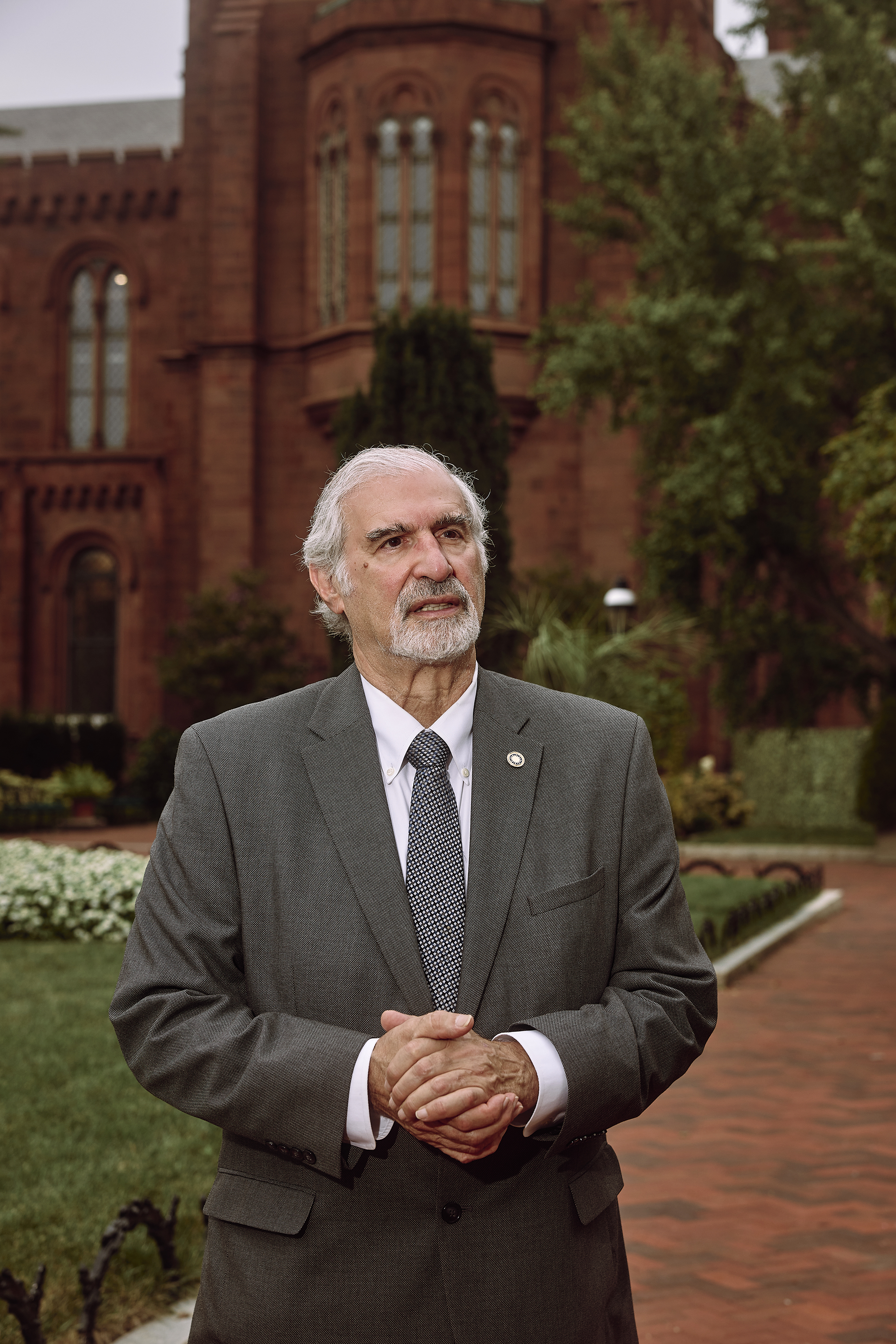
    Now the Smithsonian Institution is offering what it says is the most definitive evidence yet, based on an extraordinary piece of data: Thomas Jefferson’s genome, sequenced from samples culled from a few strands of his hair.

    In a new book, Richard Kurin, the Smithsonian scholar who led the effort, describes how a team of researchers used cutting-edge techniques to extract and sequence Jefferson’s DNA. They then compared it with DNA samples obtained from 13 living Hemings and Jefferson family descendants.

    It’s a 15-year detective story that involves archaeologists, genealogists, molecular geneticists, and historians, stretching across multiple changes in Smithsonian leadership. Kurin, in a video interview this week, called it a “capstone” to decades of previous research and “extraordinary proof” that Jefferson fathered Hemings’ children.

    So is it absolutely certain?

    “Other people may have other ideas, and I don’t think there’s necessarily an institution position,” Kurin said. “But I think it’s compelling.” He added, “It’s very clear.”

    History by a Hair, publishing Tuesday by Crown, a division of Penguin Random House, arrives with endorsements from prominent scholars.

    But it is landing at an extraordinarily tense moment for the Smithsonian, which has been engaged in a standoff with the Trump administration. The president has accused the institution and its secretary, Lonnie Bunch III, of promoting a “divisive, race-centered ideology” that dishonors the nation’s founders and overemphasizes slavery and other negative parts of American history.

    This month, Bunch, who has led the Smithsonian since 2019, announced that he would depart by the end of the year. Last week, the administration outlined its plans to install signs outside the Smithsonian’s National Museum of American History, warning visitors of what it claims is inaccurate history.

    While the Hemings issue has not figured into the controversy, the Smithsonian has adjusted the rollout of its research. An event on Tuesday announcing the findings has been moved from the American history museum to a less prominent Smithsonian location, limited to descendants, and closed to the news media. An online public lecture by Kurin through the institution’s educational arm set for the next day was canceled.

    Kurin acknowledged what he called the “unpredictability” of the moment. But for him, the research was just “doing my job.”

    “This is a topic of interest to the American people,” he said. “I didn’t invent this question, and it wasn’t invented by the Smithsonian. It goes back to Hamilton and Jefferson and Adams. If we have evidence, scholarship, and science that helps elucidate American history, I think we have a duty to pursue it.”

    In a foreword to the book, Bunch, 73, strikes a similar note, linking the research to the museum’s truth-seeking mission.

    The research, he writes, “helps resolve an issue that had divided us since the time of our national founding, and points to how science, scholarship and education can bring us together as people of one, albeit complicated, American family.”

    A Notion long discounted

    The claim that Jefferson fathered children by Hemings goes back to the early days of the Republic, when Jefferson’s political opponents lobbed the scandalous charge that he had an enslaved Black mistress at Monticello, his estate in Virginia.

    Jefferson’s paternity was also recorded in generations of Hemings family accounts, including an 1873 oral history given by her son Madison, who said that Hemings had become Jefferson’s “concubine,” bearing five children by him, including one who died in infancy.

    Still, deep into the 20th century, the notion was discounted by most mainstream, white historians, who saw it as out of keeping with Jefferson’s character.

    The 1990s saw a sea change, driven in part by a 1997 study by Annette Gordon-Reed, who analyzed the wealth of evidence in support of the claim, and the ways it had been systematically discounted by white scholars. In 1998, geneticist Eugene Foster published a DNA study in the journal Nature, which indicated that Hemings’ son Eston was the son of a Jefferson male.

    In a 2000 report, the Thomas Jefferson Memorial Foundation, the nonprofit group that owns and operates Monticello, concluded that multiple strands of evidence suggested a “high probability” that Jefferson was the father of Hemings’ son Eston, and that he was “most likely” the father of her other children.

    In 2018, Monticello went further, declaring it a “settled historical matter.” Still, some skeptics have continued to advance other paternity candidates, including Jefferson’s brother, Randolph.

    Kurin, a cultural anthropologist who joined the Smithsonian in 1976, has helped oversee many complex projects, including the development or renovation of most of its museums. The Jefferson effort, he said, began with a flash of simple intellectual curiosity.

    In 2011, Kurin was previewing a Smithsonian documentary about Jefferson’s personal Bible, which he had created by cutting out passages containing Jesus’ moral teachings and pasting them into a new book.

    Kurin wondered: Could Jefferson have cut himself in this process, leaving blood behind?

    There was no blood. But conservators, he learned, had found something else: three strands of hair.

    At that time, no one had reliably sequenced usable samples of nuclear DNA (the genetic material found in the nucleus of every cell) from follicleless hair shafts, which these were. But after getting permission from the Smithsonian’s Board of Regents, Kurin started working with Beth Shapiro and Ed Green, two experts in ancient DNA at the University of California, Santa Cruz, who were pioneering new techniques for extracting and sequencing DNA from challenging sources.

    Kurin was mindful that the research could yield clear evidence that Jefferson was not the father of Hemings’ children. He discussed that possibility with Bunch, who at the time was the director of the National Museum of African American History and Culture.

    “The museum has to be on a foundation of truth,” Bunch said. “Whatever it is.”

    ‘We’re going to exhaust it’

    The first task was simply to figure out if the Bible hairs were actually Jefferson’s, by comparing any DNA that could be extracted with samples taken from a known Jefferson descendant.

    A genealogist started tracking down living fifth-generation descendants of Jefferson and of Hemings. (Fifth-generation descendants, some of whom were already in their 80s, would most likely be the last to have enough possible Jefferson DNA — an average of roughly 3.1% — to provide a clear match.)

    Three years in, the team hit a possible dead end. The scientists had analyzed mitochondrial DNA, which passes unchanging through the female line, extracted from the Bible hairs. It didn’t match a sample obtained from a female-line descendant of Jefferson’s mother. So it couldn’t be Jefferson’s hair.

    The team turned to another source that had emerged: strands from a lock at Monticello said to have been clipped from Jefferson’s head while he was on his deathbed in 1826.

    That hair matched the DNA sample from the living maternal-line descendant. “We’re going to exhaust it and sequence the crap out of it,” Shapiro wrote to Kurin.

    The team was ultimately able to sequence Jefferson’s entire genome, employing groundbreaking techniques that didn’t exist when the research started but have since been used to solve criminal cases like the Gilgo Beach murders and the Golden State Killer, for which Green managed to recover and sequence DNA from rootless hairs.

    Shapiro, whose research has also included recovering the DNA of extinct species like the dodo and the woolly mammoth, credited the Jefferson project with helping spur creative thinking about new ways to extract DNA from hair.

    “It’s hard to say we ever would have gotten to this place, where all these tools were used to convict the Gilgo Beach serial killer, if it hadn’t been for starting this project,” she said.

    Ultimately, the team was able to compare Jefferson’s DNA with that from samples obtained from nine fifth-generation descendants of Hemings via Madison and Eston. They shared between 0.5% and 5% of DNA with Jefferson, within the range of the expected average of 3.1% for a fifth-generation descendant.

    The team also got data from two fifth-generation Jefferson descendants via his daughter Maria, who shared 2.4% and 2.6% of his DNA, and two descendants of Jefferson’s brother, Randolph.

    Sam Vohr, a computational biologist working with the team, used the data to run 20,000 simulations of each paternity scenario involving Thomas Jefferson, Randolph, or Randolph’s sons. The odds that Thomas Jefferson did not father either Madison or Eston were less than 1 in 1,000.

    In an interview, Green said Jefferson being the father of Eston and Madison is by far the most likely scenario. Strikingly, he noted, the person with the highest percentage of shared DNA with Jefferson — 5% — wasn’t a descendant of Jefferson and his wife, but a Hemings descendant.

    “Any alternative paternity scenario is going to have to reconcile that,” Green said.

    This month, one Hemings descendant who had given a sample in 2015 asked to withdraw her participation, saying she was dismayed that the book was appearing before a related article had been published in a scientific journal. The Smithsonian confirmed that the descendant’s sample and related data had been destroyed.

    Shapiro said the descendant’s data had also been removed from the scientific article, which is under submission and awaiting completion of peer review. The team also reran its analysis. “It didn’t change the results,” Shapiro said.

    Jefferson’s freckles

    It remains to be seen how the research, which so far has been closely guarded, will be received.

    Gordon-Reed said she welcomed the findings, which she was briefed on several months ago, but confessed to “mixed feelings.” In her view, the historical evidence, bolstered by the 1998 DNA study, was enough. “But it’s always good to have more corroboration,” she said.

    The most surprising thing about the research, Gordon-Reed said, was that it was possible at all.

    “Now they have Jefferson’s genome,” she said, adding with a laugh, “Can they clone him?”

    Views among Jefferson descendants vary, with some having long accepted that he fathered children with Hemings and others strongly rejecting the idea.

    The Monticello Association, a Jefferson descendant group that owns the graveyard at Monticello, which does not admit Hemings descendants, did not respond to requests for comment.

    David Miller, a sixth-generation Jefferson descendant whose mother, Sarah Coachman Miller, provided a DNA sample, said he welcomed the results, which confirmed what he already believed.

    His mother died before the results came back. But through the project, Miller had connected with some Hemingses, whom he calls “cousins.”

    “It’s positive the family now hopefully gets the recognition and acknowledgment and acceptance they deserve,” he said.

    The person in the study who shares the most DNA with Jefferson is Clara Lee-Nutt, 64, who lives in Sharpsburg, Md. Along with 5% of his DNA, she also has what her father teasingly told her were Jefferson’s freckles.

    Growing up, being descended from Jefferson wasn’t something that was shouted from the rooftops. It was the kind of claim, she once overheard her father say, that could “get you lynched.”

    But now Lee-Nutt embraces it. In January 2009, she published an open letter to Jefferson, whom she says she views “with reverence,” in Newsweek, telling him about the inauguration of Barack Obama and her hopes that Americans could move forward “as one people.”

    Lately, Lee-Nutt said, she had thought often about her father, who died when she was 10. Before getting the Smithsonian’s results, she had braced herself for the possibility that the stories he had told her were wrong.

    She said she understood how some Jefferson descendants might feel as if something were being taken away from them.

    “But we’re not trying to diminish anyone,” she said. “We just want to be able to tell our children who they are.”

    This article originally appeared in the New York Times.
  • The world economy is becoming wary of the U.S.

    The world economy is becoming wary of the U.S.

    WASHINGTON — Global investors are balking at U.S. bonds. Talk of the dollar’s dwindling power is getting louder. Foreign governments are hauling their gold out of American vaults.

    Almost two years into President Donald Trump’s second term, the world economy is increasingly looking for ways to distance itself from the United States. Concerns about a $40 trillion debt burden, the excessive use of sanctions to solve foreign policy problems, and Trump’s penchant for pushing the limits of the rule of law are raising questions about the appeal of the United States as a haven for global investment.

    Despite pledges by foreign companies and nations to invest in the United States — in many cases to curry favor with the White House — capital is starting to seek alternative destinations.

    “Geopolitical factors and U.S. weaponization of the dollar through financial sanctions are causing central banks and other official investors to attempt to diversify away from dollar assets,” said Eswar Prasad, the former head of the International Monetary Fund’s China division.

    The United States is not yet an investment pariah. Private investors are still pouring money into American financial markets and stocks, artificial intelligence infrastructure is booming, and no rival currency is poised to topple the dollar imminently.

    In testimony before Congress on Tuesday, Treasury Secretary Scott Bessent said he remained confident in the credibility of the U.S. financial system, arguing that bond auctions continue to operate successfully and that the dollar is still thriving as measured by its share of global transactions.

    “The U.S. is in fact the leader, and the leader does not fear competition,” Bessent said. “Competition makes us better.”

    But cracks in America’s economic dominance are starting to show.

    Bond market jitters

    The most glaring example has been in the bond market. Yields have been soaring as investors nervous about the mounting national debt demand a higher rate of return for buying Treasury bonds. This week, the yield on the 10-year Treasury topped 5%, reaching its highest level since 2007.

    The decision to raise interest rates Wednesday could help to alleviate concerns about the Federal Reserve’s grip on elevated inflation, fears that have injected more jitters into bond markets.

    The ominous bond threshold was crossed a week after the Treasury Department purchased $5.2 billion of its own debt maturing in the next 10 to 20 years, part of a plan to inject demand into the Treasury market to try to push prices higher and yields lower. Bessent said investors were failing to understand the underlying strength of the economy and dared them to bet against him.

    “It’s my dream,” Bessent said recently at Southern Methodist University. “I have asymmetric information. I am the house now.”

    With the United States’ long-term fiscal situation looking shaky, some countries are starting to wonder if the U.S. is a wise investment. This month, Norway’s sovereign wealth fund, the largest in the world, said it planned to reduce its holdings of U.S. Treasurys as it looks elsewhere for stronger returns.

    And then there is the future of the dollar.

    Nearly 90% of global foreign exchange transactions are in dollars. But the share of dollars being held in central bank reserves has been steadily declining over the past decade, falling to 56% at the end of 2025 from 64% in 2015.

    Last year, Christine Lagarde, the president of the European Central Bank, said erratic policymaking in the United States was setting the stage for a “global euro moment.”

    The United States has taken advantage of the greenback’s special status to use it as a foreign policy tool, imposing stiff sanctions on adversaries such as Iran and Russia. As the United States ramps up its use of sanctions to resolve global conflicts, the permanence of the dollar as the world’s reserve currency has come into question with greater frequency.

    Digital currencies

    Although the euro and China’s renminbi do not appear ready to overtake the dollar anytime soon, the emergence of central bank digital currencies, stablecoins, and cryptocurrencies give U.S. adversaries new avenues to circumvent the American financial system when making international transactions.

    China has been leading the development of a cross-border digital currency platform with Hong Kong, Thailand, the United Arab Emirates, and Saudi Arabia that would allow money to move more quickly and with lower fees than what is possible with traditional banking transactions. A similar cross-border payments project led by some Group of 7 major industrialized nations and Western financial institutions is also in development but is not as far along as China’s initiative, which is known as mBridge.

    Russia and India said recently that they are working on a plan that would let them use central bank digital currencies to settle international trade payments. Such a mechanism would allow the countries to expand their trade relationship and reduce reliance on Western financial institutions that can be targeted by U.S. sanctions.

    “The story of moving away from the dollar is one of the oldest stories that exists,” said Josh Lipsky, the chair of international economics at the Atlantic Council. “Countries have thought about working around the dollar, and technology is making it a little cheaper and easier to do it than before.”

    Going for the gold

    While some countries are focused on digital money, others are going for the gold as they fret about the stability of the United States.

    In 2025, world international reserves held in gold surpassed foreign official holdings of U.S. Treasury securities. This year, the price of gold exceeded $5,000 per troy ounce for the first time in history as central banks stocked up on the metal amid intensifying global conflicts and concerns over inflation.

    Demand for gold is so high that some countries also want to keep theirs closer to home. With geopolitical unrest rising and Trump lobbing tariff threats against European allies, some have even taken the rare step of relocating the gold they keep in vaults at the Federal Reserve Bank of New York.

    This month, the central bank of the Netherlands said it transferred a large part of its 95 tons of North American gold reserves out of the United States, citing “increasing geopolitical unrest” and the need to be prepared for crisis. In March, the Bank of France said it pulled 129 tons of gold from the Federal Reserve Bank of New York and moved it to Paris.

    The Trump administration has not threatened to seize foreign gold held in the United States, but Trump has raised questions about his views of international law by floating the idea of colonizing places like Greenland and Canada.

    ‘It’s like the countries don’t trust the U.S.’

    “It’s like the countries don’t trust the U.S.,” said Daniel Tannebaum, who served at the Treasury Department’s Office of Foreign Assets Control and as the OFAC compliance coordinator at the Federal Reserve Bank of New York. “I do think that there is a fear factor.”

    That fear factor is also creating blowback for American companies that are trying to do business abroad.

    Tannebaum, who is a partner in Oliver Wyman’s finance and risk practice, said the aggressive use of tariffs and export controls by the United States has made European countries and companies wary of adopting American technology for sensitive industries such as AI. They worry that if they are dependent on the United States for such infrastructure it could be used against them if Washington decides to ban or disable the technology, as it has done during disputes with China and Russia.

    All of this has contributed to an erosion of the United States’ status as a safe haven.

    “Governments and companies now have to ask what would happen if the United States turned its economic leverage against them,” Tannebaum said.

    This article originally appeared in the New York Times.
  • News outlets express solidarity after Trump bars some reporters

    News outlets express solidarity after Trump bars some reporters

    Many major media outlets and some high-profile Democrats panned President Donald Trump’s abrupt decision to ban CNN, MS NOW, and Politico from the White House.

    Trump acted on his latest barrage of threats against the press Saturday morning, when reporters for the outlets were denied access to the White House and had their badges confiscated.

    On Friday evening, Trump had accused the three outlets of running “purposely negative stories” that were untrue, though he provided no details. The Trump administration has not said what led to his decision, which many First Amendment groups called unconstitutional and unlikely to survive a court challenge.

    Condemnation from leading news outlets was nearly universal, including from many that compete directly with CNN, MS NOW, and Politico.

    “No news organization — or person — should be retaliated against by the government over the words they use,” said Lauren Easton, a spokesperson for the Associated Press, which filed suit over restrictions that Trump tried to impose on its White House access last year.

    The New York Times, The Washington Post, and press associations also released statements calling the ban an attack on free speech and the free press.

    Journalists at Fox News have also taken issue with the ban. One Fox contributor, Ari Fleischer, said conservatives should challenge liberal reporters. “Argue and defeat them,” he said. “Don’t ban them. Or one day they’ll ban us.” Another contributor, Jonathan Turley, said that “barring disfavored media from the White House is a terrible precedent and practice.”

    Jacqui Heinrich, a Fox News anchor and president of the White House Correspondents’ Association, said on social media that the right to First Amendment protections “does not depend on whether the president likes a news organization’s coverage.”

    “This is about more than the rights of journalists,” Heinrich added. “It is about the right of the American people to receive a full and independent account of the activities, policies, and decisions of whoever occupies the nation’s highest office.”

    Democrats pounced on Trump’s ban as an attempt to hide his administration’s shortcomings and to distract voters from other issues. They pointed out that Republicans were heading into a challenging election cycle with high inflation and an unpopular war with Iran started by Trump, whose support in the polls has sagged.

    “Donald Trump just did what dictators throughout history have done,” Senate Minority Leader Chuck Schumer of New York said on social media. “This is a democracy. You will not be able to manipulate the news or hide the truth.”

    Rep. Jamie Raskin of Maryland, the top Democrat on the House Judiciary Committee, called on the news media to boycott the White House if Trump “keeps violating press freedom.” Sen. Elizabeth Warren (D., Mass.) said Trump was censoring the press and trying to “hide his failures.” Sen. Bernie Sanders (I., Vt.) said that Trump wanted to “control the flow of information and silence media that might hold them accountable.”

    “We will not allow Trump to undermine the First Amendment, the Constitution, and our democracy,” Sanders said on social media. “We will not accept authoritarianism.”

    High-ranking Republicans and members of the Trump administration mostly remained quiet Saturday. But Defense Secretary Pete Hegseth, who has tried to restrict reporters’ access to the Pentagon, said he “fully supports” a ban on some outlets that he and Trump have labeled “fake news” for negative coverage.

    “They endangered our troops with false stories, leaks, and trafficked in fiction and lies about the President,” Hegseth said, without providing examples or evidence.

    Benny Johnson, a right-wing podcaster, also celebrated the decision to block certain outlets from the White House and pointed out that Trump had been banned from social media platforms after the Jan. 6 attack on the Capitol by his supporters.

    “No one is infringing on their ability to do reporting,” Johnson said in a social media post.

    The campaign of former Rep. Mike Rogers, a Republican running with Trump’s backing for a competitive Senate seat in Michigan, appeared to distance itself from the president’s decision.

    Rogers “held a news conference just this morning with invites out to each of those outlets,” Alyssa Brouillet, a spokesperson for his campaign, said in a statement. “That tells you where he stands.”

    Meghan McCain, a conservative commentator, was more explicit.

    “Unpopular opinion in my parts, but it’s insane and a very slippery slope to kick media outlets you don’t like out of the White House,” McCain said.

    This article originally appeared in the New York Times.

  • Greenland, Denmark and Trump don’t exactly agree on agreement

    Greenland, Denmark and Trump don’t exactly agree on agreement

    WASHINGTON — President Donald Trump said Friday that his administration had reached a deal with Denmark and Greenland to expand the U.S. security presence in Greenland, a semiautonomous Danish territory, raising the possibility of a diplomatic solution to a U.S.-made threat that nearly upended the Western alliance.

    The full contours of the deal Trump was describing were not immediately clear, but shortly after his announcement, leaders of Greenland and Denmark issued statements indicating they expected an agreement to be signed next week during the United Nations General Assembly in New York.

    The two sides described the agreement in very different terms. Trump claimed the United States had secured “permanent control over security, and all other needs” in Greenland, while the Danish prime minister said the deal “recognizes the sovereignty and territorial integrity” of Denmark.

    That description would mean the agreement fell well short of Trump’s long-standing demand of total control over Greenland.

    Earlier this year, Trump said that “anything less” than U.S. ownership of Greenland would be “unacceptable.” He said possession of the territory was “psychologically important” to him.

    Instead, what Trump described Friday was a deal that would prevent U.S. adversaries from having a base on Greenland and expand the U.S. military presence in the territory. In his social media post, Trump said that under the deal, “no U.S. adversary can EVER have a base in Greenland, have a military presence in Greenland, or make sensitive investments in Greenland, without our express written approval.”

    Officials from Denmark and Greenland did not immediately confirm that the United States had received such veto power — a U.S. demand that they had strongly opposed in closed-door negotiations in recent months. And two people close to the negotiations said Trump’s declaration of permanent control over Greenland’s security exaggerated the degree of new powers the United States would get over the territory. The U.S. military will be working with its counterparts in Denmark and Greenland under the agreement rather than asserting control over them, a U.S. military official said.

    Still, the apparent deal, reached after months of high-stakes confidential talks with officials from the United States, Greenland, and Denmark, could mark an off-ramp to an issue that caused widespread concern among NATO allies this year.

    Trump said in his post that the United States “will immediately begin the process of developing a large Military presence in the appropriate part of Greenland, of which there are many.”

    He also said the United States would “FOREVER have the complete ability to do what is necessary in Greenland in order to secure and defend the security of Greenland,” even though the existing U.S. agreement with Denmark to host American military bases on Greenland does not have a time limit.

    The United States first established a military presence in Greenland during World War II, and in 1951 reached an agreement with Denmark granting it broad freedom to operate military installations on the island.

    The 1951 pact allowed for access by the forces of NATO nations. But it did not explicitly restrict the presence of “adversary” nations, as Trump claimed on Friday the new agreement would do. Under the new deal, countries that are not part of NATO would not be permitted to build a base or maintain a military presence in Greenland, according to a State Department official detailing the deal under the condition of anonymity.

    Given that Greenland is alliance territory, the prospect of a non-NATO nation building bases there was already highly unlikely.

    The agreement would also remain in effect even if Greenland were to become an independent nation, the official said.

    “This deal permanently and completely addresses our national security concerns in Greenland,” Secretary of State Marco Rubio said in a statement.

    Denmark still manages defense issues for Greenland, and one of the Trump administration’s goals has been to ensure that even if Greenland achieves independence, which many Greenlanders support, that would not change the access the U.S. military has today.

    Mette Frederiksen, the prime minister of Denmark, said in a statement Friday night that the agreement would strengthen “our common security in the Arctic and the North Atlantic area and is therefore also good for NATO and Europe.”

    Frederiksen also said the deal “recognizes the sovereignty and territorial integrity of the Kingdom and the right of the Greenlandic people to self-determination.”

    Jens-Frederik Nielsen, Greenland’s prime minister, said in a statement that the agreement “recognizes Greenland’s interests and our place in international cooperation. It is to the benefit of us all.”

    Trump has been pushing to acquire Greenland since his first term, but leaders in both Denmark and Greenland have rejected the idea. As tensions with Trump peaked in January, the Danish military developed detailed plans to blow up airfields in Greenland in the event of a U.S. invasion. Danish soldiers were even sent to Greenland equipped with explosives and blood supplies, though the worst-case scenarios never materialized.

    The action then turned to confidential talks between the United States, Greenland, and Denmark. Negotiators met in Washington about once a month. In those talks, the United States discussed cooperation with Greenland on natural resources and expanding the U.S. military presence on the territory. According to officials close to the talks, American negotiators had been insisting on veto power over any major investment deals in Greenland to box out competitors like Russia and China.

    During the Cold War, the U.S. military maintained more than a dozen installations on the island but all were eventually shut down except one, the Pituffik Space Base, on the northwest coast. In recent weeks, U.S. military officers have been visiting the island with plans to reopen several old bases. Just this week, Denmark’s public broadcaster reported that a group of American soldiers were surveying the runway in Narsarsuaq, in southern Greenland.

    Imran Bayoumi, a deputy director for the GeoStrategy Initiative at the Atlantic Council, said the agreement announced Friday offered “little in the way of new content.”

    “It’s likely that Washington could have achieved many of these outcomes through negotiations with Denmark and Greenland directly, without worsening the relationship,” Bayoumi said. “Nonetheless, it gives the U.S. a critical footprint in the Arctic at a time when the region is becoming more important.”

  • Rejecting Trump, South Korean leader says he will not send troops to Iran

    Rejecting Trump, South Korean leader says he will not send troops to Iran

    SEOUL, South Korea — President Lee Jae​ Myung of South Korea pushed back against pressure from the Trump administration Friday, declaring that his country would not deploy troops or military assets to support the U.S.-led war against Iran.

    In recent weeks, President Donald Trump has publicly taunted the South Korean leader, venting frustration over ​what he described as Seoul’s refusal to help defend the Strait of Hormuz — once the world’s main transit point for oil — while American troops remain stationed on​ ​the Korean Peninsula to shield ​South Korea from North Korea.​ On Friday, Lee ​firmly rejected any ​military involvement in the Middle East conflict.

    “There will be no deployment of troops or dispatch of military assets to​ be involved in or intervene in this war,” Lee said in a news conference.

    Instead of a combat deployment, Lee noted that Seoul is considering expanding the operational scope of a South Korean navy destroyer and its support ships stationed off the coast of Somalia for antipiracy operations. He emphasized that even if those assets move closer to the Red Sea or the Strait of Hormuz, their sole focus would be protecting South Korean ​oil tankers and other commercial vessels. They will not participate in any operations that could be interpreted as supporting the war against Iran​, he said.

    ​While Trump has not specified the exact type of assistance he expects from Seoul, he complained last month that he had asked Lee “to give us a little hand” in the conflict, reminding him of the U.S. military presence in South Korea.

    “He said, ‘No, thanks,’” Trump ​recalled. “I see. Well, why are we involved in helping you?”

    It was not the only issue that a grim-faced Lee addressed Friday. Fifteen months into his single five-year term, his approval rating has fallen to a new low of 37%, battered by troubles brewing not only at home but also by strains with South Korea’s most important ally, the United States.

    Last month, Trump unilaterally scaled down one of the United States’ annual joint military exercises with South Korea, calling the drills not only “costly” but also “totally inappropriate and hostile” toward North Korea. He said that, for as long as he had been in office, North Korea had been “unthreatening and respectful.” Trump also boasted of having a “very good relationship” with North Korea’s leader, Kim Jong Un, even as the North has become a bigger nuclear threat against the South.

    At home, South Korea’s main stock index — once lauded as a premier beneficiary of the global artificial intelligence boom — has crashed, devastating the portfolios of millions of individual investors who were encouraged by Lee’s government to buy stocks. Lee has also failed to deliver on his repeated pledges to curb rising housing costs.

    The opposition has accused him of seeking a constitutional amendment that would allow him to run for a second term, a move explicitly barred by the current constitution. His presidency also remains marred by his suspended criminal trials on charges including violating election laws and inducing perjury. The opposition has claimed that Lee was plotting a special bill to erase those charges, ​which he has insisted were fabrications orchestrated by his conservative adversary and predecessor, the impeached and ousted former President Yoon Suk Yeol.

  • Duncan Sheik, who traded pop stardom for Broadway, dies at 56

    Duncan Sheik, who traded pop stardom for Broadway, dies at 56

    Duncan Sheik, an introspective singer-songwriter whose alt-pop hit “Barely Breathing” became a Generation X touchstone, but who squirmed under the label of MTV heartthrob and eventually decamped to Broadway, winning two Tonys for composing the smash musical Spring Awakening, died Thursday in Manhattan. He was 56.

    His death, in a hospital, was confirmed by his mother, Suzanne Sheik, who said that the cause was organ failure.

    Soft-spoken and cerebral — complete with a degree in semiotics from Brown University — Mr. Sheik seemed like a long shot for fame when he arrived in Los Angeles in 1992 with a demo tape and a deep unease with the spotlight.

    Though he had played guitar in a band with future hitmaker Lisa Loeb in college, he “could barely sing in public to save my life at that point,” he recalled in a 2011 interview with the site Pop Dose.

    Yet in just a few years, he was a rising star. In 1996, Rolling Stone called his first album, Duncan Sheik, a “defiant debut — beautiful and benevolent of spirit” and praised his “raw and articulate singing.”

    The single “Barely Breathing,” an unvarnished sketch of a dying relationship that was propelled by candy-sweet hooks, saturated the radio airwaves. It earned a Grammy nomination and rose to No. 16 on the Billboard Hot 100, remaining on the chart for 55 weeks — at the time, the fourth-longest run ever.

    In the decade of Nirvana and Soundgarden, Mr. Sheik intended his artfully crafted record “as a reaction against the existing alternative music,” he said in a 1997 interview with the Palm Beach Post, complaining that alt rock had become “this kind of monolithic distorted guitar chord.”

    With a grounding in classical composition, and influences as diverse as Joni Mitchell, the Cocteau Twins, and Estonian composer Arvo Pärt, Mr. Sheik mixed heart-rending melodies with lyrics that mined Buddhist philosophy and brimmed with existential angst.

    In a review of his second album, Humming (1998), in the New York Times, Stephen Holden wrote that Mr. Sheik’s “beautifully orchestrated meditations suggest that pop can still aspire to a lofty, searching classicism.”

    Fans embraced him as a tortured troubadour, like Jeff Buckley or Elliott Smith. Critics often noted his musical similarities to Nick Drake, the haunting and haunted British singer-songwriter of the late 1960s and early ’70s.

    But Mr. Sheik — with looks that called to mind the Gen X dreamboat John Cusack and a female-tilting fan base — was also cast in the news media as a sensitive, soulful sex symbol. The Palm Beach Post noted his “name straight out of a romance novel and the face of a GQ model.”

    “Don’t hate Duncan Sheik because he’s beautiful,” critic Ann Powers wrote in a review of a 1998 concert in the New York Times. “He is trying very hard to distance himself from that fact.”

    Duncan Scott Sheik was born Nov. 18, 1969, in Glen Ridge, N.J., to Jack and Suzanne (Tracy) Sheik. By the time he was 6, he was learning piano from his grandmother, who had studied at Juilliard. After his parents divorced, his mother moved to Hilton Head Island, S.C., where Duncan got his first electric guitar and played in a band that performed Def Leppard and Van Halen covers.

    After graduating from Phillips Academy in Andover, Mass., in 1988, he enrolled at Brown, where he holed up in the campus recording studio working on his own material, when he wasn’t playing with Loeb, a fellow student who in 1994 would hit No. 1 with “Stay (I Missed You).”

    It took a few years of living in Los Angeles after college for his career to take off — but once it did, he found fame to be at times overwhelming.

    “I was put in situations that I didn’t have the experience to handle,” he recalled in a 2003 interview with University Wire, adding that he had performed on David Letterman’s and Jay Leno’s late-night shows when he had “just made one album and I had played maybe 30 or 40 shows in my life. And I’m sure I sucked.”

    An adherent of Nichiren Buddhism, rooted in 13th century Japan, since he was 19, he found that daily chanting helped him to be “just a bit more positive about life in general,” he told the Palm Beach Post.

    Despite critical plaudits, Humming sold modestly. Sheik’s somber third album, Phantom Moon (2001) — a collaboration with the poet and playwright and his fellow Buddhist Steven Sater — was, according to Holden’s Times review, “the most entrancing collection of pop dream songs since Nick Drake’s 1969 album, Five Leaves Left.”

    That, Holden added, was “not to suggest that this hauntingly melancholy suite is poised to hurtle up the charts anytime soon.”

    By that point, Mr. Sheik said in a 2015 interview with HuffPost, “the ‘authenticity’ of the alt-rock era of the early and mid-90s was over and the music business took a hard right turn back toward artifice and the more overtly pop sound of Britney, Christina, ’N Sync, and Backstreet Boys.”

    He scored an unlikely dance hit in 2002 with the percolating “On a High,” from the album Daylight, but he was growing ever more weary of the industry hustle.

    “I thought, I’m not going to win in this game of trying to be Justin Timberlake,” he recalled in a 2022 interview with the Houston Chronicle. “Maybe I should try and do something different.”

    Mr. Sheik met Sater through the Buddhist association Soka Gakkai, and in 1999, Sater broached the idea of working together on a musical based on Spring Awakening, Frank Wedekind’s 1891 play exploring the tormented inner lives and flowering sexuality of a group of teenagers.

    After initial doubts, Mr. Sheik ended up feeling a kinship with the material. “Being a recording artist who tours and performs and who has never had a normal job or anything, I have never really evolved past my 17-year-old self,” he said in a 2014 interview with Broadway World.

    In development for years, the rock-meets-folk-meets-emo musical — striking for its raw treatment of topics such as abortion, abuse, and suicide — ran off-Broadway at the Atlantic Theater Company starting in spring 2006, before opening on Broadway that December.

    “It was really about ‘Can we make a musical score that sounds as cool as the music that any alternative rock kid is listening to on their iPod?’” Mr. Sheik recalled in a 2020 interview.

    Before the show premiered, he coached the cast — which included future stars like Lea Michele, Jonathan Groff, and John Gallagher Jr. — to steer clear of traditional Broadway bombast.

    “Imagine that you’re Thom Yorke,” he said he told them. “Imagine that you’re a young David Bowie. Imagine that you are Fiona Apple. And please forget about all the vocal training you’ve ever had.”

    In a rave review in the Times, critic Charles Isherwood praised Mr. Sheik’s “ravishing rock score,” calling the show a “brave new musical, haunting and electrifying by turns.”

    Spring Awakening won eight Tony Awards, including best musical, with Mr. Sheik taking home two, for the score — an honor he shared with Sater, who wrote the book and lyrics — and for his orchestrations. The show ran for over two years on Broadway, where it was revived in 2015; a new production opens off-Broadway in November.

    Mr. Sheik wrote the scores for several other musicals, including Alice by Heart, a version of “Alice’s Adventures in Wonderland” set in London during World War II, and American Psycho, an adaptation of the blood-soaked Bret Easton Ellis novel, which flopped on Broadway in 2016.

    He is survived by his parents; his wife, Nora Ariffin; their daughter, Ines Sheik; and his half siblings, Peter and Kacie.

    Along the way, Mr. Sheik continued to release nontheater albums, including a 2011 collection of covers of songs by British acts of the 1980s like Depeche Mode and Tears for Fears. His final album, Claptrap (2022), wove his trademark delicate melodies into an ambient electronic soundscape.

    In interviews over the years, his Buddhist outlook came through as he described fame, critical success, and even life itself as capricious and beyond anyone’s control.

    “I subscribe to the death-of-the-author theory,” he said in a 1997 interview with the Orange County Register, “that once a cultural product has been created and sent out into the world, it no longer has any attachment to its author.”

    This article originally appeared in the New York Times.
  • Civil rights groups sue to keep armed agents away from voting sites

    Civil rights groups sue to keep armed agents away from voting sites

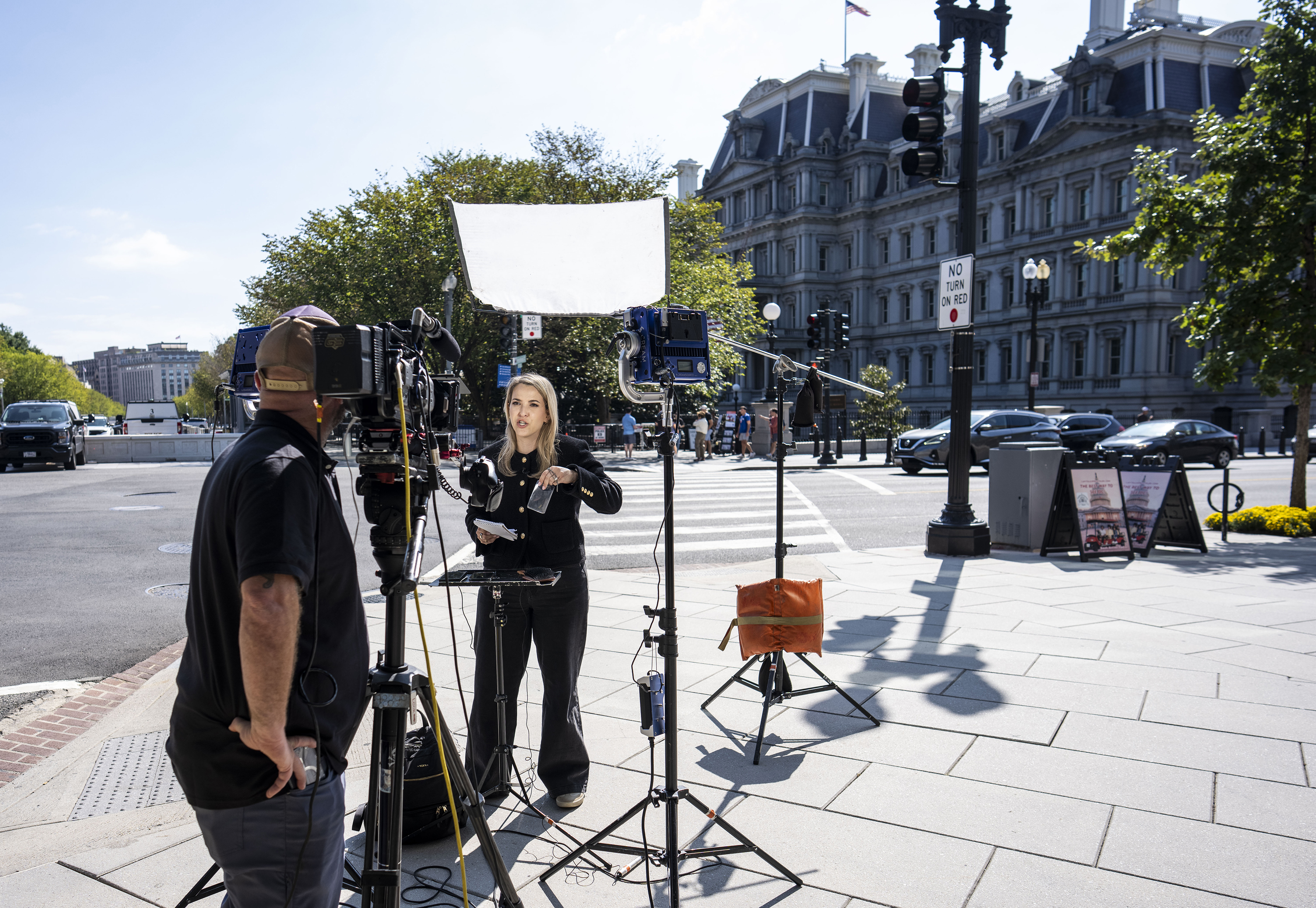
    WASHINGTON — Civil rights groups and labor unions sued the Trump administration Friday, asserting that its aggressive immigration enforcement and suggestions that it could send armed agents to polling sites amounted to voter intimidation and violated the Voting Rights Act.

    Brought by a coalition of Black, Asian, and Latino civil rights groups and unions, including the NAACP and the Service Employees International Union, the lawsuit seeks to block any effort by the Trump administration to deploy federal agents at voting locations, which the groups contend can deter citizens trying to legally vote.

    The lawsuit, filed in the U.S. District Court for the District of Columbia, argues that President Donald Trump, Secretary of Homeland Security Markwayne Mullin, and other members of the administration had created a climate in which “voters, especially voters of color, are intimidated and fearful of engaging in the democratic process.”

    They had done so, the suit says, by simultaneously pushing false narratives of rampant voting by noncitizens, conducting sweeping immigration enforcement in communities of color, and repeatedly suggesting that they could send armed agents to polls.

    The White House and the Department of Homeland Security did not immediately respond to requests for comment sent Friday morning. But in the past, Mullin has said that opponents were fearmongering and that U.S. Immigration and Customs Enforcement was not patrolling polling places. “The only reason why we would be at polling places is if there is a threat to that polling place,” he said, “or we’re serving a warrant.”

    The lawsuit points specifically to the Trump administration’s recently expanded efforts to identify noncitizens registered to vote, despite no evidence of rampant voter fraud by noncitizens.

    Taken together, the lawsuit argues, the actions and statements constituted a violation of Section 11(b) of the Voting Rights Act, which broadly prohibits actual or attempted intimidation, threats, and coercion directed at voters and anyone helping to facilitate voting. This section of the Voting Rights Act was not affected by a recent Supreme Court decision weakening the landmark civil rights legislation.

    The act, the lawsuit says, broadly protects against voter intimidation, and requires only that voters reasonably fear being subject to harassment or violence for casting a ballot. “The breadth of Congress’s words was by design,” the lawsuit says.

    This is at least the second lawsuit seeking to block the Trump administration from deploying armed federal agents near polling stations. Last week, the city of Denver, Latino civil rights organizations, and government watchdog groups argued in a lawsuit that allowing immigration agents at voting locations violates a separate federal law protecting free and fair elections.

    For months, Democrats have voiced concerns that Trump is seeking to assert greater control over the coming elections and sow doubt about the outcome. While Trump administration officials have said there is currently no plan to deploy armed agents to polling sites, they have also not ruled out the possibility of doing so.

    This article originally appeared in the New York Times.
  • Blanche’s partisan activity before midterms dismantles another principle

    Blanche’s partisan activity before midterms dismantles another principle

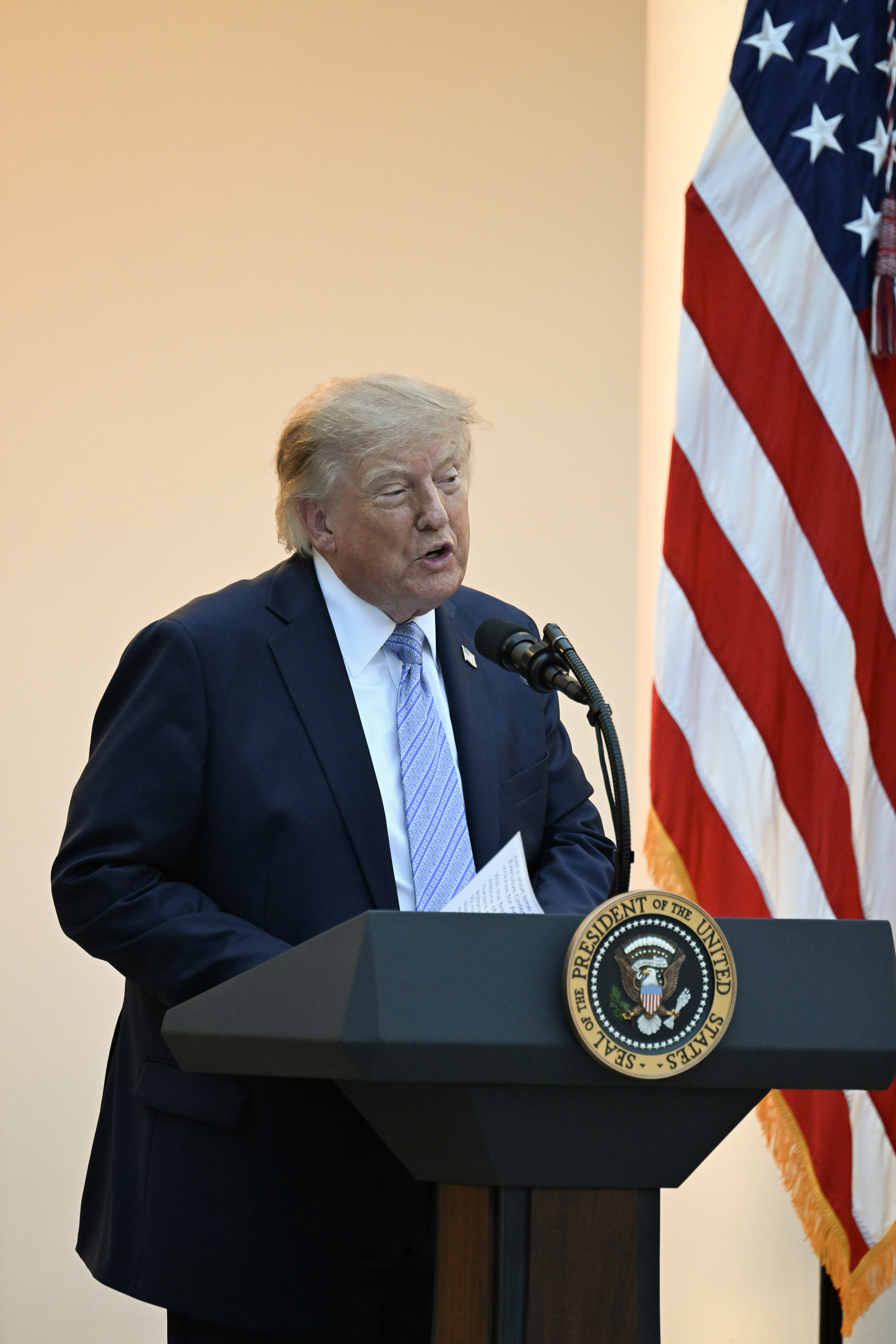
    WASHINGTON — Attorney General Todd Blanche has repeatedly participated in campaign events and spoken in partisan terms about the coming midterm elections since his confirmation last month, despite criticism that he violated a long-standing Justice Department principle of steering clear of electoral politics.

    This week, he waded again into those waters — twice.

    Since August, Blanche has come under fire for making campaign-tinged public appearances and comments. Last month, at a rally-style event on Long Island, N.Y., he praised Bruce Blakeman, the Republican candidate for governor of New York. Last week, Blanche delivered remarks at the Republican Party’s midterm convention.

    On Tuesday, he stood at the White House podium and disparaged Democratic lawmakers while invoking the coming election, dismissing their concerns about artificial intelligence as “nothing but an effort to influence the midterms.”

    And Wednesday, Blanche spoke at a campaign rally for Michael Whatley, the Republican Senate candidate in North Carolina. Echoing his convention speech, he portrayed crime rates, which continued a long-term downward trend to reach new lows in 2025, as “President Trump and Vice President Vance delivering on a promise.”

    Worries about the Justice Department abandoning its long-held commitment to appear apolitical in order to maintain institutional credibility may seem beside the point. Since January 2025, dozens of judges have viewed its representations with suspicion, eroding the traditional bonds of trust, known as the “presumption of regularity,” that the courts typically grant the department.

    The second Trump administration has also unabashedly destroyed the post-Watergate norm of Justice Department independence from the White House in investigative decisions. Early on, Blanche’s predecessor, Pam Bondi, declared, “We are so proud to work at the directive of Donald Trump.” Last September, after Trump publicly demanded that she charge several perceived adversaries, the department pushed through short-lived indictments of two of them.

    Still, Blanche is dismantling another post-Watergate principle: that Justice Department leaders stay away from partisan politicking.

    Joseph Tirrell, the Justice Department’s senior ethics official until the Trump administration dismissed him in July 2025, this week criticized Blanche’s participation in the Republican convention. He called the attorney general’s comments at the White House briefing “borderline” unethical, and his participation in the North Carolina rally “terrible.”

    “In my former role, I would have advised the attorney general not to go to the White House and not to make comments about members of Congress within 45 days of an election,” Tirrell said. Referring to a law restricting partisan political activity by government employees, he added, “I’d say, ‘That rally sounds like a Hatch Act violation to me, and I’d advise you not to do it.’ I would want to scare that person straight.”

    Stephen Gillers, a New York University law professor who specializes in legal ethics, said Blanche’s political statements and activities were protected by the First Amendment and did not violate professional conduct rule, even if they were ill-advised.

    “Any attempt to discipline him will fail,” Gillers said. “That’s unfortunate. He has the ability to do what he’s doing, and he’s chosen to do it.”

    The Justice Department did not respond to a request for comment.

    When the group Public Citizen filed a Hatch Act complaint about Blanche’s comments praising Blakeman, the Justice Department told Government Executive in a statement that it was “baseless” and “a politically motivated complaint designed to weaponize the Hatch Act against the attorney general for his support of law enforcement.”

    And in response to criticism last week by Democrats on the House Judiciary Committee over Blanche’s convention appearance, the department shot back on social media, “Todd Blanche’s appearance this evening in his personal capacity is legal (and has been approved by ethics).”

    Legal questions center on the Hatch Act, which is ambiguous and difficult to enforce when an administration does not want to strictly adhere to it. The law and related regulations allow some political appointees, while off duty, to attend partisan events, like fundraisers and campaign rallies. Some law enforcement officials are restricted from any partisan activity, but the attorney general is not listed among them, and it is disputed whether that part of the legal limits applies to them.

    Even for those who can engage in political activity in a personal capacity, the traditional test is not just whether such officials say they are doing so, but whether people would reasonably perceive them as acting in their government roles.

    Cynthia Shaw, who ran the Justice Department’s ethics office throughout Trump’s first term, said the notion that high-ranking officials could simply say they are acting in a personal capacity to get around that threshold was a misunderstanding.

    “The bigger the job you get, the less personal capacity you have, because when you speak, people are going to see you in your official capacity and representing the agency that you are head of,” she said.

    Federal law enforcement needs to not just be fair, she added, but to be seen as fair for the long-term good of the department and society.

    For that reason, the Justice Department had long held itself to a higher standard than the Hatch Act and its ambiguities. For decades, its ethics policies went beyond the statute in pushing officials to avoid events like political fundraisers and campaign rallies.

    In 2022, Attorney General Merrick Garland flatly banned political appointees from participating in partisan activities — even in their personal capacities, and even if their family members were the candidates.

    But in March of this year, Bondi rescinded that policy, freeing political appointees to attend such events in their personal capacities subject only to the lower standards of the Hatch Act.

    That weakening of ethics rules is one reason the department’s claim that Blanche’s appearance at the Republican Party convention was “approved by ethics” merits scrutiny. Another is that the administration has changed who makes ethics recommendations.

    After firing Tirrell, the administration left his position vacant for nearly a year before appointing Kristina Spencer, a former aide to Vice President JD Vance who had no prior department experience.

    The office of the deputy attorney general can also overrule the ethics office’s recommendations. For decades, the decision-maker was a career official, but the Trump administration moved that authority to political appointees.

    The principle that the Justice Department should strive to appear apolitical took root after Watergate. President Richard Nixon’s first attorney general, John Mitchell — who later went to prison for his role in the scandal — was so deeply partisan that he resigned to run Nixon’s 1972 reelection campaign.

    The attorney general immediately after established the modern norm of not acting as a political operative while in office: Edward Levi, a University of Chicago legal scholar.

    Maintaining a nonpartisan image has proved difficult, partly because of the department’s power and an increasingly polarized political atmosphere. Under both parties, one attorney general after another has been accused by political opponents of politicizing the Justice Department.

    In 2013, Attorney General Eric H. Holder Jr. called himself President Barack Obama’s “wingman,” clashing with the principle of Justice Department independence. Asked last week about Blanche’s speech at the Republican convention, Holder said, “It’s unprecedented, and it’s disgraceful. Attorneys general don’t talk about political things. He shouldn’t be there.”

    Holder, while serving as attorney general, never spoke at the Democratic convention or at campaign rallies. Nor did Republican attorneys general frequently accused by Democrats of politicizing the department, including Attorney General William Barr during Trump’s first term.

    Gillers said that shifting standards for the conduct of attorneys general would harm the rule of law, especially if Blanche’s successors followed his example.

    “This is new,” he said. “The changing image of what an attorney general should be seen to do, and how officials high in the Justice Department should behave, will not be good. We just don’t know yet how bad it will be.”

    This article originally appeared in the New York Times.
  • Iran war will make winter more expensive for some Americans

    Iran war will make winter more expensive for some Americans

    Jonathan Robidoux, a resident of Long Island, N.Y., calls his heating oil supplier every fall to have his tank filled for the coming winter. He spent $1,200 on the fuel last winter.

    This year, he will likely pay a lot more.

    The price of heating oil, a fuel that is similar to the diesel used in trucks, is up roughly 60% since Israel and the United States started attacking Iran on Feb. 28.

    The war has sent oil and fuel prices soaring, leaving Robidoux and many others facing difficult financial decisions. About 3% of U.S. households use heating oil, and most of them live in the Northeast or Alaska.

    Robidoux, who rents a home in New Hyde Park, N.Y., is trying to decide if he should buy heating oil now or wait until the weather gets colder, in the hope that prices will drop.

    “I might just buy some now, but I don’t have that much liquidity, so it’s a tough decision,” said Robidoux, 41.

    People who use natural gas or electricity to heat their homes are expected to face more modest increases in heating bills but many of them could also find it hard to make ends meet, energy experts said.

    Many Americans are heading into a “much more expensive” winter, said Mark Wolfe, executive director of the National Energy Assistance Directors Association, which represents state officials that help dispense government aid to residents who meet certain income-based qualifications. The organization urged Congress in July to offer more financial assistance to families struggling with rising energy costs.

    “Those numbers, if you’re middle class, that’s a significant hit to your budget,” he said.

    Who will face higher costs and why?

    As with gasoline and diesel, heating oil prices can vary a lot based on where you live. The national average, which was $4.10 a gallon the week before the war, jumped 35% to $5.54 just a month later, according to weekly data from the Energy Information Administration, which will begin releasing weekly price data for heating oil in the fall.

    In New York, the average price of heating oil was $6.14 a gallon the week of Sept. 14, up from $3.70 a year earlier, according to the state’s Energy Research and Development Authority.

    More than 80% of U.S. heating oil is used in the Northeast. In the winter of 2023 to 2024, 4.79 million households used oil as their primary heating fuel, according to the EIA.

    Despite skyrocketing prices, investors are expecting them to fall. Futures contracts for heating oil delivered in December were trading at $4.61 a gallon on Thursday afternoon, compared with $5.10 a gallon for the October contract. Retail prices paid by residents are higher than those for futures contracts.

    Of course, traders have been wrong before. Oil and fuel prices dropped sharply after President Donald Trump and Iranian officials announced a tentative agreement to pause the war in June. But prices began climbing again when hostilities resumed.

    The uncertainty about what heating oil will cost in a few months is prompting many people to make anxious calls to oil suppliers like the Energy Co-op of Vermont.

    “There’s definitely been people trying to hold off that way or make plans of getting a minimum amount of gallons delivered at this point, hoping to stretch it till the next time, hoping that’ll be a little bit lower in cost,” said Rose Friedlander, the co-op’s marketing manager.

    What other options are available to stay warm?

    Many people use oil because switching to a different source of heat can be expensive or difficult.

    Natural gas is not an option in many rural and suburban areas because laying pipelines over long distances is often financially unfeasible. Some states have offered incentives to get residents to switch to electric heat pumps, which are much more energy efficient and contribute much less to climate change, but installing the devices can still cost residents thousands of dollars.

    Consider Vermont, where 35% of homes use heating oil. Of its 285,000 homes, about 80,000 have heat pumps, said Philip Picotte, a utilities economic analyst with the Vermont Department of Public Service. Around 8,000 to 10,000 heat pumps are installed in Vermont every year.

    That said, the use of heating oil has been dropping. In 2010, about 6% of Americans used it. Some states have weaned a lot residents off the fuel. Maine has decreased the number of homes that primarily rely on heating oil from 62% in 2018 to around 50% in 2025.

    One hurdle to heat pumps is that electricity rates tend to be higher and homes tend to be older in the Northeast than in other regions. That means using heat pumps may not lower heating costs unless they are paired with other home upgrades like insulation and sealing that help minimize energy use.

    Another option is propane, a fuel made from the processing of natural gas or crude oil. Around 5% of American households use it, and prices for the fuel have climbed modestly this year — in New York, they’re up about 5.7% compared with last year. But switching to propane also requires replacing home heating equipment, which can be beyond the means of many people.

    Natural gas and electricity prices are up less

    Households outside the Northeast and Alaska generally will not face as big a financial shock this winter. That’s because about 47% of U.S. homes heated with natural gas as of 2024 and the United States has plenty of it on hand, unlike Europe, where the price of that fuel has been rising sharply.

    “We’re really very well supplied for natural gas, and that’s where you see prices where they are,” said Matt Smith, director of commodity research at Kpler.

    The wholesale price of natural gas in the first week of September has actually been lower than prices in September last year, according to the EIA.

    But the price of gas delivered to homes, which also includes the cost of maintaining pipelines, has been rising. In June, the average retail price was $24.09 per thousand cubic feet, up 3.6% from a year earlier, according to the EIA.

    About 42% of U.S. homes used heat pumps or other electric heaters as of 2024, according to RMI, a research group formerly known as the Rocky Mountain Institute. These people will likely also pay somewhat more this winter. In June, the national average residential electricity rate was 18.34 cents per kilowatt-hour, up about 5% from a year earlier, though rate increases vary a lot by state and utility.

    This article originally appeared in the New York Times.