Category: New York Times

  • Navy carrier’s problems are tied to attacks on U.S. base early in war

    Navy carrier’s problems are tied to attacks on U.S. base early in war

    WASHINGTON — The aircraft carrier USS Abraham Lincoln’s supply problems began soon after the first day of the war, as Iranian missiles and attack drones fell on a Navy base in Bahrain.

    The Iranian attack, retaliation for the U.S.-Israeli assault on Tehran, Iran, destroyed much of the base. And as it went up in smoke, so did a major logistics hub the Navy has relied on for decades.

    The Navy needed a Plan B to continue feeding the sailors working around the clock to keep warplanes flying strike missions, and later to maintain a blockade of Iran’s ports.

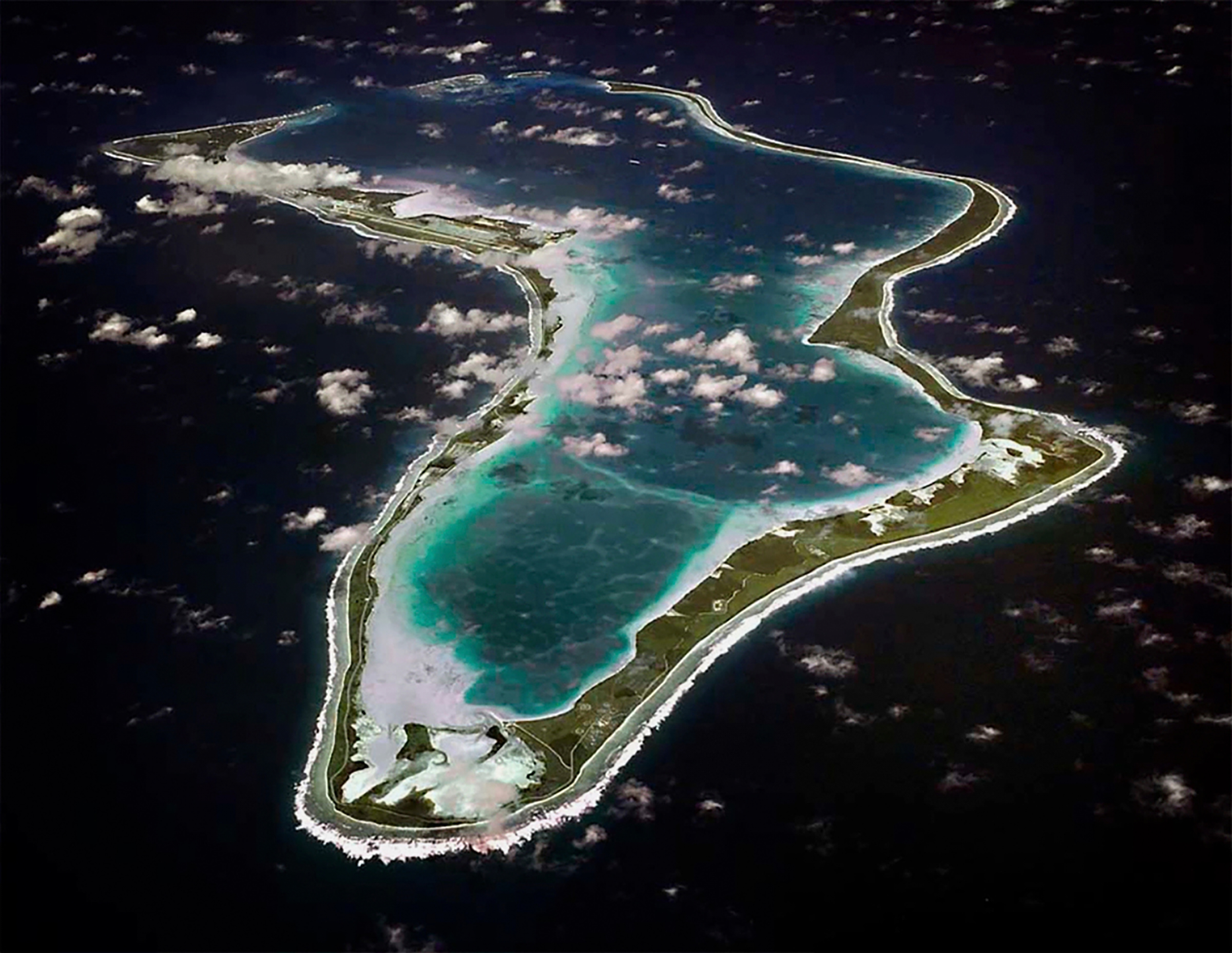
    With the threat of Iranian attacks at other ports in the region, the Pentagon looked to a base under British command on the island of Diego Garcia as its supply hub. Diego Garcia is south of the Maldives in the Indian Ocean and roughly 2,200 miles from where two aircraft carrier strike groups have been operating in the Gulf of Oman.

    The loss of the hub in Bahrain has contributed to a host of reported problems on carriers supporting operations against Iran, as Democratic senators raise concerns about the Lincoln’s 5,000 sailors and their nearly nine-month deployment.

    Sen. Richard Blumenthal (D., Conn.) said in a letter to Defense Secretary Pete Hegseth that the reported problems included shortages of basic supplies and the deteriorating mental health of its crew members.

    On Friday at a military air base in Maryland, President Donald Trump dismissed those concerns. “That ship is moving right now, or very shortly, and it’s being replaced with another, very similar, ship,” he said.

    The Lincoln’s replacement is the Japan-based carrier USS George Washington, which earlier this week was heading west through the Strait of Malacca in Indonesian waters en route to the Middle East.

    Another carrier, the USS George H.W. Bush, has been operating in the Middle East for months since deploying from Norfolk, Va., on March 31.

    When asked if the carrier deployments were too long, the president said, “No, no, no, not nearly long enough.”

    Hegseth had a similar response on Thursday when a reporter asked how long the United States could maintain its blockade of the Strait of Hormuz.

    “We can hold it as long as we need to, indefinitely,” he replied.

    At the war’s outset, Keir Starmer, then the British prime minister, denied the Pentagon access to Diego Garcia for use in the operation against Iran. That decision drew Trump’s ire, and Starmer ultimately relented on March 1, granting the U.S. military access to the island for what he described as a “specific and limited defensive purpose.”

    A U.S. military official, who spoke on the condition of anonymity to discuss sensitive logistics, said the Navy began using Diego Garcia as the main shipment point shortly after the Navy’s base in Bahrain was heavily damaged.

    The use of Diego Garcia as the Navy’s new logistics hub may explain why Iran fired two medium-range ballistic missiles at the island on March 20.

    One of the missiles fell into the Indian Ocean short of its target. A Navy warship shot down the other.

    The San Diego-based Lincoln has been at sea for nearly nine months without what the Navy calls a “liberty port” — where sailors can get off the ship for a few days.

    Bahrain is one of the two ports where U.S. aircraft carriers in the region have typically moored so their crews can get some downtime. The other, the Emirati port of Fujairah on the Gulf of Oman, is also well within the range of Iranian missiles.

    The Trump administration relied on yet another carrier, the USS Gerald R. Ford, in the Caribbean for its pressure campaign against Venezuela and later extended its deployment to the Middle East to launch airstrikes against Iran. So far the war has seen the commitment of a significant portion of the Navy’s fleet of aircraft carriers, which will go down to 10 with the expected retirement of USS Nimitz next year.

    While six months is the typical length of a Navy deployment at sea in peacetime, some carriers have done far longer stretches following the 9/11 attacks. The Ford’s 326-day deployment, however, broke the record for the longest by a carrier since the Vietnam War.

    But in that war, carriers assigned to Yankee Station, a section of the Pacific off the coast of Vietnam, would often head to the Navy base at Subic Bay, Philippines — a short two-day transit away — where sailors could take a break from running nonstop flight operations and the ship could load up on ordnance, food, fuel, and other necessary supplies.

    By tradition and Navy regulation, the commanding officer of a warship can request a “beer day” for their crews when they have been at sea for 45 straight days or longer. Given the Lincoln’s time at sea, the crew would have been eligible for five beer days already.

    A spokesperson for the U.S. 5th Fleet, which covers naval operations in the region and would authorize beer days, did not immediately respond to a request for comment on Friday about whether any of the ships participating in the Iran war had requested them.

    In an interview, Rep. Mike Levin (D., Calif.) said his constituents included sailors aboard the Lincoln, and their family members had reached out to express their concerns about the deployment.

    “It gets back to that big picture, which is: What is the mission here?” Levin said. “That’s what the families want to know.”

    This article originally appeared in the New York Times.

  • American missionary kidnapped in Niger soon to be reunited with family

    American missionary kidnapped in Niger soon to be reunited with family

    A mission organization said on Friday that a pilot who was kidnapped while working for the group in the West African country of Niger last year was in “good health” after his release.

    The missionary pilot, Kevin Rideout, was seized from his home in Niamey, the capital of Niger, in October. A U.S. official said on Friday that Rideout had arrived at Ramstein Air Base in Germany and was undergoing medical evaluation. Like others in this article, the official spoke on condition of anonymity to discuss operational matters.

    Rideout’s organization, called Serving in Mission, said in a statement that he would soon be reunited with his loved ones.

    “We are grateful to confirm that our good friend and brother in Christ, Kevin Rideout, has been released,” the statement read. The mission noted that he was in “good health in the care of U.S. officials” and would soon be reunited with his wife, Krista; their four children; and his extended family.

    “Krista and the rest of Kevin’s family are profoundly grateful for the prayers offered on their behalf by people around the world throughout his captivity,” the statement added.

    Another U.S. official said on Thursday that Rideout’s release, which was earlier reported by the New York Times, was not the result of a military rescue operation but “by other means,” offering no further details.

    The official linked Rideout’s release to U.S. military pressure on the Islamic State in Nigeria, Niger’s southern neighbor, in recent months. In May, President Donald Trump said that American and Nigerian forces had killed Abu Bilal al-Minuki, a high-ranking Islamic State leader in Lake Chad, a region at the intersection of four countries, including Nigeria and Niger.

    The official said that raid had helped influence the kidnappers’ decision to release Rideout.

    How and where he was released were not yet clear, U.S. officials said earlier, and it was also unclear which group held him at the end of his captivity. Rideout’s release had been a major priority for the White House and for the military’s Africa Command.

    In May, French journalist and researcher Wassim Nasr, who has been monitoring jihadi groups in the area for several years, said that Rideout was being held in Ménaka, a region in Mali just over the border with Niger. That area is mostly controlled by a local branch of the Islamic State.

    For years, Mali and Niger have been battling insurgents affiliated with al-Qaida and the Islamic State. In April, al-Qaida-linked militants launched coordinated attacks across Mali, seizing a major city and killing the country’s defense minister.

    This article originally appeared in the New York Times.
  • Oil, hunters, and Dr. Phil: How a longshot project is shaking up Greenland

    Oil, hunters, and Dr. Phil: How a longshot project is shaking up Greenland

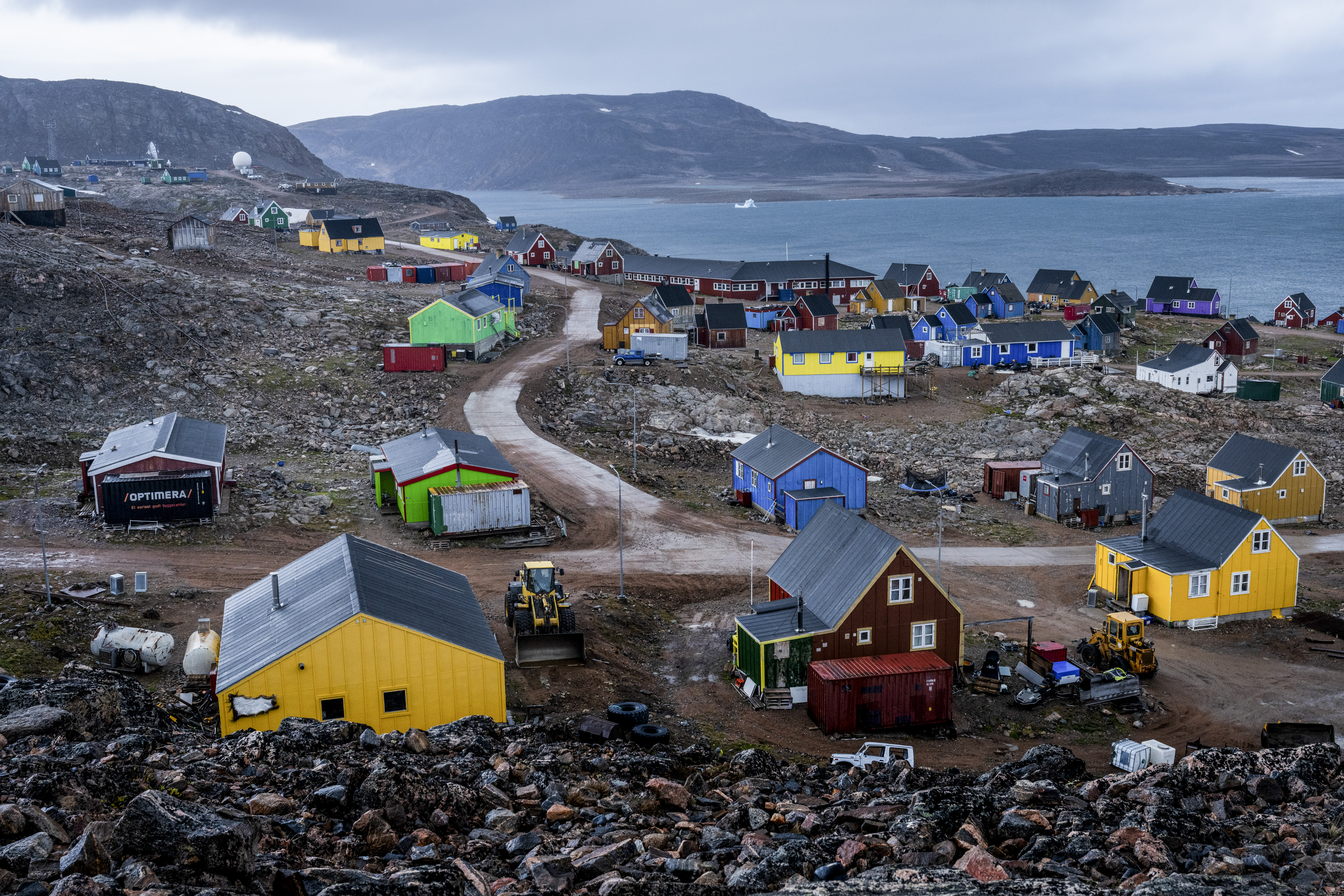
    LONDON — In one of the most remote towns on Earth, on the frozen crust of Greenland’s east coast, the American oilman made his pitch.

    Near to the very room where they were all sitting, he told a crowd of Greenlanders, could be as much as 13 billion barrels of oil. His company planned to drill two exploratory wells, and if it struck oil, it could be a major worldwide discovery bringing much-needed jobs, loads of tax money, and relief to world energy markets.

    The people who attended the meeting, which was held in June in an isolated town called Ittoqqortoormiit, had some questions.

    Why would Greenland get only 15% of the profit?

    What kind of chemicals would be used?

    And what about the musk ox? (Musk ox hunting is a big deal up there.)

    The meeting wrapped up with a lot of unhappy people filing out, according to a video of it that was shared with the New York Times, and a showdown over oil exploration has now joined the cloud of issues swirling over Greenland.

    The wildcat oil project is being pumped up by Dr. Phil McGraw, the TV personality known as Dr. Phil, and Gov. Jeff Landry of Louisiana, both powerful allies of President Donald Trump. It’s the latest push by the MAGA camp to close in on this gigantic Arctic island that Trump threatened to annex and remains a fixation of his.

    If the discovery is anything close to what the company says, and if it makes economic sense for major production — and those are two enormous ifs — this project could thrust Greenland into a radically different future, possibly as an Arctic petrostate.

    But it’s off to a bumpy start. After a wave of negative publicity, protests by Greenlanders, and a slipup by the project’s organizers who have a drilling license, Greenland’s authorities tapped the brakes. This week, the government pushed back the timeline for granting final approvals, saying that it’s unlikely any drilling would be authorized before 2028.

    The Texas-based firm leading the project, Greenland Energy Co., now says it will focus on drilling only one well, not two. And the delays are expected to cost millions. As a result, Greenland Energy’s share price has plummeted, trading at little more than a dollar, half its value from just days ago.

    A few years ago, Greenland declared it was suspending oil exploration. The Arctic is among the fastest-warming regions in the world, and the Greenlandic government felt it was wrong to contribute more fossil fuel pollution.

    But the oil prospectors in this case are operating with a valid license granted before the policy changed, according to documents reviewed by the New York Times. So Greenlandic officials, who have been trying to navigate the intense pressure Trump has put on them, find themselves in a tight spot.

    They are more than aware that if they reflexively block Americans from drilling, especially at a time when world events have squeezed the global oil supply, that could give Trump the pretext he needs to return to his threats to “get” Greenland, “one way or the other.” At the same time, there’s obvious resistance from ordinary Greenlanders and government officials to the project.

    “In a world where Donald Trump has pursued such a confrontational policy toward Greenland, you can’t help but be a little concerned,” said Mikkel Runge Olesen, a senior researcher at the Danish Institute for International Studies. “If you suddenly throw a major oil discovery into the mix, who knows what might happen.”

    For months, the United States, Greenland, and Denmark — the island’s former colonial master that still controls many of its affairs — have been locked in sticky negotiations over the island’s future. One key issue has been America’s access to Greenland’s natural resources.

    Ever since Trump set his sights on the island, Greenland has become a magnet for investors and allies chasing Arctic resource dreams. But oil has never been easy.

    Chevron and Shell prospected decades ago with no success. It’s incredibly expensive to build an oil industry from scratch in one of the most remote and inhospitable places on the planet. Most of Greenland is covered in ice. One major U.S. company, ARCO, decades ago sank today’s equivalent of $250 million — far more than the $80 million the current players have raised — into seismic studies in the same area, only to abandon the project in 1990.

    “There are so many red flags here,” said Naaja Nathanielsen, Greenland’s former minister of natural resources and now a representative in Denmark’s parliament. She said she hasn’t seen any hard data supporting the project’s tantalizing claims, adding, “I think they are selling hot air.”

    Not so, say the backers of the project, a joint venture between Greenland Energy, the small, publicly traded U.S. company that raised the money, and 80 Mile Plc, a British outfit that acquired the drilling licenses several years ago.

    Roderick McIllree, 80 Mile’s executive director and a board member of Greenland Energy, said this stretch of Greenland had the same geology as the North Sea oil fields, where European countries have extracted billions of barrels. And climate change is working in their favor, he said.

    Warming temperatures mean less ice clogging Greenland’s coast, making any oil discovered cheaper to export than it would have been decades ago, he said.

    One investor is the Citadel hedge fund, run by investment titan Ken Griffin, and the Trump administration fully supports the project.

    “Greenland could be exporting 2 million barrels of oil a day,” said Landry, Trump’s special envoy to Greenland, in a Fox News interview in May. He added, “Think about what kind of pressure that would relieve in the Straits of Hormuz.”

    Before the project is allowed to start, its plans, including a detailed environmental assessment, must be approved. But the organizers have been moving ahead anyway and recently carried out two disputed equipment transfers.

    First, they brought in a barge load of equipment from another part of Greenland on what authorities said was an expired permit. Jorgen Hammeken-Holm, the head of Greenland’s mineral resources department, called the move “naughty, naughty.”

    Then, a few days later, they unloaded another piece of heavy equipment without proper notification, authorities said.

    “We have the police and the military,” Hammeken-Holm warned. “They can assist in dealing with unlawful activities if necessary.”

    McIllree admitted, “We kind of fell down.” He said the company apologized to Greenlandic officials.

    The potentially oil-rich area, known as Jameson Land, is a highly protected environmental zone, an Arctic swampland of sorts, home to tenacious shrubs and musk ox, foxes and migrating birds like the pink-footed goose. The musk ox is prized for its meat and its fur, which is turned into a luxurious yarn.

    All this has attracted Dr. Phil, who did a recent 44-minute podcast on the project. He titled the episode “Frozen Gold,” and according to documents on Greenland Energy’s website, the company has established “a wide-ranging partnership” with him to make a six-episode series on “this modern-day treasure hunt.”

    His company did not respond to requests for comment about his involvement in the project. But on his podcast, Dr. Phil said he would soon head to the Arctic.

    “I’m going to have to mug a kitten and get some mittens because I’m going to go up there and see this firsthand,” he said.

    Ittoqqortoormiit (It-tok-kor-TOR-meet), population 329, is trying to make sense of what’s happening. This spring, members of the local council seemed ready to negotiate and drafted a list of things they wanted from the oil company: a heated community pool, new hunting cabins, and funding for residents to fly over Jameson Land in helicopters one last time before their hunting grounds were turned into an industrial site.

    But the public meeting in June changed the mood.

    McIllree conceded that the team that led the meeting didn’t show enough respect.

    “They forgot whose house they were in,” he said.

    Still, some residents support the project.

    Aage Uugi Pike Barselajsen, a construction worker, said in a telephone interview that Ittoqqortoormiit desperately needed jobs.

    “You have to think about the future and the money,” he explained. “Maybe Greenland could become like Dubai. That’s my dream.”

    This article originally appeared in he New York Times.

  • Ward Churchill, professor who challenged his dismissal over 9/11 essay, has died at 78

    Ward Churchill, professor who challenged his dismissal over 9/11 essay, has died at 78

    Ward L. Churchill, a professor whose firing by the University of Colorado in 2007 inspired a lawsuit that became a landmark case about academic freedom and free speech, has died. He was 78.

    The death was confirmed by his former lawyer, David Lane. No further details were provided.

    When he was dismissed, Mr. Churchill had been a tenured professor at the university’s Boulder campus since 1991 and had served as chairperson of its ethnic studies department. In 2007, a faculty panel found that he had plagiarized and falsified parts of his research on Native Americans, prompting his dismissal.

    He filed a wrongful termination suit against the university, claiming that the real cause for his firing was to punish him for an essay he had written on Sept. 12, 2001, and published online a few days later, in which he argued that the United States had brought on itself the 9/11 terrorist attacks.

    In the essay, he compared office workers who had been killed with Adolf Eichmann, a Nazi official whose later defense that he was merely “following orders” helped inspire writer Hannah Arendt to develop the concept of “the banality of evil.”

    In Mr. Churchill’s essay, titled “Some People Push Back: On the Justice of Roosting Chickens,” he wrote that the financial workers who died at the World Trade Center were not innocent bystanders, but “little Eichmanns” who were part of “a technocratic corps at the very heart of America’s global financial empire.”

    The essay garnered little notice at the time of its release, nor when it was expanded and published as a book in 2003. But when Mr. Churchill was invited to speak at Hamilton College in New York in 2005, it resurfaced and caused an uproar, and the organizers canceled the event.

    Under pressure, including from Colorado Gov. Bill Owens, the university formed a panel to investigate Mr. Churchill’s conduct. It concluded that he had committed serious academic misconduct, including falsifying and fabricating historical details and plagiarizing work by an environmental group and another scholar.

    The panel was divided about whether he deserved to be dismissed, with three of the five members in favor, and two recommending a two-year suspension.

    The university’s leaders decided to fire him, prompting Mr. Churchill to start his legal challenge. When the lawsuit went to trial in March 2009, Mr. Churchill’s lawyers described the university panel’s search for professional misconduct as a pretext for a foregone decision to dismiss him. Lane, his lawyer, said at the time that Mr. Churchill was the victim of a “howling mob” of university administrators, conservative media, and politicians “falling over themselves” to secure his removal.

    In April 2009, the jury found that Mr. Churchill had been wrongfully dismissed, awarding him a symbolic $1 in damages. It found that his political views had been a “substantial or motivating” factor in his dismissal, and that the university had not shown that he would have been dismissed anyway for his academic misconduct.

    “The jury’s award is some vindication,” Mr. Churchill said. “I didn’t ask for money, I asked for justice.”

    A Denver District Court judge ruled that the university did not have to reinstate or compensate Mr. Churchill, a decision upheld by the Colorado Court of Appeals. In 2012, the Colorado Supreme Court affirmed the lower courts’ rulings.

    Ward LeRoy Churchill was born Oct. 2, 1947, in Urbana, Ill., to Jack LeRoy Churchill and Maralyn Lucretia Allen. They divorced when he was a year old. In a 2003 essay in an academic journal, he claimed to be of Muscogee Creek descent through his father and an enrolled member of the United Keetowah Band of Cherokee Indians through his mother.

    The Cherokee tribe said in 2005 that he was an associate member rather than a full member. A former member of the tribe’s enrollment committee said Mr. Churchill could not prove his eligibility by blood but was granted associate status based on his advocacy work.

    Mr. Churchill grew up in Elmwood, Ill., and graduated in 1965 from Elmwood Community High School, where he played football and basketball. Former classmates told the Denver Post in 2005 that he liked to debate politics, even as a teen.

    He joined the U.S. Army in 1966, training as a light-truck driver and projectionist, then served in Vietnam. He told the Denver Post in a 1987 interview that he had attended paratrooper school and was assigned to an elite reconnaissance patrol unit, details that did not appear on his Army record.

    He was discharged from the Army in 1968. He said in the 1987 interview that he became active in anti-war leftist circles in Chicago after he returned from Vietnam.

    He earned a bachelor’s degree in technological communications from Sangamon State University in Springfield, Ill., (now the University of Illinois Springfield), in 1974, and a master’s degree in communications theory from Sangamon State in 1975.

    He was hired by the University of Colorado in 1980 to be the acting director of its American Indian Equal Opportunities Program. In 1991, he became an associate professor in the communications department and received tenure. He became a full professor and transferred to the ethnic studies department in 1997.

    His classes were popular enough that up to 60 students would be on the waitlist, Arturo Aldama, a professor in that department, told the Denver Post in 2005.

    Mr. Churchill was married four times. His first wife, Dora-Lee Larson, filed to end their common-law marriage in 1984 and accused Mr. Churchill of “past violence and threats.” His second marriage, to Marie Annette Jaimes, a colleague at the University of Colorado, ended in divorce in 1995. That same year, he married Leah Kelly, who was struck and killed by a car while crossing a street near Boulder in 2000 at age 25.

    Mr. Churchill’s fourth wife, Natsu Saito, was a fellow professor in the University of Colorado’s ethnic studies department. In 2006, while he was being investigated by the university, Saito resigned to teach at Georgia State University.

    Information about his survivors was not immediately available.

    In 2017, Mr. Churchill returned to speak at the Boulder campus, and he remained defiant. “Academic freedom in America is dead,” he told the crowd. “I had my identity before I was a professor, I had it while I was a professor, and I have it now.”

    This article originally appeared in The New York Times.

  • John Crowley, whose fantasy novels blurred reality and dream, dies at 83

    John Crowley, whose fantasy novels blurred reality and dream, dies at 83

    John Crowley, an author of sweeping fantastical narratives whose ability to blend such disparate material as American history, dreams of lost utopias, and Alice in Wonderland-tinged occult allowed him to transcend the fantasy genre in novels like Little, Big, which critic Harold Bloom called a “neglected masterpiece,” died Sunday at his home in Conway, Mass. He was 83.

    His wife, Laurie Block, said the cause was complications of dysphasia and dementia.

    The author of 14 novels and 10 volumes of essays and short fiction, Mr. Crowley explored a considerable range of subjects and genres. His first novel, The Deep (1975), was set on a disc-shaped world and involved a war between two factions, the Reds and the Blacks, loosely based on the 15th-century War of the Roses in England.

    Even his most straightforward, realistic novel, Four Freedoms (2009), about the workers at an airplane factory in Oklahoma during World War II, is an alternative history of the homefront, in which Americans of marginalized identities — Black Americans, women, disabled people — find themselves liberated by a common purpose.

    His work drew comparisons to C.S. Lewis, J.R.R. Tolkien, and Thomas Pynchon; reviewers recognized notes of Dante, William Shakespeare, and Lewis Carroll. Writing in the Washington Post in 2000, critic Michael Dirda called Mr. Crowley “arguably the most original and accomplished American fantasy writer ever.”

    Despite his wide range, certain themes persisted. He was consistently interested in the way that narrative shapes perception; in the sometimes murky line between fantasy and reality; and in the possibility, as he wrote in his 1987 novel, Aegypt (eventually republished as The Solitudes), that “there is more than one history of the world.”

    Little, Big, Mr. Crowley’s fourth novel, was his best known and most widely read. Its plot revolves around the long marriage of Smoky Barnable and Daily Alice Drinkwater, which plays out against a tableau of urban decay, a fascist takeover of the United States, and a rural manse that offers a gateway to a realm of fairies and, possibly, a redemptive future.

    Any summary of its plot makes it sound twee; in fact, it is an achingly melancholic and deeply humane meditation on mortality and memory.

    Like all Mr. Crowley’s books, Little, Big reads almost like a fable, starting with its first sentence: “On a certain day in June, 19 —, a young man was making his way on foot northward from the great City to a town or place called Edgewood, that he had been told of but had never visited.”

    Mr. Crowley continued, “His name was Smoky Barnable, and he was going to Edgewood to get married; the fact that he walked and didn’t ride was one of the conditions placed on his coming there at all.”

    Poet James Merrill was a gushing fan of Little, Big and arranged for Mr. Crowley to receive a grant from the Ingram Merrill Foundation, which Merrill directed. Eminent fantasy writer Ursula K. Le Guin said that it “calls for a redefinition of fantasy.” Bloom, the critic, wrote that it was “literally the most enchanting 20th-century book I know.”

    It was named the best novel at the 1982 World Fantasy Awards, the highest prize in the genre.

    Mr. Crowley was unafraid of boldly original stories and sprawling epics. The four books in his Aegypt cycle, written over two decades, follow the waking and dream life of a historian named Pierce Moffett, with parallel story lines set during the Renaissance. His 2017 novel Ka: Dar Oakley in the Ruin of Ymr centers on a sentient, immortal crow as it follows the course of human history.

    “The kind of fiction that always interested me,” Mr. Crowley told the Believer magazine in 2009, “is stuff that somehow manages to be convincingly actual — in the sense that you believe that truths are being told about the world you live in — and are also somehow connected to the imaginary in some way.”

    John Michael Crowley was born Dec. 1, 1942, in Presque Isle, Maine, where his father, Joseph, was a doctor with the Army. His mother, Patience (Lyon) Crowley, managed the home and later worked as a librarian.

    The family moved frequently because of Joseph Crowley’s work, living in Vermont, eastern Kentucky, and finally Indiana.

    Though he at times dreamed of becoming an archaeologist or a set designer, John Crowley studied English at Indiana University. As a freshman, he was a member of the university’s quiz team, which won the 1961 GE College Bowl, an event broadcast on national television.

    After graduating in 1965, he moved to New York, where he wrote documentary screenplays.

    He moved to western Massachusetts in the mid-1970s, where he began writing fiction. He continued to write documentaries, eventually joining his wife, Block, in forming Straight Ahead Pictures, a nonprofit production company.

    His film scripts include The World of Tomorrow (1984), about the 1939 World’s Fair, and, with Block, Fit: Episodes in the History of the Body (1991), about American fitness culture.

    Mr. Crowley and Block married in 1984. He is also survived by their children, Hazel and Zander Crowley, and his sister, Jo Busha.

    Thanks to the presence on the Yale English faculty of two of his great admirers, poet John Hollander and Bloom, Mr. Crowley became a lecturer there in 1993, retiring in 2018.

    Mr. Crowley insisted to his students and readers that fantasy was, at its heart, no different from any other genre, and could achieve greatness if it followed the rules of literature.

    “To actually articulate a way of being in a literary world without boundaries between reality and fantasy — it can’t just be a bunch of craziness and surreal carrying on,” he told Locus magazine in 2010.

    He added, “Fantasy fiction at bottom, or at its best, is about making true fictions by the rules, in worlds you make up out of whole cloth, or out of your heart.”

    This article originally appeared in The New York Times.

  • Alfonso Fanjul Jr., Cuban American sugar baron, dies at 89

    Alfonso Fanjul Jr., Cuban American sugar baron, dies at 89

    Alfonso Fanjul Jr., the patriarch of a family that lost one of Cuba’s largest sugar businesses in the revolution of 1959 and fled to the United States, where, thanks to pluck and government price supports, they built an even vaster empire, died Aug. 3 in South Florida. He was 89.

    The death was announced by Florida Crystals Corp., part of the privately held family business that Mr. Fanjul presided over. The company provided no further details.

    A billionaire who called himself a farmer and lived a luxurious life in Palm Beach, Fla., where he docked a 95-foot yacht, Mr. Fanjul, known as Alfy, was co-chair and co-CEO of the family businesses alongside his younger brother José, known as Pepe.

    Their two other brothers and sister also have interests in the empire, which includes the world’s largest cane sugar refiner and the Domino and C&H brands.

    Alfy and Pepe Fanjul became major donors to both political parties in the United States, a lesson in realpolitik that they learned after Cuban communists confiscated 90,000 acres of the family’s property as well as its mansions and an art collection.

    “One of the reasons we get involved in American politics is because of what happened to us in Cuba,” Alfy Fanjul told Vanity Fair in an article published in 2011.

    He gave generously to Democrats and was a co-chair of Bill Clinton’s 1992 presidential campaign in Florida. Pepe Fanjul has donated more than $2.5 million to the political campaigns of President Donald Trump, a longtime friend whose protectionist tariffs have benefited the Fanjuls.

    Clinton and former Speaker Nancy Pelosi attended Mr. Fanjul’s funeral in Palm Beach on Saturday.

    During one of the few in-depth interviews he gave to the press, Mr. Fanjul was described by Marie Brenner of Vanity Fair as having “the old-world manners of a Spanish aristocrat, a cool detachment that indicates he is accustomed to being in control.”

    For decades, the Fanjuls attracted critics of their labor, environmental, and business practices. Environmentalists accused Florida Crystals of spoiling the Everglades with chemical runoff from their 180,000 acres of cane around Lake Okeechobee. (As evidence that it was a good environmental citizen, the company pointed to a renewable energy plant that it built, as well as to sustainable practices on its farms.)

    Even sharper criticism came from free trade advocates, who said the Fanjuls profited from import quotas that ensured American sugar farmers got an inflated price, some three times higher than the rest of the world’s price. The difference was said to cost American consumers billions of dollars a year. The libertarian Cato Institute called Big Sugar in the United States a “candy-coated cartel.”

    The Fanjuls, usually speaking through public relations specialists, responded that they had built their business over decades of hard work and determination — in the best tradition of the American dream.

    Mr. Fanjul was born in Havana on June 27, 1937, to Alfonso Fanjul Sr. and Lillian (Gómez-Mena) Fanjul. His parents’ marriage united two wealthy Cuban sugar families, whose properties included 10 mills, mansions, and the Manzana de Gómez, a full-block commercial building in central Havana that is now a luxury hotel.

    Alfy, who was sent to Fordham University in New York for college, was back home on New Year’s Eve in 1959, watching the fireworks at the Havana Yacht Club, when Cuban dictator Fulgencio Batista fled the country ahead of the advancing communists.

    Mr. Fanjul later told the story of a meeting in the family office soon after with Fidel Castro’s guerrillas, who opened the discussion by laying their machine guns on a table. The family lost all its assets and left for New York.

    Mr. Fanjul, his father, and his maternal grandfather, Pepe Gómez-Mena, set out to rebuild the business in America; they had already sent some money out of Cuba.

    With other wealthy exiles, they raised $640,000 (about $7.3 million today) and bought 4,000 acres of land in western Palm Beach County and three rundown Louisiana sugar mills. The mills were shipped to Florida, where the first cane harvest was cut in 1961. Over the years, much of the cane was harvested by Jamaican workers on temporary visas.

    Seven years older than his brother Pepe, Alfy became the leader of the Fanjuls’ rise in America. He took over as chairperson and CEO of the companies in 1980, after his father died.

    The business expanded in 1984 when it acquired large holdings in Florida and the Dominican Republic from Gulf & Western, a conglomerate that then included Paramount Pictures. According to Forbes, in 2025 the family-controlled businesses were worth about $4 billion.

    The family’s holdings also include a 7,000-acre luxury resort in the Dominican Republic, Casa de Campo, which is known for golf courses, a marina, and an equestrian center.

    The Fanjul portfolio includes a stake in Central Romana Corp., a large sugar producer in the Dominican Republic. Last year, Trump officials lifted a ban that had been imposed by the Biden administration on imported sugar from Central Romana because of accusations that it used forced labor. Labor rights groups have said the company has not improved those practices.

    Besides political donations, Mr. Fanjul gave to educational institutions and charities. He was a trustee of the University of Miami and the Brookings Institution, and a co-founder of Mission International Rescue Charities in the Dominican Republic. The Fanjul family has supported hospitals, schools, and civic groups in Palm Beach County.

    Mr. Fanjul’s marriage to Maria Cristina de los Reyes ended in divorce, and in 2007 he married Raysa Herrera, who survives him, along with his brother Pepe; their three siblings, Alexander, Andres, and Lillian Fanjul; two daughters from his first marriage, Crista Ryan and Lillian Fernandez; a stepdaughter, Raissa Enis; five grandchildren; and seven great-grandchildren.

    From his waterfront home in Palm Beach, Mr. Fanjul liked to set to sea on his yacht for big-game saltwater fishing. He was twice a member of winning teams in the Sailfish Club of Florida’s Gold Cup tournament, in 1979 and 2007.

    Unlike some members of the Cuban exile community, he did not obsess over how to reclaim his family’s lost holdings on the island they fled.

    “My father spent the last years of his life trying to figure out how to get to Cuba,” he told Vanity Fair.

    But Mr. Fanjul understood that the family’s future was American.

    This article originally appeared in The New York Times.

  • Farage wins special U.K. election that he initiated, as expected

    Farage wins special U.K. election that he initiated, as expected

    LONDON — Nigel Farage, the leader of Reform U.K., Britain’s populist right-wing party, won a special election on Thursday that he initiated when he resigned amid a parliamentary investigation into possible financial impropriety.

    As expected, Farage easily defeated dozens of fringe and novelty candidates, including Count Binface, who wears a trash-can-themed costume. None of Britain’s other major parties participated in the race, calling it a political stunt engineered by the Reform leader to distract from the investigation.

    Farage, who did not attend the official announcement of the result in a departure from political tradition in Britain, received 22,239 votes. Count Binface, a character played by Jon Harvey, 46, a writer and comedian, received 9,455 votes.

    Turnout was slightly higher than expected, with 35,401 voters — 44% of those eligible — participating in the election, the BBC said.

    The Reform leader is under investigation by the parliamentary standards commissioner for failing to declare a 5 million pound gift, about $6.7 million, that he received in the weeks before the 2024 general election. Farage has given varying explanations for the gift, which he received from Christopher Harborne, a British crypto-billionaire based in Thailand. At one point Farage said it was a reward for Brexit, while at other times he has said it was to pay for his personal security.

    Last month, Farage abruptly resigned the seat, which he had held since 2024, and immediately announced he would run again in the ensuing by-election, saying he wanted a new mandate from his constituents in Clacton, a coastal area in Essex, England, to show that his voters did not care about the allegations.

    “The people of Clacton should be the judges of my actions,” he said in his resignation speech in July. “This will be a people-versus-the-establishment by-election.”

    Farage referred in the speech to the standards investigation into the Harborne gift, and also said that “yet another standards investigation is underway.” Days before, the Sunday Times of London had reported that one of Farage’s close aides, George Cottrell, had provided undisclosed benefits to Farage, including security, social media employees, and accommodation. Farage has since said he did not need to report the benefits because they were received before his election to Parliament.

    The parliamentary code of conduct says that lawmakers must register any benefits received in the 12 months before they are elected, unless they could be considered “purely personal gifts.” It adds: “Both the possible motive of the giver and the use to which the gift is to be put should be considered. If there is any doubt, the benefit should be registered.”

    Farage is an ally of President Donald Trump who has long warned of an “invasion” of migrants and railed against “the establishment.” In May, Reform won almost 1,500 seats on municipal councils. But its overall share of the vote was only about 26%, down from more than 30% the previous year.

    Several recent polls have shown support for the party falling to under 25% and Labour taking the lead. The polls have shown a continued decline as the accusations about improper disclosure of financial support have increased.

    Reform officials were always very confident, however, that Farage would recapture his seat in Clacton, which voted by a large margin for Brexit, his signature cause. The last time he ran there, during the 2024 general election, he won with 46.2% of the vote, and the Conservative Party candidate came second with 27.9%.

    This article originally appeared in The New York Times.

  • With Trump’s Hamas deal in peril, Kushner set to visit Israel for Gaza talks

    With Trump’s Hamas deal in peril, Kushner set to visit Israel for Gaza talks

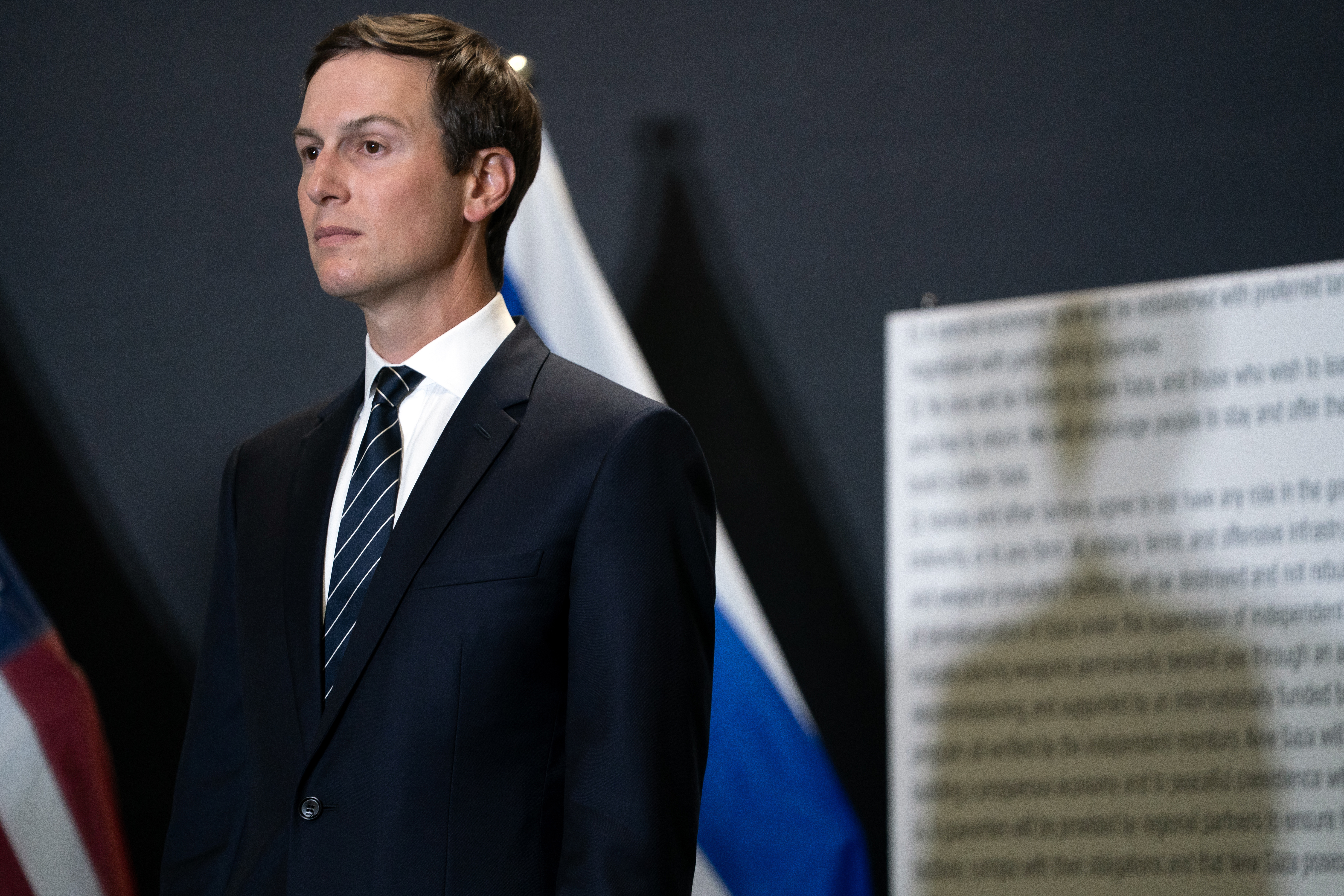
    TEL AVIV, Israel — Jared Kushner, President Donald Trump’s senior aide and son-in-law, is set to visit Israel early next week, according to four people familiar with the plans, days after the Israeli government rejected a U.S.-brokered disarmament deal with Hamas.

    Kushner is expected to meet with Israel’s prime minister, Benjamin Netanyahu, to discuss the Gaza Strip, the people said, speaking on condition of anonymity to divulge details about Kushner’s schedule.

    The deal, agreed to late last month between Trump’s Board of Peace and the militant group Hamas, called for the disarmament of Palestinian factions in Gaza and the withdrawal of Israeli forces there.

    The Board of Peace is a new international organization chaired by Trump that has focused on plans for governing and rebuilding Gaza. Kushner is a senior member of its executive board and was involved in ceasefire negotiations between Hamas and Israel.

    Netanyahu said Sunday that Israel rejected the deal, a move that was seen as an appeal to his right-wing voting base before national elections in October. Yet the prime minister also ordered the Israeli military to pause its strikes in Gaza, in an apparent effort to appease the Trump administration.

    For days after the announcement, the Israeli military conducted no airstrikes in Gaza, until Wednesday, when the military carried out a fresh attack, saying it was targeting Hamas militants. It conducted further attacks Thursday.

    Hamas officials have condemned the strikes, calling on mediating countries in the region to pressure Israel to halt them.

    Hamas remains in control of about half of Gaza, where most of its people live. The group said that among those killed by Israel this week was the head of the police force in the Gaza City area.

    Nickolay Mladenov, the Board of Peace’s high representative for Gaza and former United Nations envoy, will join Kushner in Israel, according to two of the people with knowledge of the visit. Mladenov has played a leading role in the negotiations with Hamas over disarmament, frequently meeting with officials from the group in Egypt.

    Kushner and Mladenov were also expected to visit Egypt next week to meet with regional mediators, according to two of the people.

    The deal with Hamas says that, as part of the disarmament process, Israel should first uphold its side of the ceasefire, which was agreed to in October last year. That includes halting airstrikes and allowing more aid into Gaza.

    The 15-point document leaves elements of the disarmament process vague, however. It calls for a “gradual, sequential, and time-bound manner” for decommissioning and storing heavy weapons, with an exact timetable still to be determined.

    It adds that, at the “end of the process,” the National Committee for the Administration of Gaza will “hold, control, or store weapons in Gaza.” The committee, a body of Palestinian technocrats, was assembled by the Board of Peace to take over governing Gaza under the board’s supervision.

    Many Israelis remain skeptical that Trump’s Board of Peace can successfully disarm Hamas. The group has long touted armed struggle against Israel as the core of its ideology, and members have said they regard disarmament as tantamount to surrender.

    This article originally appeared in The New York Times.

  • Homeland Security paid $464M for airplanes, then it parked them

    Homeland Security paid $464M for airplanes, then it parked them

    WASHINGTON — Starting last fall, the Department of Homeland Security spent $464 million on a no-bid contract to buy 10 used airplanes from a firm in northern Virginia.

    That was an enormous price tag, but the department said it had no time to consider other offers. The planes were needed urgently for deportation flights.

    But since then, the department has barely used this new fleet — for deportations, or anything else.

    Three of the aircraft are luxury business jets. Just months after acquiring them, the department sought to loan or lease two to other agencies, including one for the use of FBI Director Kash Patel, according to a letter to the department sent Wednesday by top Democrats on the Senate Appropriations Committee.

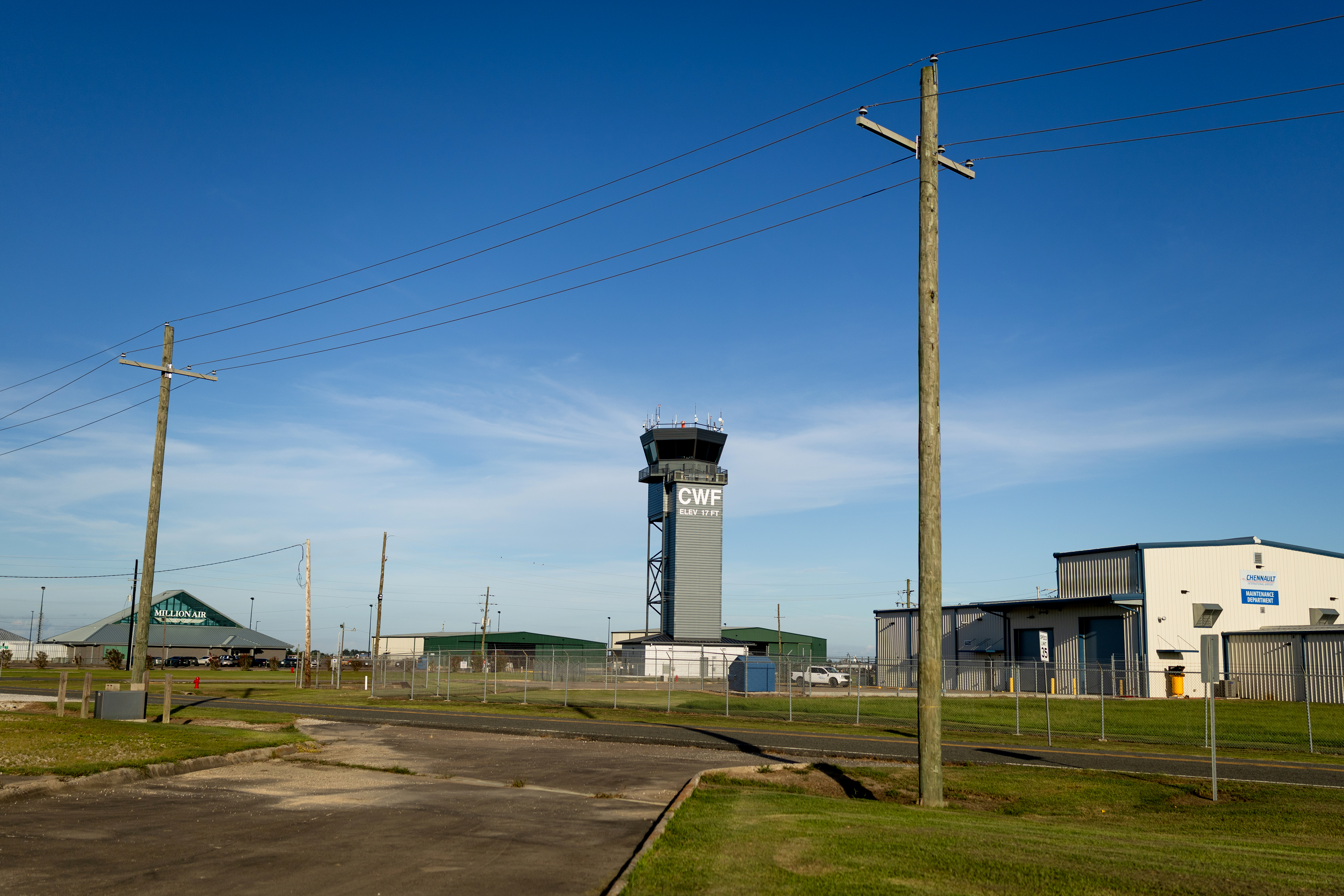
    The other seven are older Boeing 737 passenger jets, which the government has left parked at an airport in Lake Charles, La., for months at a time. An internal government document, obtained by the New York Times, said the agency did not have the staff necessary to operate them.

    The acquisitions were part of a surge of rushed contracts handed out recently by the Homeland Security Department, which has repeatedly used the need for “urgency” to bypass regular contracting procedures. The idled planes highlight the risks of that approach. The agency rushed headlong to spend nearly half a billion dollars, only to end up with planes it did not fly.

    The contract also illuminated a broader trend within the second Trump administration: no-bid contracts awarded to people with connections to Trump or his cabinet secretaries. The company that received this contract, Daedalus Aviation Corp., is led by a chairperson who had donated to a political committee supporting the previous Homeland Security secretary, Kristi Noem.

    The department’s Immigration and Customs Enforcement agency has long outsourced its deportation flights by chartering planes from private companies. It also uses military and Coast Guard aircraft. Because of that, former immigration officials said, there seemed to be little need for the department to take on the expense of buying and maintaining a significant number of its own aircraft.

    “If you asked me to write a list of the things ICE needed to increase the number of deportations, buying its own fleet of airplanes would absolutely not make the top 10,” said John Sandweg, a former acting director of ICE during the Obama administration.

    In a written statement, the Homeland Security Department sought to shift responsibility for the contract to Noem. President Donald Trump fired her in March, and appointed Markwayne Mullin, a Republican senator from Oklahoma, as secretary.

    “The contract for Daedalus was made and approved by department leadership before Secretary Mullin was sworn in,” the department said in a statement. The agency said it “reserves the right to adjust course in an environment with evolving requirements and demands.”

    A spokesperson for Noem sought to place the responsibility on Mullin instead, saying the purchase was “finalized” under his leadership.

    Contracting records show that the size of the contract increased by $303 million on the day that Mullin was sworn in as secretary.

    The agency said that the idle 737 passenger jets had been undergoing maintenance checks, and that there were plans for two of them to begin deportation flights later this month.

    The situation with the planes was reminiscent of the department’s about-face on a plan to acquire warehouses to hold detainees. The department spent heavily on those when Noem was secretary, but reversed itself just months later under Mullin. The department is now giving away or selling seven warehouses that it bought for more than $700 million.

    A letter sent to the department Wednesday by Democratic Sens. Patty Murray of Washington and Christopher Murphy of Connecticut, who sit on the Senate Appropriations Committee, said Homeland Security officials had already conceded to the committee that most of the planes would not be used for deportations.

    “The American people deserve a full accounting of this gross misuse of their tax dollars,” the letter, which was reviewed by the Times, said.

    The senators asked for details about the purchase price of each plane and how they would be used.

    Federal law generally requires government agencies to seek competing bids before awarding a contract, to ensure taxpayers get the best deal. But the department sidestepped that requirement for the planes contract, by invoking an exemption for cases of “unusual and compelling urgency.”

    That exemption can be used only when delaying the contract would result in “serious injury, financial or other,” to the government. Historically, it has been used during natural disasters, war, and the coronavirus pandemic.

    The department declined to answer questions about what serious injury it was trying to prevent. Contracting regulations require agencies to publish the rationales for no-bid contracts, but the department refused to release this one, saying it “would compromise national security or create other security risks.”

    The department has invoked the urgency exemption to justify more than $29 billion in spending across about 500 contracts awarded during Trump’s second term, according to an analysis of federal data by the Times. Much of that total came from border wall spending. Urgency claims were also used to justify projects like the $220 million in media contracts awarded to firms tied to Noem and her allies, scrutiny over which contributed to her ouster.

    The exemption accounts for nearly two-thirds of the $34 billion that the department has spent on contracts signed in 2026. That’s up sharply from past years. In 2025, the figure was about one-quarter. In 2024, it was less than 1%.

    No other major agency has used the exemption for urgency as frequently as Homeland Security, even in an administration that has turned to no-bid contracts repeatedly — for event planning, fountain repair, and the troubled makeover of the Lincoln Memorial Reflecting Pool.

    Lorna Tedder, a retired contracting expert who spent more than three decades at the Defense Department, said that, “Some things truly are urgent — people are going to die if you don’t do this.” But if agencies claim the exemption all the time, “it will eventually be abused.”

    The contract for the planes was first awarded in late November. At the time, the government was already paying other contractors hundreds of millions to operate a network of charter flights called “ICE Air.”

    The immigration agency has chartered about 25,800 flights in Trump’s second term, shuttling immigrants between detention centers domestically and deporting them abroad, mainly to Latin America and the Caribbean, according to the ICE Flight Monitor tracking project at Human Rights First, a nonprofit advocacy group. The department sometimes has 25 or more planes in the air in a day, according to the nonprofit’s tracking.

    But at the time, the Homeland Security Department said it still needed its own planes.

    Last fall, Tricia McLaughlin, a department spokesperson, told the Washington Post that purchasing the planes would allow “ICE to operate more effectively, including by using more efficient flight patterns.” McLaughlin has since left the agency. The department did not respond directly to a question asking about her comments.

    Daedalus, the Arlington, Virginia-based company the government hired to find the planes, had not previously held a federal contract. However, a company spokesperson said it had worked as a subcontractor to other companies evacuating Afghans who had done work for the U.S. government.

    Daedalus’ chair is William Walters, a doctor who until 2021 led a State Department office that evacuated Americans from outbreaks of Ebola, COVID-19, and other crises. In 2024, after leaving government, Walters donated $10,000 to a political committee connected to Noem, then the governor of South Dakota.

    Last year, with Noem in charge, the agency gave a separate company run by Walters a contract worth nearly $700 million to encourage immigrants to leave the U.S. voluntarily.

    A Daedalus spokesperson said that Walters was unaware that the political committee was tied to Noem.

    Daedalus declined to say how much each of the 10 planes had cost, or what its profit margin was for acting, essentially, as a broker. It provided a written statement that it was proud to provide “the best value to the American taxpayer.”

    One of the planes is a Boeing 737 luxury jet, now painted in the color scheme of Trump’s new Air Force One. Two others are smaller Gulfstream business jets, each seating about 14 people.

    Those planes flew only sporadically after the agency acquired them, according to flight records from airplanes.live, an independent flight tracking service. And the department soon moved to jettison two of them to other agencies, according to the account from Senate Democrats and the internal document reviewed by the Times.

    One of the luxury jets “has already been leased to the FBI for 12 months to support director Patel’s travel — despite the fact that the FBI already has its own jets to support the director’s travel,” the Senate Democrats wrote.

    The FBI confirmed that it is using one of the Gulfstream jets, saying it was paying the Homeland Security Department significantly less than it had paid a private company to lease a similar plane and that the aircraft was being used to support a range of agency operations, in addition to Patel’s travel.

    The Homeland Security Department also wanted to lend the larger Boeing luxury jet to the Pentagon, according to the senators’ letter and the internal document. But a Pentagon spokesperson said no agreement had been signed.

    One Gulfstream jet will remain with Homeland Security, for the use of its top leaders, according to the letter.

    The other 737s seemed more suited for deportation flights. Flight records show they had been in active use by Avelo Airlines, a low-cost carrier that also flew charter flights for ICE.

    But when the government bought them, it parked them.

    Daedalus said that two were used briefly to evacuate Americans from the Middle East at the outbreak of the Iran war in early March.

    Senate Democrats said they were told by Homeland Security staff that four of the 737s were no longer expected to fly detained immigrants. The senators said the department said it would use them to fly members of Congress on overseas trips, a job now handled by commercial carriers or military aircraft.

    For the long term, the agency said it needs a contractor to provide crews and mechanics to operate its new fleet. A recent solicitation said that contract would start next summer.

    This article originally appeared in The New York Times.

  • U.S. investigated left-leaning groups during Minnesota immigration crackdown

    U.S. investigated left-leaning groups during Minnesota immigration crackdown

    Four days after Alex Pretti was fatally shot while filming officers taking part in the Trump administration’s immigration crackdown in Minnesota, the Homeland Security Department quietly opened an investigation at its office in St. Paul.

    The target was not the Border Patrol agents who had killed Pretti, a 37-year-old government nurse, in late January. Instead, it was several left-leaning political organizations — labor unions, a climate change group, socialist collectives — that investigators believed had provided help and money to what they described as the “violent opportunists and agitators” on the street, according to newly released government documents.

    As part of their inquiry, the documents show, Homeland Security officials used an array of invasive tactics during the first half of this year to gather information on many groups and individuals who were never accused of crimes, crossing the line that has traditionally stood between investigating criminal activity and political dissent.

    In one instance, officials used administrative subpoenas to obtain more than three years of financial records from the Sunrise Movement, an environmental action group, and a labor union, the Communications Workers of America. That time frame went well beyond the civil unrest in Minnesota, which was prompted by the deployment of thousands of immigration agents to the state during the winter.

    In another, investigators scrutinized three years’ worth of wire transfers made by the nation’s biggest healthcare workers union, the Service Employees International Union, in what they referred to as an inquiry into “domestic terrorist financing.”

    The documents further detailed an expansive covert surveillance operation in which undercover agents spied on protesters and organizers at meetings held online, as well as in libraries, parks, and churches, taking down not only what they said, but also their names and sometimes license plate numbers. The undercover agents also infiltrated group chats on Signal, listening as activists discussed coming demonstrations and their political opinions.

    So far, none of the organizations targeted by the Homeland Security inquiry, conducted with the U.S. attorney’s office in Minnesota, have faced charges. And yet, as the investigation moved forward, prosecutors showed grand jurors a PowerPoint slide asserting that 18 groups — including the AFL-CIO, the country’s largest federation of labor unions — were part of a conspiracy to impede the work of immigration officers in Minnesota.

    Ultimately, that supposed conspiracy led in June to the indictment of 15 people accused of interfering with law enforcement agents as members of the far-left movement known as antifa.

    The Homeland Security Department did not respond to a message seeking comment. A spokesperson for the U.S. attorney’s office in Minnesota declined to answer questions about the investigative tactics.

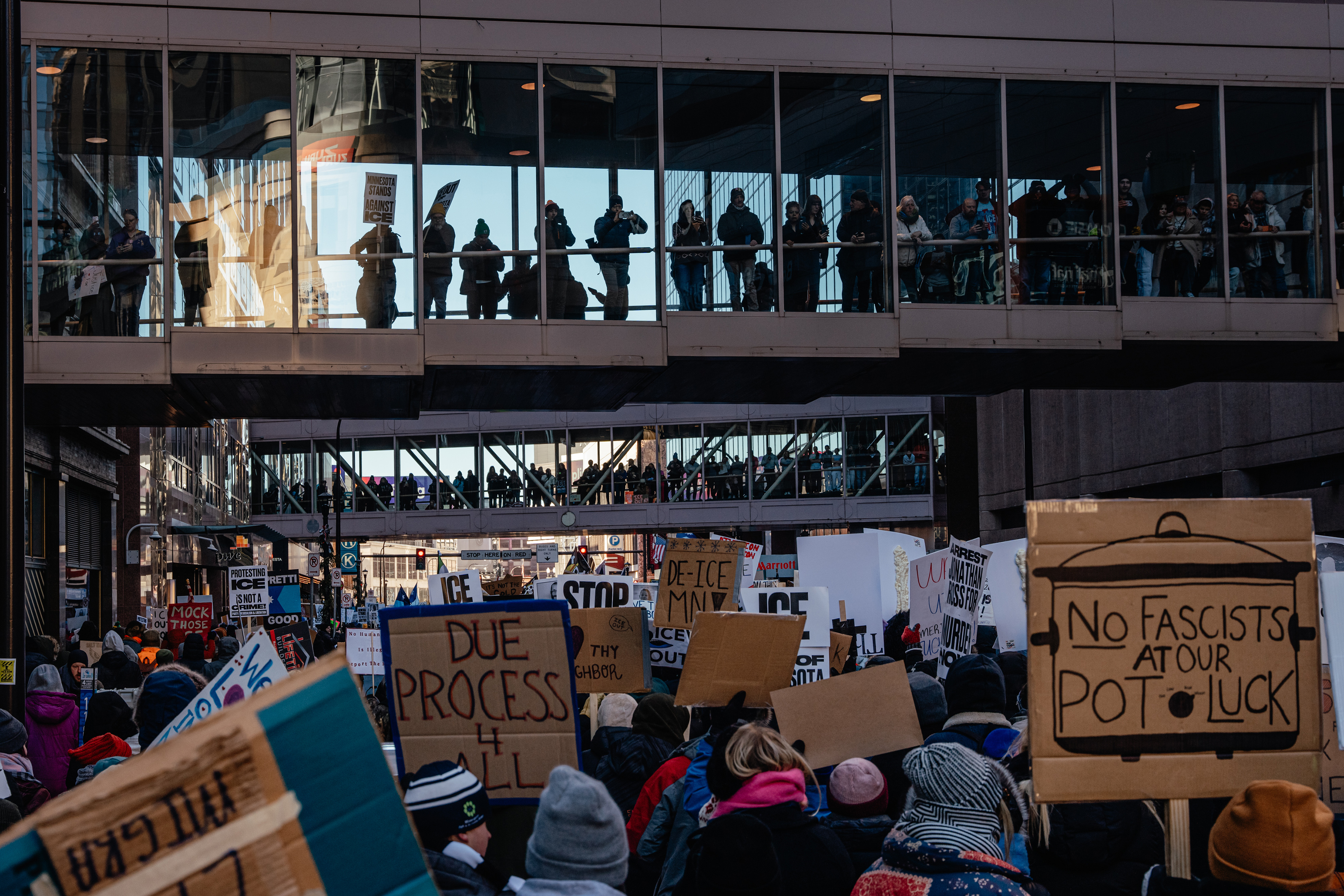
    By its own account, the institutional left in Minnesota, especially the labor movement, played a central role in bringing out hundreds of thousands of people to march in protest of President Donald Trump’s immigration crackdown in the state. But the demonstrations — and corresponding efforts to monitor the movements of Immigration and Customs Enforcement agents — were largely undertaken by ordinary residents, most of whom have said they were committed to peaceful resistance.

    “While federal agents repeatedly broke the law, ordinary people exercised their First Amendment rights to protect their neighbors,” said Aru Shiney-Ajay, the executive director of the Sunrise Movement. “The Trump administration is now trying to intimidate individuals and organizations who opposed his agenda.”

    Some of the 15 people charged in the so-called antifa case did, in fact, belong to some of the unions and political organizations that faced scrutiny over several months during the spring and winter. But the newly released documents, which were disclosed as part of a motion asking for more details about the criminal inquiry, suggest that investigators used those tenuous connections to take a deep dive into the inner workings of the groups.

    Kevin Riach, the lawyer who filed the motion, in U.S. District Court in Minnesota, wrote that the Homeland Security investigation into the interference with federal agents “extended far beyond any potential threat to law enforcement safety.”

    “It concluded, with no evidence (but obvious political animus),” he wrote, “that numerous Twin Cities unions and nonprofit organizations were involved in a widespread conspiracy,” adding that “it surveilled and surreptitiously gathered financial records generated by these organizations despite the lack of any connection between those organizations and criminal conduct.”

    The investigation in some ways called to mind Cointelpro, the intrusive counterintelligence program that the FBI ran against leftist groups from the 1950s to the 1970s under the leadership of the bureau’s director, J. Edgar Hoover.

    The Minnesota surveillance reports in particular documented what largely appeared to be political activity protected by the First Amendment. They showed how undercover agents embedded themselves in a “noise protest” outside a hotel where immigration agents were staying and took down notes at other gatherings as demonstrators brainstormed ideas on how to protest the surge of officers who descended on Minnesota late last year.

    Former federal prosecutors questioned why Homeland Security officials took the lead in a case that would typically be overseen by the FBI. Others said that the broad use of subpoenas targeting labor unions and other groups was unusual and concerning, especially if it turns out there was no evidence that the organizations were breaking the law.

    “The government’s power to investigate is extraordinary, and with that power comes a responsibility to exercise care and restraint,” said Harry Jacobs, who resigned as the chief of the criminal division at the U.S. attorney’s office in Minnesota in January in protest over the Trump administration’s handling of the killing of Renee Good.

    “An investigation should begin with a legitimate basis to suspect criminal conduct, not with a chosen institution or group,” Jacobs added. “Prosecutors must follow the facts and the law wherever they lead, rather than select a target and work backwards to build a case.”

    Several of the groups that were targeted in the inquiry, known as Operation Puppet Master, and in a follow-up investigation called Project Whipple Shield, declined to comment. (Whipple Shield is a reference to the Whipple Building, which served as a hub of the immigration operation.)

    When Daniel N. Rosen, the top federal prosecutor in Minnesota, announced the indictment of the 15 purported antifa members two months ago, he chose his words carefully, insisting that the defendants had been charged only because each of them had “violently opposed” federal agents taking part in the Trump administration’s immigration agenda.

    “Be assured,” he told reporters, “the Department of Justice and my U.S. attorney’s office has and will distinguish between lawful protest and criminal conduct.”

    But what Rosen did not disclose that day was that the charges filed against the 15 defendants stemmed from a sprawling investigation. Its tentacles had touched the lives of scores of ordinary people — teachers, veterans, union members — who in many instances had gotten together to do little more than discuss monitoring ICE agents or abolishing ICE altogether.

    The case in St. Paul, like others against ICE protesters, arose from a sweeping directive issued last year by Trump known as National Security Presidential Memo 7. The memo ordered a whole-of-government approach to stem what officials have described as a rising tide of left-wing political violence.

    But former prosecutors and civil rights lawyers have criticized it for encouraging aggressive investigations and prosecutions of groups and people on the left for activities typically protected by free speech laws.

    In drafting their indictment, prosecutors under Rosen focused on an organization called Direct Action Minnesota, or DAMN, an umbrella group that describes itself as a “decentralized coalition of working-class people engaged in various forms of community defense against the current federal occupation” in Minnesota. Prosecutors said that the group trained its members in how to use shields against law enforcement officers, conduct surveillance, plan events, and mount “rapid mass mobilization” against actions by ICE officers.

    The indictment details some behavior by protesters with ties to DAMN that clearly seems violent or obstructive.

    For example, prosecutors said that on Jan. 23, demonstrators who had gathered at the Whipple Building threw ice blocks at law enforcement vehicles. They also formed a blockade, boxing federal agents into one area near the federal building. Weeks later, prosecutors added, some of the defendants put debris in a road outside the building, trying to block access to it.

    But the indictment also notes that the defendants often relied on information gleaned from group chats whose members tracked and monitored vehicles going to and from the Whipple Building — behavior that is not necessarily illegal. Indeed, the federal judge overseeing the case, Katherine M. Menendez, has already issued an order in a separate civil proceeding saying that protesters cannot be arrested simply for following federal agents in their vehicles.

    Nonetheless, some groups that organized and ran the group chats were targeted by the surveillance operation and later identified in the prosecutors’ grand jury presentation as being part of the conspiracy to interfere with ICE agents. Other members of the alleged conspiracy were said to include the local chapters of the SEIU and the Democratic Socialists of America, a state teachers union — and even the Grease Pit, a small bike shop in Minneapolis.

    In his motion, Riach described how federal agents took down the license plate numbers of people who attended a protest at a church in Roseville, Minn., and used that information to obtain their names. The agents then searched social media for images of the people, compiling an “intel work-up” that included detailed personal information about them.

    “None of these individuals did anything other than engage in protected First Amendment speech in a church meeting room,” Riach wrote. “Yet now their personal information is memorialized in a DHS dossier.”

    This article originally appeared in The New York Times.