Category: New York Times

  • GLP-1 prescriptions for people with no medical need are climbing

    A large new study confirms what many people have long suspected: A sizable number of people taking drugs like Ozempic have no medical reason to do so.

    The study, an analysis of the medical records of more than 92 million U.S. adults, identified more than 1.1 million who were taking GLP-1 medications, without any record of an issue that would make them eligible, like obesity or diabetes. While the researchers didn’t examine why people took these medications, doctors said many people are probably using them simply to shed some pounds or in the hope they might deliver other, buzzy potential benefits.

    “You see it all over the place. You have people describing publicly their experience with these medications, some good, some bad,” said Dr. Babak Orandi, an obesity medicine specialist and transplant surgeon at NYU Langone Health. Orandi is the lead author of the study, published Tuesday in the journal Obesity.

    The positive anecdotes, he said, “may open up people’s curiosity to say, ‘Hey, maybe that could work for me.’”

    Technically, GLP-1s have only been approved for a few conditions, including obesity and diabetes. The Food and Drug Administration has also approved some GLP-1s to prevent heart attacks and other cardiovascular issues and to treat sleep apnea, both in people with obesity, and to treat kidney disease in those with type 2 diabetes.

    But the drugs have become a cultural phenomenon, with the public discourse about them and the aggressive marketing of the medications generating far broader interest.

    “It’s the first time that I can recall that the general public knows so much” about a drug, said Dr. Nils Krüger, a researcher at Harvard Medical School who has studied GLP-1s.

    These “off-label” prescriptions, as doctors call them, became far more common as the study went on, jumping 15-fold between 2021 and 2025. And researchers say those findings are almost certainly an undercount, since they may not capture people who are accessing the drugs through telehealth platforms or taking compounded versions.

    Shedding some weight is perhaps the most obvious reason people without obesity or diabetes might turn to the drugs. More than one in three of those taking a GLP-1 drug off-label had a normal body mass index. Patients taking the drugs off-label were also much more likely to have had a documented eating disorder than those who were not taking one of these medications. While the number of patients with eating disorders was a small fraction of patients, doctors said it was still cause for concern.

    Beyond weight loss, there are a host of other reasons people may be seeking out these drugs, outside experts said. For example, the study found that patients taking a GLP-1 drug off-label were more likely to have high blood pressure or high cholesterol.

    People might think, “‘Oh, it’s being used for vanity purposes,’” Orandi said. But he said that he has talked with patients who are interested in whether the drugs might help for other issues that aren’t included on their labels.

    Scientists are in the early stages of studying the drugs for other possible uses, including improving fertility, curbing cravings for alcohol, and alleviating brain fog. While researchers need far more data to determine if the drugs work for these purposes, doctors said they are already seeing patients try them, in the hope that they will.

    Dr. Andrew Kraftson, a clinical professor at the University of Michigan Medical School who treats patients with obesity, noted that the new study also highlights how many doctors seem to be prescribing these drugs to patients who do not appear to qualify for them.

    Busy primary care doctors whose patients request the drugs may think, “Well, what can it hurt,” he said.

    “But still,” Kraftson added, “we totally are not giving comprehensive care in these situations.”

    Kraftson expressed concern that some doctors might not fully be assessing whether a patient could benefit from the medication, and whether any potential benefits outweigh the possible risks.

    There is little data on how the drugs might affect people without obesity or diabetes because they were largely excluded from major clinical trials.

    These medications might pose unique risks to people who are not overweight, Krüger said. Those risks include malnutrition, as well as muscle mass loss, side effects of the drug that can affect anyone but that could be especially concerning in people with lower starting BMIs.

    “We don’t know how this will play out,” Krüger said. “It’s like this big Ozempic experiment.”

  • Ro Khanna is the left’s busiest midterm surrogate. Can he raise his own profile, too?

    Ro Khanna is the left’s busiest midterm surrogate. Can he raise his own profile, too?

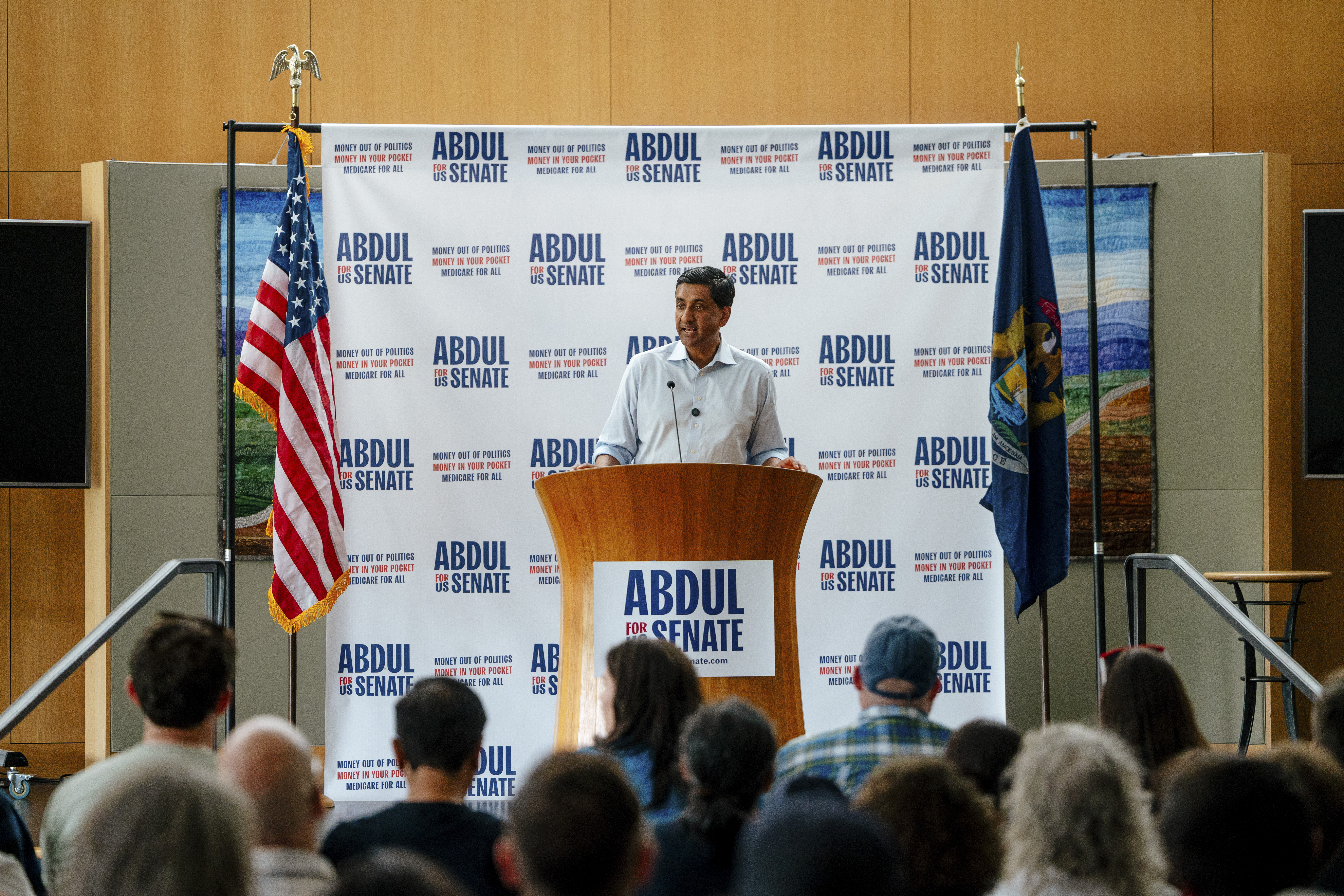
    Rep. Ro Khanna of California leaned forward in a patterned armchair as a rooster crowed outside, listening as a group of farmers in rural Sharpsville, Pa., told him that Democrats came across as inauthentic and insincere.

    “Don’t promise the farm and not come up with it,” said Joe McCann, who grows hay and raises pigs. “And don’t lie to people. I can take anything, but if someone’s standing there physically lying to me and blowing smoke up my butt, that’s not going to cut it.”

    Khanna agreed, fretting that his party had for too long “looked down” on blue-collar voters. Then he quipped: “How do you think I’m doing? Lying?” McCann, 78, said he didn’t think so.

    Khanna (D., Calif.) has emerged as one of the most prolific surrogates of the 2026 cycle. He has endorsed more than 70 candidates for seats in the House, Senate, and state legislatures, positioning himself on the front lines of a burgeoning progressive movement as discontent with the status quo has propelled a series of left-wing candidates to primary victories.

    But there was another reason for his vigorous political itinerary this campaign season: a possible presidential run in 2028. He wants to see the left’s power grow within the Democratic Party. He wants its policy prescriptions, such as universal healthcare and taxing the rich, to shape the conversation about who the party’s nominee for president should be.

    And he knows that none of that is likely to happen if the left bombs in November.

    A little 2026, and a little 2028

    Despite their major wins in primaries this season, progressives’ ability to sway the general electorate in competitive races remains untested. A new poll released by the New York Times and Siena University on Sept. 15 found that a slight majority of voters disliked socialism.

    In Khanna’s view, the only way the movement can change that perception is if it figures out how to talk to the working class.

    Khanna, born outside Philadelphia to immigrants from India, has been preparing for his political future out in the open. In the past two months, he has taken many of the steps of an early presidential candidate.

    He held a town hall with Latino voters in Nevada. He told the Democratic National Committee in a searing speech that the party needed to turn its back on corporate interests and military aid to Israel. He also ventured abroad, leading a congressional trip to the Vatican to discuss safeguards against artificial intelligence with Pope Leo XIV and visiting the West Bank, where he was detained by armed Israeli settlers.

    Icons of the progressive movement, such as Sen. Bernie Sanders of Vermont and Rep. Alexandria Ocasio-Cortez of New York, have been choosier with their high-profile endorsements this year. Khanna is lesser known, and has work to do to change that. The eagerness can occasionally backfire; he has expressed regret for his endorsement of Graham Platner, the Maine Democrat who withdrew his Senate bid in July after a woman accused him of rape.

    “He’s hustling,” said Bill Hyers, a progressive strategist who worked with two House candidates — Kat Abughazaleh in Illinois and Chris Rabb in Pennsylvania — whom Khanna endorsed in primaries this spring. Rabb won. Abughazaleh lost.

    Added Hyers: “He’s just been out there really working hard and he’s the only person on the left I have seen where there’s no doubt he’s running.”

    Over five days in Pennsylvania in July, Khanna, who grew up outside Philadelphia in suburban Bucks County, rallied for two House candidates whose primary victories in May stood out as early triumphs for the progressive movement. Their very different districts illustrated both the advantages and challenges facing the progressive left this fall.

    In Philadelphia, Khanna talked about liberal priorities like “Medicare for All” with Rabb, a democratic socialist who is virtually assured of victory in November in his deep-blue district. In a battleground district in Allentown, Khanna discussed tariffs and job losses with union factory workers to help the candidacy of Bob Brooks, a firefighter and labor leader who faces a more difficult path to victory in November against Rep. Ryan Mackenzie, a Republican.

    On behalf of both candidates, Khanna offered a similar pitch: The wealth and technological innovation of his high-income Silicon Valley district should be shared more widely. His agenda of “new economic patriotism,” he said, would spread technology jobs among Midwestern states and redistribute profits through a wealth tax.

    “If we just are running on centrist mush that is put out by ChatGPT, bland and inoffensive, we’re not going to win,” Khanna told a reporter in the SUV he was riding in for the Pennsylvania swing. “It has to be a transformative vision.”

    Khanna was generally well-received by an electorate in Pennsylvania that has soured on Republicans and seems increasingly willing to give Democrats another chance. But he also encountered the enduring skepticism of voters who see their leaders as having failed them.

    “He comes across very progressive with his plans, but I don’t know that he’ll be able to carry them through,” said McCann, after Khanna’s conversation in Sharpsville. “This area that I live in right now is a depressed area — and anybody that gives anybody around here a vision of hope is the person they’re leaning toward. They just have that vision of hope that this might happen, and it never does.”

    In an interview, Khanna said he planned to decide about 2028 between Thanksgiving and Christmas, after talking to his family and determining how viable he could be in battleground states.

    His trip across Pennsylvania was intended in part to assess that. A progressive contender for president, Khanna said, would have to “do well in the Black South” and “do well in states like Pennsylvania.”

    He said he was also forging bonds in southern states, including in South Carolina, where his partnership with Rep. Jim Clyburn and his daughter Jennifer Clyburn connects students at historically Black colleges and universities with scholarships from tech companies.

    Khanna has recruited alumni of both progressive and establishment campaigns. He is being advised by Ron Klain, the chief of staff to former President Joe Biden, and has enlisted longtime advisers to Sanders such as Julian Mulvey and Jeff Weaver, according to a person familiar with the partnerships who requested anonymity to describe internal staffing issues.

    The road ahead, plus AOC

    A dismal progressive showing in November could instantly set back Khanna’s fortunes. So could something else: Ocasio-Cortez. If Ocasio-Cortez, the breakout star of the left, runs for president, she would appeal to the same liberal constituency as Khanna but with an enormous head start in popularity.

    Khanna called Ocasio-Cortez an “extraordinary talent,” and dismissed the idea that she is a rival.

    “I have a tremendous amount of respect and admiration for her,” he said, adding, “I have genuinely never discussed what she wants to do in the future.”

    Khanna said he talked with Ocasio-Cortez occasionally in the halls of the Capitol. He communicates more frequently with Sanders, speaking with him on the phone about AI and answering the senator’s queries about the chances of California voters passing a tax on billionaires this fall.

    Khanna readily acknowledged that he lacked the political “star power” of his left-wing compatriots. “I’m not delusional,” he said.

    His speeches are also a little heavy on policy and light on the kind of soaring rhetoric that voters often look for in a president.

    That was the case in Pennsylvania, but he also tested catchphrases such as “economic patriotism,” and retail politicking seemed to come easily enough for him. One particular line, when he argued that President Donald Trump had not followed through on a simple promise — to replenish sand that had washed away along Lake Erie — got a good response from voters.

    “I’ve seen a lot of clips of him online — I thought he was much more charismatic in person,” said Gideon Tsoutsouris, a college student in Pittsburgh.

    Khanna portrayed his low profile as an asset, noting that other successful candidates — including former Presidents Jimmy Carter and Bill Clinton — began their bids as long shots. It’s an advantage, he said, “to go meet people and interact without the entourage.”

    Khanna, a multimillionaire, likewise dismissed potential criticism of his wealth, which largely stems from his wife’s father, the founder of an automotive company.

    “I tell people my own story of growing up middle-class in Bucks County, taking out loans for law school in my 20s, having forbearance and massive credit card debt,” Khanna said. “I think people will see that I had a middle-class life and even economic challenges.”

    Hyers, the progressive strategist, said Khanna would likely face criticism for his long-standing relationships with the tech industry.

    “The perception in a lot of the circles that I run in is, ‘How much money has he taken from the bad guys?’” Hyers said. (Khanna has since broken ties with many wealthy tech executives and called for taxing them more heavily.)

    When Khanna’s tour rolled into Pittsburgh, he hopped around town, chatting wi,th union leaders who are faculty members at a local university, nurses fighting for a labor contract and a group of college students.

    Before addressing the students, he spoke with two groups protesting his visit on nearby street corners: the pro-Israel Beacon Coalition and the pro-business Americans for Prosperity, a creation of the conservative Koch family. One of the AFP protesters urged him to reject socialism.

    The moment illustrated another challenge that Khanna would face in a presidential primary. He may be too progressive for moderates, and not progressive enough for some on the fractious left.

    “I don’t believe the government should take over the means of production,” Khanna told the protesters. But, he added, many young people were turning to socialism “because they can’t afford rent, they don’t have a good job. They lost the American dream.”

    This article originally appeared in the New York Times.
  • Netanyahu, before U.N. appearance, targets Mamdani in video

    Netanyahu, before U.N. appearance, targets Mamdani in video

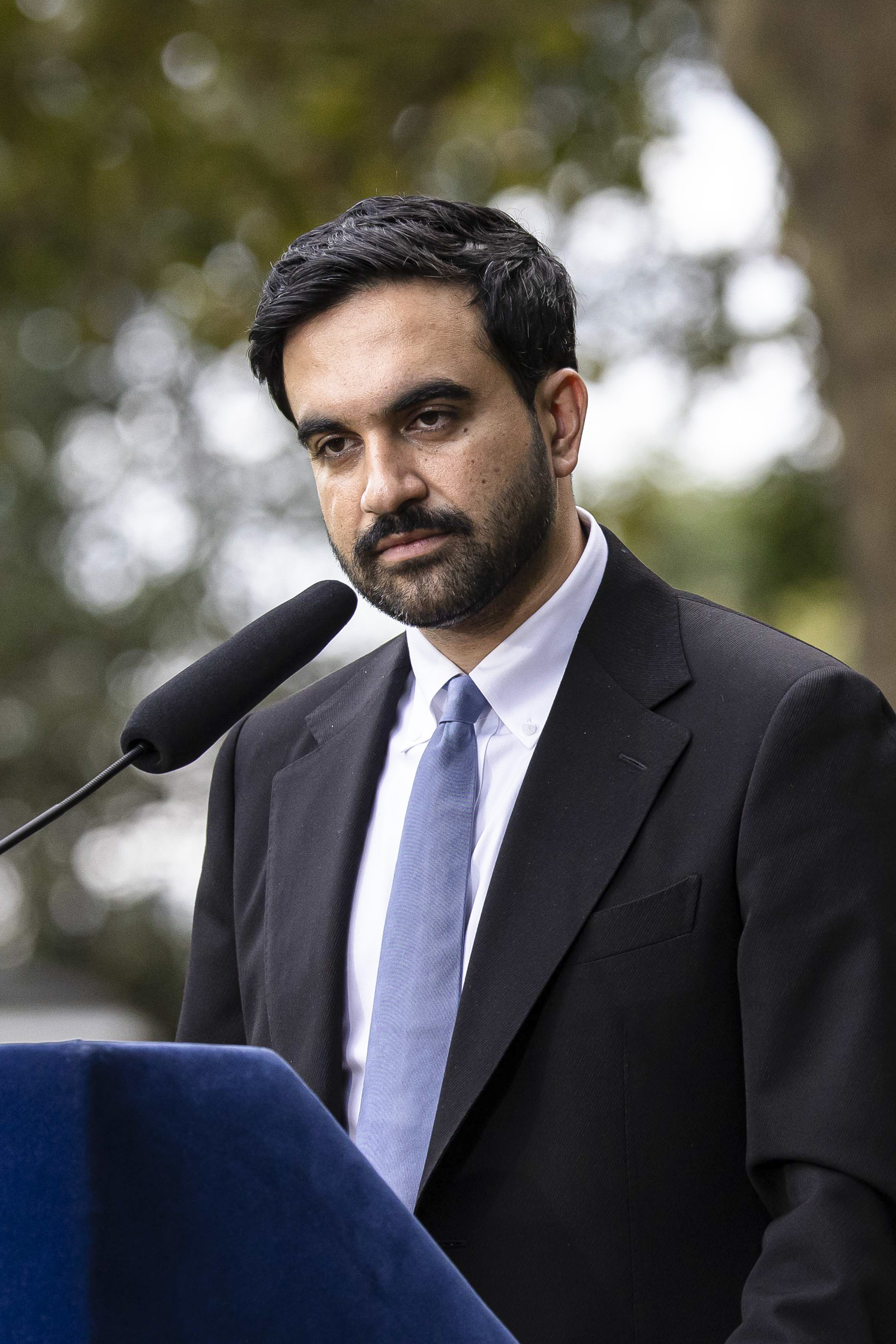
    NEW YORK — Prime Minister Benjamin Netanyahu of Israel released a video broadside against New York City Mayor Zohran Mamdani, one of his most high-profile critics in the United States, hours before CNN aired a new interview in which the mayor again called the prime minister a war criminal.

    Mamdani has called on the federal government to arrest Netanyahu, who is expected to arrive in New York this week to address the U.N. General Assembly. In the video posted Tuesday, the prime minister falsely accused the mayor of supporting Hamas and inciting riots against Jewish New Yorkers.

    Addressing the mayor directly, the prime minister said he was coming to the U.N. “to tell the truth about our heroic soldiers” and “to tell the truth about you.”

    Mamdani, New York’s first Muslim mayor and an outspoken supporter of Palestinian rights, has condemned Hamas as a terrorist organization and described the attack it led against Israel on Oct. 7, 2023, as “a horrific war crime.”

    And while New York has seen an increase in antisemitic hate crimes since the Oct. 7 attacks and Israel’s subsequent bombardment of the Gaza Strip, as well as widespread pro-Palestinian demonstrations, there have been no riots targeting Jewish New Yorkers in the city since Mamdani was elected mayor in November or during his time serving in the state Assembly.

    Netanyahu is the subject of an arrest warrant from the International Criminal Court, which has accused him of war crimes in Gaza; he vigorously denies the charges. After Mamdani’s previous comments calling Netanyahu a war criminal outraged many pro-Israel Jewish leaders, the mayor’s office convened a meeting at which prominent rabbis urged the mayor to tone down his rhetoric on Israel and its leaders.

    Asked about Netanyahu’s remarks at an unrelated news conference Tuesday morning, Mamdani said, “We all know that what the prime minister has said in that video is not true.”

    On Monday night, CNN released clips from a wide-ranging interview with Mamdani, which also touched on his working relationship with President Donald Trump and his desire to see the Democratic Party focus on policies to lift up the working class. The full interview aired Tuesday afternoon.

    In one part of the interview with CNN’s Christiane Amanpour, Mamdani was asked directly about his opinion of Netanyahu, and he said he owed it to New Yorkers to share his honest views.

    “When it comes to Benjamin Netanyahu,” the mayor said, “I have described him as I believe him to be: a war criminal and an architect of a horrific genocide of the Palestinian people.”

    Mamdani has described Israel’s conduct of the war in Gaza as genocide, a claim that has upset many pro-Israel Jewish leaders. A United Nations commission and international and Israeli human rights groups have also said that Israel’s actions amounted to genocide.

    During the campaign, Mamdani pledged to have the Police Department execute the International Criminal Court warrant against Netanyahu if he were to come to New York. He repeated his desire to do so in an interview with the New York Times in July. But days later, the mayor released a video saying the city’s Law Department had told him the city did not have the authority to arrest the prime minister, and challenged the federal government to do so.

    Netanyahu, who is in the midst of a pivotal electoral campaign in Israel, has frequently condemned the mayor, calling him a danger to Jewish New Yorkers. On the second day of Mamdani’s term, the Israeli government accused him of antisemitism, citing his decision to cancel two executive orders signed by his predecessor, which had barred city agencies from boycotting Israel and defined some criticism of Israel as antisemitic.

    While Mamdani’s stance on Israel has caused deep unease among many Jews in New York, which has the largest Jewish population outside Israel, many others have supported the mayor, especially his fellow progressives. On Monday, Mamdani attended a meal marking the end of the Yom Kippur fast at the home of Ruth Messinger, a political ally who has served as Manhattan borough president and as the president and CEO of the American Jewish World Service.

    This article originally appeared in the New York Times.
  • Clavicular, ‘looksmaxxing’ influencer, charged with raping a 17-year-old

    Clavicular, ‘looksmaxxing’ influencer, charged with raping a 17-year-old

    Clavicular, a male beauty influencer known for “looksmaxxing,” has been charged with giving a 17-year-old girl vodka on a livestream and then raping her, according to Massachusetts court records.

    Clavicular, whose legal name is Braden Peters, is scheduled for an Oct. 14 arraignment in Orleans District Court, on Cape Cod. The charges, filed Sept. 8, were first reported by the Bulwark.

    One of his lawyers, Jeff Neiman, said his client was innocent but declined to comment further. Mitchell Jackson, a spokesperson for Peters, said Peters had not been arrested. Efforts to reach Peters by call and text were unsuccessful.

    Peters, 20, who is known for his livestreams, is the face of an online subculture dedicated to improving male attractiveness. He compares himself with other men and assesses women’s looks on livestreams.

    The girl accused Peters of attacking her at a family home in Chatham, Mass., after he had streamed live on the internet, according to a police report filed in court. (The New York Times generally does not name people who report sexual assaults.)

    In May 2025, Peters served the girl “cups” of alcohol as he broadcast to the internet, the girl told investigators. He told her to lie on camera by saying that she was 18, according to the police report. After the livestream ended, Peters had sex with her several times, she told the police.

    She lacked the ability to consent, an investigator wrote. Peters was charged with rape, drugging for sex, and serving liquor to a minor.

    The police report, made in June, noted that the teenager “did not tell anyone the full extent of what occurred” for some time after the incident. In April, however, she sued Peters in Miami, making allegations similar to those in the police report.

    Peters had previously paid the girl, who herself was an influencer, to film “looksmaxxing” videos, and she had accepted his offer of a cab ride to the house in Cape Cod because she thought meeting him would boost her online presence, the lawsuit said. Peters’ mother and grandmother were at the house during the attack, the lawsuit says, claiming that his mother knew that excessive amounts of alcohol were being served.

    In addition to sexual assault, the girl’s lawsuit also accuses Peters of improperly injecting her face with a fat-dissolving drug on a livestream in Miami, which she said caused her emotional distress, and of later publicly discrediting her, costing her sponsorships.

    Peters’ lawyers have asked a judge to throw out portions of the suit. They said the girl did not demand legal redress for a sexual assault until three months after the case was originally filed.

    Andrew Moss, the girl’s lawyer, said Monday night that Peters was scheduled for a deposition in the case next week.

    Peters posted several times on the social platform X about the girl on Monday, when the Bulwark’s article on the charges was published. “Trying to get my attention in anyway possible, a lawsuit?” he said in one post. “Seriously… really petty of you.”

    Peters has found himself in legal trouble several times this year. In February, he was arrested in Scottsdale, Ariz., and charged with having fake identification, an Adderall pill, and an oral steroid. The charges were later dropped.

    The next month, Peters was arrested in Florida on accusations that he had arranged a brawl between two women. Prosecutors dropped those charges, too.

    And in May, a Florida judge sentenced him to six months of probation after he pleaded no contest in a case involving the shooting of a dead alligator in the Florida Everglades. The shooting was captured on a livestream.

    This article originally appeared in the New York Times.

  • Weird and wonderful, the Lucas Museum lands in LA

    Weird and wonderful, the Lucas Museum lands in LA

    LOS ANGELES — From scruffy Exposition Park in South Los Angeles, there is no missing the new Lucas Museum of Narrative Art.

    It hovers like a spaceship on the skyline, at the park’s edge, snow white and ginormous. Its billowy, aerodynamic curves and swoops, capped by tufts of greenery, spill down to lavish gardens on what had been the site of a gated asphalt parking lot.

    Design-wise, the museum’s galleries seem an afterthought, its circulation a puzzle. But this is one you won’t want to miss. Both surgically somber and proudly over the top, the Lucas is a weird kind of wonderful and an instant city landmark. It opened to the public Tuesday.

    The 300,000-square-foot goliath was designed by prominent Chinese architect Ma Yansong and built to house the art collection of Star Wars filmmaker George Lucas and his wife, businessperson Mellody Hobson. The couple have picked up the project’s no-expense-spared tab: more than $1 billion.

    That whopping sum has paid for more than 80,000 square feet of black-box exhibition space on the building’s fourth floor, where Luke Skywalker’s X-34 Landspeeder from Tatooine now idles in a Star Wars display.

    Bridge-of-a-cruise-ship-style viewing ports at either end of the exhibition floor, and another in between, add pizazz and a respite from the gallery crawl.

    Other rooms are devoted to Norman Rockwell paintings, manga art, motherhood, and love, among various folksy themes.

    There are two state-of-the-art movie theaters, along with a shop and a cafe tucked into the building’s cinched podium. The roof, which has a restaurant, is a landscaped aerie of colorful plantings, winding paths, and sweeping vistas. A separate pavilion contains a library with arts and crafts furnishings, of all things, and a student center. A yellow Naboo N-1 Starfighter dangles from its lobby ceiling.

    An artisan of biomorphic megastructures, Ma, who founded MAD Architects in Beijing, made his bones designing showstoppers including the Harbin Opera House in China and the Ordos Museum in the Gobi Desert. The Lucas Museum is his first major American cultural commission. Its arrival, across the street from the University of Southern California campus, where Lucas studied film, seems like destiny.

    Lucas acquired his first work of art, a V.T. Hamlin Alley Oop comic, for a song in the 1970s. Over the decades his collection ballooned to include more than 40,000 works by famous comic artists and graphic novelists; film production designers and anime fabulists; golden-age American magazine illustrators and figurative painters of the 20th century such as Frida Kahlo and Thomas Hart Benton.

    These were artists after Lucas’ own heart, naturally — fellow populists, visual virtuosos, and storytellers. Lucas came to believe modern art museums shortchanged or ignored them.

    So he decided to build a cathedral to kindred spirits. He and Hobson first floated the idea to the Presidio in San Francisco in 2010. City officials there rejoiced at the prospect. But when the Presidio’s trustees balked, Lucas and Hobson looked to Chicago, Hobson’s hometown, hiring Ma to design a museum for a lakefront site.

    Ma came up with a volcano-shaped design rising from the flat plains of the Windy City, which ran aground after a Chicago nonprofit parks preservation group sued, tying the project up in the courts.

    After a second pass fizzled in the Bay Area, this time for a site on Treasure Island, Lucas and Hobson turned to Los Angeles.

    By destiny I didn’t just mean that Lucas is synonymous with Hollywood. I mean that Los Angeles is also home to the Getty, the Huntington, the Norton Simon, the Hammer, and the Broad. Vanity museums, some of the most memorable on the planet, have been a big part of what makes the city’s cultural landscape so lively, diverse, and deep.

    These institutions belong to a strain of American entrepreneurial individualism that has also given us the Barnes Foundation in Philadelphia, Donald Judd’s Marfa spaces in Texas, and the Guggenheim in New York — go-it-alone ventures founded on contrarian principles. The Guggenheim proselytized the mystic healing powers of Wassily Kandinsky, Bach organ chorales, and incense.

    The Lucas joins that company.

    Its architectural goal was a blockbuster with contours inspired by trees and clouds, so as to blend into and anchor the edge of Exposition Park, alongside giants like Memorial Coliseum. The exterior is clad in 1,271 school-bus-size, hand-finished, fiberglass-reinforced polymer panels, combined like puzzle pieces, manufactured by a shipbuilding company in the Bay Area. Ma’s pièce de résistance is the museum’s central plaza: a four-story-high, 185-foot-wide arching gateway and oculus linking the neighborhood with Exposition Park.

    A curator told me he has heard people compare the building to a sneaker. I’ve heard Angelenos talk about a mountain suddenly rising in South LA, and, of course, an Imperial Star Destroyer. It’s as svelte as an F1 car.

    It is now the second museum to arrive this year and shake up the city’s architectural geography. Like the new Los Angeles County Museum of Art, the Lucas also has civic ambitions. Tickets are $25, but anyone younger than 18 and/or living in the museum’s ZIP code, many of them low-income Angelenos, can enter free.

    Footpaths and garden crossings, where that gated surface parking lot had been, aim to knit the area’s streets and sidewalks.

    We’ll see how well those green spaces will be maintained, how open those neighborhood connections remain.

    But it’s a safe bet that millions of children raised on their phones — who couldn’t care less about the definition of narrative art — will embrace the museum.

    They’ll whoosh up and down the tubular glass elevators, run under the hanging gardens and across lawns devised by Mia Lehrer’s landscape team at Studio-MLA.

    And be wowed by Ma’s architecture.

    Who knows, some of them may even be inspired to put down those phones and pick up a pencil to draw.

    This article originally appeared in the New York Times.

  • Bush and Cornyn leave out Paxton as they raise cash for Senate candidates

    Bush and Cornyn leave out Paxton as they raise cash for Senate candidates

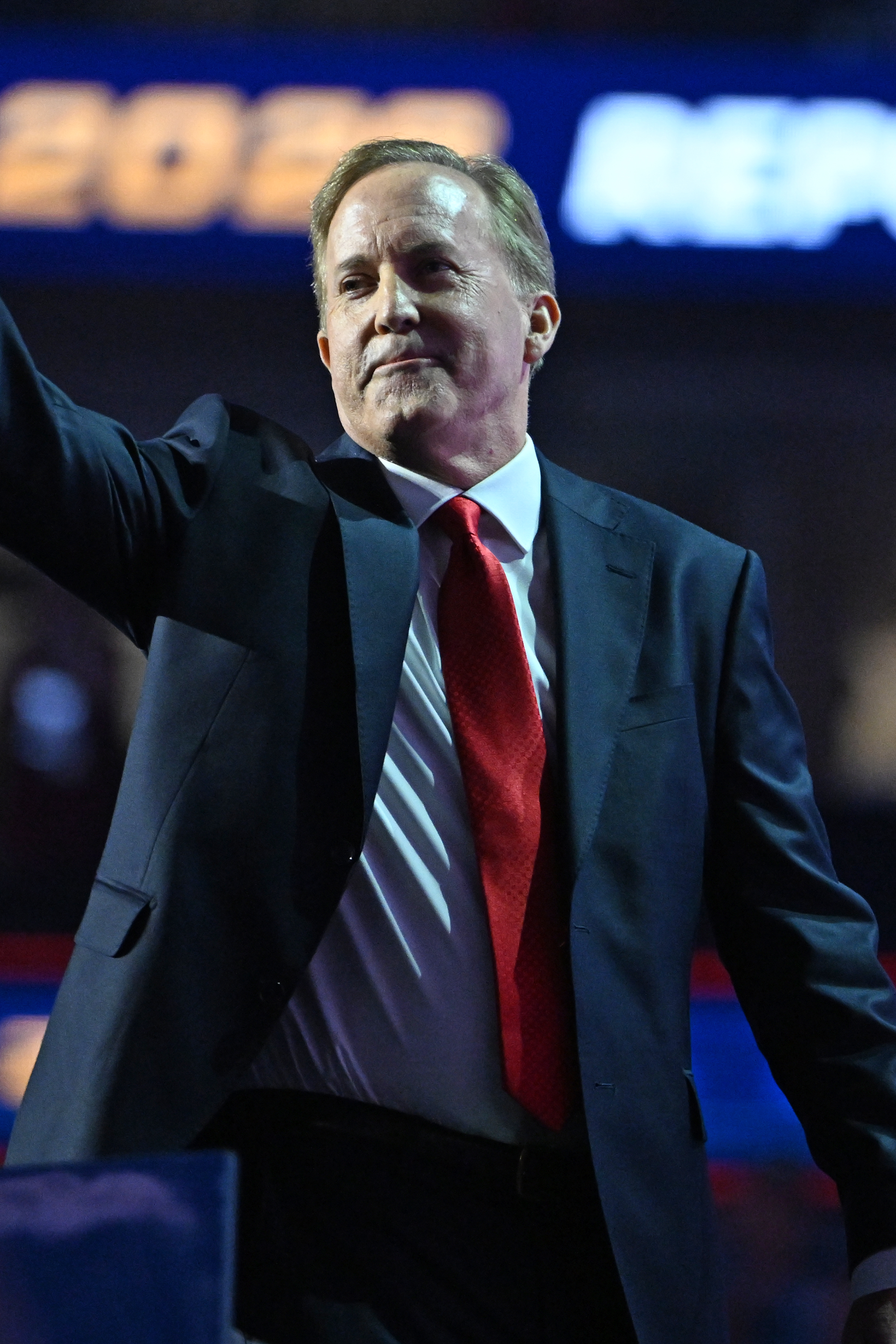
    Former President George W. Bush and Sen. John Cornyn, two top Texas Republicans, are rallying conservative donors behind the party’s Senate candidates — except for the one running in their own state, Ken Paxton.

    Cornyn hosted a fundraiser Monday evening in Dallas for six Republican nominees in battleground states, according to an invitation to the event that was obtained by the New York Times. Bush, listed on the invitation as a “special guest,” was attending the event, his spokesperson confirmed.

    The event benefits Maintain the Majority, a new joint fundraising committee supporting the Senate candidates, who are defending Republican-held seats in Maine, Ohio, Alaska, and Iowa and looking to flip seats in Michigan and New Hampshire.

    But Paxton, the Republican nominee in Texas, who defeated Cornyn in a costly and bitter primary, was not included. His campaign declined to comment on the fundraiser.

    The fundraising omission of Paxton is another escalation in the standoff between old-guard Bush Republicans and the fiery insurgent wing represented by the party’s Senate nominee, Paxton, President Donald Trump, and their allies.

    And it comes as the parties battle for cash and advertising time in the Texas Senate race, one of this year’s top contests. Paxton has badly trailed his Democratic opponent, James Talarico, in campaign fundraising, but super political action committees tied to Trump and Senate Republicans have come to Paxton’s aid, reserving more than $80 million in outside advertising in Texas.

    Paxton, the state attorney general, has long been a polarizing figure among Texas Republicans. He was impeached by the Republican-dominated Texas House on corruption charges in 2023, though he was acquitted in the state Senate, and he pushed to oust Republican lawmakers and judges who disagreed with him in his party’s primaries in 2024.

    This year, Cornyn and establishment Republican donors spent more than $130 million on advertising backing the senator and bashing Paxton in their contentious primary. (Bush chipped in $5,000 for Cornyn.) In the months since, Cornyn has continually criticized Paxton’s character and campaign.

    “Paxton’s a poor campaigner,” Cornyn told the Texas Tribune in August. “He’s lazy and doesn’t raise money. And he basically is not offering a very compelling case for his election. He’s making this harder than it needs to be.” (Paxton countered the attacks, saying on Fox News’ The Sunday Briefing that “John Cornyn doesn’t know my schedule. He doesn’t know how many hours I’m putting in every day, 18 hours a day.” )

    The fundraiser comes as long-simmering tensions between Bush- and Trump-era Texas factions burst to the surface.

    Last week, Karl Rove, Bush’s former senior adviser, announced that he would not vote for Bo French, the Republican nominee for the Texas state agency that regulates oil and gas, because of a racist social media post by French. Paxton declined to condemn French’s post, and Trump posted on Truth Social that Rove was a “stone-cold loser.”

    Paxton has attacked Rove in the past, including in an interview with conservative pundit Tucker Carlson in 2023.

    Paxton has also gone head-to-head with a scion of the Bush dynasty, soundly defeating Bush’s nephew, George P. Bush, in the 2022 Republican primary for Texas attorney general. And Paxton has long criticized Cornyn for his willingness to work with Democrats on bipartisan legislation.

    The host committee of the Monday fundraiser included paragons of the Bush-era Republican Party like Harriet Miers, Bush’s onetime nominee for the U.S. Supreme Court; former Sen. Kay Bailey Hutchison; and Republican megadonor Harlan Crow.

    One of the candidates the event seeks to support is John E. Sununu, the Republican nominee for Senate in New Hampshire. His father, also named John Sununu, served as the White House chief of staff for Bush’s father, George H.W. Bush. Contributions ranging between $1,000 and $61,500 were required for entry, according to the invitation.

    Some of the donors invited to the event on Monday have also contributed to Paxton’s campaign.

    The gathering and the new fundraising committee will benefit Sens. Susan Collins of Maine, Jon Husted of Ohio, and Dan Sullivan of Alaska, who are defending their seats in competitive general-election races, as well as three other Senate candidates: Sununu, Rep. Ashley Hinson of Iowa, and former Rep. Mike Rogers of Michigan.

    Two Republican Senate nominees in states that Trump won in 2024, Michael Whatley of North Carolina and Mike Collins of Georgia, are also not part of the fundraising effort. Democrats have shown strength in polls in those states.

    Collins “appreciates the support of Sen. Cornyn and President Bush,” said Blake Kernen, a spokesperson for Collins’ campaign. Representatives for the other candidates did not immediately respond to requests for comment.

    This article originally appeared in the New York Times.
  • White House plan to subsidize stay-at-home parents divides conservatives

    White House plan to subsidize stay-at-home parents divides conservatives

    WASHINGTON — Republicans are sharply divided over a new plan being drafted by the Trump administration that would allow stay-at-home spouses to collect childcare subsidy payments from a federal program intended to assist working parents.

    Some commentators and lawmakers called the policy, which could help realize a vision of stay-at-home motherhood championed by Vice President JD Vance, a “grand slam,” “no-brainer,” and “President Trump’s greatest legacy.”

    Others eviscerated it as “socialism,” “rank politics,” and “stupid.”

    The split reaction reflects one of the emerging fractures in Donald Trump’s MAGA coalition. Traditional Republicans, religious conservatives, and America First populists have jostled for influence with the pronatalist movement, which aims for women to have more children and stay home to raise them, and supporters of Health Secretary Robert F. Kennedy Jr.’s Make America Healthy Again movement.

    And the role of the federal government in shaping family policy has proved to be a key flashpoint.

    When news of the plan broke over Labor Day weekend, Rachel Campos-Duffy, the co-host of Fox & Friends, declared on air, “I think this might be my favorite policy, like, ever, that Trump has brought.”

    Campos-Duffy, the wife of Transportation Secretary Sean Duffy and a mother of nine, is a prominent voice in the pronatalist movement. She and others in the movement said the proposed subsidy would be the administration’s largest step toward achieving pronatalists’ goals.

    Conservative podcasts, broadcasts, and social media buzzed with excitement. A coterie of conservative lawmakers, some of whom have tried but failed to push through legislation to pay stay-at-home parents, including Sen. Eric Schmitt of Missouri and Rep. Anna Paulina Luna of Florida, cheered their support.

    But many on the right, even those who embrace Vance’s promotion of traditional families, said that handing out government money to parents so they could stay at home would go against core conservative tenets. They also maintained that the proposal contradicted the administration’s efforts to require Americans to work to get other forms of federal support.

    “Add work requirements here, but take them away there, just to use the power of the state to promote the family?” said Douglas Holtz-Eakin, an economist who served under President George W. Bush and now runs the American Action Forum, a conservative think tank. “A traditional conservative would say this is none of the government’s business.”

    And Erick Erickson, the conservative pundit and radio host, wrote on social media, “Didn’t realize how many conservatives want to be or want their wives to be welfare queens, dependent on a government handout.”

    If carried out, the transformation of the childcare subsidy program would be the federal government’s most concrete policy for advancing the family structure championed by Vance, who since his days as an Ohio senator has called to reform childcare subsidies and to promote stay-at-home parents.

    Under the draft proposal being considered by the Trump administration, parents who stay home with their children could get a payment from an existing Health and Human Services Department fund set up to help low-income and working-class parents afford childcare so they could work or go to school, the New York Times previously reported. The current program typically provides annual subsidies of about $9,000 per child.

    The proposed change to open the program to stay-at-home parents, which originated in the White House, has not yet been finalized or released.

    News of the proposal was immediately met with some sharp criticism on the right, revealing a willingness among some conservatives to challenge Vance, who is seen as a likely presidential contender in 2028.

    Critics of the proposal said that the administration’s proposal was at stark odds with its push for work requirements for federal benefits.

    Trump’s signature domestic policy law, passed last year, included strict new work requirements for certain recipients of Medicaid and expanded work requirements for recipients of federal food assistance benefits. Those changes have already contributed to a loss of about 5 million recipients of food assistance and are projected to cause more than 5 million people to lose health insurance.

    “When JD steps out and has a government expansion program, a government handout, we should be calling it out,” said Marc Short, who served as chief of staff to Vice President Mike Pence. “I don’t question his commitment to nuclear family. I just question a policy that stinks.”

    An administration official, who discussed the draft proposal on the condition of anonymity, wrote in a text message that the discussion of the proposal was based on speculation. The official said that the draft rule would apply work requirements to households but “not every individual in the household,” and that it would strengthen anti-fraud measures.

    In a fiery keynote speech on Sept. 10 at the Republican midterm convention in Dallas, Vance celebrated “the nuclear family.” He did not specifically mention the childcare proposal, but claimed that Democrats were “radicals who wish to abolish my family and the thousands and millions of other families all across our country.”

    Some defenders of the subsidy for stay-at-home parents acknowledged that was an imperfect policy, but said that it would serve to redirect current federal funding toward a conservative goal.

    Kevin Roberts, president of the Heritage Foundation, the influential conservative think tank, wrote on social media: “The welfare state already exists. The subsidies already exist. And conservatives do not have the votes to dismantle either. Until that changes, taxpayer dollars should reward family formation, not subsidize its decline. That is the conservative option.”

    Beccah Williams, a married, stay-at-home mother in Edon, Ohio, said the reworked program could help her family.

    “The $9,000 a year would definitely help a lot with groceries and being able to stay home,” she said. “I feel like it’s important to have one parent that stays home. It goes by so fast.”

    Williams, who said she voted for Trump, said she had looked into applying for the childcare subsidies when her son, Isaiah, was born six years ago and she was employed in a package factory. But she learned that her joint household income, which included that of her husband, a dockworker, was too high to qualify.

    Williams instead arranged free childcare with her sister-in-law for two years, until her daughter, Madelyn, was born.

    When her sister-in-law went back to work, the family could not afford childcare. So Williams quit her job, reducing the family’s income so much that the children are now on Medicaid and Madelyn is on a government voucher program for women, infants, and children, known as WIC.

    “I’m kind of stuck in a way that I can’t get a full-time job because childcare costs too much, but when I’m not working we don’t have that income,” said Williams, adding that a federal subsidy “wouldn’t make up for the lost paycheck, but it’s better than what it is now, which is zero.”

    Since the 1990s, the $12 billion Child Care and Development Fund has subsidized the care of children up to age 13, offsetting the costs for caring for about 1.3 million children. There are also about 400,000 children on waitlists for the subsidies.

    Under the current rules, most of the money is distributed to states, which in turn disburse it to parents, usually in the form of vouchers or direct payments to childcare providers.

    To qualify, parents must prove that their income is lower than 85% of their state’s median income and that they are working, in school, or receiving job training. Some states set a lower threshold of 60% of the state’s median income.

    Under the proposed rule changes, the same pot of money would also be used to pay married parents who meet the income requirements when one parent works and the other cares for the child. The money would be intended to help offset the lost income of the stay-at-home parent.

    Opening up the subsidy program to stay-at-home parents could tilt the resources away from working parents, particularly one-parent households, critics have said. About 80% of families that receive the subsidy have single working parents, most of them mothers.

    This article originally appeared in The New York Times.

  • U.N. General Assembly to confront familiar crises, new conflicts and AI

    U.N. General Assembly to confront familiar crises, new conflicts and AI

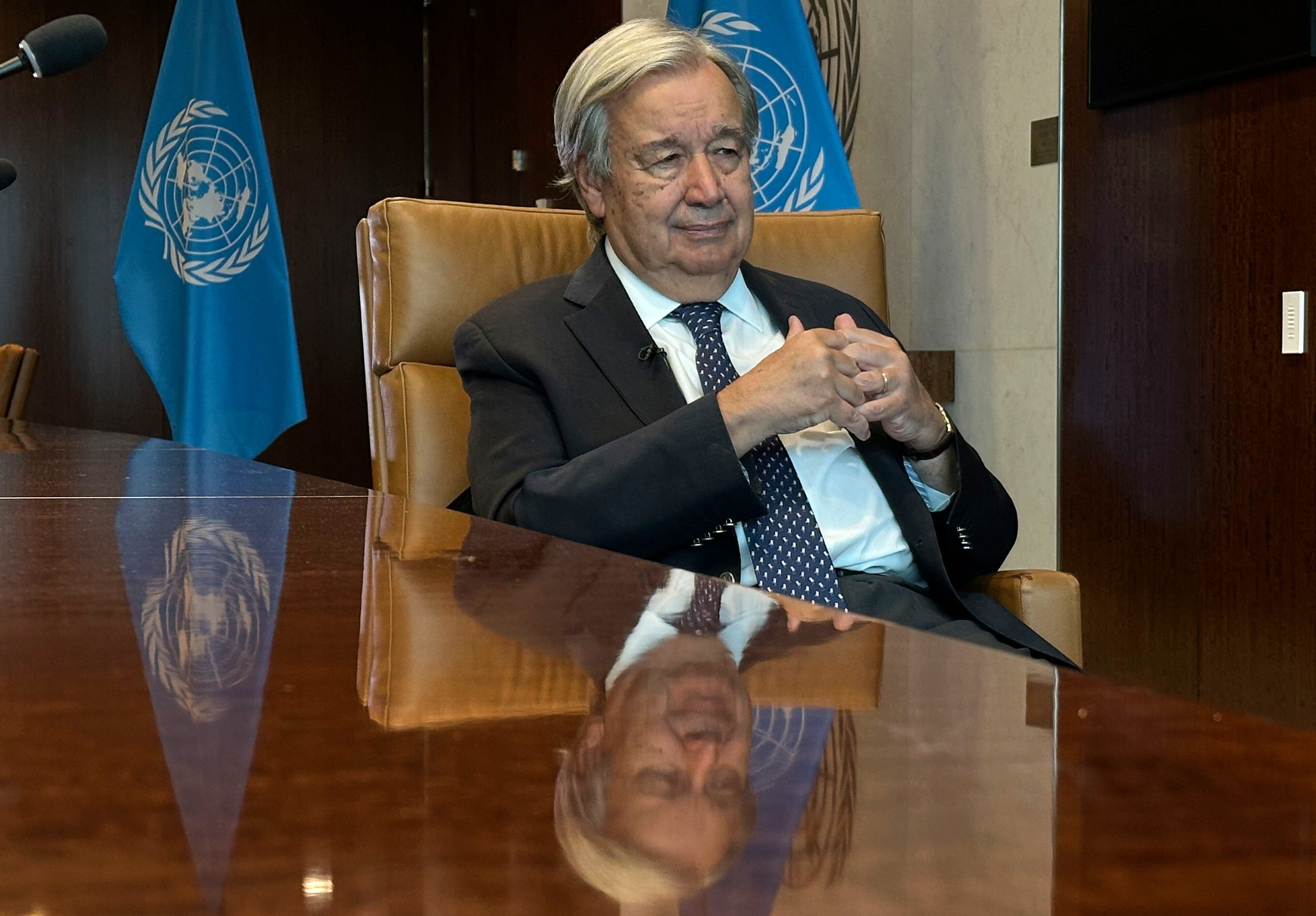
    World leaders converge in New York this week for the United Nations General Assembly with the Middle East in turmoil, war raging between Russia and Ukraine, old alliances in peril, energy prices rising, and scientists warning that artificial intelligence could imperil humanity.

    “It would be hard to imagine a scenario as threatening as the one we’re facing right now,” acknowledged António Guterres, who has served two terms as the U.N. secretary-general since 2017 and will step down at the end of December.

    The U.S.-Israeli war with Iran and its reverberations on the world economy and oil supplies will be a major topic. And Ukrainian President Volodymyr Zelensky is expected to implore world leaders not to forget his country.

    But for the first time at the world body, the threat posed by artificial intelligence has jumped to the top of the agenda. U.N. leaders plan to seek global cooperation for guardrails around the rapidly advancing technology.

    Against the backdrop of these challenges, the U.N. is searching for its next leader, who will take the helm in January. Seven candidates are in the running after Michelle Bachelet, former Chilean president and ex-high commissioner of the U.N.’s Human Rights Council, dropped out. But so far no clear front-runner has emerged, diplomats said, because the U.N. Security Council, the body responsible for selecting the secretary-general, has not reached a consensus.

    Guterres will deliver his final address to the General Assembly on Tuesday, and he is expected to close his tenure by urging world leaders to defend international law, protect human rights, invest in sustainable development, and push for peace.

    “At a time when the world faces three existential threats — runaway artificial intelligence, the climate crisis, and the intolerable deepening of inequalities — international cooperation is more necessary than ever,” Guterres said at a recent news conference.

    He said that when he took charge of the institution years ago no one could have predicted that the world would be as it is today, roiled by conflicts and facing a multitude of crises like climate change and the seemingly unrestrained growth of artificial intelligence.

    The U.N. has defined the theme of this year’s gathering as “Restoring Trust, Managing Transformations: A United Nations That Delivers for All.” Trust and transformation have been among the biggest challenges for the U.N. as it has faced questions of relevance from donors and the public, experienced severe funding cutbacks from the Trump administration and made efforts to streamline its operations. At the same time, its 15-member Security Council stands paralyzed by divisions among its five permanent members with veto-holding powers.

    Still, while the organization said in January that it was facing imminent financial collapse and would run out of money by the summer if member states — namely the United States, its top donor — didn’t pay their annual dues, it has survived.

    Last week, the United States paid $725 million to the U.N. as part of its dues for the regular budget and $102 million for peacekeeping, but it still owes $1.3 billion in annual dues, said Farhan Haq, a U.N. spokesperson.

    Many U.N. staff members and diplomats had expressed anxiety that President Donald Trump could withdraw from the organization altogether, given his exit from U.N. agencies such as the World Health Program and the defunding of some programs as part of a policy to cut foreign aid significantly. Analysts said last year that the U.N. was in a “free fall” as it observed its 80th anniversary.

    But those fears have not materialized. Analysts said that while the U.N. was still facing a crisis, the United States had remained engaged, albeit seeking to change and bend the institution to the administration’s vision.

    Richard Gowan, a U.N. expert at the International Crisis Group, said of the United Nations, “It is still standing, and if you compare the U.N. to some of the really bad periods during the Cold War, it’s still actually far more active than it was in its darkest hours.”

    He added, “But every single year it’s a little bit less relevant; it’s a little bit more under restraint.”

    Trump is set to speak to the General Assembly on Tuesday morning, the first day of the gathering. Last year, he lectured the United Nations and other countries about how they were failing and aired a list of grievances.

    “Your countries are going to hell,” he said.

    This year, he will be facing a world rattled by his imposition of tariffs, his open disdain for allies, and the instability resulting from his war against Iran.

    The biggest hurdle for the U.N. in resolving conflicts in the past few years has been the geopolitical divisions among the five permanent powers of the Security Council: the United States, Russia, China, France, and Britain. The council, which is in charge of preventing global conflict and safeguarding stability, has been frozen over the wars in Ukraine, the Gaza Strip, and Iran because action has been blocked by permanent members with stakes in the fighting.

    The Ukraine war is more than 4 years old, the conflicts in Sudan over 3 years old, the one in Gaza closing in on 3 years old, and the United States’ war with Iran nearing its seventh month. The conflict in Iran has sent energy and oil prices soaring and has upended supply chains that rely on shipping in the Strait of Hormuz. The Houthis in Yemen and Saudi Arabia have intensified fighting in the past few weeks with another critical waterway, the Bab el-Mandeb Strait, in the Indian Ocean, under threat.

    “There is clearly a vacuum here in terms of dealing with these growing number of wars we have and other crises,” said Robert A. Wood, a U.S. ambassador to the U.N. during the Biden administration. “It is critical that we get a next secretary-general who has experience, and Rolodex, and kind of energy and background in managing, not only dealing with great powers, but in dealing with major international crises.”

    Among the speeches by leaders that will be watched closely will be the ones by Iranian President Masoud Pezeshkian; Zelensky; and Venezuela’s leader, Delcy Rodríguez, who will be making her debut on the world stage after the United States captured her predecessor, Nicolás Maduro. Others of note will be by leaders of the Arab countries in the Persian Gulf; Israeli Prime Minister Benjamin Netanyahu; and Palestinian leader Mahmoud Abbas, who will address the assembly virtually for a second year because the United States denied visas to the Palestinian delegation.

    This year, discussion of a possible two-state solution for Israel and Palestinians is expected to be more low-key than in the past, with France, Britain, Canada, and Saudi Arabia hosting a session Thursday on the sidelines of the General Assembly meeting.

    A notable number of world leaders will be absent from the General Assembly. Xi Jinping of China is traveling to Washington to see Trump on Thursday, and the meeting is expected to overshadow the speeches at the assembly in New York.

    The leaders of two nations from the so-called global south — India’s prime minister, Narendra Modi, and South Africa’s president, Cyril Ramaphosa — will also not attend.

    The Security Council will hold a session on Ukraine, as it has done for the past four years during the General Assembly meeting, and this year it has drawn new criticism that European members of the council have ignored other pressing conflicts every year to keep the spotlight on Ukraine during the high-level week.

    Despite their global repercussions, Iran and the conflict in the Persian Gulf are not on the council’s public agenda this week. Arab countries in the Gulf are expected to hold a closed-door meeting with council members and Trump on the sidelines, diplomats said.

    The council will discuss AI and the threats it poses to global security and stability. Guterres was also set to host a side event Monday to urge countries to create global regulations for the technology, and a private, invitation-only event at the U.N. that brings together heads of states and leaders of AI to debate how to govern the field.

    But a clash of opinions and visions is expected.

    The United States, China, and Russia have indicated that they oppose external rules on their own development of AI technology, and Trump recently denounced such efforts as a “sick conspiracy.”

    Guterres said the world cannot “afford a race to the bottom on AI safety.” He added, “We need guardrails to build trust, and that make AI safe, transparent, accountable, with human dignity at the center.”

    This article originally appeared in the New York Times.

  • More U.S. households are struggling financially, analysis finds

    More U.S. households are struggling financially, analysis finds

    A growing number of American households became financially strapped over the past year and had a harder time keeping their heads above water, a long-running analysis finds.

    The share of households considered vulnerable — those that have trouble saving, paying bills, repaying debts, and planning for future needs — rose to 17% from 15% last year, according to findings from the Financial Health Network, a nonprofit focused on financial stability.

    And more households are reporting high levels of financial stress — 16%, up from 13% last year.

    The findings come as families continue to face rising costs for basics like groceries and gas and for bigger-ticket purchases like homes and cars as well as a pullback in federal assistance for healthcare and food purchases.

    The increase this year reversed a small improvement measured in 2025 and matched the highest level recorded since the network began publishing its annual report, Financial Health Pulse, eight years ago, researchers said.

    “Households are struggling,” said Taylor Nelms, the network’s vice president of research and insights. The 2026 report, which will be publicly available Tuesday, is based on a survey of more than 7,600 households conducted this spring. The survey uses a nationally representative sample drawn from the Understanding America Study, a probability-based panel administered by the University of Southern California, to estimate findings about all U.S. households. The survey has a margin of error of plus or minus 1.1%.

    The share of households considered financially healthy held steady, at just under a third, the report said. That level has remained flat for five years. The network defines healthy households as those able to meet current financial needs, stay on track to meet future needs, and recover from unexpected expenses or a drop in income.

    Households may shift over time among the study’s different tiers — vulnerable, coping, and healthy. Those considered to be coping are successfully managing at least some aspects of their finances.

    About 7.8 million households that were seen as coping in the spring of 2025 found themselves vulnerable this year, the report found. At the same time, about 6 million ascended from vulnerable to coping. The result was that the vulnerable segment grew by about 1.8 million households.

    Low-income households were hit hard, researchers found. The share of those families paying all their bills on time, for instance, fell to 49% from 54%.

    What’s pressuring Americans’ finances?

    A number of challenges, including high costs for food, housing, and utilities, and less generous student loan and healthcare policies, are buffeting Americans, the report found. Financial vulnerability among student loan borrowers, for instance, rose to 27% from 21%, as the government began charging interest on loans that had been in a multiyear pause during the COVID-19 pandemic.

    The share of households reporting unmanageable debt rose to 31% — the highest level in eight years — from 29% last year, while the share saying they paid all their bills on time fell by 3 percentage points, to 68%.

    Changes in government programs have also pressured family finances, including the end of subsidies that had lowered the cost of Affordable Care Act health plans and new restrictions on SNAP food benefits, the report noted.

    Were there any bright spots in household finances?

    Household emergency savings held roughly steady this year, the analysis found, possibly because of larger tax refunds around the time the survey was conducted. (The bigger refunds followed a basket of tax breaks enacted as part of the budget law.)

    But with less than half of households reporting that they are spending less than their income, it is unclear how long that cushion can last, Nelms said.

    Mingli Zhong, a senior research associate in the family and financial well-being division at the think tank Urban Institute, said it was not easy to save when costs were high, but even $50 a month could add up over time. Saving the equivalent of one month of income is often an adequate buffer for many families, she said. “Emergency savings is about preventing people from falling into poverty in the first place.”

    Where can I get help building an emergency fund?

    More employers are offering options to help workers build emergency savings, either as part of traditional retirement offerings or through separate programs managed by outside providers like Sunny Day Fund.

    Sid Pailla, CEO of Sunny Day Fund, said the program encouraged saving for unexpected bills but also for longer-term goals like starting a family, buying a car, or taking a vacation. “Otherwise,” he said, “it comes off as a chore.”

    The program’s suggested target of $2,000 may be a “stretch goal,” Pailla said, yet it is “one they feel they can get to.” Employers typically offer incentives, like a $25 or $50 sign-up bonus. Funds are deducted from workers’ paychecks and held at a federally insured bank currently paying just over 3% interest, he said. Withdrawals average $376.

    Abner Rivera, 61, a production manager in Lakeland, Fla., for TRG Packaging & Display Solutions, said he had no emergency savings account, whether because money was tight or from “procrastination,” until his employer partnered with Sunny Day. He began saving $25 a week a year ago. “Before I knew it, I had $500,” he said, adding that he was able to use the funds for a $400 car repair. That encouraged him to increase his savings to $70 a week, and he is now nearing his $2,000 goal. Next, he aims to save even more, for a trip to Spain. He said he liked that Sunny Day sends him a weekly email updating his progress. “There’s a structure to it,” he said, which makes it easier to save.

    What if I haven’t built up any reserves?

    Some employers offer grants for workers facing a crisis, often through third-party coordinators. Rachel Schneider, CEO of Canary, a company that manages workplace hardship grants for employers, said workers could request relief for a variety of setbacks, like a natural disaster, an eviction notice or a utility shut-off order, a sudden medical event, or a car accident leaving the employee without transportation. “People don’t have to put money in,” she said, “and they don’t have to pay it back.”

    Companies set the rules for their programs, which Canary administers. Employers can fund grants themselves or raise donations from their workforce. Canary reviews applications submitted via an online portal so workers do not have to be embarrassed by approaching their manager.

    “If you just got an eviction notice,” she said, “you don’t want to tell your boss that.”

    Ari Medoff, CEO of home care services provider Arosa and a Canary board member and investor, said his company’s employees could request a total of $1,500 in grants over three years. Most of the money comes from Arosa’s workers who contribute a few dollars from each paycheck or at fundraising events. “I think, at its core, a healthy fund gets workers to participate,” he said. “It says, ‘Your peers are here for you.’”

    This article originally appeared in the New York Times.
  • To a binational tribe, Trump’s border wall feels like betrayal

    To a binational tribe, Trump’s border wall feels like betrayal

    TOHONO O’ODHAM NATION — The first fence to slice through the Tohono O’odham Nation was simple barbed wire meant to keep cows from roaming south into Mexico. The second, which rose nearly a century later, was a sturdier steel barricade that stopped smuggler trucks from barreling north into the United States.

    The binational tribe, whose land stretches from modern-day Arizona into the Mexican state of Sonora, has long been caught in the middle of disputes over a border between two countries that did not exist when the O’odham’s ancestors first settled here thousands of years ago.

    The tribe’s leaders have adapted, working with the U.S. government as it ratcheted up immigration security on their territory. But now they are facing the biggest wall yet, and they are drawing a line.

    The Trump administration wants to build a towering 62-mile barrier that would bisect the Tohono O’odham homeland along the international boundary with Mexico, and construction could begin as soon as October. Leaders of the Native American nation say it will restrict member movement, endanger wildlife, destroy sacred burial sites, and undermine tribal sovereignty while doing little to tamp down illegal activity.

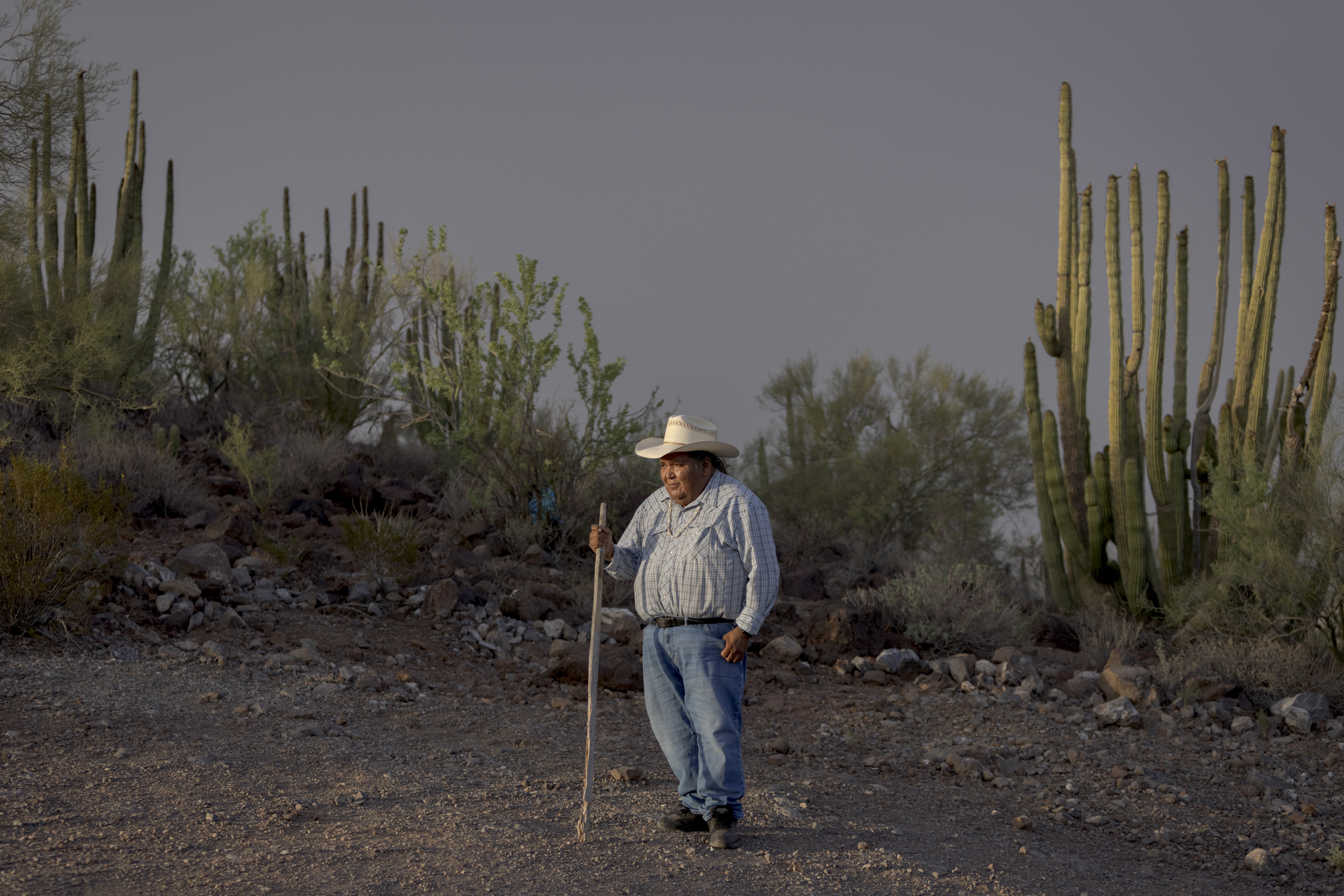
    “It’s like me bulldozing right through the Arlington Cemetery,” said Verlon Jose, the chairperson of the Tohono O’odham Nation. “We don’t matter to the U.S. government. They want to erase us. They want to take our land; they want to desecrate it. They want to hit us where it hurts.”

    The tribe has sued to prevent construction, but the federal government is pushing ahead as it seeks to wall off most of the southern frontier. Last month, masked and armed Border Patrol agents escorted a group of contractors through the reservation to do survey work at the planned wall site. O’odham leaders accused the workers of trespassing.

    It is one of many battles simmering along the southern border, where President Donald Trump’s wall has drawn bipartisan outrage in national parks, on private ranches, and among environmentalists and Catholic priests. But this escalating confrontation on Native land southwest of Tucson, Ariz., stands out because it upends decades of uneasy cooperation between the tribe and the United States.

    The Tohono O’odham Nation, which occupies a reservation roughly the size of Connecticut, has for years allowed federal immigration authorities to operate bases and surveillance towers on its land. The tribe spends $3 million a year on border security, and its police force works closely with Border Patrol agents.

    “We’ve bent over backwards to work with the federal government,” Jose said. “But we will never agree to a wall.”

    During Trump’s first term, the tribe successfully lobbied against a wall. But since Trump’s reelection, O’odham leaders say they have found federal officials unwilling to compromise.

    The administration, which has waived environmental reviews to speed wall construction, has argued that the tribe’s vast and varied territory is a hot spot for cartel-sponsored crime.

    “The project will close one of the most dangerous smuggling and trafficking corridors on the Southwest border,” Rodney Scott, the U.S. Customs and Border Protection commissioner, said in a statement.

    The Tohono O’odham, whose enrolled members number nearly 40,000, have long moved freely among the Sonoran Desert’s skyscraping saguaros, Seussian ocotillos, herds of javelina, and packs of coyotes.

    In the 1850s, the Gadsden Purchase divided O’odham land nearly in half as a new boundary was drawn between the United States and Mexico. Today, Mexico is home to some 2,000 tribal members, as well as ancestral cemeteries and ceremony sites. But to cross, the O’odham must call a Border Patrol agent, who then checks documentation and unlocks one of three gates along the existing barrier.

    Illegal immigration and drug smuggling through the reservation surged in the 1990s, raising fears among tribal members and prompting O’odham leaders to increase collaboration with Border Patrol.

    “We’ve been homeland security,” Jose said. “We care about who’s coming through our borders.”

    The tribe now says the federal government has betrayed that partnership. If the CBP proceeds, Jose said, the O’odham could seek to cancel leases allowing the agency’s offices and towers on the reservation.

    The tribe sued in June, claiming the wall would illegally reduce the size of its reservation without congressional approval. Its lawyers asked for an emergency court order to stop construction. Last month, a federal judge denied the request, writing that the government’s security needs outweighed the O’odham’s concerns. The tribe is appealing.

    Critical to the court challenge is a 60-foot-wide ribbon of federal land that runs along the border from California to New Mexico, known as the Roosevelt Reservation, where the Trump administration has claimed broad authority to build walls.

    The tribe argues that its borderland is exempt from the Roosevelt Reservation and that wall construction would inevitably spill beyond the strip.

    A few feet from the border fence, a group of O’odham members has been tending a fire of creosote branches for weeks while praying for a halt to the wall construction. Tribal members at the prayer camp said the idea that CBP would listen to them was far-fetched.

    “We don’t trust the government,” said Wynona P. Larson Yazzie, a Marine Corps veteran who lives a few miles from the border.

    Some see the dispute as a continuation of abuse and exploitation that dates to Spanish colonization of the area.

    “It’s just opening old wounds again,” said Samuel Fayuant, a cultural affairs specialist with the tribe. “They have never healed. It just continues and continues, and I don’t know if it’s ever going to stop.”

    If the tribe loses in court, many members have said they would put their bodies on the line to stop a wall, citing the massive protests in support of the Standing Rock Sioux’s fight against an oil pipeline in 2016.

    The tribe also has concerns about construction outside the reservation. In nearby Organ Pipe Cactus National Monument, where CBP built a wall during the last Trump administration, it is now building a second barrier that will run parallel to the first.

    Bulldozers have begun clearing miles of desert to make way for construction, and the tribe is worried the work will wreak havoc on a sacred site known as Quitobaquito Springs.

    The spring, a rare desert oasis, hosts three endangered species — a fish, a turtle, and a snail — and was long the site of religious rites for the Hia-C’ed O’odham, a band of Tohono O’odham.

    “Quitobaquito is the aquatic, biological gem of that broader desert landscape,” said Russ McSpadden, a conservation advocate with the Center for Biological Diversity. Because the Trump administration waived environmental laws, “contractors are pretty much working blind,” he said.

    CBP conducts cultural and environmental reviews before construction and hires monitors to oversee the contractors, said Hilton Beckham, an assistant commissioner at the agency.

    Illegal immigration also threatens the environment, she said, when border crossers leave “trash, pollution, and damage to natural resources.” Beckham said construction would “avoid Quitobaquito Springs and minimize impacts to sensitive resources.”

    But activists and tribal members say the government has a poor track record. Six years ago, border wall construction in the area unearthed human remains and destroyed protected saguaros. In April, contractors plowed through a 1,000-year-old O’odham archaeological site.

    Lorraine Marquez Eiler, whose great-grandparents lived near Quitobaquito Springs, fears the cherished place will not survive a second wall. “How much more damage can it take?” she said.

    The atmosphere around the reservation is tense these days. On a recent afternoon, Jose was driving along the planned wall site to monitor construction preparation when a Border Patrol agent flashed his lights and swerved his truck in front of the Jose’s SUV.

    “Why are you stopping me?” Jose demanded.

    “I’m trying to get your attention,” the agent replied. He asked Jose to roll down his windows and identify the passengers in his car, saying he was checking for smugglers. “We don’t normally have a lot of vehicles coming down this way.”

    Jose refused, saying, “This is my territory.”

    Jose fumed as he drove on, angry that a federal agent would accuse an O’odham leader of wrongdoing on his own land. He continued his survey until he reached a hill on the reservation’s eastern boundary.

    Leaning on a dried saguaro rib for support, Jose walked to an overlook and gazed out. Far below, the old steel border fence faded into desert scrub, almost out of sight.

    This article originally appeared in the New York Times.