Category: New York Times

  • Netanyahu is said to have been warned about Hamas attack before Oct. 7

    Netanyahu is said to have been warned about Hamas attack before Oct. 7

    As Israelis prepare to vote next month, the question of who bears responsibility for failing to prevent the Hamas-led attack of Oct. 7, 2023, has become a dominant issue in one of Israel’s most consequential campaigns in history.

    Prime Minister Benjamin Netanyahu, seeking an unprecedented seventh term, has placed the blame on national security officials, while his critics have said he must personally answer for the failures. When Haaretz, an Israeli newspaper, reported earlier this month that Sheikh Mohammed Bin Zayed, president of the United Arab Emirates, had given Netanyahu a secret warning that Hamas was planning a major attack, the question took on even greater urgency.

    Netanyahu has denied the report.

    But a person who said they had spoken with Sheikh Mohammed and another person who said they had been briefed by someone on the call between the two leaders told the New York Times that the Emirati leader had secretly reported to Netanyahu that Hamas was considering a major attack.

    The warning from the Emirati leader, however, never reached the leaders of Israel’s security establishment, according to five former senior Israeli officials. Netanyahu gathered his security chiefs days later, on Oct. 1, 2023, for a meeting about the situation in the Gaza Strip, and never mentioned the warning, according to minutes of the meeting reviewed by the Times.

    Instead, he told them that the goal should be to maintain calm in Gaza, and he pushed back when some security officials said that Israel should consider military strikes against senior Hamas leaders in Gaza who were overseeing attacks against Israelis in the West Bank, the minutes show.

    At the meeting, details of which have not been previously reported, Netanyahu said that any Israeli action in Gaza might sabotage the prospect of Saudi Arabia establishing diplomatic relations with Israel — a deal the Israeli prime minister believed was imminent.

    Sheikh Mohammed had called Netanyahu in late September to tell him that, based on information he had received, Hamas was planning to launch an attack, according to the two people who said they had spoken with someone on the call. One of those people said the information was not specific about whether Hamas was planning to launch rockets into Israel or preparing for a ground invasion over the border. The original sources of the intelligence that Sheikh Mohammed passed to Netanyahu are unclear, and it is also unclear whether other issues were discussed on their call.

    The warning, though vague, proved to be correct. Days later, thousands of Hamas fighters and their allies launched an invasion over the Gaza border into southern Israel, killing about 1,200 people and taking some 250 more hostage in the deadliest attack on Israel in the country’s history.

    After the Haaretz report, Netanyahu denied in a statement that he had ever received a phone call warning from Sheikh Mohammed and said that if any intelligence came from the Emiratis it was passed to Israel through intelligence channels.

    The Emirati Foreign Ministry and Netanyahu’s office did not respond to requests for comment.

    But Sheikh Mohammed mentioned his September 2023 phone call with Netanyahu months later in a discussion with William Burns, the CIA director at the time, according to a person familiar with that discussion. Sheikh Mohammed told Burns that, during the phone call, he had spoken to Netanyahu about a looming threat of violence in the West Bank or Gaza carried out by Hamas.

    All of the people the New York Times spoke to insisted on anonymity to divulge details of sensitive discussions.

    Netanyahu was not the only Israeli leader to overlook warning signs in the lead-up to the Hamas-led attack Oct. 7, 2023. Israeli security leaders repeatedly downplayed other signs that Hamas was gearing up for an assault, which were abundant at the time.

    The Israeli military even obtained a Hamas battle plan in 2022, but military leaders dismissed it as unrealistic. The plan, which the military gave the code name “Jericho Wall,” turned out to be the blueprint for the Oct. 7 attacks.

    In the years before the attacks, Israeli military and intelligence officials had concluded that Hamas was incapable of carrying out a major attack on Israel, and that Yahya Sinwar, the group’s leader in Gaza, was more interested in governing the enclave than fighting another war with Israel.

    Netanyahu thought that Israel had deterred Hamas from waging war, according to an Israeli state ombudsperson report about government decision-making before the October attack. He instructed Israeli military and intelligence bodies to pursue a policy of “postponing conflicts” and “preserving Hamas as an effective, restrained, and restraining governing authority,” the report said.

    The phone call and the warning from Sheikh Mohammed are not mentioned in any of the internal investigations conducted by the military, intelligence agencies, or other entities into the causes of the severe Israeli security failures leading up to and including Oct. 7, according to the five former senior Israeli officials. The five officials were involved in the assessments, which have not been released in full.

    Late next month, Israelis will vote in their first national election since the Oct. 7 attacks, and the race for parliamentary seats in the highly polarized country is shaping up to be extremely tight. Not only is Netanyahu’s political future at stake, but many Israelis also see the election as fateful for the future of their shaken country.

    The Haaretz report punched a hole in Netanyahu’s argument that Israel’s military and intelligence services were to blame for the intelligence failures leading to the Oct. 7 attacks. He and his allies have blocked efforts by Israeli lawmakers to set up a state commission of inquiry into the security breakdowns that preceded the attacks, saying it would not uncover the truth.

    Earlier this month, Netanyahu’s opponents in the campaign issued a joint statement saying that the Haaretz report about the September 2023 warning “joins a series of revelations concerning Netanyahu’s failures” and “once again underscores why Netanyahu is fighting for his life — to thwart the establishment of a state commission of inquiry and to thwart revealing the truth to the Israeli public.”

    This article originally appeared in the New York Times.
  • France to send soldiers to Saudi Arabia to help secure energy sites

    France to send soldiers to Saudi Arabia to help secure energy sites

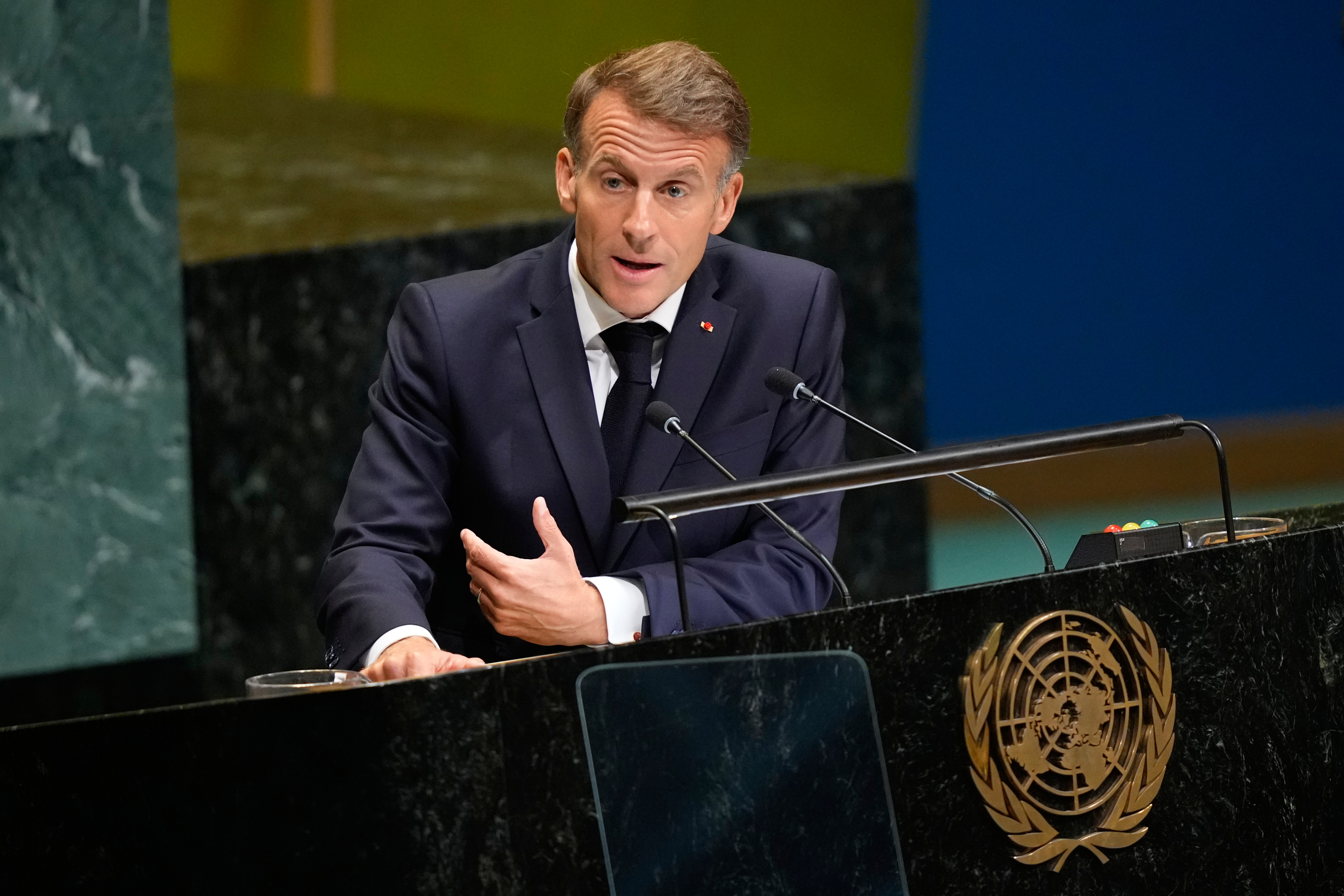
    France will send troops and other military assets to Saudi Arabia to help protect critical energy sites along the Red Sea that have come under fire from the Iran-backed Houthi militia in Yemen, the French president said Thursday.

    France will send “soldiers, radars, and defense systems” to help secure energy infrastructure in the coastal city of Yanbu, according to an agreement the two countries sealed Thursday, President Emmanuel Macron said in an interview on public broadcaster France 2. “Not to engage in any conflicts but to protect this site,” Macron said.

    He did not rule out the possibility that additional military assistance might be provided as the situation evolves.

    Macron framed the move as one part of efforts that France is making to ensure energy security and fight for lower gas prices at home amid the war started by the United States and Israel with Iran more than six months ago. That conflict has left the Strait of Hormuz, a key international waterway for oil and gas, effectively blockaded.

    In recent weeks, the Iran-allied Houthi militia has repeatedly attacked Saudi Arabia, threatening its ability to export oil from Red Sea ports. The French president’s pledge came after what appeared to be one of the largest such attacks since the long-running conflict spiraled back into war.

    The Saudi-led military coalition in Yemen said Thursday that it had shot down six ballistic missiles aimed at Yanbu and Taif, another Saudi city. Saudi authorities issued alerts Thursday warning of potential attacks in cities across the kingdom.

    For more than a decade, Yemen’s civil war has pitted the Houthis, a Shiite Muslim group aligned with Iran, against the internationally recognized government backed by Saudi Arabia. A truce was reached in 2022, but the conflict recently reignited, opening a second front in the Middle East after the United States and Israel attacked Iran. The Houthis have accused the Saudis of launching hundreds of strikes in the renewed fighting.

    The Houthis captured the strategic port of Mokha from the Saudi-backed government earlier this month, giving them control of Yemen’s west coast and the Bab el-Mandeb Strait, which connects the Red Sea to the Gulf of Aden, a route that Saudi Arabia has relied on to move oil while the Strait of Hormuz is choked.

    This article originally appeared in the New York Times.
  • A quiet ICE surge unfolded ‘everywhere all at once’ this summer

    A quiet ICE surge unfolded ‘everywhere all at once’ this summer

    The most effective escalation of President Donald Trump’s mass deportation campaign happened quietly.

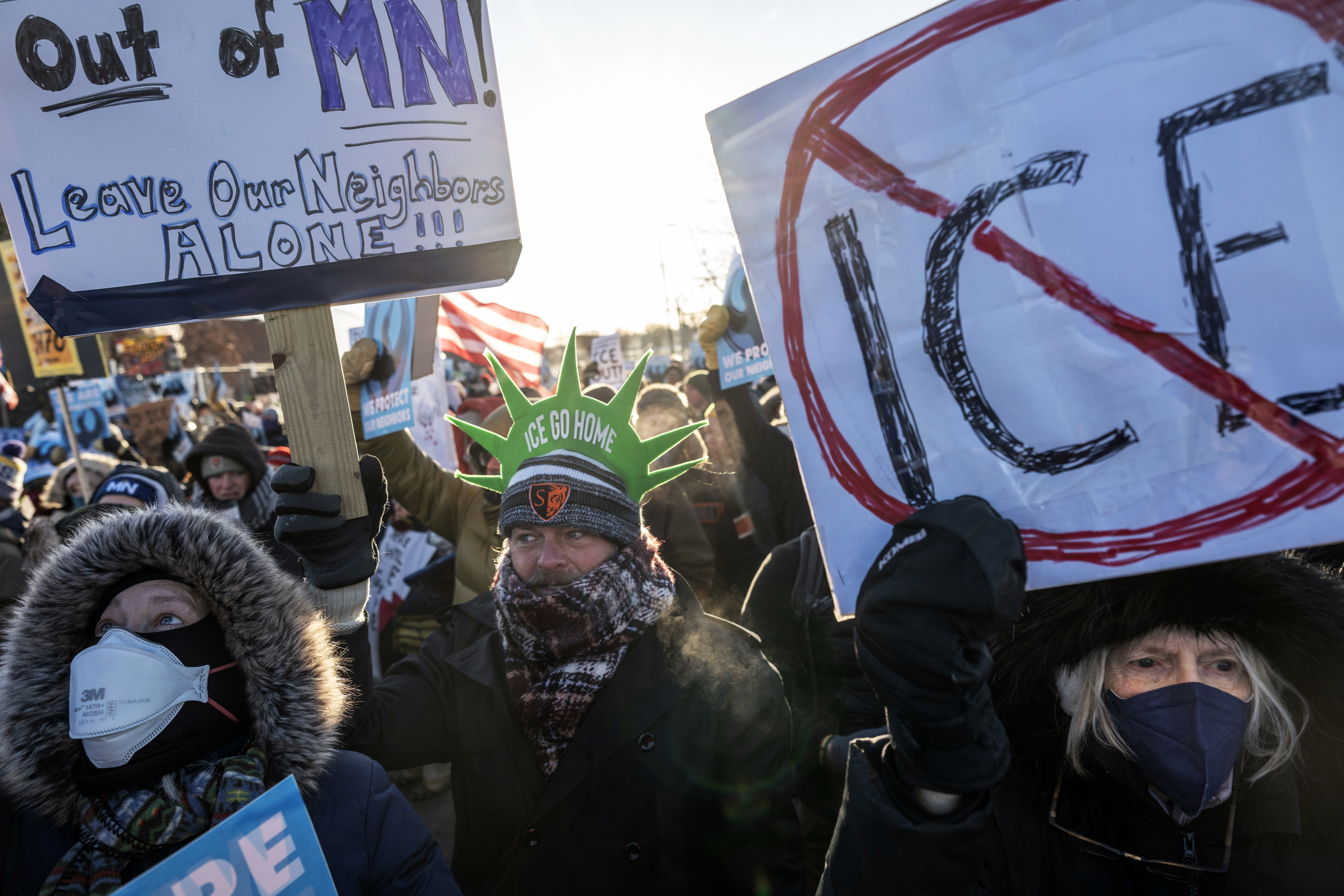
    Unlike earlier high-profile raids that drew thousands of protesters into the streets of Chicago, Los Angeles, and Minneapolis, the surge in arrests in June, July, and August was captured mostly by grainy security camera footage, through cracked blinds, and from behind closed doors.

    Arrests by Immigration and Customs Enforcement this summer soared to record highs since the start of this Trump administration — with 43,000 in June, more than 49,000 in July, and nearly 51,000 in August — as officials cut or narrowed the pathways to legal residency in the United States and expanded the pool of people eligible for deportation.

    Federal agents appeared in nearly every corner of daily life, carrying out operations at hospitals and airports, outside suburban schools and along rural construction sites and truck stops. They fanned out from coastal cities in Maine to desert towns in Arizona, across the open plains of Wyoming and down through the southern borderlands.

    In Republican-led states like Texas and Florida, where the swell was strongest, they amplified their reach through partnerships with sheriffs and state highway patrol officers. In Democratic strongholds, they intensified their activities despite laws meant to restrict them.

    David Bier, director of immigration studies at the Cato Institute, a libertarian think tank, said the local partnerships, an infusion of federal dollars, and new technology had made the dragnet so decentralized that it had attracted less attention.

    “This gradual rise everywhere all at once, through a lot of means, is enabling the operation to fly under the radar,” he said.

    The spike in arrests, to little public backlash, reflects a turning point in the Trump administration’s efforts to carry out large-scale expulsions of noncitizens. Those arrested were accused of violating civil immigration laws, but most had not been charged with or convicted of a crime. In a statement, ICE defended the expansion of immigration enforcement.

    “This is promises made and promises kept in action,” the statement read. “The results speak for themselves.”

    To understand how the operations have unfolded around the country, the New York Times reviewed arrest videos, photographs, and court records from more than 50 incidents. What follows is a sampling of those interactions.

    A presence in routine places

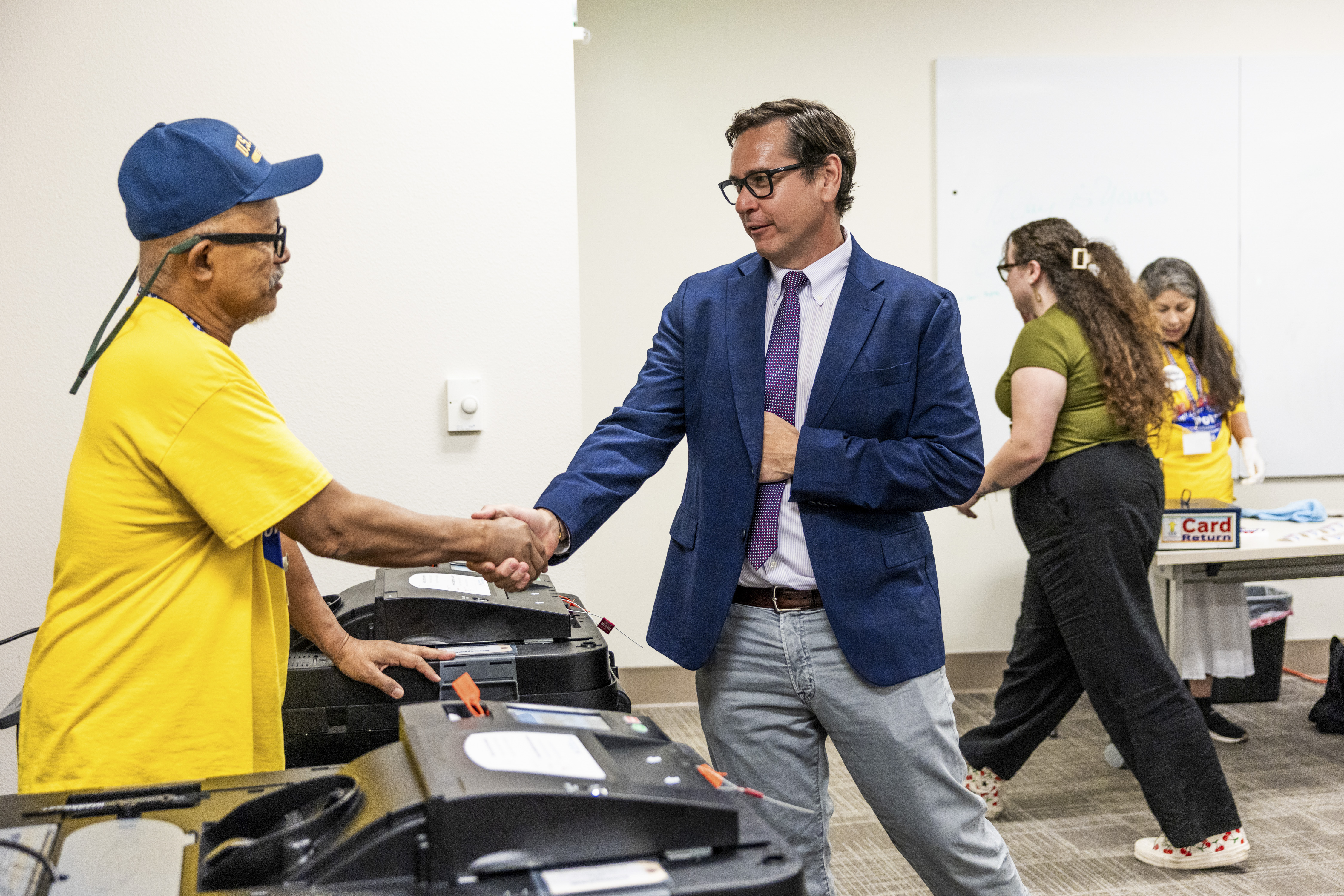
    Federal agents appeared as people carried out their everyday routines. People were detained en route to a soccer match. Leaving Sunday Mass. Having a drink at a nightclub. At national forests and outside polling locations.

    Roger Hansen, 83, owner of the Little Big Load Laundromat in Madison, Wis., said federal immigration agents took five people from two of his locations in June. Statewide sweeps the same day resulted in the arrests of roughly 40 people, many of whom Department of Homeland Security officials said had criminal charges for sexual assault, driving while intoxicated, and other crimes.

    Security footage from one of Hansen’s laundromats shows two agents slamming a young customer to the ground near a soap dispenser. All the while, people continue to do laundry.

    Outside, bystanders recorded the man being walked out in handcuffs and loaded into an SUV with dark-tinted windows.

    Hansen said he was disturbed by the violence. “They were having a heyday beating up on a kid,” he said, adding that business had dropped roughly 50% the next day and had not recovered. He said he believed many of his Latino and immigrant clientele may be too afraid to return.

    In a statement, ICE said the arrests at the laundromat had been part of “targeted operations” in Wisconsin at the end of June. The five people from Nicaragua and Mexico were in the country illegally, ICE said. The agency did not respond to a question about their criminal records.

    On July 7 in Salt Lake City, Elizabeth Garcia recorded three ICE agents forcing their way into her home without showing a warrant after following her father, Raul Moreno Meza, 52, from a gas station.

    In the video, agents handcuff Moreno and his 15-year-old son, a U.S. citizen. Garcia howls and pleads as agents carry her father outside to their vehicles. Her 2-year-old can be heard crying in the background.

    Before departing, an agent removed the shackles from Moreno’s son, who chased the SUVs as they drove away. Moreno was later released on bond, his daughter said, but her brother has become withdrawn and is attending therapy.

    “He had lots of goals and intentions,” she said. “Now he is so negative.”

    In a statement, ICE said officers arrested Moreno after he did not yield to officers at a traffic stop and then fled on foot. The agency alleged in the statement that “a juvenile occupant of Moreno’s vehicle” had assaulted an officer and was “detained in handcuffs for safety.”

    Moreno, who is Mexican, crossed the border unlawfully about two decades ago, after his green card petition languished in delays and as his father, a naturalized U.S. citizen, fell ill, his family said. His father later died. Because Moreno’s green card petition was tied to his father’s citizenship, the application did not advance after the death, the family said.

    All corners of the country

    Immigration arrests climbed to near record highs in almost every state. Some of the sharpest percentage increases in daily arrests occurred in Oregon, Montana, Hawaii, New Mexico, Vermont, and New Jersey.

    In June, the dragnet came to Harrison, N.J., where Asian and Hispanic residents account for about 65% of the population.

    Tugrul Ozkarsli, 33, of Turkey, had just pulled up to his home with groceries when ICE agents in plain clothes boxed his vehicle in with their SUVs, his wife, Kendra Ozkarsli, 46, said. He honked his horn and called her from his phone.

    “All I hear is him screaming,” Kendra Ozkarsli recalled. She ran downstairs to find agents pulling him out of the vehicle.

    “I’m married!” Tugrul Ozkarsli yelled as agents handcuffed him.

    “What are you doing? What are you doing?” Kendra Ozkarsli repeated, her hands shaking as she recorded with her phone. “This is my husband! Please stop!”

    Tugrul Ozkarsli had entered the United States legally on a business visa in December 2024. Before it expired, he applied for a student visa, which is still pending, Kendra Ozkarsli said. ICE said the pending application did not give him legal status.

    The agency also said he had been arrested on burglary charges in New York last year. Kendra Ozkarsli said he was arrested after he entered the apartment of a woman he was dating at the time to retrieve his wallet and passport, prompting the woman to call the police. The charges were ultimately sealed and dismissed, she said.

    Tugrul and Kendra Ozkarsli had married this summer, and he had been preparing to apply for a green card, she said.

    From roads to airports

    Traffic stops were central to the summer surge. Some were deadly. In Houston and Biddeford, Maine, traffic stops ended in fatal shootings involving officers. An encounter between people in a vehicle and agents at a Florida gas station resulted in a fatal car crash.

    In Milwaukee, Frankely Quezada, 34, and Estenderly Marte Polanco, 31, of the Dominican Republic, were running errands with their 7-year-old son on a Saturday morning in June. Near home, Quezada said, he noticed an unmarked SUV trailing his van. He turned into an alley and accelerated.

    The vehicle behind him flashed its lights, and as Quezada crossed the street, more SUVs emerged to box him in. Federal agents jumped out, and one of them pointed a yellow stun gun at him and shattered his window, Quezada recalled. From a balcony, a neighbor filmed officers dragging Polanco out as her son cried.

    Quezada, who was not arrested, said Polanco bit a federal agent as they drove her away after he shoved her face into her lap so forcefully she believed she would suffocate. Polanco, who overstayed a visa and has no other criminal record, remains held without bond in Kansas.

    In response to questions about Polanco’s arrest, ICE said in a statement that both Quezada and Polanco had been combative and refused to obey commands and that Polanco would remain in custody as her case moves through immigration proceedings.

    ICE also stepped up its arrests of foreign citizens at airports in July, in encounters that could be more surreptitious. Footage recorded by an airline manager July 13 captured two ICE officers in plain clothes approaching a gate agent at Dallas Fort Worth International Airport before a flight to Portland, Ore. They identified themselves only as federal officers and instructed the employee to page a passenger.

    Flanking the woman, the men discreetly took her into custody, according to the manager, who asked not to be identified, citing concerns for her job. The worker followed them, recording as they escorted the passenger through the concourse, one of them wheeling her luggage.

    In the parking lot, the woman was handcuffed and put into an unmarked vehicle.

    ICE agents told the manager that the woman was being detained because she had overstayed her visa. U.S. authorities did not share her name with the Times or provide information about her whereabouts.

    No more protected areas

    During the summer surge, displays of force were routine inside some courthouses, and federal agents have increasingly been spotted at and near hospitals and schools.

    ICE acknowledged operating in courthouses but said officers did not target schools.

    “Nothing in the Constitution prohibits arresting a lawbreaker where you find them,” the agency said in a statement. “The ability of law enforcement to make arrests of criminal illegal aliens in courthouses is common sense. It conserves valuable law enforcement resources because they already know where a target will be.”

    On the morning of Aug. 20, Grace Calero, 39, and her daughter, Giulianna Carriel, 19, were rushed to a hospital after a car crash south of Orlando, Fla. As medical staff treated them for injuries, a federal agent entered the emergency ward and began questioning Grace’s sister, Gia Calero, about the women’s immigration status, the sister said.

    He remained in the room, joking with nurses.

    It wasn’t until hours later, after Grace’s neck brace was removed, that the officer announced he was with ICE, Gia said. In the dramatic scene, captured by Gia on her cell phone, five deputies with the Polk County Sheriff’s Office arrived. They handcuffed Grace as Giulianna wailed on a bed, clinging to her mother and begging them not to take her.

    “They didn’t even let them recover,” Gia Calero said.

    In statements, ICE and Polk County sheriff’s officials said the women had overstayed their visas. Gia said her sister and niece had pending asylum claims, stemming from attempted kidnappings in Ecuador. The two have since been deported to their native country.

    This article originally appeared in the New York Times.

  • Trump administration scrambles to stop third-country deportations after court ruling

    Trump administration scrambles to stop third-country deportations after court ruling

    The Trump administration scrambled Thursday to halt a number of imminent deportations after an appeals court blocked authorities from expelling people to third countries without a chance to contest their cases, according to documents obtained by The New York Times.

    The 1st U.S. Circuit Court of Appeals ruled late Wednesday that starting immediately, migrants need “a meaningful opportunity” to present evidence that they fear deportation to a third country.

    Previously, the government had concluded that it could deport the people without such an opportunity by gaining assurances from the nation taking in the migrants that they would not be persecuted or tortured there. This legal interpretation has allowed the administration to sidestep certain processes, such as the fear screening, and rapidly expel people.

    The third-country deportation program has been used by the Trump administration to get around rules barring certain people from being deported to their home countries. James Percival, the top lawyer at the Department of Homeland Security, said this week that more than 25,000 people had been deported to third countries.

    The program has drawn criticism because many immigrants have been sent to countries with records of human rights violations.

    The court decision adds a new burden for the government as it attempts to rapidly remove people from the United States without allowing their lawyers to try to block their deportation.

    On Thursday, as news of the ruling spread inside the U.S. government, officials quickly moved to take deportees off flights to third countries such as Costa Rica, Honduras, and the Central African Republic, according to documents obtained by the Times.

    The U.S. government has concluded that it cannot move forward — for the time being — with rapid deportations by simply relying on the diplomatic assurances, according to the documents.

    Trump administration officials said they would immediately appeal the order.

    “Without even allowing the government a chance to respond, and in the dark of night, a federal appeals court blocked us from conducting all third-country removals of illegal aliens, an entirely legal and invaluable tool to stem the tide of illegal immigration,” Attorney General Todd Blanche said. “We will immediately seek relief from the Supreme Court, which previously granted a stay in this very same case.”

  • From 16,000 to 185 to zero: Trump’s claims of illegal voting in Nevada fizzle

    From 16,000 to 185 to zero: Trump’s claims of illegal voting in Nevada fizzle

    When the Department of Homeland Security sent Nevada a list of 185 names last month that it claimed identified noncitizens who had been improperly allowed to register to vote, state election officials got to work.

    On Tuesday, the state sent a strongly worded rebuke to the federal government: Every single person on the list was a lawful citizen.

    “As for the 185 individuals, our records indicate that they were citizens,” Greg D. Ott, a deputy attorney general in Nevada, wrote, according to a copy of a letter sent to Department of Homeland Security officials obtained through open records requests. “You have provided nothing of substance to suggest otherwise.”

    Ott also stated that DHS officials had still not provided enough data for election officials to investigate their claims. Nor have they turned over the list of nearly 16,000 individuals they claim may be noncitizens.

    “Our records do not support DHS’s claims, and DHS has still not provided evidence to change that,” Francisco Aguilar, the Democratic secretary of state in Nevada, said in a statement. “Instead, DHS officials continue their attempts to intimidate election officials into compliance and deter voters with huge claims of fraud with no evidence. Repeating unsupported claims does not make them true.

    It was the Trump administration’s latest stumble in a broad campaign to find proof of widespread noncitizen voting in U.S. elections, despite decades of evidence that it is extremely rare.

    The Department of Homeland Security said in a statement that Nevada’s characterization was “false” and “the list of 185 were simply a subset of individuals that had gone through a rigorous manual review process” at the time of the last meeting between the two agencies.

    The back and forth began in July, when President Donald Trump and Markwayne Mullin, the homeland security secretary, said they had identified more than 270,000 noncitizens on voter rolls in just four states: Nevada, California, New Jersey, and Pennsylvania.

    Both men stated the claims as fact, yet letters sent to election officials in the four states in the days that followed indicated that the numbers may have been inflated. Each letter qualified Trump’s concrete assertions with the phrase “there may be as many as.” None offered actual proof of noncitizens on voter rolls.

    In Nevada’s case, Mullin initially claimed that there were as many as 15,903 noncitizens on the voter rolls. But in a meeting between Nevada election officials and the Department of Homeland Security last month, department leaders admitted that their initial claim was unsubstantiated. That prompted some pointed questions from Nevada election officials, according to a video recording of the virtual meeting.

    “So what you’re saying is the 15,000 number has not been vetted?” asked C. Murphy Hebert, the chief deputy in the Nevada secretary of state’s office.

    “I probably wouldn’t use the sentence, ‘It hasn’t been vetted,’” replied Kimberley Vogt, an official with Homeland Security. “Because definitely we’ve done something with it to get down to 15,000. So I wouldn’t say that. But it hasn’t had a full manual review of each one.”

    Following the meeting, Vogt sent a clarifying email to Nevada officials. “I also wanted to be sure I clarified that we did not reduce the 15,903 to 185,” she wrote. “We’ve manually reviewed some of the 15,903 and confirmed 185 are not U.S. Citizens.”

    Now, Nevada officials are saying even that 185 number is wrong. They also took issue with a letter DHS sent them in early September, in which the agency reiterated its initial claims about nearly 16,000 noncitizens on the rolls and pressured state officials to review each case in a letter to Nevada officials in early September.

    “Each one of the 15,903 individuals identified should be carefully reviewed by your state to determine eligibility for voting in a federal election,” read a letter from the Department of Homeland Security sent Sept. 9.

    But Nevada election officials said in their letter that DHS “has never provided Nevada with a list of 15,903 individuals.” Instead, they said, the department sent them a smaller batch of roughly 6,000 individuals, identified only by what Homeland Security called a voter case number.

    “DHS still has not provided any additional verifiable information for the individuals it suggests are noncitizens,” they wrote.

    The Department of Homeland Security said in a statement that the 6,218 individuals had “the highest number of matching attributes” to a potential noncitizen in their records, and that the smaller tranche of voters “was at the request of Nevada. They wanted to start with a subset less than the 15,903 registrants DHS originally identified.”

    Nevada officials disputed that claim, and records reviewed by the Times did not show Nevada making that request.

    Ott also said the use of so-called voter case numbers, which Nevada officials took to mean voter registration numbers, was imprecise.

    Using only “voter case numbers” without any other information such as a name, date of birth, address, or another verifiable data point could lead to the identification of multiple individuals, Ott said. This is because Nevada recently transitioned to a statewide voter registration system that was previously run by counties. So an individual may have been assigned one number by a county in the past and a different number under the new statewide system.

    “The number also doesn’t tell us whether an individual was born in the United States, naturalized, derived citizenship through a parent, or holds any particular immigration status,” Ott wrote. “A number that matches a voter record thus establishes only that a number exists in, or once existed in, a voter registration system.”

    Trump’s demand for evidence of fraud has prompted multiple governmental efforts. The New York Times this month reported that hundreds of agents with Homeland Security had been temporarily pulled from their duties investigating international crimes and terrorism for a roughly three-week intensive search for noncitizens on voter rolls. The methodology was criticized by Democrats as faulty and potentially illegal, and the Virginia attorney general wrote a letter demanding more information.

  • Gold statues and staff cuts: How Trump has disrupted America’s parks

    Gold statues and staff cuts: How Trump has disrupted America’s parks

    WASHINGTON — Ever since Theodore Roosevelt ventured into the wilderness of California’s Yosemite Valley in 1903 and emerged with a sweeping conservation policy, presidents in both parties have valued the country’s national parks.

    The public has, too. Polling shows that Americans of all stripes and political persuasions overwhelmingly love their parks.

    But President Donald Trump’s administration has thrown the 433 sites managed by the National Park Service into turmoil, shifting funding and workers to pet projects in Washington, slashing staff across the country, and scrubbing exhibits that it says “inappropriately disparage Americans.”

    Moves like putting Trump’s face on some park passes have been largely symbolic. Others have upended the lives of park service workers and marred the experiences of some of the hundreds of millions of people who visit national parks each year.

    The changes have come one after the other, affecting everything from the rugged shorelines of Acadia National Park in Maine to the high desert of Joshua Tree National Park in California.

    Early last year, the Trump administration began making steep cuts to the park service workforce, leaving at least 20% of parks significantly understaffed. This spring, the administration used at least $67 million generated by entrance fees from parks to help fund projects in Washington favored by Trump, such as the botched Lincoln Memorial Reflecting Pool repairs. As a result, hundreds of repairs and upgrades around the country may go unfunded this year, according to government documents reviewed by the New York Times.

    Then there is the contentious proposal to trade away a small parcel of land in Yosemite National Park, a crown jewel of the park system, to a private developer. A bipartisan group of 153 lawmakers pledged this month to block the land exchange, declaring that “public lands belong in public hands.”

    “Any one of these changes could be catastrophic in its own right, especially as it relates to staffing and funding,” said Dan Wenk, who retired as superintendent of Yellowstone National Park after nearly 43 years with the park service. “When the next administration comes, Republican or Democrat, funding may be restored, but it’s going to be incredibly difficult to rebuild.”

    Fran P. Mainella, who led the park service under President George W. Bush, said Trump may not realize the value of parks to the public and the economy.

    “We have to find a better way to tell that story to him, so he understands that these parks are here for current and future generations, and part of his responsibility is to make sure they stay that way,” said Mainella, a Republican.

    It is unclear if Trump has ever visited a national park, either while in office or as a private citizen; his forays outdoors typically involve a golf course. Taylor Rogers, a spokesperson for the White House, would not say if Trump had been to a park but said he “loves our national parks and is personally invested in making them great.”

    Charlotte Taylor, a spokesperson for the Interior Department, which oversees the park service, said in an email that the agency “remains focused on its long-standing mission: protecting America’s natural and cultural resources, telling the nation’s history accurately, and welcoming visitors to these extraordinary places.”

    Sen. Steve Daines (R., Mont.), who leads a subcommittee on national parks, said in an interview that Trump “has been an incredible supporter of the parks.” He dismissed reports of funding and staffing issues at parks as “fearmongering” by the president’s critics before the midterm elections.

    “You know, there’s always room for improvement, but I think some of this is just, it’s the political season,” Daines said.

    Shifting funding

    As he tried to do on the facade of the Kennedy Center, Trump has left his stamp on the parks and monuments in the capital.

    In one flashy example, the administration awarded a no-bid contract to cover four statues near the National Mall in 23.75-karat gold leaf before the country’s 250th birthday. It also repaired nine ornamental fountains in Washington that had been dry for years.

    These cosmetic fixes siphoned money from urgent upgrades elsewhere.

    While the administration added Washington sites to a list of White House priorities, it relegated about 1,500 other projects at more than 200 sites nationwide to a separate list labeled “low priority,” according to government documents reviewed by the Times.

    Work was approved for many of those projects this year. But now most may not be funded before the end of the fiscal year Sept. 30, according to two former park service employees, who spoke on the condition of anonymity because they feared retaliation.

    At Big Bend National Park in Texas, where the administration wants to build a border wall over the objections of local leaders, a project to pay “water haulers” to provide drinking water for visitors has been shelved, the documents show.

    Another stalled project would replace enormous batteries that store power from solar panels that help supply electricity for visitors and staff members at Natural Bridges National Monument in Utah.

    “These batteries serve as critical park utility infrastructure and failure to complete would impact health and life-safety as well as the ability to keep the park open and operational for visitors,” the documents say.

    Emily Thompson, executive director of the Coalition to Protect America’s National Parks, an advocacy group of current and former park employees, said the administration should be tackling the $24 billion backlog of deferred maintenance projects across the country.

    “While the fountains look lovely and regilding statues has value, is that really more important than some of these other very strong needs at parks throughout the system?” Thompson said.

    But Steve Coleman, executive director of Washington Parks & People, a nonprofit group focused on urban parks, welcomed the influx of federal funding in the capital. He said that Washington’s many federally owned sites often get short shrift because the city lacks voting representation in Congress.

    “It’s funny, because we have a lot to criticize about the ways that this Trump regime is attacking our parks, but even a broken clock is right twice a day,” Coleman said. “And it’s a long-overdue thing to have the country supporting the capital. If you look at other countries, they really invest in their capitals.”

    In addition to funding, the park service deployed more than 1,000 employees from sites nationwide to Washington this year, according to government documents reviewed by the Times. The employees typically stayed for two to three weeks to assist with events related to the 250th anniversary, and about 40 remain this month, the documents show.

    Politics in the parks

    Controversy is not entirely new for the park service. During the George W. Bush administration, the agency was accused of promoting religious or conservative content at parks, including on plaques bearing biblical verses at the Grand Canyon.

    But Mainella, the park service director at the time, said the Trump administration had gone much further, pointing to Trump’s directive to remove or revise exhibits that “inappropriately disparage Americans.” To comply, park service workers dismantled an exhibit on slavery at Independence National Historical Park in Philadelphia, a sign about climate change at Fort Sumter in South Carolina, and a sign about Indigenous people at Acadia National Park in Maine.

    “Our parks tell the history of this country,” Mainella said. “You may not like the history, but it is the history, and so you should tell the story that did take place, not come in and edit.”

    Rogers, the White House spokesperson, said Trump “has put an end to the radical left and the media’s divisive and inaccurate characterization of our nation’s history, which infiltrated our national parks and museums.”

    In another contentious move, the park service canceled at least $25 million worth of proposed agreements with outside organizations, including nearly $13 million with the Great Basin Institute, a nonprofit conservation group, according to documents reviewed by the Times and first reported by the Washington Post.

    Some of the scuttled agreements would have supported efforts to reduce wildfire risk and remove hantavirus-carrying rodents in Joshua Tree National Park in California. Others would have helped the park service research and address record-low water levels at Lake Powell, one of the nation’s largest reservoirs, within Glen Canyon National Recreation Area along the Utah-Arizona border.

    Peter Woodruff, CEO of the Great Basin Institute, said he only learned of the cancellations through a two-sentence message relayed by staff members at partnering parks.

    The funding requests were denied, the message said, because of a change in administration priorities.

    This article originally appeared in the New York Times.
  • Archaeologists decode rules of an ancient Roman board game

    Archaeologists decode rules of an ancient Roman board game

    For decades, a small, worn rock, etched with a pattern of rectangles and lines, sat quietly in a Dutch museum, dismissed by experts as a broken piece of architectural salvage. Now, a study in the journal Antiquity proposes that this unassuming artifact was actually an ancient Roman board game.

    By employing artificial intelligence to analyze wear patterns on the 8-by-6-inch chunk of limestone and running thousands of simulations, researchers believe that they have brought a forgotten pastime back to life, rediscovering how it was played and solving an archaeological mystery in the process.

    Even outside the Colosseum, ancient Romans enjoyed a good distraction and they regularly played tabletop games. Tracing that history is challenging, however, because many games were played on sketches in the sand, or with perishable sticks.

    Yet historical writings and archaeological remnants suggest a sophisticated culture of play. Games included rota (resembling tic-tac-toe), ludus calculorum (similar to the Japanese board game Gomoku), and ludus latrunculi (a precursor to chess).

    Boards of ludus duodecim, akin to backgammon, have been discovered inscribed with bits of Roman trash talk such as “Idiota recede,” Latin for “You idiot, get lost!”

    “Romans made a lot of objects for play and we happen to have a fair number of texts,” said Walter Crist, an archaeologist at Leiden University in the Netherlands and lead author of the new paper.

    In 2020, while visiting the Het Romeins Museum in the Dutch city of Heerlen, formerly the Roman town of Coriovallum, Crist, a specialist in ancient games, was drawn to the oval-shaped slab. The object, discovered in the late 19th or early 20th century, featured a peculiar pattern.

    Intrigued by a geometry he did not recognize, Crist examined the surface and noticed distinct signs of wear — a clue that the artifact may once have been a well-used board game.

    “Players had, over and over again, pushed game pieces across the rock, indicating it was far more than mere decorative graffiti,” Crist said.

    To break the code, researchers used high-resolution 3D scans that mapped microscopic imperfections on the limestone board, revealing telltale grooves. “Those line indicated the most heavily played routes,” Crist said.

    The data was then fed into Ludii, an AI platform that had been trained on roughly 100 ancient Roman board games. By generating dozens of potential rule sets and pitting bots against each other in mock matches, the AI pinpointed a few specific, engaging variants that conformed to the physical wear pattern.

    Programmers ran 130 rule combinations, testing thousands of scenarios against the grooves on the board. Crist said the simulation successfully matched the rub marks to nine plausible sets of rules, indicating that the stone provided a playing surface for a blocking game that required trapping an opponent in the corners of the board. Gamers can now test these strategies themselves by playing this once-forgotten battle of wits against a bot on Ludii.

    Now called ludus coriovalli or the Coriovallum game, the surprisingly modern, asymmetrical recreation challenges previous ideas about the history of gaming.

    Games that require complex blocking strategies were thought to have emerged much later, in the Middle Ages. Crist said the reconstructed game likely involved two players sliding small pieces of glass, bone, or earthenware along the lines, with one party trying to immobilize the other.

    Veronique Dasen, an archaeologist at the University of Fribourg in Switzerland who was not involved in Crist’s research, said the study tackled an important problem in the archaeology of games: how to infer rules from material remains. She noted technology’s potential to uncover hidden history, suggesting that many other unidentified items found at Roman sites could also be game boards waiting for their rules to be rediscovered.

    Not everyone is convinced by the study. Ulrich Schadler, an archaeologist at the University of Fribourg and director of the Swiss Museum of Games, is skeptical of the notion that the curiously etched stone is a genuine Roman relic. Unlike, say, typical, crudely scratched ludus latrunculi game boards, he said, the Heerlen artifact features straight-edged, noncoherent lines, making it a total outlier.

    Does ludus coriovalli represent a breakthrough or just a bored stonemason’s doodle? Schadler has bet on the latter, arguing that our deep knowledge of Roman culture makes this oddment a product of modern projection rather than historical proof. “Draw a geometrical pattern and I will invent a game to be played on it,” he said.

    Crist countered that the artifact’s uniqueness isn’t a flaw, but the very reason for its study. Unlike the ornate playthings of the elite that have been discovered in what were once the Roman Empire’s urban centers, this heavy stone board, he said, represented a lost local tradition on the empire’s fringes that had escaped the notice of Roman historians.

    Just because a game wasn’t written down, doesn’t mean it wasn’t played, Crist said. “We therefore cannot rely solely on this method to say a game may have existed,” he added. “This research provides a potential way to do so when those sources are silent.”

    This article originally appeared in the New York Times.

  • Kennedy drew $4 Million in book advances from publisher who also monetized MAHA

    Kennedy drew $4 Million in book advances from publisher who also monetized MAHA

    Health Secretary Robert F. Kennedy Jr. accepted $4 million in book advances and more than $270,000 in gifts over the past year from close allies who are working to advance his Make America Healthy Again agenda, according to his latest financial disclosure form.

    Ethics experts said the financial relationships may violate federal rules barring officials from profiting from their government position, and call into question the secretary’s ability to remain independent and impartial.

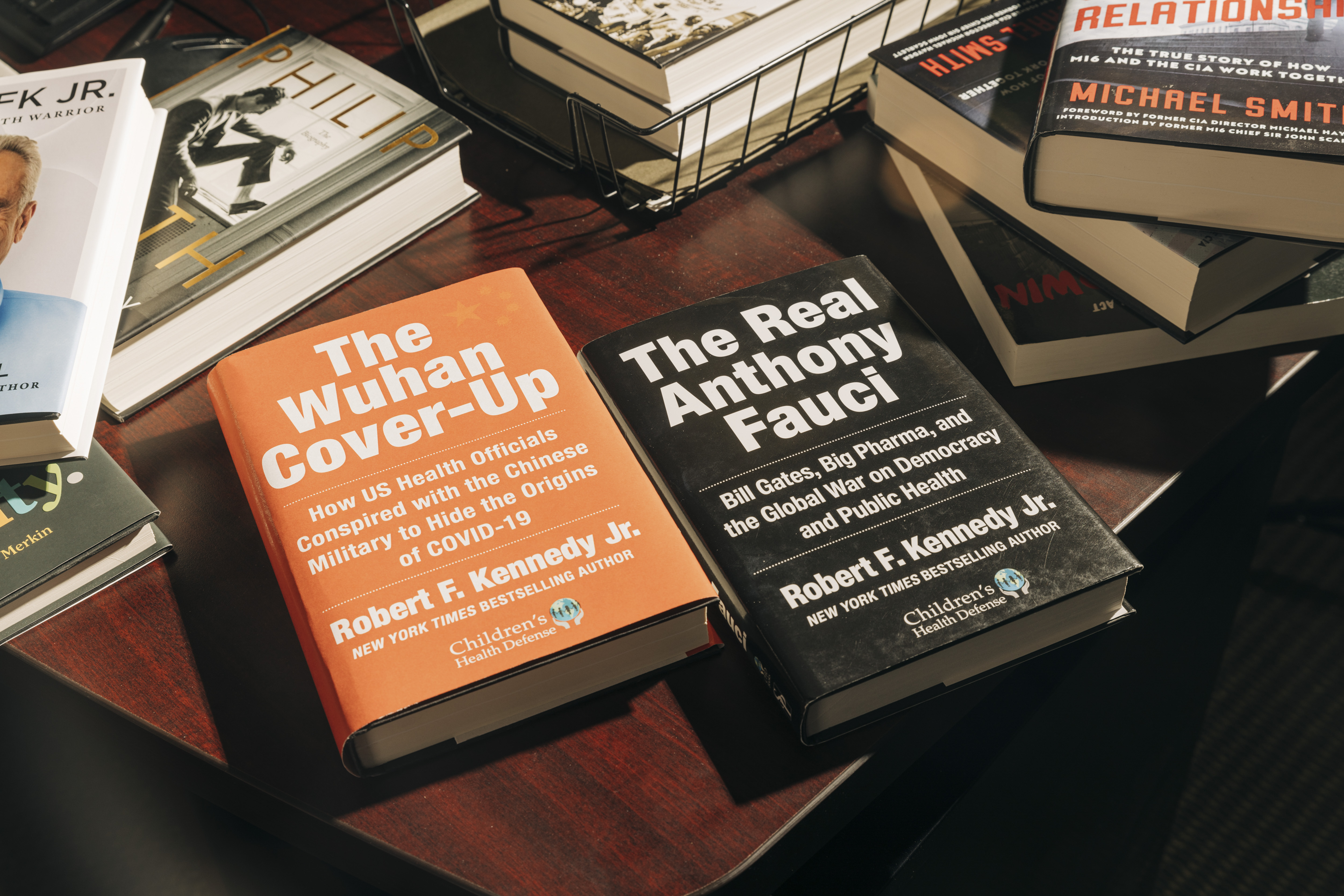
    The advances were for two books that will be published by a company owned by Tony Lyons, a longtime friend and business associate of Kennedy who also sits atop a constellation of MAHA-related entities, including some that accept political contributions and corporate sponsorships from health-related companies.

    Cheryl Hines, Kennedy’s wife, accepted $210,000 in consulting fees from MAHA Action, a nonprofit advocacy group also led by Lyons. It rallies supporters of Kennedy’s priorities on weekly broadcasts and backs health-related legislation, including a federal bill to end liability protection for vaccine makers.

    In an ethics filing before taking office, Kennedy pledged not to “engage in any writing, editing, or promotional activities” associated with the books, but did not promise to forgo advances.

    Ethics experts said the payments related to one book called Unsettled Science raised questions since federal rules say that an official may not “receive compensation from any source other than the government” for writing a book related to his official duties while in office. (The other book is called A Defense of Israel.)

    Additionally, the consulting fees to Hines from a group aligned with Kennedy’s priorities “reeks of conflict of interest,” and could appear to be a bribe, said Richard Painter, a White House ethics counsel under President George W. Bush.

    “You have a situation like this,” he said, “it just looks horrible.”

    Emily Hilliard, a spokesperson for the Department of Health and Human Services, said that Kennedy “complies with all applicable federal ethics laws, regulations, and financial disclosure requirements.”

    She added: “The secretary works with HHS career ethics officials to ensure that his financial interests, gifts, outside activities, and other reportable matters are appropriately disclosed and handled consistent with those requirements.”

    Lyons, who is also a lawyer and one of Kennedy’s staunchest defenders, did not respond to an email and text message seeking comment. Hines could not be reached for comment.

    The annual financial disclosure finalized last week also showed that Kennedy accepted $126,000 worth of lodging in a Washington, D.C., home owned by Gavin de Becker, a longtime friend and who runs a security firm that specializes in protecting high-profile people.

    Previously, de Becker contributed to Kennedy’s presidential campaign and earned money from it to provide a security detail for Kennedy.

    De Becker said that he has no business with the federal government, including the Department of Health and Human Services, and that the arrangement reflected their friendship.

    “Bobby is among my closest friends in the world for many years, and I’m grateful to be able to host him anytime,” de Becker said. “He has hosted my family at his homes, he’s stayed at my homes, we take family vacations together every year, and did so for years before he was in his current job.”

    This past year, the records show that de Becker also paid for nearly $150,000 in airfares for Kennedy: $45,000 for a trip to Greece in July 2025 and nearly $97,000 for a trip to Fiji in November. The flights and book advances were reported earlier by The Wall Street Journal.

    Kedric Payne, a vice president and senior ethics counsel at the Campaign Legal Center, said there were exceptions to federal rules for gifts from friends. But de Becker’s patronage appears to far exceed them, he said.

    “Lavish gifts to an official from major political donors don’t get the same benefit of the doubt as dinner from a former classmate,” Payne said. “The public deserves full transparency about the nature of these gifts and any interests the donor has before the government.”

    Like Lyons, who has a child with autism, de Becker shares Kennedy’s skepticism about the safety of vaccines and has a longstanding publishing relationship with Lyons.

    De Becker has written several books on security but recently began writing about vaccines. His 2025 book, Forbidden Facts: Government Deceit & Suppression About Brain Damage From Childhood Vaccines, was published by Skyhorse, which is owned by Lyons. He has also written the foreword to two books about ketamine, a psychedelic drug that Kennedy has promoted as a therapy for depression.

    Kathleen Clark, an expert in government ethics and a law professor at Washington University in St. Louis, said the gifts created a clear conflict for Kennedy, who oversees an agency reviewing at least one ketamine therapy for approval.

    “By accepting such extravagant gifts from someone with a clearly articulated desire for a particular outcome from H.H.S. as a regulatory agency on these issues,” she wrote in an email, “R.F.K. Jr. has completely destroyed any possibility that the public could be confident that any action H.H.S. takes on these issues — childhood vaccines and ketamine — will be based on the public interest, rather than R.F.K. Jr.’s gratitude to and association with this gift giver.”

    According to the latest financial filing, Lyons and Kennedy reached an agreement over the book advances in August 2024, the same month that Kennedy dropped his presidential bid and backed President Donald Trump.

    Kennedy has written numerous books for Skyhorse Publishing, and worked as a consultant to the company before he became health secretary. In financial disclosures required for his Senate confirmation, Kennedy said he had earned $451,000 as a consultant. Hines also received a $600,000 advance from Skyhorse for her memoir, according to the disclosure.

    The disclosure records said that Kennedy would also be paid $10,000 for a third book called America’s Path Back to Moral Leadership and that two of the three books were already written.

    As Kennedy prepared to join the Trump administration, Lyons began to build an array of MAHA-allied entities, including the MAHA Center, which recently raised funds by selling corporate sponsorships for the MAHA Summit in Washington next week.

    One top sponsor at the event, where senior federal health officials are expected to speak, is the company Grail, which is seeking Food and Drug Administration approval for its multi-cancer blood test. The test performed poorly in detecting cancers in two large studies. Kennedy spoke at last year’s summit.

    Lyons also leads the MAHA Institute, which hosted monthly gatherings through much of last year where prospective donors mingled with Kennedy and other top health officials. Many had official business in front of Kennedy’s department.

    MAHA Action supports legislation, including a bill introduced this year to end vaccine makers’ protection from traditional liability cases, which are handled in a specialized federal tribunal. Kennedy, who has worked as a plaintiff’s lawyer suing over alleged vaccine injuries, has long denounced the protection granted in a 1986 federal law.

    Lyons wears yet another hat as the treasurer of the MAHA political action committee, also allied with Kennedy’s mission, which has raised more than $3 million since January 2025. About one-third of it came from Botanic Tonics, a company founded by Jerry W. Ross, a onetime energy executive who changed his name after pleading guilty to a financial crime.

    The New York Times wrote about Ross’ attempts to influence Kennedy and the Trump administration as he successfully sought a prohibition against 7-OH, a gas station drug that competed with his company’s kratom-based drink called Feel Free. Both kratom and 7-OH have drawn widespread complaints over their potential for addiction and severe withdrawal symptoms.

    At a Senate hearing last year, Kennedy brushed off criticism from Sen. Christopher S. Murphy (D, Conn.) who accused the secretary of being unduly influenced by MAHA PAC donors.

    “Do you have a single instance where the MAHA PAC has taken a position that is not consistent with my values?” Kennedy said. “I don’t run the MAHA PAC. I have no idea who’s contributing to them.”

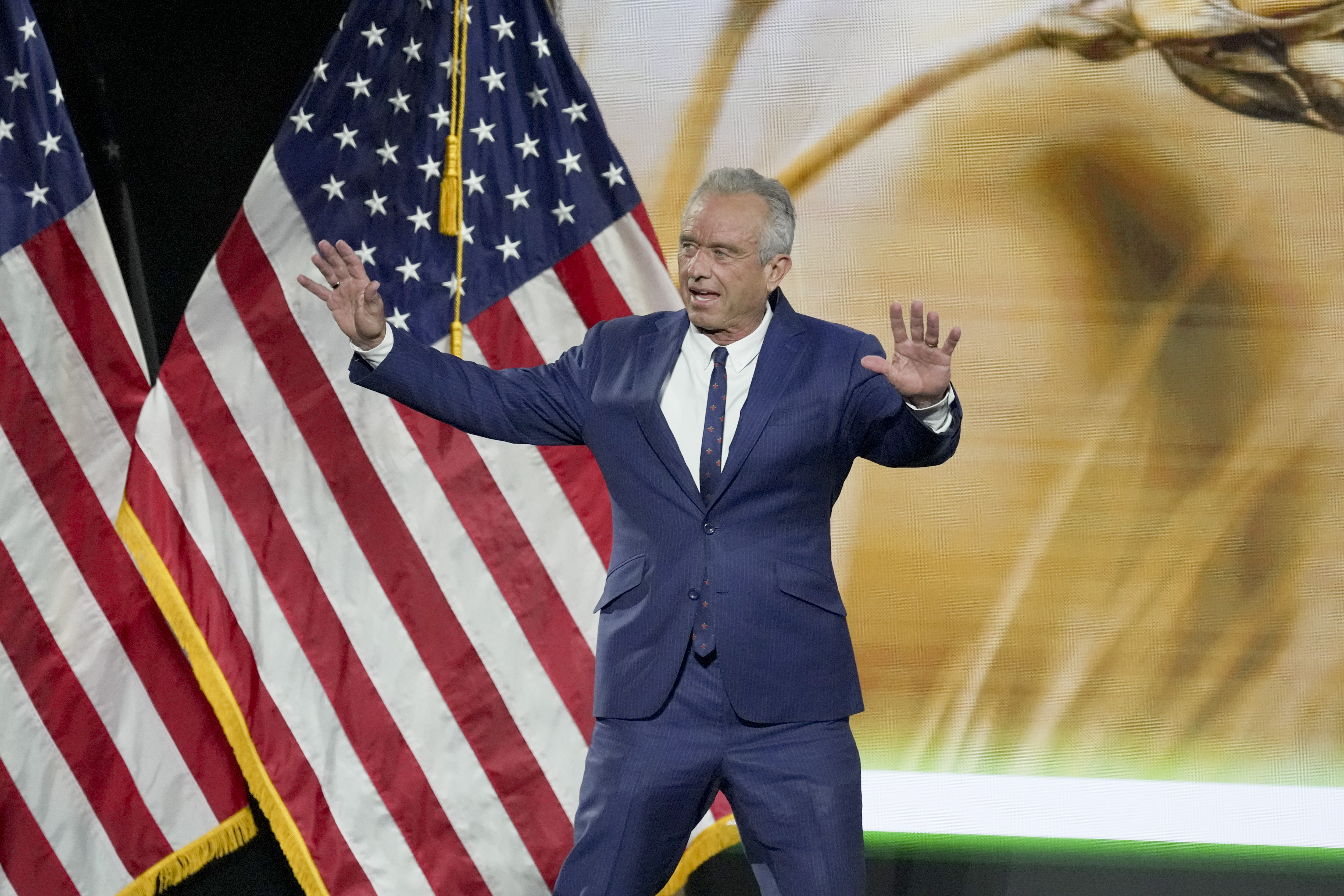
    FILE — Health Secretary Robert F. Kennedy Jr. takes the stage on the second day of the Republican midterm convention at the American Airlines Center in Dallas, Sept. 10, 2026. Health Secretary Robert F. Kennedy Jr. accepted $4 million in book advances and more than $270,000 in gifts over the past year from close allies who are working to advance his Make America Healthy Again agenda, according to his latest financial disclosure form. (Ruth Fremson/The New York Times)RUTH FREMSON
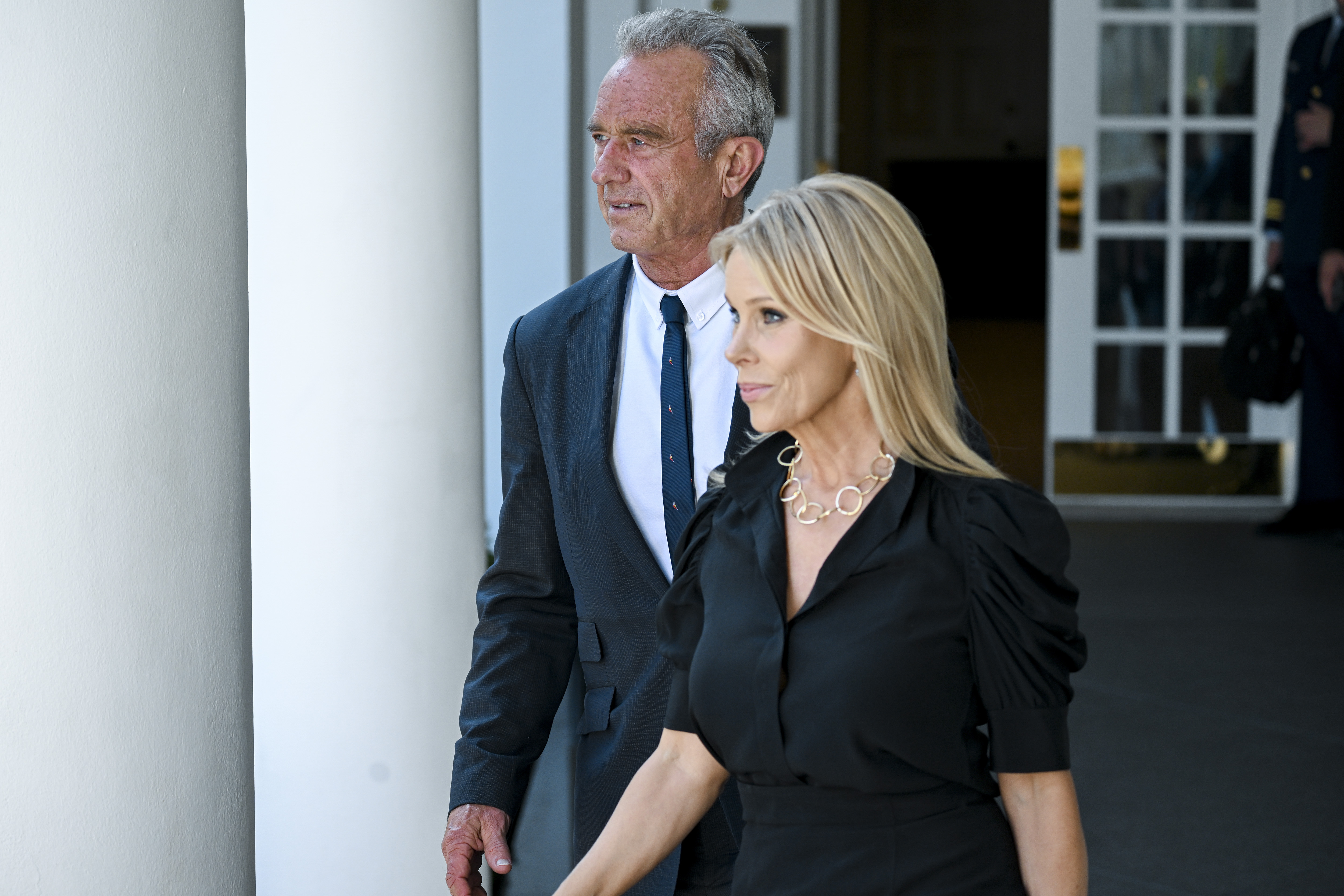
    FILE — Health Secretary Robert F. Kennedy Jr. and his wife, Cheryl Hines, at the White House in Washington, July 23, 2026. A new disclosure shows $210,000 in consulting fees paid to Hines by one of several MAHA-affiliated groups capitalizing from his agenda. (Kenny Holston/The New York Times)KENNY HOLSTON
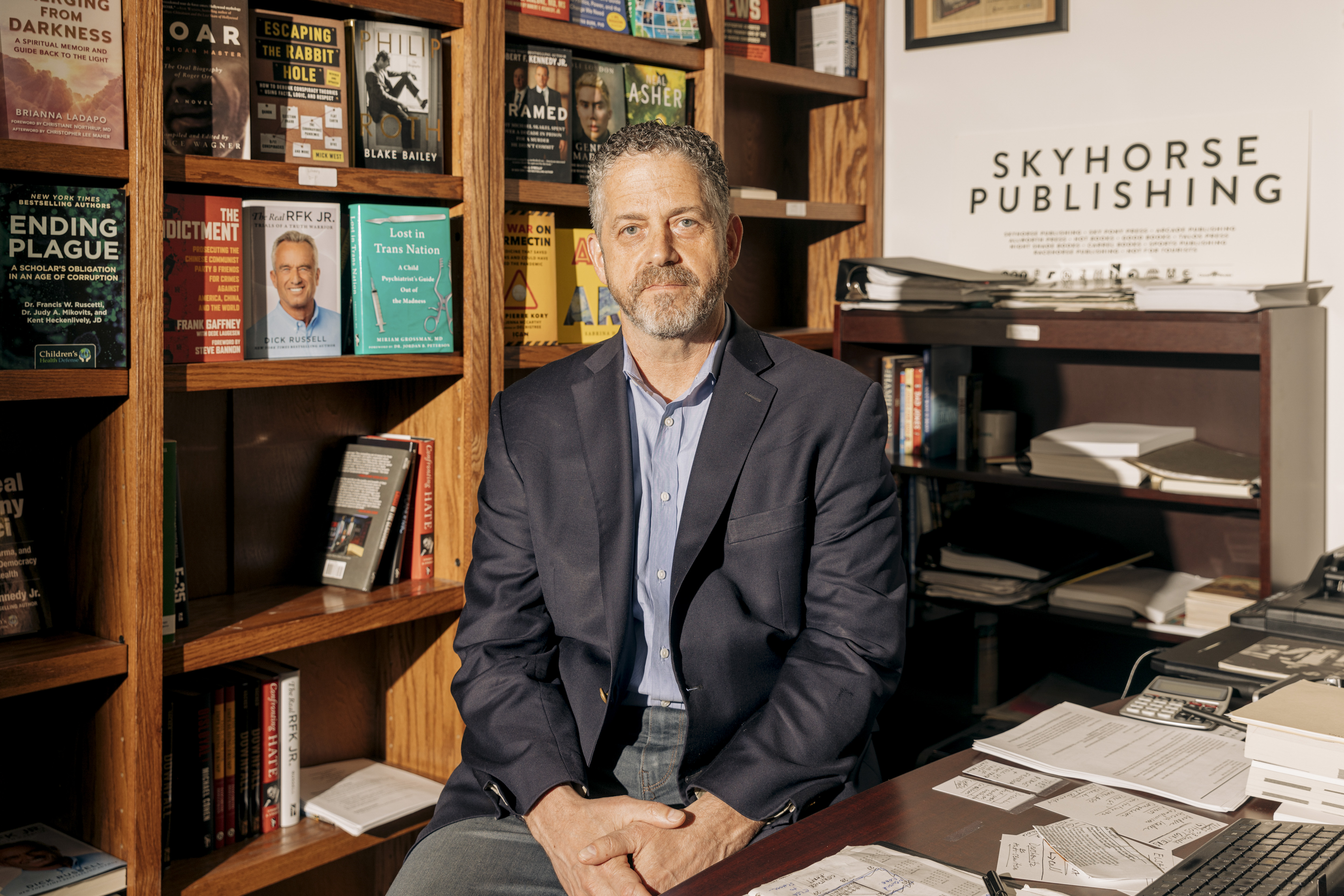
    FILE — Tony Lyons, owner of Skyhorse Publishing in Manhattan, at his office in Manhattan, Aug. 10, 2023. Lyons of Skyhorse Publishing sits atop a constellation of MAHA-related entities, including some that accept political contributions and corporate sponsorships from health-related companies. (Jeenah Moon/The New York Times)JEENAH MOON
  • The former fracking executive selling Trump’s ‘energy dominance’ vision

    The former fracking executive selling Trump’s ‘energy dominance’ vision

    With oil and gasoline prices spiking amid President Donald Trump’s war with Iran, it was an awkward moment for optimism about the world’s energy situation.

    But Energy Secretary Chris Wright brought a sunny message to Houston last week at a gathering of energy ministers from the Group of 20 nations. The Trump administration, he said, was ushering in an era of energy abundance by expanding oil and gas supplies in places like Alaska and Venezuela.

    That pitch was often overshadowed by the effects of the conflict in the Middle East. Between lauding oil and gas deals, Wright fielded questions about a damaged Saudi oil pipeline and sparred on social media with Gov. Gavin Newsom of California, a Democrat, over surging gasoline costs.

    Wright acknowledged some tension, though he insisted it was temporary.

    “Everyone’s frustrated with higher energy prices,” he said of the mood at the meeting. “But I’ve not met one person who’s comfortable with a nuclear-armed Iran. So everyone gets what we’re doing and this is a critically important mission. It creates dislocations in the short term. But the only answer to short-term dislocations is the energy abundance agenda.”

    The situation was familiar for Wright, 61, one of the most forceful defenders of Trump’s vision of “energy dominance.”

    Over the past two years, the administration has dismantled efforts to tackle climate change and ended support for wind and solar power. Instead, officials have sought to expand the use of oil, gas, coal, and nuclear energy — sources they see as more reliable. The aim, they say, is to reduce consumer prices, increase U.S. fuel exports, and provide enough electricity to win the artificial intelligence race against China.

    Wright, a former fracking executive, has been out front in articulating that shift.

    Whereas Trump speaks bluntly about energy — chanting, “Drill, baby, drill”; calling wind turbines ugly; or claiming that global warming is a hoax — Wright gives his arguments an intellectual gloss.

    He cites figures on how solar panels underperform during winter storms. Or he argues that global warming is not as big a problem as energy poverty, which he says can only be alleviated with more oil, gas, and coal, even if that means more planet-heating greenhouse gas emissions.

    Administration allies say that has made Wright invaluable.

    “He has been one of the most consequential picks for energy secretary I’ve seen,” said Thomas J. Pyle, president of the American Energy Alliance, a research group that promotes fossil fuels. “He’s very experienced, brings a lot of substance, and he articulates President Trump’s vision clearly.”

    Critics say Wright’s approach ignores the real risks of climate change and dismisses two of the world’s fastest-growing power sources: wind and solar. They also point to rising energy costs — diesel prices have hit record highs, and electricity rates are still increasing faster than inflation — as evidence that the administration’s policies aren’t working.

    During his Senate confirmation hearing last year, Wright appeared to reassure lawmakers that he supported all energy sources, including renewables. He cited his graduate work on solar power and called climate change a “global challenge that we need to solve.”

    But since taking office, he has been more combative, deriding wind and solar power as a “parasite” on the grid, blasting Democratic-led states for environmental policies that have shut down coal and gas plants, and accusing Europe of being in thrall to a “climate cult” that is limiting economic growth.

    The Energy Department infuriated Democrats in Congress last October by canceling nearly $8 billion in Biden-era clean energy grants located almost entirely in states that didn’t vote for Trump. Asked about the decision at a June congressional hearing, Wright said political considerations had nothing to do with the decisions.

    But in court filings in July, administration officials conceded that the cancellations were targeted in states that were represented by Democrats and had voted for Kamala Harris, the party’s presidential nominee, in the 2024 election.

    Energy Department officials have said that they recommended that grants be canceled in red and blue states alike but that the decisions on which terminations to announce were made by the White House.

    Sen. Martin Heinrich of New Mexico was one of eight Democrats who voted to confirm Wright last year but has since become a vocal critic.

    “Of all the Trump nominees, I am particularly disappointed in his conduct,” Heinrich said. “He obviously had an oil and gas history, but he also had a clean energy history. And he just threw all of that away to be a partisan mouthpiece.”

    In response, Ben Dietderich, an Energy Department spokesperson, said in a statement, “Secretary Wright doesn’t have preferred energy sources. He just believes in being honest about math and energy security. Unfortunately, many in the climate lobby don’t like that. The Department is proud to have ended energy subtraction policies that lead to higher prices, less energy security and human impoverishment.”

    Wright first gained prominence as the founder of Liberty Energy, a Denver-based oil-field services company that was heavily involved in the fracking boom.

    Even among oil and gas executives, Wright stood out as an evangelist for fossil fuels. In 2021, as world leaders and even many oil companies were pledging to slash emissions, Wright published a 180-page report criticizing what he saw as a “myopic focus on climate change.”

    He argued that people in developing countries still lacked enough energy to enjoy a decent standard of living and that renewables couldn’t replace oil, gas and coal to provide that power.

    “At the height of this era when everyone was saying energy policy should just be about climate, Chris Wright was one of the few CEOs that ran oil and gas firms who clearly and vocally spoke out,” said Arjun Murti, a partner at the energy research firm Veriten.

    Wright also had a flair for the dramatic. He once drank fracking fluid on video to show it was safe. In 2021, he rented billboards around Denver to heckle The North Face after the company declined to work with an oil firm.

    He landed appearances on Fox News and won the job of energy secretary on the recommendation of Harold Hamm, a fellow fracking pioneer and major donor to Trump.

    Wright quickly transformed the department. Out were programs to develop novel technologies to fight climate change, like green hydrogen or low-emissions steel. Instead, federal funds went to help utilities finance gas plants, nuclear reactors and transmission lines or upgrade older coal plants, which officials say are essential for meeting rising electricity demand.

    Wright also lifted a Biden-era pause on expanding exports of liquefied natural gas, now the nation’s fastest-growing export, and has pressured Europe to ease rules on methane, a potent greenhouse gas, saying they could hurt U.S. exports.

    “He brought a whole new attitude to the agency,” said Scott Segal, an energy lobbyist at Bracewell. “It’s all about how do we produce enough energy to support AI and economic growth.”

    Some changes have attracted bipartisan support, such as Wright’s promotion of nuclear and geothermal energy, which don’t produce planet-warming emissions. His agency has dangled billions of dollars in loans to kick-start the largest expansion of nuclear power in a generation, while a program to help startups develop small reactors has moved faster than many expected.

    Other moves have been more contentious.

    To rescue the declining coal industry, an obsession of Trump’s, the Energy Department used emergency powers to keep plants running past their scheduled retirement dates, which could cost ratepayers billions. (This month, a federal judge struck down one such order, saying the agency had overstepped its authority.)

    Last year, Wright picked five skeptics of mainstream climate science to write a report arguing that concerns about global warming were overblown. That report prompted furious pushback from hundreds of scientists, who denounced its findings as riddled with errors. A federal judge later ruled that Wright had acted unlawfully by secretly convening the authors.

    Wright, who often criticizes wind and solar for not running at all hours, has cut renewable energy programs and renamed the National Renewable Energy Laboratory as the National Laboratory of the Rockies. While experts agree that the variability of wind and solar poses real challenges, many say it goes too far to call the sources “worthless.” Texas gets roughly one-third of its power from renewables and has kept costs low.

    “It’s borderline petty how anti-renewable this Energy Department is,” said Samantha Gross, a director at the Brookings Institution. “Especially since we’re still building more renewables, particularly solar, than any other form of energy in the U.S. right now.”

    Roughly 2,700 staff members have left the agency, which analysts and former employees said could make it difficult to carry out its mission.

    Wright’s supporters say he has helped steer the country away from what they saw as the Biden administration’s unrealistic plans to rapidly phase out fossil fuels.

    Some say the debate is shifting in his direction. Many states and businesses are backing off ambitious climate targets, and Democrats are less vocal nowadays about climate change. Tech companies are using more natural gas to meet exploding demand for data centers. The International Energy Agency, after some browbeating by Wright, is revising up its projections for how long fossil fuels will stick around.

    “There’s been a real shift in how investors and others now talk about energy,” said Travis Fisher, a director of energy and environmental studies at the libertarian Cato Institute who worked with Wright to organize the agency’s climate report. “Climate has become a lot less salient.”

    The administration’s strategy faces its biggest test yet with the Iran war. While The New York Times reported that Wright was excluded from the decision to launch the war, he has been busy managing the energy fallout. He often appears on television to discuss U.S. military escorts of oil tankers through the Strait of Hormuz. And he is quick to counter that Democratic-led states face high energy costs because of decisions to close refineries or oppose pipelines.

    In the short term, the war and resulting energy shortages have benefited many U.S. suppliers, which are exporting more oil and gas than ever before. But in the long term, some experts and companies worry the chaos could hurt the market for fossil fuels as countries seek to reduce reliance on energy imports.

    Wright, for his part, says fossil fuels are too useful to recede anytime soon.

    “We will never, ever come remotely close to running out of hydrocarbons, which means you need better technology and innovations to eventually eat into their market share,” Wright said at a Cato event in May.

    He said he was excited about recent breakthroughs in areas like fusion. But, he added, “the biggest innovations the rest of my lifetime in energy are almost certainly going to be in oil, gas and coal, because they are what matter.”

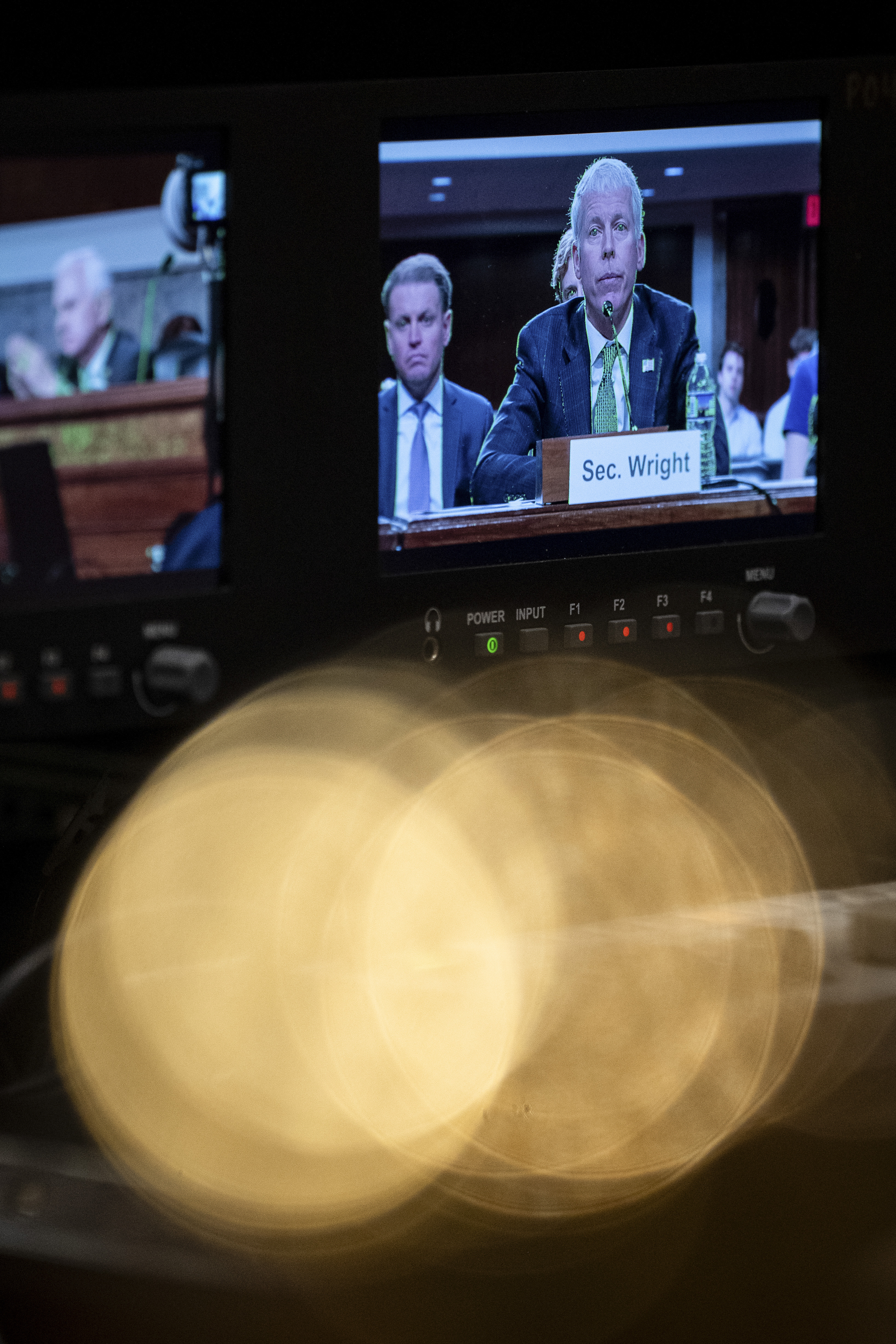
    FILE — A monitor shows Chris Wright, the Trump administration’s Energy secretary, at a hearing on Capitol Hill on May 13, 2026. Wright, a former fracking executive, pitches a future of fossil fuel abundance. It hasn’t always been an easy sell as the war with Iran drags on and oil prices surge. (Haiyun Jiang/The New York Times)HAIYUN JIANG
  • Trump officials may undo nursing home mandates for reporting COVID

    Trump officials may undo nursing home mandates for reporting COVID

    Nursing homes would no longer be required to report each week how many residents were stricken by COVID-19 and other respiratory diseases, under a Trump administration plan to repeal a key public health response to thousands of pandemic deaths.

    A draft summary of the proposed rule obtained by The New York Times outlines how the administration agrees with the industry’s objections to weekly reporting of viral caseloads, calling it burdensome. In its waning days, the Biden administration made COVID reporting rules permanent, adding influenza and respiratory syncytial virus to the list of threats that facilities also must track and record. The policy took effect in January 2025.

    Advocates for nursing home residents reacted with dismay to the proposed rollback. Elderly, frail residents are especially vulnerable to infections, and they live in close quarters, where viruses can spread rapidly.

    “That’s crazy,” said Sam Brooks, director of public policy at the nonprofit National Consumer Voice for Quality Long-Term Care. “We know, if anything, that respiratory disease has a disproportionate and deadly impact on nursing home residents.”

    He said the Centers for Medicare and Medicaid Services, or CMS, which regulates nursing homes, would be blinding itself to an important method for tracking infection control and pinpointing problems.

    The administration has cut back on data updates at other agencies, including the Centers for Disease Control and Prevention, where a study published this year found that databases related to vaccine and respiratory diseases had gone dormant.

    Nursing home industry representatives declined to comment on specifics, because the changes have not been announced. They contend infection reporting consumes too much staff time and is duplicative, because infection data is reported to the federal government and states in other ways.

    CMS, which drafted the plan, declined to discuss the proposal or disclose when it would be made public.

    During the peak years of the pandemic, from early 2020 through early 2022, more than 200,000 nursing home residents and staff members died after being infected by coronavirus, according to KFF, an independent health policy organization, which cited CDC data.

    The high death toll has been attributed in part to a lack of preparedness and weak infection controls. The Government Accountability Office said in 2020 that inspectors had cited 82% of nursing homes for infection control deficiencies from 2013 to 2017, and that half of those were found to be repeat violators.

    In the internal document obtained by the Times, Dr. Mehmet Oz, the director of CMS, recommended to his boss, Health Secretary Robert F. Kennedy Jr., that the agency pursue steps to undo the mandate.

    “The agency does not comment on purported internal or predecisional deliberative materials,” a CMS a spokesperson said in an email. He said the agency evaluated regulations to ensure they “allow providers to focus time and resources on delivering care rather than unnecessary administrative burden.”

    The draft memo from Oz to Kennedy said CMS would reserve the power to reinstate weekly reporting if another public health emergency occurred.

    The plan also would end a requirement that nursing home staffs be educated about COVID vaccines and offered the shots. Groups representing residents called the move unwise, pointing out that front-line caregivers were a key pathway for the coronavirus to enter nursing homes during the height of the pandemic. COVID vaccine rates among staff members in recent years have been below 10%, the CDC has reported.

    The administration plan would continue to mandate that facilities offer the COVID vaccine to residents.

    The nursing home industry has already achieved its biggest goal of President Donald Trump’s second term: After a heavy lobbying blitz, the administration last year scrapped Biden-era minimum staffing rules that were intended to improve resident care.

    Biden officials, in pushing the staff minimums, had cited COVID deaths along with decades of concerns about poor care, including deaths from bedsores, falls and medication errors. But the Trump administration said too many nursing homes, especially in rural areas, could not find enough staff to satisfy the requirements. Many workers who care for the elderly are typically paid less than janitors and retail employees, and the work can be grueling.

    With the proposed change on infection reporting, the administration anticipates favorable reaction from the industry, according to the draft memo.

    Two main nursing home lobbying groups — the American Health Care Association and LeadingAge — reiterated their opposition to weekly respiratory infection reporting, saying that other government programs track COVID infections and that respiratory illnesses are reported to many local health departments.

    “This outdated reporting requirement is only adding hours of unnecessary administrative tasks to caregivers each week” said Holly Harmon, the American Health Care Association’s senior vice president of quality, regulatory and clinical affairs. “It’s time to streamline public health reporting and put patients over paperwork.”

    But industry critics contend that operators are failing to heed the lessons of the pandemic. With low staffing levels and high turnover, infection control efforts are most likely in line with the prepandemic patterns flagged by the GAO, said Toby Edelman, senior policy attorney at the Center for Medicare Advocacy.

    “I don’t think there is any reason to believe they have beefed up what they are supposed to be doing,” Edelman said.