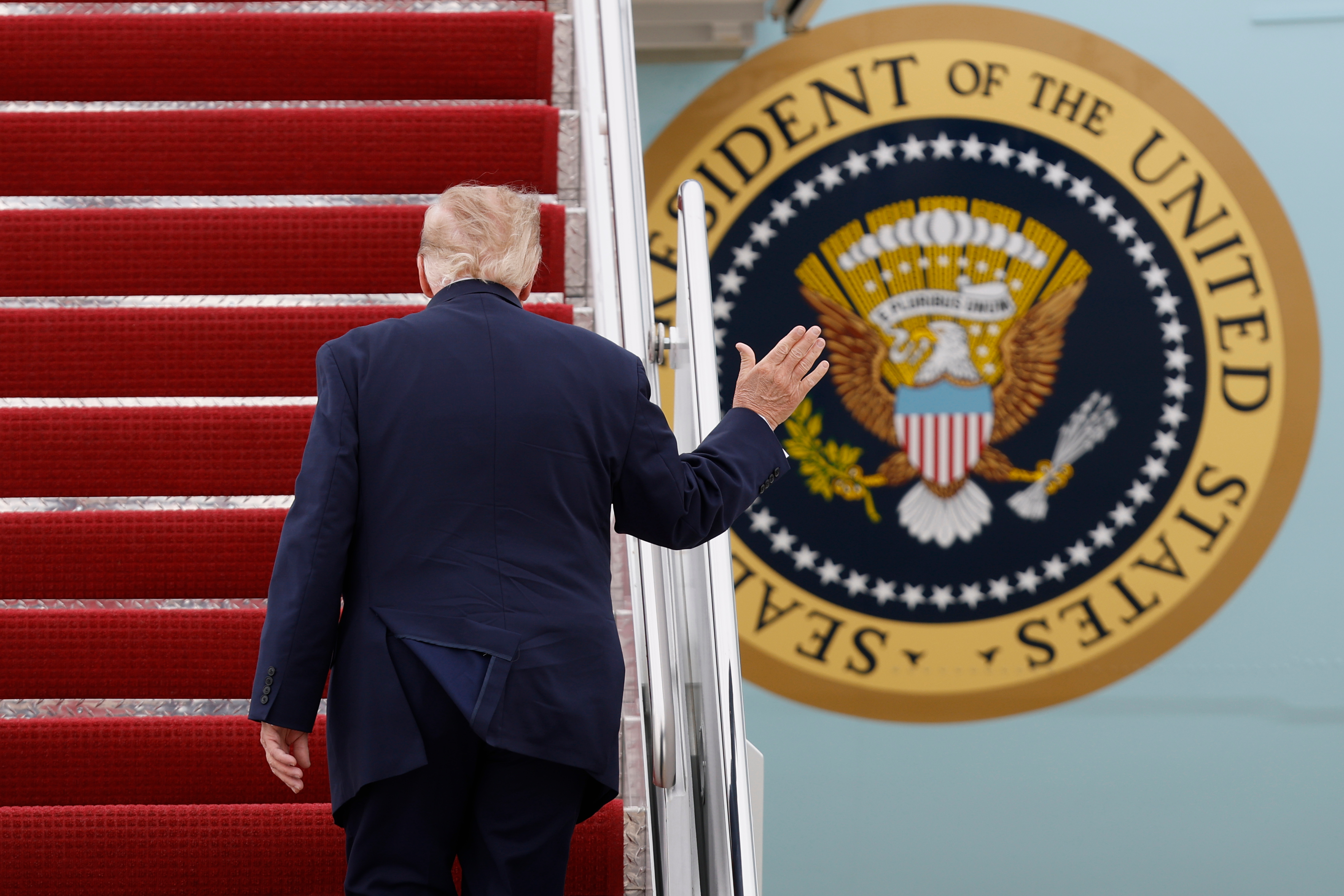
Category: New York Times

  • Fire, smoke and desperation after a strike in the heart of Kyiv

    Fire, smoke and desperation after a strike in the heart of Kyiv

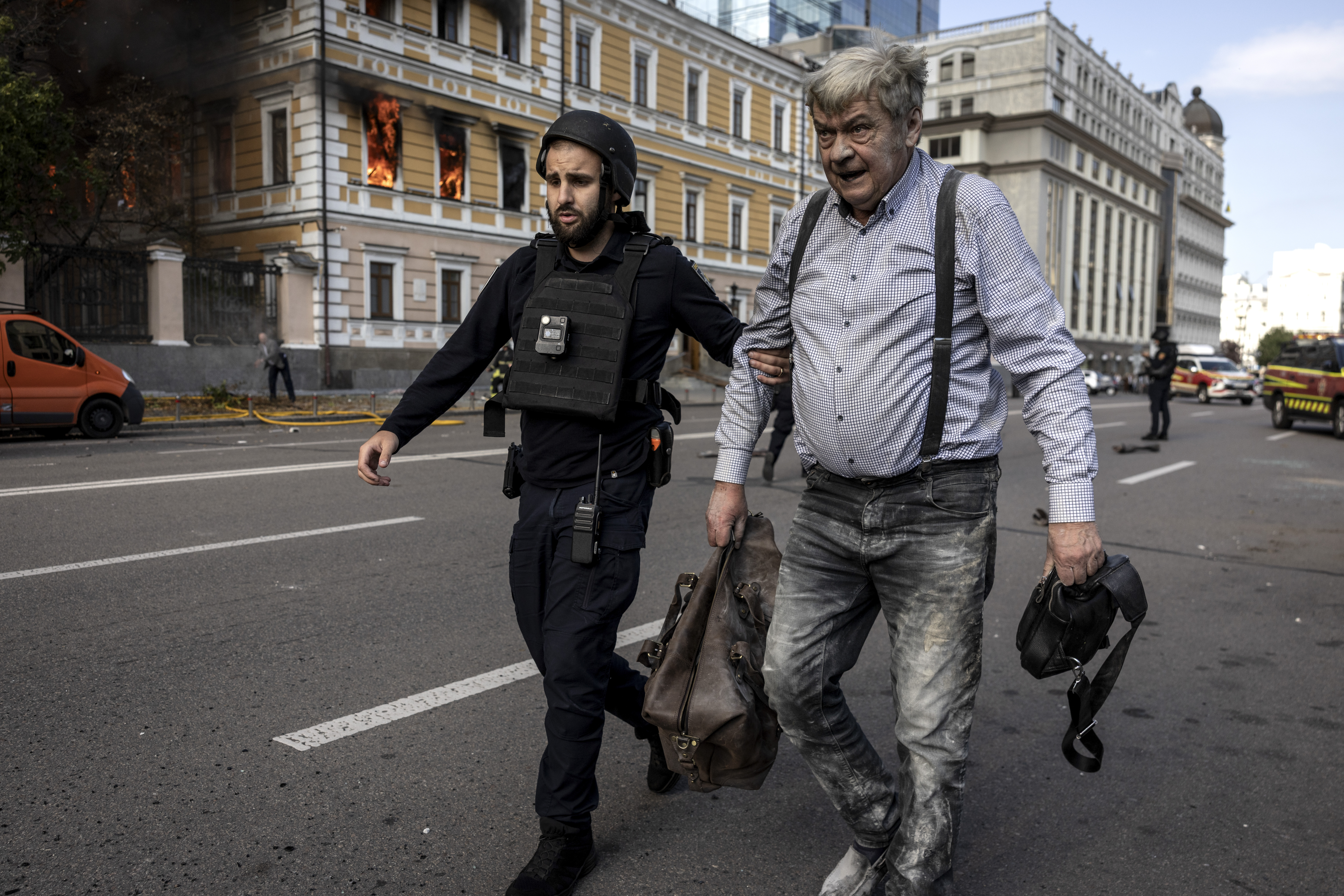
    KYIV, Ukraine — In the middle of a workday, in the middle of the Ukrainian capital, a Russian jet-powered drone struck the National Academy of Sciences on Monday, setting the top two floors on fire and forcing people to crawl out of windows to await rescue.

    As firefighters worked to put out the blaze, employees of an institution that has accounted for almost all major scientific discoveries in Ukraine had to climb down ladders to reach safety.

    The drone hit just before 1:30 p.m. Kyiv time, when people at the academy were on lunch break, but most were eating in their offices. The injured were treated on the sidewalk outside the building — a yellow, pink, and white architectural landmark originally designed in the 1850s to be a countess’ boarding school for girls.

    “My office is gone now,” said Vira Yevhrafova, 65, deputy chief scientist at the academy. “It was on the second floor — everything has collapsed, everything.”

    Russia has been pounding Kyiv around the clock for weeks with new jet-powered drones, which have proved difficult to knock down with Ukraine’s current air defenses. Daily life in the capital is now punctuated by the rat-a-tat of air-defense guns, followed by a drone hitting something — a data center, a random street, a gas station, a warehouse, a high-rise building.

    The attack Monday killed at least one person and injured six. One man was missing. It is a typical toll for these drone strikes, now so regular they barely make the international news unless the images are particularly dramatic. The daughter of the woman who died showed up at the building and burst into tears. She was sad and angry but had nothing else to say.

    Ukrainians lamented the sight of brilliant scientific minds fleeing their burning offices. “What an idiotic war,” Andriy Kovalenko, a lieutenant in Ukraine’s military and a former government official, posted on social media along with a photo of two people crawling out of windows.

    The attack on the sciences academy was just the start of a busy day for rescue workers and military drone interception teams. Less than two hours later, another drone hit a clinic about a mile south. An hour after that, a drone was intercepted right as it hit a nearby building.

    After yet another fatal strike in Kyiv, with yet another body covered by a sheet and then carted away, Ukrainians again took stock of Russia’s effort to bomb them into submission.

    “I think what they want now is to frighten us and bring our lives to a halt,” said Vira Balanovska, 43, who walked with her 9-year-old daughter past the burning academy. “It’s not just about attacking warehouses so that we won’t have food. They also want to intimidate us — to make it so that we can’t work, study, do scientific research, or really do anything at all.”

    This article originally appeared in the New York Times.

  • The big question looming over Brazil’s elections: Trump’s next move

    The big question looming over Brazil’s elections: Trump’s next move

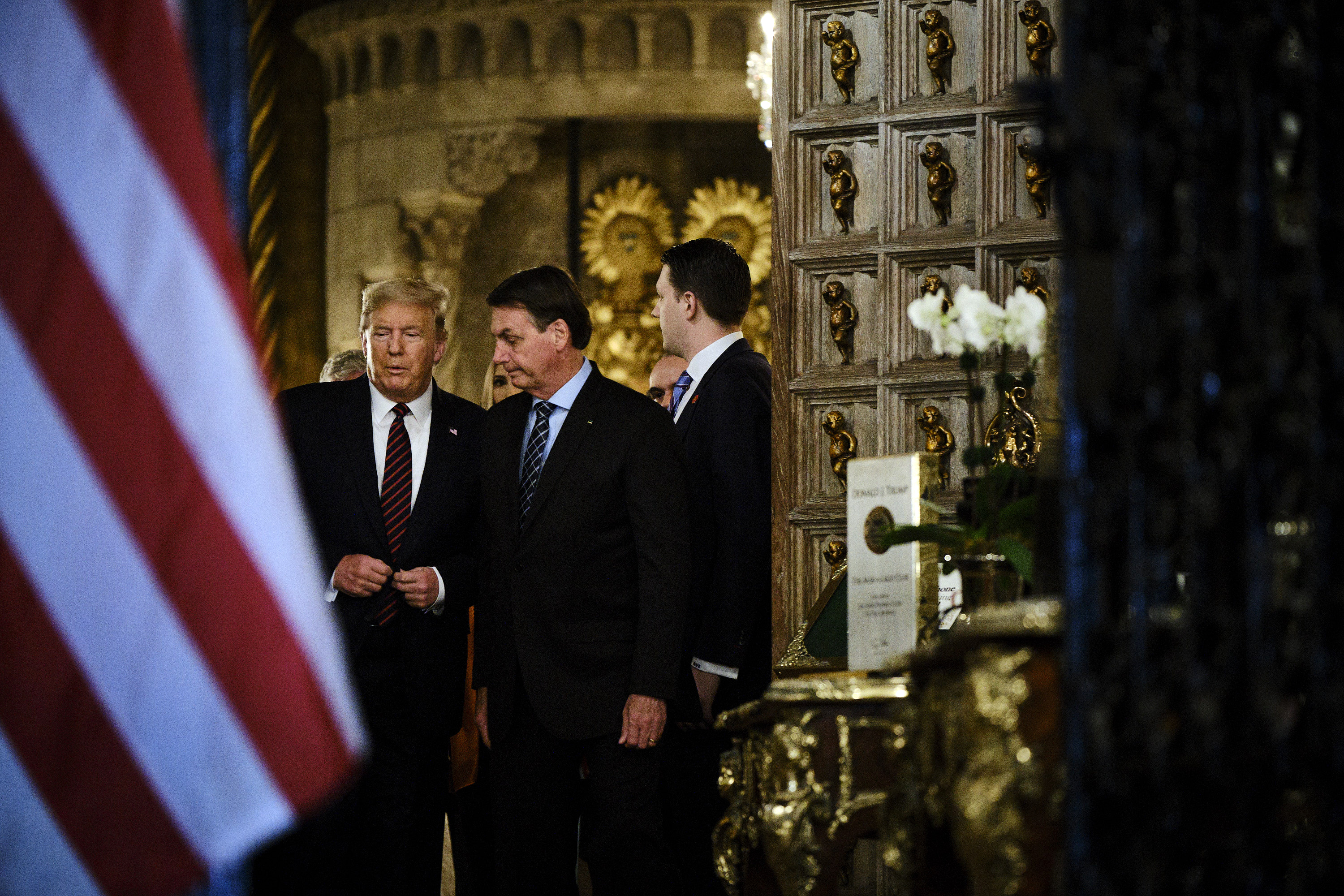
    BRASÍLIA, Brazil — Since taking office, President Donald Trump has become an electoral kingmaker in Latin America. Right-wing candidates aligned with Washington have won the past seven elections in the region, with Trump explicitly endorsing the winner in two of them.

    “We’re doing very well in South America,” Trump told reporters this month. “Lots of people that I got elected.”

    Now comes the biggest regional test for the right and for Trump’s record of success: Brazil.

    As Brazilians prepare to head to the polls, the question looming over Latin America’s largest democracy is whether Trump will try to influence its presidential election next month.

    The American leader has not openly championed any Brazilian candidate. But the Trump administration has in more subtle ways lifted the right-wing challenger, Flávio Bolsonaro, who is running against President Luiz Inácio Lula da Silva, a leftist.

    Having watched Trump wade into other elections and experienced his failed attempt to help Bolsonaro’s father avoid prison for plotting a coup, Brazil is erecting a firewall to try to shield its high-stakes vote from potential U.S. meddling.

    The efforts include monitoring foreign lobbying and disinformation, fighting false claims about electoral fraud, and enlisting the support of countries in Europe, Asia, and elsewhere.

    This article is based on interviews with more than a dozen Brazilian government and electoral officials, law enforcement officers, intelligence agents, and foreign diplomats. Many spoke on the condition of anonymity because they were not authorized to speak publicly.

    Bolsonaro’s campaign and the State Department did not immediately respond to a request for comment.

    The concern for many in Brazil is that, in a narrow contest where polls show Bolsonaro and Lula practically tied, a helping hand from Trump could tip the scales in the challenger’s favor.

    The Trump administration has rejected Brazil’s claims that it is seeking to interfere, even though it tried this summer to send a U.S. delegation to investigate Brazil’s electoral integrity.

    American help, Brazilian officials said, could come in the form of more measures to hurt Lula’s image. Trump used sanctions and tariff threats in an attempt last year to save Jair Bolsonaro, Flávio Bolsonaro’s father, who tried to cling to power after falsely claiming the last election was stolen. That failed, and he was sentenced to 27 years.

    Many also worry about online campaigns from abroad aiding Bolsonaro.

    A recent wave of paid social media posts, shared by prominent U.S. right-wing accounts, added to those fears. The posts amplified claims by Polymarket, the predictions market backed by Donald Trump Jr.’s venture capital firm, that Bolsonaro stood staggering chances of winning, deviating wildly from polls showing no clear front-runner.

    Lula, among the few world leaders to take on Trump, has made clear he is prepared to defend his country’s interests.

    “The Americans better not come trying to influence our elections,” he said this month. “Trump should mind his own country’s business.” Speaking at the United Nations last week, he blasted foreign meddling into his country’s sovereign affairs, without naming the United States: “Brazil is nobody’s backyard.”

    He also launched a searing campaign video accusing the Trump administration, without offering evidence, of helping his rival and interfering in Brazil’s elections with an eye to seizing its natural resources.

    Brazil, a vast nation of 210 million, has an economy powered by commodities the world needs and institutions that are not afraid to push the limits of democracy in the name of saving it.

    “Wherever the threat may come from, we have the tools to defend ourselves,” said Gilmar Mendes, Brazil’s longest-serving Supreme Court justice. “If necessary, there will certainly be a forceful response.”

    The Trump factor

    Worried about campaigns orchestrated from abroad, Brazil’s intelligence agencies have made combating foreign manipulation through social media a top priority.

    The court that oversees elections has also set new rules for electoral misinformation, asking companies such as Google and Meta to submit plans for combating misleading videos and posts generated by artificial intelligence.

    And, amid renewed attacks by Bolsonaro’s allies in Brazil and abroad about the credibility of the country’s voting systems, authorities began a major campaign, complete with a mascot, aimed at strengthening trust among voters, diplomats, and international observers.

    A win by Bolsonaro would bolster ambitious plans laid out by Washington to expand its influence in Latin America through right-wing allies.

    “Under our new national security strategy, American dominance in the Western Hemisphere will never be questioned again,” the State Department said in a recent, lengthy video.

    Brazil represents the biggest remaining prize. As president, Bolsonaro would more likely align with the United States on issues including organized crime and critical minerals. (Lula has said Brazil would not hand over its natural resources.)

    And leaked documents written by an ally of Bolsonaro, reported by Brazilian media and reviewed by the New York Times, suggest people close to the candidate may have proposed giving the United States access to Brazil’s critical minerals in exchange for support. The document’s author acknowledged producing it, but denied that they wrote it on behalf of Bolsonaro’s campaign or that it was shared with U.S. officials. Bolsonaro’s campaign did not immediately respond to questions about the document.

    U.S. Secretary of State Marco Rubio has cast Brazil as unfriendly to American interests, lumping it in with U.S. adversaries like Cuba and Nicaragua.

    Many in Brazil have bristled at the idea that Trump, who was once recorded asking a state election official in Georgia to “find” more votes, should be stepping into another nation’s elections.

    “With all due respect,” said Mendes, “the United States has no lessons to teach us when it comes to electoral systems.”

    American help

    In Brazil, worries about American meddling have dominated political discourse and editorial pages for months. And to many, the Trump administration has already been propping up Bolsonaro’s candidacy in indirect ways.

    At a time when Brazilians are deeply worried about security, Trump yielded to lobbying by Bolsonaro to designate two Brazilian gangs as terrorist groups.

    The administration also tried to send U.S. envoys to meet Bolsonaro in Brazil and investigate the country’s voting systems, which prompted Brazilian officials to block the visits.

    If his son, Flávio, loses, there are signs the candidate could launch similar claims of electoral cheating — and his allies expect to find a sympathetic ear in Trump.

    After the last election, President Joe Biden recognized Lula’s victory within hours. Even so, Bolsonaro’s claims of fraud inspired his supporters to storm the capital, in a riot reminiscent of the Jan. 6 attack on the U.S. Capitol.

    Counterattack

    International experts agree Brazil’s electronic voting machines, a frequent target of Bolsonaro’s movement, are some of the most secure in the world.

    Yet a poll last month showed 34% of Brazilians distrust the voting machines, up from 20% in 2022.

    The electoral court has invited political parties and hackers to test the machines and greatly expanded randomized auditing.

    On a recent weekday at the electoral court, social media influencers snapped selfies with an election mascot shaped like a voting machine. The court also hosted more than 80 diplomats for a workshop touting Brazil’s electoral system.

    “We opened our doors to the world,” said Justice Kássio Nunes Marques, the chief of the electoral court. “We went about dismantling every argument.”

    And with U.S. support no longer a given, Brazil has worked to shore up international backing elsewhere.

    Diplomatic missions from the European Union, Canada, Japan, Australia, and other countries, worried about interference from Washington, are holding informal talks on how to jointly respond after the election, according to three senior foreign diplomats.

    These diplomats said allies are likely to quickly defend the vote’s integrity no matter who wins, but they also worry about displeasing Washington.

    This article originally appeared in the New York Times.
  • Andrew Bailey, a deputy director at the FBI, leaves his job

    Andrew Bailey, a deputy director at the FBI, leaves his job

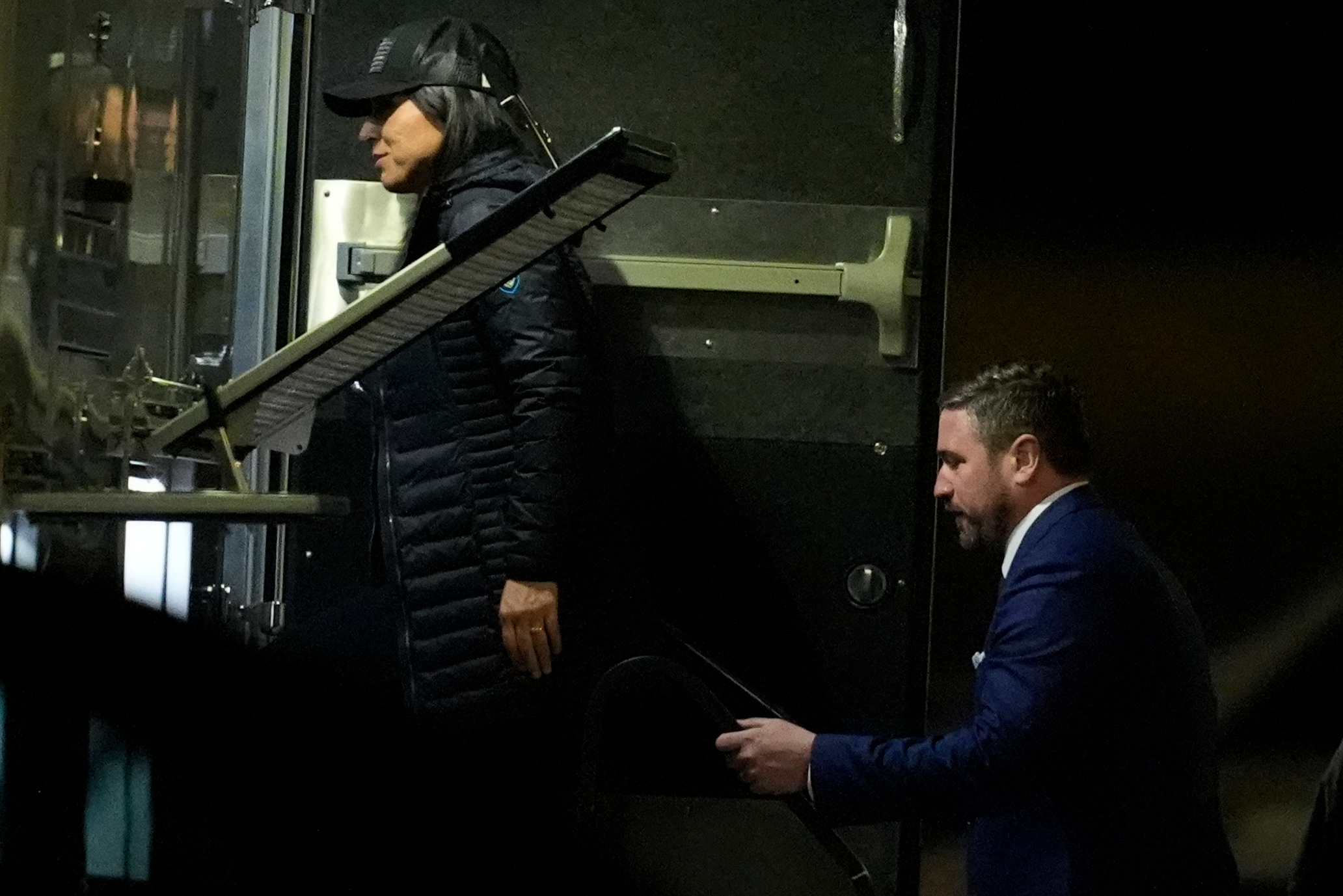
    WASHINGTON — Andrew Bailey, who has served as deputy director of the FBI as part of an unusual leadership arrangement, is leaving the job after a little more than a year, the second such departure amid the turbulence in federal law enforcement agencies under the Trump administration.

    An internal FBI email indicated Bailey was stepping down for family reasons, according to people familiar with the decision who spoke on the condition of anonymity to describe a move that was not yet public. In recent months, people familiar with the inner workings of the agency have described the arrangement between Kash Patel, the director, and his two deputy directors — Bailey and Christopher Raia, a longtime FBI agent and manager — as rocky.

    Patel and Bailey did not get along and often went long stretches without speaking to each other, according to multiple people familiar with their interactions who spoke on the condition of anonymity.

    For decades, the bureau has operated with a single deputy director, a career FBI official overseeing daily operations and reporting to the director, who is appointed by the president. But President Donald Trump upended that tradition by naming right-wing podcaster Dan Bongino, who had been a Secret Service agent but had no experience at the FBI, as the No. 2 to Patel. In essence, that put two firebrand influencers with scant management experience atop the 35,000-person agency.

    Patel and Bongino had a sometimes strained relationship with Trump’s first attorney general, Pam Bondi, whom they blamed for mishandling the release of files related to disgraced financier Jeffrey Epstein. She in turn complained about Patel’s management of the bureau, including his propensity to post premature or inaccurate information about continuing operations.

    In August 2025, the Trump administration announced a novel arrangement, saying that Bailey would come in as a co-deputy director alongside Bongino. At the time, Bailey was serving as the attorney general in Missouri, a post he had used to pursue Republican lawsuits related to culture-war issues.

    Many agents inside the bureau believed that Bondi, a former Republican state attorney general, had brought in someone to serve as director in waiting if Trump ever tired of Patel. But Trump fired Bondi in April, and Patel outlasted Bailey.

    In the interim, Patel had sidelined him, and Bailey left little imprint from his year at the bureau. His appearance when the FBI executed a warrant to see 2020 ballots from Fulton County, Ga., was notable not just because of the legal and political dispute over the inquiry — an effort to press on with Trump’s baseless rigged election claims — but because it was extraordinarily rare for Bailey to play a visible role in any operation.

    This article originally appeared in the New York Times.
  • A Trump 2024 campaign ad returns, now brought to you by the government

    A Trump 2024 campaign ad returns, now brought to you by the government

    As President Donald Trump ran to return to the White House in 2024, his campaign released a somber, black-and-white ad in which he railed against the “deep state” and vowed to expel “warmongers” from government.

    “This is the final battle,” Trump is heard saying in the online ad, which shows him walking silently down a hallway.

    That ad returned over the weekend, airing on television stations across the country, with one notable difference: As it ends, the words “Paid for by the U.S. Government” appear on the screen.

    The spot is the latest in a series of pro-Trump ads funded by public money. Some ethics experts have argued that the Trump administration is violating federal laws banning the use of taxpayer dollars for propaganda, and the ads have drawn criticism from both parties. The most recent ad, one expert argued, is a more flagrant violation given its prior use in the political arena.

    “The president and his administration have gone from breaking the law to trampling it,” said Norm Eisen, a former White House special counsel for ethics and government reform under President Barack Obama who has sued the Trump administration several times. “The prior ad was bad enough, but this one openly repurposes prior political conduct.”

    The ad aired during Fox News Sunday, Saturday Night Live, and several college and NFL football games last weekend, including the Seattle Seahawks vs. Washington Commanders contest and the Ohio State-Illinois matchup, according to data from the ad-analytics firm AdImpact.

    The White House has defended the ads, saying in a statement it reissued Sunday that the spots are “public service announcements” that are “reminding Americans to love their country and understand what makes it worth defending, at home, at our borders, and abroad.” The White House said that there was no “call to action” in the ads.

    But Richard Painter, a former White House ethics lawyer under President George W. Bush, said the use of federal funds for the ads could be an “abuse of power” and “an impeachable offense.” He urged Congress to demand a reimbursement for the spending.

    “This is very dangerous,” Painter, a law professor at the University of Minnesota, said in a phone interview Sunday. “We do not allow government-sponsored propaganda in the United States.”

    Three pro-Trump ads that say they are funded by the government have run in recent days, according to AdImpact. While it is not clear how much the government is spending to air the ads, the figure appears to be more than $1 million, according to an AdImpact modeled estimate based on media markets where the ads were spotted on the airwaves.

    The initial ad, which debuted last week, showed the president vowing to defeat “socialism and communism and Marxism” as a montage plays. The ad, which is set to the song “Love Me,” was first posted on the White House YouTube channel two weeks ago. A second ad features quotes and clips from Trump’s July 4 speech at Mount Rushmore.

    The latest ad appears to be backed by more than $70,000, according to AdImpact’s modeled estimate. The audio resembles remarks Trump made at several different campaign events across the country in 2023 and 2024.

    The current ad repromotes Trump’s 2024 campaign promise to “expel the warmongers from our government,” at a moment when his administration continues a war against Iran, which has no clear resolution in sight.

    The ads come in the run-up to the November midterm elections. Trump’s low approval ratings and a war that has driven up prices threaten to hurt Republicans’ chances of holding their congressional majorities.

    Democrats and some Republicans have expressed concern about the ads. Sen. John Kennedy (R., La.) said in an interview broadcast Sunday that no public official, including Trump, “should spend public money on private ads for themselves.”

    “The White House sees it differently,” Kennedy said in an interview on CBS News’ Face the Nation.

    Sen. Andy Kim (D., N.J.) questioned how much taxpayer money was spent on the ad on Sunday. “Trump has overseen the most corrupt administration in modern history, making billions of dollars for him and his friends, while your costs go up,” he said in a social media post.

    In addition to federal appropriations laws, some ethics experts said the ads might go against the Hatch Act, passed in 1939, which bars government employees from making political statements in their official capacity. The president is exempt from the Hatch Act, but if government employees worked on the ads or their placement, they could have run afoul of the law, the experts said.

    “A divisive campaign commercial paid for by the U.S. government defies the Hatch Act’s very purpose,” said Margaret Dylus-Yukins, senior legal counsel for ethics at the Campaign Legal Center, a nonpartisan watchdog group.

    Trump’s campaign spent an estimated $60,000 to boost the original version of the latest ad online between Oct. 18, 2024, and Nov. 2, 2024, according to AdImpact.

    The White House website has a page dedicated to defending the new ads. The page lists examples of what it calls “public service announcements” funded by past administrations, including pro-war messages under Woodrow Wilson and Franklin D. Roosevelt. Ads from the George W. Bush administration about a Medicare law and the dangers of drug use, and the Biden administration’s campaign to encourage COVID-19 vaccination, are also cited.

    The defense is a weak one, Painter said. In 2004, the General Accounting Office, an investigative arm of Congress now called the Government Accountability Office, found the Bush administration violated a federal appropriations law against propaganda because its ads portrayed the Medicare law as a boon to the elderly.

    “They really shouldn’t have done it the way they did,” Painter said, referring to the Bush administration ad, which aired before he joined the White House. “Even though it’s nowhere near as bad as this. Nowhere near.”

    Four Democratic members of Congress, including the top Democrat on the House Appropriations Committee, have demanded that the White House take down the ads and provide information on the cost of producing and running them.

    “This is the sort of government propaganda one might expect in North Korea, not the United States of America, and it is an egregious and illegal misuse of Americans’ hard-earned tax dollars,” Sens. Patty Murray and Jack Reed, and Reps. Rosa DeLauro and Steny Hoyer wrote in a letter to White House chief of staff Susie Wiles on Thursday.

    Sen. Maggie Hassan (D., N.H.), the ranking member on the joint economic committee, also demanded information on who created the ads.

    This article originally appeared in the New York Times.
  • White House claim of finding $250 billion in fraud uses questionable numbers

    White House claim of finding $250 billion in fraud uses questionable numbers

    WASHINGTON — Since the White House formed a task force in March intended to combat fraud, top administration officials have repeatedly heralded its work, pointing to huge amounts of recovered payments and graft stopped in its tracks.

    “We found $250 billion of fraud just since the president made me the fraud czar,” Vice President JD Vance, who leads the task force, said in a speech this month at the Republican midterm convention.

    Yet some of the numbers Vance and his task force have promoted are overstated or lack specificity, and rely on temporary pauses in funding as well as cases and actions that long predated President Donald Trump’s second term, according to a New York Times analysis of documents released by the administration. The task force also appears to be relying on claims of fraud that could not be verified or leaning on allegations of fraud that are being prematurely included.

    In August, the White House published a so-called fraud ledger chronicling its work. It singled out three categories of fraud identified and eliminated since January 2025 — not, as Vance said, since this March, when the task force was established. As of Wednesday afternoon, the task force asserted it had found, or “uncovered,” $245.7 billion in fraud through data analysis, “stopped” $62.9 billion annually through actions like suspending providers and enacting rule changes, and “enforced” $59.1 billion through indictments, settlements, and financial fines.

    It is difficult to verify those figures because there is no publicly available breakdown of the total. A senior White House official said the task force chose not to itemize fraud schemes and actions to avoid compromising current law enforcement investigations.

    The task force ledger’s chronology and a White House news release from August offer some details about $47 billion of the more than $300 billion the task force asserts it has identified or eliminated. But even that information falls short, leaving unclear how that amount is spread across the three categories.

    Undoubtedly, the federal government loses vast amounts of money to fraud: $233 billion to $521 billion annually, equal to about 3% to 7% of federal spending, according to one estimate from the Government Accountability Office, an independent, nonpartisan agency that has scrutinized how the government spends taxpayer funds for more than a century.

    Vance and his task force have ferreted out real cases of fraud, and their efforts to draw attention to the problem and recover taxpayer funds are laudable, experts said. But the task force’s unverifiable claims may undermine efforts at transparency and obscure the actual scale of the work it is performing.

    “There’s absolutely no question it’s a ramp-up of effort, and there’s absolutely no question that there’s an opportunity to use technology, especially artificial intelligence, in ways that didn’t exist in the past,” said David Walker, who led the Government Accountability Office as the comptroller general in the Clinton and George W. Bush administrations.

    But, he said, the figures the task force has cited are “assertions that have not been validated by independent parties.”

    Over the years, various inspectors general have struggled to quantify their anti-fraud work in broad strokes, as the task force has done, given the vast differences in how different agencies investigate cases and measure impact, said Mark Greenblatt, a former inspector general for the Interior Department who once led the council of inspectors general.

    It is entirely possible that the task force’s figures are accurate, he added.

    But given that Trump fired more than a dozen independent inspectors general (including Greenblatt) at the beginning of his second term and installed political allies in their place, “There’s no one that can look at those numbers in detail and share with the American people whether they are valid, transparent and that the methodology is sound,” he said.

    Fuzzy figures and possible double-counting

    The task force’s description of its largest “fraud actions” offers few details about how it arrived at the estimates, making it impossible to verify the reliability of those figures.

    About half of what the task force casts as the $245.7 billion in “fraud uncovered” on its ledger can be attributed to the Small Business Administration. But neither the ledger nor the August news release elaborates on what that figure refers to.

    When asked, a spokesperson for the agency referred to a 2023 estimate, calculated by its inspector general, of $200 billion in pandemic-era fraud. She said the agency had identified about $122 billion of that figure as potentially fraudulent but did not provide further details.

    After repeated requests by the Times for additional documentation, the agency announced Wednesday that it had provided the IRS with tax information associated with pandemic-era loans earlier this year, and that the IRS had identified discrepancies associated with about $100 billion in loans. The announcement did not detail what the discrepancies or suspected tax violations may entail, but said that the tax agency was examining cases.

    What the administration has described as other instances of anti-fraud victories appear to refer twice to the same actions or cases. The senior White House official denied that the task force double-counted any figures, saying that it included developments merely as informational updates. But whether the total figures include double-counting — as a ledger of government funding cuts maintained by the Department of Government Efficiency did — cannot be verified given that there is no breakdown.

    The White House news release includes as “key actions and victories” the June captures of two fugitives accused of orchestrating Medicare fraud schemes that totaled $4.9 billion. But another key action encompasses charges against 455 defendants — including those two fugitives — accused of orchestrating healthcare fraud schemes totaling more than $6.5 billion.

    Another key action details the April suspension of payments to 447 hospice providers in Los Angeles “with estimated fraud exceeding $600 million.” But a later action lists separately the May suspension of some 800 hospices, including the initial 447 providers. A news release from the Centers for Medicare and Medicaid Services notes that it suspended $70 million in Medicare payments to 800 hospices in Los Angeles that billed Medicare $1.4 billion last year.

    Taking credit for old cases

    Fraud cases often span years as investigators gather evidence, prosecutors bring charges, juries deliver convictions, and judges issue sentences across different administrations. Many figures the task force has reported take credit for work conducted under previous administrations and local governments.

    “They deserve credit for taking them through the finish line,” Greenblatt said. “I don’t want to denigrate it, but to make it sound like all of the effort, you know, occurred during the lifespan of the task force is a sleight of hand, in my view.”

    The White House declared that the Justice Department’s National Fraud Enforcement Division, which was established in April, “took enforcement action in schemes totaling over $340 million in its first week alone.”

    But according to the department’s own announcement, the bulk of that amount — nearly $280 million — represented people sentenced in fraud cases uncovered and tried months before the establishment of the fraud task force or even the second Trump administration itself.

    For example, the biggest single action cited was the sentencing of a Minneapolis man for his role in a $250 million scheme by a local nonprofit during the pandemic to siphon off food assistance funding. That scheme was hardly unknown: The Times covered the department’s investigation in March 2022 and the man was charged in September 2022, under the Biden administration.

    Prematurely counting pending actions

    Several of the largest numbers the task force reported in its ledger describe actions that have not borne tangible results, but are merely the first steps in building cases or seeking repayment. Other examples refer to so far temporary withholding of federal funding.

    More than a third of the total amount of “fraud enforced” can be attributed to $22.6 billion from the Small Business Administration, which appears to figure prominently in two of the three categories in the ledger. The vast majority of that figure refers to the agency’s announcement in April that it would send 562,000 delinquent pandemic-era loans for debt collection. The loans were previously identified by the Biden administration as potentially fraudulent and totaled $22.2 billion.

    Just how much of that amount has been recovered is not known. In March 2024, under the Biden administration, the Small Business Administration referred about $20 billion in pandemic-era loans for debt collection, according to news reports and agency data. It recovered just over $1 billion in the 2024 fiscal year.

    Topping the White House website’s list of “highest-impact anti-fraud actions” is the administration’s assertion of having recouped “$2.5 billion in Medicaid fraud deferrals,” referring to pauses in federal reimbursements to California and Minnesota.

    But it is possible that the funds, or a portion of them, will be released in the future. The Department of Health and Human Services’ website notes that these are “not permanent funding cuts.” Moreover, top department officials said at a news conference that “federal funds move forward” once the states provide adequate documentation of eligibility.

    When Minnesota sued the federal government for withholding funds, a judge declined to issue a preliminary injunction, ruling that the deferral was “not final,” and assumed “possible future harm.”

    Some have also disputed the notion that a broad freeze on payments can reasonably be counted as fraud that has been prevented. Two officials who managed the Medicaid programs in North Carolina and Indiana recently wrote that withholding funding came with plenty of caveats.

    It “does not identify a fraudulent provider,” they said. “It does not prove a false claim. It does not strengthen service documentation, improve provider screening, modernize data systems to better detect fraud, or help investigators build cases. It simply disrupts the flow of dollars that pay for healthcare and that pay to prevent fraud.”

    Greenblatt said the deferral most likely did stop some fraud — “probably an uncomfortably high amount of fraud” — but assuming all $2.5 billion is fraudulent overstates the amount of fraud prevention.

    Greenblatt added the potential discrepancy captured his prevailing concern over the task force’s accounting: “Are these figures grounded in any sort of standards?”

    This article originally appeared in the New York Times.
  • Trump administration plans to gut clean car rules

    Trump administration plans to gut clean car rules

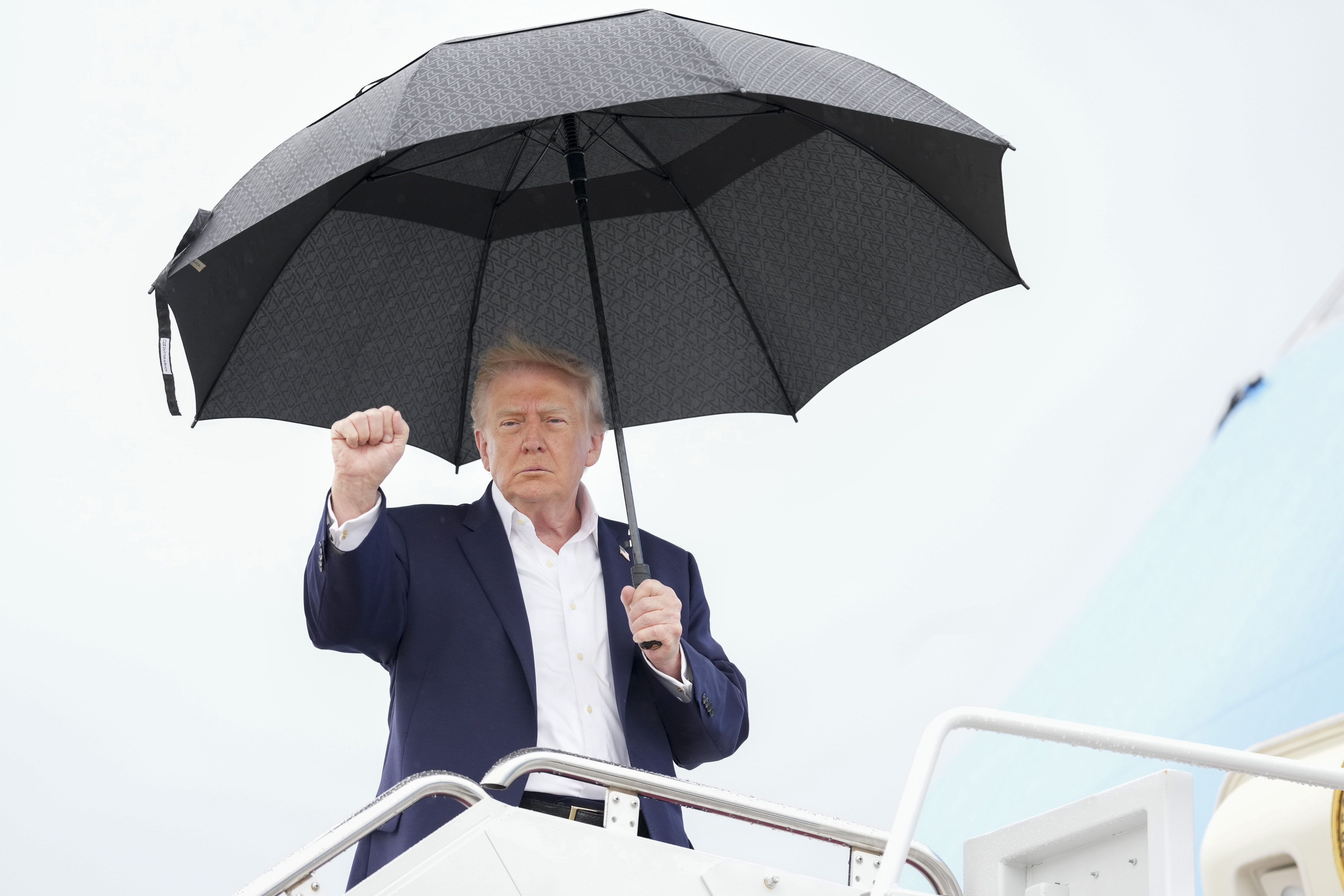
    WASHINGTON — The Trump administration will move Monday to sharply scale back fuel-efficiency rules for new cars and light trucks, gutting one of the government’s most significant efforts to reduce gasoline consumption and speed the country’s shift to electric vehicles.

    President Donald Trump said Saturday on social media that he had “just approved new Fuel Economy Standards,” adding falsely that President Joe Biden had implemented an “EV mandate.” Transportation Secretary Sean Duffy said in his own social media post that the move would be announced Monday.

    The final rule from the Transportation Department is expected to significantly weaken federal mileage standards, which have prodded automakers to increase the fuel efficiency of gasoline-powered cars and to sell more nonpolluting electric models.

    The proposed rule, issued in December, required automakers to achieve an average fuel efficiency of 34.5 mpg for cars and light trucks in model year 2031, down from the standard of 50.4 mpg set by the Biden administration.

    Trump claimed on social media that loosening the mileage standards would lower the price of new cars by thousands of dollars. But Congress already eliminated fines for automakers that don’t meet the standards, rendering the rollback on Monday largely symbolic.

    At the same time, drivers across the country have been spending more on gas since the U.S.-Israeli attacks on Iran began in February. The national average price of a gallon of gas was $4.48 on Saturday, according to AAA.

    The move Monday would mark the final step in a remarkable retreat from U.S. attempts to counter China’s chokehold on the production of EVs and their batteries.

    In February, the Environmental Protection Agency ended all federal limits on planet-warming pollution from cars. Last year, lawmakers also repealed tax credits of up to $7,500 for buyers of new electric cars and blocked California from setting its own stricter limits on automobile pollution.

    When Congress ended the fines for failing to meet the mileage standards, it already saved automakers hundreds of millions of dollars. The new announcement could further encourage U.S. car companies to make more big pickup trucks and sport utility vehicles, which tend to generate the most profit in the short term.

    But that could threaten their competitiveness in the long run.

    EV sales are growing rapidly in the rest of the world, spurred by concerns about spiking fuel prices amid the war in the Middle East. U.S. carmakers that delay EV development could be left at a significant disadvantage to foreign rivals in the coming years.

    Congress created the mileage standards in 1975 in response to an oil embargo by Middle Eastern countries. Since then, automakers have steadily improved the distance that conventional cars can travel on a tank of gas while expanding their electric and hybrid offerings.

    Transportation is the country’s largest source of the greenhouse gases, like carbon dioxide, that are warming the planet. The Biden administration strengthened the mileage standards as part of its sweeping strategy for addressing climate change.

    But Trump, who has called climate change a “hoax,” made attacks on EVs a mainstay of his campaign to retake the White House. He claimed falsely and repeatedly that Biden’s policies would ban conventional cars and force motorists to go electric.

    The Sierra Club, an environmental group, said in a statement Saturday that it planned to challenge the Trump administration’s move in court. It also argued that the decision would raise fuel costs when affordability is a top concern for many voters.

    “Americans need relief from high costs, but instead Trump is giving automakers a free pass on pollution and handing families the bill — at the pump and with their health,” said Katherine Garcia, director of the group’s Clean Transportation for All campaign. “The Sierra Club will fight this senseless rollback every step of the way.”

    Representatives for the Alliance for Automotive Innovation, a lobbying group for most major carmakers, did not immediately comment on the plan. The group previously argued that the Biden administration’s rules were difficult for many members to meet.

    This article originally appeared in the New York Times.
  • Networks to resume Trump coverage, even as White House excludes CNN

    Networks to resume Trump coverage, even as White House excludes CNN

    The major networks were set to resume their collective television coverage of President Donald Trump on Sunday, even though the White House blocked CNN from participating in the TV pool over the weekend, according to four people briefed on the deliberations.

    Five networks — ABC, CBS, CNN, Fox News, and NBC — collaborate to provide footage of Trump’s daily events, covering the president on a rotating basis and sharing footage with one another and other global news outlets.

    Throughout the past week, the quintet had suspended the TV pool in an effort to force the administration to reinstate CNN, after Trump barred its journalists from the White House grounds. The networks went so far as to refuse to air footage of portions of Trump’s summit with China’s top leader, Xi Jinping.

    But under a tentative plan that began taking shape late Friday, the other four networks would return to performing pool duties, the people said. Each time that CNN came up in the pool rotation, the group of networks would decide whether to provide a substitute crew. Otherwise, CNN’s slot would be left unfilled, and Trump would not receive major network coverage.

    The networks could agree to suspend the White House TV pool at any time, the people said.

    The major networks declined to comment Saturday. In a previous joint statement, they wrote that “no administration should restrict a news organization because it objects to its reporting.”

    Resuming the TV pool effectively hands Trump more control over the list of news outlets granted close-up access to many of his events. It also ensures that viewers will receive high-quality broadcast coverage of the president.

    On Friday, the White House allowed CNN to provide pool footage for Trump and Xi’s visit to the National Archives. But the administration later backtracked, telling CNN it could not serve as the pool for Trump’s trip to Tennessee on Saturday. The other networks declined to provide a substitute.

    In private discussions over the weekend, network leaders said that Trump’s decision to restart the barricade of CNN had left them choosing among several unpleasant options.

    If the TV pool was indefinitely suspended and an emergency or crisis occurred, there would be no cameras to film Trump, leaving the public relatively in the dark.

    CNN’s tussle with the administration is also wending its way through the courts, and that could take months to resolve. A legal dispute involving the Associated Press, which the administration barred from the White House press pool in 2025, has dragged on for more than a year. Network leaders believe it would be untenable to suspend TV coverage of Trump for a significant length of time, according to two of the people briefed on their discussions.

    (A federal court quickly restored the AP’s access, but an appeals court mostly reversed that decision.)

    Network leaders stressed that their new plan for pool operations was ad hoc: If the White House was making last-minute decisions about which outlet could attend certain presidential events, they said, then the network pool would do so as well.

    Trump’s standoff with the press began Sept. 18, when he abruptly banned CNN, MS NOW, and Politico from the White House, saying he disliked their coverage.

    On Thursday, a federal judge in Washington ordered the White House to reinstate the outlets for two weeks.

    The order, from Judge Timothy J. Kelly of U.S. District Court in Washington, made clear that CNN journalists should be given back their hard passes, the press badges that allow access to the White House grounds. But the ruling included no explicit instructions about whether the administration had to allow CNN back into the smaller TV pool, which is allowed to cover the president in tighter spaces like the Oval Office and Air Force One.

    The next hearing in the case has not yet been scheduled.

    For now, the president does not appear to be backing down. He posted on social media Saturday, in all capital letters: “Fake News should not be allowed in the White House!!! It has gone on far too long, at a tremendous cost to our country.”

    This article originally appeared in the New York Times.

  • Trump rejects Iranian proposal for ceasefire and opening of strait

    Trump rejects Iranian proposal for ceasefire and opening of strait

    WASHINGTON — President Donald Trump said Saturday that he turned down Iran’s latest ceasefire proposal, which would have reopened the Strait of Hormuz and restarted talks on the country’s nuclear program.

    “They made a proposal, but I rejected it,” Trump told reporters as he left the White House on Saturday morning.

    Trump demurred when asked if he expected to restart military strikes after the November midterm elections, saying Iran wanted “to make a deal where they open the strait immediately because they’re losing so badly.”

    Trump’s rebuff was the latest turn in what has been a cycle of bombings, peace proposals, grandiose threats, and conflicting messages throughout the nearly seven-month U.S.-Israeli war against Iran. Trump’s rejection of Iran’s offer came after his aides held a three-hour meeting with Iranian officials at the United Nations General Assembly this week in New York.

    In his speech at the United Nations, Trump issued an ultimatum to Iran, saying its leaders could strike a deal with the United States or risk annihilation.

    “Will a deal be made with Iran that lets them rebuild and create a far greater country than it ever was before — maybe one of the greatest in the Middle East or even the world?” Trump asked in speech Tuesday. “Or do I annihilate the Islamic Republic and do it quickly, never giving them a chance to kill and destroy people and countries again?”

    Trump also suggested that Iran was dragging the war out to the midterm elections in the hopes of politically damaging Trump and Republicans. The closure of the Strait of Hormuz, a key shipping route for oil and gas, has surged energy prices across the globe.

    Iran’s foreign minister, Abbas Araghchi, told reporters Thursday that the seven-point proposal Trump rejected closely mirrored the commitments laid out in a so-called memorandum of understanding that was struck between the United States and Iran in June but that quickly unraveled.

    Araghchi added “it would be better” if a deal were reached before the U.S. midterm elections.

    He said that the proposed agreement would end fighting for seven days, including in Lebanon, and require the United States to release Iranian frozen assets estimated to be at least $12 billion, waive sanctions on Iranian oil, and lift the naval blockade on Iran. Then, on the last day, the Strait of Hormuz would be opened.

    After the seven days, negotiations over Iran’s nuclear program would restart.

    Trump said Saturday that he was still open to negotiating with Iran.

    “They want to make a deal, and I think that’s fine, I like making a deal too,” Trump said. “But that deal would not be acceptable.”

    This article originally appeared in The New York Times.

  • Kitty Lunn, who expanded the boundaries of dance, dies at 76

    Kitty Lunn, who expanded the boundaries of dance, dies at 76

    In 1987, months before she was to perform in her first Broadway production, Kitty Lunn, an actor and former ballet dancer, was on her way to a date when she slipped on a patch of ice and tumbled down a flight of marble steps.

    The fall shattered vertebrae and damaged her spinal cord. She spent the next three years in acute care, undergoing a series of major surgeries. Dancing again seemed impossible.

    “I couldn’t point my toes. I couldn’t hold my stomach in,” Ms. Lunn recalled in a 2020 interview. “Never mind that I couldn’t stand up.”

    Yet when Andrew Macmillan, her date that fateful night, asked what was stopping her from dancing again, Ms. Lunn said something that surprised even her: “The answer to that question was fear.”

    In 1995, Ms. Lunn went on to serve as a founder and artistic director of Infinity Dance Theater, devoted to breaking down barriers in dance by training and mounting performances featuring dancers both with and without disabilities. She died on Aug. 18 at her home in Manhattan. She was 76.

    The cause was cardiovascular disease, a representative from Infinity Dance said.

    Ms. Lunn performed in hundreds of productions with the company, translating principles of ballet and modern dance into movements designed for dancers with a variety of physical disabilities, and using a lightweight, nimble wheelchair modified by Macmillan, whom she married after her long hospital stay. (She signed her name Kitty Lunn-Macmillan, but maintained Kitty Lunn as her professional name.)

    She performed around the world, including at the first Cultural Paralympiad, a showcase of the talents and experiences of people with disabilities held at the 1996 Paralympic Games in Atlanta. She also performed at the Kennedy Center in Washington in 2000 and 2004. Among the notables who trained with Infinity was Alice Sheppard, the dancer, choreographer, and founder of the disability arts ensemble Kinetic Light.

    “Without my chair, I’m really an invalid,” Ms. Lunn once said. “I never refer to myself as wheelchair-bound — that sounds like I’m in chains. I’d rather describe myself as a dancer who sits down a lot.”

    Kitty Morrison was born on Aug. 5, 1950, in New Orleans, the youngest of three children of Hugh Morrison Jr., who owned an insurance agency with his brother, and Beatrice (McClung) Morrison, a real estate agent and interior decorator.

    Her fascination with dance started at 8, when her grandmother took her to see The Red Shoes — the heralded 1948 British ballet film starring Moira Shearer.

    “I looked up at that beautiful redheaded ballerina, and I wanted to be her,” she told the website Stance on Dance in 2019.

    By her midteens she was dancing principal roles with a regional New Orleans ballet company, which led to a scholarship to the Washington School of Ballet, where she studied with renowned teacher Mary Day and ballet master Edward Caton. Along the way, she also performed in classics like Swan Lake and Giselle.

    She was drawn to ballet roles that required a degree of acting, and eventually decided to pursue a career as an actor. At 20, she moved to New York and studied at the Neighborhood Playhouse School of the Theater, where Diane Keaton and Eli Wallach had trained.

    In 1984, Ms. Lunn took a job as a radio producer at WABC while waiting for her big break in acting; she finally earned a role with Frank Langella’s Sherlock Holmes in Sherlock’s Last Case on Broadway. Then came her accident. “Two seconds and one piece of ice,” she recalled in a 2018 video interview with National Geographic, “and my whole world changed.”

    During her years in the hospital, Macmillan’s suggestion that she might dance again initially seemed absurd. “I was a noodle,” she recalled in a 2009 interview with the Brooklyn Rail. “I couldn’t sit up by myself, wash myself, feed myself or anything.”

    But after seeing an American Ballet Theater production of Pyotr Ilyich Tchaikovsky’s The Sleeping Beauty, the “movie in my mind led me to believe it would be possible,” she told the New York Times in 1997.

    Ms. Lunn worked with Shaw Bronner, a physical therapist and former dancer, five days a week, five hours a day for five years, she told the Brooklyn Rail. By the early 1990s, she felt ready to embark on her reimagined dance career.

    Even so, “no one would let me take a class,” she recalled in a 2020 interview with John Jay College of Criminal Justice in Manhattan, where she had earned a degree in legal studies in 1995. She went to one studio armed with a copy of the Americans with Disabilities Act, and insisted that it was against the law to bar her admittance.

    “I was told that if anyone complained, I would have to leave,” she said. “My response was simple. I said, ‘I can promise you that I will not run into anyone, but I cannot promise you that they will not run into me.’”

    She appeared as a guest artist in a performance featuring dancers in wheelchairs in Cleveland, and eventually started Infinity with dance veterans Robert Koval, Christopher Nelson, and Spider Duncan Christopher.

    In doing so, she adapted traditional ballet movements, as well as those pioneered by dance luminaries like Martha Graham, to be executed from a seated position, using the arms, head, and core to perform actions typically involving the legs.

    “I started transposing the technique of classical ballet,” she said. “When you transpose music into a different key,” she added, “you’re not losing any of the notes.”

    A review of a 2001 performance in Manhattan by the magazine New York Dance Fax noted that she “sensitively and dynamically danced with her wheelchair spins and gorgeous torso extensions,” praising her “rolling movements on the floor around the chair, reflecting her feelings about her disability and changed life.”

    In a review of the same show in the Times, critic Jack Anderson described Ms. Lunn’s artful gyrations to the music of jazz trumpeter Don Cherry: “While Burke J. Wilmore’s lighting created the illusion of a snowfall, Ms. Lunn slipped on and off the chair, tilting it, tipping it over and responding to its presence as if it had a personality all its own.”

    She is survived by a brother, Randy Morrison, and a stepson, Ross Macmillan. Her husband, an actor and television and radio news anchor, died in 2016.

    This article originally appeared in the New York Times.
  • Stuck on the battlefield, Russia wages ‘total war’ on Ukraine’s economy

    Stuck on the battlefield, Russia wages ‘total war’ on Ukraine’s economy

    KYIV, Ukraine — The war of attrition between Russia and Ukraine is expanding to encompass both countries’ economies.

    Military targeting officers are operating as economists in reverse. Increasingly, the objectives of missile and drone strikes are declining output, lost jobs, and logistical bottlenecks.

    Ukrainian officials are calling the current Russian campaign “total war” for its focus on economic impact, rather than on narrower goals like battlefield gains or infrastructure damage. While Moscow has targeted commercial assets throughout the war, its assaults have grown significantly in scale.

    The intensifying Russian bombardment has followed Ukraine’s own effort to damage the Russian economy. Kyiv has used its expanding arsenal of domestically made drones to fire on Russia’s oil industry, its most valuable sector, while also targeting Russian e-commerce companies.

    Russia has shifted its focus to economic warfare as its advances have largely stalled on the battlefield. “In a war of attrition, the economy becomes the prime target,” said Orysia Lutsevych, head of Ukraine Forum at Chatham House, a London-based research group.

    Moscow is seeking, Lutsevych said, to raise the cost to Europe of sustaining Ukraine’s war effort. The growing bill provides fodder for far-right parties in countries like Britain, France, and Germany that oppose giving aid to Ukraine.

    Last month, President Volodymyr Zelensky told European allies that Ukraine needed $27 billion to plug a budget shortfall, after the European Union had already finalized a loan of more than $100 billion earlier this year.

    The economic damage from Russia’s campaign will reach about $10 billion by the end of the year, Ukraine’s economy ministry has estimated. Much of the cost is indirect, in lost sales, disrupted workdays, and logistical snarls.

    The European Bank for Reconstruction and Development on Thursday lowered its previous expectation of 2.2% economic growth this year in Ukraine to 1.5%. Some economists have said that Ukraine might end the year with zero growth.

    Growth is also sluggish in Russia, where the Kremlin is struggling to fund the war’s ever-increasing costs. The Russian federal budget deficit reached $68 billion by the end of August, compared with the $44.5 billion planned for the entire year. On Thursday, Russia’s Finance Ministry said it would need to raise taxes to finance next year’s budget, following a major increase introduced the previous year.

    Long-range Ukrainian attacks have opened cracks in the semblance of normal life that the Russian government has tried hard to preserve in cities far from the border with Ukraine. The strikes against oil refineries have led to fuel shortages and long lines at gas stations. Attacks on the warehouses of Russia’s two largest online retailers disrupted logistics and left many small businesses without inventory.

    In the other direction, Moscow has waged a broad assault on Ukrainian exports and consumer spending. Attacks on warehouses have removed goods from shelves. Strikes on ports, locomotives, border crossings, and ships at sea have crimped exports. In recent days, Russia has expanded its strikes to internet infrastructure, disrupting service for some 100,000 households.

    Russia changed its tactics in late August, increasing the number of daytime hours that major Ukrainian cities are under air alerts. Some retail businesses close during attacks, lowering sales.

    The all-day strikes are bringing the economy close to a “standstill” as people spend so much time in bomb shelters, said Tymofiy Mylovanov, a former economy minister who is now president of the Kyiv School of Economics. The university is planning a new addition that will be built entirely underground, for student safety.

    Dimitar Bogov, chief economist of the European reconstruction bank, said labor shortages and the increased bombardments meant that Ukraine was entering “its most difficult period of the war.” While spending power among the population remains strong, he said, people “are not able to spend.”

    Ukraine’s economy contracted by about 20% in the first year of the all-out invasion, which began in February 2022, but it has grown since then.

    An important area of growth is defense technology, which more than doubled in 2024. More recent figures are not available because Ukraine has classified economic statistics related to defense industries, which are targets of the Russian military.

    Business is also growing in solar and wind power, providing electricity from small, numerous, and widespread sources, making the grid less vulnerable to missile strikes.

    While Ukrainian exports of steel, iron ore, and grain have dropped by about a third during the war, rising foreign aid has compensated for those losses. The inflow and outflow of foreign currency has remained positive, with central bank reserves growing from $29.1 billion before the invasion to $48.7 billion now.

    The latest barrages, however, are shifting the balance. A new Russian targeting system has been effective at hitting locomotives, even when they are rolling, cutting into Ukrainian exports. Ukraine, which had about 1,800 locomotives before the war, has lost about 500. It is now losing one a day on average.

    Russia has timed its attacks for their seasonal effects. It hit grain silos in the summertime to knock out storage before and during the harvest. The European Union is rushing mobile grain silos to Ukraine, but lost sales are expected to cause farmers to default on loans, with likely knock-on effects in the banking sector.

    Maintaining consumer spending, partly driven by high military salaries, is a key challenge. Ukraine is not at risk of hunger, but rather a slumping economy, with a lower tax base to fund the war.

    A Kyiv-based wine distributor illustrates the difficulties. The company, Good Wine, operates a flagship outlet in the capital and stores around Ukraine. It has contracts with about 1,000 wineries around the world. Logistics are an ever-intensifying headache.

    The company’s main warehouse in Kyiv was hit in tank crossfire at the start of the war. In total, 1.6 million bottles shattered in the explosions and fire. The owners gave away scorched but intact bottles, and rebuilt.

    This year, the warehouse was hit again in a Russian long-range strike. Two other company warehouses and a commercial kitchen were also hit. No employees were killed, but about $9 million in inventory, including a collection of rare vintages, was lost.

    Many Ukrainian companies are rethinking logistics. Broadly, the options are just-in-time delivery, distributed storage, or going underground.

    Models for warehouses buried about 20 feet deep that would be impervious to most munitions are under consideration. A Ukrainian company has designed an underground data center.

    At least three Ukrainian companies offer custom bunkers to individuals and businesses. One, Bunkerok, founded in 2023, is now installing about 170 a year. Another emerging bunker maker is called Hobbit House.

    Good Wine is leaning toward distributed storage so that no single strike can upend its business model, said Dmytro Krymsky, a co-founder.

    “Every day the war goes on, everything becomes more expensive,” he said. “It’s really hard to run a business in Ukraine.”

    This article originally appeared in the New York Times.