
Category: New York Times

  • How ‘The Rest Is History’ podcast conquered the world

    How ‘The Rest Is History’ podcast conquered the world

    HAMPTON COURT PALACE, England — In a field on the outskirts of London, thousands of people settled onto picnic rugs and camping chairs, slathering on sunscreen for the unusually hot English summer. A few people had uncorked bottles of sparkling wine, though it was not quite 10 a.m. One woman knitted while a couple in Panama hats tiptoed to a spot with a prime view of the stage.

    Then a familiar song began playing, and a ripple of excitement ran through the crowd. The rock stars of the event had arrived: two middle-aged British historians.

    The Rest Is History is the most popular history podcast in the United States, Britain, and Australia, with some 30 million downloads and streams a month. This was its first live festival — a sort of mini-Lollapalooza, if Lollapalooza were a sedate, two-day event on the grounds of an English palace.

    The show’s almost 800 episodes span millenniums and continents, covering the fall of the Aztecs, the French Revolution, the assassination of Abraham Lincoln, and history’s greatest monkeys, among other things. Its fans include a current prime minister, Mark Carney of Canada, and a former one, Julia Gillard of Australia; actors Matthew McConaughey and Tom Hanks; and musician Nick Cave.

    In February, a hearing at England’s Supreme Court was interrupted when a judge’s phone played the introduction to an episode on Jimmy Carter. “The Rest Is History,” he acknowledged sheepishly. “It was switched to silent. Do carry on.”

    How did it become such a juggernaut? And what does it say about our tumultuous, accelerated present, a time of news fatigue and thrumming anxiety over the future, that so many of us are drawn to a show about the past? There is reassurance, of course, in reminding ourselves that humans have survived difficult times before. There is the pure escapism of immersing yourself in, say, six riveting episodes about Mary, Queen of Scots, as I did when I first latched on to the podcast. And then there are the podcast’s hosts, Tom Holland, 58, and Dominic Sandbrook, 51, who give the show a charm all of its own.

    Almost 5,000 people bought tickets to the festival, which was held at Hampton Court Palace, Henry VIII’s favorite retreat. Fans from Argentina, New Zealand, Europe, and the United States filed through courtyards, whose stone floors had been polished smooth by centuries of use, into acres of picturesque gardens for two days of an epic history chat.

    ‘An enormous cuckoo’

    Like several other disruptive cultural forces, The Rest Is History was born in the pandemic. Holland was, at the time, “kind of contemptuous and oblivious as to what podcasts were,” he said recently at his home in the south London neighborhood of Brixton. During a family holiday after England’s first lockdown, his brother James, who is also a historian, told him about a World War II podcast he was recording for a British company called Goalhanger.

    Holland, who had written several popular classical history books and made history documentaries with the BBC, was intrigued. He met with Tony Pastor and Jack Davenport, two former sports producers who created Goalhanger with former England soccer player Gary Lineker. The idea for a more general history podcast was born.

    “Who would you enjoy talking to, week in, week out?” he recalls being asked. It was an easy question. “Dominic was the most entertaining historian that I knew,” Holland said. They had met more than a decade before at a writers’ charity quiz.

    Sandbrook agreed to co-host, in part because of Holland’s exuberant, if hyperbolic, salesmanship. “I can hear him saying it now, he said: ‘It will be literally no work. It will be no work whatsoever,’” Sandbrook said over coffee at a tiny Gloucestershire cafe near his home. The idea was that “we’d choose random things that we knew a lot about, and just witter about them for half an hour.”

    That idea has, let’s say, evolved. They now produce three episodes a week, two of which are about an hour long, and a 30-minute bonus episode for paying subscribers. A ton of research goes into each. Their biggest audience is in the United States, which accounts for 34% of plays, according to Goalhanger, while 33% comes from Britain and Ireland, followed by Australia, Canada, and New Zealand. Listenership is surprisingly young, with 61% under 44, and it is 78% male.

    Holland described the podcast as an “enormous cuckoo that slowly elbowed out everything else.” He is currently very behind, he told me ruefully, on a book he is writing about the Beatles and “the new Reformation of the 1960s” that was due at Christmas.

    Sandbrook said his working life was “unrecognizable, compared to what it was before.”

    “I do spend a ridiculous amount of time now reading history books,” he added. “But there are worse things to do.”

    The spirit of a Viking and a cringing monk

    Holland arrived onstage at Hampton Court in a Henry VIII-style velveteen hat. Tall and energetic with a crop of white hair, he is a natural impresario who later took great pleasure in overseeing a bout of medieval combat, one of the diversions that punctuated the live talks with historians. Sandbrook is a more grounded figure, with twinkling eyes and a warm handshake. He is, by his own account, less inclined to cosplay as a historical character.

    The rapport between the two men is central to the podcast’s appeal. They have much in common. Both were privately educated, attended top universities (Holland at Cambridge and Sandbrook at Oxford), and radiate warmth and humor. Their expertise, however, is in different historic periods — “He’s ancient and I’m modern, basically,” Sandbrook said — and they play on their differences.

    There is a lot of banter. In an episode on the Battle of Stamford Bridge in 1066, Holland says that he did not quote from his book Millenium because there were so many epic contemporary accounts. “This speaks to your fundamental lack of self-confidence, I think, Tom,” says Sandbrook, who readily quoted from his own book.

    Holland mournfully agrees: “You have the spirit of a Viking. I have the spirit of a cringing monk.”

    “By the way, please clip that and use that for social media,” Sandbrook jokes, and the two dissolve into laughter.

    Holland tends to be more vocally empathetic toward historical figures, while Sandbrook is more merciless. In an episode on the First World War, Sandbrook quotes from Robert Graves’s memoir, Goodbye to All That, describing an unfortunate British sergeant who fired a bomb that bounced back into his face.

    “Noooo, that’s the kind of thing I’d do!” interjects Holland.

    Part of the delight of the podcast is in their mischievous, but fundamentally good-natured observations about life — its absurdities, contradictions, and continuities. For Holland, the show is popular because it reveals the strange ways of our predecessors while illuminating the common threads that bind us.

    “Without having consciously set out to do this,” he said, “I think it is a celebration of the inherent fascination of the past, as the best way to understand how infinite the ways are of being human.”

    Sandbrook framed it in slightly different terms. “I think there is an inexhaustible human appetite for stories,” he said.

    Both men also pointed to something else — a deliberate lack of moralizing, and, in a post-woke world, a curiosity about the past rather than a rush to judgment. “History is not a civics lesson,” Sandbrook said somewhat sternly, after I asked about what we could learn from the past. “History is the record of human behavior, often which is very bad. And the one thing that doesn’t change, I would say, is human nature.”

    ‘Outside of the swirl of chaos’

    In April, as Britain was edging toward its seventh prime minister in 10 years, The Rest Is History did a series on Britain in the 1970s. Almost 500 people were killed in Northern Ireland in 1972. In 1974, the government briefly introduced a three-day working week to cope with an energy crisis. The following year, inflation spiked to 25%.

    Sandbrook noticed listeners’ fascination, and, in some cases, relief, in their comments. “They were saying, ‘I thought things were awful now, but then I look back and I think, well, it’s not that bad,’” he said.

    Asked if we were living through a particularly turbulent era, both men referred to the pace of technological change as unprecedented, comparing it to the advent of the printing press in the 15th century. “Clearly what is happening now,” Holland said, “first with the internet, social media, and now with AI, is going to be convulsively transformative in a way that we cannot yet get a handle on.”

    “I think that’s why history is so valuable,” he added, “because it does kind of provide a rain check. It does enable you to get outside of the swirl of chaos.”

    Wandering the gardens of Hampton Court — where actors in period dress paraded under parasols — could feel a little like stepping back in time, albeit with stalls serving overpriced iced coffees and plant burgers. I wondered to what extent the show offered some listeners a similar retreat from the uncertain 21st century into stories where the endings, however good or bad, are no longer in doubt.

    Yet the past is also compelling as a means of understanding a confounding present. Onstage the first morning of the festival, Holland interviewed professor Ali Ansari, a historian specializing in Iran, in a conversation that jumped between ancient Persia and this year’s U.S.-Israeli war against Iran.

    In the afternoon, Sandbrook spoke to Paul Rouse, an Irish historian, who talked about the common market between Ireland and Britain in the 1800s, including up to 12 sailings a day from Dublin carrying cattle to England, and later spoke of the damage wrought by Brexit. On Sunday, historian Katja Hoyer discussed her new book on Weimar and the rise of Hitler.

    “History frames so much that is significant about our present politics,” said Christoph Pike, 31, a fan of the podcast who had flown in from Toronto with his wife, Claire Davis. At the same time, he noted, Holland and Sandbrook “don’t take themselves too seriously.”

    “They’re playful, they’re engaged, they both have a great sense of humor,” Pike said.

    As the sun set on Saturday, Holland and Sandbrook applied their considerable intellects to questions from audience members.

    “Top three mustaches of all time?” asked one.

    “Great question!” Holland said. “We do love facial hair.”

    Another historical debate had begun.

    This article originally appeared in the New York Times.

  • Postal Service publishes finalized plan to restrict mail ballots

    Postal Service publishes finalized plan to restrict mail ballots

    WASHINGTON — The Postal Service on Friday published regulations that would restrict mail voting, its latest effort to comply with President Donald Trump’s call to restrict the popular practice just months before the midterm elections.

    In a 95-page final rule, the Postal Service clarified how it would carry out an executive order Trump signed in March, which sought to restrict mail ballots and create state-by-state lists of citizens to help determine voting eligibility.

    In the rule, the Postal Service said that it would deliver mail ballots only in states that shared voter data with the federal agency.

    Before the Postal Service accepts ballots into its system, the agency would review every envelope for compliance with the new standards, including by checking that the recipient was enrolled with the Postal Service to receive a mail ballot.

    If the regulations are enacted, the Postal Service would not deliver mail ballots to states that do not comply.

    Trump’s executive order was largely blocked by federal courts this summer, and the Postal Service said in its rule published Friday that it would “not take actions to implement the rule specifically for the 2026 election unless and until the government obtains relief from those injunctions.” In a filing to the Supreme Court, the Justice Department said that the government would not enforce the final rule unless the court ruled in its favor.

    The Supreme Court is reviewing the issue and could rule at any time.

    A Postal Service spokesperson on Friday declined to comment, citing pending litigation.

    Trump has repeatedly made unfounded claims that mail voting is “cheating,” even as he has voted by mail in multiple elections, including earlier this week.

    The president has acknowledged that combating fraud is not the only reason to target the practice. In March, he told Republican lawmakers that passing a strict voter identification law cracking down on mail ballots, which Democrats now use more than Republicans, would “guarantee the midterms” for his party.

    This article originally appeared in the New York Times.

  • TikTok settles with U.S. over child privacy concerns for $400 million

    TikTok settles with U.S. over child privacy concerns for $400 million

    WASHINGTON — TikTok on Friday reached a $400 million settlement in a lawsuit brought by the Justice Department that accused the company of illegally gathering children’s information.

    The 2024 suit, filed under the Biden administration, claimed that TikTok had gathered data from users under the age of 13 without parental permission. The suit accused TikTok of knowingly allowing children to create accounts and of failing to honor parents’ requests to delete their children’s accounts.

    TikTok violated federal privacy law along with a 2019 agreement with the government in which the app promised to take steps to protect children’s privacy, according to the government.

    Under the settlement announced Friday, TikTok will pay $300 million. The Justice Department also asked the court to eliminate the 2019 agreement, after which TikTok would pay the government an additional $100 million, according to a Justice Department news release.

    The settlement is the latest by the Trump administration, as it takes a softer approach toward ongoing government litigation against several major companies.

    In March, the Justice Department settled a lawsuit that accused Live Nation, the owner of Ticketmaster, of illegally maintaining a monopoly. The government also reached a settlement last year that allowed the technology company Hewlett Packard Enterprise to buy a rival, Juniper Networks, over the objection of some state attorneys general.

    The settlement between TikTok and the government also marks the latest win for the popular short-video app under the second Trump administration.

    During President Donald Trump’s first term, he signed an executive order to force the app’s Chinese owner, ByteDance, to sell it. But TikTok successfully sued to block that ban. In 2024, former President Joe Biden signed a law that would ban the app unless it was sold to a non-Chinese owner.

    After Trump returned to office, he repeatedly delayed enforcement of that law. In January, ByteDance announced that it had reached a deal, hammered out with the U.S. government, that spun off its American operations to a group of non-Chinese investors.

    Stanley E. Woodward Jr., an associate attorney general, called the settlement “a major victory for American children and parents” in a statement. A spokesperson for the U.S. version of TikTok did not immediately respond to a request for comment.

    This article originally appeared in the New York Times.
  • Mark Zuckerberg buys an Irish castle

    Mark Zuckerberg buys an Irish castle

    For two centuries, Strancally Castle’s towers and parapets have overlooked a bend in the Blackwater River and a swath of Irish land as it passed from one wealthy family to the next.

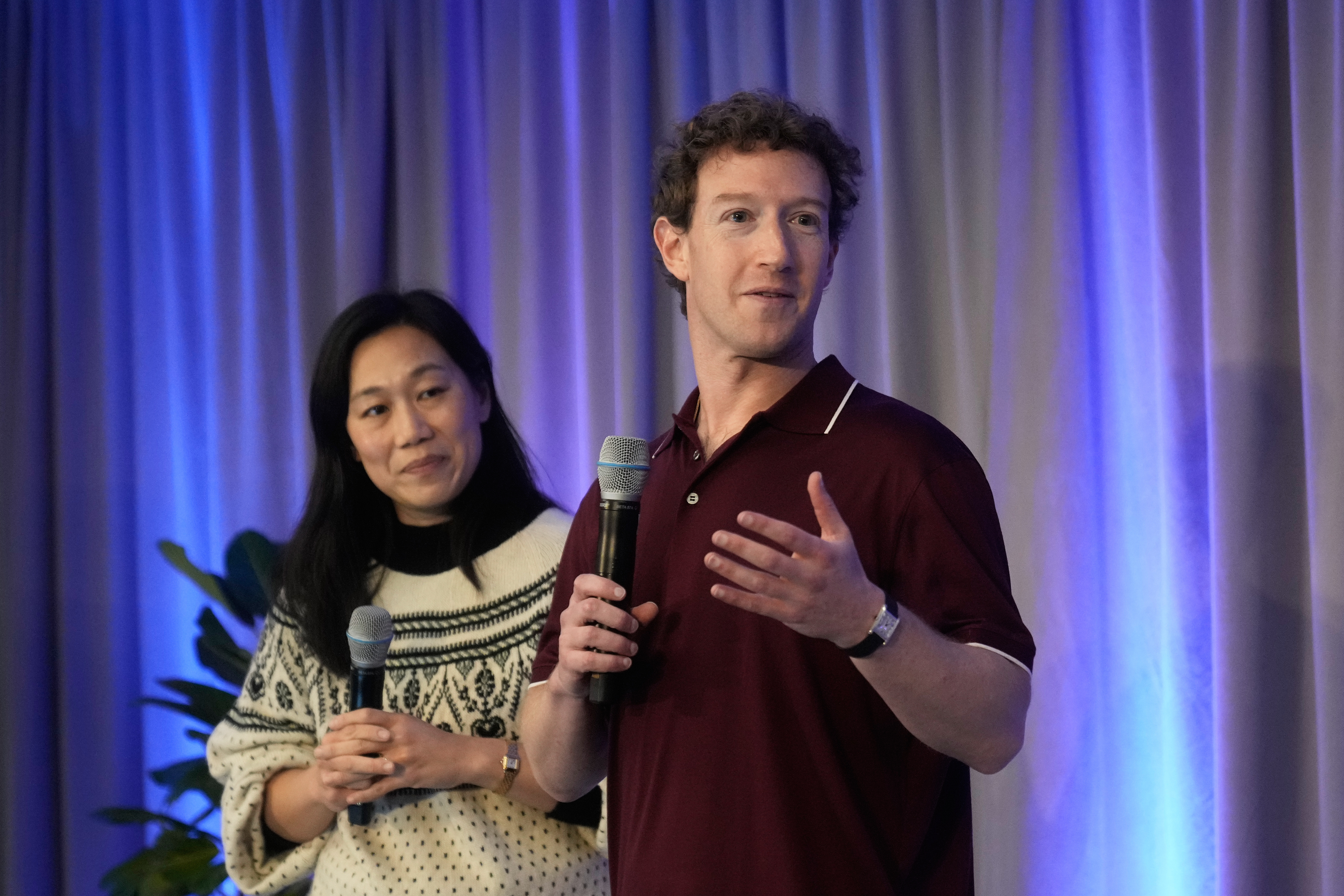
    It now joins the holdings of Mark Zuckerberg, one of the 21st century’s most prominent landowners, along with a place on an artificial island in Miami Beach, a large house in Washington, and compounds in California and Hawaii.

    A spokesperson for Zuckerberg, the 42-year-old billionaire CEO of Meta, confirmed this week that he had bought the castle, a Gothic-style estate in Waterford County, a region of southeastern Ireland with about 130,000 people. The castle was built around 1830 and renovated in the early 2000s.

    The purchase does not appear to be listed in Ireland’s ​property price register. The Irish Times, which reported the news Thursday, estimated that the estate could be worth $23 million to $35 million.

    Around the middle of the 19th century, the estate was valued at 61 pounds, according to an entry about the castle in a University of Galway archive of landed estates that also mentions it contained an art collection and a library.

    “Mark and his family look forward to caring for this historic home and visiting when traveling to Ireland,” said Brian Baker, the spokesperson for Zuckerberg.

    The castle was built for a former member of Parliament, John Keily, according to Ireland’s National Built Heritage Service, which describes the building as both “muscular” and “dour.”

    The estate has never left private hands, leaving the public to glimpse its interior only in historical archives. An entry about Keily on “The History of Parliament” website says the house was designed “on a lavish scale; it took a brisk walk of 4½ minutes to reach the dining room from the kitchen.”

    The castle was most recently owned by Michael Alen-Buckley, the chairperson of the investment firm RAB Capital, and his wife, Giancarla Alen-Buckley, a member of the family behind the luxury Rocco Forte Hotels group.

    “We leave our home of twenty-five years fondly and are grateful for the opportunity we have been given to save and restore Strancally Castle,” the couple said in a statement. “We are delighted that Mark and his family intend to build on our stewardship by continuing to invest in maintaining and enhancing the property and grounds as their home.”

    It is not clear how much time Zuckerberg or his family (he has three daughters with his wife, Priscilla Chan) will spend in Ireland, but his company has a significant presence there.

    Like many major U.S. companies, Meta uses an office in Dublin as its European headquarters, and about 1,500 employees work there. Ireland has become a hub for multinational corporations, both for its relatively low corporate income tax rate — 15% for big companies — and its history of allowing corporations to shift profits out of the country into places like Bermuda, Grand Cayman, and the Isle of Man.

    Ireland’s status as a base for several technological giants has made it a key player in enforcing European Union regulations and, increasingly, a center of protest against the companies and their data centers.

    Asked for comment about Zuckerberg’s purchase, the Waterford City and County Council extolled the area’s attractions — wild coastlines and mountains, picturesque festivals and towns — and the history of the county and city.

    “Founded by the Vikings in 914 AD, Waterford is Ireland’s Oldest City that has been shaped by centuries of history and today it is evident that the county’s remarkable architecture keeps its past vividly present,” the council said in an email.

    “We hope that Mr. Zuckerberg and his family fully enjoy all that Waterford has to offer.”

    This article originally appeared in the New York Times.

  • Margo Howard, reluctant columnist and daughter of Ann Landers, dies at 86

    Margo Howard, reluctant columnist and daughter of Ann Landers, dies at 86

    Margo Howard was a reluctant columnist, despite the encouragement of her mother, Eppie Lederer, the wildly popular advice maven known as Ann Landers, and a succession of admiring editors.

    She lacked ambition, she was quick to say, as well as journalistic training. (She had dropped out of Brandeis University to marry her first husband.) But she was mouthy — a “mouth on a trolley,” as her father put it — and possessed of a tart wit.

    When she divorced that first husband, she thought that a job might be nice, if it wasn’t too taxing, and in 1970 she began producing a frothy, thrice-weekly column called “Margo” for the Chicago Tribune. She wrote of mores on college campuses (“Parietal rules are so relaxed they’re prone”), the conundrum of marriage (“Marriages are all quite happy. It’s the living together afterward that’s so tough”), and playground hierarchies, deploying the phrase “the nanny mafia” to describe the action, after which novelist Tom Wolfe’s lawyers threatened to sue, saying she had stolen the phrase from him.

    David Reuben, author of Everything You Always Wanted to Know About Sex (But Were Afraid to Ask), the 1969 blockbuster, also threatened a lawsuit after she compared the book’s style to a cross between Helen Gurley Brown and Popular Mechanics. (“I was only nervous once,” she wrote of their interview. “When he removed his cuff links and rolled up his sleeves.”)

    Ms. Howard was proud, she said much later, that soon all her columns had to pass muster with the paper’s lawyers before publication.

    “You are the star in my crown and the thorn in my side,” her exasperated editor told her.

    Ms. Howard died on July 13. She was 86. Her daughter Cricket Coleman confirmed the death but did not give a cause or location.

    Over the decades, Ms. Howard dipped in and out of the news business, and marriage. After ditching the wealthy businessperson whom she described as her “starter husband” and who was the father of her three children, she went on to marry three more times. Husband No. 2 was an undertaker — when she left him after three years, she gave him the family dog as consolation, which upset the children — and No. 3 was actor Ken Howard, whom she married in 1977.

    The couple fell in love after she interviewed him for a column, after which she gave up newspapering for a spell. It was a mostly happy union and lasted more than a decade.

    No. 4, a keeper, was Ronald J. Weintraub, a cardiologist whom she referred to variously as Dr. Pussycat and Dr. Perfect.

    In 2014, Ms. Howard published a memoir of her matrimonial adventures, Eat, Drink and Remarry: Confessions of a Serial Wife.

    “Writing is what Margo does between husbands,” editor James Hoge once teased.

    But Ms. Howard’s most significant relationship was with her mother. Her first book, Eppie: The Story of Ann Landers (1982), told of how the twin daughters of Russian-Jewish immigrants became celebrated (and often feuding) advice columnists.

    Esther Pauline Lederer was first to the game, winning a contest in the 1950s to write the “Dear Ann Landers” column for the Chicago Sun-Times. Soon after, her deeply competitive sister, Pauline Esther Phillips, known as Popo, began writing her own advice column for the San Francisco Chronicle, “Dear Abby.” The rivalry, as depicted by Ms. Howard, was one-sided, with Phillips sniping, often in public, at her sister, and Lederer doing her best to rise above, and frequently cutting off contact altogether.

    “She was a girl who kept on trucking,” Ms. Howard said, describing her mother to an interviewer in 2003. “She sucked it up.”

    When Jules Lederer, Lederer’s husband of 35 years, left her for a much younger woman, she soldiered on, even buying him clothes and food once he was in his new apartment. It had been a drawn-out process: He had enlisted his daughter to deliver the news of his affair and plans for divorce months earlier.

    Unlike her mother, Ms. Howard never forgave him, and they remained estranged until just before his death.

    Ms. Howard’s second book, A Life in Letters: Ann Landers’ Letters to Her Only Child, published in 2003, a year after her mother’s death, chronicled their intimacy through the decades. Her mother’s vivid, salty style, peppered with the Yiddishisms she grew up with, is enticing, as are her passions, which included the Democratic Party and anti-war activism, as well as the happiness and intellectual growth of her precocious daughter.

    “One of the good things she passed on to me was that it’s almost immaterial what happens to you — it’s how you deal with it that matters,” Ms. Howard told Alex Witchel of the New York Times in 2003. “She’d say, ‘When things go seriously haywire, take a nap and then get busy.’ I went into a depression when she died, so I had my nap. It was time to get busy.”

    Margo Lederer was born on March 15, 1940, in Sioux City, Iowa. Her father was a salesperson turned businessperson who would go on to found Budget Rent A Car. He wooed her mother, then Esther Pauline Friedman, who was affianced to someone else, while she was shopping for wedding veils.

    The family lived in eight cities by the time Margo was 7, including New Orleans and Eau Claire, Wis., before moving to Chicago, where she would later settle as an adult, after her first marriage.

    Throughout her peripatetic journalism career, Ms. Howard fielded many offers to write an advice column, including a plea from her mother to take over as Ann Landers. “Honey, I don’t want to work that hard,” Ms. Howard responded.

    But in 1998, when economist Herbert Stein quit after a few months of writing “Dear Prudence,” the pithy advice column he had pioneered (and written anonymously) for Slate, the publication’s editor, Michael Kinsley, offered the column to Ms. Howard. The effort required would be minimal, he promised; she would have to answer only four letters twice a week.

    As she told Vanity Fair, “I’d had a big life: I’d been analyzed, I’d been married — certainly more than once — and I decided that I would write from my experience.”

    Her tone was sassy and wise, and “Dear Prudence,” which she wrote for eight years, was a hit.

    To Turned Off in Kansas, a reader whose boyfriend’s underwear was problematic, Ms. Howard replied:

    Dear Turned,

    He wears the baggy briefs underneath? I offer you two suggestions. Since things are going over his head, try under his nose. Write him a short love note saying it would mean a lot to you if he — forgive the pun — bagged his lucky underpants and only wore boxers. Alas, the alternative is to forget it. Would you think Prudie salacious if she were to suggest that it’s what’s inside the briefs or boxers that counts?

    — Prudie, briefly

    In addition to her daughter Cricket, Ms. Howard is survived by her husband, Weintraub; another daughter, Abra Coleman; a son, Adam Coleman Howard; and seven grandchildren.

    This article originally appeared in the New York Times.

  • Palestinian teenager killed after Israeli settlers enter West Bank village

    Palestinian teenager killed after Israeli settlers enter West Bank village

    TEL AVIV, Israel — A Palestinian teenager was killed Friday after Israeli settlers entered a village near the West Bank city of Hebron, local officials said, the latest in a surge of violence in the territory that has drawn international condemnation.

    The rising settler violence against Palestinians in recent weeks has presented a mounting challenge for Israel’s military. It is responsible for maintaining law and order in the territory but has been hesitant to take forceful action against settlers.

    The Health Ministry of the Palestinian Authority identified the victim as 17-year-old Kareem Shlaldeh. Palestinian and Israeli authorities offered differing accounts of events Friday.

    Saad Shlaldeh, the mayor of the village, called Sair, said a large group of settlers had attacked the village around 10 a.m., killing one person and setting fire to property.

    “These people are thugs and more,” he said in a phone interview, adding that his account was based on conversations with witnesses.

    The Israeli military said soldiers were sent to the area of Sair following a report of Palestinians throwing rocks at Israeli civilians. The military added that the Israelis “were present in the area without advanced authorization.”

    The statement said a “security official” had opened fire, causing “Palestinian casualties,” without clarifying whether the shooter was a soldier. Israeli civilians were also wounded in the incident, the statement added.

    The events that led up to the settlers entering the village also remain unclear. Shlaldeh said he had no knowledge of Palestinians throwing rocks when asked about the Israeli military’s account.

    Nabil Tharawa, 61, a resident of the area, said a second Palestinian was wounded and transferred to a hospital in Hebron. Khalid al-Sharif, an official at Ahli Hospital in Hebron, said a wounded person from Sair was brought to the emergency room.

    The violence Friday came as tensions in the West Bank were running high after the Israeli government published a tender for the construction of houses in a West Bank settlement near Jerusalem. The project is referred to as E1.

    Over the past day, 11 nations, including France, Canada, and Britain, issued a joined statement condemning Israel for the move. They said it “will undermine the prospect of the two-state solution by driving a wedge through the West Bank and harming the territorial contiguity of the Palestinian Territories.”

    Much of the international community regards the West Bank as being a core part of any future Palestinian state.

    For roughly two decades, the E1 plan wound its way through a bureaucratic Israeli zoning process. But intense international opposition, including from the Obama and Biden administrations, had mostly kept the project dormant.

    That changed under the current Israeli government, the most right-wing in Israel’s history.

    Ed Miliband, Britain’s foreign secretary, said the publication of the tender was “unacceptable and destructive” in a post on social media.

    Gideon Saar, Israel’s foreign minister, fired back at Miliband, asserting that “the Jewish people have the right to live throughout the Land of Israel,” an apparent reference to all the land between the Mediterranean Sea and the Jordan River.

    This article originally appeared in the New York Times.

  • Iran must plan to overcome ‘unjust’ U.S. sanctions, top Tehran official says

    Iran must plan to overcome ‘unjust’ U.S. sanctions, top Tehran official says

    A top Iranian official said Friday that his country would seek to dampen the effect of economic sanctions after the Trump administration vowed to aggressively tighten the pressure campaign against Iran.

    “We must plan for the unjust sanctions so that we can overcome them,” the Iranian official, Mohammad Bagher Ghalibaf, who is the lead negotiator in talks with the United States, told a gathering of Iranian and Iraqi business representatives in Baghdad, according to a post on his social media channel.

    The United States has already imposed debilitating sanctions on Iran’s economy and leadership, and the Trump administration has previously sanctioned foreign businesses and organizations that trade with Iran. But Washington suggested this week that officials were preparing measures to target countries that buy Iranian oil.

    President Donald Trump has promised an “economic D-Day” against Iran and vowed “tremendous economic consequences” for countries that do business with Iran.

    Treasury Secretary Scott Bessent, who is expected to detail the new measures targeting Iran at a news conference Monday, wrote on social media Thursday evening, “Any remaining tie to Tehran will hasten a nation’s economic oblivion, whether that tie be purposefully constructed or willfully ignored.”

    Trump’s threats of economic escalation seem to reveal his reluctance to return to the full-blown military confrontation with Iran that began in February with a large-scale U.S.-Israeli attack.

    Since a ceasefire in June, the war has settled into an uneasy standoff with little sign of diplomatic progress.

    In Baghdad, Ghalibaf told the business representatives, “The Americans and Israelis have realized that they cannot prevail against Iran and Iraq in conventional military warfare.”

    “Therefore,” he added, “they have entered into cognitive warfare and economic warfare, and now you are the soldiers and commanders on this battlefield.”

    The Trump administration has also taken aim at Iran’s allies in the region. On Thursday, Washington said Hezbollah, the Iran-backed militia in Lebanon, would be designated an affiliate of the Iranian regime under the command of the Revolutionary Guard. The announcement came along with the issuing of new sanctions against 10 individuals accused of working to smuggle cash to the militia.

    The United States has designated Hezbollah a terrorist organization since 1997 and has long accused the group of being an Iranian proxy. The announcement on Thursday appeared to formalize Washington’s view that the group was a direct arm of Iran in the Middle East.

    Broader sanctions targeting Iran’s ability to export oil would compound Iran’s economic challenges. The war and a U.S. blockade of the country’s ports have crippled key industries, and Iranians are already contending with sky-high inflation.

    This week, the United Arab Emirates, a major trading hub for Iran, announced that it was halting all trade and financial transactions with Iran. Analysts say the UAE has been key to Iranian efforts to evade international sanctions, though Emirati officials deny that.

    Iran has weathered decades of U.S. sanctions since the 1979 revolution that brought the Islamic republic to power, including by trying to diversify the country’s economy beyond oil. The U.S. naval blockade has severely restricted Iran’s ability to export oil.

    On Thursday, Shamseddin Hosseini, chairperson of the Iranian parliament’s economic commission, said it was important for Iran to reduce reliance on the country’s southern ports, where the U.S. blockade is in place, and to expand trading routes across the land border in the northeast, according to Iranian state media.

    “To get out of the current situation, the path of economic policymaking must be changed,” Hosseini said, according to the reports.

    China, Iran’s largest trading partner, could be one of the countries most affected by U.S. penalties on importers of Iranian oil. For years, Beijing has defied Western sanctions by buying as much as 90% of Iran’s oil exports, though that represents a marginal share of China’s total oil imports, analysts say.

    Lin Jian, a spokesperson for the Chinese Foreign Ministry, said Friday that his country opposed “unilateral sanctions” and called for the sides to resolve their differences through diplomacy.

    This article originally appeared in the New York Times.
  • How Harvard’s epic fight with Trump is costing the university

    How Harvard’s epic fight with Trump is costing the university

    One of Harvard University’s biggest federal funding streams is down sharply, according to a New York Times analysis of government data.

    The declines have persisted even after a federal judge forced the Trump administration to reverse drastic cuts to the university last year.

    The funding, from the National Institutes of Health, currently lags about 18% behind the average pace of grants during the Biden administration, the analysis shows.

    Last year, Harvard successfully sued the Trump administration, after the government announced it had frozen more than $2.2 billion in 2025, from multiple federal agencies.

    But unlike then, when Trump officials made a public spectacle out of announcing the cuts, the NIH is mainly delaying, reducing, or rejecting grant requests, often leaving researchers and university leaders in the dark about what is happening.

    The reduction appears to be the latest front in the Trump administration’s on-again, off-again war with Harvard and other elite universities. It is a new, more subtle tactic that is harder to fight in court, but that could be just as damaging if cuts and uncertainty build.

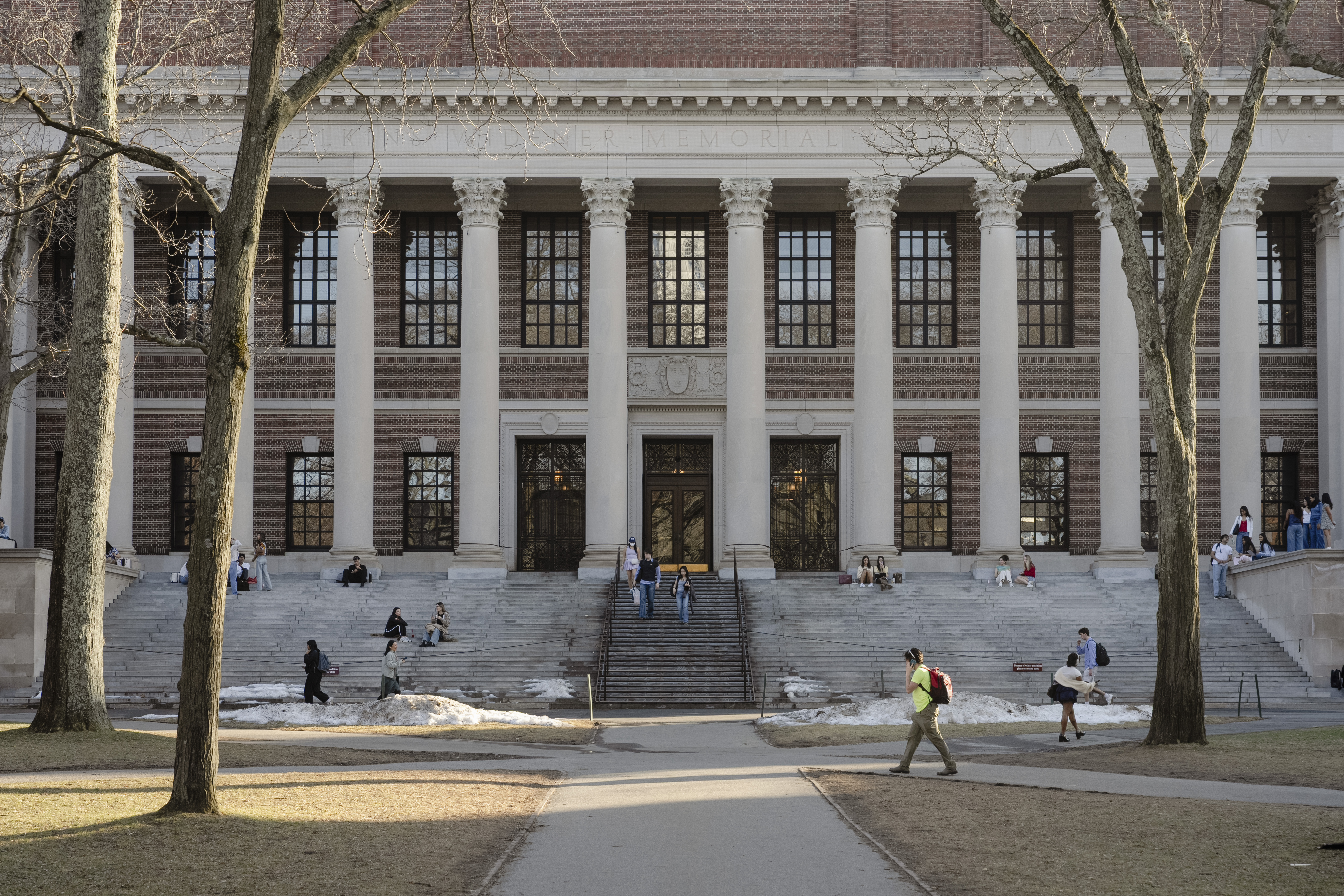
    The Trump administration has targeted a number of the nation’s elite universities, accusing them of tolerating antisemitism and pursuing racial diversity in ways that flout the law, among other criticisms. Harvard — the country’s wealthiest university — has been one of the most frequent targets of federal officials.

    As the Trump administration has pulled multiple levers to try to bring Harvard and other schools to heel, Harvard has often pushed back. It was the first institution to sue the Trump administration, has won in court on a number of occasions, and has not reached a settlement with the federal government, as other prominent schools have done.

    Now, however, the university faces cuts that may be harder to counter. Last September, a judge ruled that the administration had improperly cut off funding to Harvard when it ended all of its grants in 2025, finding that the government had violated Harvard’s First Amendment rights.

    But in the ruling, the judge suggested that there were lawful means the government could pursue if it wanted to restrict Harvard’s money, should it choose to.

    That is what is happening.

    Through June 30 of this fiscal year, which began Oct. 1, the NIH provided Harvard 309 awards worth a total of $200 million. The amount is down from an average of roughly 440 awards worth $246 million for the same nine-month period in 2021-2024, according to the latest data available.

    Harvard is still one of the largest recipients of NIH funding, though it is far behind the top grantees such as Johns Hopkins, the University of Michigan, and Yale University. Other major research universities have also seen reductions in NIH funding.

    Though NIH support has slowed compared with the Biden years, the 2026 awards are outpacing last year, when Harvard’s funding was frozen. By the same point in 2025, NIH funding to Harvard was stalled at 201 grants worth $94 million.

    In recent months, Harvard’s individual schools have laid off staff. The leadership of the university’s largest division, the Faculty of Arts and Sciences, reported in an email to the division on Aug. 14 that 165 of its staff positions had been eliminated in a layoff and restructuring. The job cuts were aimed at reducing a major deficit.

    Carrie Barbash, an organizer and former president of the Harvard Union of Clerical and Technical Workers, said the final number of layoffs may change as some staff members whose jobs were eliminated consider moving into some newly designed roles.

    The current grant slowdown is not taking place evenly across Harvard. The university’s Chan School of Public Health is heavily dependent on NIH funds and has seen nearly 25% less in grant funding this year, compared with the average amount from 2021 to 2024.

    The NIH has obligated $67 million across 63 awards to Chan through June of this fiscal year; the 2021-24 average for the same time period was $90 million across more than 100 awards.

    Nancy Krieger, a professor of social epidemiology at the Chan School, said that fallout from the funding slowdown goes beyond individual projects that lost grants. More than a year of federal cuts — and legal fights over the reductions — have “shaken any sense of stability as to whether the federal government is a reliable funder,” she said.

    The school is already cutting back, with layoffs and reductions in the number of slots for Ph.D. students. “It’s not just that you lost funding, it’s that you’re reducing the size of the cohort for the next generation of researchers that you’re training,” Krieger said. “What is the knowledge lost? And what are the myriad ripple effects for the economies of the cities and towns that depend on universities as major employers?”

    Harvard has also won some rounds in its fight with the administration. Harvard’s court victories protected much of its grant money and its ability to host international students.

    A federal judge on Aug. 13 dismissed a Trump administration lawsuit against Harvard that had accused the school of tolerating antisemitism and sought the ability to deny it grants.

    Harvard’s endowment continues to ride the stock market to record highs, and the university’s steadfastness under pressure has inspired supporters and alumni who do not want it to yield to President Donald Trump.

    While Yale is in talks to perhaps become the next elite school to settle with the administration, Harvard continues to hold out. Harvard is not believed to be engaged in any serious settlement talks at this time.

    “Harvard is fighting for principles, both legal and constitutional, and doing so on behalf of the entire system of colleges and universities,” said Lee Bollinger, the former president of Columbia University. “We should all be grateful.”

    Yet, as Bollinger noted, “any litigant will inevitably pay a high price.”

    The administration has pushed the fight to Harvard on several fronts. The university is still engaged in other litigation and appeals with the Trump administration; a loss in any major case could be devastating.

    The Trump administration continues to open fresh battles. The government is proposing new budget rules that would give the administration’s political appointees more power over grants.

    White House spokesperson Liz Huston blamed the ongoing battles between the university and the administration on Harvard’s “stubborn commitment to unlawfully discriminating on the basis of race and failing to properly protect its students.”

    “Unless Harvard comes to the table in good faith, the Trump administration will continue pursuing every available legal avenue to enforce federal civil rights laws,” she said.

    Facing the uncertainty caused by lawsuits, grant slowdowns, and other pressures from the administration, Harvard and other schools are likely to continue to retrench, said Tom Gerety, a former president of Amherst College.

    “The main thing you do in uncertainty is hunker down and say, ‘What cuts can we make right now?’” he said, noting that research universities are already trimming back on Ph.D. programs.

    Tighter research budgets will mean scientists are more likely to seek jobs outside the United States, he said, while those still at American schools may be less likely to take the unconventional big swings in their research that can lead to scientific breakthroughs.

    “This is going to hurt,” Gerety said, “and it’s going to hurt a lot more in 10 years than it does now.”

    The government has pursued appeals of federal court rulings that went Harvard’s way last year.

    The two sides, as well as a number of outside parties, filed briefs this summer over last fall’s decision in the funding case. The government is also appealing a June 2025 court decision blocking the administration’s effort to stop Harvard from hosting international students. Oral arguments in that case are scheduled for October.

  • Trump threatens suit over report he doesn’t like, aiming to intimidate a critic

    Trump threatens suit over report he doesn’t like, aiming to intimidate a critic

    President Donald Trump has opened a new front in his campaign to intimidate political foes, threatening a prominent liberal think tank with a $5 billion defamation lawsuit over a report concluding that his deployment of the National Guard to cities across the country has had little effect on reducing violent crime.

    The threats against the think tank, the Center for American Progress, were Trump’s latest effort to use the legal system to punish critics for voicing unflattering facts and opinions generally protected by the First Amendment. And while it is unclear how far any suit the president might ultimately file would get in court, it could force the organization to spend money fighting it off and make it even more of a target of his allies and supporters.

    On Monday, one of Trump’s personal lawyers, Alejandro Brito, wrote a letter to the center warning that he would file the suit if the group did not fully retract the report, which was published on its website July 13. The letter, viewed by the New York Times, was addressed to the group’s president and CEO, Neera Tanden, a longtime Democratic official who served as a senior adviser to President Joe Biden, and to several of its board members.

    Brito claimed that the report about the National Guard was full of malicious and false statements. He gave Tanden and members of her board until 5 p.m. Friday to retract it and apologize to Trump.

    Tanden pushed back, saying in a statement that the center would “neither cower nor bend in the face” of legal action. She also defended the report, asserting that while its findings might have been “inconvenient to the Trump administration,” they were “grounded in rigorous, evidence-based research and analysis.”

    “This threatened lawsuit’s attack on facts and evidence is baseless,” she added. “A fundamental protection of the First Amendment is to allow for the publication of facts and analysis that is contrary to the arguments and claims of any administration. A lawsuit is a transparent attempt to silence us.”

    Trump has often lashed out at scholars and commentators for reproaching or critiquing him in the news media. Since winning reelection, he has filed a flurry of lawsuits against news organizations like the BBC and the Times, claiming they defamed him. He has even filed suit against the Des Moines Register, arguing that a poll the paper published before the 2024 election indicating that he would lose the vote in Iowa amounted to consumer fraud and election interference.

    (The Times has filed its own suits against the administration, including two seeking increased access for its reporters at the Pentagon.)

    The president has repeatedly claimed that his administration is the most transparent in U.S. history. But he and his aides have used lawsuits and executive actions to go after law firms, universities, and television networks. They have also used criminal tactics such as search warrants and grand jury subpoenas in an effort to pry loose sensitive information from reporters.

    Many of these efforts have faltered once they reached court and faced judicial scrutiny. Brito himself has filed multiple failed suits on behalf of Trump. Last month, a federal judge in Florida referred Brito for potential disciplinary proceedings after ruling that a suit he filed for the president against the IRS amounted to an improper exercise in self-dealing.

    The Center for American Progress report accused Trump of seeking to take credit for a nationwide decline in violent crime that began before he returned to the White House. The report determined that there was “no evidence” that the National Guard deployments had affected the crime rate, adding that they were poised to cost taxpayers more than $1.7 billion if they continued through the end of 2026.

    The report asserted that the “primary goal” of the deployments was “never to stop crime.” Instead, it said they amounted to “a dangerous power grab by the Trump administration.”

    The team that put the report together used an analysis based on homicide, violent crime, and gun victimization data in cities where the National Guard was deployed — Washington, Los Angeles, and Memphis, Tenn. — over the period from January 2023 to this February.

    “This approach was employed to identify any statistical changes in crime trends associated with the deployment of the National Guard in specific cities,” its authors wrote.

    Trump referred to the report on social media last week after watching a television segment about the report, which he described as “another Radical Left SCAM.” In the post, he threatened to sue the center and several of its funders, including liberal financier George Soros, who has long served as a boogeyman for the administration.

    A week later, Brito’s letter arrived at the center, saying that the president would sue if Tanden and her colleagues did not retract the report, issue an apology, and give Trump unspecified financial compensation.

    The letter ended with an all-caps salutation: “PLEASE GOVERN YOURSELVES ACCORDINGLY.”

    On Friday, a lawyer for the center fired back in a letter of his own, deriding Trump’s accusations that he had been defamed.

    “This is utterly absurd,” the lawyer, Kevin H. Metz, wrote to Brito. “Truth is not and cannot be defamation.”

    Metz went on to say that the center welcomed the opportunity to make its case in court and receive more information on the National Guard deployments through the process of discovery.

    Other think tanks of various political stripes have rallied to the center’s side.

    “Independent organizations across the ideological spectrum must be free to express their analysis and opinions, and to challenge those in power without fear of political retaliation or legal intimidation,” said Peter Goettler, president and CEO of the libertarian Cato Institute. “Disagreements on matters of policy should be settled through open inquiry, evidence, and debate — not threats designed to silence criticism.”

    This article originally appeared in the New York Times.
  • From COVID to cancer: How Moderna’s stock jumped 177% in a day

    From COVID to cancer: How Moderna’s stock jumped 177% in a day

    COVID-19 vaccines made Moderna a household name, but the company’s fortunes cratered as demand for the shots plummeted. Hostility from the Trump administration also spooked investors. As of Tuesday, the company’s stock had fallen nearly 90% from its peak, a loss of $170 billion in market value.

    All the while, the company was quietly mounting a comeback in cancer.

    On Wednesday, those efforts began to pay off in a big way. Moderna and Merck, a big drugmaker, reported that their experimental cancer vaccine extended the time before melanoma recurred in a clinical trial — the first late-stage study of its kind to succeed. The two drugmakers announced their success in news releases, without providing numbers that would indicate how much patients had benefited. Moderna’s stock closed up 177% Wednesday.

    Moderna’s stock then gave up some of those gains, dropping 24% to close at $133.32 Thursday on the Nasdaq Stock Market.

    The investors were betting that Moderna could help jump-start a new approach to treating certain cancers. The experimental vaccine uses the same messenger RNA, or mRNA, technology that powered Moderna’s COVID-19 shot, but it works differently to treat cancer. Tailored to each patient’s tumor genetics, the vaccine delivers instructions to produce a fragment of a tumor to teach the body’s immune system to attack the cancer.

    Cancer vaccines using mRNA could become a hugely lucrative business, if the approach works across cancer types. Cutting-edge cancer drugs typically cost several hundred thousand dollars a year.

    For Moderna, cancer “is by far the most significant pipeline opportunity,” said Tyler Van Buren, an analyst at the Wall Street bank TD Cowen.

    Moderna’s CEO, Stéphane Bancel, said Wednesday on CNBC that the company’s work on the cancer vaccine was its latest effort to “take very big, scientific clinical bets.”

    The prospect of using mRNA vaccines to treat cancer has tantalized researchers for decades. But momentum in the field has accelerated only recently, as manufacturing and other technology has improved, thanks in part to investments during the pandemic.

    As of last year, more than 60 cancer vaccines using mRNA or similar technology were in development, being tested in more than 120 clinical trials, according to one count. Many of those studies are funded by philanthropies, the government, and smaller biotechnology companies.

    Four major drugmakers are leading the development efforts. Two are Moderna and Merck, whose collaboration on the approach dates back a decade; they are also testing the same vaccine as a therapy for cancers of the lung, kidney, and bladder. (In the study whose results were announced Wednesday, the cancer vaccine was given in combination with Keytruda, Merck’s blockbuster cancer immunotherapy.)

    BioNTech, another developer of an mRNA vaccine for COVID, is working with Roche’s Genentech unit to develop a vaccine to treat cancers of the pancreas and colon. Results from a small safety study of that therapy in pancreatic cancer generated excitement this spring.

    The approach has historically been seen as risky. The manufacturing is complex, the politics are fraught, and there had been little evidence it would work. Other large major cancer drugmakers, such as Pfizer and Bristol Myers Squibb, are not working on mRNA vaccines for cancer.

    Under Health Secretary Robert F. Kennedy Jr., the Trump administration has made a series of funding and policy changes hostile to mRNA technology. A year ago, the federal government canceled nearly half a billion dollars’ worth of contracts and other funding for mRNA technology.

    “Those political headwinds were serious, and it caused a lot of companies to take great pause,” said Jeff Coller, a scientist who works on mRNA at Johns Hopkins University. Coller advises several small mRNA companies and is on the executive committee of the Alliance for mRNA Medicines, a trade group.

    But the administration has signaled it may be more open when it comes to mRNA for treating cancer. This year, it quietly started a public-private partnership expected to fund clinical trials of different cancer vaccines, including those using mRNA. The Department of Health and Human Services did not return a request for comment Wednesday about the status of that initiative and how much funding the department has granted.

    Moderna was founded in 2010 in Cambridge, Mass., to develop medicines using mRNA. Its COVID vaccine, its first product, brought in tens of billions of dollars of revenue during the pandemic.

    But as the public and the government soured on its COVID shot, Moderna had hardly anything to replace it with. Over the past few years, Moderna looked for different ways to reinvent itself. It won approvals for mRNA vaccines for respiratory syncytial virus and, most recently, flu. It also explored experimental therapies for rare diseases.

    Last year, the company laid off more than 800 workers, a tenth of its workforce. It also lost more than $700 million in contracts to develop a shot to protect humans against bird flu after the Trump administration canceled the agreements. The company shelved vaccines to protect against herpes, chickenpox, and shingles.

    Even though it had started years before the pandemic, Moderna’s work on mRNA cancer vaccines flew relatively under the radar. In addition to the experimental cancer vaccine it is developing with Merck, Moderna solely owns several others that it is testing in different cancers.

    “People started to pay attention” as Moderna and Merck began presenting promising results from midstage clinical research, said Andrew Tsai, an analyst at the Wall Street bank Jefferies.

    Now, Moderna is back in the spotlight. Crucial questions remain: Will the promising results in melanoma, which has repeatedly proved to be more responsive to treatment, hold up in cancers that are tougher to treat? And will the detailed results look as good as the companies made them sound Wednesday? (The drugmakers said they would present the full data soon at a medical meeting.)

    But now that an mRNA cancer vaccine appears to have succeeded, Van Buren of TD Cowen said he anticipated that drugmakers would flock to the technology.

    “Now that this trial was successful,” he said, “I definitely think we can expect more investment by other pharma companies.”

    This article originally appeared in the New York Times.