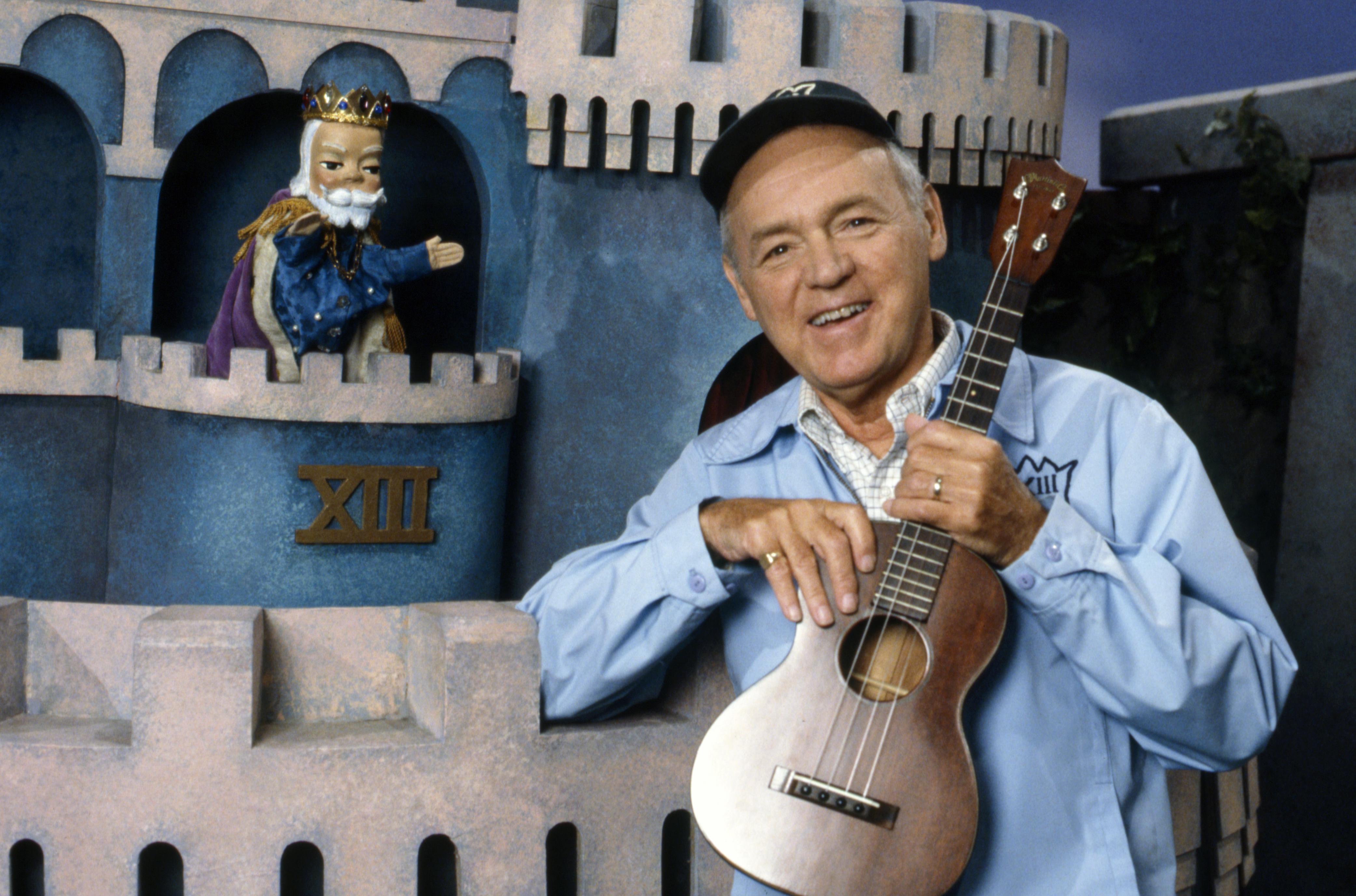
Joe Negri, an elegant jazz guitarist who passed up touring with Tony Bennett and other luminaries to remain in Pittsburgh, his beloved hometown, where he played Handyman Negri on Mister Rogers’ Neighborhood, cleaning castles, mixing cement, and bantering with King Friday, died May 30 in Scott Township, Pa. He was 99.
His death, at a senior living facility near Pittsburgh, was confirmed by his family.
Mr. Negri appeared on more than 300 episodes of the long-running public television show — first as an affable, singing handyman in the Neighborhood of Make-Believe and later as the congenial proprietor of Negri’s Music Shop, demonstrating instruments and playing alongside Wynton Marsalis, Yo-Yo Ma, and other musical guests.
“The thing about Joe was that he wasn’t acting,” David Newell, who played McFeely on the show, said in an interview. “He really was like the friendly fellow you might find walking around a neighborhood. He was just incredibly gentle as a person, but also as a musician.”
After touring with jazz bandleader Shep Fields as a teenager, Mr. Negri accompanied Andy Williams, Johnny Mathis, and other headliners in the 1950s, framing their melodies with rich, effervescent chords. The Pittsburgh Post-Gazette arts critic Harold V. Cohen called Mr. Negri a “wizard.”
Impressed by his talent, some Pittsburgh musicians persuaded him to move to New York, the center of the jazz world, where stars like Bennett wanted him to tour with them. But after arriving with his family in 1959, Mr. Negri realized he had made a mistake.
“Living wasn’t easy in New York,” he told NPR in 2010. “The kids had babysitters. Somebody had to take them to the park to play. The whole scene just kind of turned me off. So we packed up.”
Returning to Pittsburgh, Mr. Negri started a band and eventually became the music director at WTAE, a local television station. There, he worked with Fred Rogers on a short-lived children’s show.
In 1966, Rogers left WTAE to develop Mister Rogers’ Neighborhood for the public television station WQED. He hired Mr. Negri to be on the show and later asked him to play a handyman.
“I almost started laughing,” Mr. Negri later recalled. “I said, ‘Fred, you got the wrong guy. I’m not very handy. You know, I can’t do anything. I can’t even put a hammer on a nail.’”
Rogers was undeterred.
“Don’t worry,” he told his new handyman. “It’s going to be all pretend.”
From the outset, music was central to the show. Mr. Negri sang for the first time in Episode 13, performing Sometimes People Are Good, a song written by Rogers, after the puppet Lady Elaine Fairchilde borrowed a painting without asking.
The lesson is in the lyrics:
Sometimes people are good
And they do just what they should.
But the very same people who are good sometimes
Are the very same people who are bad sometimes.
It’s funny, but it’s true.
It’s the same, isn’t it for me …
Isn’t it the same for you?
At the end of the episode, Rogers reflected on what Lady Elaine had done. “If you want something, you ask for it,” he said. “And if you can’t have it, then you find something else.”
Bending down to pick up domino blocks from the floor, he added, “I wonder if Lady Elaine knew that.”
Then he, too, sang the song, lingering on the words “for you?”
Joseph Harold Negri was born June 10, 1926, in Pittsburgh, the son of Italian immigrants. His parents were Michael Negri, a bricklayer, and Rose (Viggiano) Negri.
Growing up in Mount Washington, a working-class neighborhood with a spectacular view of the city’s downtown, his home was filled with music. His father played the banjo. His mother listened to pop songs on the radio.
When he was 3, he started playing the ukulele. By the time he was 5, he was singing on Uncle Henry’s Radio Rascals, a local program for child performers. He took up the guitar when he was around 8, taking lessons at Volkwein’s Music, a well-known store in downtown Pittsburgh, where he learned to play solos by jazz guitarist Eddie Lang.
Mr. Negri had found his chord in life.
“I guess there’s been a mainline for me — the guitar,” he told Vintage Guitar Magazine in 2010. “I call myself a work in progress.”
In 1942, he played his first professional gig, sitting in with a local orchestra. Frank Andrini, a guitarist in Pittsburgh, took note of the performance and connected him with Fields, the bandleader. Mr. Negri dropped out of high school to tour with him.
“He promised my mom and dad I’d be in good hands and he would look after me,” Mr. Negri later recalled. “And he did.”
At 18, in the midst of World War II, he was drafted into the Army and sent to Europe, playing when he could at nightclubs and bars. An officer who saw him perform helped him join a special services unit that entertained soldiers.
After his Army service, Mr. Negri returned to Pittsburgh, studying music at the Carnegie Institute of Technology (now Carnegie Mellon University). His path seemed set — move to New York, play on albums and tour with jazz stars — but the road led back to his hometown.
“I feel that in this town I’ve gotten to do such a variety of things that I could never have done in New York or on the West Coast,” he told the Pittsburgh Press in 1971.
Mr. Negri married Joan Serafini in 1954. She survives him, along with their daughters, Lisa Negri, Laurie Bentz and Gia Leven, and three granddaughters.
BERLIN — The United States plans to significantly reduce the aircraft and warships that it makes available for NATO operations in Europe, according to two senior European officials, accelerating America’s effort to scale down the protection it has offered to European allies for eight decades.
The decision would limit NATO’s ability to launch long-range strikes and conduct surveillance. It was communicated to allies in early June in a written document, parts of which were reviewed by the New York Times. The European officials, who were briefed on the decision, spoke on condition of anonymity to speak more freely about sensitive military plans.
The planned drawdowns include:
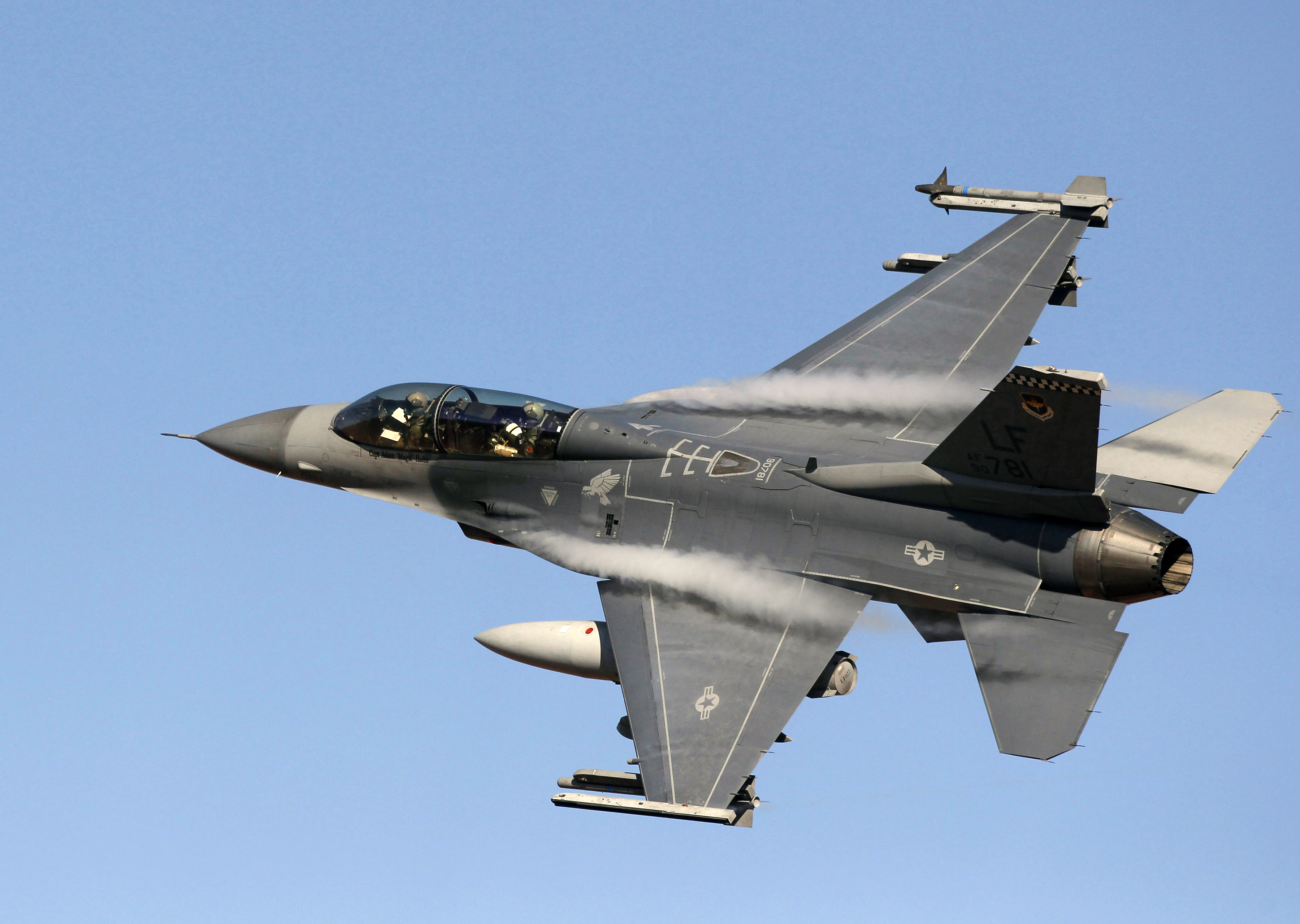
— Reducing the number of F-16 and F-15E fighter jets from roughly 150 to 100
— Reducing maritime reconnaissance aircraft from 26 to 15 and cutting all eight aerial refueling tanker jets previously available to Europe
— Reallocating a missile-launching submarine and an aircraft carrier, along with several warships and scores of jets that join the carrier’s missions
— Reallocating one of two groups of bombers previously assigned for Europe’s defense
The Pentagon declined to comment on the specific numbers in the document, and referred to a statement by its European Command last week that spoke in general terms of its intention to reduce its commitments in Europe.
These details, some of which were first reported in the German news outlet Die Welt, provide the clearest picture yet of the extent to which the Trump administration intends to reduce its commitment to NATO, a military alliance created in the aftermath of World War II. NATO’s purpose was mainly to protect U.S. allies in Europe from external threats such as the Soviet Union, and its European members still see it as essential to their ability to deter Russia.
The Pentagon has not yet publicly revealed the timeline for the drawdown but U.S. officials have indicated it will take effect very soon — far earlier than European counterparts had been preparing for. The abrupt cutoff of U.S. forces would affect NATO’s ability to, for example, monitor Russian submarine traffic or launch long-range Tomahawk missiles deep into Russian territory.
Though Europeans have similar missile-launching capabilities, experts say that the missiles act as a bigger deterrent to Russia when wielded by the United States, since Europeans may be warier of deploying them.
“While each of these cuts can be managed individually, together they represent a significant posture change and pose challenges to European deterrence readiness across the spectrum,” said Giuseppe Spatafora, of the European Union Institute for Security Studies, a Paris-based think tank.
President Donald Trump has complained for years about the burden that the United States shoulders in its contribution to NATO. He has repeatedly called on Europe to do far more to defend itself without U.S. support, and threatened to leave the alliance altogether. But his administration had only followed through with one-off announcements about relatively small withdrawals from individual countries — until the June document detailing the sweeping reductions to American support for NATO as a whole.
The cuts will be mitigated by the fact that U.S. troops in Europe will still constitute one of the largest NATO forces on the continent. The drawdown’s effects will also be softened by the fact that European leaders, seeing a need to rely less on U.S. support, were already in the process of rearming their countries.
But Britain’s defense secretary quit Thursday, accusing the government of spending too little on its military. And Europe is struggling to coordinate its rearmament; on Tuesday, Germany confirmed its withdrawal from a project to build a new fighter jet with France and Spain.
For some Europeans, the specific number of U.S. assets assigned in Europe is less important than the question of whether Trump is prepared to deploy any of them in combat.
Anton Hofreiter, a German lawmaker, said: “NATO’s main problem is that, as long as Trump is president, there is no longer any faith that the U.S. would come to the Europeans’ aid in the event of an emergency.”
The drawdown comes at a particularly tense moment for Europe. In late May, a Russian drone hit an apartment block in Romania, the first such strike in a major urban area in NATO territory. Combined with other Russian drone intrusions into NATO airspace, it raised European fears that Russia might expand its aggression beyond its invasion of Ukraine.
Ed Arnold, of the Royal United Services Institute, a security think tank in London, said that while the drawdown could be worse, “it will have the effect of focusing minds.”
The details of the drawdown were communicated privately as top U.S. defense officials spoke publicly about their intention to reallocate forces to defend American interests in the Indo-Pacific region.
The head of the Pentagon’s European Command, Gen. Alexus G. Grynkewich, said in early June: “There has been an unhealthy codependence in the NATO Force Model on U.S. forces.”
The general, who is NATO’s top military commander, added: “President Trump, Secretary Hegseth, and others have been clear that this needs to change, and it will change. The potential reality of simultaneous conflict in multiple theaters demands it.”
ALEXANDRIA, Va. — A federal judge Friday barred the Trump administration until further notice from setting up a $1.8 billion fund to compensate people claiming to have been unfairly prosecuted by the government, saying that her order was needed because of mixed messages about the scheme from President Donald Trump.
The ruling by the judge, Leonie M. Brinkema, was the strongest effort to date by anyone in government to hold the administration to its word that the proposal to create the fund had actually been set aside. While Todd Blanche, the acting attorney general, told Congress last week that the fund would not move forward, Trump has been much more circumspect, insisting that he still loves the idea and believes that people who suffered in court at the hands of the government should get financial compensation.
Brinkema seized on the president’s statements during a hearing in U.S. District Court in Alexandria, Va., suggesting they left open the possibility that the fund could be brought back to life despite Blanche’s promises and assertions made in court papers that the fund was no longer moving forward.
“We just don’t have the absolute certainty that this fund won’t rear its head in another form,” she said.
Brinkema did, however, give the administration a way out. She said she would consider rescinding her order if, within a week, the Justice Department sent her a declaration, filed under penalty of perjury, that the fund was dead once and for all. She told Andrew Block, a department lawyer who appeared in court for the government, that the declaration needed to be signed by Blanche and Scott Bessent, the Treasury secretary.
Brinkema’s ruling extended a temporary pause on the fund that she had put in place at the end of May. And it came two days after a federal judge in Washington, Richard J. Leon, refused to issue his own order putting the fund on hold.
Leon took the Justice Department at its word that the plan had been shelved, but still warned the administration not to play games with him by pretending it was dead, if it was not.
“Don’t play possum with this court,” he said.
The fund has created a political headache for the White House almost from the moment it was first announced May 18 — in no small measure because of concerns that it could be used to funnel taxpayer money to hundreds of rioters prosecuted for storming the Capitol on Jan. 6, 2021.
Brinkema underscored those concerns by reading aloud a passage about payments being made to the rioters that appeared in a brief criticizing the fund that was submitted to her last week by Sens. Cory Booker (D., N.J.) and Bill Cassidy (R., La.).
“A scheme deliberately designed to recast insurrectionists — including those who perpetrated violence against law enforcement officers — as victims and legitimate prosecutions as persecution does not merely rewrite history,” the judge read from the bench. “It creates incentives for similar conduct in the future, with the explicit encouragement of the officials responsible for administering justice.”
The lawyers who challenged the administration in front of Brinkema celebrated her order, saying it would keep the fund in check, despite “the administration’s shifting explanations” about its future.
“The court recognized the serious legal concerns raised by the Trump-Vance administration’s attempt to create a secretive, taxpayer-funded compensation program operating outside the constitutional safeguards that govern public spending,” said Skye Perryman, the president and CEO of Democracy Forward.
The nonprofit group brought the case on behalf of five clients — among them, a former federal prosecutor fired after working on Jan. 6-related cases — who asserted that they had been wronged by the Trump administration and would be prevented from filing claims with the fund because it was designed to compensate people alleging harm by Democratic administrations.
The fund emerged from an extraordinarily unusual ploy to settle a $10 billion lawsuit that Trump had filed against the IRS, a federal agency that he technically controls. The suit accused the IRS of not doing enough to stop a contractor from leaking his tax information to the New York Times in 2019.
As part of the same deal, the IRS and the Justice Department gave the president an even more remarkable and personal benefit, granting him, his family, and businesses broad protections from tax investigations.
Brinkema made clear Friday that her order applied only to the compensation fund, not to the tax provision. She noted that the entire settlement deal — including both the fund and the IRS protections — was being scrutinized as a potential act of fraud by the federal judge in Miami, Kathleen M. Williams, who oversaw the original lawsuit.
Shortly after being assigned the IRS suit, Williams, an Obama appointee, had questioned whether it presented an actual conflict that she could consider, given that Trump was effectively on both sides of the matter. When she closed the case, she noted that there was no “settlement of record,” but shortly after, the Justice Department released its agreement dismissing the suit.
Williams effectively reopened the case last month after 35 former federal judges urged her to examine whether Trump’s legal team and the Justice Department had colluded to reach the deal in a way that avoided any scrutiny or oversight.
As part of her inquiry, Williams has given Trump’s personal lawyers until the end of Friday to tell her in writing whether the dismissal of the suit was “premised on deception” and whether it should be formally reopened because she was the “victim of a fraud.”
Elon Musk became the world’s first trillionaire Friday when shares of his rocket company SpaceX began trading on the stock market, signaling a new era of ultra-affluence and widening wealth inequality.
Musk reached the milestone when trading of SpaceX shares opened at $150, up 11% from their initial public offering price of $135. His net worth — which comprises his stock in SpaceX and his electric carmaker, Tesla, as well as ownership stakes in other ventures including brain implant company Neuralink and tunneling firm the Boring Co. — stood at around $1.1 trillion.
Musk, 54, was already the world’s richest person. He claimed that title from Amazon founder Jeff Bezos in January 2021, after Tesla’s shares surged to take his net worth past $185 billion.
Since then, the South African-born entrepreneur’s fortune has more than quintupled in a 5½-year period, during which he bought social media company Twitter, founded an AI startup, fused them together with SpaceX, and then took the conglomerate public. In that time, Musk also spent more than $250 million to help elect Donald Trump and advised the president.
And Musk’s wealth-making has only accelerated, cementing his influence over society, culture, and global politics. Since October, his net worth has doubled.
“The fact is that wealth for some and wealth inequality is growing in dimensions that we’ve never seen before,” said Steven Durlauf, the director of the Stone Center for Research on Wealth Inequality and Mobility at the University of Chicago.
When oil tycoon John D. Rockefeller’s fortune was at its height in 1937, his $1.4 billion net worth amounted to about 1.5% of U.S. gross domestic product, Durlauf said. Musk’s net worth is now equivalent to more than 3% of U.S. GDP.
Such wealth is so extraordinary that it can be hard to make meaningful comparisons. The median American household had a net worth of just under $200,000 in 2022, the year with the most recent data available from the Federal Reserve. That means Musk’s net worth is 5 million times as large as that of the typical family.
His wealth dwarfs even that of the everyday wealthy. The top 10% of households by income had an average net worth of $6.5 million in 2022, less than 0.001% of the SpaceX leader’s total. The world’s second-richest person, Google co-founder Larry Page, is worth around $304 billion, according to the Bloomberg Billionaires Index.
Inequality is notoriously difficult to measure, but the explosion of wealth at the top is hard to dispute. The net worth of the middle 40% of households, adjusted for inflation, has risen slightly more than 50% over the past decade, according to data from French economists Emmanuel Saez and Gabriel Zucman. The top 1% have seen similar gains. But the richest 0.001% have seen their wealth roughly double over the same period.
Beyond Musk, the ultrawealthy have experienced significant increases in their fortunes. In 2016, a net worth of $100 billion — a mark that Musk crossed about six years ago — would have easily placed someone at the top of the Forbes Billionaires list. Today, $100 billion would rank them as the 20th richest person in the world.
“Christ, when I was a kid, we only talked about millionaires,” said Bernie Sanders, 84, the progressive senator from Vermont. “If this isn’t an example of oligarchy, I don’t know what is.”
Musk’s rapid accumulation of wealth largely comes down to the appreciation of his nearly 50% stake in SpaceX, which is worth more than $900 billion. During its IPO, the company sold more than 555 million shares, which valued it at $1.77 trillion, up from a $400 billion valuation on the private market last summer. Starting in January, SpaceX also granted Musk pay packages totaling 1.3 billion shares, which he cannot sell until he hits certain operational milestones.
Musk did not respond to a request for comment. But he has previously acknowledged the trillionaire milestone.
In February, he replied to a post on X about possible trillionaire status by noting that he had created significant wealth for shareholders and held less than 0.1% of his net worth in cash. In May, he responded on X to the financial musings of Peter Diamandis, a friend and SpaceX investor, saying he would reach “$10T or bust.”
Musk has also recently said that “money won’t matter” in the future because Tesla and SpaceX would develop robotics, AI, and rockets so powerful that no human would ever have to work again. In his utopian world of “amazing abundance,” everyone would have “universal high income,” he has said.
Musk’s allies said his net worth was justified by his impact, providing an example and incentive for those who want to build successful companies. Diamandis, the head of the XPrize Foundation, an organization that holds contests to encourage scientific breakthroughs, said Tesla and SpaceX were “raising the floor.”
“The fruits of his labor are making him into a trillionaire, and they’re uplifting humanity,” Diamandis said.
Adeo Ressi, Musk’s college roommate at the University of Pennsylvania, said the SpaceX chief never cared as much about financial gain as obtaining resources to help him achieve his entrepreneurial goals. For Musk, “money is a means to an end,” Ressi said, comparing his friend’s mindset with a gamer accumulating coins in a video game to beat a level.
“He’s amassing resources to do things, and the thing he wants to do most is colonize Mars,” Ressi said. “That’s a really big driving force behind his wealth accumulation.”
He added that Musk was “not a poster child of wealth inequality” and pointed to the tech leader’s lifestyle, in which he is known to work around the clock and avoid the typical trappings of the rich, like islands and megayachts.
“It’s not like he’s planning to leave this in a massive family trust,” Ressi said. “It’s literally going to be used to make humanity into a multiplanetary species.”
But critics say the way Musk chooses to lead his life is beside the point. His net worth has already provided him with the means to personally acquire companies and spend hundreds of millions of dollars to help elect a preferred presidential candidate, Durlauf of the University of Chicago said.
Becoming a trillionaire will only magnify how “economic inequalities are spilling over into the political domain,” he added.
Sanders called Musk’s trillionaire status “a moral travesty,” noting that 60% of Americans live paycheck to paycheck.
The senator also agreed with the assessment that Musk was probably not as interested in owning islands or yachts. The trillionaire, in his view, was interested in just one thing.
“This guy is into power,” Sanders said. “And he is now the most powerful person on Earth.”
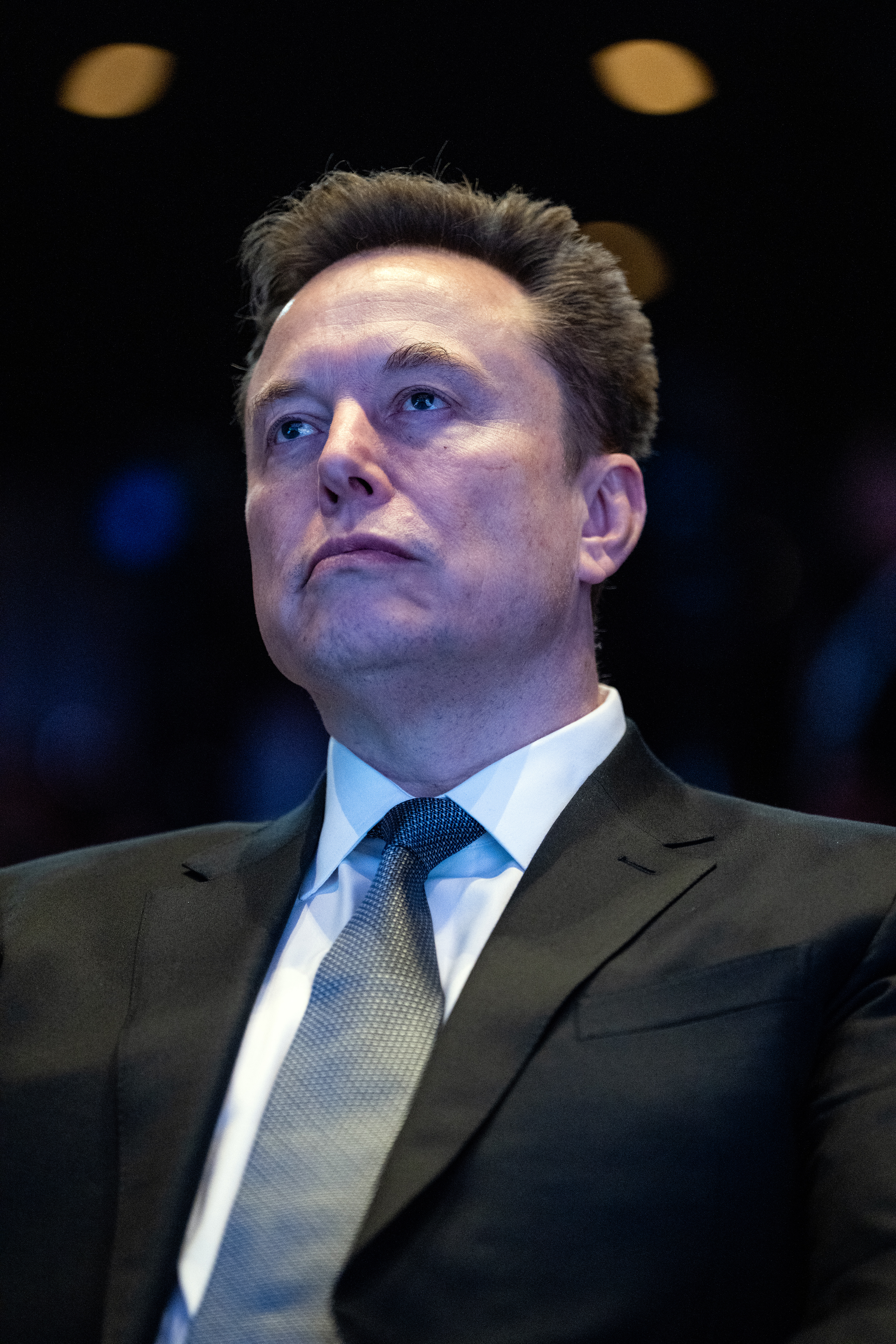
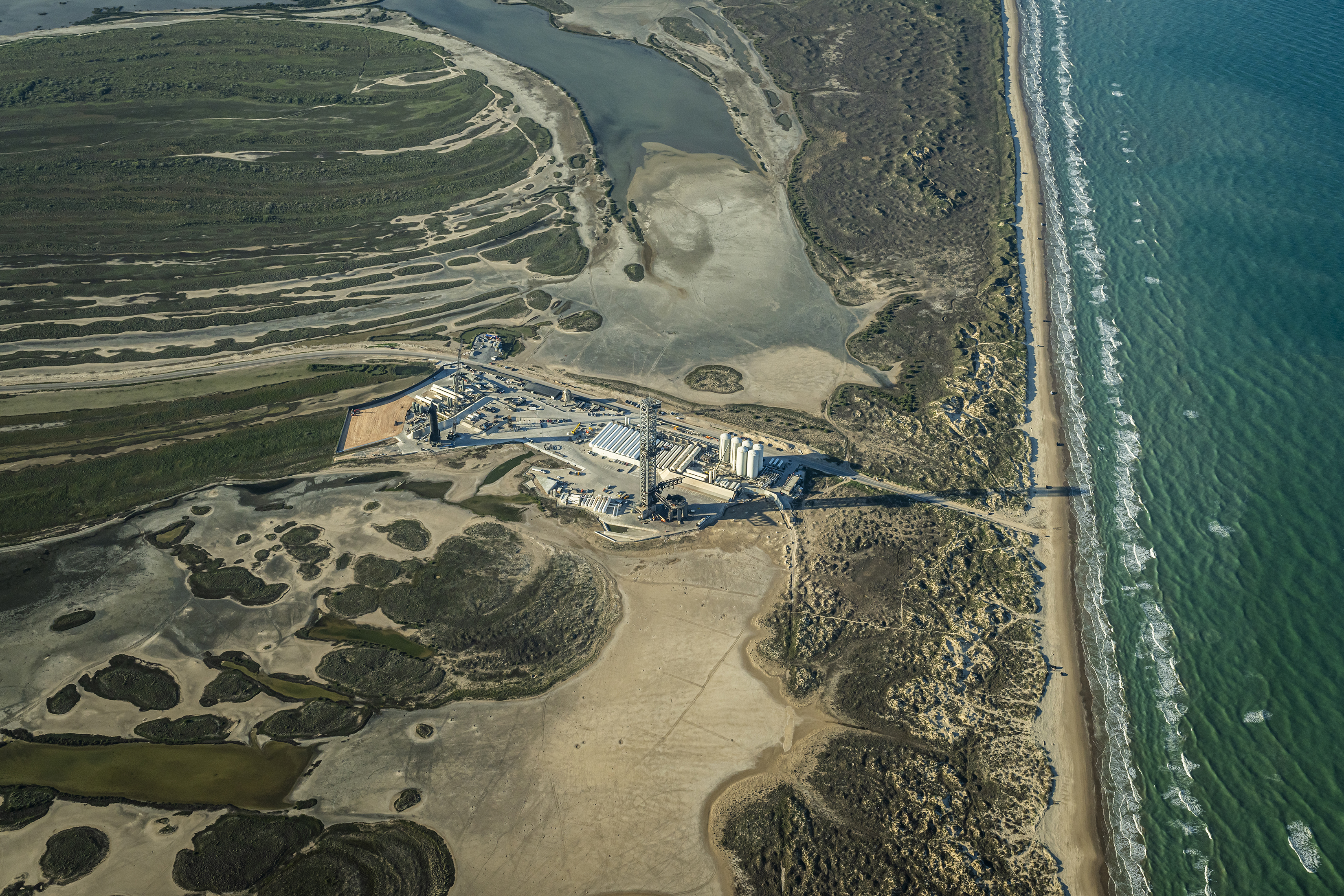
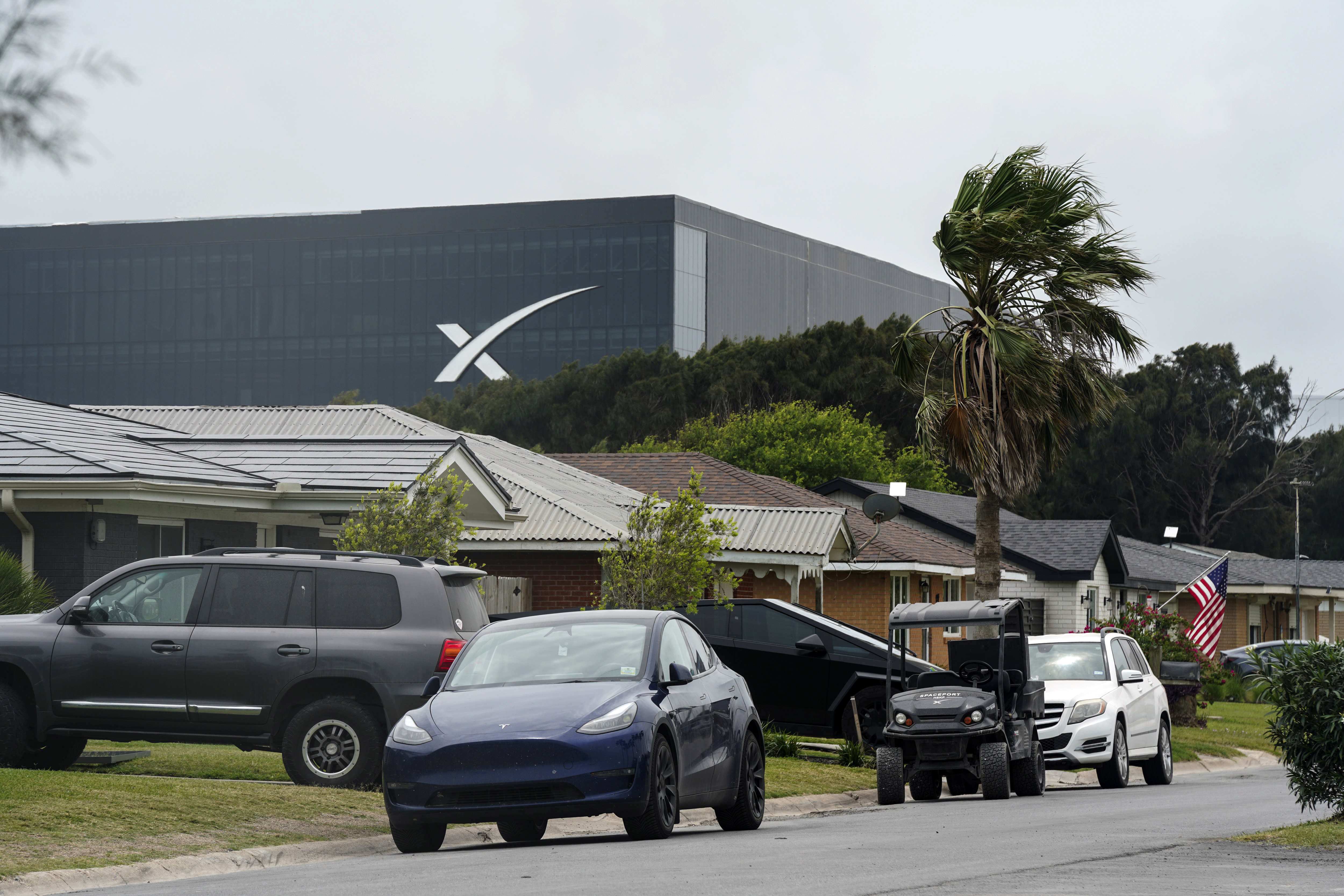
FILE — Elon Musk in Washington on Nov. 19, 2025. Elon Musk became the world’s first trillionaire on June 11, 2026, as shares of his rocket company SpaceX began trading on the stock market at $150, up 11 percent from their initial public offering price, signaling a new era of ultra-affluence and widening wealth inequality. (Haiyun Jiang/The New York Times)HAIYUN JIANGFILE — The SpaceX Starbase rocket launch site near Boca Chica beach, in Cameron County, Texas, on Feb. 24, 2024. Elon Musk became the world’s first trillionaire on June 11, 2026, as shares of his rocket company SpaceX began trading on the stock market at $150, up 11 percent from their initial public offering price, signaling a new era of ultra-affluence and widening wealth inequality. (Meridith Kohut/The New York Times)MERIDITH KOHUT
For the past year, FIFA, the governing body of international soccer, has leased an office on the 17th floor of New York’s Trump Tower that has sat all but empty. The rent goes to President Trump’s family business, but soccer officials say the space sits largely idle.
Paying rent to the Trumps was the choice of Gianni Infantino, FIFA’s president, who has made being close to Trump a top priority. He has lavished the president with praise, trophies and a medal. He has made pilgrimages to Mar-a-Lago, the Trump National Doral golf club and even the “Melania” documentary premiere.
Infantino has publicly boosted the president through impeachments and plummeting poll numbers.
It was all in service, Infantino’s supporters say, of ensuring that the World Cup, which begins this week, goes off without a hitch. Trump could disrupt the games in any number of ways. Infantino, allies say, is handling a volatile president who responds to praise and gifts.
“He’s straightforward in terms of what you need to do to manage the relationship,” said Majed Al Sahib, a soccer official from Saudi Arabia who said that Infantino was being pragmatic.
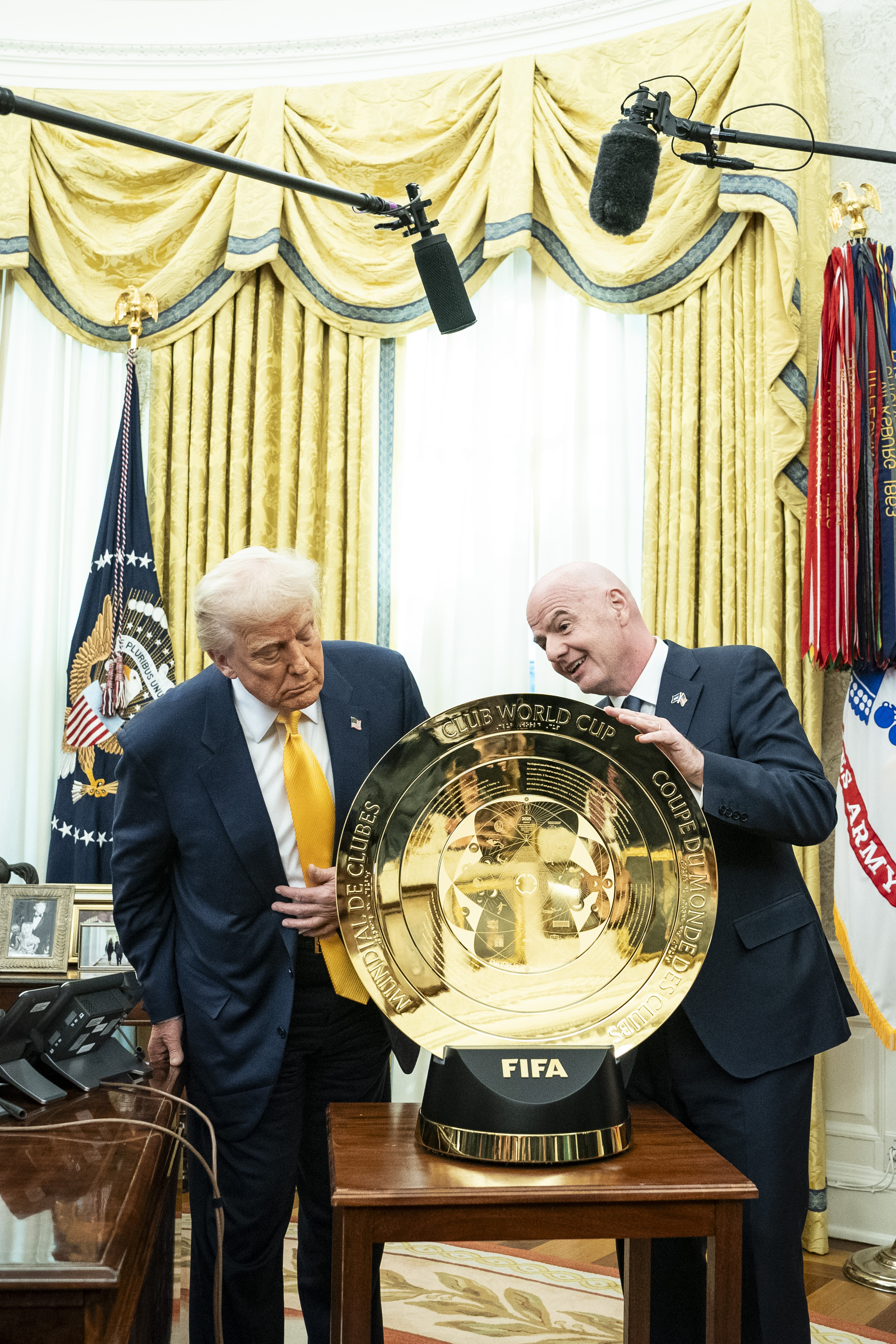
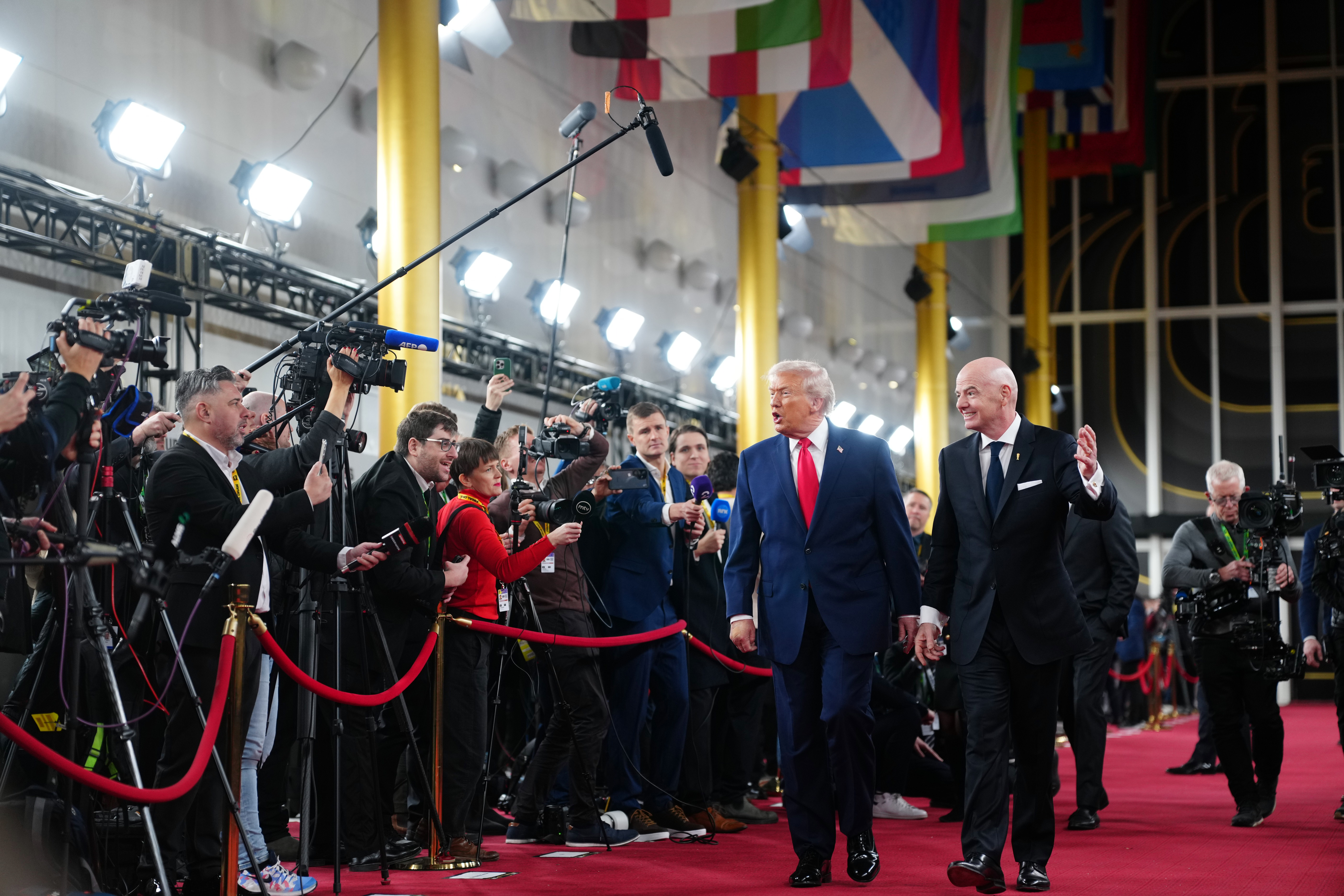
President Trump and Gianni Infantino at the White House in 2025 with a trophy intended for the winner of the Club World Cup competition. Trump kept it, and FIFA commissioned another.Haiyun Jiang / The New York Times
FIFA officials are clear about what they want from the World Cup. They want a higher profile in the United States and more growth in the world’s biggest consumer market. They also want to shed the reputation for corruption and cartoonish excess that led to Justice Department prosecutions.
Infantino failed to woo the Biden administration, former government officials said. But he found a receptive ear in Trump, who calls him “the king of soccer.” A decade ago, soccer executives were terrified to travel to the United States, fearing they’d be arrested. Now, Infantino is an Oval Office regular.
Infantino presided over the previous two World Cups, in Russia and Qatar, and drew criticism for cozying up to autocrats in both countries. His amity with Trump has him once again defending his way of operating in what is supposed to be a politically neutral position.
“I think it is absolutely crucial for the success of a World Cup to have a close relationship with the president, with the government,” Infantino said last year. “I have a lot of friends.”
This World Cup will be a test of whether that friendship pays off.
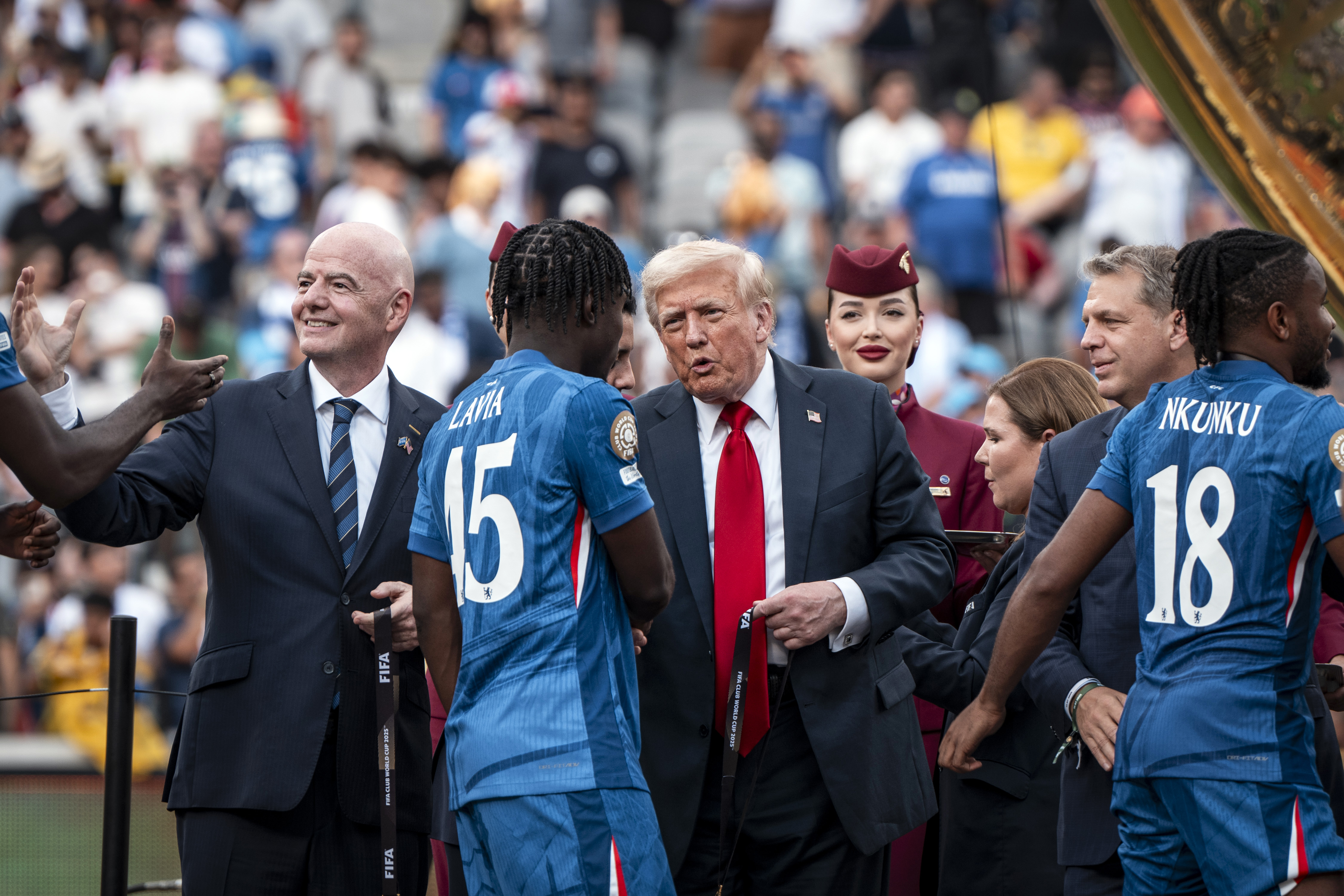
Infantino and President Trump onstage during the Club World Cup final in New Jersey last year.Haiyun Jiang / The New York Times
A top FIFA official says he believes there is an unofficial understanding that the authorities will not conduct immigration enforcement outside of stadiums. (A FIFA spokesman denied any deal and said enforcement was up to the government. The Department of Homeland Security did not address the question.)
The Justice Department also recently dismissed long-running criminal charges as part of its FIFA investigation. Prosecutors said the case “doesn’t fit within the administration’s priorities.”
And Trump seemed to defer to Infantino this spring on allowing Iranian players to come to the United States. “If Gianni said it,” the president said, “I’m OK.”
Still, Trump undercut Infantino recently by criticizing the high cost of tickets. And whatever reassurances may have been made on immigration, support staff for Iran’s national team was denied visas, along with a Somali referee.
Infantino’s coziness with the president also appears to be influencing FIFA in Trump-like ways that could outlast the tournament.
FIFA is exploring hotel deals that would license its name just as the Trump family has long done, according to three people familiar with the discussions. He has also expressed interest in launching a FIFA cryptocurrency, just as the Trumps have done.
A FIFA spokesman said the organization was paying “market rent” in Trump Tower and that the office would be used during the World Cup.
Inside FIFA, many officials privately question whether this has all been in service of Infantino himself. He has accompanied Trump on state visits, sat center stage at the inauguration and has attended diplomatic events.
What does any of that, his critics ask, have to do with soccer?
Infantino declined to be interviewed. His yearslong campaign to curry favor with Trump, and the hand-wringing it has prompted, was described in dozens of interviews with FIFA insiders and others close to the two men. Some spoke on condition of anonymity to describe private conversations.
“Infantino thinks he’s the leader in the relationship,” said Sepp Blatter, the former FIFA president whose ouster at the height of the corruption scandal paved the way for Infantino’s ascension. “But nobody can lead Trump.”
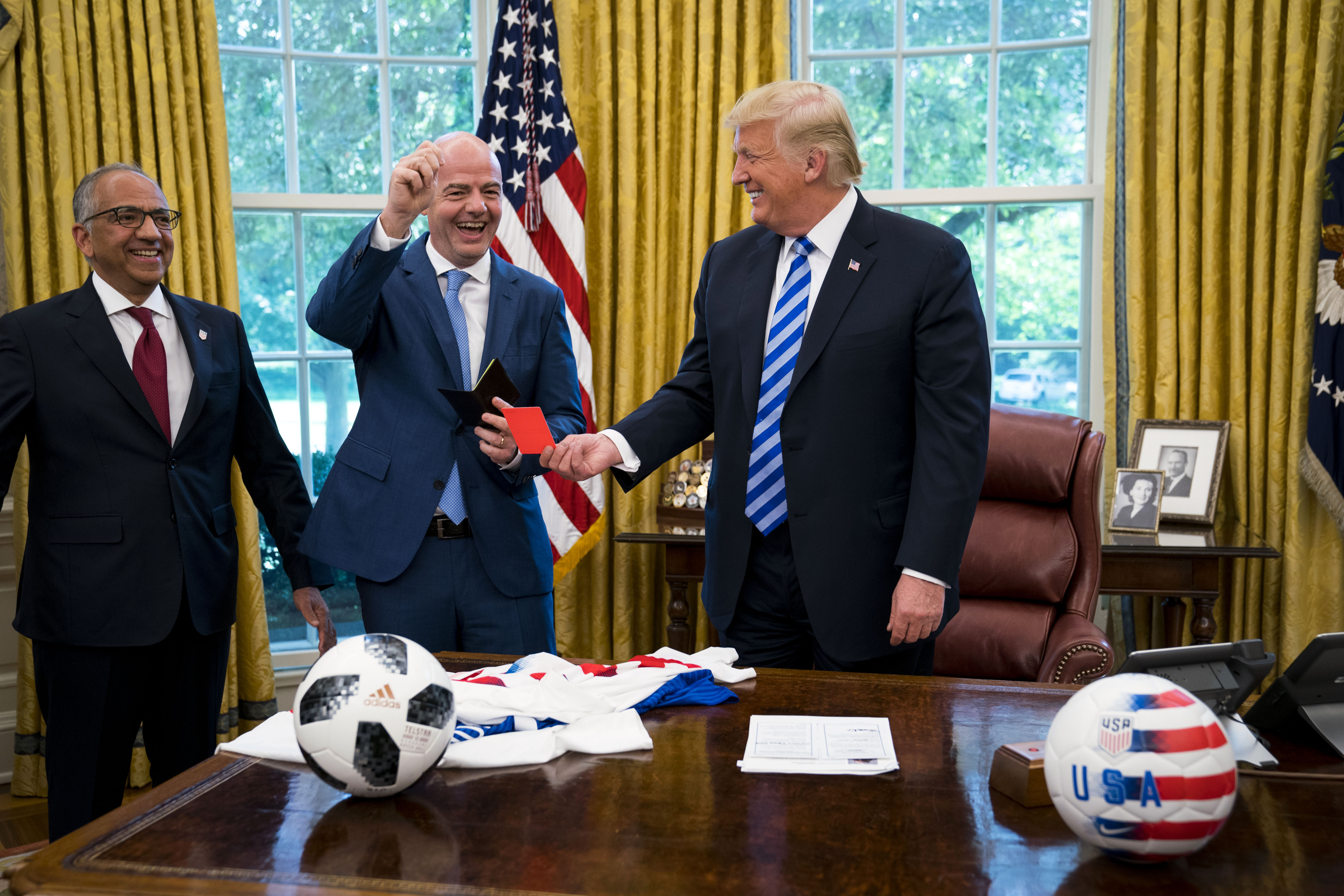
Infantino meets with Trump for the first time in the Oval Office and jokes about penalty cards.Doug Mills / The New York Times
The first meeting
The men first met in the Oval Office in the summer of 2018. The United States had just won the right, along with Canada and Mexico, to host the World Cup, and the mood was celebratory.
“You’re pretty famous, right?” Trump asked. “Pretty important and pretty famous.”
“Yeah,” Infantino replied. “It looks like it.”
Infantino, a lawyer and the son of an Italian immigrant who worked on Switzerland’s railways, had secured the FIFA presidency the same year that Trump was elected.
In that first White House meeting, he presented the president with a Trump jersey and a set of penalty cards that the men joked could be used on the news media.
“You are part of the FIFA team now,” Infantino said.
It was a remarkable turnabout. Three years earlier, the Justice Department had unveiled an indictment detailing corruption in world soccer. Major brands did not renew their sponsorship deals, and the organization suffered financial losses.
But if Infantino was eager to welcome the president onto FIFA’s team, he quickly found himself on the Trump Team — a pretty important, pretty famous endorser of a president in the middle of an impeachment inquiry.
“Gianni, we’re going to have to extend my second term,” Trump said on the South Lawn in September 2019, as Infantino smiled beside him.
Months later, as lawmakers debated charges of obstruction and abuse of power against Trump, Infantino praised him before business leaders in Davos, Switzerland.
“You might wonder why the president of FIFA is introducing the president of the United States of America,” Infantino said. He joked that it had been suggested that the two of them might be the most important people in attendance.
Soon, Infantino was back at the White House, this time as an unusual guest for the signing of the Abraham Accords, which established diplomatic ties between Israel and some Arab nations. He also arranged a “courtesy visit” with the attorney general, who was overseeing the FIFA cases.
“I am fully convinced,” Infantino said after that meeting, “that the credibility and reputation of FIFA is being restored at the highest level.”
Then came the 2020 election, and Infantino’s fortunes changed.
President Trump and Infantino attended the World Cup draw at the John F. Kennedy Center for the Performing Arts last December. FIFA had planned to have the event in Las Vegas but moved it to Washington.Tierney L. Cross / The New York Times
A chilly reception, and then a thaw
President Joseph R. Biden Jr. proved to be less welcoming to FIFA than his predecessor. There were no Oval Office greetings.
Administration officials said they had been wary of getting too close to a scandal-tainted organization. They saw no benefit in putting the president alongside Infantino.
“There was definitely a hands-off, keep-them-at-a-distance approach at the White House,” said Caitlin Durkovich, a former National Security Council official who helped oversee World Cup planning. She said FIFA repeatedly tried to arrange meetings with top officials.
In interviews, FIFA officials said that Infantino had been trying to raise FIFA’s profile. More practically, they said, he wanted people, when they Googled “FIFA,” to find anything but stories about bribery and kickbacks.
But even an attempt to meet formally with Secretary of State Antony J. Blinken at the 2022 World Cup in Qatar fell flat, according to three people familiar with FIFA’s efforts to arrange a meeting. Infantino’s few interactions with American officials were mostly perfunctory and private, like a half-hour meeting with the national security adviser to address security and visa wait times.
So when Trump won re-election in 2024, there was an opportunity to build on Infantino’s foundation. And Trump seemed eager to pick up where they had left off.
Days before Trump’s second inauguration, the men convened at Mar-a-Lago, the president’s private club in South Florida, and flashed thumbs-up signs for a photo that Infantino posted to Instagram.
Trump thanked him by name at a victory rally. And Infantino had an elevated seat behind Trump at the inauguration.
Infantino eagerly promoted all of it, sounding at times like Trump’s campaign partner. “Together we will make not only America great again, but also the entire world,” he said.
Infantino, it seemed, had achieved everything he wanted: accolades, endorsements and a World Cup task force, proposed by Infantino himself, that gave FIFA a formal place among Trump’s inner circle.
But soon it was clear that such closeness had drawbacks.
‘Private political interests’
When the world’s top soccer officials gathered in Paraguay for their annual meeting in May 2025, Infantino was on the other side of the globe, tagging along on Trump’s state visit to Persian Gulf countries.
The trip had little to do with soccer, and when he finally arrived at the FIFA meeting, he was several hours late. European soccer officials walked out, protesting his prioritization of “private political interests.”
“I felt that I needed to be there to represent football and all of you,” Infantino told them.
It was then that behind-the-scenes grumbles exploded into view. FIFA is an unusual amalgam of 211 countries and territories, each with its own politics. Infantino’s closeness to Trump had impressed some constituencies and alienated others.
“It’s a matter of priorities, and at that moment Trump was the priority for Infantino,” said David Goldblatt, author of “The Ball Is Round: A Global History of Football.”
But Infantino was undeterred.
One of his signature innovations was a 32-team tournament for the world’s best professional teams: the Club World Cup. But when he plugged the event from the Oval Office, he suddenly credited Trump as a co-creator. (After Trump kept the original Tiffany & Company trophy, FIFA presented the winners with another.)
Then, on the eve of the tournament, U.S. Customs and Border Protection announced that agents would be “suited and booted ready to provide security for the first round of games.”
Tournament officials panicked, terrified that immigration agents would arrest fans, according to three people who participated in planning discussions. Such a spectacle could deter attendance at the 2026 World Cup and potentially lead to a global backlash against FIFA.
By then, Infantino was living in Miami, in the president’s orbit. His advisers strategized about asking Trump for a moratorium on immigration actions, both during the club matches and the World Cup.
While no one close to either man has indicated what, exactly, they discussed privately, FIFA officials said that Infantino pressed the immigration matter. Whether for that reason or not, the government’s social media post was removed and ICE raids never materialized.
Soccer officials said they believed there was a similar understanding for the World Cup. But, as is often the case with Trump, nobody can say for sure.
The Department of Homeland Security, which oversees Immigration and Customs Enforcement, did not acknowledge any such agreement.
“U.S. Customs and Border Protection, in coordination with D.H.S. and other agencies, is dedicated to ensuring the safety and success of the FIFA World Cup,” a D.H.S. spokesperson said.
By some measures, the club tournament represented a win for Infantino’s strategy. He got an Oval Office platform, Ivanka Trump participated in the draw, immigration agents stayed away, and Trump attended the final match.
But it was also a reminder that when there is a limelight, Trump often seizes it for himself.
Appearing onstage after the final whistle, Trump lingered longer than planned, upending meticulous choreography, confusing the winning team and standing squarely before the cameras during the trophy presentation. FIFA and Secret Service officials were alarmed, and fireworks were delayed because of the president’s presence.
It went viral, with Trump basking in FIFA’s moment.
The FIFA Peace Prize awarded to President Trump. The trophy, co-produced by a FIFA employee’s father, was spontaneously sourced from miscellany in FIFA’s possession.Tierney L. Cross / The New York Times
The FIFA Peace Prize
Oval Office visits are now routine for Infantino.
“Always happy to be here, at home, if I can say that,” he said last year.
“You are home,” Trump replied.
When Trump assembled dignitaries and business titans for a state dinner for Crown Prince Mohammed bin Salman of Saudi Arabia, Infantino was there.
“I think we should all support what he’s doing,” Infantino said at a business conference in Miami. “Because I think it’s looking pretty good.”
Infantino has sought to capitalize on access to Trump allies. Under his watch, FIFA discussed with former Treasury Secretary Steven Mnuchin an investment in a streaming service, according to a senior FIFA official. Nothing materialized, only because the venture was put on hold, according to a person who was part of the talks.
More recently, FIFA has explored hotel licensing deals with a prominent South Florida developer who is poised to develop the waterfront opposite Mar-a-Lago.
Infantino also lobbied for Trump to be awarded the Nobel Peace Prize, which the president has craved. When the award went to the Venezuelan politician María Corina Machado, Infantino had an idea.
Three weeks after the Nobel announcement, senior FIFA officials were told that Infantino wanted to announce a peace prize of his own. How long, they asked, did they have to work out the details — the criteria, for example, or the makeup of the nomination committee? Those questions went unanswered.
Some of the most senior officials were told straightaway whom the first honoree would be, according to a person with direct knowledge of the plans, who learned about the prize and its recipient on the same day.
FIFA did not have time to consider what its prize would look like. But luckily, the father of an employee was a sculptor, and FIFA had in its collection of miscellany a miniature version of one of his pieces, according to two soccer officials. The trophy was in hand.
The FIFA Peace Prize was announced Nov. 5, with the award to be bestowed at the World Cup tournament draw a month later.
FIFA had planned to have that event in Las Vegas. But Paolo Zampolli, a longtime Trump ally serving as a presidential envoy, encouraged Infantino to reconsider.
“To move the president of the United States is a big process,” he recalled saying. Last-minute events might prevent a trip to Las Vegas, he said, but a local venue would better assure his attendance. “You know how important FIFA is for us,” Zampolli added. (FIFA said Zampolli had no influence over the choice.)
Infantino moved the event to the John F. Kennedy Center for the Performing Arts in Washington, teasing that the site might be called the Trump-Kennedy Center. Trump attended and, to nobody’s surprise, was the first recipient of the FIFA Peace Prize. He received a certificate, a medal and the repurposed trophy.
Trump called it “truly one of the great honors of my life.”
The award angered many soccer officials, who said that it had embarrassed FIFA and cast the organization as partisan.
Lise Klaveness, the president of Norway’s soccer federation and a human rights lawyer, said the prize breached FIFA’s rules on political neutrality. She announced that Norway would back an ethics complaint against Infantino.
Ms. Klaveness said in an interview that she recognized that FIFA needed “friendly relations” with the governments hosting World Cup games. But she said there needed to be “checks and balances,” to keep FIFA from being used for political purposes.
Infantino, though, has worn his friendship with the president on his sleeve. And his head. At one public meeting, world leaders and delegates were given red “USA” baseball caps. Infantino happily donned his, emblazoned with the numbers 45-47, signifying the Trump presidencies.
This winter, as Infantino marked a decade in the job, he celebrated with a party at a Four Seasons hotel in Miami. Ivanka Trump and her husband, Jared Kushner, attended.
The celebration carried into spring, when Infantino announced at a soccer meeting in Vancouver that he would run for a third term. He argued that the organization had repaired its reputation and played a slide show that included Trump.
“We have definitely come a long way these last 10 years,” he told soccer officials. FIFA, he said, was now “sitting at the top tables, in every aspect.”
The war in Ukraine has often been compared to World War I for its brutal infantry assaults and heavy casualties. Yet the idea that it could, by any measure, surpass a conflict so long and bloody that French soldiers hoped it would be “the last of the last” once seemed unthinkable.
That is just what happened on Thursday. The war in Ukraine — which reached 1,569 days, or more than four years and three months — has now outlasted World War I.
When President Vladimir Putin of Russia sent his troops into Ukraine in February 2022, he believed the country would fall within days. After Ukraine pushed the Russians back and the conflict settled into a war of attrition, even many of those fighting could not imagine it would last this long.
“I thought maybe two or three years, and then politicians will find some kind of consensus,” said a Ukrainian soldier who, for security reasons, gave only his call sign, France, a nod to his time in the French Foreign Legion.
But the war has raged on, and, with peace talks stalled, it shows no sign of ending soon. Polls suggest that about half of Ukrainians believe it will not end before next year, which would push it closer to another threshold: the duration of World War II, which lasted six years. And there are many Ukrainians who would argue that the current war really began in 2014 when Russian troops seized Crimea.
Historians caution that drawing parallels with the two world wars has limits. The global scale of those conflicts, involving many theaters and armies, makes comparisons about casualties and firepower difficult. Ukraine did not exist as a country during World War I.
Still, the war in Ukraine, like World War I, is likely to rank among the most consequential conflicts in modern European history, said Yaroslav Hrytsak, a Ukrainian historian. Both wars transformed Europe’s geopolitics by reshaping military alliances and driving a defense buildup not seen in decades.
Military analysts also note that both conflicts reshaped the nature of warfare through the introduction of new technologies — planes and tanks a century ago; drones across the air, sea and land today. In both cases, the advances made war only more brutal for humans.
“In many respects, this war in Ukraine is the one that most closely resembles World War I,” said Michel Goya, a former French colonel and a military historian.
The comparison begins with the opening phase of both wars. In 1914, the Germans launched a rapid offensive toward Paris in the hope of securing a swift victory. Russian forces had the same objective when they raced toward Kyiv, Ukraine’s capital, in 2022. In both cases, the attackers came close to their target but were ultimately driven back.
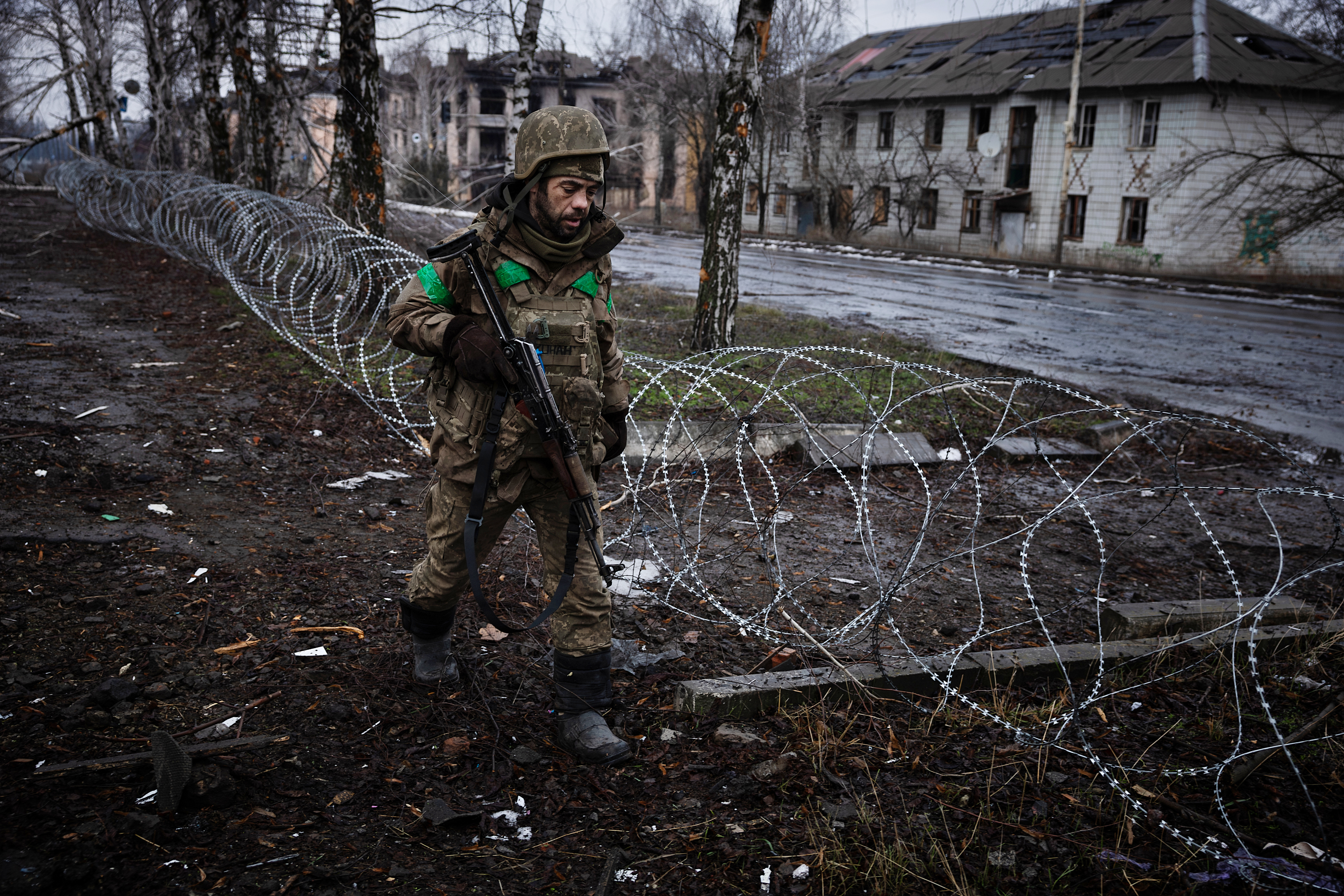
Eventually, both wars settled into mostly static fighting along a largely frozen front. When soldiers on the Ukrainian battlefield hunkered down in trenches and bunkers in late 2022, historians described it as a return to World War I-style trench warfare.
Scenes from the trenches of eastern Ukraine closely echoed those in northern France a century earlier. Ukrainian and Russian troops were often separated by just a few hundred yards, sometimes close enough to see one another. Assaults began with artillery barrages to pin down the opponent, followed by the storming of enemy trenches by infantry squads.
“In general, when the front freezes, you’re back to World War I,” Goya said.
In both wars, he added, it was the intensity of firepower, mainly artillery, that forced armies to turn to trenches. “You bury yourself to protect yourself,” he said.
That calculus later changed in Ukraine with the introduction of a new class of weapon: drones. Networks of open trenches were rendered unsafe as drones monitored the battlefield around the clock and struck with greater precision than artillery shells.
Now, Ukrainian soldiers say, survival depends on going smaller and deeper. Instead of sprawling trench systems, troops shelter in dugouts housing no more than a handful of soldiers. Such bunkers are small enough to be difficult to spot from the sky and deep enough to withstand strikes. A soldier operating on his own will often dig a position barely larger than a foxhole.
In a recent interview near Ukraine’s southern front, a Ukrainian commander, who also only gave his call sign, Sour, for security reasons, recalled how his troops had to storm a well-fortified Russian dugout four times before forcing the soldier inside to surrender. The dugout had right-angled corners reinforced with metal sheets designed to absorb an explosive shock wave, he said.
The commander, who leads the 5th Center of the International Legion, part of Ukraine’s military intelligence forces, said he took the captured Russian soldier to his unit’s training ground and asked him to dig a similar position so he could study how it was built.
“In this environment, the people who dig survive longer and stay safer,” France, the Ukrainian soldier, said.
As drones have come to dominate the battlefield, World War I-style opposing trench networks, separated by a narrow buffer zone, have given way to a miles-wide contested combat area scattered with dugouts. In this “kill zone,” any movement is quickly targeted by drones.
Large-scale troop assaults of the kind seen a century ago have become all but impossible under the constant gaze of drones. Such assaults have been replaced with attacks by just one or two soldiers.
Tanks, first introduced in 1916, were still a feared weapon in the first years of the war in Ukraine. They are rarely used now because their size makes them easy targets for drones, though some tanks have been retrofitted with protective metal cages that turn them into “Mad Max”-style vehicles.
While the battlefield today bears less and less resemblance to that of a century ago, the scale of the destruction looks remarkably similar.
In Ukrainian command posts near the front, live footage from reconnaissance drones shows scenes reminiscent of World War I battlefields: splintered trees, ruined houses, and fields pockmarked by shell craters.
Casualties are difficult to compare, given the difference in scale between the two wars. A century ago, millions of soldiers were sent into battle across multiple fronts in Europe. Today, the forces involved number in the hundreds of thousands. Roughly 9 million to 11 million soldiers died in World War I, compared with about half a million in Ukraine so far.
Still, military analysts and officials, including Adm. Pierre Vandier, who holds the post of Supreme Allied Commander Transformation in NATO, say drones have made the Ukrainian battlefield lethal at levels comparable to World War I. Vandier made the comparison after a study trip to Ukraine this spring.
A mother cries at the coffin of her son Oleh Borovyk, a Ukrainian serviceman who was killed in fighting with Russian forces near Pokrovsk, during his funeral ceremony in Boiarka, Ukraine, on Dec. 3, 2025. Evgeniy Maloletka
So grinding is the fighting in Ukraine that Russian advances have at times been slower than those in some of World War I’s most deadlocked battles.
Russia’s offensive on Pokrovsk, an eastern Ukrainian city it recently fully captured, progressed at an average pace of about 75 yards per day, slower than in the bloody Battle of the Somme during World War I, according to an analysis by the Center for Strategic and International Studies, a Washington-based think tank.
The question now is whether either side can break the deadlock.
In World War I, the Allies prevailed by combining economic pressure on Germany through a tight naval blockade with military pressure through relentless offensives.
Ukraine’s strategy to end the war carries some echoes of that approach.
Drone strikes on Russia’s oil assets, the backbone of its economy, are designed to curb Moscow’s ability to finance its war effort. Kyiv lacks the manpower to replicate the offensives of World War I, but it has flooded the battlefield with small attack drones in the hope of inflicting unsustainable losses on the Russian army.
“This is World War I, but with drones,” Hrytsak, the historian, said.
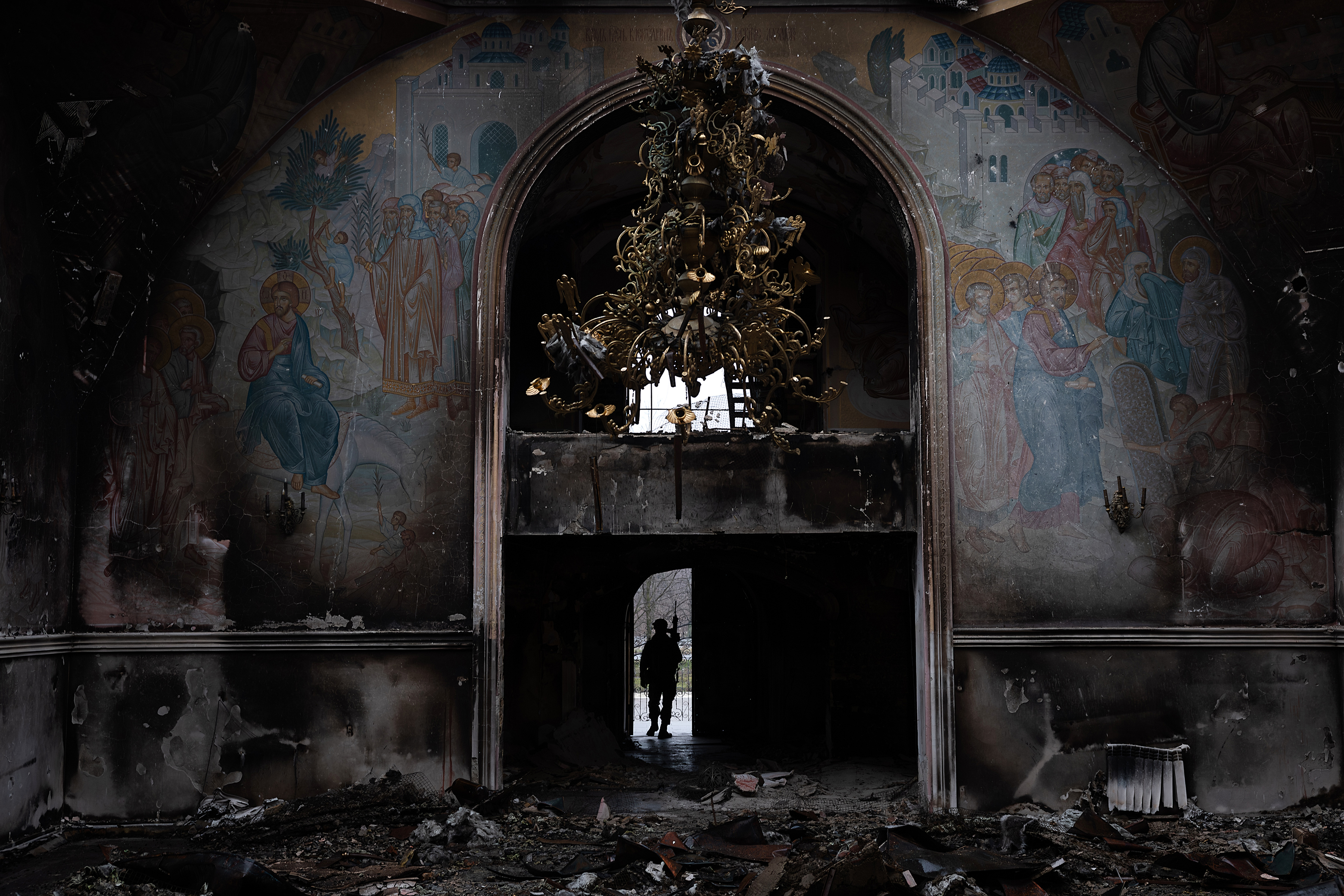
A Ukrainian soldier is seen through the door of a destroyed church in Kostiantynivka, Ukraine, on Jan. 8.Tyler Hicks
SpaceX, Elon Musk’s rocket ship company, plans to sell shares publicly for the first time ever this week. It’s an unusual event in several ways.
The company’s initial public offering would earn it the title of the world’s largest IPO. SpaceX is also giving everyday investors a much larger slice of its shares than is typical for a public offering. And the IPO could create the world’s first trillionaire by increasing the net worth of the company’s CEO, Musk.
Here’s what you need to know before SpaceX’s first day of trading Friday.
What is an IPO?
An initial public offering, or IPO, is a company’s debut in the stock market. It’s the first time the general public can buy a piece of the company. Firms do this to tap into a bigger pool of capital to help them expand their business.
When a company decides to go public, it works with an investment bank to figure out how much the company is worth and the price at which it should sell its shares.
SpaceX has set its price at $135 a share, which would value the company at $1.77 trillion. Since last week, SpaceX’s bankers have been discussing with prospective investors how many shares they are willing to buy at that price. On Thursday night, all orders for shares will become final, and the offering process will close.
On Friday, the shares will start trading publicly on Nasdaq. After trading starts, the stock price is likely to fluctuate as the shares change hands on the open market. Bankers generally try to price an IPO so that it has room to rise once its shares are public. Some analysts question how much more the value of SpaceX may rise, given its already lofty valuation.
Why does the SpaceX IPO matter?
Hundreds of companies introduce their stock on the market every year. But what makes SpaceX stand out is its size.
At a $1.77 trillion valuation, it would dethrone Saudi Aramco — Saudi Arabia’s state-owned oil company, which debuted in 2019 with a valuation of $1.7 trillion — as the largest IPO ever.
“It’s a big deal because it’s literally a big deal,” said Matt Kennedy, senior strategist at Renaissance Capital.
If SpaceX’s IPO flops, it could send a shudder through a market that has been riding a wave of optimism related to artificial intelligence and other technology. The outcomes could include a chilled IPO market or a broader market sell-off.
“If SpaceX does poorly and the rest of the market goes down with it, we’ll all be pointing to that as the sign that the market peaked,” Kennedy said.
Still, it’s possible investors will stick with the company for reasons beyond the “Elon Musk factor” or AI-related exposure, he added.
Who makes money from the IPO?
The immediate beneficiaries of the IPO are those who already own private shares of SpaceX. They include Musk, who owns a majority of the company’s shares and could see his net worth rise to over $1 trillion.
Others include SpaceX employees who have been compensated in company stock, and investors, including venture capital funds. The banks helping SpaceX go public will make money, too, earning a fee of more than $500 million, the largest payout ever.
The banks are also using the IPO as an opportunity to woo clients in their wealth management businesses, giving them access to SpaceX’s initial offering shares.
If shares of the company pop, investors who buy Thursday evening can sell those shares and make a profit.
Over the long term, SpaceX’s stock performance may depend on whether Musk can deliver on his promises to install tens of thousands of new satellites in orbit and develop a viable AI model.
How can I buy SpaceX stock?
It’s possible for everyday investors to buy shares of the company at its $135 price, though not guaranteed.
When firms go public, they usually reserve a small sliver of their stock for individuals, with the bulk going to giant investors like asset managers and hedge funds.
SpaceX, however, is seeking commitments from individuals for up to 30% of its shares, much larger than a typical offering.
Some of those shares set aside for individual investors will be available under the SPCX ticker on online brokerage platforms like Robinhood, Fidelity, Charles Schwab, and SoFi.
For anyone looking to buy SpaceX shares, the brokerages have said investors may not get the total number that they request, given a limited supply of stock at the initial offering price.
“Here, you ask for 1,000 shares — maybe you’ll get 300; maybe you’ll get 50,” said Jay Ritter, an IPO expert at the University of Florida.
Individuals may find themselves owning SpaceX shares even if they didn’t actively choose to invest.
The Nasdaq-100, a popular index that tracks the top 100 nonfinancial companies listed on that exchange, recently relaxed its rules to make it easier and faster for SpaceX to be included. That will force funds that track the index to invest in SpaceX practically overnight.
How much could investors make from the IPO?
Nearly 16 years ago, investors piled onto the IPO of Musk’s electric vehicle company, Tesla, which proved lucrative for those who held on. Someone who bought $1,000 of Tesla shares in 2010 would have seen their value soar to around $400,000 today.
SpaceX is the biggest company in the space industry by a wide margin, which makes it a defining stock to own for those interested in that sector. It has also been around for over two decades and has hosted several funding rounds since then.
“The time for being an early investor in SpaceX has sort of passed,” Kennedy said.
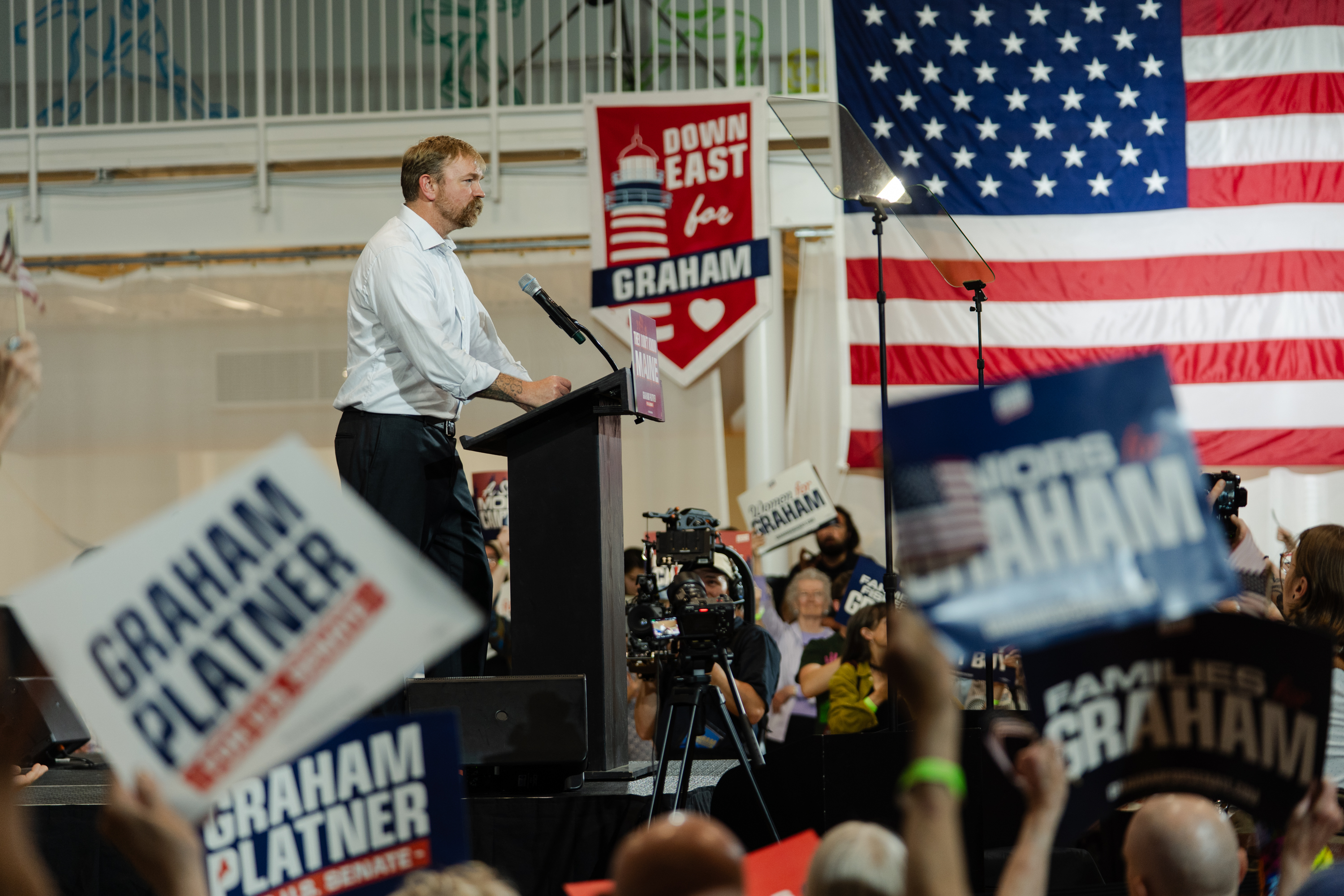
Graham Platner’s primary victory in Maine sends Democrats barreling into one of this year’s most important Senate contests with a rush of insurgent energy but gnawing uncertainty about the withering Republican scrutiny to come.
His decisive victory offered a vivid display of the deep Democratic desire for a new generation of leaders, suggesting that many primary voters in Maine embraced his populist economic message and working-class appeal.
Yet in nominating Platner, Democrats are making an enormous bet in their quest to regain control of the Senate, staking their chances in a crucial race on an untested and scandal-plagued oysterman.
Maine is a linchpin of both parties’ midterm strategies. With Republicans holding 53 seats in the Senate, Democrats will have to defend all the seats they hold and flip four more to win control in November. For months, party leaders have believed their most likely path ran through North Carolina, Ohio, Alaska, and especially Maine — the only state of the four that voted against President Donald Trump in 2024.
But Platner’s controversy-filled ascent to the Democratic nomination has complicated those plans, leaving some strategists worried that the party may need to win in deep-red Iowa or Texas to offset a loss in Maine.
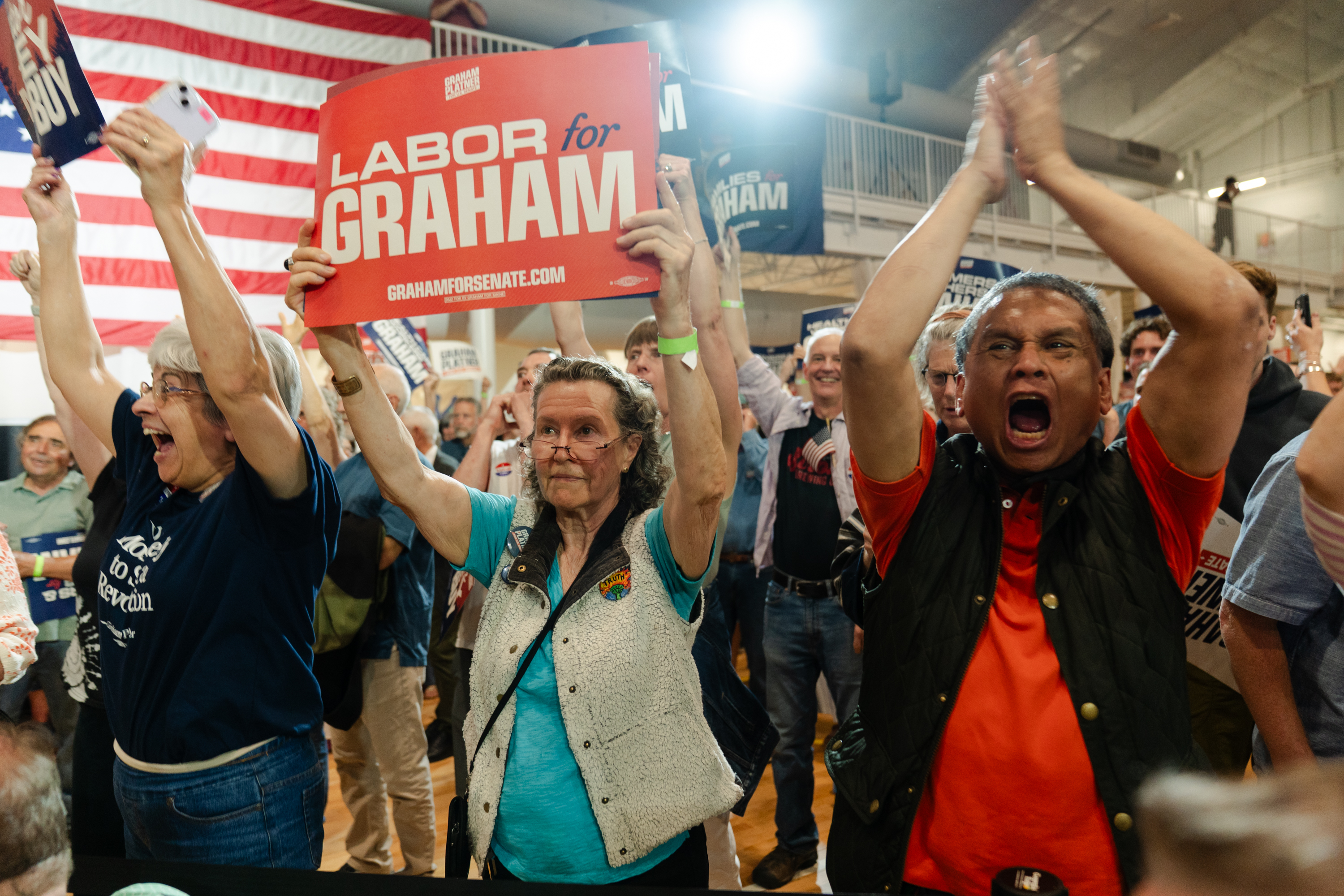
Supporters of Graham Platner celebrate in Blue Hill, Maine, after he won the Democratic nomination for the Senate on Tuesday night.Sophie Park
Even with many Maine liberals excited about his candidacy, the road ahead for Platner remains difficult.
He is facing Sen. Susan Collins, a powerful moderate Republican legislator with a three-decade record of winning over the female voters, who make up a majority of the Maine electorate.
He must pivot from being a left-wing insurgent — Sen. Bernie Sanders (Ind., Vt.) has been one of his fiercest champions — to winning over general-election voters in Maine.
And he must dispel the concerns of the nearly 30% of primary voters who, according to incomplete results Tuesday night, cast ballots for other Democratic candidates.
Those efforts began with his victory speech Tuesday night.
“If you believe as I do that we can change our politics and change our country, then you must also believe that people can change,” he told supporters in rural Blue Hill, where he was born. “Every day, I wake up and I try to be a little better and a little bit kinder than I was the day before.”
Collins, who is widely seen as the most vulnerable Republican incumbent, faces her own considerable challenges. She must outrun the difficult national political environment for Republicans, with Trump’s approval ratings sagging amid an unpopular war with Iran that has driven up gas prices and inflation. And she must convince voters eager for generational change and new leadership that she remains fit for a sixth term at age 73.
Platner sought to remind voters of those liabilities in his victory speech, lacing into Collins with scathing attacks intended to tie her to the Trump administration.
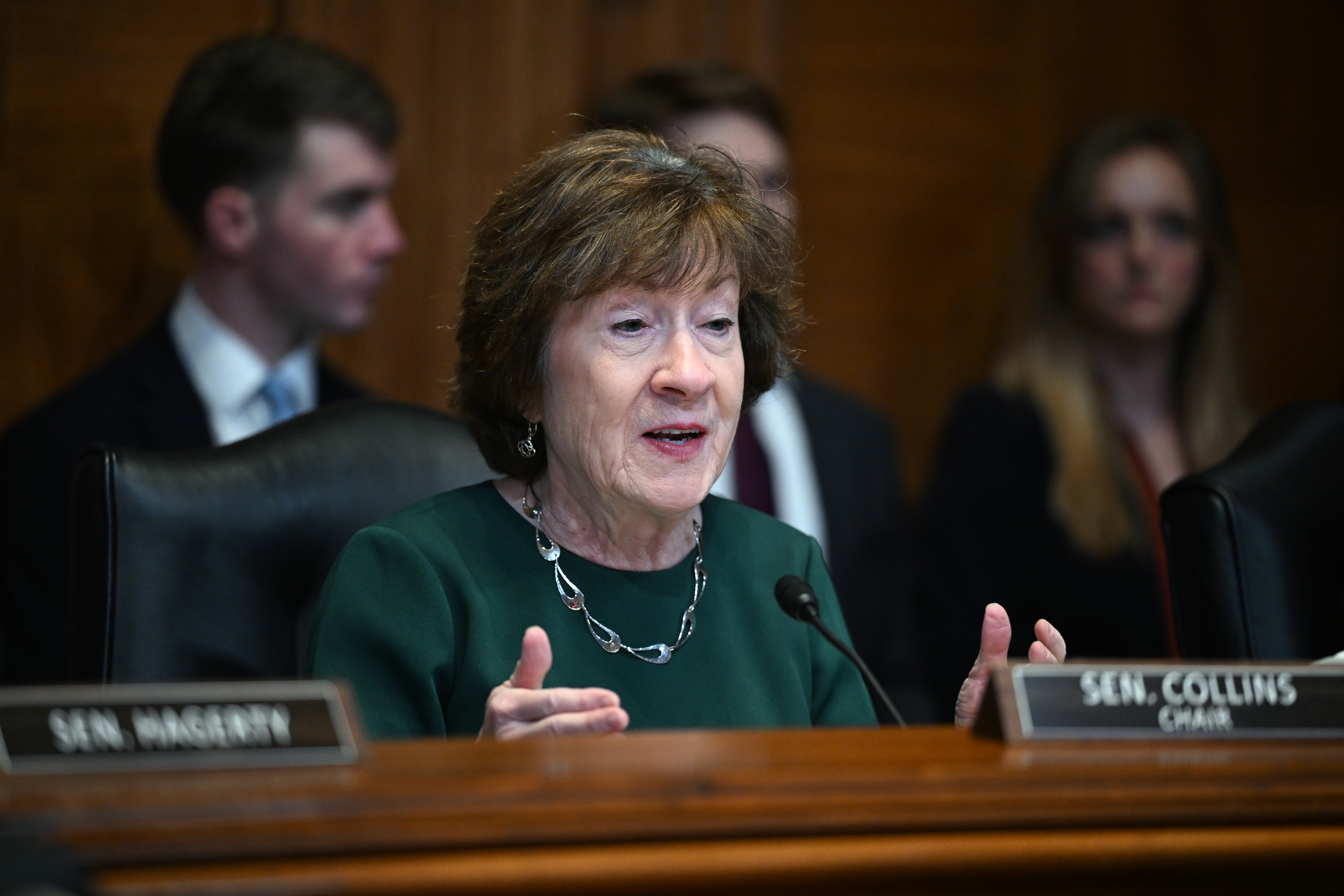
Sen. Susan Collins (R., Maine) has a long history of winning tough elections, but she must persuade voters eager for generational change that she remains fit for a sixth term at age 73.Kenny Holston
“The truth is, Susan Collins doesn’t serve us,” he said. “She serves Donald Trump.”
For their part, Republicans have already signaled that they plan a flood of advertising focused on Platner’s character, with the party’s main super political action committee lashing him as “untrustworthy, unhinged and unfit for Maine.”
On Tuesday evening, the Republican Senate campaign arm released a digital ad contrasting the two candidates, accompanied by a news release featuring eight bullet points highlighting Platner’s controversial past conduct and statements.
“Susan Collins doesn’t have a Nazi tattoo,” a narrator states in the ad, a reference to a tattoo Platner had that was widely recognized as an SS symbol. (He later had it covered up.)
Collins’ moderate image poses an additional obstacle for Platner, Republican strategists say, because she presents as an acceptable alternative for voters who dislike Trump but are unsure about Platner.
“If Susan Collins were Ted Cruz, this would be a different conversation, but Susan Collins is the most moderate member of the Senate,” said Brad Todd, a veteran Republican strategist. “Susan Collins is the best cross-party-appeal candidate Republicans have fielded anywhere in the last 10 years.”
But progressive leaders quickly heralded Platner’s victory as more evidence that voters across the ideological spectrum wanted the opposite of Collins: a populist fighter who will challenge the political establishment.
“This shows that the candidate’s stance on the genocide in Gaza, on opposing foreign wars, and on taking on the billionaire and donor class matters far more than imperfections in their own personal life,” said Rep. Ro Khanna (D., Calif.), who has emerged as one of Platner’s most vocal supporters. “The country and Democratic Party are looking for candidates who are willing to challenge the broken status quo.”
But while many Democrats like the idea of a combative working-class candidate, they’re worried that Platner’s baggage will be fodder for Republican ad makers for weeks and months to come.
Platner has been dogged by controversies including the tattoo, his yearslong trail of inflammatory online posts and revelations of explicit text messages he sent to women while he was married.
In recent days, some Democratic elected officials have voiced their worries about the latest allegations against Platner, which included reporting from the New York Times that several women he dated said that he had engaged in unsettling and, in at least one case, physically threatening behavior.
From the campaign trail to private meetings with senators, Platner has repeatedly promised that there is no more damaging information to come out about him.
Some moderate Democrats are voicing their skepticism.
As voters cast their ballots Tuesday, Rep. Josh Gottheimer, a moderate Democrat from New Jersey, called on Platner to exit the race so Democrats could replace him with a stronger candidate before the fall.
“Ultimately, it may be just clear that he can’t win,” Gottheimer said. “And if you believe we have to win, which most Democrats do, then I think the writing’s on the wall already.” He added, “What’s already come out, there’s plenty to disqualify him.”
In a gauzy video released by his campaign Tuesday, Platner sat with his wife in waders, shucked oysters and encouraged his supporters to cast ballots in the primary.
He added an assessment of the past few weeks that could also sum up the months to come.
“This whole thing as you can probably tell: brutal,” he said.
NASA hopes 2028 will be the year for a crewed moon landing, an ambition that mirrors President Donald Trump’s goal to return humanity to the lunar surface before the end of his second term. Meeting that timeline depends on the success of the Artemis III mission, which is supposed to launch in mid-2027.
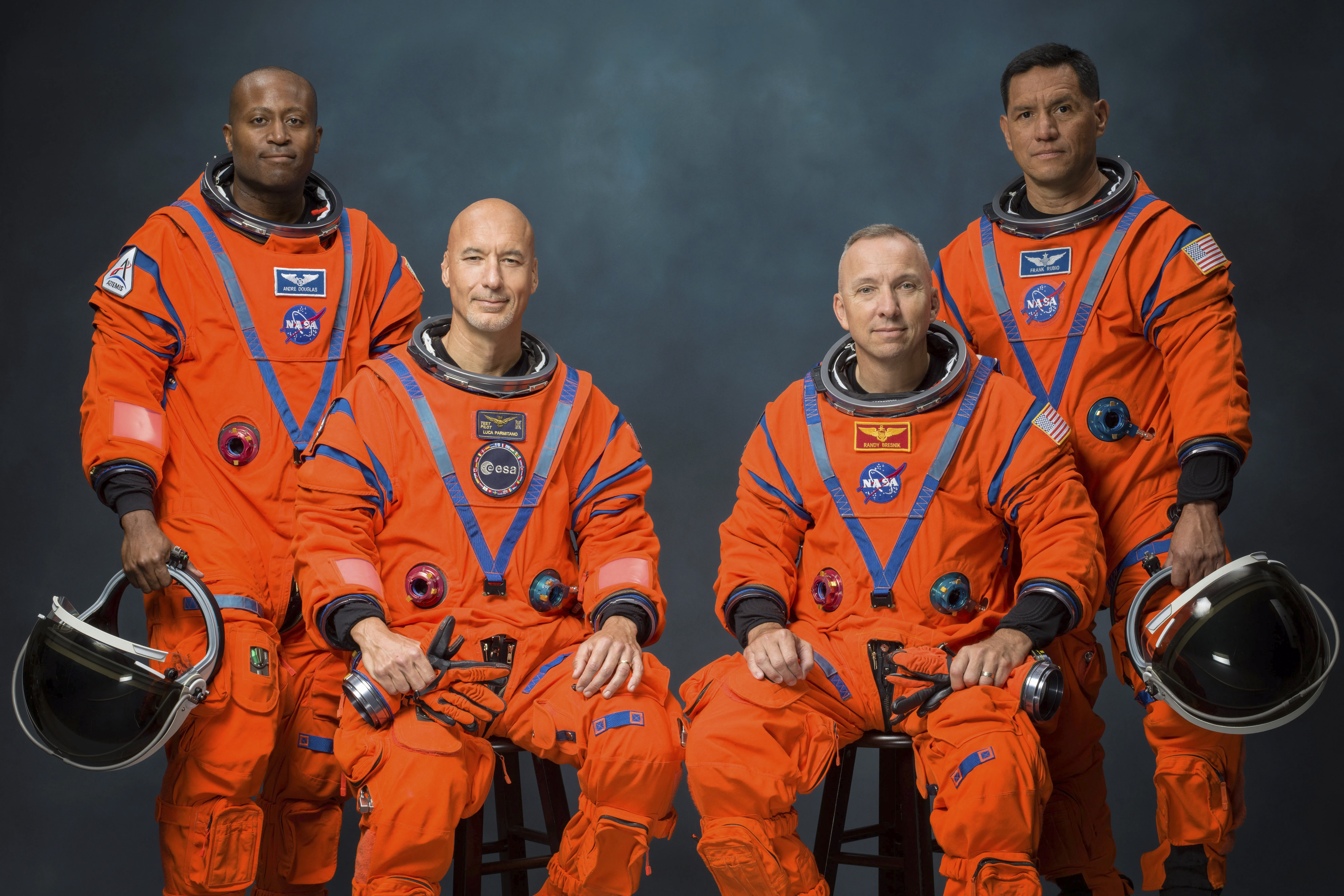
During the announcement Tuesday of the Artemis III astronauts, who will fly in low-Earth orbit as a test mission for NASA’s broader moon program, the agency focused on ramping up excitement for the upcoming mission. But little was offered about whether NASA could still meet its moon landing goal.
In a media briefing directly following the event, however, Jared Isaacman, the NASA administrator, shared that the agency is “extremely confident” in meeting that goal and that it would be transparent with any updates.
“We’re going to return to the moon before the end of 2028,” Isaacman said. “Just watch along.”
Experts were hopeful that NASA could still make it back to the moon, but also expressed skepticism about the feasibility of doing so by 2028. “I think me and most people would say it’s not a realistic date,” said Casey Dreier, chief of space policy at the Planetary Society.
In April, NASA proved with its Artemis II mission that it could use its giant Space Launch System rocket, coupled with the Orion spacecraft, to send humans to lunar orbit. But NASA is relying on two private companies, SpaceX and Blue Origin, to provide landing vehicles for future missions that will transfer astronauts from orbit to the moon’s surface, and then back.
According to Dreier, this will let NASA go to the moon at a much lower cost than during the Apollo era — but also means that the agency’s lunar aspirations are largely at the whims of two billionaires, Elon Musk and Jeff Bezos.
“That’s a lot of power and hope that you place in just two people to provide a capability that is actually essential to a national goal,” he said. “NASA is a passive witness to its fate.”
Neither SpaceX nor Blue Origin have completed development of a lunar lander. Nor are the rockets that are supposed to get those landers to the moon ready to go: SpaceX’s Starship has suffered repeated failures during test flights, and Blue Origin’s New Glenn exploded and damaged the company’s only launchpad in May.
Those circumstances could very well delay NASA’s goal of a lunar landing in 2028. External factors, like bad weather or government shutdowns, could also affect that timeline.
“It is unrealistic,” Phil McAlister, the former director of NASA’s commercial space division, wrote in an email. “At the same time, I’m not going to say it is impossible.”
Clayton Swope, the deputy director of the Aerospace Security Project at the Center for Strategic and International Studies in Washington, echoed that sentiment. “It’s looking increasingly likely that the answer is no,” he said, referring to the possibility of a 2028 moon landing. “But there is still a chance for a Hail Mary play.”
Landing on the moon has always been difficult, even for uncrewed missions. In 2023, Russia attempted its first lunar landing attempt since the 1970s, but the spacecraft crashed into the surface. A Japanese spacecraft carrying two rovers landed upside down on the moon in 2024. Intuitive Machines, a private company based in Houston, landed a vehicle that tipped on its side last year.
China has been particularly successful with moon landings. It deployed rovers on the lunar surface in 2013 and 2019, and returned samples of moon dust from the near side in 2020 and the far side in 2024. The nation plans to land humans on the moon by 2030.
According to Swope, beating China to the moon is one reason for NASA to pursue a 2028 lunar landing; economic growth and commercial development are others.
“Yet space remains more than just that,” he said, adding that a sustained lunar presence is a step toward building a better future for generations to come. “We go to the moon, and then beyond, as part of the journey to realize that vision.”
WASHINGTON — The former chief investigations counsel for the House Oversight Committee has been helping to prepare Bill Gates, the billionaire co-founder of Microsoft, to testify privately in the panel’s Jeffrey Epstein investigation today, according to two people affiliated with the Gates Foundation who are familiar with the arrangement.
Rep. James Comer of Kentucky, the Republican chair of the committee, formally requested in March that Gates appear before the committee for a transcribed interview. His request came after files released by the Justice Department showed that Gates met with Epstein, the convicted sex offender, multiple times and that his closest advisers were in frequent contact with the disgraced financier until 2019, the year of his death in prison.
In preparing for the deposition, Gates has turned to Jake Greenberg, who until December was spearheading the oversight panel’s Epstein inquiry in his role as the committee’s top investigative official. The people who disclosed his involvement insisted on anonymity to discuss Greenberg’s previously undisclosed function.
The arrangement, while not uncommon, raised eyebrows among government ethics experts who said it could create questionable optics for the deposition in a high-profile investigation.
A spokesperson for Gates Ventures did not respond to multiple requests for comment about Greenberg’s role advising Gates. Greenberg also did not respond to multiple requests for comment.
Gates’ close relationship with Epstein has roiled his foundation, which has authorized an outside review of its ties to Epstein. Gates apologized to foundation staff members in an all-hands meeting this year for his associations with Epstein.
House Democrats say they want to grill Gates behind closed doors today about the nature of his relationship with Epstein.
“We need accountability for those in power and answers for survivors,” said Rep. Yassamin Ansari (D., Ariz.). “No one — regardless of power, political party, or wealth — is above justice.”
Rep. Suhas Subramanyam (D., Va.), said in an interview that he wanted to know what Gates “knew of Epstein’s crimes, and the nature and extent of their relationship.” He added, “Epstein was known for befriending and even blackmailing rich and powerful men, and I want to know if Gates was one of them.”
Gates has sought out powerful inside players to help him weather the scrutiny. He hired John Moran, a former lawyer for the Justice Department, who helped him secure an agreement with the committee for him to appear off camera, the Wall Street Journal reported.
A spokesperson said the committee was not filming voluntary transcribed interviews for witnesses who agreed to come in quickly. The committee released filmed interviews with other witnesses whom it had subpoenaed, including Bill and Hillary Clinton and Les Wexner.
Government watchdog experts said it was not unusual for a former top committee official to be hired by a person under scrutiny by the panel and that it would not necessarily violate ethics rules — as long as Greenberg was not dealing directly with the committee he had previously worked for.
Former members of Congress and top aides have a one-year “cooling-off” period after leaving those jobs, during which they are barred from lobbying or communicating directly with lawmakers or committees. Greenberg would not be allowed, for instance, to negotiate with the oversight panel about the terms of Gates’ appearance. But there is no rule prohibiting him from privately sharing with a client what he knows about how the committee operates, or his knowledge of how it is approaching a particular investigation.
Still, the ethics experts said it could give the appearance of an unseemly revolving door.
Donald Sherman, the chief counsel for Citizens for Responsibility and Ethics in Washington, a nonpartisan government watchdog group, said Greenberg’s role could potentially raise questions, including whether he had been a part of any discussions when he was still working for the committee about potentially inviting Gates to testify.
“Certainly someone with Bill Gates’ money can afford to hire the people who he believes are going to set him up for navigating the congressional oversight process — and it is a unique process,” Sherman said.
But, he added, “optics matters a great deal in congressional investigation. Certainly it raises questions that the public and the minority might ask about whether the investigation is independent or arm’s length, separate and apart from whether he is technically complying with the rules.”
Dylan Hedtler-Gaudette, the interim vice president of policy and government affairs at the Project on Government Oversight, also said the arrangement raised concerns.
“Hearings are supposed to be serious attempts at fact-finding,” he said. “You would want a process that is free of any sort of conflicts of interest or influence peddling. There’s a lot of using the position you used to have, the leverage and the juice you bring, using that to benefit whoever you’re working for and tilt the playing field.”
Until December, Greenberg served as general counsel and chief investigations counsel for the House Oversight Committee. In that role, he led the investigation into former President Joe Biden’s mental acuity, taking the lead in the transcribed depositions of top Biden administration officials like Annie Tomasini and Karine Jean-Pierre, the former White House press secretary.
Greenberg was working on the committee last year when it deposed William Barr, the former attorney general, in the Epstein investigation.
After leaving Capitol Hill, Greenberg joined the law firm DLA Piper.
The firm now highlights his expertise in congressional oversight with glowing accolades from Comer on its website.
“Jake Greenberg proved to be one of Washington’s most capable oversight investigators,” Comer says in a testimonial prominently displayed.
DLA Piper did not respond to a request for comment. A spokesperson for the committee, Jessica Collins, said the committee had not worked with Greenberg in any capacity since he left and that the panel has worked only with Moran regarding Gates’ appearance.
Greenberg is not expected to be with Gates at the deposition Wednesday, according to a person familiar with the proceedings who insisted on anonymity to discuss them in advance.
Gates is not the only witness to turn to a former staff member for the committee before his appearance before Congress. When the Clintons were fighting the subpoenas in the Epstein investigation, they brought on Ashley Callen, a co-chair of the congressional investigations practice at Jenner & Block, to deal with GOP members of the Oversight Committee. Callen had previously worked as general counsel for Speaker Mike Johnson and other top Republicans. She also had worked as a deputy staff director on the House Oversight Committee under Comer.
But Callen had never worked on the Epstein issue, and her departure from Capitol Hill exceeded any cooling-off period, so she was able to interact directly with the committee in her official role as a lawyer for the Clintons. She also appeared at the April deposition of Ted Waitt, the co-founder of Gateway computers who for years dated Ghislaine Maxwell and was called to testify before the committee, acting as his counsel.