Category: New York Times

  • Trans migrants in ICE detention are losing their rights and medical care

    Trans migrants in ICE detention are losing their rights and medical care

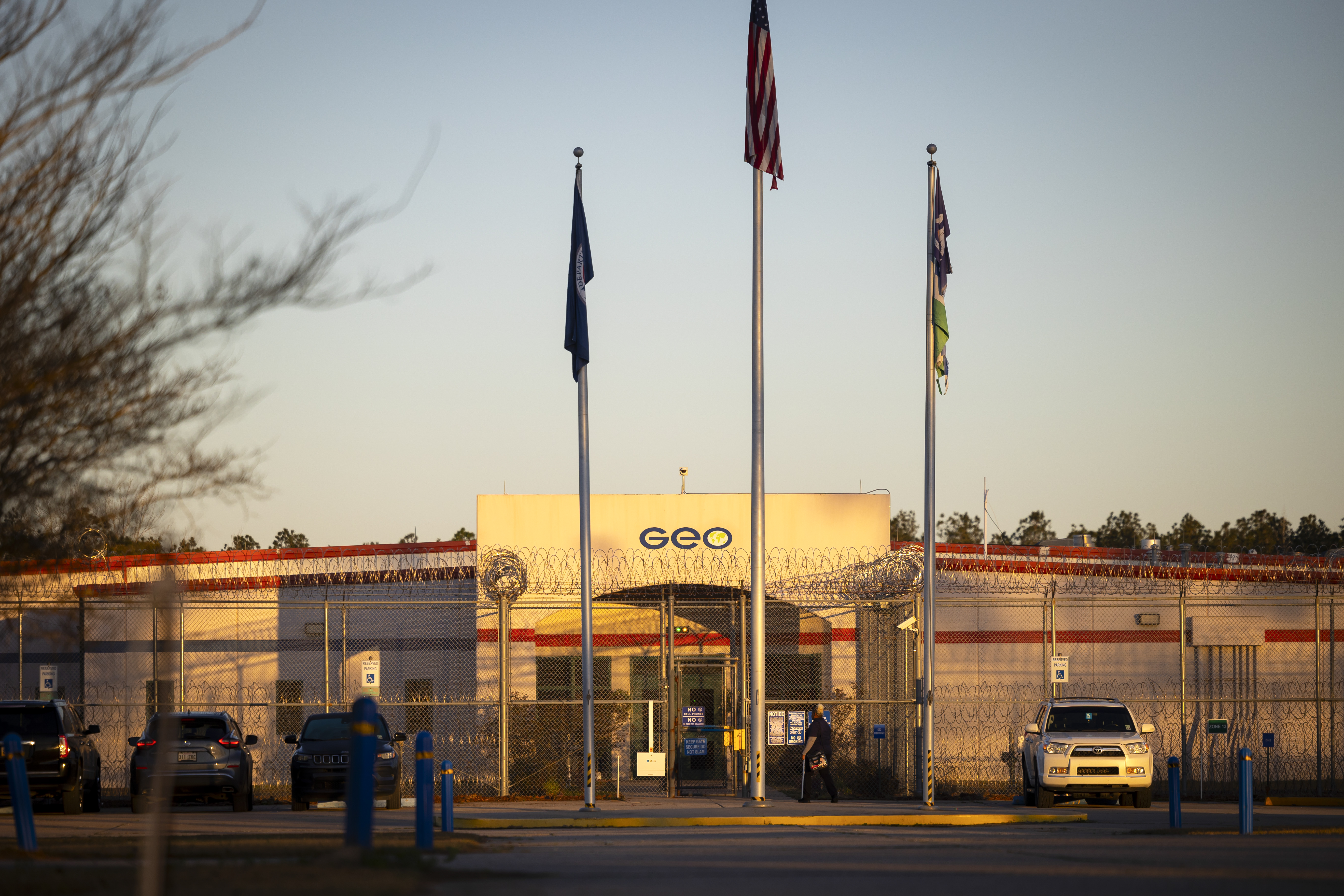
    Camila Toro de Paula, a 25-year-old transgender woman from Venezuela, has spent the past 11 months in a federal immigration detention center for men, where she said she has been assaulted, threatened, and deprived of medical care.

    Toro de Paula, who entered the United States seeking asylum, has lingered in solitary confinement without ready access to water for up to 24 hours a day, her lawyer said. Medical files from the center in Jena, Louisiana, where she is being detained show that she has complained to social workers about being punished because of her gender expression.

    “I’m afraid of dying here,” Toro de Paula said in Spanish during a video interview from the federal facility. Immigration officials said Toro de Paula had entered the country illegally and cited her criminal history in the United States. Records show that the most serious charges against her, of felony assault and possession of a weapon, had been dismissed.

    The case of Toro de Paula comes as the federal government has halted specialized care for transgender detainees inside at least 10 detention centers from Calexico, Calif., to Batavia, N.Y., according to public records. Officials no longer consistently provide transgender inmates with hormones and other gender-related care.

    An Obama-era policy that provided basic rights for transgender people in immigration detention was deleted from the Department of Homeland Security website in February 2025. And officials have dissolved longstanding protections meant to shield transgender detainees from being harassed or physically harmed.

    “We are NOT wasting U.S. taxpayer dollars to provide hormone therapy to illegal aliens seeking to change their sex,” the Department of Homeland Security said in an email to The New York Times, which did not address the other changes in policy.

    Homeland Security has in recent months declined to say how many transgender migrants are in custody, but experts on incarceration estimate that there are at least several dozen out of more than 65,000 people in detention as of July 11. On Jan. 12, 2025, the latest date for which the government reported a count, the Immigration and Customs Enforcement agency had 47 transgender people in custody, according to data archived by the Vera Institute of Justice, a think tank focused on criminal justice reform.

    Many migrants have complained about mistreatment and shoddy medical care in federal facilities. While transgender detainees represent a small fraction of those being held, they are an especially vulnerable population. Many are fleeing harassment in other countries and had just begun to be given some protections within the U.S. detention system in recent years.

    Medical experts say that withholding hormones and other treatment for gender dysphoria can cause unique physical and mental health complications.

    A hotline run by Immigration Equality, a nonprofit organization that helps LGBTQ+ and HIV-positive people who are in the immigration system, recorded a 68% increase in calls from LGBTQ+ detainees in 2025 compared with the year before. (The group does not have data specifically for transgender detainees.)

    Immigration Equality’s clients include transgender women who said they had been removed from detention center units that had been reserved for them during the Biden administration and placed with men or in solitary confinement. The group said that the federal government had denied requests from transgender women to be transferred to facilities for women or transgender people.

    “The administration is creating a humanitarian disaster” by changing policies that were meant to protect transgender people, said Bridget Crawford, the legal director at Immigration Equality.

    The Department of Homeland Security rejected claims that conditions inside detention centers were inhumane. The agency did not directly respond to Toro de Paula’s assertions of assault and mistreatment, and identified her with male pronouns. Toro de Paula has received hormones for years, and her lawyer said that she has been denied hormone treatment in ICE detention.

    “No detainees are being beaten or abused,” the federal agency said. “No lawbreakers in the history of human civilization have been treated better than illegal aliens in the United States.”

    The actions of the Trump administration have been welcomed by opponents of transgender rights, including the Women’s Liberation Front, a women’s rights advocacy group that defines gender based on sex at birth and does not acknowledge transgender women. The group has argued that placing transgender women in prisons for women violates the constitutional rights of female inmates who are not transgender, including the Eighth Amendment right to protection from cruel and unusual punishment.

    The Center for American Progress, a left-leaning think tank, issued a report citing ICE data that Democrats in Congress had collected. It found that LGBTQ+ migrants have a disproportionately higher chance of being abused in migrant detention centers. The statistics were collected during the 2017 fiscal year, which spanned Democratic and Republican administrations.

    The report said that transgender detainees, on average, spent 99 days in solitary confinement, more than double the average for all immigrants in ICE custody. In the 2017 fiscal year, 1 in 8 transgender detainees was placed in solitary confinement, which officials said is done when detainees are viewed as a threat to other immigrants or personnel, or for protective purposes.

    Data from the federal government show that in the 2024 fiscal year, during the Biden administration, 244 detainees who identified as transgender were booked into ICE custody.

    In 2023, Immigration Equality interviewed 41 LGBTQ+ and HIV-positive immigrants who had been in detention. About one-third said that they had experienced sexual abuse, physical assaults, or sexual harassment because of their identity while in detention.

    Almost all the participants said that they were the targets of homophobic, transphobic, xenophobic, racist, or other verbal and nonverbal abuse. Most said that they had received inadequate medical care for a range of conditions, and about half said that they had been placed in solitary confinement. Of the 41 participants interviewed for the report, 14 were transgender.

    Safeguards under President Joe Biden have vanished during President Donald Trump’s second term.

    In May, the federal government closed the Office of the Immigration Detention Ombudsman, which was responsible for investigating misconduct and abuse of all kinds in the immigration detention system.

    “The violations that we’re seeing now are, to some extent, what we had seen in Trump’s first term — it’s almost like they’re on steroids, though,” said Lynly Egyes, the legal director of the Transgender Law Center, a civil-rights group. “It was often difficult for trans people to access medical care. Now, it is almost impossible.”

    Many transgender migrants in detention, like Toro de Paula, came to the United States seeking asylum.

    She told the story of a violent childhood in Venezuela. From the age of 8, she said that she was raped repeatedly by relatives. When she was about 10, she said that she tried to hug her mother, who recoiled and splashed her with hot cooking oil. She said that police stabbed her when she was 14 in what she described as a homophobic attack.

    In October, a doctor who was retained by her legal team evaluated Toro de Paula and found an irregular hyperpigmented patch inside her left elbow where she said her mother had burned her. She had long scars on her left wrist and hand and on her right leg where she said Venezuelan police had sliced her skin with a knife when they had detained her.

    Texas Gov. Greg Abbott (right) and Montana Gov. Greg Gianforte greet members of the National Guard as they arrive with fellow governors for a 2024 news conference along the Rio Grande to discuss Operation Lone Star in Eagle Pass, Texas. Eric Gay

    Two years ago, she made the dangerous journey on foot to the United States. In September 2024, she reached Eagle Pass, Texas, where officials gave her food and clothes and put her on a flight to New York City. At the time, Gov. Greg Abbott of Texas had been sending thousands of migrants to Democratic-led cities as part of his multibillion-dollar border security effort, known as Operation Lone Star.

    In New York, she joined a community of transgender women and attended parades and parties for LGBTQ+ people.

    Her new life unraveled in August 2025 when she was arrested during a routine appointment at the New York City offices of ICE. She was flown to Louisiana and placed in a detention center for men, despite objections from her lawyer, Laura Berger, who works with the Legal Aid Society. The placement, Berger said, would put her client in danger.

    The Department of Homeland Security said Toro de Paula had a criminal history that included charges for felony assault and criminal possession of a weapon, both of which were dismissed and sealed. According to her lawyer, those charges related to her arrest in the Bronx on June 30, 2025, after she was accused of hitting a man on the head with a skillet. Her lawyer said Toro de Paula was fending off a robber. The charges related to that incident were dismissed in October, court records show.

    In a separate case in Queens, Toro de Paula was charged with prostitution; that was dismissed. She was also charged with pickpocketing in Queens and pleaded guilty to jostling.

    “A lot of people don’t understand us,” said Jessica Guaman, a transgender woman who organized gatherings that Toro de Paula had attended in New York. “Camila is a good girl.”

    Many transgender people in detention have fled persecution in their home countries, said Crawford of Immigration Equality.

    Wilmar Quintero, a 50-year-old transgender woman from Venezuela, came to the United States seeking asylum and was detained in Michigan for about three months. Quintero said that she had fled her native country because police officers tortured her and left her for dead after she spoke out against civil rights abuses. Photographs of her bare chest revealed an expansive stretch of pinched, red scars that mark where officers carved out her breast implants, she said.

    Quintero said that she was sexually assaulted by another migrant while being detained in Michigan.

    “I lived through the worst horrors and humiliations imaginable,” Quintero said in Spanish. “They treated me like an animal.”

    Immigration officials deported Quintero to Venezuela in April, and she went into hiding there. She said she is afraid of the police in Venezuela.

    Crawford shared the stories of eight transgender clients who had similarly complained of discrimination, harassment, or abuse inside immigration detention facilities.

    Toro de Paula said that detention center officials had pressured her to voluntarily agree to return to Venezuela, but she had refused. She said that they had humiliated her by forcing her to wear a mask and gloves while she is outside her cell because she is HIV-positive, even though the virus does not spread through the air. She has not been allowed to replace her wig, and officials have refused to give her undergarments for women. The Department of Homeland Security said Toro de Paula had worn the mask by choice — a claim that her lawyer disputed.

    “I want to be heard,” Toro de Paula said. “Women like me have been disrespected enough. No more.”
  • Harvard agrees to $53 million settlement in body parts theft scandal

    Harvard agrees to $53 million settlement in body parts theft scandal

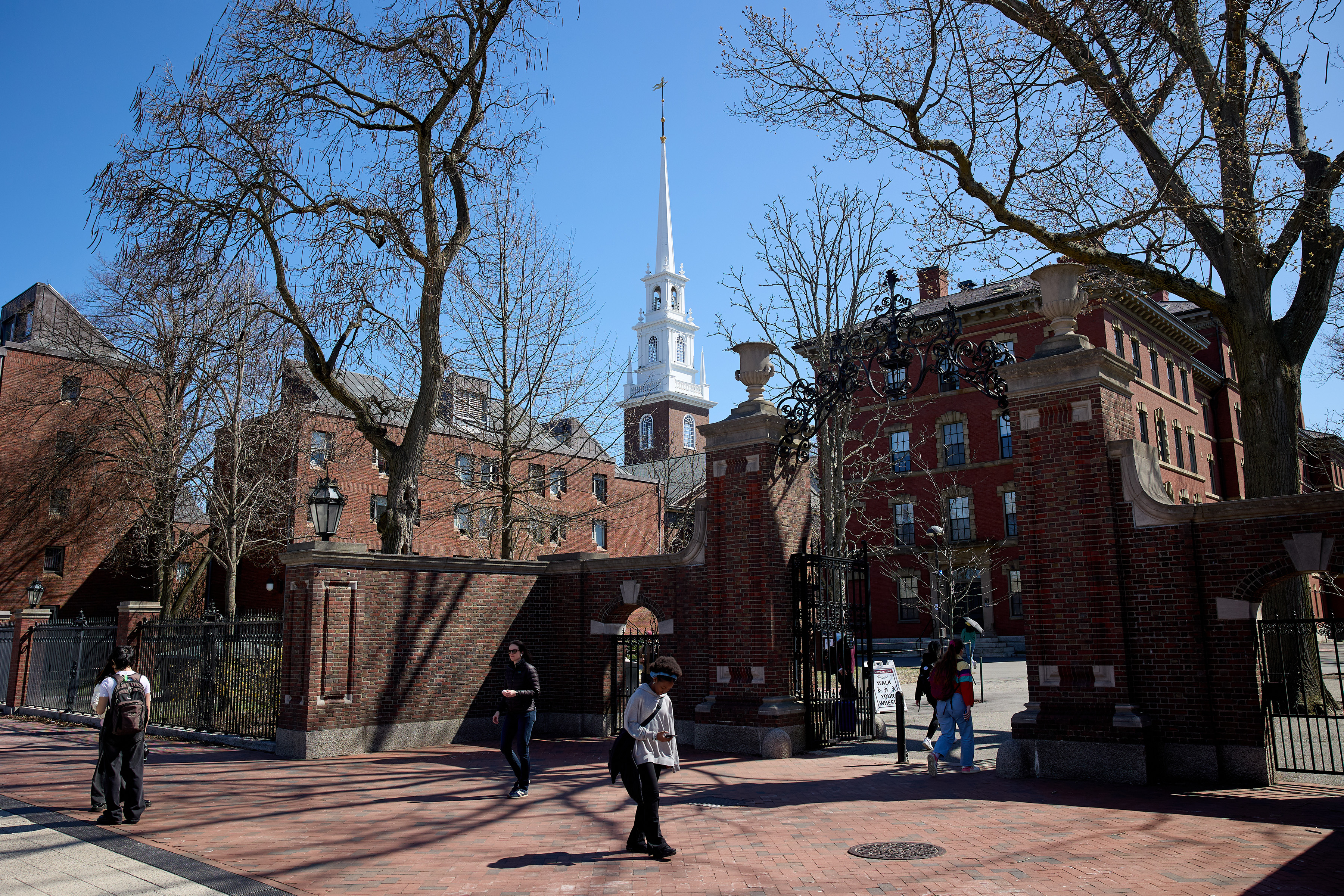
    Harvard University said Tuesday that it had agreed to pay $53 million to settle claims that body parts that had been donated for research were stolen and sold by a former manager of the morgue at the university’s medical school.

    The former manager, Cedric Lodge, 58, was sentenced to eight years in prison in December after pleading guilty to one count of interstate transportation of stolen goods. The university fired him in 2023.

    Lodge had been entrusted with handling cadavers that were part of the Harvard Medical School’s Anatomical Gift Program and were supposed to be cremated after the research on them had been completed, prosecutors said.

    But a sweeping federal investigation found that Lodge supplied brains, skin and other body parts to collectors in several states as part of a criminal network that involved several people, including his wife. Investigators said he drove the stolen body parts to his home in New Hampshire.

    The breach went undetected from about 2018 until March 2023, tainting one of the nation’s most prestigious medical schools.

    Families who accused Harvard of mishandling the remains of their loved ones sued the university. A Suffolk County Superior Court judge threw out a dozen lawsuits in 2024, but the Massachusetts Supreme Judicial Court revived them last year. It ruled that Harvard and the managing director of the Anatomical Gift Program were not protected by limited immunity under the Uniform Anatomical Gift Act.

    George Q. Daley, dean of the faculty of medicine at Harvard, and Dr. Bernard Chang, the dean for ​medical education at Harvard ​Medical School, said in a statement announcing the settlement that the agreement would allow Harvard and the plaintiffs to avoid “prolonged litigation.”

    “These events do not reflect the reverence we hold for the altruistic individuals who selflessly donate their bodies to our Anatomical Gift Program (AGP) to provide essential educational opportunities to medical and dental students, practicing surgeons and allied health professionals,” they said. “We reaffirm our deep sorrow and empathy for the families of donors who may have been impacted.”

    The settlement was also announced in a statement from Morgan & Morgan, the law firm representing the donor families in Boston.

    “Both Harvard and the plaintiffs’ attorneys worked diligently to come to an agreement so that these families can finally have closure and begin to heal,” Morgan & Morgan’s founder, John Morgan, said in the statement. “We hope that this resolution ensures that this never happens to another family ever again.”

    Daley and Chang said in their statement that lawyers for Harvard and the plaintiffs would seek preliminary approval for the settlement at a hearing Wednesday. If it is granted, they said, two class-action settlement funds totaling $53 million will be established to resolve the lawsuits. A third-party settlement administrator will be appointed to notify potential class members of their eligibility and to distribute settlement funds.

    The process is expected to take several months, they said.

    Harvard Medical School has also agreed to issue a statement to the plaintiffs confirming that Lodge’s actions were “morally reprehensible” and another statement detailing changes that have been made to improve the Anatomical Gift Program.

    Harvard has also agreed to establish an annual scholarship for medical students beginning in the 2027-28 academic year “in appreciation and in honor of all of our anatomical donors,” according to the university’s statement.

    “While Lodge’s sentencing concludes the criminal case against him, and the class action settlement agreement when fulfilled would conclude the civil cases,” Daley and Chang wrote, “the process of recovering from this painful incident continues.”

  • With limited options, Trump tries economic pressure on Iran — again

    With limited options, Trump tries economic pressure on Iran — again

    BERLIN — Iran has survived harsh U.S. sanctions since 1979. It is betting it can endure even more.

    In the 47 years since the Islamic Revolution, the United States has taken step after step to isolate the country with only a brief reprieve after the 2015 Iran nuclear deal, which President Donald Trump excoriated and abandoned in 2018.

    Trump promised “maximum pressure” then, and now, with limited military options, threatens even more. Treasury Secretary Scott Bessent warned last week of “never before seen” measures — perhaps, analysts suggest, secondary sanctions on countries like China that buy Iranian oil, or further penalties on financial transactions.

    Iran is more likely to step up attacks on U.S. allies in the Persian Gulf than to surrender its hold on the Strait of Hormuz, analysts said. “Iran’s economy is in serious trouble, but it is not collapsing,” said Danny Citrinowicz, an Israeli expert on Iran. “More importantly, the regime is likely to escalate before it capitulates.”

    U.S. and international sanctions and economic pressure did help lead to the 2015 nuclear deal, when the supreme leader then, Ayatollah Ali Khamenei, authorized negotiations to limit Iran’s nuclear program in return for frozen assets and sanction relief.

    Since Trump withdrew from the deal and imposed more sanctions, Iran has adjusted to a high level of economic disruption, developing sophisticated smuggling routes and new markets, particularly for oil. For now, Iran insists on maintaining effective control of the strait while the U.S. Navy continues to blockade it. A few ships are slipping through, but traffic is down more than 90% from before the war.

    Iran’s economy is badly damaged, hurting ordinary people, but its leaders have shown, through brutal crackdowns on protest and dissent, that they are relatively unconcerned with public opinion.

    Having survived what it once feared — an Israeli-American war against it — a more military-minded and authoritarian Islamic Republic has itself doubled down. Esmail Baghaei, the spokesperson for the Foreign Ministry, said Monday that new measures would have “no effect on Iran’s position.”

    Economic pressure will only succeed if “our resilience is greater than that of the Iranian regime, and it’s not clear that’s a good bet,” said Suzanne Maloney, an Iran expert and director of foreign policy at the Brookings Institution. “Iran’s economy has been shaped by U.S. economic pressure.”

    The oil economy

    Iran’s economy is suffering, without question, but gradually, while the regime keeps a stranglehold on any popular protest.

    Since the war began in earnest in February, the Iranian economy and its industrial sector have been contracting in tandem for the first time in eight years, said Esfandyar Batmanghelidj, CEO of the Bourse & Bazaar Foundation, a research organization based in London.

    Iran will face more challenges, from higher inflation to weakness in the job market, he said. “But it won’t lead to a different political outcome.”

    Some Iranian leaders, to be sure, are deeply concerned with the economic disaster and support a more rapid diplomatic deal with Washington. But the leadership appears united in retaining effective control over the strait as its best leverage and deterrent against another war.

    Iran has adapted to U.S. and international sanctions by increasing its ties to Russia and China. It sells most of its oil at a discount to China, which has ignored international sanctions against the purchase of Iranian oil. It also uses small, independent Chinese refineries, known as “teapots,” that are less exposed to U.S. sanctions.

    Iran has developed smuggling networks and a “shadow fleet,” transferring its oil to other ships that can easily disguise its origin. And it has built up its industrial sector and cut back sharply on imports and its use of the dollar, using foreign banks and bartering oil for goods.

    Since the war and the U.S. blockade, Iran has been storing oil onshore and in a variety of older tankers, while shipping some of it by road and rail and reducing output on some wells. When the memorandum of understanding with the United States was signed in June and the U.S. blockade was temporarily lifted, Iran used the period of calm assiduously.

    Iran had oil already outside the strait to sell before the blockade, and at the outset of the agreement it exported another 80 million barrels before Washington reimposed sanctions and the blockade, easing the pressure on storage, said Brett Erickson of Obsidian Risk Advisors.

    Before the war, Iran was exporting about 1.8 million barrels a day. Now, given the increase in the oil price because of the conflict, Iran is ahead of what it budgeted for oil sales for this year, he said.

    The exchange rate for the Iranian rial against the dollar is bad, but the speed of depreciation is slowing, as is inflation. If Washington is relying on economic pressure, “you wouldn’t want slower inflation and a lower rial exchange rate than before the war,” Erickson said.

    For the policy to succeed, “we need to push them down quickly, not wait nine more years to collapse them,” he added. “A dagger hurts but doesn’t lop off the head of the enemy.”

    A battle of economic wills

    Iran is gambling that the closure of the strait will put more pressure on Trump to blink first and negotiate a deal that Iran can accept. Iran is counting on increasing economic anxiety from the United States’ allies to push Trump back to the table.

    The global economy is missing millions of barrels of oil a day and strategic stockpiles, including in Europe and the United States, are badly diminished. Ukraine continues to damage Russia’s refineries, further cutting the amount of oil on the market.

    Regionally, key energy producers including Qatar, Bahrain, Iraq and Kuwait are badly hurt by the closure of the strait, and Saudi Arabia, Qatar and Oman have argued in Washington against further military escalation, given Iran’s ability to strike their energy infrastructure.

    “In a battle of economic wills it’s very uncertain the West will win,” Maloney said.

    Trump defends the war as necessary to ensure that Iran can never build a nuclear weapon. But after he abandoned the 2015 nuclear deal, Iran tried to pressure the world with enhanced enrichment that brought it to the edge of being a nuclear-capable military power, even as it denied ever seeking a bomb.

    That assurance died with the former supreme leader. His son and successor, Ayatollah Mojtaba Khamenei, appears ready for open-ended confrontation with the United States and is considered by U.S. intelligence to be more flexible about creating a nuclear weapon. In Iran, said Vali Nasr, an Iran expert and professor at the Johns Hopkins School of Advanced International Studies, trust in Trump is minimal and the 2015 deal is considered “a four-letter word.”

    Now, Trump is offering Iran very little in exchange for opening the Strait of Hormuz, with no U.S. commitment to unfreeze its assets or lift sanctions. “There is no reasonable deal for Iran on the table,” Nasr said.

    “The choice is between total surrender and fighting it out,” he added. “And they have bet that the only way to get a better deal is to accept costs now and hold the global economy’s and Trump’s feet to the fire.”

  • Trump’s ballroom is rising at breakneck speed: 20 hours a day, 7 days a week

    Trump’s ballroom is rising at breakneck speed: 20 hours a day, 7 days a week

    WASHINGTON — With the fate of his ballroom tied up in court, President Donald Trump is racing against the clock.

    He has enlisted a team of 250 workers to push ahead with construction 20 hours a day, seven days a week to complete as much work as quickly as possible. This week, there are plans to install 1 million pounds of rebar and pour 3,000 cubic yards of concrete for a project that is now two-thirds complete, the administration said in a court filing.

    Now, with the matter pending before the Supreme Court, the Trump administration is making a practical appeal to the justices: The ballroom is simply too far along to be stopped now.

    “His strategy clearly is to change the reality on the ground so that instead of preserving the status quo, those who rightly invoke the law against what he’s doing are put in a position of having to undo something that is already a fait accompli,” said Laurence H. Tribe, an emeritus university professor of constitutional law at Harvard.

    For years, Trump has argued that the White House should have its own ballroom, saying it was a matter of prestige on the world stage. A ballroom, he said, would allow officials to hold big events for special guests without needing to erect a tent on the South Lawn.

    In recent months, as preservationists and other critics have tried to halt or at least slow down the project, Trump has offered a new justification: national security. Essentially, Trump is treating the ballroom and the military bunker underneath it as one and the same.

    The bunker — officially known as the Presidential Emergency Operations Center, or PEOC — was built during World War II beneath what was once the East Wing, which Trump tore down last year to make way for his ballroom.

    Now, he speaks about the two projects in the same breath.

    After an armed man rushed the White House Correspondents’ Association dinner in April, for example, Trump said on social media that the mayhem had proved the need for “the Militarily Top Secret Ballroom currently under construction at the White House.”

    Trump demolished the East Wing last October without seeking any approvals or submitting construction or demolition plans to Congress. While he did bring the project before two review panels whose leaders he had appointed, Trump has continued to change the plans from the designs they authorized.

    Several federal court rulings have found that the president exceeded his authority by moving ahead without congressional approval, but the decisions have been paused pending appeals — which means the construction can go on at least until Friday, when an appeals court order to halt the aboveground construction goes into effect.

    The case is also pending before the Supreme Court.

    Last week, the Trump administration told the Supreme Court the president was adding flashy golden seals on the outside of the ballroom, a design element that was never submitted to the Commission of Fine Arts.

    Joshua Fisher, the director of White House management and administration, told the court that a concrete-and-steel superstructure had already been built that stretches five stories deep and 70 feet high.

    Fisher said 80% of the rebar for the project had been placed, and the concrete poured.

    He said $335 million of the $400 million needed for the project had been raised from private donors. He estimated the construction was 65% complete.

    Fisher said that the ballroom’s columns were being carved by renowned Italian artists, and that the building would be sturdy enough to withstand a nuclear blast.

    “Given the current progress, the superstructure is beyond the point of return,” Fisher wrote. He added that even if the Supreme Court ordered the plans for the building altered or the building taken down, “there would be no way to do so.”

    The message was clear: The ballroom cannot be undone.

    But in a filing Tuesday, the preservationists challenging the project told the justices that the administration was trying to “outrun judicial review” by suggesting that it was too late to stop the construction.

    “They tell this court that because the ballroom is being built with the type of concrete used ‘in nuclear power plants,’ it will soon be ‘virtually impossible to deconstruct,’” according to the filing.

    Lawyers for the National Trust for Historic Preservation in the United States, a nonprofit chartered by Congress to guard America’s historic buildings, said the administration had intentionally accelerated construction “in an effort to put their illegal ballroom” beyond judicial intervention.

    They have pointed to the Constitution and several federal laws that state Congress must approve such a project. One federal law says, “A building or structure shall not be erected on any reservation, park or public grounds of the federal government in the District of Columbia without express authority of Congress.”

    Lower court judges have sided with the preservationists, ruling that Congress must first sign off on the expansion and renovation of the White House complex.

    “Efforts to foil judicial review and arrogate Congress’ exclusive powers should not be rewarded with a stay that allows petitioners to complete a ballroom they lacked any authority to commence in the first place,” said the trust’s lawyers, led by Thaddeus A. Heuer.

    In its filing Tuesday, the trust suggested that the Supreme Court temporarily halt the aboveground work and then quickly schedule oral arguments for October or November to formally decide whether the project can proceed. If the justices do not press pause now, the trust said, the project is on track to be substantially finished this fall and it will be too late.

    D. John Sauer, the solicitor general, has argued that the ballroom is inextricably linked to the broader national security needs of the White House complex. He said the structure is built with hardened concrete, steel, and rebar; protective missile-resistant columns, roofs, and beams; droneproof ceilings and roofs; and bullet-, ballistic- and blastproof glass. It includes bomb shelters, state-of-the-art hospital and medical facilities, protective partitioning between all areas of the building, top secret military structures and equipment, military-grade venting, a single integrated air-conditioning and heating system, sniper nests, and a drone port on top.

    Sauer has also pushed back on the assertion in the unfavorable appeals court ruling that Trump is a temporary tenant, not the owner, of the White House. “The president of the United States of America is not a tenant, but rather the sole, elected head of the executive branch,” he wrote, adding that other presidents had taken steps to renovate the White House.

    The Supreme Court’s conservative majority has often been receptive to the Trump administration’s efforts to expand presidential power, but it has also ruled against some of Trump’s signature initiatives. The justices are expected to issue an order before the appeals court ruling that would halt construction takes effect Friday.

    Kimberly Wehle, a law professor at the University of Baltimore, said that Trump had been pushing to expand the powers of the presidency for years, and that attempting to construct a massive new building on White House grounds without lawmakers’ approval is his latest step.

    “It’s so symbolic that he literally bulldozes the White House and says, ‘What are you going to do about it?’” she said. “They’re making this general generic argument that ‘I’m the president, so it’s national security, I can do whatever I want.’ That is a very steep, slippery slope into unlimited power in the presidency.”

    This article originally appeared in the New York Times.

  • Trump administration moves to allow logging in pristine national forests

    Trump administration moves to allow logging in pristine national forests

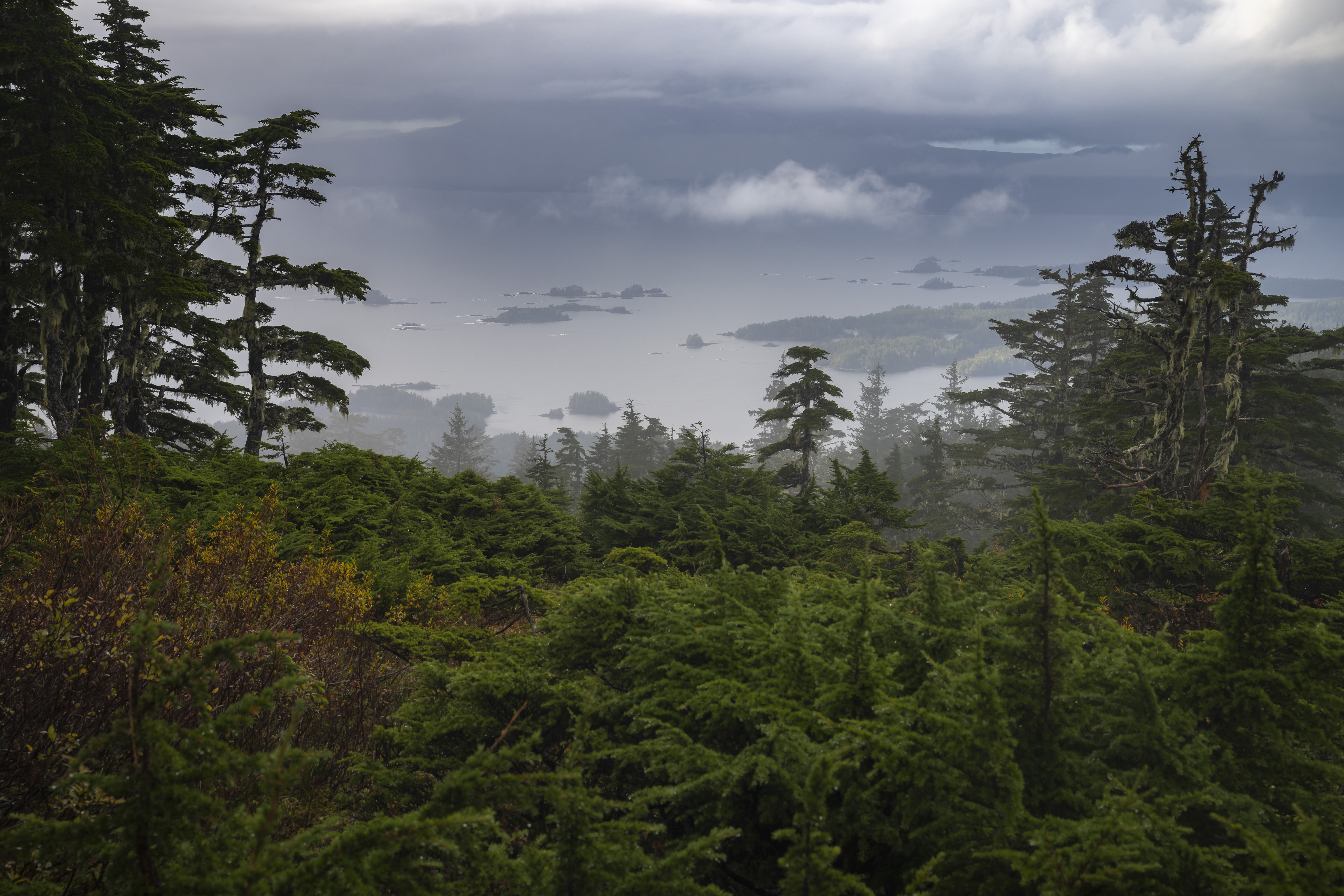
    WASHINGTON — The Trump administration on Tuesday advanced a plan to open nearly 45 million acres of wilderness in national forests to road construction and logging, removing protections that had been in place for a quarter century.

    The proposal by the U.S. Forest Service would repeal the 2001 “roadless rule,” enacted during the Clinton administration to preserve the wild nature of forest land. It comes as President Donald Trump pressures the agency to increase logging and to thin forests to prevent wildfires.

    The repeal would hand a major victory to Republican-led states and industry groups that have argued for years that the prohibitions have hindered economic development. More than a dozen lawsuits have unsuccessfully sought to strike down the rule.

    During his first term, Trump stripped protections from Alaska’s Tongass National Forest, the largest intact temperate rainforest in the world, only for the Biden administration to restore them in 2023.

    This time, the Forest Service is eliminating protections for the 9 million undeveloped acres within the Tongass, as well as millions more acres of pristine wilderness across the rest of the United States.

    “For too long, outdated restrictions have kept tens of millions of forested acres off-limits to the very treatments that improve forest health and reduce wildfire risk to our communities,” Brooke Rollins, the secretary of the Agriculture Department, which includes the Forest Service, said in a statement.

    Environmentalists said the plan would destroy untouched landscapes, including crucial habitats for migratory species and headwaters for major municipal water supplies. Multiple advocacy groups are expected to sue to block the repeal.

    “By ripping protections from some of our oldest intact forests, the Trump administration is endangering the drinking water supplies of tens of millions and threatening wildlife habitats and recreation opportunities in almost every state,” said Drew McConville, a senior fellow at the Center for American Progress, a liberal research organization.

    Roadless areas make up about 30% of all national forest land, encompassing nearly 60 million acres of America’s last wild areas and old-growth forests. They are home to more than half of imperiled wildlife, including grizzly bears, wolves, elk, salmon, and wolverines. Forest land in the United States also absorbs millions of tons of carbon per year, helping slow climate change.

    The proposal would affect the management of 44.7 million acres nationally. Idaho and Colorado have their own regulations that supersede the federal rule and insulate those states from being affected by any change in national policy.

    Damien Schiff, a senior attorney with the Pacific Legal Foundation, a libertarian public interest law firm that has been fighting the roadless rule in the Tongass National Forest, said he believed the federal protections had harmed mining, timber production, and other economic development. In Alaska, he argued, restrictions around the Tongass have made it difficult for surrounding communities to connect to electric grids.

    “It has had a depressing impact on the use of the national forest for productive activity generally,” Schiff said.

    The Trump administration and many Republicans argue that the ability to build roads would enable firefighters to more easily reach forest fires.

    “For 25 years, the heavy thumb of Washington, D.C., has hindered Montana’s ability to properly manage wildfire risk and road development on nearly 60% of Forest Service land across the Treasure State,” Montana Gov. Greg Gianforte, a Republican, said in a statement.

    Ecologists largely agree that the government needs to improve the ways it manages forest land. But experts do not agree that cutting down pristine forests to build more roads is the best way to do it.

    In fact, some warned, roads could actually increase the threat of wildfires — partly because roads bring people. Nearly 85% of wildfires begin with human activity such as discarded cigarette butts, burning debris, or sparks from equipment, research has shown. Roads can also be corridors for invasive species, including flammable grasses.

    “Introducing roads and human activities in areas that are otherwise undisturbed will increase wildfires where the risk is currently low,” said Alexandra D. Syphard, a senior research ecologist at the Conservation Biology Institute, a nonprofit group based in Oregon. “The unintentional impact of this could actually be creating a worse situation.”

    Camille Stevens-Rumann, director of the Colorado Forest Restoration Institute and an associate professor of fire ecology at Colorado State University, added that new roads would not necessarily help address the most destructive wildfires because they tend to ignite near existing roads. Fires in remote areas, which often are sparked by lightning strikes, tend to burn far fewer acres, she said.

    “We have smokejumpers for one, that’s how you get into those remote areas,” said Sen. Martin Heinrich (D., N.M.). He noted that prescribed burns, pruning and other treatments are routine across millions of acres of forests, and those areas are afterward closed again to motorized access.

    Democrats from Western states said they believed wildfire arguments were designed to hide the administration’s real goal: enabling more logging.

    Trump has made timber production a top priority. Last year, he called for a 25% increase in logging from national forests and directed agencies to bypass endangered species protections and other environmental regulations to make it possible.

    Rollins then issued a secretarial memo declaring an “emergency situation” in national forests, establishing a process for the Forest Service to fast-track logging by cutting short public participation and legal reviews.

    After the proposal is published in the Federal Register, which is expected later this week, the Forest Service will accept public comments before making the rule final.

    This article originally appeared in the New York Times.

  • Pirro challenges release of woman accused of vandalizing World War II Memorial

    Pirro challenges release of woman accused of vandalizing World War II Memorial

    Jeanine Pirro, the U.S. attorney for the District of Columbia, criticized a federal judge’s order releasing a woman charged with vandalizing the World War II Memorial in Washington.

    The judge ordered the release Monday, rejecting a request from prosecutors that she remain in custody while awaiting trial on two felony charges.

    Federal prosecutors led by Pirro asked the court to reverse the decision, arguing that Melissa L. Farris posed an “exceptionally high risk of flight.”

    In a motion filed Monday, prosecutors cited evidence that Farris, 41, had searched for bus and airline tickets on the day the incident took place, as well as her lack of stable housing or ties to Washington and a previous failure to appear in court.

    Pirro criticized the judge’s decision in a statement. “If anyone is a flight risk, it is certainly her,” she said.

    Magistrate Judge Matthew J. Sharbaugh instead released Farris, though he ordered her to remain outside Washington, report to federal pretrial officials in Ohio, and surrender her passport. She was also ordered to stay away from the memorial. The judge did not impose electronic monitoring or require a third-party custodian, restrictions that prosecutors later requested.

    Farris, of Elizabethtown, Ky., was charged Friday with two federal felonies after investigators said she spray-painted “Clean Hands Dirty $” on the memorial and splattered paint on its stonework. Prosecutors said she also poured detergent into a fountain, causing it to fill with foam and bubbles.

    The National Park Service estimated that cleanup and restoration costs had exceeded $1,000, and the memorial was closed for most of the day, according to the filing.

    Farris livestreamed the incident and later posted videos in which she acknowledged that she had defaced federal property and predicted that police would pursue her. The next morning, she turned herself in at the federal courthouse in Alexandria, Va.

    Days earlier, Farris had been cited by U.S. Park Police for unlawfully camping on federal property a few blocks north of the World War II Memorial.

    Earlier this month, President Donald Trump publicly criticized Pirro, a key ally, over her handling of another case involving what he said was vandalism at the Lincoln Memorial Reflecting Pool. Trump said Pirro had “choked” after her office dropped charges against a man accused of damaging it. But Pirro concluded that the damage had been caused by faulty installation.

    Hours after publicly criticizing Pirro, Trump met with her in the White House, though she was not fired and did not offer her resignation, according to two people briefed on the outcome.

    The president has also denounced the vandalism of the World War II memorial, calling it an insult to Americans who died in the war. In a Truth Social post Friday, he also linked the episode to the recent controversy over the Reflecting Pool.

    In a social media post on the same day, Pirro wrote that defacing the memorial “is a despicable attack on a sacred monument honoring the Americans who fought and died for our freedom.” She also noted that the felony charges in the case carry potential punishment of up to 10 years in prison.

    This article originally appeared in the New York Times.

  • Trump votes by mail again in Florida

    Trump votes by mail again in Florida

    WASHINGTON — President Donald Trump voted by mail before Florida’s Republican primary on Tuesday, according to the White House, participating for at least the third time in a practice that he has railed against for years and has equated to cheating.

    Trump voted by mail in Palm Beach County in 2020, and did so again this year in the special election between Democrat Emily Gregory and Republican Jon Maples to represent the district in the Florida statehouse. Records show Trump has been registered to vote there since 2019.

    Politico earlier reported that Trump had voted by mail in Tuesday’s primary, citing voting records from Palm Beach Country, home to Mar-a-Lago, his private club. The New York Times could not access these records through the Palm Beach County Supervisor of Elections website, which said that Trump’s voting record was “protected from public disclosure.”

    In an unsigned statement, the Palm Beach elections office confirmed that it had blocked access to Trump’s voting records, saying that the publicly available documents were “intended for use by a registered voter to determine his or her voter registration and voting status. Voters with protected information will not appear in this search.”

    Olivia Wales, a White House spokesperson, confirmed that Trump voted by mail in the primary, saying that “this is a nonstory.”

    “As everyone knows, the president is a resident of Palm Beach and participates in Florida elections, but he obviously primarily lives at the White House in Washington, D.C.,” she said, repeating a White House statement about Trump’s last vote by mail, in March.

    Trump has continued to push for Republicans in Congress to pass legislation before the midterms that would strengthen voter identification requirements and make mail-in voting significantly more difficult. There was not enough Republican support to push through the legislation this year, and senators abandoned the effort so they could get home to their states to campaign for reelection.

    Trump has long fixated on mail-in voting to bolster his baseless claims of widespread voter fraud, and has called the SAVE Act one of the most consequential pieces of legislation in the country’s history. During his State of the Union address, Trump falsely claimed that “cheating is rampant in our elections” and called for “no more crooked mail-in ballots,” though states that vote entirely by mail see little fraud.

    This article originally appeared in the New York Times.

  • Google just made it easier for campaigns to send you fundraising emails

    Google just made it easier for campaigns to send you fundraising emails

    Google quietly rolled out a new program Monday that will allow candidates, political parties, and political action committees to more easily bypass Gmail’s spam filter and send fundraising appeals to the inboxes of the company’s many millions of email users.

    The change comes after years of complaints from Republicans that Gmail’s spam algorithm unfairly blocked their committees’ emails more than those of their Democratic counterparts, although those complaints were dismissed in court. For campaigns and PACs that meet the terms of the program, it is expected to route an influx of cash solicitations into Gmail inboxes, helping campaigns raise millions of dollars more in the final sprint to the midterm elections.

    Google chose not to debut the new program with any fanfare, instead posting an update to its Help Center on Monday. The company began to reach out to some political committees in both parties Monday after publishing the change, according to three people briefed on the outreach who spoke on the condition of anonymity to describe private conversations.

    Political strategists in both parties said the new policy could be deeply consequential for candidates — even if frustrating for users in the United States, who are likely to be bombarded with pleas for donations.

    “Heading into the 2026 elections, Gmail users are going to be flooded with unwanted political spam because Google decided to create a VIP lane for campaigns,” said Kenneth Pennington, a Democratic digital strategist and veteran online fundraiser. “This is a bad deal for Gmail users and a gift to bad actors in the political fundraising space.”

    José Castañeda, a spokesperson for Google, said the new program resulted from an effort to provide long-term clarity for both campaigns and users.

    “This program is designed to connect people with the emails they want to receive while keeping them fully in control of their inboxes,” he said in a statement. “To participate, bulk senders must meet strict security and compliance requirements, ensuring that messages people receive are relevant, useful, and verified.”

    The new program is set to begin Sept. 8, the day after Labor Day — and the day before Republicans are set to hold a rare midterm convention in Dallas.

    The change comes four years after Google rolled out a similar program on a pilot basis that was discontinued months later.

    At the time, the Republican National Committee sued the technology giant, accusing it of “throttling its email messages,” though Google said the party had not signed up for the program. A federal court later dismissed the case, with Judge Daniel J. Calabretta writing of the RNC’s claims, “This is pure speculation, lacking facts from which the Court could infer animus or an absence of good faith.”

    The Federal Election Commission also dismissed a formal complaint from Republicans that Gmail’s spam filter was biased against the party.

    Whether a fundraising email winds up in users’ spam folders or inboxes can be worth millions of dollars to campaigns over time.

    It is not immediately clear whether the changes would affect one party more than the other, but some Republicans appeared optimistic.

    “For years Google’s algorithm silenced Republican voices, burying our emails in spam while Democrats’ landed in the inbox,” said Will Kiley, the communications director for the National Republican Congressional Committee. “This program is a real chance to fix it and let voters hear from the candidates they choose to follow. We’ll be watching closely to make sure Google follows through.”

    Some Democrats feared the change could open the door for so-called scam PACs, which spend little of their money on actual campaigns, to more easily reach inboxes. Other Democrats hoped the change might help deliver the party an advantage because Democrats generally have been better at online fundraising than Republicans.

    The RNC did not immediately respond to a request for comment.

    Google’s new program will require that candidates, PACs, and party committees register the domain they send emails from and that their spam rates, the percentage of emails that users mark as spam, remain below 0.3%, according to the policy.

    Pennington feared that Google made the change because of pressure from Republicans.

    “While there could theoretically be another reason for this policy shift, it appears that Google is sacrificing the inbox sanity of its customers simply to placate a false, bad faith narrative from Republicans claiming partisan spam bias,” he said.

    Amanda Elliott, a Republican digital strategist, said the mistrust on the right with the tech industry runs deep, especially around the issue of whether fundraising emails wind up in inboxes or spam folders.

    “For everyone who’s been talking about censorship and bias, this could be a put-up or shut-up moment,” she wrote in a text message. “Are your emails landing in spam filters because you’re a Republican or because you’re just running a subpar email program and not following best practices? Perhaps we’re about to find out!”

    This article originally appeared in the New York Times.

  • Jaguars are ready to come back, but the border wall might stop them

    Jaguars are ready to come back, but the border wall might stop them

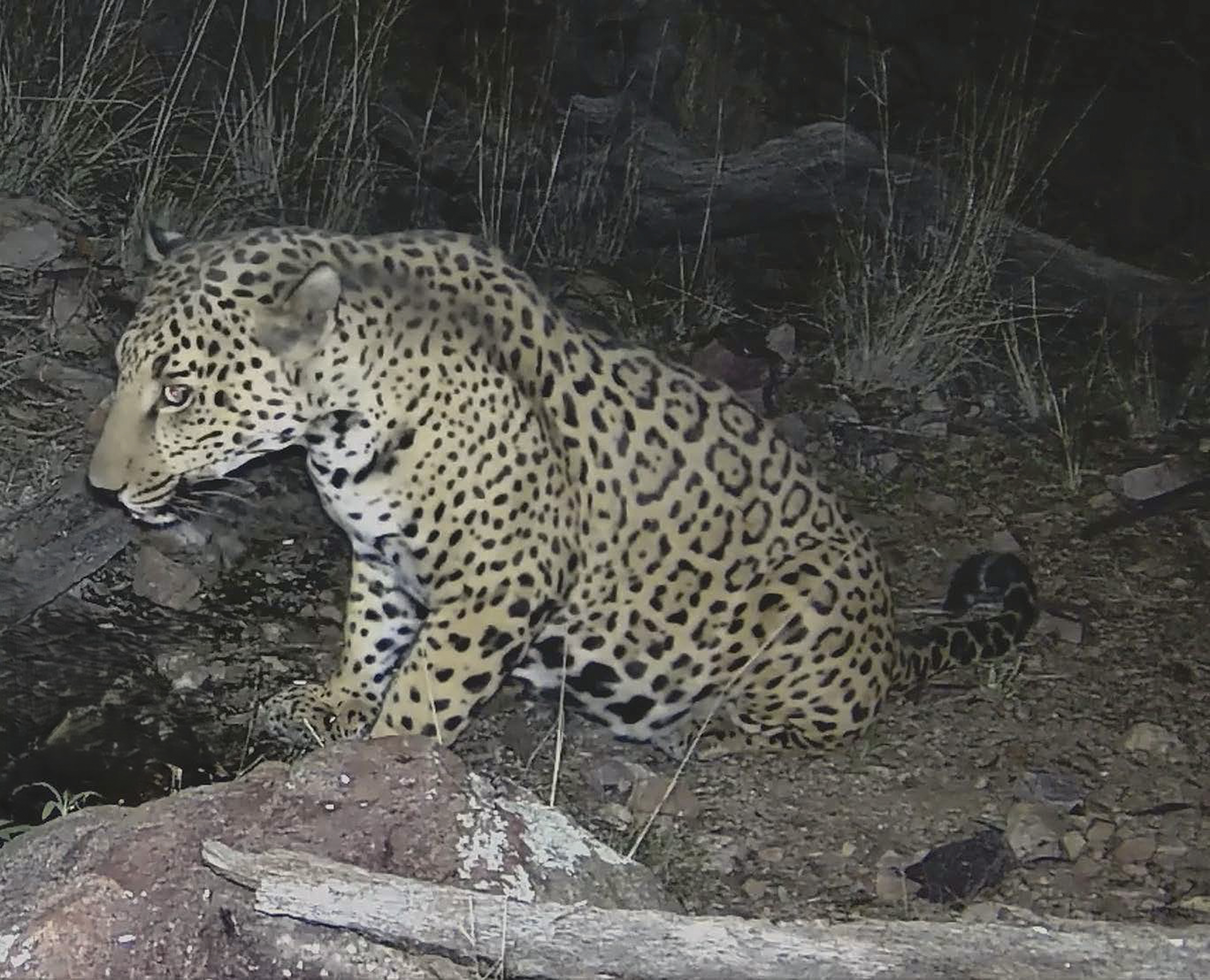
    Movement triggers a trail camera in a wildlife preserve in northern Sonora, Mexico, 2 miles south of the border with the United States. It captures two adult jaguars winding through oak thickets and tall grasses. The cats look relaxed, softly vocalizing to each other.

    It’s remarkable to see any jaguars in these borderlands. But to observe two together is unheard of, said Ganesh Marín, a researcher with the environmental group Borderlands Restoration Network. Even more jaw-dropping is that one of the big cats looks to be a female. “When I saw it, I was excited,” Marín said of watching the video in 2023. “I thought, ‘This is fantastic.’”

    No native female jaguars have been seen in the United States, or anywhere particularly close, for more than 70 years. So Marín waited for more evidence before he went public. He collected several more sightings of the cat, which he and his adviser named Adela. Then, this year, a camera-trap video surfaced that gave a clear view of another jaguar’s rear end, proving, according to Marín and other cat experts, that the individual in question is a female.

    “It’s a game changer,” said Eamon Harrity, a researcher with Sky Island Alliance, a conservation science group.

    Including Adela, five or six jaguars have been recorded at the wildlife preserve, Cuenca Los Ojos, since 2020, suggesting that the jaguar is closer than previously thought to reestablishing a population on the doorstep of the United States. “It totally deflates the narrative that female jaguars are over 100 miles to the south,” Harrity said. “They could be a day away from the U.S., or already here.” At the same time, the only known jaguar in the United States, a male named Cinco, has been roaming throughout southern Arizona. He has everything he needs — except a mate.

    Geopolitics might get in the way of his acquiring one. Since 2025, contractors working for the Department of Homeland Security have finished 56 miles of new wall along the U.S.-Mexico border and 48 miles of secondary fencing. In Arizona, many areas of the border will soon have two 30-foot walls right next to each other. This barrier is poised to cut off three of the four most important remaining wildlife corridors between Mexico and Arizona, threatening the jaguar’s re-expansion despite all the positive recent signs. The wall, Harrity said, would make it “very unlikely the jaguars can come back on their own to the U.S. — at least for now.”

    ‘No campfire dies without talk of him’

    Jaguars once roamed much of Sonora, western New Mexico, and Arizona, as far north as the Grand Canyon. The size of the population is unknown, but it was probably small and widely dispersed. Although they have long been revered in both countries — naturalist Aldo Leopold wrote in 1949 that the jaguar’s mythic nature so pervaded the borderlands that “no campfire dies without talk of him” — jaguars were also once regularly killed on sight, by government officials as well as hunters.

    Since 1949, when a hunter killed a female jaguar near Arivaca in southern Arizona, no native female had been seen in the United States, or anywhere particularly close to the border in Mexico. The northernmost core breeding population was thought to be centered near the community of Sahuaripa, more than 100 miles south of the border, which includes a private protected area for the species called the Northern Jaguar Reserve.

    A turning point came in early March 1996, when rancher Warner Glenn set off to hunt cougars in the Peloncillo Mountains, which start at the Mexican border and run north, straddling Arizona and New Mexico. His dogs caught the scent of a large cat and gave chase, and the feline finally stopped on a rocky outcropping. Peering up through pinyon pines, the rancher realized this was no mountain lion; it was a full-grown male jaguar.

    Still, in 1997, with only a few such sightings of roaming males, the jaguar was listed as endangered. In 2014, the U.S. Fish and Wildlife Service designated more than 760,000 acres of critical habitat for the big cats, but after lawsuits from mining and ranching groups, that dropped to 640,000 acres.

    Soon after Marín set up the camera network in 2020 for a doctoral project at the University of Arizona, he was elated to record a male jaguar he named Bonito, and a second male shortly after. Then came Adela and yet another male in 2023.

    When Marín first saw the video of the two jaguars, he thought Adela was female because she has a smaller frame. Also, two males are unlikely to appear together and vocalize, he explained.

    This year, he reinspected a video from April 2023 that showed a clear view of a jaguar’s rear end, and did a double take: No testicles were visible. And the spot pattern looked different from Adela’s, suggesting it could be a second female.

    He sent the clip to Brett Dickson, a wild cat expert with Conservation Science Partners. “I was struck right away that I was likely looking at a female,” said Dickson, who forwarded the video to jaguar experts. (The video also shows the cat has skin folds that look like mammary glands. The possibility that this could be a lactating female “cannot be ruled out,” Dickson said.) Seven of the nine scientists agreed it was female; two are unsure.

    While male jaguars can range hundreds of miles from their birthplace in search of new territory and mates, females generally do not travel as far from where they were born, and their mobility is a limiting factor in the species’ expansion. Seeing a female in Cuenca most likely means that she was born nearby, and that the breeding range of the jaguar extends farther north into the species’ historical territory than previously thought.

    The ‘fabric of the jaguar’

    To revisit the spot where Adela first showed up, Marín and Valerie Gordon, executive director of Cuenca Los Ojos, drove into the northernmost foothills of the Sierra Madre. A hike through grassy hills punctuated by oaks and mesquite took them to a spot where Marín lashed a camera around an alligator juniper back in 2020.

    Less than 2 miles away — a brief stroll for a jaguar — they pointed out the short vehicle barrier on the U.S. border. This is one of the most important remaining unwalled wildlife corridors in the Southwest United States, Marín said.

    A walk into the mountains took them to another camera that filmed Adela, showing her softly huffing as she passed. Marín gestured southward, where he envisions female jaguars making up a continuous thread that stretches vast distances through Mexico and far beyond. “The fabric of the jaguar is closer than we thought,” he said.

    Under the first Trump administration, 30-foot fencing impervious to most large animals went up along more than 220 miles of the border in Arizona, curtailing north-to-south wildlife movement and depleting aquifers, since contractors use vast quantities of water for construction, said Myles Traphagen, a researcher with Cuenca. As codified in the Real ID Act of 2005, the homeland security secretary has the authority to waive nearly any law — including the Endangered Species Act — in building border walls.

    John Mennell, a DHS spokesperson, said in a statement that the department planned to incorporate an unknown number of small wildlife passages, and referred further questions to the Fish and Wildlife Service, which declined to comment. These openings would be 8.5 inches by 11 inches, too small for jaguars.

    Cameras on both sides of a 30-foot border wall in Cuenca Los Ojos have shown large wildlife pacing, trying to get through. Animals including bears, mountain lions, and jaguars have to move long distances to find water in arid areas, and border fencing makes this more difficult, Gordon said.

    In the spring, Traphagen took a drive to check on the status of the wall, passing through the Baboquivari Mountains, a sacred place within the Tohono O’odham Nation. To the south, he saw contractors putting up 30-foot panels of new wall, one of about six places in Arizona where such work has begun, and miles of razor wire had been strung up.

    “That corridor has been open since time immemorial,” said Kinley Ragan, a biologist with the Phoenix Zoo, who manages a network of cameras in the area. “We know this will have serious impacts on wildlife. It’s quite devastating.”

    Several groups have worked to protect jaguars in Mexico, where the species is listed as endangered. For example, to change attitudes and make the animals more valuable alive than dead, the Northern Jaguar Reserve started a program in 2002 that compensates ranchers for trail camera photos of cats.

    Since 2010, jaguar populations have increased throughout Mexico by about 30%, to a total of more than 5,300, according to a Mexican jaguar census released last year and led by Gerardo Ceballos, an ecologist and a senior researcher at the National Autonomous University of Mexico.

    Among the main threats have been illegal hunting and retaliatory killings for perceived cattle predation, though research shows the cats much prefer native wildlife. Killings still happen, but the situation seems to have improved over the last two decades. Ceballos has argued for years that a female jaguar could return to the United States soon, if the two countries continue working together to protect habitat and connectivity.

    While jaguars might not be welcomed back by every segment of society, they are rare and shy enough that they present no risk to humans. The return of an apex predator would be good for the area’s ecology, and an indicator that the environment is doing well, said Susan Malusa, director of the University of Arizona wild cat research center.

    Females would enjoy the same legal protection as males, as endangered species, but ecologically and symbolically, the return of females would be a much bigger deal and would make jaguar conservation more urgent rather than theoretical.

    Back at the spot where the first video was taken, Gordon mused about how vast this tract of wilderness is, and Marín noted how important it will be to keep this border free of 30-foot-tall walls while reestablishing wildlife corridors where possible.

    “Jaguars are coming back,” Marín said, if we don’t get in their way. “I hope the U.S. is prepared for that — prepared to let that happen.”

    This article originally appeared in the New York Times.

  • What do students lose when they stop writing?

    What do students lose when they stop writing?

    After years of studying how humans write, cognitive psychologist Ronald T. Kellogg concluded that drafting a basic persuasive essay was as mentally taxing as digging a ditch was physically exhausting.

    Writing well requires a command of vocabulary, spelling, and grammar. It forces writers to comprehend a subject, to sift through their working memory of that topic, to organize and plan. Writing an essay is so difficult that a person in the throes of it can do hardly anything else — as anyone who has shushed a spouse or child while trying to compose a decent sentence can attest.

    Very few people would volunteer to dig a ditch. Likewise, it is hard — almost impossible, many English teachers will admit — to turn a reluctant writer into an enthusiastic one.

    Yet the American education system expects nearly all students to learn how to write an essay. It’s little wonder, then, that as soon as a tool arrived promising to lessen the pain people grabbed it.

    Like it or not, artificial intelligence is now firmly embedded in how students produce text. Somewhere between two-thirds and 90% of high school and college students are already using AI for schoolwork, according to recent surveys, often requesting help with writing assignments.

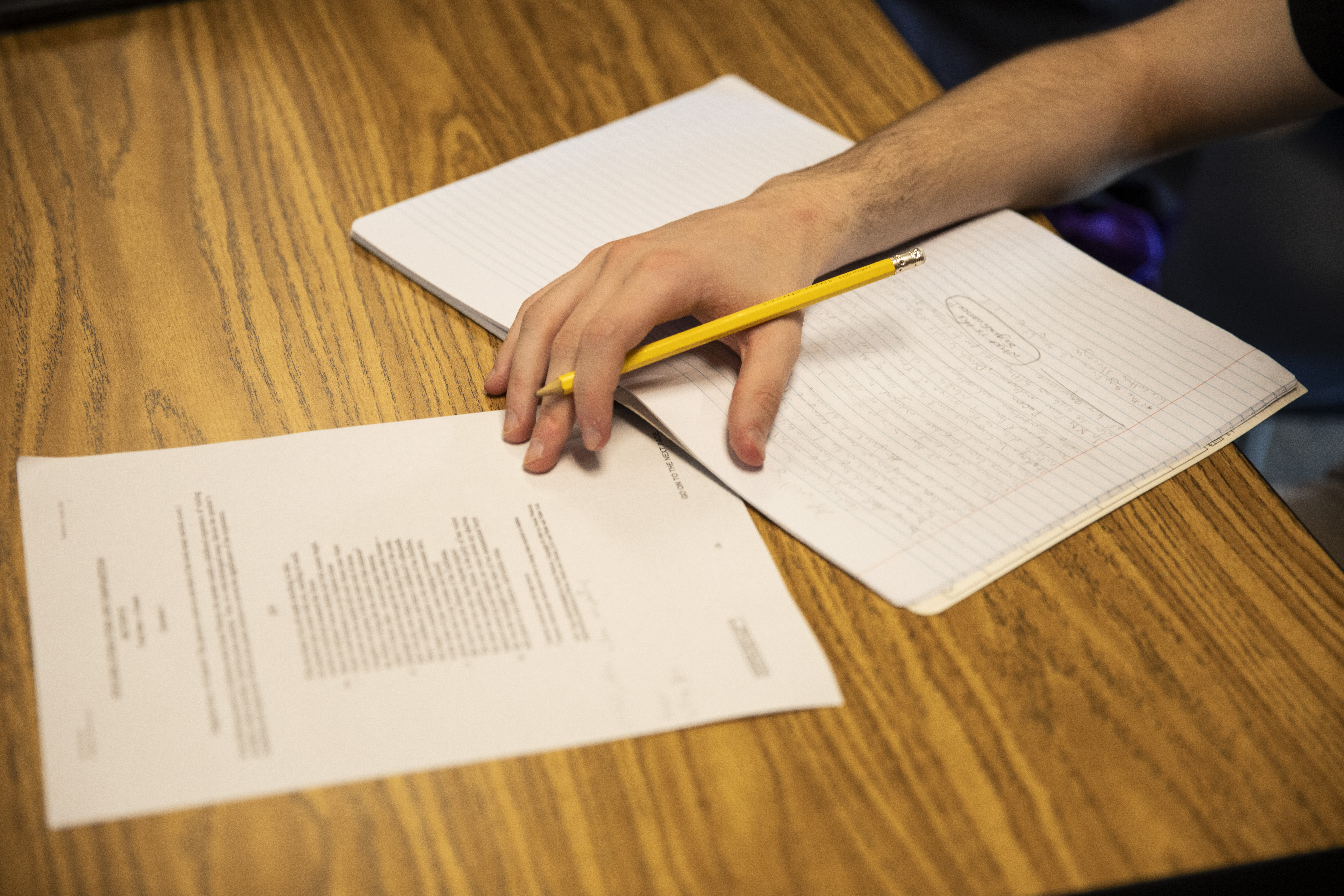
    A growing number of educators are alarmed, and insist that students should write without AI. These teachers are returning to handwriting, blue books, and proctored, in-class essay tests — all attempts to prevent students from outsourcing their writing to chatbots.

    This is baffling to tech industry leaders, who see AI rejection as a form of educational malpractice. They point out that writing is already the leading use of AI in the workplace, and argue there is no need to continue suffering through the task without help. After all, they say, chatbots now exceed the ability of most humans to produce fluent prose.

    All this points to some questions about writing itself: Why work so hard to learn it? And what do students stand to lose when they stop facing down a blank page, alone with their thoughts?

    The scholars who study writing and cognition are rarely reflexively opposed to AI. Many have spent decades anticipating a leap in computer-assisted writing, just like the one we are living through. They tend to be excited by the technology’s potential.

    Still, their work casts doubt on the tech-industry push to embed AI at every stage of the student writing process, from brainstorming to drafting to revising. Research shows that traditional, unassisted composition is valuable, not despite its difficulty, but because of it. Writing builds our working memory, executive planning skills, and metacognition — the ability to think about our thinking, weigh alternate viewpoints, and revise for clarity and style. It takes decades to develop writing skills, from toddlerhood into adulthood.

    “Writing is a technology for thinking,” Kellogg said.

    Writing substitute or helper?

    Learning to write did not always matter so much.

    Before the 1870s, American students were tested through oral exams. College seats were reserved for the elite — future ministers and lawyers, professions where public speaking dominated.

    But the rise of the modern, urban economy, and the invention of the typewriter, produced jobs that dealt more heavily with the written word, like office clerks and advertising copywriters. Starting in the late 19th century, students needed to learn how to write more fluently, and school curriculums, tied closely to the demands of industry, adapted. As more students went to college, and class sizes grew, administering oral tests also became too time-consuming, according to linguist Naomi S. Baron, who traces this history in her book Who Wrote This?

    Besides, teachers discovered that writing itself deepened knowledge. “If you want to think, understand, and learn something, text really is preferable,” Baron said.

    Cognitive research confirms that writing is a powerful aid in helping us to retain information we read. The work of writing forces us to stress-test our ideas, allowing the writer to respond to counterarguments and cite sources. Revision is a practice of self-critique and self-improvement, and can be social, as well, if feedback is elicited. Writing can also be empowering, allowing us to share our experiences and express our views. It can even be healing, which is why therapists sometimes suggest keeping a journal.

    It is not clear if these benefits can be fully realized when writing alongside artificial intelligence. There are reasons to be wary.

    Last year, a small study from the Massachusetts Institute of Technology showed that individuals who wrote in partnership with AI chatbots recorded lower brain activity while they wrote, compared with those who worked without chatbots. The writers who used AI struggled to remember what, exactly, they had written, and felt little ownership over their work.

    The findings join a growing body of research suggesting that frequent AI use can degrade critical thinking.

    Nevertheless, tech companies are aggressively marketing AI writing assistants to students and schools.

    Jenny Maxwell, general manager for education at Superhuman, the AI company that makes the popular writing app Grammarly, told me we are living through a “burn it down” moment for teaching and learning. Educators who try to withhold AI writing tools are essentially announcing to their students — “consumers,” she called them — that their coursework is irrelevant to the job market.

    She did acknowledge that some basic, human writing skills remain valuable. Students need to write well enough to have a sense of which AI text suggestions to accept and which to reject, she said. Maxwell also insisted that creativity in writing would persist, because people would still want to express their personal voice and style.

    To that end, companies such as Grammarly, Google, and OpenAI are creating so-called Socratic versions of their chatbots, sold to schools as writing helpers that will guide students through assignments without doing the work for them.

    The need for limits

    AI is already ubiquitous: on every device, in every web search, insisting that it can summarize for us, analyze for us, write for us. It steps in even when we have not invited it.

    For students with still-developing minds, the most urgent question, then, is how to protect thinking in a world where it has become so easy to outsource writing.

    We might begin by considering what AI is actually good at when it comes to composition. AI can be especially useful for those with disabilities or who are non-native English speakers, said Steve Graham, a writing expert and educational psychologist at Arizona State University. Chatbots can correct grammar and suggest potential trims or revisions for clarity. With AI, there have been immense strides in accurate voice-to-text transcription for writers who cannot physically type or write by hand.

    And AI can offer all of this help privately, with no need to be vulnerable and expose a rough first draft to another person’s judgment. For many American students, especially the third with below-basic literacy skills, the writing process can be painful and embarrassing, and a reason many dread homework and exams.

    But, Graham cautioned, there is no part of the writing process that can be handed over to AI without some cost. Intellectual growth occurs at every stage, from brainstorming to fine-tuning a final draft. If writing is thinking, then any part of the struggle that is outsourced to technology amounts to relinquishing some freedom to perceive. How will students ever know what they really think of anything — whether it’s The Crucible or AI itself — if they ask a machine to spit out an answer for them?

    Last year, a group of writing experts, including Graham, assembled at the University of California, Irvine, to produce recommendations to schools.

    They did not reject AI. Instead, they called on schools to resist the temptation to devote less time to writing — not because it will continue to be such a critical skill in the workplace, where it’s already waning, but to sharpen the mind.

    Writing should be embedded across the curriculum, they advised. Students should continue to do the hard work of drafting their own sentences, paragraphs, and eventually full essays about their lives and about what they have read, both fiction and nonfiction. All this teaches grammar and vocabulary, certainly. But it also allows students to master the knowledge they are gaining.

    There is room for AI, these experts suggested: The technology can help educators generate engaging writing prompts on whatever subjects they are teaching.

    Teachers might also encourage students to use AI to get initial feedback on their writing before turning it in. Anna Mills, a writing instructor at the College of Marin in California, has developed detailed AI prompts that students can use to elicit useful feedback without outsourcing all the work.

    Still, there is probably a need to limit access to the technology.

    The University of Sydney has developed a policy known as the two-lane approach. Across every discipline, professors are required to give some assessments in person under secure conditions, limiting AI use. But they must also allow AI for other assessments, so students can show they know how to apply the technology.

    Jessica Binney is dealing with AI as an English teacher at John Jay High School in the New York suburbs.

    In a creative-writing class, she had students prompt a chatbot to write a poem. The results were predictably generic, so students then asked the chatbot to make revisions, considering where the bot performed well and where it fell short.

    Still, like many educators, she had tired of policing AI misuse on take-home assignments. In her Advanced Placement English course, she moved much of the essay writing, produced inside the classroom, to pen and paper.

    For the most part, students did not complain. Many had already been through an initial whirlwind romance with AI, before rethinking their relationship with the tools. Ainsley Graham, a junior, said she was thrilled by ChatGPT’s ability to help with data analysis in a science research class, but recognized the risks of using chatbots to write essays about literature.

    “You’re not strengthening that muscle by actually analyzing these really hard texts,” she said. “They’re meant to be hard.”

    When Cassady Tondorf, 17, learned how chatbots produced writing, she realized their utter lack of originality. “The entire internet is open to it,” she said. “It’s just regenerating the same things, over and over.”

    If she wanted to be valuable on the job market, she felt, she would need to have ideas and skills that were uniquely her own.

    This article originally appeared in the New York Times.