Category: New York Times

  • British leader exchanged texts with someone posing as Trump’s chief of staff

    British leader exchanged texts with someone posing as Trump’s chief of staff

    LONDON — British Prime Minister Andy Burnham exchanged brief text messages with a person he thought was President Donald Trump’s chief of staff, Susie Wiles, a government official said Monday.

    Burnham quickly grew suspicious and reported the interaction to security authorities, the official added.

    It was unclear when the exchanges took place. A spokesperson for Burnham declined to comment publicly, citing a long-standing policy not to comment about national security issues.

    But the government official, who declined to be identified because of the security policy, said the prime minister had exchanged a few messages of no significance with someone claiming to be Wiles, Trump’s top White House aide.

    The official declined to provide details about the text messages, which were first reported by Politico, or to say which security agency Burnham had reported them to.

    Wiles is one of Trump’s closest advisers. She comanaged his 2024 presidential campaign and has been running his White House staff since he returned to office in 2025.

    Last year, the Wall Street Journal reported that senators, governors, and some business leaders had received phone calls or text messages from someone claiming to be Wiles, and that Wiles had said contacts on a personal cell phone of hers had been hacked. The Journal said at the time that federal officials were investigating.

    In 2024, David Cameron, then the British foreign secretary, had a video call and exchanged several text messages with someone pretending to be Petro Poroshenko, a former president of Ukraine.

    As foreign secretary in 2018, Boris Johnson had an 18-minute phone call with someone claiming to be the prime minister of Armenia. According to audio that was later released, the pair talked about President Vladimir Putin of Russia and about the poisoning of Sergei Skripal, a Russian double agent, in Salisbury, England.

    This article originally appeared in the New York Times.

  • What we know about damages from Hurricane Lala in Hawaii

    What we know about damages from Hurricane Lala in Hawaii

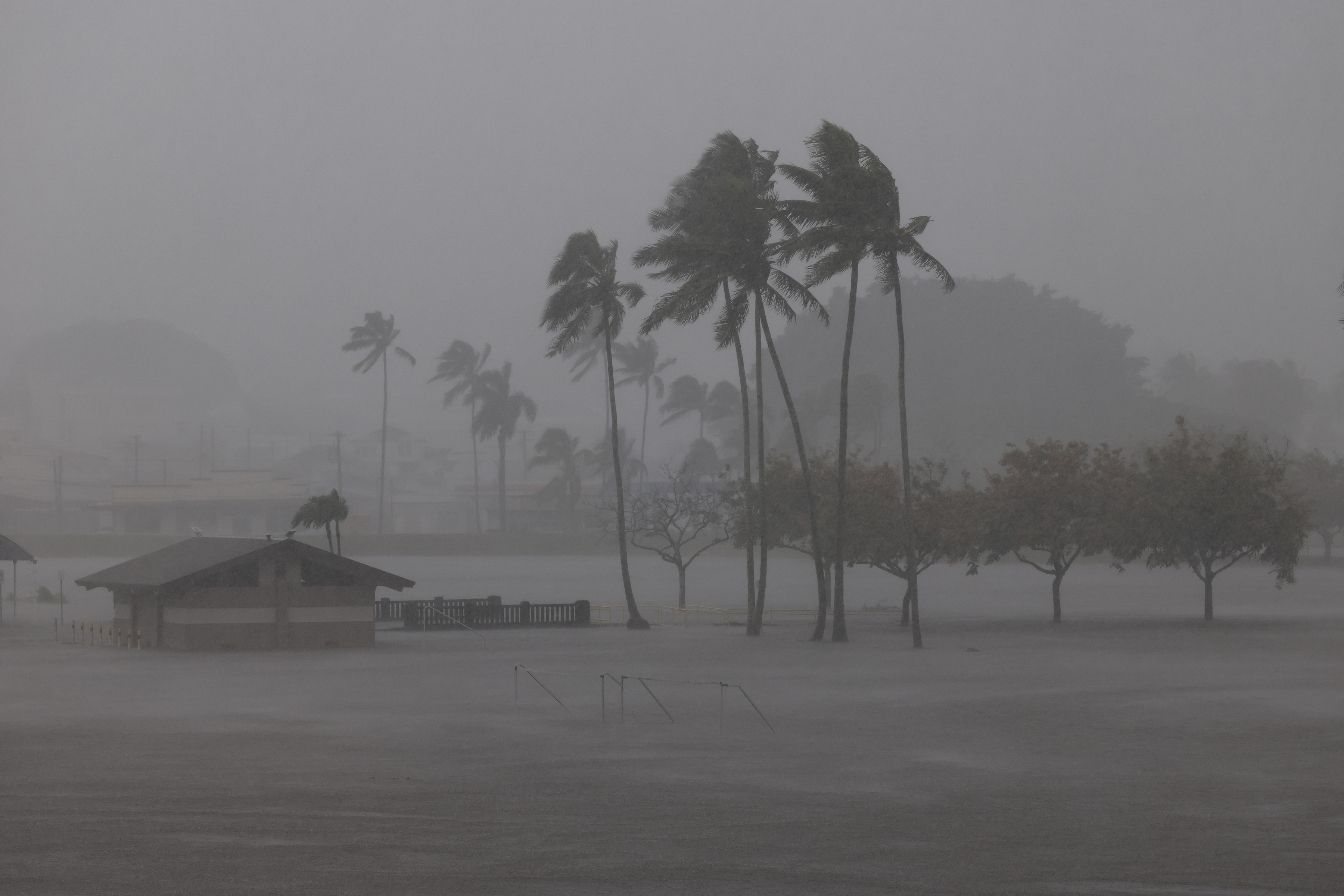
    Hawaii residents faced extensive power outages, submerged bridges and roads, and damaged homes after Hurricane Lala brushed along the islands.

    Hurricane Lala, which was a Category 1 hurricane, did not make landfall but moved close enough to wash out highways, wreck properties, and topple trees. Hurricanes are common in the Pacific Ocean, but landfall in Hawaii is rare because of its small size in relation to the expansive ocean. The eye of Lala did not cross over into land, but the outer bands still left significant destruction, primarily affecting people living along the southern and eastern edges of Hawaii’s Big Island.

    On Sunday and Monday, residents and emergency crews continued to sift through damage. Here’s what we know:

    The Big Island was drenched

    Gov. Josh Green of Hawaii said that some areas received as much as 30 inches of rain and that there were several reported mudslides. More than 13 inches had fallen at Hilo International Airport as of Sunday night. About 35 inches of rain was recorded near Nene Cabin, a weather observation site on the southern tip of the Big Island. Laupahoehoe, on the Hamakua coastline in the northeast part of the island, measured more than 43 inches during the storm, with the majority of precipitation falling within 24 hours beginning Saturday afternoon.

    Hilo, on the eastern edge of the Big Island, is one of the rainiest cities in the United States, and residents are used to frequent downpours. But many residents said they were surprised at the intensity of the storm.

    Hurricane Lane in 2018 similarly passed south of Hawaii and produced comparable rainfall totals in the same locations. The difference with Lala is that it came dangerously close enough to produce damaging winds, including hurricane-force winds, on the Big Island.

    Residents were spared the worst of the worst, which is found in the eyewall, but the more intense side of Lala (the right side in the direction the storm is traveling) hit the Big Island directly. One wind gust at the Mauna Kea Summit measured 140 mph, and another near sea level in Kona registered 78 mph. (Hurricane-force winds are 74 mph or greater.)

    One person was killed, and about 100 homes were damaged on the Big Island.

    On Saturday, when the storm passed through, a 45-year-old man was killed in a head-on car accident in the southern area of the Big Island. A 21-year-old woman was critically injured from the collision.

    Two paramedics were also rescued in Naaleuh, in the southern region of the Big Island, after floodwaters trapped them in their vehicle.

    About 100 homes had been damaged or washed away because of the storm, Green said.

    Officials said some of the worst damage may have occurred in rural places in the southern edge of the Big Island but that fallen electrical lines have complicated efforts for people to get to the area.

    The coastal town of Pahala, which has about 1,800 residents, was cut off from the rest of the island after floodwaters inundated roads and bridges — six were destroyed or severely damaged, officials said. Part of a major highway also collapsed, which blocked road access to Ka’u Hospital, the region’s only hospital.

    County fire officials said they were prepared to use helicopters to move patients with medical emergencies.

    “There’s a lot of damage that we’ll be working on,” Green said Sunday afternoon.

    Hundreds of thousands remain without power

    More than 114,000 homes and businesses remained without power in Hawaii on Monday, down from about 200,000 customers Sunday. That includes about 40% of the customers on the Big Island, which is largely rural.

    People could face days or weeks without power because the storm downed transmission lines that connect power plants to homes and businesses. Because of widespread flooding and other challenges traveling along rural roads, officials said it could take weeks for the power to be fixed on the Big Island.

    Green said that schools, state and county offices, and courts across the state would be closed Monday, as Hawaii recovered from the storm and worked on restoring power. All airports and harbors had reopened, according to the Hawaii Department of Transportation.

    The damaged transmission lines include one that runs for 42 miles on the Big Island. In addition to knocking out power lines, the storm also damaged many of the large structures that carry the lines on the Big Island and Oahu.

    This article originally appeared in the New York Times.

  • Trump lashes out at Oman as preliminary deal with Iran expires

    Trump lashes out at Oman as preliminary deal with Iran expires

    As a crumbling truce with Iran officially collapsed Monday, President Donald Trump signaled his frustration at his inability to resolve a war that he started but cannot seem to end.

    In an interview with Fox News, the president lashed out at a U.S. ally, Oman, that has been trying to mediate negotiations with Iran.

    “If Oman gets in the way, we’ll bomb the s— out of them,” Trump said in a phone interview, according to Fox News’ Trey Yingst.

    The latest threat toward Oman, which has facilitated talks between the United States and Iran for years and maintains that it is still a neutral mediator, came as Trump found himself without much leverage to reach the goals he set out at the start of the war.

    Hostilities have now stretched past the six-month mark in a conflict that began with the United States and Israel launching strikes across Iran in February. Administration officials pledged at the time that the war would be over in four to six weeks.

    In June, the two sides agreed to a memorandum of understanding, but that quickly fall apart amid disputes over its wording. Both Trump and Iran’s leaders have said the deal is essentially dead.

    As the ceasefire officially expires, the president and his team have promised to level crushing sanctions against Iran this week, though the details of those plans have yet to be unveiled. And Defense Secretary Pete Hegseth has said the United States can maintain a naval blockade of the Strait of Hormuz, a critical oil shipping corridor, indefinitely — an acknowledgment that there was no end to the war in sight.

    In the Fox News interview, Trump sought to project patience, saying he was “not in a hurry” to secure a deal while maintaining that his central goal remained preventing Iran from possessing a nuclear weapon.

    But in the meantime, it was Oman that received the president’s fury.

    It was the second time this year the president has threatened the country. After it emerged in May that Oman had discussed partnering with Iran to charge fees for ships to pass through the strait, Trump snapped.

    “Oman will behave just like everybody else, or we’ll have to blow them up,” Trump told reporters that month. “They understand that. They’ll be fine.”

    A White House official did not immediately respond to a request for comment.

    This article originally appeared in the New York Times.

  • Trump’s overture to Kim Jong Un strains alliance with South Korea

    Trump’s overture to Kim Jong Un strains alliance with South Korea

    SEOUL, South Korea — The South Korean and U.S. militaries view their annual drills in South Korea as more critical than ever. The stakes have risen dramatically as North Korea has gained battlefield expertise with drones and modern warfare by deploying troops to support Russia’s war in Ukraine.

    The summer exercise had barely begun Monday when President Donald Trump denounced it, dealing yet another blow to the seven-decade-old alliance between Washington and Seoul. Under Trump, bilateral relations have already come under immense strain from ​his punishing tariffs on South Korean exports.​ And his transactional diplomacy has frustrated South Korea, most recently when he appeared to put Saudi Arabia on the path to enriching nuclear fuel on its own soil, a demand Seoul has made for years.

    In recent years, North Korea has ​not only expanded its nuclear arsenal but also repeatedly threatened ​to use it against South ​Korea, labeling its neighbor ​a “most ​hostile enemy.” Its leader, Kim Jong Un, has also forged a mutual defense treaty with Moscow, dispatching troops and​ weapons to ​support Russia’s war against Ukraine. Despite these escalations, Trump, in a social media post, characterized North Korea as “unthreatening and respectful” while boasting of his “very good relationship” with Kim.​

    In the same post, he ​also criticized the decades-old joint military drills with South Korea as “not only costly” but “totally inappropriate and hostile” toward North Korea.

    “I am not happy with the fact that the United States has, long ago, agreed to participate in Joint Military Exercises with South Korea,” he said. “Based on the fact that it is too late to cancel, I have instructed Secretary of War, Pete Hegseth, to substantially reduce the Joint Military Exercises!”

    If implemented, the directive would mark Trump’s first-known concrete overture toward North Korea in his second term. However, it remains unclear whether Kim will embrace the gesture.

    Throughout his political career, Trump has treated the alliance as a​ bad bargain for Americans, frequently accusing Seoul of failing to pay its fair share for the U.S. troops stationed in South Korea — who act as a deterrent to North Korea. During his first term, he unilaterally canceled or downscaled major drills, calling them “tremendously expensive” and “​very provocative.”​ That concession helped facilitate three summit meetings with Kim but failed to roll back his nuclear ambitions.

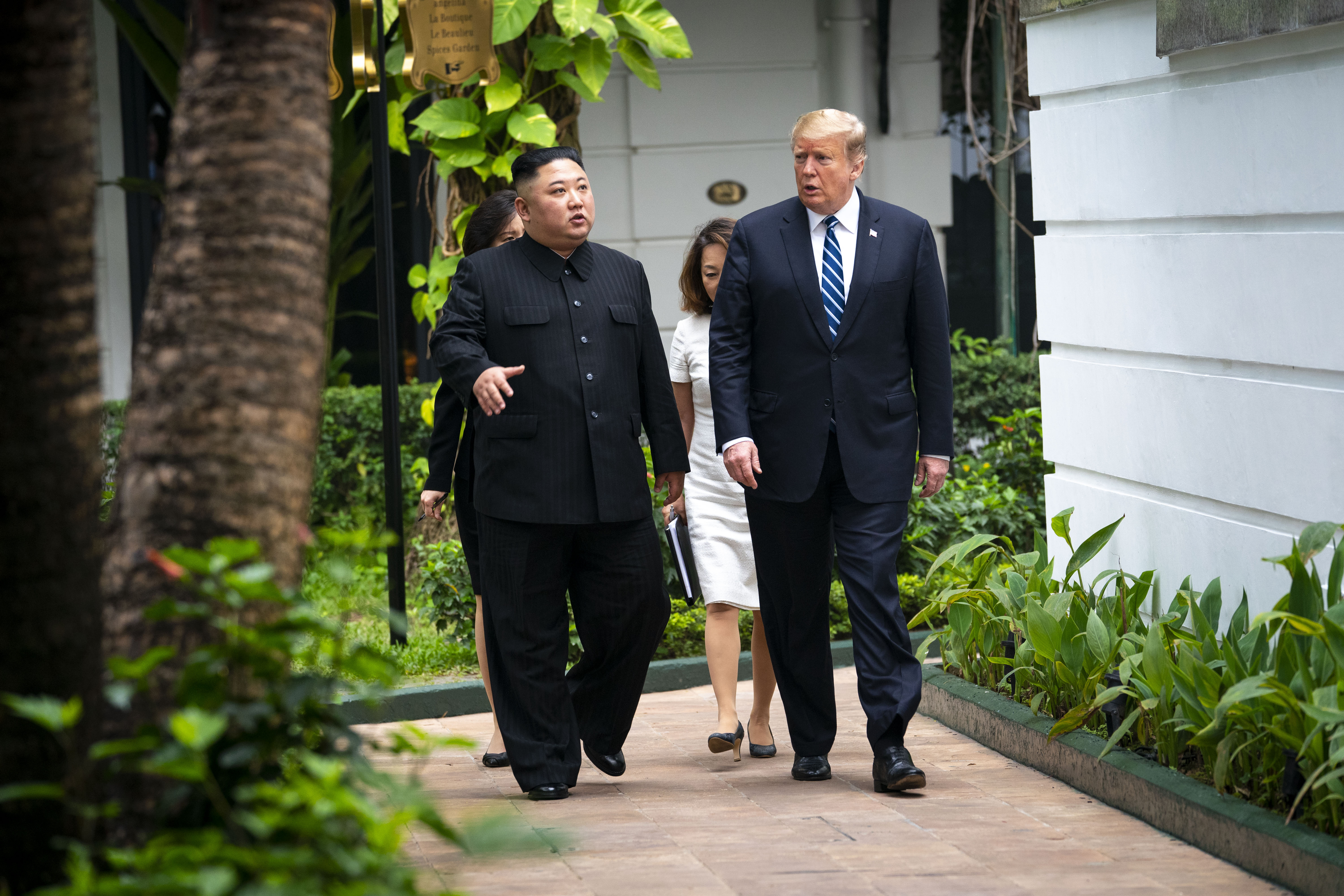
    Since returning to the White House, Trump has signaled a desire to renew that personal diplomacy. Over the weekend, he posted a 2019 photograph of himself and Kim at the inter-Korean border, writing, “Kim Jong Un and I get along GREAT!”

    “Trump’s description of the DPRK as ‘unthreatening and respectful’ is alarming to allies, who have watched the regime steadily improve its missile and nuclear capabilities, while also gaining an additional patron in Russia for its support in the war on Ukraine,” said Emma Chanlett-Avery, the deputy director at the Asia Society Policy Institute, referring to North Korea’s full name, the Democratic People’s Republic of Korea.​

    Th​is summer’s 11-day Ulchi Freedom Shield exercise was designed to adapt to these shifting dynamics​, incorporating lessons learned from recent conflicts, including from Ukraine. Lt. Gen. Joseph E. Hilbert of the U.S. 8th Army noted that the maneuvers would ​also test “the alliance’s ability to rapidly project combat power and secure key terrain within the First Island Chain”​ —​ a long Pacific archipelago seen by the U.S. military as a strategic frontier against China’s expansive territorial claims.

    But Trump found fault with South Korea on another front; in his post, he also criticized Seoul for failing to help “denuclearize” Iran.

    South Korea’s Foreign Ministry on Monday pledged continued coordination with the United States on both joint military exercises and Iran.

    While South Korea’s government confirmed that the drills had begun as scheduled, its defense establishment was deeply rattled. Trump’s directive fueled growing fears​ that the alliance was hollowing out.

    “South Korean conservatives​, in particular, will see the alliance turning into a zombie, ​considerably losing its old strategic objectives and political energy under Trump,” said Lee Byong-chul, an analyst at the Institute for Far Eastern Studies in Seoul.

    Trump’s overture toward North Korea, however, is not entirely unwelcome for his South Korean counterpart, Lee Jae​ Myung, analysts said. A staunch proponent of inter-Korean reconciliation, Lee has urged Trump to ease tensions on the Korean Peninsula through direct talks with Kim. ​North Korea has long cited the joint drills as a major stumbling block to such efforts, calling them “a rehearsal for an aggressive war.”

    On Monday, South Korea reiterated its hopes that the rapport between Trump and Kim would foster “meaningful dialogue.”

    But a second round of Trump-Kim diplomacy faces much steeper hurdles than it did in 2018. North Korea is now a de facto nuclear state that has been bolstered by economic lifelines and diplomatic leverage from Moscow and Beijing. While Kim has noted that he retains “a good memory” of Trump, he has emphasized that North Korea would resume talks ​only if Washington abandons its insistence on denuclearization.

    This article originally appeared in the New York Times.

  • Kushner meets Netanyahu in effort to break logjam over Gaza

    Kushner meets Netanyahu in effort to break logjam over Gaza

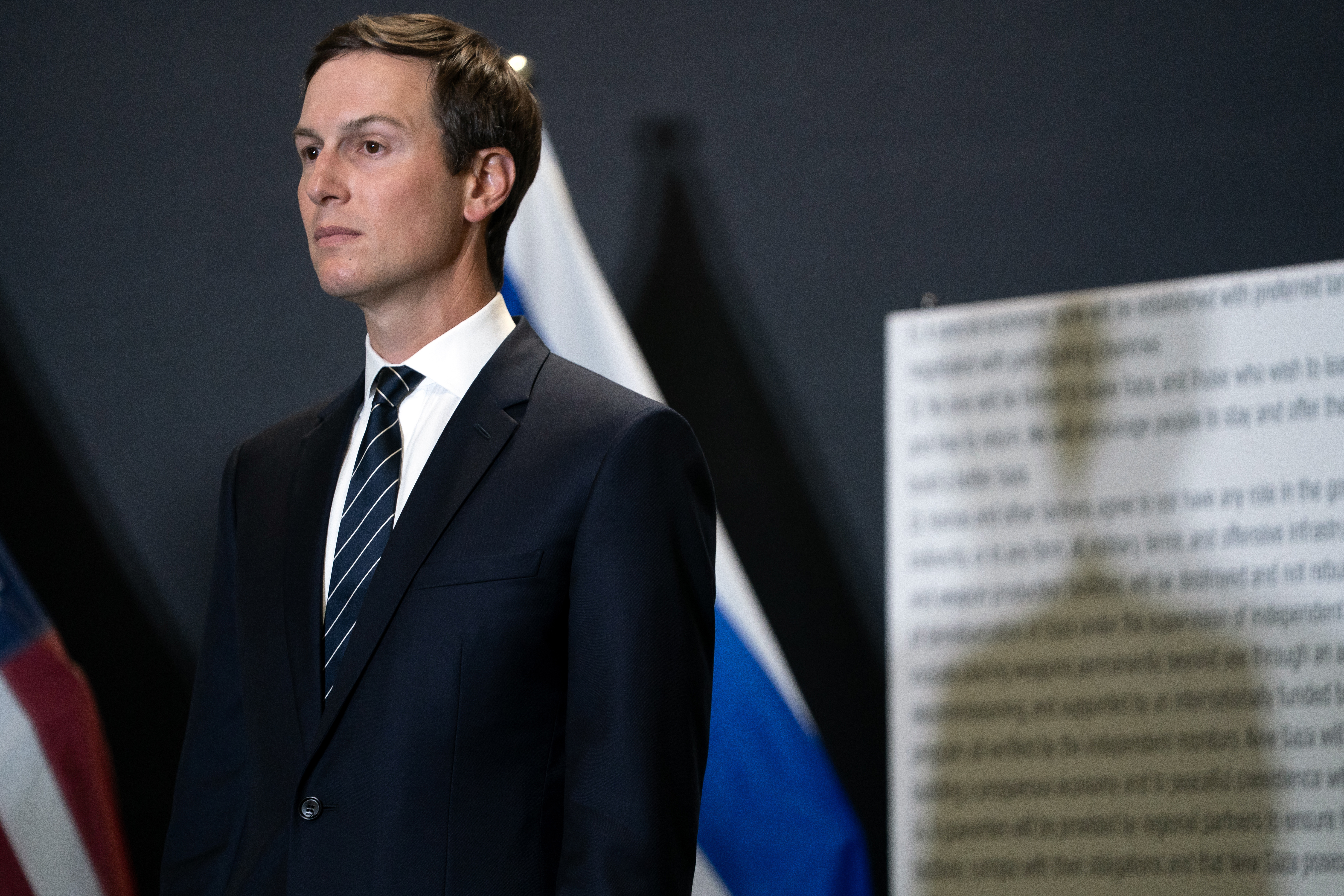
    JERUSALEM — Jared Kushner, President Donald Trump’s son-in-law and former White House adviser, was meeting with Prime Minister Benjamin Netanyahu of Israel in Jerusalem on Monday in an effort to break a logjam over Trump’s plan for the future of the war-ravaged Gaza Strip.

    The plan had been stalled for months over Hamas’ refusal to lay down its arms, as well as Israel’s frequent airstrikes and military operations beyond the withdrawal line it agreed to in the ceasefire reached in October 2025. Israel has also failed to meet its commitments to allow specified amounts of fuel and other necessities into Gaza.

    Trump’s announcement last month that his Board of Peace had secured Hamas’ agreement to disarm briefly raised hopes for progress. A 15-point “road map” that Hamas agreed to called for the militant group to lay down its weapons in a phased approach that would be matched by Israel withdrawing from parts of Gaza.

    But Netanyahu rejected the deal this month, insisting that Israel would not pull back within Gaza, let alone from Gaza, until Hamas had disarmed completely.

    Kushner and members of the Board of Peace flew to Israel for Monday’s meeting after holding talks with representatives of Hamas, including its political leader, Khalil al-Hayya, on Sunday in El-Alamein, Egypt.

    Hamas officials presented Kushner with a list of what they contended were Israel’s violations of the ceasefire, according to a Hamas official and two people briefed on the talks, and he promised to speak to Netanyahu about Israel upholding its end of the agreement.

    Kushner, in turn, asked the Hamas representatives to move ahead with disarmament, the two people said. But they replied that Israel first needed to keep its commitments under the ceasefire, and they warned that the road map they agreed to last month was not open for changes.

    The Board of Peace’s deal with Hamas says that, as part of the disarmament process, Israel should first uphold its side of the ceasefire. But political considerations are widely believed to be preventing Netanyahu from upholding all of Israel’s commitments under that deal.

    The Israeli leader faces a tough campaign for a new term in elections to be held Oct. 27, and his right-wing coalition is behind in the polls. Any concessions to Hamas or perceived softening of his posture toward Gaza could subject him to attacks from allies he considers vital.

    Political considerations are also important for the Board of Peace and for the Trump administration. With the U.S. midterm elections approaching in November and the anniversary of the ceasefire in early October, a failure to reach an agreement that could pave the way for reconstruction in Gaza could be highly embarrassing for the board, for the White House, and for its approach to the Middle East.

    This article originally appeared in the New York Times.

  • Supreme Court again rejects Trump’s appeal of $5 million E. Jean Carroll payment

    Supreme Court again rejects Trump’s appeal of $5 million E. Jean Carroll payment

    WASHINGTON — The Supreme Court for a second time refused a request by President Donald Trump to review a $5 million civil judgment against him after a jury found in 2023 that he had sexually abused and defamed writer E. Jean Carroll.

    The announcement Monday did not include the justices’ reasons, which is typical when the court issues routine orders. There were no noted dissents.

    Trump paid Carroll in July, a few days after the court initially turned away the president’s appeal. He also made a long-shot request to the justices that they reconsider, which the court formally declined Monday.

    The president has separately asked the Supreme Court to overturn a much larger award of $83.3 million that a jury ordered him to pay in 2024 for defaming Carroll in 2019, after she accused him of a decades-old rape. The justices are on summer recess and not expected to consider whether to take up that case until late September at the earliest.

    The request the justices dispatched Monday was always a long shot, since they rarely reconsider when asked. Still, it was another in a series of blows to the president’s efforts to contest Carroll’s claims and avoid the two separate monetary awards that juries have ordered him to pay related to Carroll’s allegations.

    In a statement, Trump’s legal team said: “The American people stand with President Trump as they demand an immediate end to all of the witch hunts, including the Democrat-funded travesty of the Carroll hoaxes. President Trump will keep winning against liberal lawfare, as he continues to focus on his mission to make America great again.”

    Carroll’s lawyer Roberta Kaplan said in a statement: “We are pleased that the United States Supreme Court has declined again to hear this case. As a result, the jury’s unanimous verdict that Donald Trump sexually assaulted and then defamed E. Jean Carroll is now final and cannot be challenged in any court.”

    The $5 million matter stems from a trial held in May 2023, when a federal jury in New York found the president liable for sexually abusing and defaming Carroll.

    The jury agreed that Carroll, a former magazine writer, had sufficiently shown that Trump sexually abused her in a dressing room of the Bergdorf Goodman department store when the two crossed paths in the 1990s. Further, the jury found that Trump had defamed Carroll by posting a statement on social media calling her case “a complete con job” and “a Hoax and a lie.” Throughout, Trump denied Carroll’s allegations.

    After that verdict, Trump appealed to the 2nd U.S. Circuit Court of Appeals, asserting, among other things, that the trial judge, Lewis A. Kaplan, erred by allowing certain evidence to be shown to the jury.

    In December 2024, a three-judge appeals court panel upheld the jury’s verdict, finding that Trump failed to show that the evidence had harmed his rights to a fair trial.

    Trump then asked the justices to weigh in and find that the trial court had erred.

    This article originally appeared in the New York Times.

  • Violet Hensley dies at 109; Ozarks fiddler made Opry debut at 99

    Violet Hensley dies at 109; Ozarks fiddler made Opry debut at 99

    Violet Hensley, who grew up in Arkansas learning from her father how to carve and play a fiddle, and whose nearly 60-year performing career reached its peak at age 99, when she debuted at the Grand Ole Opry, died on Aug. 7 at her home in Yellville, Ark., in the Ozarks. She was 109.

    Her daughter Sandra Flagg, a guitarist, confirmed the death.

    Ms. Hensley made a clear distinction between a fiddle and a violin, even though they are essentially the same instrument. “If you can read music, you play the violin,” she told the Tulsa World in 1982. “I can’t read music, so I just play the fiddle.”

    By the time she turned 99, Ms. Hensley had performed old-time mountain music — not bluegrass, which she deemed too fancy — at the Silver Dollar City theme park in Branson, Mo., for more than 50 years; played on radio stations and at schools; recorded at least two albums, one of them, with family members, called Old-Time Hoedowns; and appeared on TV programs like Captain Kangaroo, The Beverly Hillbillies, and Live! With Regis and Kathie Lee.

    She also handcrafted 73 fiddles — she played No. 4, which she made in the 1930s — thus acquiring nicknames like “The Whittlin’ Fiddler” and “Stradivarius of the Ozarks.” She could have built more fiddles if not for time spent gardening, canning, sewing, and cutting her neighbors’ hair, she told CBS News when she was 90. To make ends meet, she was a cleaning lady at a hospital for many years.

    One wish lingered: to play at the Grand Ole Opry, the citadel of country music, in Nashville, Tenn. When another fiddler, Tim Crouch, read about that desire in Ms. Hensley’s autobiography, Whittlin’ and Fiddlin’ My Own Way (written with Randall Franks and published in 2014), he called banjo player Mike Snider, who brought her onstage at the Opry on Aug. 6, 2016.

    “This little lady was born in 1916,” he said as he introduced her, to cheers. She played “Angeline the Baker” and “Black Eye Susie” with Snider, Crouch, and other fiddle players, and received three standing ovations, Flagg, her daughter, said.

    “Man, she just tore it up,” Crouch said in an interview. “And afterward, she was the backstage star, everyone wanting her autograph and their picture made with her.” He added that her fiddle “didn’t look great, but it would shock you how good it sounded.”

    Ms. Hensley told the Springfield News-Leader, a Missouri newspaper, “I was just me. Yes, I was pleased. But it’s still just me. You don’t want to try to be somebody you’re not.”

    She performed twice more at the Opry, in 2017 and in 2018, the year she was inducted into the National Fiddler Hall of Fame in Tulsa, Okla.

    Mary Violet Brumley was born on Oct. 21, 1916, in Alamo, Ark., near Mount Ida, in the central-western part of the state. Her father, George Washington Brumley, was a farmer, and her mother, Nora (Springer) Brumley, who ran the home, died when Violet was 11.

    She observed her father making fiddles and, at 15, began to build her own, splitting, planing, and shaping wood that she found nearby. She had begun playing at 12.

    “I wanted to play the fiddle just because we didn’t have anything else to do,” she told KCPT, the public television station in Kansas City, Mo.. “We didn’t have television or radio, and Dad played, and I guess it struck me that I wanted to play.”

    After she married Adren Hensley in 1935 and began to raise their nine children, she stopped whittling and performing (she also sang and clogged) for 27 years, until she reemerged in the 1960s, winning second place in the Turkey Trot Talent Show in Yellville.

    In 1967, she began her long association with Silver Dollar City, where she fiddled onstage and demonstrated her fiddle-making skills at a crafts booth.

    “She wasn’t simply one of America’s most respected fiddle makers and musicians,” the theme park said in a statement. “She was at the heart of an Ozarks tradition that connected generations to this special place.”

    While performing at Silver Dollar City around 1999 with her son-in-law, Tim Nelson, a banjo player and guitarist, she met another fiddler, Betse Ellis, whose band was also playing at the park. Ms. Hensley’s invitation to Ellis to perform together at the park started a long friendship.

    “She was a one-in-a-million fiddler who made an impact on everyone who got to hear her,” Ellis said in an interview.

    On trips to see Ms. Hensley in Yellville, Ellis added, “She taught what I was getting wrong, and I paid more attention to how to play like her.”

    Before a concert around 2010 at the Rock House Center for the Arts in Reeds Spring, Mo., that was to have two 45-minute segments with an intermission, Ms. Hensley confided to Ellis that she was tired.

    “But she sat down to play, and we didn’t stop for three hours,” Ellis said.

    In addition to Flagg, Ms. Hensley is survived by two other daughters, Beatrice Porter and Lewonna Nelson; three sons, Marvin, R.G., and Eddie Hensley; Wilma Flagg, a family friend who came to live with her as a teenager; 32 grandchildren; 85 great-grandchildren; 29 great-great-grandchildren; and two great-great-great-grandchildren. Her husband died in 1997. Four of their sons — Calvin, Russell, and Gary Hensley, and Larry Hensley, who was stillborn — predeceased her.

    Making fiddles was one of many skills Ms. Hensley developed over her lifetime. She also made lye soap, tanned leather, broke horses, and tended crops.

    “I always say,” she told the Tulsa World, “making a fiddle is a lot easier than plowing a field with a team of mules.”

    This article originally appeared in the New York Times.

  • U.S. military wants AI dominance, but feuds and China may thwart it

    U.S. military wants AI dominance, but feuds and China may thwart it

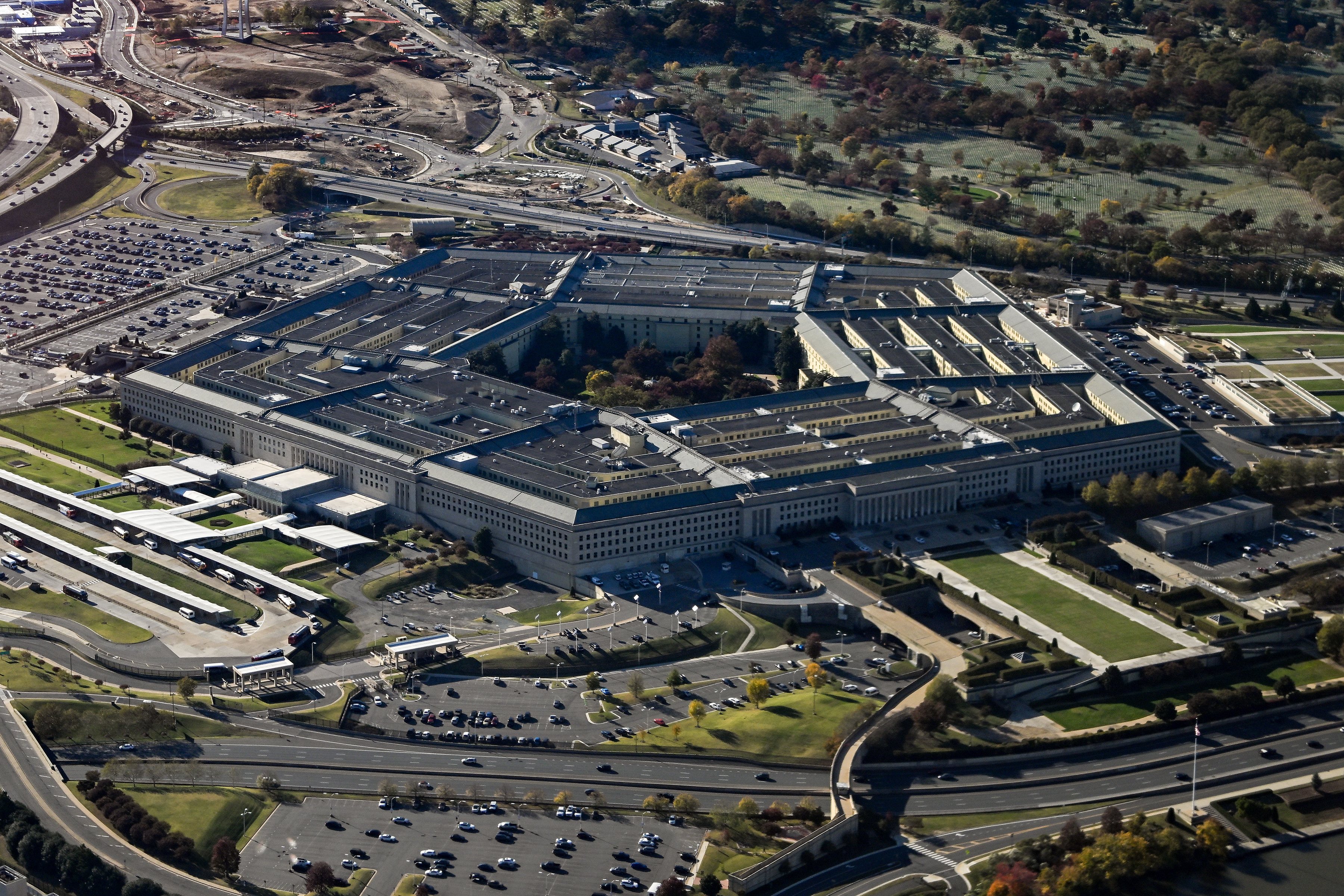
    WASHINGTON — In mid-July, many of the country’s biggest military contractors received a letter from the Air Force with a stern warning: By Sept. 1, all the software they use for weapons and control systems must be free of products built by the artificial intelligence company Anthropic. Failure to comply would put all their business with the Pentagon at risk.

    Within a month, those same contractors received an unexpected reversal: They could — for now — disregard the earlier instructions about purging Anthropic.

    It was one more example of the chaos and contradictions in the tsunami of AI disruptions that has swept through the national security establishment in recent months. Agencies including the Pentagon, which still use airplanes designed in the 1950s, are struggling furiously to keep up with AI models whose powers multiply in a matter of months.

    The tension has been magnified in the case of Anthropic, whose CEO Dario Amodei has been locked in a public feud with Defense Secretary Pete Hegseth over restrictions the company tried to put on the technology’s use by the world’s most powerful military.

    Without Anthropic’s powerful Mythos model, it would be far more difficult for the National Security Agency to find and patch vulnerabilities in the Pentagon’s own systems, senior NSA officials argued. And it turned out that, despite the original Anthropic ban, the NSA was still allowed to use its products.

    Critical tests were underway using Mythos to gauge its potential to hack into highly protected foreign networks, current and former officials said. Shutting down the use of Mythos, an AI model whose potential for conducting offensive cyberoperations is already shifting the digital arms race into overdrive, would have amounted to “unilateral disarmament,” according to one recently departed senior U.S. official.

    From the Department of Defense to the CIA and NSA, billions have already been spent on using artificial intelligence to develop weapons that could work with less human control, or to test vulnerable military networks and even nuclear codes to make sure they cannot be cracked by adversarial AI systems. Artificial intelligence is critical to the Golden Dome, President Donald Trump’s vision — fanciful to many experts — of a space-based missile shield.

    But little of that work anticipated the powers of Mythos and its AI counterparts, or the prospect that China may be months away from its own formidable and less expensive versions. That could supercharge China’s ability to infiltrate U.S. communications networks, water systems, and power grids like those they successfully pierced during the Biden administration in two sweeping attacks called Volt Typhoon and Salt Typhoon.

    “These are the kinds of things we were talking about and worrying about before AI became a daily headline,” said Jen Easterly, who ran the Cybersecurity and Infrastructure Security Agency during the Biden administration. “What’s different now, and what makes the problem more urgent, is the potential for AI to amplify those capabilities.”

    So far the Trump administration has veered wildly in response, at first abandoning its hands-off approach to regulating the industry, then briefly shutting off access for foreigners from Mythos — including some of its inventors — then lifting that ban.

    Earlier this month, the administration called in executives from the largest “frontier” creators, including OpenAI and Anthropic, and told them that new models would be reviewed by the government to assure they could not be used to make biological weapons, or break into classified American systems or the communications networks that control nuclear weapons.

    (The New York Times has sued OpenAI and Microsoft, claiming copyright infringement of news content related to AI systems. The two companies have denied those claims.)

    But the government review process exempts open models — including many of those now produced by Chinese firms — whose code can be customized by users.

    One senior executive of a company briefed on the new policy said it made no sense, noting that the open models can be just as dangerous. Like many in the industry, the executive would not be quoted, for fear of angering administration officials.

    Pentagon officials reject the idea they are not agile enough. They say the U.S. military has maintained immediate access to the world’s most advanced AI systems, despite the Anthropic ban. An official, who discussed Pentagon policies on the condition of anonymity, said the Defense Department had recently integrated a version of a Google Gemini model within four days of its commercial release.

    More than 1,300 AI workers have called for the country to slow development. But others, including inside the Trump administration, have answered that call with a question: “What about China?” They fear losing the roughly six-month lead they believe the United States maintains.

    That concern has touched off arguments about whether export controls on some of the most powerful chips made by Nvidia, the leading American maker, are effective in keeping the Chinese from developing the computing power they need to catch up. Controls could also just prompt Chinese makers to obtain the chips on the black market, or double down on development of their own.

    It is easy to compare this moment in U.S. national security to the early days of the Cold War, when the United States was the only nation to possess nuclear weapons, and it was struggling to delay the day the Soviet Union would match the accomplishment. (The first Soviet bomb was tested in late August of 1949, four years after Hiroshima and Nagasaki.)

    CIA Director John Ratcliffe recently reached for just that comparison, saying it would “not be misplaced” to refer to the capabilities of AI as “akin to digital nuclear weapons.”

    But like most such historical analogies, this one has its limits. Nuclear weapons were solely in the hands of the state back then. And the fundamental technology of building and delivering them has changed little in 80 years since. AI is being built in the private sector, and available to all. Many of the most powerful models are updated weekly, their powers, and unpredictability, discovered along the way.

    China is perhaps six months or less behind the United States in the development of the most advanced models, U.S. experts estimate, though probably years behind in making the advanced semiconductors needed to power AI’s development.

    But already there is evidence the main U.S. technological and economic rival is unnerved by the powers being unleashed. Privately some Chinese officials have already been talking about some forms of arms control, even if no one knows how that might work.

    “They realize there is a gap in capability that may play to our strengths,” said Evan S. Medeiros, a professor at Georgetown University and a former National Security Council official. “On nuclear arms control and on missile defense, we can’t get them to engage. But they appear more interested in the case of AI.”

    Trump has said that will be a topic of discussion, again, when he meets President Xi Jinping in Washington in late September. The two leaders are scheduled to see each other again twice, later in the year.

    But when he talks about AI, Trump has neither explained his objectives nor indicated any concerns in recent weeks that AI agents are finding ways to break out of their confines, or acting autonomously to break into outside companies or networks. When news came out that artificial intelligence was used to design a new virus, not found in nature — a development that could herald real medicinal progress or a biological weapon — the White House said nothing.

    But one thing is clear: Many of the hypothetical scenarios that concerned the national security community a year ago have begun to arrive.

    At the Pentagon, punishing Anthropic goes astray

    Within the defense industry, the chaos kicked off by Hegseth and his aides over stripping Anthropic code has only deepened. A month after the Air Force told its contractors to expunge all Anthropic code, it sent another message, telling them to “stand by,” at least for now.

    “At this time, you are not required to remove from your inventory Anthropic products or services that interface with the Department of the Air Force systems and networks,” read the update, a copy of which was seen by the Times. It warned that the latest guidance could be reversed yet again depending on the outcome of litigation.

    The back-and-forth instructions reflected Hegseth’s dilemma: He is trying to punish a leading AI juggernaut deeply embedded in the defense-industrial complex, without handicapping the military’s national security mission.

    Asked about the apparent about-face, a Pentagon official described the new Air Force guidance as temporary and said the mandate to purge Anthropic across the Department of Defense was absolute.

    Publicly, the Pentagon has refused to relent. In interviews, Pentagon officials have suggested that the animosity between their department and Anthropic began when the Silicon Valley firm began making what the military saw as ridiculous demands about how the Claude for Government model, a version of the popular, publicly available AI model, would be used. Senior officials said Anthropic presented them with 25 pages of restrictions.

    After several contentious months, those 25 pages were boiled down to two restrictions. In a February meeting at the Pentagon, Amodei told Hegseth that the company would not provide any products to the military unless he had assurances they would not be used for domestic surveillance of Americans or to produce fully autonomous weapons that were not ultimately controlled by human oversight.

    It was not enough. The defense secretary got his back up, noting that Raytheon doesn’t dictate limits about how the missiles it produces can be employed against adversaries; those decisions, Hegseth said, were completely in the realm of government officials, not corporate executives. When Amodei refused to relent, the Pentagon declared the company was a “supply chain risk” — and banned for military use.

    In May, Emil Michael, the undersecretary of defense for research and engineering, told a Times reporter that Anthropic deserved what it got, and that the Pentagon made a mistake by over-relying on a single producer of AI programs — even one whose products seemed ahead of both competitors and of China. Asked whether there was anything the company could do to get back in the department’s good graces, Michael said “not at the Department of War.”

    Pentagon officials say they have all but completed the removal of Anthropic from military computing systems. Close to 100% of military systems that once used Claude for Government, amended for use on classified networks, have now replaced Anthropic’s product with other frontier models, according to officials. In addition, the Pentagon has ceased all use of Anthropic tools in its Maven system, which helps analyze intelligence and suggests targets for airstrikes in the war with Iran.

    The military contractors affected by the ban have been reticent to discuss it, perhaps in fear of angering their biggest customer. In a statement, a Lockheed spokesperson declined to comment directly on the letter it received calling for Anthropic’s expulsion from its systems, but said, “We follow the president’s and the Department of War’s direction.” The spokesperson added, without naming Anthropic, that it expected “minimal impacts” to its business because it does not rely on one large-language model for any portion of its work.

    But the Pentagon’s break with the company is hardly clean.

    Barely two months after the blowup between Amodei and Hegseth, Anthropic announced Mythos, an AI product uniquely suited to find, and exploit, vulnerabilities in software. For a brief period, in what now looks like an overreaction, the Trump administration barred all foreigners from touching the program — only to reverse itself.

    That left the Pentagon in a fix: It had just barred itself from using what could be the most powerful new cyberweapon in history.

    “Panic set in,” said a former official who recently left the administration.

    While the Pentagon is not allowing Claude to be used for intelligence analysis or code writing, the NSA has been allowed to use versions of Anthropic’s advanced Mythos model on an “experimental” basis, officials said. It is both testing the U.S. military’s computer network defenses and seeking out potential weaknesses in adversarial networks, from China to Russia, North Korea, and Iran.

    Rethinking opposition to AI regulation

    The inconsistency isn’t limited to the Pentagon; there has been plenty at the Commerce and Treasury departments, and at the White House. As Trump’s aides come and go, and departments elbow each other for larger roles, the administration’s decisions on everything from export controls to national security reviews of AI models have been driven more by whim and influence than an articulated set of principles.

    During its first year, the administration’s approach was hands-off, following the arguments made by David Sacks, the venture capitalist who, until he left the administration earlier this year, ran both artificial intelligence and cryptocurrency policy.

    After publishing an AI Action Plan last year, the Trump administration slashed regulation and encouraged exports, hoping to make the world dependent on what Sacks called an “American tech stack.” In May, Trump scrapped a draft executive order requiring AI companies to submit their models to the government for a safety review, convinced by Sacks, among others, that the 90-day review requirement was too stringent and would give Chinese competitors an advantage.

    But Mythos’ powers spooked people inside the administration, officials and others said. By June, the government had imposed the most heavy-handed controls ever in the AI industry, cutting off access to Anthropic’s model for foreign citizens, including some of the engineers who developed it. Then, two weeks later, it lifted the ban on foreigners, without public explanation.

    A similar whipsawing took place in dealing with the Nvidia chips that are critical to developing new models — and building data centers. In April last year, the Trump administration shut down sales of one of the last artificial intelligence chips Nvidia was allowed to offer in China.

    But the president reversed course that July, following a meeting in the Oval Office between Trump and Nvidia CEO Jensen Huang. Trump said that the sales — which had formerly been considered a national security threat — would be fine, as long as the U.S. government got a cut of their revenue.

    Similarly, the administration revoked a rule imposed by the Biden administration that assured the most powerful chips could only be sold freely to close U.S. allies, and limited sales to other countries. Trump officials have said they would replace the measure, but they have clashed on a replacement. In the meantime, some American companies concluded that with the rules revoked, they were free to sell advanced chips to some Chinese firms operating outside of China.

    Trump later brought Huang to China for his visit with Xi, along with other industry executives.

    The administration is now dealing with conflicting security and political currents. If it exercises too much control over the nascent AI pioneer labs and threatens to cut off foreign access, it could drive the Europeans to Chinese models. If it under-regulates, it could invite disaster, especially if there are more incidents that make the public fear that the technology is racing out of control.

    Chris McGuire, a senior fellow at the Council on Foreign Relations and a former Biden administration official, said that the Trump administration’s posture on export controls had been “incoherent.”

    The Trump administration is now concerned about competition from open-source models from China, but it had walked back many measures that were preventing China’s AI advancement, he said. And it was targeting its harshest restrictions on Anthropic, an American company, not a Chinese one.

    “You’re loosening export controls on China, you’re leaving loopholes, and the first time you use export controls on AI is to blast an American company?” McGuire said.

    This article originally appeared in the New York Times.
  • Trump backed away from a wall at Big Bend, but the bulldozers are there

    Trump backed away from a wall at Big Bend, but the bulldozers are there

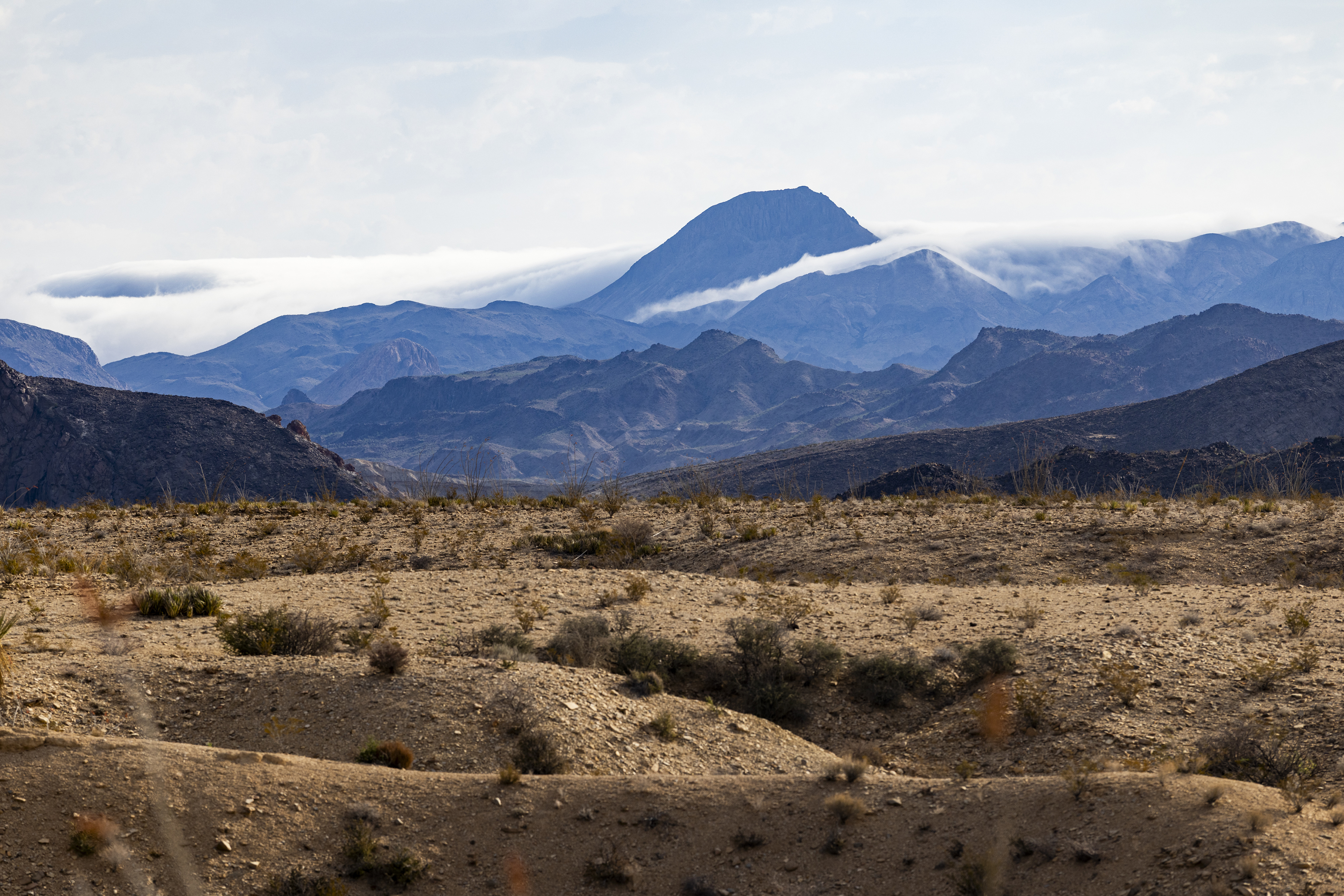
    Texans were caught off-guard several months ago when the Trump administration appeared poised to construct a 30-foot wall through Big Bend National Park, a rugged expanse of moonlike desert that is a point of pride for many in the state.

    But after bipartisan opposition grew, the wall was removed from the federal government’s border construction map. Many exhaled, believing that the West Texas park, with its towering mountains and cliffs, would be spared.

    Then the bulldozers arrived this month.

    The sight of the earthmoving machines along the Rio Grande near the Santa Elena Canyon, one of the park’s major attractions, pointed to the most significant evidence of border barrier construction in the park. Contractors ripped through mesquite trees and brush and leveled the ground for more than 1 mile of what appeared to be a future roadway.

    Big Bend is beloved by Texans and many across the country, even those who are not among its more than 500,000 annual visitors. It is a place to feel the immense and inhospitable wilderness of West Texas, where the stars at night actually are big and bright.

    The construction sparked a fresh wave of anger and outrage from all sorts of people — environmentalists, former park officials, local sheriffs — who again insisted that such infrastructure was unnecessary in a border region so remote and dangerous that people have rarely tried to cross there, even at the peak of unauthorized migration.

    Both John Cornyn, the state’s outgoing Republican senator, and James Talarico, the Democrat running to replace him, expressed concern this month about the start of construction inside the park.

    “My constituents believe that the 1,000-foot riverbank cliffs and remote Big Bend terrain offers its own source of deterrence,” Cornyn said in a letter to Homeland Security Secretary Markwayne Mullin.

    Other Republican state leaders, including Gov. Greg Abbott and Attorney General Ken Paxton, who defeated Cornyn in the Senate primary, have not weighed in directly on the construction.

    On Friday, a local nonprofit and an outdoor recreation business represented by state Sen. Roland Gutierrez, a Democrat, filed a federal suit to try to halt the project. A day earlier, a bipartisan group of Texas legislators sent Abbott a letter urging him to ask federal officials to stop the construction.

    “It’s gotten to the point where people are picking up the torches and marching in the street right now,” said Tex Toler, a former tourism director for Marfa, Texas, northwest of the park. “This is one of Texas’ and the country’s last wild places.”

    After days of confusion among West Texas residents, senior Trump administration officials explained their plans and rationale Thursday. There would be no wall, but there would be construction.

    “CBP is building one new access road, improving existing roads, installing detection technology and placing vehicle barriers in limited, strategic locations,” Rodney Scott, the U.S. Customs and Border Protection commissioner, said in a statement.

    The park’s land sits along 118 miles of the U.S.-Mexico border, and a patrol road is slated to run along much of it. A few areas would have miles of 4- to 6-foot-tall vehicle barriers.

    The bulldozers and excavators have been engaged this month in “survey and design work,” Scott said.

    Fewer than six migrants a day have been encountered crossing from Mexico in recent months in the entire Big Bend patrol sector, which includes the park and hundreds of other miles of border, federal statistics show.

    Officials have said that while unauthorized crossings are currently at record lows, they could increase in the future.

    The Trump administration has been furiously building new border barriers, and Scott said the Big Bend construction was necessary to fill in gaps. Southwest Valley Constructors, one company currently at work in the region, was awarded a $1.7 billion contract. The company directed questions to federal officials.

    “We will not leave Big Bend as an opening for cartels to exploit by shifting their routes and tactics,” Scott said in the statement.

    Many of those who oppose a wall are also against building a patrol road. They include local sheriffs who have insisted that major border infrastructure projects are not necessary.

    “What security problem are we trying to solve?” Sheriff Thaddeus Cleveland of nearby Terrell County, a Republican and a former Border Patrol agent, wrote on social media. “Can the same security objective be accomplished more effectively another way?”

    On Wednesday, people gathered for a demonstration against the construction at the Santa Elena Canyon. Many carried signs protesting the construction — “Stop the Steel,” “No Wall” — or held handmade depictions of javelinas and other wildlife that could be affected by the construction along the river. Some feared the road plan would require building bridges and blasting along Mariscal Mountain, a remote peak.

    “There will be no coming back,” said Michael Ryan, a former Big Bend park ranger who attended the protest. “They’re taking taxpayer dollars to ruin this national park.”

    This article originally appeared in the New York Times.
  • Entrenched, embattled, and defiant, the Taliban celebrate 5 years in power

    Entrenched, embattled, and defiant, the Taliban celebrate 5 years in power

    The black and white flags of the Taliban were flying high along the streets of Kabul, Afghanistan’s capital, as the group celebrated five years in power on Saturday.

    A shiny Mercedes drifted in front of graffiti praising the Taliban fighters’ “sacrifice,” the word painted in crimson, with depictions of drops of blood. Young Afghans chanted independence songs below posters hailing how “the carpet of democracy” had been removed for Islamic rule.

    But the triumphant tone is only half the story. The Taliban may be boisterous in Kabul and have a tight grip on power, yet elsewhere they find themselves targeted and face crises both at home and abroad.

    They face a conflict just short of open war with neighboring Pakistan. They’re dealing with new waves of attacks from armed groups that want to topple them. Add to that mass unemployment, international isolation, and growing domestic discontent, and the Taliban face their most serious threats since their return to power in 2021.

    It is too early to tell whether all those challenges will escalate and threaten their survival as a governing force. And as the scenes of celebration on Saturday showed, the Taliban are popular among many.

    Still, the threats they face have cracked the veneer of security and stability that the Taliban have heralded as their primary achievement — and their main selling point to the world.

    As workers were preparing Kabul for celebrations Thursday, a resistance group claimed responsibility for the killing of the Taliban mayor of a provincial capital in northern Afghanistan. Two weeks earlier, another Taliban official had been assassinated in the same province.

    A tight grip on power — and yet

    The Taliban are holding Afghan society in a chokehold that spares no one. Girls and women face restrictions to a degree unseen anywhere else in the world. Religious minorities are witnessing the forced closure of their places of worship. Anyone who voices criticism is repressed. United Nations staff members face arrests; journalists and rights workers suffer forced disappearances.

    The Taliban are collecting taxes and building roads, dams, and canals. European countries have welcomed them in Brussels to facilitate the deportation of Afghan migrants and asylum seekers. They have expanded trade ties with Central Asian states and want the Trump administration to come back to Afghanistan.

    Whenever a sign of dissent emerges in a province, the country’s secretive and ultraconservative leader, Sheikh Haibatullah Akhundzada, places a key ally in a leadership position to keep things in check.

    And yet the signs of trouble that have appeared in recent months are impossible to ignore.

    Troubles in the North

    Sporadic sounds of gunfire reverberated across the remote mountains of northeastern Afghanistan on a recent evening. Weary Taliban fighters peppered drivers with questions at checkpoints dotting the main road snaking through the province of Badakhshan.

    On the same road, two attackers had killed a senior provincial Talib official a week earlier. A small group of anti-Taliban fighters had briefly seized control of a police headquarters in a nearby district.

    Now fighting between the Taliban and another group opposing their rule was continuing in another district of Badakhshan. The province, bordering China, Pakistan and Tajikistan, is emerging as a hot spot.

    On a trip to the province this month, we talked to residents ready to support anti-Taliban groups because they said they were fed up with the Taliban’s iron grip, the lack of job opportunities, and the government’s confiscation of natural resources.

    We drove through dozens of checkpoints and witnessed the heavy presence of intelligence officers in the isolated village where anti-Taliban fighters had stormed police headquarters.

    The clashes and the attacks have so far been scattered. The leader of one of the anti-Taliban groups described them as “opportunity targets” aimed at challenging the Taliban’s sense of control. But the leader, speaking on condition of anonymity to discuss the group’s strategy, said the number of attacks would only increase in coming months.

    Tensions in the East

    An underequipped Afghan army waits nervously at the border with Pakistan. Once a sponsor of the Taliban, Pakistan has launched dozens of airstrikes on Afghanistan, killing 500 civilians since October, according to the United Nations, and has threatened to use even more force if the Taliban don’t rein in militants who are staging attacks on Pakistani territory.

    The mistrust goes both ways: The Taliban have accused Pakistan of supporting the armed groups that have attacked Taliban outposts in Badakhshan.

    Whether, or to what extent, Pakistan is actively supporting anti-Taliban groups is not clear, but suspicions are running high.

    “The Pakistanis are happy to be portrayed now as a potential patron for the armed opposition to the Taliban, because that increases their leverage over the group,” said Fabrizio Foschini, a researcher at the Afghanistan Analysts Network.

    Food, education, and the economy

    The picture on the domestic front is also grim. Extreme hunger has been spreading fast from one province to another after aid cuts last year plunged millions into deeper food insecurity. The Taliban’s ban on secondary and university education for women and girls is stifling development, experts say.

    The Taliban have deprived 2.4 million Afghan girls of an education, according to UNESCO — the equivalent of all school-age girls in New York, Mexico City, and Moscow combined — and they are forced to stay home indefinitely.

    Some scattered signs of discontent have popped up. At a rare protest in June, demonstrators chanted “Work, education, freedom,” similar to what their Iranian neighbors chanted in 2022. And the leader of a large religious minority warned the Taliban in May: Don’t squeeze Afghan society too much, or it will explode.

    The potential to spiral?

    The Taliban know the world wants a stable Afghanistan — one that isn’t a source of refugees, drugs, or terrorism.

    They assert that the country no longer poses a security threat to the region or the West. They say that they have cracked down on the Islamic State militant group, and that they want peaceful relations, based on trade and diplomacy, including with the U.S.

    Since the Taliban no longer carry out suicide attacks, bomb schools, or target the security forces they now represent, their main argument may hold.

    “The greatest achievement we have had over the past five years is security,” Afghanistan’s foreign minister, Amir Khan Muttaqi, said in an interview with the New York Times in Kabul on Wednesday.

    They don’t want their various crises to spiral either.

    All the ingredients for things to get out of control in Afghanistan again are here, analysts say: A vast population of unemployed young Afghans are fertile ground for radicalization, especially as economic opportunities are nearly nonexistent. And with animosity growing between Pakistan and Afghanistan, it is unclear who might come to the Taliban’s aid: Afghanistan is, once again, a pariah state, with barely any allies.

    The past five years have brought some predictability and an end to almost two decades of fighting, which many Afghans have welcomed, despite the immense hardship and repression. But the country remains shattered, and the fragile peace is already at risk.

    This article originally appeared in the New York Times.