Category: New York Times

  • Kash Patel keeps suing the press

    Kash Patel keeps suing the press

    In 2019, Kash Patel, then a White House aide, objected to how news outlets portrayed his role in President Donald Trump’s dealings with Ukraine. “It’s time that I began fighting back,” Patel said at the time. He sued Politico, the New York Times, and CNN.

    In 2023, Patel, then a roving pro-Trump commentator, took offense at the work of a blogger who had bashed his record and called him a “chud,” a derogatory term progressives use to describe MAGA followers. He sued the blogger, Jim Stewartson, for $10 million in damages.

    And in April, Patel, now the director of the FBI, seethed over an article in the Atlantic that reported alarm among some colleagues over his “erratic” behavior and alleged heavy drinking. He soon sued the publication, demanding $250 million in damages.

    Patel has yet to reach a settlement or a favorable jury verdict in the cases. Each of the news organizations he has sued has defended its journalism and said it was protected by the First Amendment.

    But the strategy is a familiar one. Trump, the man who appointed Patel to lead the FBI, has long turned to the courts when faced with unfavorable press coverage. And perhaps no one in his two administrations has followed his lead as closely as Patel, who has filed at least six defamation lawsuits against news media companies and commentators in nearly seven years.

    In some of the cases, Patel filed strongly worded complaints only to allow them to languish in the ups and downs of civil litigation — a trajectory that some legal experts said raised questions about his objectives.

    “The goals here,” said Sonja R. West, a professor at the University of Georgia School of Law, “appear to be to muddy the narrative, run up opponents’ legal bills, and send a message to journalists that if you cover us critically, it’s going to cost you a lot of time and money.”

    Jesse R. Binnall, a lawyer in Virginia who represents Patel, said in an email, “Director Patel pursues these cases to win them — and anyone who thinks he would tolerate anything less than aggressive, expeditious accountability simply doesn’t know the man.” He added that the number of defamation lawsuits filed by Patel is a “direct reflection of the volume of lies published” about him.

    The suits constitute another front on which news organizations have been forced to spend time and money to defend their work in the Trump era. Others include steady public criticism from top officials, including Trump; limitations on access to the White House and the Pentagon; leak investigations that ensnare national security reporters; and investigations by the Federal Communications Commission.

    Exact numbers on public officials who file defamation claims are hard to come by, said Michael Norwick, a lawyer at the Media Law Resource Center, a group that assists news organizations. Even so, Norwick, who has worked at the center for 15 years, said, “I don’t remember this being a thing, and now it’s a thing.”

    RonNell Andersen Jones, a professor at the University of Utah S.J. Quinney College of Law, said via email that there were examples of defamation suits from officials who had completed their time in public service, but that she was unaware of cases predating Trump in which officials had wielded “law enforcement or other executive-leverage power that they can couple with the pressure of the suit.”

    Andersen Jones said the suits against news media companies had forced her to remove a line she had used in lectures for her entire career, which had said top government officials, including the president, do not sue for libel.

    An FBI spokesperson said that even government officials should have recourse to address what they deemed to be malicious lies in the news media.

    Patel and Binnall face an uphill battle in court. To recover damages in a defamation suit against a news organization, a public official like Patel would have to prove not only that the journalists had published a damaging falsehood, but also that they had done so knowingly or with reckless disregard of the truth — a legal standard known as actual malice.

    When Patel sued the Times in 2019 over its coverage of Trump’s dealings with Ukraine, his complaint contained about 750 words of biography. He called himself a “brilliant attorney, trusted adviser, staunch proponent and defender of the rule of law”; and he demanded nearly $45 million in damages, along with “prejudgment interest” and “postjudgment interest” at 6% per year.

    After all that buildup, Patel failed to serve court papers to the Times and later dropped the case.

    A similar situation unfolded after Patel sued Politico for what he argued were “malicious efforts” to destroy his career through its coverage of Trump’s interactions with Ukraine. Politico moved to dismiss the case after Patel did not serve the company with court documents for more than a year, leading to a “reasonable presumption that he had abandoned his claims,” according to a court filing.

    Patel dropped that suit but filed a new one, which is still active. (His suits against the Times, Politico, and CNN were filed by his previous counsel, not by Binnall’s firm.)

    And Patel drew a rebuke from a federal judge in Nevada for failing to pursue his case against Stewartson, the blogger, for more than a year, a gap that Binnall, in an email to the Times, attributed to a careful and deliberate legal strategy. The litigation is ongoing.

    In his public statements, Patel is prone to sweeping condemnations of news organizations. Traces of that language surface in his lawsuits. His complaint against CNN, for instance, included claims of a “brutal attack on Kash’s reputation” and a “continuation of past smear campaigns to discredit Kash.”

    It also said CNN had defamed Patel by reporting that he “worked to discredit” special counsel Robert Mueller’s investigation into Russian interference in the 2016 presidential election — an odd claim from a man who would go on to characterize that investigation in a book as a “taxpayer-funded hit job from a group of government gangsters.” He abandoned his claims related to the matter during an appeals court hearing.

    In affirming the dismissal of Patel’s 2020 suit against CNN, a Virginia appeals court found that his claims were “conclusory and not binding” and fell short of actual malice. It also awarded CNN $150 in damages. The network declined to comment on whether Patel had paid.

    The Supreme Court declared in 1964 that public debate may feature “vehement, caustic, and sometimes unpleasantly sharp attacks” on government officials, as Patel is now learning.

    In April, a federal judge in Texas dismissed a lawsuit filed by Patel against Frank Figliuzzi, a retired FBI official and TV commentator who had knocked Patel’s work habits last year on the MS NOW program Morning Joe, saying the FBI director was “far more” visible at nightclubs than at the agency’s headquarters. The judge dismissed the suit on the grounds that Figliuzzi’s remark amounted to “rhetorical hyperbole that cannot constitute defamation.”

    In an email, Binnall said, “Although we agree that Mr. Figliuzzi is not a serious person, the notion that the more you exaggerate a lie, the more legally protected you become, is not a coherent reading of the law.” Patel is appealing the ruling.

    Stewartson, the blogger, also stood by the insults that he had slung at Patel on social media. “I thought it was hysterical that he put that in there,” Stewartson said in an interview, referring to Patel’s references to being called a “chud.” “Because how do you prove he’s not a chud?”

    This article originally appeared in the New York Times.
  • Trump administration reignites its feud with Anthropic over latest AI models

    Trump administration reignites its feud with Anthropic over latest AI models

    WASHINGTON — The feud between Anthropic and the Trump administration escalated again Saturday after the government took the unusual step a day earlier of demanding that the artificial intelligence company cut off foreign access to its latest models, as top officials suggested the dispute was unlikely to resolve quickly.

    Late on Friday, Anthropic disclosed in a blog post that it had disabled access for all customers to its most advanced AI systems, known as Fable 5 and Mythos 5, after receiving a directive from the administration to suspend access to any foreign national. The move shocked former U.S. officials and cybersecurity experts, many of whom questioned the validity of the action and noted that it diverged from the hands-off approach to policing the booming AI industry that President Donald Trump had endorsed earlier this month.

    Anthropic said the directive did not explain the national security concerns that prompted it. But the company added that the government had said that it became aware of a method to “jailbreak,” or bypass, security restrictions on Fable 5 intended to limit a customer’s ability to abuse the product for hacking or other potential harms. Anthropic countered that the fears about the jailbreak method were overblown.

    The announcement inflamed tensions between the Trump administration and Anthropic, which earlier this month confidentially filed for an initial public offering following a funding round valuing it at nearly $1 trillion. The two sides have sparred for months over how Anthropic’s AI systems could be used in military and intelligence settings, culminating with the Pentagon labeling the company a supply-chain risk.

    On Saturday, top Trump administration officials and allies of Trump’s stepped up their attacks on Anthropic.

    “Three months ago, @DeptofWar kicked @AnthropicAI out of our building — forever,” Defense Secretary Pete Hegseth said on the social platform X. “Every passing day proves why that was the right move.”

    David Sacks, a venture capitalist who until recently worked in the administration as an AI czar, accused Anthropic in a lengthy social media post Saturday of being reckless with the release of its latest model, dubbed Fable 5.

    Sacks, who said he had spoken to many people inside and outside the administration about the directive, said the administration had asked Dario Amodei, Anthropic’s CEO, to fix the jailbreak issue after a “highly credible trusted partner” of Anthropic’s and the government’s came forward with research.

    “Dario refused,” Sacks said.

    A person briefed on Amodei’s conversations disputed the account, saying that Anthropic was happy to discuss the concerns.

    Sacks did not name the “trusted partner” he referred to in his post. But multiple technology firms, including Amazon, spoke with the White House about the security issues, according to people familiar with the matter. Several of the people said a message from Amazon’s CEO, Andy Jassy, detailing security issues was the most influential, raising concerns about the capabilities of the new Anthropic model.

    But several of these officials said a separate document from Amazon explaining the security concerns with Anthropic’s model was misleading. The concerning capabilities that the document highlighted with Anthropic’s model are also present in OpenAI’s top model, 5.5.

    An Amazon spokesperson declined to comment on the exact nature of its discussions with the White House. “It’s not uncommon for governments to seek our counsel on potential security risks,” the spokesperson said. “When they occur, we don’t share the details of these discussions.”

    Administration officials called Anthropic officials at 1:15 p.m. Friday and gave them 90 minutes to pull their most advanced models down, citing an undefined national security concern, according to people briefed on the discussions. Anthropic officials asked for more information and worked to learn what the precise concern was, since the Commerce Department’s review and testing of Fable did not reveal significant concerns.

    Then, at 5:21 p.m., Anthropic was notified that the Trump administration was imposing export controls that effectively forced the company to pull down its model, which consumers had just begun to have access to.

    Discussions about resolving the dispute are continuing. Howard Lutnick, the commerce secretary, spoke to Anthropic officials Friday, and was set to have another session with senior company officials Saturday evening, according to people briefed on the discussions and plans.

    Some experts said the Trump administration was either misunderstanding or deliberately misconstruing what transpired. Katie Moussouris, the CEO of Luta Security, said on social media that she had seen the research paper that prompted the administration’s actions.

    “It’s not a jailbreak,” she said, but rather a defensive maneuver designed to limit the misuse of a model. “If national defense is the goal, this is an own goal.”

    Earlier this month, the Trump administration issued an executive order that asked technology companies to voluntarily let the government review their new models before releasing them to the public. But it did not give the government an official role in approving their release.

    The order had been delayed after a fierce debate in which AI companies — and some sympathetic government officials — had pushed back against the government interfering in model deployment. The dispute came on the heels of Anthropic’s very limited release of Mythos, an AI model so good at discovering and weaponizing new cybersecurity vulnerabilities that it sparked widespread concerns about its potential to wreak havoc.

    The new restrictions on Anthropic have raised questions about the implications for other AI models that may have similar capabilities. Former officials and technology experts said the administration did not appear to have thought through the longer-term ramifications of such a move.

    But the measure could be limited to Anthropic, which received a fusillade of attacks from the administration in recent months.

    In February, amid the Pentagon’s clash with Anthropic, Trump called the company a “radical left, woke company” and “Leftwing nut jobs” working to dictate how the government wins and fights wars.

    “I am directing EVERY Federal Agency in the United States Government to IMMEDIATELY CEASE all use of Anthropic’s technology,” the president wrote on social media. “We don’t need it, we don’t want it, and will not do business with them again!”

    Some administration officials have in recent weeks been looking for an off-ramp in the dispute, U.S. officials say. White House and intelligence officials have pushed forward a classified contract between Anthropic and the National Security Agency, which would allow the spy agency to use the company’s technology for a variety of purposes, including intelligence analysis and detecting new computer vulnerabilities.

    Officials at the NSA, which is responsible for digital eavesdropping and government cybersecurity, were not involved in Friday’s decision, according to people familiar with the matter.

    Many U.S. officials said the new technology Anthropic had developed was too important to national security to allow the dispute with the Pentagon to block cooperation. But inside the top ranks of the Pentagon, officials remain upset with the company, insisting that the firm sign on to the same contractual provisions that other AI companies have embraced.

    In a June 12 letter viewed by the New York Times, Lutnick told Amodei that a special license would be required for the company to distribute its Mythos and Fable 5 models “to all destinations worldwide,” as well as to share them with non-U.S. citizens.

    “Failure to comply will result in prompt criminal and civil penalties, as provided for by law,” Lutnick wrote.

    The government has controlled AI models before, but past restrictions were more targeted. A measure introduced early last year by the Biden administration placed restrictions on companies’ ability to export the so-called weights for specific AI models — the proprietary numerical values that tell the model how much importance to place on different pieces of data.

    The measure taken by the Trump administration goes far beyond that, by barring Anthropic from sharing the model with any foreign country or any foreign national without first obtaining a license.

    The restrictions on the involvement of foreign nationals, even those with green cards, could be particularly chilling in an industry that relies on foreign talent. In the past, government officials have often reserved that type of restriction for the most sensitive technologies, like weapons systems.

    Chris McGuire, a former Biden administration technology official who is now a senior fellow at the Council on Foreign Relations, said that the administration’s current policy is that AI chips can be exported to China, but Canadian green card holders in the United States cannot access leading U.S. models.

    “That’s absurd,” he added.

    This article originally appeared in the New York Times.

  • Independent Cascadia? Greater Idaho? Disunited states look toward divorce

    Independent Cascadia? Greater Idaho? Disunited states look toward divorce

    SEATTLE — The revolution begins with a poetry reading.

    Last month, a journalist turned organizer named Andrew Engelson invited friends and fellow Pacific Northwesterners to a small club in Seattle’s Capitol Hill neighborhood for an evening of verse, in which his guests would ponder what it means to be from “Cascadia,” the bioregion stretching from Northern California, through Oregon and Washington, into British Columbia.

    Odes to volcanoes, woods, and rivers would help the audience reach the same conclusion he has: The region might be better off leaving the United States.

    Engelson and his group, Cascadia Democratic Action, are trying to drive conversations that could lead to 2028 ballot measures in Washington and Oregon on secession if things don’t improve. The effort is hardly an outlier in these Disunited States, where frustration on the left and right has created small but vocal collections of Americans so fed up with feeling disempowered that they’re talking about redrawing state lines or dissolving them altogether.

    “The salmon don’t pay attention to the 49th parallel,” Engelson said, referring to the U.S.-Canada border. “I have way more in common with someone in Vancouver, B.C., than someone in Arkansas.”

    Separatism is “in the zeitgeist,” said Ryan Griffiths, a Syracuse University political scientist who wrote the 2025 book The Disunited States: Threats of Secession in Red and Blue America and Why They Won’t Work.

    Activists in Texas and California continue to push independence. Lawmakers in inland California have pitched splitting the state in two or three. Organizers in southeastern New Mexico want to join Texas.

    Republican lawmakers in Indiana approved legislation last year inviting conservative counties in Illinois to become Hoosiers. A state senator in West Virginia followed suit in late 2025, inviting 30 border counties from Virginia and Maryland to join the Mountaineers.

    North of the 49th parallel, conservative Alberta is moving toward a referendum in October asking: Do you want to stay in Canada or have a separate, binding referendum to secede?

    The people Griffiths interviews often sound remarkably similar, he said.

    “Whether they’re libertarian or conservative or liberal,” he said, they complain that government is “in their face, it’s dysfunctional, and it’s distant.”

    One of the most successful of those efforts is, like Engelson’s, based in the Northwest, but on the opposite end of the political spectrum. The Greater Idaho movement, a 6-year-old campaign to move a large swath of rural, conservative Oregon into neighboring Idaho, has won support in 13 county ballot measures and turned a once-fringe idea into a subject of state capital debate.

    “Our system is not quite functioning the way it’s supposed to,” said Matt McCaw, a spokesperson for Greater Idaho.

    Greater Idaho proponents argue that their movement reflects frustrations that date to Oregon’s earliest days. At the 1857 meeting to draft Oregon’s founding document, 59 of the 60 delegates came from west of the Cascade Mountains.

    Today, eastern Oregon makes up roughly two-thirds of the state’s land mass but only 10% to 15% of its population. Lawmakers from Portland and the Interstate 5 corridor dominate policy debates and have pushed through gun laws, environmental regulations, and tax changes that many in rural Oregon oppose.

    As western Oregon transitioned from an economy built on timber, farming, and manufacturing to one driven by technology and services, the disconnect has grown.

    “They just don’t understand us on the other side of the mountains,” said Dan Joyce, the county judge in Malheur County, Ore., whose voters were among the earliest and strongest supporters of Greater Idaho.

    Semir Dzebo, a postdoctoral researcher at Oxford University who worked on a 2025 study on Greater Idaho, said public polling conducted through the study showed that the effort was less a partisan fight than an economic one.

    In other parts of the world, efforts to redraw boundaries are often rooted in long-standing ethnic, linguistic, or national identities tied to particular places, such as Scotland in the United Kingdom or Catalonia in Spain. Since the Civil War, America has felt “inoculated” against separatist movements, Dzebo said, “because it rests on a civic understanding of nationalism, that there’s no particular ethnicity that is ‘American.’”

    But as electoral politics have become more polarized, and as the gap between the rich and everyone else has grown, the sense of a shared American identity has eroded.

    “What propels these movements is when that sense of feeling different really comes with economic consequences,” Dzebo said.

    In that regard, the Greater Idaho movement and the Cascadia secession effort are cousins. McCaw doesn’t think elected leaders in the Oregon capital represent him. Engelson feels the same about Washington, D.C.

    Cascadians argue that people are often bound more closely by geography, ecology, and regional economies than by national borders, particularly when the borders stretch so far in every direction. Engelson said Washington and Oregon progressives could get more value from their tax dollars if they formed their own smaller political unit and paid for priorities such as universal healthcare and free college tuition.

    A number of states are already engaging in a form of “soft secession,” by conducting multistate public health efforts during the COVID-19 pandemic or forming compacts to address climate change.

    But none of the secessionist movements are close to achieving their goals.

    The Constitution provides a mechanism for changing state boundaries with the approval of legislatures in both affected states and Congress. But that tends to go only one direction. Neither Virginia nor Illinois has responded to the overtures of its neighbors.

    Oregon Democrats have declined to meet with proponents of Greater Idaho, and neither President Donald Trump nor Oregon’s lone Republican Congress member, Cliff Bentz, has answered calls for help. And voters in two of the counties that initially embraced the idea have since backtracked.

    The Cascadia movement faces an even larger obstacle. In the 1869 case Texas v. White, the Supreme Court ruled that the nation was “indestructible” and that states could not unilaterally secede. The court left open the possibility that a state could leave through “revolution” or with the consent of the other states but rejected the idea that a state could simply vote its way out.

    Hugh Spitzer, a retired University of Washington law professor who began studying separatist movements in law school, laid out a possible path through a treaty negotiated by the president and ratified by two-thirds of the Senate. But that would take decades and require momentum driven by more than a single political moment.

    Engelson said the second Trump administration had convinced him that conversations about separation could no longer remain theoretical.

    “We’re in an abusive relationship with the federal government,” he said. “Divorce is a valid response.”

    This article originally appeared in the New York Times.

  • One of the pope’s best friends works in Spain. They often talk cars.

    One of the pope’s best friends works in Spain. They often talk cars.

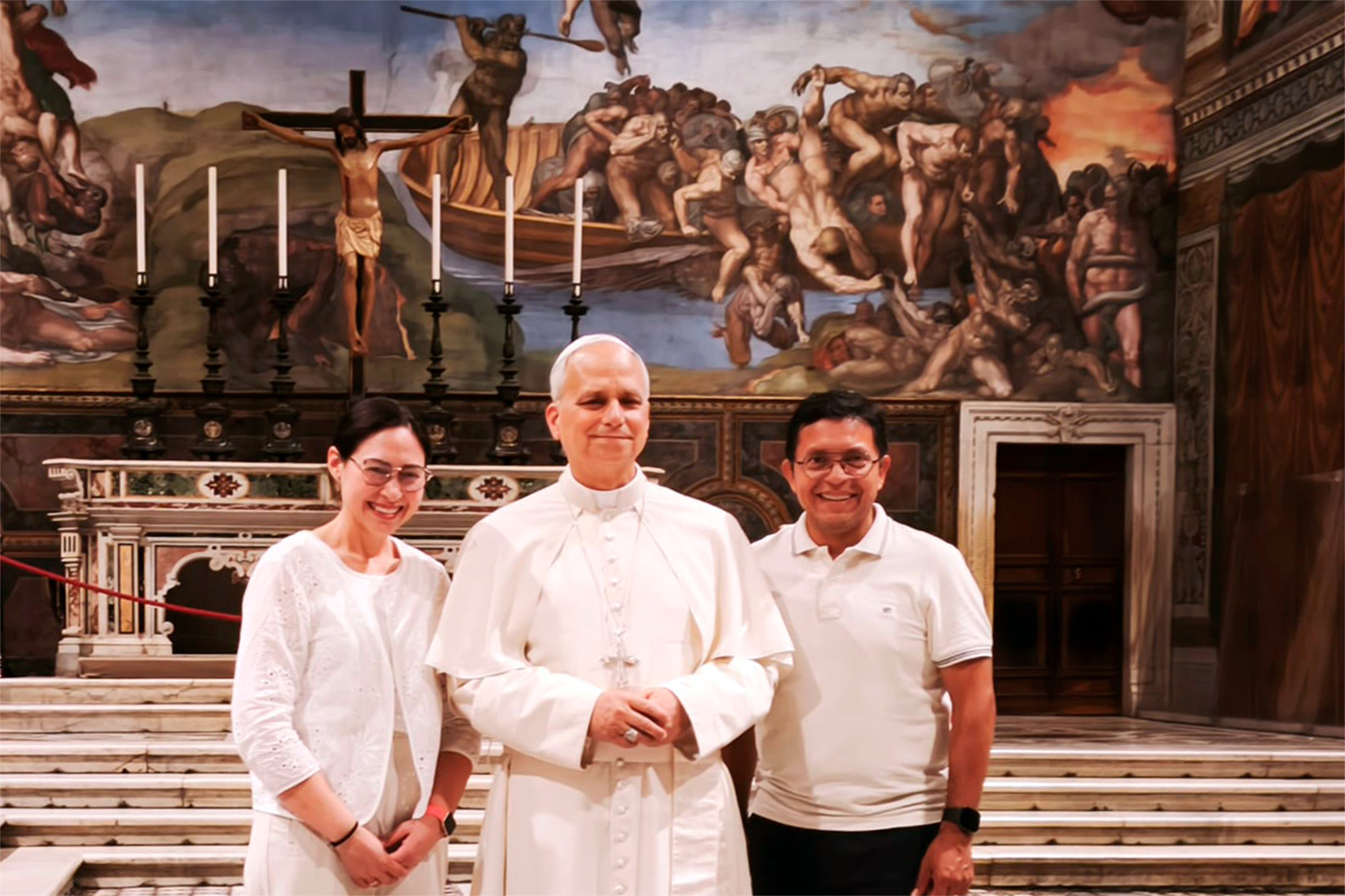
    VALLADOLID, Spain — As Pope Leo XIV prepared last month to issue a major statement about the perils of artificial intelligence, he briefly turned his attention to an evening WhatsApp message about a car part.

    One of the pope’s close friends, Armando Jesús Lovera, had sent Leo an image of a flashing sign on his car’s dashboard warning about the state of the vehicle’s catalytic converter.

    “What’s going on with the Citroën?” the pope texted back.

    “It’s dying,” Lovera responded.

    “Is it running or is it stopped somewhere?” the pope asked.

    Lovera informed “Bob” — the name he uses for the pope in his contacts — that he was on the way back to his home city in Spain after an event to promote his new book, From Roberto to Leo, about their friendship.

    “How much further do you have?” the pope asked, in an exchange Lovera showed me on his phone. Then the pope implored his friend to “keep a close eye on the engine temperature” and to “drive carefully.” Finally, the Holy Father signed off with a word of fatherly advice to Lovera, an editor at a Catholic publishing group, whom he has known for decades.

    “Sometimes at low speed it doesn’t run well,” the pope wrote. “But at a higher speed, the oil flows normally.”

    Armando Jesús Lovera in Valladolid, Spain, at the local headquarters of the Augustinian order.Gianfranco Tripodo for The New York Times

    Lovera, 52, and Leo, 70, have been close friends since they lived together for seven years in Peru, in a formation house, a live-in community for Catholics considering a life dedicated to the faith. Leo, then a missionary priest known by his pre-papal name of Robert Prevost, ran the house.

    Over the decades — as Lovera moved to Spain and Prevost became a bishop, cardinal and then pope — the two have stayed tight.

    Lovera and his family visited the pope for five days in July, and they will join the pope again in Rome this August, Lovera said.

    “To play tennis,” he said, “to feed the fish.”

    This past weekend, as Leo began his weeklong visit to Spain with a tight schedule of events, he found time to send his old friend a greeting in a text message. “We said hello,” Lovera said.

    Lovera, left, and the future Pope Leo in Orlando, Fla., in 2000.Armando Jesús Lovera via The New York Times

    Originally from a Roman Catholic family in Iquitos, a town in the Peruvian part of the Amazon, Lovera moved to Colombia with the goal of becoming an Augustinian missionary. There, in 1991, he first met the man who would become Leo; soon after, Lovera moved with other Augustinians into the formation house, in Trujillo, Peru.

    Leo taught the small, tight-knit group spiritual exercises and also how to manage money — “because you cannot give what you don’t have,” Lovera said, in an interview at the vast Augustinian headquarters in Valladolid, the city where he lives, a two-hour drive north of Madrid.

    “He used to tell me that a community isn’t made of superheroes, but of brothers who decide together what is best,” Lovera added.

    The two shared a love of music, mathematics and long road trips.

    “We’ve been travel buddies,” said Lovera, who became the group’s driver, even though he didn’t have a driver’s license. The future pope filled their long hauls with car talk, expounding on how to drive cars through flooded streets. When he once spent the night at the Lovera family’s modest home, they had no bed to offer him, only a sofa.

    It was so hot and humid that the future pope elected to sleep in a rocking chair. “My mother was dying of embarrassment,” Lovera recalled.

    The future pope officiating the church wedding of the Loveras in Trujillo, Peru, in 2013.Armando Jesús Lovera via The New York Times

    Leo left Peru in 1999 after being elected to lead the Augustinian Order in the Midwest, and soon after, Lovera decided to leave the missionary track. Community living, he decided, wasn’t for him, and he wanted to do more to protest against the economic policies of the Peruvian government at the time. He also didn’t take well to an order to travel to Rome to study the teachings of St. Augustine: “I wanted to be more independent,” he said.

    Lovera said Leo had talked to him about the change and, instead of giving him a teacher’s lecture, had offered a friend’s understanding.

    “Don’t feel obligated,” Lovera recalled his friend telling him, emphasizing that a holy life could be lived in different ways. Mostly, Lovera recalled, they joked about the Y2K bug that people at the time feared would wipe out the world’s computers at the turn of the millennium.

    Soon after, Lovera moved to Spain for a job with a Catholic publisher. Leo later became the global leader of the Augustinian Order, a job based in Rome that required constant international travel, including to Spain, where he visited Lovera.

    Lovera would often visit Chicago and catch up with the future pope’s family, including Leo, who happened to be there in November 2004. At that meeting, Lovera told his friend about a young Peruvian woman in Spain who had caught his eye. But when he had asked her out, Lovera explained, she had told him only that she would think about it — and mentioned a teddy bear that she coveted.

    “I told him, ‘I have to find a teddy,’” Lovera recounted. The men hit the road, driving to malls looking for the right stuffed toy, finally finding what Lovera was looking for in a Target near New Lenox, Illinois.

    The Loveras with Pope Leo at the Vatican in 2025.Armando Jesús Lovera via The New York Times

    Back in Spain, the woman accepted the gift but initially rejected Lovera. He persisted, though, and they eventually married in a civil ceremony with the future pope as their witness.

    In 2010, Leo landed in Spain for meetings with Spanish Augustinians, and Lovera picked him up at the airport. It was the day of the final of the soccer World Cup, and the future pope — a professed Real Madrid fan — decided that they should pull over to watch the match. In a pizza bar, they watched Spain defeat the Netherlands with a late goal in overtime, and both men chanted, “I am Spanish,” with the crowd, Lovera said.

    For Lovera, the pope was his co-pilot. In 2012, for instance, Leo drove with Lovera to check out a house in Valladolid that Lovera and his wife wanted to buy. “I have never stopped consulting him,” Lovera said.

    In December 2013, after the Loveras’ civil wedding, Leo married the couple in a church in Trujillo, and he later traveled to see them after the birth of their two daughters, whom he baptized. The girls, now 9 and 11, don’t quite understand that he is pope, Lovera said, and “see Roberto as part of the family.”

    Once they reached school age, Lovera began to call his friend from the car when driving to pick the girls up from school, he said. When Leo became pope, those frequent calls became texts, but they remained in regular contact, Lovera said.

    Last May, he asked the pope’s permission to write a book about their friendship, and the pope approved. “I trust you. You are my friend,” the pope said, according to Lovera.

    In October, they posed together with the published book, which highlights their efforts to build solidarity among marginalized Peruvians in a time of upheaval.

    Last month, Leo mentioned to Lovera that his brother, John Prevost, still called the pontiff from Chicago for information technology support.

    “And Roberto says, ‘John, I’m the pope,’” Lovera recalled.

    “‘Oh, sorry, pope,’” the pope’s brother responded, according to Lovera. “‘My computer is broken.’”

    On his own calls to the pope, Lovera said that he didn’t talk about tech or politics or about the church’s future. Instead, he said, “I talk about cars!”

    This article originally appeared in The New York Times.

  • Is AI replacing tech workers or providing an excuse for job cuts?

    Is AI replacing tech workers or providing an excuse for job cuts?

    SAN FRANCISCO — Meta, Coinbase, and Block have each laid off at least 10% of their employees in recent months and partly blamed artificial intelligence. About 13,000 jobs were eliminated among the three companies.

    But the cuts also came after big changes and growing questions about their businesses. Meta backed away from its big bet on the so-called metaverse, which cost the company about $80 billion. Coinbase’s CEO, Brian Armstrong, said its business remained volatile and there was “a down market” for cryptocurrency. And Block’s top executive, Jack Dorsey, acknowledged that the company had grown too much during the pandemic, tripling its workforce from 2019 to 2022.

    Layoffs in the tech industry are accelerating, whatever the motivations of executives. So far this year, more than 150 technology companies have cut a total of at least 115,000 employees, according to Layoffs.fyi, which tracks job cuts in the industry.

    That drip-drip of layoffs has become a steady stream in recent weeks. Companies slashing their staffs have run the gamut from software providers Atlassian and Autodesk, to social networking apps Pinterest and LinkedIn, to financial technology companies Intuit and PayPal.

    But in more than a few cases, the recent layoffs have coincided with other business issues. Wall Street loves an AI story right now. That, analysts and economists say, has offered a smoke screen for companies looking to beef up profits or patch over old mistakes.

    Cutting jobs to make way for AI is “a nice excuse, but some of these aren’t necessarily the best, most well-run companies,” said Mark Mahaney, an analyst at investment bank Evercore. “They may have overhired, or they may be losing market share. There may be other issues.”

    When Snap’s CEO, Evan Spiegel, laid off 1,000 people in April, for example, he said the company needed to turn a profit, which it has done in only three quarters since going public in 2017. But he also said AI was improving efficiency at the company, with “small squads leveraging AI tools to drive meaningful progress across several important initiatives.”

    Meta’s turn toward AI was timed with a big shift away from its giant metaverse project. During the pandemic, the company hired thousands of people to work on the effort, saying it would add 10,000 employees in the European Union. From 2019 to 2022, Meta doubled in size to about 87,000 employees.

    Since then, Meta has steadily trimmed from its augmented and virtual reality unit as it has funneled money into AI. In April, Meta said it would spend $125 billion to $145 billion this year on capital expenditures like data centers, more than double its spending last year. Last month, Meta laid off 8,000 people, or 10% of its workforce, even though its most recent quarterly profit was nearly $27 billion.

    “All these cuts are happening, and there are record profits,” said Ava Sazanami, who worked for Meta from 2022 to 2025. AI “is actually not costing any less money,” she added. “It is an excuse to some extent.”

    Last month, Meta also reassigned 7,000 employees to work on AI tools and apps. The company has been pushing its workers to adopt AI, factoring their use of the technology into performance reviews and tracking employees’ computers to gather training data for its own AI.

    “We’re seeing more and more examples where one or two people are building something in a week that would have previously taken dozens of people months,” Mark Zuckerberg, Meta’s CEO, said during a call with investors in April.

    Meta said its layoffs, reassignments, and other personnel changes varied by team. Coinbase and Snap declined to comment. Block did not respond to requests for comment.

    Many other companies have said they are cutting jobs to help free up money for AI projects. Intuit laid off about 3,000 people last month so it could devote more resources to its “big bets,” including expanding its “AI-native platform,” Sasan Goodarzi, its CEO, said in a memo to employees.

    Cisco’s CEO, Chuck Robbins, said the company would invest “in our employees’ use of AI across the company” as it cut 4,000 employees last month. And Microsoft offered early retirement in April to roughly 7% of its employees in the United States, or thousands of people, as it planned to spend about $190 billion this year on capital expenditures like data centers.

    Perhaps the most blunt explanation for job cuts has come from Cloudflare’s CEO, Matthew Prince. When the company, which provides various internet services, laid off 1,100 people last month, he said in a memo to employees that the cuts were “not a cost-cutting exercise or an assessment of individuals’ performance.”

    Prince said his company was restructuring for “the agentic AI era,” referring to digital assistants that can do tasks by themselves. In an opinion essay in the Wall Street Journal, he said the technology would replace workers he called “measurers” — people with jobs in sectors such as internal audit, compliance, finance, marketing and operations — and middle managers.

    Intuit, Cisco, Microsoft, and Cloudflare declined to comment.

    The rest of the economy has not yet seen sweeping job cuts because of AI, said Daniel Keum, an associate professor of management at Columbia Business School.

    “There are certain segments of the labor market where we’re starting to see real impact,” like “tech-concentrated sectors for juniors and new graduates,” Keum said. “If you’re a junior who graduated in the past two years — or, even worse, if you graduated this year — then hiring is getting cut.”

    But relief for tech workers doesn’t appear to be on the horizon. Andy Jassy, Amazon’s CEO, said last year that the company expected to operate with fewer corporate employees in the coming years “as we get efficiency gains from using AI extensively across the company.” Amazon laid off 14,000 corporate employees in October and 16,000 more in January, saying those cuts were to reduce bureaucracy.

    For college graduates with computer science degrees just entering the workforce, getting a job could be a struggle. In addition to the layoffs, Meta said it would close 6,000 roles it had planned to fill. Snap said it would close 300 open roles. Although AI companies are still hiring, the technology has led some start-ups to hire many fewer people.

    “AI is causing this isolated recession for college graduates now,” Keum said. “Is that going to slow down? My answer is no. It’s going to accelerate.”

    This article originally appeared in the New York Times.
  • Ships stranded by war face costly dilemma: Wait it out or risk attack

    LONDON — Pankaj Khanna, the CEO of Heidmar Maritime Holdings, knows what it’s like to be stranded at sea in a war zone. Long before he became a shipping executive, he was a seafarer himself, a crew member on a ship during the Persian Gulf War of 1991 as a Scud missile flew overhead. He recalled the paralyzing fear of some seafarers on board.

    Today, the stress on the roughly 11,000 stranded sailors in the Persian Gulf may be even greater. Seafarers now have internet access and are often watching livestreams of attacks happening around them while seeing explosions from their ship decks.

    “The fact that they are sitting on board the ships with real-time information — it is psychologically very traumatic,” said Khanna, 55.

    Three commercial vessels have been hit by U.S. forces this week. One of the strikes killed three people, bringing the number of seafarers killed since the start of the war to 14. All told, there have been 46 attacks on international ships in and around the Strait of Hormuz since Feb. 28, most by Iran and some by the United States.

    The war in Iran is approaching its 15th week. For the shipping industry caught in the middle, pressure is mounting — on the sailors, the shipowners, and operators losing hundreds of thousands of dollars a day, and the customers awaiting the delivery of oil and goods. At stake is not only the safety of those in the line of fire but the functioning of the global economy.

    A tense calm prevailed in the Gulf on Friday on hopes that a deal to end the fighting could be near.

    “We have heard this, like, 20 times,” Khanna said. “So what are the prospects? I don’t know.”

    Even after a reopening of the strait, he added, ships will need a “framework” before they attempt to get out. “We need to know which parts of the strait are clear,” he said.

    Heidmar Maritime, based in Athens, Greece, manages a fleet of 60 vessels that operate all over the world, including off the coasts of Europe, South America, and northern Asia and in the Red Sea. Just two weeks ago, one of its ships was attacked by Somali pirates.

    The company’s ship in the Persian Gulf, carrying Saudi crude oil, is one of about 500 large vessels operated by established companies that have been stranded there since the early days of the war in late February. Some vessels have taken advantage of windows of calm to slip out of the Gulf. But departures have slowed recently, according to Lloyd’s List Intelligence, as tensions have increased.

    And it seems less likely that conditions faced by shipping businesses will quickly return to their prewar state even if a deal is reached.

    “Even if a solution for peace is put in place in the coming weeks, there’s no guarantee there won’t be another crisis later on, and we can’t be prisoners to Hormuz,” Rodolphe Saadé, the CEO of CMA CGM, the French shipping giant, said at a French parliamentary hearing Tuesday.

    The world’s third-largest container line, CMA CGM has 11 vessels stranded in the Gulf after three others were able to leave. “I won’t be fixated on the idea that the Strait of Hormuz is going to reopen and everything will return to how it was,” Saadé said.

    As the strait remains effectively blockaded, shipowners are subject to marine insurance fees as high as $6 million to $7 million to exit the gulf, said Khanna of Heidmar Maritime. Perishable cargoes are expiring, and insurance premiums are adding up. Still, shipping companies have, in some ways, benefited from higher tanker rates and longer journeys needed to reroute around risky areas like the Red Sea.

    For the companies with ships stuck in the gulf, Iran has offered a way out: Pay a fee to secure safe passage. But sanctions imposed on Iran by the United States and Europe make it illegal for companies with American or European connections to pay.

    The shipping industry has more or less steadfastly maintained that the resumption of free passage through the strait is essential for global trade. Now the rising costs have led to some cracks in that argument.

    Last week, Evangelos Marinakis, the owner of one of Greece’s biggest shipping businesses, said at a conference in Athens that paying $100,000 or $200,000 tolls to secure safe passage through the strait would be better than having the strait closed.

    “I would prefer to pay a toll for the right to navigate through the Strait of Hormuz immediately and safely, rather than pay huge extra war risk premiums,” he said in a statement.

    And the stress for seafarers keeps mounting.

    Mohamed Arrachedi, the Middle East coordinator of the International Transport Workers’ Federation, a seafarers union, said he was receiving WhatsApp messages at all times of day from seafarers requesting repatriation or reporting unpaid wages.

    “They were hopeful, but now, observing that it is starting again, people are not only anxious, worried, and concerned, but people are desperate,” Arrachedi said.

    In recent weeks, more seafarers reported shortages of fresh fruit and vegetables than in the first couple of weeks, he said. On some ships, people are surviving on dry food alone. Drinking water, too, has become an issue since vessels have to be moving in deep water to generate their own supply.

    “It’s kind of like being on the front line of a war that you have absolutely no involvement in,” said Michelle Wiese Bockmann, an analyst at the maritime intelligence firm Windward. “You don’t have a dog in the fight, and you’re just there.”

    This article originally appeared in the New York Times.

  • Gene Shalit, film critic bristling with hair and puns, dies at 100

    Gene Shalit, the Muppet look-alike who reviewed movies and other cultural arts with a whimsical bent and a shtick for puns as the resident wit on NBC’s Today show for four decades, one of the longest tenures on an American television program, died Friday at 100.

    NBC reported the death, citing a family statement. No further details were immediately available.

    For millions of Americans tuned in to the Today potpourri of news, interviews, entertainment, and weather, a dose of literate, wacky commentary from Mr. Shalit’s “Critic’s Corner,” often with cackles of appreciation for his own incorrigibility, was as much a part of the morning as a cup of coffee.

    With his handlebar mustache, bushy hair, black-rimmed glasses, and extravagant bow ties, he was one of the nation’s most recognizable characters, a composite caricature of Groucho Marx, William Howard Taft, and a Jim Henson puppet. His punchy, wry wit may have borrowed from Woody Allen and Mark Twain, but it played well in Peoria.

    “Ishtar ish tarrible!” Mr. Shalit concluded in a review of Elaine May’s 1987 comedy about two lounge singers looking for work in Morocco and stumbling into Cold War machinations.

    After seeing The Longest Yard, a 1974 flick in which Burt Reynolds organizes a prison football team, he suggested: “This movie should be penalized half the distance to the goal — twice.”

    And joining a chorus of critics panning Hudson Hawk, a 1991 Bruce Willis world-domination vehicle, he warned: “This movie is awful, spelled o-f-f-a-l.”

    His most controversial criticism came in a negative review of Brokeback Mountain, the widely acclaimed 2005 Ang Lee film depicting the romantic and sexual relationship between two men in the American West. Shalit called Jake Gyllenhaal’s character, Jack Twist, a “sexual predator” who “tracks Ennis (Heath Ledger) down and coaxes him into sporadic trysts.”

    The Gay and Lesbian Alliance Against Defamation, now known as GLAAD, accused Mr. Shalit of promoting anti-gay prejudice and demanded an apology. Mr. Shalit, the father of six children, including a gay son, replied with a letter expressing regret, acknowledging that he had “angered, agitated and hurt many people,” and saying that he had had “no intention of casting aspersions on anyone in the gay community or the gay community itself.”

    Besides reviewing movies, books, plays, and other cultural offerings, Mr. Shalit interviewed authors and entertainers, including Barbra Streisand, Warren Beatty, Robert De Niro, and Sophia Loren. He did cameos of himself in several movies and television shows, and was a familiar figure on television game and talk shows and charity fundraisers.

    On Today, a program sensitive to ratings and notable for personnel changes, Mr. Shalit was the durable mainstay in a cast that over the years included Barbara Walters, Jim Hartz, Tom Brokaw, John Chancellor, Hugh Downs, Joe Garagiola, Deborah Norville, Jane Pauley, Katie Couric, Bryant Gumbel, Al Roker, Willard Scott, Matt Lauer, and Ann Curry.

    Mr. Shalit joined Today in 1968 as a book reviewer, became a regular in 1970, and was the culture critic from 1973 until he retired in 2010.

    His producer, Guy Ludwig, reflecting on Mr. Shalit’s long career in 2010, recalled seeing Mr. Shalit, late in his career, entering a theater for a screening with a look of glee on his face.

    “My God, how could you?” he said. “You’ve seen 2 million movies.”

    “Yeah,” Mr. Shalit replied, “but I’ve never seen this one!”

    Eugene Theodore Shalit was born in New York City on March 25, 1926, to Latvian immigrants, Isadore and Anna (Michelovich) Shalit. He grew up in Newark and Morristown, N.J., where his father owned a drugstore. He graduated from the University of Illinois in 1949.

    Arriving in New York City in 1951, he was hired by a press agent to attend stage shows at the Paramount and laugh at the comics for $5 a day. “They weren’t funny,” he recalled in a 2012 interview for this obituary. “I couldn’t laugh. One other person was laughing. He got $5 too.” Mr. Shalit quit after one day.

    He next landed in the publicity department of Look magazine, doing promotionals with “two other kids” — Lawrence K. Grossman, who became president of NBC, and Marvin Josephson, who founded the talent agency International Creative Management.

    Mr. Shalit was married to Nancy Lewis from 1951 until her death in 1978, and they had six children: Peter, Willa, Emily, Amanda, Nevin, and Andrew. Emily died in 2012. A complete list of survivors was not immediately available.

    In the 1950s and early ’60s, Mr. Shalit wrote columns and culture reviews for Ladies’ Home Journal and Look magazine. An NBC executive spotted his writing and, worried about how audiences might react to his mustache and hair, hired him in 1967 for network radio work. A year later, NBC took a chance, and he began appearing on the Today show.

    “Once Gene was on, he’d get letters like, ‘Who is this part-time anarchist that you have on television?’” Ludwig recalled. “But what resonated above his unusual appearance was his incredible wit, his remarkable intelligence.”

    From 1970 to 1982, Mr. Shalit produced a daily essay for NBC Radio, “Man About Anything,” which was heard on more stations than any other NBC network feature. He was an occasional panelist on What’s My Line?; hosted programs on the Masterpiece Mystery series; and wrote for TV Guide, Cosmopolitan, Seventeen, Glamour, McCall’s, the New York Times, and other publications.

    Laughing Matters: A Celebration of American Humor, a compendium of works by 200 authors, scriptwriters, and cartoonists selected by Mr. Shalit, was published in 1987. Mr. Shalit loved classical music, played the bassoon, and performed with the Boston Symphony in Boston, at the Berkshire Music Center at Tanglewood near his home in Stockbridge, Mass., and at Lincoln Center in New York. He once conducted the Pittsburgh Symphony in a full concert. He liked to say that in none of these venues was he ever invited back.

    In 1974, Jim Henson’s Muppets appeared on the Today show with Bert gussied up in Shalit-style hair and mustache. Side by side, they looked like fraternal twins. In 1983, he appeared in the Great Muppet Look-Alike Contest in Muppet magazine’s first issue, and in 1996 he contributed a recipe for Movie Crumb Cake for the cookbook In the Kitchen With Miss Piggy.

    Mr. Shalit wrote many letters to the Times about baseball. In 2003, he suggested help for the New York Mets lineup: Sign Rickey Henderson, then in his last season.

    “With his walks, bunts and an occasional extra-base hit, he will get on base far more often than the current troupe,” he wrote. “And when Rickey gets to first, he’ll soon be on second. Sure, he’ll be stranded there, but won’t it be fun to see a Met in scoring position?”

    This article originally appeared in the New York Times.

  • Trump administration says it will restart asylum and immigration processing

    Trump administration says it will restart asylum and immigration processing

    WASHINGTON — The Trump administration said Friday that it would comply with a court order to restart processing asylum and other immigration applications filed by a broad swath of people who had been left in legal limbo for months.

    The move comes after a federal judge in Rhode Island last week struck down a suite of policies imposed by U.S. Citizenship and Immigration Services, a major blow to the administration’s expanding efforts to restrict legal immigration. The policies included a global hold on asylum applications filed with the agency and a freeze on immigration applications filed by people from 39 countries, largely in Africa and the Middle East, that are subject to President Donald Trump’s travel ban.

    More than 1 million applications had ground to a halt as a result, preventing many people from obtaining green cards, citizenship, and other immigration benefits. The halt also disrupted people’s ability to legally work and left them waiting indefinitely for decisions on their applications.

    In a court filing Friday, Angelica Alfonso-Royals, deputy director of U.S. Citizenship and Immigration Services, said the agency instructed employees to treat the policies “as if they are no longer in effect.” The agency also said in a memo posted on its website that it “strongly disagrees with the court’s order” but that it would “follow its terms pending possible further judicial review.”

    As of Friday evening, it was unclear whether the agency had restarted making immigration application decisions. Also on Friday, the administration filed an appeal with the 1st U.S. Circuit Court of Appeals seeking to pause the decision.

    The response came after Judge John J. McConnell Jr. rebuked the Trump administration for failing to immediately comply with the order he issued last week.

    The administration argued in a filing Tuesday that the initial order by McConnell, an appointee of President Barack Obama, was preliminary and therefore had not “become effective,” indicating that the department had yet to resume making application decisions.

    In response, McConnell quickly entered his judgment Thursday, ordering the government in blunt terms not to stall any further.

    “There is no excuse this time,” he wrote. “The government has an obligation to immediately comply with this order.”

    McConnell gave the administration until Friday evening to file an update “advising the court as to what specific steps it has taken to comply.”

    Democracy Forward, the legal organization representing the assorted unions and immigration aid groups, had accused the government of playing procedural games to deliberately dodge last week’s court order.

    “The Trump-Vance administration’s cruel immigration policies have been about chaos, confusion, and inefficiency, and we are proud to challenge these unlawful measures and to have secured a court order blocking the policies,” Skye Perryman, the organization’s president, said in a statement. “The federal government cannot shut down lawful immigration pathways or discriminate against people based on where they come from.”

    The policies at the center of the case were issued in November after authorities said an Afghan national had shot two National Guard members in Washington. The man, Rahmanullah Lakanwal, has pleaded not guilty.

    In his searing 135-page opinion last week, McConnell wrote that the policies effectively made it impossible for many people to remain in the country and that they were improperly fueled by “anti-immigration sentiments.”

    This article originally appeared in the New York Times.
  • A Tren de Aragua leader is killed in a joint strike, U.S. and Venezuela say

    A Tren de Aragua leader is killed in a joint strike, U.S. and Venezuela say

    A joint strike by the United States and Venezuela killed a leader of the Tren de Aragua transnational gang, President Donald Trump and officials in both countries said Friday, dealing a blow to a syndicate the Trump administration has blamed for an influx of violent crime and illicit drugs.

    The strike took place this past week alongside Venezuelan security forces, Defense Secretary Pete Hegseth said, without providing a precise date. He said it targeted a compound housing Hector Rusthenford Guerrero Flores, a founder of Tren de Aragua.

    A statement from Venezuela’s communications ministry said the operation took place in Venezuela, in the southeast of the state of Bolívar. Hegseth and Venezuelan officials said Guerrero Flores had been killed in the strike.

    Guerrero Flores, 43, was better known by the alias Niño Guerrero, meaning “warrior child.” He was wanted in the United States on federal charges of directing acts of terrorism, alongside other charges.

    The CIA, which has dedicated expanded resources to Latin America during Trump’s second term, supplied the intelligence that led to the strike, according to a senior administration official, who spoke on condition of anonymity given the sensitivity of the operation.

    Trump said on social media that the U.S. military’s Southern Command had conducted the strike at his direction as part of his pledge to dismantle foreign gangs. His administration designated Tren de Aragua as a foreign terrorist organization last year.

    Trump said the operation had been conducted with the Venezuelan government, which has become more cooperative with the United States since the United States captured former Venezuelan leader Nicolás Maduro and helped install a more pliant replacement, Delcy Rodríguez.

    Trump posted a video of a building exploding and invoked the names of crime victims in Georgia and Texas, calling the operation “retribution” for their families.

    Trump has often railed against the gang, using it to push his deportation agenda and to justify his military strikes on vessels purportedly ferrying illegal drugs from Venezuela to the United States. Critics have questioned whether Tren de Aragua has truly played the dangerous role that Trump says it has.

    Gen. Francis L. Donovan, who leads U.S. Southern Command, thanked Venezuelan security forces in a social media post for their support in what he described as a joint operation.

    The Venezuelan government said in a statement Friday that a combined operation had targeted organized crime structures. The operation was based on the exchange of intelligence between the two countries, the statement said.

    Tren de Aragua originated as a prison gang in Venezuela in the mid-2000s and has since expanded across Latin America and several U.S. cities. The organization is one of the most notorious in the region, focused on sex trafficking, human smuggling and drugs, drawing intense scrutiny from U.S. law enforcement.

    The Biden administration in 2024 issued a reward of up to $5 million for information leading to Guerrero Flores. He was charged last year in a New York federal court under the second Trump administration with racketeering, terrorism, drug importation and firearms offenses.

    This article originally appeared in the New York Times.

  • Judge blocks national parks from removing ‘negative’ signs

    Judge blocks national parks from removing ‘negative’ signs

    WASHINGTON — A federal judge Friday temporarily blocked the National Park Service from removing or revising signs, films, and other materials at national parks across the country to comply with a directive from President Donald Trump.

    The ruling pauses enforcement of an executive order that called for removing or covering up materials at national parks that “inappropriately disparage Americans” or cast the United States “in a negative light.”

    The judge, Angel Kelley of U.S. District Court for the District of Massachusetts, also ordered the park service to restore within three weeks any exhibits that it had dismantled or altered.

    The ruling provides a temporary reprieve for the plaintiffs, a coalition of advocacy groups that sued over the executive order in February, while the litigation continues to unfold.

    To comply with the president’s directive, the park service has taken down plaques about slavery at the President’s House in Philadelphia, a sign about climate change at Fort Sumter in South Carolina, and a sign about Indigenous people at Acadia National Park in Maine.

    Another federal judge has already ordered the park service not to make further changes to the slavery exhibit at the President’s House Site at Independence National Historical Park, as she considers a separate lawsuit filed by Philadelphia.

    Kelley, who was nominated by President Joe Biden, sharply rebuked the Trump administration for taking down materials. “Not only does this undermine the integrity of the national parks; it sets a dangerous precedent of censorship and sanitization,” she wrote.

    Kelley began her 63-page ruling by listing examples of national parks that help educate visitors about difficult periods of American history, as well as contributions made by people of color, gay and transgender figures, women and other marginalized groups.

    “From the echoes of abolition in John Brown’s Fort in Harpers Ferry, to the genesis of the modern LGBTQ+ civil rights movement at the Stonewall National Monument, to the retreating ice of Glacier National Park in Alaska, the national parks preserve the multifaceted and multilayered history of our nation, including the good, the bad and the ugly,” she wrote.

    In the lawsuit, the plaintiffs argued that removing the materials was “arbitrary and capricious,” in violation of the Administrative Procedure Act. They also accused the park service of exceeding its legal authority.

    Katie Martin, a spokesperson for the Interior Department, the parent agency of the park service, suggested that the administration would appeal the ruling.

    “This ruling is from a liberal activist judge,” Martin said in an email. “The department will look at our appeal options while we celebrate U.F.C. Freedom 250 on the South Lawn of the White House this weekend in honor of our nation’s 250th with the greatest president in the history of our country — President Donald J. Trump.”

    Emily Thompson, the executive director of the Coalition to Protect America’s National Parks, one of the advocacy groups that brought the lawsuit, applauded the ruling.

    “National parks are not propaganda tools, nor should they be used for partisan purposes,” Thompson said in a statement. “They exist to preserve and interpret the full American story, not just the parts that make some politicians comfortable. This ruling is an important step to help ensure that remains the case.”

    In an email sent after the ruling, a copy of which was reviewed by The New York Times, a park service official directed regional supervisors to pause carrying out Trump’s directive “for the time being.”

    “Parks can continue to submit items for review, but implementation actions should pause pending further guidance,” the email said.

    This article originally appeared in The New York Times.