Category: New York Times

  • Blanche stares down confirmation hurdle of lingering GOP doubts

    Blanche stares down confirmation hurdle of lingering GOP doubts

    WASHINGTON — Sen. Thom Tillis (R., N.C.), who is still undecided about Todd Blanche’s nomination as permanent attorney general, drew a red line last month: He would vote no if Blanche was too soft on the rioters who had ransacked the Capitol on Jan. 6, 2021.

    Soon after, Tillis, a moderate on the Senate Judiciary Committee, said he had a “positive predisposition” after meeting with Blanche, despite the fact that the acting attorney general had recently signed off on a $1.8 billion fund that could have been funneled to those who stormed Congress.

    Just a single no vote from a Republican would deadlock the committee and effectively sink the confirmation of Blanche, who became the Justice Department’s acting leader after Pam Bondi was fired in April. That gives Republicans on the panel rare leverage to extract concrete concessions from Blanche, 51.

    Whether they will use that leverage is arguably the biggest wild card before Blanche’s high-stakes confirmation hearing on Wednesday.

    It is not yet clear how the death of a committee member, Sen. Lindsey Graham (R., S.C.) late Saturday, will affect the timing of the hearing — or who will be chosen by leadership to replace him on the panel.

    “Blanche tries to dress it up, but at the end of the day, he’s just Donald Trump’s personal lawyer, and that is all he will ever be,” said Sen. Chris Van Hollen (D.,Md.), who squared off in May against Blanche in a contentious hearing that centered on creation of the compensation fund.

    Republicans are not in revolt, but they are restless. During a testy confrontation in late May, Republican senators lambasted Blanche for agreeing to create what critics have described as a “slush fund.” The deal forced them to defend a related provision shielding Trump and his family from tax investigations that might be worth more than $100 million to the president.

    Blanche quickly backtracked from the fund proposal, telling lawmakers during a June 2 hearing before the House, “We are not moving forward with the fund, period.” But Democrats have pointed to his flat refusal to put his reversal in writing as an indication that he could devise an alternative.

    In private meetings, Blanche has repeatedly told senators the fund plan was “dead,” at times repeating the word three times for emphasis, according to people familiar with the conversations. But he has given no indication that he intends to scrap the part of the agreement offering immunity on past IRS audits.

    On Monday the federal judge who oversaw the case, Kathleen M. Williams, issued a scathing decision calling the lawsuit an improper exercise in self-dealing, and criticizing Blanche for his actions.

    The tax provision has emerged as a major sticking point for another Republican on the Judiciary Committee, Sen. John Cornyn of Texas, who lost a primary election this spring.

    Unlike Tillis, Cornyn has not yet indicated how he is leaning and has requested a follow-up briefing on the tax issue. “I will not make a decision on confirmation until after that briefing and completion of his hearing before the committee,” Cornyn wrote in a recent social media post.

    Cornyn and Tillis have also questioned Blanche’s independence from White House control. Tillis, who is retiring next year, warned Blanche during an interview on CNN that he would oppose his nomination if he detected “even a whiff of a lack of independence.”

    Democrats say there has been a waft, not a whiff. They see the hearing as an opportunity for the committee’s Republican majority to reassert legislative authority over a department they regard as a cabal of Trump’s former personal lawyers acting in his interests, rather than for the public good.

    “A lot depends on how much Trump baggage Republicans want to carry into the November election,” said Sen. Sheldon Whitehouse (D., R.I.), who serves on the committee.

    The committee, led by Sen. Chuck Grassley of Iowa, has pushed through Trump appointees, even those Republicans have criticized — like FBI Director Kash Patel — after extracting vague assurances from the nominees that they would safeguard the department’s tradition of independence and abide by the rule of law.

    Blanche is unique among recent Cabinet nominees in that he is basically seeking confirmation for a job he has already been doing for a year and a half, first as the deputy attorney general, then as acting attorney general.

    Allies of Blanche believed he could simultaneously restore stability and competence to the department in the wake of Bondi’s turbulent tenure — and take a handful of calibrated actions sufficiently drastic to convince Trump he was tough enough.

    He has been a compliant if not always gung-ho executor of Trump’s demand that the department open investigations against his perceived enemies and let friends off the hook. He played a major role, along with Bondi, in protecting the president during the furor over the Jeffrey Epstein files, vetting documents for Trump-related material and personally interviewing Epstein’s longtime associate, Ghislaine Maxwell, in prison.

    During his monthslong audition for the job, he trumpeted Trump’s false claims of election fraud and greenlit the prosecution of former FBI Director James Comey, for posting an image of seashells on a beach spelling out “86 47.” He oversaw the drafting of the $1.8 billion fund that spurred a powerful backlash in his own party.

    Blanche has a mixed record when it comes to the attacks on the Capitol in the wake of Trump’s defeat in 2020, the issue Tillis has identified as dispositive for his support.

    It is not clear what Blanche, a former federal prosecutor in New York, thought of Trump’s decision to offer broad clemency or pardons to hundreds of rioters convicted of crimes. He has not talked about it much. But there is no indication he protested to anyone in the White House, and he has often diverted questions about its moral and political implications, citing Trump’s nearly unrestricted pardon power under the Constitution.

    No one can last long in Trump’s orbit while offering frank criticism about the Jan. 6 rioters — or, for that matter, the riot itself.

    But as Bondi’s deputy, he repeatedly clashed with the department’s most outspoken defender of the Jan. 6 rioters, Ed Martin, a right-wing lawyer from Missouri who raised money for many of the participants and even defended some in court.

    Martin, who now serves as the department’s pardon attorney, was one of the first officials to back the idea of paying restitution to the Jan. 6 rioters, claiming they had been wronged by the criminal justice system. But Blanche shut down that proposal, according to allies of Martin and lawyers who helped the rioters file claims against the government.

    He has since been more equivocal, however, holding up the presidential pardons during an appearance in March at the Conservative Political Action Conference as a prime example of the Trump administration helping those rioters who faced excessively aggressive prosecution.

    Nonetheless, criticism from Martin’s allies persists. Jonathan Gross, a rabbi and lawyer who represented several Jan. 6 defendants before working in the Justice Department’s civil rights division, has been particularly vocal. Gross, who has left the department, claimed that Blanche stood in the way of efforts to investigate and expose wrongdoing by the prosecutors who worked on Jan. 6 cases.

    Even if Blanche’s nomination were to make it out of the Judiciary Committee, he would still face the uncertainties of a floor vote. He could only afford to lose four Republicans if all Democrats vote no — three if Sen. Mitch McConnell (R., Ky.), who has remained hospitalized, is a no-show.

    Another senator on the committee who could complicate the confirmation is Josh Hawley (R., Mo.,) who is typically in lock step with the White House. Hawley has criticized the department for failing to restrict access to abortion pills by mail — part of a campaign spearheaded by his wife, a conservative lawyer who argued a case involving the medication before the Supreme Court.

    Blanche has met with many of the Republicans on the committee and said he was open to meeting with all the Democrats, too. Only a couple have taken him up on his offer, including Sens. Richard Blumenthal of Connecticut and Alex Padilla of California.

    Blanche also met with Sen. Lisa Murkowski of Alaska, one of the few Republicans to criticize Trump publicly. Their conversation was cordial, but Murkowski asked him pointed questions about his handling of the Epstein files, a person with knowledge of the exchange said.

    Blanche made his first visit to the state last week, for a previously scheduled listening tour aimed at addressing violent crime, fentanyl traffic, and cutting regulations on the state’s critical energy sector. Questions about his confirmation followed him north.

    During a sit-down interview with a local TV station, Blanche wryly dismissed a scathing letter, signed by 1,200 former department employees, calling on the Senate to reject his nomination.

    “There’s 1,200 former DOJ employees, I think, out of what — 40,000?” he said. “I’m not a math guy, but that’s not a very high percentage.”

    This article originally appeared in the New York Times.

  • Prosecutors went to prison to ask the prisoners how to fight crime

    Prosecutors went to prison to ask the prisoners how to fight crime

    Except for the portraits of Jesus, the chapel in California’s oldest prison is reminiscent of a high school gymnasium, with cinder block walls and a high, narrow strip of windows. On a recent day, it was the venue for an unusual six-hour event in which the people in prison had a chance to talk to the people who put them there.

    About 60 men in dusky blue work shirts — referred to as “inside people” — congregated with about 20 people in darker business attire — “outside people,” a contingent of district attorneys and their staff members.

    It was the first time that Erik Nasarenko, the district attorney for Ventura County, had visited a prison in his 18 years as a prosecutor. Gripping and grinning, he worked the crowd. “What high school did you go to?” he asked one inmate, who was from Long Beach.

    “Wilson,” the man said, affably. “For one day. Then I went to juvenile hall.”

    Prosecutors rarely visit prisons, and even more rarely converse at length with people doing hard time. This was the second annual such meeting convened by Brooke Jenkins, the top prosecutor in San Francisco, who said that both sides stood to gain from the experience.

    Prosecutors could ask prisoners for ideas about what interventions might have prevented their younger selves from committing crimes. And prisoners could tell their stories of redemption to the very officials who might review their requests for parole or a shortened sentence.

    The location itself, on a stretch of Bay Area waterfront, was a draw for the outside people. Once the infamous home of California’s death chamber, the prison has undergone a rebrand. Three years ago, its name was changed from the San Quentin State Prison to the San Quentin Rehabilitation Center, where prisoners have access to therapeutic and job training programs and can work on the hit podcast Ear Hustle; on the San Quentin News, which is distributed at prisons around the state; or in a soon-to-open cafe.

    Prosecutor visits to San Quentin began in 2012 with George Gascón, Jenkins’ predecessor. Understanding the rehabilitation process helped prosecutors make better decisions, Gascón said then. For her part, Jenkins has supported proposals by San Quentin prisoners to ensure that the money they pay to the courts goes to crime victims first — before fines and fees — and for single-occupancy cells, to make prisoners safer and more productive. The first idea became state law; the latter passed in the state Assembly last year.

    After bagels and coffee, a microphone was passed around the chapel for introductions. The chief prosecutor for Merced County turned out to be seated between a man convicted of carjacking and another convicted of murder; the acting district attorney for Yolo County was rubbing elbows with a former police officer who had kidnapped and raped women, and a man who had killed his own son.

    Many of the residents had worked their way from rougher institutions to San Quentin, where they are encouraged to come to terms with the harm they had caused. Several mentioned their victims by name and made a point of saying they had been “rightfully convicted.”

    The day’s chosen moderator, an inside person, invited everyone in the room to take two deep breaths, in unison. “We just heard a lot of accountability,” he said, “and I really believe in self care.”

    State prison officials permitted the New York Times to observe the event on the condition that prisoners not be identified, except for a handful who were selected to give interviews.

    After a panel discussion, the outside people were given a tour of a new learning complex with floor-to-ceiling windows and benches fashioned from gargantuan wooden beams.

    Stephen Wagstaffe, the district attorney of San Mateo County, who has been a prosecutor for 49 years, was attending for the second time.

    “In California at large, I’m one that would be described as one of the public safety, law-and-order, harsh types. I fully acknowledge that’s what I am,” he said. But, he added, “This is spectacular. This is what we ought to be doing.”

    Wagstaffe said he did not approve of recent changes to California law that allowed prisoners to seek relief from sentences that can exceed 100 years, even in crimes where no lives were lost.

    But he had made one adjustment since his last visit, he said. “I went back to my office and I put in a rule that nobody in my office can request a three-digit sentence without my review and approval.”

    He gestured toward a San Quentin resident. “I see people like this gentleman and I think, ‘You know, he doesn’t have to die here.’”

    For the next two hours, the inmates and the prosecutors gathered in smaller sessions that one DA described as “inmate-led focus groups.” Among the topics: the difficulty of determining when a prisoner is truly rehabilitated, whether prosecutors could hire people with the “lived experience” of having done time, ways to expand prisoner mentoring of at-risk youth, and how to get hip-hop songs, recorded by prisoners and aimed at deglamorizing violence, into the hands of DJs. Prosecutors asked what might have kept the inmates from committing crimes in the first place.

    “To be honest, I don’t know if I could have told anything to my younger self to stop the journey that I was on,” said Ryan Pagan, who was serving 77 years for a murder he committed as a teenager. Now, he makes podcasts and documentary films. People had tried to scare him straight, he said, but he did not listen. “I feel like I needed prison.”

    Jenkins protested. “That makes me feel hopeless,” she said.

    Another inmate, Jason Jenkins, said it might have helped if someone had been around to cultivate his talent for basketball. But his mother had gone to prison for dealing drugs when he was 5, and his father had been shot and killed by police. “No one ever showed up to my basketball games,” he said.

    And Taiosisi Matangi, who regularly speaks to high school students as part of a San Quentin mentorship program, said it was more important to listen to kids than to scare them.

    If he could talk to his younger self, he would say that the abuse he experienced as a child was not his fault.

    “But,” he would add, “we can do something to get you out of there and stop thinking that violence is OK.”

    This article originally appeared in the New York Times.

    Inmates show a film made through the filmmaker training program at the San Quentin Rehabilitation Center in San Quentin, Calif., May 29, 2026. What might stop kids from committing crimes? A group of district attorneys went to San Quentin, once one of California’s most infamous prisons, to ask the inmates for advice. (Rachel Bujalski/The New York Times)RACHEL BUJALSKI
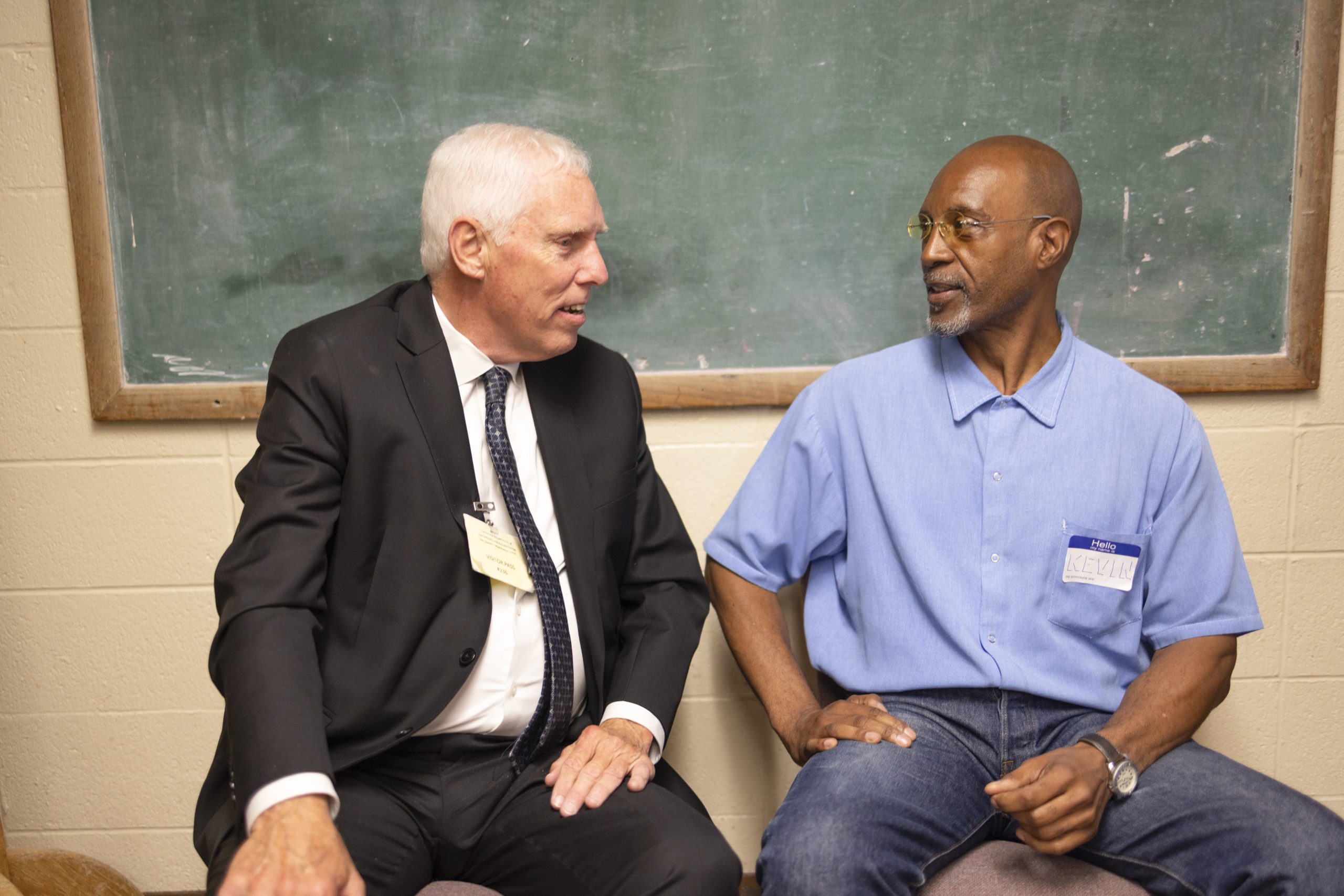
    Stephen Wagstaffe, the district attorney of San Mateo County, speaks with Kevin Sawyer, an inmate at the San Quentin Rehabilitation Center in San Quentin, Calif., May 29, 2026. What might stop kids from committing crimes? A group of district attorneys went to San Quentin, once one of California’s most infamous prisons, to ask the inmates for advice. (Rachel Bujalski/The New York Times)RACHEL BUJALSKI
    District attorneys gather after meeting the inmates at the San Quentin Rehabilitation Center in San Quentin, Calif., May 29, 2026. What might stop kids from committing crimes? A group of district attorneys went to San Quentin, once one of California’s most infamous prisons, to ask the inmates for advice. (Rachel Bujalski/The New York Times)RACHEL BUJALSKI
    Nathan Hochman, the Los Angeles district attorney, speaks with inmates at the San Quentin Rehabilitation Center in San Quentin, Calif., May 29, 2026. What might stop kids from committing crimes? A group of district attorneys went to San Quentin, once one of California’s most infamous prisons, to ask the inmates for advice. (Rachel Bujalski/The New York Times)RACHEL BUJALSKI
    Brooke Jenkins, the top prosecutor in San Francisco, is interviewed by inmates for The San Quentin News at the San Quentin Rehabilitation Center in San Quentin, Calif., May 29, 2026. What might stop kids from committing crimes? A group of district attorneys went to San Quentin, once one of California’s most infamous prisons, to ask the inmates for advice. (Rachel Bujalski/The New York Times)RACHEL BUJALSKI
    A general view of the San Quentin Rehabilitation Center in San Quentin, Calif., May 29, 2026. Inmates at San Quentin have access to self-help and job training programs. (Rachel Bujalski/The New York Times)RACHEL BUJALSKI
  • Lindsey Graham was facing reelection in November. What happens now?

    Lindsey Graham was facing reelection in November. What happens now?

    The sudden death of Sen. Lindsey Graham (R., S.C.) comes less than four months before he was set to appear on the ballot as a strong favorite to win a fifth term.

    Now, South Carolina Republicans are facing a fast-paced scramble to replace him on the general election ballot. (Graham won the Republican primary by a wide margin this year.)

    South Carolina law sets out a timeline for replacing him on the ballot. Its provisions suggest a special primary election will take place Aug. 11, according to the schedule set out in the law.

    Candidates can file for the seat as soon as July 21, the second Tuesday after Graham’s death, and the filing period will close on July 28. State law says that the election must happen on the second Tuesday after that deadline. If no candidate secures a majority, a runoff between the top two finishers would take place two weeks later, on Aug. 25.

    Gov. Henry McMaster, a Republican, can appoint a replacement to serve out the rest of Graham’s Senate term, through Jan. 3, 2027, under state law. The replacement could choose to compete for the Republican nomination in the special primary.

    Graham, 71, died of “a brief and sudden illness” Saturday evening, his office said in a statement just after 2 a.m. ET Sunday.

    Rep. Nancy Mace is looking at a potential run for the seat, according to four people familiar with her thinking, who spoke on condition of anonymity to describe private talks. Mace ran for governor this year, finishing a distant fifth in the Republican primary.

    While Graham drew Republican primary challengers this year, he won the nomination by a wide margin, avoiding a runoff. President Donald Trump supported Graham, a onetime critic of the president who had shifted to a supportive posture in recent years.

    One of Graham’s opponents in the primary was businessperson Mark Lynch, who finished second with nearly 29% of the vote. He said on social media Sunday morning that “while we had our political disagreements, today is not a day for politics.”

    Previously, Lynch had strongly criticized Graham for his support of U.S. military intervention abroad, seeking to appeal to more isolationist members of Trump’s MAGA base.

    The third-place finisher was Thomas Keith Dismukes, a motivational speaker who campaigned on “faith, family, limited government, and the restoration of principles that make America great.” Other Republican contenders included Pat Herrmann, a county Republican Party chair and small-business owner, and Calvin Cowen, an engineer and city council member.

    The Democratic nominee for Senate is Annie Andrews, a pediatrician who has been a strong fundraiser in the race.

    “I hope that South Carolinians will join me in setting partisanship aside and offering gratitude to Senator Lindsey Graham for his service to the great state of South Carolina,” Andrews said Sunday morning, praising him as a “man of great faith who proudly served our nation as a JAG officer and Air Force colonel.”

    This article originally appeared in the New York Times.
  • Whistleblowers accuse Kennedy Center of contracting flaws under Trump

    Whistleblowers accuse Kennedy Center of contracting flaws under Trump

    As the John F. Kennedy Center for the Performing Arts prepares for major renovations, former project managers there have sent Congress internal documents that they say show how the institution bypassed government contracting norms in work carried out under President Donald Trump.

    The documents — sent to a Senate and a House committee last month by lawyers for unidentified clients referred to as whistleblowers — detail how vendors were selected for work without competitive bidding under rationales that are depicted as flawed.

    In one case, a center official described a company chosen for flooring work as the “only identified firm on the mid-Atlantic seaboard that maintains a fully vertically integrated model, vital for acoustic continuity, architectural uniformity, and operational agility.”

    In a letter to the committees, lawyers for the former project managers say their clients question whether the business, located in South Carolina, was the only one available that was qualified to do the flooring work.

    The letter says the center’s decision to skip bidding in another case was designed to help meet deadlines important to the president, such as the Kennedy Center Honors in December, which he hosted.

    “Renovations were rushed to meet the deadlines driven by the president’s desire to host official events at the center,” the letter says. “Federal contracting laws and regulations were ignored.”

    A statement from the Kennedy Center defended its practices, saying that the institution operates with rigorous financial oversight and that the assertions by the whistleblowers that contracting standards had been bypassed were incorrect.

    “As America’s cultural center, the institution makes every decision guided by responsible stewardship and an unwavering commitment to its patrons and the nation it proudly serves,” Roma Daravi, a spokesperson, said in a statement. “We remain fully committed to transparency and to delivering the critical improvements that will preserve this institution for generations to come.”

    Liz Huston, a White House spokesperson, responded to the allegations by accusing past management of allowing the center to fall into disrepair.

    “President Trump did what Democrats wouldn’t,” she said in a statement. “After decades of neglect, he committed the bold leadership and proper resources to fix the Kennedy Center and start the renovations of the finest performing arts facility in the world.”

    Trump, a developer by trade, has taken an intense interest in remaking the center, helping to secure $257 million from Congress last year for renovations. In one case cited in the letter, a new bathroom floor in one of the center’s three presidential boxes was ordered torn up last year and redone after the White House complained about the beige color of the tiles. (The email’s subject line was “tile emergency,” alongside a red siren emoji.)

    “This is a big undertaking for my department to remove the floor tile that was just installed,” the Kennedy Center’s operations and maintenance director replied in a March 2025 email, noting that the beige tiles had been approved by a White House designer.

    In a response email, a White House official confirmed the directive to replace the beige tile with white. (The work was unrelated to the South Carolina flooring company.)

    The center said in a statement that the changes were a standard design adjustment that caused “zero unnecessary burden on the taxpayer.”

    The White House decided to remodel the presidential boxes days after Trump took over as chairperson of the center’s board, according to the documents sent to Congress. The plans included gold plumbing fixtures in the bathrooms, gold covers for electric outlets, marble baseboards, and the tile flooring paid for by the White House, with much of the labor provided by the center.

    The 82-page submission to Congress was made under a law designed to protect federal employees who disclose allegations of wrongdoing from retaliation. The lawyers who sent it, David Seide and Dana Gold, work for a nonprofit that represents government whistleblowers.

    Sen. Sheldon Whitehouse (D., R.I.), the top Democrat on the Environment and Public Works Committee, which received the submission, wrote to the Kennedy Center on Thursday demanding information related to the renovations. Whitehouse, an ex officio member of the center’s board, said the submission raised “serious questions” about whether public funds were being spent properly.

    Nothing in the submission suggests that the firms selected without bidding have any personal ties to Trump or his family, or that the vendors played any role in the decision-making process under which work was awarded.

    Reached by phone, Kent Rogerson, who runs the South Carolina flooring company, declined to comment, citing a nondisclosure agreement.

    Although the Kennedy Center is run as a nonprofit, it has, like Smithsonian museums, traditionally followed federal contracting rules because its building is federal property. But the documents include a new policy, adopted in November, that states the center was exempt from federal rules and replaces them with new procedures.

    Compared with federal contracting regulations, the new policy relaxes the requirements under which sole-source contracts can be awarded, according to several government procurement experts, by adding to the rationales for when it is permissible. Under the policy, contracts can be awarded without bidding when “circumstances beyond the center’s control require an immediate award” or “the requirement is unique or has a compelling business interest.”

    The center said in its statement that it had confirmed with the Office of Management and Budget that, as an independent entity, it was not bound by federal contracting regulations and that it had updated its procurement policy to be both fair and agile when making renovations.

    Trump announced that the center would be shuttered for two years for the project, starting around Independence Day. But a federal judge temporarily blocked the closure after finding that the center’s board, composed largely of the president’s aides and allies, had not properly scrutinized his plan before approving it. The White House statement on Friday accused the judge of being “radical” and allowing the center to remain in disrepair.

    Kennedy Center officials have described renovations to address problems such as water leaks and outdated equipment as urgently needed. The president has said the work would elevate a “dilapidated” building to the “highest level of Success, Beauty, and Grandeur.”

    The administration’s contracting practices have been under scrutiny. The Lincoln Memorial Reflecting Pool project, for example, has been carried out through multiple no-bid contracts. To exempt the project from competitive bidding, administration officials said it needed to be finished in time for the country’s 250th birthday celebrations.

    One contract cited by the former Kennedy Center managers was valued at $4.4 million and awarded last fall for work that included painting the building’s exterior gold columns. Trump has taken issue with their “fake gold color,” and internal documents said they should be repainted white before the Kennedy Center Honors.

    The painting was done by Cypress Painting Systems, a company in Maryland that has done work under prior administrations. But lawyers for the former project managers reported that the work began before any contract had been awarded.

    The contract was later awarded, they said, to a company that primarily works as a furniture dealership, Washington Office Interiors, which used Cypress as its subcontractor.

    The interiors company had been hired through a Small Business Administration program that enables “socially and economically disadvantaged” companies to receive sole-source contracts in some settings. Whitehouse, in his letter, said it appeared that the contract was configured this way because Cypress did not have the same certification that would enable it to receive a sole-source contract through that program.

    In its statement, the Kennedy Center said the contractual arrangement had fully complied with all Small Business Administration guidelines.

    Barbara Barry, who runs Washington Office Interiors, said in an email that she was not authorized to discuss the contract but that her company had been providing construction and furniture services to federal agencies since long before Trump was elected.

    Robin Mertz, president of Cypress Painting, deferred questions to the Kennedy Center.

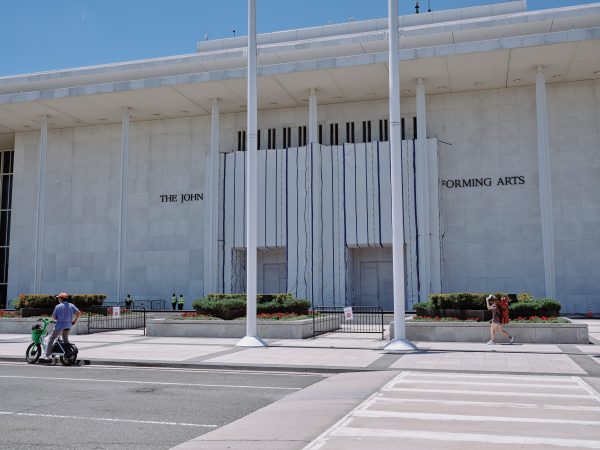
    Cypress Painting also installed Trump’s name on the building’s marble facade, under a separate arrangement. The name was removed in June by order of a federal judge, and the center is in the process of appealing.

    Matt Floca, the center’s executive director, has denied that the columns were painted simply to satisfy the president. He has said that the center’s leaders had long wanted to address structural degradation and “mismatched paint jobs,” and that hiring subcontractors is standard practice.

    “This is not just a random action,” Floca testified at a court hearing this year. “It was something that we had been planning for before this leadership was in place.”

    Floca has also attested to the special qualifications of Low Country Flooring of Pawleys Island, S.C., the flooring company that was selected without competition to provide services to the Kennedy Center for five years, according to the documents provided to the committees.

    The purchase agreement, not a formal contract, outlined work worth up to $8 million in restoring and replacing hardwood flooring.

    The business has assisted on high-profile projects in Washington, including work on the Supreme Court and the Andrew W. Mellon Auditorium near the National Mall, a federal building used for galas and conferences.

    The center said that the company was selected after what it described as exhaustive market research and that it was capable of purchasing directly from timber mills to avoid markups on materials.

    Last year, on a trip to Washington before the company was selected, its representatives posted photos of themselves and Trump at the Kennedy Center on Facebook.

    In one photo, Jamie Lambert, who helps run the company, is shown praying with Trump inside the center’s concert hall. His colleague, Rogerson, commented on the image online.

    “He asked,” Rogerson wrote, “and the president said of course.”

    This article originally appeared in the New York Times.

  • White House directed Patel to oversee investigation involving Times reporting

    White House directed Patel to oversee investigation involving Times reporting

    WASHINGTON — The White House directed FBI Director Kash Patel to oversee a leak investigation into reporting by the New York Times about security issues with the new Air Force One, leading to a flurry of subpoenas to several Times reporters Friday night, according to people with knowledge of the situation.

    Patel scuttled a planned trip to Chicago and spent roughly eight hours at the White House on Friday, running the investigation from there rather than FBI headquarters — a major departure from historical practice. Patel also briefed senior administration officials on the investigation, two people said. The people spoke on the condition of anonymity to describe sensitive internal discussions.

    The White House’s deep involvement in the case came after officials said President Donald Trump was enraged about the coverage of the Qatari-donated plane, which the Times reported Thursday lacks the same defensive countermeasures of the previous Air Force One.

    Trump flew on the new jet to a NATO meeting in Turkey this past week but was forced to change to the old plane when he departed because of Secret Service concerns, as the Times reported Wednesday.

    Patel’s role in the investigation, in close coordination with top administration officials, reflects a further dismantling of the wall that had separated the White House and the FBI in previous administrations. The government’s effort to immediately seek information from journalists, when such cases are typically centered first on identifying potential internal wrongdoing by officials, comes as the Trump administration has intensified pressure on news organizations.

    In response to a request for comment, Steven Cheung, the White House communications director, said, “President Trump is laser focused on helping the American people and keeping them safe. That will always be his priority.”

    Emily Covington, director of the Justice Department’s Office of Public Affairs, sought to downplay the unusual nature of the subpoenas, some of which were delivered late Friday directly to the doors of the reporters’ homes.

    “Every administration has addressed the crime of leaking national security information,” she said in a statement. “To the extent that we have to investigate breaches of national security, that’s something that we will continue to do.”

    She added: “To be clear, reporters are not the targets. Those leaking classified information are.”

    Ben Williamson, an FBI spokesperson, said in a statement: “Director Patel and White House officials agreed to meet on Friday at the White House to brief an ongoing matter. While we would not comment further, other speculative reporting regarding the nature of the meeting is absolutely false.”

    One person briefed on the conversations said that Patel had his own concerns about the type of information publicly disclosed about the plane. Another person said that Patel went to the White House of his own volition to oversee the investigation.

    Trump had sought the rapid retrofitting of the Qatari-donated 747 after he learned that two new Boeing planes that were supposed to replace the aging ones used as presidential aircraft would be delayed for years.

    Trump has basked in the luxury of the new plane, which is more than a decade old but has the kind of opulent furnishings the president prefers. He has repeatedly described the Qatari jet as cost free to the United States. But in reality, hundreds of millions of taxpayer dollars were spent to upgrade its security systems. Officials have said that he plans to take the plane with him as a donation to his presidential library when he leaves office.

    While Trump has said the Qatari plane was upgraded with the necessary security “bells and whistles,” the Times reported Thursday that it lacks the defensive countermeasures that were security features of the old model, including its advanced antimissile capabilities.

    Experts said the absence of the capabilities creates a potential risk when Air Force One is flying overseas, not only for the president but for the large entourage of White House staff members, Secret Service officials, journalists, and guests who fly aboard.

    After the Secret Service urged him to fly the old Air Force One out of Ankara, Turkey, Trump announced that he was making a swap in aircraft. In a post on social media, he claimed that he was taking the older plane to the United Kingdom for “old time’s sake” and that he wanted to show the new jet to U.S. troops on a military base there.

    Once he landed at Mildenhall Air Force Base in England, he walked from the older plane to the Qatari-donated jet, which transported him back to the United States.

    When the Times and other news organizations began reporting this past week on the security issues with the new plane, the president was livid, according to an official with knowledge of his comments who was not authorized to discuss the matter publicly.

    Before the Times’ first article was published, a senior official at the FBI contacted a reporter and a senior editor to ask that the article be held, calling it an issue of national security. The FBI official declined to explain the security issue. The official also asked the Times to disclose its sources for the article. The newspaper refused to do so.

    On Friday, after Patel left the White House, he posted a message on social media confirming that he had been there, and said that “the fake news will find out why soon.”

    That night, 48 hours after the Times had published the first article on the new plane, its reporters were served with subpoenas demanding that they provide evidence before a grand jury Wednesday.

    In a statement, David McCraw, the Times’ top newsroom lawyer, said: “This brazen act should be seen as nothing more than an attempt to prevent the public from knowing what is happening in their country by intimidating journalists from doing their jobs.”

    The rapid escalation of the case is a sharp departure from past national security leak investigations. Typically, officials first seek to establish how many people have had access to the information that was made public. Depending on the size of that group, prosecutors then attempt to determine ways to eliminate potential suspects from the list. In past leak cases, such efforts have often been abandoned if the pool of potential leakers is simply too large to scrutinize.

    Historically, the Justice Department has sought to subpoena reporters only as a last resort after other reasonable options have been exhausted.

    The Trump administration has pushed for a number of leak investigations, several of which have been conducted by federal prosecutors in the Eastern District of Virginia. Those efforts, which included subpoenas to reporters from the Wall Street Journal and the Washington Post, foundered in the face of resistance from a federal judge, according to multiple people familiar with the matter. Federal prosecutors withdrew them last month.

    The subpoenas issued to Times reporters Friday were from a different jurisdiction, the Southern District of New York, and were sought by Jay Clayton, the U.S. attorney in Manhattan, who was recently nominated by Trump to serve as the director of national intelligence.

    The subpoenas seek the reporters’ testimony on the same day Clayton is set to face a Senate confirmation hearing for his new post. The same day, Todd Blanche, the acting attorney general, is set to take part in a confirmation hearing to serve as attorney general on a permanent basis.

    This article originally appeared in the New York Times.

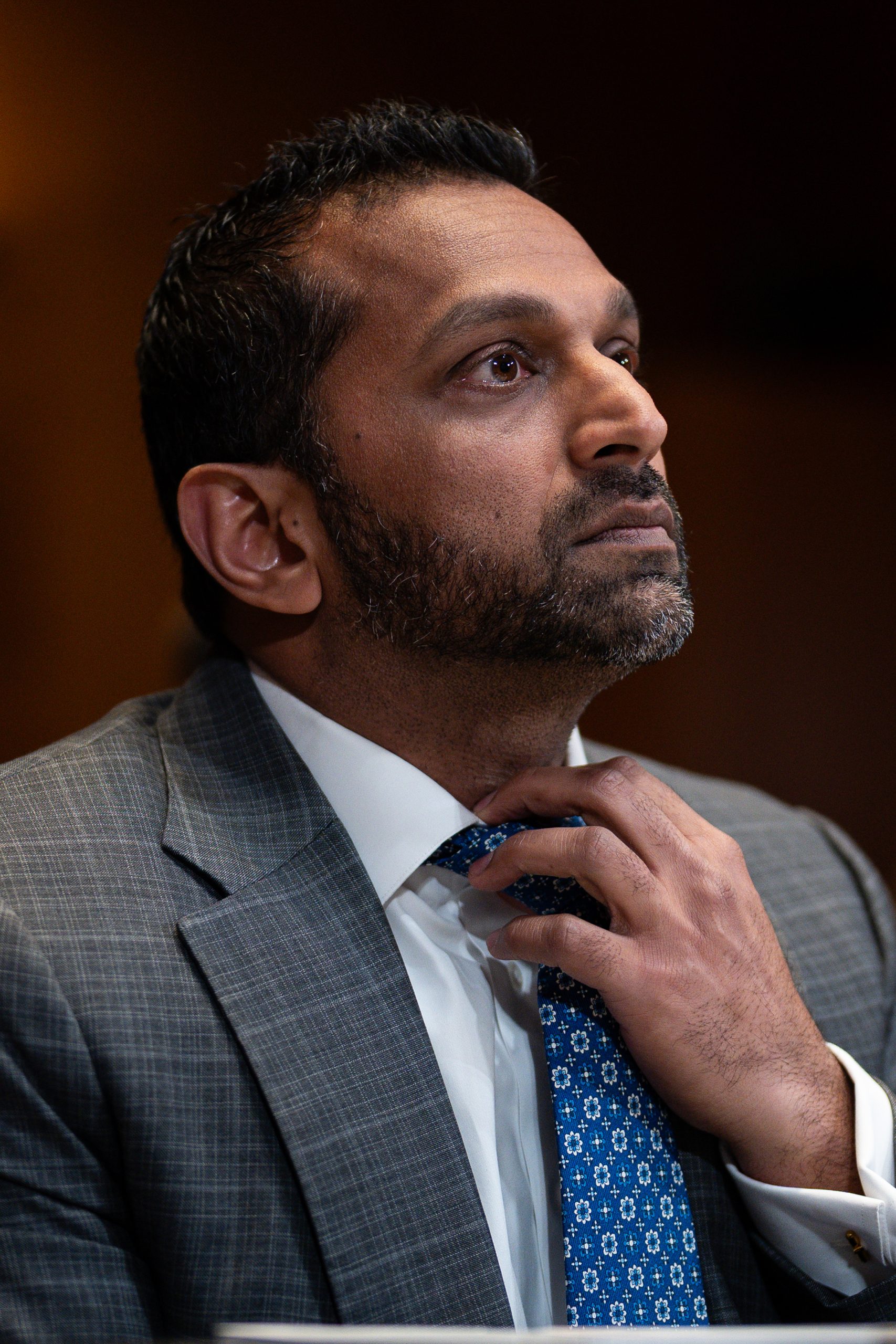
    FILE — FBI Director Kash Patel on Capitol Hill in Washington, on May 12, 2026. The White House directed Kash Patel, the F.B.I. director, to oversee a leak investigation into reporting by The New York Times about security issues with the new Air Force One, leading to a flurry of subpoenas to several Times reporters Friday night, according to people with knowledge of the situation. (Tierney L. Cross/The New York Times)TIERNEY L. CROSS
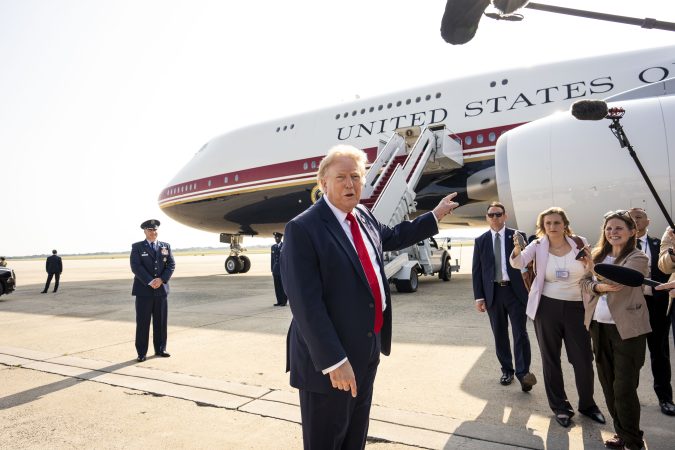
    FILE — President Donald Trump prepares to board the new Air Force One at Joint Base Andrews, Md., Wednesday, July, 1 2026. The Trump administration issued subpoenas on Friday to several journalists for The New York Times, after the news outlet reported this week on security concerns involving President Trump’s new Qatari-donated Air Force One. (Doug Mills/The New York Times)DOUG MILLS
  • Jayson Conner, 48, and Jeffrey Newman, 58, die; gave thousands of backpacks to those in need

    Jayson Conner, 48, and Jeffrey Newman, 58, die; gave thousands of backpacks to those in need

    NEW YORK — Jayson Conner and Jeffrey Newman, a Queens couple who spent years walking the streets of New York and handing out tens of thousands of backpacks filled with supplies — toiletries, socks, notebooks — to people in need, died within days of each other.

    Mr. Conner, 48, died from a heart attack at their home in Queens on June 28, his daughter, Jewlia Conner, said.

    Mr. Newman, 58, died four days later, on July 2, according to his brother Glenn, who did not provide a location or cause.

    Mr. Conner and Mr. Newman began their efforts in 2018 with a few armfuls of backpacks. By 2026, they and almost 40 volunteers had distributed more than 180,000 packs to people living on the streets of Manhattan.

    Once a week, a few dozen people would gather at a rental space in Queens, and Mr. Conner and Mr. Newman would lead them in organizing items into more than 100 backpacks that were loaded onto a moving van.

    They would then drive the van to Manhattan, and over the next several days the volunteers would fan out, backpacks slung over their shoulders. Mr. Conner and Mr. Newman trained the volunteers on the best way to approach and engage with people who might be experiencing extreme physical or emotional pain — or might just want to talk to a friendly face.

    “It was fascinating to see how well they managed to communicate with people on the streets,” Kristina Kashtanova, who began volunteering with them in 2020, said in an interview. “They taught me how to be a better human and how to talk to people who were so different from me.”

    Giving away the backpacks was initially a side project of their nonprofit, Together Helping Others, which provided a range of social services. In moving from place to place, they discovered, homeless people often lacked something as simple as a container to hold their belongings. What people in that situation needed, the two men figured, were sturdy backpacks.

    They announced the idea on social media, and within three days nearly 100 backpacks had been donated, along with countless supplies. They called the program Backpacks for the Street.

    In loading up the backpacks, they gave significant thought to what homeless people might actually need — like Slim Jim beef-jerky sticks, because even people without teeth could suck on them for protein. Every flashlight they distributed came with fresh batteries. In the winter, they included wool socks.

    “We take what we do very seriously,” Mr. Newman told ABC News in 2020. “We’re not making little goody bags. We’re really thinking out what it is people need the most. It’s a labor of love.”

    During the pandemic, when shelters were believed to be hot spots for viral transmission, the need for the backpacks became more acute.

    “The city has great programs for the homeless, but there are many reasons why someone might not want to go to a shelter right now,” Mr. Newman told Good Morning America in 2020. “Every bag we deliver can go a long way, especially during this crisis.”

    In addition to requesting monetary donations, they listed specific supplies that people could donate on the organization’s Amazon wish list.

    Kashtanova said that she and other volunteers were discussing how to continue the program but that no decisions had been made yet.

    For Mr. Conner, the effort was personal; he had experienced sexual abuse, drug addiction, and homelessness himself.

    “It was soul-crushing,” he said on the Backpacks for the Street website. “You never know where you’ll find respite day after day, or if you’ll eat or find warmth.”

    Jayson Conner was born on July 4, 1977, in Stockton, Calif. He attended culinary school and worked at restaurants.

    His marriage to Leslie Manfre ended in divorce.

    Mr. Conner began using drugs and doing sex work to pay for them, a spiral that led to a two-year period of homelessness that continued after he moved to New York.

    He and Mr. Newman met in 2004 and began dating. Mr. Conner found work at restaurants but did not get clean until 2015.

    Along with his daughter, he is survived by a son, Andrew.

    Jeffrey Lawrence Newman was born on Sept. 27, 1967, in Ardsley, a village in Westchester County, N.Y. His father, Ted, was a real estate investor and restaurateur; his mother, Joyce (Fishkin), managed the home and, after the family moved to Florida, served as the first female president of the Jewish Federation of Broward County.

    Mr. Newman graduated from Florida International University in 1991 with a degree in communication and media studies.

    Along with his brother Glenn, he is survived by his parents; another brother, Ric; and a sister, Beth Newman.

    Before starting the nonprofit organization, Mr. Newman worked as a journalist for ABC News and as a financial consultant, and was the founding president and CEO of Out.com.

    One Thanksgiving in the late 2000s, he and Mr. Conner volunteered at a soup kitchen run by a church in Brooklyn.

    “The pastor said she thought it was wonderful that we wanted to do this but that Thanksgiving gets a lot of volunteers,” Newman told the New York Amsterdam News in 2018. “What she needed were people for the other 364 days of the year. We were sold.”

    After eight years of working at the soup kitchen, they decided to start their own organization.

    “Everything about the backpack is about hope,” Mr. Newman told Fox News in 2020. “We understand that it’s not going to cure homelessness; we don’t pretend it’s going to cure homelessness. But it does say to somebody, ‘Hey, you know what? We care.’”

    This article originally appeared in the New York Times.

  • Trump tried to block Canada’s bridge to Detroit from opening, but it will open anyway

    Trump tried to block Canada’s bridge to Detroit from opening, but it will open anyway

    OTTAWA, Ontario — Despite the best efforts of President Donald Trump, the Gordie Howe International Bridge spanning Detroit and Windsor, Ontario, will open on July 27, the government of Canada announced on Friday evening.

    The soaring 6.4 billion Canadian-dollar ($4.5 billion) structure has reshaped the skylines of the two border cities, between which roughly $300 million in trade flows each day. It is also precisely the kind of large infrastructure project Prime Minister Mark Carney has championed as a bulwark against the economic damage caused by Trump’s trade war with Canada.

    Two senior officials in the United States said the two countries reached a deal on Thursday about how tolls would be distributed, allowing the bridge to finally open.

    The bridge was largely finished early this year, nearly 13 years after Canada and Michigan signed an agreement that allowed construction to begin — a timeline stretched by pandemic-related delays.

    In February, Trump said in a rambling social media post that he intended to block the bridge’s opening. A ceremony scheduled for early June was called off after invitations had already gone out, and the Trump administration spent the months that followed his first post offering shifting explanations for the president’s opposition.

    Trump’s initial post came hours after Matthew Moroun, the billionaire scion of the family that has owned the Ambassador Bridge upstream from the Gordie Howe Bridge since 1979, met in Washington with Commerce Secretary Howard Lutnick, the New York Times reported. Less than a month before that meeting, Moroun had donated $1 million to a super political action committee supporting the president.

    Trump’s early objections included a desire to punish Canada for what he described as its exploitation of the American economy and its renewed trade ties with China. He also falsely claimed that no American workers or steel had been used in the bridge’s construction.

    Then Pete Hoekstra, the United States ambassador to Canada, indicated that the Trump administration was upset about the toll arrangement worked out by Canada and Michigan in 2012.

    Canada bore the full cost of construction, and the bridge is jointly owned by Canada and Michigan. Under the original agreement, once tolls recover the construction costs, perhaps 50 years from now, the two governments would split any revenue not needed for maintenance and operations.

    Hoekstra, who also falsely claimed that it was a “hoax” that Canada paid for the bridge, later suggested that the United States was looking for a way for Michigan to see revenue from the bridge sooner.

    Under the new agreement, the Canadian official said, half of the tolls will go into a regional economic development fund for the first 15 years of operation. A U.S. official said the money will be collected by the United States government and the development fund will only be available to Americans. The United States will also have to approve toll increases beyond 10%, a U.S. official said. Previously, tolls were to be managed by an authority composed of representatives of Canada and Michigan.

    Michigan’s government was initially cool to the federal intervention on tolls, though its position has since softened.

    “It’s good for Michigan workers and it’s good for Michigan’s auto industry,” Stacey LaRouche, the press secretary for Gov. Gretchen Whitmer, said in a statement last month. “This project has been a tremendous example of bipartisan and international cooperation.”

    On Friday, Whitmer welcomed the end of the saga.

    “The Gordie Howe International Bridge has always been a great deal for our state,” she said in a statement. “I’m proud to have fought for its opening and congratulate my partners who have worked on this issue alongside me for years.”

    The Morouns, who made their fortune largely through trucking before expanding into real estate, have long been unpopular on both sides of the border. In Detroit, many of their decaying landmark properties became unwelcome symbols of the city’s struggles.

    In Windsor, the Ambassador Bridge is a notoriously bad neighbor. At times, poor maintenance caused pieces of the bridge to crash to the ground. The bridge company further tarnished its reputation when it bought a swath of a neighborhood in preparation for its unfulfilled new bridge. The houses were boarded up and left to rot.

    For a critical trade crossing, the Ambassador Bridge is oddly disconnected from expressways. The long lines of trucks traveling to and from it are forced into a gear-griding slog along a city road lined with traffic lights.

    Fare hikes on the Ambassador Bridge have prompted large numbers of commercial drivers to detour and cross on a Canadian government-owned bridge about 100 miles to the north between Port Huron, Mich., and Sarnia, Ontario.

    This article originally appeared in the New York Times.

  • Trump, ending decades of protection, opens wild habitats to drilling and mining

    Trump, ending decades of protection, opens wild habitats to drilling and mining

    The Trump administration on Friday moved to open the habitats of imperiled animals to farming, drilling, mining, real estate development, and other activities in what environmentalists characterized as the most severe erosion of protections for wildlife in half a century.

    It did so by recasting a single word: “harm.”

    For more than 50 years, the federal government has used a broader definition of harm to animals under the Endangered Species Act, a bedrock environmental law. It included any significant “modification or degradation” of habitat that kills or injures animals by impairing their ability to eat, shelter, or breed.

    The Supreme Court upheld this interpretation in 1995, ruling against property owners who argued that harm should only mean directly killing or injuring an endangered animal.

    But on Friday, the Interior Department and the Commerce Department announced a final rule that rescinded this long-standing interpretation. Under the rule, destroying an endangered species’ nest or habitat would no longer be considered illegal.

    The change could open the door for fossil fuel companies, agricultural interests, land developers, and others to disturb or destroy the habitats of vulnerable species. Many species are already running out of places to live, and the new rule is likely to add extreme pressure, experts said.

    Earthjustice, an environmental law firm, said it planned a legal challenge. But if the case were to reach the current Supreme Court, its conservative supermajority could enshrine the change, preventing future administrations from reversing it, said Karrigan Börk, an environmental law professor at University of California Davis.

    The move on Friday was the latest in a series of extraordinary efforts by the Trump administration to weaken environmental regulations designed to fight climate change and prevent species extinction. In March, a panel of administration officials voted to exempt oil and gas drilling in the Gulf of Mexico from measures to protect endangered whales and other imperiled species.

    In a news release, the Interior and Commerce departments said they were taking action to restore the Endangered Species Act to its original intent. They argued that in recent years, environmentalists and Democratic administrations had weaponized the act to block drilling and other development nationwide.

    “For years, federal agencies abused the ESA to obstruct lawful land use and burden American families and businesses,” Interior Secretary Doug Burgum said in a statement. “That approach turned routine activity into a regulatory trap, drove up costs that impacted people’s lives, and expanded federal authority beyond what Congress intended.”

    The National Mining Association, a trade association, applauded the announcement.

    “Our industry is absolutely committed to the conservation and recovery of threatened and endangered species — and their habitats — but the definition of ‘harm’ has long been abused to serve as a punitive obstacle impeding critical projects,” Tawny Bridgeford, the group’s general counsel and senior vice president, said in a statement.

    Legal scholars said the government was acting without conducting scientific research into the impact of the change, a step that would typically precede a move of this kind.

    The change is “undermining the fundamental purpose of the Endangered Species Act,” said Lynn Scarlett, who served as deputy interior secretary under President George W. Bush.

    Habitat modification or degradation caused by human activity is often the main reason that species face extinction. An intergovernmental body of leading scientists has found it to be the top driver of biodiversity loss worldwide.

    Modifying habitats can easily harm individual animals without intentionally or immediately killing or injuring them, said Gary Frazer, who oversaw the U.S. Fish and Wildlife Service’s endangered species program for two decades before retiring in 2025.

    Piping plovers, for instance, need undisturbed beaches to nest and raise their young. They return to the same sites year after year but only occupy them in the spring and summer. During winter, when the birds have migrated south, a property owner could develop a beach without immediately hurting any individual piping plovers. But come spring, the returning plovers would find themselves without a place to feed, nest and raise their chicks.

    Or take red-cockaded woodpeckers, which are not migratory but require mature pine trees to hollow out the cavities where extended families roost. Even if a timber company or developer cut down those trees without causing direct injury to any birds, they could not survive without other unoccupied old trees.

    Amphibians like California tiger salamanders begin their lives in seasonal ponds but move into upland burrows after metamorphosis. If a pond were drained during the summer, the salamanders that returned to the spot would not have the water they need to produce the next generation.

    “We are at the precipice of losing 50 years of progress in the protection of America’s wildlife, because we know that the challenges for most animals are not that they’re getting shot,” said Justin Pidot, a professor of environmental law at the University of Arizona who served as general counsel at the White House Council on Environmental Quality during the Biden administration.

    After the rule was proposed last year, it triggered roughly 220,000 public comments. About 99% were against the change, according to an analysis by the New York Times that used artificial intelligence.

    Among those asking the administration to reconsider were state wildlife agencies in some Republican-governed states.

    “Threatened and endangered species are entirely dependent on healthy habitats,” wrote Bruce Kreft, chief of the conservation and communications division of the North Dakota Game and Fish Department. The proposed change, he said, “would have dire consequences.”

    Ted Will, who was the director of the Georgia Department of Natural Resources Wildlife Resources Division at the time, wrote that “the greatest threat to the vast majority of species of greatest conservation need in Georgia, whether federally listed or not, is habitat loss.”

    Attorneys general from 16 states — including Arizona, California, Illinois, and New York — said the rationale for the change was “arbitrary, capricious, an abuse of discretion and contrary to law.”

    Those supporting the change included industries affected by habitat restrictions. Oil and gas trade groups including the American Petroleum Institute wrote that harm must involve a direct injury to a particular animal.

    But the vast majority of commenters appeared to be individuals, often begging the government to reconsider.

    “Everyone knows a species cannot live without its habitat,” wrote Ashleigh Smith of Port Angeles, Wash.

    Environmental lawyers and activists said that projects are rarely blocked because of habitat restrictions. More often, individuals or companies have to create “habitat conservation plans,” which describe the expected effects on endangered species and detail steps that will be taken to minimize them, they said.

    With the change, people and governments will still need permits for actions that would, say, crush or bury endangered animals, but not for felling a tree or polluting a river that the animal relies on, said Jane Davenport, a senior attorney with Defenders of Wildlife, a conservation group. That means landowners would take fewer measures to protect endangered species, and also contribute less to offsetting their actions by helping the species elsewhere.

    “A lot of our endangered species are on the edge,” Börk said. “If you lose that species, it is gone.”

    This article originally appeared in the New York Times.
  • Times journalists subpoenaed as Trump escalates pressure on media

    Times journalists subpoenaed as Trump escalates pressure on media

    The Trump administration issued subpoenas Friday to several journalists for the New York Times, after the news outlet reported this week on security concerns involving President Donald Trump’s new Qatari-donated Air Force One.

    The subpoenas — which seek to force the reporters to testify before a federal grand jury in New York on Wednesday — were an extraordinary escalation in Trump’s efforts to threaten and intimidate independent news organizations.

    In some cases, the subpoenas were delivered by federal agents who showed up at reporters’ homes.

    The Times denounced the administration’s actions.

    “The appearance of federal law enforcement agents on the doorstep of news reporters should shock the conscience of any American who believes in the Constitution and the press freedom it protects,” David McCraw, the Times’ top newsroom lawyer, said in a statement Friday evening.

    “Our journalists report the facts and advance the American public’s right to know how their government is operating and their taxpayer dollars are being used,” McCraw wrote. “This brazen act should be seen as nothing more than an attempt to prevent the public from knowing what is happening in their country by intimidating journalists from doing their jobs.”

    The subpoenas contain few specifics, asking only that the journalists testify “in regard to an alleged violation of federal criminal law.” They were issued by Jay Clayton, the U.S. attorney in Manhattan. Clayton, who leads one of the country’s most prominent law enforcement offices, was recently nominated by Trump to serve as director of national intelligence.

    Representatives for the White House and the U.S. attorney in Manhattan did not immediately respond to inquiries Friday evening.

    The Times journalists who received subpoenas included Julian E. Barnes, Eric Lipton, Tyler Pager, and Eric Schmitt, who reported Wednesday that Trump had departed Turkey on the old Air Force One as a security precaution at the urging of the Secret Service. On Thursday, the Times reported that the new Air Force One, a Qatari-donated Boeing 747-8, lacked some of the advanced security features of the older aircraft, including anti-missile capabilities. Both articles cited sources who spoke on the condition of anonymity to discuss sensitive security issues.

    Before the Wednesday article was published, a senior official at the FBI contacted the Times to ask that the article be held, calling it an issue of national security, according to a person familiar with the conversation. The FBI official spoke with a reporter and a senior editor in the Times’ Washington bureau; the official declined to explain the security issue when asked. (A spokesperson for the Times, Charlie Stadtlander, confirmed the account.)

    Trump has long been a harsh critic of the news media. But in his second term in office, he has moved aggressively to use the immense powers of the federal government in his efforts to attack the press.

    Earlier this year, the Justice Department sought to compel testimony from journalists at the Wall Street Journal and the Washington Post. The Justice Department withdrew the subpoenas after both news organizations fought back in sealed filings.

    Both Democratic and Republican administrations have initiated leak investigations into the disclosure of classified information. But subpoenas aimed at journalists are not common, and First Amendment advocates say they can chill the work of news gathering.

    In January, FBI agents took the rare step of searching the home of a Washington Post reporter, Hannah Natanson, as part of an investigation into a government contractor’s handling of classified material. The agents seized phones, laptops, and a smartwatch after executing a search warrant. Natanson had spent months speaking with government employees while reporting on the Trump administration’s efforts to shrink the federal workforce.

    The Times is a party to several lawsuits involving Trump and his administration.

    The president sued the Times last year, accusing it of defaming him, disparaging his reputation, and seeking to undermine his 2024 candidacy.

    In December, the Times sued the Defense Department after it imposed restrictions on reporters who cover the military. The company sued again after the agency reduced reporters’ physical access to the Pentagon.

    In May, the Equal Employment Opportunity Commission sued the Times, accusing it of employment discrimination. On Friday, the Times filed a counterclaim, saying the lawsuit was an act of retaliation for its coverage of the Trump presidency and a violation of its First Amendment rights.

    This article originally appeared in the New York Times.
  • Wally Funk, who set an age record for space travel, dies at 87

    Wally Funk, who set an age record for space travel, dies at 87

    Wally Funk, who was among the most accomplished female pilots of her time and who, at 82, became the oldest person to fly in space, achieving a goal she had set some 60 years earlier, died Wednesday at her home in Grapevine, Texas, a suburb of Dallas and Fort Worth. She was 87.

    Her death was confirmed by Mona Quintanilla, a spokesperson for the city of Grapevine.

    “Aviation has been my whole life,” Ms. Funk wrote in her 2020 memoir. “I eat it, and I breathe it.”

    In the early 1960s, she was among a group of 25 women, later reduced to 13, who were put through rigorous tests at the dawn of the Space Age to determine how women might fare in space. Ms. Funk was the only aviator in the group — which became known as the Mercury 13 — to pass all the tests.

    But seven men, known as the Mercury Seven and tested separately, were selected by NASA to be its first astronauts, because the space agency wasn’t prepared to risk sending women into space. The Mercury Seven included Alan Shepard Jr., who became the first American in space when he completed a suborbital flight in May 1961, and John Glenn, the first American to orbit Earth.

    Ms. Funk made several unsuccessful attempts to be accepted by NASA for its astronaut corps, which didn’t admit women until 1978, when she was 39. The first American woman in space was Sally Ride, a mission specialist on a shuttle flight in 1983. (The first woman in space was Valentina Tereshkova, a Russian who flew a solo mission in 1963.)

    But Ms. Funk continued to fly, taught aviation privately, and oversaw numerous investigations into air crashes, initially as the first female inspector for the Federal Aviation Administration and later for the National Transportation Safety Board.

    She owned a flying school in Taos, N.M.; piloted a twin-engine passenger plane for Sierra Pacific Airlines, based in Tucson, Ariz.; and competed in the women’s transcontinental air races known as the Powder Puff Derby. In her memoir, Higher Faster Longer, written with Loretta Hall, Ms. Funk said she had logged more than 19,000 hours of flying.

    She was inducted into the Women in Aviation International Pioneer Hall of Fame in 1995, and her name was inscribed on the Wall of Honor at the National Air and Space Museum in Washington in 2017.

    Ms. Funk, who never flew for NASA, set her age record for space travel in July 2021, when she took part in a trip that lasted 10 minutes and 19 seconds, aboard New Shepard, a rocket built by Blue Origin, the spaceflight company founded by Jeff Bezos. Bezos was a passenger on the flight, along with his brother, Mark, and a teenage physics student.

    The rocket rose above the 62-mile threshold generally regarded as the beginning of space before returning to Earth.

    “We went right on up, and I saw darkness,” Ms. Funk said at a celebratory news conference. “I was going to see the world, but we weren’t quite high enough. I loved every minute of it. I just wish it had been longer.”

    That October, William Shatner of Star Trek fame, then 90, set a record for the oldest person to fly in space. In 2024, Ed Dwight, who was also 90 but a few months older than Shatner had been, became the current record-holder.

    Mary Wallace Funk (she preferred Wally) was born in Las Vegas on Feb. 1, 1939, to Losier and Virginia Shy Funk. She grew up in Taos, where her father opened a five-and-dime store selling modestly priced items.

    “I got my first try at flying, just pure flying, by flying my Superman cape off my daddy’s barn when I was about 5 years old,” she recalled in a 1999 oral history interview with NASA.

    She landed in a pile of hay, but her fascination with flying was undiminished. “I was allowed to make airplanes out of blocks of balsa wood and hang them from my ceiling,” she said in the interview.

    “I grew up in an area where you had free spirit,” she added. “I was brought up by the Indians of a Taos pueblo, and they taught me how to fish and hunt and camp at a very early age and survive the wilderness. So I had all that going for myself, where a youngster today is in a city, in an apartment, and that’s all they know. They don’t know ocean and skiing and snow and air as I was able to know it.”

    Ms. Funk obtained a pilot’s license while attending Stephens College in Columbia, Mo., a two-year women’s school, and then enrolled at Oklahoma State University, which had a prominent flight school.

    She had a rating for piloting a glider and a seaplane by the time she was 19. Later, she recalled that there were “never any eyes raised or eyebrows raised about ‘What’s that girl doing?’”

    After graduating from Oklahoma State, she became a flight instructor at the Fort Sill, Okla., Army base before beginning her long road to spaceflight.

    Ms. Funk, who never married, has no immediate survivors.

    Before Funk’s Blue Origin flight in 2021, Tanya Harrison, a planetary scientist and director of science strategy at Planet Labs, told the New York Times: “Seeing her finally get to go into space decades after proving that she was not only capable, but perhaps more capable than the men she was essentially up against during the Mercury program is so incredible.”

    When the flight was over, Ms. Funk said she had one overriding desire: “I want to go again, fast.”

    This article originally appeared in the New York Times.