Category: New York Times

  • ‘Today’ anchor Craig Melvin chases intruder from 30 Rock as show airs

    ‘Today’ anchor Craig Melvin chases intruder from 30 Rock as show airs

    Craig Melvin, the Today anchor, chased away a man who had sneaked past security at 30 Rockefeller Plaza in New York, where NBC is headquartered, on Thursday and managed to approach Melvin near the show’s Studio 1A, the New York Police Department said.

    Melvin, who has been with the network since 2011, alerted security, and the man was arrested by police.

    “There was no altercation, and no one was injured,” NBC said in a statement, adding, “We are reviewing the incident and our security protocols and remain committed to providing a safe and secure environment for everyone who works at and visits our studios.”

    The security breach happened right before 9 a.m., during the middle of the Today show broadcast, a department spokesperson said, when a man entered the lobby and headed through gold doors on the first floor and went upstairs. He encountered Melvin, who chased the man back through the lobby in an encounter that lasted between 8 and 10 seconds, the police said. The man was detained by Rockefeller Center, and then arrested by a police officer “without incident,” the department said.

    Officers were alerted to a “disorderly individual” inside 30 Rockefeller Plaza, the midtown Manhattan building that also includes several NBC studios, such as Studio 8H, where Saturday Night Live is filmed. Officials have not yet identified the man who was arrested.

    In an Instagram post Thursday afternoon, Melvin said he was “doing just fine” and thanked “so many of you” for reaching out after the security incident. “I’m looking forward to seeing you tomorrow morning on @todayshow.”

    Melvin has had a variety of roles since joining NBC. He first became a news anchor on “Today” in 2018, and last year was promoted to a full-time host, replacing Hoda Kotb in one of the most high-profile roles in broadcast television. He had also been a host on MSNBC.

    He recently sat down for an interview with former first lady Jill Biden about the release of her new book, during which he pressed her about former President Joe Biden’s fitness for office.

    This article originally appeared in The New York Times.

  • White House faces stiff pushback on subjecting grants to political review

    White House faces stiff pushback on subjecting grants to political review

    WASHINGTON — Some of the nation’s top law enforcement officials were not pleased when the White House embarked on its push to assert more political control over more than $1 trillion in annual federal grants.

    The proposal, unveiled in May, stood to enable the administration to steer significant funding to causes and organizations aligned with President Donald Trump — and to cancel grants if recipients did not conform to his political views. That troubled a set of groups representing sheriffs, narcotics officers, and district attorneys, which said this month that the “undefined expectations” in Washington could interfere with public safety.

    The letter was one of roughly 500,000 formal comments that have flooded the Trump administration in recent weeks. Many of the posted submissions expressed misgivings with the draft White House plan to take greater control of federal spending.

    The opposition has been wide-ranging, spanning academic researchers, artists, city leaders, civil engineers, congressional lawmakers, housing experts, state attorneys general and regular Americans, who have warned that the White House could imperil public services if it subjects federal grants to political review.

    The administration proposal, which is not final, targets a vast set of federal funding for climate, education, health, housing, and infrastructure. If carried out, the regulation would require Trump’s political appointees to approve grants before they are awarded to cities, states, nonprofits, and other institutions. The review would primarily aim to ensure that the money supports purposes that “demonstrably advance the president’s policy priorities.”

    Recipients of federal funding would also be subject to broad political handcuffs. Taxpayer dollars could not “promote anti-American values,” for example, or be doled out to nonprofits that engage in some kinds of “issue advocacy” or that have certain “memberships and affiliations.” And a large set of topics would be off-limits, especially for scientists and researchers, who could face some of the most severe restrictions.

    The White House budget office has described the changes as necessary to eliminate waste, fraud and abuse, including spending that the office’s director, Russell T. Vought, deems to be “woke.” To achieve that goal, the administration has adopted an expansive view of its budgetary powers, even though Congress possesses the power of the purse under the Constitution.

    Many recipients of federal grants told the White House over the last two months that the proposed changes could be debilitating and that they cannot afford to have their aid revoked if Trump does not agree with their agenda.

    “This will put a lot of things up in the air,” said Andy Schor, mayor of Lansing, Mich., a Democrat. He added that the plan would affect “policing to housing to all the dollars we get from the feds.”

    Such interruptions have already plagued Schor’s community. The mayor recalled a series of incidents in which federal grants to the city and local nonprofits, including money to address redlining and combat violence, had been interrupted or canceled under Trump.

    Schor said the consequences could be greater if White House officials could more easily cancel a larger set of grants simply because “they suddenly decide they don’t like something.” In that case, the mayor said he would face a dilemma that could force him to choose between “staff we have to lay off or dollars we can’t get into the community for these important things that are needed.”

    A spokesperson for the Office of Management and Budget did not respond to a request for comment.

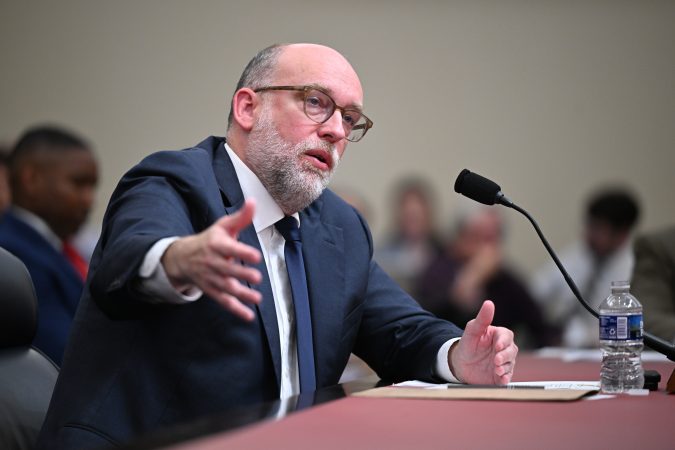
    Testifying at a Senate hearing Thursday, Vought said the proposal aimed to ensure “that we have democratic control of the spending that is going out.”

    But the stakes of his approach became clear when Sen. Tina Smith (D., Minn.) asked Vought how the administration might approach federally funded cancer research. She raised the example of a grant devoted to identifying the source of high cancer rates among Black people — and the extent to which the administration would disallow the money because of the president’s long-stated opposition to diversity, equity, and inclusion.

    Vought began by saying the White House was “against DEI policies,” adding, “How that would impact with that particular grant would be a decision for a political official, policy official, at NIH,” referring to the National Institutes of Health. He said administration appointees would “make the final decisions,” though they would take expert views into account.

    Smith said that revealed the “absurdity and the bias of this proposed rule, and the danger of what happens when you bring political ideology into grant-making processes, particularly around healthcare.”

    The proposed rules are the latest step in Trump’s contentious campaign to recalibrate how the government spends its money. With the help of Vought, the administration has fired thousands of federal workers while taking steps to hold up or cancel billions of dollars in congressionally approved aid, arguing that the spending was unnecessary or misaligned with Trump’s beliefs.

    Lawmakers from both parties sharply criticized some of Trump’s moves, and federal judges have repeatedly declared the president’s actions illegal. Yet the White House has continued pressing ahead and has taken steps to formalize some of its practices with its proposal targeting federal grants.

    The roughly 400-page blueprint, which the White House aims to put into effect in October, quickly stoked broad opposition.

    In Pennsylvania, the United Way, a network of nonprofit providers, warned that the grant rules could create “unpredictable financial and legal risks” for organizations that provide food, housing and other essential services. The group warned that those entities probably did not have the resources to comply or contest the government’s proposed restrictions.

    The Los Angeles County Department of Arts and Culture took issue with the way the administration tried to restrict the political activities of grant recipients. The agency said that approach could “chill free speech, creative expression, and activities supportive of diverse cultures and communities,” including at museums.

    The National Sheriffs’ Association and other law enforcement groups said they did not have the resources to incorporate all of the changes the White House had envisioned. A national network of civil engineers said the plan would impinge on its ability to collaborate with foreign counterparts on infrastructure research.

    And scientists, researchers and health providers expressed some of the loudest opposition. More than 300 organizations — many representing practitioners working on cancer cures, ALS and HIV treatments and pediatric medicine — urged the Trump administration to slow down because of the risks to their work and patients.

    The White House proposal reserved some of its strictest rules for academics funded by federal dollars. It aimed to limit the research they pursue, the conferences where experts can appear, and the organizations and foreign labs with which they are allowed to collaborate.

    Entire research areas would also be restricted if the rules were to take effect as drafted: Grants could not support work related to diversity, equity or inclusion, for example, or projects or groups that “deny the biological reality of sex or the sex binary in humans.”

    The strictures amounted to a major “escalation” from the president’s previous attempts to slash and control funding at agencies like the NIH and the National Science Foundation, according to Sudip S. Parikh, CEO of the American Association for the Advancement of Science, a nonprofit that promotes scientists.

    “It overemphasizes the political at the expense of scientific opportunities and the needs of the American people,” he said.

    Despite the president’s pursuit of deep cuts, Democratic and Republican lawmakers have ignored the requests and opted to keep most health and science funding intact. So the renewed push by Trump to cement his control over federally funded research enraged many Democrats, who view the proposed regulation as another encroachment of their spending powers.

    Rep. Rosa DeLauro (D., Conn.), who leads her party on the Appropriations Committee, said that the president, if successful, could undermine the idea enshrined in the Constitution that “money is directed based upon the needs of the American people, and that is transmitted through elected representatives.”

    DeLauro also joined with the 11 other House Democrats who serve in leadership positions on key appropriations committees this week to express deep reservations with the administration’s plans. The lawmakers estimated that the White House effort would affect more than $1 trillion every year.

    Democrats were not alone in airing frustration. In a separate letter last week, Sen. Susan Collins of Maine, the Republican chair of the Appropriations Committee who is facing a tough midterm election race, said the White House could imperil much-needed funding in ways that “harm small and rural communities.”

    The proposal drew support among Trump’s conservative allies. Daniel West, the government relations director for Heritage Action, said that some of the backlash had been “hyperbolic” and that he did not expect the White House budget office to retreat.

    “Everything I’ve seen indicates that OMB cares deeply about ensuring the proper stewardship of federal dollars, and they are moving this rule with that intention in mind,” West said.

    Some opponents still seemed to be readying for a legal battle. Citing the implications for education, healthcare, housing, science and other “critical services to hundreds of millions of people,” a group of governors and attorneys general from two dozen states told the White House on Monday that its proposed changes to grants would violate the Constitution. Many of the same states, including New York, California, and Colorado, have successfully fought Trump in the past over budget cuts enacted without the express permission of Congress.

    “The rule offends the Constitution,” the states argued at one point in their missive.

    This article originally appeared in The New York Times.

  • FDA approves new pill to slash cholesterol levels

    FDA approves new pill to slash cholesterol levels

    The Food and Drug Administration approved a daily pill on Thursday that can lower cholesterol levels far below what can be achieved with statins, the cheap cholesterol-reducing pills.

    The drug, enlicitide, whose brand name is Lipfendra, is made by the pharmaceutical company Merck. Clinical trials have shown that it can bring levels of LDL — the dangerous type of cholesterol — down to 50 or 60 or even lower. Adults not taking cholesterol-lowering drugs usually have levels above 100. It works by inhibiting a protein known as PCSK9.

    New cholesterol guidelines issued by the American Heart Association and the American College of Cardiology say that people who have an above-average risk of heart attacks or strokes should get their LDL levels below 70. Those at high risk because, for example, they have had a heart attack, should get their LDL below 55.

    Lipfendra’s list price will be $315 for a 30-day supply, and it will be available in a few weeks, said a Merck spokesperson, Julia Cunningham.

    There are currently injectable drugs that work in the same way, but they are more expensive, with list prices of $500 to $600 a month or more. Insurers sometimes balk at paying, and some patients do not want injections. Only 1% of the 6 million eligible patients use the injected drugs. Yet a PCSK9 inhibitor can reduce the risk of heart attacks by 20% in high-risk patients.

    Cardiologists not associated with Merck applauded the FDA approval and the drug’s price. The hope is that a pill that costs less than an injectable and is easier to take will allow many more patients to get their cholesterol levels under control.

    “I’m thrilled,” said Christopher Cannon, a cardiologist at Brigham and Women’s Hospital in Boston who consults for several drug companies, but not Merck.

    “This would make a big difference compared with the cost of injectable PCSK9 inhibitors,” said David Maron, a preventive cardiologist at Stanford.

    Last November, Merck reported results from a 24-week clinical trial of Lipfendra, which involved 2,912 people. The drug lowered LDL levels by up to 60%. And there was no difference in side effects between the drug and a placebo.

    Those results are the same as what has been seen with the injectable drugs.

    In studies of the injectable drugs, blocking PCSK9 reduced the incidence of heart attacks, strokes and cardiovascular deaths 20% in high-risk people. Merck is conducting a study now to see if Lipfendra has the same effect. Dean Li, president of Merck Research Laboratories, said he is confident that it will.

    Li said the company wants to make lowering cholesterol with Lipfendra as easy and convenient as it is with a statin. Primary care doctors can prescribe it — it does not have to be limited to cardiologists. And, he said, patients are used to taking daily pills. Most who are at risk for a heart attack already take at least a blood pressure pill, a statin and an aspirin.

    It’s not clear yet whether companies making injectable PCSK9 inhibitors will lower their prices to compete.

    This article originally appeared in The New York Times.
  • How to make the beach your gym

    How to make the beach your gym

    If you’ve been to the beach with kids, you know it can become an instant playground.

    The beach can be a playground for adults, too, and allow you to move in new and different ways, which can bring fitness benefits you can’t usually get in a gym. The soft sand, wide-open spaces and splashing waves all lend themselves to movement, even when the sun is blazing.

    When you’re navigating seashells and seagulls, “you have to be a little bit more playful, and really present,” said Erin Sampson, a yoga instructor who trains aspiring teachers in Costa Rica and Colorado.

    Compared with exercising on a hard, even surface indoors or even at a park, exercising on sand works your muscles differently, helping to build lower-body strength and improve stability and balance, said Josh Goldman, a sports medicine specialist and team physician for UCLA Athletics.

    And moving in nature and environments that inspire awe can reduce stress and may even lower blood pressure.

    We asked coaches and experts in exercise science how to get the most out of moving on the sand.

    Beach workouts can be short

    The environment may be serene, but exercising on the beach will most likely feel hard: Because sand is less stable than a gym floor or even a trail, your body has to exert more force and energy to walk, run or jump compared with working out on firmer ground, Goldman said.

    Your feet, ankles, hip, and core muscles also have to work harder to provide stability and balance during both propulsive workouts and body-weight exercises like yoga.

    While exercising on sand puts less impact on your joints, the softer the surface, the more challenging any movement becomes, he said. In response, your cardiovascular system will have to work harder to power the same exercise than it would on a firmer and more even surface.

    Soccer and running coaches with access to beaches often have their athletes practice on sand precisely because it is harder, Goldman said.

    But don’t let this scare you: These extra demands on your body mean that you can get a great workout in less time, said Heather Jeffcoat, a physical therapist in Los Angeles. If you can perform well on sand, competing on firmer surfaces may feel like a breeze.

    If you usually work out at the gym or on firmer surfaces, Jeffcoat recommended starting by doing roughly 25 to 30% of what you would typically do when exercising on the beach, to avoid injury and overexertion. For example, if you typically run 3 miles, run about a mile and see how you feel the next day. She also recommended starting on the firmest part of the shoreline, close to the water.

    A similar principle applies to yoga and body-weight training: Easing into these exercises and even starting with less challenging versions of movements you typically do inside can help build the strength and mind-body connection to reap the most benefits. So if you typically do 15 pushups, aim for about five on sand.

    If you have regular access to a beach, you can gradually increase the duration and intensity of your beach workouts as your body adapts, she said.

    Moving in nature and environments that inspire awe can reduce stress and may even lower blood pressure.Amanda Friedman

    They can build mental resilience

    When you take a workout out of the gym and onto the beach, you are opening it up to many more unknowns. There’s the heat and humidity that come with any outdoor workout, but also the possibility of sand on your legs, wildlife and, if you’re on vacation, new terrain.

    It’s not clean or controlled, but that’s the point, Sampson said. The challenge becomes staying focused despite the distractions, and adapting as the ground literally shifts beneath you.

    “It’s the ultimate physical metaphor,” she said, adding that learning to move through obstacles like these can build mental toughness.

    Sand socks can help to protect your feet from heat.Amanda Friedman

    They require a few precautions

    Of course, with all of these additional challenges, you’ll get the most from a beach workout if you come prepared, the experts said.

    Before exercising on the beach, think about your footwear, Jeffcoat said. Walking, running or jumping barefoot can help strengthen your feet and contribute to ankle and leg stability. Sand socks, which beach volleyball players and other athletes sometimes wear while training, can help to protect your feet from heat.

    But if you typically wear orthotics or very supportive shoes while training, doing the same activity barefoot could put you at risk for injury. Jeffcoat recommended starting in sneakers and potentially testing out short bouts of barefoot movement to build strength and stability.

    You should also hydrate before, during and after exercising on the beach, rather than relying on when you feel thirsty, said Cedric Bryant, an exercise physiologist and CEO of American Council on Exercise. You will be exposed to direct sunlight on the beach, along with heat reflected off the sand and water, even on cloudy days, he said, which can put you at risk for overheating and dehydration.

    For all of these reasons, the experts recommended wearing sunscreen, a hat, sunglasses, and moisture-wicking clothing. Sampson typically tells her yoga students to wear close-fitting clothing. “The tighter your clothes are, the less sand you’re gonna have going down or up or around them,” she said.

    A swimsuit also works: When you’re done exercising, you can run into the ocean for an all-natural cold plunge.

    This article originally appeared in The New York Times.

  • War risk for businesses will mean higher prices no matter what happens

    War risk for businesses will mean higher prices no matter what happens

    LONDON — For chief executives and business owners around the world, the Iran war is hammering home an essential reality that they are operating in a world that is riskier and more unpredictable.

    And that also means more expensive. Even if the attacks end, the increased cost of doing business will linger. Higher prices look to be a long-lasting side effect of the war in Iran.

    Every business leader is saying, “I need to get myself options,” said Kevin O’Marah, chief research officer at Zero100, a firm that does research on supply chains. The urgency is felt by executives across sectors from pharmaceuticals to clothing to electronics.

    That means having alternative manufacturers in other locales, stockpiling goods in case of unexpected stoppages and developing new supply chains.

    “Flexibility is additional plant capacity, it’s additional pockets of inventory, it’s alternate routes,” he said. “But that flexibility costs money. And that’s inherently inflationary.”

    Last week, the International Monetary Fund predicted a fresh bout of global inflation, forecasting a rise to 4.7% in 2026 from 4.1% in 2025 because of higher prices for basics like energy, metals, fertilizer, and food.

    A market in Daloa, Ivory Coast, on June 11. The International Monetary Fund expects global inflation to climb in 2026, driven by higher energy and food prices.Finbarr O'Reilly

    And those calculations were made when oil prices had mostly returned to their prewar levels, before there was a sharp escalation in hostilities between Iran and the United States and oil prices shot up.

    President Donald Trump’s vow this week to extract a 20% fee on all cargo moved through the Strait of Hormuz, if it comes to pass, could double the cost of shipping, analysts say.

    With disruptions in the strait, shipping companies such as Maersk have had to employ workarounds. As of June, Maersk had delivered 44,000 containers of goods such as furniture, electronics, and food to Persian Gulf countries by rail and truck.

    It’s a cumbersome and costly process. Cargo is unloaded from ships at the Red Sea port of Jeddah, Saudi Arabia. Then it is trucked to Kuwait, Qatar, and Bahrain by drivers who have journeyed from Jordan, Iraq, and Turkey to meet the increased demand.

    “That is obviously not the most effective way to do it normally, but if the strait is closed, it is the most effective way to do it,” said Vincent Clerc, CEO of Maersk, adding that the alternative route costs the company about $1,000 extra per container.

    If the disruptions continue, either the resulting higher costs will be passed on to consumers or retailers will see eroded profits, Clerc said.

    Higher costs caused by disruptions will cut into company profits or be passed on to customers, said Vincent Clerc, the Maersk chief executive.Charlotte de la Fuente

    The ripple effect has radiated far beyond the Gulf. The cost of sending a container from Shanghai has edged down from levels they hit in late June and early July.

    But rates are high by historical standards, according to Rhenus, a global logistic company. “Despite the recent decline, freight rates still remain 84% higher than a year ago,” the company said in an email.

    Southeast Asia has been particularly affected. Higher supply chain costs and delivery interruptions are interfering with manufacturing planning and schedules.

    “Longer lead times, higher freight costs and elevated energy costs may add pressure to consumer prices,” Rhenus reported.

    Longer routes aren’t the only reason delivery times increased by days or weeks during the crisis. When energy prices shot up, some shipping lines engaged in “slow steaming,” or reducing their speeds to save money on fuel, said Tobias Bartz, CEO of Rhenus.

    Insurance costs will also stay at the highest risk levels until there is at least six months of stability, Bartz said. But every time there is an incident, as in recent days, the clock resets.

    More important, higher costs won’t all disappear when the current crisis in the Gulf recedes.

    The heads of companies like Maersk, based in Copenhagen, Denmark, and French shipper CGM CMA have already said they can no longer depend on a single pathway but must develop alternatives.

    “This is the new operating environment,” Promixa, a global procurement and supply chain consultancy, concluded after surveying more than 500 CEOs of companies that generate income of more than $500 million a year.

    The mindset isn’t just about reacting quickly when a crisis occurs, but rather “creating and running functions that are permanently crisis-ready.” Almost three-quarters of those surveyed said they would accept a cost increase of more than 10% to guarantee the resilience of their supply chains.

    Building that strength into oil and liquefied natural gas delivery routes is much more difficult, time-consuming and expensive. Some efforts, including pipeline expansions by the United Arab Emirates and Saudi Arabia, were already underway before the Iran war.

    But the push has been turbocharged. Kuwait is so desperate to find alternatives to the Strait of Hormuz that it is looking at resurrecting a Saudi pipeline that runs through the Israeli-controlled portion of the Golan Heights and hasn’t been used in more than 35 years, said Jamie Ingram, senior editor at Middle East Economic Survey, a weekly newsletter and energy intelligence publication.

    Oman is expanding ports outside the strait; Iraq is studying pipeline proposals; Saudi Arabia and Turkey are exploring rail connections between Jordan and Syria. As one analyst described it, a “spaghetti junction” will be taking shape in the Gulf as pipelines, roads, rails, and ports sprout up to make sure that energy can get from producers to customers.

    For some new projects, Ingram said, “we’re now entering a new era where the benefits of these investments have gone from being pretty abstract theoretical issues to very concrete tangible quantifiable benefits.”

    Oil exporters like Saudi Arabia and importers like India are also investing in more storage capacity outside the Gulf region.

    All of which means higher costs.

    “We’re now in a world of not economizing for the most efficient option,” said David Goldwyn, a former U.S. diplomat and Energy Department official. “We’re in the world of investing in security and investing in resilience and redundancy.”

    This article originally appeared in The New York Times.

  • Dark sky defenders raise alarm along the border of West Texas

    Dark sky defenders raise alarm along the border of West Texas

    Welcome to Terlingua, a ghost town in West Texas, where the dogs roam free, parking spots are suggestions, and the night skies feel infinite.

    Full moons are bright enough to read by, and on the darkest nights, the Milky Way casts shadows of local flora on the desert floor.

    But with a border wall slated to rise, some residents wonder: How long will the natural darkness last?

    Unfettered access to the cosmos is an integral part of the landscape in Terlingua and across the Big Bend region of West Texas. It has fostered a community of dark sky defenders, who regularly ward off threats like too-bright store signs and intrusive car headlights.

    Now they’re facing something far greater: the construction of President Donald Trump’s border wall, which residents across the Big Bend fear will bring bright lighting along land that is currently untouched.

    Lighting has already been installed along stretches of the border in Arizona and farther east in Texas. “That technology is there, and it is literally a flip of a switch away,” said Billy Bartko, the director of Terlingua’s Far Flung Outdoor Center, “which is what we’re all afraid of.”

    For residents along the border, it’s about more than just seeing the stars. The natural darkness symbolizes a lack of development, a rural way of life.

    According to David Keller, an archaeologist and Big Bend historian, dark-sky maintenance protects the natural country of the place. “That’s why I’m here, and that’s why most people who live here are here,” he said. “It’s a national treasure. It’s too important to lose.”

    The preservation of the Big Bend’s dark skies results from laws enacted as far back as 1975, originally to support astronomy at the region’s McDonald Observatory. In 2012, Big Bend National Park was formally certified as the region’s first dark sky site, followed by a state park and a wildlife area.

    Today, those places live inside the largest dark sky reserve on Earth, established in 2022 and spanning more than 9 million acres across the U.S.-Mexico border.

    “What that timeline shows you is how long dark sky preservation and conservation has been in the minds of the people managing resources here,” said Amber Harrison, who lives in Terlingua and is a leader of the region’s dark sky protections. Any lighting that comes with the wall, she added, could cause the region to lose its dark sky status.

    If widespread enough, the illumination could affect science observations at McDonald, according to Stephen Hummel, who coordinates the observatory’s dark sky outreach. But others are more concerned about what it will do to the character of the land.

    “Most of us aren’t worried about if we’re going to be able to haul out our telescopes and see Jupiter tonight,” said Keller, a leader of a local coalition called No Big Bend Wall. “It’s an umbrella for other things.”

    The loss could also disrupt a budding economic avenue. Stargazing was the second-most reported activity in the region, according to a tourism survey conducted in 2022.

    Cosmic attractions in Big Bend have grown over the last few years, especially in Terlingua.

    Visitors can camp out in stargazing pods off the highway and participate in astrophotography workshops through the town’s outdoor center.

    A group of locals are digging an amphitheater, part of the new Terlingua Star Park, to begin hosting star parties this fall.

    Universe enthusiasts abroad can even ship their telescopes to the park’s remote observatory, which opened this month.

    Illumination from the wall could abruptly end those business ventures. “If they light this thing up, it’ll kill the tourism dollar,” Bartko said. Referring to the industrial appearance of the wall, he added, “Who goes to prison for vacation?”

    Apprehension about the wall in Big Bend surfaced earlier this year. Shifting information about what is being built where has caused more unease from residents, who say the region’s harsh terrain makes a physical barrier unnecessary.

    In a statement to the New York Times, a spokesperson for U.S. Customs and Border Protection said that the wall would include “a mix of lighting based on location and operational needs” and that not all parts would be illuminated. They added that lighting would be avoided in remote areas in favor of “other operationally superior methods,” like infrared illuminators.

    The latest version of a map on the CBP website shows roughly 165 miles of wall planned for construction along the Big Bend border, adjacent to several small towns and up to the edge of Big Bend Ranch State Park. According to the map, detection technology and patrol roads will be used in lieu of a wall along the border closest to Terlingua and next to the state and national parks.

    But in an area that is dark, flat, and open, light can carry for miles. On a clear night, Terlinguans can already spot the artificial glow from Presidio, about 50 miles away, on the western horizon. Preparation for wall construction near Presidio began in June, and locals have already complained about lighting that is out of compliance with dark sky practices.

    Dark sky advocates also worry about temporary worker housing, road upgrades, and nearby surveillance stations. “It’s not just the lighting associated with the wall; it’s the lighting associated with all the auxiliary things that are going to be coming with it,” Harrison said. “The impacts are potentially immediate.”

    On an evening in April, the sun dipped low in the vast sky over Terlingua. A black dog with a blue Christmas light around her neck (to be seen at night, the owner explained) sauntered toward a saloon called the Starlight Theatre.

    As the town plunged into darkness, clouds spoiled any view of the stars. But that did not stop Terlinguans from appreciating the natural darkness of night.

    “It’s very important to us,” said Adrienne Evans, one of two sisters shutting up shop at Milky Way Treats, an ice cream truck papered with flyers about the border wall. “We don’t have porch lights.”

    The pair explained that Big Bend residents — even those who voted for Trump — were energized and united against the wall because of a desire to keep the place wild.

    Valerie Stanley, the sister who owns the ice cream truck, moved from Houston to Terlingua in 2020. “Being able to look up and see the Milky Way, it just kind of shifted my life,” she said. “Now I’m living a different life with all this beauty that I never really knew was here.”

    This article originally appeared in the New York Times.

  • Chesley Sullenberger, pilot of the ‘Miracle on the Hudson,’ says he has Alzheimer’s

    Chesley Sullenberger, pilot of the ‘Miracle on the Hudson,’ says he has Alzheimer’s

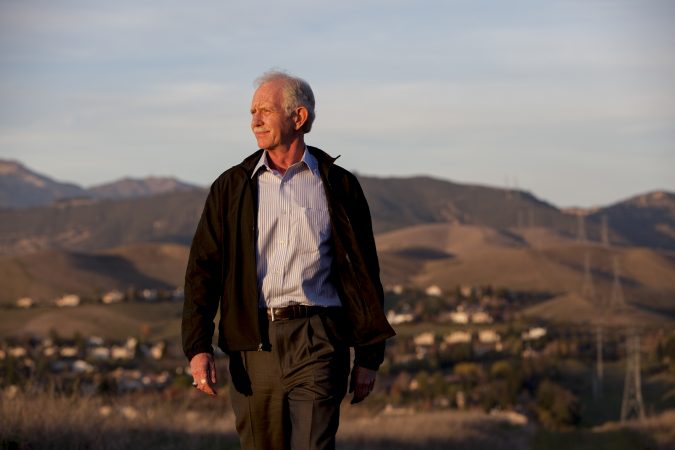
    Chesley B. Sullenberger III, the pilot known as Sully who guided a passenger jet to a water landing in 2009 in what became known as the “Miracle on the Hudson” after he saved 155 lives, has been diagnosed with Alzheimer’s disease, he said in a statement Tuesday.

    The diagnosis is “early stage,” he said, adding, “I am in the beginning of this long journey.”

    Sullenberger, 75, retired as a commercial pilot in 2010, a year after his famous landing on the Hudson River. On Jan. 15, 2009, he was piloting US Airways Flight 1549 on a flight from LaGuardia Airport to Charlotte, N.C., when both of the plane’s engines lost power after it struck a flock of geese shortly after takeoff.

    Sullenberger guided the Airbus A320 safely into the Hudson River, and everyone on board was safely rescued. He was hailed as a hero after the landing, with President Barack Obama inviting the captain and his five-person crew to his 2009 inauguration days after the emergency landing.

    Significant media coverage followed, as well as the 2016 movie Sully directed by Clint Eastwood and starring Tom Hanks.

    After the incident and the attention it brought, Sullenberger called for new safety measures in aviation, including increased pilot training, more pilot rest, and a rule requiring two pilots to be in the cockpit at all times. In 2021, President Joe Biden nominated him to be an ambassador to the International Civil Aviation Organization, a United Nations agency that helps develop policies and standards for global aviation.

    In the announcement of his diagnosis, Sullenberger nodded to his work as an ambassador, as well as his time in the U.S. Air Force and as an aviation accident investigator, saying he “spent his life in service.”

    “So this new phase of my life has challenged what it means to be of service,” he wrote. “And the answer is to speak up. It is my hope that by sharing this, other families living in the shadows with this disease will feel they too can step forward.”

    An estimated 7.4 million Americans are living with Alzheimer’s disease, a form of dementia, according to the Alzheimer’s Association. The disease worsens over time, and early-stage symptoms — as Sullenberger said he was experiencing — include memory loss as well as difficulties with problem solving and completing tasks.

    “For now, this means a name may not come easily to me, I forget a story I have recently told, or I don’t sleep as well,” he wrote.

    The Alzheimer’s Foundation of America praised Sullenberger’s announcement.

    “His decision to publicly disclose his diagnosis will help raise awareness, reduce stigma, and show support for the many others living with Alzheimer’s disease and dementia-related illnesses,” the foundation said in a statement attributed to Charles J. Fuschillo Jr., the organization’s president.

    This article originally appeared in The New York Times.

  • At 91, he’s hiking the Appalachian Trail. Again.

    At 91, he’s hiking the Appalachian Trail. Again.

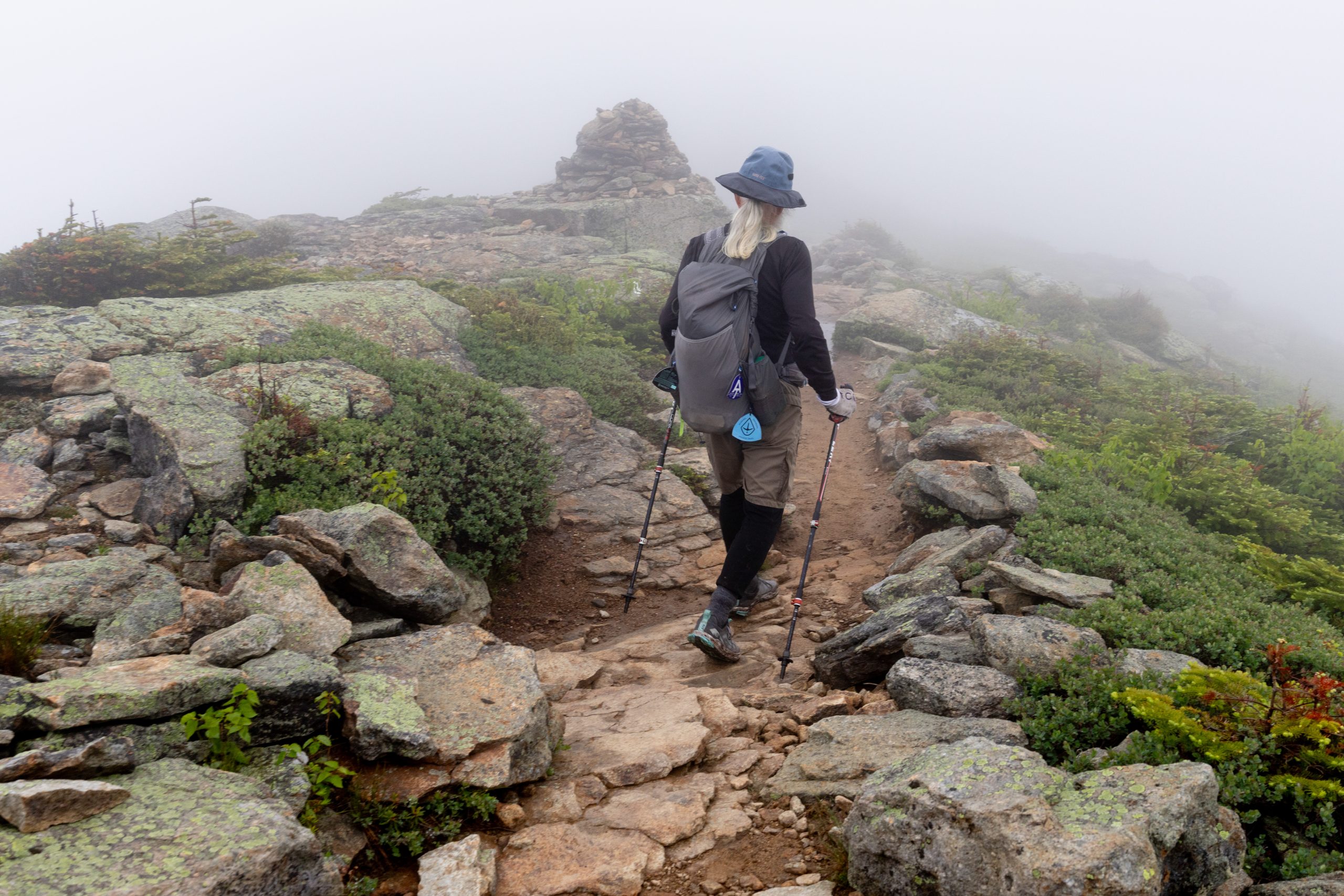
    On the first day of summer, just after dawn, Dale Sanders, 91, prepared to start the steep, rocky hike up to Franconia Ridge in New Hampshire’s White Mountains.

    Sanders’ mantra might resonate with anyone in their 10th decade: “It’s a ‘don’t fall’ day today,” he said, slinging a small backpack onto his compact, wiry frame.

    The roughly 2,190-mile Appalachian Trail runs from Georgia to Maine. Sanders had been chipping away at it since September, in a bid to reclaim his record as the oldest person to hike the full length. (His goal is to complete a thru-hike, by walking the entire trail in a 12-month period.)

    If Dale “Grey Beard” Sanders continues at his current pace, the age record will be his again before a 365-day deadline. Sanders said he will soon have to look for a new record: “I’m not going to stop unless physically I simply cannot do it anymore.” Luke Piotrowski

    He was roughly 70% finished, but some of the toughest miles were ahead. I joined him for two especially challenging days.

    The White Mountains are known for extreme weather, and Sanders said he had been turned away by a concerned trail steward during a heavy storm the previous week: “He said, ‘You know, you’re going to die if you keep going.’”

    The weather had calmed somewhat, but soon after he emerged above the tree line and began his traverse of the ridge, roaring gusts of wind brought dense fog and sharp, sideways rain.

    The route frequently requires hikers to scramble. As he reached the bottom of a rock slab, he realized he had no memory of this obstacle from the last time he had hiked the trail. That was in 2017, when, at 82, he first set the record. After carefully climbing the ledge, he estimated the hike was twice as hard this time.

    Thru-hikers typically use trail names; Sanders is better known as “Grey Beard.” That morning, he had set out with an experienced 28-year-old hiker from Georgia, Garrison Gandy, or “Doublewide,” who had been crashing at the same hostel.

    Despite the conditions, the pair made steady progress toward the day’s goal, an off-grid shelter 8 miles down the trail where a hot meal and a bunk were waiting.

    The next morning, the first hour of hiking was strenuous — a steep mile to the summit of Mount Lafayette. Sanders lamented that despite hard training, his fitness hit a ceiling that hadn’t existed in earlier decades. “I wanted it to be pretty close to where I was in 2017, and I’ve never reached that,” he said.

    As he caught his breath on the summit, the clouds had cleared, revealing a sparkling view of the Pemigewasset Wilderness.

    12 miles a day

    It was the allure of setting a record that first drew Sanders to the trail.

    Sanders, who lives with his wife near Memphis, retired in 2002 after a career working in parks and recreation for the Navy. He marked his 80th birthday by becoming the oldest person to paddle the full length of the Mississippi River, and soon began searching for other age records.

    He learned he could set a record by completing the Appalachian Trail. Though he had never spent extended time hiking, his competitive streak was activated.

    Sanders credits this part of his personality to being bullied in school while growing up on a Kentucky tobacco farm, and the escape he found through sports.

    “I wasn’t good in the books,” he said. Physical activity, on the other hand, “gave me something real.”

    His first Appalachian Trail age record was broken in 2021 by a hiker named M.J. Eberhart, trail name “Nimblewill Nomad.” Sanders befriended Eberhart that year and encouraged him to set a new mark.

    “He was going to quit several times,” Sanders said. “I actually went up and hiked with him the last few days so that he wouldn’t quit. We’re really close friends.”

    Still, Sanders wanted the record back. For the current attempt, he planned to hike 12 miles a day, with one day off a week.

    Most thru-hikers tackle the trail from the south to north, starting in Georgia and ending in Maine. But as long as Sanders walks every section of the trail, he can do it in any order and direction he chooses.

    To maximize the year’s hiking weather, he began his hike headed south from Harpers Ferry, West Virginia, then returned to that spot to complete the northern half.

    The White Mountains are home to a system of backcountry huts, where dinner and breakfast are served to overnight guests.Luke Piotrowski

    While most thru-hikers sleep in a tent or in lean-to shelters, Sanders prefers his truck camper, a simple shelter, labeled “Base Camp on Wheels,” that sits in the bed of a pickup truck. It’s driven by a rotating cast of volunteers, who also cook his dinner and help plan the next day’s mileage. For the first 800 miles, one driver was Eberhart, now 87, who’s helping to break his own record.

    Two friends from his Mississippi River descent, Craig and Katie Heaton, a married couple in their mid-60s, are also among Sanders’ crew.

    “He won’t tell you how to live your life,” Heaton said, “but he shows by example, and I think that’s what touches me the most.”

    Selfies and high fives

    Sanders’ appetite for continuing to push his limits in old age has earned him many fans along the trail.

    Emma Bartlett — also known as Comfy — had been hiking since March when she paused for a picture as she passed Sanders on the climb up to Franconia Ridge. “Everyone has been talking about you since Georgia,” she told him.

    “If I’m even walking at 91, I will be jumping for joy,” said Bartlett, who is 23.

    Sanders is comfortable hiking alone, but he would always prefer company. As we parted ways, he found an impromptu hiking partner to accompany him for the next leg.

    Nicholas Loukides, 29, who has hiked in the White Mountains since he was in grade school, said the chance to tackle a few miles with Grey Beard was a highlight of his trip. “Every mountain I climb,” he said, “I’m like, ‘Dude, you did this?’”

    Dale “Grey Beard” Sanders, who once held the record as the oldest person to complete the 2,190-mile Appalachian Trail and, in the summer of 2026 was months into a bid to complete it again at age 91.Luke Piotrowski

    There are formidable obstacles remaining, like Maine’s 100 Mile Wilderness, the trail’s most remote stretch, where there will be very few opportunities for supplies or crew assistance for days. And Sanders still has to finish a section of the Smoky Mountains in North Carolina. But if he continues at his current pace, the age record will be his again before his 365-day deadline.

    Sanders said he plans to finish, even if he runs out of time for it to count officially. Either way, he said he will soon have to look for a new record: “I’m not going to stop unless physically I simply cannot do it anymore.”

    This article originally appeared in The New York Times.

  • Trump sharply cuts the size of two national monuments in Utah

    Trump sharply cuts the size of two national monuments in Utah

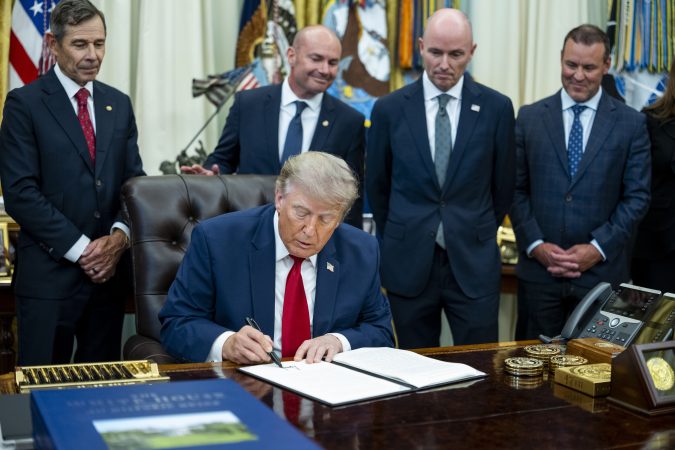
    WASHINGTON — President Donald Trump on Monday reduced the size of two national monuments in Utah by nearly 3 million acres, teeing up a legal battle over whether presidents have the power to shrink such sites in the first place.

    Trump signed two executive orders to sharply cut the Bears Ears and Grand Staircase-Escalante National Monuments to less than 10% of their current size. Both sites are known for their sandstone canyons and vast mesas, which are rich in wildlife habitat as well as archaeological sites of importance to Native American tribes.

    During his first term, Trump similarly shrank both monuments at the urging of top Republicans from Utah, opening about 2 million acres to oil drilling, uranium mining, and other development. But tribes and environmentalists sued over Trump’s move, and President Joe Biden subsequently restored sweeping protections to both sites before a court could issue a final decision.

    Tribes and environmentalists are expected to lead another lawsuit over Trump’s latest effort to shrink the monuments. The legal fight could have far-reaching implications for the future of land conservation, potentially putting dozens of other monuments at risk and opening millions of additional acres to commercial activities.

    The Trump administration has already taken a flurry of other steps to encourage development and recreation on federal lands across the country. In May, for instance, Trump moved to lift restrictions on off-road vehicles in most national parks.

    Before signing the executive orders in the Oval Office on Monday, Trump boasted that he was making bigger reductions to both monuments than he did in his first term, when he shrank Bears Ears by 83% and cut Grand Staircase by 47%.

    “We’re actually giving more than we did the first time back to the people of Utah,” Trump said.

    The six members of Utah’s congressional delegation attended the event in the Oval Office, as did Utah’s governor, Spencer Cox. All are Republicans.

    “It’s very clear that these monument designations are supposed to be the smallest area possible to protect the antiquities, and these multimillion-acre monuments that are bigger than the state of Delaware certainly do not fit that designation,” Cox said.

    National monuments are lands that are legally protected from development. They are similar to national parks, but while national parks are created by Congress, national monuments are created by presidents through the Antiquities Act of 1906.

    Many tribal leaders and environmental lawyers say the Antiquities Act does not authorize Trump to reduce the size of Bears Ears and Grand Staircase. The century-old law, they say, grants presidents the authority to designate monuments but not to abolish or shrink them.

    But many Republicans, ranchers, and oil drillers say previous presidents abused the Antiquities Act by putting vast stretches of land off-limits to development. They note that the law says presidents should limit monuments to the “smallest area compatible with proper care and management of the objects to be protected.”

    President Barack Obama designated Bears Ears during his final weeks in office in 2016. President Bill Clinton classified Grand Staircase in 1996, halting plans for a coal mining project there.

    After Trump shrank both monuments in his first term, his administration sold oil and gas leases on more than 76,000 acres of land adjacent to Bears Ears. But the Biden administration subsequently canceled most of those leases, and the oil industry has little interest in drilling within the monument itself, according to Melissa Simpson, the president of the Western Energy Alliance, an industry trade group.

    “Despite years of rhetoric from environmental advocacy groups, Bears Ears has never been a significant oil and natural gas prospect,” Simpson said in a statement.

    Bears Ears is named for a pair of buttes, or flat-topped hills, that rise thousands of feet above the surrounding canyons. The two symmetrical structures dominate much of the nearby landscape in southeast Utah.

    Grand Staircase is named for a sequence of sedimentary rock layers that stretches from Bryce Canyon National Park to the Grand Canyon. Paleontologists have made extraordinary discoveries there, excavating the fossils of tyrannosaurs and other dinosaurs that roamed the region more than 74 million years ago.

    Today, both monuments provide crucial habitat for hundreds of species, including bighorn sheep, elk, and mule deer. They also contain thousands of archaeological sites that Native American tribes consider culturally significant, including the remains of burial grounds, cliff dwellings, and rock art panels.

    Bears Ears is the ancestral homeland of five tribes in the region: the Navajo Nation, Hopi Tribe, Ute Indian Tribe, Ute Mountain Ute Tribe, and Pueblo of Zuni. The Biden administration reached a unique agreement with a coalition of the tribes, authorizing them to jointly manage the monument with the federal government.

    Anthony Sanchez Jr., the head council member for the Pueblo of Zuni and the co-chair of the Bears Ears Inter-Tribal Coalition, described a feeling of whiplash.

    “You have an administration that backs you up, and then you’re back to square one again,” he said in an interview Monday.

    Sanchez said he worried about the potential for vandals to damage or destroy the rock art at Bears Ears.

    “Even now, with the boundaries not reduced, we still run into that trouble,” he said.

    Scott Braden, the executive director of the Southern Utah Wilderness Alliance, said the nonprofit environmental group would sue over Trump’s effort to shrink the monuments.

    “The Southern Utah Wilderness Alliance is committed to defending the monuments and will challenge this unlawful decision in federal court,” Braden said in a statement. “We are confident that President Trump’s reckless and unlawful acts will be rejected and the monuments restored.”

    But Ben Burr, the executive director of the BlueRibbon Coalition, a group that supports opening public lands to off-road vehicles, vowed to defend Trump’s move in court.

    “Right-sizing these monuments to what the statute actually allows isn’t an attack on public lands; it’s how we keep them open for all Americans to enjoy,” Burr said in an email. “We plan to continue fighting in the courts and in the Congress to ensure that abuse of the Antiquities Act becomes a thing of the past.”

    The litigation over Bears Ears and Grand Staircase could eventually reach the Supreme Court, where Chief Justice John Roberts has suggested that the Antiquities Act is ripe for review.

    “Any land reserved under the act must be limited to the smallest area compatible” with proper management, Roberts wrote in 2021. “Somewhere along the line, however, this restriction has ceased to pose any meaningful restraint.”

    This article originally appeared in the New York Times.

  • ‘We’re fighting Satan’: The war to save bees from a hornet invasion

    ‘We’re fighting Satan’: The war to save bees from a hornet invasion

    Jackie Currie had never seen anything like it. She had raised bees in South Carolina for more than a decade, and her insects had almost always been eager to fly out and collect pollen. But one day last summer, she found her bees huddled at the entrance of their hive, like frightened beachgoers after a shark attack.

    The bees were right to be reluctant. There were murderers in their midst.

    Hovering like hummingbirds just outside the hive were two yellow-legged hornets. Despite being shorter in length than a paper clip, these predatory insects possess a venomous sting and a seemingly sadistic streak when killing honeybees. Once they snatch their prey, the hornets butcher the bee by removing its head, legs, and wings to gain access to the nutritious abdomen.

    Currie’s bees faced a dangerous dilemma: Leave the nest and risk dismemberment or allow the hive’s resources to dwindle, putting the entire colony at risk of collapse.

    “What’s heartbreaking is that my bees don’t know how to defend themselves,” Currie said in June as she watched several yellow-legged hornets hunt outside her apiary. “The bees that know how to deal with yellow-legged hornets are in Asia, not here.”

    Natives of Southeast Asia, yellow-legged hornets first appeared in South Carolina in late 2023 and have spread rapidly throughout the Lowcountry, an idyllic stretch of coastline known for its beaches and golf courses. The region’s balmy weather and bevy of bees make it a hornet heaven, said Brad Cavin, an apiary inspector with Clemson University’s department of plant industry.

    As the state honeybee inspector, Cavin, who has a billowing beard and wears a neon vest whenever live hornets are in the area, is helping to spearhead an effort to track and remove the hornets. In 2024, Cavin’s team discovered 16 yellow-legged hornet nests; this year, the team had already removed 345 nests from the Lowcountry by late June.

    Cavin lives in Greenville, S.S., and makes the nearly 250-mile drive to the Lowcountry multiple times a month. The son of a pastor, he often likens his team’s mission to save this coastal paradise from a plague of invasive insects to a biblical bout between good and evil.

    “This is the Garden of Eden,” he said, “and we’re fighting Satan.”

    A buffet of bees

    With their orange faces, large eyes, and legs that look like they were dipped in Carolina gold barbecue sauce, yellow-legged hornets are visually striking. Yet these eye-catching insects have managed to sneak aboard cargo ships and have moved far outside their native range. They arrived in Europe via France in 2004 and in recent years have popped up everywhere from North Africa to New Zealand.

    Yellow-legged hornets were first observed in the United States by a beekeeper near Savannah, Ga., during the summer of 2023. The insects had likely entered through the Port of Savannah and subsequently spread into South Carolina. (This year, a yellow-legged hornet sighting was reported at a port in Washington state, though the U.S. Department of Agriculture was unable to verify it.)

    Georgia and South Carolina’s Lowcountry provide yellow-legged hornets with a buffet of bees. Georgia is the nation’s third-largest producer of honey, and as of 2022, South Carolina was home to nearly 24,000 bee colonies.

    And the hornets have no shortage of things to eat beyond bees. They feed on everything from deer carcasses to oyster shells and discarded prawn heads. Cavin has seen them pecking at dead alligators.

    To curb this spread, the Clemson team has been focusing on finding and removing the hornets’ nests, which the insects fashion out of wood and plant fibers that they chew into a cementlike paste. The comblike structures are encased in a protective shell covered in swirling patterns that resemble oyster shells.

    When queen yellow-legged hornets emerge at the beginning of spring, they build an embryo nest the size of a Ping-Pong ball. Once the queen and the first generation of her offspring outgrow the embryo nest, they construct what’s called a primary nest, a cantaloupe-size structure that can be fabricated anywhere from a sprinkler valve box to the eaves of a building. Once the primary nest reaches the size of a basketball, the hornets build an even larger structure, known as a secondary nest, usually high up in the trees. With plenty of treetop real estate, these nests can grow larger than beach balls and contain thousands of hornets.

    To find these nests, the team set up a public reporting system last year. The resulting deluge of tips has not always been reliable. Many are cases of mistaken identity, calling out the nests of bald-faced hornets or paper wasps. One reported embryo nest proved to be something even more innocuous: the husk of a hickory nut.

    Trapping and tracking

    The team’s other technique is to find the hornets outside the nest. So far in 2026, the team has deployed more than 4,300 traps throughout South Carolina, fashioned out of plastic buckets and jugs and hung from tree branches.

    To entice the hornets, the team brews up an irresistible bait: a mixture of grape juice and brown sugar syrup that Cavin calls “Georgia juice,” a nod to his mother, who is from Savannah. This sticky concoction has proved effective at catching hornets without attracting beneficial insects like honeybees. Cavin initially bought cases of grape juice from Costco but now buys the juice by the pallet. This year, by the end of June, the team had already used some 4,100 gallons of grape juice and more than 9,000 pounds of brown sugar.

    One recent morning, Cavin’s colleague Miguel Martinez mixed up a batch of Georgia juice in a jug on the bed of a pickup truck. “At the end of the day, I end up smelling like vinegar or wine,” Martinez said. “It’s not the most appealing scent.”

    Martinez and Cavin were preparing to check and refill a string of traps running across Coosaw Island, a mosaic of marshes and pine forests near Beaufort, S.C. Most of the traps were spaced a quarter-mile apart and located right off the road, making the monitoring effort fairly easy. Some of the swampier trapping locales, Martinez noted, were home to alligators and snakes.

    The traps are meant not to eradicate yellow-legged hornets but to help researchers pinpoint where the insects are congregating. Several hornets in a trap are likely to mean a nest is nearby. This morning’s catch was relatively small: five yellow-legged hornets across nearly 10 traps.

    When the team members come across a trap containing dozens of yellow-legged hornets, they place additional traps, using triangulation to help locate the nest. Eventually, they convert some traps to open-lid bait stations and observe the flight paths of the various hornets, which usually fly straight back to their nests after gorging themselves on Georgia juice.

    Despite their targets’ small size, the team members are also experimenting with tracking techniques. The most rudimentary: a brightly colored paint pen, which they use to mark trapped hornets before release. A splotch of blue, red, or yellow paint makes it easier to follow the hornets’ flight path through the Lowcountry’s dense foliage.

    A more sophisticated approach involves electronic trackers. The team in Georgia utilizes high-frequency radio tags that are only slightly larger than a grain of rice and weigh just 0.14 grams, about the same as a quarter of a raisin. After a hornet is extracted from a trap, it is placed on ice as a form of anesthesia. The team then secures a tag to its waist using Kevlar thread, and gives it a meal of fresh honey to provide energy for the return trip to the nest.

    After the hornet takes off, the team tracks it using a simple beeping scanner that increases in volume when pointed in the right direction. This lets the team follow a tagged insect until — hopefully — the nest becomes visible in the treetops.

    Swarms, and a deafening buzz

    Once a nest is confirmed, Cavin calls in removal experts. Among the most reliable are Nathan Krelis and Wes Long from Hilton Head Exterminators, who have removed hundreds of nests since the insect first appeared in the state, including one last summer that was the size of a car engine.

    Removing nests takes skill and steely nerves. The exterminators are often met by swarming hornets and a nearly deafening buzz. To limit the amount of pesticide they spray into the environment, the pair plugs the nest’s entrance with a small piece of sponge, creating a self-contained chamber.

    After the hornets cease swarming, the exterminators scrape the nest off and place it inside a clear plastic bag, like a takeout order. Back at his team’s headquarters, Cavin freezes the nest to kill off any surviving hornets and places the structure in a kiln to dry for preservation.

    One afternoon in June, the team conducted several removals along U.S. Route 278, a road leading out to Hilton Head Island that is lined with gated communities and shopping plazas. The exterminators suited up in beekeeping garb and climbed their ladders to remove nests from maintenance sheds, storefronts. and several houses. (When removing secondary nests from trees, the exterminators use construction lifts.)

    At one house, Karen Opderbeck watched Long remove a nest that was tucked underneath the roofline. Opderbeck, who had reported the nest, recalled a recent visit to an apiary with her garden club, where she witnessed a yellow-legged hornet hunting spree. “They were nabbing bees and going up into the trees with them,” she said.

    Long removed the softball-size nest and held it out in his gloved hand for Opderbeck to inspect. Lodged inside, like a Russian nesting doll, was the original embryo nest.

    “It’s like having a stalker right at your front door,” Opderbeck said.

    This article originally appeared in the New York Times.