Category: New York Times

  • George E. Johnson, who built a Black hair care empire, dies at 99

    George E. Johnson, who built a Black hair care empire, dies at 99

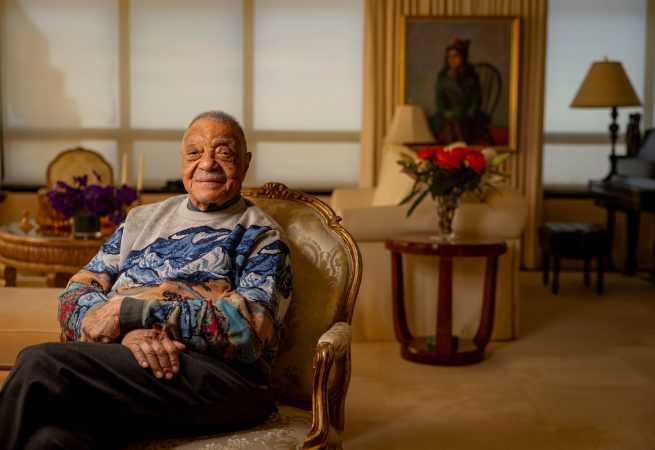
    George E. Johnson, a hair care magnate who rose from a sharecropper’s cabin to found, with his wife, Joan, what was said to be the first Black-owned company listed on a major American stock exchange, and who made a fortune on products like Ultra Sheen and Afro Sheen, died on Monday at his home in Chicago. He was 99.

    His death was confirmed by his second wife, Madeline Murphy Rabb, who said the cause was respiratory illness.

    Long before sports figures, entertainers, and Fortune 500 executives commanded sky-high salaries, the Johnson Products Company, which sold Black hair products and cosmetics, made its founder, Mr. Johnson, one of the nation’s wealthiest African Americans.

    He also helped found one of the first, and largest, Black-owned banks, the Independence Bank of Chicago, where he served as chairperson until it was sold in 1995. And for decades, Johnson Products indirectly influenced pop culture through its sponsorship of the nationally syndicated television dance show Soul Train.

    Johnson Products originated in the laboratory of Samuel B. Fuller, a Black cosmetics entrepreneur, where Mr. Johnson worked after dropping out of high school. Up to that point, his experience — starting at the age of 9, when an aunt gave him a shoeshine box — had been menial jobs.

    Mr. Johnson started at Fuller Products as a salesperson — “carrying the black bag,” as he put it — though he initially found it distressing to peddle pomade and face powder amid urban deprivation.

    “I had a problem with it unless I really needed money,” he said in an interview for this obituary. “Then I would sell like hell.”

    After requesting to work indoors, Mr. Johnson created his first product, a hair relaxer for men he called Ultra Wave. With Fuller’s blessing, Mr. Johnson teamed up with his wife and a barber to found Johnson Products in 1954.

    After one branch of a finance company rejected his request for a business loan as a “ridiculous” idea, Mr. Johnson secured the $250 in seed money from another branch by saying he needed the funds to take Joan on a vacation to California. Those early financing troubles later inspired him to help start a bank.

    He found himself on the road again to peddle his product when his partnership with the barber soured. From his station wagon, he sold Ultra Wave and other products to barbers from the Upper Midwest to New York City.

    But he soon found that barbers were not loyal. “They couldn’t resist the next deal that came along, although it involved poor quality, cheaper stuff,” Mr. Johnson told the New York Times in 1976.

    So he started eying beauty shops, where he observed women using hot combs and mineral oil to straighten hair, a smoky and unhealthful process. He modified Ultra Wave for the women’s market, creating Ultra Sheen, which he said reduced smoke by as much as 75% and could be used in the home.

    Sales took off. In the 1960s, the company had an estimated 80% of the Black hair care market, and by 1970 it had annual sales of $12.6 million, or more than $100 million today. The company listed on the American Stock Exchange in January 1971.

    Johnson Products spent heavily on advertising in its heyday — $5 million in 1975, or more than $31 million today — and was the first Black-controlled company to sponsor a national television program, Soul Train, which aired weekly for almost 35 years, until 2006.

    (Johnson Products is not related to Johnson Publishing Company of Chicago, the former publisher of Ebony and Jet magazines. Nor is it related to Robert L. Johnson, a co-founder of Black Entertainment Television.)

    Cultural and regulatory challenges — and even severe weather — exacted a toll on Johnson Products, which was struggling for survival by the late 1970s and posted its first loss in the mid-1980s.

    The company, which relied on straighteners, was late to adapt to the growing popularity of Afro hairstyles in the 1960s. Near the end of that decade, its reformulation of Ultra Sheen as Afro Sheen resulted in a poor product for long, curly hair, Mr. Johnson acknowledged.

    In the 1970s, a Federal Trade Commission investigation into the marketing of hair straighteners disrupted the industry, and in 1976 Johnson Products negotiated a consent order to add a warning that its products containing sodium hydroxide, or lye, and could cause scalp irritation and eye injury. This was over a year before Revlon, its far larger competitor, agreed to similar warning labels, a lag that may have given Revlon an edge with Black consumers.

    While African Americans made up a small part of Revlon’s market, they represented almost all of Johnson Products’, and its share of the relaxer market skidded to 45% from 85% in two years.

    Mr. Johnson also said he faced racial discrimination, contending that distributors “don’t seem to want Black products to be exposed to all Americans.”

    In early 1979, a heavy snowstorm in Chicago brought the company to a near standstill for more than a month, blocking truckers from transporting supplies or shipments and damaging its plant.

    George Ellis Johnson was born June 16, 1927, in a sharecropper’s shack in Richton, Miss., and moved to Chicago with his mother, Priscilla, when he was 2. Although his education ended in 11th grade, he was awarded nine honorary doctorates over his lifetime.

    Last year, Mr. Johnson published Afro Sheen: How I Revolutionized an Industry with the Golden Rule, From ‘Soul Train’ to Wall Street, a memoir, written with Hilary Beard.

    Joan Johnson wound up with control of the company when the couple divorced in 1989. After some disruptions, including the departure of her son Eric as president and CEO, she sold Johnson Products to the Ivax Corporation in 1993, netting about $32 million, or about $75 million today.

    The Johnsons remarried in 1995. She died in 2019.

    In addition to Rabb, whom he married in 2022, Mr. Johnson is survived by his sons, Eric, John, and George Jr.; his daughter, Joan; 10 grandchildren; and seven great-grandchildren.

    Ivax sold the company to Procter & Gamble in 2004 before it was bought by a consortium of African American investment firms in 2009.

    “When I think about pioneers, the real pioneers are the people who are able to make a path where none exists,” Eric Johnson told CNN after his mother died in 2019. “Johnson Products in many ways was that company. She and my father had no provided path. They created a path where there was none.”

    This article originally appeared in the New York Times.
  • Democrats begin to clash over who replaces Platner even before he exits

    Democrats begin to clash over who replaces Platner even before he exits

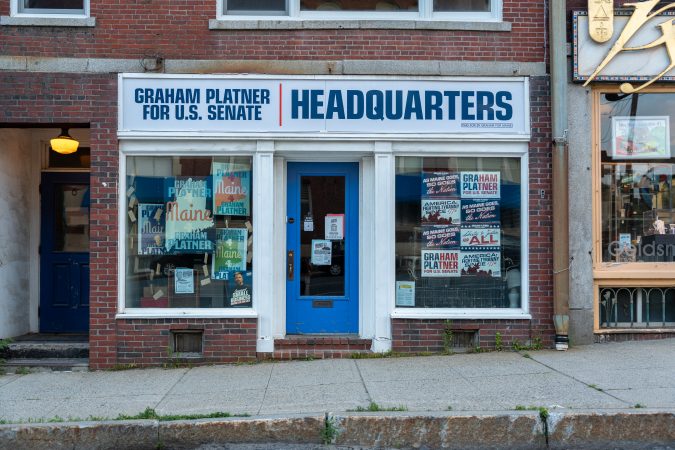
    The implosion of Graham Platner’s campaign for Senate in Maine after an accusation of rape has ripped open divisions inside the Democratic Party as its progressives and moderates battle to pick his successor even before he has said he will step aside.

    National Democrats have grown alarmed that a seat seen as crucial to winning control of the Senate could be slipping from the party’s grasp. Platner had survived a series of controversies — about a tattoo with Nazi symbolism, inflammatory old Reddit posts, and his relationships with women — but many in the party abandoned him after the rape accusation, including the leaders of the Maine Democratic Party and Senate Minority Leader Chuck Schumer.

    They have demanded that Platner step down before a Monday deadline for him to be replaced on the ballot to find a new Democrat to run against Sen. Susan Collins, a longtime Republican fixture in the state. The main super political action committee for Democratic Senate candidates said it would redirect $24 million in ad reservations to other states if he remained.

    Sen. Bernie Sanders (I., Vt.), one of Platner’s earliest and most prominent backers, joined the chorus on Tuesday afternoon.

    “I have spoken with Graham Platner about the best path forward for Maine,” Sanders said in a statement. “In light of these very serious allegations, I have recommended that he step aside.”

    Platner, who has denied the allegation, said on a private call with his campaign staff on Monday evening that he believed he still had leverage to influence which candidate would replace him on the ticket, according to three people familiar with the conversation. On the call, he did not announce plans to withdraw but implied such a decision would be coming, the people said.

    Platner’s campaign had stopped running ads on Meta’s platforms, such as Facebook and Instagram, as of Tuesday, according to the company’s ad disclosure database. He had been running multiple ads as recently as Monday evening.

    The drama comes almost exactly two years after the Democratic Party was roiled by the exit of Joe Biden, then the president, from his reelection race and the speedy anointment of Vice President Kamala Harris as the Democratic nominee. That process — and Democrats’ ultimate loss in 2024 — has left deep scar tissue for many in the party.

    Many on the left — including, it appears, Platner himself — want any replacement to come from the progressive wing of the party after he won the primary over Gov. Janet Mills, a moderate two-term Democrat, who withdrew over a month before the election.

    “To the Democratic establishment: This is not your opening,” said Joseph Geevarghese, executive director of Our Revolution, a group that emerged from Sanders’ 2016 presidential campaign. Referring to Senate Democrats’ campaign arm, he added, “Mainers did not vote by an overwhelming margin against Janet Mills and the DSCC’s handpicked pick just to be handed another status-quo candidate anyway.”

    On the flip side, many in the party establishment believe those on the left should show some humility after Platner’s collapse.

    A range of Democratic groups and activists engaged in the politics of “I told you so.”

    “When women raise the alarm, listen,” said a social media post from EMILY’s List, a group that works to elect Democratic women and that had backed Mills. “Graham Platner’s behavior is disqualifying (AS WE HAVE SAID THIS WHOLE DAMN TIME), and he should end his campaign.”

    On Tuesday morning, more Democrats who are ideological allies of Platner called for him to step aside, including New York City Mayor Zohran Mamdani.

    “I believe that it’s time for him to drop out of the race,” Mamdani said when asked at a news conference. “I think the focus of today should be to respond to the gravity of what so many of us have read, and I think the only appropriate response is for the campaign to come to an end.”

    Mamdani and Platner share several advisers, including Morris Katz and Rebecca Katz of the Fight Agency.

    The progressive group MoveOn also dropped its endorsement.

    As the situation in Maine threatened to spiral out of control, Schumer and the Democratic Senatorial Campaign Committee are set to host major donors this week for a fundraising retreat at the Broadmoor in Colorado Springs. Donors are asked to contribute $44,300 to attend, according to a copy of the invitation.

    The event, which was previously scheduled, was billed as a “special weekend to discuss the DSCC’s strategy and campaigns for taking back the Democratic Senate majority,” but now talk is likely to be consumed by the developments in Maine.

    Platner can be replaced as the Democratic nominee if he withdraws voluntarily by Monday. The state Democratic Party would then have until July 27 to pick his replacement, under state law. But the law does not dictate how the state party itself needs to pick Platner’s replacement.

    What that would look like remains unclear. The options under discussion include a convention or a statewide caucus in late July.

    “We ask for your patience as this work continues,” Devon Murphy-Anderson, the state party’s executive director, wrote in a message to committee members on Tuesday, adding: “Whatever process is ultimately adopted must reflect our Democratic values. It should be open, inclusive, transparent, and fair.”

    A range of candidates are being discussed, with some early attention on those who ran and lost the primary for governor this year. Those Democrats include Troy Jackson, a former president of the Maine Senate; Nirav Shah, a former director of Maine’s public health agency; and Shenna Bellows, Maine’s secretary of state. But some Democrats were concerned about elevating someone who just lost.

    Supporters of Jackson, who had backed Platner in the primary, created a Draft Troy website, and he filed paperwork with the Federal Election Commission for a Senate exploratory committee. Shah put out a statement that said he had received “hundreds of encouraging messages,” adding that anyone who ran for the nomination should commit to a televised debate and “multiple town halls across every corner of the state.”

    Another possible candidate is Dan Kleban, a co-founder of the Maine Beer Co., a brewery outside Portland. He briefly ran for Senate last year before dropping out and endorsing Mills. But like Platner, he has never held elected office or been through the rigors of a campaign.

    Yet another possibility is Jordan Wood, who also previously ran for Senate and dropped out. Wood ran instead in the primary for Rep. Jared Golden’s House seat and lost.

    Golden, a moderate Democrat and veteran who holds the most pro-Trump House seat of any Democrat in Congress, is retiring and previously said he was ready to step away from elected office.

    In recent days, Golden has fielded calls gauging his interest in a run for Senate, according to two people familiar with those conversations who spoke on the condition of anonymity to describe private discussions.

    Golden has not commented since the latest allegations against Platner emerged.

    More unconventional picks were being bandied about, as well. One Democratic firm in recent days included actor Patrick Dempsey in a poll. (He was viewed favorably by 52% of voters in the survey.) Others floated the popular liberal historian Heather Cox Richardson, who is based in Maine.

    Some Democrats erupted after the news emerged that Platner wanted a replacement who was aligned with him politically. One person familiar with the Platner campaign’s internal discussions said Monday that Platner would seek a guarantee he would be replaced by someone in agreement with “the values and vision and policy agenda” that he had pressed.

    Others argued that under the circumstances, Platner’s support would be damaging.

    Joe Baldacci, a state senator who ran and lost in the primary for Golden’s House seat this year, said the idea that Platner would bless a replacement would be the equivalent of “tying a lead weight” to the person.

    “After you have put the Democratic Party in a shambles and undermined all Democratic candidates running for office in Maine then you should have no say in who will be your successor,” Baldacci wrote on social media. He added, “Any connections to Platner will doom that person’s campaign from the very beginning.”

    This article originally appeared in the New York Times.
  • The accused is in court but conspiracy theories still swirl around Kirk case

    The accused is in court but conspiracy theories still swirl around Kirk case

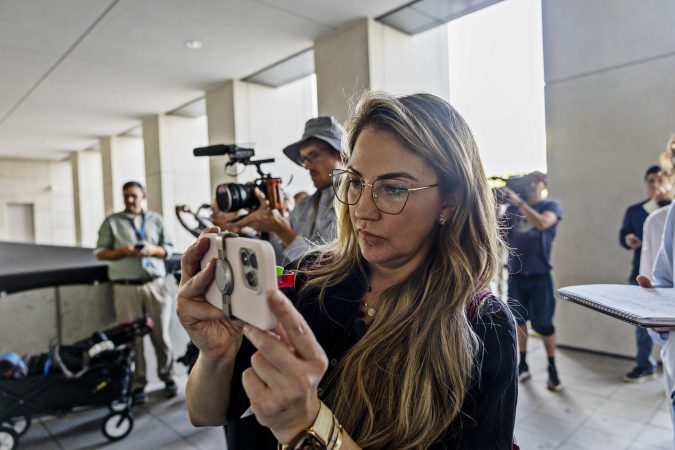
    PROVO, Utah — Outside the state District Court where the preliminary hearing for a man charged with shooting Charlie Kirk was about to begin its first day, Houston-based podcaster Keli Rabon laughed sheepishly when asked if that man, Tyler Robinson, was guilty.

    “You’re going to think I’m crazy,” Rabon replied, “but I think Charlie’s still alive.”

    Robinson, she went on, “was at most a spotter” at the scene of the crime at Utah Valley University last September. Rabon suggested that Kirk, a 31-year-old conservative activist, was currently at an undisclosed location and that he, along with his wife, President Donald Trump, and other government officials, were potentially involved in the “psy-op.”

    Rabon is one of several conspiracy theorists at the Provo courthouse. Camping out overnight to be the first member of the public allowed into the courtroom, Selena Armitage, too, had questions. A true-crime enthusiast living 45 miles away in West Valley City, Armitage said of Kirk’s killing, “I don’t think we’ve even scratched the surface.”

    The proceeding this week to weigh evidence against Robinson will seek to impose judicial norms on a case that seems likely to test those standards to the breaking point. Kirk’s death, after all, is the first assassination of a prominent American political figure in the internet age. Any straightforward prosecution of Robinson will require navigating a parallel universe of conspiracy theories turbocharged by social media.

    The cramped district courtroom has just 14 seats available to the public, and some will be occupied by people including Rabon and Armitage, who are of the view that the state’s case is far from the complete picture. They will be reinforced by untold watchers of the hearing’s livestream.

    The shooting was, in effect, nationally televised. The moment a bullet pierced Kirk’s neck was captured on mobile phones and posted in real time.

    As straightforward as the horrific footage was, internet sleuths were not taking it at face value: Where is the exit wound? Where is the blood? Who are the adults in the campus audience? Is one of them gesturing just before the shot? Why do some of the staff members of Turning Point USA, Kirk’s political organization, seem to react without alarm to his slumping body? Why are several men in the crowd wearing maroon shirts?

    The first two days of testimony have offered additional fodder. The prosecution’s opening witness, a former Utah Valley special officer named Chris Bagley, testified Monday that his body camera’s battery died while he was investigating the rooftop where police say Robinson fired his lethal shot.

    Under cross-examination by defense attorney Kathryn Nester, Bagley also acknowledged that his report did not include any mention of a rifle case that surveillance video showed the shooter carrying. Nor had he identified a plainclothes officer with a badge who had accompanied Bagley to the rooftop. Nor had he secured an empty pistol holster that he saw lying abandoned on the grassy area near where Kirk was killed.

    On Tuesday morning, Nester elicited from the lead investigator in the case, David Hull from the State Bureau of Investigation, the facts that no shell casings had been found on the rooftop, while at least two other firearms were discovered at the crime scene below. Hull also admitted that he had not interviewed two individuals who claimed that their own rooftop video featured an individual whose clothing and build did not match those of Robinson.

    Such vagaries are common in criminal investigations. Evidence is rarely conclusive, eyewitness accounts seldom 100% reliable, confessions not always ironclad. But such nuance can be lost on the judges and juries of social media.

    Right-wing social media influencers have foraged on Kirk’s assassination with particular zeal, chief among them Candace Owens, a former Turning Point USA star turned antagonist who has devoted dozens of podcast episodes to the subject.

    “I feel confident stating that Tyler Robinson did not murder Charlie Kirk,” Owens said recently. In her view, Robinson was “a total patsy” who was not even on campus that day.

    Owens has at various times implicated the victim’s widow, Erika Kirk, Turning Point USA staff, and even the Israeli government, but only with tantalizing questions and dots for her audience to connect, not a true alternative scenario.

    Erika Kirk and other Turning Point officials have expressed outrage, but privately, they have acknowledged the far right’s susceptibility to such theories, owing to a suspicion of traditional news sources and hostility toward the left.

    Kirk himself regularly argued that the 2020 presidential election was stolen and that Democrats were purposely opening the border to reshape the electorate.

    Such theories may lack evidence, but they have an audience. By far the biggest media presence at the Utah preliminary hearing is Fox News Channel, which has more than a dozen employees in Provo. And as Rabon acknowledged outside the courtroom, conspiracy theories are popular — some more than others. Her podcast was eight months old and already had 7,500 YouTube subscribers, a figure that she said would be higher if she were to embrace a more alluring conspiracy theory, such as the belief that Kirk was killed by an incendiary device in his microphone.

    “I’m doing ‘fake death,’” Rabon said. “If I was doing ‘exploding microphone,’ the algorithms would like me better.”

    This article originally appeared in the New York Times.
  • Farage says he will resign as U.K. lawmaker to trigger a special election

    Farage says he will resign as U.K. lawmaker to trigger a special election

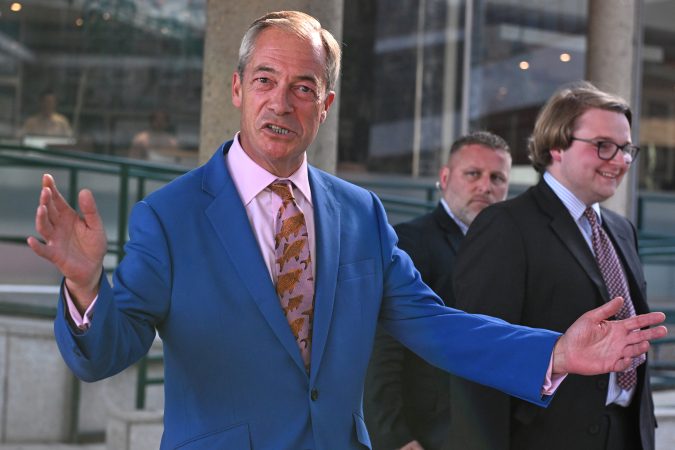
    LONDON — Nigel Farage, the leader of the populist right-wing Reform UK party, on Tuesday said he would resign his seat in Parliament and run for reelection in his Clacton seat to answer criticism of his financial affairs.

    The unexpected move comes after recent revelations about gifts and financial support received by Farage, both from a cryptocurrency billionaire and from a political ally who was once convicted of fraud in the United States.

    “I have decided that the people of Clacton should be the judges of my actions,” Farage said in a statement that was broadcast on his party’s YouTube channel. “This will be a ‘people versus the establishment’ by-election,” he added, referring to a special parliamentary election.

    The success of Farage, whose anti-immigration party has led in opinion polls for more than a year, was instrumental in destabilizing Prime Minister Keir Starmer, who announced his resignation last month.

    But Farage has suffered several setbacks lately amid growing scrutiny of his financial affairs.

    In May, it emerged that he had received an undisclosed gift of 5 million pounds (about $6.7 million) from a cryptocurrency billionaire, Christopher Harborne, a Briton who lives in Thailand.

    Farage argues that the gift was unconditional, was made before he won a seat in Parliament in the general election in 2024, and there was no requirement to declare it. However, Daniel Greenberg, Parliament’s standards commissioner, has opened an investigation into whether the money should have been made public under rules that require new lawmakers to declare some financial benefits received in the 12 months before their election.

    Over the weekend, the Sunday Times of London reported that Farage had separately failed to declare benefits provided by a political ally, George Cottrell, a convicted fraudster who served prison time in the United States.

    According to the newspaper, Cottrell’s support included providing social media staff members who worked for Farage in the year before he was elected, as well as the use of a property rented by Cottrell near Buckingham Palace.

    Farage has insisted he followed all of the rules and has accused journalists of “despicable behavior” and of hounding his family.

    However, in his statement Tuesday, Farage suggested that the Sunday Times article had now triggered a second investigation, saying that, “Despite the fact that many of the things that were written in the article were inaccurate or irrelevant, yet another standards investigation is underway.”

    If Greenberg finds that the gift from Harborne should have been declared, Farage might, under British parliamentary rules, have been suspended from Parliament and forced to fight for reelection in his parliamentary constituency of Clacton, in eastern England. So the announcement Tuesday effectively preempts that possible outcome, although it would not stop the findings being published.

    Farage, a highly effective campaigner and a longtime disrupter of British politics, will likely be confident of winning the seat again, having achieved a majority of 8,405 votes in the 2024 general election. Polling suggests he remains popular in the area.

    However, even a convincing victory there would not guarantee an end to the scrutiny of Farage and his finances as he attempts to convince the country he should become its next prime minister. The next general election must take place by 2029.

    Reform UK has recently faced competition on its right flank from a far-right party called Restore Britain, which was founded by Rupert Lowe, once an ally of Farage, after a bitter public rift with him.

    Despite Reform’s success in May in local elections in Wales, Scotland, and British municipalities in England, the party has also suffered some reverses. Last month it lost a crucial special parliamentary election in Makerfield, in northwest England, which was won by Andy Burnham, who is expected to succeed Starmer.

    Earlier this year, it lost in another special election in nearby Gorton and Denton to an insurgent Green Party. And last year, it suffered a similar fate in Caerphilly in Wales, in a special election to the Welsh parliament, which was won by the center-left nationalist Plaid Cymru party.

    In national polls, Reform’s support has fallen from about 30% last year to about 25% now, with Labour and the Conservatives around 20% each.

    This article originally appeared in the New York Times.

  • Hundreds of thousands attend ayatollah’s funeral procession

    Hundreds of thousands attend ayatollah’s funeral procession

    Hundreds of thousands of mourners amassed in the Iranian capital, Tehran, on Monday to commemorate Ayatollah Ali Khamenei, the Iranian supreme leader, who ruled his country for decades with an iron fist before he was killed in the war with the United States and Israel.

    The ayatollah’s body was carried through the city in a public procession, part of a period of ceremonies and mourning strictly choreographed by the Iranian government. Later this week, it will be taken to several cities in Iran and neighboring Iraq that are significant to Shiite Muslims, before the late ayatollah is buried in his hometown, Mashhad, in northeastern Iran.

    Some of the top ranks of Iran’s current and former leadership were among the sea of mourners. In a video shared by Iranian state television, President Masoud Pezeshkian was seen walking down the street, shaking hands with members of the crowd.

    Though he was exalted by many Iranians, Khamenei was also despised by others for presiding over an authoritarian state that crushed dissent. In January, Iranian security forces violently suppressed mass anti-government protests, killing thousands, according to Iranian officials and human rights groups.

    For Iran’s leaders, the mass funeral has served in part as a show of national unity. But the late supreme leader’s son and successor, Mojtaba Khamenei, has been conspicuously absent from the ceremonies.

    Mojtaba Khamenei has not been seen in public since succeeding his father, who was killed when Israeli forces bombarded Ali Khamenei’s compound on the first day of the war in late February. His absence from the funeral ceremonies has become a point of scrutiny for Iran’s leadership as they seek to project stability and continuity.

    Mahmoud Ahmadinejad, a former Iranian president, was among the senior officials who attended the funeral ceremonies Monday. According to U.S. officials, Ahmadinejad was injured in an Israeli strike in February intended to free him from house arrest. The New York Times later reported on a failed Israeli plan to install Ahmadinejad at the helm of a postwar Iran.

    The talks between Iran and the United States have been paused until after the funeral ceremonies. They have failed to prevent new bouts of fighting or to fully reopen shipping in the crucial Strait of Hormuz, let alone bring the two sides closer to resolving myriad thornier issues that were not covered by the countries’ ceasefire.

    The New York Times was granted access to the funeral ceremonies by Iran’s government, which determined the ceremonies our reporters could attend, accompanied by a government-provided translator and a guide. The views expressed by people interviewed at these events may not be representative of many Iranians, while others may have felt unable to speak freely.

    This article originally appeared in the New York Times.

  • Comcast adds heft with Sky’s deal for British broadcaster ITV

    Comcast adds heft with Sky’s deal for British broadcaster ITV

    LONDON — Sky, the British media group owned by Comcast, said Monday that it was buying the television arm of ITV in a deal that would vastly expand its audience and help Comcast compete with rival streaming platforms.

    The 1.6-billion-pound ($2.1-billion) takeover would combine two major media brands into a broadcaster that is expected to account for 20% of home viewing in Britain. The deal includes ITV’s free-to-air channels and its streaming platform.

    Last week, Philadelphia-based Comcast announced it would spin off NBCUniversal and Sky into a separate company focused on media and entertainment, while Comcast would center on its cable and internet services. Earlier this year, Comcast moved its cable channels, including MS NOW and CNBC, into a new company called Versant.

    Dana Strong, the CEO of Sky Group, called the merger “a defining moment for British media” in a statement. Comcast acquired Sky in 2018.

    “ITV will remain a public service broadcaster at the heart of British life, and we’re excited about the future we can build together,” she said.

    ITV, the oldest commercial network in Britain, has suffered as viewers and advertisers have shifted to YouTube and streaming giants such as Netflix and Disney. Sky said that under the merger, ITV’s channels would remain free to air and that ITV News and Sky News would remain distinct news outlets.

    Sky is acquiring ITV for 1.2 billion pounds ($1.6 billion) in cash, with add-ons for advertising performance potentially bringing the transaction up to 1.6 billion pounds. As part of the deal, Comcast is expected to sell its Love Productions business, which makes The Great British Baking Show, to ITV.

    ITV Studios, the production arm, is not included in the acquisition by Sky and is to operate independently. Sky has agreed to spend at least 2.1 billion pounds ($2.8 billion) over five years on content from ITV Studios, which the company said would help to support creative jobs and British-centric production.

    The deal faces regulatory approval and is not likely to be completed until next year.

    This article originally appeared in the New York Times.

  • Efforts to help smokers quit stall under Trump

    Efforts to help smokers quit stall under Trump

    WASHINGTON — The ads were jarring: a man with a hole in his throat where his larynx, or voice box, had once been. A woman whose teeth and jaw had been removed after oral cancer. Another woman speaking in a robotic voice, which was altered when her larynx was removed: “I wish I’d never seen a cigarette in my entire life.” A black screen followed, saying she died two days later.

    The Centers for Disease Control and Prevention’s 14-year ad campaign, called Tips From Former Smokers, was highly memorable and, research shows, highly effective in motivating people to quit. Last year, though, as tobacco companies gave millions to political organizations related to the Trump administration, the campaign went dark.

    There is no definitive evidence linking the donations to the lapse of the ad campaign. But the decision to terminate it was one of several steps the administration has taken to unravel federal government antismoking initiatives that had long had bipartisan support during a time when the administration has delivered significant policy wins to tobacco companies.

    The CDC’s Office on Smoking and Health, which managed the campaign and worked with states on smoking cessation measures, has been shut down for more than a year, after its staff was laid off as part of the administration’s government downsizing efforts. While hundreds of other federal health employees were eventually rehired, the smoking office staff members have not been.

    Even after Congress restored the office’s funding late last summer, its employees have remained on paid leave as litigation challenging the firings plays out.

    In recent weeks, under pressure from Congress, the CDC has given states diminished funding to air ads from the campaign’s archive, but the federal government will not produce new ads or negotiate contracts for them to air nationwide. The ads had prompted millions of smokers to dial state quit lines for help on how to stop smoking. In interviews, people who ran quit lines in several states said that since the ads went off the air, calls have plummeted along with enrollment in programs that offered counseling and nicotine gum and patches.

    The abandonment of an effort that was widely regarded as a public health triumph has puzzled antismoking activists who point out that Health Secretary Robert F. Kennedy Jr.’s platform was based on ending chronic diseases, which are a well-known consequence of smoking.

    “We find it very ironic in an administration that wants to make America healthy again that we’re cutting all of these resources related to smoking and vaping,” said Nancy Brown, CEO of the American Heart Association.

    Helping adults stop smoking is one of the most evidence-backed ways to improve the public’s health. Smoking rates in the United States have fallen significantly, to less than 10% of adults, compared with 42% of adults in the early 1960s. Still, smoking remains the leading cause of preventable death and disease in the country, causing about 490,000 premature deaths each year.

    A national survey of adults who smoked from 2012 through 2018 found that the Tips from Former Smokers campaign was associated with more than 16 million people attempting to quit smoking and 1 million succeeding. During those years alone, the campaign was associated with saving an estimated $7.3 billion in healthcare costs.

    “It’s crazy that they have cut this funding if they really want to save lives and save money,” said Sally Herndon, who ran North Carolina’s tobacco control program until her retirement last year.

    Emily Hilliard, a spokesperson for the Department of Health and Human Services, said in a statement that the CDC “remains committed to tobacco prevention and control and continues to support this priority through outreach, education, and surveillance.”

    The cuts have come as tobacco companies have aggressively lobbied the administration for policy changes that would likely increase their market share of vaping and other nicotine products.

    The New York Times recently reported that Reynolds American, which makes Newport and Camel cigarettes, saw a coveted new federal policy take shape that would allow an entire new class of flavored e-cigarettes onto the market. The initiative was announced just days after a $5 million donation and lunch with President Donald Trump at his golf course in Florida. Executives from Altria, which makes Marlboro cigarettes, were also present.

    The new policy was crafted over the objections of Marty Makary, then the FDA commissioner, who cited it as the reason for his resignation in May. It stunned some public health experts, who say the FDA set aside one of its central authorities: to approve or reject individual products based on their merits.

    “It’s very clear this guidance is a gift to the tobacco industry on a silver platter with a side of public health malpractice,” said Brian King, a former leader of the FDA’s tobacco division and executive vice president for U.S. programs of the Campaign for Tobacco-Free Kids.

    Opponents of the policy say flavored vapes will introduce young people who have never smoked to nicotine products.

    But Hilliard, the health department spokesperson, said the FDA was focused on protecting youth and a “science-based review process for tobacco products.”

    She added: “Cigarette smoking remains the leading cause of preventable disease and death in the United States. And the agency supports the development of products that may provide less harmful alternatives for adults who smoke.”

    The federal cuts to antismoking programs and what some view as lenient new policies represent a reversal of decades of setbacks for tobacco companies under both Democratic and Republican administrations.

    The CDC’s shuttered Office on Smoking and Health employed experts on effective tobacco interventions who worked with state health officials to advance antismoking policies such as bans on indoor smoking, higher tobacco taxes, and education for parents about e-cigarettes.

    The office sent most of its $240 million budget to states each year, but shortly after laying off the staff, in April 2025, the CDC notified states that their annual funding for tobacco control would not be coming.

    Many state tobacco control offices cut their own staff as a result, including in New York, Texas, and North Carolina. Late last year, Congress reinstated some funding to states that had relied on the CDC office for expertise.

    “We know that we really save lives and save money with tobacco prevention and control,” said Herndon, who until recently led North Carolina’s tobacco control efforts. “But without the training and technical assistance and support from the Office on Smoking and Health, a lot of the newer staff coming along are struggling to know what to do.”

    The Tips From Former Smokers campaign went off the air around September of last year, though some larger states such as New York and California continued to run some antismoking ads.

    Since then, calls to 1-800-QUIT-NOW lines — which traditionally experience a 30% spike in the weeks after an ad campaign — have fallen off significantly.

    National data on the quit line call volume was not compiled for the last year after the federal employee in charge was let go, said Thomas Ylioja, president of the North American Quitline Consortium.

    But at Quit for Life, an organization that operates quit lines in 19 states, Guam, and Washington, D.C., calls fell by 25% in the first half of 2026 compared with the first half of 2025 when the ads were on the air, according to Nick Fradkin, the group’s director of public health strategy.

    Officials in other states said calls had fallen off too — by about 45% in Texas, 25% in California, and 18% in New York. In Virginia, enrollment in the quit line counseling services fell by half from October 2025 through February 2026, said Logan Anderson, a spokesperson for the Virginia Department of Health.

    In recent weeks, the CDC offered $40 million, down from the usual $65 million, for states to air archived antismoking ads. It is unclear whether new ads will be created.

    In North Carolina, at least, “we don’t have the media machine that produced those fabulous ads,” Herndon said.

    This article originally appeared in the New York Times.

  • Yosemite offers many wonders. Crushing crowds are now among them.

    Yosemite offers many wonders. Crushing crowds are now among them.

    YOSEMITE NATIONAL PARK, Calif. — At the base of Yosemite Falls, where white waters roared down a granite cliff, a couple jockeyed through dense crowds to try to take the perfect waterfall selfie. A family of five traded off resting in the single available seat on a wooden bench. A tourist tripped over a toddler, who fell and began wailing.

    There was one spectacle at Yosemite National Park last weekend not in the glossy brochures: the visitors themselves.

    The crown jewel of the nation’s park system, Yosemite is even more crowded than usual this year, after a decision by the Trump administration to do away with summer reservations here and at other popular parks.

    In the first half of 2026, visitors to and employees of California’s regal wilderness park reported hourslong traffic jams, waits at entrance stations, and long lines just to purchase a bite to eat.

    Employees of Yosemite and organizations that support it say that the hordes of visitors are demoralizing staff and damaging the park, as well as its reputation. Many visitors are determined to make the most of their visit, even with long waits. But some travelers have abandoned their plans altogether and driven out of the park’s gates after being turned away from every at-capacity major attraction.

    ”This is a far cry from the awe-inspiring sights Yosemite is known for,” the state’s two U.S. senators, Democrats Adam Schiff and Alex Padilla, wrote in a letter last week to the administration criticizing the cancellation of Yosemite’s reservation system.

    July is already the busiest month across national parks. And at Yosemite, it’s shaping up to be chaotic.

    On the morning of July 3, so many people had already arrived at Yosemite Valley, known for its sprawling meadows and towering palace of granite rock faces, that by 7 a.m. drivers were circling lot after lot as they tried to find a spot.

    “The traffic is terrible in the park,” said Lakshmi Duddukuru, 41, who spent 45 minutes of her first trip to Yosemite searching for a parking space. She spoke as she scaled the steep Mist Trail, where throngs of hikers were ascending in a slowly snaking line.

    Yosemite offers free shuttles to transport visitors between popular destinations, but many were too full to pick up any of the dozens of people waiting at the stops. On one bus, a frustrated driver trying to squeeze in more sightseers shouted, “If you’re not touching somebody, you’re not close enough.”

    Yosemite Valley helped inspire the creation of the national park system, as it was the first federally protected land to be designated for public use, under an act signed in 1864 by President Abraham Lincoln. Its waterfalls and glacier-carved monoliths, such as Half Dome and El Capitan, have made it one of the country’s most beloved national parks — and most visited.

    In 2020, Yosemite began experimenting with a summer reservation system to manage its ever-growing summer crowds. But Yosemite, as well as Arches National Park and Glacier National Park, did away with reservations this year, after President Donald Trump signed an executive order urging parks to rescind restrictions to improve access and help local economies.

    Ray McPadden, Yosemite’s superintendent, said that a reservation system should be a last resort. In previous years the park had to turn families away because they hadn’t booked a visit in advance, he said, which was unfair to them and meant a loss of fees that could have gone toward fixing up trails, campgrounds, and bathrooms.

    McPadden thinks the park is not overly crowded, except on holidays and Saturdays, he said. He expects a 12% increase in visits compared with last year, which would be about 4.7 million visitors, and the second-busiest year in the park’s history.

    “No secret: Yosemite is really popular,” he said. “We are having a great summer.”

    Some park employees disagree. The union local representing Yosemite staff, NFFE Local 465, said in a statement that the decision to end the reservation system had undermined staff and was “disheartening and disappointing,” particularly when the park was short-staffed after federal cuts. Gridlock traffic inside lengthens staff members’ commutes and makes it difficult, if not impossible, for them to perform their duties, the local said.

    Advocacy organizations point out that Yosemite did not benefit much from fee revenue over the holiday weekend. As part of his overhaul of the National Park Service, Trump ended free park entry on some days, such as Martin Luther King’s Birthday, while granting free park admission to U.S. residents on Trump’s birthday, which coincides with Flag Day, as well as July 3, 4, and 5.

    They worry that overcrowding encourages people to go off trail, and that guests aren’t as supervised as they once were. The bumper-to-bumper traffic also means that ambulances and other emergency vehicles can be delayed.

    The overcrowding “is an environmental disaster for the park, and it’s a safety issue for visitors,” said Mark Rose, the Sierra Nevada program manager for the nonprofit National Parks Conservation Association.

    For the most part, however, visitors seemed unfazed by the crowds. The magnificence of Yosemite’s glassy rivers and giant sequoias is difficult to diminish, and tourists said they expected summer crowds when they traveled.

    Duddukuru, who was visiting from Chicago, said that despite the delays the park was “wonderful.” She and her family had to wait 45 minutes to board a shuttle, but then spotted a bear, so the delay felt worth it, she said.

    Sasha Rubeiz, 23, said one particularly narrow trail felt a little dicey with so many other hikers, but they were mostly not a bother on her first, “unreal” visit here. She tilted her head up toward soaring pine trees and blue skies.

    “I’m looking up more than down,” said Rubeiz, who lives in Sacramento, Calif.

    McPadden said he was working on solutions to some of the crowding issues, including new fencing and boulders to stop people from parking illegally. He said he hoped to install digital signs showing guests which parking lots are already full so they don’t waste time circling.

    He would not say whether a reservation system would return next year. “I try to follow the facts, which generally are very, very positive here in the park,” he said.

    Brett Birkbeck, a police officer who lives in Huntington Beach, Calif., ate a hot dog and drank red wine out of a plastic cup as he set up camp at dusk under pine trees.

    Birkbeck, 49, said the crowds could not put a damper on his annual summer trip to Yosemite, during which he and his friends hike and grill ribs for a week in one of the most spectacular places on Earth.

    “I call it pressing the reset button on the year,” he said.

    This article originally appeared in the New York Times.

  • Victoria Cruz, veteran of the trans rights movement, dies at 79

    Victoria Cruz, veteran of the trans rights movement, dies at 79

    Victoria Cruz, a matriarchal figure in the New York transgender community who was at the Stonewall Inn in 1969 when a police raid set in motion the gay liberation movement, and who later worked as an advocate for survivors of antitrans violence, died on June 25 in New York City. She was 79.

    Her partner, Charles Wright, confirmed the death, in a hospital, and said the cause was liver cancer.

    Ms. Cruz spent 17 years working for the New York City Anti-Violence Project, which provides counseling and other services for LGTBQ+ and HIV-affected survivors of violence. There, she focused on domestic abuse, but her role in the organization — and in the community — extended far beyond her official duties.

    She understood the intersectional threats that trans people faced in areas like housing discrimination and workplace harassment — expertise that made her a unique resource to thousands of trans New Yorkers.

    “People would come into the office and just ask for Miss Vicky,” Catherine Shugrue-Dos Santos, a former deputy executive director at the organization, said in an interview. “They wouldn’t give their names; they wouldn’t talk to anybody else. She really had the trust of the community.”

    She was especially effective because she came to the group as a survivor herself: In 1996, while working at a nursing home in Brooklyn, she was repeatedly harassed and assaulted by four co-workers.

    “I was very angry. Very angry,” she told Vanity Fair in 2017. “The worst part of it is that I couldn’t feel the ground beneath me.”

    One day she brought a knife to work, intent on fighting back, but then thought better of it. A friend suggested she contact the Anti-Violence Project, which at the time was run by Christine Quinn, who later became the first female and first openly gay speaker of the New York City Council.

    The group helped her file police reports and led protests outside the nursing home. Eventually, two of the four co-workers were convicted of harassment — one of the first times that someone was held legally accountable for antitrans violence in New York State.

    Quinn brought Ms. Cruz on as a volunteer, then hired her to manage the front desk. The job also had her answering the organization’s hotline, a task that connected Cruz with countless at-risk New Yorkers.

    “She was perhaps the strongest person I have ever met,” Quinn said in an interview. “She was part of the birth of the modern LGBT rights movement in New York, and therefore across the country. She was someone who had survived a terrible sexual assault and transformed that horrible moment into beaconlike strength that you felt whenever you were around her.”

    Ms. Cruz was a central figure in David France’s 2017 documentary, The Death and Life of Marsha P. Johnson, about the 1992 death of a trans activist that police ruled a suicide, but many, including Ms. Cruz, suspected was murder.

    The documentary tracks her search for answers and ends with her conclusion that Johnson was murdered by the mafia.

    Ms. Cruz did not know Johnson, but their lives overlapped. Both were at the Stonewall Inn on the night of June 28, 1969, when police conducted one of their routine raids at the bar. This time, though, the largely transgender clientele inside fought back, and a riot ensued.

    Ms. Cruz had been outside with her boyfriend, one of the bar’s bouncers. As the violence escalated, he told her to go home. When she returned in the morning, she found the bar in ruins. She grabbed a beer sign and other memorabilia, and also took home the bar’s dog, Rusty.

    The Stonewall riot sparked the beginning of the gay liberation movement, which had a strong trans presence. Johnson and another well-known community figure, Sylvia Rivera — a friend of Ms. Cruz’s — became particularly active, ensuring that trans people had a place within the movement.

    Ms. Cruz played a quieter role, but over time she became a central figure as well — and a recognizable one, with her homemade outfits topped with a headband adorned with feathers and cowrie shells, in honor of her heritage as a descendant of the Taíno people of Puerto Rico.

    “She was an elder in that community,” France said in an interview. “She was a transgender woman of color who had lived into old age, which is so rare.”

    Victoria Cruz was born on Sept. 19, 1946, in Guánica, on Puerto Rico’s southwestern coast. When she was 4, her family moved to the Red Hook section of Brooklyn, where her father worked as a longshoreman; her mother was a seamstress.

    She identified as female from an early age, and her family was strongly supportive. Her mother made her dresses, and her father, who affectionately called her “El Negro,” on account of her dark skin, switched to using the word’s feminine form, “La Negra.”

    She studied cosmetology in high school and worked as a model, but soon found both routes closed to her because she was trans.

    After high school, she found a doctor in Coney Island who provided her with the medical treatment to help her transition.

    Through the 1970s she was a sex worker and a dancer in West Village clubs. She also developed an addiction to crack cocaine, though she eventually became sober.

    She enrolled at Brooklyn College in 1978 and graduated four years later with a degree in theater.

    But she continued to struggle financially, and ended up on public assistance. The program required her to work, which is how she ended up on the staff at the Brooklyn nursing home.

    Her survivors include Wright and her sister Hedye Cruz. A complete list of survivors was not immediately available.

    In 2012, Ms. Cruz received the National Crime Victims’ Service Award from the U.S. Department of Justice.

    In an interview for the Anti-Violence Project in 2022, Ms. Cruz explained why she committed her life to counseling.

    “If you have been in that situation — everybody’s situation is different but similar,” she said. “If you have the empathy to help out people, that’s half the ordeal. Just having the empathy and letting them know that you’re there to help them, not to judge them.”

    This article originally appeared in the New York Times.

  • Justice Department defends dropping charges against Indian billionaire

    Justice Department defends dropping charges against Indian billionaire

    The Justice Department on Saturday forcefully argued that an offer from India’s richest man, Gautam Adani, to invest billions of dollars in the United States played no role in the department’s decision to abandon criminal charges against him.

    In a letter filed Saturday, Trent McCotter, the principal associate deputy attorney general, defended the Justice Department’s decision after a federal judge demanded that the government explain its move. McCotter accused people within the department of leaking to media outlets about the case and acting “unethically.”

    The New York Times reported in May that Robert J. Giuffra Jr., a lawyer for Adani, had met privately with Justice Department officials to argue why the case should be abandoned. He asserted that prosecutors lacked basic evidence, and said that Adani could invest $10 billion in the United States and create tens of thousands of jobs, if the charges were dropped.

    McCotter appeared to acknowledge the existence of such an offer, but said that the decision to end the criminal case had been reached before the offer was made.

    “Before that topic first arose, I had already firmly concluded I would seek dismissal of the securities charges no matter what,” McCotter wrote in a letter to Judge Nicholas G. Garaufis of the Eastern District of New York.

    McCotter assailed Justice Department lawyers, current or former, whom he accused of leaking information in hopes of preventing a flawed case from being dismissed.

    Giuffra declined to comment. The Justice Department did not respond immediately to a request for comment.

    Adani, an industrial titan in India and a close ally of Prime Minister Narendra Modi, was indicted along with seven co-defendants in November 2024, in the last weeks of the Biden administration. Federal prosecutors in Brooklyn said that he had paid hundreds of millions of dollars in bribes to Indian officials to secure lucrative solar energy contracts for his company, Adani Green Energy.

    Although the bribes took place in India, Adani and his co-conspirators were subject to American law because his company had sought investments from people in the United States, prosecutors said at the time.

    Adani’s lawyers and McCotter have vigorously disputed that reasoning. On Saturday, McCotter wrote that no harm was done to U.S. investors and that the case was fundamentally about Indians bribing other Indians, which the Justice Department had no interest in litigating.

    McCotter wrote that if someone searched for the word “India” in the indictment, it would appear more than 200 times.

    Yet the trajectory of the case against Adani — particularly the investment proposal — has highlighted the highly transactional approach to justice during President Donald Trump’s second term.

    In May, days after federal prosecutors wrote that they had chosen “not to devote further resources” to the criminal case, multiple Justice Department lawyers withdrew from the case, signaling internal disagreement over the move.

    The next month, Sens. Elizabeth Warren (D., Mass.) and Richard Blumenthal (D., Conn.) wrote in a letter to Todd Blanche, the acting attorney general, that the department’s decision “gives the appearance that the DOJ is an equal partner in corrupt behavior.”

    Federal prosecutors cannot unilaterally decide to end a case. Garaufis, who will ultimately decide whether to drop charges, ordered prosecutors to provide a more detailed explanation for their decision.

    Judges have little ability under federal law to stop the government from abandoning criminal cases. But experts say that increasingly, under Trump, judges have scrutinized the rationale behind such decisions.

    After the Justice Department in 2025 moved to dismiss federal bribery charges against Eric Adams, then the mayor of New York City, the judge overseeing the case, Dale E. Ho, called the government’s rationale — that the case was harming Adams’ ability to help with Trump’s immigration crackdown — “unprecedented and breathtaking in its sweep.”

    On Saturday, McCotter chided Garaufis for what he called a “judicial inquisition.” Such queries, he argued, risked exposing “privileged internal debates” within the Justice Department.

    This article originally appeared in the New York Times.