Category: New York Times

  • Trump blasts ‘sanctuary’ states, but many still aid deportations

    Trump blasts ‘sanctuary’ states, but many still aid deportations

    As part of its full-court press on immigration, the Trump administration has increasingly sought to punish Democratic-led states that have tried to curtail their cooperation with federal immigration agencies.

    Trump officials argue that the policies of “sanctuary jurisdictions” have enabled the release of sex offenders, killers, and other criminals — the “worst of the worst” — and President Donald Trump has gone so far as to call the actions of blue-state leaders a “lawless insurrection.” The administration has threatened federal funding cuts, lawsuits, and travel restrictions if state and local authorities don’t fall in line.

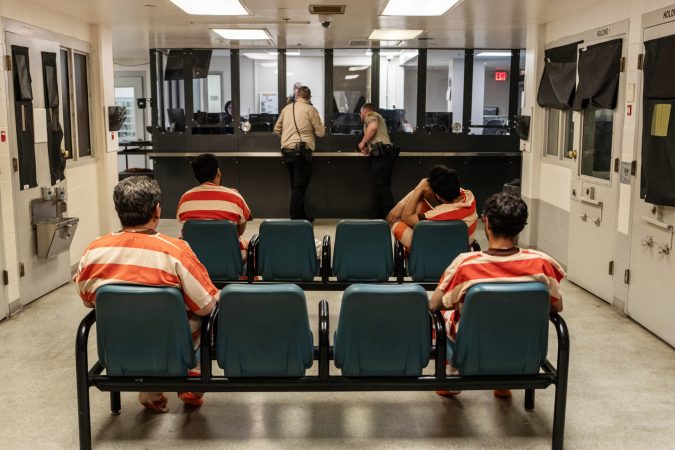
    But the very states the Trump administration is pillorying — from California and Minnesota to New York and Massachusetts — already cooperate closely with Immigration and Customs Enforcement on tens of thousands of criminal cases a year, regularly turning over people charged with or convicted of serious and violent offenses for detention and deportation.

    A New York Times review of policies, statutes, and practices in the 18 states targeted by Trump shows extensive cooperation and coordination with federal immigration agencies when it comes to people convicted of serious crimes. Data shows all but one of these states have sharply increased the number of people they have moved each month from local and state authorities’ custody into federal immigration custody during Trump’s second term, as compared with the last year of former President Joe Biden’s term.

    In 12 of them, the number of custodial arrests by Immigration and Customs Enforcement more than doubled, according to a Times analysis of ICE data obtained by the Deportation Data Project.

    The Trump administration has suggested that “sanctuary” states refuse to cooperate with ICE agents and deny them entry into jails. But by and large, these blue states have been assisting in federal efforts targeting violent offenders, while pushing back on the federal dragnets across the country that have ensnared immigrants without criminal records.

    At the height of a federal crackdown in Minneapolis earlier this year, Minnesota Gov. Tim Walz accused ICE of targeting people of color with no criminal background while failing to pick up hardened criminals in state custody ready to be transferred to the agency.

    The tensions have only been rising as federal immigration officials have received an infusion of dollars to carry out more operations and, in recent weeks, more than doubled their daily arrests, often with the help of local authorities in red states.

    State officials from blue and red states agree that cooperation with federal authorities is critical to criminal investigations, and none would dispute that the release of dangerous people into communities is bad for public safety or politically unpalatable.

    But governors and top law enforcement officials in Democratic-led states say they are trying to disentangle their role in criminal investigations from federal immigration enforcement. That delicate balance, they say, preserves their time and resources and engenders trust from immigrant communities.

    So-called sanctuary laws enacted in Democratic-led states do limit cooperation with immigration authorities in many ways. Most largely bar state and local officers from assisting federal agents on civil immigration violations and put parameters around ICE’s access to jails and prisons as well as designated protected zones, such as schools, churches, and courthouses. A slate of state court rulings and policies have also prohibited local and state agencies from holding people for immigration officers beyond their release dates. And many prohibit authorities in most cases from alerting ICE that an inmate is about to be released, though release dates for all offenders are publicly available online.

    Of all the states targeted, California, perhaps, has become the administration’s most prominent adversary. The state, which emerged as a battleground over “sanctuary” policies well before Trump first took office in 2017, barred state and local law enforcement agencies — including school police and security departments — from using public funds or personnel for civil immigration enforcement during his first term.

    But the Trump administration’s criticism has focused heavily on the idea that serious criminals are being allowed to walk free — something California has specifically sought to avoid.

    State lawmakers and law enforcement officials negotiated a list of exceptions to allow greater coordination when those wanted by ICE have criminal records or face serious criminal charges. Since 2019, the state’s corrections department has coordinated with the agency to transfer nearly 13,000 people convicted of murder, sexual assault, child molestation, or other grave felonies into federal custody.

    “Not all sanctuary policies are created equal,” said John Sandweg, a senior Department of Homeland Security official under the Obama administration.

    Many states or local jurisdictions with progressive politics “may not hand over someone convicted of driving without a license or some petty misdemeanor,” he added, “but would work collaboratively with ICE to ensure that individuals with violent criminal histories were not released in the streets.”

    Democratic officials have argued that local limitations on ICE cooperation ensure that victims of crimes can approach police without worrying about being swept up in unrelated immigration actions.

    “People need to feel comfortable talking to police,” said Ronnell Higgins, commissioner of the Connecticut Department of Emergency Services and Public Protection, the state’s top law enforcement agency. “Wherever you go, the police need the public’s help in preventing crimes and in solving crimes as well.”

    At the crux of this sanctuary debate has been a push for partnerships with ICE under a program known as 287(g). The initiative, a central pillar of the Trump administration’s mass deportation agenda, trains sheriff’s deputies, police, and highway patrol officers to act as immigration agents in the course of their daily duties, and the program has become a force multiplier for enforcement.

    Fifteen of the 18 states reviewed by the Times have passed laws that restrict their local and state law enforcement agencies from entering into contracts to help enforce civil immigration laws. The other three limit participation in the program under governor’s executive orders and state court rulings. But no states prohibit their officers from assisting federal agencies on criminal violations.

    All allow the transfer of inmates into federal custody if authorities present a criminal warrant signed by a judge.

    Trump’s fight with Democratic leaders over “sanctuary” policies dates to his first term. Since his return to the White House, his administration has only ramped up the stakes further. Last month, Republicans passed a sweeping immigration package signed by Trump. It includes $31 billion for ICE activities, such as supporting local and state authorities that have signed 287(g) partnerships with the agency, and earmarks another $350 million to expand enforcement operations in jurisdictions that refuse such partnerships.

    During budget negotiations in late May, Markwayne Mullin, Trump’s new Homeland Security secretary, floated the idea of pulling customs officers from airports in major liberal hubs, which business groups warned would lead to chaos for travelers and harm the economy. In recent weeks, Tom Homan, his border czar, has repeatedly vowed to flood New York with agents.

    Although neither of the plans has transpired, the administration’s strikes have turned Democratic-led cities and states into political foils in the rhetorical fight over immigration policy. That fight has played out in the public sphere and in the courts, where the Trump administration has had less success. Last month, federal judges dismissed, for now, federal government lawsuits challenging a Los Angeles ordinance and executive orders in several New Jersey cities that prohibit the use of city resources for federal immigration enforcement. (The decisions followed similar rulings last year in favor of Rochester, New York, and the state of Illinois.)

    In June, the Department of Justice and New York State sued and countersued each other over expansive immigrant protections the state passed a month earlier. The new rules, among other provisions, banned partnership agreements with ICE, barred all local, state, and federal officers from wearing masks and ended ICE contracts to house inmates with federal civil immigration violations.

    Testifying before the House Appropriations Committee days later, Mullin said “sanctuary governors and sanctuary mayors” were advising their local and state authorities to not cooperate with ICE. He argued that this hampered federal authorities’ immigration efforts, as well as investigations into human trafficking and retail theft.

    “And so it really handcuffs us,” he said.

    Asked whether exceptions or carve-outs for violent and serious offenders in state laws helped offset their restrictions on civil immigration enforcement, officials at DHS, the parent agency of ICE, suggested they had broader latitude under federal law to carry out immigration arrests than state statutes allow.

    In a statement, Lauren Bis, a Homeland Security spokesperson, suggested that the agency’s partnerships with law enforcement justified the surges in arrests.

    “When politicians bar local law enforcement from working with DHS, our law enforcement officers have to have a more visible presence so that we can find and apprehend the criminals let out of jails and back into communities,” she said.

    This article originally appeared in the New York Times.
  • Vance’s remarks on Epstein and Israel echo conspiracy theories

    Vance’s remarks on Epstein and Israel echo conspiracy theories

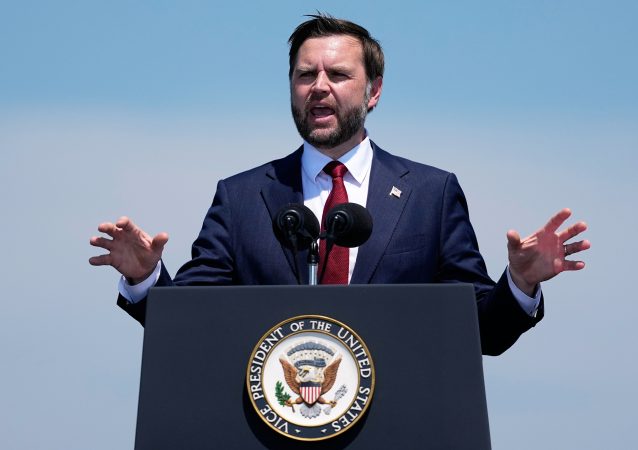
    Vice President JD Vance embraced claims that there were ties between convicted sex offender Jeffrey Epstein and the “highest levels” of Israeli intelligence, echoing conspiracy theories that have been a source of tension among conservatives.

    During an episode of his popular podcast, Joe Rogan said there was a widespread perception that Epstein’s financial support and drive to influence thinking at American universities stemmed from links to Mossad, Israel’s foreign intelligence service. Vance agreed that such a view exists, before asserting his own perspective.

    “Most people think he was Mossad,” Rogan, a frequent promoter of conspiracy theories, said of Epstein in an episode of The Joe Rogan Experience released Wednesday.

    “Yeah, Mossad or CIA, or some other deep state, whether in America or Israel or another country,” Vance replied.

    “He clearly had connections to the upper — the highest — levels of American intelligence,” the vice president added. “He clearly had connections to the highest levels of Israeli intelligence.”

    Although Epstein did have ties to a top Israeli leader, the millions of files released by the U.S. government related to Epstein have not turned up any conclusive proof that he was an intelligence agent or asset for Mossad, as Vance acknowledged.

    “I’ve asked, Were there like, were there documents connecting Jeffrey Epstein directly to our intelligence agencies or anybody else’s, and the answer is no,” Vance said. “But if that s— existed, it wouldn’t exist in 2026.”

    The comments, made during a nearly three-hour episode that covered a broad range of issues, marked a striking embrace of conspiracy theories from an official in one of the highest perches of the U.S. government. Such claims have been promoted by some powerful conservative figures, including Tucker Carlson, a longtime ally of Vance. They’ve also drawn accusations of antisemitism.

    Former Rep. Peter T. King (R., N.Y.), who strongly supports Israel, described Vance’s remarks as a “dog whistle” to a wing of the Republican Party that he said “is antisemitic, is anti-Israel, is conspiratorial, and is unhinged.”

    “It’s not like you’re a junior congressman,” King said in an interview on Saturday, referring to Vance. “You’re the vice president of the United States. Unless you know what you’re talking about, unless you have absolute facts to back it up, before you undermine an ally — before you undermine your own intelligence agencies — you better know what you’re talking about.”

    Asked for comment, Vance’s office provided a statement, attributed to an unnamed White House official, asserting that everything the vice president had said was true and to suggest otherwise was “in bad faith, stupidity, or both.” Aides from his office declined to clarify his remarks.

    The Israeli prime minister’s office, which also oversees the Mossad intelligence agency, did not immediately respond to a request for comment on Vance’s remarks. Prime Minister Benjamin Netanyahu has pushed back in the past on the idea that Epstein had worked for Israel.

    Some Republicans have wanted to see Vance take a more aggressive approach to denouncing antisemitism and show stronger support for Israel. His latest comments appeared to intensify concerns about his posture.

    Ben Shapiro, a prominent conservative podcaster who is Jewish and strongly supportive of Israel, wrote in a newsletter that Vance’s appearance on Rogan’s podcast had left him “concerned.”

    On his own show, Shapiro said Vance’s commentary had been “unworthy of the office” of vice president and had undercut core tenets of conservatism.

    “Conservatives, generally, are not in favor of baseless conspiracy theorizing,” Shapiro said, “because that undermines the idea that you have capacity in the world to act.”

    The online publication Tablet, which focuses on Jewish news and culture, published a column headlined “JD Vance’s Big Crashout” by journalist Lee Smith. It said the vice president had “attacked Jews and spread baseless rumors, for which he admits to having zero evidence, about some kind of dark plot involving Jeffrey Epstein.”

    Epstein, who cultivated associations with powerful people, including officials, from across the globe, had a yearslong friendship and business relationship with Ehud Barak, the center-left former Israeli prime minister.

    “Epstein seemed to be connected to the elements of the Israeli deep state that were left of center,” Vance told Rogan. “I’ve always found that fascinating.”

    Barak has said that Israeli leader Shimon Peres first introduced him to Epstein in 2002. Barak attended lunches and dinners at Epstein’s New York City town house and received some $2.3 million in payments from a foundation associated with Epstein. Epstein also invested a reported $1 million in a limited partnership established by Barak in 2015.

    Barak has said he did not witness or take part in any sexual abuse. “I now deeply regret having any association with him,” he said.

    And top Israeli officials have staunchly denied any formal relationship between the Israeli government and Epstein.

    “Jeffrey Epstein’s unusual close relationship with Ehud Barak doesn’t suggest Epstein worked for Israel. It proves the opposite,” Netanyahu posted on social media in February, after disclosures of emails between Epstein and Barak.

    Naftali Bennett, the former Israeli prime minister, denounced the theories of a clandestine relationship even more forcefully last year, after Carlson promoted them at a conference hosted by Turning Point USA, a major conservative organization. From the stage, Carlson said the question of whether Epstein had worked for Mossad was one “that every U.S. citizen has a right to an answer on.”

    At the time, Bennett wrote on social media, “The accusation that Jeffrey Epstein somehow worked for Israel or the Mossad running a blackmail ring is categorically and totally false.”

    Bennett added: “Epstein never worked for the Mossad. This accusation is a lie being peddled by prominent online personalities such as Tucker Carlson pretending they know things they don’t.”

    In his recent podcast appearance, Vance did not entertain all of the ideas about Israeli influence suggested by Rogan.

    Vance pushed back when Rogan raised an unfounded theory that the Epstein files had been used to blackmail the Trump administration into going to war.

    The vice president also cast himself as a “reasonable moderate” in the debate over Israel’s relationship with the United States, expressing confusion over why “many people” have accused him of being antisemitic.

    “I’ve never heard a good compelling argument for why I am an antisemite, even though I’ve been accused of being an antisemite by many people,” he said.

    This article originally appeared in the New York Times.

  • Federal agents were told FBI will no longer investigate ICE confrontations

    Federal agents were told FBI will no longer investigate ICE confrontations

    WASHINGTON — Federal agents around the country were told in recent days that the FBI would no longer investigate confrontations with immigration agents — cases that sometimes yield evidence that could be used to prosecute Department of Homeland Security agents implicated in violent encounters, according to people briefed on the decision.

    If enacted, such a change would sharply limit law enforcement scrutiny of immigration agents, as the Trump administration draws mounting criticism over killings at the hands of federal officers. In the past two weeks, two fatal shootings by Immigration and Customs Enforcement agents in Texas and Maine have thrust the government’s tactics back into the spotlight.

    FBI managers around the country received a written notice informing them of the change Thursday, according to the people familiar with the matter who spoke on condition of anonymity to describe internal communications. The same day, some ICE agents around the country were notified by their FBI counterparts.

    The guidance shared with them said that the bureau would stop investigating claims of assaults against Department of Homeland Security agents, the people said. Even though such investigations are intended to determine whether the officers were in fact attacked, they can provide a crucial means of gathering evidence implicating the agents themselves.

    A joint statement by the Justice Department and the Department of Homeland Security, however, denied that any such change was underway.

    “The relationship between DHS and DOJ in investigating assault on federal officer cases has not changed, and FBI will continue to investigate in accordance with agency policy,” the statement said. “This administration has been clear, anyone who assaults law enforcement will be prosecuted to the fullest extent of the law.”

    Under the change, responsibility for investigating cases involving federal immigration officers would likely fall to Homeland Security Investigations, an arm of ICE, effectively leaving the agency to investigate itself, according to guidance circulated among FBI and ICE agents.

    Cases involving an assault on a federal officer have been a source of tension inside federal law enforcement agencies for more than a year. White House and Justice Department officials have pushed prosecutors to bring charges in as many of them as possible, particularly as Americans protest the administration’s immigration crackdown.

    Under the federal statute, felony charges can be brought against anyone who “forcibly assaults, resists, opposes, impedes, intimidates, or interferes” with a federal law enforcement officer.

    Trump administration officials have claimed that language means anyone who makes physical contact with an agent should be charged with felony assault, which is punishable by up to eight years in prison.

    “It’s abhorrent to ever, ever touch a law enforcement officer, which is why anytime anybody does that and it’s a federal officer, we’ll prosecute them,” the acting attorney general, Todd Blanche, said in an interview in May on CNN.

    An investigation by the New York Times found that the Trump administration had filed charges against more than 550 people for assaulting federal officers. Of the more than 400 cases that had been resolved, nearly half had unraveled, with charges being thrown out or withdrawn, or the defendants being acquitted.

    Under the Trump administration, when ICE agents have shot and killed people, the FBI has been assigned to scrutinize a narrow question: whether the agents were assaulted before the gunfire.

    While the bureau in past administrations has investigated potential civil rights abuses and law enforcement misconduct, it has been limited from doing so in high-profile ICE shootings over the past year, according to law enforcement officials.

    However, FBI investigations involving an assault on a federal officer could yield evidence that is valuable to other cases, including future civil rights investigations or prosecutions of an ICE agent. If that responsibility shifts to Homeland Security Investigations, it would leave a gap in holding immigration agents to account, according to the people familiar with the matter.

    Homeland Security Investigations does not have jurisdiction to investigate civil rights violations, so putting the change into practice would make it far less likely that shootings of unarmed people by ICE agents would be investigated to determine if the agents broke federal law.

    The enforcement crackdown in President Donald Trump’s second term has resulted in nearly two dozen people being fired on by federal immigration agents since January 2025. Six people, including three U.S. citizens, have been killed as a result of those shootings, nearly all of which involved officers firing into vehicles.

    On July 7 in Houston, an ICE agent killed Lorenzo Salgado Araujo, a Mexican immigrant who had lived in the country for more than three decades, during a traffic stop while he was driving to work with three passengers. He was not the target of the ICE operation, federal officials later acknowledged.

    In Maine on July 13, an ICE agent shot and killed a Colombian man, who was also in his vehicle. He was identified as Joan Sebastian Guerrero, according to a spokesperson for Sen. Angus King, a Maine independent.

    This article originally appeared in the New York Times.
  • Ontario wildfires rage on, forcing rescues and evacuations

    Ontario wildfires rage on, forcing rescues and evacuations

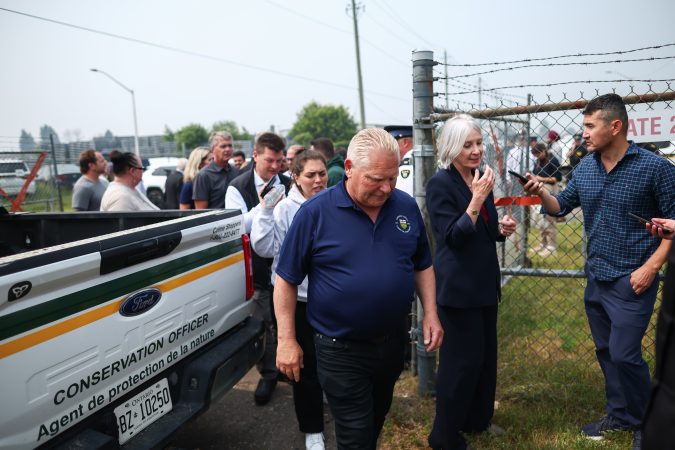
    THUNDER BAY, Ontario — Out-of-control wildfires in Ontario continued to force evacuations and affect major cities in Canada and the United States on Saturday as the province’s leader made his first visit near the devastated area.

    Speaking from a parking lot in Thunder Bay on Saturday, Premier Doug Ford said that 191 wildfires — seven more than Friday — were burning northwest of the city and that 73 were raging out of control.

    Ten communities have been evacuated, and 300 people have been rescued from campsites in 40 operations, Ford added. Roughly 1.7 million acres have burned in Ontario, data from the Canadian Interagency Forest Fire Center shows.

    In a short address, Ford said it was critical that people in the area did not return to their campsites or homes, especially because water bombers did not drop fire suppression loads when they saw people in the bush from overhead. He said there were 155 fire crews at work and 80 water bombers and helicopters flying, with 40 additional aircraft ready to deploy.

    Ford has faced harsh criticism by his political opponents for budgeting 150 million Canadian dollars ($107 million) for the current wildfire season after spending CA$271 million, last year.

    “It’s not time to politicize these emergencies,” Ford said. “It’s absolutely disgusting in my opinion that they want to politicize and play games when people’s lives are on the line,” he added, vowing there would be “no limit to spending.”

    Under Canada’s division of powers, most forest lands are owned and managed by provinces, which collect royalties for commercial tree cutting and, with some exceptions like national parks, are also responsible for firefighting.

    On a late flight to Thunder Bay from Toronto on Friday night, the pilot was forced to make three approaches on landing because of unsafe conditions from the thick smoke, earning loud applause from the passengers when the twin turboprop touched down at Thunder Bay Airport. At least one plane could not land in the smoke and was forced to return to Toronto.

    On the ground, smoke hung heavy over the road and diffused the light of street lamps, casting an eerie glow that was replaced at dawn Saturday by the piercing orange light from the sun breaking through the hazy sky.

    Mount McKay, a landmark in Thunder Bay visible from most places in the city, was mostly lost in the smoke, only a faint outline visible.

    While Thunder Bay remains safe from flames — the closest fires are burning roughly 90 miles to the northwest — heavy smoke has seriously affected air quality.

    There was rain in the region Friday, and on Saturday temperatures remained fairly cool at 70 degrees Fahrenheit. Local air quality alerts warned of a high health risk caused by toxic particles in the smoke that drifted on light wind and smelled like a campfire.

    Provincial officials said they had delivered 3,000 N95 masks to an evacuation support center to be distributed to residents.

    Thunder Bay is quickly becoming overcrowded with people fleeing their homes. Some evacuees have been sent to Toronto and other locations. Indigenous communities have been among the worst affected by the fires.

    All week, smoke from the Ontario wildfires has darkened skies from Toronto to Detroit, New York, and beyond. Air quality for millions of people across the United States and Canada has plummeted to unhealthy, even hazardous levels.

    New York, Toronto, and Washington, D.C., had the worst air quality in the world Saturday morning, and the plume of smoke floating far above Earth’s surface since Wednesday had not drifted clear.

    On Friday, President Donald Trump threatened to charge Canada tariffs to pay for harms caused by the wildfire smoke, joining a handful of Republican lawmakers who have criticized the Canadian government over what they called poor forest management.

    Canadian Prime Minister Mark Carney did not immediately address the accusations Friday, but he suggested this past week that the United States should do more to combat climate change.

    Ford on Saturday called the U.S. lawmakers’ comments “unacceptable” and said they should focus more on helping a neighboring country — Canada has often contributed firefighting resources to the United States — than assigning blame.

    “I find it a shame the administration in the U.S. and congresspeople writing these letters and blaming us and so on and so forth,” he said. “They have a very short, short memory.”

    This article originally appeared in the New York Times.
  • Taylor Farms expands iceberg lettuce recall to 27 states, including Pa. and N.J.

    Taylor Farms expands iceberg lettuce recall to 27 states, including Pa. and N.J.

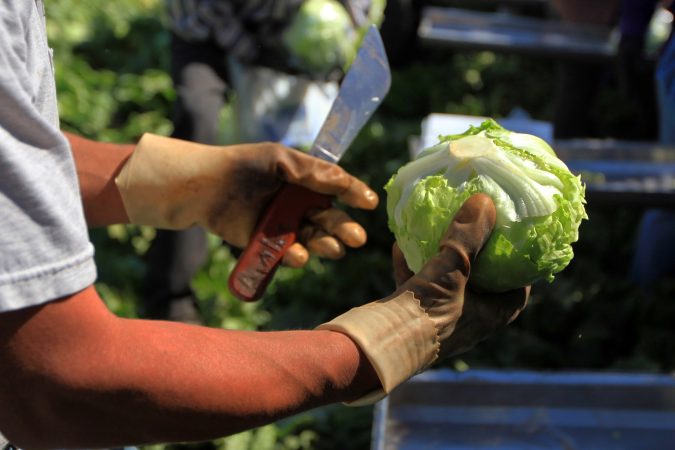
    Taylor Farms announced late Friday that it was recalling iceberg lettuce that had been shipped to retailers in 27 states, including Pennsylvania and New Jersey, because it was potentially contaminated with cyclospora, a parasite that can cause severe illness, including vomiting, cramping, and explosive diarrhea.

    Although an investigation by the Centers for Disease Control and Prevention tied the parasite to lettuce that Taylor Farms shipped to Taco Bell in five states, the company’s recall notice suggests far broader distribution of potentially contaminated greens. The announcement listed eight brand codes but did not say what they stood for. The company did not immediately respond to questions about them on Saturday morning.

    The recalled products were shipped starting June 29 through as recently as Thursday and have expiration dates through Aug. 3. The company said on social media that no Taylor Farms-branded salad kits were involved but did not provide a list of the restaurants or grocers that may have sold its iceberg lettuce, which was mixed with romaine in some products.

    “At this time, Taylor Fresh Foods has not publicly provided distribution information or a list of customers who received the product that was voluntarily removed from the market,” the Food and Drug Administration said in its recall notice.

    FDA regulations do not require the company to do so, a source of frustration for food safety leaders.

    “Food safety advocates have urged FDA over the years to make this a requirement,” said Sandra Eskin, executive director of Stop Foodborne Illness. “Without this essential information, a recall is not going to be effective.”

    She added: “The whole point is to quickly identify the product and make sure no one else eats it.”

    States listed as part of the recall include Florida, Illinois, Texas, Pennsylvania, New Jersey, North Carolina, Missouri, and others. The recall notice does not list California or New York, but it is unclear if Taylor Farms supplied lettuce to companies in states affected by the recall that then distributed it widely.

    Sysco, the nation’s largest food distributor, said in an emailed statement Friday evening that it was withdrawing all iceberg lettuce products from Mexico in its supply chain at the request of Taylor Farms.

    “We will continue to actively monitor the situation and work with regulators as needed,” the company said, adding that it stopped selling and distributing those Taylor Farms products on Thursday.

    US Foods, another large food distributor, said it had also notified affected customers about the recall on Friday, a spokesperson said in an email.

    So far, at least 1,645 people have fallen ill and 141 have been hospitalized, most of them after consuming the lettuce sent to Taco Bell, which said it has removed all of the lettuce from its restaurants. The CDC made that determination through scientific detective work, starting with case reports about people who fell ill and tracking back to a common food source. The case count is likely to rise as the CDC factors in the scope of the recall.

    The United States is on track to have more cyclospora cases in 2026 than in any previous year. The agency said it is investigating more than 5,100 additional illnesses that may have been caused by the parasite, which is transmitted through food or water contaminated with feces.

    On Thursday, Taylor Farms executives met with the White House and the FDA to try to distance the company from the outbreak and air concerns about the official investigations into the outbreak.

    On Friday, the company said the information the FDA presented led it to remove its iceberg lettuce from the market. The company said its Mexican processing plant, Taylor Farms de Mexico in Guanajuato, was voluntarily removing all iceberg lettuce grown in central Mexico.

    The FDA is planning to inspect the Guanajuato facility in coming days to determine how the cyclospora parasite got on the lettuce and track it through the supply chain.

    This article originally appeared in the New York Times.
  • Chinese human rights lawyer seeking asylum is arrested by ICE in Pennsylvania

    Chinese human rights lawyer seeking asylum is arrested by ICE in Pennsylvania

    For years, Shaoping Wu was part of an increasingly endangered group of human rights lawyers in China.

    His work culminated in 2019, when he attended a meeting with other prominent lawyers and activists. Within days, the Chinese government began to detain the participants. Wu quickly fled to the United States, where in 2020 he applied for asylum.

    On Wednesday, Wu was detained by Immigration and Customs Enforcement in Pennsylvania, where he had been living with his family and working as a contract delivery driver for Amazon.

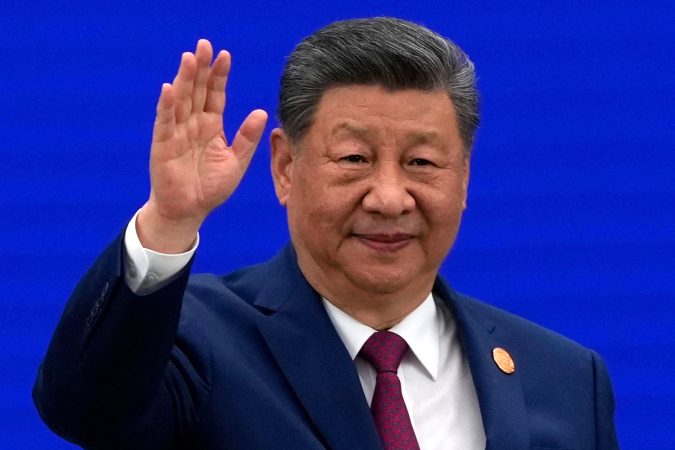
    Supporters and relatives now fear that Wu could be deported to China, where he would likely face persecution from the Chinese Communist Party. Under Chinese President Xi Jinping, the government has gone to great lengths to snuff out political expression, including by arresting human rights lawyers and activists. Two of the participants in the 2019 meeting are still serving lengthy prison sentences.

    Wu’s wife, Caoliu Li, said that her husband had been subject to questioning and harassment by China’s security apparatus over the years but had remained dedicated to the cause of championing rights for ordinary Chinese.

    “All along, he has been very focused on the things that are unfair in China and how to change them,” Li said in an interview Thursday from Lancaster, Pa., where the couple lives with their 17-year-old daughter.

    John Visher, Wu’s lawyer, said that Wu had been delivering packages near Mount Holly Springs, Pa., when a police officer pulled him over as part of a traffic stop.

    Visher said that Wu had entered the United States on a tourist visa in 2019 and that he had told the police officer about his pending asylum application and employment authorization document. Because Wu lacks legal status, police notified immigration officials, who detained him and brought him to the Moshannon Valley Processing Center in Pennsylvania, where he is now being held.

    Wu is scheduled to appear in immigration court on July 27, Visher said.

    The Department of Homeland Security said in an unsigned statement that Wu had overstayed his expired visa by six years and that he would receive due process. It noted that the department was offering $2,600 and a free flight to self-deport.

    Wu’s case shows how even opponents of the United States’ biggest geopolitical rival are not guaranteed favorable treatment if their legal status is in question. And it is the latest test of how far the Trump administration is willing to go in its campaign to carry out mass deportations and curb the presence of asylum seekers.

    This year, another Chinese dissident, Heng Guan, won his asylum case after he was detained by U.S. immigration officials who had tried to send him to Uganda. The department did not appeal the decision, and Guan was released.

    Other cases involving Chinese nationals remain unresolved. Several Uyghurs, members of a predominantly Muslim ethnic group that has been systematically oppressed by the Chinese government, remain in ICE detention. They face deportation to third countries, according to Rushan Abbas, executive director of Campaign for Uyghurs, a Washington-based nonprofit.

    The immigration actions have happened even as Trump has personally pushed for the release of two prisoners held by the Chinese government.

    In May, during a summit with Xi in Beijing, Trump raised the case of Jin Mingri, a pastor who was detained in October as part of a major crackdown on Christians in China. This month, Jin was released and allowed to leave for the United States. The other prisoner, Jimmy Lai, a Hong Kong pro-democracy media tycoon, remains in Chinese custody.

    In 2015, Wu was working as a commercial attorney in Shanghai when China, under the tightening grip of Xi, initiated its largest crackdown on human rights lawyers in decades. Many lawyers and activists who were arrested faced lengthy sentences. Some who remained went underground or stepped away from the work.

    It was against that background that Wu joined the movement of rights defenders.

    He began to take on more politically sensitive cases. His clients included Zhang Kun, an anti-corruption activist; Zhu Chengzhi, a human rights defender; and practitioners of Falun Gong, a spiritual movement banned in China.

    “He defended some defendants that most lawyers would avoid,” said Fengsuo Zhou, executive director of Human Rights in China, a group based in New York.

    At the 2019 meeting, which Wu attended with prominent human rights defenders like Xu Zhiyong and Ding Jiaxi, participants discussed China’s besieged human rights movement and democratic change.

    Even after he came to the United States, Wu continued his work for human rights and civil society in China. This month, Zhou noted, Wu had spoken at an online gathering commemorating the government’s sweeping 2015 crackdown on lawyers.

    “To the outside world, human rights lawyers might seem like a group of idealistic and tragic heroes,” Wu told the audience. “However, for us, this is not a romantic or performative act, but rather our unavoidable mission and responsibility.”

    This article originally appeared in the New York Times.
  • A $3.2 trillion dealmaking frenzy is spurred by the AI economy

    A $3.2 trillion dealmaking frenzy is spurred by the AI economy

    An ebullient stock market, huge bets on artificial intelligence, and an open regulatory environment have fueled one of the biggest six-month booms in dealmaking in years.

    Through the end of June, there were about $3.2 trillion in global deals, a 45% jump from a year earlier, according to Dealogic, a data provider. That was the most spent on dealmaking over a half-year period in at least a decade.

    The frenzy heavily favored large companies, with 44 deals announced that were larger than $10 billion, including takeovers and large-scale fundraising in the private markets. Those blockbusters pushed the overall value of deals higher even though the total number of transactions fell about 1% from last year, as companies with less financial firepower or those more vulnerable to geopolitical uncertainties stayed on the sidelines.

    Executives of many large companies, however, have brushed aside the uncertainties posed by tariffs and the war in the Middle East to pursue takeovers that are more likely to be approved by regulators under the Trump administration than they were during previous administrations.

    Many companies “perceive they have a window in which to attempt to affect something transformational, and now is really the time to try to do it,” Matt McClure, a global co-head of investment banking at Goldman Sachs, said in an interview.

    Bankers insist this time is different from previous booms, such as the record-low-interest era of the COVID-19 pandemic, the leveraged buyouts of 2007, and the dot-com bubble in the 1990s.

    The companies driving this year’s dealmaking surge are among the world’s largest and best-funded, and many of them are aiming to transform their business by doing big mergers, rather than making smaller acquisitions.

    Some of this activity is propelled by a need to simply keep pace in an economy dominated by only a handful of giant corporations. Consider that companies need to be about twice as large to enter the S&P 500 as they did five years ago. Exxon Mobil, once the most valuable company in the United States, is about one-eighth the size of the largest of the so-called Magnificent Seven technology companies.

    “The definition of scale keeps moving, so companies need to be bigger and bigger, and big companies need to do bigger and bigger deals to have an impact,” said Ben Wilson, a co-head of North America mergers and acquisitions at J.P. Morgan.

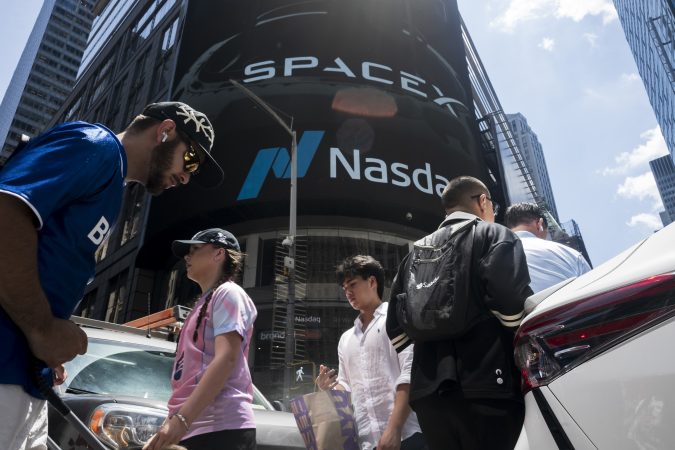
    NextEra’s $118 billion deal for Dominion Energy, which was announced in May, would create a utility giant aimed at supplying the increasing amounts of electricity needed to power artificial intelligence. SpaceX’s $60 billion acquisition last month of Cursor, a start-up that makes code-writing software, is aimed at helping Elon Musk’s rocket company build its AI models.

    Typically, companies are reluctant to take on big deals in times of turmoil. Disruptions in oil supplies because of the war with Iran and the White House’s open hostility toward America’s biggest trading partners in Europe show no signs of abating. Questions also persist around the AI build-out, such as the costs for computer chips, supply constraints and potential delays on when these AI companies might reap profits.

    “What makes the current boom a little counterintuitive is it appears to be associated with maybe not unprecedented, but top-quartile-level uncertainty and volatility,’’ said Jonathan Knee, a Columbia Business School professor and senior adviser at the investment bank Evercore.

    The deal activity has been a boon for banks, too, with details likely to emerge when they announce earnings next week. Bank of America expects its investment banking revenue in the latest quarter to be up 28% from a year earlier, while JPMorgan Chase expects a 10% increase, according to a research note from Jefferies.

    Not every company has joined the party. In all, 21,727 deals were announced this year, down slightly from 21,997 at this point last year. Some of that decline can be attributed to the challenges facing private equity. Companies owned by private equity firms made up 24% of the overall deal value, according to Dealogic, down from about 34% in 2024 through 2025. Many of these firms are grappling with the uncertain values of the software companies they acquired before AI posed a threat to them, making them difficult to sell.

    “So far this year, it’s just not been quite at the pace the market originally anticipated,” McClure said.

    Initial public offerings during the first half of the year were dominated by larger companies bent on powering the race for AI and those in defense technology.

    Madison Air Solutions, a cooling company that serves data centers, raised $2.23 billion in an IPO, and Cerebras, a Silicon Valley maker of AI chips, raised $5.55 billion. And, of course, SpaceX raised more than $75 billion, in the largest-ever initial public offering.

    These offerings helped boost the value of IPOs in the United States to $155 billion, the most since 2021, when a flurry of so-called blank check vehicles stampeded into public markets.

    Bankers say the door for other offerings related to AI remain open. SK Hynix, a South Korean memory chipmaker, is set to raise $28 billion in a U.S. listing this week.

    But the first weeks of trading for SpaceX shares have been volatile. With its IPO price of $135 a share, it opened at $150 in its first minutes of trading June 12. It closed just above $135 on Wednesday, and was trading at less than $133 on Thursday.

    Questions about whether demand will ultimately justify enormous spending on AI continue to swirl over the markets, along with other uncertainties including the war in the Middle East and inflation. Shares of the Magnificent Seven helped lead the S&P 500 through its best second quarter in six years, even as shares of those companies fell roughly 9% in June.

    Still, Kennedy said, “I do think the AI theme will continue to drive activity through the end of the year.”

    This article originally appeared in the New York Times.
  • Bath & Body Works is on a quest for another billion-dollar scent

    Bath & Body Works is on a quest for another billion-dollar scent

    NEW ALBANY, Ohio — In a brightly lit Manhattan office above a fragrance laboratory, Mary Testa-Gough brought a white strip of paper to her nose and inhaled. Two perfumers’ assistants awaited her verdict, as if the fate of a multibillion-dollar olfactory empire depended on it.

    “Smoky,” Testa-Gough said. “Mossy. Woody. But it feels unfinished.”

    As the chief “nose” for Bath & Body Works, Testa-Gough is in charge of finding the next Japanese Cherry Blossom. That single scent has generated more than $1.5 billion in sales over the last 20 years, filling millions of homes with the aroma of Asian pear, white jasmine, and basmati rice.

    The Japanese Cherry Blossom scent has generated $1.5 billion for Bath & Body Works over the last 20 years.VINCENT TULLO

    The fragrance — which emanates from candles, air fresheners, lotions, and body mists — has been a bestseller since it debuted in 2006. It’s so popular that the retailer celebrated its 20th anniversary with an ad campaign and new packaging this past spring as part of a broader expansion strategy to help bring in new customers.

    Sales at Bath & Body Works slipped to $7.3 billion last year from a pandemic-era peak of $7.8 billion, pushed down by competitors marketing on TikTok and consumers increasingly suspicious of chemicals in fragrances.

    To fight back, CEO Daniel Heaf unveiled a plan in November that included marketing “iconic” fragrances online as stand-alone brands and offering products on Amazon. Bath & Body Works will also begin selling some of its products at hundreds of Ulta Beauty stores this month.

    They’re coming out with new products. Testa-Gough has high hopes for Watermelon Whirl and Tangerine Twirl — which are among the scents being released this week in a new product line promoted by actress and singer Hilary Duff.

    Nobody knows for sure why some scents become classics, while others fall into the discount bin. Despite all the money spent on marketing and focus group testing, some scents still fall flat while others invoke such intense loyalty that customers rant on social media when they can’t find them in a store.

    That’s why the company has invested millions of dollars in being able to quickly manufacture and distribute more candles, lotions, air fresheners, and body mists when customers fall in love with a particular scent. In 2011, for instance, Bath & Body Works stopped buying plastic bottles from China and began sourcing from Axium Packaging, a plastics container manufacturer that built a factory near the Bath & Body Works headquarters in New Albany, Ohio.

    Kdc/one, the contract manufacturer that mixes fragrances into foaming soaps, lotions, and gels, also built a plant there, helping to cut the time to market for some products to weeks from months.

    “It was a massive unlock to be more responsive to what the customers are buying in the store,” said Nicholas Whitley, Kdc/one’s CEO.

    The birth of ‘Beauty Park’

    Since 2008, Bath & Body Works has consolidated its number of strategic suppliers to about 50 from hundreds. It offered long-term contracts to vendors who agreed to build factories in New Albany, creating an industry cluster that is now known as Beauty Park.

    “Fifty-percent of our whole supply chain came from China” in 2008, recalled Toby Thunberg, who handled supply chain logistics for Bath & Body Works at the time and now works for Axium, the bottle maker. Today, 85% of the supply chain for Bath & Body Works hails from North America, according to Susanna Zhu, chief procurement and supply chain executive at Bath & Body Works; of that, 55% is in Beauty Park.

    Beauty Park was the brainchild of retail mogul Les Wexner, founder of L Brands, which owned Bath & Body Works, Victoria’s Secret, and Abercrombie & Fitch. Wexner said in 2007 that the global supply chain for the fragrance business was too cumbersome, according to Thunberg. At the time, the company searched for inexpensive plastic bottles from China. They had to be ordered months in advance, making it impossible to quickly restock best-selling scents, he said.

    Inspired by an apparel hub in India where Victoria’s Secret suppliers turned around underwear orders quickly because they were all clustered in the same area, Wexner envisioned factories surrounding the company’s headquarters in New Albany, where he owned vast tracts of land.

    It was a radical pitch. The proposed site was a pig farm 17 miles from the nearest railway, leaving his own staff and vendors deeply skeptical. Wexner flew his team and key suppliers to India to witness the hyper-efficient ecosystem firsthand, Thunberg recalled.

    Today, the tightly integrated hub allows Bath & Body Works and its core suppliers to work together more closely — shrinking lead times to weeks, from months. During the pandemic, the company was able to quickly pivot to making hand sanitizer and experienced its best year on record.

    Today, Bath & Body Works and its core suppliers have an almost familial relationship, even though the companies also make products for other customers.

    “They are an extension of ourselves,” said Stephen Smith, a supply chain senior executive at Bath & Body Works.

    Those informal bonds make it easier to create new products together, according to Alan Malter, associate professor at the University of Illinois Chicago, who has studied the impact of industry clusters on innovation.

    “If you are just going to have a contract manufacturer in the cheapest place you can find, you will probably be innovating less with them,” he said. “It will be more of a relationship where you are giving them instruction, and say ‘Make this.’ It is less of a partnership.”

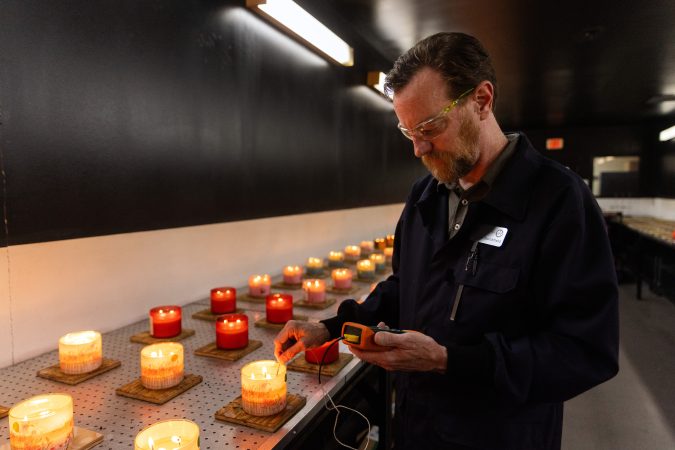
    One afternoon this spring, Zhu popped into Alene Candles, a key supplier in Beauty Park that pioneered the three-wick candle with Bath & Body Works. She chatted briefly with technicians in the burn lab who measure the soot content and height of flame from candles in every batch.

    Then she stopped by the laboratory at Kdc/one and thanked the technicians who helped develop a daily moisturizing hand soap that had been flying off the shelves.

    She wanted to know if they were working on anything new.

    How a fragrance is born

    The search for a new iconic fragrance begins in New York, where master perfumers at major fragrance houses, like DSM-Firmenich, compete to get on the shelves at Bath & Body Works by crafting new aromas based on themes that Zhu brings them.

    They create dozens, if not hundreds, of different scents — inspired by ideas like Mother’s Day or the joy of spring. They fine-tune them, based on feedback from Testa-Gough (the “nose”). Later in the process, focus groups are paid to smell them as well.

    Mary Testa-Gough (right) the chief “nose” for Bath & Body Works, tests a fragrance at DSM-Firmenich, a major fragrance house, in New York on April 20, 2026.VINCENT TULLO

    In the past, fragrances were made by boiling spices for hours or pressing oils out of flower petals. Today, the process is often more high-tech.

    For instance, to create the Milk Bar Birthday Cake collection, molecules were collected from the steam of a freshly baked cake at the popular New York bakery chain, then analyzed and recreated in a lab.

    With the Japanese Cherry Blossom, whose real petals hardly have a scent, the fragrance was more of a perfumer’s fantasy.

    Harry Fremont, a master perfumer at DSM-Firmenich who is best known for creating Calvin Klein’s CK One, designed a cherry blossom-inspired scent in 2006 for Bath & Body Works. Camille McDonald, the creative force behind Bath & Body Works at the time, asked him to make it more complex, so it would appeal not just to mall-loving teenage girls but also their mothers.

    “She said, ‘I want to make something different with it to elevate the brand, to make it more sophisticated,” said Fremont, who is now retired. “She said, ‘I want to make our Shalimar,’” a reference to the famous perfume created by Jacques Guerlain in 1925.

    Fremont added sandalwood, musk, and molecules that smell like basmati rice when it cooks. “Maybe it’s a bit too sophisticated,” McDonald told him after a round of focus group tests. He added back top notes of apple and pear, and it became the company’s top-selling fragrance of all time.

    This article originally appeared in the New York Times.

  • In primetime, Trump criticizes networks for not carrying his speech

    In primetime, Trump criticizes networks for not carrying his speech

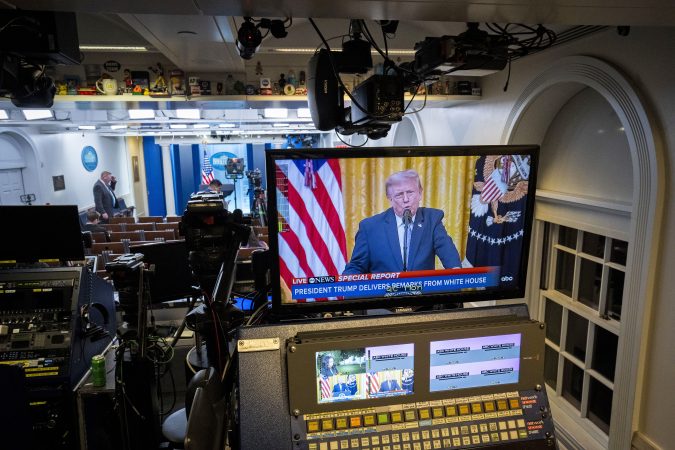
    Not every television network carried President Donald Trump’s primetime speech from the White House, and it did not escape the president’s notice.

    In a meta moment on Thursday night, Trump used his address to call out ABC and NBC for not airing his live remarks, claiming the networks declined to do so “because they know how corrupt our system is and they don’t want to reveal it.” He also repeated his frequent demand that the networks’ government-issued broadcast licenses be revoked.

    “They and others in the media are part of a plot,” the president said, offering no evidence for his claims.

    In fact, ABC and NBC did carry Trump’s speech live on their streaming platforms. After the president concluded, both networks broke into regularly scheduled entertainment programming to air special reports that analyzed his outlandish claims about the safety of American voting systems.

    Federal regulators are currently reviewing the station licenses owned by ABC, a move that the network has denounced as an “unconstitutional retaliation” for its programming.

    Presidents must request airtime from television channels when they wish to speak in primetime, and in the past, network executives have been loath to accommodate speeches that they view as distinctly political in nature, especially during election years. Former Presidents Barack Obama and Joe Biden both had some requests denied.

    On Thursday, TV networks took varying approaches to covering Trump’s remarks. Fox News and the Fox broadcast network ran the speech in its entirety; MS NOW and CBS aired some portions live, but then cut away for analysis and fact-checking from their correspondents. CNN aired clips and reporter commentary instead of the full remarks.

    Fox News, which paid $787 million to settle a defamation suit stemming from false claims about election interference that appeared on its airwaves in 2020, took a careful approach on Thursday.

    After Trump concluded his remarks, Bret Baier, the channel’s chief political anchor, summarized the president’s claims about the security of electronic voting machines. But he added, in a formal tone, that Fox News “has not seen that evidence directly yet, and is not in a position to evaluate the accuracy of the president’s statements at this time.” (Aishah Hasnie, a White House correspondent for Fox News, later repeated that caveat almost verbatim.)

    Even Sean Hannity, a Trump ally, was careful not to endorse the allegations, despite saying the president’s claims were “pretty remarkable.”

    “I’m sure anybody that cares about truth will want to do a deep dive into all of this,” Hannity told viewers.

    Network executives had been reluctant in the run-up to Trump’s speech to say whether they would air it live. The president had been expected to delve into partisan or incendiary comments about voter fraud, creating a conundrum for producers who would need to decide whether to fact-check the president’s remarks in real time, or wait until he was finished to provide context.

    This article originally appeared in the New York Times.

  • Beijing rejects Trump’s claim of meddling, but avoids a fight

    Beijing rejects Trump’s claim of meddling, but avoids a fight

    China on Friday rejected President Donald Trump’s claim that it had meddled in U.S. elections as baseless. But its response was relatively restrained, a sign that Beijing did not want to let the accusation derail a thaw in relations that both sides have spent months trying to preserve.

    Trump had said in a speech that China had carried out “the largest compromise of election data in history” starting with the 2020 cycle, one of several claims he made that was either overstated or untethered from reality.

    In Beijing, a Foreign Ministry spokesperson, Lin Jian, said China had “no interest in interfering in the U.S. elections and has never done so,” adding that the claims “are aimed at vilifying China.” It leveled a vague accusation back at Washington for “wantonly” interfering in other countries.

    The response was firm but made no demands for retractions or threats of punishment. On China’s social media, commentators who are usually stridently nationalist were mostly quiet.

    China experts said this showed that Beijing saw Trump’s speech as an attempt at playing to American voters before midterm elections, rather than a broadside directed at China.

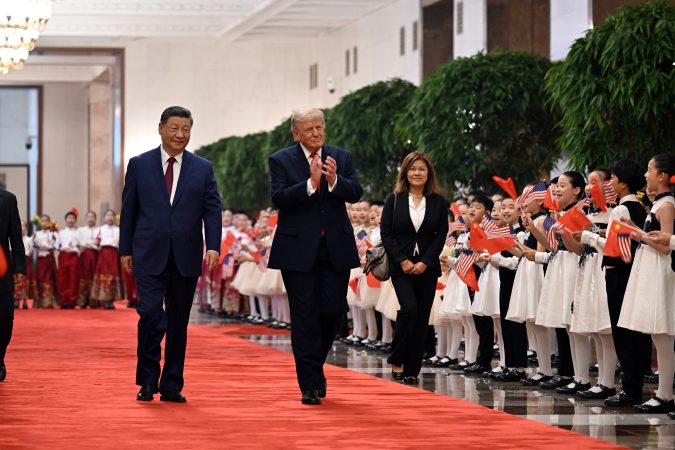
    It also underscored a desire on Beijing’s part to maintain a truce that was struck in May during a summit between Trump and China’s top leader, Xi Jinping.

    Trump’s rhetoric on China during his address was “definitely harsh,” said Sun Yun, a scholar of China at the Stimson Center, a research group in Washington. But Trump had built up so much goodwill in China in recent months, she added, “there is some resilience in the relationship.”

    Playing the China card

    From Beijing’s perspective, Trump was taking aim at China for domestic political reasons, experts said. Officials in China understand that the Republicans are under pressure as midterm elections approach.

    Chinese state media commentaries have argued that Trump has lost some of the support of his political base following his military intervention in Venezuela and the war in Iran. They have noted that he has failed to keep factory jobs at home, while consumers “bear higher fuel costs and inflation.”

    Viewed through this lens, Trump’s speech was an attempt at mobilizing voters by fanning the idea of foreign intervention, said Wu Xinbo, an American studies scholar at Fudan University in Shanghai.

    “Trump played this card mainly for domestic politics; it was not aimed at China-U.S. relations,” Wu said, adding that this was something Chinese officials would likely not respond to if it was a one-off.

    Documents released by the White House that Trump said bolstered his claims suggest there is evidence of a pro-China influence effort and that Beijing was skeptical of Trump. But that was a minority perspective inside the intelligence agencies, and the intelligence officers who held that view said they had only low or medium confidence in their assessments.

    China wants to preserve the stability

    The U.S.-China relationship steadied in October after Beijing agreed to suspend its limits on exports of rare earth metals, and Washington halved tariffs on China related to fentanyl. “We’re not going to hurt China,” Trump said at the time.

    After Trump met with Xi in Beijing, China said both sides had agreed that U.S. tariffs would not rise further. They agreed on a relationship based on “constructive strategic stability,” a vague term meant to signal that both sides would limit hostilities.

    During his trip, Trump invited Xi to the White House on Sept. 24, a meeting that officials are now working toward. Beijing expects the upcoming visit to help improve trade ties.

    Any disruption to the fragile detente will hinge on whether Trump decides to take additional action on his claims of election meddling.

    If Trump were to take fresh actions against China, like putting new tariffs on Chinese goods, Wu said, “China would certainly retaliate.”

    Chinese economy needs the U.S.

    China may also be tempering its response because it wants to make nice with the United States on trade disputes as its own economy stumbles and as its companies face pushback from foreign governments.

    This week, China reported that its economy grew at the slowest pace in three years. It is also facing increased scrutiny in other parts of the world as its exports surge, raising alarm among politicians in Europe and Southeast Asia. Chinese shipments overseas climbed 27% over the month of June, and its trade surplus with the world climbed to more than $125 billion, its second largest on record.

    At home, Chinese families are feeling poorer, consuming less, and seeing fewer job prospects. That means that China needs markets overseas to keep its factories churning, grow its economy, and create new jobs, said Ja Ian Chong, an associate professor of political science at the National University of Singapore.

    “Having more access to the U.S. market could also take some of the pressure off China’s economic relationships with a bunch of other countries from Europe to Africa and Asia,” he said.

    This article originally appeared in the New York Times.