Category: New York Times

  • Alfonso Fanjul Jr., Cuban American sugar baron, dies at 89

    Alfonso Fanjul Jr., Cuban American sugar baron, dies at 89

    Alfonso Fanjul Jr., the patriarch of a family that lost one of Cuba’s largest sugar businesses in the revolution of 1959 and fled to the United States, where, thanks to pluck and government price supports, they built an even vaster empire, died Aug. 3 in South Florida. He was 89.

    The death was announced by Florida Crystals Corp., part of the privately held family business that Mr. Fanjul presided over. The company provided no further details.

    A billionaire who called himself a farmer and lived a luxurious life in Palm Beach, Fla., where he docked a 95-foot yacht, Mr. Fanjul, known as Alfy, was co-chair and co-CEO of the family businesses alongside his younger brother José, known as Pepe.

    Their two other brothers and sister also have interests in the empire, which includes the world’s largest cane sugar refiner and the Domino and C&H brands.

    Alfy and Pepe Fanjul became major donors to both political parties in the United States, a lesson in realpolitik that they learned after Cuban communists confiscated 90,000 acres of the family’s property as well as its mansions and an art collection.

    “One of the reasons we get involved in American politics is because of what happened to us in Cuba,” Alfy Fanjul told Vanity Fair in an article published in 2011.

    He gave generously to Democrats and was a co-chair of Bill Clinton’s 1992 presidential campaign in Florida. Pepe Fanjul has donated more than $2.5 million to the political campaigns of President Donald Trump, a longtime friend whose protectionist tariffs have benefited the Fanjuls.

    Clinton and former Speaker Nancy Pelosi attended Mr. Fanjul’s funeral in Palm Beach on Saturday.

    During one of the few in-depth interviews he gave to the press, Mr. Fanjul was described by Marie Brenner of Vanity Fair as having “the old-world manners of a Spanish aristocrat, a cool detachment that indicates he is accustomed to being in control.”

    For decades, the Fanjuls attracted critics of their labor, environmental, and business practices. Environmentalists accused Florida Crystals of spoiling the Everglades with chemical runoff from their 180,000 acres of cane around Lake Okeechobee. (As evidence that it was a good environmental citizen, the company pointed to a renewable energy plant that it built, as well as to sustainable practices on its farms.)

    Even sharper criticism came from free trade advocates, who said the Fanjuls profited from import quotas that ensured American sugar farmers got an inflated price, some three times higher than the rest of the world’s price. The difference was said to cost American consumers billions of dollars a year. The libertarian Cato Institute called Big Sugar in the United States a “candy-coated cartel.”

    The Fanjuls, usually speaking through public relations specialists, responded that they had built their business over decades of hard work and determination — in the best tradition of the American dream.

    Mr. Fanjul was born in Havana on June 27, 1937, to Alfonso Fanjul Sr. and Lillian (Gómez-Mena) Fanjul. His parents’ marriage united two wealthy Cuban sugar families, whose properties included 10 mills, mansions, and the Manzana de Gómez, a full-block commercial building in central Havana that is now a luxury hotel.

    Alfy, who was sent to Fordham University in New York for college, was back home on New Year’s Eve in 1959, watching the fireworks at the Havana Yacht Club, when Cuban dictator Fulgencio Batista fled the country ahead of the advancing communists.

    Mr. Fanjul later told the story of a meeting in the family office soon after with Fidel Castro’s guerrillas, who opened the discussion by laying their machine guns on a table. The family lost all its assets and left for New York.

    Mr. Fanjul, his father, and his maternal grandfather, Pepe Gómez-Mena, set out to rebuild the business in America; they had already sent some money out of Cuba.

    With other wealthy exiles, they raised $640,000 (about $7.3 million today) and bought 4,000 acres of land in western Palm Beach County and three rundown Louisiana sugar mills. The mills were shipped to Florida, where the first cane harvest was cut in 1961. Over the years, much of the cane was harvested by Jamaican workers on temporary visas.

    Seven years older than his brother Pepe, Alfy became the leader of the Fanjuls’ rise in America. He took over as chairperson and CEO of the companies in 1980, after his father died.

    The business expanded in 1984 when it acquired large holdings in Florida and the Dominican Republic from Gulf & Western, a conglomerate that then included Paramount Pictures. According to Forbes, in 2025 the family-controlled businesses were worth about $4 billion.

    The family’s holdings also include a 7,000-acre luxury resort in the Dominican Republic, Casa de Campo, which is known for golf courses, a marina, and an equestrian center.

    The Fanjul portfolio includes a stake in Central Romana Corp., a large sugar producer in the Dominican Republic. Last year, Trump officials lifted a ban that had been imposed by the Biden administration on imported sugar from Central Romana because of accusations that it used forced labor. Labor rights groups have said the company has not improved those practices.

    Besides political donations, Mr. Fanjul gave to educational institutions and charities. He was a trustee of the University of Miami and the Brookings Institution, and a co-founder of Mission International Rescue Charities in the Dominican Republic. The Fanjul family has supported hospitals, schools, and civic groups in Palm Beach County.

    Mr. Fanjul’s marriage to Maria Cristina de los Reyes ended in divorce, and in 2007 he married Raysa Herrera, who survives him, along with his brother Pepe; their three siblings, Alexander, Andres, and Lillian Fanjul; two daughters from his first marriage, Crista Ryan and Lillian Fernandez; a stepdaughter, Raissa Enis; five grandchildren; and seven great-grandchildren.

    From his waterfront home in Palm Beach, Mr. Fanjul liked to set to sea on his yacht for big-game saltwater fishing. He was twice a member of winning teams in the Sailfish Club of Florida’s Gold Cup tournament, in 1979 and 2007.

    Unlike some members of the Cuban exile community, he did not obsess over how to reclaim his family’s lost holdings on the island they fled.

    “My father spent the last years of his life trying to figure out how to get to Cuba,” he told Vanity Fair.

    But Mr. Fanjul understood that the family’s future was American.

    This article originally appeared in The New York Times.

  • Farage wins special U.K. election that he initiated, as expected

    Farage wins special U.K. election that he initiated, as expected

    LONDON — Nigel Farage, the leader of Reform U.K., Britain’s populist right-wing party, won a special election on Thursday that he initiated when he resigned amid a parliamentary investigation into possible financial impropriety.

    As expected, Farage easily defeated dozens of fringe and novelty candidates, including Count Binface, who wears a trash-can-themed costume. None of Britain’s other major parties participated in the race, calling it a political stunt engineered by the Reform leader to distract from the investigation.

    Farage, who did not attend the official announcement of the result in a departure from political tradition in Britain, received 22,239 votes. Count Binface, a character played by Jon Harvey, 46, a writer and comedian, received 9,455 votes.

    Turnout was slightly higher than expected, with 35,401 voters — 44% of those eligible — participating in the election, the BBC said.

    The Reform leader is under investigation by the parliamentary standards commissioner for failing to declare a 5 million pound gift, about $6.7 million, that he received in the weeks before the 2024 general election. Farage has given varying explanations for the gift, which he received from Christopher Harborne, a British crypto-billionaire based in Thailand. At one point Farage said it was a reward for Brexit, while at other times he has said it was to pay for his personal security.

    Last month, Farage abruptly resigned the seat, which he had held since 2024, and immediately announced he would run again in the ensuing by-election, saying he wanted a new mandate from his constituents in Clacton, a coastal area in Essex, England, to show that his voters did not care about the allegations.

    “The people of Clacton should be the judges of my actions,” he said in his resignation speech in July. “This will be a people-versus-the-establishment by-election.”

    Farage referred in the speech to the standards investigation into the Harborne gift, and also said that “yet another standards investigation is underway.” Days before, the Sunday Times of London had reported that one of Farage’s close aides, George Cottrell, had provided undisclosed benefits to Farage, including security, social media employees, and accommodation. Farage has since said he did not need to report the benefits because they were received before his election to Parliament.

    The parliamentary code of conduct says that lawmakers must register any benefits received in the 12 months before they are elected, unless they could be considered “purely personal gifts.” It adds: “Both the possible motive of the giver and the use to which the gift is to be put should be considered. If there is any doubt, the benefit should be registered.”

    Farage is an ally of President Donald Trump who has long warned of an “invasion” of migrants and railed against “the establishment.” In May, Reform won almost 1,500 seats on municipal councils. But its overall share of the vote was only about 26%, down from more than 30% the previous year.

    Several recent polls have shown support for the party falling to under 25% and Labour taking the lead. The polls have shown a continued decline as the accusations about improper disclosure of financial support have increased.

    Reform officials were always very confident, however, that Farage would recapture his seat in Clacton, which voted by a large margin for Brexit, his signature cause. The last time he ran there, during the 2024 general election, he won with 46.2% of the vote, and the Conservative Party candidate came second with 27.9%.

    This article originally appeared in The New York Times.
  • With Trump’s Hamas deal in peril, Kushner set to visit Israel for Gaza talks

    With Trump’s Hamas deal in peril, Kushner set to visit Israel for Gaza talks

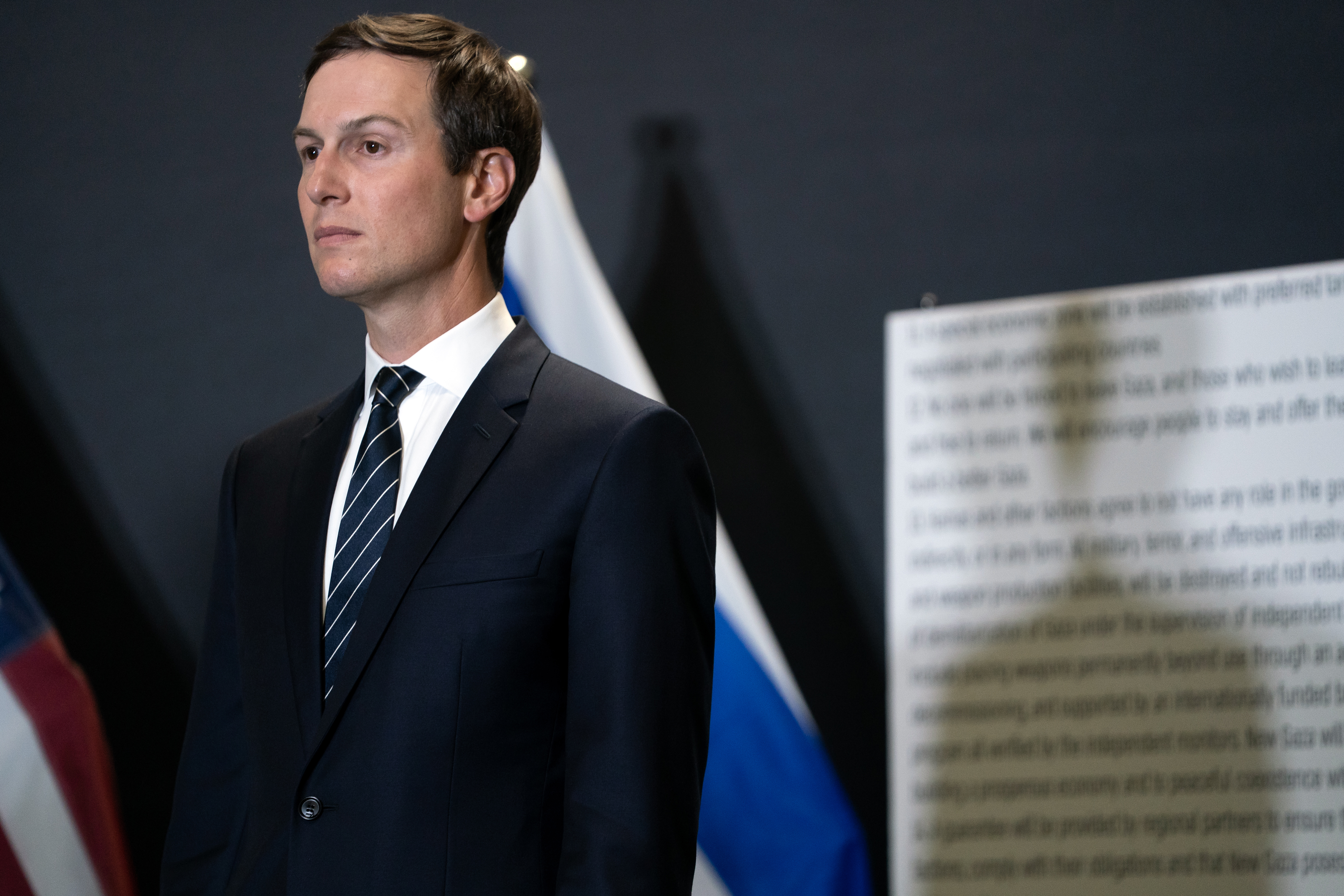
    TEL AVIV, Israel — Jared Kushner, President Donald Trump’s senior aide and son-in-law, is set to visit Israel early next week, according to four people familiar with the plans, days after the Israeli government rejected a U.S.-brokered disarmament deal with Hamas.

    Kushner is expected to meet with Israel’s prime minister, Benjamin Netanyahu, to discuss the Gaza Strip, the people said, speaking on condition of anonymity to divulge details about Kushner’s schedule.

    The deal, agreed to late last month between Trump’s Board of Peace and the militant group Hamas, called for the disarmament of Palestinian factions in Gaza and the withdrawal of Israeli forces there.

    The Board of Peace is a new international organization chaired by Trump that has focused on plans for governing and rebuilding Gaza. Kushner is a senior member of its executive board and was involved in ceasefire negotiations between Hamas and Israel.

    Netanyahu said Sunday that Israel rejected the deal, a move that was seen as an appeal to his right-wing voting base before national elections in October. Yet the prime minister also ordered the Israeli military to pause its strikes in Gaza, in an apparent effort to appease the Trump administration.

    For days after the announcement, the Israeli military conducted no airstrikes in Gaza, until Wednesday, when the military carried out a fresh attack, saying it was targeting Hamas militants. It conducted further attacks Thursday.

    Hamas officials have condemned the strikes, calling on mediating countries in the region to pressure Israel to halt them.

    Hamas remains in control of about half of Gaza, where most of its people live. The group said that among those killed by Israel this week was the head of the police force in the Gaza City area.

    Nickolay Mladenov, the Board of Peace’s high representative for Gaza and former United Nations envoy, will join Kushner in Israel, according to two of the people with knowledge of the visit. Mladenov has played a leading role in the negotiations with Hamas over disarmament, frequently meeting with officials from the group in Egypt.

    Kushner and Mladenov were also expected to visit Egypt next week to meet with regional mediators, according to two of the people.

    The deal with Hamas says that, as part of the disarmament process, Israel should first uphold its side of the ceasefire, which was agreed to in October last year. That includes halting airstrikes and allowing more aid into Gaza.

    The 15-point document leaves elements of the disarmament process vague, however. It calls for a “gradual, sequential, and time-bound manner” for decommissioning and storing heavy weapons, with an exact timetable still to be determined.

    It adds that, at the “end of the process,” the National Committee for the Administration of Gaza will “hold, control, or store weapons in Gaza.” The committee, a body of Palestinian technocrats, was assembled by the Board of Peace to take over governing Gaza under the board’s supervision.

    Many Israelis remain skeptical that Trump’s Board of Peace can successfully disarm Hamas. The group has long touted armed struggle against Israel as the core of its ideology, and members have said they regard disarmament as tantamount to surrender.

    This article originally appeared in The New York Times.

  • Homeland Security paid $464M for airplanes, then it parked them

    Homeland Security paid $464M for airplanes, then it parked them

    WASHINGTON — Starting last fall, the Department of Homeland Security spent $464 million on a no-bid contract to buy 10 used airplanes from a firm in northern Virginia.

    That was an enormous price tag, but the department said it had no time to consider other offers. The planes were needed urgently for deportation flights.

    But since then, the department has barely used this new fleet — for deportations, or anything else.

    Three of the aircraft are luxury business jets. Just months after acquiring them, the department sought to loan or lease two to other agencies, including one for the use of FBI Director Kash Patel, according to a letter to the department sent Wednesday by top Democrats on the Senate Appropriations Committee.

    The other seven are older Boeing 737 passenger jets, which the government has left parked at an airport in Lake Charles, La., for months at a time. An internal government document, obtained by the New York Times, said the agency did not have the staff necessary to operate them.

    The acquisitions were part of a surge of rushed contracts handed out recently by the Homeland Security Department, which has repeatedly used the need for “urgency” to bypass regular contracting procedures. The idled planes highlight the risks of that approach. The agency rushed headlong to spend nearly half a billion dollars, only to end up with planes it did not fly.

    The contract also illuminated a broader trend within the second Trump administration: no-bid contracts awarded to people with connections to Trump or his cabinet secretaries. The company that received this contract, Daedalus Aviation Corp., is led by a chairperson who had donated to a political committee supporting the previous Homeland Security secretary, Kristi Noem.

    The department’s Immigration and Customs Enforcement agency has long outsourced its deportation flights by chartering planes from private companies. It also uses military and Coast Guard aircraft. Because of that, former immigration officials said, there seemed to be little need for the department to take on the expense of buying and maintaining a significant number of its own aircraft.

    “If you asked me to write a list of the things ICE needed to increase the number of deportations, buying its own fleet of airplanes would absolutely not make the top 10,” said John Sandweg, a former acting director of ICE during the Obama administration.

    In a written statement, the Homeland Security Department sought to shift responsibility for the contract to Noem. President Donald Trump fired her in March, and appointed Markwayne Mullin, a Republican senator from Oklahoma, as secretary.

    “The contract for Daedalus was made and approved by department leadership before Secretary Mullin was sworn in,” the department said in a statement. The agency said it “reserves the right to adjust course in an environment with evolving requirements and demands.”

    A spokesperson for Noem sought to place the responsibility on Mullin instead, saying the purchase was “finalized” under his leadership.

    Contracting records show that the size of the contract increased by $303 million on the day that Mullin was sworn in as secretary.

    The agency said that the idle 737 passenger jets had been undergoing maintenance checks, and that there were plans for two of them to begin deportation flights later this month.

    The situation with the planes was reminiscent of the department’s about-face on a plan to acquire warehouses to hold detainees. The department spent heavily on those when Noem was secretary, but reversed itself just months later under Mullin. The department is now giving away or selling seven warehouses that it bought for more than $700 million.

    A letter sent to the department Wednesday by Democratic Sens. Patty Murray of Washington and Christopher Murphy of Connecticut, who sit on the Senate Appropriations Committee, said Homeland Security officials had already conceded to the committee that most of the planes would not be used for deportations.

    “The American people deserve a full accounting of this gross misuse of their tax dollars,” the letter, which was reviewed by the Times, said.

    The senators asked for details about the purchase price of each plane and how they would be used.

    Federal law generally requires government agencies to seek competing bids before awarding a contract, to ensure taxpayers get the best deal. But the department sidestepped that requirement for the planes contract, by invoking an exemption for cases of “unusual and compelling urgency.”

    That exemption can be used only when delaying the contract would result in “serious injury, financial or other,” to the government. Historically, it has been used during natural disasters, war, and the coronavirus pandemic.

    The department declined to answer questions about what serious injury it was trying to prevent. Contracting regulations require agencies to publish the rationales for no-bid contracts, but the department refused to release this one, saying it “would compromise national security or create other security risks.”

    The department has invoked the urgency exemption to justify more than $29 billion in spending across about 500 contracts awarded during Trump’s second term, according to an analysis of federal data by the Times. Much of that total came from border wall spending. Urgency claims were also used to justify projects like the $220 million in media contracts awarded to firms tied to Noem and her allies, scrutiny over which contributed to her ouster.

    The exemption accounts for nearly two-thirds of the $34 billion that the department has spent on contracts signed in 2026. That’s up sharply from past years. In 2025, the figure was about one-quarter. In 2024, it was less than 1%.

    No other major agency has used the exemption for urgency as frequently as Homeland Security, even in an administration that has turned to no-bid contracts repeatedly — for event planning, fountain repair, and the troubled makeover of the Lincoln Memorial Reflecting Pool.

    Lorna Tedder, a retired contracting expert who spent more than three decades at the Defense Department, said that, “Some things truly are urgent — people are going to die if you don’t do this.” But if agencies claim the exemption all the time, “it will eventually be abused.”

    The contract for the planes was first awarded in late November. At the time, the government was already paying other contractors hundreds of millions to operate a network of charter flights called “ICE Air.”

    The immigration agency has chartered about 25,800 flights in Trump’s second term, shuttling immigrants between detention centers domestically and deporting them abroad, mainly to Latin America and the Caribbean, according to the ICE Flight Monitor tracking project at Human Rights First, a nonprofit advocacy group. The department sometimes has 25 or more planes in the air in a day, according to the nonprofit’s tracking.

    But at the time, the Homeland Security Department said it still needed its own planes.

    Last fall, Tricia McLaughlin, a department spokesperson, told the Washington Post that purchasing the planes would allow “ICE to operate more effectively, including by using more efficient flight patterns.” McLaughlin has since left the agency. The department did not respond directly to a question asking about her comments.

    Daedalus, the Arlington, Virginia-based company the government hired to find the planes, had not previously held a federal contract. However, a company spokesperson said it had worked as a subcontractor to other companies evacuating Afghans who had done work for the U.S. government.

    Daedalus’ chair is William Walters, a doctor who until 2021 led a State Department office that evacuated Americans from outbreaks of Ebola, COVID-19, and other crises. In 2024, after leaving government, Walters donated $10,000 to a political committee connected to Noem, then the governor of South Dakota.

    Last year, with Noem in charge, the agency gave a separate company run by Walters a contract worth nearly $700 million to encourage immigrants to leave the U.S. voluntarily.

    A Daedalus spokesperson said that Walters was unaware that the political committee was tied to Noem.

    Daedalus declined to say how much each of the 10 planes had cost, or what its profit margin was for acting, essentially, as a broker. It provided a written statement that it was proud to provide “the best value to the American taxpayer.”

    One of the planes is a Boeing 737 luxury jet, now painted in the color scheme of Trump’s new Air Force One. Two others are smaller Gulfstream business jets, each seating about 14 people.

    Those planes flew only sporadically after the agency acquired them, according to flight records from airplanes.live, an independent flight tracking service. And the department soon moved to jettison two of them to other agencies, according to the account from Senate Democrats and the internal document reviewed by the Times.

    One of the luxury jets “has already been leased to the FBI for 12 months to support director Patel’s travel — despite the fact that the FBI already has its own jets to support the director’s travel,” the Senate Democrats wrote.

    The FBI confirmed that it is using one of the Gulfstream jets, saying it was paying the Homeland Security Department significantly less than it had paid a private company to lease a similar plane and that the aircraft was being used to support a range of agency operations, in addition to Patel’s travel.

    The Homeland Security Department also wanted to lend the larger Boeing luxury jet to the Pentagon, according to the senators’ letter and the internal document. But a Pentagon spokesperson said no agreement had been signed.

    One Gulfstream jet will remain with Homeland Security, for the use of its top leaders, according to the letter.

    The other 737s seemed more suited for deportation flights. Flight records show they had been in active use by Avelo Airlines, a low-cost carrier that also flew charter flights for ICE.

    But when the government bought them, it parked them.

    Daedalus said that two were used briefly to evacuate Americans from the Middle East at the outbreak of the Iran war in early March.

    Senate Democrats said they were told by Homeland Security staff that four of the 737s were no longer expected to fly detained immigrants. The senators said the department said it would use them to fly members of Congress on overseas trips, a job now handled by commercial carriers or military aircraft.

    For the long term, the agency said it needs a contractor to provide crews and mechanics to operate its new fleet. A recent solicitation said that contract would start next summer.

    This article originally appeared in The New York Times.
  • U.S. investigated left-leaning groups during Minnesota immigration crackdown

    U.S. investigated left-leaning groups during Minnesota immigration crackdown

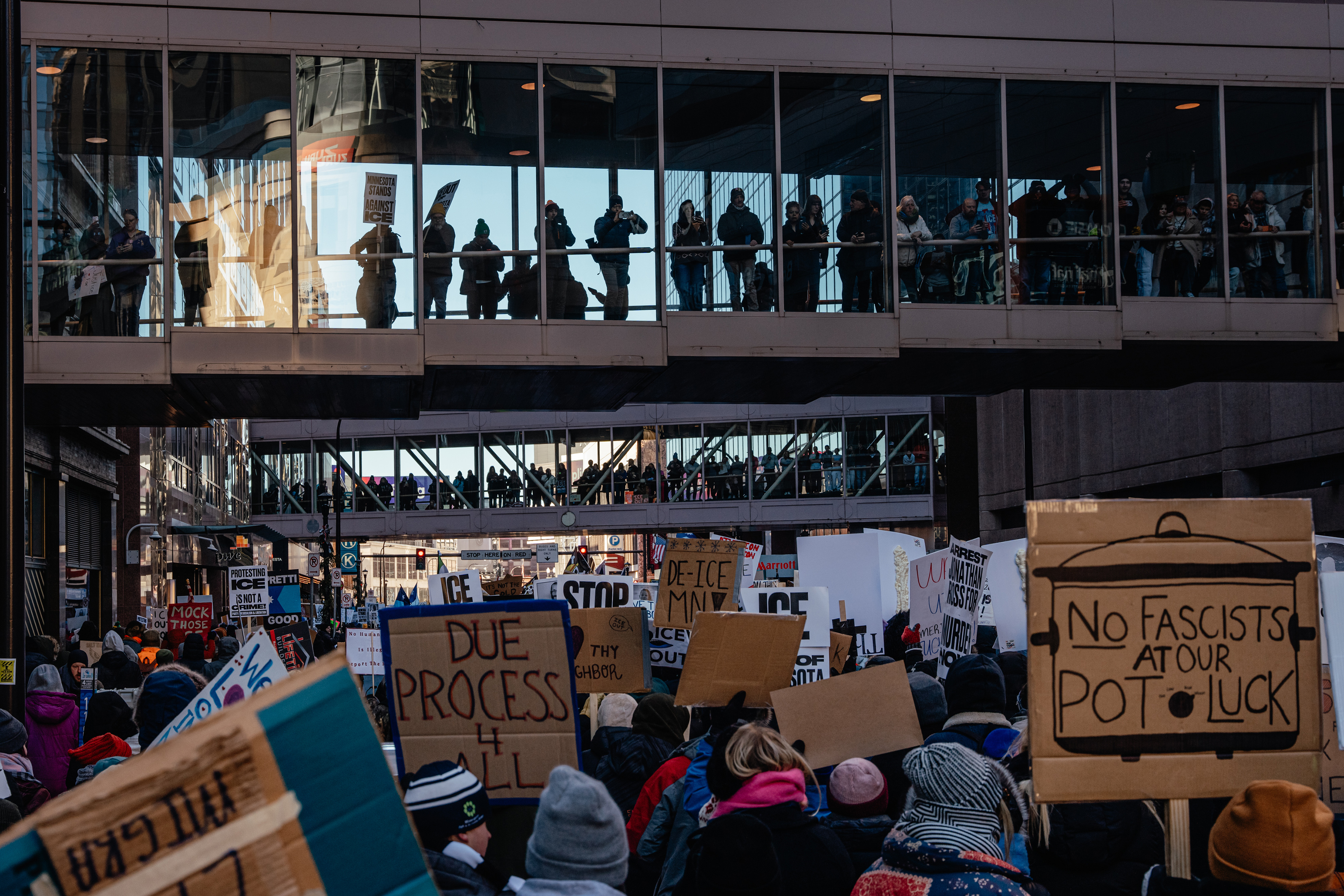
    Four days after Alex Pretti was fatally shot while filming officers taking part in the Trump administration’s immigration crackdown in Minnesota, the Homeland Security Department quietly opened an investigation at its office in St. Paul.

    The target was not the Border Patrol agents who had killed Pretti, a 37-year-old government nurse, in late January. Instead, it was several left-leaning political organizations — labor unions, a climate change group, socialist collectives — that investigators believed had provided help and money to what they described as the “violent opportunists and agitators” on the street, according to newly released government documents.

    As part of their inquiry, the documents show, Homeland Security officials used an array of invasive tactics during the first half of this year to gather information on many groups and individuals who were never accused of crimes, crossing the line that has traditionally stood between investigating criminal activity and political dissent.

    In one instance, officials used administrative subpoenas to obtain more than three years of financial records from the Sunrise Movement, an environmental action group, and a labor union, the Communications Workers of America. That time frame went well beyond the civil unrest in Minnesota, which was prompted by the deployment of thousands of immigration agents to the state during the winter.

    In another, investigators scrutinized three years’ worth of wire transfers made by the nation’s biggest healthcare workers union, the Service Employees International Union, in what they referred to as an inquiry into “domestic terrorist financing.”

    The documents further detailed an expansive covert surveillance operation in which undercover agents spied on protesters and organizers at meetings held online, as well as in libraries, parks, and churches, taking down not only what they said, but also their names and sometimes license plate numbers. The undercover agents also infiltrated group chats on Signal, listening as activists discussed coming demonstrations and their political opinions.

    So far, none of the organizations targeted by the Homeland Security inquiry, conducted with the U.S. attorney’s office in Minnesota, have faced charges. And yet, as the investigation moved forward, prosecutors showed grand jurors a PowerPoint slide asserting that 18 groups — including the AFL-CIO, the country’s largest federation of labor unions — were part of a conspiracy to impede the work of immigration officers in Minnesota.

    Ultimately, that supposed conspiracy led in June to the indictment of 15 people accused of interfering with law enforcement agents as members of the far-left movement known as antifa.

    The Homeland Security Department did not respond to a message seeking comment. A spokesperson for the U.S. attorney’s office in Minnesota declined to answer questions about the investigative tactics.

    By its own account, the institutional left in Minnesota, especially the labor movement, played a central role in bringing out hundreds of thousands of people to march in protest of President Donald Trump’s immigration crackdown in the state. But the demonstrations — and corresponding efforts to monitor the movements of Immigration and Customs Enforcement agents — were largely undertaken by ordinary residents, most of whom have said they were committed to peaceful resistance.

    “While federal agents repeatedly broke the law, ordinary people exercised their First Amendment rights to protect their neighbors,” said Aru Shiney-Ajay, the executive director of the Sunrise Movement. “The Trump administration is now trying to intimidate individuals and organizations who opposed his agenda.”

    Some of the 15 people charged in the so-called antifa case did, in fact, belong to some of the unions and political organizations that faced scrutiny over several months during the spring and winter. But the newly released documents, which were disclosed as part of a motion asking for more details about the criminal inquiry, suggest that investigators used those tenuous connections to take a deep dive into the inner workings of the groups.

    Kevin Riach, the lawyer who filed the motion, in U.S. District Court in Minnesota, wrote that the Homeland Security investigation into the interference with federal agents “extended far beyond any potential threat to law enforcement safety.”

    “It concluded, with no evidence (but obvious political animus),” he wrote, “that numerous Twin Cities unions and nonprofit organizations were involved in a widespread conspiracy,” adding that “it surveilled and surreptitiously gathered financial records generated by these organizations despite the lack of any connection between those organizations and criminal conduct.”

    The investigation in some ways called to mind Cointelpro, the intrusive counterintelligence program that the FBI ran against leftist groups from the 1950s to the 1970s under the leadership of the bureau’s director, J. Edgar Hoover.

    The Minnesota surveillance reports in particular documented what largely appeared to be political activity protected by the First Amendment. They showed how undercover agents embedded themselves in a “noise protest” outside a hotel where immigration agents were staying and took down notes at other gatherings as demonstrators brainstormed ideas on how to protest the surge of officers who descended on Minnesota late last year.

    Former federal prosecutors questioned why Homeland Security officials took the lead in a case that would typically be overseen by the FBI. Others said that the broad use of subpoenas targeting labor unions and other groups was unusual and concerning, especially if it turns out there was no evidence that the organizations were breaking the law.

    “The government’s power to investigate is extraordinary, and with that power comes a responsibility to exercise care and restraint,” said Harry Jacobs, who resigned as the chief of the criminal division at the U.S. attorney’s office in Minnesota in January in protest over the Trump administration’s handling of the killing of Renee Good.

    “An investigation should begin with a legitimate basis to suspect criminal conduct, not with a chosen institution or group,” Jacobs added. “Prosecutors must follow the facts and the law wherever they lead, rather than select a target and work backwards to build a case.”

    Several of the groups that were targeted in the inquiry, known as Operation Puppet Master, and in a follow-up investigation called Project Whipple Shield, declined to comment. (Whipple Shield is a reference to the Whipple Building, which served as a hub of the immigration operation.)

    When Daniel N. Rosen, the top federal prosecutor in Minnesota, announced the indictment of the 15 purported antifa members two months ago, he chose his words carefully, insisting that the defendants had been charged only because each of them had “violently opposed” federal agents taking part in the Trump administration’s immigration agenda.

    “Be assured,” he told reporters, “the Department of Justice and my U.S. attorney’s office has and will distinguish between lawful protest and criminal conduct.”

    But what Rosen did not disclose that day was that the charges filed against the 15 defendants stemmed from a sprawling investigation. Its tentacles had touched the lives of scores of ordinary people — teachers, veterans, union members — who in many instances had gotten together to do little more than discuss monitoring ICE agents or abolishing ICE altogether.

    The case in St. Paul, like others against ICE protesters, arose from a sweeping directive issued last year by Trump known as National Security Presidential Memo 7. The memo ordered a whole-of-government approach to stem what officials have described as a rising tide of left-wing political violence.

    But former prosecutors and civil rights lawyers have criticized it for encouraging aggressive investigations and prosecutions of groups and people on the left for activities typically protected by free speech laws.

    In drafting their indictment, prosecutors under Rosen focused on an organization called Direct Action Minnesota, or DAMN, an umbrella group that describes itself as a “decentralized coalition of working-class people engaged in various forms of community defense against the current federal occupation” in Minnesota. Prosecutors said that the group trained its members in how to use shields against law enforcement officers, conduct surveillance, plan events, and mount “rapid mass mobilization” against actions by ICE officers.

    The indictment details some behavior by protesters with ties to DAMN that clearly seems violent or obstructive.

    For example, prosecutors said that on Jan. 23, demonstrators who had gathered at the Whipple Building threw ice blocks at law enforcement vehicles. They also formed a blockade, boxing federal agents into one area near the federal building. Weeks later, prosecutors added, some of the defendants put debris in a road outside the building, trying to block access to it.

    But the indictment also notes that the defendants often relied on information gleaned from group chats whose members tracked and monitored vehicles going to and from the Whipple Building — behavior that is not necessarily illegal. Indeed, the federal judge overseeing the case, Katherine M. Menendez, has already issued an order in a separate civil proceeding saying that protesters cannot be arrested simply for following federal agents in their vehicles.

    Nonetheless, some groups that organized and ran the group chats were targeted by the surveillance operation and later identified in the prosecutors’ grand jury presentation as being part of the conspiracy to interfere with ICE agents. Other members of the alleged conspiracy were said to include the local chapters of the SEIU and the Democratic Socialists of America, a state teachers union — and even the Grease Pit, a small bike shop in Minneapolis.

    In his motion, Riach described how federal agents took down the license plate numbers of people who attended a protest at a church in Roseville, Minn., and used that information to obtain their names. The agents then searched social media for images of the people, compiling an “intel work-up” that included detailed personal information about them.

    “None of these individuals did anything other than engage in protected First Amendment speech in a church meeting room,” Riach wrote. “Yet now their personal information is memorialized in a DHS dossier.”

    This article originally appeared in The New York Times.
  • Pentagon withheld dozens of U.S. military injuries in Iran war

    Pentagon withheld dozens of U.S. military injuries in Iran war

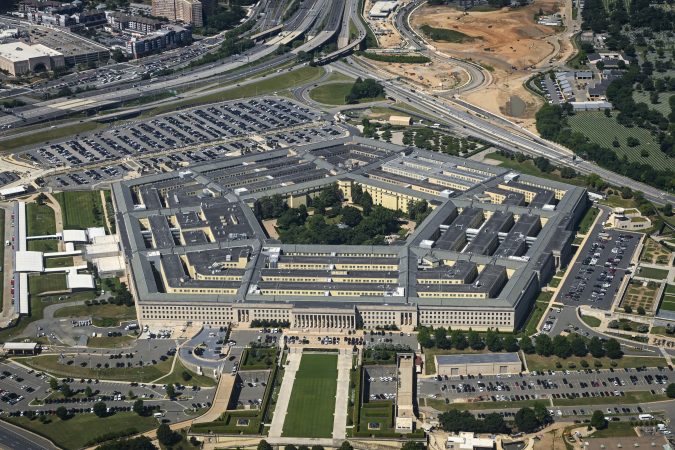
    In the week leading up to the Iranian attack Friday that killed two U.S. soldiers and left one service member missing in Jordan, Iran carried out three other strikes against U.S. forces in the country.

    Those attacks injured dozens of U.S. service members and damaged several helicopters, according to several U.S. officials, who spoke on the condition of anonymity to discuss operational matters.

    But the Pentagon did not disclose the earlier strikes, nor the casualties and damage they inflicted.

    The episode is the latest example during the Iran conflict of the tension between what the Pentagon says is the need for operational security and the government’s obligation to inform the public about the conduct of the war.

    In statements after airstrikes against Iranian military sites last week, U.S. Central Command said it was retaliating for Iran’s attacks against commercial ships transiting the Strait of Hormuz, never mentioning Iran’s strikes on bases in the region, including in Jordan.

    Central Command is not required to release information about injured service members, especially when they quickly return to duty, a U.S. military official said.

    Moreover, another U.S. military official added, why would the Pentagon divulge information that could help Iran zero in on its deadly ballistic missiles and drone attacks in Jordan and other bases in the Middle East where thousands of U.S. troops are stationed?

    Central Command has also stopped announcing how many sites in Iran it hits each day for the same reason, U.S. officials say.

    In the days since the collapse of a fragile truce, the Pentagon has provided little information about the U.S. military strategy after nearly five months of war. The last major Pentagon briefing on the war was in early May.

    In the past several months, the Trump administration has failed to disclose how the Iran war has drained U.S. supplies of critical, costly weapons, and how Iran retained and rebuilt substantial missile capabilities.

    The subject of American casualties in the war is similarly sensitive. The deaths of two Army soldiers in Jordan on Friday and another service member in northern Iraq bring to 17 the total number of U.S. military personnel killed since the United States and Israel launched attacks on Iran on Feb. 28.

    The Pentagon’s casualty reporting protocols call for publicly identifying deceased service members only after 24 hours have passed since next of kin were notified. The names of troops wounded in action are not typically released.

    In a statement on Saturday, Central Command said four U.S. service members wounded in Friday’s attack were taken to Jordanian hospitals and had been discharged. More U.S. troops received minor injuries and had returned to duty, the statement said, but it did not specify how many.

    And the statement did not mention service members injured in the three previous attacks in Jordan last week.

    In a brief phone call with NewsNation, President Donald Trump said the troops died “in service of our country” and reiterated the war’s primary goal of “never allowing Iran to have a nuclear weapon.”

    Defense Secretary Pete Hegseth said on social media on Saturday that the loss of the two U.S. soldiers would stiffen American resolve.

    More than 400 U.S. service members have been injured in the Iran conflict, according to Central Command. The Pentagon had periodically reported the total number of service members injured and returned to duty since early in the war, but it has stopped updating the overall figure in recent weeks.

    In previous administrations, the Pentagon usually delayed providing any details on injured service members until family notifications were completed. During the Biden administration, the Pentagon typically reported the number of service members injured in attacks by Iran-backed militias on U.S. bases in Syria and Iraq.

    More than 1,700 Iranian civilians have died in the war, according to estimates.

    This article originally appeared in the New York Times.

  • Lillian Roberts, crusading New York labor leader, dies at 98

    Lillian Roberts, crusading New York labor leader, dies at 98

    Lillian Roberts, a crusading labor leader hailed as a “tiger” — and briefly jailed — during her fiery tenure at the nation’s largest municipal workers union, which now represents more than 150,000 nurses, pothole fillers, zookeepers, and other New York City employees, died July 9 in Manhattan. She was 98.

    Her death, at a nursing facility, was from cardiac arrest, said Ivan Smith, her sister’s son, whom Ms. Roberts raised as her own after her sister’s death.

    Starting in the 1960s, Ms. Roberts established a reputation as a firebrand, working for — and, eventually, as a de facto partner of — Victor H. Gotbaum, the notoriously combative executive director of District Council 37.

    The district council — part of the American Federation of State, County and Municipal Employees, or AFSCME — has long been considered the nation’s most powerful public employees union, representing more than 1,000 job titles and nearly a third of the city’s municipal workers.

    Rising to prominence at a time when labor leadership was dominated by white men, Ms. Roberts, a Black woman, spent nearly 14 years as the associate director of District Council 37, which roughly quadrupled in membership during that period. Her biggest coup was unionizing 20,000 workers at the city’s public hospitals, in what the New York Times later called one of the largest organizing drives in American history.

    After a lengthy absence, she returned to District Council 37 as executive director in 2002, when she was 74, and served for 12 years.

    “I always felt that I had a job to do,” she said in an interview for the 2005 reference book Black Women in America. “It transcends whether I am male or female.”

    She added: “I never thought about not doing the job and not being aggressive.”

    In her quieter moments, she came across as the “embodiment of serenity,” the Times observed in 2002. But Ms. Roberts was often pugnacious.

    In 1968, she spent two weeks behind bars after leading a strike against three New York state mental hospitals, thus violating the state’s Public Employees’ Fair Employment Act, or Taylor Law, which bans public sector strikes. In the 1970s, she decried Mayor Abraham D. Beame’s plans to shutter several public hospitals, insisting that city residents would die as a result.

    “When Lillian’s angry, she can really blow her head off at people — those from her own side of the table as well as the other,” Deputy Mayor Basil A. Paterson, the city’s chief labor negotiator, told the Times in 1978. “But never in a meeting — she will always take them into another room to let them have it.”

    Lillian Davis was born Jan. 2, 1928, in Chicago, the second of five children of Henry Davis, a janitor and barber, and Lillian (Henry) Davis.

    The couple, who were transplants from rural Mississippi, struggled to survive during the Great Depression, and Lillian spent hours over a washboard helping her mother keep the household running.

    “I never really had a childhood,” she was quoted as saying in Black Women in America. “I had to be an old lady at a very young age.”

    An honors student in high school, she earned a scholarship to the University of Illinois Urbana-Champaign. But unable to afford room and board, she dropped out after less than two years.

    “I was so angry at society that here I was on welfare,” she recalled. “I did not want welfare, I was humiliated by it, and they were doing absolutely nothing to get me out of that situation.”

    Instead of receiving a diploma, she became the first Black nurse’s aide at the University of Chicago’s hospital, although she lacked the money to go on to nursing school. She remained in the aide job for more than a decade, eventually becoming active with her AFSCME local as a shop steward and secretary.

    She was taken under the wing of Gotbaum, then in charge of the Chicago district council of the AFSCME, who “noticed that I was aggressive, that I was responsible,” Ms. Roberts later said. In 1965, she followed Gotbaum to New York when he took over District Council 37.

    Ms. Roberts burnished her credentials as a labor hero by flouting Gov. Nelson A. Rockefeller and the Taylor Law during the 1968 hospital strikes. On her way into the 19th-century Civil Jail on West 37th Street, she was greeted with the chant, “Rocky in, Roberts out!”

    Sentenced to a month in jail, she was released after two weeks following a public outcry.

    In 1981, Ms. Roberts became the first Black woman to be appointed New York state labor commissioner, then known as the industrial commissioner, and she fought for improving workplace safety, for fair wages and for stronger unemployment insurance programs. After resigning in 1987, she joined the private sector as an executive at a health management organization.

    In addition to Smith, Ms. Roberts is survived by his brothers, Carl and Ralonzo Smith, whom she also raised as sons after her sister’s death. Her marriages to William Roberts and Enoch Jenkins ended in divorce.

    When she returned in 2002 to lead District Council 37, the union had “Cinderella-like, suffered through its own midnight,” the Times observed, “and turned into a squalid outfit in which officials embezzled millions of dollars and stuffed ballot boxes.”

    In essence, the Times wrote, she was coming back as a “fairy godmother.” But it was not all magic wands and glass slippers. Ms. Roberts clashed with the union’s board, as well as with Mayor Michael Bloomberg, a conflict that included sharp-tongued attacks over planned city layoffs in 2011.

    “The relationship between the mayor and Roberts,” the Times noted that year, “is far worse than that between previous mayors and leaders of District Council 37.”

    But she remained in her post until 2014, when she retired at 86. “This union,” she once said, “was my life’s work.”

    This article originally appeared in the New York Times.

  • Walt Odets, psychologist who delved into the minds of gay men, dies at 79

    Walt Odets, psychologist who delved into the minds of gay men, dies at 79

    Walt Odets, a psychologist whose work with gay men in the Bay Area at the height of the AIDS epidemic led him to write a book on a nearly taboo topic, the survivor’s guilt and depression experienced by men who were not infected with HIV, died July 5 at his home in Berkeley, Calif. He was 79.

    The cause was complications of Alzheimer’s disease, said his companion, Armen Davoudian.

    Mr. Odets’ 1995 book, In the Shadow of the Epidemic: Being HIV-Negative in the Age of AIDS, appeared more than a decade into the crisis — before effective treatments arrived and as thousands of men dying in their prime continued to grip gay communities in grief, fear, and anger.

    Mr. Odets, who was gay, wrote that there was also a “psychological epidemic” among those who were HIV-negative, who were “anxious and lonely in their ‘wellness.’”

    “For many,” he added, “survival is so difficult they sometimes wish they had not survived and sometimes hope they will not.”

    Speaking about this population, he acknowledged, was fraught.

    “It has often seemed selfish, inappropriate or simply ridiculous for the uninfected to have any important feelings about themselves,” he wrote. “Feelings about oneself seemed the exclusive right of those who were infected, sick or dying.”

    But such feelings mattered, he continued, because a sense of fatalism among HIV-negative men encouraged unsafe sex.

    Reviewing In the Shadow of the Epidemic for the New York Times Book Review, David L. Kirp, a professor of public policy at the University of California, Berkeley, wrote that it belonged on the same shelf as two classic studies of populations living with trauma: Robert Coles’ Children of Crisis, about the effects of racism, and Robert Jay Lifton’s Death in Life, about Hiroshima survivors.

    Walt Whitman Odets was born Feb. 4, 1947, in Los Angeles. He was the son of playwright Clifford Odets, the author of Waiting for Lefty, Awake and Sing! and other works, and an actor, Bette Grayson. An older sister, Nora, was born with a mental disability; their parents chose not to institutionalize her, and she grew up with the family.

    Both of his parents died by the time he was 16, and Mr. Odets spent part of his late adolescence in New York with his legal guardians, Lee Strasberg, the Method acting pioneer, and Strasberg’s wife, Paula.

    He received a Bachelor of Arts in philosophy from Wesleyan University in 1969. He was married to Paula Harrington, a journalist in the Bay Area, from 1983 to 1986. His sister died in 2008. His companion, Davoudian, is his only immediate survivor.

    Photography was Mr. Odets’ first career. His works are in the collections of the Oakland Museum of California, the Brooklyn Museum, and the Cantor Arts Center at Stanford University.

    After training in clinical psychology at the California Professional School of Psychology in San Francisco, he received his doctorate in 1989 and offered therapy in Berkeley to gay men as individuals or couples. In the years before his first book appeared, Mr. Odets was best known in the Bay Area as a fierce critic of AIDS prevention campaigns that had failed to slow infections among younger men.

    He juggled his practice with writing some of the earliest and most influential watch reviews on the internet in the late 1990s. He disassembled timepieces, examined their mechanics with a microscope, and wrote knowing assessments for TimeZone, a website catering to watch collectors and horology buffs.

    A quarter-century after In the Shadow of the Epidemic, he wrote an update on gay men’s psychology, Out of the Shadows: Reimagining Gay Men’s Lives (2019).

    Despite evidence of progress — treatments, beginning in 1996, that drove AIDS mortality sharply downward; same-sex marriage becoming the law of the land — Mr. Odets dismissed the notion that America had outgrown its deep homophobia.

    He wrote that shame remained an ever-present emotion for many gay men and “still often lurks unconsciously behind the most successful of gay lives.”

    Gay identity, he maintained, entailed far more than merely a physical attraction to other men. Because his mother had died when he was a child and his sister was disabled, his emotional attachment to his father, he wrote, was a major influence on how he understood what it meant to be a gay man.

    “I have emotional feelings for men that I’m cautious about with women,” he explained to Publishers Weekly. “That’s really the crux of the whole book, that being gay is a whole internal life and a sensibility, and it’s much broader and much richer than the conventional male identity that’s so heavily promoted.”

    Out of the Shadows ends with an affecting account of the lifelong bonds that Mr. Odets forged with a gay college classmate and the man’s live-in lover. For decades, they were a bicoastal throuple, which sometimes expanded romantically to others, including a partner of Mr. Odets’, Robb Caramico, who died of AIDS in 1992.

    “There’s sadness in Odets’ life story,” Benoit Denizet-Lewis wrote in a Times review of the book, “but there’s mostly resilience, tenderness and a willingness to fashion an unapologetic gay life, sometimes against all odds.”

    This article originally appeared in the New York Times.

  • MyPillow founder not registered to vote in state he wants to lead

    MyPillow founder not registered to vote in state he wants to lead

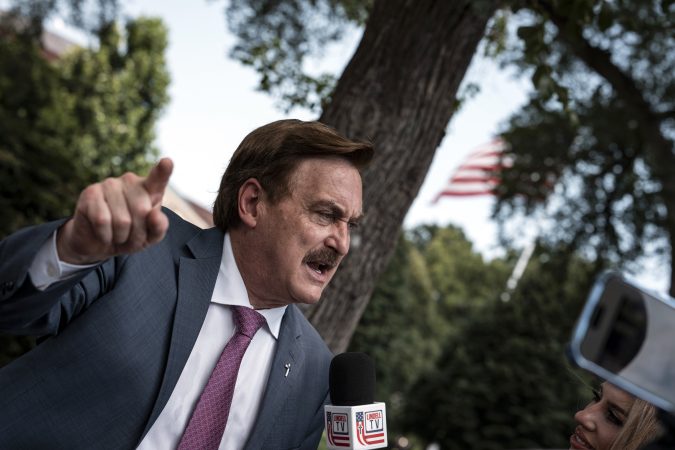
    Mike Lindell, the CEO of MyPillow and a leader of the election denial movement who was endorsed by President Donald Trump for Minnesota governor this week, acknowledged that he is not registered to vote in the state he seeks to lead.

    Lindell, 65, said his biggest problem was not his registration status but that the Minnesota Republican Party had not supported his campaign, even after Trump publicly endorsed him.

    “They are saying, ‘Mike Lindell can’t win,’” Lindell said in an interview Saturday morning. He pointed to a statement from the Minnesota Republican Party that raised skepticism around Lindell’s electability.

    “It’s disgusting,” he said. “They are trying to discredit the endorsement.”

    In Minnesota, voters are allowed to register to vote on Election Day. Lindell, who is registered in Texas, said he was not concerned that he was not yet registered in his home state, something first reported by the Minnesota Star Tribune.

    Lindell said he was registered to vote in Texas when he moved there for one year in 2024, soon after he married his current wife, Kendra. He said he returned to Minnesota, where he was born and raised, the following year, because he wanted to run for governor.

    “Obviously I’m going to vote,” he said.

    Since 2021, Lindell has tirelessly pushed, without evidence, claims that the 2020 presidential election was “rigged” to prevent Trump from winning reelection.

    He has been sued for defamation over his claims that voting machines were manipulated in 2020. Dominion Voting Systems, a manufacturer of voting machines, recently settled its lawsuit against Lindell, but last year, he was ordered to pay $2.3 million in damages to a former employee of Dominion after a federal jury found him guilty of defamation. A federal judge also found that Lindell defamed Smartmatic, another voting company, but has not specified how much he owed in damages.

    The mounting legal fees have contributed to Lindell’s financial troubles. According to Hennepin County property records, Lindell owed $27,000 in unpaid taxes in 2025. He said on Saturday that he had recently paid off the debt, and that his financial situation was irrelevant to his campaign. The Times could not immediately verify if the property taxes had been paid.

    Minnesota has not elected a Republican to statewide office in two decades, and Sen. Amy Klobuchar is seen as the leading Democratic candidate to replace the state’s current governor, Tim Walz, who dropped out of the race last year. Lindell faces two main rivals in the Aug. 11 primary: Kendall Qualls, a businessperson who was endorsed by the state Republican Party, and Lisa Demuth, speaker of the Minnesota House of Representatives.

    Lindell said he was running because there was “rampant fraud” in Minnesota and it was becoming unaffordable to live there. “Minnesota needs a business person running this state,” he said. “We are going downhill in every category.”

    This article originally appeared in the New York Times.

  • How presidential travel is the ultimate expression of political power

    How presidential travel is the ultimate expression of political power

    WASHINGTON — He was like a kid with a new toy. As President Donald Trump began flying the new Air Force One, he raved about the luxury plane donated by Qatar. “Truly magnificent,” he said. “Truly spectacular,” he added. “There’s just nothing like it,” he emphasized.

    And in a sense he was right. The new plane, with its gold fixtures and reclining massage chairs, was unlike the old one that presidents have traveled in for generations: It is believed to lack the same defensive countermeasures that the old model had to keep the flying commander in chief safe, as the New York Times has reported.

    The furor over the new plane and its security drawbacks serves as a reminder of the evolution in presidential travel and efforts to keep the country’s leaders safe when they leave the fortresslike confines of the White House.

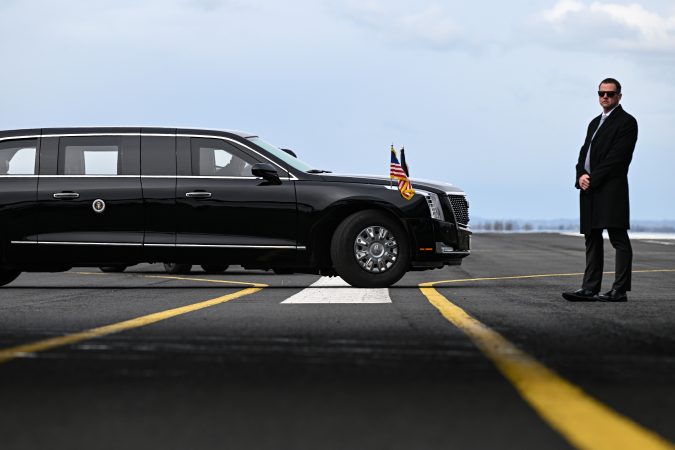
    The modern president rides in an armored limousine nicknamed “the Beast” that in theory could survive explosions, and flies in specially designed Marine helicopters designed to defend against attacks from the ground.

    But nothing has projected the political majesty that Air Force One has over the years. With its blue-and-white design and the words “UNITED STATES OF AMERICA” emblazoned on the side, the plane has become a grand symbol of American power, recognized around the world. It’s even the star of its own action-adventure movie named after it.

    When they have left office, presidents as disparate as George W. Bush and Barack Obama have lamented that one of the things they miss most about their time in power was the plane. (“Never lost my baggage,” Bush noted. No TSA lines and “taking your shoes off and all that,” Obama pointed out.)

    But none fixated on the aircraft as much as Trump. In his first term, he was so intent on replacing it with a new, splashier plane that he had a model of what it would look like in the Oval Office, then took the model with him when he left and displayed it in the lobby at Mar-a-Lago. Now in his second term, he finally has the real thing, which he had painted red, white, and blue.

    What would George Washington have thought? The first president, after all, had only a horse at his disposal. Here is a short history of presidential travel.

    Washington enjoyed a little pomp at his first inauguration, arriving for the ceremony in a horse-drawn carriage. But by the end of the day, when he was trying to return to the presidential mansion to rest, the streets were so crowded that he had to abandon the carriage and walk the rest of the way.

    When Trump arrived at the White House on the first day of his first term, by contrast, he was carried in a hermetically sealed, bulletproof limousine. Officially code-named Stagecoach by the Secret Service, the car is more commonly called the Beast, the nickname bestowed by the news media when the first version of it was introduced in 2001 for Bush’s first inauguration.

    The latest version came into service in 2018 during Trump’s first term. And in situations where the terrain is more rugged, the president rides in an SUV version of the Beast, called the “Camp Package” after Camp David. A new version was introduced this year.

    The history of presidential travel has a long arc bent toward isolation and heightened security measures. During the Civil War, President Abraham Lincoln often commuted alone by horse from the Soldiers’ Home retreat to the White House; at some point Mary Todd Lincoln grew concerned and insisted that soldiers ride along with him.

    President Franklin D. Roosevelt loved to drive himself in a car using special hand controls because of his polio. Following the assassination of President John F. Kennedy, open presidential motorcades were a thing of the past, and with few exceptions, modern presidents never drive themselves.

    A turning point in presidential security was the 1901 assassination of President William McKinley, who was gunned down at the Pan-American Exposition in Buffalo, N.Y. After that, the Secret Service, which had only protected the president part time, took on the duty of guarding him full time.

    But this was also a time of immense change on the presidential travel front. McKinley was the first president to ride in a motor vehicle and President Theodore Roosevelt the first to ride in an automobile owned by the government. His successor, President William Howard Taft, bought a few cars for the White House and converted the stables into a garage.

    Woodrow Wilson was the first president to visit Europe while in office, crossing the Atlantic on the SS George Washington twice to negotiate the Treaty of Versailles, which formally ended World War I.

    Many Americans might be surprised that presidents had their own yacht for about a century. From 1880 to 1977, a succession of ships acted as the “Floating White House.” The 273-foot-long USS Mayflower was the first luxury version, and Theodore Roosevelt used it during his efforts to broker an end to the Russo-Japanese War.

    His distant cousin Franklin D. Roosevelt discussed D-Day plans with Gen. Dwight D. Eisenhower aboard the USS Sequoia. But President Jimmy Carter sold the Sequoia shortly after taking office as a gesture to presidential modesty following Watergate.

    Franklin D. Roosevelt was the first sitting president to travel by plane, a Douglas VC-54C Skymaster nicknamed “the Sacred Cow.” He flew to overseas summit meetings with Prime Minister Winston Churchill of Britain and, eventually, Soviet dictator Josef Stalin, including in Casablanca, Morocco; Tehran, Iran; and Yalta on the Crimean Peninsula.

    But it was Kennedy who made the president’s plane an international icon. It was he who directed that a Boeing 707 reserved for presidential use be painted blue and white. He also wanted the lettering of “UNITED STATES OF AMERICA” to mirror the look of the words on the Declaration of Independence.

    Every president since then flew in planes with the same design, but Trump did not like it and insisted on the red, white, and blue paint job.

    Air Force One is actually the official code name for any plane in which the president flies, but for decades there have been two primary planes, specially equipped Boeing 747-200Bs that presidents flew, until Trump’s donated Qatari luxury jet. They were delivered in 1990 during President George H.W. Bush’s administration.

    Trump complains that the current planes are old and not as impressive as the luxury jets flown by Arab royals. “It’s like from a different planet,” he said.

    White House officials have tried for years to replace them with newly converted modern aircraft, but the $3.9 billion project has been repeatedly delayed. The first of the new pair of Boeing 747-8s is scheduled to be delivered in mid-2028. Rather than wait, Trump accepted the Qatari jet as a bridge until they are finally ready.

    Many critics, including Republicans, have found it unseemly or even corrupt for a U.S. president to accept a plane as a gift from a foreign country, deeming it to be an obvious payoff to curry favor and an embarrassment that the United States could not provide its own aircraft.

    But Trump cares little about such complaints. He wants a plane that he can show off and that he considers befitting of the most powerful person in the world.

    This article originally appeared in the New York Times.