Category: New York Times

  • Supreme Court again rejects Trump’s appeal of $5 million E. Jean Carroll payment

    Supreme Court again rejects Trump’s appeal of $5 million E. Jean Carroll payment

    WASHINGTON — The Supreme Court for a second time refused a request by President Donald Trump to review a $5 million civil judgment against him after a jury found in 2023 that he had sexually abused and defamed writer E. Jean Carroll.

    The announcement Monday did not include the justices’ reasons, which is typical when the court issues routine orders. There were no noted dissents.

    Trump paid Carroll in July, a few days after the court initially turned away the president’s appeal. He also made a long-shot request to the justices that they reconsider, which the court formally declined Monday.

    The president has separately asked the Supreme Court to overturn a much larger award of $83.3 million that a jury ordered him to pay in 2024 for defaming Carroll in 2019, after she accused him of a decades-old rape. The justices are on summer recess and not expected to consider whether to take up that case until late September at the earliest.

    The request the justices dispatched Monday was always a long shot, since they rarely reconsider when asked. Still, it was another in a series of blows to the president’s efforts to contest Carroll’s claims and avoid the two separate monetary awards that juries have ordered him to pay related to Carroll’s allegations.

    In a statement, Trump’s legal team said: “The American people stand with President Trump as they demand an immediate end to all of the witch hunts, including the Democrat-funded travesty of the Carroll hoaxes. President Trump will keep winning against liberal lawfare, as he continues to focus on his mission to make America great again.”

    Carroll’s lawyer Roberta Kaplan said in a statement: “We are pleased that the United States Supreme Court has declined again to hear this case. As a result, the jury’s unanimous verdict that Donald Trump sexually assaulted and then defamed E. Jean Carroll is now final and cannot be challenged in any court.”

    The $5 million matter stems from a trial held in May 2023, when a federal jury in New York found the president liable for sexually abusing and defaming Carroll.

    The jury agreed that Carroll, a former magazine writer, had sufficiently shown that Trump sexually abused her in a dressing room of the Bergdorf Goodman department store when the two crossed paths in the 1990s. Further, the jury found that Trump had defamed Carroll by posting a statement on social media calling her case “a complete con job” and “a Hoax and a lie.” Throughout, Trump denied Carroll’s allegations.

    After that verdict, Trump appealed to the 2nd U.S. Circuit Court of Appeals, asserting, among other things, that the trial judge, Lewis A. Kaplan, erred by allowing certain evidence to be shown to the jury.

    In December 2024, a three-judge appeals court panel upheld the jury’s verdict, finding that Trump failed to show that the evidence had harmed his rights to a fair trial.

    Trump then asked the justices to weigh in and find that the trial court had erred.

    This article originally appeared in the New York Times.

  • Violet Hensley dies at 109; Ozarks fiddler made Opry debut at 99

    Violet Hensley dies at 109; Ozarks fiddler made Opry debut at 99

    Violet Hensley, who grew up in Arkansas learning from her father how to carve and play a fiddle, and whose nearly 60-year performing career reached its peak at age 99, when she debuted at the Grand Ole Opry, died on Aug. 7 at her home in Yellville, Ark., in the Ozarks. She was 109.

    Her daughter Sandra Flagg, a guitarist, confirmed the death.

    Ms. Hensley made a clear distinction between a fiddle and a violin, even though they are essentially the same instrument. “If you can read music, you play the violin,” she told the Tulsa World in 1982. “I can’t read music, so I just play the fiddle.”

    By the time she turned 99, Ms. Hensley had performed old-time mountain music — not bluegrass, which she deemed too fancy — at the Silver Dollar City theme park in Branson, Mo., for more than 50 years; played on radio stations and at schools; recorded at least two albums, one of them, with family members, called Old-Time Hoedowns; and appeared on TV programs like Captain Kangaroo, The Beverly Hillbillies, and Live! With Regis and Kathie Lee.

    She also handcrafted 73 fiddles — she played No. 4, which she made in the 1930s — thus acquiring nicknames like “The Whittlin’ Fiddler” and “Stradivarius of the Ozarks.” She could have built more fiddles if not for time spent gardening, canning, sewing, and cutting her neighbors’ hair, she told CBS News when she was 90. To make ends meet, she was a cleaning lady at a hospital for many years.

    One wish lingered: to play at the Grand Ole Opry, the citadel of country music, in Nashville, Tenn. When another fiddler, Tim Crouch, read about that desire in Ms. Hensley’s autobiography, Whittlin’ and Fiddlin’ My Own Way (written with Randall Franks and published in 2014), he called banjo player Mike Snider, who brought her onstage at the Opry on Aug. 6, 2016.

    “This little lady was born in 1916,” he said as he introduced her, to cheers. She played “Angeline the Baker” and “Black Eye Susie” with Snider, Crouch, and other fiddle players, and received three standing ovations, Flagg, her daughter, said.

    “Man, she just tore it up,” Crouch said in an interview. “And afterward, she was the backstage star, everyone wanting her autograph and their picture made with her.” He added that her fiddle “didn’t look great, but it would shock you how good it sounded.”

    Ms. Hensley told the Springfield News-Leader, a Missouri newspaper, “I was just me. Yes, I was pleased. But it’s still just me. You don’t want to try to be somebody you’re not.”

    She performed twice more at the Opry, in 2017 and in 2018, the year she was inducted into the National Fiddler Hall of Fame in Tulsa, Okla.

    Mary Violet Brumley was born on Oct. 21, 1916, in Alamo, Ark., near Mount Ida, in the central-western part of the state. Her father, George Washington Brumley, was a farmer, and her mother, Nora (Springer) Brumley, who ran the home, died when Violet was 11.

    She observed her father making fiddles and, at 15, began to build her own, splitting, planing, and shaping wood that she found nearby. She had begun playing at 12.

    “I wanted to play the fiddle just because we didn’t have anything else to do,” she told KCPT, the public television station in Kansas City, Mo.. “We didn’t have television or radio, and Dad played, and I guess it struck me that I wanted to play.”

    After she married Adren Hensley in 1935 and began to raise their nine children, she stopped whittling and performing (she also sang and clogged) for 27 years, until she reemerged in the 1960s, winning second place in the Turkey Trot Talent Show in Yellville.

    In 1967, she began her long association with Silver Dollar City, where she fiddled onstage and demonstrated her fiddle-making skills at a crafts booth.

    “She wasn’t simply one of America’s most respected fiddle makers and musicians,” the theme park said in a statement. “She was at the heart of an Ozarks tradition that connected generations to this special place.”

    While performing at Silver Dollar City around 1999 with her son-in-law, Tim Nelson, a banjo player and guitarist, she met another fiddler, Betse Ellis, whose band was also playing at the park. Ms. Hensley’s invitation to Ellis to perform together at the park started a long friendship.

    “She was a one-in-a-million fiddler who made an impact on everyone who got to hear her,” Ellis said in an interview.

    On trips to see Ms. Hensley in Yellville, Ellis added, “She taught what I was getting wrong, and I paid more attention to how to play like her.”

    Before a concert around 2010 at the Rock House Center for the Arts in Reeds Spring, Mo., that was to have two 45-minute segments with an intermission, Ms. Hensley confided to Ellis that she was tired.

    “But she sat down to play, and we didn’t stop for three hours,” Ellis said.

    In addition to Flagg, Ms. Hensley is survived by two other daughters, Beatrice Porter and Lewonna Nelson; three sons, Marvin, R.G., and Eddie Hensley; Wilma Flagg, a family friend who came to live with her as a teenager; 32 grandchildren; 85 great-grandchildren; 29 great-great-grandchildren; and two great-great-great-grandchildren. Her husband died in 1997. Four of their sons — Calvin, Russell, and Gary Hensley, and Larry Hensley, who was stillborn — predeceased her.

    Making fiddles was one of many skills Ms. Hensley developed over her lifetime. She also made lye soap, tanned leather, broke horses, and tended crops.

    “I always say,” she told the Tulsa World, “making a fiddle is a lot easier than plowing a field with a team of mules.”

    This article originally appeared in the New York Times.

  • U.S. military wants AI dominance, but feuds and China may thwart it

    U.S. military wants AI dominance, but feuds and China may thwart it

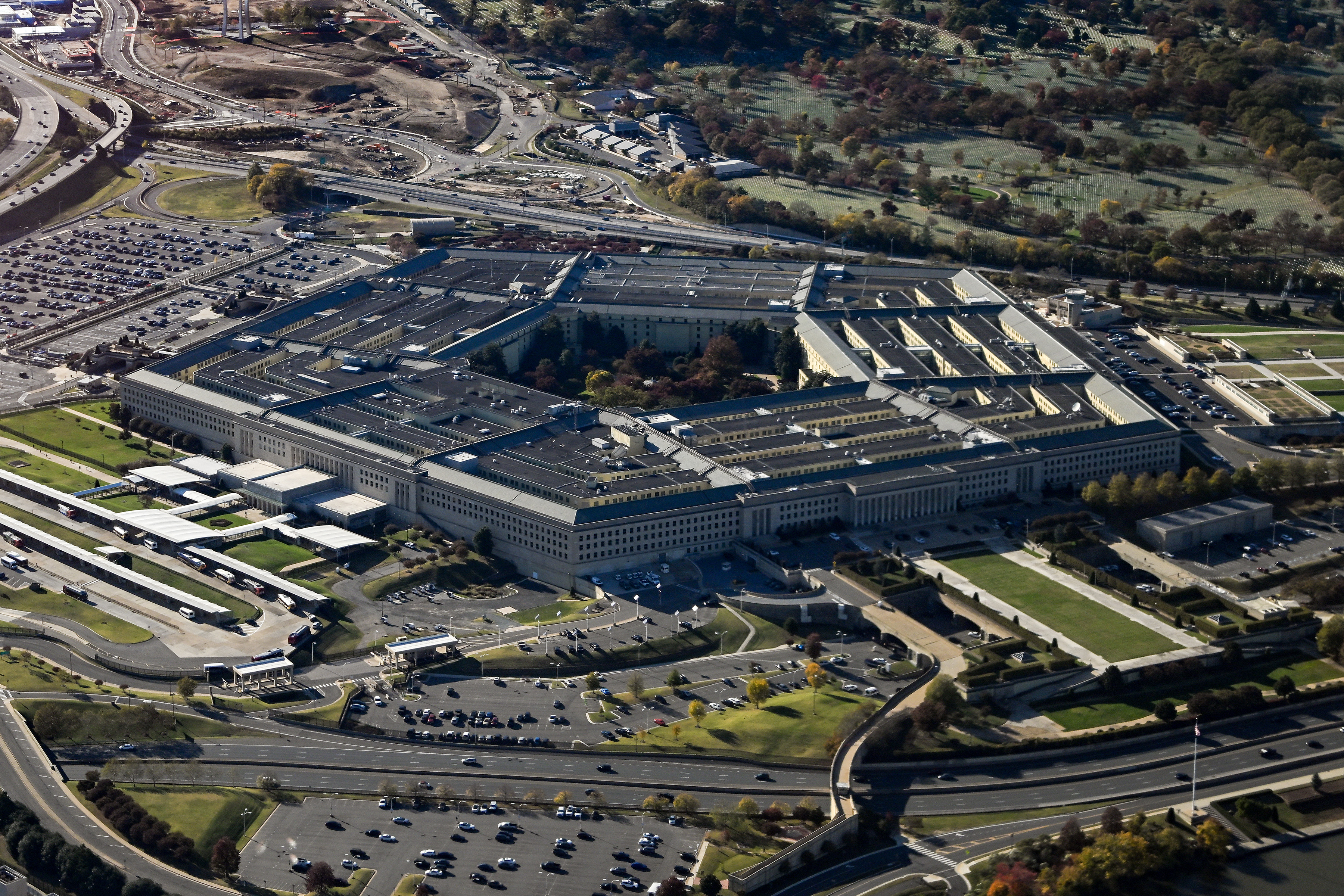
    WASHINGTON — In mid-July, many of the country’s biggest military contractors received a letter from the Air Force with a stern warning: By Sept. 1, all the software they use for weapons and control systems must be free of products built by the artificial intelligence company Anthropic. Failure to comply would put all their business with the Pentagon at risk.

    Within a month, those same contractors received an unexpected reversal: They could — for now — disregard the earlier instructions about purging Anthropic.

    It was one more example of the chaos and contradictions in the tsunami of AI disruptions that has swept through the national security establishment in recent months. Agencies including the Pentagon, which still use airplanes designed in the 1950s, are struggling furiously to keep up with AI models whose powers multiply in a matter of months.

    The tension has been magnified in the case of Anthropic, whose CEO Dario Amodei has been locked in a public feud with Defense Secretary Pete Hegseth over restrictions the company tried to put on the technology’s use by the world’s most powerful military.

    Without Anthropic’s powerful Mythos model, it would be far more difficult for the National Security Agency to find and patch vulnerabilities in the Pentagon’s own systems, senior NSA officials argued. And it turned out that, despite the original Anthropic ban, the NSA was still allowed to use its products.

    Critical tests were underway using Mythos to gauge its potential to hack into highly protected foreign networks, current and former officials said. Shutting down the use of Mythos, an AI model whose potential for conducting offensive cyberoperations is already shifting the digital arms race into overdrive, would have amounted to “unilateral disarmament,” according to one recently departed senior U.S. official.

    From the Department of Defense to the CIA and NSA, billions have already been spent on using artificial intelligence to develop weapons that could work with less human control, or to test vulnerable military networks and even nuclear codes to make sure they cannot be cracked by adversarial AI systems. Artificial intelligence is critical to the Golden Dome, President Donald Trump’s vision — fanciful to many experts — of a space-based missile shield.

    But little of that work anticipated the powers of Mythos and its AI counterparts, or the prospect that China may be months away from its own formidable and less expensive versions. That could supercharge China’s ability to infiltrate U.S. communications networks, water systems, and power grids like those they successfully pierced during the Biden administration in two sweeping attacks called Volt Typhoon and Salt Typhoon.

    “These are the kinds of things we were talking about and worrying about before AI became a daily headline,” said Jen Easterly, who ran the Cybersecurity and Infrastructure Security Agency during the Biden administration. “What’s different now, and what makes the problem more urgent, is the potential for AI to amplify those capabilities.”

    So far the Trump administration has veered wildly in response, at first abandoning its hands-off approach to regulating the industry, then briefly shutting off access for foreigners from Mythos — including some of its inventors — then lifting that ban.

    Earlier this month, the administration called in executives from the largest “frontier” creators, including OpenAI and Anthropic, and told them that new models would be reviewed by the government to assure they could not be used to make biological weapons, or break into classified American systems or the communications networks that control nuclear weapons.

    (The New York Times has sued OpenAI and Microsoft, claiming copyright infringement of news content related to AI systems. The two companies have denied those claims.)

    But the government review process exempts open models — including many of those now produced by Chinese firms — whose code can be customized by users.

    One senior executive of a company briefed on the new policy said it made no sense, noting that the open models can be just as dangerous. Like many in the industry, the executive would not be quoted, for fear of angering administration officials.

    Pentagon officials reject the idea they are not agile enough. They say the U.S. military has maintained immediate access to the world’s most advanced AI systems, despite the Anthropic ban. An official, who discussed Pentagon policies on the condition of anonymity, said the Defense Department had recently integrated a version of a Google Gemini model within four days of its commercial release.

    More than 1,300 AI workers have called for the country to slow development. But others, including inside the Trump administration, have answered that call with a question: “What about China?” They fear losing the roughly six-month lead they believe the United States maintains.

    That concern has touched off arguments about whether export controls on some of the most powerful chips made by Nvidia, the leading American maker, are effective in keeping the Chinese from developing the computing power they need to catch up. Controls could also just prompt Chinese makers to obtain the chips on the black market, or double down on development of their own.

    It is easy to compare this moment in U.S. national security to the early days of the Cold War, when the United States was the only nation to possess nuclear weapons, and it was struggling to delay the day the Soviet Union would match the accomplishment. (The first Soviet bomb was tested in late August of 1949, four years after Hiroshima and Nagasaki.)

    CIA Director John Ratcliffe recently reached for just that comparison, saying it would “not be misplaced” to refer to the capabilities of AI as “akin to digital nuclear weapons.”

    But like most such historical analogies, this one has its limits. Nuclear weapons were solely in the hands of the state back then. And the fundamental technology of building and delivering them has changed little in 80 years since. AI is being built in the private sector, and available to all. Many of the most powerful models are updated weekly, their powers, and unpredictability, discovered along the way.

    China is perhaps six months or less behind the United States in the development of the most advanced models, U.S. experts estimate, though probably years behind in making the advanced semiconductors needed to power AI’s development.

    But already there is evidence the main U.S. technological and economic rival is unnerved by the powers being unleashed. Privately some Chinese officials have already been talking about some forms of arms control, even if no one knows how that might work.

    “They realize there is a gap in capability that may play to our strengths,” said Evan S. Medeiros, a professor at Georgetown University and a former National Security Council official. “On nuclear arms control and on missile defense, we can’t get them to engage. But they appear more interested in the case of AI.”

    Trump has said that will be a topic of discussion, again, when he meets President Xi Jinping in Washington in late September. The two leaders are scheduled to see each other again twice, later in the year.

    But when he talks about AI, Trump has neither explained his objectives nor indicated any concerns in recent weeks that AI agents are finding ways to break out of their confines, or acting autonomously to break into outside companies or networks. When news came out that artificial intelligence was used to design a new virus, not found in nature — a development that could herald real medicinal progress or a biological weapon — the White House said nothing.

    But one thing is clear: Many of the hypothetical scenarios that concerned the national security community a year ago have begun to arrive.

    At the Pentagon, punishing Anthropic goes astray

    Within the defense industry, the chaos kicked off by Hegseth and his aides over stripping Anthropic code has only deepened. A month after the Air Force told its contractors to expunge all Anthropic code, it sent another message, telling them to “stand by,” at least for now.

    “At this time, you are not required to remove from your inventory Anthropic products or services that interface with the Department of the Air Force systems and networks,” read the update, a copy of which was seen by the Times. It warned that the latest guidance could be reversed yet again depending on the outcome of litigation.

    The back-and-forth instructions reflected Hegseth’s dilemma: He is trying to punish a leading AI juggernaut deeply embedded in the defense-industrial complex, without handicapping the military’s national security mission.

    Asked about the apparent about-face, a Pentagon official described the new Air Force guidance as temporary and said the mandate to purge Anthropic across the Department of Defense was absolute.

    Publicly, the Pentagon has refused to relent. In interviews, Pentagon officials have suggested that the animosity between their department and Anthropic began when the Silicon Valley firm began making what the military saw as ridiculous demands about how the Claude for Government model, a version of the popular, publicly available AI model, would be used. Senior officials said Anthropic presented them with 25 pages of restrictions.

    After several contentious months, those 25 pages were boiled down to two restrictions. In a February meeting at the Pentagon, Amodei told Hegseth that the company would not provide any products to the military unless he had assurances they would not be used for domestic surveillance of Americans or to produce fully autonomous weapons that were not ultimately controlled by human oversight.

    It was not enough. The defense secretary got his back up, noting that Raytheon doesn’t dictate limits about how the missiles it produces can be employed against adversaries; those decisions, Hegseth said, were completely in the realm of government officials, not corporate executives. When Amodei refused to relent, the Pentagon declared the company was a “supply chain risk” — and banned for military use.

    In May, Emil Michael, the undersecretary of defense for research and engineering, told a Times reporter that Anthropic deserved what it got, and that the Pentagon made a mistake by over-relying on a single producer of AI programs — even one whose products seemed ahead of both competitors and of China. Asked whether there was anything the company could do to get back in the department’s good graces, Michael said “not at the Department of War.”

    Pentagon officials say they have all but completed the removal of Anthropic from military computing systems. Close to 100% of military systems that once used Claude for Government, amended for use on classified networks, have now replaced Anthropic’s product with other frontier models, according to officials. In addition, the Pentagon has ceased all use of Anthropic tools in its Maven system, which helps analyze intelligence and suggests targets for airstrikes in the war with Iran.

    The military contractors affected by the ban have been reticent to discuss it, perhaps in fear of angering their biggest customer. In a statement, a Lockheed spokesperson declined to comment directly on the letter it received calling for Anthropic’s expulsion from its systems, but said, “We follow the president’s and the Department of War’s direction.” The spokesperson added, without naming Anthropic, that it expected “minimal impacts” to its business because it does not rely on one large-language model for any portion of its work.

    But the Pentagon’s break with the company is hardly clean.

    Barely two months after the blowup between Amodei and Hegseth, Anthropic announced Mythos, an AI product uniquely suited to find, and exploit, vulnerabilities in software. For a brief period, in what now looks like an overreaction, the Trump administration barred all foreigners from touching the program — only to reverse itself.

    That left the Pentagon in a fix: It had just barred itself from using what could be the most powerful new cyberweapon in history.

    “Panic set in,” said a former official who recently left the administration.

    While the Pentagon is not allowing Claude to be used for intelligence analysis or code writing, the NSA has been allowed to use versions of Anthropic’s advanced Mythos model on an “experimental” basis, officials said. It is both testing the U.S. military’s computer network defenses and seeking out potential weaknesses in adversarial networks, from China to Russia, North Korea, and Iran.

    Rethinking opposition to AI regulation

    The inconsistency isn’t limited to the Pentagon; there has been plenty at the Commerce and Treasury departments, and at the White House. As Trump’s aides come and go, and departments elbow each other for larger roles, the administration’s decisions on everything from export controls to national security reviews of AI models have been driven more by whim and influence than an articulated set of principles.

    During its first year, the administration’s approach was hands-off, following the arguments made by David Sacks, the venture capitalist who, until he left the administration earlier this year, ran both artificial intelligence and cryptocurrency policy.

    After publishing an AI Action Plan last year, the Trump administration slashed regulation and encouraged exports, hoping to make the world dependent on what Sacks called an “American tech stack.” In May, Trump scrapped a draft executive order requiring AI companies to submit their models to the government for a safety review, convinced by Sacks, among others, that the 90-day review requirement was too stringent and would give Chinese competitors an advantage.

    But Mythos’ powers spooked people inside the administration, officials and others said. By June, the government had imposed the most heavy-handed controls ever in the AI industry, cutting off access to Anthropic’s model for foreign citizens, including some of the engineers who developed it. Then, two weeks later, it lifted the ban on foreigners, without public explanation.

    A similar whipsawing took place in dealing with the Nvidia chips that are critical to developing new models — and building data centers. In April last year, the Trump administration shut down sales of one of the last artificial intelligence chips Nvidia was allowed to offer in China.

    But the president reversed course that July, following a meeting in the Oval Office between Trump and Nvidia CEO Jensen Huang. Trump said that the sales — which had formerly been considered a national security threat — would be fine, as long as the U.S. government got a cut of their revenue.

    Similarly, the administration revoked a rule imposed by the Biden administration that assured the most powerful chips could only be sold freely to close U.S. allies, and limited sales to other countries. Trump officials have said they would replace the measure, but they have clashed on a replacement. In the meantime, some American companies concluded that with the rules revoked, they were free to sell advanced chips to some Chinese firms operating outside of China.

    Trump later brought Huang to China for his visit with Xi, along with other industry executives.

    The administration is now dealing with conflicting security and political currents. If it exercises too much control over the nascent AI pioneer labs and threatens to cut off foreign access, it could drive the Europeans to Chinese models. If it under-regulates, it could invite disaster, especially if there are more incidents that make the public fear that the technology is racing out of control.

    Chris McGuire, a senior fellow at the Council on Foreign Relations and a former Biden administration official, said that the Trump administration’s posture on export controls had been “incoherent.”

    The Trump administration is now concerned about competition from open-source models from China, but it had walked back many measures that were preventing China’s AI advancement, he said. And it was targeting its harshest restrictions on Anthropic, an American company, not a Chinese one.

    “You’re loosening export controls on China, you’re leaving loopholes, and the first time you use export controls on AI is to blast an American company?” McGuire said.

    This article originally appeared in the New York Times.

  • Trump backed away from a wall at Big Bend, but the bulldozers are there

    Trump backed away from a wall at Big Bend, but the bulldozers are there

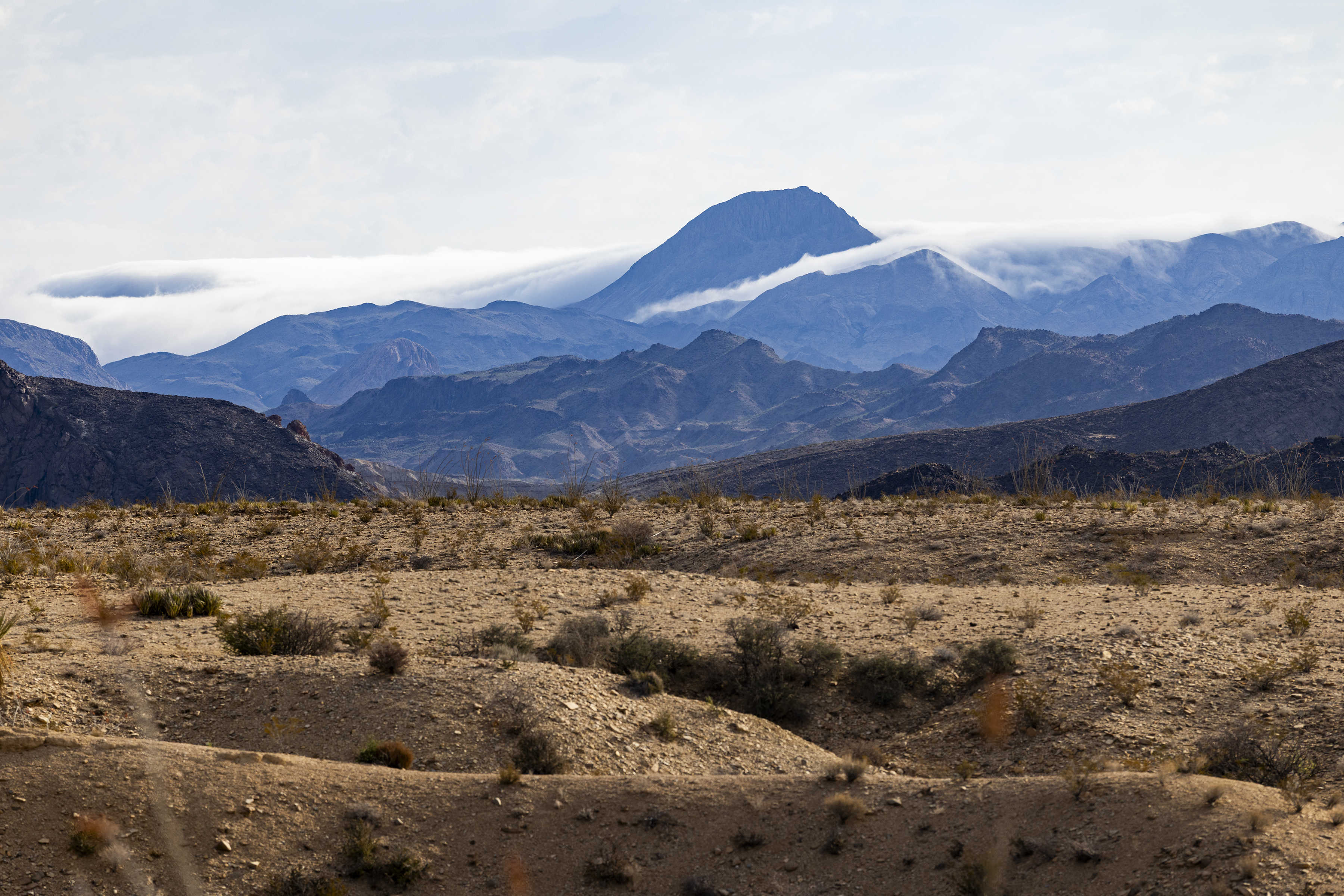
    Texans were caught off-guard several months ago when the Trump administration appeared poised to construct a 30-foot wall through Big Bend National Park, a rugged expanse of moonlike desert that is a point of pride for many in the state.

    But after bipartisan opposition grew, the wall was removed from the federal government’s border construction map. Many exhaled, believing that the West Texas park, with its towering mountains and cliffs, would be spared.

    Then the bulldozers arrived this month.

    The sight of the earthmoving machines along the Rio Grande near the Santa Elena Canyon, one of the park’s major attractions, pointed to the most significant evidence of border barrier construction in the park. Contractors ripped through mesquite trees and brush and leveled the ground for more than 1 mile of what appeared to be a future roadway.

    Big Bend is beloved by Texans and many across the country, even those who are not among its more than 500,000 annual visitors. It is a place to feel the immense and inhospitable wilderness of West Texas, where the stars at night actually are big and bright.

    The construction sparked a fresh wave of anger and outrage from all sorts of people — environmentalists, former park officials, local sheriffs — who again insisted that such infrastructure was unnecessary in a border region so remote and dangerous that people have rarely tried to cross there, even at the peak of unauthorized migration.

    Both John Cornyn, the state’s outgoing Republican senator, and James Talarico, the Democrat running to replace him, expressed concern this month about the start of construction inside the park.

    “My constituents believe that the 1,000-foot riverbank cliffs and remote Big Bend terrain offers its own source of deterrence,” Cornyn said in a letter to Homeland Security Secretary Markwayne Mullin.

    Other Republican state leaders, including Gov. Greg Abbott and Attorney General Ken Paxton, who defeated Cornyn in the Senate primary, have not weighed in directly on the construction.

    On Friday, a local nonprofit and an outdoor recreation business represented by state Sen. Roland Gutierrez, a Democrat, filed a federal suit to try to halt the project. A day earlier, a bipartisan group of Texas legislators sent Abbott a letter urging him to ask federal officials to stop the construction.

    “It’s gotten to the point where people are picking up the torches and marching in the street right now,” said Tex Toler, a former tourism director for Marfa, Texas, northwest of the park. “This is one of Texas’ and the country’s last wild places.”

    After days of confusion among West Texas residents, senior Trump administration officials explained their plans and rationale Thursday. There would be no wall, but there would be construction.

    “CBP is building one new access road, improving existing roads, installing detection technology and placing vehicle barriers in limited, strategic locations,” Rodney Scott, the U.S. Customs and Border Protection commissioner, said in a statement.

    The park’s land sits along 118 miles of the U.S.-Mexico border, and a patrol road is slated to run along much of it. A few areas would have miles of 4- to 6-foot-tall vehicle barriers.

    The bulldozers and excavators have been engaged this month in “survey and design work,” Scott said.

    Fewer than six migrants a day have been encountered crossing from Mexico in recent months in the entire Big Bend patrol sector, which includes the park and hundreds of other miles of border, federal statistics show.

    Officials have said that while unauthorized crossings are currently at record lows, they could increase in the future.

    The Trump administration has been furiously building new border barriers, and Scott said the Big Bend construction was necessary to fill in gaps. Southwest Valley Constructors, one company currently at work in the region, was awarded a $1.7 billion contract. The company directed questions to federal officials.

    “We will not leave Big Bend as an opening for cartels to exploit by shifting their routes and tactics,” Scott said in the statement.

    Many of those who oppose a wall are also against building a patrol road. They include local sheriffs who have insisted that major border infrastructure projects are not necessary.

    “What security problem are we trying to solve?” Sheriff Thaddeus Cleveland of nearby Terrell County, a Republican and a former Border Patrol agent, wrote on social media. “Can the same security objective be accomplished more effectively another way?”

    On Wednesday, people gathered for a demonstration against the construction at the Santa Elena Canyon. Many carried signs protesting the construction — “Stop the Steel,” “No Wall” — or held handmade depictions of javelinas and other wildlife that could be affected by the construction along the river. Some feared the road plan would require building bridges and blasting along Mariscal Mountain, a remote peak.

    “There will be no coming back,” said Michael Ryan, a former Big Bend park ranger who attended the protest. “They’re taking taxpayer dollars to ruin this national park.”

    This article originally appeared in the New York Times.

  • Entrenched, embattled, and defiant, the Taliban celebrate 5 years in power

    Entrenched, embattled, and defiant, the Taliban celebrate 5 years in power

    The black and white flags of the Taliban were flying high along the streets of Kabul, Afghanistan’s capital, as the group celebrated five years in power on Saturday.

    A shiny Mercedes drifted in front of graffiti praising the Taliban fighters’ “sacrifice,” the word painted in crimson, with depictions of drops of blood. Young Afghans chanted independence songs below posters hailing how “the carpet of democracy” had been removed for Islamic rule.

    But the triumphant tone is only half the story. The Taliban may be boisterous in Kabul and have a tight grip on power, yet elsewhere they find themselves targeted and face crises both at home and abroad.

    They face a conflict just short of open war with neighboring Pakistan. They’re dealing with new waves of attacks from armed groups that want to topple them. Add to that mass unemployment, international isolation, and growing domestic discontent, and the Taliban face their most serious threats since their return to power in 2021.

    It is too early to tell whether all those challenges will escalate and threaten their survival as a governing force. And as the scenes of celebration on Saturday showed, the Taliban are popular among many.

    Still, the threats they face have cracked the veneer of security and stability that the Taliban have heralded as their primary achievement — and their main selling point to the world.

    As workers were preparing Kabul for celebrations Thursday, a resistance group claimed responsibility for the killing of the Taliban mayor of a provincial capital in northern Afghanistan. Two weeks earlier, another Taliban official had been assassinated in the same province.

    A tight grip on power — and yet

    The Taliban are holding Afghan society in a chokehold that spares no one. Girls and women face restrictions to a degree unseen anywhere else in the world. Religious minorities are witnessing the forced closure of their places of worship. Anyone who voices criticism is repressed. United Nations staff members face arrests; journalists and rights workers suffer forced disappearances.

    The Taliban are collecting taxes and building roads, dams, and canals. European countries have welcomed them in Brussels to facilitate the deportation of Afghan migrants and asylum seekers. They have expanded trade ties with Central Asian states and want the Trump administration to come back to Afghanistan.

    Whenever a sign of dissent emerges in a province, the country’s secretive and ultraconservative leader, Sheikh Haibatullah Akhundzada, places a key ally in a leadership position to keep things in check.

    And yet the signs of trouble that have appeared in recent months are impossible to ignore.

    Troubles in the North

    Sporadic sounds of gunfire reverberated across the remote mountains of northeastern Afghanistan on a recent evening. Weary Taliban fighters peppered drivers with questions at checkpoints dotting the main road snaking through the province of Badakhshan.

    On the same road, two attackers had killed a senior provincial Talib official a week earlier. A small group of anti-Taliban fighters had briefly seized control of a police headquarters in a nearby district.

    Now fighting between the Taliban and another group opposing their rule was continuing in another district of Badakhshan. The province, bordering China, Pakistan and Tajikistan, is emerging as a hot spot.

    On a trip to the province this month, we talked to residents ready to support anti-Taliban groups because they said they were fed up with the Taliban’s iron grip, the lack of job opportunities, and the government’s confiscation of natural resources.

    We drove through dozens of checkpoints and witnessed the heavy presence of intelligence officers in the isolated village where anti-Taliban fighters had stormed police headquarters.

    The clashes and the attacks have so far been scattered. The leader of one of the anti-Taliban groups described them as “opportunity targets” aimed at challenging the Taliban’s sense of control. But the leader, speaking on condition of anonymity to discuss the group’s strategy, said the number of attacks would only increase in coming months.

    Tensions in the East

    An underequipped Afghan army waits nervously at the border with Pakistan. Once a sponsor of the Taliban, Pakistan has launched dozens of airstrikes on Afghanistan, killing 500 civilians since October, according to the United Nations, and has threatened to use even more force if the Taliban don’t rein in militants who are staging attacks on Pakistani territory.

    The mistrust goes both ways: The Taliban have accused Pakistan of supporting the armed groups that have attacked Taliban outposts in Badakhshan.

    Whether, or to what extent, Pakistan is actively supporting anti-Taliban groups is not clear, but suspicions are running high.

    “The Pakistanis are happy to be portrayed now as a potential patron for the armed opposition to the Taliban, because that increases their leverage over the group,” said Fabrizio Foschini, a researcher at the Afghanistan Analysts Network.

    Food, education, and the economy

    The picture on the domestic front is also grim. Extreme hunger has been spreading fast from one province to another after aid cuts last year plunged millions into deeper food insecurity. The Taliban’s ban on secondary and university education for women and girls is stifling development, experts say.

    The Taliban have deprived 2.4 million Afghan girls of an education, according to UNESCO — the equivalent of all school-age girls in New York, Mexico City, and Moscow combined — and they are forced to stay home indefinitely.

    Some scattered signs of discontent have popped up. At a rare protest in June, demonstrators chanted “Work, education, freedom,” similar to what their Iranian neighbors chanted in 2022. And the leader of a large religious minority warned the Taliban in May: Don’t squeeze Afghan society too much, or it will explode.

    The potential to spiral?

    The Taliban know the world wants a stable Afghanistan — one that isn’t a source of refugees, drugs, or terrorism.

    They assert that the country no longer poses a security threat to the region or the West. They say that they have cracked down on the Islamic State militant group, and that they want peaceful relations, based on trade and diplomacy, including with the U.S.

    Since the Taliban no longer carry out suicide attacks, bomb schools, or target the security forces they now represent, their main argument may hold.

    “The greatest achievement we have had over the past five years is security,” Afghanistan’s foreign minister, Amir Khan Muttaqi, said in an interview with the New York Times in Kabul on Wednesday.

    They don’t want their various crises to spiral either.

    All the ingredients for things to get out of control in Afghanistan again are here, analysts say: A vast population of unemployed young Afghans are fertile ground for radicalization, especially as economic opportunities are nearly nonexistent. And with animosity growing between Pakistan and Afghanistan, it is unclear who might come to the Taliban’s aid: Afghanistan is, once again, a pariah state, with barely any allies.

    The past five years have brought some predictability and an end to almost two decades of fighting, which many Afghans have welcomed, despite the immense hardship and repression. But the country remains shattered, and the fragile peace is already at risk.

    This article originally appeared in the New York Times.
  • Navy carrier’s problems are tied to attacks on U.S. base early in war

    Navy carrier’s problems are tied to attacks on U.S. base early in war

    WASHINGTON — The aircraft carrier USS Abraham Lincoln’s supply problems began soon after the first day of the war, as Iranian missiles and attack drones fell on a Navy base in Bahrain.

    The Iranian attack, retaliation for the U.S.-Israeli assault on Tehran, Iran, destroyed much of the base. And as it went up in smoke, so did a major logistics hub the Navy has relied on for decades.

    The Navy needed a Plan B to continue feeding the sailors working around the clock to keep warplanes flying strike missions, and later to maintain a blockade of Iran’s ports.

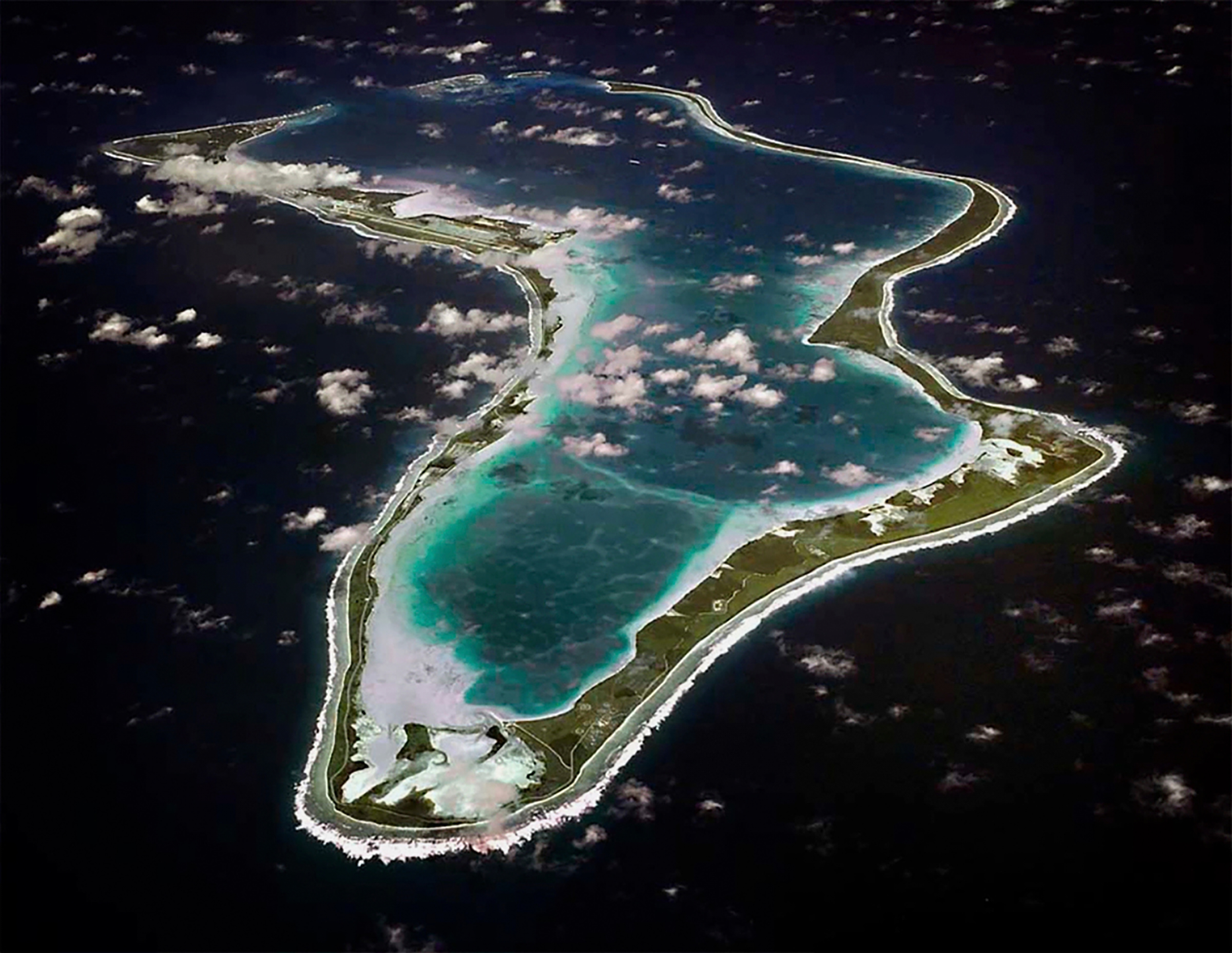
    With the threat of Iranian attacks at other ports in the region, the Pentagon looked to a base under British command on the island of Diego Garcia as its supply hub. Diego Garcia is south of the Maldives in the Indian Ocean and roughly 2,200 miles from where two aircraft carrier strike groups have been operating in the Gulf of Oman.

    The loss of the hub in Bahrain has contributed to a host of reported problems on carriers supporting operations against Iran, as Democratic senators raise concerns about the Lincoln’s 5,000 sailors and their nearly nine-month deployment.

    Sen. Richard Blumenthal (D., Conn.) said in a letter to Defense Secretary Pete Hegseth that the reported problems included shortages of basic supplies and the deteriorating mental health of its crew members.

    On Friday at a military air base in Maryland, President Donald Trump dismissed those concerns. “That ship is moving right now, or very shortly, and it’s being replaced with another, very similar, ship,” he said.

    The Lincoln’s replacement is the Japan-based carrier USS George Washington, which earlier this week was heading west through the Strait of Malacca in Indonesian waters en route to the Middle East.

    Another carrier, the USS George H.W. Bush, has been operating in the Middle East for months since deploying from Norfolk, Va., on March 31.

    When asked if the carrier deployments were too long, the president said, “No, no, no, not nearly long enough.”

    Hegseth had a similar response on Thursday when a reporter asked how long the United States could maintain its blockade of the Strait of Hormuz.

    “We can hold it as long as we need to, indefinitely,” he replied.

    At the war’s outset, Keir Starmer, then the British prime minister, denied the Pentagon access to Diego Garcia for use in the operation against Iran. That decision drew Trump’s ire, and Starmer ultimately relented on March 1, granting the U.S. military access to the island for what he described as a “specific and limited defensive purpose.”

    A U.S. military official, who spoke on the condition of anonymity to discuss sensitive logistics, said the Navy began using Diego Garcia as the main shipment point shortly after the Navy’s base in Bahrain was heavily damaged.

    The use of Diego Garcia as the Navy’s new logistics hub may explain why Iran fired two medium-range ballistic missiles at the island on March 20.

    One of the missiles fell into the Indian Ocean short of its target. A Navy warship shot down the other.

    The San Diego-based Lincoln has been at sea for nearly nine months without what the Navy calls a “liberty port” — where sailors can get off the ship for a few days.

    Bahrain is one of the two ports where U.S. aircraft carriers in the region have typically moored so their crews can get some downtime. The other, the Emirati port of Fujairah on the Gulf of Oman, is also well within the range of Iranian missiles.

    The Trump administration relied on yet another carrier, the USS Gerald R. Ford, in the Caribbean for its pressure campaign against Venezuela and later extended its deployment to the Middle East to launch airstrikes against Iran. So far the war has seen the commitment of a significant portion of the Navy’s fleet of aircraft carriers, which will go down to 10 with the expected retirement of USS Nimitz next year.

    While six months is the typical length of a Navy deployment at sea in peacetime, some carriers have done far longer stretches following the 9/11 attacks. The Ford’s 326-day deployment, however, broke the record for the longest by a carrier since the Vietnam War.

    But in that war, carriers assigned to Yankee Station, a section of the Pacific off the coast of Vietnam, would often head to the Navy base at Subic Bay, Philippines — a short two-day transit away — where sailors could take a break from running nonstop flight operations and the ship could load up on ordnance, food, fuel, and other necessary supplies.

    By tradition and Navy regulation, the commanding officer of a warship can request a “beer day” for their crews when they have been at sea for 45 straight days or longer. Given the Lincoln’s time at sea, the crew would have been eligible for five beer days already.

    A spokesperson for the U.S. 5th Fleet, which covers naval operations in the region and would authorize beer days, did not immediately respond to a request for comment on Friday about whether any of the ships participating in the Iran war had requested them.

    In an interview, Rep. Mike Levin (D., Calif.) said his constituents included sailors aboard the Lincoln, and their family members had reached out to express their concerns about the deployment.

    “It gets back to that big picture, which is: What is the mission here?” Levin said. “That’s what the families want to know.”

    This article originally appeared in the New York Times.
  • American missionary kidnapped in Niger soon to be reunited with family

    American missionary kidnapped in Niger soon to be reunited with family

    A mission organization said on Friday that a pilot who was kidnapped while working for the group in the West African country of Niger last year was in “good health” after his release.

    The missionary pilot, Kevin Rideout, was seized from his home in Niamey, the capital of Niger, in October. A U.S. official said on Friday that Rideout had arrived at Ramstein Air Base in Germany and was undergoing medical evaluation. Like others in this article, the official spoke on condition of anonymity to discuss operational matters.

    Rideout’s organization, called Serving in Mission, said in a statement that he would soon be reunited with his loved ones.

    “We are grateful to confirm that our good friend and brother in Christ, Kevin Rideout, has been released,” the statement read. The mission noted that he was in “good health in the care of U.S. officials” and would soon be reunited with his wife, Krista; their four children; and his extended family.

    “Krista and the rest of Kevin’s family are profoundly grateful for the prayers offered on their behalf by people around the world throughout his captivity,” the statement added.

    Another U.S. official said on Thursday that Rideout’s release, which was earlier reported by the New York Times, was not the result of a military rescue operation but “by other means,” offering no further details.

    The official linked Rideout’s release to U.S. military pressure on the Islamic State in Nigeria, Niger’s southern neighbor, in recent months. In May, President Donald Trump said that American and Nigerian forces had killed Abu Bilal al-Minuki, a high-ranking Islamic State leader in Lake Chad, a region at the intersection of four countries, including Nigeria and Niger.

    The official said that raid had helped influence the kidnappers’ decision to release Rideout.

    How and where he was released were not yet clear, U.S. officials said earlier, and it was also unclear which group held him at the end of his captivity. Rideout’s release had been a major priority for the White House and for the military’s Africa Command.

    In May, French journalist and researcher Wassim Nasr, who has been monitoring jihadi groups in the area for several years, said that Rideout was being held in Ménaka, a region in Mali just over the border with Niger. That area is mostly controlled by a local branch of the Islamic State.

    For years, Mali and Niger have been battling insurgents affiliated with al-Qaida and the Islamic State. In April, al-Qaida-linked militants launched coordinated attacks across Mali, seizing a major city and killing the country’s defense minister.

    This article originally appeared in the New York Times.

  • Oil, hunters, and Dr. Phil: How a longshot project is shaking up Greenland

    Oil, hunters, and Dr. Phil: How a longshot project is shaking up Greenland

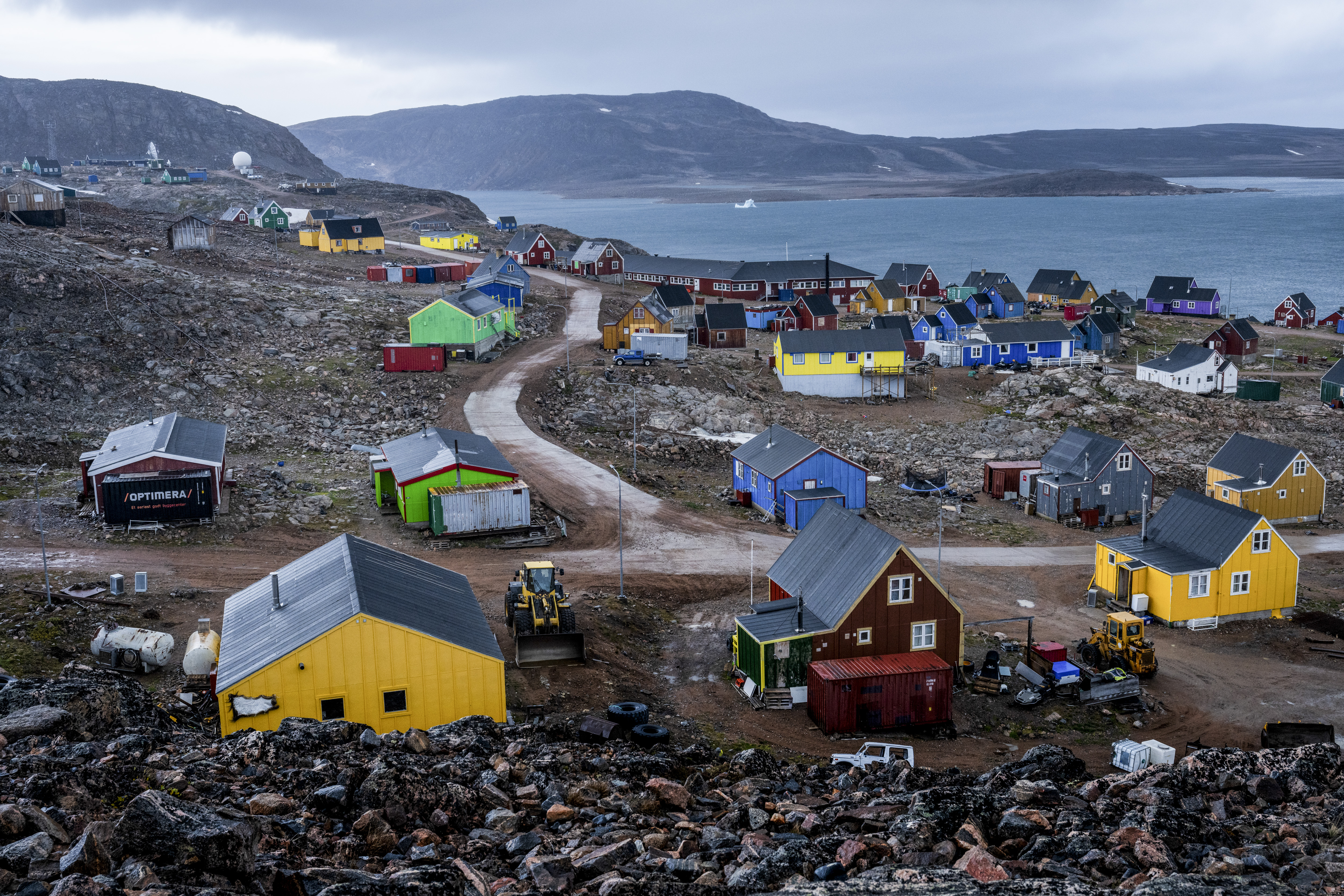
    LONDON — In one of the most remote towns on Earth, on the frozen crust of Greenland’s east coast, the American oilman made his pitch.

    Near to the very room where they were all sitting, he told a crowd of Greenlanders, could be as much as 13 billion barrels of oil. His company planned to drill two exploratory wells, and if it struck oil, it could be a major worldwide discovery bringing much-needed jobs, loads of tax money, and relief to world energy markets.

    The people who attended the meeting, which was held in June in an isolated town called Ittoqqortoormiit, had some questions.

    Why would Greenland get only 15% of the profit?

    What kind of chemicals would be used?

    And what about the musk ox? (Musk ox hunting is a big deal up there.)

    The meeting wrapped up with a lot of unhappy people filing out, according to a video of it that was shared with the New York Times, and a showdown over oil exploration has now joined the cloud of issues swirling over Greenland.

    The wildcat oil project is being pumped up by Dr. Phil McGraw, the TV personality known as Dr. Phil, and Gov. Jeff Landry of Louisiana, both powerful allies of President Donald Trump. It’s the latest push by the MAGA camp to close in on this gigantic Arctic island that Trump threatened to annex and remains a fixation of his.

    If the discovery is anything close to what the company says, and if it makes economic sense for major production — and those are two enormous ifs — this project could thrust Greenland into a radically different future, possibly as an Arctic petrostate.

    But it’s off to a bumpy start. After a wave of negative publicity, protests by Greenlanders, and a slipup by the project’s organizers who have a drilling license, Greenland’s authorities tapped the brakes. This week, the government pushed back the timeline for granting final approvals, saying that it’s unlikely any drilling would be authorized before 2028.

    The Texas-based firm leading the project, Greenland Energy Co., now says it will focus on drilling only one well, not two. And the delays are expected to cost millions. As a result, Greenland Energy’s share price has plummeted, trading at little more than a dollar, half its value from just days ago.

    A few years ago, Greenland declared it was suspending oil exploration. The Arctic is among the fastest-warming regions in the world, and the Greenlandic government felt it was wrong to contribute more fossil fuel pollution.

    But the oil prospectors in this case are operating with a valid license granted before the policy changed, according to documents reviewed by the New York Times. So Greenlandic officials, who have been trying to navigate the intense pressure Trump has put on them, find themselves in a tight spot.

    They are more than aware that if they reflexively block Americans from drilling, especially at a time when world events have squeezed the global oil supply, that could give Trump the pretext he needs to return to his threats to “get” Greenland, “one way or the other.” At the same time, there’s obvious resistance from ordinary Greenlanders and government officials to the project.

    “In a world where Donald Trump has pursued such a confrontational policy toward Greenland, you can’t help but be a little concerned,” said Mikkel Runge Olesen, a senior researcher at the Danish Institute for International Studies. “If you suddenly throw a major oil discovery into the mix, who knows what might happen.”

    For months, the United States, Greenland, and Denmark — the island’s former colonial master that still controls many of its affairs — have been locked in sticky negotiations over the island’s future. One key issue has been America’s access to Greenland’s natural resources.

    Ever since Trump set his sights on the island, Greenland has become a magnet for investors and allies chasing Arctic resource dreams. But oil has never been easy.

    Chevron and Shell prospected decades ago with no success. It’s incredibly expensive to build an oil industry from scratch in one of the most remote and inhospitable places on the planet. Most of Greenland is covered in ice. One major U.S. company, ARCO, decades ago sank today’s equivalent of $250 million — far more than the $80 million the current players have raised — into seismic studies in the same area, only to abandon the project in 1990.

    “There are so many red flags here,” said Naaja Nathanielsen, Greenland’s former minister of natural resources and now a representative in Denmark’s parliament. She said she hasn’t seen any hard data supporting the project’s tantalizing claims, adding, “I think they are selling hot air.”

    Not so, say the backers of the project, a joint venture between Greenland Energy, the small, publicly traded U.S. company that raised the money, and 80 Mile Plc, a British outfit that acquired the drilling licenses several years ago.

    Roderick McIllree, 80 Mile’s executive director and a board member of Greenland Energy, said this stretch of Greenland had the same geology as the North Sea oil fields, where European countries have extracted billions of barrels. And climate change is working in their favor, he said.

    Warming temperatures mean less ice clogging Greenland’s coast, making any oil discovered cheaper to export than it would have been decades ago, he said.

    One investor is the Citadel hedge fund, run by investment titan Ken Griffin, and the Trump administration fully supports the project.

    “Greenland could be exporting 2 million barrels of oil a day,” said Landry, Trump’s special envoy to Greenland, in a Fox News interview in May. He added, “Think about what kind of pressure that would relieve in the Straits of Hormuz.”

    Before the project is allowed to start, its plans, including a detailed environmental assessment, must be approved. But the organizers have been moving ahead anyway and recently carried out two disputed equipment transfers.

    First, they brought in a barge load of equipment from another part of Greenland on what authorities said was an expired permit. Jorgen Hammeken-Holm, the head of Greenland’s mineral resources department, called the move “naughty, naughty.”

    Then, a few days later, they unloaded another piece of heavy equipment without proper notification, authorities said.

    “We have the police and the military,” Hammeken-Holm warned. “They can assist in dealing with unlawful activities if necessary.”

    McIllree admitted, “We kind of fell down.” He said the company apologized to Greenlandic officials.

    The potentially oil-rich area, known as Jameson Land, is a highly protected environmental zone, an Arctic swampland of sorts, home to tenacious shrubs and musk ox, foxes and migrating birds like the pink-footed goose. The musk ox is prized for its meat and its fur, which is turned into a luxurious yarn.

    All this has attracted Dr. Phil, who did a recent 44-minute podcast on the project. He titled the episode “Frozen Gold,” and according to documents on Greenland Energy’s website, the company has established “a wide-ranging partnership” with him to make a six-episode series on “this modern-day treasure hunt.”

    His company did not respond to requests for comment about his involvement in the project. But on his podcast, Dr. Phil said he would soon head to the Arctic.

    “I’m going to have to mug a kitten and get some mittens because I’m going to go up there and see this firsthand,” he said.

    Ittoqqortoormiit (It-tok-kor-TOR-meet), population 329, is trying to make sense of what’s happening. This spring, members of the local council seemed ready to negotiate and drafted a list of things they wanted from the oil company: a heated community pool, new hunting cabins, and funding for residents to fly over Jameson Land in helicopters one last time before their hunting grounds were turned into an industrial site.

    But the public meeting in June changed the mood.

    McIllree conceded that the team that led the meeting didn’t show enough respect.

    “They forgot whose house they were in,” he said.

    Still, some residents support the project.

    Aage Uugi Pike Barselajsen, a construction worker, said in a telephone interview that Ittoqqortoormiit desperately needed jobs.

    “You have to think about the future and the money,” he explained. “Maybe Greenland could become like Dubai. That’s my dream.”

    This article originally appeared in he New York Times.

  • Ward Churchill, professor who challenged his dismissal over 9/11 essay, has died at 78

    Ward Churchill, professor who challenged his dismissal over 9/11 essay, has died at 78

    Ward L. Churchill, a professor whose firing by the University of Colorado in 2007 inspired a lawsuit that became a landmark case about academic freedom and free speech, has died. He was 78.

    The death was confirmed by his former lawyer, David Lane. No further details were provided.

    When he was dismissed, Mr. Churchill had been a tenured professor at the university’s Boulder campus since 1991 and had served as chairperson of its ethnic studies department. In 2007, a faculty panel found that he had plagiarized and falsified parts of his research on Native Americans, prompting his dismissal.

    He filed a wrongful termination suit against the university, claiming that the real cause for his firing was to punish him for an essay he had written on Sept. 12, 2001, and published online a few days later, in which he argued that the United States had brought on itself the 9/11 terrorist attacks.

    In the essay, he compared office workers who had been killed with Adolf Eichmann, a Nazi official whose later defense that he was merely “following orders” helped inspire writer Hannah Arendt to develop the concept of “the banality of evil.”

    In Mr. Churchill’s essay, titled “Some People Push Back: On the Justice of Roosting Chickens,” he wrote that the financial workers who died at the World Trade Center were not innocent bystanders, but “little Eichmanns” who were part of “a technocratic corps at the very heart of America’s global financial empire.”

    The essay garnered little notice at the time of its release, nor when it was expanded and published as a book in 2003. But when Mr. Churchill was invited to speak at Hamilton College in New York in 2005, it resurfaced and caused an uproar, and the organizers canceled the event.

    Under pressure, including from Colorado Gov. Bill Owens, the university formed a panel to investigate Mr. Churchill’s conduct. It concluded that he had committed serious academic misconduct, including falsifying and fabricating historical details and plagiarizing work by an environmental group and another scholar.

    The panel was divided about whether he deserved to be dismissed, with three of the five members in favor, and two recommending a two-year suspension.

    The university’s leaders decided to fire him, prompting Mr. Churchill to start his legal challenge. When the lawsuit went to trial in March 2009, Mr. Churchill’s lawyers described the university panel’s search for professional misconduct as a pretext for a foregone decision to dismiss him. Lane, his lawyer, said at the time that Mr. Churchill was the victim of a “howling mob” of university administrators, conservative media, and politicians “falling over themselves” to secure his removal.

    In April 2009, the jury found that Mr. Churchill had been wrongfully dismissed, awarding him a symbolic $1 in damages. It found that his political views had been a “substantial or motivating” factor in his dismissal, and that the university had not shown that he would have been dismissed anyway for his academic misconduct.

    “The jury’s award is some vindication,” Mr. Churchill said. “I didn’t ask for money, I asked for justice.”

    A Denver District Court judge ruled that the university did not have to reinstate or compensate Mr. Churchill, a decision upheld by the Colorado Court of Appeals. In 2012, the Colorado Supreme Court affirmed the lower courts’ rulings.

    Ward LeRoy Churchill was born Oct. 2, 1947, in Urbana, Ill., to Jack LeRoy Churchill and Maralyn Lucretia Allen. They divorced when he was a year old. In a 2003 essay in an academic journal, he claimed to be of Muscogee Creek descent through his father and an enrolled member of the United Keetowah Band of Cherokee Indians through his mother.

    The Cherokee tribe said in 2005 that he was an associate member rather than a full member. A former member of the tribe’s enrollment committee said Mr. Churchill could not prove his eligibility by blood but was granted associate status based on his advocacy work.

    Mr. Churchill grew up in Elmwood, Ill., and graduated in 1965 from Elmwood Community High School, where he played football and basketball. Former classmates told the Denver Post in 2005 that he liked to debate politics, even as a teen.

    He joined the U.S. Army in 1966, training as a light-truck driver and projectionist, then served in Vietnam. He told the Denver Post in a 1987 interview that he had attended paratrooper school and was assigned to an elite reconnaissance patrol unit, details that did not appear on his Army record.

    He was discharged from the Army in 1968. He said in the 1987 interview that he became active in anti-war leftist circles in Chicago after he returned from Vietnam.

    He earned a bachelor’s degree in technological communications from Sangamon State University in Springfield, Ill., (now the University of Illinois Springfield), in 1974, and a master’s degree in communications theory from Sangamon State in 1975.

    He was hired by the University of Colorado in 1980 to be the acting director of its American Indian Equal Opportunities Program. In 1991, he became an associate professor in the communications department and received tenure. He became a full professor and transferred to the ethnic studies department in 1997.

    His classes were popular enough that up to 60 students would be on the waitlist, Arturo Aldama, a professor in that department, told the Denver Post in 2005.

    Mr. Churchill was married four times. His first wife, Dora-Lee Larson, filed to end their common-law marriage in 1984 and accused Mr. Churchill of “past violence and threats.” His second marriage, to Marie Annette Jaimes, a colleague at the University of Colorado, ended in divorce in 1995. That same year, he married Leah Kelly, who was struck and killed by a car while crossing a street near Boulder in 2000 at age 25.

    Mr. Churchill’s fourth wife, Natsu Saito, was a fellow professor in the University of Colorado’s ethnic studies department. In 2006, while he was being investigated by the university, Saito resigned to teach at Georgia State University.

    Information about his survivors was not immediately available.

    In 2017, Mr. Churchill returned to speak at the Boulder campus, and he remained defiant. “Academic freedom in America is dead,” he told the crowd. “I had my identity before I was a professor, I had it while I was a professor, and I have it now.”

    This article originally appeared in The New York Times.

  • John Crowley, whose fantasy novels blurred reality and dream, dies at 83

    John Crowley, whose fantasy novels blurred reality and dream, dies at 83

    John Crowley, an author of sweeping fantastical narratives whose ability to blend such disparate material as American history, dreams of lost utopias, and Alice in Wonderland-tinged occult allowed him to transcend the fantasy genre in novels like Little, Big, which critic Harold Bloom called a “neglected masterpiece,” died Sunday at his home in Conway, Mass. He was 83.

    His wife, Laurie Block, said the cause was complications of dysphasia and dementia.

    The author of 14 novels and 10 volumes of essays and short fiction, Mr. Crowley explored a considerable range of subjects and genres. His first novel, The Deep (1975), was set on a disc-shaped world and involved a war between two factions, the Reds and the Blacks, loosely based on the 15th-century War of the Roses in England.

    Even his most straightforward, realistic novel, Four Freedoms (2009), about the workers at an airplane factory in Oklahoma during World War II, is an alternative history of the homefront, in which Americans of marginalized identities — Black Americans, women, disabled people — find themselves liberated by a common purpose.

    His work drew comparisons to C.S. Lewis, J.R.R. Tolkien, and Thomas Pynchon; reviewers recognized notes of Dante, William Shakespeare, and Lewis Carroll. Writing in the Washington Post in 2000, critic Michael Dirda called Mr. Crowley “arguably the most original and accomplished American fantasy writer ever.”

    Despite his wide range, certain themes persisted. He was consistently interested in the way that narrative shapes perception; in the sometimes murky line between fantasy and reality; and in the possibility, as he wrote in his 1987 novel, Aegypt (eventually republished as The Solitudes), that “there is more than one history of the world.”

    Little, Big, Mr. Crowley’s fourth novel, was his best known and most widely read. Its plot revolves around the long marriage of Smoky Barnable and Daily Alice Drinkwater, which plays out against a tableau of urban decay, a fascist takeover of the United States, and a rural manse that offers a gateway to a realm of fairies and, possibly, a redemptive future.

    Any summary of its plot makes it sound twee; in fact, it is an achingly melancholic and deeply humane meditation on mortality and memory.

    Like all Mr. Crowley’s books, Little, Big reads almost like a fable, starting with its first sentence: “On a certain day in June, 19 —, a young man was making his way on foot northward from the great City to a town or place called Edgewood, that he had been told of but had never visited.”

    Mr. Crowley continued, “His name was Smoky Barnable, and he was going to Edgewood to get married; the fact that he walked and didn’t ride was one of the conditions placed on his coming there at all.”

    Poet James Merrill was a gushing fan of Little, Big and arranged for Mr. Crowley to receive a grant from the Ingram Merrill Foundation, which Merrill directed. Eminent fantasy writer Ursula K. Le Guin said that it “calls for a redefinition of fantasy.” Bloom, the critic, wrote that it was “literally the most enchanting 20th-century book I know.”

    It was named the best novel at the 1982 World Fantasy Awards, the highest prize in the genre.

    Mr. Crowley was unafraid of boldly original stories and sprawling epics. The four books in his Aegypt cycle, written over two decades, follow the waking and dream life of a historian named Pierce Moffett, with parallel story lines set during the Renaissance. His 2017 novel Ka: Dar Oakley in the Ruin of Ymr centers on a sentient, immortal crow as it follows the course of human history.

    “The kind of fiction that always interested me,” Mr. Crowley told the Believer magazine in 2009, “is stuff that somehow manages to be convincingly actual — in the sense that you believe that truths are being told about the world you live in — and are also somehow connected to the imaginary in some way.”

    John Michael Crowley was born Dec. 1, 1942, in Presque Isle, Maine, where his father, Joseph, was a doctor with the Army. His mother, Patience (Lyon) Crowley, managed the home and later worked as a librarian.

    The family moved frequently because of Joseph Crowley’s work, living in Vermont, eastern Kentucky, and finally Indiana.

    Though he at times dreamed of becoming an archaeologist or a set designer, John Crowley studied English at Indiana University. As a freshman, he was a member of the university’s quiz team, which won the 1961 GE College Bowl, an event broadcast on national television.

    After graduating in 1965, he moved to New York, where he wrote documentary screenplays.

    He moved to western Massachusetts in the mid-1970s, where he began writing fiction. He continued to write documentaries, eventually joining his wife, Block, in forming Straight Ahead Pictures, a nonprofit production company.

    His film scripts include The World of Tomorrow (1984), about the 1939 World’s Fair, and, with Block, Fit: Episodes in the History of the Body (1991), about American fitness culture.

    Mr. Crowley and Block married in 1984. He is also survived by their children, Hazel and Zander Crowley, and his sister, Jo Busha.

    Thanks to the presence on the Yale English faculty of two of his great admirers, poet John Hollander and Bloom, Mr. Crowley became a lecturer there in 1993, retiring in 2018.

    Mr. Crowley insisted to his students and readers that fantasy was, at its heart, no different from any other genre, and could achieve greatness if it followed the rules of literature.

    “To actually articulate a way of being in a literary world without boundaries between reality and fantasy — it can’t just be a bunch of craziness and surreal carrying on,” he told Locus magazine in 2010.

    He added, “Fantasy fiction at bottom, or at its best, is about making true fictions by the rules, in worlds you make up out of whole cloth, or out of your heart.”

    This article originally appeared in The New York Times.