Category: New York Times

  • Pirro challenges release of woman accused of vandalizing World War II Memorial

    Pirro challenges release of woman accused of vandalizing World War II Memorial

    Jeanine Pirro, the U.S. attorney for the District of Columbia, criticized a federal judge’s order releasing a woman charged with vandalizing the World War II Memorial in Washington.

    The judge ordered the release Monday, rejecting a request from prosecutors that she remain in custody while awaiting trial on two felony charges.

    Federal prosecutors led by Pirro asked the court to reverse the decision, arguing that Melissa L. Farris posed an “exceptionally high risk of flight.”

    In a motion filed Monday, prosecutors cited evidence that Farris, 41, had searched for bus and airline tickets on the day the incident took place, as well as her lack of stable housing or ties to Washington and a previous failure to appear in court.

    Pirro criticized the judge’s decision in a statement. “If anyone is a flight risk, it is certainly her,” she said.

    Magistrate Judge Matthew J. Sharbaugh instead released Farris, though he ordered her to remain outside Washington, report to federal pretrial officials in Ohio, and surrender her passport. She was also ordered to stay away from the memorial. The judge did not impose electronic monitoring or require a third-party custodian, restrictions that prosecutors later requested.

    Farris, of Elizabethtown, Ky., was charged Friday with two federal felonies after investigators said she spray-painted “Clean Hands Dirty $” on the memorial and splattered paint on its stonework. Prosecutors said she also poured detergent into a fountain, causing it to fill with foam and bubbles.

    The National Park Service estimated that cleanup and restoration costs had exceeded $1,000, and the memorial was closed for most of the day, according to the filing.

    Farris livestreamed the incident and later posted videos in which she acknowledged that she had defaced federal property and predicted that police would pursue her. The next morning, she turned herself in at the federal courthouse in Alexandria, Va.

    Days earlier, Farris had been cited by U.S. Park Police for unlawfully camping on federal property a few blocks north of the World War II Memorial.

    Earlier this month, President Donald Trump publicly criticized Pirro, a key ally, over her handling of another case involving what he said was vandalism at the Lincoln Memorial Reflecting Pool. Trump said Pirro had “choked” after her office dropped charges against a man accused of damaging it. But Pirro concluded that the damage had been caused by faulty installation.

    Hours after publicly criticizing Pirro, Trump met with her in the White House, though she was not fired and did not offer her resignation, according to two people briefed on the outcome.

    The president has also denounced the vandalism of the World War II memorial, calling it an insult to Americans who died in the war. In a Truth Social post Friday, he also linked the episode to the recent controversy over the Reflecting Pool.

    In a social media post on the same day, Pirro wrote that defacing the memorial “is a despicable attack on a sacred monument honoring the Americans who fought and died for our freedom.” She also noted that the felony charges in the case carry potential punishment of up to 10 years in prison.

    This article originally appeared in the New York Times.

  • Trump votes by mail again in Florida

    Trump votes by mail again in Florida

    WASHINGTON — President Donald Trump voted by mail before Florida’s Republican primary on Tuesday, according to the White House, participating for at least the third time in a practice that he has railed against for years and has equated to cheating.

    Trump voted by mail in Palm Beach County in 2020, and did so again this year in the special election between Democrat Emily Gregory and Republican Jon Maples to represent the district in the Florida statehouse. Records show Trump has been registered to vote there since 2019.

    Politico earlier reported that Trump had voted by mail in Tuesday’s primary, citing voting records from Palm Beach Country, home to Mar-a-Lago, his private club. The New York Times could not access these records through the Palm Beach County Supervisor of Elections website, which said that Trump’s voting record was “protected from public disclosure.”

    In an unsigned statement, the Palm Beach elections office confirmed that it had blocked access to Trump’s voting records, saying that the publicly available documents were “intended for use by a registered voter to determine his or her voter registration and voting status. Voters with protected information will not appear in this search.”

    Olivia Wales, a White House spokesperson, confirmed that Trump voted by mail in the primary, saying that “this is a nonstory.”

    “As everyone knows, the president is a resident of Palm Beach and participates in Florida elections, but he obviously primarily lives at the White House in Washington, D.C.,” she said, repeating a White House statement about Trump’s last vote by mail, in March.

    Trump has continued to push for Republicans in Congress to pass legislation before the midterms that would strengthen voter identification requirements and make mail-in voting significantly more difficult. There was not enough Republican support to push through the legislation this year, and senators abandoned the effort so they could get home to their states to campaign for reelection.

    Trump has long fixated on mail-in voting to bolster his baseless claims of widespread voter fraud, and has called the SAVE Act one of the most consequential pieces of legislation in the country’s history. During his State of the Union address, Trump falsely claimed that “cheating is rampant in our elections” and called for “no more crooked mail-in ballots,” though states that vote entirely by mail see little fraud.

    This article originally appeared in the New York Times.

  • Google just made it easier for campaigns to send you fundraising emails

    Google just made it easier for campaigns to send you fundraising emails

    Google quietly rolled out a new program Monday that will allow candidates, political parties, and political action committees to more easily bypass Gmail’s spam filter and send fundraising appeals to the inboxes of the company’s many millions of email users.

    The change comes after years of complaints from Republicans that Gmail’s spam algorithm unfairly blocked their committees’ emails more than those of their Democratic counterparts, although those complaints were dismissed in court. For campaigns and PACs that meet the terms of the program, it is expected to route an influx of cash solicitations into Gmail inboxes, helping campaigns raise millions of dollars more in the final sprint to the midterm elections.

    Google chose not to debut the new program with any fanfare, instead posting an update to its Help Center on Monday. The company began to reach out to some political committees in both parties Monday after publishing the change, according to three people briefed on the outreach who spoke on the condition of anonymity to describe private conversations.

    Political strategists in both parties said the new policy could be deeply consequential for candidates — even if frustrating for users in the United States, who are likely to be bombarded with pleas for donations.

    “Heading into the 2026 elections, Gmail users are going to be flooded with unwanted political spam because Google decided to create a VIP lane for campaigns,” said Kenneth Pennington, a Democratic digital strategist and veteran online fundraiser. “This is a bad deal for Gmail users and a gift to bad actors in the political fundraising space.”

    José Castañeda, a spokesperson for Google, said the new program resulted from an effort to provide long-term clarity for both campaigns and users.

    “This program is designed to connect people with the emails they want to receive while keeping them fully in control of their inboxes,” he said in a statement. “To participate, bulk senders must meet strict security and compliance requirements, ensuring that messages people receive are relevant, useful, and verified.”

    The new program is set to begin Sept. 8, the day after Labor Day — and the day before Republicans are set to hold a rare midterm convention in Dallas.

    The change comes four years after Google rolled out a similar program on a pilot basis that was discontinued months later.

    At the time, the Republican National Committee sued the technology giant, accusing it of “throttling its email messages,” though Google said the party had not signed up for the program. A federal court later dismissed the case, with Judge Daniel J. Calabretta writing of the RNC’s claims, “This is pure speculation, lacking facts from which the Court could infer animus or an absence of good faith.”

    The Federal Election Commission also dismissed a formal complaint from Republicans that Gmail’s spam filter was biased against the party.

    Whether a fundraising email winds up in users’ spam folders or inboxes can be worth millions of dollars to campaigns over time.

    It is not immediately clear whether the changes would affect one party more than the other, but some Republicans appeared optimistic.

    “For years Google’s algorithm silenced Republican voices, burying our emails in spam while Democrats’ landed in the inbox,” said Will Kiley, the communications director for the National Republican Congressional Committee. “This program is a real chance to fix it and let voters hear from the candidates they choose to follow. We’ll be watching closely to make sure Google follows through.”

    Some Democrats feared the change could open the door for so-called scam PACs, which spend little of their money on actual campaigns, to more easily reach inboxes. Other Democrats hoped the change might help deliver the party an advantage because Democrats generally have been better at online fundraising than Republicans.

    The RNC did not immediately respond to a request for comment.

    Google’s new program will require that candidates, PACs, and party committees register the domain they send emails from and that their spam rates, the percentage of emails that users mark as spam, remain below 0.3%, according to the policy.

    Pennington feared that Google made the change because of pressure from Republicans.

    “While there could theoretically be another reason for this policy shift, it appears that Google is sacrificing the inbox sanity of its customers simply to placate a false, bad faith narrative from Republicans claiming partisan spam bias,” he said.

    Amanda Elliott, a Republican digital strategist, said the mistrust on the right with the tech industry runs deep, especially around the issue of whether fundraising emails wind up in inboxes or spam folders.

    “For everyone who’s been talking about censorship and bias, this could be a put-up or shut-up moment,” she wrote in a text message. “Are your emails landing in spam filters because you’re a Republican or because you’re just running a subpar email program and not following best practices? Perhaps we’re about to find out!”

    This article originally appeared in the New York Times.

  • Jaguars are ready to come back, but the border wall might stop them

    Jaguars are ready to come back, but the border wall might stop them

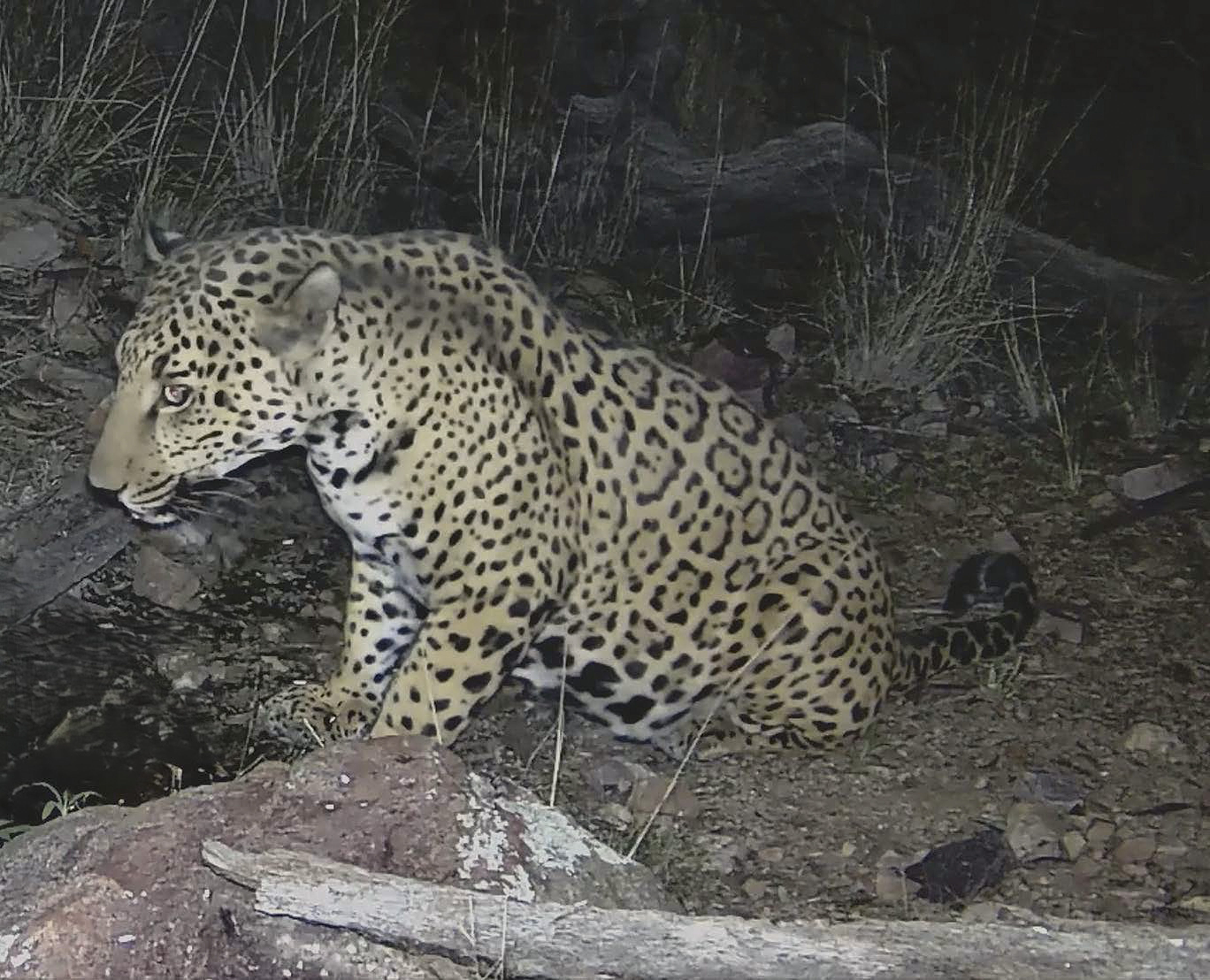
    Movement triggers a trail camera in a wildlife preserve in northern Sonora, Mexico, 2 miles south of the border with the United States. It captures two adult jaguars winding through oak thickets and tall grasses. The cats look relaxed, softly vocalizing to each other.

    It’s remarkable to see any jaguars in these borderlands. But to observe two together is unheard of, said Ganesh Marín, a researcher with the environmental group Borderlands Restoration Network. Even more jaw-dropping is that one of the big cats looks to be a female. “When I saw it, I was excited,” Marín said of watching the video in 2023. “I thought, ‘This is fantastic.’”

    No native female jaguars have been seen in the United States, or anywhere particularly close, for more than 70 years. So Marín waited for more evidence before he went public. He collected several more sightings of the cat, which he and his adviser named Adela. Then, this year, a camera-trap video surfaced that gave a clear view of another jaguar’s rear end, proving, according to Marín and other cat experts, that the individual in question is a female.

    “It’s a game changer,” said Eamon Harrity, a researcher with Sky Island Alliance, a conservation science group.

    Including Adela, five or six jaguars have been recorded at the wildlife preserve, Cuenca Los Ojos, since 2020, suggesting that the jaguar is closer than previously thought to reestablishing a population on the doorstep of the United States. “It totally deflates the narrative that female jaguars are over 100 miles to the south,” Harrity said. “They could be a day away from the U.S., or already here.” At the same time, the only known jaguar in the United States, a male named Cinco, has been roaming throughout southern Arizona. He has everything he needs — except a mate.

    Geopolitics might get in the way of his acquiring one. Since 2025, contractors working for the Department of Homeland Security have finished 56 miles of new wall along the U.S.-Mexico border and 48 miles of secondary fencing. In Arizona, many areas of the border will soon have two 30-foot walls right next to each other. This barrier is poised to cut off three of the four most important remaining wildlife corridors between Mexico and Arizona, threatening the jaguar’s re-expansion despite all the positive recent signs. The wall, Harrity said, would make it “very unlikely the jaguars can come back on their own to the U.S. — at least for now.”

    ‘No campfire dies without talk of him’

    Jaguars once roamed much of Sonora, western New Mexico, and Arizona, as far north as the Grand Canyon. The size of the population is unknown, but it was probably small and widely dispersed. Although they have long been revered in both countries — naturalist Aldo Leopold wrote in 1949 that the jaguar’s mythic nature so pervaded the borderlands that “no campfire dies without talk of him” — jaguars were also once regularly killed on sight, by government officials as well as hunters.

    Since 1949, when a hunter killed a female jaguar near Arivaca in southern Arizona, no native female had been seen in the United States, or anywhere particularly close to the border in Mexico. The northernmost core breeding population was thought to be centered near the community of Sahuaripa, more than 100 miles south of the border, which includes a private protected area for the species called the Northern Jaguar Reserve.

    A turning point came in early March 1996, when rancher Warner Glenn set off to hunt cougars in the Peloncillo Mountains, which start at the Mexican border and run north, straddling Arizona and New Mexico. His dogs caught the scent of a large cat and gave chase, and the feline finally stopped on a rocky outcropping. Peering up through pinyon pines, the rancher realized this was no mountain lion; it was a full-grown male jaguar.

    Still, in 1997, with only a few such sightings of roaming males, the jaguar was listed as endangered. In 2014, the U.S. Fish and Wildlife Service designated more than 760,000 acres of critical habitat for the big cats, but after lawsuits from mining and ranching groups, that dropped to 640,000 acres.

    Soon after Marín set up the camera network in 2020 for a doctoral project at the University of Arizona, he was elated to record a male jaguar he named Bonito, and a second male shortly after. Then came Adela and yet another male in 2023.

    When Marín first saw the video of the two jaguars, he thought Adela was female because she has a smaller frame. Also, two males are unlikely to appear together and vocalize, he explained.

    This year, he reinspected a video from April 2023 that showed a clear view of a jaguar’s rear end, and did a double take: No testicles were visible. And the spot pattern looked different from Adela’s, suggesting it could be a second female.

    He sent the clip to Brett Dickson, a wild cat expert with Conservation Science Partners. “I was struck right away that I was likely looking at a female,” said Dickson, who forwarded the video to jaguar experts. (The video also shows the cat has skin folds that look like mammary glands. The possibility that this could be a lactating female “cannot be ruled out,” Dickson said.) Seven of the nine scientists agreed it was female; two are unsure.

    While male jaguars can range hundreds of miles from their birthplace in search of new territory and mates, females generally do not travel as far from where they were born, and their mobility is a limiting factor in the species’ expansion. Seeing a female in Cuenca most likely means that she was born nearby, and that the breeding range of the jaguar extends farther north into the species’ historical territory than previously thought.

    The ‘fabric of the jaguar’

    To revisit the spot where Adela first showed up, Marín and Valerie Gordon, executive director of Cuenca Los Ojos, drove into the northernmost foothills of the Sierra Madre. A hike through grassy hills punctuated by oaks and mesquite took them to a spot where Marín lashed a camera around an alligator juniper back in 2020.

    Less than 2 miles away — a brief stroll for a jaguar — they pointed out the short vehicle barrier on the U.S. border. This is one of the most important remaining unwalled wildlife corridors in the Southwest United States, Marín said.

    A walk into the mountains took them to another camera that filmed Adela, showing her softly huffing as she passed. Marín gestured southward, where he envisions female jaguars making up a continuous thread that stretches vast distances through Mexico and far beyond. “The fabric of the jaguar is closer than we thought,” he said.

    Under the first Trump administration, 30-foot fencing impervious to most large animals went up along more than 220 miles of the border in Arizona, curtailing north-to-south wildlife movement and depleting aquifers, since contractors use vast quantities of water for construction, said Myles Traphagen, a researcher with Cuenca. As codified in the Real ID Act of 2005, the homeland security secretary has the authority to waive nearly any law — including the Endangered Species Act — in building border walls.

    John Mennell, a DHS spokesperson, said in a statement that the department planned to incorporate an unknown number of small wildlife passages, and referred further questions to the Fish and Wildlife Service, which declined to comment. These openings would be 8.5 inches by 11 inches, too small for jaguars.

    Cameras on both sides of a 30-foot border wall in Cuenca Los Ojos have shown large wildlife pacing, trying to get through. Animals including bears, mountain lions, and jaguars have to move long distances to find water in arid areas, and border fencing makes this more difficult, Gordon said.

    In the spring, Traphagen took a drive to check on the status of the wall, passing through the Baboquivari Mountains, a sacred place within the Tohono O’odham Nation. To the south, he saw contractors putting up 30-foot panels of new wall, one of about six places in Arizona where such work has begun, and miles of razor wire had been strung up.

    “That corridor has been open since time immemorial,” said Kinley Ragan, a biologist with the Phoenix Zoo, who manages a network of cameras in the area. “We know this will have serious impacts on wildlife. It’s quite devastating.”

    Several groups have worked to protect jaguars in Mexico, where the species is listed as endangered. For example, to change attitudes and make the animals more valuable alive than dead, the Northern Jaguar Reserve started a program in 2002 that compensates ranchers for trail camera photos of cats.

    Since 2010, jaguar populations have increased throughout Mexico by about 30%, to a total of more than 5,300, according to a Mexican jaguar census released last year and led by Gerardo Ceballos, an ecologist and a senior researcher at the National Autonomous University of Mexico.

    Among the main threats have been illegal hunting and retaliatory killings for perceived cattle predation, though research shows the cats much prefer native wildlife. Killings still happen, but the situation seems to have improved over the last two decades. Ceballos has argued for years that a female jaguar could return to the United States soon, if the two countries continue working together to protect habitat and connectivity.

    While jaguars might not be welcomed back by every segment of society, they are rare and shy enough that they present no risk to humans. The return of an apex predator would be good for the area’s ecology, and an indicator that the environment is doing well, said Susan Malusa, director of the University of Arizona wild cat research center.

    Females would enjoy the same legal protection as males, as endangered species, but ecologically and symbolically, the return of females would be a much bigger deal and would make jaguar conservation more urgent rather than theoretical.

    Back at the spot where the first video was taken, Gordon mused about how vast this tract of wilderness is, and Marín noted how important it will be to keep this border free of 30-foot-tall walls while reestablishing wildlife corridors where possible.

    “Jaguars are coming back,” Marín said, if we don’t get in their way. “I hope the U.S. is prepared for that — prepared to let that happen.”

    This article originally appeared in the New York Times.

  • What do students lose when they stop writing?

    What do students lose when they stop writing?

    After years of studying how humans write, cognitive psychologist Ronald T. Kellogg concluded that drafting a basic persuasive essay was as mentally taxing as digging a ditch was physically exhausting.

    Writing well requires a command of vocabulary, spelling, and grammar. It forces writers to comprehend a subject, to sift through their working memory of that topic, to organize and plan. Writing an essay is so difficult that a person in the throes of it can do hardly anything else — as anyone who has shushed a spouse or child while trying to compose a decent sentence can attest.

    Very few people would volunteer to dig a ditch. Likewise, it is hard — almost impossible, many English teachers will admit — to turn a reluctant writer into an enthusiastic one.

    Yet the American education system expects nearly all students to learn how to write an essay. It’s little wonder, then, that as soon as a tool arrived promising to lessen the pain people grabbed it.

    Like it or not, artificial intelligence is now firmly embedded in how students produce text. Somewhere between two-thirds and 90% of high school and college students are already using AI for schoolwork, according to recent surveys, often requesting help with writing assignments.

    A growing number of educators are alarmed, and insist that students should write without AI. These teachers are returning to handwriting, blue books, and proctored, in-class essay tests — all attempts to prevent students from outsourcing their writing to chatbots.

    This is baffling to tech industry leaders, who see AI rejection as a form of educational malpractice. They point out that writing is already the leading use of AI in the workplace, and argue there is no need to continue suffering through the task without help. After all, they say, chatbots now exceed the ability of most humans to produce fluent prose.

    All this points to some questions about writing itself: Why work so hard to learn it? And what do students stand to lose when they stop facing down a blank page, alone with their thoughts?

    The scholars who study writing and cognition are rarely reflexively opposed to AI. Many have spent decades anticipating a leap in computer-assisted writing, just like the one we are living through. They tend to be excited by the technology’s potential.

    Still, their work casts doubt on the tech-industry push to embed AI at every stage of the student writing process, from brainstorming to drafting to revising. Research shows that traditional, unassisted composition is valuable, not despite its difficulty, but because of it. Writing builds our working memory, executive planning skills, and metacognition — the ability to think about our thinking, weigh alternate viewpoints, and revise for clarity and style. It takes decades to develop writing skills, from toddlerhood into adulthood.

    “Writing is a technology for thinking,” Kellogg said.

    Writing substitute or helper?

    Learning to write did not always matter so much.

    Before the 1870s, American students were tested through oral exams. College seats were reserved for the elite — future ministers and lawyers, professions where public speaking dominated.

    But the rise of the modern, urban economy, and the invention of the typewriter, produced jobs that dealt more heavily with the written word, like office clerks and advertising copywriters. Starting in the late 19th century, students needed to learn how to write more fluently, and school curriculums, tied closely to the demands of industry, adapted. As more students went to college, and class sizes grew, administering oral tests also became too time-consuming, according to linguist Naomi S. Baron, who traces this history in her book Who Wrote This?

    Besides, teachers discovered that writing itself deepened knowledge. “If you want to think, understand, and learn something, text really is preferable,” Baron said.

    Cognitive research confirms that writing is a powerful aid in helping us to retain information we read. The work of writing forces us to stress-test our ideas, allowing the writer to respond to counterarguments and cite sources. Revision is a practice of self-critique and self-improvement, and can be social, as well, if feedback is elicited. Writing can also be empowering, allowing us to share our experiences and express our views. It can even be healing, which is why therapists sometimes suggest keeping a journal.

    It is not clear if these benefits can be fully realized when writing alongside artificial intelligence. There are reasons to be wary.

    Last year, a small study from the Massachusetts Institute of Technology showed that individuals who wrote in partnership with AI chatbots recorded lower brain activity while they wrote, compared with those who worked without chatbots. The writers who used AI struggled to remember what, exactly, they had written, and felt little ownership over their work.

    The findings join a growing body of research suggesting that frequent AI use can degrade critical thinking.

    Nevertheless, tech companies are aggressively marketing AI writing assistants to students and schools.

    Jenny Maxwell, general manager for education at Superhuman, the AI company that makes the popular writing app Grammarly, told me we are living through a “burn it down” moment for teaching and learning. Educators who try to withhold AI writing tools are essentially announcing to their students — “consumers,” she called them — that their coursework is irrelevant to the job market.

    She did acknowledge that some basic, human writing skills remain valuable. Students need to write well enough to have a sense of which AI text suggestions to accept and which to reject, she said. Maxwell also insisted that creativity in writing would persist, because people would still want to express their personal voice and style.

    To that end, companies such as Grammarly, Google, and OpenAI are creating so-called Socratic versions of their chatbots, sold to schools as writing helpers that will guide students through assignments without doing the work for them.

    The need for limits

    AI is already ubiquitous: on every device, in every web search, insisting that it can summarize for us, analyze for us, write for us. It steps in even when we have not invited it.

    For students with still-developing minds, the most urgent question, then, is how to protect thinking in a world where it has become so easy to outsource writing.

    We might begin by considering what AI is actually good at when it comes to composition. AI can be especially useful for those with disabilities or who are non-native English speakers, said Steve Graham, a writing expert and educational psychologist at Arizona State University. Chatbots can correct grammar and suggest potential trims or revisions for clarity. With AI, there have been immense strides in accurate voice-to-text transcription for writers who cannot physically type or write by hand.

    And AI can offer all of this help privately, with no need to be vulnerable and expose a rough first draft to another person’s judgment. For many American students, especially the third with below-basic literacy skills, the writing process can be painful and embarrassing, and a reason many dread homework and exams.

    But, Graham cautioned, there is no part of the writing process that can be handed over to AI without some cost. Intellectual growth occurs at every stage, from brainstorming to fine-tuning a final draft. If writing is thinking, then any part of the struggle that is outsourced to technology amounts to relinquishing some freedom to perceive. How will students ever know what they really think of anything — whether it’s The Crucible or AI itself — if they ask a machine to spit out an answer for them?

    Last year, a group of writing experts, including Graham, assembled at the University of California, Irvine, to produce recommendations to schools.

    They did not reject AI. Instead, they called on schools to resist the temptation to devote less time to writing — not because it will continue to be such a critical skill in the workplace, where it’s already waning, but to sharpen the mind.

    Writing should be embedded across the curriculum, they advised. Students should continue to do the hard work of drafting their own sentences, paragraphs, and eventually full essays about their lives and about what they have read, both fiction and nonfiction. All this teaches grammar and vocabulary, certainly. But it also allows students to master the knowledge they are gaining.

    There is room for AI, these experts suggested: The technology can help educators generate engaging writing prompts on whatever subjects they are teaching.

    Teachers might also encourage students to use AI to get initial feedback on their writing before turning it in. Anna Mills, a writing instructor at the College of Marin in California, has developed detailed AI prompts that students can use to elicit useful feedback without outsourcing all the work.

    Still, there is probably a need to limit access to the technology.

    The University of Sydney has developed a policy known as the two-lane approach. Across every discipline, professors are required to give some assessments in person under secure conditions, limiting AI use. But they must also allow AI for other assessments, so students can show they know how to apply the technology.

    Jessica Binney is dealing with AI as an English teacher at John Jay High School in the New York suburbs.

    In a creative-writing class, she had students prompt a chatbot to write a poem. The results were predictably generic, so students then asked the chatbot to make revisions, considering where the bot performed well and where it fell short.

    Still, like many educators, she had tired of policing AI misuse on take-home assignments. In her Advanced Placement English course, she moved much of the essay writing, produced inside the classroom, to pen and paper.

    For the most part, students did not complain. Many had already been through an initial whirlwind romance with AI, before rethinking their relationship with the tools. Ainsley Graham, a junior, said she was thrilled by ChatGPT’s ability to help with data analysis in a science research class, but recognized the risks of using chatbots to write essays about literature.

    “You’re not strengthening that muscle by actually analyzing these really hard texts,” she said. “They’re meant to be hard.”

    When Cassady Tondorf, 17, learned how chatbots produced writing, she realized their utter lack of originality. “The entire internet is open to it,” she said. “It’s just regenerating the same things, over and over.”

    If she wanted to be valuable on the job market, she felt, she would need to have ideas and skills that were uniquely her own.

    This article originally appeared in the New York Times.
  • British leader exchanged texts with someone posing as Trump’s chief of staff

    British leader exchanged texts with someone posing as Trump’s chief of staff

    LONDON — British Prime Minister Andy Burnham exchanged brief text messages with a person he thought was President Donald Trump’s chief of staff, Susie Wiles, a government official said Monday.

    Burnham quickly grew suspicious and reported the interaction to security authorities, the official added.

    It was unclear when the exchanges took place. A spokesperson for Burnham declined to comment publicly, citing a long-standing policy not to comment about national security issues.

    But the government official, who declined to be identified because of the security policy, said the prime minister had exchanged a few messages of no significance with someone claiming to be Wiles, Trump’s top White House aide.

    The official declined to provide details about the text messages, which were first reported by Politico, or to say which security agency Burnham had reported them to.

    Wiles is one of Trump’s closest advisers. She comanaged his 2024 presidential campaign and has been running his White House staff since he returned to office in 2025.

    Last year, the Wall Street Journal reported that senators, governors, and some business leaders had received phone calls or text messages from someone claiming to be Wiles, and that Wiles had said contacts on a personal cell phone of hers had been hacked. The Journal said at the time that federal officials were investigating.

    In 2024, David Cameron, then the British foreign secretary, had a video call and exchanged several text messages with someone pretending to be Petro Poroshenko, a former president of Ukraine.

    As foreign secretary in 2018, Boris Johnson had an 18-minute phone call with someone claiming to be the prime minister of Armenia. According to audio that was later released, the pair talked about President Vladimir Putin of Russia and about the poisoning of Sergei Skripal, a Russian double agent, in Salisbury, England.

    This article originally appeared in the New York Times.
  • What we know about damages from Hurricane Lala in Hawaii

    What we know about damages from Hurricane Lala in Hawaii

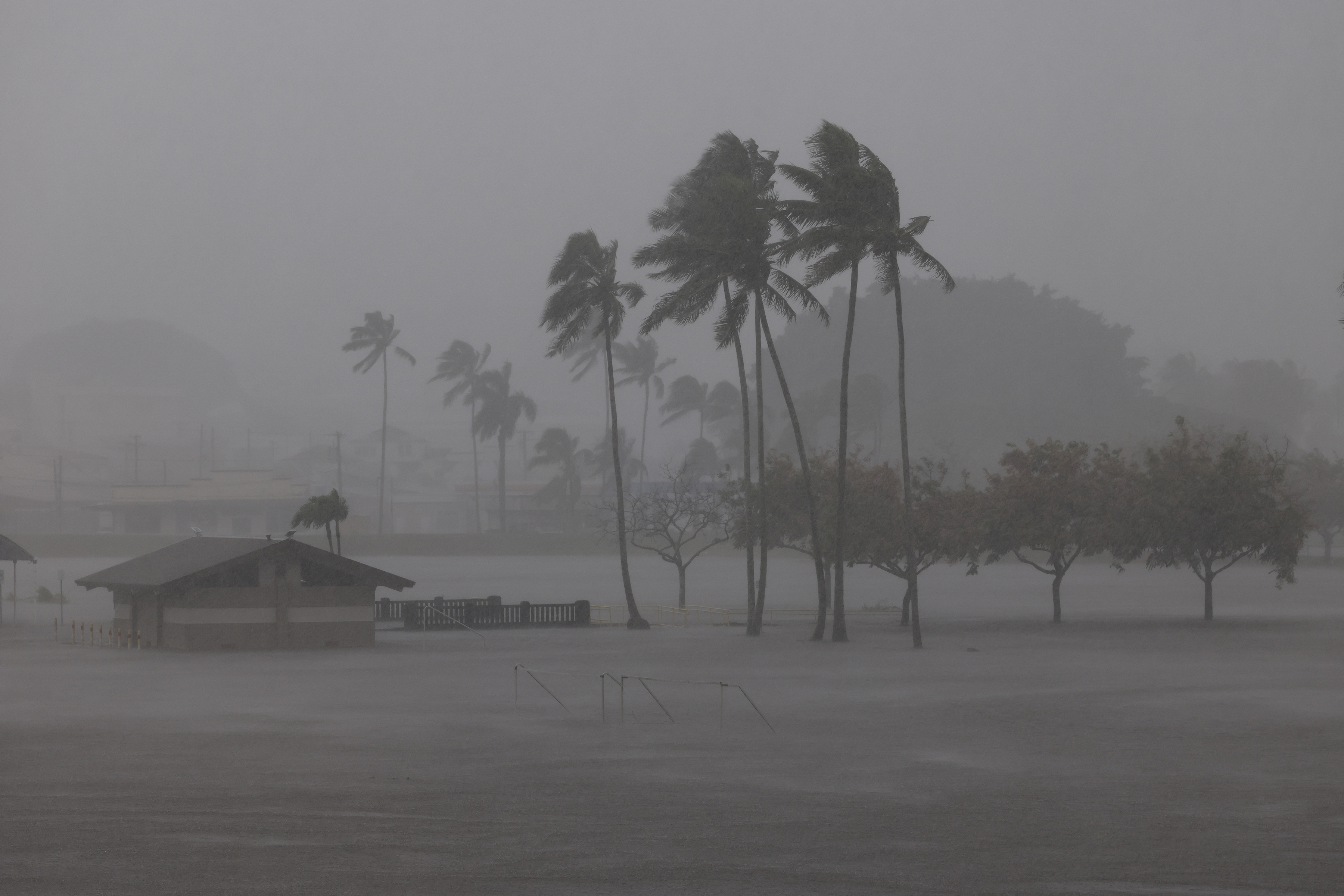
    Hawaii residents faced extensive power outages, submerged bridges and roads, and damaged homes after Hurricane Lala brushed along the islands.

    Hurricane Lala, which was a Category 1 hurricane, did not make landfall but moved close enough to wash out highways, wreck properties, and topple trees. Hurricanes are common in the Pacific Ocean, but landfall in Hawaii is rare because of its small size in relation to the expansive ocean. The eye of Lala did not cross over into land, but the outer bands still left significant destruction, primarily affecting people living along the southern and eastern edges of Hawaii’s Big Island.

    On Sunday and Monday, residents and emergency crews continued to sift through damage. Here’s what we know:

    The Big Island was drenched

    Gov. Josh Green of Hawaii said that some areas received as much as 30 inches of rain and that there were several reported mudslides. More than 13 inches had fallen at Hilo International Airport as of Sunday night. About 35 inches of rain was recorded near Nene Cabin, a weather observation site on the southern tip of the Big Island. Laupahoehoe, on the Hamakua coastline in the northeast part of the island, measured more than 43 inches during the storm, with the majority of precipitation falling within 24 hours beginning Saturday afternoon.

    Hilo, on the eastern edge of the Big Island, is one of the rainiest cities in the United States, and residents are used to frequent downpours. But many residents said they were surprised at the intensity of the storm.

    Hurricane Lane in 2018 similarly passed south of Hawaii and produced comparable rainfall totals in the same locations. The difference with Lala is that it came dangerously close enough to produce damaging winds, including hurricane-force winds, on the Big Island.

    Residents were spared the worst of the worst, which is found in the eyewall, but the more intense side of Lala (the right side in the direction the storm is traveling) hit the Big Island directly. One wind gust at the Mauna Kea Summit measured 140 mph, and another near sea level in Kona registered 78 mph. (Hurricane-force winds are 74 mph or greater.)

    One person was killed, and about 100 homes were damaged on the Big Island.

    On Saturday, when the storm passed through, a 45-year-old man was killed in a head-on car accident in the southern area of the Big Island. A 21-year-old woman was critically injured from the collision.

    Two paramedics were also rescued in Naaleuh, in the southern region of the Big Island, after floodwaters trapped them in their vehicle.

    About 100 homes had been damaged or washed away because of the storm, Green said.

    Officials said some of the worst damage may have occurred in rural places in the southern edge of the Big Island but that fallen electrical lines have complicated efforts for people to get to the area.

    The coastal town of Pahala, which has about 1,800 residents, was cut off from the rest of the island after floodwaters inundated roads and bridges — six were destroyed or severely damaged, officials said. Part of a major highway also collapsed, which blocked road access to Ka’u Hospital, the region’s only hospital.

    County fire officials said they were prepared to use helicopters to move patients with medical emergencies.

    “There’s a lot of damage that we’ll be working on,” Green said Sunday afternoon.

    Hundreds of thousands remain without power

    More than 114,000 homes and businesses remained without power in Hawaii on Monday, down from about 200,000 customers Sunday. That includes about 40% of the customers on the Big Island, which is largely rural.

    People could face days or weeks without power because the storm downed transmission lines that connect power plants to homes and businesses. Because of widespread flooding and other challenges traveling along rural roads, officials said it could take weeks for the power to be fixed on the Big Island.

    Green said that schools, state and county offices, and courts across the state would be closed Monday, as Hawaii recovered from the storm and worked on restoring power. All airports and harbors had reopened, according to the Hawaii Department of Transportation.

    The damaged transmission lines include one that runs for 42 miles on the Big Island. In addition to knocking out power lines, the storm also damaged many of the large structures that carry the lines on the Big Island and Oahu.

    This article originally appeared in the New York Times.

  • Trump lashes out at Oman as preliminary deal with Iran expires

    Trump lashes out at Oman as preliminary deal with Iran expires

    As a crumbling truce with Iran officially collapsed Monday, President Donald Trump signaled his frustration at his inability to resolve a war that he started but cannot seem to end.

    In an interview with Fox News, the president lashed out at a U.S. ally, Oman, that has been trying to mediate negotiations with Iran.

    “If Oman gets in the way, we’ll bomb the s— out of them,” Trump said in a phone interview, according to Fox News’ Trey Yingst.

    The latest threat toward Oman, which has facilitated talks between the United States and Iran for years and maintains that it is still a neutral mediator, came as Trump found himself without much leverage to reach the goals he set out at the start of the war.

    Hostilities have now stretched past the six-month mark in a conflict that began with the United States and Israel launching strikes across Iran in February. Administration officials pledged at the time that the war would be over in four to six weeks.

    In June, the two sides agreed to a memorandum of understanding, but that quickly fall apart amid disputes over its wording. Both Trump and Iran’s leaders have said the deal is essentially dead.

    As the ceasefire officially expires, the president and his team have promised to level crushing sanctions against Iran this week, though the details of those plans have yet to be unveiled. And Defense Secretary Pete Hegseth has said the United States can maintain a naval blockade of the Strait of Hormuz, a critical oil shipping corridor, indefinitely — an acknowledgment that there was no end to the war in sight.

    In the Fox News interview, Trump sought to project patience, saying he was “not in a hurry” to secure a deal while maintaining that his central goal remained preventing Iran from possessing a nuclear weapon.

    But in the meantime, it was Oman that received the president’s fury.

    It was the second time this year the president has threatened the country. After it emerged in May that Oman had discussed partnering with Iran to charge fees for ships to pass through the strait, Trump snapped.

    “Oman will behave just like everybody else, or we’ll have to blow them up,” Trump told reporters that month. “They understand that. They’ll be fine.”

    A White House official did not immediately respond to a request for comment.

    This article originally appeared in the New York Times.
  • Trump’s overture to Kim Jong Un strains alliance with South Korea

    Trump’s overture to Kim Jong Un strains alliance with South Korea

    SEOUL, South Korea — The South Korean and U.S. militaries view their annual drills in South Korea as more critical than ever. The stakes have risen dramatically as North Korea has gained battlefield expertise with drones and modern warfare by deploying troops to support Russia’s war in Ukraine.

    The summer exercise had barely begun Monday when President Donald Trump denounced it, dealing yet another blow to the seven-decade-old alliance between Washington and Seoul. Under Trump, bilateral relations have already come under immense strain from ​his punishing tariffs on South Korean exports.​ And his transactional diplomacy has frustrated South Korea, most recently when he appeared to put Saudi Arabia on the path to enriching nuclear fuel on its own soil, a demand Seoul has made for years.

    In recent years, North Korea has ​not only expanded its nuclear arsenal but also repeatedly threatened ​to use it against South ​Korea, labeling its neighbor ​a “most ​hostile enemy.” Its leader, Kim Jong Un, has also forged a mutual defense treaty with Moscow, dispatching troops and​ weapons to ​support Russia’s war against Ukraine. Despite these escalations, Trump, in a social media post, characterized North Korea as “unthreatening and respectful” while boasting of his “very good relationship” with Kim.​

    In the same post, he ​also criticized the decades-old joint military drills with South Korea as “not only costly” but “totally inappropriate and hostile” toward North Korea.

    “I am not happy with the fact that the United States has, long ago, agreed to participate in Joint Military Exercises with South Korea,” he said. “Based on the fact that it is too late to cancel, I have instructed Secretary of War, Pete Hegseth, to substantially reduce the Joint Military Exercises!”

    If implemented, the directive would mark Trump’s first-known concrete overture toward North Korea in his second term. However, it remains unclear whether Kim will embrace the gesture.

    Throughout his political career, Trump has treated the alliance as a​ bad bargain for Americans, frequently accusing Seoul of failing to pay its fair share for the U.S. troops stationed in South Korea — who act as a deterrent to North Korea. During his first term, he unilaterally canceled or downscaled major drills, calling them “tremendously expensive” and “​very provocative.”​ That concession helped facilitate three summit meetings with Kim but failed to roll back his nuclear ambitions.

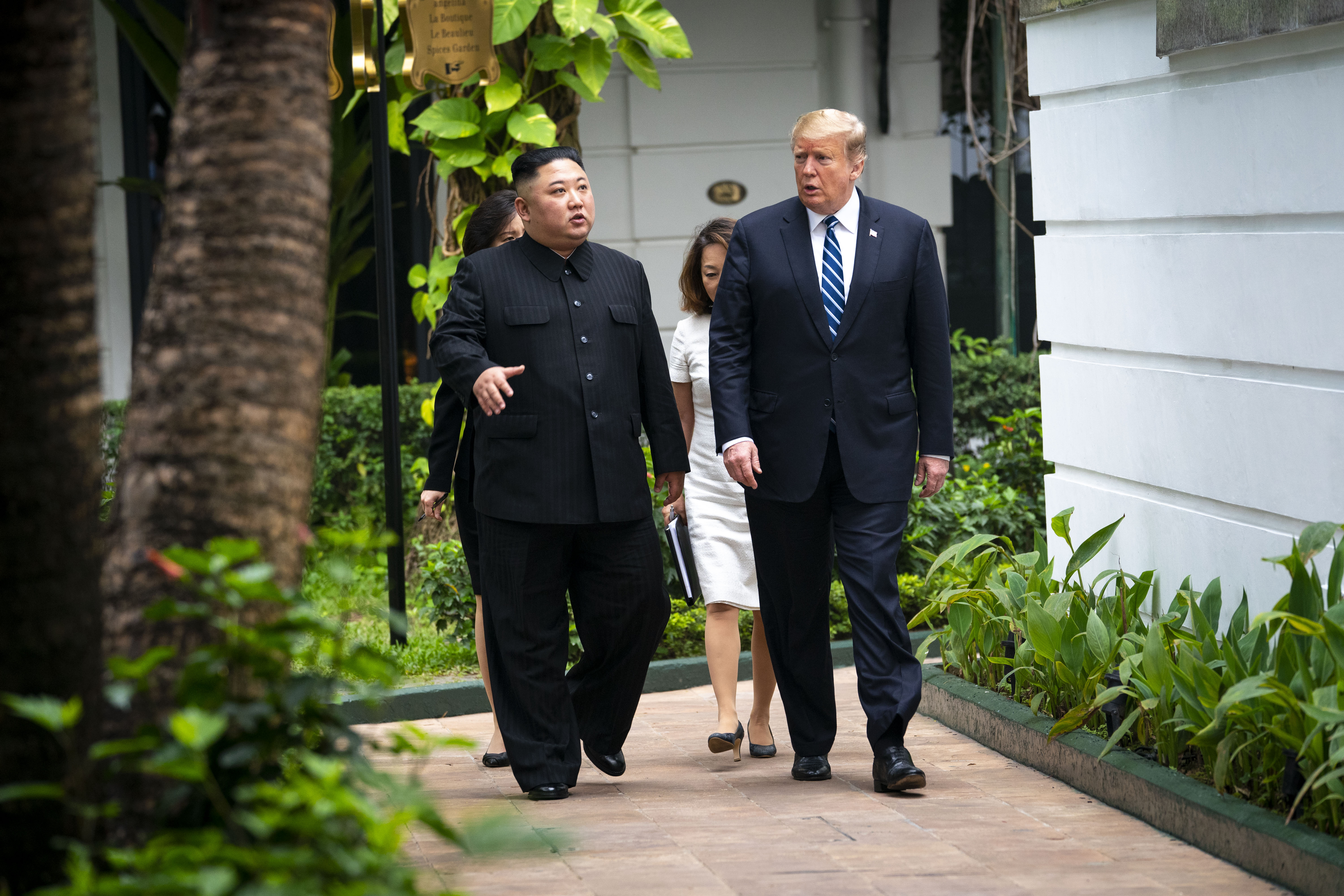
    Since returning to the White House, Trump has signaled a desire to renew that personal diplomacy. Over the weekend, he posted a 2019 photograph of himself and Kim at the inter-Korean border, writing, “Kim Jong Un and I get along GREAT!”

    “Trump’s description of the DPRK as ‘unthreatening and respectful’ is alarming to allies, who have watched the regime steadily improve its missile and nuclear capabilities, while also gaining an additional patron in Russia for its support in the war on Ukraine,” said Emma Chanlett-Avery, the deputy director at the Asia Society Policy Institute, referring to North Korea’s full name, the Democratic People’s Republic of Korea.​

    Th​is summer’s 11-day Ulchi Freedom Shield exercise was designed to adapt to these shifting dynamics​, incorporating lessons learned from recent conflicts, including from Ukraine. Lt. Gen. Joseph E. Hilbert of the U.S. 8th Army noted that the maneuvers would ​also test “the alliance’s ability to rapidly project combat power and secure key terrain within the First Island Chain”​ —​ a long Pacific archipelago seen by the U.S. military as a strategic frontier against China’s expansive territorial claims.

    But Trump found fault with South Korea on another front; in his post, he also criticized Seoul for failing to help “denuclearize” Iran.

    South Korea’s Foreign Ministry on Monday pledged continued coordination with the United States on both joint military exercises and Iran.

    While South Korea’s government confirmed that the drills had begun as scheduled, its defense establishment was deeply rattled. Trump’s directive fueled growing fears​ that the alliance was hollowing out.

    “South Korean conservatives​, in particular, will see the alliance turning into a zombie, ​considerably losing its old strategic objectives and political energy under Trump,” said Lee Byong-chul, an analyst at the Institute for Far Eastern Studies in Seoul.

    Trump’s overture toward North Korea, however, is not entirely unwelcome for his South Korean counterpart, Lee Jae​ Myung, analysts said. A staunch proponent of inter-Korean reconciliation, Lee has urged Trump to ease tensions on the Korean Peninsula through direct talks with Kim. ​North Korea has long cited the joint drills as a major stumbling block to such efforts, calling them “a rehearsal for an aggressive war.”

    On Monday, South Korea reiterated its hopes that the rapport between Trump and Kim would foster “meaningful dialogue.”

    But a second round of Trump-Kim diplomacy faces much steeper hurdles than it did in 2018. North Korea is now a de facto nuclear state that has been bolstered by economic lifelines and diplomatic leverage from Moscow and Beijing. While Kim has noted that he retains “a good memory” of Trump, he has emphasized that North Korea would resume talks ​only if Washington abandons its insistence on denuclearization.

    This article originally appeared in the New York Times.
  • Kushner meets Netanyahu in effort to break logjam over Gaza

    Kushner meets Netanyahu in effort to break logjam over Gaza

    JERUSALEM — Jared Kushner, President Donald Trump’s son-in-law and former White House adviser, was meeting with Prime Minister Benjamin Netanyahu of Israel in Jerusalem on Monday in an effort to break a logjam over Trump’s plan for the future of the war-ravaged Gaza Strip.

    The plan had been stalled for months over Hamas’ refusal to lay down its arms, as well as Israel’s frequent airstrikes and military operations beyond the withdrawal line it agreed to in the ceasefire reached in October 2025. Israel has also failed to meet its commitments to allow specified amounts of fuel and other necessities into Gaza.

    Trump’s announcement last month that his Board of Peace had secured Hamas’ agreement to disarm briefly raised hopes for progress. A 15-point “road map” that Hamas agreed to called for the militant group to lay down its weapons in a phased approach that would be matched by Israel withdrawing from parts of Gaza.

    But Netanyahu rejected the deal this month, insisting that Israel would not pull back within Gaza, let alone from Gaza, until Hamas had disarmed completely.

    Kushner and members of the Board of Peace flew to Israel for Monday’s meeting after holding talks with representatives of Hamas, including its political leader, Khalil al-Hayya, on Sunday in El-Alamein, Egypt.

    Hamas officials presented Kushner with a list of what they contended were Israel’s violations of the ceasefire, according to a Hamas official and two people briefed on the talks, and he promised to speak to Netanyahu about Israel upholding its end of the agreement.

    Kushner, in turn, asked the Hamas representatives to move ahead with disarmament, the two people said. But they replied that Israel first needed to keep its commitments under the ceasefire, and they warned that the road map they agreed to last month was not open for changes.

    The Board of Peace’s deal with Hamas says that, as part of the disarmament process, Israel should first uphold its side of the ceasefire. But political considerations are widely believed to be preventing Netanyahu from upholding all of Israel’s commitments under that deal.

    The Israeli leader faces a tough campaign for a new term in elections to be held Oct. 27, and his right-wing coalition is behind in the polls. Any concessions to Hamas or perceived softening of his posture toward Gaza could subject him to attacks from allies he considers vital.

    Political considerations are also important for the Board of Peace and for the Trump administration. With the U.S. midterm elections approaching in November and the anniversary of the ceasefire in early October, a failure to reach an agreement that could pave the way for reconstruction in Gaza could be highly embarrassing for the board, for the White House, and for its approach to the Middle East.

    This article originally appeared in the New York Times.