TEL AVIV, Israel — A Palestinian teenager was killed Friday after Israeli settlers entered a village near the West Bank city of Hebron, local officials said, the latest in a surge of violence in the territory that has drawn international condemnation.
The rising settler violence against Palestinians in recent weeks has presented a mounting challenge for Israel’s military. It is responsible for maintaining law and order in the territory but has been hesitant to take forceful action against settlers.
The Health Ministry of the Palestinian Authority identified the victim as 17-year-old Kareem Shlaldeh. Palestinian and Israeli authorities offered differing accounts of events Friday.
Saad Shlaldeh, the mayor of the village, called Sair, said a large group of settlers had attacked the village around 10 a.m., killing one person and setting fire to property.
“These people are thugs and more,” he said in a phone interview, adding that his account was based on conversations with witnesses.
The Israeli military said soldiers were sent to the area of Sair following a report of Palestinians throwing rocks at Israeli civilians. The military added that the Israelis “were present in the area without advanced authorization.”
The statement said a “security official” had opened fire, causing “Palestinian casualties,” without clarifying whether the shooter was a soldier. Israeli civilians were also wounded in the incident, the statement added.
The events that led up to the settlers entering the village also remain unclear. Shlaldeh said he had no knowledge of Palestinians throwing rocks when asked about the Israeli military’s account.
Nabil Tharawa, 61, a resident of the area, said a second Palestinian was wounded and transferred to a hospital in Hebron. Khalid al-Sharif, an official at Ahli Hospital in Hebron, said a wounded person from Sair was brought to the emergency room.
The violence Friday came as tensions in the West Bank were running high after the Israeli government published a tender for the construction of houses in a West Bank settlement near Jerusalem. The project is referred to as E1.
Over the past day, 11 nations, including France, Canada, and Britain, issued a joined statement condemning Israel for the move. They said it “will undermine the prospect of the two-state solution by driving a wedge through the West Bank and harming the territorial contiguity of the Palestinian Territories.”
Much of the international community regards the West Bank as being a core part of any future Palestinian state.
For roughly two decades, the E1 plan wound its way through a bureaucratic Israeli zoning process. But intense international opposition, including from the Obama and Biden administrations, had mostly kept the project dormant.
That changed under the current Israeli government, the most right-wing in Israel’s history.
Ed Miliband, Britain’s foreign secretary, said the publication of the tender was “unacceptable and destructive” in a post on social media.
Gideon Saar, Israel’s foreign minister, fired back at Miliband, asserting that “the Jewish people have the right to live throughout the Land of Israel,” an apparent reference to all the land between the Mediterranean Sea and the Jordan River.
A top Iranian official said Friday that his country would seek to dampen the effect of economic sanctions after the Trump administration vowed to aggressively tighten the pressure campaign against Iran.
“We must plan for the unjust sanctions so that we can overcome them,” the Iranian official, Mohammad Bagher Ghalibaf, who is the lead negotiator in talks with the United States, told a gathering of Iranian and Iraqi business representatives in Baghdad, according to a post on his social media channel.
The United States has already imposed debilitating sanctions on Iran’s economy and leadership, and the Trump administration has previously sanctioned foreign businesses and organizations that trade with Iran. But Washington suggested this week that officials were preparing measures to target countries that buy Iranian oil.
President Donald Trump has promised an “economic D-Day” against Iran and vowed “tremendous economic consequences” for countries that do business with Iran.
Treasury Secretary Scott Bessent, who is expected to detail the new measures targeting Iran at a news conference Monday, wrote on social media Thursday evening, “Any remaining tie to Tehran will hasten a nation’s economic oblivion, whether that tie be purposefully constructed or willfully ignored.”
Trump’s threats of economic escalation seem to reveal his reluctance to return to the full-blown military confrontation with Iran that began in February with a large-scale U.S.-Israeli attack.
Since a ceasefire in June, the war has settled into an uneasy standoff with little sign of diplomatic progress.
In Baghdad, Ghalibaf told the business representatives, “The Americans and Israelis have realized that they cannot prevail against Iran and Iraq in conventional military warfare.”
“Therefore,” he added, “they have entered into cognitive warfare and economic warfare, and now you are the soldiers and commanders on this battlefield.”
The Trump administration has also taken aim at Iran’s allies in the region. On Thursday, Washington said Hezbollah, the Iran-backed militia in Lebanon, would be designated an affiliate of the Iranian regime under the command of the Revolutionary Guard. The announcement came along with the issuing of new sanctions against 10 individuals accused of working to smuggle cash to the militia.
The United States has designated Hezbollah a terrorist organization since 1997 and has long accused the group of being an Iranian proxy. The announcement on Thursday appeared to formalize Washington’s view that the group was a direct arm of Iran in the Middle East.
Broader sanctions targeting Iran’s ability to export oil would compound Iran’s economic challenges. The war and a U.S. blockade of the country’s ports have crippled key industries, and Iranians are already contending with sky-high inflation.
This week, the United Arab Emirates, a major trading hub for Iran, announced that it was halting all trade and financial transactions with Iran. Analysts say the UAE has been key to Iranian efforts to evade international sanctions, though Emirati officials deny that.
Iran has weathered decades of U.S. sanctions since the 1979 revolution that brought the Islamic republic to power, including by trying to diversify the country’s economy beyond oil. The U.S. naval blockade has severely restricted Iran’s ability to export oil.
On Thursday, Shamseddin Hosseini, chairperson of the Iranian parliament’s economic commission, said it was important for Iran to reduce reliance on the country’s southern ports, where the U.S. blockade is in place, and to expand trading routes across the land border in the northeast, according to Iranian state media.
“To get out of the current situation, the path of economic policymaking must be changed,” Hosseini said, according to the reports.
China, Iran’s largest trading partner, could be one of the countries most affected by U.S. penalties on importers of Iranian oil. For years, Beijing has defied Western sanctions by buying as much as 90% of Iran’s oil exports, though that represents a marginal share of China’s total oil imports, analysts say.
Lin Jian, a spokesperson for the Chinese Foreign Ministry, said Friday that his country opposed “unilateral sanctions” and called for the sides to resolve their differences through diplomacy.
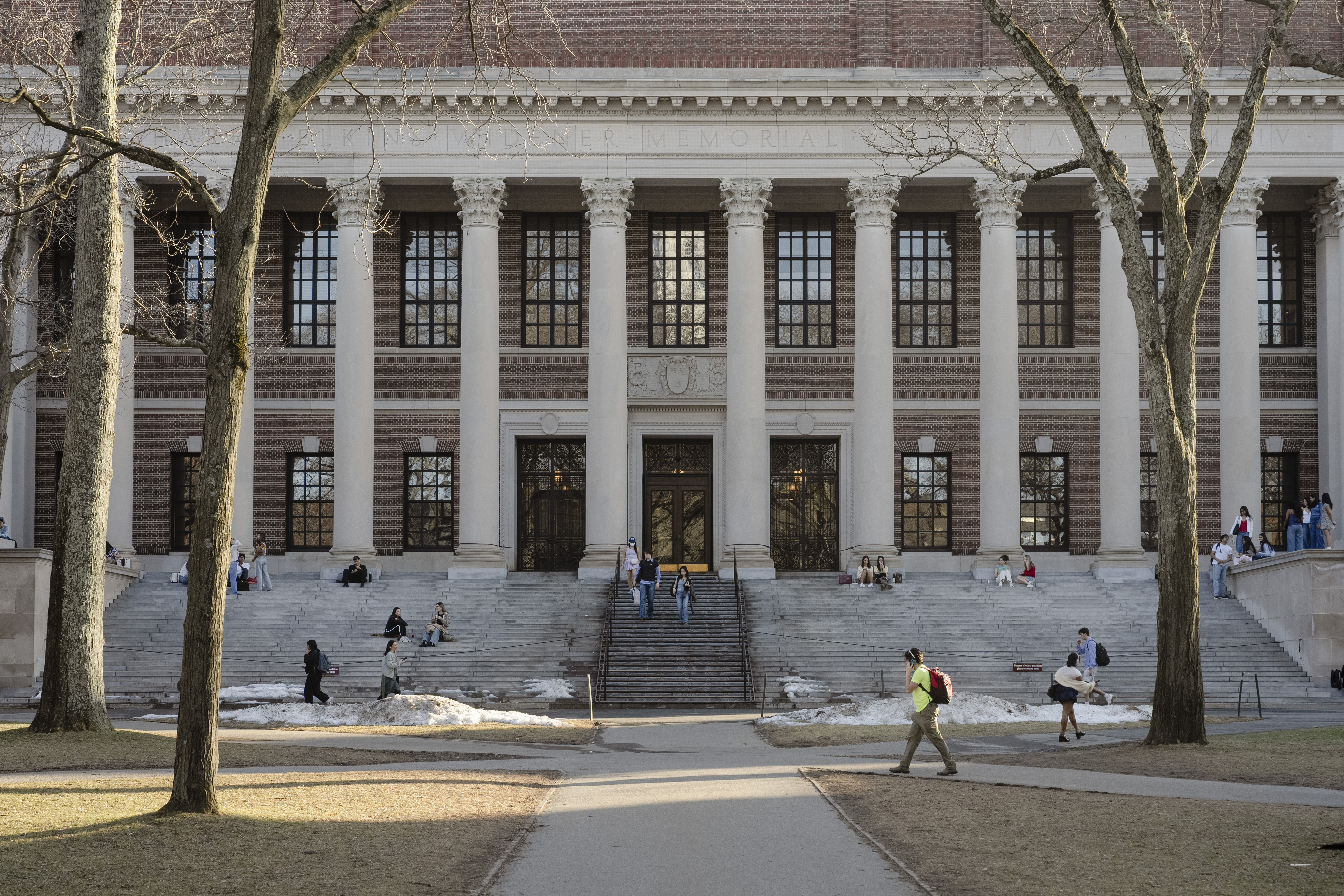
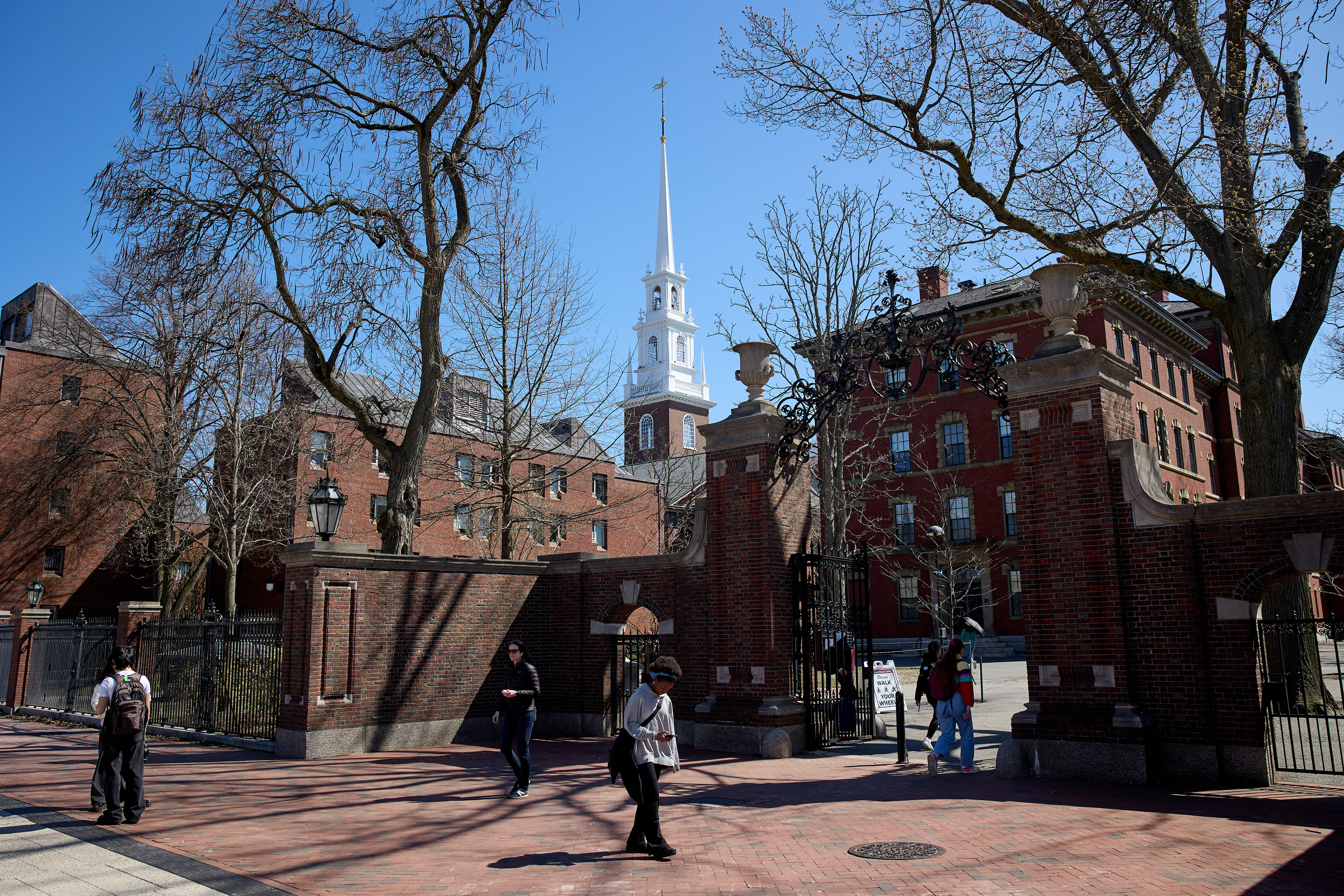
One of Harvard University’s biggest federal funding streams is down sharply, according to a New York Times analysis of government data.
The declines have persisted even after a federal judge forced the Trump administration to reverse drastic cuts to the university last year.
The funding, from the National Institutes of Health, currently lags about 18% behind the average pace of grants during the Biden administration, the analysis shows.
Last year, Harvard successfully sued the Trump administration, after the government announced it had frozen more than $2.2 billion in 2025, from multiple federal agencies.
But unlike then, when Trump officials made a public spectacle out of announcing the cuts, the NIH is mainly delaying, reducing, or rejecting grant requests, often leaving researchers and university leaders in the dark about what is happening.
The reduction appears to be the latest front in the Trump administration’s on-again, off-again war with Harvard and other elite universities. It is a new, more subtle tactic that is harder to fight in court, but that could be just as damaging if cuts and uncertainty build.
The Trump administration has targeted a number of the nation’s elite universities, accusing them of tolerating antisemitism and pursuing racial diversity in ways that flout the law, among other criticisms. Harvard — the country’s wealthiest university — has been one of the most frequent targets of federal officials.
As the Trump administration has pulled multiple levers to try to bring Harvard and other schools to heel, Harvard has often pushed back. It was the first institution to sue the Trump administration, has won in court on a number of occasions, and has not reached a settlement with the federal government, as other prominent schools have done.
Now, however, the university faces cuts that may be harder to counter. Last September, a judge ruled that the administration had improperly cut off funding to Harvard when it ended all of its grants in 2025, finding that the government had violated Harvard’s First Amendment rights.
But in the ruling, the judge suggested that there were lawful means the government could pursue if it wanted to restrict Harvard’s money, should it choose to.
That is what is happening.
Through June 30 of this fiscal year, which began Oct. 1, the NIH provided Harvard 309 awards worth a total of $200 million. The amount is down from an average of roughly 440 awards worth $246 million for the same nine-month period in 2021-2024, according to the latest data available.
Harvard is still one of the largest recipients of NIH funding, though it is far behind the top grantees such as Johns Hopkins, the University of Michigan, and Yale University. Other major research universities have also seen reductions in NIH funding.
Though NIH support has slowed compared with the Biden years, the 2026 awards are outpacing last year, when Harvard’s funding was frozen. By the same point in 2025, NIH funding to Harvard was stalled at 201 grants worth $94 million.
In recent months, Harvard’s individual schools have laid off staff. The leadership of the university’s largest division, the Faculty of Arts and Sciences, reported in an email to the division on Aug. 14 that 165 of its staff positions had been eliminated in a layoff and restructuring. The job cuts were aimed at reducing a major deficit.
Carrie Barbash, an organizer and former president of the Harvard Union of Clerical and Technical Workers, said the final number of layoffs may change as some staff members whose jobs were eliminated consider moving into some newly designed roles.
The current grant slowdown is not taking place evenly across Harvard. The university’s Chan School of Public Health is heavily dependent on NIH funds and has seen nearly 25% less in grant funding this year, compared with the average amount from 2021 to 2024.
The NIH has obligated $67 million across 63 awards to Chan through June of this fiscal year; the 2021-24 average for the same time period was $90 million across more than 100 awards.
Nancy Krieger, a professor of social epidemiology at the Chan School, said that fallout from the funding slowdown goes beyond individual projects that lost grants. More than a year of federal cuts — and legal fights over the reductions — have “shaken any sense of stability as to whether the federal government is a reliable funder,” she said.
The school is already cutting back, with layoffs and reductions in the number of slots for Ph.D. students. “It’s not just that you lost funding, it’s that you’re reducing the size of the cohort for the next generation of researchers that you’re training,” Krieger said. “What is the knowledge lost? And what are the myriad ripple effects for the economies of the cities and towns that depend on universities as major employers?”
Harvard has also won some rounds in its fight with the administration. Harvard’s court victories protected much of its grant money and its ability to host international students.
A federal judge on Aug. 13 dismissed a Trump administration lawsuit against Harvard that had accused the school of tolerating antisemitism and sought the ability to deny it grants.
Harvard’s endowment continues to ride the stock market to record highs, and the university’s steadfastness under pressure has inspired supporters and alumni who do not want it to yield to President Donald Trump.
While Yale is in talks to perhaps become the next elite school to settle with the administration, Harvard continues to hold out. Harvard is not believed to be engaged in any serious settlement talks at this time.
“Harvard is fighting for principles, both legal and constitutional, and doing so on behalf of the entire system of colleges and universities,” said Lee Bollinger, the former president of Columbia University. “We should all be grateful.”
Yet, as Bollinger noted, “any litigant will inevitably pay a high price.”
The administration has pushed the fight to Harvard on several fronts. The university is still engaged in other litigation and appeals with the Trump administration; a loss in any major case could be devastating.
The Trump administration continues to open fresh battles. The government is proposing new budget rules that would give the administration’s political appointees more power over grants.
White House spokesperson Liz Huston blamed the ongoing battles between the university and the administration on Harvard’s “stubborn commitment to unlawfully discriminating on the basis of race and failing to properly protect its students.”
“Unless Harvard comes to the table in good faith, the Trump administration will continue pursuing every available legal avenue to enforce federal civil rights laws,” she said.
Facing the uncertainty caused by lawsuits, grant slowdowns, and other pressures from the administration, Harvard and other schools are likely to continue to retrench, said Tom Gerety, a former president of Amherst College.
“The main thing you do in uncertainty is hunker down and say, ‘What cuts can we make right now?’” he said, noting that research universities are already trimming back on Ph.D. programs.
Tighter research budgets will mean scientists are more likely to seek jobs outside the United States, he said, while those still at American schools may be less likely to take the unconventional big swings in their research that can lead to scientific breakthroughs.
“This is going to hurt,” Gerety said, “and it’s going to hurt a lot more in 10 years than it does now.”
The government has pursued appeals of federal court rulings that went Harvard’s way last year.
The two sides, as well as a number of outside parties, filed briefs this summer over last fall’s decision in the funding case. The government is also appealing a June 2025 court decision blocking the administration’s effort to stop Harvard from hosting international students. Oral arguments in that case are scheduled for October.
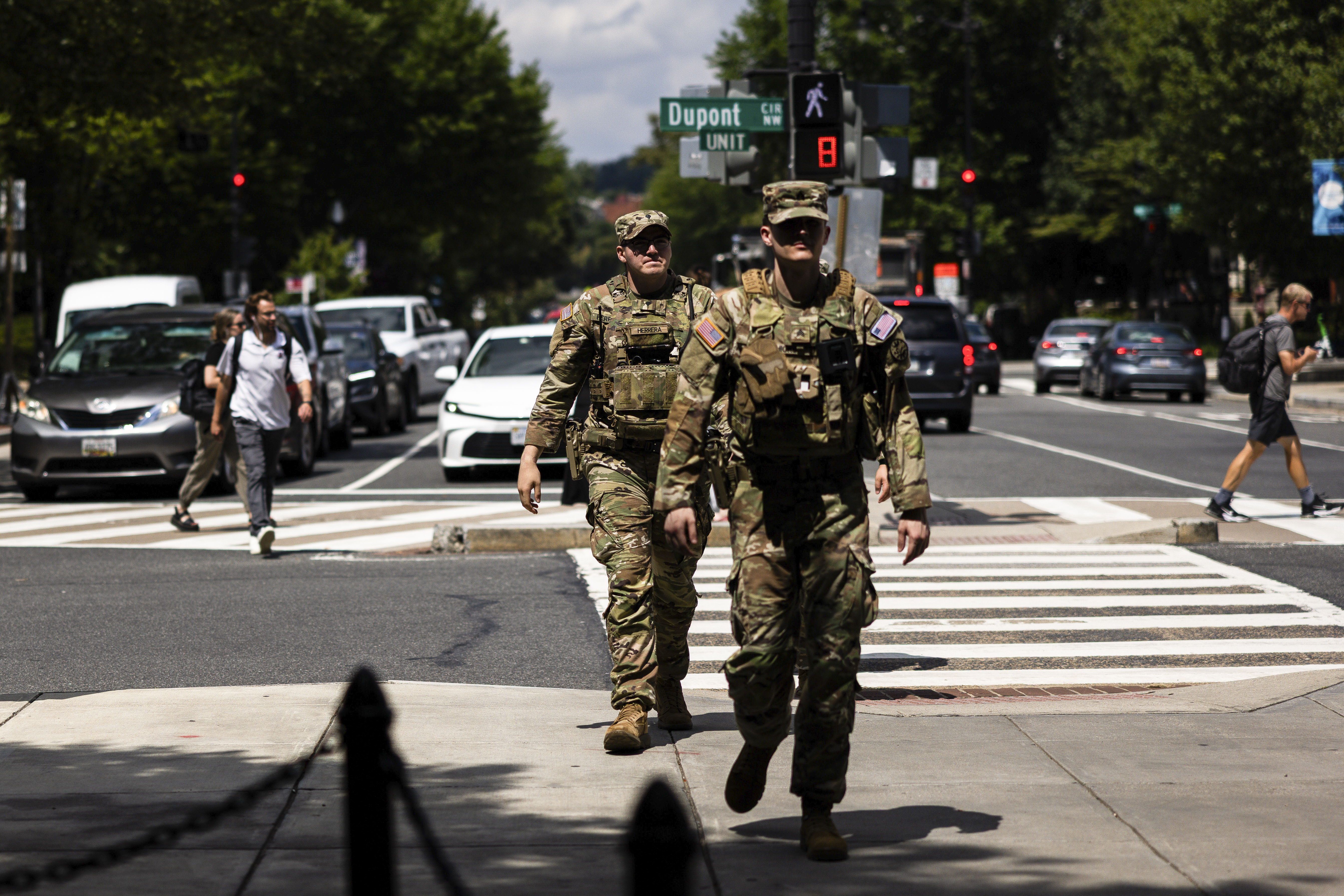
President Donald Trump has opened a new front in his campaign to intimidate political foes, threatening a prominent liberal think tank with a $5 billion defamation lawsuit over a report concluding that his deployment of the National Guard to cities across the country has had little effect on reducing violent crime.
The threats against the think tank, the Center for American Progress, were Trump’s latest effort to use the legal system to punish critics for voicing unflattering facts and opinions generally protected by the First Amendment. And while it is unclear how far any suit the president might ultimately file would get in court, it could force the organization to spend money fighting it off and make it even more of a target of his allies and supporters.
On Monday, one of Trump’s personal lawyers, Alejandro Brito, wrote a letter to the center warning that he would file the suit if the group did not fully retract the report, which was published on its website July 13. The letter, viewed by the New York Times, was addressed to the group’s president and CEO, Neera Tanden, a longtime Democratic official who served as a senior adviser to President Joe Biden, and to several of its board members.
Brito claimed that the report about the National Guard was full of malicious and false statements. He gave Tanden and members of her board until 5 p.m. Friday to retract it and apologize to Trump.
Tanden pushed back, saying in a statement that the center would “neither cower nor bend in the face” of legal action. She also defended the report, asserting that while its findings might have been “inconvenient to the Trump administration,” they were “grounded in rigorous, evidence-based research and analysis.”
“This threatened lawsuit’s attack on facts and evidence is baseless,” she added. “A fundamental protection of the First Amendment is to allow for the publication of facts and analysis that is contrary to the arguments and claims of any administration. A lawsuit is a transparent attempt to silence us.”
Trump has often lashed out at scholars and commentators for reproaching or critiquing him in the news media. Since winning reelection, he has filed a flurry of lawsuits against news organizations like the BBC and the Times, claiming they defamed him. He has even filed suit against the Des Moines Register, arguing that a poll the paper published before the 2024 election indicating that he would lose the vote in Iowa amounted to consumer fraud and election interference.
(The Times has filed its own suits against the administration, including two seeking increased access for its reporters at the Pentagon.)
The president has repeatedly claimed that his administration is the most transparent in U.S. history. But he and his aides have used lawsuits and executive actions to go after law firms, universities, and television networks. They have also used criminal tactics such as search warrants and grand jury subpoenas in an effort to pry loose sensitive information from reporters.
Many of these efforts have faltered once they reached court and faced judicial scrutiny. Brito himself has filed multiple failed suits on behalf of Trump. Last month, a federal judge in Florida referred Brito for potential disciplinary proceedings after ruling that a suit he filed for the president against the IRS amounted to an improper exercise in self-dealing.
The Center for American Progress report accused Trump of seeking to take credit for a nationwide decline in violent crime that began before he returned to the White House. The report determined that there was “no evidence” that the National Guard deployments had affected the crime rate, adding that they were poised to cost taxpayers more than $1.7 billion if they continued through the end of 2026.
The report asserted that the “primary goal” of the deployments was “never to stop crime.” Instead, it said they amounted to “a dangerous power grab by the Trump administration.”
The team that put the report together used an analysis based on homicide, violent crime, and gun victimization data in cities where the National Guard was deployed — Washington, Los Angeles, and Memphis, Tenn. — over the period from January 2023 to this February.
“This approach was employed to identify any statistical changes in crime trends associated with the deployment of the National Guard in specific cities,” its authors wrote.
Trump referred to the report on social media last week after watching a television segment about the report, which he described as “another Radical Left SCAM.” In the post, he threatened to sue the center and several of its funders, including liberal financier George Soros, who has long served as a boogeyman for the administration.
A week later, Brito’s letter arrived at the center, saying that the president would sue if Tanden and her colleagues did not retract the report, issue an apology, and give Trump unspecified financial compensation.
The letter ended with an all-caps salutation: “PLEASE GOVERN YOURSELVES ACCORDINGLY.”
On Friday, a lawyer for the center fired back in a letter of his own, deriding Trump’s accusations that he had been defamed.
“This is utterly absurd,” the lawyer, Kevin H. Metz, wrote to Brito. “Truth is not and cannot be defamation.”
Metz went on to say that the center welcomed the opportunity to make its case in court and receive more information on the National Guard deployments through the process of discovery.
Other think tanks of various political stripes have rallied to the center’s side.
“Independent organizations across the ideological spectrum must be free to express their analysis and opinions, and to challenge those in power without fear of political retaliation or legal intimidation,” said Peter Goettler, president and CEO of the libertarian Cato Institute. “Disagreements on matters of policy should be settled through open inquiry, evidence, and debate — not threats designed to silence criticism.”
COVID-19 vaccines made Moderna a household name, but the company’s fortunes cratered as demand for the shots plummeted. Hostility from the Trump administration also spooked investors. As of Tuesday, the company’s stock had fallen nearly 90% from its peak, a loss of $170 billion in market value.
All the while, the company was quietly mounting a comeback in cancer.
On Wednesday, those efforts began to pay off in a big way. Moderna and Merck, a big drugmaker, reported that their experimental cancer vaccine extended the time before melanoma recurred in a clinical trial — the first late-stage study of its kind to succeed. The two drugmakers announced their success in news releases, without providing numbers that would indicate how much patients had benefited. Moderna’s stock closed up 177% Wednesday.
Moderna’s stock then gave up some of those gains, dropping 24% to close at $133.32 Thursday on the Nasdaq Stock Market.
The investors were betting that Moderna could help jump-start a new approach to treating certain cancers. The experimental vaccine uses the same messenger RNA, or mRNA, technology that powered Moderna’s COVID-19 shot, but it works differently to treat cancer. Tailored to each patient’s tumor genetics, the vaccine delivers instructions to produce a fragment of a tumor to teach the body’s immune system to attack the cancer.
Cancer vaccines using mRNA could become a hugely lucrative business, if the approach works across cancer types. Cutting-edge cancer drugs typically cost several hundred thousand dollars a year.
For Moderna, cancer “is by far the most significant pipeline opportunity,” said Tyler Van Buren, an analyst at the Wall Street bank TD Cowen.
Moderna’s CEO, Stéphane Bancel, said Wednesday on CNBC that the company’s work on the cancer vaccine was its latest effort to “take very big, scientific clinical bets.”
The prospect of using mRNA vaccines to treat cancer has tantalized researchers for decades. But momentum in the field has accelerated only recently, as manufacturing and other technology has improved, thanks in part to investments during the pandemic.
As of last year, more than 60 cancer vaccines using mRNA or similar technology were in development, being tested in more than 120 clinical trials, according to one count. Many of those studies are funded by philanthropies, the government, and smaller biotechnology companies.
Four major drugmakers are leading the development efforts. Two are Moderna and Merck, whose collaboration on the approach dates back a decade; they are also testing the same vaccine as a therapy for cancers of the lung, kidney, and bladder. (In the study whose results were announced Wednesday, the cancer vaccine was given in combination with Keytruda, Merck’s blockbuster cancer immunotherapy.)
BioNTech, another developer of an mRNA vaccine for COVID, is working with Roche’s Genentech unit to develop a vaccine to treat cancers of the pancreas and colon. Results from a small safety study of that therapy in pancreatic cancer generated excitement this spring.
The approach has historically been seen as risky. The manufacturing is complex, the politics are fraught, and there had been little evidence it would work. Other large major cancer drugmakers, such as Pfizer and Bristol Myers Squibb, are not working on mRNA vaccines for cancer.
Under Health Secretary Robert F. Kennedy Jr., the Trump administration has made a series of funding and policy changes hostile to mRNA technology. A year ago, the federal government canceled nearly half a billion dollars’ worth of contracts and other funding for mRNA technology.
“Those political headwinds were serious, and it caused a lot of companies to take great pause,” said Jeff Coller, a scientist who works on mRNA at Johns Hopkins University. Coller advises several small mRNA companies and is on the executive committee of the Alliance for mRNA Medicines, a trade group.
But the administration has signaled it may be more open when it comes to mRNA for treating cancer. This year, it quietly started a public-private partnership expected to fund clinical trials of different cancer vaccines, including those using mRNA. The Department of Health and Human Services did not return a request for comment Wednesday about the status of that initiative and how much funding the department has granted.
Moderna was founded in 2010 in Cambridge, Mass., to develop medicines using mRNA. Its COVID vaccine, its first product, brought in tens of billions of dollars of revenue during the pandemic.
But as the public and the government soured on its COVID shot, Moderna had hardly anything to replace it with. Over the past few years, Moderna looked for different ways to reinvent itself. It won approvals for mRNA vaccines for respiratory syncytial virus and, most recently, flu. It also explored experimental therapies for rare diseases.
Last year, the company laid off more than 800 workers, a tenth of its workforce. It also lost more than $700 million in contracts to develop a shot to protect humans against bird flu after the Trump administration canceled the agreements. The company shelved vaccines to protect against herpes, chickenpox, and shingles.
Even though it had started years before the pandemic, Moderna’s work on mRNA cancer vaccines flew relatively under the radar. In addition to the experimental cancer vaccine it is developing with Merck, Moderna solely owns several others that it is testing in different cancers.
“People started to pay attention” as Moderna and Merck began presenting promising results from midstage clinical research, said Andrew Tsai, an analyst at the Wall Street bank Jefferies.
Now, Moderna is back in the spotlight. Crucial questions remain: Will the promising results in melanoma, which has repeatedly proved to be more responsive to treatment, hold up in cancers that are tougher to treat? And will the detailed results look as good as the companies made them sound Wednesday? (The drugmakers said they would present the full data soon at a medical meeting.)
But now that an mRNA cancer vaccine appears to have succeeded, Van Buren of TD Cowen said he anticipated that drugmakers would flock to the technology.
“Now that this trial was successful,” he said, “I definitely think we can expect more investment by other pharma companies.”
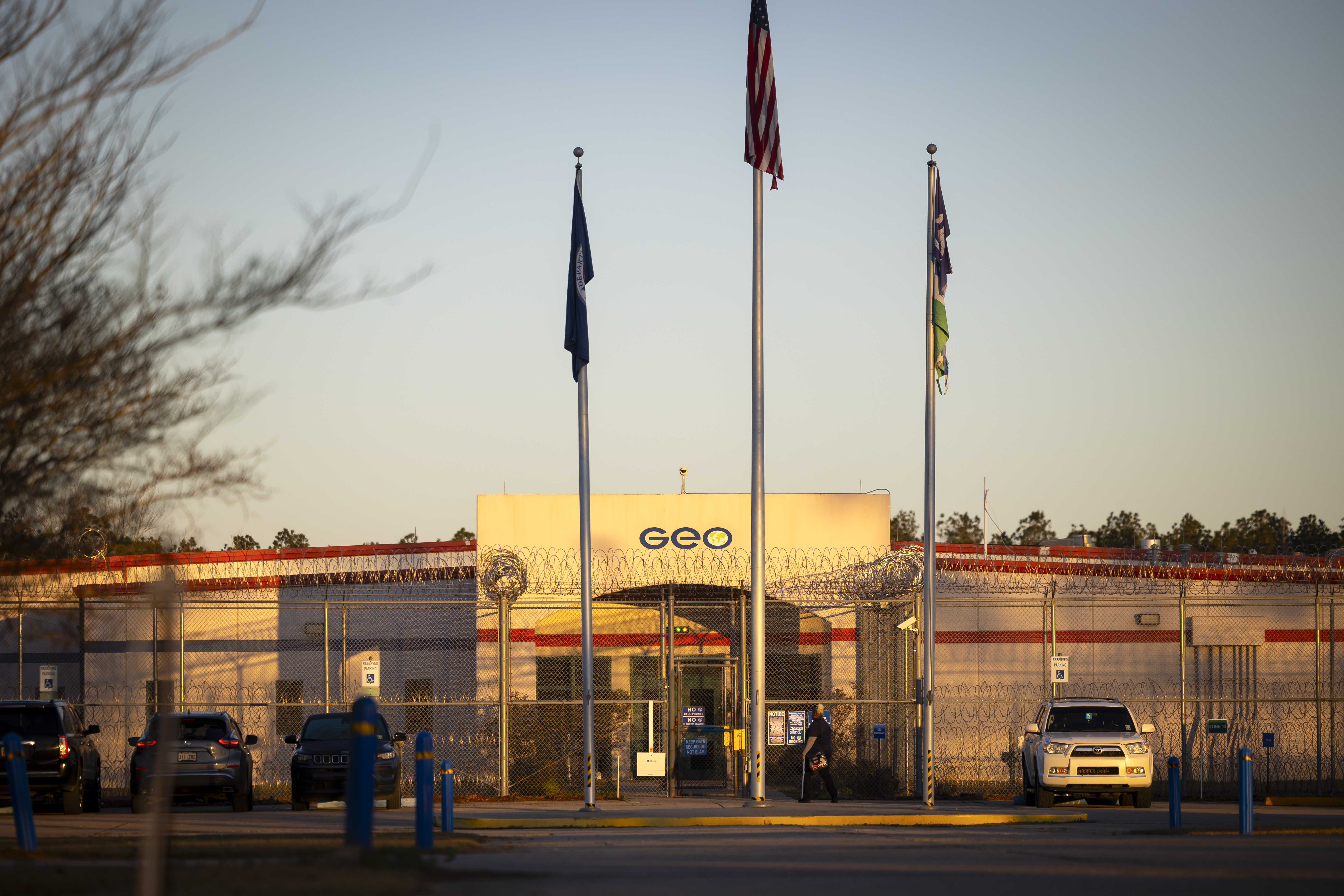
Camila Toro de Paula, a 25-year-old transgender woman from Venezuela, has spent the past 11 months in a federal immigration detention center for men, where she said she has been assaulted, threatened, and deprived of medical care.
Toro de Paula, who entered the United States seeking asylum, has lingered in solitary confinement without ready access to water for up to 24 hours a day, her lawyer said. Medical files from the center in Jena, Louisiana, where she is being detained show that she has complained to social workers about being punished because of her gender expression.
“I’m afraid of dying here,” Toro de Paula said in Spanish during a video interview from the federal facility. Immigration officials said Toro de Paula had entered the country illegally and cited her criminal history in the United States. Records show that the most serious charges against her, of felony assault and possession of a weapon, had been dismissed.
The case of Toro de Paula comes as the federal government has halted specialized care for transgender detainees inside at least 10 detention centers from Calexico, Calif., to Batavia, N.Y., according to public records. Officials no longer consistently provide transgender inmates with hormones and other gender-related care.
An Obama-era policy that provided basic rights for transgender people in immigration detention was deleted from the Department of Homeland Security website in February 2025. And officials have dissolved longstanding protections meant to shield transgender detainees from being harassed or physically harmed.
“We are NOT wasting U.S. taxpayer dollars to provide hormone therapy to illegal aliens seeking to change their sex,” the Department of Homeland Security said in an email to The New York Times, which did not address the other changes in policy.
Homeland Security has in recent months declined to say how many transgender migrants are in custody, but experts on incarceration estimate that there are at least several dozen out of more than 65,000 people in detention as of July 11. On Jan. 12, 2025, the latest date for which the government reported a count, the Immigration and Customs Enforcement agency had 47 transgender people in custody, according to data archived by the Vera Institute of Justice, a think tank focused on criminal justice reform.
Many migrants have complained about mistreatment and shoddy medical care in federal facilities. While transgender detainees represent a small fraction of those being held, they are an especially vulnerable population. Many are fleeing harassment in other countries and had just begun to be given some protections within the U.S. detention system in recent years.
Medical experts say that withholding hormones and other treatment for gender dysphoria can cause unique physical and mental health complications.
A hotline run by Immigration Equality, a nonprofit organization that helps LGBTQ+ and HIV-positive people who are in the immigration system, recorded a 68% increase in calls from LGBTQ+ detainees in 2025 compared with the year before. (The group does not have data specifically for transgender detainees.)
Immigration Equality’s clients include transgender women who said they had been removed from detention center units that had been reserved for them during the Biden administration and placed with men or in solitary confinement. The group said that the federal government had denied requests from transgender women to be transferred to facilities for women or transgender people.
“The administration is creating a humanitarian disaster” by changing policies that were meant to protect transgender people, said Bridget Crawford, the legal director at Immigration Equality.
The Department of Homeland Security rejected claims that conditions inside detention centers were inhumane. The agency did not directly respond to Toro de Paula’s assertions of assault and mistreatment, and identified her with male pronouns. Toro de Paula has received hormones for years, and her lawyer said that she has been denied hormone treatment in ICE detention.
“No detainees are being beaten or abused,” the federal agency said. “No lawbreakers in the history of human civilization have been treated better than illegal aliens in the United States.”
The actions of the Trump administration have been welcomed by opponents of transgender rights, including the Women’s Liberation Front, a women’s rights advocacy group that defines gender based on sex at birth and does not acknowledge transgender women. The group has argued that placing transgender women in prisons for women violates the constitutional rights of female inmates who are not transgender, including the Eighth Amendment right to protection from cruel and unusual punishment.
The Center for American Progress, a left-leaning think tank, issued a report citing ICE data that Democrats in Congress had collected. It found that LGBTQ+ migrants have a disproportionately higher chance of being abused in migrant detention centers. The statistics were collected during the 2017 fiscal year, which spanned Democratic and Republican administrations.
The report said that transgender detainees, on average, spent 99 days in solitary confinement, more than double the average for all immigrants in ICE custody. In the 2017 fiscal year, 1 in 8 transgender detainees was placed in solitary confinement, which officials said is done when detainees are viewed as a threat to other immigrants or personnel, or for protective purposes.
Data from the federal government show that in the 2024 fiscal year, during the Biden administration, 244 detainees who identified as transgender were booked into ICE custody.
In 2023, Immigration Equality interviewed 41 LGBTQ+ and HIV-positive immigrants who had been in detention. About one-third said that they had experienced sexual abuse, physical assaults, or sexual harassment because of their identity while in detention.
Almost all the participants said that they were the targets of homophobic, transphobic, xenophobic, racist, or other verbal and nonverbal abuse. Most said that they had received inadequate medical care for a range of conditions, and about half said that they had been placed in solitary confinement. Of the 41 participants interviewed for the report, 14 were transgender.
Safeguards under President Joe Biden have vanished during President Donald Trump’s second term.
In May, the federal government closed the Office of the Immigration Detention Ombudsman, which was responsible for investigating misconduct and abuse of all kinds in the immigration detention system.
“The violations that we’re seeing now are, to some extent, what we had seen in Trump’s first term — it’s almost like they’re on steroids, though,” said Lynly Egyes, the legal director of the Transgender Law Center, a civil-rights group. “It was often difficult for trans people to access medical care. Now, it is almost impossible.”
Many transgender migrants in detention, like Toro de Paula, came to the United States seeking asylum.
She told the story of a violent childhood in Venezuela. From the age of 8, she said that she was raped repeatedly by relatives. When she was about 10, she said that she tried to hug her mother, who recoiled and splashed her with hot cooking oil. She said that police stabbed her when she was 14 in what she described as a homophobic attack.
In October, a doctor who was retained by her legal team evaluated Toro de Paula and found an irregular hyperpigmented patch inside her left elbow where she said her mother had burned her. She had long scars on her left wrist and hand and on her right leg where she said Venezuelan police had sliced her skin with a knife when they had detained her.
Texas Gov. Greg Abbott (right) and Montana Gov. Greg Gianforte greet members of the National Guard as they arrive with fellow governors for a 2024 news conference along the Rio Grande to discuss Operation Lone Star in Eagle Pass, Texas. Eric Gay
Two years ago, she made the dangerous journey on foot to the United States. In September 2024, she reached Eagle Pass, Texas, where officials gave her food and clothes and put her on a flight to New York City. At the time, Gov. Greg Abbott of Texas had been sending thousands of migrants to Democratic-led cities as part of his multibillion-dollar border security effort, known as Operation Lone Star.
In New York, she joined a community of transgender women and attended parades and parties for LGBTQ+ people.
Her new life unraveled in August 2025 when she was arrested during a routine appointment at the New York City offices of ICE. She was flown to Louisiana and placed in a detention center for men, despite objections from her lawyer, Laura Berger, who works with the Legal Aid Society. The placement, Berger said, would put her client in danger.
The Department of Homeland Security said Toro de Paula had a criminal history that included charges for felony assault and criminal possession of a weapon, both of which were dismissed and sealed. According to her lawyer, those charges related to her arrest in the Bronx on June 30, 2025, after she was accused of hitting a man on the head with a skillet. Her lawyer said Toro de Paula was fending off a robber. The charges related to that incident were dismissed in October, court records show.
In a separate case in Queens, Toro de Paula was charged with prostitution; that was dismissed. She was also charged with pickpocketing in Queens and pleaded guilty to jostling.
“A lot of people don’t understand us,” said Jessica Guaman, a transgender woman who organized gatherings that Toro de Paula had attended in New York. “Camila is a good girl.”
Many transgender people in detention have fled persecution in their home countries, said Crawford of Immigration Equality.
Wilmar Quintero, a 50-year-old transgender woman from Venezuela, came to the United States seeking asylum and was detained in Michigan for about three months. Quintero said that she had fled her native country because police officers tortured her and left her for dead after she spoke out against civil rights abuses. Photographs of her bare chest revealed an expansive stretch of pinched, red scars that mark where officers carved out her breast implants, she said.
Quintero said that she was sexually assaulted by another migrant while being detained in Michigan.
“I lived through the worst horrors and humiliations imaginable,” Quintero said in Spanish. “They treated me like an animal.”
Immigration officials deported Quintero to Venezuela in April, and she went into hiding there. She said she is afraid of the police in Venezuela.
Crawford shared the stories of eight transgender clients who had similarly complained of discrimination, harassment, or abuse inside immigration detention facilities.
Toro de Paula said that detention center officials had pressured her to voluntarily agree to return to Venezuela, but she had refused. She said that they had humiliated her by forcing her to wear a mask and gloves while she is outside her cell because she is HIV-positive, even though the virus does not spread through the air. She has not been allowed to replace her wig, and officials have refused to give her undergarments for women. The Department of Homeland Security said Toro de Paula had worn the mask by choice — a claim that her lawyer disputed.
“I want to be heard,” Toro de Paula said. “Women like me have been disrespected enough. No more.”
Harvard University said Tuesday that it had agreed to pay $53 million to settle claims that body parts that had been donated for research were stolen and sold by a former manager of the morgue at the university’s medical school.
The former manager, Cedric Lodge, 58, was sentenced to eight years in prison in December after pleading guilty to one count of interstate transportation of stolen goods. The university fired him in 2023.
Lodge had been entrusted with handling cadavers that were part of the Harvard Medical School’s Anatomical Gift Program and were supposed to be cremated after the research on them had been completed, prosecutors said.
But a sweeping federal investigation found that Lodge supplied brains, skin and other body parts to collectors in several states as part of a criminal network that involved several people, including his wife. Investigators said he drove the stolen body parts to his home in New Hampshire.
The breach went undetected from about 2018 until March 2023, tainting one of the nation’s most prestigious medical schools.
Families who accused Harvard of mishandling the remains of their loved ones sued the university. A Suffolk County Superior Court judge threw out a dozen lawsuits in 2024, but the Massachusetts Supreme Judicial Court revived them last year. It ruled that Harvard and the managing director of the Anatomical Gift Program were not protected by limited immunity under the Uniform Anatomical Gift Act.
George Q. Daley, dean of the faculty of medicine at Harvard, and Dr. Bernard Chang, the dean for medical education at Harvard Medical School, said in a statement announcing the settlement that the agreement would allow Harvard and the plaintiffs to avoid “prolonged litigation.”
“These events do not reflect the reverence we hold for the altruistic individuals who selflessly donate their bodies to our Anatomical Gift Program (AGP) to provide essential educational opportunities to medical and dental students, practicing surgeons and allied health professionals,” they said. “We reaffirm our deep sorrow and empathy for the families of donors who may have been impacted.”
The settlement was also announced in a statement from Morgan & Morgan, the law firm representing the donor families in Boston.
“Both Harvard and the plaintiffs’ attorneys worked diligently to come to an agreement so that these families can finally have closure and begin to heal,” Morgan & Morgan’s founder, John Morgan, said in the statement. “We hope that this resolution ensures that this never happens to another family ever again.”
Daley and Chang said in their statement that lawyers for Harvard and the plaintiffs would seek preliminary approval for the settlement at a hearing Wednesday. If it is granted, they said, two class-action settlement funds totaling $53 million will be established to resolve the lawsuits. A third-party settlement administrator will be appointed to notify potential class members of their eligibility and to distribute settlement funds.
The process is expected to take several months, they said.
Harvard Medical School has also agreed to issue a statement to the plaintiffs confirming that Lodge’s actions were “morally reprehensible” and another statement detailing changes that have been made to improve the Anatomical Gift Program.
Harvard has also agreed to establish an annual scholarship for medical students beginning in the 2027-28 academic year “in appreciation and in honor of all of our anatomical donors,” according to the university’s statement.
“While Lodge’s sentencing concludes the criminal case against him, and the class action settlement agreement when fulfilled would conclude the civil cases,” Daley and Chang wrote, “the process of recovering from this painful incident continues.”
BERLIN — Iran has survived harsh U.S. sanctions since 1979. It is betting it can endure even more.
In the 47 years since the Islamic Revolution, the United States has taken step after step to isolate the country with only a brief reprieve after the 2015 Iran nuclear deal, which President Donald Trump excoriated and abandoned in 2018.
Trump promised “maximum pressure” then, and now, with limited military options, threatens even more. Treasury Secretary Scott Bessent warned last week of “never before seen” measures — perhaps, analysts suggest, secondary sanctions on countries like China that buy Iranian oil, or further penalties on financial transactions.
Iran is more likely to step up attacks on U.S. allies in the Persian Gulf than to surrender its hold on the Strait of Hormuz, analysts said. “Iran’s economy is in serious trouble, but it is not collapsing,” said Danny Citrinowicz, an Israeli expert on Iran. “More importantly, the regime is likely to escalate before it capitulates.”
U.S. and international sanctions and economic pressure did help lead to the 2015 nuclear deal, when the supreme leader then, Ayatollah Ali Khamenei, authorized negotiations to limit Iran’s nuclear program in return for frozen assets and sanction relief.
Since Trump withdrew from the deal and imposed more sanctions, Iran has adjusted to a high level of economic disruption, developing sophisticated smuggling routes and new markets, particularly for oil. For now, Iran insists on maintaining effective control of the strait while the U.S. Navy continues to blockade it. A few ships are slipping through, but traffic is down more than 90% from before the war.
Iran’s economy is badly damaged, hurting ordinary people, but its leaders have shown, through brutal crackdowns on protest and dissent, that they are relatively unconcerned with public opinion.
Having survived what it once feared — an Israeli-American war against it — a more military-minded and authoritarian Islamic Republic has itself doubled down. Esmail Baghaei, the spokesperson for the Foreign Ministry, said Monday that new measures would have “no effect on Iran’s position.”
Economic pressure will only succeed if “our resilience is greater than that of the Iranian regime, and it’s not clear that’s a good bet,” said Suzanne Maloney, an Iran expert and director of foreign policy at the Brookings Institution. “Iran’s economy has been shaped by U.S. economic pressure.”
The oil economy
Iran’s economy is suffering, without question, but gradually, while the regime keeps a stranglehold on any popular protest.
Since the war began in earnest in February, the Iranian economy and its industrial sector have been contracting in tandem for the first time in eight years, said Esfandyar Batmanghelidj, CEO of the Bourse & Bazaar Foundation, a research organization based in London.
Iran will face more challenges, from higher inflation to weakness in the job market, he said. “But it won’t lead to a different political outcome.”
Some Iranian leaders, to be sure, are deeply concerned with the economic disaster and support a more rapid diplomatic deal with Washington. But the leadership appears united in retaining effective control over the strait as its best leverage and deterrent against another war.
Iran has adapted to U.S. and international sanctions by increasing its ties to Russia and China. It sells most of its oil at a discount to China, which has ignored international sanctions against the purchase of Iranian oil. It also uses small, independent Chinese refineries, known as “teapots,” that are less exposed to U.S. sanctions.
Iran has developed smuggling networks and a “shadow fleet,” transferring its oil to other ships that can easily disguise its origin. And it has built up its industrial sector and cut back sharply on imports and its use of the dollar, using foreign banks and bartering oil for goods.
Since the war and the U.S. blockade, Iran has been storing oil onshore and in a variety of older tankers, while shipping some of it by road and rail and reducing output on some wells. When the memorandum of understanding with the United States was signed in June and the U.S. blockade was temporarily lifted, Iran used the period of calm assiduously.
Iran had oil already outside the strait to sell before the blockade, and at the outset of the agreement it exported another 80 million barrels before Washington reimposed sanctions and the blockade, easing the pressure on storage, said Brett Erickson of Obsidian Risk Advisors.
Before the war, Iran was exporting about 1.8 million barrels a day. Now, given the increase in the oil price because of the conflict, Iran is ahead of what it budgeted for oil sales for this year, he said.
The exchange rate for the Iranian rial against the dollar is bad, but the speed of depreciation is slowing, as is inflation. If Washington is relying on economic pressure, “you wouldn’t want slower inflation and a lower rial exchange rate than before the war,” Erickson said.
For the policy to succeed, “we need to push them down quickly, not wait nine more years to collapse them,” he added. “A dagger hurts but doesn’t lop off the head of the enemy.”
A battle of economic wills
Iran is gambling that the closure of the strait will put more pressure on Trump to blink first and negotiate a deal that Iran can accept. Iran is counting on increasing economic anxiety from the United States’ allies to push Trump back to the table.
The global economy is missing millions of barrels of oil a day and strategic stockpiles, including in Europe and the United States, are badly diminished. Ukraine continues to damage Russia’s refineries, further cutting the amount of oil on the market.
Regionally, key energy producers including Qatar, Bahrain, Iraq and Kuwait are badly hurt by the closure of the strait, and Saudi Arabia, Qatar and Oman have argued in Washington against further military escalation, given Iran’s ability to strike their energy infrastructure.
“In a battle of economic wills it’s very uncertain the West will win,” Maloney said.
Trump defends the war as necessary to ensure that Iran can never build a nuclear weapon. But after he abandoned the 2015 nuclear deal, Iran tried to pressure the world with enhanced enrichment that brought it to the edge of being a nuclear-capable military power, even as it denied ever seeking a bomb.
That assurance died with the former supreme leader. His son and successor, Ayatollah Mojtaba Khamenei, appears ready for open-ended confrontation with the United States and is considered by U.S. intelligence to be more flexible about creating a nuclear weapon. In Iran, said Vali Nasr, an Iran expert and professor at the Johns Hopkins School of Advanced International Studies, trust in Trump is minimal and the 2015 deal is considered “a four-letter word.”
Now, Trump is offering Iran very little in exchange for opening the Strait of Hormuz, with no U.S. commitment to unfreeze its assets or lift sanctions. “There is no reasonable deal for Iran on the table,” Nasr said.
“The choice is between total surrender and fighting it out,” he added. “And they have bet that the only way to get a better deal is to accept costs now and hold the global economy’s and Trump’s feet to the fire.”
WASHINGTON — With the fate of his ballroom tied up in court, President Donald Trump is racing against the clock.
He has enlisted a team of 250 workers to push ahead with construction 20 hours a day, seven days a week to complete as much work as quickly as possible. This week, there are plans to install 1 million pounds of rebar and pour 3,000 cubic yards of concrete for a project that is now two-thirds complete, the administration said in a court filing.
Now, with the matter pending before the Supreme Court, the Trump administration is making a practical appeal to the justices: The ballroom is simply too far along to be stopped now.
“His strategy clearly is to change the reality on the ground so that instead of preserving the status quo, those who rightly invoke the law against what he’s doing are put in a position of having to undo something that is already a fait accompli,” said Laurence H. Tribe, an emeritus university professor of constitutional law at Harvard.
For years, Trump has argued that the White House should have its own ballroom, saying it was a matter of prestige on the world stage. A ballroom, he said, would allow officials to hold big events for special guests without needing to erect a tent on the South Lawn.
In recent months, as preservationists and other critics have tried to halt or at least slow down the project, Trump has offered a new justification: national security. Essentially, Trump is treating the ballroom and the military bunker underneath it as one and the same.
The bunker — officially known as the Presidential Emergency Operations Center, or PEOC — was built during World War II beneath what was once the East Wing, which Trump tore down last year to make way for his ballroom.
Now, he speaks about the two projects in the same breath.
After an armed man rushed the White House Correspondents’ Association dinner in April, for example, Trump said on social media that the mayhem had proved the need for “the Militarily Top Secret Ballroom currently under construction at the White House.”
Trump demolished the East Wing last October without seeking any approvals or submitting construction or demolition plans to Congress. While he did bring the project before two review panels whose leaders he had appointed, Trump has continued to change the plans from the designs they authorized.
Several federal court rulings have found that the president exceeded his authority by moving ahead without congressional approval, but the decisions have been paused pending appeals — which means the construction can go on at least until Friday, when an appeals court order to halt the aboveground construction goes into effect.
The case is also pending before the Supreme Court.
Last week, the Trump administration told the Supreme Court the president was adding flashy golden seals on the outside of the ballroom, a design element that was never submitted to the Commission of Fine Arts.
Joshua Fisher, the director of White House management and administration, told the court that a concrete-and-steel superstructure had already been built that stretches five stories deep and 70 feet high.
Fisher said 80% of the rebar for the project had been placed, and the concrete poured.
He said $335 million of the $400 million needed for the project had been raised from private donors. He estimated the construction was 65% complete.
Fisher said that the ballroom’s columns were being carved by renowned Italian artists, and that the building would be sturdy enough to withstand a nuclear blast.
“Given the current progress, the superstructure is beyond the point of return,” Fisher wrote. He added that even if the Supreme Court ordered the plans for the building altered or the building taken down, “there would be no way to do so.”
The message was clear: The ballroom cannot be undone.
But in a filing Tuesday, the preservationists challenging the project told the justices that the administration was trying to “outrun judicial review” by suggesting that it was too late to stop the construction.
“They tell this court that because the ballroom is being built with the type of concrete used ‘in nuclear power plants,’ it will soon be ‘virtually impossible to deconstruct,’” according to the filing.
Lawyers for the National Trust for Historic Preservation in the United States, a nonprofit chartered by Congress to guard America’s historic buildings, said the administration had intentionally accelerated construction “in an effort to put their illegal ballroom” beyond judicial intervention.
They have pointed to the Constitution and several federal laws that state Congress must approve such a project. One federal law says, “A building or structure shall not be erected on any reservation, park or public grounds of the federal government in the District of Columbia without express authority of Congress.”
Lower court judges have sided with the preservationists, ruling that Congress must first sign off on the expansion and renovation of the White House complex.
“Efforts to foil judicial review and arrogate Congress’ exclusive powers should not be rewarded with a stay that allows petitioners to complete a ballroom they lacked any authority to commence in the first place,” said the trust’s lawyers, led by Thaddeus A. Heuer.
In its filing Tuesday, the trust suggested that the Supreme Court temporarily halt the aboveground work and then quickly schedule oral arguments for October or November to formally decide whether the project can proceed. If the justices do not press pause now, the trust said, the project is on track to be substantially finished this fall and it will be too late.
D. John Sauer, the solicitor general, has argued that the ballroom is inextricably linked to the broader national security needs of the White House complex. He said the structure is built with hardened concrete, steel, and rebar; protective missile-resistant columns, roofs, and beams; droneproof ceilings and roofs; and bullet-, ballistic- and blastproof glass. It includes bomb shelters, state-of-the-art hospital and medical facilities, protective partitioning between all areas of the building, top secret military structures and equipment, military-grade venting, a single integrated air-conditioning and heating system, sniper nests, and a drone port on top.
Sauer has also pushed back on the assertion in the unfavorable appeals court ruling that Trump is a temporary tenant, not the owner, of the White House. “The president of the United States of America is not a tenant, but rather the sole, elected head of the executive branch,” he wrote, adding that other presidents had taken steps to renovate the White House.
The Supreme Court’s conservative majority has often been receptive to the Trump administration’s efforts to expand presidential power, but it has also ruled against some of Trump’s signature initiatives. The justices are expected to issue an order before the appeals court ruling that would halt construction takes effect Friday.
Kimberly Wehle, a law professor at the University of Baltimore, said that Trump had been pushing to expand the powers of the presidency for years, and that attempting to construct a massive new building on White House grounds without lawmakers’ approval is his latest step.
“It’s so symbolic that he literally bulldozes the White House and says, ‘What are you going to do about it?’” she said. “They’re making this general generic argument that ‘I’m the president, so it’s national security, I can do whatever I want.’ That is a very steep, slippery slope into unlimited power in the presidency.”
WASHINGTON — The Trump administration on Tuesday advanced a plan to open nearly 45 million acres of wilderness in national forests to road construction and logging, removing protections that had been in place for a quarter century.
The proposal by the U.S. Forest Service would repeal the 2001 “roadless rule,” enacted during the Clinton administration to preserve the wild nature of forest land. It comes as President Donald Trump pressures the agency to increase logging and to thin forests to prevent wildfires.
The repeal would hand a major victory to Republican-led states and industry groups that have argued for years that the prohibitions have hindered economic development. More than a dozen lawsuits have unsuccessfully sought to strike down the rule.
During his first term, Trump stripped protections from Alaska’s Tongass National Forest, the largest intact temperate rainforest in the world, only for the Biden administration to restore them in 2023.
This time, the Forest Service is eliminating protections for the 9 million undeveloped acres within the Tongass, as well as millions more acres of pristine wilderness across the rest of the United States.
“For too long, outdated restrictions have kept tens of millions of forested acres off-limits to the very treatments that improve forest health and reduce wildfire risk to our communities,” Brooke Rollins, the secretary of the Agriculture Department, which includes the Forest Service, said in a statement.
Environmentalists said the plan would destroy untouched landscapes, including crucial habitats for migratory species and headwaters for major municipal water supplies. Multiple advocacy groups are expected to sue to block the repeal.
“By ripping protections from some of our oldest intact forests, the Trump administration is endangering the drinking water supplies of tens of millions and threatening wildlife habitats and recreation opportunities in almost every state,” said Drew McConville, a senior fellow at the Center for American Progress, a liberal research organization.
Roadless areas make up about 30% of all national forest land, encompassing nearly 60 million acres of America’s last wild areas and old-growth forests. They are home to more than half of imperiled wildlife, including grizzly bears, wolves, elk, salmon, and wolverines. Forest land in the United States also absorbs millions of tons of carbon per year, helping slow climate change.
The proposal would affect the management of 44.7 million acres nationally. Idaho and Colorado have their own regulations that supersede the federal rule and insulate those states from being affected by any change in national policy.
Damien Schiff, a senior attorney with the Pacific Legal Foundation, a libertarian public interest law firm that has been fighting the roadless rule in the Tongass National Forest, said he believed the federal protections had harmed mining, timber production, and other economic development. In Alaska, he argued, restrictions around the Tongass have made it difficult for surrounding communities to connect to electric grids.
“It has had a depressing impact on the use of the national forest for productive activity generally,” Schiff said.
The Trump administration and many Republicans argue that the ability to build roads would enable firefighters to more easily reach forest fires.
“For 25 years, the heavy thumb of Washington, D.C., has hindered Montana’s ability to properly manage wildfire risk and road development on nearly 60% of Forest Service land across the Treasure State,” Montana Gov. Greg Gianforte, a Republican, said in a statement.
Ecologists largely agree that the government needs to improve the ways it manages forest land. But experts do not agree that cutting down pristine forests to build more roads is the best way to do it.
In fact, some warned, roads could actually increase the threat of wildfires — partly because roads bring people. Nearly 85% of wildfires begin with human activity such as discarded cigarette butts, burning debris, or sparks from equipment, research has shown. Roads can also be corridors for invasive species, including flammable grasses.
“Introducing roads and human activities in areas that are otherwise undisturbed will increase wildfires where the risk is currently low,” said Alexandra D. Syphard, a senior research ecologist at the Conservation Biology Institute, a nonprofit group based in Oregon. “The unintentional impact of this could actually be creating a worse situation.”
Camille Stevens-Rumann, director of the Colorado Forest Restoration Institute and an associate professor of fire ecology at Colorado State University, added that new roads would not necessarily help address the most destructive wildfires because they tend to ignite near existing roads. Fires in remote areas, which often are sparked by lightning strikes, tend to burn far fewer acres, she said.
“We have smokejumpers for one, that’s how you get into those remote areas,” said Sen. Martin Heinrich (D., N.M.). He noted that prescribed burns, pruning and other treatments are routine across millions of acres of forests, and those areas are afterward closed again to motorized access.
Democrats from Western states said they believed wildfire arguments were designed to hide the administration’s real goal: enabling more logging.
Trump has made timber production a top priority. Last year, he called for a 25% increase in logging from national forests and directed agencies to bypass endangered species protections and other environmental regulations to make it possible.
Rollins then issued a secretarial memo declaring an “emergency situation” in national forests, establishing a process for the Forest Service to fast-track logging by cutting short public participation and legal reviews.
After the proposal is published in the Federal Register, which is expected later this week, the Forest Service will accept public comments before making the rule final.