
Category: New York Times

  • Farmers struggle to get basic services from depleted Agriculture Department

    Farmers struggle to get basic services from depleted Agriculture Department

    WASHINGTON — Mary and Zachariah Ben, farmers in New Mexico, believed they were on the verge of buying the property of their dreams last fall: 47 acres, with enough cropland to grow heirloom corn and a processing facility to expand their organic baby food business.

    But the low-interest loan they secured from the Agriculture Department to make the purchase in Aztec, N.M., was on hold for months, first during the government shutdown that lasted until mid-November and then as federal workers left the agency in droves. Only half a dozen loan specialists who could help process their claims remained in the entire state, the couple learned, leaving them in limbo indefinitely and the seller impatient to know whether the agreement would ever go through.

    Zachariah Ben, who along with his children is a member of the Navajo Nation, ultimately turned to private lenders instead, and the family absorbed more than $200,000 in interest as a result. “At least we got the land because we could have also lost that, and we would have if we had to wait” on the Agriculture Department, Mary Ben said.

    The experience of the Bens, whose aim of providing organic and shelf-stable options for young children appears to align with some of the Trump administration’s stated goals, is not unique. Across the country, farmers and rural residents describe struggling to obtain the basic services the Agriculture Department is meant to offer, including loans and grants, technical assistance, and financing for housing and utilities. Sharp attrition under the Trump administration, largely through voluntary resignations and dismissals by the Department of Government Efficiency, have left many of the Agriculture Department’s local offices with skeletal staffing — and, in some counties, with no one at all.

    The ripple effects of the Agriculture Department’s depleted workforce illustrate how the Trump administration’s mission of shrinking the federal bureaucracy has undercut a competing priority: delivering for farmers, a core political constituency. Strained government resources also risk posing additional challenges for a farm economy that administration officials have described as “dire,” increasing barriers to entry for new farmers who need more assistance, impeding assistance to producers already facing tough economic conditions, and hampering basic services and government aid in the most remote and poorest places.

    “All these practical things that make the wheels go around in a community were facilitated by USDA, and it was with staff who knew how to navigate and had the trust of the local community,” Sen. Pete Welch of Vermont, the top Democrat on the Senate subcommittee on rural development, said in an interview. “It’s something that was working, was working well, and was very cost-efficient. And now it is being demolished.”

    Trump administration officials have defended the staffing cuts as voluntary and necessary to trim a bloated agency.

    “We don’t have the money in our budget to pay for all of the employees that were hired in the prior administration,” Stephen Vaden, the deputy secretary of agriculture, said in a congressional hearing in July. He emphasized that the reductions were “voluntary decisions made by individual employees who chose, with the information that the agency provided to them, to seek a new career elsewhere.”

    Overall, more than 20,000 workers out of more than 110,000 left the Agriculture Department through the first half of 2025, according to an inspector general report. Recently obtained data showed that the Farm Service Agency, a division whose approval the Bens sought in applying for a low-interest loan, has no staff left in dozens of counties across the country, forcing farmers to travel long distances for assistance or to simply give up. Among divisions that directly work with farmers and aid rural residents, the percentage of departures is even higher.

    The Agriculture Department said that it currently had about 93,000 employees after hiring more workers this year, and that it believed staffing levels were adequate as “services and supports have become more targeted and efficient” through planned technological improvements.

    Still, its plans to fundamentally overhaul the agency, as well as funding cuts proposed by President Donald Trump’s latest budget, are likely to deepen difficulties for farmers and rural communities.

    Already, the agency is moving more than half of its staff in the Washington region out of the nation’s capital, a move that is all but certain to further thin the ranks of the agency. Such losses will affect the department’s ability to finance home loans, carry out agricultural research, and service farmers, according to federal workers, farm groups, and rural lenders. (Unions and farm organizations have mounted a legal challenge to that plan.)

    Likewise, Trump’s budget for the next fiscal year proposes a nearly $5 billion cut to the Agriculture Department, essentially eliminating programs for beginning farmers, conservation, and rural aid.

    Some of the steepest cuts have fallen on a part of the Agriculture Department responsible for improving the economy and infrastructure in rural communities, leading to long delays in aid for residents and charities alike.

    The subagency, known as Rural Development, has lost about 1,700 workers, or more than a third of its staff, since the Trump administration took office.

    In New Mexico, questions directed at the agency often languish for weeks, as do approvals of key documents, with emails and queries bouncing among staff members scattered across the state and in Washington, said Lorenzo Alba Jr., the executive director of Casa de Peregrinos, an anti-hunger charity in the area.

    After receiving a grant from the Rural Development section at the end of the Biden administration to build a food pantry in Hatch, N.M., the charity is still waiting for $300,000 in federal funding. For now, Casa de Peregrinos has cobbled together other sources of financing to set up and operate a makeshift pantry with limited hours and food varieties, despite no refrigeration or air-conditioning.

    “Our pantry should have been up and running, fully renovated by now,” Alba said. He added that the delays had led costs to balloon to $600,000 from $475,000, money the charity could have used to buy more food and serve more families.

    “I quit blaming the USDA on this because I didn’t know what they were going through,” he said. “Now I do.”

    It is unclear whether staffing cuts have been a factor, but in the last year the subagency has also financed far fewer loans and grants. As of mid-August, with a little more than a month left in the 2026 fiscal year, the agency has approved nearly 52,000 investments worth $15.8 billion. In comparison, in the past three fiscal years, the agency made between 63,000 and 74,000 investments totaling $24 billion to $40 billion annually.

    Another crucial service the department offers — helping producers carry out sustainable farming practices through its Natural Resources Conservation Service — has lost more than 2,700 workers, or nearly one-fourth of its staff, forcing farmers to miss contract deadlines and turn to expensive private consultants for advice.

    In central Nebraska, Clay Govier, who farms corn and soybeans on 3,500 acres in Broken Bow, described the cascading effect of 50% staffing cuts at his local conservation agency. The technician he had worked with took a buyout at the start of the Trump administration. Now, Govier and his family coordinate with someone who travels between two counties to survey different farms.

    Though the technician is knowledgeable, “he’s stretched very thin because if he needs a signature, he has to drive to our farm and then he drives back or we have to drive to him, and it just burns up an entire morning to get some basic paperwork done,” Govier said.

    As a result, the office is missing more details and overlooking crucial steps to verifying the farmers’ practices these days, leading to delays in the contract cycle and payments.

    “Farming is an art and a science,” he said. “It’s so different for every operation, every state, every region, so you need local NRCS staff that understand their region and how to implement these programs.”

    In southwestern Pennsylvania, Amanda Butterfield worked with the conservation service for nearly a decade, first to restore roughly 180 acres of strip-mined land in Meyersdale into pasture for a herd of beef cattle. After her technician shared anecdotes about burnout and long working hours, Butterfield turned instead to private consultants who work for agribusinesses. But that advice often comes at a steeper cost, like the expectation of buying certain products.

    Butterfield also added that staffing turnover at her local Farm Service Agency had led to errors and inefficiencies: A new worker hired to replace an employee who had left asked her husband to report crop acreage, unaware that the ranch did not grow crops at all.

    “We’ve completely lost a whole group of experts within our communities across the United States that can no longer help and support us,” she said.

    This article originally appeared in the New York Times.
  • Trump’s economic approach draws concern from some Republicans

    Trump’s economic approach draws concern from some Republicans

    President Donald Trump’s economic policies drew a fresh round of concern from some Republicans over the weekend who criticized his trade policies, as others in the party sidestepped questions about his broader approach amid a midterm election that has put consumer prices front and center.

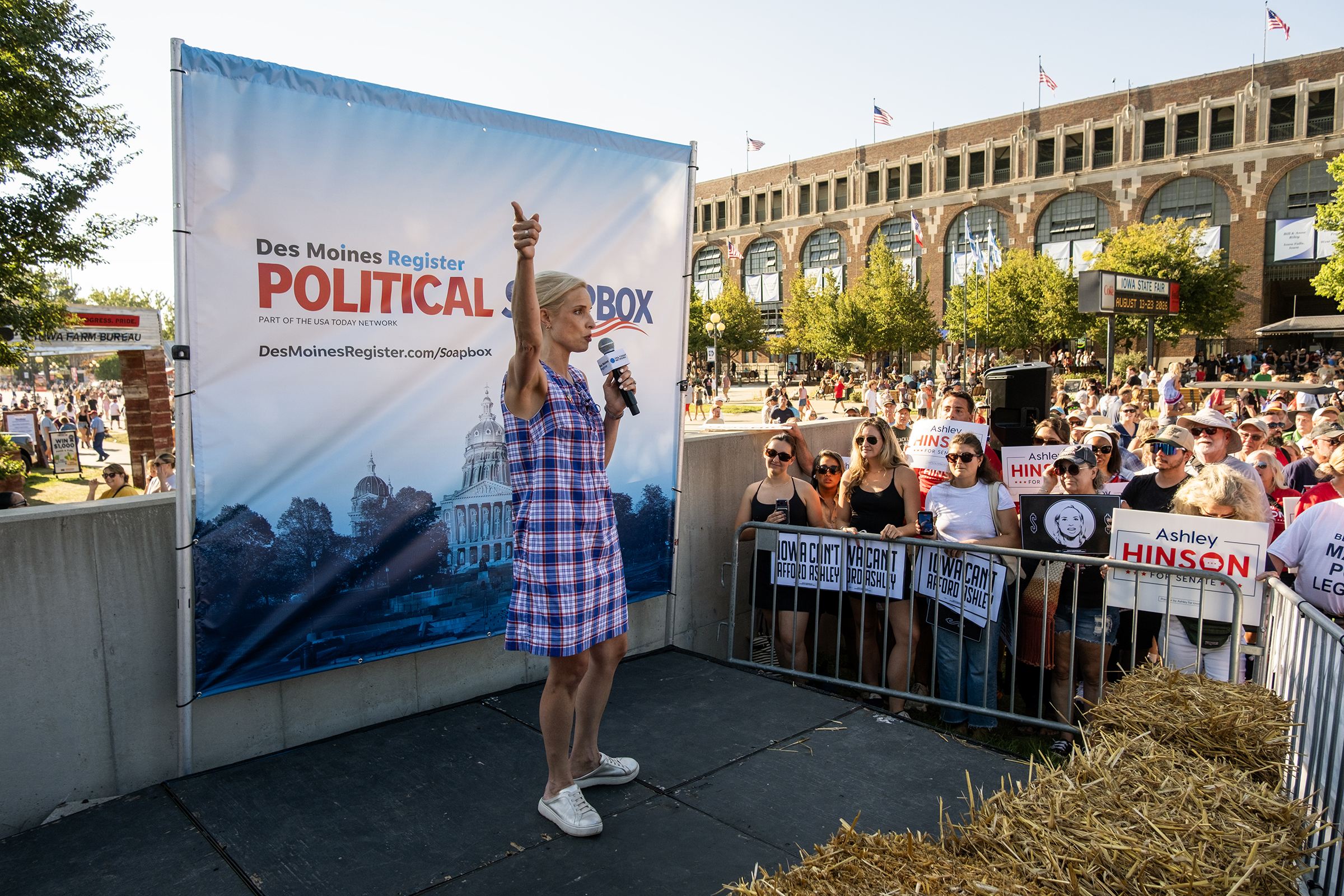
    Rep. Ashley Hinson (R., Iowa), who is running in one of the most competitive Senate races, reiterated her opposition to Trump’s recent announcement that he would lower tariffs for up to 300,000 metric tons of imported ground beef over the next 90 days, which he claimed would push down costs.

    “We need to focus on affordability, but I think this isn’t the way to do that,” Hinson told Fox News in an interview broadcast on Sunday Morning Futures, arguing it would hurt domestic cattle ranchers. The import taxes, she said, are helping U.S. cattle ranchers restore the U.S. cattle supply, which remains at a 75-year low.

    On Saturday, Sen. Susan Collins of Maine, considered one of the most vulnerable Republican incumbents, implored Trump to reverse course on Canadian import taxes and “reach a fair agreement” after trade talks between the United States and Canada collapsed.

    “If the Administration proceeds with these tariffs, they will increase costs for Maine families, as most businesses will have no choice but to pass on the tariffs to their customers through higher prices,” Collins wrote in a social media post, urging “both sides to return to the negotiating table.”

    Texas Gov. Greg Abbott, a Republican who is running for reelection, refused to grade Trump on the economy when asked about it on ABC News’ This Week on Friday. He said that “people are not talking to me about Trump” on the campaign trail.

    Pressed again, Abbott said, “We all need to have prices lowered,” adding that he thought Trump was “on a track to get us there.”

    The comments from candidates in key races reflected the distance some Republicans have tried to draw from Trump at a moment when polls show that voters have major concerns about the economy and the president’s stewardship of it, including cost increases driven by an unpopular war with Iran. The remarks also revealed some of the geographic sensitivities to the administration’s economic approach that could come into play in November in battleground states such as Iowa and Maine.

    The White House did not respond to a request for comment. Trump has defended his economic actions.

    But some Republicans are unnerved by recent developments.

    Hinson joined other Midwestern Republicans, including Sen. Chuck Grassley of Iowa and both of Nebraska’s senators, who criticized Trump’s beef import tariff cuts. Sen. Tim Sheehy (R., Mont.) said he had “advised President Trump against this course of action for a year.”

    The breakdown of trade negotiations with Canada kicked the Trump administration’s 50% tariffs on a range of Canadian goods into gear and prompted Prime Minister Mark Carney of Canada to promise “dollar for dollar” counter-tariffs on American imports.

    Former Vice President Mike Pence, who served in the first Trump administration before breaking with Trump, expressed concern about the trade standoff between the United States and Canada on CNN’s State of the Union on Sunday.

    “The last thing we need right now, as our economy is getting back on its feet, is a trade war with Canada,” Pence, a critic of Trump’s tariffs, said, adding, “That’s how I would advise the president: Drive a hard bargain, but let’s pursue free trade with free nations, especially our partners to the north.”

    On Sunday, Transportation Secretary Sean Duffy told Fox News Sunday that “Canada gets the benefit of trading with the U.S. way more than the U.S. gets the benefit of trading with Canada” and that it was “foolish” for Canada to think it could win a trade war with the United States.

    Carney said the United States had made unreasonable demands of his country in trade negotiations.

    John Barrasso (R., Wyo.), the Senate majority whip, who is not up for reelection this year, defended Trump’s handling of negotiations — but he also said that the United States needed to maintain its trade relationship with its northern neighbor.

    Canada would “be wise” to return to the bargaining table and move forward, he said on Sunday Morning Futures, “because we need to continue trade with Canada.”

    He added, “The president is very consistent: We’re going to make sure to protect our workers and bring jobs back to America.”

    Democrats have sharply criticized Trump on the economy. On Sunday, Sen. Chris Van Hollen (D., Md.) said Trump had broken his campaign commitments to keep the United States out of foreign wars and to lower prices.

    “He’s done the opposite,” Van Hollen told NBC’s Meet the Press. He added, “Broken promises, betrayal.”

    The campaign of Troy Jackson, the Democrat challenging Collins in Maine, slammed Trump’s tariffs.

    The tariffs are “a tax on Maine families and small businesses,” Dan Gottlieb, a spokesperson for Jackson’s campaign, said.

    Sen. Tim Scott (R., S.C.), a staunch supporter of Trump, sought to redirect an interview when pressed on Trump’s tariffs. Asked on Meet the Press if he agreed with Collins’ comment that they would increase costs for families, Scott, who presides over the Senate Republicans’ campaign arm, pivoted to arguing that Trump had inherited economic problems from his predecessor, President Joe Biden Jr.

    The interviewer, Kristen Welker, interjected to say that Trump had been in office “for two years.”

    Asked if Trump had broken his campaign promise to lower costs, Scott again dodged the question, saying the election would be about differences between Democrats and Republicans.

    “At the end of the day, the American people need to see the contrast,” Scott said. “And the good news is, they’re seeing the contrast.”

    This article originally appeared in the New York Times.

  • Why polling chaos could create big problems for American politics

    Why polling chaos could create big problems for American politics

    WASHINGTON — When Mandela Barnes dropped out of the Wisconsin governor’s race two weeks before the Democratic primary, he declared, “It has become very clear who our nominee is going to be.”

    He meant Francesca Hong, who had a commanding lead in polls — not David Crowley, who ended up narrowly winning the nomination.

    Politicians like Barnes have relied on public and private surveys of voters’ views to guide their decisions for as long as pollsters have sought to measure public opinion. But in this year’s midterm contests, misleading polling has shaped campaign narratives, donor behavior, and news coverage like never before.

    Polls are traditionally used to measure public opinion, not mold it. But this year, several Democratic campaigns have seized on unreliable polls to push the perception that their candidates are surging to try to solidify support, attract donors, and scare off rivals.

    The rise of prediction markets has also created financial incentives for untrustworthy or even fake political polls at a moment when it has become even more expensive and difficult to conduct high-quality public opinion surveys.

    Some Republicans — particularly President Donald Trump — have for years pointed to dubious polling to advance their political goals, but the phenomenon has become far more acute in Democratic primaries this year. In recent weeks, questionable surveys have created confusion and warped perceptions of the results of key primaries for the party.

    In Michigan’s primary for Senate, polls fueled a widespread belief that Rep. Haley Stevens, a moderate Democrat, was a major underdog to Abdul El-Sayed, a progressive. After she voted on primary day, the first question she faced from reporters was about how El-Sayed built such a large polling lead. She ended up losing by just a percentage point.

    In Wisconsin’s primary for governor, polls that consistently showed Hong ahead by double digits created an air of inevitability around her nomination. When she lost, it was viewed as a stunning upset.

    “After seeing the polls, I think everybody would have called me the underdog,” Crowley said. “During this race, I had to be a little bit recklessly optimistic.”

    The polling world has also been rocked by recent revelations of made-up surveys and sketchy practices.

    Three purported polls of the Los Angeles mayor’s race, the Wisconsin primary for governor, and the Nevada governor’s race turned out to be entirely fake — a “short-term social experiment,” according to the website that released them. The fakery’s discovery, by the Los Angeles Times, came only after Mayor Karen Bass of Los Angeles posted approvingly about one of the polls, which showed her ahead.

    Another pollster acknowledged that in a survey of Florida’s primary for governor, it had shifted some respondents’ support from the candidate they had said they backed to another candidate because the initial results “did not align with our read of the race.” (None of the polls above were included in the New York Times’ poll trackers or coverage because they did not meet its basic transparency and professionalism standards.)

    All of this is happening at the dawn of the 2028 presidential primary season, when dozens of candidates are likely to be defined in part by polls that cement impressions and set narratives that may not be tethered to political reality.

    “Every candidate in 2028 will have their own cooked poll factory,” said Lis Smith, a Democratic strategist who was a senior aide on Pete Buttigieg’s 2020 campaign for president. “Polls now are not just a way of measuring the horse race. It’s a way for candidates and their allies to influence the horse race.”

    ‘Double digit down — it cannot be!’

    In Michigan, the last eight public polls of Democratic voters found El-Sayed leading Stevens by double digits.

    In an interview this past week, Stevens said she never believed the race was the blowout that the polls predicted. She won key late endorsements from figures including Gov. Gretchen Whitmer of Michigan, a popular Democrat.

    But the polling unquestionably shaped how the contest was perceived. El-Sayed, whose advisers privately predicted a big victory, was so confident that the weekend before the primary, he was pictured hanging out with social media influencers poolside at a party.

    Stevens sent the Times a memo about her experience dealing with polling that did not reflect the reality of the race.

    “At first the double digit down polls leading up to the election spooked me and potentially had the ability to paralyze,” she wrote. “But then after chewing on them,” she added, “I came to realize, NO WAY! Double digit down — it cannot be!”

    In the interview, she attributed the polling miss to an industry that has largely moved away from expensive “live caller” phone interviews with voters. Instead, most contemporary polling is done online or through texting, mediums likely to include more young people even though the voting electorate skews older. (Live-caller polls can be seriously flawed, too, and it is generally considered best to analyze surveys from a range of pollsters using a mix of methods.)

    “Sometimes we miss the plot with all the tweets and all the polls and all the prediction market stuff,” Stevens said. “In this American democracy, it is still about the people voting, and that remains the purest and most incredible thing, and it likely captures the least amount of our attention.”

    The odds of confusion: 100%

    The biggest new phenomenon influencing how campaigns are viewed is the spread of prediction market data.

    The day before Michigan’s primary, Kalshi gave El-Sayed a 97% chance of winning. The morning of Wisconsin’s primary, Polymarket gave Crowley a 3.6% chance of victory.

    While betting-market odds are often based on the wisdom of crowds and opaque measurements, they are amplified by powerful companies and reported on by legitimate news organizations that in some cases have financial partnerships with the prediction firms. CNN has such an arrangement with Kalshi and regularly shows the prediction market’s betting odds on television. The Wall Street Journal’s parent company has a partnership with Polymarket to display its odds within Journal content.

    Voters and donors now see those numbers, which can be manipulated by all manner of polling and news events, and use them as a proxy for how a candidate is faring.

    Sean Clegg, a senior adviser to Gov. Gavin Newsom of California, who is likely to run for president in 2028, said prediction markets had a growing influence on Democratic strategists, donors, and primary voters.

    “Momentum is everything and poll numbers move prediction markets, which influences strategic voting,” Clegg said. “The progressive subset of the political class is hyper online, and they are pushing these polling narratives like never before.”

    What can anyone do?

    The modern polling industrial complex is a Wild West in which numbers often circulate online with little regard to whether they come from reliable sources.

    “There is no polling cop,” John Anzalone, a prominent Democratic pollster who worked for former President Joe Biden, said of the proliferation of low-quality surveys that flood the market. The news media, he said, is “going to report on every poll that has a university or college on it,” regardless of its methods. “Bad in,” he said, “bad out.”

    Both good and bad polls have real-world consequences, driving decisions about messaging, spending, and even whether to stay in a race. This spring, Gov. Janet Mills of Maine suspended her Senate campaign weeks before the Democratic primary, after low polling numbers starved her of money. The decision left Graham Platner to win the nomination without significant opposition. He later dropped out after a rape allegation that he denied.

    The first 2028 Democratic presidential primary contest is set to be in South Carolina, where the electorate is dominated by older Black voters — the exact demographic that was most difficult to poll in both Michigan and Wisconsin.

    Scott Huffmon, the director of the state’s long-running Winthrop Poll, said that like many other pollsters, he had abandoned live-caller surveys. “We just can’t afford it,” he said.

    Polling problems may be less pronounced in the 2028 race, since presidential contests are easier to poll and produce more high-quality surveys. But the looming questions about how to accurately analyze the field in 2028 have left donors struggling with how to decide which candidates are worth the investment.

    Few methods besides polling will be able to gauge who has popular support before the primaries begin in January 2028. But usually by the time voting begins, the field has been winnowed as candidates run out of money or perceive themselves to be lacking voter support.

    “Given what’s happened over the last two weeks, the inaccurate polling really calls into question whether there’s any empirical value that donors can use to guide their giving,” said Shannon Hunt-Scott, a Democratic megadonor from California. “There’s going to be so many candidates and so many polls of variable quality. People will want to tout them and run around with them. The question is, will they have any real validity? You can’t know.”

    This article originally appeared in the New York Times.
  • The data center backlash bursts into the midterms

    The data center backlash bursts into the midterms

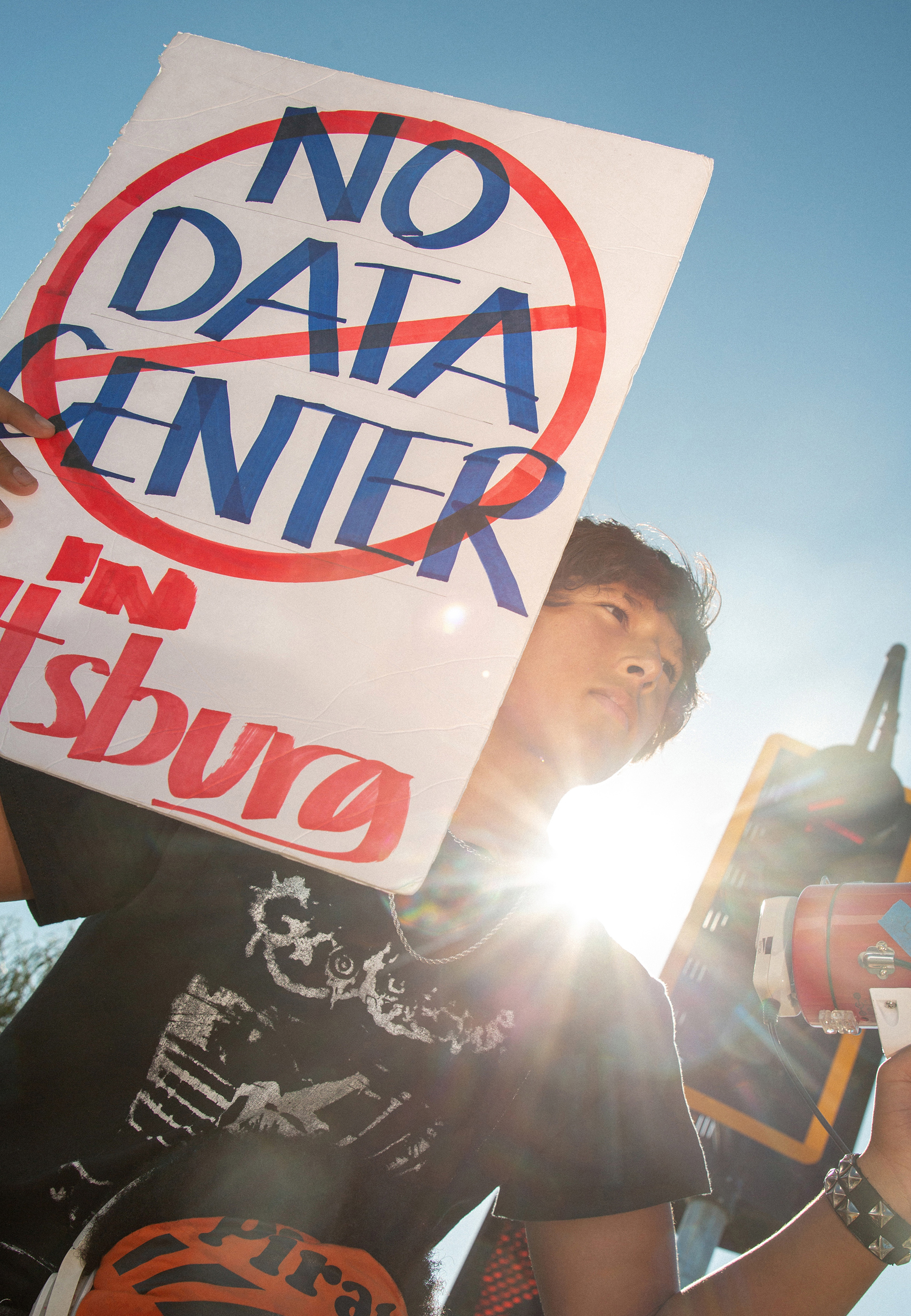
    The fight over data centers is suddenly at the epicenter of the midterm elections.

    One new ad in Texas begins with someone typing into a chatbot, “Why is my electric bill going up?” Another in Ohio blames one of the state’s Republican senators for a proliferation of data centers, calling them “a total scam.” And in top House battlegrounds in Michigan, Wisconsin, and Pennsylvania, the Democratic challengers are all running ads against the server warehouses powering the artificial intelligence boom.

    Data centers have become unlikely fault lines in the broader fight over an AI revolution that is remaking the global economy and threatening to disrupt the job market. Now politicians are racing to tap into the backlash — or inoculate themselves — as political strategists in both parties described the issue as an unusually fast-moving force that is already reshaping races for the House, the Senate, and governor’s mansions.

    “It’s very much a bottom up, organic movement,” said Anna Greenberg, a veteran Democratic pollster, who said that while people’s views on data centers were largely tied to how close they live to them, the facilities were also becoming symbols of the excesses of Silicon Valley.

    “Data centers are a physical manifestation,” she said. “Billionaires are building them, and it feeds into all of the Big Tech skepticism that is there. It’s very symbolic of everybody’s issues with AI.”

    There are signs that the emerging data center debate is scrambling the usual partisan divisions.

    So far, Democrats have chiefly been the ones racing to harness voter anger about data centers over rising electricity prices, water use, and mistrust of the tech sector. They aim to punish Republicans for cozying up to industry by approving many of these projects.

    But in recent weeks, a growing number of Republican candidates have scrambled to shield themselves from any fallout. They have voiced skepticism about data centers, despite President Donald Trump’s full-throated cheerleading for the AI industry and fears among party leaders in Washington that blocking construction of the centers could slow the economy and make the United States less competitive against China.

    Some Republicans are now using “data center” as an epithet, and casting themselves as the real opponents of corporate tax breaks and unfettered construction. Last week, Mike Rogers, the Republican nominee for Senate in the key swing state of Michigan, said that he supports a one-year moratorium on data center construction.

    Polls show a revolt brewing against data centers. A Gallup poll conducted in March showed 71% opposed local construction of the centers, and a summer survey from the Annenberg Public Policy Center of the University of Pennsylvania showed that the number of people opposing new data centers in their areas had risen by 12 percentage points since February and March.

    The fallout has been so swift that in some races, including the governor’s contests in Pennsylvania, Wisconsin, and Florida, both Democrats and Republicans are airing television ads about data centers.

    On Wednesday, a remarkable memo from the National Republican Senatorial Committee warned that data center politics was endangering Sen. Jon Husted (R., Ohio). His challenger, Sherrod Brown, the state’s former Democratic senator, has aired millions of dollars worth of ads, calling Husted “the face of data centers in Ohio.”

    “More than any other thing in this race, data centers are the anchor hanging around Husted’s neck,” the memo said.

    The one-page document, which was earlier reported by Axios, amounted to a desperate plea for the well-heeled industry to finance an advertising campaign — lest a Husted loss serve as “a cautionary lesson” for politicians elsewhere.

    Zac McCrary, a Democratic pollster, said that opposing data centers offered Democrats a rare chance to make inroads in rural areas and small towns that are resisting the developments.

    “It absolutely shakes up the snow globe on the partisan coalitions in a part of the world where Republicans have been dominant,” he said. “It’s one of the few issues today that does not immediately code as red or blue, left or right.”

    In Florida, Rep. Byron Donalds, the Republican nominee for governor, spent more than $2 million on one ad in his primary, vowing to “protect” the state from data centers that “jack up utility rates.” In the ad, he tried to cast that position as standing with Trump, whose administration sought to blunt some of the opposition earlier this year by proposing a “ratepayer protection pledge,” in which data centers promise not to drive up electricity costs.

    His Democratic opponent in the fall, David Jolly, said, “We don’t want crime or data centers in our neighborhoods” in one of his first ads of the general election.

    In a sign of how top-of-mind data centers have become, Donalds brought up the topic unprompted at an event this month in Naples, Fla. “Listen, I know people have concerns,” he said. “I’ve seen the polling. But leadership isn’t just looking at polling.”

    He then tried to thread the needle between selling the importance of artificial intelligence for the United States’ competitive future and addressing boiling anger at local data centers. “I don’t want it near your home, just like I don’t want it near my home,” Donalds said.

    Jolly’s position is less complicated. In an interview Thursday, he said Florida should impose a moratorium on data center construction until the full impacts could be studied.

    The fierceness of the mounting opposition has startled some in the tech sector.

    “This is a powder keg,” warned Chamath Palihapitiya, a public-facing venture-capital investor, in a post on the social platform X last week, responding to the dire warning in the NRSC memo. He wrote that the AI industry had “failed miserably in doing the basics” of selling itself.

    Political strategists and pollsters in both parties said that voters have linked the facilities to concerns over higher electricity prices, water use, the fate of farmlands, and general fears about the advent of artificial intelligence and Big Tech.

    “They didn’t do a good enough job explaining anything,” Ryan James Girdusky, a Republican political strategist and podcaster, said of the industry.

    In Texas, the Democratic candidate for Senate, James Talarico, and for governor, Gina Hinojosa, have held recent events about data centers, accusing their Republican rivals of pocketing data center donations while backing expansions.

    “Texans are mad,” Hinojosa said in an interview. “It is hard to convey what feels like an invasion by data centers with no rules, no laws to protect Texas. They’re popping up everywhere.”

    It was her advertisement that featured a chatbot being asked about the cause of rising electricity prices. The answer it provides? Blaming Republican Gov. Greg Abbott and data centers.

    Even before that ad, Abbott had been shifting his stance on data centers. Less than a year ago, Abbott bragged that Google’s $40 billion investment made Texas “the epicenter of AI development,” bringing both construction jobs and tax revenues.

    But this summer he announced new standards for data centers on water use and electricity and called to end some tax incentives. This month he directed the state’s utility commission to audit all data centers seeking permits before they could move forward.

    “Data center growth cannot come at the expense of Texans’ livelihoods,” said Catherine Frazier, a spokesperson for Abbott.

    Abbott is hardly the only politician pivoting.

    Gov. Josh Shapiro of Pennsylvania, a potential Democratic candidate for president in 2028, had been a booster of AI investments. In June 2025, Shapiro said he was “proud” of Amazon’s $20 billion data center investment, bragging it would be the largest private sector investment in the state’s history.

    On Tuesday, Shapiro signed an executive order imposing what he called the “strictest guardrails in the nation” to stop “predatory developers.”

    “I’ve heard loud and clear from the people of Pennsylvania,” said Shapiro, who is up for reelection this year.

    Now Shapiro has started airing a television ad attacking his Republican challenger, Stacy Garrity, as the “number one fan of data centers.” Garrity has her own ad hitting Shapiro for “data centers in our backyards,” but her campaign can afford only a small fraction of the airtime.

    Another Republican candidate for governor running on data center politics is Rep. Tom Tiffany of Wisconsin, who has attacked his Democratic rival as “Data Center David Crowley.” Crowley narrowly won the nomination over a democratic socialist, Francesca Hong, who had demanded a data center moratorium.

    Neither Crowley nor Tiffany has called for a moratorium.

    Crowley has preferred to let local communities decide, with a number of guardrails and restrictions. Tiffany, who called data centers “exciting new technology” just a few months ago, is now calling for a repeal of tax incentives.

    In Michigan, William Lawrence, a progressive activist, rode an anti-data center message to win the Democratic nomination for a key Michigan House seat this month and then immediately made a general election ad targeting Rep. Tom Barrett, the Republican incumbent, on the issue.

    Barrett campaigned Tuesday with House Speaker Mike Johnson in Michigan, who warned that, while “community concerns” needed to be accounted for, “a broad moratorium against data centers is kind of a dangerous prospect right now.”

    The next day Barrett began airing a new data center ad of his own, in which he claimed that “I stood up to my own party and voted against giving your tax dollars to data centers.”

    In an interview, Lawrence, who supports a moratorium, called the ad “outrageous” and said voters would not be satisfied with half measures. Data center opposition, he said, was “number one in terms of intensity” in the district.

    “It’s bringing together three-time Trump voters, anti-vaxxers, environmentalists, independents, nonvoters, people who are in our cities, people who are in the rural areas,” Lawrence said. “And it’s bringing together all these people because none of us trust Big Tech to do right by our communities.”

    This article originally appeared in the New York Times.
  • Jeffries and Kushner meet privately as midterm attacks fly

    Jeffries and Kushner meet privately as midterm attacks fly

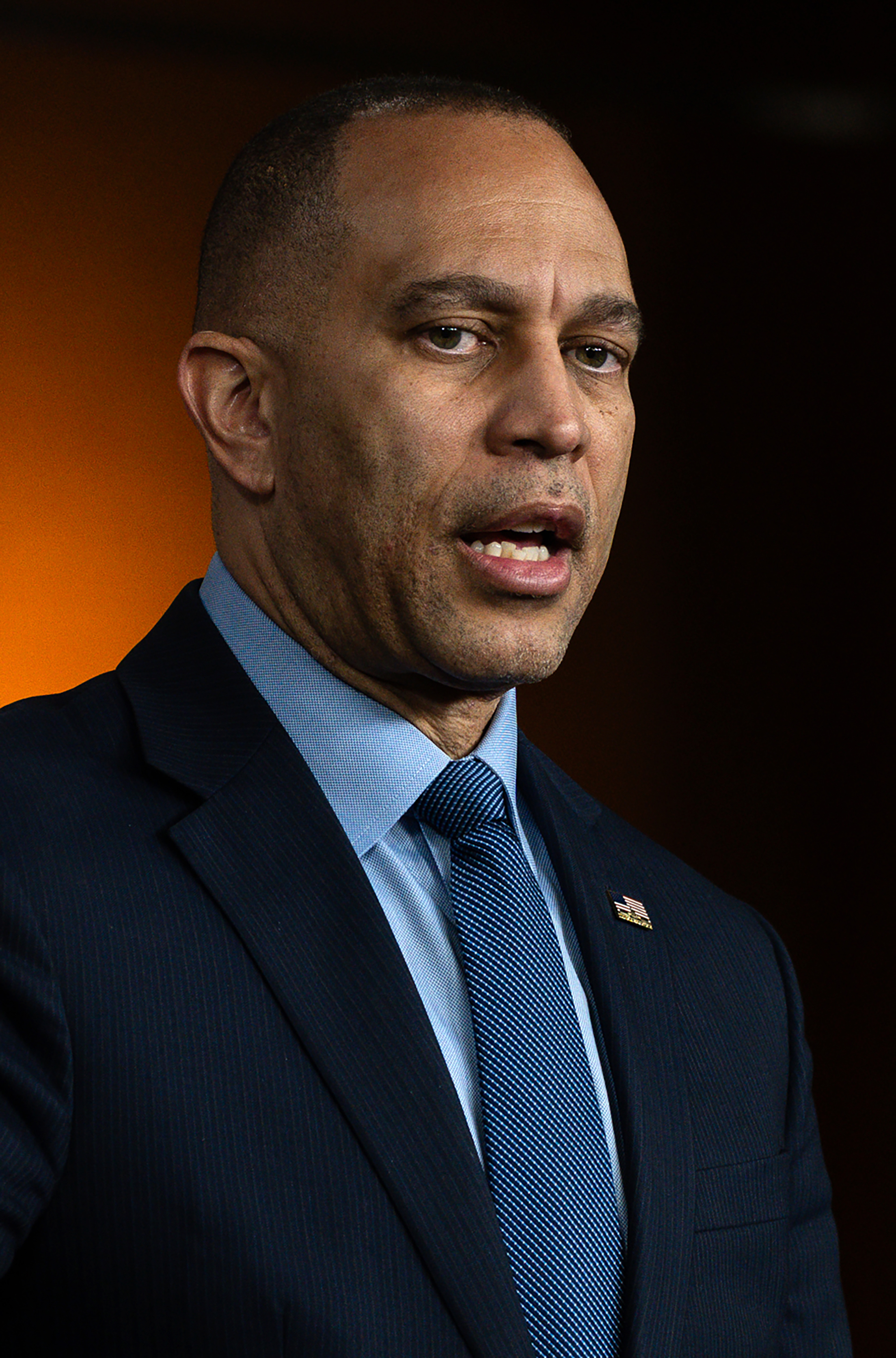
    Rep. Hakeem Jeffries (D., N.Y.), the House minority leader, met privately in recent weeks with Jared Kushner, President Donald Trump’s son-in-law and top outside adviser, and discussed potential areas of common ground, according to five people with knowledge of the meeting.

    The rare engagement was held in a private space in New York City, offered up by a mutual friend of the two men, according to two people with knowledge of the meeting and a third who was briefed on it. They and others were granted anonymity to discuss a meeting about which they were not authorized to speak publicly.

    Through aides, neither man would comment on the session, which was described by one person with knowledge of it as a broad conversation on a range of topics. Still, its timing underscored that those around Trump were well aware of the likelihood of a Democratic-led House, and trying to foster as much of a working relationship as possible before any change. Jeffries is in line to be the speaker, were Democrats to win the majority.

    Democrats and the president have been savaging each other on the campaign trail with increasing fury as the midterm elections approach, and as Republicans are fighting to retain their thin House and Senate majorities.

    Trump has called Jeffries a “thug,” and at a May campaign event referred to him as a “low IQ” person who had inspired him to deride Democrats as the “Dumocrats.” Jeffries routinely suggests that Trump is not only extreme but corrupt, vowing that Democrats would “hold the crooks accountable” if they won control.

    The private get-together was described by one of the people as a catch-up for Kushner and Jeffries. The two men have stayed in touch since they worked together on a criminal justice bill midway through Trump’s first term.

    During the recent meeting, the pair discussed housing, immigration, and the high cost of living as potential areas of common ground. Kushner suggested that Jeffries should meet with the White House chief of staff, Susie Wiles, two people with knowledge of the meeting said.

    The likelihood of any compromises between the White House and Democrats on those issues seems remote.

    Trump this year refused to sign a bipartisan housing bill in part because he said it was “Warren centric,” referring to Sen. Elizabeth Warren of Massachusetts, its top Democratic champion. And he has repeatedly expressed openness to a deal with Democrats on immigration, only to back away from any such agreement. He successfully lobbied Republicans to abandon a bipartisan border-security bill in 2024.

    White House officials and an aide to Kushner did not respond to messages seeking comment.

    In a statement, Jeffries did not acknowledge the meeting, but suggested that the only way Democrats would cut deals with the administration would be if Republicans were willing to come their way on cost-of-living issues, his party’s top priority.

    “Throughout this Congress, Republicans have adopted a my-way-or-the-highway approach to governing that has failed the American people,” he said.

    He added: “In every conversation that we have with the Trump administration, we will continue to make it explicitly clear that the affordability crisis is not a hoax, and nothing short of transformational policy change is acceptable. We are fighting for an affordable America. The question is whether Republicans will join us.”

    Kushner, who worked as a senior West Wing adviser in the president’s first term, is no longer formally part of Trump’s government. He has been deeply involved in the president’s efforts to resolve the war with Iran that Trump began, to enforce a ceasefire in the Gaza Strip, and to bring an end to the Russian invasion of Ukraine. He and Jeffries also met last year, according to two people with knowledge of that conversation.

    The meeting came as nearly all polls revealed Republicans to be at a disadvantage in the midterms, and showed how members of Trump’s inner circle were digesting what a Democratic majority next year could look like.

    Should that happen, Jeffries would be under intense pressure from progressives to use his power as a check on Trump, including through aggressive oversight.

    Kushner is frequently consulted by a number of Trump’s advisers, and he has told people that if anything bipartisan is to get done with Congress, Jeffries is the most serious person among Democratic leaders. Wiles, he has said, is the most serious inside the West Wing.

    But with Republicans in control of both chambers, Trump has mostly steered around Congress in his second term, trampling its powers and prerogatives. He has faced little pushback from Republican leaders.

    Should Democrats win the House, Jeffries would have to balance the need to keep the government funded with Democratic calls to defy Trump at every turn, and possible pleas to impeach him for a third time.

    Jeffries and Trump have danced around questions about what their relationship could look like next year should Democrats take control.

    “I think he’s a nice guy,” Trump told Punchbowl News in a recent interview, when asked about Jeffries. “I’d probably get along with him very well.”

    Trump pointed to a meeting with Jeffries in the Oval Office last fall — the only one they have had in his second term — and described it as a positive one.

    In fact, during that meeting, which was billed as a bid to avert a government shutdown, the president positioned hats with a “Trump 2028” logo directly in front of Jeffries and Senate Minority Leader Chuck Schumer of New York, trolling the Democrats with the suggestion that he would run for a third term in violation of the Constitution.

    Afterward, Trump posted an AI-generated meme of a mustachioed Jeffries wearing a sombrero, drawing an angry response from the House minority leader, who called the image racist and dared Trump to insult him next time “to my face.”

    Soon after the meeting, the government shutdown began.

    This year, Jeffries has remained noncommittal about any plans to pursue a third impeachment of the president, and has not discussed publicly what oversight could look like if his party were to win the majority.

    “We’ve not ruled anything in and not ruled anything out in terms of accountability,” he told the New York Times in an interview last month, noting that his focus would be on forcing out major Trump officials.

    “We’ve got to make sure we continue to get rid of toxic Trump Cabinet secretaries,” he said. “Pete Hegseth, in my view, should be next on the list.”

    This article originally appeared in the New York Times.

  • How ‘The Rest Is History’ podcast conquered the world

    How ‘The Rest Is History’ podcast conquered the world

    HAMPTON COURT PALACE, England — In a field on the outskirts of London, thousands of people settled onto picnic rugs and camping chairs, slathering on sunscreen for the unusually hot English summer. A few people had uncorked bottles of sparkling wine, though it was not quite 10 a.m. One woman knitted while a couple in Panama hats tiptoed to a spot with a prime view of the stage.

    Then a familiar song began playing, and a ripple of excitement ran through the crowd. The rock stars of the event had arrived: two middle-aged British historians.

    The Rest Is History is the most popular history podcast in the United States, Britain, and Australia, with some 30 million downloads and streams a month. This was its first live festival — a sort of mini-Lollapalooza, if Lollapalooza were a sedate, two-day event on the grounds of an English palace.

    The show’s almost 800 episodes span millenniums and continents, covering the fall of the Aztecs, the French Revolution, the assassination of Abraham Lincoln, and history’s greatest monkeys, among other things. Its fans include a current prime minister, Mark Carney of Canada, and a former one, Julia Gillard of Australia; actors Matthew McConaughey and Tom Hanks; and musician Nick Cave.

    In February, a hearing at England’s Supreme Court was interrupted when a judge’s phone played the introduction to an episode on Jimmy Carter. “The Rest Is History,” he acknowledged sheepishly. “It was switched to silent. Do carry on.”

    How did it become such a juggernaut? And what does it say about our tumultuous, accelerated present, a time of news fatigue and thrumming anxiety over the future, that so many of us are drawn to a show about the past? There is reassurance, of course, in reminding ourselves that humans have survived difficult times before. There is the pure escapism of immersing yourself in, say, six riveting episodes about Mary, Queen of Scots, as I did when I first latched on to the podcast. And then there are the podcast’s hosts, Tom Holland, 58, and Dominic Sandbrook, 51, who give the show a charm all of its own.

    Almost 5,000 people bought tickets to the festival, which was held at Hampton Court Palace, Henry VIII’s favorite retreat. Fans from Argentina, New Zealand, Europe, and the United States filed through courtyards, whose stone floors had been polished smooth by centuries of use, into acres of picturesque gardens for two days of an epic history chat.

    ‘An enormous cuckoo’

    Like several other disruptive cultural forces, The Rest Is History was born in the pandemic. Holland was, at the time, “kind of contemptuous and oblivious as to what podcasts were,” he said recently at his home in the south London neighborhood of Brixton. During a family holiday after England’s first lockdown, his brother James, who is also a historian, told him about a World War II podcast he was recording for a British company called Goalhanger.

    Holland, who had written several popular classical history books and made history documentaries with the BBC, was intrigued. He met with Tony Pastor and Jack Davenport, two former sports producers who created Goalhanger with former England soccer player Gary Lineker. The idea for a more general history podcast was born.

    “Who would you enjoy talking to, week in, week out?” he recalls being asked. It was an easy question. “Dominic was the most entertaining historian that I knew,” Holland said. They had met more than a decade before at a writers’ charity quiz.

    Sandbrook agreed to co-host, in part because of Holland’s exuberant, if hyperbolic, salesmanship. “I can hear him saying it now, he said: ‘It will be literally no work. It will be no work whatsoever,’” Sandbrook said over coffee at a tiny Gloucestershire cafe near his home. The idea was that “we’d choose random things that we knew a lot about, and just witter about them for half an hour.”

    That idea has, let’s say, evolved. They now produce three episodes a week, two of which are about an hour long, and a 30-minute bonus episode for paying subscribers. A ton of research goes into each. Their biggest audience is in the United States, which accounts for 34% of plays, according to Goalhanger, while 33% comes from Britain and Ireland, followed by Australia, Canada, and New Zealand. Listenership is surprisingly young, with 61% under 44, and it is 78% male.

    Holland described the podcast as an “enormous cuckoo that slowly elbowed out everything else.” He is currently very behind, he told me ruefully, on a book he is writing about the Beatles and “the new Reformation of the 1960s” that was due at Christmas.

    Sandbrook said his working life was “unrecognizable, compared to what it was before.”

    “I do spend a ridiculous amount of time now reading history books,” he added. “But there are worse things to do.”

    The spirit of a Viking and a cringing monk

    Holland arrived onstage at Hampton Court in a Henry VIII-style velveteen hat. Tall and energetic with a crop of white hair, he is a natural impresario who later took great pleasure in overseeing a bout of medieval combat, one of the diversions that punctuated the live talks with historians. Sandbrook is a more grounded figure, with twinkling eyes and a warm handshake. He is, by his own account, less inclined to cosplay as a historical character.

    The rapport between the two men is central to the podcast’s appeal. They have much in common. Both were privately educated, attended top universities (Holland at Cambridge and Sandbrook at Oxford), and radiate warmth and humor. Their expertise, however, is in different historic periods — “He’s ancient and I’m modern, basically,” Sandbrook said — and they play on their differences.

    There is a lot of banter. In an episode on the Battle of Stamford Bridge in 1066, Holland says that he did not quote from his book Millenium because there were so many epic contemporary accounts. “This speaks to your fundamental lack of self-confidence, I think, Tom,” says Sandbrook, who readily quoted from his own book.

    Holland mournfully agrees: “You have the spirit of a Viking. I have the spirit of a cringing monk.”

    “By the way, please clip that and use that for social media,” Sandbrook jokes, and the two dissolve into laughter.

    Holland tends to be more vocally empathetic toward historical figures, while Sandbrook is more merciless. In an episode on the First World War, Sandbrook quotes from Robert Graves’s memoir, Goodbye to All That, describing an unfortunate British sergeant who fired a bomb that bounced back into his face.

    “Noooo, that’s the kind of thing I’d do!” interjects Holland.

    Part of the delight of the podcast is in their mischievous, but fundamentally good-natured observations about life — its absurdities, contradictions, and continuities. For Holland, the show is popular because it reveals the strange ways of our predecessors while illuminating the common threads that bind us.

    “Without having consciously set out to do this,” he said, “I think it is a celebration of the inherent fascination of the past, as the best way to understand how infinite the ways are of being human.”

    Sandbrook framed it in slightly different terms. “I think there is an inexhaustible human appetite for stories,” he said.

    Both men also pointed to something else — a deliberate lack of moralizing, and, in a post-woke world, a curiosity about the past rather than a rush to judgment. “History is not a civics lesson,” Sandbrook said somewhat sternly, after I asked about what we could learn from the past. “History is the record of human behavior, often which is very bad. And the one thing that doesn’t change, I would say, is human nature.”

    ‘Outside of the swirl of chaos’

    In April, as Britain was edging toward its seventh prime minister in 10 years, The Rest Is History did a series on Britain in the 1970s. Almost 500 people were killed in Northern Ireland in 1972. In 1974, the government briefly introduced a three-day working week to cope with an energy crisis. The following year, inflation spiked to 25%.

    Sandbrook noticed listeners’ fascination, and, in some cases, relief, in their comments. “They were saying, ‘I thought things were awful now, but then I look back and I think, well, it’s not that bad,’” he said.

    Asked if we were living through a particularly turbulent era, both men referred to the pace of technological change as unprecedented, comparing it to the advent of the printing press in the 15th century. “Clearly what is happening now,” Holland said, “first with the internet, social media, and now with AI, is going to be convulsively transformative in a way that we cannot yet get a handle on.”

    “I think that’s why history is so valuable,” he added, “because it does kind of provide a rain check. It does enable you to get outside of the swirl of chaos.”

    Wandering the gardens of Hampton Court — where actors in period dress paraded under parasols — could feel a little like stepping back in time, albeit with stalls serving overpriced iced coffees and plant burgers. I wondered to what extent the show offered some listeners a similar retreat from the uncertain 21st century into stories where the endings, however good or bad, are no longer in doubt.

    Yet the past is also compelling as a means of understanding a confounding present. Onstage the first morning of the festival, Holland interviewed professor Ali Ansari, a historian specializing in Iran, in a conversation that jumped between ancient Persia and this year’s U.S.-Israeli war against Iran.

    In the afternoon, Sandbrook spoke to Paul Rouse, an Irish historian, who talked about the common market between Ireland and Britain in the 1800s, including up to 12 sailings a day from Dublin carrying cattle to England, and later spoke of the damage wrought by Brexit. On Sunday, historian Katja Hoyer discussed her new book on Weimar and the rise of Hitler.

    “History frames so much that is significant about our present politics,” said Christoph Pike, 31, a fan of the podcast who had flown in from Toronto with his wife, Claire Davis. At the same time, he noted, Holland and Sandbrook “don’t take themselves too seriously.”

    “They’re playful, they’re engaged, they both have a great sense of humor,” Pike said.

    As the sun set on Saturday, Holland and Sandbrook applied their considerable intellects to questions from audience members.

    “Top three mustaches of all time?” asked one.

    “Great question!” Holland said. “We do love facial hair.”

    Another historical debate had begun.

    This article originally appeared in the New York Times.
  • Postal Service publishes finalized plan to restrict mail ballots

    Postal Service publishes finalized plan to restrict mail ballots

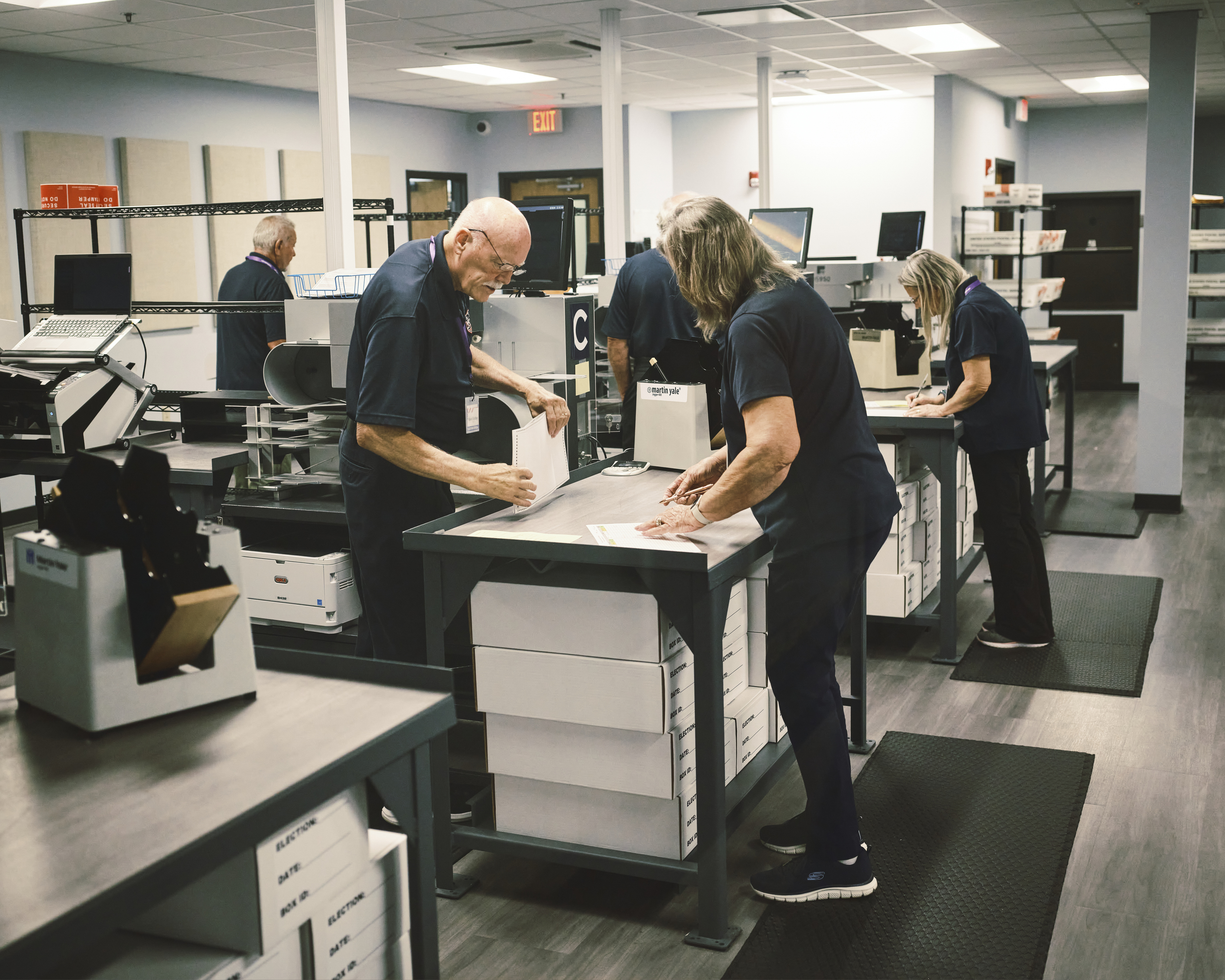
    WASHINGTON — The Postal Service on Friday published regulations that would restrict mail voting, its latest effort to comply with President Donald Trump’s call to restrict the popular practice just months before the midterm elections.

    In a 95-page final rule, the Postal Service clarified how it would carry out an executive order Trump signed in March, which sought to restrict mail ballots and create state-by-state lists of citizens to help determine voting eligibility.

    In the rule, the Postal Service said that it would deliver mail ballots only in states that shared voter data with the federal agency.

    Before the Postal Service accepts ballots into its system, the agency would review every envelope for compliance with the new standards, including by checking that the recipient was enrolled with the Postal Service to receive a mail ballot.

    If the regulations are enacted, the Postal Service would not deliver mail ballots to states that do not comply.

    Trump’s executive order was largely blocked by federal courts this summer, and the Postal Service said in its rule published Friday that it would “not take actions to implement the rule specifically for the 2026 election unless and until the government obtains relief from those injunctions.” In a filing to the Supreme Court, the Justice Department said that the government would not enforce the final rule unless the court ruled in its favor.

    The Supreme Court is reviewing the issue and could rule at any time.

    A Postal Service spokesperson on Friday declined to comment, citing pending litigation.

    Trump has repeatedly made unfounded claims that mail voting is “cheating,” even as he has voted by mail in multiple elections, including earlier this week.

    The president has acknowledged that combating fraud is not the only reason to target the practice. In March, he told Republican lawmakers that passing a strict voter identification law cracking down on mail ballots, which Democrats now use more than Republicans, would “guarantee the midterms” for his party.

    This article originally appeared in the New York Times.

  • TikTok settles with U.S. over child privacy concerns for $400 million

    TikTok settles with U.S. over child privacy concerns for $400 million

    WASHINGTON — TikTok on Friday reached a $400 million settlement in a lawsuit brought by the Justice Department that accused the company of illegally gathering children’s information.

    The 2024 suit, filed under the Biden administration, claimed that TikTok had gathered data from users under the age of 13 without parental permission. The suit accused TikTok of knowingly allowing children to create accounts and of failing to honor parents’ requests to delete their children’s accounts.

    TikTok violated federal privacy law along with a 2019 agreement with the government in which the app promised to take steps to protect children’s privacy, according to the government.

    Under the settlement announced Friday, TikTok will pay $300 million. The Justice Department also asked the court to eliminate the 2019 agreement, after which TikTok would pay the government an additional $100 million, according to a Justice Department news release.

    The settlement is the latest by the Trump administration, as it takes a softer approach toward ongoing government litigation against several major companies.

    In March, the Justice Department settled a lawsuit that accused Live Nation, the owner of Ticketmaster, of illegally maintaining a monopoly. The government also reached a settlement last year that allowed the technology company Hewlett Packard Enterprise to buy a rival, Juniper Networks, over the objection of some state attorneys general.

    The settlement between TikTok and the government also marks the latest win for the popular short-video app under the second Trump administration.

    During President Donald Trump’s first term, he signed an executive order to force the app’s Chinese owner, ByteDance, to sell it. But TikTok successfully sued to block that ban. In 2024, former President Joe Biden signed a law that would ban the app unless it was sold to a non-Chinese owner.

    After Trump returned to office, he repeatedly delayed enforcement of that law. In January, ByteDance announced that it had reached a deal, hammered out with the U.S. government, that spun off its American operations to a group of non-Chinese investors.

    Stanley E. Woodward Jr., an associate attorney general, called the settlement “a major victory for American children and parents” in a statement. A spokesperson for the U.S. version of TikTok did not immediately respond to a request for comment.

    This article originally appeared in the New York Times.

  • Mark Zuckerberg buys an Irish castle

    Mark Zuckerberg buys an Irish castle

    For two centuries, Strancally Castle’s towers and parapets have overlooked a bend in the Blackwater River and a swath of Irish land as it passed from one wealthy family to the next.

    It now joins the holdings of Mark Zuckerberg, one of the 21st century’s most prominent landowners, along with a place on an artificial island in Miami Beach, a large house in Washington, and compounds in California and Hawaii.

    A spokesperson for Zuckerberg, the 42-year-old billionaire CEO of Meta, confirmed this week that he had bought the castle, a Gothic-style estate in Waterford County, a region of southeastern Ireland with about 130,000 people. The castle was built around 1830 and renovated in the early 2000s.

    The purchase does not appear to be listed in Ireland’s ​property price register. The Irish Times, which reported the news Thursday, estimated that the estate could be worth $23 million to $35 million.

    Around the middle of the 19th century, the estate was valued at 61 pounds, according to an entry about the castle in a University of Galway archive of landed estates that also mentions it contained an art collection and a library.

    “Mark and his family look forward to caring for this historic home and visiting when traveling to Ireland,” said Brian Baker, the spokesperson for Zuckerberg.

    The castle was built for a former member of Parliament, John Keily, according to Ireland’s National Built Heritage Service, which describes the building as both “muscular” and “dour.”

    The estate has never left private hands, leaving the public to glimpse its interior only in historical archives. An entry about Keily on “The History of Parliament” website says the house was designed “on a lavish scale; it took a brisk walk of 4½ minutes to reach the dining room from the kitchen.”

    The castle was most recently owned by Michael Alen-Buckley, the chairperson of the investment firm RAB Capital, and his wife, Giancarla Alen-Buckley, a member of the family behind the luxury Rocco Forte Hotels group.

    “We leave our home of twenty-five years fondly and are grateful for the opportunity we have been given to save and restore Strancally Castle,” the couple said in a statement. “We are delighted that Mark and his family intend to build on our stewardship by continuing to invest in maintaining and enhancing the property and grounds as their home.”

    It is not clear how much time Zuckerberg or his family (he has three daughters with his wife, Priscilla Chan) will spend in Ireland, but his company has a significant presence there.

    Like many major U.S. companies, Meta uses an office in Dublin as its European headquarters, and about 1,500 employees work there. Ireland has become a hub for multinational corporations, both for its relatively low corporate income tax rate — 15% for big companies — and its history of allowing corporations to shift profits out of the country into places like Bermuda, Grand Cayman, and the Isle of Man.

    Ireland’s status as a base for several technological giants has made it a key player in enforcing European Union regulations and, increasingly, a center of protest against the companies and their data centers.

    Asked for comment about Zuckerberg’s purchase, the Waterford City and County Council extolled the area’s attractions — wild coastlines and mountains, picturesque festivals and towns — and the history of the county and city.

    “Founded by the Vikings in 914 AD, Waterford is Ireland’s Oldest City that has been shaped by centuries of history and today it is evident that the county’s remarkable architecture keeps its past vividly present,” the council said in an email.

    “We hope that Mr. Zuckerberg and his family fully enjoy all that Waterford has to offer.”

    This article originally appeared in the New York Times.

  • Margo Howard, reluctant columnist and daughter of Ann Landers, dies at 86

    Margo Howard, reluctant columnist and daughter of Ann Landers, dies at 86

    Margo Howard was a reluctant columnist, despite the encouragement of her mother, Eppie Lederer, the wildly popular advice maven known as Ann Landers, and a succession of admiring editors.

    She lacked ambition, she was quick to say, as well as journalistic training. (She had dropped out of Brandeis University to marry her first husband.) But she was mouthy — a “mouth on a trolley,” as her father put it — and possessed of a tart wit.

    When she divorced that first husband, she thought that a job might be nice, if it wasn’t too taxing, and in 1970 she began producing a frothy, thrice-weekly column called “Margo” for the Chicago Tribune. She wrote of mores on college campuses (“Parietal rules are so relaxed they’re prone”), the conundrum of marriage (“Marriages are all quite happy. It’s the living together afterward that’s so tough”), and playground hierarchies, deploying the phrase “the nanny mafia” to describe the action, after which novelist Tom Wolfe’s lawyers threatened to sue, saying she had stolen the phrase from him.

    David Reuben, author of Everything You Always Wanted to Know About Sex (But Were Afraid to Ask), the 1969 blockbuster, also threatened a lawsuit after she compared the book’s style to a cross between Helen Gurley Brown and Popular Mechanics. (“I was only nervous once,” she wrote of their interview. “When he removed his cuff links and rolled up his sleeves.”)

    Ms. Howard was proud, she said much later, that soon all her columns had to pass muster with the paper’s lawyers before publication.

    “You are the star in my crown and the thorn in my side,” her exasperated editor told her.

    Ms. Howard died on July 13. She was 86. Her daughter Cricket Coleman confirmed the death but did not give a cause or location.

    Over the decades, Ms. Howard dipped in and out of the news business, and marriage. After ditching the wealthy businessperson whom she described as her “starter husband” and who was the father of her three children, she went on to marry three more times. Husband No. 2 was an undertaker — when she left him after three years, she gave him the family dog as consolation, which upset the children — and No. 3 was actor Ken Howard, whom she married in 1977.

    The couple fell in love after she interviewed him for a column, after which she gave up newspapering for a spell. It was a mostly happy union and lasted more than a decade.

    No. 4, a keeper, was Ronald J. Weintraub, a cardiologist whom she referred to variously as Dr. Pussycat and Dr. Perfect.

    In 2014, Ms. Howard published a memoir of her matrimonial adventures, Eat, Drink and Remarry: Confessions of a Serial Wife.

    “Writing is what Margo does between husbands,” editor James Hoge once teased.

    But Ms. Howard’s most significant relationship was with her mother. Her first book, Eppie: The Story of Ann Landers (1982), told of how the twin daughters of Russian-Jewish immigrants became celebrated (and often feuding) advice columnists.

    Esther Pauline Lederer was first to the game, winning a contest in the 1950s to write the “Dear Ann Landers” column for the Chicago Sun-Times. Soon after, her deeply competitive sister, Pauline Esther Phillips, known as Popo, began writing her own advice column for the San Francisco Chronicle, “Dear Abby.” The rivalry, as depicted by Ms. Howard, was one-sided, with Phillips sniping, often in public, at her sister, and Lederer doing her best to rise above, and frequently cutting off contact altogether.

    “She was a girl who kept on trucking,” Ms. Howard said, describing her mother to an interviewer in 2003. “She sucked it up.”

    When Jules Lederer, Lederer’s husband of 35 years, left her for a much younger woman, she soldiered on, even buying him clothes and food once he was in his new apartment. It had been a drawn-out process: He had enlisted his daughter to deliver the news of his affair and plans for divorce months earlier.

    Unlike her mother, Ms. Howard never forgave him, and they remained estranged until just before his death.

    Ms. Howard’s second book, A Life in Letters: Ann Landers’ Letters to Her Only Child, published in 2003, a year after her mother’s death, chronicled their intimacy through the decades. Her mother’s vivid, salty style, peppered with the Yiddishisms she grew up with, is enticing, as are her passions, which included the Democratic Party and anti-war activism, as well as the happiness and intellectual growth of her precocious daughter.

    “One of the good things she passed on to me was that it’s almost immaterial what happens to you — it’s how you deal with it that matters,” Ms. Howard told Alex Witchel of the New York Times in 2003. “She’d say, ‘When things go seriously haywire, take a nap and then get busy.’ I went into a depression when she died, so I had my nap. It was time to get busy.”

    Margo Lederer was born on March 15, 1940, in Sioux City, Iowa. Her father was a salesperson turned businessperson who would go on to found Budget Rent A Car. He wooed her mother, then Esther Pauline Friedman, who was affianced to someone else, while she was shopping for wedding veils.

    The family lived in eight cities by the time Margo was 7, including New Orleans and Eau Claire, Wis., before moving to Chicago, where she would later settle as an adult, after her first marriage.

    Throughout her peripatetic journalism career, Ms. Howard fielded many offers to write an advice column, including a plea from her mother to take over as Ann Landers. “Honey, I don’t want to work that hard,” Ms. Howard responded.

    But in 1998, when economist Herbert Stein quit after a few months of writing “Dear Prudence,” the pithy advice column he had pioneered (and written anonymously) for Slate, the publication’s editor, Michael Kinsley, offered the column to Ms. Howard. The effort required would be minimal, he promised; she would have to answer only four letters twice a week.

    As she told Vanity Fair, “I’d had a big life: I’d been analyzed, I’d been married — certainly more than once — and I decided that I would write from my experience.”

    Her tone was sassy and wise, and “Dear Prudence,” which she wrote for eight years, was a hit.

    To Turned Off in Kansas, a reader whose boyfriend’s underwear was problematic, Ms. Howard replied:

    Dear Turned,

    He wears the baggy briefs underneath? I offer you two suggestions. Since things are going over his head, try under his nose. Write him a short love note saying it would mean a lot to you if he — forgive the pun — bagged his lucky underpants and only wore boxers. Alas, the alternative is to forget it. Would you think Prudie salacious if she were to suggest that it’s what’s inside the briefs or boxers that counts?

    — Prudie, briefly

    In addition to her daughter Cricket, Ms. Howard is survived by her husband, Weintraub; another daughter, Abra Coleman; a son, Adam Coleman Howard; and seven grandchildren.

    This article originally appeared in the New York Times.