Category: New York Times

  • In headache for Republicans, second Dan Sullivan advances in Alaska Senate race

    In headache for Republicans, second Dan Sullivan advances in Alaska Senate race

    Dan J. Sullivan, a retired teacher who is challenging Republican Sen. Dan S. Sullivan of Alaska, won a spot on the general election ballot Tuesday, according to The Associated Press.

    His emergence from the state’s nonpartisan primary poses a headache for the incumbent.

    Dan J. Sullivan is not expected to wage a competitive general-election campaign. But Republicans have worried for months that some voters may confuse the two Sullivans in November, potentially depriving Sen. Sullivan of votes and lifting his well-funded Democratic challenger, former Rep. Mary Peltola, to victory.

    Sen. Sullivan and Peltola easily earned spots on the general election ballot; soon after polls closed a week ago, The Associated Press said they both had advanced. But Dan J. Sullivan won just a few thousand votes, and it took a little more than a week for it to become clear that he had secured one of the four spots on the November ballot.

    Democrats and Republicans alike see Dan J. Sullivan as no mere campaign curiosity. If he wins even a sliver of general-election votes, it could be decisive in a narrow race. Alaska uses a ranked-choice general-election system, which means that voters confused about the Sullivans could simply rank them both before Peltola — but it is unclear how the dynamic may play out in voting booths.

    Sen. Sullivan trailed Peltola by more than 5 percentage points in the nonpartisan primary.

    The contest in Alaska is one of a handful of competitive races seen as the most likely to determine which party wins control of the Senate. With Republicans now holding 53 seats, Democrats would have to keep all their seats and flip four to win the chamber in the midterms. Democratic leaders consider Alaska to be one of their most promising targets.

    It was not always clear that Dan J. Sullivan, running as a Republican, would even be eligible.

    The Alaska Division of Elections, which is overseen by the state’s Republican lieutenant governor, removed Dan J. Sullivan in June from the primary ballot, finding that his candidacy was intended to confuse voters and was not a “good-faith” effort. An Alaska judge, in turn, restored his spot on the ballot, saying that the elections agency had exceeded its authority.

    Republicans have claimed that Peltola’s campaign planted Dan J. Sullivan in the race to trick voters. But the Peltola campaign has denied coordinating with him. He said in a recent interview that he had voted for Peltola in her bids for the House of Representatives in 2022 and 2024, but that he was running in good faith and was not a secret Democrat.

    Broadly, Democrats in Alaska have dismissed allegations of foul play, casting Dan J. Sullivan’s candidacy as an amusing but far from unheard-of quirk of the insular world of Alaska politics.

    When Sen. Sullivan was first elected to the Senate in 2014, another Republican named Dan Sullivan, then the mayor of Anchorage, was also on the primary ballot as a candidate for lieutenant governor.

    On the day of this year’s primary, the former mayor weighed in on the Senate race. “As the OG Dan Sullivan, I urge Alaskans to vote for Sen. Daniel S. Sullivan,” he said in a statement on social media. “He’s been great for Alaska.”

    When Dan J. Sullivan announced in May that he was entering the race, he said in a statement, “It’s time for Alaska to elect a Sullivan that’s on their side.”

  • Bill Gates warns AI is more dangerous than Big Tech will admit

    Bill Gates warns AI is more dangerous than Big Tech will admit

    SEATTLE — Bill Gates, the billionaire co-founder of Microsoft, is loudly warning that artificial intelligence poses a grave threat to jobs and human life, and that urgently addressing the risks should be “the world’s top priority.”

    In an hourlong interview with The New York Times last week, Gates said the tech industry was knowingly downplaying those threats because there was too much money on the line.

    “In private, people who understand how good this stuff is, and how much better it’s getting, they’re very worried,” he said. But few tech executives, Gates said, are willing to publicly admit that. “They’re now saying to each other: ‘Hey, man, don’t say that. It’s bad for us — the next trillion dollars we’re trying to raise.”

    On Wednesday, Gates published a nearly 6,000-word essay on his personal website laying out his concerns about AI and offering solutions, such as new taxes and bans. He said he was motivated to speak now because recent improvements in AI had far surpassed his expectations and because the industry had ignored technology milestones — like AI’s escaping the control of its creators or making recipes for bioweapons — that it once said would warrant more caution.

    “They’re just full speed ahead and hoping that the good outweighs the bad,” he said.

    Gates, 70, is the latest in a string of tech luminaries to call out the risks of AI as the industry spends trillions of dollars on new data centers, and as young AI companies edge toward some of the largest initial public offerings in history.

    He is taking his stand as he emerges from an extended period of scandal. Early this year, the release of sexual predator Jeffrey Epstein’s emails brought renewed attention to Gates’ interactions with him.

    Gates had to pull out of an AI conference in February, and he testified for six hours in June before a House committee. Disclosures of his infidelity, combined with his 2021 divorce, have also badly damaged his reputation. He acknowledged that they were all “mistakes” of his own doing.

    He appears more willing to step back into the spotlight after answering every question from the House Oversight Committee. “I think people understand what I did do, what I didn’t do, and that I learn when I make mistakes,” he said in the interview.

    Gates conceded that he also might be a flawed messenger simply because of his vast wealth and history as Microsoft’s aggressive CEO. In a landmark federal case, Microsoft was found in 2000 to have repeatedly abused its monopoly during his watch. (Gates left the company’s board of directors in 2020.)

    While Gates avoided criticizing Microsoft or other companies by name, he argued that he was uniquely positioned to work on the AI issue. He is a technologist and industry insider who is no longer driven by the profit incentives of running a company, and he has spent decades addressing inequality through his philanthropic foundation.

    “The irony of ‘innovation lover is scared and says we’re not ready and we’re crossing thresholds,’ maybe it’s even more poignant,” he said.

    Gates said technological advances had truly stunned him three times: In 1980 when he first saw a graphical user interface, which led to the modern personal computer. In 2022 when the leaders of OpenAI came to his house to demonstrate what would soon become ChatGPT. And this year when he looked closely at the advances being made by Claude Code, Anthropic’s AI tool.

    Coding, Gates said, is the subject he knows best, and Claude’s abilities shocked him. “The idea that now these things are in a meaningful sense better than I am is like: What the hell?” he said.

    Technological breakthroughs in the past created more jobs than they eliminated, Gates said. But he is in disbelief that industry boosters say that will happen again this time.

    The AI era is “utterly, absolutely, completely, totally different,” he said. He acknowledged that this unpopular opinion (in tech circles) was “a hell of a claim, and I’m staking everything I know — everything — saying, ‘Are you kidding?’”

    He said mass job losses, if not addressed, were inevitable because AI would spread across the economy and leave little room for one industry to absorb the refugees from another. The biggest tech companies in the world, including Microsoft, are racing to help corporate customers adopt AI, which could replace many workers.

    Gates said that companies were just responding to market incentives, but that those incentives might conflict with what was best for society.

    He proposed a new tax on AI use, known as a “token tax,” to make it more expensive to replace people and provide money to help those who do lose work. A token is a basic unit of AI computing. The idea of taxing it has gained some traction, including on Wall Street, as a way to increase the cost of using machines instead of human labor.

    Some jobs, Gates said, should be prohibited from being replaced by AI — an idea he called “Human Reserved” — because the role is deeply personal, like a caregiver, or the people in those jobs are unlikely to find new employment.

    Gates argued for new international agreements to set clear criteria to monitor and restrict extreme risks like bioterrorism. He said it could take only a few people with access to advanced AI to develop new pathogens.

    He said he would happily debate anyone who argued against mandatory reviews of any AI system that could be weaponized to make new molecules and unleash a pandemic. Gates added that he was dumbfounded by the kind of voluntary measures that the White House and industry leaders were developing.

    “Self-regulation on the most dangerous tool ever invented?” he said incredulously. “No, thanks!”

    Gates said he was in a “state of shock” as to why there was not more urgency on these issues. Many of his concerns echo those raised by Anthropic co-founder Dario Amodei, but Amodei’s warnings have put him at odds with the Pentagon, the White House and much of the tech industry.

    “You have people attacking the person who’s the most open about the downsides,” Gates said.

    (The Times has sued OpenAI and Microsoft, claiming copyright infringement of news content related to AI systems. The two companies have denied those claims.)

    Along with global health issues, Gates vowed to make his AI concern part of every conversation he had with world leaders. “I only have two issues where I’m going to say, ‘Please think more about this, please care more about this,’” he said.

    Gates acknowledged that he was in an odd spot: He has arguably done as much as anyone in the world to evangelize for and shape the modern computer industry. But now he is warning that the technology it is creating presents global risks.

    “I don’t like bringing bad news to people, and I don’t like saying that innovation may be a net negative,” he said. “But that’s where we are.”

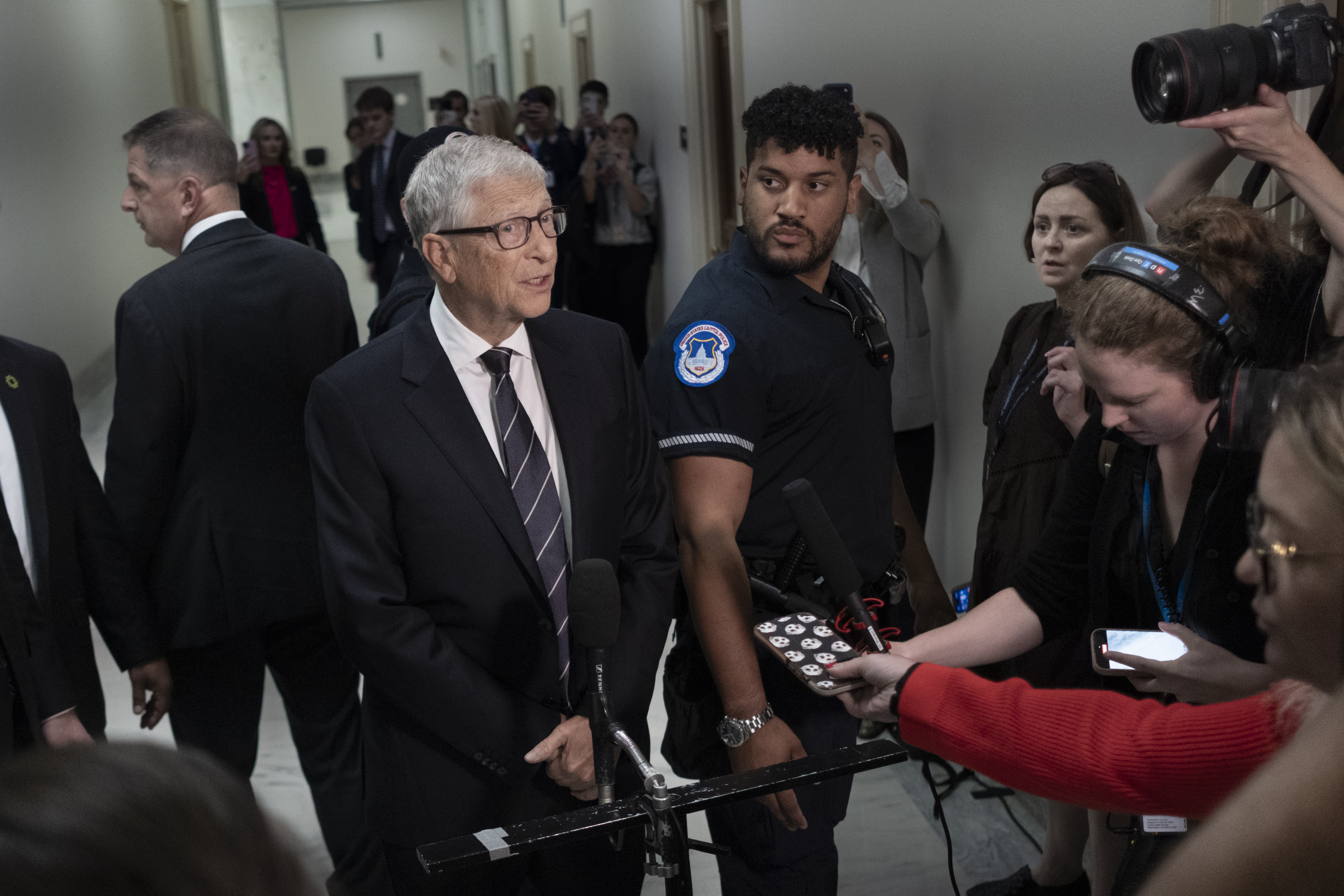
    FILE — Bill Gates arrives for a House committee hearing in the Jeffrey Epstein investigation in Washington on June 10, 2026. Gates, the billionaire co-founder of Microsoft, is loudly warning that artificial intelligence poses a grave threat to jobs and human life, and that urgently addressing the risks should be “the world’s top priority.” (Chona Kasinger/The New York Times)CHONA KASINGER
    Bill Gates at his office in Kirkland, Wash., on Aug. 21, 2026. Gates, the billionaire co-founder of Microsoft, is loudly warning that artificial intelligence poses a grave threat to jobs and human life, and that urgently addressing the risks should be “the world’s top priority.” (Chona Kasinger/The New York Times)CHONA KASINGER
    FILE — Anthropic’s Code With Claude event in San Francisco, May 7, 2026. Bill Gates, the billionaire co-founder of Microsoft, is loudly warning that artificial intelligence poses a grave threat to jobs and human life, and that urgently addressing the risks should be “the world’s top priority.” (Jason Henry/The New York Times)JASON HENRY
  • Iran may have little to lose as U.S. tries to squeeze its economy

    Iran may have little to lose as U.S. tries to squeeze its economy

    Facing a fresh economic assault from the United States, Iran’s leaders are gambling that they can weather the coming storm and make the cost of their suffering felt in an oil-rich region that is critical to the global economy.

    As Iran’s ever more devastating economic crisis deepens, experts warn, Iranian leaders may feel they have little to lose by responding to U.S. pressure with the kind of military escalation President Donald Trump now seems keen to avoid.

    “The danger is that ‘economic D-Day’ is being presented almost as a substitute for further war when it may instead become another mechanism for escalating it,” said Sina Toossi, an Iran expert at the Center for International Policy. “The harder Washington pushes third countries to sever Iran’s remaining lifelines, the stronger Tehran’s incentive becomes to demonstrate that participating in Iran’s isolation carries costs of its own.”

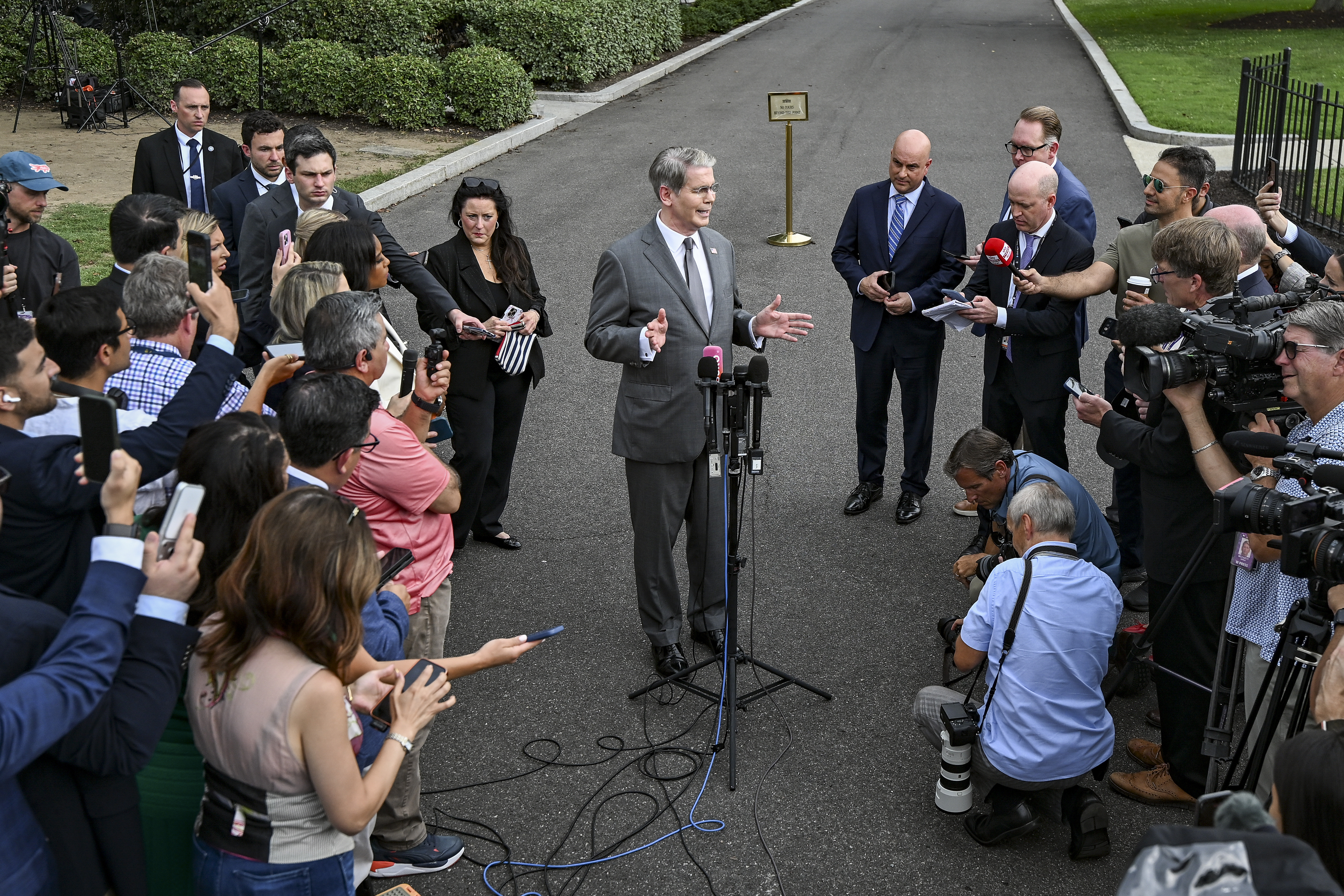
    Treasury Secretary Scott Bessent on Monday announced a new package of U.S. measures to disrupt Iran’s economy, although he offered few details. The success of the U.S. efforts will also depend on how much the Trump administration can persuade other countries to go along with its plan — especially critical trade partners for Iran, such as Turkey, Russia, and China.

    Still, as the Trump administration reached for military metaphors to convey the severity of its plans — calling them an “economic D-Day”— Iran responded in kind. Iranian officials have labeled the U.S. campaign the next phase of the war that Washington has waged since U.S.-Israeli strikes were launched in February.

    Economic warfare is the “main battlefield” in the current confrontation, Iran’s Revolutionary Guard was quoted as saying in a statement Monday cited by Press TV, an Iranian state news outlet.

    In statements broadcast after Bessent’s news conference, Iran’s economy minister, Ali Madanizadeh, warned that the country would find ways to push back.

    “The enemies intend to launch an economic terrorist attack on us, but we also have our own tools and know how to play the game,” he said, in comments carried by the semiofficial news agency, Tasnim.

    A day before Bessent’s announcements, Iran’s top security chief, Mohsen Rezaei, vowed that “not a single drop” of oil would leave the region if its Persian Gulf neighbors joined the U.S. effort, and that they would be considered enemy states.

    The severity of the Iranian warnings also highlights just how bad Iran’s current economic crisis is — and it is worsening by the day.

    A report Monday by Iran’s most prominent economic newspaper, Donya-e-Eghtesad, said Iran’s rial has depreciated to new lows. It has plummeted 41% since December, when the currency rate sparked protests that morphed into weeks of nationwide unrest. Iranian security forces responded with a deadly crackdown.

    Inflation and unemployment have soared, with prices of everyday goods increasingly out of reach for many Iranians. At the same time, the U.S. strikes that damaged Iranian energy infrastructure and the ongoing U.S. naval blockade have intensified an ever-worsening fuel supply crisis — an issue that sparked massive protests in 2019.

    But Iranian officials are projecting confidence that their leadership can survive because this new wave of U.S. measures looks similar to old ones. For decades, U.S. leaders have vowed to devastate the Iranian economy through ever harsher sanctions that the Islamic Republic’s leaders have learned to withstand.

    Iran’s leadership “has been planning to confront U.S. sanctions for a long time and is fully prepared for new sanctions,” Madanizadeh said late Monday. He said the government had a two-year plan in place for dealing with such sanctions.

    Iran’s ability to withstand the Trump administration’s economic pressure campaign will depend on the attitude of Iran’s key trading partners.

    Mahdi Ghodsi, an economist at the Vienna Institute for International Economic Studies, said that “faced with sufficiently credible secondary-sanctions risks,” those trading partners may “prefer to protect their much more important financial and commercial interests with the United States and reduce the services they provide to Iranian entities.”

    Some analysts also warn that the brunt of further economic pain is likely to be borne by ordinary Iranians, not Iran’s leaders.

    Among the sectors Bessent identified as being targeted in the new U.S. campaign were gold, digital assets, technology, aviation, and shipping — sectors that Esfandyar Batmanghelidj, who heads the Bourse & Bazaar Foundation, a London-based think tank focused on Iran’s economy, called “lifelines for the Iranian people.”

    “Digital assets and gold are how ordinary Iranians protect their savings from inflation,” he wrote in a social media post. “Technology keeps Iranians connected with the world. Aviation keeps Iranian families connected with loved ones across borders. Shipping is how essential goods, including food and medicine, reach Iran.”

    This article originally appeared in the New York Times.

  • Trump officials propose sale of ‘woke’ painting by Kehinde Wiley

    Trump officials propose sale of ‘woke’ painting by Kehinde Wiley

    The State Department wants to sell a painting by celebrated artist Kehinde Wiley that the director of its Art in Embassies program called “very woke” and “aesthetically terrifying.” It was removed from the U.S. Embassy in the Dominican Republic last week.

    The painting by Wiley, who rose to fame after being selected to create President Barack Obama’s official portrait, features four Dominican models against a floral backdrop. It was commissioned by the federal government in 2013 and paid for with taxpayer dollars.

    State Department officials removed the painting from the embassy last week, after first hiding it behind a tarp designed with an image of the American flag.

    Erin Scavino, the director of Art in Embassies, criticized Wiley’s painting in a recent podcast interview and pointed out the artist’s connection to Obama. Leah Campos, the U.S. ambassador to the Dominican Republic, celebrated its removal on social media with a video playing the rock anthem “We’re Not Gonna Take It,” writing that the painting was an example of “globalist and woke ideologies.”

    Neither elaborated on what she found objectionable.

    In a statement on Monday about the removal of the painting, a State Department spokesperson did not directly address the artwork. The statement instead criticized comments Wiley had made in 2023 about his “Judith and Holofernes” painting, which he described as “a play on the ‘kill whitey’ thing.” It also cited accusations of sexual assault that Wiley has denied.

    “The work of an individual with such violent and racist words and depictions has no place in the America First State Department,” the spokesperson said.

    The statement said the State Department is determining whether it can legally sell the painting of Dominicans, which is titled “Young Artists After Siamesas 1960.”

    “If that is feasible,” the spokesperson said, “it would be the goal of Art in Embassies to proudly do so.”

    A smaller painting by the artist sold at a Phillips auction in 2024 for nearly $845,000. Wiley and his gallerist, Sean Kelly, did not respond to requests for comment.

    Virginia Shore, who commissioned the Wiley painting, established many of the embassy art collections as director of acquisitions and chief curator for the Art in Embassies program between 2000 and 2017. She described the work as nonpartisan and said there was no precedent for selling embassy artworks.

    “Calling this woke is difficult for me to understand,” she said. “This is a program validated and financially backed under Bush. There is a science of building trust and empathy across borders.”

    Wiley received an award from the State Department in 2015 because of his contributions to cultural diplomacy. He often takes inspiration from historic paintings, asking contemporary Black models to pose inside his version of the compositions. For “Young Artists After Siamesas 1960,” he spent two years studying paintings by Dominican artists Celeste Woss y Gil and Gilberto Hernández Ortega, working with art students in the country to finish the scene.

    The artwork’s removal was the latest attempt to politicize the State Department’s art program, which became part of the government during the Kennedy administration in 1963 to foster cultural diplomacy. The program was strengthened in 1999 under the Secure Embassy Construction and Counterterrorism Act, which led to embassies developing their own permanent art collections.

    This year, Scavino claimed to have gotten an ambassador in Bucharest, Romania, fired over “satanic baby art,” though the diplomat’s departure was reported as a planned retirement. She also selected a friend with no curatorial experience to serve as the commissioner of the U.S. Pavilion at the Venice Biennale, bypassing normal procedures. In July, Scavino organized an exhibition in Washington that aimed to “Make Art Great Again” with nearly 70 versions of the American flag on display.

    In a statement about the removed Wiley painting, Campos, the U.S. ambassador, said, “It is my intention that everything we project from U.S. Embassy Santo Domingo, including the art and décor, reflect the beauty, strength, and commitment to liberty of the United States of America and its people.”

    Online, she had a stronger perspective: “Under the Trump administration and my leadership, we are leaving behind globalist, ‘woke’ ideologies to embrace, instead, American patriotism and the beauty of our great country.”

    She ended the sentence with an emoji of the American flag.

    This article originally appeared in the New York Times.

  • Study’s alarming finding: At least 1 in 4 NFL players gets brain disease

    Study’s alarming finding: At least 1 in 4 NFL players gets brain disease

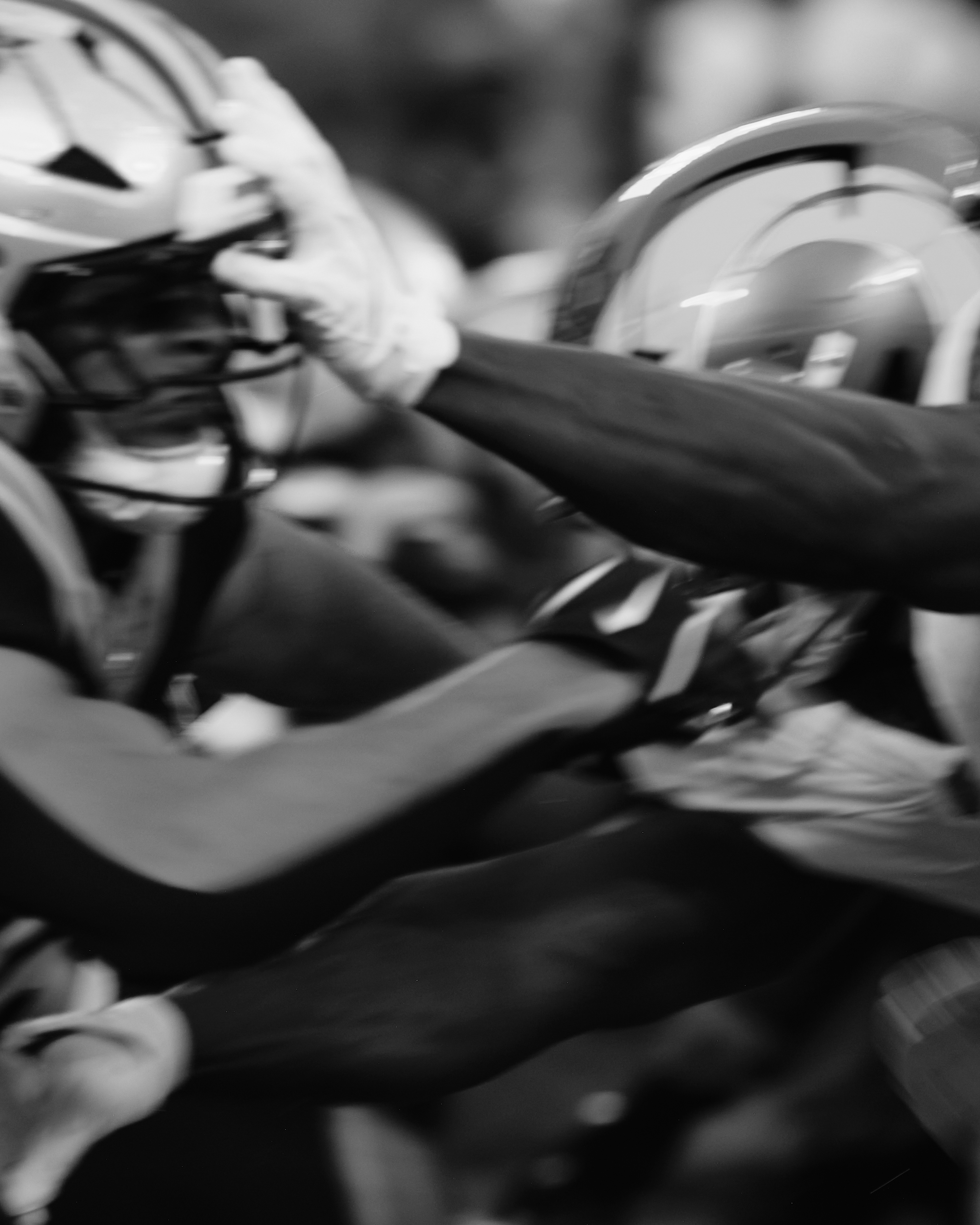
    Since the degenerative brain disease known as CTE was first scientifically linked to football about 20 years ago, and as hundreds of former professional football players have been diagnosed with the disease after their deaths, a haunting question has lingered:

    Just how many NFL players will end up with CTE?

    New data provides a sobering indication: At least 1 in 4 of all the people who have played in the NFL might expect to end up with chronic traumatic encephalopathy, according to a study of hundreds of cases over a recent six-year period.

    Researchers considered every former NFL player who died from 2016 to 2021. There were 878. Some died in their 20s, some in their 80s, most in between.

    The study’s main finding was simple math: At least 215 of those 878 former players — 24.5% — had CTE.

    The actual prevalence could be far higher. The roughly 25% rate does not consider the 643 brains that were not examined. Some of those, maybe many of them, likely had CTE too.

    CTE is a progressive neurological disease caused by repeated impacts to the head. It can be definitively diagnosed only by examining the brain after death.

    Studies have shown that the rate of CTE in people who have not sustained repeated impacts to the head is nearly zero.

    If the new study’s statistics were applied to today’s players — 1,696 on the league’s 32 regular-season rosters, not including more than 500 members of practice squads and those ineligible due to injury — at least 400 of them would be diagnosed with CTE.

    Experts say that the rate of brain disease represents an occupational safety hazard with little comparison in the American workplace.

    “There are workers who’ve been exposed to high levels of asbestos exposure, which leads to very high rates of lung disease,” said David Michaels, who led the Occupational Safety and Health Administration during the Obama administration and is now a professor at the George Washington School of Public Health. “And certainly, you know, a lifetime working in coal mines leads to very high risk of black lung disease.

    “But a degenerative neurological disease — I’ve never seen anything comparable.”

    CTE was first discovered in boxers nearly a century ago and termed “dementia pugilistica.” Symptoms can include memory loss, confusion, and uncharacteristic mood swings, decreases in executive function, and increases in erratic and impulsive behavior, including addiction.

    These days, CTE is most commonly associated with football players, but it has been found in the brains of other athletes who sustained repetitive blows to the head, including hockey, rugby, and soccer players, as well as wrestlers and bobsledders. Those in the military who work with artillery also seem susceptible to the disease.

    For years, the NFL downplayed the risks of repeated head trauma, often insisting that not enough is known about CTE to draw conclusions about its dangers, origins, and prevalence. Uncertainty has left room for inaction; scientists have yet to decipher, among many things, why some people can play football for decades and not get CTE, while others have had severe cases in their teens.

    But the prevalence rate now reported by researchers might be hard to ignore. It is the latest research from neuropathologists and other scientists mostly affiliated with Mass General Brigham, Boston University, and the UNITE Brain Bank, which have led CTE research and handled most donated brains of former athletes over the past two decades.

    Researchers involved in this study, published Tuesday in the BMJ, hope to produce a subsequent paper in the coming months estimating the overall rate of CTE in all NFL players at the time of their death.

    Making such an estimation is complicated by unknowns. What is certain, researchers said, is that CTE is preventable.

    “We know what’s causing it,” said Daniel Daneshvar, the lead author of the study, the chief of brain injury rehabilitation at Spaulding Rehabilitation Hospital and an associate professor at Harvard Medical School. “It’s a neurodegenerative disease where we know and have complete control over the risk. And understanding the extent of that risk is one of the steps into making sure that we can mitigate and decrease that risk.”

    Daneshvar said the biggest predictor of CTE is the cumulative force of hits to a head over a lifetime — including those sustained before reaching the NFL.

    “We can change that cumulative force without changing the game of football,” he said, suggesting that children refrain from playing tackle football and that teams at all levels eliminate hits during practices.

    The 25% rate cited in the latest research may surprise fans or others who view the game from a distance, but not those close to football.

    “I bet the real number is a lot bigger,” said Randy Grimes, 66, who played center for the Tampa Bay Buccaneers from 1983 to 1992. “Obviously, it’s going to be a lot bigger if you add the untested ones.”

    At least two of his former offensive linemates, both guards, were diagnosed with it: Tom McHale, who died at 45; and John Bruhin, who died at 57. Another teammate, linebacker Keith McCants, had CTE and died at 53.

    If the new data were applied to the rest of his teammates over his career, Grimes is likely to have played with dozens of CTE victims, who either died without being tested or who are aging quietly in the shadows.

    Grimes said he has yet to feel the symptoms that would make him worry about his own cognitive health. But he runs a nonprofit organization that counsels retired athletes, including football players, and sees symptoms that he suspects are associated with CTE.

    “It’s not something that’s brought up, it’s not something that players want to talk about,” Grimes said. “We probably could move forward faster in our research if we did talk more about it. But players don’t want to do it. They don’t want to think they have it, they don’t want to think they’re seeing it. Deep down, we all know that probably the majority of us are going to have some form of CTE.”

    While hundreds of former NFL players have been diagnosed with CTE, typically after loved ones donate the brains because of worrisome symptoms, most CTE cases are not publicly disclosed.

    Only a few cases reach public consciousness, usually when attached to a famous name, like Junior Seau, Ken Stabler, and Frank Gifford, all inducted into the Pro Football Hall of Fame.

    Others become notorious because of criminal behavior that might later be explained, in part, by CTE, like Aaron Hernandez and Phillip Adams, who committed murder and were diagnosed with CTE after their own deaths. In July 2025, Shane Tamura, who played football but did not reach the NFL, killed four people in a New York City building that houses the league’s headquarters. After Tamura’s death, an autopsy confirmed that he had CTE.

    CTE cannot be diagnosed in the living, though some ex-football players, like Hall of Fame running back Tony Dorsett, presume they have it. Some players, like Chris Borland and John Urschel, walked away from their professional careers early as a preventive measure to protect their brains.

    The growing roster of CTE cases has done little to diminish football’s popularity. The NFL reportedly earned more than $23 billion in revenue in 2024.

    “The NFL continuously strives to make the game of football safer, including by implementing strategies to reduce concussions and head impacts,” the league said in a statement. “The NFL remains committed to ensuring that the NFL community has access to a robust — and expanding — set of resources to enhance their physical and mental well being.”

    The NFL Players Association, the union representing players, said the new study “is a sobering reminder that football carries real risks, and those risks can have lasting consequences for players and their families.”

    It added: “The findings should serve as a call to action across the entire football ecosystem.”

    Scientists hope to soon be able to clinically diagnose CTE in the living with a large degree of certainty, the way that other neurodegenerative diseases, like Parkinson’s and Alzheimer’s, often are.

    For now, most brains of NFL players are never examined, so an unknown number of possible CTE cases go undiagnosed. As awareness of the disease grows, family members are increasingly donating the brains of recently deceased former players who displayed CTE’s stew of symptoms. The brains that are donated are not a random sample. Telltale signs of the disease were often evident.

    In 2017, 110 of the first 111 brains of former NFL players that had been donated to that point were diagnosed with CTE.

    What is different for the latest study is that it applied CTE cases to the broader context of a general NFL population in the same time period — not just those whose brains were donated.

    Researchers tallied all of the former NFL players known to have died between 2008 and 2021 (2,079 of them) and found that 16.6% — 1 in 6 — had been diagnosed with CTE.

    They narrowed the data to the most recent six-year period because, they said, it coincided with a surge of brain donations after several well-publicized cases of CTE and the 2015 film Concussion. (In 2014, 17 brains were donated to what is now called the UNITE Brain Bank. In 2018, 53 were.)

    In that subset, 235 brains had been donated for examination. Most of them, 215, were found to have at least some level of CTE.

    That means, “under the most conservative of assumptions,” researchers wrote, 24.5% of the players who died had CTE. The total does not include several other brains examined by scientists not affiliated with the researchers, and thus unverifiable, or those widely presumed to have had CTE due to the severity of symptoms but who were not tested at death.

    The identity of most CTE diagnoses is not made public, but loose extrapolation can be revealing. How many CTE victims in NFL history played for, say, the New York Giants? (Thousands, perhaps.) Or for coaches like Bill Belichick or Pete Carroll? (Hundreds, probably.) How many were teammates of Tom Brady? (Scores, at least.)

    The growing sample size of CTE cases makes for stark realizations. For example, eight members of the 1972 Miami Dolphins, the only undefeated team in modern NFL history, have been diagnosed with CTE.

    The latest, previously unreported, was Mercury Morris, the speedy halfback who played eight seasons in the NFL, struggled with headaches and drug addiction in retirement, and died in 2024 at age 77.

    Not all CTE cases belong to long-retired players in their geriatric years. The 2001 New England Patriots, who won the Super Bowl, had seven former players die between the ages of 35 and 50, according to the Boston Globe. At least three were diagnosed with CTE, researchers said.

    The latest research, however, suggests that at least 10 others from that team might have CTE, if the 1-in-4 ratio applies.

    The 2009 Chargers, a team that went 13-3 in the regular season, already have three deceased players who were found to have CTE and whose names were made public.

    One was Vincent Jackson, a three-time Pro Bowl receiver who died in a hotel room of alcohol poisoning at 38. Another was Kevin Ellison, a defensive back who died at 31 when he was struck by a car after wandering onto a California freeway.

    The other was defensive back Paul Oliver, who was 29 in 2013 when he shot himself on the stairs of his family home in front of his wife, Chelsea, and their two young sons.

    Chelsea Oliver said she occasionally hears from her husband’s former teammates or their family members, worried that they, too, are feeling the effects of CTE. She suspects that the 25% figure is far lower than the reality.

    “I feel like if we were able to test everybody for CTE while they’re still alive, the majority would have CTE,” she said.

    Her husband played four years in the NFL and sustained a series of concussions, she said, and then became someone “who just wasn’t him.” He lived with headaches, became delusional and paranoid, and began drinking heavily, she said. The couple discussed the prospect of CTE shortly after Seau, the longtime Chargers star who finished his career with New England, shot himself in the chest to preserve his brain for testing.

    Learning that, statistically, her husband might have had a dozen or more teammates with CTE, that he was not alone with his disease, does not bring any measure of solace, Oliver said. “It just makes me sad.”

    She does not expect fans to understand. She reads comments on stories about former football players behaving badly or dying by suicide. “You’ll see multiple people, like, ‘Bet they’re going to blame CTE.’ I just shake my head. These people have no clue. They just don’t, because they haven’t lived it firsthand. So I can’t fault them.”

    “To them,” she added, “concussions, CTE, that’s a not-them problem.”

  • Under Trump, protected wild horses are going to slaughter

    Under Trump, protected wild horses are going to slaughter

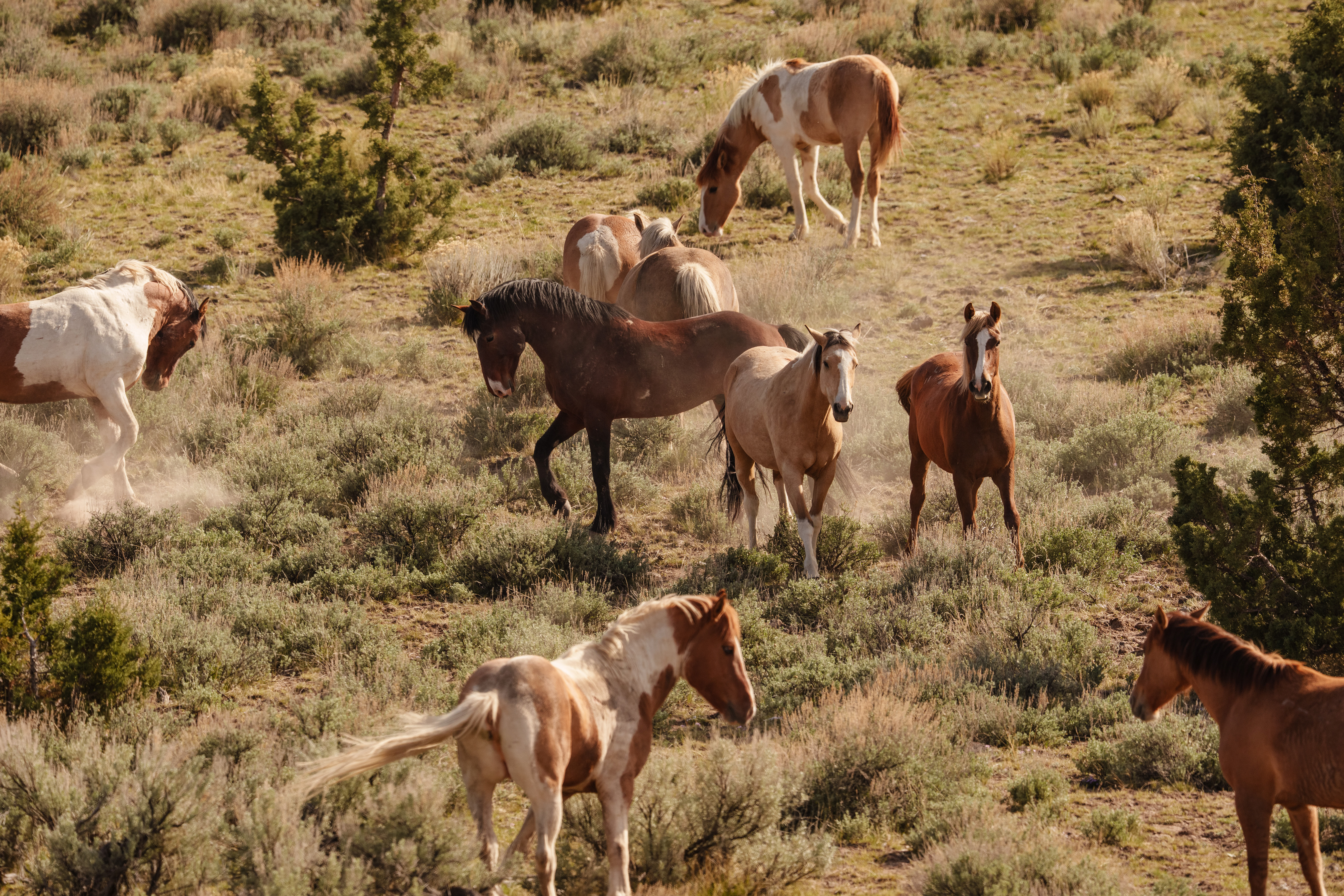
    They once had run free through the desert mountains of the West, a multicolored band of 68 wild mustangs that had never been saddled or corralled.

    Then the federal government rounded them up with helicopters in an attempt to control wild populations on public lands. The horses were held for years in a feed lot in Idaho while the government tried to find them what it called “loving homes.”

    Abruptly this March, the government found a home. Whether it was loving didn’t seem to matter.

    The horses were packed into metal trailers and trucked 1,800 miles east to the pens of a livestock trader in Ohio named Brandon Jones, who bought them for $25 each.

    A day later, two double-decker cattle trucks pulled up at midnight, loaded the mustangs, and quickly drove off into the night.

    From there, the mustangs disappeared. The trader won’t say where they went. Wild horse advocates suspect the horses were shipped to slaughter.

    But that’s not the government’s concern. It got what it wanted: two more truckloads of wild horses off its books.

    An examination of government records by the New York Times found that all over the country, the Bureau of Land Management, the agency in charge of protecting wild horses, is quietly selling thousands of horses to buyers like the one in Ohio. Slaughtering wild horses is illegal, but the bureau’s actions create a loophole that enables people to get mustangs on the cheap and then quickly resell them to be exported alive, processed into cuts of meat, and sold abroad.

    Livestock inspection records show mustangs sold by the government soon ended up on trucks bound for slaughter plants in Canada.

    The U.S. government’s sales of wild horses were once rare but started to rise after President Donald Trump took office. In 2025, they more than doubled to 3,700 horses, according to bureau records.

    In that time, the bureau has sent about 500 horses to Jones.

    In an interview, Jones said he was able to resell the horses quickly, though he didn’t advertise online or even post a “For Sale” sign at his corral. He would not say where the horses went and denied selling any to slaughter.

    The government can spend more than $3,000 to capture a mustang and bring it to market but sells each for as little as $25. A horse can fetch up to $750 at a slaughter plant. The potential for profit keeps buyers coming.

    By selling mustangs at a huge loss, animal welfare organizations say, the agency in charge of protecting wild horses is, instead, subsidizing their destruction.

    “The BLM is saying to the public that slaughter is off the table, but they’re doing it in plain sight using a third party,” said Clare Staples, who runs a wild horse sanctuary in Oregon called Skydog Ranch.

    The bureau did not respond to questions about its sales or make leaders available for comment. An unattributed statement from the agency said it “remains dedicated to placing animals into good homes, protecting their welfare, and upholding its statutory responsibilities on behalf of the American public.”

    About 73,000 wild horses roam federal public lands in the West, where they are protected from hunting or capture. For decades, in an attempt to keep the population sustainable, the bureau has rounded up 9,500 on average each year and offered them for adoption. But it finds adopters for only about half.

    The rest go into a labyrinth of feedlots and pastures that the bureau calls “the holding system.” The system now stores 58,000 wild horses at an annual cost of $100 million. Caring for them eats up most of the bureau’s $142 million wild horse budget.

    Over the years, bureau leaders have floated various lethal proposals for reducing the herds. But Congress — aware that the public wants mustangs protected — has barred the bureau from spending any money to kill healthy wild horses.

    There are alternatives to the roundups that have left so many horses in storage. For 20 years, the bureau has had access to inexpensive fertility-control drugs delivered by dart gun. They have been used effectively to control a few wild herds, and the government’s own experts have repeatedly urged the bureau to use them more widely.

    But because the bureau is spending so much on storage, it has little left to make the changes that would save it from storing more.

    And because the bureau has been unable to stop horses from coming into the storage system, it is now focused on getting them out.

    While the bureau can’t kill wild horses, it can use a series of bureaucratic maneuvers and financial transactions to transform them on paper into domestic livestock, stripping their legal protections.

    First, the bureau has to show a wild horse can’t be adopted. It does this by posting hundreds of horses at a time on its online adoption site. After a horse has three one-week listings with no takers, the law permits the government to designate it as unadoptable.

    Then it can be put up for sale.

    That’s an important legal distinction because a wild horse that is adopted retains its federal protections. One that is sold loses those protections immediately.

    A sold horse still can’t be legally killed — at least not yet — because the buyer is required to sign a contract promising not to slaughter the horse or “knowingly” sell it to anyone who intends to resell it for slaughter.

    But if the buyer resells to a middleman without asking questions, the buyer is safe from prosecution.

    The middleman has not signed a contract with the bureau and is free to legally sell the mustang to slaughter.

    Jones, 35, appeared out of nowhere in the wild horse world last spring and quickly became the bureau’s biggest buyer, bureau records show.

    He said he sold horses only two or three at a time to good owners. “I’m not dealing with traders,” he said. “I’m dealing with a farmer, come up the road, who wants to buy a horse.”

    Shown photos and video of the trucks of horses that left his property at midnight — taken by a local wild horse lover and shared with the Times — he questioned whether it had happened.

    “Could have been cattle,” he said.

    To buy large numbers of mustangs, Jones had to get approval from top officials in the bureau. His application stood out.

    Nearly all of the other buyers who have qualified over the years have well-established mustang sanctuaries. Not Jones.

    He had no ties to the wild horse world and no history of working with mustangs. The application asked what veterinarian would care for the horses. He listed an office an hour away from his land with a website that says it treats only small animals.

    On Facebook, he was friends with a number of livestock dealers but no wild horse rescues.

    For a year, his application sat at the bureau with no action. Then, in March 2025, a federal court ordered an end to one of the bureau’s leading ways of off-loading horses — the program that paid adopters $1,000 per horse.

    A few weeks later, Jones’ application was approved.

    He denied selling mustangs to the traders. He said it was wrong to see him as a bad guy. By reselling mustangs, he said, he had saved the government millions.

    There are small clues to what may have happened to the wild horses sold to Jones.

    Four showed up late last fall at an auction in Tennessee frequented by slaughter buyers.

    Jones said the horses in Tennessee were the result of just one bad sale to an irresponsible buyer.

    Another clue emerged at the Canadian border.

    The United States has no horse slaughter plants. The industry here was shut down in 2007, so horses are now exported to Canada.

    Jones lives about an hour from the main Canadian horse export crossing.

    Last summer, a few weeks after Jones received a load of 97 mares, export records show that one of the largest exporters of slaughter horses to Canada, an Ohio man named Fred Bauer, shipped two truckloads of horses to Canada. Grainy photos of the trailers’ interiors taken by border inspectors show some of the horses had distinctive serial numbers on their necks — government wild horse brands.

    Jones denied that his horses went to Canada through the exporter, saying, “I’d never deal with Freddy Bauer. Me and Freddy Bauer don’t get along.”

    Reached by phone, Bauer declined to say whether he had bought mustangs from Jones. When asked where Jones’ horses were going, Bauer said it would be simple for authorities to track the horses.

    “The government put Brandon Jones in charge of this whole wild horse situation,” he said. “There’s all kinds of records. So they ought to be able to find out what he’s doing if they want to.”

    This article originally appeared in the New York Times.

  • Washington Post ordered to rehire fired columnist

    Washington Post ordered to rehire fired columnist

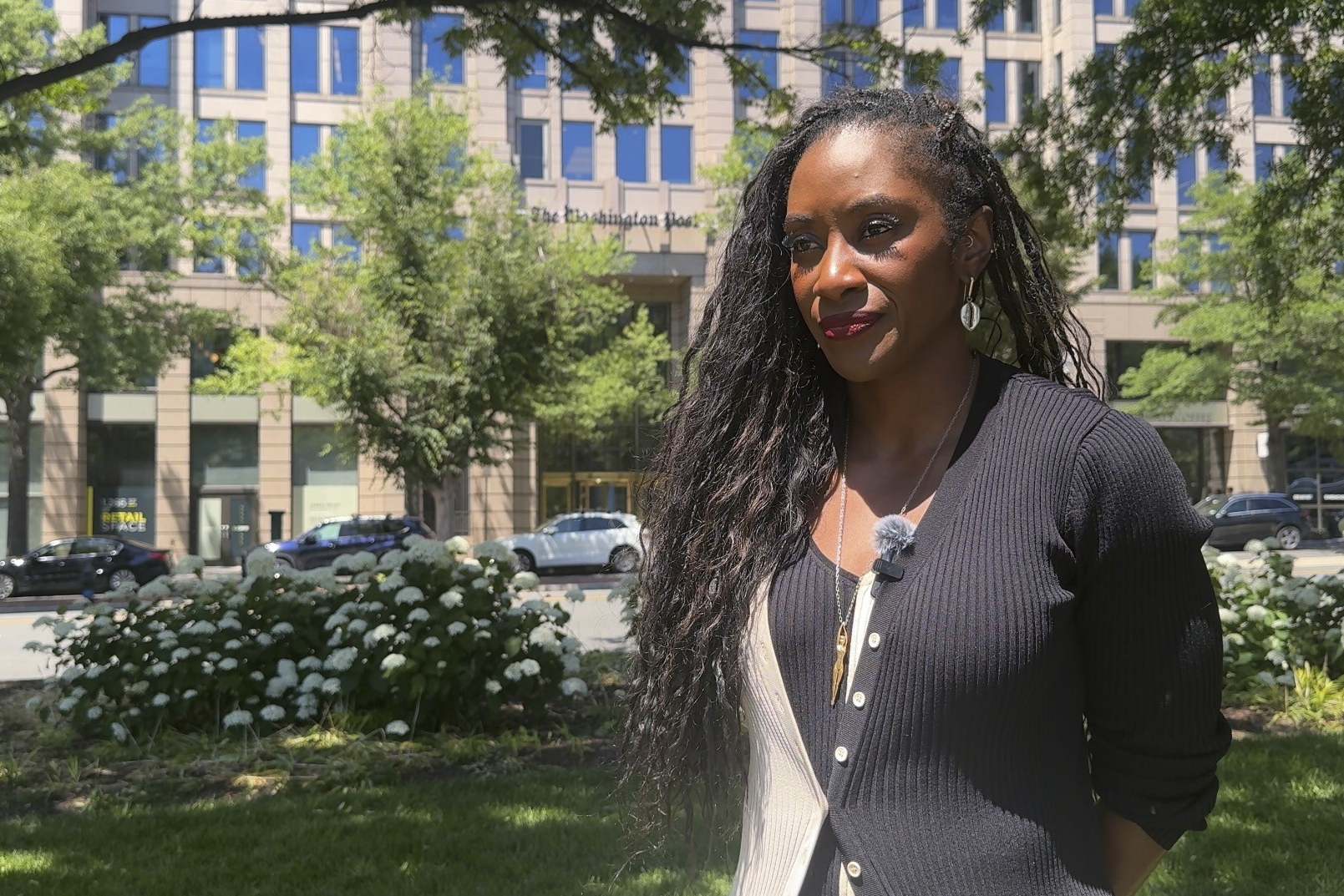
    A private arbitrator has ordered the Washington Post to rehire opinion columnist Karen Attiah, who was fired in September over her social media posts about the assassination of conservative activist Charlie Kirk. It also ordered the company to compensate her with back pay.

    Sarah Miller Espinosa, the arbitrator, said in a written decision Thursday that the Post “did not have good and sufficient cause” to terminate Attiah and “violated” its labor agreement, according to a copy of the decision shared with the New York Times by Attiah’s lawyers.

    “The Washington Post failed to establish the grievant engaged in gross misconduct,” Espinosa wrote.

    In a statement, Attiah said that she hoped the decision “sends a message to journalists and media institutions everywhere that freedom of expression is always worth fighting for.” She said that she was “willing to go back” to her work at the Post, which she called “one of the world’s most storied newspapers.”

    “This decision confirms what we’ve said from the start: I was doing my job as an opinion writer, and this was wrongful termination,” she said, adding that she was “relieved to finally have that record set straight”

    A spokesperson for the Post said the company respects the arbitration process and declined to comment further.

    The decision is the result of a yearlong fight between the Post and Attiah, who last year accused the company of violating its labor agreement and social media policy when it fired her for posts she said were within her purview as an opinion columnist. A clause in the agreement allows employees to submit disputes for arbitration.

    Arbitration is generally considered binding in most disputes, though courts have occasionally overturned decisions after courtroom findings of fraud or other improprieties. The Post’s labor agreement says arbitration is binding, though both the company and the employee retain their legal rights.

    The Washington Post said in its termination letter that Attiah’s posts about Kirk had harmed “the integrity” of the organization and violated standards requiring employees to use social media with civility and respect.

    Attiah’s remarks about Kirk’s assassination, which she posted to the social network Bluesky on Sept. 10, the day he was shot, responded to the outpouring of grief after the shooting. “Refusing to tear my clothes and smear ashes on my face in performative mourning for a white man that espoused violence is … not the same as violence,” Attiah wrote in one of the posts.

    The Post’s opinion section has been in flux since early last year, when Jeff Bezos, the newspaper’s owner, moved to reorient the section to focus on “personal liberties and free markets.” Some readers canceled their subscriptions and accused Bezos of attempting to curry favor with the Trump administration.

    Lawyers for the Washington Post and Attiah made their arguments before Espinosa in June during a hearing that included testimony from Attiah; Adam O’Neal, then the opinion editor at the Washington Post; and Wayne Connell, the company’s chief human resources officer. Attiah was represented by Democracy Defenders Action, a progressive nonprofit co-founded by the lawyer Norman Eisen, and by the Washington-Baltimore News Guild.

    In his testimony, O’Neal said he saw Attiah’s posts the morning after Kirk died and sent them to Connell, according to a transcript of the hearing obtained by the New York Times. “Karen’s social media feed yesterday and today is beyond the pale, completely unacceptable for someone associated with Opinions,” O’Neal wrote, according to the transcript.

    Soon after, O’Neal and Connell met with Will Lewis, then the CEO of the Washington Post, to discuss the posts, according to the transcript. They ultimately decided to fire Attiah.

    During her testimony, Attiah defended her social media posts, saying that they were part of her work for the Post, “commenting on our discourse on political violence,” Attiah said, according to the transcript.

    In a statement, Eisen called the decision “a landmark victory for one of our nation’s crusading journalists.”

    This article originally appeared in the New York Times.

  • U.S. military kills 2 people in attack on boat in Pacific

    U.S. military kills 2 people in attack on boat in Pacific

    WASHINGTON — The U.S. military killed two men in a strike against a boat in the eastern Pacific that it said was transporting narcotics, U.S. Southern Command announced early Monday. It was the first such strike by the military since June 21.

    The United States began a campaign of boat strikes last year in the run-up to the military operation that seized Nicolás Maduro, the president of Venezuela. The military has continued the operations in the Caribbean and the eastern Pacific, killing at least 223 people in 67 strikes that it said were involved in the narcotics trade.

    But narcotics experts say the boat strikes have failed to slow the smuggling of cocaine from South America to the United States. According to Brown University, the costs of the operation were at $4.7 billion as of March 31.

    Legal specialists also have said the strikes are illegal extrajudicial killings because the military is not permitted to deliberately target civilians — even suspected criminals — who do not pose an imminent threat of violence.

    Southern Command provided little detail about the strike that took place Sunday but noted that intelligence reports said the vessel was trafficking narcotics and traveling on a route used by drug smugglers.

    “Joint Task Force Western Hemisphere executed a lethal kinetic strike on a low-profile vessel operating along established narcotrafficking routes in the Eastern Pacific,” Southern Command said in a statement, referring to a new military unit set up to expand the Pentagon’s war against drugs in cooperation with regional allies.

    Gen. Francis L. Donovan, the head of Southern Command, said in the statement on social media announcing the strike: “When I ordered the establishment of Joint Task Force Western Hemisphere, it was precisely for this purpose: to accelerate, synchronize, and execute lethal actions against these destabilizing narco-terrorist networks.”

    Southern Command did not explain the two-month lull in strikes since an attack on a boat in the Caribbean killed eight people June 21. Military officials have attributed the pause at least in part to planes and other equipment being diverted to help victims of the recent earthquake in Venezuela.

    The Trump administration has in recent months stepped up its cooperation with allies across Latin America to combat the drug trade. It created the coalition, part of the regional Shield of the Americas alliance, and convened its first meeting in March.

    That month, Ecuador and the United States launched joint military operations against designated terrorist groups. In May, the Pentagon pressed Guatemala to agree to joint U.S. airstrikes and other military action inside its borders to target suspected drug groups.

    Defense Secretary Pete Hegseth said this month that Honduras and Colombia had also agreed to allow joint operations.

    This article originally appeared in the New York Times.

  • U.S. Marines cancel drill with South Korea, citing Iran war demands

    U.S. Marines cancel drill with South Korea, citing Iran war demands

    SEOUL, South Korea — The United States has canceled a joint amphibious landing exercise with South Korean forces that was set for next month, citing resource constraints driven by the war in Iran, the South Korean military announced Monday.

    The U.S. Marine Corps had notified its South Korean counterpart in June that Middle East operational demands would prevent the deployment of forces for the biennial exercise known as Ssangyong, or “Twin Dragons,” the South Korean Marine Corps said Monday. The U.S. military in Korea did not immediately comment on the announcement.

    The move marked the second joint military drill with South Korea to be canceled or downsized during President Donald Trump’s second term. The decision has intensified doubts over Washington’s commitment to maintaining a credible deterrent on the Korean Peninsula and ​its capacity to manage concurrent global conflicts, as U.S. weapons stockpiles have fallen to troubling levels.

    Ssangyong is one of the highest-profile joint exercises that the allies have conducted for decades. In a typical iteration, more than 10,000 Marines from both countries storm a sandy beach on the southeastern coast of South Korea, supported by columns of amphibious vehicles and fleets of military aircraft. North Korea has routinely condemned the drill as a rehearsal for invasion.

    While Ssangyong was previously shelved during Trump’s first term​ —​ when he dismissed major exercises as “provocative” and too expensive amid his personal diplomacy with North Korean leader Kim Jong Un​ —​ it was revived in 2023.

    However, Trump recently renewed his criticism of the drills, labeling them “insulting” to Kim. Earlier this month, he abruptly ordered the Pentagon to curtail the Ulchi Freedom Shield, shortening the 11-day annual exercise to just five days.

    “The U.S. and South Korean Marine Corps are continuing close consultations regarding the future resumption” of Ssangyong, Han Seung-jeon, a South Korean Marine Corps spokesperson, said Monday.

    Beyond financial concerns, Trump has questioned why his country should support joint military drills when South Korea has declined to participate in the conflict with Iran. The war has significantly strained U.S. military resources, depleting critical munitions stockpiles and forcing a realignment of assets from Asia to the Middle East.

    Trump also appears eager to pivot from the Middle East conflict toward renewed diplomatic engagement with Kim, with whom he once said he “fell in love.” While halting drills successfully incentivized Kim to negotiate​ during Trump’s first term, North Korea dismissed this month’s scaling down of Ulchi Freedom Shield as “unworthy of comment.”

    This article originally appeared in the New York Times.

  • Nancy Kassebaum, first woman to chair a major Senate panel, dies at 94

    Nancy Kassebaum, first woman to chair a major Senate panel, dies at 94

    Nancy Kassebaum, a three-term moderate Republican from Kansas who was the first woman to chair a major standing committee in the U.S. Senate, died Friday in Manhattan, Kan. She was 94.

    The death, at a hospice care facility, was confirmed by her son William Kassebaum.

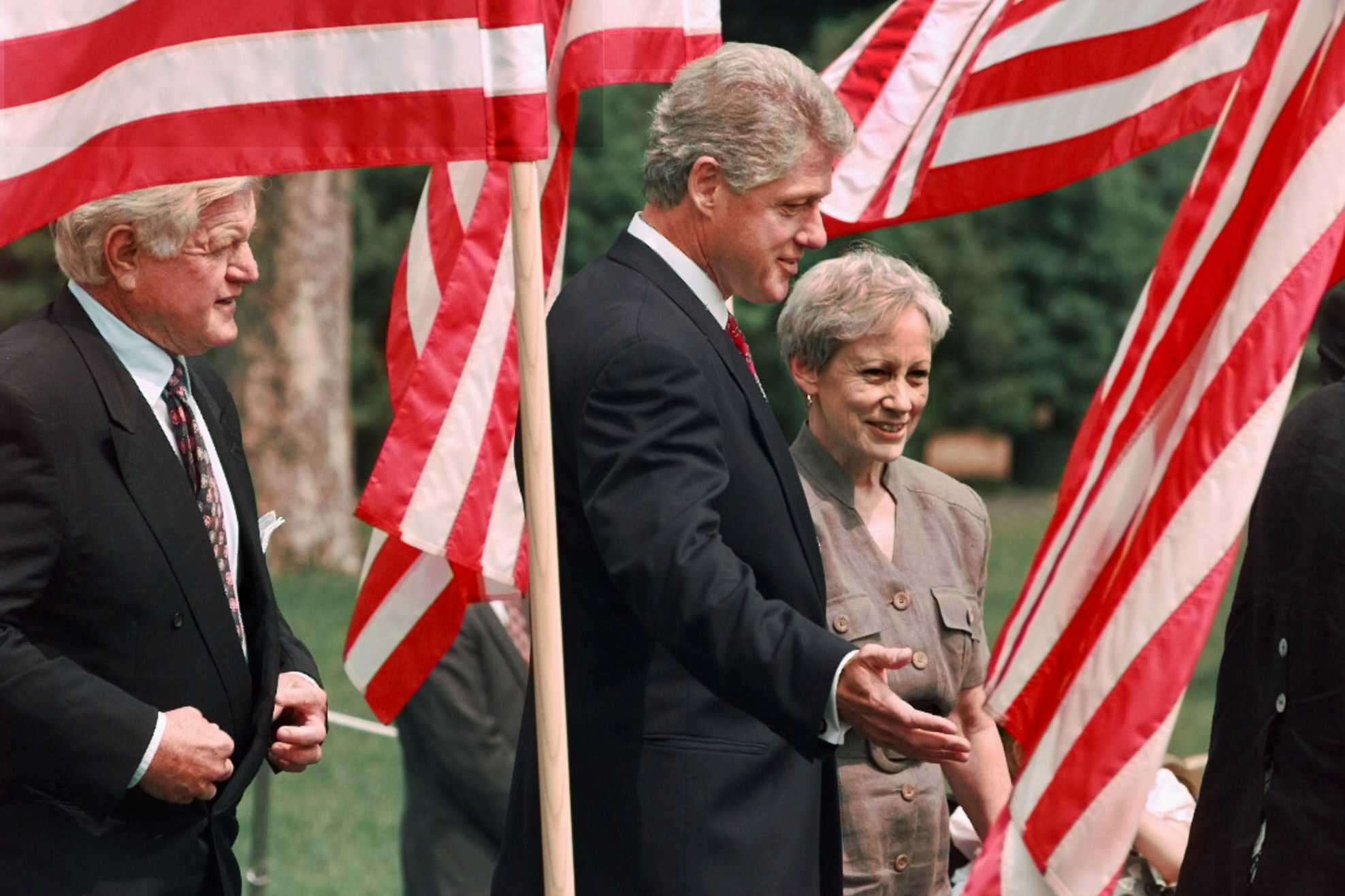
    As the leader of the Committee on Labor and Human Resources (now known as the Committee on Health, Education, Labor, and Pensions) from 1995 to 1997, Sen. Kassebaum won passage of legislation to ensure the portability of health insurance coverage when workers changed jobs. She and the bill’s Democratic co-sponsor, Sen. Edward Kennedy of Massachusetts, overcame months of opposition from Sen. Bob Dole, the majority leader and her close friend, fellow Republican, and fellow Kansan.

    She had earlier played a role as Congress overrode President Ronald Reagan’s veto of a 1986 bill to enact economic sanctions against the apartheid regime in South Africa. As chairperson of a subcommittee on African affairs, she met with the president, urging him to challenge the regime: “There is one person they might listen to, and that is President Reagan.” Instead, he warned of the threat of Marxist tyranny if apartheid fell. She joined 77 other senators as they overrode his veto.

    Over her Senate career, which lasted from 1978 to 1997, her voting record was scored at 56% by the American Conservative Union and 37% by the liberal organization Americans for Democratic Action. On most economic issues, she voted conservatively. But from her first run, she supported abortion rights, saying in a campaign debate, “Abortions are seldom the right moral choice, but I feel there should be a choice.”

    In a 2013 interview for this obituary, she said that because of her views on abortion and her support for a ban on assault weapons, “I couldn’t get elected today” in Kansas. She was a critic of President Donald Trump’s since the 2016 campaign, and endorsed Kamala Harris against him in 2024. In recent years, she also endorsed Democratic candidates for governor and senator in Kansas.

    She had no trouble winning her three terms, though, and was a heavy favorite to win again in 1996. But like many moderates, then and now, she had tired of the political strife in the capital.

    In December 1995, after she announced her retirement, she told the New York Times: “The higher the decibel level gets, the more it’s like a boxing match. It’s really different from when I came here.”

    A year later, in December 1996, shortly before her third and final term ended, she married former Sen. Howard Baker of Tennessee, an influential Republican politician who had served as majority leader and whose first wife died of cancer in 1993. For years, they lived at his home in Huntsville, Tenn., and on her ranch in Burdick, Kan., which she said in 2013 was so peaceful that “at night the only thing I hear is the coyotes.” Baker died in 2014, at 88.

    Burdick is on the edge of the Flint Hills, and she said that, of all her achievements in Congress, she was proudest of the establishment of the 10,894-acre Tallgrass Prairie National Preserve in that region, as well as legislation limiting liability for manufacturers of general aviation aircraft, an important industry in Kansas.

    Nancy Josephine Landon was born in Topeka, Kan., on July 29, 1932. Her father, Alfred Mossman Landon, an oilman known as Alf, was then running for the first of what would be two terms as a progressive Republican governor. Her mother, Theo (Cobb) Landon, was a pianist and harpist.

    Nancy went to local public schools, graduated from the University of Kansas in 1954 with a bachelor’s degree in political science, and earned a master’s degree in diplomatic history at the University of Michigan in 1956, the year she married John Philip Kassebaum, known as Phil, a law student there. They moved to Maize, Kan., outside Wichita, and had four children.

    Politics had been the lifeblood of the Landon home as she grew up — all the more so after her father ran in 1936 as the Republican nominee against President Franklin D. Roosevelt. (Landon won only two states, Maine and Vermont, and eight electoral votes.) Often visited by leading Republicans, he remained a revered figure in Kansas until he died at 100 in 1987.

    But before his daughter ran for the Senate in 1978, her political experience was limited. She had been elected to the local school board and served a year as a constituent services staff member for Sen. James Pearson.

    When Pearson unexpectedly announced his retirement, she entered a wide-open, crowded Republican primary with eight other candidates. She was separated from her husband at the time — they divorced in 1979 — and ran as Nancy Landon Kassebaum.

    She never denied the value of name recognition. “It has been said I am riding on the coattails of my dad,” she conceded while campaigning, “but I can’t think of any better coattails to run on.”

    She won the primary with just over 30% of the vote, then defeated the Democratic candidate, Bill Roy, with 54% in the general election. She was reelected in 1984 and 1990, earning three-quarters of the vote both times.

    In addition to her son William, she is survived by another son, John Jr.; seven grandchildren; and two great-grandchildren.

    The only woman in the Senate when she was first elected, she bridled at the kind of commentary on her clothing and hair that would never be directed toward her male colleagues. She occasionally complained that those colleagues did not take her seriously. But she had experienced the same thing at home.

    “My dad was adamantly opposed” to her 1978 candidacy, she said in 2013. “I think it was because he’d thought I’d lose, but also because he could not imagine a woman in the Senate. It was especially hard for him to visualize it was his daughter.”

    In 1995, she said that one thing she would not miss after leaving was being asked, “What’s it like to be a woman in the Senate?” By then, eight women were senators — so, she said, “it’s no longer a big deal.”

    This article originally appeared in the New York Times.