TALKNAFJORDUR, Iceland — Gudlaug Bjornsdottir had warned her family. If the talk over the dinner table turned to Iceland’s coming referendum on opening talks to join the European Union, she would get up and leave.
Polls show a starkly divided country heading into the vote Saturday. Many people have strong opinions about whether Iceland should maintain its hard-won independence or seek the stability and protections that would come with EU membership.
So perhaps inevitably, despite Bjornsdottir’s admonitions, the dinner conversation in the tiny town of Talknafjordur one recent Friday eventually landed on the referendum. “I am leaving, like it or not,” Bjornsdottir stood and said, a wineglass still in her hand.
Her family promised not to mention it again, and she returned to her seat.
This exchange, in Iceland’s remote northwest, encapsulated an unusually heated debate in this proudly agreeable nation over what could be a watershed moment for its 400,000 people. If the vote passes, the country will start a yearslong process of EU accession negotiations. A second referendum, on whether to actually join the bloc, would be held once a deal was reached.
Many Icelanders have spent months wrestling with how to speak with each other about the divisive choice.
“It has become something of a ‘hot potato,’” Arni Ingolfsson, a 55-year-old program manager at a tech company, wrote in an email. He said he was avoiding talking to his co-workers and even a close relative about the issue.
“It’s bombarding everyone, from every angle — everywhere,” said Lisa Margret Gunnarsdottir, 31, an advocate for Icelandic students. She said that there were extreme disagreements in her immediate family and that no one talked about anything else.
“The sauna is hot and uncomfortable these days,” said Greta Gudjonsdottir, 57, who works in tourism. She said she had not yet decided how she would vote but just wanted the whole thing over with.
With this vote, Icelanders are trying to figure out the best way forward in an increasingly precarious and divided world. For years, they had little reason to doubt that their country would remain safe, stable, and sovereign. Then NATO, to which Iceland has long entrusted its security, threatened to crack under pressure from President Donald Trump, while wars, climate change, and tariffs shook the global economy.
Some “yes” voters say that Iceland should seek strength in numbers — and the financial stability of being part of one of the world’s biggest economic blocs — by moving toward joining the EU.
Many opponents worry that membership in the bloc would cost Iceland its autonomy on several fronts. Icelanders are acutely aware that their country only gained full independence in 1944, after centuries of Norwegian and Danish rule.
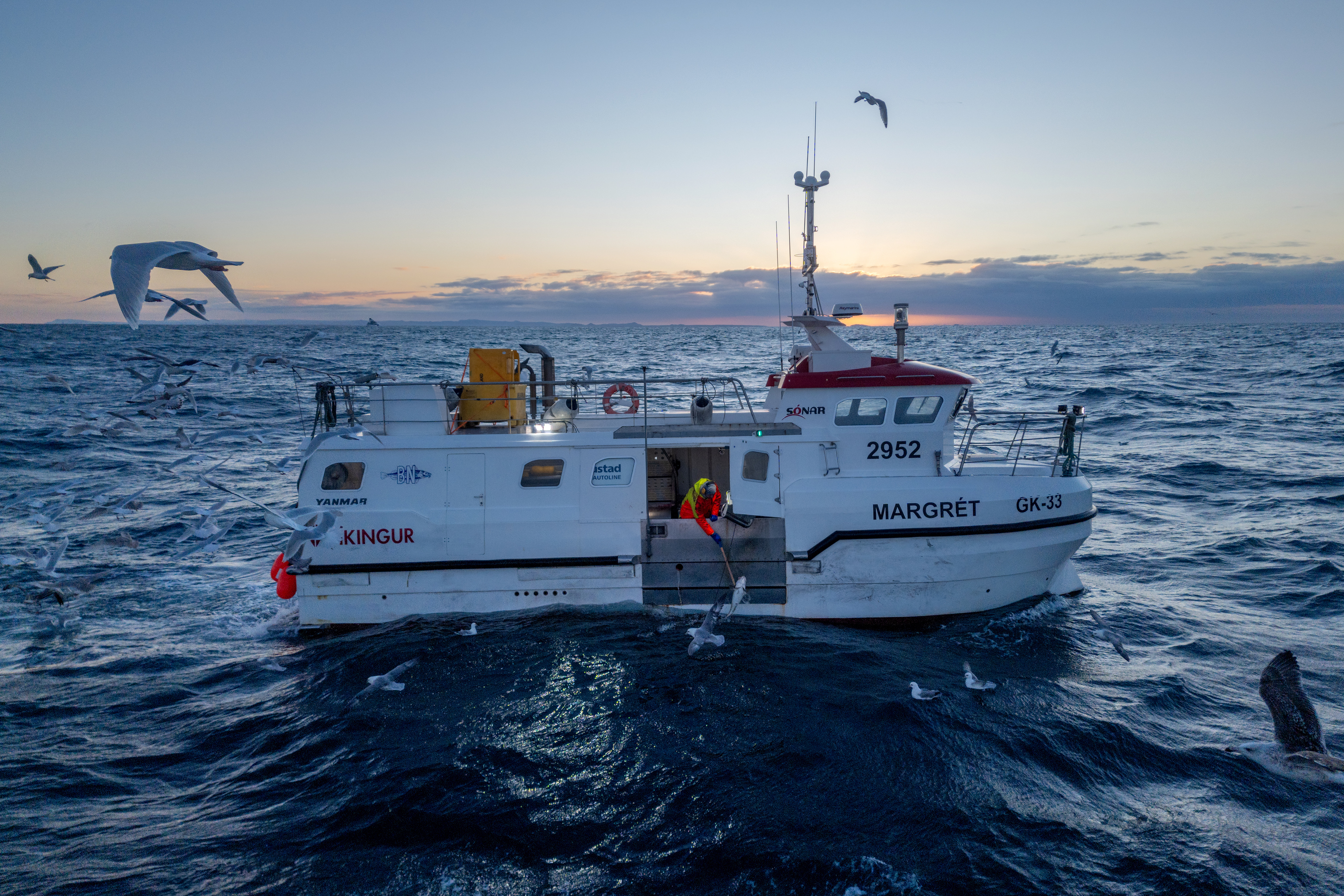
Fishing is widely seen as the biggest concern about EU membership, with many “no” voters worrying that joining the bloc could hurt this major industry.
“It feels very existential, this debate,” said Eirikur Bergmann, a politics professor at Bifrost University in Iceland. “It’s really a fight over where Iceland belongs.”
Of course, Iceland has had contentious times before.
The 2008 global financial crisis hit the country particularly hard — its banks collapsed, and its currency plummeted. The strife led Iceland to explore EU membership, but that effort fizzled after its economy started to recover.
Still, many Icelanders live with the memory of that economic precarity, which is animating the referendum debate for both sides. Some think joining the European economic bloc could help lower Iceland’s high inflation and interest rates, while others worry that it could burden the country with regulations that make it less nimble.
Bjornsdottir and her husband, Thor Magnusson, who were having the recent family dinner in Talknafjordur, make their living off fish. He goes out alone on a boat. They work together to prepare the catch and sell the fish out of a glass house, which runs on the honor system.
Like other Icelandic fishermen, they believe that staying out of the EU will give them more control over their own fate.
The discourse over the referendum has become so heated that Margret Einarsdottir, a law professor at Reykjavik University, said she saw echoes of American-style polarization and misinformation in some of the ugliest corners of the domestic debate.
“I’m sad about how much anger is in this discussion,” she said. Icelanders do not shy away from disagreement. But this feels different, she and other experts said.
“We are not used to it,” Einarsdottir said.
Others see things more positively, saying it is a good thing that Icelanders can disagree openly but cordially, and still keep their tight communal bonds.
“It’s a lively debate, which is also a very healthy sign of democracy,” said Bjarni Mar Magnusson, a partner at a law firm, Polestar, and a former dean of the law faculty at Bifrost University.
Hallgrimur Oddsson, the founder of Evropustraumar, an Icelandic think tank focused on relations with the EU, said that despite the acrimony, Icelanders still share the same values.
“At the end of the day,” he added, “we can still talk to our neighbor.”
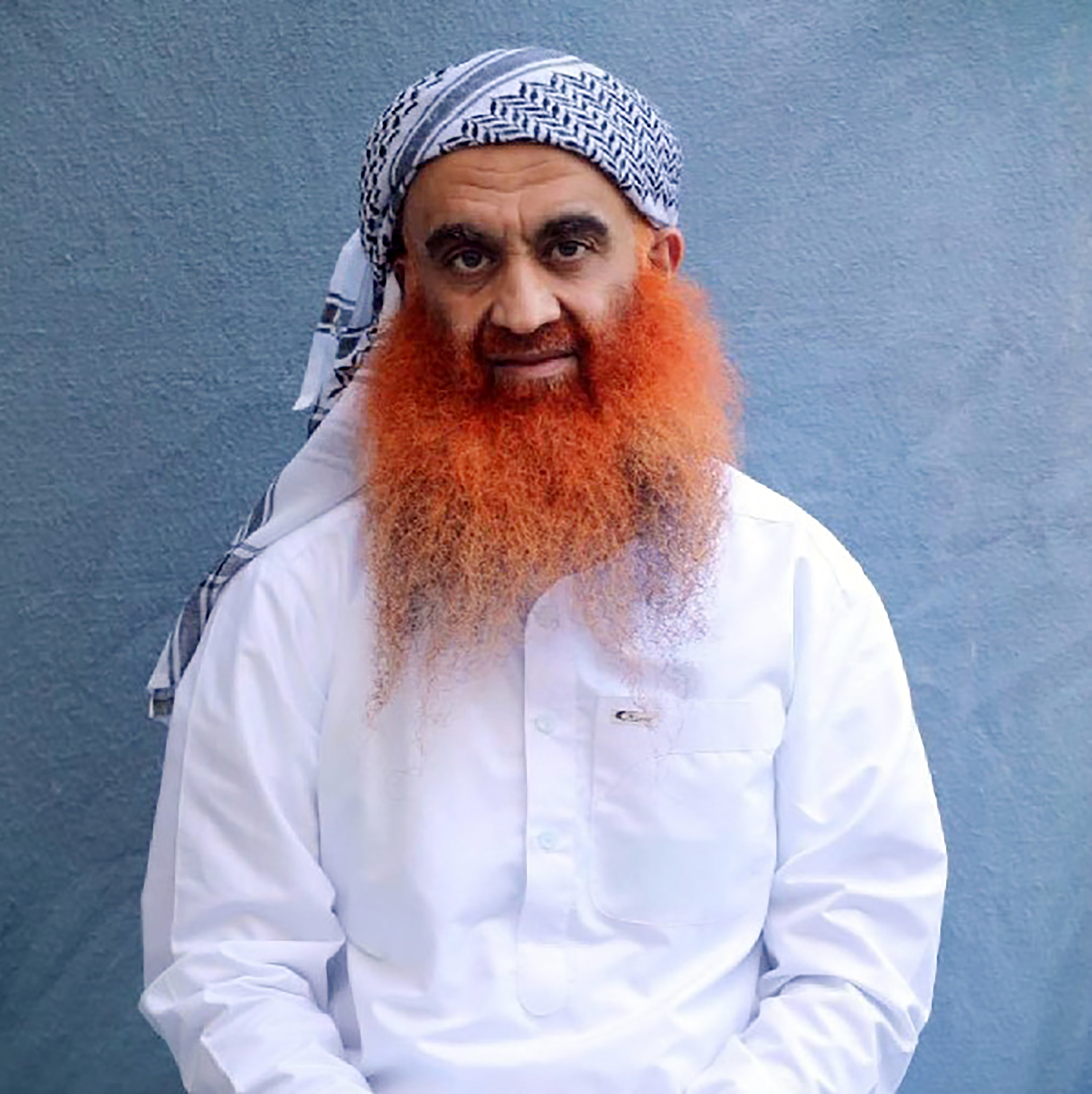
In a major blow to the U.S. case against Khalid Sheikh Mohammed, the man accused of plotting the Sept. 11 attacks, a military judge ruled Friday that the prisoner’s confessions to FBI agents were not voluntary and cannot be used against him at trial.
Prosecutors have described Mohammed’s interrogations in 2007 at the U.S. Navy base in Guantánamo Bay, Cuba, as the government’s most crucial evidence in the long-running death penalty case.
The ruling, just before the 25th anniversary of the attacks, could further delay the start of a trial if prosecutors decide to appeal to reinstate it. Aging survivors and families of victims have said they worry they may never see a final resolution to the case.
Just this week, the judge set a trial date of June 5, 2028.
Mohammed is accused of being the mastermind of the hijacking attacks that killed nearly 3,000 people in New York, Pennsylvania, and the Pentagon.
He was brutally interrogated by the CIA in secret overseas prisons after his capture in 2003 and held incommunicado until his transfer to Guantánamo in 2006. Prosecutors excluded statements from those interrogations from the case.
But the trial judge, Lt. Col. Michael Schrama, went further, concluding that Mohammed’s subsequent interrogations in 2007 at Guantánamo were also inadmissible.
“The prosecution has failed to prove by a preponderance of the evidence that Mr. Mohammad’s statements to the FBI were voluntarily given,” Schrama wrote in the conclusion of his 45-page ruling, which was not immediately released to the public but whose unclassified contents were confirmed by several lawyers who had seen it.
Schrama cited several factors, including an “unbroken continuation of the CIA’s psychological conditioning and severe coercion” at the time of Mohammed’s questioning at Guantánamo in 2007.
He also found that FBI agents intentionally failed to explicitly tell Mohammed that he had a right to be silent and to consult a lawyer, and that what he told them could be used against him at a trial.
The chief prosecutor, Rear Adm. Aaron C. Rugh, said his team would review the ruling “and will make a decision on whether to appeal in the near future.”
The judge gave prosecutors five days to decide but said they could request an additional five days.
The question of the taint of torture has hung over the case for years.
Defense lawyers had argued that Mohammed was essentially conditioned by the CIA through torture coupled with years of isolation and solitary confinement to later tell the FBI what it wanted to hear. He was not allowed to consult a lawyer until long after he had confessed and was charged.
Schrama has yet to rule on the confessions of two other defendants in the Sept. 11 case, Walid bin Attash and Mustafa al-Hawsawi. An earlier judge, Col. Matthew McCall, threw out the confessions of Mohammed’s nephew, Ammar al-Baluchi, who is accused of helping some of the 19 hijackers with finances and travel arrangements.
A different judge, Col. Lanny Acosta, suppressed the confession of the defendant in the USS Cole bombing case, Abd al-Rahim al-Nashiri, in an explicit finding that he had been tortured by the CIA. His death penalty trial in the 2000 attack, which killed 17 U.S. sailors, is scheduled to start in October.
The Sept. 11 case has been mired in pretrial proceedings since arraignment in 2012. Over the years, four other judges gathered evidence on the question Schrama decided Friday. An earlier judge found a fifth man, Ramzi Binalshibh, mentally incompetent to stand trial, a condition the defendant’s lawyer blamed on torture.
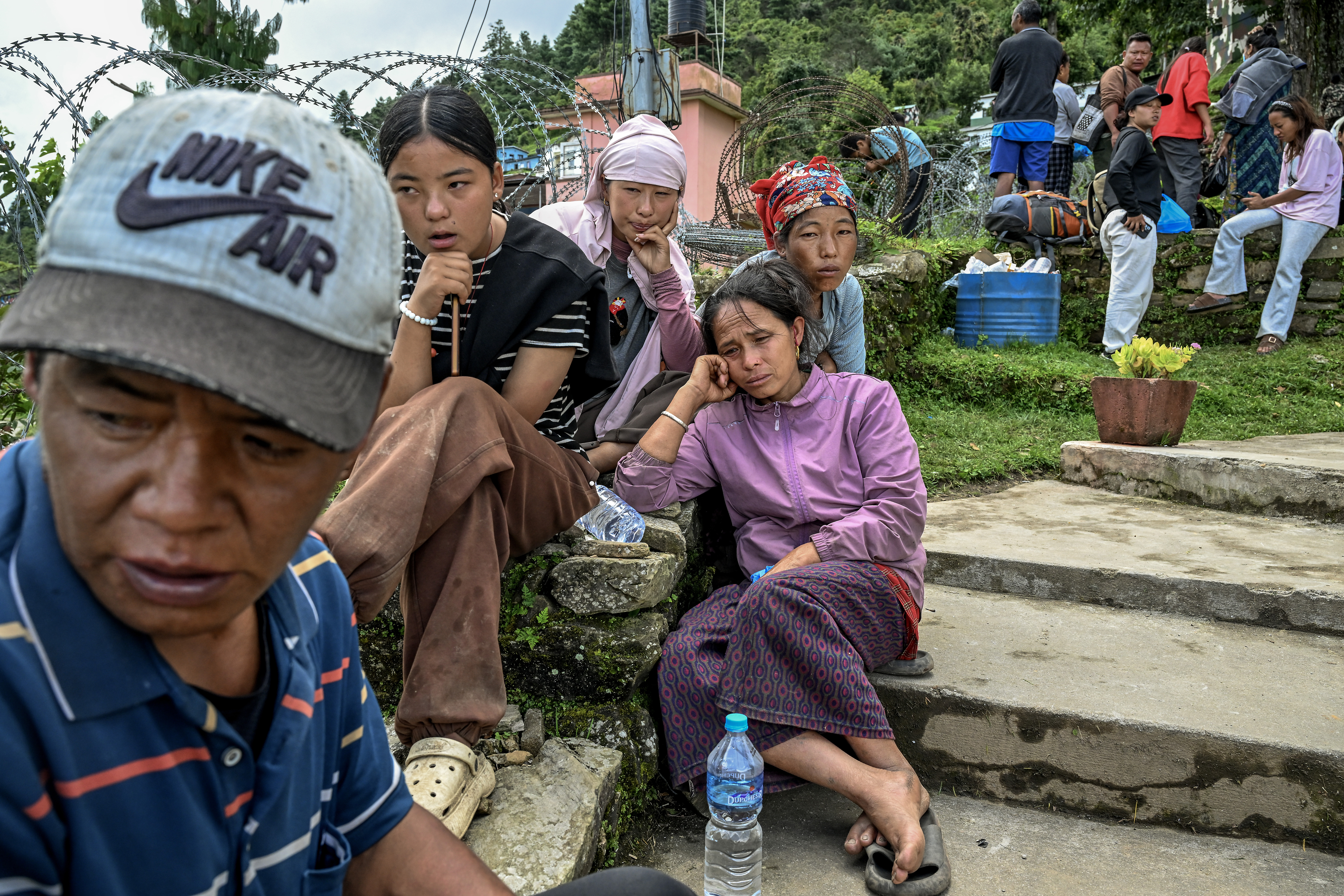
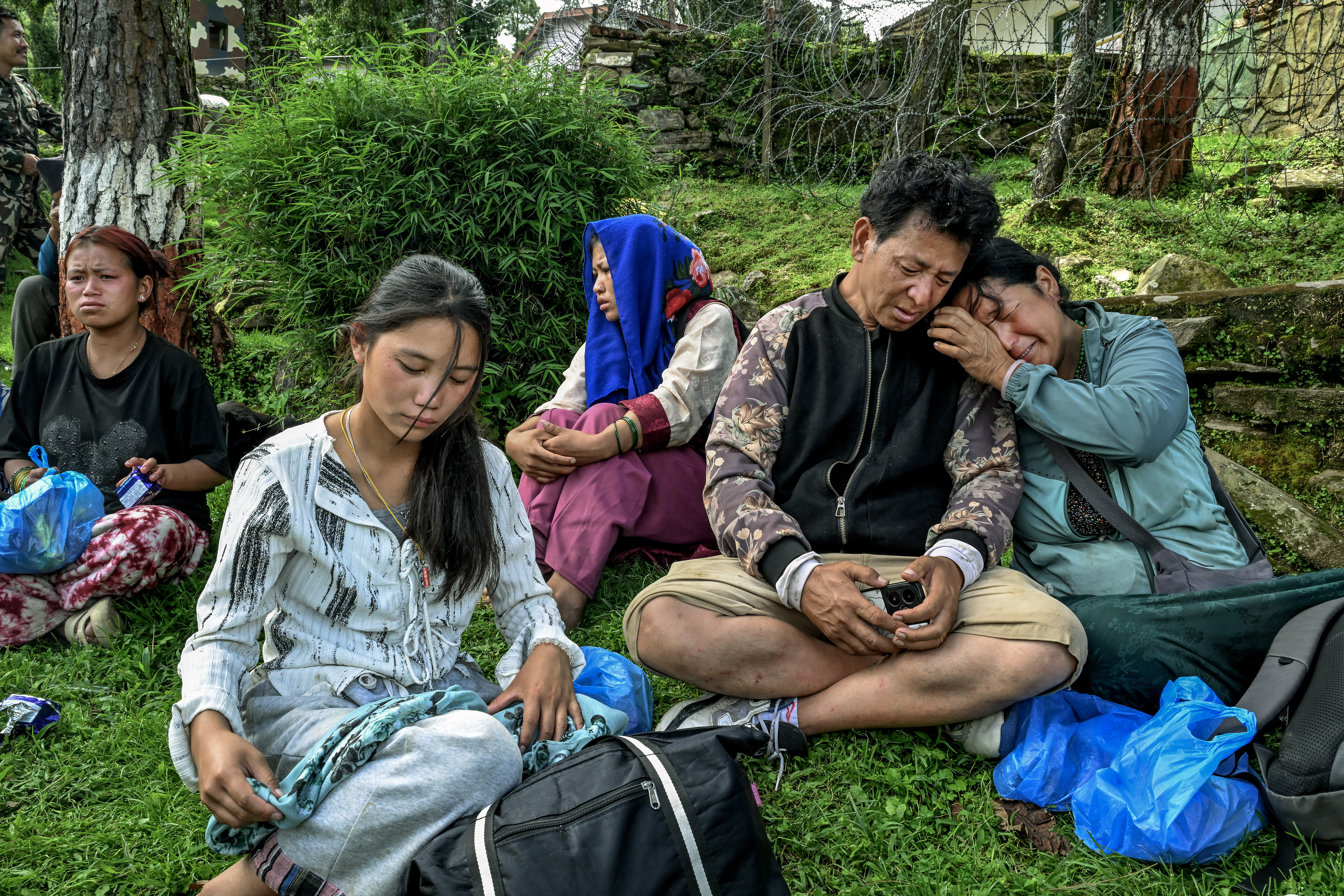
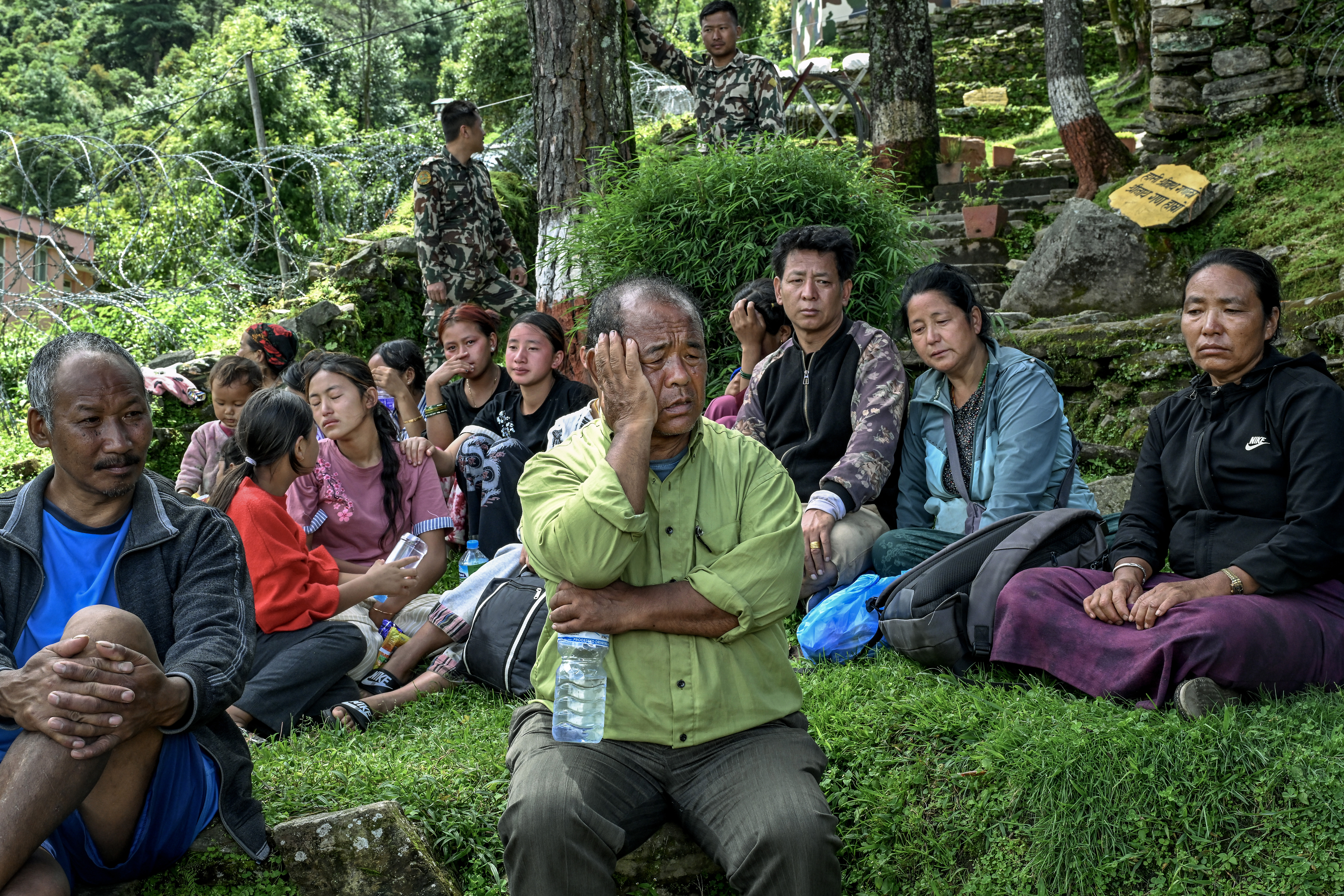
KATHMANDU, Nepal — It was already too late when the call came.
Rajan Khatri, 41, a police officer, was working at his station in a mountain village in northern Nepal when a friend rang Wednesday morning to warn that a flash flood was thundering downriver in his direction. As soon as he hung up, giant waves slammed into the station.
“I cannot explain how big the waves were,” Khatri said from a hospital bed in Nepal’s capital, Kathmandu, on Thursday. “They engulfed several meters-high buildings in a fraction of seconds. It wasn’t just water. It was a combination of boulders, sand and thick sludge.”
The onslaught flung Khatri out of the building, and he lost consciousness and suffered chest injuries. Two of his colleagues survived, but four were missing on Thursday.
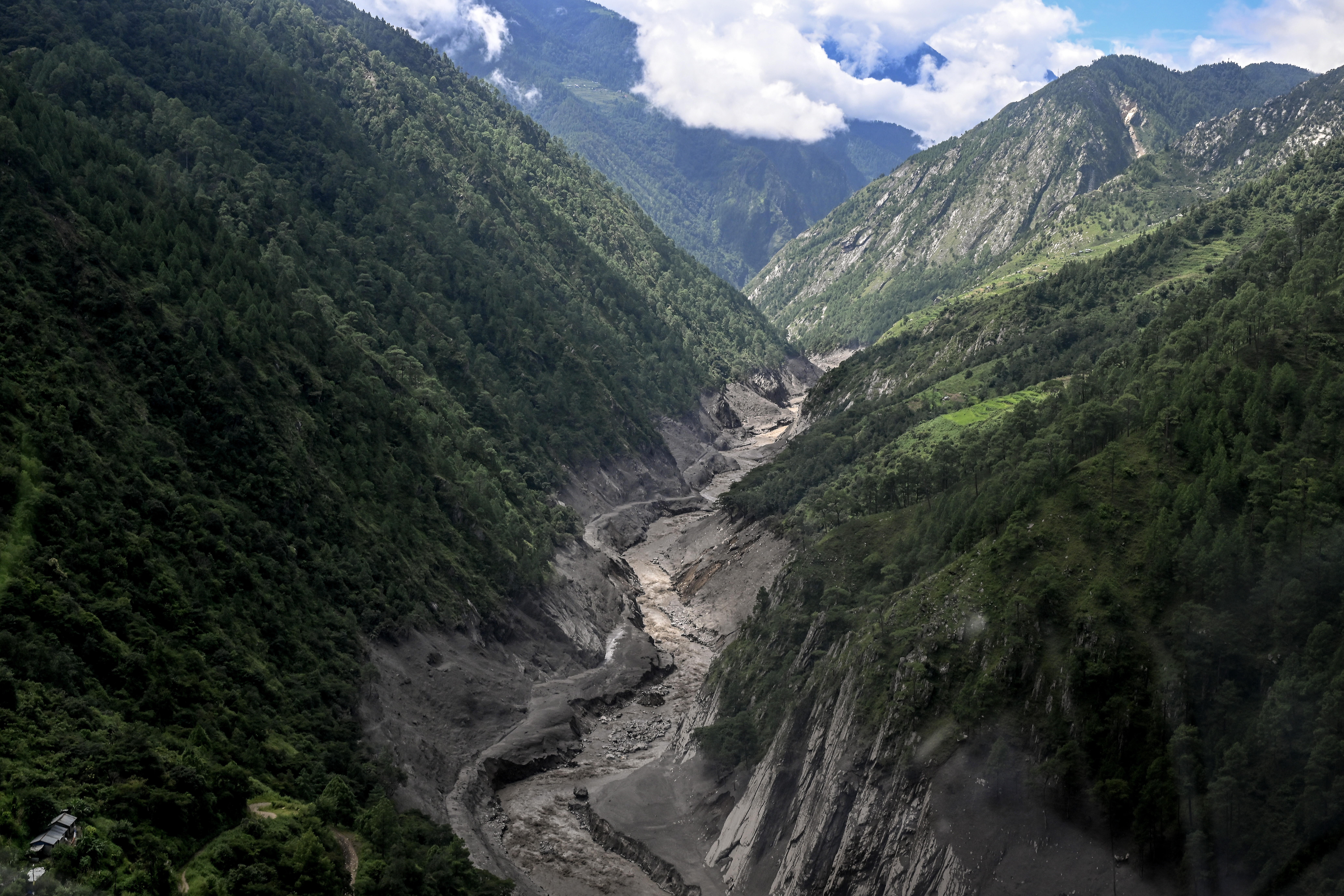
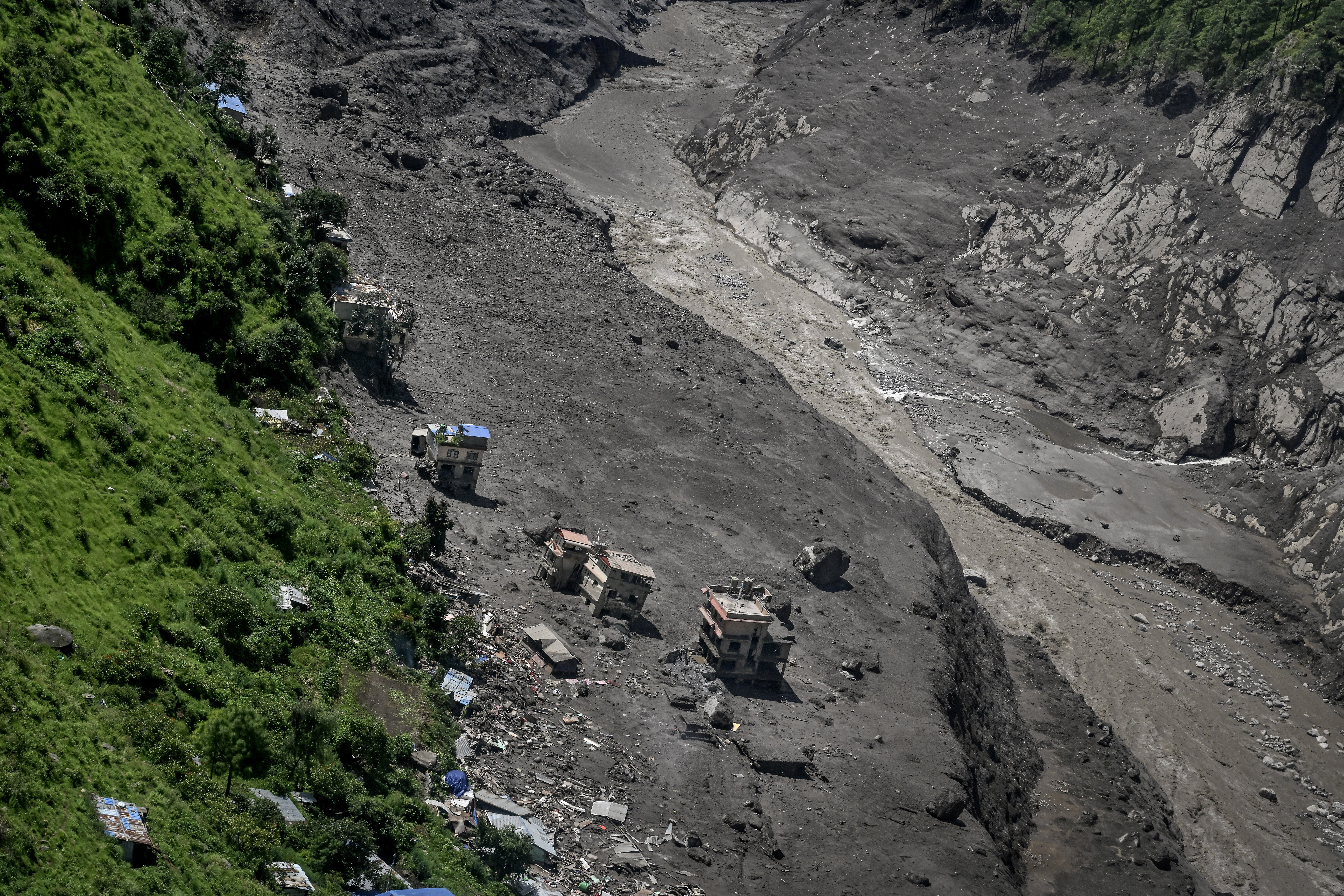
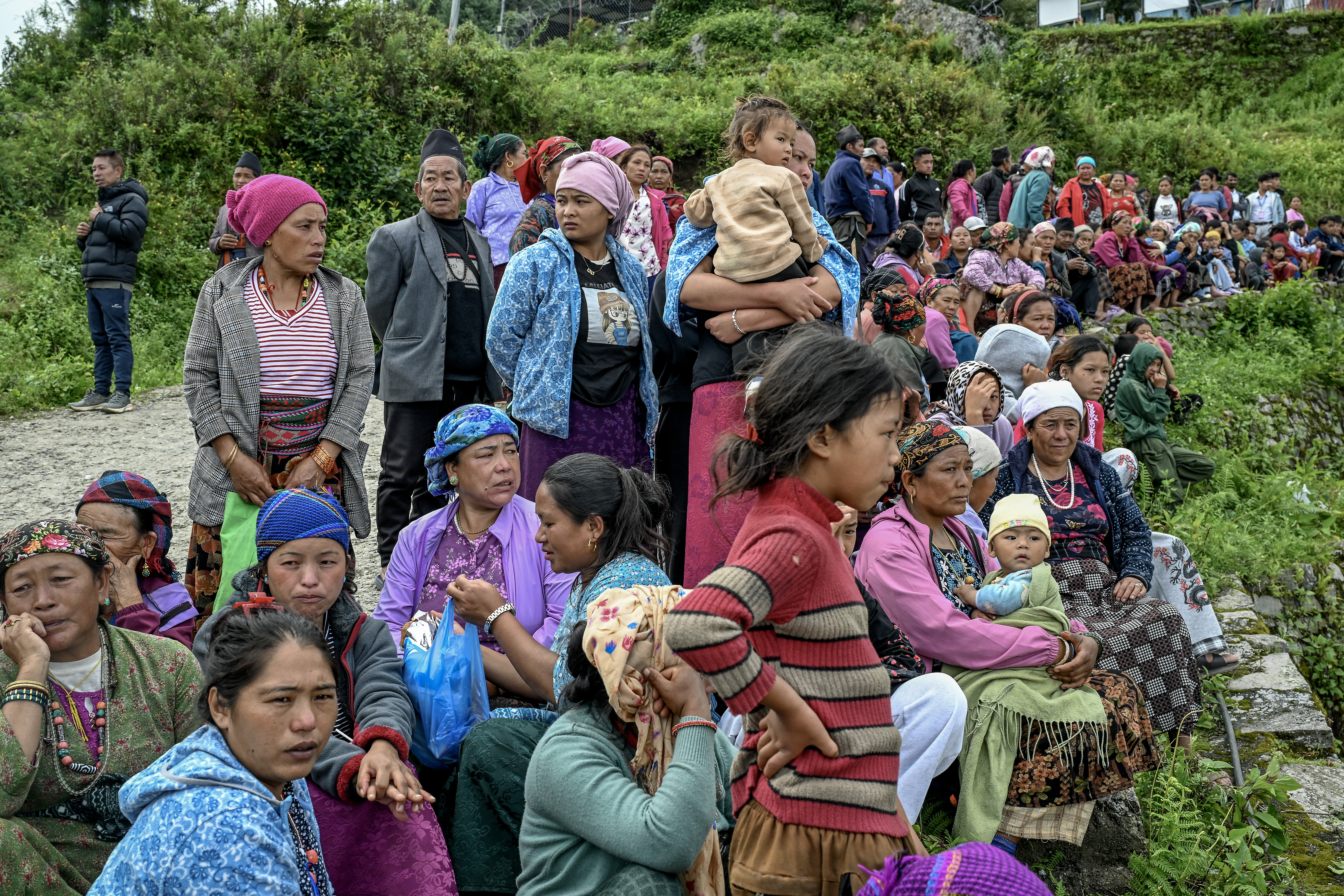
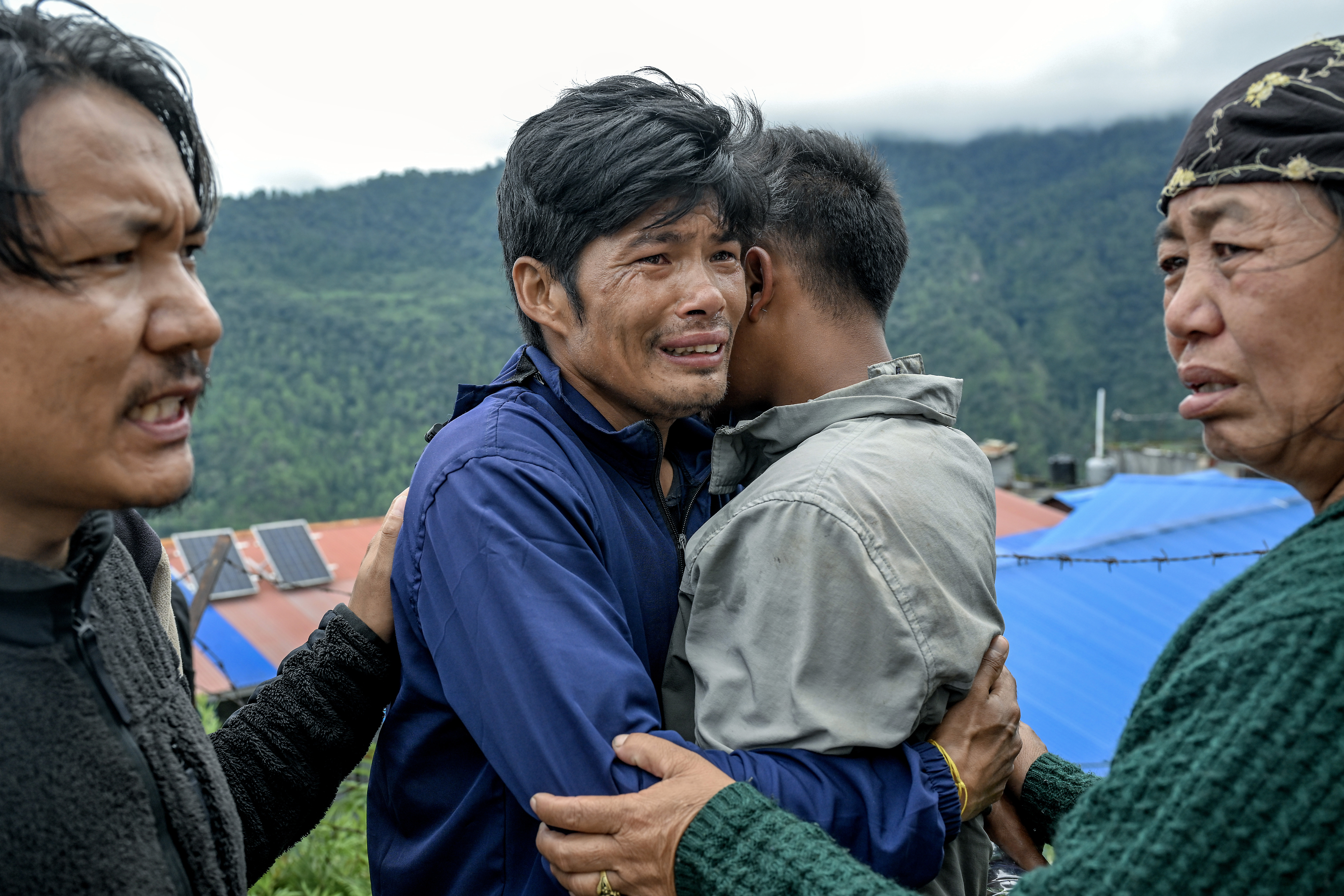
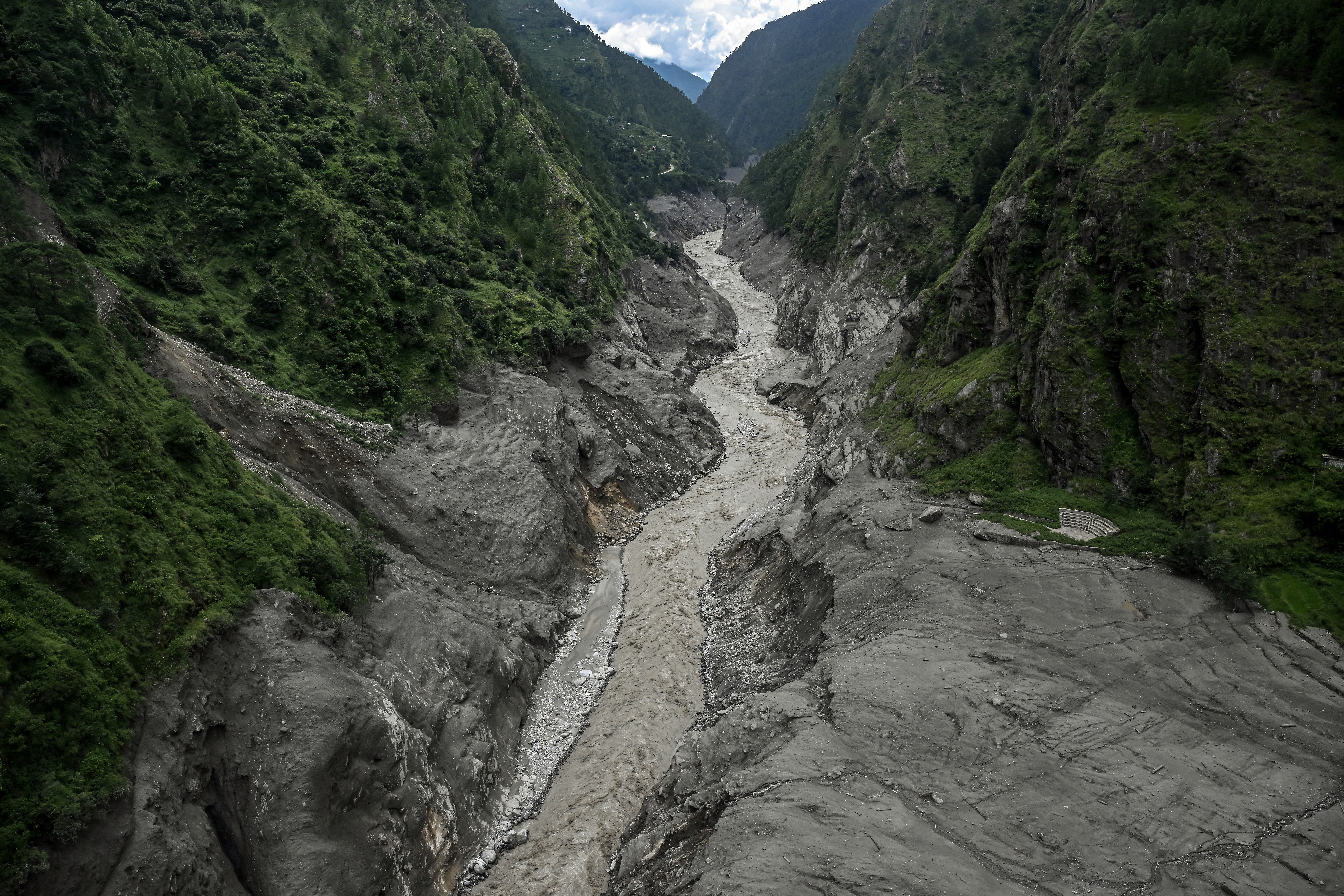
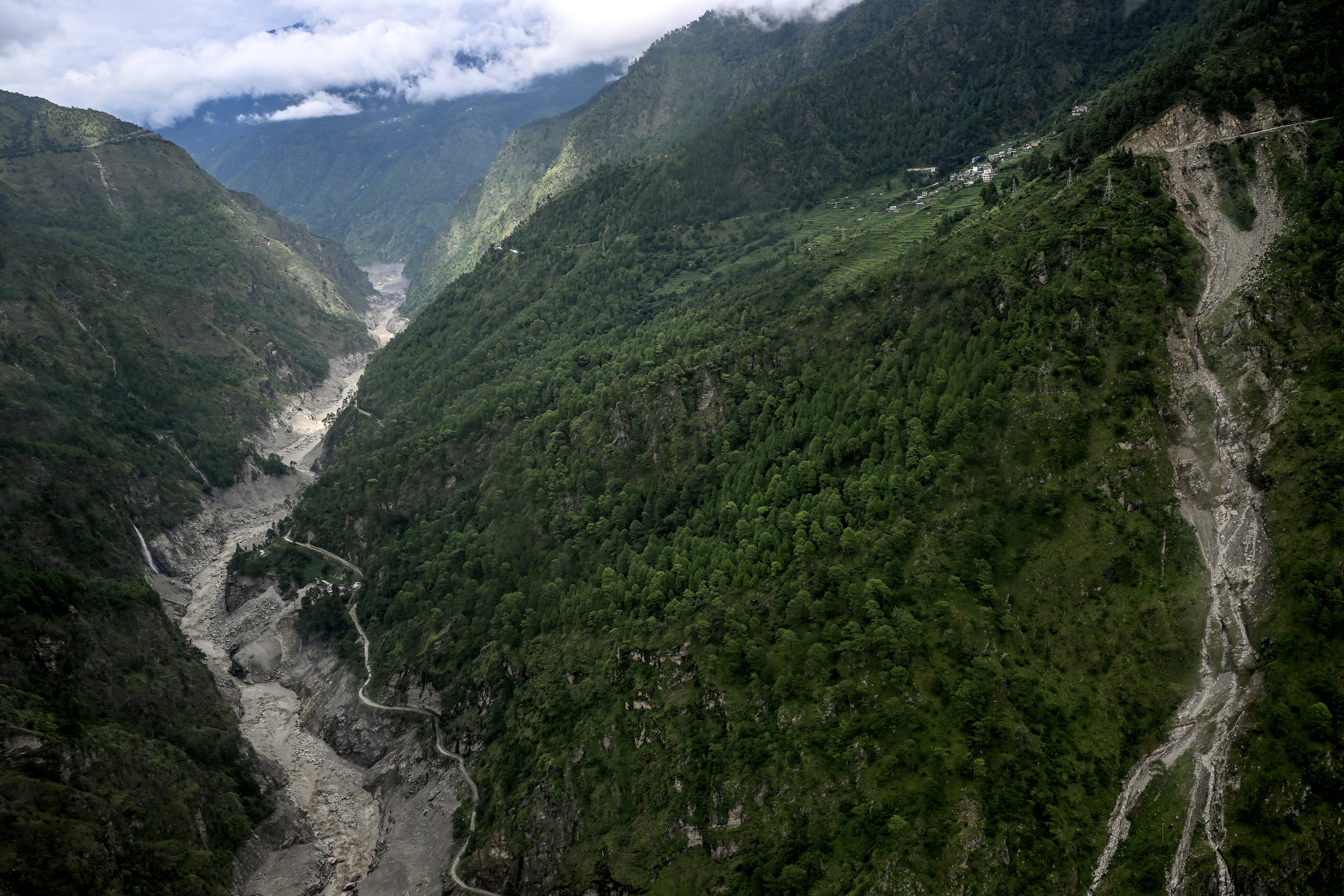
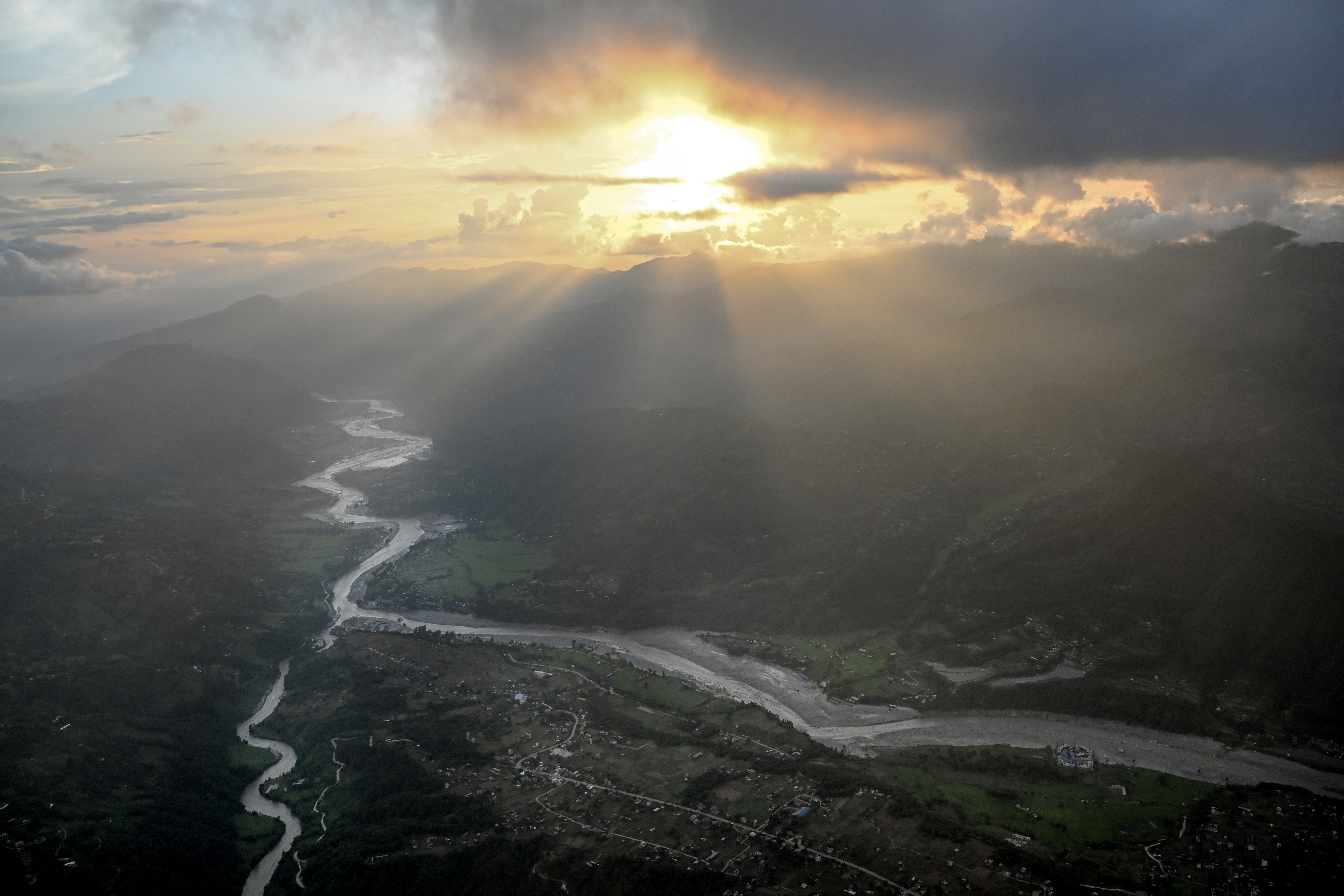
They were among the more than 1,400 people missing in the devastating deluge of rock, ice, trees, mud and water that blasted through river valleys on the border between Nepal and Tibet, washing away bridges, smashing homes, schools, and hydropower plants, and swallowing people who tried to run away.
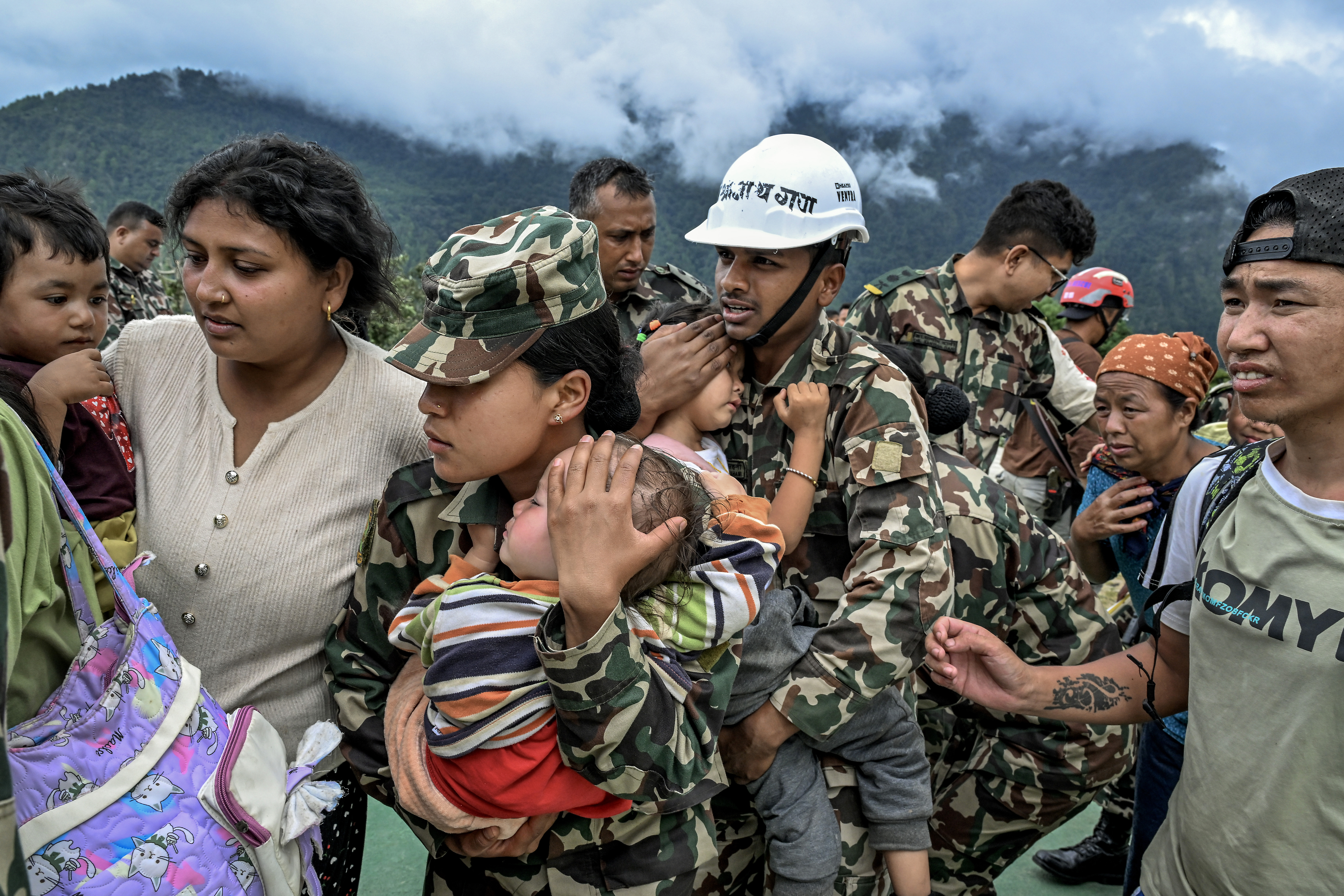
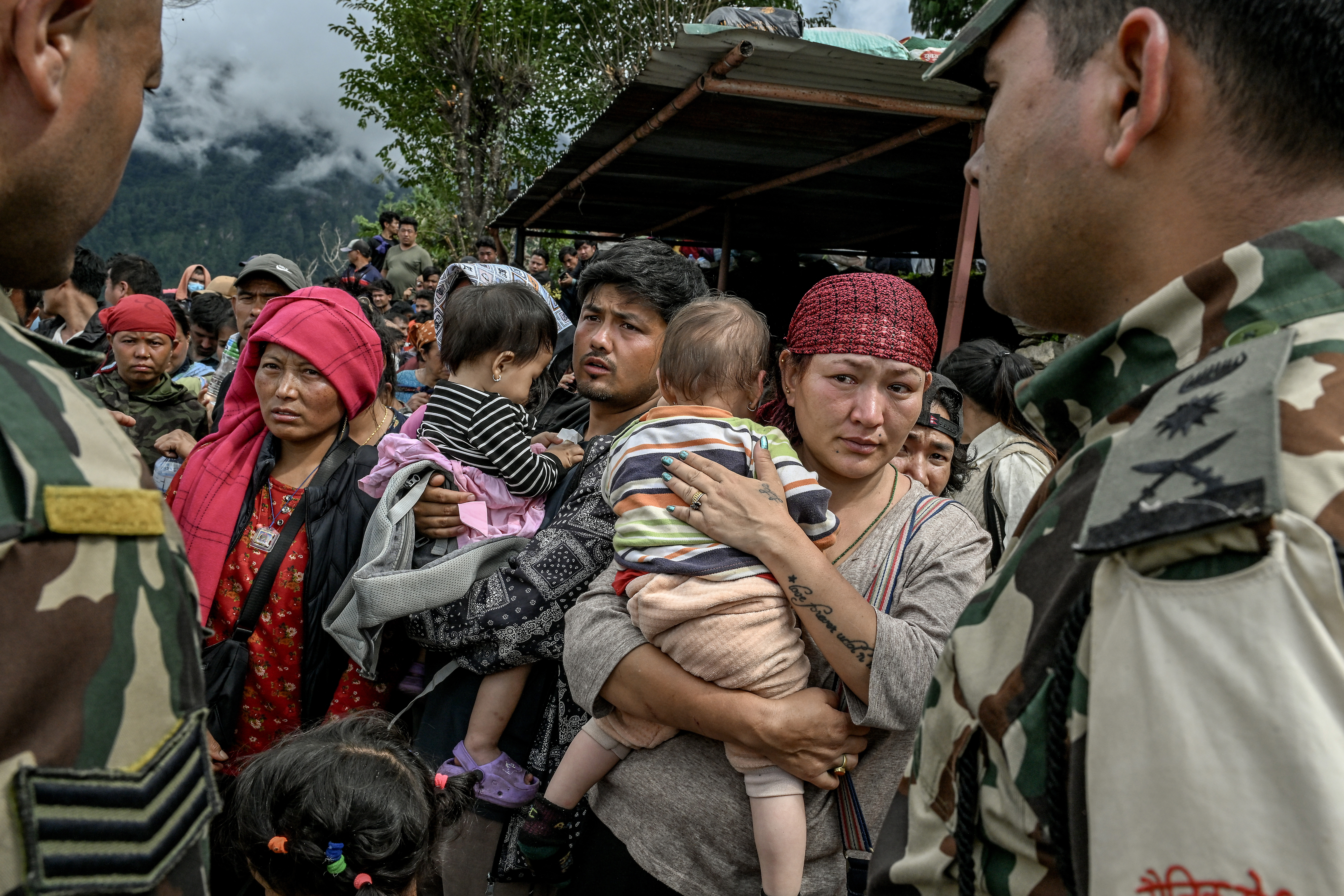
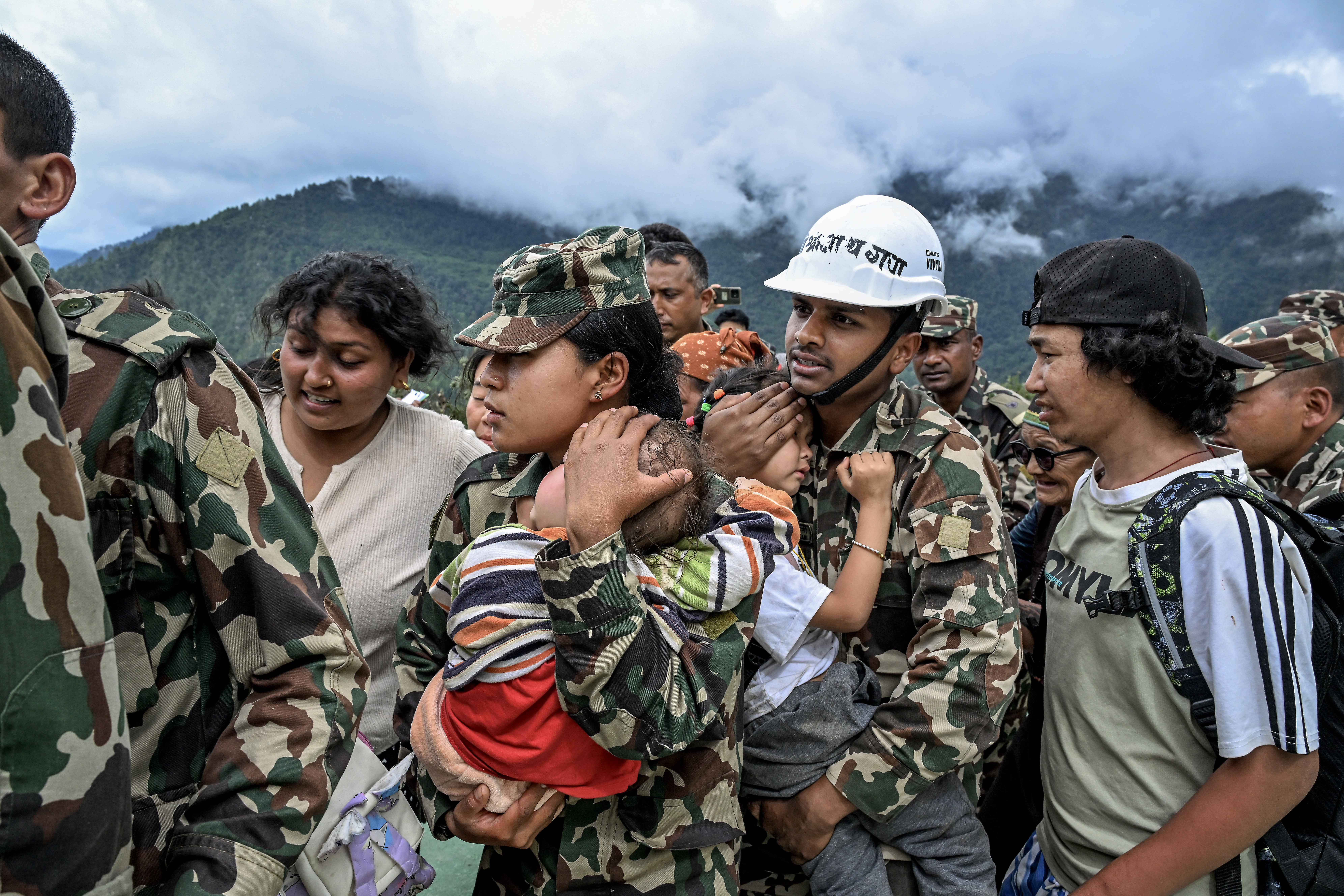
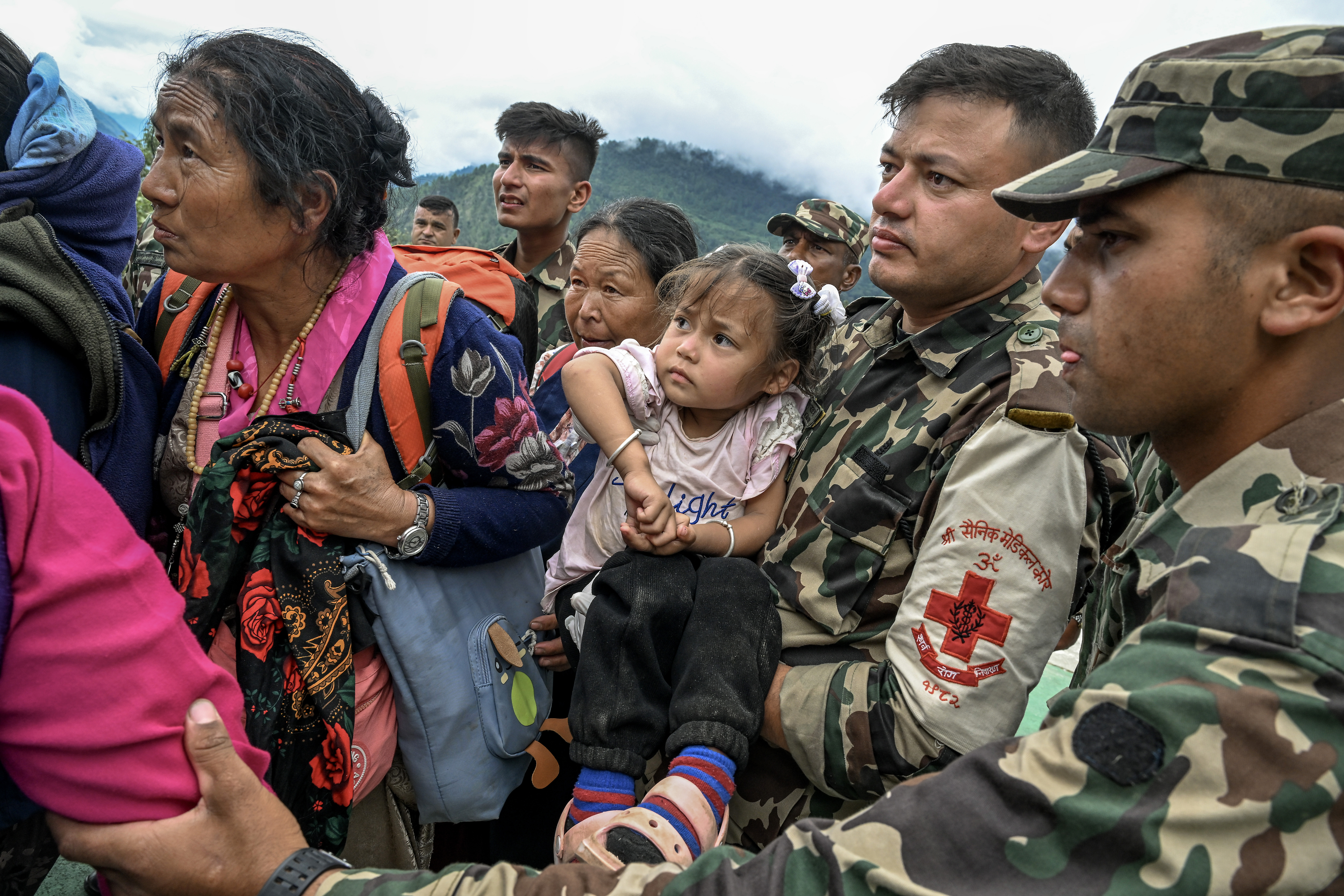
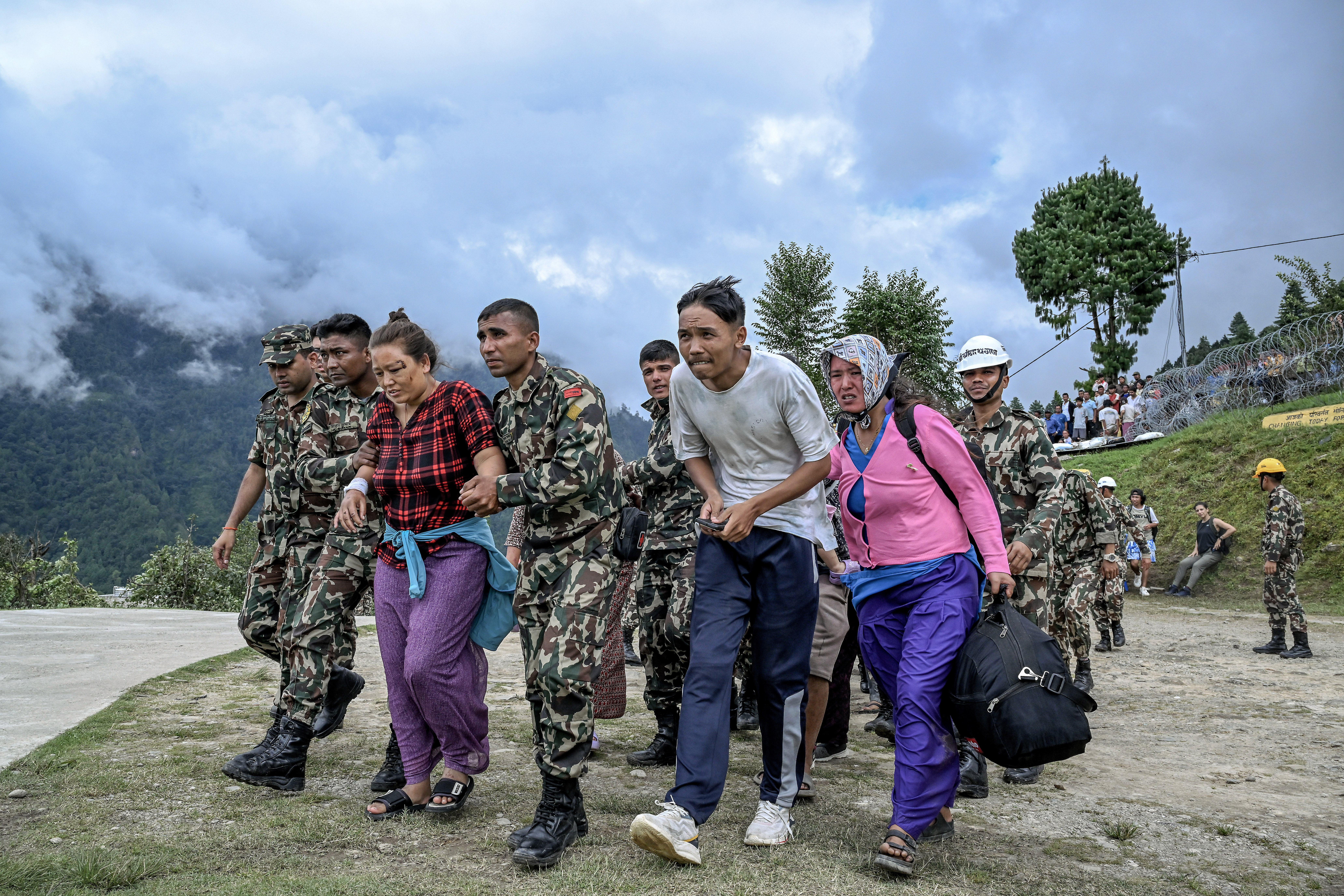
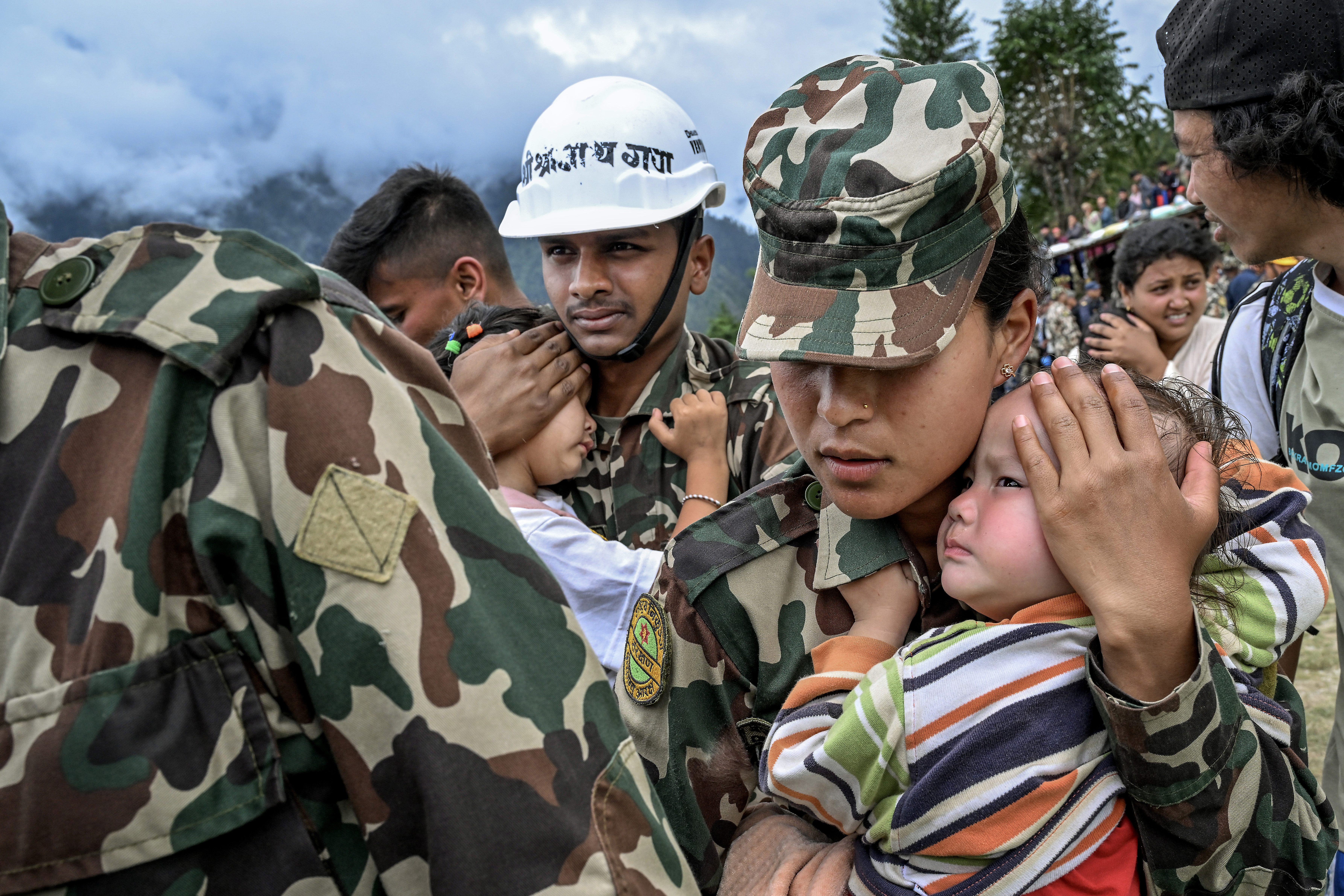
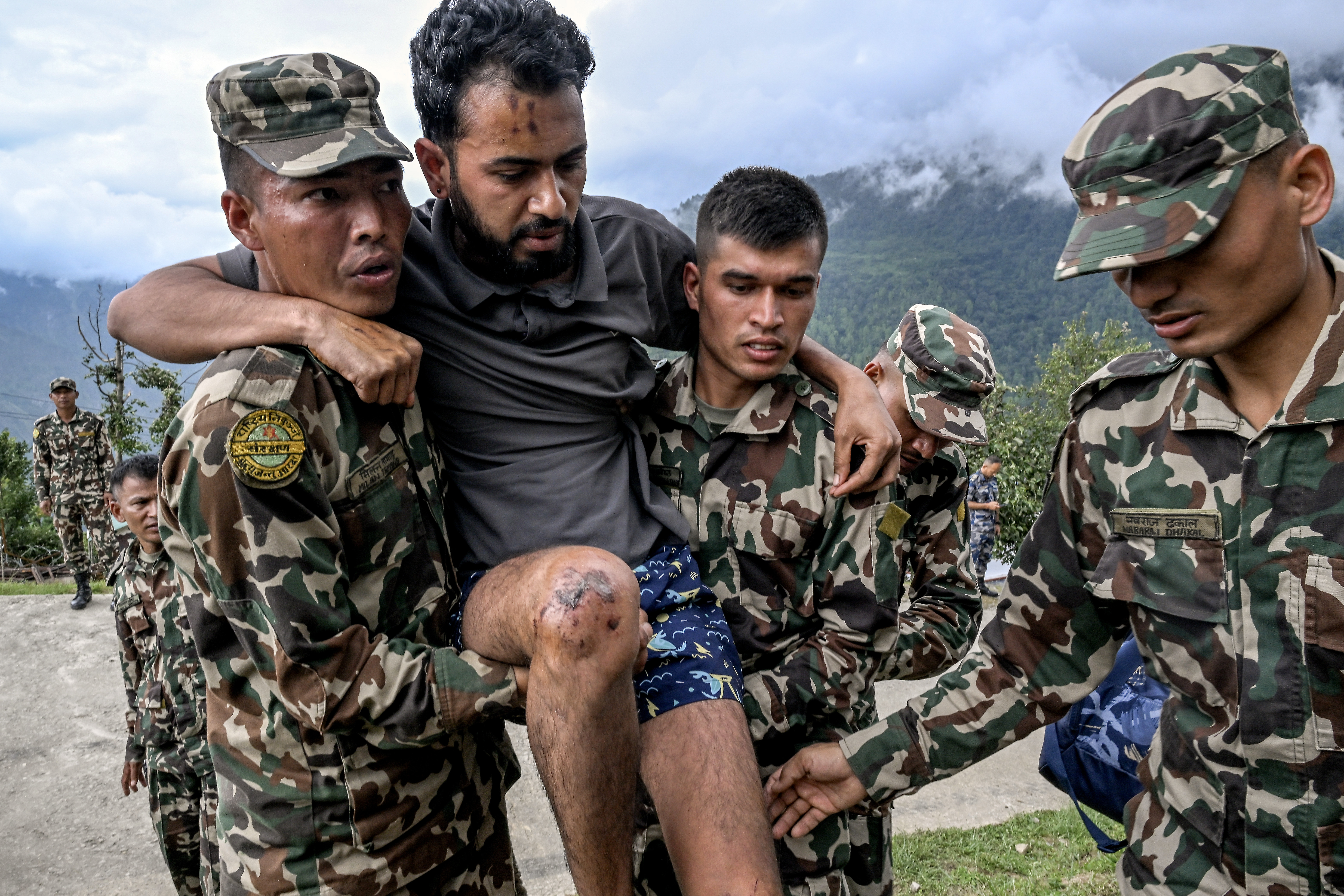
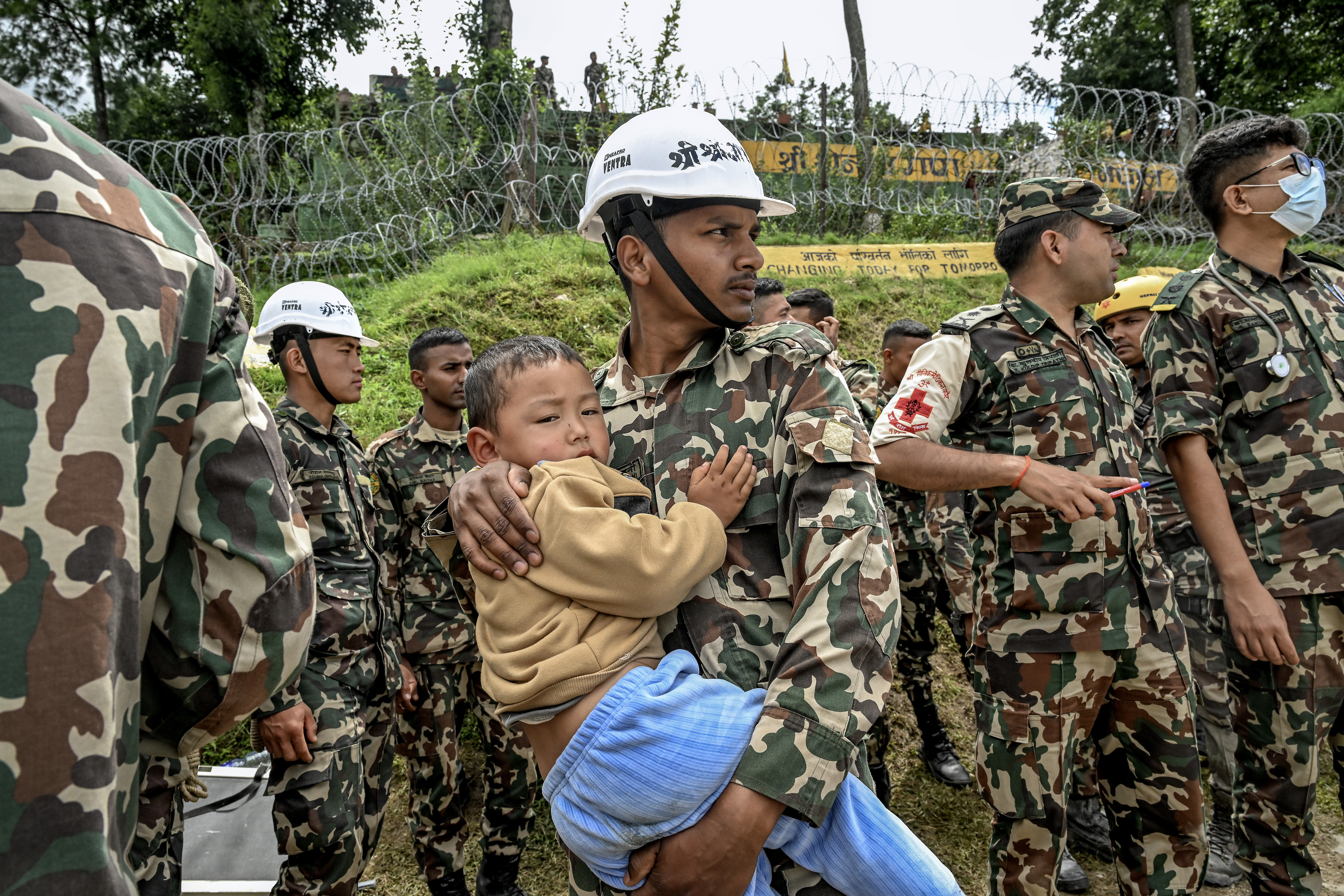
On Thursday, emergency workers climbed across steep Himalayan valleys and used helicopters to ferry shocked survivors to safety as they carried out a sprawling search for anyone who had managed to escape the flood.
Nepali officials said at least 389 people had been killed, while the authorities in China, where far less information was being released, reported three deaths in the Tibet region of China.
The death toll was expected to rise.
In Nepal, more than 900 people, including about 500 foreign visitors, were unaccounted for, the country’s disaster management agency said. The missing foreigners included at least 288 from India, as well as travelers from the United States, Australia, Britain, Canada, and Malaysia.
In Tibet, at least 558 people were missing in Gyirong County, including 260 foreigners, Chinese state media reported. China’s Foreign Ministry said 100 Chinese citizens were missing in Nepal.
The U.S. State Department said in a statement that about 90 U.S. citizens “may be impacted by the floods” and three had been rescued in Nepal. It said it was not aware of any Americans who had died.
Survivors described having almost no time to react before giant waves came roaring down the Bhotekoshi and Trishuli rivers.
Smriti Ojha, 17, said she had been getting ready for school Wednesday morning when she felt the ground shaking. She ran out of her house, believing an earthquake had struck. Then she saw the flood. She said her immediate family had survived, but four of her relatives were missing.
“It was terror,” Ojha said from a hospital bed in Kathmandu. “I cannot believe everything was swept away before my eyes.”
Officials and aid organizations were still assessing the scale of the destruction in the remote region, renowned for its high-altitude lakes and steep peaks.
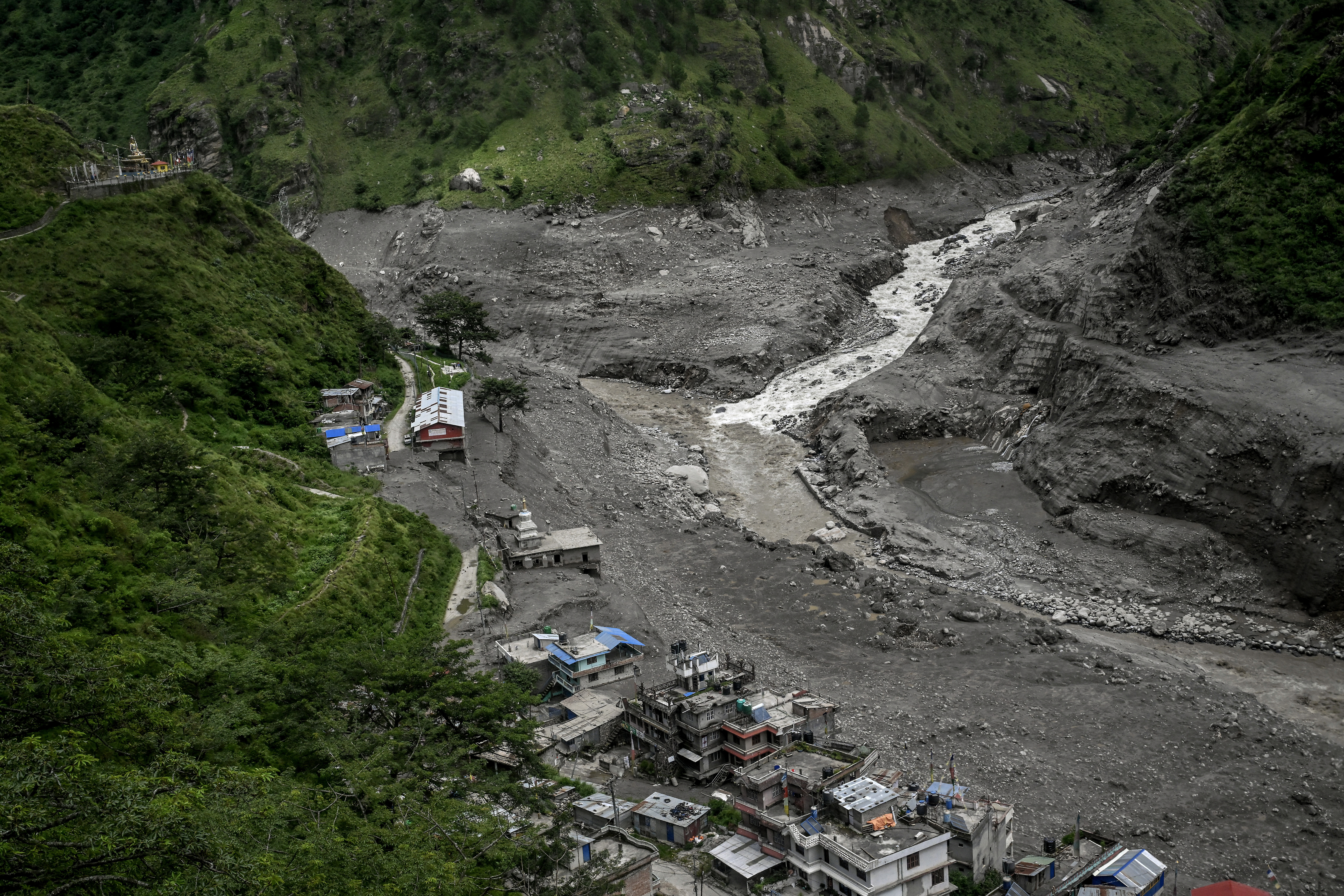
New York Times journalists traveling with the Nepali military Thursday surveyed the devastating aftermath. One highway, near the Bhotekoshi River, had mostly disappeared. Scars on hillsides showed that in some places, the river had risen more than 650 feet during the flood.
Rescue efforts were being hampered by communication lines that had been cut and the destruction of dozens of bridges and about 25 miles of roads, Nepal’s government said.
The Nepali army’s search-and-rescue base was packed with hundreds of army personnel and survivors, some of whom wept after arriving by helicopter. The area had no electricity or phone networks after the flood, and soldiers and other rescuers were using military radios to communicate.
Nepal’s foreign minister, Shisir Khanal, called it “one of the largest natural disasters we have experienced in recent memory.”
President Donald Trump, speaking in the Oval Office, said he had offered U.S. aid to Nepal. “We are sending aid, and we’ve spoken to the leadership, and we let them know anything they want will happen,” he said.
Scientists piecing together satellite imagery and seismological data said that a high-altitude landslide coinciding with a glacial collapse most likely caused the flash flood. The collapse happened on the north face of Langtang Lirung, a Nepalese mountain near the border with Tibet, at an elevation of around 17,000 feet, scientists said.
After a huge chunk of the mountainside broke off, it sent millions of tons of rock and ice crashing into the river valleys below, said Kristen Cook, a geomorphologist at the Université Grenoble Alpes in France.
“It was a much larger collapse than we were initially able to see in the satellite imagery,” she said.
The shaking caused by the falling rock and ice was so powerful that the U.S. Geological Survey registered it at a magnitude of 5.2, as if it were a moderately powerful earthquake. Warming temperatures caused by climate change may have destabilized the glacier and rock face, scientists said, adding that it was too early to determine a precise cause.
“Earthquakes, landslides, slope failures all could happen even without climate change,” said Austin Lord, an anthropologist and senior fellow at the Stimson Center in Washington who has studied natural disasters in Nepal. “It’s just that climate change is this additional factor that increases the likelihood, scale, frequency and intensity of these events.”
Nepal has a flood warning system, but it relies on a conventional network of river and lake gauges that was not equipped to alert people to the sudden collapse of part of a mountain, according to scientists and disaster response researchers.
The river gauges are designed instead to detect slower-rising water levels that typically precede a monsoon-driven flood or glacial lake outburst, which occurs when a pool of glacial meltwater bursts its banks.
“We didn’t have the right information at the right time, so we couldn’t save more people,” said Basanta Raj Adhikari, director of Tribhuvan University’s Centre for Disaster Studies in Nepal. “The Nepalese government is very good on monsoon floods and perennial floods, but we were not prepared for this fast-moving flash flood,” he added.
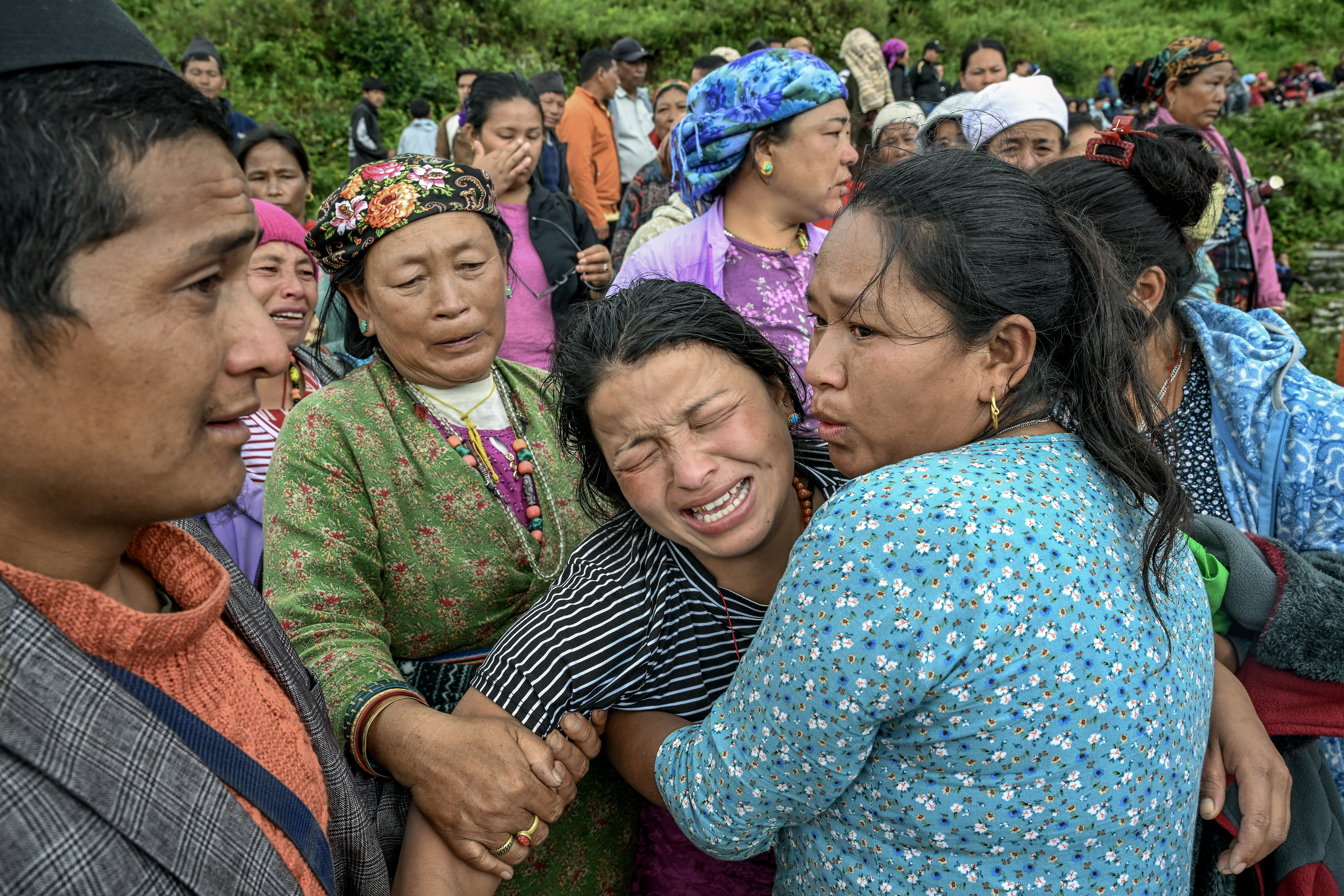
The banks of the debris-choked Bhotekoshi River show signs of the giant torrent of water, mud and ice that swept through the remote river valley in the Rasuwa district near Nepal’s border with Tibet, on Thursday, Aug. 27, 2026. Emergency workers and helicopters scoured steep Himalayan valleys on Thursday in a desperate search for survivors after a torrent of water, mud and ice killed hundreds — and perhaps many more — as it swept through a river valley that runs through Tibet and Nepal. More than 1,400 people are still missing. (Atul Loke/The New York Times)ATUL LOKEPeople wait to board rescue helicopters in the disaster-stricken Rasuwa district near Nepal’s border with Tibet, on Thursday, Aug. 27, 2026. Emergency workers and helicopters scoured steep Himalayan valleys on Thursday in a desperate search for survivors after a torrent of water, mud and ice killed hundreds — and perhaps many more — as it swept through a river valley that runs through Tibet and Nepal. More than 1,400 people are still missing. (Atul Loke/The New York Times)ATUL LOKEPeople wait to board rescue helicopters in the disaster-stricken Rasuwa district near Nepal’s border with Tibet, on Thursday, Aug. 27, 2026. Emergency workers and helicopters scoured steep Himalayan valleys on Thursday in a desperate search for survivors after a torrent of water, mud and ice killed hundreds — and perhaps many more — as it swept through a river valley that runs through Tibet and Nepal. More than 1,400 people are still missing. (Atul Loke/The New York Times)ATUL LOKEThe banks of the debris-choked Bhotekoshi River show signs of the giant torrent of water, mud and ice that swept through the remote river valley in the Rasuwa district near Nepal’s border with Tibet, on Thursday, Aug. 27, 2026. Emergency workers and helicopters scoured steep Himalayan valleys on Thursday in a desperate search for survivors after a torrent of water, mud and ice killed hundreds — and perhaps many more — as it swept through a river valley that runs through Tibet and Nepal. More than 1,400 people are still missing. (Atul Loke/The New York Times)ATUL LOKEPeople wait to board rescue helicopters in the disaster-stricken Rasuwa district near Nepal’s border with Tibet, on Thursday, Aug. 27, 2026. Emergency workers and helicopters scoured steep Himalayan valleys on Thursday in a desperate search for survivors after a torrent of water, mud and ice killed hundreds — and perhaps many more — as it swept through a river valley that runs through Tibet and Nepal. More than 1,400 people are still missing. (Atul Loke/The New York Times)ATUL LOKEStructures damaged by the giant torrent of water, mud and ice that swept through a remote river valley in the Rasuwa district near Nepal’s border with Tibet are seen on Thursday, Aug. 27, 2026. Emergency workers and helicopters scoured steep Himalayan valleys on Thursday in a desperate search for survivors after a torrent of water, mud and ice killed hundreds — and perhaps many more — as it swept through a river valley that runs through Tibet and Nepal. More than 1,400 people are still missing. (Atul Loke/The New York Times)ATUL LOKEPeople wait in line to board rescue helicopters in the disaster-stricken Rasuwa district near Nepal’s border with Tibet, on Thursday, Aug. 27, 2026. Emergency workers and helicopters scoured steep Himalayan valleys on Thursday in a desperate search for survivors after a torrent of water, mud and ice killed hundreds — and perhaps many more — as it swept through a river valley that runs through Tibet and Nepal. More than 1,400 people are still missing. (Atul Loke/The New York Times)ATUL LOKEA woman is overcome as she waits for his turn to board a rescue helicopter in the disaster-stricken Rasuwa district near Nepal’s border with Tibet, on Thursday, Aug. 27, 2026. Emergency workers and helicopters scoured steep Himalayan valleys on Thursday in a desperate search for survivors after a torrent of water, mud and ice killed hundreds — and perhaps many more — as it swept through a river valley that runs through Tibet and Nepal. More than 1,400 people are still missing. (Atul Loke/The New York Times)ATUL LOKEChildren are carried to a rescue helicopter by military personnel in the disaster-stricken Rasuwa district near Nepal’s border with Tibet, on Thursday, Aug. 27, 2026. Emergency workers and helicopters scoured steep Himalayan valleys on Thursday in a desperate search for survivors after a torrent of water, mud and ice killed hundreds — and perhaps many more — as it swept through a river valley that runs through Tibet and Nepal. More than 1,400 people are still missing. (Atul Loke/The New York Times)ATUL LOKEPeople wait in line to board rescue helicopters in the disaster-stricken Rasuwa district near Nepal’s border with Tibet, on Thursday, Aug. 27, 2026. Emergency workers and helicopters scoured steep Himalayan valleys on Thursday in a desperate search for survivors after a torrent of water, mud and ice killed hundreds — and perhaps many more — as it swept through a river valley that runs through Tibet and Nepal. More than 1,400 people are still missing. (Atul Loke/The New York Times)ATUL LOKEA man is overcome as he waits for his turn to board a rescue helicopter in the disaster-stricken Rasuwa district near Nepal’s border with Tibet, on Thursday, Aug. 27, 2026. Emergency workers and helicopters scoured steep Himalayan valleys on Thursday in a desperate search for survivors after a torrent of water, mud and ice killed hundreds — and perhaps many more — as it swept through a river valley that runs through Tibet and Nepal. More than 1,400 people are still missing. (Atul Loke/The New York Times)ATUL LOKEThe banks of the debris-choked Bhotekoshi River show signs of the giant torrent of water, mud and ice that swept through the remote river valley in the Rasuwa district near Nepal’s border with Tibet, on Thursday, Aug. 27, 2026. Emergency workers and helicopters scoured steep Himalayan valleys on Thursday in a desperate search for survivors after a torrent of water, mud and ice killed hundreds — and perhaps many more — as it swept through a river valley that runs through Tibet and Nepal. More than 1,400 people are still missing. (Atul Loke/The New York Times)ATUL LOKEThe banks of the debris-choked Bhotekoshi River show signs of the giant torrent of water, mud and ice that swept through the remote river valley in the Rasuwa district near Nepal’s border with Tibet, on Thursday, Aug. 27, 2026. Emergency workers and helicopters scoured steep Himalayan valleys on Thursday in a desperate search for survivors after a torrent of water, mud and ice killed hundreds — and perhaps many more — as it swept through a river valley that runs through Tibet and Nepal. More than 1,400 people are still missing. (Atul Loke/The New York Times)ATUL LOKEA child is carried to a rescue helicopter in the disaster-stricken Rasuwa district near Nepal’s border with Tibet, on Thursday, Aug. 27, 2026. Emergency workers and helicopters scoured steep Himalayan valleys on Thursday in a desperate search for survivors after a torrent of water, mud and ice killed hundreds — and perhaps many more — as it swept through a river valley that runs through Tibet and Nepal. More than 1,400 people are still missing. (Atul Loke/The New York Times)ATUL LOKEFlooding survivors are assisted by military personnel as they walk to board a rescue helicopter in the disaster-stricken Rasuwa district near Nepal’s border with Tibet, on Thursday, Aug. 27, 2026. Emergency workers and helicopters scoured steep Himalayan valleys on Thursday in a desperate search for survivors after a torrent of water, mud and ice killed hundreds — and perhaps many more — as it swept through a river valley that runs through Tibet and Nepal. More than 1,400 people are still missing. (Atul Loke/The New York Times)ATUL LOKEChildren are carried to a rescue helicopter by military personnel in the disaster-stricken Rasuwa district near Nepal’s border with Tibet, on Thursday, Aug. 27, 2026. Emergency workers and helicopters scoured steep Himalayan valleys on Thursday in a desperate search for survivors after a torrent of water, mud and ice killed hundreds — and perhaps many more — as it swept through a river valley that runs through Tibet and Nepal. More than 1,400 people are still missing. (Atul Loke/The New York Times)ATUL LOKEAn injured man is carried to a rescue helicopter by military personnel in the disaster-stricken Rasuwa district near Nepal’s border with Tibet, on Thursday, Aug. 27, 2026. Emergency workers and helicopters scoured steep Himalayan valleys on Thursday in a desperate search for survivors after a torrent of water, mud and ice killed hundreds — and perhaps many more — as it swept through a river valley that runs through Tibet and Nepal. More than 1,400 people are still missing. (Atul Loke/The New York Times)ATUL LOKEThe banks of the Trishuli River show signs of the giant torrent of water, mud and ice that swept through the remote river valley in the Rasuwa district near Nepal’s border with Tibet, on Thursday, Aug. 27, 2026. Emergency workers and helicopters scoured steep Himalayan valleys on Thursday in a desperate search for survivors after a torrent of water, mud and ice killed hundreds — and perhaps many more — as it swept through a river valley that runs through Tibet and Nepal. More than 1,400 people are still missing. (Atul Loke/The New York Times)ATUL LOKEA young flooding survivor is carried to a rescue helicopter by military personnel in the disaster-stricken Rasuwa district near Nepal’s border with Tibet, on Thursday, Aug. 27, 2026. Emergency workers and helicopters scoured steep Himalayan valleys on Thursday in a desperate search for survivors after a torrent of water, mud and ice killed hundreds — and perhaps many more — as it swept through a river valley that runs through Tibet and Nepal. More than 1,400 people are still missing. (Atul Loke/The New York Times)ATUL LOKE
WASHINGTON — The State Department on Wednesday designated three groups based in Europe, including two that advocate Palestinian rights, as transnational terrorist organizations.
The move is part of the Trump administration’s fight against what it calls a “resurgence of far-left political terrorism” worldwide, a focus that many security experts say is disproportionate.
In a statement, the department said that it would impose sanctions on Palestine Action, which is based in Britain and organizes acts of support for Palestinians and opposition to Israeli policies; Masar Badil, another pro-Palestinian group with branches in Western Europe and Canada; and Autistici/Inventati, known as A/I Collective, which is based in Italy and offers free digital tools to leftist activists around the world.
Even as many Western leaders and analysts raise alarms about the growing strength of far right-wing movements with violent tendencies, the Trump administration has mainly targeted what it calls an even more dangerous alternative on the left. In July, Secretary of State Marco Rubio hosted an international summit on the subject, which the State Department billed as a response to “a deliberate, ideologically motivated strategy to destabilize free societies by violently targeting our political and economic systems” on the part of far-left groups.
That threat has long been “a blind spot in the international community’s counterterrorism focus,” the department said in a statement at the time.
Many conservatives have been galvanized by the issue by recent events such as pro-Palestinian demonstrations seen by critics as sympathetic to Hamas and hostile to Israel, anti-Trump protests in U.S. cities that have sometimes turned violent and the assassination of the pro-Trump activist Charlie Kirk in September 2025.
But experts say that talk of a broad, coordinated left-wing menace exaggerates the threat to America.
Liberal groups such as the American Civil Liberties Union also warn that it could have a chilling effect on legitimate speech and give a pretext for intimidating or even prosecuting critics of the Trump administration.
The State Department accused the newly designated groups of having terrorist ties, though its announcement focused on A/I Collective, which it said tailors digital services to help left-wing radical groups organize, communicate and plan violent attacks. That help includes sharing “target information” and tactical guidance to “many of the most active and violent antifa groups in the United States,” according to the department.
The A/I Collective’s website says that it offers a secure platform for activists to communicate anonymously, free from government surveillance. It defines its core principles as “anti-fascism, anti-racism, anti-sexism, anti-militarism.”
Founded in 2020, Palestine Action opposes Britain’s support for what it calls Israel’s “genocidal policies” toward the Palestinians. The group organized several pro-Palestinian protests in London before the British government banned it last year when five of its members were charged with breaking into a Royal Air Force base and spraying red paint on two aircraft.
The United Nations High Commissioner for Human Rights said the ban raised “serious concerns that counterterrorism laws are being applied to conduct that is not terrorist in nature and risks hindering the legitimate exercise of fundamental freedoms across the U.K.”
Masar Badil is a pro-Palestinian group that has published statements that “glorify violence” against Israel and has hosted webinars featuring members of Hamas and the Houthis, according to the Anti-Defamation League. The State Department said its action was based on the group’s close ties to Samidoun, a pro-Palestinian group that has been banned in Germany and declared a terrorist group by Israel and Canada.
The U.S. terrorist designations mean that any U.S. controlled assets of the groups, and two specifically named Masar Badil leaders, will be frozen and anyone transacting with them — including by providing money or services — can be subject to civil or criminal action.
The State Department said in a fact sheet on political terrorism last month that “far-left terrorist plots and attacks have sharply increased in the United States and Europe” since 2016, and that such terrorism “now accounts for more attacks and plots in the United States than any other ideological category.”
Last year, the Trump administration declared the amorphous left-wing group antifa as a terrorist organization, offering little evidence of its threat.
A September 2025 analysis by the Center for Strategic and International Studies, a nonpartisan research center, found that left-wing terrorist attacks and plots have risen in recent years and that left-wing attacks were on track to outnumber ones from the far right for the first time in 30 years.
But left-wing violence has “risen from very low levels and remains much lower than historical levels of violence carried out by right-wing and jihadist attackers,” the report found.
It added that the global leftist movement is disorganized and that its attacks “are remarkably less lethal overall than jihadist or right-wing attacks.”
WASHINGTON — Sen. Chris Van Hollen, D-Md., on Thursday plans to introduce a resolution that would order the Trump administration to provide Congress with a detailed accounting of Israel’s human rights practices in the West Bank, laying the groundwork to force a vote on the matter in coming weeks.
The measure, the latest bid by Democrats in Congress to challenge the policies and actions of Israel’s government, invokes a provision of the Foreign Assistance Act that allows lawmakers to request information from the State Department about the human rights record of any country receiving U.S. security assistance.
Cosigned by 10 Senate Democrats, the resolution is privileged, meaning that Van Hollen could force a vote on it even if Republican leaders refuse, as expected, to bring it to the floor. That could lead to yet another vote in Congress showcasing Democrats’ divide over Israel as a growing contingent in the party turns against the Jewish state.
“We’ve seen ongoing human rights violations on the West Bank, but we’re going from bad to abysmal,” Van Hollen said in an interview.
The resolution focuses on at least nine U.S. citizens who have been killed in the West Bank since January 2022, including Shireen Abu Akleh, a Palestinian American journalist killed in 2022, and Aysenur Ezgi Eygi, who was fatally shot by an Israeli soldier in 2024. It argues that Israeli authorities have failed to punish those responsible and that U.S. agencies have failed to conduct their own independent investigations or provide substantive information about existing ones.
“If the United States Senate shines a spotlight on this, we will save lives,” Van Hollen said. “We will save the lives of American citizens. We will also save the lives of Palestinian civilians.”
Concern about violence in the West Bank has steadily grown among Democrats in Congress. Last year, Sen. Cory Booker, D-N.J., introduced the West Bank Violence Prevention Act, which Van Hollen cosponsored, to impose visa and financial sanctions on people who commit or facilitate violence against civilians there. The bill attracted broad Democratic support but did not advance out of the Republican-led Foreign Relations Committee and was never brought up for a vote.
J Street, the liberal pro-Israel advocacy group that backed that legislation, has argued that sanctions are needed to disrupt networks supporting extremist settlers and Palestinian militant groups and preserve the possibility of a two-state solution. The group has cited estimates that settler violence rose 30% during the first months of 2025 compared with the same period a year earlier.
The issue has also prompted unusually sharp criticism from Israeli officials. Yechiel Leiter, Israel’s ambassador to the United States and a longtime settler, said earlier this year that extremist settler violence was a “stain” on Israel and was costing the country support in Washington. He said the Israeli government was taking this seriously.
The issue has gained renewed focus this month following a new spate of violence in the West Bank with extremist settlers trapping two Palestinian families in their homes in the Israeli-occupied territories. One of the homes is owned by Louai Abu Ridi, an American citizen, prompting condemnation from U.S. officials including Mike Huckabee, the U.S. ambassador to Israel, who called the actions of the settlers “thuggish” and said the Israeli military and local police had acted at his urging to “remove the Israeli terrorists doing this.”
“Actions by those who carried out this horrific act of terror meant to intimidate and harass this family are disgusting,” Huckabee said in a social media post this month.
Shortly after, Leiter echoed the remarks, saying in his own post that “you cannot settle the land through destabilizing and disruptive behavior, as my esteemed colleague Mike Huckabee brilliantly put it when he spoke of ‘unsettling behavior.’”
Extremist settlers have carried out at least 1,380 attacks in 250 communities in 2026, according to U.N. data from late July. Those settlers have faced a near-total lack of consequences.
Van Hollen’s resolution would draw in the legislative branch to confront the issue directly.
It would give the secretary of state 30 days to provide congressional committees with an unclassified report detailing what U.S. officials know about the killings, the status of investigations and the identities of potential suspects and Israeli security units involved.
The administration would also have to determine whether credible information implicates any Israeli security units in such violence.
The resolution also demands information about Palestinian children held under Israeli military law, including allegations of torture and other mistreatment.
Van Hollen said the American deaths raised a broader question about Washington’s willingness to enforce its human rights laws against a close ally.
“If we can’t get accountability for them,” he said, “how are we actually implementing our human rights laws with respect to the government of Israel as it relates to the West Bank?”
“This has been building for a long time,” he added. “Enough is enough.”
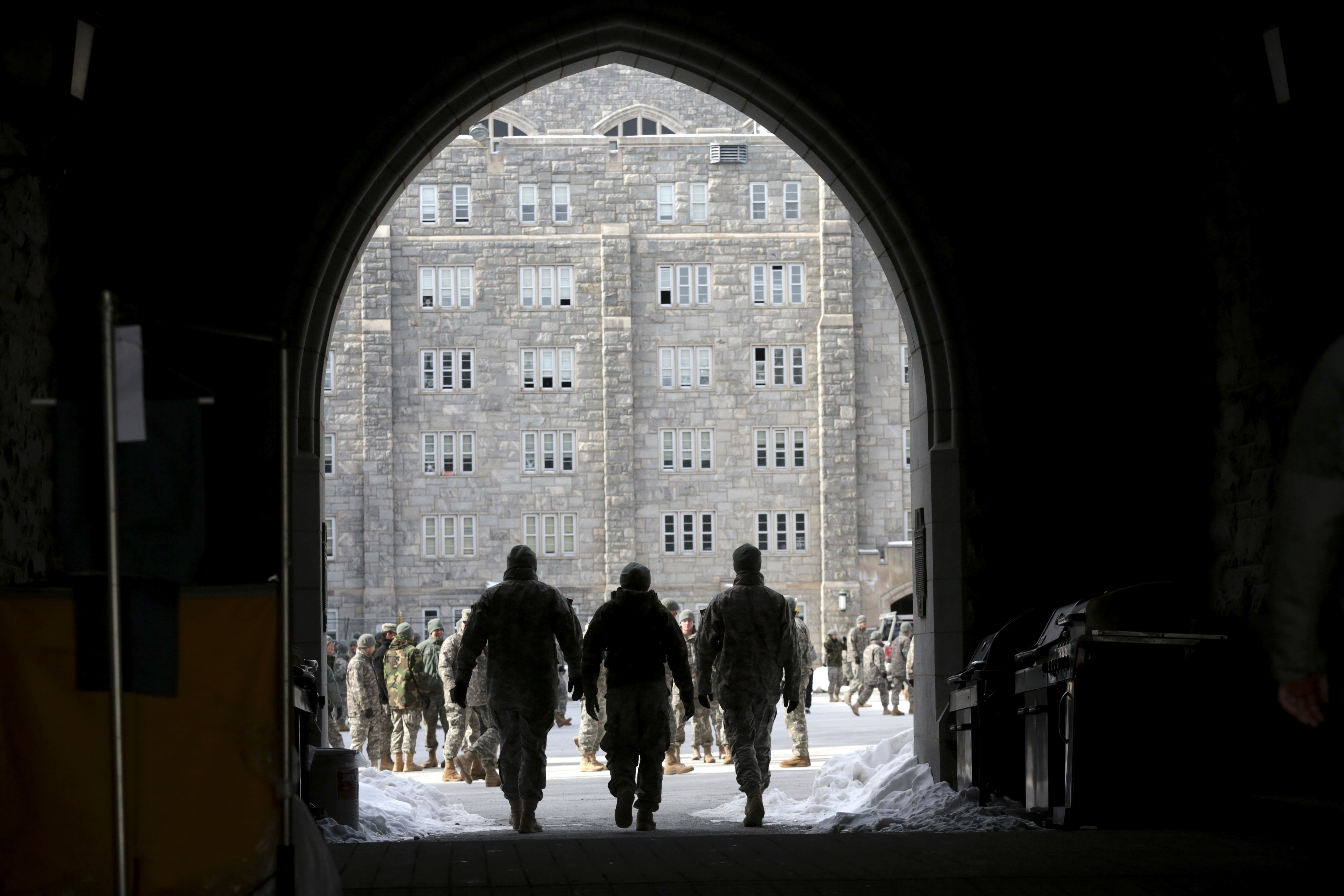
After 17 years of teaching science at West Point, Adam Kalkstein says he was suddenly ordered last year to cut from his curriculum information about the human causes of climate change, according to a new lawsuit filed against the U.S. Military Academy.
The change was immoral and potentially illegal, Kalkstein says he told Brig. Gen. Shane R. Reeves, who at the time was dean of West Point. Instead of upholding Army values, Kalkstein said he felt like a liar and a fraud.
Reeves stormed out of the room when Kalkstein declined a suggestion that he resign, according to the lawsuit. Six months later, the tenured professor was told his contract would not be renewed.
Filed in the Southern District of New York, the lawsuit accuses West Point of breaking the law by violating Kalkstein’s First Amendment rights by forbidding him from teaching about human-driven climate change, an order that required him “to omit a massive, fundamental, essential component of the course and to defy science,” according to the suit. Spokespeople for the Pentagon, West Point, and White House did not return requests for comment.
Michael Sussman, the lawyer for Kalkstein, said his client is a conservative Republican who believes the military needs to be taught the true causes of climate change when it comes to national security. In a letter to Defense Secretary Pete Hegseth, Kalkstein said understanding the causes of global warming was important not for social justice reasons but for things like competing with the Russians in the Arctic and knowing why sea ice was melting.
“He is loyal to the cadets and the academy,” Sussman said about the professor. “And to his perspective, edicts that he can’t say what’s true in a classroom is beyond his tolerance and totally counterproductive.”
Kalkstein’s lawsuit is the latest example of the Trump administration’s attempt to force conservative cultural changes on the education system. President Donald Trump has made frequent public statements dismissing scientific consensus on global warming, and his administration has categorized federal and international climate change programs as “woke, weaponized and wasteful spending” along with diversity, equity and inclusion initiatives and transgender policies.
The administration has repeatedly targeted the military for cultural change. Last year the administration banned hundreds of library books at the U.S. Naval Academy that did not align with Trump’s political agenda. Many of the books have since been returned, according to a Defense Department spokesperson.
In May, Judge Cathy Seibel of U.S. District Court in White Plains, New York, ruled in favor of another West Point professor, Tim Bakken, the longest-serving law professor in the military academy’s history, who had sued over the school’s new restriction on expressing his opinions to students in the classroom on subjects he teaches.
The latest lawsuit comes against the backdrop of a push by Hegseth to remake the service academies by dramatically scaling back the number of civilian professors and revising their curricula. A draft memo circulating inside the Pentagon this summer argued that the academies had been infected by “civilian academic norms” that were diluting the “focus on lethality.” The memo’s existence was first reported by CBS News.
The memo argued that tenure had led the academies to elevate the “research priorities of the tenured academics” over the needs of the military. The memo also called for “a comprehensive review” that would examine the “operational relevance” of all course offerings at the academies.
Hegseth in his 2024 book, The War on Warriors, bashed the academies as “Marxist-adjacent” institutions and blamed civilian professors for the shift.
“Civilian professors were welcomed on campus for reasons of ‘diversity’ as well as expediency. And with them came the predictable, radical left-wing educational philosophies,” Hegseth wrote.
Critics of Hegseth’s view have maintained that the civilian professors have improved and broadened the quality of instruction at the academies at a time when winning wars requires agile thinkers.
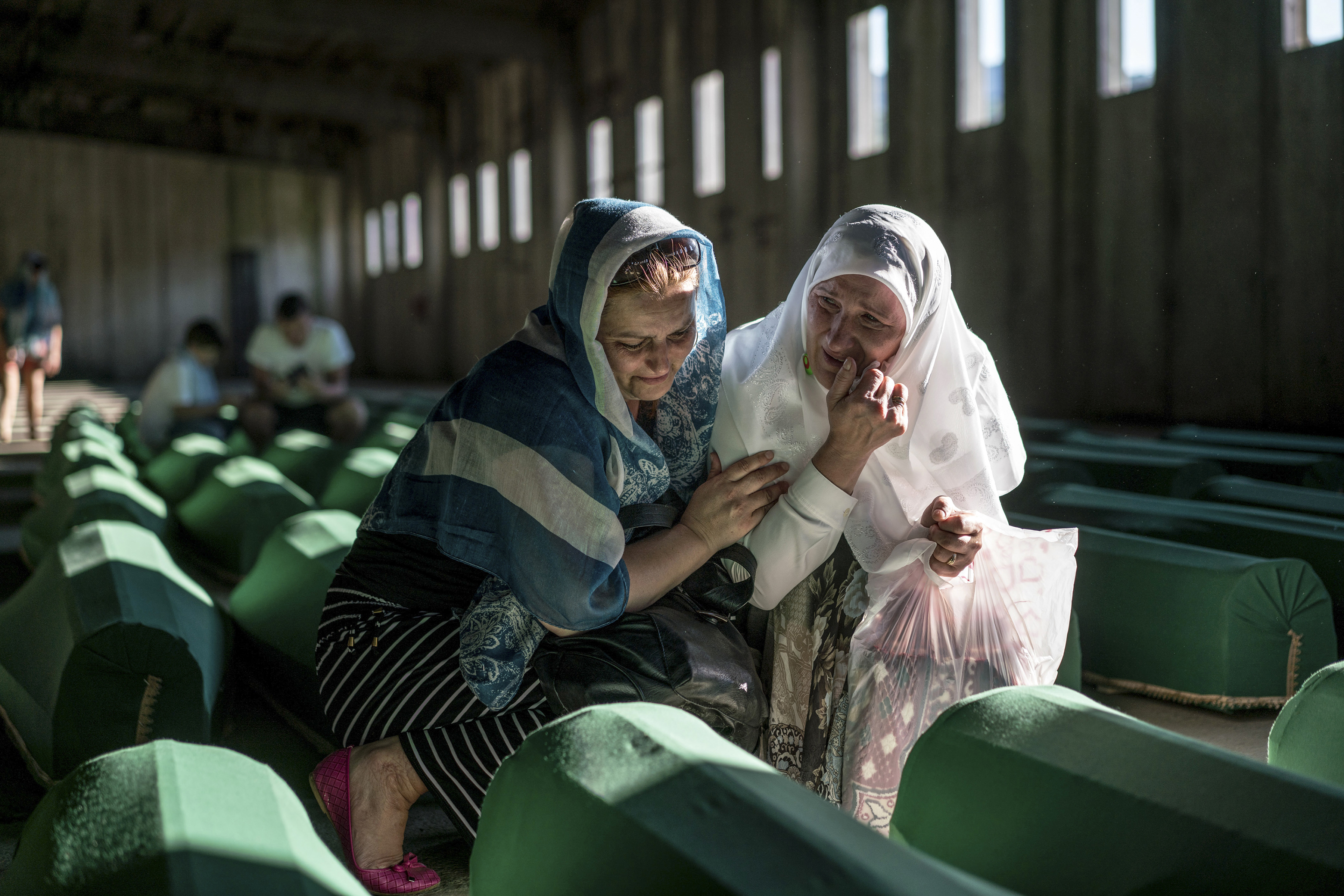
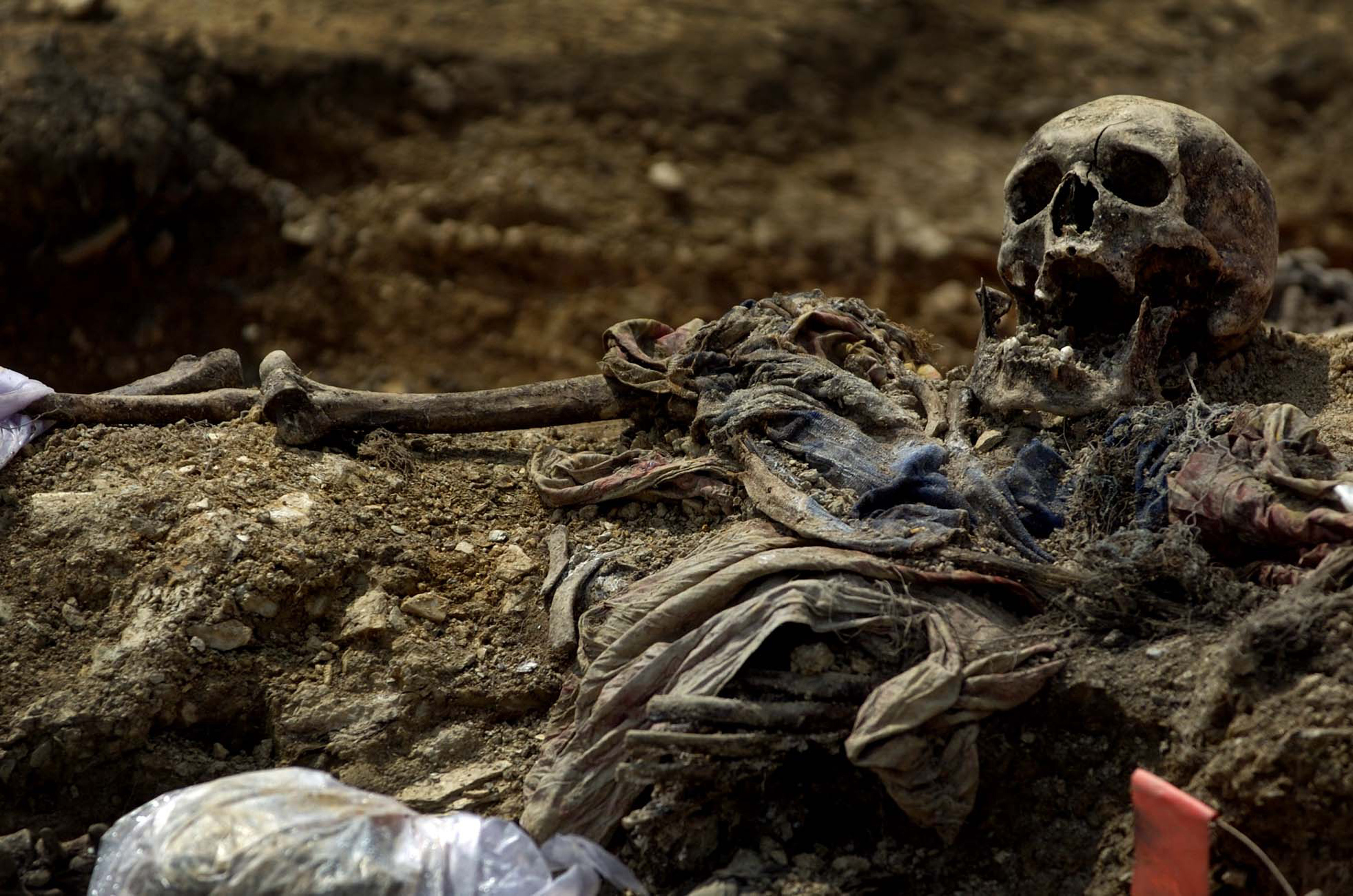
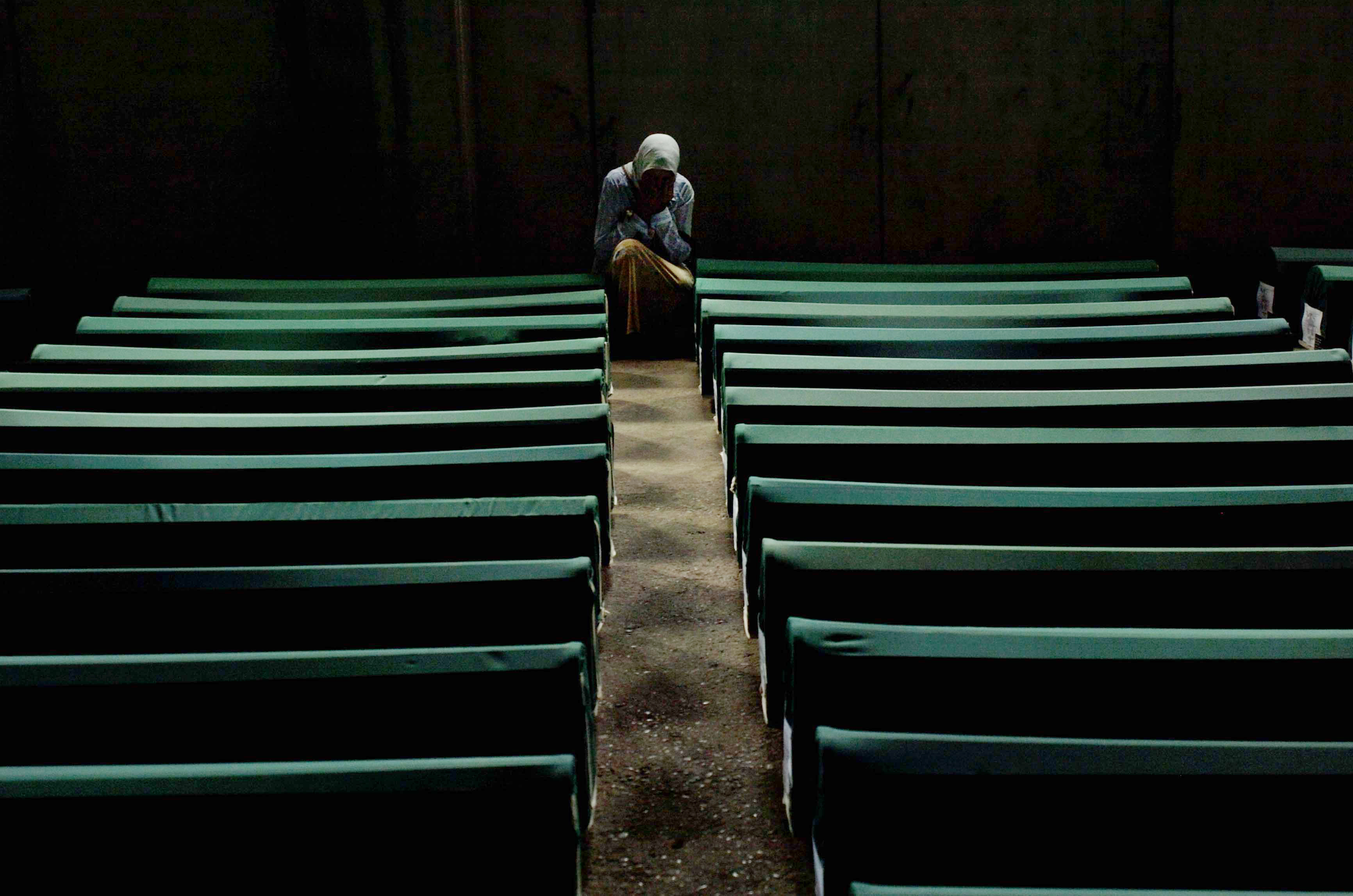
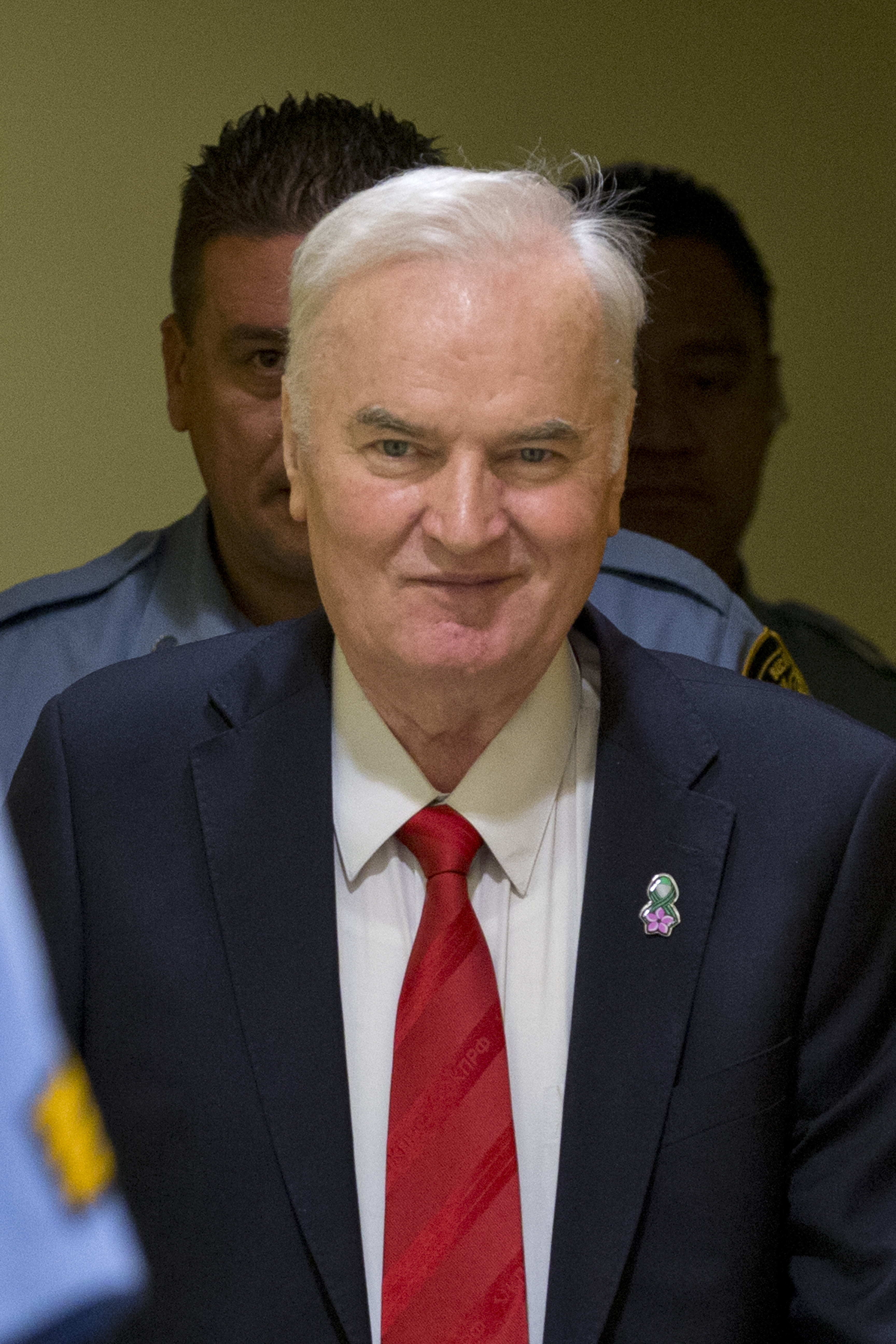
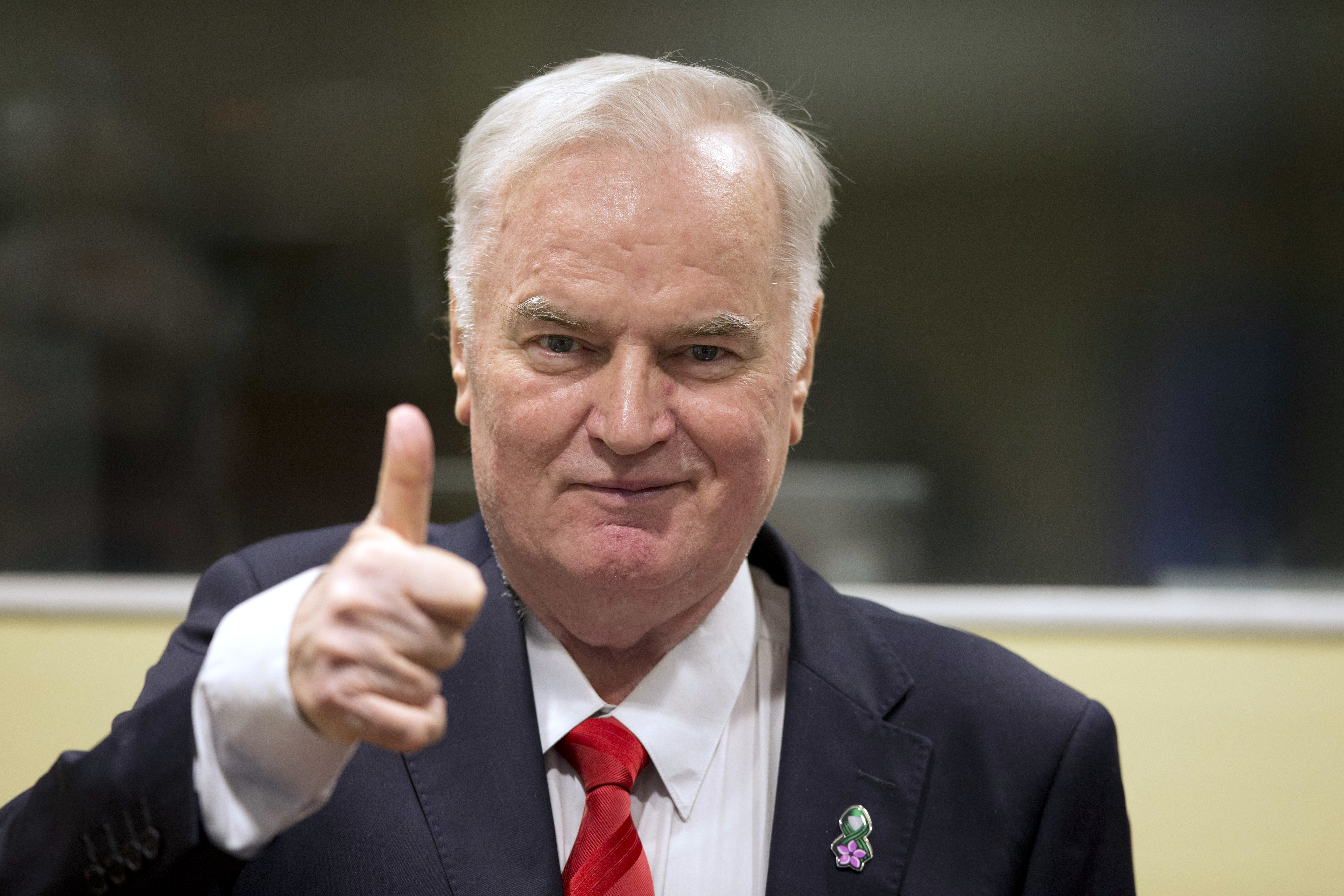
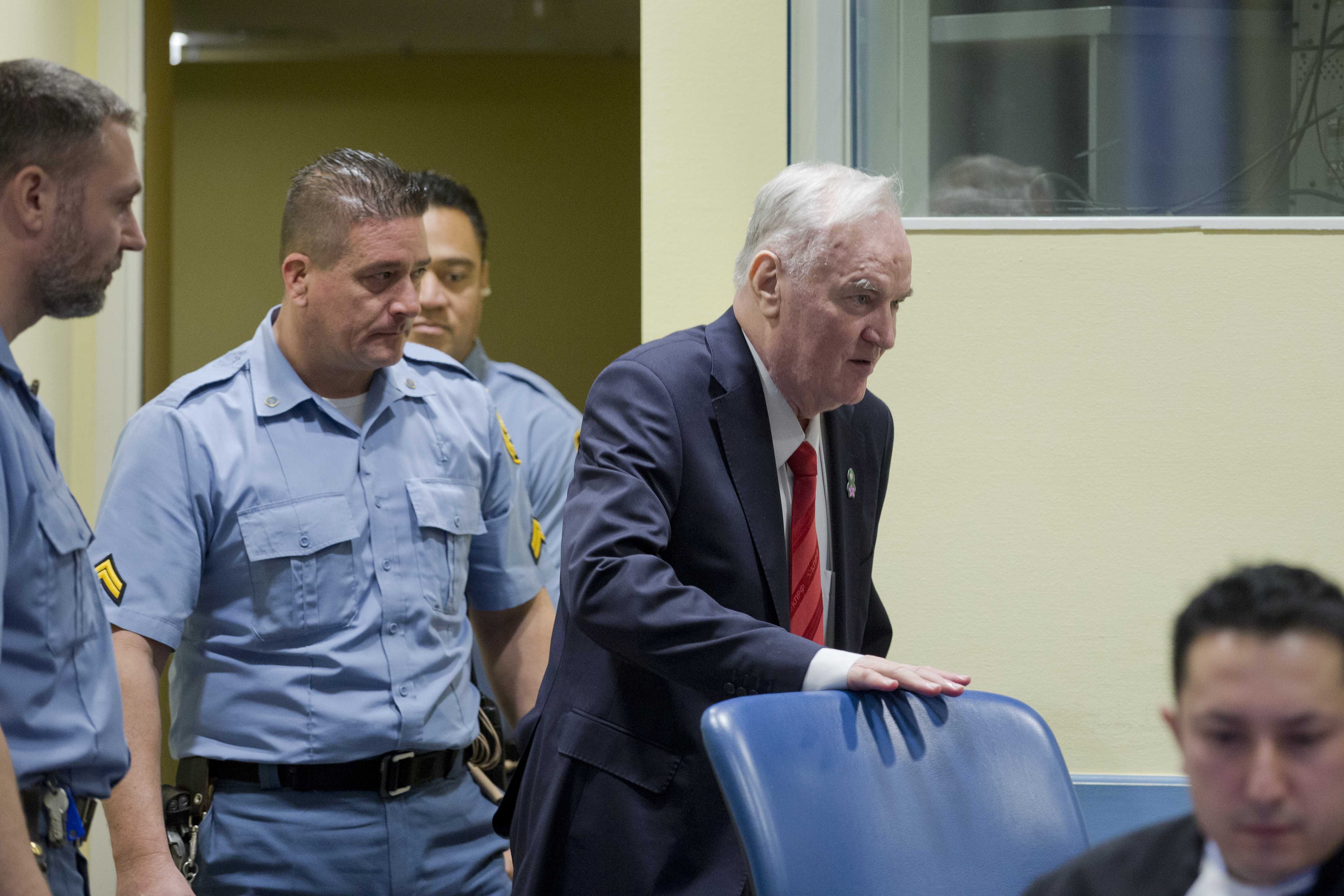
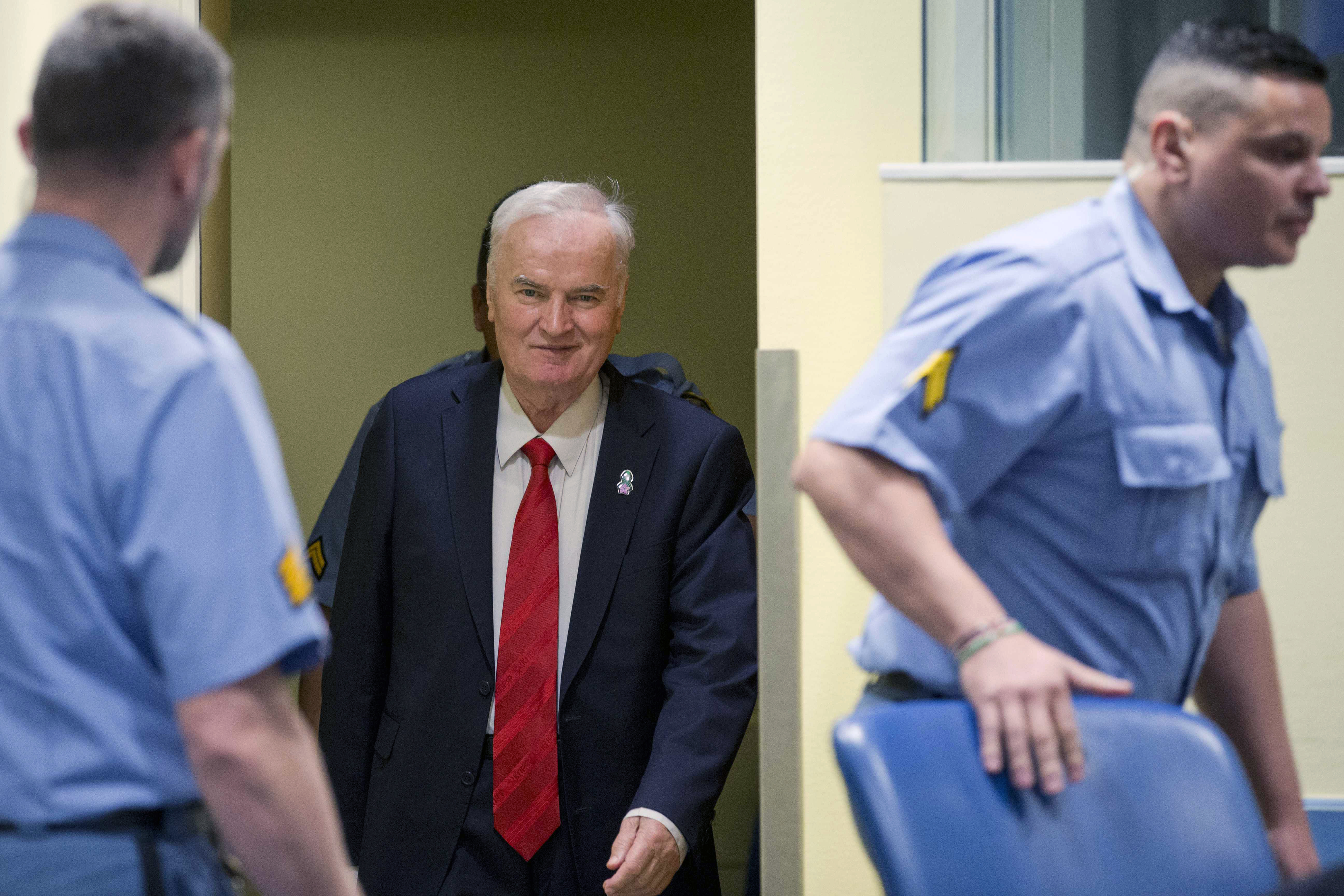
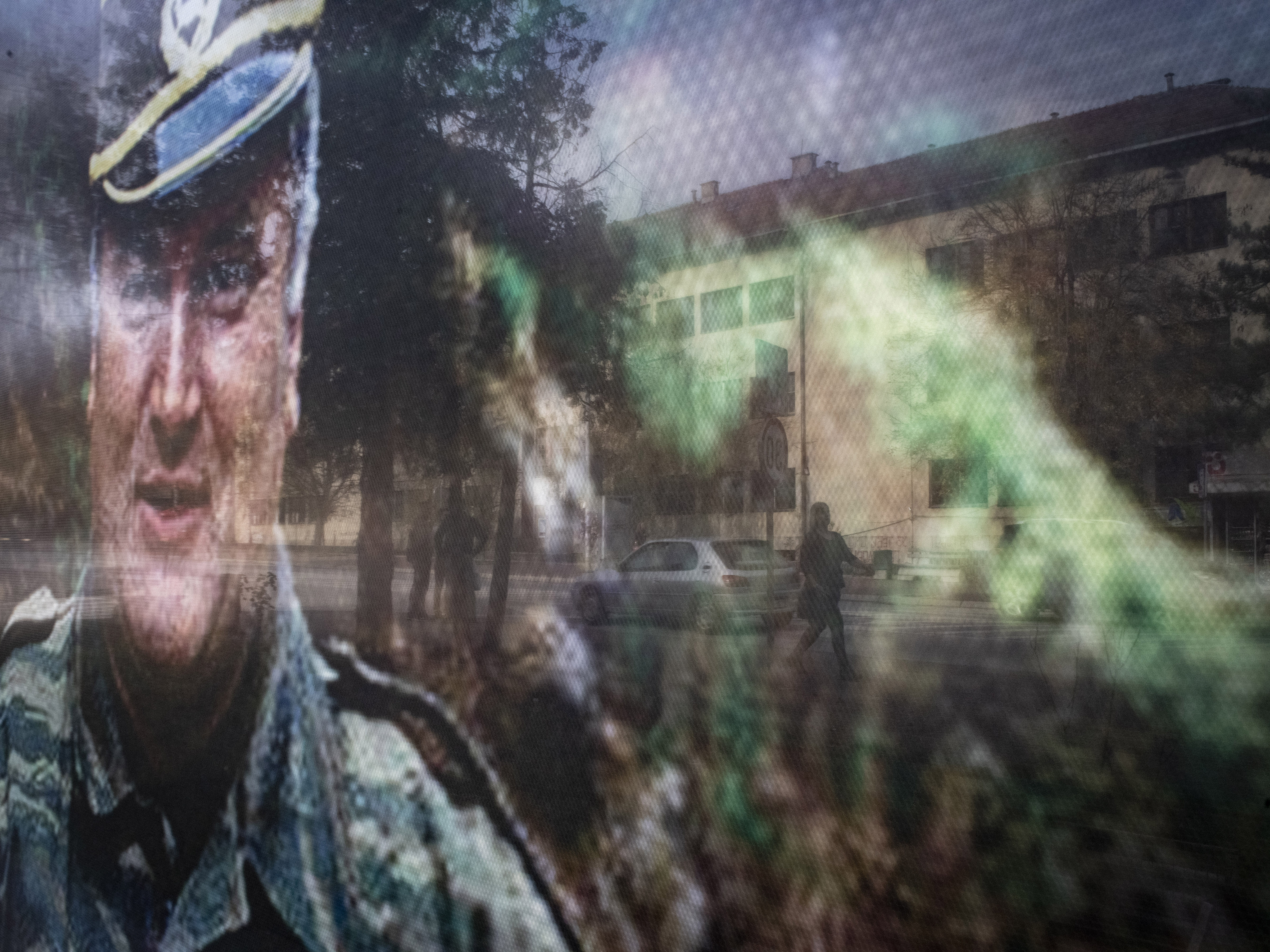
Ratko Mladic, the former Bosnian Serb general whose actions during the Balkan wars of the 1990s led to him being called the “Butcher of Bosnia” and who was held responsible for Europe’s deadliest massacre since World War II, the killing of some 8,000 Muslim men and boys at Srebrenica in 1995, has died. He was 83.
His death was announced Thursday by Serbian state media.
Mladic was captured May 26, 2011, in a farming village north of Belgrade, Serbia’s capital, after almost 16 years as a fugitive, ending one of the longest searches in modern history. His 2017 conviction by an international tribunal on charges of genocide, crimes against humanity, and war crimes marked the end of a dark and bloody chapter.
In pronouncing a life sentence, the presiding judge, Alphons Orie, said Mladic’s crimes ranked “among the most heinous known to humankind.” Mladic appealed the verdict, which was upheld in 2021.
The Balkan wars erupted as Yugoslavia was breaking up into independent states. Slobodan Milosevic, the nationalist president of Serbia, one of those states, was intent on creating a Greater Serbia. He reawakened old ethnic and religious enmities and started wars pitting Serbs against Slovenes, Croats, Bosniaks, and the Albanians of Kosovo.
Roughly 100,000 people died during the conflict, and more than 2.5 million were displaced.
A ruddy-faced and intimidating man with a bellowing voice, piercing blue eyes and a grandiose sense of himself, Mladic, an officer in the Yugoslav People’s Army, led the army of the Bosnian Serbs in the early 1990s.
On the eve of the Srebrenica massacre, he promised to avenge the conquest of Serbia centuries before by the Ottoman Muslim Turks. Over 10 days, his soldiers hunted down, captured, and summarily executed thousands of Bosniaks, lining them up with hands tied behind their backs and shooting them. Women were raped. International pleas for restraint were ignored.
Serb forces buried the remains, dug them up again, and scattered them in distant mass graves in an organized effort to hide damning evidence of war crimes.
Mladic’s trial was among the last high-profile ones at the International Criminal Tribunal for the former Yugoslavia in The Hague. The tribunal wound down after trying nearly 100 of those responsible for the atrocities of the Balkan wars, including Mladic’s boss, Radovan Karadzic, the political leader of the Bosnian Serbs.
Arrested in 2008, Karadzic was convicted in 2016 on charges almost identical to Mladic’s, and his sentence was extended to life in prison three years later.
Mladic’s arrest was a signal moment in Serbia’s long effort to shed its status as a pariah nation. It removed a major obstacle to the country’s still-pending accession to the European Union, which had grown weary of the refusal of successive Serbian governments to capture him.
When he was finally tracked down, he was hiding in the house of a cousin and was so desperate for money that one of his repeated demands was the restoration of his frozen military pension.
During his trial, Mladic, once a seemingly invincible warrior, at times appeared reduced to a meek old man as witness after witness offered harrowing testimony about the violence he had unleashed. His right arm was impaired by the effects of at least two strokes he suffered while a fugitive, and he was unable to take notes.
Flashes of the mercurial, domineering general remained, though. In his first court appearance in June 2011, he dismissed the charges against him as “obnoxious” and “monstrous.” At other times, he yelled at the judges.
At one point, he was absent from a session, apparently to receive treatment for high blood pressure. When he returned, he raged at the bench, shouting, “Everything you are saying is a pure lie!” He was removed from the court.
In addition to masterminding the massacre at Srebrenica, Mladic was eventually also convicted of multiple crimes tied to the nearly four-year siege of Sarajevo, Bosnia’s capital, in which 10,000 people died, including 1,500 children.
During the siege, the longest in the history of modern warfare, Mladic’s men shelled the city from surrounding mountains and terrorized civilians with sniper bullets. Judges also found him guilty of the persecution and extermination of non-Serbs living in large swaths of Bosnia.
Within Serbia, Mladic’s military prowess was legendary. Ljiljana Bulatovic, who wrote a biography of him, said he remained a hero to many Serbs, who would always regard him as “the mythical protector of the Serbian people.”
But the magnitude of the crimes he was accused of — and the immense suffering he inflicted on Bosnians and Croats driven from lands slated for Serbs — provoked international revulsion and the offer of a $14 million reward for his capture, though it was never claimed after Serbian war crimes investigators seized him.
His early life of desolation and struggle may have helped sustain him during his long, spartan years as a fugitive.
“He had a strong psychological makeup,” Ratko Skrbic, a former general who served under him, later said. “It has to do with military honor. He was brought up never to surrender.”
Ratko Mladic was born into poverty in the remote village of Bozanovici on March 12, 1943, when the area was part of the Independent State of Croatia, a Nazi puppet state dominated by fanatical Croat nationalists.
His father, Neda Mladic, an ethnic Serb member of the communist-led partisan resistance, was killed when Ratko was a toddler, and his mother, Stana (Lalovic) Mladic, raised him and his two siblings. His family’s experience planted in Mladic a deep fear that ethnic Serbs, unless they held the upper hand, would always face persecution by Croats and other ethnic groups.
He was a metalworker as a young man but soon turned toward the military for his schooling. With his sharp mind, physical strength, and a charisma that inspired deep loyalty, Mladic rose swiftly in the Yugoslav People’s Army.
He was said to have adhered early in his military career to Josip Broz Tito’s brand of communism, which rejected nationalism and called instead for Yugoslav brotherhood as a way of holding together Yugoslavia’s fragile assemblage of multiethnic, multireligious republics.
Tito died in 1980, and after Milosevic stirred up nationalist grudges and Yugoslavia had begun to disintegrate in the early 1990s, Mladic took up Milosevic’s cause: halting separatism and assuring the dominance of the Serbs, the largest ethnic group. In 1992, a month after the Bosnian Republic’s declaration of independence, Mladic’s forces began the siege of Sarajevo.
In 1994, his daughter, Ana, a medical student in her early 20s, killed herself with his prized military pistol, apparently distraught by her father’s actions in the war.
Zoran Stankovic, a former Serbian minister of defense and friend of Mladic’s who performed her autopsy, later said Mladic had asked him to cut off a lock of her hair and extract the bullet from her head, and to give them both to him as mementos.
Friends said he became unhinged after her death, and he insisted on visiting her grave under guard before his extradition from Serbia to The Hague.
“After the suicide,” Stankovic said, “I never saw brightness in his eyes, only sadness.”
Before the massacre at Srebrenica, Mladic summoned the Dutch commander of a United Nations peacekeeping force that was protecting the Muslim community there and ushered him to a room where a live pig was tied up.
Mladic ordered his men to slit the pig’s throat, sending blood gushing over the floor. “That’s how we deal with our enemies,” Mladic said, according to witnesses.
In July 1995, with video cameras rolling, Mladic’s bodyguards handed out candies to Bosniak children. “No one will be harmed,” Mladic told terrified women and children July 12, patting a young boy on the head. At the time, his soldiers were preparing to conduct the mass killings.
After the massacre, the outrage in Washington and Europe prompted a NATO bombing campaign that overcame Bosnian Serb forces and led to the Dayton Accords that ended the Balkan wars in December 1995, though conflict in the former Yugoslavia erupted again in 1998 over Kosovo.
In 1995, the international tribunal in The Hague, which had been created two years earlier, indicted Mladic on war crimes and genocide charges related to the Sarajevo siege and the Srebrenica massacre.
Mladic, who had the protection of Milosevic, did not immediately lie low. He moved among military barracks, according to friends who said they would visit him to play table tennis or chess. For several years, he visited his daughter’s grave. Surrounded by bodyguards, he attended a Chinese-Yugoslav soccer match in Belgrade in 2000.
Milosevic fell from power in 2000 and the next year was arrested and sent to The Hague to stand trial. (He died in 2006, as his trial was nearing its end.)
Mladic was forced underground, and is believed to have been protected by allies in the Serbian military and intelligence services. His wife, Bosiljka, and his son, Darko, sought unsuccessfully to have him declared dead. They survive him.
In the end, he was captured alone, with two loaded pistols at his side, and surrendered willingly.
“Congratulations,” he said when officers stormed in. “I’m the one you’ve been looking for.”
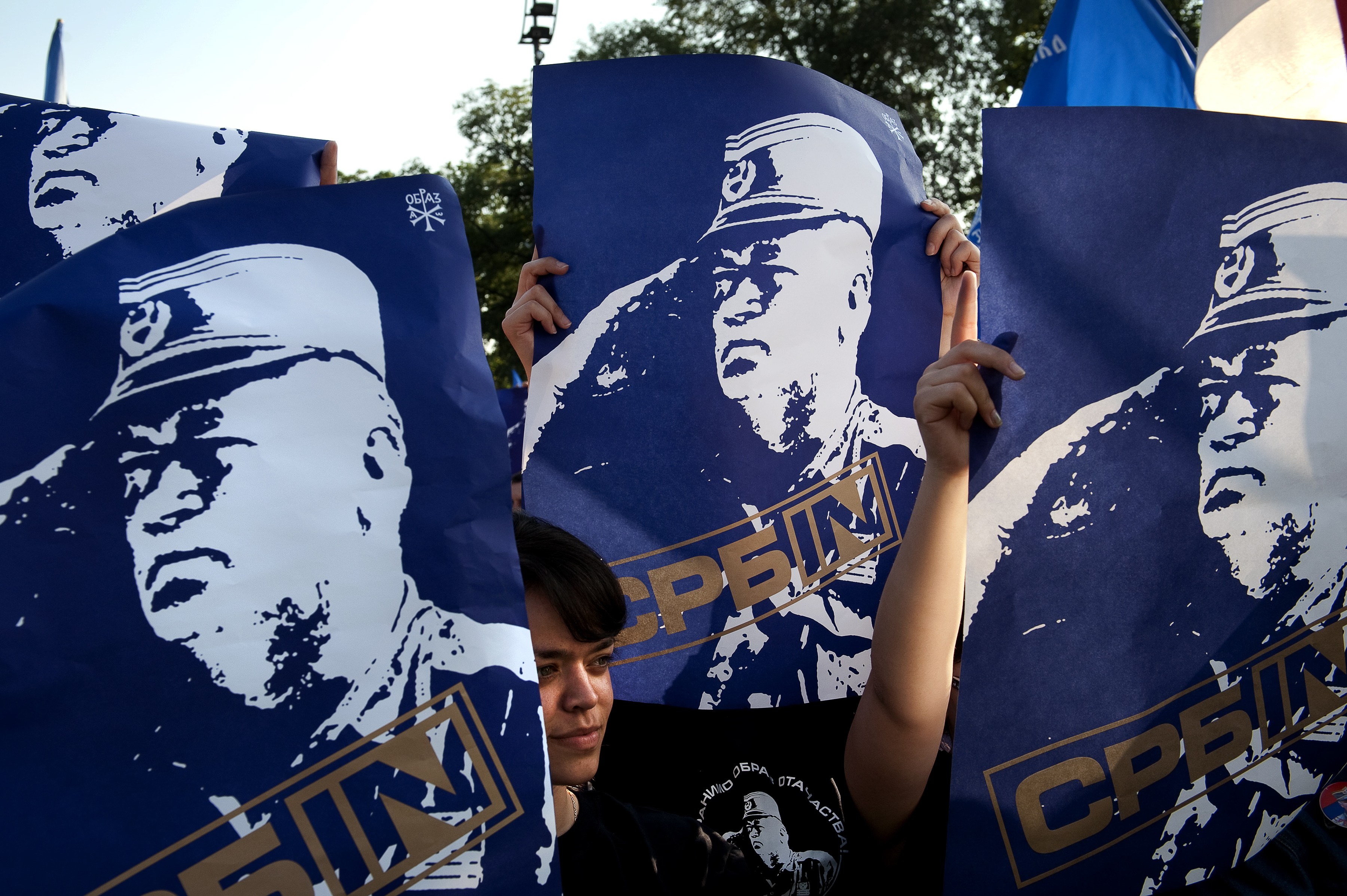
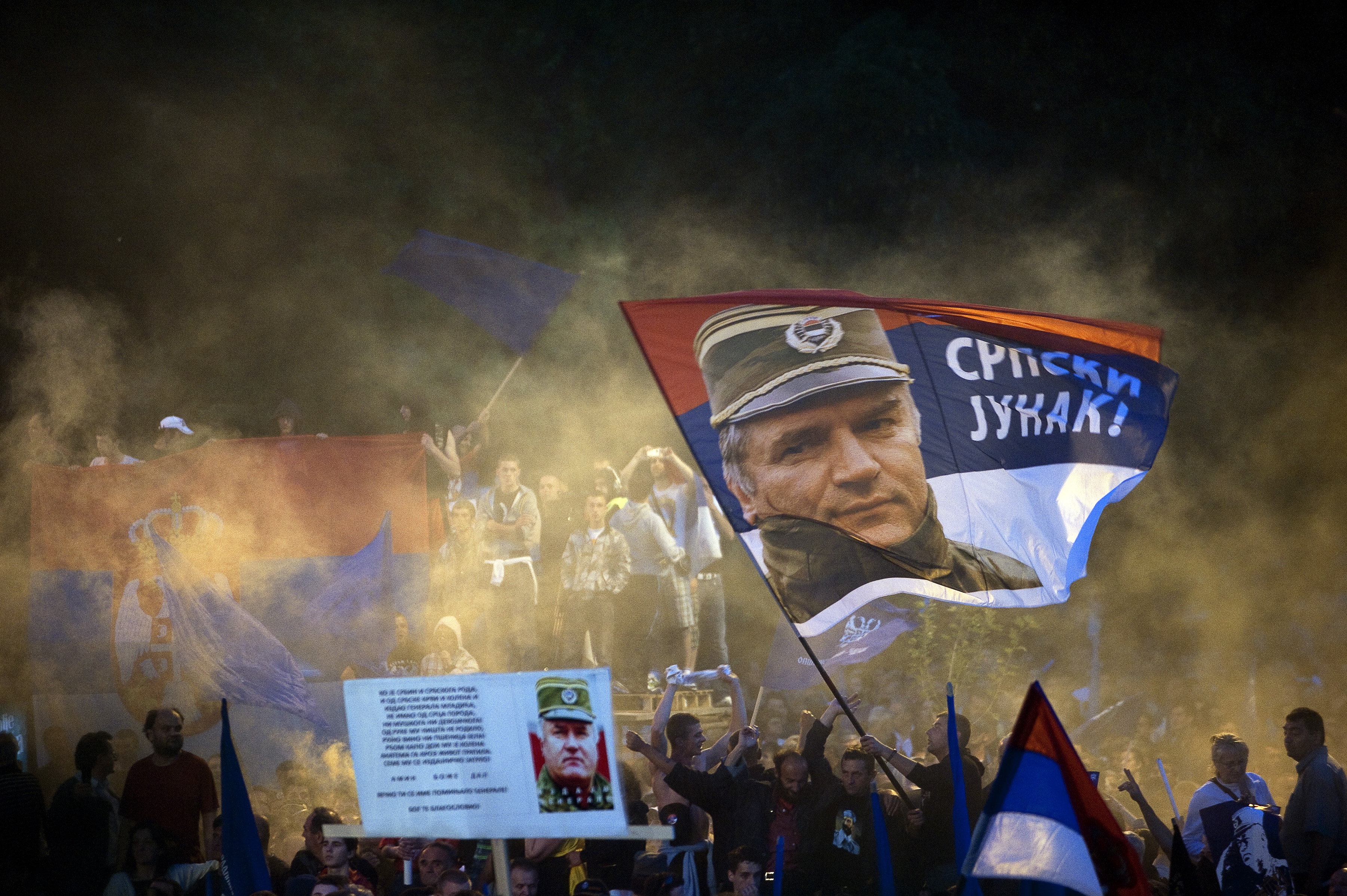
FILE — The body of a victim of the Srebrenica massacre, the worst ethnically motivated mass murder on the continent since World War II, lies in a mass grave in Budak, Bosnia on July 9, 2005. Ratko Mladic, the former Bosnian Serb general who was captured in 2011 and convicted in international court of responsibility for the killing of some 8,000 Muslim men and boys at Srebrenica, has died, Serbian state media announced on Aug. 27, 2026. He was 83. (Andrew Testa/The New York Times)ANDREW TESTAFILE — A woman mourns among the coffins of the nearly 600 victims of the Srebrenica massacre, the worst ethnically motivated mass murder on the continent since World War II, in Potocari, Bosnia on July 9, 2005. Ratko Mladic, the former Bosnian Serb general who was captured in 2011 and convicted in international court of responsibility for the killing of some 8,000 Muslim men and boys at Srebrenica, has died, Serbian state media announced on Aug. 27, 2026. He was 83. (Andrew Testa/The New York Times)ANDREW TESTAFILE — Ratko Mladic, the former Bosnian Serb general dubbed the “Butcher of Bosnia” for his actions during the Balkan wars of the 1990s, enters a courtroom in The Hague on Nov. 22, 2017, to hear the verdict from a United Nations war crimes tribunal. Mladic, who was captured in 2011 and convicted here of responsibility for the killing of some 8,000 Muslim men and boys at Srebrenica, has died, Serbian state media announced on Aug. 27, 2026. He was 83. (Peter Dejong/Pool via The New York Times) — NO SALES. FOR EDITORIAL USE ONLY —PETER DEJONGFILE — Ratko Mladic, the former Bosnian Serb general dubbed the “Butcher of Bosnia” for his actions during the Balkan wars of the 1990s, enters a courtroom in The Hague on Nov. 22, 2017, to hear the verdict from a United Nations war crimes tribunal. Mladic, who was captured in 2011 and convicted here of responsibility for the killing of some 8,000 Muslim men and boys at Srebrenica, has died, Serbian state media announced on Aug. 27, 2026. He was 83. (Peter Dejong/Pool via The New York Times) — NO SALES. FOR EDITORIAL USE ONLY —PETER DEJONGFILE — Ratko Mladic, the former Bosnian Serb general dubbed the “Butcher of Bosnia” for his actions during the Balkan wars of the 1990s, enters a courtroom in The Hague on Nov. 22, 2017, to hear the verdict from a United Nations war crimes tribunal. Mladic, who was captured in 2011 and convicted here of responsibility for the killing of some 8,000 Muslim men and boys at Srebrenica, has died, Serbian state media announced on Aug. 27, 2026. He was 83. (Peter Dejong/Pool via The New York Times) — NO SALES. FOR EDITORIAL USE ONLY —PETER DEJONGFILE — Ratko Mladic, the former Bosnian Serb general dubbed the “Butcher of Bosnia” for his actions during the Balkan wars of the 1990s, enters a courtroom in The Hague on Nov. 22, 2017, to hear the verdict from a United Nations war crimes tribunal. Mladic, who was captured in 2011 and convicted here of responsibility for the killing of some 8,000 Muslim men and boys at Srebrenica, has died, Serbian state media announced on Aug. 27, 2026. He was 83. (Peter Dejong/Pool via The New York Times) — NO SALES. FOR EDITORIAL USE ONLY —PETER DEJONGFILE — An image of Ratko Mladic, the former Bosnian Serb general dubbed the “Butcher of Bosnia” for his actions during the Balkan wars of the 1990s, is projected on a building in the Serbian part of Sarajevo, Bosnia and Herzegovina, on Nov. 3, 2018. Mladic, who was captured in 2011 and convicted in international court of responsibility for the killing of some 8,000 Muslim men and boys at Srebrenica, has died, Serbian state media announced on Aug. 27, 2026. He was 83. (Laura Boushnak/The New York Times)LAURA BOUSHNAKFILE — Supporters of Ratko Mladic, the former Bosnian Serb general dubbed the “Butcher of Bosnia” for his actions during the Balkan wars of the 1990s, demonstrate in Belgrade, Serbia, on May 29, 2011. Mladic, who was captured in 2011 and convicted in international court of responsibility for the killing of some 8,000 Muslim men and boys at Srebrenica, has died, Serbian state media announced on Aug. 27, 2026. He was 83. (Andrew Testa/The New York Times)ANDREW TESTAFILE — Supporters of Ratko Mladic, the former Bosnian Serb general dubbed the “Butcher of Bosnia” for his actions during the Balkan wars of the 1990s, demonstrate with flags and posters bearing his image in Belgrade, Serbia, on May 29, 2011. Mladic, who was captured in 2011 and convicted in international court of responsibility for the killing of some 8,000 Muslim men and boys at Srebrenica, has died, Serbian state media announced on Aug. 27, 2026. He was 83. (Andrew Testa/The New York Times)ANDREW TESTA
When fires swept through the Great Smoky Mountains in 2016, killing 14 and displacing thousands, a local legend answered the call to help.
Dolly Parton, the country music luminary, who died this week at 80, offered $1,000 per month to families who had lost their homes in Sevier County. The money kept flowing for months, and the songwriter and star behind hits including “My Tennessee Mountain Home” ultimately sent $12.5 million back to the county where she was born.
Parton’s support for the fire victims was just one node in a constellation of charitable activities that distinguished her as one of pop culture’s most prolific philanthropists. With cash gifts, benefit concerts, and telethons, Parton supported causes that included early childhood literacy, wildlife conservation, and the development of the COVID-19 vaccine.
She became so effective at distributing her own money that the ultrawealthy asked her to distribute theirs. In 2022, Amazon founder Jeff Bezos and his future wife, Lauren Sanchez, gave Parton $100 million to distribute to causes of her choosing. And this summer, Taylor Swift and Travis Kelce gave Parton’s Imagination Library $2 million to fund the distribution of children’s books.
“Her philanthropy was so much more significant and serious than what you see from other celebrities,” said Stacy Palmer, CEO of the Chronicle of Philanthropy. “As a woman, she was a standout giver, and she gave to the kinds of causes that a lot of rich people don’t give to, ones that were based on her life experience.”
Parton started her own charitable organization, the Dollywood Foundation, in 1988, the same year that Trio, her album with Emmylou Harris and Linda Ronstadt, won album of the year at the Academy of Country Music Awards.
The foundation was initially focused on reducing school dropout rates in Sevier County, in part by offering $500 gifts to graduates. Cold, hard cash proved a powerful incentive; high school dropout rates plummeted to just 6% in the county, from 35%. The Dollywood Foundation, which reported $141 million in assets last year, also offers local high school graduates $15,000 scholarships.
“She gave cash gifts to people in need long before it was popular,” Palmer said. ”She trusted the people that she wanted to help.”
At her theme park, Dollywood, Parton opened a special attraction: a 30,000-square-foot aviary to house rehabilitated bald eagles that could not be released into the wild.
In 1995, Parton started the Imagination Library, a program that sent one book per month to children in Sevier County from birth until their first year of school. The inspiration for the effort came from Parton’s father, who didn’t know how to read.
“As we see all these superwealthy people thinking about strategic plans, her brilliance was just making it so easy for people to read,” Palmer said. “Send them the book.”
The program expanded across the world, and last year, the Imagination Library said it had distributed some 305 million books.
“I just give from my heart,” Parton said in 2022, when accepting the Carnegie Medal of Philanthropy in New York. “I never know what I’m going to do or why I’m going to do it. I just see a need and if I can fill it, then I will.”
Parton often saw need in the aftermath of disasters. After Hurricane Helene cut a swath of devastation across the Southeast, she personally donated $1 million to the Mountain Ways Foundation to support flood victims, while her businesses and the Dollywood Foundation pledged $1 million more.
She announced her gift in a Walmart parking lot in Newport, Tenn., not far from where she was born, and sang a Hurricane Helene-themed version of her classic song “Jolene” to the crowd.
“There’s any number of celebrities who could give money after disasters, and don’t,” said David Callahan, the founder of Inside Philanthropy, a news site that writes about charitable giving. “But she had a powerful sense of empathy.”
In the months after the COVID-19 virus emerged, Parton learned that Vanderbilt University in Nashville was helping with the early trials of the vaccine made by Moderna, and she gave $1 million to support the effort.
“It was a shot in the arm,” said Mark Denison, emeritus professor of pediatrics at the Vanderbilt School of Medicine. “We were starting this work but we didn’t have specific funding for it, and she recognized that this was a critical human problem that was going to impact the country and the world. It allowed us to quickly scale up and get into the lab.”
For the staff at Vanderbilt, her gift was also an enormous morale booster.
“We’re all in Nashville, and there were some people who were serious fans,” Denison said. “The fact that she was supporting our work was something that you could not put a price on.”
The next year, she made a $1 million gift to Vanderbilt to support work on infectious diseases in children, and the year after that, she created an endowment to support additional research.
“This is an area that is undersupported and not really popular for charity,” Denison said. “But she was really good at recognizing short-term needs but maintaining a long-term vision.”
In 2021, Denison and his wife had dinner with Parton. Over the three-hour meal, she mostly asked questions about their work and why they had chosen their careers, he said. Denison has traded on the story ever since.
“I got more credibility with my family and friends from that one interaction than I did from 40 years of research,” he said.
Parton’s support for medical issues went well beyond the COVID-19 vaccine.
In 2007, she performed at a benefit concert for a new hospital in Sevier County, and the Dollywood Foundation donated funds for the new building as well. When the hospital opened in 2010, it featured a 30,000-square-foot Dolly Parton Center for Women’s Services.
In 2017, following the release of a children’s album, I Believe in You, Parton donated $1 million to the Monroe Carell Jr. Children’s Hospital at Vanderbilt University Medical Center. The gift was made honor of her niece, who was treated for leukemia at that hospital.
In February, officials at the East Tennessee Children’s Hospital in Knoxville renamed it the Dolly Parton Children’s Hospital after receiving what they called a “generational commitment” from Parton. The amount has not been disclosed.
“Sometimes philanthropists have tons of fundraisers who come to them and say, ‘Put your name on this building, do this important thing, and it’ll get you access to a museum or the other people you want to hang out with,’” Palmer said. “She just never really forgot about the roots that she grew up in, and this obligation she felt to the people who helped her thrive in life.”
Palmer said the question now was what will become of Parton’s remaining fortune, which is estimated to be about $500 million, according to Forbes.
“She did so much while she’s alive, but I’m super curious what her will says,” Palmer said. “Because she had so much wealth, and she did not have children. So we may yet see more of her.”
This article originally appeared in the New York Times.
When Randy Madden saw the way diesel prices were rising, he decided to delay purchasing the fuel that powers his 3,000-acre farm in Iowa.
Except prices are at around the same level as when he made that decision in May.
Now, going into harvest season, he expects to spend more than $40,000 on fuel — roughly double what he typically pays from late summer through the end of the year.
“The volatility and the price is coming at a very bad time,” he said.
The average price of diesel in the United States was $5.62 a gallon Wednesday, 53% higher than a year earlier, according to the AAA motor club. Because fuel supplies were disrupted after the United States and Israel went to war with Iran, diesel prices are now hovering close to a record high and could drive up prices of many other goods and services.
Diesel powers a vast chunk of America’s economy. It fuels equipment on farms like Madden’s, as well as trains, trucks, and other heavy machinery. As prices climb, businesses often have to pass on that higher cost to their customers.
“Gasoline is mostly a consumer fuel, used for driving, whereas I would characterize diesel as the workhorse fuel used mostly by the corporate sector and small businesses,” said Daan Struyven, a Goldman Sachs commodities analyst.
The last time U.S. diesel prices rocketed up was in 2022 after Russia invaded Ukraine, hitting a peak of $5.82 a gallon.
This is a global crunch
To understand why diesel prices are rising, it’s important to understand the big picture. There is simply not enough diesel available to meet the world’s needs.
Refineries produce diesel, gasoline, jet fuel and other fuels by “cracking,” or heating, crude oil. The United States and China have most of the world’s refining capacity, followed by countries such as Russia and India.
But Russia’s ability to make diesel has been severely hamstrung because Ukraine has damaged many of its refineries. In July, Bank of America analysts said Russian refineries were processing around 3.9 million barrels per day, down from 5.3 million barrels a year ago. That has forced Russia to suspend diesel exports.
“We estimate that now 40% of Russian refining capacity has been impacted by drone strikes,” said Debnil Chowdhury, who tracks the refining business for S&P Global. “And the reason that that’s important is it’s a global market.”
The effective closure of the Strait of Hormuz, the narrow waterway through which about a fifth of the world’s crude oil is shipped, has also limited the flow of crude oil, diesel, and other petroleum products. As a result, the global oil price has climbed around 20%, to about $86 a barrel.
The volume of crude oil refined in the Middle East has dropped to about 8 million barrels a day in 2026, down 1.6 million barrels a day from 2025 levels, S&P Global analysts said in an Aug. 1 report.
U.S. refineries have made up for some of that shortfall by operating at around 97% of their capacity, according to the Energy Information Administration. Exports of diesel and related fuels are up by around 28% compared with last year, and U.S. inventories of those fuels have fallen sharply.
Higher prices benefit refineries but hurt buyers
There’s one clear winner from higher diesel prices: refineries that are still able to sell fuel.
When oil is trading at a modest $70 a barrel, refineries typically earn $20 to $30 a barrel on the diesel they sell, Struyven said. Now, U.S. refineries are earning close to $90 for every barrel of diesel.
In earnings reports for the second quarter, firms including Valero Energy and Marathon Petroleum said their profit margins on turning a barrel of crude into fuels have roughly doubled from a year earlier.
But users like farmers and truckers are hurting.
Farmers need operating loans every year to cover the cost of equipment repairs, seed, fertilizer, and fuel.
John Boyd, a founder of the National Black Farmers Association, said many farmers did not budget for bigger expenses when taking out their loans. Higher costs for fuel and other items have strained budgets and driven some farmers he knows to the brink of losing their properties.
“These are generational farmers going under,” said Boyd, who lives in Boydton, Va.
The trucking industry has also been affected. Large logistics companies are typically able to pass on all or most of their higher fuel costs to customers, but smaller operators or drivers who operate independently may not be able to do so.
“It really just eats into your operations because you basically break it out into what is my cost per mile traveled,” said Zach Miller, vice president of government affairs at the Trucking Association of New York. “What’s left over is your profit margin.”
Producing more diesel won’t be easy
The last U.S. refinery was built in 1977, in Louisiana, according to the Energy Information Administration. Since then, the industry has mostly invested in existing refineries rather than building new ones.
Building these hulking industrial facilities takes years and costs billions of dollars. Because refineries are built to operate for many decades, investors want to know that demand for fossil fuels will remain strong for a long time. But nobody can predict demand over the next couple of decades with any certainty given the rise of electric vehicles, including trucks.
Even if no new refineries are built, the supply of diesel could increase if China decided to export more fuel, Struyven said. But Chinese policymakers have placed restrictions on its refineries since the war began to make sure the country has enough fuel to meet domestic demand.
While refining capacity growth has slowed in most countries, most of the new growth is now coming from developing countries like India where a new refinery started in July, Struyven said.
In Nigeria, a major oil producer, the Dangote Petroleum Refinery has recently increased its crude processing capacity by 25% and plans to double its refinery’s total capacity by 2028. It has helped push seaborne petroleum shipments from the country to 350,000 barrels a day in the second quarter of 2026, a jump from an annual average of 46,000 barrels a day in 2023, according to the Energy Information Administration.
Tim Curry, the British-born actor whose gift for garish eccentricity lit up stage and screen, most notably as the outlandish, cross-dressing mad scientist in the midnight cult film The Rocky Horror Picture Show, died Tuesday at his home in Los Angeles. He was 80.
The death was confirmed by Marcia Hurwitz, his longtime agent and manager. In 2012, Curry suffered a serious stroke, from which, he said last year, “I’ve been recovering for quite a long time.”
With a mischief-maker’s good looks, a casual athletic grace, and a supple and resonant voice, Curry was a favorite in roles calling for expressive villainy or general cartoonishness.
In the first screen version of Annie (1982), adapted from the comic strip turned stage musical and directed by John Huston, he brought more than a dollop of slime to the part of Rooster Hannigan, the con artist who concocts a plot to kidnap the plucky orphan of the title.
In Clue (1985), a suspense spoof derived from the popular board game, he played Wadsworth, a logorrheic butler who leads a cast full of murder suspects (played by Madeline Kahn, Christopher Lloyd, Martin Mull, Eileen Brennan, and others) around a spooky mansion with the speed-talking fervor of a manic Sherlock Holmes.
As a greedy gazillionaire presumed to be the chief malefactor in Charlie’s Angels, the 2000 movie adaptation of the television series about three female detectives, Curry laid on the oily self-satisfaction until the moment he was killed by the real bad guy.
And in Spamalot, the stage musical based on the Monty Python troupe’s bottomlessly goofy retelling of the King Arthur legend, which opened on Broadway in 2005, he played Arthur himself and was nominated for a Tony Award. It was the most straight-faced role in the show, and yet, as Ben Brantley wrote in his review in The New York Times, he was “the best of the cast at translating classic Python style into a musical-comedy idiom.”
“His stalwart, plummy-voiced Arthur wears a smile as inflexible as armor,” Brantley wrote, “and it deflects any suggestion that this manly king is in on the show’s jokes.”
No other role marked Curry’s career as emphatically, however, as Dr. Frank-N-Furter, the “sweet transvestite from Transsexual, Transylvania,” as he proclaimed himself in The Rocky Horror Picture Show, the 1975 screen adaptation of The Rocky Horror Show, the hit London stage musical that played for seven years in different theaters, and in which Curry originated the role in 1973. He also starred in the premiere American production in Los Angeles in 1974 and on Broadway in 1975, where it was a notable flop, closing after 45 performances.
Although Frank-N-Furter would become Curry’s signature role, he initially had doubts about taking it. “I was hesitant in that, if it worked, it might be a difficult image to shake off,” he said in a television interview in England just as The Rocky Horror Picture Show was opening in 1975. “But then, really, I’ve always thought it wasn’t worth doing unless you took a risk, really. So I just took the risk.”
Forty years later, when he received a lifetime achievement award from the Actors Fund, Los Angeles magazine asked him to reflect on his career-making role. How did he look at it in retrospect?
“With a sort of bemused tolerance,” he said. “It’s neither a blessing nor a curse. I was lucky to get it.”
FILE — British actor and author Tim Curry in Los Angeles, Sept. 18, 2025. Curry, the British-born actor whose gift for caricature and garish eccentricity informed a variety of performances on stage and screen, notably as the puerile Mozart in the original Broadway production of “Amadeus” and as the outlandish cross-dressing mad scientist in the midnight cult film “The Rocky Horror Picture Show,” died on Tuesday, Aug. 25, 2026. He was 80. (Maggie Shannon/The New York Times)MAGGIE SHANNONFILE — Michael McGrath, left, as Patsy and Tim Curry as King Arthur in “Spamalot” at the Shubert Theater in New York, Feb. 12, 2005. Curry, the British-born actor whose gift for caricature and garish eccentricity informed a variety of performances on stage and screen, notably as the puerile Mozart in the original Broadway production of “Amadeus” and as the outlandish cross-dressing mad scientist in the midnight cult film “The Rocky Horror Picture Show,” died on Tuesday, Aug. 25, 2026. He was 80. (Sara Krulwich/The New York Times)SARA KRULWICHFILE — Tim Curry, center, as King Arthur in “Spamalot” at the Shubert Theater in New York, Feb. 12, 2005. Curry, the British-born actor whose gift for caricature and garish eccentricity informed a variety of performances on stage and screen, notably as the puerile Mozart in the original Broadway production of “Amadeus” and as the outlandish cross-dressing mad scientist in the midnight cult film “The Rocky Horror Picture Show,” died on Tuesday, Aug. 25, 2026. He was 80. (Sara Krulwich/The New York Times)SARA KRULWICHFILE — Tim Curry on screen during a silent disco showing of “The Rocky Horror Picture Show” at Damrosch Park in New York, Aug. 7, 2015. Curry, the British-born actor whose gift for caricature and garish eccentricity informed a variety of performances on stage and screen, notably as the puerile Mozart in the original Broadway production of “Amadeus” and as the outlandish cross-dressing mad scientist in the midnight cult film “The Rocky Horror Picture Show,” died on Tuesday, Aug. 25, 2026. He was 80. (An Rong Xu/The New York Times)AN RONG XUFILE — Tim Curry and Marcia Hurwitz, his longtime agent and manager, at a Museum of the Moving Image event in New York, Feb. 11, 2011. Curry, the British-born actor whose gift for caricature and garish eccentricity informed a variety of performances on stage and screen, notably as the puerile Mozart in the original Broadway production of “Amadeus” and as the outlandish cross-dressing mad scientist in the midnight cult film “The Rocky Horror Picture Show,” died on Tuesday, Aug. 25, 2026. He was 80. (Hiroko Masuike/The New York Times)HIROKO MASUIKEFILE — Tim Curry as King Arthur in “Spamalot” at the Shubert Theater in New York, Feb. 12, 2005. Curry, the British-born actor whose gift for caricature and garish eccentricity informed a variety of performances on stage and screen, notably as the puerile Mozart in the original Broadway production of “Amadeus” and as the outlandish cross-dressing mad scientist in the midnight cult film “The Rocky Horror Picture Show,” died on Tuesday, Aug. 25, 2026. He was 80. (Sara Krulwich/The New York Times)SARA KRULWICH