Category: New York Times

  • Political campaigns are quietly paying influencers to support candidates

    Political campaigns are quietly paying influencers to support candidates

    Josh Greene is a rising left-wing social media star with his own podcast, nearly 800,000 followers, and access to politicians like Sen. Bernie Sanders of Vermont and Mayor Zohran Mamdani of New York.

    He has used that platform to support dozens of progressive candidates in the midterm elections, ranging from low-profile, down-ballot contests to some of the nation’s marquee Democratic primaries. In camera-facing videos, Greene informs his followers of his preferences, calling some candidates “the most viable” and, in other cases, declaring that “this is the candidate for you.”

    He does not always tell his viewers that he is being compensated for his support.

    But records show that Greene, 26, has received money from at least seven politicians, or outside groups supporting them, in the current campaign cycle, including several congressional candidates in New York and a super political action committee linked to Abdul El-Sayed, the Senate nominee in Michigan. Tom Steyer, a former candidate for governor in California, paid him $21,500.
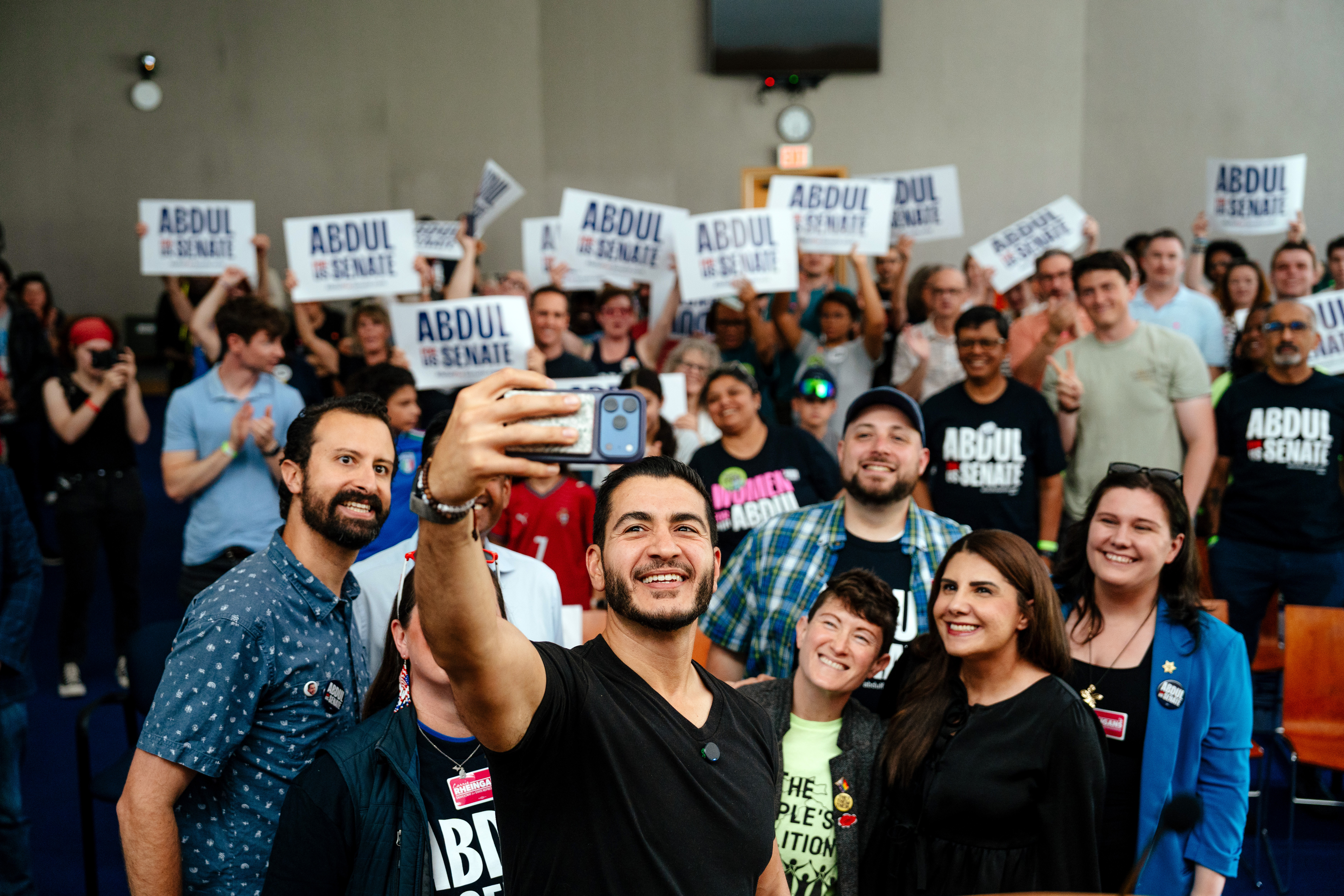
    Abdul El-Sayed, the Democratic candidate for U.S. Senate in Michigan, who is trying to bring his party together after a divisive primary, at a June 28 campaign event in Ann Arbor, Mich.NICK HAGEN

    Greene, who lives in Southern California and is best known by his handle @joshtheprogressive, is among a growing number of influencers who, at a moment when campaigns are increasingly willing to pay for online attention, appear willing to put their mouth where the money is.

    As more people spend time scrolling on their phones, campaigns view these shows of support from influencers as a vital way to reach voters. They are also significantly less expensive than traditional advertising.

    But unlike campaign mailers, billboards, and television spots, these messages fall into a legal gray area.

    There are no federal regulations requiring disclosure of payments for political support on social media, and only a few states have such rules. That allows influencers, in most instances, to endorse candidates for a fee without ever disclosing those payments in their posts. Creators say some campaigns have even asked them to actively conceal the fact that they’re being compensated, making it impossible to know what’s genuine support — and what is pay-for-play.

    In most cases, the only way a viewer would know an influencer is being paid would be to search a candidate’s campaign finance reports, as the New York Times did to discover the payments. Even then, such compensation is regularly obscured by funneling the payments through middlemen.

    “It’s completely out of control,” said Suzanne Lambert, a progressive influencer and comedian with more than 1.3 million followers between TikTok and Instagram. She said that while she happily promotes candidates she likes, she has “never taken a cent” in exchange for an endorsement and worries that the practice distorts the democratic process. “People don’t know what’s real anymore,” she said.

    Greene defended the idea of influencers getting paid for their work and noted that he accepts money only from candidates and campaigns that he would support anyway. “I turn down offers every single day because I’m not going to take money from anyplace if I don’t agree with it,” he said. (In the case of the Steyer campaign, Greene said he was initially critical but came to see him as the most viable candidate.)

    Still, he suggested there was a need for straightforward and consistent rules on disclosure. “If anything, we do need more clear transparency laws so that creators like myself aren’t confused,” he said.

    Coordinated networks

    The phenomenon is bipartisan.

    In June, Rep. Barry Moore of Alabama filed a complaint with the Federal Election Commission, alleging that at least eight social media accounts were being paid to attack his military record during the Republican primary. In April, a newspaper in Kentucky revealed what appeared to be a coordinated network of influencers boosting Nate Morris — at the time running in a Republican Senate primary — even though none acknowledged being paid for their efforts. Ken Paxton, the attorney general of Texas and the Republican nominee for Senate, benefited from a paid campaign on the social platform X when he was facing impeachment in the state several years ago.

    But the question of paid influence has gained particular attention in recent months thanks to aggressive efforts by a handful of Democratic candidates to secure support from well-known influencers.

    During California’s hard-fought primary this spring, Steyer’s campaign paid 17 influencers at least $5,000 apiece, including one, Carlos Eduardo Espina, who has over 14 million followers on TikTok and received a total of $400,000, campaign finance filings show.
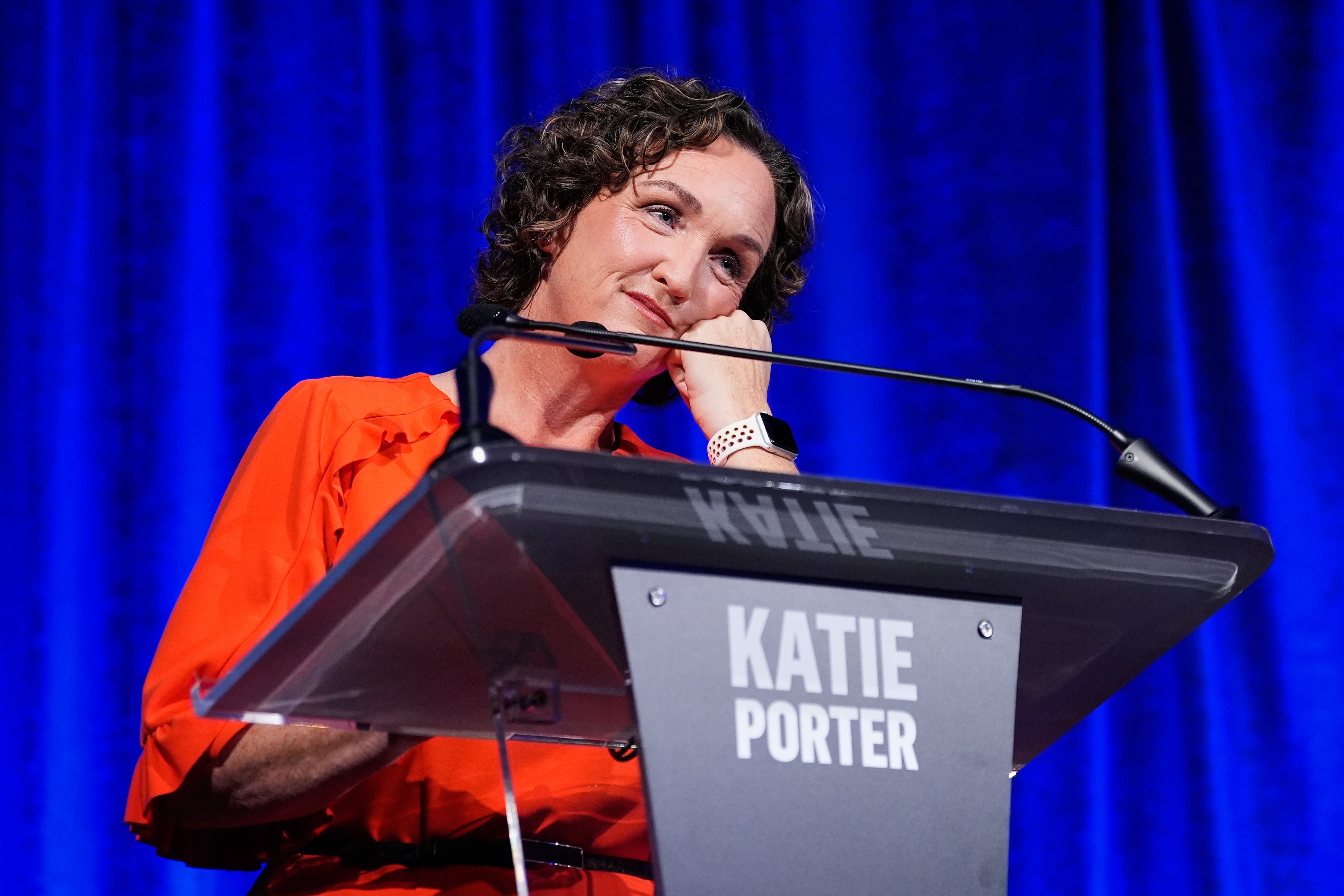
    Katie Porter was one of several candidates to deploy paid influencers during the California gubernatorial primary in 2026.Godofredo A. Vásquez

    Former Rep. Katie Porter, who also ran unsuccessfully for California governor, paid 12 influencers a total of $139,500. One of them, a lifestyle creator named Avery Cyrus with 9.5 million followers on TikTok, received $25,000 for what appeared to be a single post claiming “Katie Porter’s thing works.”

    Cyrus’ post was deleted after the Times inquired about it. She did not respond to a request for comment made through the social media agency that represents her, UnderCurrent Media, but the firm’s CEO, Eric Bogard, said in an email that it “was not asked to oversee disclosure compliance, nor were we provided instructions concerning any required disclosures.”

    Under California law, paid political posts on social media must be disclosed. A Times review found three posts supporting Porter on TikTok from influencers who were paid by her campaign that did not include any disclosures. In seven other instances, the disclosures could be found only after clicking through to a hidden section of TikTok for comments flagged “as potentially offensive or disturbing.”

    Sander Jennings, an influencer based in Florida who was paid $22,000, said “the Porter campaign and I agreed to disclose the payment” in TikTok’s comments section in order to get around the site’s practice of removing paid political posts. He said he did not know why the disclosures ended up in the hidden section of the comments.

    TikTok’s terms of service bar all paid political advertising, including “creators being compensated for making branded political content.” In an email, Porter said that “nothing was paid for and posted without review and coordination and compliance with all law.”

    Other political efforts have employed a different strategy, contracting private firms that pay little-known content creators smaller sums to put out a large volume of posts. Those companies, known as user-generated content platforms, or UGCs, operate on the principle that carpet-bombing the internet with hundreds of nearly identical posts is more likely to generate viral content than paying one large influencer the same amount of money to make a single post.

    This spring, a woman posted dozens of videos promoting Steyer in the California primary. Weeks later, she appeared in videos from a different account complaining about the cost of living “here in Michigan” and encouraging people to vote for Rep. Haley Stevens, El-Sayed’s primary opponent in the Senate race. Then she pivoted to a third account talking about affordability in Wisconsin.

    Corporate records show that the woman, Paige Dunmeyer, actually lives in Kansas City, Mo., and is registered to work with a UGC company called SideShift. It’s not clear how much she was paid for her Michigan and Wisconsin videos, but she has earned more than $30,000 on SideShift for a variety of political and commercial campaigns, according to company records reviewed by the Times. Filings from Steyer’s campaign showed she received $1,320 for her efforts in that race. Dunmeyer did not respond to requests for comment.

    A Times analysis found that at least 87 people registered to work with SideShift had made posts backing Steyer or Stevens, or participated in a third campaign to post video clips on TikTok supporting Rep. James Talarico, the Democratic Senate nominee from Texas. Most of the posts by those creators included no acknowledgment that money changed hands.

    In a statement, SideShift said that it advised creators to follow applicable disclosure requirements, and called for more explicit laws governing how paid content is disclosed on social media.

    “SideShift believes anyone can be a creator and that creators should get paid fairly for work they choose to do,” the company said.

    In June, Kendall Boyle, a TikToker in Michigan with over 21,000 followers, was contacted by a social media marketing agency called Activate HQ offering her a paid opportunity to post videos about “how rising costs are affecting Michigan residents in real life.”

    When she asked who was footing the bill, she was told it was Majority Forward, a dark money group linked to the Senate Majority PAC, a Democratic super PAC, email correspondence reviewed by the Times shows. Boyle said she was turned off by warnings in those emails from Activate HQ that “disclosure is not required and the paid partnership label will not be included in any posts” and also that Majority Forward “will not be mentioned” in her content.

    “It was one of those things where something isn’t fitting right,” Boyle said.

    In a statement, Majority Forward said the language in the email “explains disclosure requirements necessary under FEC rules, which were fully followed.”

    Little regulation

    Just four states have laws or regulations requiring influencers to disclose paid political messaging, but they apply only to state and local races, not federal contests. Although regulations for social media have been proposed multiple times to the FEC, it has never taken action. The Federal Trade Commission, which requires disclosure of paid commercial content on social media, makes an exception for political messaging.

    Rep. Mark Takano (D., Calif.) introduced a bill in June that would require anyone paid by a candidate or political committee to clearly disclose that fact in the same way that traditional campaign materials are required to note such payments.

    In an interview, Takano said he was inspired to draft the legislation after online sleuths revealed that numerous influencers had been making paid endorsements in the California governor’s race without proper disclosure, as required in that state.

    “It’s unfair when an influencer is allowed to be silent or not transparent about money they’re taking from a candidate, making it seem like what they’re saying is authentic and not influenced by money,” he said.

    Takano acknowledges that there are some potential loopholes in the bill. For instance: Campaigns often obscure payments to influencers by hiding them under layers of vendors and subvendors.

    Porter, for example, hired Activate HQ for “influencer marketing services,” and it in turn paid 13 creators to bolster her campaign for governor. One of them, a political influencer in Los Angeles named Dash Dobrofsky, who also posted in support of Stevens in Michigan, received $15,500 from Porter’s campaign. Dobrofsky did not respond to a request for comment.

    Steyer’s campaign, for its part, hired multiple digital strategy firms to manage social media, including one called Group Project, which hired a Los Angeles company, Gutsy Media, which paid Greene through UnderCurrent, which represents him.

    Those payment chains are visible because California is one of a handful of states that require campaigns to report payments to subvendors. There is no such obligation for campaigns for federal office. “Every dollar spent by this campaign is publicly disclosed and available for anyone to see,” the Steyer campaign said in a statement.

    ‘Social media consulting’
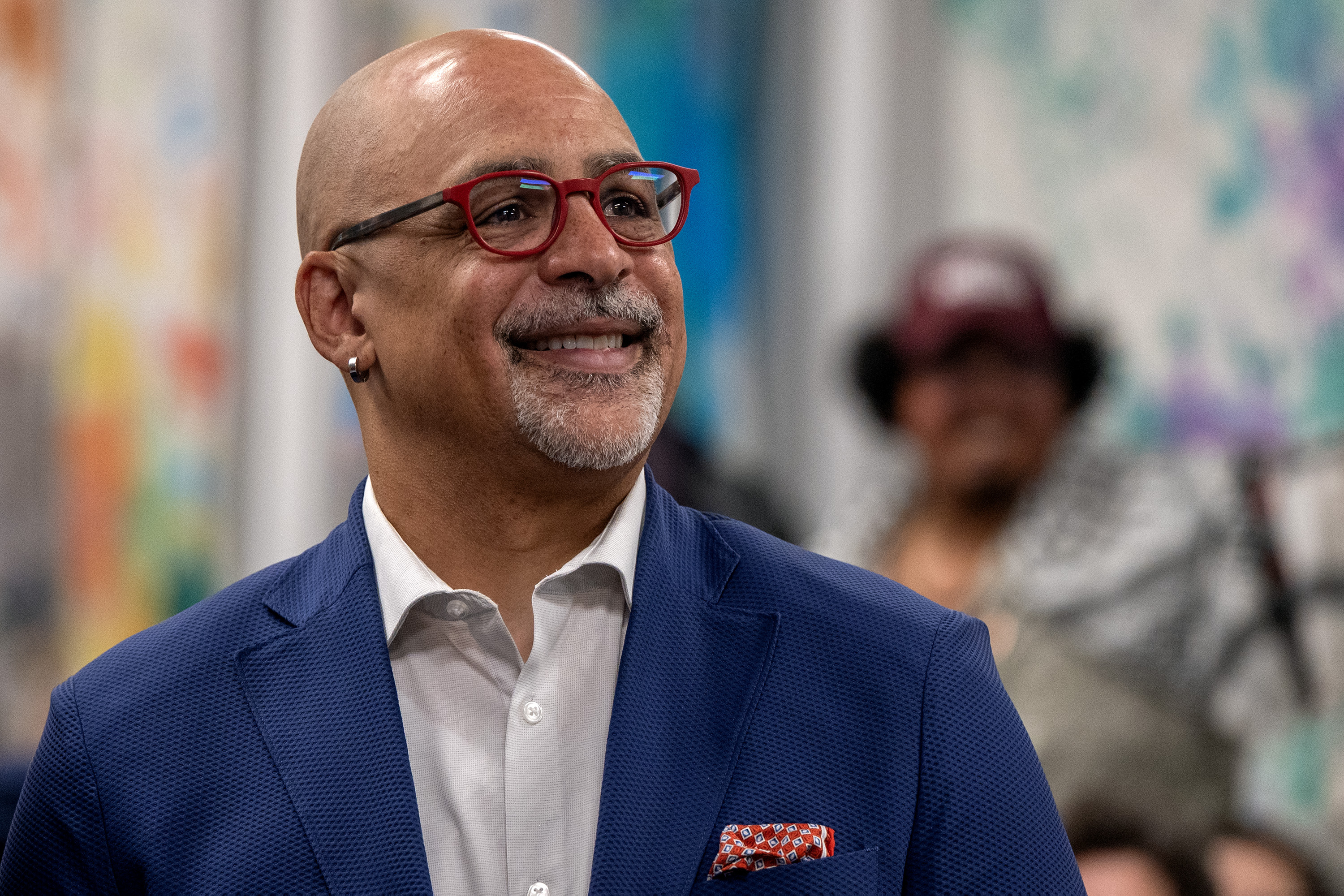
    State Rep. Chris Rabb at a July 28 event with U.S. Rep. Ro Khanna.Tom Gralish / Staff Photographer

    Occasionally, campaigns or independent expenditure groups will reveal direct payments to influencers, such as the super PAC Freedom PA, which supported socialist candidate Chris Rabb’s successful bid to win a Pennsylvania House primary in May. It has disclosed payments to nearly 50 influencers for “social media consulting,” among them Greene, who received $750 and posted a video celebrating the candidate’s victory.

    Other committees listing payments to Greene in federal filings employed less illuminating descriptions. Chuck Park, who unsuccessfully ran for Congress in New York’s Queens borough this year, listed a $300 disbursement to Greene as “staff salary.” Greene posted at least five videos promoting Park, none of which state that he had received payment.

    Park, in an interview, said that Greene was in fact not employed by the campaign, but said that “our campaign absolutely leaned into new media” and that he spent time with Greene in Queens filming a series of videos.

    Greene disclosed being paid on three of his posts about Steyer and told the Times that those videos were the only ones that he was specifically contracted by the Steyer campaign to produce. He said he didn’t receive compensation for prior posts about the candidate.

    Greene has also supported Sen. Ed Markey (D., Mass.) in a competitive primary against Rep. Seth Moulton, and last month, he posted a video accusing Moulton of “posturing to be someone they really aren’t.” He posted a second video this month critiquing Moulton, this time for taking corporate political money.

    Neither video includes disclosures, and FEC filings don’t show any payments to Greene related to Markey’s reelection bid. But a spokesperson for Commonwealth Together, a super PAC that is supporting Markey, said it had paid Greene $3,500 for “digital communications consulting” through his agency, UnderCurrent.

    Greene, in a text message, acknowledged the payment to support Markey, saying he took it “because I believe he is by far the more progressive candidate in the race.”

    The murkiness has left some in the political world uneasy. Last month Rynn Reed, the founder of Creator Congress, an organizing hub for influencers interested in politics, introduced a code of conduct for the group that would require creators to make clear when they’re paid, whether required by law or not.

    “With no standards,” Reed said, “there’s going to be a race to the bottom.”

    This article originally appeared in The New York Times.

  • With shoppers wary of illness, farmers destroy millions of heads of lettuce

    With shoppers wary of illness, farmers destroy millions of heads of lettuce

    SALINAS, Calif. — At a Church Brothers Farms production facility, where conveyor belts rumble with giant heaps of chopped romaine and red cabbage, the company has slashed workers’ hours and laid off employees this summer. Some assembly lines in the plant in San Juan Bautista, Calif., near the agricultural heartland of the Salinas Valley, weren’t operating at all this past week.

    Fresh produce sales fell nationwide after a major outbreak of cyclosporiasis, an illness that causes severe diarrhea. More than 17,000 people have been sickened so far, and two have died, according to federal health officials.

    The largest cluster of cases was linked to iceberg lettuce grown in Mexico, and greens from the Salinas Valley haven’t been implicated by federal officials. Yet demand for the valley’s lettuce has plummeted all the same, said Raymond Gonzales, vice president of processing plant operations at Church Brothers.

    “Even though all this product is from the U.S.,” Gonzales said, waving a gloved hand at pale green leaves churning through cold water, “the consumer just sees it as lettuce.”

    Like many American farmers, Church Brothers made a tough decision in recent weeks to abandon healthy crops. If there isn’t a market for the produce, it often makes more financial sense to use the greens to re-fertilize the land than to shell out for the labor costs for harvesting.

    Jeff Church, the company’s chief operating officer, said Church Brothers had lost hundreds of thousands of dollars in discarded greens. He estimated that the company had returned an extra 3.9 million heads of lettuce to the soil over the past six weeks as demand dropped.

    “We just couldn’t use it,” said Church, 54.

    The amount of romaine and iceberg lettuce produced for sale this summer in the United States has been the lowest in a quarter century, according to shipping data from the U.S. Department of Agriculture. And wholesale prices for lettuce remain at break-even costs, even though so little is available for sale, the data show.

    Nowhere has the economic impact been felt more than in the Salinas Valley, an agricultural region about 100 miles south of San Francisco that marketers have long called the Salad Bowl of the World.

    The area is perhaps best known nationally for the John Steinbeck novels set here, such as Of Mice and Men and East of Eden. But the Salinas Valley has also been prized for generations for its temperate weather and fertile soil, which allow it to grow strawberries, broccoli, and, in the summer, 70% of the nation’s lettuce.

    So produce scares are nothing new. It took years for spinach sales to recover after a deadly E. coli outbreak in 2006. But questions about the origins of the largest-ever U.S. outbreak of cyclospora, a parasite in human feces, seems to have made customers particularly cautious, avoiding berries and several types of fresh vegetables that were never linked to the outbreak.

    The Centers for Disease Control and Prevention has confirmed only one source — iceberg grown in Mexico by produce behemoth Taylor Farms. But health officials say they’re investigating at least six other clusters for which sources have not yet been publicly identified.

    “I even had one reporter tell me they were not going to have a Caesar salad,” said Norm Groot, executive director of the Monterey County Farm Bureau, who pointed out that romaine lettuce, the kind typically used in a Caesar, had never been connected to the parasite.

    At Church Brothers, a large, family-owned business that has been growing produce in the Salinas Valley since 1999, lettuce sales began to drop in July, around the time the CDC announced a link between cyclospora and Taco Bell lettuce. It didn’t help that Taylor Farms, whose Mexican-grown lettuce was implicated, is based in Salinas, linking the outbreak to the valley in customers’ minds.

    Sales have begun to pick up as the outbreak starts to subside, Church said. Yet he is now struggling to determine how much to plant in the coming months.

    Church, wearing a vest in the Salinas morning fog this past week, contemplated the math as he watched workers harvesting iceberg lettuce strip off outer leaves with knives before wrapping the heads in plastic to sell to Walmart.

    If local farmers plant too little, fearing more losses, there will be a lettuce shortage in the winter. But if Church plants a typical amount, he could be forced again to do what farmers call discing, in which they dispatch a tractor with steel blades, or discs, to chop up healthy produce and plow it back into the soil.

    Daniel Sumner, an agricultural economics professor at the University of California, Davis, said it was unclear how long customers would avoid leafy greens, given how fast information travels on social media and a larger lack of trust in institutions.

    Just this past week, farmers were upset about a meme of the scariest Halloween costume: Taylor Farms shredded iceberg lettuce. The Washington Post published an opinion column arguing that Americans should permanently stop eating lettuce.

    “It’s a really tough moment,” said Dave Puglia, president and CEO of Western Growers, an agricultural trade association representing produce farmers in California and other Western states. “There’s a lot of very good, fresh produce that’s being plowed back into the ground.”

    Puglia said the drop in sales linked to this outbreak — close to 30% — had been higher than for other recent disease outbreaks.

    And while America has a very safe food supply system, there are risks inherent to lettuce, he said, since it’s largely grown outside and is eaten raw. Leafy greens are among the leading sources of foodborne illness in the United States.

    In Salinas, a city of 159,000 residents where Main Street is lined with brick buildings featuring art deco entryways, hand-painted tomatoes and heads of lettuce grace the public trash cans. Looming as one of the tallest buildings in downtown, across from the National Steinbeck Center, is the headquarters of Taylor Farms, a major employer.

    The mayor of Salinas, Dennis Donohue, said he was keeping an eye on local economic indicators, such as sales tax revenue, to see how the produce sales slump could ultimately affect the city’s finances. But ups and downs are the nature of the agriculture business, said Donohue, who previously ran a small specialty vegetable company.

    “Things tend to bounce back,” he said.

    As far as eating lettuce, even customers in Salinas remain wary.

    Melanie Waltrip, who co-owns Smalley’s Roundup Restaurant, a 50-year-old steakhouse with deep red booths, said her servers were still fielding questions about the safety of consuming their green salads, typically served as a side with ribs or pork chops.

    But Jeff Birkemeier, 46, who co-owns Amapola Kitchen in downtown Salinas, said his most popular menu item, a Chinese chicken salad made with romaine, remains a bestseller. He said that employees of Taylor Farms, who work across the street from his cafe, often stop by for lunch.

    “My customers in general are people that have grown up in this type of agricultural hotbed for their whole lives, and they just kind of take it all in stride,” he said.

    This article originally appeared in the New York Times.

  • ‘Immense’ devastation as Nepal continues search for 2,400 missing in floods

    ‘Immense’ devastation as Nepal continues search for 2,400 missing in floods

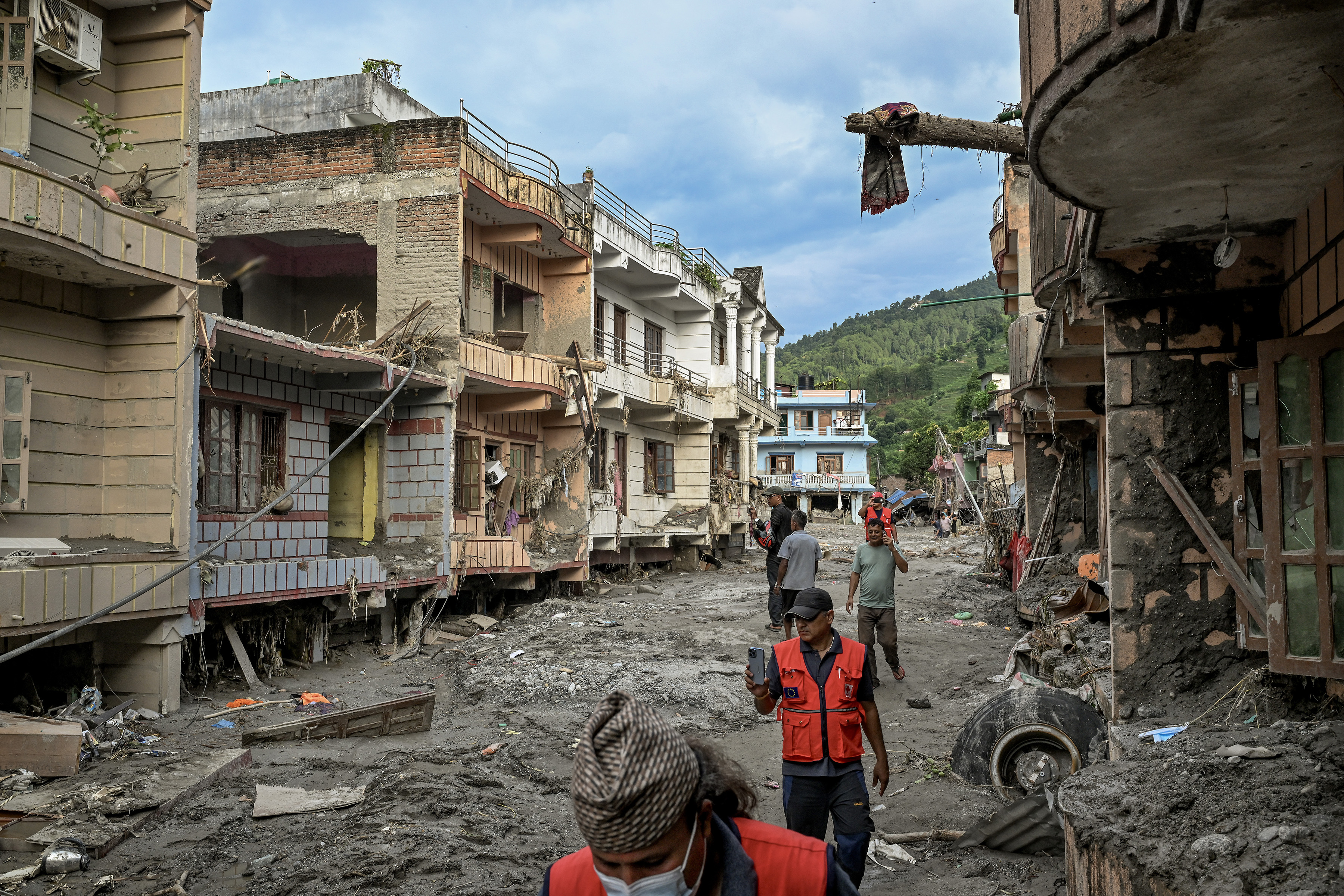
    KATHMANDU, Nepal — Entire towns wiped out. Roads, bridges, and communication lines washed away. In just a matter of moments, tens of thousands of people were left devastated and disoriented as catastrophic floodwaters tore through the tranquil Himalayan valley.

    Four days later, as the rescue efforts in Nepal and neighboring Tibet continued Saturday, the staggering scale of the flood’s devastation was coming into focus.

    The official count of missing people jumped to more than 2,400, more than double the figure from a day before. The death toll rose to at least 675 and was expected to keep climbing. Morgues in several of the towns downstream from the deluge have been overwhelmed by the number of bodies, with officials forced to improvise makeshift arrangements.

    “In living memory, we haven’t seen a mountain hazard event like this,” Kamal Kishore, the United Nations’ top official for disaster risk reduction, said Friday. “The impact on lives, livelihoods, buildings, infrastructure, bridges, hydroelectric projects, power generation is really immense.”

    The recovery will be daunting.

    Nepal is one of the poorest countries in the world. Its economy, long stagnated, is heavily reliant on the tourism industry and the remittances its workers send from abroad.

    The catastrophe comes amid a shortfall in global humanitarian funding, as some of the largest traditional donors, particularly the United States under President Donald Trump, have pulled back from international aid in recent years.

    The United States, for example, has announced that it will contribute $500,000 to the rescue effort — a fraction of what it had promised in the days immediately after a devastating earthquake hit Nepal in 2015. Sri Lanka, still emerging from its own economic crash, has pledged $1 million.

    The limited pledges so far do not bode well for funding the reconstruction effort, said Pradeep Gyawali, a former foreign minister.

    “The contrast with the 2015 earthquake is staggering, when Nepal struggled even to manage the huge volume of relief materials that arrived from around the world. Assistance came almost immediately, and on a much larger scale,” he said. “This time, however, the response has been much weaker.”

    The small Himalayan nation also remains highly susceptible to climate change. Scientists have long warned about potential flooding from the lakes that melting glaciers have formed in the mountains. Even in normal years, smaller floods related to monsoon rains cause mudslides and block roads, straining the country’s vulnerable infrastructure.

    The threat of fresh flooding hangs heavy over the rescue and relief efforts.

    China reported Friday that a barrier lake, created when the landslide that started Wednesday’s deluge blocked the river system, had begun overflowing in Tibet, near where the floods originated. Nepali authorities issued repeated alerts downstream, and police officers hurried through nearby towns with megaphones, asking people to move to higher ground. China’s state broadcaster, CCTV, later reported that the risk of a breach at the barrier lake had “gradually decreased,” though the threat of another flood remained.

    Much of the rescue effort on the Nepali side of the border appeared focused on several hydropower plants that were swept away by the torrent of water and debris. Army rescue teams rushed to recover workers from the muddy tunnels in dramatic scenes.

    In a sign of how uncertain the situation remained, hundreds of workers from those plants had not been counted among the initial missing tally, Nepali officials said in explaining the sudden jump in the number of missing.

    The threat of flooding temporarily paused the rescue efforts in Tibet on Friday. But on Saturday, Chinese rescue workers resumed their search efforts, looking for survivors near the Gyirong border crossing between Nepal and Tibet, CCTV reported. The footage showed firefighters combing the leveled site, tapping on the ground with shovels and shouting, “Is anyone there?”

    The government in Nepal, which swept to power this year on the back of Gen Z protests, is trying to assert control and restore order in the face of the overwhelming tragedy.

    Balendra Shah, the 36-year-old prime minister, has not addressed the nation but has been seen visiting the sites of destruction and leading meetings to coordinate the country’s response.

    His government has deployed more than 30,000 security forces for rescue and recovery efforts. Possibly drawing on lessons from the response to a previous natural disaster in the country, which was criticized as chaotic and disorganized, authorities this past week initially declined foreign rescue teams.

    But by the end of Friday, news media in Nepal reported that the government was easing that restriction.

    On Saturday, Shisir Khanal, Nepal’s foreign minister, said the country was seeking support for tunnel rescues, with an Indian team already in the country and two teams from China also coming. He said the government also required outside help with forensic capabilities, and teams that can help identify bodies with DNA sampling.

    More than 7,000 people had been rescued by late Saturday, many of them pulled out of flooded villages in helicopters before being sent to hospitals and relief camps, where they have been given meals and medical help.

    Soon, the focus will have to shift to rebuilding. But for those who survived the surging waters — losing loved ones, livelihoods, and homes — a path to recovery may seem distant. It is unclear whether many survivors will be able to return home or if they will need to resettle elsewhere.

    The damage has also been particularly heavy at the site of hydropower projects built along the Bhotekoshi and other rivers downstream. Tens of miles of roads and more than 40 bridges have been destroyed.

    Initial government estimates in Nepal have put the cost of physical damage at more than $1.3 billion, and the country’s finance minister has predicted that recovery efforts could run into “a few billions.”

    This article originally appeared in the New York Times.

  • 37 killed near Kyiv as Russian drone blitz exposes air defense gap

    37 killed near Kyiv as Russian drone blitz exposes air defense gap

    KYIV, Ukraine — For several terrifying days, air raid sirens have wailed nonstop in Kyiv, Ukraine’s capital, as waves upon waves of armed Russian drones surged into the city, straining its limited air defenses and exhausting a population worn down by years of war.

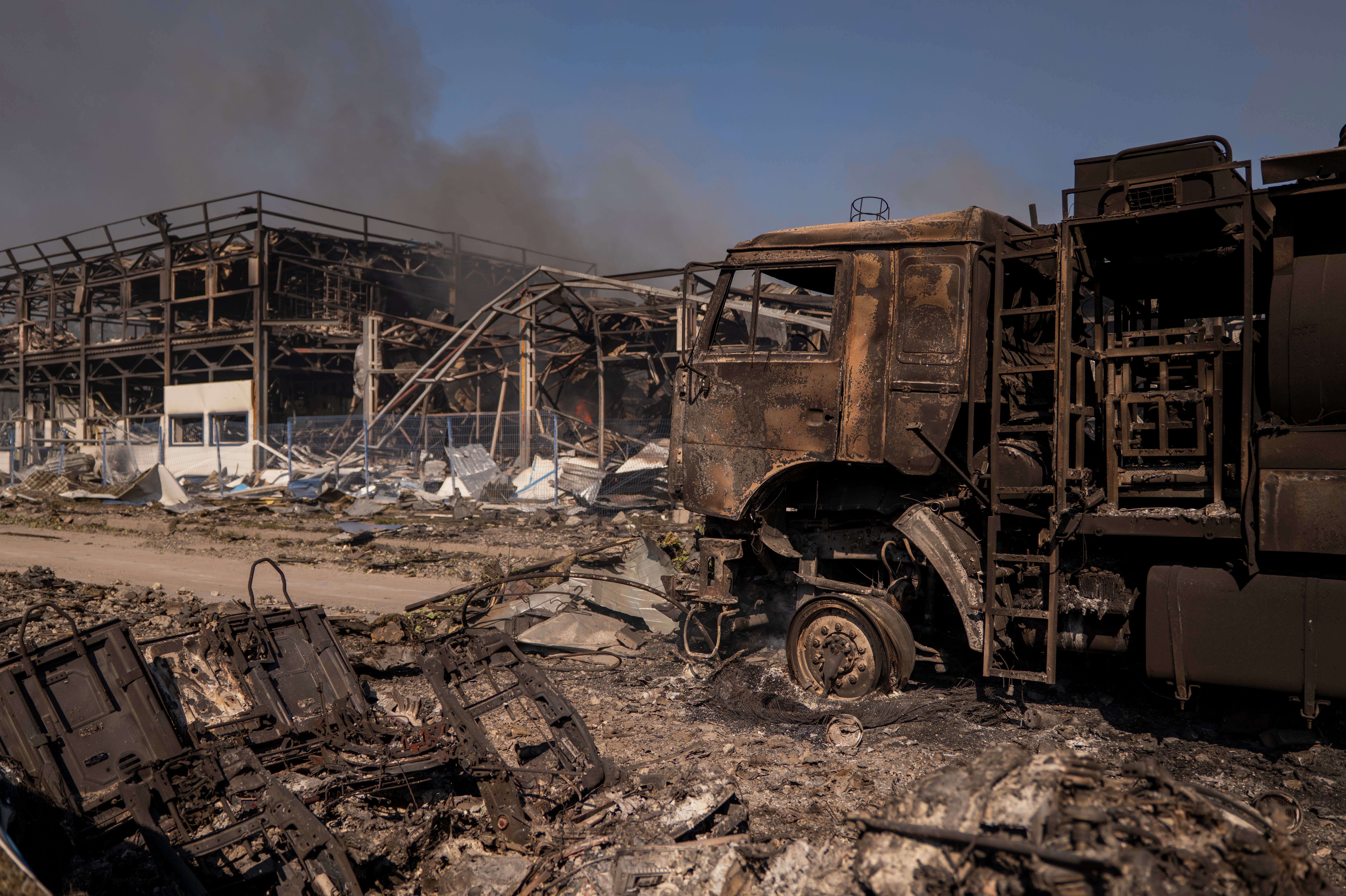
    This latest stage of Russia’s air campaign has targeted warehouses and shopping centers, and on Saturday, the Ukrainian authorities said that a strike on a facility just outside Kyiv had killed at least 37 people.

    The strike, which took place late Friday, caused huge secondary explosions that engulfed an entire suburban area in plumes of smoke. The Ukrainian authorities did not say what the facility was, but their comments suggested it was a warehouse with ammunition.

    President Volodymyr Zelensky of Ukraine said on Saturday that a criminal investigation was already underway into the management of the warehouse, which is near private homes and a facility for older adults and people with disabilities. The capital region will observe a day of mourning on Sunday, officials said.

    An ammunition depot in another area outside Kyiv was destroyed last month, killing several people and prompting a separate investigation into the decision to store dangerous arms in civilian areas.

    “Making the same mistakes for the fifth year of the full-scale invasion is criminal negligence,” Serhii Koretskyi, Ukraine’s prime minister, said on Saturday. “And all those responsible, without exception, must face severe punishment so that such situations do not happen again.”

    Ukraine is struggling to counter the onslaught of Russian drones, many of which are powered by jet engines that allow them to fly at nearly 400 mph.

    The latest drone campaign has coincided with Ukraine’s dire shortage of Patriot interceptor missiles, the only weapon the country has that can shoot down ballistic missiles.

    Russia has seized on that gap in Ukraine’s arsenal this summer. Civilians are bracing for the possibility that waves of Russian drones are intended to wear down air defense units before an even larger ballistic attack in the coming days.

    In the past, Russia often launched daytime waves of reconnaissance drones before combined drone and missile attacks overnight. But the droves of armed drones that now swarm the capital daily suggest that Russia is using a new tactic to spread fear and anxiety.

    Most shops and restaurants remain open in Kyiv, but the constant attacks have caused major traffic jams and delays on the metro system. They could also significantly complicate plans for students to return to school on Tuesday.

    This article originally appeared in the New York Times.

  • Governor joins push to rename airport for Dolly Parton

    Governor joins push to rename airport for Dolly Parton

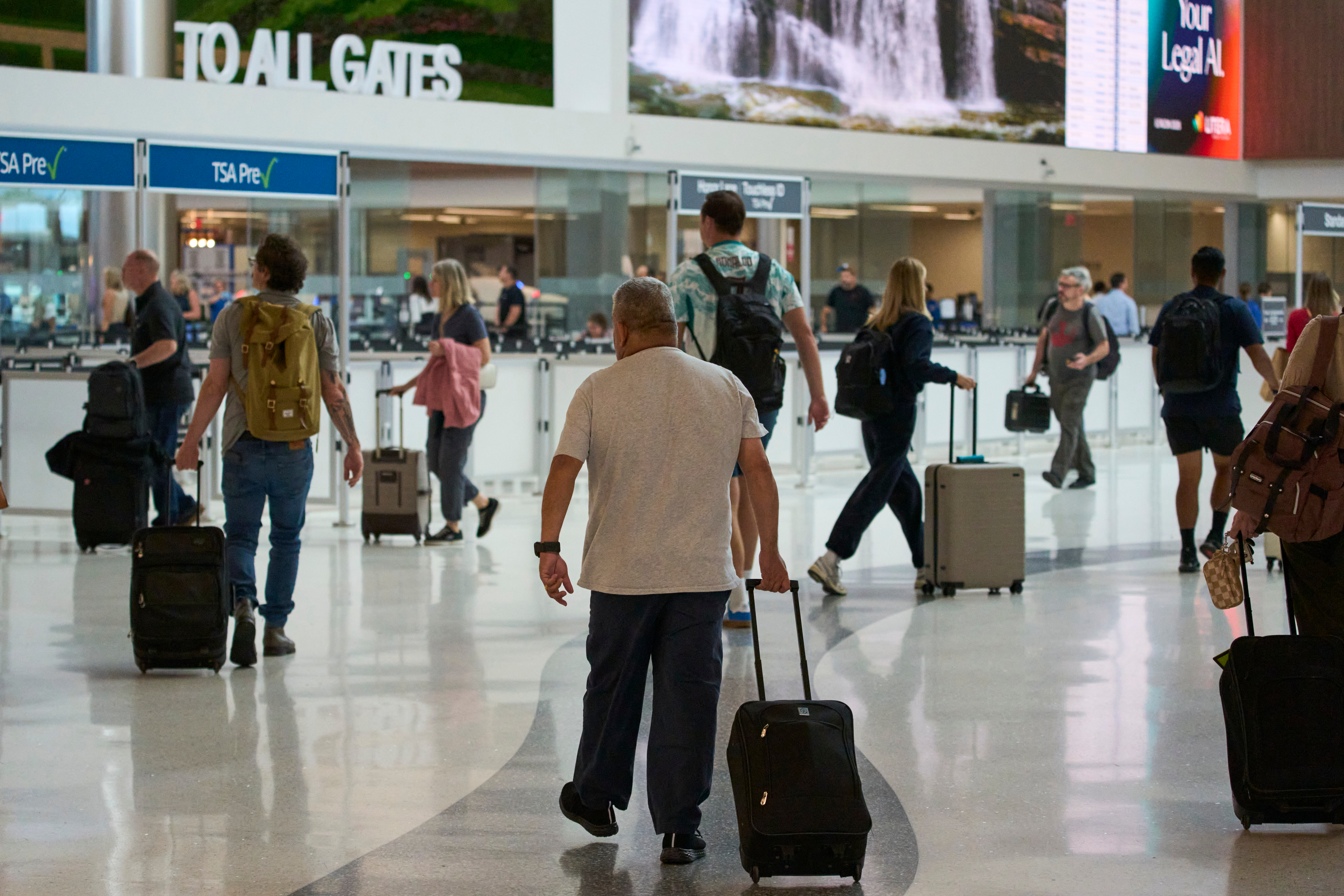
    An effort to rename Nashville International Airport for Dolly Parton has exploded since her death Tuesday.

    More than 150,000 people, including singer Sheryl Crow, had signed an online petition for the change as of Friday afternoon, and now Gov. Bill Lee of Tennessee has backed the effort.

    Tributes have poured out globally since Parton, the country music superstar, actor. and philanthropist, died at 80 after a battle with cancer. She is especially beloved in Tennessee, her home state, where vigils, singalongs, and tribute performances have taken place.

    “We want the love, acceptance, and good times that Dolly espoused to be what people experience when arriving in Tennessee for the first time, or coming home,” said Lydia Popovich, a 49-year-old comedian and lifelong fan. She started the petition last year with the photographer Dan Dion, and the number of signatures has more than doubled since Parton’s death.

    “Dolly represented the best of Tennessee, and the best of what we can be as human beings,” Popovich added. “Who doesn’t want to be ‘departin’ from Parton’?”

    The airport has already leaned into celebrating the city’s roster of music stars and celebrities, featuring outposts of the Country Music Hall of Fame and Museum, the Grand Ole Opry, and some downtown music venues. The outpouring of support for a Dolly Parton rebranding has not gone unnoticed by local and state lawmakers.

    Lee, a Republican, said Friday that he would put a proposal before the state-run airport authority at its next meeting, in September, to rename the airport. He did so, he said, after consulting with Parton’s team.

    “At a place where Tennessee welcomes the world, it is fitting that Nashville International Airport would bear the name of our state’s favorite daughter and greet travelers with the enduring legacy of Dolly’s music, generosity, faith, and kindness,” Lee said in a statement.

    The Metropolitan Nashville Airport Authority, which oversees the airport and controls its name, has rules that prohibit naming any property after a person who has not been dead for at least two years. The policy also dictates that the honoree should have contributed to aviation in Tennessee or made a “substantial personal contribution” to the airport authority.

    The Sept. 17 meeting will also include discussions about changing the naming policy in order to accommodate plans to rename the airport for Parton, Lee’s office said in a statement.

    Since Parton’s death, the authority has received several inquiries about renaming the airport, a spokesperson said.

    There were also questions about whether Tennessee politics would add to the bureaucratic tangle: Local and state leaders are battling over who oversees the airport. The Republican supermajority in the General Assembly approved a law this year giving the state power over major municipal airports. Nashville leaders have challenged the law and refuse to recognize the state-controlled authority.

    The General Assembly does not convene again until January. But lawmakers stressed they were considering a number of ways — including airport renaming — to commemorate a figure who is broadly cherished in the state.

    “We will work with legislative leaders, as well as the Parton family, to find the most fitting way to honor Dolly’s extraordinary legacy in a manner that will reflect her and her family wishes,” Speaker Cameron Sexton, a Republican, said in a statement.

    At least one state senator, Jessie Seal, also a Republican, has proposed legislation naming Sept. 25 as “9 to 5” Day, in honor of Parton’s famous anthem.

    The United States already has numerous airports named in honor of performers and athletes: Louis Armstrong New Orleans International Airport; John Wayne Airport, in Orange County, Calif.; and Louisville Muhammad Ali International Airport in Kentucky among them.

    Only a few U.S. regional airports or airport facilities are named solely for women. Examples include Amelia Earhart Memorial Airport in Atchison, Kan., and Barbara Jordan Terminal at Austin-Bergstrom International Airport in Texas.

    Major international airports rarely change names. The most recent example, Palm Beach International Airport in Florida was renamed President Donald J. Trump International Airport in July.

    Nashville International has only had its current name since 1988. The airport opened in 1937 as Berry Field — after Col. Harry S. Berry, a World War I veteran who ran the Works Progress Administration in Tennessee — and still uses the three-letter code BNA.

    Fans have also called on the General Assembly to revive a previous effort to honor Parton with a statue on the state Capitol grounds in Nashville — one she politely rebuffed at the time.

    “Somewhere down the road several years from now, or perhaps after I’m gone, if you feel I still deserve it, then I’m certain I will stand proud in our great state Capitol as a grateful Tennessean,” she wrote on Instagram in 2021.

    This article originally appeared in the New York Times.

  • Trump administration asks Supreme Court to uphold ban on transgender troops

    Trump administration asks Supreme Court to uphold ban on transgender troops

    The Trump administration has asked the Supreme Court to allow the U.S. military to fully enforce its ban on transgender service members, setting up the latest test of the administration’s policy priorities in front of the court.

    The justices are expected to consider whether to review the legality of the administration’s ban this fall and, if they accept the case, could schedule oral arguments during the Supreme Court’s term that begins in October.

    A few days after returning to office, Trump issued an executive order banning all trans troops and characterizing transgender identity as a “falsehood” that “conflicts with a soldier’s commitment to an honorable, truthful, and disciplined lifestyle.”

    The ban was one of a series of actions by the administration targeting transgender rights. The president also directed government agencies to withdraw federal funding from schools that allow transgender athletes in girls’ and women’s sports.

    The Defense Department implemented Trump’s military order in February 2025, effectively forcing trans troops out of the military.

    “No more dudes in dresses,” Defense Secretary Pete Hegseth announced then.

    Transgender service members quickly sued. About 4,200 openly transgender people were in the military last year, according to government court filings — about 0.1% of the armed forces. They worked as infantry platoon leaders, pilots, nuclear engineers, doctors, intelligence analysts, police, and other key professionals.

    A series of lower-court rulings have protected a group of transgender troops who challenged the ban from being discharged while litigation continued. But last May, the Supreme Court’s conservative majority agreed in a separate case to generally allow the administration to dismiss troops while litigation continued.

    Solicitor General D. John Sauer urged the justices in a filing Thursday to reverse the lower courts on a permanent basis and defer to the nation’s military leaders by upholding the Defense Department’s “considered military judgment” that accommodating trans troops would undermine “military effectiveness and lethality.”

    “The authority of the U.S. military to determine who may serve in the nation’s armed forces is a matter of exceptional importance,” he wrote, pushing back on lower-court rulings that said the administration’s policy was discriminatory.

    In the past year, many transgender service members have left the military voluntarily rather than face uncertainty and possible harm by contesting the new policy. Hundreds of others have stayed, insisting that their cases be considered individually by military retention boards consisting of fellow service members. Discharge has generally been a foregone conclusion, given the president’s order.

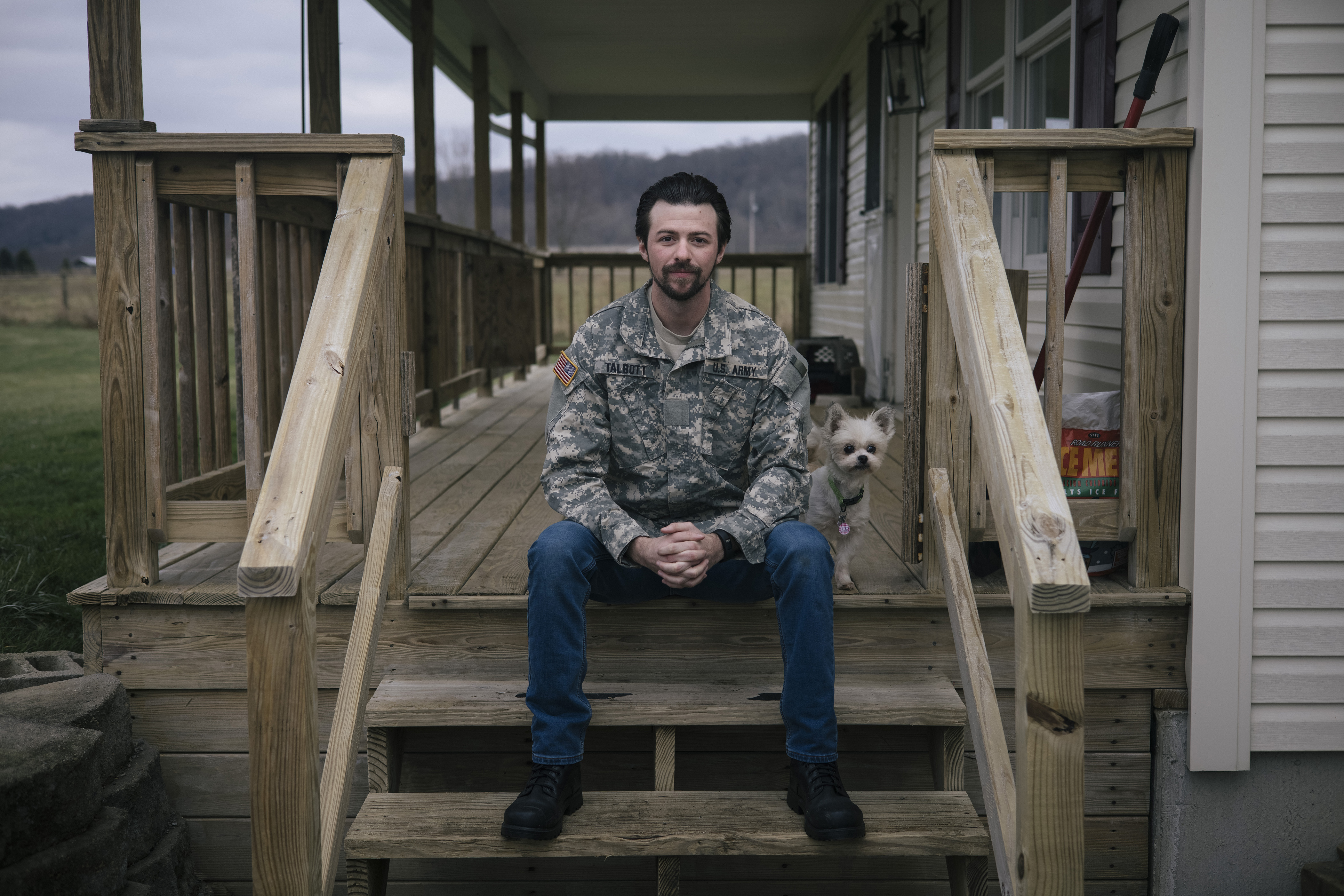
    The 28 challengers in the case before the justices are led by Nicolas Talbott, a second lieutenant in the U.S. Army Reserve. The group claims the policy unfairly and illegally directs hostility and prejudice against a group of people.

    In a 2-1 decision in June, the U.S. Court of Appeals for the District of Columbia Circuit sided with the group, but its lawyers have asked a lower court to extend protections to all transgender troops.

    The policy seemed to be “driven by the bare desire to harm a politically unpopular group,” wrote Judge Robert L. Wilkins, who was joined by Judge Judith W. Rogers.

    Judge Justin R. Walker dissented, saying courts do not have the power to make such decisions about the military: “The Constitution assigns that authority to Congress and the commander in chief,” he wrote.

    In the meantime, the 28 service members have been in limbo, still technically in the military but on leave, according to their lawyers.

    Attorneys for the service members urged the justices Friday to deny the administration’s request and allow the case to first go to trial in January. The service members are meeting the military’s standards and the government should not “kick out thousands of highly trained, skilled, and decorated troops based on nothing but hostility,” Jennifer Levi, GLAD Law’s senior director of transgender and queer rights, said in a statement.

    When the Supreme Court first dealt with the issue on an emergency basis last May, the majority did not explain its reasoning, as is common when the court issues emergency orders. The court’s three liberal justices — Sonia Sotomayor, Elena Kagan and Ketanji Brown Jackson — said they would have kept Trump’s policy on hold.

    In his first term, Trump also announced a transgender ban, but two federal judges blocked the policy.

    The Supreme Court lifted those injunctions in 2019 by a 5-4 vote, allowing a revised ban to take effect while legal challenges moved forward. The cases were dropped after Trump left office, and President Joe Biden rescinded the ban.

    This article originally appeared in the New York Times.

  • Trump plans to mark 9/11 at the Pentagon, not ground zero

    Trump plans to mark 9/11 at the Pentagon, not ground zero

    President Donald Trump is not planning to attend a ceremony in New York for the 25th anniversary of the terrorist attack on the World Trade Center, in part because he wanted to deliver a speech and the annual event has long barred remarks, according to four people with knowledge of the events.

    Trump’s team had conducted advance visits at the site and had initially signaled to officials in New York and in Washington that the president intended to visit the memorial space known as ground zero, two of the people with knowledge of the events said.

    The president’s interest in speaking on 9/11 was conveyed to memorial planners in recent weeks, three of the people with knowledge of the events said. But since 2012, politicians have been barred from speaking at the site. The National September 11 Memorial & Museum, which oversees the site, has worked rigorously to keep the venue nonpartisan and focused on the solemnity of the day.

    Trump, a native New Yorker who talked often about the 9/11 attacks during his 2016 presidential campaign, is now expected to commemorate them at the Pentagon, two of the people with knowledge of the events said. The Pentagon also came under attack on 9/11.

    Vice President JD Vance is expected to represent the White House in New York.

    The president will go to the Pentagon after he attends a midterm political convention in Texas. Officials have discussed some kind of tribute to the terrorist attack victims during that convention, which takes place Sept. 9 and 10.

    There are other considerations that led to Trump honoring the day in Washington, including that he will depart the next day for his golf course in Doonbeg, Ireland, where the Irish Open tournament will take place. Leaving from John F. Kennedy International Airport in New York City, or from Newark Liberty International Airport in New Jersey, would snarl air and motor traffic to a much greater extent than with Trump leaving from Joint Base Andrews in Maryland.

    Trump last attended the ceremony at ground zero in 2024, when he stood alongside Vance, former Mayor Michael Bloomberg, President Joe Biden, and Vice President Kamala Harris.

    None of the officials made formal remarks. Trump visited a fire station in New York City after the event.

    This year’s anniversary marks a quarter-century since the worst attack on the United States after the assault on Pearl Harbor. Anna Kelly, a spokesperson for the White House, did not address the president’s plans in a response to an email seeking comment.

    “On the 25th anniversary of this tragic day, the president will remember those who were killed at the hands of evil terrorists, honor their loved ones, and pay tribute to the brave first responders who put their lives on the line to rescue their fellow Americans,” she said.

    At the Pentagon, Trump will be allowed to speak, as he did last year, when he attended the remembrances there. His speech that day came less than 24 hours after conservative activist Charlie Kirk, whose efforts to draw college-age voters into the MAGA movement were seen as significant to Trump’s 2024 victory, was shot and killed while speaking on a campus in Utah.

    The ceremony had been intended to be held in a different spot that day but was moved to a new one amid security concerns about the president after Kirk was assassinated.

    “We recall the light of America’s best and bravest and the love that they showed in their final moments,” Trump said at the time. “In their memory, we make a solemn pledge and a noble promise. We will honor always our great heroes, and you are our heroes.”

    The president has faced two assassination attempts and other murder-for-hire plots by alleged Iranian proxies. He has faced an uptick in threats since he began a war against Iran on Feb. 28.

    This year’s event in Manhattan is expected to include former Mayor Rudy Giuliani; former President Bill Clinton and his wife, Hillary Clinton; former President George W. Bush and his wife, Laura; and former President Barack Obama, among others, according to several people who have been close to the planning.

    In the first decade after 9/11, elected officials would read poems and historic American documents, like the Gettysburg Address, at the ceremony. But since 2012, the memorial has barred any speeches by politicians. Instead, politicians stand alongside their peers from opposing parties as families step onto a stage to read the names of the dead over the course of hours.

    Trump’s advisers have discussed possibly taking federal control of the National September 11 Memorial & Museum, including as recently as last year. Families of the Sept. 11 victims have in recent years criticized the site over its leadership and finances.

    Trump, who was in New York on the day of the attacks, spoke to a New Jersey television station in the aftermath, saying that a building he owned had gained in stature because the twin towers had fallen. That building, 40 Wall Street, “actually was the second-tallest building in downtown Manhattan, and it was actually — before the World Trade Center — was the tallest.”

    He went on, “And then, when they built the World Trade Center, it became known as the second-tallest. And now it’s the tallest.” (The statement was not correct; 70 Pine Street, nearby, was taller than Trump’s building.)

    This article originally appeared in the New York Times.

  • Financialization of farmland: How farmers are staying afloat as crop prices plunge

    Financialization of farmland: How farmers are staying afloat as crop prices plunge

    When 36 acres of pristine northwest Iowa farmland came up for auction in December, Bob Wassenaar knew he had to have it. Plots in this region rarely go on the market, and the land — with fertile soil and gentle slopes for drainage — is only a mile from a feedlot that he used to own and has since passed down to his sons.

    But competition for the land was fierce. Four other bidders quickly pushed up the price at the auction. The $1.13 million Wassenaar ultimately paid is considered to make it the most expensive sale of Iowa farmland, on a per acre basis.

    He never had any intention to grow and sell crops. Since buying the land, he has rented it out to his sons to grow more feed for the cattle that they fatten.

    “If you are just going to buy that land and crop farm, no, it won’t work,” Wassenaar said. “It don’t add up.”

    As agricultural costs rise and the prices for corn, soybean, and other cash crops fail to keep pace, farmers are increasingly treating their land as real estate investments, focusing on the value of the soil — not what can be grown from it.

    Traditionally, the value of farmland was mostly based on the profitability of its crop production, said Rabail Chandio, an assistant professor of economics at Iowa State University. Now many owners treat farmland as a separate asset, she said, divorced from the crops grown on it, instead of a farm input, like seeds and fertilizer.

    Call it the financialization of farmland. It is keeping land values high and helping to stave off waves of bankruptcies and collapses that plagued American agriculture four decades ago, when farmers also faced dire economic conditions.

    Most American crop farmers will lose money in 2026, the third straight year of losses. Farm income is down and debt is increasing, according to the Agriculture Department. Farm loan delinquency rates have ticked up, the Federal Reserve Bank of Kansas City found.

    At the same time, land value is on the rise. The Agriculture Department says the value of cropland has risen a whopping 47% since 2020.

    Some of the most valuable land is in Iowa, which averages $10,700 an acre, federal data show, compared with the national average of $6,020.

    Mark Zomer was the auctioneer of the plot that Wassenaar bought, and he sells much of the farmland in northwest Iowa. Two-thirds of his sales are to nearby farmers looking to add to their portfolio. But he estimated that up to a third of sales are to investors, who then rent the land out to local farmers. (The share of investors would probably be higher if not for Iowa’s restrictions on corporate ownership of farmland.)

    “They realize it is a 1 or 2% return,” Zomer said. “Sometimes it is a 5 to 6% return. They like the steadiness.”

    While some farmers are struggling to generate enough operating capital to pay for day-to-day expenses, the agricultural economy is staying afloat because of the equity they have in their land. Farm bankruptcies were up 16% in the first half of 2026 compared with the first half of 2025, according to Epiq AACER, a bankruptcy data provider, but are still on a pace to be lower than the number of farm bankruptcies in every year of the 2010s.

    “I feel like Chicken Little. I keep expecting the ag economy to tank, with this extended run of losses and persistently high land prices, and it keeps rolling along,” said Austin Peiffer, an Iowa bankruptcy lawyer.

    Today, 84% of Iowa farmland is owned debt-free. At the beginning of the 1980s farm crisis — when many farmers faced annual interest payments that exceeded their crop revenue and the rate of farmer suicides soared — the figure was only 62%.

    Farmers then tended to have smaller plots and were more indebted, so when crop prices fell precipitously, catastrophe followed. More than 200,000 farms across the country went bankrupt, were foreclosed on, or had their operations restructured in the 1980s.

    “A lot of the family farms have been wiped out,” said John Rigler III, the president of Peoples Bank, one of Iowa’s largest farm lenders. “All the smaller little guys are out of the business.”

    Wassenaar, 82, was almost one of them. As a younger farmer in the 1980s, he said, he had to walk away from 40 acres of land he owned and allow the bank to repossess it. When he recovered financially, he resumed buying land. He says property he paid $3,000 per acre for 25 years ago is now worth more than $25,000 per acre.

    He now owns about 1,100 acres.

    Farmland as an investment is nothing new. Chandio traces the first big financialization of American farmland to the end of World War I, before the Great Depression brought much of the investment to a halt.

    Institutional investors looking for stable, inflation-resistant returns have led the recent waves of investment, first after the 1980s crisis and then after the financial crisis of 2007 to 2009. Today, it is logistically and financially easier than ever to invest in a few huge farms and outsource their management.

    “Each boom and bust, each wave of institutional capital and each improvement in management slowly turned farmland into a modern, financialized ‘real asset,’” Chandio said.

    Only about 1% of agricultural land in the Midwest comes up for sale a year, which can help explain why bidding for it is so fierce.

    “These farms don’t come up for 100 years or more,” Rigler said. “These guys are notorious for ‘overpaying.’ You say they overpaid 10 years ago, but that is a fair price today.”

    Even when buyers of land are nearby farmers and not out-of-state investors, they tend to be older and wealthier farmers, like Wassenaar, whose holdings are worth millions of dollars.

    The Gesink family, which owned the land Wassenaar bought in December, farmed it for decades before finally selling it for inheritance planning purposes. When the land went to auction, bidding began at $20,000 per acre — double the state average, and more than triple the country’s. By the time he outbid his competitors, Wassenaar paid $32,000 an acre.

    Being so close to the feedlot means lower trucking and equipment costs for his sons, which was one of the things that attracted him to the land.

    The federal government also plays a large role in increasing land values. The Agriculture Department estimates it will spend more than $44 billion on direct payments to farmers this year, and the Trump administration is seeking $11 billion more. Research from Ming Wang, an agricultural economist from North Dakota State University, found that about 45% of every dollar spent on commodity programs — which pay farmers when crop revenue or prices fall — ends up as higher cropland rent over time.

    In essence, the government subsidy becomes permanently baked into the land’s rent, and therefore value, propping it up. “Any subsidy like that just kicks the can down the road and distorts the free market,” Rigler said.

    This article originally appeared in the New York Times.

  • Six months in, Iran’s regime stands, U.S. goals remain unmet

    Six months in, Iran’s regime stands, U.S. goals remain unmet

    BERLIN — It was supposed to be quick.

    Still, six months after the U.S. and Israel launched massive airstrikes on Iran, the conflict drags on. The Trump administration has replaced its military war with an economic one, but the result is likely to be no different, analysts said, with a lack of American clarity about goals, a decline in U.S. credibility, and a strategic defeat.

    One thing remains constant, however. The ordinary people of Iran are bearing the brunt of the war, victims of both the United States and their own leaders.

    On the first day of the war, Feb. 28, President Donald Trump promised Iranians that “the hour of your freedom is at hand.” Six months later, his administration is trying to impoverish them further, hoping against hope that they will revolt against a repressive, militarized regime and overthrow it.

    The Iranian leadership, increasingly dominated by military men, sees its own survival as the nation’s, and it considers the sacrifices of ordinary Iranians as a necessary act of patriotism and even martyrdom. It has been ever more ruthless in stamping out the slightest signs of dissent.

    It is hard to dress up what has clearly been a U.S. failure to bend Iran to its will, despite the might of the combined U.S. and Israeli militaries. Not only has the Islamic Republic survived, but it effectively controls the Strait of Hormuz. It has strengthened its influence in the region, with even the countries it was bombing a few months ago trying to reinvigorate ties with Iran.

    “The war has failed to deliver U.S. objectives,” said Sanam Vakil, the director of the Middle East and North Africa program at Chatham House.

    Suzanne Maloney, an Iran expert and head of foreign policy at the Brookings Institution, judged the war a failure. “We did a lot of damage to Iran, but they have come out stronger than before,” she said. Iran’s neighbors have decided they must find a modus operandi with an Islamic Republic that is not going away.

    U.S. credibility among allies has suffered along with Trump’s own reputation for avoiding costly, interminable wars in the Middle East and promoting “affordability” at home. And it has made his promise to liberate ordinary Iranians look hollow.

    “This war has really overtaken the Trump presidency,” Maloney said.

    The regime survives

    Operation Epic Fury began with a joint U.S.-Israeli surprise attack on Iran, which killed the supreme leader, Ayatollah Ali Khamenei, and many of his officials, while badly wounding his son and now successor, Mojtaba Khamenei.

    Weeks of intense bombing destroyed much of Iran’s air force and navy and badly damaged its missile program. But the population did not rise up and the leadership did not fracture.

    Iran’s military restored many of its missile launchers and attacked key U.S. allies in the region as well as U.S. bases, which were inadequately defended. It effectively shut down the Strait of Hormuz and caused global economic disruption.

    Several thousand Iranians, including children, have died — the numbers are hard to verify — and 18 U.S. service members.

    The original Operation Epic Fury has been replaced with what Treasury Secretary Scott Bessent on Monday announced as Operation Economic Outcast, designed to isolate Iran further and crash its badly damaged economy.

    “This is a sustained campaign to collapse every last option for Iran,” Bessent said. “The campaign we begin today will gather force with every day that follows, and it will not end until this regime stands alone.”

    Despite rhetorical flourishes about D-Day and the fall of the Berlin Wall, Bessent did not indicate how long this economic war will last, what instruments it will use, or what it aims to achieve.

    Is the U.S. goal once again the collapse of the regime? Or to force the opening of the Strait of Hormuz? Or to bring a more desperate Iran back to the negotiating table to reach a sustainable settlement of both the strait and Iran’s nuclear program?

    “There is no clear articulation of America’s goals,” said Esfandyar Batmanghelidj of the Bourse & Bazaar Foundation, a research organization based in London. “But if you don’t define behavior change, sanctions as coercion fail.”

    Iran, already the target of many thousands of sanctions, is considered unlikely to surrender because of a few more. More likely, analysts said, is that the country will respond in time by escalating its attacks on ships in the Persian Gulf and on U.S. allies, which could produce another round of U.S. bombing.

    Washington is betting it can achieve through intensified economic strangulation what six months of war could not, said Sina Toossi of the Center for International Policy, a Washington think tank.

    Washington is trying to do that by demanding international compliance even as its relations with much of the world grow more coercive and transactional, with more countries choosing to ignore Trump’s dictates.

    “The capacity to hurt Iran is clear,” Toossi said. “The path from pain to capitulation or collapse is not.”

    A risky stalemate

    With U.S. objectives unclear, the confusion is real in Iran, too, said Ali Vaez, the Iran project director for the International Crisis Group. They will wonder, he said: “Does the U.S. want to achieve collapse, capitulation, or compromise?”

    Given that Iran’s leaders see the effort to strangle them as another form of warfare, Vaez said, the new U.S. strategy has two risks. If it fails, the only option left is to return to military escalation. And if it works, it may lead Iran to escalate to break the U.S. naval blockade.

    “In either case, it won’t produce what the administration seems to want, which is to use sanctions as an alternative to war,” he said. “It’s more likely to be a prelude to another round of military warfare.”

    Iran’s public-facing leadership, including President Masoud Pezeshkian and Mohammad Bagher Ghalibaf, the parliamentary speaker, has been blunt about the economic imperatives to ending the war. They have warned of the consequences of hungry people and economic collapse.

    They nonetheless take a consistent line on negotiating with Washington, insisting on a return at minimum to the June Memorandum of Understanding, which Trump signed but now says is “over.” They also continue to negotiate with Oman about managing the strait in a way Washington is unlikely to accept.

    But no matter how much Iran concedes, there is a widespread mistrust that Trump will deliver on economic benefits and sanction relief. Despite the dire economy, the leadership appears united on retaining control of the strait.

    The supreme leader, Ayatollah Mojtaba Khamenei, is seen as closer to the Revolutionary Guard and less risk-averse than his father.

    Some wonder if Khamenei is even alive; he has not been seen in public and the last communiqué from his office was on Aug. 9.

    For the moment, the situation is relatively static, a sort of phony war, with neither side firing at each other and relatively loose blockades of the strait in both directions, allowing some oil to escape.

    The new strategy of enhanced economic strangulation has the benefit of being gradual and hard to monitor, lowering the temperature on the conflict, which may help Trump and the Republicans in the run-up to November’s midterm elections, while promising that victory, really, is just around the corner.

    But the stalemate is also risky, said Ellie Geranmayeh, an Iran expert with the European Council on Foreign Relations. “There is an increasing view in the White House that you can’t deal with this Islamic Republic,” she said. “It’s a dangerous moment, with both Tehran and D.C. concluding that no deal is possible with the other.”

    Jeremy Shapiro, a former State Department official now at the European Council on Foreign Relations, remains puzzled why Trump has not taken any of the available off-ramps to ending an enormously unpopular war at home. By pushing even more economic sanctions, he said, Trump officials “are pretending they’re still fighting instead of pretending that they’ve won” — or admitting that they’ve lost.

    As ever, Iran’s leadership won’t pay the cost, Shapiro said, it will be its people that do.

    This article originally appeared in the New York Times.

  • Trump administration looks to give a swath of Yosemite park to developer

    Trump administration looks to give a swath of Yosemite park to developer

    The Trump administration has proposed giving a small parcel of land in Yosemite National Park in California to a private developer, according to federal officials and documents reviewed by the New York Times.

    The potential deal, which has not yet been finalized, has alarmed conservationists and former federal officials, who say that Yosemite, the crown jewel of the nation’s park system, should be off-limits to development.

    The proposal, details of which were first reported by the news outlet NOTUS, calls for transferring a small parcel just inside the western boundaries of Yosemite to a Las Vegas-based company. That firm wants to build a road and develop two 40-acre parcels near the park, according to documents submitted to Congress this year and reviewed by the Times.

    In exchange, the company would purchase land of equivalent value, either near Yosemite or elsewhere in California, and hand it over to the National Park Service, the documents show.

    The company is controlled by Kingsbarn Realty Capital, a real estate private equity firm. The firm bought the parcels in 2024 for $4 million through a limited liability corporation called Sanctuary at Yosemite, property records show.

    “This is so ridiculous, it makes you sick,” said Don Neubacher, a former supervisor at Yosemite who is now on the executive council of the Coalition to Protect America’s National Parks, a nonprofit group. Neubacher said a similar proposal had been raised in the early 2000s by previous owners of the parcels and was rejected, first by the park service and later in court.

    The proposed swap would effectively provide Kingsbarn with a shortcut into the park.

    Aubrie Spady, a spokesperson for the Interior Department, the parent agency of the park service, said in a statement that no final decision had been made.

    “Any land exchange or access proposal involving National Park Service lands would be subject to all applicable federal laws, regulations, and Departmental policies, including required environmental review and public notification processes,” Spady said.

    The Interior Department notified Congress this year that it was considering paying for the exchange via the Land and Water Conservation Fund. The notification drew criticism from Democrats who said the fund was intended to pay for conservation programs on public lands.

    Sen. Adam Schiff (D., Calif.) in a statement Friday called Yosemite “one of California’s natural wonders.”

    “This administration appears hellbent on moving forward in the face of opposition from the public, Congress, and the courts,” he said. “But the only thing the administration cares about is whether there is money involved.”

    This article originally appeared in the New York Times.