
Category: New York Times

  • How much is that gene-edited dog in the window?

    How much is that gene-edited dog in the window?

    For thousands of years, we have been trying to craft our ideal canine companions. We have honed their abilities to perform an array of specific tasks, from fetching waterfowl to staring down wayward sheep. We have reshaped and refined their bodies, producing sausage-shaped dachshunds, polka-dotted Dalmatians, bushy-browed schnauzers, and deeply wrinkled Shar-Peis.

    And we have done it using nothing more sophisticated than good old-fashioned selective breeding.

    Now our canine engineering efforts are entering a new era. Earlier this month, Kindred Companion Sciences, a biotech startup based in New York, revealed that it had used the technique known as CRISPR to create the first gene-edited, hypoallergenic dogs. Thanks to a single genetic tweak, the dogs — two undeniably adorable beagles — appear unable to produce a protein that can leave some people red-eyed and wheezing.

    Still, it’s a long way from the lab to the laps of pet owners across America. (It has been 2½ years since scientists announced a gene-edited, hypoallergenic cat, but such felines are not yet available to the public.) More time and data are needed to determine whether Kindred has truly delivered on its promise of hypoallergenic dogs, experts said. Can a single gene edit reliably stave off the sniffles in humans?

    An even more critical question: What does it mean for dogs? Will our efforts to create pets that are more convenient for us have unintended health consequences for them?

    History is not encouraging. Since the Victorian era, when dog fanciers began to create and codify modern dog breeds, our quest for the perfect pooch has yielded dogs that are inbred, disease-prone, and saddled with extreme physical traits — super flat faces and ultralong backs — that compromise their welfare.

    “We’ve created an enormous amount of inherited diseases in dogs, often unintentionally, because of our pursuit of certain traits that appeal to us,” said Rowena Packer, an expert on companion animal welfare at the Royal Veterinary College in London. “I just think we have a lot more responsibility to think more critically about the dogs that we create.”

    Dog design

    For all the canine diversity we’ve managed to create through selective breeding, a truly hypoallergenic dog remains something of a holy grail. Breeders have created all manner of low-shedding dogs and purportedly hypoallergenic dogs (behold the labradoodle and all of its doodle-y descendants). But these dogs still produce proteins that, secreted through their skin, saliva, and urine, can trigger human allergies.

    Gene editing provides a “simple, elegant” way to solve the problem at the source, said Matt Walker, cofounder and CEO of Kindred, who has suffered from dog allergies his whole life.

    Kindred began with canine cells, using CRISPR to disable a gene known as Can f 1, which codes for one of the main canine allergens. Then, the scientists used a basic cloning technique to transfer the edited genomes from these cells into dog embryos. They implanted the embryos in a surrogate beagle mother, who gave birth to two puppies: Alfie and Bailey, who are now almost 2 years old.

    The company has detected no trace of the allergen in either dog, and Walker, who adopted Bailey, has experienced no allergic reactions. (Alfie was adopted by one of Walker’s colleagues.) The dogs appear to be developing normally.

    “No red flags, no yellow flags — so far, the animals seem completely healthy,” Walker said. “That said,” he added, “this is the starting point of our work.”

    Indeed, for all its purported precision, gene editing can have unpredictable consequences. Medical issues might appear later in the dogs’ lives, or when the company starts producing enough dogs to spot rare side effects.

    Or, of course, they could turn out to be perfectly healthy. But it’s too soon to say, and we’re likely to see more efforts to create gene-edited dogs in the future. Where do we want to draw our ethical lines?

    Thirty years ago, when genetic engineering was still in its infancy, philosopher Bernard Rollin proposed an ethical principle he called the “conservation of welfare,” which held that we should not modify animal genomes in ways that left the animals “worse off, in terms of suffering” than their unmodified forebears.

    That’s a sensible starting point. But it’s a low bar. And it doesn’t address all the ethical implications of making gene-edited dogs, which may require using additional animals to serve as test subjects, egg donors, and surrogate mothers.

    “I think we get sometimes so excited about the idea of what technology can fix, particularly biotechnology — we’ve got to remember that, generally, we use a lot of animals to get to that end ‘product,’” said Lisa Moses, a veterinarian and bioethicist at Harvard University.

    Ethicists have also questioned whether we should bring gene-edited dogs into a world that already has more dogs than it can care for, especially when the goal is not to create a healthier animal, but one that better meets our human needs.

    “Should we use sophisticated biotechnology to create the animals we want, rather than changing how we relate to the animals who already exist?” said Jessica Pierce, a bioethicist at the University of Colorado Anschutz Medical Campus. “That’s a question of priorities, and perhaps misplaced priorities.”

    Walker sees it differently. His allergies would prevent him from ever adopting a shelter dog, he said; gene editing is the only thing that has made it possible for him to have a relationship with dogs. “I’m also really invested in applying this work to service dogs for people who are allergic,” he said.

    “People’s ethical barometers are set differently,” he added. “For me, this feels justified by the potential benefits, as long as animal health is protected.”

    Good breeding

    Dog lovers can, in good faith, come down on different sides of the Kindred question. But if we’re going to discuss the ethics of dog creation, experts agreed, we need to ask ourselves some hard questions not just about our new gene-editing tools, but also about our long-standing breeding practices.

    “At the end of the day, they’re both producing animals for companion purposes,” said Alison Van Eenennaam, an expert on animal genomics and biotechnology at the University of California, Davis. “It’s not the technology that’s creating the ethical issues.”

    We’ve done plenty of harm without modern biotechnology. And there are ways to use gene editing to improve canine lives — even, in some cases, to undo some of the damage done through selective breeding. In a 2022 study, scientists showed that it was technically possible to use gene editing to “correct” a genetic mutation associated with hip problems in Labrador retrievers.

    But these hip problems stem from a variety of risk factors — both genetic and environmental — and most canine health conditions probably cannot be cured by editing just one gene, experts said.

    Improving dog welfare is likely to require an array of complementary approaches. These include revising breed standards, opening up closed breeding pools, performing widespread genetic screening, and educating the public about the welfare costs of breeding dogs with certain physical traits.

    Experts have been calling for these reforms for years, with limited success. But they are necessary if we want to bring our behavior in line with the values we claim to hold. We are, after all, a society that is so besotted with dogs that we have startups trying to develop canine longevity drugs — and editing genes so that people can live alongside creatures that would otherwise give them hives.

    Life with Bailey has been “amazing,” Walker said. “I didn’t really appreciate, when people say pets are part of your family, what that really means. But she really is a part of our family.”

    His wife had grown up with dogs, he added, and had long bemoaned his allergies. “She always said that this was the one thing she wished she could change about me,” he said.

    Indeed, as news of Kindred’s hypoallergenic dogs spread across the internet this month, one Facebook commenter raised precisely that possibility: “Why doesn’t he alter himself instead of the beagles?”

    Alas, we can’t yet edit dog allergies out of our own genomes. But that doesn’t mean we can’t evolve.

    This article originally appeared in the New York Times.
  • How the Supreme Court locks away its own history

    How the Supreme Court locks away its own history

    In early 2016, Justice Antonin Scalia died of a heart attack on a Texas ranch, sending his Supreme Court colleagues into a period of grief and uncertainty. Behind closed doors, they had to contend with another piece of unsettling news.

    Scalia, the leading light of the conservative legal movement, had left no plans for his working papers, according to five people aware of the situation. For a Supreme Court justice, this was the equivalent of dying without a will. With no instructions for creating an archive or opening it to the public, the definitive inside account of his work — and the court’s — could be lost or emerge with uncomfortable speed.

    So following his death, his colleagues entered into private negotiations to try to head off any such situation in the future.

    In a series of memos and conference meetings, Chief Justice John Roberts led the surviving justices in discussions about imposing a more uniform seal for their own papers, according to several people with knowledge of the process.

    The absence of instructions from Scalia and ensuing confidential conversations, which have not previously been reported, help explain why the nation’s highest court can be so difficult to understand. The ultimate record of the court’s work is considered the personal property of each justice, to dispose of or share as he or she chooses. And many of the justices have valued confidentiality over transparency and chosen to postpone scrutiny of their work for years to come.

    In contrast with the executive branch, which is required to preserve and ultimately make public a record of its inner workings, there are no laws to determine what the justices save, shred, burn, or reveal, or when. The court does not share any information about policies or plans for records; a spokesperson for the court did not respond to written questions.

    People familiar with the episode after Scalia’s death, who spoke to the New York Times on the condition of anonymity because of the court’s sensitivity over disclosure of internal workings, recalled that a consensus was reached but had differing memories of its terms and how solid or lasting it was.

    Still, the death of Justice Ruth Bader Ginsburg, just a few years later, provides a clue: Her Supreme Court papers went, at her direction, to the Library of Congress on the condition that no case file would be opened until every justice involved in the matter had died, a restriction that could lock away many documents for decades.

    Although some justices in previous eras arranged for their papers to be released not long after their own deaths, the trend on the Roberts court has been to impose much tighter restrictions, serving to further obscure a branch of government that has resisted calls for more transparency.

    Each year, the justices carefully compose and edit about 60 opinions in argued cases to share with the world. The fuller, richer narratives of each case, showing the behind-the-scenes stories of how members of the court pressured, persuaded, and prevailed over one another to arrive at those opinions, are hidden away in the justices’ working papers — their confidential internal memos and opinion drafts.

    The justices have said they want to keep those internal exchanges out of view, contending that secrecy protects the authority and finality of their decisions.

    Because of the court’s lack of transparency, it is impossible to say what will become of the inner history of its current work — which scholars say is more crucial, and more endangered, than ever.

    And people familiar with the court’s operations say they worry some of the most authoritative and revealing records are not being saved at all. That is because some work is now conducted digitally, via emails and texts. Those people, who spoke on the condition of anonymity to describe internal matters, said they were unaware of any consistent procedures for saving electronic records.

    The revelations found in past justices’ working papers have been so potent, they have caused bruised feelings among the justices and blowups among government institutions.

    And because no law governs the preservation of the justices’ work, each justice, assisted by staff, builds his or her own archival trove, deciding which memos, drafts, voting sheets, and meeting notes to preserve — or not.

    One spring morning in 1993, the justices opened their morning copies of the Washington Post to find detailed accounts of their internal debates. Earlier that year, Justice Thurgood Marshall, the first Black member of the court, had died, and his papers had been donated to the Library of Congress. With no announcement, the library had opened his papers for public review, and Post reporters had been digging through the newly released archive.

    The surprise release led to a brawl over how to interpret the justice’s written instructions. In a furious public letter, Chief Justice William Rehnquist took a swing at the Library of Congress, accusing it of “bad judgment” and of opening the records, some only two years old, prematurely. Marshall’s family sided with the chief justice, asking a senator to request that the papers be resealed. The library defended its reading of Marshall’s instructions. The papers stayed open.

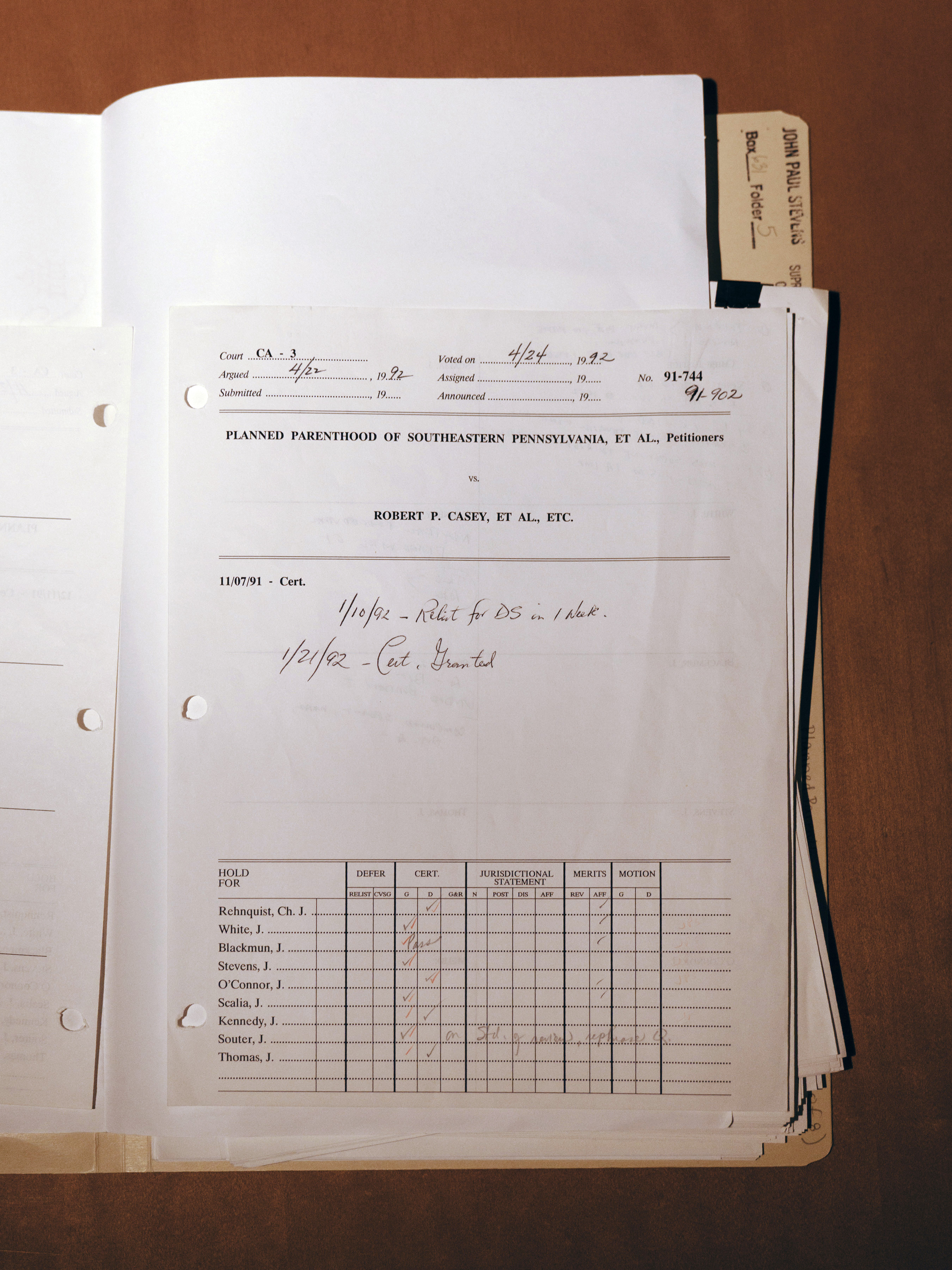
    In the wake of that controversy, the justices considered establishing common timelines for releasing their papers but could not come to a consensus, according to the papers of Justice Harry Blackmun, who chose to make his papers public five years after his death.

    “‘This is the people’s court; it’s not our court,’” Harold Hongju Koh, a Yale University law professor and former Blackmun clerk, recalled his boss saying. “‘Who cares if we’re embarrassed. The main purpose here is to educate the public.’”

    The 2004 release of Blackmun’s papers again caused shock at the court, because of the unvarnished portrait they revealed. His 24-year chronicle of his time on the court exposed tensions among the justices, his own heavy reliance on clerks, and a bombshell: In 1992, the court had come close to overturning Roe v. Wade, but a centrist coalition of justices had secretly worked together to save the federal right to abortion. The precedent had been far more vulnerable than outsiders realized.

    A year after that release, Roberts joined the court as chief justice. The court’s new leader was reserved and disciplined. He rarely gave interviews or delivered speeches.

    The fullest record of the Roberts court is hidden away in its basement.

    In the bowels of the Supreme Court, below the red-velvet grandeur of the courtroom and the shuffle of tourists, the justices are assigned storage rooms in which they store case files, said people familiar with the court’s practices.

    Access to the records in the basement is highly restricted. But every year, about three dozen new people are allowed to read some of them: the justices’ incoming law clerks, who arrive for yearlong apprenticeships.

    Reading those files clears away the mystery that surrounds the court, say those who have seen them. Clerks often ask to read the insider accounts of the most game-changing decisions. But the deeper education is in learning about the dynamics among the justices.

    In public remarks, the justices have argued that their judicial independence requires keeping these kinds of exchanges private so they can bat around ideas and change positions.

    But some scholars question why papers should be sealed long after a justice has retired.

    The Trump era has transformed and heightened the importance of the current justices’ working papers: They will one day provide the public’s first opportunity to understand why the court ruled as it did in some emergency matters.

    “The more cases get decided without full opinions, the more important it is to get access to the papers,” Stuart Banner, a legal historian at UCLA, said in an interview.

    But it is virtually impossible to estimate when — if ever — the public might see those records.

    This article originally appeared in the New York Times.

  • Wendell Berry, writer who extolled America’s agrarian past, dies at 92

    Wendell Berry, writer who extolled America’s agrarian past, dies at 92

    Wendell Berry, a Kentucky farmer who plowed his fields behind Belgian draft horses and wrote lyrical poems, novels, and essays — mostly in pencil and without electric light — that explored his elegiac visions of the life and death of agrarian America, died Monday at his home in Port Royal, Ky. He was 92.

    His daughter, Mary Berry, confirmed the death.

    Lanky and rawboned in middle age, with melancholy eyes, a jutting chin, and a widow’s peak reminiscent of Lincoln’s, Wendell Berry wrote more than 50 volumes of poetry, fiction, and argument that championed small family farms, the environment, local foods, and interdependent communities, and railed against chemicals, most technologies, agribusiness, and distant government.

    “The national economy that is really run for the benefit of a very few people is preying upon and slowly destroying local communities everywhere,” Mr. Berry told Sierra magazine in 1990. “Everything we produce in rural America makes more money for other people than it does for those who produce it. We’re destroying rural America.”

    Mr. Berry was once hailed by author and historian Page Smith as “a prophetic American voice of our day.” He never became a household name but, as his oeuvre grew over a half-century, advocates of agrarian and ecological causes embraced his work as an eloquent, if sometimes didactic, expression of their own hopes. Some critics likened his landed exhortations to those of Henry David Thoreau or Thomas Jefferson.

    Toward the end of his long fight for agrarian justice, waged from a cabin in the backwoods of Kentucky, Mr. Berry was showered with honors, including the National Humanities Medal, the nation’s highest award for humanitarian services, presented by President Barack Obama at the White House in 2011, “for his achievements as a poet, novelist, farmer, and conservationist.”

    Raised on a farm in north-central Kentucky, he studied English at the University of Kentucky and writing at Stanford with the environmentalist-novelist Wallace Stegner, traveled in Italy, and landed in New York, intending to write and teach. He married, had two children, and taught for two years at New York University.

    But at 30, he confronted in himself a deep need to return to his roots — specifically, to an old two-room cabin on the Kentucky River at Port Royal, in Henry County, where his ancestors had lived since 1803. The cabin had been built in the 1920s by a great-uncle. He had known the place all his life; indeed, had visited it often as a boy and spent a summer there with his wife, Tanya.

    “In the life we lived that summer, we represented to ourselves what we wanted — and it was not the headlong pilgrimage after money and comfort and prestige,” he recalled in an essay titled for its inspirational setting, “The Long-Legged House.”

    In 1964, the couple resolved to stay and work the land. Nearby, they bought a 125-acre farm, called Lanes Landing, and started raising sheep, corn, and grain crops, and planted gardens for their own table. Mr. Berry also initiated a 20-year teaching association at the University of Kentucky, in Lexington.

    Returning to his home as a place to write for the rest of his life was a way to insure, to himself, that he would always be bound by the truth, Mr. Berry said in a phone interview in 2018 for this obituary.

    “It made a permanent connection between me and my native place, and with its landscape,” he said. “The landscape was there to check me if I was wrong. I could never go away and make up stuff at cocktail parties about the backwoods of Kentucky. I worked with people here in all walks of life and learned from them. It’s been a very rich experience.”

    He rebuilt the Long-Legged House and began writing there about sustainable agriculture and the culture of life on small farms and in farming towns — polemics about how such places were vital to individual liberties and why they were rapidly disappearing from a landscape increasingly afflicted with topsoil erosion, polluted water, and toxic chemicals.

    Over the next half-century, he wrote with a pencil or pen on paper during daylight hours. His farmhouse had electricity, but he refused to use electric lights at the Long-Legged House, where he wrote, because, he said, the power was supplied by strip-mined coal. His wife critiqued his work and typed his manuscripts on an old Royal standard. He refused to have a television set, or a computer after they came along.

    Mr. Berry first won national attention with The Unsettling of America: Culture & Agriculture (1977), a manifesto to save small farms from big business and a government bent on agricultural efficiencies that, he said, were destroying the land and a way of life. The book launched the modern movement for sustainable farming and became a conservationist classic.

    “The concentration of farmland into larger and larger holdings and fewer and fewer hands — with the consequent increase in overhead, debt, and dependence on machines — is a matter of complex significance, and its agricultural significance cannot be disentangled from its cultural significance,” Mr. Berry wrote.

    In a review for the New York Times, farmer-poet Donald Hall hailed its “worldview that derives its premises from the experience of working on the land.” Its author, Hall added, “argues with careful logic for the recovery of lost land, for the return of the small farmer to the countryside, the small farmer expropriated by the army of agribusiness.”

    Mr. Berry elaborated on this theme in The Gift of Good Land (1981) and Home Economics (1987), essay collections that described organic farming techniques in America and abroad. They argued that “industrial values” were killing family farms and threatening American society as a whole.

    (END OPTIONAL TRIM.)

    Marshaling fiction to his cause, Mr. Berry wrote more than a dozen novels and volumes of short stories. He invented a Kentucky town, Port William, as a setting for generations of lives interwoven in tales of murder, alcoholism, marital discord, and remembrance against subtexts of fading agrarian life. Some critics called his fiction moralistic and short on plot and character development.

    Others found his novels moving. The Memory of Old Jack (1974), the recollections of a 92-year-old farmer on his last day of life, was “magnificent,” English scholar Joan Joffe Hall wrote in the New Republic, saying it “makes us grieve that these rhythms of work and speech are lost to us.”

    As a poet, Mr. Berry produced some 30 volumes of collected verses, starting with The Broken Ground (1964). His “Sparrow,” in its entirety, was typically economical:

    A sparrow is

    his hunger organized.

    Filled, he flies

    before he knows he’s going to,

    And he dies by the

    same movement filled

    with himself, he goes

    by the eye-quick

    reflex of his flesh

    out of sight,

    leaving his perfect

    absence without a thought.

    “The quiet but sure and melodious voice of Wendell Berry makes The Broken Ground an immediate pleasure,” poet and critic Robert Pack wrote in a review for the Times. “He is essentially elegiac, ranging from praise to requiem; throughout his poems there broods a reverential hush.”

    Farmers caught in an economic squeeze regarded Mr. Berry’s ideas as naive. So did Charles Barnhart, a dean at the University of Kentucky’s college of agriculture.

    “What Wendell is talking about is a primitive agriculture,” Barnhart told the Times in 1988. “It’s a nice way of life if you have a rich father and you’re a tenured member of the faculty at a university. But I don’t see a great proportion of the American public returning to farms. And I don’t see it as an industry that would ever be capable of feeding 225 million people.”

    Still, Mr. Berry won a wide following. “It’s a movement on the way up, and Wendell’s influence in it is pervasive,” Ron Kroese, director of the Land Stewardship Project in Stillwater, Minn., told the Times in 1988. “Wendell Berry has been the contemporary conscience of American agriculture.”

    Wendell Erdman Berry was born in Louisville, Ky., on Aug. 5, 1934, the first of four children of John Marshall Berry, a lawyer and tobacco farmer in Port Royal, and Virginia (Erdman) Berry. The families of both parents had farmed in the county for more than five generations.

    Like his siblings — John Jr., Mary Jo, and Martha — Wendell Berry helped work the farm. He learned from a grandfather how to harness and drive a team of mules. He was a melancholy boy. But in childhood retreats to the Long-Legged House, he found peace and solitude and read Walden, Thoreau’s reflections on two years in a woodland cabin in Concord, Mass.

    A rebellious teenager, Mr. Berry was sent to Millersburg Military Institute, a boarding school near Lexington. He hated it. “The highest aim,” he recalled, “was to produce a perfectly obedient, militarist, puritanical moron who could play football.”

    At the University of Kentucky, he earned a bachelor’s degree in 1956 and a master’s in 1957.

    Mr. Berry and Tanya Amyx were married in 1957. In addition to his wife and daughter, he is survived by a son, Pryor Berry, known as “Den”; two sisters, Mary Jo Berry and Martha Baxter; five grandchildren; and four great-grandchildren.

    In recent years, still living and writing in Port Royal, Wendell Berry also joined nonviolent protests against mountaintop-removal coal mining, coal-fired power plants, and the death penalty.

    Besides the humanities medal, Mr. Berry received more than 30 awards, including the Sewanee Review’s Allen Tate Poetry Prize in 2014 and the Ivan Sandrof Lifetime Achievement Award of the National Book Critics Circle in 2016. He was the subject of a 2016 documentary, Look & See: A Portrait of Wendell Berry, directed by Laura Dunn and Jef Sewell.

    “His writing has sometimes been called radical, but he thinks of himself as a conservative, conserving what is most human in our landscapes and ourselves,” journalist and artist Paul Trachtman wrote in a 2005 Smithsonian magazine profile of Mr. Berry.

    “You know,” the story quoted Mr. Berry as saying, “if you subtracted the Gospels and the Constitution and the Declaration of Independence from my work, there wouldn’t be very much left.”

    This article originally appeared in the New York Times.
  • How the Pentagon is getting into the Venezuelan oil business under Trump

    How the Pentagon is getting into the Venezuelan oil business under Trump

    WASHINGTON — As the U.S. government faced shortcomings in the country’s weapons manufacturing, the Pentagon set up a new office that would make investments to help boost defense industrial production.

    That effort, which began in 2022 during the Biden administration, is now taking a sharp turn with the Pentagon’s involvement in an oil production deal between the United States and Venezuela that President Donald Trump announced on Friday.

    The Pentagon’s little-known Office of Strategic Capital, which reports to the deputy defense secretary, is the leading U.S. government entity in forming a partnership with a private oil producer whose founder, Alejandro Betancourt López, is a powerful and polarizing figure in international commerce.

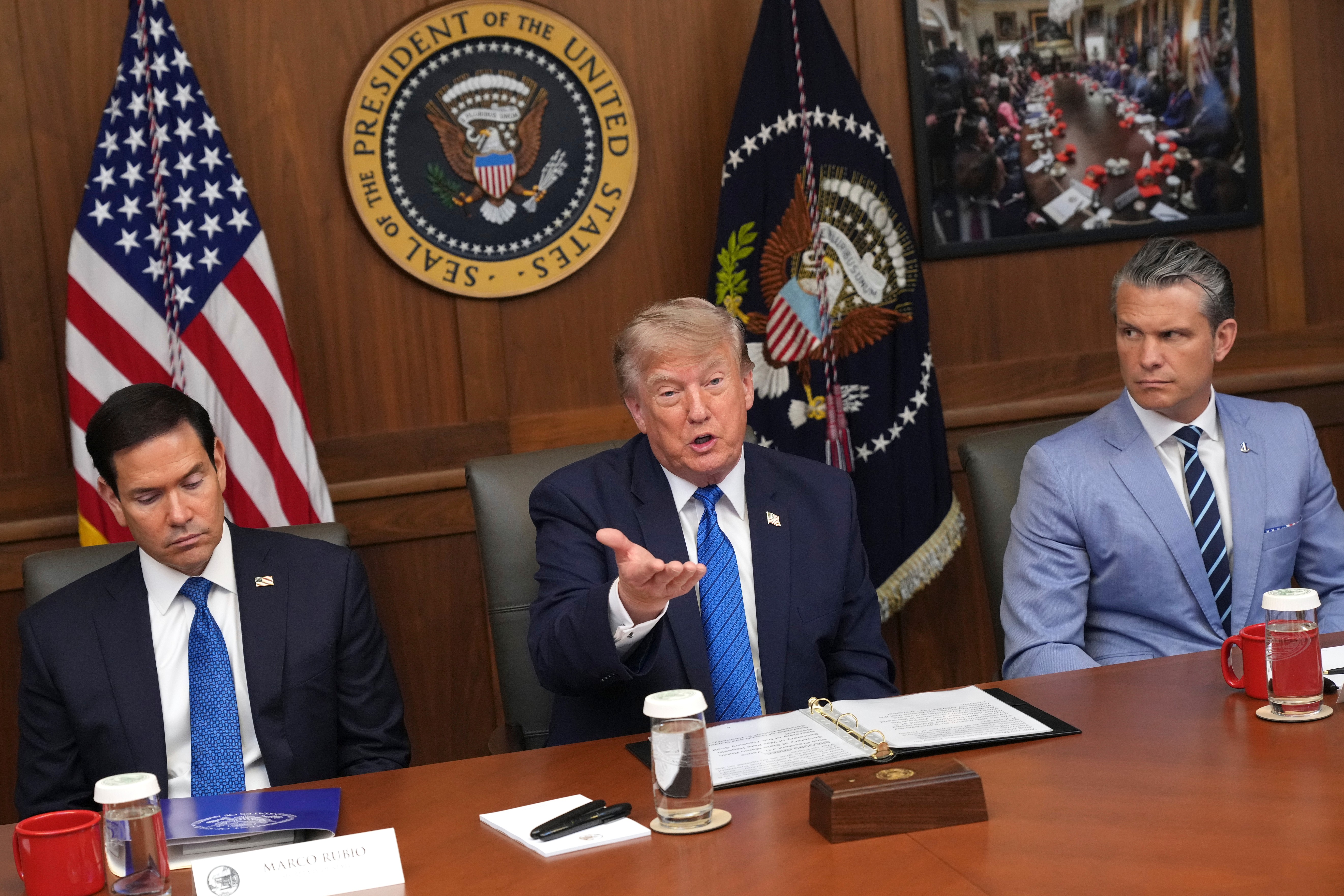
    Trump said Pete Hegseth, the defense secretary, and Marco Rubio, the secretary of state and White House national security adviser, reached the agreement with the Venezuelan government on securing billions of barrels of oil reserves “through a partnership with private business.”

    The deal would give the U.S. government the option to take up to a 35% stake in the parent company of Betancourt’s firm, North American Blue Energy Partners. This would come in the form of a financial instrument known as a warrant, plus preferential access to much of the oil that the company produces.

    Warrants would give the government the right to buy shares in the oil company at a predetermined price. The value of warrants, which can be bought and sold, fluctuates based on the value of the company that issued them.

    In this case, the warrants would be what are known as penny warrants, according to two people familiar with the deal, meaning they could be converted into shares for very little money, often just 1 cent.

    Typically, companies issue warrants in exchange for something of value. During the coronavirus pandemic, for example, the federal government bailed out U.S. airlines with more than $50 billion in grants and loans to help the companies pay employees and cover other costs. In return, the Treasury Department received warrants from roughly a dozen airlines, most of which it later sold to private investors.

    In this case, the deal would come “all at zero cost to the United States,” the White House said in a statement Monday night. The federal government’s partnership and seal of approval could make it easier for the company to raise money from private investors and also shield it from legal scrutiny or political upheaval in Venezuela.

    In a statement, Betancourt said the deal would unleash Venezuela’s potential “to the great benefit of both Venezuelans and Americans.”

    During the Biden administration, the Office of Strategic Capital made loans to private companies to bolster strategic industrial production in the United States, and asked for repayment of the loans with interest at below-market federal rates. In the Trump administration, the office has typically asked companies to give it warrants as well as repay the loans.

    The office falls under Stephen A. Feinberg, the deputy secretary of defense. Feinberg, a billionaire businessperson and political appointee under Trump, has been tasked with trying to help rejuvenate the U.S. defense industrial base. Feinberg approves the office’s deals.

    The office was founded under the previous defense secretary, Lloyd Austin. At that time, in 2022, U.S. officials were concerned about the fact that critical items for certain weapons systems were made in China. They were also grappling with weaknesses in arms production exposed by Russia’s war against Ukraine and global supply chain problems exposed by the pandemic.

    Those issues have become even more acute, given the drawdown of U.S. weapons stockpiles during the war against Iran that Trump and Israel started six months ago.

    The office’s initial $1 billion loan authority has ballooned to $100 billion, largely because of a boost from Trump’s major domestic policy legislation that Congress passed in July 2025.

    The director of the office is now David Lorch, who worked at Cerberus Capital Management, the private equity firm cofounded by Feinberg. In November, the month Lorch started his job, the office announced a loan of $620 million to Vulcan Elements and one of $80 million to ReElement Technologies to increase domestic magnet production and “significantly bolster U.S. critical minerals supply chains.” The office said it would get warrants from those companies.

    That kind of financing would help the United States decrease its dependency on Chinese manufacturing. But Vulcan Elements has financial ties to the president’s oldest son, Donald Trump Jr., which prompted Democratic senators to criticize the arrangement. Peter Navarro, a White House aide and friend of the younger Trump, requested the financing, ProPublica reported.

    By July, the other company, ReElement Technologies, a rare earths firm, had withdrawn from the loan process because it was struggling to meet federal due diligence standards, Reuters reported.

    On Saturday, the chief Pentagon spokesperson, Sean Parnell, said in a statement that the office “does not take equity stakes in private companies.” The White House’s statement on Monday about the deal contradicts Parnell’s assertion.

    In addition to receiving warrants, the federal government would be guaranteed 20% of the oil that Betancourt’s company produces “at production cost,” according to the White House, meaning at a favorable price. The State Department would also have right of first refusal to buy the remaining 80% of the company’s output.

    That would put the State Department in an unusual role since it is oil companies and other traders who typically buy and sell oil. Any decision to buy oil to refill U.S. government stockpiles would require authorization, including from Congress, and typically be handled by the Energy Department.

    In any case, it would most likely take years for new projects in Venezuela to generate meaningful amounts of oil.

    Betancourt, the U.S. government’s partner, received no-bid oil contracts in Venezuela many years ago. He has been under investigation in Spain and Switzerland on accusations of money laundering and tax fraud. He usually lives in Britain and was barred from foreign travel by the British government while he was in that country because of an extradition agreement with Switzerland, where prosecutors had issued an arrest warrant.

    However, Rubio wanted to get Betancourt to Venezuela to work on oil deals and production, and the State Department in recent months pressed the Swiss and British governments to ease up on him, said a person with knowledge of that effort.

    “Mr. Betancourt has never been charged with a crime in any jurisdiction,” Sara Chouraqui, general counsel for North American Blue Energy Partners, said in a statement Saturday.

    This article originally appeared in the New York Times.

  • More mail ballots are arriving late this cycle, and they’re getting tossed

    More mail ballots are arriving late this cycle, and they’re getting tossed

    The rate at which mail votes have been rejected for arriving late has ticked up in primaries this year and general elections last year in roughly a dozen states, prompting election officials to worry that the U.S. Postal Service is ill-equipped to deliver ballots in the fall midterms.

    The states studied by the New York Times include some of the most critical battleground House and Senate seats where control of Congress will be determined, as well as key races for governor and secretary of state. The Times obtained data from California, Colorado, Maine, Maryland, Michigan, Nebraska, New Jersey, Pennsylvania, Utah, Virginia, Wisconsin, and Washington.

    In Wisconsin, which hosts an open race for governor, a competitive House election plus contests for both chambers of the state legislature, lateness accounted for about 5,000 rejected mail ballots in the spring primary this year, or 78% of all tossed ballots. During the last spring election, in 2023, the figure was roughly 2,300, or 47% of all tossed votes.

    The increase is particularly striking when comparing primaries in 2024 and this year. In Michigan’s primary earlier this month, more than 10,000 mail ballots were rejected for arriving after the state’s deadline of 8 p.m. on Election Day. That is nearly double the number of ballots rejected in 2024. In Washington, the number of late-arriving mail ballots increased from about 16,000 to more than 20,000 in the same period.

    The rise in rejected ballots comes at a time of immense upheaval at the Postal Service, where a budget crisis has prompted widespread complaints about delivery delays. The increase also comes as President Donald Trump and his allies are trying to transform the 251-year-old agency into a central player in their quest to restrict mail voting and otherwise overhaul the nation’s elections.

    Roughly two dozen states sued the government over the president’s executive order governing mail voting, which would require states to hand over voter information and would empower the Postal Service to block mail ballots from being sent or delivered in states that do not comply. The moves have especially alarmed Democrats, who fear the president could use the Postal Service to tip the scales of a midterm election that polls show currently favors their party. Trump has stated publicly that curtailing mail voting is good for Republicans.

    A federal judge issued a ruling Thursday blocking the Postal Service from proceeding after concluding that the agency’s plan appeared to overstep its legal mandate and could spark chaos by changing rules fewer than 70 days before an election. The administration is appealing.

    Meanwhile, the uptick in rejection rates for mail ballots this year could fuel the partisan battle. The ballots that were tossed because they arrived too late represent a fraction of the overall mail ballot total — the Postal Service typically delivers more than 95% of mail ballots on time. But the agency has curtailed its services in the face of budget shortfalls in recent years, leading to slower mail delivery across the country.

    Election officials say the rise in rejections, along with the general sentiment out of Washington, have prompted them to scramble to put safeguards in place to ensure that voters’ ballots are counted.

    In Colorado, Jena Griswold, the Democratic secretary of state, has rapidly increased the number of drop boxes across the state — by 78% since 2018 — so voters can return their ballots without concerns of postal delays or interference.

    “We did change the law last legislative session,” Griswold said in an interview. “Mail ballots are going out sooner, and drop boxes are going out sooner. That is in direct response to the uncertainty coming from D.C. and Trump’s attacks on our democracy.”

    In a statement, the Postal Service countered claims that the agency has become unreliable by noting that more than 95% of mail ballots have arrived on time in recent elections.

    “There are any number of factors that may impact the timeliness of a returned ballot,” the statement said. “As such, our consistent message to voters who choose to vote by mail is to mail early.”

    Following the 2020 election, when a deluge of voters opted to vote by mail during the coronavirus pandemic, the agency developed new procedures to prioritize on-time delivery for mail ballots. After a court case in 2021, the Postal Service agreed to maintain the new measures for all even-year federal elections through 2028.

    William Hensley, a former election mail specialist at the Postal Service who helped establish the new procedures, said the fact that mail ballot delays were more prevalent in odd-year and primary elections suggested that the measures were effective. But he conceded that structural changes within the agency slowing service across the board were also affecting ballots.

    As part of a 10-year plan established in 2021 to shore up the Postal Service’s finances through structural changes, the agency set up regional distribution centers to process mail and increased the delivery-time standards for first-class mail, from three days to five.

    The Postal Service further slowed down mail in 2024 when it implemented a centralized system that postmarks mail when it reaches regional centers, not when it first enters the mail stream. The delay has particularly affected mail voting, especially in states that rely on postmarks to determine if a ballot is valid.

    These cost-cutting changes have so far not made a substantial dent in the agency’s multibillion dollar deficit, but they have slowed the delivery of mail votes. Election officials are starting to notice.

    In Wisconsin’s state Supreme Court election in April, several hundred ballots arrived a day late in Dane County, home to Madison, the state capital, according to Scott McDonell, the county clerk.

    “That was highly unusual,” he said. “In the past, we would only see a handful.”

    In a survey by the Wisconsin Elections Commission, two-thirds of clerks reported observing problems with mail delivery times in that election.

    “The worst mail delivery day of the week is Tuesday (unfortunately for elections!) and our office jokingly but sadly refers to it as ‘no mail Tuesday,’” read one submission from a clerk in Waukesha County.

    McDonell, who is a Democrat, says he now tells voters to use drop boxes, vote early in person, or mail their ballots at least two weeks before Election Day.

    In Washington, a universal mail-voting state, more voters are using drop boxes than trusting the Postal Service with their ballots, said Stuart Holmes, the state’s elections director.

    “The Postal Service, these are great people, hardworking people,” Holmes said about the state’s local postal employees. “But their operation has become unreliable.”

    In Washington’s primary earlier this year, 75% of rejected mail ballots were tossed because they arrived too late.

    Ricky Hatch, a Republican election official in Utah, a state that relies almost exclusively on mail voting, said he had noticed a nationwide increase of election officials encouraging voters to mail their ballots early because of Postal Service slowdowns.

    “We’ve definitely morphed over time from going from ‘Hey, get your ballot in before the deadline’ to ‘Mail your ballot at least a week early, if you want to have it counted,’” Hatch said.

    Now, he added, the advice is even more cautious: “Better yet, use a drop box.”

    This article originally appeared in the New York Times.
  • Do DEI bike paths exist? The Trump administration says yes

    Do DEI bike paths exist? The Trump administration says yes

    Four years ago, after Joe Biden fell from a bike, Donald Trump made a pledge to the American people.

    “I will never, ever ride a bicycle,” he declared.

    The joke landed because Trump is known to be more of a limo-and-golf-cart sort of guy. But more recently, his administration has begun acting on its deep aversion to cycling, revoking federal grants for what it calls “DEI bike lanes.”

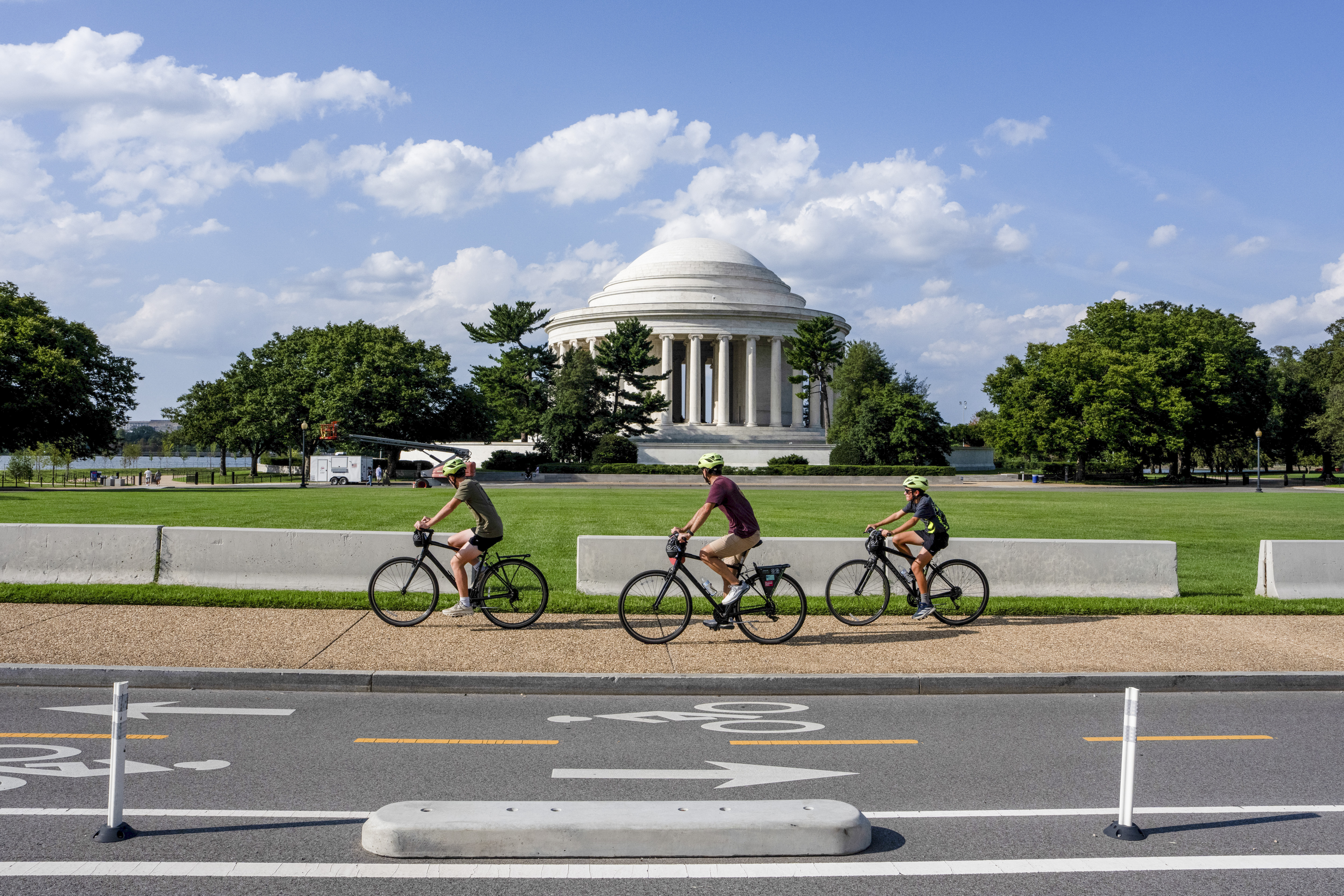
    In a high-profile move this year, the administration even tried to remove a bike lane near the White House.

    Sean Duffy, Trump’s transportation secretary, has argued that when bike lanes cut into space for cars and trucks, the result is more congestion, “longer travel times and wasted fuel.”

    But Duffy and his colleagues have also deployed rhetoric that suggests the bicycle is hopelessly lefty, belonging in the same category as green-haired baristas, Rosie O’Donnell, and yard signs professing that love is love.

    Last month, the Transportation Department told National Public Radio that liberals believe “that everyone should ride a bike to their shoebox-sized apartment to eat crickets to achieve a phony climate agenda.”

    The attacks are depressing to longtime cycling advocates like Bill Nesper, executive director of the League of American Bicyclists. “There is something there that they’re playing on, which is ‘Look at that dork on a bike,’” Nesper said.

    Whether this strategy pays off politically remains to be seen. A 2025 YouGov poll showed that 76% of Americans supported bike lanes in and around places where they live, including 66% of Republicans. But it also showed that only one-third of Americans are pining for more.

    As it is, many communities in the U.S., regardless of politics, have embraced bike-friendly policies, on the grounds that bikes are good for the planet and for the body, and address congestion by taking cars off the road. Often inspired by bike-friendly European cities such as Copenhagen and Amsterdam, the moves are a major shift in the way communities in the U.S. approach transportation planning.

    There are 4,400 directional miles of protected bike lanes today, up from 108 directional miles in 2000, according to PeopleForBikes, an industry trade association and advocacy group. (Directional miles are miles that can be traveled in one direction; with a two-way bike lane 1 mile long counting as two directional miles.)

    The group notes that more than 25,000 miles of rail beds have been converted to bike-friendly trails, double what it was two decades ago.

    But the Trump administration is trying to put the brakes on the trend.

    In Nashville, Tenn., the future of an ambitious series of bike lanes, called the East Nashville Spokes project, is up in the air after the Trump administration froze a $9.3 million grant, prompting a court battle that remains unresolved.

    In Washington this year, the administration announced it was tearing out the 15th Street bike lane as “part of the president’s initiative to revitalize” the city. But in a 61-page ruling in April, Judge Amy Berman Jackson temporarily blocked the demolition plan citing an “absence of reasoned decision-making” in justifying the removal.

    In Fairfield, Ala., a majority Black city of 9,500 people southwest of Birmingham, the administration canceled an $11.7 million grant for a bike and walking path, originally awarded under the Biden administration as part of a “sustainability and equity” program. Advocates had said that 17% of the families in the area do not have access to a car.

    In an interview, the city’s mayor, Herman Carnes Jr., said he did not know why the grant had been canceled. “It got ripped away from us,” he said.

    Bike lanes have long enjoyed bipartisan support. In 1967, Ronald Reagan, then the Republican governor of California, signed a law that for the first time allowed city governments to create bicycle lanes.

    Ray LaHood, a Republican who served as transportation secretary under President Barack Obama, avidly supported federal money for bike projects. He once wrote of “the end of favoring motorized transportation at the expense of nonmotorized.”

    But as the bike-lane revolution picked up steam — along with calls to make cities more walkable — some conservatives feared that it amounted to a series of intrusive social engineering schemes.

    In a few conservative circles, city planning even became falsely linked to dark conspiracies about Agenda 21, a nonbinding United Nations resolution encouraging sustainable development, and the voguish concept of the “15-minute city,” which said that people should be able to walk or bike to amenities such as grocery stores in 15 minutes or so.

    It was not long before the bicycle itself was portrayed as a political cause supported by left-wing dingbats.

    In 2020, Matt Walsh, the right-wing pundit, painted cyclists as childish hobbyists.

    “If you want to play with your bike, go to a park, or a bike trail in the woods, or maybe Daddy can take you down to the tennis court near the playground so you can ride your Big Wheel,” he said.

    Last year, Trump poked fun at Pete Buttigieg, the Biden-era transportation secretary, for riding a bike, tossing in a gratuitous reminder that Buttigieg is gay.

    “Buttigieg, who has no clue, you know, he drives to work on his bicycle, in all fairness, with his husband on the back, which is a nice, loving relationship,” he said.

    At a conference last year, Duffy suggested that the idea of European bike-friendly cities were unsuitable for Americans. “We’re not Europe,” he said, citing vehicle sizes. “I don’t think we should necessarily buy into the European model.”

    This summer, Duffy pushed for more change. On July 22, Duffy wrote a letter to a group of senators, urging them to restrict future funding for bike lanes and support removing ones “that contribute to congestion.”

    To Nester, the letter represented something “much worse” than canceling or stalling individual grants. Duffy, he said, was now calling for ripping out existing lanes and advocating for “a systematic change in transportation law to restrict the funding of bike lanes overall.”

    Hostility to bike lanes, in fact, can be found in surprising places.

    In Boston, Mayor Michelle Wu, a progressive Democrat, had put in miles of lanes, but eventually slowed down because of complaints.

    Her administration is navigating opposition in some traditionally Black neighborhoods to a plan to redesign Blue Hill Avenue, a major thoroughfare. Much of the criticism has been directed at a proposal for a center-running bus lane, which some say will create new traffic problems.

    But a plan to add bike lanes has also rankled such critics as Reggie Stewart, a real estate agent and climate and environmental justice chairperson of the Boston NAACP.

    “You’re taking away parking and adding to an already congested corridor,” he said.

    Stewart and others are now asking the Trump administration to rescind an $80 million grant to fund the project.

    “Ironically, in my climate and environmental justice work, we’re opposing a lot of what Trump is for,” Stewart said.

    But in this case, he said, the president might be an ally.

    “Mayor Wu,” Stewart said, “falls into that category of liberals who think they know best without having real conversations with the people affected.”

    Marcela Dwork, a spokesperson for the city of Boston, said officials would continue “to work with community members” on the design proposal, with a number of meetings scheduled for September.

    This article originally appeared in the New York Times.

  • G20 finance officials gather in U.S. as Iran war grips global economy

    G20 finance officials gather in U.S. as Iran war grips global economy

    Top economic policymakers from many of the world’s wealthiest nations began two days of meetings Monday in Asheville, N.C., at an incredibly challenging moment. Global inflation is high, growth is choked by war in the Middle East, and rising borrowing costs are straining government budgets.

    But on the eve of the summit of finance ministers and central bankers from the Group of 20 nations, those questions were clouded by a series of controversies around participation, including whether the Trump administration would let Russia attend while refusing to allow South Africa’s delegation to join.

    Representatives from South Africa, a longtime member of the G20 and Africa’s largest economy, were not invited by the Treasury Department to Asheville. President Donald Trump announced last year, after skipping a G20 summit hosted by South Africa, that he would exclude the country from this year’s meetings, citing a false narrative that white South Africans were being indiscriminately killed and their land was being seized.

    Administration officials also invited a group of American business executives from industries including banking and cryptocurrency to meet with the government leaders, in an effort to create networking opportunities between government officials with the private sector. They rebuffed requests to also include executives from other G20 countries. The moves have unsettled some attendees at the gathering.

    The summit comes at a pivotal moment, with the International Monetary Fund projecting that global growth will slow this year and inflation will rise. The decision by the United States to attack Iran in February disrupted the flow of oil and pushed energy prices higher, darkening the outlook for a world economy that has been battered by wars and a pandemic in recent years.

    Huddled in a North Carolina mountain resort, officials are expected to discuss ways to reinforce global supply chains for commodities such as critical minerals, opportunities to increase international investment, and strategies for reducing or restructuring debt. The conversations are taking place as the U.S. gross national debt just topped $40 trillion, creating anxiety among bondholders and raising fears about higher borrowing costs.

    “Mounting fiscal pressures, as evidenced by rising bond yields, and a stalled disinflation process — they are sources of worries both for markets and for policymakers,” Kristalina Georgieva, managing director of the IMF, told reporters before the meetings.

    Those concerns have been especially evident in the United States. In recent weeks, Treasury Secretary Scott Bessent initiated surprising interventions in global currency markets and in the U.S. bond market in an effort to contain rising borrowing costs. Those measures have so far been only modestly effective, and they have drawn pushback from the European Union, which has seen its own currency suffer as a result of some of Bessent’s machinations.

    Global leaders also remain wary of the ongoing U.S.-Israeli war with Iran, which has driven up energy costs worldwide, disrupted supply chains and dragged on growth.

    “Everyone must contribute to reducing the massive global uncertainties” affecting growth, Lars Klingbeil, the German vice chancellor and finance minister, told reporters before flying to the summit. “That is why we are pushing for an end to the war with Iran and open shipping lanes through the Strait of Hormuz.”

    Unifying the G20 has been a challenge for the administration, as countries continue to cope with uncertainty surrounding Trump’s trade policies and the steep tariffs that he has imposed on imports, along with fallout from the war.

    U.S. officials have asked allies to join their Operation Economic Outcast initiative, which aims to strangle the Iranian economy and resolve the conflict through economic sanctions. Bessent last week warned that countries that do not sever economic ties with Iran would also face U.S. sanctions.

    A senior Treasury official said in a briefing before the Asheville meetings that the Iran plans would feature prominently in the discussions. Bessent signaled last week that the United States would have limited patience for countries that maintain economic ties with Iran but that he hoped other countries would comply with the Trump administration’s demands to cut off Iran in order to avoid a broader global economic war.

    “Why would I want to blow up the global financial system?” Bessent said.

    In another controversy, the Treasury has denied press credentials for attending the meetings to certain U.S.-based reporters for the New York Times and the Wall Street Journal, along with correspondents for Bloomberg News from several countries.

    Germany’s Finance Ministry intervened with the Treasury after it initially denied credentials to German-based reporters from the Times and Bloomberg, who planned to travel with Klingbeil to Asheville.

    The ministry succeeded in securing a credential for the Times reporter, the newspaper’s Berlin bureau chief, but not the Bloomberg reporter.

    A diplomatic official, speaking on condition of anonymity under a customary practice in the official’s home country, said German officials viewed the denial of credentials for Bloomberg, an international news agency, as unprecedented and unacceptable.

    This article originally appeared in the New York Times.

  • Azriel Blackman, airline mechanic for 80 years, dies at 100

    Azriel Blackman, airline mechanic for 80 years, dies at 100

    Azriel Blackman’s love of aviation did not lead him into daring adventures in the air but into ensuring that aircraft were sound to fly.

    For 80 years, he was a plane mechanic working mostly at American Airlines — a record-breaking career in which he wielded wrenches, screwdrivers, and other tools like bucking bars on everything from Sikorsky flying boats built in the 1930s to modern jets like the Boeing 747.

    “He could do anything with his hands, and he was infatuated with the workings of an aircraft,” his son, Mitchell, said in an interview. “It captivated him.”

    In 2012, on Mr. Blackman’s 70th anniversary at American, the airline commissioned a mural of him at the maintenance hangar where he worked at John F. Kennedy International Airport in New York. It depicts him at the center, wearing his yellow vest, surrounded by four airplanes from his past and present.

    In 2017, his 75th anniversary was commemorated by Guinness World Records, which cited him for having the longest career as an airline mechanic. That same year, American dedicated a Boeing 777-200 in his name.

    “Every day, the job is different,” Mr. Blackman, a maintenance crew chief since 1960, told the New York Times in 2017. “You’re not doing the same thing repetitively, and that’s good. If, in my journey around the hangar I see something I can help on, I do that.”

    Mr. Blackman, who was known as Al or Blackie, died July 24 at a nursing home in Queens. He was 100.

    Four years ago, his son said, Mr. Blackman fell at work, broke two vertebrae in his neck and suffered a traumatic brain injury. Spinal cord damage led to a loss of mobility.

    Azriel Blackman was born in Manhattan on Aug. 30, 1925, and grew up in Brooklyn. His father, Aaron, a tailor, was from Russia, and his mother, Mary (Goldberg) Blackman, who managed the home, was from Poland.

    In 1942, Mr. Blackman graduated from Aviation High School, which was then in Manhattan and is now in Long Island City. He was 16 when he was hired as an apprentice in the sheet-metal shop at American Export Airlines (which was later acquired by American Airlines) at New York Municipal Airport — LaGuardia Field (now LaGuardia Airport). His skills in the shop enabled him, for the rest of his career, to mold parts needed to fix aircraft.

    The first aircraft he worked on was the amphibious Sikorsky flying boat. He serviced more than a dozen kinds of planes over the next eight decades, including the Douglas DC-3, the Convair CV-240, the Lockheed Constellation, the Boeing 377, and the McDonnell Douglas MD-80.

    After enlisting in the Army, he served in the Korean War, repairing helicopters for Mobile Army Surgical Hospitals. Following his discharge in 1952, he returned to American at LaGuardia, then moved as a crew chief to New York International Airport, better known as Idlewild Airport, in 1960, three years before it was renamed for President John F. Kennedy.

    “Behind-the-scenes aircraft mechanics, when they succeed, you don’t hear about them, because they’re not glamour jobs,” said Gary Santos, a mechanic who started working at American in 1988. “To have a career as long as his is just mind-boggling.”

    Mr. Blackman’s love of airplanes continued in volunteer work on his days off, like helping to restore aircraft for an ongoing project at Floyd Bennett Field in Brooklyn and a Sikorsky flying boat at the New England Air Museum in Windsor Locks, Conn., near Hartford.

    By 2017, Mr. Blackman’s age led to restrictions on his ability to perform some physical tasks that might injure him, and he was supervised by a crew co-chief. At first, he objected to the limitations but eventually accepted them.

    Even though Mr. Blackman’s job had become more paperwork than mechanical, his experience remained important to American.

    “He represents a valuable institutional memory that says, ‘This is how we do it at American,’” Robert L. Crandall, the president of American from 1980 to 1998, said at Mr. Blackman’s 75th anniversary ceremony. “He’s the guy who sits with the new kids at lunch and passes it on.”

    Wayne Hanna, an aircraft maintenance technician whose father was Mr. Blackman’s crew chief in the 1950s, said that, for the past few years, a group of mechanics visited Mr. Blackman at his home to celebrate his birthday, including his 100th last year.

    “He was older than American Airlines,” he said in an interview. The company has been celebrating its 100th anniversary this year, noting the first flight of Robertson Aircraft, one of the dozens of small airlines that combined in 1930 to form American Airways; it became American Airlines in 1934.

    In addition to his son, Mr. Blackman is survived by a granddaughter. His daughter, Adrienne Larrain, died in March. His wife, Dolores (Cooperstein) Blackman, whom he married in 1954, died in 2011.

    In 2012, American honored Mr. Blackman’s tenure by flying him around New York City in a restored, propeller-driven DC-3, part of the airline’s fleet that carried passengers between the mid-1930s and the late 1940s. He sat in the cockpit as it flew along the Hudson River, over Central Park, and past the former site of Aviation High.

    “He was taken aback by all of that,” his son said. “He didn’t really know how to accept praise of that magnitude. In his mind, he didn’t feel he had done anything extraordinary. He loved going to work. He considered the people he worked with family, and it was enjoyment to him. That was his real reward.”

    This article originally appeared in the New York Times.

  • ‘A new form of U.S. colonialism’: Venezuelans bristle at Trump oil takeover

    ‘A new form of U.S. colonialism’: Venezuelans bristle at Trump oil takeover

    BOGOTÁ, Colombia — Many Venezuelans suspected that there was going to be a price to pay for President Donald Trump’s brazen capture of their autocratic leader, Nicolás Maduro, who was arrested by U.S. forces in January.

    On Friday, that cost became clear when Trump announced that the U.S. would be taking majority control of a vast part of Venezuela’s oil reserves — national resources long considered by many in the country to be a birthright.

    By Saturday, many Venezuelans were grappling with whether they were willing to pay that price. So far, the U.S. ouster of the autocrat has done little to change the country — Maduro’s successor, Delcy Rodríguez, remains in power, while millions of everyday Venezuelans remain in poverty, electricity blackouts continue to plague the nation, and no date has been set for an election.

    The new deal could bring major investment. But many Venezuelans want overall economic and political change. The accord guarantees neither and could deepen the relationship between Trump and Rodríguez, further entrenching her in power.

    In Valencia, about two hours from the capital of Caracas, José Leal, 68, a retired educator, said the $100 billion in promised U.S. investment sounded small compared to the 65 billion barrels Venezuela was giving up. But after decades under a repressive government, he was willing to put up with this deal — and hope that Trump would push for democratic change.

    “Obviously, the United States comes out ahead, enormously so,” he said. But “the Americans hold the power,” he said, and without them “we won’t manage to break free from the socialism of Chávez and Maduro. Without them, we’ll remain trapped like Cuba, China, or North Korea.”

    “It’s not that I love it or even like it,” he said of the deal. “I consider it a necessary evil. If we manage to escape this entire disaster — which we’ve endured for 27 years and the Cubans for 68 — if we manage to get out of this mess, then even though I don’t like it, it will be worth it.”

    Others were not so optimistic. The Venezuelan government has a long history of doling out beneficial contracts to the wealthy and connected, known inside the country as “enfuchados” — people who are “plugged in” — while everyday Venezuelans suffer. Trump’s announcement on Friday included no mention of a democratic transition.

    A meme began circulating in the region almost as soon as the deal was announced. “I want you to get rid of Chavismo,” says a cartoon Venezuelan man, referring to Maduro’s movement, “and leave us our oil.”

    A cartoon Trump responds: “Take the oil and leave you with Chavismo, got it!”

    Venezuela, home to some of the largest oil reserves in the world, nationalized those resources in the 1970s. Sovereign control over wells then became a core pillar of the ideology of the socialist government founded by former President Hugo Chávez.

    Rodríguez’s decision to turn over much of that oil to the U.S. government represented an astounding about-face, one that few Venezuelans could have imagined before the January attack.

    That turnaround was evident in a statement released by Rodríguez’s Socialist Party on Saturday, which said that “true to its historic commitment to national sovereignty,” the party was extending its full support for the deal and the decisions made by “Comrade Delcy Rodríguez.”

    The irony of this was not lost on many Venezuelans. A government that once proudly thumbed its nose at Washington was now handing over the resources at the center of its identity.

    Another meme circulating in Venezuela changed the logo of the national oil company, PDVSA, to PDUSA.

    On social platform X, Rafael Ramírez, a Chávez loyalist and former head of PDVSA now living in exile, accused Rodríguez of “opening the doors to a new form of US colonialism.”

    In Maracaibo, a Venezuelan city that anchors much of the country’s oil industry, Dario Nava, 67, a former PDVSA manager, said he opposed the deal and did not believe it would improve his life.

    “The United States is going to manage our oil industry,” he said, “and sovereignty is lost there.”

    In Caracas, Carlos Arenas, 24, a university student, said that he might be willing to cede some control of Venezuelan oil for economic improvement.

    “If there were an economic benefit for the country that eventually translated into a better quality of life for Venezuelans, then yes, I would be willing,” he said. “But that doesn’t seem to be the case here — at least not initially.”

    “Unfortunately, it doesn’t look like there will be a political change in Venezuela anytime soon,” he added. “Trump seems very comfortable with Delcy.”

    Venezuela’s leading opposition figure, María Corina Machado, has in the past floated the idea of privatizing the oil sector. For years the idea was mocked by Rodríguez’s party. And it was so controversial that Machado did not make it a core part of her platform in a 2024 presidential election.

    On Saturday, a prominent supporter of Machado, Walter Molina, said on X, “Venezuelans always knew that our freedom would come at a cost.”

    “If that price is 65 billion barrels over the course of decades, so be it,” he said. “But let it be just that: the price of our freedom. Not the price we pay to keep a criminal tyranny in de facto power — only now kneeling before the United States.”

    This article originally appeared in the New York Times.
  • Cape Cod learns to live with sharks

    Cape Cod learns to live with sharks

    On a cloudless afternoon in July, Nicole Sweeney was on a charter boat off the southeastern corner of Massachusetts’ Cape Cod, cruising through blue-green water as smooth as sea glass. Conditions were perfect for a dunk in the ocean, but swimming was resoundingly off the table.

    That’s because if all went to plan, Sweeney would soon come face to face — or at least face to fin — with a great white shark.

    “When I was a kid, sharks were not something we ever thought much about,” said Sweeney, 55, who has visited Cape Cod every summer since she was born. “Now you can’t go anywhere on the Cape without finding a coaster or a keychain or a mug with a shark fin on it.”

    The onslaught of great white merch is more than mere leftovers from last summer’s 50th anniversary of Jaws.

    Over the last several years, a resurgent seal population has turned Cape Cod into one of the world’s top seasonal hot spots for great white sharks. In summer and autumn, the stretch of ocean from the northern tip of the Outer Cape down past Chatham, on the Cape’s elbow, is now the best place on Earth to see great whites swimming — and hunting — close to shore.

    Back on land, the specter of sharks is inescapable. Beyond the shark-bite ball caps and the “Respect the Locals” shark bumper stickers, ominous shark flags and menacing warning signs, along with “Stop the Bleed” kits, have become summer fixtures on the Outer Cape’s beaches.

    Even so, the seasonal shark surges have seemingly done little to dampen overall enthusiasm for Cape Cod, where the median single-home sale price nearly doubled from 2019 to 2025 and hotel prices can top $2,000 a night during high season.

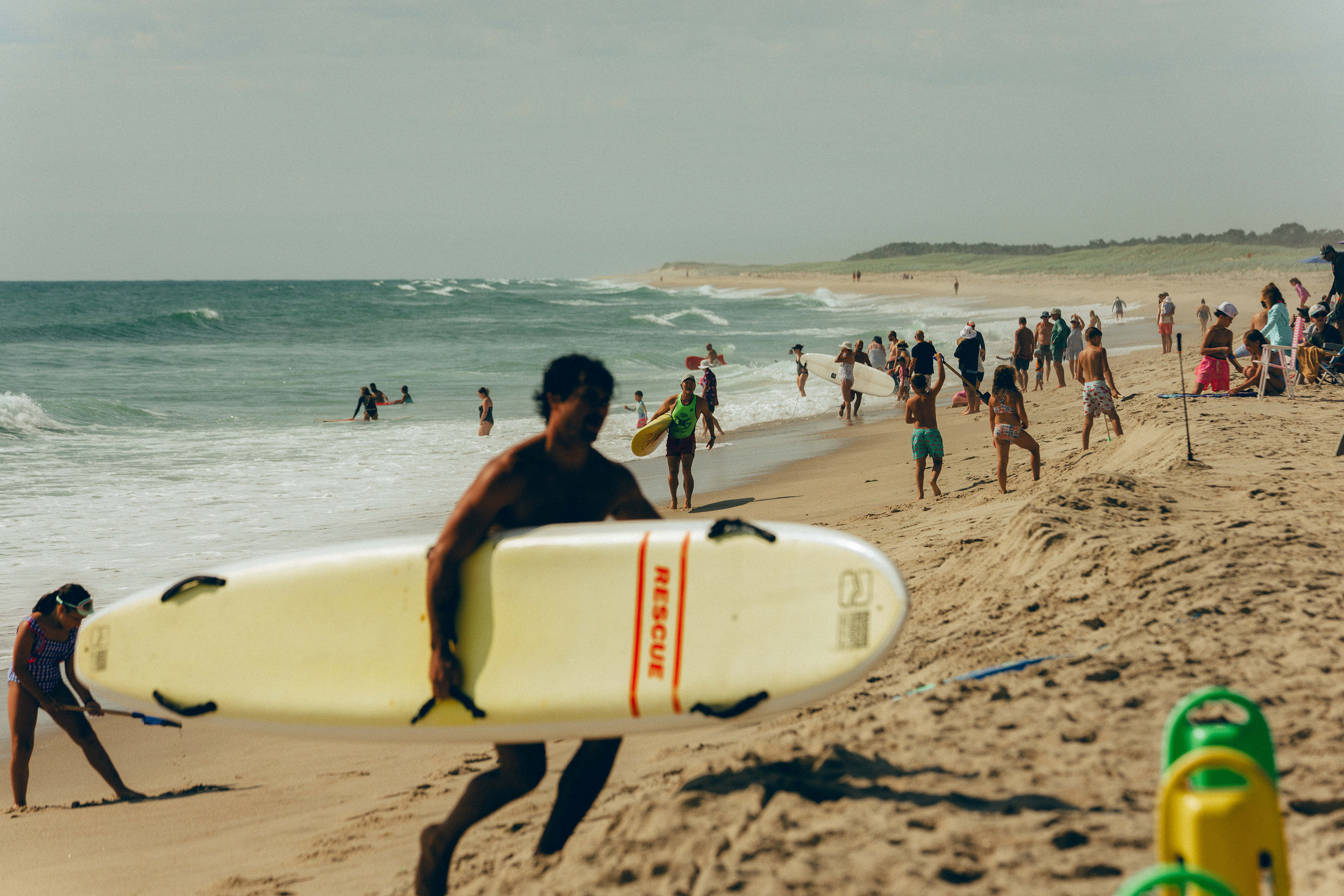
    The sharks have, however, changed people’s behavior. Demand for swimming pools has spiked. Beachgoers now keep a close eye on the shark-tracking app Sharktivity. And shark-spotting tours regularly operate within striking distance of some of the Cape’s most popular beaches.

    Greg Skomal, a marine biologist with the Massachusetts Division of Marine Fisheries and New England’s leading authority on white sharks (as scientists typically call great whites), has seen the shift in beachgoers’ habits from his shark-tagging trips up and down the coastline.

    “We observe it from the research vessel,” Skomal said. “We don’t see the same number of people in the water at great distances from shorelines.”

    From a conservation perspective, the sharks’ return to these waters is a success story, the result of the Marine Mammal Protection Act of 1972, which rescued the region’s gray seal population from the brink of extinction. (A 2017 study estimated Cape Cod’s gray seal count to be between 30,000 and 50,000, up from about 2,000 in 1994.)

    The sharks soon followed, leading to increasingly frequent beach closures and, inevitably, run-ins with humans. In 2012, a bodysurfer was bitten by a white shark off a Truro beach. He survived, as did a swimmer who was bitten at a neighboring beach in 2018. But a month later, a 26-year-old boogie boarder was killed by a white shark at Newcomb Hollow Beach, in the town of Wellfleet — the first fatal shark attack in Massachusetts waters since 1936. Two years later, a white shark killed a swimmer off the coast of Maine.

    Yet in recent years, Cape Cod’s tourist economy has grown to nearly $2.8 billion (up from nearly $2 billion in 2019 per the Cape Cod Chamber of Commerce), even as the U.S. National Park Service has recorded a drop in recreational visits to the Cape Cod National Seashore, a 40-mile stretch of coastline that includes six beaches frequented by white sharks.

    Although the sharks may have pushed some beachgoers away, one thing is certain: They’re also luring people in.

    Ten years ago, the world capital of white shark tourism was that other Cape at the bottom end of the Atlantic: Cape Town, South Africa, whose resident great white population had long supported an enormous cage-diving industry. But those sharks have since disappeared, possibly driven away by commercial overfishing or perhaps shark-liver-hungry orcas, the subject of an unsettled scientific debate. Guadalupe Island in Mexico, another white shark hot spot, had its shark tourism and cage-diving operations shut down in 2023 by the Mexican government, which cited practices in the industry that were putting sharks and humans at risk.

    At the same time, Cape Cod’s star began to rise as a white shark ecotourism destination, specifically the town of Chatham, where shark seekers can choose from a growing number of private shark charters — generally costing north of $2,000 — that employ spotter planes to locate the animals, which passengers can then observe from the boat. (Cage diving, which typically involves chumming the water to attract sharks, is illegal in Massachusetts, though at least one Cape Cod outfitter runs shark cage-diving tours offshore in federal waters.)

    And while you can still cage-dive with great whites off the remote Neptune Islands in South Australia and off the southern edge of New Zealand, those experiences require all-day or even multiday tours. Only on Cape Cod can you spend a morning observing white sharks in the wild and be back on the beach by lunchtime.

    “The fact that we can go out and see them in a 2½-hour charter is incredibly unique,” said Hannah Leary, ecotourism coordinator for the Atlantic White Shark Conservancy, a research and education nonprofit in Chatham that operates the Sharktivity app. “We can just come out of the inlet and they’re all right there.”

    Its “open boat” shark charters, which offer “a shared adventure with Cape Cod’s apex predator,” run several times a week and regularly sell out (at a slightly more accessible $530 per person, with up to six people sharing a boat). Lately, Leary said, she has noticed an uptick in international guests and travelers who’ve come to Cape Cod specifically to see great whites.

    At Cape Cod’s surf shops, though, the sharks are old news.

    On a recent Sunday morning, Pump House Surf Shop in Eastham, which sells $20 miniature lifeguard-spec shark flags and last month shared a winking social media post about sharks, was packed with shoppers. Across the street at the equally crowded Nauset Surf Shop, the oldest surf shop on the Cape, longtime owner Phil Clark said shark-deterrent products started flying off his shelves after 2018, but they’re not selling much anymore.

    “Everybody is kind of used to it,” Clark said of the sharks’ presence. “They’re buying surfboards. The kids are taking surf lessons.” Indeed, Sugar Surf, an all-female surf school, is still holding classes at Marconi Beach in Wellfleet, where a white shark took a bite out of a stand-up paddleboard in 2017.

    “It’s not the same business it was 30 years ago, but there’s still tons of business,” said Clark, who noted that boogie boards and skimboards have become his bestsellers. “People are still here, and they’re having fun and enjoying themselves.”

    For Suzy Blake, co-head lifeguard of Wellfleet’s beaches, the shark risk is “part of our lives now as lifeguards and residents of the Outer Cape.” She and her team are now armed with an arsenal of shark-specific equipment and protocols, including tourniquets and “Stop the Bleed” training, as well as a direct linkup to real-time shark detector buoys, which send push alerts to the lifeguards when tagged sharks are in the area.

    Later that afternoon, at Newcomb Hollow Beach, Lisa DonDiego sat on a beach blanket with a friend a few yards away from the lifeguard stand, looking out at the ocean.

    “I understand the fear,” said DonDiego, 37, up from Philadelphia for her family’s annual summer pilgrimage to the Outer Cape. “And at the end of the day, I recognize that the ocean belongs to them. But I still want to come to Cape Cod.”

    She said she consulted the town of Wellfleet’s shark updates and the Sharktivity app, which logs crowdsourced shark sighting data and any buoy pings by tagged sharks, to help make an informed decision about getting into the water. Quitting the Cape’s beaches altogether, though, is out of the question. “Basically nothing could keep us off the beach,” she said.

    The next morning, the sun was shining, and Paul Bordé, a local real estate agent, was out for a joyride out of Chatham Harbor on his Boston Whaler, keeping his eyes peeled for “one of the big boys.”

    “Sharks have changed behaviors and conversations more than they’ve changed demand,” Bordé said. A noticeable trend has been an increasing appetite for swimming pools; one Cape Cod pool builder even advertises “shark free swimming” on its trucks.

    That said, nothing has shaped the Cape’s real estate market in recent years as much as the pandemic. And while the COVID-19-era buying frenzy has cooled a bit, Cape Cod is still a seller’s market. Even the swimming pool surge is part of a broader pandemic-era trend toward creating “backyard oases,” Bordé said, adding that heated pools in particular were allowing families to extend the outdoor season by several months.

    As for the sharks, Bordé called them “magnificent,” though he said the closest he came to a sighting that morning was a tagged white shark named Tarly pinging a nearby detector buoy.

    On the charter boat, Sweeney had better luck. Less than half an hour into her shark tour, she found herself tearing up. Five decades after watching her first Jacques Cousteau film with her father, kick-starting her enduring fascination with great whites, Sweeney was gazing down through clear, shallow water at a 10-to-12-foot male white shark.

    This time, there was no need for a bigger boat.

    “Just to be in that small boat, looking over the sides at this massive, powerful, beautiful animal,” she said. “It was awe-inspiring.”

    This article originally appeared in the New York Times.