Category: New York Times

  • Companies can tell investors less under proposed SEC rules

    Companies can tell investors less under proposed SEC rules

    The Trump administration has aggressively expanded its push for financial deregulation, raising concerns that the changes could facilitate another Wall Street crisis, sooner or later.

    The Securities and Exchange Commission this summer proposed two big changes to how publicly traded companies report their finances. The first, and most eye-catching, one would let companies file earnings reports only twice a year instead of quarterly, slashing a rule that has existed for more than half a century.

    The second one, which has flown under the radar, would exempt most companies the SEC regulates from having to bring in outside auditors to verify a company’s internal books and processes for avoiding errors and fraud.

    The rollback would weaken regulations passed by Congress in 2002, after the collapse of Enron, an energy trading company, and the implosion of Arthur Andersen, its accounting firm, revealed how easily companies could hide financial problems, or cook their books, without independent oversight.

    Some money managers are asking whether either change would improve the investment environment. And public interest groups worry the changes could enable another costly scandal like Enron’s failure, or something worse.

    “If the quality of reporting information from the financial system deteriorates, then that absolutely leads to financial sector risks of the kind that have bitten us before, as in 2008 and other crises,” said Simon Johnson, a Nobel laureate economist and a co-chair of the Systemic Risk Council at the CFA Institute, which administers the industry’s chartered financial analyst credential.

    In the past three decades, the number of publicly traded companies active in the U.S. stock market has fallen by half. The number of initial public offerings has also greatly decreased in comparison with past business cycles.

    Trump administration officials say onerous regulations and audits for public companies have made going public less attractive and increased the allure of less regulated private markets. This, in turn, has resulted in fewer opportunities for smaller investors to participate in the growth of early-stage companies the way large private investors can.

    “Under my chairmanship, we’re out to change that,” Paul Atkins, the Trump-appointed chair of the SEC, said in a statement. “As part of my ‘make IPOs great again’ agenda, we’re advancing a modernized regulatory framework that will reduce friction and increase certainty for both issuers and investors and streamline the path for companies to go and remain public.”

    Smaller public companies are already given more breathing room by U.S. regulators, which are sensitive to overburdening them with compliance costs that bigger companies can more easily afford. Now, however, the SEC wants to make a categorical shift that would bump the share of companies operating under lighter rules to about 80% from 50%.

    The riskiest consequence, according to watchdogs like Americans for Financial Reform, would be to exempt those companies from more thorough independent audits to help ensure that the financial statements companies provide to investors and the SEC are accurate. That more stringent external vetting was a requirement Congress instituted under the Sarbanes-Oxley Act of 2002 to prevent accounting frauds such as those at Enron and WorldCom, which led to bankruptcies, mass layoffs, and billions of dollars lost by investors.

    The Business Roundtable, a lobbying group that represents some of America’s largest companies, has supported the SEC moves on auditing and quarterly reporting, echoing concerns about the costs of independent auditor reviews and extra legal counsel. But a broad range of former and current executives have criticized the SEC’s deregulatory proposals, which remain provisional until they are made final.

    The SEC received a lopsided response to the semiannual reporting proposal during its formal public comment period, which closed last month. Of the hundreds of thousands of comments submitted, more than 97% opposed the change.

    The Managed Funds Association, which represents hedge funds and private credit funds, has said less frequent reporting could increase market volatility and harm transparency, raising the risk of insider trading. Institutional asset managers at banks and pension funds also say they rely on standardized quarterly statements to accurately value assets.

    “What is the big problem that we need to solve?” said Rebecca Patterson, a former chief investment officer of Bridgewater, a hedge fund.

    “U.S. firms today are highly profitable overall, and they are still able to make longer-term strategic business decisions,” she added. “They are nicely walking and chewing gum at the same time.”

    With respect to the debate over financial audits, market analysts have questioned the SEC chair’s diagnosis that burdensome audit rules are to blame for the decline in IPOs or publicly traded stocks.

    Matt Kennedy, a senior IPO market strategist at Renaissance Capital, an investment adviser, said the enormous growth in fundraising options outside publicly traded stock markets had been the key force keeping more private companies private.

    Not too long ago, Kennedy explained, a company might have gone public after a “Series A, B, or C” round of funding. But in recent years, he joked, “we’re almost running out of the alphabet,” as venture capitalists, private equity, private credit, and angel investors have queued up for privately traded stakes in companies.

    “I don’t think it’s compliance costs keeping them from going public,” he said.

    Industry experts note that companies would still need audits of their financial statements. But 80% of publicly traded companies would no longer need auditors to separately attest and certify that a firm’s internal financial processes were aboveboard.

    Other rollbacks the SEC proposed this summer have raised some concerns, too, including a rule change that would make federal regulatory laws “preempt,” or overrule, state-level financial regulations; another that would do away with the need for companies to report their “climate risk”; and a proposal to cut a requirement for companies to report ratios about disparities in pay.

    The SEC is expected to finalize the proposed rule changes despite the opposition. Although the exact timeline remains unclear, agency leadership, including Atkins, has signaled reluctance to make concessions to critics in public remarks.

    “I really don’t get it,” said Ben Carlson, the director of institutional asset management at Ritholtz Wealth. “In a world where information is becoming more and more important, why would you want less of it?”

    This article originally appeared in the New York Times.

  • Silicon Valley’s big money is about to get a lot bigger

    Silicon Valley’s big money is about to get a lot bigger

    SAN FRANCISCO — As artificial intelligence companies Anthropic and OpenAI prepare to go public, the question around Silicon Valley is which investors will win big.

    The answer, it turns out, is just about everyone.

    At least 95 investors have put money into both Anthropic and OpenAI, according to a tally on PitchBook, which tracks private investment. Sequoia Capital, a marquee venture capital firm, invested in both start-ups. So did Founders Fund, Coatue Management, and Altimeter Capital Management.

    That’s highly unusual. In the past, venture capital firms that invest in young start-ups typically backed just one company in a fast-growing new technology category. Putting money into direct competitors was considered a conflict of interest.

    But the AI boom has changed nearly everything around Silicon Valley, and the way that investors nurture start-ups is no exception. Top firms on Sand Hill Road — the famous stretch in Menlo Park, Calif., that remains the nexus of venture capital firms — have shifted their norms and adapted their strategies so that they do not miss out on investing in the AI companies that could be the next $2 trillion winner.

    Few large investment funds want to say, “We missed both” OpenAI and Anthropic, said Karan Mehandru, an investor at Madrona Venture Group.

    Just how much of Silicon Valley is tied up in the success or failure of Anthropic and OpenAI is evident from the amount of money that the two privately held companies have accumulated.

    Anthropic has raised more than $130 billion from roughly 300 investors, according to PitchBook, including venture capital firms, hedge funds, Big Tech companies, and Middle Eastern sovereign wealth funds. OpenAI has raised more than $180 billion from roughly 230 investors, such as Big Tech companies and Joshua Kushner’s investment firm, Thrive Capital.

    In contrast, Facebook (before it became Meta) raised $2.4 billion before going public in 2012, and Uber raised roughly $20 billion before reaching the stock market in 2019.

    Not all of the investors named as Anthropic and OpenAI shareholders by PitchBook got their shares through traditional venture funding rounds; the list includes some who bought indirectly via private share sales on the “secondary market,” which is when investors obtain stock from existing shareholders like employees or early investors.

    SpaceX’s successful $1.7 trillion initial public offering in June has further fueled investor excitement for Anthropic and OpenAI. Anthropic is heading toward a public offering this year that could value it at $2 trillion and become the biggest listing ever. OpenAI may go public next year, and its offering is also expected to be enormous.

    For investors, that means “all the numbers are bigger, including the entry price and the exit price,” said Sohail Prasad, CEO of Destiny100, a firm that bought shares of OpenAI and Anthropic on the secondary market.

    Anthropic and OpenAI declined to comment. (The New York Times has sued OpenAI and Microsoft, claiming copyright infringement of news content related to AI systems. The two companies have denied those claims.)

    For years, venture capital investors followed similar rules. Their idea was to take a big stake in a young company and help it with advice. The investor would take a seat on the start-up’s board.

    When Facebook went public, venture firm Accel Partners owned 11.4% of the company’s stock. Jim Breyer, a partner at the firm, sat on Facebook’s board alongside Marc Andreessen and Peter Thiel, two other venture capital investors.

    And when Uber went public, venture firm Benchmark Capital Partners owned 11% of the company. One of Benchmark’s investors, Matt Cohler, sat on the board.

    But Anthropic, which was founded five years ago, looks very different. That’s partly because venture firms initially dismissed the company as a science project. More than 20 firms rejected the start-up’s pitch, Anjney Midha, an Anthropic investor, said on a recent podcast. Instead, people in effective altruism circles, the philanthropic movement that prioritizes data and analysis for social causes, first invested in Anthropic.

    Spark Capital, a Silicon Valley venture capital firm, eventually led a round of funding in Anthropic in 2023. Yasmin Razavi, a Spark Capital investor, joined Anthropic’s board.

    Around that time, Dario Amodei, Anthropic’s CEO, and Neerav Kingsland, an Anthropic executive, visited the home of Guy Oseary, a Hollywood talent manager who invests in tech through his firm, Sound Ventures. Oseary was impressed by Anthropic’s pitch, said a person familiar with the matter who, like others interviewed for this article, spoke on the condition of anonymity because the discussions were private. But Sound Ventures had already invested in OpenAI.

    So the firm got permission from Sam Altman, OpenAI’s CEO, and Amodei to invest in both companies, the person familiar with the matter said. That made Sound Ventures one of the first firms to put money into both competitors.

    Soon after, Oseary raised a new fund dedicated to AI. “We believed this would be the most important technology of our lifetime,” he said in a statement.

    As Anthropic and OpenAI grew, their need for capital outpaced backing from many venture firms, which were not set up to write checks that big. Menlo Ventures, a Silicon Valley firm known for backing Uber, engineered a workaround. To further invest in Anthropic, the firm in 2024 created a “special purpose vehicle,” a fund that rounded up many small investors into one $750 million entity controlled by Menlo.

    Thrive Capital created a similar vehicle to invest in OpenAI in 2024.

    Google, Amazon, Microsoft, and Nvidia also took stakes in both Anthropic and OpenAI and have signed large contracts to provide cloud computing services or chips to them. Some of these giants are now the biggest shareholders of the start-ups.

    This article originally appeared in the New York Times.

  • Behind on 2030 climate goals, states are cutting or even scrapping them

    Behind on 2030 climate goals, states are cutting or even scrapping them

    After President Donald Trump pulled the United States out of the Paris climate agreement during his first term, many Democratic-led states passed their own laws to curtail carbon emissions.

    But most states that set goals for 2030 are not on track to meet them. Now, with voters worried about inflation, and with the war in Iran raising energy prices, some states have begun to cut back or abandon those goals instead.

    New York’s plan, like those in other states, was to meet the target by passing a series of individual climate regulations affecting transportation, home heating, industry, and utilities. The law allowed citizens to sue if regulations to meet emissions targets were not enforced.

    With the state behind on its goal, it had a choice: drastically push forward on its emissions target, or abandon it.

    In May, New York scrapped the state’s 2030 emissions target. Gov. Kathy Hochul, a Democrat, said sticking to the plan would have imposed “additional crushing costs” on New Yorkers.

    New York is not alone in falling behind its goals. Almost every state that passed an economywide emissions target for 2030 is behind pace.

    Most states need to decrease emissions 4% to 6% per year to hit their 2030 goals. But in the late 2010s and early 2020s — around the time when states were setting their targets — emissions in many such states were falling by only 1% to 2%, or in some cases rising. (The latest data we have for most states goes through 2023.)

    With energy prices increasing and emissions targets seemingly out of reach, other states have begun loosening their goals as well as the policies designed to hit those targets.

    This year, California’s main climate regulator effectively reduced the cost of emissions that power plants must pay as part of its “cap-and-invest” program; the regulatory board said it was responding to affordability concerns. Connecticut, Arizona, and North Carolina have relaxed or removed goals for renewable energy and emissions generated while producing electricity.

    The Trump administration has made it harder for states to reach these goals. It has removed consumer tax credits for electric vehicle purchases and heat pump installations, canceled federal grants for solar projects, sued states over plans to make polluters pay, halted offshore wind projects, and scaled back funding for EV chargers.

    But there is another reason these states with ambitious goals are struggling to reach their targets: Most of them had already made a lot of progress. On the whole, they had lower per capita emissions than the U.S. average when they enacted the goals.

    One major issue: States with goals already have relatively clean electricity generation. Because cleaning the power sector is one of the simplest ways for states to reduce emissions — they have authority over utilities — this puts them at a disadvantage for future reductions. (These states almost always trade electricity with other states, as well as with Canada and Mexico, but most calculations and targets take into account only the electricity generated in-state.)

    “The low-hanging fruit is mostly gone in many places,” said Danny Cullenward, an economist at the University of Pennsylvania. “We need to instead be thinking about the deeper and more difficult cuts.”

    There is still low-hanging fruit in a state like Kentucky, which has no climate goal. It has decreased carbon emissions more than almost any other state in the past decade, in large part because it retired coal-burning power plants while opening new natural gas plants, which are much cheaper to run and emit less carbon dioxide.

    New York, on the other hand, had phased out almost all coal by the early 2010s. It already generates a significant amount of its electricity through renewables and nuclear — which means it has fewer levers to pull. Regulators have blocked the construction of new natural gas plants as part of the state’s efforts to hit its 2030 goals, but even if New York replaced all of its natural gas and oil power plants with clean energy, it would not reach its original 2030 target without additional emissions reductions in other areas such as transportation or home heating.

    That’s true for almost every state that has set a carbon goal. In these states, emissions from buildings and transportation typically make up the majority of emissions, dwarfing other economic sectors.

    That’s a pretty different picture from most states that don’t have goals.

    And building and transportation improvements are harder to make, Cullenward said, because states have no central regulators in those sectors the way they do for the electric power sector. These are also the areas where the end of the federal tax incentives — including rebates for solar panels, heat pumps, and electric vehicles — will slow state goals.

    Many states passed climate goals when energy use was relatively flat, electricity was getting cleaner and emissions were dropping.

    Rising demand for electricity and higher energy prices have revived debates over the cost of transitioning to green energy — including in New York.

    State Sen. George Borrello, a Republican, said New York’s emissions goals had been an “unmitigated disaster” that helped make electricity significantly more expensive than the national average.

    “We’ve set goals with no actual real plan to achieve any of those goals,” he said.

    As part of New York’s climate goal, regulators were preparing to establish a cap-and-invest program that would have taken fees from polluting power plants and distributors of heating fuels, gasoline, and diesel. Those costs would have been passed on to consumers as higher gas and electricity prices; the revenues would have gone back to consumers as rebates, and would have helped fund new clean plants.

    Hochul directed the state to delay that plan last year, citing already-high energy prices.

    In many states, the political debate revolves around how much money consumers will pay under the new programs. Hochul cited a state agency report estimating that some upstate households could pay an additional $2,500 a year under a cap-and-invest program. Many lawmakers and environmental groups dispute that estimate.

    State Sen. Pete Harckham, a Democrat who is a sponsor of the 2030 targets, said that even with the setbacks, the original goals had helped accelerate solar power in the state. This year’s state budget included $1 billion for solar projects, and solar is the cheapest per-kilowatt electricity source in New York, he said.

    “What was driving high utility costs over the winter was not the state’s climate law or clean energy,” he said. “It was a price of natural gas on the spot market.”

    States aren’t likely to reach emissions reductions at the scale of the Paris agreement without help from the federal government, said Joshua A. Basseches, an assistant professor of public policy and environmental studies at Case Western Reserve. But targets are still useful, he said, for guiding the state and steering utilities.

    “If you come up with these incremental policies, they may not be sufficient, but they’re so much better than nothing,” Basseches said. “Global communities of scientists might set targets, but the reality is the status quo is the worst.”

    This article originally appeared in the New York Times.
  • Trump threatens to halt some trade unless the Fed cuts rates

    Trump threatens to halt some trade unless the Fed cuts rates

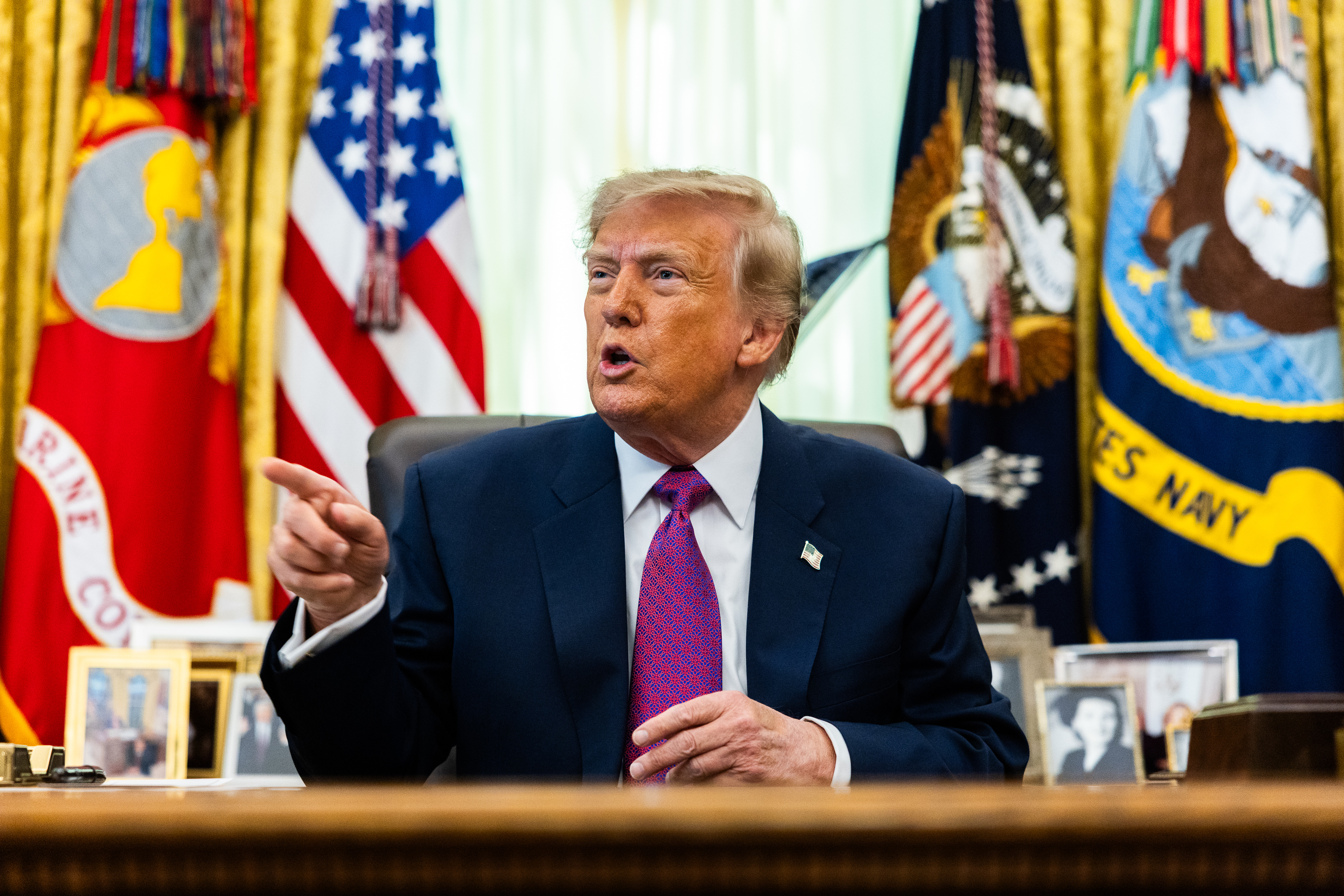
    President Donald Trump threatened Friday to halt a broad swath of U.S. trade unless the Federal Reserve slashed interest rates, issuing a sweeping ultimatum that could prove costly to the economy if he were to carry it out.

    The Fed is a politically independent institution, and it has long kept rates steady as it tries to tame years of persistent inflation. Trump’s demand risked undermining that work, while choking off commerce in ways that could harm American families and businesses.

    The president delivered his threat on a day that began on a positive note for the White House. Hiring figures showed that employers added about 162,000 jobs in August, evincing a labor market that has weathered a range of shocks under Trump — from the global trade war he commenced last year to the war with Iran that has intensified recently.

    On social media, Trump heralded that development before seizing on it to issue his demands. He called on the Fed to reduce borrowing costs to “the LOWEST RATE of any country in the World.”

    The Fed has kept rates steady since December as it tries to discern whether recent economic turbulence represents a short-term problem or a longer-term driver of higher prices. In fact, policymakers have actually signaled that they are considering whether to raise rates as soon as this month, after failing for more than five years to bring inflation down to the central bank’s 2% target.

    But Trump insisted Friday that the U.S. economy was “STRONG” and, as a result, could afford to lower borrowing costs. Such a move could actually worsen inflation. But absent a cut, Trump signaled that he could interrupt global trade.

    “LOWER THE RATE OR I’LL STOP TRADING WITH COUNTRIES WITH WHICH WE HAVE A DEFICIT, which the U.S. Supreme Court, in its ridiculous and very costly Tariff decision, strongly acknowledged ‘the President’ has an absolute right to do,” Trump said.

    The list of countries with which the United States has a trade deficit is lengthy, including its neighbors, Canada and Mexico, nations in the European Union, and others including China, according to federal data. That represents a substantial amount of the goods bought and imported by American families and businesses.

    Globally, the U.S. trade deficit in goods and services rose to its biggest gap in 16 months in July, data released this week showed. Some economists see that activity as a sign of strength for the United States, one caused in part by surging domestic demand for the electronics that help to power artificial intelligence. But Trump disagrees and has sought to apply substantial tariffs globally in the hopes of driving down the imbalance.

    “The Fed Board, with its great new leader, must get smart — BE PATRIOTS for a change,” the president said. “High interest rates put the U.S.A. at a very unfair disadvantage, and I won’t allow that to happen!”

    Trump’s remarks were his latest attempt to pressure the Fed, even after securing the confirmation of his handpicked chair, Kevin Warsh. The president has made no secret about his views on monetary policy or the lengths he is willing to go to achieve them, even targeting — and trying to oust — Fed officials who do not share his stance.

    The Fed’s decision on interest rates later this month hinges in part on inflation data coming out next Friday. Investors started to ratchet up bets about a possible increase after Warsh signaled in a speech last week that he was open to the idea. He did not explicitly call for a rate increase.

    Other top policymakers this week conveyed different degrees of urgency around the need to raise rates.

    On Thursday, Christopher J. Waller, a governor, said that a “hot” report on inflation from the Bureau of Labor Statistics would compel him to support a rate increase. But if there was further evidence that inflation was not getting worse, he said he would be inclined to hold rates steady.

    “What’s the cost of waiting one meeting? Hiking 25 basis points one meeting right now is not going to bring the CPI down to 2%,” Waller said, referring to the bureau’s Consumer Price Index. “You want to take a chance to see if disinflation continues, but I’m not taking a big chance on it.”

    Michael S. Barr, a Fed governor, said Tuesday that if inflation data showed continued signs of progress, then the Fed could afford to take more time to assess if rate increases are needed.

    “However, if inflation appears not to be moderating sufficiently, then I think we should act decisively to raise rates,” Barr said.

    This article originally appeared in the New York Times.

  • Shein’s lackluster IPO shows a fast-fashion model left behind

    Shein’s lackluster IPO shows a fast-fashion model left behind

    When Shein unveiled itself to the world at the height of its popularity several years ago, it touted a modern era for fashion — one built on speed, technology, and an on-demand system capable of creating 4,700 new styles a day.

    Today, that model is increasingly looking like a relic.

    In the small factories that form the backbone of Shein’s operations in China’s southeastern manufacturing hub of Guangdong, there are no humanoid robots, quantum computers, or state-of-the-art technology. Instead, there are dozens of workers toiling away in 10- to 14-hour shifts — in a way that, some say, feels almost like China of yesteryear.

    “It represents the old tech, as opposed to the new tech,” said Nirgunan Tiruchelvam, who leads the consumer and internet division at Aletheia Capital, an investment advisory firm focused on Asia. “Shein would have had a lot more traction with investors in the 2021 vintage. But the world has moved on from blockbuster e-commerce listings.”

    On Tuesday, investors largely agreed. Shares in Shein fell 6% in early trading, a humbling debut for a company once valued at $100 billion but now worth about a quarter of that. Its initial public offering came after a wave of Chinese AI companies went public in Hong Kong and Shanghai, and years after Shein tried, and failed, twice in its efforts to list in New York and London amid opposition from officials and activists over working conditions at its facilities.

    The drop in valuation reflects questions many investors have about the sustainability of Shein’s business — and whether it can find new ways to grow after the United States and Europe, two of the company’s biggest markets, ended tariff exemptions on cheap goods that had helped propel its low-cost model.

    Shein’s offering comes weeks after shares of Unitree Robotics and CXMT — two companies that are driving the AI investment boom in China — skyrocketed in their public listings in Shanghai. Both firms are textbook examples of what the Chinese government calls “new, quality productive forces” — the slogan for the country’s plan to drive economic growth and innovation through high-value-added manufacturing.

    Weiheng Chen, a senior partner at Wilson Sonsini, a law firm in Hong Kong, and head of its Greater China practice, noted that institutional buyers that were offered Shein shares before the stock went public took up just over 20% of the offering, compared with the roughly 50% typical of popular public listings.

    “It’s a fashion company that is not that fashionable to today’s investors,” said Chen, who has been an adviser on many high-profile listings.

    The challenge for Shein will be to regain interest among Generation Z, the group that powered the company’s rise during the pandemic. Michael Gunther, senior vice president of research and market intelligence at Consumer Edge, a firm that tracks spending data in the United States and Europe, said Shein had continued to cede market share in the United States, with the steepest losses among 18- to 34-year-olds.

    “The fact that it’s continuing to lose share more with that group than other groups is notable,” Gunther said, adding that affordability and sustainability concerns could have prompted the shift. In May 2025, Shein raised prices in the United States to offset the surge in import costs.

    In Britain, Shein’s market share gains have slowed despite no change in government policy, Gunther said. In Europe, where there is a fee of 3 euros on parcels entering the bloc, Shein’s market share has continued to slide, with declines most pronounced in France and Spain, he said.

    Its current fortunes are a stunning reversal for a company that came out of nowhere to become the world’s largest online fashion retailer.

    Shein got its start in 2012 when Sky Xu Yangtian, a Chinese search engine expert, founded the company with three former colleagues. The company compressed the fashion cycle from months to days, using algorithms to track emerging trends and placing initial orders of a few hundred units to test demand.

    But behind its success are tens of thousands of garment workers subjected to a punishing pace. To complete orders on time, workers say, they put in 20 or more consecutive days without a single day off, according to a forthcoming report by China Labor Watch, a U.S.-based nonprofit that investigates labor conditions in China. The report, which has not yet been made public, was shared with the New York Times.

    The organization interviewed 13 workers who made apparel at suppliers to the company as well as Shein employees who worked at its warehouses and corporate offices. The workers said they were given 10-minute breaks and reprimanded if they took too long to sew — for a pay of 7 to 28 cents per item.

    Workers earn, on average, $850 to $1,130 per month, but only by working weekends and taking no days off, according to China Labor Watch.

    Li Qiang, the director of China Labor Watch, said garment factories in China generally limited work hours to around 60 per week. “None are quite like Shein,” he said. “With Shein, working 100 hours a week is entirely possible.”

    The findings from China Labor Watch appear to contravene Shein’s official supplier policy, which states that workers should not work more than 60 hours a week, including overtime.

    In a written statement, Shein said it categorically rejected these characterizations of working conditions within Shein’s supplier ecosystem. It also said that the payment figures presented in the report “are not factual and misrepresent the wage structures used by suppliers.”

    Shein has also come under fire for copying other people’s designs. Since 2021, it has been named as a defendant in 58 lawsuits in the United States alleging trademark infringement and racketeering, according to court records. The company said being named as a defendant in litigation “does not establish the validity of the allegations made” and that it continues to strengthen its intellectual property protection and enforcement.

    Taken together, the challenges have complicated the story that Shein once sold investors — that it had reinvented fashion for the digital age. Now, the technology cycle has moved on.

    Winston Ma, a former managing director at the China Investment Corporation, the country’s largest sovereign wealth fund, compared Shein’s stock to that of Zoom, which surged during the pandemic but has since fallen from its valuation highs.

    “It was a superpromising concept during COVID,” Ma said of Shein. “But now it’s overshadowed by the new AI era.”

    This article originally appeared in the New York Times.
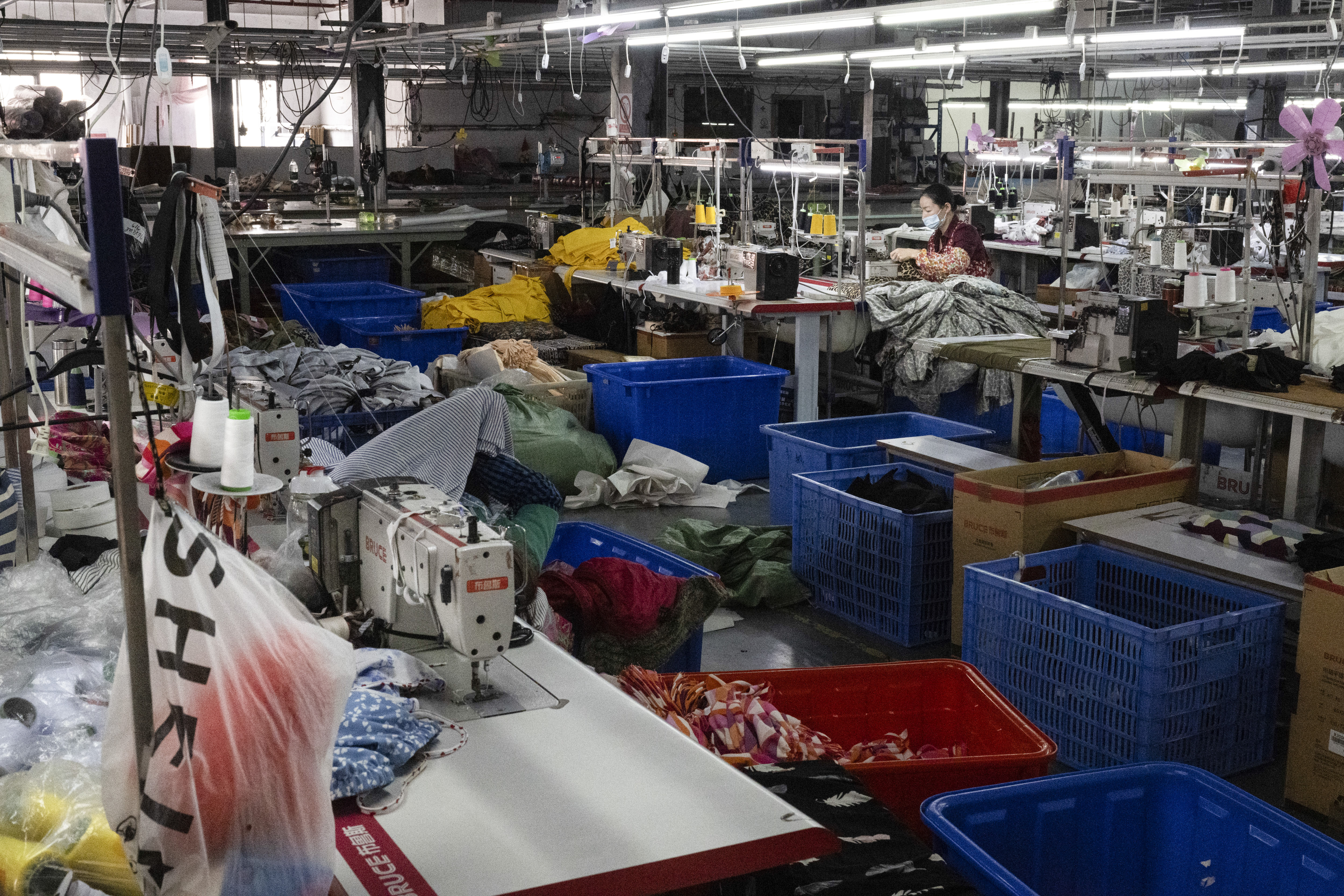
    A worker sews garments for Shein in Guangzhou, China, on Feb. 12, 2025. In the small factories that form the backbone of Shein’s operations, there are no humanoid robots, quantum computers, or state-of-the-art technology.GILLES SABRIE
  • ICE skipped basic checks in rush for recruits, whistleblower says

    ICE skipped basic checks in rush for recruits, whistleblower says

    In the wake of a hiring surge last summer, an official in charge of evaluating new recruits to U.S. Immigration and Customs Enforcement issued a dire warning.

    The Trump administration, he wrote in a memo, was cutting corners, violating the law, and fast-tracking unqualified, “improperly vetted” candidates into ICE’s ranks, part of a dangerous move that exposed the agency — and its law enforcement operations — to “grave national security risks.”

    Citing an “unprecedented lowering of standards,” the career ICE official said that “systemic breakdowns” had allowed applicants to receive job offers before they had passed basic fingerprint, identity, or credit checks in a preliminary vetting process. Political appointees had unjustly skirted background investigations and received national security eligibility.

    The official, a unit chief who directly oversaw more than 100 employees who evaluated thousands of ICE applicants, was so troubled by what he saw that he outlined these concerns not to his superiors, but in a formal whistleblower complaint to the Office of Inspector General in the Department of Homeland Security.

    In the complaint, he asked for an independent, outside investigation into the matter. He was later interviewed twice by officials with the inspector general’s office and his concerns have become part of an ongoing audit into vetting practices.

    The complaint, which has not been previously reported, underscores the rising worries about the suitability — as well as the tactics — of scores of agents who have been rapidly deployed across the country within the past year. It also outlines the extent to which ICE weakened its standards, and points to dissension among the upper reaches of the agency as it was pressed last year to carry out President Donald Trump’s immigration crackdown.

    The whistleblower, a 17-year ICE veteran who spoke to The New York Times on the condition of anonymity because of the sensitive nature of his claims, said the agency had cut corners in its rush to fill the ranks.

    “We chose as an agency to be more convenient rather than thorough,” he said, describing the agency’s decision to reduce scrutiny of recruits in order to expedite hires. “By doing so, there was a potential to put lives at risk and to jeopardize national security.”

    The whistleblower complaint was obtained via a public records request. The concerns within it broadly mirror those made by other current and former ICE employees who said that the agency had abandoned best practices as it rapidly scaled up. An ICE lawyer who worked at the agency’s training center resigned earlier this year and went public as a whistleblower, citing concerns about a “deficient, defective, and broken” training program.

    In response to questions, an ICE spokesperson said in a statement that the agency “diligently applies the proper personnel vetting regulations, including guidelines for national security, and evaluates all available information for every applicant based on these factors.”

    The agency declined to comment about the whistleblower, who retired from the agency in July, or his complaint.

    The scrutiny of ICE’s hiring practices has intensified in recent weeks, spurred in part by the fatal shooting of Johan Sebastián Durán Guerrero, a Colombian immigrant, in Biddeford, Maine, on July 13.

    The two ex-wives of ICE agent David Brouillette, one of whom identified him as the person who fired the fatal shots, have accused him in interviews and court records of being abusive. In a filing for a protection order in December 2019, one ex-wife wrote that he had broken her door down, destroyed her belongings, and dumped her clothes over a bridge.

    The women also have said Brouillette, a former military serviceman and Veterans Affairs police officer who was hired amid the recruiting surge last year, had post-traumatic stress disorder related to his deployment in Afghanistan. A local official in Maine told The Portland Press Herald that Brouillette sought jobs with the Hallowell Police Department in 2024 but was denied because there were “too many red flags.” Brouillette could not be reached for comment.

    After the shooting, Tom Homan, the White House border czar, said the DHS investigation into the episode will include whether the agent was properly vetted before being hired.

    A White House spokesperson referred questions to DHS.

    A rush to recruit

    The concerns in the August 2025 whistleblower complaint exposed shortcuts in the agency’s preliminary vetting process. No credit checks. Fingerprints unconfirmed. Final job offers absent preliminary vetting.

    Before the surge, a recruitment team made documents available to a unit within ICE’s Office of Professional Responsibility for each new hire, including fingerprints and a security form with extensive questions. The vetting team would then initiate a preliminary check, running each applicant’s name through law enforcement databases and searching for criminal violations or other major red flags. Some recruits would be sent for a polygraph test if concerns arose.

    These recruits then underwent a full background check, conducted by outside contractors, to determine whether the candidate was trustworthy enough to have access to sensitive computer systems, federal facilities, and classified information. It wasn’t unusual for this to occur while recruits were in training.

    The preliminary vetting process, which took seven to 10 days, was upended last summer. The vetters were told to make determinations on recruits without having the full security form, fingerprints or any polygraph testing, according to the former unit chief and a former federal official familiar with the process who was granted anonymity to speak freely about it.

    That meant new hires were heading to training without having their identities, criminal histories, and other basic information checked and verified, the unit chief said.

    The agency also sped up its training program, cutting it from roughly 10 weeks to six. This resulted in agents reporting to their full-time positions while their full background checks were pending.

    Meanwhile, recruits with prior law enforcement experience were able to take online courses rather than complete on-site training. They faced even less scrutiny in their background checks.

    In July, the agency said, it increased the length of its training program for academy classes, and it instructed past graduates to attend additional training.

    Ryan Schwank, the former ICE lawyer who worked at the agency’s training center, testified before Congress this year that new recruits appeared unfit for service.

    “We were concerned about ICE recruiting a loose cannon or somebody who was just mentally unfit for the role,” Schwank said in a recent interview. “We knew that kind of person would get through. But the thing that I think kept some of the other instructors up at night was the possibility of organized crime getting access to the agency or penetrating the agency.”

    Schwank, who taught recruits during the surge, said that’s exactly what happened. Last fall, several students were removed from the academy in Georgia in the middle of training because officials determined that they were all linked to a criminal gang. Schwank began work at the training academy last September and left the agency in February.

    In a statement, an ICE spokesperson said, “ICE has received NO credible evidence that any of its trainees were linked to a common criminal gang.”

    In the interview, Schwank said it was rare for students to fail out of the academy before the surge, but that about half of his students flunked out after the hiring push. This was after the academy made its tests open book and no longer failed students who made fatal errors during enforcement simulations.

    By this spring, hundreds of new recruits hired amid the surge had already been removed from the force, according to the former federal official who was granted anonymity.

    The hiring surge was set in motion in part by the passage of Trump’s domestic policy bill last summer. Congress allocated $30 billion in new money for ICE to hire 10,000 new ICE agents, more than doubling the number of deportation officers.

    Concerns about political appointees

    The unit chief who filed the whistleblower complaint said he chose to alert the DHS Office of Inspector General because ICE leadership had created these issues and he thought an outside, independent investigation was necessary.

    In addition to the vetting concerns, he also mentioned in the complaint that Trump administration political allies had received favorable treatment and obtained security clearances even though troubling information about them had surfaced in background checks. He cited Corey Lewandowski, a former top adviser to DHS.

    The concerns about Lewandowski had been outlined in a memo written last year by the DHS head of security and was viewed by the whistleblower, who told the Times that a higher-up had asked him to vet Lewandowski for an ICE credential. The red flags in the memo included allegations that Lewandowski had been paid years earlier for work by a Chinese government agency, according to the whistleblower and a report last year in the Daily Mail. That allegation has not been substantiated outside of that memo.

    In a statement, Lewandowski denied he was ever vetted by ICE. He said he had “never worked for the Chinese Communist Party – Full Stop.”

    In a follow-up statement, a spokesperson for Lewandowski said any suggestion that he “received favorable treatment in connection with his security clearance is categorically false.”

    Ten days after the unit chief filed his whistleblower complaint — and a few days after the Daily Mail article published — a lawyer from the department’s Office of General Counsel reached out to him. This lawyer, who was not from the inspector general’s office, asked to meet the whistleblower at an agency field office in Texas, separate from where he typically worked.

    The whistleblower believed he was being interviewed about his security worries, but a different focus of the inquiry became apparent: Had the unit chief talked to the news media about his concerns?

    The lawyer grilled him over four hours and seized his laptop, according to the former unit chief and his lawyer. The full contents of the meeting, they said, are protected under a nondisclosure agreement, a common practice for internal investigations.

    “My client was of the belief this investigation by the agency’s attorneys was in good faith to vet his disclosure,” said Kevin Owen, a lawyer for the whistleblower. “Instead they threatened him and put him on leave.”

    It remains unclear how DHS officials came to target the unit chief.

    The agency said it couldn’t comment on personnel matters with people no longer there.

    The former unit chief said the inspector general’s office first reached out to interview him in February, about six months after the complaint was filed. Investigators interviewed him again in April for an audit into vetting, he said.

    In a statement, the office said it had to delay some of its work due to government furloughs. The office in April opened an audit into the process for giving out security clearances to political appointees.

    The inspector general’s office said it couldn’t comment on its investigations, but the agency noted that it did not reveal the name of the whistleblower to anyone outside of its office.

    Meanwhile, the whistleblower remained on leave for 10 months for what DHS said were “allegations of serious misconduct,” the unit chief and Owen said.

    The alleged misconduct went unspecified, they said, and he was eventually reinstated with no punishment or finding of wrongdoing. He retired immediately after, in July.

    He said DHS officials had never told him specifics for why he was on leave for such a long time.

    In an effort to learn more, he submitted a records request to ICE for documents related to his case.

    The former unit chief said the stress of the investigation weighed heavily on his mental health. He checked himself into a treatment program that lasted several months.

    The man, a longtime Republican who voted for Trump in 2020 and 2024, said he grew disillusioned with the agency as it acted in haste to fulfill the president’s immigration enforcement mandate. He said he has always supported ICE’s mission, but was troubled by the way the agency was taking shortcuts in vetting recruits.

    “It’s a betrayal of the public trust and everybody’s trust,” he said.

    FILE — Immigration and Customs Enforcement agents on patrol at O’Hare International Airport in Chicago on March 23, 2026. Amid pressure to hire people quickly, ICE leaders sped up the process, eliminating some of the more thorough checks in place. (Jamie Kelter Davis/The New York Times)JAMIE KELTER DAVIS
    FILE — Ryan Schwank, a former ICE lawyer who worked at the agency’s training center, in Washington on Feb. 23, 2026. In an interview, Schwank said about half of his students flunked out of the academy after the ICE hiring surge. (Kenny Holston/The New York Times)KENNY HOLSTON
    FILE — An impromptu memorial to Johan Sebastián Durán Guerrero, who was fatally shot by a federal immigration agent, in Biddeford, Maine, on July 14, 2026. The scrutiny of ICE’s hiring practices has intensified in recent weeks, spurred in part by the fatal shooting of Durán Guerrero. (Christopher Capozziello/The New York Times)CHRISTOPHER CAPOZZIELLO
  • The Athletic says Diana Russini’s relationship with Patriots coach Mike Vrabel was a ‘clear violation’ of its standards

    The Athletic says Diana Russini’s relationship with Patriots coach Mike Vrabel was a ‘clear violation’ of its standards

    An internal investigation by The Athletic found that the relationship between Dianna Russini, its former senior NFL reporter, and Mike Vrabel, the coach of the New England Patriots, was a “clear violation” of the company’s standards.

    In a report released Thursday detailing findings of its monthslong investigation, The Athletic said that it was unable to determine the “nature of their full relationship” but that it gave the appearance of a conflict of interest.

    “Regardless of whether the relationship was romantic,” The Athletic said in the report, “it was a breach and should have been disclosed.” The Athletic is owned by The New York Times Co.

    The Times Co. and The Athletic declined to comment beyond what is in its investigation. A Patriots spokesperson did not immediately respond to a request for a comment from the team or Vrabel. Russini did not immediately respond to a request for comment.

    Revelations about Russini’s relationship with Vrabel emerged nearly five months ago and ricocheted around the sports and media worlds, raising questions about the journalistic ethics of a prominent NFL reporter. The controversy also highlighted Russini’s role as an NFL insider, a type of reporter hyperfocused on getting scoops about players and coaches.

    The investigation was prompted by photographs published in the New York Post on April 7 showing Russini and Vrabel together at an exclusive resort in Sedona, Ariz.

    Russini, according to the report, told her editors at The Athletic that the relationship was “close” but “strictly professional.”

    New England Patriots coach Mike Vrabel before a joint practice with the Eagles last month at Gillette Stadium.Yong Kim / Staff Photographer

    Initially, The Athletic publicly defended Russini. But days after the photographs were published, the company began an investigation into her work. On April 14, Russini resigned from The Athletic, saying in a letter to the company, “I have built a body of work I am proud of.”

    In its report, The Athletic said it had not “reached any conclusion about the nature of the full relationship between Vrabel and Russini, but the totality of the public photographs are enough to conclude a violation of company policy.”

    Specifically, The Athletic said Russini had failed to comply with its policy that requires its journalists to “reveal those sources or affiliations that may put into question our ability to be credible.”

    The report also noted, without elaborating, that Russini had shared with them “a story to explain the photos that did not align with facts, raising issues of trust.”

    After she resigned, more photos of Russini and Vrabel emerged, including images of the pair at a New York bar in March 2020.

    After she stepped down, The Athletic stopped its look into her personal conduct, the report said, “but continued its investigation into her journalism.”

    Mike Semel, The Athletic’s editorial director for standards and editorial quality, conducted the company’s review of Russini’s work.

    As part of the process, the report said, Semel looked into 903 articles, 77 videos, 204 episodes of the podcast she hosted, and about two dozen appearances she made on other platforms. He also interviewed Athletic employees who worked with her.

    Russini, seen here interviewing Mark Ingram before the 2020 Pro Bowl, worked at ESPN before The Athletic.Gregory Payan / AP

    The review found that 5% of her work product included mention of Vrabel or his teams — and that none carried inaccuracies. It also said her professional relationships were numerous: “It was clear Russini was sourced up around the NFL, not just with Vrabel or the Patriots.”

    Semel recommended that The Athletic include an editors’ note on one of her columns and three of her videos. In one of the videos, Russini described how Vrabel intervened in a fight between players on the Patriots and the Washington Commanders. “He comes out as somewhat heroic,” the report said of Vrabel.

    The report also described the tone of some of her work about the Patriots coach as “gushing” and “effusive” and provided examples of Russini “writing glowingly of Vrabel that in hindsight are awkward or even uncomfortable.”

    The report does not mention a widely publicized incident in which Russini used her position as an Athletic reporter to avoid a speeding ticket and then bragged about it on a podcast, saying she had a video call with the police officer’s favorite head coach in her successful attempt to win the officer over. Body camera footage later revealed she never called the coach. This spring, a Times spokesperson called her behavior “unacceptable conduct.”

    In its report, The Athletic recommended a series of steps the publication should take to “safeguard the confidence of our audience,” including requiring that all new newsroom employees meet with the standards editor.

    The report also recommended that “editors should stay vigilant about their reporters’ sourcing.”

    “Recurring use of the same sources should spark additional conversation between reporter and editor about the nature of the source relationship,” the report said.

  • A federal judge has blocked Trump’s second try to restrict birthright citizenship

    A federal judge has blocked Trump’s second try to restrict birthright citizenship

    A federal judge in Maryland temporarily blocked much of President Donald Trump’s latest effort to withhold citizenship from babies born in the United States to noncitizen parents, ruling that the Supreme Court had already settled questions reopened by an executive order Trump signed in August.

    While the decision was limited to children born after Feb. 19, 2025, including those born in the future, Judge Deborah L. Boardman wrote that the order would likely affect babies the Supreme Court had already defined as citizens. The ruling delivered a sharp rejection of the president’s renewed efforts to restrict birthright citizenship, after the Supreme Court ruled 6-3 in July that a previous, more sweeping, executive order from 2025 was unconstitutional.

    “No presidential executive order can undo what the Supreme Court has done,” she wrote.

    Boardman’s order took a dim view of the Trump administration’s reasoning, which she characterized as a thinly veiled attempt to get around the Supreme Court’s decision. She wrote that the president and others named in the lawsuit “completely misread” the majority’s opinion and embraced a “distorted interpretation” of its conclusions.

    In a 35-page opinion, she described the latest order as only the most recent attempt to curtail birthright citizenship by any means that could survive legal scrutiny.

    “Since his second term in office began on January 20, 2025, the president has tried, through executive order, to upend our country’s longstanding tradition of birthright citizenship and eliminate, for large swaths of Americans, the right to citizenship by birth, a right enshrined in the Citizenship Clause of the Fourteenth Amendment,” she wrote.

    Boardman described a number of ways that children covered by the lawsuit could have their citizenship rescinded, including if the Trump administration moved to label their parents members of terrorist groups or “alien enemies” under arbitrary legal determinations. She cited a pattern in which the administration has accused Venezuelan nationals of being affiliated with the criminal organization Tren de Aragua, often without evidence, in deportation proceedings.

    While she stressed that it was too soon to find that the order itself was unconstitutional, she wrote that it already appeared clear that it was unconstitutional as applied to the class of babies defined when immigration groups initially sued last year to block Trump’s first order.

    The order this year had included other measures to create novel categories of babies that could be disqualified from citizenship, including those born to parents engaged in so-called “birth tourism,” through which mothers deliberately traveled to the United States to give birth.

    It was unclear how the Trump administration planned to tag those it suspected of traveling to the United States to have their children. But Boardman noted that the executive order was broad, describing anyone who engaged in a “commercial transaction” — such as purchasing a plane ticket — as traveling to access birthright citizenship.

    The Supreme Court’s decision upholding birthright citizenship “is the law of the land,” Boardman wrote. “The President must follow it.”

    This article originally appeared in The New York Times.

  • Gary Glitter pleads not guilty to child sexual abuse charges

    Gary Glitter pleads not guilty to child sexual abuse charges

    LONDON — Gary Glitter, the British glam rock singer whose music is still regularly played at U.S. sports events, pleaded not guilty at a London court Wednesday to four counts of indecently assaulting a girl more than four decades ago.

    The musician, whose real name is Paul Gadd, also pleaded not guilty to two counts of indecency and two of sexual intercourse with the same girl when she was between 8 and 11 years old.

    Tony Baumgartner, the presiding judge at Southwark Crown Court, said Gadd would face trial starting Nov. 22, 2027.

    During the hearing, Gadd, 82, who appeared via video link from a prison in Devon, England, and wore a gray jacket and hat, confirmed his name before a clerk read out brief details of the counts and asked for his pleas.

    When prosecutors and police announced initial charges in July, they said the abuse occurred between 1978 and 1981 at a residential address in the Kensington district of London and that it involved a woman who reported the accusations to police early last year.

    The clerk said Gadd was accused of having sex with the girl on at least five occasions.

    Gadd, who was sitting behind a table, said “Not guilty” to each charge, although he said “Absolutely not guilty” to two counts.

    Under British law, it is illegal for the news media to report information that could identify someone who has made such sexual abuse allegations, and they have lifelong anonymity.

    Gadd was a star of the glam rock era of the early 1970s that also included acts such as David Bowie and T. Rex. His 1972 hit “Rock and Roll (Part 2),” which reached No. 7 on the Billboard Hot 100 chart, is still regularly played at sports events in the United States. It also served as the soundtrack to a pivotal scene in the 2019 movie “Joker.”

  • Trump’s ‘lightning speed’ outpaces the courts

    Trump’s ‘lightning speed’ outpaces the courts

    WASHINGTON — The courts cannot keep up with President Donald Trump.

    In cases on immigration, spending, mass firings, and restructuring agencies, the administration has barreled ahead in the face of slow-moving legal challenges. If Trump loses when those lawsuits are finally resolved, it may be too late as a practical matter to undo what he has achieved.

    The challenge to Trump’s enormous White House ballroom project is just the latest example of a mismatch between a judicial system characterized by unhurried deliberation and a presidency built for speed.

    “Trump is going to get his ballroom — even if courts conclude it’s illegal,” said Leah Litman, a law professor at the University of Michigan.

    Over the past few months, three judges and four justices concluded that Trump likely violated a federal law by razing the East Wing and replacing it with a luxury building.

    Five other justices did not dispute that conclusion, ruling instead that the challengers probably lacked a direct interest in the matter sufficient to give them standing to sue.

    The litigation continues — but so does the construction. Trump said Tuesday that the project will be done by next year.

    Dissenting from an order in a different case last week, on mail-in voting, Justice Ketanji Brown Jackson wrote that she detected a pattern: a “Catch-Me-If-You-Can approach to pursuing the president’s policy agenda.”

    Davis Ingle, a White House spokesperson, said velocity was a virtue.

    “President Trump is moving at lightning speed,” he said, “because we don’t have time to waste in our mission to make America greater than ever before.”

    When the ballroom case was argued before a three-judge panel of the U.S. Court of Appeals for the District of Columbia Circuit in June, Judge Patricia A. Millett asked a telling question.

    If the government were to move very quickly to bulldoze the Statue of Liberty, she asked, was it true that “nothing can be done” by the courts?

    Yaakov Roth, a Justice Department lawyer, did not try to duck the question. “I think that’s right, yes,” he said.

    The panel ruled for the historic preservationists who had challenged the project by a 2-1 vote, affirming a ruling from a lower court judge blocking the project about four months after it was issued. That is pretty fast by judicial standards.

    But the injunction had been paused while the case moved along, and the appeals court added another two weeks. Then Chief Justice John Roberts added another pause, one that would turn out to last 10 days.

    During all of this, construction continued at a furious pace.

    When the case reached the Supreme Court last month, the challengers warned the justices that Trump had “decided to try to outrun judicial review.”

    In response, Solicitor General D. John Sauer did not exactly deny the charge. He crowed that a 250-person crew had been working 20 hours a day, seven days a week, and that the project, which he said included key security upgrades for the White House, had passed the point of no return. Echoing the challengers, he wrote that “the executive has raced to ‘outrun’ the extraordinary security threats facing this president.”

    In a decision Monday that let the project proceed for now, no justice said the project was lawful. The five-member majority, in an unsigned opinion, instead tentatively determined that the challengers had not suffered the sort of direct injury that would allow them to sue.

    Indeed, the majority went out of its way to say that “we do not pass upon the legality of the government’s East Wing project.”

    A frustrated Roberts, joined by the court’s three liberal members, wrote in dissent that “construction of the ballroom has proceeded apace for the better part of a year” even though it was most likely in violation of a federal law that requires Congress’ express permission to erect a building on federal property in Washington.

    Should Democrats capture one or both chambers of Congress in the coming election, they may be able to challenge the project in court or through legislation. But it will almost surely be too late.

    Aziz Huq, a law professor at the University of Chicago, said there was a pattern.

    He pointed to cases in which he said the administration had “immediately shut off funding in violation of law when the recipient depends on the funding and is discouraged from suing by even the temporary loss of funding.”

    This, Huq said, “is a striking use of practical power to outrun law.”

    The Supreme Court’s deliberate pace helped Trump during his last campaign, too.

    Jack Smith, the special counsel prosecuting him on charges that he had tried to subvert the 2020 election, sought to put the case on a fast track, one that would yield a trial before the 2024 election. Trump argued that he was immune from prosecution because his actions had been part of his official duties as president.

    Sauer, who was then Trump’s personal lawyer, urged the justices to go slow. The question, Sauer’s brief said, should be “resolved in a cautious, deliberative manner — not at breakneck speed.” He urged the justices not to “rush to decide the issues with reckless abandon.”

    The Supreme Court turned away a first appeal in 2023 and did not agree to hear the case until late February 2024, scheduling arguments for that April.

    The court’s decision, that July, granted Trump broad but not unlimited immunity, and Smith might in theory have been able to proceed with some elements of his case.

    But it had taken the court long enough to decide the immunity issue that the prospect of a trial before the election evaporated. After Trump won, the Justice Department dismissed the charges against him.

    “It was entirely foreseeable that the Roberts court’s decisions allowed Trump to outrun both the prosecutors and the lower courts,” said Jed Shugerman, a law professor at Boston University.

    The general problem, said Litman, a frequent critic of Trump, is that the Supreme Court, intentionally or not, “keeps missing the forest for the trees,” focusing on technical issues in the face of brazen conduct.

    “The court has created a maze of obstacles — and invented obstacles — that have the effect of allowing the executive branch to get away with lawlessness,” she said, “at least for enough time to accomplish what they’re trying to.”

    But Samuel Bray, a law professor at the University of Chicago, said courts are so powerful they must observe certain restraints. They cannot decide disputes not brought to them, for instance, and they can decide only cases in which the plaintiffs have a real stake.

    “Courts have the special power of giving judgments that are obeyed, even in the bitterest disputes,” he said. “But the special powers and special constraints of courts go together. And in the long run, the legitimacy of a judicial system depends on the judges’ commitment to working in a judicial mode, come what may.”

    Many presidents have been aggressive in pursuing their policies, and few have been eager to be second-guessed by the courts. But Trump’s actions are different in kind, said Pamela Karlan, a law professor at Stanford University.

    “He really has decided that he can just go ahead and do what he wants,” she said, “daring courts to stop him across a huge range of subject matters.”

    FILE — President Donald Trump boards Air Force One at Joint Base Andrews in Maryland, Aug. 27, 2026. In his breakneck construction of a grand ballroom and in many other initiatives, critics say, the president has tried to outrun judicial review. (Haiyun Jiang/The New York Times)Haiyun Jiang
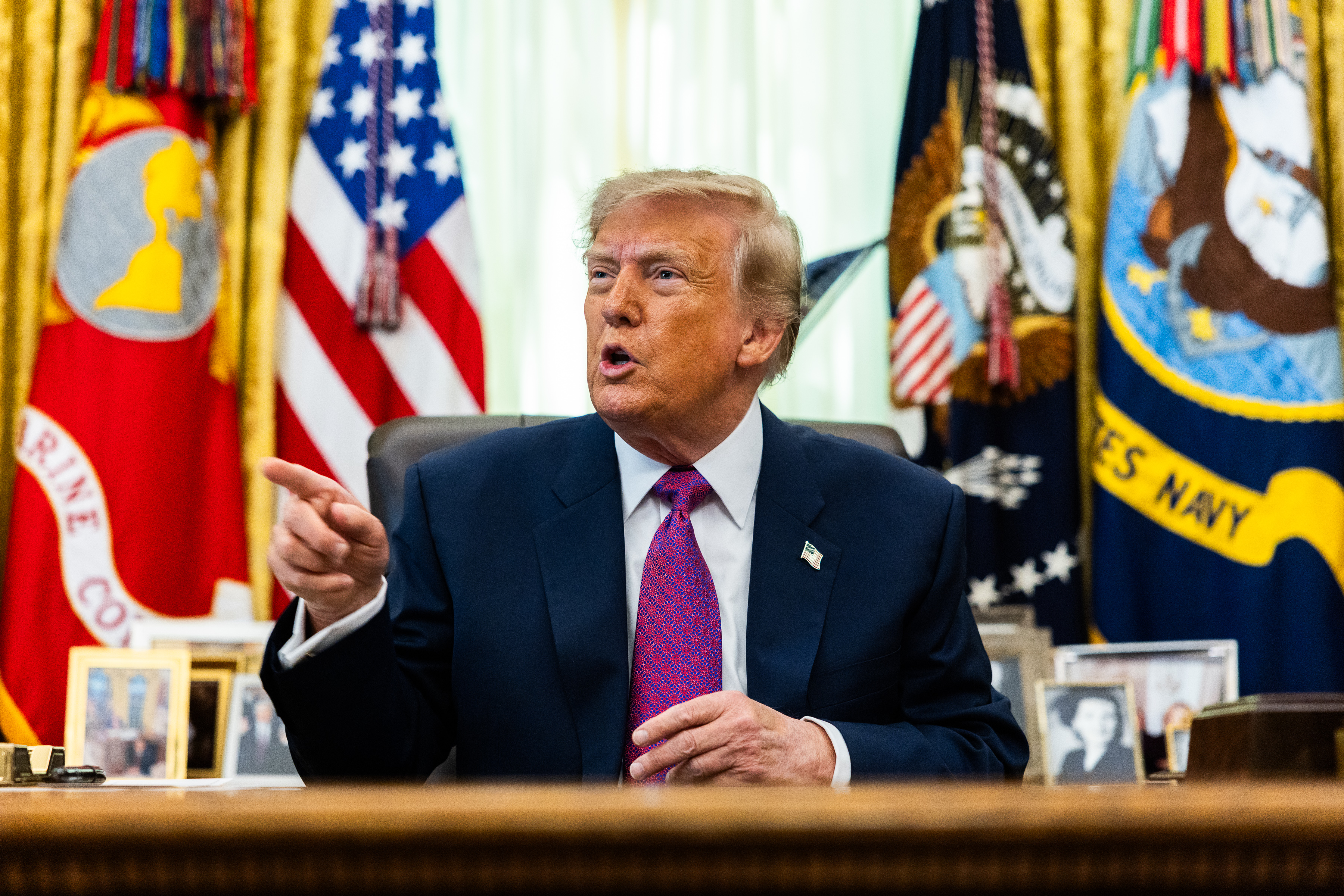
    President Donald Trump speaks to reporters in the Oval Office after ordering the name of Lake Ontario to Lake America, on Thursday, Aug. 27, 2026. On Tuesday night, after the latest exchange of fire over control of the Strait of Hormuz, Trump called on the Iranian people to rise up — something he did six months ago, before he backed off and acknowledged that his command was easier said than done. (Demetrius Freeman/The New York Times)DEMETRIUS FREEMAN